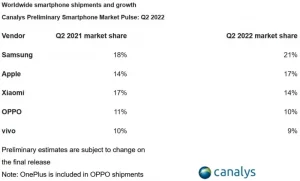
Samsung maintained its position as the leading smartphone provider globally with a 21 percent market share. Thanks in part to strong sales of its reasonably priced Galaxy A series.
Data from market research company Canalys’ second-quarter sales figures reveal a 9 percent decrease in smartphone shipments year over year. The descriptive analysis of the reasons for the problem blames both regional and worldwide economic difficulties.
Apple was able to maintain the second best market share among all phone manufacturers with 17 percent thanks to the continued high demand for the iPhone 13 series. Xiaomi, Oppo, and Vivo, all Chinese brands, came in third, fourth, and fifth, respectively. The second quarter saw reductions in phone shipments for each of these companies, leaving them with respective market shares of 14% (Xiaomi), 10% (Oppo), and 9% of the global market (Vivo).
Runar Bjrhovde, a Canalys Research Analyst, said: “Vendors were forced to review their tactics in Q2 as the outlook for the smartphone market became more cautious. Economic headwinds, sluggish demand, and inventory pileup have resulted in vendors rapidly reassessing their portfolio strategies for the rest of 2022. The oversupplied mid-range is an exposed segment for vendors to focus on adjusting new launches, as budget-constrained consumers shift their device purchases toward the lower end.”
For the record, Apple’s market share increased by a commanding 21.4 percent on a yearly basis. With a 16.7% year-over-year rise in Q2 market share, Samsung came in second place to Apple. Vivo lost 10% of its Q2 2021 market share in 2022, while Oppo had a 9.1% annual decline in its second quarter market share. Xiaomi saw a loss of 17.6% of its Q2 2021 market share.
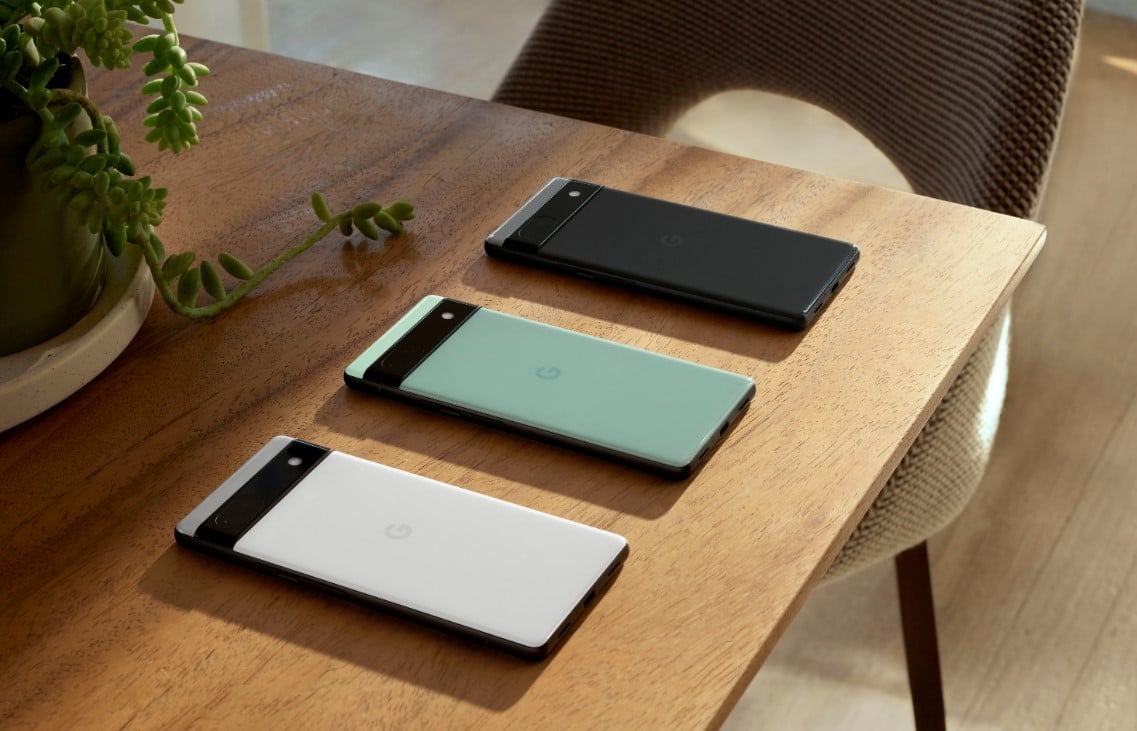
The Google Pixel 6a is expected to be unveiled in India by the end of this month (July). The specifications and design of the phone have already leaked online. And today, a reliable tipster has revealed the alleged Indian pricing of the Pixel 6a. The price of the device is lower than we expected and it is likely to create cutthroat competition in the premium mid-range segment.
Tipster Abhishek Yadav took to Twitter to reveal the Indian pricing of the Pixel 6a. As per the tipster, the overhauled Pixel smartphone will be priced at around Rs. 37,000 (roughly $462) in India. Previously, it was reported that the Pixel 6a would come with a price tag of Rs. 40,000 ($500), but it appears Google is keeping the prices low. Flipkart is said to be offering the Pixel 6a for purchase.
Google Pixel 6a
The leaked price is fairly competitive, and it is going to give a tough time to the brand-new Nothing Phone (1) and the upcoming OnePlus 10T. Pixel 6a definitely has the upper hand on both of these smartphones. The only letdown with the Pixel is the display. Google is said to be using a 60Hz panel on the Pixel 6a, which is far below the industry standards.
But again, the rest of the impressive features will likely make up for the display. We can’t really complain about Google using a 60Hz panel in its affordable phones when Apple uses the same in its premium smartphones.
Google has made a lot of improvements to the Pixel 6a. For instance, the tech giant has used a different fingerprint sensor on the device to offer smooth unlocking. As mentioned, the Pixel 6a will be launched in the last week of July. It will go on sale a few days after the launch.
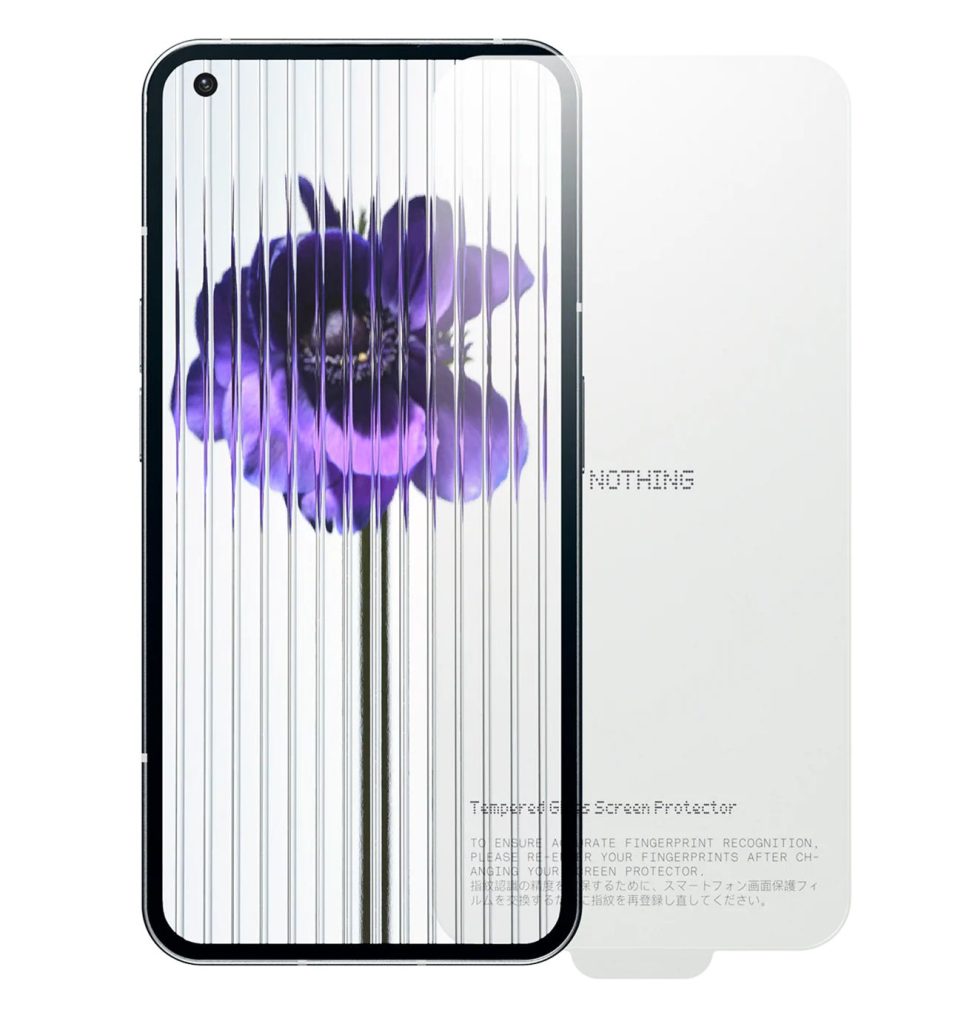
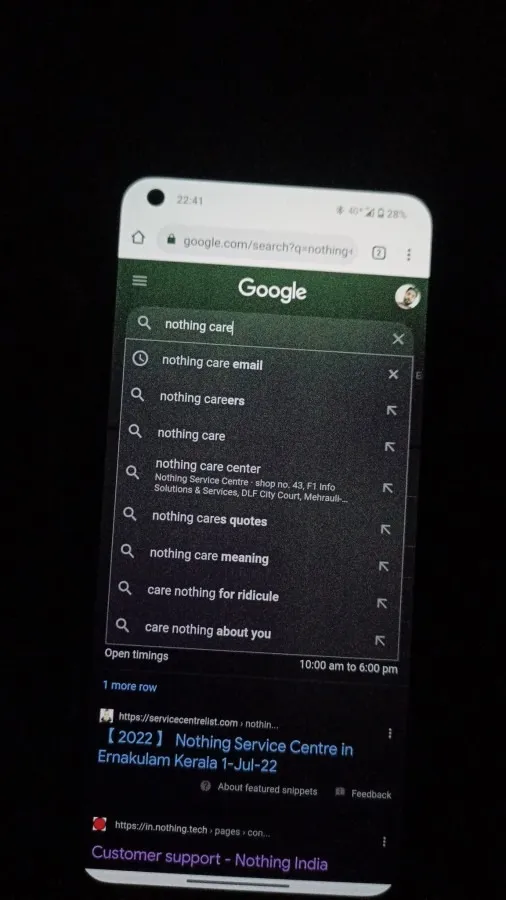
Nothing has recently launched the Nothing Phone (1), the company’s first-ever Android smartphone. The phone has recently been one of the most talked-about smartphones, but it is undoubtedly not without its own share of problems. Buyers who pre-ordered the device through Flipkart have begun getting them, and some of them have already begun to raise a number of problems with the device. It seems that some Nothing Phone (1) devices are facing a variety of hardware-level issues.
According to a report by 91Mobiles, a green tint problem is, well, “Nothing” new for companies launching devices with AMOLED panels. The Nothing Phone (1) has been added to the list of cellphones that have experienced the same fate in the past. As the name implies, the green tint problem results in the device’s display malfunctioning because the dark portions of the display take on a green tint.
One customer who purchased a Nothing Phone (1) through Flipkart had to return it in the hopes of receiving a unit without issues, however, the replacement handset also had the same problem. These are clear signs of poor qualty control during the manufacturing process.
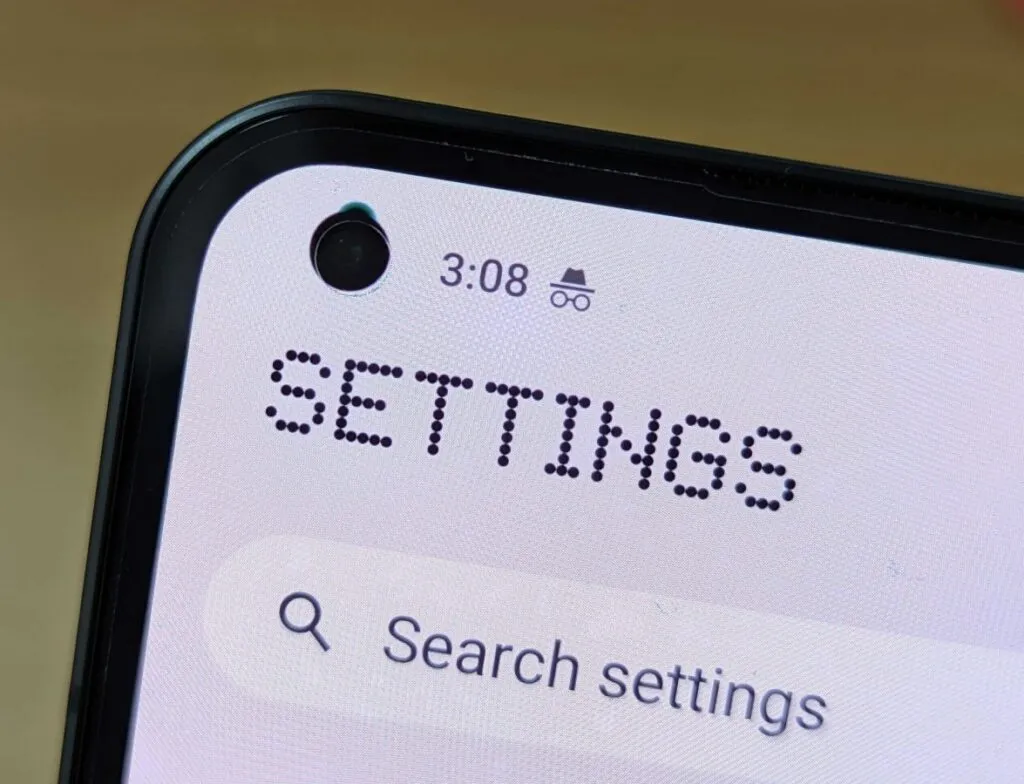
In addition to the green tint issue, many people have also been having trouble with faulty selfie cameras. Notably, numerous Nothing Phone (1) devices now have a punch-hole selfie camera that appears significantly extended.
It is a little disappointing to see such problems with a brand’s pilot smartphone, even though the Nothing team has already acknowledged the problems, and the impacted buyers will probably receive a replacement unit. The company is yet to publish official instructions on what users should do if their Nothing Phone (1) is facing similar kinds of issues. We can only hope that these problems won’t be present in the upcoming batch of Nothing Phones (1) that come out of the manufacturing.
Xiaomi is all set to launch its new Redmi K50 series smartphone in the Indian market — Redmi K50i, in the Indian market tomorrow, i.e., on 20th July.
The launch event, starting at 12:00 PM IST, will be live-streamed by the company on its official YouTube channel in India as well as on the company’s social media accounts.
You can watch the official launch event on the Redmi India official YouTube channel by clicking here or through the video embedded below.
As for the smartphone, the Redmi K50i is a rebranded version of the Redmi Note 11T Pro which also goes by the name of Poco X4 GT in some markets. So, almost everything about the phone is known ahead of its launch.
It will feature a 6.6-inch FHD+ IPS LCD screen and offer up to 144Hz refresh rate, up to 650 nits of peak brightness, and support for Dolby Vision content. Under the hood, the device is powered by the MediaTek Dimensity 8100 processor, which is paired with LPDDR5 RAM and UFS 3.1 storage.
In the camera department, there’s a triple-camera setup on the back that includes a 64MP primary sensor, an 8MP ultra-wide unit, and a 2MP macro sensor. On the front side, the phone features a 20MP snapper for taking selfies and video calling.
The device will run the Android 12 operating system out-of-the-box with the company’s own MIUI 13 custom user interface on top. It will be powered by a 5,080mAh battery which supports 67W fast charging.
The Redmi K50i is expected to come in 6GB and 8GB RAM models. The phone is said to have three color options in India — Phantom Blue, Stealth Black, and Quick Silver.
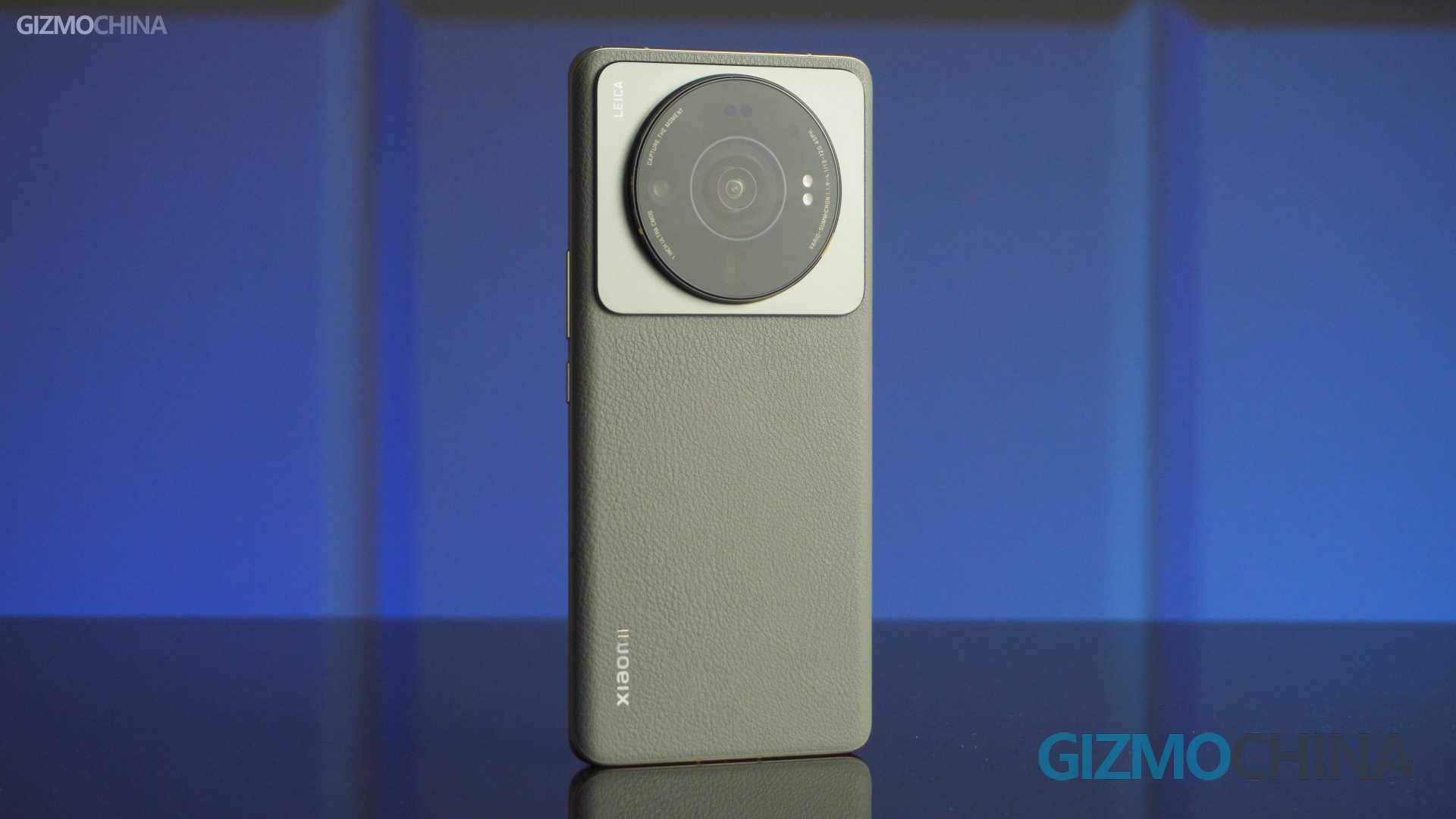
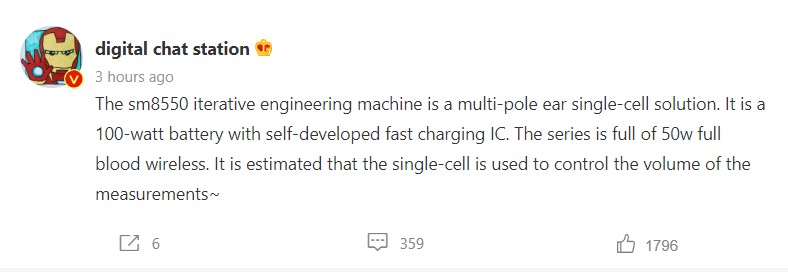
The Xiaomi 12S series launched only a few weeks ago, and rumors about the Xiaomi 13 series are already swirling. Previous leaks have suggested that the Xiaomi’s next-gen series may debut in November, and it will be equipped with Qualcomm’s yet-to-be-released Snapdragon 8 Gen 2 chipset. Today, a popular tipster has revealed that Xiaomi 13 series will be equipped with a single-cell 100W battery supported by the company’s self-developed charging chips. The device is also tipped to support 50W fast wireless charging.
Xiaomi 12S Ultra
The Tipster Digital chat station has been revealing some interesting details about Xiaomi’s upcoming flagship series. Earlier, the tipster shed some light on the series’ processor and launch date. Today, he revealed that Xiaomi will use a 100W single-cell battery in the 13 Series. The battery will be accompanied by Xiaomi’s in-house charging chips.
The charging chip used in the Xiaomi 13 series will likely be an upgraded version of the Surge P1—the company’s first-generation charging chip used in the 12 series of smartphones. Surge P1 was used for more effective power management. The chip can reduce heat loss by up to 30%.
The tipster also revealed that the Xiaomi 13 series will support up to 50W wireless fast charging, which is the same as the Xiaomi 12S Ultra.
According to previous reports, the upcoming series will be powered by Qualcomm’s Snapdragon 8 Gen 2 processor (not released yet). Also, it is rumored that there will be no MediaTek Dimensity variants like this year. The Xiaomi 13 series will likely have a high-resolution 2K screen supporting a 120Hz refresh rate.
The series is expected to include two devices- Xiaomi 13 and the Xiaomi 13 Pro. It may launch in November this year. We hope to learn more details about the upcoming series in the coming days.
The OPPO Enco X2 has been announced in India. The premium earbuds have arrived with a price tag of Rs 10,999 (~$138). It succeeds the original Enco X TWS earbuds, which was announced for Rs 9,990 (~$125) in January 2021. As compared to the older model, the Enco X2 comes with a handful of new features, such as longer battery life, better audio performance, support for connecting dual devices, and an improved design. Here I bring to you the unboxing and first hands-on impressions of the Enco X2.
OPPO Enco X2: Box Contents and Design
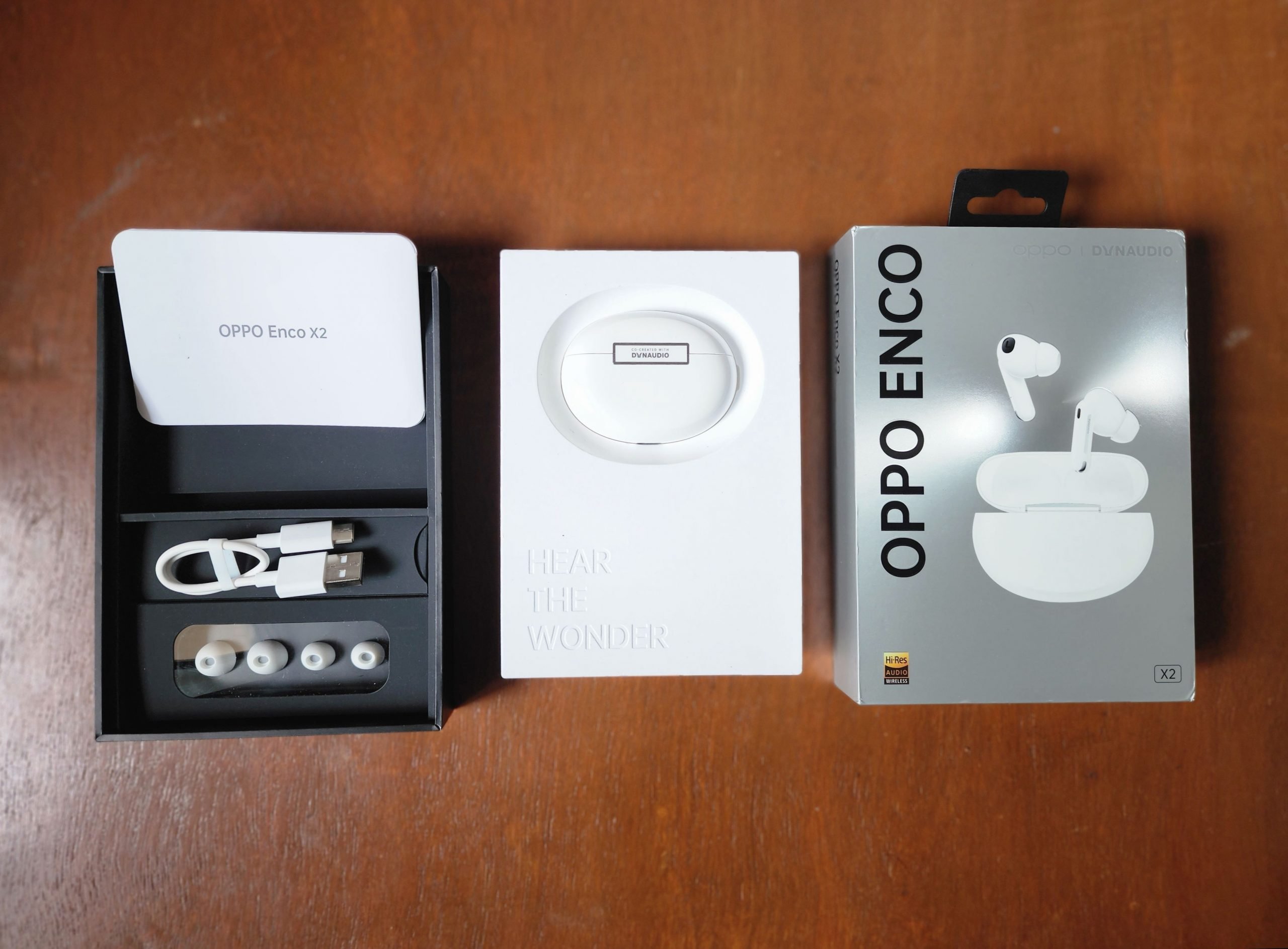
OPPO Enco X2 box contents
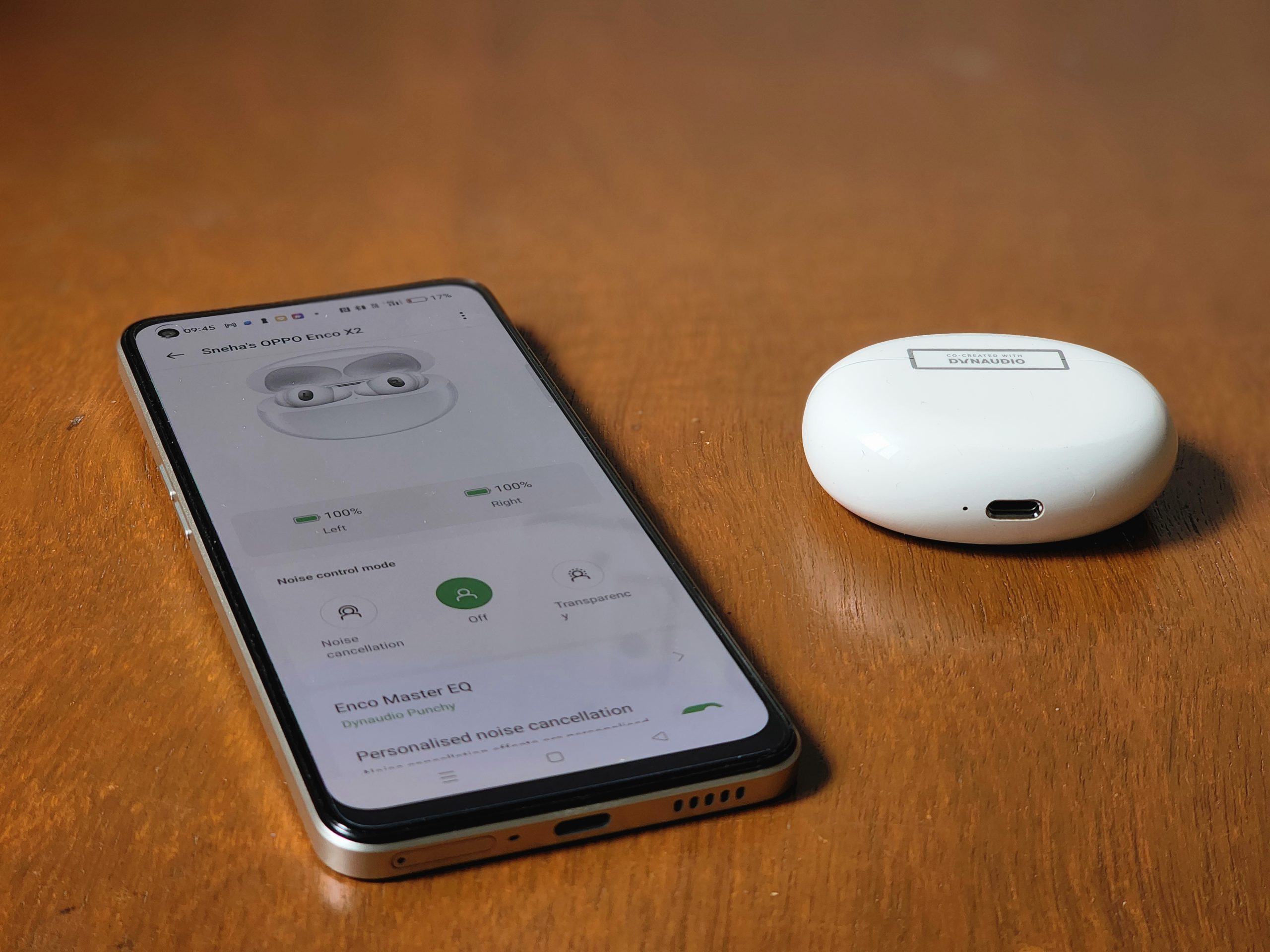
It comes in a fairly large-sized box even though it houses a pebble-shaped Enco X2 case. The inner compartment of the retail box houses some documents on one side, different-sized ear tips and a USB-C cable on the other side. As can be seen in the images, the Enco X2 earbuds have an in-ear design with a protruding stem. As compared to the previous model, the case allows users to place the earbuds in a more convenient manner than before. Also, it comes with an additional charging indicator, which sits next to the USB-C port.
OPPO Enco X2: Comfort
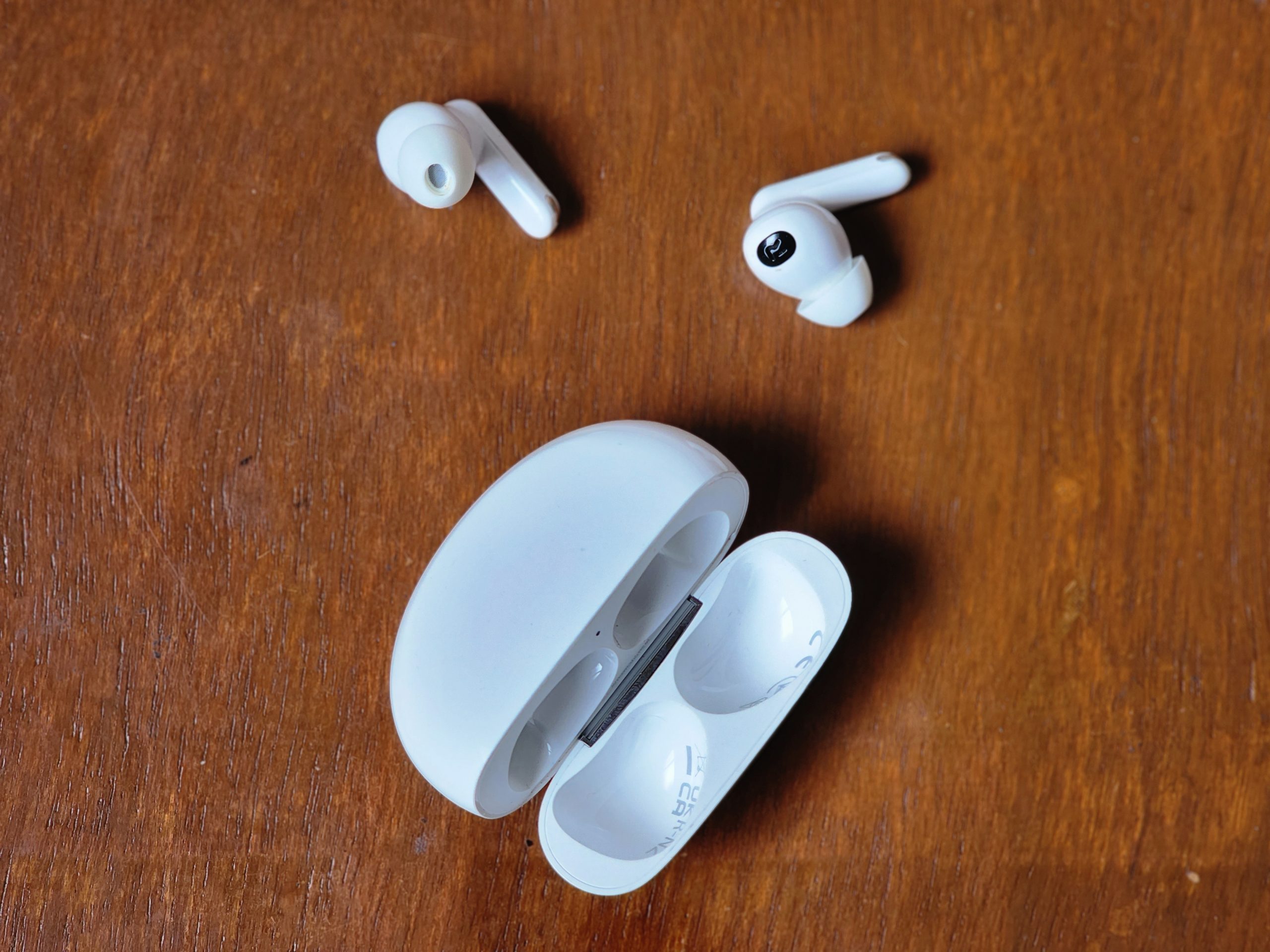
OPPO Enco X2
The entire device weighs around 56.4 grams, and each earbud weighs 4.7 grams. I found the earbuds very comfortable to wear for long hours of listening. There is an anti-earwax barrier that prevents earwax from building up inside. It also helps in preventing anti-bacterial growth. As far as build quality is concerned, it has a premium feel. I happened to drop the Enco X2 once by mistake. When it fell, the case opened and one of the earbuds was thrown around 7 meters away. Hence, it is advisable to carefully handle the device.
OPPO Enco X2: Battery life and Stability
OPPO Enco X2 case features a USB-C port, supports wireless charging
OPPO claims that the Enco X2 earbuds with the charging case offer up to 40 hours of listening to music. A fully charged Enco X2 lasted me for three days, during which I used it for phone calls and listening to music with ANC on. Each earbud includes a 57mAh battery, while the charging case packs a 566mAh battery. Apart from charging the case over USB-C, it also carries support for wireless charging.
I found that OPPO and Realme devices could instantly detect the Enco X2 when connecting for the first time. However, I had to press the pair button on the case to establish a connection on other smartphones, the iPad Air Pro, and Windows PC.
It supports Bluetooth 5.2 connectivity. Once paired, I did not experience any connectivity issues. One of its major highlights is that it can be paired with two devices at the same time. The earbuds can automatically detect the audio source and switch to that device.
OPPO Enco X2: Sound Quality and ANC
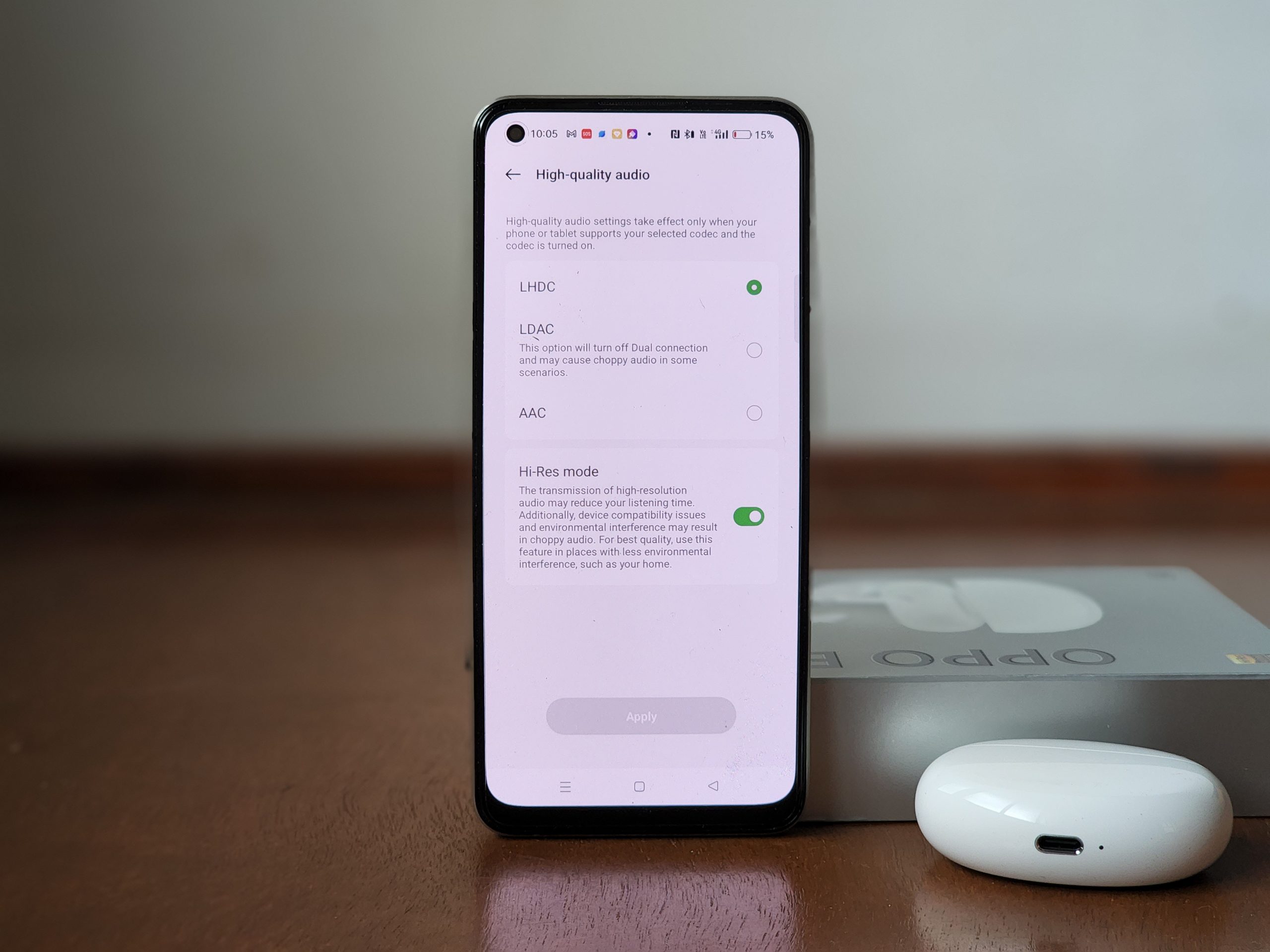
OPPO Enco X2 audio codecs
OPPO has worked with Danish brand Dyanaudio to develop Enco X2’s SuperDBEE coaxial dual driver system, which comprises an 11mm dynamic driver and a 6mm planar diaphragm driver. According to OPPO, the Enco offers a 2x sampling rate and a 2x frequency response range compared to the Enco X. It supports SBC, AAC, and LHDC 4.0 audio codecs.
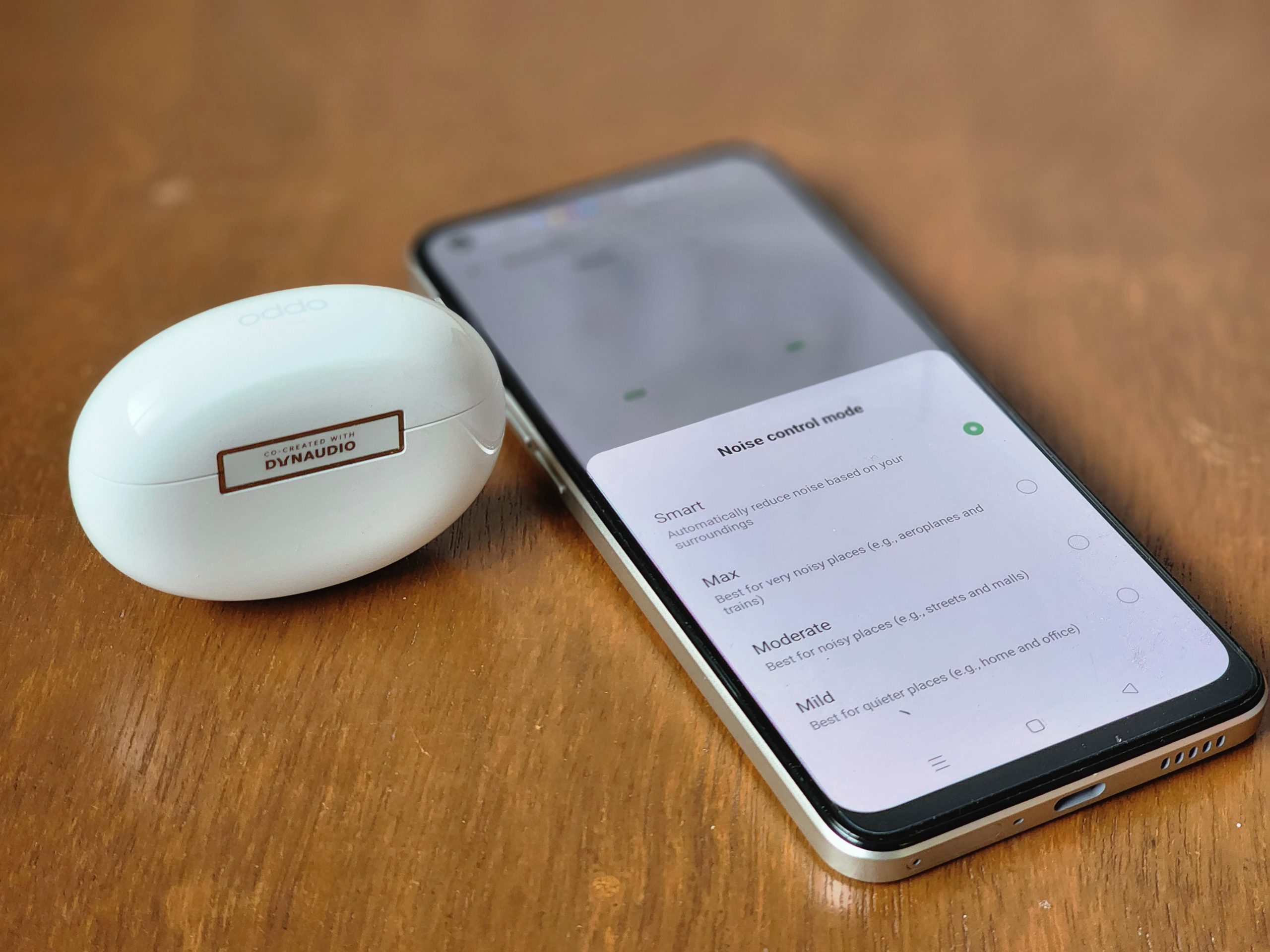
OPPO Enco X2 noise control modes
With ANC on, the Enco X2 successfully managed to block ambient noise. It supports a noise cancellation depth of 45db. The Heytap app can be used to access transparency mode, noise cancellation modes (smart, max, moderate, and mild), five EQ profiles, and personalized noise cancellation. The latter promises customized noise cancellation based on auditory canal structure and earbud fit for different users. For an enhanced listening experience, there is Golden Sound, which analyzes the structure of ear canals to produce a natural audio experience.
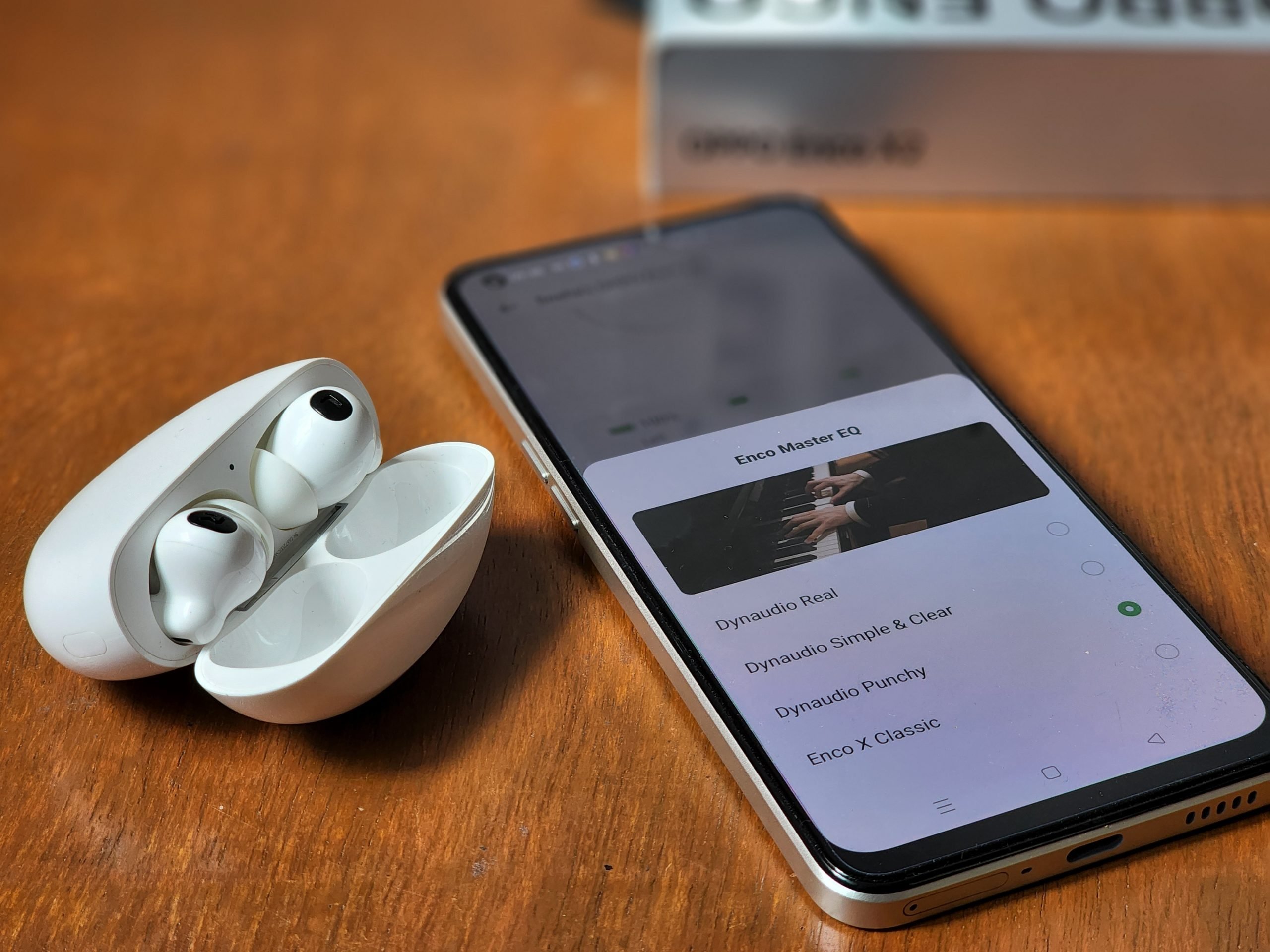
OPPO Enco X2 EQ profiles
With all these features onboard, the Enco X2 does offer an immersive listening experience. However, even though it has a “Dyanaudio Punchy” EQ preset, which promises a better bass experience, I did not find the bass punchy enough.
OPPO Enco X2: Call Quality and Controls
OPPO Enco X2 controls
Each earbud has three highly sensitive microphones, which can recognize voices and cut down on background noise. According to OPPO, the Enco X2 also features a bone voiceprint AI call noise reduction algorithm, which enhances the users’ voice. For me, call quality is one of the important factors in choosing TWS earbuds. The Enco X2 impressed me since some of my call recipients could even recognize that I was talking to them from a somewhat noisy area.
OPPO proudly boasts that the Enco X2 TWS earbuds is the world’s first earphones to come equipped with the Dolby binaural recording feature. Hence, the Enco X2 can be used to record natural and crisp audio.
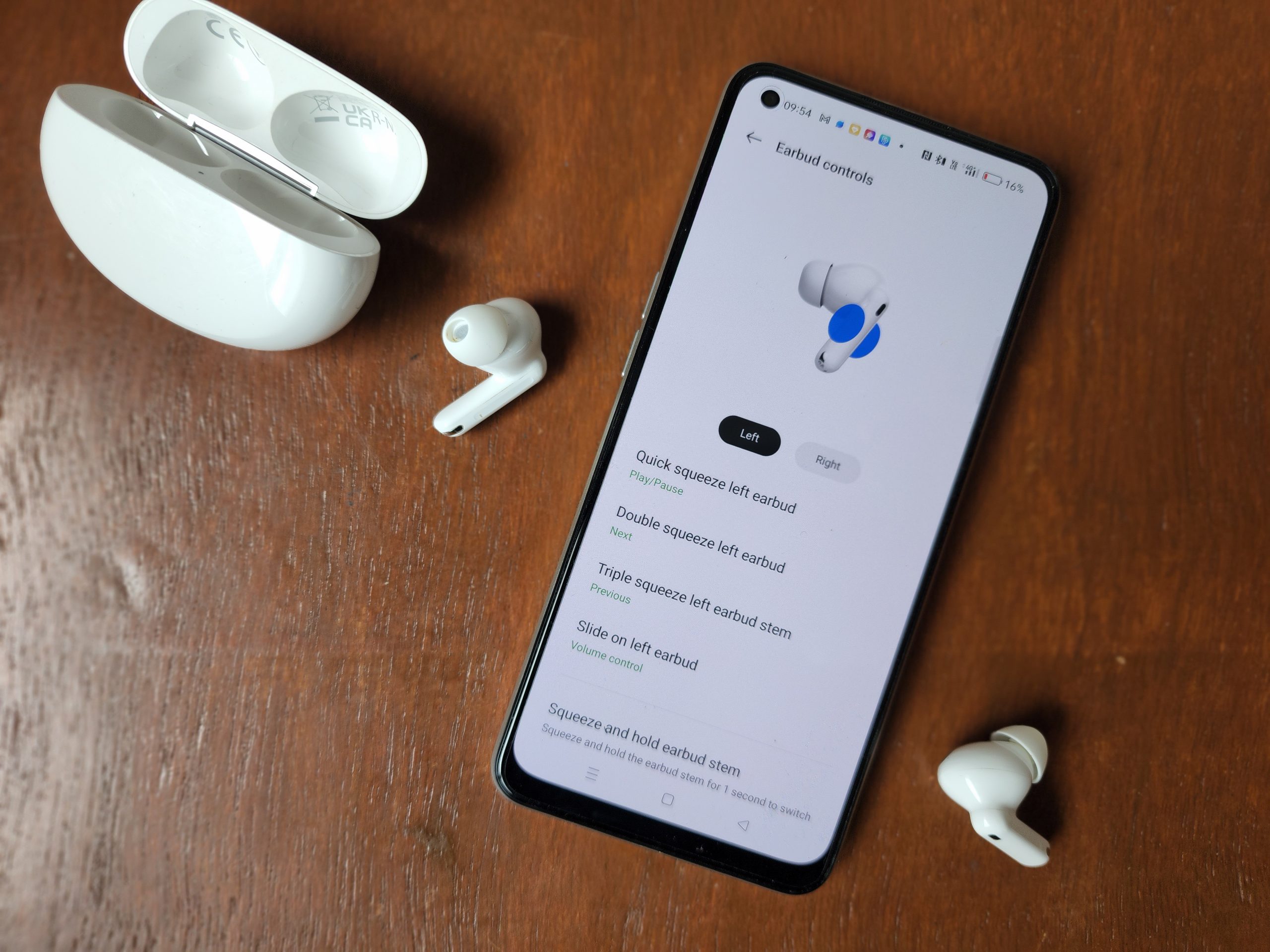
Users can control the Enco X2 earbuds by squeezing the stem. A single-squeeze can play/pause audio or answer/disconnect calls; a double-press to skip forward, a triple-squeeze to skip back, and a longer-squeeze to switch noise cancellation models. Sliding up or down the stem will increase or lower the volume. While the Enco X2 can be used to summon a voice assistant, I could not find a way to launch Google Assistant or any other voice assistant. When I called out “Ok Google,” I felt that the phone recognized my voice, and not the Enco X2, and launched the voice assistant.
OPPO Enco X2 first sale date in India
The Enco X2 costs Rs 10,999 (~$138) and comes in Black color apart from the white one shown above. The Enco X2 will go on sale on July 25. It will be available through OPPO India’s online store, Flipkart, and Amazon India.
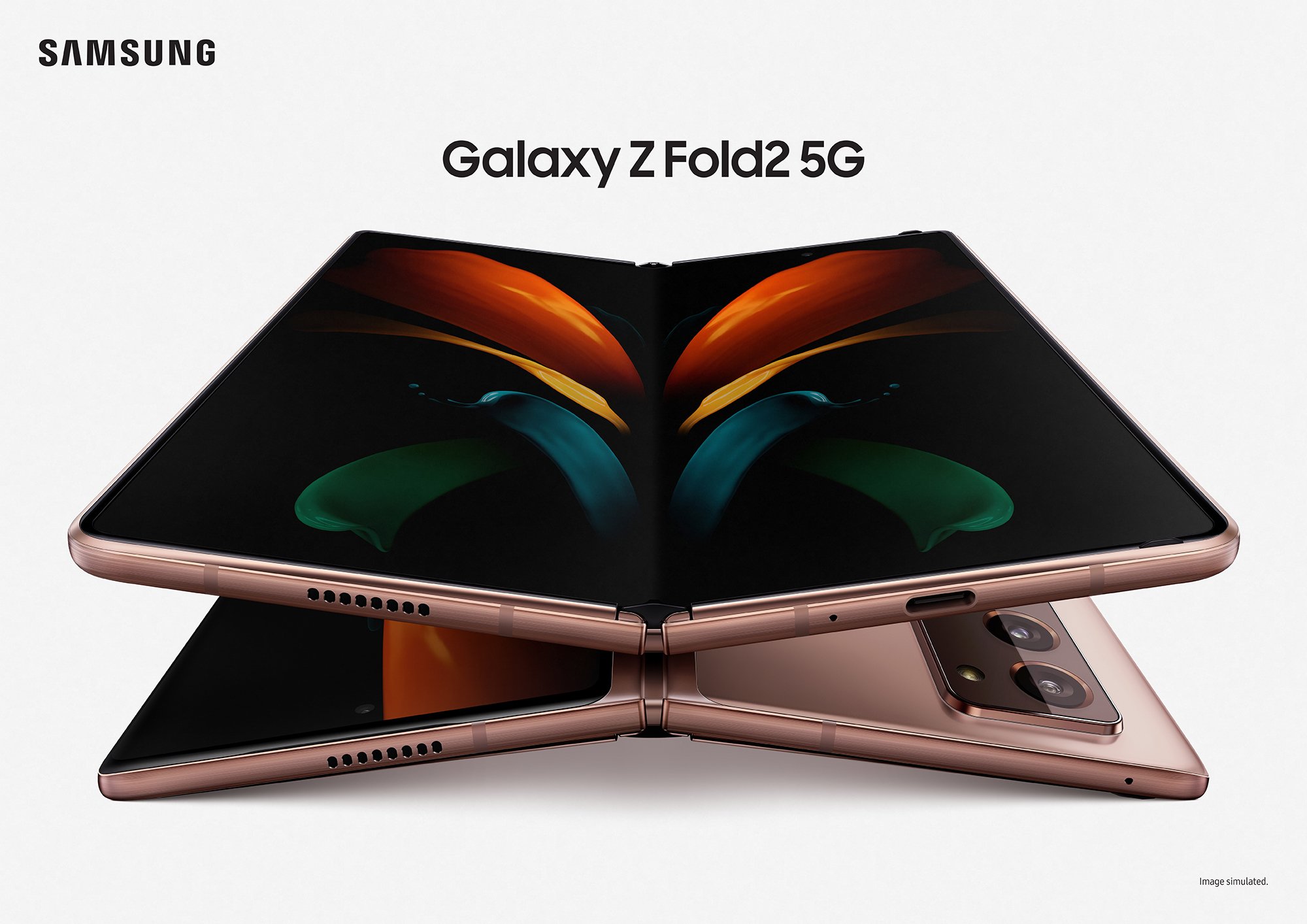
Samsung Galaxy Z Fold 2, the foldable smartphone from the South Korean giant that was launched a couple of years back, has finally received a new update in the United States that enabled a much-awaited feature on the device.
The company has rolled out a new update for the Galaxy Z Fold 2 smartphone in the United States that has enabled eSIM functionality. Along with that, it also brings support for DSDS, which stands for Dual SIM Dual Standby.
As per the report, Samsung has rolled out firmware build F916USQU2HVF1 for the carrier-locked model of the Galaxy Z Fold 2, while the unlocked model has got F916U1UEU2HVF4 update that brings both the new features.
Along with the eSIM functionality and DSDS support, the June update also comes with some additional features for the camera department, such as auto framing in the camera app and video calls, as well as improved Night portrait photography.
Some users of the carrier-locked model have already started receiving the July 2022 update, so there’s a possibility that some of the users may not get the June update and directly get the new July update, which will bring these new features to the phone.
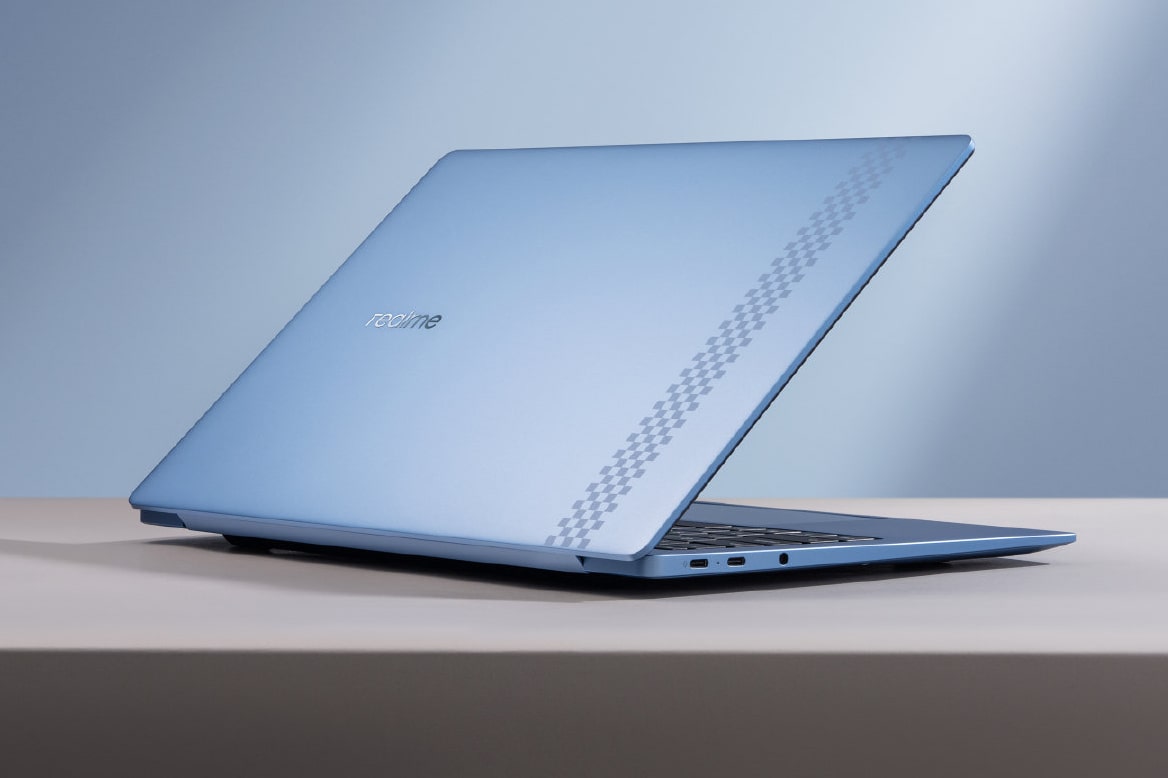
A couple of days ago, Realme had launched a new laptop in its home market China, dubbed as Realme Notebook Air. Now, starting today, the laptop is officially available for purchase in the Chinese market.
The newly launched Realme Notebook Air comes in two models — 8GB + 256GB which is priced at 3,299 yuan (~$489), and 8GB + 512GB which costs 3,499 yuan (~$519).
The laptop features a 14-inch Full HD display that supports 1920 x 1200 pixels screen resolution and has a screen-to-body ratio of 88 percent. The device, which has an all-metal frame, has 4.9mm narrow bezels.
Under the hood, it is powered by Intel‘s 11th generation Core i3-115G4 processor, coupled with LPDDR4x dual-channel RAM and PCIe SSD. It also comes with VC Liquid Cooling with dual fan configuration.
In the software department, the device runs the Windows 11 operating system and comes with support for cross-screen interconnection. It is powered by a 54Whr battery and comes with support for 65W PD fast charging.
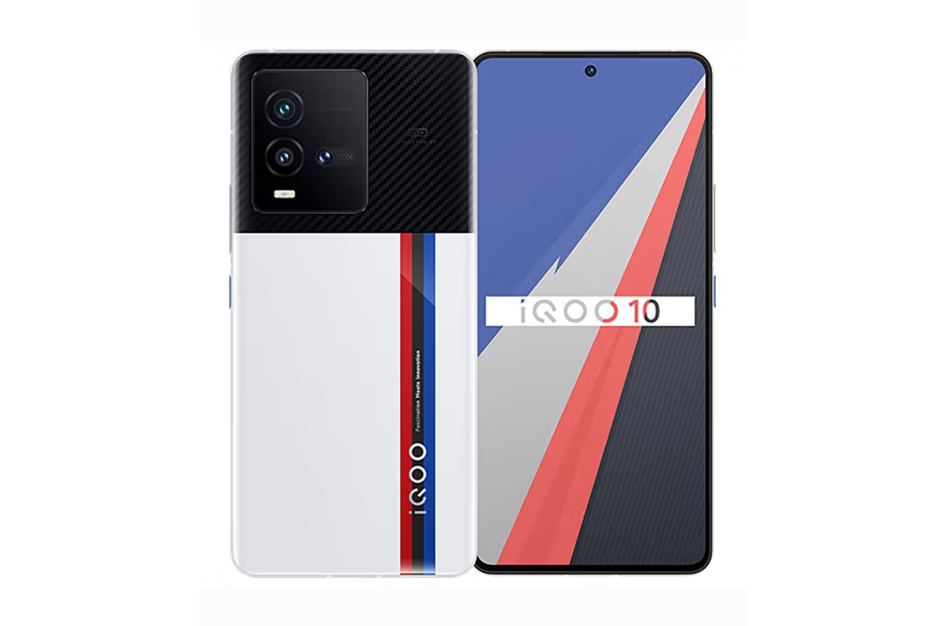
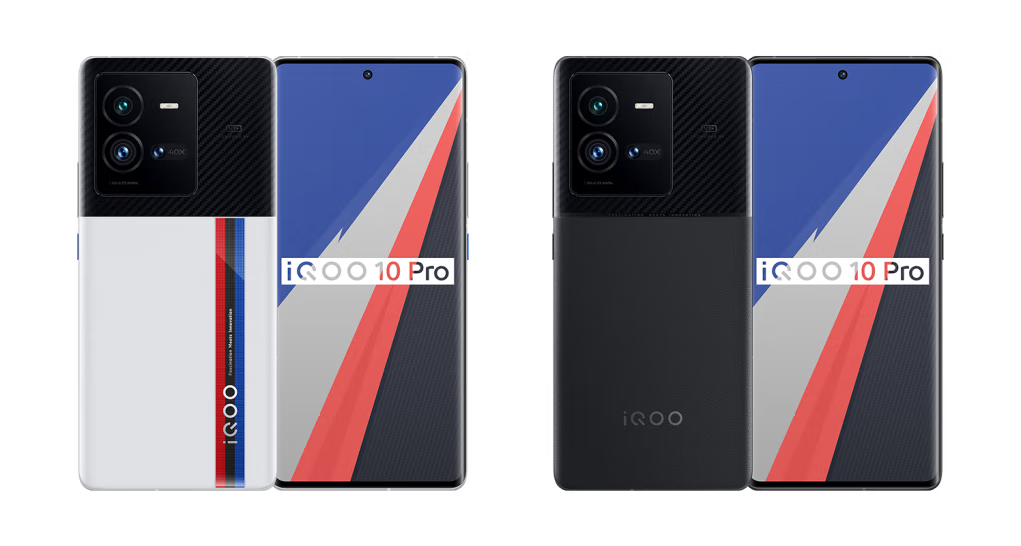
Today, at 7:30 PM (local time) in China, iQOO will unveil the iQOO 10 and iQOO 10 Pro flagship smartphones. The rumor mill has already revealed a lot of information on the specifications of both devices. A few hours before the launch, the iQOO 10 duo appeared in the database of the TENAA certification platform in China.
iQOO 10 specifications
The TENAA listing reveals that the iQOO 10 (V2217A model number) measures 164.55 x 77.10 x 8.37mm and weighs around 205 grams. It has a 6.78-inch AMOLED flat display that offers a Full HD+ resolution of 1080 x 2400 pixels. The Snapdragon 8+ Gen 1 powered device will come with 4 GB / 6 GB / 8 GB / 12 GB of RAM and 128 GB / 256 GB / 512 GB of built-in storage.
iQOO 10
The iQOO 10 is equipped with a 16-megapixel front camera and a 50-megapixel + 13-megapixel + 12-megapixel triple camera unit. Both phones have a dual-cell battery having a single cell size of 2,275mAh (rated value). Rumors have claimed that the combined capacity of its dual-cell battery will be 4,700mAh. The iQOO 10 is expected to carry support for 120W fast charging. It is likely to feature an in-screen fingerprint scanner.
iQOO 10 Pro specifications
The iQOO 10 Pro (V2218A model number) has 164.91 x 75.5 x 9.49mm dimensions and weighs around 216.2 grams. It has a 6.78-inch AMOLED curved display that offers a Quad HD+ resolution of 1440 x 3200 pixels. The SD8+G1 device is expected to arrive with 6 GB / 8 GB / 12 GB / 16 GB of RAM and 128 GB / 256 GB / 512 GB of storage.
iQOO 10 Pro
The iQOO 10 Pro gets a 16-megapixel front camera and a 50-megapixel + 50-megapixel + 14.6-megapixel triple camera system. It is rumored to house a 4,550mAh battery with 200W fast charging support.
Xiaomi was recently fined by the local authorities in Italy recently. The brand was penalized a hefty sum of 3.2 million euros ($3.234 million) earlier this month. The decision, according to the Italian Competition Authority, was made as a result of the company’s refusal to fix phones that had scratches or other minor flaws while the items were still covered by warranties.
According to Italian authorities, the company’s local business charged customers after confirming that the products were of good quality, but the company should instead examine potential flaws and accept product returns without collecting any fees, including freight and inspection expenses.
Xiaomi responded to domestic media by saying it was aware of the decision and was investigating the reasons for it. The company also stated that it has always conducted lawful and compliant activities, adhering to local relevant laws and regulations. According to the company, it is devoted to offering the greatest after-sales service experience to every consumer.
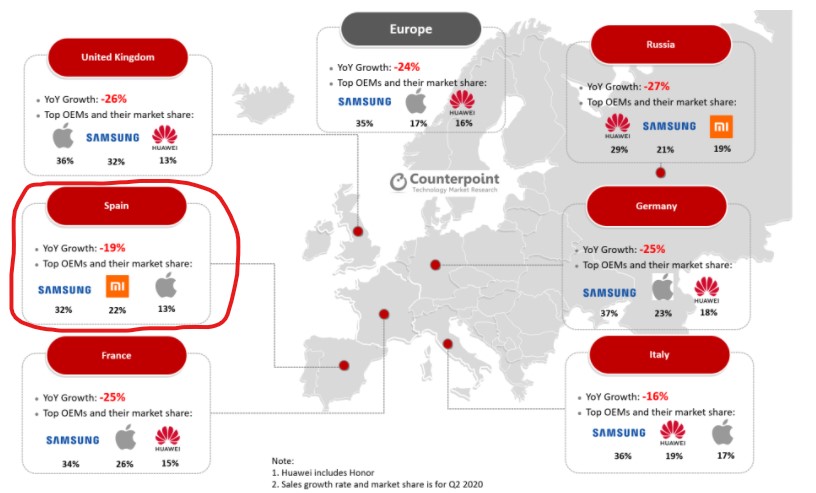
According to data from Canalys, Xiaomi accounted for 19.7% of smartphone sales in Europe in the first quarter of 2022, while the market share of smartphones in Western Europe is 15.4%. The market share of smartphones in Italy comes in second among them.
Since the beginning of this year, Xiaomi has often stated that Europe is one of its most significant regions, and its share of the European market has nearly reached 20%.
The firm will also work to increase its market share by strengthening its operator channels, developing its retail operation capabilities, and enhancing the strength of its product and brand portfolio.
The Italy Competition Authority has fined Apple, Amazon, Samsung, Google, and other businesses since 2020 for a variety of reasons. The authority fined Amazon up to 1.128 billion euros ($1.14 billion) in December 2021, but Amazon later declared it will file an appeal.
Earlier today, OPPO launched the Reno 8 series in India. The models launched in this series consist of the vanilla Reno 8 and the Reno 8 Pro, which is known as the Reno 8 Pro+ in China. However, the brand is gearing up to launch another device in the Reno 8 series dubbed the Reno 8Z.
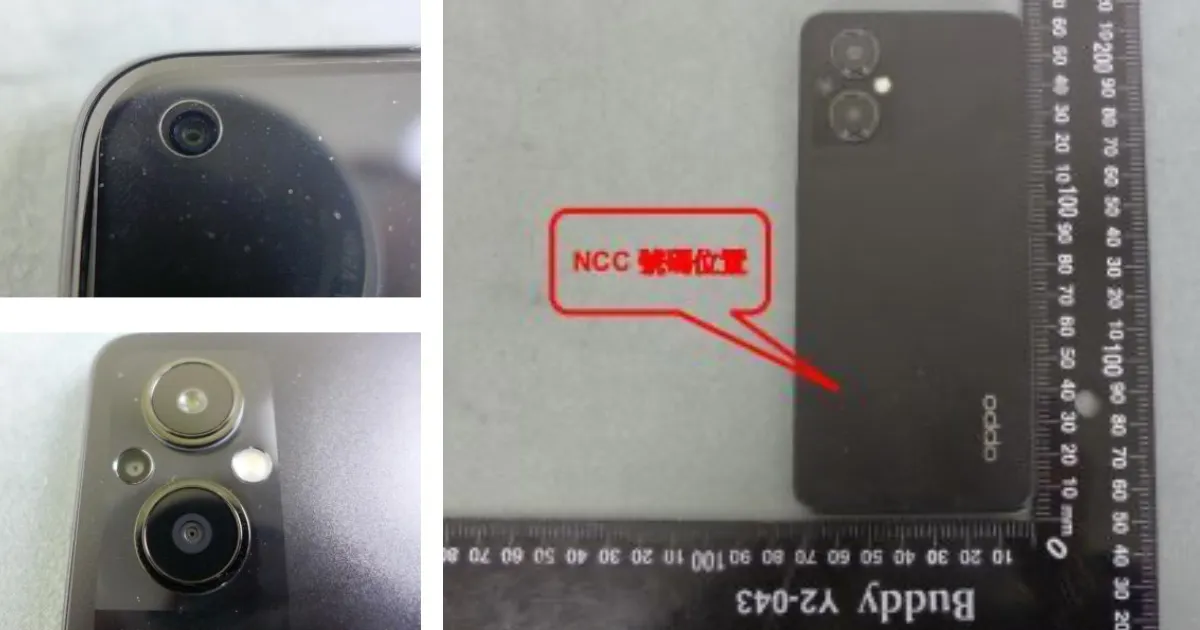
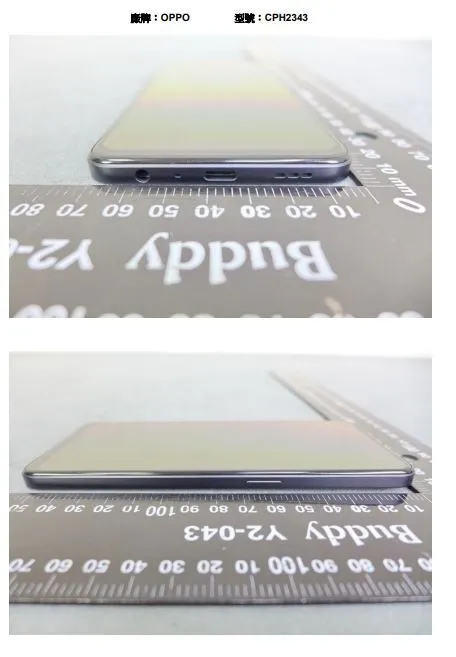
The Reno 8Z has previously made appearances on the NBTC and Indonesia Telecom certification websites. Now, the device has made an appearance on the NCC certification website revealing live images of the smartphone.
OPPO Reno 8Z NCC
1 of 2
Going by the images of the device, it appears to have a triple camera setup on the back with a circular LED flash module. The front of the phone will have a camera cutout on the top left and will feature thin bezels. It has curved edges and features the power button on the right side while the volume rocker is located on the left. The bottom has a speaker grille, a USB Type-C port, and a 3.5mm audio jack.
Other than that, the certification states that the phone has the model number CPH2457 and features 33W fast charging. Previous leaks have revealed that the phone will come housing a battery with the model number BLP907. The earlier NBTC certification confirms that it has a 4,5000mAh capacity.
Unfortunately, this is the extent of information currently available on this upcoming smartphone. However, it is expected to launch soon, so stay tuned for more details.
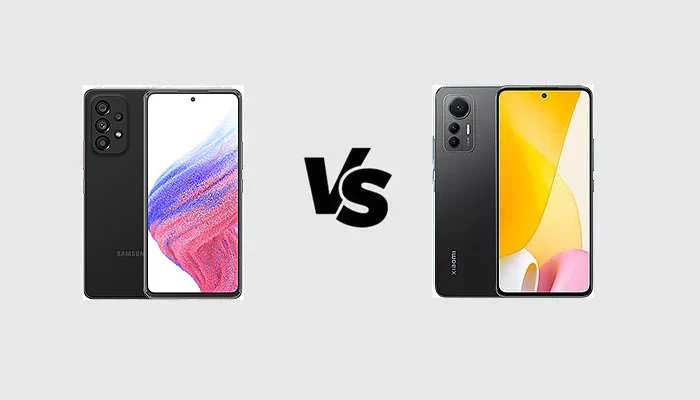
Due to the Redmi and POCO sub-brands, it became rare to see an affordable phone released by Xiaomi. But it still happens every year and a few days ago it happened again. We are talking about the launch of the Xiaomi 12 Lite: a new mid-ranger that will be soon available in the global market too. Given its imminent launch in the global market, we think it is worth comparing it with the phones from the best brands available in the same price range. We chose the Samsung Galaxy A53 5G because Samsung is the world’s most important smartphone manufacturer in terms of sales and this device reached good street prices in the global market. This is a comparison between the specifications of the Samsung Galaxy A53 5G and the Xiaomi 12 Lite.
Samsung Galaxy A53 5G vs Xiaomi 12 Lite
Samsung Galaxy A53 5G
Xiaomi 12 Lite
DIMENSIONS AND WEIGHT
159.6 x 74.8 x 8.1 mm,
189 g
159.3 x 73.7 x 7.3 mm,
173 g
DISPLAY
6.5 inches, 1080 x 2400 pixels (Full HD+), Super AMOLED
6.55 inches, 1080 x 2400 pixels (Full HD+), AMOLED
Triple 108 + 8 + 2 MP, f/1.9 + f/2.2 + f/2.4
32 MP f/2.5 front camera
BATTERY
5000 mAh, fast charging 25W
4300 mAh, Fast Charging 67W
ADDITIONAL FEATURES
5G, dual SIM,IP67 certification
5G, dual SIM
Design
Which of these two phones has the best design? In my opinion, the Xiaomi 12 Lite wins. Unfortunately, these handsets are not built with premium materials, unlike high-end phones. They come with a plastic black and a plastic frame like most of the affordable phones out there. The Xiaomi one wins because it is thinner and lighter, but also because its screen to body ratio is higher. On the other hand, the Samsung Galaxy A53 5G has a better build quality: besides having a front glass protected by Corning’s Gorilla Glass 5, it is water resistant and dustproof thanks to the IP67 certification, allowing you to put it underwater up to one meter deep for a max time of 30 minutes. The Xiaomi does not come with any protection against water and dust.
Display
On paper, it looks like the Xiaomi 12 Lite has the most advanced display. It is an AMOLED display that is able to show up to 68 billion colors with a diagonal of 6.55 inches, a Full HD+ resolution of 1080 x 2400 pixels, a 120 Hz refresh rate, Dolby Vision support, and the HDR10+ certification. It has a very high peak brightness and an in-display fingerprint reader as well. Despite looking inferior, the Samsung Galaxy A53 5G still comes with a great display: a 6.5-inch panel with AMOLED technology, a Full HD+ resolution, Gorilla Glass 5 protection by Corning, a 120 Hz refresh rate, and an in-display fingerprint scanner. Both these phones come with stereo speakers for a good audio experience, but they sport virtual proximity sensors which are not the best.
Specs & Software
The Xiaomi 12 Lite is powered by the Snapdragon 778G mobile platform by Qualcomm: a chipset built at 5 nm with an octa-core architecture composed of two Cortex A78 CPUs running at a max frequency of 2.4 GHz, six Cortex A55 CPUs running at 2 GHz, and a Mali G68 GPU. The SoC is paired with up to 8 GB of RAM and up to 256 GB of internal storage which can be furtherly expanded with a micro SD slot. Despite being manufactured with an inferior production process (6 nm vs 5 nm), the Snapdragon 778G chipset is actually superior in terms of CPU and GPU performance to the Samsung Exynos 1280 found on the Samsung Galaxy A53 5G. And, given that the highest-end memory configuration of the A53 is exactly the same as its rival, the Xiaomi device wins the hardware comparison. Note that it even comes with better connectivity as it includes Wi-Fi 6 and Bluetooth 5.2, while the Samsung comes with Wi-Fi 5 and Bluetooth 5.1. These phones run Android 12 out of the box, with highly customized user interfaces on top: One UI and MIUI.
Camera
The best camera setup belongs to the Samsung Galaxy A53 5G. On the rear side, it has a quad camera setup including a 64 MP main camera with OIS, a 12 MP ultrawide sensor, and a pair of sensors for macros and depth calculation, with 5 MP resolutions. With the Xiaomi 12 Lite, you get a 108 MP main camera but without OIS, an inferior 8 MP ultrawide sensor, and a 2 MP macro lens. Both the handsets feature a 32 MP front camera, but on the Samsung Galaxy A53 5G, the front camera is able to record videos with a 4K resolution.
If you are searching for the longest battery life, then you should opt for the Samsung Galaxy A53 5G without thinking twice, simply because it has a bigger battery, with a capacity of 5000 mAh. The Xiaomi 12 Lite has a smaller battery with a capacity of 4300 mAh, but it charges quicker thanks to 67W fast charging.
Price
The starting price of the Xiaomi 12 Lite in the global market will be $400 or €400 for the base variant with 6 GB of RAM and 128 GB of storage, while the Samsung Galaxy A53 5G can currently be purchased for less than €320 or $320 thanks to online street prices. Which one would you pick?
Samsung Galaxy A53 5G vs Xiaomi 12 Lite: PRO and CONS
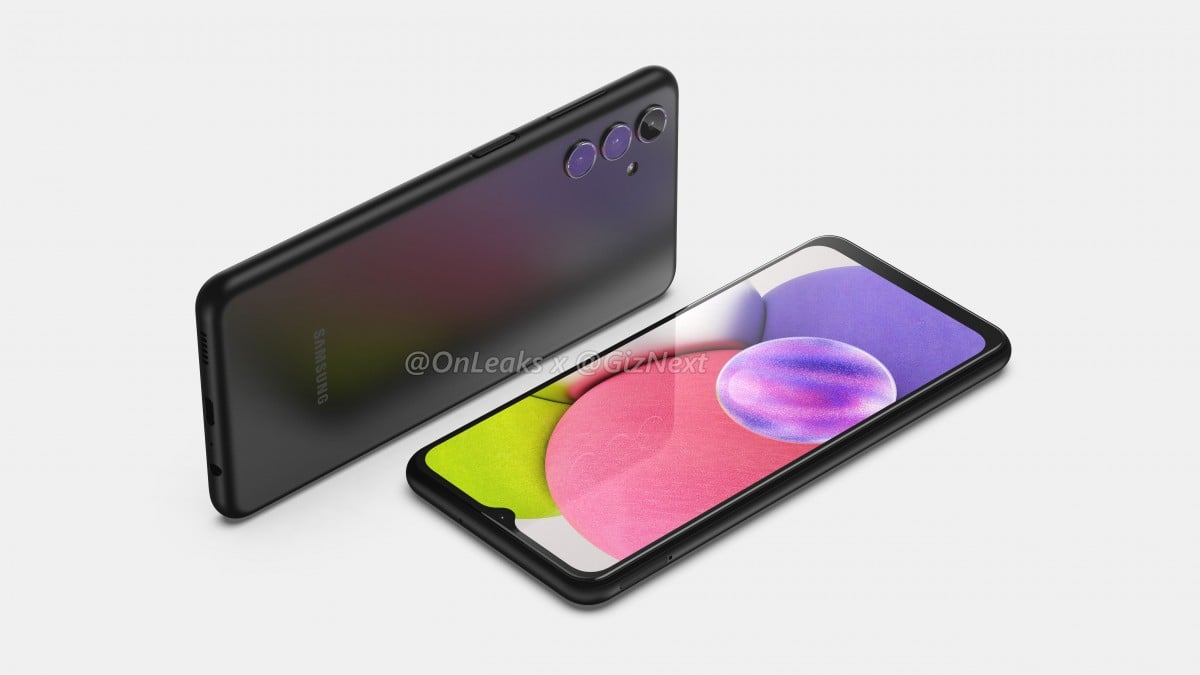
Samsung is gearing to launch multiple entry-level devices in its Galaxy A series soon. These devices are expected to be the Samsung Galaxy A04s 5G, the Galaxy A04s, and the Galaxy A04.
Samsung Galaxy A04s CAD renders by Steve Hemmerstoffer
The Galaxy A04s has already been spotted on the BIS certification site hinting at an upcoming Indian launch. Now, ahead of the launch, 91mobiles Hindi has revealed the pricing of the 5G variant of the device.
According to the report, the Galaxy A04s 5G will be priced between ₹10,000 ($125) and ₹11,000 ($137) in India. If this pricing turns out to be true, the Galaxy A04s 5G will be among the most affordable 5G smartphones in the Indian market.
The specifications of the smartphone are still under wraps, however, the 4G variant is rumored to have a polycarbonate back along with a side-mounted fingerprint scanner. It will likely arrive with a notched LCD display, a 3.5mm headphone jack, a USB Type-C port, and the Samsung Exynos 850 chipset under the hood.
Coming back to the Galaxy A04s 5g, the device is expected to sport a dual-camera setup and an LCD panel. Its launch is predicted to take place between the months of August and September. Stay tuned for more updates on the matter.
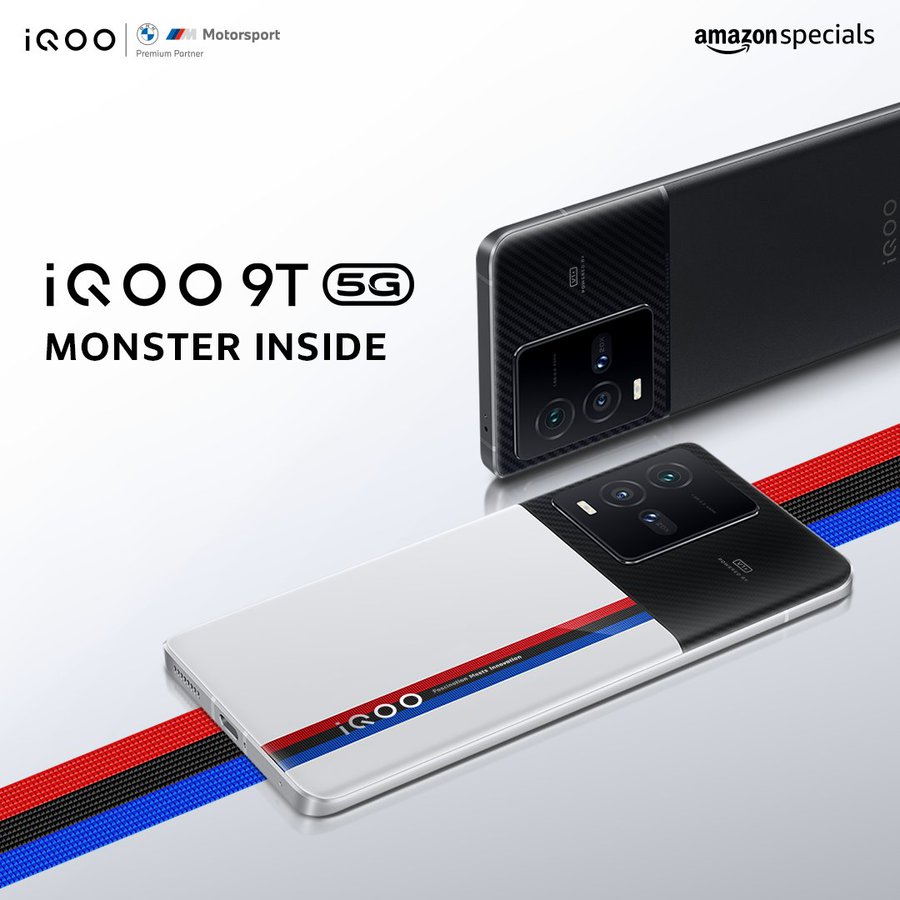
iQOO is gearing up to soon launch the iQOO 10 series of flagship devices in China. While the Chinese launch event for the iQOO 10 and iQOO 10 Pro is set for July 19, India is expected to get the iQOO 9T by the end of this month. According to rumors so far, the device is likely a rebranded iQOO 10.
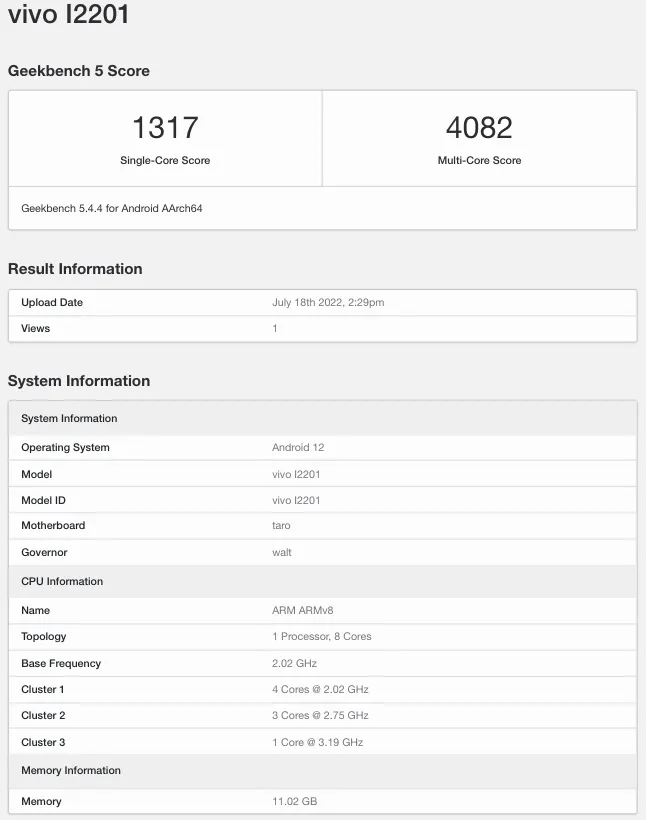
Now, ahead of its launch, the iQOO 9T has made an appearance on the benchmarking website Geekbench, revealing its performance and key specifications. So, let’s take a look.
iQOO 9T Geekbench
The listing reveals that the smartphone has the model number I2201 and runs on an octa-core chipset with clock speeds ranging from 2.02GHz to 3.19GHz. The listing also reveals that the device has the Adreno 730 GPU which clarifies that the chipset is indeed the newly launched Snapdragon 8+ Gen 1. Other than that, the device has 12GB of RAM and runs on the Android 12-based operating system.
Coming to the benchmark results, the device gets 1317 points on the single-core test and 4082 points on the multi-core test of Geekbench 5. Going by these scores, the iQOO 9T will likely provide top-notch performance, whether it be multi-tasking or gaming scenarios.
Unfortunately, the listing does not reveal any further details, however, going by previous leaks, the smartphone is expected to launch with a 6.78-inch AMOLED FHD+ display with a 120Hz refresh rate and a high touch sampling rate.
The Snapdragon 8+ Gen 1 chipset of the smartphone will be paired with 8 GB / 12 GB of LPDDR5 RAM, and up to 256 GB of UFS 3.1 storage. It is expected to have a 4,700mAh battery along with 120W fast charging. For optics, the device is expected to carry a 50-megapixel Samsung GN5 triple camera unit and a 15-megapixel front camera unit. The device is also rumored to carry Vivo’s V1+ image processing chip.
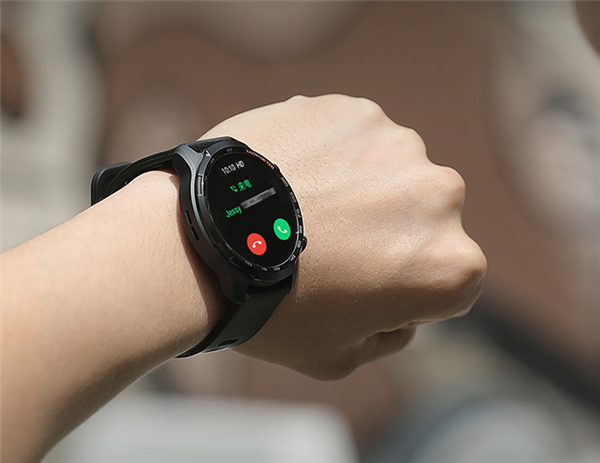
The Mobvoi TicWatch with Wear OS is rumored to be the next Wear OS device on the line. An email purportedly from Mobvoi looking for reviewers/testers indicated that a new TicWatch is about to be released. Multiple people have reported receiving emails on Reddit.
The new smartwatch will have a longer battery life than its predecessors, as well as an improved design. It will support NFC payment and this will be compatible with Google Pay. The new watch will also have IP68 waterproof protection, GPS, speaker, and microphone. It will also feature the IHB/AFiB detection and fatigue assessment for a more nuanced performance.
For comparison, the current Wear OS TicWatch Pro 3 Ultra with Snapdragon Wear 4100 has 1GB of RAM. Its 577mAh battery delivers 72 hours (3 days) of normal activity on a single charge. There are health and fitness sensors including heartbeat/ atrial fibrillation and stress detection capabilities on the Pro 3 Ultra model. The TicWatch Pro models have retained a similar design so far and the new device may not be too different. These models have two side buttons, no rotating bezels, and a large display. The new flagship TicWatch may just be a refreshed iteration of its predecessors.
It is not yet clear what degree of improvements will be present in the new flagship model. Its flagship moniker indicates however that there will be significant improvements across several aspects. There are no words yet on the release date and pricing for the smartwatch.
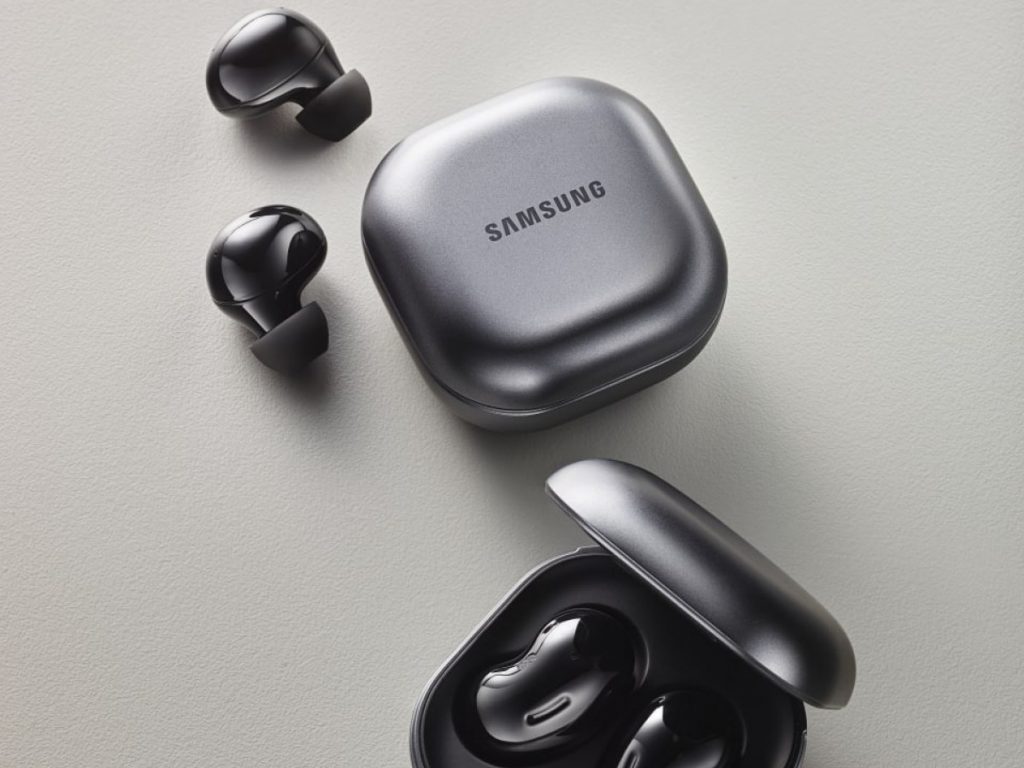
The Samsung Galaxy Buds lineup offers some impressive features and delivers an amazing audio experience in comfort. A lot of the great features of the device emanate from the array of impressive apps that support the hardware. These feature-rich apps can be installed on your smartphone and help to better configure the earbuds.
The problem is that multiple Galaxy Buds users have experienced app crashes when using their devices. Owners of the Galaxy Buds and Galaxy Buds Pro have had to grapple with app crashes for several days. There have been multiple complaints about apps crashing on Samsung’s customer forums and on Reddit relating to both models. The issues also prop up even when the device is not in use. It is observed that the issue is general and not smartphone-specific. This widespread bug is also reported to affect the Galaxy Watch4 plugin. Things are much worse for users who have both the Galaxy Buds and Watch4 apps installed on their phones.
It is expected that the next Samsung update could sort out the glitch. A moderator in the forum says that an update will fix the problem, and it is coming soon. In the meantime, the moderator advises that the latest version of the app (Galaxy Buds version 4.1.22051251) could be reinstalled on your phone. Users should first check that the Nearby devices’ permission is granted.
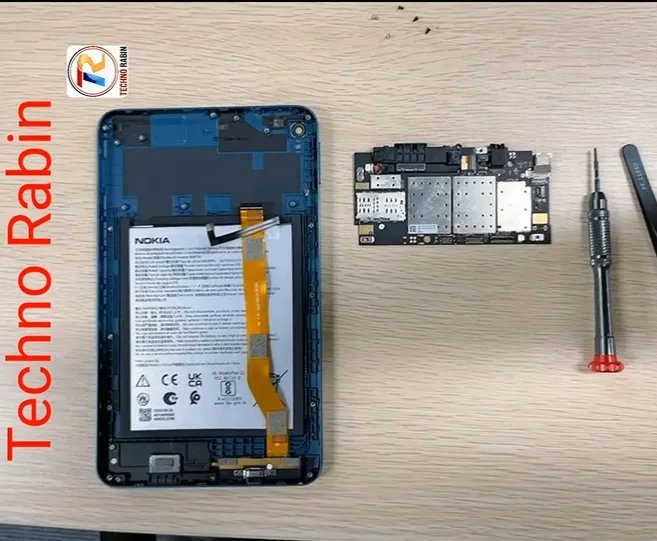
A disassembly video of the Nokia T10 has revealed several aspects of the device including its polycarbonate body. The video posted by Techno Rabin shows that the T10 can be easily disassembled with a few tools including a heat block. The polycarbonate body holds the 8-inch HD screen with glue in between.
The removal of the screen allows for straightforward access to the battery, motherboard, and other internal components of the tablet. Although an aluminum body could have been better, the T10 remains sturdy and could compare with its predecessor, the T20. Techno Rabin also provided an assembly video of the Nokia T10. It provides a guide to putting the device together after a teardown.
The teardown video of the T10 indicates it could have a high repairability score, more so it was also easily assembled. There is some concern about its polycarbonate body although an aluminum covering is also a possible addition. The tablet could retain the sturdiness of its predecessor. Nokia has carved a rugged identity for itself and would hope to sustain it with the T10.
The Nokia T10 was launched last week together with other Nokia offerings. It is a smaller version of the Nokia T20 with 4GB/64GB of RAM/ storage. It is powered by the Unisoc Tiger T606 chip and comes with a 5,250mAh battery. The device supports 10W fast charging and connectivity is via WiFi or 4G cellular. The T10 comes bundled with Google kids space, entertainment space, and Netflix HD certification. The T10 will be available in the UK by August and is priced between $153 and $177.
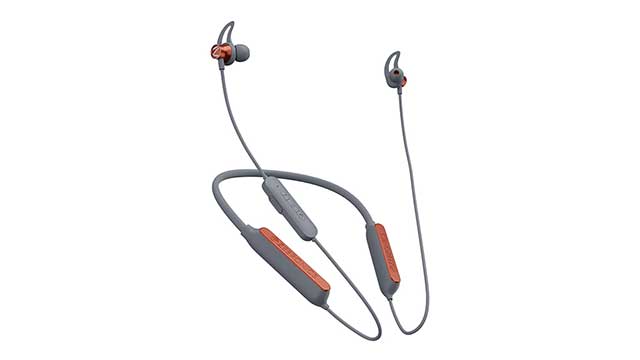
Zebronics has introduced its Jumbo wireless neckband headset with up to 160 hours of playback in India. The Zebronics Jumbo wireless neckband sports an in-ear and flexible design. The device is designed for optimal comfort and pleasure, as well as durability. The new Zebronics neckband headset is priced at Rs. 1,399 (~$18) in India.
The new Jumbo wireless neckband features environmental noise cancelation (ENC) for the clarity of voice calls. A low latency gaming mode is also featured in the device for gaming applications. It provides flawless sound during gaming. The earphones are magnetic and easy to use simultaneously with two input devices. A flashing charging technology on the Jumbo wireless neckband and 10 minutes of charge yields up to 15 hours of playback. It also features voice assistant support.
The Zebronics Jumbo will go on sale on July 23 at the introductory price of Rs. 1,399 (~$18). Three color options will be available namely blue, black, and sunset. The package includes extra ear tips of various sizes to cover wider demography. You can get the Jumbo headset from Amazon India. Zebronics says the 160-hour playback of the Jumbo is a great feature of the device. Convenience, durability, and affordability all combine in the Zebronics Jumbo.
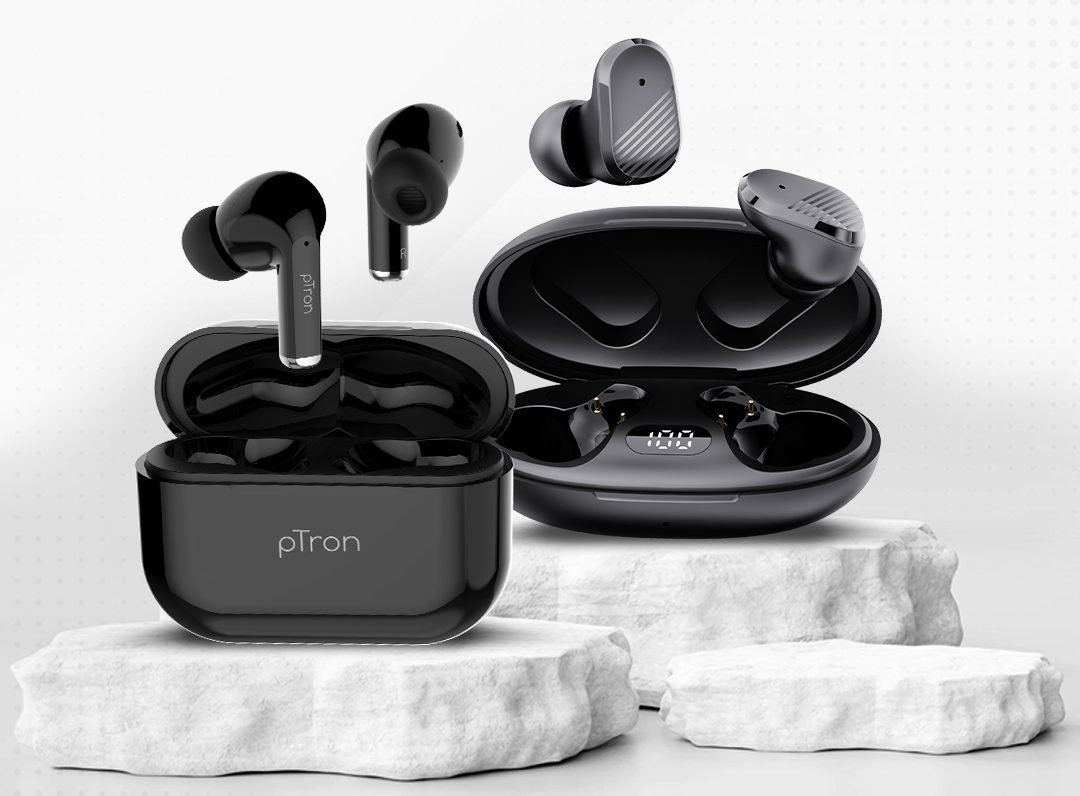
The Indian electronic manufacturer, PTron, best known for its value for money and quality products has just launched a couple of new TWS earbuds on the market called the Basspods P11 and Basspods P251+. So let’s check out their specs and features.
PTron Basspods P11 and Basspods P251+
Starting off with the design, the Basspods P11 comes with an in-ear bud design while the P251+ rocks the traditional stem design. Both of them feature silicone tips for a comfortable fit.
Both earbuds are powered by the Bluetooth 5.1 chipset, which provides faster pairing, a more stable connection, and low power consumption. The earbuds are IPX4 rated for sweat and splash protection and weigh about 4gms each. The smart touch-controlled earbuds with dual and mono bud support voice control to activate Alexa, Google Assistant, or Siri for a hands-free experience. These Basspods can be charged quickly using USB-C or compatible wireless chargers.
Coming to the difference between the Basspods P11 and the Basspods P251+, the P11 offers a total playback time of 24 Hours (including the charging case). On the other hand, the P251+ is claimed to have a total playback time of a whopping 50 hours of total playback. Additionally, the Basspods P251+ also gets access to environmental noise cancellation (ENC) for a crystal clear calling experience.
Pricing & availability
The PTron Basspods P251+ has a price tag of ₹999 and is available in Black and white color options. The Basspods P11 on the other hand has a price tag of just ₹799, and it is available in black color. Both the earbuds can be purchased off of Flipkart starting today.
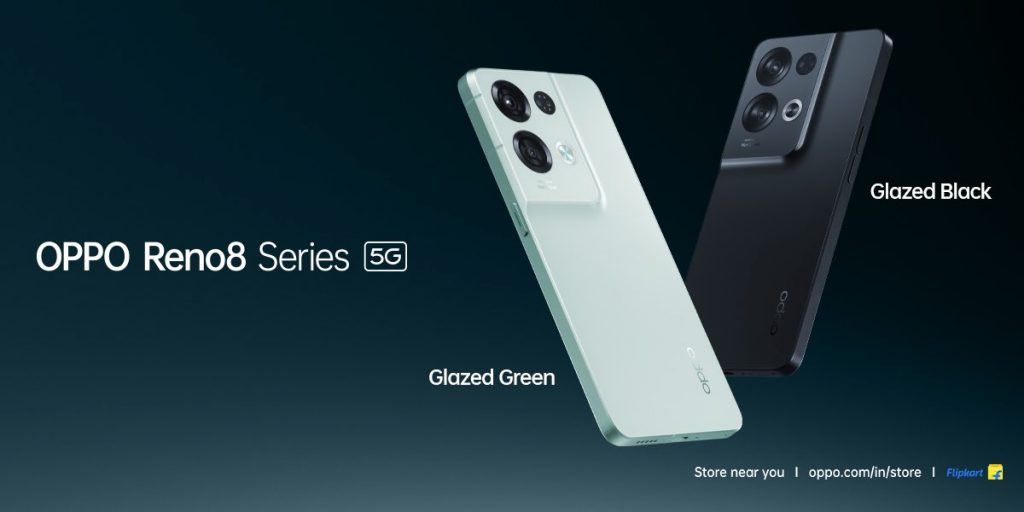
The Oppo Reno8 and Oppo Reno8 Pro smartphones have been launched in India signaling their global rollout. This follows the launch of the Reno8 Pro+ last May in China. The Indian version of the Reno8 is an upgraded version of the Chinese model. However, the Reno8 Pro is the same model as the Reno8 Pro+ in China. The two new phones for the global market are similar but come with different chipsets.
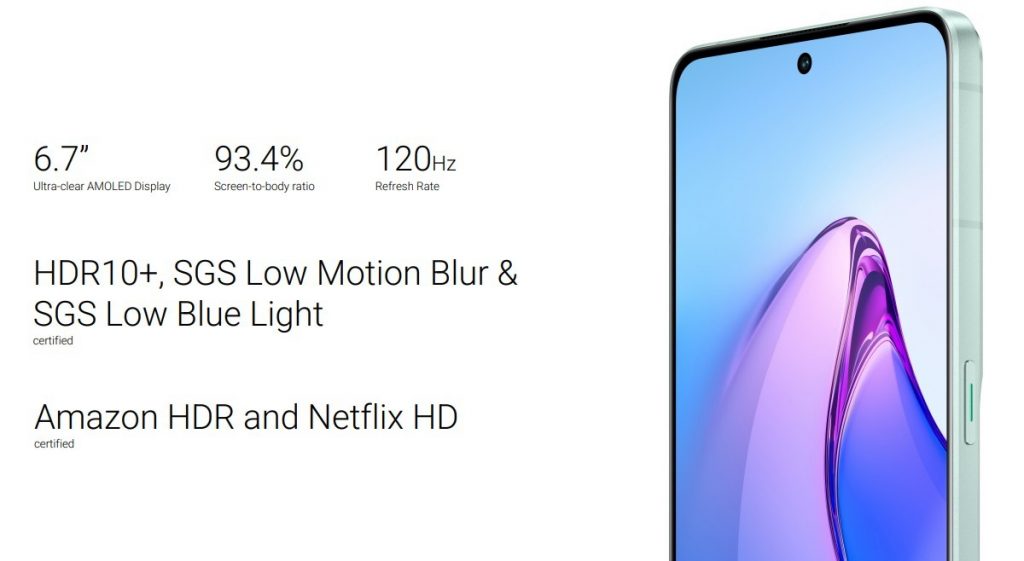
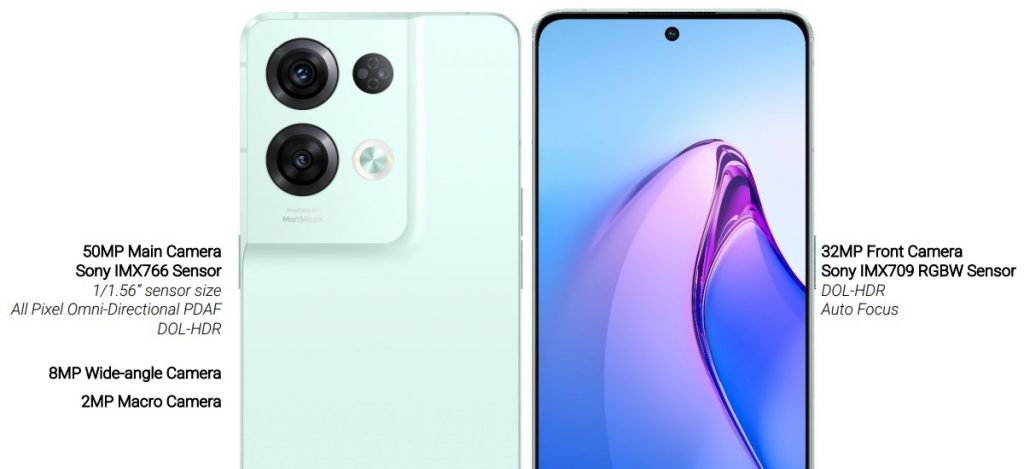
The Oppo Reno8 Pro is powered by the Dimensity 8100-Max chipset, while the Dimensity 1300 is present in the Reno8. The Dimensity 8100 is a 5nm chip with four Cortex-A78 cores, four A55, and a Mali-GC610 MC6 GPU. Excellent image processing is accomplished with Oppo’s in-house MariSilicon X chip.
The Reno8 Pro packs a 6.7” AMOLED screen with a 120Hz refresh rate and HDR10+ capability. You can stream high-quality videos from Amazon and Netflix using the flagship Reno8 Pro model.
OPPO Reno8 Pro
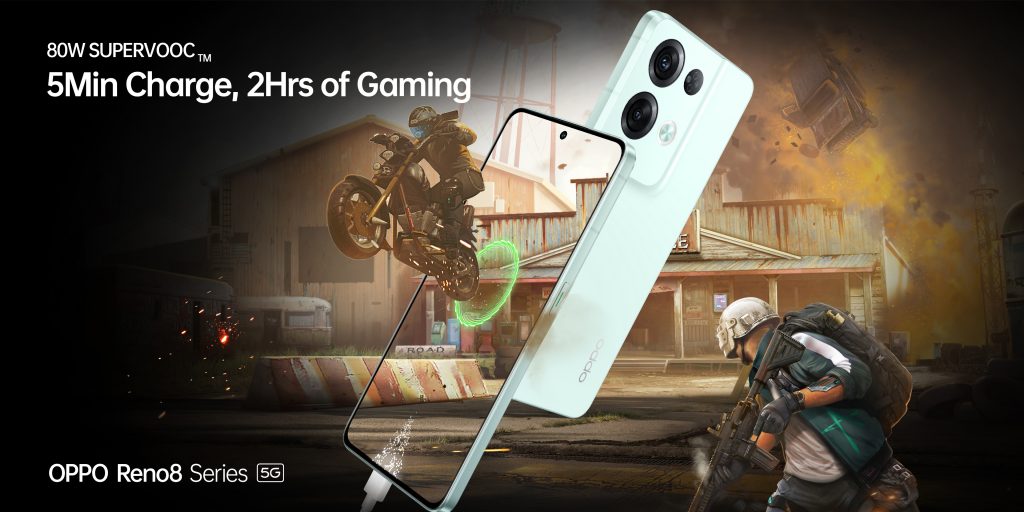
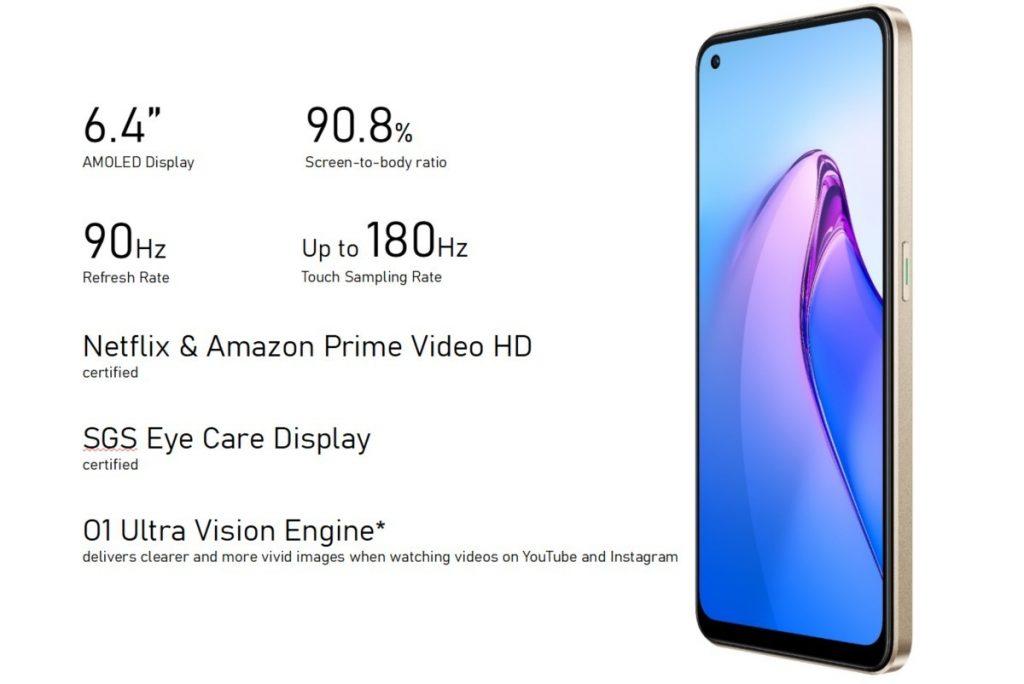
The Reno8 Pro can also be used as a gaming smartphone. PUBG game can run on the device with a 90Hz refresh rate, which is a first for the Reno series. The game also features Background Updates and installation. The Background Update feature will not be available in Japan and India however. There are dual speakers and a linear motor for haptic feedback on the Pro model. It also has an extra layer of graphite on the glass back. The Reno8 has a 6.4-inch AMOLED display with a 90Hz refresh rate. It has a similar FHD resolution as the Pro model. It however lacks support for HDR10.
OPPO Reno8
The two global Reno8 models come with similar camera hardware although the Pro model performs better. A 50MP main camera sensor combined with an 8MP ultra-wide camera and a 2MP macro. At the front, we have a 32MP IMX709 sensor with an RGBW matrix for improved low-light performance. Both models will run on the Android 12-based ColorOS 12.1.
The Oppo Reno8 Pro is priced at Rs. 46,000 (~$575) in India for the 8GB/256GB RAM/internal storage option. The smartphone also comes with a 12GB RAM option. The Reno8 Pro will arrive in India on July 19, while the Reno8 comes on July 25. The Reno8 is priced at Rs. 39,000 (~$488).
We use cookies on our website to give you the most relevant experience by remembering your preferences and repeat visits. By clicking “Accept”, you consent to the use of ALL the cookies.
This website uses cookies to improve your experience while you navigate through the website. Out of these, the cookies that are categorized as necessary are stored on your browser as they are essential for the working of basic functionalities of the website. We also use third-party cookies that help us analyze and understand how you use this website. These cookies will be stored in your browser only with your consent. You also have the option to opt-out of these cookies. But opting out of some of these cookies may affect your browsing experience.
Necessary cookies are absolutely essential for the website to function properly. This category only includes cookies that ensures basic functionalities and security features of the website. These cookies do not store any personal information.
Any cookies that may not be particularly necessary for the website to function and is used specifically to collect user personal data via analytics, ads, other embedded contents are termed as non-necessary cookies. It is mandatory to procure user consent prior to running these cookies on your website.

 Apple was able to maintain the second best market share among all phone manufacturers with 17 percent thanks to the continued high demand for the iPhone 13 series. Xiaomi, Oppo, and Vivo, all Chinese brands, came in third, fourth, and fifth, respectively. The second quarter saw reductions in phone shipments for each of these companies, leaving them with respective market shares of 14% (Xiaomi), 10% (Oppo), and 9% of the global market (Vivo).