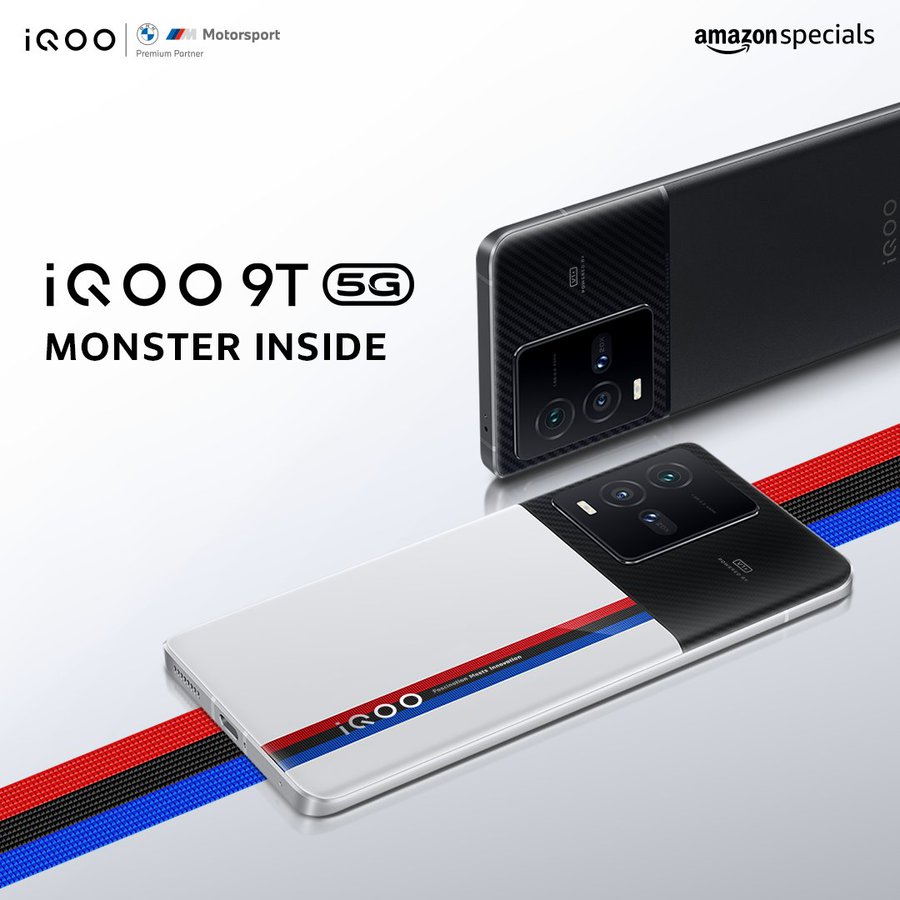
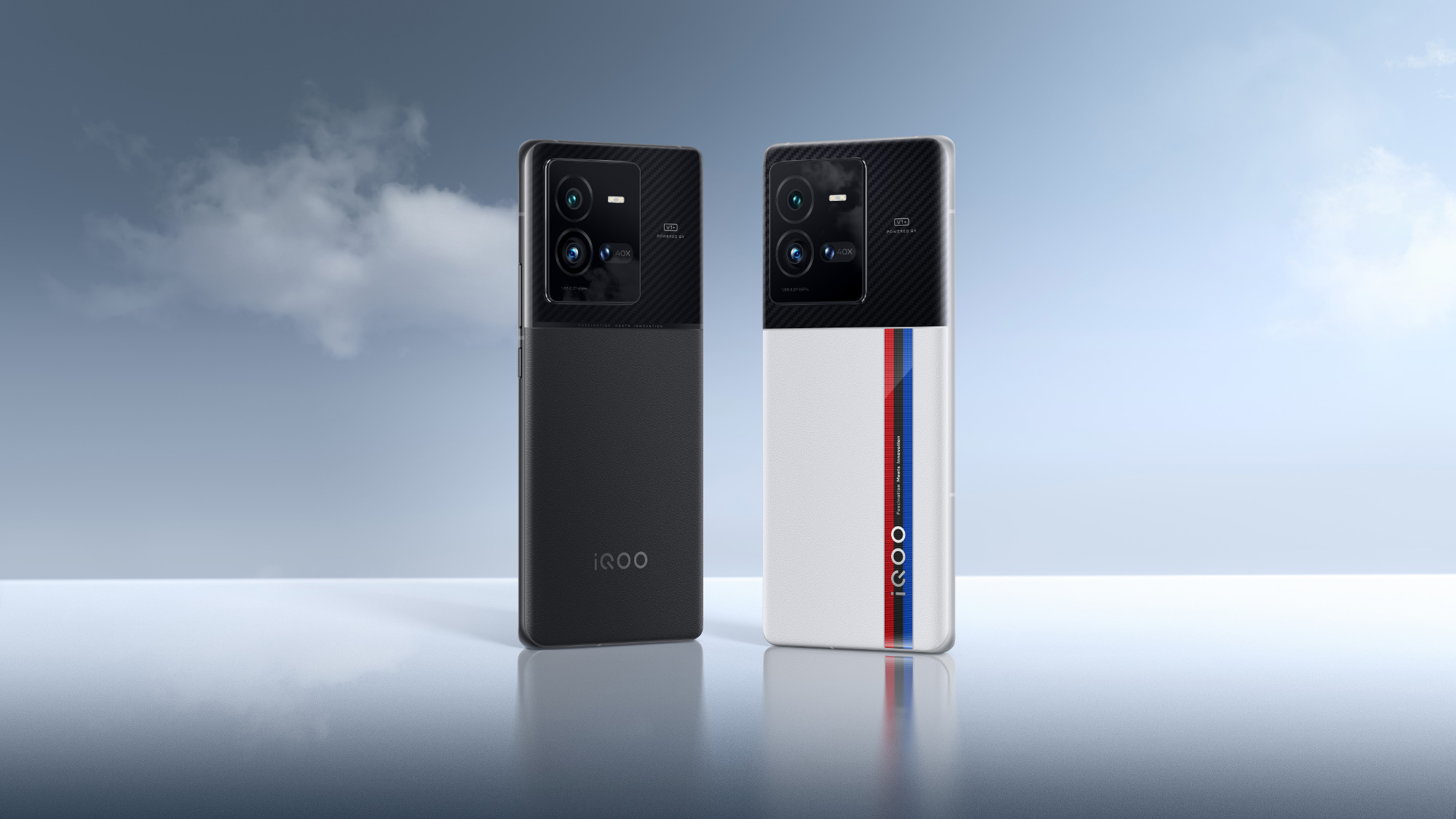
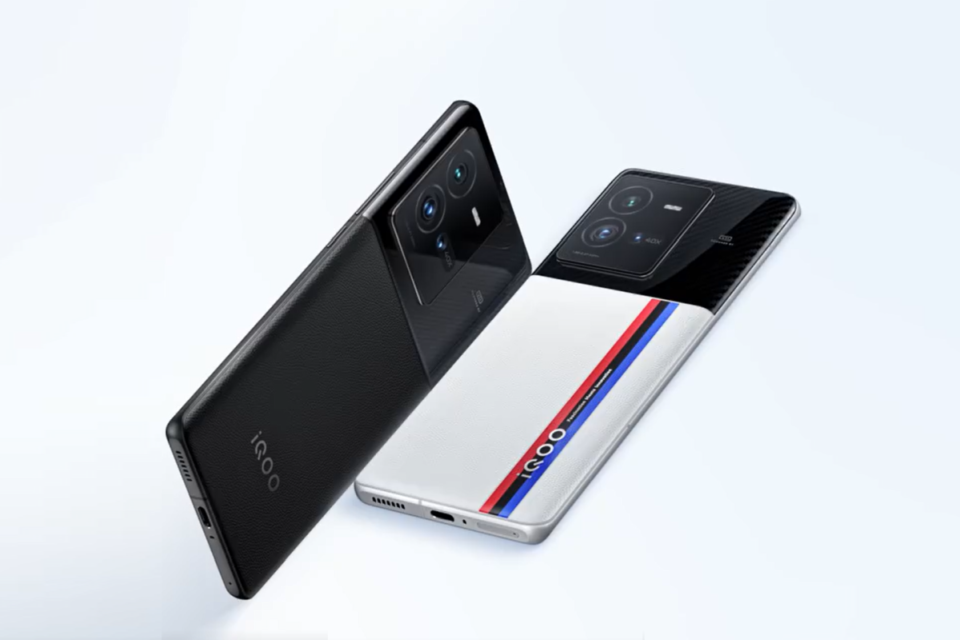
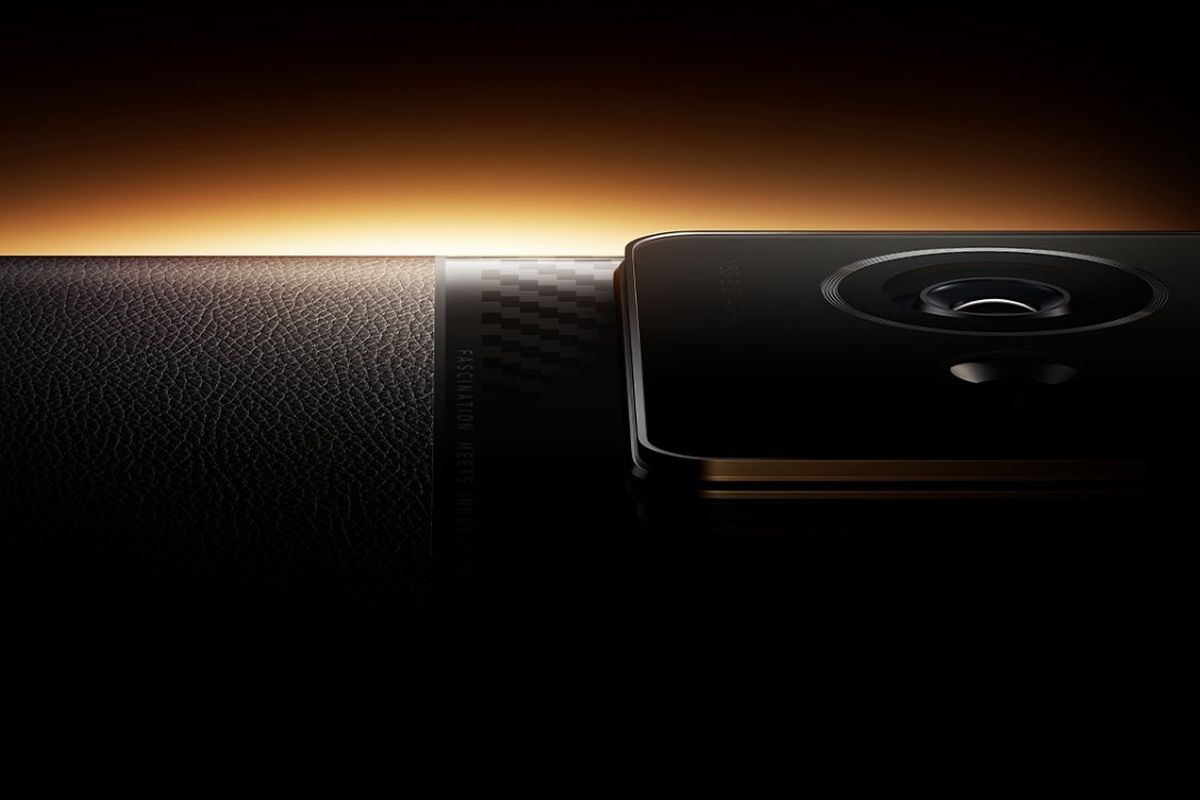
At present, iQOO is teasing its upcoming flagship phone, the iQOO 9T 5G, in India. The device is rumored to go official by the end of this month. The Chinese manufacturer has already revealed the design of the white variant on its landing page, which is available on Amazon India. A recent tweet from the brand gives the first look at the black variant of the 9T.
As can be seen in the image, the top portion of the iQOO 9T 5G’s back panel has a glossy and textured appeal. It houses a camera module and the V1+ branding. The remaining back panel has a matte finish. The top portion of the phone has a microphone and another hole, which appears to be housing an IR blaster.
The bottom view of the device reveals a speaker grille, a USB Type-C port, and a SIM card slot. The left side of the phone appears to be barren, whereas its right side could be fitted with a volume rocker and a power key. The device is equipped with a metallic frame.
iQOO is yet to divulge the specifications of the phone. However, rumors surrounding the device suggest that it could be a rebranded version of the iQOO 10, which is set to launch tomorrow (July 19) in China.
Previous reports have revealed that the iQOO 9T 5G will be equipped with a 6.78-inch AMOLED FHD+ display that offers a 120Hz refresh rate, a Snapdragon 8+ Gen 1 chipset, 8 GB / 12 GB of LPDDR5 RAM, 256 GB of UFS 3.1 storage, and a 4,700mAh battery with 120W fast charging support. It will house a 16-megapixel front-facing camera and a 50-megapixel Samsung GN5 triple camera unit.
Samsung is expected to announce the Galaxy Z Fold 4 and Z Flip 4 in August. However, ET News(via), a South Korean publication has published a report on the Galaxy Z Fold 5 and Z Flip 5 that will debut in 2023. The report has revealed the chipset, camera, and sales expectations of both devices.
The publication has learnt through industry sources that the Galaxy Z Fold 5 and Z Flip 5 will be powered by the Snapdragon 8 Gen 2. Previous reports have revealed that the SD8G2 chip may debut as early as November this year.
The Galaxy Z Fold 5 will have a triple camera unit featuring a 50-megapixel ISOCELL GN3 camera and a 12-megapixel front-facing camera. The camera details of the Z Flip 5 are not known yet.
The report also reveals that Samsung is aiming to sell over 10 million units of the Z Fold 5 and Z Flip S in the second half of 2023. It is also forecasted that it will sell 8 million units of the Z Flip 5 and 2 million units of the Z Fold 5. As far as the Galaxy Z Fold 4 and Z Flip 4 are concerned, it is speculated that Samsung is hoping to achieve a combined sales target of 15 million units.
Samsung is yet to confirm the date of its next Unpacked event. However, recent leaks have revealed that Samsung’s next launch event will be held on Aug. 10. The event will see the arrival of three devices, such as the Galaxy Z Fold 4, the Z Flip 4, and the Galaxy Watch 5 / Watch 5 Pro. These devices are expected to go on sale by Aug. 26.
The brand has been teasing the launch of the Redmi K50i on its official social media accounts for a while, and currently, with what is available online so far, we have rounded up all the details that you should know about the Redmi K50i before its official launch.
Redmi K50i Specifications
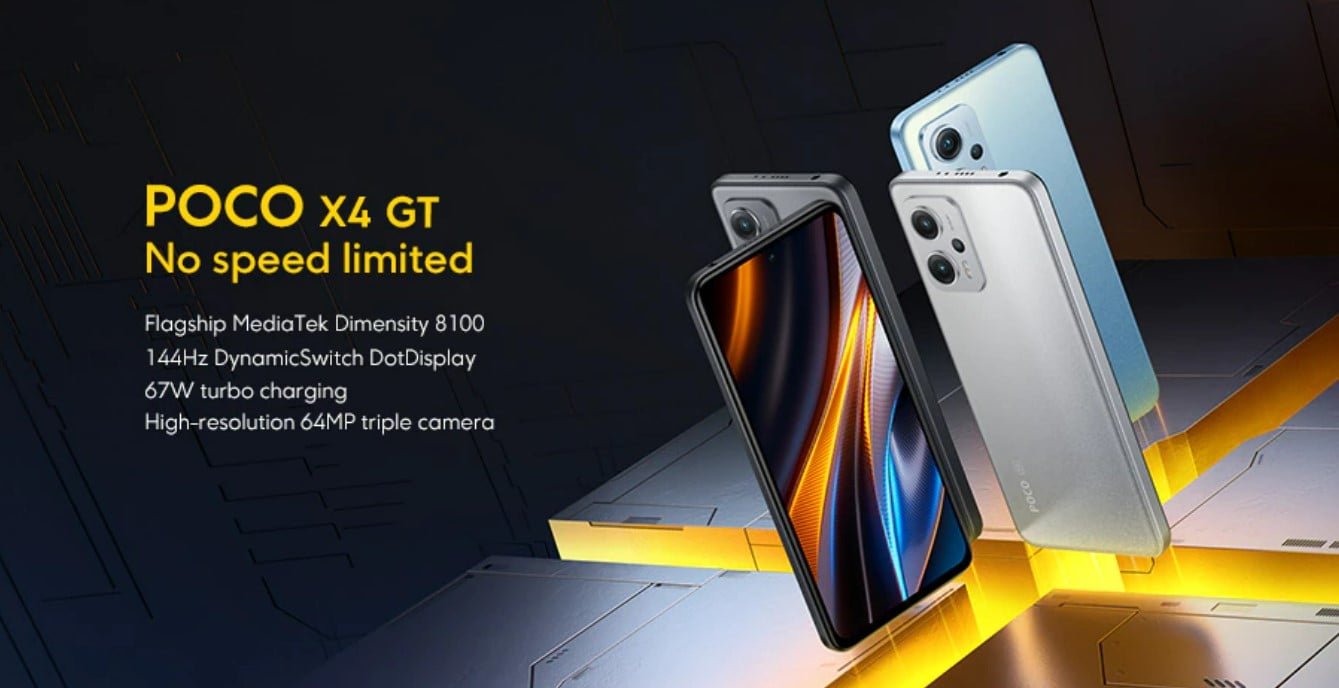
The Redmi K50i is essentially a rebranded Poco X4 GT (that is available globally) or a rebadged Redmi Note 11T Pro (that is sold exclusively in China) which both we saw launched earlier in the year 2022.
Powering the Redmi K50i is a 5080 mAh battery cell, with support for Xiaomi’s 67W fast wired charging solution, in which the 67W charger is included with the package. It will sport a 6.6-inch FHD+ IPS LCD screen with up to 144Hz refresh rate, up to 650 nits of peak brightness, and support for Dolby Vision content.
Cameras-wise, the Redmi K50i goes the conventional route with a triple camera setup at the rear and a selfie camera housed within the top centre punch hole in front of the display. The rear camera setup consists of a 64MP main sensor, an 8MP ultra-wide unit, and a 2MP macro snapper, while the front facing camera has a high resolution 20MP camera for selfies and video calls.
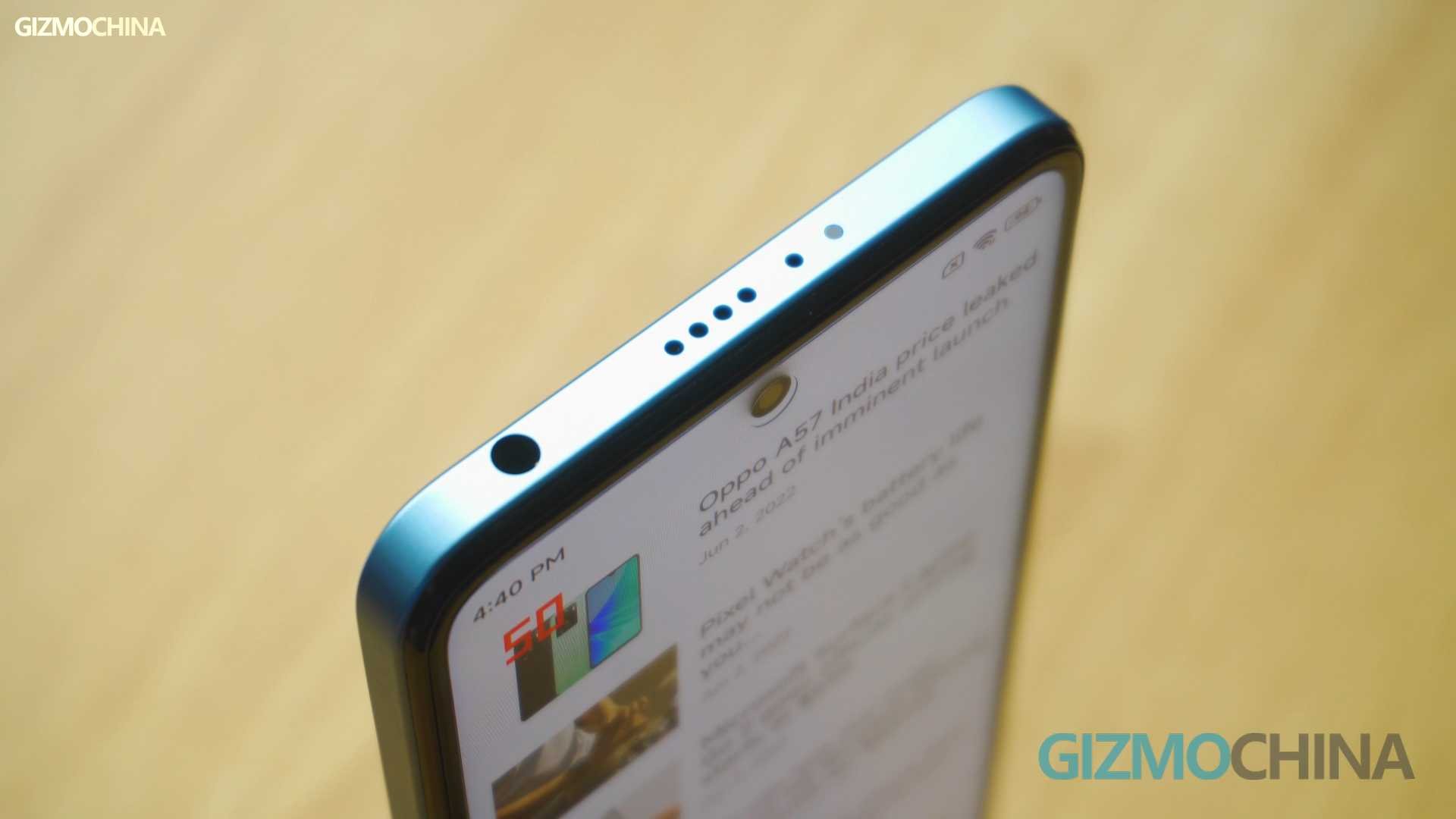
Redmi K50i with headphone jack
Buyers will also be glad to hear that the Redmi K50i still retains the 3.5mm headphone jack, whilst still featuring a dual stereo speaker setup with support for Dolby Atmos. The Redmi K50i is also expected to feature great haptics as well with its linear x-axis vibration motor. The device comes equipped with a side-mounted fingerprint sensor and runs MIUI 13 based on Android 12 out of the box.
Redmi K50i Pricing, Colors and Storage Options
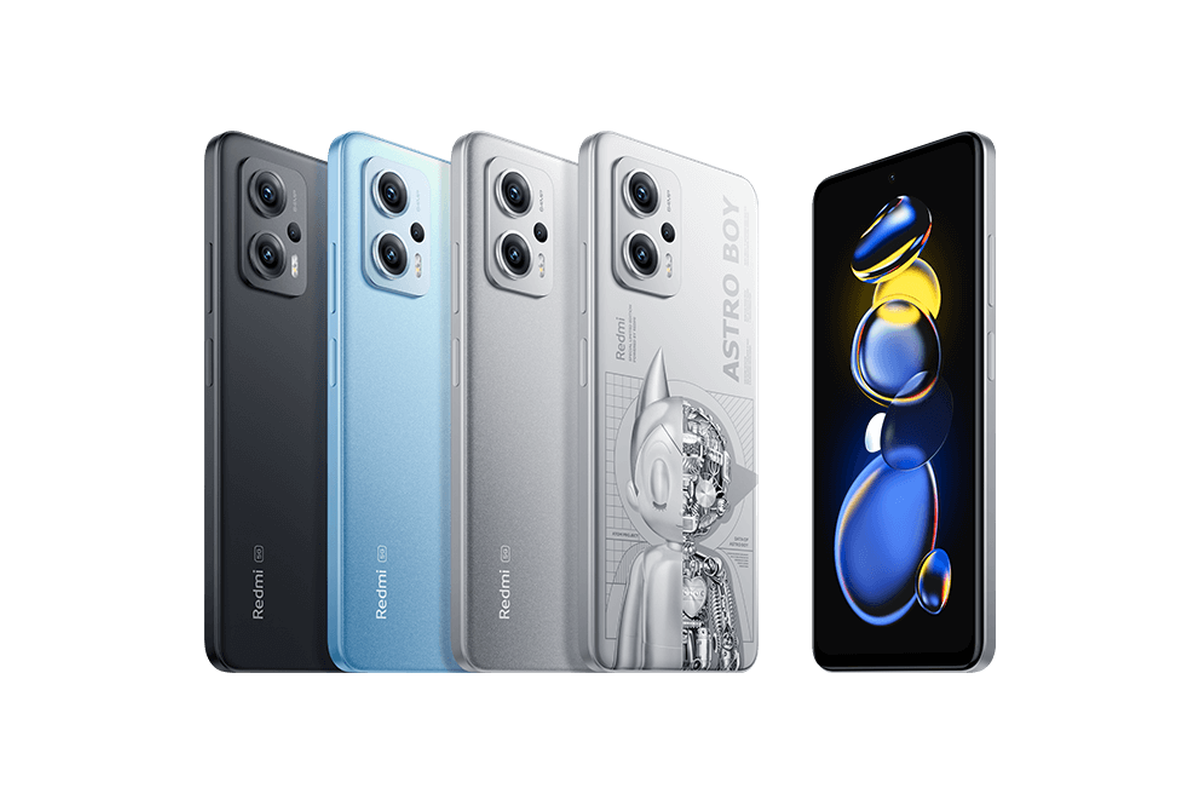
The Redmi K50i will be available in 3 show-stopping colour variants: Phantom Blue, Stealth Black, and Quick Silver.
Redmi Note 11T Pro series
And as for memory configurations, the device can be configured with up to 8GB of LPDDR5 RAM and up to 256GB of fast UFS 3.1 storage.
Pricing-wise, we have earlier reported on a leak that mentions that the base 6GB + 128GB variant will be priced between 24,000 INR and 28,000 INR (roughly 303 to 353 US Dollars), while the highest end 8GB + 256GB model will reportedly cost around 29,000 to 33,000 INR (roughly 367 to 417 US Dollars). The report also shared some availability details, like the Chinese tech giant partnering up with HDFC for instant discount offers for its customers.
For official pricing and availability of the Redmi K50i, stay tuned to our coverage of the July 20th launch here at Gizmochina, where we report the latest news on Chinese technology and gadgets!
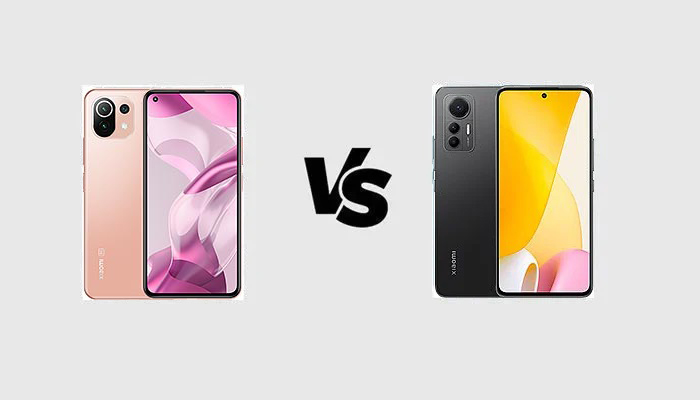
Finally, the Xiaomi 12 series has an affordable variant. The Xiaomi 12 Lite made its debut just a few days ago with several improvements compared to the previous generation. Last year, Xiaomi launched the Mi 11 Lite but then it was retired from the market due to the issues faced by Qualcomm with the Snapdragon 780G mobile platform. A few months later, the Xiaomi 11 Lite 5G NE went official: NE stands for New Edition and this phone is basically the Mi 11 Lite but with a different chipset, the Snapdragon 778G. It is called 11 Lite 5G NE instead of Mi 11 Lite 5G NE because Xiaomi decided to ditch the Mi branding in the middle of last year. This is a comparison between the specifications of the Xiaomi 11 Lite 5G NE and its successor: the Xiaomi 12 Lite. Here, you will learn the main differences between these two mid-rangers.
Xiaomi 11 Lite 5G NE vs Xiaomi 12 Lite
Xiaomi 11 Lite 5G NE
Xiaomi 12 Lite
DIMENSIONS AND WEIGHT
160.5 x 75.7 x 6.8 mm,
158 g
159.3 x 73.7 x 7.3 mm,
173 g
DISPLAY
6.55 inches, 1080 x 2400 pixels (Full HD+), AMOLED
6.55 inches, 1080 x 2400 pixels (Full HD+), AMOLED
Triple 64 + 8 + 2 MP, f/1.8 + f/2.2 + f/2.4
20 MP f/2.2 front camera
Triple 108 + 8 + 2 MP, f/1.9 + f/2.2 + f/2.4
32 MP f/2.5 front camera
BATTERY
4250 mAh, fast charging 33W
4300 mAh, Fast Charging 67W
ADDITIONAL FEATURES
5G, dual SIM,IP53 certification
5G, dual SIM
Design
As already mentioned above, the Xiaomi 12 Lite is an upgrade of the Xiaomi 11 Lite 5G NE, but it can not be considered an upgrade if we talk about the design. Indeed, the older model comes with a thinner and lighter body, and it is one of the thinnest and most lightweight phones on the whole market. That is why it appears very attractive, more than the 12 Lite, even though it has a lower screen to body ratio. Further, it has the IP53 certification making it dust resistant and splash resistant. The Xiaomi 12 Lite has a higher screen to body ratio and, given that these phones feature the same display diagonal, it appears slightly more compact. But it is thicker and heavier than its internal rival. Unfortunately, these phones are not built with premium materials: they are made of polycarbonate for both the frame and the rear cover.
Display
At first glance, it seems like Xiaomi used the same display panel for these two phones. But there is an important difference: the Xiaomi 12 Lite is able to show up to 68 billion colors, while the Xiaomi 11 Lite 5G NE shows one billion colors. Further, the new model has an in-display fingerprint reader, while the fingerprint scanner of the predecessor is side-mounted. Last but not least, refresh rates are different: the 11 Lite 5G NE has just 90 Hz, while the 12 Lite reaches 120 Hz. For the rest, they are pretty much the same: we are talking about AMOLED panels with a diagonal of 6.55 inches, a Full HD+ resolution of 1080 x 2400 pixels, Dolby Vision support, the HDR10+ certification, and the HDR10+ certification. The displays are protected by Corning’s Gorilla Glass 5.
Specs & Software
The hardware department did not change from last year, with one single small exception: the micro SD slot. Xiaomi ditched it on the 12 Lite, while you get a micro SD slot on the Xiaomi 11 Lite 5G NE. For the rest, there are no differences. These phones are powered by the Snapdragon 778G mobile platform: a processor with an octa-core architecture built at 6 nm and composed of four Kryo 670 cores running at a max frequency of 2.4 GHz, four Kryo 670 cores running at a frequency of 1.8 GHz, and an Adreno 642L GPU. The SoC is paired with up to 8 GB of RAM and up to 256 GB of UFS 2.2 internal storage, but there are other configurations with 6 or 8 GB of RAM and 128 GB of native storage. Given that it is a phone released in 2021, the Xiaomi 11 Lite 5G NE runs Android 11 out of the box customized by MIUI 12.5, while the new model runs Android 12 customized by MIUI 13.
Camera
There is an upgrade even when it comes to the camera setups. The new Xiaomi 12 Lite features a 108 MP main camera, an 8 MP ultrawide sensor, and a 2 MP macro camera. The main camera found on this device is better than the one found on its predecessor with its 64 MP resolution. The new device even comes with a better front camera, with a 32 MP resolution instead of just 20 MP.
Even though it remains pretty thin and lightweight, the Xiaomi 12 Lite brings a bigger battery, with a capacity of 4300 mAh. Given that the rest of the components are similar, it will surely offer a longer battery life. It even charges quicker thanks to 67W fast charging, while the Xiaomi 11 Lite 5G NE stops at 33W.
Price
The Xiaomi 12 Lite will be officially available in the global market with a starting price tag of $400/€400, while you can currently find the Xiaomi 11 Lite 5G NE for less than €300 or $300 thanks to online street prices. Now you know the differences: the Xiaomi 12 Lite brings a slightly better display, a bigger battery, and a better camera, but it loses that very thin design and the micro SD slot found on its predecessor. Which one would you pick?
Xiaomi 11 Lite 5G NE vs Xiaomi 12 Lite: PRO and CONS
The new Casio G-Shock is an eye-catching watch with an orange design looking like a NASA spacesuit. The G-Shock draws color comparisons with NASA’s iconic orange-colored spacesuits used in various missions. Astronauts wear the suit when in ascent or entry aspects of space flights. The strategic orange color of the suits is to enhance their rescue if they are to bail out from the capsule.
The new Casio watch is inspired by the NASA suit and mimics some of the features of the real suit. It has a black dial that represents the black visor on the helmets of astronauts when they wear the spacesuit. The thin blue line on the dial also mimics the blue accents on the spacesuit. The band loop of the watch has an American flag design while the back casing has an engraved astronaut.
Casio has a history of active engagement with NASA over the years. The G-Shock is among a select collection of timepieces that NASA has approved for use in its space shuttle and aboard the International Space Station (ISS). The current model is the third NASA-branded model that Casio has released so far. An all-white model and a black+white model are the predecessors to the orange-colored G-Shock. The new Casio G-Shock is priced at $170 on a limited offer. It is the most expensive of the trio of NASA-branded G-Shock watches.
The orange G-Shock is available currently on the Casio website. Casio says it comes with advanced technical capabilities including Tough Solar Technology and Multi-Band 6 Atomic Timekeeping. The run time of the watch on a single charge is approximately 10 months of normal use and 22 months on standby.
Oppo is holding a major launch event in India this week to reveal the company’s latest electronic products for the Indian market, which include its next-generation of Oppo Reno smartphones, wireless earphones and an affordable Android tablet.
Dubbed the “OPPOverse” launch event, the launch event will be live-streamed on the Chinese tech brand’s official regional Indian YouTube channel. The live stream starts tomorrow July 18th at 6 pm New Delhi Time (GMT +5:30) / 1:30 pm London Time (GMT +1) / 8:30 am New York Time (GMT -4)
Oppo has announced that the company will be launching 3 new product lines at the “OPPOverse” launch event tomorrow. The products aforementioned are respectively the latest Oppo Reno 8 series of mid-range smartphones, the company’s shiniest and newest Oppo Enco X2 wireless ANC earbuds, and a new yet affordable Android tablet from the brand called the Oppo Pad Air.
Oppo Reno 8 Series
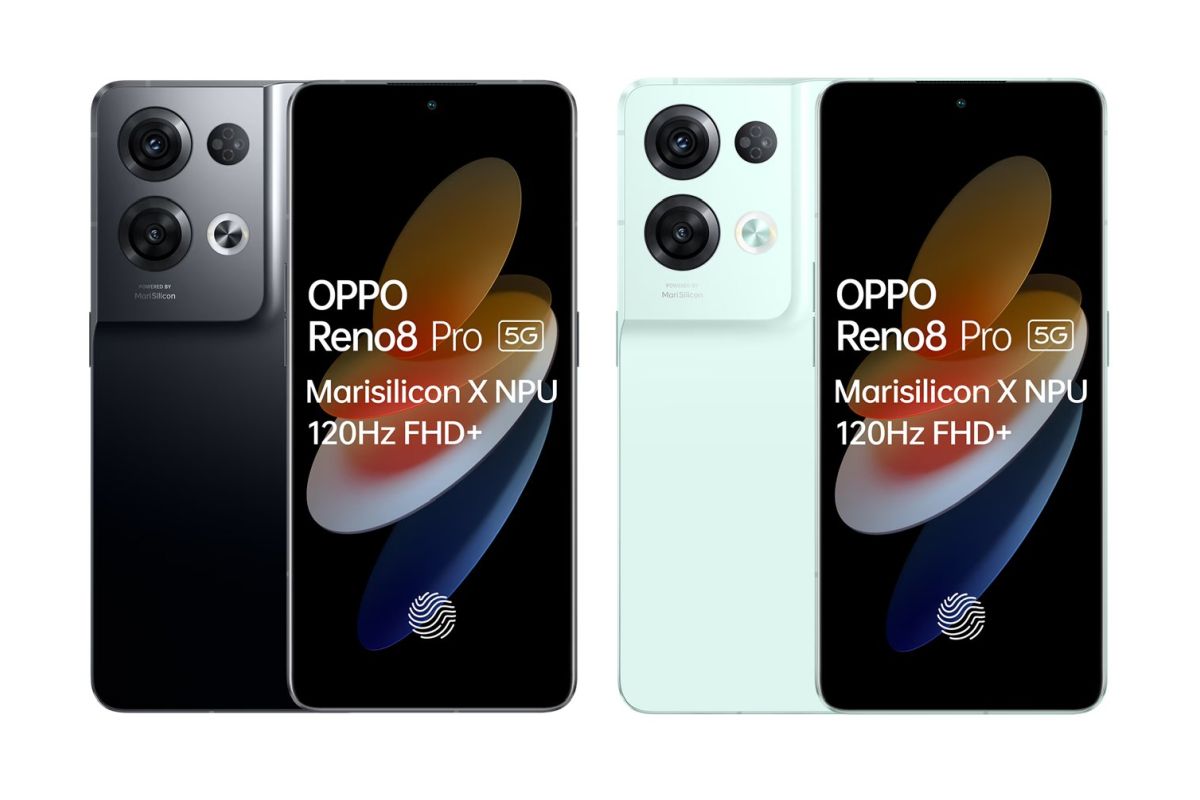
The Oppo Reno 8 series is expected to be the highlight of the event. The Oppo Reno 8 series is placed in the mid-range category of devices offered in the brand’s smartphone portfolio. It is the successor to the popular selling Oppo Reno 7 series launched last year.
Oppo will launch two Reno 8 models in the Indian market, the standard Oppo Reno 8, and the Oppo Reno 8 Pro. The former will launch with a MediaTek Dimensity 1300 SoC under the hood, while the latter will feature MediaTek Dimensity 8100 MAX flagship SoC.
However, the MediaTek SoCs are not the only silicon powering the Oppo Reno 8 series. Oppo has revealed that the company’s own in-house developed Marisilicon X NPU will also be present in the Oppo Reno 8 series to bring the camera performance of these smartphones to the next level.
Both smartphones will also sport the flagship 50MP Sony IMX766 main sensor in its triple camera setup, which is the same main sensor used in the company’s flagships like the Oppo Find X5 Pro and Oppo Find X3 Pro.
The Oppo Reno 8 and Reno 8 Pro will also feature a generous 4,500mAh battery cell equipped with support for 80W SuperVOOC fast wired charging. For more info about the Oppo Reno 8 series, you can head over to our roundup article here.
Oppo Enco X2 and Oppo Pad Air
Besides the Reno smartphones, Oppo will also be launching the Oppo Enco X2 and Oppo Pad Air in the Indian market tomorrow as well.
Oppo Enco X2
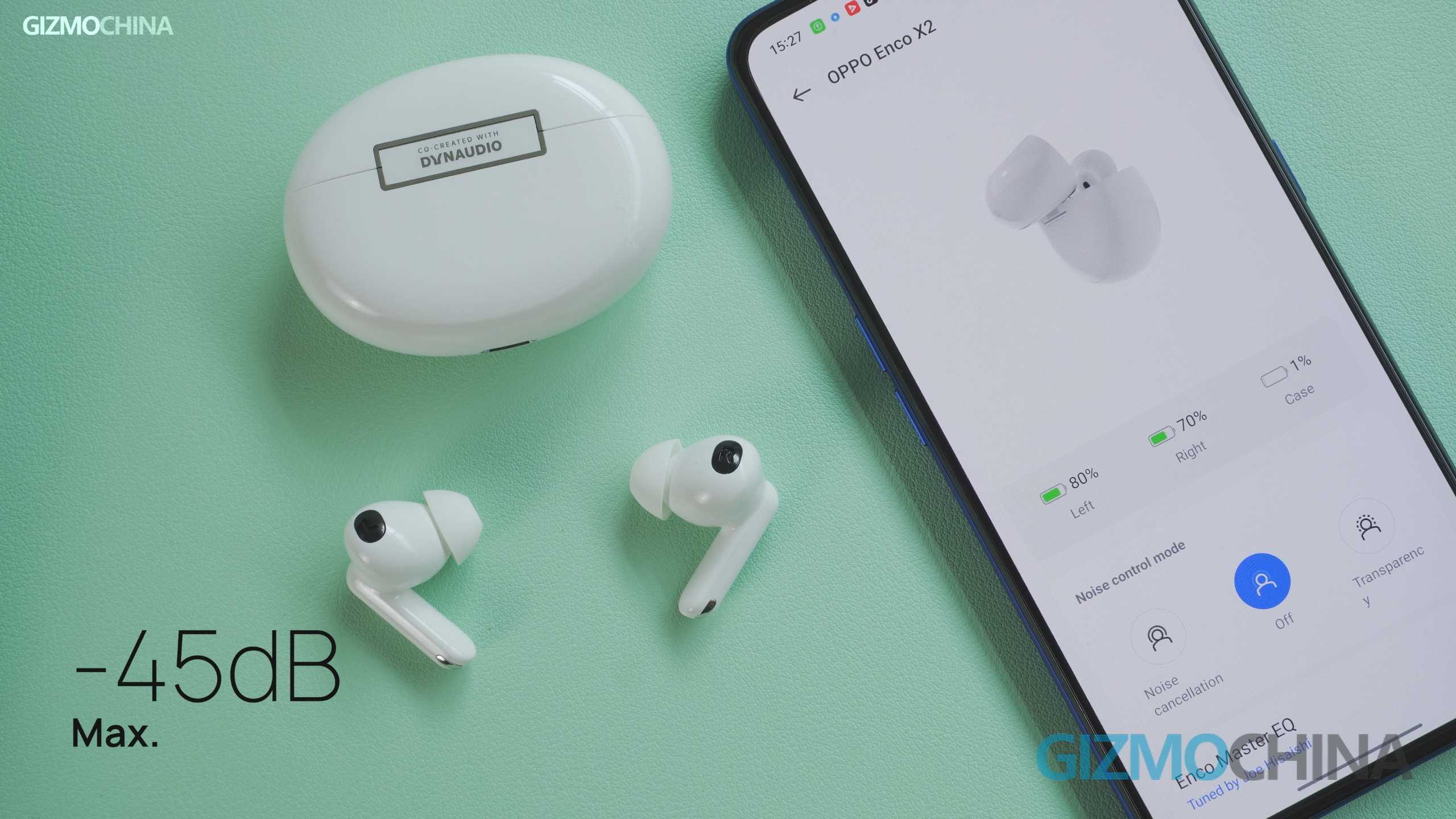
The Oppo Enco X2 are the company’s latest generation of TWS wireless earbuds which feature active noise cancellation, wireless charging as well as a lightweight and ergonomic design.
The Oppo Enco X2 earbuds were launched earlier in the year in China with an in-ear style construction. Compared to its predecessor, the newer Oppo Enco X2 brings some notable upgrades such as support for Bluetooth 5.2, low latency 94ms Bluetooth transmission, IP54 dust and water resistance, and noise cancellation that can filter out noises of up to 45dB.
When paired with the charging case, the battery life of these earbuds can reach up to 20 hours with ANC on or 27 hours with ANC off. Buyers will also be glad to know that the earbuds support both USB-C wired charging, and Qi Wireless Charging to top up the battery.
Oppo Pad Air
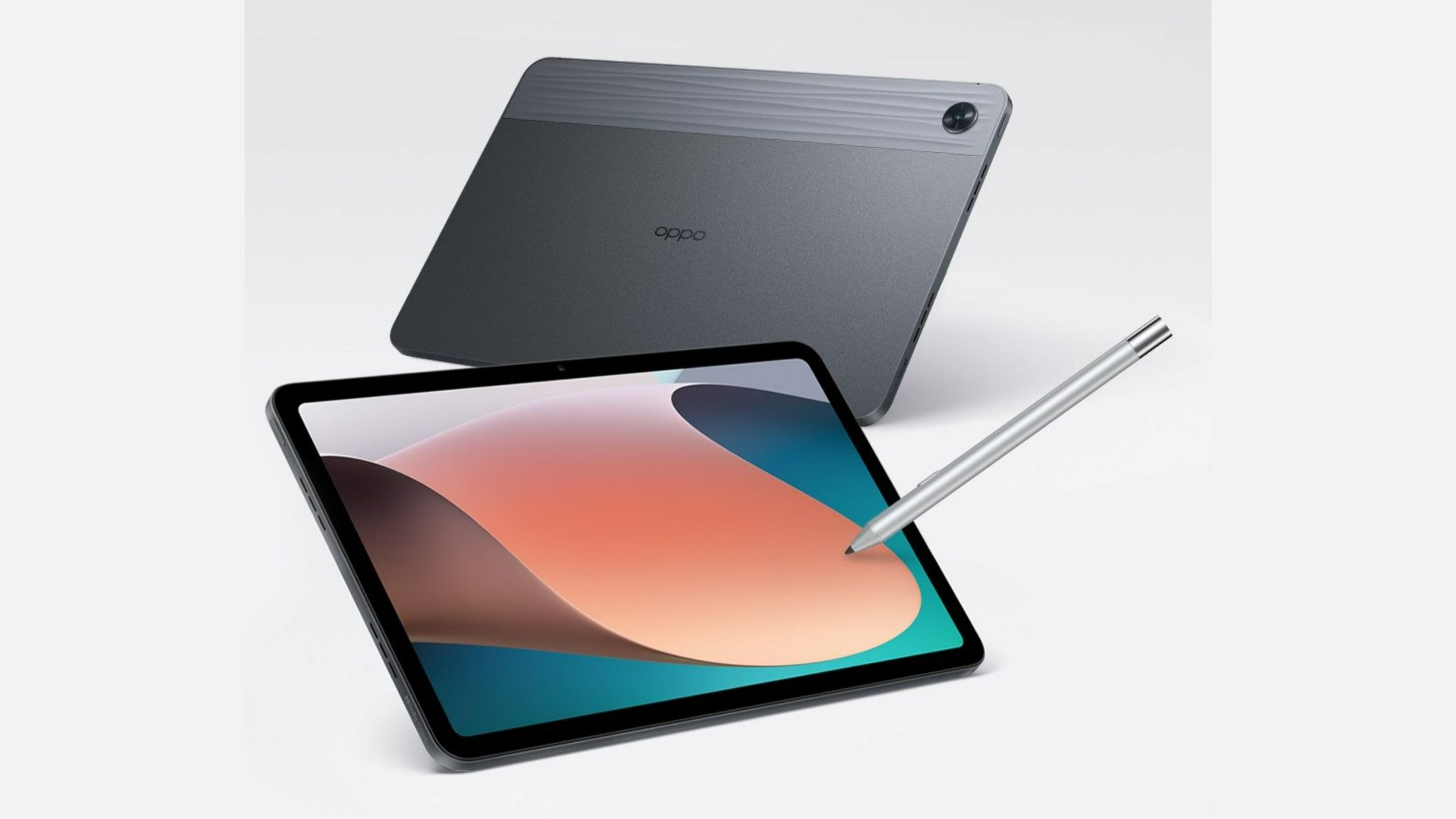
As for the Oppo Pad Air, it is the brand’s first-ever Android tablet in the Indian market. From what we have gathered so far, we know that the Oppo Pad Air will be featuring Qualcomm’s Snapdragon 680 chipset, a 10.36-inch IPS LCD screen with Full HD+ resolution along with a 7100 mAh battery.
For more info such as pricing and colour options of the aforementioned devices above, stay tuned to our coverage of the Oppo launch event tomorrow here at Gizmochina!
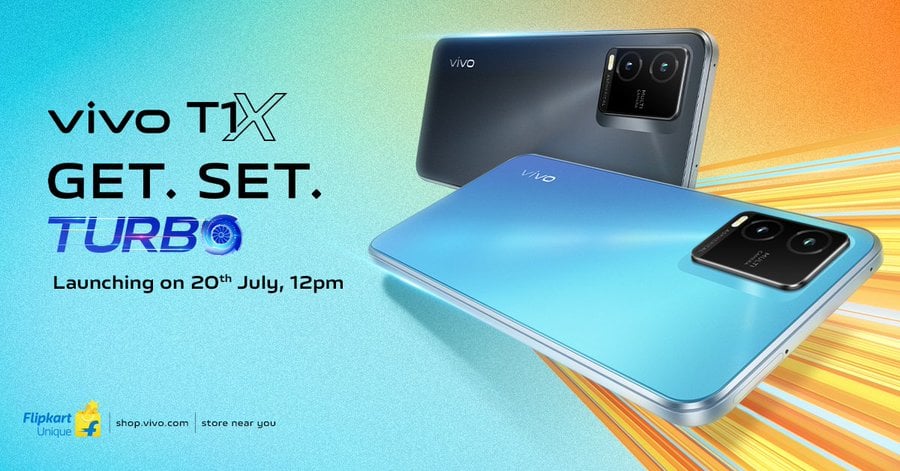
In April this year, Vivo unveiled the Vivo T1x in Malaysia. The company recently confirmed that it will be announcing the Vivo T1x on July 20 in India. According to a report by the India Tech Today, the Indian T1x will be different from its Malaysian edition.
The official teaser of the Vivo T1x shows that it has a dual-camera setup on its back, whereas its Malaysian variant has triple rear cameras. The other details about the Indian model were revealed by the publication, which said that tipster Yogesh Brar was the source.
Vivo T1x launch poster
Vivo T1x specifications (Indian edition – rumored)
The Vivo T1x will arrive with a 6.58-inch IPS LCD panel that offers a Full HD+ resolution and a 90Hz refresh rate. The device will have an 8-megapixel camera for shooting selfies, and its back panel will feature a 50-megapixel main camera and a 2-megapixel auxiliary lens.
The Snapdragon 680 chipset powered device will arrive with 4 GB of RAM and 128 GB of native storage. It remains to be seen whether the company will announce more variants at the launch.
The Vivo T1x will have a 5,000mAh battery with 18W charging support. It will come preloaded with Android 12 OS and FunTouch OS 12 UI.
These specifications suggest that the Vivo T1x will be positioned lower than the Vivo T1 44W, which features an AMOLED display, Snapdragon 680 chipset, 50-megapixel triple rear cameras, a 16-megapixel front camera, and a 5,000mAh battery with 44W charging support.
The T1 44W has a starting price of Rs 14,499 (~$188). Hence, it appears that the T1x could be priced around Rs 13,000 (~$163) in the country. The T1x will be sold alongside other T-series models, such as the T1 44W, T1 5G, and T1 Pro 5G.
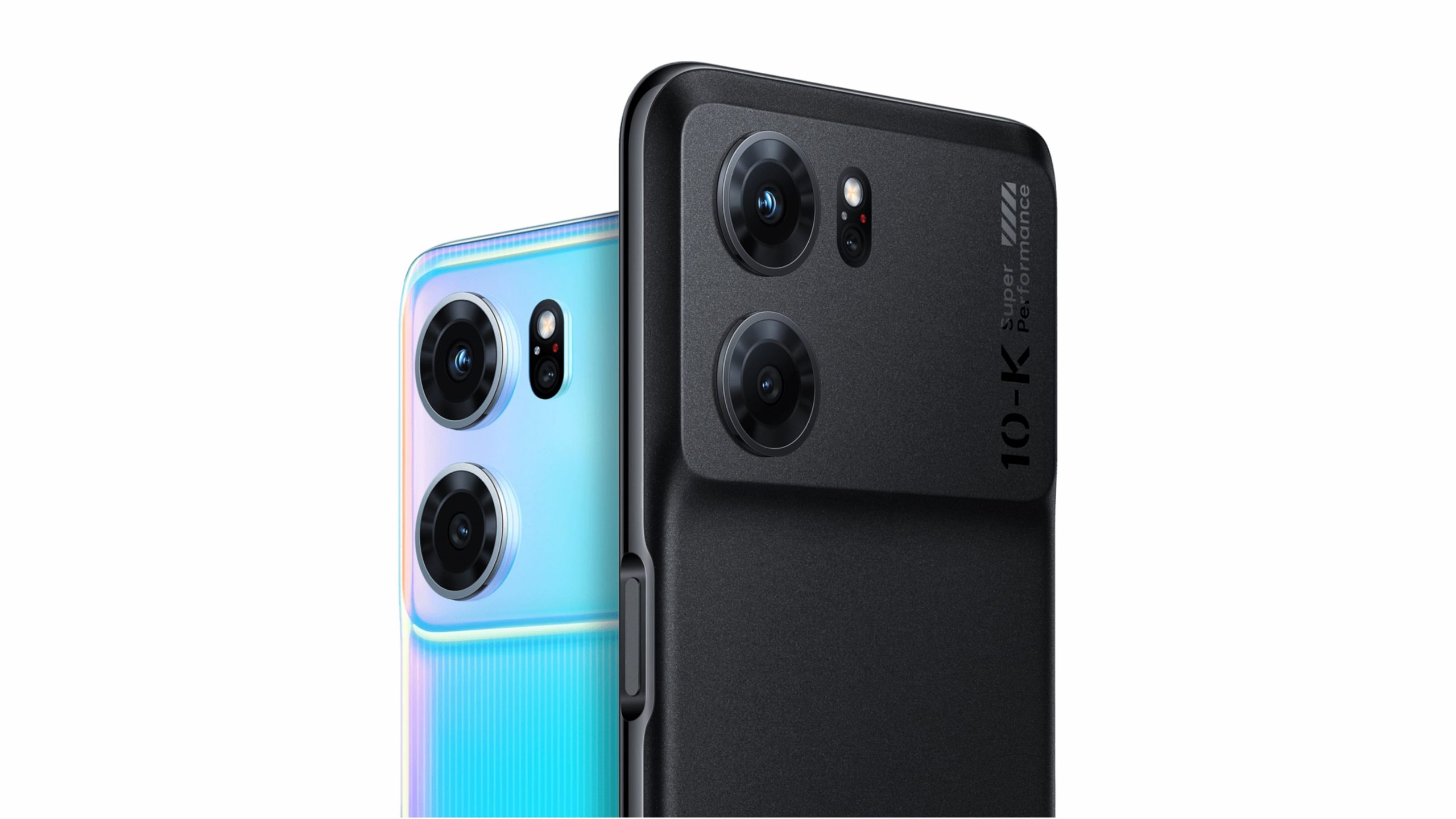
A few months ago, OPPO unveiled the OPPO K10 5G and the OPPO K10 Pro 5G in China. According to Chinese tipster, Panda is Bald, OPPO is planning to launch a K-series phone called the OPPO K10 Vitality Edition. He has also tipped some of the specifications of the device.
The OPPO K10 Vitality Edition will be powered by the Snapdragon 778G chipset, according to the tip. The device will arrive with 12 GB of RAM and 256 GB of storage. It will pack a 5,000mAh battery. Apart from these details, there is no information available on the other specs of the device. Hopefully, newer reports will reveal more details about the smartphone in the coming days.
Oppo K10 5G
In related news, an OPPO phone with model number PGGM10 was certified by the TENAA authority of China in May. This device is likely to debut as a K-series phone called the OPPO K10x. The specifications of the device suggest that it could be a rebranded version of China’s Realme V25 5G.
The OPPO K10x will feature a 6.59-inch LCD display that offers a Full HD+ resolution. It will be powered by a 2.2GHz octa-core processor, which will carry support for 5G connectivity. It seems that the device will be powered by the Snapdragon 695 chipset. It will draw power from a 4,880mAh (rated value) battery. The K10x is expected to carry support for fast charging.
The K10x will be equipped with 6 GB / 8 GB of RAM and 128 GB / 256 GB of storage. It will have a 16-megapixel camera and a 64-megapixel main camera, along with a pair of 2-megapixel cameras.
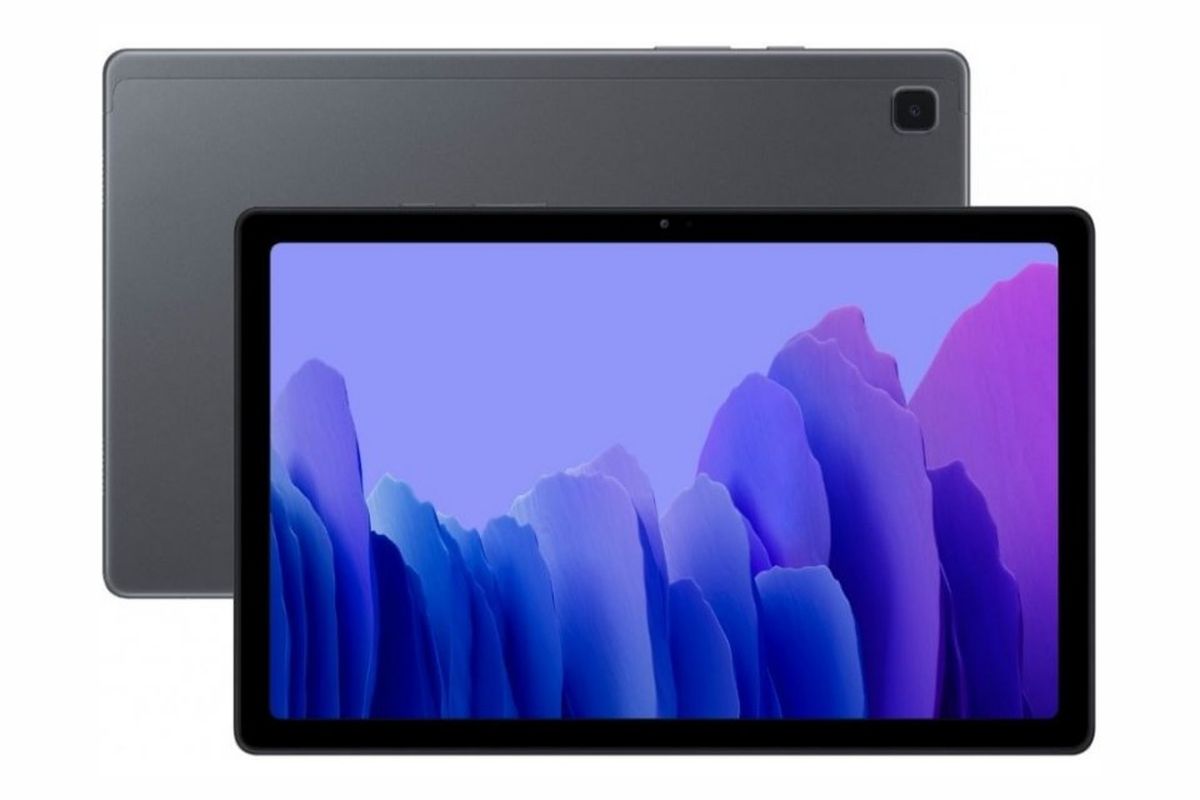
The launch of the Samsung Galaxy Tab A7 (2022) seems imminent. The reason behind it is that a new leak by Snoopy Techhas revealed the key specifications and price of the device. In addition, the tipster has also shared a leaked render of the tablet.
The Galaxy Tab A7 (2022) leaked render shows that it has thick bezels around the display. Its back panel has a single camera without a flash. In fact, it looks quite similar to the Galaxy Tab A7 10.4, which was announced in 2020.
Samsung Galaxy Tab A7 (2022) leaked render by Snoopy Tech
The Galaxy Ta A7 (2022) will come with a 10.4-inch TFT display that offers a resolution of 1200 x 2000 pixels. The device will be powered by the Unisoc T618 chipset and 3 GB of RAM.
The device will be equipped with 32 GB of internal storage and a microSD card slot. It will pack a 7,040mAh battery. For photography, the device is equipped with a 5-megapixel front camera and an 8-megapixel rear snapper.
Except for the chipset, everything else seems like the Galaxy Tab A7 10.4 (2020). The older model was powered by the Snapdragon 662 mobile platform. The leak claims that the tablet will be priced at 199 euros. At present, there is no word on the launch date of the device.
In related news, Samsung will hold its next Unpacked event in August. The event will see the arrival of the Galaxy Z Flip 4, Galaxy Z Fold 4, Galaxy Watch 5, and Galaxy Watch 5 Pro. The South Korean company may hold the event on Aug. 10. These devices are rumored to go on sale from Aug. 26. The company is expected to confirm the launch event in the next few days.
Xiaomi is rolling out the July 2022 security patch for the Mi A3 globally. The Mi A3 was released three years ago and it is Xiaomi’s last Android One-running smartphone. This could be the penultimate update support for the device. The Mi A3 will join the out-of-support list after its last software update.
The Mi A3 came bundled with Android 9.0 Pie and has progressed to Android 11 during its times. It had enjoyed regular software updates during the three years of its existence. Xiaomi had promised three years of security patches and updates for the device. It is now on the cusp of achieving that promise three years down the line. The 8MB download will update the Mi A3 to the July 2022 security patch. The finer details of the update can be gotten from the Android Security Bulletin.
Eligible Mi A3 smartphones will get the July 2022 security patch via an over-the-air (OTA) update. The phone’s settings will provide the necessary information on the current patch available. Alternatively, users can download the update using Xiaomi Firmware Updater. The Mi A3 models in Europe last received an update back in June 2022.
Xiaomi has rolled out the MIUI 13 update for the Xiaomi 11i and 11i HyperCharge in India. The Android 12-based MIUI 13 brings some user improvements to the MIUI 12.5E which came with the devices. The 11i and 11i HyperCharge were released in India back in January. A detailed changelog is not available for the new update but it offers an improved user experience.
The MIUI 13 update could precede a subsequent Android 12 OS upgrade for the two smartphones in the subcontinent. The Xiaomi 11i and 11i HyperCharge are basically the same models except for their different battery capacities and charging speeds. While the 11i comes with a 5,160mAh battery with 67W charging, the HyperCharge model packs 120W charging for its 4,500mAh battery. The 11i HyperCharge is slightly lighter than the 11i and also more expensive.
Friday is about to arrive and here comes a piece of good news. MIUI 13 is now available on #Xiaomi11iSeries with Android 12.
The two smartphones are powered by the Dimensity 920 chipset and have a 6.67” FHD+ AMOLED display with a 120Hz refresh rate. Their triple rear camera setup includes a 108MP main sensor, an 8MP ultrawide camera, and a 2MP macro sensor. A 16MP front camera completes their camera system. Both models have side-mounted fingerprint readers. The 11i HyperCharge has a different name in China, as it is the Redmi Note 11 Pro+ 5G. More details about the MIUI 13 update will be available subsequently.
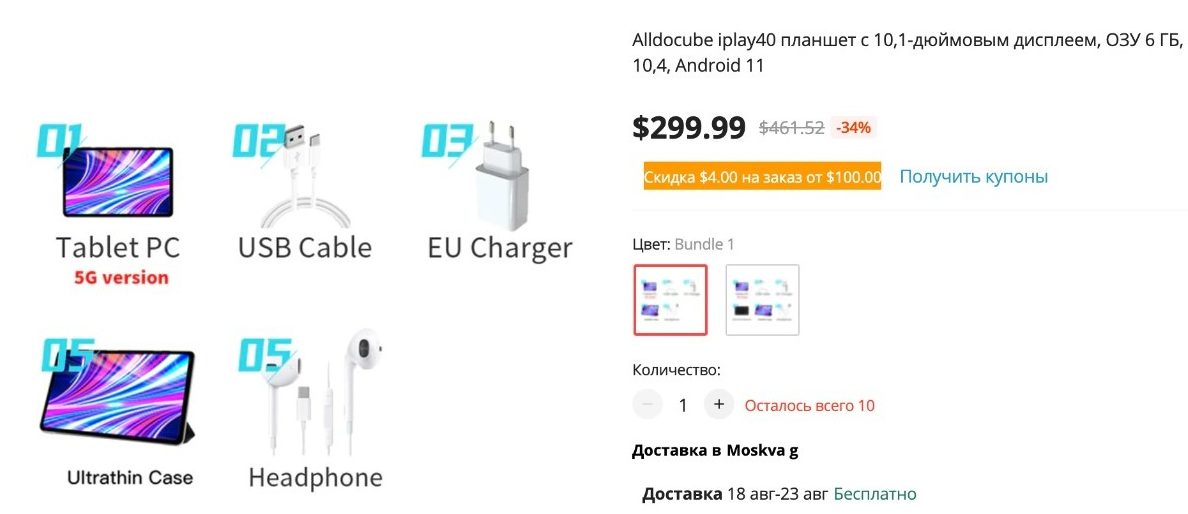
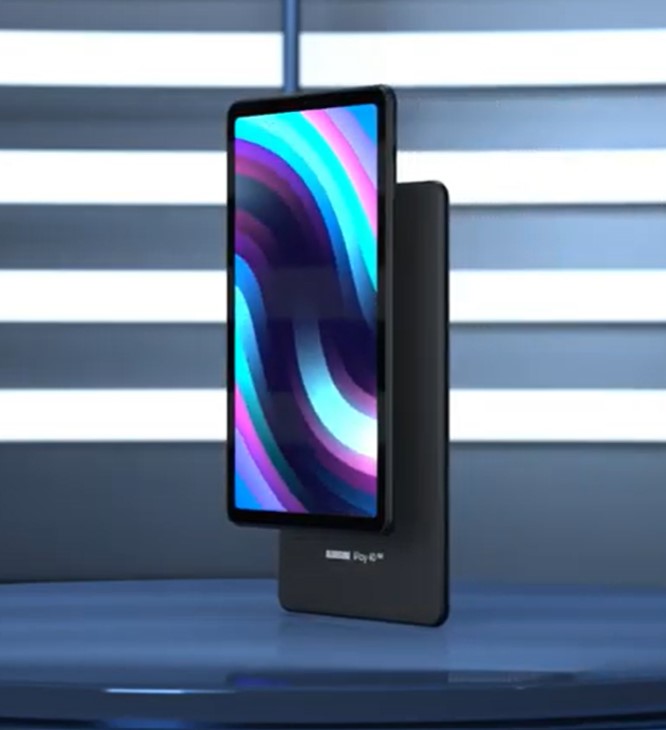
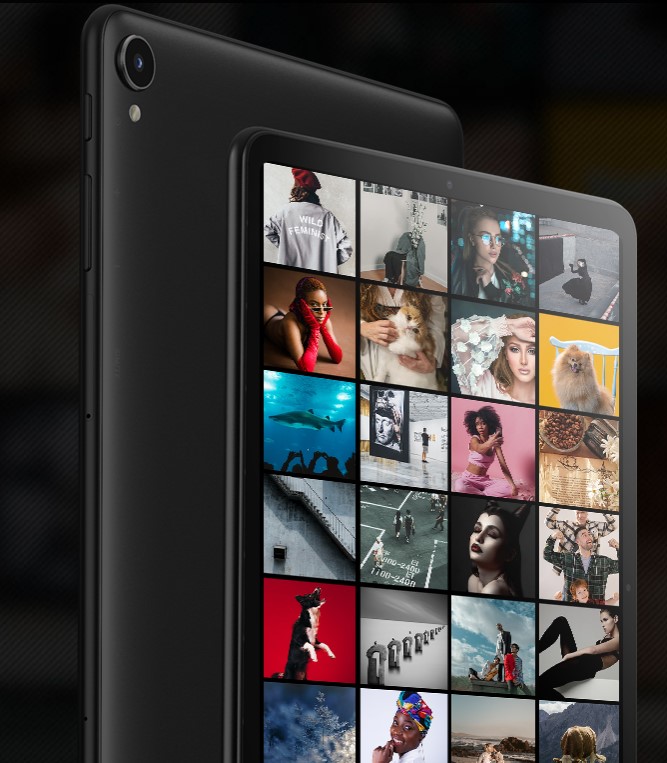
Alldocube iPlay 40 5G tablet is now available for $299 on AliExpress for all global customers. The 10.4” tablet comes with a Full View IPS 2K display and a 7.2mm extremely thin bezel design that gives you an immersive viewing experience. The tablet features the powerful ARM Mali-G57 MC3 GPU that comes with high graphic processing ability and supports faster decoding, 4K video playback, and gives you a smoother gaming experience. The tablet is powered by 6000mAh high-capacity battery and supports 18W fast charging.
Alldocube iPlay 40 5G tablet can be now bought for $299 on AliExpress. For more information on the tablet and detailed specs, you can check out their official website here.
Please note that the above price is region-specific and the final price may vary according to your shipping region, warehouse, and regional taxes.
For more information on such exciting deals and offers check out our deals hub.
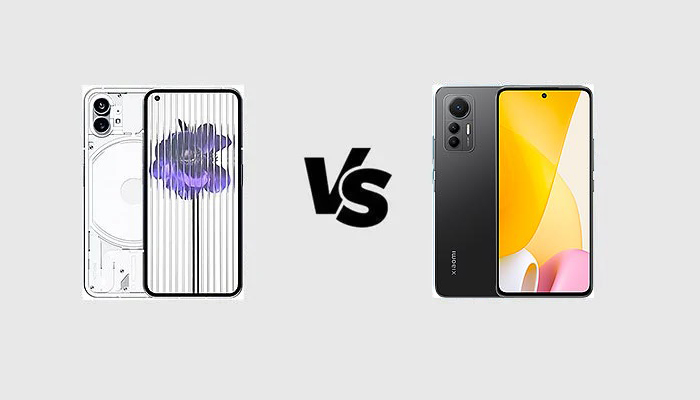
So the Nothing phone (1) is finally here and it is ready to conquer the global market. Will it succeed? It is still too early to give an answer to this question because it has a lot of rivals, especially because you can find either better specifications in the same price range or the same ones at a more affordable price. One thing is sure: one of the best rivals for the first Nothing handset is the Xiaomi 12 Lite, announced just a few days ago. They are very different in terms of design, but they are also very similar if we talk about the specifications. Are you trying to understand which of these phones offers the highest value for money? If so, you are in the right place. This is a comparison between the specifications of the Nothing phone (1) and the Xiaomi 12 Lite.
Nothing phone (1) vs Xiaomi 12 Lite
Nothing phone (1)
Xiaomi 12 Lite
DIMENSIONS AND WEIGHT
159.2 x 75.8 x 8.3 mm,
193.5 g
159.3 x 73.7 x 7.3 mm,
173 g
DISPLAY
6.55 inches, 1080 x 2400 pixels (Full HD+), OLED
6.55 inches, 1080 x 2400 pixels (Full HD+), AMOLED
There is no challenge when it comes to the design: the Nothing phone (1) is one of the most beautiful and innovative devices out there. It is equipped with a transparent back sporting a total of 160 LEDs which can be used as notification LEDs, to show the battery charging status, to sync a visual effect with the ringtone, and more. There is no way for any midrange device to compete with the first Nothing smartphone if we talk about aesthetical innovation.
Further, it is made with premium materials: glass for the back (protected by Gorilla Glass 5) and aluminum for the frame. But the Xiaomi 12 Lite remains a beautiful handset. It is made with cheap materials (the body and the frame are made of polycarbonate), but it is very thin and lightweight: it has a thickness of just 7.3 mm and it weighs just 173 grams. Note that the Nothing device adds the IP53 certification making it dust resistant and splash resistant, while the Xiaomi one does not offer any certification against dust and water.
Display
Now, it is time to talk about the displays. Both these handsets are very good when it comes to this, but on paper, the Xiaomi 12 Lite looks slightly better. It has an AMOLED panel able to show up to 68 billion colors. The diagonal is 6.55 inches and it sports a Full HD+ resolution of 1080 x 2400 pixels, a 120 Hz refresh rate, the HDR10+ certification, Dolby Vision support, and an in-display fingerprint scanner. The Nothing phone (1) has an OLED display showing up to one billion colors with a diagonal of 6.55 inches, a Full HD+ resolution of 1080 x 2400 pixels, a 120 Hz refresh rate, and the HDR10+ certification, as well as an in-display fingerprint reader which could not miss on a minimalistic phone like this. Both the phones feature stereo speakers but they do not come with a 3.5 mm audio jack, unfortunately.
Specs & Software
The Nothing phone (1) is fueled by the Snapdragon 778G+ mobile platform: an upgrade of the Snapdragon 778G found on the Xiaomi 12 Lite. It is a chipset built at 6 nm with an octa-core architecture composed of two Cortex A78 cores running at a max frequency of 2.5 GHz, three Cortex A78 cores running at 2.4 GHz, four Cortex A55 cores running at 1.8 GHz, and an Adreno 642L GPU. The SoC supports 5G connectivity and it is paired with up to 12 GB of RAM and up to 256 GB of UFS 3.1 internal storage. The Xiaomi 12 Lite sports an inferior Snapdragon 778G mobile platform and a maximum amount of RAM of 8 GB, as well as an inferior UFS 2.2 native storage. There is no challenge: the Nothing phone (1) wins the hardware comparison. But the software is very different: the Xiaomi comes with a highly customized user interface, while the Nothing is close to stock Android.
Camera
The Nothing phone (1) wins the camera comparison by an important margin because it has better rear sensors. It includes a 50 MP main camera with OIS (the famous Sony IMX766 high-end sensor) and a 50 MP ultrawide lens. The Xiaomi 12 Lite has a 108 MP main camera and an 8 MP ultrawide lens (it also adds a 2 MP macro sensor but it is kinda useless), but it sports a superior 32 MP front camera.
The Nothing phone (1) is thicker and heavier, but it also comes with a bigger battery able to guarantee a longer battery life thanks to a capacity of 4500 mAh. The Xiaomi 12 Lite charges quicker thanks to 67W fast charging, but the Nothing phone (1) is the only one with wireless charging and wireless charging is hard to find on midrange phones.
Price
You need €500/$500 if you want to purchase the Nothing phone (1) globally, while the Xiaomi 12 Lite will be available starting from $400/€400. The Nothing phone (1) is a superior phone and it wins the comparison, but the Xiaomi 12 Lite will provide a higher value for money.
Earlier this month, iQOO confirmed the launch of the iQOO 10 series smartphones. The devices will launch on July 19 and will consist of two smartphones, the iQOO 10 and the iQOO 10 Pro. So, let’s take a look at what we know so far about the upcoming smartphones.
iQOO 10 series
iQOO 10 specs & features
Starting off with the vanilla model, the leaked renders and official images so far have revealed a two-tone design like the iQOO 9 series, however, this time around, the camera module is a bit smaller and features three lenses in an L shape alignment. The device has a curved back with a glass finish, curved edges and features the power button and the volume rocker on the right side.
Up front, the device features a 6.78-inch FHD+ E5 AMOLED display that supports a 120Hz refresh rate. The screen has razer thin bezels going around it and also features a small punch-hole cutout located on the top center for the selfie camera. The display will also house an ultrasonic fingerprint sensor for security.
Under the hood, the device is all but confirmed to have a Qualcomm Snapdragon 8+ Gen 1 chipset at its core, which comes with the Adreno 730 GPU. The chipset will be paired with up to 12GB of RAM and 512GB of internal storage. Its battery is revealed to be of 4,700mAh capacity and offers support for 120W fast charging.
Coming to optics, the smartphone will come with a triple camera setup made up of a 50-megapixel primary camera, paired with a 13-megapixel ultra-wide angle lens, and a 12-megapixel telephoto shooter that offers 20x zoom. The brand will incorporate Vivo’s V1+ NPU in the iQOO 10 to improve its photography capabilities. The device also brings gimble stabilization for the rear cameras. On the front, we expect the device to have a 16-megapixel sensor for selfies and video calls.
iQOO 10 Pro specs & features
Design-wise, the iQOO 10 Pro is expected to be quite similar to the vanilla model, however, it is rumored to come in a vegan leather finish. The camera bump of the device is also expected to be a bit more pronounced with bigger lenses.
It will have a metallic frame with curved edges and will likely feature a curved display. Speaking of the display, a TENAA certification has revealed that it will measure 6.78-inches and will be a Quad HD+ E5 LTPO AMOLED panel with 120Hz refresh rate and HDR10+ support. The chin and the forehead of the display are expected to be quite thin, and it will have an in-display ultrasonic fingerprint scanner.
Earlier this week, the device made an appearance on the Geekbench database confirming the chipset to be a Qualcomm Snapdragon 8+ Gen 1. The chipset will likely be paired with up to 16GB of LPDDR5 RAM and 512GB of UFS 3.1 storage. The device is also said to bring a 4,500 mAh battery paired with a jaw-dropping 200W fast charging support.
Coming to optics, the device will feature a triple camera setup on the back headlined by a 50-megapixel Samsung GN5 sensor. The main sensor will be accompanied by another 50-megapixel sensor for the ultra-wide camera and a 12-megapixel telephoto unit. Like the vanilla variant, the iQOO 10 Pro will also feature gimble stabilization and the Vivo V1+ NPU for improved camera performance. It will likely have a 16-megapixel sensor in the front punch-hole cutout for selfies and video calls.
Recently, Vivo launched the Y77 5G smartphone in the Indian market featuring the Dimensity 810 chipset along with a 6.58-inch Full HD+ display and a 5,000mAh battery. Now, rumors have surfaced that the company is preparing to launch a new 5G smartphone called the Vivo Y30 5G.
According to a fresh report by Pricebaba, the Vivo Y30 5G is expected to debut as a budget-focused 5G smartphone. The device has already made an appearance on the NBTC certification website confirming its future availability in Thailand.
The Vivo Y30 5G is expected to house the MediaTek Dimensity 700 chipset paired with up to 6GB of RAM and 128GB of internal storage. Though unconfirmed, the storage of the device will likely be expandable using a microSD card. Other than that, the device is expected to feature a 6.51-inch LCD display with HD+ screen resolution and 60Hz refresh rate.
For optics, the device is said to come with a dual camera setup consisting of a 13-megapixel primary sensor. For selfies, the device could bring an 8-megapixel sensor on the front. Lastly, the battery of the device is rumored to be of 5,000mAh capacity and could feature 10W fast charging support.
Unfortunately, finer details regarding the device are still under wraps, so stay tuned for more.
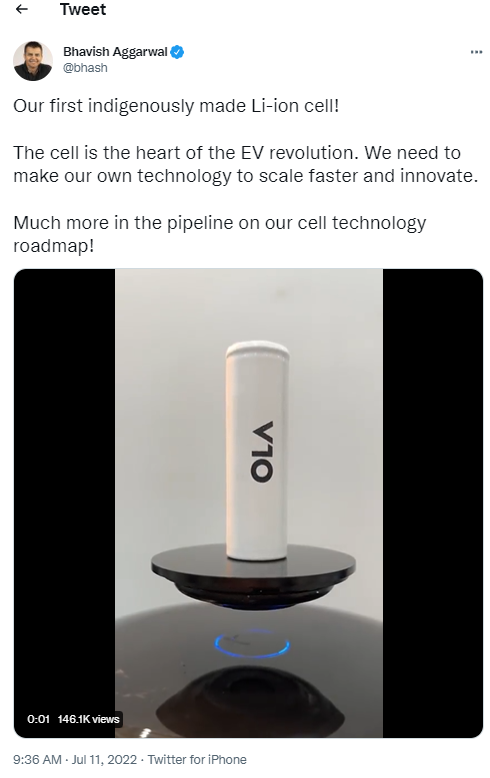
Ola Electric CEO Bhavish Aggarwal disclosed that the company is developing its own battery cell, and there will be more in the future. The CEO recently initiated a discussion regarding the company’s goals in the battery technology sector by tweeting a clip of an Ola-branded cell. The battery pack’s specifications have not yet been made public. However, if the business adopts a strategy akin to Tesla, Ola cells might be comparable to those used in its current Ola S1 Pro e-scooter.
Notably, the Ola S1 Pro now has a 3.97 kWh battery, which, according to the company, enables the scooter to travel 180 km on a single charge. Riders have recently reported that with the MoveOS 2.0 upgrade, they were able to ride in Eco mode for 300 km on a single charge.
The battery cell is the first one that the company has created on its own. The CEO claims that the business has a lot more to offer in terms of battery technology.
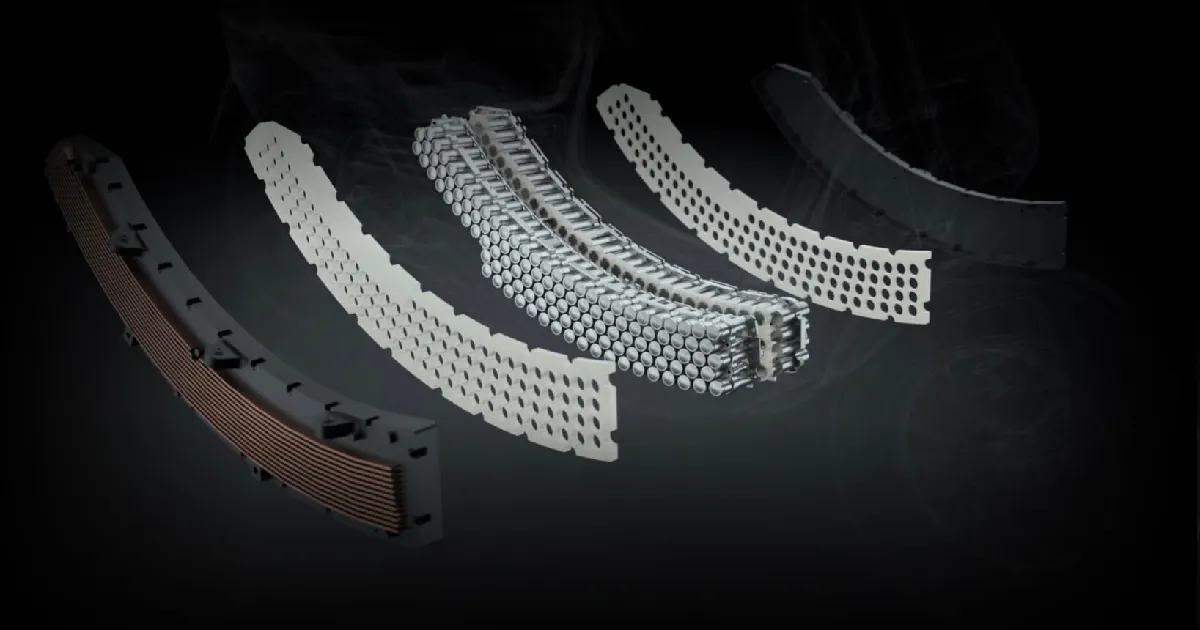
Currently, LG Chem Korea is the supplier of the 3.97kWh battery pack used by Ola Electric. The 224 cell components in this battery pack are NMC cells (Lithium-Nickel-Manganese-Cobalt-oxide). This is done in two cell sets totaling 112 units. Additional parts, including connecting buses and a variety of sensors to measure, analyze, and carry out various operations, are also included in the full battery pack.
It is now known that Ola Electric may be evaluating ways to carry out the development and manufacturing operations internally. This may enable the business to control production costs, avoid problems with the supply chain, and better manage innovation and long-term growth. It is even possible to connect this fact to Ola Electric’s long-standing desire to create a Lithium Iron Phosphate (LFP) battery cell for its budget-friendly scooter. Notably, LFP cells are stable and less expensive to produce. The stability of the cells would be a feature that Ola is longing for, citing the recent Ola S1 Pro E-scooters fire incidents.
The Ola battery’s specifics, including its energy density, energy capacity, and battery chemistry, are still a mystery. However, it’s feasible that the business begins by developing licensed battery technology internally before expanding to newer and alternative technologies.
Noise has been launching a slew of smartwatches in India lately. Now the homegrown brand has announced the ColorFit Icon 2 today. The latest offering packs a host of fitness-related and convenient features. Read on to know more about the smartwatch below.
Noise ColorFit Icon 2 specifications and features
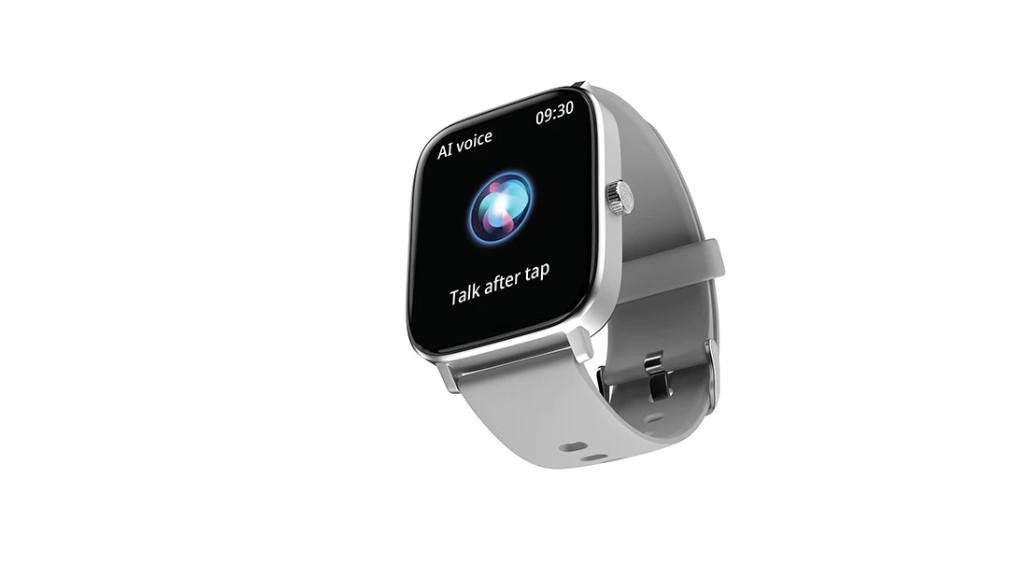
The Noise ColorFit Icon 2 comes with a square dial and a circular button on the right side. It features a 1.8-inch display with curved edges bearing a resolution of 240 x 280 resolution and 500 nits brightness. The device offers customisable watch faces and is also IP67 certified dust and water-resistant.
The Noise ColorFit Icon 2 is equipped with a heart-rate monitor, SpO2 sensor, sleep tracker, and breathing exercises. The smartwatch packs support for 60 sports modes. The wearable device offers support for Bluetooth calling with features like a quick dial pad, call history, and favourite contacts.
On the convenience front, the Noise ColorFit Icon 2 features an AI voice assistant, camera and music controls, notifications display, and built-in games. The smartwatch is powered by a 260mAh battery unit that is claimed to offer 4 days of usage on a single charge.
Noise ColorFit Icon 2 pricing and availability
The Noise ColorFit Icon 2 carries a special launch price tag of Rs 2,499. It is offered in Jet Black, Silver Grey, Deep Wine, and Rose Pink colours. The smartwatch is available for purchase from the brand’s official website and Flipkart.
The most interesting advantage of Android’s open ecosystem is unlimited modification and customization of the overall system. Unlike iOS, the Android ecosystem allows to port some best features from other devices.
Now, we have found the best GCam Apk for Poco F4 along with the XML configuration file that you can use to capture detailed photographs.
GCam Mods are derived from Google Pixels to extract the best out of the camera hardware on most mid and low-end smartphones. This is all thanks to the MODs and the third-party developers who devout time and energy to bring the optimized software for the substandard camera hardware.
There are plenty of advantages of the GCam over the Stock camera, including – HDR+ and HDR+ Enhanced features to offer more details and quality photos. Other features such as Night Sight, Panorama, Motion Photos, Lens Blue, Astrophotography mode, etc. Moreover, the users can load different configuration files to get the best potential out of the GCam APK.
Download GCam for Poco F4
You can download the GCam v8.1 from BSG which you can install and load below mentioned XML Config file for optimum results. Some users have tested using the Config File, and they have got better results than the Stock App. There’s more depth in the photos taken both in well-lit-up and low-light environments, respectively. If you have got a Poco F4, you should give it a try with the same XML config file.
It is quite easy to install an external APK on Poco F4. Just follow the steps below:
Download the apk file from the above link.
Open the APK, and it will ask for permission to install apps from external or Unknown Sources.
Enable either by simply tapping on the pop-up and proceeding with instruction, or you can go to Settings > Security/Privacy > Enable Installation from Unkown Sources.
You can now simply launch the installer package or APK file again.
Wait for the process to complete, and you’re ready to use it.
You can even load the config file by tapping on the area near the shutter button of GCAM.
Poco F4 Specifications and Features
Poco F4 comes with a huge 6.67-inch AMOLED display having a 120Hz refresh rate and 1300 nits maximum brightness. It offers an HD resolution of 1080 x 2400 pixels while having a 20:9 aspect ratio. It bundles Qualcomm Snapdragon 870 SoC and Adreno 650 GPU.
The smartphone features a triple-rear camera consisting of a 64MP primary sensor, an 8MP ultrawide sensor, and a 2 MP macro lens. The Poco F4 further hosts a 20 MP selfie camera, which can even record videos at 1080p resolution at 30 FPS. However, the new GCam mod will enable the users to get more out of this camera.
It is available with a 4500 mAh battery which supports up to 67W fast charging. It is available in Moonlight Silver, Night Black, and Nebula Green colors.
We hope you got the best Gcam for Poco F4. Do share your experience and what changes you found in quality in comparison with the stock App.
Uber India may, at last, have a solution for the annoying rider whose drivers frequently cancel on them. Uber India has chosen to release an upgrade that can stop users from having their driver canceled by letting the driver view the drop-off location in advance. During testing, it was only applicable to 20 locations and was an experimental measure to see how well it worked. This feature is currently being implemented across the subcontinent, which should help the US-based cab aggregator overcome a significant problem.
Notably, Uber India has also upped driver payouts by 15%. Cab drivers frequently postpone trips after asking the passenger where they want to be dropped off. This move comes after the company recently hiked the fares in view of rising fuel prices in New Delhi, the capital of India.
A new update from the company has been doing the rounds. The update will aid riders in selecting the best driver when requesting a vehicle. The new feature that Uber has implemented will allow drivers to accept or deny the trip request depending on the drop location that will be displayed to them when they are close to the user’s location. This is one of the changes Uber India is putting into place to make things easier for customers, drivers, and riders while also enhancing the overall experience.
Uber said in a statement that it will keep an eye on customer and driver feedback and adjust as necessary. Drivers on the Uber platform in India may now see the trip destination before accepting the ride, which will increase transparency and reduce irritation for both clients and drivers. Uber chose to remove the trip acceptance criterion and roll out the unconditional functionality to all locations after being encouraged by a decline in trip cancellations following the experimental launch in May 2022.
Uber India has also modified the payout cycle so that drivers can receive online payment transfers regularly. Drivers may now determine if a customer will pay with cash or online. Additionally, drivers will also be paid if they have to go a long way to pick up a user.
There’s more excellent news that followed, and it pertains to the Uber Moto partners. Users of Uber Moto will now receive push notifications when waiting charges apply. In order to relieve drivers, operational fees for using airports will also be handled moving forward in Mumbai, Delhi, Pune, Hyderabad, and Bangalore Airports.
Uber India wants to make it more acceptable for drivers to cancel fewer trips than in the past by providing some important financial support for them. All Indian cities where the present cab service is offered should expect to see these new modifications soon.
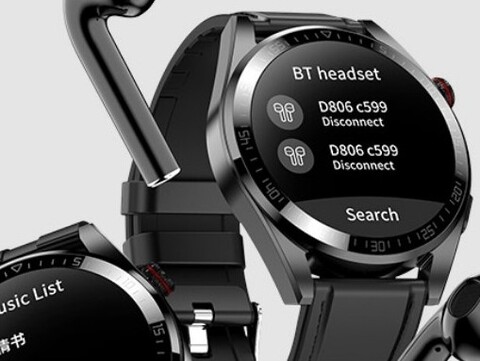
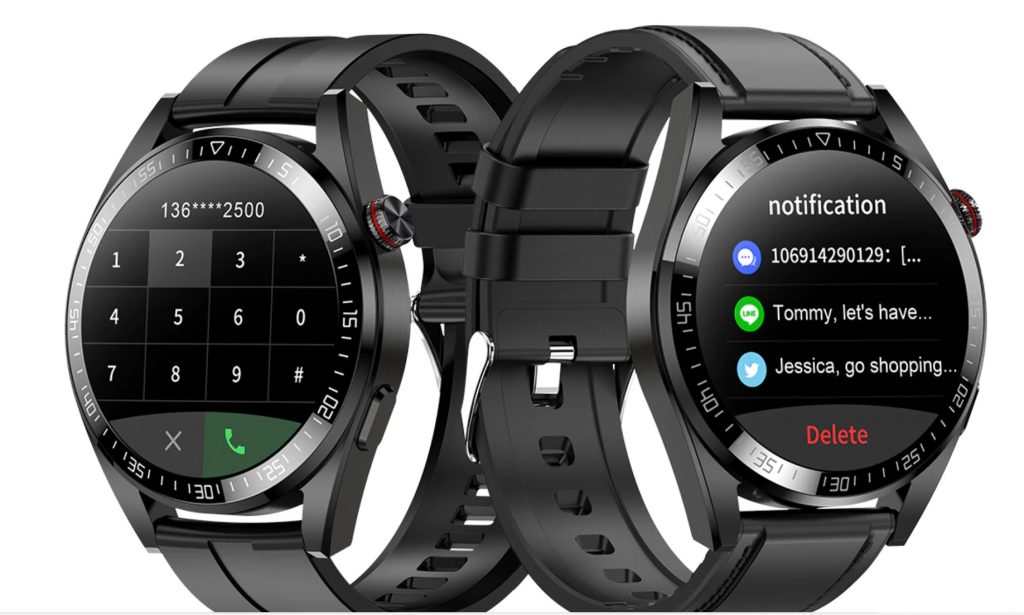
The Vwar Stratos 2 Pro smartwatch has been launched globally. The new smartwatch comes with a 1.39-inch AMOLED display and features Bluetooth calling. Its 8GB of memory provides storage for music and other content. The gadget also comes with health and fitness sensors including heart rate and SpO2 monitoring.
The Stratos 2 Pro is a slightly bigger smartwatch than its predecessor, the Stratos 2. It has space to accommodate up to 500 songs. Sleep monitoring is also possible with the smartwatch and you can use multiple sports modes and log your progress. It has a built-in GPS tracking capability and comes with a shorter battery life of 10 days on a single charge. The device can be connected via Bluetooth to a wireless phone to listen to music. Three playback modes are available for the Stratos 2 Pro.
The Vwar Stratos 2 Pro smartwatch supports one-click recording and an AI voice assistant. A rotary dial on the smartwatch is a physical control device. The new model has a bigger and more powerful display than its predecessor. The smartwatch is available in six color options, and the price starts from $62.29. The model is available online via AliExpress. Deliveries to several global markets including the US and Europe are possible. There is a minimal shipping cost for standard deliveries and buyers could get their product by August.
We use cookies on our website to give you the most relevant experience by remembering your preferences and repeat visits. By clicking “Accept”, you consent to the use of ALL the cookies.
This website uses cookies to improve your experience while you navigate through the website. Out of these, the cookies that are categorized as necessary are stored on your browser as they are essential for the working of basic functionalities of the website. We also use third-party cookies that help us analyze and understand how you use this website. These cookies will be stored in your browser only with your consent. You also have the option to opt-out of these cookies. But opting out of some of these cookies may affect your browsing experience.
Necessary cookies are absolutely essential for the website to function properly. This category only includes cookies that ensures basic functionalities and security features of the website. These cookies do not store any personal information.
Any cookies that may not be particularly necessary for the website to function and is used specifically to collect user personal data via analytics, ads, other embedded contents are termed as non-necessary cookies. It is mandatory to procure user consent prior to running these cookies on your website.