Advertisement

CHUWI’s Affordable AI Laptop Launches with Intel Core 3, 13-Hour Battery, and Dual 4K Support

CHUWI has officially launched pre-orders for its new UniBook AI Laptop, introducing an affordable Windows notebook built around Intel’s latest Wildcat Lake platform. The laptop combines a lightweight design, AI-focused hardware, a color-accurate display, and a generous selection of ports, making it suitable for students, professionals, freelancers, and everyday users. 

With an early bird price of $449, CHUWI is positioning the UniBook AI as an accessible option for users looking to experience on-device AI features without spending flagship laptop prices.

Early Bird Pricing and Launch Campaign

The CHUWI UniBook AI carries a regular retail price of $499, but customers who pre-order the laptop can purchase it for $449, saving $50 during the launch period. The offer is part of CHUWI’s “AI for Everyone, The Tournament for All” World Cup promotional campaign.

The company is also extending discounts of up to $50 on several other products, including the CoreBook Air 226V, AuBox X Copilot+ PCs, Hi10 Max 2-in-1 Windows Tablet, and CoreBook Air 1KG, giving buyers additional options if they are looking for other Windows devices.

Intel Core 3 Wildcat Lake Processor Takes Center Stage

Powering the UniBook AI is Intel’s latest Core 3 Processor 304, based on the company’s advanced 18A process technology. The new processor is designed to deliver efficient everyday computing while introducing dedicated hardware for AI workloads.

The laptop uses Intel Graphics for visual performance and is aimed at handling common productivity tasks such as web browsing, office work, online learning, media consumption, and light creative applications. The new architecture also focuses on better power efficiency, helping extend battery life without sacrificing performance for everyday users.

Dedicated AI Hardware for Faster Local Processing

One of the biggest highlights of the UniBook AI is its built-in AI acceleration. The integrated graphics processor delivers up to 9 TOPS (Int8) of AI performance, while the dedicated Neural Processing Unit (NPU) provides up to 15 TOPS (Int8) for AI-specific workloads.

Instead of sending every AI request to cloud servers, the laptop can process many tasks locally. This improves response times while keeping more personal data on the device. CHUWI says the system supports AI writing assistance, real-time transcription, AI image generation, and AI-enhanced multitasking, allowing users to benefit from modern AI features during everyday work.

14-Inch WUXGA Display Built for Productivity

The UniBook AI features a 14-inch IPS display with a WUXGA (1920 × 1200) resolution. Unlike standard Full HD displays, the taller 16:10 aspect ratio provides additional vertical workspace, allowing users to view more content while editing documents, browsing websites, or working with spreadsheets.

The display also covers 100% of the sRGB color gamut, making it suitable for users who require accurate colors for photo editing, graphic design, or content creation. With 300 nits of brightness and an 88% screen-to-body ratio, the display is designed to deliver a comfortable viewing experience for both work and entertainment.

Lightweight Design Made for Daily Travel

CHUWI has designed the UniBook AI with portability in mind. The laptop features a lightweight metal chassis that weighs approximately 1.2kg, while its slim 16.4mm profile makes it easy to slip into a backpack or laptop bag.

The laptop measures 314.5 × 221 × 16.4mm, making it compact enough for classrooms, offices, cafés, and business travel. A 180-degree lay-flat hinge also allows the display to open completely flat, making it easier to share content with colleagues or classmates during meetings and presentations.

Comfortable Keyboard and Privacy Features

The laptop includes a backlit keyboard, allowing users to work more comfortably in dimly lit environments. A precision touchpad provides smoother navigation and supports Windows gesture controls for improved productivity.

CHUWI has also included an HD webcam for video calls along with a physical privacy shutter. This simple feature allows users to physically block the camera whenever it is not being used, offering an extra layer of privacy during remote work and online meetings.

Memory, Storage, and Battery Life

The UniBook AI comes equipped with 8GB of LPDDR5 memory running at 6400 MT/s, providing fast memory speeds for everyday multitasking. Storage is handled by a 256GB PCIe 3.0 SSD, and users can expand the storage if they need additional space for files and applications.

Power is supplied by a 53.38Wh battery, which CHUWI claims can deliver up to 13 hours of local 1080p video playback under suitable conditions. The laptop also supports 65W USB-C Power Delivery, allowing users to recharge using modern USB-C chargers instead of carrying a dedicated power adapter.

Extensive Port Selection Sets It Apart

One area where the UniBook AI stands out is connectivity. Many modern thin-and-light laptops have reduced the number of physical ports, often requiring users to purchase USB hubs or docking stations. CHUWI takes a different approach by including a wide selection of built-in ports.

The laptop offers two full-featured USB-C ports, three USB-A ports (including two 5Gbps ports), HDMI, Gigabit Ethernet, a TF card slot, and a 3.5mm headphone jack. This allows users to connect external storage, wired internet, projectors, monitors, cameras, keyboards, and headphones without relying on adapters.

Modern Wireless Connectivity and Multi-Display Support

For wireless connectivity, the UniBook AI supports Wi-Fi 6, providing faster wireless speeds and improved network stability on compatible routers. Bluetooth 5.2 enables reliable connections with wireless headphones, mice, keyboards, and other accessories.

The laptop can also drive up to two external 4K displays at 60Hz, giving users additional screen space for multitasking, presentations, video editing, financial work, or office productivity.

Designed for Everyday Productivity

With its Intel Core 3 Wildcat Lake processor, dedicated AI hardware, lightweight metal design, color-accurate display, long battery life, and generous port selection, the CHUWI UniBook AI is designed to meet the needs of a wide range of users. Combined with Windows 11 Pro and an attractive early bird price of $449, the laptop offers an affordable entry point for those looking to experience the latest AI-powered PC features without paying premium flagship prices.

Key Specs:

CategorySpecification
ModelCHUWI UniBook AI
Operating SystemWindows 11 Pro
ProcessorIntel Core 3 Processor 304 (Wildcat Lake)
ArchitectureIntel 18A Process Technology
GraphicsIntel Graphics
GPU AI PerformanceUp to 9 TOPS (Int8)
Dedicated NPUUp to 15 TOPS (Int8)
Display14-inch IPS
ResolutionWUXGA (1920 × 1200)
Aspect Ratio16:10
Color Gamut100% sRGB
Brightness300 nits
Screen-to-Body Ratio88%
Hinge180° Lay-Flat
RAM8GB LPDDR5 (6400 MT/s)
Storage256GB PCIe 3.0 SSD (Expandable)
Battery53.38Wh
Charging65W USB-C Power Delivery
Battery LifeUp to 13 hours (1080p local video playback)
KeyboardBacklit Keyboard
TouchpadPrecision Touchpad
WebcamHD Webcam with Privacy Shutter
Wireless ConnectivityWi-Fi 6, Bluetooth 5.2
USB-C2 × Full-featured USB-C
USB-A3 × USB-A (2 × 5Gbps, 1 × 480Mbps)
Other PortsHDMI, RJ45 Gigabit Ethernet, TF Card Slot, 3.5mm Audio Jack
External Display SupportUp to Two 4K Displays at 60Hz
WeightApprox. 1.2kg
Dimensions314.5 × 221 × 16.4 mm
MSRP$499
Early Bird Price$449

Vivo X Fold 6 arrives with Dimensity 9500, 7,000mAh battery, 200MP triple cameras

Vivo has launched its latest book-style foldable smartphone, the Vivo X Fold 6, in China. It marks a major milestone for the brand as it becomes the company’s first foldable smartphone to feature a MediaTek chipset, with previous generations relying on Snapdragon processors. It also packs Vivo’s largest-ever battery in a foldable device and introduces the brand’s first 200-megapixel rear camera system on a foldable. Read on to find out everything the Vivo X Fold 6 has to offer.

Vivo X Fold 6 specifications and features

Vivo X Fold 6
Vivo X Fold 6

The Vivo X Fold 6 features an 8.02-inch AMOLED foldable display with a 2504 x 2312 resolution, a 1Hz to 120Hz LTPO refresh rate, Samsung M14 luminous material, up to 5,000 nits peak brightness, 1,920Hz PWM dimming and UTG protective glass.

The outer display measures 6.51 inches with a 2528 x 1120 resolution, 1Hz to 120Hz LTPO refresh rate, BOE Q11 panel, up to 5,000 nits peak brightness and second-generation Armour Glass protection. Both the cover and inner displays feature 20-megapixel selfie cameras.

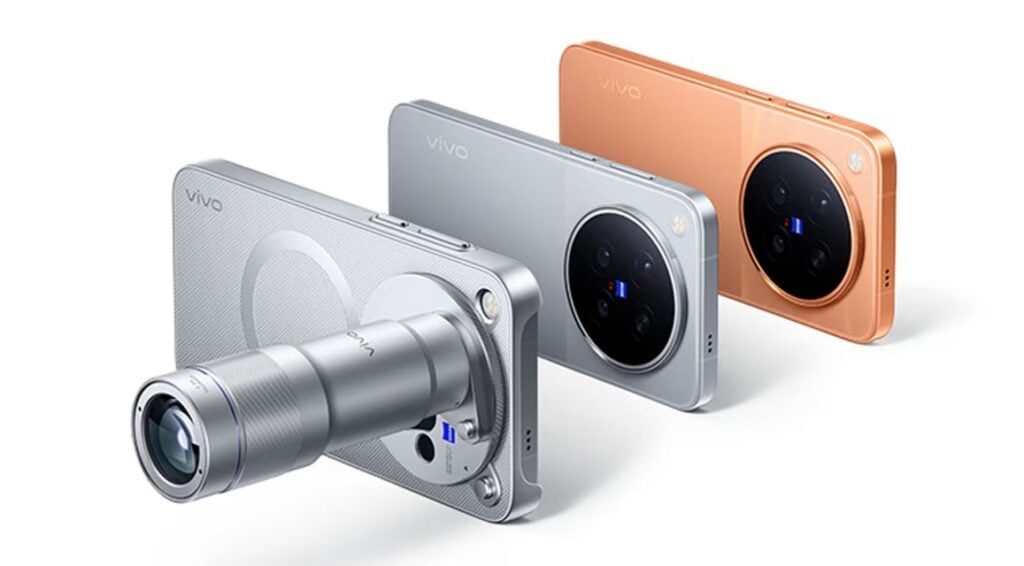
The Vivo X Fold 6 ‘s rear camera setup comprises a 200-megapixel Samsung HPB primary camera with OIS, a 50-megapixel ultra-wide camera and a 50-megapixel Sony LYTIA 602 periscope telephoto camera with VCS technology and OIS. The rear camera system also supports the Vivo Zeiss Teleconverter G2 accessory.

Vivo X Fold 6
Vivo X Fold 6

Powering the foldable is MediaTek’s Dimensity 9500 Super Edition chipset paired with the Vivo V3+ imaging chip, LPDDR5X Ultra RAM and UFS 4.1 storage. The phone packs a 7,000mAh Blue Ocean battery with third-generation solid-state battery technology, 80W wired charging, 40W wireless charging and 5W reverse charging. It runs OriginOS 6 Fold based on Android 16.

Other highlights include IP58 and IP59 ratings, Wi-Fi 7, USB 3.2 Gen 1, NFC, an IR blaster, an X-axis linear motor, stereo speakers and a side-mounted fingerprint scanner. Depending on the finish, the device measures 4.4mm to 4.8mm when unfolded, 9.4mm to 9.9mm when folded, and weighs between 228g and 235g.

Vivo X Fold 6 price and availability

Vivo X Fold 6
Vivo X Fold 6

The Vivo X Fold 6 is available in multiple configurations, including 12GB+256GB, 12GB+512GB, 16GB+512GB, 16GB+1TB, and a Black Gold Edition with 16GB+1TB storage. These variants are priced at CNY 7,999 (~$1,175), CNY 8,999 (~$1,320), CNY 9,999 (~$1,470), CNY 10,999 (~$1,615), and CNY 11,299 (~$1,660), respectively.

Buyers can choose from Blue Cave, Salt Lake, Extreme Night and Black Gold Edition colour options. There is currently no information on a global launch.

For more daily updates, please visit our News Section.

Stay ahead in tech! Join our Telegram community and sign up for our daily newsletter of top stories!

Apple could skip M6 Pro and Max chips as M7 shifts focus to AI

Apple could be preparing one of the biggest changes to its Mac chip strategy since the introduction of Apple Silicon. According to Bloomberg’s Mark Gurman, the company is reworking its processor roadmap, with upcoming Macs expected to follow a different release pattern than previous M-series generations.

Apple may change its M-series chip strategy

Instead of launching a complete M6 family, Apple is reportedly planning to introduce only the base M6 processor for entry-level Macs. The M6 is expected to power devices such as the refreshed 14-inch MacBook Pro and possibly other entry-level Mac models. Gurman says Apple is not developing M6 Pro or M6 Max chips, making this the first M-series generation to skip higher-end variants. The company is reportedly accelerating technologies originally planned for a later release to better support advanced on-device AI workloads and increasingly demanding graphics applications.

The M6 chip is expected to be Apple’s first processor built on TSMC’s 2nm process, replacing the 3nm technology used in recent generations. It is also tipped to feature around 200GB/s of memory bandwidth, up from approximately 153GB/s on the M5. Other expected upgrades include a redesigned memory architecture, a faster CPU across all cores, an upgraded Neural Engine for AI processing, improved video encoding and decoding, and a redesigned GPU with up to 12 graphics cores instead of 10 on the M5.

Following the base M6 launch, Apple is expected to shift its focus to the M7 family, which will reportedly include the M7, M7 Pro, M7 Max and M7 Ultra. The premium chips are said to deliver stronger AI performance, improved graphics capabilities and around 240GB/s of memory bandwidth on the standard M7. Meanwhile, Apple is still planning an M5 Ultra for a future Mac Studio, with testing reportedly involving up to 36 CPU cores, 80 GPU cores and support for as much as 768GB of unified memory.

If Apple’s reported roadmap moves ahead, it would mark a significant shift in how the company develops its Mac processors while placing AI at the centre of future silicon upgrades.

For more daily updates, please visit our News Section.

Stay ahead in tech! Join our Telegram community and sign up for our daily newsletter of top stories!

iQOO 16T is in the works, first details emerge

iQOO has a couple of new flagship phones lined up for the Chinese market. Next month, the brand is expected to unveil the iQOO Neo 11S powered by the Dimensity 9500. In September or October, the brand may introduce the iQOO 16 and iQOO Neo 12. Now, a new leak suggests that the iQOO 16T is also in the works.

iQOO 16T’s existence revealed

According to the tipster, iQOO will continue its T-series lineup with a new generation of smartphones. The tipster claims that the upcoming iQOO 16T series has entered the development stage and will continue to focus on large-display devices, suggesting that the brand will stick to its big-screen positioning for the next iteration.

To recall, the iQOO 15T was initially believed to be a compact flagship that would rival the OnePlus 15T, which also features a compact design. However, it launched with a large 6.82-inch AMOLED display. The latest leak claims that the iQOO 16T will continue to feature a large display like its predecessor.

Reports have revealed that the iQOO 16 will feature a 6.85-inch Samsung AMOLED display with a 2K resolution and a 165Hz refresh rate. The Neo 12, which is expected to debut alongside the iQOO 16, is said to feature a 6.83-inch AMOLED display with the same resolution.

To recall, the iQOO 15T and Neo 11 feature the same 6.82-inch BOE Q10+ AMOLED display with a 2K resolution and a 144Hz refresh rate. Therefore, it is likely that the iQOO 16T may inherit the iQOO Neo 12’s display panel. At present, there is no information available about the other specifications of the iQOO 16T. Hopefully, upcoming reports will reveal more details about it.

For more daily updates, please visit our News Section.

Stay ahead in tech! Join our Telegram community and sign up for our daily newsletter of top stories!
Galaxy Tab S12 Ultra may ditch the notch for punch-hole display and slimmer bezels

Samsung might be getting ready to give its Galaxy Tab series a fresh new look that finally lines up better with its phones. Leaked animations from the upcoming One UI 9 software suggest future tablets could ditch the big notch in favor of a punch-hole camera cutout, which would mean a much more modern, immersive screen.

SamMobile spotted the clues while digging through the One UI 9 beta firmware. The rotating device animations show tablet-style devices with a centered punch-hole front camera. Interestingly, there are two versions: one with the cutout on the long edge and another on the shorter edge, just like how phones adapt when you rotate them. These animations weren’t in One UI 8.5 (which is based on Android 16), so they look like brand-new additions for One UI 9 and Android 17.

Right now, flagship models like the Galaxy Tab S11 Ultra and S10 Ultra still use a notch for the front camera. Switching to a punch-hole design would be a pretty big step forward for the Galaxy Tab S12 Ultra: it could let Samsung shrink the bezels even more and push the screen-to-body ratio closer to what we’ve come to expect from their smartphones.

Beyond the design tweak, One UI 9 is shaping up to bring a bunch of other improvements: better AI features, smoother animations, and tighter integration across the Galaxy ecosystem. The beta is already rolling out to various phones and tablets, so we’re getting early peeks at what Samsung has planned for late 2026 and beyond.

If this punch-hole design actually makes it to production, it would put the Tab series more in line with the rest of the industry’s move toward minimal screen interruptions. As the development progresses, we should get a clearer picture of how the software and hardware are evolving together.

Don’t miss a thing! Join our Telegram community for instant updates and grab our free daily newsletter for the best tech stories!

For more daily updates, please visit our News Section.

(Source)

Nearly 10 years later, the Galaxy S8 series and Note 8 receive a surprise update

Samsung has rolled out an unexpected software update for the Galaxy S8, Galaxy S8+, and Galaxy Note 8, nearly a decade after these smartphones first debuted. While the update does not introduce new features, its arrival has surprised users because official software support for these devices ended several years ago.

Samsung rolls out a rare update for ageing flagships

Galaxy-S8-Plus-Featured
Samsung Galaxy S8 Plus

According to Android Authority, the latest firmware has started reaching Verizon variants of the Galaxy S8 series and Galaxy Note 8 in the US. Verizon’s official changelog states that the update focuses on performance improvements, while SammyFans reports that it also enhances overall system stability. Although the improvements are not detailed, Samsung appears to have fine-tuned the software to keep these aging devices running more reliably.

The Galaxy S8, Galaxy S8+, and Galaxy Note 8 were introduced in 2017 and received their last scheduled software updates in 2022. Since then, the phones have remained on Android versions and security patches that are several years old. Even after this latest rollout, the devices continue to run security patches from 2021, meaning they do not receive protection against the latest security threats.

Users should not expect a refreshed interface or additional functionality with this update. Instead, it is aimed at improving everyday performance and addressing stability-related issues behind the scenes. Such updates are uncommon for smartphones that have long crossed their official end of life, making Samsung’s decision an unexpected one.

The move also follows a similar approach seen earlier this year when Apple released a software update for the iPhone 5s to keep services like FaceTime and iMessage working properly. For Galaxy S8 and Note 8 owners who still keep these devices as backups or secondary phones, this update offers a small but welcome improvement.

For more daily updates, please visit our News Section.

Stay ahead in tech! Join our Telegram community and sign up for our daily newsletter of top stories!

Vivo Y6a launches with a massive 7,200mAh battery and IP69 rating

Vivo has quietly introduced a new budget 5G smartphone in China called the Vivo Y6a. The device focuses on long battery life, durability, and a smooth display experience while offering a Snapdragon chipset and the latest OriginOS software at an affordable price point.

Vivo Y6a specifications and features

Vivo Y6a
Vivo Y6a

The Vivo Y6a features a 6.75-inch LCD display with a 1570 x 720 resolution, a 120Hz refresh rate, and up to 1,200 nits of peak brightness. The handset is powered by Qualcomm’s Snapdragon 4 Gen 2 chipset, paired with 8GB of LPDDR4X RAM and 256GB of UFS 3.1 storage.

The smartphone packs a massive 7,200mAh battery with support for 44W fast charging. Vivo claims the battery is designed to retain its health for up to six years, with a rated lifespan of 1,800 charging cycles. The device offers a 50-megapixel rear camera and an 8-megapixel front-facing camera. It also supports an additional 8GB of virtual RAM and runs OriginOS 6 based on Android 16.

Vivo Y6a
Vivo Y6a

The Y6A comes with other features, such as stereo speakers, NFC, an IR blaster, a side-mounted fingerprint scanner, face unlock, dual SIM support, and IP69/IP68-rated water and dust resistance. Connectivity options include 5G, Wi-Fi, Bluetooth 4.2, USB Type-C, and support for aptX Adaptive audio codecs.

Vivo Y6a price and availability

The Vivo Y6a is offered in a single 8GB + 256GB configuration priced at 1,999 Yuan, which is approximately $295. Buyers can choose from Obsidian Black, Galaxy Silver, and Phoenix Gold color options. This phone is a rebranded version of the existing Y500i.

For more daily updates, please visit our News Section.

Stay ahead in tech! Join our Telegram community and sign up for our daily newsletter of top stories!

Oppo Reno 16 FS unveiled with 120Hz AMOLED display, triple 50MP cameras, 6,500mAh battery  

Apart from unveiling the Oppo Reno 16F, Reno 16, and Reno 16 Pro, the brand has also introduced the Oppo Reno 16 FS for the European market. The new model sits below the Reno 16 series while bringing a premium AMOLED display, a large battery, and triple 50-megapixel cameras. It is also speculated that the device could arrive in India as the Oppo Reno 16c.

Oppo Reno 16 FS specifications and features

 Oppo Reno 16 FS
Oppo Reno 16 FS

The Oppo Reno 16 FS features a 6.57-inch AMOLED display with an FHD+ resolution of 2372 x 1080 pixels, a 120Hz refresh rate, up to 1,400 nits high brightness mode, and 10-bit color support. For security, the display is integrated with an optical fingerprint sensor.

Under the hood, it is powered by the MediaTek Dimensity 7300 Energy chipset paired with 8GB of LPDDR4X RAM and 256GB of UFS 3.1 storage, with support for expandable storage. The phone runs ColorOS 16 based on Android.

For photography, the Reno 16 FS comes equipped with a 50-megapixel main camera with OIS, an 8-megapixel ultra-wide lens, and a 50-megapixel telephoto camera with OIS. On the front, it features a 50-megapixel autofocus selfie camera. Both the front and rear cameras support 4K video recording at 30fps.

The handset packs a 6,500mAh battery with support for 45W SuperVOOC fast charging. Other notable features include a Snap Key AI button, stereo speakers, Bluetooth 5.4, Wi-Fi 6, NFC, IP68-rated water and dust resistance, and support for eSIM. Like other Reno 16 models, the FS variant also supports the Oppo Bubble accessory.

Oppo Reno 16 FS price and availability

The Oppo Reno 16 FS is available in Purple Black and Pop White colour options. In Europe, the 8GB + 512GB variant is priced at €649. There is also speculation that the Reno 16 FS could launch in India under the Oppo Reno 16c branding.

For more daily updates, please visit our News Section.

Stay ahead in tech! Join our Telegram community and sign up for our daily newsletter of top stories!
(source)

Nothing Phone (4b) specs leak reveals 120Hz AMOLED display, 5,400mAh battery, two variants, and more

Nothing recently confirmed that its next smartphone, scheduled to launch on July 7, will be called the Nothing Phone (4b). The brand has also showcased the design of the phone through official teasers, but it is still mum on its specifications. While the device recently surfaced on Geekbench, revealing details such as its chipset and RAM, most of its other hardware remained under wraps. Now, tipster Yogesh Brar has shared several key specifications of the upcoming handset in a post on X.

Nothing Phone (4b) key specifications tipped

Nothing-Phone-4b-design
Nothing Phone (4b)

According to the tipster, the Nothing Phone (4b) will feature a 6.7-inch AMOLED display with a 120Hz refresh rate. Powering the device is said to be Qualcomm’s Snapdragon 6 Gen 4 chipset, which aligns with the earlier Geekbench listing. The benchmark listing also suggested that the phone will ship with 8GB of RAM and run Android 16-based Nothing OS out of the box.

The leak further claims that the Phone (4b) will feature a dual rear camera setup led by a 50-megapixel primary camera. Nothing has already confirmed the presence of two rear cameras through its official teasers.

The handset is also expected to pack a 5,400mAh battery. For storage, it is tipped to arrive in 8GB + 128GB and 8GB + 256GB variants. The device is also expected to be available in three color options, with a light blue finish already showcased by the company.

Nothing has already revealed that the Phone (4b) will feature a compact horizontal Glyph Bar instead of the full Glyph Interface seen on earlier models. The lighting strip is expected to handle notifications, charging status, and app alerts. The Geekbench listing showed the handset carrying the model number A005 and recorded single-core and multi-core scores of 1,088 and 3,155, respectively.

Nothing is expected to reveal the remaining details, including pricing and availability, at its launch event on July 7.

For more daily updates, please visit our News Section.

Stay ahead in tech! Join our Telegram community and sign up for our daily newsletter of top stories!

(source)

Alleged Redmi Note 17 Pro bags important certification, July launch expected

Redmi is reportedly working on the Redmi Note 17 family for the Chinese market. At present, there is no clarity on how many models will be part of the lineup, but recent reports have revealed that the first model will be announced in July, while the others may launch a bit later, possibly in August. Ahead of the expected launch, the alleged Note 17 model has seemingly appeared in the database of China’s 3C certification platform.

Purported Redmi Note 17 Pro gets 3C certification

Redmi Note 17 Pro 3C certfiied
Alleged Redmi Note 17 Pro 3C certified

As seen above, an upcoming Xiaomi phone with model number 2607DRA18C has received approval from China’s 3C certification platform. According to previous reports, this device could be part of the Redmi Note 17 lineup.

The certification reveals that the device may ship with a 67W charger bearing the model number MDY-15-EQ. To recall, the Redmi Note 15 and Redmi Note 15 Pro, which launched in China last year, support 45W charging. With faster charging now expected, it appears that the 2607DRA18C could launch as the Redmi Note 17 Pro.

The device is speculated to launch in China in July. The other models in the series are likely to go official in August. However, it is advisable to wait for further reports to confirm the final marketing name of the 2607DRA18C.

Moving on to the specifications, the device is expected to feature a flat OLED panel with a 1.5K resolution. Under the hood, it may be powered by the Snapdragon 6 Gen 5 chipset and pack a massive 9,000mAh battery. For photography, it is expected to feature a 50-megapixel main camera.

For more daily updates, please visit our News Section.

Stay ahead in tech! Join our Telegram community and sign up for our daily newsletter of top stories!

Multiple Snapdragon 8-series chipsets in works for this year, key specifications tipped

Qualcomm’s next generation of Snapdragon 8-series chipsets has surfaced through a new leak, hinting at a broader portfolio than before. The information suggests the company is preparing multiple premium processors with different performance targets, while also facing fresh competition from MediaTek’s upcoming flagship silicon.

Multiple Snapdragon 8-series chips in works

According to tipster Digital Chat Station, Qualcomm is working on two 2nm flagship chipsets. The first is the SM8975, which is tentatively expected to launch as the Snapdragon 8 Elite Gen 6 Pro. It is tipped to feature a new 2+3+3 Oryon CPU architecture, 16MB shared L2 cache, an Adreno 850 GPU with 18MB GMEM, and support for both LPDDR6 and LPDDR5X memory. The chip is said to focus on delivering the highest possible performance.

The second chipset, carrying the SM8950 model number, is expected to arrive as the Snapdragon 8 Elite Gen 6. While it is also built on a 2nm process and shares the same next-generation Oryon CPU architecture with 16MB shared L2 cache, it reportedly comes with an Adreno 845 GPU featuring 12MB GMEM. Unlike the Pro version, this chipset is said to strike a balance between performance and power efficiency while supporting LPDDR5X memory.

The tipster also listed several 3nm platforms that are in Qualcomm’s roadmap, including the existing SM8850 (Snapdragon 8 Elite Gen 5) and the upcoming ones, such as the SM8850Q, which may be branded as the Snapdragon 8 Elite Gen 5XX Edition, and the SM8845 Pro, which could be called the Snapdragon 8 Gen 5 Pro or Gen 6 but will be a minor upgrade over the existing Snapdragon 8 Gen 5.

MediaTek rivalry could heat up

In the comments, Digital Chat Station claimed that MediaTek’s upcoming 2nm Dimensity 9600 Pro could theoretically outperform the Snapdragon 8 Elite Gen 6 (SM8950), particularly in GPU performance.

The chip is said to feature the Magni architecture and an integrated NGP neural accelerator, enabling console-level frame interpolation, improved ray tracing performance, and higher rendering efficiency.

As per other reports, this year’s Dimensity 9-series lineup is expected to include three models, namely the 3nm Dimensity 9500+, an overclocked version of the existing Dimensity 9500, along with the 2nm Dimensity 9600 and 9600 Pro.

For more daily updates, please visit our News Section.

Stay ahead in tech! Join our Telegram community and sign up for our daily newsletter of top stories!

iPads, MacBooks, Mac mini, and Mac Studio models get significant price hikes amid AI boom

Apple just raised prices across a bunch of its popular products, and it’s not a small bump. The company is passing on higher component costs to customers, mainly due to a serious global shortage of memory and storage chips driven by the massive AI boom.

Apple-iPad-Air-2026

The changes hit the online store immediately. Looking at the details:

  • HomePod mini: from $99 / €99 to $129 / €119 (+$30 / €20)
  • HomePod: from $299 / €349 to $349 / €419 (+$50 / €70)
  • Apple TV 4K: from $129 / €169 to $199 / €229 (+$70 / €60)
  • Base iPad: from $349 / €429 to $449 / €529 (+$100 / €100)
  • iPad mini: from $499 / €599 to $599 / €719 (+$100 / €120)
  • 11-inch iPad Air: from $599 / €699 to $749 / €839 (+$150 / €140)
  • 11-inch iPad Pro: from $999 / €1,199 to $1,199 / €1,439 (+$200 / €240)
  • 13-inch iPad Pro: from $1,299 / €1,549 to $1,499 / €1,789 (+$200 / €240)

On the Mac side, things get even pricier:

  • Entry-level MacBook Neo: from $599 / €699 to $699 / €839 (+$100 / €140)
  • 13-inch MacBook Air: from $1,099 / €1,199 to $1,299 / €1,439 (+$200 / €240)
  • 14-inch MacBook Pro (and higher configs): increases of $300 and up

Desktops aren’t spared either: iMac, Mac Studio models (with some configurations up to +$1,300 / equivalent in €), and even the Vision Pro (now $200 / €200 more expensive at $3,699 / €4,229). The 256GB Mac mini has also reappeared in the lineup at $799, which is $200 higher than before.

Apple CEO Tim Cook recently called the memory shortage a “hundred-year flood” in a Wall Street Journal interview. He explained that after years of absorbing these cost increases, the company simply can’t anymore. “Unfortunately, price increases are unavoidable,” he said.

This feels like a notable shift for Apple, which has historically tried to shield customers from supply chain fluctuations. The AI-driven demand for high-end chips has created real pressure across the industry, and it looks like we’re all starting to feel it.

The average increase across the affected products comes out to roughly $247. If you’ve been thinking about picking up any of these items, you might want to move sooner rather than later: there’s always a chance of further adjustments down the line.

It’s a clear reminder of how the rise of AI is reshaping not just software and data centers, but the pricing of everyday premium tech too.

Don’t miss a thing! Join our Telegram community for instant updates and grab our free daily newsletter for the best tech stories!

For more daily updates, please visit our News Section.

(Sources: 1, 2)

Xiaomi 18 Pro core specs leak reveals dual 200MP cameras, Snapdragon 8 Elite Gen 6, and more

In September, Xiaomi may unveil the Xiaomi 18 series of flagship phones in China. Last year’s Xiaomi 17 packed a 6.3-inch display, but its successor is said to feature a slightly larger display of around 6.4 inches. It is speculated that the Xiaomi 18 Pro will also come equipped with the same-sized display but will pack better cameras than the standard Xiaomi 18. Now, in a new Weibo post, tipster Digital Chat Station has seemingly shared more details about what appears to be the Pro edition.

Xiaomi 18 Pro key details tipped

As per the leak, the Xiaomi 18 Pro may bring several flagship-grade upgrades despite not featuring the same display technology as its larger sibling, which appears to be the Xiaomi 18 Pro Max. The tipster claims the phone will offer the same ultra-clear display and ultra-narrow, symmetrical bezels. For security, it will have an ultrasonic in-display fingerprint sensor.

The device will be powered by a 2nm Snapdragon 8 Elite Gen 6-series flagship chipset and a larger battery, with support for 100W wired and wireless charging. It will feature a dual 200-megapixel camera system, with at least one camera using an ultra-large image sensor. It will have a minimalist design and offer top-tier water resistance.

According to previous reports, the Xiaomi 18, 18 Pro, and 18 Pro Max will feature triple rear cameras, with the Pro models offering dual 200-megapixel cameras, while the standard model will have a single 200-megapixel camera. Therefore, it appears the above leak pertains to the Xiaomi 18 Pro.

The Xiaomi 18 Pro’s camera setup is said to include a 200-megapixel SmartSens primary camera equipped with LOFIC technology. It could be joined by a 50-megapixel ultra-wide lens and a 200-megapixel periscope telephoto camera.

While the tipster has not mentioned the battery size in today’s leak, the device has previously been said to house a battery of around 7,000mAh. Some reports have also revealed that it will retain the rear display, but it will be more AI-driven and versatile than before. Additionally, the front display may arrive with a Samsung-like Privacy Display feature.

It is also being said that the Xiaomi 18 Pro and Xiaomi 18 Pro Max may launch in September. Last year, Xiaomi unveiled the Xiaomi 17 Ultra in December. Therefore, it is likely that the Xiaomi 18 Ultra’s December 2026 launch could be joined by the standard Xiaomi 18.

For more daily updates, please visit our News Section.

Stay ahead in tech! Join our Telegram community and sign up for our daily newsletter of top stories!

Honor X80 Pro Max goes on first sale as the industry’s biggest battery phone

The Honor X80 Pro Max is now on sale in China. It features the world’s largest smartphone battery at 11,000mAh and an incredibly bright 10,000-nit display. Additionally, Honor is offering a two-year drop-damage replacement guarantee that covers accidental screen damage caused by drops, collisions, or pressure, and includes both parts and labor for first-time drop damage. The base model is priced at 1,999 yuan (~$293).

As we covered at launch, the Honor X80 Pro Max is a mid-range phone focused on battery endurance and display brightness.

Price and Storage

The phone comes in four variants:

  • 8GB + 128GB: 1,999 yuan (~$293)
  • 8GB + 256GB: 2,199 yuan (~$322)
  • 8GB + 512GB: 2,499 yuan (~$366)
  • 12GB + 512GB: 2,799 yuan (~$410)

Color options include Vibrant Orange, Lightning Red, Moon Shadow White, and Mystic Black.

Honor X80 Pro Max Specifications

The Honor X80 Pro Max has a 6.8-inch screen with a 1.3mm bezel. The resolution and refresh rate peak at 1.5K (1280×2788) and 120Hz, respectively. But the 10,000-nit peak brightness is another industry first here.

Moreover, its 11,000mAh battery supports 90W wired fast charging and 27W reverse wired charging. Honor says the phone achieved a Guinness World Record for the longest continuous smartphone live stream at 26 hours, 8 minutes, and 34 seconds.

For photography, the X80 Pro Max includes a 50-megapixel rear camera with OIS and a CIPA 6.0-rated stabilization system, while selfies are handled by an 8-megapixel front camera.

The phone runs MagicOS 10.0 based on Android 16, powered by the Hummingbird Architecture 2.0 for background memory management. The chipset is the Snapdragon 6 Gen 5 platform. Other features include AI grip detection for calls, NFC, an infrared remote, and stereo dual speakers.

Don’t miss a thing! Join our Telegram community for instant updates and grab our free daily newsletter for the best tech stories!

For more daily updates, please visit our News Section.

Vivo TWS 5 Pro teaser highlights independent Hi-Fi DAC chip, 16–60kHz frequency response, 4.6Mbps transmission ahead of launch

After more than three years since their last Pro model, Vivo is finally back in the premium wireless audio game with the TWS 5 Pro earbuds. They’re launching in the home country today, June 26, 2026, at 7 PM local time, and from the looks of it, these aren’t just another incremental update. Vivo is clearly targeting audiophiles who want serious high-res wireless sound from TWS earbuds.

The big story here is the focus on true Hi-Fi performance. These earbuds pack an independent Hi-Fi DAC chip that delivers a 113dB dynamic range and ridiculously low distortion (THD+N under 0.0013%). That means cleaner, more detailed sound straight out of the box.

They’ve also gone all-in on driver tech with their “Pure Harmony Architecture.” It combines custom ultra-miniature balanced armature drivers from Knowles, Vivo’s own double-folded dynamic drivers, a coaxial hybrid setup, and even independent acoustic valves. The result? An impressively wide frequency response from 16Hz all the way up to 60kHz: deep, punchy bass and crisp, sparkling highs.

One of the most exciting features is the addition of Wi-Fi Direct. It enables lossless transmission speeds up to 4.6Mbps, which lets you stream native 96kHz/24bit audio without the usual compression you get over Bluetooth. That’s a pretty big deal for wireless earbuds.

They’ve also leveled up the call quality with an improved Clear Voice Mode. Vivo worked with their Golden Ear Team and the Shanghai Conservatory of Music to fine-tune how the mics handle noise and capture your voice more naturally.

This new pair follows the well-liked TWS 3 Pro that came out back in 2022 (priced at 999 yuan). We’ll have to wait for the official event to get the full pricing and battery life details, but everything points to a premium product aimed at people who really care about sound quality. It should also play nicely with recent vivo and iQOO phones for that seamless ecosystem experience.

Don’t miss a thing! Join our Telegram community for instant updates and grab our free daily newsletter for the best tech stories!

For more daily updates, please visit our News Section.

(Source: Vivo)

Belkin launches new 10K magnetic power bank with Qi2.2 wireless charging & built-in display

Belkin has released a new magnetic power bank, the UltraCharge Slim 10K, bringing the updated Qi2.2 wireless charging standard to its compact 10,000mAh battery. It is priced at £69.99 and comes in Black, White, and Sand colors.

Belkin UltraCharge Slim 10K magnetic power bank

Belkin UltraCharge Slim 10K Specifications

The power bank features 25W Qi2.2 wireless charging for compatible smartphones, ensuring efficient magnetic alignment and consistent thermal management. According to Belkin, this allows an iPhone 17 Pro to charge from 0 to 50% in 39 minutes.

Along with the wireless charging pad, the power bank includes a single USB-C port that can output up to 30W. The device supports dual charging, meaning you can use the 25W magnetic pad and the 30W USB-C port at the same time to charge two different devices.

It also features 30W pass-through charging. If you plug the power bank into a wall adapter, you can place your phone on the magnetic pad to charge both the phone and the battery pack simultaneously.

For a 10,000mAh capacity, the physical footprint is kept minimal. The device measures 102mm by 71.6mm and is exactly 10.6mm thick. The exterior uses a frosted aluminum alloy shell, while the side that attaches to your phone is coated in soft silicone to provide grip and prevent scratches to your device.

Belkin UltraCharge Slim 10K magnetic power bank

The power bank also includes a built-in display. Instead of relying on the standard four-LED indicator system found on many basic models, the screen shows the exact battery percentage remaining.

According to Belkin, the 10,000mAh cell provides roughly 44 hours of extra playback time for an iPhone 17 Pro. For safety, the device includes Belkin’s SmartProtect system, utilizing a dual-chip design to monitor for overcurrent, overheating, and overvoltage. It has passed 55 internal safety tests and is TSA carry-on compliant for air travel.

In related news, Portronics has recently launched a compact 10,000mAh power bank with a built-in USB-C cable, while Ugreen has introduced a 45W 10,000mAh smart power bank with an integrated cable and color display.

For more daily updates, please visit our News Section.

Stay ahead in tech! Join our Telegram community and sign up for our daily newsletter of top stories!

(Belkin, Via)

Samsung Galaxy A27 5G debuts globally with Snapdragon 6 Gen 3, 50MP OIS camera & 6yrs of Android updates

Samsung has announced the Galaxy A27 5G globally as its latest mid-range 5G smartphone. The device arrives as the successor to the Galaxy A26 5G after first surfacing earlier this month in the Czech Republic.

Samsung Galaxy A27 5G

Samsung Galaxy A27 5G Specifications

The device sports a 6.7-inch FHD+ Super AMOLED Infinity-O display with a 120Hz refresh rate and a punch-hole camera cutout. It offers a resolution of 1080 x 2340 and a peak brightness of 1400 nits. The panel is also protected by Corning Gorilla Glass Victus+.

Under the hood, the Galaxy A27 5G is powered by the Qualcomm Snapdragon 6 Gen 3 mobile platform based on a 4nm process. The octa-core chipset includes four Cortex-A78 cores clocked at 2.4GHz and four Cortex-A55 cores clocked at 1.8GHz, paired with an Adreno 710 GPU. It also includes up to 8GB of RAM, up to 256GB of internal storage, and microSD card expansion up to 2TB.

The Galaxy A27 5G runs Android 16 with Samsung One UI 8.5 out of the box. Samsung has promised up to six generations of Android OS and One UI upgrades, along with up to six years of security updates from the initial global launch date. The phone also includes Samsung Knox and Knox Vault for hardware-backed protection of sensitive data.

Samsung Galaxy A27 5G - Black

For cameras, the Galaxy A27 5G has a triple rear camera setup. It includes a 50MP main camera with OIS and an f/1.8 aperture, an 8MP ultra-wide camera with an f/2.2 aperture, and a 2MP macro camera with an f/2.4 aperture. On the front, the phone has a 12MP selfie camera with an f/2.2 aperture.

The device packs a 5000mAh battery with support for 25W fast charging. For connectivity, the phone supports hybrid dual SIM, 5G, Bluetooth 5.3, and NFC.

It also comes with stereo speakers, a side-mounted fingerprint scanner, and IP64 dust and water resistance. The phone measures 162.4 x 78.2 x 7.8mm and weighs 200 grams.

Pricing & Availability

The Samsung Galaxy A27 5G is priced starting at $349.99 or €349. It will be available in Black, Blue, Light Green, and Light Pink color options. The phone will roll out starting July 3 in select markets.

For more daily updates, please visit our News Section.

Stay ahead in tech! Join our Telegram community and sign up for our daily newsletter of top stories! 💡
OnePlus Nord Buds 4 review: Budget earbuds that punch well above their price

For years, the Nord Buds series has focused on offering the essentials without making buyers feel like they’re settling. The OnePlus Nord Buds 4 continue that philosophy, but this time, OnePlus has packed in features that were once reserved for more expensive earbuds. You get up to 52dB active noise cancellation (ANC), spatial audio, Bluetooth 6.1, AI-powered features, and an impressive battery life, all at an affordable price.

I spent several days using the Astral Teal variant for music, calls, videos, gaming, and commuting. While they aren’t perfect, they easily outperform what you’d expect from earbuds in this price segment.

7Verdict

OnePlus Nord Buds 4

The OnePlus Nord Buds 4 are easy to recommend. They don’t try to be flagship earbuds at a budget price. Instead, they focus on getting the fundamentals right while borrowing a few premium features that genuinely improve the everyday experience.

The sound is energetic, ANC works better than expected, battery life is excellent, and the lightweight design makes them comfortable enough for extended listening sessions. Add dependable call quality, gaming-friendly latency, and stable connectivity, and you have one of the strongest all-round packages in its segment.

Priced at Rs 3,299, with a limited-period introductory price of Rs 3,099, the OnePlus Nord Buds 4 offer excellent value. They will go on sale from June 29 via the OnePlus Store App, OnePlus Experience Stores, Amazon.in, Flipkart, Blinkit, Myntra, and select offline partner stores.

If your budget is around Rs 3,000 and you’re looking for a pair of earbuds that deliver strong sound, capable ANC, long battery life, and everyday reliability without unnecessary compromises, the OnePlus Nord Buds 4 deserve a place near the top of your shortlist.

For more daily updates, please visit our News Section.

Stay ahead in tech! Join our Telegram community and sign up for our daily newsletter of top stories!
Next

DJI Osmo Pocket 4P vs Insta360 Luna Ultra: The Pocket Camera War Is Here

DJI has always been a reliable — and largely the only one — option in the world of small handheld cameras. Its Osmo Pocket series became the go-to choice for vloggers, travellers, and content creators who wanted smooth, high-quality video in a tiny package. 

But this year, it’s not alone, no more. Insta360, a brand famous for its 360-degree cameras, has stepped into DJI’s backyard with the Luna Ultra, and DJI has fired back with the Osmo Pocket 4P. The result is an exciting battle in compact cameras we’ve seen in years.

Insta360 Luna Ultra vs DJI Osmo Pocket 4P

Both the DJI Osmo Pocket 4P and the Insta360 Luna Ultra are pocket-sized gimbal cameras. That means they have a built-in stabiliser to keep your videos smooth even while you walk, run, or move around. Both cameras also come with two lenses: a wide-angle lens for landscape and general shots, and a zoom lens for getting closer to your subject. Coincidentally, this dual-lens design is a first for both brands in this category, and it’s one reason why everyone is talking about them.

1. DJI Osmo Pocket 4P

DJI Osmo Pocket 4P Launch Specs Price

The Pocket 4P is DJI’s most advanced pocket camera yet. It carries a 1-inch main sensor with a 20mm wide-angle lens at f/2.0, paired with a second 60mm zoom lens at f/1.8, which DJI says is a “golden portrait” focal length, because it makes faces look natural and gives that blurry background effect people love.

The gimbal has an incredible 17 stops of dynamic range, up from 14 stops on the standard Pocket 4. This means the camera can capture both bright skies and dark shadows in the same shot without losing detail. It can record 10-bit D-Log2 colour.

On the performance side, the Pocket 4P can shoot 4K video at up to 240 frames per second for super-smooth slow motion. It has 103GB of built-in storage, and the battery is rated at 210 minutes; it can charge to 80% in just 18 minutes. The camera also gets ActiveTrack 8.0, DJI’s latest subject-tracking technology, which keeps your subject in frame even when you’re using the zoom lens.

The Pocket 4P weighs 230 grams and connects via Wi-Fi 6 and USB 3.1 for fast file transfers. It starts at around 3,799 yuan in China — roughly $525 USD — though global pricing is expected to land between $649 and $699.

There is one big catch, though. Because DJI has been placed on the US government’s FCC Covered List since late 2025, the Pocket 4P cannot be sold officially in the United States. 

2. Insta360 Luna Ultra

Insta360 Luna Ultra Launch Specs Price
Insta360 Luna Ultra

Insta360 announced the Luna Ultra in June, and it went on sale almost immediately. Unlike the Pocket 4P, it’s available globally — including in the US — at $769.99. That makes it a perfect option for American creators who can’t get their hands on DJI’s latest.

The Luna Ultra was co-engineered with Leica, the legendary German camera maker. It has a 1-inch main sensor with a Leica Summicron 20mm f/1.8 lens, and an 8K video recording mode, which the Pocket 4P does not offer. The second lens is a 60mm f/2.0 telephoto on a 1/1.3-inch sensor, offering 3x optical zoom that extends up to 6x in-sensor and 12x digital zoom. Both cameras, interestingly, land on very similar optical setups.

Where the Luna Ultra really stands out is its design. It has an industry-first detachable 2-inch OLED touchscreen that can be pulled off the body and used as a wireless remote control. The screen can also be reattached in a variety of positions.

The Luna Ultra runs a triple AI chip setup, with a 4nm AI processor and two dedicated imaging chips. It supports Dolby Vision recording, Insta360’s I-Log colour profile for post-production editing, and a 4K60fps PureVideo low-light mode. Its battery life is rated at around four hours, and the camera can charge to 80% in roughly 23 minutes.

The camera also offers Leica-branded colour filters for quick, cinematic looks. It weighs just over 200 grams. 

3. Head to Head: How Do They Compare?

FeatureDJI Osmo Pocket 4PInsta360 Luna Ultra
Main Sensor1-inch1-inch
Max Video4K 240fps8K 30fps / 4K 120fps
Dynamic Range17 stops~14 stops
Colour ProfileD-Log2I-Log / Dolby Vision
Zoom3x optical, 12x digital3x optical, 12x digital
Storage103GB built-in47GB built-in
Battery210 min~240 min
Weight230g~200g
Price (USD)~$525–699 (no US sale)$769.99
US AvailabilityNoYes

4. Which One Is Right for You?

If you’re outside the United States and value the very best image quality, the DJI Osmo Pocket 4P is a really good option. It also edges ahead on built-in storage and fast charging. DJI’s software ecosystem, tracking technology, and accessory range are also well established.

However, if you’re in the US, or if 8K video recording, the innovative detachable screen, and a Leica-tuned look matter to you, the Insta360 Luna Ultra is the one to get. It’s pricier, but it’s available right now, it’s globally supported, and for a first-generation vlogging camera, Insta360 has done more than we could ask for.

For more daily updates, please visit our News Section.

Stay ahead in tech! Join our Telegram community and sign up for our daily newsletter of top stories!

Chuwi launches new laptop with Intel Core 3 304, 14-inch display & upgradeable SSD

Chuwi has opened pre-orders for the UniBook, a 14-inch budget laptop that stands out primarily for being one of the first devices to use Intel’s new Wildcat Lake architecture. It’s currently priced at $449 during the pre-order window, though Chuwi says the standard retail price will eventually sit at $619.

Chuwi UniBook laptop

Chuwi UniBook Specifications

The laptop runs on the Intel Core 3 304, a Series 3 processor built on Intel’s 18A process. It’s a relatively basic chip with five cores, five threads, and a 15W TDP. It does include a dedicated NPU capable of 15 TOPS, plus integrated Intel Graphics that adds another 9 TOPS. That combined total isn’t enough to meet Microsoft’s 40 TOPS requirement for Copilot Plus PCs, so you won’t be running intensive AI models locally.

To hit the low price point, Chuwi made some clear compromises with memory and storage. The UniBook ships with 8GB of LPDDR5-6400 RAM and a 256GB PCIe 3.0 SSD. In 2026, 8GB is pretty limiting for a Windows 11 laptop, especially if you keep lots of browser tabs or apps open at once, and since the memory is soldered, there’s no way to upgrade it later. Storage is a bit less of a concern, though, because the internal M.2 slot can be swapped out for a faster PCIe 4.0 SSD down the line.

The display is a standard 14-inch 1920 x 1200 IPS panel. It features a 16:10 aspect ratio, which gives you a bit more vertical space for reading documents and websites, and it covers 100% of the sRGB color gamut. It peaks at 300 nits of brightness with a standard 60Hz refresh rate. The components are housed in an aluminum chassis that weighs 1.2 kg (about 2.6 lbs) and measures 16.4 mm thick.

Chuwi UniBook laptop

For connectivity, Chuwi provides a practical selection of ports. The laptop includes two full-featured USB-C ports that support 65W Power Delivery charging and 4K display output, two USB-A 3.2 Gen 1 ports, one USB-A 2.0 port, an HDMI 1.4b output, a Gigabit Ethernet port, a microSD card slot, and a 3.5mm audio jack. It also supports Wi-Fi 6 and Bluetooth 5.2. Power is supplied by a 53.38Wh battery.

The $449 pre-order pricing is available until July 15, 2026, and Chuwi expects to start shipping units on July 20th.

In related news, Asus has recently launched the Dawn 7S Ryzen Edition with a Ryzen AI 5 330 processor and 16GB of DDR5 RAM, while Microsoft has unveiled new Surface Pro and Surface Laptop models powered by Snapdragon X2 chips.

For more daily updates, please visit our News Section.

Stay ahead in tech! Join our Telegram community and sign up for our daily newsletter of top stories!

(Chuwi)