Advertisement

Nokia G11 launched 90Hz display, 13MP triple cameras, 5,050mAh battery

Nokia G11 has been launched in Europe alongside the Nokia G21. The two phones are packed with similar specifications and designs. The G11 features an HD display with high refresh rate support. The company claims that the device offers a 3-day battery life. Like other Nokia phones, the G11 also runs on the stock version of Android. For photography, the device is fitted with a 50-megapixel triple camera unit. Here is all the information on the specifications, features, and pricing of the G11.

Nokia G11 specifications and features

The Nokia G11 has a 6.5-inch IPS LCD screen with a teardrop notch. The screen offers an HD+ resolution of 720 x 1600 pixels, a 20:9 aspect ratio, a 90Hz refresh rate, and a 180Hz touch sampling rate. It has a front camera of 8-megapixel, and its back panel has a 13-megapixel (main) + 2-megapixel (depth) + 2-megapixel (macro) triple camera unit.

The Unisoc T606 chipset powers the Nokia G11 with 3 GB of RAM. The device offers 32 GB of internal storage and a microSD card slot. The handset boots to Android 11. It is confirmed to receive 2 years of OS upgrades and 3 years of monthly security updates.

Nokia G11
Nokia G11 launched 90Hz display, 50MP triple cameras, 5,050mAh battery

The G11 has a 5,050mAh battery that supports 18W charging, but it comes with a 10W in-box charger. For security, it offers features like a side-facing fingerprint scanner and face unlock which works even when wearing a mask. Its other features include dual SIM support, 4G VoLTE, Wi-Fi, Bluetooth 5.0, GPS, NFC, USB-C, a Google assistant key, and a 3.5mm audio jack.

Nokia G11 pricing and availability

The 3GB RAM + 32GB storage edition of the Nokia G11 has arrived with pricing of £119 (~$161) in the U.K. The device comes in Charcoal and Ice colours. The handset is expected to release in some other markets.

RELATED:

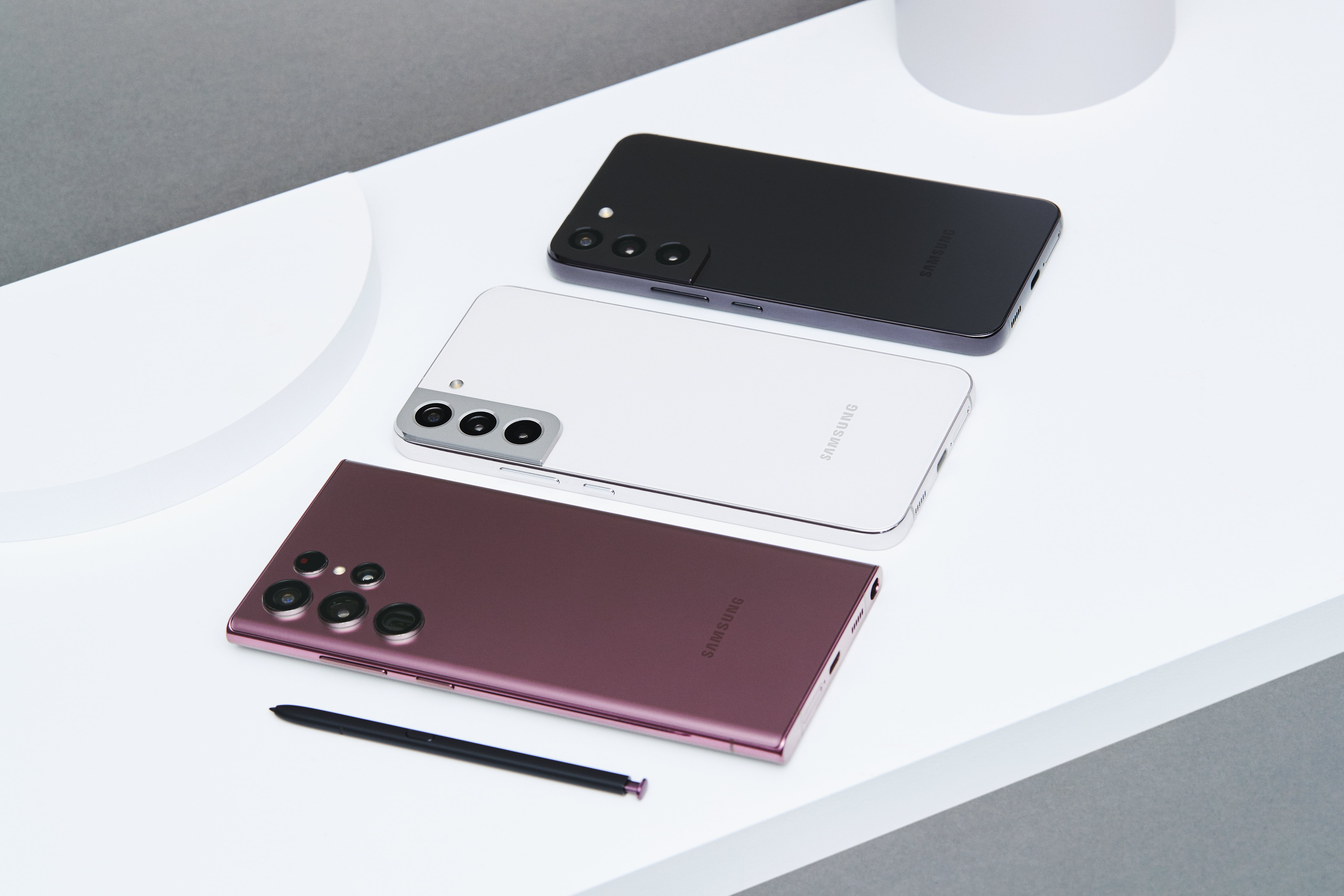
Samsung makes Google Messages default SMS app for Galaxy S22 lineup in the US

The latest Samsung Galaxy S22 series smartphones in the United States come pre-installed with Google Messages as the default messaging application which has support for Rich Communication Services (RCS).

Prior to this, Samsung had its own stock messaging app that was compatible with RCS which was the default SMS application on the South Korean giant’s devices in almost all regions before it started transitioning to Google Messages.

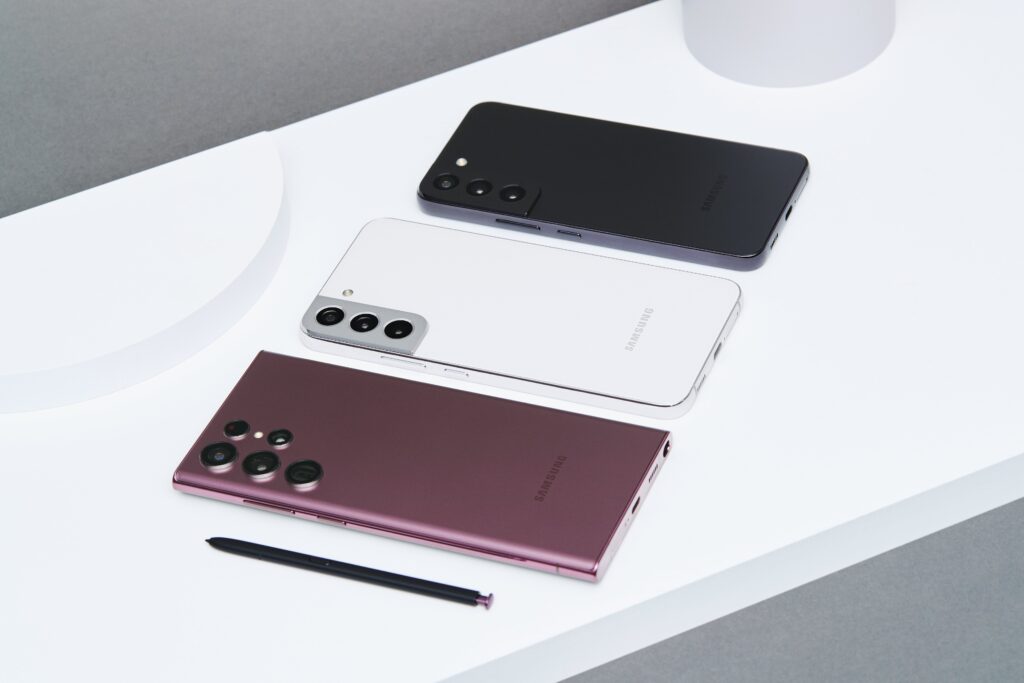
Samsung Galaxy S22 Ultra Burgundy Galaxy S22 Plus Phantom White Galaxy S22 Phantom Black

This is a new development for the Samsung premium smartphones in the United States by in the European market, the Sout Korean company switched to Google Messages as the default app with last year’s Galaxy S21 lineup.

The company has also confirmed this move and in a statement, Samsung spokesperson Jordan Guthmann said: “To create the best possible messaging experience for users — with a richer, more engaging communication experience that is consistent across platforms — Samsung is now making Messages the default messaging app for Galaxy S22 series users worldwide, giving them even better capabilities.”

Given that Samsung makes up a significant portion of Android smartphones sold in the United States, the adoption of Google Messages could be proved to be a boon for RCS adoption in the region.

For those who are unaware, Rich Communication Services (RCS) is a next-gen SMS texting version that comes with features like typing indicators, read receipts, and the ability to share higher resolution photos and larger files, among others.

While the technology isn’t new, it has taken many years for it to reach the market. Although companies agrees to replace SMS with RCS in 2019, telecom network operators in the US started making changes from last year by adding Google Messages, which now has end-to-end encryption, as the default messaging app on their Android phones.

RELATED: 

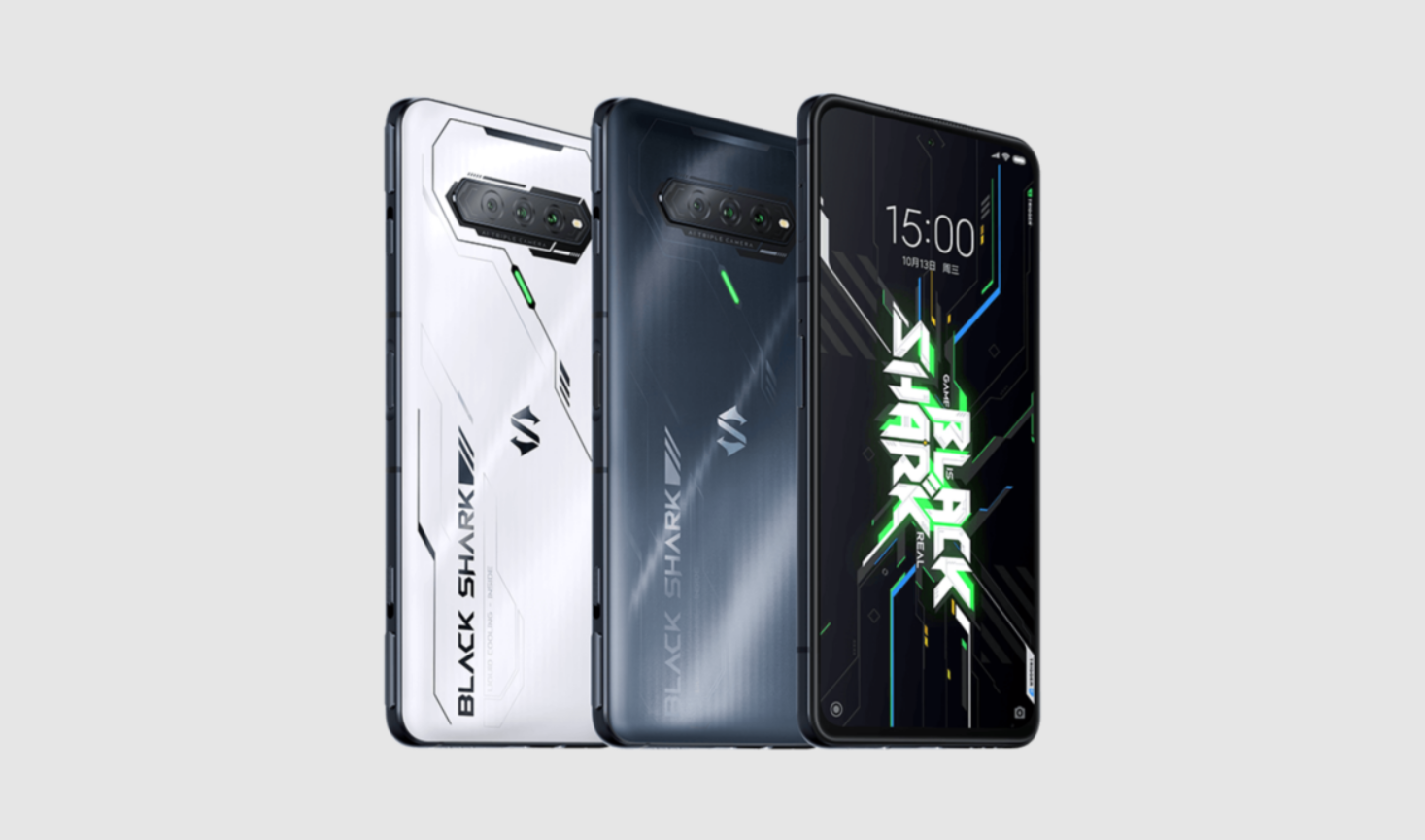
Black Shark 5, 5 Pro full specifications revealed through TENAA appearance

The Black Shark 5 series of gaming smartphones are likely to launch soon in China. The reason behind it is that the Black Shark 5 and Black Shark 5 Pro have appeared in the database of China’s TENAA telecom authority. The listings have revealed the entire specs of both devices. However, the images of the Black Shark 5 duo are yet to surface at TENAA.

Black Shark 5 specifications (rumoured)

The TENAA listing of the Black Shark 5 (model number PAR-A0) measures 163.83 x 76.25 x 10.37mm and weighs 223 grams. The device will be available in multiple colors such as White, Dawn White, Dark Universe Black, and Exploration Gray. The Black Shark 5 has a 6.67-inch AMOLED FHD+ display with an in-screen fingerprint scanner. It is powered by a 3.2GHz chip, which could be a Snapdragon 8-series chip. The SoC is coupled with 8 GB / 12 GB of RAM and 128 GB / 256 GB of storage.

Black Shark 4S Pro
Black Shark 4S Pro

The Black Shark 5 draws power from a 4,650mAh (rated value) battery that reportedly supports 120W fast charging. For photography, it has a 64-megapixel triple camera unit on the back and a 13-megapixel front camera.

Black Shark 5 Pro specifications (rumoured)

The Black Shark 5 Pro (model number KTUS-A0) TENAA listing has revealed that it measures 163.86 x 76.53 x 9.8mm and weighs 226 grams. It will come in four colors such as White, Tiangong White, Meteorite Black, and Moon Rock Gray. It is fitted with a 6.67-inch FHD+ AMOLED screen with an in-display fingerprint sensor. It seems to be powered by the Snapdragon 8 Gen 1 and 8 GB / 12 GB / 16 GB of RAM. The smartphone may come with 256 GB / 512 GB of storage.

The Black Shark 5 Pro has a 4,650mAh (rated value) battery. It is also expected to support 120W fast charging. It has 108-megapixel triple rear-facing cameras and a 13-megapixel front camera.

RELATED:

POCO F4 GT key details emerge through certifications, launch seems imminent

Recent reports have revealed that the Redmi K50 Gaming Edition that is scheduled to go official in China tomorrow has a 21121210C model number. It is expected to get rebranded as the POCO F4 GT in the global markets. Tipster Abhishek Yadav has revealed that the POCO F4 GT with model number 21121210G has bagged multiple certifications, which indicates its launch could be drawing near.

Yadav has shared screenshots of the alleged POCO F4 GT’s FCC, IMEI, EEC, and TUV certifications. The FCC certification has revealed that the device may come preinstalled with MIUI 13. The device carries support for Bluetooth, dual-band Wi-Fi, and n5 / n7 / n38 / n41 / n77 5G bands.

The device is backed by a pair of 2,280mAh (rated value) batteries. It offers a combined capacity of 4,650mAh. The handset carries support for Hi-Res Audio. The rear schematic of the phone suggests that it will house a square-shaped camera module.

The retail package of the POCO handset will include a mobile phone, a charging brick, a USB-C cable, SIM eject tool, a USB-C to 3.5mm headphone adapter, a protective case, Quick Start Guide, Warranty Guide, and Safety Information. While the EEC and TUV certifications reveal POCO branding for the 21121210G handset, the IMEI listing (spotted last month) shows that it may carry a marketing name of POCO F4 GT.

Redmi K50 Gaming Edition Teaser Render
Redmi K50 Gaming Edition

Last year, the Redmi K40 Gaming Edition, which debuted in China, was rebranded as the POCO F3 GT in the global market. Hence, it is likely that the Redmi K50 Gaming Edition could be rebadged as the POCO F4 GT. The K50 Gaming is expected to arrive with specs like a 6.67-inch 120Hz FHD+ OLED display, Snapdragon 8 Gen 1, up to 12 GB of RAM, up to 256 GB of storage, a 4,700mAh battery with 120W fast charging, a 20-megapixel front camera, and Sony IMX686 64-megapixel triple camera unit.

RELATED:

Alienware 34-inch QD-OLED monitor to be available from next month for $1,299

A few weeks ago, Dell had announced the Alienware AW3423DW 34-inch gaming monitor at the Consumer Electronics Show and now more details about the product as well as pricing and availability details have been revealed.

The monitor features QD-OLED display which is promising image enhancement and improved color coverage. It is also touted to be the first monitor to feature QD-OLED and is priced at $1,299, lower than the OLED monitors in the market. It will be available for purchase in this spring, from 29th March.

Dell Alienware QD-OLED Gaming Monitor

This new Alienware AW3423DW monitor’s specifications are on the higher side as the company is targeting it towards gamers. The 34-inch display comes with 3440 x 1440 pixels screen resolution, a 175Hz refresh rate, DCI-P3 color gamut, 1,000,000:1 contrast ratio, and 1,000nits peak brightness along with HDR support.

It also uses Samsung’s QD-OLED technology which has blue organic light-emitting diodes passed through quantum dots to generate red and green. As blue has the strongest light energy, QD-OLED in theory offers more brightness and efficiency.

As for the ports, the device has two HDMI ports, one DisplayPort, three USB 3.2 ports, an audio line-out, and a headphone jack. The stand also comes with support for adjustment for height, tilt, and swivel, as well as VESA mount option and cable management.

The QD-OLED should be as good as or better than OLED when it comes to managing burn-in. The company is also offering a three-year limited hardware warranty and adds that owners would get a replacement “by the next business day” if a unit suffers from burn-in.

RELATED: 

Apple iMac Pro with Mini-LED display to reportedly launch in June

Apple is gearing up to launch several products this year and the company is expected to host its first launch event of this year on 8th March where it could unveil the next-generation Apple iPhone SE budget smartphone.

There have been few leaks about the upcoming 27-inch Apple iMac Pro and now the latest report indicates that the Cupertino-based technology giant could officially launch this new Mac sometime in the month of June.

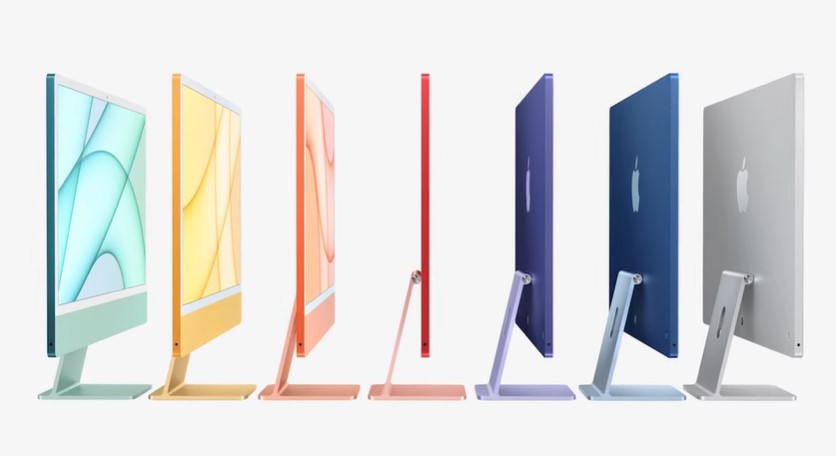
Apple iMac

Ross Young of Display Supply Chain Consultants claims that the Mini-LED iMac Pro could launch in June 2022. This could mean that the new iMac Pro might get unveiled at Apple’s Worldwide Developers Conference.

Earlier, there were reports that the product could go official sometime in summer this year. Based on the reports so far, the upcoming iMac Pro will come with a revamped design and upgraded specifications.

The 27-inch Mini LED display could have support for a 120Hz refresh rate. It is said that the device will feature a design similar to the 24-inch iMac which is powered by an M1 chipset.  It is expected to come powered by the recently announced M1 Pro and M1 Max chipsets from Apple, the same processors that are powering the 14-inch and 16-inch MacBook Pro models launched last year.

Apart from the Apple iMac Pro, the company is gearing up to launch several new products throughout this year, including the AirPods Pro 2, M2 chipset, new MacBook models powered by a new processor, and much more.

RELATED: 

OPPO partners with Reliance Jio to conduct 5G trials in India

OPPO, one of the world’s leading smartphone makers, announced that the company conducted a 5G standalone and non-standalone network trial in partnership with Indian telecom network operator Reliance Jio.

Reliance Jio, which is a relatively new player in India’s telecom sector but one of the leading ones, carried out these tests by utilizing the allocated mid-band trial spectrum which is in the range of 3.3GHz to 3.6GHz frequency range.

oppo logo

OPPO has further said that the 5G trial was successfully concluded on the Reno7 smartphone in a demo setup. The company adds that it could get lag-free 4K video streams on the device along with super-fast download and upload speed.

The OPPO Reno7 Pro, a smartphone that was launched in the Indian market a few weeks ago, comes with support for up to 10 bands while the standard Reno7 supports up to 13 bands that will support access to the 5G network anywhere in the country. The OPPO Reno7 is priced at ₹28,999 in the Indian market.

In a statement, Tasleem Arif, Vice President, India Research & Development Head, OPPO India, said:  “Technology such as 5G is altering how the world communicates today and tests like these will further consolidate our efforts in the industry and provide the best value proposition for our customers.”

The Indian government is set to open auctions for the 5G spectrum in the country by the end of this year and is eyeing a commercial rollout of the next-generation communication technology sometime in 2023.

RELATED: 

India’s Vedanta and Foxconn team up to manufacture semiconductors in India

India’s efforts to become a major semiconductor manufacturer have just got a big boost with the announcement of the Taiwanese contract manufacturer Foxconn teaming up with Indian steel and oil company Vedanta in an effort to build a manufacturing plant for semiconductors in the country.

Foxconn logo

On Monday, Foxconn revealed that they have entered into a Joint-venture, with Vedanta holding the majority share of the equity. Foxconn further informed that Anil Agarwal, the founder, and chairman of Vedanta Resources Limited will also be the chairman of the joint venture company. The name of the joint venture company has not been made public yet, along with what kind of semiconductors the newly-formed company plans to manufacture.

Foxconn has mentioned that discussions are underway with various state governments regarding where the fab will be set up by the company. Nevertheless, the new venture is sure to create multiple jobs opportunities in the country.

The new joint venture between Vedanta and Foxconn is a result of the recently announced Performance Linked Incentive (PLI) scheme for electronics manufacturing by the Indian government. The scheme provides many benefits to foreign companies who choose to set up their manufacturing units in the country and also fulfills the government’s “Make in India” agenda.

RELATED:

(via)

Some Samsung Galaxy S22 per-orders have arrived before release date: Report

The Samsung Galaxy S22 series was announced on February 9th, at the Galaxy Unpacked 2022 event. Right now, the devices are only available for pre-order as Samsung won’t commence deliveries till February 25th in the case of the Galaxy S22 Ultra and Early march for the Galaxy S22 and S22 Plus models.

Samsung Galaxy S22 Ultra Burgundy Galaxy S22 Plus Phantom White Galaxy S22 Phantom Black

However, some customers have already got their hands on these new devices according to a TechRadar report. The Samsung subreddit has been blowing up with users posting about receiving their latest Galaxy S22 smartphones way earlier than expected. The reporters have mostly been about receiving the Galaxy S22 Ultra and the S22 Plus models.

The prevailing theory is that some customers who ordered the devices as soon as the pre-order windows opened got their devices dispatched to them immediately.

The comments sections are also largely filled with disappointed customers who have still received their devices. Some people have also reported being given arrival dates way ahead of the official release date of February 25th. However, it could just be due to system errors from the retailers and couriers, therefore we suggest people assume that their devices will arrive post the official release date rather than any date that’s been shown prior.

RELATED:


Ford rumored to re-enter Indian market to manufacture and sell EVs

Ford Motor Company is planning to re-enter the Indian Market after its exit in 2021. The company is looking towards making India the hub of manufacturing and exporting EVs to the international markets. The company has also hinted at the possibility of selling cars in the domestic market in the future.

Ford Mustang Mach-E
Image source: Ford

The news of this upcoming venture came to light when Ford’s application to participate in the federal government’s Performance Linked Incentive (PLI) scheme got approved. This particular scheme aims at making India a hub for automobile manufacturing and offers incentives to the companies that set up their production units in the country.

Ford, which has two plants in India, said that it is now “exploring the possibility of using a plant in India as an export base for EV manufacturing”. Although the company had left the Indian market just six months back, stating that the Indian market was not profitable for the company and was ready to suffer $2 billion in losses.

While the company has no concrete plans to develop electric vehicles for the Indian market, the company said, “There is no specific discussion on this right now, but it is not out of the realm of future consideration. Ford also plans to serve customers in India with must-have iconic vehicles, including the Mustang coupe.”

This news aligns with Ford’s announcement that it is focusing on electric vehicles and has announced a massive budget of $30 billion globally to develop new fully-electric and new hybrid vehicles.
Considering these announcements and the Indian electric vehicle market, it would be a great time for ford to enter the Indian market as it is still in a nascent stage. But both the Ford plants in the country – one in Sanand, Gujarat, and the other one in Chennai would require significant upgrades in order to be able to start making electric vehicles.

If all goes well, this move could prove beneficial for the Indian market as it would provide much-needed competition as well as affordable electric cars to boost the adoption of zero-emission vehicles in the country.


RELATED:

(via)

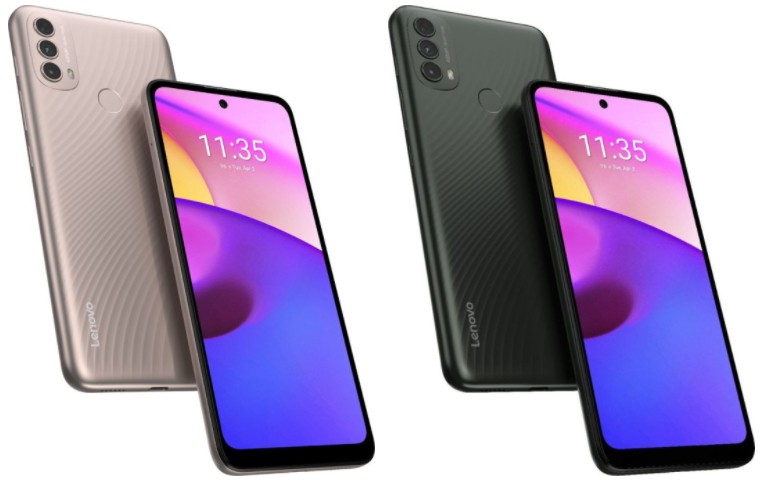
Lenovo K14 Plus finally gets a debut as a rebranded Moto E40

Lenovo has officially launched the Lenovo K14 Plus in the market. This is new device is actually a rebadged model of the last year’s Moto E40. The smartphone has the same 90Hz display, triple cameras, and a UNISOC chipset.

The Lenovo K14 Plus is priced at ₽ 9,990(~$130) for the 4GB RAM and 64GB storage variant. The smartphone is currently available in Russia and is sold via Citylink.

Lenovo K14 Plus Specifications 

The Lenovo K14 Plus comes with a plastic body sporting a 6.5-inch punch-hole display. It is an IPS LCD panel with HD+ resolution and a 90Hz refresh rate. The device has a 20:9 aspect ratio and has thin bezels on all three sides except for the bottom. At the bottom, it has a thick chin.

Lenovo K14 Plus colors

Coming to the cameras, the phone has a triple camera system at the rear with a 48MP primary lens, a 2MP depth sensor, and a 2MP macro unit. The rear camera can shoot videos at 1080p 30fps. It has an 8MP camera on the front.

It is powered by the UNISOC T700 SoC coupled with 4GB of RAM and 64GB of internal storage. It also has a microSD card slot for additional storage. The phone houses a 5,000mAh battery with a 10W charging speed. Just like the Moto E40, we can expect it to last for up to two days, depending on the usage.

The device has a rear-mounted fingerprint scanner and a facial recognization option for added security. It has a USB Type-C port and a 3.5mm headphone jack. The smartphone runs on Android 11 out of the box.

RELATED:

OnePlus Nord CE 2 price, colors, and sale details leaked ahead of launch

OnePlus will take wraps off the Nord CE 2 on February 17 in India. Just today, the phone’s major specs were leaked ahead of launch. Now, the tipster Yogesh Brar has revealed the pricing and colors of the smartphone.

According to the tipster, the OnePlus Nord CE 2 will start at Rs. 23,999(~$317) for 6GB RAM and 128GB storage variant in India. It will cost Rs. 25,999(~$344) for the 8GB RAM and 128GB storage variant. He further revealed the possible colors of the smartphone. The device is said to launch in two colors – Bahama Blue and Gray Mirror. The device will go on sale this week itself after the launch ends.

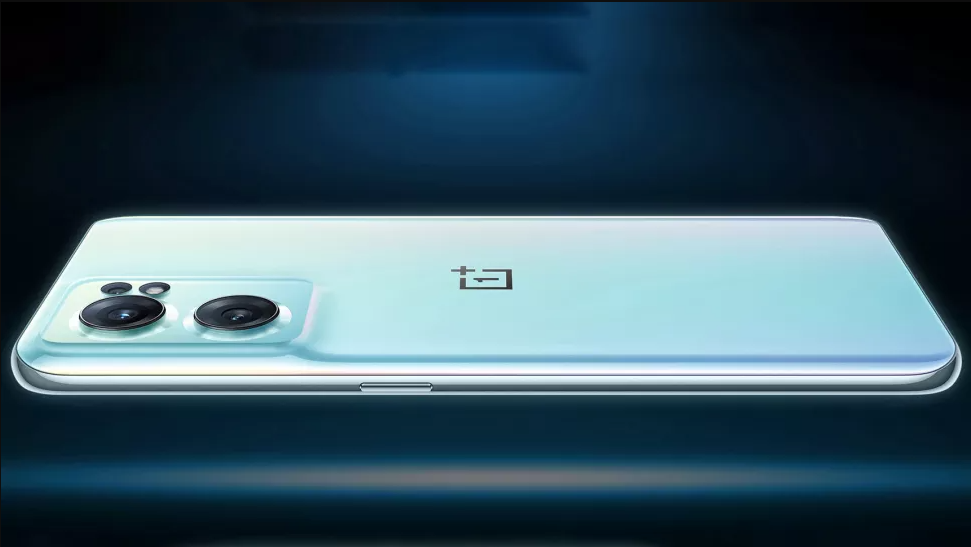
OnePlus Nord CE 2
Image via TechRadar

OnePlus Nord CE 2 Specifications 

Earlier today, some of the major specs of the phone were learned. The smartphone is touted to have a similar camera island bevels as the Oppo Find X3 Pro. It will feature a 6.43-inch punch-hole AMOLED panel with an FHD+ resolution and 90Hz refresh rate.

It will feature a 16MP selfie shooter at the top left corner. The phone will have a triple camera system at the rear with a 64MP main lens, an 8MP ultra-wide sensor with 119° FOV, and a 2MP macro lens.

It will be powered by the MediaTek Dimensity 900 SoC paired with 6GB of LPDDR4x RAM and 128GB of UFS 2.2 onboard storage. It will have a microSD card slot for storage expandability up to 1TB. The device will pack a 4,500mAh battery with 65W SuperVOOC fast charging support.

RELATED:

New possible Amazon Fire tablet gets FCC approval 

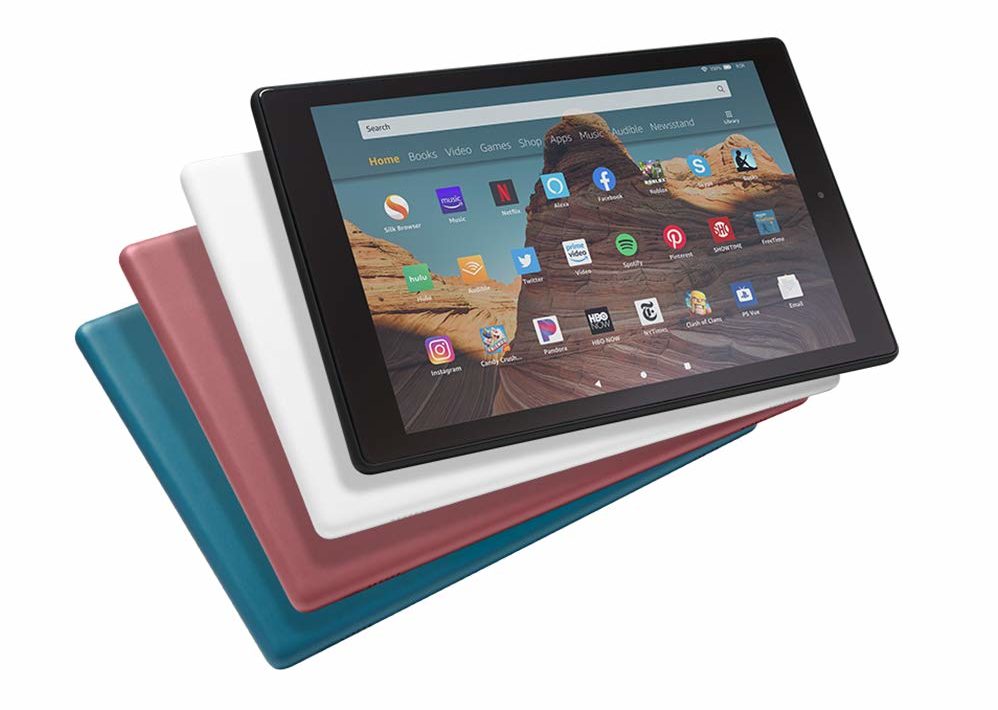
A device with all the signs that it is a new Amazon Fire tablet has gotten the approval of the United States’ Federal Commission (FCC) ahead of a possible release of the product. The device with the model number and FCC ID: 2AWRO-8768 and its details, though not explicitly seen, indicate a possible Amazon Fire HD 10 tablet. If indeed, that is the case, then the model will be the successor to the released Amazon Fire HD tablet in 2021.Amazon Fire HD10 (2019)

The Amazon Fire 7 tablet is the oldest model in the Amazon lineup, it had seemed that that was the most likely model to be iterated in the new form, but it seems that may not be the case. Sources familiar with the trajectory of the model with the recent FCC approval say that Amazon allegedly submitted the tablet to FCC with a fake company named Abyssal Plain LLC. But interestingly, the same name was used by Amazon to submit the Fire HD 10 tablet when it went through the FCC paces. The feeler is that the model is just an updated version of the Fire HD 10 and the two model numbers have only a slight difference. Amazon has also never had to use a fake filing name for two different products.

Although we are not yet in a position to know the specs details of the new device, it could bear a strong semblance to the Fire HD 10 in terms of design and functionality, with some tech tweaks to enhance its rating. There are no indications also on the possible release date for the device, but we expect some key announcements from Amazon this year including some other tablets.

RELATED:


(via)


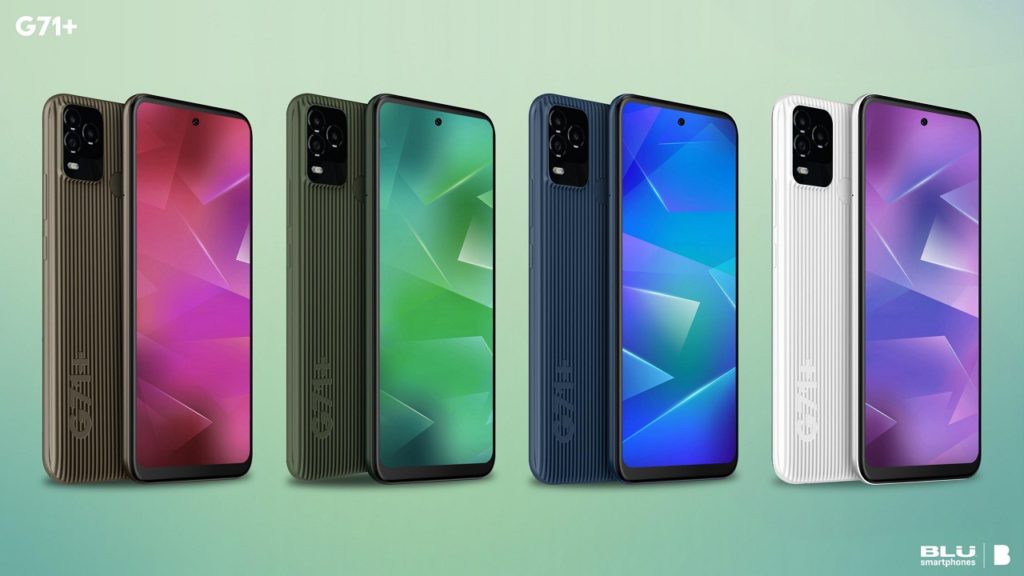
BLU G71+ with UNISOC T610 SoC and triple cameras announced in the global market

Earlier this month, BLU officially announced the BLU G51S as an entry-level smartphone in the market. Now, the company has unveiled the BLU G71+ budget smartphone with UNISOC T610 chipset and triple rear cameras.

The BLU G71+ is available in the global market and can be picked up in Bronze, Green, Blue, and White colors. Unfortunately, the phone’s pricing is yet to be revealed.

BLU G71+

BLU G71+ Specifications 

Coming to the specs, the BLU G71+ has a slightly tweaked design as compared to its predecessor. It comes with a textured back with vertical strips that seems to be helping with the phone’s grip. The device has a 6.5-inch IPS LCD display with an HD+(720 x 1600 pixels) resolution. It has the standard 60Hz refresh rate and 20:9 aspect ratio.

BLU G71+As for the cameras, the smartphone features a triple camera system with a 13MP primary lens, a depth sensor, and a macro unit. It has an iPhone 13-like lens placement but in a vertically elongated camera island. Interestingly, it has a 13MP selfie snapper. The rear camera is capable of recording up to 1080 videos at 30fps.

It is powered by the 12nm UNISOC T610 octa-core SoC clocked at 1.8GHz. It is paired with 4GB of RAM and 64GB, 128GB of internal storage. The device packs a 4,900mAh battery and has facial recognition, a rear-mounted fingerprint scanner for security. The device runs on Android 11 out of the box.

RELATED:

(via)

Researchers in China reportedly achieve data streaming using 6G technology

There seems to be only a minimal slowdown in the deployment of super-fast 6G technology in China even with the setbacks occasioned by the clampdown on Huawei and other Chinese firms who were on the cusp of 6G breakthrough in some form. There are clear indications that China has made progress on the next generation connectivity architecture for wireless communications according to reports from the South China Morning Post.6G Network

The report indicates that the Chinese research team led by Professor Zhang Chao was able to stream 1 terabyte of data over 1km in one second. Professor Zhang Chao is from the School of Aerospace Engineering of Tsinghua University and his research team achieved the feat using very high-frequency radio waves, called vortex millimeter waves. The implications for these outstanding streaming speeds are indeed far-reaching, as there are loads of applications that are waiting for the 6G technology to change the face of the world. They could be deployed to weapons and defense systems, with the possibility of deploying hypersonic weapons. The communications component and applications in the entire IoT ecosystem are also exciting.

China says it is at the head of research on 6G research with massive investments in support of the new technology and some great results to show for the efforts. An experimental wireless system was deployed in the Beijing Winter Olympics to simultaneously stream more than 10,000 hi-def live feeds seamlessly. Team leader, Professor Zhang insists that the vortex millimeter waves are unlike any of the radio waves deployed since radio waves were introduced over 100 years ago.

The new technology has added a new dimension to current wireless transmission, which means that the vortex millimeter waves have three dimensions similar to the motion of a whirling tornado. The researcher has also developed an innovative transmitter that allows the waves to spin in three different modes for efficient data transmission. The architecture also includes a special receiver to decode a large amount of data at super-fast sub-second speeds. Even with the decline of Huawei was massively pioneering research and development of the 6G technology, China still holds some stake in 6G patents up to 40% of the global overall. The 6G technology could deliver speeds more than 100 times faster than current 5G speeds and several countries are pursuing research in that direction.

The ultimate deployment of the 6G technology is still however years away, with some projections putting this at 2030. The global focus now is for much of the world to have the needed deployment of 5G connectivity, with its accompanying concerns for health and airline safety being pointed out. The 6G technology will also come with its potential flipsides, which will become visible as the technology continues to evolve.

RELATED:


You may probably want to get an Apple Watch after reading this story

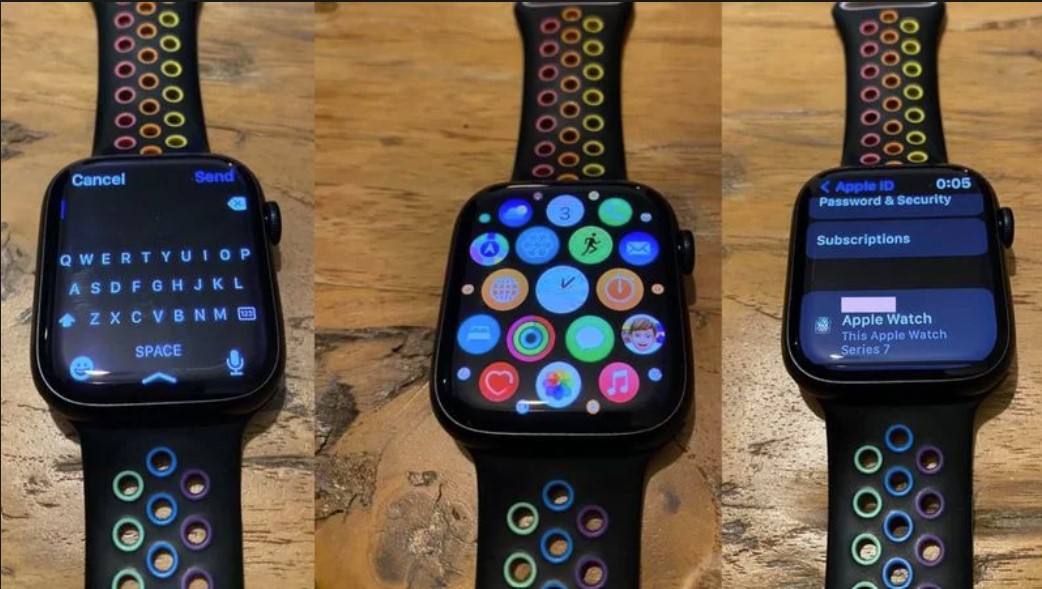
The Apple Watch has had a very pleasant and life-saving run in recent months with the raft of stories that have elevated the Apple smart wearable to the status of a life-saver. Right from the onset of the coronavirus pandemic in early 2020, a study showed that the Apple Watch was capable of identifying potential COVID-19 symptoms up to 10 days before the actual onset of the disease. Its fame has continued to grow and the news that the Apple Watch was able to detect the change in the health status of a TikTok user will add further hype to the device.apple-watch-series-7-real-life

The Sidney-based TikTok is named Lauren and she made a video indicating that her Apple Watch detected changes in her heart rate and other body functions that correlated with the later diagnosis of her thyroid condition. The woman says that had she turned on notifications on her Apple Watch, she could have been notified of the situation several months before the eventual diagnosis. The increase in her stress levels occasioned by reduced intake of oxygen detected by her Apple Watch coincided with other symptoms like fatigue, irritability, sensitivity, among several other symptoms.

Lauren says that the Apple Watch, from her recent experience, could prove helpful in situations where extended stress levels could be indicative of more serious medical conditions. The device could assist in fast-tracking diagnoses when the user seeks prompt medical attention, rather than waiting for the full symptoms to become visible.

The collection of sensors in the Apple Watch provides a raft of critical health and fitness measurements that puts the device on the top echelon of life-saving smart wearables. Its record continues to grow, with the Apple Watch’s fall detection mechanism the major life-saving feature in the smartwatch.

RELATED:


(source)


REDMAGIC 7 Pro emerged on Geekbench with 16GB of RAM

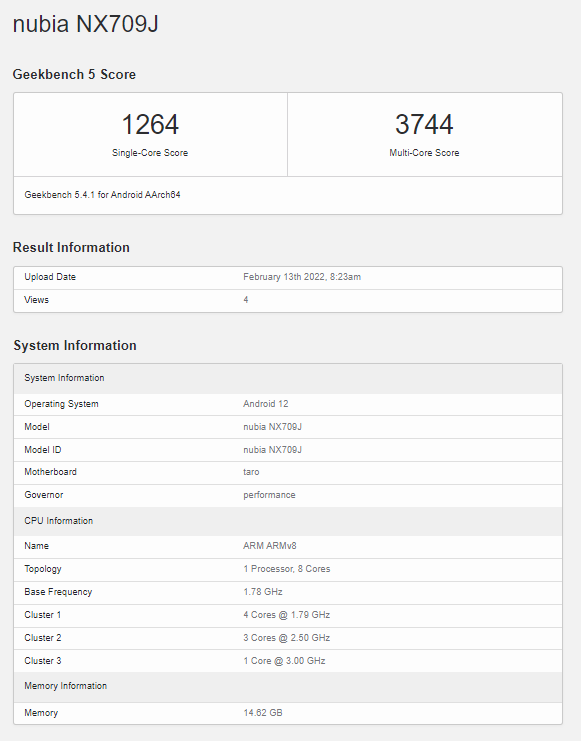
REDMAGIC 7 series will debut on February 16 in China. The series will comprise the REDMAGIC 7 and REDMAGIC 7 Pro. So far, we know that the former model has the model number – NX6791, while the latter has the model number – NX709J. Previously, the vanilla model passed the Geekbench certification showing impressive results, now, the Pro model with model number NX709J has emerged on the same certification.

The REDMAGIC 7 Pro with model number NX709J has scored 1264 points in the single-core department and 3744 points in the multi-core department. The device runs on Android 12 out of the box and has 16GB of RAM. Just like the vanilla model, the Pro model also has the Snapdragon 8 Gen 1 chipset, under the hood.

REDMAGIC 7 Pro Geekbench

Just like the vanilla model, the Pro model also has the Snapdragon 8 Gen 1 chipset, under the hood. In addition to this, the device also appeared on the Wi-Fi Alliance certification confirming support for 2.4GHz and 5.0GHz Wi-Fi (via).

REDMAGIC 7 Expected Specifications

The Pro’s specs aren’t clear but it is expected to have similarities with the vanilla model. The REDMAGIC 7 is expected to come with a 6.8-inch OLED display sporting an FHD+ resolution. It will come with a 165Hz refresh rate and a high touch sampling rate.

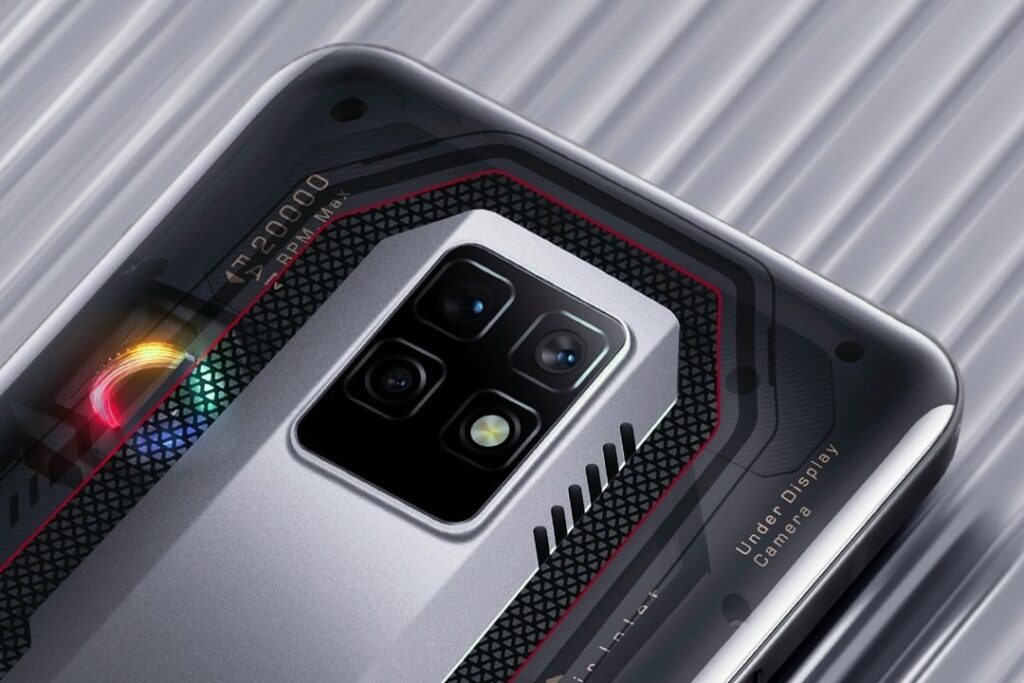
REDMAGIC 7 Under Display Camera Edition

It will flaunt a 64MP + 8MP + 2MP triple camera system. The device may have a 4,500mAh battery with up to 135W fast charging support. It will have a built-in independent gaming chip along with the Snapdragon chipset.

RELATED:

Galaxy S22 series, Android 13 Developer Preview, Infinix ZERO 5G, and more from Last Week

We are back again with our new list of top stories from the previous week. Lots of things happened last week. Most importantly, Samsung announced its flagship smartphones and tablets of 2022. Then, out of the blue, Google dropped the first Developer Preview of Android 13.  At the same time, the search giant ended support for one of the Pixel series. Let’s take a look at these and a lot more in our ‘latest Top Stories from Last Week’ segment.

Before we continue, we would like to inform you that the stories selected here are based on our opinion. Further, they are listed in no particular order.  Since everyone’s choices differ from others, we would like to know your picks in the comment section below.


Top Stories from Last Week


1. Galaxy S22 series – The next big thing from Samsung

Samsung Galaxy S22 Ultra Burgundy Galaxy S22 Plus Phantom White Galaxy S22 Phantom Black

Samsung’s next big thing is finally here in the form of the Galaxy S22 series. The South Korean tech unveiled its latest flagship smartphones with a fanfare at the Galaxy Unpacked 2022 event on February 9 (Wednesday).

The company has introduced multiple changes in the new models. Firstly, all three devices arrive with a new design. The Galaxy S22 and the Galaxy S22+ are only slightly different from their predecessors, whereas the Galaxy S22 Ultra has been completely revamped with a built-in S Pen. In fact, the latter is more of a Galaxy Note than a Galaxy S.

The two cheaper models come with updated primary and telephoto cameras. The plus and ultra offer the brightest display on a smartphone. Finally, in some markets, these phones are powered by Samsung’s in-house Exynos 2200 SoC with AMD RDNA architecture-based Xclipse GPU.


2. Galaxy Tab S8 series – Notch and a 14.6-inch screen

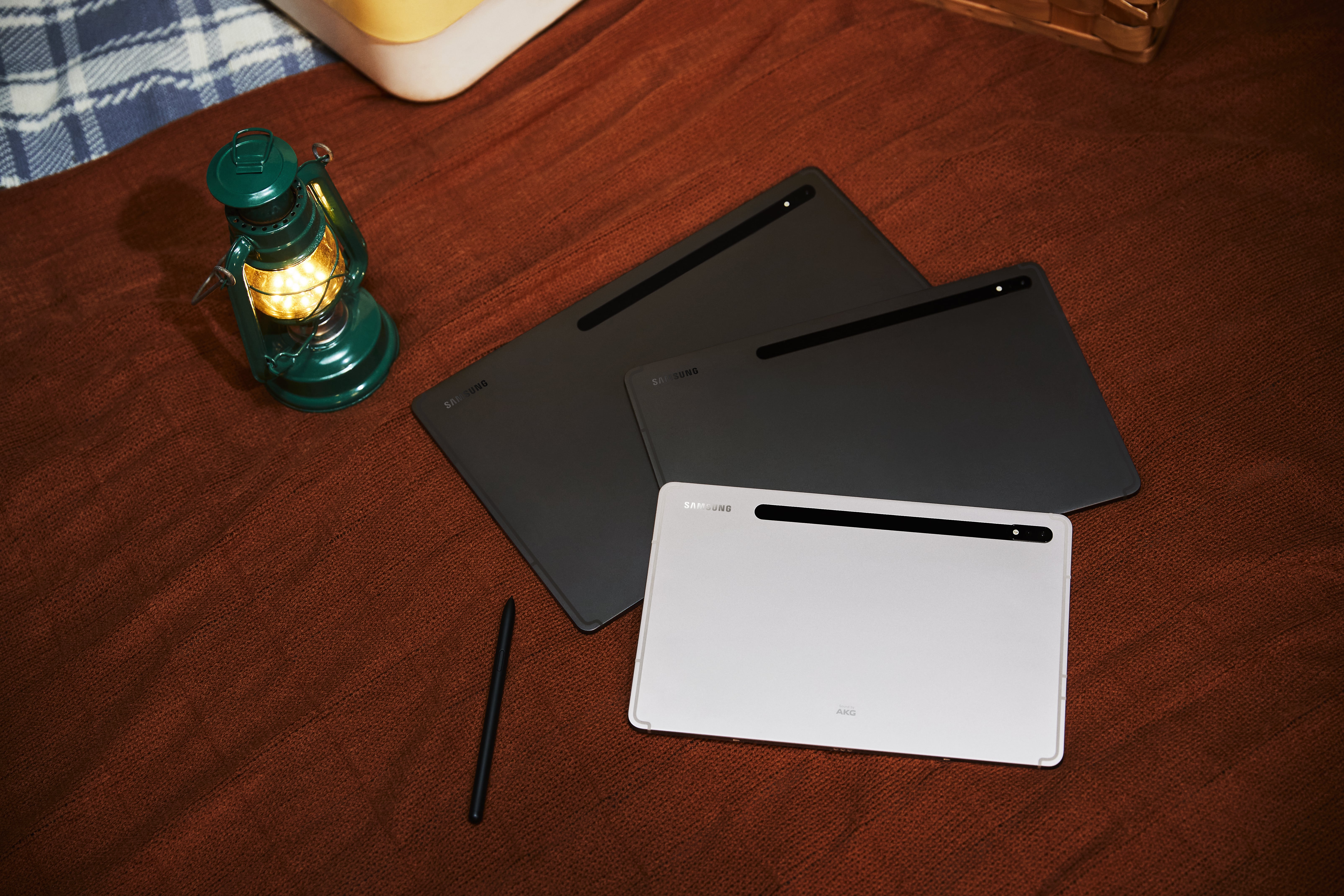
Samsung Galaxy Tab S8 Plus Ultra

Samsung unveiled the Galaxy Tab S8 series alongside the Galaxy S22 series. The family consists of three models like the phones – vanilla, plus, and ultra.

Galaxy Tab S8 Ultra, the first ‘Ultra’-branded tablet from Samsung, has a massive 14.6-inch AMOLED display. The screen also includes a notch housing two cameras.

The Galaxy Tab S8 and the Galaxy Tab S8+ are regularly sized tablets. But the vanilla variant has an LCD panel instead of AMOLED like the other two. 

All three are powered by Qualcomm Snapdragon 8 Gen 1 SoC. They also have support for the S Pen stylus.


3. Android 13 Developer Preview out ahead of Android 12L Stable release

Android 13 Developer Preview 1

Even before Android 12L could hit the stable channel, Google has already released the Android 13 Developer Preview. Anyone with Pixel 4 or above devices can try out the upcoming version of Android.

Android 13, which is codenamed Tiramisu, is a polished version of Android 12. So don’t expect major changes like the transition from Android 11 to Android 12.

According to a timeline shared by Googe, beta builds will be out around April, followed by stable in June or July. Anyway, this schedule is only applicable for Pixels.


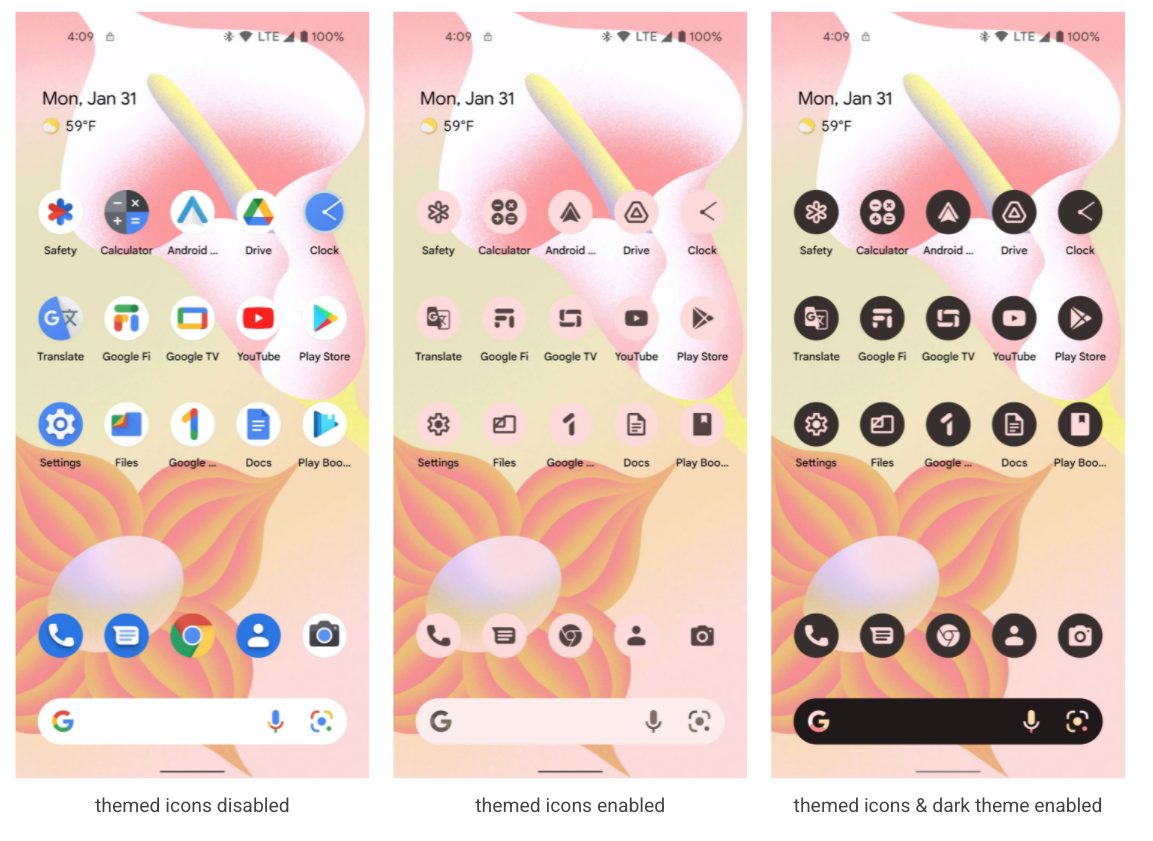
4. Dynamic theme coming to non-Pixel devices

Material You

Google has officially revealed that the Android 12’s monet dynamic theme engine will be soon available on devices from popular OEMs like Samsung, OnePlus, Xiaomi, and others. However, the search didn’t give a specific timeline.

Ahead of this announcement, a report had already disclosed that the Android 12 dynamic theming engine will be a requirement for GMS approval from March 14. This means the feature should come to non-Pixel devices in the next few weeks, at least, in the form of beta.


5. Google ends support for Pixel 3 and Pixel 3 XL

Pixel 3 All colors 2

The Pixel 3 and the Pixel 3 XL received their final software update last week. The system update merely brings February 2022 security patches.

The Pixel 3 series debuted in October 2018 with Android 9.0 Pie. Throughout their lifetime, the handsets received 3 Android updates (up to Android 12).

The Pixel 3 XL has made a name for itself in history for its ‘bathtub notch’.


6. OnePlus plans to discuss OxygenOS 13 with users

OxygenOS Logo Dark

OnePlus and OPPO are expected to introduce a unified operating system based on Android 13 later this year. Ahead of that, the former has scheduled an Open Ears Forum (OEF) to discuss the said software with its userbase.

As of now, OnePlus is still calling it OxygenOS 13 based on Android 13. Perhaps, the name change may happen once the software reaches the release phase.

That said, the event is planned for February 28 and the registrations for it are open until February 18.


7. Bunch of upcoming Motorola phones leak in renders

Motorola Rogue

Popular leaker Evan Blass shared press renders of five forthcoming Motorola smartphones on February 9. As he does with Motorola leaks, he merely described the codenames of these phones instead of their actual marketing names.

These handsets called Hawaii+, Dubai, Rogue, Rhode, and Austin belong to multiple price segments. For instance, one of them has an under-display camera, while another features a thick chin.

We expect to learn more about these devices in the coming days.


8. Infinix debuts its first 5G smartphone – ZERO 5G

Infinix Zero 5G

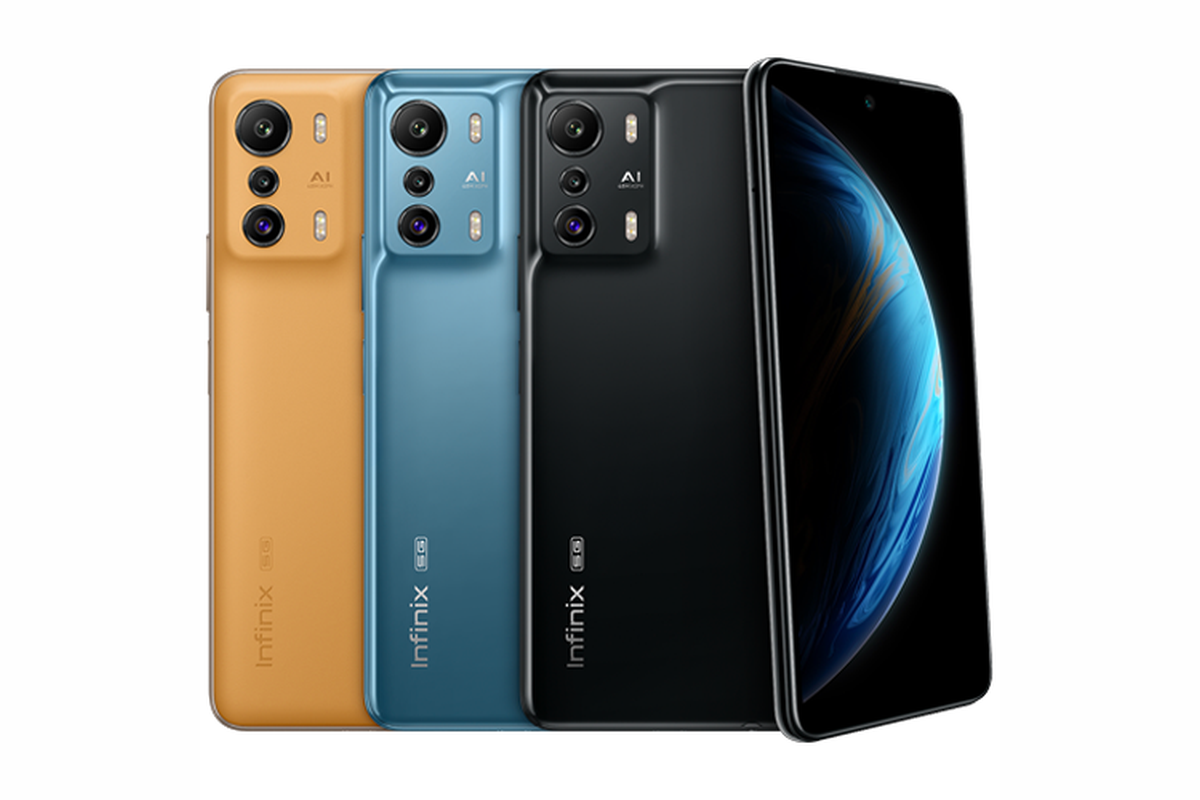
Infinix ZERO 5G made its global debut in Nigeria as the brand’s first 5G smartphone. It is a mid-range offering with some interesting set of features.


The 6.78-inch 120Hz display (LCD) touting handset is powered by a MediaTek Dimesnity 900 SoC coupled with 8GB LPDDR5 RAM and 128GB UFS 3.1 storage. Unlike most phones in the segment, it sports a 13MP 2x telephoto camera.

In addition to a dedicated MicroSD card slot and a 3.5mm headphone jack, the device is backed by a large 5,000mAh battery with support for 33W fast charging.


9. Realme grew stronger globally in Q4 2021

Realme Logo

A Canalys report revealed that Realme entered the top 5 in 30 markets globally. For the first time, the brand made it to the list in key markets like Germany, Peru, Colombia, and Western Europe.

In India alone, the company grew 48% YoY. As a result, its market share rose to 17% in the region. In Western Europe and Europe, it registered growths of a whopping 1365% and 450% respectively.


10. Hope for new BlackBerry smartphones dies

BlackBerry Onward Mobility

In January, OnwardMobility reassured that a 5G BlackBerry smartphone with a keyboard is on its way later this year after being delayed. Within a few weeks, a report from last week revealed that this project is dead.

It is said that OnwardMobility has lost its license to use the ‘BlackBerry’ name. The once-popular smartphone maker is reportedly distancing itself from its glorious days after selling its mobile patent portfolio in early February.


RELATED:


OnePlus Nord CE 2 official images, specs revealed: Features Dimensity 900 SoC

OnePlus is gearing up to launch its latest mid-range smartphone offering dubbed the OnePlus Nord CE 2. The handset is set to debut on February 17 in India. Now, before its launch, OnePlus Head of Product Oliver Zhang has confirmed some of the smartphone’s features in an interview with TechRadar. Zhang has also revealed the official images of the Nord CE 2.

An image of the OnePlus Nord CE 2 draped in ‘Bahamas Blue’ color was leaked a few days back. And these official pictures confirm its legitimacy. Coming to the design of the smartphone, it looks quite similar to the Nord CE except for its camera bump design. It’s apparent that the camera bump borrows from the design of the OPPO Find X3 Pro.

On the topic of the new color, Zhang informed that other than the Bahamas Blue, the smartphone will be made available in another color called Gray Mirror.

Oliver Zhang also confirmed that the Nord CE 2 will come with a  4,500mAh battery supporting up to 65W fast-charging using SuperVOOC branded technology used by OPPO products. He also stated that the device will feature a microSD card slot that can expand the memory by up to 1TB using a TF card.

OnePlus Nord CE 2 Bahamas Blue

OnePlus India has also confirmed that the Nord CE 2 will be powered by a MediaTek Dimensity 900 SoC.

Other than that, the upcoming mid-ranger is said to come with a 6.43-inch FHD+ 90Hz AMOLED display. The memory and storage variants have not been confirmed yet, but rumors state that the device will come with at least 6GB of LPDDR4x RAM and 128GB UFS 2.2 storage.

For photography, the smartphone will house a triple camera system comprising of a 64MP primary sensor, an 8MP ultra-wide unit (119° FOV), and a 2MP macro snapper. On the front, it will come with a 16MP selfie shooter in a punch-hole cutout on the top left corner of the screen.

OnePlus India has confirmed that the device will launch on February 17th in the Indian market, so stay tuned for any more notable developments.


RELATED:


Vivo T1 5G goes on sale in India starting at Rs 15,990(~$213)

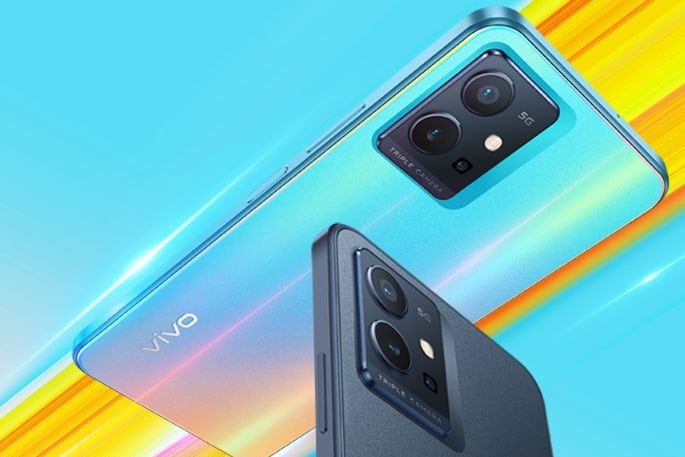
Last week, the Chinese phone maker Vivo launched the Vivo T1 5G in India. The smartphone comes as an online exclusive offering with specs like a 120Hz display, a 50MP triple camera system, and a big battery.

Starting today, the Vivo T1 5G has gone on sale in India. This is the first time the phone is on sale in the country. It comes in three variants an 4GB + 128GB, 6GB + 128GB, and 8GB + 128GB priced at Rs 15,990(~$213), Rs. 16,990(~$227), and Rs. 19,990(~$267), respectively.

Vivo T1 5G

It comes in two color variants, namely Starlight Black and Rainbow Fantasy. The device is available to purchase from Flipkart.com and Vivo’s official website.

Vivo T1 5G Specifications 

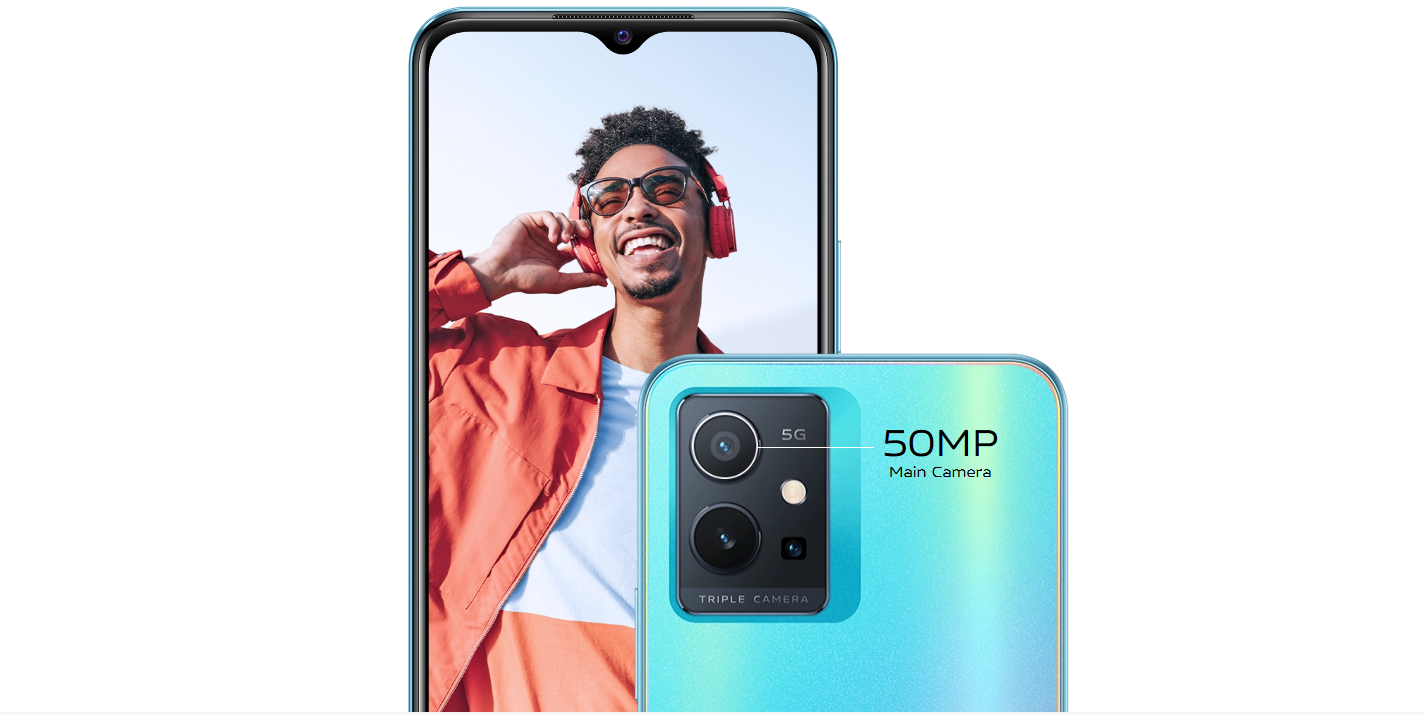
The Vivo T1 5G has a 6.58-inch water-drop notch display with an FHD+ resolution. It is an IPS LCD panel with a 120Hz refresh rate and 240Hz touch sampling rate. It sports a 16MP selfie snapper and has an AI triple camera system. The setup goes by a 50MP main sensor and two 2MP lenses.

Vivo

Under the hood, the smartphone is powered by the 6nm Qualcomm Snapdragon 695 SoC paired with up to 8GB of RAM and 128GB of internal storage. It has up to 12GB RAM expansion feature and also supports a microSD card slot for additional storage up to 1TB.

One of the highlights of the phone is the Turbo Liquid Cooling technology. The device has five layers of cooling mechanism that make sure the phone doesn’t heat up. This technology also reduces the temperature of the device by up to 10-degree Celsius. Lastly, it packs a 5,000mAh battery with support for 18W fast charging.

RELATED: