Advertisement

Sony PlayStation 5 gets Voice Commands in latest software beta

Sony has just launched a new system software beta for the PS4 and PS5 which brings many quality of life changes to the operating system along with some new features. The most intriguing out of these is the voice command preview which will enable users to use voice commands on their Playstation 5 consoles pretty much like a voice assistant. So let’s check out all the changes that come with the new software beta.

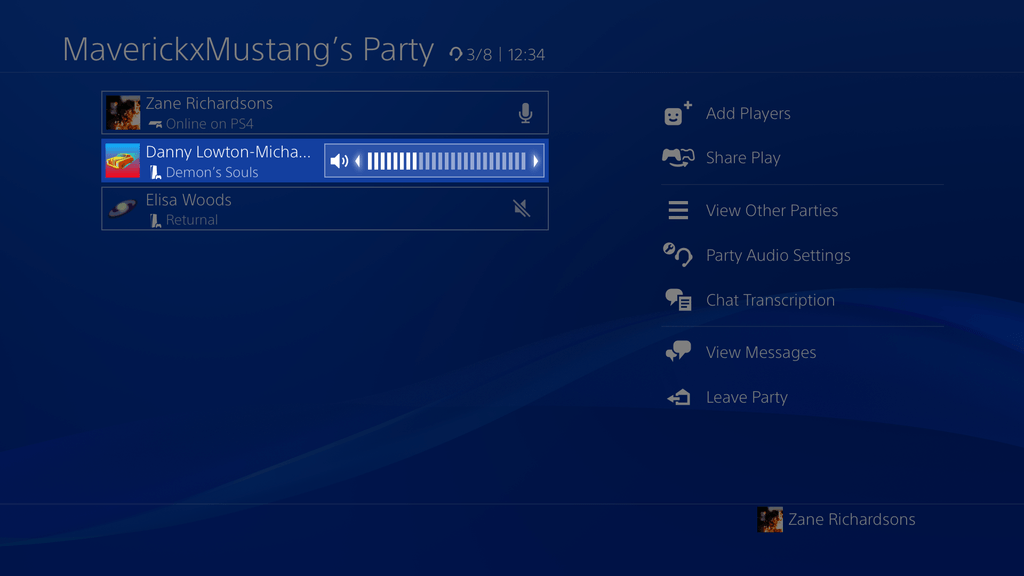
New Party Chat Options

Open and Closed Parties (PS5 and PS4 betas)

  • When you start a party, you can now select either an open party or a closed party:
    • An open party lets your friends see and join the party without an invite. Friends of party members can also join.
    • A closed party is only for players you invite

Voice chat reporting feature update (PS5 beta)

  • If you want to report something that someone in a party said, there are now visual indicators for you to identify who was speaking. This will help PlayStation Safety take appropriate action based on your report.
  • Share Play update (PS5 beta)
    • Start Share Play directly from the voice chat card. You no longer need to start Share Screen first to use Share Play.

  • Voice chat volume (PS4 beta)
    • You can now individually adjust the voice chat volume of each player in a party on PS4, just like on PS5.
New PS5 UI Features

  • Filter by genre
    • Playstation has added an option to filter your game collection by genre, letting you quickly find specific types of game experiences.
  • Keep in Home
    • You can now keep the games or apps you choose on your home screen by selecting “Keep in Home” with the (options) button.
    • You can keep a maximum of five games and apps on each home screen with this feature.

Voice Command (Preview)
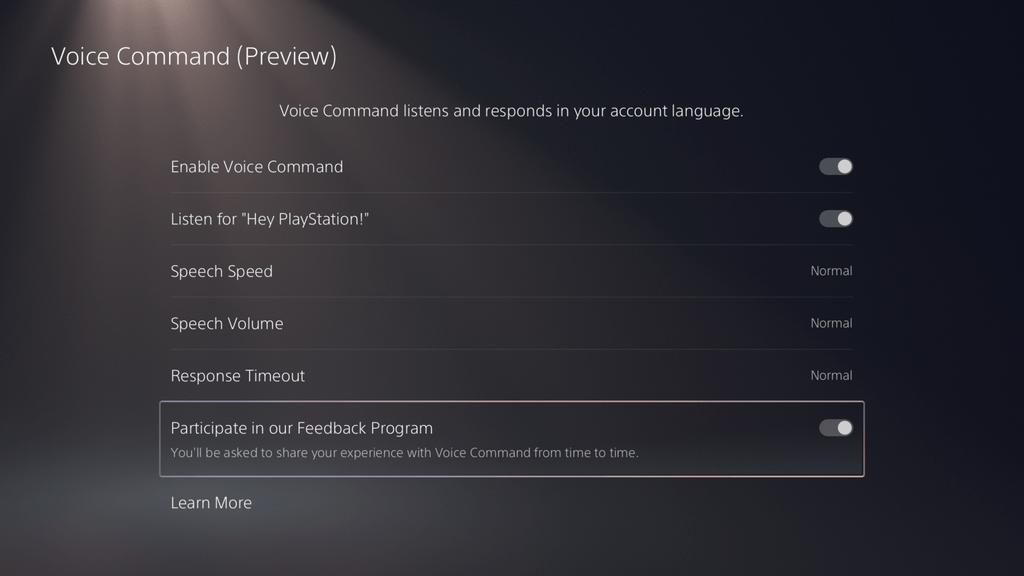
  • Playstation is testing the voice command feature on PS5 consoles for finding and opening games, apps, and settings, as well as controlling media playback.
  • To get started, enable Voice Command (Preview) from the Settings menu. Then, call out “Hey, PlayStation!” and ask your PS5 console to find a game, open an app or setting, or control playback while enjoying a movie, TV show, or song.
  • Do note that this feature is currently available in English for beta participants with accounts registered to the U.S. and U.K.

PlayStation has confirmed the final system software updates will be available globally later this year. Players selected to participate in the betas will receive email invitations when the updates are available to download tomorrow. To check out the complete changelog of this new beta program, click this link.


RELATED:

(Source)


Samsung Galaxy S22, Galaxy S22+ unveiled with 120Hz display, 30X Space Zoom, and SD 8 Gen 1

Samsung on Wednesday has officially unveiled the Galaxy S22 series. The smartphone series comprises the Samsung Galaxy S22, Galaxy S22+, and Galaxy S22 Ultra. While the S22 Ultra is indeed the star of the show, let’s not overlook the other S22 siblings. In this story, we’ll take a look at the S22 and S22+.

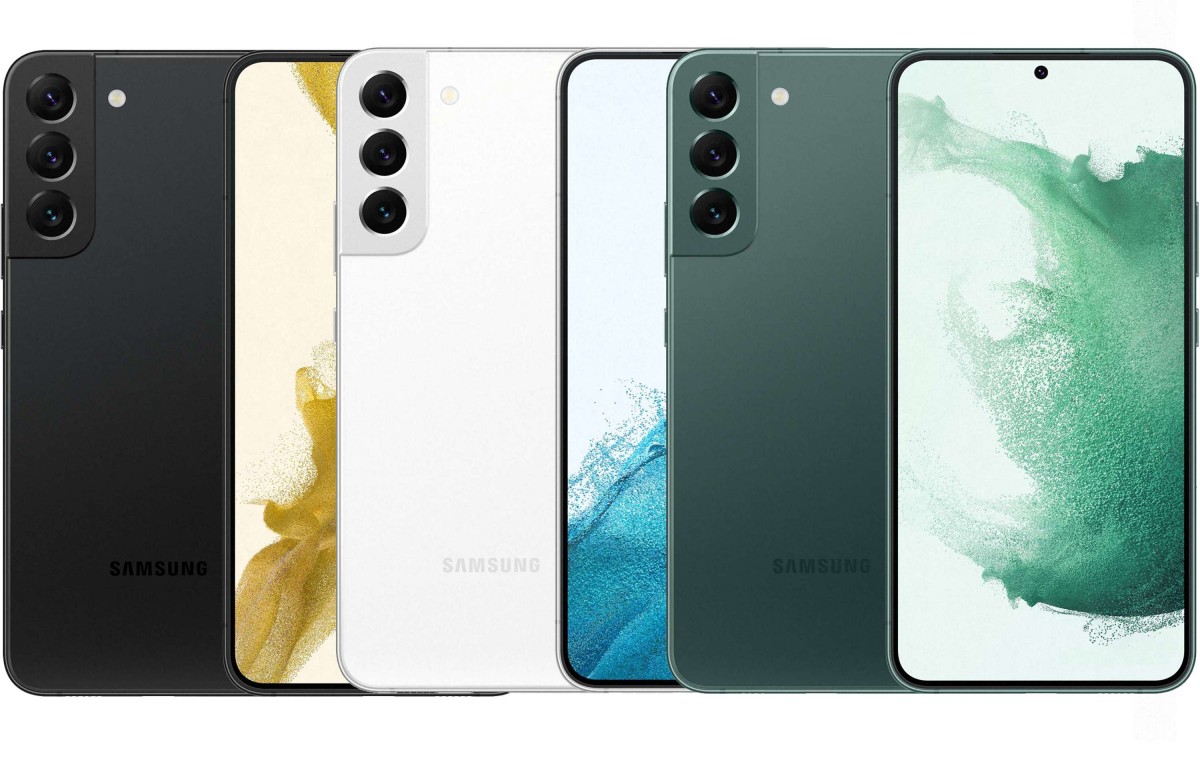
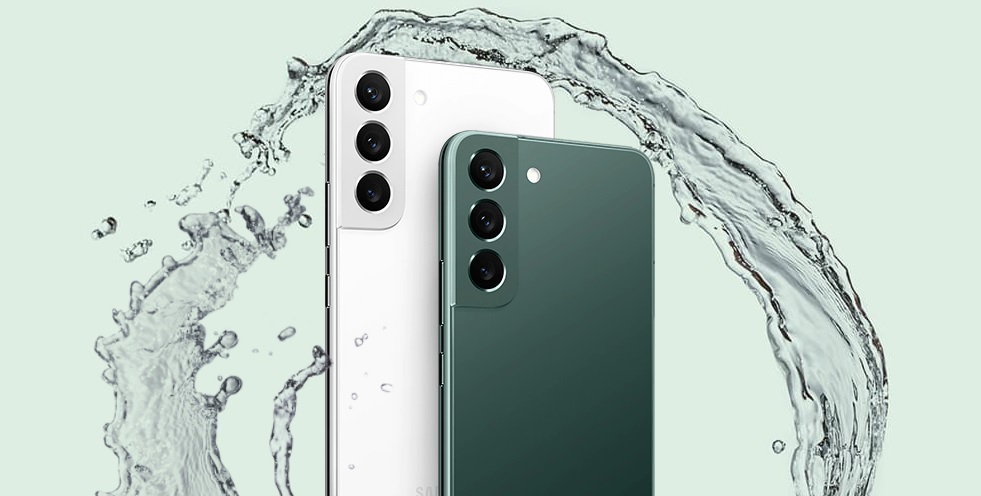
The Samsung Galaxy S22 is priced starting at $799, while the S22+ starts at $999. Both come in two configurations — 8GB RAM + 128GB storage variant and 8GB RAM + 256GB storage variant. The duo comes in four colors Phantom Black, Phantom White, Phantom Green, and Pink Gold.

Samsung Galaxy S22+ colors

Samsung Galaxy S22, Galaxy S22+ Specifications 

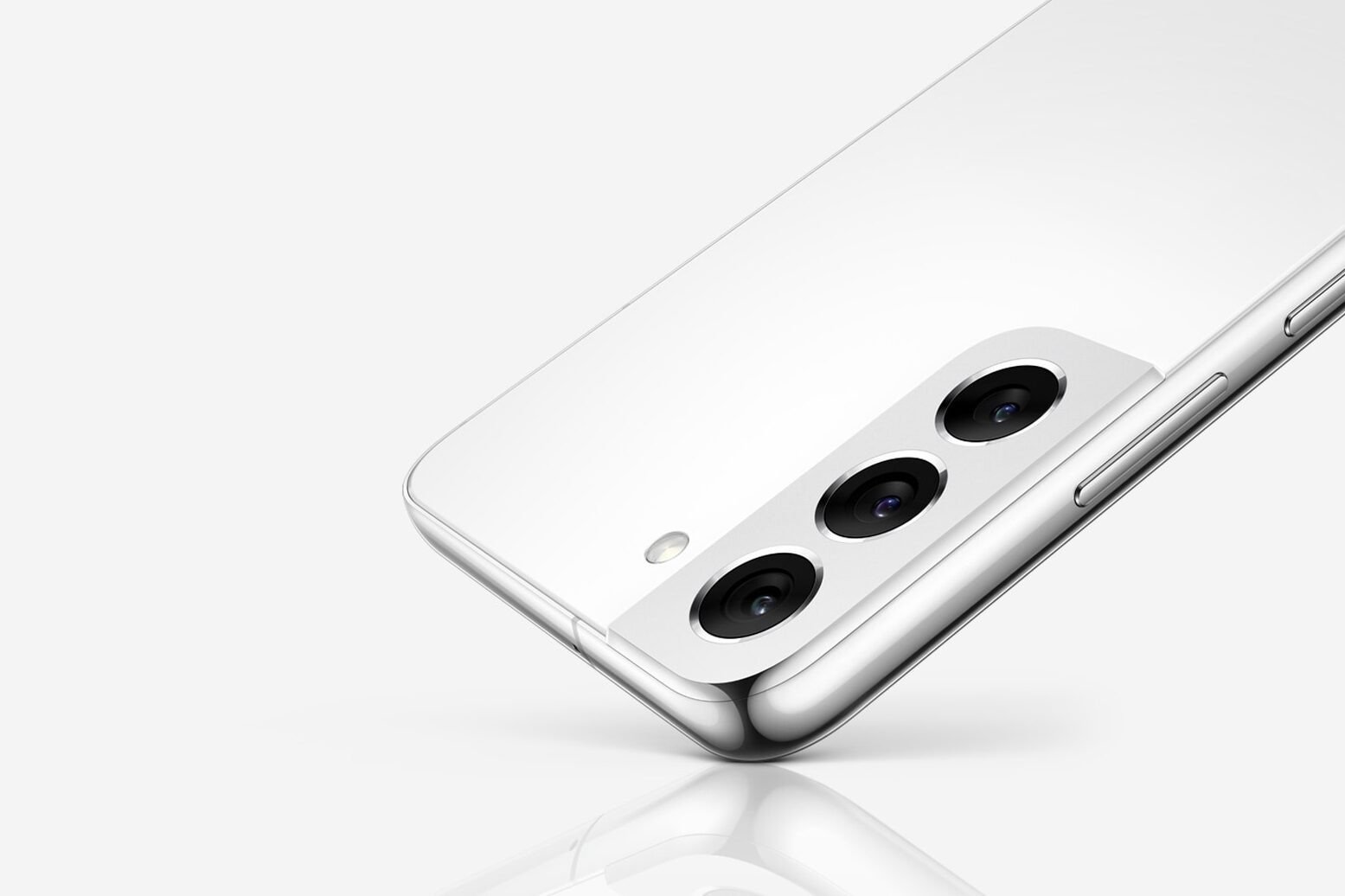
Coming to the specifications, Samsung has retained the predecessor S21’s design for the new S22 and S22+. Especially at the rear, we get to see the same camera-island style. The Galaxy S22 sports a 6.1-inch Dynamic AMOLED 2X display with a Full-HD+ resolution. The S22+, on the other hand, has a larger 6.6-inch FHD+ Dynamic AMOLED 2X panel.

Samsung Galaxy S22

Both come with a 120Hz refresh rate and have Corning Gorilla Glass Victus+ protection. As for the built, the phones have Armor Aluminum frame. The S22 has 1300 nits of brightness, whereas, the S22+ supports 1750 nits brightness.

In terms of cameras, both come equipped with a triple camera system at the rear. This time around, Samsung replaced the 64MP main lens from the predecessor to the new 50MP Samsung GN5 sensor. The primary lens provides 12.5MP pixel binned images.

Samsung Galaxy S22It also has a 12MP ultra-wide lens with a 13mm focal length. Lastly, there’s also the 10MP telephoto sensor with 30x Space Zoom and 3x optical Zoom. Upfront, both have a 10MP selfie snapper.
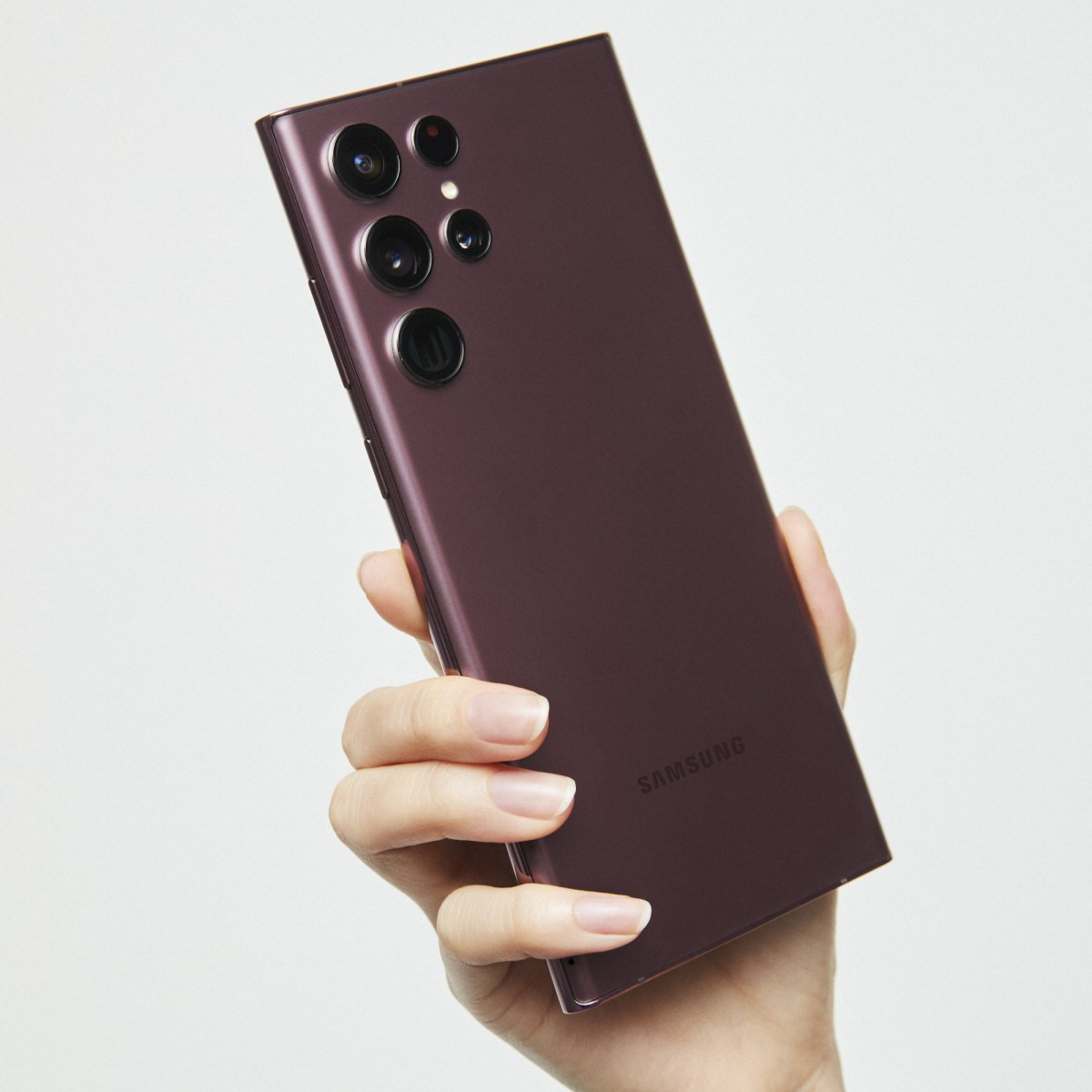
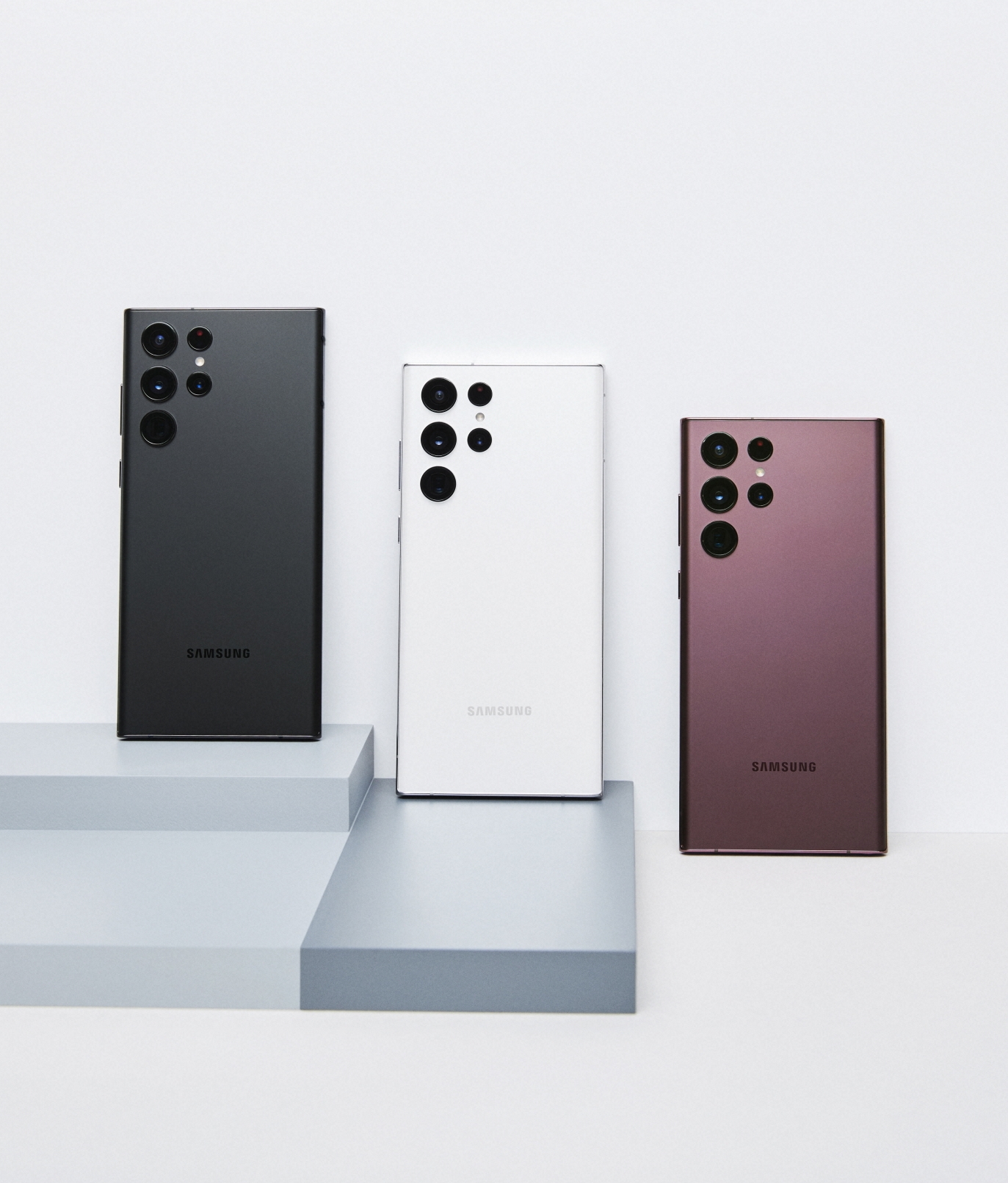
Furthermore, the duo gets the new Qualcomm Snapdragon 8 Gen 1 and Exynos 2200 SoC(depending on the region), which is the same as the Galaxy S22 Ultra. The major difference between the two is in the battery department. The Galaxy S22 packs a 3,700mAh battery with 25W fast charging support, whereas, the Galaxy S22+ gets a 4,500mAh battery and has a 45W fast charging support.

Samsung Galaxy S22 IP rating

Samsung claims that the vanilla S22 can offer up to 54 hours of audio playback, while the Plus can provide 69 hours of audio playback. Both have a 15W wireless fast charging support. The phones run on the latest OneUI 4.1 on top of the Android 12 OS.

RELATED:

Samsung Galaxy S22 Ultra with S Pen deals a death blow to the Note series

Samsung‘s flagship offering for 2022 is off to a bright start with the launch of the Galaxy S22 series comprising the Galaxy S22, Galaxy S22 Pro, and the Galaxy S22 Ultra. No doubt, the top-end Galaxy S22 Ultra is the star of the pack as it comes with several impressive features including some that are appearing on the Galaxy S series for the first time.Samsung Galaxy S22 Ultra

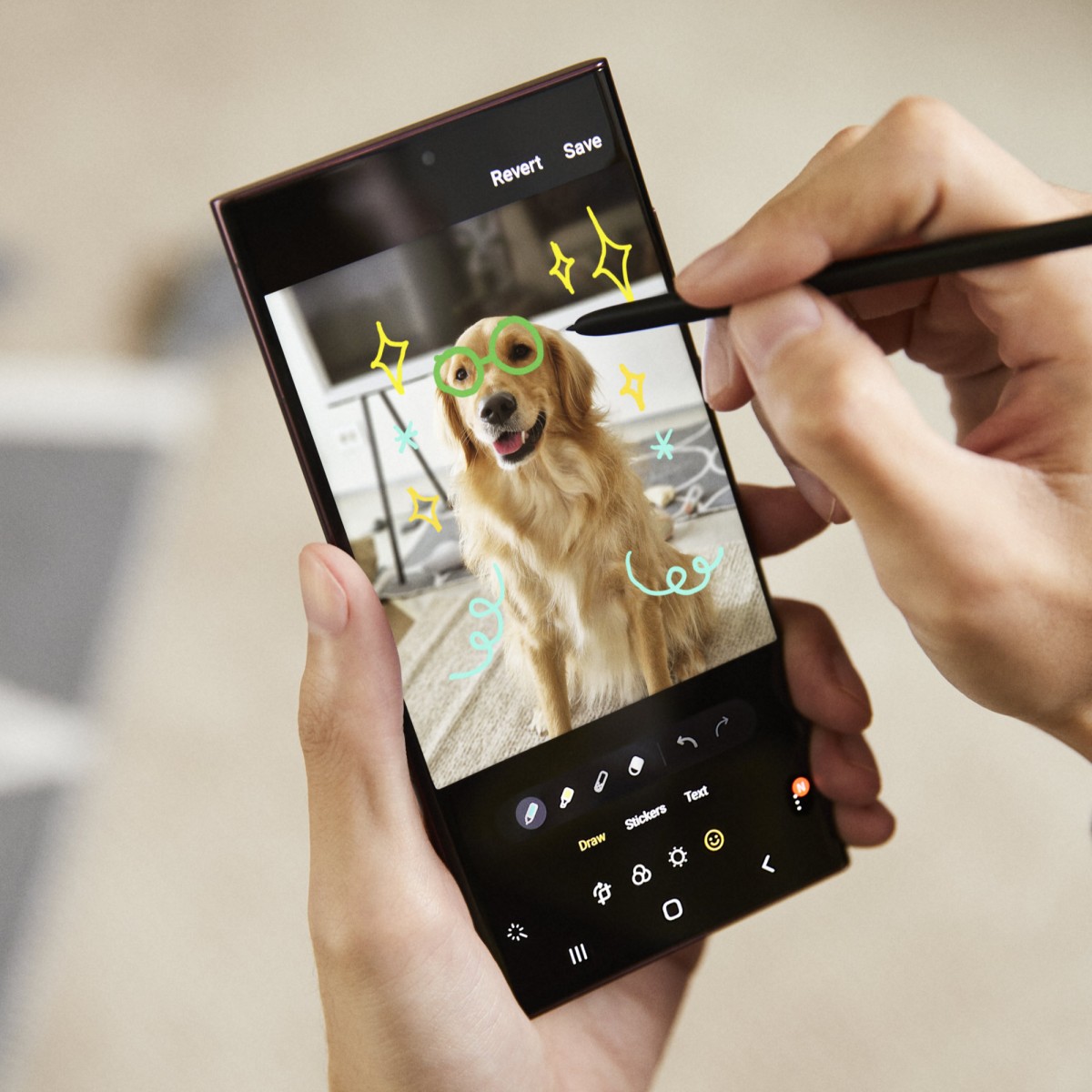
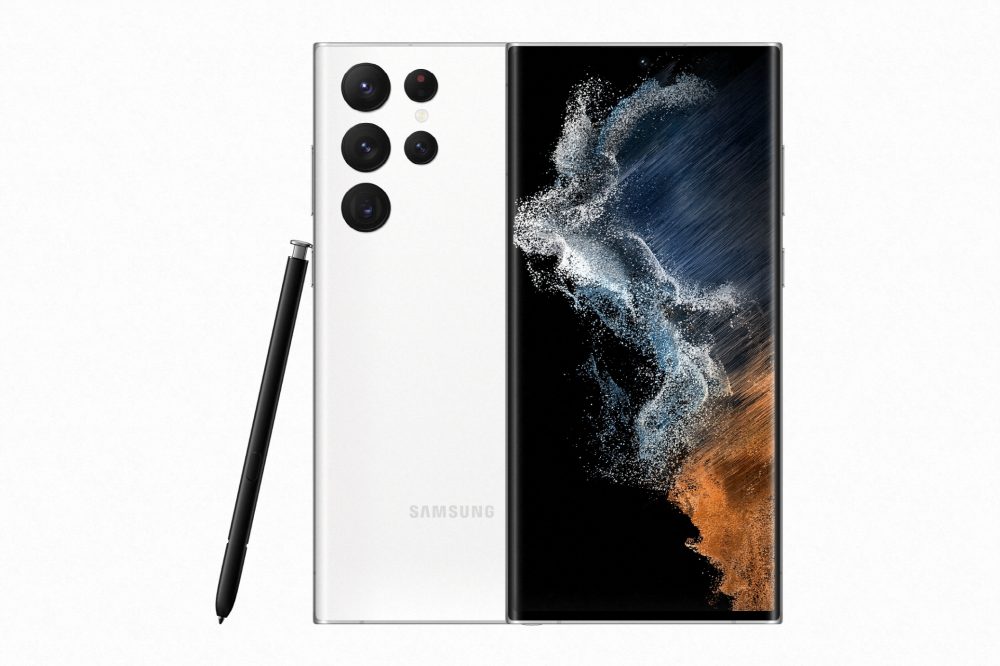
The Samsung Galaxy S22 Ultra is not only a successor to the Galaxy S21 Ultra, it is also the successor of the Galaxy Note 20 Ultra that was released in 2020 but never got a successor to date. The main highlight of the Galaxy S22 Ultra is the presence of an S Pen stylus, a device that is common with the Galaxy Note series.

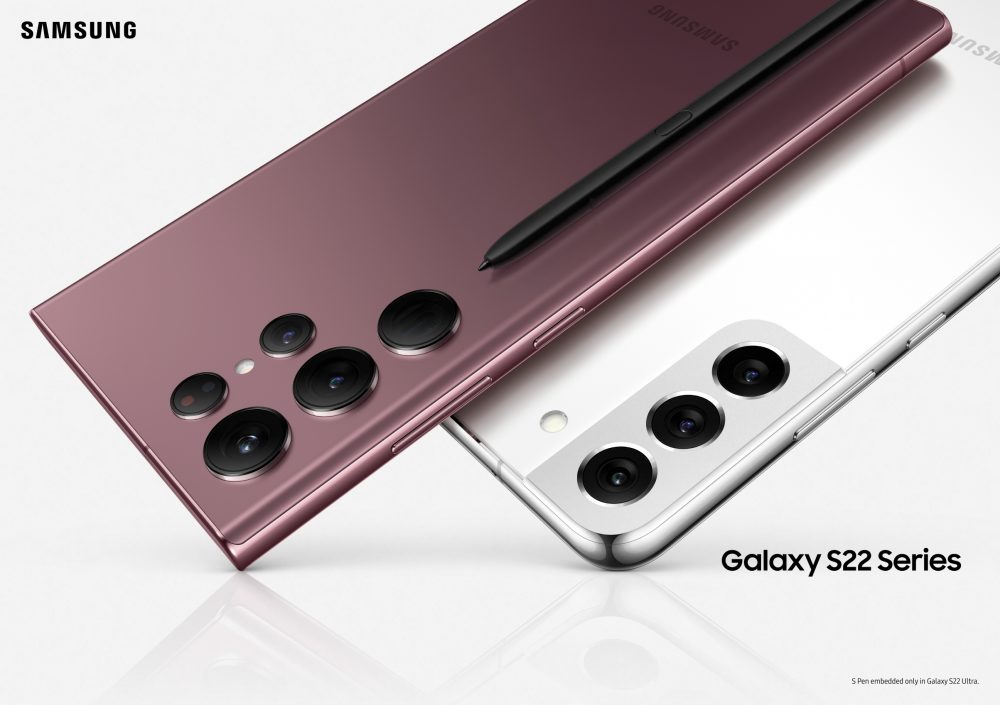
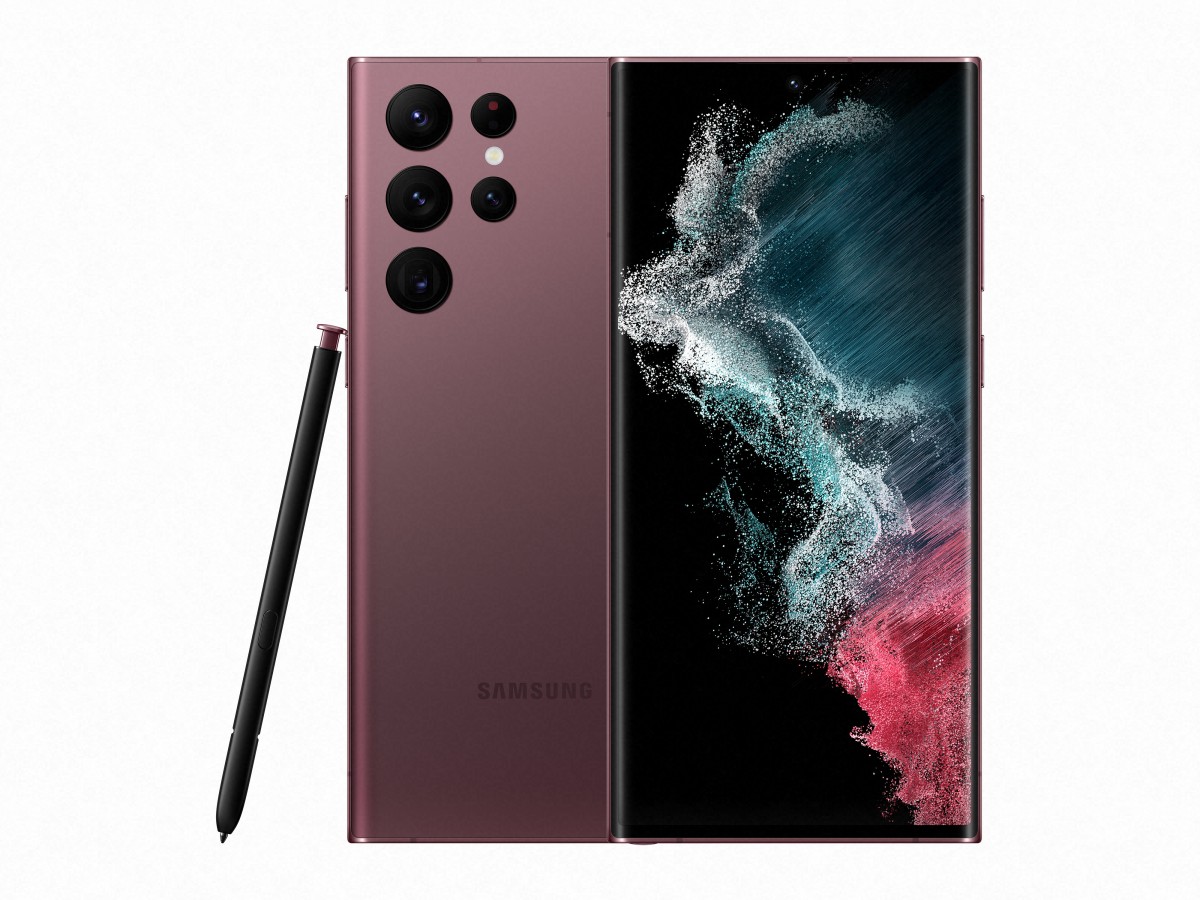
In terms of the design, the Galaxy S22 Ultra adopts a similar design to the Galaxy Note 20 Ultra whereby the front is flattened alongside the top and bottom while the sides are curved. Samsung even included a Burgundy color variant which looks similar to the Note 20’s Mystic Bronze color option.

The premium flagship phone utilizes an aluminum frame as well as the Corning Gorilla Glass Victus+ covering at the front and rear aspects. By the way, this is the first time the Gorilla Glass Victus+ is finding its way into a smartphone, corroborating an earlier rumor that Samsung will be the first to use the new glass protection. The phone also comes with IP68 water and dust resistance rating and this includes the S Pen.Samsung Galaxy S22 Ultra

Another aspect where the Galaxy S22 Ultra is expected to shine is the camera segment. The camera design ditches the large camera island which we have seen in its predecessor instead, opting for a plain design while retaining the array of sensors on the Galaxy S21 Ultra.

The camera configuration includes a 108MP F/1.8 main camera just like on the Galaxy S21 Ultra teaming up with a 12MP f/2.2 ultrawide camera, 10MP F/2.4 3x, and 10MP F/4.9 10x periscope lenses. At the front, there is a 40MP F/2.2 selfie camera. The main improvement in the camera segment is the introduction of AI enhancement deploying the updated NPU to improve photo and video quality in low light and also to add other camera features.Samsung Galaxy S22 Ultra

Some of the new features include Auto Framing that allows the ultrawide camera to adjust the shot to fit the number of people in the frame. The camera also expands to accommodate more people if others join in. There is also an option of manually zooming in or tracking just one person in the group and the shot’s frame will be adjusted. There is also an improved portrait mode effect, including a night portrait mode that kicks in automatically while shooting in low light.

As for the S Pen, it comes with an impressive latency of 2.8ms which makes it highly responsive. It also integrates AI-based coordinate prediction technology. The phone also features support for handwriting to text features, upgraded to support 88 languages.

In terms of the display, the Galaxy S22 Ultra packs a 6.8-inch AMOLED 2X panel with a 120Hz refresh rate and a QHD+ resolution of 3088×1440 pixels. The display also comes with a 240Hz touch sampling rate, 100 percent DCI-P3 coverage, and 1,750 nits of peak brightness. There is also an ultrasonic fingerprint sensor embedded under the screen.

Providing the juice is the latest Qualcomm Snapdragon 8 Gen 1 chipset while some regions will get the new Exynos 2200 SoC from Samsung on their models. The processor pairs with 8GB of RAM and 128GB storage on the base model while there is a 12GB RAM variant with either 256GB, 512GB, or 1TB storage options.

The Galaxy S22 Ultra will run the latest One UI 4.1 based on Android 12 OS. The device will be powered by a 5000mAh battery with support for up to 45W wired fast charging and 15W wireless charging.

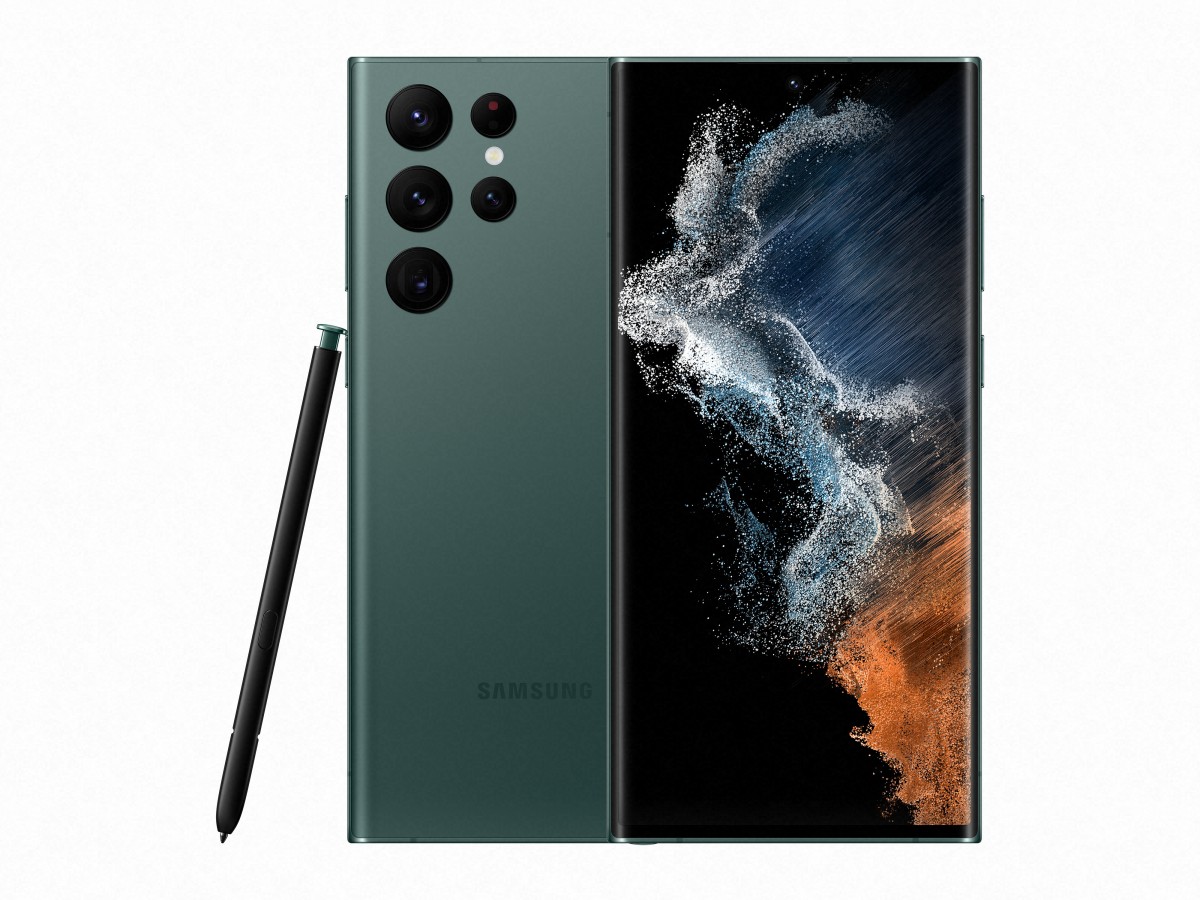
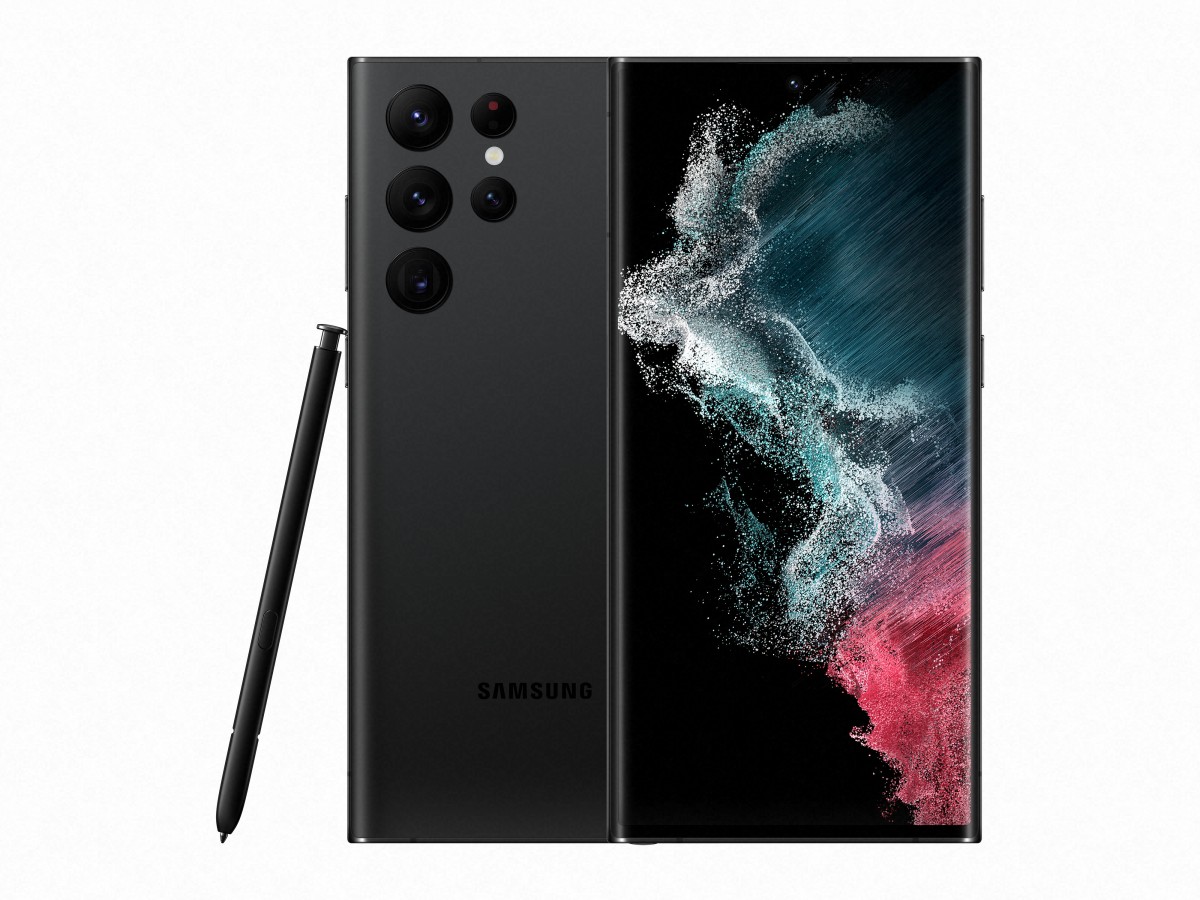
The S22 Ultra will come in Phantom Black, Phantom White, Green, and Burgundy. It will retail in Europe for €1,250 for the 8GB+128GB version while the 12GB+256GB version is priced at €1,350. The 12GB+512GB and 12GB+1TB versions will sell for €1,450 and €1,650 respectively. The device will go on sale from February 25 but is now up for pre-orders. Samsung will also be exclusively selling additional Graphite, Red, and Sky Blue color options on Samsung.com.

RELATED: 


iQOO 9 Pro ditches 2K display for India, features FHD+ display instead: Report

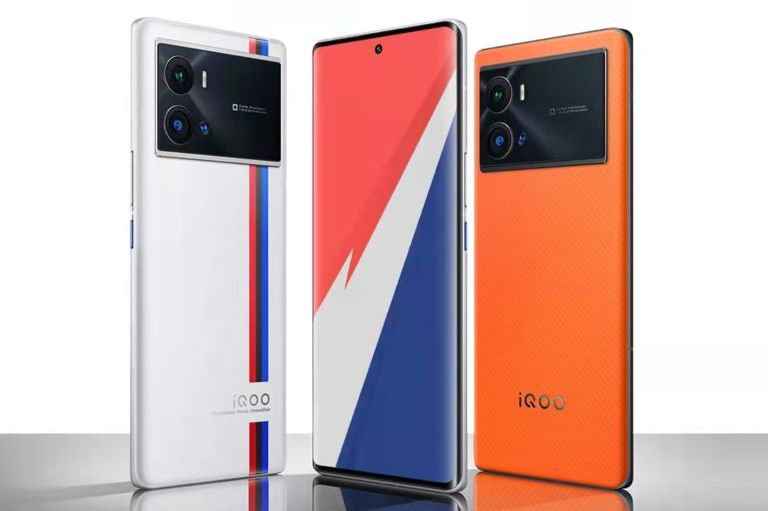
The Vivo sub-brand iQOO is gearing up to launch its latest flagship devices in the Indian market. The Indian lineup consists of three devices including the iQOO 9 and iQOO 9 Pro which have already been released in China and a new iQOO 9 SE. However, the iQOO 9 Pro model won’t be the same as the Chinese variant as revealed by a recent report.

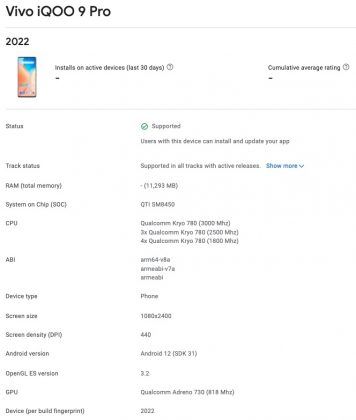
MySmartPrice recently spotted the iQOO 9 Pro India variant carrying model number I2022 on the Google Play Console and Google Play supported devices list. The specs listed were mostly in line with the Chinese variant except for the display resolution. Where the Chinese iQOO 9 Pro gets a QHD+ (3200 × 1440 pixel) display, the latest listing revealed that the Indian variant is coming with an FHD+ (2400 x 1080 pixel) display 440ppi pixel density. The reason for this change is unknown however, it might be related to keeping the cost down to offer the device at competitive prices in the sub-continent.

iQOO 9 Pro Indian variant specs (rumored)

iQOO 9 series sales-

So far, we know that the iQOO 9 Pro will have a 6.78-inch FHD+ curved AMOLED display with a 120Hz refresh rate and an in-display fingerprint scanner.

As for the cameras, the iQOO 9 Pro has a 50MP Samsung GN5 + 50MP UW + 16MP triple camera system. The primary sensor will have gimbal stabilization support and the tertiary lens will have a 2.5x optical zoom support.

The Snapdragon 8 Gen 1 chipset will power the device with 8 GB / 12 GB of RAM and 128 GB / 256 GB storage. The device is likely to feature LPDDR5 RAM and UFS 3.1 storage. It will house a 4,700mAh battery that supports 120W fast charging and it will run on Android 12 OS.

The upcoming iQOO 9 lineup already has an Amazon Indian landing page so we can expect the device to launch this month only.

RELATED:

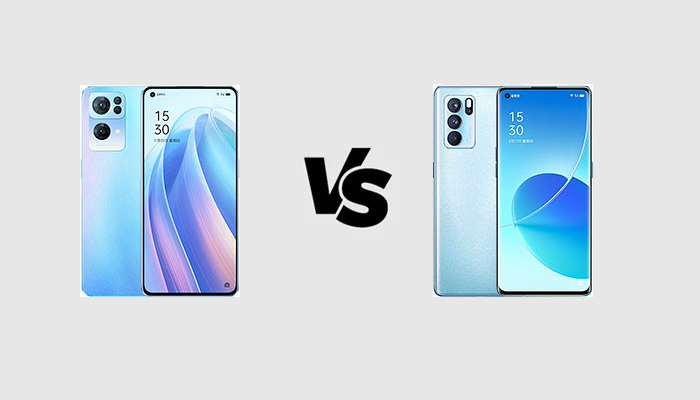
OPPO Reno7 Pro vs Reno6 Pro: Specs Comparison

After a few months from the Chinese announcement, OPPO finally launched the Reno7 Pro 5G in the global market starting from India. The handset won’t come in Europe, neither under the Find X5 series, and it will remain exclusive for the Asian market. Instead of the OPPO Reno7 Pro 5G, the vanilla Reno7 will hit the European regions under the Find X5 Lite moniker. The same happened to its predecessor: the Reno6 Pro 5G, as the European variant of this handset, is a rebranded Reno6 Pro+. Is the Reno7 Pro 5G really an upgrade of the Reno6 Pro 5G? Is it worth switching from the latter to the former? This comparison will clear your ideas in regards.

OPPO Reno7 Pro 5G vs OPPO Reno6 Pro 5G

OPPO Reno7 Pro 5G OPPO Reno6 Pro 5G
DIMENSIONS AND WEIGHT 158.2 x 73.2 x 7.5 mm, 180 grams 160 x 73.1 x 7.6 mm, 177 g
DISPLAY  6.55 inches, 1080 x 2400p (Full HD+), AMOLED  6.55 inches, 1080 x 2400p (Full HD+), AMOLED
PROCESSOR Mediatek Dimensity 1200 Max 5G, octa-core 3 GHz Mediatek Dimensity 1200 5G, octa-core 3 GHz
MEMORY  8 GB RAM, 256 GB – 12 GB RAM, 256 GB 8 GB RAM, 128 GB – 12 GB RAM, 256 GB
SOFTWARE  Android 11, ColorOS  Android 11, ColorOS
CONNECTIVITY  Wi-Fi 802.11 a/b/g/n/ac/ax, Bluetooth 5.2, GPS  Wi-Fi 802.11 a/b/g/n/ac/ax, Bluetooth 5.2, GPS
CAMERA Triple 50 + 8 + 2 MP, f/1.8 + f/2.2 + f/2.4
32 MP f/2.4 front camera
Quad 64 + 8 + 2 + 2 MP, f/1.7 + f/2.2  + f/2.4 + f/2.4
32 MP f/2.4 front camera
BATTERY 4500 mAh, fast charging 65W  4500 mAh, fast charging 65W
ADDITIONAL FEATURES Dual SIM slot, 5G Dual SIM slot, 5G

Design

One of the most important upgrades of the OPPO Reno7 Pro 5G if compared to its predecessor is definitely the design. Unlike the OPPO Reno6 Pro 5G, the new handset comes with a flat design including flat borders just like the latest iPhones and even a flat display. It is the first Pro variant from the Reno series without a curved display. Further, on the rear side, it comes with an array of LEDs surrounding the camera module which can be used to alert the users regarding new notifications and calls. The OPPO Reno6 Pro 5G has a curved screen at the edges and curved borders; both the phones come with a glass back and the Gorilla Glass 5 protection. Which one is the most attractive? It mostly depends on tastes, but the Reno7 Pro is definitely more original.


Display

It looks like the OPPO Reno7 Pro 5G and the Reno6 Pro 5G have the same display panels. We are talking about an AMOLED display with a diagonal of 6.55 inches, a Full HD+ resolution of 1080 x 2400 pixels, a 90 Hz refresh rate, an in-display fingerprint reader, and the HDR10+ certification. It is a very good display, not the best one but the image quality provided is great. These phones come with great color accuracy, a high brightness, and they provide a smooth user experience. Note that the Reno7 Pro 5G is the only one to offer stereo speakers.


Specs & Software

Even the hardware departments of these two devices are very similar to each other, but there is an important difference: the chipset. The OPPO Reno7 Pro 5G is powered by the MediaTek Dimensity 1200 chipset Max which is an upgraded version of the MediaTek Dimensity 1200 mobile platform found on the OPPO Reno6 Pro 5G. So, if you choose the former, you will get a slight performance boost. The memory configurations are the same, with up to 12 GB of RAM and up to 256 GB of UFS storage, but note that the Reno6 Pro 5G has UFS 2.1 internal storage instead of UFS 3.1: it makes the difference when it comes to reading and writing speeds. Last but not least, the former ships with ColorOS 12 out of the box, while the latter ships with ColorOS 11.3 (but it has already been updated to ColorOS 12).


Camera

The OPPO Reno7 Pro 5G is apparently a better camera phone than its predecessor, but the difference is not big. It is equipped with a 50 MP main camera, an 8 MP ultrawide sensor, and a 2 MP macro camera. Further, it comes with a better front camera: despite both the phones offering a 32 MP front snapper, the OPPO Reno7 Pro 5G has a superior Sony IMX709 providing a higher image quality.


Battery

The OPPO Reno7 Pro 5G and the Reno6 Pro 5G are equipped with exactly the same battery. It is a 4500 mAh battery that supports 65W fast charging. You should not notice big differences in terms of battery life.


Price

You need less than Rs. 40,000 / $535 to purchase the Reno6 Pro 5G in India, and it is available with even more affordable street prices, while the Reno7 Pro 5G starts from Rs. 40,000. It is not worth switching from the old model to the new one because the upgrades are just marginal, but the Reno7 Pro 5G wins the comparison thanks to its better cameras and chipset.


OPPO Reno7 Pro 5G vs OPPO Reno6 Pro 5G: PRO and CONS

OPPO Reno7 Pro 5G

PRO

  • Better design
  • Rear LEDs
  • ColorOS 12 out of the box
  • Better rear camera
  • Superior chipset
  • Better front camera

CONS

  • Price


OPPO Reno6 Pro 5G

PRO

  • Curved screen
  • Better street prices
  • Wider availability
  • Depth sensor

CONS

  • Inferior rear camera


RELATED

Check the latest videos from our YouTube channel and subscribe:

Huawei P50 Pro and P50 Pocket now available globally, prices from €1,199 ($1,371)

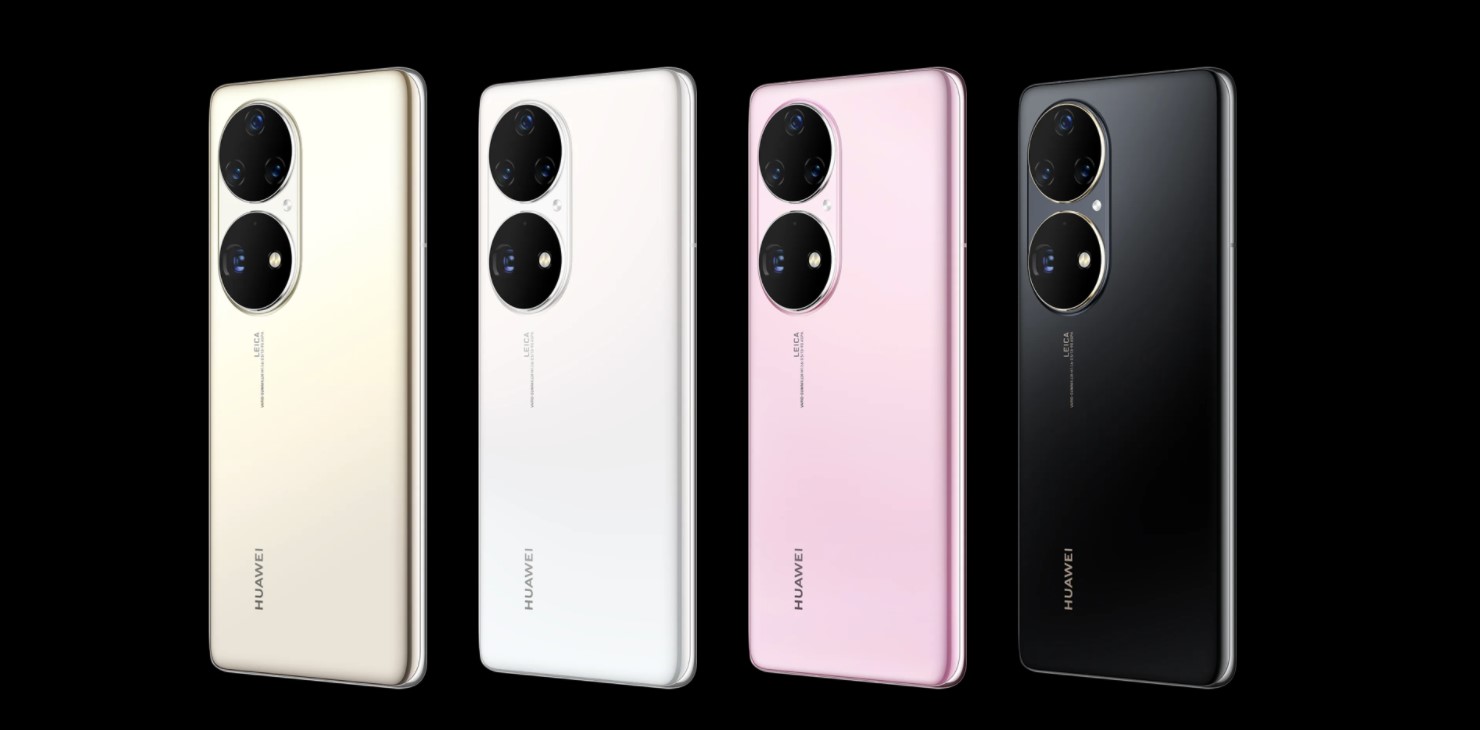
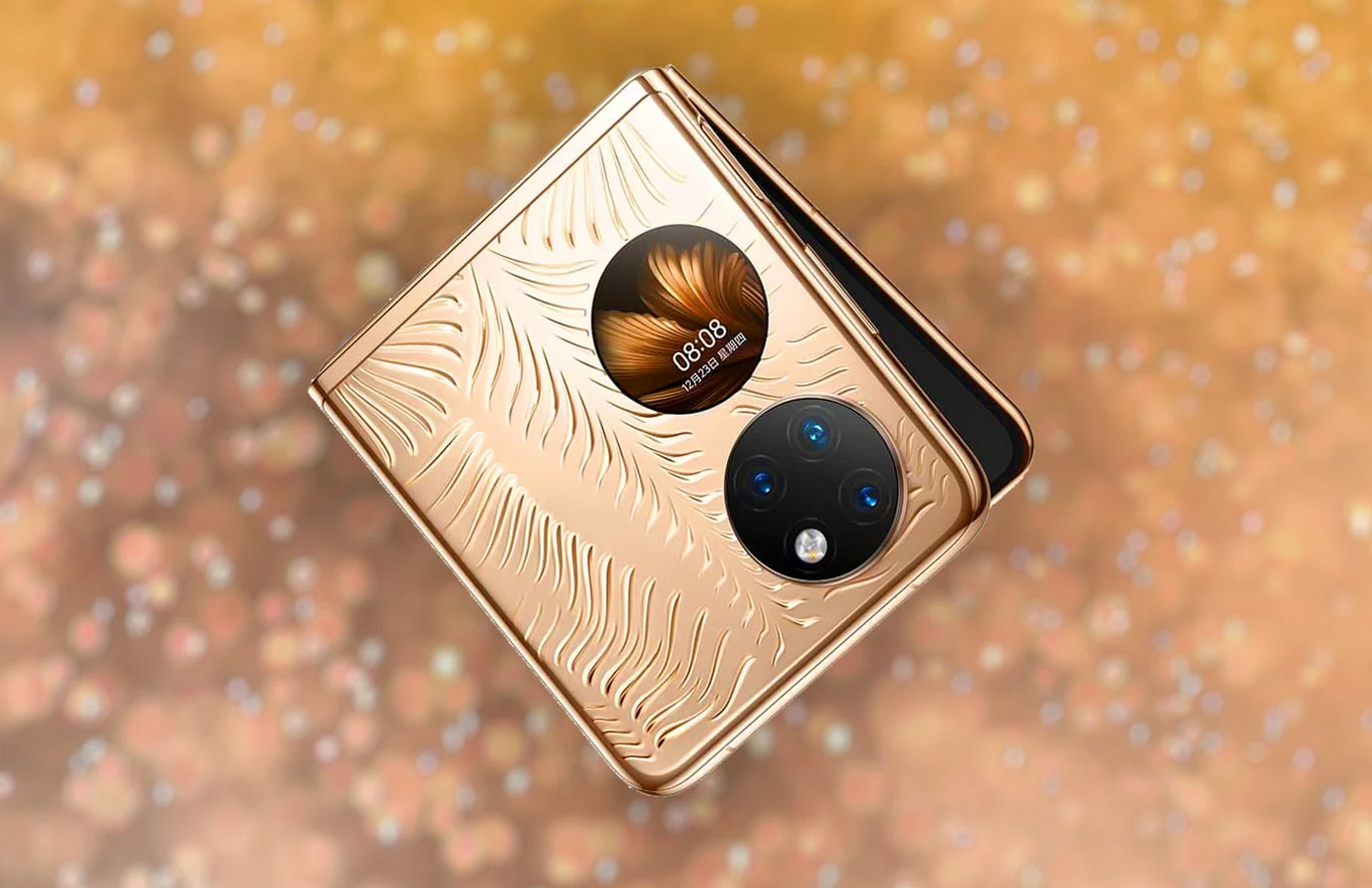
Chinese tech powerhouse Huawei released the P50 series to the global market a few weeks back with pre-orders available for the devices in the lineup. The company has now proceeded to announce the opening of pre-orders of the Huawei P50 Pro and the P50 Pocket smartphones. The two smartphones are now open for purchase by customers in Asia Pacific, Europe, South America, the Middle East & Africa. There are market-specific packages and pricing variations across the regions for the two devices.Huawei-p50-pro-featured

All bundles will come with free wearables, Freebuds, warranties, and other accessories. The Huawei P50 Pro is priced at €1,199 ($1,371), while the P50 Pocket is Huawei’s first foldable clamshell with no visible gap when closed, is available at €1,599 ($1,829) for the gold color model with 12/512 GB configuration, and €1,299 ($1,486) for the white 8/256 GB model. The P50 lineup is a great offering by Huawei as it tries to claw its way to the top of the global smartphone market before the US sanctions hammer. The P50 series has an impressive camera setup as they are photography-oriented.Huawei

The Huawei P50 Pro and P50 Pocket have decent batteries and overall impressive performance across several segments. France-based customers will get a gift Freebuds Pro and three months subscription to Adidas Runtastic. There are similar offerings for other regions, and Huawei hopes the incentives will spur back its previous brand relevance to life. There are several other accessories like the wireless charging stand which comes at a significantly reduced price in line with the massive incentive regime put together by the company.

RELATED:


(source)


Here’s what the rumored Apple iPhone Flip might look like

Apple has been rumored to be working on a foldable iPhone for a while now. Industry tipsters have claimed that the brand already has a working prototype which is akin to Samsung’s Galaxy Z Flip and Galaxy Z Fold devices. Recent rumors have also suggested that the foldable iPhones might debut in 2022-2023.

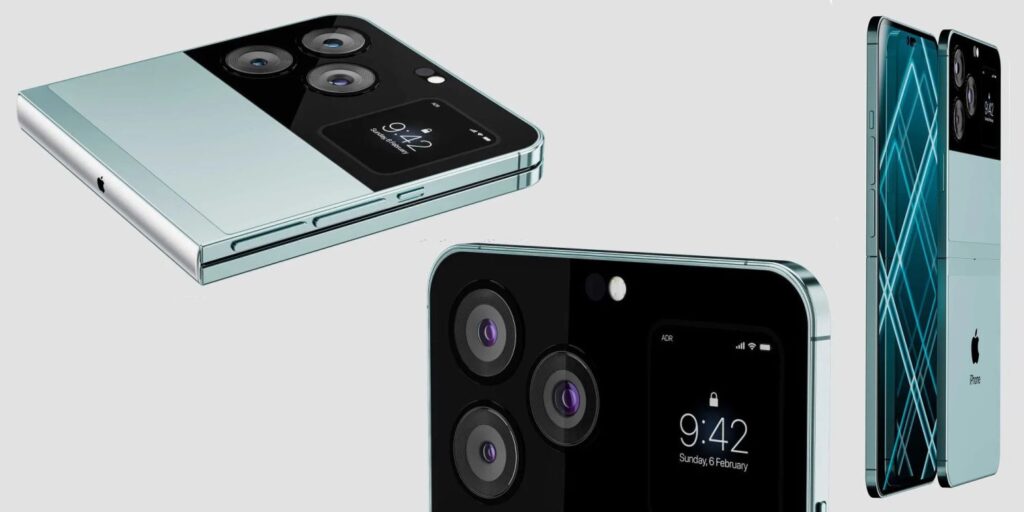
Now, Youtuber ardstudiodesign has created a concept render video of the alleged upcoming foldable iPhone showcasing potential design and stylistic profile for the device.

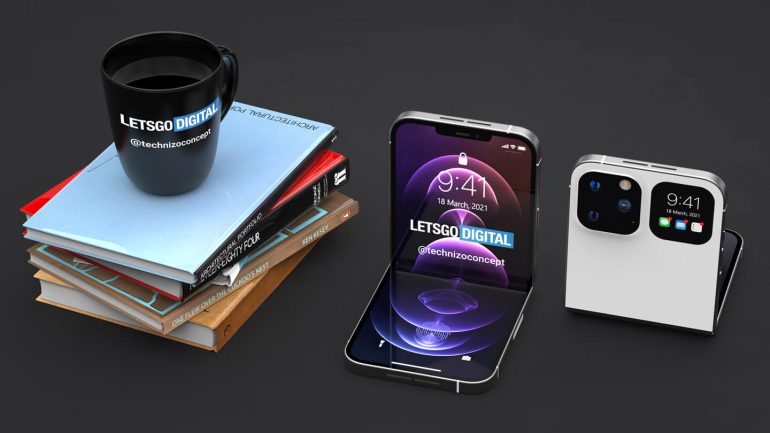
The device render is quite similar to a concept render revealed last year by Graphic designer Technizo and features a similar flip design to the Galaxy Z Flip3 devices. The phone is shown to have a triple-camera cluster on the left and a secondary screen on the right. The secondary screen is quite important in a flip smartphone to make checking notifications, incoming calls, or just the time an easier process.

Apple flip foldable iPhone
Image via LetsGoDigital

The Youtuber also plays around with ideas like making the device waterproof by going portless and featuring a tightly sealed hinge. He also throws around the idea of the iPhone Flip featuring an M1 chip, which in concept sounds like a good idea, however, is quite impractical due to the heat produced by the M1 chip. It will be quite a challenge to keep the temperatures under control on such a small device. The idea of going portless, however, doesn’t appear to be as far-fetched due to Apple’s recent push for MagSafe charging as well its talks or the company getting rid of physical SIM card slots in their upcoming iPhone Models.


RELATED:

(via)

Meta & Chime file lawsuit against alleged Facebook, Instagram Phishing scammers

Meta, the Facebook parent company, has filed a Joint lawsuit with digital banking company Chime against two Nigeria-based individuals, in a series of lawsuits filed to protect its users from phishing attacks which have been on the rise since 2020.

Meta logo

In the lawsuit, Meta said that the two defendants in this case were engaging in phishing attacks to deceive people and gain access to their online financial accounts.

The two Nigeria-based individuals were using Facebook and Instagram accounts to impersonate Chime and lure people to fake branded phishing websites with the aim of obtaining their Chime account login information and withdrawing funds.

Meta, which has filed a lawsuit in the U.S. District Court for the Northern District of California, said the defendants used a network of computers to control more than 800 impersonating Instagram accounts and five Facebook accounts, in order to conceal their activity and evade technical enforcement measures.

For those unaware, Phishing attacks are the practice of sending fraudulent communications that appear to come from a trustworthy source. It is usually done through email. The goal is to steal sensitive data like credit card and login information or install malware on the victim’s machine.

Meta’s director of platform enforcement and litigation Jessica Romero stated in a blog post that “Impersonation scams are a serious challenge, and this action represents a major step forward in cross-industry collaboration against this abuse.”

This is the first joint complaint between Meta and a financial services company. The Fintech Company Chime was launched by former Visa Inc (V.N) executive Chris Britt and Comcast Corp alumnus Ryan King in 2012.

Meta also stated that it has taken several previous actions against the defendants since June 2020 for violating its terms including blocking impersonating domains on its platforms, sending cease and desist letters, and disabling their accounts.


RELATED:

(Source)

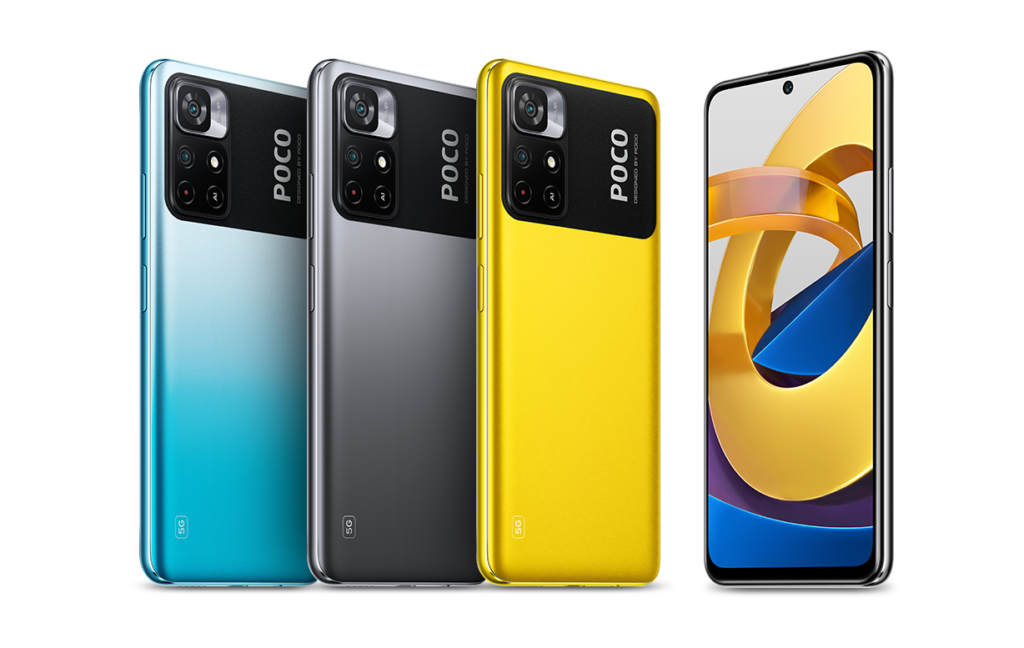
POCO M4 Pro 4G spotted running Helio G96, 6GB RAM on Geekbench

POCO is has announced that its POCO M4 Pro 5G will launch in India on February 15. Now, just a week before its launch, the 4G variant of the POCO M4 Pro has been spotted on Geekbench. So let’s take a look at what the POCO M4 Pro 4G has in store.

Poco M4 Pro Geekbench

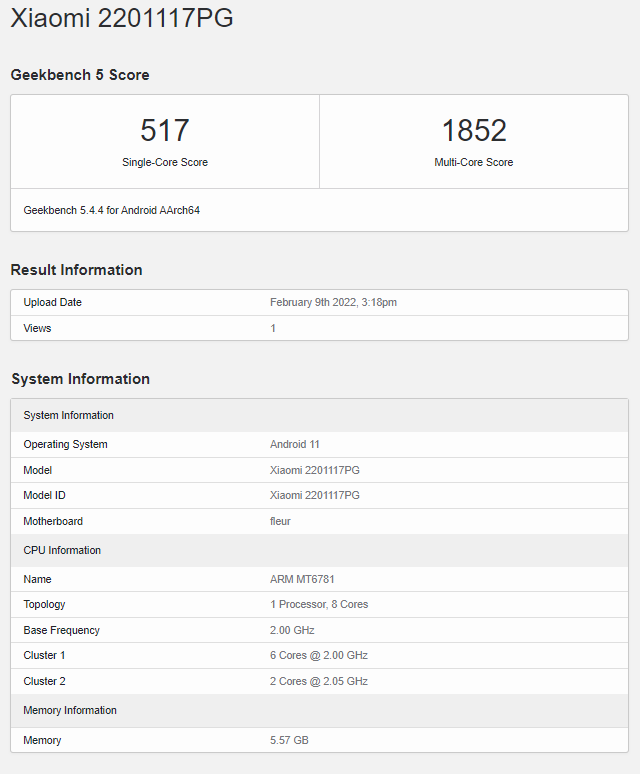
The 4G variant of the POCO M4 Pro is revealed to carry the model number 2201117PG. The handset scored 517 points in the single-core test of Geekbench 5 and managed a score of 1852 points in the multi-core round.

The Geekbench listing revealed that the smartphone houses an octa-core processor arranged in a  2 + 6 core configuration. The two performance cores are clocked at 2.05GHz while the remaining 6 cores have a 2.00Ghz clock speed. The code name ARM MT6781 leads us to believe that it is a MediaTek Helio G96 SoC which is based on a 12nm node and has the Mali G57 GPU onboard.

Other than that, the listing reveals that the POCO M4 Pro 4G will come with 6GB RAM and will boot Android 11 out of the box.

POCO M4 Pro
POCO M4 Pro 5G

To get a better idea of what to expect from the POCO M4 Pro 4G, we can take a look at its 5G sibling which has already been released in some markets and is slated to launch in India on February 15th.

The POCO M4 Pro 5G come with a 6.6-inch FHD+ 90Hz display (LCD), MediaTek Dimensity 810 SoC, 50MP (wide) + 8MP (ultra-wide) dual camera setup, 16MP selfie camera, dual stereo speakers, side-mounted fingerprint sensor, MIUI 12.5 based on Android 11, 5,000mAh battery, and 33W fast charging.


RELATED:

(via)

Sony announces Gold-platted and Aluminium-alloy framed Walkman models

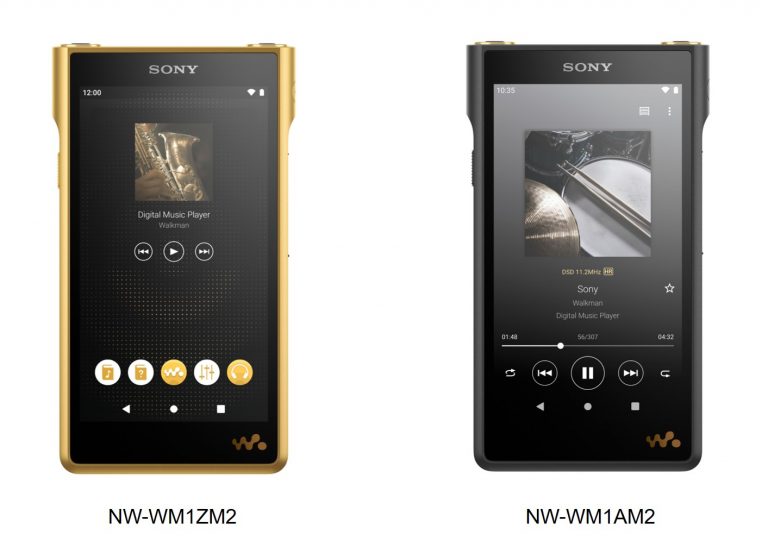
Sony has officially announced its Walkman Signature series in the Asian market. Sony NW-WM1ZM2 and Sony NW-WM1AM2 are the two models in the series and they offer Gold-plated chassis and S-Master digital amp technology. Let’s take a look at the details.

The Sony NW-WM1ZM2 and Sony NW-WM1AM2 offer a high-resolution audio listening experience. The duo comes with a 5.0-inch compact display sporting an HD resolution.

Sony NW-WM1ZM2 and Sony NW-WM1AM2

There’s Wi-Fi connectivity that allows the devices to connect to the Internet and play and download music from endless catalogues. Both Walkman models use S-Master HX digital technology, which is Sony’s in-house technology from the Walkman brand. There’s a full digital amplifier inside the Walkmans offering rich full-bodied sound(via Sony).

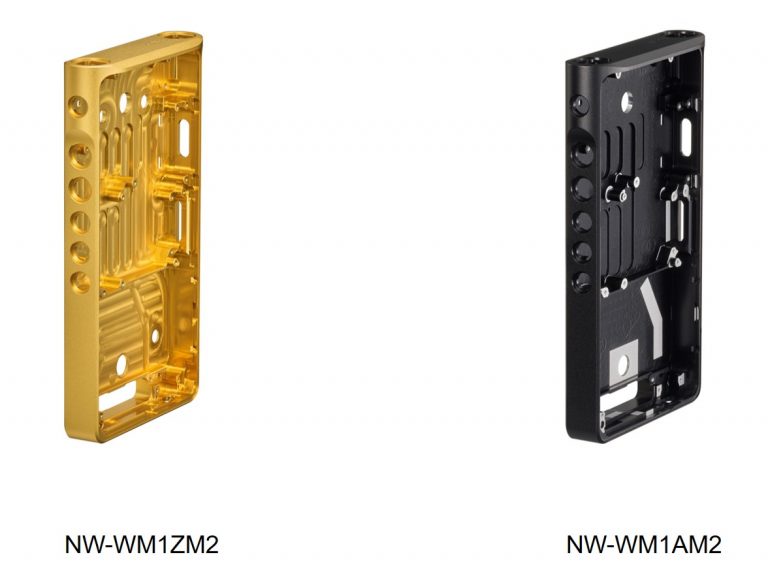
The NW-WM1ZM2 comes in a 99.99% purity 4N Gold-plated chassis that is made out of oxygen-free copper(OFC). On the other hand, NW-WM1AM2 is made out of an Aluminium alloy frame that offers rigidity and a boxy in-hand feel. It has a black-colored design.

Sony NW-WM1ZM2 and Sony NW-WM1AM2

The devices run on Android 11 out of the box and have the traditional Walkman home screen setups. The devices offer up to 40 hours of 96kHz FLAC high-resolution audio playback.

Both models feature an audio jack and a USB Type-C port. The NW-M1AM2 has 128GB storage, while the NW-WM1ZM2 comes with 256GB of storage. There’s also microSD card support on both.

RELATED:

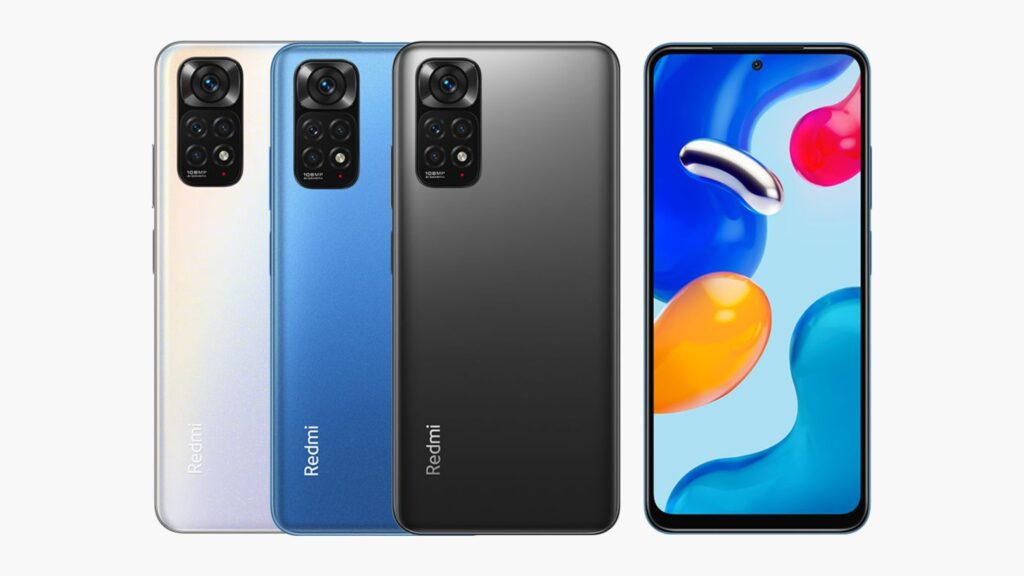
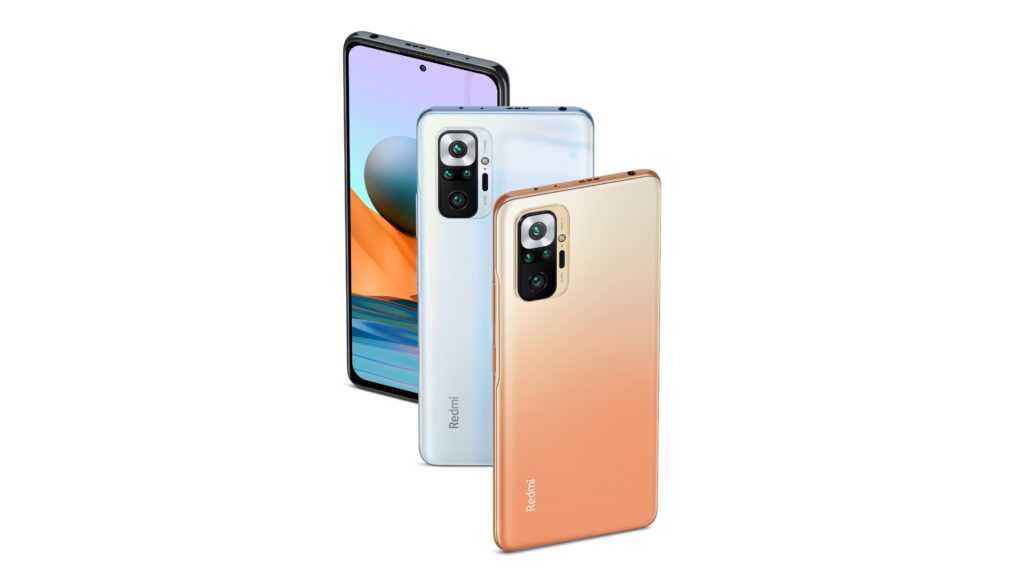
Here’s why Redmi Note 11S does not ‘Set the Bar’ in India

After teasing for days, Xiaomi finally announced the Redmi Note 11 and the Redmi Note 11S in India earlier today. However, unlike the Redmi Note 10 series launch event that happened in March 2021, this year’s conference was not so interesting despite the live stream being AI-generated. Because the products are sort of boring as compared to last gen.

The newer models do bring some upgrades but then again, that’s what the latest generation should offer. Anyhow, the pricing of the new smartphones is unlike Xiaomi.

In a nutshell, we really don’t think that Xiaomi India ‘Set the Bar’ with the Redmi Note 11S.

Redmi Note 11S All Colors Global
Redmi Note 11S 

Xiaomi India had been hyping the launch of the Redmi Note 11S in the country even before the device went official in other markets. Specifically, the company uses the term ‘Set The Bar’ to promote this phone.

But deep down we all, including Xiaomi, know that the company had actually ‘Set the Bar’ last year with the India-exclusive Redmi Note 10 Pro.

For those unaware, the Redmi Note 10 Pro sold in India is not available anywhere else. This phone packs all the features of the Redmi Note 10 Pro sold in other international markets, except for the 108MP primary camera.

The device uses a 64MP main camera. As a result, it debuted at ₹3,000 cheaper than the Redmi Note 10 Pro Max, which is actually the Redmi Note 10 Pro that’s available elsewhere.

This handset was introduced at ₹15,999 for the base 6GB + 64GB memory configuration. Almost a year later, Xiaomi launches the same variant of the Redmi Note 11S in India a bit higher at ₹16,499.

Redmi Note 10 Pro (Max) Featured 01
Redmi Note 10 Pro

For starters, the Redmi Note 11S is not a successor of the Redmi Note 10 Pro. It actually succeeds the Redmi Note 10S, which debuted at ₹14,999 for 6GB RAM and 64GB storage.

The Redmi Note 11S is a better handset than its predecessor. But it’s definitely not on par with the Redmi Note 10 Pro. Because the latter not only offers a matte rear glass finish but a better chipset in the form of Qualcomm Snapdragon 732G and a capable 5MP telemacro camera with autofocus.

The Redmi Note 10 Pro went through multiple price hikes and the base variant was discontinued long ago. Anyway, the mid 6GB + 128GB version and the top 8GB + 128GB are still on sale for ₹17,999 and ₹18,999 respectively. 

In other words, the handset is only ₹500 costlier than the same memory configurations of the Redmi Note 11S. In our opinion, one should better get the older phone than the newer one.

The Redmi Note 11S is a good smartphone standalone. However, its pricing makes the year-old Redmi Note 10 Pro a better deal in India. Having said that, we are not sure how long Xiaomi will continue selling the last-gen model. 

What are your thoughts on the Redmi Note 11S in India? Do you think Xiaomi should have retained its predecessor’s price?  Let us know in the comment section below.


RELATED:


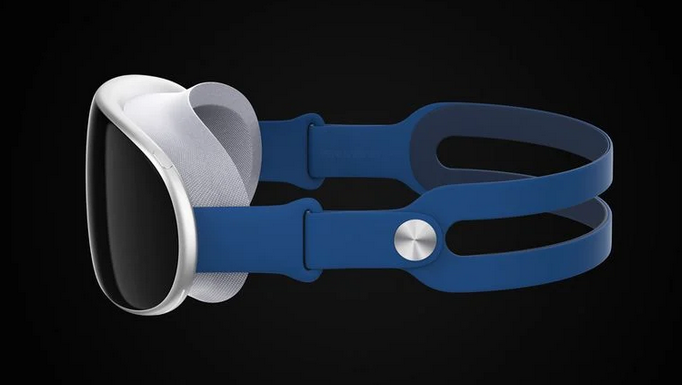
Apple working on realityOS for its upcoming AR/VR headset

Over the last couple of weeks, we have reported on a number of reports regarding the upcoming AR/VR headset from Apple. Now, the company’s open source code has revealed that this new product will be paired with a dedicated software dubbed realityOS.

Apple AR Glasses

The reference to ‘realityOS’ was spotted (Via MacRumors) on App Store upload logs and Apple Open source code earlier today (9th February 2022) and is likely built for its rumored AR/VR based headset. For those unaware, the Cupertino based giant is rumored to be working on a mixed reality based wearable product that will reportedly launch sometime in late 2022 or 2023. As per our previous reports, the iPhone maker is believed to be working on at least two AR based gadgets.

One is said to be an AR based Apple Glass, while the second will be a mixed reality headset that supports both augmented reality and virtual reality. In other words, the realityOS might be the platform used for both of these products. Talking about the headset, it will reportedly powered by two Apple Silicon based chips that output Mac like performance to help seamlessly switch between AR and VR modes. The ‘rOS’ will likely be the platform that users interact with, similar to tvOS and watchOS.

Apple

Recently Tim Cook, CEO of Apple, also hinted that the App Store might soon be filled with AR based applications. So, we can even expect these products to connect with the Metaverse as well. Unfortunately, the brand has yet to officially reveal any finer details regarding the two wearable products, so stick around for more updates.

RELATED:


Redmi K50 Gaming Mercedes AMG Petronas Edition revealed

Earlier today, Xiaomi‘s sub-brand Redmi announced that their upcoming Redmi K50 Gaming Edition will be their first device to debut in the K50 lineup and will launch on February 16th. Now, it has been revealed that the K50 Gaming smartphone will also come with a special edition of its own.

A recent tweet from Xiaomiui has stated that the Redmi K50 Gaming will have a Mercedes AMG Petronas edition. Last year, Xiaomi also launched a Mercedes-AMG Petronas F1 Team Edition for the Mi Electric Scooter Pro 2.

Redmi K50 Gaming Edition

The K50 Gaming Mercedes AMG Petronas edition will come with a different paint job than the base models and will sport the iconic color scheme of the Mercedes F1 cars. This includes a Grey colored back panel with Black triangular designs around the mid-section of the back panel. Two sides of the triangles will be lined with Cyan color and the RGB strip integrated within the camera module will also glow with a Cyan hue.

The Phone will also have two dark Grey racing stripes running vertically down the center of the back panel and a Mercedes AMG Petronas F1 Team branding will be present on the top right corner along with the iconic Mercedes badge.

Redmi K50 Gaming Edition specifications (rumored)

So far, rumors suggest that the Redmi K50 Gaming Edition has 162 x 76.8 x 8.45mm dimensions and weighs 210 grams. The device is likely to house a 6.67-inch OLED QHD+ display that offers a high refresh rate. For selfies, it may feature a 16-megapixel snapper, and its rear seems to be fitted with a 64-megapixel + 13-megapixel + 2-megapixel triple camera unit. It may come with a side-facing fingerprint scanner.

The Snapdragon 8 Gen 1 powered device may feature a 4,700mAh battery that supports 120W fast charging. It may come with other features such as ultrawide-band support, x-axis linear motor, and JBL dual speakers.


RELATED:


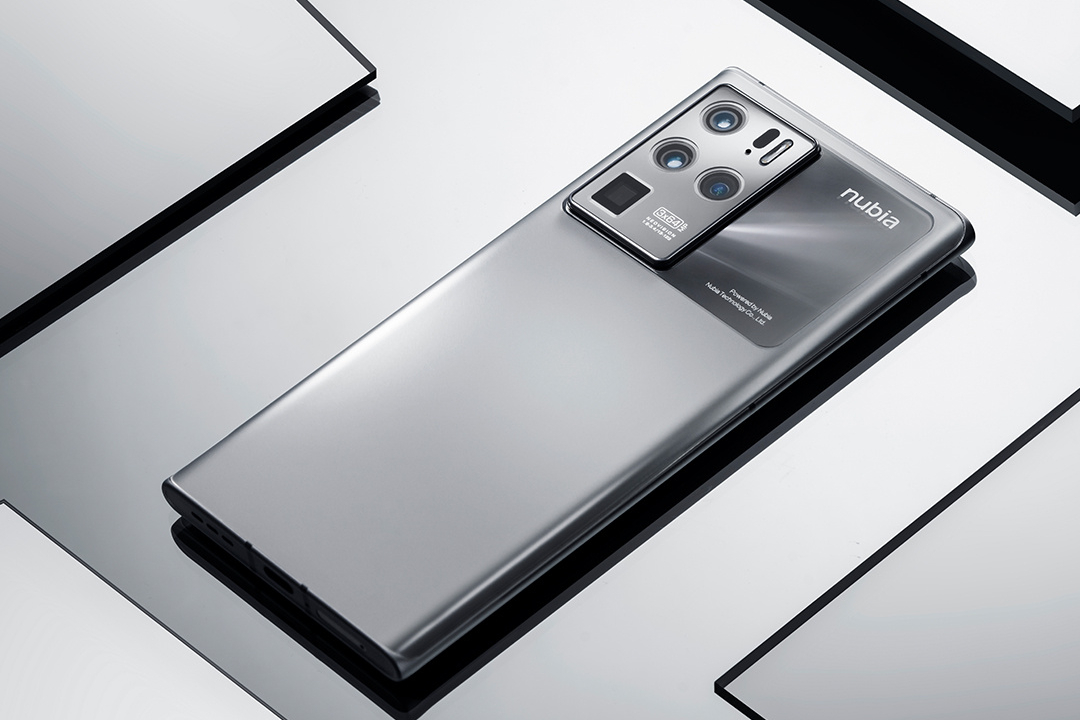
Nubia Z40 Pro and ZTE Axon 40 head to China’s MIIT

Nubia is expected to launch its upcoming Nubia Z40 flagship smartphone in the coming months. Before it even debuts, we’ve seen plenty of its details, thanks to certification sites like Geekbench. Now, the Pro model of the Z40 has appeared on another listing, this time on China’s Ministry of Industry and Information Technology(MIIT). Additionally, the company’s ZTE AXON 40 was also spotted on the same certification.

The listing reveals that the Nubia Z40 Pro has the model number NX701J, whereas the ZTE AXON 40 has the ZTEE A2023BH model number. Unfortunately, we do not learn any of the specs.

Notably, this is the initial phase of certifications for the ZTE Axon 40. Having said that, it could be some time until we see the device in the market. On the other hand, the Nubia Z40 series is quite frequent in the leak spree lately. This time, it’s the Pro.

The details for the Pro model are not known as of now, but interestingly, the Pro seems to have the same model number as the other Z40 model. Or, the Z40, which we saw previously could actually be the Pro model, who knows? Nonetheless, the device was seen on Geekbench recently confirming it to have 16GB of RAM.

nubia Z30 Pro Interstellar Silver Featured 03
nubia Z30 Pr

It will be powered by the Qualcomm Snapdragon 8 Gen 1 flagship chipset clocked at a peak frequency of 2.50GHz. It will boot on Android 11 out of the box. The device was teased earlier, it was confirmed to come equipped with a 35mm optical master lens. It will come with the first aerospace-grade heat dissipation material to keep the internals cool while doing intense gaming sessions.

Other than this, the Nubia Z40 is expected to come with betterments over the predecessor Nubia Z30 series. The Z30 Pro comes with a 120W fast charging and has quad-rear cameras. We can expect similar fast charging support and cameras on the Z40.

RELATED:

(via)

Intel backs RISC-V and future disruptive tech, sets up $1 billion fund

Intel has recently announced that it is setting up a new fund that will help startups in developing new technologies from its Intel Foundry Services (IFS). This billion dollar fund is being offered to both large and small firms that are working on innovative chip tech that will not be limited by ISAs (instruction set architectures).

Intel

As per the official announcement (Via TomsHardware), the funds will help startups that are seeking to develop disruptive tech (technology that has a major impact on the market/industry) while also reducing the time it takes for these technologies to make it to the consumer market. Notably, the chip making giant won’t be limiting architecture for firms using its IFS. While Team Blue has been a major figure in the x86 architecture, the 1 billion US Dollar fund will embrace other instruction sets as well. This includes the x86, ARM, and even RISC-V.

The first two are known architectures that are used in PCs and smartphones, but the latter is an open sourced and free platform that has been rising in popularity in recent times. In other words, Intel will include RISC-V under its IFS fund to bring in more customers. Furthermore, the chipmaker is also betting on development of modular designs on chip architecture through advanced 3D packaging technologies. In simpler terms, it is expecting the semiconductor industry to shift towards chips that use multiple ISA in a single chip.

Intel
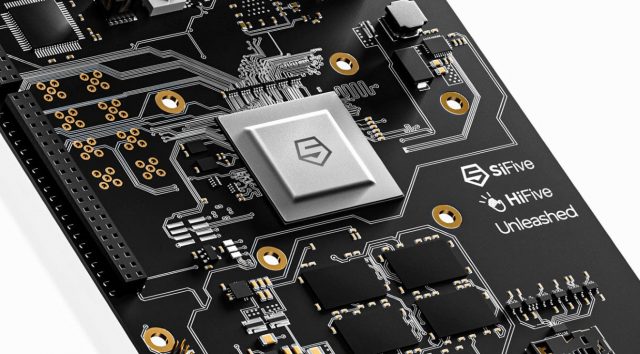
RISC-V based SiFive chipset

Intel CEO, Pat Gelsinger, stated that “Foundry customers are rapidly embracing a modular design approach to differentiate their products and accelerate time to market. Intel Foundry Services is well positioned to lead this major industry inflection. With our new investment fund and open chiplet platform, we can help drive the ecosystem to develop disruptive technologies across the full spectrum of chip architectures.” The sizeable fund will be streamlined in three aspects:

  • Equity investments in disruptive startups.
  • Strategic investments to accelerate partner scale up.
  • Ecosystem investments to develop disruptive capabilities supporting IFS customers.

RELATED:


Elon Musk’s Starlink may have lost 40 satellites due to a geomagnetic storm

Starlink, the internet service provider from Tesla & SpaceX founder Elon Musk, has apparently lost a number of its satellites following a geomagnetic storm, with around 40 being destroyed.

Starlink

According to an official blog post, the company stated that around 40 of its 49 Starlink satellites that were launched on 3rd February 2022 have been destroyed because of the geomagnetic storm. This storm has caused “up to 50 percent higher drag than during previous launches,” which prevented the newly launched satellites from reaching their optimal orbit around the Earth. Despite Starlink’s best efforts of reducing damages, 40 of the satellites ended up burning up in the Earth’s atmosphere and were unable to reach their proper destination.

For those unaware, SpaceX’s ISP unit had recently announced that it has sent more than 2,000 satellites and had planned to launch over 12,000 more. So while the loss of 40 might not impact the overall figure, it is still quite an expensive loss, with almost all of the Falcon 9 rocket’s payload being destroyed. Interestingly, the company took this chance to also showcase the minute impact that its satellites cause in the skies.

Starlink

Space debris and clutter has been a growing concern in recent years, with Starlink’s satellites also facing criticism due to plans to launch thousands of satellites. Apart from this, astronomers had also called out the brand for disrupting images of the night sky since these satellite end up leaving streaks across space images. This means that it is harder for astronomers to detect possibly dangerous asteroids.

RELATED:


Motorola Moto G Pro bags Android 12 update

In 2021, the Moto G Pro became the first Motorola smartphone to bag the Android 11 update in late January. Exactly a year later, the handset is now once again the first device from the company to receive the Android 12 update.

Motorola Moto G Pro Mystic Indigo Featured
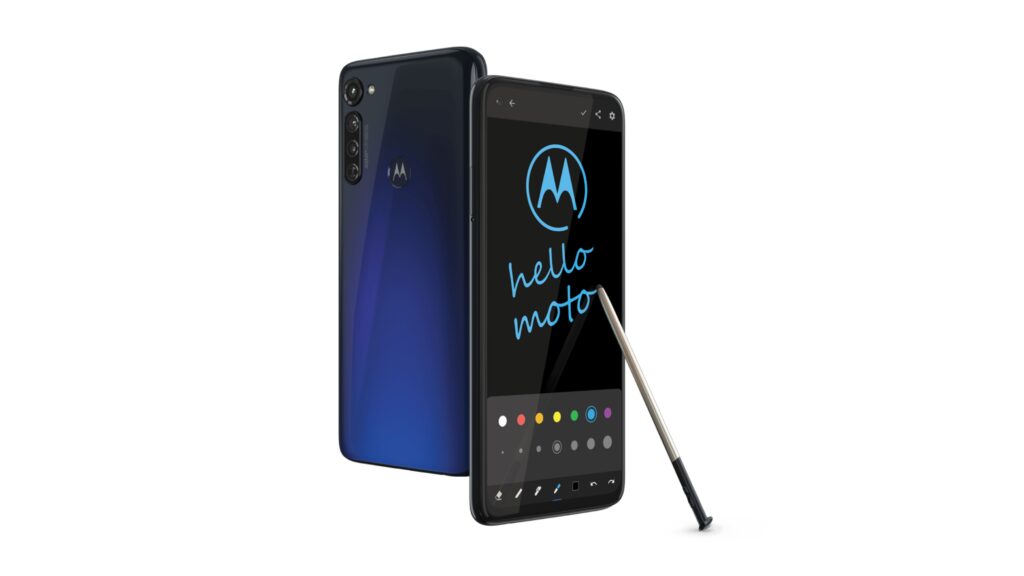
Motorola Moto G Pro

According to XDA Developers, Motorola has started seeding the Android 12 stable update for Moto G Pro in the UK. The latest software update for the phone (XT2043-7) arrives with build number S0PR32.44-11-8.

In order to check whether their unit has got the newest software release, users need to head over to Settings > System > Advanced > System update. Anyway, some users may get it earlier, while others may have to wait as the update is being rolled out in batches.

The almost 2-year-old Moto G Pro has got access to the Android 12 update ahead of newer and more expensive smartphones from Motorola. Because it is part of the Android One program.

The handset will no longer receive any Android updates but will continue to get security patches for about a year. The phone is also known as Moto G Stylus in the US, however, this variant of the device is not eligible for Android 12 as it is not part of Android 12.

Now, as Motorola has kickstarted the Android 12 update rollout, we expect the vast list of entitled handsets to bag the update in the coming days.


RELATED:


ASUS ROG Magic 16 is now official with 165Hz display and RTX 3060 GPU

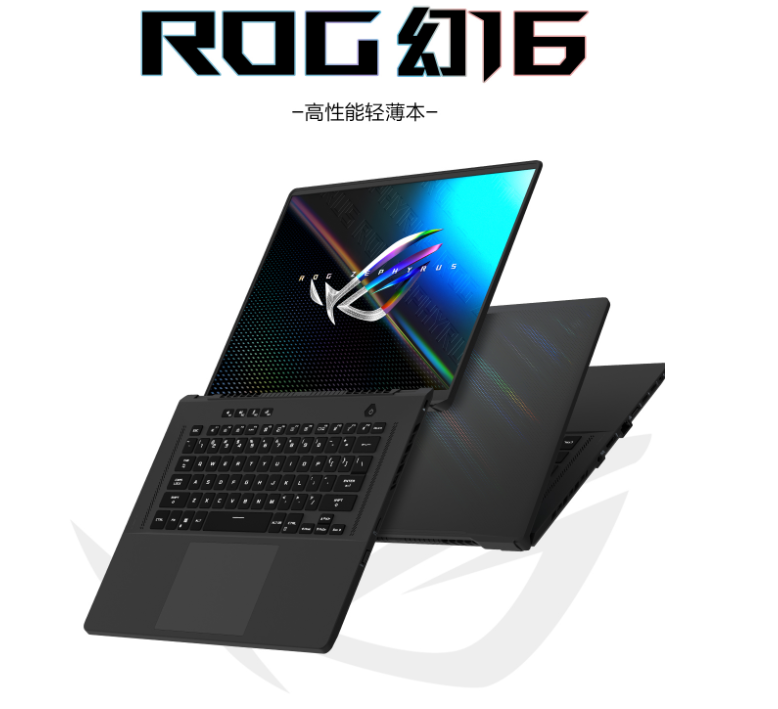
A few weeks back, ASUS officially launched the ROG Magic X gaming laptop in China with powerful internals like a 120Hz screen and RTX 3080 GPU. Now, the company has unveiled the ASUS ROG Magic 16 2022 Edition in China. The laptop costs a little less than the Magic X but offers RTX 3060 GPU and 165Hz game-ready display.

ASUS ROG Magic 16 Pricing and Specifications

The ASUS ROG Magic 16 costs CNY 9,999(~$1,571) and comes in the Black shade. It will go on sale starting tomorrow(February 10) on JD.com. Just for comparison, the ROG Magic X costs CNY 13,499(~$2,132).

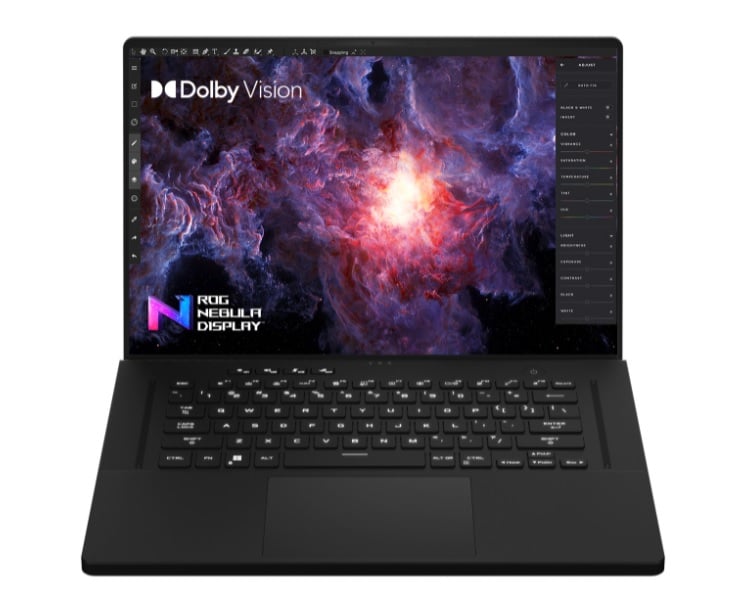
The ROG Magic 16 2022 Edition has a sleek form factor but has a large 16-inch display. The screen has a 165Hz refresh rate and a resolution of 2560 x 1600 pixels. It has a 100% DCI-P3 color gamut, 500 nits of brightness, and Dolby Vision support. It has an aspect ratio of 16:10.

The gaming laptop is powered by the Intel i7-12700H processor and has 6GB of RTX 3060 GPU. It supports dual-display and three-mode switching technology. It has 16GB of DDR5 RAM and 512GB of PCIe 4.0 M.2 SSD. The laptop has a 90Wh battery that supports 100W Power Delivery standards. It has 6 Dolby Atmos tuned speakers and runs on Windows 11 OS. ASUS ROG MAGIC 16As for the thermals, it keeps it cool by the Glacier cooling 2.0 system. This cooling system uses six heat pipes, dual fans, and four air outlets. It also has liquid crystal materials and the dual fans are dust-proof. It comes with ASUS Aura RGB that is customizable from within the laptop.
It has the following connectivity and port options — Wi-Fi 6E, 2x USB 3.2 Gen 2 Type-A ports, an HDMI port, microSD card reader, a Thunderbolt 4 port, RJ45 network port, and the audio jack.

RELATED:

Realme GT2 Pro price slashed, first Snapdragon 8 Gen 1 phone to receive price cut

Realme GT2 Pro was announced at the beginning of this year in China. Like other new flagship phones such as Moto Edge X30, Xiaomi 12, Xiaomi 12 Pro, iQOO 9 Pro, and OnePlus 10 Pro, the GT2 Pro is also powered by the Snapdragon 8 Gen 1 flagship chipset. Realme is now offering the GT2 Pro with a price cut of 500 Yuan in the home market through multiple platforms such as Realme China’s website, OPPO mall, JD, Tmall, Suning, Pinduoduo, and more.

The Realme GT2 Pro was announced in four variants such as 8 GB RAM + 128 GB storage, 8 GB RAM + 256 GB storage, 12 GB RAM + 256 GB storage, and 12 GB RAM + 512 GB storage. These models were introduced for 3,899 Yuan (~$613), 4,199 Yuan (~$659), 4,499 Yuan (~$707), and 4,999 Yuan (~$786), respectively.

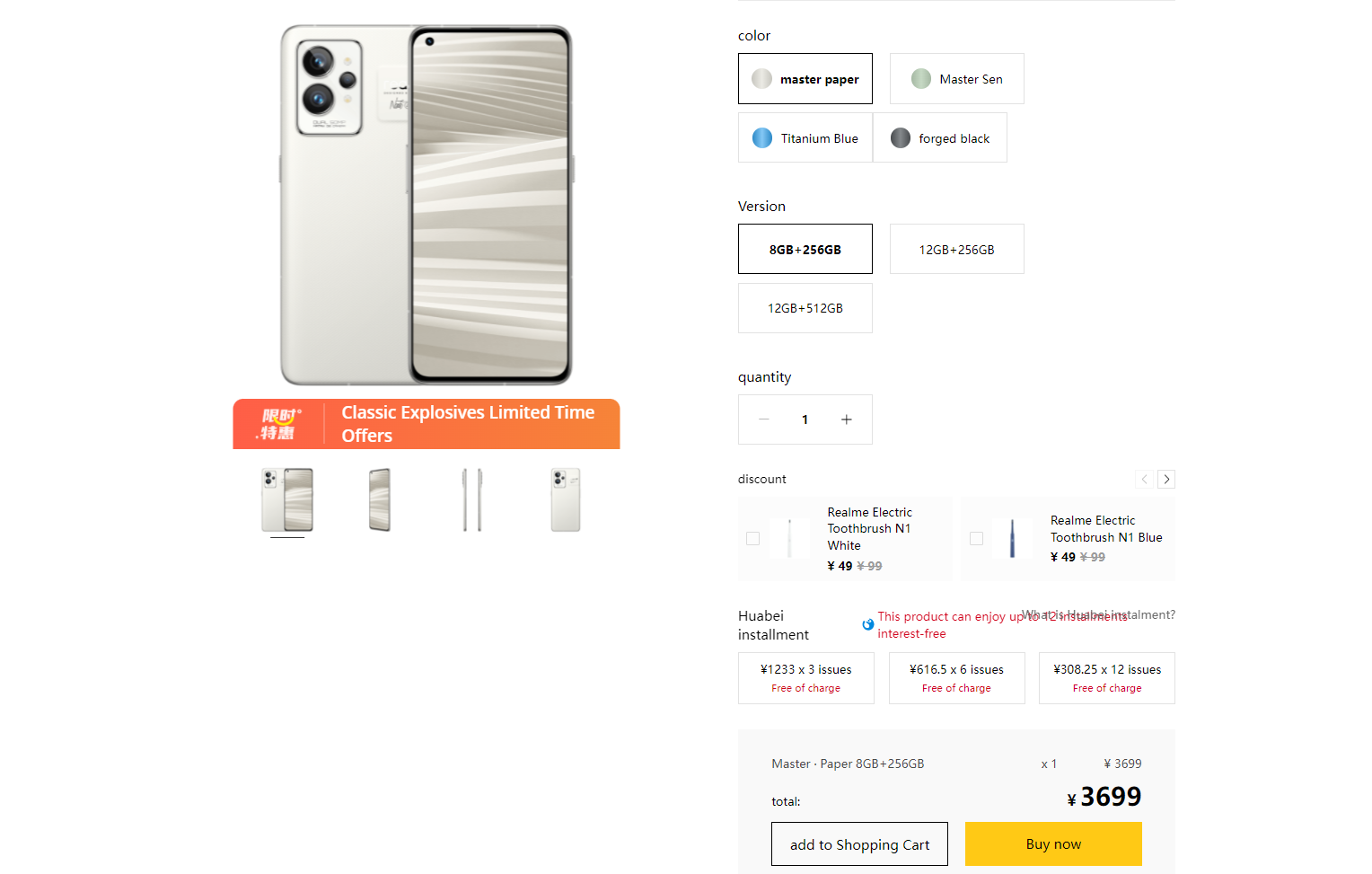
Realme GT2 Pro's listing on Realme China's website
Realme GT2 Pro’s listing on Realme China’s website

At the time of writing this post, we could not find the 8GB+128GB variant on Realme’s online store. As can be seen in the screengrab, the other three variants are listed with discounted price tags of 3,699 Yuan (~$581), 4,299 Yuan (~$675), and 4,799 Yuan (~$754), respectively. At present, the Realme GT2 Pro is the cheapest flagship phone featuring a 2K display and Snapdragon 8 Gen 1 chipset. The device comes in four colors such as white (master edition), green (master edition), blue, and black.

Realme GT2 Pro specifications

The Realme GT2 Pro has a 6.7-inch AMOLED Quad HD+ display that offers a 120Hz refresh rate and 1400 nits of peak brightness. It has a front camera of 32-megapixel and a 50-megapixel (Sony IMX766) + 50-megapixel (150-degree ultrawide) + 3-megapixel (microscope) triple camera unit.

The SD8G1 powered handset ships with LPDDR5 RAM and UFS 3.1 storage. It runs on Realme UI 3.0 and Android 12 OS. The handset comes with other features like an in-screen fingerprint scanner and a 5,000mAh battery with 65W fast charging support.

RELATED:

ZTE MC8020 5G router launched with peak Wi-Fi speeds touching 5400Mbps

ZTE, on February 9th, launched the third-generation 5G indoor CPE MC8020 router for a retail price of 2,999 Yuan (~$471) in China. It reached peak Wi-Fi speeds of 5400Mbps, thanks to the presence of 4K QAM modulation technology.

The ZTE 5G CPE MC8020 router supports 5G dual-mode, which can be used by China Mobile, China Unicom, Telecom, and radio and television (via IT Home). All frequency bands of four major Chinese operators are also supported along with the ability to run a simultaneous connection of 128 devices.

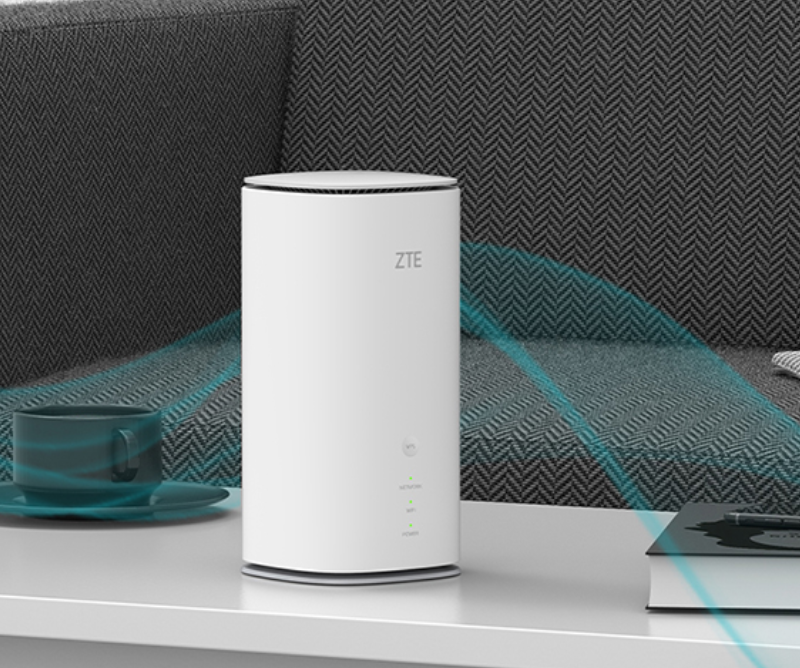
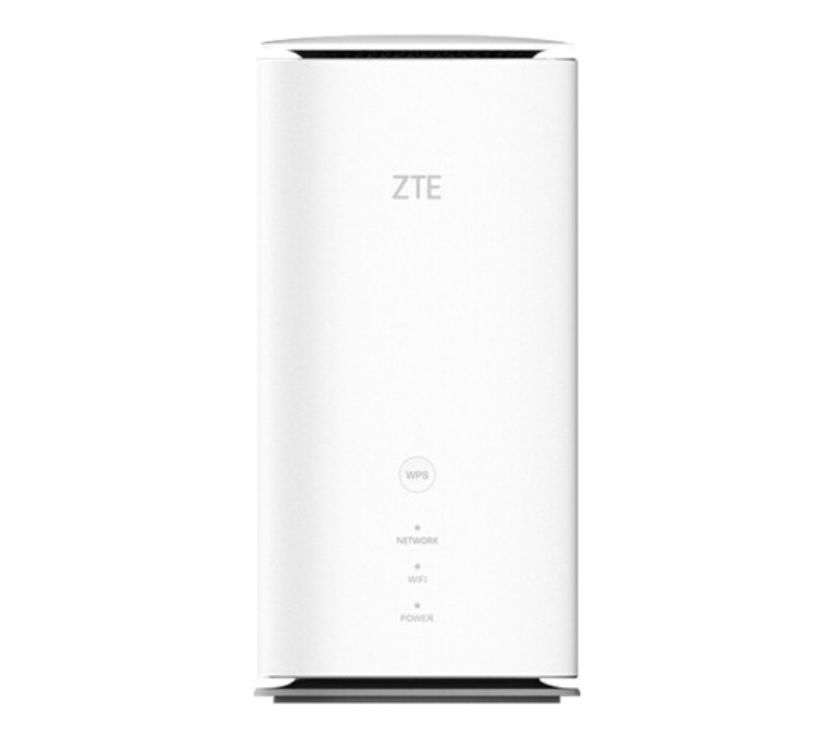
ZTE MC8020 5G router

Upgrades over previous generations include a 25% higher Wi-Fi forwarding rate, a 15% increased coverage, and a 20% speed boost.

The boost in coverage can be owed to the usage of the world’s first four-way omnidirectional high-gain antenna, which is designed to penetrate walls. High-performance chips paired with Qualcomm’s dual-core 64-bit network acceleration engine have been implemented as well.

ZTE MC8020 5G router inline

Last but not least, the router also supports NFC one-touch networking function, using which you can seamlessly connect your NFC-supporting mobile device without the need for inputting passwords. Simply open NFC on the phone, tap the router, and that’s it — you’ll be connected in no time.

It remains to be seen if the ZTE 5G CPE MC8020 router will be launched in the global market. There is no official announcement yet but it isn’t all that unlikely.

RELATED: