Advertisement

Realme RMX3513 spotted on FCC with a big battery and 18W fast charging

Realme has several budget phones in the pipeline for the coming months. The company is expected to launch the Realme C31, C35, and 9 series soon, out of which, the Realme 9 series is scheduled for a launch in February. Now, yet another gaming phone has appeared online, which looks to be a budget-centric phone.

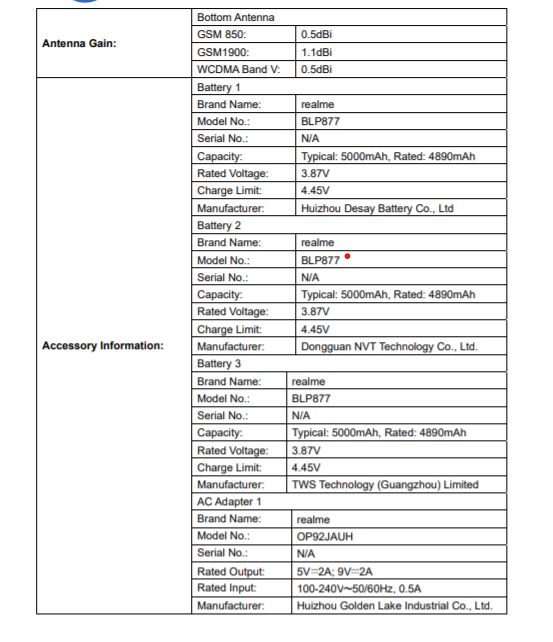
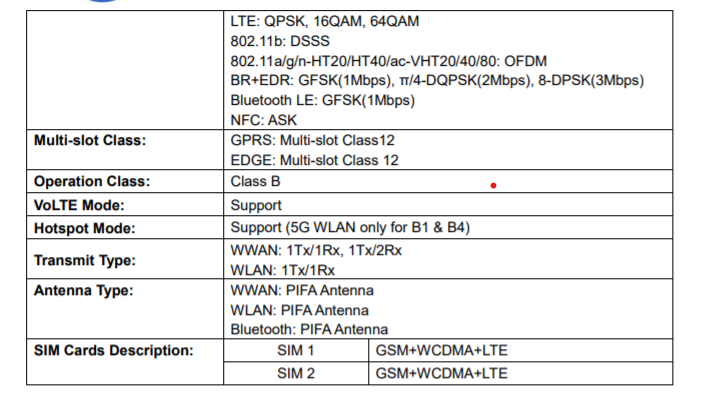
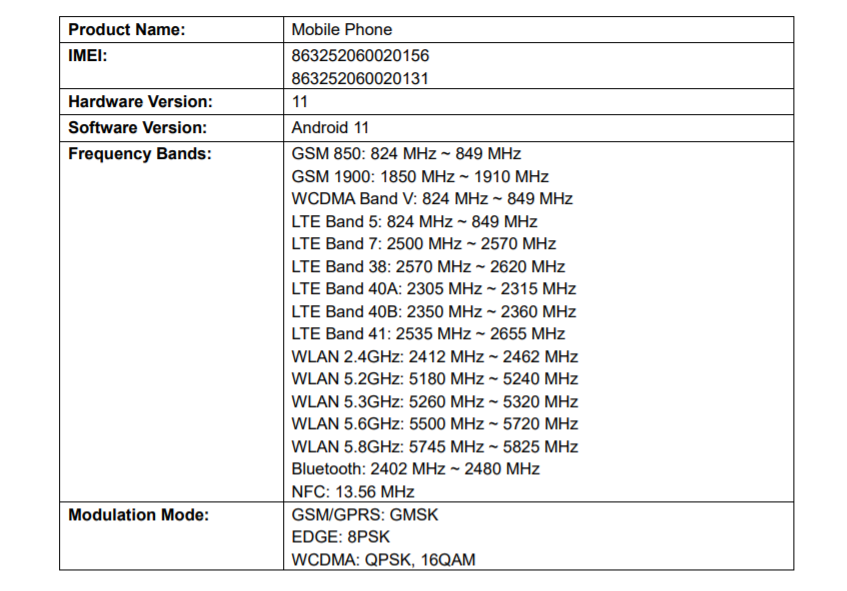
According to its FCC certification, the new Realme phone has the model number RMX3513. It is a dual-SIM 4G smartphone with support for 18W fast charging support. It also packs a 5,000mAh battery. We also get to learn that the phone will arrive with a USB Type-C cable and earphones. Furthermore, it boots on Android 11 out of the box and has Realme UI on top of it.
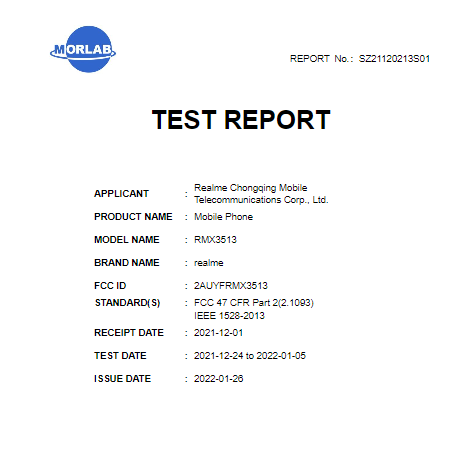
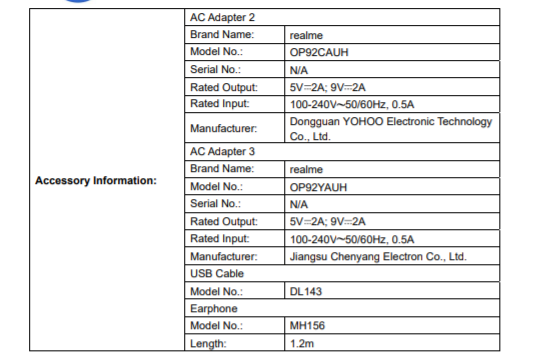
Considering its model number, we speculate it to be some C-series Realme device. The Realme C35 which recently passed Geekbench also has a similar model number — RMX3511.

Having a look at its specs, the Geekbench portal revealed that it will be powered by a UNISOC SoC and have 4GB of RAM. Just like the RMX3513, it also boots on Android 11 OS.

As of now, there’s very little that we know about the Realme RMX3513, however, considering that it has passed the FCC listing, we can expect a launch sooner. We expect the device to be some budget-centric phone and may have an HD+ screen, 60Hz refresh rate, and modest cameras.

RELATED:

(via)

OPPO Reno7, Reno7 Pro India price leak again

OPPO has confirmed to launch the OPPO Reno7 series in India on February 4. The company is expected to introduce two models in the lineup, namely OPPO Reno7 and OPPO Reno7 Pro. Ahead of their official announcement, their price has leaked once again.

OPPO Reno7 Pro Review Cameras
OPPO Reno7 Pro

According to the source of tipster Sudhanshu Ambhore, the OPPO Reno7 will retail at ₹29,990 in India for the sole 8GB + 256GB memory configuration. On the other hand, the OPPO Reno7 Pro will cost ₹39,990 for the single 12GB + 256GB variant.

The leaker requests the public to consider this information with a pinch of salt. Because the previous reports have suggested higher price tags.

A retailer listing recently revealed that the OPPO Reno7 will come in an 8GB + 128GB version priced at ₹31,490. Whereas, the OPPO Reno7 Pro was earlier said to retail at around ₹41,000-₹43,000.

As far as the devices are concerned, the OPPO Reno7 Pro coming to India is the same as the phone sold in China. However, the OPPO Reno7 for India is said to be a rebranded OPPO Reno7 SE.

In a nutshell, both these handsets are already official and we know everything about them. In fact, we had already reviewed the OPPO Reno7 Pro back in December.


RELATED:


Fastrack Reflex Vox smartwatch with Alexa voice assistant launched in India

Fastrack has officially launched its first smartwatch under the Reflex lineup. It is called the Fastrack Reflex Vox and it comes with a squarish design offering over 100 watch faces and various health modes.

The Fastrack Reflex Vox is priced at Rs. 6,995 in the market, but is currently available for Rs. 4,995 as an introductory offer. It comes in four color options, Carbon Black, Flaming Red, Blazing Blue, Champagne Pink. The smartwatch also comes with interchangeable bands.

As for its availability, the Reflex Vox can be picked up from nearby Fastrack stores, Worl of Titan, and other authorized dealers. It will also be available from Shoppers Stop and Lifestyle retail outlets. The sale starts from today i.e. January 29.

Fastrack Reflex Vox Specifications 

The Fastrack Reflex sports a 1.69-inch touch color display with an HD screen resolution. It has over 100 watch faces and boasts a physical button on the right spine. It has multi-sports modes and various health-related features.

Fastrack Reflex Vox

It comes with a heart rate monitor, SpO2 sensor, sleep tracker, stress monitor, and even menstrual tracker. It can also track activity like the regular step counting. It also has music controls and supports remote camera features.

The smartwatch can display call and message alerts, and also show specific app alerts. In terms of the battery, it offers 10 days of battery life. Interestingly, it also has a built-in Amazon Alexa voice assistant.

RELATED:

(via)

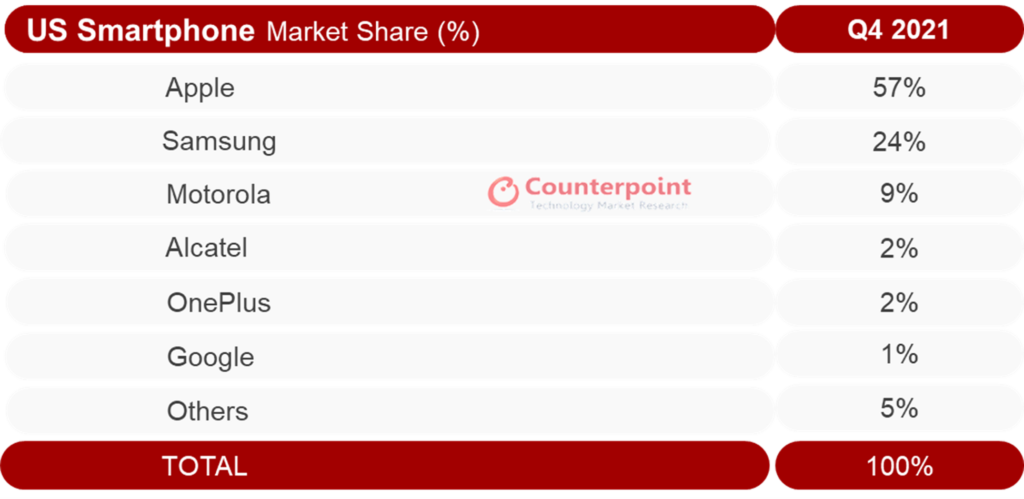
OnePlus grows an astonishing 524% in the US, beating Google on its own turf

OnePlus has been getting a lot of backlash for its recent ‘anti-enthusiast’ moves like firstly steadily increasing its prices, then announcing its OPPO fellowship, and putting the final nail in the coffin by ditching OxygenOS for ColorOS. While many have begun to think that the company has finally ‘settled’ and is done for, Counterpoint‘s latest US smartphone market sales figures beg to differ.

The Chinese phone company led by Pete Lau has reportedly managed to record an astonishing 524% of growth in the US, beating the likes of Google whose Pixel series doesn’t seem to have made quite the expected impact. Still, Google did see a spike of 56% YoY in sales, which isn’t all that bad.

OnePlus’s achievement can be owed mostly to its Nord series devices, which continued to see success at T-Mobile and the carrier’s entry into over 2,000 Walmart locations. Do keep in mind though that the company has started from an extremely small base (its US market share in Q4 2021 stood at 2%) and exponential growth isn’t too uncommon at this point.

Counterpoint-Research-US-Smartphone-Market-Share-Q4-2021-1024x499
Image: Counterpoint

Motorola is another player with a lot going on for them. The company has sold the largest number of smartphones in the US market in its history, beating its Q4 2019 performance. LG’s demise left some shoes to be filled and Motorola seized the opportunity, recording a market share of 9% in Q4 2021. A lot of the success is driven by the Moto G Pure which was among the top three best-selling devices in the quarter.

But it’s Apple that has the tightest grip on the US market, with over half of smartphones sold in the country last year being an iPhone. The Cupertino-based company closed 2021 with a market share of 57%, driven by both iPhone 12 and iPhone 13 sales, and its YoY growth stood at an impressive 17%.

Seconding Apple in terms of sales is Samsung, with a market share of 24% and growth of 11% in Q4 2021. Several factors held back the OEM’s sales, including shortages of the Galaxy S21 series and the delayed launch of the Galaxy S21 FE. Strong performance of the A series and foldables helped made up for the shortfall, though, and the Galaxy A12 even became the best-selling Android device in 2021.

RELATED:

Vivo V23 vs V23 Pro: Specs Comparison

After the initial launch of the V23e in late 2021, the V23 series expanded at the beginning of this month with the most advanced handsets: Vivo V23 and V23 Pro. The two devices debuted in the Indian market with two killer features that are not easy to find on other phones: a color-changing design and amazing dual front cameras. After the launch, a lot of people started wondering which are all the differences between these two variants and why the latter is called Pro, especially because they seem identical at first glance. This comparison between the specifications of the Vivo V23 and the Vivo V23 Pro will explain to you all the main differences and let you realize which one fits your needs the most.

Vivo V23 5G vs Vivo V23 Pro

Vivo V23 Vivo V23 Pro
DIMENSIONS AND WEIGHT 157.2 x 72.4 x 7.6 mm,
179 g
159.5 x 73.3 x 7.4 mm,
171 g
DISPLAY 6.44 inches, 1080 x 2400 pixels (Full HD+), AMOLED 6.56 inches, 1080 x 2400 pixels (Full HD+), AMOLED
PROCESSOR Mediatek Dimensity 900, octa-core 2.5 GHz Mediatek Dimensity 1200, octa-core 3 GHz
MEMORY 8 GB RAM, 128 GB – 12 GB RAM, 512 GB 8 GB RAM, 128 GB – 12 GB RAM, 256 GB
SOFTWARE Android 12, Funtouch OS 12 Android 12, Funtouch OS 12
CONNECTIVITY Wi-Fi 802.11 a/b/g/n/ac, Bluetooth 5.2, GPS Wi-Fi 802.11 a/b/g/n/ac, Bluetooth 5.2, GPS
CAMERA Triple 64 + 8 + 2 MP, f/1.9 + f/2.2 + f/2.4
Dual 50 + 8 MP f/2.0 and f/2.3 front camera
Triple 108 + 8 + 2 MP, f/1.9 + f/2.2 + f/2.4
Dual 50 + 8 MP f/2.0 and f/2.3 front camera
BATTERY 4200 mAh, fast charging 44W 4300 mAh, Fast Charging 44W
ADDITIONAL FEATURES 5G, dual SIM, color-changing back 5G, dual SIM, color-changing back

Design

There are no big differences between the designs of the Vivo V23 and the V23 Pro. They both come with an amazing color-changing design: their rear cover is able to change color when placed under the sunlight and the effect it creates is simply awesome.  The rear side is made of glass, so you even get premium materials, and the front side has a very high screen to body ratio. Unfortunately, these phones come with a big notch similar to the ones found on Apple’s iPhones, but the notch is there because there are two front cameras for amazing selfies. The Vivo V23 5G is a bit more compact than the Vivo V23 Pro because it packs a smaller display, and this is an added value for those who want a phone easier to use with one hand.


Display

The only difference between the two displays of these phones is the diagonal: the vanilla Vivo V23 5G has a diagonal of 6.44 inches, while the Pro variant has a diagonal of 6.56 inches. For the rest, the displays are pretty much the same and they are very good panels if we only talk about the mid-range segment. They are AMOLED panels with a Full HD+ resolution of 1080 x 2400 pixels, a 90 Hz refresh rate, the HDR10+ certification improving the image quality on streaming platforms, and an in-display fingerprint reader. Do you prefer a bigger display on a bigger phone or the 6.44-inch diagonal of the V23 5G is enough for your needs?


Specs & Software

The most important difference between the Vivo V23 5G and the Vivo V23 Pro is the hardware department. The vanilla version is powered by the midrange MediaTek Dimensity 920 processor built at 6 nm with a max frequency of 2.5 GHz, while the Pro variant is fueled by the high-end MediaTek Dimensity 1200 mobile platform built at 6 nm with a max frequency of 3 GHz. The Pro variant is a more powerful phone and it is more suitable for gamers and power users thanks to its better chipset. It is not the most advanced flagship chipset, but its performance is amazing. The phones are both equipped with up to 12 GB of RAM and up to 256 GB of internal storage, non expandable with a micro SD. They run Android 12 out of the box, customized by Funtouch OS 12.


Camera

The Vivo V23 5G and the Vivo V23 Pro come with a triple rear camera including two different main sensors: the former has a 64 MP main camera, while the latter has a superior 108 MP sensor. The two remaining sensors are exactly the same: an 8 MP ultrawide camera and a 2 MP macro lens. But the killer feature of these handsets is the front camera department: they both come with a dual front camera including a 50 MP main sensor (with an f/2.0 focal aperture and 4K video recording) and an 8 MP ultrawide camera.


Battery

The battery of the Vivo V23 Pro is slightly bigger than the one found on the vanilla version: 4300 mAh vs 4200 mAh. This means that the battery life will be slightly longer. The phones both support 44W fast charging.


Price

Vivo V23 5G has a starting price of €360/$401, while the Pro version starts from €460/$513. The Pro variant is better because it comes with a better main camera, a superior chipset, and a slightly bigger battery: for the rest, if we exclude the dimensions, these devices are identical.


Vivo V23 vs Vivo V23 Pro: PRO and CONS

Vivo V23

PRO

  • More affordable
  • More compact
  • Same front cameras as the Pro

CONS

  • Inferior rear camera
  • Lower-end chipset


Vivo V23 Pro

PRO

  • Superior rear camera
  • Bigger battery
  • Wider display
  • Better chipset

CONS

  • Price

RELATED

Check the latest videos from our YouTube channel and subscribe:

WeCool launches the Moonwalk M2 TWS earbuds in India for Rs. 1,599 ($21)

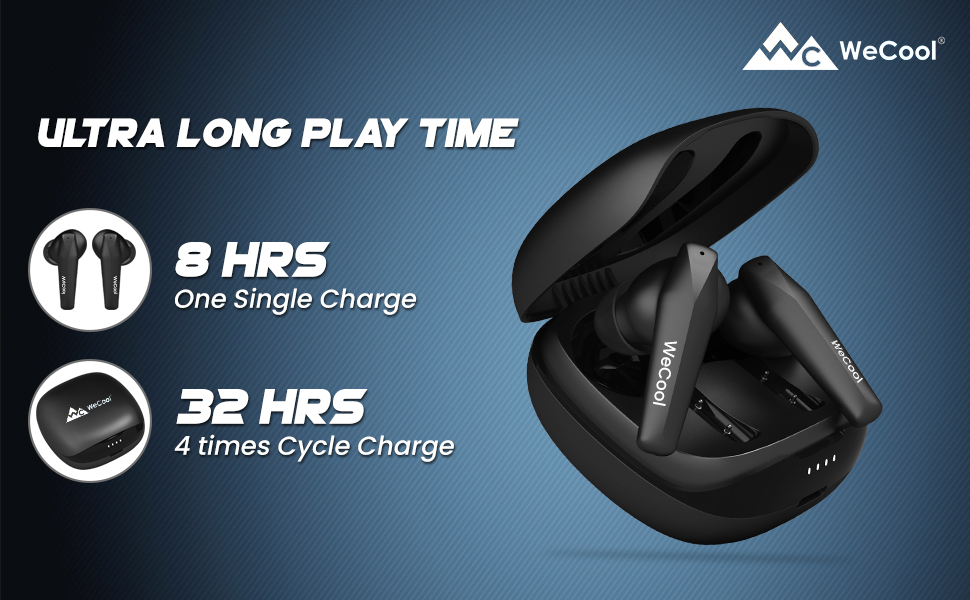
Audio accessories maker WeCool has introduced its latest true wireless earbuds in India. It is the WeCool Moonwalk M2 TWS earbuds priced at Rs. 1,599 (~$21). The Moonwalk M2 comes with environmental noise cancellation (ENC) functionality for an enhanced audio experience. It also offers a Gaming Mode and up to 32 hours of playback on a single charge, supported by its accompanying charging case.

WeCool Moonwalk M2 TWS earbuds

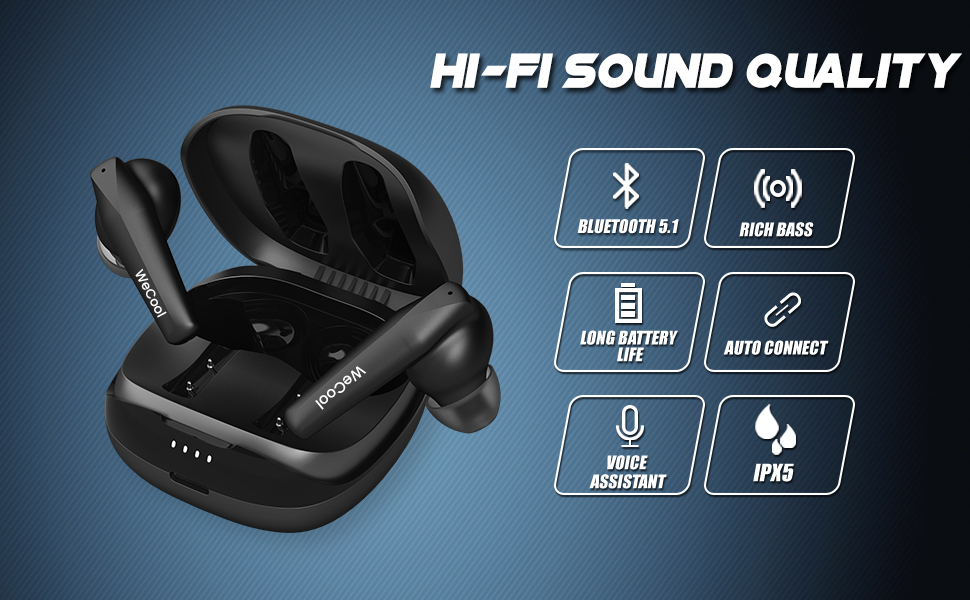
The Moonwalk M2 TWS earbuds have IPX5 splash-resistant rating and have 10mm audio drivers for a decent quality sound output. The new earbuds have an in-ear, ergonomic design with a stem that guarantees comfort even when using the device for extended periods. The earbuds are also lightweight, provide for magnetic charging via the charging case. The Moonwalk M2 supports Bluetooth 5.1 and has four LEDs to indicate battery status. The charging capsule of the Moonwalk M2 has a USB-C port with fast charging support.

WeCool Moonwalk M2 TWS earbuds

The WeCool Moonwalk M2 TWS earbuds with ENC can be purchased exclusively from Amazon India. It comes with a 12-month Warranty, according to the company, and it is expected to get decent reception in India due to its features and affordability.

RELATED:


Blackview A95 with iPhone 13-like design announced for $209.99

Chinese phone maker Blackview has announced a new budget smartphone in the market. The all-new Blackview A95 brings an iPhone 13-like rear design but fairs at a cheaper price, paired with budget specs.

The Blackview A95 costs $209.99 for the lone 8GB RAM and 128GB storage variant. But you can get it for $159.99 in the early bird sale. It will go on sale starting February 21 on AliExpress. It has three color variants – Aurora Night Black, Summer Ocean Blue, and Fantasy Galaxy Rainbow.

Blackview A95 Specifications 

The Blackview A95 comes with a 6.5-inch IPS LCD display sporting an HD+ resolution. It is a water-drop notch display with the standard 60Hz refresh rate. It has a 20:9 aspect ratio and 269 PPI pixel density.

Blackview A95

The notch holds an 8MP selfie snapper. It has a triple camera system at the rear. From the back, the phone resembles the iPhone 13. It has a similar camera island with a triple camera-like design. But in reality, it only has a 20MP Sony IMX376 primary lens, the other two lenses are dummy sensors.

It is powered by the 12nm MediaTek Helio P70 SoC paired with 8GB of RAM and 128GB of internal storage. It has a microSD card slot for additional storage. It houses a 4,380mAh battery and has support for 18W rapid charging technology. The device boots on the company’s custom skin called Doke OS and has Android 11 OS out of the box.

As for other features, it has a game mode that clears RAM and blocks calls and pop-ups that arrive while gaming. It also has features like the clone phone and dark mode.

RELATED:

(via)

Nothing sold over 400,000 units of the Nothing Ear (1), plans to launch four more devices

Last year, Nothing launched its first-ever product, the Nothing Ear (1) TWS earbuds in multiple markets. Initially, the Ear (1) was introduced in a White color variant with all the fancy transparent casing and Nothing branding. Later, after a few months of its release, the company launched a Black color of the TWS earbuds to keep the brand going. Now, Nothing reveals that the company has gained good figures when it comes to the sales of the earbuds, and, it is planning to introduce more devices in the future.

Carl Pei’s Nothing has sold over 400,000 units of the Ear (1) since its launch. Previously, the company has revealed that between September and October last year, it sold 100,00 units. Having sold more than 300,000 ever since, to date, sure does show the product’s popularity.

Nothing ear (1)

That being said, Nothing has four more products in the pipeline. Unfortunately, the company didn’t exactly reveal which are those products. However, its Nothing smartphone was previously rumored. The device is said to be development phase at the moment and may launch next year. Just like the Nothing Ear (1), the Nothing smartphone is expected to be a fancy device and may have transparent housing. The brand has partnered with Qualcomm, so we can guess a Snapdragon SoC inside.

Apart from this, we are also expecting a Nothing power bank, smartwatch, and other gadgets getting unveiled in early 2022.

In related news, Nothing recently brought Adam Bates to the design team as the design director for Nothing. For those unaware, he was previously the head of design & product experience for Dyson.

RELATED:

Samsung Galaxy Dual Fold phone with S Pen support appears in the new patent

Samsung is already famous for its foldable tech that we’ve been seeing in the form of patents for the last many years. Recently, the Korean tech giant showcased its Flex foldable technology at the CES event. The company already has two established foldable phone lineups — Z Fold, Z Flip. One after another, it seems that Samsung’s foldable phone saga isn’t slowing down. Now, a new patent showcases a dual folding phone with an S-Pen holder.

Reportedly, a new patent for the Samsung Galaxy Dual Fold was filed back in July 2021. And, it has now been published showcasing the foldable phone’s impressive design. It could be the company’s first Z-style foldable phone concept with this kind of S Pen stylus holder. Thanks to LetsGoDigital, we now have the phone’s schematics.

Samsung Galaxy Dual Fold

The foldable phone has two hinges and three parts of the screen. Here while folding, some portion of the back of the phone gets sandwiched between the screen. Interestingly, the right-side of the foldable phone’s back seems to have two cut-outs. These cut-outs are for magnetically attaching the stylus.  As shown in the images, the S Pen sits perfectly in between.

Moreover, the S Pen won’t fall out even when the phone is unfolded since it is magnetically attached. The S Pen can be removed from the bottom, just like the Note series’ or the upcoming S22 Ultra’s S Pen.

If this concept gets materialized, it would be a great deal for the classic Note series fans. The unique way of keeping the S Pen, while getting a mammoth foldable panel in use, is a great way of using the foldable design.

RELATED:

Cyborg GT 120 electric bike with 125kmph top speed, 180km range released in India

Last week, Ignitron Motorcorp unveiled the Cyborg Bob-e electric bike, and now, the rising electric bike startup has launched an electric sports bike in India called the Cyborg GT 120. So let’s take a look at what this new electric sports bike has to offer.

Cyborg GT 120 specifications, features

The GT 120 looks just like a traditional sports bike and houses a 4.68kWhr lithium-ion battery paired with a BLDC Hub motor with 6kW of peak power. Unlike the Bob-e and Yoda, the battery in the GT 120 is not swappable due to its size and weight. The GT 120 is capable of reaching a top speed of 125kmph and can go 0-40kmph in 2.5 seconds.

The GT 120 offers a range of 180km on a single charge and takes 5 hours to fully charge with a 15A fast home charger. The battery on the bike is also weather-proof and touch-safe. The bike features a combi brake system (CBS) with a disk brake at the front.

Some of its standout features include geo-fencing, geo-location, USB charging, Bluetooth, keyless Ignitron, and a digital instrument cluster. The cluster houses an LED display that also shows the rider the remaining battery life. The display also has an IP65 rating for dust and water resistance. The bike offers three riding modes including Eco, Normal, and Sports. It also gets a reverse mode with a parking assist that is capable of making sounds to alert the people nearby.

Cyborg GT 120 pricing and availability

The pricing and booking window of the Cyborg GT 120 are expected to be announced in the month of February. The bike will come in two color options namely Black and Purple. Additionally, Ignitron Motorcorp has stated that the battery, motor, and bike come with 5 years of warranty.


RELATED:

(via)

Ather plans to produce 1 Million EVs a year; Here’s why and how

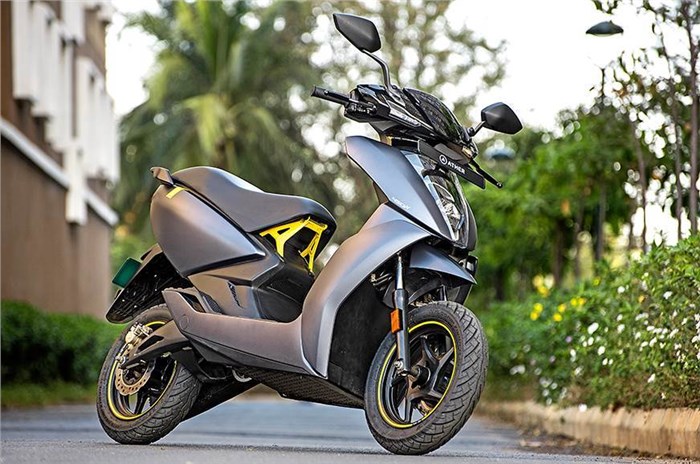
The Indian electric vehicle market has seen increasing figures in the last few years. So much so that, many local makers have already shifted and are shifting to the EV sector in the country. Ather, which is currently India’s top electric scooter maker, has already captured a big chunk of the market. Now, as per new reports, the company is planning to increase its production to 1 million EVs a year, thanks to the increasing demand.

The electric vehicle demand has soared in the last few years, however, it still captures only 1% of the total Indian motorbike and scooter market. However, because fuel costs have surged and purchasers see no significant long-term pricing differences between an EV and a gasoline vehicle, the sector is projected to experience continuous expansion, with EVs soon dominating the motorbike and scooter market.

Ather

Considering this factor, Ather’s CEO Tarun Mehta has aimed to ramp up EV production. Mehta plans to increase the company’s annual production to 1 million scooters. This will be way higher than the current production of 400,000. The company also aims to install 5,000 fast chargers across the streets of India and set up over 600 stores in the country.

Evidently, for ramping the production and gearing for more EV infrastructure, the company needs more funds. As of now, the company has raised Rs. 1,200 crores ever since its emergence back in 2013. The major investors were HeroMotoCorp and Tiger Global.

This time around, Mehta aims to raise way more funding, but unfortunately, he hasn’t revealed the exact figures needed. However, rumors have it that Ather plans to raise a total of $133 million. Out of which, it has already raised $56 million(Rs. 420 crores) so far from Hero MotoCorp.

Apart from electric scooters, Mehta is also interested in other commercial vehicles. He said, “The next thing that excites me is trucks and buses – it is low volume but massive energy consumption.”

Does that mean we’ll also see other electric vehicles from Ather? What do you think? Tell us in the comments.

RELATED:

(via)

Redmi Note 11 Pro 4G vs Redmi Note 11 Pro 5G: Specs Comparison

Xiaomi officially unveiled the global Redmi Note 11 series recently. The lineup includes two Pro models, namely Redmi Note 11 Pro 4G and Redmi Note 11 Pro 5G. Here in this article, we compare the specifications of these two smartphones in detail. The post will give you an idea of how they differ from each other.

Redmi Note 11 Pro 5G Global
Redmi Note 11 Pro 5G

Redmi Note 11 Pro 4G vs Redmi Note 11 Pro 5G


Build and Design

Redmi Note 11 Pro 4G and Redmi Note 11 Pro 5G feature an identical design, dimensions, and weight. They measure 164.19 x 76.1 x 8.12mm in dimensions and weigh 202g. They sport a flat frame and a rectangular camera island on the rear.

The phones not only use a glass panel on the back but are also IP53-rated for dust and splash resistance. They come in two common colors (Graphite Gray, Polar White) and one exclusive color (4G – Star Blue, 5G – Atlantic Blue).


Display

Both the devices sport the same 6.67-inch AMOLED display with a resolution of 2400 x 1080 pixels (FHD+), 395 PPI, a 120Hz refresh rate, and a 360Hz touch sampling rate. The screen supports DCI-P3 color gamut, 4,500,000:1 contrast ratio, 700 nits typical brightness, and up to 1200 nits peak brightness.

The panel has a centered punch-hole and is compatible with MIUI’s Sunlight Display and Reading Mode 3.0


Chipset, RAM, and Storage

A MediaTek Helio G96 SoC runs the Redmi Note 11 Pro 4G, and therefore, it is limited to 4G connectivity. On the other hand, the Redmi Note 11 Pro 5G is powered by a Qualcomm Snapdragon 695 SoC with support for 5G connectivity.

But both of them have the matching LPDDR4x RAM and UFS 2.2 storage. In fact, they also arrive in identical memory configurations, like 6GB + 64GB, 6GB + 128GB, and 8GB + 128GB.


Cameras

First and foremost, the duo nests a 16MP selfie camera inside the punch-hole on the front. Secondly, the 5G model has a triple camera setup on the rear instead of quad like the 4G version.

The only difference is that the Remi Note 11 Pro 5G lacks the fourth 2MP depth sensor, which is found on the Redmi Note 11 Pro 4G. Other than that, both have a 108MP primary sensor, an 8MP ultra-wide, and a 2MP macro snapper.


Redmi Note 11 Pro 4G Global
Redmi Note 11 Pro 4G


Connectivity and Ports

As their names suggest, the Redmi Note 11 Pro 4G only supports 4G, while the Redmi Note 11 Pro 5G can connect to a 5G network. They feature a dual-SIM card slot, however, it is of the hybrid type.

Further, the duo arrives with dual-band WiFi, Bluetooth 5.1, GNSS (GPS, GLONASS, BDS, GALILEO), and NFC (market dependent).

Finally, they have a 3.5mm headphone jack, in addition to a USB Type-C port.


Software

Weirdly, despite releasing in 2022, the Redmi Note 11 Pro 4G and the Remi Note 11 Pro 5G ship with Android 11 out of the box. Thankfully, they at least come with the latest MIUI 13.


Battery and Charging

Both the Redmi Note 11 Pro 4G and the Redmi Note 11 Pro 5G get their juice from a 5,000mAh battery. This huge cell can be filled in under an hour as it supports 67W fast charging. The required power adapter is bundled with the handsets.


Miscellaneous

The smartphones come with all the essential sensors like an accelerometer, ambient light sensor, compass, proximity sensor, gyroscope, and a side-mounted fingerprint sensor.

They also arrive with an IR blaster, dual stereo speakers,  a z-axis linear vibration motor, and liquid cooling technology for thermal management.


Price

The international Redmi Note 11 Pro series carry the following price tags.

Redmi Note 11 Pro 4G

  • 6GB + 64GB – $299
  • 6GB + 128GB – $329
  • 8GB + 128GB – $349

Redmi Note 11 Pro 5G

  • 6GB + 64GB – $329
  • 6GB + 128GB – $349
  • 8GB + 128GB – $379


RELATED:


Infinix Zero 5G with Dimensity 900 & 120Hz display, launching soon: Report

Infinix has had a 5G phone in the pipeline for a while now which is said to soon release in the Indian market under the Infinix Zero 5G moniker. A few days back, alleged live images on the device surfaced giving us the first looks of the phone. And now, A new report claims that the Infinix Zero 5G’s launch is right around the corner.

Alleged Infinix Zero 5G

According to MySmartPrice, industry sources have informed that the Infinix Zero 5G will soon launch in the Indian market. The sources have claimed that the device will be powered by the Dimensity 900 SoC, which aligns with previous leaks of the device. Additionally, they have stated that the handset will feature a Uni-curve design and offer a 120Hz refresh rate display.

Infinix Zero 5G specifications (rumored)

Infinix Zero 5G back and front
Infinix Zero 5G’s unofficial render by TechArena24 | YouTube

The leaks so far claim that the device has a 6.67-inch AMOLED FHD+ 120Hz display and a 16-megapixel camera on the front which is housed in a punch-hole cutout. The left edge of the handset will house the volume rockers. While the right edge will have the power button which will also double as the fingerprint scanner.

Under the hood, the Dimensity 900 chip is coupled with 8 GB of RAM and a 5,000mAh battery that supports 33W fast charging. The device is likely to run on Android 11 OS and offer 128 GB of internal storage. The handset is expected to launch soon in different markets including India. At present, there is no word on the pricing of the device.

For photography, the Zero 5G will offer a triple rear camera setup including a 48MP sensor. The other two sensors are said to be an ultra-wide-angle lens and a telephoto lens, however, their resolution remains a mystery for now.

Infinix India CEO Anish Kapoor has previously stated in an interview that the upcoming 5G smartphone will not cross that Rs 20,000 price point, so it’s safe to assume that the handset will be priced under Rs. 20,000 ($266).


RELATED:


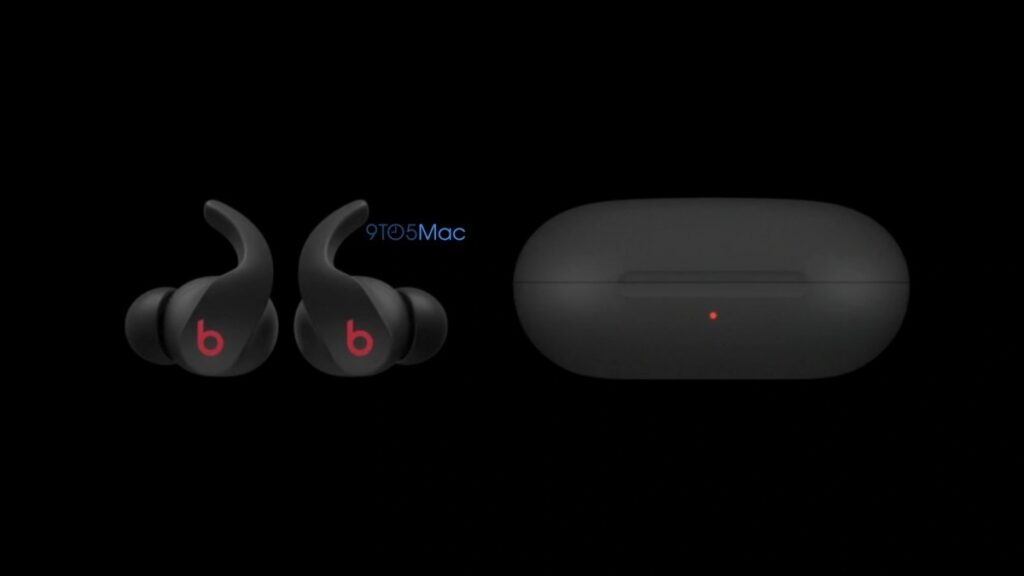
Apple Beats Fit Pro earbuds with wingtip design, ANC released globally

The Apple-owned Beats had released the Beats Fit Pro TWS earbuds back in November 2021. However, the product was only made available in the U.S. Now, the brand has finally released these earbuds globally.

Apple Beats Fit Pro earbuds

According to a report by MacRumors, the Beats Fit Pro earbuds are now available for purchase in various regions like the UK, Ireland, France, Italy, Germany, Spain, the Netherlands, Belgium, Switzerland, Sweden, Canada, Australia, New Zealand, Japan, Singapore, South Korea, among others.

Apple Beats Fit Pro

The TWS earbuds from Apple’s Beats are made with athletes in mind and therefore feature a wingtip design to keep the earbuds glued to your ears offering a good fit. The earphones come with  Apple’s H1 chip offering fast pairing and automatic syncing. This chipset is the same chipset used in Apple’s AirPods Pro.

Beats

The Fit Pro has an Active Noise Cancellation feature with a “Transparency” mode and spatial audio with dynamic head tracking which is also similar to the AirPods Pro. The buds offer up to 7 hours of playback without the charging case and up to 30 hours with the charging case. It has an IPX4-rating making it water and sweat-resistant.

The earbuds are available for purchase on the Apple official website and come in four colors – White, Black, Grey, and Purple/Pink. The earbuds were launched at a $199.99 price tag in the US, however, pricing might vary from region to region.


RELATED:


Google hiring ‘camera ISP’ experts for 2nd Gen Tensor chips: Report

The Google Pixel 6 and Pixel 6 Pro feature one of the best camera performances among modern-day Android devices which is a result of closely nit hardware-software integration. And now, Google is hiring for a new San Diego-based team for camera image signal processor design.

Google Tensor

According to a report by AndroidCentral, the new hirings could be for the design and development of the next generation of Google Tensor SoC which is rumored to be codenamed ‘Cloudripper’. Google’s senior director Mike Coulter posted the hiring announcement on linked stating that the company is looking to form a San Diago-based Camera ISP design and verification team that has openings at all levels.

It is worth noting that prior to joining Google, Mike Coulter was the Vice President of Engineering at Qualcomm for four years. Twitter user Anshel Sag alluded to the possibility that Google might be trying to poach talent from Qualcomm, which is also based in San Diago.

We have previously reported that Google is working on the 2nd generation Tensor chip which is expected to be announced in the second half of 2022 and will likely be featured in the upcoming Pixel 7 series devices.

Information on the 2nd generation Tensor chip is scarce right now and we only know about its codename “Cloudripper” and an alleged “GS201” model number. However, with hirings commencing for the chip’s ISP, we are sure to get more leaks and details about the next-gen Tensor chip.


RELATED:


OSOM OV1 could come in four colors

Essential’s first smartphone dubbed Essential PH-1 wasn’t that successful in the market, and soon after its release, the company shut its operations. Now, the brains behind Essential are back, this time as OSOM, to launch its privacy-centric phone called the OSOM OV1.

Previously, the company teased the OSOM OV1 and revealed the plans for the company. Now, the brand took it Twitter asking the audience about its color variants.

In a tweet, the company shared the OV1 in four colorways – Solar Yellow, Borealis Green, Twilight Blue, and Dusk Purple. The company wants netizens to choose between four of these colors. We might end up seeing all of these colors once the phone arrives.

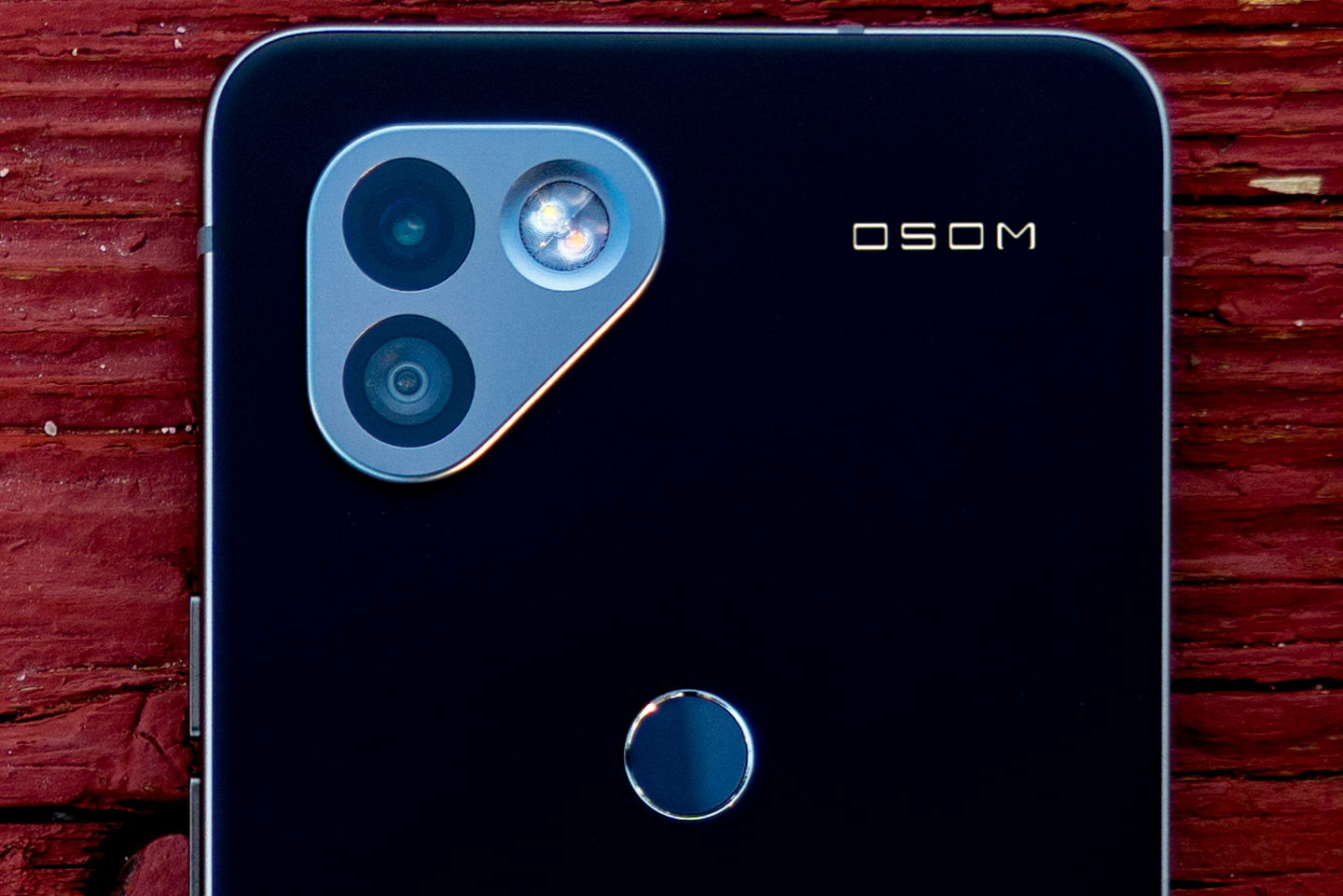
Regarding its specifications, there’s very little that we have learned so far. The smartphone will feature a triangular camera module at the rear holding two lenses. It also has a big LED flash alongside the lenses. It will be powered by a Qualcomm chipset, however, there’s no detail on the exact chipset.

OSOM OV1 featured

Furthermore, we’ll see the phone focusing on privacy and security. Having said that, it will have a rear-mounted fingerprint scanner and will run on stock Android OS.

Apart from this, the phone will debut in Summer 2022, but we’ll see the device getting showcased at the Mobile World Congress(MWC) event next month. We are also hopeful to get to learn all of its specs and design as we come closer to the event.

RELATED:

Vivo X80 series, NEX 5 to support 80W fast-charging, 100W charging under development

Earlier this month, a leak revealed some key specifications of the upcoming Vivo flagships dubbed the Vivo X80 series. Going by the leaks, the X80 was said to have 55W fast charging while the X80 Pro and X80 Pro+ models were touted to feature 66W fast charging support.

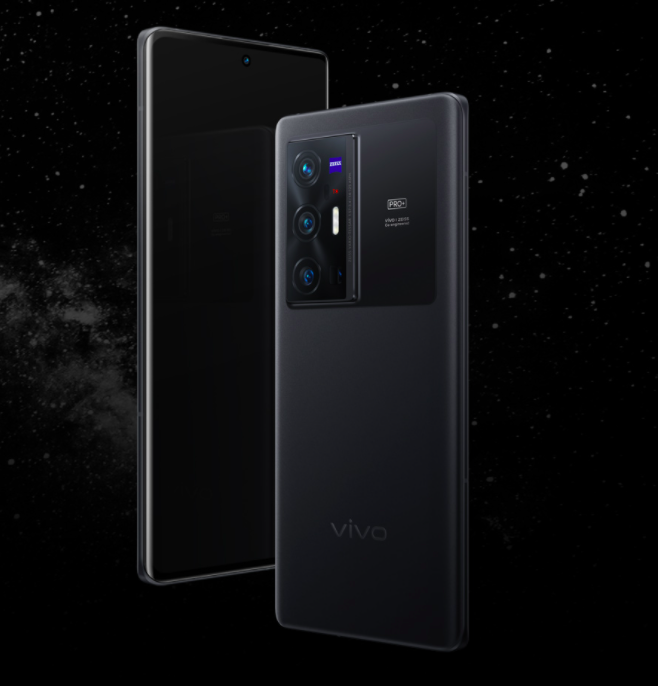
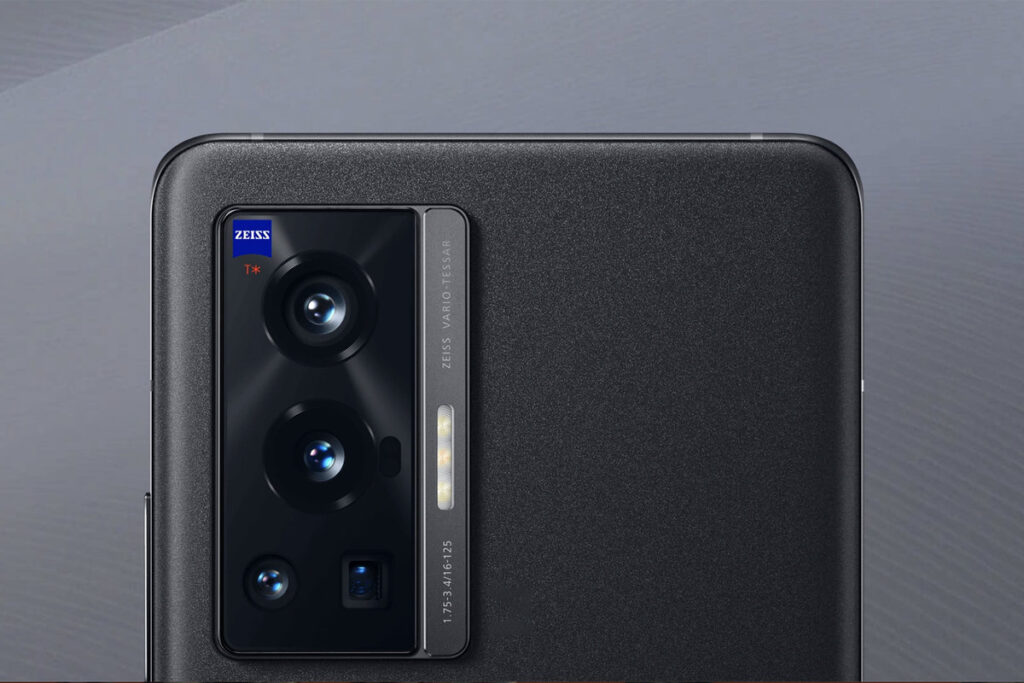
VIVO X70 Pro Plus 5G
Vivo X70 Pro Plus

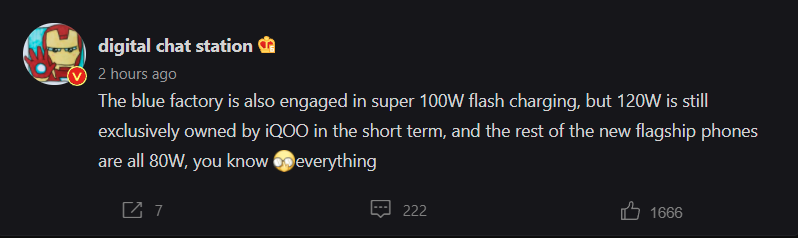
However, a new report by popular Weibo tipster DigitalChatStation states that the entire X80 lineup will be getting 80W fast charging support.

Vivo X80 80W fast charging

According to the report, the Chinese smartphone giant Vivo is currently working on developing 100W fast-charging technology. The report further states that new flagship phones for the brand will all be getting 80W fast-charging support. The upcoming flagship-level smartphone from Vivo that we know about so far are the X80 series and the Vivo NEX 5. So we can expect both of them to get 80W charging.

The leakster states that the 120W fast charging remains exclusive to iQOO, which is a sub-brand of Vivo leaving Vivo fans to wonder why the company is developing 100W fast-charging when their sub-brand already has products that offer 120W charging support like the iQOO 9 series.

Vivo X80 Pro+ specs (rumored)

Vivo X80

The X80 Pro+ is said to come with a 6.78-inch LTPO AMOLED display with Quad HD+ screen resolutions and a 120Hz refresh rate. Under the hood, the X80 Pro+ will house a Snapdragon 8 Gen 1 SoC coupled with 12GB LPDDR5 RAM and UFS 3.1 internal storage.

For photography, the Vivo X80 Pro is expected to come with a quad-camera setup at the rear. This may include a 50MP primary lens, a 49MP Sony IMX598 sensor, a 50MP sensor with 2x optical zoom, and another 50MP lens with 5x optical zoom. For video calls and selfies, the X80 Pro+ will pack a 50MP sensor.

The charging capabilities of the device are expected to include 80W wired fast charging and 50W wireless charging support. To know more about the Vivo X80 and X80 Pro, check out the leaked specs of the devices.


RELATED:


RedMagic 7 series will have a model with under-display camera technology

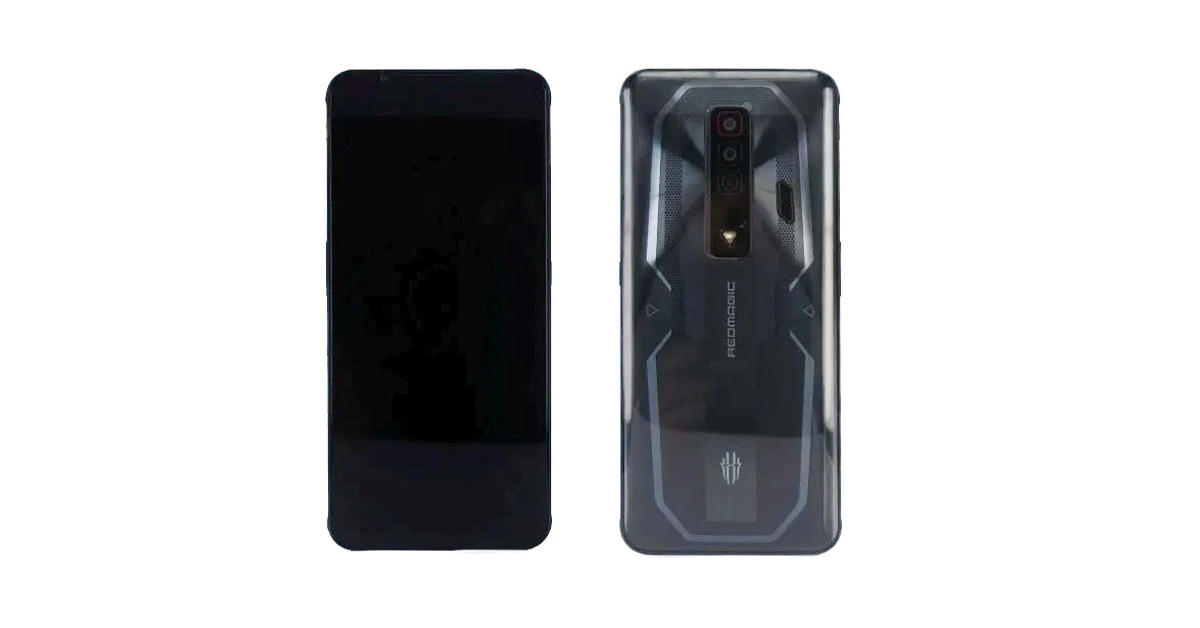
RedMagic 7 series is scheduled to go official next month i.e. in February and ahead of its launch, we saw multiple listings and leaks for the device. Earlier today, the company itself took it to social media revealing the design of the smartphone. Now, the tipster DigitalChatStation reveals that the series may comprise of a device featuring an under-display camera.

The tipster reveals that one of the variants of the RedMagic 7 series will have an under-display camera. Having said that, it could be the first gaming smartphone with such selfie camera technology.

RedMagic 7 Featured

In the past, we have seen Nubia’s Z30 phone featuring this technology. However, it wasn’t a gaming phone under the RedMagic branding. Now that the leaks reveal a RedMagic phone with such technology, we can expect the phone to become a great competitor in the market.

Moreover, the tipster shares the specs of the RedMagic 7 series. The gaming phone series will come powered by the Qualcomm Snapdragon 8 Gen 1 SoC. It will be accompanied by 18GB of RAM. The smartphone will have a 20,000 rpm active cooling fan for keeping the calm while gaming.

RedMagic 7

The series is touted to have an OLED display with a 165Hz refresh rate. One of its highlights will be the super-fast 165W fast charging technology.

Apart from this, the device has already appeared on a few certification sites and was leaked several times. The RedMagic 7 will feature a 6.68-inch OLED panel with FHD+ resolution. It will have a 4,500mAh battery. The smartphone will sport a 64MP primary lens and boot on Android 12 out of the box. A recent teaser revealed that the device has an AnTuTu score of 1101769 which is the highest in any gaming phone, at the moment.

RELATED:

Fiido T1 electric cargo bike with up to 150km range launched

Fildo has released its latest electric bike, the Fildo T1 electric cargo bike which has a striking semblance to the RadRunner bike, although it comes with some innovations and key upgrades. The company has quietly released the electric cargo bike to the market and some industry watchers also insist that the Fildo T1 is not a very obvious reenactment of any previous bikes from other competitors. The Fildo T1 is priced at $1,599 which is just a few bucks more expensive than the RadRunner.Fiido T1 electric cargo bike

The Fildo T1 is a step-through utility bike concept that was fully highlighted and promoted by Rad Power Bikes with the launch of the RadRunner in 2019. The Fildo T1 seems to be building on the concept of the original RadRunner and it comes with several additional features that will put it on a higher pedestal than its predecessor. For starters, the Fildo T1 and the RadRunner have the same color in addition to the similar design that reflects in the wheels, electric motor capacity, and braking system.Fiido T1 electric cargo bike

The T1 has a top speed of 50km/h which can be increased further when using the pedals of the e-bike. The T1 comes with a 7-speed drivetrain which is a significant improvement from the RadRunner which had a single-speed mechanism. The comfort and overall balance of the Fildo T1 are enhanced with its front suspension fork although there is no rear suspension in the T1. Thanks to its battery setup, the Fildo T1 can haul cargo to distances up to 150km on a single charge and pedal assist.

RELATED: 


(via)


Google leaks the Pixel 6a moniker via an official coloring book

Ahead of its possible launch in May 2022, the Google Pixel 6a has been the subject of sometimes intense speculation. Its design and specs list has also been speculated. Indeed the specs sheet and renders of the device were shared a few weeks back, and Google has now teased a select audience with the Pixel 6a in the form of a coloring book.Pixel 6a

It was reported by Droid-life that Google provided a peek into the Pixel 6 couched within a Google Nest audio product that was marketed to the closed Google group recently. The group consists of dedicated clients and customers of the Google brand. The Nest Audio product was packed together with a device that looked like a coloring book from the outside. Google then mentioned that the device could be painted although no other details were provided.

The Google Pixel 6a is a mid-ranger with some decent upgrades from its predecessor. Previous renders had shown a device with extended functionality the present leak reflects the commitment of Google’s research team to further push the frontiers of their research efforts. We expect a few more leaks and teasers to come from Google as the launch date draws closer.

RELATED:


(via)