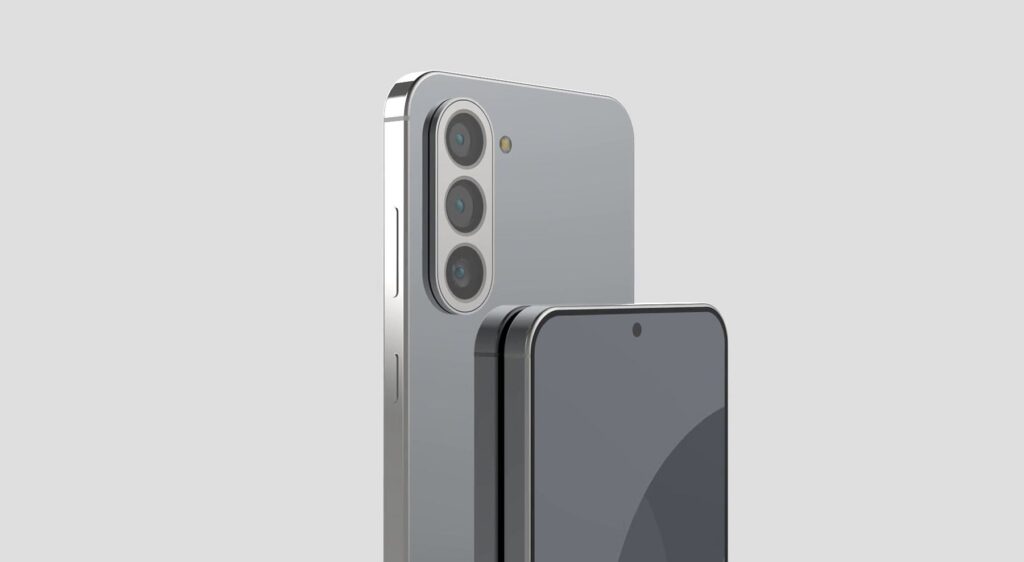
Honor has finally revealed the design of the Honor 500 series after teasing it for the past few days. The confirmation comes from Honor’s latest promotional poster, which also discloses the first official look at the Honor 500 and Honor 500 Pro. While the Honor 500 series is up for reservations in China, it is yet to confirm the launch date.
Honor 500 series design officially revealed
Honor 500 series design
The above image reveals that Honor 500 and Honor 500 Pro share the same overall design language, with both featuring a horizontal camera bar layout. However, the Pro version adds an extra circular module on the right side.
Honor has adopted a unibody cold-carved back panel similar to the technique used on recent premium devices. Another highlight is the dedicated photo button on the side of the Pro variant (not visible in the above image), which can possibly support quick capture actions, custom settings and potentially AI-related shortcuts. Both phones are expected to come in four colors blue, pink, silver and black.
Honor 500, 500 Pro specifications (rumored)
The Honor 500 lineup is expected to feature a 6.55-inch OLED screen with 1.5K resolution, a 120Hz refresh rate and 4,320Hz PWM dimming. Camera hardware may include a 50-megapixel selfie camera, a 200-megapixel main sensor with OIS and a 50-megapixel ultra-wide lens, while the 500 Pro could further include a 64-megapixel periscope telephoto unit.
Powering the series could be the Snapdragon 8s Gen 4 and Snapdragon 8 Elite chipsets. The phones are tipped to carry an 8,000mAh battery, with the Pro variant supporting 80W wired charging and 50W wireless charging.
On the software side, the devices are expected to run MagicOS 10 based on Android 16. Additional features may include dual speakers, infrared, NFC and IP68 or IP69 certification for dust and water resistance. The Honor 500 series is rumored to launch in China on Nov. 24.
For more daily updates, please visit our News Section.
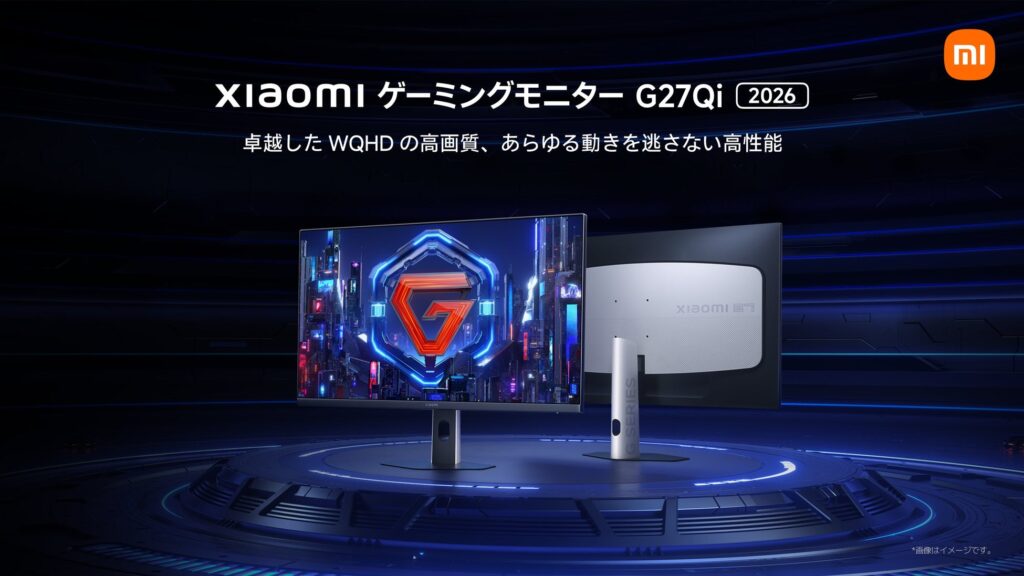
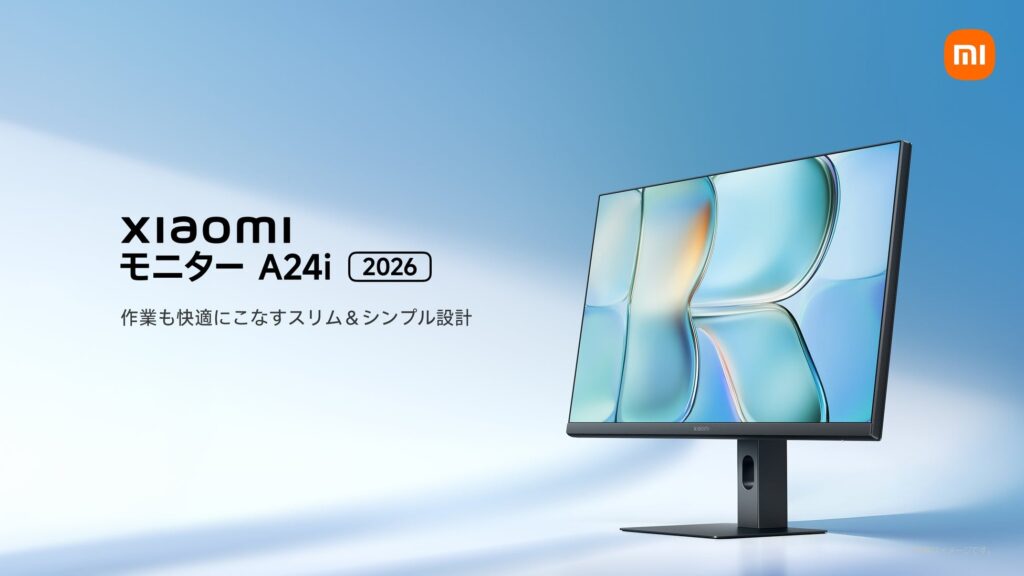
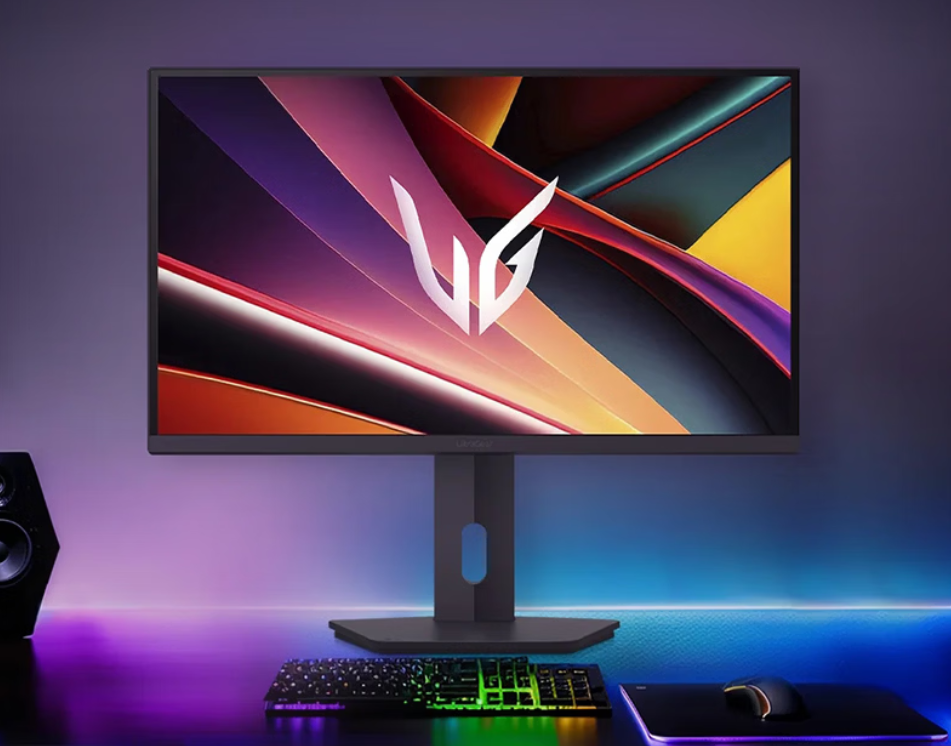
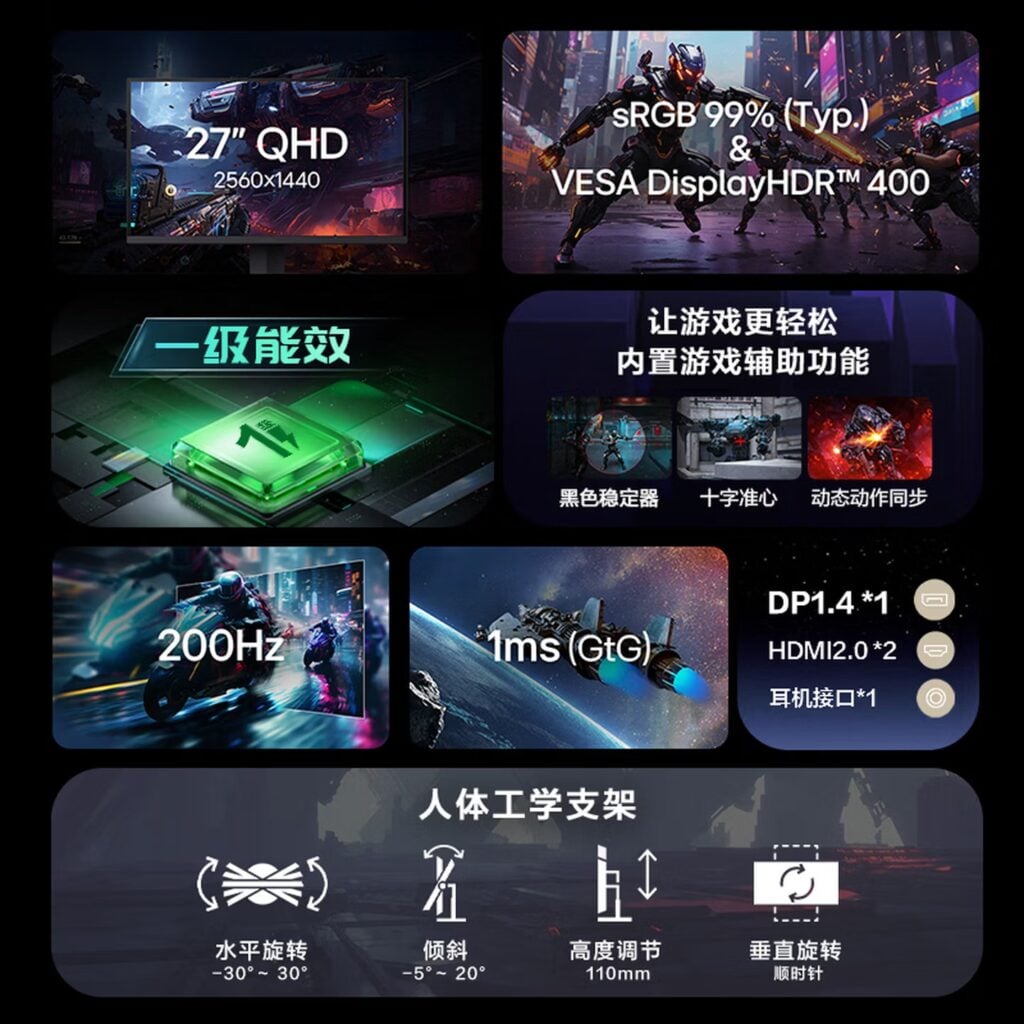
Xiaomi has announced the global launch of the new 2K Gaming Monitor G27Qi 2026 Edition. It replaces the 2025 model and upgrades the refresh rate from 180Hz to 200Hz for smoother and more responsive gameplay.
The monitor has a 27-inch Fast IPS LCD panel with a 2560 x 1440 resolution and 178° wide viewing angles. It offers a 1ms GTG response time, helping reduce blur and ghosting during fast motion. The higher 200Hz refresh rate delivers a more fluid experience in competitive games.
AMD FreeSync Premium support keeps the frame rate in sync between the monitor and the graphics card, preventing screen tearing and lag. The display is also HDR 400 certified, with a peak brightness of 400 nits. This improves contrast and makes both dark scenes and bright highlights look clearer.
Color accuracy has been improved with a dual wide color gamut covering 95% of DCI-P3 and 100% of sRGB. The panel supports 10-bit color depth for smoother gradients and has professional color accuracy with ΔE<2. It is TÜV-certified for hardware-level low blue light, which cuts up to 50% of harmful blue light while keeping colors accurate and reducing eye strain.
The design follows an esports look with slim bezels on three sides for a wider field of view. It includes joystick controls for quick settings access. Connectivity options include two DisplayPort 1.4 ports, two HDMI 2.0 ports, an audio port, and a DC power input. The monitor has a 16:9 aspect ratio, 1000:1 contrast ratio, 48W rated power, and supports tilt adjustment from -5° to +15°. It weighs 4.15 kg with the stand and can be wall-mounted using a 75 x 75 mm bracket.
Pricing and regional availability have not been confirmed. The G27Qi 2026 Edition is listed on Xiaomi’s global website, suggesting a full launch will follow soon.
Meta has pushed a major client-side change to WhatsApp for Windows 11, according to a new report shared by Windows Latest. The publication indicates that WhatsApp’s native Windows app has been replaced with a WebView-based build that loads the web version inside Microsoft’s Chromium framework. The report highlights that the transition is already rolling out and sets the stage for a noticeable shift in user experience.
WhatsApp for Windows shifts back to a web version
Native WhatsApp app for Windows 11
The latest update introduces a version of WhatsApp that essentially opens web.whatsapp.com through WebView2. This marks a return to a browser-like approach after years of work on the native WinUI/UWP client.
Early testing suggests that the new version consumes far more system memory compared to the previous app. On the login screen alone, memory usage reportedly reaches around 300MB, with background processes tied to the Chromium framework running at all times. Once logged in, users may see RAM usage rise above 1GB and potentially climb higher when handling multiple active chats.
The report adds that performance has taken a noticeable hit. Navigating conversations appears slower, and animations and transitions feel less responsive. The new app also struggles with Windows 11-specific behaviours, including notification handling and Do Not Disturb mode. These issues, combined with heavier system resource demands, make the updated client feel less integrated with the operating system.
According to the report, this change is likely connected to internal restructuring at Meta, which may have resulted in the native app team being downsized. By maintaining a single web-based codebase, Meta reduces development overhead, but the user-facing impact is substantial.
The new build is rolling out as version 2.2584.3.0 through the Microsoft Store. Those who still have the previous native client installed may temporarily avoid upgrading, though the report claims that all users will eventually be logged out and required to move to the new version.
For more daily updates, please visit our News Section.
Nubia has quietly launched a new smartphone called the V80 Design in several Asian markets, including the Philippines and Malaysia. The phone was introduced alongside the Nubia Air in these regions.
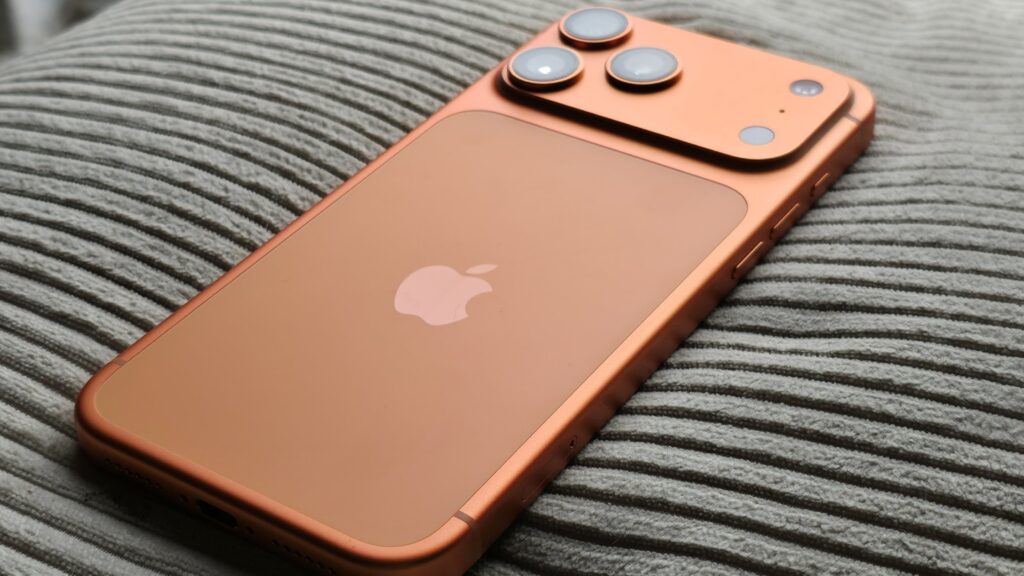
The V80 Design is a budget smartphone that borrows the rear camera layout from recent iPhones. The camera bar stretches across the entire width of the device, and, interestingly, Nubia has also placed the flashlight on the right edge, just like on the iPhone 17 Pro models.
Nubia V80 Design Overview
On the front, the device features a 6.75-inch Full HD+ display with a 120Hz refresh rate and a peak brightness of 1000 nits. It also houses a 16MP selfie camera.
At the back, you get a dual-camera setup consisting of a 50MP main sensor and a 2MP depth sensor. Yes, the third cutout is purely decorative.
Powering the device is a Unisoc T7280 chipset with a 2x Cortex-A75 (2.2GHz) and 6x Cortex-A55 (1.8GHz) CPU configuration, paired with a Mali-G57 MP1 GPU. The phone comes with 8GB of RAM and 256GB of internal storage.
On the software side, it runs MyOS 16 based on Android 16. Keeping everything running is a 5000mAh battery that supports 22.5W fast charging. For biometrics, the phone uses a side-mounted fingerprint scanner and includes a single loudspeaker for audio.
Interestingly, the V80 Design retains a 3.5mm headphone jack and features dual microphones for voice input. Charging is handled via a USB Type-C port.
Nubia is also offering its Linkfree technology on the V80 Design, a Bluetooth-based communication feature that enables text messaging and voice calls within a certain range. However, this functionality likely requires another device with Linkfree support.
Pricing and Availability
The Nubia V80 Design comes in Midnight Black, Pale Amber, Celadon Cyan, and Peach Fuzz color options. The body is rated IP64 for dust and splash resistance.
In Malaysia, the 8GB + 256GB variant is priced at MYR 570 (around $140). In the Philippines, the base 4GB + 256GB model costs PHP 5,800 (about $100), while the 8GB + 256GB version costs PHP 6,500 (about $110).
As a side note, the device closely resembles the recently leaked ZTE Blade V80 Vita, suggesting that ZTE might rebrand and launch it under a different name in other markets.
When people hear “budget mini PC,” it’s easy to assume it means a cheap, underpowered machine with a limited lifespan. But in 2025, that’s no longer the case, at least, not if you know where to look. Today’s budget-friendly mini PCs, starting from the $400–$500 range, are compact desktops capable of handling demanding workloads, multimedia editing, office productivity, and even light gaming or AI tools like Copilot and ChatGPT.
That price range isn’t just arbitrary. It’s the baseline for a machine that offers serious long-term performance, thermals that won’t throttle your CPU, and flexibility to upgrade your RAM or SSD later on. In fact, some of the best models at this tier include premium features like USB4, dual 2.5G LAN, and high-speed DDR5 memory, once exclusive to flagship devices.
Let’s break down some of the best options in this category, starting with a highly competitive Intel-powered system and moving through AMD-based powerhouses and even a surprisingly capable Mac option.
The Beelink EQi13 Pro is one of the best Intel-based mini PCs in the budget tier, offering strong performance for office work, multitasking, and even AI-enhanced tasks. It’s powered by either the Intel Core i5-13500H or Core i7-13620H processor, both from Intel’s 13th Gen mobile lineup. The i7 variant delivers 10 cores and 16 threads, with turbo frequencies peaking at 4.9GHz, and supports 24MB of smart cache.
It ships with 32GB of dual-channel DDR4 3200MHz RAM and PCIe 4.0 storage, configurable up to 4TB. With dual M.2 2280 SSD slots and dual Gigabit Ethernet ports, it’s not just fast, it’s enterprise-ready. You also get a built-in 85W PSU, eliminating bulky adapters and making cable management easier.
For wireless, it includes Intel’s AX200 Wi-Fi 6 module and Bluetooth 5.2. Its cooling system, MSC 2.0, pulls air from the base, maintaining near-silent operation (around 32dB), even under load. If your priority is clean aesthetics, quiet operation, and modern I/O in a small Intel-powered package, this is a strong contender.
The NucBox K11 is for those who want maximum AMD Ryzen power without breaking the bank. Equipped with the Ryzen 9 8945HS, built on a 4nm Zen 4 process, it packs 8 cores and 16 threads with clock speeds up to 5.2GHz. This is paired with integrated Radeon 780M graphics based on RDNA 3, comparable to a GTX 1650 Ti for light gaming and GPU compute tasks.
You get DDR5 5600 support, dual NVMe PCIe 4.0 slots (up to 8TB), and USB4 ports with support for 40Gbps data, PD charging, and DisplayPort output. HDMI 2.1 and DP 2.1 make it ideal for 4K content creation or high-refresh gaming monitors. Network connectivity includes dual 2.5G Ethernet ports and Wi-Fi 6 with Bluetooth 5.2.
The NucBox K11 also features an Oculink port for PCIe Gen4 external GPU support. This makes it a compact and scalable machine for developers, creators, and power users who need more than just a basic desktop.
Minisforum’s UM890 Pro shares the same Ryzen 9 8945HS CPU and Radeon 780M GPU as the K11, but offers a more robust cooling system. Its Cold Wave 2.2 design uses a liquid metal CPU cooler and an active DDR/SSD fan combo, reducing temperatures by up to 60% and making it ideal for sustained high-load operations.
It supports up to 96GB of DDR5 5600 RAM and dual PCIe 4.0 SSDs. What really makes it stand out is its quad-display output, with HDMI 2.1, DP 1.4, and two USB4 ports capable of driving up to 8K resolution. It also includes dual 2.5G Ethernet, an Oculink slot, and a sleek magnetic top panel for easier access and upgrades.
If you’re planning to edit 4K video, run virtual machines, or multitask across four monitors, this rig delivers incredible value without crossing $500 in its base configuration.
The Geekom AX8 Max runs on the Ryzen 7 8745HS, which sits just below the 8945HS but still offers 8 cores, 16 threads, and 4.9GHz boost clocks. It comes preloaded with Windows 11 Pro and AI tools like Copilot, making it a great plug-and-play system for professionals.
It has two USB4 ports, dual 2.5G LAN, Wi-Fi 6E, and dual-channel DDR5 RAM. You also get dual HDMI 2.0 outputs and support for four displays. It also features Geekom’s IceBlast 2.0 cooling system that ensures quiet and cool operation.
If you want more reliability and a sturdy build, this is a solid pick. It’s a little higher in price but includes better quality control and an extended 3-year warranty.
If you’re looking to get into the Apple ecosystem, the 2025 Mac Mini powered by the M4 chip is among the best value Macs ever released. With a 10-core CPU and 10-core GPU in the base model, plus 16GB of unified memory and 256GB SSD, it’s fast enough for creative work, app development, and daily office tasks.
MacOS now fully integrates Apple Intelligence, on-device AI tools that rewrite documents, summarize text, and help manage workflows with privacy at the core. You also get seamless iPhone and iPad integration, making the Mac Mini an ideal desktop companion for existing Apple users.
At $599, it’s technically at the top end of this budget-friendly tier, but it delivers premium Mac performance at a fraction of the cost of a Mac Studio or iMac.
Oppo unveiled the Reno 13 series on January 7, 2025, globally. Before it went official, the Reno 13 and 13F models were approved by the UAE’s TDRA authority in December 2024, whereas the Pro model was spotted by the end of November. In a new development, the Reno 15 Pro’s global version has been spotted at the TDRA, revealing the moniker and associated model number for the first time. The early appearance is a good hint that the Reno 15 series may get an early launch, possibly as early as the end of this year.
Oppo Reno 15 Pro 5G TDRA certified
As seen above, the screenshot reveals that the Reno 15 Pro 5G bearing the model number CPH2813 has been approved by the TDRA certification platform. Unfortunately, the TDRA listing has no information about its specifications.
According to TheTechOutlook, the Reno 15 Pro 5G has also appeared on other certification platforms like India’s BIS and Europe’s EEC. Its appearance in the NBD import/export database reveals that it may feature a 6.57-inch display and could be available in 12GB+256GB and 12GB+512GB variants.
Oppo Reno 15 Pro 5G NBD listing
Ideally, the Reno 15 Pro heading to the global market should pack the same specs as its Chinese edition. However, the 6.57-inch display size seen above for the Reno 15 Pro’s global version is a bit of a surprise because the Chinese edition is expected to pack a bigger 6.78-inch display. Therefore, it is advisable to wait for further reports to know more about the Reno 15 Pro’s global version.
Oppo Reno 15 Pro 5G specifications (rumored)
Oppo Reno 15 Pro
Recent reports have revealed that the Oppo Reno 15 Pro 5G heading to China has a 6.78-inch flat OLED 1.5K 120Hz screen, a Dimensity 8450 chipset, and a 6,300mAh battery with 80W wired and 50W wireless charging support. The device will also feature a 50-megapixel front camera, a 200-megapixel (main, OIS) + 50-megapixel + 50-megapixel triple camera unit, and ColorOS 16-based Android 16.
The Reno 15 Pro and Reno 15 will be unveiled on Nov. 17 in China. The lineup is also said to be include a third model dubbed the Reno 15c, which may debut a bit later.
For more daily updates, please visit our News Section.
Samsung is reportedly bringing a few thoughtful upgrades to the Galaxy S26 lineup, and one of them might be faster memory across the board. After bumping up charging speeds, a new leak now suggests the company is also focusing on performance improvements under the hood.
Last year’s Galaxy S25 series shipped with 12GB of LPDDR5X RAM by default, and the same configuration is expected to return this time. However, the key change could be speed.
According to tipster Ice Universe on X, every Galaxy S26 model will come with the highest-spec 12GB LPDDR5X RAM running at 10.7Gbps. For comparison, the LPDDR5X memory in the S25 lineup topped out at 8.5Gbps, so this would be a notable jump in bandwidth.
16GB will be exclusive to the Galaxy S26 Ultra
Samsung recently announced its next-generation LPDDR6 RAM, which also runs at 10.7Gbps. However, the new standard offers more I/O channels and a dynamic power management system that reportedly reduces power consumption by about 21 percent.
Samsung is expected to showcase this technology at the CES 2026. However, based on early leaks, LPDDR6 memory seems like a distant dream for the S26 series.
Samsung Galaxy S26 Ultra CAD render by OnLeaks & AndroidHeadlines
In addition, another leaker who goes by Schrodinger claims the Galaxy S26 Ultra will come with a 16GB RAM variant exclusive to that model.
The Galaxy S25 Ultra also offered a 16GB version, but it was limited to select regions—South Korea, China, Taiwan, and Hong Kong—and only available with the 1TB storage option.
If Samsung follows a similar strategy this year, the 16GB configuration could again remain tied to the top-tier storage model, and for certain regions.
Apple’s upcoming iPhone 18 Pro series has started making headlines several months ahead of its expected debut, thanks to early leaks from well-known tipsters. One of the latest news suggests that the top-end iPhone 18 Pro Max may gain additional weight.
iPhone 18 Pro Max could cross 240 grams
iPhone 18 Pro Max could be the heaviest iPhone
A recent Weibo post from Chinese tipster Instant Digital indicates that the iPhone 18 Pro Max may become Apple’s heaviest model to date. The device is said to weigh more than 240 grams, surpassing both the iPhone 14 Pro Max and iPhone 13 Pro Max.
The leak further suggests the new model could be roughly 10 grams heavier than the 233-gram iPhone 17 Pro Max. Alongside the added heft, the upcoming Pro Max may also gain a slightly thicker frame, measuring close to 9mm compared to the current model’s 8.8mm profile.
These changes are believed to stem from internal hardware upgrades. The iPhone 18 Pro series is expected to feature a new under-display Face ID system, reworked camera components, and a battery encased in steel. Such revisions typically influence overall weight, although Apple has not confirmed whether a larger battery is part of the upgrade path.
Another rumor hints that Apple aims to refine the appearance by matching the colour of the aluminium frame and the reinforced glass section on the rear panel, addressing the dual-tone contrast seen on the iPhone 17 Pro models.
iPhone 17 Pro / 17 Pro Max
Reports suggest Apple may follow a two-phase launch approach for the iPhone 18 family. The iPhone 18 Pro and iPhone 18 Pro Max are expected to be introduced alongside Apple’s first foldable iPhone in September 2026.
The standard iPhone 18 and entry-level iPhone 18e could arrive in early 2027. Separately, the second-generation iPhone Air, once linked to the same launch window as the 2 2026’s iPhone 18 Pro series, is now rumored to be delayed indefinitely.
For more daily updates, please visit our News Section.
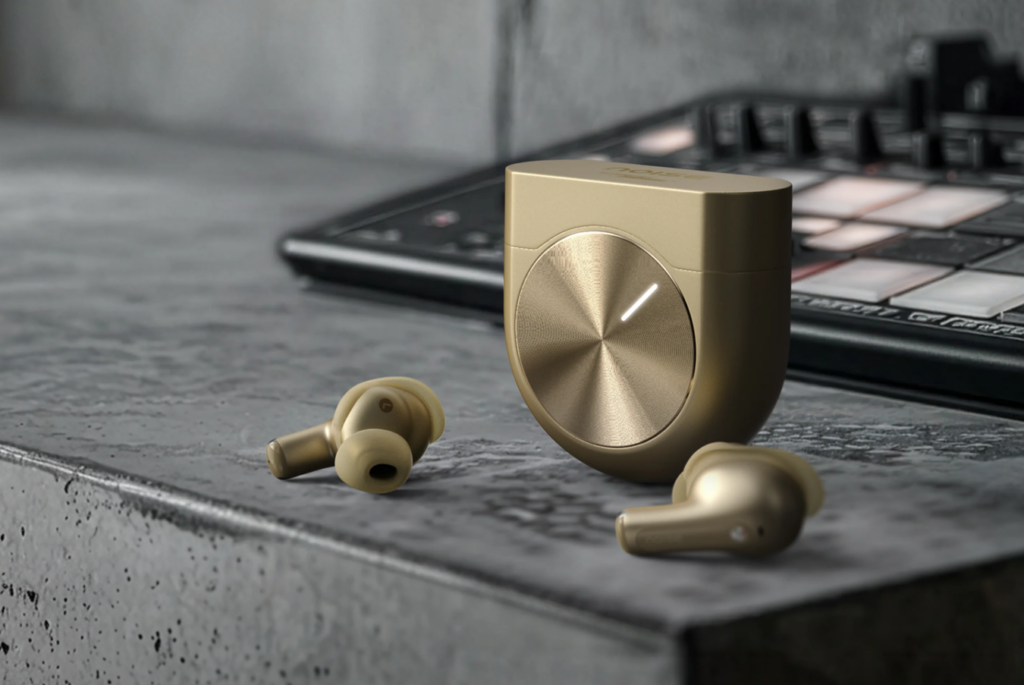
JVC Kenwood has launched the Victor WOOD master, a new flagship model in its WOOD Series of wireless earphones.
The WOOD master uses the industry’s first Hybrid WOOD Driver that mixes pulp and African rosewood in the diaphragm. This setup reproduces clear vocals and accurate sound across all frequencies. The model delivers Victor’s best wireless earphone audio quality so far and includes one of the highest noise cancellation levels in the world, powered by a dedicated high-performance IC and Knowles microphones.
The earphones feature Victor’s Personalized Sound system, which measures each user’s ear shape to adjust sound output, and Spatial Audio that recreates a studio-like listening space. The sound has been tuned by engineers from Victor Studio.
The WOOD master is also the first true wireless earphone to use self-repairing paint that helps small scratches fade over time. The body is rated IP55 for dust and water resistance and includes a three-year warranty. Battery life reaches up to 10.5 hours on a single charge and up to 31.5 hours with the charging case. The case supports Qi wireless charging and quick charging gives 100 minutes of playback from 15 minutes of charge.
The model supports Bluetooth 6.0, LDAC codec, multipoint connection, and has a low-latency mode for gaming and videos. Each earbud weighs about 6.5 grams. It comes with new Spiral Dot Pro SF ear tips that improve fit and reduce pressure during long use.
Pricing & availability
The earphones will be available in late November in two colors, Sunburst Brown and Piano Black, for around ¥41,800.
In related news, JVC has recently launched the Victor HA-S60W foldable on-ear headphones, which weigh just 149 grams and use heat-softening urethane foam ear pads that mold to user’s ear shape for maximum comfort.
The upcoming Vivo S50 series has been the subject of several rumors in recent weeks, and a new leak now sheds clearer light on the brand’s revised launch schedule. According to well-known tipster Digital Chat Station on Weibo, the lineup will not arrive this month as expected earlier. Instead, the report claims the new phones are set for a December announcement in China, offering insight into what Vivo may be preparing for the domestic market.
Vivo S50 series launch timeframe
DCS indicates that the Vivo S50 range will consist of two models, the standard Vivo S50 and the more compact Vivo S50 Pro Mini. The teaser campaign is expected to start later this month, hinting that the brand may soon accelerate its promotional activity. Earlier leaks had suggested a November launch window, but the new update appears to provide a clearer internal timeline.
Vivo S50, S50 Pro Mini specifications (rumored)
Reports suggest that the Vivo S50 will arrive with a 6.59-inch OLED panel featuring a 1.5K resolution and a 120Hz refresh rate. The device is expected to run on the Snapdragon 7 Gen 4 chipset. While the battery capacity is yet to be revealed, the phone is anticipated to support 90W fast charging. The rear camera system is also said to include a periscope telephoto camera.
The Vivo S50 Pro Mini is described as a compact alternative within the range. It may include a 6.31-inch OLED screen with the same 1.5K resolution and 120Hz refresh rate. At its core, it is tipped to feature the upcoming Snapdragon 8 Gen 5 chip, positioning it as a more performance-oriented option.
The Pro Mini’s battery size is said to be larger than the X300’s 6,040mAh unit and it also expected to feature a flagship-grade periscope camera. It is expected to support 90W fast charging. Both models are expected to ship with Android 16 overlaid with OriginOS 6.
There is ongoing speculation that the S50 series may see rebranded versions in global markets, potentially appearing as the Vivo V70 and Vivo X300 in select regions.
For more daily updates, please visit our News Section.
The Poco F8 series is expected to debut much earlier than its usual launch timeframe. The F8 Pro and F8 Ultra have already been spotted on multiple certification platforms across different countries. Now, the Ultra edition has appeared on Geekbench, bolstering rumors that it will be based on the Redmi K90 Pro Max, which debuted last month in China.
Poco F8 Ultra Geekbench
The above screenshots show that the Poco F8 Ultra bearing the model number 25102PCBEG has appeared in the Geekbench benchmarking platform database. The CPU and GPU details that have surfaced through the listing confirm that the device is powered by the Snapdragon 8 Elite Gen 5 chip, which is paired with 16GB of RAM. It runs on Android 16, which will have a layer of HyperOS 3 on top.
The device managed to score 3,327 and 9,872 points in the single-core and multi-core tests, respectively. Now that the device has emerged on Geekbench, it seems that the company could be internally testing its performance before the official announcement. Likely, the F8 series may debut before the end of this year.
Poco F8 Ultra specifications (rumored)
Redmi K90 Pro Max
The Poco F8 Ultra seems to be based on the China-exclusive Redmi K90 Pro Max, which also features the Snapdragon 8 Elite Gen 5. It is speculated that the F8 Ultra will borrow all its specs from the Redmi phone except for its battery. While the K90 Pro Max has a 7,500mAh battery, the F8 Ultra is said to pack a smaller 6,500mAh battery.
The F8 Ultra will feature a 6.9-inch 2K 120Hz OLED screen equipped with an ultrasonic in-screen fingerprint sensor. It will feature a 50-megapixel front camera and a triple 50-megapixel camera setup, which includes a periscope telephoto camera, on the back. It will be available in 12GB+256GB and 16GB+512GB configurations and is expected to arrive in Black and Denim Blue shades.
For more daily updates, please visit our News Section.
Alibaba has officially announced the launch of its first self-developed smart glasses, the Quark AI Glasses S1. The product is set to release on November 27 and is currently available for pre-order on major Chinese e-commerce platforms. It is priced at 3,999 yuan (approximately $560).
Alibaba Quark AI Glasses S1 Specifications
The Quark AI Glasses S1 is designed as a wearable AI assistant. It supports functions such as real-time translation, object recognition, POV video recording, and voice interaction. The glasses run on Alibaba’s proprietary Qwen large language model and aim to provide users with seamless access to AI-driven assistance throughout the day.
The glasses feature dual Micro LED light engines with diffractive waveguide lenses. The display delivers up to 2,300 nits of eye brightness and allows users to adjust distance and height for a personalized fit. Alibaba supports prescription lenses ranging from 0 to 800 degrees, with refractive indices of 1.6, 1.67, or 1.74. The frame weighs 51g and uses a 7.5mm ultra-slim temple arm design with a 1:1 front-to-back balance for comfort.
Alibaba uses a dual-chip system that includes the Snapdragon AR1 for AR processing and the BES BES2800 for audio functions. The Quark S1 supports Bluetooth 5.4 and Wi-Fi 6 and includes five microphones, including a bone-conduction mic, as well as dual 10mm speakers.
The device includes a Sony IMX681 sensor with a 109-degree field of view. It captures 4032×3024 photos and records 3K video at 30fps. The camera system supports EIS stabilization, Super Night Mode, and instant capture.
Power comes from two 280mAh swappable batteries located in the temple arms. The system allows for continuous usage through battery swapping. Alibaba provides three charging options: a MiniBag dock with 700mAh capacity, a 2500mAh charging case, and a USB-C fast-charging clip that delivers 50 percent power in 10 minutes.
Typical usage scenarios include 45 minutes of calling, 2.5 hours of music playback, 20 minutes of navigation, and 15 short video recordings. The glasses deliver up to 7 hours of active use and 25 hours of standby time. They are IPX4-rated for splash resistance and support Apple’s MFi standard for wider device compatibility.
In related news, Lenovo recently introduced the AI Glasses V1, featuring a 2000-nit display, live translation, and teleprompter mode. Meizu has also launched the StarV Snap AI glasses equipped with Qualcomm’s Snapdragon AR1 chip, a 12-megapixel camera, and an integrated AI assistant.
For more daily updates, please visit our News Section.
Final has introduced TONALITE, a new pair of true wireless earphones designed to deliver sound that matches the listener’s individual hearing. The earphones use advanced 3D scanning and acoustic modeling to adjust tone and texture based on each person’s anatomy.
The process begins in the Tonalite app, where users can scan their head and ears with a smartphone camera. This quick scan, guided step-by-step in the app, captures the contours of the listener’s ears and head in detail. Once completed, the app performs an ear canal acoustic measurement to refine the sound data. Both sets of information are processed securely in the cloud using Final’s Digital Twin Audio Simulation (DTAS) engine, which builds a digital model of how sound reaches the listener’s eardrums. This generates a Personalised Timbre Profile, which is then synced to the earphones through the app.
By tailoring playback to each person’s acoustic structure, TONALITE reproduces music with a more natural and lifelike tone. It corrects coloration, balances frequencies, and restores the true texture of instruments and vocals, allowing music to sound as it does in real life.
TONALITE connects through Bluetooth 6 and supports SBC, AAC, and LDAC codecs for high-quality wireless audio. Each earphone houses a 100 mAh battery, while the charging case includes a 700 mAh capacity. The earphones deliver up to eight hours of continuous playback, extending to 24 hours with the case, and both the earphones and case fully recharge in about 100 minutes. A hybrid noise control system combines Active Noise Cancelling and Ambient modes, making it suitable for both quiet and open environments.
The TONALITE campaign runs on Kickstarter from November 11 to December 2, 2025, with a retail price of $329. The first 500 backers will receive 25 percent off, while others during the campaign will receive 15 percent off. Shipping begins immediately after the campaign ends, followed by general availability in mid-December 2025.
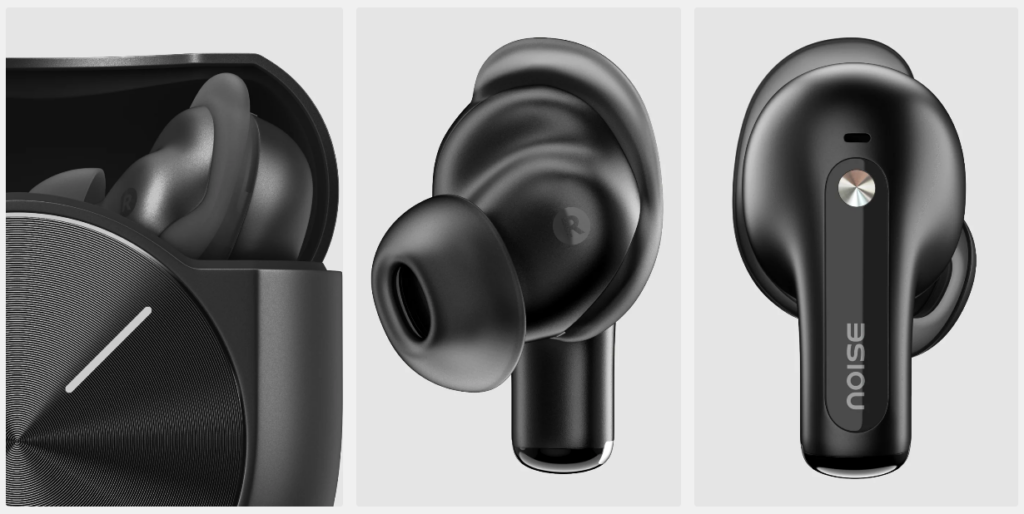
Dell has launched the Pro Plus Earbuds (EB525) in India, expanding its business audio lineup. The earbuds are designed for hybrid work, offering AI-based noise filtering, adaptive ANC, and simple IT management through Dell’s device software.
The Pro Plus Earbuds come with 11.6 mm drivers and are the world’s first to get Microsoft Teams Open Office Certification. They are also certified for Microsoft Teams and Zoom, ensuring clear sound for meetings, calls, or travel.
The AI-powered microphone filters out background noise using a neural network trained on over 500 million samples. Updates and settings can be managed using Dell Display and Peripheral Manager (DDPM), allowing IT teams to deploy features remotely. The Adaptive Active Noise Cancellation (ANC) feature blocks unwanted noise, while Enhanced Transparency Mode helps users stay aware of their surroundings.
Dell includes four ear tip sizes (XS, S, M, L) for comfort, and each earbud weighs 6 g. Sound can be personalized with the Dell Audio Mobile App, which lets users adjust equalizers, presets, and transparency levels. Connectivity options include Bluetooth 5.3, pairing with up to eight devices, and a USB-C Audio Receiver. Dell Pair enables fast, single-click setup.
The earbuds are IP54-rated for dust and water resistance and include a Voice Processing Unit (VPU) and user hearing protection. Battery life is rated at 8 hours with ANC on and 33 hours with the case. A 5-minute charge gives 1 hour of playback, and full charging takes less than 2 hours via USB-C or wireless charging. Each earbud measures 32.22 × 23.52 × 24.58 mm, the case 63.87 × 58 × 30.86 mm, and weighs 50.4 g. The dongle weighs 2.2 g.
Pricing & availability
The Dell Pro Plus Earbuds (EB525) are available in black for ₹18,699 and come with a 2-year limited hardware warranty.
The Samsung Galaxy Watch Ultra (2025) 47mm, unlocked, international model is currently listed on Amazon for around $370. That means a considerable drop from the typical launch price, putting a flagship smartwatch well within reach of many.
Galaxy Watch Ultra features a 1.5-inch Super AMOLED display, 64GB storage, 2GB RAM, and is powered by Exynos W1000 based on 3nm, the watch packs all most all the goodies you would expect from a modern wearable. On top of that, it’s ruggedized for sporty use: MIL-STD 810H certified, IP68/10 ATM (100 m water resistance), and titanium build
Coming to health and fitness, the latest Samsung Watch Ultra features advanced sensors for tracking Heart Rate, GPS, sleep analytics with AI-driven insights, and outside adventure features. All this comes packed under a long-lasting battery life, which Samsung claims last up to 100 hours in normal usage.
Important Note: Caveats in the deal!
The Galaxy Watch Ultra under offer is an International Model, and basically, you won’t be able to avail official Samsung Warranty from Samsung U.S. Although the seller is providing up to 90 days of warranty. Also, keep note that some U.S carriers may not support the LTE/eSIM. So, make sure to keep this in consideration before the purchase.
Titanium Blue, Titanium Silver, Titanium Gray, Titanium White
Nonetheless, if you’re using an Android phone and want one of the most feature-packed smartwatches on the market without spending a full premium price, this ~$370 deal is justified. You are getting a brand new, untouched, unused watch for nearly half the price. For more details, you may check the Amazon listing here.
At a recent media interaction ahead of Wobble’s debut smartphone launch, I had the opportunity to interview Anand Dubey, CEO of Indkal Technologies, to discuss the company’s brand philosophy and market vision of launching a new phone brand in India.
Wobble, a new consumer electronics brand under Indkal Technologies, has already gained attention for its “Made in India” approach and ambitious entry into the smartphone market. With its first phone launching on November 19, the company aims to bring locally designed, performance-focused smartphones to young Indian consumers.
To help you understand Wobble’s philosophy and roadmap, the conversation has been divided into several clear sections.
Indkal Technologies CEO Anand Dubey
Brand identity and philosophy
According to Anand, the name ‘Wobble’ itself represents the dynamic, fast-moving spirit of India’s youth. “When we were envisioning a phone for this young, ambitious India, we wanted a name that captures action, movement, and optimism,” he explained.
He elaborated, “Wobble is that smallest, controlled or uncontrolled movement between ambition and achievement. It reflects the energy, the restlessness, and the constant motion that define our generation. That spirit is what we wanted our devices to embody.”
This philosophy influences everything from the brand’s design to its user experience, creating smartphones that are not just functional but reflect a certain Indian energy and identity.
Market differentiation
When asked how Wobble plans to stand out among established and emerging brands in India, such as Aiwa, Acer, and Alcatel, Anand was clear about the brand’s priorities.
“Our focus is on doing justice to our philosophy,” he said. “Our devices are going to be nifty, responsive, and strong in multitasking. We’re bringing a best-in-class camera module while being mindful of the spending power of today’s consumers.”
He added that Wobble’s user interface and responsiveness will be its key differentiators. “The design and craftsmanship are on par with or better than most international brands. And because it’s designed and built in India, we can ensure better quality control and local relevance.”
“Made in India” value chain
Wobble positions itself as “India designed and India manufactured,” but Anand was quick to clarify what that truly means.
“For some components like the chipset, we still rely on external manufacturing,” he said. “However, for displays, batteries, chargers, speaker modules, and even parts of the PCB, we’ve already achieved local production.”
He added that this high level of value creation sets Wobble apart from most brands. “This is not just assembly; it’s engineering and designing in India. That’s where real innovation and long-term value come from.”
Product roadmap and pricing
Wobble’s first smartphone is set to launch on November 19, and Anand was keen to highlight its performance and camera capabilities.
He teased, “The camera is the standout feature, supported by AI enablement and efficient CPU utilisation. The device runs on the MediaTek Dimensity 7400 chipset and features a completely bloatware-free experience, making it extremely responsive.”
While he didn’t reveal the entire spec sheet, Anand promised a smooth, clean Android experience and said users can expect a product that “balances performance with simplicity.”
Discussing Wobble’s near-term roadmap, Anand confirmed, “In the first 12 months, we’ll launch three devices across different segments, starting with a mid-segment model and then expanding both upwards and downwards in the lineup.”
While pricing details were not confirmed, Anand indicated that Wobble aims to stay competitive while delivering premium user experiences.
Software strategy
Wobble plans to offer a near-stock Android experience, something increasingly rare in today’s market. “Our UI is as close to stock Android as you can get,” Anand said. “We want users to feel in control, not overwhelmed by unnecessary software.”
He also confirmed that the brand is committing to a minimum of three years of software updates. “It’s a part of the promise we make to customers. Regular updates are a hygiene now for any serious smartphone brand,” he added.
Distribution and after-sales service
Anand made it clear that Wobble will not limit itself to online sales. “We are an omnichannel company, with presence across e-commerce, modern trade, and general retail distribution,” he explained.
He emphasised that after-sales support will be one of Wobble’s strong suits: “We already have 500+ service centres for Indkal devices and service coverage across 18,500 pin codes in India. We’ll expand aggressively and ensure the full list of service centres is public before sales begin.”
Business strategy and longevity
Entering a crowded smartphone market like India’s can be daunting, but Anand remains confident. “Our long-term goal is to reach a mid to high single-digit market share within 36 to 48 months,” he said.
On sustaining consumer trust, he added, “We’re already operating at scale in India through Indkal. For us, the challenge isn’t sustainability; it is maintaining consistency. If we keep delivering on quality and performance, the risk of fading away doesn’t exist.
Ecosystem and future plans
Wobble’s expansion plans go well beyond smartphones. Anand revealed that the brand will showcase a full product lineup at the launch event, including televisions and new consumer electronics.
“We’re creating an ecosystem of connected devices,” he said. “After establishing ourselves in India, we’ll begin exploring international markets, possibly by the end of this financial year.”
Reflecting on the brand’s journey, Anand shared a personal note: “After two years of development, the most rewarding moment was when we held our first completed prototype and felt proud, as consumers ourselves, that this is a device we’d genuinely want to use.”
He concluded, “With Wobble, we’re building something truly ‘Made in India, made for India,’ products that represent innovation, local insight, and the confidence to compete globally.”
For more daily updates, please visit our News Section.
AOC has introduced a new 27-inch monitor, the U27U3XD, which features a unique dual-mode display system. It supports both 4K resolution at 144Hz and Full HD resolution at 288Hz. The monitor is officially priced at 1,999 yuan ($280), but it is available at a launch price of 1,799 yuan ($252) in China.
AOC U27U3XD Monitor Specifications
The U27U3XD is part of AOC’s U3 Graphic Pro lineup and includes a panel the company refers to as the “Master Screen.” The IPS display targets both content creators and gamers by delivering sharp visuals and accurate color reproduction.
AOC claims the panel provides 98% DCI-P3, 94% Adobe RGB, and 100% sRGB coverage, with a ΔE of less than 2. It supports 10-bit color depth and meets DisplayHDR 400 certification standards.
The monitor achieves a peak brightness of 450 nits and offers a contrast ratio of 2000:1. It also has a 4ms GTG response time. These specifications make it suitable for HDR video editing, color grading, and fast-paced gaming.
AOC has included a 90W USB Type-C port for video, data, and power delivery, allowing users to connect laptops or tablets with a single cable. The monitor also supports multi-device operation through a built-in KVM module, which enables seamless switching between two systems using one set of peripherals.
For connectivity, it includes two HDMI 2.1 ports, one DisplayPort 1.4, a USB-B upstream port, four USB 3.2 Gen1 downstream ports, and a 3.5mm audio output. The monitor supports VESA 100×100mm wall mounting and includes a three-year warranty.
The U27U3XD has received TÜV Rheinland certification for eye comfort. It features hardware-level low blue light reduction and flicker-free technology, which aim to reduce eye strain during extended use.
In related news, ViewSonic recently introduced a new 24.5-inch QHD gaming monitor with a 180Hz refresh rate priced under $120, while LG has launched the 37G800A curved 4K monitor featuring a 165Hz refresh rate, DisplayHDR 600 certification, and 65W USB-C power delivery.
For more daily updates, please visit our News Section.
Microsoft has officially launched its long-awaited Xbox Cloud Gaming service in India, marking a major milestone for the country’s gaming community. The service allows users to stream and play AAA Xbox titles directly from the cloud on smartphones, tablets, and PCs, so here’s everything you need to know.
Xbox Cloud Gaming Service: What does it offer?
The new service is similar to other cloud gaming platforms, allowing gamers to play their games across various devices. So one can play on their PCs, consoles, smartphones, tablets, and even select LG and Samsung Smart TVs, along with Meta Quest VR headsets. The service arrives with controller and touch support, being competuivle with the Xbox Wireless Controller, Sony’s DualShock 4, and others.
Microsoft Xbox Cloud Gaming Service
Since the Xbox Cloud Gaming service allows you to play games on smartphones and tablets as well, there are also games with touchscreen support. The cloud gaming service already has hundreds of games across different genres, with more being added in the future. Customers can even stream owned titles via the Xbox Game Pass. So one can play titles made for the Xbox Series X and Xbox Series S on other devices without having to worry about performance or compatibility.
How much does it cost?
Microsoft just announced the Xbox Cloud Gaming service in multiple tiers. So here are their pricing details:
Essential – Brings access to more than 50 games, support for select owned games, online multiplayer access, and more for Rs 499 per month.
Premium – The higher tier features over 200 games, along with access to new Xbox titles within 12 months, shorter wait times, and more benefits for Rs 699 per month.
Ultimate – Xbox Cloud Gaming service’s most expensive tiers features over 400 games that includes both Xbox and third party titles, EA Play, Ubisoft+ Classics, and Fortnite Crew in November. It is priced at Rs 1,389 per month.
For more daily updates, please visit our News Section.
China’s Double 11 shopping festival has concluded, and JD.com has confirmed the final smartphone sales rankings. Apple, Xiaomi, and Vivo secured the top three spots in total unit sales as of 11:59:59 PM on November 11. The rankings shows Apple’s continued dominance and the strong performance of major Chinese smartphone makers.
iPhone 17 Pro
Apple ranked first in both brand revenue and unit sales. The iPhone 17 Pro Max, iPhone 17 Pro, and iPhone 17 occupied the top three positions in the individual model rankings. The iPhone 17 series continued to attract strong demand across all price segments, especially in the premium category.
Xiaomi claimed the second position overall and remained the top-selling Chinese brand. Its broad product portfolio helped secure this result. The Redmi K80 ranked fourth in overall unit sales, making it the most popular Chinese smartphone during the event. The Redmi Turbo 4 Pro and K80 Ultra also appeared in the top ten, contributing to Xiaomi’s lead among domestic brands.
Vivo and its sub-brand iQOO took third place, maintaining solid sales across both midrange and flagship segments. Oppo and OnePlus combined for the fourth position in brand sales, supported by a diverse lineup. Honor followed closely, with strong momentum driven by the X70 series.
Huawei ranked sixth in unit sales but climbed to fourth in brand revenue. The company saw strong demand for its premium smartphones, including the Mate 70 Pro+ and Mate X6. These models also performed well in the high-end segment priced above 6,000 yuan ($842).
The data also showed that Philips and K-Touch returned to the top ten in sales volume. These brands showed niche appeal in specific categories. Samsung, Realme, Nubia, and Motorola rounded out the top ten, maintaining steady sales during the shopping festival.
In the premium category, Apple held the top three spots, but Xiaomi achieved a significant result. The Xiaomi 17 Pro Max ranked fourth in the 6,000-yuan-and-above segment, ahead of the Huawei Mate 70 Pro+. It became the best-performing Chinese flagship model in the premium class this year.
The 2025 Double 11 results reflected a familiar pattern of Apple’s dominance, but also showed growing competition from Chinese brands in both value and flagship segments.
For more daily updates, please visit our News Section.
Vivo has officially begun teasing the arrival of its highly anticipated X300 series in India. The Vivo X300 and Vivo X300 Pro are the brand’s latest generation of flagship smartphones, and the teasers confirm that both models are arriving in the region soon.
Vivo X300 Series Teased Ahead of India Launch
In the latest teaser posters shared online, the Chinese tech giant highlighted some of the key features of its upcoming premium phones, which mainly include their advanced camera systems. To recall, the base Vivo X300 gets a new 200MP 1/1.4-inch Samsung HPB sensor for its camera that is paired with a 50MP ultra wide angle lens, and a 50MP 1/1.95-inch Sony LYT602 periscope telephoto shooter that doubles as a macro camera.
Vivo X300 Pro
On the other hand, the Vivo X300 Pro uses the same 200MP Samsung HPB sensor for its telephoto shooter, while the main camera is a larger 50MP 1/1.28-inch Sony LYT828 sensor along with a 50MP ultra wide angle lens. For selfies and video calls, both models get a 50MP camera on the front. The higher end Pro was teased in the gold variant, and the base version can be seen in red.
Apart from this, a notable aspect teased in the image posters was the Photographer Kit and case for the Vivo X300 Pro. This basically brings a Zeiss 2.35x telephoto extender for the flagship phone. Just like in China, this kit will be sold separately. Based on the earlier release, the Vivo X300 series is powered by MediaTek’s Dimensity 9500 SoC, houses massive battery packs, and runs on Vivo’s latest OriginOS 6 custom skin that is based on Android 16.
For more daily updates, please visit our News Section.
We use cookies on our website to give you the most relevant experience by remembering your preferences and repeat visits. By clicking “Accept”, you consent to the use of ALL the cookies.
This website uses cookies to improve your experience while you navigate through the website. Out of these, the cookies that are categorized as necessary are stored on your browser as they are essential for the working of basic functionalities of the website. We also use third-party cookies that help us analyze and understand how you use this website. These cookies will be stored in your browser only with your consent. You also have the option to opt-out of these cookies. But opting out of some of these cookies may affect your browsing experience.
Necessary cookies are absolutely essential for the website to function properly. This category only includes cookies that ensures basic functionalities and security features of the website. These cookies do not store any personal information.
Any cookies that may not be particularly necessary for the website to function and is used specifically to collect user personal data via analytics, ads, other embedded contents are termed as non-necessary cookies. It is mandatory to procure user consent prior to running these cookies on your website.