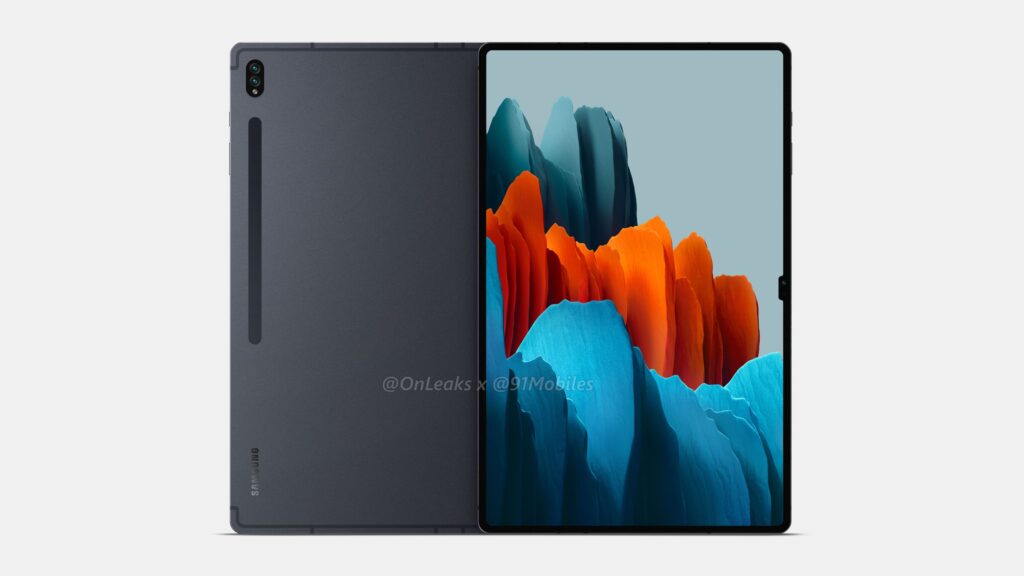
Samsung is expected to unveil the Galaxy Tab S8 series in the next few days. The lineup is said to include three models, namely Galaxy Tab S8, Galaxy Tab S8+, and Galaxy Tab S8 Ultra. Ahead of these tablets’ official announcement, the entire specs of the Ultra model have emerged.
Samsung Galaxy Tab S8 Ultra | Source: @OnLeaks via 91Mobiles
According to SamMobile, the Samsung Galaxy Tab S8 Ultra will measure 208.6 x 326.4 x 5.5mm in dimensions and flaunt a huge 14.6-inch WQXGA+ display with a notch as well as 6.3mm slim bezels. Interestingly, it will be powered by the recently announced Snapdragon 8 Gen 1 chipset instead of a Snapdragon 888 SoC as rumored earlier.
The tablet will arrive in three memory configurations, such as 8GB + 128GB, 12GB + 256GB, and 16GB + 512GB. It will also come in both WiFi-only and cellular (LTE/5G) versions. Although the publication doesn’t say anything, the availability of these variants should vary by region.
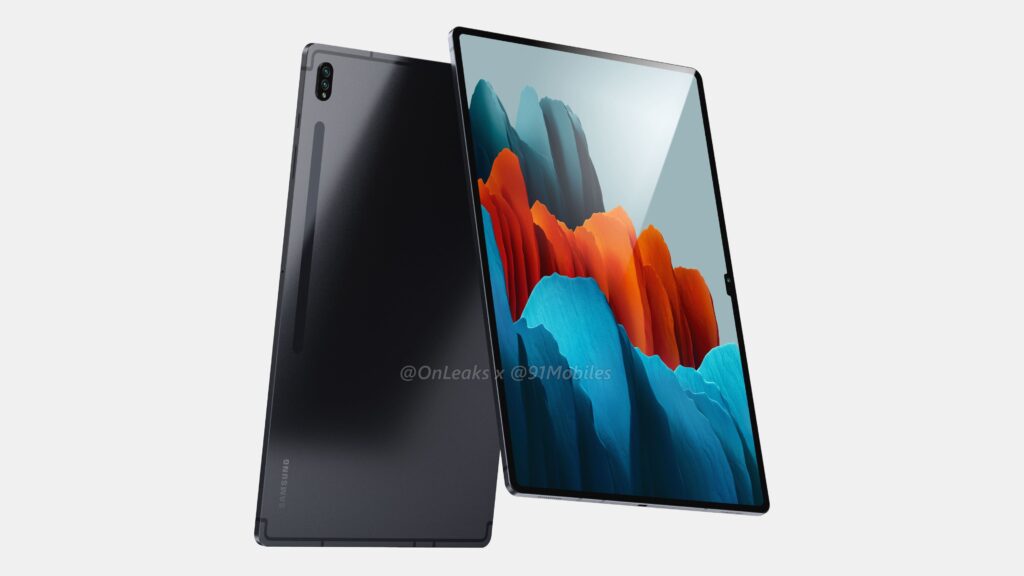
Despite measuring only 5.5mm in thickness, the device will house a massive 11,200mAh battery with support for 45W fast charging. Like the previous Galaxy Tab S series models, this one will also have a magnetic strip at the back to attach the S Pen accessory.
Samsung Galaxy Tab S8 Ultra | Source: @OnLeaks via 91Mobiles
Even though it’s a slate, it will come with four cameras, two each on front and back. The rear setup will include a 13MP primary sensor and a 6MP ultra-wide unit. Whereas, the notch on the front will nest a 12MP primary shooter and a 12MP ultra-wide snapper.
On the software front, the device will ship with One UI 4.1 based on Android 12. The updated version of One UI 4 will come with certain new features like ‘Extra Dim’ mode to reduce eye strain while using the tablet, an option to adjust app window transparency, and the ability to launch apps easily from the taskbar.
Last but not least, the slate will arrive with a new ‘DeX Portrait’ mode to convert DeX from landscape to landscape to portrait orientation and a redesigned Samsung Health app with a 3-column layout.
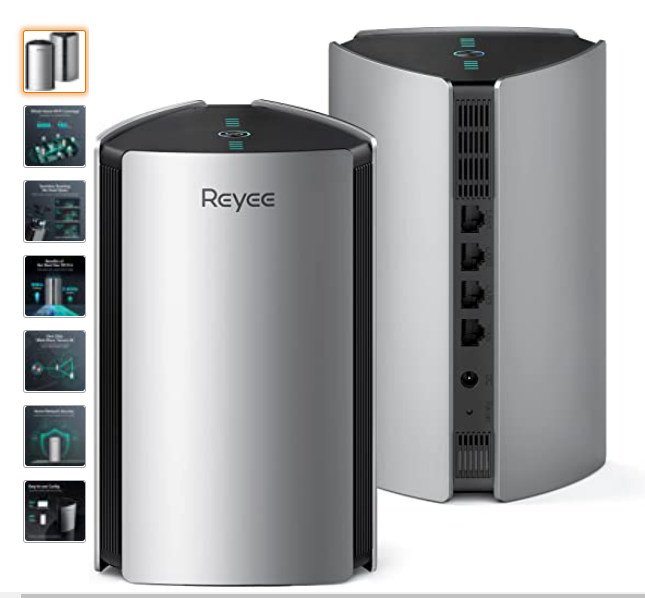
If you are planning to buy or upgrade your WiFi network system then check out these deals from Reyee. This holiday season Reyee is giving up to $60 OFF on its routers and whole-home mesh WiFi systems. Reyee makes cost-effective products without compromising features. Their product line includes wireless routers, access points, and more. They cater to the needs of home and small offices, and small to medium-sized businesses. Please note that the Christmas sale starts on 15 December and ends on 25 December 2021.
Here are a couple of interesting Reyee Christmas deals to check out.
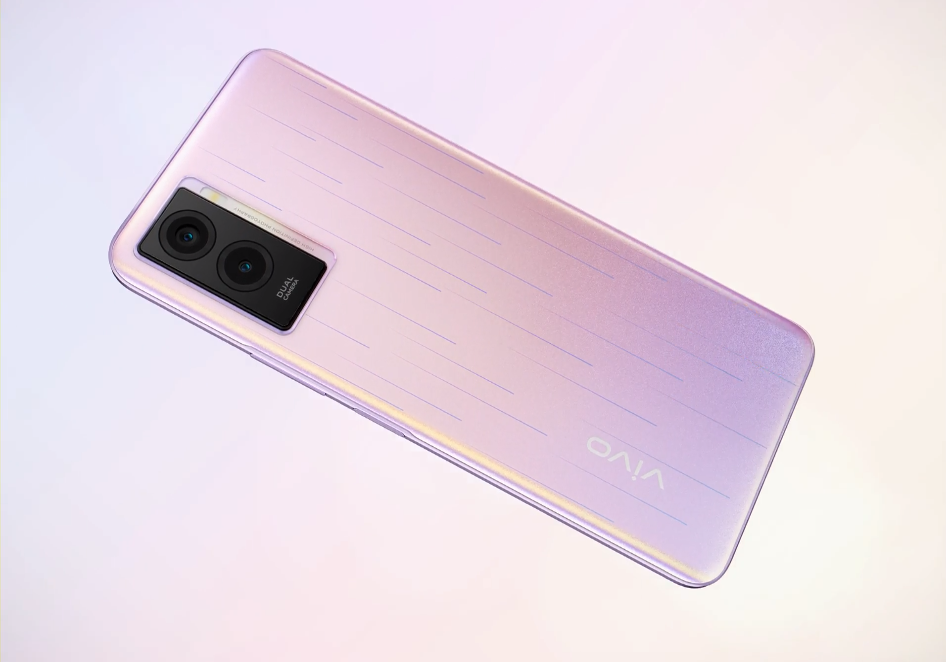
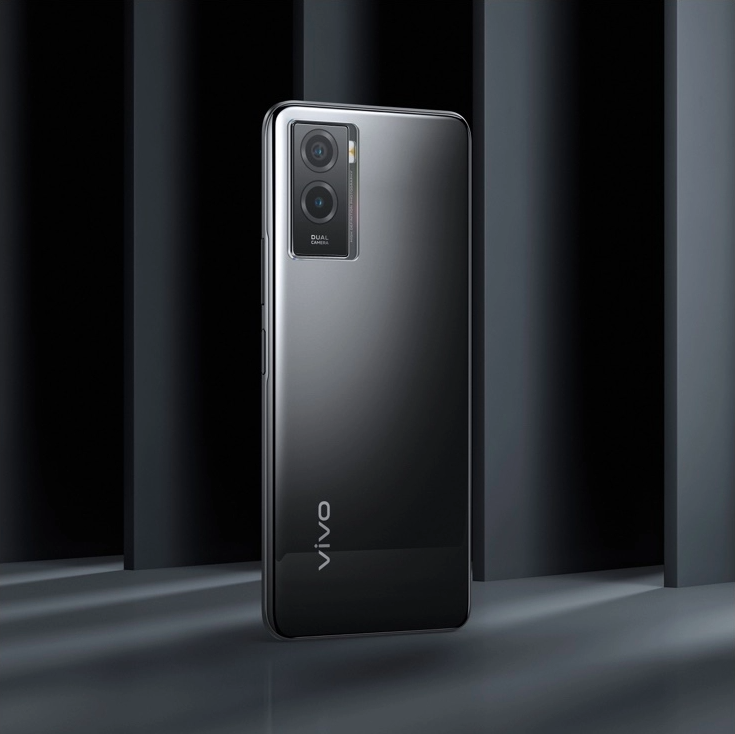
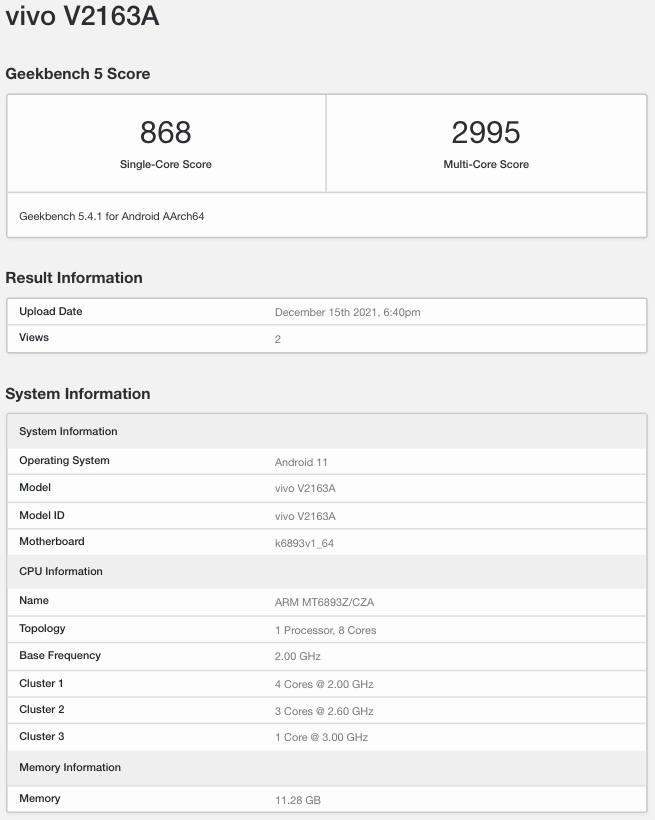
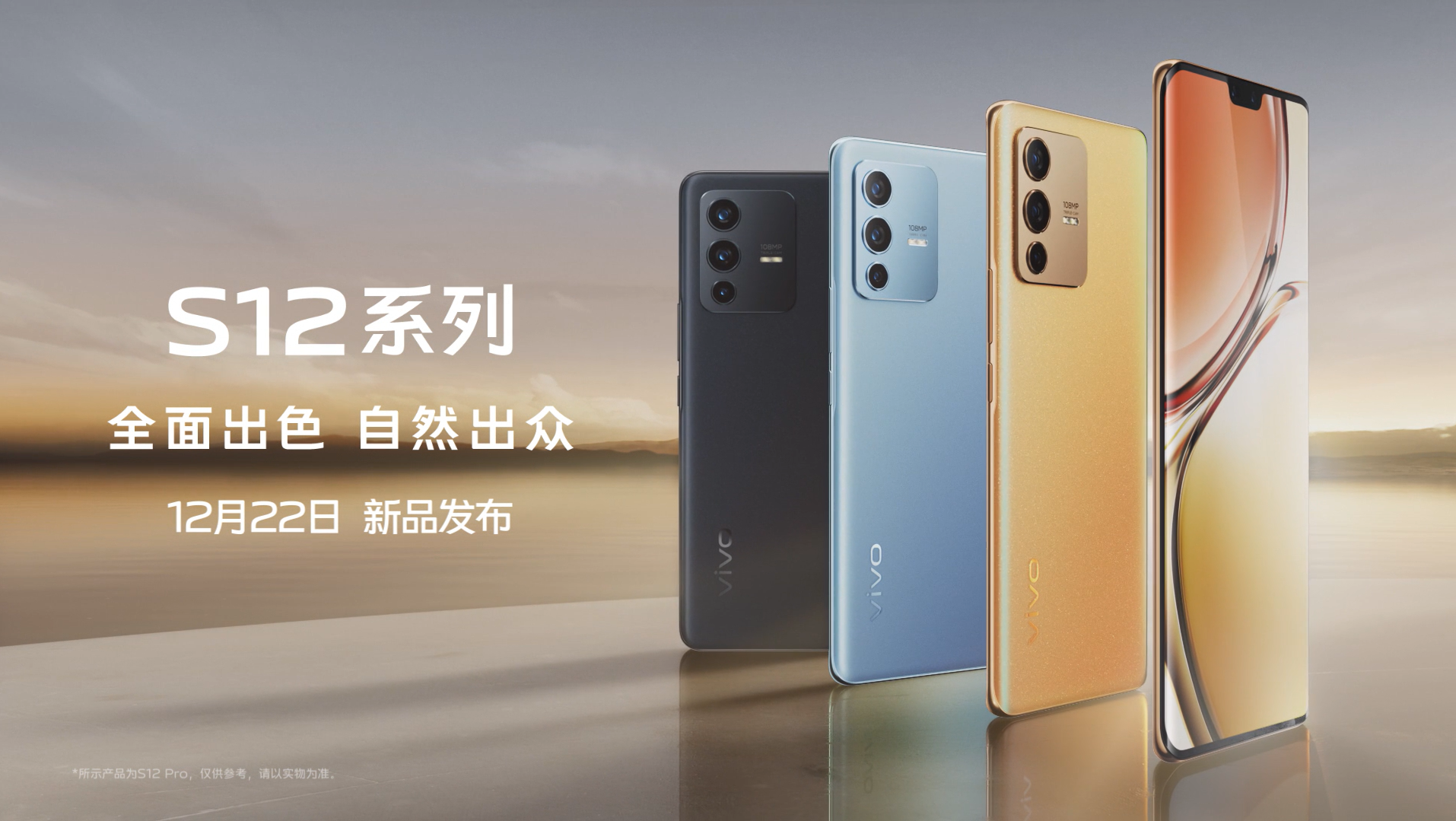
Recently, two Vivo smartphones with model numbers V2162A and V2163A were recently certified by the 3C authority of China. Reports have claimed that these models will be debuting in the Chinese market with the Vivo S12 and Vivo S12 Pro monikers, respectively. The Pro model has now appeared on the Geekbench benchmarking site (via) with some of its key specs.
Vivo has already confirmed that the Vivo S12 series will be equipped with the Dimensity 1200 chipset. The Pro model has appeared with 12 GB of RAM and Android 12 OS on Geekbench today. It has scored 868 points in the single-core test and 2995 points in the multi-core test of Geekbench, respectively.
Vivo S12 Pro specifications (rumored)
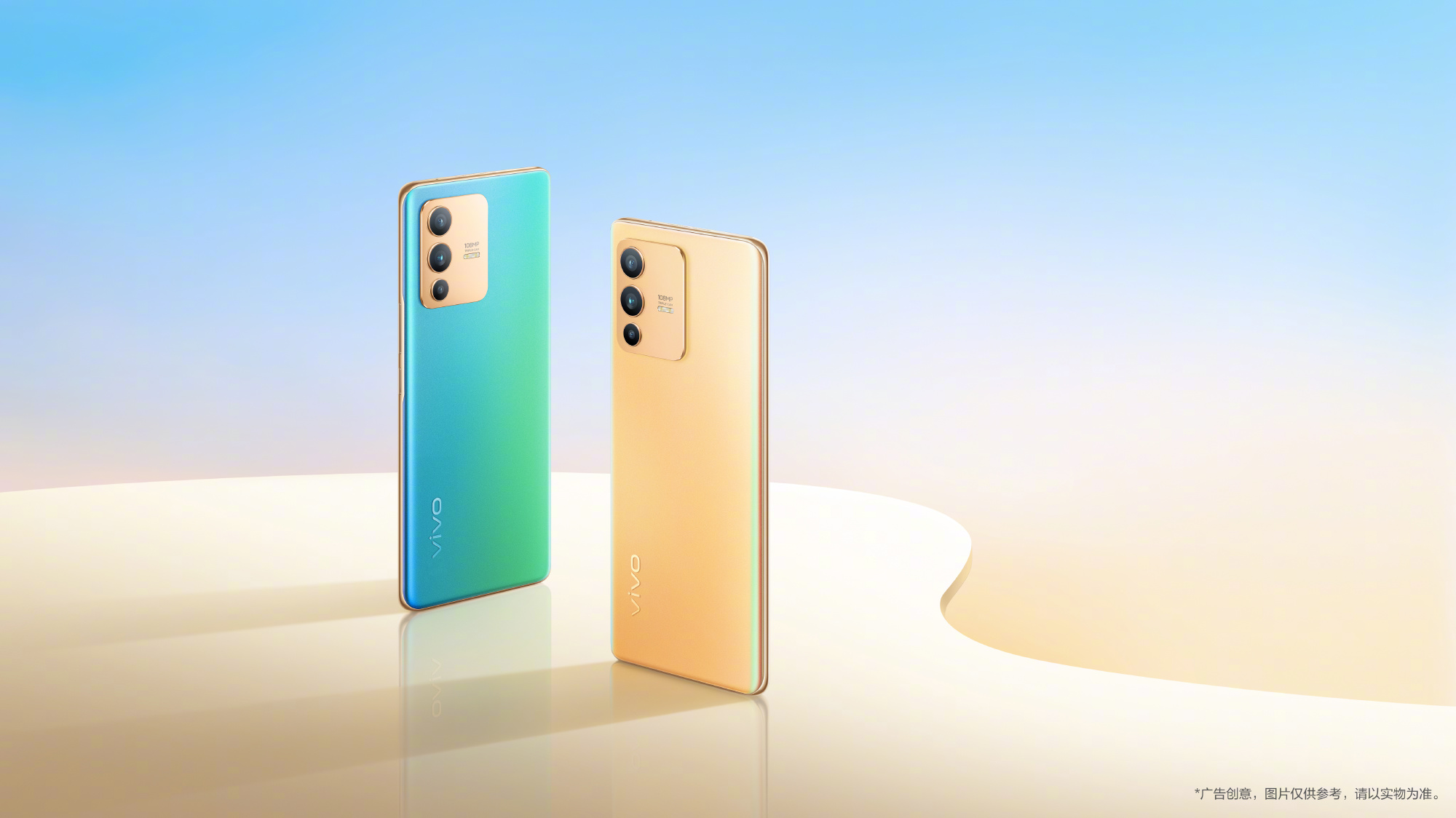
Speaking of the Pro model, a recent leak revealed that the Vivo S12 Pro will feature a 6.5-inch FHD+ OLED 90Hz display with curved edges. The wide notch on S12 Pro’s display will house a 50-megapixel Samsung JN1 primary camera and an 8-megapixel ultrawide lens.
1 of 5
Vivo S12 series
Vivo S12 series
Vivo S12 series
Vivo S12 series
Vivo S12 series
Vivo S12 series
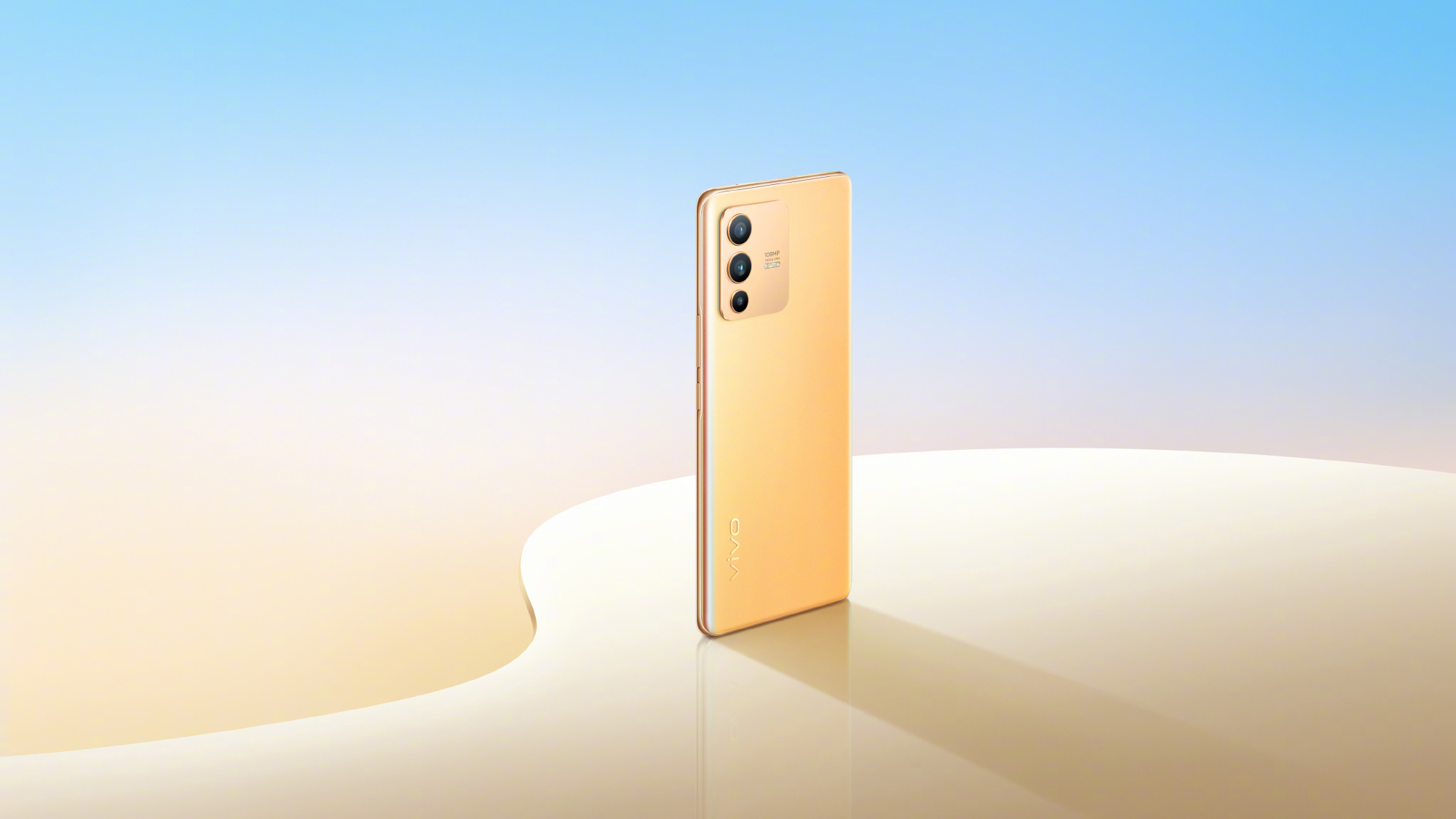
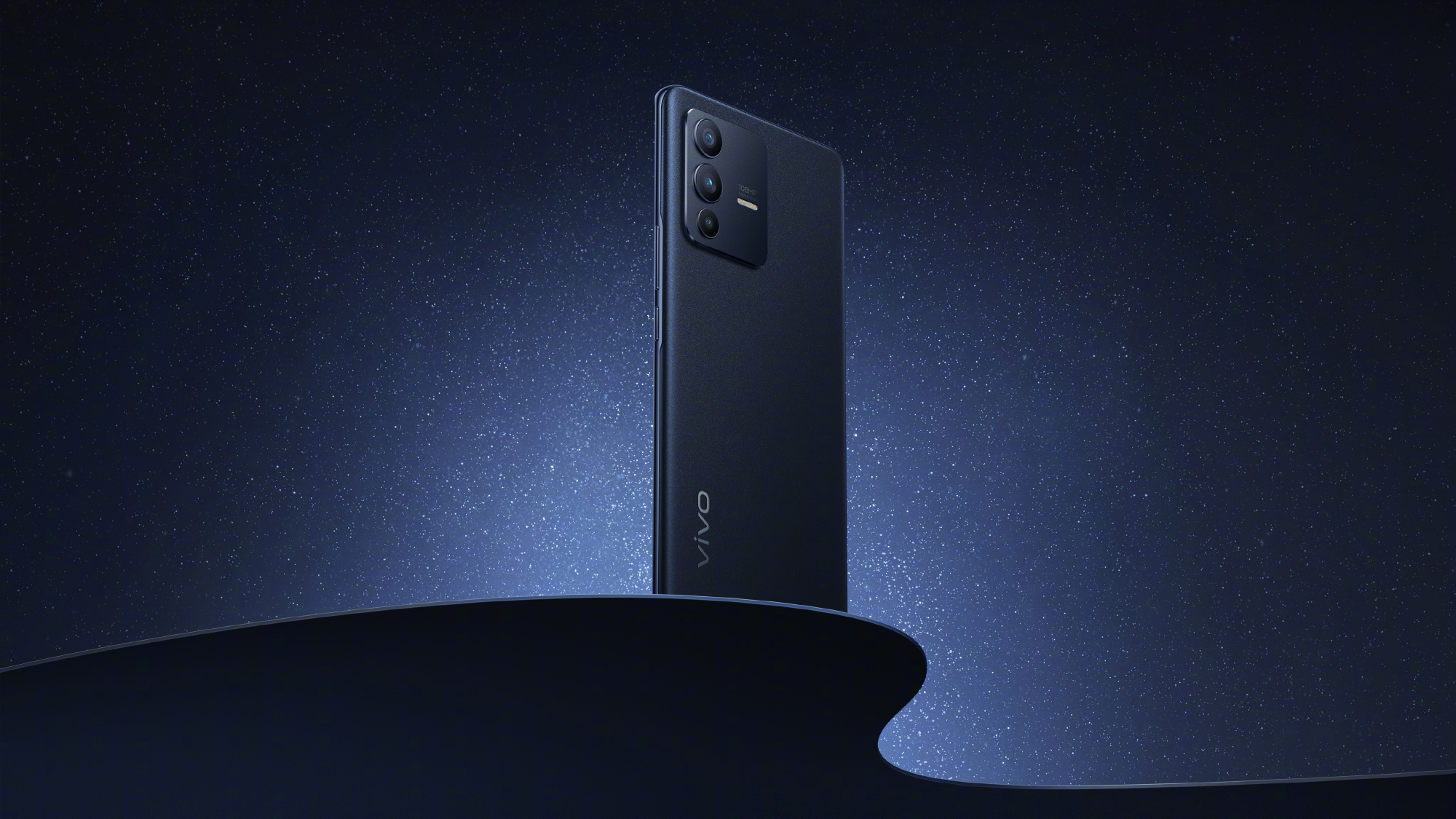
The rear camera system of the S12 Pro will include an OIS-enabled 108-megapixel main camera. It will be coupled with an 8-megapixel ultrawide lens and a 2-megapixel B&W lens. The Android 12 OS on the device will be overlaid with OriginOS Ocean UI.
The S12 Pro will ship with up to 12 GB of LPDDR4x RAM and up to 256 GB of UFS 3.1 storage. It will pack with a 4,300mAh battery with 44W fast charging support. For security, it will feature an in-screen fingerprint scanner. The rumor mill is yet to spill information on the specs of the vanilla model.
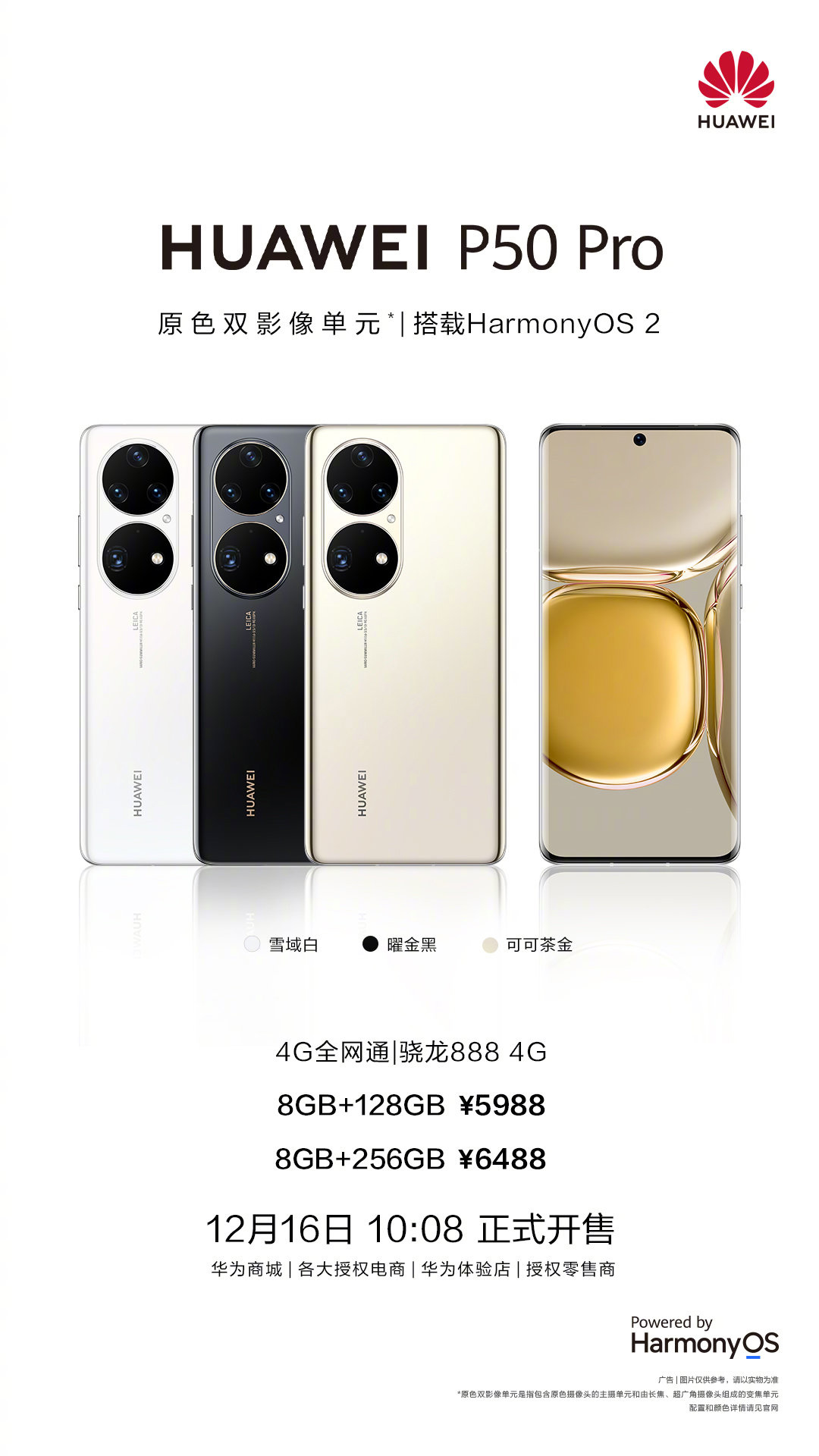
Huawei had launched the P50 and P50 Pro smartphones in the month of July. The Huawei P50 Pro 4G comes in two different models — one powered by the Kirin 9000 SoC while the other one is powered by the Snapdragon 888 chipset.
Now, the Huawei P50 Pro 4G powered by the Qualcomm Snapdragon 888 SoC is finally available for purchase in China. It is being offered in three colors — Snow White, Obsidian Black, and Cocoa Tea Gold.
The 8GB RAM and 128GB internal storage model is priced at 5,988 yuan (~$941) while the other model which packs 8GB RAM and 256GB internal storage costs 6,488 yuan which roughly converts to $1,019.
Coming to the specifications, the device features a 6.6-inch curved OLED display with a 2700 x 1228 pixels screen resolution, offering a 120Hz refresh rate, 1440Hz PWM dimming, and a 300Hz touch sampling rate.
Under the hood, the smartphone is powered by the Qualcomm Snapdragon 888 chipset but the model is limited to only 4G connectivity because of the sanctions imposed on Huawei by the United States, barring it from using 5G connectivity, among others.
In the camera department, there’s a 50-megapixel f/1.8 RGB primary sensor with OIS and a 40-megapixel f/1.6 Black and White sensor. There’s also a 13-megapixel f/2.2 ultrawide angle camera and a 64-megapixel f/3.5 telephoto camera with OIS.
On the front side, the device features a 13-megapixel snapper for taking selfies and video calling. Unlike most other phones, this one is running the company’s own HarmonyOS 2 out-of-the-box. It is powered by a 4,360mAh battery which comes with support for 66W fast wired charging and 50W wireless fast charging.
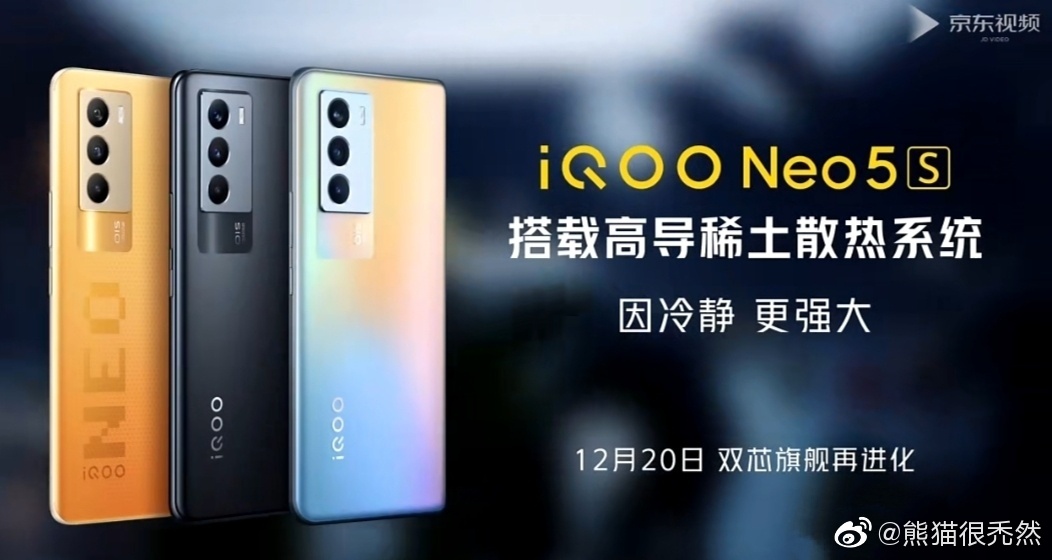
iQOO is all set to unleash the iQOO Neo5s on Dec. 20 in China. Yesterday, the Chinese manufacturer released a poster to reveal the rear design of the Neo5s. Today, a Chinese tipster shared an image to showcase the color variants of the smartphone.
The iQOO Neo5s poster shows that it will be available in at least three colors such as orange, black, and blue gradient. The orange model has a large-sized ‘Neo’ branding on it. The curved rear shell of the device features a protruding camera module that houses an OIS-enabled triple camera unit with LED flash.
iQOO Neo5s
The Weibo post released by iQOO today confirms that the iQOO Neo5s will carry support for a 120Hz refresh rate. The dedicated display chip present in the device brings support for MEMC technology. It can increase low frame games to work at 120 frames to provide users with a smoother gaming experience.
The iQOO Neo5s will be powered by the Snapdragon 888 mobile platform. It will be arriving with an advanced heat dissipation technology featuring rare earth elements, large-area graphite plates, and liquid-cooled soaking plates.
Past reports have claimed that the iQOO Neo5s has a 6.56-inch OLED FHD+ display, up to 12 GB of LPDDR5 RAM, and up to 256 GB of UFS 3.1 storage. It is expected to feature a 16-megapixel front-facing camera and a Sony IMX598 48-megapixel primary camera. It may house a 4,500mAh battery that supports 66W fast charging. The device will ship with OriginOS Ocean UI flavored Android 12.
Apart from smartphones, Chinese giant Huawei has a successful lineup of laptops under the MateBook branding, and since the United States imposed sanctions on Huawei, the company has changed its focus from smartphones to other consumer electronics, including laptops and wearables.
The China-based technology giant has now announced that it is all set to launch the next generation of Huawei MateBook series laptops in its home market. The company has confirmed that the event will be hosted on 23rd December in China.
Making the announcement, Huawei has shared three different teaser posters, which sheds light on the features of the upcoming device. One poster showcases the introduction of air gestures through the front-facing camera, allowing simpler control of functions.
Another poster hints at the multiscreen collaboration feature through different products from the brand, including smartphones, tablets, monitors, and others. The third poster is about two different ecological platforms on the devices — Windows and Android.
It is said that the company will be using ultrasound technology for the non-contact gesture recognition and control feature. This is the same technology that is being used in high-tech industries such as medical, semiconductor, aerospace, and more.
So far, the company has not revealed the name of the product or the lineup that will get launched in China on 23rd December. But the way Huawei is teasing the features, we expect to know more about it in the coming days.
Last month, the Chinese company had launched the Huawei MateBook E 2-in-1 device, marking the debut of the first hybrid laptop from the brand. It is available for purchase in China for a starting price of 5,999 yuan, which is about $942.
Two months ago Infinix launched its new 4G affordable handset Infinix Note 11 Pro belonging to the interesting Note 11 series. It is a device that offers advantages such as a very wide display, great cameras, and a big battery at a very affordable price, and you can not easily find such specifications on other devices sold in the same price range. But there is another Infinix device with the same advantages: the predecessor Infinix Note 10 Pro. It is even available at a more affordable price. Does it make sense to spend more for the new Infinix Note 11 Pro or you would better go for its predecessor? Thanks to this comparison between their specifications, you will have the chance to find it out.
Triple 64 + 13 + 2 MP f/1.7, f/2.5, and f/2.4
16 MP front camera
Quad 64 + 8 + 2 + 2 MP, f/1.8 + f/2.4 + f/2.4
16 MP front camera
BATTERY
5000 mAh, fast charging 33W
5000 mAh, fast charging 33W
ADDITIONAL FEATURES
Dual SIM slot
Dual SIM slot
Design
The Infinix Note 11 Pro introduces a few design changes if compared to the predecessor. The camera module comes with the same colors as the rear cover and this makes the handset look more elegant and futuristic. For the rest, there are not so many changes. The handsets come with similar dimensions, but the Infinix Note 10 Pro is thinner and slightly more compact thanks to a slightly higher screen to body ratio. However, they are pretty chunky because they pack big displays and bigger batteries. Both are made of polycarbonate, so do not expect premium materials.
Display
The display of the Infinix Note 11 Pro and the Infinix Note 10 Pro are very similar, there is only one major difference: the refresh rate. While the Infinix Note 11 Pro has a refresh rate up to 120 Hz, the predecessor Note 10 Pro stops at 90 Hz. For the rest, they are pretty much the same: IPS panels with a diagonal of 6.95 inches, punch-hole designs, and a Full HD+ resolution of 1080 x 2460 pixels. The image quality is not amazing, but these displays are acceptable for every kind of user. Both the phones are equipped with stereo speakers and a side-mounted fingerprint scanner on the power key.
Hardware/Software
There is an upgrade in the hardware department of the Infinix Note 11 Pro: the Helio G96 chipset by MediaTek. Thanks to this chipset paired with up to 8 GB of RAM, it is able to provide higher performance. However, you can get similar results with the Infinix Note 10 Pro and its Helio G95 supported by up to 8 GB of RAM, because the differences between these two mobile platforms are just marginal and both lack the 5G connectivity. A more important difference between these devices regards the highest-end memory configuration: the Infinix Note 10 Pro provides up to 256 GB of internal storage, while the Infinix Note 11 Pro offers a max of 128 GB. The software of the Note 11 Pro is more updated, even though it is still based on Android 11.
Camera
The Infinix Note 11 Pro and the Note 10 Pro are equipped with the same main camera: a 64 MP sensor with an f/1.7 focal aperture. But the former packs a superior 13 MP ultrawide camera, so you can click better ultrawide shots than the ones captured by the 8 MP sensor of the Note 10 Pro. The front cameras are the same: a 16 MP snapper with 1080p video recording.
Battery
There are no differences in terms of battery: these handsets come with the same 5000 mAh battery supporting 33W fast charging. Even the battery life should be very similar because these phones have similar specifications, including a 6.95-inch IPS display with a Full HD+ resolution and a 12 nm chipset.
Infinix Note 11 Pro vs Infinix Note 10 Pro: Price
The Infinix Note 11 Pro carries a price tag of Rs. 17,990 / $235 in the Indian market, while the price tag of the Infinix Note 10 Pro is Rs. 16,999 / $220. But you should note that the Note 10 Pro is available at more affordable street prices because it is an older device. The Infinix Note 11 Pro is actually an upgrade because it packs a better chipset and a better ultrawide camera, but the differences are just marginal, and if you find a particularly interesting price maximizing the value for money you can still opt for the Note 10 Pro.
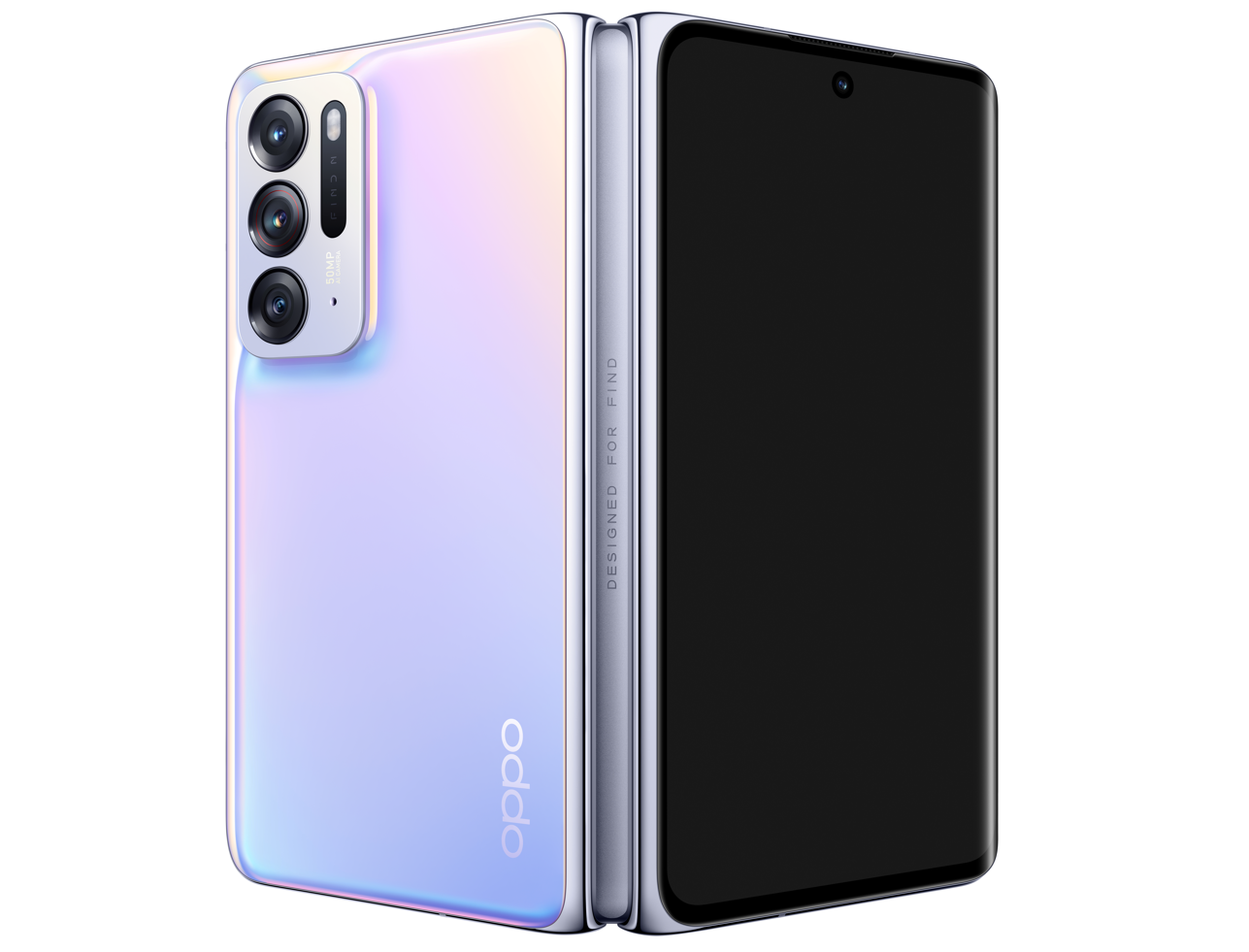
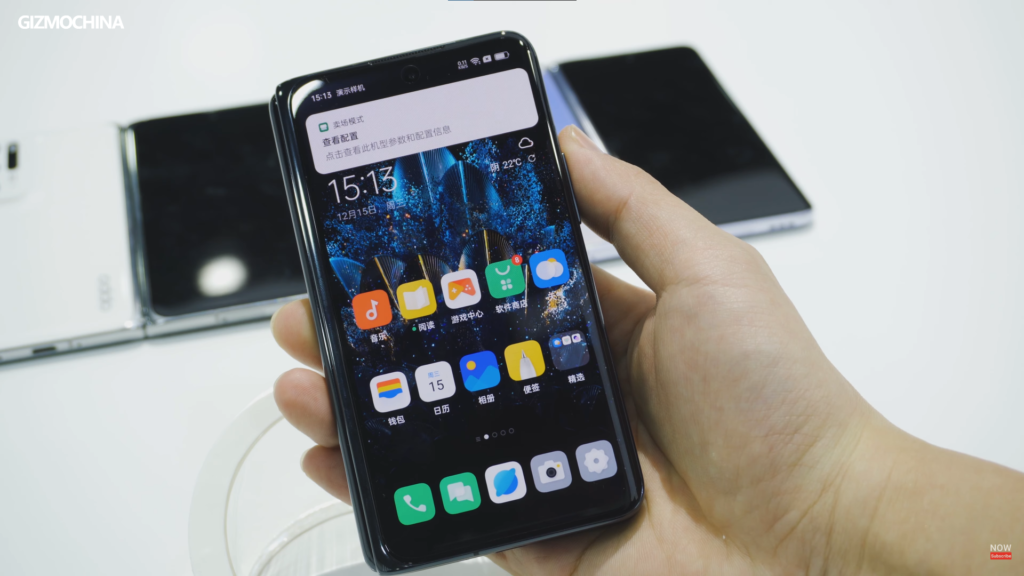
OPPO unveiled many innovative devices during the OPPO INNO Day 2021 event, one of which was the highly anticipated Find N foldable smartphone. The OPPO Find N has gone through a number of prototypes over the last four years to offer an improved foldable phone experience. And now, we have finally managed to get our hands on the Find N, to share our first thoughts and impressions of the latest foldable OPPO device.
When we held the folded OPPO find N in our hands, the first impression was that the device felt like a bulkier version of an iPhone 12 Mini. The device felt heavy at 275 grams, but its compact folded size made it comfortable and easy to hold. The 5.49-inch AMOLED 60Hz external display might be a drawback on paper, but it was hardly noticeable due to the small display size.
The inner display, however, was a different story. The 7.1-inch E5 AMOLED foldable display with 120Hz refresh offers a lot of screen real estate, almost more than you’d expect out of this device. Additionally, the phone’s 1792×1920 FHD+ resolution coupled with its almost square aspect ratio makes reading, gaming, and media consumption a delightful experience. But, the maximum manual brightness of this device at 500nits felt somewhat unimpressive.
However, the most impressive detail about this device is its Flexion hinge. From most viewing angles, the crease of the screen was unnoticeable. The hinge design practically eliminates the gap between the display when folded, protecting it from scratches.
The hinge also allows the phone to be seated at any angle between 50 and 120 degrees, enabling functionalities akin to a miniature laptop. This seated form allows for hands-free usage while consuming media or attending a video call and turns the bottom part of the screen into a controller.
The Find N feels pretty smooth to switch between the outer and the inner display as whatever task you are carrying out on the outer screen gets seamlessly relayed to the inner screen even before it’s completely unfolded. Users can swipe up on the inner screen when folding the device to continue using the same function on the outer screen, which feels pretty convenient.
Coming to the camera performance, we tested out all the cameras of the OPPO Find N, including its 50MP Sony IMX766 primary camera and the 30MP selfie cameras present on both the inner and outer displays. Given the indoor lighting conditions, the pictures turned out to be quite crisp and fresh-looking, which may be due to OPPO’s customized software.
In conclusion, our first experience with the OPPO Find N was quite premium, unique, and different from other foldable phones on the market. And while on the subject of foldable phones on the market, the OPPO Find N comes in at 7,699 Yuan (roughly 1,210 US Dollars) for the 8GB+256GB variant, which is the lowest price for a foldable phone in the market and makes the device more accessible for a wider customer base.
After using and experiencing many foldable phones, we feel that the OPPO Find N is the only phone that has come close to answering the question of why we need a foldable device. We at the Gizmochina team are looking forward to reviewing it more deeply, so stay tuned.
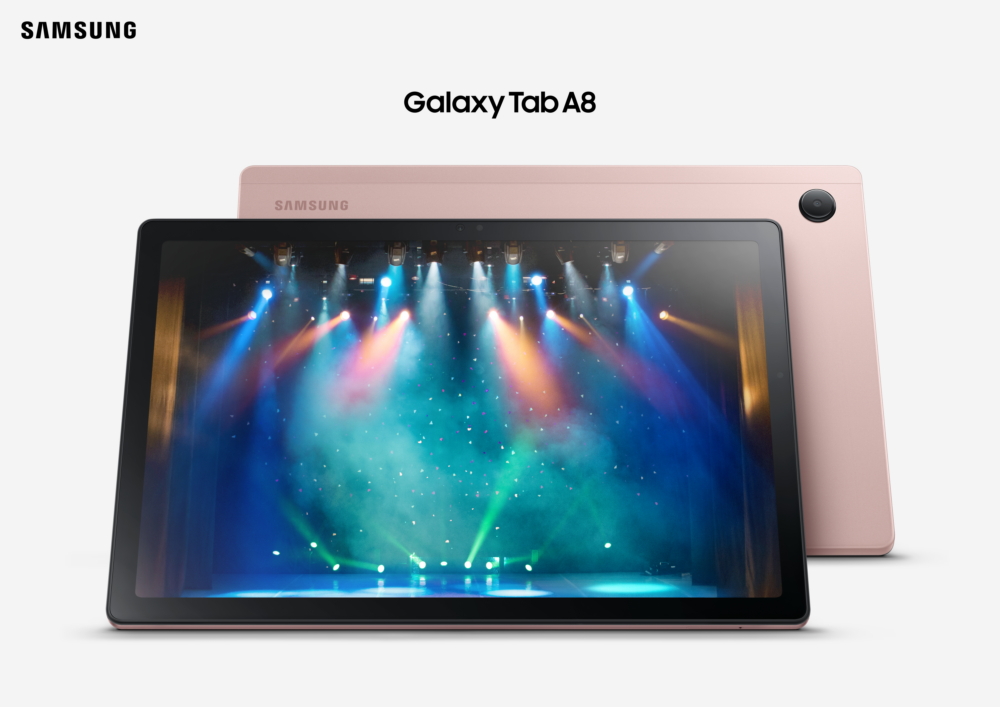
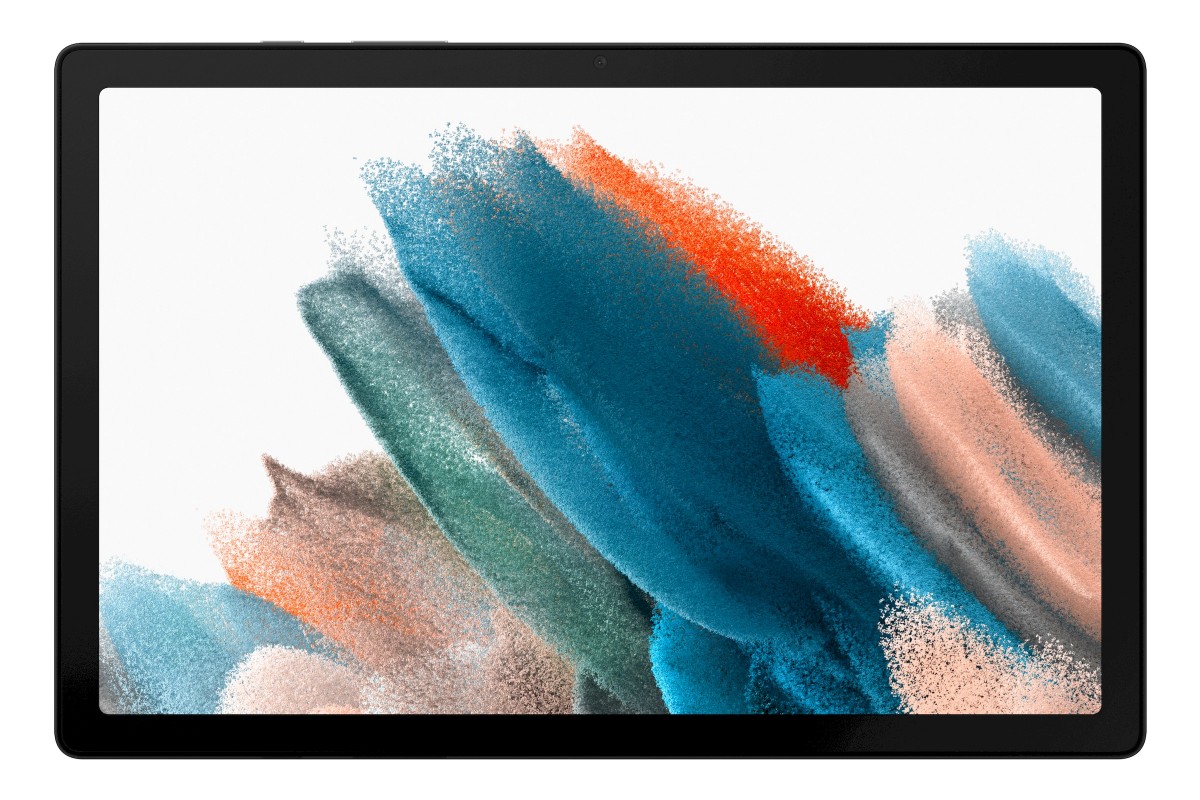
Samsung has launched a new model for its affordable Galaxy Tab A tablet series. The new model is the Samsung Galaxy Tab A8 and it adopts a slightly bigger screen than its predecessor, bigger storage, as well as a slightly improved system performance.
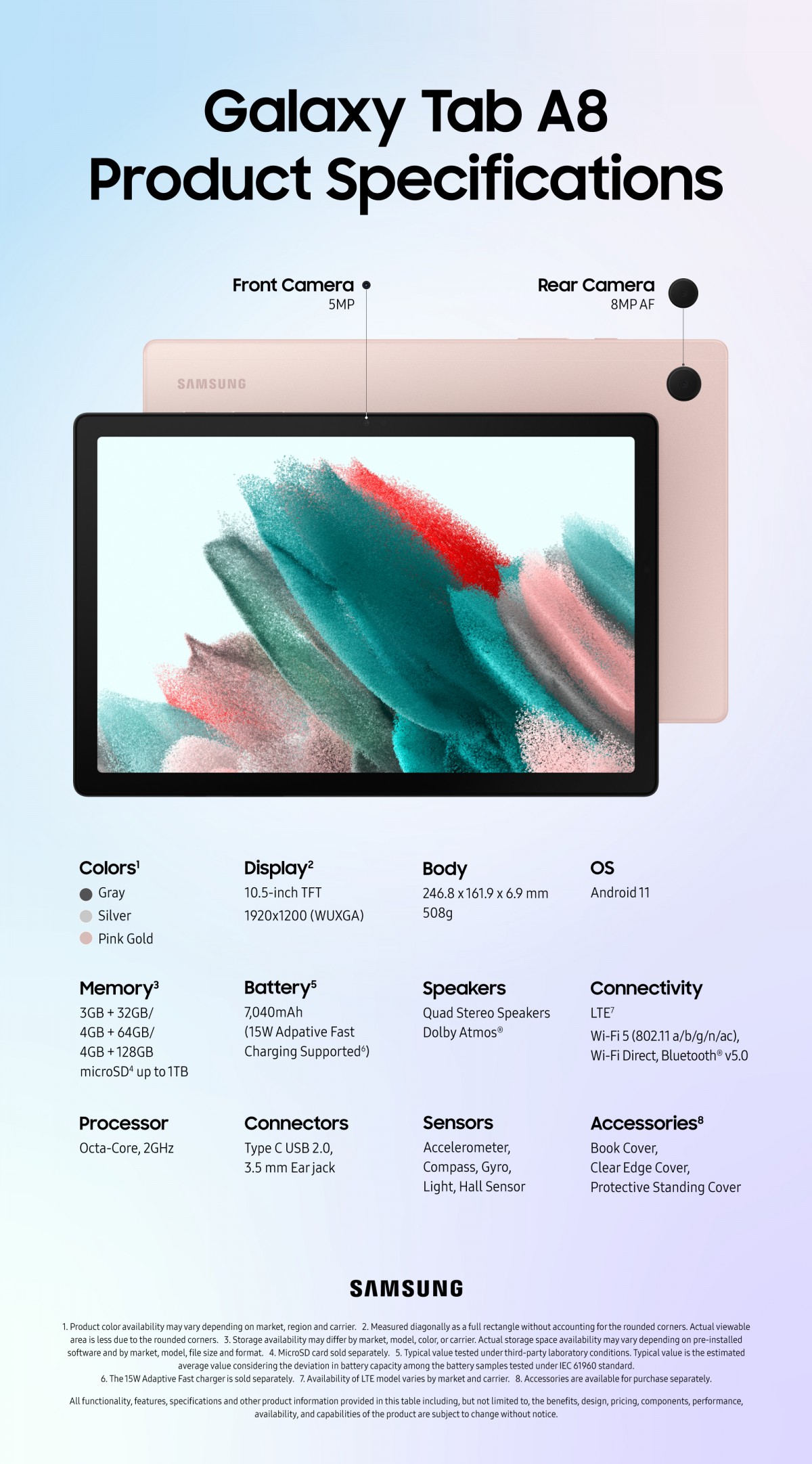
In terms of specifications, the Galaxy Tab A8 features a 10.5-inch LCD screen with a resolution of 1,920 x 1,200 pixels and a 16:10 aspect ratio. The slate also comes with four speakers with Dolby Atmos support.
The Samsung Galaxy Tab A8 is powered by an unnamed chipset that provides 10% higher CPU performance as well as 10% faster GPU. The chipset is unofficially revealed to be a Unisoc Tiger T618 chipset which is built on a 12 nm process packing two Cortex-A75 cores and six A55 cores. The chipset bundles a Mali G52 MP2 GPU. We can’t say for sure if fans will find it appealing switching from a Qualcomm Snapdragon 662 chip used on the Galaxy Tab A7 to this UNISOC chip even though on paper, it brings an upgrade in the performance.
The processor is paired with 3GB RAM / 4GB RAM while there are 32GB and 64GB storage options onboard. There is a MicroSD slot for memory expansion. There is also a 5MP camera at the front as well as an 8MP rear camera.
The Samsung slate will likely run on Android 11 based OneUI 3.1 as it comes with split-screen multitasking and floating windows as well as support for Drag & Split which was rolled out on the 2020 Galaxy flagships with One UI 3.1.1 earlier in the year. Other features include Wi-Fi 5, Bluetooth 5, 3.5mm audio jack, USB 2.0 port, and more.
Keeping the light on is a mammoth 7,040mAh battery with support for 15W fast charging but the slate ships with a 7.5W charger. The tablet will be available in Pink Gold, and a combo of Gray and Silver.
As for the pricing and availability, the Galaxy Tab A8 (2021) carries a starting price of €230 in the Netherlands. It is expected to be available in Europe later this month while in the US and other regions, it will ship in January 2022.
Vivo V23 Pro has been doing rounds lately and the major reason for it has to be its approaching launch date. Earlier, the smartphone passed the Geekbench test and it was also tipped to have a 64MP camera sensor. Now, the phone’s major highlight, its colour-changing glass, has been leaked.
According to 91Mobiles, the Vivo V23 Pro will come with a Changeable Fluorite Glass design. It will be a colour-changing glass, which when exposed to sunlight will change the colour of the rear panel. Reportedly, the UV light will allow the rear glass to have a reaction that will make the panel switch colours. As fancy as it sounds, let’s see if it actually materialises into one. That said, we’ll also have to eye on this pricing considering this fancy glass feature.
Coming to the specifications, the Vivo V23 Pro will come powered by the MediaTek Dimensity 1200 SoC. On Geekbench v5, it scored 679 single-core points and 2707 multi-core points. The phone has 8GB of RAM it has Android 12 OS. In terms of cameras, V23 Pro is touted to feature a 64MP primary lens at the rear.
Apart from this, the smartphone is rumoured to launch on January 4 in select markets.
In related news, Vivo launched the V23e earlier this year. It comes with a 6.44-inch dew-drop display. It has a screen resolution of 2400 x 1080 pixels. The device has a 50MP + 8MP + 2MP triple rear camera system and a 44MP selfie shooter. It is powered by the Dimensity 810 SoC and packs a 4,050mAh RAM. It boots on Androdi 11 OS and has FunTouch OS on the top.
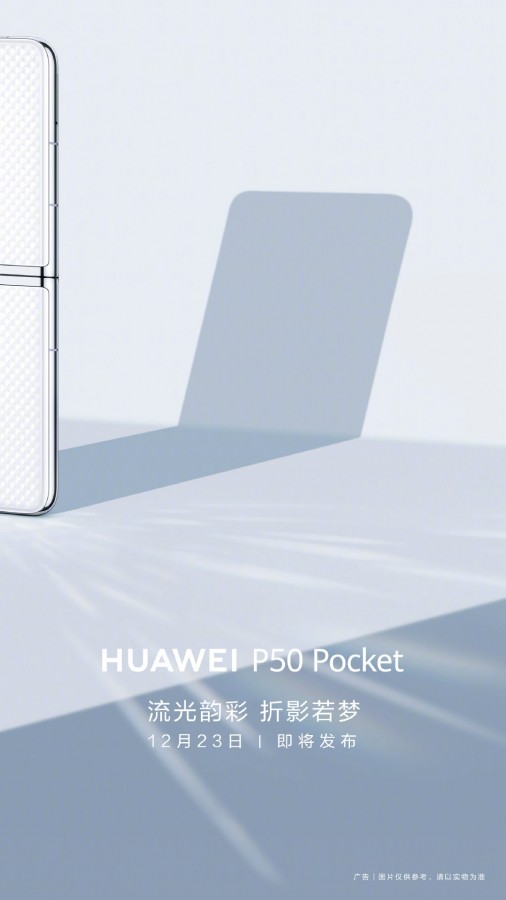
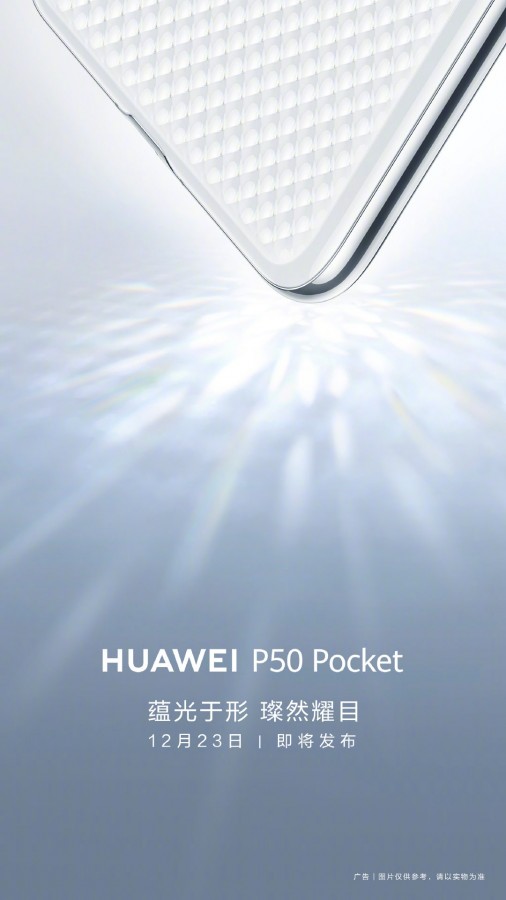
Yesterday, Huawei teased its upcoming clamshell foldable phone dubbed Huawei P50 Pocket. The device is scheduled to launch on December 23 in China. Today, the company is back, this time the crystal-like shiny design has been revealed.
According to the teaser, the Huawei P50 Pocket will come with a clamshell design similar to the Samsung Galaxy Z Flip 3. Interestingly, the device has a unique design at the rear with a crystal-like embossed structure which seems to make it easy to hold.
It has a white colourway and it looks bright with its silver-coloured edges. We can notice the antenna bands and the screen lift-up niche in images. The sure does look interesting. However, it remains to be seen whether it holds up to the hype that the Galaxy Z Flip3 created.
As of now, the Motorola Razr is the only competition for the Galaxy Z Flip 3. The Razr has a 6.2-inch internal screen and a 2.7-inch external display. On the other hand, the Z Flip3 sports a larger 6.7-inch internal display and a tiny 1.1-inch cover screen. The Z Flip3 is powered by the flagship Snapdragon 888 SoC, while the Razr has the Snapdragon 765G chipset.
We expect, the Huawei P50 Pocket to bring premium internals while offering a great screen similar to its competition.
Chinese phone manufacturer Tecno has already stepped into the premium smartphone market with the launch of the Techno Phantom X. The device offered great specs at an affordable price. Now, the company seems to raise the bar as it has teased the major camera improvements slated to arrive in the upcoming Tecno phones. Tecno has revealed the Sensor-Shift Image Stabilization technology for its next year’s premium handsets.
As of now, Apple is the only company using the Sensor-Shift Image Stabilization in its phones. Its current-gen iPhone 13 series comes with the same technology sensor offering far better and stable footage. This kind of sensor is said to improve the accuracy of stabilization by up to 350% as compared to traditional lens-based Image Stabilization.
Now, Tecno is said to be the first Android manufacturer to employ this technology. In a teaser video, the company showed the Sensor-Shift IS. The company is expected to bring it in its upcoming phones launching in 2022.
Furthermore, Tecno is also riffed to bring RGBW sensors in partnership with Samsung. Generally, the Red, Green, Blue, and White come colour filters above them, but, this time around, the W pixel won’t have any filter offering 60% more light inside the sensor.
Moreover, Tecno will use a combination of glass and plastic offering brighter photos. Additionally, the company will also bring a telescopic zoom lens in its phones, where the lens will have smooth zooming capabilities.
All-in-all, there will be camera improvements in the upcoming Tecno smartphones. Now, it remains to be seen what other hardware does the company use in its phones. It will also be interesting to see the pricing of the premium Tecno phones.
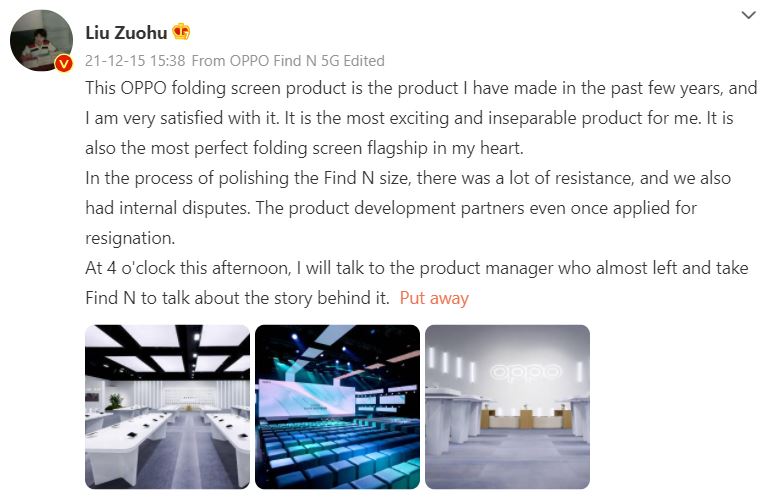
After the OnePlus and Oppo merger, Pete Lau has been very vocal in his support of its sister company, Oppo. And with the announcement of the Oppo Find N at the Oppo Inno Day virtual launch event on 15 December today, Pete Lau has taken to Weibo to share his thoughts on Oppo’s first foldable.
“The Oppo Find N is the foldable flagship that I found myself feeling the most joyful, heart-stirring, and irresistible product yet, in my many years in the industry. It is personally the best foldable to use in the market right now,” Pete Lau stated.
He also stated in the Weibo post that in creating the perfect dimensions for the Find N, Oppo ran into a lot of conflicts internally, as well as running into an employee almost resigning due to the hardships they faced in creating the Find N.
OPPO Find N
As announced earlier, research for the Find N has been ongoing for at least 4 years, and that the Find N would be the first foldable in the industry to use a vertebral-designed hinge compared to the U-shaped hinges of its industry peers, seen as the turning point for foldables going mainstream.
The hinge was the biggest challenge for the Find N, as Pete Lau mentioned that Oppo had to patent 125 technologies, just to eliminate the crease, and the end result was an almost no-crease customer-wowing industry-leading flagship foldable.
The newly designed hinge is said to help solve the screen crease problem that has been plaguing foldables like the Galaxy Z Fold3 to this day. Pete Lau previously shared that when he showed the Oppo Find N to other foldable users, their reaction to the Oppo Find N having an unnoticeable crease was jaw-dropping.
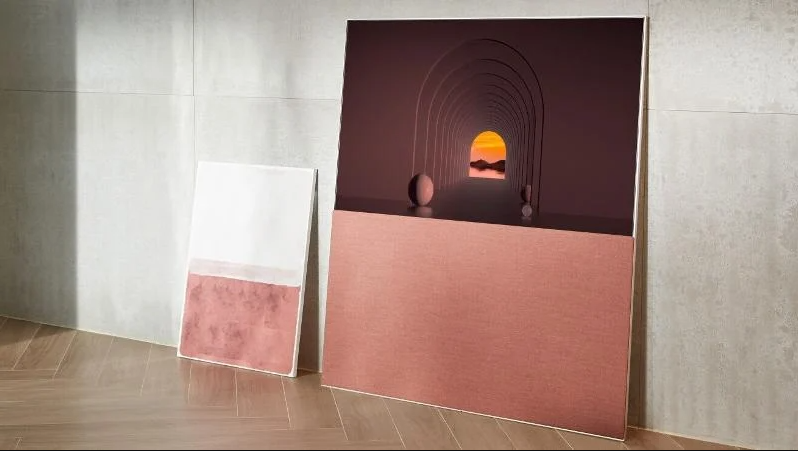
LG has unveiled the Objet TV as a lifestyle offering as it seeks a piece of the pie in the luxury segment of the TV market. The LG Objet TV comes with a movable fabric cover and it resembles a canvas, blending into any room with a minimalist design. The Objet TV reflects LG’s subtle use of neutral colors and comes with sophistication, visual harmony, and an exciting viewing experience indoors.
The LG Objet TV (model 65Art90) has an adjustable fabric cover that reflects a curated selection of lifestyle functions. This compares with Samsung’s The Frame TV which displays artwork when the TV is off. The LG Objet TV has a Full View for Gallery mode to show artwork. It also has the Line View option which transforms the TV into a smart display for different content including information, music playback, date, and more. The fabric cover is interchangeable and will come in three colors, reflecting a marked departure from LG’s traditional design.
The LG Objet TV has a 65-inch OLED with an 80W, 4.2-channel sound output system with an appropriate processor. There are still some details still lacking for the Objet TV including pricing and availability details.
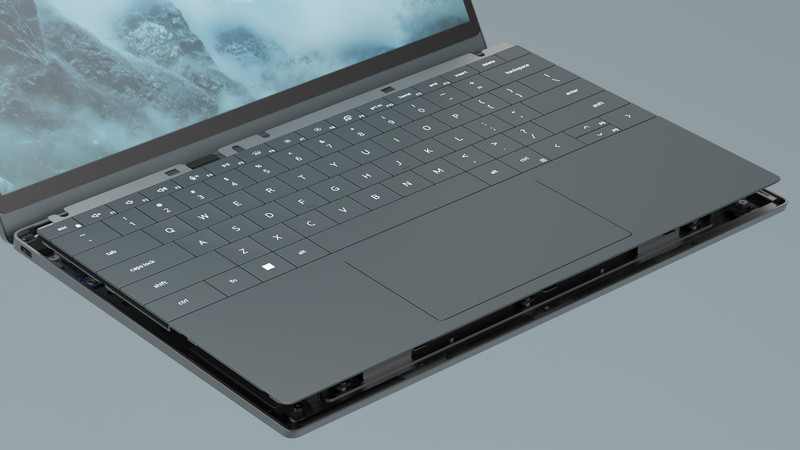
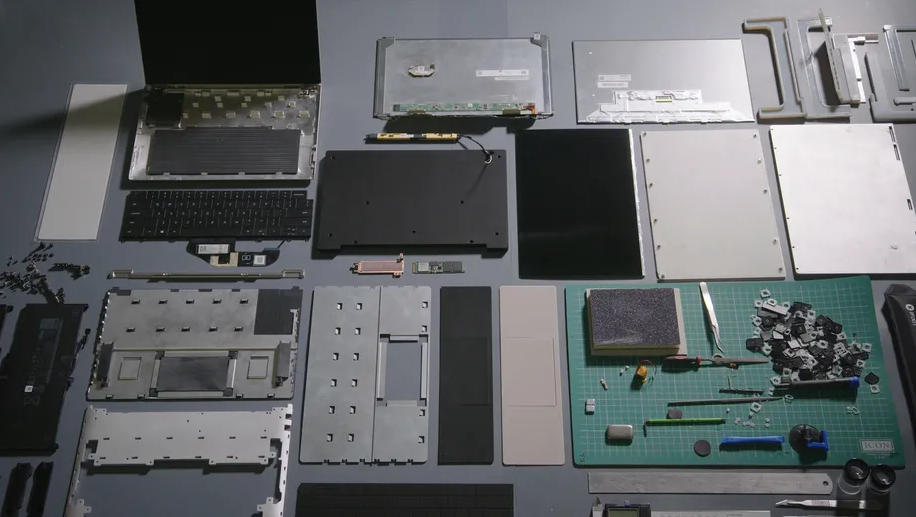
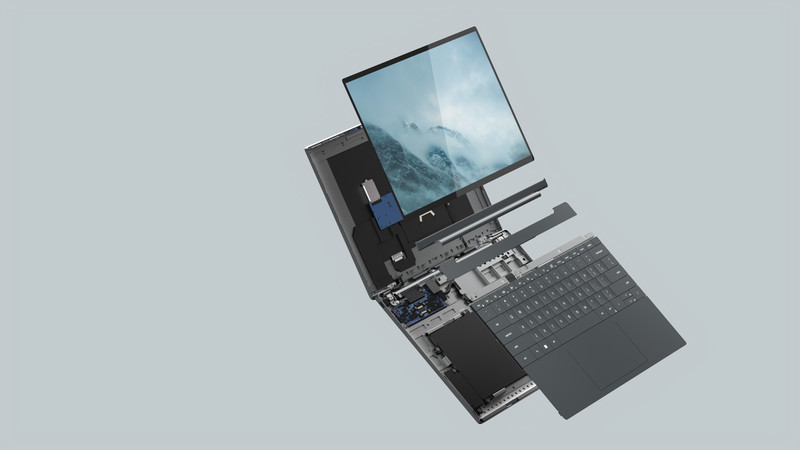
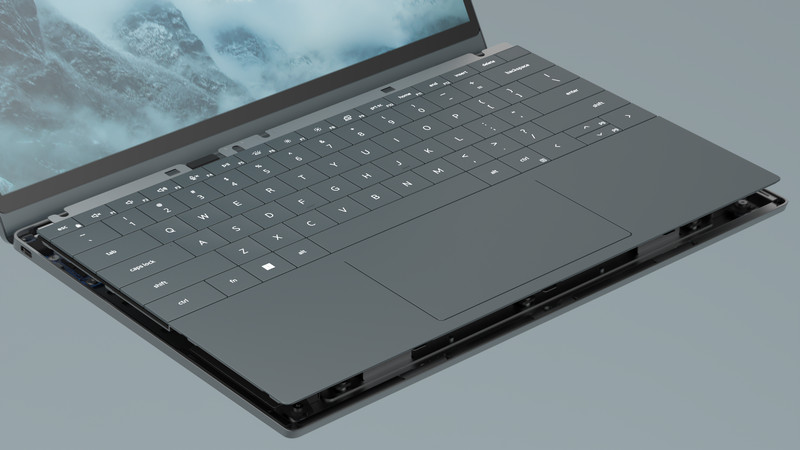
The just-announced Dell’s Luna laptop concept will yield a long-lasting laptop with an excellent repairability rating and focus on reducing electronic waste and carbon emissions. The laptop is both easy to dismantle and fix back, hence its high repairability potential. It is a collection of innovative and sustainability-oriented ideas although how these lofty ideas are implemented remains to be seen.
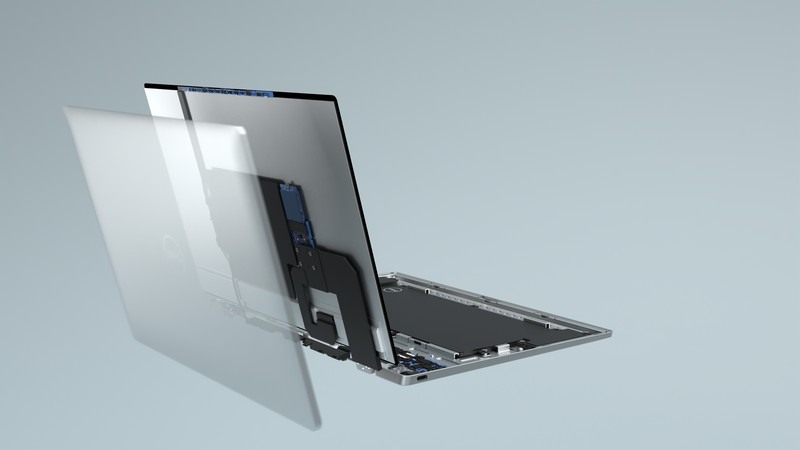
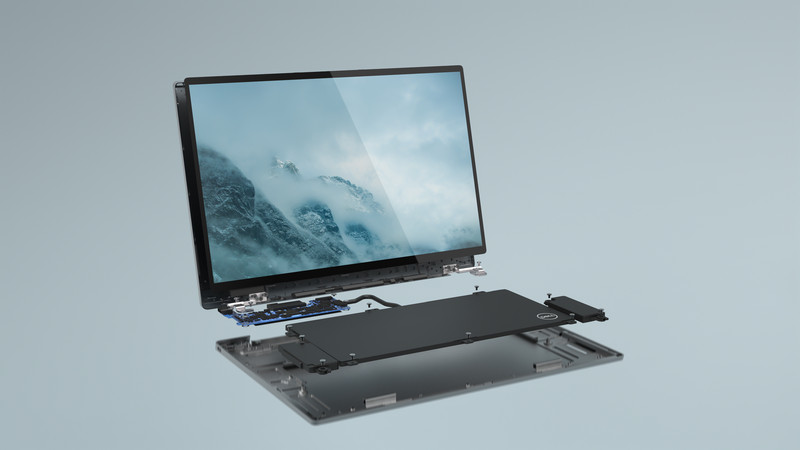
The proof of concept laptop called the Dell Concept Luna is coming from the design team of Dell and has several features that will help to make the device easy to maintain and fix. The device does not require the traditional tools needed to open laptops. Keystones are used extensively to hold parts of the laptop together and components like the screen and keyboard, easily pop out when the pair of keystones holding them are removed. Overall, the laptop is expected to contain fewer screws than any previous Dell laptop. This implies that the turnover time for repairing the device or replacing components is significantly reduced.
1 of 6
Dell Luna Laptop Concept
Dell Luna Laptop Concept
One of the major challenges of many laptop models is the cooling fan which is prone to malfunction. When the fan is not functioning optimally, some resort to complementing it with an external USB fan, which introduces some clutter to the workstation. Thanks to some innovative designs, the Dell Concept Luna does not have a cooling fan – a shrunken-down motherboard placed in the top cover provides for passive cooling of the laptop by itself. The full array of design choices and components in the Dell Luna has made it to score high on sustainability due to the reduced capacity for electronic waste and climate change.
There are a few issues that pop out due to the design concept of the Dell Luna like the upgradability of its components for it to remain relevant after several years. There is also the flipside of having a shrunken-down motherboard which could provide performance problems. There are still no details on a possible release date for the concept, which is still under development.
Last week, OnePlus was revealed to be working on a new mid-range device codenamed ‘Ivan‘. The model was speculated to be the next generation OnePlus Nord CE dubbed the Nord CE 2. Now, more leaks have surfaced confirming this claim and hinting at the specifications and launch timeline of the upcoming device.
OnePlus Nord CE 5G
According to a report by 91mobiles, known tipster Yogesh Brar has told that the device will indeed be called the OnePlus Nord 2 CE. The tipster revealed that the smartphone will launch in India in Q1 2022 and will also be made available in the European markets. He added that the device would feature a triple card slot to house dual nano SIMs and a microSD card. The microSD card support comes as a welcome change as the current Nord CE is missing this capability. However, the phone is rumored not to feature the Alert Slider, a staple feature of the OnePlus phones.
Previous leaks regarding the upcoming OnePlus Nord 2 CE have claimed that the device will come with a 6.4-inch AMOLED display with a 90Hz refresh rate. Under the hood, the phone will be powered by the MediaTek Dimensity 900 5G processor with anywhere between 6GB to 12GB of RAM.
The phone will have two internal storage options, 128GB and 256GB. It will have a triple-camera setup on the back, consisting of a 64-megapixel primary OmniVision lens, an 8-megapixel ultra-wide lens, and a 2-megapixel macro lens. On the front side, the device will have a 16-megapixel snapper for taking selfies and video calling.
The phone will come pre-installed with the latest Android 12 operating system with the company’s own OxygenOS 12 on top which is a unified OS from OnePlus and OPPO. It will pack a 4,500mAh battery with support for 65W fast charging.
Coming to the pricing of the device, as the successor of the current-gen OnePlus Nord CE, we can expect the device to launch in India at the same price of ₹24,000 (~$317) to ₹28,000 (~$370) depending on the memory configuration you opt for.
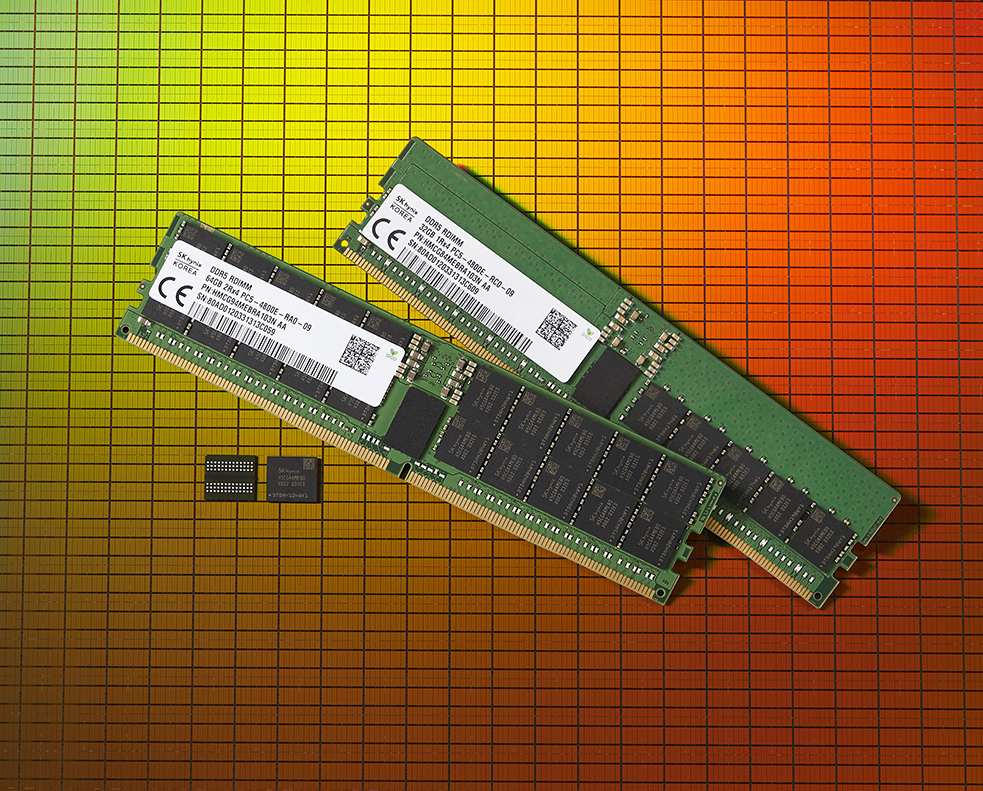
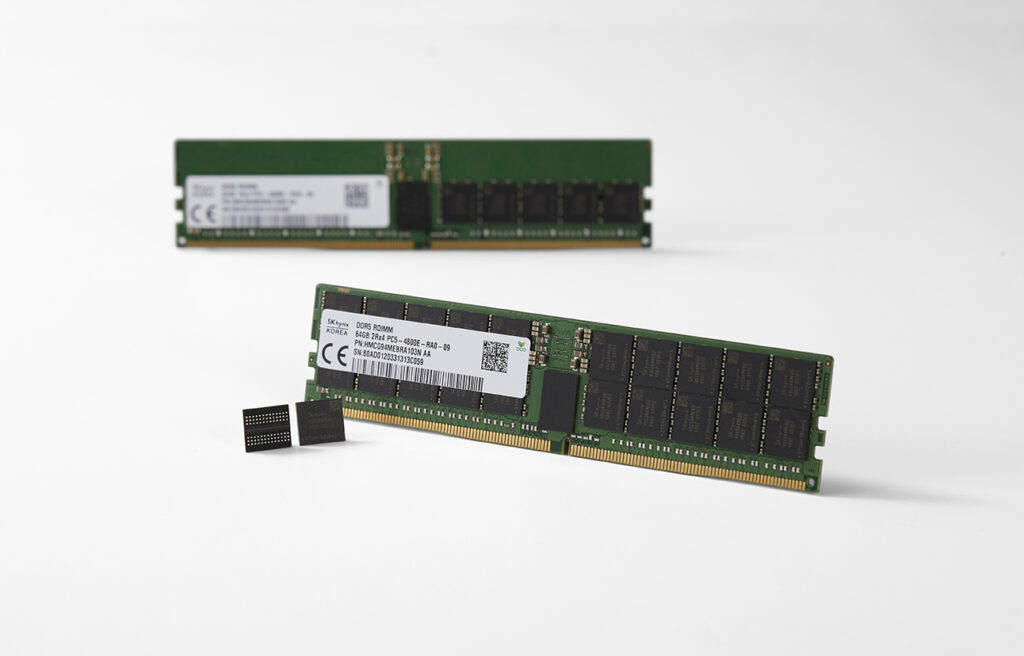
In October 2020, SK Hynix, the second-largest memory chipmaker after Samsung, became the world’s first to release DDR5 DRAM (Double Data Rate dynamic random access memory) chips. The South Korean company continues to maintain its lead in the DDR5 DRAM technology as it announced earlier today that it’s now sampling the world’s first 24Gb (gigabit) DDR5 RAM chips with customers.
According to Yahoo Finance, the announcement came yesterday (December 14th) by SK Hynix, who stated that they have shipped samples of 24 Gigabit (GB) DDR5 DRAM with the industry’s largest density for a single DRAM chip. Previously, memory modules have typically maxed out at 16Gb of capacity per chip.
The rapid development of this higher capacity chip can be credited to SK hynix’s new 1anm manufacturing process, which uses extreme ultraviolet (EUV) lithography. In addition to the increased density, this new process offers an increase in production efficiency and speed by up to 33%. SK hynix expects the product to reduce carbon emissions as well, which is meaningful in the context of ESG management.
The chips also gain some benefits from the new process, including a 25% reduced power consumption for the same capacity, effectively reducing the overall system power draw while potentially offering some extra wiggle room for overclocking.
The initial offerings of the new 24GB capacity chips are set to be 48GB and 96GB modules for supply to cloud data centers. It is also expected to power high-performance servers, artificial intelligence (AI), and machine learning. Additionally, this increase in DDR5 DRAM capacity comes at a crucial time when the world is witnessing the dawn of the Metaverse.
Earlier this year, OPPO and OnePlus merged the codebase of ColorOS and OxygenOS. The OnePlus Nord 2 launched as the first OnePlus device with software based on the newly merged codebase. Recently, the OnePlus 9 series was updated (and pulled) to OxygenOS 12 (Android 12), which is also based on the unified codebase. The switch to this new codebase has now started affecting third-party software development for OnePlus smartphones.
OnePlus phones have always been popular in the modding community since the beginning. Unfortunately, this is coming to an end with the switch to a shared codebase with OPPO’s ColorOS.
According to a developer and XDA Senior Member kristofpetho(via ITHome), OnePlus hasn’t updated the kernel sources of the OnePlus 9 Pro since August 2021. For the unaware, OnePlus made the announcement regarding the unified codebase a month earlier in July 2021.
As a result, the developer has stopped the development of the Omega kernel (custom kernel) for the OnePlus 9 Pro. He states that OPPO is known for poor kernel support and with OnePlus doing the same despite promising otherwise, it will be difficult for any sort of third-party development.
If OnePlus continues to follow the footsteps of OPPO, users may no longer install any custom ROM, custom kernel, custom mod, and others on their beloved OnePlus smartphones.
OPPO and OnePlus have promised a unified operating system for 2022. It will be most likely ColorOS but may sport a new branding.
Last week, vivo took to its website to announce the Y55s 5G, the latest addition to its mid-range device offerings. The Chinese smartphone maker revealed the hardware and software specifications of the Y55s, which included the company’s first 6000mAh battery in a smartphone but did not give any details on its pricing and availability. Now the vivo Y55s are finally available for pre-order in China.
According to vivo’s Chinese website, the Y55s is now available for pre-order with a starting price of 1,399 yuan ($220 approx) for the 6 GB + 128 GB variant. The site also states that the smartphone is slated to go on sale starting December 17th at 10 AM.
The phone houses a large 6000mAh battery capable of providing up to 35 days of standby time while on a 4G network. The massive battery also gives 160 hours of music playback with headphones on. When it comes to gaming, the device can last from 11 to 13 hours of gaming, depending on the title. So let’s look at other specifications and features packed into this device.
Display and Design
The Vivo Y55s has 163.87 x 75.33 x 9.17mm dimensions and weighs 199 grams. It has a 6.58-inch LCD screen with a teardrop notch that offers a Full HD+ resolution. The screen also features noticeable bezzles and a moderate chin. On the rear, we can see a rectangular dual-camera housing with an LED flash and the vivo branding, which is present on the bottom left side of the rear panel.
Camera
There back of the phone houses a 50MP f/1.8 primary lens and a 2MP f/2.4 second sensor for macro shots. The lack of a portrait camera and the ultrawide lens is somewhat compensated by the AI software.
Performance
The vivo Y55s is powered by the Dimensity 700 SoC, coupled with 6 GB or 8 GB of RAM and 128 GB of built-in storage. As mentioned above, the device houses a massive 6,000mAh battery which supports 18W fast charging. The phone has Android 11 pre-installed with the OriginOS 1.0 skin on top of it.
In connectivity, the device offers dual SIM support, Wi-Fi, Bluetooth, a USB-C port, and a 3.5mm audio jack. It also features a side-facing fingerprint scanner.
Vivo Y55s pricing and availability
The Y55s 6 GB + 128 GB variant has a retail price of 1,499 yuan but is available for pre-order in China right now at an initial price of 1,399 ($220). Similarly, the 8 GB + 128 GB variant is also available for pre-order at an initial price of 1,699 yuan ($267). The 8GB+256GB version will be launched on the vivo official website and e-commerce platform on December 24th and will initially cost 1,899 yuan ($298).
The Y55s is available in China in three colors, namely Ceramic Black, Mirror Lake Blue, and Cherry Pink Meteor.
With the launch of the OPPO Find N, another smartphone brand has entered the foldable phone market. Although, it remains to be seen how the Find N stacks up against established players like Samsung, which has seen great success with its Galaxy Z series. Earlier today (15th December 2021), the Find N was launched with a price tag much cheaper than its rival Galaxy Z Fold3, but does this mean that the Chinese brand is skipping out on features? Let’s find out.
Samsung has already received praises for its latest foldable smartphones that offer both notable specs and a premium design. Its Galaxy Z Fold3 is the top end model and offers a clean design with a minimal camera module. When folded, it becomes quite compact but thicker as well, which is also the case for the Find N. But while Samsung had focused on ensuring a sleek and protected experience with IPX8 waterproof rating, Oppo went for an improved hand feel approach. The company placed an emphasis on user’s overall experience while using the device. It arrives with an ergonomic design, display that stays crease free for at least 5 years, and the handy FlexForm mode that even ties in with the camera app, thanks to its new Flexion hinge mechanism.
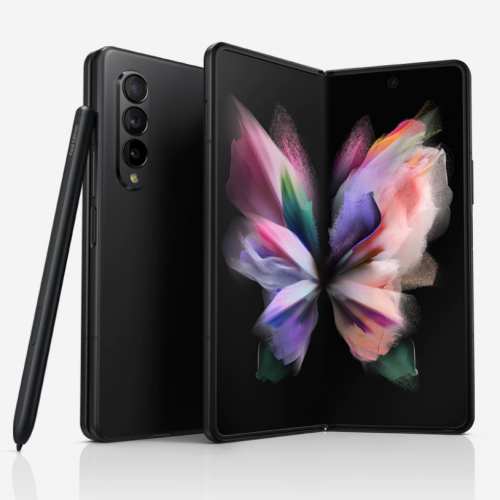
Galaxy Z Fold3
Display
Talking about the Galaxy Z Fold3 first, it sports a 7.6 inch primary AMOLED display that has a 2K resolution, 120 Hz refresh rate, and HDR10+ certification. Its external screen is a 6.2 inch AMOLED, which also features LTPO technology. On the other hand, the Find N offers a 7.1 inch E5 AMOLED panel that has an odd 1792 x 1920px resolution for its squarish internal display that supports 120Hz adaptive refresh rate and TÜV Rheinland certification as well. The external display is a 5.49 inch AMOLED panel, but notably, both the internal and external panel feature a punch hole selfie camera.
Specs & Software
In terms of specs and software, both smartphone are quite similar. The Find N and Galaxy Z Fold3 5G feature the Qualcomm Snapdragon 888 SoC along with UFS 3.1 storage and LPDDR5 RAM. But the Find N starts from an 8GB+256GB model, while the Galaxy counterpart starts from a higher 12GB+256GB configuration. However, both models top at 12GB RAM + 512GB internal storage. The South Korean tech giant’s foldable phone runs One UI 3.1 based on Android 11, while the Find N runs ColorOS 12 that is also based on Android 11 OS.
Camera
For photography, the OPPO Find N might have a clear edge over the more expensive Galaxy Z Fold3. It sports a triple camera setup on the rear, which comprises of a 50 megapixel Sony IMX 766 primary camera, 16 megapixel ultra wide angle lens, and a 13 megapixel telephoto shooter. Both the external and internal display also offer a 32 megapixel punch hole selfie shooter as well. Meanwhile, Samsung offers the Galaxy Z Fold3 with a triple camera module that is similar to the previous generation. In other words, you get a three 12 megapixel sensors for the primary, ultra wide angle, and telephoto sensors. The selfie shooter is housed underneath the primary display and includes a 4 megapixel main and 10 megapixel wide angle lens. During the launch conference today, Oppo execs had showcased the new foldable phone’s camera capabilities, which appears to be quite a bit more versatile than the Samsung offering.
Battery
The Find N seems to have an edge in terms of battery as well, with its 4,500mAh capacity that supports 33W SuperVOOC charging, 15W wireless charging, and even 10W reverse charging as well. On the other hand, the Galaxy Z Fold3 houses a 4,400mAh battery that supports just 25W fast charging and 11W wireless charging. While it also supports reverse charging, the Find N wins in this department on paper.
Price
This is perhaps one of the most interesting aspect of the Find N. Oppo is entering the foldable phone segment in bang with a price tag that is close to conventional top end flagship phones like Apple iPhone 13 series or the Samsung Galaxy S21 series. It starts from 7,699 Yuan (roughly 1,200 US Dollars) in China while the Galaxy Z Fold3, Samsung’s current top end foldable model, starts from around 1,700 US Dollars. Unfortunately, the global pricing for the former is unknown at the moment.
OPPO Find N VS Samsung Galaxy Z Fold3 5G: PROS and CONS
OPPO Find N
PROS
Better Camera specifications
Slightly larger battery and faster charging rate
More affordable
Ergonomic Design and New Flexion Hinge
CONS
Still pretty expensive compared to some affordable flagship phones
Display loses out to Samsung Galaxy Z Fold3
Samsung Galaxy Z Fold3
PROS
Larger internal and external displays with higher resolution
Support for S Pen Stylus
IPX8 Waterproof rating for better protection
Under Display Camera technology
CONS
Easily one of the more expensive handset in the ultra premium segment
We use cookies on our website to give you the most relevant experience by remembering your preferences and repeat visits. By clicking “Accept”, you consent to the use of ALL the cookies.
This website uses cookies to improve your experience while you navigate through the website. Out of these, the cookies that are categorized as necessary are stored on your browser as they are essential for the working of basic functionalities of the website. We also use third-party cookies that help us analyze and understand how you use this website. These cookies will be stored in your browser only with your consent. You also have the option to opt-out of these cookies. But opting out of some of these cookies may affect your browsing experience.
Necessary cookies are absolutely essential for the website to function properly. This category only includes cookies that ensures basic functionalities and security features of the website. These cookies do not store any personal information.
Any cookies that may not be particularly necessary for the website to function and is used specifically to collect user personal data via analytics, ads, other embedded contents are termed as non-necessary cookies. It is mandatory to procure user consent prior to running these cookies on your website.









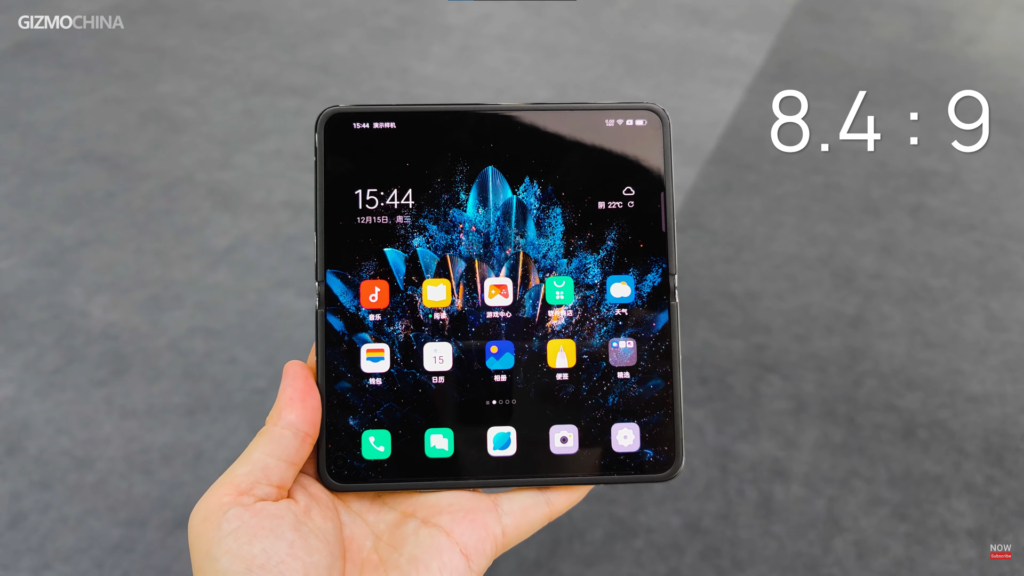
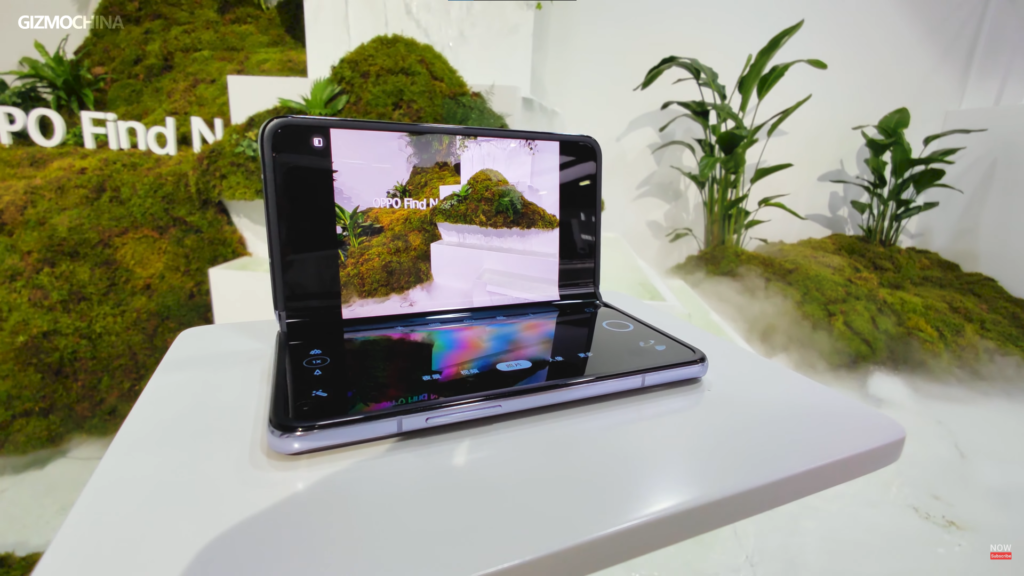
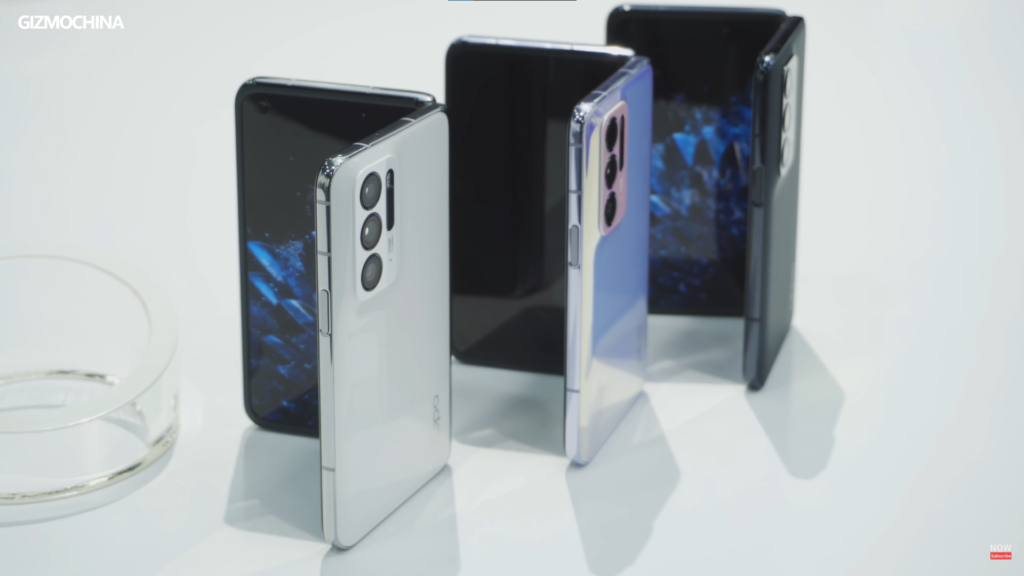 The Find N feels pretty smooth to switch between the outer and the inner display as whatever task you are carrying out on the outer screen gets seamlessly relayed to the inner screen even before it’s completely unfolded. Users can swipe up on the inner screen when folding the device to continue using the same function on the outer screen, which feels pretty convenient.