Advertisement

Electric Car Sales in India grow 234% in the first half of the financial year 2021-2022

With the first half of the financial year 2021-2022 coming to an end in September, India saw a 234 percent year-on-year growth in Electric car sales, with Tata Nexon EV being the best-selling model in this segment.
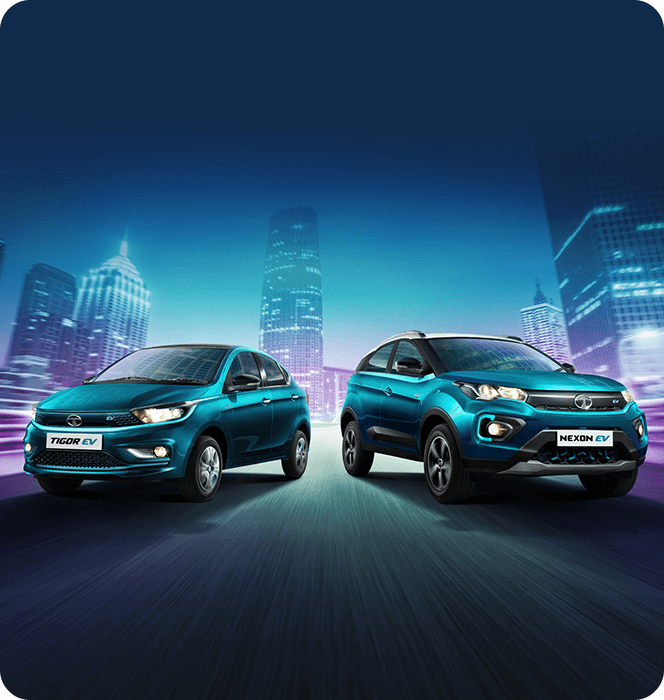
TATA EVs

The EV industry in India has changed a lot in the last year. Sales of electric vehicles in the country are on the rise. Although the industry is still in the budding stage, the interest in buying EVs has significantly increased. With that being said, let us look at the sales performance of EVs in India for H1 FY22.
electric car sales india FY 2021-2022

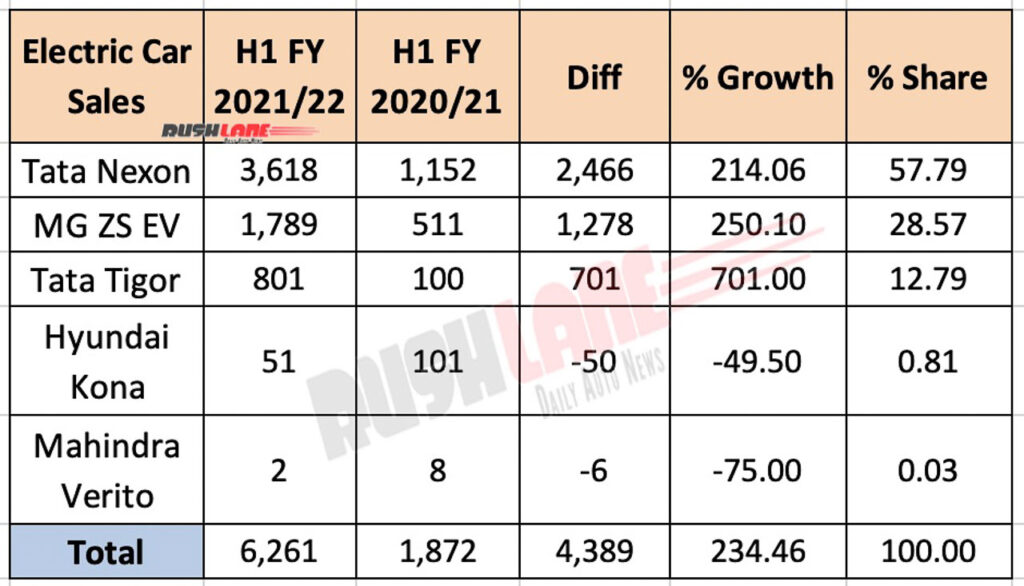
A total of 6,261 units were sold during this period, up 234 percent over the 1,872 units sold from April to September 2020. This was a difference of 4,389 units. Leaders in this segment include automakers such as Tata Motors (Nexon and Tigor EV), MG Motors (ZS EV), Hyundai (Kona), and Mahindra (Verito).

Tata Motors, the Indian automobile giant, remains dominant with their Nexon (SUV) and Tigor (Sedan) models, making up for 70% of total private EV sales in H1 FY21-22. Both the Nexon and Tigor models enjoyed growth in sales by 214 percent and 701 percent, respectively, compared to H1 of last year.

The Tata Nexon topped the charts with 3618 units sold, single handily making up almost 58% of India’s total private EV sales for H1 of FY2021-22. Tata Motors also revealed the plan to launch ten more electric cars in India over the next five years. Rs 7,500 crore ($1 billion) has been raised for this venture, and out of these ten EVs being planned, at least seven cars will be launched over the next four years.

MG ZS EV was at No. 2 with 1,789 units sold in the April-September 2021 period, an increase of 250 percent or 1,278 units over just 511 units sold during the same period last year.

At No.3 was Tata Tigor EV with sales of 801 units in April-September 2021, up 701 percent from 100 units sold in the April-September 2020 period. This jump in sales can be accredited to the updates the vehicle received in the battery and other departments earlier this year.

Hyundai Kona came as 4th. The sales of this EV have dipped 50 percent from 101 units sold in April-September 2020 to 51 units in the same period of this year. At the last position of private EVs was the Mahindra Verito with just two units sold in the April to September 2021 period, down from 8 units sold in the same period of 2020, relating to a 75 percent degrowth.

With the EV charging stations reaching 500 (427 operational) across the country, government subsidies on EV purchase, and the ever-rising fuel prices, India might soon emerge as a leading EV market.


RELATED


(via)

Huawei has shipped over 80 million wearables globally

Earlier today, Huawei kicked off its smart life new product unveil event to launch many new smart life products. At the event, Huawei’s COO of consumer BG, He Gang, took to the stage to make some market performance announcements regarding Huawei’s smart wearable devices.

He Gang stated that Huawei’s cumulative global shipments of smart wearable devices had exceeded 80 million units. He further added that Huawei is still first in China when it comes to wrist-worn wearable devices. Huawei has served more than 320 million users worldwide, and Huawei’s sports health App has reached 83 million monthly active users worldwide.

Huawei has also cooperated with more than 60 research institutions to carry out health research in the fields of respiratory health, heart health, sleep apnea, vascular health, women’s health, and more with Huawei wearable devices. At present, more than 5 million users have joined the research ecosystem of Huawei Research.

He Gang also pointed out that in the future, Huawei’s smart wearable devices will be divided into five series, namely smart technology, fashion trends, health care, classic all-around, and professional extremes.

Following these announcements, we expect multiple new launches in the wearable device segment by Huawei. In fact, earlier today, Huawei released the Watch GT Runner, the WATCH GT 3, Huawei FreeBuds Lipstick (earbuds), MateBook E 2021, and Mate X2 collector’s edition.

RELATED

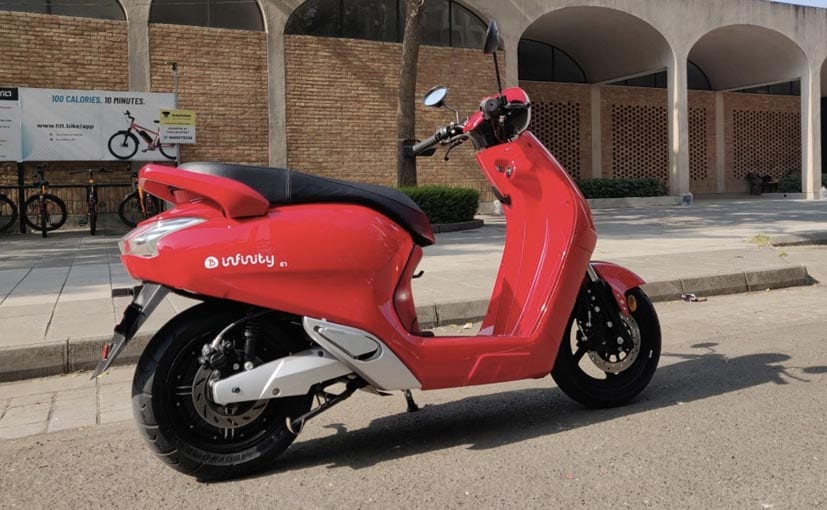
Bounce Infinity electric scooter with swappable battery to launch soon in India, will rival Ola

Bengaluru-based last-mile mobility solutions company, Bounce, is all set to introduce its first-ever electric scooter in India. The scooter will be manufactured in the country and will be called Bounce Infinity. The company has promised that the scooter will be equipped with “enhanced state-of-the-art equipment and intelligent features.” Prebookings for the vehicle will be starting soon, with deliveries starting from January 2022.

The most unique bit of the Bounce Infinity is that it will be coming with a removable Li-ion battery that can be removed and charged per requirement. Bounce will even be offering a ‘Battery as a service’ option, which it claims is the first of its kind in the Indian market.

Bounce-Infinity

Customers opting for this scheme will be able to purchase the scooter at a relatively low price without the battery. They’ll then be relying on Bounce’s battery swapping network instead. Stations will be set up where owners will be able to simply grab a fully-charged battery and skip the long wait times associated with charging. A battery alone constitutes a large percentage of an EV’s cost, and that’s something that will be subtracted through the ‘Battery as a service’ initiative.

Bounce says that it is rapidly developing its battery-swapping network, which will serve not only its retail customer but also its successful ride-sharing business. Its Infinity scooter will be facing off against rivals like Ola’s S1 e-scooter in an EV market that’s getting increasingly saturated.

Lastly, Bounce has revealed that it has acquired a 100% stake in 22Motors following a deal valued at about $7 million. As part of it, the company acquired a manufacturing plant located at Bhiwadi in Rajasthan along with its intellectual property. The plant is capable of mass production, reaching up to 180,000 units. Bounce is also planning to set up another similar plant in southern India and to invest $100 million in its EV business over the next year.

RELATED:

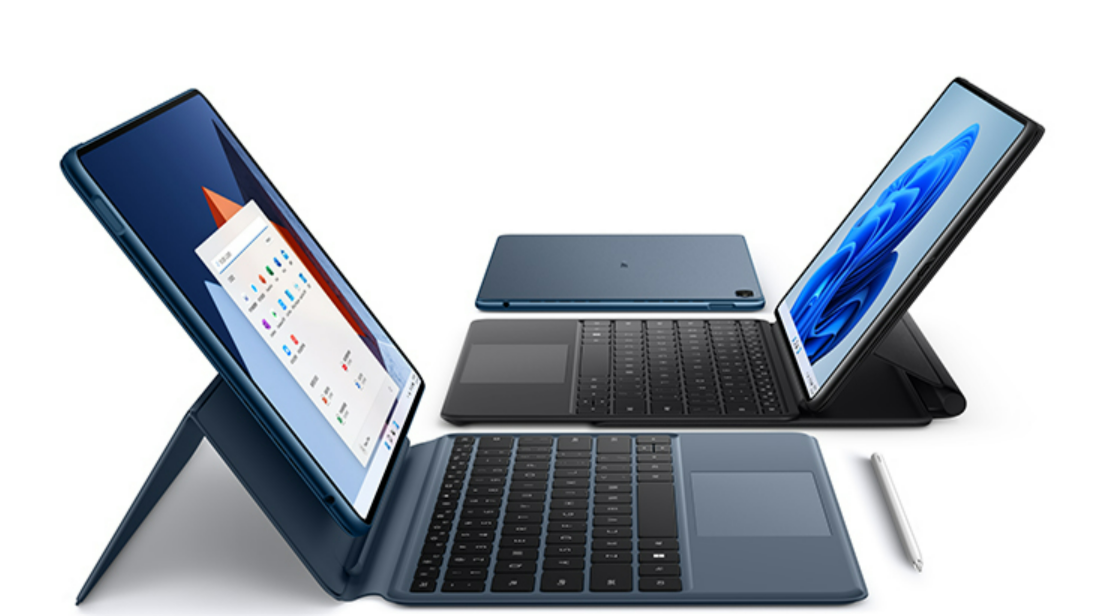
Huawei MateBook E 2-in-1 takes on the Microsoft Surface with 12.6-inch OLED display & Core i7

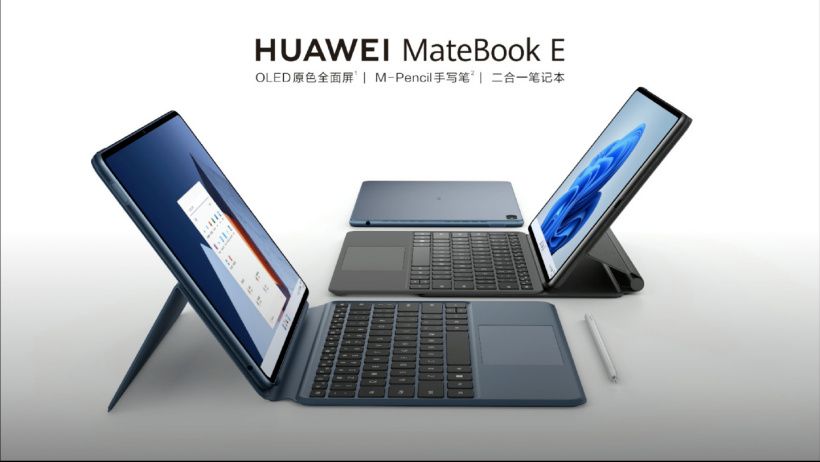
Ever since the US ban, Huawei has shifted its attention towards other consumer electronic segments like wearables and laptops. The company’s big event in China today (Nov. 17) saw the launch of new smartwatches as well as a brand-new convertible laptop, the Huawei MateBook E. If you recall, this isn’t the first hybrid laptop from the brand. One of the first laptops from Huawei back in 2016, simply called the Huawei MateBook was a 2-in-1 laptop. And portability remains one of the biggest selling points of the new MateBook E. Clearly, Huawei is looking to capture the market dominated by the likes of Apple’s iPad Pro and Microsoft’s Surface Pro series.

Huawei MateBook E

Huawei MateBook E Design

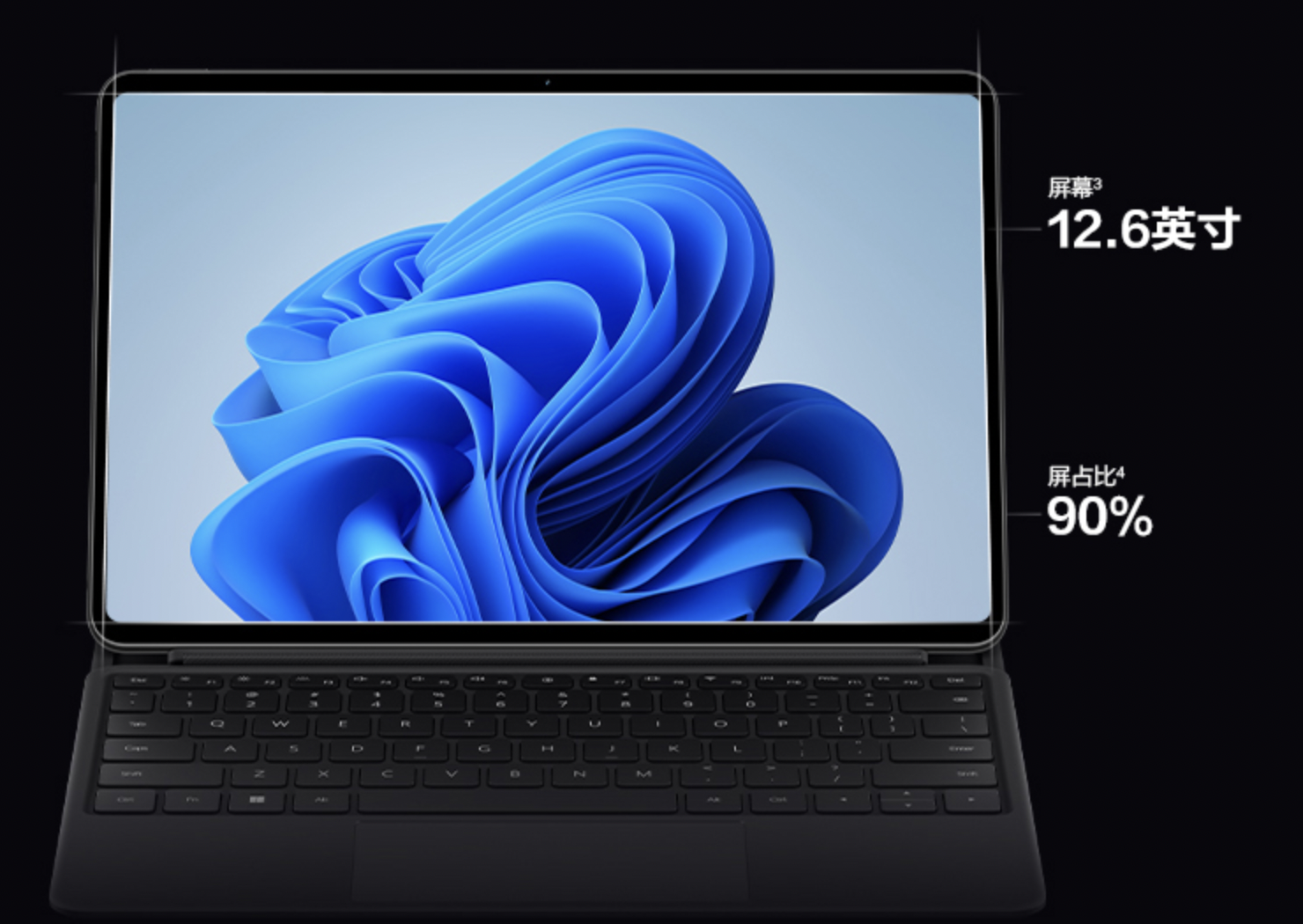
The Huawei MateBook E is 7.9mm thick and weighs only 709 grams, making it way lighter and portable than traditional laptops. It features a 2560×1600 12.6-inch OLED display with 100% DCI-P3 color gamut, 16:10 aspect ratio, and 600 nits brightness. Much like the MatePad Pro 12.6, the convertible notebook features a 90% screen-to-body ratio, ensuring very thin bezels on all four sides.

Huawei Matebook E screen

Wait, if you are wondering how the MateBook E and the MatePad Pro 12.6 differ, then know that the basic design remains more or less the same but everything else including the processor and software are different. The MateBook E is pricier and way more powerful than the MatePad Pro 12.6. Simply put, the MateBook E is a true 2-in-1 laptop, while the MatePad Pro 12.6 is basically a tablet with a keyboard accessory.

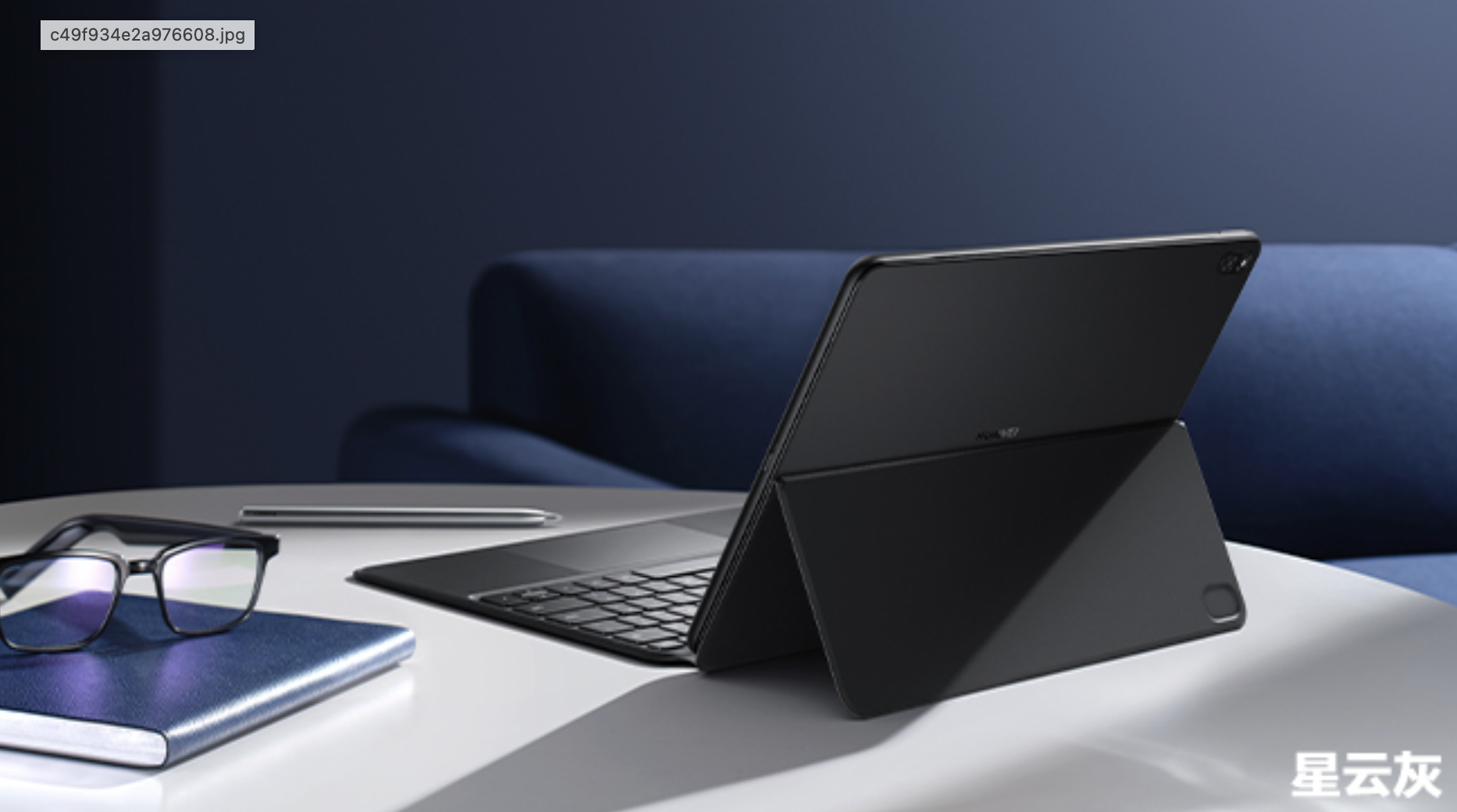
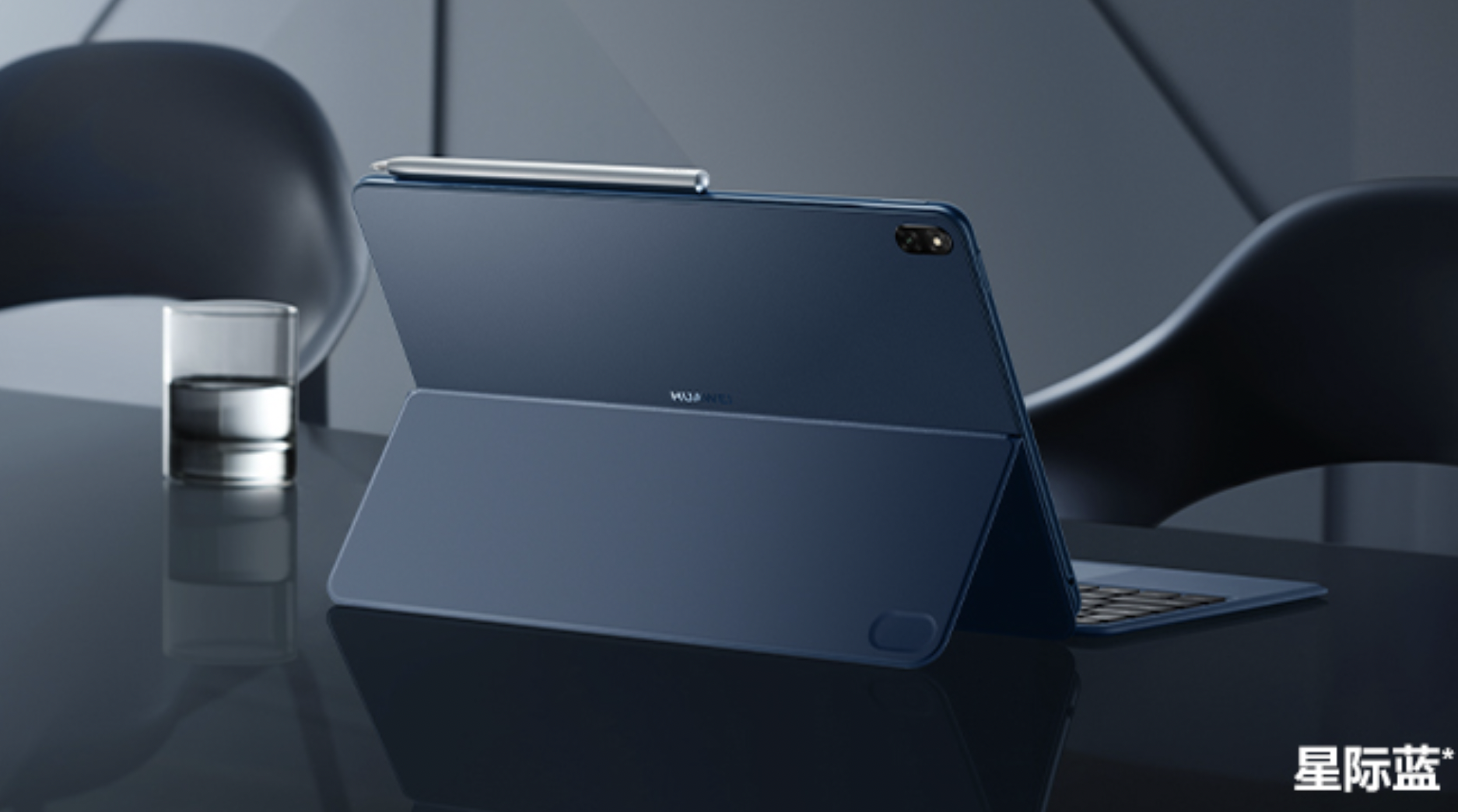
The Huawei MateBook E comes with a soft-touch finish at the back with two choices for color – Starry Blue and Nebula Grey. There are two different keyboards being offered, one with a simple kickstand design and another full-sized keyboard with what Huawei calls a rail slide design (translated). The second keyboard accessory comes only with the i7 variants and features a USB-C port along with an adjustable backlight.

Huawei MateBook E

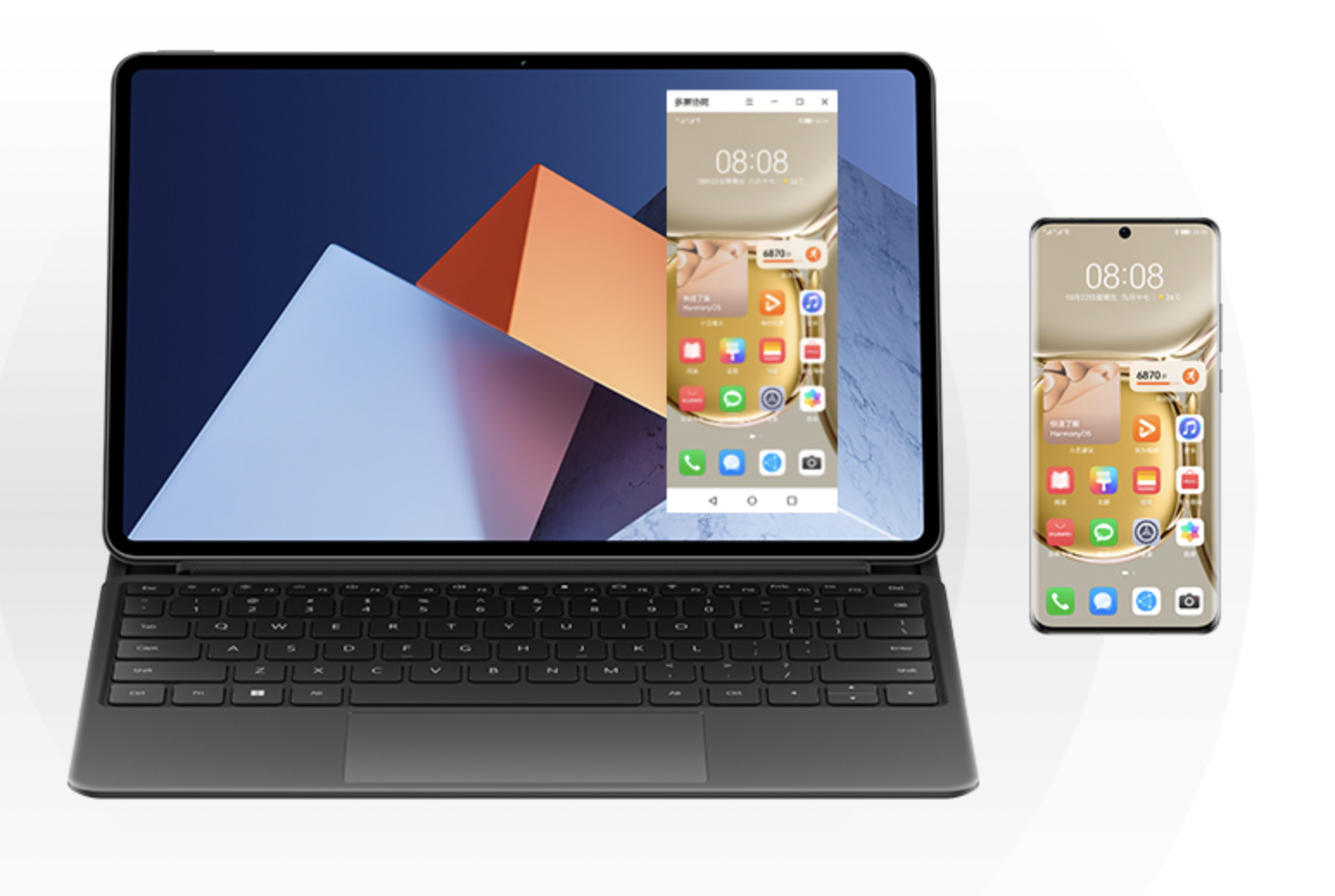
Note that the keyboard also supports Huawei’s share feature via NFC (the area is around the touchpad). You can simply tap your Huawei smartphone or tablet to connect with the laptop for multiscreen collaboration.

Huawei Matebook E Multiscreen collaboration

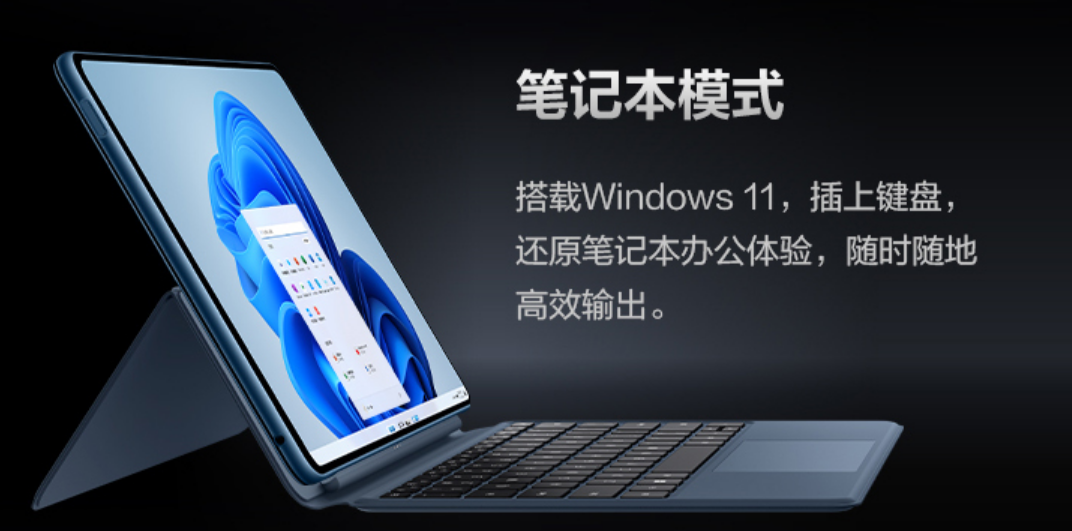
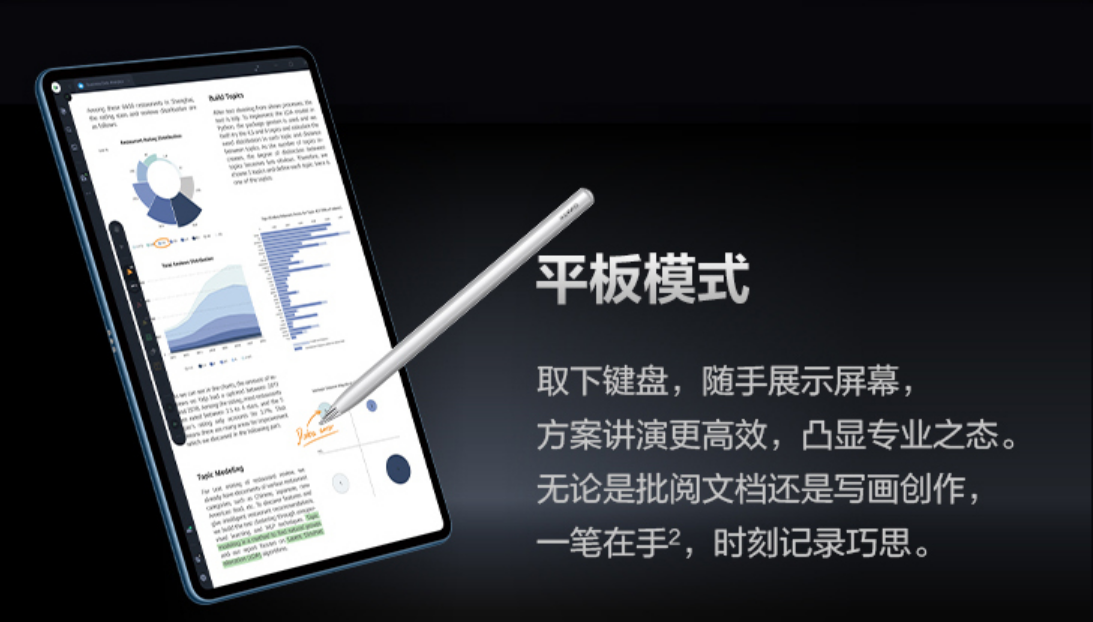
When you connect the MateBook E with the keyboard, it automatically enters Windows 11’s laptop mode. Similarly, simply picking it up from the keyboard accessory switches to the tablet mode.

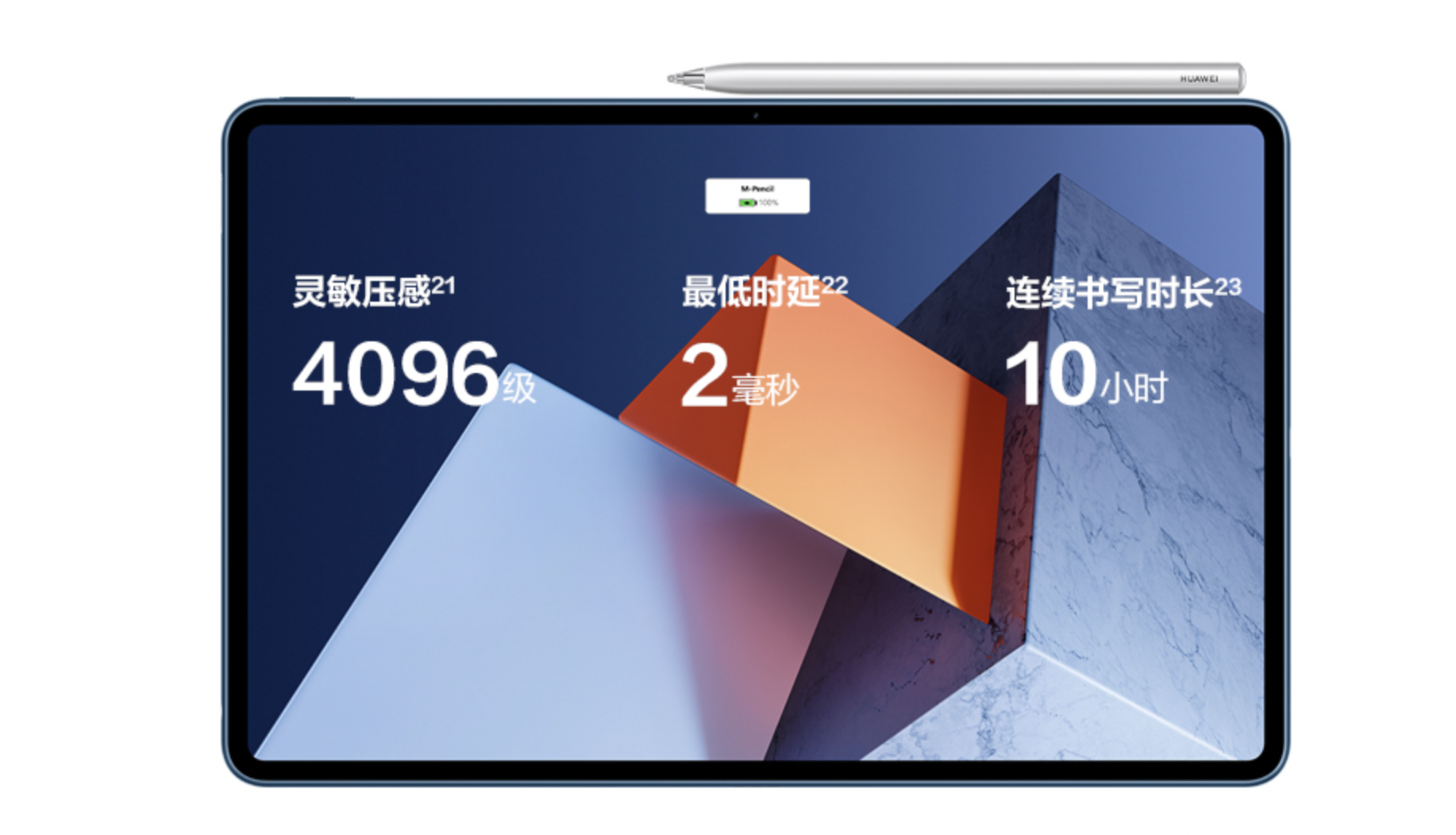
The MateBook E also comes with Huawei’s second-generation Huawei M-Pencil support. As with its MatePads, the laptop supports magnetic paring with the stylus and can charge it wirelessly too!

Huawei Matebook E M-Pen 2

Finally, the convertible laptop features a fingerprint-enabled power button on the side for added security.


Huawei MateBook E Specs

Despite its thin and portable form factor, the MateBook E is no slouch when it comes to performance. You can get up to Intel’s 11th Generation Core i7 with Intel Iris X graphics on the top-end model. This is supported by 16GB RAM and 512GB PCIe SSD. Of course, the convertible is available in cheaper and less powerful variants too, like the base model which features the 11th Gen Core i5 with 8GB RAM and 256GB storage. The new 2-in-1 laptop features a Thunderbolt 4 interface that can be connected to an 8K display and supports Wi-Fi 6.


Huawei also adds that the Matebook E comes with 8 layers of heat dissipation design with a shark fin fan and multiple air vents on the side to ensure that the device remains cool even during heavy load.Huawei Matebook E speakers

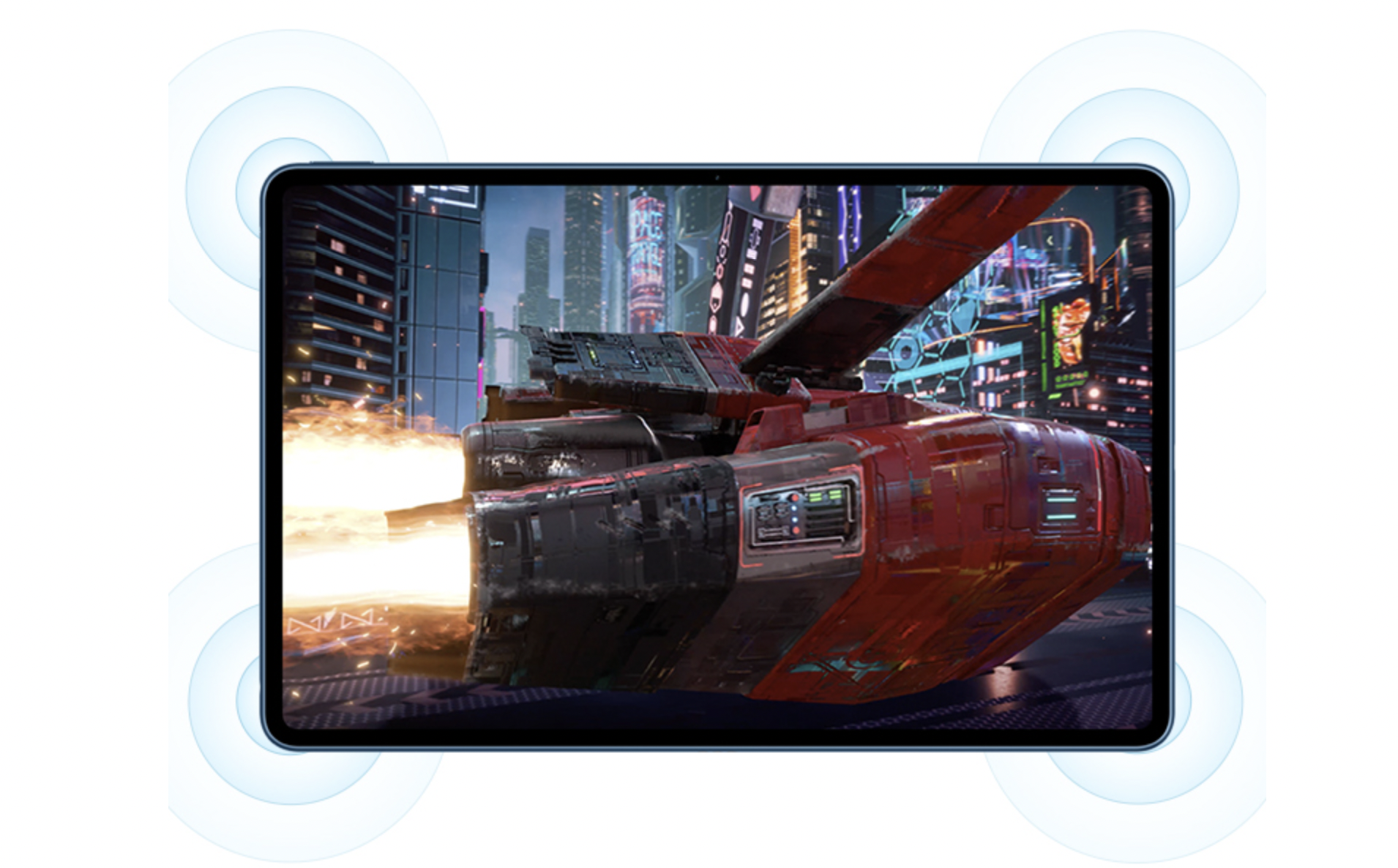
There’s a 8MP front camera for video calls and another 13MP camera at the back with LED flash. You also get four speakers tuned with Huawei Sound.

As for charging, it comes with a USB-C powered 65W charging adapter, which tops up the battery to around 54% in half an hour. A complete charge takes around 90 minutes. The MateBook E comes with a 42Wh rated battery and Huawei claims the battery life to be between 5-8 hours, depending upon the usage.


Huawei MateBook E Price & Availability

The Huawei MateBook E starts at 5999 yuan ($940) for the i5 version with 8GB + 256GB storage. Note that all variants include the keyboard, but the i7 top-end variant price also includes the stylus.

Huawei Matebook E

The MateBook E pricing is as follows:

  • i5+8GB+256GB + keyboard: ¥5999 | $940
  • i5+16GB+512GB + keyboard: ¥6999 | $1098
  • i7+16GB+512GB + keyboard: ¥7999 | $1255
  • i7+16GB+512GB + keyboard/stylus: ¥8699 | $1365

The MateBook E 2-in-1 convertible will go on sale in China from December 1, 2021.


Huawei Watch GT Runner arrives with a stylish, lightweight design, high-end features

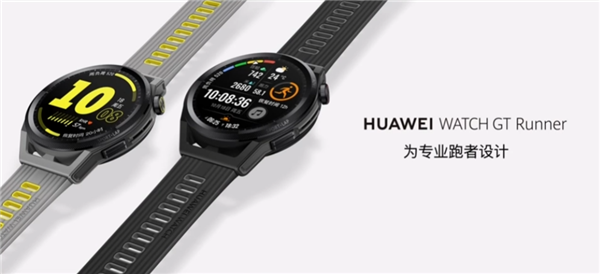
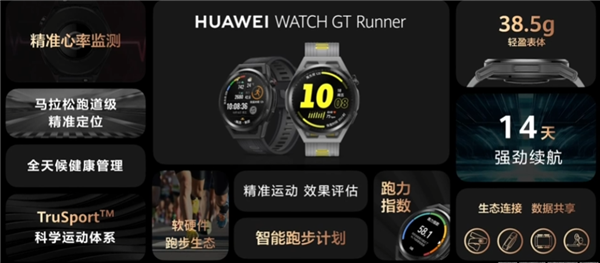
Huawei today held a launch event where it released a number of new products. One of them is the Huawei Watch GT Runner. The smartwatch adopts a sleek design and as the name implies, it is targeted at sportspersons. Huawei Watch GT Runner

The Watch GT Runner can be said to have been specifically designed and optimized from the inside to the outside. The watch’s stylish body is made from a high-strength composite fiber case to create a strong, thin, and wear-resistant case. The watch also draws design inspiration from the supercar grille.Huawei Watch GT Runner

The watch has a lightweight body coming in at just 38.5g. It also has an antibacterial silicone strap so you won’t have to worry about bacteria produced by sweat and stains during sports training.

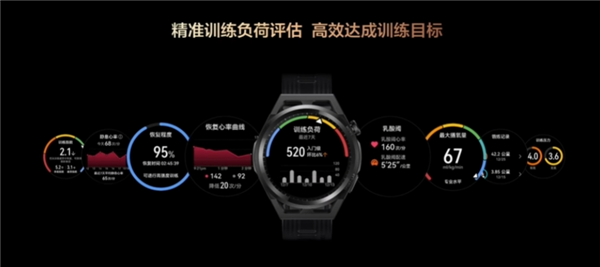
The GT Runner also features a specially designed interface for runners, covering various professional data ranging from training load to running index. Other parameters that can be accessed in real-time include heart rate time, altitude, and weather.Huawei Watch GT Runner

The Watch GT Runner packs a 1.43-inch round AMOLED screen with full-screen touch support. The watch runs on the HarmonyOS which brings support for a variety of third-party application downloads, such as Kugou Music, Himalayas, AutoNavi Maps, Air Travel, etc., covering almost daily life.

Perhaps, the biggest highlight of the Watch GT Runner is the positioning function. The watch is said to feature the industry’s first patented design of floating hidden external antenna. This design hides the positioning antenna in the polymer fiber material. As a result of this, the signal effect is greatly enhanced, and the antenna performance is improved by 135% compared with the traditional design. The watch comes with GPS, Beidou, GLONASS, GALILEO, and QZSS. Huawei Watch GT Runner

In terms of battery life, the Watch GT Runner can support up to 14 days of long-lasting battery life. Even in heavy use scenarios, it can also reach 7 days of battery life. The watch supports wireless charging. It comes with a charger and can also be charged via the wireless recoil of Huawei’s flagship phone.Huawei Watch GT Runner

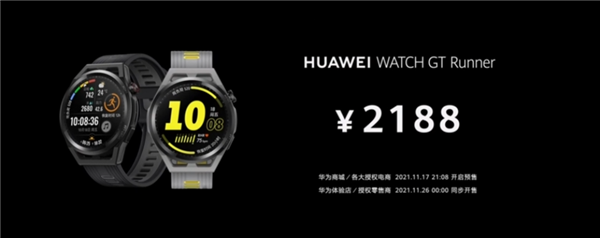
As for the price, the Watch GT Runner will retail for 2188 yuan (~$343). It will be up for pre-order from November 17 and will officially go on sale from November 26.

RELATED:


Huawei launches HarmonyOS powered Smart Helmet in China, features Bluetooth calling & LED turn signals

Huawei has just launched a new product in its home market of China. The new gadget in question is a biking helmet that feature various smart features like Bluetooth calling, voice commands, and more.

Huawei

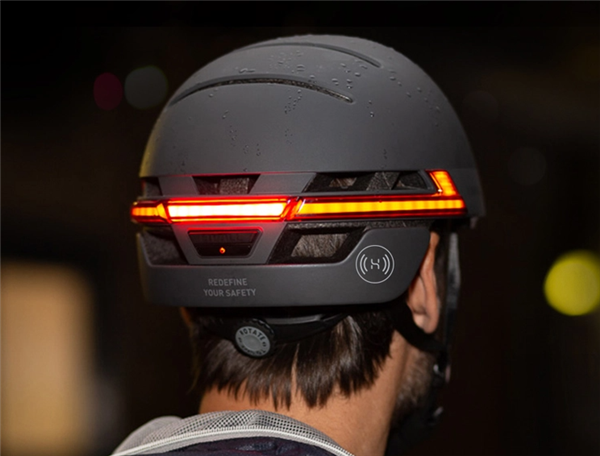
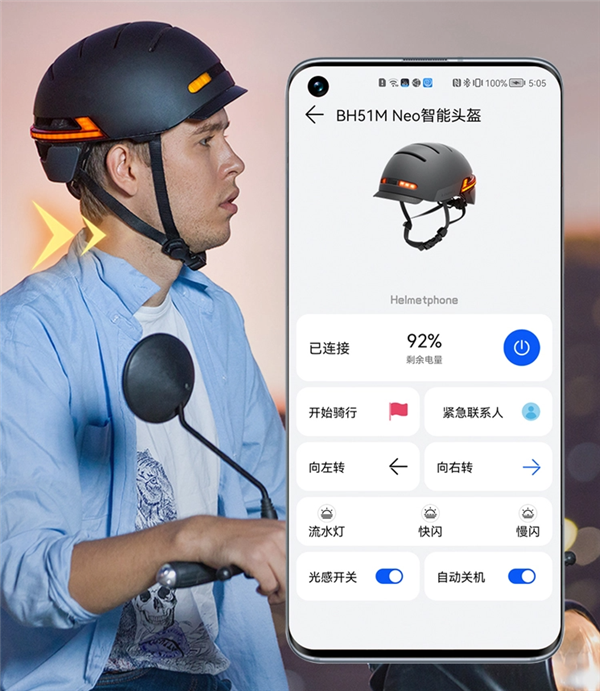
The new smart helmet from the Chinese tech giant is called the Helmetphone BH51M Neo Smart Helmet. It is available in two colors, namely a black and gray variants, and is suitable for roller skating, skateboarding, electric bicycles, and biking as well. The smart helmet is powered by the brand’s proprietary operating system, HarmonyOS. Through this OS, the product supports Bluetooth voice calling that can be enabled with a one touch connection process with your smartphone.

Once paired, users can check the battery of the smart helmet via your phone, even set emergency contacts, and adjust the light mode as well. Notably, it also houses a stereo Bluetooth speaker for music playback and hands free calling. Apart from protecting the users head from fall injuries, the helmet also offers LED lights on the front and back as well. This is visible to other automobiles on the road, especially those behind the wearer.

Huawei

Interestingly, these LED lights work with the built in gravitational acceleration sensor that detects deceleration. In other words, the LED lights up when you slow down and can even detect when you’re making a turn to offer turn signals as well. Simply put, its a smart product that is made to make it safer for bikers to commute on roads filled with cars. The smart helmet is currently available in China through Huawei VMall for a price of 799 Yuan (roughly 125 US Dollars).

RELATED:


Global EV sales set a new record: 3 million units sold in first three quarters of 2021

New data shows that global EV sales in the first three quarters of this year exceeded 3 million for the first time, with South Korea seeing a 96% surge.

Korea Automotive Technology Institute (KAII) (via Just Auto) reports that South Korea ranked as the seventh-largest market for EVs. The country is topped firstly by China with its 1.76 million sales figure, followed by the US with 272,554 units, Germany with 243,892 units, the UK with 131,832 units, France with 114,836 units, and lastly Norway with 84,428 units.

Hyundai-Kona-electric-highlight-Top-PC


In this time period, electric car sales amounted to about 5.5 percent of the South Korean automobile market, compared to 9.4 percent in China and 2.3 percent in the United States.

The research institute further revealed that Tesla was the largest EV manufacturer in the first three quarters of 2021, with sales of over 625,624 electric vehicles. Its share of the total EV sales figure exceeded 20%.

In addition to Tesla, SAIC, Volkswagen, BYD and other manufacturers’ electric vehicles also saw good sales up to Q3 this year. Among them, SAIC sold over 413,037 units, Volkswagen sold 287,852 units, and BYD sold 189751 during the same period.

Korean Hyundai Motor Group’s electric sales also saw a boom, rising by 67% in 9 months to 159,558 units, making it the fifth-largest EV maker in the world.

The sales of EVs is expected to rise further in the coming years owing to the drop in EV prices, increase in performance, and improved range.

RELATED:

Fortnite officially exits China, as Beijing tightens restrictions around game makers

Earlier this month, we had reported on Fortnite shutting down its servers for its mobile port in China. Now, it seems the decision is official as the company behind the title failed to win approval in the region.

Fortnite

For those unaware, Fortnite’s mobile version had launched in China in a testing build. However, this testing version had been available in the country for three years, as the game never fully launched in the region. This was due to the game requiring government approvals to launch or sell copies/virtual items in China. The licensing process to get this approval has become increasingly more difficult with each passing year.

Starting from 1st November 2021, no new user was able to sign up or download the popular battle royale game and as of November 15, the servers of the game have been officially shut down. While the official reason was never revealed, it is likely due to the aforementioned strict rules and regulations. The news also arrives as China tightens restrictions around game makers.


Fortnite featured

The local government had recently introduced a new regulation that restricted gaming hours for children below the age of 18 that are now only allowed to play video games three hours per week. Furthermore, the games that do end up launching in the region also have to undergo several changes to fit the strict standards set by the government.

RELATED:


OnePlus 10 Pro alleged launch timeline revealed by tipster

Following the release of the OnePlus 9 and 9 Pro flagship smartphones this year, the OPPO-backed company is now preparing to unveil the OnePlus 10 Pro, its next-generation flagship smartphone. While the only info about its release at hand currently was that it will be next year, a tipster has now provided an actual launch timeline.

The alleged timeline shows that the OnePlus 10 Pro will be hitting the Chinese market in either January or February. This will be followed by a global launch a month or so later in either March or April.

The info sits in line with a recent report saying that the OnePlus 10 series phones have entered the private testing phase in Europe and China, and that they are expected to launch in late January or early February 2022.

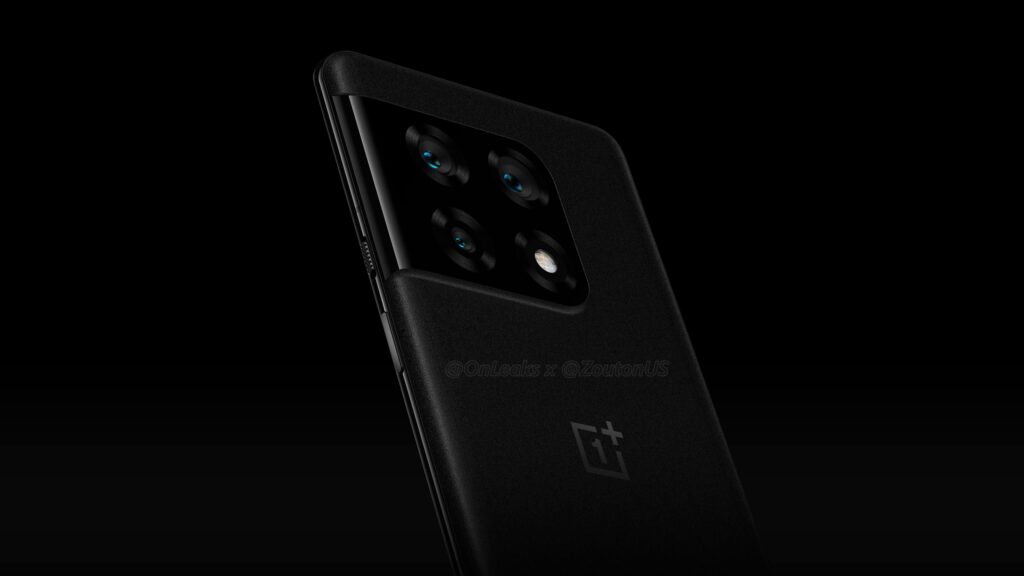
OnePlus 10 Pro Render
OnePlus 10 Pro render for alleged design

It is worth mentioning here that the current-gen OnePlus 9 phones were launched in April this year. Thus, if OnePlus indeed picks a January release date, it will mean the launch of a new iteration in less than a year. The hurry can be owed to the fact that OnePlus has not released any T-variants of their OnePlus 9 series smartphones this year, except for the RT variant in China.

The OnePlus 10 series is expected to feature the upcoming top-of-the-line Snapdragon 898 SoC, paired with up to 12GB of RAM and 256GB of internal storage. Some leaks had also recently revealed that that the camera module at the back houses three camera sensors and an LED flash, placed in a 2×2 grid.

Further, the OnePlus 10 Pro is expected to sport a 6.7-inch 1440p display with a 120Hz refresh rate.

RELATED:

Anker launches Eufy Robovac X8 Hybrid 2-in-1 robotic vacuum cleaner in India

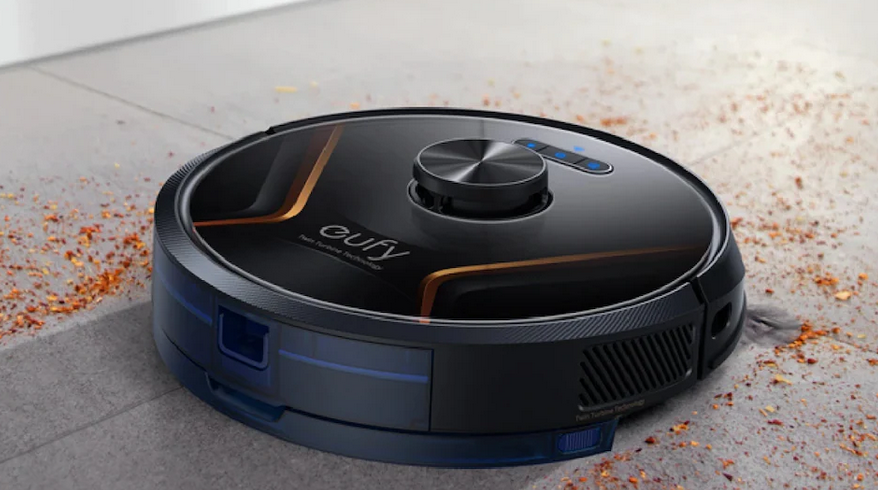
Anker has just launched the new Eufy Robovac X8 Hybrid robotic vacuum cleaner in India. The new product is a 2 in 1 robot vacuum cleaner that features both cleaning and mopping capabilities.

The new Eufy Robovac X8 Hybrid robotic vacuum cleaner features the iPath Laser navigation system that lets it navigate and follow an accurate cleaning route without any user intervention. Furthermore, it also supports WiFi connectivity and is even compatible with Google Assistant and Amazon Alexa for voice commands. The Eufy Robovac X8 Hybrid is paired with the Eufy Home App that allows for remote control, customizable cleaning, and lets users chose from multiple cleaning modes as well.

Anker

Under the hood, the robot vacuum cleaner houses a twin turbine with each offering 2000Pa of suction power. The company claims that the turbines even helps clean 57.6 percent more pet hair. Since it is a 2-in-1 hybrid, it features four cleaning modes and also has a 250ml water tank that can hold water for about 140 minutes of mopping and up to 180 minutes of vacuuming, with its dust box having a 400ml capacity. The gadget measures 345x345x97.2mm and is powered by a large 5,200mAh battery pack.

The Eufy Robovac X8 Hybrid robotic vacuum cleaner has been launched by Anker in India for a price of 34,999 INR. This product will be available for purchase via sale in Flipkart and the company is also offering 12 month warranty as well. Although, it is only available in the region in a single black color variant.

RELATED:


Qualcomm aims for diversification, will soon supply chips for BMW self-driving cars

Qualcomm Inc announced on Tuesday that German automaker BMW will utilize its chips in its next generation of driver-assistance and self-driving systems.

The chipmaker is the world’s biggest supplier of chips and is based in San Diego. It is looking to diversify its business and has already managed to source a third of its chip sales from sources other than smartphones (via Reuters).

Qualcomm Snapdragon 855

A BMW spokesperson said that the new chips will be used for its “Neue Klasse” series of cars, set to start production from 2025.

As for the kind of chips BMW will be using, there will be a dedicated Qualcomm computer vision processing chip to analyze data from the front, rear, and surround-view cameras. BMW will also use a central computing chip to help the car communicate with cloud computing data centers.

However, neither of the companies has revealed how much the Qualcomm deal will be covering of BMW’s lineup.

Qualcomm has also been working with firms like Meta on virtual reality and with Microsoft on Windows laptops that use ARM-based chips, the company released through an investor presentation.

Qualcomm Chief Executive Cristiano Amon said he believes the addressable market for the firm’s technologies is now $700 billion, seven times higher than the phone chip industry alone.

RELATED:

Following Tesla, Another EV maker plans to build its factories in China

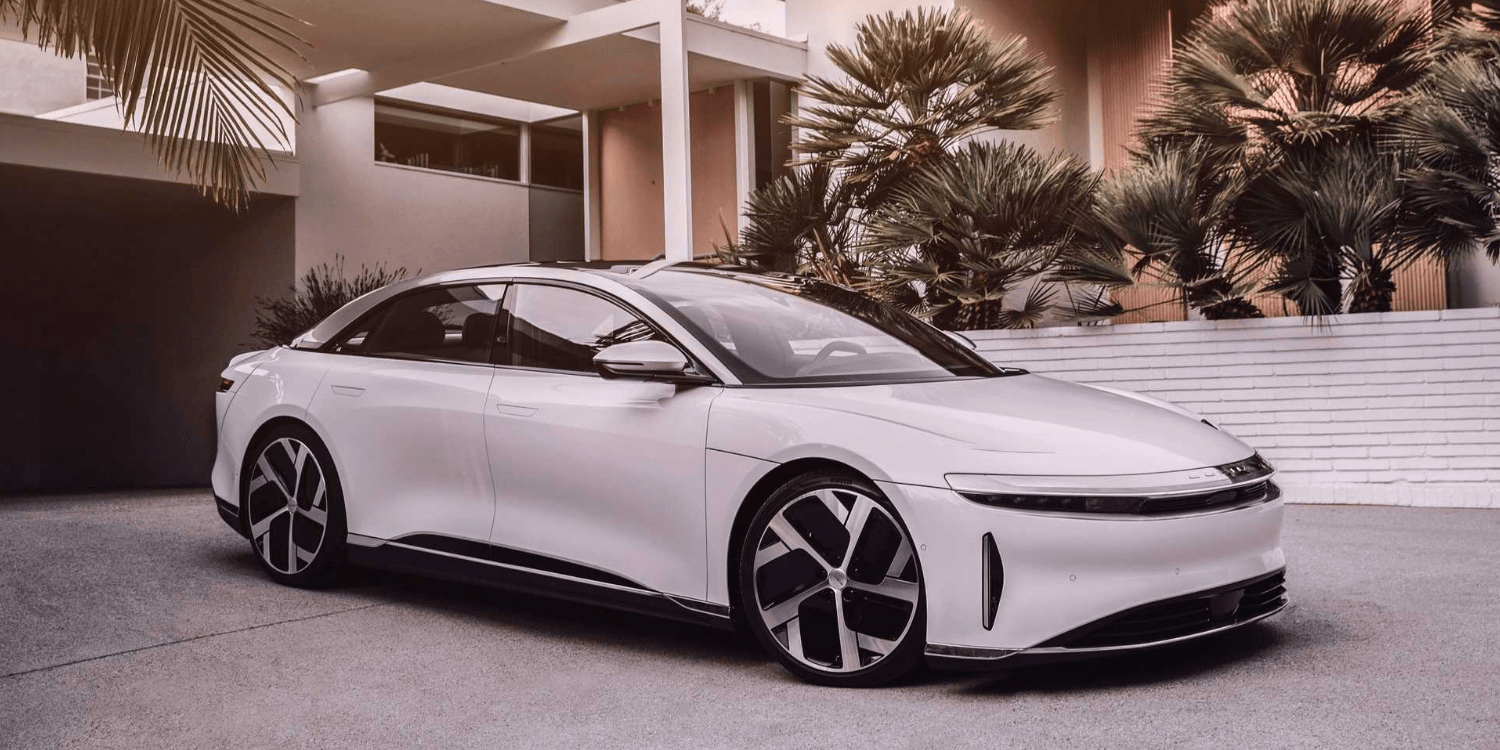
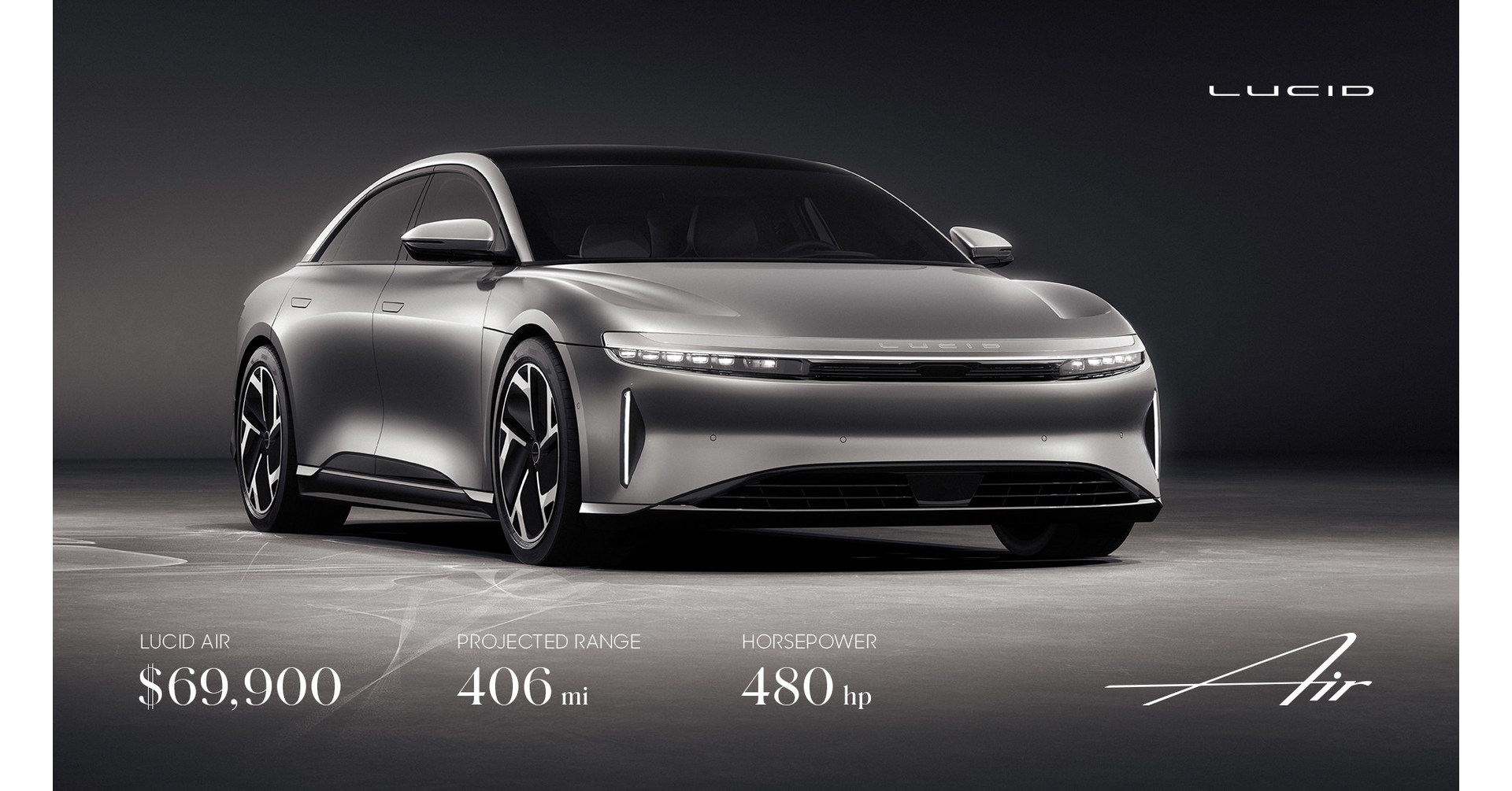
Another American electric vehicle maker seems to be following the footsteps of Tesla. Lucid Motors, an EV startup, is planning to build its factories outside of the US, with its new plant being situated in China.

Tesla

The startup’s CEO Peter Rawlinson told CNBC earlier this week that it plans on targeting its expansion in China and the middle east. This would even have it setup its EV factories in the Asian nation. For those unaware, Lucid Motors is a California based electric vehicle maker, with its flagship factory being in Casa Grande, Arizona. The company began production for its EV’s back in September 2021.

In an interview, the senior official said that “Mid decade, we plan to have plants in the Middle East and China as well.” As of right now, China is the world’s largest auto market, with electric vehicles also being a major segment in the industry. Back in 2019, Tesla had built its Gigafactory in the Shanghai, China to expand its presence in the region. With the auto giant’s arrival in the region, the competition in the local market heated up as Chinese startups like Xpeng, NIO, and Li Auto also launched their own EV offerings.

Tesla

Now, it seems another American brand is entering the Chinese market. At the moment, Lucid Motors expects to make 20,000 of its Air sedans next year. Rawlinson further added that “We’re quadrupling the size of that factory in Arizona. We’re building out a 2.85 million square foot expansion to get ready to build 90,000 units per annum, and the site itself is with its phase three capable of nearly 400,000 units per annum.”

RELATED:


OPPO, realme, and OnePlus now look to standardize 125W charging & deem 65W low-end

BBK Electronics subsidiaries OPPO, realme, and OnePlus are known for being the first ones to bring 65W fast charging to the masses, offering it even on midrange phones. The trio is now looking to make 100W the new normal and deem 65W fast charging the lowest standard in the fast-charge range.

Accordingly, next-year flagships from the OPPO Find series, realme GT series, and OnePlus 10 series will be equipped with 100W super flash charging support along with large batteries (via My Drivers).

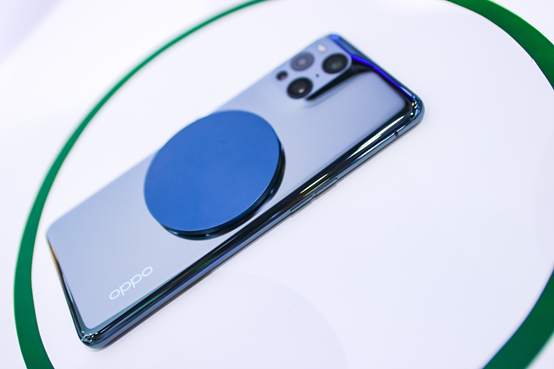
This doesn’t come as a surprise considering OPPO had already announced their own 125W super flash charging tech back in July 2020. It was the fastest charging tech at the time, made possible with some significant changes to both the battery arrangement as well as the input end.

First of all, OPPO switched from a 3c cell battery to a 6c one along with upgrading the tab center to multi-tab technology. This has greatly shortened the movement path and reduced the cellular impedance, effectively enabling input of 12.5A current while also reducing heat generation.

And on the input end, OPPO’s 125W charging tech uses ‘three parallel charge pumps’ that convert the total of 20V 6.25A current from the charger into 10V 12.5A. This means that each pump only pushes 42W of power into the battery which significantly reduces the load and prevents overheating caused by high current.

But of course, all of the charging tech breakthroughs are rendered unusable if they’re considered unsafe. OPPO has thus taken appropriate safety measures, packing a total of 10 sensors for monitoring temperature changes on the mobile phone and the closed-loop link of the charger. These sensors aid the phone in adjusting voltage and current in real-time to control heating.

The 125W charging tech from OPPO is likely to make its large-scale debut next year.

RELATED:

Samsung and Huawei continue to dominate foldable phone market: Ross Young

At the moment, only a handful of brands have launched their own foldable smartphones in the market, which means that certain brands still hold a dominance in the market. While this was expected to change as more OEMs were expected to launch their own foldable offerings, it seems that delays and cancellations might have companies like Samsung and Huawei still dominate this segment.

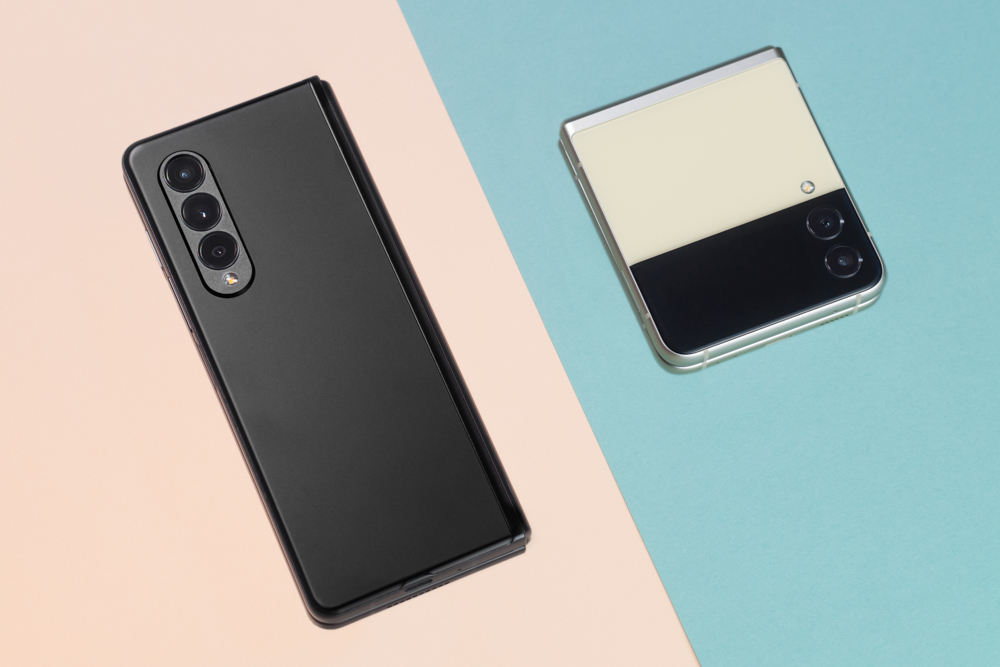
Samsung Galaxy Z Fold Phantom Black Galaxy Z Flip 3 Cream
Galaxy Z Fold3 & Galaxy Z Flip3

Just earlier this week, we had reported on Google apparently cancelling its upcoming foldable smartphone, the Pixel Fold. Although the main reason for the cancellation is unknown, it appears that a mix of supply constraints and issues with development might have been the cause for cancellation. In other words, Samsung and Huawei still reign supreme in this category.

According to DSCC’s Ross Young, Google’s cancellation and other brands either delaying or downsizing their foldable phone production due to chip shortage will have Samsung’s share in the market go up from 83 percent last year to 86 percent in 2021. Previously, it was estimated by analysts that the South Korean tech giant’s market share would drop as more brands launch their foldable phones.

Samsung
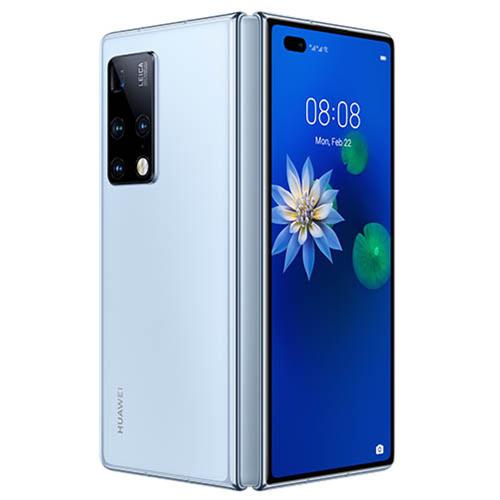
Huawei Mate X2 4G

But it seems that this might not be the case anytime soon. Similarly, Huawei is still the second largest foldable smartphone maker, however, its market share stands at just 10 percent. Meaning, the foldable segment was easily dominated by the 2021 Galaxy Z Fold3 and Galaxy Z Flip3 models.

RELATED:


Qualcomm expects to supply only 20% of 2023 iPhone modems as Apple gears up to launch its own chips

Earlier today (17th November 2021), Qualcomm had announced its plans to compete with the Apple Silicon’s M series chips with its own next gen processors for PCs during the 2021 Investor Day event. Now, a company official has revealed future projections for its modem business as it prepares for Apple’s own modem chips.

Qualcomm

Apple’s shift towards its own modems would cut into the chipmaker’s modem business starting in 2023. According to Qualcomm CFO Akash Palkhiwala, the company is expecting to supply just 20 percent of Apple’s modem chips in 2023. In other words, 2023 would be the last year that the brand enjoys a monopoly in supplying modems to iPhones. For those unaware, the Cupertino based giant has been working on developing its own modem chips for years now. Recent reports have suggested that its in house modems would ship with 2023 iPhones, which is also in line with the chipmaker’s expectations.

Qualcomm stated that this is still just a “planning assumption for forecast purposes,” although, it appears that it is expecting a 2023 launch. Notably, this news also arrives as the chipmaker is seeking to compete with Apple’s M series chips with its own ARM based PC processors. These chips will be designed by Nuvia and will “set the performance benchmark for Windows PCs.”

Qualcomm

On the other hand, the shift from Apple to its in house modems also follows a long legal battle with Qualcomm that eventually got settled back in 2019. After this, both firms entered into a multi year partnership since Apple had to source modem chips for its iPhones. But the company started to also working on its own in house modems to become independent in the future.

RELATED:


realme official hints foldable and under-display camera phone launches for 2022

A reality where foldable phones with under-display camera tech become mainstream is now inching closer than ever as more and more OEMs jump into the bandwagon. The latest to join seems to be realme, an official of which has now hinted at foldable and under-display camera phone offerings from the company in 2022.

xu qi chase Realme Under Display Camera foldable weibo

In a post on Weibo, Xu Qi Chase, realme CMO (China), has stated that new smartphone forms such as under-screen camera and foldable tech “will further mature” next year. While this doesn’t directly say that realme will indeed be launching such offerings, it could still be a teaser of what’s to come.

realme’s parent brand OPPO is actually working on a foldable phone with an external folding display, so it won’t be surprising if the former is working on the same as well. If OPPO and realme do release foldables of their own, they’ll be joining the likes of Huawei, Samsung, and Xiaomi, all of which have already been mass-producing phones with the tech.

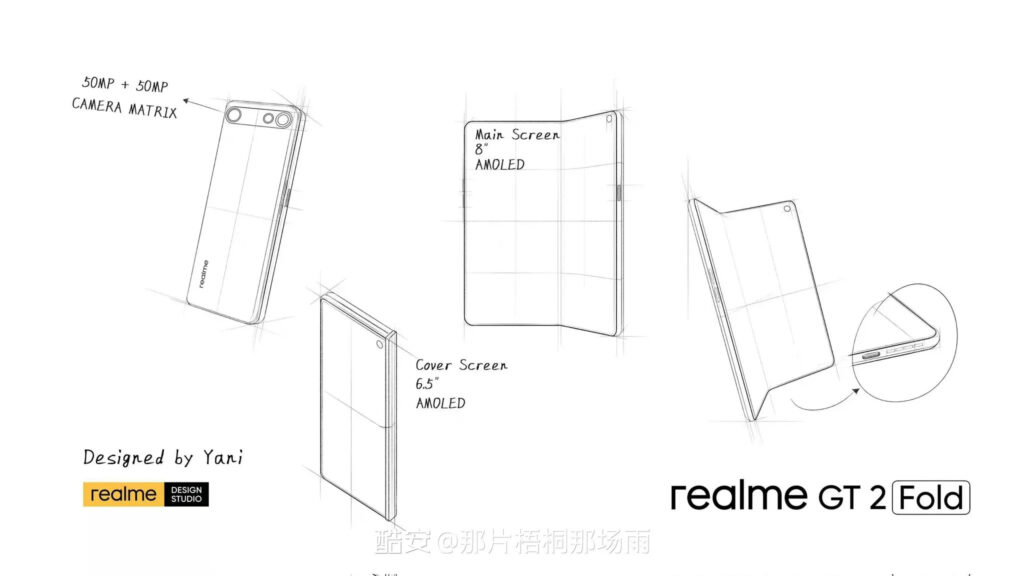
Some alleged design sketches were leaked recently (via 91mobiles) showing a “realme GT 2 Fold.” Although, they appear to be fan-made and should hence be taken with a pinch of salt.

Realme-GT-2-Fold

As for under-display cameras, realme has already filed a patent for a phone that seemingly makes use of the tech. The patent documents showcase a phone with a full-screen design, which suggests its selfie camera could be embedded under the display. It also seems to be equipped with an in-screen fingerprint scanner.

Phone companies have been racing to offer as much screen estate as possible on their offerings, all while keeping a device still pocketable enough. And as more and more users shift to personal screens, fueled by streaming services like Netflix, there has been an ever-increasing demand for larger displays. After all, the larger the display, the better the watching experience.

RELATED:

Krafton might soon launch BGMI Lite in India

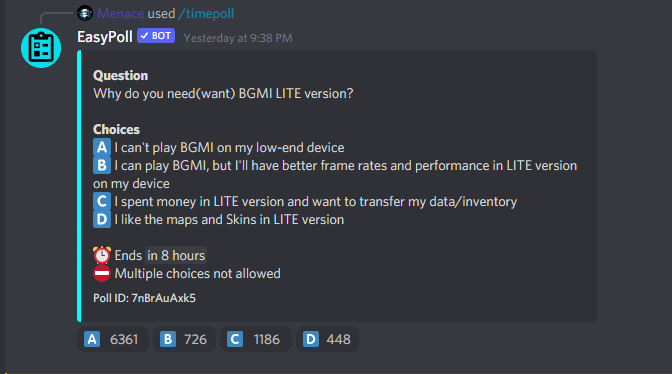
With the release of BGMI (Battlegrounds Mobile India) in India, Krafton had re-released the  popular mobile port from its PUBG franchise. Now, a new official poll has hinted at the developers possibly working on a “Lite” version of popular battle royale title.

BGMI


The poll was shared on the official Discord channel of the mobile game. It suggests that the developers might be working on a new Lite version of Battlegrounds Mobile India. For those unaware, before PUBG Mobile was banned in India, PUBG Mobile Lite had also been released globally. This version of the game was specifically built for entry level affordable smartphones that did not meet the minimum hardware requirements to run PUBG Mobile. The Lite variant could even run on devices with or under 2GB of RAM and even featured lower graphics.

With BGMI being popular in India and entry level budget devices still being one of the most popular segments in the region, it won’t arrive as a surprise if Krafton actually does release Lite version. Unfortunately, there is still no official announcement regarding this variant or any details as to when it might possibly launch. Looking at the poll, we find a list of reasons why they believe Indian players might wants BGMI Lite, this includes:

  • I can’t play BGMI on my low end device.
  • I can play BGMI, but I’ll have better frame rates and performance in Lite version on my device.
  • I spent money in Lite version and want to transfer my data/inventory
  • I like the maps and Skins in Lite version.

Battlegrounds Mobile India (BGMI)
According to a SportsKeeda report, a local esports athlete named Abhijeet “Ghatak” stated that the company is actually working on the Lite version of Battlegrounds Mobile India, which could launch sometime by the end of next month. If it does launch, it would likely feature lower requirements and even have a smaller download size as well. Keep in mind that this has yet to be confirmed as of right now, so take it with a pinch of salt. Oddly, we had reported earlier this year that a Lite version might not be a thing due to the game already being stripped down PUBG Mobile and supporting two regionally locked games might have them compete against one another. But, the company might have other plans.

RELATED:


Alleged Vivo S12 Pro live shot has surfaced, launch imminent as it bags TENAA, 3C approvals

Two new Vivo phones with model numbers V2162A and V2163A have been certified by the TENAA authority of China. According to tipster Bald is Panda, these models are expected to launch in the Chinese market with the Vivo S12 and Vivo S12 Pro monikers, respectively. Another tipster has shared the live shot of the S12 Pro to reveal its front design.

The Vivo S12 Pro’s live shot shows that it has a curved edge display. The screen notch seems to be housing a dual selfie camera setup. The tipster claims that it is equipped with a 50-megapixel primary front-facing camera.

Vivo S12 Pro live shot
Alleged Vivo S12 Pro’s live shot

The TENAA listings of the Vivo S12 series are yet to be populated with specs. The S12 Pro has also appeared in the database of China’s 3C certification. The listing reveals that the 5G-ready device may carry support for 44W fast charging. The vanilla S12 is yet to appear in 3C’s database.

Now that the Vivo S12 models have appeared at important Chinese certification platforms, it is likely to go official as early as this month. The S12 lineup be replacing the Vivo S10 and S10 Pro models. To recollect, both phones offered identical specs such as a 6.44-inch AMOLED FHD+ 90Hz display, 44-megapixel + 8-megapixel dual selfie camera, Dimensity 1100 chipset, up to 12 GB of RAM, up to 256 GB of storage, and a 4,050mAh battery. The S10 Pro feature a 108-megapixel + 8-megapixel (ultrawide) + 2-megapixel (macro) triple camera unit. Instead of a 108-megapixel camera, the S10 featured a 64-megapixel primary camera in its triple camera system.

In related news, a Vivo phone with a V2164A model number has also bagged 3C certification. It is speculated that this device may debut in the Chinese market with the Vivo Y55s moniker. Its 3C listing reveals that it is a 5G-enabled device, which may carry support for 18W fast charging.

RELATED:

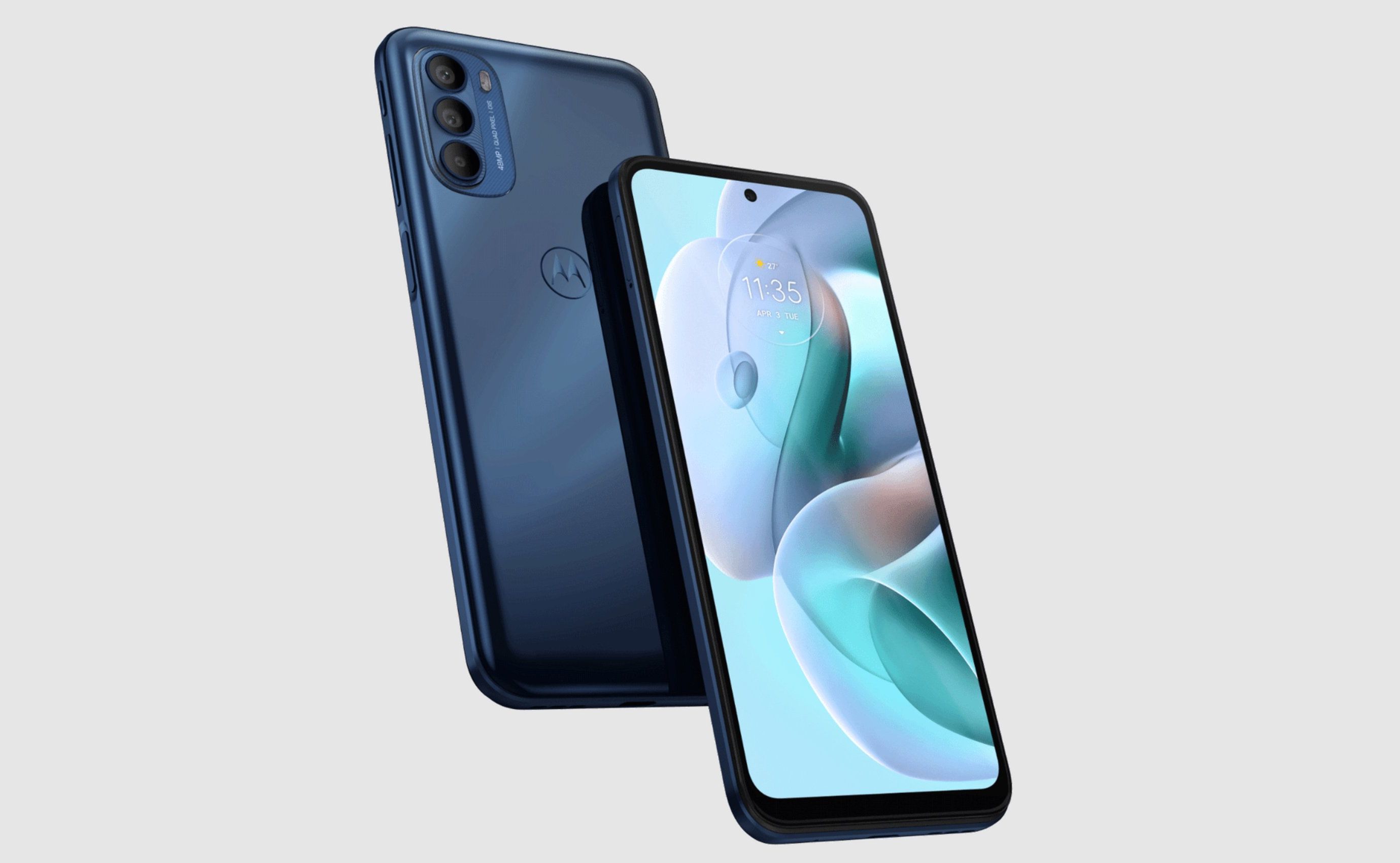
Moto G41 renders leaked, reveals OIS-enabled 48MP triple camera unit

Last month, a Motorola phone with model number XT2167-1 was approved by Anatel certification site of Brazil. The device is codenamed as ‘Corfu’ and is expected to debut in the market with the Moto G41 moniker. Now Nils Ahrensmeier from TechnikNews has shared the renders of the G41 to reveal its design.

Moto G41
Moto G41

The Moto G41 renders show that it has a punch-hole display on the front. A triple camera unit and an LED flash is available on the rear shell of the device.

A closer look at the camera unit reveals that it has a 48-megapixel primary camera. The device will also carry support for OIS. Its right edge has a volume assistant button, a volume rocker, and a side-facing fingerprint scanner. The bottom edge of the device features a microphone, a USB-C port, and a speaker grille.

The Brazilian certification reveals that the device is powered by a 4,700mAh battery. It is expected to arrive with other features such as 4G, Wi-Fi 802.11ac, and NFC. The other specs of the device are under wraps.

In related news, Motorola is gearing up to launch another G-series phone called the Moto G71. It is expected to arrive with specs like a 6.43-inch OLED FHD+ display, a 16-megapixel front camera, a 50-megapixel + 8-megapixel (ultrawide) + 2-megapixel macro) triple camera unit.

It could be powered by the Snapdragon 695 chip and 4 GB / 6 GB / 8 GB of RAM. It is likely to arrive in 64 GB and 128 GB storage choices. The device may house a 5,00mAh battery with 30W fast charging support.

RELATED:

Qualcomm aims to take on Apple M-series chips with its next-gen PC chips

During the 2021 Investor Day event, Qualcomm unveiled its next-generation technology that paves a path for the company to compete against Apple Silicon’s new M-series chips used for the new Mac devices.

Qualcomm has unveiled its new CPU hardware that is designed by Nuvia, a chip startup founded by three former Apple engineers. For those who are unaware, Qualcomm had acquired Nuvia earlier this year for $1.4 billion.

Qualcomm Next-Gen CPUs for PCs

The company is looking to advance its PC processors with the next-generation Arm-based SoC which it says is “designed to set the performance benchmark for Windows PCs” that would be able to go head to head with Apple’s M-series processors.

The chipset company is also aiming to be a leader for “sustained performance and battery life.” Further, Qualcomm has also promised that it would be scaling up its Adreno GPUs for offering desktop-class gaming capabilities for its future PC products.

The new Qualcomm chips for PCs, designed by Nuvia, are slated to ship in consumer products sometime in 2023. This is quite a long time, giving Apple about two more years to unveil or showcase its future Apple Silicon chips.

It will be interesting to see Qualcomm’s new take for the PC chips as its previous attempts have been lackluster so far. So far, it has launched Snapdragon 8cx processors and partnered with Microsoft for the SQ1 and SQ2 chips on the Surface X.

Qualcomm aiming to compete with Apple isn’t surprising as the Cupertino-based giant stunned everyone when it announced its plan of transitioning Mac devices from Intel to its own Apple Silicon platform which so far has three chips — M1, M1 Pro, and M1 Max. These processors from the company, based on the ARM architecture, offer a revolutionary experience of power and battery life.

RELATED: