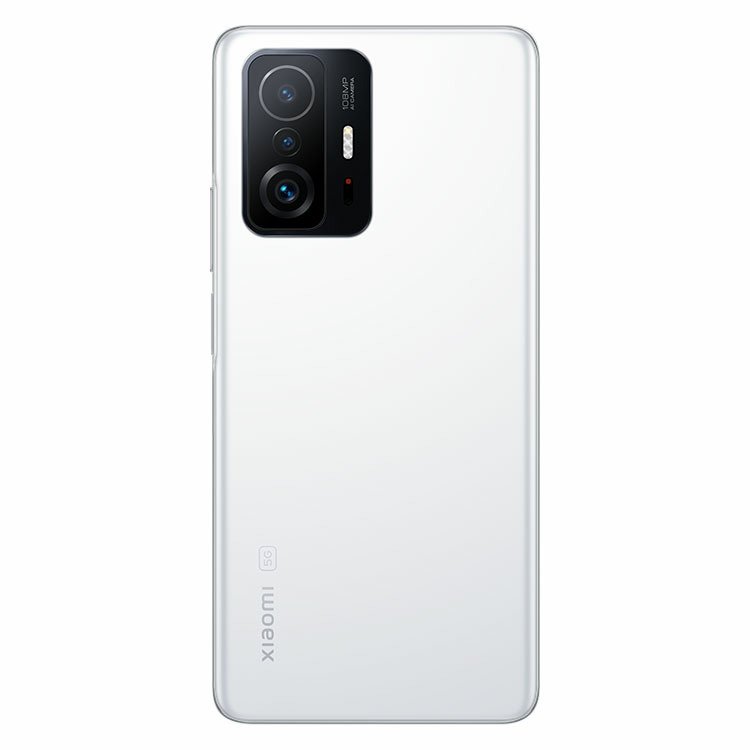
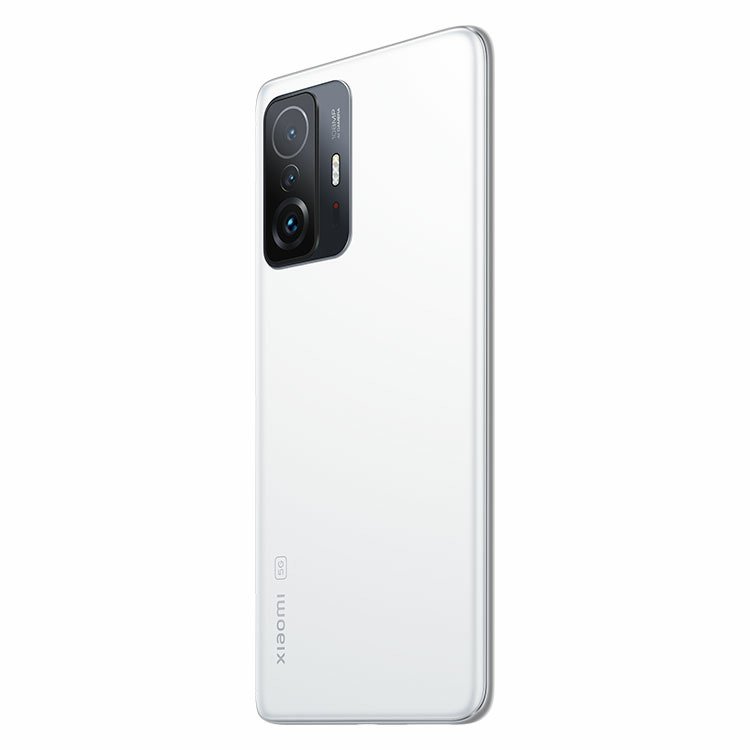
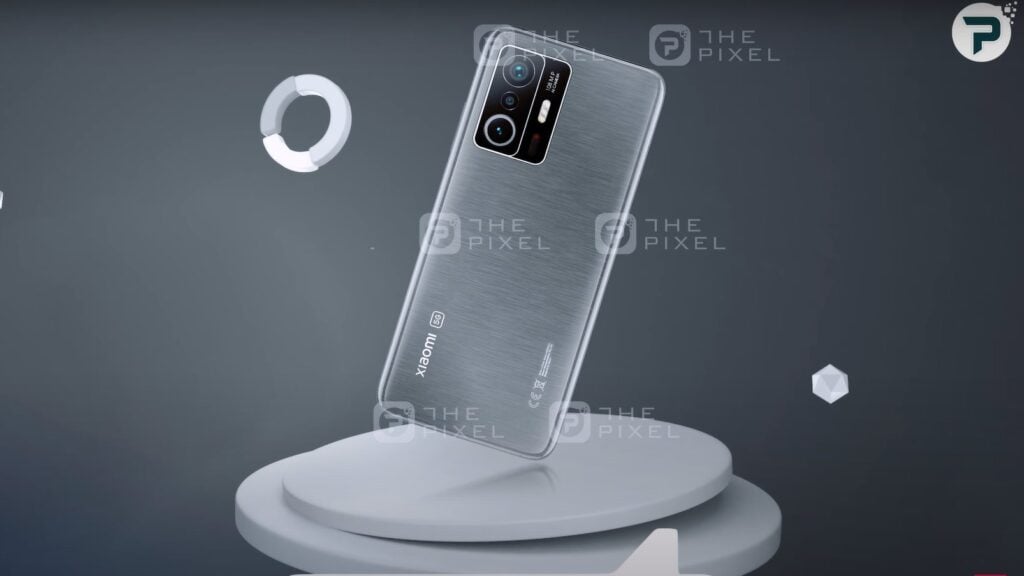
POCO has confirmed to launch its next device called POCO F3 GT in India on July 23. It’s already known that this upcoming smartphone is nothing but a rebadged Redmi K40 Gaming. Ahead of its official announcement, the handset’s price has been tipped online.
Redmi K40 Gaming
According to a source of Debayan Roy (@Gadgetsdata), the upcoming POCO F3 GT will retail for the following price tags in India.
POCO F3 GT
8GB + 128GB – ₹28,999 or ₹29,999
12GB + 256GB – ₹31,999 or ₹32,999
The leakster asks to consider this information with a pinch of salt. Hence, the price of the POCO F3 GT could be either costlier or maybe even cheaper than the above-listed ones.
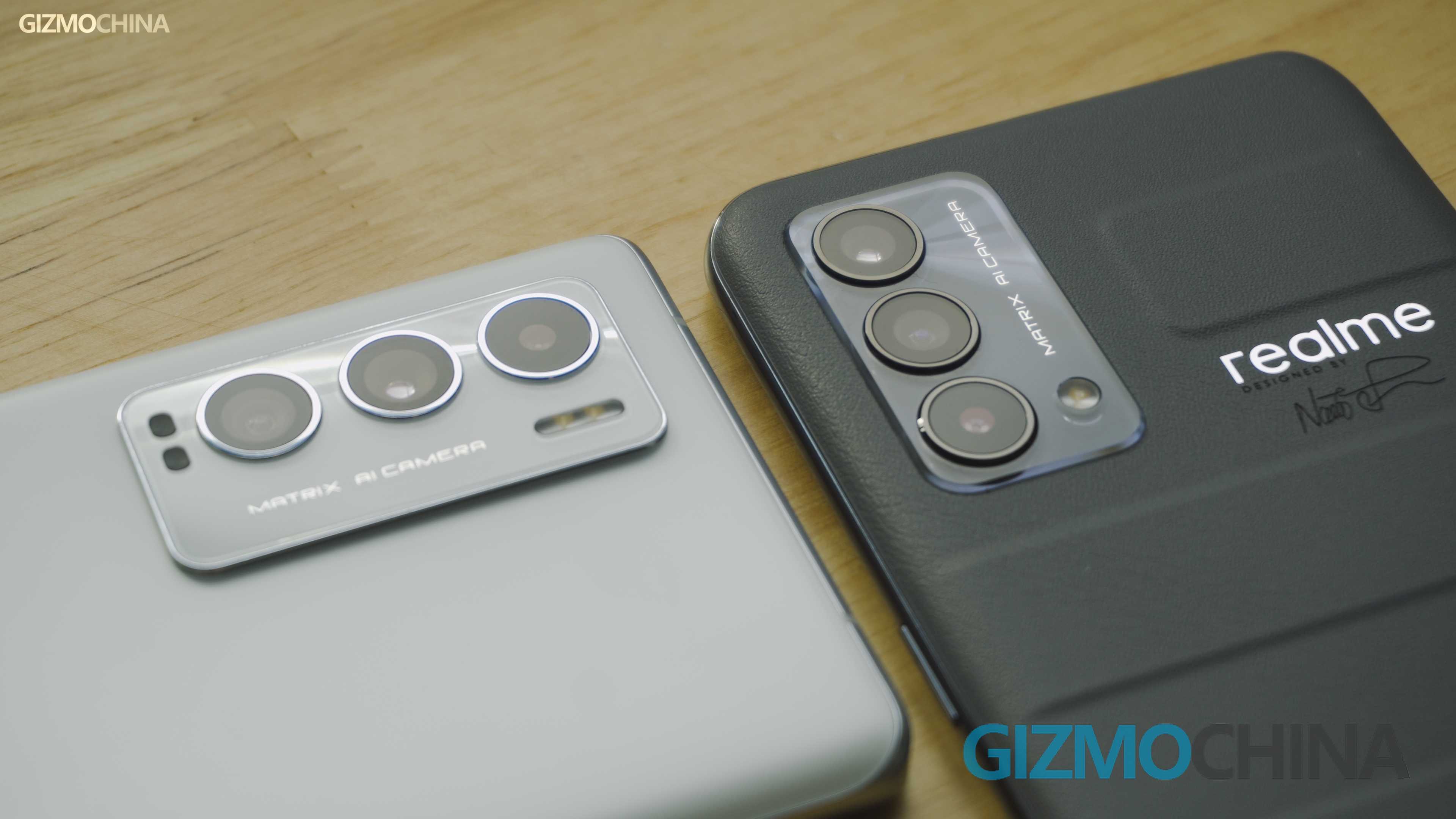
Since the POCO F3 GT is said to be a rebranded Redmi K40 Gaming, we can expect it to come with features like a 6.67-inch FHD+ 10-bit OLED display with a 120Hz refresh rate, MediaTek Dimensity 1200 SoC, LPDDR4x RAM, UFS 3.1 storage, VC LiquidCool technology + white graphene, and dual magnetic pop-up gaming triggers.
Other features include a 64MP (wide) + 8MP (ultra-wide) + 2MP (macro) triple camera setup, 16MP punch-hole selfie camera, dual stereo speakers with support for Dolby Atmos, side-mounted fingerprint sensor, 5,065mAh battery, 67W fast charging, and MIUI 12.5 based on Android 11.
The POCO F3 GT will be unveiled on July 23 at 12 PM in India. Just like other POCO smartphones, it will be sold exclusively on Flipkart.
An iQOO official has just shared a new video on his official Weibo account, a Chinese microblogging website, which hints at an upcoming launch event that could be for a new smartphone.
The new video was shared by Feng Yufei, President of the iQOO brand, earlier today (19th July 2021). In the online post, a game of billiards can be observed in which we can see the eighth black ball being struck that then goes on to hit a purple 4 ball into one of the corner pockets. While this video does not explicitly state the arrival of a new product or an upcoming launch conference, many netizens speculated that this might be indicative of an August 4 event, in which the company might launch the iQOO 8.
The video shared might seem casual at first, but the company’s official Weibo account had also shared this online post as well. For those unaware, the Chinese smartphone maker had previously launched the iQOO 7 earlier this year in January. The device was a flagship handset that arrived with 120W fast charging support and the Qualcomm Snapdragon 888 SoC.
Now, the brand might be gearing up to launch its successor and its latest flagship device. It is possible that the new device might arrive with an upgraded Snapdragon 888 Plus processor, although, we have no means of confirming this news as of right now. So stay tuned for more, as we will provide updates when additional information is available regarding this matter.
China Telcom has launched the Maimang 10 SE smartphone in China. Unlike the predecessor Maimang phones, the 10 SE does not carry a Huawei branding. This indicates that instead of Huawei, the Chinese telecom operator may have partnered with an ODM to build the Maimang 10 SE. Here is all the information on the specifications, features, and pricing of the Maimang 10 SE:
Maimang 10 SE specifications and features
The Maimang 10 SE has a 6.51-inch LCD panel with a teardrop notch that offers a 20:9 aspect ratio and a 60Hz refresh rate. The device comes with 6 GB of RAM and 128 GB of storage, and it is fueled by the Snapdragon 480 chip.
Maimang 10 SEMaimang 10 SE
The handset is backed by a 5,000mAh battery that supports 22.5W fast charging. The smartphone promises a battery life of up to 29 hours of voice calls, 21 hours of web browsing, 23 hours of online video playback, and 16.6 hours of online gaming.
It has a front camera of 8-megapixel, and its rear snapper has a 13-megapixel primary camera and a pair of 2-megapixel cameras. It runs on Android 11 OS, and it comes with a side-mounted fingerprint scanner.
Maimang 10 SE pricing and availability
The Maimang 10 SE 5G is priced at 1,699 Yuan (~$262), and it comes in three colors like Magic Night Black, Aurora Blue, and Galaxy Purple. The handset will be available for purchase in China from July 24.
Earlier today (19th July 2021), the Honor Magic 3 was teased in a new advertisement in China. This ad revealed the front design of the upcoming smartphone, which features dual punch hole selfie cameras.
The Chinese smartphone maker has first shared this ad in China’s CCTV (China Central Television) and even posted the short video on its official Weiboaccount, a Chinese microblogging website. For those unaware, the company is gearing up for the launch of the new Magic 3 series, with the launch conference set for 12th August 2021. Now, the advertisement is the latest promotion from the brand for its upcoming flagship series of handsets.
Looking at the video, the front side of the device has a high screen to body ratio, with the display being surrounded by thin bezels and negligible notch and chin. It also sports dual selfie cameras that are housed in a punch hole format on the display. Unfortunately, the video only teased the camera of the device and revealed the front design, so finer detail and camera specifications were not revealed in the video.

Although, we have a few prior reports to go on at the moment. In a previous report, we had found that the Magic 3 is essentially the Mate 40 Pro with a Snapdragon 888+ SoC. Furthermore, it is also expected to feature a 6.7 inch QHD+ AMOLED display that apparently will support HDR10+ and 120Hz high refresh rate as well. Notably, the company is also expected to launch Pro variants in the series, with the Magic 3 Pro+ reportedly arriving with a under screen camera and support for 100W fast charging.
The Realme GT Master Edition series of smartphones are all set to launch on July 21 in China. There will be two models such as Realme GT Master Edition featuring the Snapdragon 778G and the GT Explorer Master Edition powered by the Snapdragon 870 chip. A tipster from China (via) has shared a screenshot of a retailer listing of the GT Explorer Master Edition. It has revealed the pricing of the base model of the phone.
As can be seen in the screenshot, the Realme GT Explorer Master Edition is mentioned with a pricing of 2,999 Yuan (~$463) for its 6 GB RAM + 128 GB storage, which appears to be its base variant. Its TENAA listing has revealed that it will be available with up to 12 GB of RAM and up to 512 GB of storage.
Realme GT Explorer Master Edition specifications
The Realme GT Explorer Master Edition will be arriving with a 6.55-inch AMOLED display that offers a Full HD+ resolution. It is a curved edge display that offers a 120Hz refresh rate and an in-display fingerprint sensor.
The Snapdragon 870 chipset powers the device with LPDDR5 RAM and UFS 3.1 storage. It comes preinstalled with Android 11 OS, and it is backed by a 4,300mAh battery that offers 65W fast charging.
The company has confirmed that its rear camera setup is pioneered by an OIS-assisted Sony IMX766 50-megapixel camera. It is assisted by a 16-megapixel ultrawide lens and a 2-megapixel lens. For selfies, it has a front camera of 32-megapixel.
Tesla, one of the leading electric car manufacturers, has officially launched its Full Self-Driving (FSD) subscription which costs $199 per month. Those who previously bought the Enhanced Autopilot package will get it for $99 as the package is now discontinued.
The company is currently selling the Full Self-Driving package for a one-time payment of $10,000 but those who don’t want to pay such a large sum of money upfront can now opt for the monthly subscription plan.
The Full Self-Driving package currently includes several automated driver-assist features, including Navigate on Autopilot, Auto Lane Change, Autopark, Summon, Full Self-Driving Computer, and Traffic Light and Stop Sign Control.
Tesla notes that FSD is not the same as fully driverless technology, and adds that “the currently enabled features require active driver supervision and do not make the vehicle autonomous.” Ultimately, the company hopes to deliver a true full self-driving system but people buying the package can only hope and wait for Tesla to achieve that goal.
It’s noteworthy that the new subscription plan requires version 3.0 of the FSD hardware, and upgrading to that will cost $1,500. That hardware — containing a new, more powerful chip — has been standard in Tesla cars since mid-2019.
Zoom has announced that the company has agreed to acquire Five9 which provides cloud contact center software. This all-stock deal, which is valued at $14.7 billion, marks the first billion-dollar acquisition for Zoom.
It is also the second-biggest tech deal in the United States this year, just behind Microsoft’s planned acquisition of Nuance Communications for $16 billion. After the deal closes, Five9 will become an operating unit of Zoom.
Zoom said Five9 stockholders will receive 0.5533 shares of Zoom Video Communications for every Five9 share. That values Five9 at $200.28 a share, which is a 13 percent premium and represents about 14 percent of Zoom’s market cap of close to $107 billion.
Both the companies have said that the deal is expected to get closed in the first half of next year. With this acquisition, Zoom will be entering the market for contact centers. Five9 has over 2,000 customers of Five9, including firms like Citrix and Under Armour, and processes more than 7 billion minutes of calls annually.
In a statement, Zoom CEO Eric Yuan said: “We are continuously looking for ways to enhance our platform, and the addition of Five9 is a natural fit that will deliver even more happiness and value to our customers.”
Zoom was one of the biggest beneficiaries in terms of business during the COVID-19 pandemic. Last year, the company increased its revenue by 326 percent but it is now facing a natural slowdown, and offices around the world and opening up.
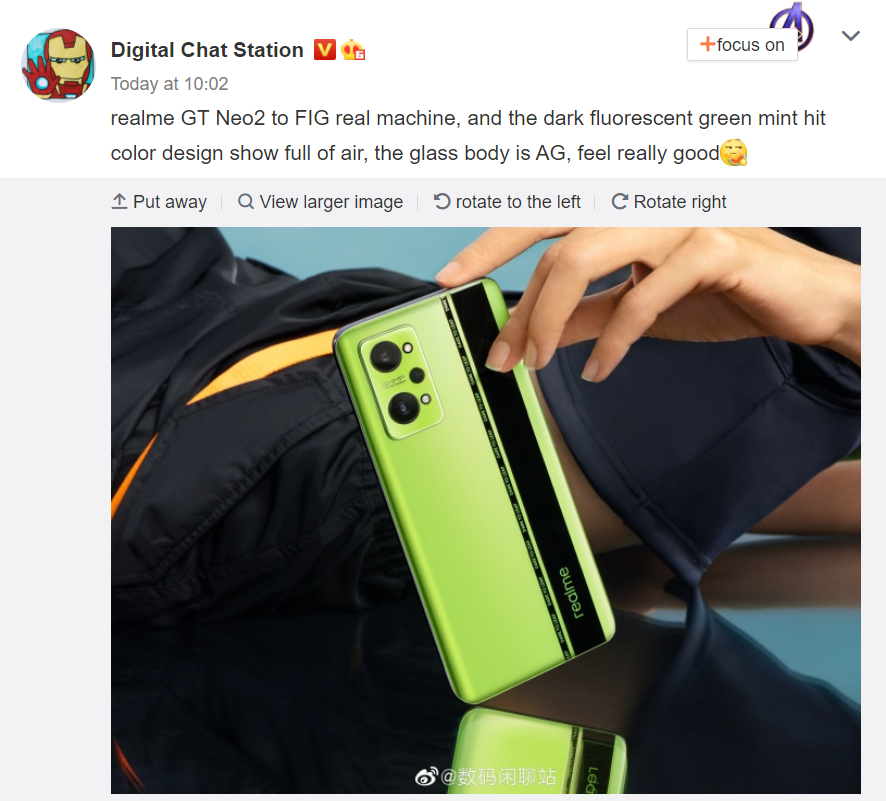
While the company has launched some new products to reckon with coming changes to its business, but it is unlikely to satisfy Wall Street. Also, with increasing competition from tech giants like Microsoft Teams, Zoom needs additional revenue sources and thus, the company acquired Five9.
Multiple reports have claimed that Huawei will be unleashing the Huawei P50 lineup by July end this year. Today, the company released a confirmation through Weibo that the P50 series will be made official at 7:30 PM (local time) on July 29.

Commenting on the arrival of the P50 series, Huawei Consumer Business CEO Yu Richard took to Weibo to state that the company will surpass itself in the field of imaging. He added that the P50 series will be released soon with pioneering mobile imaging technology.
Reports have revealed that the Huawei P50 series will be equipped with the custom-made Sony IMX80 camera lens. It is said to be the first 1-inch mobile camera sensor with 50-megapixel resolution and an RYYB color filter. The Huawei P50 series is expected to include three models such as as the P50, P50 Pro, and P50 Pro+. It is speculated that only the Pro and Pro+ variants will feature the Sony IMX800 lens.


A recent leak revealed that the Huawei P50 will have a triple camera unit comprising of a Sony IMX707 camera, a Sony IMX600 lens, and a 3x telephoto camera. The P50 Pro’s quad-camera unit may include a Sony IMX800 lens, an OV64A OmniVision camera, a 5x periscope camera, and a ToF/new sensor.
The P50 and P50 Pro are expected to debut on July 29, but the company may delay the arrival of the P50 Pro+. Rumors are rife that the upcoming P50 models will feature Kirin 9000 and they will support only 4G connectivity. Their global editions are expected to feature 4G version of the Snapdragon 888. Their 5G editions are also expected to arrive in near future.
As far as the P50 Pro is concerned, its rear camera setup may include a primary camera, an ultrawide snapper, a telephoto lens, a periscope camera, and a ToF depth sensor. The P50 Pro may feature a curved OLED panel, whereas the Pro+ may feature a “waterfall” curved edge display.
After several sanctions imposed by the United States, it has become almost impossible for Huawei HiSilicon to make smartphone processors. However, the company seems to be working on its first flexible OLED driver chip.
If the latest report coming from China is to be believed, then Huawei HiSilicon’s flexible OLED driver chip has now entered the trial production stage. For those who are unaware, the driver chip for the OLED panel controls the illumination of each pixel in the display.
The report also adds that the product will start mass production in the first half of next year. The driver chip for the flexible OLED panel is expected to be delivered to suppliers by the end of this year. Also, given that its own chip-making arm is developing this chip, Huawei is expected to adopt it for its upcoming products. It is being reported that samples have already been sent to BOE and Honor for testing purposes.
Recently, it was reported that the Chinese giant is trying to become more self-efficient and as a part of that, it plans to set up its first chip production factory in Wuhan to offset sanctions imposed by the United States. Earlier this month, the company also signed a deal with a Chinese firm to strengthen its domestic supply chain.
Today, ZTE confirmed that it will be announcing the Axon 30 5G with the second generation in-screen selfie camera at 7 PM (local time) on July 27 in China. As the moniker goes, it will be succeeding the Axon 20 5G that debuted in September 2020 as the first-ever phone with an in-display camera. A new ZTE smartphone with A2232 has emerged with its entire specifications in the database of China’s TENAA certification site. This phone appears to be the forthcoming Axon 30 5G.
The official poster released by the brand shows the Axon 30 5G in multiple colors like black, white, blue, and what appears to be a leather back edition. The front side of the phone lacks a notch or hole-punch as the selfie camera is embedded under its screen.
Two camera rings can be seen at the top-left corner of the phone’s back. The upper ring seemingly features a 64-megapixel primary camera, whereas the three auxiliary lenses are placed inside the lower ring.
ZTE Axon 30 5G specifications (Rumored)
The ZTE Axon 30 5G has 170.2 x 77.8 x 7.8mm dimensions and weighs 190 grams. It flaunts a massive 6.92-inch OLED screen that produces a resolution of 1080 x 2460 pixels. Apart from feature an in-display camera of 16-megapixel, the screen is also embedded with a fingerprint scanner.
It is powered by a 3.2GHz octa-core processor, which could be the Snapdragon 870 SoC. It is backed by a 4,100mAh rated battery that is likely to carry support for 55W rapid charging. The phone is expected to arrive in RAM variants like 6 GB, 8 GB, and 12 GB and storage editions like 128 GB, 256 GB, and 512 GB in China.
The rear camera system of the phone has a 64-megapixel primary camera, an 8-megapixel camera, a 5-megapixel lens, and a 2-megapixel sensor. The device runs on Android 11 that tags along MiFavor UI.
The OnePlus Nord 2 5G is all set to debut on July 22 in India. Ahead of the launch, tipster Ishan Agarwal has leaked the official renders of the smartphone to give a look at its color variants.
The leak reveals that the Nord 2 5G will be arriving in two colors as Blue Haze, Gray Sierra, and Green Woods. In terms of design, the Nord 2 5G has a punch-hole screen on the front and its rear shell has a triple camera unit. The right edge of the phone is fitted with an alert slider and a power key. A volume rocker can be found on the left spine of the smartphone.
The Nord 2 5G has a 32-megapixel front-facing camera. Its rear camera setup comprises of a Sony IMX766 50-megapixel primary camera with OIS support, an 8-megapixel superwide lens, and a 2-megapixel macro camera.
The Dimensity 1200-AI chipset by MediaTek is present under the hood of the device. The SoC will be coupled with LPDDR4x RAM and UFS 3.1 storage It has a 4,500mAh battery that supports 65W fast charging.
It is expected to arrive in two variants such as 8 GB RAM + 128 GB storage and 12 GB RAM + 256 GB storage. The former is expected to arrive in Gray Sierra and Blue Haze colors and with a price tag of Rs 31,999 (~$428). On the other side, the higher variant could be priced at Rs 34,999 (~$469) and it may come in Green Woods color only.
Xiaomi announced the Redmi Note 10S smartphone in global markets a couple of months back. The smartphone was introduced in three colors such as Onyx Gray, Pebble White, and Ocean Blue. The company has now confirmed that it will be soon selling the Redmi Note 10S in a new purple variant.
Xiaomi’s latest tweet gives a look at the exciting Starlight Purple of the Redmi Note 10S. The company is yet to confirm the availability of the new color variant. Probably, it could be heading to the European markets in the next few days.
Unwilling to be just ordinary? Now offering you something special!
The Redmi Note 10S has a 6.43-inch AMOLED display that offers a Full HD+ resolution of 1080 x 2400 pixels and a 20:9 aspect ratio. A fingerprint scanner is available on the right edge of the smartphone. The Helio G95 chipset is present under the hood of the device.
The device is equipped with up to 8 GB of LPDDR4x RAM and 128 GB of UFS 2.2 storage. There is a dedicated storage slot on the device for adding a microSD card. It comes pre-installed with MIUI 12.5 based Android 11.
The Note 10S has a front camera of 13-megapixel. Its rear camera setup has a 64-megapixel primary camera, an 8-megapixel ultrawide lens, a 2-megapixel macro camera, and a 2-megapixel depth sensor.
The Note 10S comes in three variants such as 6 GB RAM + 64 GB storage, 6 GB RAM + 128 GB storage, and 8 GB RAM + 128 GB storage. They are priced at $229, $249, and $279, respectively, in global markets.
Last week was a pretty interesting one. From Xiaomi becoming the second-largest phone manufacturer to Netflix’s entry into the game streaming market to a new handheld gaming console from Valve and new chipsets from MediaTek, here is a roundup of the top stories from last week:
Netflix to challenge Xbox Cloud and Stadia with its own game streaming service
Netflix will be adding games to its streaming service starting next year, challenging the likes of Microsoft’s Cloud, Google’s Stadia, and Amazon’s Luna. The more interesting part is that this will be built into its current streaming service and not separated. It also won’t cost extra.
ColorOS-based OxygenOS will ship with the OnePlus Nord 2
Valve’s $399 Steam Deck is a portable handheld gaming PC
The handheld gaming market has been controlled by Nintendo with its Switch consoles but a new device from Valve is looking like a strong contender. The Steam Deck launched last week is a portable gaming PC that starts at $399. It boasts 16GB of RAM, an AMD APU with a quad-core Zen 2 CPU with 8 threads and an 8 RDNA 2 CUs GPU, and up to 512GB of storage. It will begin shipping this December.
Xiaomi now world’s no.2 smartphone company
For the first time since it was established, Xiaomi is now the world’s second largest smartphone company. The Chinese manufacturer attained this feat following the smartphone shipment report for Q2 2021. Xiaomi’s market share now sits at 17%, 2% less than Samsung which is still the market leader but 3% more than Apple!
MediaTek shows committment to 4G chips with two new processors
MediaTek has played a significant role in the availability of 5G devices with its 5G Dimensity chipsets but it has not abandoned the 4G market which still has billions of users. The semiconductor company’s new Helio G96 and Helio G88 chipsets will power future 4G smartphones with a focus on photography. We expect to see them appear in devices before the end of the year.
In a clear indication of the depth of counterfeiting of wireless earbuds targeting the United States market, the US Customs confiscated about 360,000 fake AirPods at the country’s entry points in the first half of 2021. The totality of the cache has a valuation of approximately $62.2 million, well above the previous haul of 295,000 units in 2020.
The details were part of the information released by a recent report on the level of fake products that aim to defraud unsuspecting consumers of their money while offering a counterfeit and substandard product, in this case, earbuds. The Apple AirPods has been a very successful model and is the principal object of the counterfeiters. The report also hinted that up to 80% of the US seizures originate from China, indicating a possible source of the syndicate. It has to be stated also that Chinese company OnePlus also suffered an embarrassing seizure of its authentic earbuds, as Customs officials claimed it was a fake version of the Apple AirPods. However, OnePlus insists that there are significant differences between its product and the Apple AirPods.
The wireless earbuds market is a rapidly expanding one globally and counterfeiters have sought to reap from the success of established brands like Apple and Samsung by faking their products. Apple, on its own, is taking steps to ensure that it safeguards its customers and limits the counterfeiting of its products. It has collaborated with security agencies and e-commerce websites and taken other relevant measures to stop the thieves from tracking and protecting its customers. Other leading brands also continue to pursue processes that would make counterfeiters’ jobs more difficult.
If the current half-year volume of seizures is to be countenanced, it is possible that by the year’s end, up to 600,000 seizures would have been accomplished by the US Border Customs. However, this depends largely on the response of the counterfeiters.
Honor is coming back to the global market with the Honor 50 series: a lineup of devices ranging from the budget segment to the upper-midange one which includes three variants. The Honor 50 Pro is the most advanced one but, despite it is a Pro variant, it is not a flagship. As mentioned above it is an upper-midrange phone with 5G support, and that is exactly the reason why we decided to compare it to the Xiaomi Mi 11 Lite 5G. While waiting for the global launch of the new premium phone, you can now discover the differences between Honor 50 Pro and Xiaomi Mi 11 Lite 5G.
Quad 108 + 8 + 2 + 2 MP, f/1.9 + f/2.2 + f/2.4 + f/2.4
Dual 12 + 32 MP f/2.4 and f/2.2 front camera
Triple 64 + 8 + 5 MP, f/1.8 + f/2.2 + f/2.4
20 MP f/2.2 front camera
BATTERY
4000 mAh, fast charging 100W
4250 mAh, fast charging 33W
ADDITIONAL FEATURES
Dual SIM slot, 5G
Dual SIM slot, 5G
Design
The design is one of the strongest points of the Honor 50 Pro. It is a very elegant and original phone. It is pretty thin and lightweight, and it comes with a great curved display at the sides and two round camera modules, as well as an amazing finish for the rear cover. The Xiaomi Mi 11 Lite 5G is one of the thinnest and most lightweight phones of 2021: it weighs less than 160 grams and it is just 6.8 mm thick! It is even more compact, but the Honor 50 Pro remains a more beautiful device due to its curved screen and great finish. The Honor 50 Pro wins the design comparison, but if you want a more compact device which fits better in a pocket, choose the Xiaomi Mi 11 Lite 5G.
Display
With Honor 50 Pro and Xiaomi Mi 11 Lite 5G, you can get two of the best displays you can find in the midrange segment. Both are able to show up to one billino colors, and currently it is almost impossible to find such a feature on midrange phones. Further, they are both OLED panel with a Full HD+ resolution. I personally prefer the Honor 50 Pro because it has a higher refresh rate (120 Hz) and an in-display fingerprint reader, as well as a wider diagonal. Unfortunately, despite having an OLED panel, Xiaomi Mi 11 Lite 5G has a side-mounted fingerprint scanner.
Specs & Software
The Snapdragon 780G mobile platform found on the Xiaomi Mi 11 Lite 5G and the Snapdragon 778G found on the Honor 50 Pro are quite similar processors, but as you probably understood by reading the processor names, the Snapdragon 780G is slightly better. Further, the Xiaomi Mi 11 Lite 5G has a faster UFS 2.2 internal storage. It runs MIUI 12 out of the box, while Honor 50 Pro runs Magic UI 4.2. In the global market, the Honor handset will come with Google Mobile Services since Honor is not a Huawei company anymore.
Camera
The rear camera of the Honor 50 Pro is way better than the one found of the Xiaomi Mi 11 Lite 5G because it has a superior main sensor: we are talking about a 108 MP camera which is able to record 4K videos at 30 fps. Even the front camera department is a lot better of the Honor 50 Pro as it is one of the best selfie phones out there. It has a dual front camera with a 32 MP main sensor and a 12 MP ultrawide lens.
Xiaomi Mi 11 Lite 5G wins the battery life comparison simply because it has a bigger battery with a capacity of 4250 mAh. With the Honor mid-ranger you get a smaller unit despite the bigger dimensions, but it has one of the fastest charging technologies out there with a power of 100W (Mi 11 Lite has just 33W).
Price
You can currently find the Xiaomi Mi 11 Lite 5G for less than €350/$413 globally, while we still do not know the global price of the Honor 50 Pro as it is yet to be launched (it costs about €350 in China). Overall, the latest Honor premium phone offers more value due to its better cameras, faster charging, and amazing design, but Xiaomi Mi 11 LIte 5G has a bigger battery, a more compact body… and a micro SD slot.
Honor 50 Pro vs Xiaomi Mi 11 Lite 5G: PRO and CONS
A few days ago, a leaker revealed that the Honor Magic3 series will have four models. Alongside the name of these devices, the leaker mentioned the similarities between the upcoming phones and Huawei’s Mate 40 series. Now, the specifications of the Honor Magic3 have surfaced and it sure is a lot like the Mate 40 Pro.
The specs of the phone which were posted on Twitter by Yash Raj (@hereYashRaj), reveal the Magic3 will have a 6.76-inch QHD+ (2772 x 1344) AMOLED display. The screen will be supplied by BOE and will have a pill-shaped camera at the top left corner for two front-facing cameras. It also has a 120Hz refresh rate, HDR10+, and is protected by Gorilla Glass Victus.
As already known, the Magic3 will be powered by the Snapdragon 888 Plus and will be available in four configurations – 8GB RAM + 128GB, 8GB RAM + 256GB, 12GB RAM + 256GB, and 12GB RAM + 512GB. Unfortunately, no camera specs were revealed but from the attached images, we can see that there are four sensors on the back of the phone.
— Yash Raj Chaudhary #HuaweiP50Series (@hereYashRaj) July 18, 2021
Honor will ship the phone with a 4500mAh battery that supports 66W fast wired charging and 50W fast wireless charging. It will run Android 11 out of the box with the new Magic UI 5.0 and Google Mobile Services.
The Honor Magic3 series is coming next month and while we still have a few weeks of waiting to do, details of the phones have started to surface. Today, key specifications of the top model, the Magic3 Pro+ have been revealed and they are top tier.
The Magic3 Pro+ will be the highest model of the series which has four phones and Honor has packed really impressive specs into the device as revealed in a tweet by @RODENT950.
According to the leaker’s tweet, the Magic3 Pro+ will have a 6.76-inch waterfall display. The panel which is supplied by Visionox will not have a notch or holes for a front-facing camera. Instead, Honor will give it an under-display camera like the upcoming ZTE Axon 30 and Samsung Galaxy Fold 3. There is no mention of the refresh rate but we don’t expect it to be less than 120Hz.
Magic 3 Pro(+) 6.76" 1228p visionox waterfall display with UDC 4400mAh battery with 100w charging (wired) and 50w wireless charging New Honor SuperZoom with 100x digital zoom #HONORMagic3Seriespic.twitter.com/s8cSrzMWxg
Still talking about cameras, the Honor Magic3 Pro+ will be capable of up to 100x digital zoom, a feature that is dubbed SuperZoom.
Honor will include a 4400mAh battery in the device. While this is smaller than the 5000mAh battery inside the Galaxy S21 Ultra and the Mi 11 Ultra, the Magic3 Pro+ has the upper hand when it comes to charging. The phone will have support for 100W fast wired charging which blows away the measly 25W Samsung’s flagship offers as well as the 67W of Xiaomi’s 2021 flagship. It will also have support for 50W wireless charging.
No doubt these are impressive specs but we can’t wait to find out what Honor will be charging for the phone when it launches.
Accessories manufacturer Nothing has continued to reflect its mission statement to exemplify its product offerings with innovation and technology ahead of the pack while maintaining affordability.
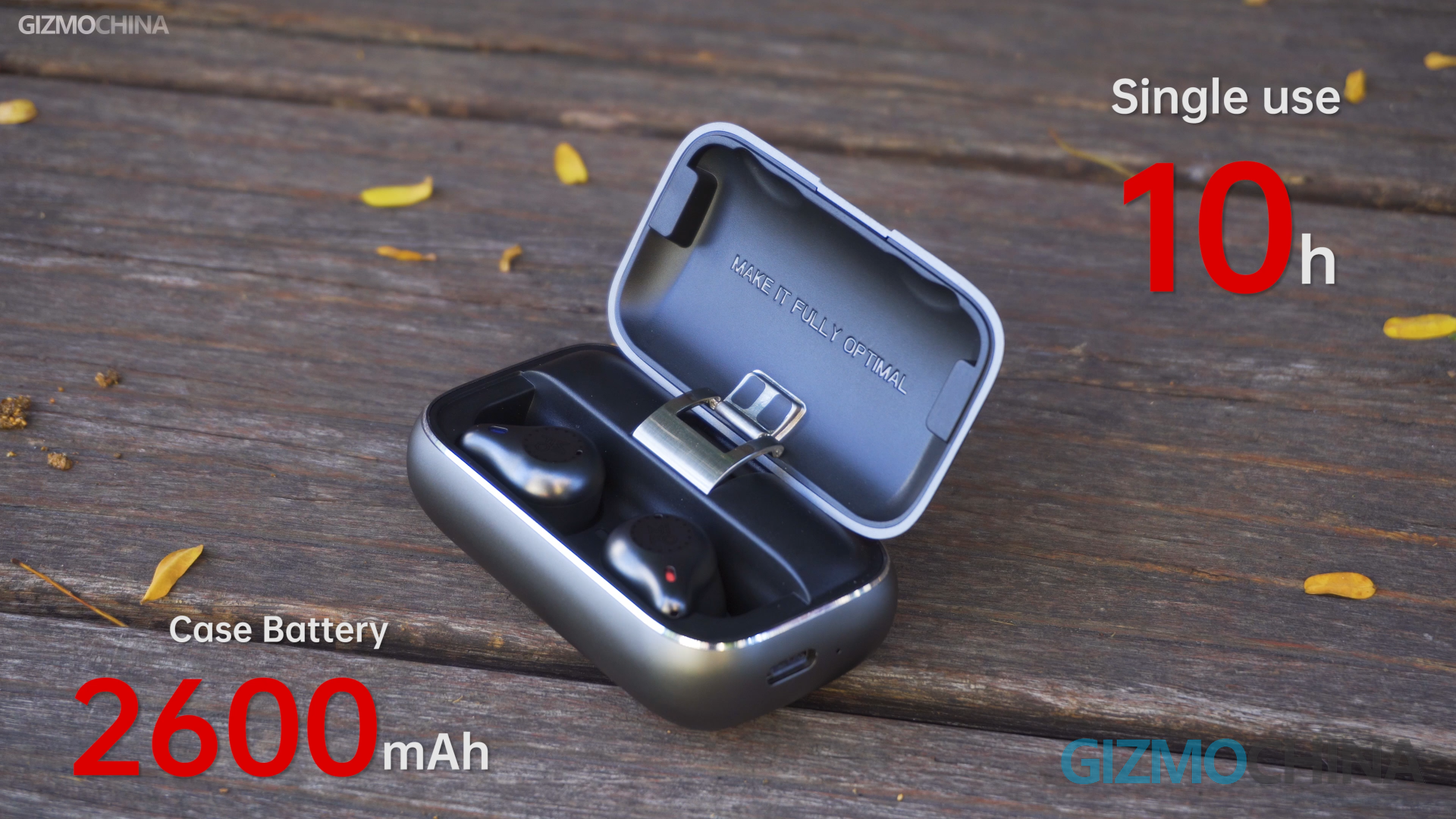
A new image of the Nothing Ear (1) true wireless earbuds reveals transparent components and a refreshingly aesthetic appeal. The render was released via a tweet by Ayush Verma and showed the Nothing Ear 1 earbuds’ case. The leaker claims that the picture was gotten from a Nothing partner website, although the authenticity has not been verified. The concept of the Nothing Ear 1 however aligns closely with earlier leaks and teasers of the device.
The render reflects a minimalist and bent in-ear design with ear tips. It shows a white layer shielding the circuit and the battery of the case. The picture also indicates the likelihood of a square case, a transparent bottom layer, and a short transparent stem for the buds.
The red (left) and black (right) buds possibly contain microphones that will pick surrounding noise using active noise cancellation to give a compelling listening experience.
The Nothing Ear 1 is billed for unveiling on July 27. A special edition with serial number engraving for the first 100 buyers will be available exclusive to StockX. The Nothing Ear 1 earbuds are priced at $99, which is the cheapest it can get for truly wireless earbuds. Apple’s corresponding TWS earbuds are priced at $249.
US carmaker Ford is known for power and speed from its lineup of heavy-hitting and gasoline-guzzling monsters on wheels. The company has started replicating its powerful traditional models in the Electric Vehicle (EV) space.
As Ford continues to expand its EV lineup, it seems the company hopes to carry along a segment of its clientele attached to gasoline engines. A survey recently showed that 20% of drivers would miss the smell of gasoline in their electric vehicles. In a seeming response to this feedback, Ford has produced its gasoline-themed fragrance to at least satisfy the yearning of a segment of its customers.
The new Ford gasoline-themed perfume is called Mach-Eau and was produced in collaboration with perfumer Olfiction. The Mach-Eau targets a reenactment of the feel and smell of the interior of a vehicle, combined with a raft of other scents, including smoke, rubber, gasoline, and animal smells (horse).
Obviously, Ford does not intend to sell the Mach-Eau fragrance, at least for the present. It debuted at the Goodwood Festival of Speed. A few whiffs of the gasoline-themed fragrance were taken during the festival.
A gasoline-themed fragrance for drivers to reenact the feel of Ford’s heavy-hitting gasoline engines could appeal to some drivers. However, it remains to be seen how this fragrance will sit as a part of the refreshing feel of Ford’s EV offerings. If the company relied on feedback from the specified survey, only a tiny fraction of users would fancy such moves. Whether the sample used for the survey was statistically representative is another issue that determines the degree of inference that can be drawn from its outcome.
Finally, even though one in five drivers missed the gasoline smell, there is no data that specify what proportion of the drivers will fancy a gasoline-themed fragrance on their EVs.
The Poco F3 GT smartphone is all set to launch on July 23 in India. Ahead of its launch, Flipkart – an Indian shopping portal, created a microsite of the gaming smartphone revealing key specs and design.
It is already known that the Poco F3 GT is nothing but a rebranded Redmi K40 Gaming Edition. Adding to it, the phone’s landing page on Flipkart confirmed some more details.
Starting with the design, the Poco F3 GT seems to come with a 120Hz punch-hole display with thin bezels. Apart from the volume rocker and the power button, the phone has shoulder trigger buttons on the sides.
The smartphone will come with 3 levels of bevels and a series 7000 Aluminium Alloy frame. Similar to the Redmi K40 Gaming Edition, the F3 GT has stripes on the back(Slipstream design) which aggressively utters the gaming look of the phone. The landing page suggests that the device has a 22-Step engraved back panel and a fairly thin form factor of 8.3mm.
Surprisingly, the Flipkart landing page reveals only one color variant of the phone, Gunmetal Silver. But, it is expected to launch in more colors including Lunar Silver, Carbon Black, Predator Black, and Greyish Silver. As for the audio, the device has Dolby Atmos support with Hi-Res sound.
Other than this, the Poco F3 GT is expected to come powered by the MediaTek Dimensity 1200 SoC. It will house a 5,000mAh battery and support 67W fast charging technology.
In terms of pricing, the smartphone was recently touted to come at around ₹30,000(~$402) and will compete with the likes of OnePlus’ Nord 2 which is slated to launch a day before the Poco F3 GT’s launch.
We use cookies on our website to give you the most relevant experience by remembering your preferences and repeat visits. By clicking “Accept”, you consent to the use of ALL the cookies.
This website uses cookies to improve your experience while you navigate through the website. Out of these, the cookies that are categorized as necessary are stored on your browser as they are essential for the working of basic functionalities of the website. We also use third-party cookies that help us analyze and understand how you use this website. These cookies will be stored in your browser only with your consent. You also have the option to opt-out of these cookies. But opting out of some of these cookies may affect your browsing experience.
Necessary cookies are absolutely essential for the website to function properly. This category only includes cookies that ensures basic functionalities and security features of the website. These cookies do not store any personal information.
Any cookies that may not be particularly necessary for the website to function and is used specifically to collect user personal data via analytics, ads, other embedded contents are termed as non-necessary cookies. It is mandatory to procure user consent prior to running these cookies on your website.