A few days ago, a custom McDonald’s-themed PlayStation 5 DualSense Controller appeared on the web. It was reported that the Australian branch of the fast-food chain made a limited number of the controller to give away as it celebrates its 50th anniversary.
It was later reported that Sony had prevented the controller from being released. McDonald’s Australia also announced that it had postponed its week-long event and revealed new prizes to be won which didn’t include the custom controller.
The latest update on the matter today via IGN is that McDonald’s said the controller was never meant to be released and that it was an internal concept. An official statement from McDonald’s Australia said “the image was provided to media in error and there is no commercial relationship between McDonald’s Australia and Sony PlayStation.”
This might come as a disappointment to fans of PlayStation who have been looking forward to winning the custom DualSense Controller. Sony, unlike its rival, Xbox, has a very limited selection of controller options.
The Xbox Wireless Controller is not only available in several colors and a wide variety of designs but there is also the Xbox Design Lab that allows users to customize their own controllers. The DualSense controller on the other hand can only be picked up in the default white that ships with the controller as well as Midnight Black and Cosmic Red that were announced in May.
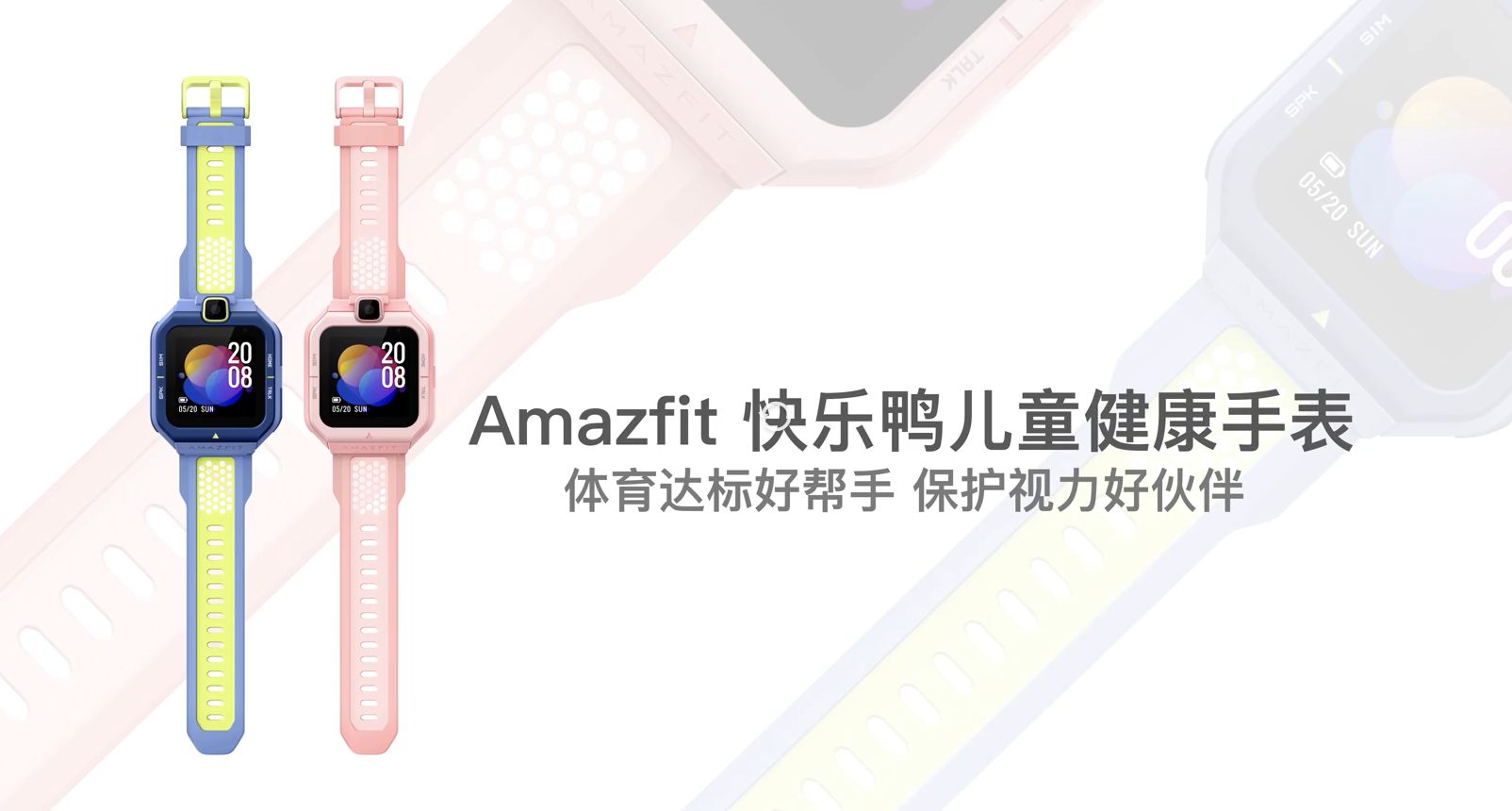
Chinese smartwatch manufacturer and New York Stock Exchange-listed company Huami has officially unveiled its first children n health smartwatch in China. The product is dubbed Amazfit Happya Children’s Health Watch and is specifically designed for kids. The company has shared a few details of the product but the pricing and availability are yet to be disclosed.
Amazfit Happya Children’s Health Watch
Huami’s Founder and CEO Huang Wang released an essay on Weibo explaining why the company decided to launch a children’s smartwatch at this point. The CEO hinted that the firm first got the offer to design a children’s watch at the same period six years ago when it was working on its first smartwatch. However, the team rejected the offer, instead opting to release adult smartwatches. Moreso, children’s watches at that time were basically GPS devices with calling functions of which it thought Xiaotiancai and 360 were doing a good job already. Also, it doesn’t align with Huami’s goal of helping more people live healthier through human body data monitoring and analysis.
Presently, the industry is filled with several smartwatch models designed for children and the competition is stiffer than it was odd six years ago. Thus, the company felt this was a better time to join the train in order to grab a slice of the pie.
The watches are now fitted with games and several learning resources which the CEO opined may lead to eye defects and impair the child’s learning ability considering the small size. Thus, the brand’s focus will be on children’s health so as to help prevent shortsightedness and it will be 100% harmless to children.
Further, the Amazfit Happya Children’s Health Watch will come with built-in sports/fitness modes bringing on features such as rope skipping, sit-ups, running, in order to help the kids improve their sports ability. The watch also comes with 24-hour heart rate monitoring, child-specific sleep monitoring, and child-specific activity tracking that is more scientific than step counting.
Huami also disclosed that it is cooperating with the Huyan Research Institute of the First Hospital of Guangzhou Medical College and the team of renowned Academician Zhong Nanshan to actively promote the children’s asthma attack prevention. The research results are expected to be of great help to the future iteration of children’s watches.
In addition to the above innovative functions, the Amazfit Happya Children’s Health Watch will also retain the basic functions of children’s watches such as 4G full Netcom, AI multi-positioning, high-definition video calls, taking pictures, watch friends, XiaoAI voice support, Alipay piggy bank, etc. The watch comes with an IP68 waterproof and dustproof rating and features a food-grade silicone wristband.
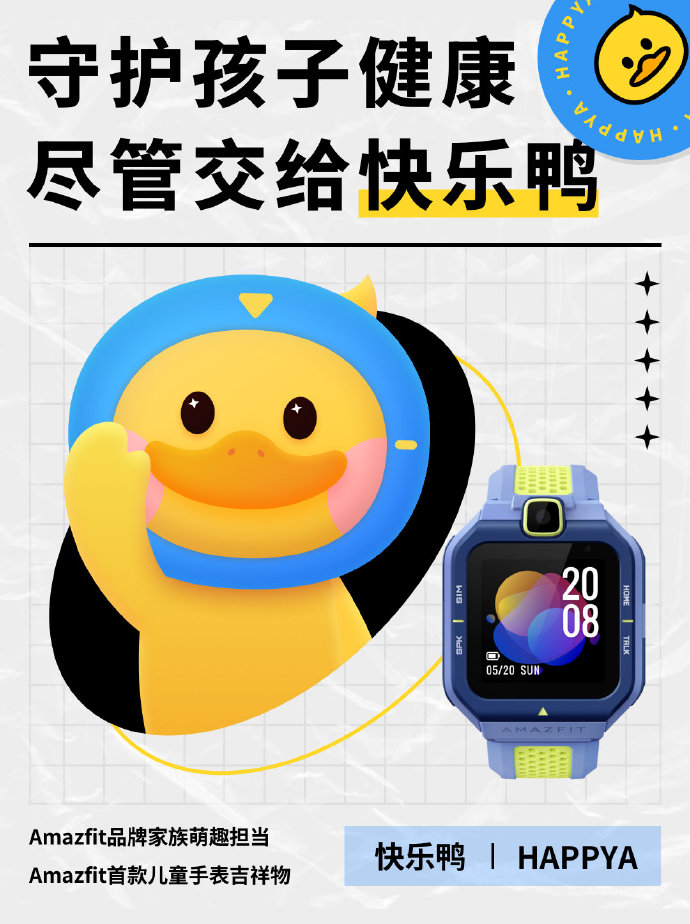
On a side note, Huami also unveiled a Mascot called Happya (Happy Duck).
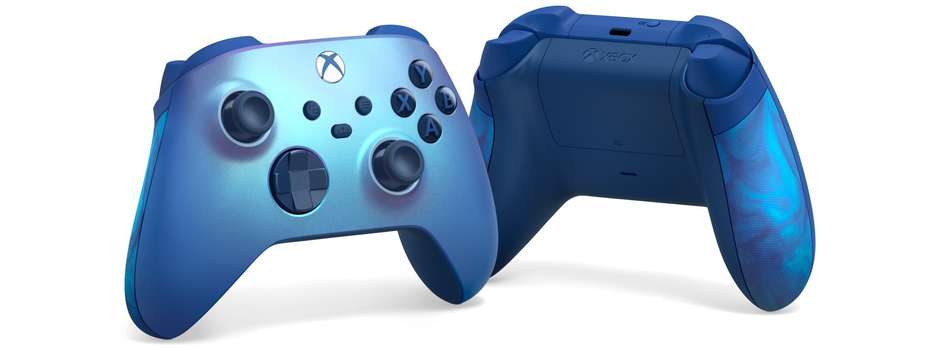
The Xbox Wireless Controller comes in several colorways. There is even the Xbox Design Lab program for those who want their own custom controller. However, that isn’t stopping the manufacturer from announcing new colors. The latest is the Aqua Shift Special Edition which was announced today and it boasts features you won’t find on the others.
The Aqua Shift Special Edition has a color-shifting blue shimmer and depending on the angle you hold it, the controller will shift between different shades of blue and even purple.
The D-Pad and thumbstick have the same shade of dark blue that appears to be slightly different from that of the View, Menu, and Share buttons. The ABXY buttons also have a pretty nice blue-on-blue design.
The controller also features a unique color swirl on the rubberized side grips, a first for a special edition Xbox Series X|S controller. This color pattern is unique to each unit which means that no two Aqua Shift Special Edition controllers are the same.
The controller is priced at $69.99 and is already available for pre-order across the globe on Xbox.com and at local retailers.
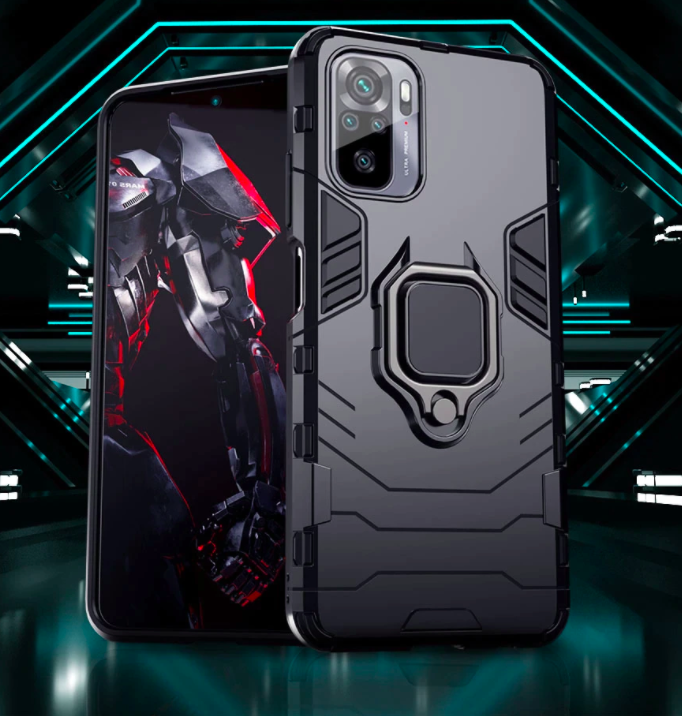
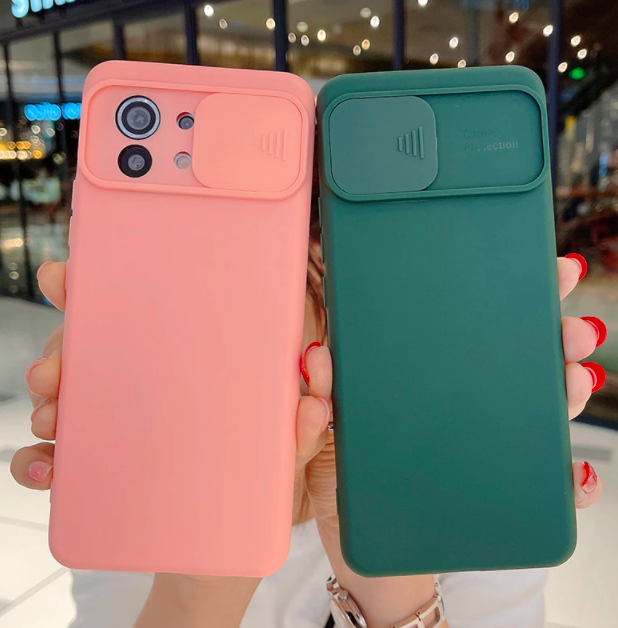
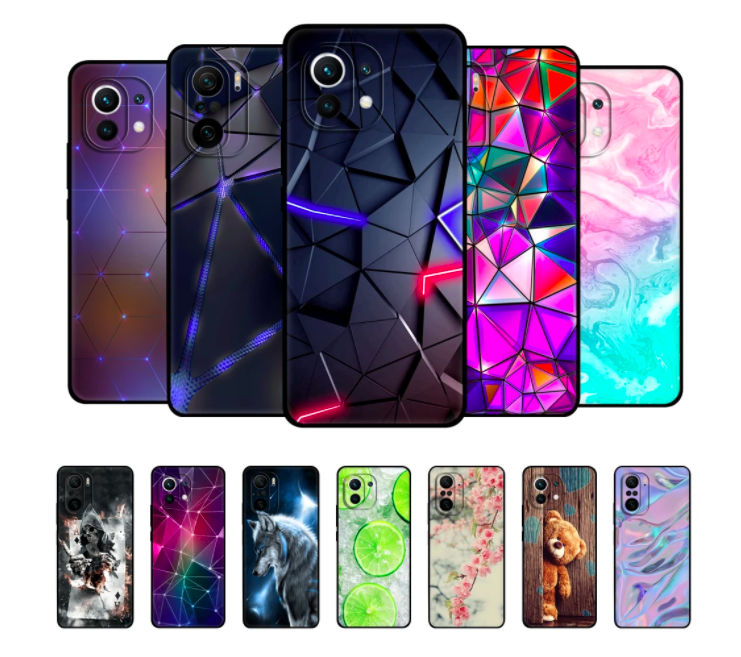
For all our Xiaomi users and fans, here’s a list of some unique and exotic phone cases for the Xiaomi Mi 11 smartphone, from AliExpress. Please note that these cases may not be the best when it comes to protection but these cheap cases definitely make your smartphone stand out in the crowd and turn heads.
Note that most of the cases mentioned below are available for other Xiaomi models as well.
The Honor V7 Pro is an upcoming flagship tablet from Honor. The tablet will be the first device to be powered by the new MediaTek Kompanio 1300T processor announced last week. Now, the manufacturer has released a new teaser that reveals new details.
The image above was posted earlier today on Weibo by the Honor Life account and it shows that the Honor V7 Pro tablet will have support for a stylus. The stylus has a cylindrical design and a black paint job. It actually looks like a black version of the Huawei M-Pencil 2.
The tablet itself is attached to a case. We believe it is a keyboard case even though the keys are not visible in the image. What is more interesting is that the case has a floating design just like that of the iPad Pro’s Magic Keyboard.
Both accessories should be announced alongside the tablet next week but will most likely be sold separately.
The Honor V7 Pro is shown to have a blue paint job and a flat frame design. There are two speaker grilles and a USB-C port on the visible side and we believe it also has two speaker grilles on the other side for a quad speaker setup. The tablet is expected to be available in Wi-Fi and 5G versions.
Although Lenovo is known for Windows laptops, the company also sells Android tablets, entry-level models to be exact. But last year due to the increase in demand, the firm once again started selling premium Android tablets. A year later, the tech giant makes a major announcement regarding these products in China.
According to the official Weibo accounts of Lenovo Xiaoxin and Lenovo YOGA, the Chinese tech giant is giving away a year of additional warranty on Android tablets for free in its home country.
The social media post is bleak without proper details. It merely says one-year additional warranty on all Lenovo tablets.
Anyway, going by the replies in the comment section, this offer is also applicable to already purchased tablets. But unfortunately, the models covered in the offer are unknown. As per the image, the offer should be limited to the mid-range as well as premium Xiaoxin and YOGA-branded Android tablets.
In simpler words, Lenovo Android tablets in China now come with a 2-year warranty. Existing customers will be also upgraded to two years.
As per IDC, Lenovo’s tablet market share stood at 11.6% in Q2 2021. The company ranked third with shipments of 4.7 million units. It grew the most with a 64.5% YoY growth, while HUAWEI along with HONOR declined by 57.5% YoY.
Therefore, it makes sense for the firm to lure in more customers as well as retain existing customers by offering a 2-year warranty.
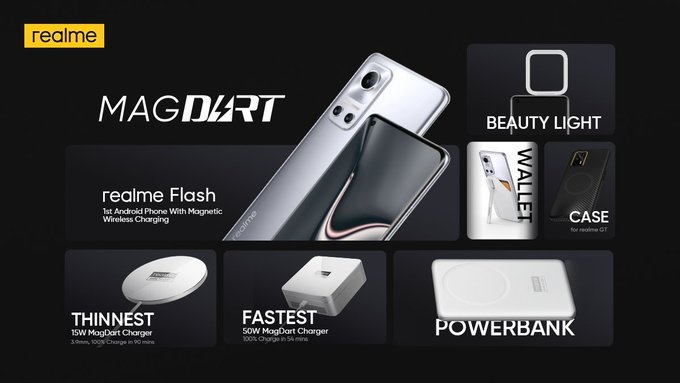
Realme has taken the wraps off its MagDart charging technology. The magnetic wireless charging technology is the first for Android, and the new magnetic wireless chargers are faster and thinner than those from Apple.
At the online event, Realme announced several products. They are the Realme Flash, 50W MagDart Charger, 15W MagDart Charger, MagDart Power Bank, MagDart Wallet, MagDart Beauty Light, and the MagDart Case for Realme GT.
Realme Flash
The Realme Flash is a concept Android phone to showcase its MagDart wireless charging technology and the first Android smartphone with support for magnetic wireless charging.
The phone has a dual-curved display with a punch hole at the top left corner. There are three cameras on the back, and a dual-cell 4500mAh battery and a Snapdragon 888 processor reside under the AG Matte finish back panel.
The phone packs Boron and Cobalt magnets that are 0.3mm thin, boast a magnetism decay of 0.01% after two years, and a 5N magnetic force that allows it to hold objects that weigh up to 500 grams. Realme didn’t say if it plans to make the device commercially available.
50W MagDart Charger
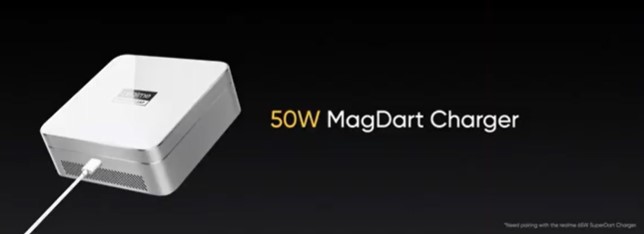
The 50W MagDart Charger is the world’s fastest magnetic wireless charger. The charger features a 0.2mm thin extra-large low impedance copper coil that allows it to generate less heat while charging. Regardless, there is still a mini active air cooling fan built into the charger. The charger also has 1.5mm thick magnets.
The charger can refill the Realme Flash from empty to 20% in just 5 minutes while a full charge takes 54 minutes, almost the same duration as the wired 50W SuperDart Charger.
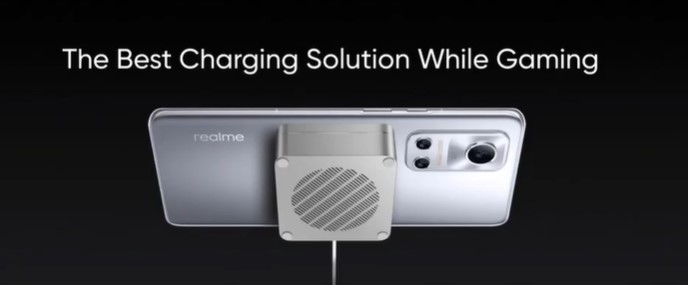
Realme says the 50W MagDart Charger is also the best solution while gaming as the charger can be rotated so that the wire isn’t an obstruction while playing games. You can also use the charger to charge devices that support Qi wireless charging.
15W MagDart Charger
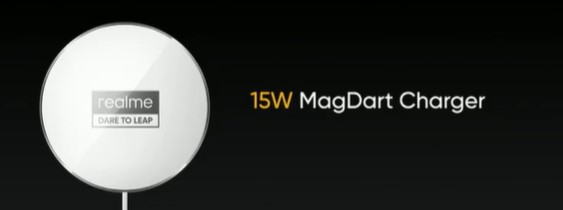
The 15W MagDart Charger is for those who want a charger with a smaller form factor. It is not only thinner than Apple’s MagSafe but also faster. Measuring 3.9mm in thickness which is thinner than four credit cards stacked together and 26.4% thinner than the MagSafe charger.
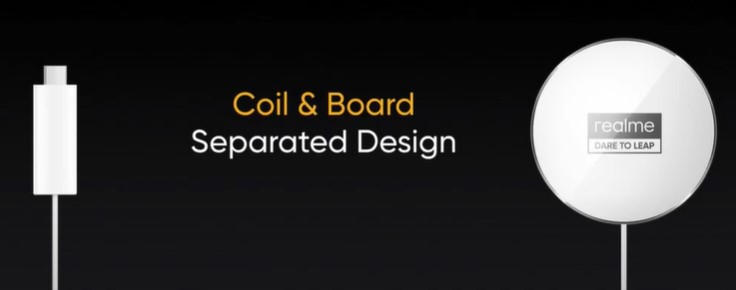
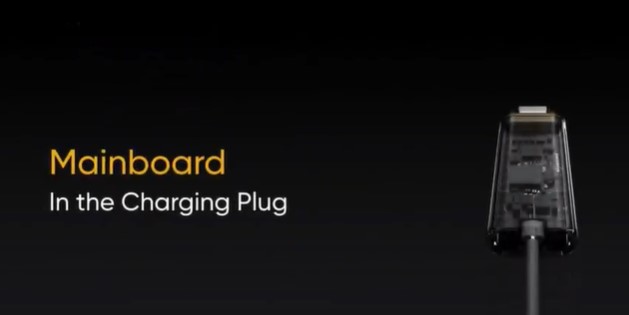
Realme says it was able to make the charger this thin by using a separate coil and board design. Rather than putting the board in the charging coil, Realme loved it to the charging plug. This design choice also reduces overheating.
While the Apple MagSafe charger will take hours to refill a battery capacity of less than 3000mAh, the 15W MagDart Charger will recharge a 4500mAh battery in 90 minutes.
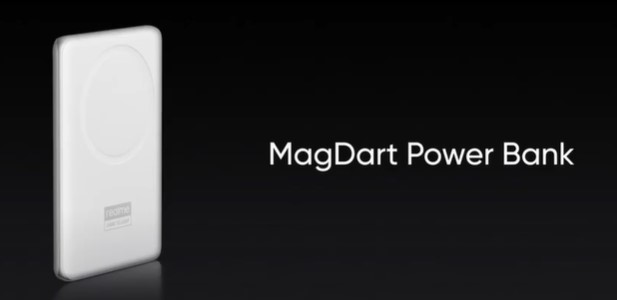
MagDart Power Bank
Realme knows you won’t always be at a wall outlet, but that doesn’t mean you should miss out on magnetic wireless charging. If you are on the go, you can still enjoy magnetic wireless charging with the MagDart Power Bank. This is Realme’s take on the MagSafe Battery Pack but it is much cooler.
The power bank snaps to the back of the phone and begins charging immediately. It has a power output of 15W, the same as the 15W MagDart Charger.
The MagDart Power Bank also has a base/dock that charges it and allows it to transform into a vertical magnetic wireless charger. When placed on the base, the power bank begins to charge. You can also place your phone on the power bank when in this state.
With respect to its design, the MagDart Power Bank has an aluminum frame and is covered in vegan leather.
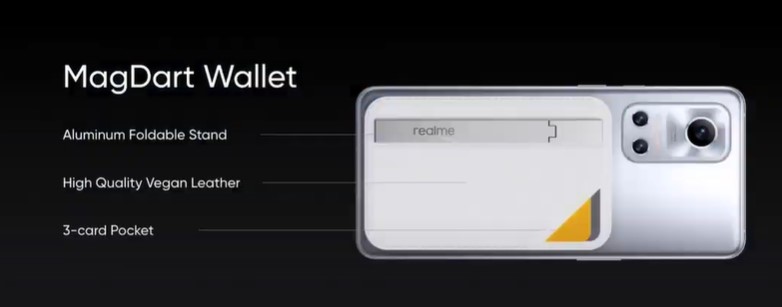
MagDart Wallet
The MagDart Wallet is a magnetic accessory that attaches to the back of a phone. Covered in vegan leather, users will be able to store three cards in the wallet. There is also an aluminum kickstand that props the phone up vertically.
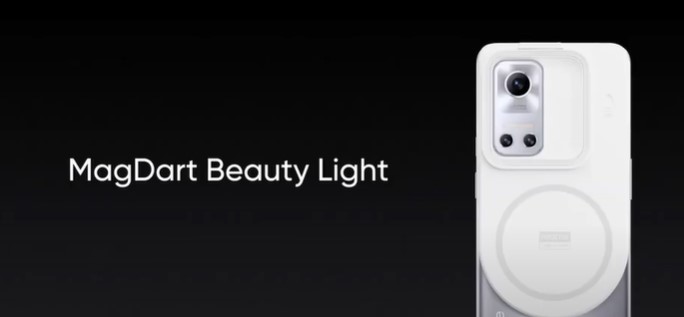
MagDart Beauty Light
The MagDart Beauty Light is a magnetic ring (actually square) light accessory that magnetically attaches to the back of a phone with support for magnetic wireless charging.
The 60-LED light can be flipped up to serve as a light source when taking selfies or recording a vlog. There is a button to turn on/off the light and also to adjust the brightness level and color temperature. The MagDart Beauty Light is powered via reverse wireless charging.
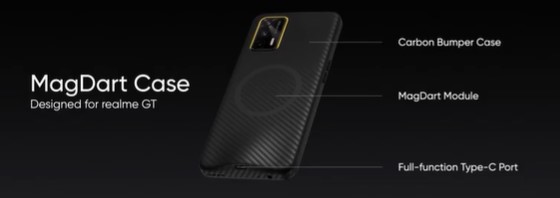
MagDart Case for realme GT
The MagDart Case brings the benefit of MagDart to the Realme GT. The case connects to the realme GT’s USB-C port and allows the phone to support magnetic wireless charging.
The case has a black carbon finish that matches the design of the realme GT.
Realme didn’t announce the price tags for these accessories. However, it did say that it plans to open up the MagDart standard to everyone so that people can develop accessories for it and help with its popularity.
It was reported recently that a unit of the recently launched OnePlus Nord 2 exploded inside the owner’s bag in India. The story which first popped up on Twitter was shared by Ankur Sharma from Bengaluru, India who claimed that the ill-fated unit owned by his wife exploded in her sling while she went cycling in the morning. The sudden blast resulted in an accident which all left the wife traumatized.
OnePlus India had responded immediately to the tweet which was later deleted. The company’s Support team expressed their deep concern about the incident and asked the author to contact them via direct message for further assistance.
OnePlus has now concluded its investigation into the incident and has released an official statement. The statement indicated that the company’s investigation showed that the blast wasn’t caused by a defect in the manufacturing process but as a result of an isolated incident involving external factors.
Hi Ankur. We are gutted to hear about your experience. We are deeply concerned and want to make it up to you. We request you to connect to us over a direct message so that we can make amends and turn this around for you. https://t.co/Y6rHuMwu8J
OnePlus reiterates that its products are manufactured under a system of thorough quality and safety tests, allaying the fears of fans who may have bought the Nord 2 or any other of its products and are shaken by this isolated incident.
You can read the full official statement from OnePlus below:
Our top priority is the health and safety of our customers. We reached out to the concerned user immediately after hearing about this incident and initiated a thorough internal investigation. The results indicate that the damage to this device was caused by an isolated incident involving external factors and not due to any manufacturing or product issue. However, we remain in close touch with this user and have offered our support to address their concerns and ensure their wellbeing.
We would like to assure our customers that our products undergo thorough quality and safety tests, including various levels of pressure and impact tests, to ensure they are up to industry-leading standards and remain safe to use.
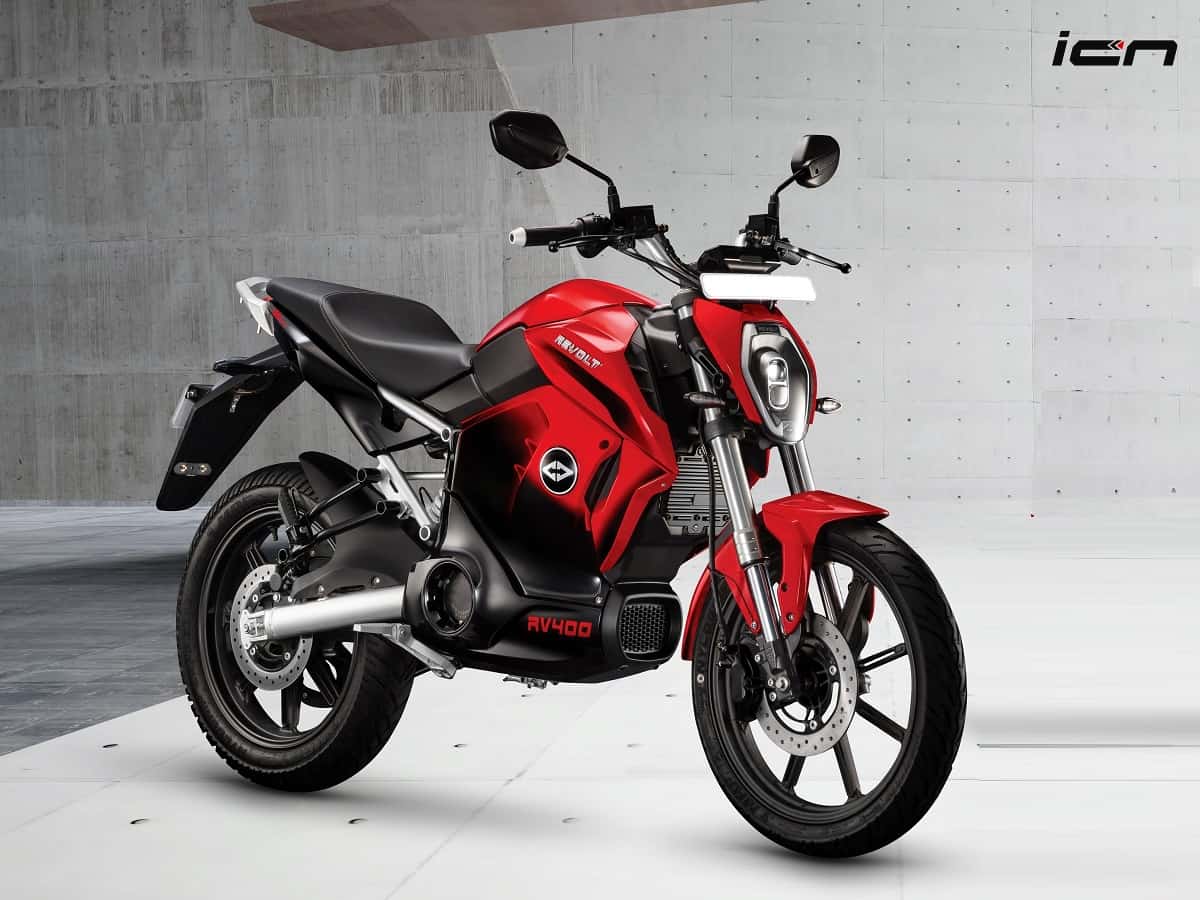
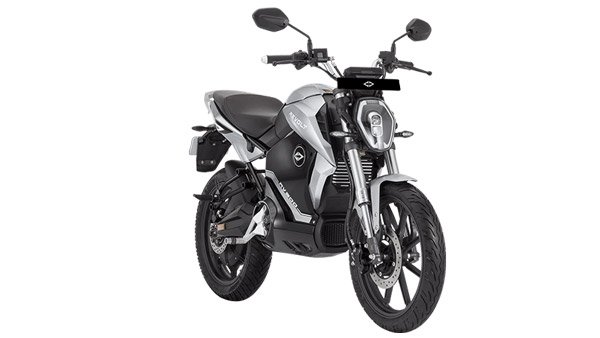
Since 2019 when the Revolt RV400 was launched (together with the RV300), the electric motorcycle has enjoyed massive patronage. The coronavirus pandemic heavily affected the supply end, as there were difficulties meeting up, especially the global market.
One of the strong points of the RV400 was its speed in comparison with existing scooters. The RV400 has a top speed of 85 km/h (53 mph), placing it high among electric motorcycles made for urban use. It is almost twice as fast as the e-scooters in the market. These e-scooters have top speeds around km/h (28 mph). The RV400 has a decent city range of 156 km (97 miles), and sold out quickly after its launch, unlike the RV300.
It is not clear the number of units of the Revolt RV400 that have been sold, but the company is introducing a low-cost model into the family – the RV1. Revolt will discontinue the manufacture of the RV300, with the introduction of the new model. As India, the global leader in motorcycle production continues to expand its capacity to electric motorcycles, the RV1 will be Revolt’s first wholly-produced electric motorcycle in India. The company will start production of the RV1 by January 2022. Revolt hasn’t provided pricing details of the new RV1, but it is projected to cost around INR 75,000 ($1,008).
Already the stock of RV300 models has been procured by Pizza chain Dominos in India. Currently, Revolt imports some components of its electric motorcycles from China, but is aggressively pursuing a policy of gradual integration of local materials until it gains full sufficiency by December 2021.
The EV industry in India continues to grow massively, with the central and regional governments providing massive incentives to manufacturers and consumers. Recently, the first batch of Indian-manufactured e-bikes landed in the European market. It remains to be seen whether the Indian effort could eject China from the lofty perch as the global leader in the two-wheeler EV market.
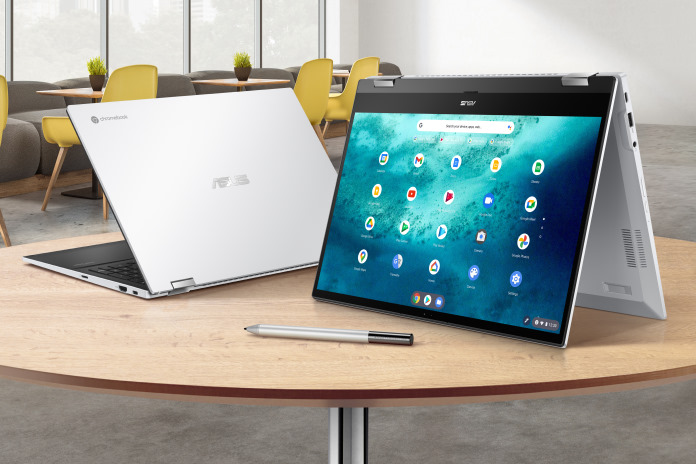
As per a report by IDC, shipments of Chromebooks and tablets continued to grow in Q2 2021. Although the demand for these two product categories continues to exist, their growth might get impacted in the next quarter.
ASUS Chromebook Flip CX5
IDC says that the shipments of Chromebooks grew 68.6% YoY in the second quarter of 2021. On the other hand, tablet shipments increased only 4.2% YoY. Their numbers stood at 12.3 million units and 40.5 million units respectively.
Although the last quarter did not set any record like the previous quarters, the numbers are strong enough. So why could the shipments get affected? The answer is “shortage of components”.
According to IDC, Chromebooks are still in high demand. In fact, many education deals are still in the backlog. But despite that, OEMs have started prioritizing higher-margin Windows laptops due to the ongoing global component shortage.
Further, the report also states that the consumer demand for tablets might slow much faster than the Chromebooks. This should be a bigger concern for OEMs like Xiaomi, realme, OPPO, OnePlus, and vivo that are expected to release tablets in the second half of 2021.
Anyway, as per IDC senior research analyst Anuroopa Nataraj, there are still ample opportunities for tablets and Chromebooks in the education sector. Emerging markets continue to use Android tablets, whereas developed markets like the USA and Canada prefer Chromebooks. Some Asian and European regions have also started leaning towards Chromebooks lately.
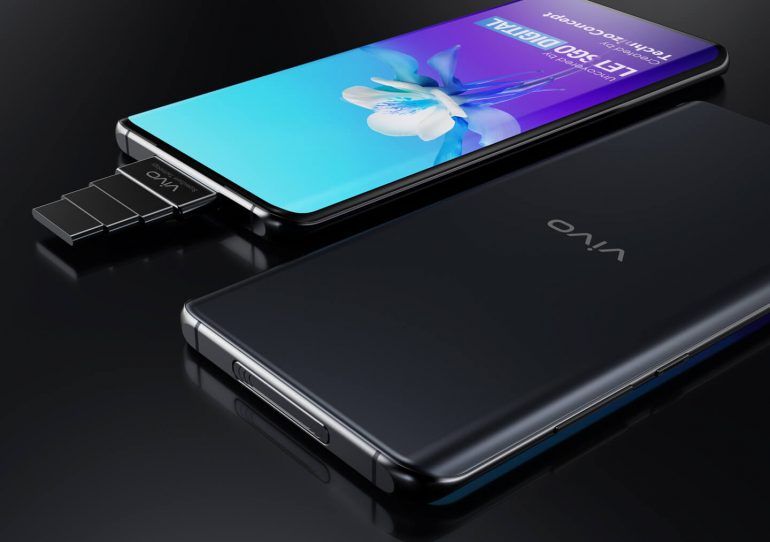
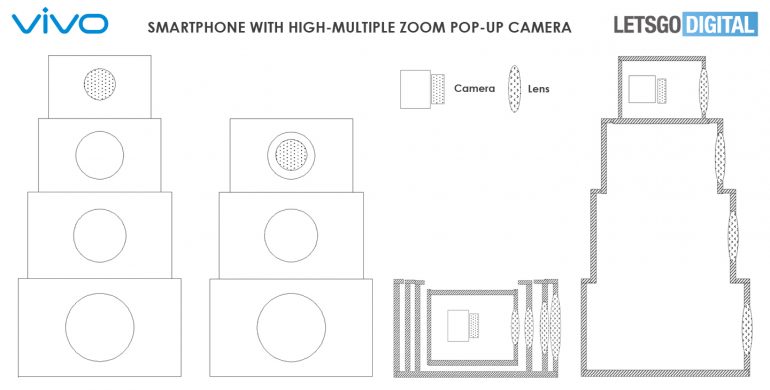
Vivo has just filed a patent for a new smartphone. The patent depicts a unique smartphone that has a superzoom lens that will allow for impressive magnification, which is housed in a pop up mechanism.
According to a LetsGoDigitalreport, the Chinese smartphone maker filed this patent with the WIPO (World Intellectual Property Office) under the title ‘Camera module, electronic device and camera module control method.’ As per the patent’s description, modern day smartphones only support ‘low multiple zoom.’ But, the latest technology from Vivo would enable its handset to offer ‘high multiple zoom.’ In simpler terms, the brand has patented a new camera technology that would offer zoom magnification with a notable range.
As of right now, the company already offers certain smartphone models with a zoom lens on the back. This includes the likes of the Vivo X30 Pro, which sports two telephoto lenses that support 2x and 5x magnification. Notably, the report from LetsGoDigital also offered renders of the patented device that will house the superzoom pop up camera, which was made by graphic designed Technizo Concept. The most highlighting aspect about this superzoom camera module is its unique pop up mechanism.
Multiple lenses are housed in a single module that extend out, and collapse into the base. In other words, its like a pyramid like design with the top most lens having the smallest surface area while the base houses the sensor and all the other lenses alongside it. Looking at the patent, there are four lenses in total, with additional lenses popping up as per the magnification needs of the user. Additionally, these lenses can also overlap allowing for longer zoom range. While the patent does not reveal the amount of optical zoom, it does state that it will be a lot more powerful than current smartphones with zoom lens.
Samsung has managed to achieve a notable feat in the semiconductor industry. The company is now the world’s largest chipmaker in terms of revenue in the second quarter of this, beating the industry’s giant Intel.
In Q2 2021, the South Korean tech giant managed to overtake Intel to become the world’s top chip manufacturer in terms of revenue. As per analysts, these positions are expected to remain the same in the near future. During this period, the known memory chips maker generated 22.74 trillion Won (roughly about 19.7 billion US Dollars) or 18.5 billion US Dollars if you subtract the contribution of a business unit that it plans on selling.
Meanwhile, Intel held the top spot for the better part of the past three decades, only losing to the South Korean brand in 2017 and 2018, during the boom of the memory chip sales. Samsung revealed its financial report last week, in which, it also reported that it saw a 54 percent year on year rise in terms of overall operating profits in the second quarter. Notably, the company attributed its great performance to higher than expected prices of DRAM and NAND chips due to pent up demand in the pandemic.
Samsung is gearing for the launch of its latest foldable smartphone models, namely the Galaxy Z Flip3 and Galaxy Z Fold3. But prior to the official announcement, the pricing of both models have leaked again.
The latest leak arrives from known tipster @evleaks and reveals the pricing for both foldable smartphones. As per the tweet from Evan, the Galaxy Z Flip3 pricing starts from 1,099 Euros (roughly 1,306 US Dollars) while its higher end storage variant will apparently cost 1,149 Euros (roughly 1,366 US Dollars). On the other hand, the Galaxy Z Fold3 from the South Korean tech giant will arrive with a starting price of 1,899 Euros (roughly 2,258 US Dollars), with its higher end storage variant costing about 1,999 Euros (roughly 2,377 US Dollars).
Notably, this pricing suggests that the Galaxy Z Flip3 is a sizeable 350 Euros cheaper than its predecessor, if the pricing is official. Meanwhile, even the Galaxy Z Fold3’s price tag is around 300 Euros lower than the Galaxy Z Fold2. We can also expect the company to offer various pre order deals along with trade in offers for these new foldable handsets, which might help customers reduce the price even further. Unfortunately, we have no way of confirming this news at the moment, so stay tuned for more updates.
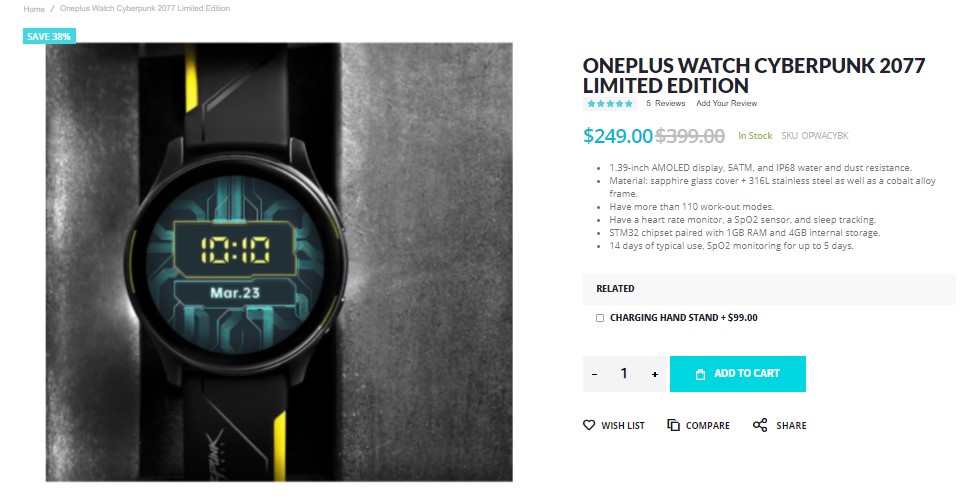
OnePlus Watch Cyberpunk 2077 Limited Edition smartwatch is up for grabs at a discounted price of $249 via Giztop. Considering the smartwatch’s attractive design and outstanding features, it is a bargain deal for interested buyers. However, the OnePlus Watch usually retails for the actual price of $349.
It is a limited-time deal, so hurry up if you’re looking to grab the smartwatch at a discounted price. You can bundle the deal with a charging stand at an additional cost of $99.
OnePlus Watch Cyberpunk 2077 Limited Edition is a beautifully crafted watch which bundles several useful features. It houses a 1.39-inch AMOLED display with a resolution of 454 x 454 pixels. Further, the frame is built with 316L stainless steel and cobalt. The smartwatch runs a custom-made OS based on RTOS for better efficiency. Oneplus bundled the watch with an STM32 chipset, 1GB RAM and 4GB of internal storage.
Apart from Cyberpunk design, the smartwatch also offers a similar Cyberpunk styled User Interface and watch faces.
There’s a support for over 110 workout modes including swimming, walking, badminton, ballet, free training, etc. The user can efficiently monitor heart rate, sleep and Blood Oxygen level using highly efficient optical heart rate sensor, ambient light sensors, Geomagnetic sensors, barometers, etc. It is a full water and dust resistant smartwatch that fades away seasonal worries upon day-to-day usage.
It is an interesting deal for the OnePlus CyberPunk Watch which was already available with limited stocks. You can head over to the Giztop to grab the exceptional deal for $249.
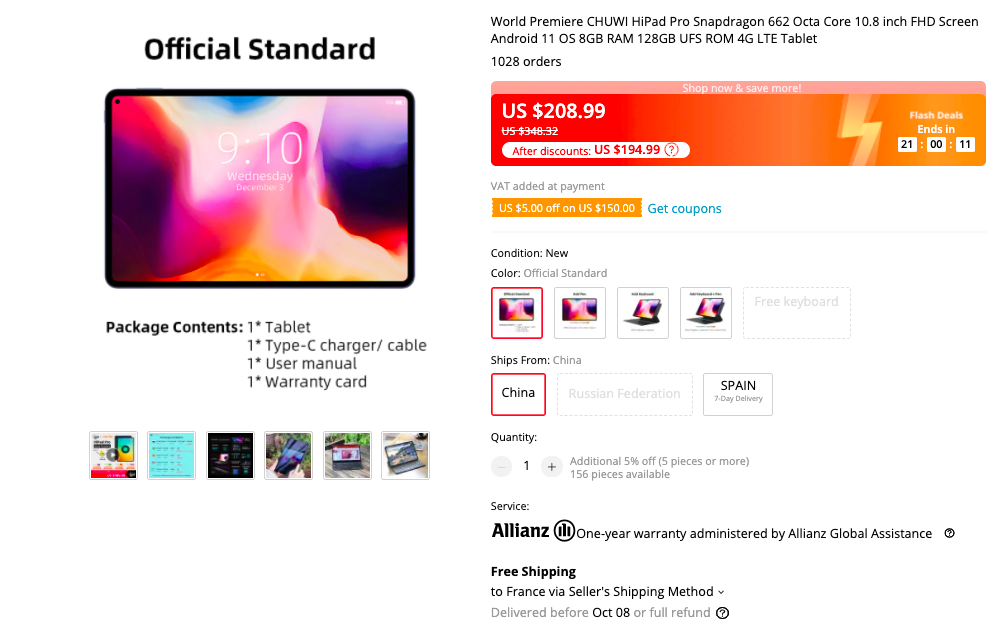
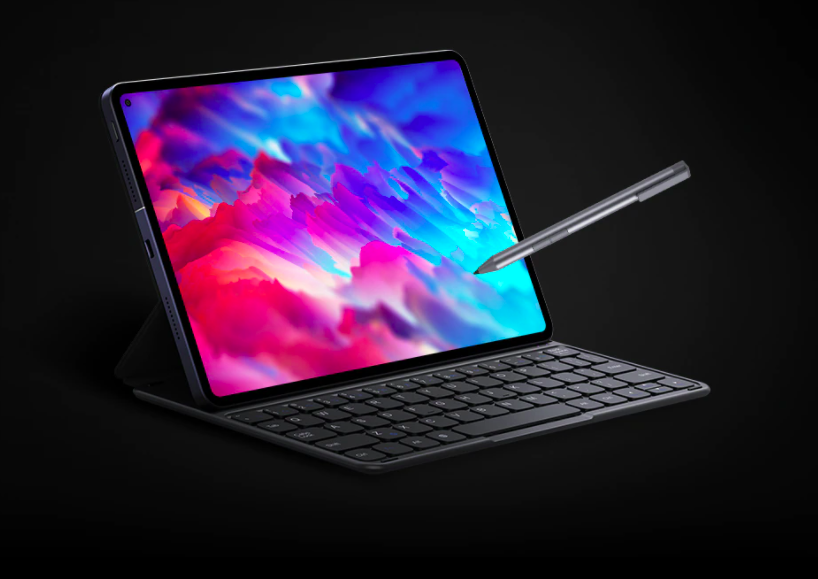
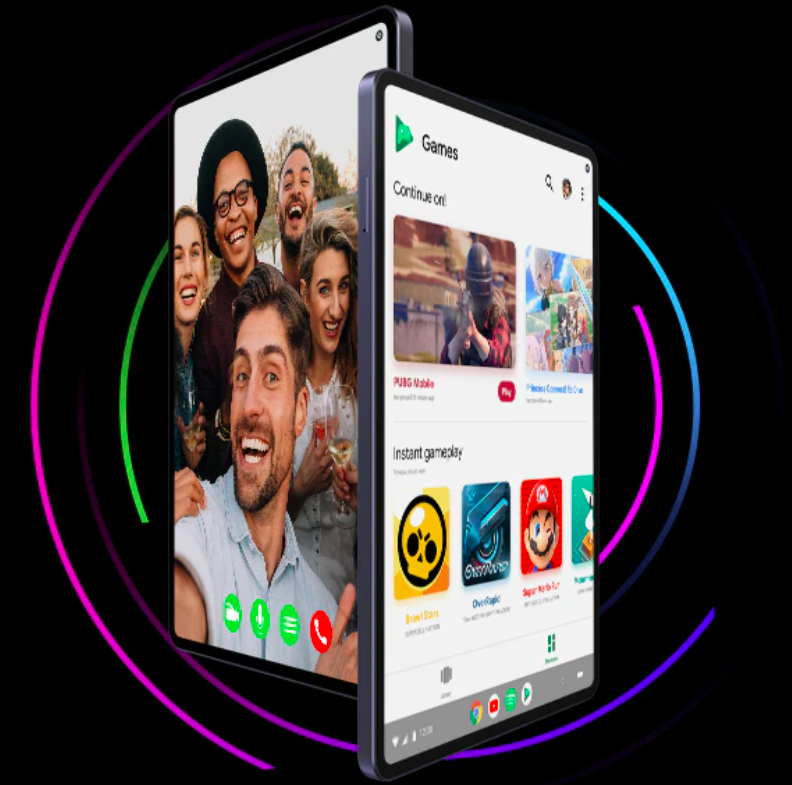
On account of its world premiere, Chuwi is giving out its Hi-Pad Pro Tablet at a discounted price of $194.99 only at AliExpress. Please note that this super deal ends in 21 hours.
For more information check out this article from Gizmochina.
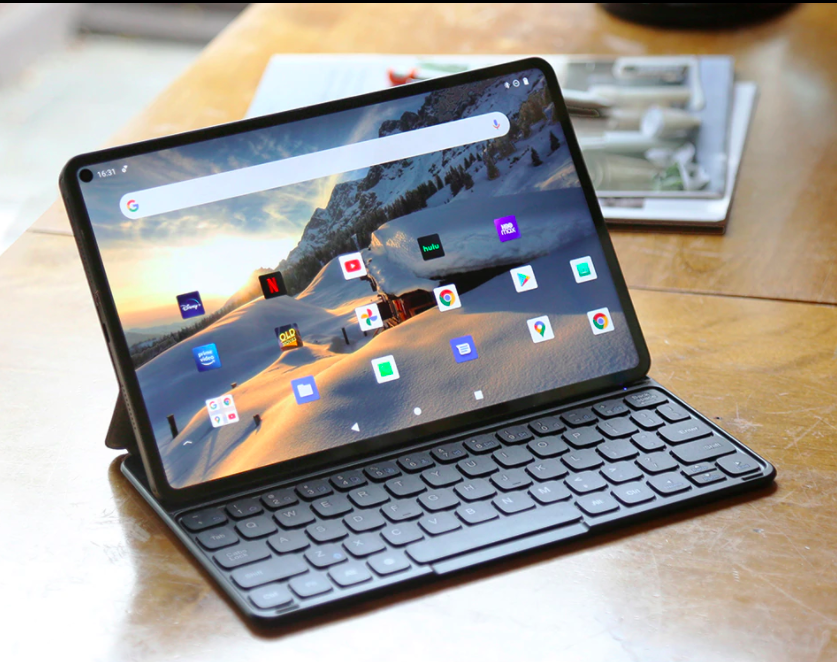
On account of its world premiere, Chuwi Hi-Pad Pro is available at a discounted price of $194.99 only. You can buy the Pen and Keyboard for an additional cost. Please note that this deal will end in the next 21 hours. So place your order asap.
For more information on such exciting deals and offers check out ourdeals hub.
* Please Note: When you buy something using the links in our articles, we may earn a small commission at no cost to you.
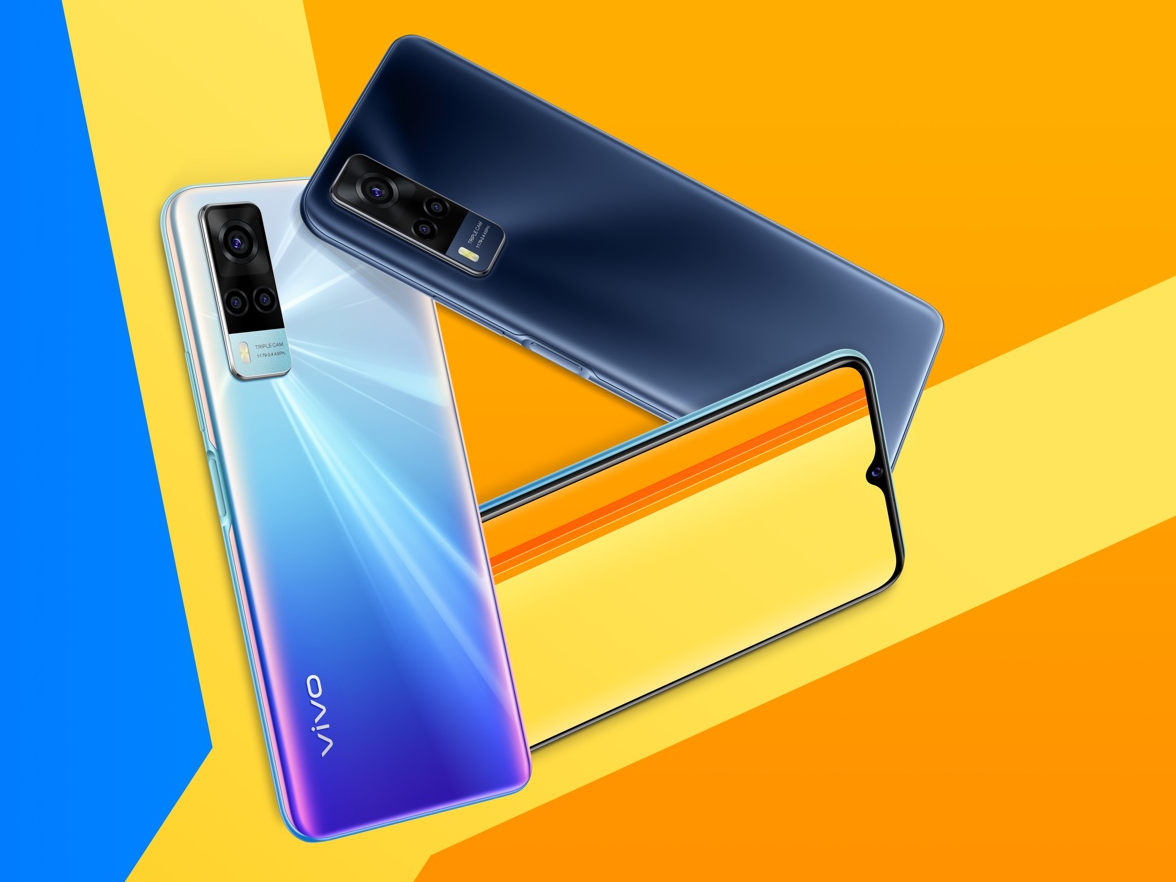
Chinese handset maker vivo is reported to launch the vivo Y53s in India. The brand is yet to reveal the launch date. Ahead of that, the device’s price in the country has leaked.
According to the retail source of 91Mobiles, the upcoming vivo Y53s for India will carry a suggested retail price (MOP – Market Operating Price) of ₹19,490. Whereas, its MRP will be ₹22,990.
The device will come with 8GB RAM and 128GB internal storage. It will be available in two colors, namely Deep Sea Blue and Fantastic Rainbow.
As far as specifications are concerned, the vivo Y53s sports a 6.58-inch LCD panel with FHD+ resolution and a dewdrop notch. It is powered by a MediaTek Helio G80 chipset. In addition to 8GB physical RAM, the device also has an option for 3GB virtual RAM as part of Funtouch OS 11.1 based on Android 11.
Further, it houses a 64MP (wide) + 2MP (macro) + 2MP (depth) triple camera setup on the back and a 16MP selfie camera. On the connectivity front, the phone supports dual-SIM, 4G, dual-band WiFi, GNSS, USB Type-C port, and a 3.5mm headphone jack.
Other features include a dedicated MicroSD card slot, a side-mounted fingerprint sensor, and a 5,000mAh battery with support for 18W fast charging.
The vivo Y53s is currently being sold in Vietnam priced at VND 6,990,000.
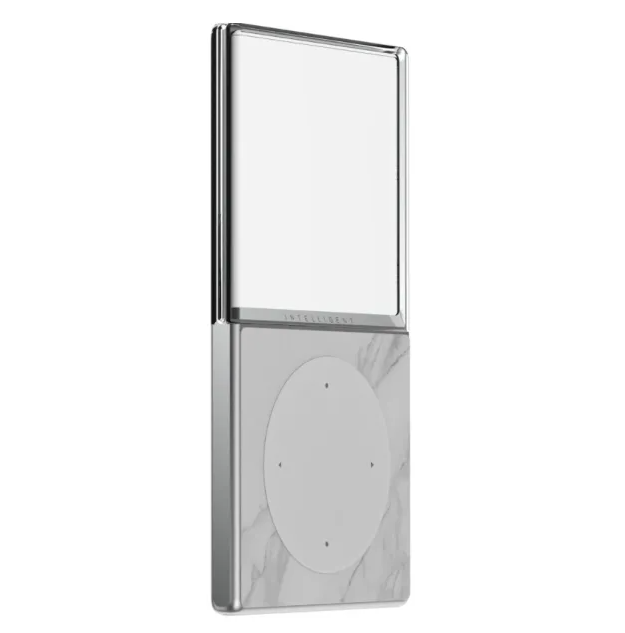
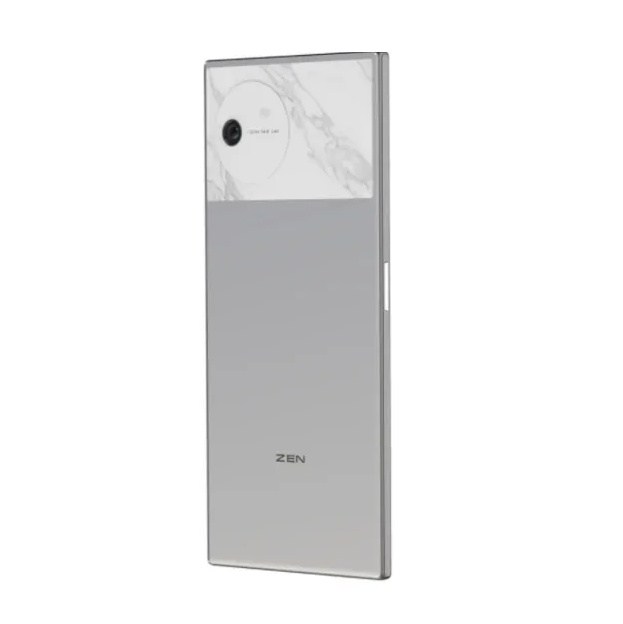
Vivo has recently filed two patent applications with the CNIPA (China National Intellectual Property Administration). One of the patents reveal a smartphone with an Apple iPod like design while the second patent implies that the company might launch a new Zen series phone as well.
The design of the smartphone in the patent looks quite similar to the iPod Classic. In other words, we can observe that the handset has a physical clickwheel, which occupies half of the front panel. This wheel can be found on the lower half, while the display panel taking up the rest of the front side. This is rather odd in the market considering smartphones are able to perform clickwheel tasks without the need for the physical buttons.
Furthermore, it is not an iPod like product since the CNIPA website clearly mentions this device as a mobile phone. Meaning, this might a unique and quirky device or just a phone that has a very specific purpose. Looking at the patented images, we can see that the clickwheel only has four buttons, which is a pretty standard design with what appears to be a metallic frame.
Arriving at the second patent, the Chinese handset maker is apparently also working on a new Zen series smartphone as well. This device sports a circular camera module on the rear while the front houses a punch hole selfie camera. The only notable aspect is the Zen branding on the rear panel of the device. Since it only appears to has a single camera on the rear, it is likely a budget or entry level device in the Zen series. Keep in mind that this is still just patents and we have no way of knowing if the brand is actually working on these patents as of right now.
The vanilla Redmi Note 10 is the cheapest model in the series. But unfortunately, Xiaomi has been hiking its price since the launch. Almost four months after its announcement, the device’s price has been increased fourth time today.
Redmi Note 10
The Redmi Note 10 comes in two storage configurations in India – 4GB + 64GB and 6GB + 128GB. These two variants debuted at ₹11,999 and ₹13,999 respectively.
A month after the launch, the price of the two versions was hiked by ₹500. Hence, they had been selling for ₹12,499 and ₹14,499 until June.
Then, the two models got yet another price increase of ₹500 one by one. Since then till yesterday, the base and higher variants of the handset were being sold for ₹12,999 and ₹14,999 respectively.
With yet another price hike of ₹500 today, the Redmi Note 10 currently retails in India at ₹13,499 for the 4GB + 64GB variant and ₹15,499 for the 6GB + 128GB version. In other words, the top model of the vanilla Redmi Note 10 is now costlier than the base variant of the Redmi Note 10S.
The rise in the price of smartphones and smart TVs in India is due to the shortage of components. Although it’s understandable, it’s sad to see that the once a value for money smartphone has now become a tough choice among the competition.
Xiaomi has reached the top spot in smartphone shipments in Europe for the first time ever. The company lead the market in the second quarter of this year, with its market share hitting 25 percent of the total shipments.
According to a StrategyAnalyticsreport, the Chinese tech giant saw a year on year growth of 14 percent in Q2 2021. During this quarter, the company shipped a total of 50 million units. The report added that the smartphone market’s recovery driven and the recovery of the economy also enabled healthy demand from consumers with aging devices, along with growing appeal for newer handsets that support 5G networking.
Boris Metodiev, Associate Director at Strategy Analytics stated that, “The European markets for smartphones had a strong quarter driven by Covid recovery, following the crash in 2020. The highlight of the quarter is Xiaomi emerging as the number one vendor in shipment terms for the first time. Xiaomi shipped almost 13 million units on the continent to displace longtime leader Samsung. Xiaomi has seen great success in Russia, Ukraine, Spain and Italy among others and found customers eager for its Mi and Redmi series of feature rich, value smartphones.”
While the Chinese brand saw growth during this period, South Korean tech giant Samsung saw a year on year decline of 7 percent in Europe, with 12 million units shipped in Q2. Furthermore, it also faced stiff competition with Apple in the high end market, meanwhile, it also failed to take advantage of Huawei‘s decline in the region. The Cupertino based giant, on the other hand, saw a 16 percent year on year growth in this time, shipping 10 million units in Europe.
While the arrival of Tesla in India has been highly anticipated, the wait for the popular electric vehicles from the company might be longer due to the high import duty in the region.
According to a TimesNowNewsreport, the high import duty is one of the primary reasons why the American automobile maker hasn’t entered the Indian market. While it is possible to simply import a car from the company’s Gigafactory in China, the duty would make the car’s price surge, making it less viable in the market. So, the only way to avoid this would mean manufacturing and assembling the cars locally under the Indian government’s EV scheme.
At the moment, the Tesla Model 3 is one of the most affordable models from the company and is offered for a price of around 39,990 USD in the US (roughly 3,000,000 INR or 30 Lakhs). However, the Model 3 in India could reach prices as high as 60 lakhs in the region due to the import duties. This could make the affordable model be too expensive for the local market. As per industry experts, these import duties on fully imported cars to India are a great concern to Elon Musk.
As of right now, India leview a 100 percent tax on the imported cars that are priced over 40,000 USD inclusive of insurance and shipping expenses. Meanwhile, cars priced less than the 40,000 USD mark only have a 60 percent import tax. According to a Counterpoint Research analyst, “Musk has also criticized the government policies for electric vehicles (EV), as they attract the same import tariffs as for petrol and diesel cars.”
We use cookies on our website to give you the most relevant experience by remembering your preferences and repeat visits. By clicking “Accept”, you consent to the use of ALL the cookies.
This website uses cookies to improve your experience while you navigate through the website. Out of these, the cookies that are categorized as necessary are stored on your browser as they are essential for the working of basic functionalities of the website. We also use third-party cookies that help us analyze and understand how you use this website. These cookies will be stored in your browser only with your consent. You also have the option to opt-out of these cookies. But opting out of some of these cookies may affect your browsing experience.
Necessary cookies are absolutely essential for the website to function properly. This category only includes cookies that ensures basic functionalities and security features of the website. These cookies do not store any personal information.
Any cookies that may not be particularly necessary for the website to function and is used specifically to collect user personal data via analytics, ads, other embedded contents are termed as non-necessary cookies. It is mandatory to procure user consent prior to running these cookies on your website.