Advertisement

Smartphone shipments in China increase by 9% in Q1 2021; OPPO leads the market

With the COVID-19 pandemic getting in control in China, smartphone makers have been able to manage supply chain and production. This has helped the companies boost up smartphone sales in the country.

According to the data published by DigiTimes Research, the smartphone shipments in China increased by 9 percent in the first quarter of this year, totaling 94.6 million units.

OPPO F19 Review 4
OPPO F19

OPPO, Vivo, and Xiaomi have emerged as the leading smartphone brands in China as these companies had a stockpile of chipsets and components because of which there were no issues with the production of their devices amid the global shortage of components.

Huawei, which had been ruling the Chinese smartphone market continues to see a decline in its market share. Honor, which spun off into an independent company earlier this year, doesn’t have significant numbers in sales to become a mainstream brand in China.

The top five smartphone brands in China — OPPO, Vivo, Xiaomi, Huawei, and Apple accounted for 91.8 percent market share in the first quarter. If Honor is included in the mix, which comes in at a sixth place, then the total market share amounts to 98 percent.

While the first quarter of 2021 saw an increase in shipments for smartphone brands in China, the report is forecasting a decline of 19.3 percent for the second quarter, mainly due to the shortage of required components.

As for the global markets, a report from Canalys reveals that smartphone sales increased by 27 percent in Q1 2021, reaching 347 million units. The top five smartphone companies during the first quarter are Samsung, Apple, Xiaomi, OPPO, and Vivo respectively.

RELATED:

Tencent reportedly in talks with the United States to keep gaming investments

Tencent Holdings, one of the Chinese giants, is negotiating agreements with the United States national security panel as it eyes permission to keep its ownership stakes in the US-based gaming companies like Riot Games and Epic Games, reports Reuters citing people familiar with the matter.

The report adds that Tencent has been in talks with the Committee on Foreign Investment in the United States (CFIUS) since last year. The committee has the authority to order the Chinese technology giant to divest its holdings in the U.S.

Tencent Logo

On the other hand, the report adds that CFIUS has been looking into whether Epic Games‘ and Riot Games’ handling of the personal data of their users constitutes a national security risk because of their Chinese ownership.

For those who are unaware, Tencent holds around 40 percent stake in Epic Games which is a maker of the popular game Fortnite. The Chinese giant had bought a majority stake in Riot Games in 2011 and acquired the remaining stake in 2015. Riot Games is the developer of League of Legends.

A Riot Games spokesman said to Reuters that the company operates independently of Tencent and that it has implemented “industry-leading practices” to protect player data.

Committee on Foreign Investment in the United States (CFIUS) has been cracking down on Chinese ownership of U.S. technology assets in the last few years amid an escalation in tensions between both the countries over trade, human rights, and the protection of intellectual property. The United States is concerned about the data of its citizens could end up in the hands of China’s Communist Party government.

RELATED: 

Selected Lenovo laptops getting a new Alexa mode bringing Echo Show functions

Earlier this year, tech giant Amazon announced a new “Show Mode” for the PC version of the Alexa app. The feature hopes to expand the user base of Amazon’s smart home app as it brings features that are found on the Echo Show including skills that can be activated only by a voice prompt.  The company has now announced that the feature will be making its debut on some Lenovo laptops.

Amazon Echo Show 10

Amazon describes the Show Mode for PCs as a “voice-first, interactive Alexa experience for PCs”. The mode can be activated via a voice command asking the virtual assistant to open the feature. It can also be activated using the Show Mode icon domiciled in the Alexa app.

When activated, the app displays in fullscreen mode on the PC’s screen, showing information that the user will find vital. The interface is exactly as it is on the Echo Show with features such as calendar appointments, weather information, and others. In addition, users can perform actions such as playing a song on Amazon Music, controlling connected smart home devices, checking for weather updates, and creating to-do lists.

The feature will also be enabled automatically when the laptop is idle and become sort of a screensaver. This feature, Lenovo says, is optimized to deliver optimal battery conservation. Lenovo’s Igor Bergman, Vice President of Cloud and Software, Intelligent Devices Group says; “By enabling Show Mode on Lenovo PCs, we are providing customers with a highly versatile user experience on a natural and convenient interface”.Alexa

The company listed the models in which the new feature will be available to include the Lenovo Yoga, IdeaPad, and ThinkPad PC models equipped with the Alexa app built into the Windows 10.

The feature will be available in the following countries; US, UK, Germany, Japan, India, Ireland, Austria, Canada, France, Italy, Spain, Australia, and New Zealand. Amazon plans to expand the compatible models with the addition of other Lenovo models in due course.

RELATED;


(source)


Lei Jun responds to complaints about the Mi 11 Ultra’s secondary screen

Xiaomi launched the Mi 11 Ultra flagship smartphone in March this year.  The flagship device was well-received but one feature that has proved controversial is the secondary display. The back panel has received mixed reactions among Mi fans. While some see nothing wrong, some others don’t seem to fancy the idea of a secondary display on the phone.Mi 11 ultra

Xiaomi’s Founder/CEO Lei Jun has weighed in on the discussion, revealing some details about the screen. In his opinion, the secondary screen is not too big. Also, it didn’t cost so much to produce, meaning the effect on the price of the phone isn’t too significant. Lei Jun equally added that the only challenge Xiaomi faced in designing the secondary display is space. Recall that the Mi 11 Ultra’s display is housed in a rectangular module and also houses the rear camera sensors.

One of the respondents complained about the camera module being too big, to which the Xiaomi CEO responded that it is because the phone is targeted at professional photographers. He then recommended the Mi 11 Pro to the complainant. Further, another respondent complained about the device being too heavy. This is equally attributed to the huge camera module.

Lei Jun had earlier disclosed that the Mi 11 Ultra’s secondary screen uses an OLED panel just like the Mi Band 5. In terms of specification, the secondary display has a 1.1-inch size and it can display a variety of information. The main reason for including the display is for shooting selfies as the front display doesn’t have any cut-out for a front camera. As our review of the Mi 11 Ultra noted, the device is top-heavy but it’s really not a big issue. The secondary display doesn’t increase the thickness too much as it is just 8.38mm thick. This is even thinner than the vegan leather version of the vanilla Mi 11.

The secondary screen also displays custom time, weather, animations, and themes. Users can catch up with notifications and receive message reminders, health reminders as well as control the phone’s music player.

In the comments section of his post, Lei Jun also disclosed that the issue of users not being able to turn off the secondary screen notifications will be solved soon via a software update. The MIUI 12.5 update which ushers in DXOMARK camera optimizations will be pushed soon, Lei Jun also added.

RELATED;


Pixel 6 may feature Google’s Whitechapel custom chip, reveals new evidence

It was reported last month that the forthcoming Google Pixel 6 may not feature a Snapdragon SoC. Instead, it is expected to house a Google-made chip, which is codenamed as “Whitechapel.” A fresh report by XDA Developers states new evidence has appeared to point that the Pixel 6 will be driven by the company’s in-house chip.

In the screenshot shared by the publication, the “Whitechapel” text can be seen in the URL mentioned by one of the Google engineers in a code change submitted to the Android Open-Source Project (AOSP). The publication claims that the P21 mentioned by the engineer in the line “You don’t need coredomain to use binder_use. This one lives fine on P21,” could be referring to the Pixel 6. P21 may not be the Pixel 5a as it is expected to feature the Snapdragon 765G, which powered the Pixel 4a 5G last year.

Google-Pixel-21-Whitechapel-GS101
Image source: XDA Developers

In the URL, Whitechapel refers to Google’s own chip and “GS101” probably stands for Google Silicon. 9to5 Google had reported last month the Whitechapel chip could be under construction at Samsung’s system large-scale integration (SLSI) division. Since the SLSI is also responsible for the Exynos chips, speculations are rife that Google’s first chip will have some common features with Samsung Exynos.

Past reports have claimed that it could be a 5nm octa-core ARM chipset that may comprise of two Cortex-A78 CPU cores, two Cortex-A76 cores, and quad Cortex-A55 cores, and an ARM Mali GPU. The performance of the chip could be similar to the Snapdragon 7-series chips by Qualcomm.

By using its own chip, Google will possibly have better control over driver updates since it would not need to rely on Qualcomm. This means that the drivers can be compatible with newer Android OS versions for a longer time. At present, Pixel devices offer users 3 years of Android OS upgrades. However, having its own chip could allow Google to offer 4 or 5 generations of OS upgrades.

RELATED:

Here’s a video comparison of Huawei’s HarmonyOS and EMUI 11

Just yesterday, a video showing a Huawei Mate 40 Pro model running the firm’s self-developed HarmonyOS 2.0. The demo video details the features and functionalities of Huawei’s homegrown operating system. The development of the HarmonyOS was fast-tracked with the US blacklisting of Huawei that prevented the Chinese tech powerhouse from accessing important software and hardware components from its US suppliers.HarmonyOS vs EMUI 11

Yet another video has appeared online showing a comparison between a phone running on HarmonyOS 2.0 and another running on the Android 11-based EMUI 11. The comparison is between the Developer Beta3 version of HarmonyOS 2.0 and the current stable firmware of EMUI 11. The video highlights the features and some performance metrics of both operating systems.

In terms of speed, the video showed that the HarmonyOS was a bit slower than EMUI 11 as per the app loading time. This may not be a definitive indicator that the EMUI 11 was faster. There could be several reasons. The speed test was also conducted in two different phone models, and it is impossible to situate the differences in their app loading times under such a scenario.

It is therefore difficult to compare the performance of the two operating systems because we do not have the stable build of the HarmonyOS and the use of separate phone models for the performance test.

Huawei plans to ultimately deploy HarmonyOS to most of its products in the coming years. It hopes to begin featuring the operating system in its new products within a few months. We, therefore, expect a stable build version very soon.

The most visible change in the HarmonyOS is a new control center, with a search engine at the top left corner, while a swipe-down gesture anywhere on the screen reveals the notifications.

RELATED:


Redmi’s product director hints there won’t be an LCD screen flagship this year

Redmi‘s GM and Xiaomi Group VP Liu Weibing recently conducted a poll to know which most fans prefer between LCD and LED displays. The survey showed that most fans prefer LED display-toting smartphones as against an earlier preference for an LCD screen as of last year. However, there are apparently still fans who would love to have a flagship phone with an LCD screen.Redmi K30S Ultra

Recently, a Weibo user had inquired (via) from Redmi’s product Wang Teng Thomas if Xiaomi is considering producing an LCD display-packing flagship phone powered by the Snapdragon 870 chipset. Of course, there were rumors recently that Xiaomi was going to launch three smartphones this year with Snapdragon 870 chip. But in response to the question, Wang Teng Thomas disclosed that the Chinese tech giant wasn’t planning to launch an LCD flagship this year. He even recommended the Redmi K30S Ultra to Mi fans who seek an LCD flagship phone. The K30S Ultra was released last year in China but is still on sale despite the arrival of the K40 Ultra.

The Xiaomi exec had earlier revealed that Xiaomi won’t be launching flagship models using LCD screens going forward. At present, OLED screens have become the standard configuration of flagship mobile phones. This trend has even shifted to the mid-range segments as more mid-range models are launched presently with OLED screens. Redmi K30S Ultra

For instance, this year alone, Xiaomi has launched the Mi 11 flagship series with OLED screens and even the mid-range Mi 11 Lite equally utilizes an OLED panel. Further, the  Redmi K40 series, Redmi 10X series and a couple of other models also use OLED screens.

RELATED;

HTC tipped to launch two enterprise-oriented VR headsets at Vivecon 2021

A Protocol publication indicates that HTC will unveil two premium VR headsets at its Vivecon event this month. The two enterprise-focused headsets with virtual reality features listed in the Protocol publication are the Vive Focus 3 Business Edition and the Vive Pro 2 PC-VR headsets.HTC

The Vive Focus 3 Business Edition is a standalone headset that will be a successor to the Vive Focus Plus and would provide more improvements and features from its predecessor. HTC has in the past few years, produced some well-designed and comfortable headsets, and the two additions may not be different. The Vivecon event will be held from May 11th to 12th virtually. HTC had tweeted yesterday on the impending release of a VR headset and provided a view of one of the devices, as a promotion for the Vivecon 2021 event. The tweet teased that the company is about to unveil transformative technology for businesses by deploying virtual reality.

The VR headsets had been sighted specifically on European e-commerce site Alzashop with price tags of $1,772 for the Vive Focus 3 and $1,012 for the Vive Pro 2, respectively. Although the post was quickly taken down, it provides some insights into the likelihood of the devices being unveiled very soon. The Alzashop listing also mentioned May 20 as the release date for both devices.

HTC will be competing with Oculus, which is a leader in that segment of the mid-range and high-end segment of VR headsets for businesses. In April, a World Design Guide leak showed that HTC was designing a fitness-oriented VR headset called the Vive Air which could be comparable to the Oculus Quest. It was speculated that this was just a design concept, but the new HTC VR headsets could bear close semblance with the leaked Vive Air.

RELATED:


Upcoming OPPO clamshell foldable phone’s initial details emerge

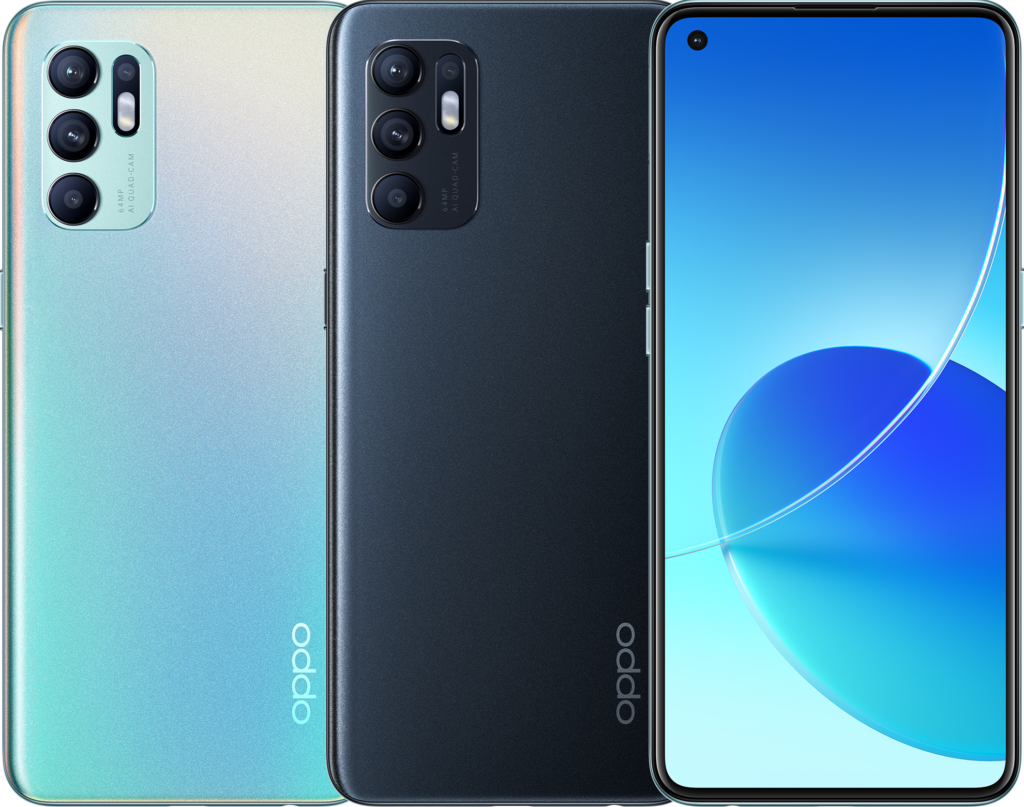
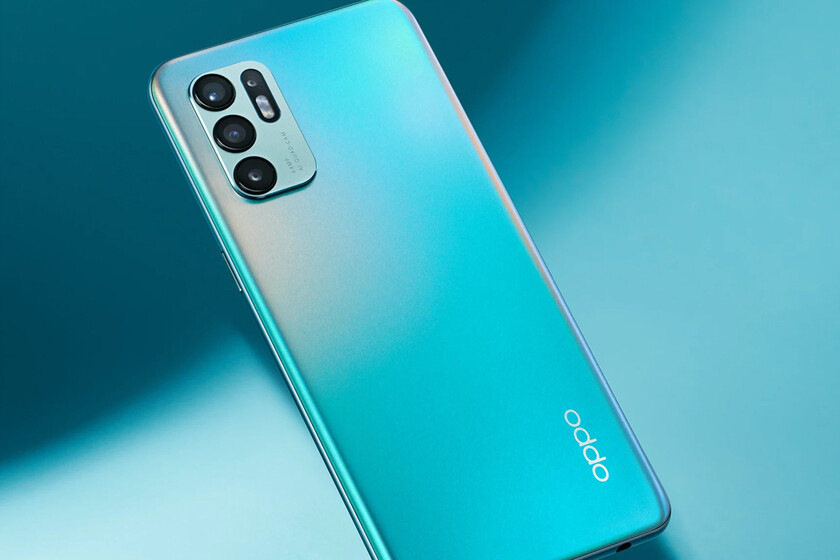
OPPO is expected to announce the Reno6 series of smartphones later this month. Fresh information reveals that the Chinese manufacturer is working on its first clamshell phone with a foldable display. A tipster from China has shared initial details of OPPO’s upcoming clamshell.

According to the tipster, OPPO’s clamshell foldable phone will be a female-focused device. When unfolded, it will measure around 7 inches and when folded, it may measure 2 inches.

In addition, the tipster claimed that the device will be equipped with an LTPO screen technology. This would make it possible for the clamshell to support a dynamic refresh rate. Unfortunately, the tipster did not reveal any information on its specifications. Also, its final marketing remains a mystery.

oppo logo

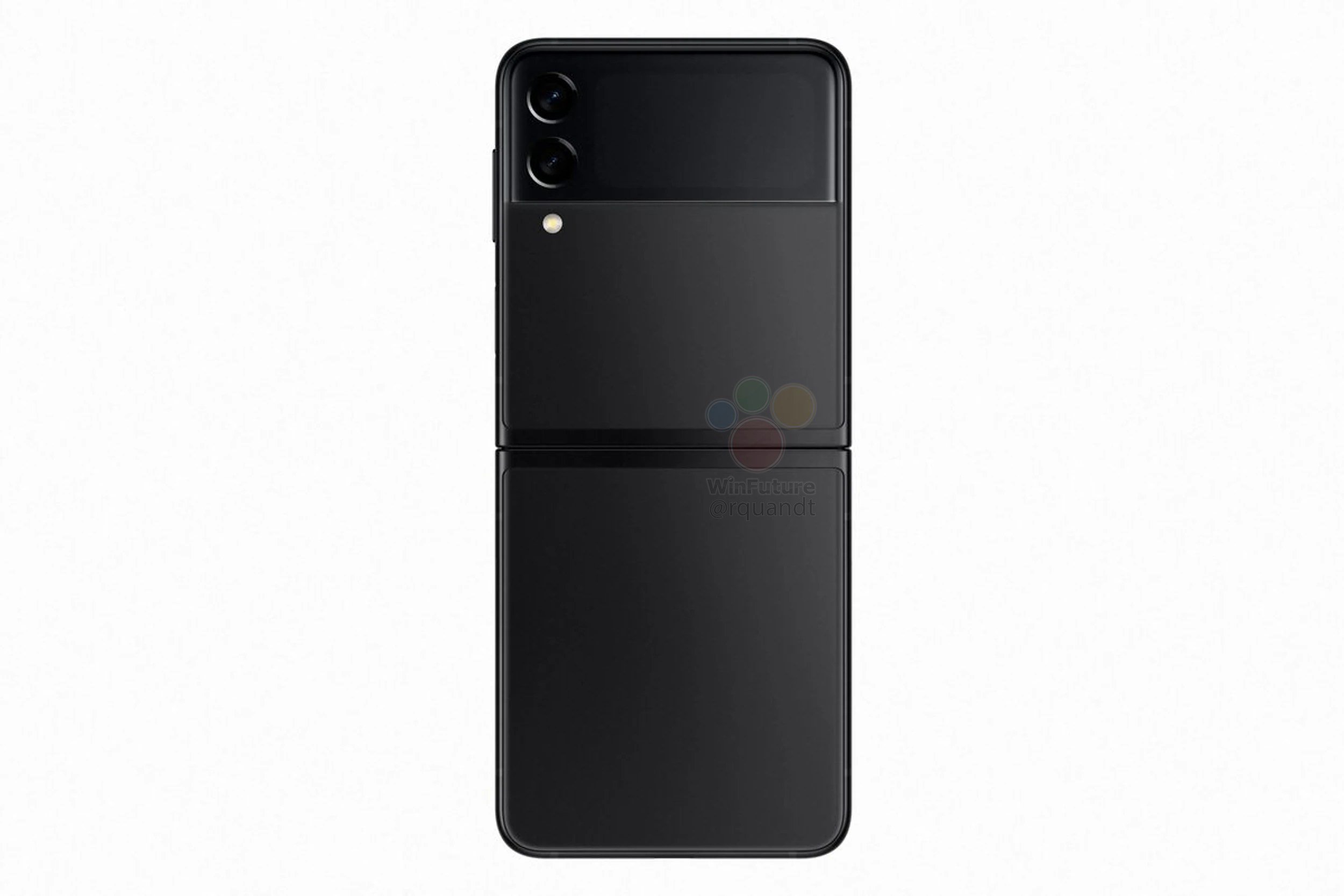
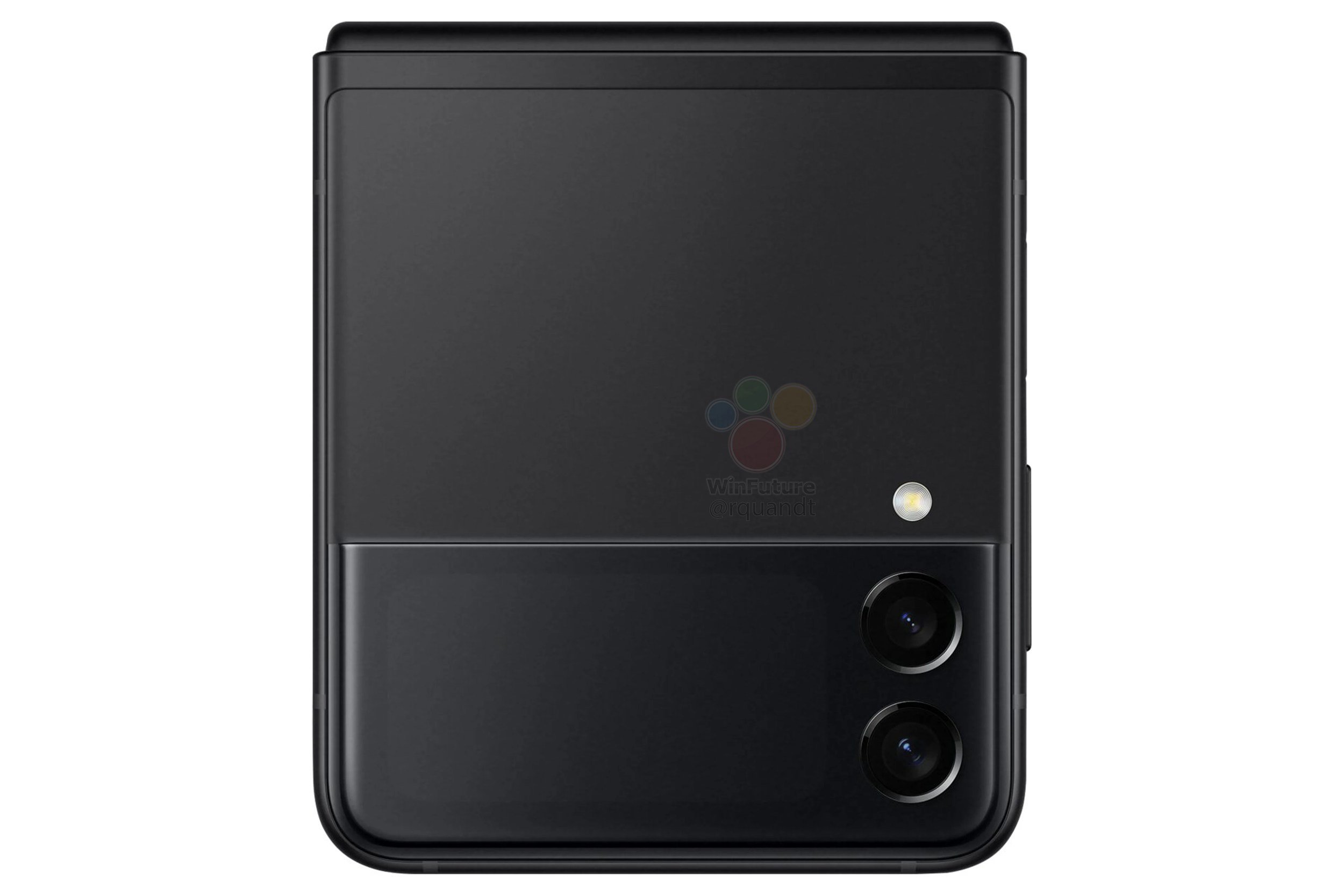
Recent reports have claimed that Samsung will take off covers from the Galaxy Z Flip3v in July or August in different markets including China. Probably, OPPO’s clamshell will rival the Z Flip3. Motorola is also expected to announce a successor for last year’s Motorola Razr 5G in Q3 or Q4 this year. It is unclear whether any other mainstream smartphone brands will be launching a clamshell foldable phone this year.

In related news, OPPO is speculated to launch the Reno6 series on May 22 in China. A recent leak claimed that the Reno6 will come with specs like a 90Hz AMOLED FHD+ display with punch-hole design and curved edges, a 32-megapixel front-facing camera, a 64-megapixel quad-camera system, Dimensity 1200 chipset, and a 4,500mAh battery with 65W fast charge support.

The Reno6 Pro could be coming with a 90Hz AMOLED display and Snapdragon 870 SoC, whereas the Reno6 Pro+ could be equipped with a 120Hz AMOLED display Snapdragon 888 mobile platform. These models could be powered by a 4,500mAh battery with 65W rapid charging support.

RELATED:

Redmi Note 10 Pro 5G may launch soon, Snapdragon 750G expected

The Redmi Note 10 5G is the only 5G-ready phone in Xiaomi’s Redmi Note 10 series. Fresh information shared by tipster Abhishek Yadav reveals that the company may soon announce a new phone named the Redmi Note 10 Pro 5G. A leaked promo image shared by the tipster has revealed its rear design.

The poster suggests that the rear appearance of the upcoming Note 10 Pro 5G is almost identical to the Redmi Note 10 Pro (global). It can be seen sporting a quad-camera setup at the upper-left corner and a Redmi branding towards the bottom. Features like a microphone, a USB-C port, and a speaker grille can be seen on the bottom edge of the device. The poster also mentions that it will be fueled by a 5G-enabled chipset by Qualcomm.

Redmi Note 10 Pro 5G teaser

The Snapdragon 732G chipset is present under the hood of the Redmi Note 10 Pro (global). Hence, it is likely that Xiaomi may power the forthcoming Note 10 Pro 5G with a Snapdragon 7-series chipset. Probably, it could be equipped with Snapdragon 750G chipset.

The Redmi Note 10 Pro 5G is likely to face competition from the rumored Realme 8 Pro 5G, which is also expected to feature the Snapdragon 750G. In fact, the Realme 8 Pro 5G could just be rebranded version of China’s Realme Q3 Pro.

Coming back to the Note 10 Pro 5G, nothing else is known on its specifications. Probably, it may retain some of the key features that are available on its 4G edition. The Redmi Note 10 Pro (global) has a 6.67-inch FHD+ 120Hz AMOLED screen, Snapdragon 732G chip, 5,020mAh battery with 33W fast charging, a 108-megapixel quad-camera system, a 16-megapixel selfie camera, up to 8 GB of RAM, and 128 GB of storage.

RELATED:

After Kids Space, Google brings Entertainment Space to Android Tablets

Last year, Google announced Kids Space, a special mode on Android tablets designed for kids. The dedicated mode brings together all the fun things for kids such as books, games, and videos to one place. Now, it has announced Entertainment Space which can be simply described as Kids Space for older members of the family.

Entertainment Space brings together your books, movies, shows from streaming services, recommended YouTube videos, and games. There are three tabs which are listed below:

Entertainment Space - Watch Tab

Watch Tab – this has movies, TV shows, and YouTube videos. Users will be able to find what to watch, rent or buy movies from Google TV, and resume movies and shows they were watching. If you don’t know what to watch, Google says there is a recommendation row that curates content from google TV, Twitch, Hulu, and several other services.

Entertainment Space - Games Tab

Games Tab – you will find your favorite games here. This tab also has new games for you to discover, some of which support instant play so you can play them right away without the need to download them.

Entertainment Space - Read Tab

Read Tab – this tab is for book lovers and it brings together all of your books including audiobooks. Google mentions free previews for some books before you commit to buying them. There is also a recommendation row based on current trends as well as discounted books.

Entertainment space will make its debut this month on Walmart’s Onn tablets. It will then be made available globally later this year for select Android tablets made by Lenovo, Sharp, and more.


RELATED:

Renders and specs of Zenfone 8 Flip with motorized cameras and Zenfone 8 leaked ahead of launch

ASUS has a launch event scheduled for next week for the Zenfone 8 series. Ahead of the launch, renders of two expected models – the Zenfone 8 Flip and the Zenfone 8 have been published, giving us an early look.


Zenfone 8 Flip

ASUS is adding the suffix “Flip” to the name of this model to denote that it has motorized rear cameras that “flip” to double as front-facing cameras just like we have on the Zenfone 6 and Zenfone 7 series.

As seen in the image above, the Zenfone 8 Flip looks a lot like the Zenfone 7 Pro, and based on the info provided by the source, most of the specs have been carried forward. Not only are most of the specs the same as those of the Zenfone 7 Pro, the dimensions (almost) and weight are too.

The Zenfone 8 Flip has a 6.67-inch FHD+ AMOLED display with a 90Hz refresh rate. It is powered by the Snapdragon 888 and has 8GB of RAM and 256G of storage. There are three cameras – a 64MP main sensor, an 8MP telephoto camera, and a 12MP macro camera that should also double as the ultrawide angle camera. The phone packs a 5000mAh battery with support for 30W fast charging.

ASUS seems to have adopted an in-display fingerprint scanner this year as the power button isn’t recessed as on the Zenfone 7 series. We do like that ASUS has also given the power button a different color. The phone weighs 230 grams, measures 165×77.3×9.5 millimeters, and will come in two colors.


Zenfone 8

The Zenfone 8 appears to be the rumored Zenfone 8 Mini due to its size. This doesn’t have flip cameras, so you get a hole punch in the screen for the front-facing camera and a dual-camera array on the back for the rear cameras.

The display of the Zenfone 8 is 5.92-inches and it has an FHD+ resolution. It appears to be AMOLED too as there is no side-mounted fingerprint scanner neither is there a scanner on the back.

Zenfone 8

Just because this is a smaller phone means that performance has also been toned down. You get the same Snapdragon 888 processor and 8GB of RAM but 128GB of storage. There should be other RAM and storage configurations available depending on the market.

The main camera is a 64MP sensor too and you get that 12MP macro camera. The battery capacity is smaller at 4000mAh but it still charges at 30W. It also has an audio jack at the top.

The Zenfone 8 is also significantly lighter at 170 grams and measures 148×68.5×9 millimeters. It will come in two colors and both have a blue-colored power button. ASUS has also confirmed that the Zenfone 8 will have an IP68 rating.


RELATED:

Xiaomi Mi 11 Pro vs OnePlus 9 vs ZTE Axon 30 Pro: Specs Comparison

If you need one of the most powerful devices out there without spending an excessive amount of money, you have a lot of choices in 2021. Among the most recent flagship killers, there is the new Xiaomi Mi 11 Pro. Xiaomi released a lot of flagships from the Mi 11 series and the Mi 11 Pro is the most advanced one if we exclude the Mi 11 Ultra. In order to establish whether or not it is the best flagship in its price segment, we decided to compare it with the vanilla OnePlus 9 (which is the second-best device by OnePlus after the OnePlus 9 Pro) and the ZTE Axon 30 Pro (the best ZTE phone after the Axon 30 Ultra).

Xiaomi Mi 11 Pro vs OnePlus 9 vs ZTE Axon 30 Pro 5G

Xiaomi Mi 11 Pro OnePlus 9 ZTE Axon 30 Pro 5G
DIMENSIONS AND WEIGHT 164.3 x 74.6 x 8.5 mm, 208 g 160 x 74.2 x 8.7 mm, 192 grams 163.6 x 75.3 x 7.9 mm, 186 g
DISPLAY  6.81 inches, 1440 x 3200p (Quad HD+), AMOLED  6.55 inches, 1080 x 2400p (Full HD+), Fluid AMOLED  6.67 inches, 1080 x 2400p (Full HD+),  AMOLED
PROCESSOR Qualcomm Snapdragon 888, octa-core 2.84 GHz Qualcomm Snapdragon 888, octa-core 2.84 GHz Qualcomm Snapdragon 888, octa-core 2.84 GHz
MEMORY 8 GB RAM, 128 GB – 8 GB RAM, 256 GB – 12 GB RAM, 256 GB 8 GB RAM, 128 GB – 12 GB RAM, 256 GB 6 GB RAM, 128 GB – 8 GB RAM, 128 GB – 8 GB RAM, 256 GB
SOFTWARE  Android 11, MIUI Android 11, OxygenOS Android 11, MyOS
CONNECTIVITY  Wi-Fi 802.11 a/b/g/n/ac/6e, Bluetooth 5.2, GPS Wi-Fi 802.11 a/b/g/n/ac/ax, Bluetooth 5.2, GPS Wi-Fi 802.11 a/b/g/n/ac/ax, Bluetooth 5.2, GPS
CAMERA Triple 50 + 8 + 13 MP , f/2.0 + f/2.4
20 MP f/2.2 front camera
Triple 48 + 50 + 2 MP, f/1.8 + f/2.2 + f/2.4
16 MP f/2.4 front camera
Quad 64 + 64 + 5 + 2 MP, f/1.8 + f/2.4 + f/2.4 + f/2.4
16 MP front camera
BATTERY  5000 mAh, fast charging 67W and fast wireless charging 67W 4500 mAh, fast charging 65W and fast wireless charging 15W 4200 mAh, fast charging 55W
ADDITIONAL FEATURES Dual SIM slot, 5G, reverse wireless charging 10W, IP68 waterproof Dual SIM slot, 5G Dual SIM slot, 5G

Design

At first glance, the Xiaomi Mi 11 Pro looks like the most beautiful phone of the trio thanks to its curved display. But it is thicker and heavier than its two rivals, and it has bigger dimensions: you should consider this. Besides being beautiful, the Xiaomi Mi 11 Pro is well-built and it is waterproof with the IP68 certification, while you do not get this protection with the OnePlus 9 and ZTE Axon 30 Pro. If you want the most compact device, then you should go for the OnePlus 9, while the ZTE Axon 30 Ultra is the thinnest and most lightweight one.


Display

Do you need the most astonishing display? The Xiaomi Mi 11 Pro is the correct choice for you. It has an AMOLED panel that shows up to one billion colors. It supports the Dolby Vision standard, it has the HDR10+ certification, a 120 Hz refresh rate, and even a high Quad HD+ resolution with 1440 x 3200 pixels. Last but not least, it is protected by Gorilla Glass Victus and its peak brightness is whopping 1500 nits. ZTE Axon 30 Ultra comes right after with its billion color display sporting a Full HD+ resolution and the HDR10+ certification.


Hardware/Software

Given that these handsets all feature the Snapdragon 888 mobile platform, they offer a similar flagship-class performance level. Xiaomi Mi 11 Pro and OnePlus 9 sport up to 12 GB of RAM, while you can get just 8 GB of RAM with the ZTE Axon 30 Pro. Further, Xiaomi Mi 11 Pro and OnePlus 9 come with a more advanced Android customization based on Android 11. Note that the OnePlus 9 runs OxygenOS in the global market and OPPO’s ColorOS in China.


Camera

The most advanced camera setup belongs to the Xiaomi Mi 11 Pro. It has a stunning 50 MP main camera with OIS, an 8 MP periscope sensor with 5x optical zoom, and a 13 MP ultrawide camera. But if you desire better ultrawide shots, then you should choose the ZTE Axon 30 Ultra which comes with two 64 MP sensors, including an ultrawide one. The Hasselblad features of the OnePlus 9 are a great added value, but its camera hardware is inferior to the Xiaomi Mi 11 Pro if we exclude the 50 MP ultrawide camera.


Battery

Xiaomi Mi 11 Pro has the biggest battery with a capacity of 5000 mAh. Further, it features faster charging speeds (67W wired charging and 67W wireless charging).


Xiaomi Mi 11 Pro vs OnePlus 9 vs ZTE Axon 30 Pro 5G: Price

In China, Xiaomi Mi 11 Pro starts from €646/$775, OnePlus 9 starts from €638/$766, and ZTE Axon 30 Ultra begins at €599/$719. The Xiaomi Mi 11 Pro wins the comparison thanks to its bigger display, great cameras, bigger battery, waterproof design, and faster charging speeds.


Xiaomi Mi 11 Pro vs OnePlus 9 vs ZTE Axon 30 Pro 5G: PRO and CONS

Xiaomi Mi 11 Pro

PROS

  • Best display
  • Faster wireless charging
  • Faster wired charging
  • Periscope camera
  • IR blaster
  • Bigger battery
  • Waterproof

CONS

  • Heavier


OnePlus 9

PROS

  • Good price
  • Hasselblad color calibration
  • More compact

CONS

  • Inferior cameras


ZTE Axon 30 Pro

PROS

  • 64 MP ultrawide camera
  • Thinner design
  • Good price

CONS

  • Smaller battery


RELATED

Check the latest videos from our YouTube channel and subscribe:

Deal: Get PUBG Mobile Controller for $15.72

Attention all PUBG fans. AliExpress is giving out a stylish Mobile Keyboard and Mouse Converter for just $15.72.

WHERE TO BUY
Mobile Keyboard and Mouse Converter at $15.72 @AliExpress

pubg mobile converter

The multi-functional mobile gaming keyboard and mouse converter comes with an automatic pressure gun function specially designed for PUBG players. The converter features Bluetooth 5.0 and comes with an independent restart switch. 

pubg mobile converter1

The converter sports a futuristic gradient design and is lightweight and highly portable making it easy to carry around. Moreover, the dedicated burst shot button and a call-out mouse pointer take your gameplay to the next level. 

pubg mobile converter2

The multifunctional mobile converter is designed to operate almost all the functions of the game interface and basically converts your iOS and Android smartphone into a PC, thereby enhancing your fun factor and increasing your chances of a win. 

pubg mobile converter3

AliExpress is now giving out the Mobile Keyboard and Mouse Converter for just $15.72. Please note that this price is only for the converter. You can also buy the keyboard and mouse for an additional cost.  


For more information on such exciting deals and offers check out our deals hub.

* Please Note: When you buy something using the links in our articles, we may earn a small commission at no cost to you.


Xiaomi’s Mi TV P1 360° Bluetooth remote is long and packs several buttons

Xiaomi’s Android TVs generally have a similar remote. Agree, there are usually slight differences such as extra buttons for certain streaming services. However, the remote that ships with the new Mi TV P1 series announced today is entirely different.

The new Bluetooth Mi TV remote is not only longer than any of the other Mi TV remotes Xiaomi has released in the past but also has more buttons.

Mi TV P1 55'' Remote

As seen in the image above, the remote now has a number pad that occupies the upper part of the remote. There are also buttons for Teletext, Info, Channel List, Input, and Set.

Like some other Xiaomi Mi TV remotes, this one also has a power button, a Google Assistant button, a circular navigation pad, dedicated buttons for Netflix and Prime Video, and buttons for volume control, return/back, and home. There is also an Exit button, another for mute, buttons to switch between channels, and the common Red, Green, Yellow, and Blue buttons that are present on several TV remotes.

if you are wondering why Xiaomi has added these buttons, we believe it is because the Mi TV P1 has a CI slot for a Condition Access Module (CAM) for satellite television and also has support for DVB-T2/C and DVB-S2. If you use any of these and not just Android TV, then these additional buttons are necessary to have on a TV remote.


RELATED:

Deal: Get Baseus 10000mAh Power Bank for $21.21 Only

Baseus 10000mAh Power Bank is now available at AliExpress for $21.21 after discount.

WHERE TO BUY
Baseus 10000mAh Power Bank at $21.21 (after discount)@AliExpress

Baseus 10000mAh power bank

Baseus 10000mAh Power Bank features a 22.5W high-power quick charging function and a PD3.0 fast charge for IP mobile phones. The power bank is compatible with various quick charging protocols like QC3.0, PD3.0, FCP, AFC, SCP, etc and has quick charging protocols for iP, Huawei, Samsung, Mi, etc

Baseus 10000mAh power bank3

The 10000mAh battery takes just 2 hours to fully charge and features a beautiful waterdrop LED display that shows you the remaining current and voltage in real-time. The power bank also comes with the self-developed BPS charging technology that can intelligently adjust the current, voltage, and power of multiple ports simultaneously thereby protecting your device from overheating and overcharge. The device also comes with 9 different safety features like protection from over-power, over-voltage, over-current, over-discharge, short circuit, etc.

Baseus 10000mAh power bank1

You can now buy Baseus 10000mAh Power Bank for $21.21 only at AliExpress. Please note that this a limited period offer. So grab your discounted power bank asap. 


For more information on such exciting deals and offers check out our deals hub.

* Please Note: When you buy something using the links in our articles, we may earn a small commission at no cost to you.


Australian retailer pulls Apple’s AirTags off its shelves over safety concerns

Apple’s recently released enhanced tracking device dubbed AirTags has had a pretty strong reception in Australia since its introduction into the Australian market. The Apple AirTags is a smart device with several impressive features that makes it very easy to locate tagged objects. It can also interface seamlessly with other smart home devices, through Voice Assistant compatibility.

Apple AirTags Mockup

Australian retailer Officerworks has taken the decision to remove Apple’s AirTags from its stores across the country due to potential hazard concerns relating to its button battery. Several sources in Australia have confirmed that indeed the retailer has removed the device from its shelves, including a Reddit user who reported requesting the product from Officerworks. The removal from the stores was due to observed safety risks with the accessibility of its lithium button-sized battery. A statement credited to Officerworks says that the product will be unavailable from its stables until further direction is provided by the regulator, Australian Competition and Consumer Commission.

The packaging of the Apple AirTags did not comply with the Australian rules that specify that warning symbols should be provided on the packaging and product instruction for such products when button batteries are used. The deadline for compliance with the country’s new Information Standard is June 2022.Apple Airtags

While we can confirm that Officerworks has indeed pulled out the AirTags from its scores of stores across Australia, the device is still available in multiple channels in the country. It is expected, however, that with the decision of Officerworks to pull the device off its shelves, the regulator, the Australian Competition and Consumer Commission will provide some guidance on what other retailers can do on the issue.

In an e-mail response to Gizmodo, an Apple representative disclosed that the AirTags was designed to comply with international child safety standards, including those in Australia. The Apple rep clarified that the device requires a two-step push-and-turn mechanism to access the user-replaceable battery. Apple also stated that it is monitoring the situation closely and will continue to work to ensure its products meet or exceed new standards, including those for package labeling, well ahead of the timeline required. Apple is expected to update the packing to include a warning about button batteries in the packaging before June 21, 2022, based on the new information standards in the country. We expect the tech giant to roll out new packaging soon.

RELATED:


(source)


Lenovo teases the Xiaoxin Pad Pro 2021 tablet, should launch soon

Lenovo had an event in China last month where it announced new Windows-powered devices. Many had expected that the Chinese tech giant would announce new Android tablets but it didn’t. It has now released teasers for one of the tablets which will launch as the Xiaoxin Pad Pro 2021.

Lenovo Xiaoxin Pad Pro 2021 Weibo

According to the Weibo post, the Snapdragon 870-powered Xiaoxin Pad Pro 2021 will have an OLED display with a 2.5K (2560 x 1600) resolution, an 800,000:1 contrast ratio, and 600 nits of brightness.

The teaser also confirms the display will have a 90Hz refresh rate, HDR 10, TÜV Rheinland certified eye care protection, and Dolby Vision.

The included images show that the display has slim bezels of equal dimensions on each side. It also shows that the Lenovo Xiaoxin Pad Pro 2021 has quad speakers, a metal frame, a USB-C port, and a MicroSD card/SIM slot.

The Xiaoxin Pad Pro 2021 will have 8GB of RAM, 128GB of storage, and run ZUI 12.5 based on Android 11 out of the box. It will also have support for Lenovo One, a multi-screen collaboration between compatible tablets and phones.


RELATED:

Xiaomi Mi TV P1 Series Launched: New Remote, HDMI 2.1, Dolby Vision, & More

Xiaomi has launched the Mi TV P1 series in Italy. These televisions were announced alongside Mi 11 Ultra, Mi 11i, Redmi Note 10 5G, and Redmi Note 10S. Since we already know about these smartphones, let us take an extensive look at the smart TVs instead.

Xiaomi Mi TV P1 Series Featured
Xiaomi Mi TV P1 Series

Xiaomi Mi TV P1 Specifications and Features

The newly launched Xiaomi Mi TV P1 series comes in four sizes – 32-inch, 43-inch, 50-inch, and 55-inch. These televisions flaunt a regular LED-backlit LCD panel.

The 32-inch model features an HD-ready display with a resolution of 1366 x 768 pixels. On the other hand, the other three variants sport a 4K screen with a resolution of 3,840 x 2,160 pixels.

Xiaomi Mi TV P1 55-inch Featured
Xiaomi Mi TV P1 55-inch

Unfortunately, Xiaomi has only listed the 43-inch and the 55-inch models on its Italian website. Anyway, according to a local blog called Italy24News, all TVs come with the exact same set of specs except for the 32-inch version.

That said, all the variants are said to have a 60Hz refresh rate and a 178° viewing angle. Also, all four sizes run Android TV 10 with support for Chromecast, Play Store, and Google Assistant.

Xiaomi Mi TV P1 43-inch Featured
Xiaomi Mi TV P1 43-inch

Talking about the 4K versions, these televisions are powered by a MediaTek MT9611 SoC comprising of 4 x ARM Cortex-A55 cores clocked at 1.5GHz and an ARM Mali G52 MP2 GPU. This chipset is coupled with 2GB RAM and 16GB internal storage.

Further, the panel on these TVs supports 1.07 billion colors (8-Bit + FRC), Dolby Vision, HDR10+, HLG, and MEMC. This screen covers 88% and 94% of NTSC and DCI-P3 color gamuts respectively.

Xiaomi Mi TV P1 Series Remote Control

As for audio, the Mi TV P1 4K variants sport 2 x 10W (20W) speakers with support for Dolby Audio and DTS-HD. On the connectivity and ports front, they feature dual-band WiFi, Bluetooth 5.0, 1 x HDMI 2.0, 1 x HDMI 2.1 (eARC, VRR), 1 x HDMI (CEC), 2 x USB 2.0, AV composite, Ethernet, optical port, 3.5mm headphone jack, antenna port (DVB-T2/C, DVB-S2), and CI Slot.

Other features of these televisions include a microphone mute switch and a new Mi TV remote control with numpad as well as other functional keys.  

Xiaomi Mi TV P1 Price and Availability

The Xiaomi Mi TV P1 series will retail for the following price tags in Italy.

  • Mi TV P1 32-inch – €279.90
  • Mi TV P1 43-inch – €449.90
  • Mi TV P1 50-inch – €599.90
  • Mi TV P1 55-inch – €649.90

These televisions will be sold at Mi.com, Mi Store Italia, and Amazon Italy. For a limited time from May 21 to May 24, the 43-inch and 55-inch variants will be available for €399.90 and €599.90 respectively (Early Bird Price).

As of now, Xiaomi has confirmed to launch the Mi TV P1 series alongside the Mi TV Q1 in Malaysia on May 20. These televisions will be the first-ever Xiaomi smart TVs in the country.

This new Mi TV series should make its way to other markets in the coming days.


RELATED:


Deal : Get Realme 8 Pro Global Version for $349.90 from AliExpress

Realme 8 Pro, Global Version which generally retails at $400 is now available at a discounted price of $349.90 only at AliExpress.

WHERE TO BUY

realme 8 pro

Realme 8 Pro features a 6.4 inch Super AMOLED display and is powered by Qualcomm SM7125 Snapdragon 720G (8 nm) Octa-Core processor. The smartphone comes with a quad-camera setup in the back with a 108MP main camera and 8MP + 2MP + 2MP secondary cameras. For the selfie camera, it features a single 16MP camera.

realme 8 pro1

Realme 8 Pro comes in 2 memory variants viz: 6GB + 128GB and 8GB + 128GB and features an under-display fingerprint sensor. The smartphone is fueled by a 4500mAh battery and supports 50W super dart charging.

Realme 8 Pro

Generally retailing for $400, you can now buy Realme 8 Pro for $349.90 from the Realme Official Store at AliExpress. Please note that this price is applicable only on the 6GB + 128GB, Black and Blue color variant. The price may change according to the variant. So get your smartphone asap. 


For more information on such exciting deals and offers check out our deals hub.

* Please Note: When you buy something using the links in our articles, we may earn a small commission at no cost to you.