Advertisement

iQOO Neo5 Youth (Vitality Edition) may launch this month, hints iQOO product manager

Recent reports have revealed that iQOO is working on a new phone named called the iQOO Neo5 (Youth) Vitality Edition. Today, iQOO China’s Product Manager revealed that there will be surprises this month. This indicates that the iQOO Neo5 (Youth) Vitality Edition, which has recently appeared at the 3C certification platform and Google Play Console may debut at some point this month.

Rumors surrounding the iQOO Neo5 Youth have claimed that it will be an upgraded version of last year’s iQOO Neo3, which featured a 144Hz refresh display and the Snapdragon 865 mobile platform. The upcoming Neo5 Youth is also expected to feature a high refresh rate display and a flagship processor.

IQOO new surprises in May

It is believed that the Vivo V2118A 5G smartphone, which was recently spotted at the 3C certification could be the iQOO Neo5 Vitality Edition. The 3C listing revealed that the phone may carry support for 44W rapid charging.

On the other side, the Google Play Console listing revealed that the V2118A handset is powered by the Snapdragon 870 chipset and 8 GB of RAM. The device carries support for Full HD+ resolution and a 480ppi pixel density.

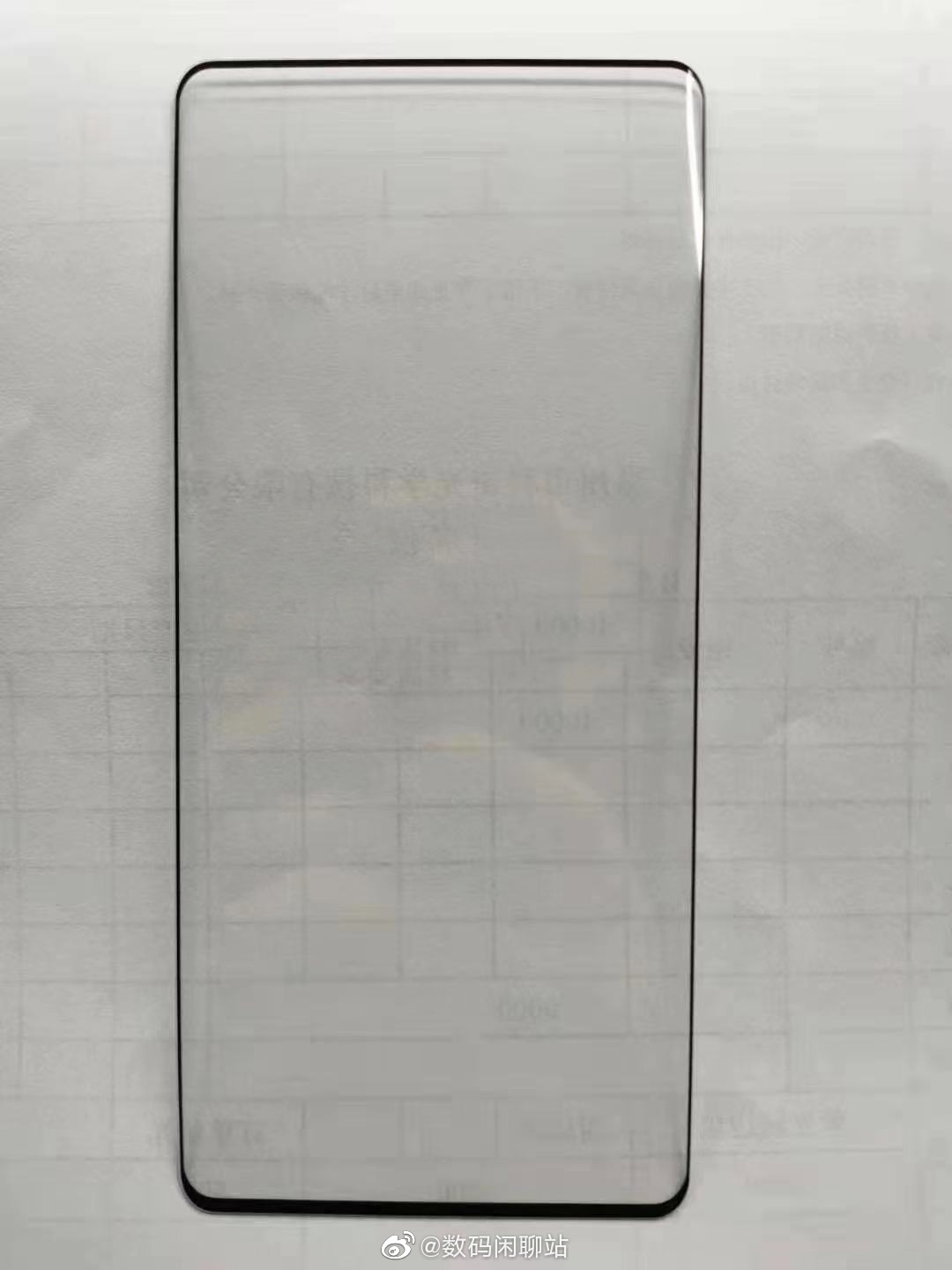
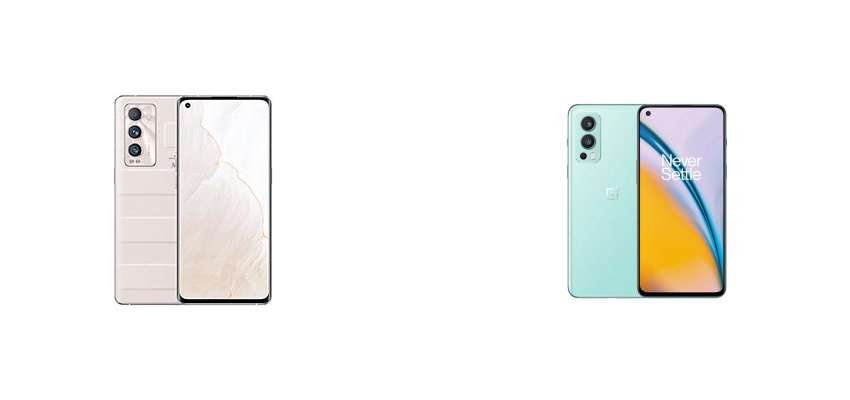
The image of the smartphone that appeared in the Play Console listing revealed that its screen features a punch-hole cutout at the upper-right corner. It appears to be an LCD panel as the device is equipped with a side-facing fingerprint scanner.

Vivo V2118A
The purported iQOO Neo5 Youth (Vitality Edition)

Since the product manager has claimed that there will be new surprises this month, there is a possibility that the brand may announce some other products alongside the iQOO Neo5 Vitality Edition.

RELATED:

realme C20A will be a rebadged realme C20 for Bangladesh: Retail Box Leak

A few hours back, we reported on a promotional video of the upcoming realme C20A. The brand had already confirmed to launch this smartphone in Bangladesh ahead of Eid (May 12-13). Unfortunately, the exact launch date is still a mystery. Anyway, ahead of the handset’s official release, its retail box has now leaked in pictures.

A Twitter user with the username @Farhanabir1212 (Farhan Abir) posted two images of the retail boxes of the unreleased realme C20A. According to him, these pictures were shared with him by another Twitter user (@SHabib2018Muhammad Habib).

These pictures clearly show that the device has already reached the local retail store in Bangladesh. Above all, they also confirm the primary specs of this phone. 

As per these images, the upcoming realme C20A will feature a MediaTek Helio G35 SoC, 2GB RAM, 32GB internal storage, 6.5-inch mini-drop display (notched), and a 5,000mAh battery. The pictures also confirm that this assembled in Bangladesh smartphone will bear the model number RMX3063.

All this information and the promo video suggest that the realme C20A is nothing but the realme C20 for Bangladesh. Because the former not only has the same set of specs as the latter but also an identical number.


RELATED:


Samsung to retake lead in Semiconductor supplier rankings in Q2 2021: Report

A new report has revealed that Samsung is expected to retake the lead in the semiconductor supplier rankings in the second quarter of this year. The news arrives as Intel is projected to see lackluster performance during this period.

Samsung

According to an IC Insights report, Intel’s performance is set to lag in the second quarter while the demand for DRAM market is expected to put the South Korean tech giant in the lead. As per the report, Intel had lead the semiconductor manufacturing market all the way from 1993 though 2016. Although, it was dethroned back in 2017 by Samsung due to the surge in market demand. This marked a major win for the company as it had been attempting to overtake the chip making giant for years.

Since then, the South Korean firm held the leading spot for six quarters in the semiconductor supplier rankings before the memory market collapse that occurred back in 2018. This led to Intel retaking its lead in the fourth quarter of 2018. Moving to 2019, Intel faced its own slump but it was nowhere as sever as the one faced by Samsung, which went from having 17 percent more revenue than Intel in 2018, to having 18 percent less sales just two quarter later.

Samsung

Back in 2020, Intel led the global semiconductor market in terms of sales, accounting for 15.5 percent of share worth 76.3 billion US Dollars. Its South Korean rival followed close behind with a 12.6 percent market share, with sales reaching 61.9 billion US Dollars. Now, Samsung is expected to retake its top spot as the leading semiconductor supplier in the second quarter of this year.

RELATED:


Samsung Galaxy A22 5G’s fast charging capabilities revealed through TÜV SÜD certification

Samsung is reportedly planning to launch the Galaxy A22 smartphone in different markets. Some regions are expected to receive the Galaxy A22 4G, whereas others could be treated with its 5G edition. Tipster Sudhanshu Ambhore has spotted the A22 5G at the TÜV SÜD certification site. The listing has revealed the fast-charging capabilities of the smartphone.

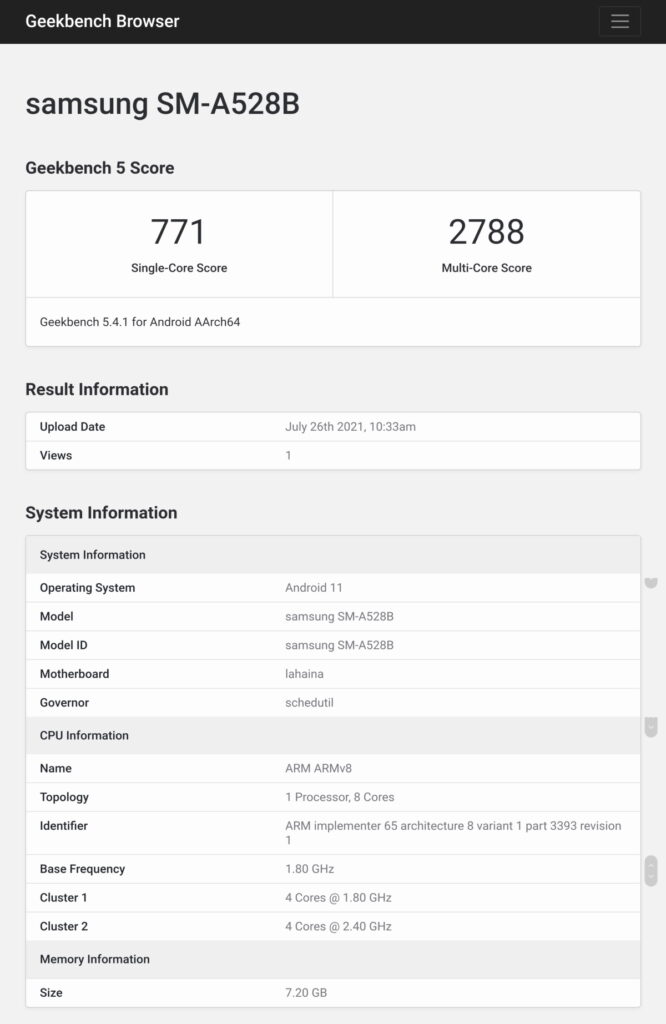
At the TÜV SÜD certification platform, the Galaxy A22 5G has appeared with its SM-A226B/DS and SM-A226B model numbers. The listing reveals that it will carry support for 15W charging. The smartphone was recently spotted at the Wi-Fi certification and at the Geekbench benchmarking site.

The Geekbench listing revealed that it is powered by the Dimensity 700 chipset, 6 GB of RAM, and Android 11 OS. The CAD renders of the phone that appeared a few weeks back revealed that it has a 6.5-inch display with a waterdrop notch, a 13-megapixel front camera, and a square-shaped camera housing with a 48-megapixel primary camera.

At present, there is no word on the battery capacity of the Galaxy A22 5G. The device is expected to arrive in multiple colors like grey, white, light green, and purple and it is likely to carry a price tag of around 229 euros (~$275). Rumors are rife that it may break cover in June.

A new report that surfaced today revealed that Samsung is working on another phone called the Galaxy F22. This handset is expected to arrive as a rebadged version of the upcoming Galaxy A22.

RELATED:

Microsoft to finally remove Adobe Flash from Windows 10 in July 2021

Microsoft is set to start the complete removal of the Adobe Flash from Windows 10 in this summer. The company will roll out a Windows 10 update for the “Removal of Adobe Flash Player,” which would permanently remove Flash as a part of the operating system.

Microsoft

According to TheVerge report, the new update will become mandatory in July 2021 and will mark the update to Windows 10 version 21H1 that is expected to start rolling this month. Notably, the update that removes Adobe Flash will also be arriving for older Windows versions as well, This includes Windows 8.1, Windows Server 2012, and Windows Embedded 8 Standard. The tech giant also announced the timeline in an update to a blog post.

Similar to its OS, Microsoft has already been working on removing Flash support from its Microsoft Edge browser with an update that many users would have received an installed automatically. Now, the company will be removing the feature that arrives along with Windows itself. Although, the firm announced in an update note that it will not remove a version of Adobe Flash Player that is installed manually for third party sources.

Microsoft

For those unaware, Adobe Flash has already been facing its end for a few years now, with major browsers the end of support for the software. Interestingly, Adobe themselves have stopped supporting the legacy format at the end of last year. But with the interesting of preserving internet history, the Internet Archive has offered backups for thousands of old Flash games and animations.

RELATED:


Huawei and ZTE excluded from 5G trials in India

While India’s telecom ministry has granted approval to a dozen companies, including Ericsson, Nokia, Samsung and more for the six month long trial of 5G technology, Huawei and ZTE have been excluded from the list.

Huawei Logo MWC 2019

According to a BBC report, the two Chinese tech giant were not mentioned in the list of firms approved for 5G trials by the ministry, although, they were not banned from supplying 5G equipment to carriers. At the moment, India is the second largest smartphone market in the world, making it a key region for both the smartphone and mobile networking market. Other major carriers include, Reliance Jio, Bharti Airtel, and Vodafone Idea, along with the State owned MTNL.

The Indian government’s Press Information Bureau stated that each company “will have to conduct trials in rural and semi-urban settings also in addition to urban settings so that the benefit of 5G Technology proliferates across the country and is not confined only to urban areas.” Furthermore, the government has yet to announce any official bans of the Chinese telecommunications based firms that already supply networking equipment to other carriers in the region.

Huawei

However, the companies might face further scrutiny due to frictions between China and India. In other words, this could potentially mark India as the latest country that locks out both the firms. Previously, the local government had announced that it would make a “trusted” sources for telecom equipment as a part of its new security directive. So, there is still a chance of both firms being banned from the list of suppliers.

RELATED:


[UPDATED]ASUS ZenFone 8 Mini clears India’s BIS certification

UPDATE: 

Note that the below model numbers are of the Chinese variants. So Indian variants are yet to clear BIS certification.


Original Story as follows

ASUS has confirmed to launch the ZenFone 8 series on May 12. But the company is yet to officially reveal the availability of these smartphones in India. Anyway, according to BIS (Bureau of Indian Standards), these handsets could indeed debut in the country.

ASUS ZenFone 8 Series Featured

BIS certifications are not a clear indication of a product’s launch in India. But they do suggest a possibility. Yesterday, the ASUS ZenFone 8 Pro (ASUS_I007D) was certified by the agency, followed by ASUS ZenFone 8 Mini (ASUS_I006D) today. Interestingly, the vanilla ASUS ZenFone 8 is yet to receive approval.

It worth noting that the Taiwanese computer giant did not bring the ASUS ZenFone 7 and the ASUS ZenFone 7 Pro to India in 2020. The last ZenFone in India was ASUS 6Z, which is nothing but the ZenFone 6 with a different name due to a trademark issue.

However, the company has launched all the ROG Phones released so far in India, except for the ROG Phone 3 Strix Edition.

That said, according to previous reports, the upcoming ASUS ZenFone 8 Mini will sport a 5.92-inch OLED display with an FHD+ resolution, a 120Hz refresh rate, and a punch-hole. It will feature a vertically aligned dual-camera setup consisting of a 64MP Sony IMX686 primary sensor and a secondary Sony IMX663 sensor.

ASUS ZenFone 8 Mini case renders
ASUS ZenFone 8 Mini Case Renders

Further, the device will also include a 3.5mm headphone jack. It is said to come with a Qualcomm Snapdragon 888 SoC coupled with up to 16GB RAM and 256GB internal storage

Lastly, the ASUS ZenFone 8 Mini will be IP68-certified (dust and water resistance) and will house a 4,000mAh battery with support for 30W fast charging.

Unfortunately, not much is known about the ASUS ZenFone 8 and the ASUS ZenFone 8 Pro.


RELATED:


Realme C20A design and key specs revealed ahead of launch

Bangladesh will be soon receiving a new Realme smartphone called the Realme C20A. It is expected to debut on Eid, which falls on May 13. Ahead of the launch, the company has confirmed some of the key features of the C20A.

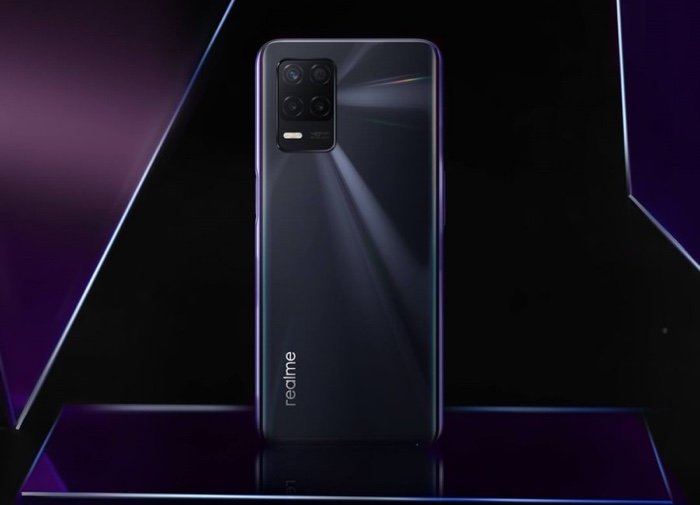
A promo video of the Realme C20A rolled out by the brand shows its appearance will be identical to the Realme C20, which debut in Vietnam earlier this year. The handset will be arriving in Bangladesh in color like blue and black.

The Realme C20A has a 6.5-inch LCD panel with a teardrop notch. The Helio G35 chipset is present under the hood of the phone and it draws power from a 5,000mAh battery. The rear panel of the phone has a squarish module. It seems to be housing a single camera and an LED flash. The device lacks a fingerprint scanner.

At present, there is no clarity on how the C20A differs from the existing C20. It remains to be seen whether it arrives a variant of the C20. There is a possibility that the C20A could just be rebranded version of the C20. At present, there is no word on the pricing of the C20A for Bangladesh.

The Realme C20 has a 6.5-inch HD+ display, Helio G35 chipset, a 5,000mAh battery, 2 GB of RAM, 32 GB of storage, and Realme UI-based Android 11 OS. It has a 5-megapixel selfie camera, an 8-megapixel rear camera, a microSD card slot, a 3.5mm audio jack, and a microUSB port. It was made available in Vietnam with a pricing of around $105.

RELATED:

Huawei patents a VR based game controller

A new patent from Huawei has recently surfaced. This patent is for a game controller, which is designed to work with a VR headset to allow users to control their actions in virtual reality.

According to an ITHome report, the Chinese tech giant was awarded that patent earlier this week and carried the patent number CN306513655S. In the patent application, a brief description can also be observed, which reads tha the product in the patents is a “Gamepad” and is purpose is to primarily be used for offering “controler in VR games or achieve other interactions in a virtual setting. The patent also arrives with certain sketches and 3D renders of this VR controller as well.

Huawei

Looking at these images, the game controller carries a relatively common design that can also be found with other VR based controllers. On the front it offers three buttons along with a joystick, which is likely for movement based controls and more. On the right side of the product, there is another mechanism that is visible, which might be another button or have some other function that is unclear at the moment. The Chinese tech giant has already ventured into VR technology with related headsets, so it is likely working on new controllers as well.

RELATED:

Samsung to begin its P3 chip line ahead of schedule due to global shortage

Samsung Electronics is apparently planning on beginning the operations of its P3 semiconductor production line earlier than expected due to the chip shortage that has affected the world.

Samsung

According to TheElec report, the South Korean tech giant is moving ahead with the P3 chip production line’s operations earlier than previously scheduled, as per the President of EcoPro HN, a supplier of the company. Samsung had requested EcoPro HN to supply its filter products by December 2020, instead of the previous deadline, which was set around early 2022. This was announced at EcoPro’s conference call earluer this week and marks a shipment date a year in advance.

Thus, it seems that the consumer electronics maker is planning on starting its P3 chip line three months earlier than planned due to the issue of chip shortage that has affected various industries and firms across the globe. For those unaware, the P3 line is the brand’s third chip production line at its Pyeongtaek plant in South Korea, with its construction beginning in the second half of last year.

Samsung

Unfortunately, it is currently unknown how much the company has spent on the P3 line or its production capacity either. But sources close to the matter have claimed that Samsung might ue this line to manufacture memor chips as well as setup a foundry, or contract chip production, to make chips for other firms as well. At the moment, global foundries based firms like TSMC are seeing a surge in orders and are running their production plants at full capacity to make up for the shortage of chip supply.

RELATED:


MediaTek to lead global smartphone SoC market, while Qualcomm leads 5G SoC market: Report

A new report has suggested that MediaTek will lead the global smartphone SoC market while Qualcomm will lead the global 5G smartphone SoC market. This marks a major shift in the industry.

MediaTek

According to a Counterpoint Research report, the global smartphone AP (application processor)/System on Chip (SoC) market is expected to see a growth of 3 percent year on year in 2021. This modest growth arrives despite supply constraints, while the 5G smartphone market sees rapid growth. Qualcomm and MediaTek are both major fabless SoC vendors, with the former expected to lead the 5G SoC market with a 30 percent market share while the latter will lead the global SoC market with a 37 percent share.

Research Director Dale Gai stated that “When we break down our forecast with respect to the current demand-supply dynamics, MediaTek is likely to continue its Q4 2020 momentum into 2021 and likely to capture 37% unit share of all the smartphone AP/SoC shipped for the full the year. This 20% potential annual uptick in demand is a function of competitive 5G portfolio powering sub-$150 5G smartphones manufactured at TSMC without any supply constraint and growing share in 4G segment.”

MediaTek

The report also adds that MediaTek would be benefitting from the supply constraint that has affected Qualcomm. These constraints are regarding RFICs (radio-frequency integrated circuits) from Samsung’s Austin fab, Power management ICs (PMIC), along with relatively lower 5nm production yields. Although, Qualcomm is expected to see better performance in the latter half of this year as it would seek to boost its 5G enabled Snapdragon lineup.

RELATED:


Twitter acquires news startup Scroll to beef up its subscription offering

Twitter has announced that it is acquiring Scroll, a subscription service that offers an ad-free news reading experience to its users. The development comes at a time when Twitter is planning to build its own subscription offerings.

The company has not revealed the financial terms related to this deal but Twitter has confirmed that it will be bringing the entire Scroll team, which consists of 13 people.

Twitter Acquires Scroll

The upcoming premium subscription offering from Twitter will include access to Scroll, newsletter service Revue that it acquired a couple of months ago, as well as some other services from the company itself.

Commenting on this acquisition, Tony Haile, CEO of Scroll said in a blog post: “Twitter exists to serve the public conversation. Journalism is the mitochondria of that conversation. It initiates, energizes and informs. It converts and confounds perspectives. At its best, it helps us stand in one another’s shoes and understand each other’s common humanity.”

With this acquisition, Scroll will no longer accept new sign-ups but the service will continue to work as usual for the existing users. However, the company’s other offering, Nuzeel, which sends daily emails of top stories shared by people in user’s Twitter feed, is shutting down on 6th May. Twitter says that it will bring the core elements of Nuzzel directly to Twitter but the timeline for that is not yet revealed.

When subscribers use Scroll through Twitter, a portion of their subscription revenue will go to support the publishers and the writers creating the content, explains Twitter in an announcement. The service of scroll currently works across several sites, including The Atlantic, The Verge, USA Today, The Sacramento Bee, The Philadelphia Inquirer, and The Daily Beast, among others.

Earlier this year, Twitter revealed its plans to offer subscriptions to diversify its revenue stream. The upcoming offering, named “Super Follow” is a creator-focused subscription that would give paid subscribers access to an expanded array of perks, like exclusive content, subscriber-only newsletters, deals, badges, paywalled media, and more. With this offering, it plans to double its revenue from $3.7 billion in 2020 to $7.5 million in 2023.

RELATED: 

Another report reiterates the existence of three high-end Xiaomi tablets

Xiaomi is rumored to launch three new tablets after an interval of three years. A few details about these products are already out, thanks to MIUI. Now, another finding confirms the existence of these tablets once again.

A new report by XDA Developers brings more evidence for the existence of new Xiaomi tablets. While decompiling the code of multiple MIUI 12.5 system apps, the publication has spotted the codenames of these tablets (nabu, eluma, elish) referenced in methods like “isPad”.

This somewhat confirms that certain first-party Xiaomi applications will have different UI and additional features on these tablets. A new alphas version of the MIUI Home app already has a settings page showcasing system navigation on these upcoming tablets.

Further, the report says that ‘enuma’ and ‘elish’ will be variants of one another. Their model numbers end with K81 and K81A respectively. On the other hand, the model number of ‘nabu’ ends with K82. Out of these three, only ‘enuma’ will have support for mobile connectivity (4G LTE/5G).

Lastly, the report also mentions another method called “isSplitTablet”. Though it suggests foldables, the exact meaning of this method is a mystery as of now.

Xiaomi Logo Branding 2021

According to an earlier report by XiaomiUI, these forthcoming tablets will flaunt a 120Hz IPS display with a resolution of 800 x 2560 pixels, 410 nits peak brightness, and a 16:10 aspect ratio. Additionally, as per tipster kacskrz, ‘nabu’ will feature a 10.97-inch panel and will be backed by an 8,720mAh battery. This tablet is said to measure 236mm x 148mm in dimension.

As far as chipsets are concerned, ‘enuma’ and ‘elish’ will be powered by a Qualcomm Snapdragon 870 SoC. Whereas, ‘nabu’ will arrive with a Qualcomm Snapdragon 860 SoC.

Finally, despite being tablets, all three will sport a quad-camera setup consisting of a primary sensor, an ultra-wide unit, a macro snapper, and a depth sensor. But ‘enuma’ will have a 48MP main sensor instead of a 12MP primary camera on ‘elish’ and ‘nabu’.


RELATED:


DJI acknowledges battery issue with Mini 2 drone; fix is coming soon

DJI, one of the well-known drone makers, has officially responded to the claims of a battery-related issue with the DJI Mini 2 and the company has also said that a fix for the same is coming soon.

After YouTuber Ian in London highlighted the battery discharge issue with the DJI Mini 2 claiming that it may harm the long-term health of the device’s battery, more users started complaining about the same.

DJI Mini 2

The DJI Mini 2 uses Lithium Polymer (LiPo) batteries and they ideally need to slowly discharge when left at full charge to help prolong the life and prevent long-term issues. While DJI’s Intelligent Batteries usually do this but users found that the Mini 2 drone’s battery isn’t doing this and it has now been confirmed by the company.

To fix this issue, the company says that it is working on the fix will release a new firmware update that will “initiate auto-discharge when batteries are in the drone or charging hub and have not been used recently,” reports TechRadar.

The DJI spokesperson added: “When placed in the drone or charging hub, the batteries use a minute amount of charge to maintain vital functions and do not initiate auto-discharge. For customers storing their drone for long periods of time, DJI recommends that batteries are removed from the drone and/or charging hub whether the firmware is updated or not. DJI will provide information on timing once that information becomes available.”

The DJI Mini 2 was launched in November last year for $449 and comes with support for shooting 4K videos at 30fps, 4X zoom, 2X lossless zoom, as well as RAW format. It is powered by OcuSync 2.0 with features like QuickShot, QuickTransfer, Enhanced Photo, and Trimmed Download. As for the battery life, it offers 31 minutes of flight time.

RELATED: 

TSMC seeks to expand its Arizona chip production plans: Report

TSMC (Taiwan Semiconductor Manufacturing Co) is apparently seeking to expand its plans for chip production in Arizona, US. The company is reportedly planning on building several more chip making factories in the State, over the one that it is already planned.

TSMC

According to a Reuters report, the news arrives from three sources that are close to the matter. For those unaware, the world’s largest contract chip maker announced a year ago that it would be building a 12 billion US Dollars plant in Arizona. This was backed by the Trump administration and its win by bringing global tech supply chains back from China. The firm is set to build a 12 inch wafer fabrication plant in Phoenix and the facility is expected to start volume production in 2024.

At the moment, TSMC produces a majority of its chips in its home country Taiwan while its older chip facilities are set up in China and the US. As per the three sources familiar with the matter, the company is planning on setting up additional fabs in the US state of Arizona. The first fab being set up will have a planned output of 20,000 wafers, each of which contains thousands of chips. These wafers will offer the company’s most advanced 5nm process technology.

TSMC

On the other hand, it is still unclear how much additional production capacity and investment the additional fabs might output in a month and which technology and process they would offer. Last month, TSMC had announced that it planned to invest 100 billion US Dollars over the next three years to increase production capacity. As per on of the sources, “The United States requested it. Internally TSMC is planning to build up to six fabs.”

RELATED:


Samsung Galaxy S21 FE could go into production in July; expected to launch in August

Samsung had launched the Galaxy S20 FE last year as an entry-level offering of the Galaxy S20 lineup of flagship smartphones. Now, the company is expected to follow the same with this year’s premium devices.

The upcoming entry-level device of the flagship lineup, dubbed Samsung Galaxy S21 FE is slated to go into production from July this year, reveals Ross Young, a well-known technology analyst.

Samsung Galaxy S20 FE Display
Samsung Galaxy S20 FE

He has also revealed that the smartphone could be offered in four color options — Gray, Light Green, Light Violet, and White. All these four color variants will be available for purchase in the United States.

Previous reports have indicated that the Samsung Galaxy S21 FE will feature design similar to the Galaxy S21 and come with a 6.4-inch display with a punch-hole cutout in the center. The device will reportedly measure 155.7 x 71.45 x 7.9mm which means that it will be largest than the Galaxy S21 but smaller than its predecessor Galaxy S20 FE.

The smartphone is said to come equipped with a 32-megapixel selfie snapper and the device is expected to come powered by a 4,500mAh battery and will come with support for fast charging technology.

The Samsung Galaxy S21 FE is expected to get launched at the upcoming Galaxy Unpacked launch event which is likely to be hosted on 19th August. The moniker was recently confirmed by the Samsung Mexico website but it didn’t reveal any information.

RELATED: 

Samsung Galaxy Z Flip3 new 3D renders showcases its marvelous design

A leaked promo video of the upcoming Samsung Galaxy Z Flip3 was spotted online earlier this week. LetsGoDigital has teamed up with graphic design Giuseppe Spinelli to create 3D renders of the Galaxy Z Flip3 based on the leaked promo.

The Galaxy Z Flip3 can be seen sporting a dual-tone design. It has a black-colored top portion, which houses the secondary screen and a vertical dual-camera system. The remaining portion has a different color. Rumors are rife that it may come in as many as 8 different colors like gray, white, purple, green, black, beige, blue, and pink.

The Galaxy Z Flip3’s exterior is protected by Corning Gorilla Glass Victus. It is expected to arrive with a renewed Armor Frame for better durability. Also, the device is likely to come with support for splash resistance.

The Galaxy Z Flip3 could be featuring a 12-megapixel main camera and a 12-megapixel ultrawide lens on the back. The size of the external screen is said to be 1.83 inches. The larger screen will allow users to possibly read the entire text message without the need of opening the device.

The main screen of the phone is likely to continue to sport a punch-hole design. It could be equipped with a 10-megapixel camera for capturing selfies. It is unclear which processor will be present under the hood of the device. The clamshell could be available in 128 GB and 256 GB storage versions.

The Galaxy Z Flip3 is likely to be priced around $1,499 in the U.S. The new clamshell may go official alongside the Galaxy Z Fold3 in July or August. The latter is expected to arrive as Samsung’s first device with an in-screen camera. It is also expected to arrive with support for the S Pen stylus.

RELATED:

Samsung poised to dethrone Intel to become the leading semiconductor company

Intel has been the leading semiconductor company in terms of sales for quite some time now but if the report from IC Insight is to be believed, then the South Korean giant Samsung is poised to take the lead.

As per the report, Samsung will take the top spot for semiconductor sales in the second quarter of this year, dethroning Intel. While the sales of Intel have been declining, Samsung has been steadily increasing sales for the past few years.

Samsung Semiconductor Sales Forecast Q2 2021

For semiconductor sales in Q1 2021, Samsung generated $17.1 billion whereas Intel secured $18.7 billion during the same period. Now, as per the estimation of IC Insight, Intel’s sales will drop to $17.9 billion in Q2 2021 while the sales of Samsung in this category will increase to $18.5 billion.

Samsung overtook Intel in terms of semiconductor sales in Q2 2017, ending the 24-year reign of Intel in the segment. At the time, the Korean giant managed to hold the top spot for six quarters before Intel again took the lead.

Since then, the semiconductor sales of Samsung have been steadily increasing at a rate that is higher than Intel. The report claims that the trend will continue throughout Q2 201 for Samsung to overtake Intel once again.

RELATED: 

Google Nest Hub running Fuchsia 1.0 appears at Bluetooth SIG

It’s been a few years since Google started working on a new operating system named Fuchsia. It is an open-source OS that prioritizes security, updatability, and performance and is aimed towards a range of devices.

Now it seems that Google is finally ready to launch the operating system in the market with version 1.0. A new product from the company named Google Nest Hub has appeared on Bluetooth SIG which reveals that the device runs Fuchsia 1.0.

Google Nest Hub Fuchsia 1.0 (Bluetooth SIG)

It is noteworthy that the device listed on the website is “Google Home Hub” which was launched in 2018 and was later rebranded as “Google Nest Hub” and is not the Nest Hub 2nd Gen that was released this year.

The Nest Hub runs the Cast platform but the listing suggests Fuchsia 1.0 which could also refer to the initial “M1” release of the operating system. There’s also a possibility that the version number is just a placeholder.

Do note that this isn’t the first time a Fuchsia-running device has appeared on Bluetooth SIG. Last year, a device codenamed “Sapphire” had appeared on the Bluetooth Special Interest Group (SIG) website.

However, it seems unlikely for the operating system to be available for the general public or even developers anytime soon given the pace of development for Fuchsia. Google has tested running this new operating system on a few consumer devices, such as the Google Pixelbook, Nest Hub, and Nest Hub Max. Recently, Fuchsia opened the project to contribution from the public and began its “release” cycle.

RELATED: 

Samsung unveils a new Bespoke Refrigerator with the ‘Family Hub’ functions

In case you don’t know, Samsung has a new Bespoke line made up of kitchen and lifestyle appliances designed to address evolving needs that consumers face every day. The line has a fairly robust array of products tailored towards actualizing Samsung’s vision for a  Bespoke Home “that fits right into diverse consumer lifestyles”. To this end, the tech giant has announced a new Bespoke Refrigerator with Family Hub functions.Bespoke Refrigerator

Recall that the Family Hub refrigerator line was launched a couple of years back equipped with a four-door cabin design and a large display screen at the front.  This new Bespoke model comes equipped with a huge display and a similar screen as the Family Hub.Samsung Bespoke Refrigerator Family Hub

The Bespoke Refrigerator Family Hub combines artificial intelligence (AI) and the Internet of Things (IoT) to perform functions such as food management, family communication, entertainment, and smart home. The refrigerator can conveniently manage food ingredients by deploying ‘Food AI’ technology which helps in implementing functions such as automatic food recognition and customized diet recommendations. It also identifies the different ingredients stored in the fridge and adds them to a “Food list” so the homeowner doesn’t forget what’s inside the fridge.

The smart home product also transmits parameters such as cooking mode, time, and temperature to the Samsung direct-fired oven or microwave, when a recipe is chosen. You can also place orders for necessary ingredients online through the e-Mart mall app, enabling a connected kitchen experience.

The Bespoke refrigerator can be linked with the SmartThings Cooking service of the SmartThings app in order for the Family Hub function to be functional anytime and anywhere. Just like the Family Hub, the display has a ‘View Inside’ function that uses the camera inside the device to provide users with a view of the fridge without having to open it. This feature has also been upgraded and now, you can check the inside of the refrigerator simply by clicking the app or swiping down with two fingers, as well as by double-tapping the screen that is turned off.

The Bespoke Refrigerator Family Hub also comes with a new UX (user experience) designed to make it easier and faster to find and use the desired service. Four service boards, such as cooking, family, entertainment, and smart home are configured on the door display. Major apps are also integrated into related categories and there is a large widget for quick access.

The service boards can be decorated using photos, memos, and videos. Users can also add boards to reflect their personal preferences. The screensaver mode shows pre-uploaded photos when the device is not in use. There are also over 120 works of classical and contemporary art by artists from around the world that are preloaded on the device.Samsung Bespoke Refrigerator Family Hub

Samsung also disclosed that buyers of the Family Hub refrigerator after 2017 will also get these new features in batches through software updates starting from May.

The Bespoke refrigerator is released as a 4-door freestanding model and comes in two sizes with a capacity of 824L and 854L. The door panel is available in a staggering 23 different colors.

The Bespoke Refridgerator with Family Hub function has a starting price tag of 3.59 million won (~$3,188) while the second model will retail for 5.42 million won (~$4,814).

RELATED:


(source)