Advertisement

Upcoming Flagship Smartphones Launching in India: OnePlus 15, Vivo X300 Series, & More

India’s premium smartphone market is in for an exciting second half of 2025. In the last two months of this year, various Chinese flagship models are set to debut in the Indian market, bringing cutting edge technology that improves on battery life, photography experience, performance, and much more. There’s a bunch of models lined up, so here’s a quick list of every premium device arriving between November and December 2025.

1. Oppo Find X9 Series

Oppo Find X9 series
Oppo Find X9 series

According to known tipster Yogesh Brar, Oppo might be planning on leading the charge for the next generation of flagship phones. The upcoming Find X9 and Find X9 Pro will be unveiled in the brand’s home market of China on 16th October 2025, but it might debut in India sometime next month, similar to its predecessors.

These devices will pack MediaTek’s latest and greatest Dimensity 9500 and come equipped with Hasselblad tuned cameras. In our recent roundup, we covered various aspects of this device, like the redesigned body, OLED displays with ultrasonic fingerprint scanners, gigantic 7,000mAh+ batteries, and Sony’s new LYT828 image sensor (on the Find X9 Pro).

2. OnePlus 15

OnePlus 15 in Sand Storm

OnePlus launched its last flagship phone in India right at the start of the year. But the OnePlus 13’s successor could be arriving earlier than expected. The OnePlus 15 is expected to be unveiled in China on 27th October 2025. Meanwhile, a recent rumor claims that the global release might be set for 13th November 2025.

OnePlus is making notable changes with its next flagship model, which is moving away from the Hasselblad camera tuning and focusing on offering performance at a great value. Back in September, we covered a leak that revealed the possible price tag of the OnePlus 15, which is reportedly cheaper than the OnePlus 13. This model is expected to debut with a smoother 144Hz display, Snapdragon 8 Elite Gen 5 SoC, and a massive 7,000mAh battery pack.

3. Realme GT 8 Pro

Realme GT 8 Pro
Realme GT 8 Pro

Just like the OnePlus 15, the Realme GT 8 Pro is among the first wave of flagship phones with the Snapdragon 8 Elite Gen 5 chipset. While an official launch date is still unclear, the Realme GT 8 Pro is expected to launch as India’s first Snapdragon 8 Elite Gen 5 chip. It remains to be seen if it actually holds up to this claim or arrives just after the OnePlus 15.

The Realme GT 8 Pro is expected to be announced in China later this month, with a display that has an impressive peak brightness of up to 7000 nits. Other notable features include a 200MP periscope telephoto shooter, a 144Hz AMOLED display, and 120W wired fast charging support.

4. iQOO 15

iQOO-15-design-2
iQOO 15

The iQOO 15 enters as the gaming-centric option in this lineup. This model will be unveiled in China later this month, alongside the iQOO Neo 11. However, the company has already begun teasing the iQOO 15 in India, so it might debut late next month.

This model is expected to debut with a 6.85-inch Samsung AMOLED screen with a 2K resolution, a 144Hz refresh rate, and an ultrasonic in-screen fingerprint sensor. It is equipped with the Snapdragon 8 Elite Gen 5, a 7,000mAh battery pack, and 100W wired fast charging support.

5. Vivo X300 Series

Vivo X300 Pro
Vivo X300 Pro

While the Vivo X300 series will be the first set of premium devices that feature the Dimensity 9500 in China, it will arrive after the Find X9 series in India. The Vivo X300 and Vivo X300 Pro are set to launch on 13th October 2025. But considering the Vivo X200 lineup arrived in India in December 2024, we can expect a similar launch timeline for the Vivo X300 series.

The base X300 is a compact flagship with a 6.31-inch display; however, the X300 Pro is a tall 6.78-inch full fledged premium phone. These models are getting an upgrade in terms of battery capacity, camera performance, display quality, and much more.

For more daily updates, please visit our News Section.

Don’t miss a thing! Join our Telegram community for instant updates and grab our free daily newsletter for the best tech stories!


URBAN Nuvo 450, 500, 600, and Max Portable Blenders Launched – Here’s What They Offer

URBAN has launched the Nuvo Portable Blender lineup, marking its entry into the lifestyle and wellness tech space. The new series focuses on portability, everyday use, and strong performance.

Models and Key Features

The lineup includes four models: Nuvo 450, Nuvo 500, Nuvo 600, and Nuvo Max. Each model is built for different needs, from single-serving smoothies to family-sized blends.

All Nuvo blenders are powered by a 20,000 RPM copper core high-performance motor that ensures smooth blending in under 30 seconds. They come with 6-facet stainless steel blades that can crush ice, nuts, and frozen fruits. Every model includes BPA-free, food-grade containers, a smart magnetic safety lock, and a dual-battery setup that supports up to 20 blends per charge. Type-C fast charging allows the device to recharge fully within 1–2 hours. The blenders are lightweight, compact, and easy to carry, available in four color options: Black, White, Pink, and Blue.

Model Details

  • Nuvo 450: Compact and lightweight with a 450 ml capacity. Ideal for single servings, fitness shakes, and small family use. It features URBAN’s Copper Core Motor, stainless steel ice-crusher blades, BPA-free container, and Type-C fast charging.
  • Nuvo 500: Offers a 500 ml capacity that balances compactness and power. Suitable for smoothies, shakes, and fruit blends. Includes a smart magnetic safety lock and BPA-free construction, designed for students and young professionals.
  • Nuvo 600: Comes with a 600 ml capacity and extra power for tougher ingredients. Handles nuts, frozen fruits, and ice easily. The textured container with a sipper lid adds convenience and a premium feel.
  • Nuvo Max: The top-end model with two BPA-free jars (500 ml and 300 ml). Allows users to prepare multiple recipes one after another. Built for those who want flexibility and durability for daily use.

Pricing and Availability

The Nuvo series is available now with a one-year warranty on URBAN’s website (gourban.in) and select retail stores across India.

  • Nuvo 450: ₹1,999
  • Nuvo 500: ₹2,199
  • Nuvo 600: ₹2,499
  • Nuvo Max: ₹2,599

For more daily updates, please visit our News Section.

Tech enthusiast? Get the latest news first! Follow our Telegram channel and subscribe to our free newsletter for your daily tech fix!

Red Magic 11 Pro Rumor: The First Gaming Phone with Both Air & Water Cooling?

Red Magic is once again pushing the limits of smartphone tech for its next gaming flagship. A fresh rumor hints at the Red Magic 11 Pro’s active cooling system, which might employ an impressive new hybrid design. So here’s why this is so noteworthy.

This Red Magic Phone Might Be the Coolest Yet—Literally

As per the latest rumor, the Red Magic 11 Pro will be cooling its flagship specs using both water and air. Under the hood, it is expected to be equipped with the Snapdragon 8 Elite Gen 5 SoC. This is Qualcomm’s top chip, bringing cutting edge performance. So the Red Magic 11 Pro running high end mobile games would likely generate a lot of heat. Gaming phones like the ones from Red Magic often employ active cooling methods like a tiny fan.

Red Magic 11 Pro
Red Magic 11 Pro (Rumored)

But this time around, the company is taking things a step further. The tweet mentions that the Red Magic 11 Pro is the “most anticipated product of the second half of this year” since it couples its air cooling with water cooling as well. Unfortunately, the leak doesn’t explicitly mention how this system works, but if this is true, the Red Magic 11 Pro could be the first of its kind.

To recall, the Red Magic 11 Pro will be officially announced in China on 17th October 2025. The latest flagship gaming lineup will likely include two Pro models, including an 11 Pro+ model. Previous rumors have hinted at this Red Magic 11 Pro series offering an under display selfie camera, 3D ultrasonic fingerprint scanner, and an IP68 rating for water and dust resistance.

For more daily updates, please visit our News Section.

Tech enthusiast? Get the latest news first! Follow our Telegram channel and subscribe to our free newsletter for your daily tech fix! ⚡

Ambrane Magsafe Wireless power bank for your iPhone 12 and above

Having a power bank is essential these days, especially for an iPhone user.  If you are someone who is looking for a good compact wireless support power bank, then check this out. The Ambrane Magsafe powerbank, which has a 10,000 mAh capacity and is listed at Rs. 1199. If you are an iPhone 12 or above user, then this power bank is no less than a lifesaver.

Ambrane Magsafe Deal Details

Ambrane Magsafe is now available on Amazon for an interesting price of Rs. 1,199. It’s a pretty good deal. On top, there are some bank offers to spice things up. You can get a 5% cashback if you are an Amazon Pay ICICI Bank credit card holder. Which makes the effective price of the Ambrane MagSafe just Rs. 1,140.

Please Note: When you buy something using the links in our articles, we may earn a small commission at no cost to you.

Ambrane Magsafe Specification and features

Ambrane is an Apple-certified brand. It comes with a compact size that fits perfectly on your phone’s magnetic wireless charging pad. It has a strong magnet on its back. Trust me, it is pretty strong. In its compact size contains a massive 10000 mAh battery which can keep juice in your device for a whole day. It supports 20W PD charging and quickly charges the power bank in 3.5 hours. It comes with Android & Other Qi support. It features multiple Type-C ports with 22W support, a USB-A port, and a 15W MagSafe output. It supports all the latest charging protocols like PD 3.0, QC 3.0, VOOC, and PPS protocols.

It’s a durable, stylish, and premium-looking powerbank. If you are someone who is scared of a powerbank malfunction, then it comes with multi-layer protection with safe and durable, reliable charging, with an auto connect feature. This protects the device from issues like overcharging and circuits, and more. It comes with 4 different colour options. Blue, Purple, Silver, and Yellow. We have posted my deals on Gizmochina just check out our Deals section.

Redmi Pad 2 Pro vs Xiaomi Pad 7 Pro: Which $300 Tablet Should You Buy?

Redmi Pad 2 Pro and Xiaomi Pad 7 Pro offer two very different approaches to the mid-range tablet market, one focused on practicality and battery endurance, the other on power and premium features. With both priced around $300, choosing the right one depends on whether long usage time or performance and display quality matter more. This comparison highlights the key differences to help students, casual users, and professionals make an informed decision.

1. Design and Build

Both tablets feature a glass front and aluminum frame with an aluminum back, ensuring a premium and durable construction. The Redmi Pad 2 Pro is the larger device, which gives it more presence but makes it less portable for prolonged handheld use. The Xiaomi Pad 7 Pro, on the other hand, is thinner and lighter, offering better ergonomics and a sleeker feel. Its slimmer bezels provide a more modern look, making it ideal for reading and productivity.

Redmi’s Mohs level 6 protection gives it a slight advantage in scratch resistance, which can be beneficial for students or casual users who need durability. However, the Xiaomi model’s overall handling comfort and design refinement give it a more premium feel.

Verdict: Xiaomi Pad 7 Pro offers a more refined and portable build, while Redmi Pad 2 Pro has slightly better scratch resistance.

2. Display

The Redmi Pad 2 Pro comes with a 12.1-inch IPS LCD panel supporting a 120Hz refresh rate, while the Xiaomi Pad 7 Pro offers an 11.2-inch IPS LCD with a sharper resolution and a higher 144Hz refresh rate. Xiaomi’s higher pixel density results in crisper visuals, while its 3:2 aspect ratio is better suited for productivity and document viewing.

In brightness and HDR performance, Xiaomi reaches 800 nits peak with Dolby Vision and HDR10, giving it stronger contrast and better visibility. The Redmi is bright enough for indoor use but less vibrant in comparison. Both support stylus input, but Xiaomi’s higher refresh rate makes pen input smoother and more responsive.

Verdict: Xiaomi Pad 7 Pro has a more advanced display with sharper resolution, higher refresh rate, and better HDR support.

3. Performance

The Redmi Pad 2 Pro runs on the Snapdragon 7s Gen 4 chipset, which delivers capable performance for everyday browsing, media, and light productivity. In contrast, the Xiaomi Pad 7 Pro is powered by Snapdragon 8s Gen 3, a much faster processor designed for gaming, heavy multitasking, and creative workloads.

RAM and storage options are also more robust on the Xiaomi model, going up to 12GB RAM and faster UFS 4.0 storage, while Redmi uses UFS 2.2 but includes microSD expansion. This means Xiaomi offers speed, while Redmi provides flexibility.

Verdict: Xiaomi Pad 7 Pro delivers significantly stronger performance, making it better for demanding users, while Redmi Pad 2 Pro suits more casual needs.

4. Software and Ecosystem

Both tablets run HyperOS 2 based on Android 15, offering similar software experiences including multitasking, floating windows, and stylus features. App support remains consistent across both devices since they share the same OS.

Where the Xiaomi Pad 7 Pro stands out is in how its hardware better handles intensive apps and multitasking. This creates a smoother user experience in productivity environments. While both will likely receive similar update support, flagship-class devices typically enjoy longer update cycles and more optimized performance over time.

Verdict: Software is nearly identical, but the Xiaomi Pad 7 Pro benefits from stronger hardware optimization.

5. Battery and Charging

Redmi Pad 2 Pro houses a larger 12,000 mAh battery, ensuring longer endurance for streaming, reading, or browsing. Xiaomi Pad 7 Pro uses an 8,850 mAh battery but compensates with much faster 67W charging compared to Redmi’s 33W. This allows Xiaomi to charge up significantly faster, making it convenient for frequent use.

The Redmi also offers 27W reverse wired charging, which can power accessories or other devices, a small but useful extra for some users.

Verdict: Redmi Pad 2 Pro wins in battery life, while Xiaomi Pad 7 Pro offers superior charging speed and convenience.

6. Camera and Audio

Redmi Pad 2 Pro includes 8MP front and rear cameras, which are functional for basic video calls and scanning documents. Xiaomi Pad 7 Pro upgrades this with a 50MP rear camera, 2MP depth sensor, and a 32MP front camera with ultrawide support, making it far more versatile for high-quality calls and recordings.

Both tablets have quad speakers with Dolby Atmos and Hi-Res audio, ensuring rich sound. Redmi includes a 3.5mm headphone jack, which adds flexibility. Xiaomi skips the jack but supports Hi-Res wireless audio for better wireless sound quality.

Verdict: Xiaomi Pad 7 Pro offers a superior camera system and equally strong audio, making it more suitable for creators and frequent video callers.

7. Productivity and Accessories

Both devices support magnetic stylus input and keyboard attachments, making them suitable for note-taking or productivity. The Xiaomi Pad 7 Pro benefits from its higher refresh rate, which improves stylus responsiveness and precision during writing or drawing.

In terms of ports, Redmi includes a 3.5mm jack and a microSD slot, which adds versatility. Xiaomi compensates with a USB 3.2 port, allowing faster data transfer and better peripheral support. For professional setups, Xiaomi provides a more fluid experience, while Redmi offers practical flexibility.

Verdict: Xiaomi Pad 7 Pro is better for performance-driven productivity, while Redmi Pad 2 Pro is more flexible with connectivity.

8. Connectivity

Redmi Pad 2 Pro supports Wi-Fi 6 and Bluetooth 5.4, which covers most modern connectivity needs. Xiaomi Pad 7 Pro steps it up with Wi-Fi 7 support, offering faster and more stable connections, and Bluetooth with LHDC 5 codec for higher audio quality. Neither tablet includes GPS or NFC.

Xiaomi also adds an infrared port, giving it an extra layer of smart device control functionality.

Verdict: Xiaomi Pad 7 Pro clearly leads in connectivity with faster standards and additional features.

9. Pricing and Value

Both tablets are priced around $300, but they offer different value propositions. Redmi Pad 2 Pro focuses on endurance, expandability, and practical everyday usage. Its larger battery, headphone jack, and microSD support make it appealing to students or casual users.

Xiaomi Pad 7 Pro, at the same price, offers flagship-grade performance, display, and camera quality, making it a better fit for users who need speed, quality visuals, and productivity tools. It lacks expandable storage but compensates with overall premium capabilities.

Verdict: Xiaomi Pad 7 Pro delivers better value for performance seekers, while Redmi Pad 2 Pro is a cost-effective option for users prioritizing endurance and practicality.

10. Conclusion

The Redmi Pad 2 Pro excels in endurance, storage flexibility, and practical features, making it ideal for students, casual users, or anyone needing a reliable media and study tablet. The Xiaomi Pad 7 Pro, on the other hand, delivers significantly better performance, display quality, camera capabilities, and connectivity, positioning it as a true productivity tool.

For entertainment and long-lasting use, Redmi Pad 2 Pro is a strong budget pick. For creators, professionals, or users who need a faster, smoother experience, Xiaomi Pad 7 Pro stands out as the better choice.

Verdict: Xiaomi Pad 7 Pro is the stronger all-rounder for power users. At the same time, Redmi Pad 2 Pro is better suited for those prioritizing battery life and expandable storage at the same price.

Read More:

Snapdragon 8 Elite Gen 5 Powers Xiaomi 17 Series to the Top of AnTuTu Charts

AnTuTu has released its Android performance rankings for September 2025, using the new AnTuTu V11 benchmark system. The updated version went into public beta at the start of September, and thousands of users have already submitted results.

Both MediaTek and Qualcomm launched their new flagship processors in late September, the Dimensity 9500 and the Snapdragon 8 Elite Gen 5. The Xiaomi 17 series is the first to use Qualcomm’s new chip, showing the power of the fifth-generation the flagship Snapdragon 8 series chip.

AnTuTu says the rankings are based on the average score for each model that month, not the highest single score. Models with fewer than 1,000 valid results are excluded. The data is collected from China between September 1 and September 30, 2025. Scores from AnTuTu V10 and V11 cannot be compared since both use different scoring systems.

AnTuTu Android Flagship Phone Performance Ranking (September 2025)

1. Xiaomi 17 Pro Max (Snapdragon 8 Elite Gen 5, 16GB + 1TB): 3,507,568

2. Xiaomi 17 Pro (Snapdragon 8 Elite Gen 5, 16GB + 1TB): 3,503,549

3. Xiaomi 17 (Snapdragon 8 Elite Gen 5, 16GB + 512GB): 3,492,556

4. iQOO Neo 10 Pro+ (Snapdragon 8 Elite, 16GB + 1TB): 3,342,128

5. Vivo X200 Ultra (Snapdragon 8 Elite, 16GB + 1TB): 3,324,527

6. Red Magic 10S Pro+ (Snapdragon 8 Elite OC, 24GB + 1TB): 3,204,561

7. OPPO Find X8 Ultra Satellite Edition (Snapdragon 8 Elite, 16GB + 1TB): 3,137,585

8. Honor GT Pro (Snapdragon 8 Elite OC, 16GB + 1TB): 3,132,141

9. Vivo X200S (Dimensity 9400+, 16GB + 1TB): 3,063,873

10. REDMI K80 Pro (Snapdragon 8 Elite, 16GB + 1TB): 2,948,253

The Xiaomi 17 Pro Max ranks first with Qualcomm’s newest flagship processor. It delivers the best overall performance among Android phones right now. The phone also performs well in camera, display, and design. Its secondary screen was debated before launch but has turned out to be popular with users.

Xiaomi 17 series sales

The Xiaomi 17 Pro takes second place. Its performance is almost the same as the Pro Max, making it a good option for those who want a smaller device without losing performance.

The standard Xiaomi 17 comes third. It drops the secondary screen but keeps the same level of performance. It also uses the Xiaomi 15 design and is ideal for users who prefer compact phones.

Other phones on the list like the iQOO Neo 10 Pro+, Vivo X200 Ultra and the Vivo X200S all use previous generation Snapdragon 8 Elite and Dimensity 9400+ chips. Smartphones like the Vivo X300, X300 Pro, Oppo Find X9 and X9 Pro are expected to debut soon with the newly released Dimensity 9500 processor.

For more daily updates, please visit our News Section.

Tech enthusiast? Get the latest news first! Follow our Telegram channel and subscribe to our free newsletter for your daily tech fix!

(Source)

Milagrow iMap 15 AI Plus convertible robot vacuum with 10,000Pa suction launched in India

Milagrow has launched the iMap 15 AI Plus, which it claims is the world’s first convertible robotic vacuum cleaner. The device functions as both a floor-cleaning robot and a handheld vacuum. It is now available for purchase on Milagrow’s official website and Amazon.in for Rs. 34,990. The product comes with a standard one-year warranty.

Milagrow iMap AI Plus

Milagrow iMap 15 AI Plus Specifications

The iMap 15 AI Plus functions as both a robotic floor cleaner and a handheld vacuum. Its main unit acts as a docking station equipped with a 3.5-liter self-emptying dustbin. By attaching the flexible hose and crevice nozzle, it can be transformed into a portable handheld vacuum designed to clean sofas, upholstery, window corners, car interiors, and other hard-to-reach spots.

Milagrow equips the robot with a 10,000Pa brushless motor and an EV-grade 5200mAh battery. The vacuum can operate for up to 260 minutes on a single charge and clean an area of up to 4000 square feet. The robot uses RT2R 3.0 navigation technology with LiDAR and SLAM for accurate mapping and real-time terrain recognition. The system maps rooms with up to 8mm accuracy and completes the mapping process in under 10 minutes.

Milagrow iMap AI Plus

The robot supports cleaning schedules and remote operation through the Smart Life app, as well as Alexa voice control. The app allows users to adjust suction power, water flow, and cleaning modes, while monitoring real-time cleaning progress on a 2D map. It also supports multiple users and devices, offers over-the-air firmware updates, and enables scenario-based automation for personalized cleaning routines.

Milagrow has designed the software specifically for Indian homes. The system includes voice support in six Indian languages and optimizes navigation for complex room layouts and common flooring types. The robot works with a microfiber mop and supports both wet and dry cleaning. It can apply up to 10 Newtons of pressure during mopping and handles disinfectant solutions like sodium hypochlorite as recommended by ICMR.

The iMap 15 AI Plus uses a HEPA 13 filter that captures 99.97% of airborne particles as small as 0.3 microns. Milagrow claims the system removes pet hair, dust, and allergens effectively. The robot operates below 55 dB, thanks to the company’s Whisper Silent Technology.

Please Note: When you buy something using the links in our articles, we may earn a small commission at no cost to you.

For more daily updates, please visit our News Section.

Stay ahead in tech! Join our Telegram community and sign up for our daily newsletter of top stories! 💡

(Source)

Xiaomi 17 vs Galaxy S25: Best Phone Under $800?

Xiaomi 17 and Samsung Galaxy S25 are two powerful flagship phones released in the same segment. This comparison matters because Xiaomi focuses on top-end performance and battery power, while Samsung delivers a sleek design and strong software support. It’s a clear clash between power and polish, helping users choose what fits them best.

1. Design and display

Build and Feel:

Xiaomi 17 uses a glass front with Dragon Crystal Glass and an aluminum frame, while Samsung Galaxy S25 features Gorilla Glass Victus 2 on both sides with an Armor Aluminum 2 frame. Both offer IP68 water resistance. The Xiaomi’s slightly thicker frame gives it a more solid, premium hand feel, whereas Samsung’s sleeker profile and lighter build make it more comfortable for one-handed use. Samsung also adds eSIM flexibility, which gives it an advantage in terms of connectivity and travel readiness.

Verdict: Xiaomi feels more solid and rugged, but Galaxy S25 offers better ergonomics and eSIM support. Galaxy S25 has a slight edge for overall practicality.

Display Quality:

Xiaomi offers a 6.3-inch LTPO AMOLED with a 120 Hz refresh rate, Dolby Vision, HDR Vivid, HDR10+, and a peak brightness of 3500 nits, making it exceptionally bright and color-rich. Samsung uses a 6.2-inch LTPO AMOLED 2X panel with HDR10+ and 2600 nits peak brightness. While Xiaomi is brighter and richer in dynamic range, Samsung delivers a cleaner calibration with excellent outdoor legibility. Xiaomi also supports Dolby Vision playback, which enhances HDR streaming.

Verdict: Xiaomi provides a more immersive and brighter display, making it better for multimedia consumption, though Samsung’s panel is still excellent in everyday use.

Please Note: When you buy something using the links in our articles, we may earn a small commission at no cost to you.

2. Specifications

Performance:

Xiaomi runs on the newer Snapdragon 8 Elite Gen 5 with Adreno 840 GPU, compared to Samsung’s Snapdragon 8 Elite Gen 3 (Adreno 830). The upgraded chip on Xiaomi delivers stronger peak performance, better AI acceleration, and higher GPU clock speeds, making it superior for gaming and demanding multitasking. Samsung still maintains excellent optimization through its software, ensuring smooth day-to-day performance, but Xiaomi holds the raw power advantage.

Verdict: Xiaomi clearly leads in performance, offering more future-proof power for intensive users.

Battery and Charging:

Xiaomi packs a massive 7000 mAh battery with 100 W wired and 50 W wireless charging, while Samsung has a smaller 4000 mAh cell with 25 W wired and 15 W wireless charging. This difference is significant in endurance and charging speed. Xiaomi can comfortably last two days with heavy usage and recharge fully in around 20–25 minutes, while Samsung’s smaller capacity limits it to around a day of moderate use.

Verdict: Xiaomi dominates in battery life and charging, offering a far superior power experience.

3. Camera

Main and Secondary Lenses:

Xiaomi has a triple 50 MP setup with Leica optics, offering wide, telephoto (2.6×), and ultrawide lenses with advanced HDR and LOG video. Samsung has a 50 MP wide, 10 MP telephoto with 3× optical zoom, and 12 MP ultrawide. Samsung’s zoom capabilities are slightly stronger, but Xiaomi’s larger sensor size, better dynamic range, and Leica tuning deliver more cinematic photos and richer contrast. Xiaomi also supports 8K HDR Dolby Vision recording, adding more flexibility for content creators.

Verdict: Xiaomi edges ahead with more professional-grade optics and video features, though Samsung maintains solid zoom performance.

Selfie Camera:

Xiaomi uses a 50 MP front sensor with 4K HDR10+ recording, while Samsung features a 12 MP front camera with similar 4K support. Xiaomi’s higher resolution and PDAF give it better detail and clarity in varying lighting conditions. Samsung’s front camera still offers natural skin tones and excellent HDR tuning, but falls behind in sheer resolution and flexibility.

Verdict: Xiaomi delivers sharper and more versatile selfie performance, making it better for vloggers and social media users.

4. Pricing

Xiaomi is priced around $700, whereas Samsung comes in at $800. This $100 difference makes Xiaomi more competitive, considering its higher battery capacity, more powerful chipset, and brighter display. Samsung, however, justifies its price with a more refined design, lighter build, eSIM versatility, and longer software support (7 major upgrades).

Verdict: Xiaomi offers stronger hardware value at a lower price, while Samsung provides better long-term software assurance.

5. Conclusion

Xiaomi brings standout advantages with a larger battery, faster charging, brighter display, and more powerful processor, making it ideal for performance-focused users and content consumers. Unique features like Leica optics, Dolby Vision recording, and 100 W wireless charging make it an aggressive flagship competitor. Samsung’s strengths lie in its lightweight design, excellent optimization, DeX support, and long software longevity.

Verdict: Xiaomi is better suited for power users and media enthusiasts, while Galaxy S25 is ideal for those who prefer a lighter, refined device with excellent software support.

Read More;

Motorola’s Android 16 Update Kicks Off in India with the Edge 60 Pro

Motorola kicked off the beta program for the latest Android 16 OS for its smartphone back in June, and has managed to roll out the stable build of Android 16 to select devices earlier today (8th October 2025). It managed to beat out major Chinese brands, and now, the update has even hit the Indian market. So here’s everything you need to know.

Here’s are the Motorola Smartphones Receiving the Android 16 Update in India

The company is showing some impressively speedy roll out for the Android 16 as the update drops immediately after its initial announcement. Motorola is bringing the stable Android 16 update to three of its existing smartphone models, which are a part of the popular Edge series. This includes the Edge 60 Pro, Edge 60 Fusion, and the Edge 50 Pro.

Edge 60 vs Edge 60 Pro vs Edge 60 Fusion
Moto Edge 60, Edge 60 Pro, & Edge 60 Fusion

To recall, this is the same lineup of devices that received the update globally, but also included the Moto G (2025). So Motorola is testing the first wave of stable builds with these limited number of devices. The update seems to be around 3.5GB, so users should make sure keep their device sufficiently charger and with ample amount of storage space before making the upgrade.

More smartphone models from Motorola should likely be added to this roster soon. Unfortunately, we have no official word on which devices outside of these four are eligible for the update. However, we can expect its latest smartphone models across the budget, mid range, and premium models to get the software upgrade. The Android 16 update on the Motorola will introduce a range of new features like Notification Auto Grouping, Modes, Security Upgrades, and much more. This is all the details we have

For more daily updates, please visit our News Section.

Tech enthusiast? Get the latest news first! Follow our Telegram channel and subscribe to our free newsletter for your daily tech fix! ⚡

Snapdragon 8 Elite Gen 5 vs 8 Gen 3: Benchmarks and Spec Sheet

Snapdragon 8 Elite Gen 5 vs Snapdragon 8 Gen 3

The Snapdragon 8 Elite Gen 5 is Qualcomm’s latest and greatest mobile chipset, featuring a third-generation Oryon CPU and a new Adreno 840 GPU, promising a significant boost to performance and power efficiency. The chip also brings notable upgrades to AI capabilities, camera, and connectivity.

We recently compared the 8 Elite Gen 5 against last year’s Snapdragon 8 Elite and MediaTek’s newest Dimensity 9500 flagship chip, and the result was the same: a solid advantage for the 8 Elite Gen 5. Now, we are comparing it against the Snapdragon 8 Gen 3, Qualcomm’s last flagship chip to utilize a Kryo CPU, to see how significant a leap it is over 2023’s flagship.

Let’s begin with benchmark numbers.

Snapdragon 8 Elite Gen 5 vs Snapdragon 8 Gen 3: benchmark comparison

Note: The benchmark scores were obtained by testing the Xiaomi 17 (powered by the Snapdragon 8 Elite Gen 5), as shared by Digital Chat Station. For the Snapdragon 8 Gen 3, we used the Xiaomi 14.

Geekbench score

Snapdragon 8 Elite Gen 5 vs 8 Gen 3 - Geekbench score

On Geekbench 6, the Snapdragon 8 Elite Gen 5 obtains 3,621 single-core points and 11,190 multi-core points. On the other hand, the Snapdragon 8 Gen 3 only manages 2,203 points and 6,714 points in single-core and multi-core tests, respectively. That’s about 66% higher scores for the newest Snapdragon flagship, which can make a significant difference, especially in demanding tasks.

Snapdragon 8 Elite Gen 5Snapdragon 8 Gen 3
Single core3,6212,203
Multi core11,1906,714

AnTuTu score

Snapdragon 8 Elite Gen 5 vs 8 Gen 3 - AnTuTu score

On the AnTuTu 11 platform, the Xiaomi 17 (powered by Snapdragon 8 Elite Gen 5) almost touches the 4 million mark. Some high-end devices, including the Honor Magic 8 and Vivo X300 Pro, have scored over 4 million AnTuTu points. The Snapdragon 8 Gen 3, on the other hand, gets about 2.3 million points. That’s a solid 66% increase in the total AnTuTu score for the 8 Elite Gen 5.

The breakdown of AnTuTu scores reveals that the Snapdragon 8 Elite Gen 5 achieves a 62% increase in CPU score (1,100,475 vs 678,642) and a more impressive 73% boost in GPU score (1,380,010 vs 796,929). The memory (533,709 vs 353,336)  and UX (857,866 vs 509,202) scores also greatly favour the Snapdragon 8 Elite Gen 5.

Snapdragon 8 Elite Gen 5Snapdragon 8 Gen 3
AnTuTu score3,872,0802,338,109
CPU1,100,475678,642
GPU1,380,010796,929
Memory533,709353,336
UX857,866509,202

Snapdragon 8 Elite Gen 5 vs Snapdragon 8 Gen 3: spec sheet

Snapdragon 8 Elite Gen 5Snapdragon 8 Gen 3
AnnouncedSeptember 2025October 2023
Process node3nm (TSMC)4nm (TSMC)
CPU cores8-core8-core
CPU cores2 x 4.61 GHz — Oryon (3rd gen)
6 x 3.63 GHz — Oryon (3rd gen)
1 x 3.3 GHz — Cortex-X4
3 x 3.15 GHz — Cortex-A720
2 x 2.96 GHz — Cortex-A720
2 x 2.27 GHz — Cortex-A520
GPUAdreno 840
Ray tracing support
Snapdragon Elite Gaming features
Adreno 750
Ray tacing support
Snapdragon Elite Gaming features
NPUQualcomm Hexagon NPUQualcomm Hexagon NPU
MemoryLPDDR5X, up to 5.3 GHzLPDDR5X, up to 4.8 GHz
StorageUFS 4.1UFS 4.0
CameraQualcomm Spectra Triple ISP (20-bit)
Up to 320MP single camera
Up to 8K video recording
Supports real-time semantic segmentation
Advanced Professional Video (APV) codec support
Qualcomm Spectra Triple ISP (18-bit)
Up to 200MP single camera
Up to 8K video recording
Supports real-time semantic segmentation
ConnectivitySnapdragon X85 5G modem
Download speed: 12.5 Gbps (peak)
Upload speed: 3.7 Gbps (peak)
Wi-Fi 7 (peak speed: 5.8 Gbps)
Bluetooth 6.0
Snapdragon X75 5G modem
Download speed: 10 Gbps (peak)
Upload speed: 3.5 Gbps (peak)
Wi-Fi 7 (peak speed: 5.8 Gbps)
Bluetooth 5.4

Key upgrades to Snapdragon 8 Elite Gen 5

The Snapdragon 8 Elite Gen 5 is manufactured using TSMC’s advanced 3nm (N3P) process node, which offers better performance and power efficiency than TSMC’s 4nm node for the Snapdragon 8 Gen 3.

The CPU also brings significant upgrades, with the 8 Elite Gen 5 opting for the third-generation Oryon CPU cores, which offer greater performance while also significantly improving power efficiency. The GPU also receives significant upgrades in performance, power efficiency, and ray tracing capabilities. The newer NPU is significantly more capable and can perform numerous tasks on-device.

The latest Snapdragon chip also features a new Snapdragon X85 5G modem with higher peak upload and download speeds, a newer Bluetooth standard, and improved connection stability.

Popular chip battles:
1. Snapdragon 8 Elite Gen 5 vs Dimensity 9500
2. Snapdragon 8 Elite Gen 5 vs Snapdragon 8 Elite
3. Dimensity 9500 vs Dimensity 9400

Honor Magic8 Pro real-life image reveals design ahead of October launch

Honor’s upcoming flagship, the Magic8 Pro, has appeared in a new white finish ahead of its expected launch later this month. The fresh leak, which surfaced on the Chinese social media platform Weibo, gives a clear look at the phone’s design. It follows images of the standard model that appeared last month in a Sky Blue color.

The leaked images show a large circular camera module, marked with “AiMAGE,” that houses a triple-camera setup alongside an LED flash. To be fair, the overall design of the camera island hasn’t changed much — only the flash has been moved from the top of the module to the bottom. Apart from white, Honor is also said to offer the phone in black, gold, and blue color options.

At its core, the Magic8 Pro is expected to be powered by Qualcomm’s Snapdragon 8 Elite Gen 5 chipset, promising around 20% better CPU performance and a 23% GPU boost over the previous generation. The phone could come with up to 16GB of RAM and 1TB of storage, along with Honor’s own RF and energy-efficiency chips for improved signal and power management.

Photography is expected to be a key focus area. The setup reportedly includes a 50MP main camera, a 50MP ultrawide, and a 200MP periscope telephoto lens with 3.7x optical zoom.

The Magic8 Pro could also feature a 7,000mAh battery, paired with 120W wired charging. Combined with Honor’s implementation of Android 16, which brings new AI-driven features and smoother multitasking, the phone seems built for both camera and performance enthusiasts.

While the latest leak didn’t reveal the front design, that’s expected to surface in a few days.

With its upgraded chipset and imaging capabilities, the Magic8 Pro looks ready to take on rivals like the Xiaomi 17 Pro and Samsung’s upcoming Galaxy S26 Ultra.

Don’t miss a thing! Join our Telegram community for instant updates and grab our free daily newsletter for the best tech stories!

For more daily updates, please visit our News Section.

(Source)

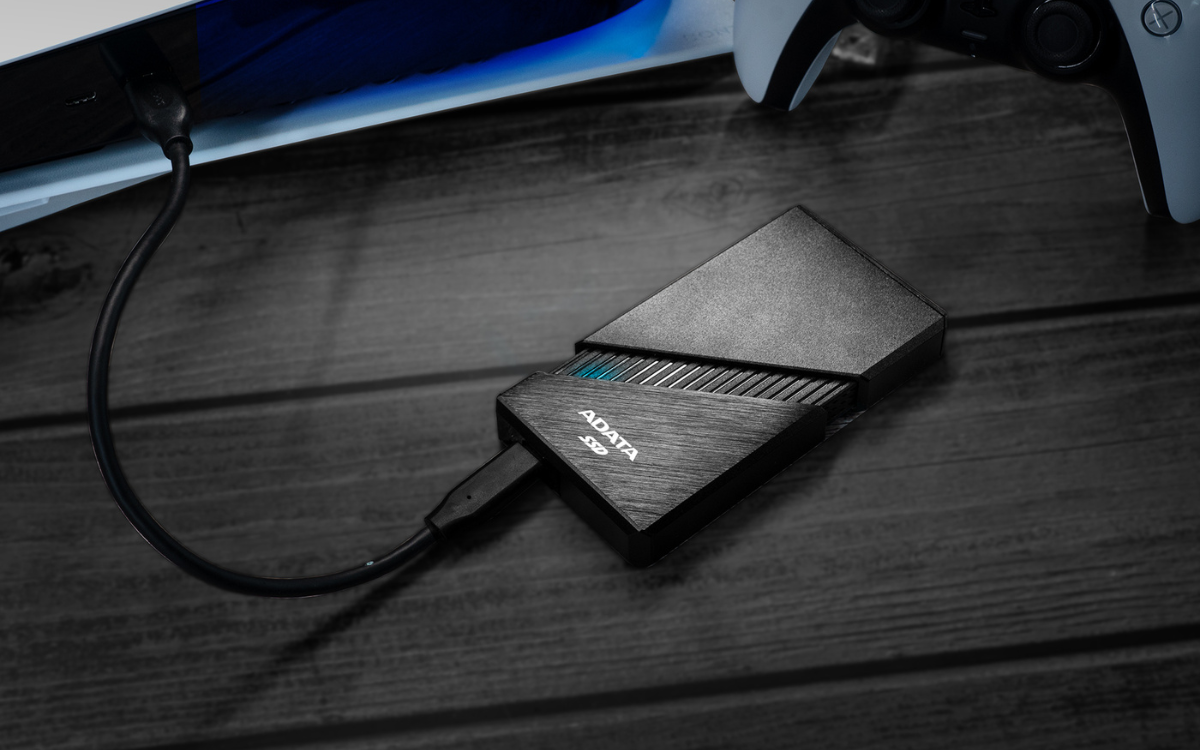
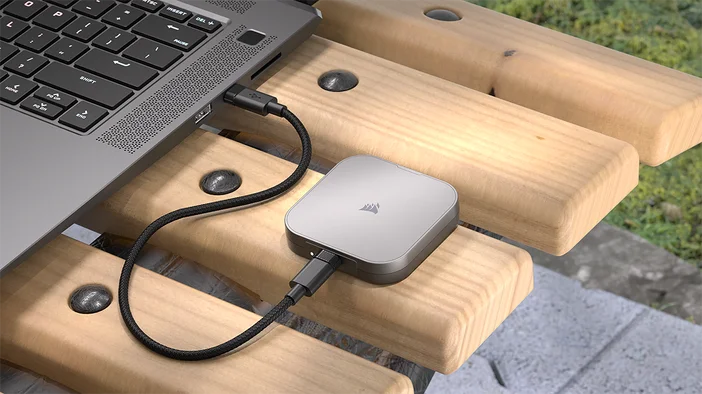
Corsair launches EX300U SSD with 1100MB/s speeds, MagSafe support & up to 4TB storage

Corsair has launched the EX300U, a new portable USB-C SSD designed for high-speed storage and mobile convenience. The drive supports USB 3.2 Gen 2 with up to 10 Gbps bandwidth and delivers sequential read and write speeds of up to 1,100MB/s. It is available in 1TB, 2TB, and 4TB capacities, priced at $99.99, $159.99, and $324.99, respectively.

Corsair EX300U

Corsair EX300U Specifications

The EX300U includes support for MagSafe-compatible magnetic rings, allowing it to attach securely to iPhones or any metal surface. Corsair targets mobile creators and professionals who need fast, reliable storage that stays attached during shoots, backups, or file transfers.

The SSD uses 3D NAND flash and is powered by a Phison PS2217-17 (U17) controller. Corsair has opted for a DRAM-less design and included features such as dynamic pSLC caching, TRIM, and garbage collection to maintain performance over time. The drive is compatible with Windows, macOS, iOS, iPadOS, Android, and Linux, requiring no additional drivers or software.

Corsair EX300U

Corsair ships the drive with two USB-C to USB-C cables: a standard 30cm 10Gbps cable and a short 7cm 40Gbps cable with a 90-degree connector. These cables are intended to support both desktop and mobile use cases. The EX300U connects with a single port for power and data, enabling true plug-and-play operation.

The compact gunmetal body weighs 98 grams and is built to handle vibration and shock. It can operate in temperatures ranging from 0°C to 70°C and withstand storage temperatures down to -40°C. The rated endurance is 250TBW per terabyte, and the drive carries a three-year warranty.

Corsair has made the 1TB model available but marked it out of stock at launch. The 2TB and 4TB variants are available for order with expected delivery between October 10 and October 13.

In related news, Sharge has recently unveiled the Disk Pro, a credit card-sized SSD hub with active cooling, while SanDisk introduced its ELE portable SSD lineup offering 400MB/s read speeds.

For more daily updates, please visit our News Section.

Stay ahead in tech! Join our Telegram community and sign up for our daily newsletter of top stories! 💡

(Source)

China is the World’s Robot Superpower: Installs More Robots Than the Rest of the World Combined

China continues to lead the world in industrial robotics, installing a record 295,000 robots in 2024 alone, which accounts for over half of all global installations. This growth is part of a global increase in industrial robots, with total new installations reaching 542,000 units worldwide, a 9% rise from 2023. 

With 2.03 million robots now in operation, China has the largest industrial robot fleet in the world, far ahead of Japan (450,000), the United States (400,000), and South Korea (392,000).

The widespread adoption of robots is helping China maintain high production efficiency in key industries such as automotive manufacturing, electronics assembly, and logistics. These machines handle tasks like welding, heavy material movement, and precise assembly, reducing reliance on human labor for repetitive jobs.

Automation to Counter Population Decline

China’s growing use of robots comes at a time of demographic challenges. In 2024, the country’s population fell by 1.39 million people, contributing to a shrinking workforce. Experts believe that automation is essential to sustain manufacturing output despite fewer workers. Professor Gao Xudong from Tsinghua University notes that while simple and repetitive tasks will increasingly be done by robots, complex and creative work will still rely on human skills.

Looking ahead, China faces a projected shortage of 50 million high-skilled blue-collar workers by 2030, particularly in areas like robot operation, programming, and maintenance. Workforce training is seen as critical to support the next phase of intelligent manufacturing.

Global Leadership in Production and Innovation

China is not just a major consumer of robots; it has also become the world’s largest producer of industrial robots, surpassing Japan in 2024. Its share of global production increased from 25% in 2023 to one-third in 2024. Local manufacturing of key components like motors, sensors, gears, and controllers allows Chinese companies to scale robotics at lower costs. Companies like Xiaomi and BYD operate fully automated “dark factories,” demonstrating China’s growing expertise in smart manufacturing.

The Rise of Humanoid Robots

China is also moving into humanoid robotics. In 2024, Guangdong-based Tiantai Robot received an order for 10,000 humanoid robots, mainly for elderly care services. This marks a shift from research and development to commercial deployment of human-like robots, signaling the next frontier in automation.

Implications for the Global Market

China’s robotics surge highlights a significant gap between it and other nations, especially the United States, which installed only 34,200 robots in 2024. Analysts warn that China’s scale of deployment creates a “flywheel effect,” generating valuable data to refine AI and robotics further. Experts say the U.S. must invest in physical robotics alongside its AI software strengths to remain competitive in global manufacturing.

China’s dominance in industrial robotics reflects a strategic use of automation to offset labor shortages, strengthen manufacturing, and lead innovation. While robot adoption is accelerating, the development of skilled workers remains essential to sustain long-term industrial growth.

Read More:

(via)

Realme 15 Pro x Game of Thrones Edition Launches in India with Color Changing Design

Realme has unveiled a special Game of Thrones Edition of the Realme 15 Pro in India, bringing a dramatic makeover that matches the popular show that inspired it. The limited edition smartphone features a Westeros-inspired design, custom packaging, and exclusive themed elements that pay homage to the epic fantasy series. So let’s check it out.

Realme 15 Pro Game of Thrones Edition Is Here: Here’s Every Goodie You Get

The entire aesthetic of the device is inspired by Game of Thrones, so it brings a golden Targaryen sigil and a camera and module that is also surrounded by golden accents and dragon claws. The rear panel features a color changing design that lets it shift from black to dark red when the temperature rises above 44 degrees Celsius. Realme refers to this tech as “Born in Fire”. Even the UI gets a big makeover, bringing both Fire and Ice inspired themes.

Realme 15 Pro Game of Thrones Limited Edition

These themes are also customizable with the AI Edit Genie now offering Game of Thrones-themed features. So users can basically generate medieval outfits using AI. The limited edition Realme 15 Pro Game of Thrones arrives with a special collector’s box that is crafted using solid wood and carved metal accents. The sigils of the nine major houses of Westeros can also be found on this box.

Inside, you get a tiny Iron Throne, a map of the Westeros continent, an introduction to House Targaryen, and an introduction to House Stark. For fans of the franchise, there is a full collection of postcards and sigil stickers along with figures of popular characters like Jon Snow, Daenerys, and Tyrion. Apart from all of this, this is the same Realme 15 Pro under the hood. The Realme 15 Pro Game of Thrones Limited Edition in a single 12GB + 512GB model across the globe. Only 5000 units of the special edition are available for purchase with a Rs 44,999 price tag.

For more daily updates, please visit our News Section.

Tech enthusiast? Get the latest news first! Follow our Telegram channel and subscribe to our free newsletter for your daily tech fix! ⚡

Sennheiser HDB 630 Debuts with 60-Hour Battery Life & High Quality Sound

Sennheiser has just unveiled its newest pair of wireless headphones that combine high end audio quality with a long battery life. The HDB 630 wireless headphones bring features like large audio drivers and more. So here’s everything you need to know.

What’s New on Sennheiser’s Latest Wireless Headphones?

The known audio brand built the Sennheiser HDB 630 with a design adapted from Sennheiser’s recent Momentum 4 wireless headphones, which is coupled with Japanese protein leatherette earcups and 42mm audio drivers. These headphones connect a 3.5mm audio jack, USB Type-C cable, or even Bluetooth 5.2. Sennheiser also offers a BDT 700 USB Type-C transmitter dongle that supports aptX Adaptive audio codec for use with smartphone.

Sennheiser HDB 630 Wireless Headphones

The Sennheiser HDB 630 supports dynamic adjust with 80ms low latency and 24bit audio quality (96 kHz at 420 kbps) as well. On a single full charge, the wireless headphones can offer up to 60 hours of battery life, with the brand claiming 7 hours playback with just 10 minutes of charging. There is even a adaptive ANC (Active Noise Cancellation) and transparency mode.

Sennheiser just announced the HDB 630 wireless headphones, which are currently available for pre-orders as of right now. These carry a 499.95 US Dollar price tag, with wider shipping kicking off on 21st October 2025. It will also be listed from Amazon as well, arricing with a dedicated case. In related news, Sennheiser recently celebrated its 80th anniversary with a Special Edition Momentum 4 Wireless Headphones. Back in July 2025, the company also unveiled the Momenturm Sport TWS earbuds with health tracking features and hybrid ANC.

For more daily updates, please visit our News Section.

Don’t miss a thing! Join our Telegram community for instant updates and grab our free daily newsletter for the best tech stories!

Here are All the Xiaomi Phones that Miss Out on the HyperOS 3 Update

As Xiaomi prepares to roll out HyperOS 3 globally, several older models are being left out of the update. So here’s a list of all the older budget, mid range, and flagship models that will not receive the major Android 16 OS based software upgrade.

These Xiaomi, Redmi & POCO Phones Won’t Get HyperOS 3

Earlier this week, we covered a list of all the Xiaomi branded smartphones that are eligible for the HyperOS 3 upgrade. So now, here’s a longer list of all the Xiaomi, Redmi, and POCO devices from the Chinese tech giant, which won’t make the cut for the Android 16 based HyperOS 3 custom skin:

Xiaomi

  • Xiaomi 11i series
  • Xiaomi 12X
  • Xiaomi Mi 11 LE
  • Xiaomi 12 Lite
  • Xiaomi 11T series
  • Xiaomi Mi 11 Lite NE
  • Xiaomi Mi 11X series
  • Xiaomi Mi 11 series
  • Xiaomi Mi Mix Fold
  • Xiaomi Mix 4
  • Xiaomi Pad 5 series
  • Xiaomi Civi

POCO

  • POCO C71
  • POCO C75
  • POCO M6 series
  • POCO C65
  • POCO C51
  • POCO C55
  • POCO X5 series
  • POCO X4 GT series
  • POCO M5 series
  • POCO F4 series
  • POCO F4 GT
  • POCO M4

Redmi

  • Redmi A2 series
  • Redmi 12C
  • Redmi 12 series
  • Redmi Note 13 series
  • Redmi Note 12R series
  • Redmi Note 12S
  • Redmi Note 12R Pro
  • Redmi Note 12 series
Xiaomi HyperOS 3 eligible devices
Xiaomi HyperOS 3

As of right now, HyperOS 3 is making its way to many high-end models like the Xiaomi 15 series with the beta testing. But if you have any of these devices, you might be missing out on the latest software update. In related news, you can also check out all the OnePlus devices eligible for the OxygenOS 16 update and Vivo’s newly unveiled OriginOS 6.

For more daily updates, please visit our News Section.

Tech enthusiast? Get the latest news first! Follow our Telegram channel and subscribe to our free newsletter for your daily tech fix! ⚡

Check If Your OnePlus Is Eligible for the OxygenOS 16 Update

With the rollout of OxygenOS 16 (based on Android 16) on the horizon, many OnePlus users are eager for the latest software build from the company. Many are also curious whether their OnePlus smartphones are eligible for the new updates, so here are the models that are expected to receive the major OS upgrade.

Which OnePlus Phones Will Get OxygenOS 16?

While the brand hasn’t revealed an exact list of all the devices receiving the OxygenOS 16 update, a OnePlus Community post has compiled all the devices that are expected to move to Android 16. This is based on closed beta trials that were initially focused on the Indian market. So here’s a list of all devices that will likely be eligible for the update:

  • OnePlus 13
  • OnePlus 13R
  • OnePlus 13s
  • OnePlus Open
  • OnePlus 12
  • OnePlus 12R
  • OnePlus 11
  • OnePlus 11R
  • OnePlus Nord 3
  • OnePlus Nord 4
  • OnePlus Nord 5
  • OnePlus Nord CE 4
  • OnePlus Nord CE 4 Lite
  • OnePlus Nord CE 5
  • OnePlus Pad
  • OnePlus Pad 2
  • OnePlus Pad 3
OxygenOS 16 release date
OxygenOS 16

So older flagships like the OnePlus 10 series, Nord and Nord 2 lineup, early Nord CE models, the N series, and the OnePlus Pad Go will not be getting this update.

OxygenOS 16: When does it launch and what does it offer?

OnePlus just announced the 16th of October 2025 launch date for the OxygenOS 16. Based on what we know so far, the latest software upgrade brings Android 16 with OnePlus AI. Deeper AI integration is a big focus of the custom skin, bringing Gemini AI support and on-device AI tools along with the new Mind Space.

For more daily updates, please visit our News Section.

Don’t miss a thing! Join our Telegram community for instant updates and grab our free daily newsletter for the best tech stories!

Android 16 update is now available for these Motorola phones

Motorola Android 16 update phones list

Motorola has been actively working on bringing Android 16 to its devices. The brand launched the beta program in June for select devices and has recently begun rolling out the stable build of Android 16, featuring more customizations, several new features, and numerous improvements. It was surprising to see Motorola rolling out the stable Android 16 update ahead of some big brands, including OnePlus, Vivo, Nothing, and Xiaomi.

The Edge 60 Pro, released earlier this year, was the company’s first phone to receive the stable Android 16, and then the update gradually expanded to more Edge models and G-series phones. We’ve prepared a list of Motorola devices that are getting the Android 16 update. Review it below to find out if it’s time for you to hit the update button.

These Motorola phones are getting the stable Android 16 update

  • Motorola Edge 60
  • Motorola Edge 60 Pro
  • Motorola Edge 60 Fusion
  • Motorola Edge 50 Pro
  • Motorola Edge 50 Fusion
  • Motorola Razr+ (2024)
  • Motorola Moto G (2025)
  • Motorola Moto G Power (2025)
  • Motorola Moto G Stylus (2025)

The list is short as the Android 16 rollout has begun only recently. It will grow as more Motorola phones get the update in the coming days and weeks. We’ll regularly update the list to keep it up-to-date.

The missing pieces in Motorola’s update rollout

While it’s good to see Motorola rolling out the update ahead of many of its peers, the brand still needs to check a few more boxes to establish itself as a reliable brand when it comes to software updates. For example, it doesn’t announce a list of eligible devices for the next major upgrade, and that was also true this year. Therefore, we had to delve deeper into the software support pages to obtain the information. You can look at the list of Android 16 eligible devices here.

Motorola also doesn’t publish a rollout timeline. Therefore, it’s unclear when a device will receive its next major upgrade. It doesn’t even announce when a new device gets the update via any of its social channels. On the plus side, the brand started offering extended OS updates to many smartphones from last year, which was a major step. I wish to see more improvements from Motorola on the software front.

Remember to bookmark this page or visit our Android 16 section regularly for the latest updates. You can also join our Telegram channel for instant updates about the latest happenings in tech.

Also Read:
1. Android 16 will be the last major upgrade for these Motorola devices
2. Every Motorola phone that’s confirmed to receive Android 16 update

OnePlus 15s Tipped with Snapdragon 8 Elite Gen 5, Gigantic Battery, & an Ultra Wide Angle Lens

The upcoming OnePlus 15s could be a game-changer for fans of compact flagships. There have already been leaks regarding the OnePlus 15T, and now, a fresh tip reveals more details regarding the global variant. OnePlus could be bringing an impressive premium small phone in the market soon, so here’s what we know.

This Compact OnePlus Flagship Could be a Game Changer

The Chinese smartphone’s OnePlus 13s successor was just spotted in a fresh leak from @gadgetsdata on X (formerly Twitter). To recall, the OnePlus 13T is the Chinese variant of the OnePlus 13s, and the OnePlus 15s will likely debut as the China exclusive OnePlus 15T. Looking at the tweet, the OnePlus 15s sports a 6.3-inch flat OLED display with a 1.5K resolution and likely offers a 120Hz refresh rate.

OnePlus 15T Concept Render

While the predecessor only had an optical in-display fingerprint scanner, the newer model will feature an ultrasonic fingerprint scanner under the screen. Under the hood, this model will reportedly be equipped with the Snapdragon 8 Elite Gen 5 SoC, which is the same chip that will power the OnePlus 15. Another notable upgrade is the massive battery pack that might have a 7,000mAh capacity.

A recent OnePlus 15T listing revealed that the compact flagship will feature a humongous 7,000mAh+ battery, which might be slightly smaller on the OnePlus 15s (like the 13s having a smaller battery than the 13T). The Xiaomi 17 just debuted in China with the same flagship chip and 7,000mAh battery. So the OnePlus 15s could offer an even more impressive battery capacity. But one of the biggest updates is adding an ultra wide angle lens, which was missing on the OnePlus 13T/13s.

For more daily updates, please visit our News Section.

Tech enthusiast? Get the latest news first! Follow our Telegram channel and subscribe to our free newsletter for your daily tech fix! ⚡

Anker Soundcore Nebula P1 hits shelves as the first portable projector with detachable speakers

Anker has launched its latest portable projector, the Soundcore Nebula P1, in the US — and it’s doing something no other compact projector has tried yet. The P1 comes with detachable Bluetooth speakers, letting you set up quick 2.0 surround sound wherever you’re watching. It is now on sale with a launch discount and a bonus accessory pack.

The Nebula P1 is meant to be a more compact and affordable option compared to the Nebula X1. It normally retails for $799, but Anker is running a limited-time offer that brings it down to $719 on its official store and Amazon. The deal also includes a free 100-inch outdoor screen with stand, valued at $169 — a decent bundle for early buyers.

The projector outputs 1080p resolution using a DLP engine, projecting images up to 180 inches wide with a 1.2:1 throw ratio. Brightness is rated at 650 ANSI lumens, which should hold up well indoors or after sunset outdoors. That’s notably higher than Anker’s own Mars 3 Air (400 lumens) or Capsule 3 (300 lumens). The panel covers 124% of the Rec. 709 color gamut, so colors should look rich and natural. It also features auto-focus, auto-keystone correction, and a dual-arm gimbal that tilts up to 130 degrees for quick setup.

The real draw, though, is audio. The two 10W detachable speakers can snap off and connect via Bluetooth, giving you an instant stereo setup with Dolby Audio, up to 85dB loudness, and 65Hz bass response. Each speaker lasts up to 20 hours on its own battery. The projector itself doesn’t include one, so you’ll need a power source or power bank for full portability.

On the software side, the Nebula P1 runs Google TV with Netflix pre-installed, and offers 2GB RAM, 32GB storage, plus HDMI, USB-C, and USB-A ports. It’s also splash-resistant, with IP33 protection for the main body and IP54 for the speakers.

With a mix of flexibility, solid brightness, and a clever new audio setup, the Nebula P1 feels like one of Anker’s most practical projectors yet. For anyone looking for an all-in-one portable setup, this could be a smart pick before the launch promo ends.

Don’t miss a thing! Join our Telegram community for instant updates and grab our free daily newsletter for the best tech stories!
For more daily updates, please visit our News Section.

(Source)