Advertisement

HUAWEI MatePad Pro 2 certified by TENAA with HarmonyOS and 5G connectivity

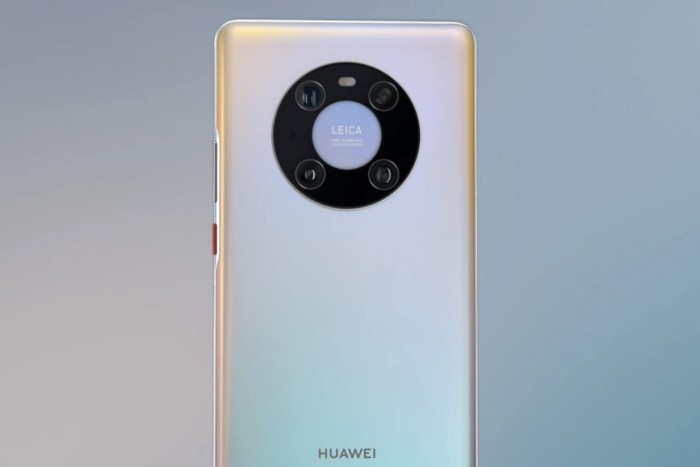
The HUAWEI MatePad Pro is the company’s flagship tablet. The original model debuted in late 2019 and a 5G model was released in the first half of 2020. Now, over a year later, the Chinese telecom giant is expected to launch its successor called HUAWEI MatePad Pro 2. This high-end tablet has been now listed on TENAA. Additionally, a well-known leaker has tipped some of its primary specs.

HUAWEI MatePad Pro 5G

The upcoming HUAWEI MatePad Pro 2 with model number WGR-AN19 (codename: Wanger) has been certified by TENAA. But unfortunately, the listing neither has the images of the product nor its entire specifications. But it does confirm some of its features. The device was earlier spotted on 3C as well.
As per the listing, the premium tablet will support SA/NSA 5G connectivity. Most importantly, the listing says that it will run HarmonyOS. Popular Chinese tipster Digital Chat Station tells that the HUAWEI MatePad Pro 2 will be the first device to launch with HarmonyOS out of the box.

That’s not all, according to him, this forthcoming tablet will be powered by HiSilicon Kirin 9000 SoC. Further, it will be available in two sizes – 12.2-inch or 12.6-inch. For those unaware, the HUAWEI MatePad Pro sports a smaller 10.8-inch screen.

Unfortunately, he does not say about the type of display. Its predecessor has an LCD panel and therefore, the new model could also feature the same but with a higher refresh rate, which the older tablet lacks. Also, we cannot rule out the possibility of an OLED display either.

Anyway, we expect to learn more about the HUAWEI MatePad 2 Pro before its official announcement sometime later in the near future.


RELATED:


POCO X3 Pro with 120Hz screen, Snapdragon 860, 48MP quad cameras launched for Rs 18,999 (~$260)

Last week, POCO announced the POCO X3 Pro and POCO F3 flagship for global markets. Today, the company held a dedicated launch event in India to announce the arrival of the POCO X3 Pro. Here is all the information on the pricing and specifications of the X3 Pro for India.

POCO X3 Pro price in India

The POCO X3 Pro has arrived in two options such as 6 GB RAM + 128 GB storage and 8 GB RAM + 128 GB storage in India. They are priced at Rs 18,999 (~$260) and Rs 20,999 (~$287), respectively. Flipkart will carry out the first sale of X3 Pro at 12 PM on April 6. Customers with ICICI Bank credit cards and EMI transactions can avail up to Rs 1,000 instant discount on both variants of the X3 Pro.

The POCO X3 Pro comes in three color variants such as Golden Bronze, Graphite Black, and Steel Blue. With the arrival of the X3 Pro, the company has slashed the price of the existing POCO X3. It is now available with a new starting price of Rs 14,999 (~$205).

POCO X3 Pro
POCO X3 Pro

POCO X3 Pro specifications

The POCO X3 Pro has a 6.67-inch IPS LCD FHD+ display with a 120Hz refresh rate support. The punch-hole display is shielded by Gorilla Glass 6. The polycarbonate body of the phone offers IP53 rated dust and splash protection. The device features a side-mounted fingerprint scanner, and it runs on Android 11 OS and MIUI 12 for POCO.

The Snapdragon 860 flagship chipset along with LPDDR4x RAM and UFS 3.1 storage drives the POCO X3 Pro. It has a 5,160mAh battery that supports 33W fast charging. The X3 Pro has a front camera of 20-megapixel and its circular camera module on the back has a 48-megapixel Sony IMX582 main lens, an 8-megapixel ultrawide snapper, a 2-megapixel depth assist sensor, and a 2-megapixel macro camera. The smartphone also features stereo speakers, a USB-C port, and a 3.5mm audio jack.

RELATED:

Samsung reclaims top position in global smartphone sales in February

Samsung Electronics, the South Korean giant, has managed to reclaim the top position in global smartphone sales in the month of February. As per the report from Strategy Analytics, the company has beat Apple, which had managed to get the top spot in the Q4 2020, thanks to the sales of the iPhone 12 series.

The report reveals that Samsung managed to ship 24 million units of its smartphones in February 2021, accounting for 23.1 percent of the market share. On the other hand, Apple managed to sell 23 million units, making for a 22.2 percent market share.

Xiaomi was the third-largest smartphone vendor last month with a market share of 11.5 percent, followed by Vivo and OPPO with 10.6 percent and 8.5 percent global market share respectively. All three of these are Chinese brands with almost none to the limited presence in the United States.

Samsung had a market share of 15.6 percent in January while Apple had a market share of 25.4 percent. When comparing the data Year-on-Year (YoY), the smartphone shipments of Samsung were 26 percent more than last year and 12 percent more than the pre-pandemic levels in February 2019.

The South Korean giant introduced its flagship Galaxy S-series smartphones in the form of the Galaxy S21 lineup in January this year, deviating from its usual timeframe of mid-February. This has helped the company increase its market share. Another major impact is the decreasing share of Huawei, which is struggling in this category because of several sanctions imposed by the United States.

RELATED: 


Xiaomi Mi MIX Fold spotted in promo poster with key specs, expected to launch today

Xiaomi held a mega launch event in China yesterday to announce Mi 11 series phones such as Mi 11 Pro, Mi 11 Ultra, Mi 11 Lite 5G, and some other products like the Xiaomi Mi Band 6, chargers, routers, and other equipment. At the event, it also announced the Xiaomi Mi 11i and Mi 11 Lite 4G / 5G for global markets. Fresh information reveals that the Chinese manufacturer will be holding another launch event in China today. It is speculated to announce the Xiaomi Mi MIX Fold as its first foldable smartphone. A leaked shot of the offline promo material of the Mi MIX Fold has surfaced on Weibo today to reveal its design and key specs.

As the rumor mill claimed, the Xiaomi Mi MIX Fold can be seen sporting an in-folding design. The Chinese text that can be seen at the bottom of the image reveals that it is equipped with an 8.01-inch foldable screen that produces 2K resolution and 1.1 billion colors. The Snapdragon 888 mobile platform is present under the hood of the device.

XIaomi Mi MIX Fold first look

The rear camera module of the MI MIX Fold appears similar to the camera housing of the Xiaomi Mi 10S, which was announced recently in China. It is equipped with a 108-megapixel primary camera with a liquid lens. The device promises 3D output as it is fitted with Harman Kardon powered quad speakers.

In related news, Xiaomi is also expected to announce a self-developed Surge chipset today. At present, there is no information available on its specifications. The company is also expected to unveil some other products like a new Mi Notebook Pro, Mi Washing Machine with a front-loading feature, a new Mi Robot vacuum cleaner, and more.

RELATED:

MediaTek led smartphone chipset market in 2020 with 27% market share: Report

MediaTek surprisingly dethroned Qualcomm as the world’s leading smartphone chipset vendor for the first time in the third quarter of 2020. Now, a new report claims that the Taiwan-based chipset maker led the market for the whole year.

As per the recent report from London-based Omdia, the shipments of MediaTek grew 48 percent year-on-year in 2020, reaching 352 million units. The company managed to capture about 27 percent of the global markets.

mediatek

On the other hand, Qualcomm saw an 18 percent year-on-year drop in chip shipments last year and shipped 319 million units of its Snapdragon-series processors in 2020. With that, MediaTek took the pole position while Qualcomm got the second spot with 25 percent of the global market share.

MediaTek seems to have benefited the most from the sanctions imposed by the United States of Huawei, which barred the Chinese giant from using Qualcomm’s chipsets in its devices. Given that Huawei was one of the leading smartphone brands globally, losing the business also hit Qualcomm and other vendors significantly.

However, Xiaomi is the brand that used the most MediaTek chips on its devices last year. The Chinese company shipped 63.7 million phones powered by processors from the Taiwanese company in the year 2020, a growth of 223.3 percent YoY.

Apart from that, the company has been winning the market when it comes to entry-level or low-price and mid-range smartphones. Most of the budget and mid-range phones come powered by the Taiwanese company’s processors and the company is also testing waters for the high-end chips.

MediaTek has added support for 5G connectivity on its offerings with the Dimensity series of processors. The company isn’t stopping at smartphone chips and is also one of the leading vendors globally for Smart TV chips.

RELATED: 


Xiaomi Mi 10 Ultra is the first device to get MIUI 12.5 stable update

Xiaomi unveiled MIUI 12.5 at the Mi 11 China launch event in late December 2020. It is a minor upgrade over MIUI 12. Since that conference, the company has been seeding weekly beta builds for the eligible devices in its home country. Now, three months after the announcement, the Mi 10 Ultra has become the first smartphone to get MIUI 12.5 stable update.

Xiaomi Mi 10 Ultra Review 07

The Mi 10 Ultra is Xiaomi’s 10th-anniversary special smartphone. This handset is sold exclusively in China. Hence, it has a single branch of MIUI build (MIUI China).

The phone debuted with MIUI 12 based on Android 10. It was later updated to Android 11. And now, the device has even started receiving the MIUI 12.5 update. In fact, as mentioned in the beginning, it is the first smartphone to receive MIUI 12.5 stable update.

That said, the latest system update for the Xiaomi Mi 10 Ultra comes with build number V12.5.1.0.RJJCNXM. Since this software build is currently in the Stable Beta phase, it is only available for a select few users. If there’s no issue with this build, then it should be rolled out to all the users in the coming days.

As far as new features are concerned, MIUI 12.5 brings optimizations for system animations, improved haptic feedback throughout the UI, new customizable system sounds with stereo effects, uninstallable system apps, and more.


RELATED:

Alleged iQOO Neo5’s Indian variant spotted at Google Play Console, Launch seems imminent

In February, a Vivo phone with model number I2012 was spotted with Snapdragon 870 was spotted at the Geekbench benchmarking platform. At that time, it was speculated that it could be the Indian version of the iQOO Neo5. The same model has now appeared in the Google Supported Devices list and at the Google Play Console. These listings suggest that the iQOO Neo5 may soon launch in India.

The I2012 smartphone can be seen with specs like a Snapdragon 870 chipset, 8 GB of RAM, and Android 11 OS at the Google Play Console. The listing also states that it supports a Full HD+ resolution of 1080 x 2400 pixels and a 480ppi pixel density. The image of the phone that can be found in the listing shows that it has a top-centered selfie camera cutout.

It is speculated that a Vivo phone with an I2011 model number, which was certified by the Bureau of Indian Standards (BIS) earlier this month could be a variant of the iQOO Neo5. The other phone that is expected to land in India soon is the Snapdragon 888 powered iQOO 7. It was reportedly spotted with the I2009 model number at BIS and Geekbench in the recent past. The handset is yet to appear at the Google Play Console.

iQOO Neo5 specifications

The iQOO Neo5 has a 6.62-inch AMOLED display that offers an FHD+ resolution and a 120Hz refresh rate. It runs on Android 11 OS and OriginOS for iQOO. The Neo5 has a front camera of 16-megapixel and its rear camera system consists of a 48-megapixel Sony IMX589 lens with OIS, a 13-megapixel ultrawide lens, and a 2-megapixel depth sensor.

The Neo5 has a 4,400mAh battery that supports 66W fast charging. The SD870 powered comes with up to 12 GB of LPDDR4x RAM and 256 GB of UFS 3.1 storage. For security, it is equipped with an in-screen fingerprint scanner.

RELATED:

Huawei announces new generation of camera technologies and camera products

Huawei Technologies, one of the leading electronics device makers from China hosted a new product launch event in Zhuhai. At the event, Duan Aiguo, President of Huawei’s Machine Vision announced three new technologies along with new products.

The company released SuperColor, SuperCoding, and AI Turbo technologies as well as a new generation of cameras. The newly launched “Cube” is a binocular full-color AI tube camera that combines RGBW super-sensitive sensor, DNN ISP real-time video noise reduction, AI HDR full target enhancement, and Deblur to remove motion smear.

Huawei Camera Technology Launch

The AI Ultra-Light Camera 2.0 comes with an upgraded algorithm and recognition is more accurate through the deep learning network algorithm. The smart supplementary light is also upgraded and the intensity is automatically adjusted round the clock.

There’s also AI Dual-Spectrum Thermal Imaging Camera 2.0 that achieves longer distance and earlier firework detection, and the firework detection distance is doubled after the computing power is upgraded.

The Eco Camera 2.0 supports a combination of multiple power distribution methods with stronger power storage capacity, more flexible remote on-demand wake-up, and a wider sensing range.

Intelligent Video Storage IVS3800 2.0 uses SuperCoding technology to store more valuable data and has large-scale elastic EC technology that relies on AI Turbo’s four-in-one fully structured algorithm. On the other hand, the Intelligent Video Storage IVS1800 2.0 relies on the Huawei Cloud AI market using SuperCoding technology.

The Holographic Interaction Solution 2.0 supports the acquisition of all elements of the machine, non-human, and human, and rationally optimizes signal control. It also adapts to multiple intersection forms such as Cross, T-Shaped, X-Shaped, Y-Shaped, Overpass, and Super-Large Intersection.

RELATED: 

Nokia Lite Earbuds (BH-205) images appear via FCC as launch draws near

A new certification note from the U.S regulatory agency, Federal Communications Commission (FCC), has provided insights on Nokia‘s upcoming truly wireless (TWS) earbuds, the Nokia Lite earbuds with model number BH-205. The device has gone through several development stages culminating in its FCC certification and should be hitting the market shortly.Nokia Lite earbuds

Nokia has a scheduled launch event on April 8, 2021, and the Nokia Lite TWS earbuds would most probably be on the lineup for that event. However, the company is yet to provide details of the devices scheduled for unveiling during the April 8 event.

Images of the Nokia Lite earbuds were also revealed on the certification page and they reveal the design choices and specifications of the upcoming earbuds. We can see from the visuals the device’s overall measurement, some other components, internal mechanisms, its charging case, and a user guide were part of the details provided.Nokia Lite earbuds

The FCC certification shows that there will be three sets of ear tips for the device. It will also come with a USB Type-C charging port, a charging case housing a battery with a rumored capacity of 400mAh. The earbuds themselves will both have a 40mAh battery, although we do not know the battery life of the earbuds and that of the charging case on a full charge.Nokia Lite earbuds

The design notes and images show that the wireless earbuds have a stem design and will have one-touch buttons for call control and music navigation. We expect that the device will be compatible with Android and iOS devices, like several other TWS earbuds.

No information is available yet on the expected cost of the BH-205 wireless earbuds bit based on its modest specifications as per the battery capacity. We should expect the price to be affordable for a large segment of the target customers.

RELATED:

(source, via)


OPPO Find X3 Pro gets a new Cosmic Mocha color variant

Fast-rising Chinese smartphone manufacturer OPPO has unveiled a fourth color variant of its innovative smartphone, the Find X3 Pro. The current flagship model of Oppo, the Find X3 was unveiled earlier this month in three color variants, and a fourth impressive and captivating color has just been added, at least for the Chinese market.  Cosmic Mocha is the fitting name given to the new color variant of the Find X3 Pro.OPPO Find X3 Pro Cosmic Mocha

The model has a frame with a light gold allure that coincides with the camera island design on the back, with a vegan leather exterior. The signature Oppo logo sits at the bottom right of the back, well crusted on the vegan leather exterior.OPPO Find X3 Pro Cosmic Mocha

The unveiling of the Oppo Find X3 earlier this month brought to the spotlight the quantum of unorthodox innovation and quality that Oppo is bringing to the phone-making space. The flagship smartphone comes with several innovative features, further accentuated by its brilliant design and aesthetic appeal.

The cutting-edge specifications include a powerful quad-camera at the back having a 3MP microscopic camera with a capacity for 60x magnification, a waterproof body, and a curved 6.7-inch 10-bit OLED screen with high resolution and an excellent refresh rate. The Find X3 is powered by the Snapdragon 888 chipset, which has 5G support for super-fast connectivity. The smartphone also comes with a 4,500mAh battery, fast charging, fast wireless, and reverse wireless charging capabilities.

The sleek design and great features of the Find X3 Pro made it an instant success among fans of the brand and may have won over a few new Oppo converts.

The new  Find X3 Pro Cosmic Mocha variant is priced at RMB 5,999 (around $915). The model is already on sale in China via Jingdong.

RELATED:


Galaxy Buds2 already in development; might even launch this year

Samsung’s latest wireless earbuds and its best yet is the Galaxy Buds Pro. Announced earlier this year alongside the Galaxy S21 series, there is a chance we may be getting yet another pair of earbuds from the Korean giant this year and it may launch as the Galaxy Buds2.

According to the folks at Android Police, Samsung is already working on its fifth pair of TWS earbuds called the Galaxy Buds2. The official name was found in a teardown of the latest version of the Galaxy Wearable APK.

Samsung Galaxy Buds
A successor to the Galaxy Buds called the Galaxy Buds2 is in development

They also found out that the earbuds go by the codename “berry” and supports multiple device connection and will also be compatible with non-Samsung devices as well as tablets. So far, that is all that is known about the tablet.

Last year, Samsung launched two pairs of wireless earbuds – the first was the Galaxy Buds+ that was announced alongside the Galaxy S20 series in Q1 2020 and it was followed by the bean-shaped Galaxy Buds Live later in the year. There is a chance Samsung may launch the Galaxy Buds2 later this year too. However, we believe it will be positioned under the Galaxy Buds Pro but come with upgraded features such as better battery life, improved design, and better audio quality over the first-gen Galaxy Buds and the Galaxy Buds Plus.

RELATED:


Xiaomi Mi 11 vs Realme GT vs Redmi K40 Pro: Specs Comparison

A few hours ago, Xiaomi held a big event where several Mi 11 phones have been unveiled. Now, the Xiaomi Mi 11 is the smartphone series with the highest amount of flagships. Besides the Mi 11, now the lineup also contains the Mi 11i which is actually a rebrand of the Redmi K40 Pro+, but for the global market. What about China and the Asian market? The main flagship killers that can be considered rivals of the vanilla Mi 11 at the moment are the Realme GT and the Redmi K40 Pro. Do they offer a higher value for money than Mi 11? This comparison will clear your ideas in regards.

Xiaomi Mi 11 vs Realme GT vs Xiaomi Redmi K40 Pro

Xiaomi Mi 11 Realme GT 5G Xiaomi Redmi K40 Pro
DIMENSIONS AND WEIGHT 164.3 x 74.6 x 8.1 mm, 196 g 158.5 x 73.3 x 8.4 mm, 186 grams 163.7 x 76.4 x 7.8 mm, 196 grams
DISPLAY  6.81 inches, 1440 x 3200p (Quad HD+), AMOLED  6.43 inches, 1080 x 2400p (Full HD+), Super AMOLED  6.67 inches, 1080 x 2400p (Full HD+), Super AMOLED
PROCESSOR Qualcomm Snapdragon 888, octa-core 2.84 GHz Qualcomm Snapdragon 888, octa-core 2.84 GHz Qualcomm Snapdragon 888, octa-core 2.84 GHz
MEMORY 8 GB RAM, 256 GB – 8 GB RAM, 256 GB – 12 GB RAM, 256 GB 8 GB RAM, 128 GB – 12 GB RAM, 256 GB 6 GB RAM, 128 GB – 8 GB RAM, 128 GB – 8 GB RAM, 256 GB
SOFTWARE  Android 11, MIUI Android 11, Realme UI Android 11, MIUI
CONNECTIVITY  Wi-Fi 802.11 a/b/g/n/ac/ax, Bluetooth 5.2, GPS Wi-Fi 802.11 a/b/g/n/ac/ax, Bluetooth 5.2, GPS Wi-Fi 802.11 a/b/g/n/ac/ax, Bluetooth 5.2, GPS
CAMERA Triple 108 + 13 + 5 MP, f/1.9 + f/2.4 + f/2.4
20 MP front camera
Triple 64 + 8 + 2 MP, f/1.8 + f/2.3 + f/2.4
16 MP f/2.5 front camera
Triple 64 + 8 + 5 MP, f/1.8 + f/2.2
20 MP front camera
BATTERY  4600 mAh, fast charging 50W, wireless charging 50W 4500 mAh, fast charging 65W 4520 mAh, fast charging 33W
ADDITIONAL FEATURES Dual SIM slot, 5G, reverse wireless charging 10W Dual SIM slot, 5G Dual SIM slot, 5G

Design

The most stunning design is the one of the Xiaomi Mi 11, in my honest opinion. Those curved edges and the original camera module make the difference. But if you take the leather variant of the Realme GT, you will see a device that is as beautiful as the standard Mi 11. However, the Xiaomi Mi 11 comes in a leather variant as well. The design is not the strongest point of the Redmi K40 Pro, but it has the IP53 certification, so it is protected from splashes and dust.


Display

There is no challenge: the Xiaomi Mi 11 is the display champion here. First of all, it is the only one with a Quad HD+ resolution, so it provides a higher level of detail and image clarity. Further, it is able to show up to one billion colors and it has a higher 1500 nit peak brightness. The phone also comes with a 120 Hz refresh rate, the HDR10+ certification, and a wide 6.81-inch diagonal. Right after, we got the Redmi K40 Pro featuring a 6.67-inch display with a Full HD+ resolution, a 120 Hz refresh rate, and HDR10+, as well as a high 1300 nit peak brightness.


Hardware/Software

All of these phones are powered by the Snapdragon 888 mobile platform which provides flagship-class performance levels. What changes are the memory configurations: with the Redmi K40 Pro, you do not get more than 8 GB of RAM, while Xiaomi Mi 11 and Realme GT 5G provide up to 12 GB of RAM. The software is exactly the same on Mi 11 and Redmi K40 Pro (MIUI), while you get a different user interface with the Realme GT 5G (Realme UI 2.0 based on Android 11).


Camera

Despite it is not a flagship camera phone, the Xiaomi Mi 11 also provides a better main camera: it is a 108 MP sensor with OIS. Redmi K40 Pro and Realme GT have an inferior 64 MP main camera and they lack OIS, so they can not be considered high-end camera phones, unlike the Mi 11.


Battery

There should not be huge differences between the battery life of these three devices, given the similar battery capacities and components. Xiaomi Mi 11 should have a higher consumption due to its bigger display with a higher resolution. On the other hand, it is the only one with wireless charging and we are talking about very fast 50W wireless charging. But the Realme GT is the fastest charging phone with its 65W SuperDart charging technology.


Xiaomi Mi 11 vs Realme GT vs Xiaomi Redmi K40 Pro: Price

Realme GT 5G is priced at less than €360/$424 and Redmi K40 Pro costs more or less €259/$305 in China, while you need about €517/$600 for the Xiaomi Mi 11. While the Mi 11 is the best phone in this comparison, the Realme GT 5G provides the highest value for money: I prefer it to the Redmi K40 Pro due to its faster charging technology, but if you do not care about it, the Redmi K40 Pro can let you save even more money.


Xiaomi Mi 11 vs Realme GT vs Xiaomi Redmi K40 Pro: PRO and CONS

Xiaomi Mi 11

PROS

  • Best display
  • Best rear camera
  • Wireless charging
  • Curved edges
  • In-display fingerprint scanner
  • IR blaster

CONS

  • Price


Realme GT

PROS

  • Faster charging
  • More compact
  • Good price
  • In-display fingerprint scanner

CONS

  • Nothing particular


Xiaomi Redmi K40 Pro

PROS

  • Very good price
  • IP53 certification
  • IR blaster

CONS

  • Slower charging


RELATED

Check the latest videos from our YouTube channel and subscribe:

Dunu EST112 IEM goes official with Triple-Hybrid setup for $489.99

Dunu is well-known for its high-end audio-equipment across the globe. It is a China-based company and is among the top leading manufacturers of high-quality in-ear monitors. DN-1000 is the company first IEM which changed the audio market back in 2013. After the exceptional reception of DN-1000, the company scaled much better IEMs in the following years. Now, DUNU is finally here with the new DUNU EST112 IEM which houses a triple-hybrid setup consisting of a DD, BA and two EST drivers. Dunu EST112 IEM with its glaring features is available at $489.99.

Must See: Best Android TV Boxes that you should look this year!

Quad-Driver and Triple-hybrid setup

Dunu EST112 IEM features a quad-driver while featuring a triple-hybrid setup consisting of a powerful dynamic driver, one premium balanced armature and two performance electrostatic drivers.

Third-Generation Dynamic Driver

Dunu houses a third-generation 13.5mm large dynamic woofer. The design aspects consist of beryllium coating which makes the diaphragm sound finer while maintaining a regular grain pattern. It enhances the bass and lowers midrange frequencies which further tweaks the sound a lot.

Knowles Balanced Armature Unit + Sonion EST Drivers

Dunu has used a premium quality balanced armature unit from Knowles. The BA unit improves refined mid-high frequency responses that produce lovely vocals with natural tonality and texture. Apart from the high-end headphones, the IEMs also started carrying quality EST drivers.

Dunu users two high-performance EST rivers from Sonion that allows getting detailed, smooth and elegant high and ultra-high frequency response with EST112.

Premium Design

The IEM shells are crafted with a high-precision machining process and are built using durable aluminium alloy. The IEMs are polished with gunmetal anodizing and feature polished stainless steel faceplates for a simple yet timeless design.

Modular Plug System

Dunu comes with a premium DUW-O2S cable and high-quality Litz braided silver-plated copper cable. Furthermore, you will get Dunu’s patented Quick-Switch modular plug system.

Pricing and Availability

Dunu EST112 triple-hybrid IEMs come for the price of $489.99. It is on pre-orders from March 27th and the sale will commence from March 31st. You can pre-order the device from the HiFiGo store.

See More: Pamu Nano True Wireless Bluetooth Headset with HiFi quality launched

Xiaomi unveils the Mi Smart Projector 2 Pro with Google Assistant, 1300 Lumens

Apart from the sleek Mi 11 series smartphones, Xiaomi also unveiled a new Mi Smart Band 6 as well as a new smart home cinema dubbed Mi Smart Projector 2 Pro. The new projector is basically the MIJIA Projector 2 Pro that was launched in China around July last year but this global version comes with Google Assistant built-in and runs on Android TV. Mi Smart Projector 2 Pro

The Mi Smart Projector 2 Pro arrives with an impressive FHD resolution of 1920 x 1080 pixels and a screen size that is adjustable between 60 inches and 120 inches. The projector features a 0.47” DMD chip and is capable of reaching a maximum brightness of 1300 ANSI lumens. The projector also comes with support for HDR10, outputting a superior contrast ratio and crisp colors for vivid picture quality.Mi Smart Projector 2 Pro

The audio aspect is handled by a 10W speaker with DTS-HD and Dolby Audio support. The speaker uses dual tweeters and dual full-range woofers. You also get support for DTS-HD and Dolby Audio support onboard the projector. One cool thing about this projector is that it can be used as a standalone speaker and all you need to do is connect the audio source via Bluetooth.Mi Smart Projector 2 Pro

On the Mi Smart Projector 2 Pro, you won’t encounter the problem of positioning the device correctly in order to beam properly on the screen. The device performs Omni-directional keystone correction when it is turned on and in this way, the screen dimensions are automatically aligned to achieve a perfect rectangle on the wall from any directions within 40 degrees. This prevents any form of distortion.Mi Smart Projector 2 Pro

The Mi Smart Projector 2 Pro is also capable of achieving autofocus like a camera and ToF sensor. This automatically brings the picture into sharp focus in as little as 2 seconds.Mi Smart Projector 2 Pro

For software, the smart projector runs on Android TV OS and comes with an array of viewing content, games, and applications. The user interface is also intuitive and brings ease of navigation. There is also Google Assistant built into the device as well as Chromecast and Netflix onboard. The Google Assistant allows viewers to change channels with voice commands and also allows them to control other connected smart home gadgets using the projector.

 Mi Smart Projector 2 Pro Pricing & Availability

In terms of the price, the Mi Smart Projector 2 Pro will retail for EUR 999 but there is an early bird pricing of EUR 899. We await further details on its availability.

RELATED;


Xiaomi Mi 11i with a flat AMOLED display launched for the global market

Xiaomi today went on a launch spree as it completed the Mi 11 series lineup with the addition of three new models for the Chinese market – the Mi 11 Ultra, Mi 11 Pro, and Mi 11 Lite. For its global audience, the company announced the Mi 11 Ultra, Mi 11i, and Mi 11 Lite/5G. Xiaomi Mi 11i

The Mi 11i adopts a flat-screen design and is reputed to be Xiaomi’s best flat screen device yet.  The body is made from premium glass with a thickness of just 7.8mm. There is also a side-mounted fingerprint sensor. The specifications are somewhat similar to the Mi 11 Pro which may well stay as a China-only model. However, there are some marked differences between the two models such as the battery capacity.Xiaomi Mi 11i

The flagship device packs a 6.67-inch AMOLED screen with a hole-punch design at the top. The display is a Samsung E4 AMOLED screen with a 120Hz refresh rate, 360Hz touch sampling rate and that is capable of reaching a peak brightness of 1300nits with less power consumption. The display also comes with a DCI-P3 color gamut and HDR10+ support making it capable of delivering a stunning array of vivid colors.Xiaomi Mi 11i

The Mi 11i is powered by a Snapdragon 888 mobile platform, the latest flagship processor from Qualcomm. The processor allows higher performance while consuming less energy and providing a super fast and reliable user experience. The phone also arrives with 8GB LPDDR5 storage and 128GB/256GB UFS 3.1 flash memory.Xiaomi Mi 11i

On the camera aspect, the Mi 11i packs a 108MP HD triple camera setup design with pro-level photography capabilities. The main camera is a 108MP HD sensor with outstanding low-light photography, assisted by a 119° ultra-wide-angle camera, and a 5MP telemacro camera.Xiaomi Mi 11i

In terms of audio, the flagship smartphone is equipped with Dolby Atmos and dual speakers, thus creating a truly immersive audio experience. Further, Xiaomi says the phone comes with Audio Zoom which is capable of capturing clear audio of distant scenes by just zooming in on the subject with the camera.

Keeping the lights on is a 4,520mAh battery that is capable of taking you through the day without a need to charge it. The phone also brings support for 33W fast charging which can take it from zero to full charge in just 52 minutes. You also get an X-linear motor for highly responsive and powerful haptics, as well as an IR blaster and NFC support for contactless payment.Xiaomi Mi 11i

Xiaomi Mi 11i Pricing and Availability

As for the prices, the Mi 11i starts at EUR 649 for the 8GB+128GB version while the 8GB+256GB version retails for EUR 699. The phone will be available in three colours: Celestial Silver, Frosty White, and Cosmic Black. The phone will be available for pre-order across all official Xiaomi channels soon

RELATED;


OnePlus will reportedly skip the Nord SE

OnePlus ventured into the budget smartphone after many years with the OnePlus Nord in July 2020. Later, the company turned the gear up and launched two more devices under the ‘Nord’ branding in quick succession. By November, reports had already started surfacing about a Nord SE and that it may launch in Q1 or 2021. However, Max Jambor(@MaxJMB) thinks otherwise.

OnePlus Nord SE
OnePlus Nord SE leaked box packaging, Credit: @thebookisclosed/Max Jambor

Max, who earlier hinted about a possible Special Edition, is now saying that according to his sources, OnePlus isn’t going forward with the announcement of OnePlus Nord SE. Particularly, he says that the Special Edition that was planned with the original Nord won’t be hitting the stores.

Back in December, a Phone report suggested that  OnePlus Nord SE could just be a special Edition of the Original OnePlus Nord designed in partnership with graphic artist Joshua Vides. However, an older report by Android Central said that the Nord ‘SE’ would have internal improvements like  4,500mAh battery, 65W Warp Charging.

Anyway, it makes sense of OnePlus to call off the whole special edition idea considering the Nord successor is already in the works. Speaking of which, OnePlus seems to be developing the device with an internal codename ‘Denniz‘ for months now.

And if another Android Central report is anything to go by, OnePlus will finally shift from the Qualcomm paradigm and opt for Taiwanese MediaTek chipsets. It says that the OnePlus Nord 2 will feature MediaTek’s flagship Dimensity 1200 5G chipset.

Keeping this aside, there’s also an OnePlus ‘Ebba’ in the works and this is said to be the successor of the OnePlus Nord N10 5G. This device is likely to get a  6.49-inch flat display, triple-cameras, measure 62.9 x 74.7 x 8.4mm with a plastic rear panel.

That being said, let’s just hope OnePlus brings ‘Special Editions’ of succeeding Nord devices in the future.

RELATED:

Samsung Galaxy A21s receives One UI 3.0 (Android 11) update ahead of schedule

Samsung has been rolling out the Android 11-based One UI 3.x stable update for the eligible devices since December. Some of the devices have received the update ahead of schedule. Now, the Galaxy A21s is the latest Samsung smartphone to join this list.

Galaxy A21s Featured

According to a report by SamMobile, Samsung has started seeding One UI 3.0 update for the Galaxy A21s in South Korea. The latest system update for this handset comes with firmware version A217NKSU5CUC7.

For those, the Galaxy A21s is supposed to receive the Android 11 update in May. However, the South Korean tech giant has begun the rollout almost two months earlier.

Anyway, like any other software update, the new update for the Galaxy A21s is currently being rolled out in batches. Therefore, it may take time to reach every device. Eventually, the update should be available for other regional variants in the coming days.

Users can head over to Settings > Software update > Download and install to check whether their unit has got the One UI 3.0 update based on Android 11.

That said, it is worth noting that though the Galaxy A21s could probably receive only one more Android update, the phone is eligible for four years of security patches, as per Samsung’s revised update policy.


RELATED:


Xiaomi Mi 11 Pro launched with better cameras, IP68 rating, faster charging, and more

Among the three new Mi 11 phones announced today is the Mi 11 Pro which comes with significant upgrades over the standard version that was announced back in December.

Xiaomi Mi 11 Pro featured

Mi 11 Pro Design

The Mi 11 Pro isn’t the thinnest of devices out there but Xiaomi manages to keep the thickness under 9mm and the weight at 208 grams even with the massive 5000mAh battery.

Xiaomi Mi 11 Pro design

The phone has a curved display and a curved back made of glass too. It keeps the camera housing design of the Mi 11 and comes in three colors including a purple that has a frosted finish.


Xiaomi Mi 11 Pro Specifications

The phone has a 6.81-inch curved Samsung E4 AMOLED screen with a 120Hz refresh rate. The 10bit display also has Dolby Vision, a first for a Xiaomi phone. Other features are an SGS display protection certification, a maximum brightness of 1700 nits, Corning Gorilla Glass Victus for protection, and a Display Mate A+ rating. It also has an HDR10+certification. Xiaomi says it has also applied an antibacterial quad-curved screen protector, so you don’t need to get one. You also get an antibacterial case in the box.

There is a Snapdragon 888 processor powering it and it is paired with up to 12GB of LPDDR5 RAM and 256GB of UFS 3.1 storage. There is a phase-changing cooling system that helps to keep the device cool. Xiaomi claims that in their test, after 30 minutes of Genshin Impact gameplay, the temperature was 49.3° celsius.

Just like the standard version, you get Harmon Kardon stereo speakers. There is also NFC, an IR blaster, Wi-Fi 6E, and an IP68 rating which is also a first for a Xiaomi phone. The Mi 11 Pro runs MIUI 12.5 based on Android 11 out of the box.

There is a 5000mAh battery inside that comes with a new battery tech for a thinner design. It supports 67W wired and 67W wireless fast charging and 10W reverse wireless charging. Regardless of the one you decide to go with, you will be able to charge the phone from empty to full in just 36 minutes.


Xiaomi Mi 11 Pro Cameras

The camera department is one of the major upgrades over the standard Mi 11. For the Pro’s main rear camera, Xiaomi has adopted the 50MP Samsung ISOCELL GN2 super sensor with a 1/1.12″ sensor size, the largest camera sensor in a mobile phone. It is also the first camera with a Dual Pixel Pro and has Dual Native ISO Fusion, Stagger HDR, an f/1.95 aperture, OIS, and an 8P lens.

Xiaomi Mi 11 Pro cameras

Below it is an 8MP f/3.4 periscope zoom lens with OIS and up to 5x optical zoom, 50x digital zoom, and a focal length of 120mm. The third camera is a 123° 13MP f/2.4 ultrawide angle camera with a 5P lens like the periscope camera. A dual-tone LED flash sits beside the camera housing.

The phone can record in 8K and can also record slow-motion videos at 1920 fps.


Price and Availability

The Xiaomi Mi 11 Pro will be available in three configurations at the following prices:

  • 8GB RAM + 128GB = ¥4999 (~$761)
  • 8GB RAM + 256GB = ¥5299 (~$807)
  • 12GB RAM + 256GB = ¥5699 (~$868)

The phone will be available for pre-order starting tonight and will go on sale on April 2 at 10 AM (Chinese Time).

The phone doesn’t come with a charger by default but there is an option for a free 67W charger at checkout similar to what Xiaomi offered with the Mi 11. Another option is to purchase the phone along with the 80W wireless charger bundle that includes a 120W power adapter for an additional ¥199 (~$30) instead of paying ¥499 (~$76) when you purchase the charger bundle separately.


RELATED:

Xiaomi Mi Smart Band 6 with 1.56-inch AMOLED display, SpO2 sensor launched, starts at 229 yuan($35)

Xiaomi has launched the successor of Mi Band 5, the Mi Band 6 in China & Mi Smart Band 6 in global markets. Apart from the naming and certain features like Watch faces, NFC, AI, they share common specs like AMOLED display, Blood Oxygen measurement. Let’s take a look at its specifications, features, and price.

Xiaomi Mi Smart Band 6 Price, Availability

Xiaomi Mi Smart Band 6 comes in six colors- Black, Orange, Yellow, Olive, Ivory, Blue options. Also, just like last year, the 2021 fitness tracker also has two versions- one with NFC and without NFC. You can take a look at the pricing below:

  • Xiaomi Mi Band 6
    • China:
      • NFC version- 279 yuan($43)
      • Standard(non-NFC)- 229 yuan($35)
    • Xiaomi Mi Smart Band 6

Xiaomi Mi Smart Band 6 Specifications and Features

The Xiaomi Mi Band 6 features a huge 1.56-inch AMOLED display. This 2.5D curved display has a resolution of 152×486 pixels, 326 PPI, and up to 450 nits brightness. Xiaomi says that the display is about 50% larger than the predecessor.

Further, the Mi Band 6 supports up to 130+ watch faces, 60+ watch faces(global), and also allows users to customize them with their personal photos. Like last year, Mi Band 6 also gets animated watch faces like and you can see an example of the SpongeBob watch faces below. 

Also, as mentioned above, the fitness tracker has a lot of color options for the straps.

Mi Smart Band 6 Features

As for features, the Mi Band 6 can support up to 30 exercise modes and can auto-detect some like Outdoor running, walking, treadmill running, outdoor cycling, rowing, and elliptical training. The Mi Band 6 also supports 24×7 heart rate monitoring(PPG), SpO2(Blood Oxygen measurement).

The Mi Band 6 can also track your sleep to tell you about the Sleep breathing quality, REM, and nap time periods. Other tracking options include Breath exercise, Stress monitoring, Female health tracking, PAI(Personal Activity Intelligence).

The NFC version(in China) supports multi-function NFC that helps in tap-to-pay on the go. As for the assistant, the Mi Band 6 has a Xiao AI assistant built-in(China). As for connectivity, it supports Bluetooth 5.0 and also has all the other necessary sensors like a 3-axis accelerometer, 3-axis gyroscope.

Other features include swim-proof 5ATM water-resistant, magnetic charging, 125mAh LiPo battery, and a battery life of up to 14 days. Finally, the Mi Band 6 measures 47.4 x 18.6 x 12.7mm and has an adjustable strap length of 155 – 219mm.

RELATED:

(Update: Launched Globally) Xiaomi Mi 11 Lite launched, thinnest 5G phone and first to sport the Snapdragon 780G

UPDATE:

While China got only one 5G variant, Xiaomi has announced an additional 4G variant with Qualcomm Snapdragon 732G for the global markets. The Mi 11 Lite 4G comes in three colors namely Boba Black, Bubblegum Blue, Peach Pink, and has a 16MP front camera instead of a 20MP shooter found on the 5G model. The 4G model also comes with Gorilla Glass 5 (instead of Gorilla Glass 6) and brings older Bluetooth 5.1 standard (instead of BL 5.2).

The Mi 11 Lite 5G starts at EUR 369 and comes in two variants 6GB+128GB and 8GB+128GB globally. The Mi 11 Lite 4G model starts at 299 for 6GB+64GB and 6GB+128GB variants.

Original Story as below..

Xiaomi has just launched the Mi 11 Lite smartphone. The company held an online conference earlier today earlier today (29th March 2021) and announced various other products like the flagship Mi 11 Ultra.

Mi 11 Lite 5G Specifications

The device is an upper mid-range handset, which is the first in the world to feature the Qualcomm Snapdragon 780G processor. It is the first 700 series chipset to be built on a 5nm process, paired with the Adreno 642 GPU. For memory, the device houses 8GB of RAM and up to 256GB of UFS 2.2 storage that can be expanded by up to 512 GB via an external microSD card.

Xiaomi

On the front, the handset sports a 6.55 inch FHD+ AMOLED display with 90Hz high refresh rate. For photography, the front has a 20 megapixel punch hole selfie camera while the rear features a triple camera module with a 64 megapixel primary sensor, 8 MP ultra wide angle lens, and a 5 MP macro sensor. The Mi 11 Lite 5G is powered by a large 4,250mAh battery pack that supports up to 33W fast charging.

Xiaomi

Notably, the company also stated that the Mi 11 Lite will be the lightest and thinnest Mi phone in history, measuring in at just 160.53 mm x 75.72 mm x 6.81 mm and weighing just 159 grams. The Mi 11 Lite 5G also supports Bluetooth 5.2 and WiFi 6E standards. Furthermore, the display on the Mi 11 Lite 5G supports HDR+, and has the Corning Gorilla Glass 6. Out of the box, the handset will run on the Android 10 based MIUI 12 custom skin will feature the usual connectivity options.

Pricing and Color

The Mi 11 Lite 5G is available in multiple color variants namely Black, Pink, Blue, Green, Yellow, and White. For the pricing, the Mi 11 Lite arrives in two different memory configurations including:

  • Xiaomi Mi 11 Lite 5G  (8GB + 128GB) – 2,299 Yuan (roughly 350 US Dollars)
  • Xiaomi Mi 11 Lite 5G  (8GB + 256GB) – 2,599 Yuan (roughly 395 US Dollars)

RELATED: