Ulefone Armor 11 5G has already undergone a lot of torture by the means of different rigours tests like its Infrared Night Vision Camera testing, Infrared Night Vision Benchmark Tests and other durability tests. In a step ahead, the Ulefone Armor 11’s durability is tested once again by placing it inside the cement mixture. The smartphone brings a sigh of relief for the users who often drop their smartphones.
As seen in the video above, the Armor 11 5G is first placed into the cement mixture and upon drying, the phone is taken out with the help of a hammer. In between the whole process, the device didn’t get damaged at all and it was working as before even after 28 hours.
In the screen scratch test, the Armor 11 5G is was placed inside the box of full steel nails, and was repeatedly rotated. Surprisingly, the device and its display remained intact without even a single scratch.
Ulefone Armor 11 5G Specs
Both the tests on Ulefone Armor 11 5G further proves its military-grade durable design. Moreover, Armor 11 5G carries flagship specifications including a Mediatek DImensity 800 chipset with support for the 5G network. It further runs an 8GB RAM, 256GB internal storage, 48MP Penta-rear camera, a 20MP night vision camera, a 5200 mAh battery with 10W wireless charging. The smartphone houses a 6.1-inch waterdrop display which is effective enough for a vivid-viewing experience. Additionally, the smartphone comes with support for Wireless payments via Google Pay.
The smartphone is now on sale and the first 500 buyers will get a free UF003 wireless charger. You can know more about the device by heading over to the official website.
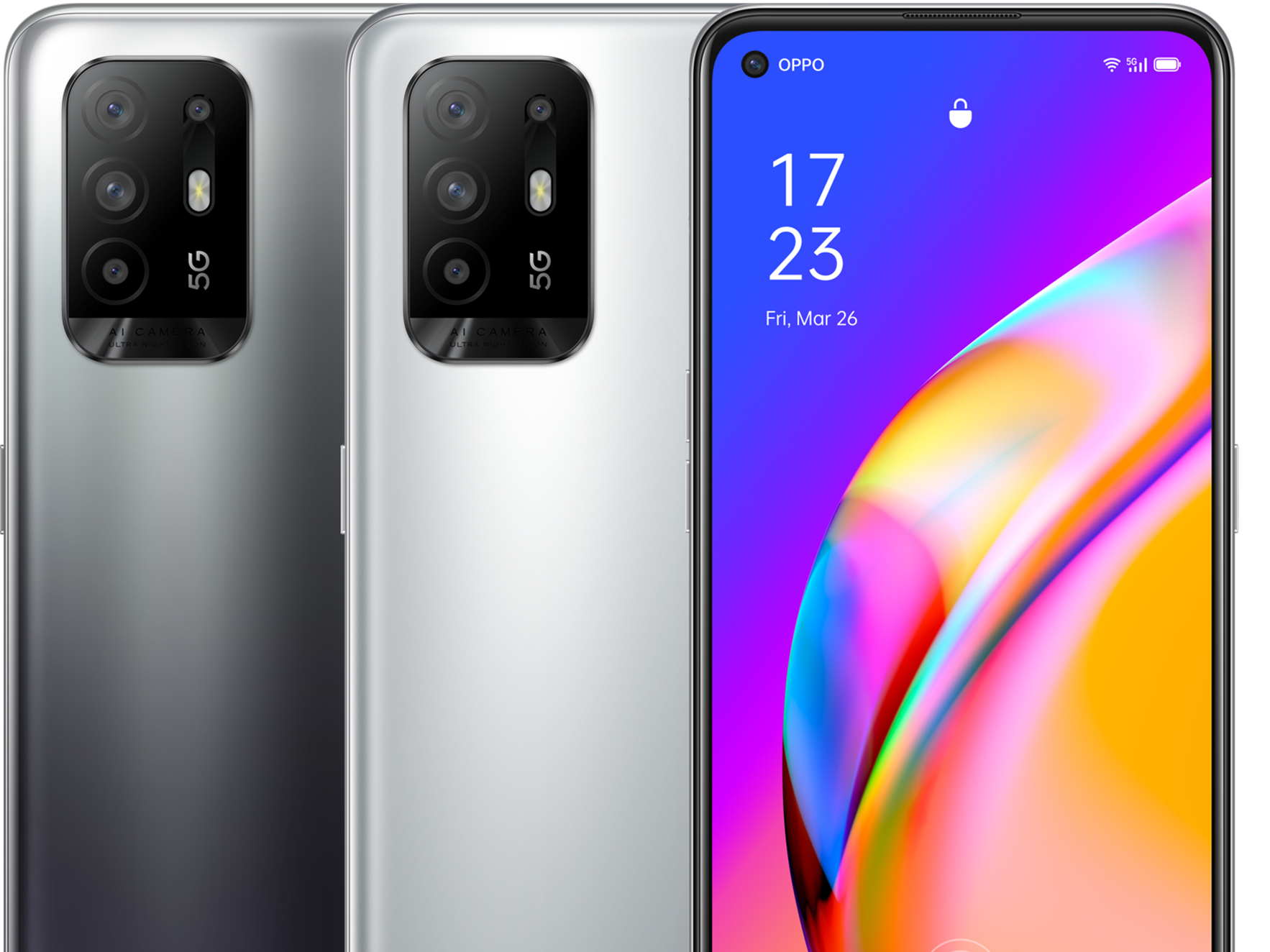
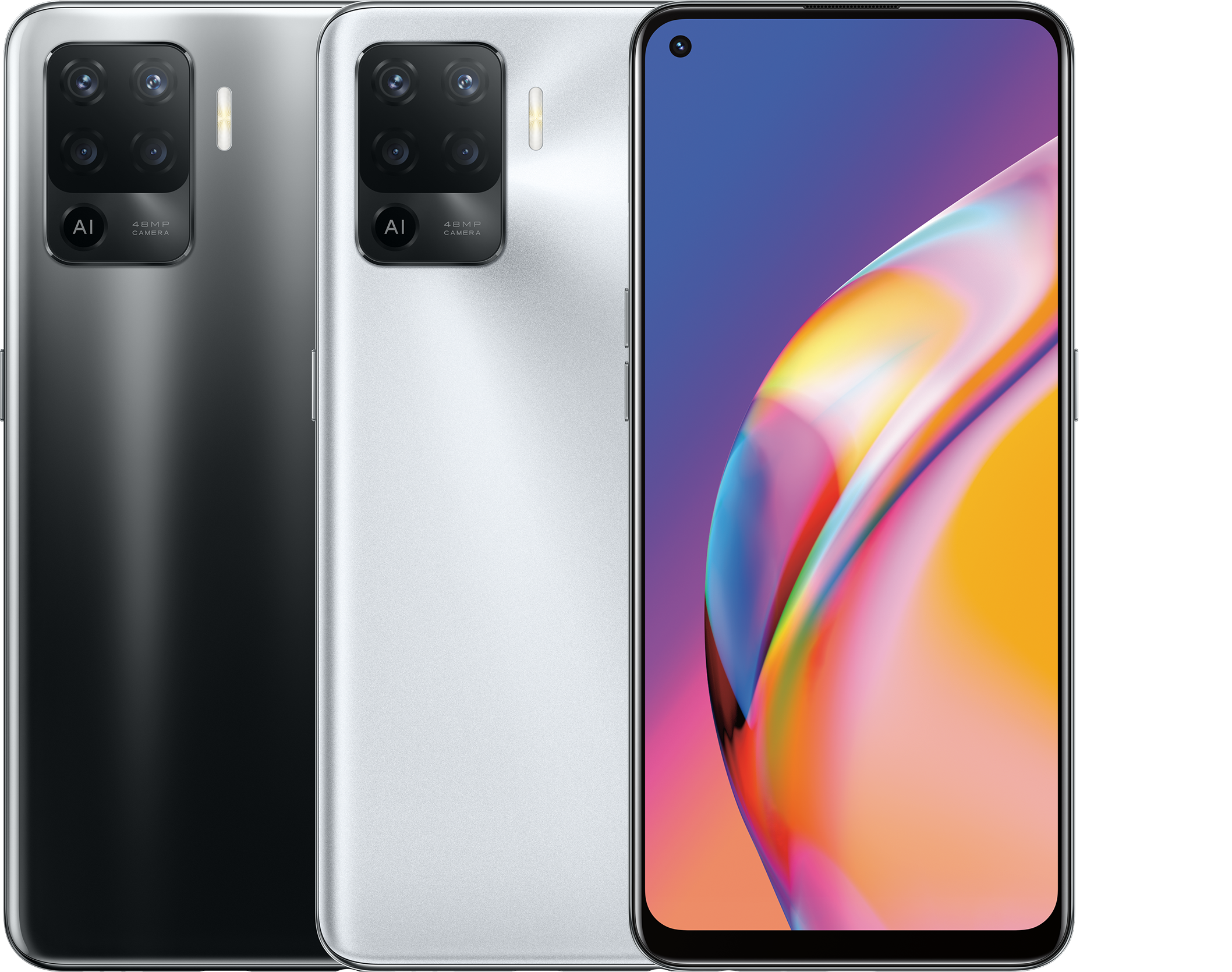
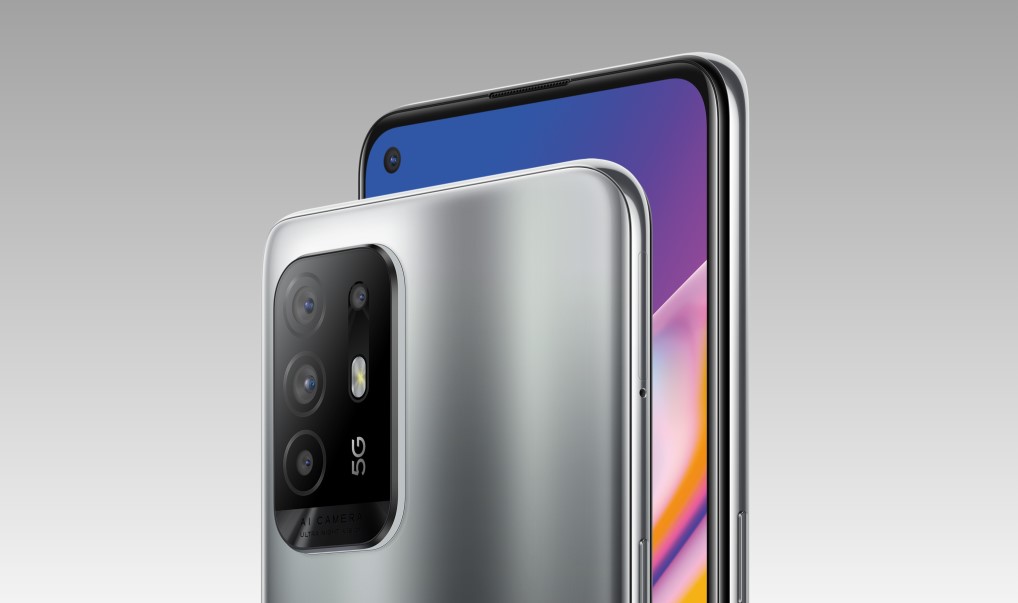
OPPO has finally unveiled two smartphones in the OPPO F19 series- OPPO F19 Pro and OPPO F19 Pro+ 5G. The devices start as low as ₹21,490 and come with AMOLED display, ColorOS 11.1, Quad-cameras, and more.
OPPO has launched the OPPO F19 Pro+ 5G and F19 Pro in the following storage variants, colors, and Price:
OPPO F19 Pro+ 5G
Colors: Fluid Black, Space Silver
Memory variants: 8GB RAM, 128GB storage
Price: ₹25,990($355)
OPPO F19 Pro
Colors:Fluid Black, Crystal Silver
Memory variants: 8GB RAM, 128/256GB storage
Price
8GB + 128GB- ₹21,490($293)
8GB + 256GB- ₹23,490($320)
The pre-booking for the devices begins March 9. The sale for the 128GB variant of the devices will start from March 17. However, the 256GB variant of the OPPO F19 Pro will go on sale only from March 25. Users can purchase the OPPO F19 series from Amazon, OPPO online store, and major partners across the country.
As per the page on Amazon India, the OPPO F19 Series have the following offers:
HDFC & Kotak: Credit/Debit card & Credit for EMI
OPPO F19 Pro+ 5G: ₹2,000 discount
OPPO F19 Pro : ₹1,500
OPPO Band style at ₹2,499 when bought with OPPO F19 series
OPPO Enco W11 at ₹999 when bought with OPPO F19 series
One-time screen replacement for 180days(6-months)
OPPO Upgrade Plan: upto 70% assured payback | Up to ₹1,500 additional exchange benefits
OPPO F19 Pro, F19 Pro+ 5G Specifications and Features
Design and Display
The OPPO F19 Pro+ 5G and OPPO F19 Pro both feature a 6.4-inch FHD+ AMOLED display. This display has a resolution of 2400 x 1080 pixels and a 60Hz refresh rate.
Other features of the display includes 800 nits peak brightness, 90.8% screen-body ratio, 20:9 aspect ratio, 409 PPI, 100% sRGB and 92% DCI-P3 color gamut coverage, touch sampling rate of 135Hz (Normal), 180Hz (Game mode).
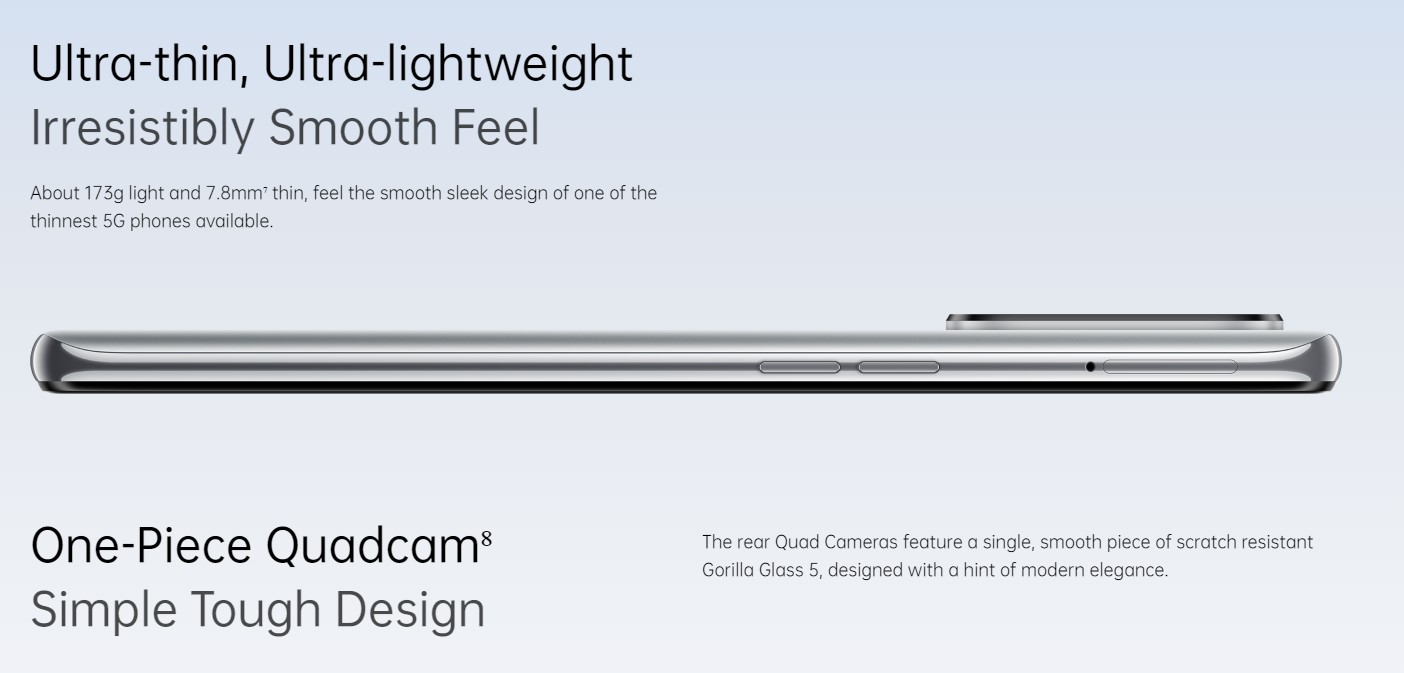
Both the OPPO F19 Pro and F19 Pro+ 5G measure 7.8mm in thickness and weigh 172 and 173 grams respectively. OPPO says that it has used a Quadcom simple touch design and has covered the quad-camera with a scratch-resistant Gorilla Glass 5 on the back.
Processor and Camera
Under the hood, the OPPO F19 Pro+ 5G features a MediaTek Dimensity 800U 5G chipset while the OPPO F19 Pro has a MediaTek Helio P95 4G SoC. The devices are paired with LPDDR4x RAM of 8GB and up to 128/256GB storage(256GB only F19 Pro).
For cameras, the OPPO F19 Pro+ 5G and F19 Pro have a 48MP f/1.7 6P lens, 8MP ultra-wide with FOV 119°, two f/2.4 2MP sensors. Upfront, you get a 16MP f/2.4 selfie shooter with FOV 78°. Camera features include Dynamic Bokeh, AI Color portrait video, Dual-View Video, Ultra Night Video, and more.
Other features
Another difference between the OPPO F19 Pro+ and F19 Pro is the charging. The former has a 50W Flash charge(65W SuperVOOC flash charger in the box) while the latter has only a 30W VOOC charge support.
Other features include a 4,310mAh battery(on both), in-display fingerprint sensor, Type-C port, 3.5mm audio jack, Bluetooth 5.1, Wi-Fi 5GHz, GNSS(BeiDou, GLONASS, and Galileo, GPS), 4G LTE, SA 5G with dual-SIM 5G support and 360-degree Antenna 3.0(on F19 Pro+).
The devices also have software features like FlexDrop, Folder Quick Merge, 3-finger translate with OPPO Lens, Game Focus mode, performance optimizer, and run ColorOS 11.1 based and Android 11.
You have just gotten a new smartwatch, and thankfully, it is one that has replaceable straps. If you need help with choosing the right type of strap for your watch, then this guide should come in handy.
Image source: Vivo
When you want to choose a new strap, there are different factors to consider. They are the purpose or reason, size, the type of material, design, and the source. We will explain them below:
Purpose/Reason
You probably have a reason(s) why you want to change your strap. It could be a functional one such as wanting a strap that is more attuned to a sports/outdoor lifestyle or a style-based reason such as wanting a strap that matches your attire. You can have more than one reason. Regardless of what it is, having a reason will help you in your decision of choosing the right strap.
Size
The next thing to consider is the size of the strap your smartwatch uses. Most smartwatches use either a 22mm or 20mm strap. There are also those that use 18mm straps. In some cases, it is the size of the dial you have to note. For example, if it is an Apple Watch, it can be 38mm, 40mm, 42mm, or 44mm. Knowing the right size for the strap is very important as a strap that is too big or too small is useless.
Type of Material
Now that you know why you want to choose a new strap, the next thing to consider is the type of material you want your strap to be made of. This factor is sometimes influenced by the reason why you want to get a new strap.
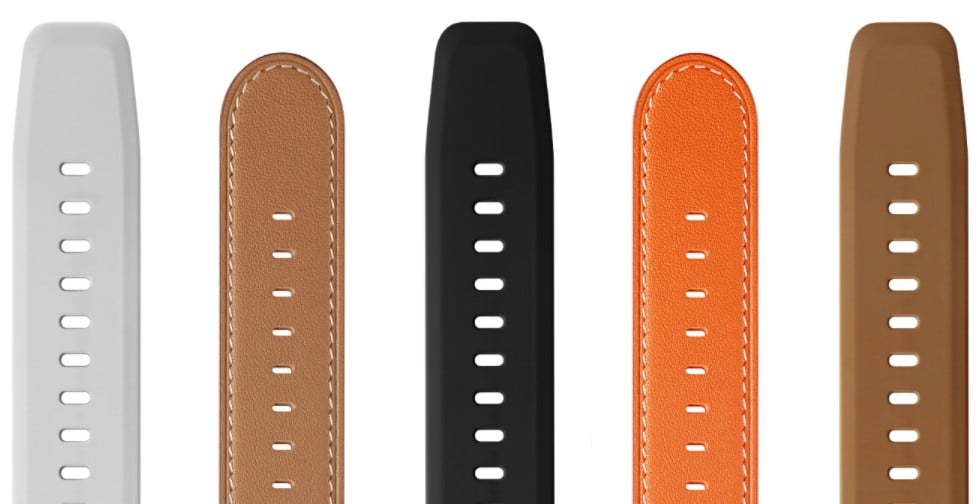
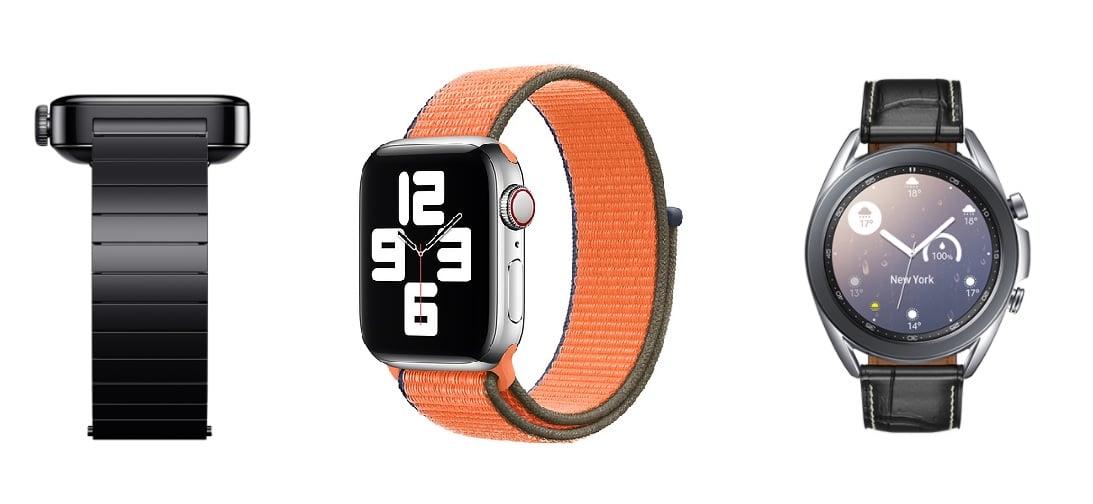
Metal, nylon, or leather? The choice is yours
For example, if you want a strap for a sports/outdoor lifestyle, you want a strap made from a breathable material or a material that won’t get damaged by moisture such as nylon, silicone, or polyurethane. If you are choosing a strap based on style, for example, one that has a professional look, then leather and metal are the materials you should consider.
Design
Now that you have decided on the type of material, the next is the design. Some materials can be made into several designs and not all of them may be the right one for you. If you are picking a metal strap, you may prefer a strap with a Milanese loop over a link bracelet.
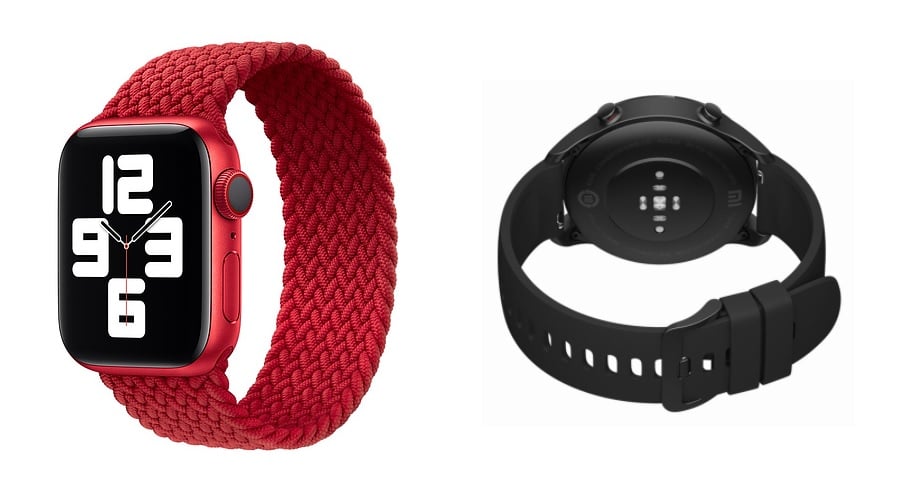
Apple Watch with Braided Solo Loop with no clasp and Xiaomi Mi Watch Color with a strap with a tang buckle
Under design is also the type of clasp/buckle the strap has. Do you want a strap with a magnetic clasp, one with a tang buckle, one with velcro, or one with no buckles or clasps? The choice of material usually influences the type of clasp or buckle in some situations as certain materials don’t work with a certain type of clasp/buckle.
Source
The last factor to consider is where you want to buy your strap. Are you buying an official replacement strap or one made by a third-party? There is a possibility that the type of strap that best fits your requirement is not made by the manufacturer of the watch, so you have to get it from a third-party. The third-party source may be a licensed company or a no-name manufacturer.
Where you choose to get your strap from will also determine how much you pay. Official watch straps usually cost more than those made by a third-party.
Conclusion
Switching straps based on your needs or style is a fun thing much like how you choose a watch face. With the explanation above, it should be easy for you to choose a new strap for your watch.
What factors do you consider when choosing a new watch strap? Do share them with us in the comment box below?
DSCC (Display Supply Chain Consultants) has released its new report on foldable displays for March 2021. According to the report, Samsung and Samsung Display will continue to remain dominant throughout this year, just like 2020. However, unlike the previous year, the shipments will see momentum only in the second half of 2021.
Foldable and Rollable Smartphones Performance Q4 2020
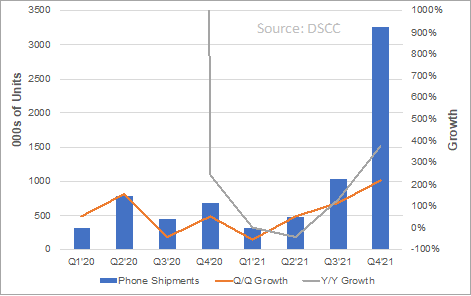
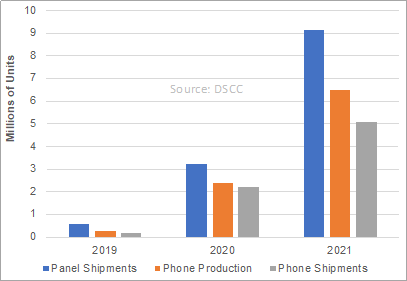
As per DSCC’s latest report, shipments of foldable smartphones grew 54% QoQ and 242% YoY in Q4 2020. Samsung Electronics was the leading brand in the fourth quarter of last year with a whopping 91% market share based on units.
Samsung Electronics led the foldable smartphone market throughout 2020 with an 87% unit market share. The overall market shipped 2.2 million units, which is 1000% more, compared to 2019.
According to Ross Young, the CEO of DSCC, Samsung Electronics has delayed the launch of its next-generation foldable smartphones until Q3 2021. The South Korean tech giant is expected to release at least three foldables.
The Galaxy Z Fold series could replace the Galaxy Note series as the company’s second flagship series after the Galaxy S series. Additionally, the firm is also expected to launch a more-affordable Galaxy Z Flip clamshell foldable smartphone.
Further, Samsung Display, the sister company of Samsung Electronics will start selling foldable displays with UTG (Ultra-Thin Glass) to other brands in H2 2021. A total of at least 12 different foldable and rollable smartphones from 8 brands are expected to release in the market in the second half of this year.
Samsung Electronics is forecasted to lead the foldable and rollable smartphone market with an 81% unit share and a 76% revenue share in 2021. On the other hand, Samsung Display’s unit market share will increase from 83.5% in 2020 to 87% in 2021 since it will be selling displays to other brands in H2 2021.
Source: DSCC
However, the shipments of the entire foldable smartphone market are expected to surge by only 1% YoY and 40% YoY in Q1 2021 and Q2 2021 respectively. But the shipments should shoot up over 100% in the remaining quarters (Q3, Q4).
More than 5.1 million foldable and rollable smartphones are expected to be shipped this year. More than 3 million of these shipments are said to happen in Q4 2021. In other words, unit shipments could grow up to 128% while revenue may increment up to 137% to $8.6 billion, as compared to 2020.
Foldable smartphones with Galaxy Z Fold-like form factor (book-type) are expected to account for 49% of foldable and rollable smartphone revenues in 2021, up from 39% in 2020. That’s because new entrants in this category, like Google, Oppo, Vivo, and Xiaomi are reported to release phones with the said form factor.
Last but not least, as per Ross Young, the devices from new entrants will feature in-folding displays as small as 7.1-inch and as large as 8.2-inch, in addition to sub-7-inch clamshell foldable phones.
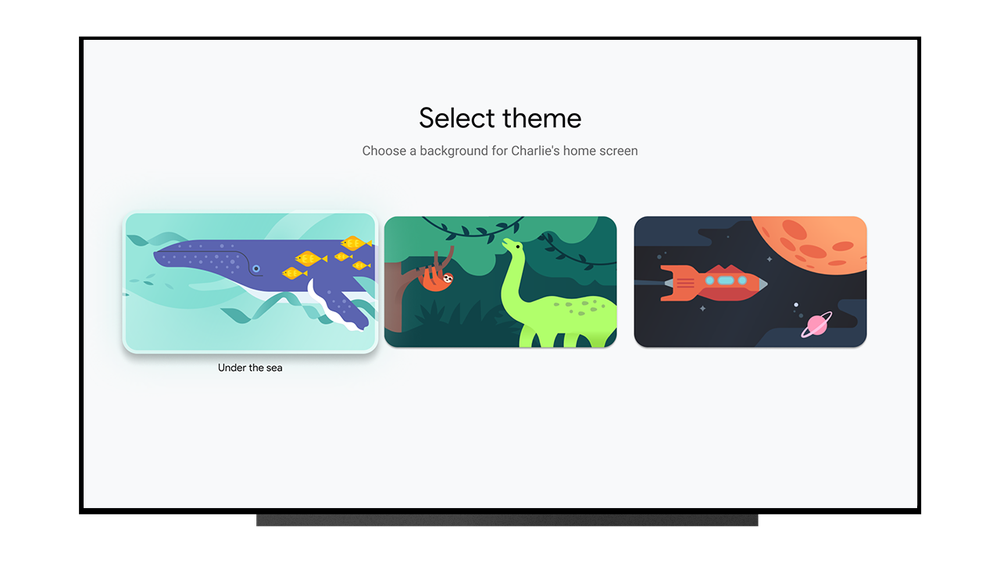
The new feature allows parents/guardians to create personal profiles for their kids/wards, thus separating their content from that of the rest of the older inhabitants in the home. However, separation of content is not the only thing you are getting.
Parents will be able to choose which apps they want to make available for a kid’s profile. Just like the regular profile, kids will get feature rows with recommendations from their apps. Google says access to shows and movies that have been purchased on another device can be shared with kids via the Google Play Family Library.
Parenting in the age of tech can be 😵 That’s why we're starting to roll out kids profiles on #Chromecast with Google TV that are designed to make it easy to choose from a selection of family-friendly apps and set daily watch limits for your kids. 👉 https://t.co/ChZ55zQoWhpic.twitter.com/o33f0MAStY
Google has made it possible to customize each profile you create. There are themes that are designed to appeal to kids, and in the coming weeks, there will be avatars available so you can choose a profile picture for your child. It will be nice if it were possible to add a photo of your child.
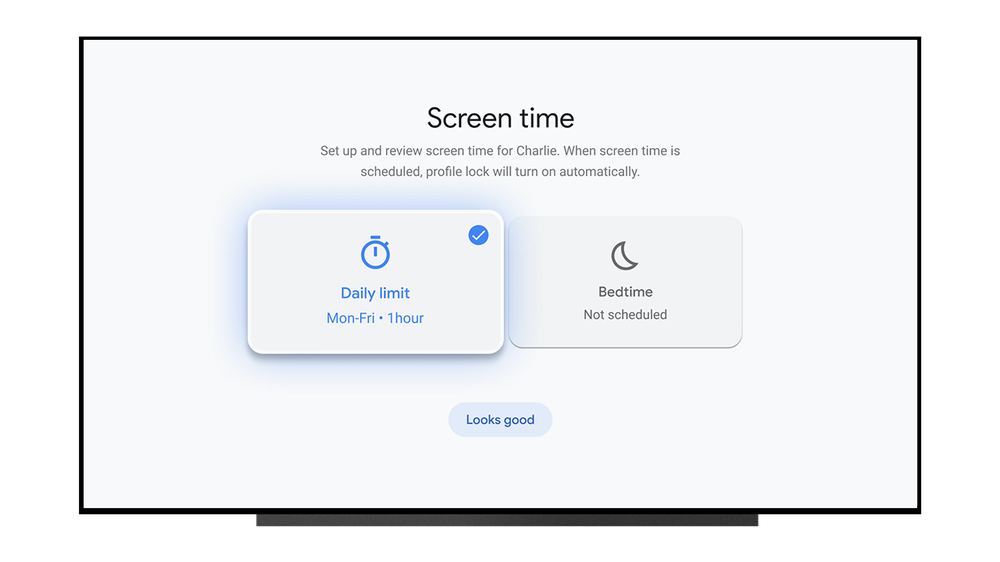
Another feature that the Kids Profiles brings is Screen Time Management. Parents will be able to manage screen time by setting daily watch limits and a bedtime schedule. Shortly before the screentime is up, Google says that three countdown warnings will be displayed on the screen before a final Time is Up Screen appears and ends their watch time. You will be able to add extra watching time if you want. Last but not least is a profile lock via a PIN that prevents your child from accessing your profile.
Kids Profiles will begin rolling out first in the US this month and then globally over the next few months.
At the end of the Redmi Note 10 series launch event in India last week, Xiaomi teased an upcoming product. The product has now been revealed to be a new smart TV. The Chinese company has now announced via a teaser poster, a launch event scheduled for March 17.
The event will see the company unveil what will be the first Redmi-branded smart TV to hit the Indian market. Xiaomi already sells different models of Mi TVs in India but nothing yet under the Redmi brand.
The teaser poster points at the launch of the Redmi XL which suggests a large-screen TV. Already, Xiaomi already launched the Mi smart TV series 65 inches. The Redmi TV may pack a 70-inch screen size but the company may even spring up a surprise by launching an 80-inch model which was recently unveiled in China.
The smart TV is expected to be manufactured in India as hinted by Xiaomi India Smart TV head Eshwar Nilakantan. The firm recently entered into a partnership with Radiant which is aimed at increasing production. Already, Xiaomi India is working with Dixon for the manufacture of the Mi smart TVs. The company is also expected to manufacture the Redmi TVs.
The Xiaomi India Smart TV head also disclosed that the Redmi smart TVs are targeted at “much younger” customers. In that regard, we expect a more affordable product instead of the high-end Redmi Max.
We expect more details about the Redmi TV model to emerge before it launches on March 17th.
Earlier today, OnePlus confirmed that it will launch the OnePlus 9 series on March 23. The launch event is said to happen at 10 AM ET. However, before the launch, the company has already confirmed that the OnePlus 9 series will come with a charger inside the box.
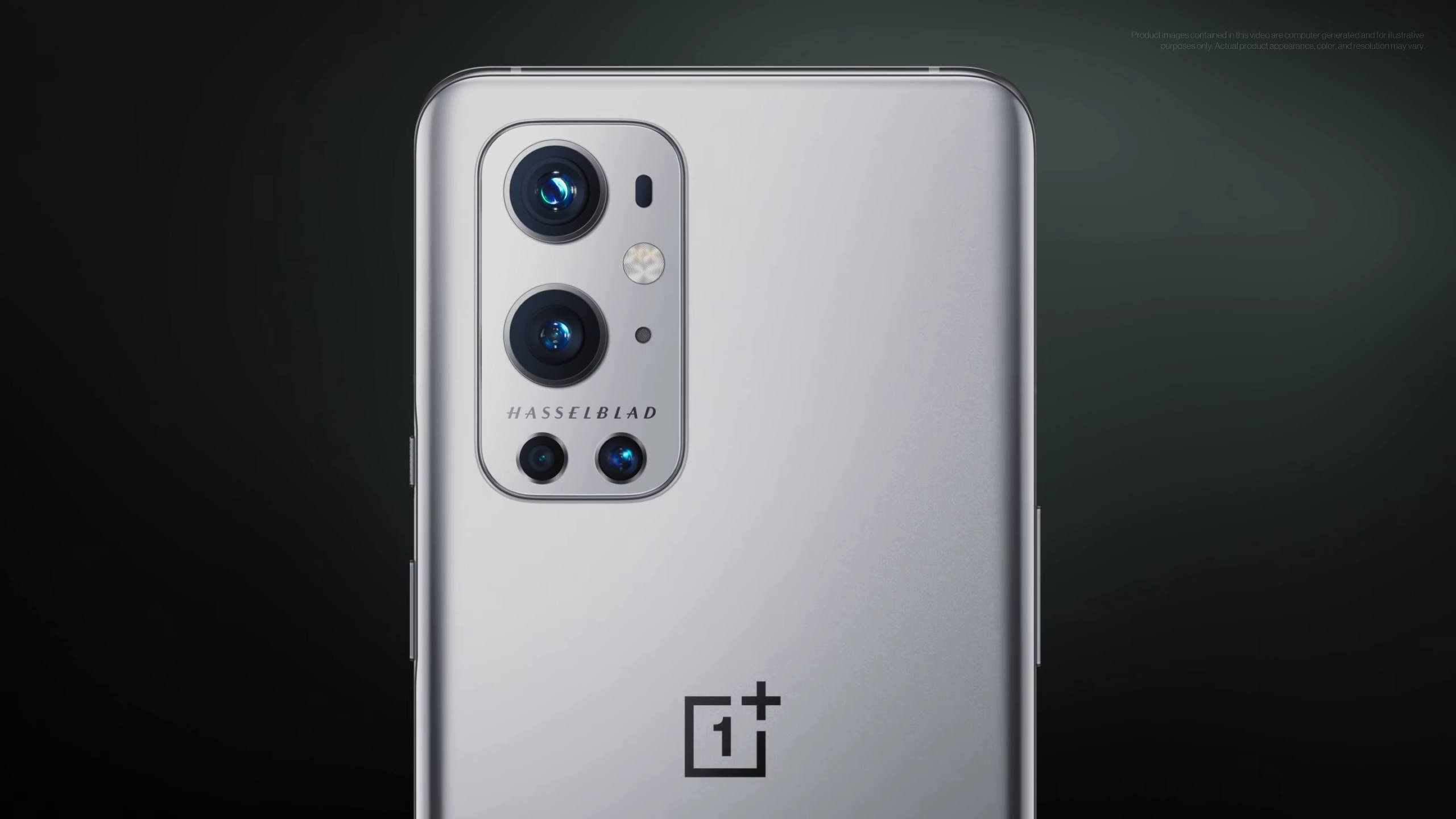
OnePlus Founder and CEO, Pete Lau, has revealed this information via a comment on the OnePlus community forums. Last week, Pete posted a teaser hinting at the OnePlus 9 series launch and the partnership with camera giant Hasselblad. In that post, a user had commented, “New phones launch WITHOUT CHARGERS”.
To this, Pete has replied, “Don’t worry about it. We have the charger inside the box.” This info falls in line with earlier leaks and unless there’s any new tech, the devices should ship with a 65W Warp charger inside the box.
Anyway, with this, he confirms that the Chinese smartphone maker won’t join the bandwagon of companies skipping in-box chargers. The trend of not including a charger was started by Apple and now giants like Samsung, Xiaomi have started to adopt it.
Just like the Vivo, OPPO, realme, the OnePlus devices come with a trademarked “Warp charging” and they are proprietary solutions for fast charging on OnePlus smartphones. This could also be another reason for OnePlus sticking to include them on the OnePlus 9 series.
Speaking of which, the launch event on March 23 will showcase four products including the OnePlus 9 series:
Out of this, the Hasselblad partnership for the “Natural Color Calibration” will help OnePlus ship the devices with a new color solution. Accordingly, the ‘Pro’ variant is expected to feature a Quad-camera setup with custom Sony IMX789 Sensor(could be 48MP), panoramic Camera with a 140° FOV,
Redmi, no doubt, is the most popular smartphone brand this month. And today, let’s take a close look at the Redmi K40 Pro – the model that is probably going to make a lot of brands nervous in 2021. You might think as compared to the K40, the Pro model may be less cost-effective because of its 2999 RMB starting price, which equals to around USD 464. But among all the flagship models running the Snapdragon 888 chipset, the K40 Pro, no doubt, offers the best value for money.
I guess that’s enough of an introduction of the phone, let’s check out how this true flagship killer performs, and are there any areas where it doesn’t do well.
Redmi K40 Pro Review: Design
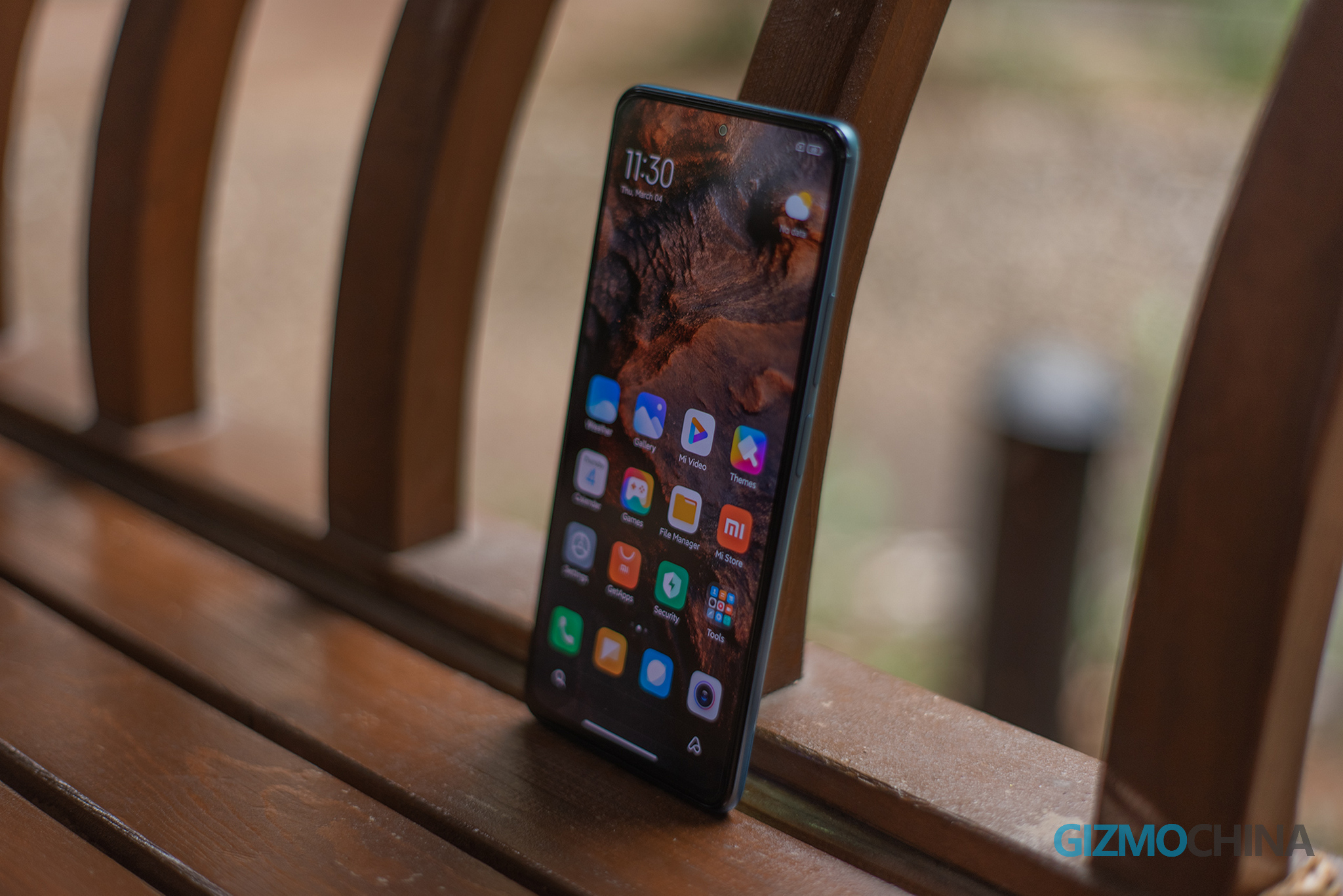
To start off, the design of the K40 Pro is almost the same as the standard K40. Both of them get excellent weight and size control. Especially the Pro version, it’s exactly as light and thin as the K40 even though the Pro features a better main camera and a slightly better chipset.
Redmi K40 Pro
Since we have a lot to talk about the Pro model, we are not focusing much on the design and display in this review. If you are curious about what’s new in the K40 series’ design, just check out our K40 review video that’ll be out in a day or two. But it’s pretty clear that the K40 is the first generation in the K-series lineup that takes its design seriously.
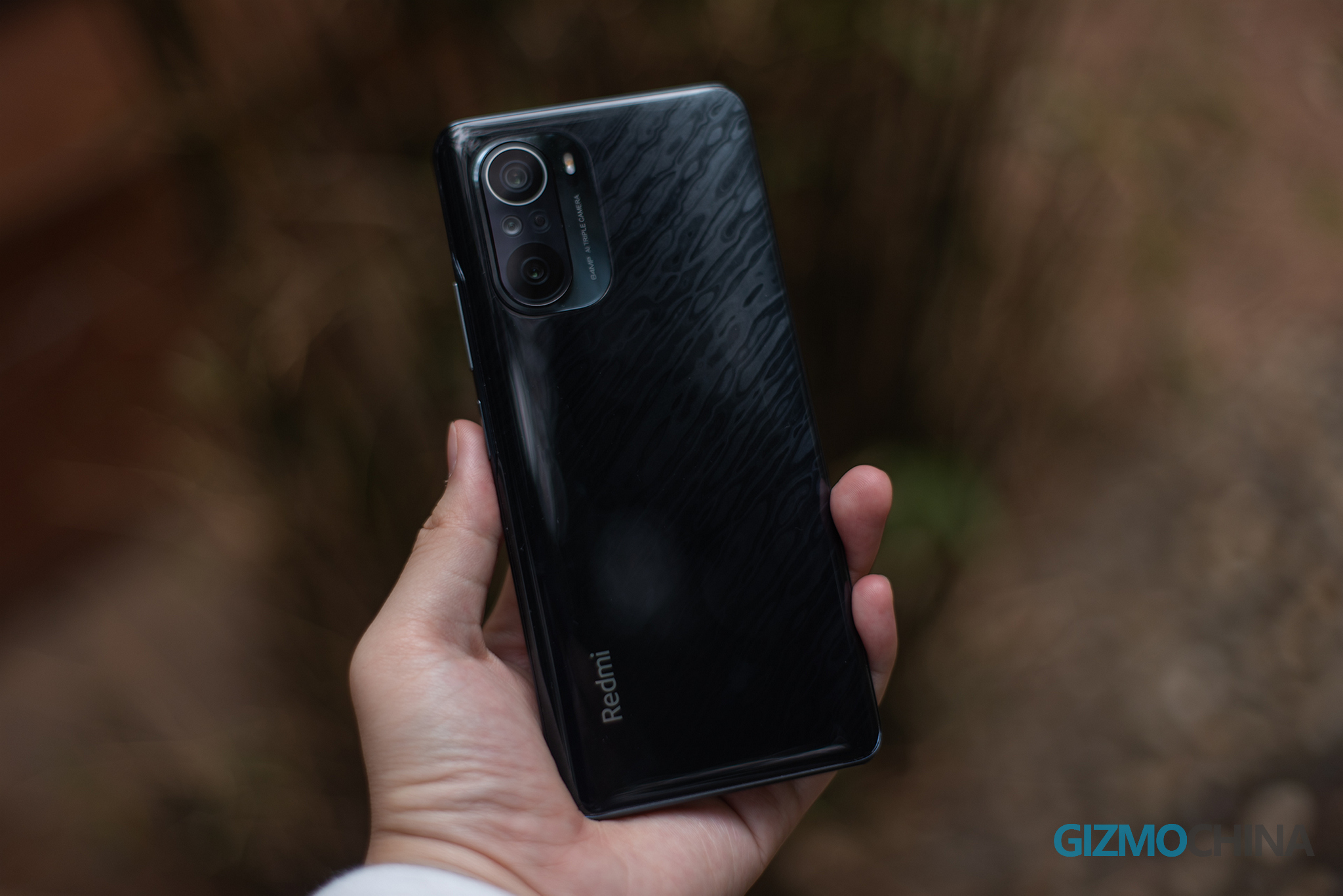
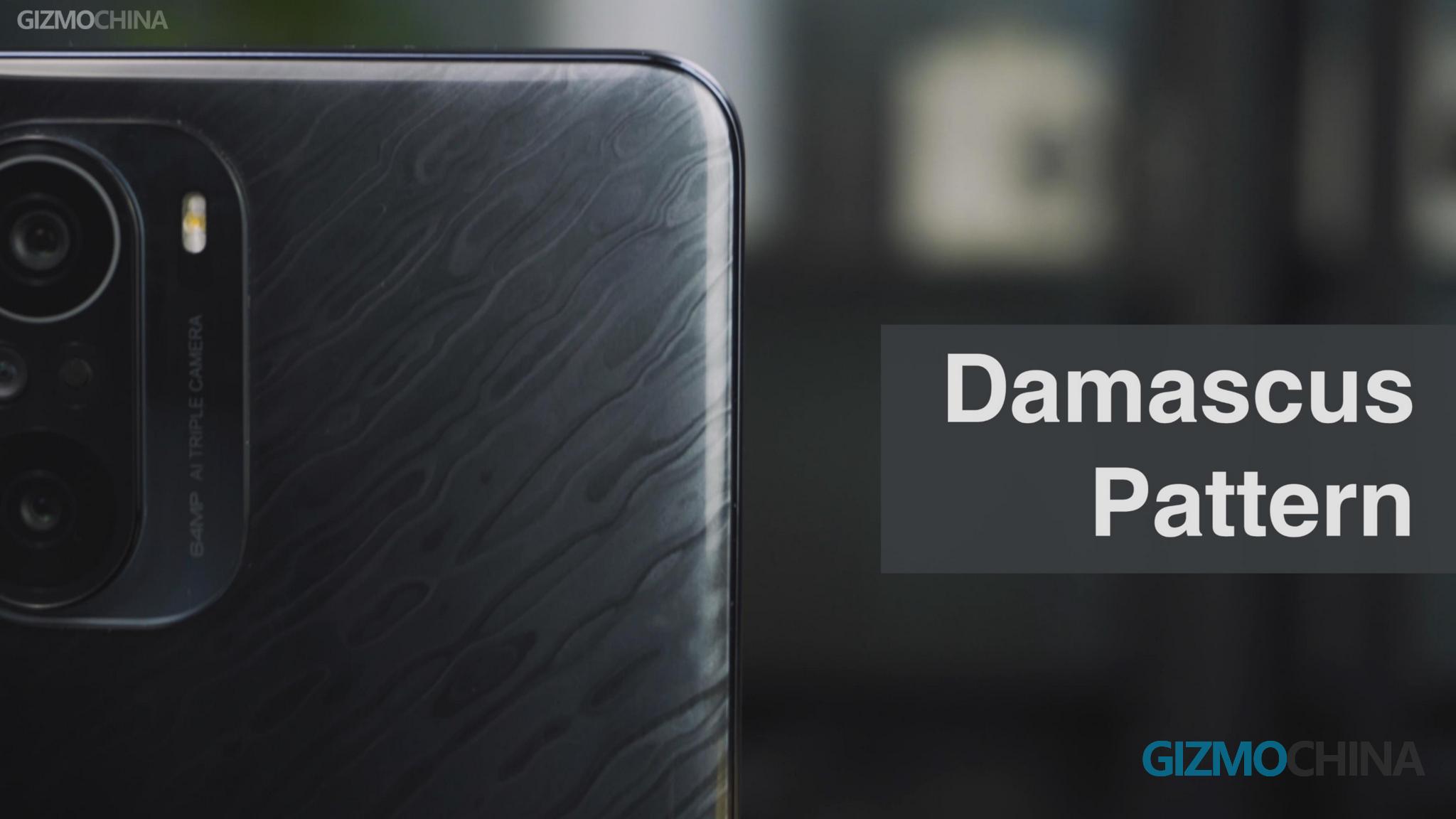
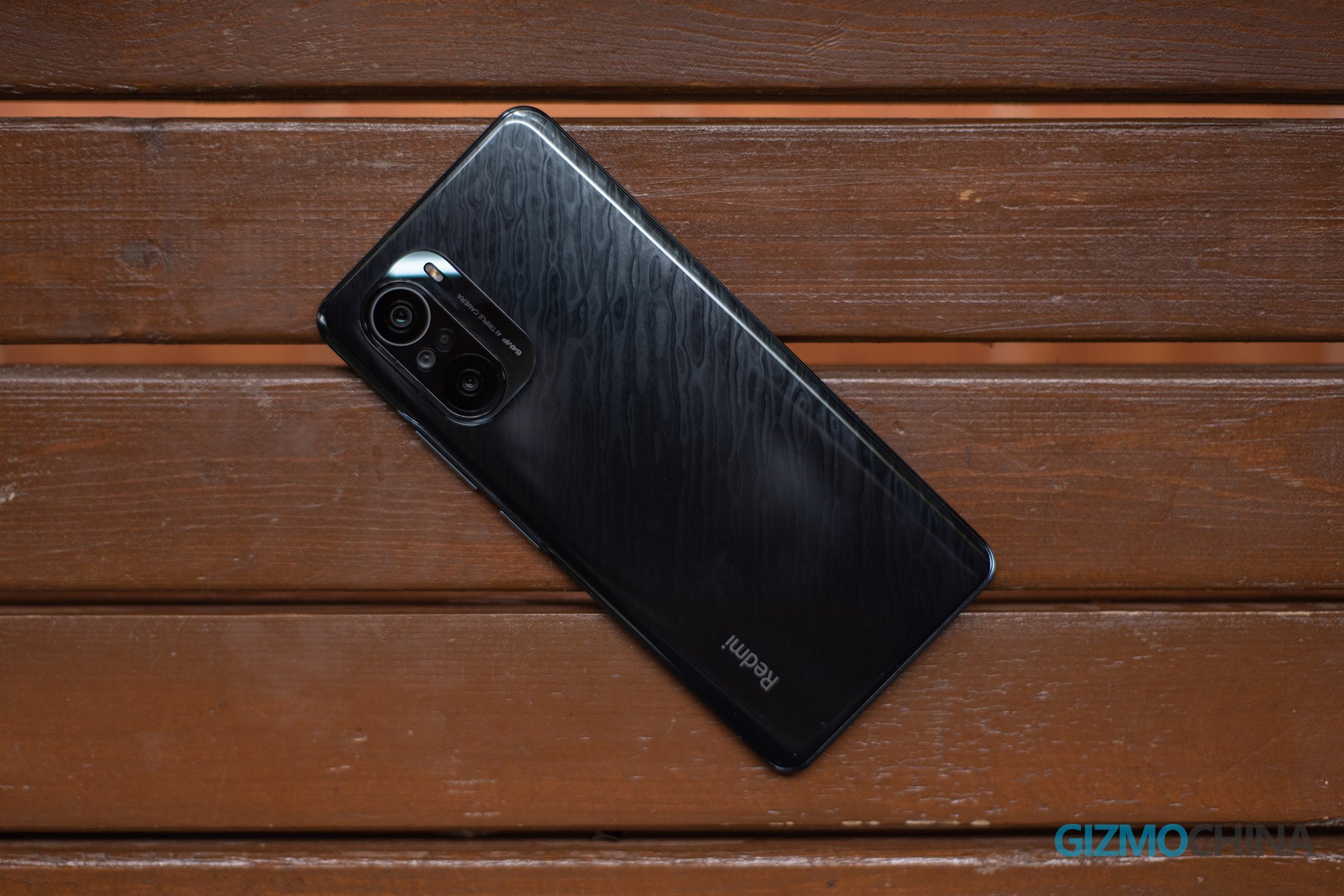
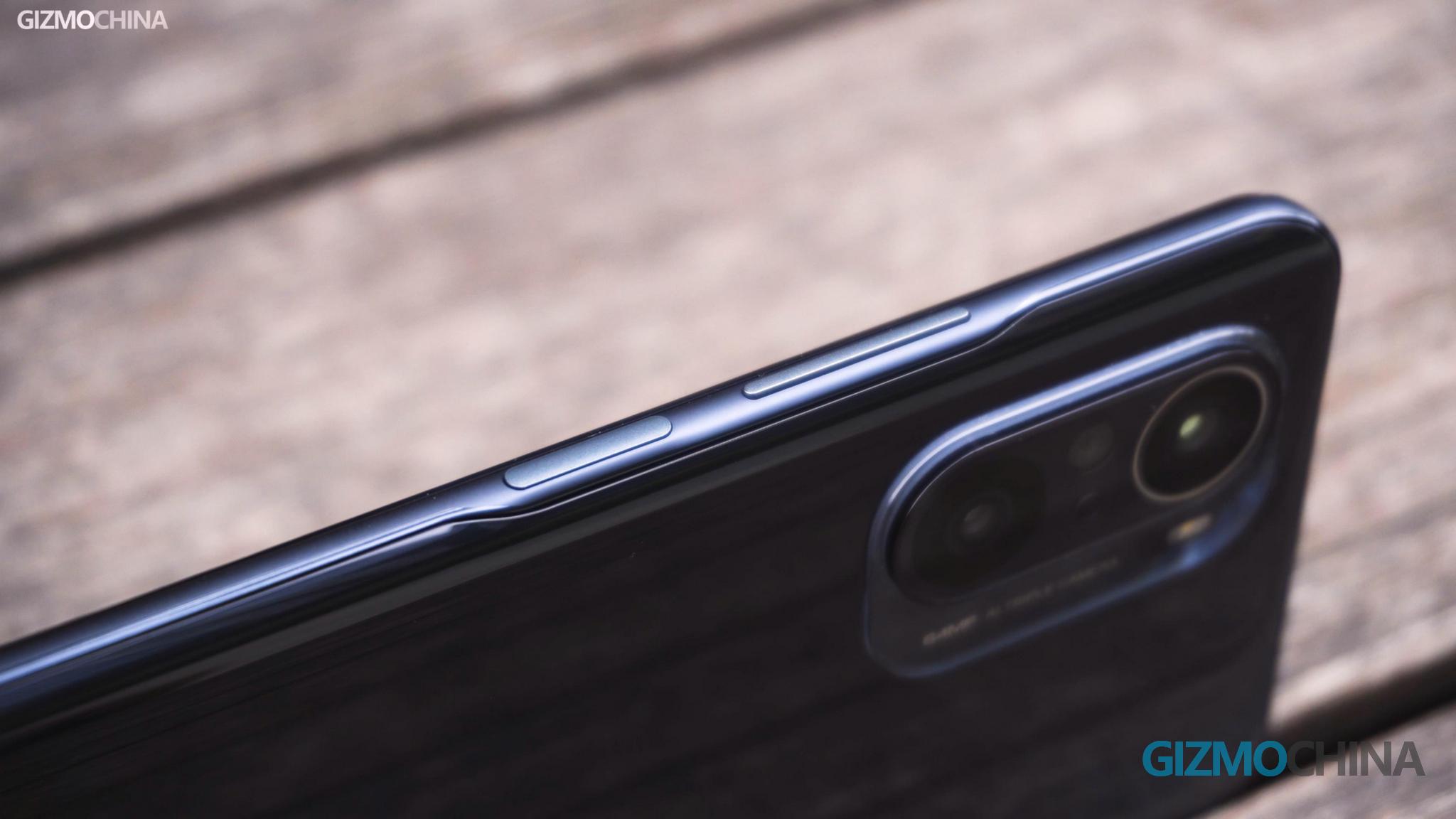
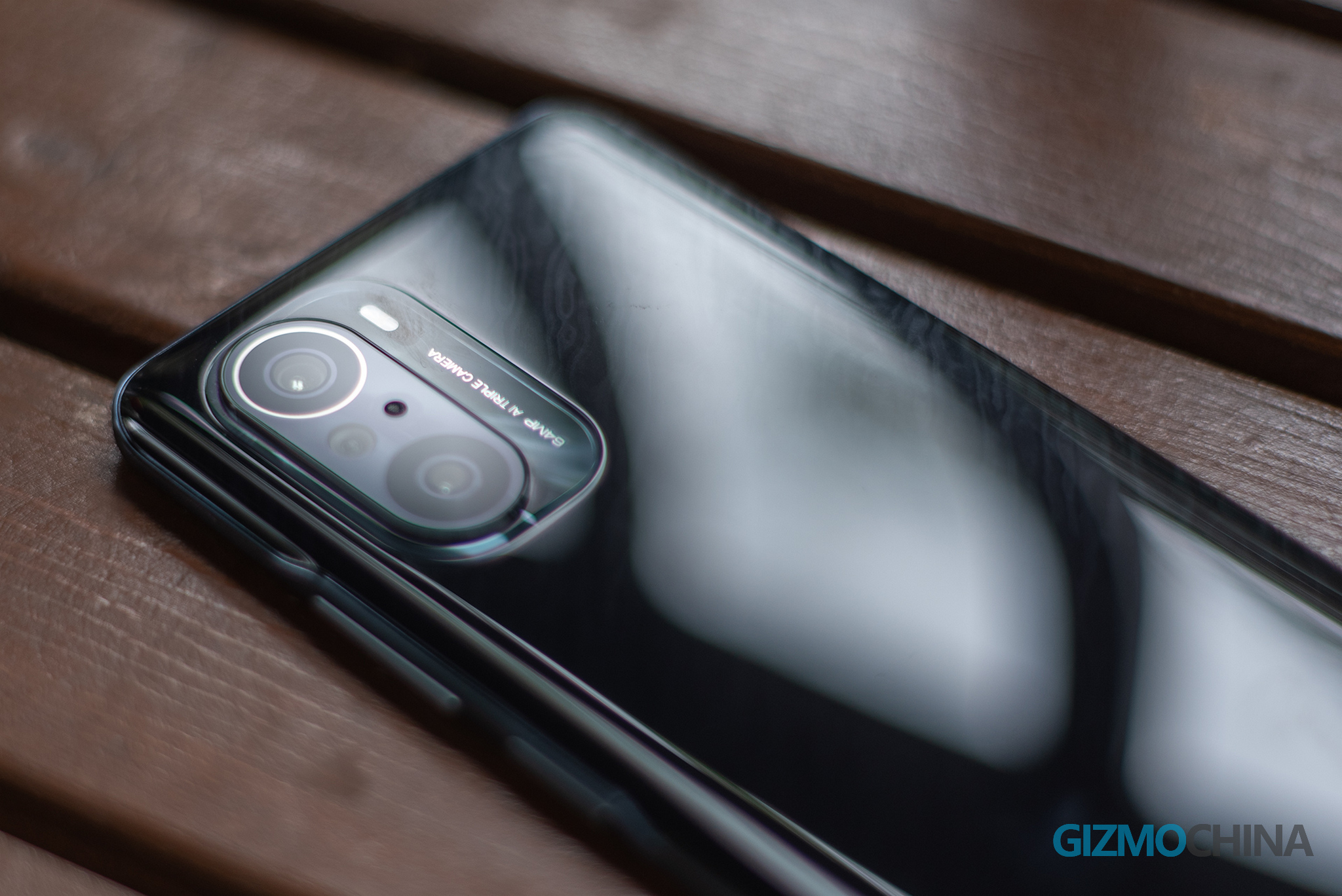
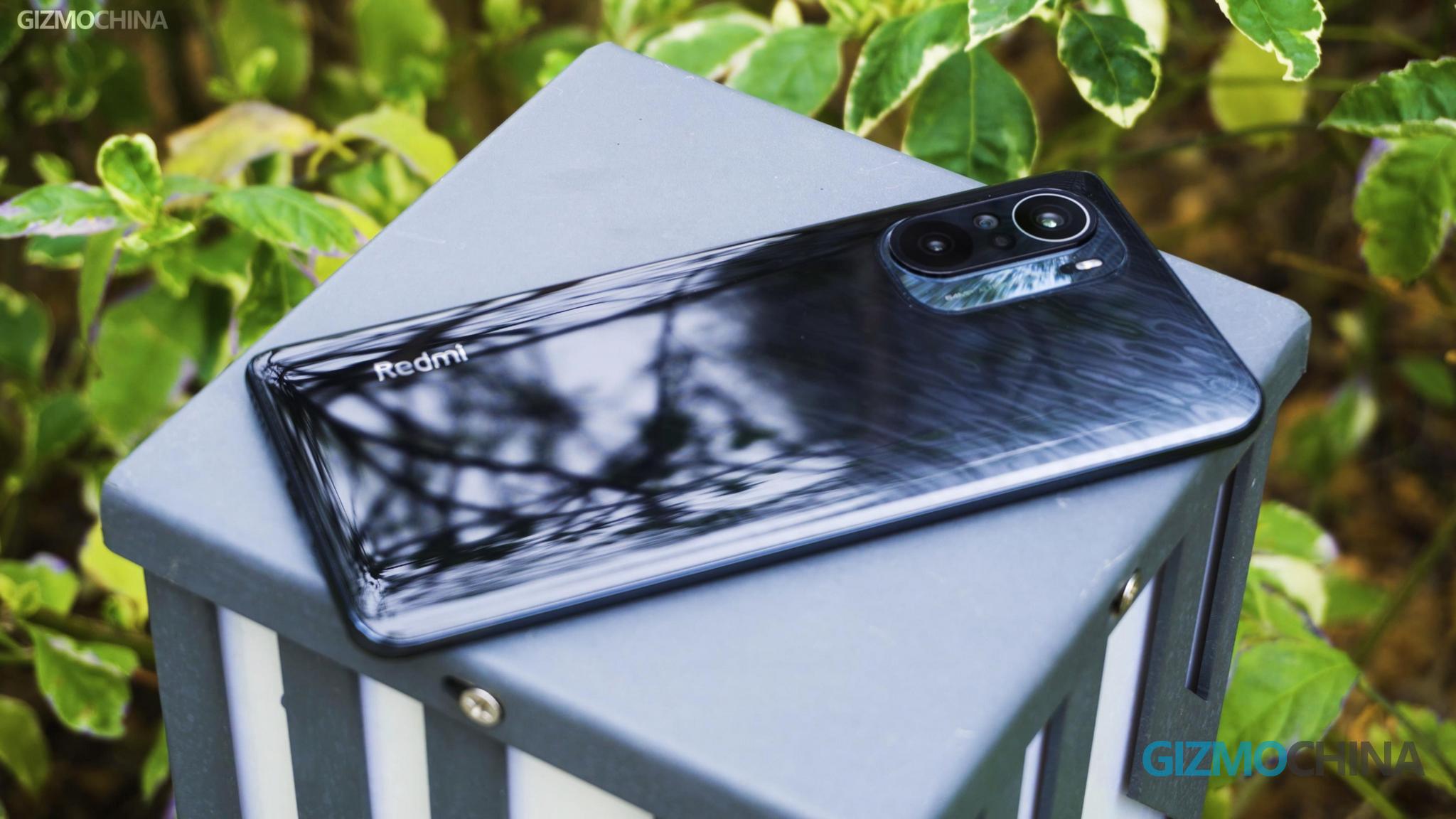
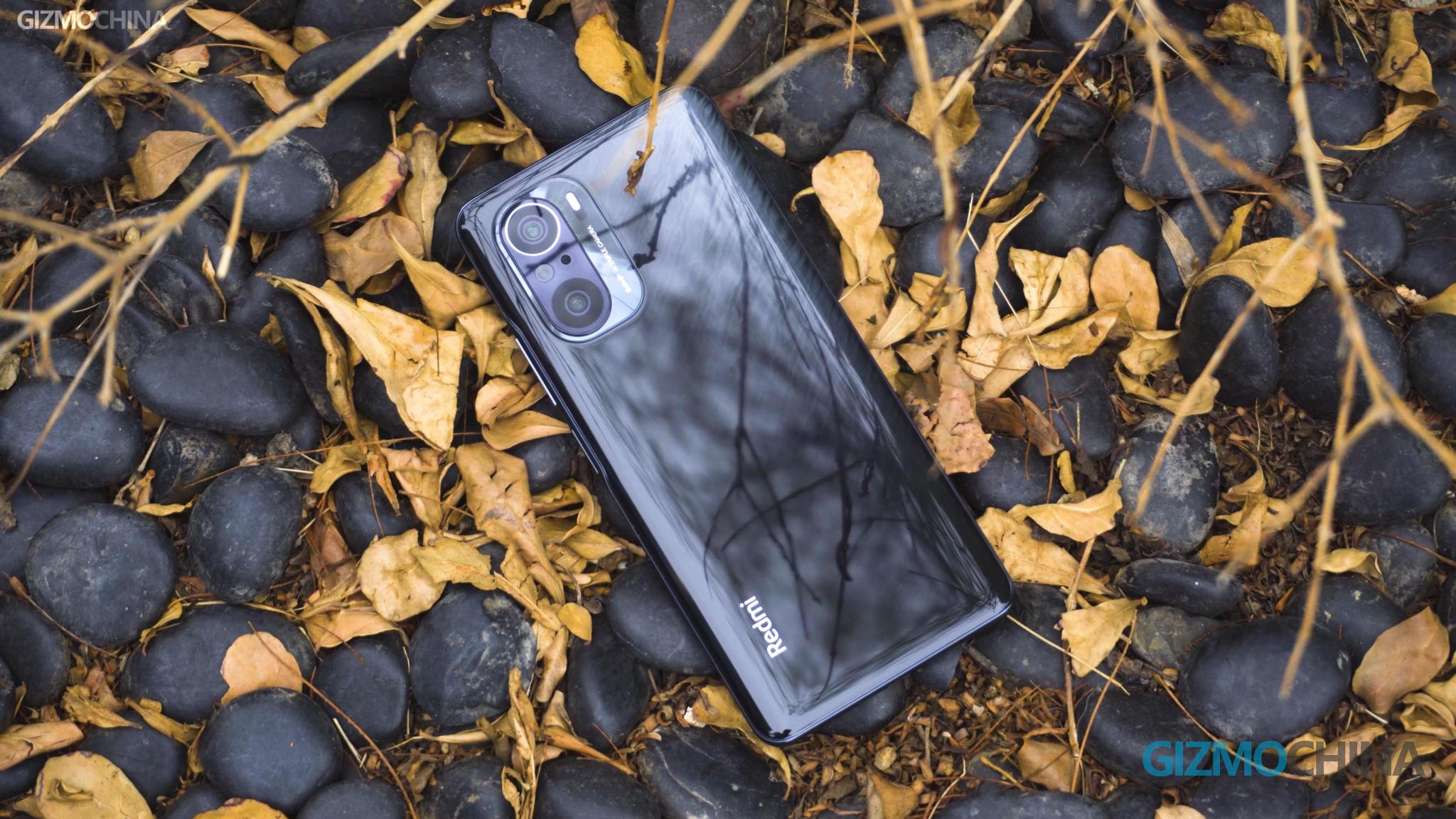
Redmi canceled the pure black version for the K40 Pro and replaced it with the Damascus-pattern version, which is also exclusive to this Pro model.
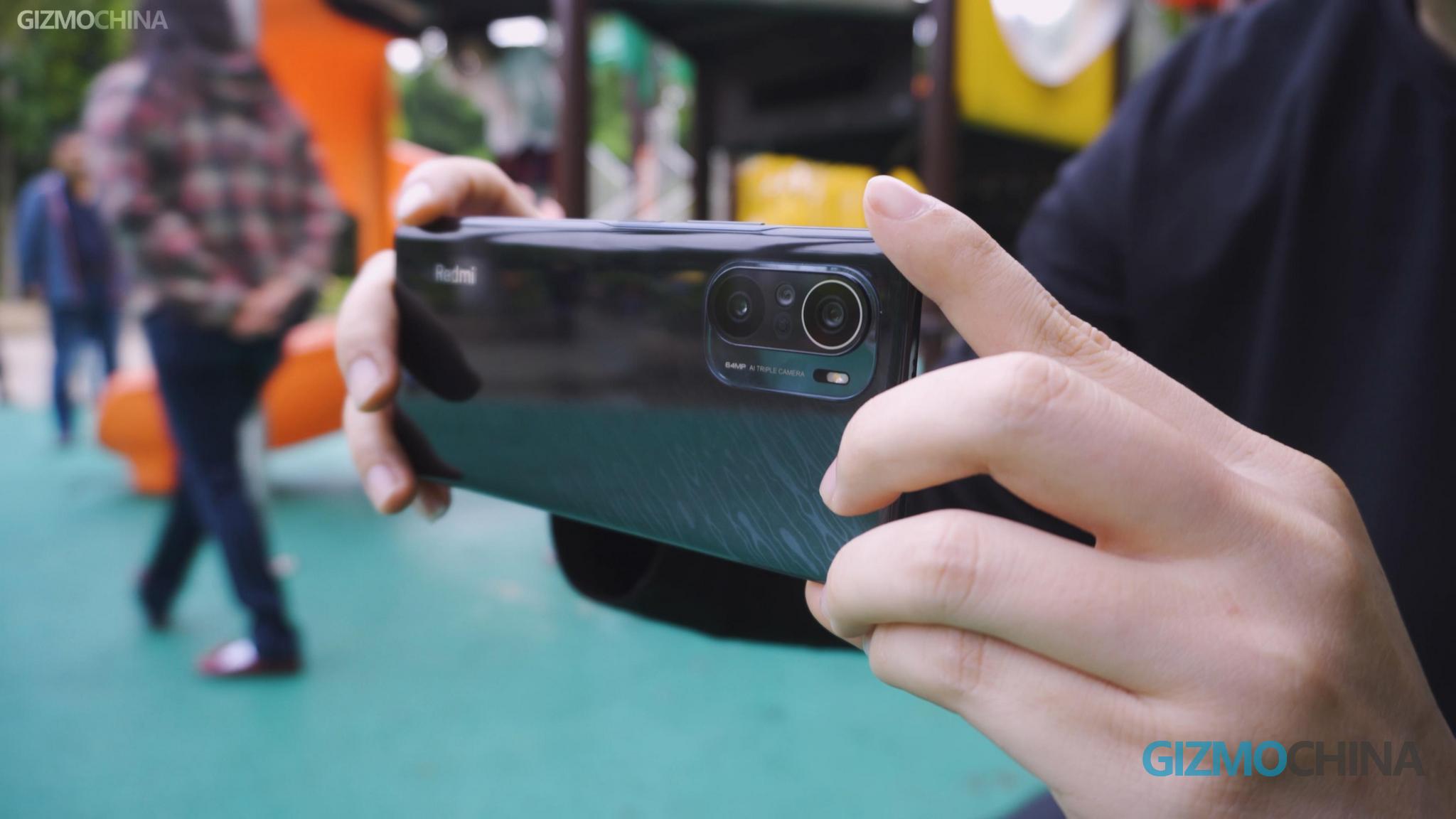
Here, look at the Damascus pattern version in our hand. In our opinion, it’s by far the best-looking Redmi model and even more elegant than the Mi 11’s design. But we noticed that the side-frame is made of plastic instead of metal, which makes it more prone to scratches and damage. So if you’re going to buy a K40 or K40 Pro, we suggest that it’s better for you to put a case on to prevent damage to the frame.
Redmi K40 Pro
Redmi K40 Pro Review: Performance & Gaming
One of the biggest upgrades of the Pro version is the Snapdragon 888 chipset. But compared to the Snapdragon 870, the performance improvement is not so significant. The benchmark results show that the gap is mainly in single-core performance, which, in theory, would lead to around 10% improvement in actual gaming. On the other hand, the multi-core performance of the K40 is much closer to the K40 Pro. So in daily use, we didn’t really feel the gap between the two models.
What about Redmi K40 Pro’s gaming? Is the chip better optimized than the snapdragon 888 on the Mi 11?
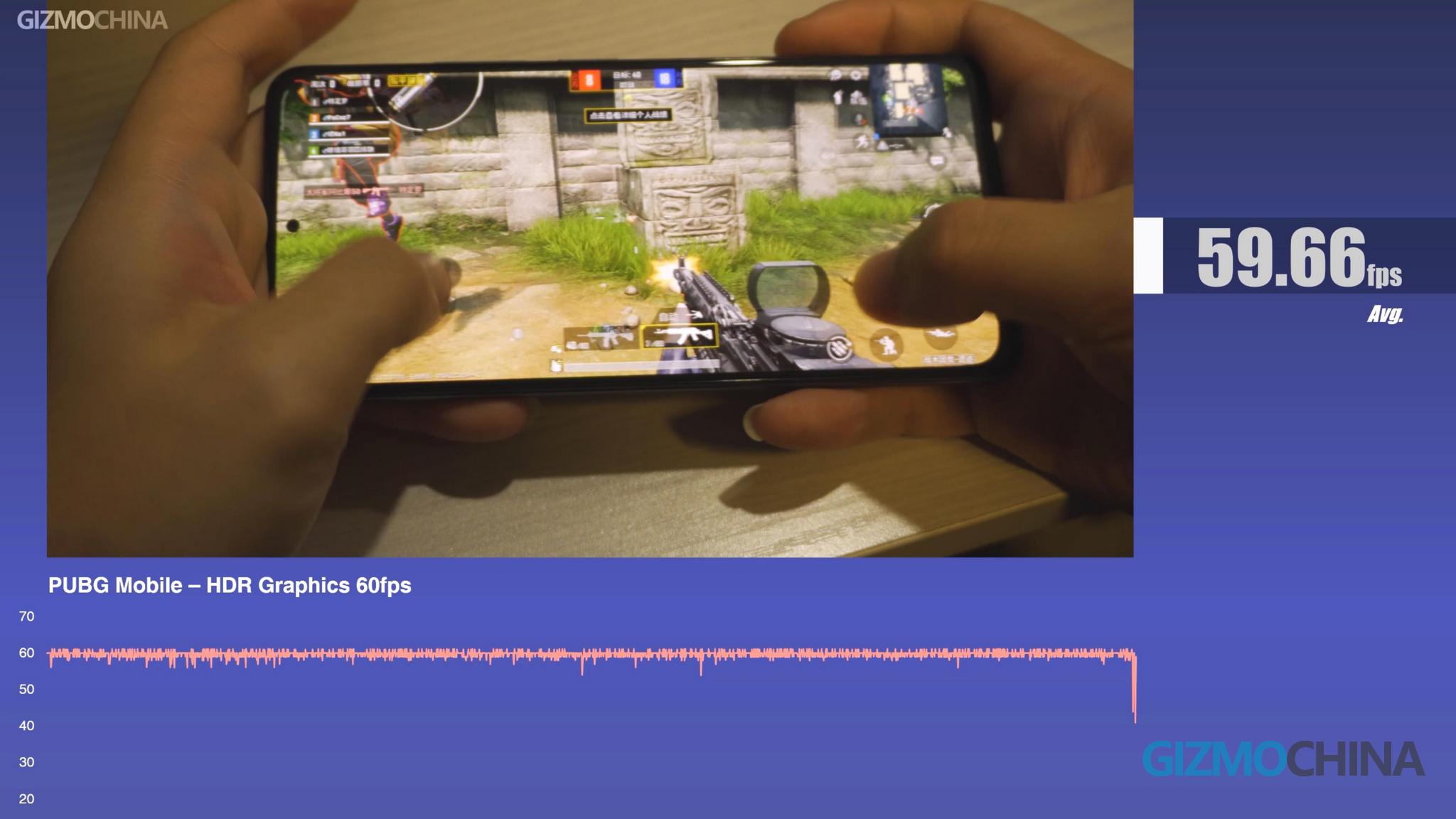
It was pretty easy for the K40 Pro to unleash the best gaming performance in PUBG Mobile without any issues.
Redmi k40 Pro PUBG Mobile Gaming
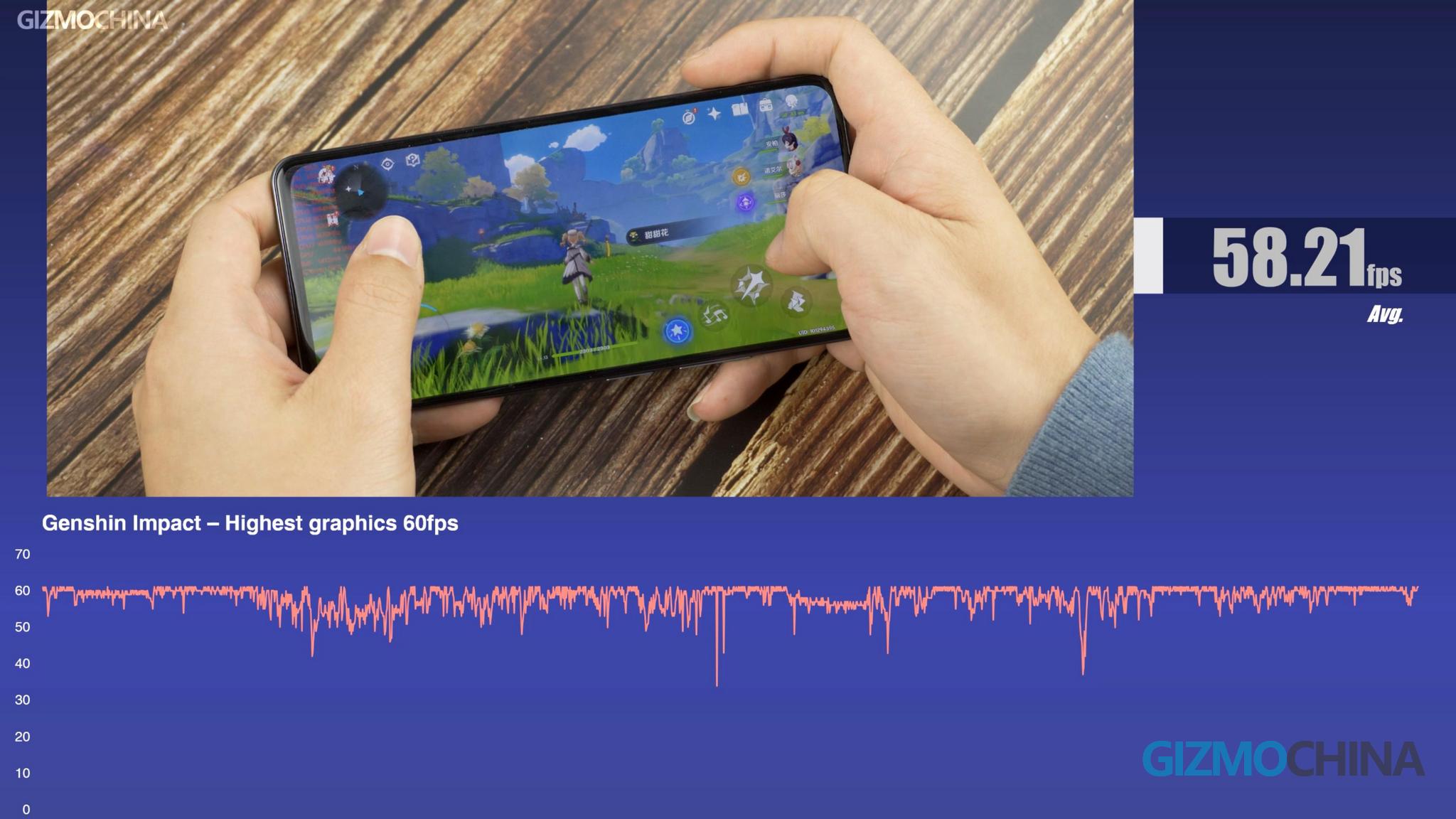
We have seen before how the game Genshin Impact has caused issues to a number of phones running the snapdragon 888 chip. But this time the K40 Pro restored dignity for the flagship chipset and finally achieved a stable high framerate of 58.2fps without much fluctuation. And during the whole 30-min test, the CPU of the K40 Pro didn’t throttle down the clock speed for the heat control. However, the phone’s surface did quickly heat up to 50℃.
Redmi k40 Pro Genshin Impact
So does this mean the K40 Pro offers excellent optimization in all scenarios? And what about the other games?
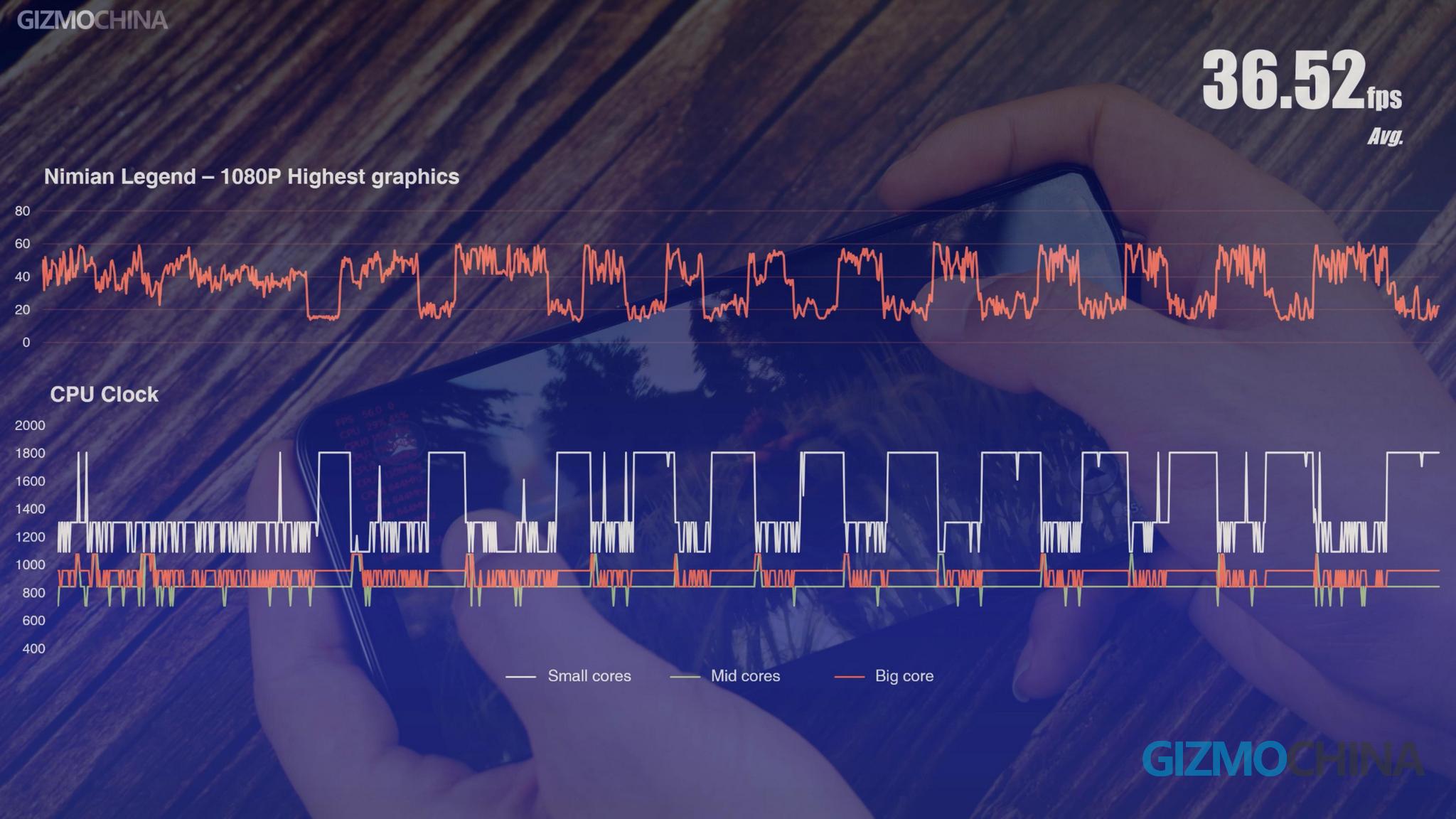
Redmi k40 Pro Gaming Nimian Legend 1080p
Well, in Nimian Legends, the smooth and delightful gaming experience was surprisingly absent. The familiar result for the 888 chipset came back. The phone suffered frequent ups and downs in performance and met a lot of stutter issues. The frame rate eventually remained at 36.5fps. So clearly the chip wasn’t optimized for this game.
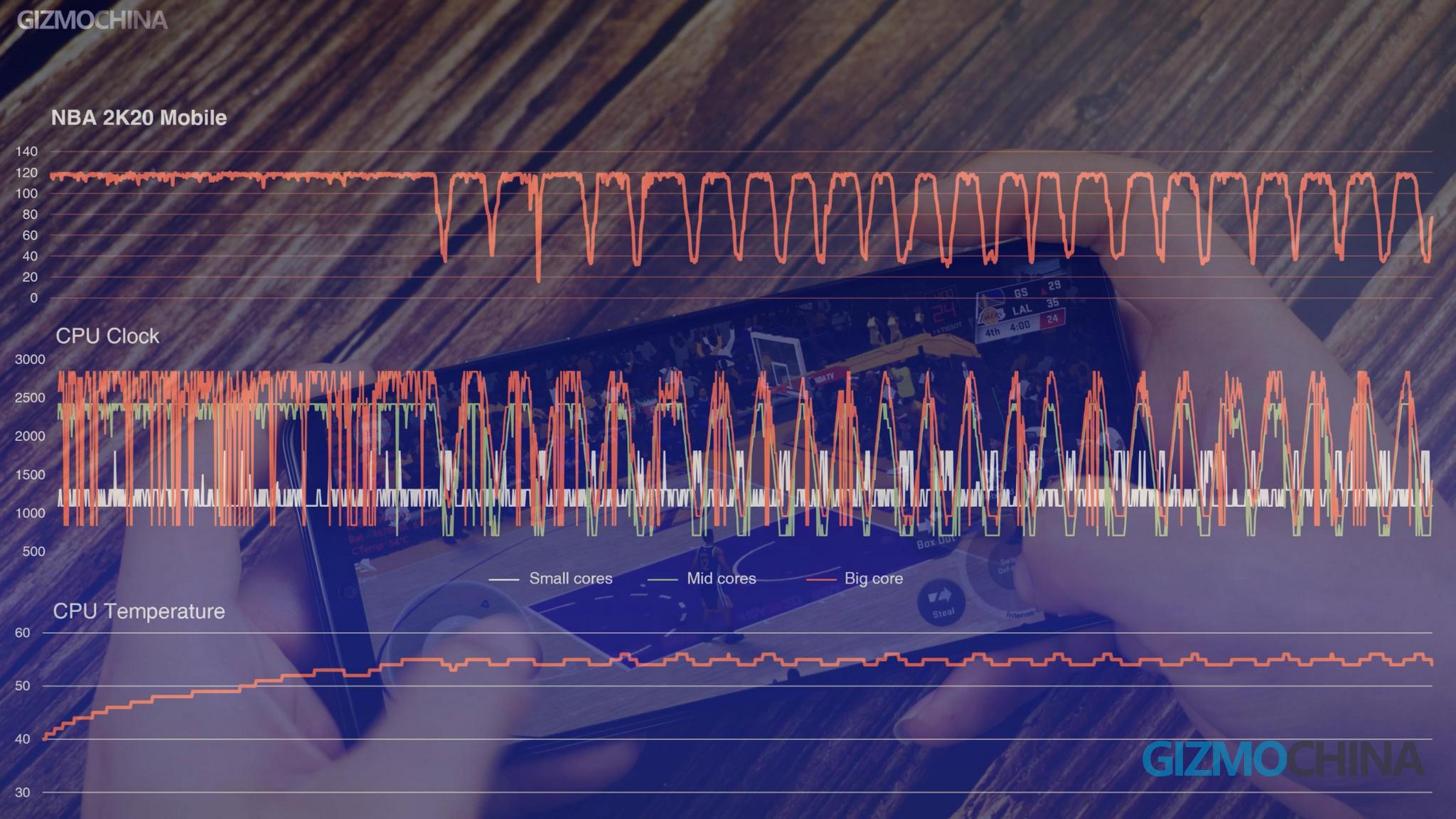
Redmi k40 Pro NBA 2K20 Gaming
In NBA 2K20, we could fully take advantage of the 120Hz display. In the first 6 mins, the K40 Pro stably ran the game at around 120fps. And then you can see the CPU temperature was rising rapidly. When it rose to 55°C, the framerate and CPU clock started jumping up and down. The performance down throttling occurs every minute and lasts for a few seconds. Still, the average framerate of 101.4fps is still not bad for this game.
In short, the optimization on the K40 Pro is much better than what we used to see on the Mi 11. But since the chipset remains the same, we still encountered overheating issues. So the chip throttled down its speed frequently on the K40 pro. But thank god, things get much better now on the K40 Pro as compared to the Mi 11.
Redmi K40 Pro Review: Camera
The main camera of the K40 Pro features a Sony IMX686 sensor. It’s a popular sensor that has been mainly used on 2020 flagship phones.
Let’s look at some samples shot from the main camera.
Daylight & Night Scenarios
Redmi K40 Pro Standard 03
Xiaomi Mi 11 Standard 03
Redmi K40 Pro Standard 03(1)
Xiaomi Mi 11 Standard 01
Redmi K40 Pro Standard 04
Xiaomi Mi 11 Standard 02
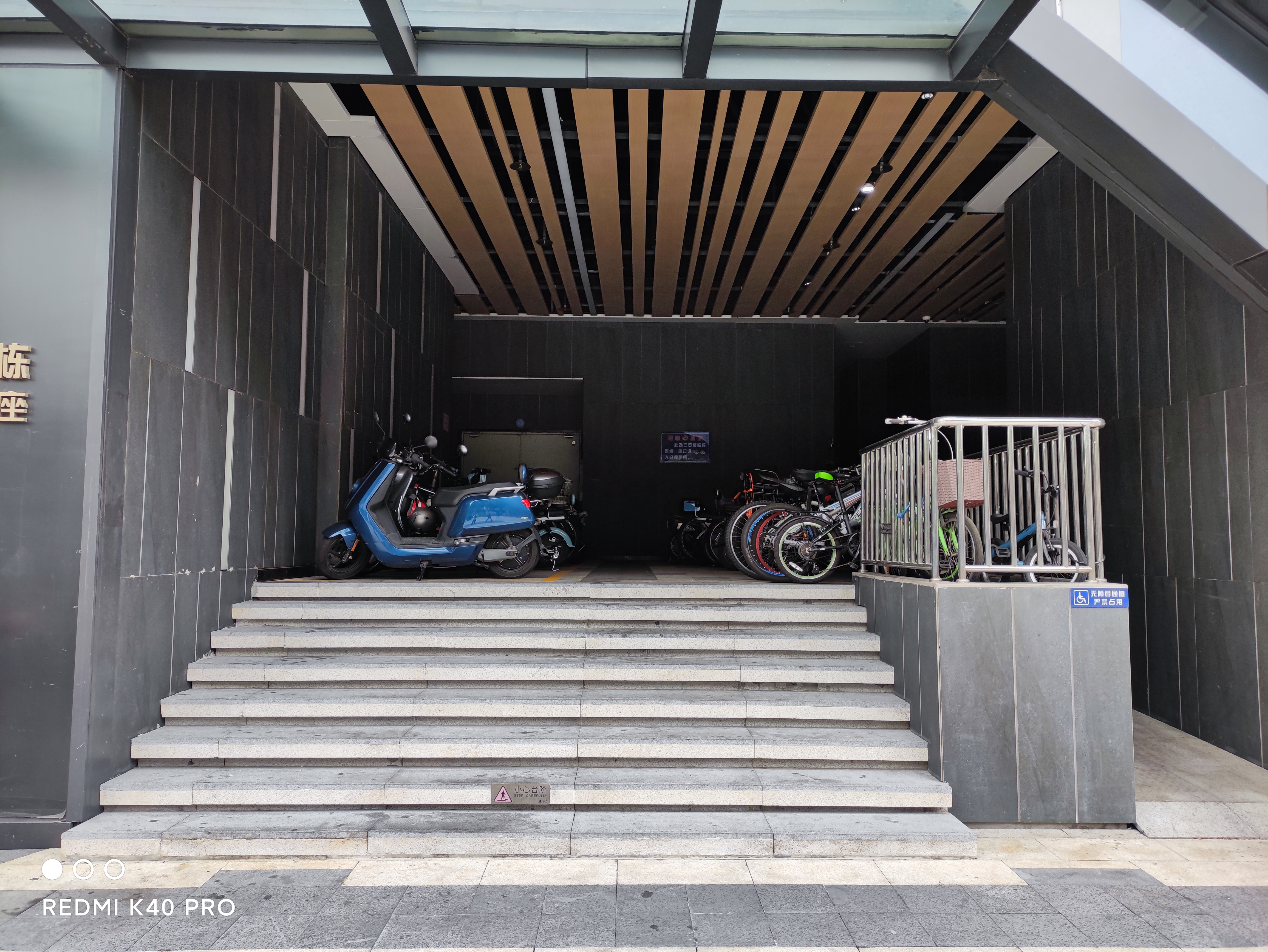
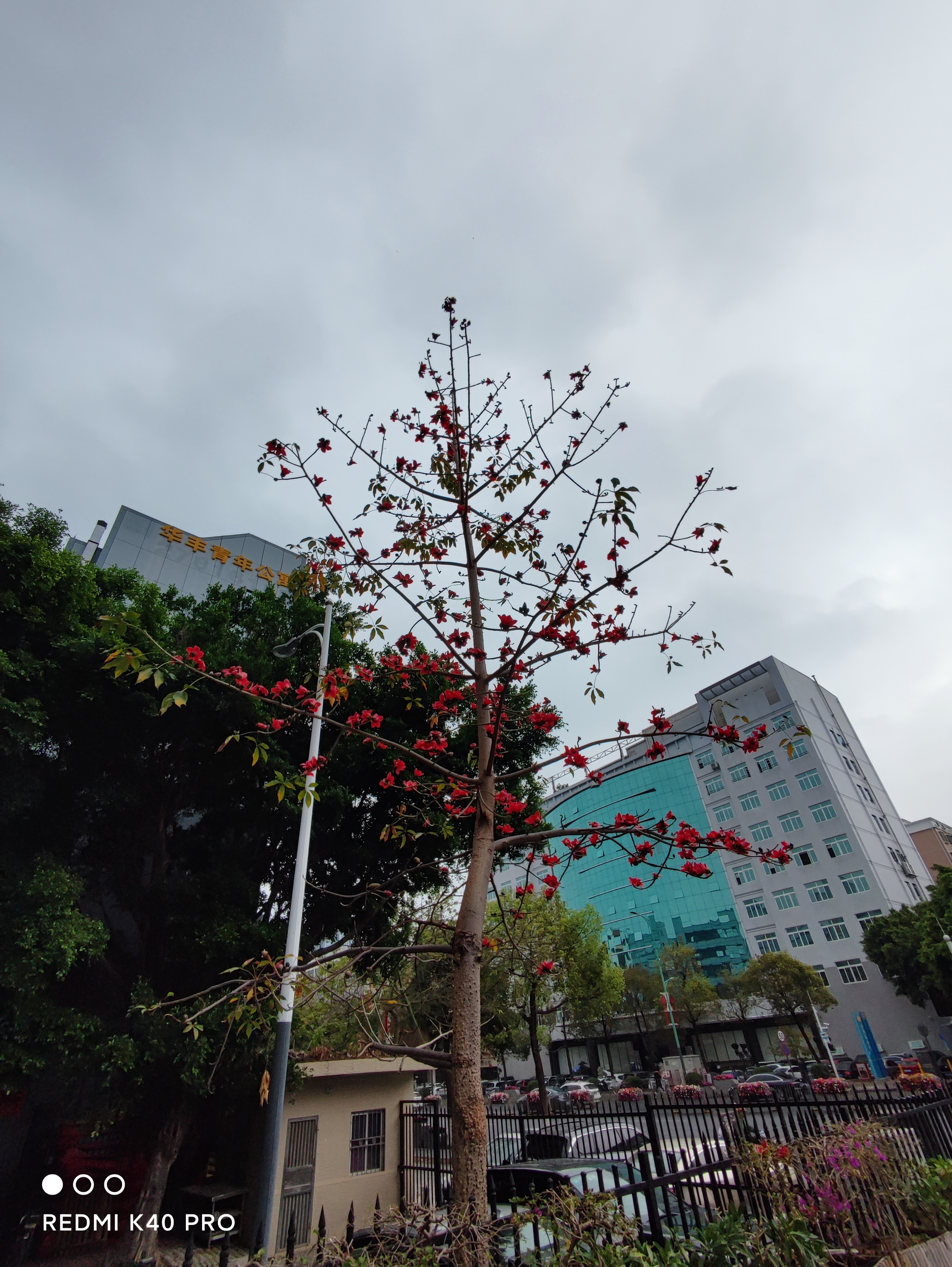
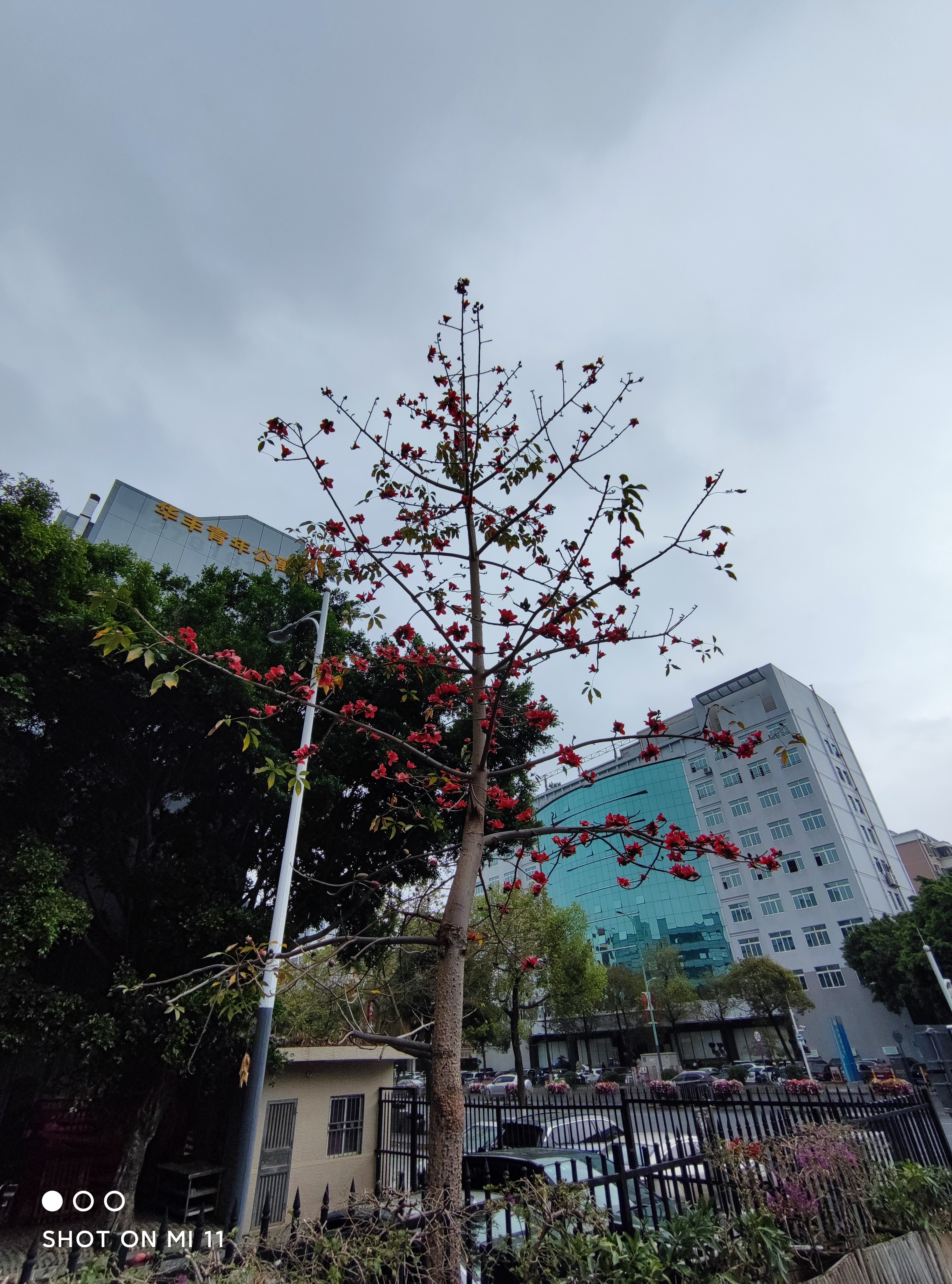
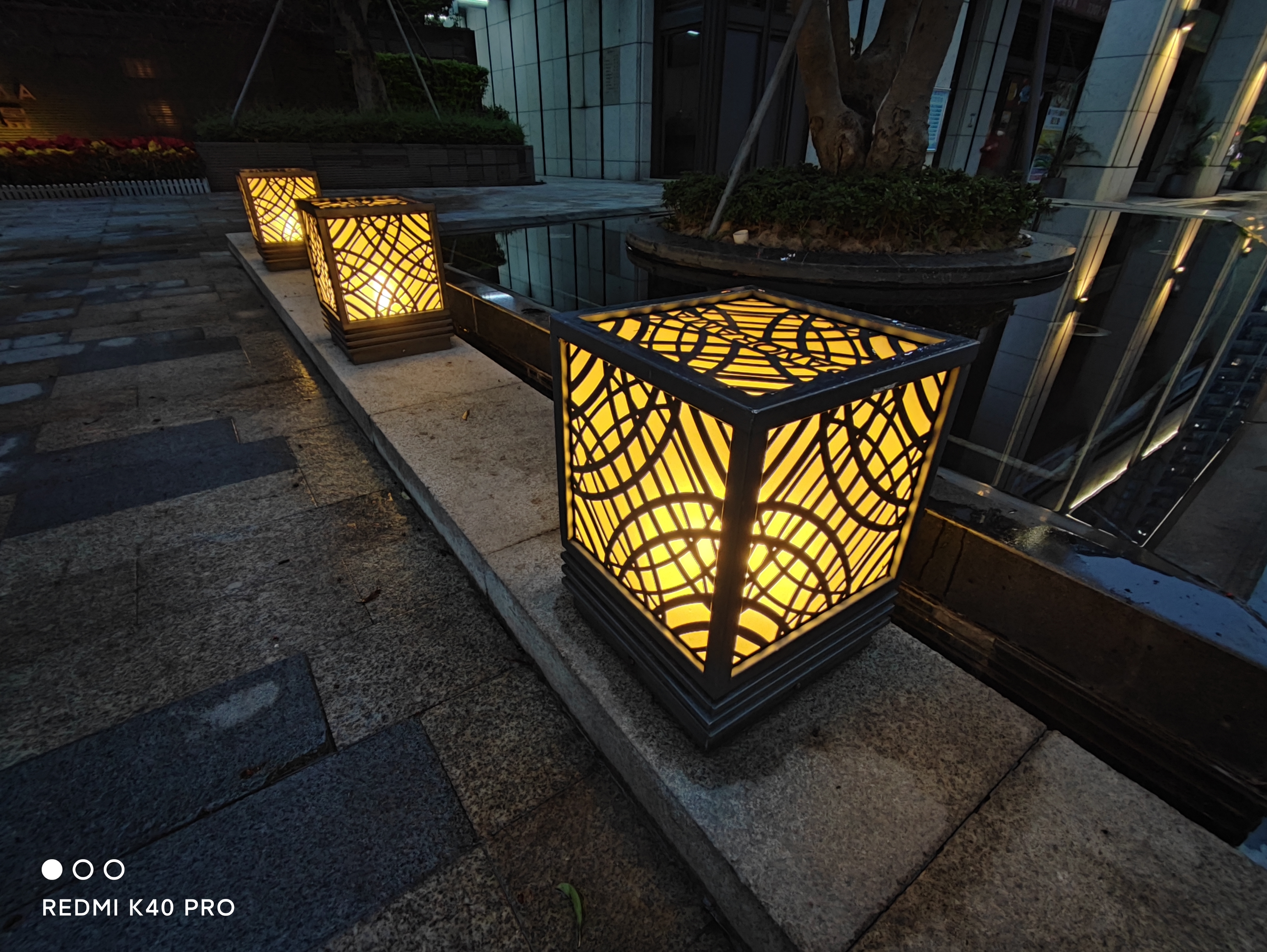
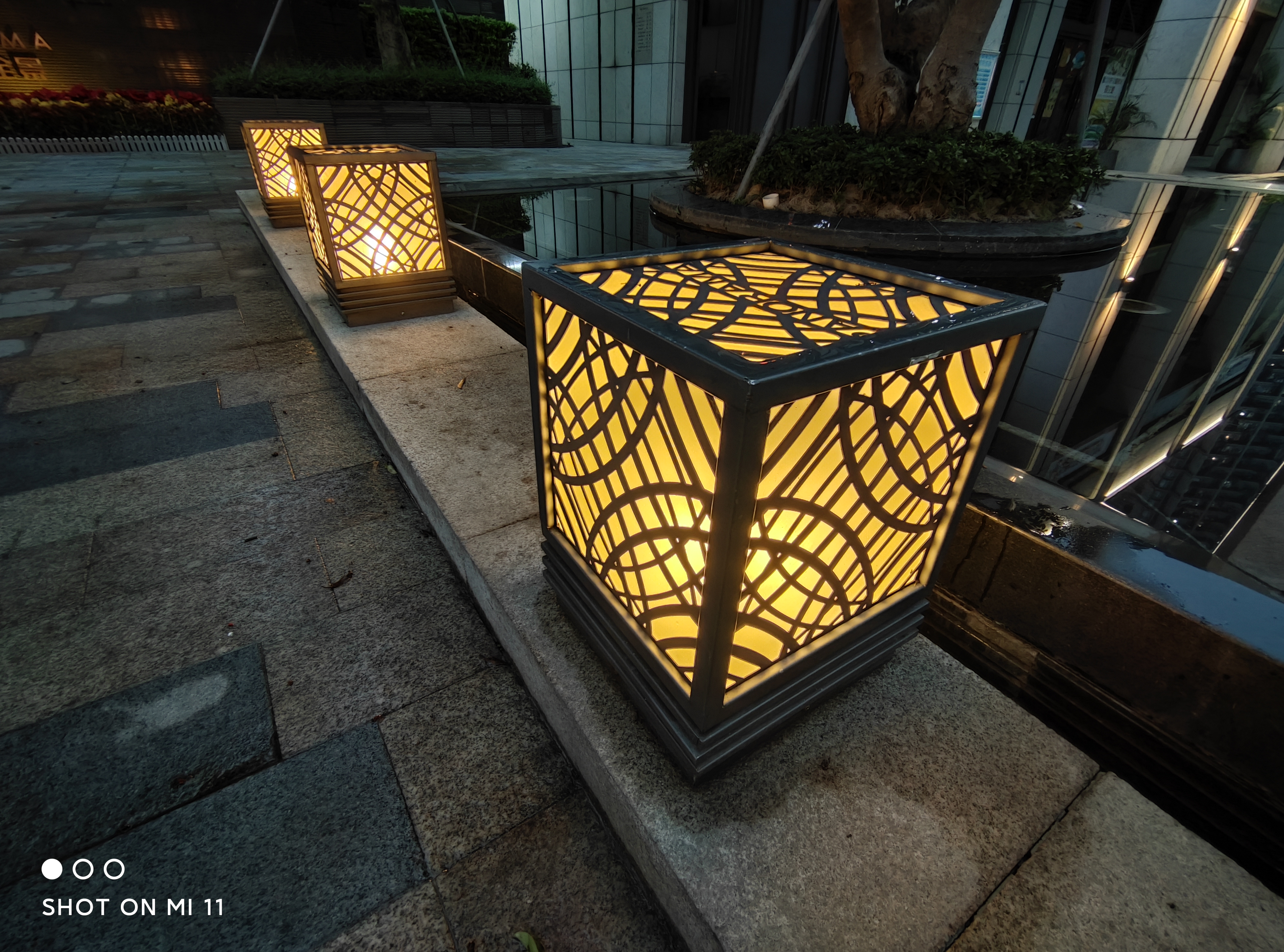
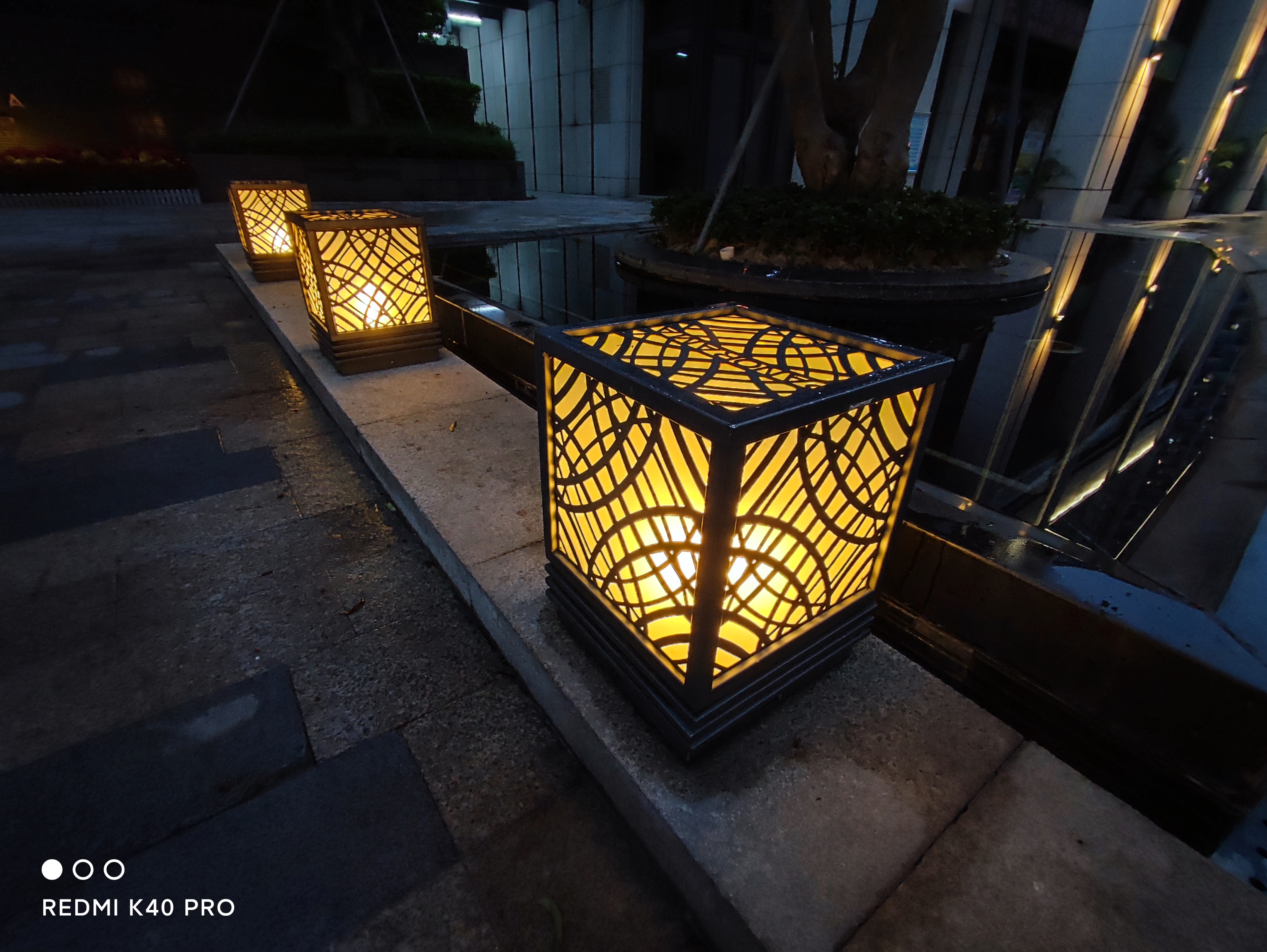
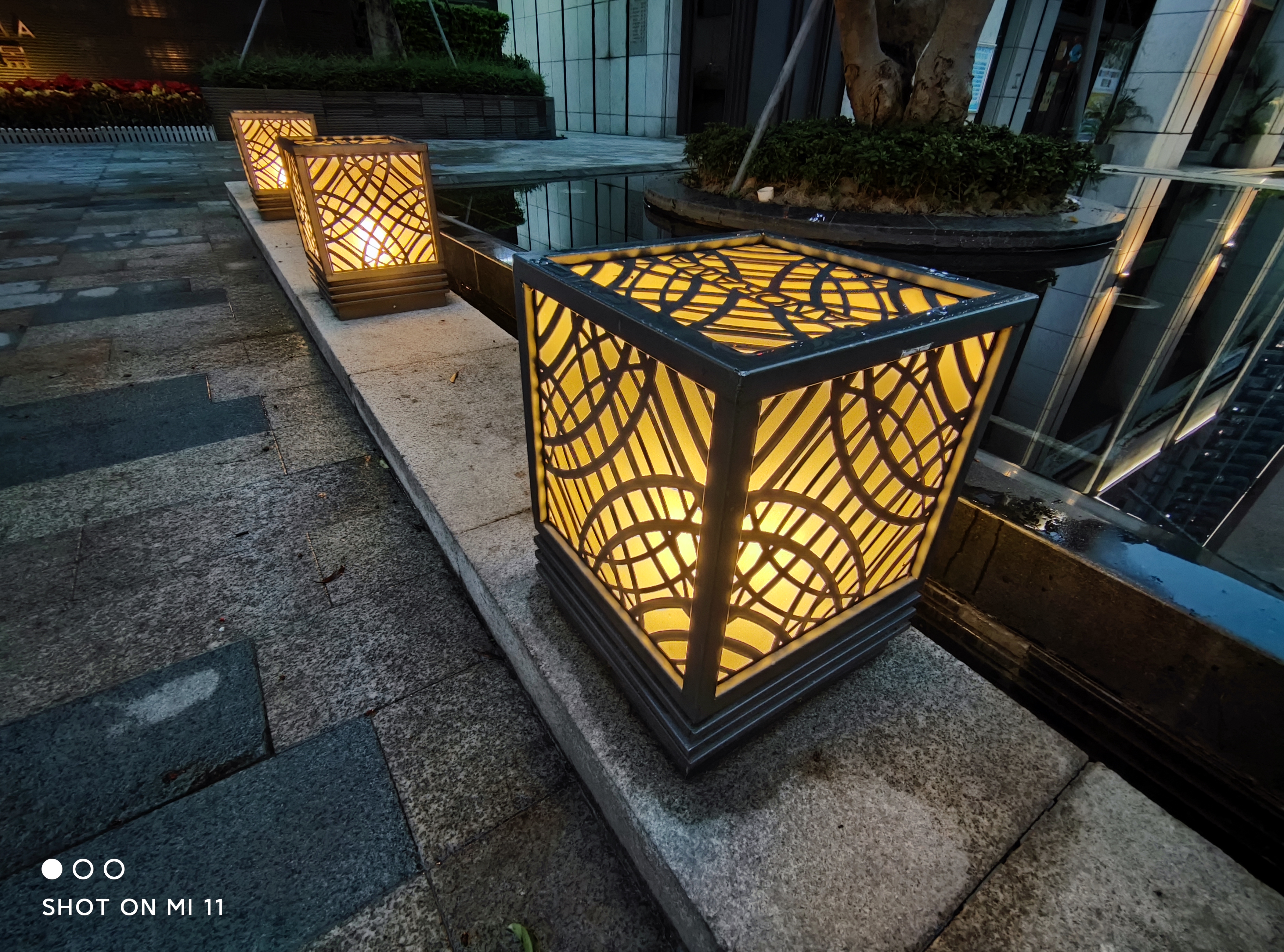
On the K40 Pro the samples’ color style is pretty close to what we have on another Xiaomi model, the Mi 11. Both of them are more likely to present a cooler tone than what we actually saw from our eyes. And the K40 Pro’s samples have pretty high saturation with good contrast. But the Mi 11 still has better overall exposure to represent brighter images. Especially in darker scenarios, the Mi 11 is able to capture more details with sharper edges. And thanks to the original 108MP resolution and a 27MP resolution for normal mode, the Mi 11’s samples are sharper with better clarity, while the 12MP samples of the K40 Pro look a bit blurred when we zoomed into the samples. Another drawback of the K40 Pro’s main camera is the lack of the OIS anti-shaking. So when it comes to low-lighting scenes, our hand-shake could easily spoil the photos we shot. So you can see that some night samples are a bit blurred and lose much detail.
Redmi K40 Pro Night 05
Xiaomi Mi 11 Night 04
Redmi K40 Pro Standard 01
Xiaomi Mi 11 Standard 04
Redmi K40 Pro Standard 06
Redmi K40 Pro Night
Xiaomi Mi 11 Standard 05
Xiaomi Mi 11 Night 05
Redmi K40 Pro Standard 05
Talking about night shooting, the Mi 11 could produce better details in both dark and bright situations, no matter whether we were using the normal mode or the night mode. The K40 Pro seems not so stable to present the colors correctly. And usually, when this happened, the image turned out to be a bit greenish. And the color style may be inconsistent when we switch from the normal mode to the night mode.
High-Res Mode
Redmi K40 Pro 64MP high res
Mi 11 Ultra High Res 108
As for the high-resolution mode, however, the gap between the 108MP resolution on the Mi11 and the 64MP on the K40 Pro was not as significant as we expected.
Ultra-Wide Camera
Xiaomi Mi 11 UW 03
Redmi K40 Pro UW Standard 05
Redmi K40 Pro UW Standard 02
Xiaomi Mi 11 UW 02
Redmi K40 Pro UW Standard 02(1)
Xiaomi Mi 11 UW 01
Redmi K40 Pro UW Standard 01
Xiaomi Mi 11 UW standard 02
Redmi K40 Pro UW Night 01
Redmi K40 Pro UW Night 01
Redmi K40 Pro UW Standard 06
Xiaomi Mi 11 UW Standard 03
Redmi K40 Pro UW Night 06
Xiaomi Mi 11 UW Night 03
Coming to the wide angle camera, the Mi 11’s samples show slightly better image clarity, while the K40 Pro does a better job on image pureness with less noise. But when it came to night shooting, the gap is much more obvious. The K40 Pro’s performance is far behind what the Mi 11 can do, no matter whether you compare their exposure or image detail.
Macro
Redmi K40 Pro Macro
Xiaomi Mi 11 Macro 01
Redmi K40 Pro Macro
Xiaomi Mi 11 Macro 02
Redmi K40 Pro Macro
Xiaomi Mi 11 Macro 03
Because the Mi 11 and the K40 Pro use exactly the same setup for the macro camera, their performance is exactly the same. From their samples, we cannot really see any difference but both of them are really good at shooting extremely close subjects and present some interesting detail for close-up shooting.
As for their filming capacity, the K40 Pro only supports up to 8k 30fps video and 60fps for 4K filming on the main camera, and up to 1080P 30fps video on the 8MP wide-angle camera. So to be honest, it’s not so practical for video filming.
Overall, the Redmi K40 Pro has a pretty decent camera setup especially under good lighting conditions but it’s still not as good as the Mi 11. This is expected given the difference in their pricing. To conclude, while the cameras on the K40 Pro are decent, it still isn’t one of its strong points.
Redmi K40 Pro Review: K40 vs K40 Pro Differences
Besides the differences in the camera and chipset departments, there’re still several tiny differences between the K40 and the K40 Pro. Although they both feature fast charging up to 33W, the K40 Pro applies a slightly aggressive charging strategy that can save several minutes for full charge.
Another difference is the RAM they use. The K40 Pro can take full advantage of the LPDDR 5 Ram and run up to 6400 megabits per second, while the K40’s ram can run up to 5500megabits per second. But to be honest, in daily use, it’s hard to perceive the difference.
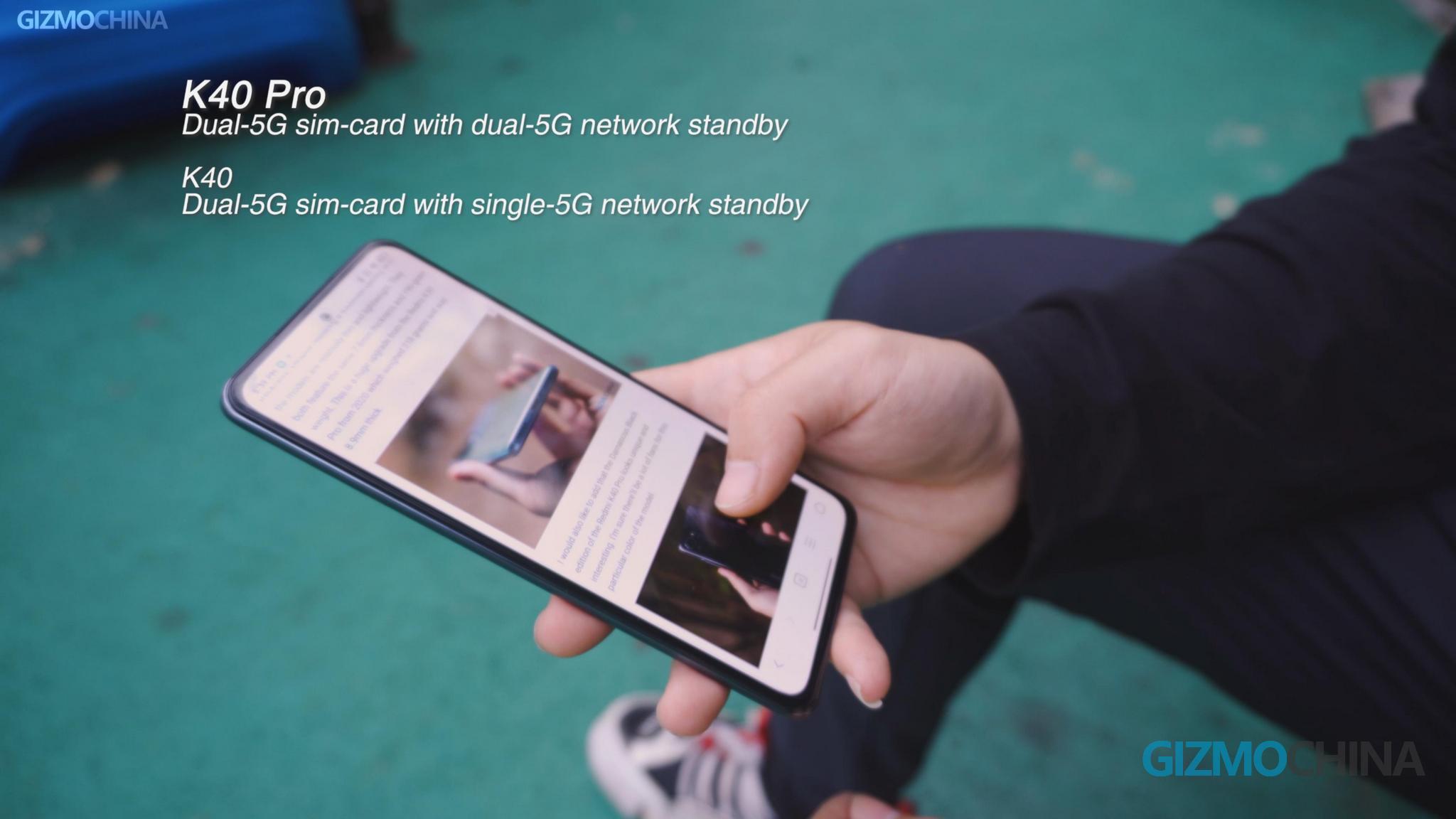
The third one is the network support. The K40 Pro supports dual-sim cards with dual-5G network standby, while on the K40 you can only have one 5G standby and another 4G standby as loading dual-sim-card. But you still need to make sure whether the bands that they support are adopted in your region.
The last one is the WiFi signal. Redmi claims that the Pro features an enhanced WiFi 6 connection, which brings more stable and faster transmission when connected to a WiFi 6 wireless network.
Redmi K40 Pro Review: Battery Life & Stereo Speakers
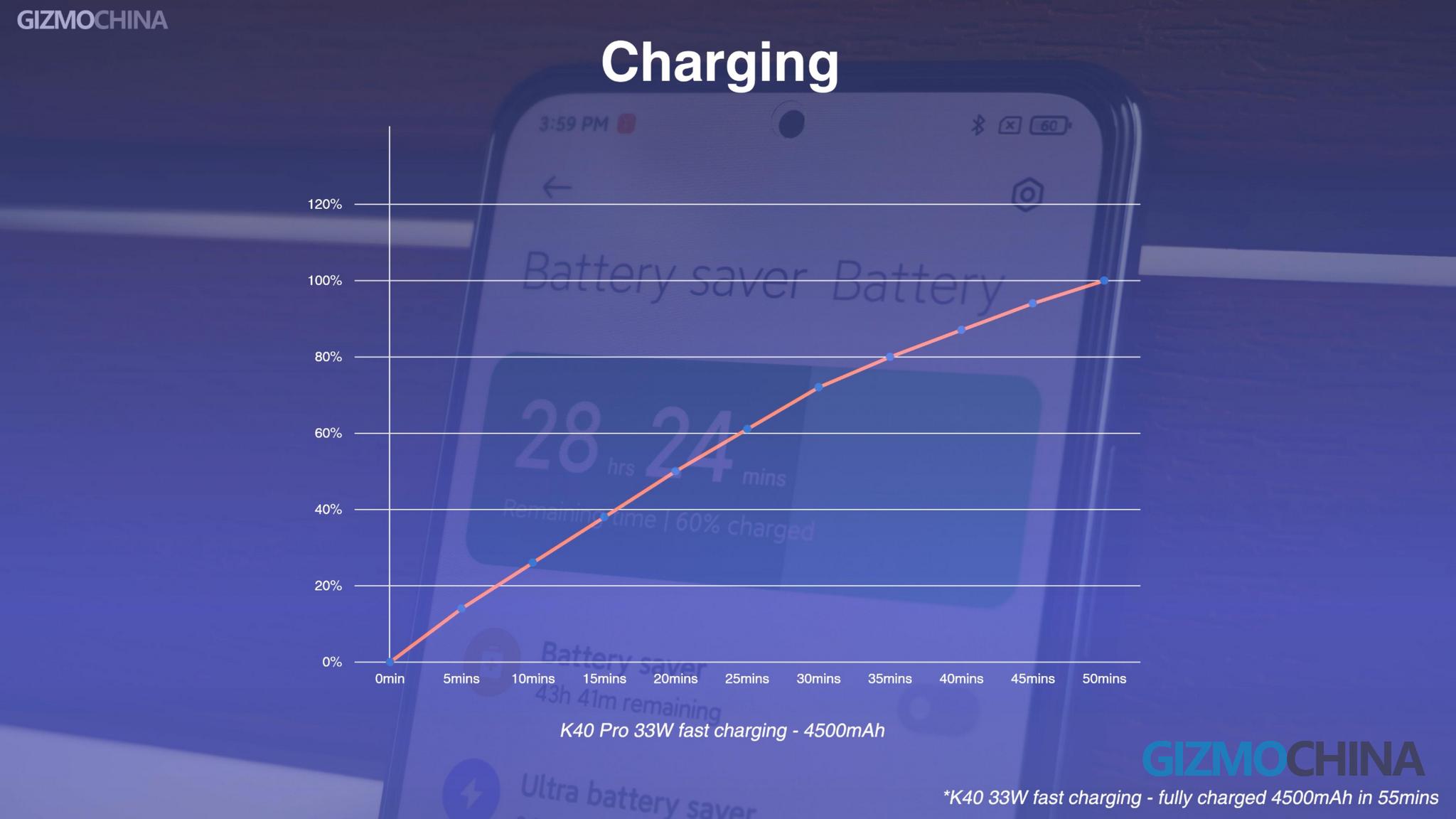
As for the Pro’s charging and battery performance, there is no surprise from what we expected. The charging result is very close to what we got on the K40. The Pro was charged to 70% in 30mins, and it took us just 50mins to fully charge the phone. The 4500mAh battery in daily use didn’t bring us any surprises, and the test result of battery life was close to what we got on the Mi 11.
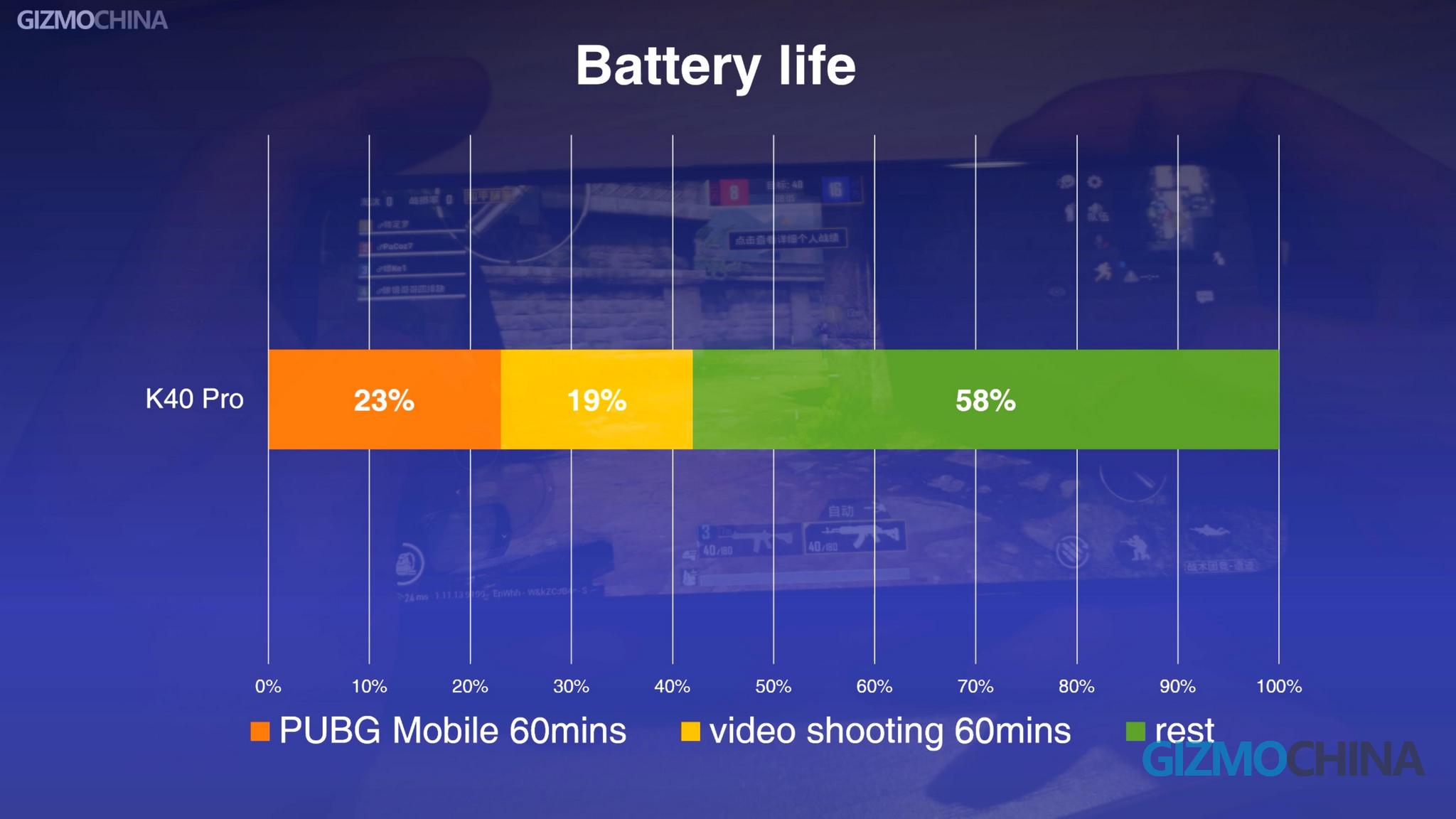
We played PUBG Mobile on the K40 Pro for an hour, and the power dropped by 23%; and then we used the phone’s camera to shoot 1080P video for another hour, which consumed an additional 19% of power. Considering the Snapdragon 888 has been in the market for over 2 months, we feel the K40 Pro could have had slightly better efficiency in terms of power consumption.
In addition, although the dual-speaker solution of the K40 series has the same Dolby certification as the Mi 11, it still doesn’t compare to the sound output from the Mi 11. That said, the immersive stereo sound of the speakers is still pretty impressive.
So that’s it for our Redmi K40 Pro review. The K40 series is definitely a revolutionary entry in the 2021 smartphone market. The biggest surprise is still the pricing, especially of the K40. And the K40 Pro is still the best option by far that you can buy in its price range. Compared to the K30 Pro released in the same period last year, the K40 Pro brought us more surprises and even gave us an illusion that it’s trying to challenge the Xiaomi Mi flagship series to some extent.
But it’s worth mentioning that the Realme GT was released a couple of days ago and it’s also a super-powerful flagship killer that takes on the K40 Pro, and more importantly, it’s even a bit cheaper than the K40 Pro in China. These two models were designed for those who prefer flagship features with decent cameras.
We’ll publish the Redmi K40 review soon, so stay tuned for that as well!
Mukul Sharma has just revealed that the Vivo X60 series will soon be launching in India. The tip was shared on Twitter and he said that the new lineup will launch in India sometime in March 2021.
So yes, the Vivo X60 series is to launch in March in India Few pointers • X60 Pro+ to be launched along vivo X60 Pro and X60 • The series is likely to feature Qualcomm Snapdragon 888 and 870 for India Vivo and Zeiss together can indeed turn out to be a great camera experience. pic.twitter.com/f4cuKOr0wT
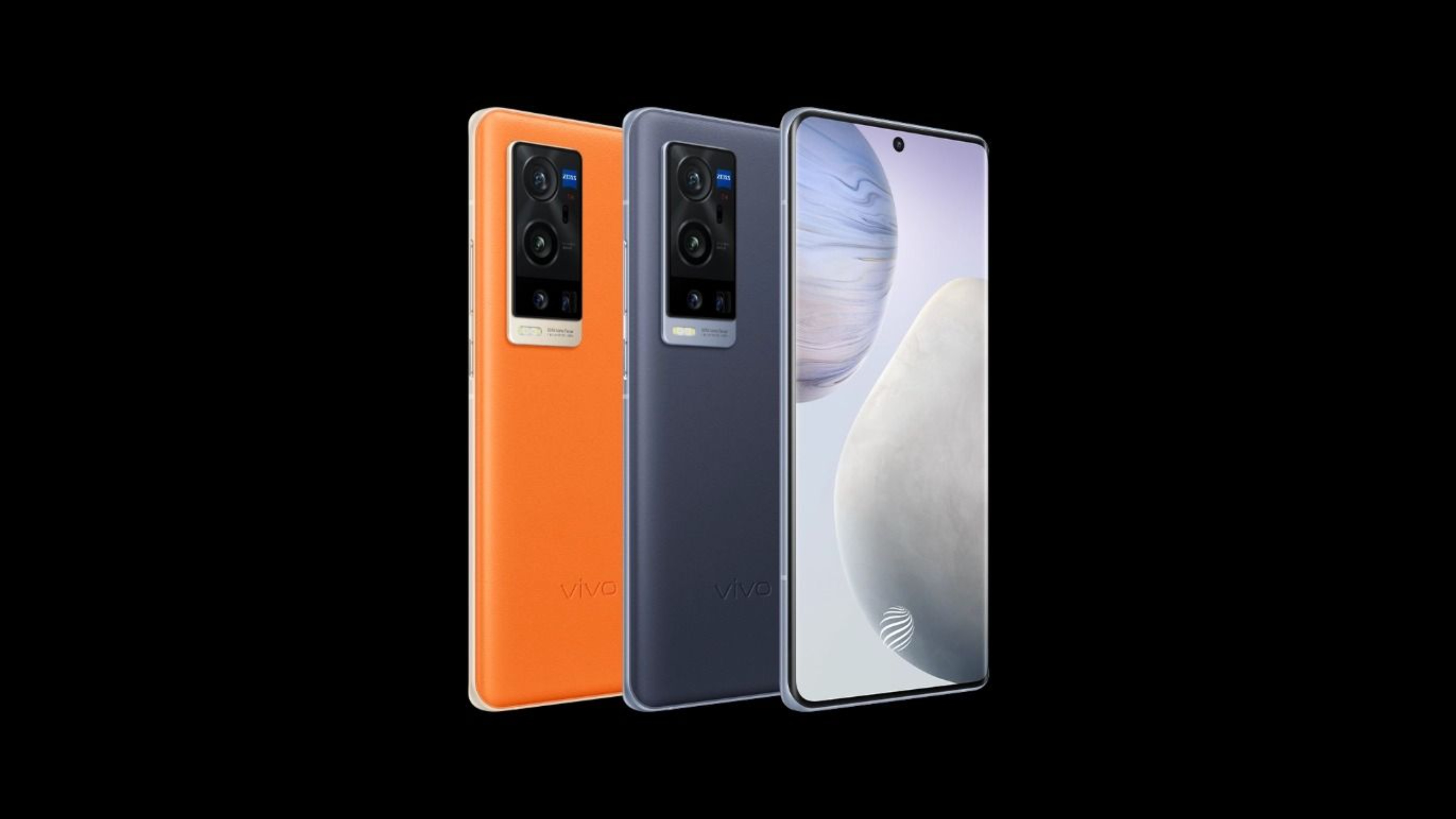
According to Mukul Sharma, the Chinese tech giant will be launching the X60 Pro+ along with the X60 Pro and the base X60. Furthermore, Mukul also added that the series will likely also feature Qualcomm’s high-end Snapdragon 888 or Snapdragon 870 mobile processors. Interestingly, the tipster also shared an image of the device’s rear camera module, highlighting its capabilities that were made possible thanks to the partnership between the Vivo and Zeiss.
The new is in line with our previous report, which stated that the Chinese tech giant plans on launching the series in India along with the Vision+ initiative in March 2021. Taking about the upcoming lineup, the Vivo X60 series will include X60, Pro, and X60 Pro+ in India. Reportedly, the X60 and X60 Pro will feature Snapdragon 870 chipset while the X60 Pro+ will retain the Snapdragon 888 from China.
The tipster added that the new high-end series will be launched this month. If the device does launch in March, we can expect more rumors or leaks to surface soon. So, stay tuned for more updates as we will be providing updates when additional information is available.
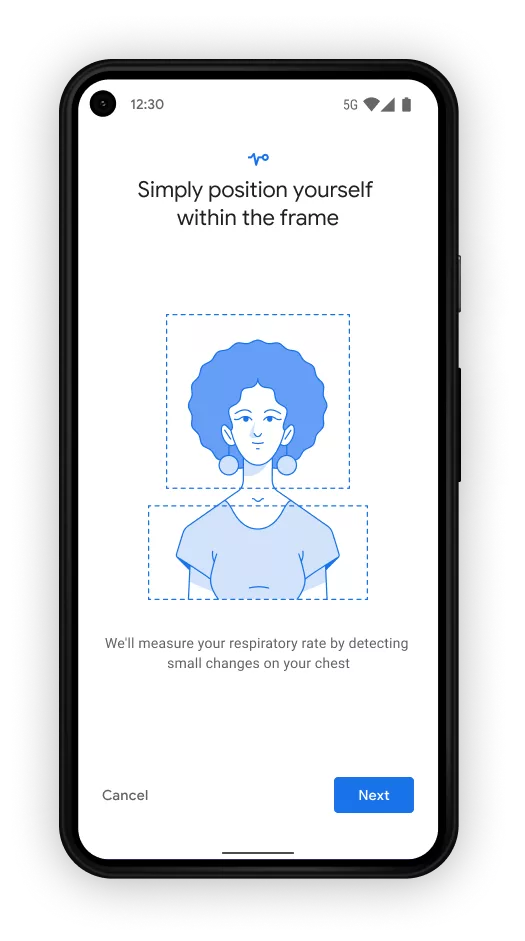
A few weeks ago, Google had announced that Fit for Android will be able to measure heart rate and respiratory rate using the smartphone. Now, the company has confirmed that this new feature will start rolling out the Pixel series smartphones from next week.
Google has clarified that these measurements are “not intended for medical purposes.” It’s functionality is quite unique and the company says that it provides a convenient way to “track and improve day-to-day wellness.”
Both of these new features rely on the smartphone’s camera. For monitoring the user’s heart rate, it tracks color change as blood moves through the fingertips. And for monitoring respiratory rate, it tracks the rise and fall of the user’s chest. To increase accuracy in dark environments, flash can be enabled.
The calculation for these two metrics happens in real-time and is done entirely on the user’s device and not uploaded to Google’s cloud. After every measurement, it asks if the user wants to store the result for long-term graphing.
The heart rate monitoring feature is similar to what Samsung offered on several Galaxy smartphones, including the Galaxy S10. However, the South Korean giant removed the feature from Galaxy S10E, Galaxy S20 lineup, and phones launched after that.
As noted, the feature will start rolling to the users of Pixel smartphones from Monday and the company has said that more Android devices will be getting it in the future.
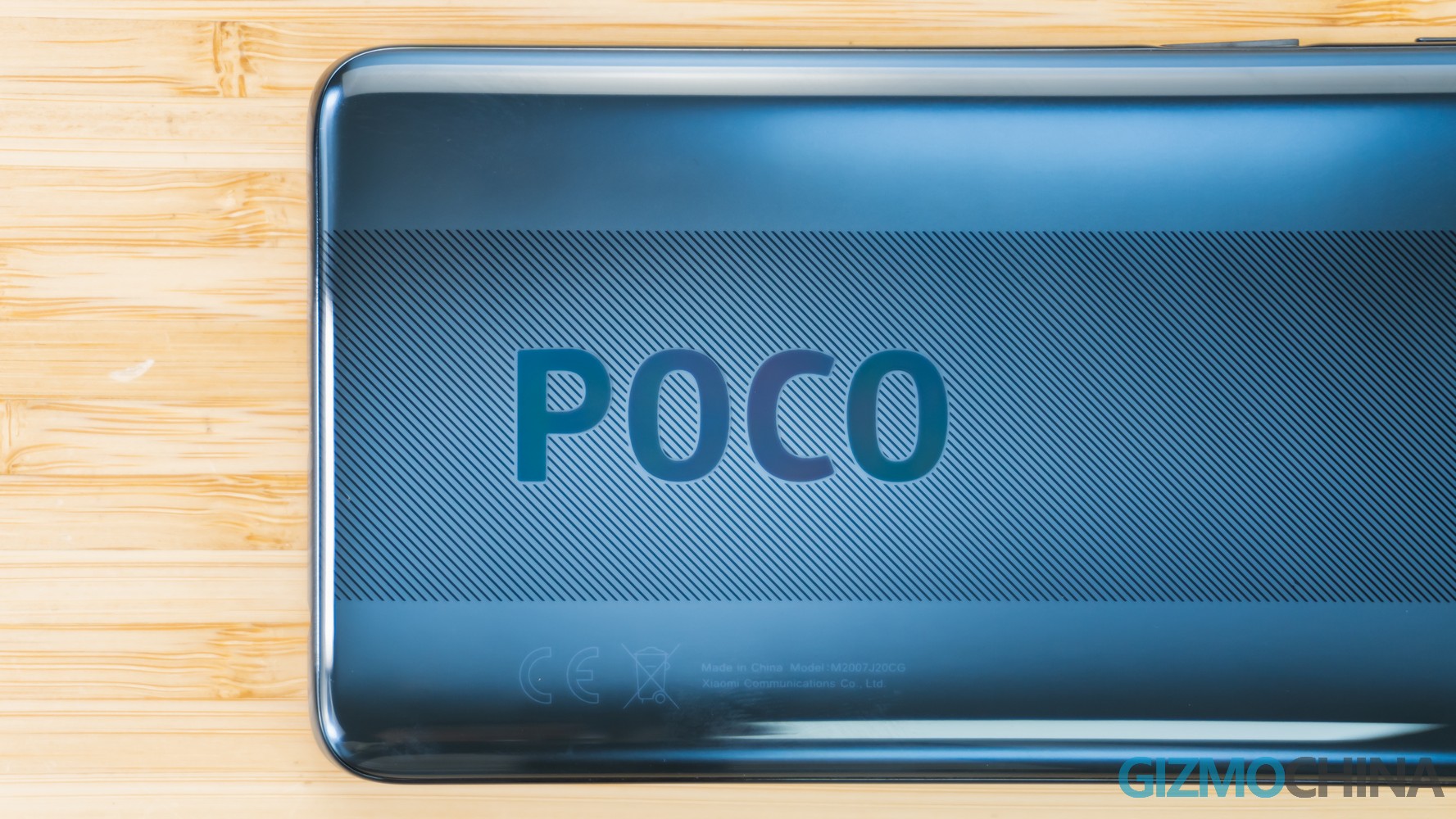
POCO X3 Pro Global launch is said to happen this month, i.e, March 2021. Ahead of the launch, the device has already received certifications like FCC, NBTC, BIS, and SIRIM. Today, 91Mobiles have partnered with Twitter user Sudhanshu to leak the storage and color variants of the device.
As per the report, POCO X3 Pro will have the following storage, color variants, and Europe pricing:
POCO X3 Pro Colors
Blue, Black, Bronze
POCO X3 Pro memory variants
6GB RAM + 128GB ROM
8GB RAM + 256GB ROM
Further, Sudhanshu also says that the Europe prices for the POCO X3 Pro will probably start at €250 for the 6GB/128GB variant and the 8GB/256GB variant could debut for €300.
POCO hasn’t started teasing the device officially yet but we have signs for an imminent launch already. Recently, tech influencer Mukul Sharma tweeted that the POCO X3 Pro Global launch could be in March.
This happened a couple of days after POCO Global Spokesperson hinted at a new launch this month. Besides launching Globally in markets like Europe, the device is also expected to arrive in Asian markets like India, Malaysia, and Thailand.
As for specs, the POCO X3 Pro is tipped to feature a Snapdragon 860 SoC which isn’t official yet. Qualcomm has launched a pumped version of the Snapdragon 865+ as the 870 and similarly, the Snapdragon 860 is expected to be a boosted version of Snapdragon 855+.
Further, the device will likely feature a 120Hz IPS LCD panel and a 5,200mAh battery. The POCO X3 had a 64MP Quad-camera setup and going by the naming, we can expect some improvements in the camera department of the POCO X3 Pro.
However, let’s wait for the official info to get an idea of how good a sibling is the POCO X3 Pro to the already selling POCO X3.
The Insta360 was recently teased, just prior to its launch. The company shared an image poster on social media, which highlighted its tiny size. It is currently listed online for pre orders and will begin sales on 9th March 2021.
Looking at the teaser shared on Weibo, a Chinese microblogging website, the company showcases the camera’s minuscule size. It arrives with a black charging box, which is similar to the charging case of truly wireless earbuds. Notably, the upcoming camera is quite similar to the Insta360 GO camera that is currently available on sale. In the teaser, the company highlights the camera’s capabilities by shooting a video in a small space, whilst offering a wide angle picture.
In another teaser, the company even showcases the new camera being mounted on a gimbal to highlights its stabilization features. As the name suggests, the new camera will be able to offer users a 360 degree panoramic field of view. The GO variant from the company weighs just 8.3 grams and also offers various features like slow motion video capture, 1080p recordings at 30fps, and more. So we can expect the new camera to offer much of these same features along with other improvements and features.
Unfortunately, finer details regarding the camera are still unknown, at the moment. But we can expect to find out more on the day of its launch. You can also check out the pre order listing on JD.com, by clicking on the linkhere.
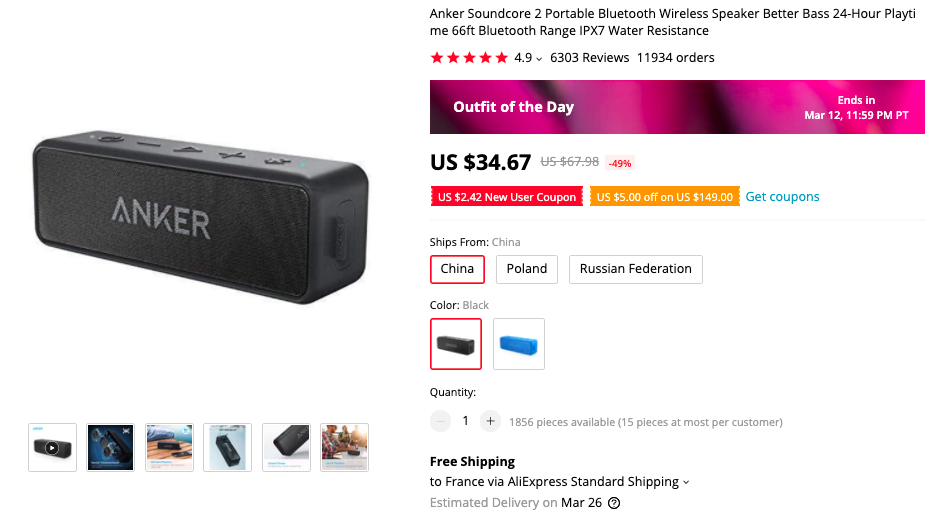
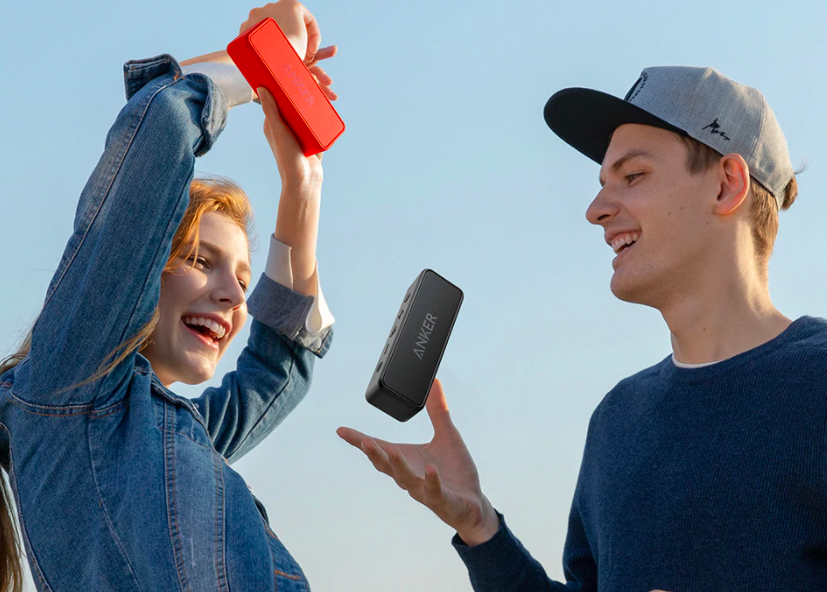
Soundcore 2 by Anker is an incredibly powerful outdoor speaker with stereo sound and enhanced bass which gives you an immersive audio experience. This wireless speaker with its exclusive deep bass technology brings you richer and deeper bass even at low volume.
The Bluetooth speaker comes with a dual pairing function wherein you can pair two Anker Souncore speakers to one device simultaneously for double volume and bass effect. Also, the 5200mAh Li-ion battery ensures 24 hours of non-stop playtime and the IPX7 certification protects the speaker against rain, sweat, snow, etc thereby making it your perfect partner for outdoor adventures.
The aesthetically pleasing and uber-stylish Anker Soundcore 2 Bluetooth speaker is now available at AliExpress for $34.67 only (Original Price $40). The above deal which is valid only till 12 March 2021 is applicable on both the Black and Blue color variants. With free shipping and additional discount coupons on AliExpress, this is a bargain deal. So grab your speakers asap.
For more information on such exciting deals and offers check out our deals hub.
*We may earn a commission when you buy using one of our links.
OnePlus launched the OnePlus Nord with OxygenOS 10.5 based on Android 10 in late July 2020. The handset received the stable Android 11 update in the form of OxygenOS 11 only last week. Now, the brand is rolling out OxygenOS Open Beta 4 for this phone.
The OxygenOS Open Beta 3 for the OnePlus Nord was released in early February, A little over a month later, the company is now seeding the OxygenOS Open Beta 4 for this device.
Just like the last public beta release, the latest one is also all about fixes. But additionally, the new build also bumps up the security patch level to February 2021 and improves system stability.
According to the changelog, the new open beta update for the OnePlus Nord brings a total of nine fixes. They are meant for Work-Life Balance not displaying full information, flashback issue with location toggle in quick settings, disappearance of documents in Lockbox, abnormal displaying of Privacy Policy page in Dark Mode, and loud sound while fast charging.
Other fixes are for Calculator UI, Calculator button size, crashing of File Manager when stopping the unzipping process, and a flashback issue when entering the Profile page in OnePlus Community.
OnePlus Nord OxygenOS Open Beta 4 Official Changelog
System
Fixed the issue where Work-Life Balance does not display full information in the Quick Settings
Fixed the flashback issue with the Quick Settings when enabling the Location
Fixed the small probability issue that the documents in the Lockbox may disappear
Fixed the issue that the Privacy Policy page is displayed abnormally if the device is in Dark Mode
Fixed the issue that the fast charging sound is too loud
Fixed the issue with the Calculator that the UI where results are showed is displayed abnormally
Fixed the issue with the abnormal display of Calculator button size
Updated Android Security Patch to 2021.02
Improved system stability
File Manager
Fixed the issue that the File Manager may crash when stopping the unzipping process
OnePlus Community
Fixed the small probability flashback issue with the OnePlus Community when entering the Profile page
The update is currently being pushed to users on the previous beta build via OTA. However, interested users on the stable channel can install it by downloading the appropriate ROM file from the OnePlus Community.
Qualcomm has so many mobile processors that it is hard to keep track of them. However, it has done a good job by categorizing them into four series which are the Snapdragon 400, the Snapdragon 600, the Snapdragon 700, and the Snapdragon 800 series. Its most powerful chipset is the Snapdragon 888 and a new report says that a less-powerful variant is on the way.
According to Roland Quandt of Winfuture.de, Qualcomm has a less-powerful version of its current flagship chipset, the Snapdragon 888, in development. He says the processor has part number SM8325 (the SD888’s part number is SM8350) but unlike the Snapdragon 888 which has an integrated 5G modem, this Snapdragon 888 Lite, if we can call it that, doesn’t have a 5G modem.
Qualcomm has a lower end derivate of the Snapdragon 888 (SM8350) in the works. SM8325 is the model number and there seems to be NO integrated 5G modem on this one. #CheapFlagshipPhones
The Snapdragon 888 launched as Qualcomm’s first Snapdragon 800 series with an integrated 5G modem. Its older processors such as the Snapdragon 855, Snapdragon 855+, Snapdragon 865, and Snapdragon 865+ all had a separate 5G modem. We are surprised Qualcomm plans to launch a new processor without an integrated modem since it has switched to an integrated modem.
If we were to take a guess as to why it is going this route, we will say it may be targeting markets where 5G is not yet available or widespread. By offering a chipset without an integrated 5G modem, manufacturers can offer more affordable 4G flagship phones.
At the moment, there is no info on when the processor will be announced. However, Qualcomm does have a few processors that it is expected to launch soon such as the Snapdragon 775/775G and there is a chance this new chipset may be unveiled alongside.
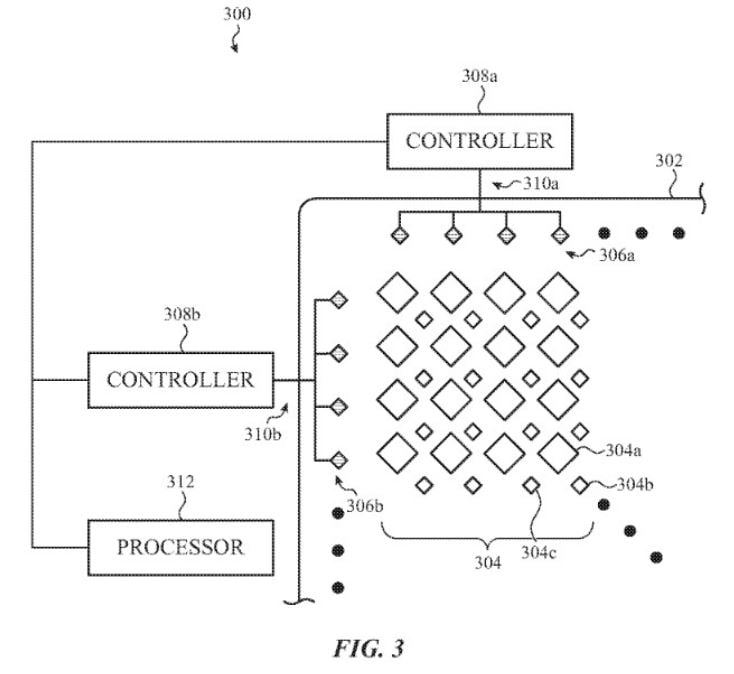
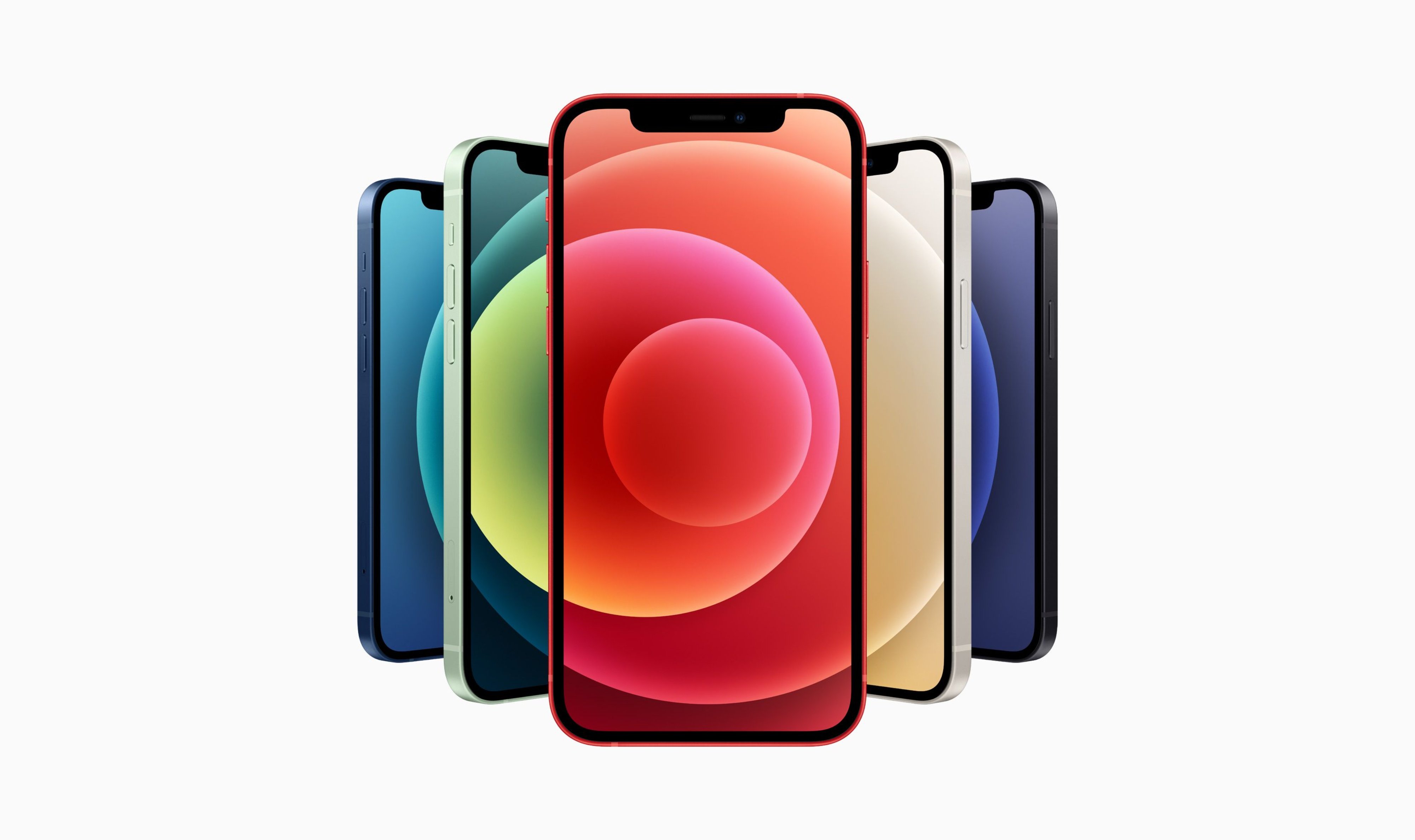
Apple has just patented a new technology that might bring its Face ID and Touch ID. This technology is based on a sensor that will be housed underneath the display, which will be able to detect light through the screen.
According to a WccFTechreport, the Cupertino based giant filed a new patent application that shares details on a new technology that can detect light through the display. As of right now, the notch on iPhones has still been one of the biggest aspects of its designs that have been criticized. This was first seen in the iPhone X, meanwhile, smartphones from other OEMs have adopted various different designs like water drop notch or even a punch hole selfie shooter.
And now, it seems like Apple might also be looking to move its iPhones towards a full front screen body design in the near future. The patent is titled “Sensing System for Detection of Light Incident to a Light Emitting Layer of an Electronic Device Display.” Apple plans to house a light detecting sensor under the screen itself, which will be capable of working with Touch ID and Face ID biometric authentication systems.
Furthermore, the company patented two potential implementations of the technology. The light sensor will be embedded behind the display will be capable of assembling an image of the object touching the screen. In the patent, the company also mentions that the system would use an ambient sensor. Additionally, a second implementation would use an array of photodiodes or solar cells to assemble the pixels of the image. Unfortunately, it is still unknown if the company is actually working on such a product or just covering all bases.
Huawei, the Chinese technology giant which is going through some tough time because of several restrictions imposed by the United States. Despite it struggling to maintain its existence in the smartphone market, it is gearing up to launch its flagship devices.
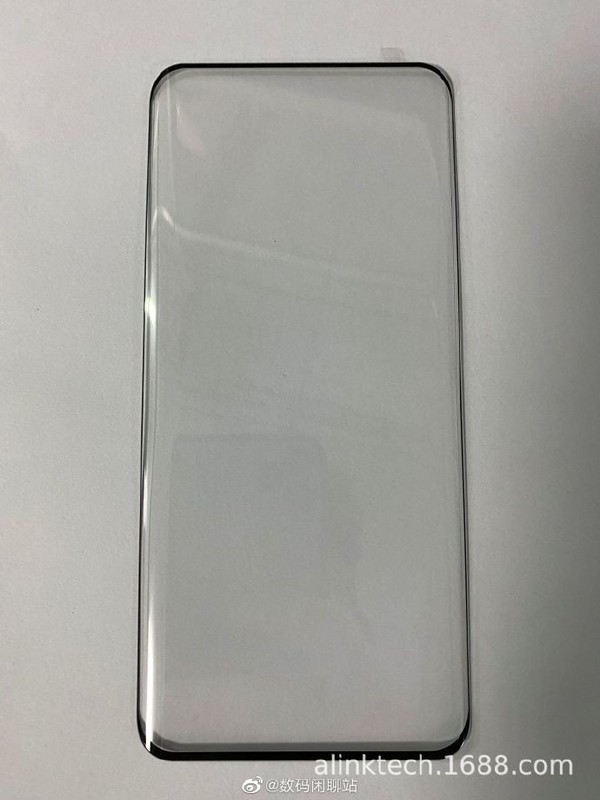
The upcoming Huawei P-series flagship lineup is expected to have three phones — Huawei P50, P50 Pro, and P50 Pro+. Now, a tempered film for the P50 Pro smartphone has leaked online, shedding light on its design.
It appears that the smartphone will have a curved edges on the left and the right side but the curves on the top and the bottom part is less compared to the side edges. There’s also a single punch-hole cutout in the top-center of the screen.
Compared to its predecessors, the design of the P50 series is expected to be a bit different as the company aims to please audience with an updated design. It is speculated that the USP of this upcoming lineup will be its screen quality, a new camera system, as well as the gaming capabilities.
The Huawei P50 will be the new ‘Lite’ model of the lineup and is expected to come powered by the HiSilicon Kirin 9000E chipset. The P50 Pro will be the standard device and the P50 Pro+ will be the new Pro device, powered by the Kirin 9000 chipset.
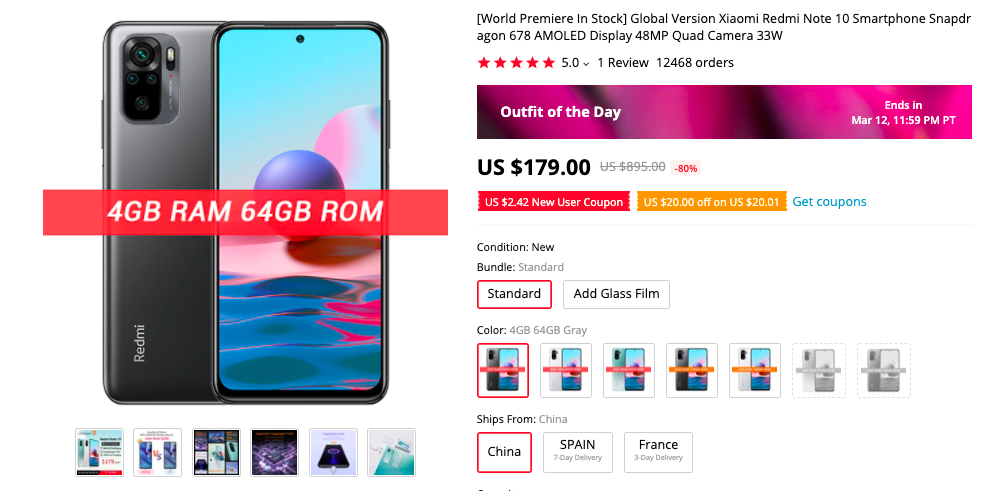
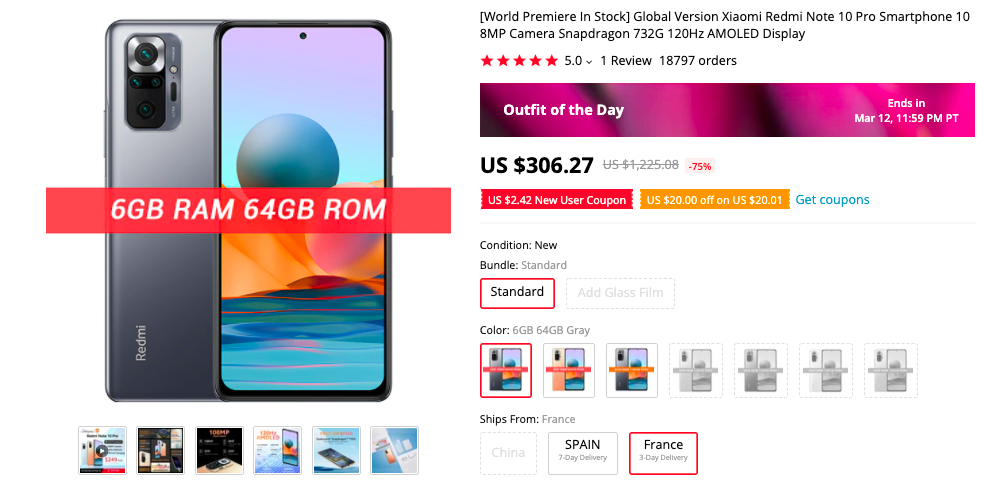
Attention all readers! Xiaomi Redmi Note 10 and Redmi Note 10 Pro (Global versions) are now available for purchase on AliExpress. Xiaomi Redmi Note 10 is retailing at $179 while Redmi Note 10 Pro is retailing at $306.27
Redmi Note 10 which comes with a quad-camera setup, features a 48MP main cam, and 8MP + 2MP + 2MP secondary cameras. The selfie cam is a 13MP front-facing camera. Powered by the Snapdragon 678 and an Octa-Core processor, Redmi Note 10 comes in two storage variants viz: 4GB + 64GB and 4GB + 128GB. A massive 5000 mAh battery fuels this 6.43 inches large smartphone which also supports 33W fast charging.
Xiaomi Redmi Note 10, Global version, 4GB + 64GB variant is now available at AliExpress for $179only. The above price is available on the Gray, White, and Green color variants and on shipments from China Warehouse only.
REDMI NOTE 10 PRO :
Xiaomi Redmi Note 10 Pro comes with a 6.67 inch AMOLED Dot Display and MIUI 12 OS based on Android 11. It is powered by Snapdragon 732G and Octa-Core processor and comes with two storage variants viz: 6GB + 64GB and 6GB + 128GB. The rear Quad cam setup features a 108MP main cam and 8MP + 5MP + 2MP secondary cameras and the selfie camera is a 16MP front cam.
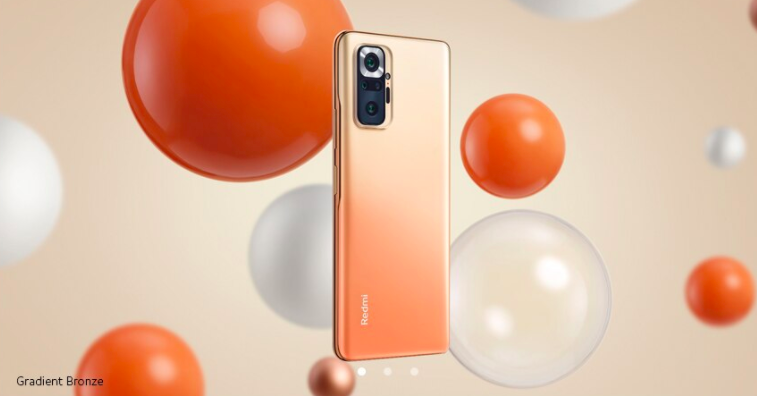
Xiaomi Redmi Note 10 Pro, Global Version, 6GB + 64GB variant is available at AliExpress for 306.27only. This price is applicable for the Gray and Bronze color variants and shipments from Spain and France Warehouse only.
For more detailed information on Xiaomi Redmi Note 10 and Redmi Note 10 Pro check out this article from Gizmochina.
Please note that higher storage versions and different color variants are also available at AliExpress for all Global customers. With free shipping, new users, and other discount coupons, this launch at AliExpress is perfect for global users looking to get hold of the brand new devices.
*We may earn commission when you purchase using one of our links
Smartphones with higher RAMs have been a thing for years now. You might have experienced the scenarios when your smartphone’s RAM is more than your laptop. After the explosion of the Gaming smartphone market, this has gone to another level. Nubia recently brought its RedMagic 6 series and launched an 18GB RAM variant of RedMagic 6 Pro. Ahead of leaks saying ASUS will follow suit, SK Hynix has confirmed the news today.
In a press release, SK Hynix, which is a South Korean supplier of DRAMs (Dynamic Random Access Memory) chips, said that it supplied the very first 18GB LPDDR5 products to the Taiwanese giant ASUS. This is for the upcoming ROG Phone 5 gaming smartphone and the top-end variant should feature it.
Recently, reports regarding the 18GB RAM variant of the device surfaced on the internet. The variant appeared on the benchmarking platforms Geekbench and Master Lu. Anyway, SK Hynix says that it has started the mass-production of 18GB (gigabyte) LPDDR5 mobile DRAM chips.
These chips will ensure high processing speed and image quality with improved temporary data storage. These RAMs are capable of speeds up to 6,400Mbps which is around 20% faster than the current versions(5,500Mbps). Specifically, this means you can transfer ten 5GB FHD (Full-HD) movies per second.
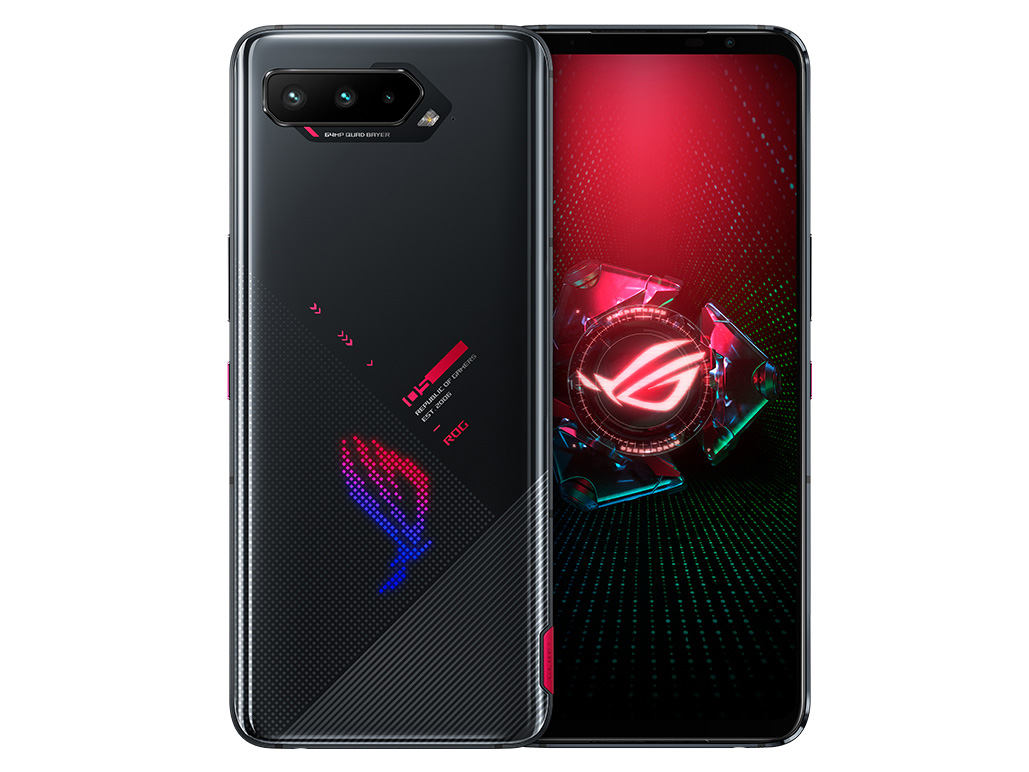
The ASUS ROG Phone 5 is launching in a couple of days i.,e on March 10. The device is likely to feature a 6.78-inch OLED screen on the front, Snapdragon 888 chipset, and a revamped rear panel Dot-Matrix LED on the back.
DXOMARK Audio review revealed that it will also have a 3.5mm audio jack, Dual-Front facing speakers with Dirac tuning technology. Other expected specs include a 64MP Quad-Bayer triple-camera, a 6,000mAh battery with 65W rapid charging, and run Android 11 OS.
OnePlus has confirmed to launch the OnePlus 9 series on March 23. Though the company has not revealed if the OnePlus Watch will be announced at the same event, the wearable has been tipped to make its debut alongside the OnePlus 9 smartphones. Ahead of its official announcement, the OnePlus Watch has now cleared one more certification.
The upcoming OnePlus Watch with model number W310GB has been spotted on Malaysia’s SIRIM certification bureau. Hence, we can expect this wearable to debut in this country.
According to previous reports, the OnePlus Watch (W310GB) will feature a square-shaped dial. It is expected to sport a similar design as the OPPO Watch. Whereas, a second variant with model number W501GB will have a circular dial like the realme Watch S series from the sister brand realme.
As of now, there’s no concrete proof of whether these two smartwatches will run Google Wear OS. If they don’t, then they will be merely glorified fitness trackers with watch designs like most so-called smartwatches available in the market.
That said, at least one of these wearables was supposed to go official in late 2020 with a limited edition in collaboration with Cyberpunk 2077 video game. However, that never happened and it’s not sure whether the special edition will be debuting now.
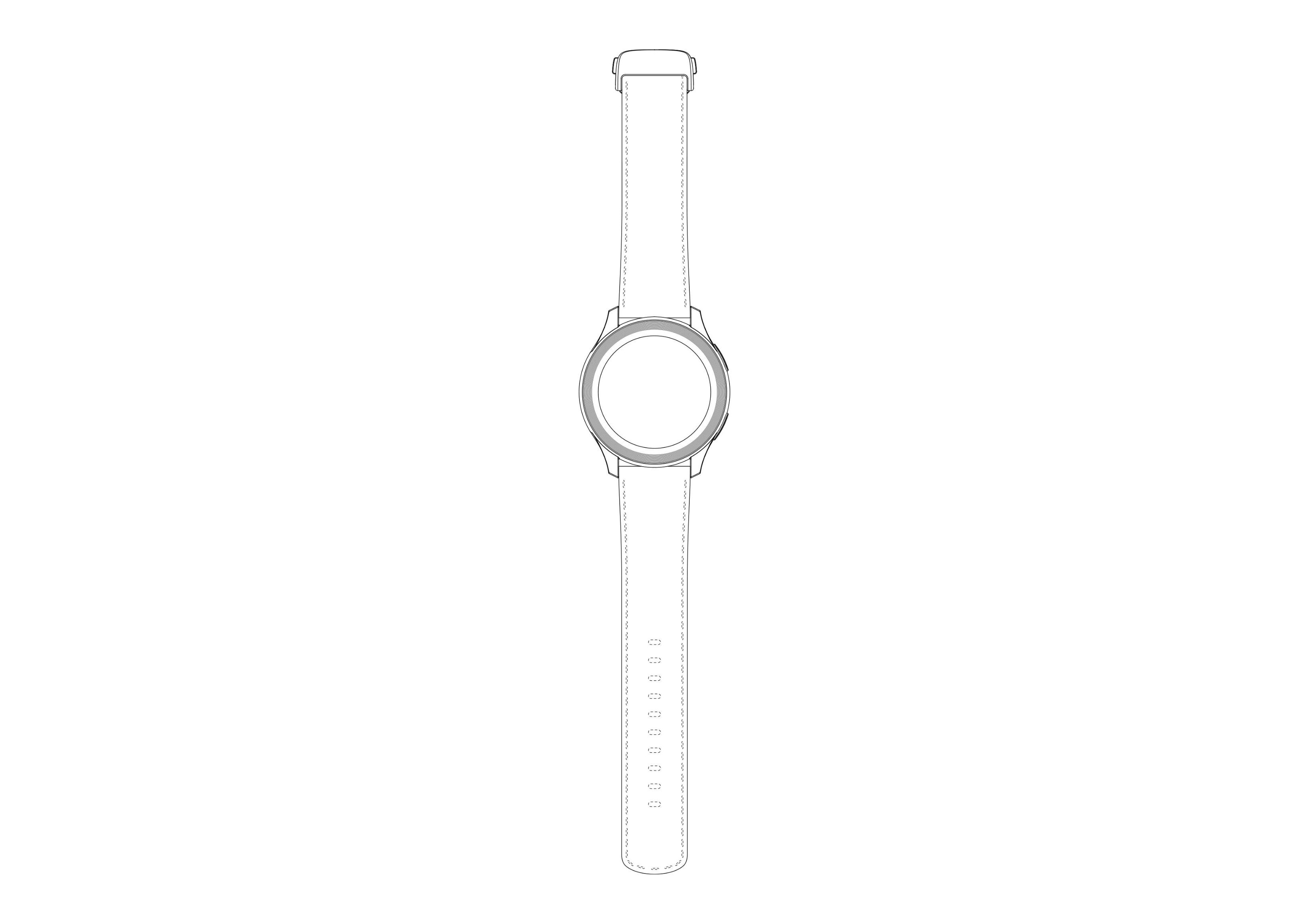
The OnePlus smartwatch with a square display could release as OnePlus Watch and the one with a circular screen may launch as OnePlus Watch RX. Both of them are certified by BIS and therefore, the due could get a launch in India like the OnePlus Band.
Unfortunately, nothing else is known about these watches, however, there’s a chance that the circular model could sport a design that was recently patented by OnePlus.
We use cookies on our website to give you the most relevant experience by remembering your preferences and repeat visits. By clicking “Accept”, you consent to the use of ALL the cookies.
This website uses cookies to improve your experience while you navigate through the website. Out of these, the cookies that are categorized as necessary are stored on your browser as they are essential for the working of basic functionalities of the website. We also use third-party cookies that help us analyze and understand how you use this website. These cookies will be stored in your browser only with your consent. You also have the option to opt-out of these cookies. But opting out of some of these cookies may affect your browsing experience.
Necessary cookies are absolutely essential for the website to function properly. This category only includes cookies that ensures basic functionalities and security features of the website. These cookies do not store any personal information.
Any cookies that may not be particularly necessary for the website to function and is used specifically to collect user personal data via analytics, ads, other embedded contents are termed as non-necessary cookies. It is mandatory to procure user consent prior to running these cookies on your website.