Tomorrow is Xiaomi’s big event and it plans to announce several products, one of which is the Mi 11 Lite/Mi 11 Youth. Ahead of the launch, Xiaomi has revealed the processor that will power the smartphone in addition to some other details.
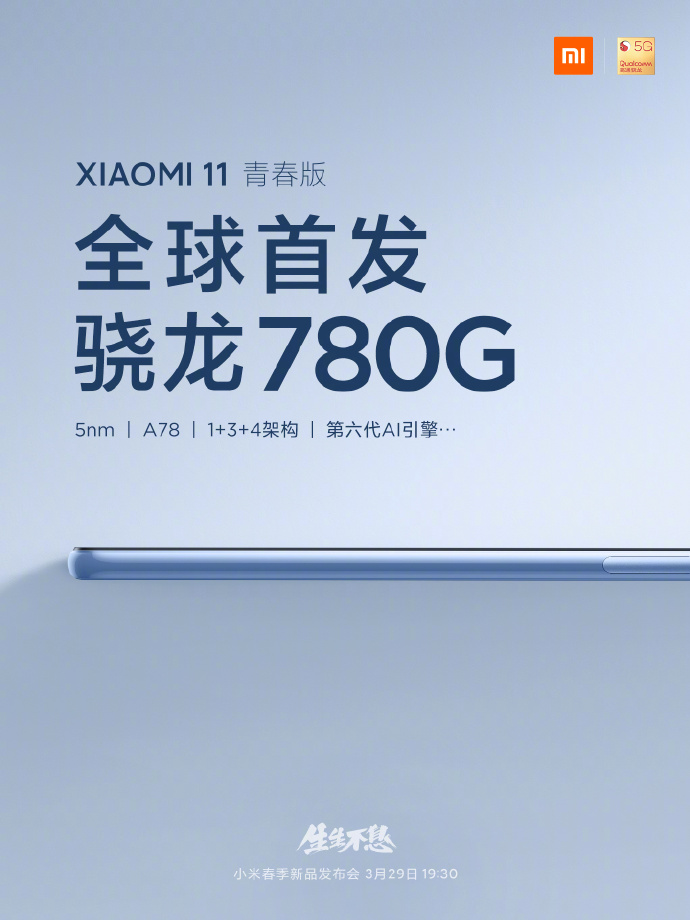
In one of its Weibo posts promoting the phone, Xiaomi revealed that it will come with the spanking new Snapdragon 780 5G processor that was announced a few days ago. This means the Mi 11 Lite will be the first smartphone to be powered by the new chipset.
The Snapdragon 780G 5G processor is the first 5nm Snapdragon 700 series chipset. It has eight CPU cores arranged in a 1+3+4 core arrangement. The prime core and the three main cores are based on the Cortex-A78 while the remaining four cores are based on the Cortex-A55. The chipset also comes with the new Adreno 642 GPU, the Spectra 570 ISP that allows for simultaneous image capturing from three cameras, and a Snapdragon X53 modem that brings up to 3.3 Gbps download speeds.
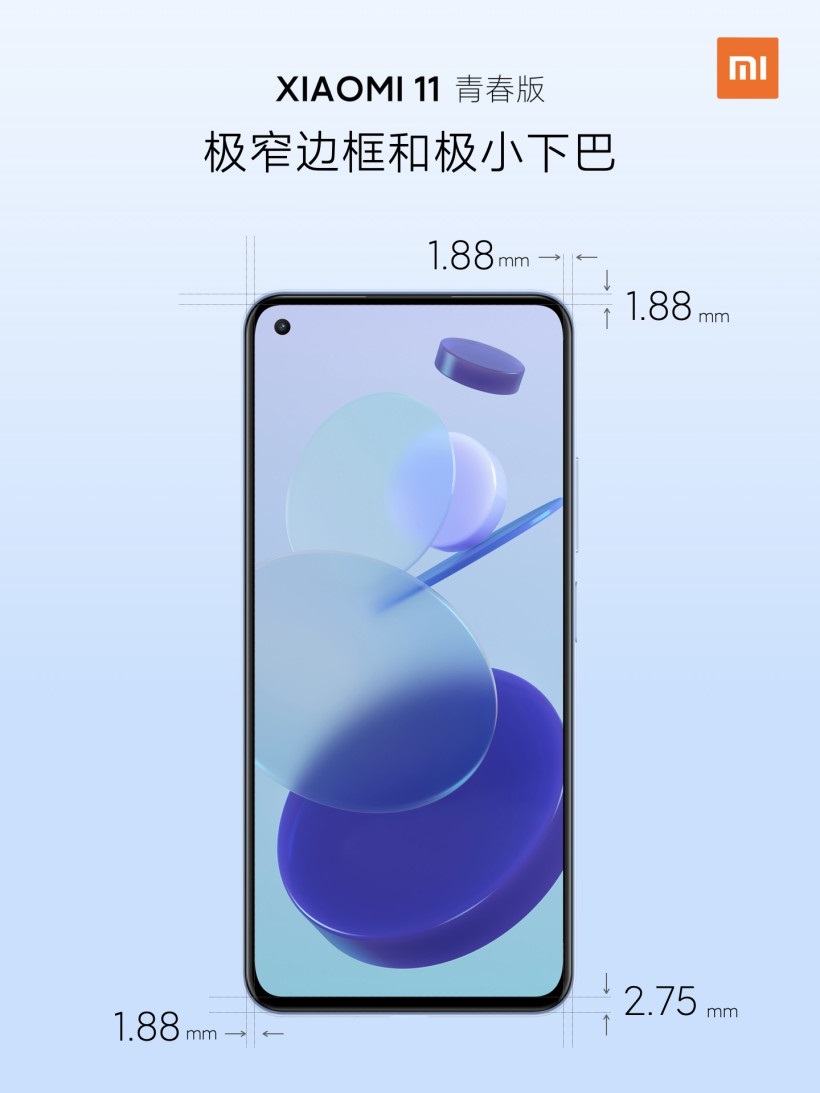
Xiaomi has also disclosed that the Mi 11 Lite will be the lightest and thinnest Mi phone in history. Another teaser poster that was shared on the internet shows the size of the bezels of the phone.
The Mi 11 Lite will come with a flat display with a hole punch at the top left corner for the front-facing camera. The bezels on the side and at the top are said to be 1.88 millimeters thick while the bottom bezel is 2.75 millimeters.
It has been reported that the phone will have a 6.55-inch FHD+ AMOLED screen with a 90Hz refresh rate. It will have 64MP triple rear cameras, a 20MP selfie camera, up to 8GB of RAM and 128GB of storage, and a 4250mAh battery capacity along with support for 33W fast wired charging.
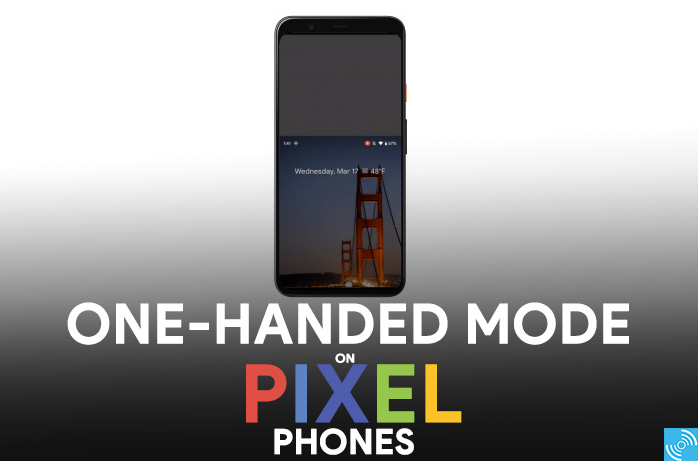
One-handed mode is not a novel feature if you have used custom Android UIs such as OneUI, MIUI or any other Android skins except the stock Android. Indeed it’s astonishing that One-handed mode took a long time to arrive in the stock Android. Nonetheless, as you’d know with the Android 12, Google has finally added the One-handed mode as a stock Android feature.
Here in this article, we’ll take you through how to enable One-handed mode on Android 12. It’s pertinent to mention here that, One-handed mode arrived on stock Android with the Android 12 Developer Preview 1. And, it’s likely to stay here as a core Android feature since smartphones are becoming increasingly tall and nifty, and feature such as One-handed mode is the need of the time.
Enough of babbling and let’s get straight to the point.
Steps to enable One-handed Mode on Android 12
If you’re running the latest Android 12 Developer Preview and would like to try the One-handed mode on your device. Then follow the below steps:
Go to Settings
Choose Gestures.
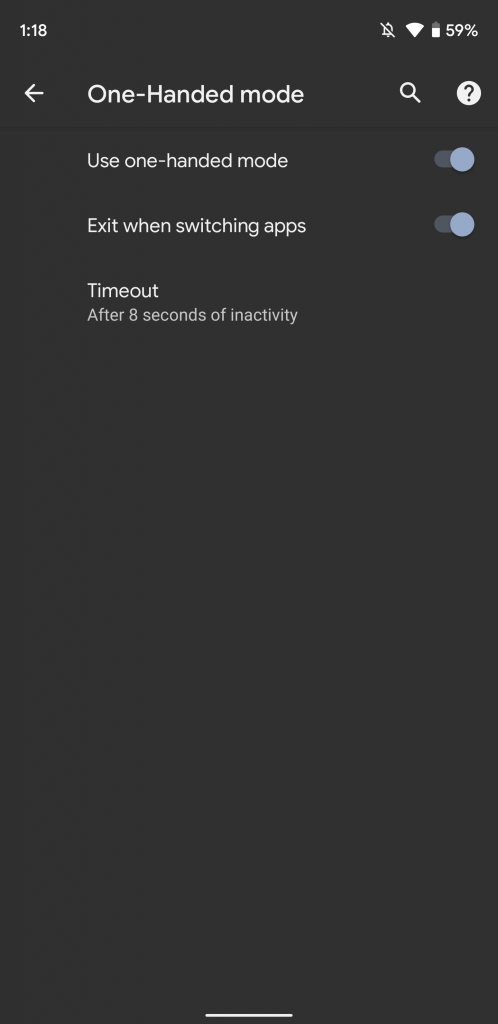
Tap on One-handed mode and enable the toggle
Once enabled you can swipe down on the very bottom of the display to trigger the feature
Not only that, you can customize the feature by tweaking the other options such as “Timeout” and “Exit when switching apps“.
Hope you’re successful in enabling One-handed mode and making use of it on your device. Google has been quick in fixing the issue which was present in the Developer Preview 1. Resultingly, the One-handed mode on DP2 is more polished and work as expected. Likely, Google will make it more stable in the final builds. Let’s wait and see what Google brings to the table with the final Android 12.
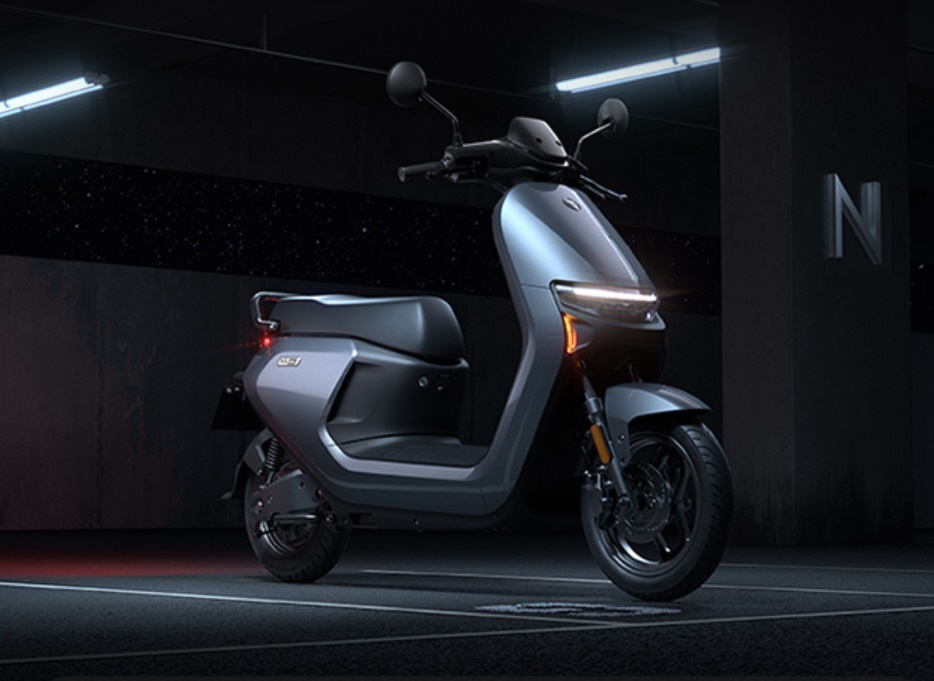
Along with the F25, A30C, and other scooter models, Ninebot also launched a new N-series made up of the N70C, N90, and N100 Electric Scooter. The new models join the E-series, and C-series that were launched last year.
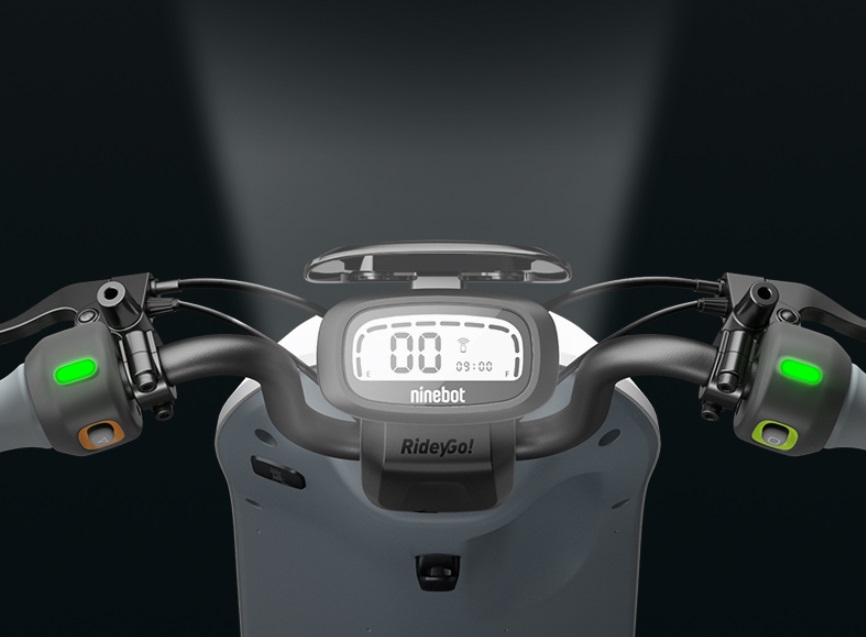
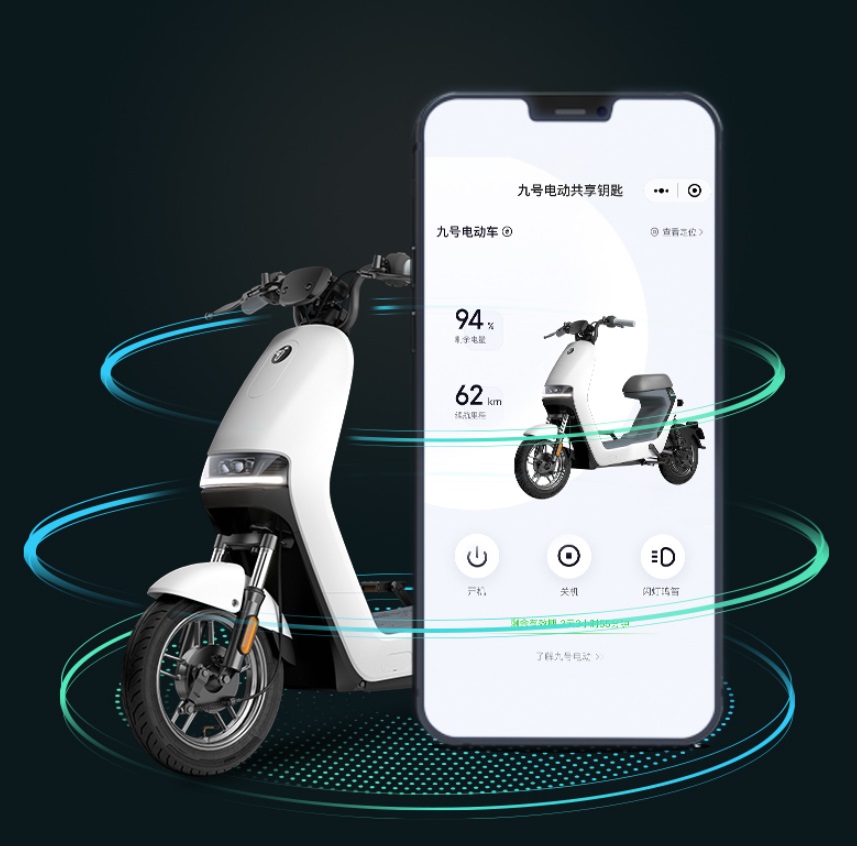
The new electric scooter series is equipped with RileyGo 2.0 smart technology. There are several sensors that are responsible for automatically unlocking the scooter and detecting the location of the bike using a mobile phone app.
Compared to the recently unveiled A-series, Ninebot’s N-series electric Mopeds are larger in size. They also come with a significantly improved storage space and range and are also equipped with True Intelligence 2.0 technology. Also, the Ninebot N-series electric scooter model is equipped with higher-power motors, and two of the three models pack the more efficient lithium batteries.
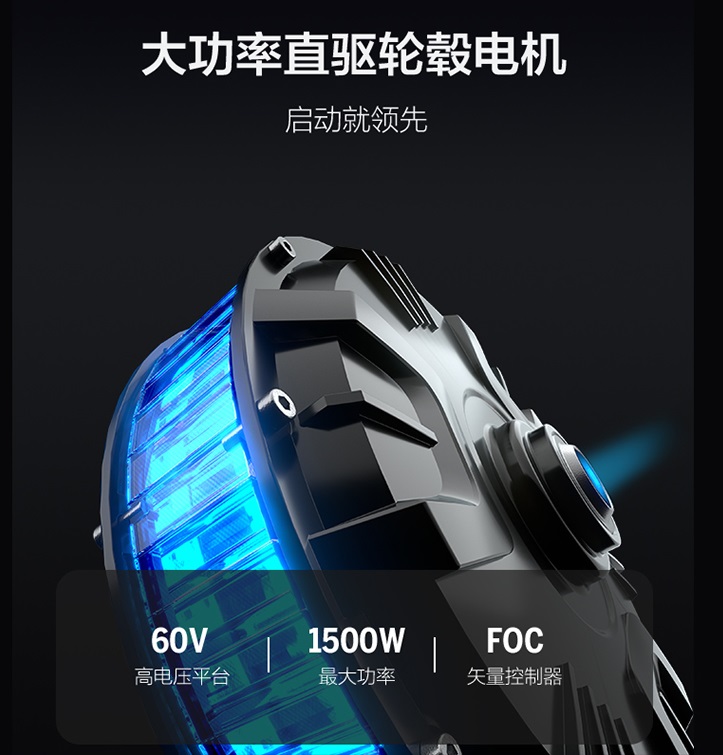
The first product, N70C, is equipped with a 60V lead-acid battery as well as a self-developed battery management system. The scooter has a range of 70km. The electric scooter also uses a high-power direct-drive hub motor with a maximum power of 1500W and higher efficiency.
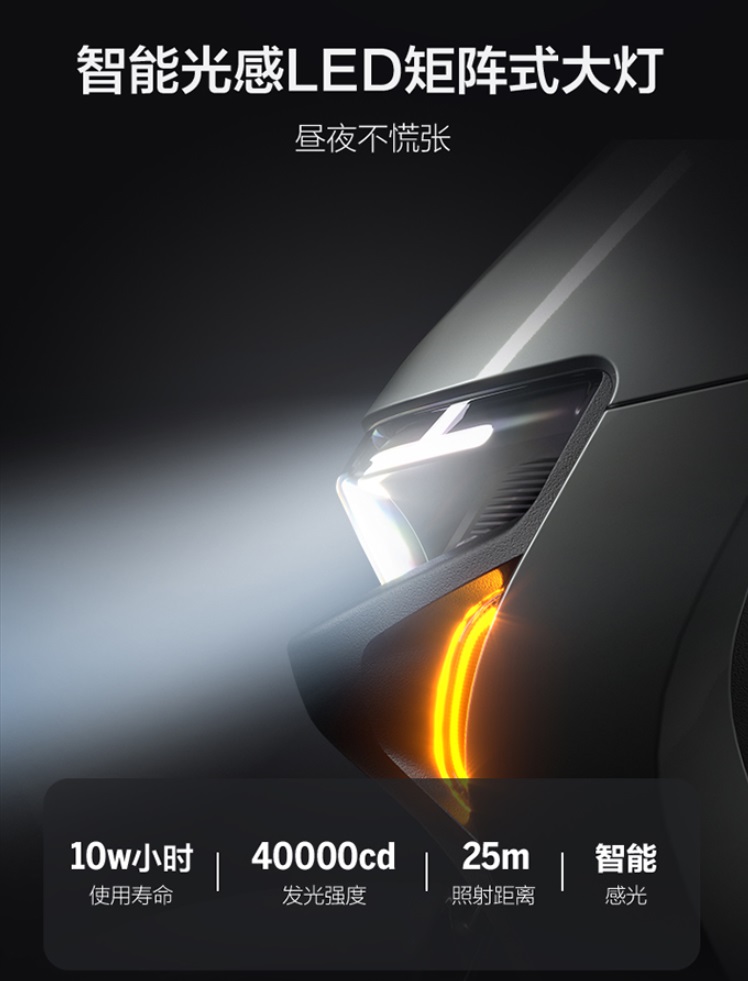
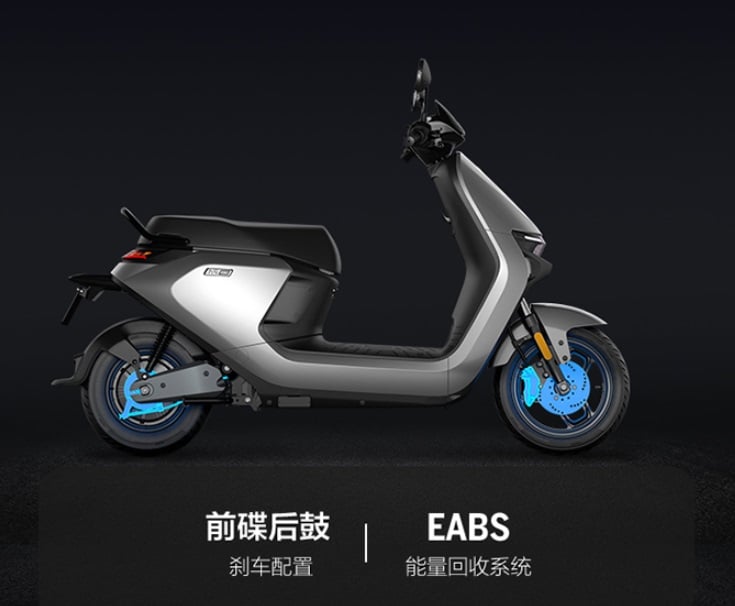
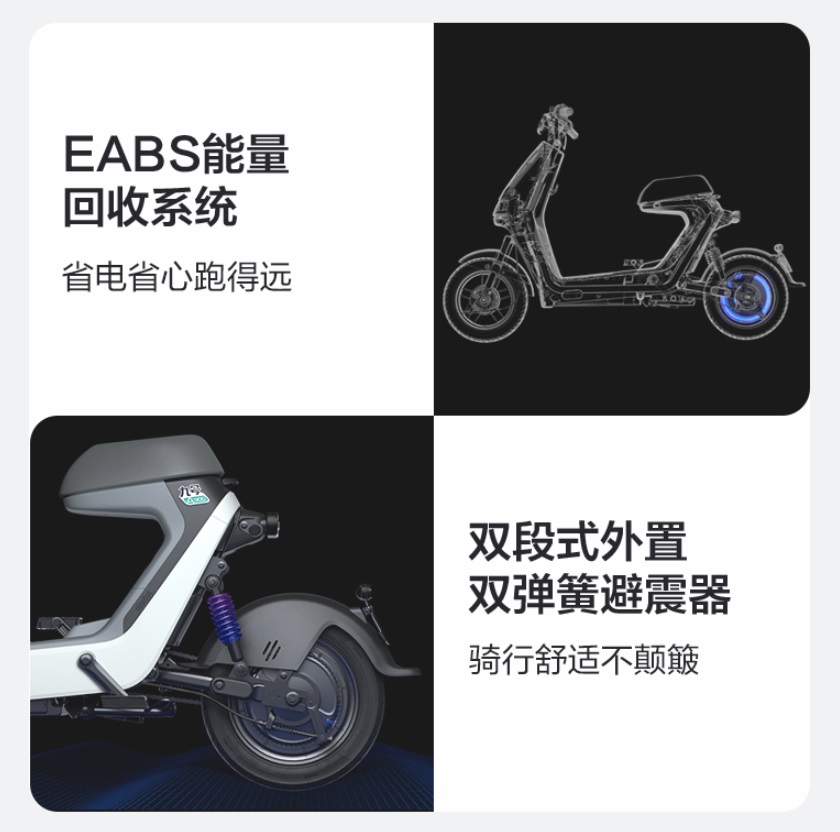
The N70C e-bike has a front disc and rear drum brake configuration, and an EABS energy recovery system. The front and rear wheels are equipped with damping shock absorbers to reduce bumps. The N70C is also equipped with smart light-sensitive LED matrix headlights, with an illumination distance of 25m.
The second model of the N series is the Ninebot N90 e-bike. The power of the N90 is increased to 1800W while the range is extended to 85km. it utilizes the ATL lithium battery which is more lightweight. It retains the same design as the N70C but carries a higher price tag of 6,499 yuan (~$993).
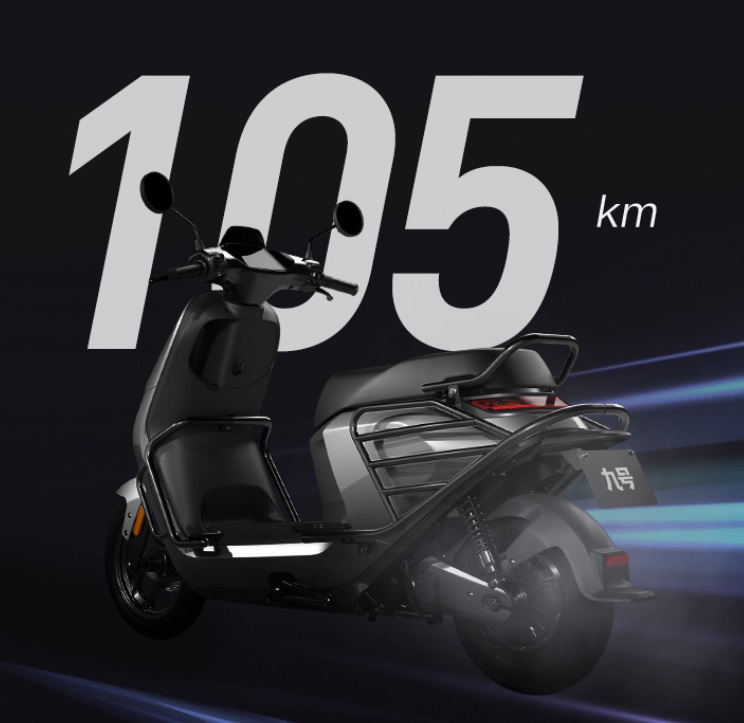
The Ninebot N100 electric scooter is the most powerful of the trio. The power is extended to 2200W while it can be used for a range of 105km. It is presently on crowdfunding for 6,999 yuan (~$1069).
The Ninebot N70C Electric Scooter is the cheapest with the pricing starting at 2999 yuan (~$458).
The Indian phone accessories market has a new entrant from boAt. It is the Airdopes 621 truly wireless earbuds with a capacity of 150 hours of extended listening. At the unveiling event on friday, boAt unfurled an impressive array of features of the Airdopes 621 earbuds that will expectedly draw many consumers to the affordable accessory.
The Airdopes 621 has Bluetooth 5.0 connectivity, is capable of instant pairing, has IPX7 waterproof capability, and both earbuds come with a 6mm driver. The IPX7 rating means that the service is unaffected by water splashes while being used for extended periods.
Each earbud of the Airdopes 621 has a 35mAh battery capable of providing 5.5 hours of uninterrupted listening on a full charge. The Airdopes 621 has a digital charging case with a 2600mAh battery that can extend the earbuds battery life to 150 hours (more than six days) of continuous operation. The massive battery life of the Airdopes 621 is a feature that has set the device ahead of its competitors. The digital charging case also supports fast charging and can double as a power bank for charging other devices. The charging case has a battery indicator that enables the user to monitor the battery usage effectively.
The boAt Airdopes 621 TWS earbuds are compatible with both Android and iOS devices. It has a single-touch Voice Assistant that enhances its usability. Besides, it is possible to take calls and change tracks with a button’s push, providing smooth touch controls for several operations.
The Airdopes 621 TWS earbuds are now on sale at Amazon India. Buyers who purchase the device now will enjoy a 62% discount bringing the price to Rs 2,999 (about $41.40). The discount price will be gradually scaled down in the coming weeks.
One of the ways to customize your mobile device is by the keyboard app you use. There are several keyboard applications available for both Android and iOS, with features that are similar as well as distinguishing.
Some of these keyboard apps allow you to customize the layout and themes. They also let you switch between languages, add your own words, and offer predictive text input, thus saving you time when typing. Some keyboard apps also have built-in search features that allow you to search for information on the web without leaving the app you are using.
For this week’s poll, we want to know which keyboard app you use. So, please take the poll below and also post a comment telling us why you like it and prefer it over others.
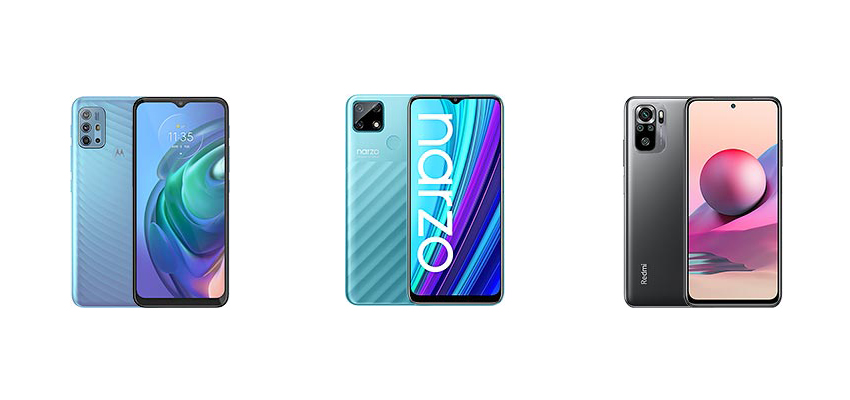
Despite most of the eyes are actually on Xiaomi and Realme, there is another brand releasing several affordable phones with an amazing quality price ratio: Motorola. The Lenovo-owned company recently came up with the Moto G10 Power: one of the best battery phones out there. Due to its huge battery, after the release, we thought a comparison between budget battery phones would be useful for those who wanted this kind of device in the first half of 2021. If you want a recent battery phone in the same price range, you actually have several choices. Among the best ones, there are Realme Narzo 30A and the Redmi Note 10S by Xiaomi. Here is an in-depth specs comparison.
Motorola Moto G10 Power vs Realme Narzo 30A vs Xiaomi Redmi Note 10S
The Motorola Moto G10 Power and the Realme Narzo 30A have similar design patterns: it looks like they copied each other. But the device providing the best design is actually the Redmi Note 10S: indeed, it is the only one with a punch-hole display and it features a higher screen-to-body ratio. Further, it has the IP53 certification which guarantees protection against splashes and dust. Motorola Moto G10 Power has a water-repellent coating, but it does not have any certification. While Motorola Moto G10 Power and Realme Narzo 30A sport a rear-mounted fingerprint reader, the Redmi Note 10S has a side-mounted scanner.
Display
The most advanced display belongs to the Xiaomi Redmi Note 10S. Despite it is a lower-midrange phone, it features a great AMOLED panel. Unfortunately, you do not get a high refresh rate, but you get a better image quality with more brilliant colors and deeper blacks. It even features a higher peak brightness with up to 1100 nits. Last but not least, unlike its two rivals, it provides a Full HD+ resolution with 1080 x 2400 pixels. The Motorola Moto G10 Power and the Realme Narzo 30A sport below-average displays with HD+ resolutions and IPS technology.
Hardware/Software
If you need the most powerful phone, then you should go for the Redmi Note 10S because it features a stronger Helio G95 chipset by MediaTek. The second place goes to the Realme Narzo 30A with its Helio G85, but the Moto G10 Power offers all the reliability of the Snapdragon 460 chipset built with a better 11 nm production process. Besides providing a better chipset, the Redmi Note 10S has better memory configurations with up to 8 GB of RAM and up to 128 GB of UFS 2.2 internal storage, while you get just 4 GB of RAM and 64 GB of storage with Realme Narzo 30A and Motorola Moto G10 Power.
Camera
The Xiaomi Redmi Note 10S is the best even when it comes to the camera department: it sports a 64 MP main camera which is actually superior to its two rivals and captures a higher level of detail. The secondary sensors are the same as the Motorola Moto G10 Power, including an 8 MP ultrawide lens and a pair of 2 MP sensors for macros and depth info. The Realme Narz0 30A is disappointing with its 13 MP main camera aided by just a 2 MP monochromatic sensor.
Battery
Motorola Moto G10 Power is the best battery phone of the comparison thanks to its 6000 mAh battery paired with an 11 nm chipset. Right after, we got the Realme Narzo 30A which can achieve very similar results. Redmi Note 10S is the inferior one but it features faster charging technology with 33W power.
Motorola Moto G10 Power vs Realme Narzo 30A vs Xiaomi Redmi Note 10S: Price
Motorola Moto G10 Power is priced at €120/$142 in the Indian market, Redmi Note 10S starts from €190/$225, and Realme Narzo 30A costs €108/$128. The winner of the comparison is Redmi Note 10S, but the Motorola Moto G10 Power can let you save a lot of money if you do not mind having the best display and chipset.
After bringing the updates to the flagship devices, Motorola has started rolling out the Android 11 update for the Moto G 5G Plus.
Moto G 5G Plus launched back in July 2020 with Android 10 out of the box. Months after the official announcement of Google, the Android 11 OS is now rolling out to the users of the device in Brazil. An update with firmware version RPN31.Q4U-39-27-5 with a download size of 1.08GB is rolling out.
The update brings Android 11 features like Conversation notifications, Chat bubbles, a built-in screen recorder, media controls in the Quick Settings panel, Smart Device controls, and more. Along with this, the update also brings the February 2021 security patch to the Moto G 5G Plus.
Coming back, this firmware version is only for the dual-SIM variant of the Moto G 5G Plus with the model number XT2075-3-DS. Hence, users in other regions will have to wait till Motorola officially expands the rollout.
We aren’t sure if the device would get the next Android 12 as of now, but we can expect security patches from Motorola. For now, if you are in Brazil, you can navigate to Settings > System > Advanced > System update to check out the new update.
It is not unusual for phone manufacturers to have certain models that are exclusive to select markets. Realme‘s V-series of smartphones is an example and it is exclusive to China. The manufacturer plans to announce a new model next week which will arrive as the Realme V13.
The Realme V13 is coming two months after the Realme V15. It has a design that can be called a mash-up of the Realme V15 and the Realme V11 5G. On the front, it has a hole-punch display like the former while the rear with its camera housing is similar to the latter.
The poster above shared on Weibo by a user named “Arsenal” shows the Realme V13 will have its punch hole at the top left corner of the screen. We don’t know the type of display, even if we can see that it has a side-mounted fingerprint scanner, but the poster says the screen has a 90Hz refresh rate. Other details the poster reveals include a 5G processor, a 5000mAh battery capacity, and 256GB of storage. It also has an audio jack and a USB-C port at the bottom and will be available in blue and black.
According to the source that posted the image, the phone shares similar specs to the Realme V5 and Realme Q2 but has a Dimensity 700 processor powering it. He also adds that the phone will have 8GB of RAM and a price tag of ¥1799 (~$275). It will go on sale on March 31 and be sold offline.
Following the return of the Nokia Mobile brand via HMD Global Oy, Juho Sarvikas has been the face of the brand. The Chief Product Officer of the Finnish company and VP of the North American division announced yesterday that he is leaving the company.
The top executive made the announcement on Twitter yesterday, revealing that his 15-year run at Nokia and HMD has come to an end. The announcement came as a surprise and has led to speculations about the future of Nokia Mobile. The timing also seems off considering HMD Global has a launch event scheduled for April 8 which is less than two weeks from now.
After amazing 15 years with Nokia and HMD, I have made the tough decision that is time to move on. I'm so proud of what we have achieved together and know that the success of HMD & Nokia phones will continue. Follow @nokiamobile for Nokia Phones news. Thank you for everything 🙏 pic.twitter.com/ZyCIsu7ouV
Mr. Sarvikas is yet to announce his next appointment as his Twitter bio and LinkedIn page still state his current positions at HMD Global. Nevertheless, we wish him the best in his future endeavors.
Nokia Mobile is not the only manufacturer that has had a top executive leave this week. Xiaomi’s Chief Financial Officer, Shou Zi, announced a few days ago that he is leaving the Chinese giant to take on the same role at ByteDance in his home country of Singapore
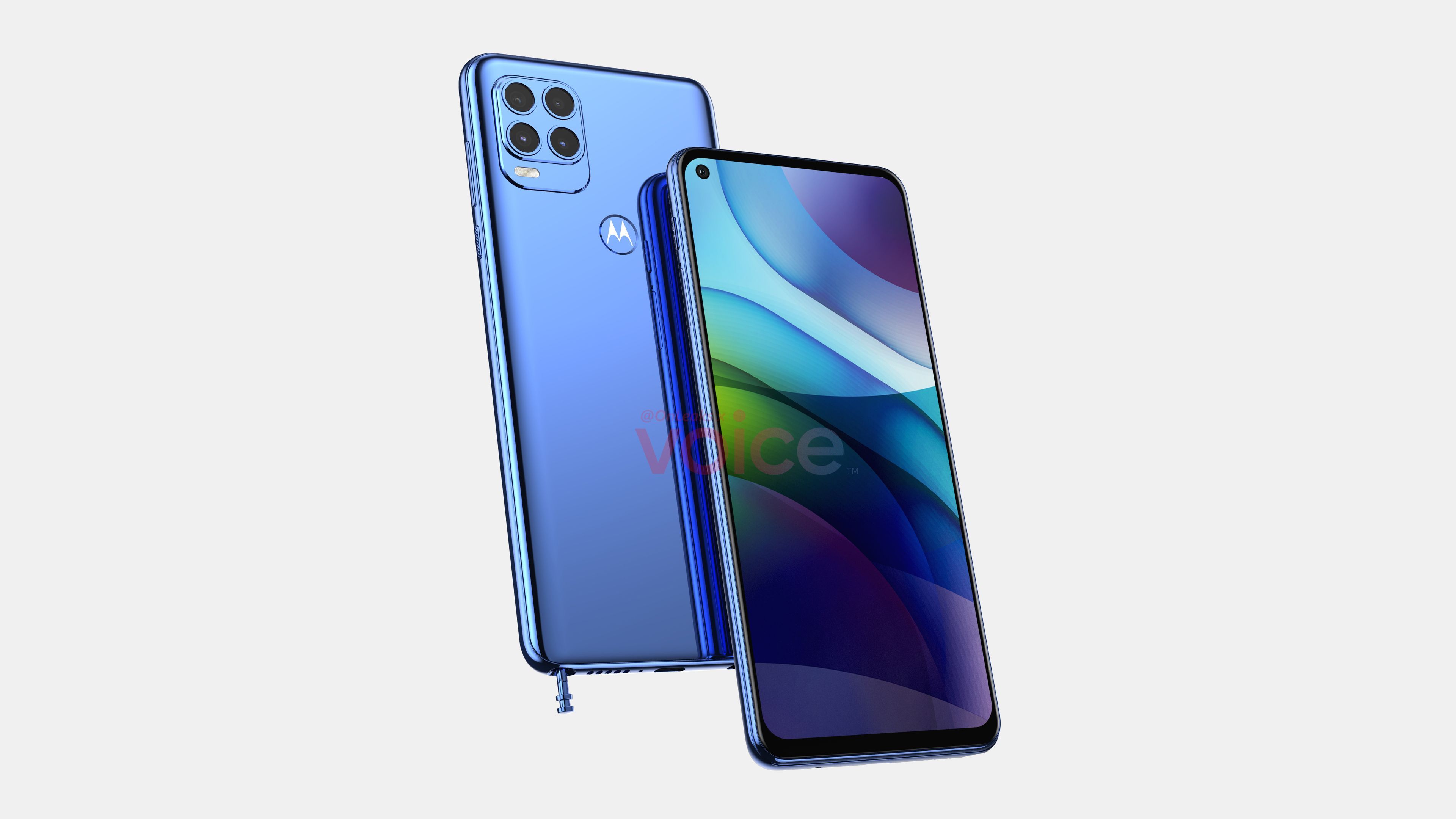
In early January, popular leaker Steve Hemmerstoffer (@OnLeaks) shared 3D CAD renders of a Motorola smartphone, which he called Moto G Stylus 2021. Just a few days later, the company officially launched a handset with the said name but it is different from the renders posted by @OnLeaks. Now, a couple of months later, more information about this unreleased phone has emerged.
The new details about this stylus-equipped Motorola smartphone come from TechnikNews. According to the publication, this phone is codenamed ‘Denver’. Unfortunately, they are not aware of the device’s marketing name yet.
Anyway, as per their findings, the Motorola Denver will be powered by a 5G-enabled Qualcomm Snapdragon 480 SoC, which is found inside the recently unveiled Moto G50. This handset will come with 4GB RAM but will be available in 64GB and 128GB storage variants.
Further, it will sport a quad-camera setup on the back. This setup will include a 48MP Samsung S5KGM1ST primary sensor, an 8MP Samsung S5K4H7 sensor with an ultra-wide-angle lens, a 5MP sensor with a macro lens, and a 2MP OmniVision OV02B1B depth sensor. Whereas, on the front, the device will have a 16MP OmniVision OV16A1Q sensor for selfies and video calls.
There’s no concrete info on the smartphone’s display but it could flaunt an FHD+ panel like the previous Moto G Stylus devices. Lastly, the Motorola Denver will feature a 3.5mm headphone jack and will be available in two colors (Red, Grey).
As of now, it is not known when Motorola will be launching this phone. But we can expect to learn more about it before its official announcement sometime in the near future.
Xiaomi is hosting one of the biggest launch events of the year on March 29 in China / Global. The company is literally revealing multiple products including two flagships Mi 11 Pro, Mi 11 Ultra, Mi Notebook Pro laptop, Mi Band 6, a Mi Mix device, a Wi-Fi router, and more. Add to this, now it has officially confirmed that Mi 11 Youth Edition will join the list probably as one of the thinnest 5g phones.
Xiaomi Mi 11 Lite 5G could debut as Mi 11 Youth Edition in China, Image Credit: Xiaomi, via: Winfuture.de
Xiaomi CC Product manager Wei has confirmed the news via a post on Weibo. The image shared on the post not only confirms the arrival of the device on the March 29 event at 19:30 local time but also the Mi 11 Youth Edition moniker.
Xiaomi is said to bring Mi 11 Lite 4G and 5G smartphones globally and out of this, the 5G version is likely to land in China as the Mi 11 Youth Edition. Qualcomm recently unveiled the 5nm Snapdragon 780 5G chipset and the Youth Edition is probably the first to feature it.
The 5G version with model number M2101K9Chas already been spotted on several certifications including the TENAA. Images from the listing suggest that the device will be similar to the 4G model with vibrant color options.
1 of 2
And like Wei says, the Mi 11 Youth Edition will probably be one of the thinnest & lightest 5G phones with a thickness of just 6.81mm. The leaked unboxing video shows that the device might lacks a 3.5mm audio jack but has a microSD card slot.
The entire specifications and features of the device have already been leaked by Roland Quandt of Winfuture.de. You can read our coverage to know them.
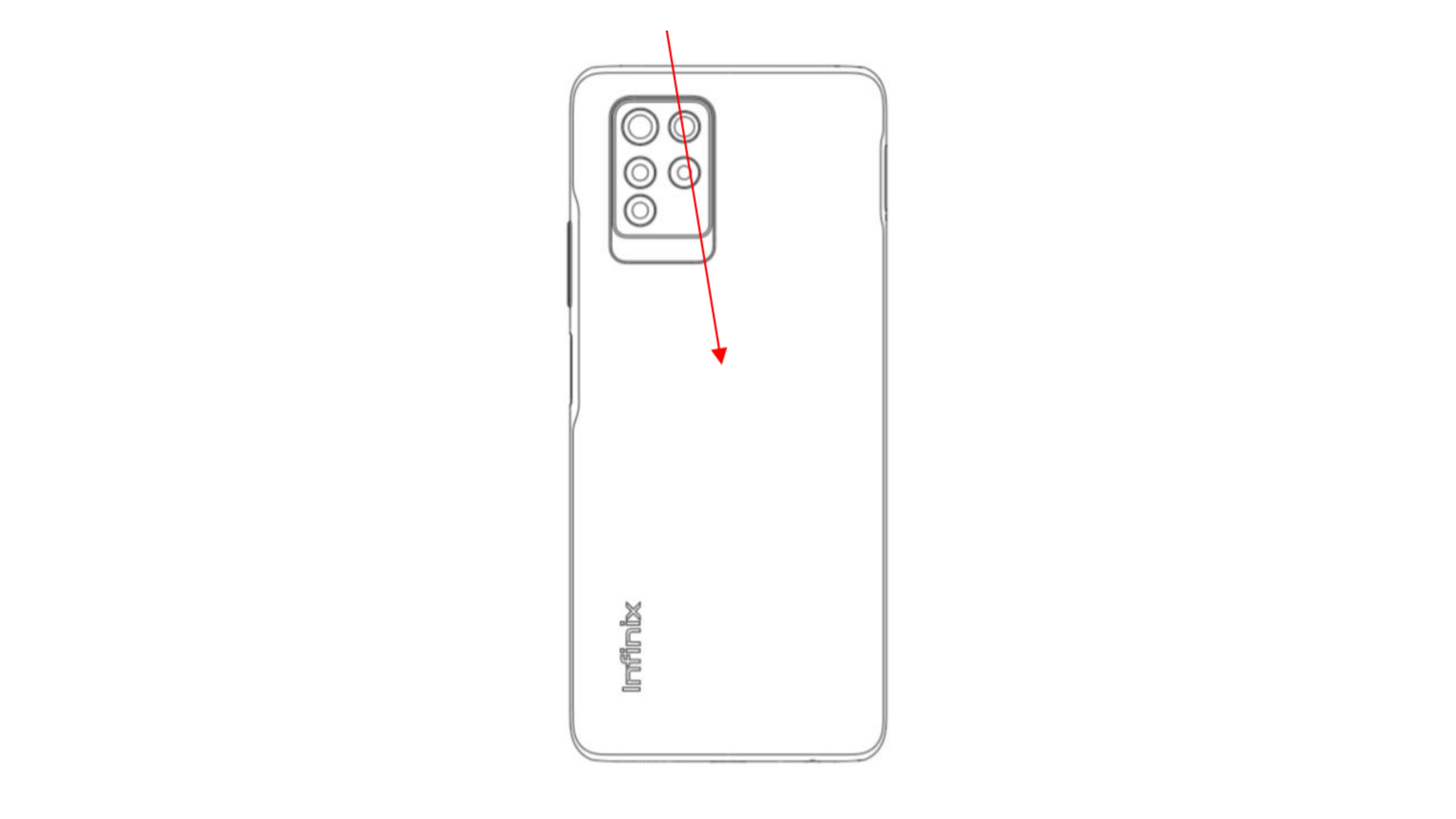
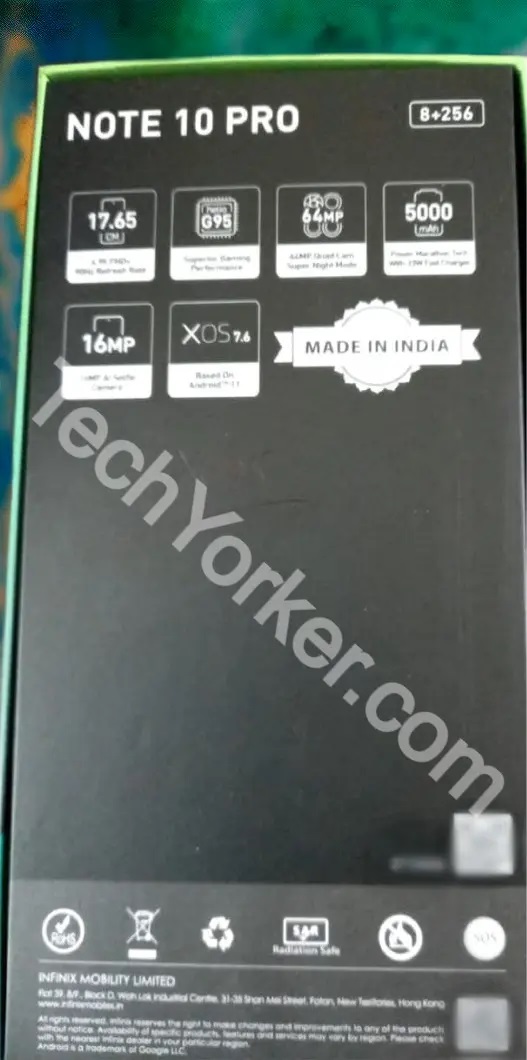
Infinix is working on Infinix Note 10 smartphones and we have seen evidences of this on FCC and Geekbench listings. Today, a report by TechYorker brings specs and features of the device via a leaked retail box image.
Infinix Note 10 Pro | Source: FCC
As per the report, the retail box of the device shows that the ‘Made in India’ Infinix Note 10 Pro(model: X695) will feature a display with a punch-hole at the center. And if the leaked image is true, the device will sport a humongous 6.9-inch screen with a 90Hz refresh rate.
Infinix isn’t new to launching phones with bigger screens. If you take the predecessors, the Infinix Note 8 and Infinix Note 8i, they have a display size closer to the one above. However, what is surprising is that despite sporting a bigger screen, the device seems to have a 5,000mAh battery which is about 200mAh lower than the predecessors.
Further, unlike the Geekbench listing suggested, the retail box shows that the Infinix Note 10 Pro has a MediaTek Helio G95 chipset and not a G90T. Although they are similar, the former is an overclocked version with a slightly improved ARM Mali G76 3EEMC4 GPU clocked at 900MHz.
For cameras, the FCC listing showed a quad-camera setup and the retail box says that the Infinix Note 10 Pro will have a 64MP main lens. This setup will have features like Super Night Mode. Upfront, the punch-hole is said to have a 16MP AI selfie shooter.
Other specs include 33W fast charging support, 8GB RAM, 256GB storage variant, XOS 7.6 based on Android 11. We can also expect the device to feature a dual-band Wi-Fi (5GHz), Bluetooth, and GNSS for navigation.
Apart from the Note 10 Pro, Infinix also has a device with model number X693 in the works and it could official as the non-Pro Infinix Note 10. Let’s wait for more details in the coming days.
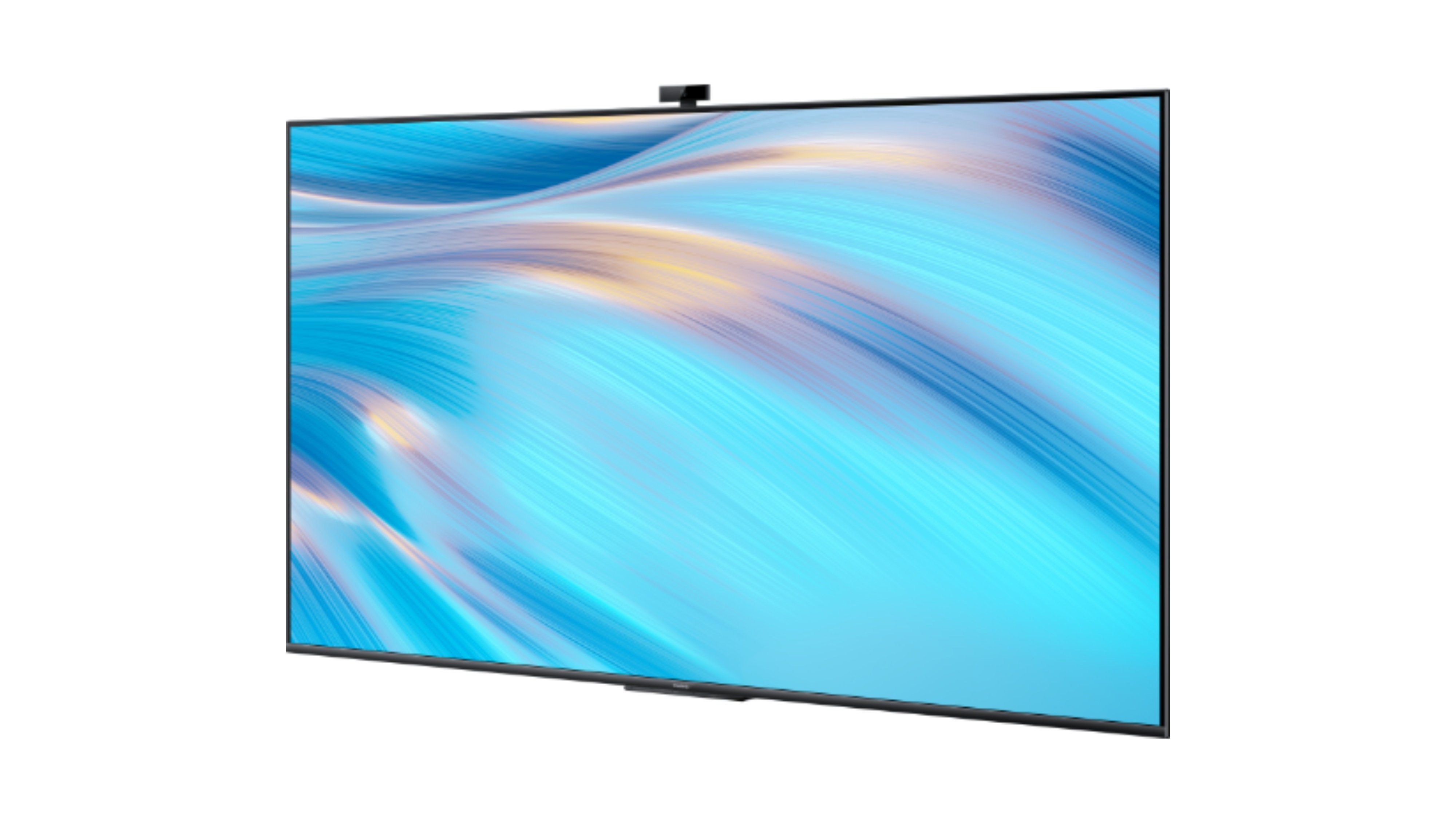
Last week, a new Huawei smart TV was certified by 3C along with the company’s first-ever high-end monitor. Only a little information was available at that time. Now, days later, a couple more details about this upcoming smart television emerge.
HUAWEI Smart Screen S Pro
According to a well-known Huawei-focussed tipster Changan Digital King on Weibo, the forthcoming Huawei TV will come with an audio system powered by Devialet. Further, he revealed that this television will be available in an 85-inch version, in addition to a 75-inch variant that was certified by 3C.
In case you do not know, Huawei had already partnered with Devialet, a French audio technology for its products. These products are none other than the company’s smart speakers – HUAWEI Sound X and HUAWEI Sound.
The leakster says that with Devialet sound, the upcoming Huawei television, which is expected to be part of a new series codenamed Frea will offer natural audio output. Additionally, he even claims that users may not require external speakers for this smart TV.
As per the 3C certification, this TV will sport an LED-backlit LCD panel. The 75-inch variant will come with model number HD75FREA and will be manufactured by Changhong (Sichuan Changhong Electric Co., Ltd.).
Apart from the above-mentioned specifics, nothing else is known about Huawei’s upcoming smart TV.
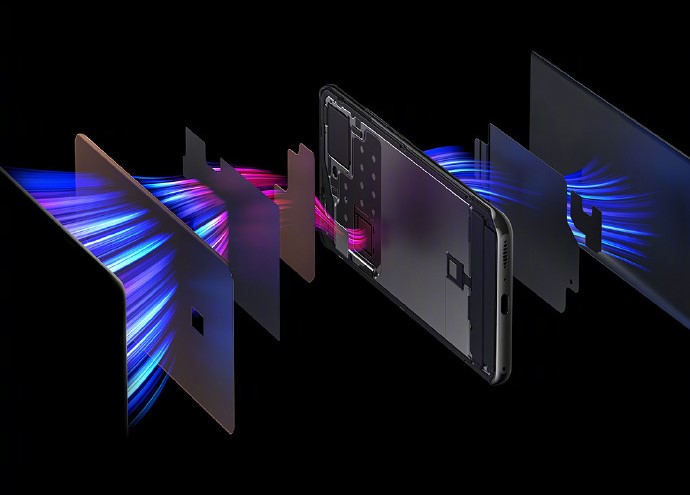
Xiaomi is launching the Mi 11 Ultra on Monday, i.e, March 29. With just two days left for the event, the company has been revealing key features that coming with the device. Today, it has confirmed that the device will boast a full phase change cooling technology.
Mi 11 Ultra cooling, Credit: Xiaomi/Weibo
In a Weibo post, the company says that the Xiaomi Mi 11 Ultra will be the first device in the world to feature this cooling tech. If the company’s words are true, then an organic hydrocarbon material inside will change states between solid, liquid, gas.
Now, whenever the core of the chipset heats up, this element, which is originally a solid thermal pad, will change from solid to liquid for absorbing the heat inside. Now, this heat will make the liquid evaporate and in this second phase change, it transfer the heat to the complementary VC soaking plate.
1 of 2
Last year, the company brought a cooling system with three main elements to the Mi 10 Ultra- graphene-copper sandwich, an additional graphene sheet, and a highly conductive film. However, it is claiming that the approach to keep the device cool will be a bit different in 2021.
Let’s wait for the launch on Monday to know more about it. Well, that’s not the only area where Mi 11 Ultra would focus. The device is taking a great leap in camera tech with a probable 50MP GN2 sensor, 48MP Periscope Telephoto, and 48MP ultrawide lenses.
The device is said to feature a 6.81-inch OLED QHD+ curved screen with a 120Hz refresh rate, Snapdragon 888 chipset, up to 12GB of RAM, 5,000mAh silicon-oxygen anode battery with 67W charging.
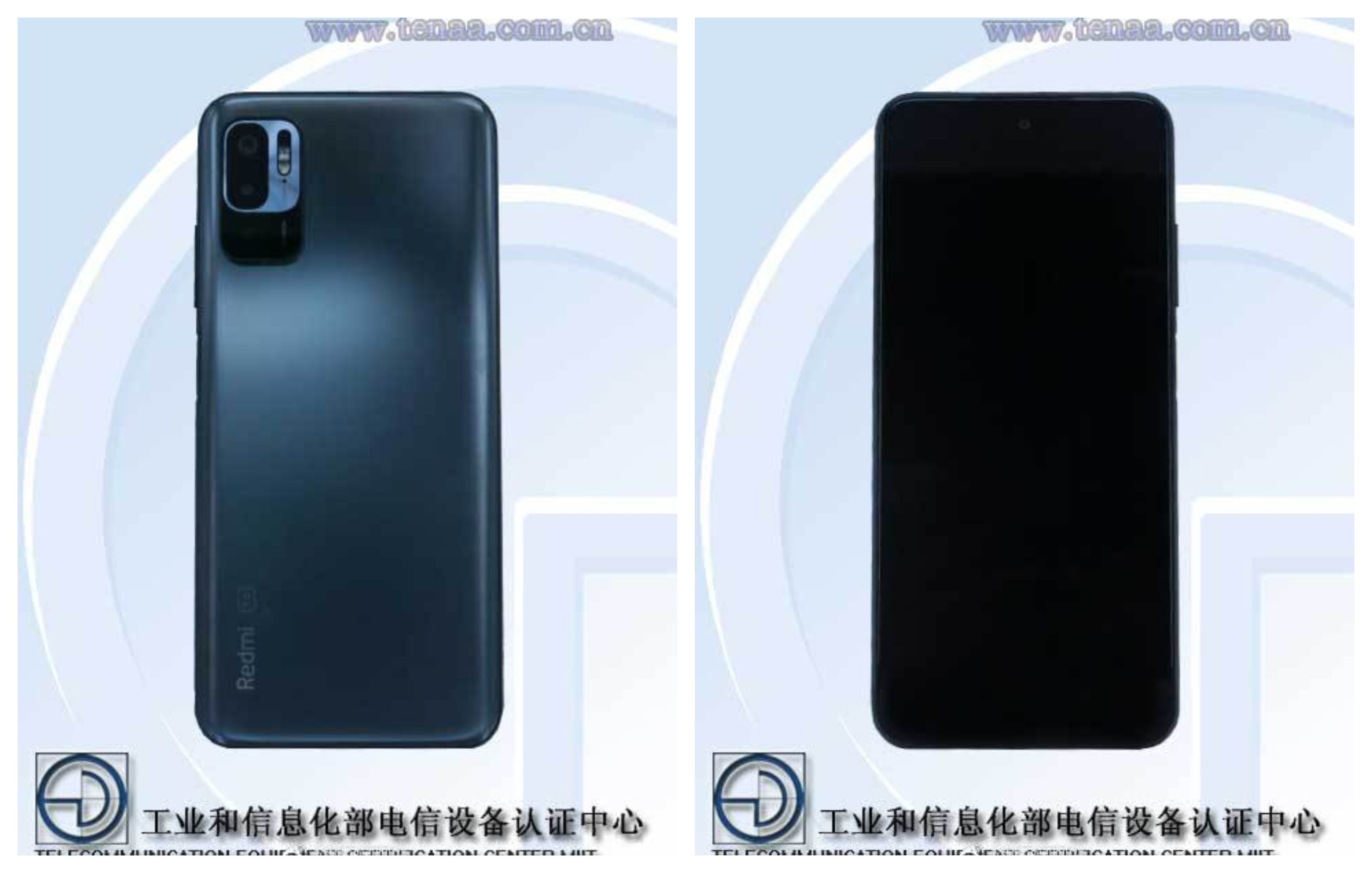
Earlier this month, Xiaomi launched the Redmi Note 10 series in global markets. Out of the five devices in the lineup, only one of them is 5G capable. This phone is called Redmi Note 10 5G, and it will be only sold in a select few regions from April. Now, according to new findings, this handset could likely debut in the company’s home country China very soon.
According to popular Chinese tipster Digital Chat Station, a Redmi 5G smartphone has been certified by TENAA. The phone’s images suggest it to be the recently launched Redmi Note 10 5G. Even the specs tipped by the leakster say the same.
Unfortunately, we couldn’t find the listing due to the lack of model number. Trying the model number of the Redmi Note 10 5G global variant (M2103K19PG) by replacing the G by C (M2103K19PC) did not yield any result. Hence, either the listing is now removed or this phone is different.
Anyway, as per the leaker, this upcoming handset will flaunt a 6.5-inch FHD+ LCD panel. This display will have a centered punch-hole for the selfie camera and a 90Hz refresh rate. Further, the device will be backed by a 5,000mAh battery with support for 22.5 fast charging. Lastly, it will come with a 48MP primary camera and a side-mounted fingerprint sensor.
Out of all the specifications the tipster mentioned, the charging rate is different than that of the Redmi Note 10 5G global variant, which is capped at 18W. That said, even if it turns out to be the same smartphone, it is not known what this device will be called in mainland China.
Xiaomi’s Mi Band line of fitness trackers has been a huge success. Last year, it announced the Mi Band 5 in June in China before a global release in July as the Mi Smart Band 5. Less than a year later, a successor is on the way and it will launch as the Mi Band 6.
The new fitness tracker has been confirmed to launch on March 29, the same day Xiaomi will announce the Mi 11 Pro, Mi 11 Ultra, and new Mi MIX phone. The new fitness tracker is expected to pack new features and upgrades but the design doesn’t seem to have changed.
A live photo that surfaced last week shows the Mi Band 6 has a practically identical design to its predecessor. The image also showed a magnetic charging cable just like that of the Mi Band 5.
Abi Go, Xiaomi’s Head of Product Marketing and Global Spokesperson also shared a video teasing the launch of the Mi Band 6.
One of the features the Mi Band 6 is expected to have is support for blood oxygen level detection (SpO2 monitoring). It came as a surprise when the Mi Band 5 was announced last year and it lacked this feature. It has also been reported that it may feature a bigger display, up to 30 sports modes, and should be available in standard and NFC variants.
The Mi Band 6 should launch outside China as the Mi Smart Band 6.
This month has been packed full of announcements with several new devices for consumers. Next week, the month (and quarter) will come to an end but it will do so on a high note based on the scheduled events.
Xiaomi’s Big Event
On Monday, March 29, Xiaomi will have a simultaneous event in China and the global market during which it plans to unveil a plethora of new devices. So far it has confirmed that it will announce the Mi 11 Pro and the Mi 11 Ultra, a new Mi MIX phone which may be its first commercially-available foldable phone, and a new Mi Notebook Pro. There are reports that it will also announce the Mi 11 Lite and the Mi Band 6.
ZTE’s March 30 mega launch
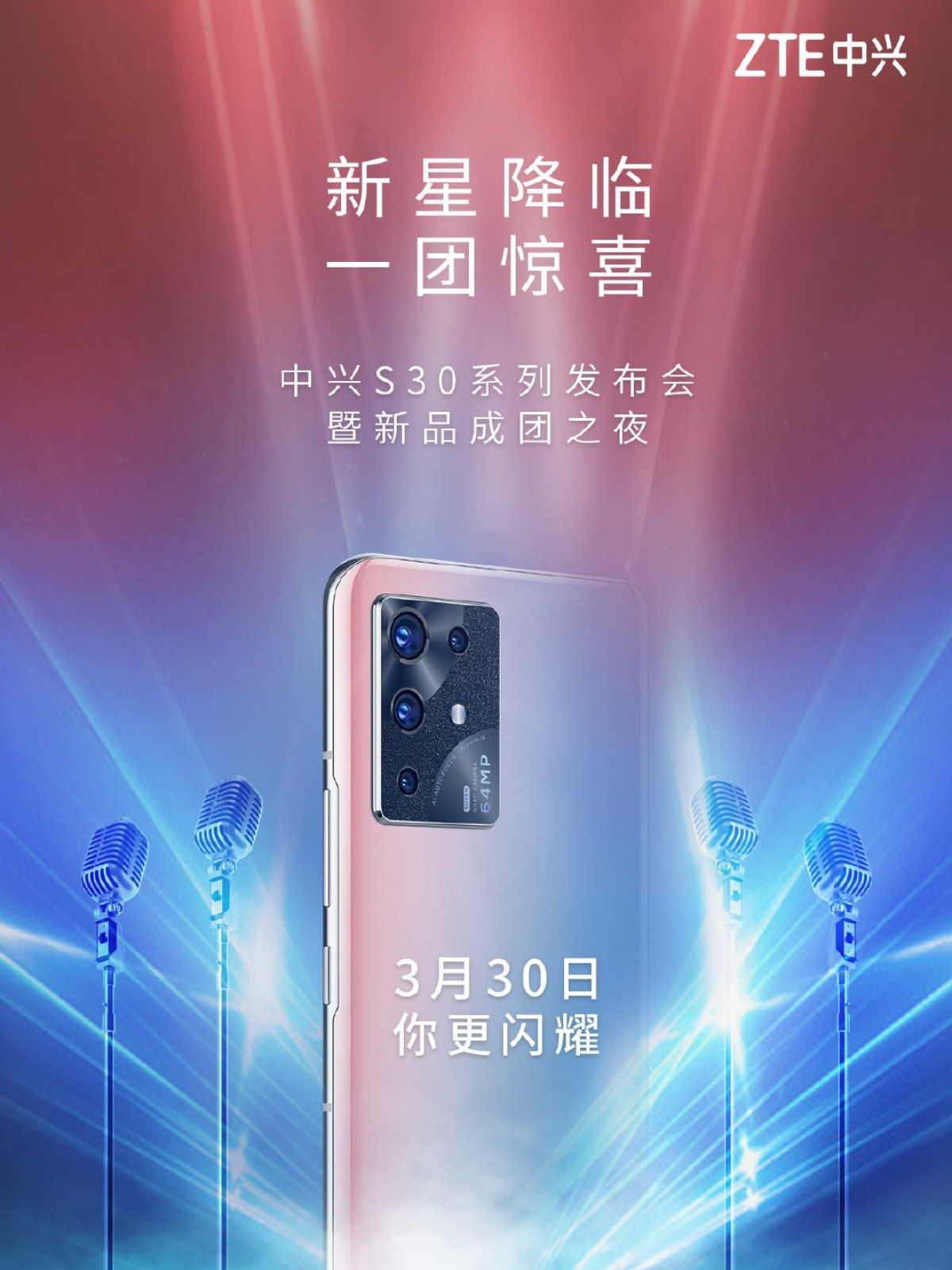
ZTE will take over on Tuesday, March 30 with its own mega launch. Unfortunately, it will be exclusive to China. The manufacturer has confirmed that it will announce the ZTE S30 Pro smartphone, the ZTE Watch GT smartwatch, its latest UI called MyOS, and a handful of other smart devices. It also said that there will be a surprise announcement on that day.
Another Galaxy S20 FE for India
Last year, Samsung announced the Galaxy S20 FE, an affordable version of its 2020 Galaxy S20 lineup. The phone was announced in two variants – a 4G version with Samsung’s own Exynos 990 processor and a 5G version with the Snapdragon 865 processor. India is one of the markets that got the 4G version; six months later, Samsung is bringing the 5G version to the country. The phone will be available starting March 30.
realme GT Neo Final Fantasy, Credit: Weibo/Feiyang
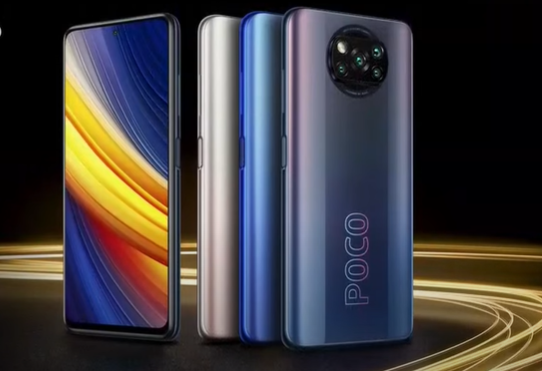
One of the major events this week was the global release of the POCO X3 Pro and the POCO F3. Next week, on March 30, POCO will announce the POCO X3 Pro at a special event for India.
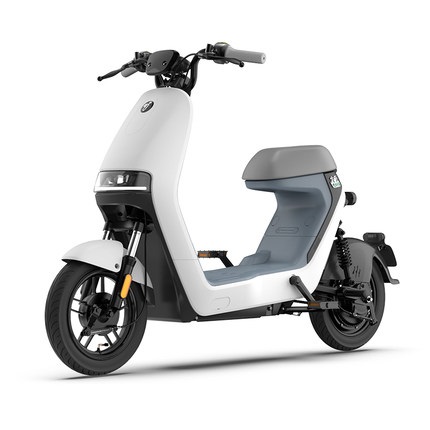
Xiaomi partner Segway-Ninebot held a product launch event recently where it unveiled some new electric bikes/scooters. The products came under a new A-series and N-series. The A-series saw the unveiling of the Ninebot A30C Electric Moped. Mopeds are traditionally small motorcycles with both a motorcycle engine and bicycle pedals.
The Ninebot A30C adopts a similar design but has an electric drive train. In other words, it has a bicycle pedal that can be deployed when the battery runs down. In terms of performance, the A30C electric bike is equipped with a 48V high-energy lead-acid battery with a cruising range of 40km. The body uses a high-carbon steel frame, aluminum alloy wheels, vacuum tires, and an EABS energy recovery system.
It packs a Lead-Acid battery of a 12ah rating. The battery has a maximum range of 34km. It also has a top speed of 25km/h. The Ninebot app affords users the chance to remotely unlock the scooter.
In addition, it supports functions such as card unlocking, password unlocking, electronic key sharing, and induction unlocking, which are very convenient. In addition, the scooter has a built-in abnormality alarm and AHRSS attitude sensing system, which can give an alarm when abnormal conditions are detected.
The scooter has a cloud box processing platform, which can collect multiple sensor information in real-time to monitor vehicle status. The electric scooter has functions such as ride sensing, push sensing, and side support sensing. The platform also supports OTA upgrades and has anti-theft capabilities.
The Ninebot A30S has a starting price of 1999 yuan (~$305) and is available in white-gray, red-gray, and gray-green colors. Apart from the A30S, Ninebot’s A-series also features other models such as A40, A65, and others which will be unveiled in due course. The differences may likely be in the battery type and maximum range. The A30S is available in China on Tmall.
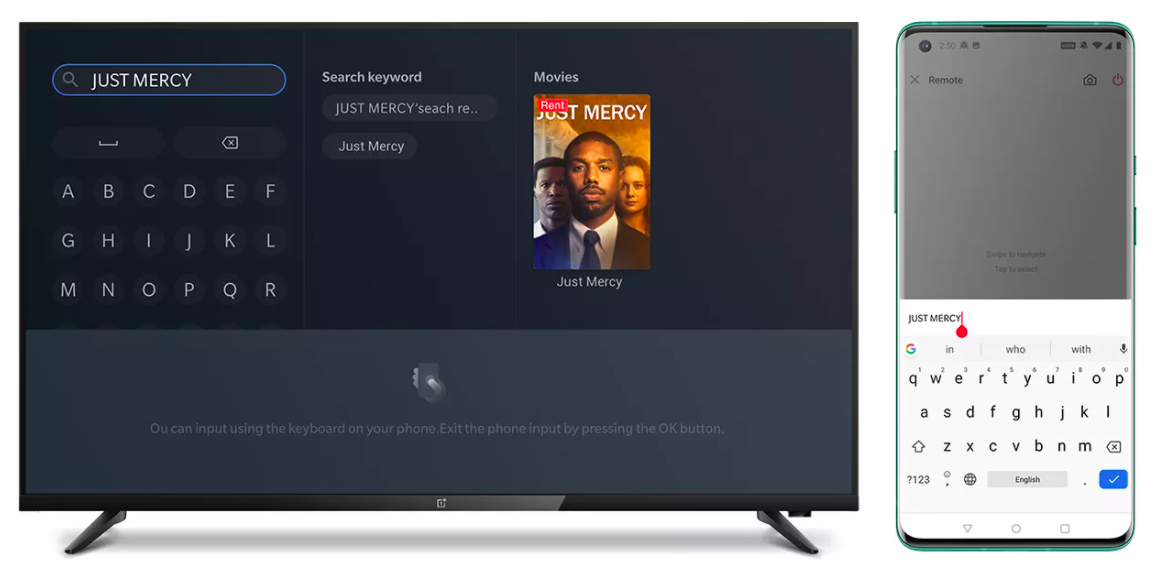
OnePlus Y TV is a 32” smart TV that features a bezel-less design with a screen body ratio of 91.4%. Powered by Android, you can control the smart TV with voice commands issued through Google Assistant and Alexa and also access multiple apps from the play store. The 32” display comes with a high color range of DCI-P3 93% featuring a 20% wider color gamut which gives you an immersive and original cinema experience.
With the 20W box speakers and Dolby Audio enhancement, the OnePlus TV delivers rich, powerful, and clear sound quality. For more information on this product check out this article from Gizmochina.
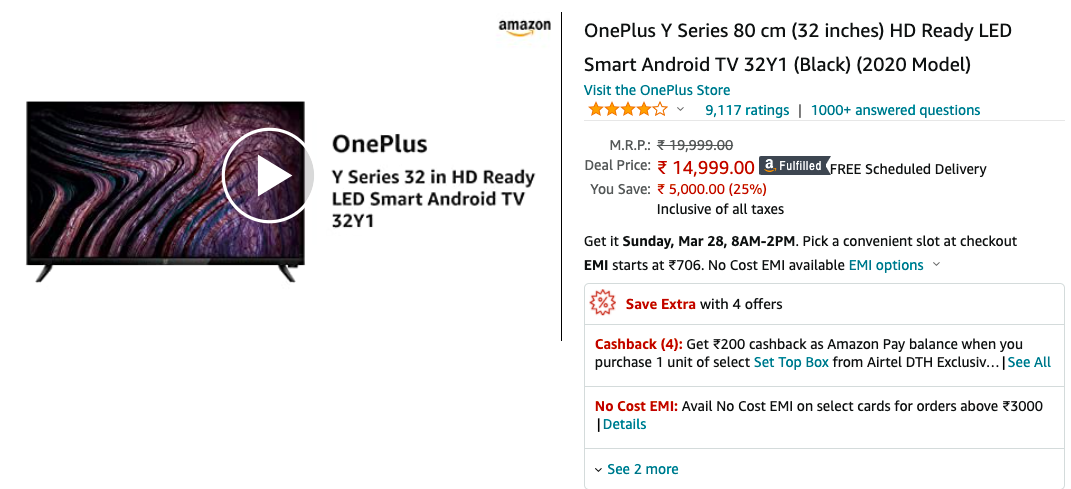
Generally retailing at ₹19999 OnePlus Y Series 32” Smart Android TV is now available at a discounted price of ₹14999 on Amazon India. Please note that additional cashback offers and No Cost EMI are available on the purchase of this product. So go grab your OnePlus TV before the deal expires.
For more information on such exciting deals and offers check out our deals hub.
* Please Note: When you buy something using the links in our articles, we may earn a small commission at no cost to you.
realme announced the realme UI 2.0 and the realme X50 Pro flagship was the first to get the early access back in September 2020. Today, the company has revealed the early access roadmap for Q2 2021.
Back in September, when the early access roadmap was announced, realme showed a holistic list of devices and the timeline of the updates. Well, today, the update is specifically for the list of devices that are getting the update in respective months during Q2 2021. Let’s take a look at it below:
To clear you up, this particular first wave of roadmap is exclusive only for India meaning the timeline will differ from other regions like SEA, Europe.
Apart from Q2, as confirmed earlier, realme has briefly teased that from Q3 2021, i.e from July, realme Narzo 30 Pro 5G and Narzo 30A will start getting the realme UI 2.0 Beta builds.
Speaking of which, the realme Early Access programs typically means the Beta build of the UI. That is, users of the above smartphones will get the Android 11-based realme UI 2.0 Beta before the end of the said months.
We use cookies on our website to give you the most relevant experience by remembering your preferences and repeat visits. By clicking “Accept”, you consent to the use of ALL the cookies.
This website uses cookies to improve your experience while you navigate through the website. Out of these, the cookies that are categorized as necessary are stored on your browser as they are essential for the working of basic functionalities of the website. We also use third-party cookies that help us analyze and understand how you use this website. These cookies will be stored in your browser only with your consent. You also have the option to opt-out of these cookies. But opting out of some of these cookies may affect your browsing experience.
Necessary cookies are absolutely essential for the website to function properly. This category only includes cookies that ensures basic functionalities and security features of the website. These cookies do not store any personal information.
Any cookies that may not be particularly necessary for the website to function and is used specifically to collect user personal data via analytics, ads, other embedded contents are termed as non-necessary cookies. It is mandatory to procure user consent prior to running these cookies on your website.