Last year, ZTE announced a smartwatch called the ZTE Watch Live. The entry-level wearable launched with a price tag of ¥229 (~$35) and a price tag that goes up to 21 days. The manufacturer has announced that it has a new smartwatch coming and it will arrive as the ZTE Watch GT.
ZTE mentioned the watch as one of the gifts to be won in a photography contest that it announced on its Weibo page on Friday, March 12. The post and the attached image said that the ZTE S30 and the new ZTE Watch GT are among the prizes to be won.
1 of 2
ZTE Watch GT
We are in the dark about what the smartwatch will look like and what features it will come with. However, we want to believe it will ship with upgraded features when compared to the ZTE Watch Live but still be affordable. We also hope more details will surface before the launch.
ZTE is yet to announce a release date but there is a chance that the ZTE Watch GT will be announced alongside the ZTE S30.
In January, a mysterious Nokia phone labelled as Quick Silver was spotted at the Geekbench benchmarking platform. Fresh information shared by Nokia Power Userreveals that this device could be launching soon with the Nokia X20 moniker. This handset will be accompanied by another device named the Nokia X10. The publication has shared the key specifications of the Nokia X10 and X20 smartphones.
The publication claimed that the Nokia X10 smartphone is codenamed as Scarlet Witch. The X10 and X20 smartphones are both expected to feature the 5G-ready Snapdragon 480 mobile platform. The X10 will come with 6 GB of RAM and 32 GB of storage, which sounds a bit strange. It will be available in colors like White and Green.
On the other side, the Nokia X20 will be a higher model as it will come with 6 GB of RAM and 128 GB of storage. This model will come in colors like Blue and Sand. The X10 could be priced at 300 euros (~$359), whereas the X20 may cost 349 euros (~$417).
HMD Global recently confirmed that it will be holding a launch event on April 8. There are speculations that the company may use the platform to announce the Nokia G10 handset. The same event could be used to announce the Nokia X10 and X20 smartphones. The Nokia G10 is expected to arrive with a 6.4-inch display, an octa-core processor, and a quad-camera system led by a 48-megapixel lens.
In related news, HMD Global is also said to be working on a successor for the Nokia 8.3 5G. This device is expected to arrive with a 6.5-inch QHD+ display with a 120Hz refresh rate support, the upcoming Snapdragon 775G chipset, a 5,000mAh battery, and a 108-megapixel penta-lens camera system.
The OnePlus 9 5G can be seen in three colors such as Stellar Black, Arctic Sky, and Winter Mist in the above shown image. The phone features a flat display with a punch-hole design. The lack of antenna bands indicates that the device has a plastic frame. Moreover, it also suggests that the company may have settled for a plastic rear. On the other side, the OnePlus 9 Pro 5G will come in three colors like Astral Black, Morning Mist, and Pine Green claims the tipster. It will continue to feature a curved edge display and a glass back.
The OnePlus 9 5G is expected to arrive with a 6.5-inch FHD+ AMOLED screen that offers a 120Hz refresh rate. On the other side, the OnePlus 9 Pro 5G may feature a 6.67-inch AMOLED QHD+ screen with support for a 120Hz refresh rate. The Snapdragon 888 mobile platform may power both handsets with up to 12 GB of LPDDR5 RAM. The duo may offer up to 256 GB of native storage.
OnePlus 9 Pro 5G renders by Ishan Agarwal
The OnePlus 9 and 9 Pro are expected to feature a 16-megapixel front-facing camera. The Hasselblad branded rear camera system of the OnePlus 9 5G includes a 48-megapixel Sony IMX789 primary camera, and a 50-megapixel Sony IMX766 ultrawide snapper, and probably a telephoto lens. The Pro model has a quad-camera setup that includes a Sony IMX789 48-megapixel main camera, a 50-megapixel Sony IMX766 superwide sensor, an 8-megapixel telephoto lens, and a 2-megapixel depth helper.
The OnePlus 9 5G and 9 Pro 5G may feature a 4,500mAh battery with 65W fast charging support. A recent leak claimed that the Pro model will support 50W wireless charging. There is a possibility that the vanilla variant may come with 30W charging.
A lot of features that used to be found on high-end phones have made their way to mid-range phones and even entry-level devices. Features like AMOLED displays, high refresh rates, in-display fingerprint scanners, super-fast charging, and glass back panels are no longer exclusive to flagship phones.
However, there is one feature that has been around for much longer but has largely been exclusive to flagships and that is support for wireless charging. With the exception of a very few models, wireless charging is one feature we have not seen a lot of manufacturers bring to the mid-range/budget categories.
For this week’s poll, we want to know if you think mid-range or budget phones should have support for wireless charging or if you believe it should remain a flagship-exclusive feature. So, please take the poll below and also share your thoughts in the comment box below on why you support or are against it.
DxOMark has published the selfie camera review for the OnePlus 8T. The review comes a few weeks before the launch of the OnePlus 9 series.
The review labs has awarded the OnePlus flagship a score of 82 points, which trails behind the 93 points scored by the OnePlus 8 Pro. The score is broken down into 80 points for photo and 84 points for video.
Acording to the review, the OnePlus 8T’s 16MP f/2.4 camera, has “accurate target exposure both in indoor and outdoor conditions, a nice level of detail at close range, good management of noise both indoors and out, and a smooth bokeh effect with accurate subject isolation.”
It goes on to say that the depth of field is shallow at medium and long range as a result of having a fixed focus lens. It also has a limited dynamic range and sometimes there are artificats such as flare, anamorphosis, and oversharpening on faces. The OenPlus 8T struggles with skin tones in low light and some times, skin tones are oversaturated even when there is enough lighting indoors and outdoors.
For videos, the OnePlus 8T’s performance is said t be on a similar level to phones such as the Google Pixel 3 and the Xiaomi Mi MIX 3. The review says that recording is best at 1080p and 30 frames per second. The phone does a good job at managing nose and white balance is accurate in bright outdoor light. The narrow depth of field and artifacts such as hue shifts on faces or in the background are the drawbacks when recording.
You can read the full review which includes sample photos and videos.
Xiaomi finally launched the Redmi Note 10 series including three of the best value-for-money handsets in the market. But the new lineup is not alone in the same price segment and it has several rivals. In the Indian market, one of the best is the Realme Narzo 30 Pro 5G launched in the second half of February exclusively for Indian customers. The phone is sold in the same price range as the Redmi Note 10 Pro and it offers very nice specifications: do you need to know which one provides the highest value for money? Check this comparison to learn the pro and cons of each device.
Xiaomi Redmi Note 10 Pro vs Realme Narzo 30 Pro 5G
Xiaomi Redmi Note 10 Pro
Realme Narzo 30 Pro 5G
DIMENSIONS AND WEIGHT
164.5 x 76.2 x 8.1 mm, 192 grams
162.2 x 75.1 x 9.1 mm, 196 g
DISPLAY
6.67 inches, 1080 x 2400p (Full HD+), Super AMOLED
Triple 48 + 8 + 2 MP, f/1.8 + f/2.3 + f/2.4
16 MP f/2.1 front camera
BATTERY
5020 mAh, fast charging 33W
5000 mAh, fast charging 30W, USB Power Delivery 15W
ADDITIONAL FEATURES
Dual SIM slot, splash resistant (IP52)
Dual SIM slot, 5G
Design
The Realme Narzo 30 Pro 5G is slightly more stylish when it comes to design, but it is just my opinion. First of all, it is more compact. Further, the color variants are more attractive. On the other hand, the Xiaomi Redmi Note 10 Pro is thinner and lighter, but the bigger dimensions make the Realme Narzo 30 Pro 5G more comfortable to keep in a pocket and for one-handed usage. Both the phones are built with cheap materials and they come with a side-mounted fingerprint scanner for authentication. Note that Xiaomi Redmi Note 10 Pro features stereo speakers and an IR blaster to control the TV, while Realme Narzo 30 Pro 5G does not.
Display
The best display belongs to the Xiaomi Redmi Note 10 Pro for a simple and single reason: it is an AMOLED panel. That is the reason why it is able to show more brilliant colors and deeper blacks. It even comes with the HDR10 certification providing a higher image quality on streaming platforms. The Realme Narzo 30 Pro 5G has a 120 Hz refresh rate just like the Redmi Note 10 Pro, but unfortunately, its display is IPS and it does not feature the HDR10 certification. Last but not least, Redmi Note 10 Pro has a wider panel.
Specs & Software
While the Xiaomi Redmi Note 10 Pro has a superior display, the Realme Narzo 10 Pro 5G is actually superior in terms of hardware. First of all, it has a more powerful MediaTek Dimensity 800U chipset paired with up to 8 GB of RAM and 128 GB of UFS 2.1 internal storage. While Redmi Note 10 Pro has faster UFS 2.2 storage the Snapdragon 732G is actually inferior to the Dimensity 800U. Realme Narzo 30 Pro 5G supports 5G connectivity, while Redmi Note 10 Pro does not. Both the phones are based on Android 10 with a highly-customized user interface, and they will get updated to Android 11 soon.
Camera
The best rear camera department belongs to the Xiaomi Redmi Note 10 Pro: it has a 64 MP main camera, an 8 MP ultrawide camera, a 5 MP macro sensor, and a 2 MP depth sensor. With the Realme Narzo 30 Pro 5G, you get an inferior 48 MP main camera and, unfortunately, no macro camera. But it actually comes with a better 16 MP selfie camera. None of these devices is a high-end camera phone, but in a lot of scenarios, you can get a slightly better result with the Xiaomi Redmi Note 10 Pro.
The Xiaomi Redmi Note Pro and the Realme Narzo 30 Pro 5G offer more or less the same battery capacity: the former has 5020 mAh, while the latter has a 5000 mAh battery. Even fast charging technologies have similar powers: 33W and 30W, respectively. But similar battery capacities do not mean the same battery life. The AMOLED display of the Note 10 Pro has a lower energy consumption, as well as the chipset of the Realme Narzo 30 Pro 5G. It will be a tough fight, but the differences should be just marginal.
Price
The prices of the base variants of the Redmi Note 10 Pro and Realme Narzo 30 Pro 5G range between €180/$215 and €210/$250 in the Indian market. If 5G is important for you because you want to keep your new phone for years, then you should go for the Realme Narzo 30 Pro 5G. Otherwise, Note 10 Pro is superior on the paper.
Xiaomi Redmi Note 10 Pro vs Realme Narzo 30 Pro 5G: PRO and CONS
The Moto G100 is an upcoming smartphone from Motorola that is expected to launch soon. The phone will be the first Moto G series phone to have a Snapdragon 800 series processor. Ahead of its launch, press renders have surfaced that give us an early look at what is coming.
We already know that the Moto G100 is the international version of the Motorola Edge S. However, rather than distinguish the phones by giving them entirely different colorways, it appears Motorola chose to have the shades be slightly different as shown in the images which were posted by TechnikNews.
The Moto G100 will have a 6.7-inch FHD+ 90Hz LCD screen with two punch holes for the two front-facing cameras. There are four rear cameras and written below the camera array are “64MP” and “Audio Zoom”. The device has a side-mounted fingerprint scanner and volume rocker on the right while the left side is home to the SIM tray and Google Assistant button.
It has been reported that the Moto G100 will come with up to 12GB of RAM and 256GB of storage. Motorola already confirmed in a teaser video that the phone will be powered by the Snapdragon 870 processor and will have an audio jack. It should run Android 11 out of the box with Motorola’s My UX on top.
HMD Global has an event coming up next month. As seen on the official Nokia mobiles website, the event is scheduled for April 8 and it has been reported that it will unveil new phones and mobile accessories on that day.
According to the image which was spotted by NokiaPowerUser, the event will begin at 3 PM GMT. However, it doesn’t hint at which products will be announced. There are speculations that one of the devices that may be unveiled is the Nokia G10.
The Nokia G10 is a mid-range phone and it is expected to be the first smartphone to launch under the revamped naming scheme. It has been reported that it will have a 6.4-inch screen, an octa-core processor, and a 48MP quad-camera.
We are not sure if there will be another smartphone announced but we expect more than one product will be unveiled on the day. There is also a possibility that the Nokia-branded power banks that surfaced recently will be announced on that day.
If you have been waiting for more Nokia-branded accessories, then you are in luck. The official Nokia online shop has put up listings for three new Nokia-branded power banks. The power banks come in various capacities, starting at 10000mAh and going up to 30,000mAh.
The three power banks are listed as Nokia Power Bank P6201, Nokia Power Bank P6202, and Nokia Power Bank P6203. Below are their specs and features:
Nokia Power Bank P6201
This has a 10,000mAh battery capacity (rated capacity is 6,000mAh) and a square (with curved corners) design that is pretty compact. It is also the only one among the three that has an LED display that shows the battery level. To know how much battery level it has left or to begin charging, all you have to do is shake it. This feature reminds us of the original OnePlus Power Bank.
The power bank has two USB-A output ports, one with a maximum output of 5W and the other with a maximum output of 10.5W. Surprisingly, the product page says that it supports 22.5W superfast charge with PD20W fast-charge technology. This is definitely an error seeing as the maximum output supported is 10.5W. The Nokia Power Bank P6201 also comes with two input ports – a Type-C port and a Micro-USB input port.
Nokia Power Bank P6202
The Nokia Power Bank P6202 has a similar square design but ditches the screen and is thicker, thanks to its battery capacity being double at 20000mAh (rated capacity is 12,000mAh). It also has a blue-black gradient finish.
There are three ports on the device -two are USB-A output ports and the third is a USB-C port that doubles as both an input and an output port. This means you will be able to charge a maximum of three devices at the same time. Below are the supported power ratings:
Type-C input – 5V/3A, 9V/2A,12V/1.5A
Type-C output – 5V3A,9V/2.22A,12V/1.67A
USB-A Output – 4.5V/5A,5V/4.5A, 9V/2A,12/1.5A
There are four LEDs to indicate the remaining power available on the power bank. The power bank can also charge low-power devices such as earbuds.
Nokia Power Bank P6203
This is the biggest of them all with a capacity of 30,000mAh (rated capacity is 18,000mah). It has a rectangular design with a white finish and comes with three USB-A ports and a USB-C port, allowing you to charge four devices at the same time. Two of the USB-A output ports support fast charging and the USB-C port doubles as both input and output. Below are the supported power ratings:
Type-C input – 5V/3A, 9V/2A
Type-C output – 5V/2.4A, 5V3A, 9V2.22A,12V1.5A
USB-A: 5V/4.5A, 4.5V/5A, 9V/2A,12/1.5A
Just like the other two, it is compatible with iPhones, Samsung Galaxy phones, Google Pixels, HTC phones, and LG phones. It is also compatible with the Nintendo Switch and true wireless earbuds.
All three power banks are listed as coming soon. When they launch, we should know their prices and the markets they will be available in.
Last month, OPPO Reno5 Marvel Edition had appeared on the website of Thailand’s NBTC. The certification is an indication that the device will soon be launched and indeed, the Reno5 Marvel Edition has been launched in Indonesia.
The Reno5 Marvel Edition is similar to the OPPO F11 Pro Avengers Edition which was released a couple of years back. The new limited edition is based on the Reno5 4G which was launched in December 2020.
The Oppo Reno5 Marvel Edition has a bespoke design on the back with the Avengers logo, the included protective case has the Marvel logo instead. Unlike the F11 Pro, this time around everything is branded – including the bundled headset and even the SIM ejector.
Apart from these, the smartphone is the same as the vanilla Reno5 4G. As a reminder, it features a 6.4-inch AMOLED display that offers a Full HD+ screen resolution of 2400 x 1080 pixels and a refresh rate of 90Hz. The phone also comes with an in-display fingerprint sensor for added security.
Under the hood, the device is powered by the Qualcomm Snapdragon 720G chipset given that is limited to 4G LTE connectivity. It packs 8GB of LPDDR4x RAM and 128GB of internal storage with a microSD card slot for expanding the storage capacity.
The phone will become available on March 15 (Monday) and it will cost IDR 5,700,000 (~$395). This is slightly more than the regular phone (IDR 5,000,000). The phones will be sold exclusively through Tokopedia but intending buyers will need a unique code to buy an Oppo Reno5 Marvel Edition.
With MWC Barcelona now happening in the middle of the year, manufacturers have had to resort to individual events for the unveiling of their phones. The first two weeks of March have been packed full of announcements and it continues into the third week. Here are the important events scheduled for the third week:
iQOO Neo5
iQOO Neo5
iQOO already blew us away with the launch of the iQOO 7, a phone that packs some impressive features including support for 120W fast charging. For those who want a toned-down version, the iQOO Neo5 scheduled for a March 16 launch should interest you. Reports say it will have a display with a 120Hz refresh rate and it will come with a Snapdragon 870 processor.
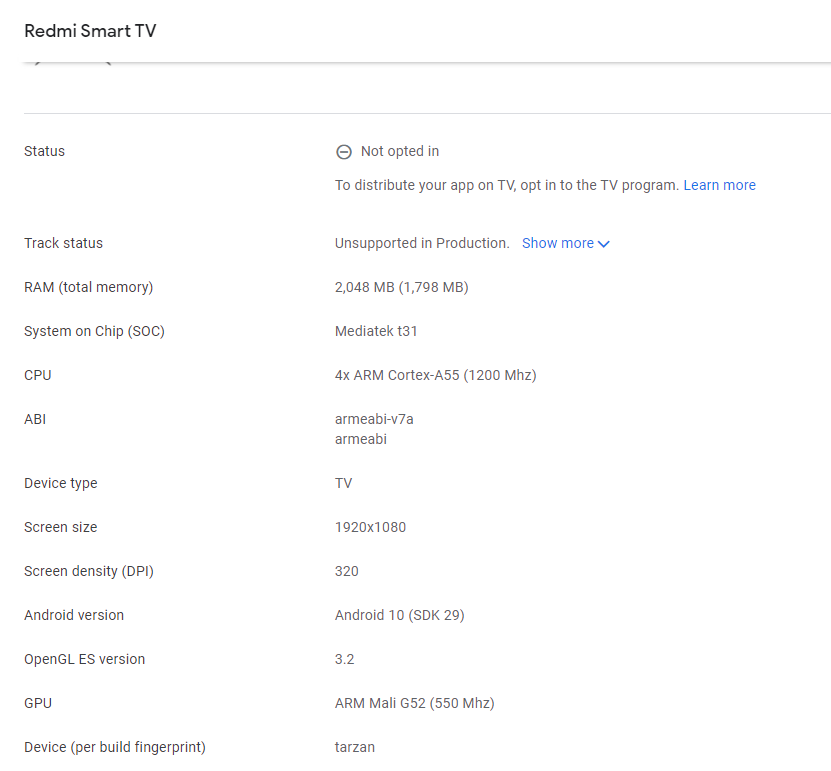
Redmi TV heads to India
It has been a few years since Redmi began making its own branded smart TVs, however, they have been exclusive to China. Come Wednesday, the 17th, Redmi will announce its first smart TV for the Indian market.
📣 #Redmi's FIRST SMART TV is launching on 17.03.21! Every home in India will now enjoy entertainment King size! 👑 🇮🇳
Brace yourselves for greater things with the #XLExperience. 📺
— Redmi India – #RedmiNote10 Series (@RedmiIndia) March 9, 2021
The TV was first teased at the end of the Redmi Note 10 series launch event. A promotional page created for the event hints at the TV having a pretty large screen. It will also have content tailored for an Indian audience, an impressive speaker, gaming features, and will be able to serve as a hub for supported IoT devices.
Google often releases a list of devices that have gotten support for its augmented reality platform, ARCore. Sometimes, this list usually includes unreleased devices. The latest includes a handful of unreleased smartphones, some of which we already know about and others that we haven’t heard of before. Among those from the latter category is the ASUS Zenfone 8 Flip.
ASUS ZenFone 7 series will have a foldable successor called the Zenfone 8 Flip
First reported by 9to5Google, the latest list of ARCore supported devices include phones such as the recently announced Moto G10, Moto G30, and ASUS ROG Phone 5. In addition to this are some unreleased we haven’t heard of such as the ASUS Zenfone 8 Flip, Reno5 A, and Reno5 Pro+ 5G Bosch. Below is the full list of devices:
The Zenfone 8 Flip is the most interesting device on this list as it hints at a foldable phone from ASUS, a first for the Taiwanese manufacturer. An earlier leak had revealed that ASUS is planning to announce a small-screen phone for the Zenfone 8 series. It has been reported that the phone will have a 5.9-inch OLED display and a 120Hz refresh rate.
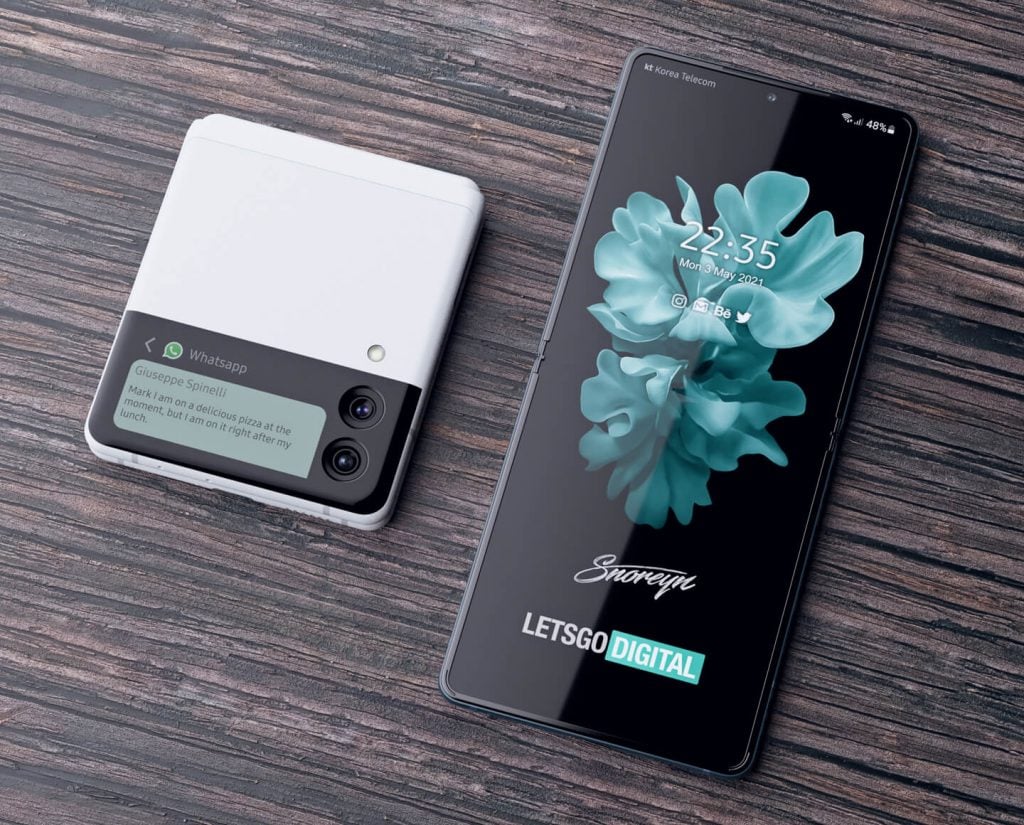
However, this new leak from Google shows that a small screen phone is not the only thing we should be excited about with the upcoming Zenfone 8 series but also what may be a foldable phone. If the name is anything to go buy, the Zenfone 8 Flip should have a design similar to that of the Samsung Galaxy Z Flip.
Unfortunately, Google’s list doesn’t include specifications, so we are in the dark about what features this phone and the other unannounced ones will have. Nevertheless, we expect more details will surface in the weeks/months leading up to their launch.
If I had to choose the best Android phones of the moment, I would actually say Samsung Galaxy S21 Ultra and OPPO Find X3 Pro. At least on the paper, their overall specifications are actually superior to every Android device released until now. While the Samsung Galaxy S21 Ultra has already been available for a while, the OPPO Find X3 Pro is yet to hit the shelves and it is actually on pre-orders in the global market. If you want to get the best Android phone but you are unsure about which one to go for, you can check this specs comparison to learn the differences between Samsung Galaxy S21 Ultra and OPPO Find X3 Pro.
Given that they are top-tier flagships, Samsung Galaxy S21 Ultra and OPPO Find X3 Pro come with gorgeous designs. I personally prefer the OPPO Find X3 Pro not only because it is more compact, but also because of its curves, especially around the camera module, making the overall aesthetics more elegant. Further, with the OPPO Find X3 Pro, you get a thinner and lighter design. If you want the best build quality, then Samsung Galaxy S21 Ultra might satisfy you because of its Gorilla Glass Victus front panel and rear side. Both the phones are waterproof with the IP68 certification (up to 1.5 meters for 30 minutes).
Display
It is very hard to establish which phone has the best display not only because their specs are similar, but also because we still had no chance to test the OPPO Find X3 Pro since it has been announced just two days ago. At the moment, Samsung Galaxy S21 Ultra offers one of the best displays you can find in the smartphone market, and so does the OPPO Find X3 Pro which is able to show one billion colors thanks to 10-bit color depth. The display of the Samsung Galaxy S21 Ultra has an additional feature: the S Pen support. Further, its in-display fingerprint reader is ultrasonic, which means better unlock performance.
Specs & Software
OPPO Find X3 Pro and Samsung Galaxy S21 Ultra are powered by the Snapdragon 888 mobile platform, but the European version of the Galaxy S21 Ultra has the Exynos 2100 which is actually inferior to the Snapdragon 888 in terms of power management. The OPPO Find X3 Pro has up to 12 GB of RAM and up to 256 GB of internal storage, while the best configuration of the Samsung Galaxy S21 Ultra has 16 GB of RAM and 512 GB of internal storage. The Snapdragon version of the Samsung Galaxy S21 Ultra wins the hardware comparison. The Sammy flagship will get four years of updates and three years of Android major updates, while OPPO actually has inferior update policies.
Camera
On the paper, the OPPO Find X3 Pro has a more interesting camera department. It comes with two 50 MP main camera (including an ultrawide one), a microlens camera which shoots macro with up to 60x zoom, and a telephoto lens with 2x optical zoom. With the Galaxy S21 Ultra, you get a 108 MP main sensor, a 10 MP periscope sensor with 10x optical zoom, a 10 MP telephoto sensor, and a 12 MP ultrawide sensor. Samsung Galaxy S21 Ultra has better zoom capabilities in normal photos, while OPPO Find X3 Pro should guarantee better macro shots. For the rest, we wait to test the Find X3 Pro thoroughly in order to give a final verdict.
The Samsung Galaxy S21 Ultra has a bigger 5000 mAh battery and it should last more on a single charge in most of the scenarios, at least in the variant with Snapdragon 888 inside. On the other hand, the OPPO Find X3 Pro provides faster charging technologies: you get SuperVOOC 2.0 providing fast wired charging with 65W power and AirVOOC for wireless charging with 30W power.
Price
You can actually find the Galaxy S21 Ultra and the OPPO Find X3 Pro at similar prices in the global market: about €1150 ($1199 for the U.S. version of the Galaxy S21 Ultra). It is still too early to establish a rear winner of this comparison and it mostly depends on the users’ needs: the Galaxy S21 Ultra has the S Pen, amazing zoom capabilities, a bigger battery. OPPO Find X3 Pro guarantees an awesome display quality, amazing photos, and faster charging speeds. Which one would you pick?
Samsung Galaxy S21 Ultra vs OPPO Find X3 Pro: PRO and CONS
The realme X9 Pro is a new smartphone from realme that is expected to launch in China soon. The smartphone will be one of the first phones to be powered by the Dimensity 1200 processor, MediaTek’s most powerful mobile chipset. While we wait for a launch date, photos of a special edition of the realme X9 Pro have been posted on the internet.
The photos reported to be those of the realme X9 Pro Master Edition were posted on Weibo by the leaker that goes by “WHYLAB”. According to him, realme has once again partnered with Naoto Fukasawa for the design of the phone. This is the same designer that has worked with the brand on its previous Master Edition phones.
For the realme X9 Pro Master Edition, the manufacturer is going with the same cement finish used for the 2019 realme X2 Pro Master Edition Cement variant. The device has a curved display, a first for realme, and it has a hole punch at the top left corner. The screen is 6.55 inches in size and has a 90Hz refresh rate.
There are three cameras on the back of the phone and they are stacked vertically in a black housing along with a pill-shaped LED flash. Under the gray-colored back panel is a 4500mAh battery and the phone will have support for 65W fast charging. The leaker also revealed that the phone has a plastic frame and a thickness of 7.8 millimeters.
The realme X9 Pro appears to be the second of two Dimensity 1200 phones realme has planned. The other is the realme GT Neo which it partly unveiled at the launch of the Snapdragon 888-powered realme GT earlier this month. It is unknown which of the two phones will be announced first.
OnePlus is touting some significant upgrades in the camera department for its upcoming OnePlus 9 series. It already revealed some details about the sensors, new camera features, and its partnership with the Swedish camera company, Hasselblad.
We bet a number of folks are looking forward to the reviews of the phone(s), most especially of the camera performance which is where OnePlus has focused on for its upgrades. For those expecting a review from DxOMark, sorry to disappoint you, but you won’t be getting one.
Pete Lau, the founder and CEO of OnePlus, announced on Weibo today that they will not be sending the OnePlus 9 series to the review labs. This announcement comes as a surprise as OnePlus is one of the manufacturers that has used DxOMark scores to market its phones.
While he didn’t provide a reason, there are speculations that it is because of the review labs’ recent reviews which are believed to be flawed. An example is the review of the Galaxy S21 Ultra which a lot of people do not agree with.
With this decision, it means we will not only not see DxOMark’s review of the OnePlus 9/9 Pro’ cameras but also that of the display and audio quality, which are two other areas it reviews.
The OnePlus 9 and OnePlus 9 Pro will not be the only OnePlus flagship phones not reviewed by DxOMark. The OnePlus 3 and OnePlus 3T were also not reviewed by them.
In related news, OnePlus has also announced that the OnePlus 9 series will be unveiled on March 24 in China. That is a day after the global announcement. Unlike the global event which will be virtual, the one in China will be an in-person one that will be held at the Shanghai Oriental Sports Center. The event is scheduled to begin at 2:00 PM local time.
Vivo is launching its Vivo X60 series of smartphones in India on March 25. Today, leaker Ishan Agarwal has come out with the details of their color, memory variants.
As per the info from his tweet, Vivo will launch three smartphones under the Vivo X60 series in India. They are Vivo X60, Vivo X60 Pro, Vivo X60 Pro+. This is an appreciable move after the company brought only the Vivo X50, X50 Pro to the country last year.
Out of the three, the base model, Vivo X60 will launch in two colors- Blue, Black. It will be available for purchase in two memory variants as well. Users will get an option for an 8/12GB RAM and 128/256GB storage option.
That said, the company is planning for a single storage variant of the Vivo X60 Pro and X60 Pro+. Accordingly, the devices will get 12GB RAM and 256GB storage. For colors, the Pro variant will get Blue and Black colors while the Vivo X60 Pro+ will come in a single Black color option.
As for specs, multiple reports have said that the Global variant will have a different chipset on the Vivo X60 devices. The Chinese smartphone giant is launching the series three days early in Malaysia and there it’s already confirmed to feature Snapdragon 870 chipset.
Plus, a recent report said that Vivo X60 and X60 Pro will feature the recently launched chipset whereas the Vivo X60 Pro+ will retain the Snapdragon 888 from China. Other specifications of the devices are likely to be the same and the company’s poster confirms the presence of Zeiss optics.
After several leaks, the realme 8 series finally has a launch date. A new video posted on realme India’s official YouTube channel has revealed that the new phones will be unveiled on March 24.
The nearly 2½ minute-long video has Madhav Sheth, the CEO of realme India and Europe, compete in a drift race with a professional race driver. As you would see in the video, “Infinity” is mentioned multiple times, and as we know, the infinity symbol is practically an “8” laying on its sides.
The realme 8 series is expected to have at least two phones – the realme 8 and the realme 8 Pro. However, there is a possibility we may get more, one of which may have support for 5G.
Some of the key specs of the standard model have also been officially revealed. The realme 8 will have a 6.4-inch Super AMOLED Fullscreen Display, 64MP Quad AI camera, Helio G95 processor, a 5000mAh battery, and support for 30W Dart Charger.
The realme 8 should be announced in India first before making its way to Europe. The new phones will take on the Redmi Note 10 series, the latest phones from its rival, Redmi/Xiaomi.
Recently, OPPO silently launched a 45W AirVOOC wireless charger. Now, it looks like OnePlus will bring one for itself as the OnePlus 9 Pro is said to launch with 50W wireless charging support.
The new leak comes from leaker Ishan Agarwal. He has teamed up with Pricebaba to report on the info regarding the wireless charging on the OnePlus 9 Pro. According to him, the OnePlus 9 series’ top-of-the-line flagship will support up to 50W wireless charging. To complement this, OnePlus will also be launching a 50W Wireless charger.
The OnePlus 9 devices have recently passed through China’s 3C certification and as per the info available, the ‘Pro’ variant(LE2120) supports up to 65W fast charging, whereas the PPS(Programmable Power supply) and PDO(third-party Power Data Object) maxes out at 45W.
In contrast, leaker Max Jambor had said earlier that the device would come with a 45W wireless charging support. Anyway, considering OnePlus generally borrows/licenses OPPO’s tech(parent: Oujia Holdings Ltd.), the 50W charger launching under OnePlus could be one of OPPO‘s models but let’s wait for official info on the same.
OnePlus brought Wireless charging tech to the OnePlus devices with the OnePlus 8 Pro. The device supported up to 30W wireless charging and to complement this, the company also brought a 30W Warp Charge Wireless. This year, the successor of the OnePlus flagship series is getting a huge jump of 20W increase.
Speaking of successors, the OnePlus 9 series that is launching on March 23 is said to include three devices- OnePlus 9, OnePlus 9 Pro, and a OnePlus 9R/9E. If you aren’t aware of the specs and features of the device, you can read our coverage to know the same.
Xiaomi and POCO are gearing up to launch their Mi 11 Lite 5G and POCO X3 Pro respectively very soon. Ahead of the launch, the prices of the devices in Europe have now been leaked.
Leaked Live shots of Mi 11 Lite
Courtesy of the dealntech report, a Xiaomi Mi 11 Lite 5G listing appears on a retailer listing. As per the listing, the device will have a Truffle Black color and 6GB RAM, 128GB storage variant. The price of this variant is listed as €408.18.
We aren’t sure if this would be the final price but it’s somewhat comparable to the predecessor’s €349 launch price. Besides, Tipster Abhishek Yadav has said in his tweet that the upcoming POCO X3 Pro would retail for around €269.
According to him, this variant of the POCO X3 Pro would have 6GB RAM and 128GB storage. Earlier, a leak by Sudhanshu revealed the color and storage variants of the POCO X3 Pro who also said that the device would debut for €250.
credit: dealntech
Either way, it makes sense for POCO to bring it at a price less than Mi 11 Lite 5G. Although both devices are aimed at different segments, the latter has 5G that’s gaining traction in Europe lately. And if the leaks are true, POCO X3 Pro would be a 4G flagship.
Speaking of which, the POCO X3 Pro is rumored to feature a 120Hz AMOLED FHD+ display panel, yet-to-launch Snapdragon 860 chipset, and a 5,200mAh battery. The Mi 11 Lite 5G, on the other hand, will likely have a new Snapdragon 775G SoC, 64MP camera, Bluetooth 5.2, NFC, 6GB/8GB RAM, 128GB/256GB storage, and MIUI 12 operating system.
POCO has teased the launch date of the POCO X3 Pro in countries like India while Xiaomi is yet to reveal something on the Mi 11 Lite.
Back in December 2020, Motorola released a list of devices that will be updated to Android 11. However, the company did not reveal when these phones will be getting the update. In late January, Moto G Pro became the first smartphone from the firm to get the Android 11 update. Now, over one and a half months later, two more Motorola handsets have started receiving the latest Android update.
According to a report by PiunikaWeb, Motorola has begun to roll out Android 11 stable update for the Moto G8 and the Moto G8 Power. The update is currently live in Colombia.
The same report says that the Lenovo-owned company had actually kickstarted the Android 11 soak testing (beta program) for these phones back in November itself. That means it took the firm around four months to deliver the stable update.
Anyway, the update is here now. Since both these handsets run a common software build, the Motorola Moto G8 and Moto G8 Power Android 11 stable arrives with build number RPE31.Q4U-47-35 and February 2021 security patches.
As of now, like any other new OTA update, this one is also being seeded out in batches. Hence, it is only available for select users in Colombia. However, it should be available for more users as well as in other regions in the coming days.
We use cookies on our website to give you the most relevant experience by remembering your preferences and repeat visits. By clicking “Accept”, you consent to the use of ALL the cookies.
This website uses cookies to improve your experience while you navigate through the website. Out of these, the cookies that are categorized as necessary are stored on your browser as they are essential for the working of basic functionalities of the website. We also use third-party cookies that help us analyze and understand how you use this website. These cookies will be stored in your browser only with your consent. You also have the option to opt-out of these cookies. But opting out of some of these cookies may affect your browsing experience.
Necessary cookies are absolutely essential for the website to function properly. This category only includes cookies that ensures basic functionalities and security features of the website. These cookies do not store any personal information.
Any cookies that may not be particularly necessary for the website to function and is used specifically to collect user personal data via analytics, ads, other embedded contents are termed as non-necessary cookies. It is mandatory to procure user consent prior to running these cookies on your website.