Advertisement

Meizu 18 series could come without a charger inside the box

Meizu announced its association with Qualcomm back at the Snapdragon Summit in December. The company is expected to launch new flagship phones powered by the Snapdragon 888 chipset soon. Going by the numbers, it is likely the Meizu 18 series of devices. And they may have already received the 3C certification in China.

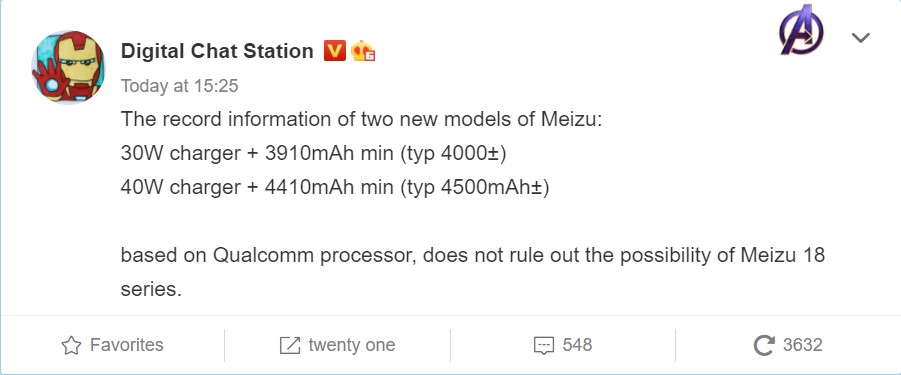
As Digital Chat Station points out, two Meizu devices have reportedly appeared on the 3C certification website. The model numbers are M181Q and M191Q. If you recall, the Meizu 17, 17 Pro appeared with model numbers M081Q and M091Q respectively. Trackback to 2018 and Meizu 16 series- 16, 16 Plus got certified with M882Q, and M892Q respectively.

For Meizu 17 series, although the Pro version had a 40W designation, the device indeed debuted with a 30W charging support. Hence, We aren’t sure if Meizu would adopt the same difference in the final version either. Anyway, the M181Q and M191Q could be the Meizu 18 series and support up to 10V@3A(30W) and 20V@2A(40W) respectively.
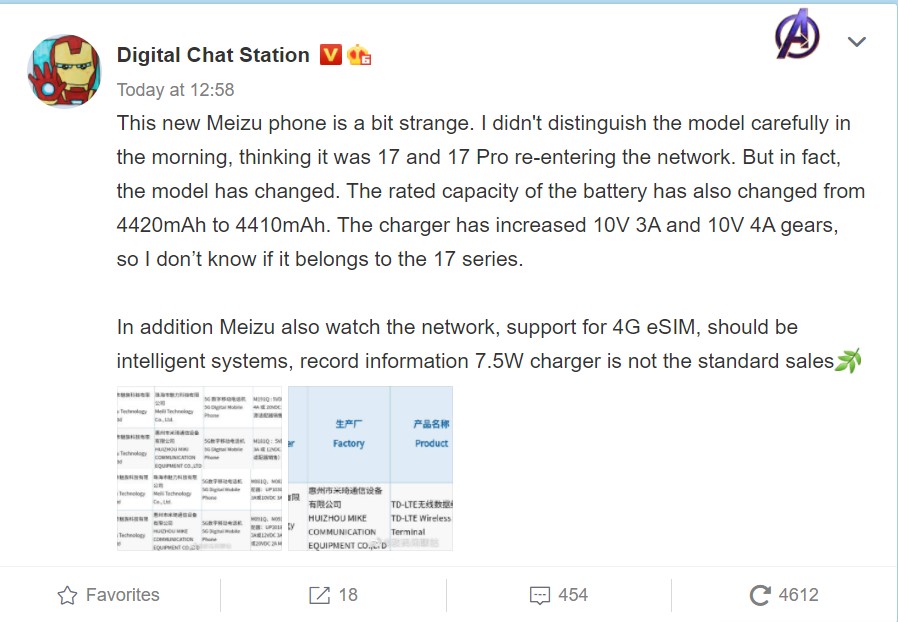
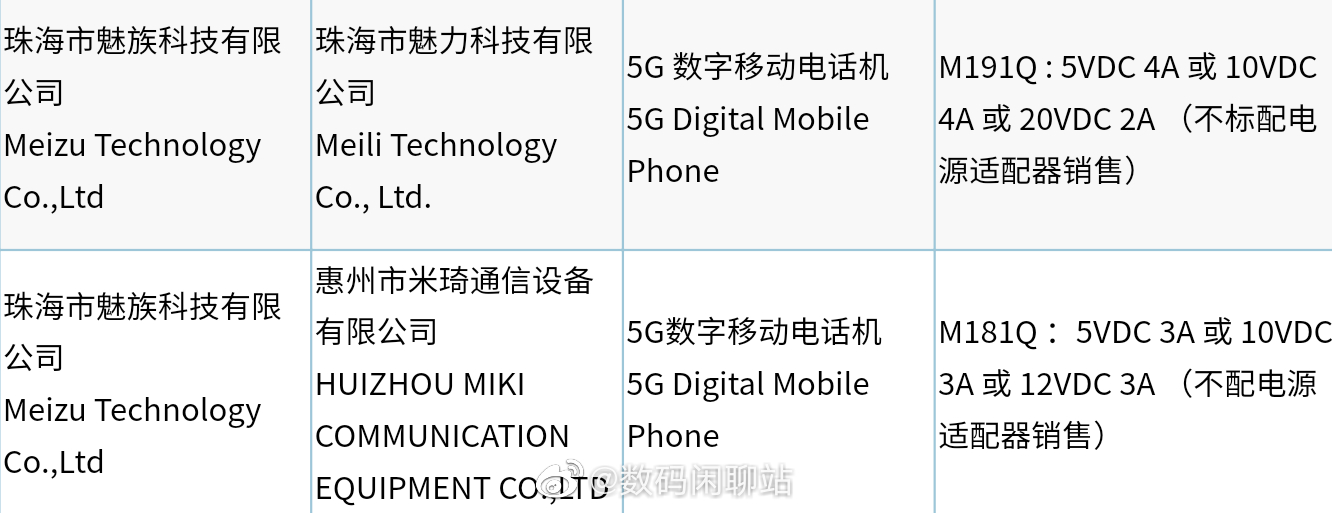
The tipster also mentions that the two models could come with 3,910mAh(Typ. 4,000mAh) and 4,410mAh(Typ. 4,500mAh) batteries. Another interesting point to note here is the absence of the charger. The listing says that the models will be “sold without a standard power adapter”(Translated).

Apple began the trend of excluding the power adapter in the retail box packaging with the iPhone 12 series. Later, companies like Xiaomi, Samsung have adopted the same with Xiaomi Mi 11Samsung Galaxy S21 respectively. Now it looks like Meizu might join the 2021 bandwagon and the list is only going to get longer now.

Meizu 18 series is still a bit of a mystery as the company has neither announced a launch time frame or it has appeared extensively on leaks. The company is expected to launch Meizu 18 and Meizu 18 Pro as a part of the series.

We can also expect specs like Samsung E4 AMOLED display with 120Hz refresh rate, quad-cameras having Periscope lens 5x Optical zoom, and more. Let’s wait for more leaks to get an idea about them.

RELATED:


(via)

Alleged Vivo S7t receives 3C certification with 33W charger

Earlier this week, a tipster from China revealed the existence of the Dimensity 820 SoC powered Vivo S7t smartphone. It appears that the said phone has appeared with the V2048A model number at the 3C certification platform (via) of China.

A mysterious 5G-ready Vivo phone with model number V2048A has been certified by the 3C agency. The listing reveals that the retail package of the device may include a 33W fast charger.

Vivo-V2048A-3C

Interestingly, the same V2048A phone was spotted with 8 GB of RAM and Dimensity 820 chipset at Geekbench at the beginning of this year. The handset was found to be running on Android 11 OS. Since a reliable tipster has claimed that Vivo’s upcoming Dimensity 820 powered phone will be called Vivo S7t, it seems that the V2048A model number belongs to the same phone.

Vivo announced the Vivo S7 5G with Snapdragon 765G chip in August last year. The company followed it up with Dimensity 720v SoC powered Vivo S7e 5G phone in November. It appears that the company will be soon announcing the third member of the S7 lineup with the Vivo S7t moniker in China.

Vivo S7 5G
Vivo S7 5G

Except for the chipset, the Vivo S7t 5G is expected to borrow all its specs from the Vivo S7 5G handset. Hence, it is likely that the Vivo S7t will have a 6.44-inch AMOLED display with a notch. It may feature a 44-megpaixel + 8-megapixel (ultrawide) dual front-facing cameras and 64-megapixel triple rear shooters. It could be fitted with a 4,500mAh battery. It is expected to arrive with OriginOS flavored Android 11 OS. The phone may also feature an in-display fingerprint reader.

At present, the Vivo S7 5G is currently selling with a starting price of 2,698 Yuan (~$417). There is no word on the pricing of the Vivo S7t.

RELATED:

realme X7 Pro launches in Malaysia with a $70 lesser price tag than Thailand

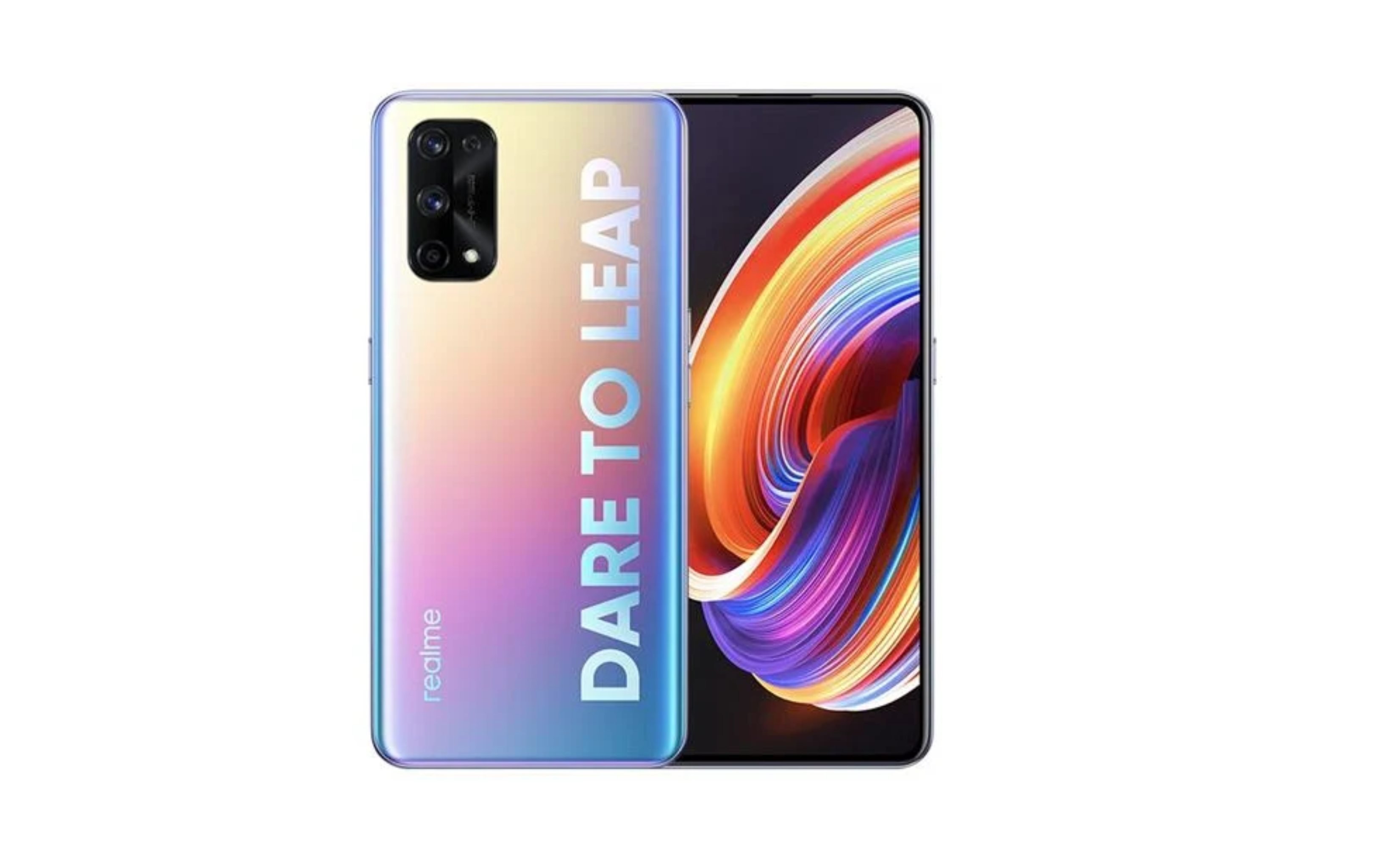
realme has finally launched the realme X7 Pro in Malaysia. The flagship smartphone will retail for RM1,999($494) in the country which is way cheaper than the Thailand price.

realme X7 Pro Malaysia – Price, Availability

Unlike the Chinese variants, the realme X7 Pro comes with a single 8GB RAM, 256GB storage variant in Malaysia. This is priced at RM1,999($494) in the country. To compare, the X7 Pro launched at THB16,990 in Thailand which is about $567.

As you can see, the Dimensity flagship is about $73 cheaper than its first Global appearance. What’s even interesting is that the Thailand version had only 128GB of storage.

If you take China, the 256GB variant was priced exactly the same at launch i.e, 3,199 yuan($494). All this sends a strong hint that we can expect realme to be even more aggressive in other markets like India.

Anyway, the device will be available on Shopee in Malaysia and the first sale starts on February 2, 2021, at 12AM MST(Malaysian Standard Time). realme is also giving a discount of RM50 for the first sale bringing the effective price down to RM 1,949($481).

realme X7 Pro Specifications

realme X7 Pro in Malaysia will be available in Iridescent(Gradient) and Skyline White color options. It misses out on the Xingyu Black that is available in China and Thailand. Other than this the rest of the device is almost similar.

The device features a 6.55-inch Super AMOLED FHD+ display protected by Gorilla Glass 5 and has a top-left punch-hole. It supports 2400x1080p resolution, 91.6% screen-body ratio, 120Hz refresh, and 240Hz touch sampling rate, covers 103% NTSC and 100% DCI-P3, and has brightness up to 1200 nits.

Under the hood, you get a MediaTek Dimensity 1000+ chipset paired with LPDDR4x RAM and UFS 2.1+Turbo Write storage. For cameras, we get the same quad-cameras with 64MP main, 8MP ultra-wide, two 2MP macro and B&W sensors. Upfront, there is a 32MP selfie snapper.

Other features include SA/NSA 5G(DS+DS), Wi-Fi 6, Bluetooth 5.0, Dual Frequency GPS, 4,500mAh battery with 65W SuperDart Charging, Type-C port, and realme UI based on Android 10.

RELATED:


Apple iPhone SE Plus specs leak online; could feature 6.1-inch LCD display

Apple first launched its iPhone SE compact smartphone in 2016 and the company updated the same with the launch of its successor last year, which too is named iPhone SE. Now, the Cupertino-based tech giant is gearing up to launch the latest iteration of the model.

This time, Apple is expected to launch two devices in the iPhone SE lineup, which includes the standard iPhone SE as well as the iPhone SE Plus. Now, the specifications of the Plus variant seems to have leaked online.

Apple iPhone SE Plus Leak

As per the report, the upcoming Apple iPhone SE Plus will come with a 6.1-inch LCD display and is expected to be powered by the Apple A14 Bionic chipset — the same chip that currently powers the iPhone 12-lineup, with 5G connectivity support.

However, there’s also a possibility that the device could be powered by the 7nm Apple A13 Bionic chipset used for the iPhone 11 lineup. As for the camera, it is said to feature a 12MP single camera sensor on the back and a 7MP front-facing snapper.

It will also likely have IP67 ratings, making the smartphone water-resistant for up to 1 meter. The report also indicates that along with the Face ID, the phone may come with Touch ID support with the fingerprint sensor being embedded on the power button.

The Apple iPhone SE Plus is expected to come in at least two color options — Black and Red. As for the pricing, it is being claimed that it could cost around $499, which is about $100 more than the iPhone SE currently available in the market.

RELATED: 

OPPO kickstarts Reno 10x Zoom ColorOS 11 beta program in India and Indonesia

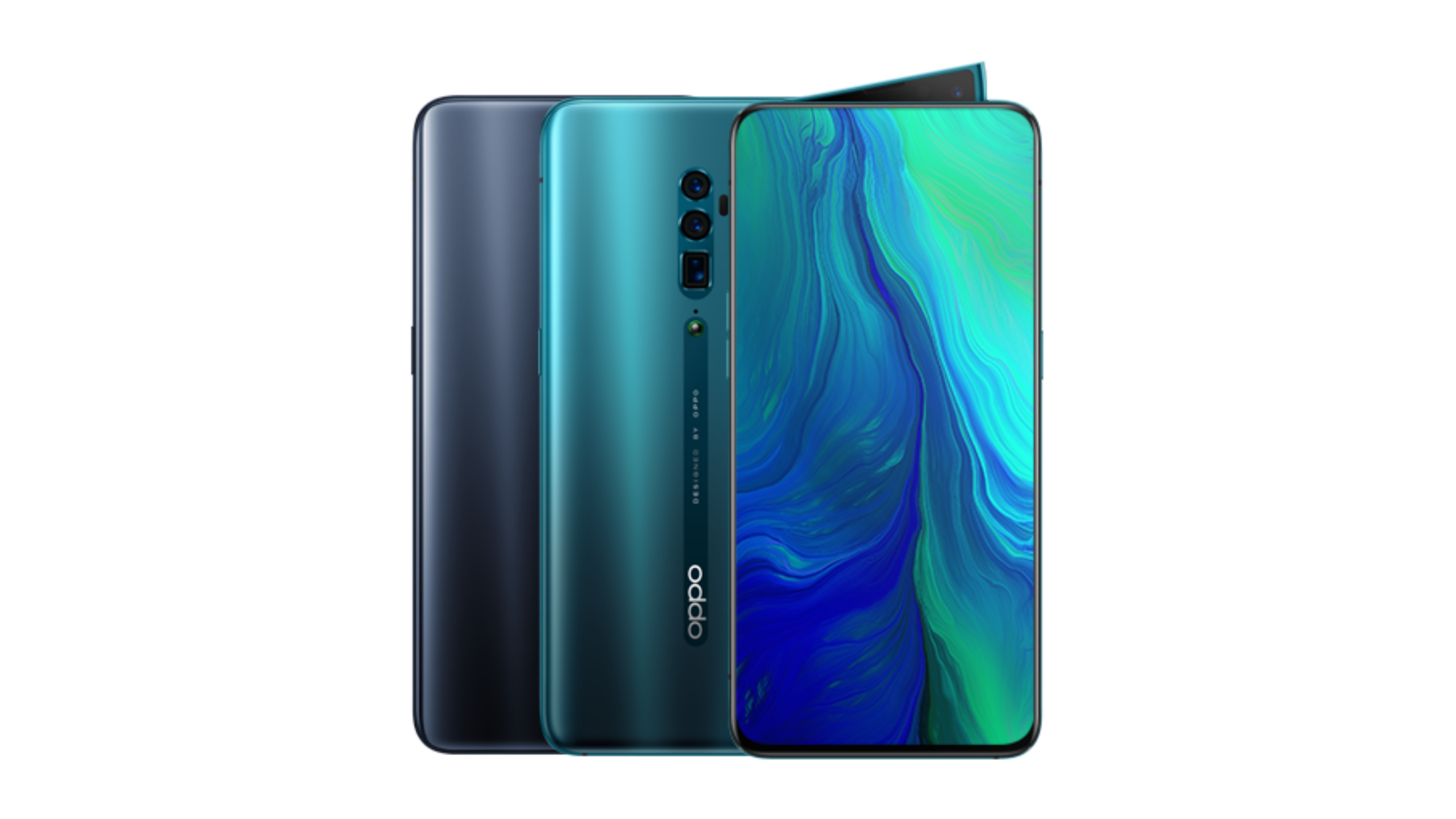
OPPO has been rolling out ColorOS 11 update to the eligible smartphones since it was announced back in mid-September 2020. The latest version of the company’s mobile operating system is based on Android 11 and it brings some interesting features. That said, the brand has now started recruiting beta testers for OPPO Reno 10x in India and Indonesia.

OPPO Reno 10x Zoom Featured

Earlier this month, OPPO shared the ColorOS 11 update rollout plan for the month of January 2021. According to it, the company is supposed to start rolling out beta builds for OPPO Reno2 F in India and OPPO Reno 10x Zoom in both India and Indonesia starting today (January 26).

Following the schedule, the Chinese smartphone maker has been recruiting beta testers for the Reno2 F for the past few days. Now, yesterday, the brand has opened registrations for the Reno 10x Zoom as well.

In order to apply for the beta program, your OPPO Reno 10x Zoom should be either on firmware version C.33 or C.22. If it is, then head over to Settings > Software Update > Gear Icon > Apply for Beta Version > Update Beta Version and follow the on-screen instructions. If your application gets selected, you will be receiving the ColorOS 11 beta build via update.

As mentioned earlier, this program is currently limited to India and Indonesia only. Users in other regions will have to wait and also, even for these two countries, there’s no telling when the final stable rollout will begin for all the users.


RELATED:


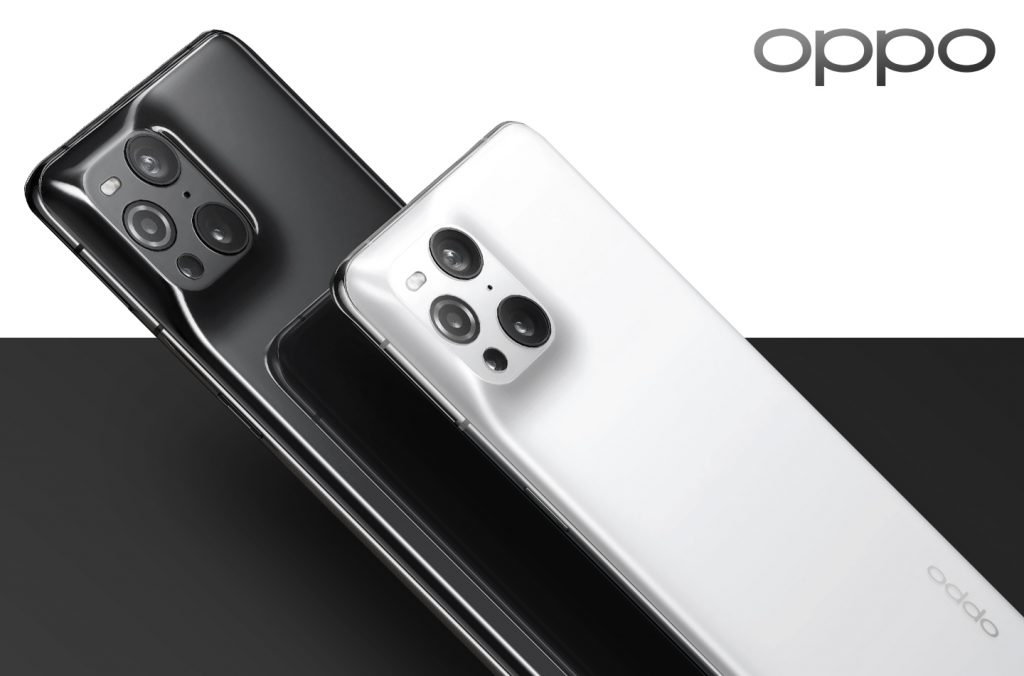
Oppo is working on a Smart Tag that might arrive with the Find X3

Earlier this month, Samsung launched the Galaxy S21 series along with a new Bluetooth tracker, dubbed the Galaxy SmartTag. Now, it seems like Oppo is also following in the company’s footsteps and might also launch a Bluetooth smart tag as well for its upcoming Find X3 flagship handset.

Oppo

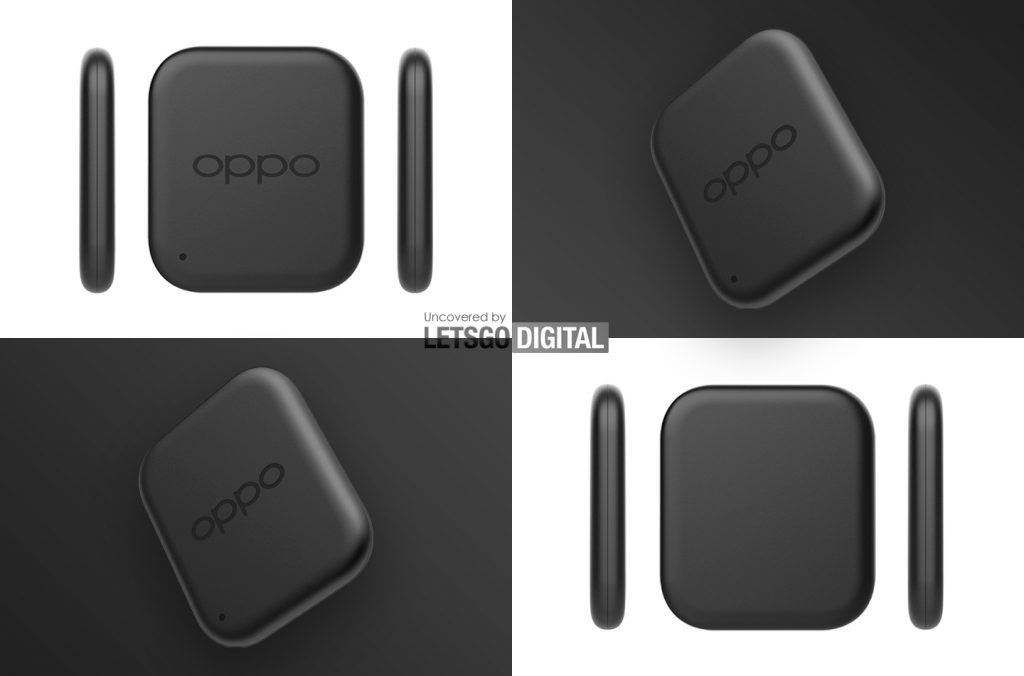
According to a LetsGoDigital report, the new Bluetooth smart tag is another product in the company’s growing peripheral and IoT portfolio. Back in May 2020, the Chinee tech giant had filed a design patent in China for a “Bluetooth smart tag locator’. The documentation for this was published earlier today (26th Jan 2021) along with a series of images of the device. Looking at these images, the Oppo smart tag is a rectangular shaped device with rounded corners.

This design also resembles the company’s Oppo Watch case. On the top of the smart tag, the brand’s logo can be observed that is etched in the middle. Furthermore, the body of the tracker is shown to be in a black color scheme, which is also patented. On one of the corners, the Oppo Bluetooth smart tag also has a hole, which is likely to have a key ring pass through it. Samsung’s Galaxy SmartTag featured a 4x4cm size, so we can expect Oppo’s counterpart to also feature’s a similar size and form factor.

Oppo

The patented designs do not reveal any buttons in any of the images, although, Samsung’s tracer did feature one button for various functions. At the moment, it is unknown when the company aims at launching this smart tag, but we can assume it will be unveiled along with the company’s flagship handset, the Oppo Find X3 series. The series is expected to launch later this year, and it is possible that the Bluetooth smart tag will debut alongside it.

RELATED:


Red Magic and Tencent Games partners to improve performance of upcoming gaming smartphones

Gaming smartphones are becoming more and more powerful and the companies making those phones are also doing everything they can to make their device rank among the leading ones in the market.

In line with that, Nubia’s Red Magic has today confirmed that the company has entered into a strategic partnership with Tencent Games and the purpose of this cooperation is to offer a better gaming experience to the users of Red Magic Gaming Smartphones.

Red Magic Tencent Games Partnership

There were reports about this partnership even before the company made it official. Recently, an alleged image of the upcoming Red Magic 6 Gaming Smartphone had leaked online, which features the Red Magic logo as well as Tencent Games logo.

The Tencent Logo is placed on an X-shaped structure that seems to have been used to act as a heat sink. On the sides of that, there’s a grille on both sides, which indicates that there may be a cooling fan present the grille is present to vent out the air.

So far, it has been confirmed that the Red Magic 6 gaming smartphone will come powered by the Qualcomm Snapdragon 888 chipset, which is the flagship SoC available in the market right now. It will be packed with LPDDR5 RAM and UFS 3.1 storage.

For connectivity, it seems to have packed 5G support as well as Wi-Fi 6. It will be running the latest Android 11 operating system with the company’s own custom user interface. The smartphone will feature a 4,5000mAh battery — the same as its predecessor — but will come with a faster-charging technology. It is confirmed to have support for 120W charging compared to 55W on its predecessor.

RELATED: 

Samsung Galaxy M62 and Galaxy F62 bag Bluetooth certifications, launching next month?

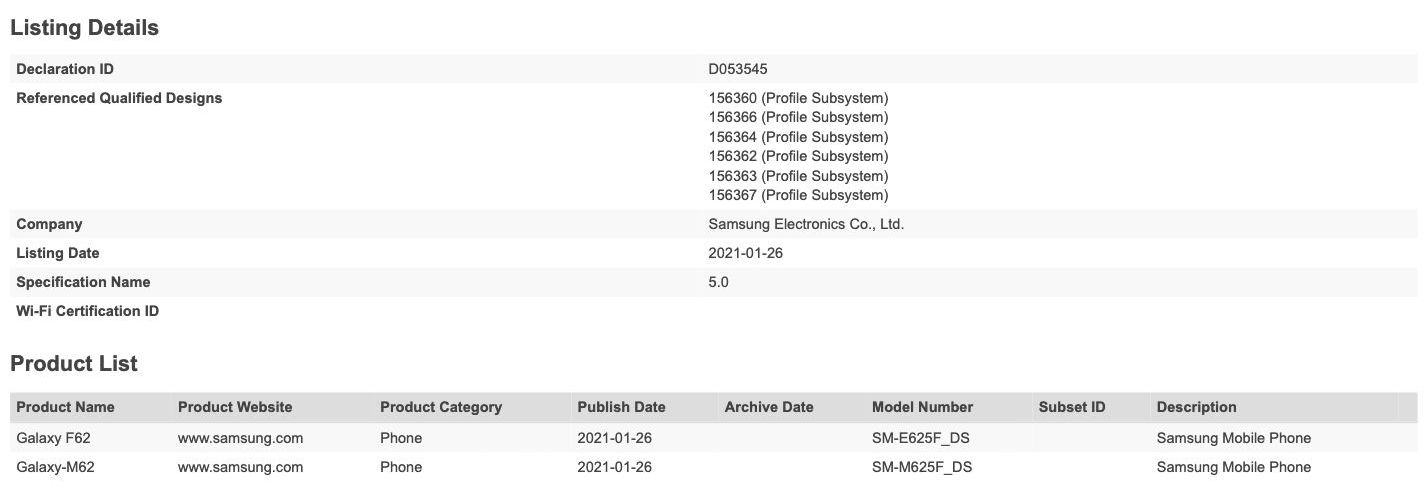
Samsung has a couple of new phones lined up for India. Recent reports have revealed that the company may announce new smartphones such as Galaxy M62/F62, Galaxy M12, and Galaxy M12 in India in the coming weeks. Fresh information reveals that the Galaxy M62/F62 has bagged approval from the Bluetooth SIG authority. The Bluetooth approval suggests that the device may break cover as early as next month.

The Bluetooth SIG agency has approved the SM-E625F_DS Samsung phone with the Galaxy F62 moniker. The Galaxy M62 is also listed on the certification platform with its SM-M625F_DS model number. The listings only confirm that these handsets carry support for Bluetooth 5.0. Both models have also received certification from Wi-Fi Alliance in the recent past. Speculations are rife that both phones may arrive with almost identical specs.

Samsung Galaxy F62 and Galaxy M62 Bluetooth SIG certified

The support page of the Galaxy F62 was recently found listed on Samsung India’s website. The Bluetooth and Wi-Fi certifications of the Galaxy F62 as well as its appearance on the official website are a good hint that it may launch at some point in February.

Unfortunately, not much is known about the specifications of the Galaxy M62 / F62. Last month, the Galaxy F62 was spotted at the Geekbench benchmarking platform with the Exynos 9825 chipset, which also fueled that the Galaxy Note 10 series that debuted back in 2019. The F62 was found to be equipped with 6 GB of RAM and Android 11 OS.

Other reports have revealed that the Galaxy F62 could be sporting an FHD+ AMOLED display and a quad-camera system. The handset is also expected to arrive with an in-screen fingerprint reader. The Galaxy F62 will be the second F-series phone from the brand to land in India after the Galaxy F41 handset that debuted in October last year.

RELATED:

Apple patents a foldable device with multiple integrated cameras for improved panoramic shots

Earlier today (26th January 2021), an Apple patent application was published by the US Patent and Trademark Office. The patent is for future foldable devices from the company, which would sport multiple integrated cameras.

Apple

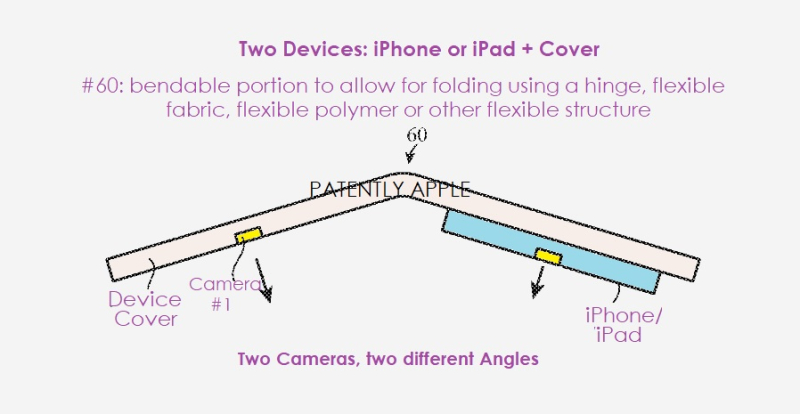
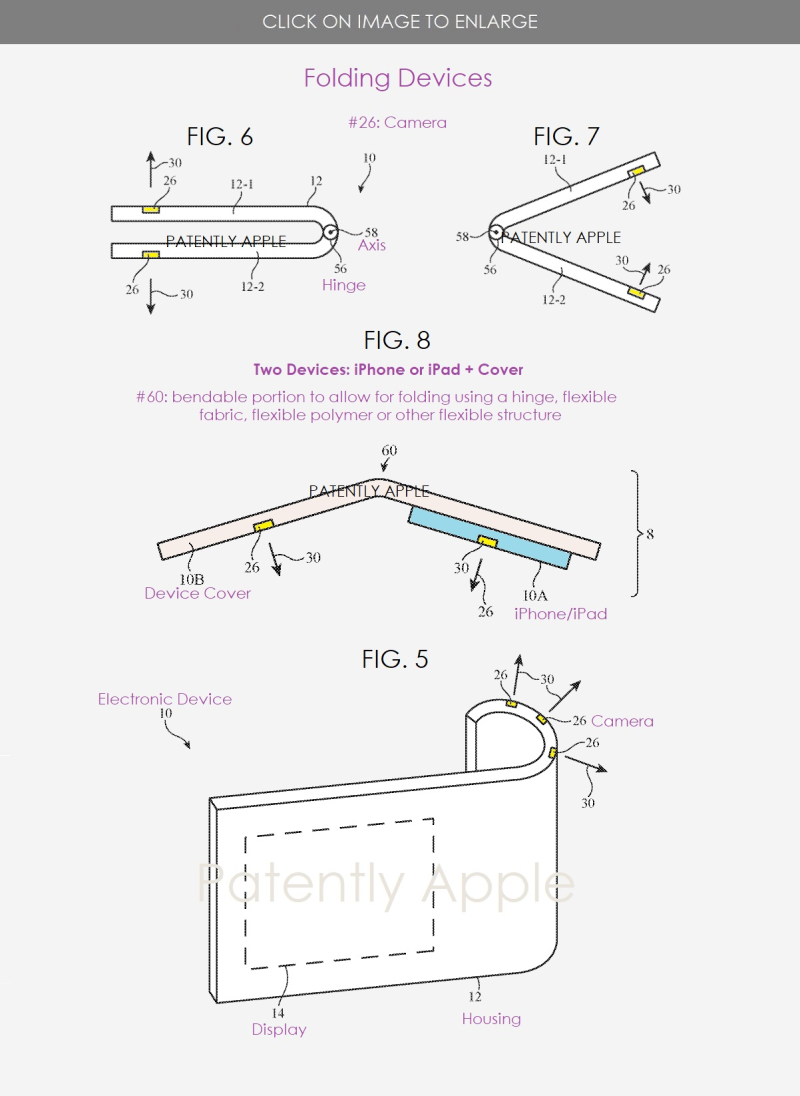
According to a PatentlyApple report, the new patent is related to future foldable devices from Apple. These devices may arrive with multiple cameras that are integrated into the flexible housing that could greatly improve the panoramic imaging capabilities of the foldable smartphone. The cameras in question are housed in different locations on the frame that provides various different angles of view to the sensors as well.

In the patent, the Cupertino based giant notes that it can be difficult to capture panoramic shots with a traditional wide angle camera on an iPhone. Due to slight movements of the users’ hands, the resulting image might come out as blurry. Other factors like a partially changing or moving scene/subject can also lead to the feature being impractical as well. Thus, Apple has aimed to work on the issue on devices with a “flexible housing formed from flexible fabric, flexible polymer, or other flexible materials.”

Apple

In other words, these devices could potentially sport multiple cameras that are mounted at different locations across the flexible housing. These cameras might be able to capture multiple images of a single. Similarly, the sensors could also be panned outward to capture overlapping images of a scene that are then stitched together to form a composite panoramic image. At the moment, it is currently unknown if Apple is actually working on such a device or just covering all bases. So stay tuned for more updates.

RELATED:


Samsung Galaxy S21 Ultra to feature a low powered OLED display

Earlier this week, Samsung Electronics announced a new low powered OLED display for smartphones. This new display will make its first appearance in the Galaxy S21 Ultra, with the company claiming lowered power consumption of about 16 percent.

Samsung

According to a CNET report, that the new display technology achieves a lower power draw by speeding up electron flows in the screen’s organic layer. For those unaware, the display is one of the major power drawing components of a smartphone. Jeeho Baek, head of the Mobile Display Sales, Marketing & Product Planning Office of Samsung Display stated that The constant progression of display technologies has increased demand for lower power consumption to enable features such as larger screens, faster display driving, and greater resolution.”

To put things simply, pixels in OLED panels are made out of organic materials that glow when a current is passed through them. So, the acceleration of the flow of electrons through the display’s layers would increase the brightness of the light produced whilst consuming less power, which raises battery life, as per official Samsung notes.

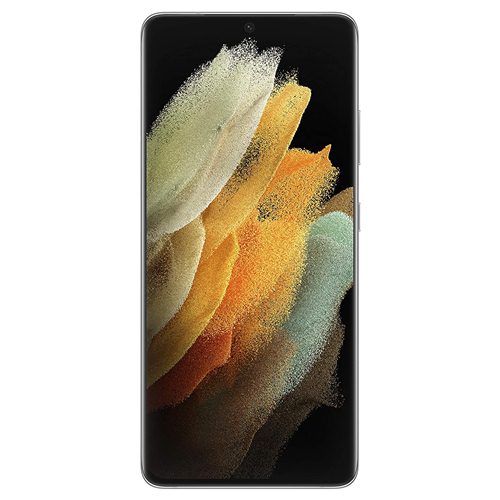
Samsung Galaxy S21 Ultra Phantom Black S Pen Featured

The Galaxy S21 Ultra 5G was unveiled along with the South Korean tech giant’s Galaxy S21 and S21 Plus earlier this month, and are positioned as the company’s latest premium grade flagship handsets. These devices sport top notch specs and supports the newer and faster bandwidth, 5G, as well. At the moment, the pre orders for these smartphone series is open right now, with the official launch to begin on 29th January 2021.

RELATED:


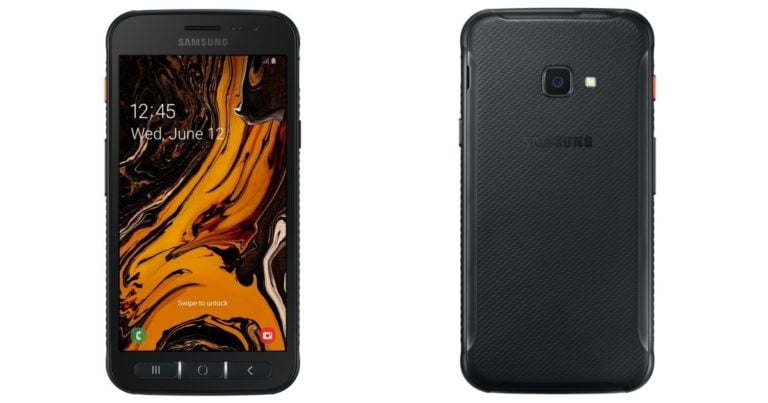
Samsung Galaxy XCover 5 visits Geekbench with Exynos 850 and Android 11

Back in November 2020, it was reported that Samsung was working on its next-gen rugged smartphone called Galaxy XCover 5. Now, two months later, this handset has popped up on Geekbench but with a twist.

Samsung-Galaxy-Xcover-4s
Samsung Galaxy XCover 4s

The previous report on the Galaxy XCover 5 by GalaxyClub said it to come with model number SM-G501B. But now, the same publication reveals that it will be not the case.

According to this device’s Geekbench listing, it will bear the model number SM-G525F. Above all, it will come with 4G and not 5G as expected earlier. As of now, it is not sure if there is a 5G variant. If it exists, we can expect it to sport the model number SM-G526B.

That said, the new rugged smartphone from Samsung will be powered by the company’s own Exynos 850 SoC paired with 4GB RAM. This chipset has scored 182 points and 1148 points in Geekbench’s single-core and multi-core tests respectively. Whereas, for software, the phone will run Android 11.

Nothing else is known about this handset apart from the above-mentioned parameters. But we expect to learn more about it before it goes official sometime in the near future.

Lastly, as far as the device with model number SM-G501B is concerned, GalaxyClub suggests that it could be the Galaxy S21. Because Samsung is known for faking the Galaxy S series phones with different model numbers while benchmarking them.


RELATED:


Germany seeks Taiwan’s help for its automobile chip shortages

Germany has been facing a shortage of auto chip supply and has asked Taiwan to urge its local manufacturers to help in easing this issue. Apparently, the shortage of semiconductor chips has affected the former’s automobile industry.

Germany

According to a Reuters report, the shortage has hampered the economic recovery of Germany after the Coronavirus pandemic. At the moment, automobile manufacturers across the globe have been shutting down their assembly lines due to issues with the delivery of semiconductors. A few of the cases seem to have stemmed from the actions of the former US President Donald Trump’s administration, and their efforts against the Chinese chip factories.

As per the report, the shortages have affected automobile giants like Volkswagen, Ford Motors, Toyota Motor Corp, Nissan Motor, Fiat Chrysler, and even other car manufacturers as well. In a letter, the German Economy Minister, Peter Altmaier asked his Taiwanese counterpart Wang Mei-hua regarding this issue. The letter was to address the current issue that also included the Taiwan Semiconductor Company (TSMC), the world’s largest contract chipmaker, in the talks.

Germany

For those unaware, TSMC is also one of Germany’s largest chip supplier. Altmaier stated that “I would be pleased if you could take on this matter and underline the importance of additional semiconductor capacities for the German automotive industry to TSMC.” The letter aims at getting additional capacities at TSMC to deliver semiconductors in both the short and medium terms. Furthermore, the German automobile is already in talks with TSMC about raising deliveries, which have been “very constructive” so far.

RELATED:


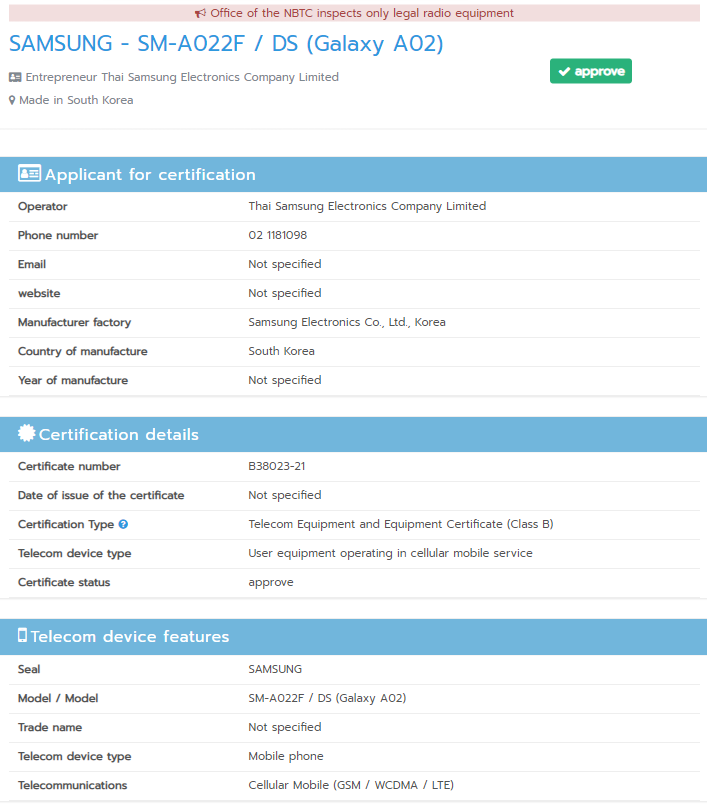
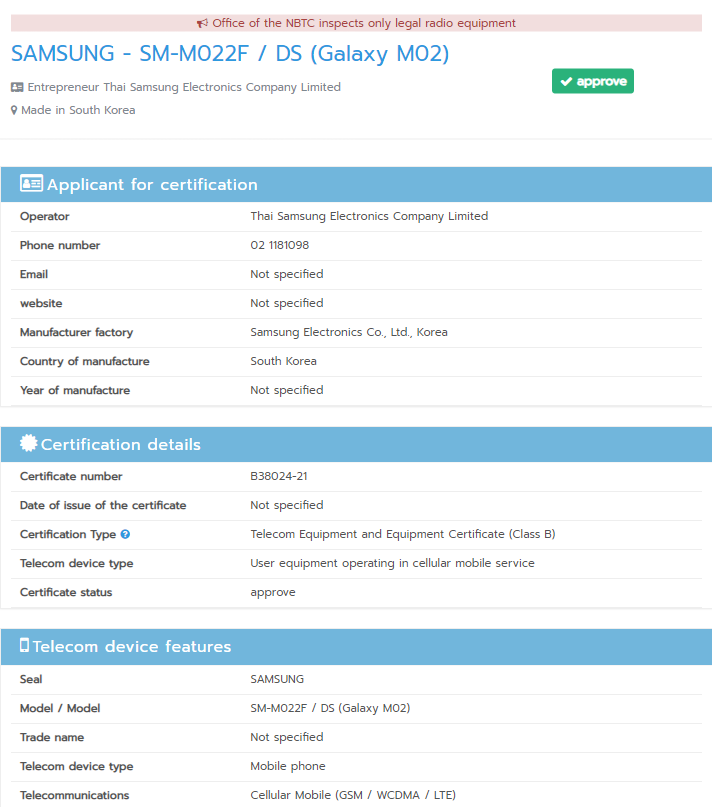
Samsung Galaxy A02 and Galaxy M02 launch nears as they bag NBTC certification

Earlier this week, the upcoming Samsung Galaxy A02 and Galaxy M02 phones were certified by the Bluetooth SIG authority. Now, both handsets have bagged approval from the National Broadcasting and Telecommunications Commission (NBTC) regulatory body of Thailand. These certifications are a good hint that Samsung may announce the Galaxy M02 and Galaxy A02 phones in the next few weeks.

The NBTC certification mentions the Galaxy A02 smartphone with SM-A022F/DS model number and the Galaxy M02 with SM-M022F/DS model number. The listings only reveal that these handsets carry support for 4G connectivity.

The Galaxy M02 could be launching soon in India as its support page has appeared on Samsung India’s website. The Galaxy M02 is rumored to b powered by a Snapdragon 450 chipset and 3 GB of RAM. The device is likely to arrive with 64 GB of storage.

The handset could be equipped with an HD+ resolution supporting display and it may house a 5,000mAh battery. The rear side of the phone could be sporting a 13-megpaixel + 2-megapixel dual-camera system. The Galaxy A02 is expected to arrive with specs like the Galaxy M02 phone.

The Samsung Galaxy M62/F62 and Galaxy M12 are the other M-series phones that are expected to debut soon in India. The Galaxy M62/F62 is rumored to be equipped with specs lik Exynos 9825 chipset, 6 GB of RAM, Android 11 OS, an AMOLED display, an ins-screen fingerprint reader, a quad-camera system, a USB-C slot, and a 3.5mm audio jack.

The Galaxy M12 is expected to arrive with specs like a 6.5-inch TFT LCD HD+ display, Exynos 850 chipset, up to 6 GB of LPDDR4 RAM, up to 128 of eMMC 5.1 storage, Android 11 OS, and a 6,000mAh battery. A variant of the phone could be also arriving in the country as Galaxy F12.

RELATED:

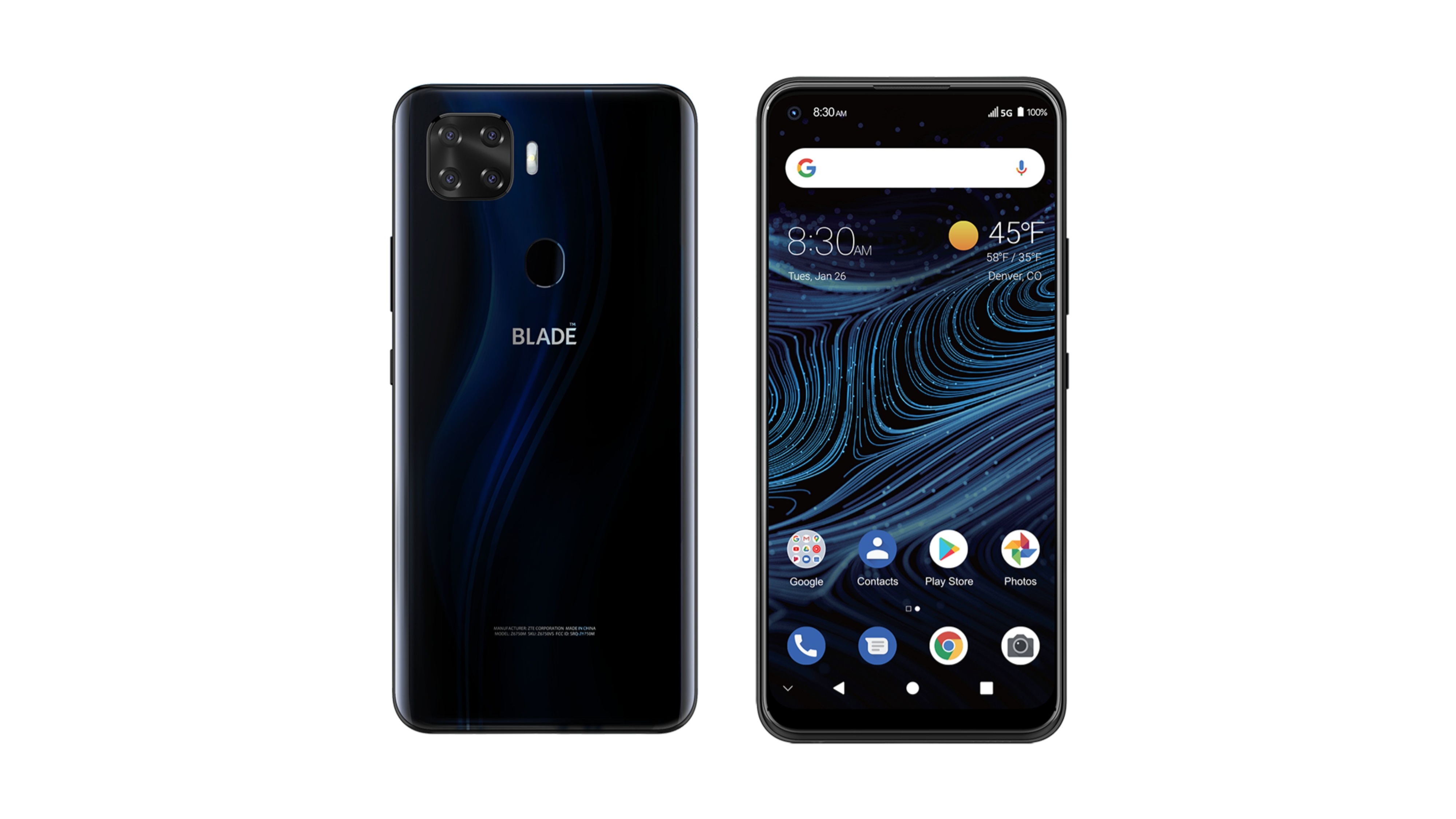
ZTE Blade X1 offers 5G, 48MP camera, and a punch-hole display for only $384

Visible, an MVNO (Mobile Virtual Network Operator) that uses Verizon’s network has launched ZTE Blade X1 in the US. This budget smartphone offers 5G connectivity for just $384 or $16 per month if you opt for the 24-month plan. However, it is worth noting that this phone does not support mmWave 5G.

ZTE Blade X1 Midnight Featured

The newly released ZTE Blade X1 features a plastic build and flaunts a 6.5-inch FHD+ (2340 x 1080 pixels) IPS LCD panel on the front with a single punch-hole at the top left corner. This display has the standard 60Hz refresh rate and 19.5:9 aspect ratio

The handset is powered by Qualcomm Snapdragon 765G SoC paired with 6GB RAM and 128GB internal storage. If needed, the storage can be further expanded up to 2TB using a microSD card.

As for cameras, this device comes with a quad-camera setup on the back, which includes a 48MP primary sensor, an 8MP ultra-wide unit, a 2MP macro shooter, and a 2MP depth sensor. Whereas, for selfies, the smartphone uses a 16MP snapper that resides in the punch-hole on the front.


On the connectivity front, apart from sub-6GHz 5G, the phone also supports 4G LTE, VoLTE, 3G, dual-band WiFi, Bluetooth 5.0, GPS, and NFC. As far as ports are concerned, the handset comes with USB Type-C and a 3.5mm headphone jack.

Lastly, this smartphone sports a rear-mounted fingerprint sensor, runs Android 10 backed by a 4,000mAh battery, comes in a single ‘Midnight’ color option, measures 164 x 76 x 9.2mm in dimensions, and weighs around 190g.

In a nutshell, the ZTE Blade X1 is similar to the ZTE Axon 11 SE 5G and ZTE Blade V2020 5G but with a different chipset and the LED flash sits right to the camera module.


RELATED:


(Via)


Redmi Note 10 bags FCC certification ahead of rumored February launch

The Federal Communications Commission (FCC) had recently certified a Xiaomi smartphone with M2101K6G. It was found that this device will be arriving in the market with Redmi Note 10 Pro 5G moniker. The FCC authority (via) has now approved another device with the M2101K7AG model number. It is now known that this model number belongs to the Redmi Note 10 handset.

The M2101K7AG has been previously spotted at certification platforms like the Eurasian Economic Commission (ECC) of Europe and the TKDN authority of Indonesia. The FCC listing has revealed a few details of the Redmi Note 10.

The FCC listing states that the M2101K7AG model number belongs to the 4G version of the Redmi Note 10. It runs on MIUI 12 and it carries support 4G LTE and dual-band Wi-Fi. According to a recent leak, the Redmi Note 10 will be launching in February in India in colors like Gray, White, and Green.

The FCC listing of the Pro model revealed that it could be arriving in three options such as 6 GB RAM + 64 GB storage, 6 GB RAM + 128 GB storage, and 8 GB RAM + 128 GB storage. Apart from FCC, the Pro variant has also received approval from other certification platforms like BIS (India), IMDA (Singapore), EEC (Europe), and MCMC (Malaysia). It is speculated that the Redmi Note 10 Pro could be equipped with a 108-megapixel primary camera.

Redmi is also expected to announce the Redmi K40 series of smartphones in China in the coming month. While the Snapdragon 888 mobile platform is expected to fuel the Redmi K40 Pro, it is unclear which processor will be present under the hood of the vanilla K40 handset. The company is also working on a Dimensity 1200 chipset powered gaming smartphone. The identity of this model is yet to be revealed.

RELATED: 

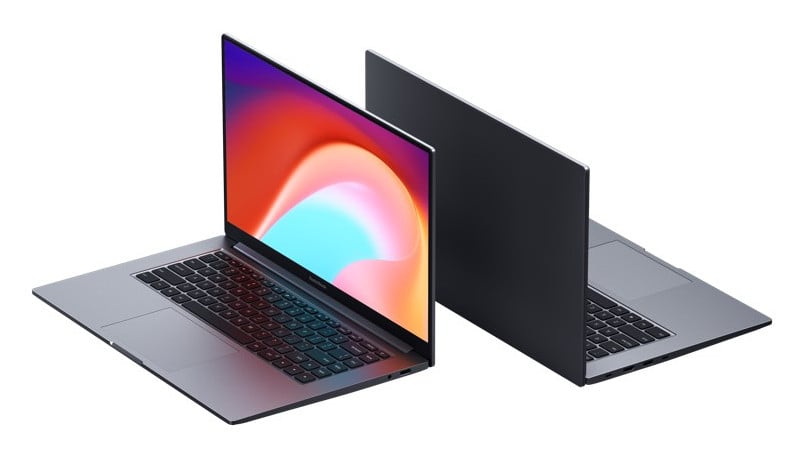
Xiaomi teases the RedmiBook Pro, which features a webcam again

Earlier today (26th January 2021), Xiaomi released a new promotional image poster for its upcoming RedmiBook Pro laptop. The teaser image shared offered us a small glimpse of the notebook, which is confirmed to feature a webcam on the front.

Xiaomi

For those unaware, back in 2020, the Chinese tech giant had launched the RedmiBook 14 and RedmiBook 16 laptops. These notebooks did not feature a front facing camera, which had led to quite a number of its prospective buyers being disappointed. While buying an external camera might offer better clarity, but it does incur an additional cost to the user. But now, it seems like Xiaomi has listened to its customers and has included the webcam again in its laptop offering.

Looking at the promotional image, we can observe that the front camera will be housed on the top, as is the case with most laptops. So, we can expect to see it on the top bezel region. Talking about the specifications of the laptop itself, the company’s previous teases had pointed at the laptop featuring an Intel 11th Gen Tiger Lake series processor, with a display that features 2K resolution.

Xiaomi
RedmiBook 16

For storage, Xiaomi is said to offer an NVMe solid state hard drive, along with a Type C port, which supports PD protocol charging as well. Furthermore, other features include fingerprint scanning for biometric security, backlight keyboards, and a new metallic body. Unfortunately, that is all we have to go on at the moment, so stay tuned for more as we will be providing updates when additional information is available.

RELATED:


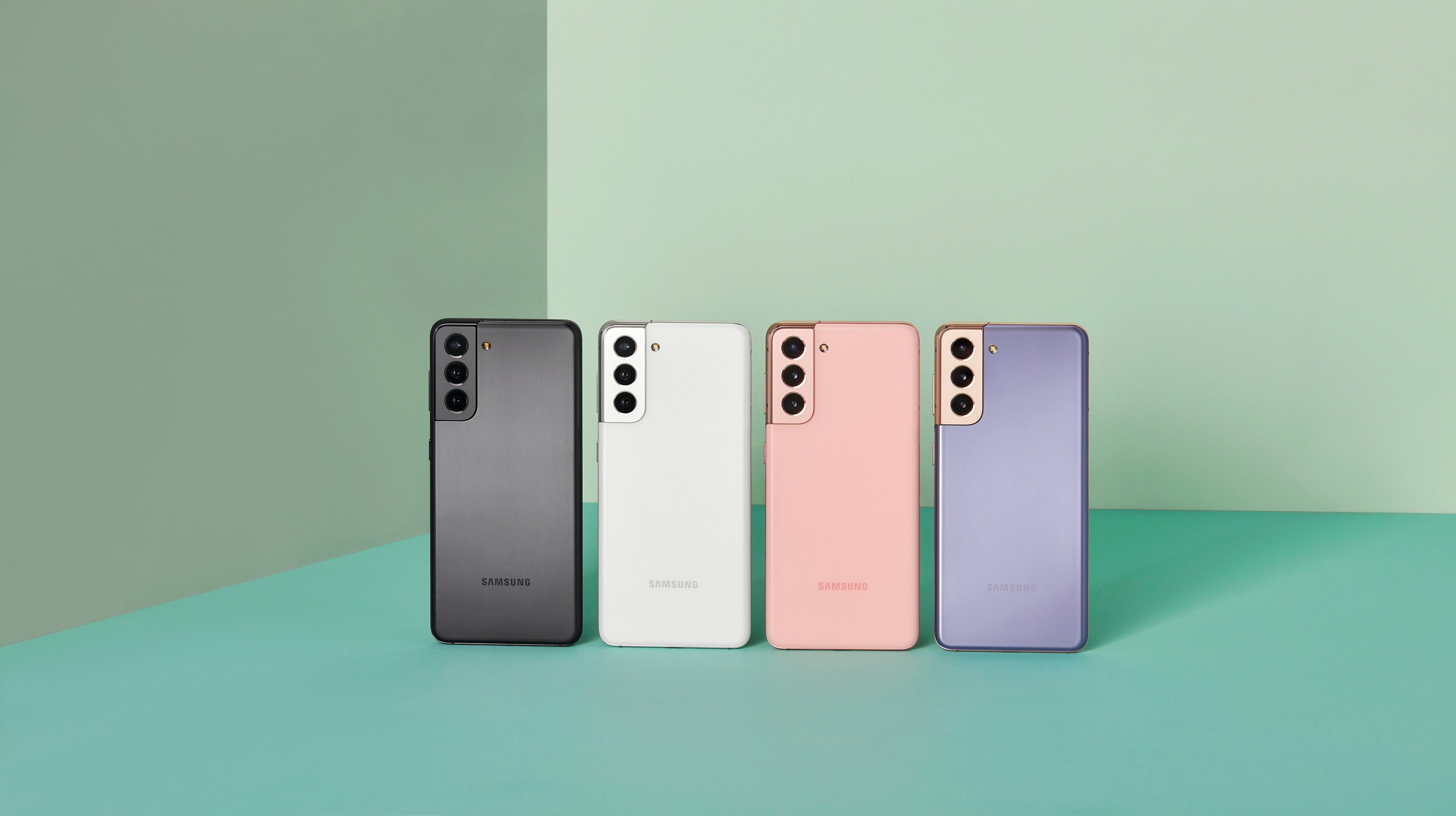
Samsung Galaxy S21 does not support the seamless update feature

Back in 2020, “seamless” updates were first revealed to be a part of smartphones that are launching with the latest Android 11 OS. The feature would allow devices to install system updates while it’s running and even reboot into the new build without user input. However, it seems that Google has apparently rolled this requirement as it has been confirmed that the Samsung Galaxy S21 doesn’t support this feature.

Samsung Galaxy S21 Phantom Gray White Pink Violet Featured

According to an AndroidPolice report, the Android 11 Compatibility Definition Document (CDD) has apparently rolled back the requirement that stated that smartphones launching with the new OS will feature seamless updates. Google has been working on this feature since 2016. To put it simply, the seamless update enables the device to get updated in the background while it is being used. While it was expected to be a feature for devices that launch with Android 11, this has since been confirmed to not be the case.

Furthermore, the Samsung Galaxy S21 series is also confirmed to not feature seamless updates. The idea behind this new feature was to reduce the wait times behind the updates, namely the bootloader bar, which makes the device unusable for a short duration of time. While various OEMs like Google, Motorola, OnePlus, and even LG support it, Samsung still doesn’t support seamless updates on its devices despite the feature being announced almost half a decade ago.

Samsung

Last year’s Samsung Galaxy S20 series also did not support this feature despite the South Korean tech giant being one of the few manufacturers that offers timely updates. In other words, Samsung devices spend quite a bit of time in their bootloader screens due to the frequent updates. Thus, while the updates are a plus point, the constant downtime is a con to their otherwise great update cycles.

RELATED:


Huawei pushes health care focused wearables as part of its growth in new areas

Huawei Technologies is planning on pushing forward its research and development of its wearables offerings that would focus on health care. The move arrives as part of its efforts to expand into new areas amid the US sanctions.

According to an SCMP report, the Chinese tech giant’s push towards this line could have it catch up with its rival Xiaomi, which is the world’s second largest wearables maker after the Cupertino based firm, Apple. At the moment, Huawei is working on three health research programmes on hypertension management, body temperature, and coronary heart disease. The company announced these initiatives earlier this month in an online event.

Huawei Watch GT 2 Porsche Design

While it has announced that it is working on health care related wearables, it has yet to announce when we might see the integration of these new features in its offerings of smartwatches, smart bands, or even eyewear. However, the company did state that it is building a “strong barrier” to entry for other competitors in the industry. Unfortunately, a Huawei spokesperson said that the company has no further comments regarding this matter for now.

As per Jason Low, a Canalys analyst, “The whole industry is expecting [wearable] products which can really help consumers better manage their health [concerns], especially chronic diseases that both young and old people are likely to get. But there is still a long way to go because this requires a lot of R&D investment, as well as cooperation between smart hardware and technology companies.” Back in Q3 of 2020, Huawei was the world’s 3rd largest wearables maker, although, the US trade restrictions have hampered its ability to supply hardware and software components for its core smartphone and networking business operations.

Huawei

The company’s CEO and Founder, Ren Zhengfei previously stated that the company must stay committed to its research and development, focus on profits and even called for decentralization for survival during this time. Currently, Huawei has over 13 research centers across the globe that work on its smart wearable designs, development of software and hardware, and are even working on health care as well.

RELATED:


MediaTek’s new budget 5G chipsets reported to use 10/12nm process

MediaTek’s latest chipsets, the Dimensity 1200 and Dimensity 1100, are both 6nm chipsets but its upcoming budget 5G chipsets under the Dimensity 700 and Dimensity 800 series may be built on larger node size.

Latest news says that the Taiwanese semiconductor company is planning to announce a new Dimensity 700 processor in the second quarter of the year while a new Dimensity 800 processor will be announced later at MWC 2021 which is scheduled for late June.

Dimensity 700 Featured

News of new chipsets should definitely sound exciting but that may not be the case for these new SoCs as it has been reported by Digitimes that they may be built using TSMC’s more mature 10nm or 12nm process. That sure sounds like the manufacturer is regressing seeing as the Dimensity 700 and Dimensity 800 chipsets are fabbed on TSMC’s 7nm node.

Sources have said that the focus for these new chips will be power-efficiency, sub-6GHz support, and multimedia and gaming performance. Our guess is that the chipsets will feature a CPU configuration with four Cortex-A55 cores and two Cortex-A76 cores. Differences between the chipsets should include CPU clock speed, maximum resolution display support, and number of GPU cores and clock speed.

These chipsets will go head-to-head against Qualcomm’s own Snapdragon 480 5G processor which has been released for entry-level and budget 5G smartphones.


RELATED:

TSMC reportedly planning to increase automotive chips pricing by 15%

The COVID-19 pandemic has severely impacted the supply chain for several technology companies and has created a shortage of key components. With the production impacted, manufacturers are looking to raise pricing.

TSMC, the world’s leading contract manufacturer for chipsets, is expected to do the same for its new automotive chips unit, for which the company is likely to cite the global shortage of components as the reason.

TSMC Logo

As per the report, Advanced Integrated Circuits (VIS), the automotive chipset unit or subsidiary of TSMC is considering increasing pricing by up to 15 percent while other foundries are also looking to do the same.

If the companies decide to increase the pricing, it will be the second round of price increase since last fall. Reports indicate that the price rise could take effect sometime at the end of February or early March.

With the increase in pricing for key components such as chipsets, the overall price of the Smart Car could also get increased, which can slow down the pace of adoption of electric vehicles, which is now gaining momentum globally.

Meanwhile, Samsung has partnered with Telsa to work on developing a new 5nm EUV chip for autonomous driving, which is currently said to be in the Research & Development stage but we should know more about it in the coming months.

RELATED: