AnTuTu is a well-known mobile device benchmarking platform. The Chinese firm releases report on various topics such as best performing handsets of a month and more. The company has now published a post on the best price to performance ratio smartphones in China ay, for the month of December 2020.
The Beijing-based firm has categorized the phones based on the following price segments.
Let us take a look at the list for each price category one by one.
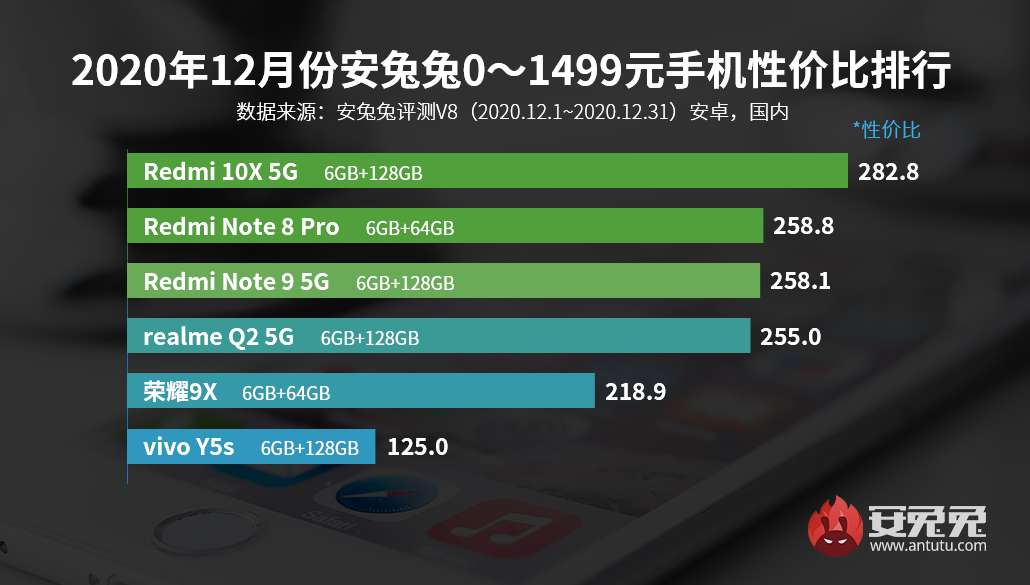
Best Price to Performance Ratio Smartphones (¥0 – ¥1,499) – December 2020
According to AnTuTu, the Redmi 10X 5G (6 + 128GB) is the best device in this segment. This handset is powered by MediaTek Dimensity 820 chipset. In fact, it is the only handset, apart from Redmi 10X Pro 5G to feature this chip in the entire world.
Redmi Note 8 Pro (6GB + 64GB) is the second device on the list. This phone is almost one and a half years old but it is still powerful enough to make it to the list, that too second position. Lastly, in the third place, we have the newly launched Redmi Note 9 5G (6GB + 128GB)
First Place
Model: Redmi 10X 5G (6GB + 128GB)
Average Score: 395,605
Value for Money: 282.8
Price: ¥1,399
Second Place
Model: Redmi Note 8 Pro (6GB + 64GB)
Average Score: 284,431
Value for Money: 258.8
Price: ¥1,099
Third Place
Model: Redmi Note 9 5G (6GB + 128GB)
Average Score: 335,332
Value for Money: 258.1
Price: ¥1,299
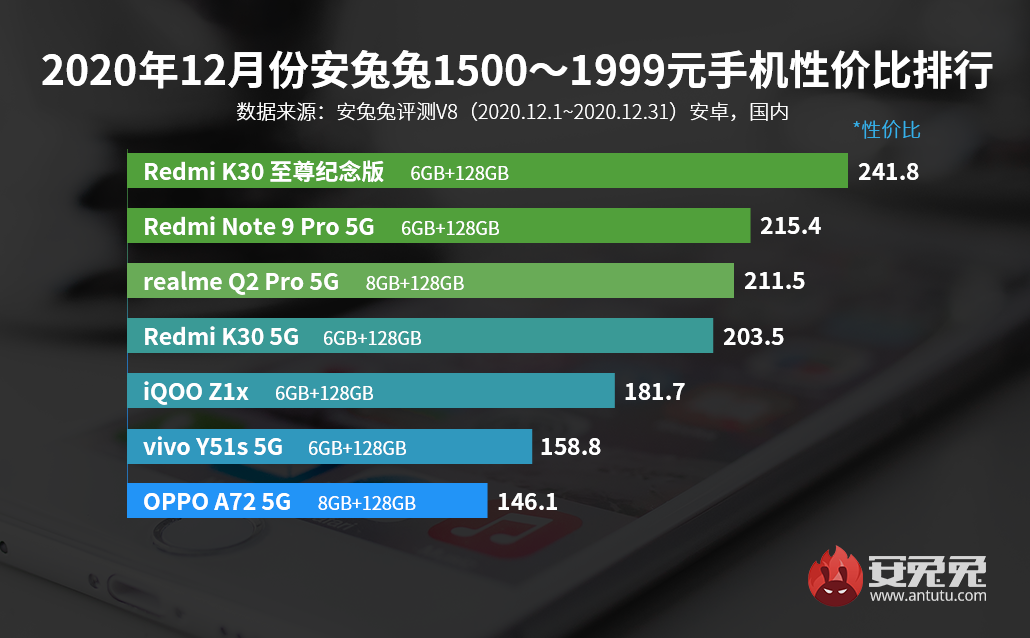
Best Price to Performance Ratio Smartphones (¥1,500 – ¥1,999) – December 2020
This segment is once again led by two Redmi handsets. The first place is acquired by Redmi K30 Ultra (6GB + 128GB), the one with Dimensity 1000+, 120Hz AMOLED display, and a pop-up camera. Whereas, the second place is obtained by the all-new Redmi Note 9 Pro 5G (6GB + 128GB), which recently debuted as Mi 10i in India.
Finally, in the third place, we have the realme Q2 Pro (8GB + 1228GB), a tweaked realme 7 Pro with Dimensity 800U chipset, 48MP primary camera, and 16MP selfie camera.
First Place
Model: Redmi K30 Ultra (6GB + 128GB)
Average Score: 482,432
Value for Money: 241.8
Price: ¥1,999
Second Place
Model: Redmi Note 9 Pro 5G (6GB + 128GB)
Average Score: 344,470
Value for Money: 215.4
Price: ¥1,599
Third Place
Model: realme Q2 Pro (8GB + 128GB)
Average Score: 338,215
Value for Money: 211.5
Price: ¥1,599
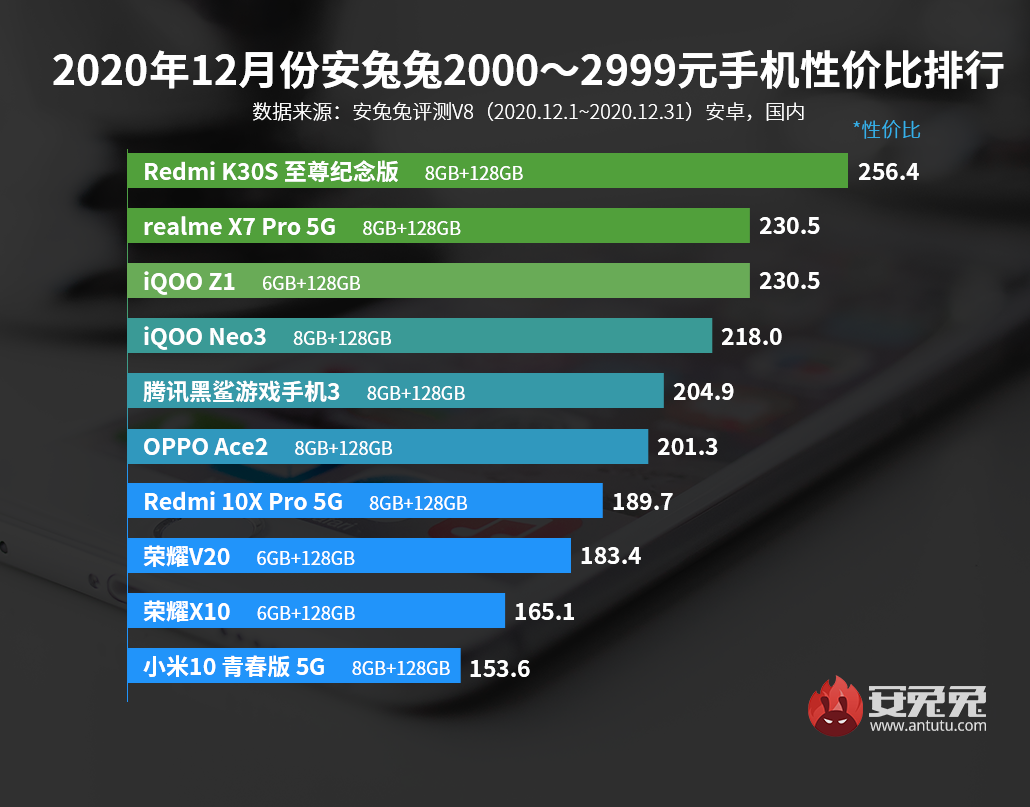
Best Price to Performance Ratio Smartphones (¥2,000 – ¥2,999) – December 2020
The third price bracket is again dominated by a Redmi smartphone. This time it is Redmi K30S Ultra (8GB + 128GB), which is known as Mi 10T in global markets. However, second place belongs to the realme X7 Pro 5G (8GB + 128GB) and the iQOO Z1 (6GB + 128GB) comes third.
First Place
Model: Redmi K30S Ultra (8GB + 128GB)
Average Score: 666,490
Value for Money: 256.4
Price: ¥2,599
Second Place
Model: realme X7 Pro 5GB (8GB + 128GB)
Average Score: 524,829
Value for Money: 238.7
Price: ¥2,299
Third Place
Model: iQOO Z1 8GB + 128GB
Average Score: 506,551
Value for Money: 230.5
Price: ¥2,198
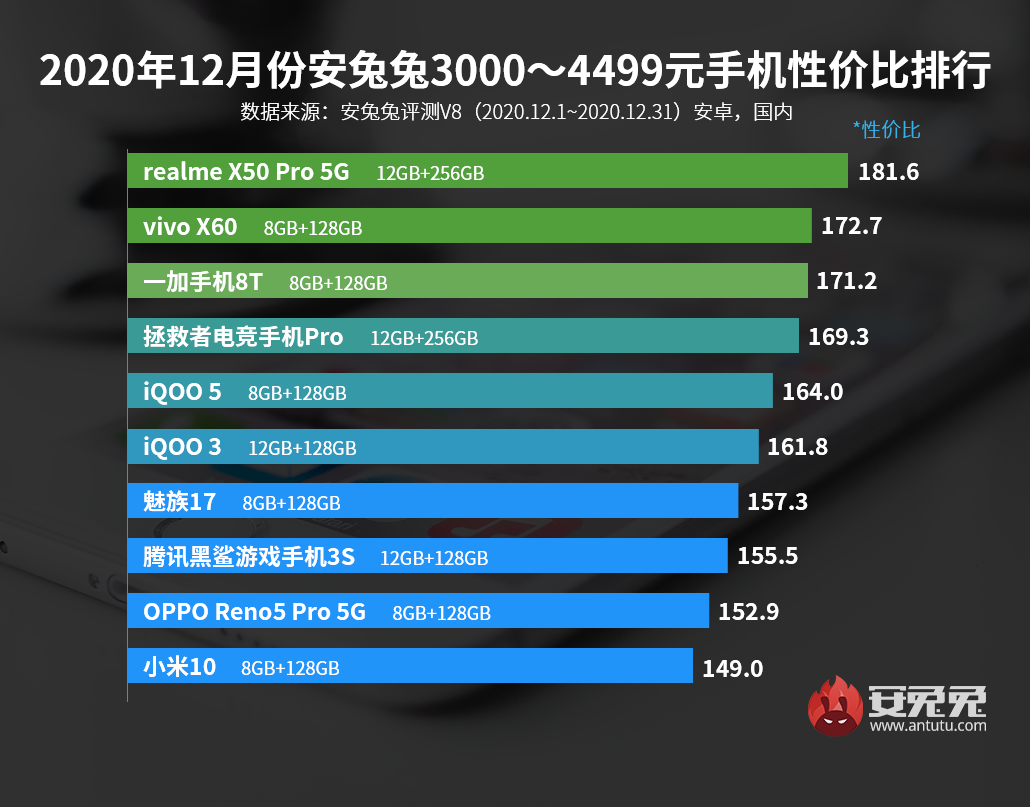
Best Price to Performance Ratio Smartphones (¥3,000 – ¥4,499) – December 2020
OnePlus 8T (8GB + 128GB) is popular in this segment in global markets (at least India) but in China, it only comes third in terms of price to performance ratio, as per AnTuTu. That’s because the realme X50 Pro 5G (12GB + 256GB) ranks first, followed by vivo X60 (8GB + 128GB) in the second position.
First Place
Model: realme X50 Pro 5G (12GB + 256GB)
Average Score: 598,968
Value for Money: 181.6
Price: ¥3,299
Second Place
Model: vivo X60 (8GB + 128GB)
Average Score: 603,942
Value for Money: 172.7
Price: ¥3,498
Third Place
Model: OnePlus 8T (8GB + 128GB)
Average Score: 581,929
Value for Money: 171.2
Price: ¥3,399
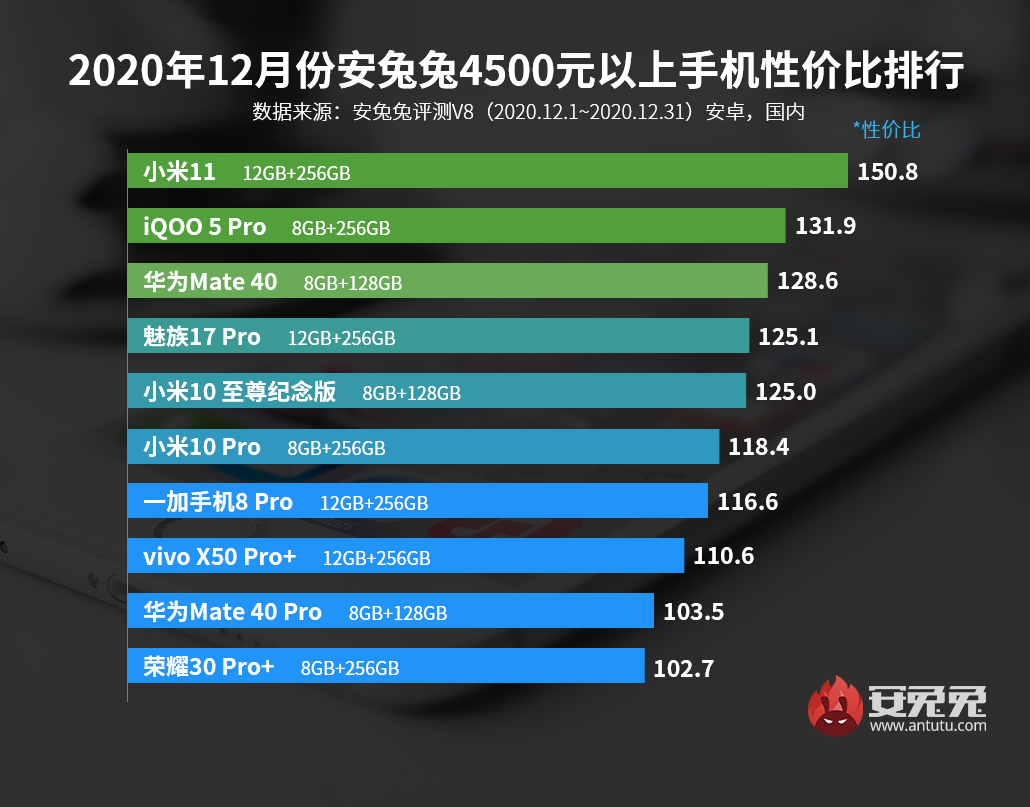
Best Price to Performance Ratio Smartphones (¥4,500 and above) – December 2020
Lastly, in the flagship segment, the Xiaomi Mi 11 (12GB + 256GB) powered by Qualcomm Snapdragon 888 takes the crown. Further, the next two devices are iQOO 5 Pro (8GB + 256GB) and HUAWEI Mate40 (8GB + 128GB) respectively
First Place
Model: Xiaomi Mi 11 (12GB + 256GB)
Average Score: 708,425
Value for Money: 150.8
Price: ¥4,699
Second Place
Model: iQOO 5 Pro (8GB + 256GB)
Average Score: 659,195)
Value for Money: 131.9
Price: ¥4,998
Third Place
Model: HUAWEI Mate40 (8GB + 128GB)
Average Score: 642,941
Value for Money: 128.6
Price: ¥4,999
What are your thoughts on the smartphones in the above lists? Let us know in the comment section below.
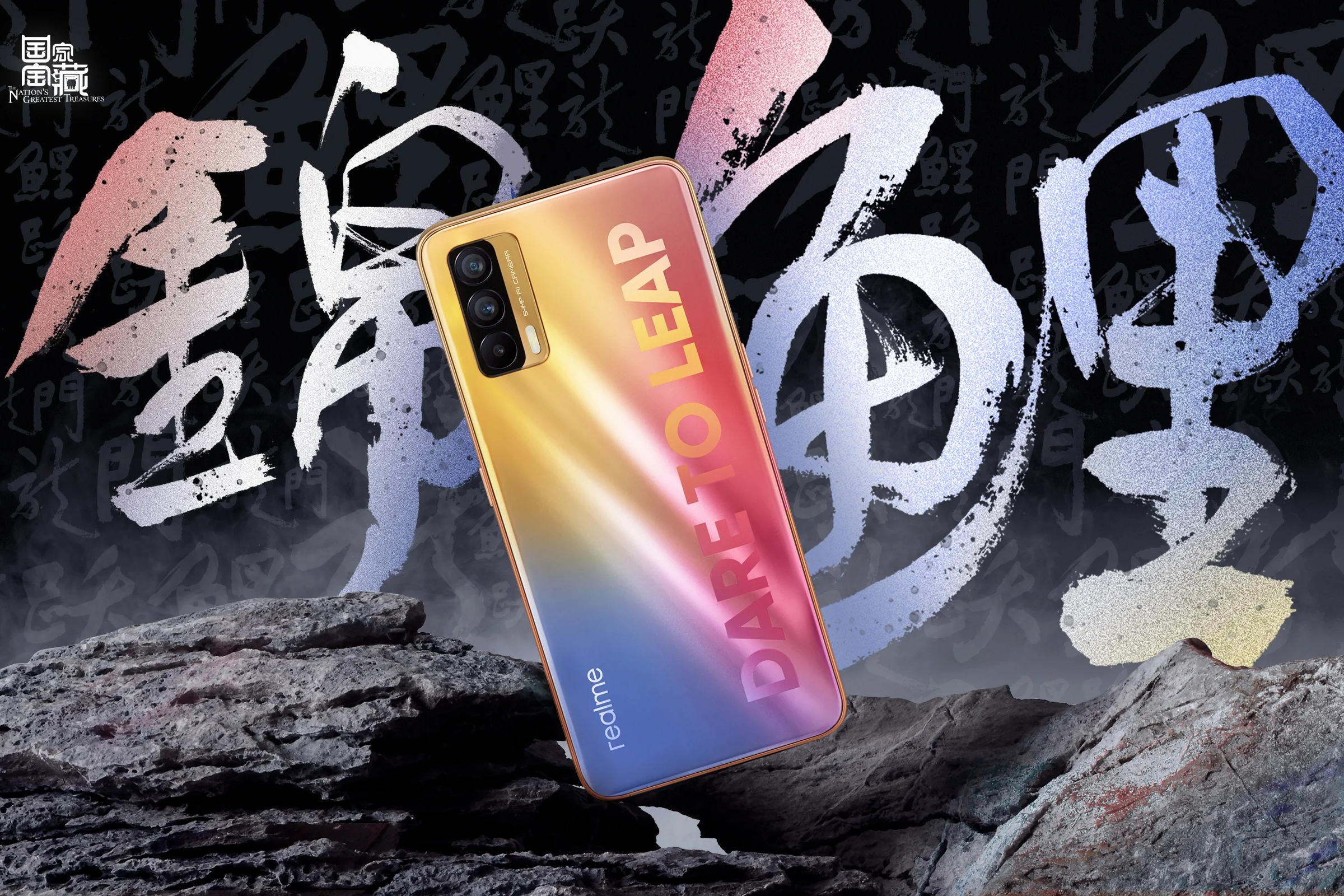
The Bureau of Indian Standards (BIS) has approved the Realme V15 smartphone that went official in China yesterday. The BIS certification is a good hint that reveals that its global launch could be nearing, and India could be one of the first markets to receive it.
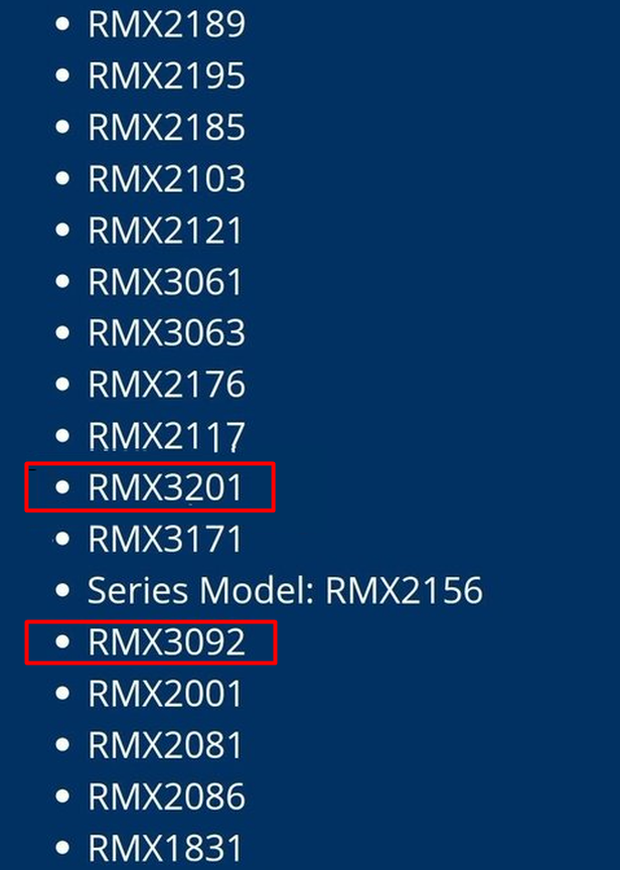
Today, the Realme V15’s model number RMX3092 appeared in the database of India’s BIS authority. After the Realme X7 series, the V15 could be another Dimensity SoC powered phone from Realme to arrive in India soon. There is a possibility that some of the other Asian markets may also receive the Realme V15 phone in the next few months.
As can be seen in the screenshot, the RMX3201 is a mysterious Realme phone which has also passed BIS certification. The RMX3201 phone has been previously spotted at EEC, at CQC certification with 10W charger, and at Wi-Fi Alliance with 2.4GHz Wi-Fi and Android 10 OS.
The Realme V15 has a 6.4-inch S-AMOLED display with a punch-hole design. The screen delivers a Full HD+ resolution of 1080 x 2400 pixels and a 20:9 aspect ratio. A fingerprint scanner is integrated with the screen of the Realme V15.
The Dimensity 800U chipset is present under the hood of the Realme V15. The handset arrived in China in 6 GB and 8 GB LPPDR4x RAM versions. Both models are equipped with the same internal storage of 128 GB. The device lacks support for a microSD card slot. The Realme UI based Android 10 OS comes preinstalled on the Realme V15.
The Realme V15 has a front camera of 16-megapixel. The backside of the phone features a quad camera setup. It includes a 64-megapixel main camera, an 8-megpaixel ultrawide lens, and a 2-megapixel macro lens. A 4,310mAh battery backs the smartphone, and it comes with support for 50W fast charging technology.
The 6 GB and 8 GB RAM versions of the Realme V15 are priced at 1,499 Yuan (~$232) and 1,999 Yuan (~$309). It comes in colors like Koi, Crescent Silver, and Mirror Lake Blue.
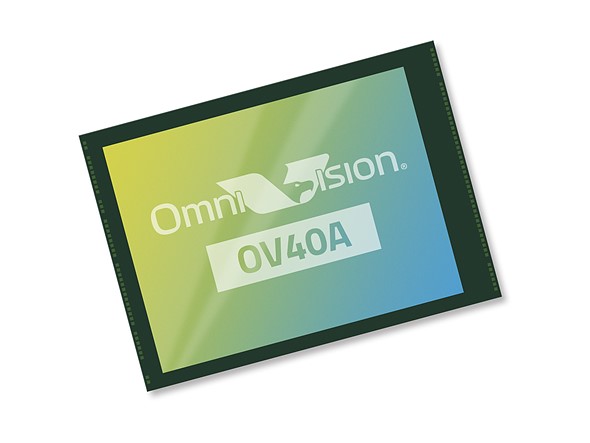
OmniVision has just announced a new smartphone camera sensor. The new sensor is subbed the OV40A, which is a 40 megapixel image sensor, that is developed to be paired with next generation smartphones.
In a recent announcement, the company unveiled the new 1/1.7” sensor which is built with OmniVision PureCel Plus S stacked die technology. It features a 1.0 micron pixels and offers ‘super high gain and de noise technologies for the best in class low light camera performance.’ In other words, the company has just launched one of its best image sensors that promise to offer improved low light performance among other things.
As per the official notes, the OV40A also offers multiple high dynamic range (HDR) options for both videography and photography. It also arrives with slow motion video capture at up to 240 fps (frames per second), along with PDAF (phase detection autofocus). Similar to the 32 megapixel sensor the company released earlier this week, the OV40A also uses a 4 cell color filter array and hardware remosaic. Furthermore, it is also capable of capturing 40 megapixel stills at 30 fps.
Through pixel binning, the image sensor can also achieve 10 megapixel shots at 120 fps as well, to improve its low light performance. For videos, the sensor supports 60 fps video captures in 4K and 1080p videos up to 240 fps, all of which alongside PDAF. For those unaware, OmniVision sensors have been used in low to mid range handsets due to their more affordable costs in comparison to Sony sensors, but we might see this sensor in some upper mid range or affordable flagship model as well.
The used smartphone market is expected to surpass 225 million units in shipments for the year 2020, as per a new report. This marks a notable increase year on year over 2019, despite the overall smartphone market declining in the same year.
According to an IDCprojection, the worldwide shipments of used smartphones is expected to reach around 225.4 million units. This translates to a 9.2 percent rise in shipments, in comparison to 2019. Furthermore, IDC also predicts that the market will further rise in the arriving years and will reach 351.6 million units by 2024. The report also takes refurbished smartphones into account, along with used devices as well.
As per IDC, a big part of this growth is driven by the increase in popularity of trade ins. In other words, customers are more persuaded towards upgrading their smartphones to manage the cost of brand new handsets. Despite the market seeing growth, IDC believes that the figure is still lower than previous market expectations. Although, the used smartphone market still performed better than the new one, which IDC believes, saw a decline of 6.4 percent in the same period.
Anthony Scarsella, research manager at IDC stated that “In contrast to the recent declines in the new smartphone market, as well as the forecast for minimal growth in new shipments over the next few years, the used market for smartphones shows no signs of slowing down across all parts of the globe. Refurbished and used devices continue to provide cost-effective alternatives to both consumers and businesses that are looking to save money when purchasing a smartphone.”
Xiaomi launched its Mi series flagship, the Xiaomi Mi 11 at an official event at the end of 2020. The event turned out to be quite a surprise, because instead of releasing a Pro version, Xiaomi decided to add a bunch of premium features inside its standard 3999 RMB flagship. So we were eager to get our hands on this device as soon as possible. And after using it for the past few days, this is our review of the Xiaomi Mi 11!
Xiaomi Mi 11 Review: Design
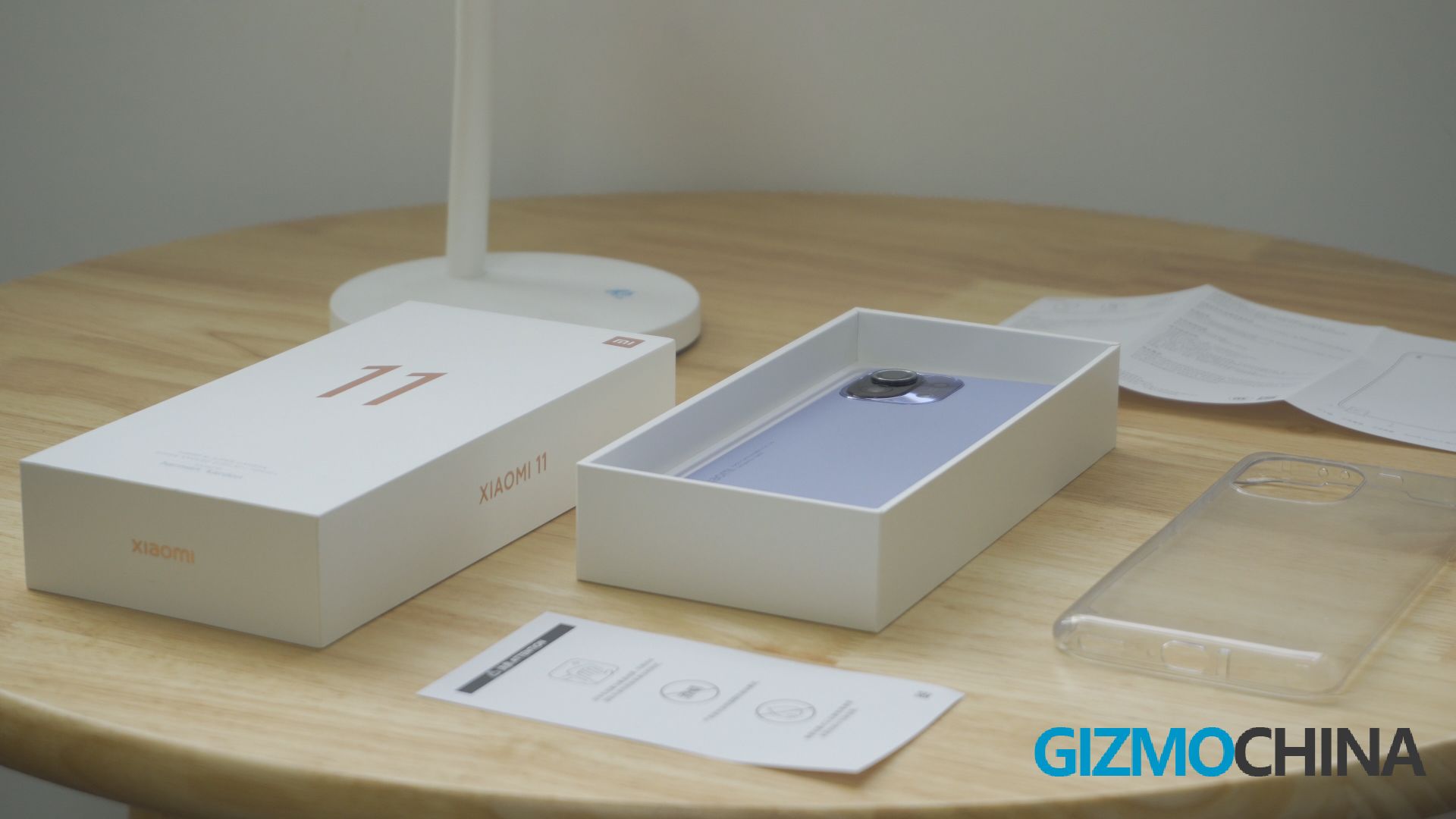
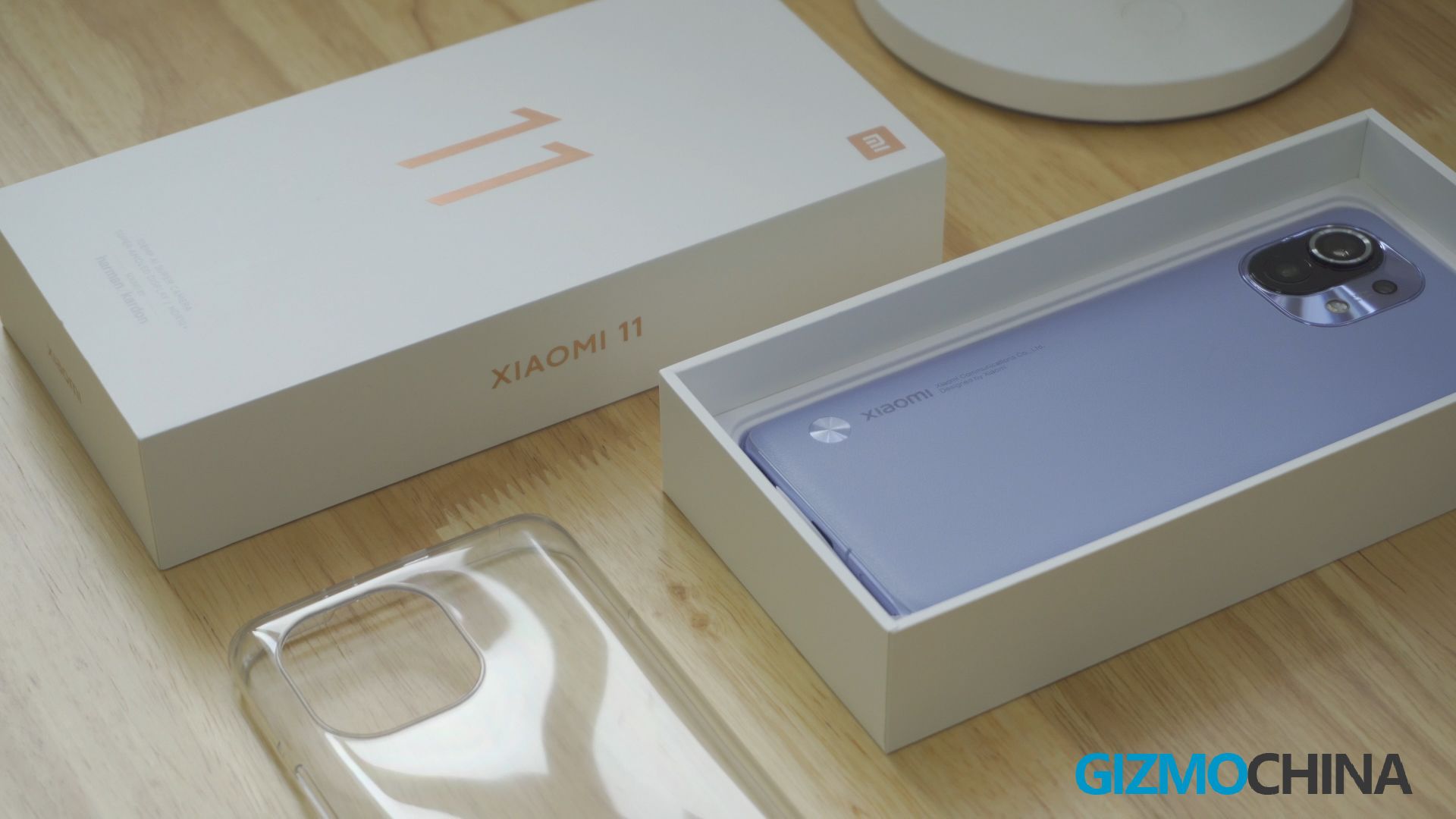
Just like Mi 10 series, the Xiaomi 11 was also relatively well-stocked right from the start. And we managed to get a unit for review in the first sale itself. The box was pretty thin and when we opened it, there was only a case, manual and the phone inside.
Mi 11 Box contents
Mi 11 Box contents
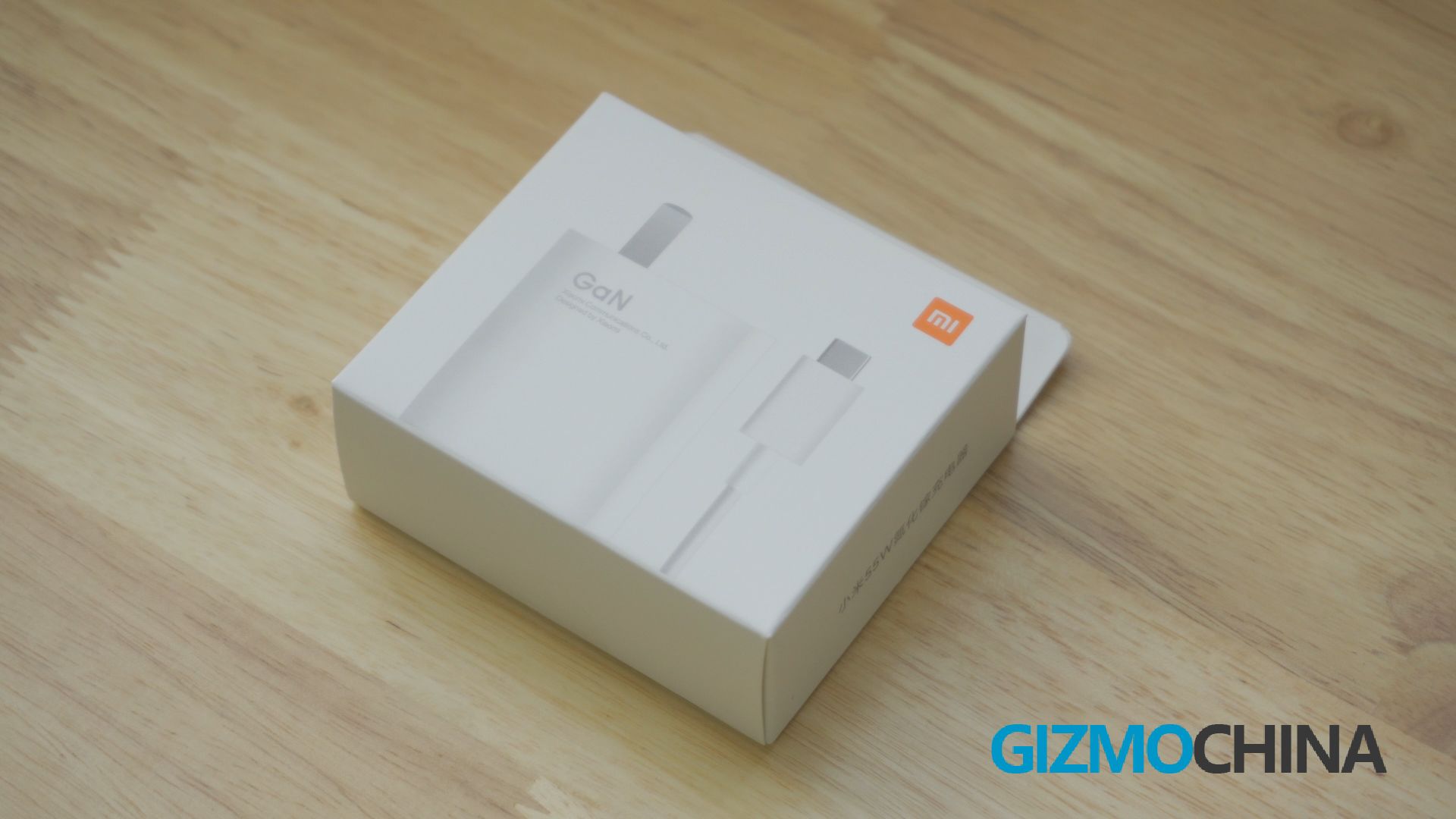
Mi 11 Box Charger comes separately
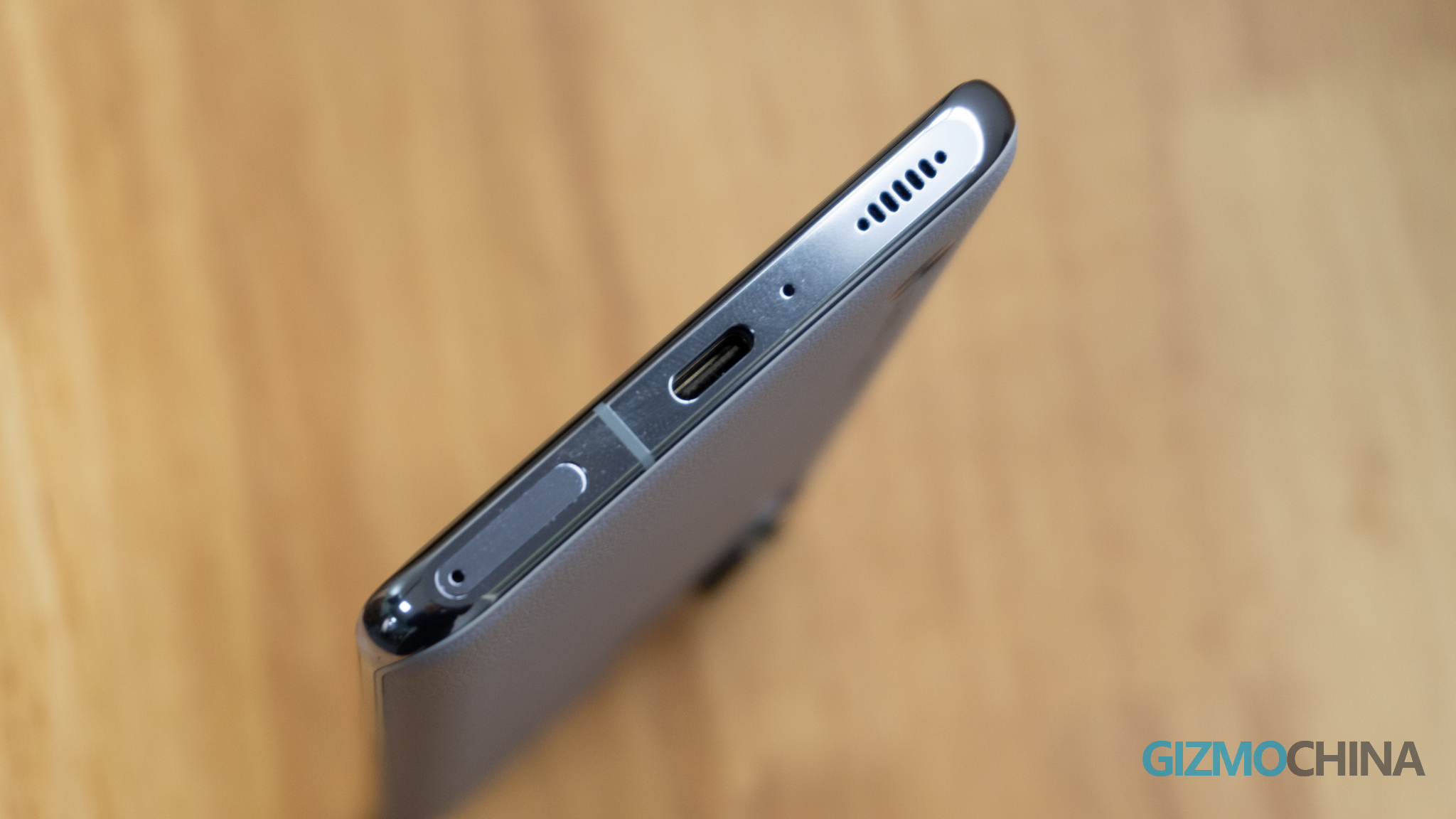
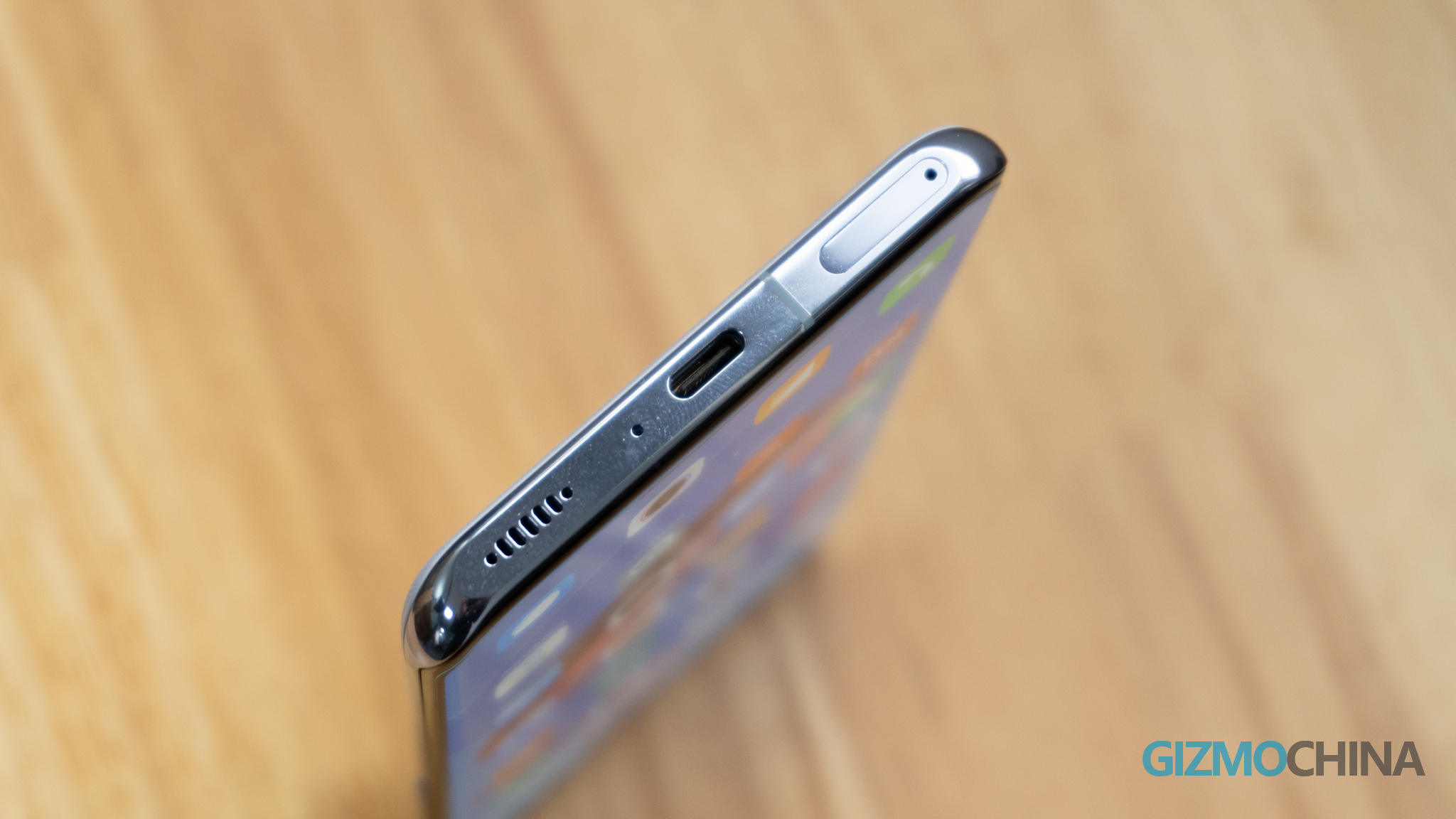
Yes, this confirms that Xiaomi no longer includes a charger in the box, not even the charging cable. But before you lose your composure, let me remind you that when you buy the Mi 11 online, you have two options — a standard version without the charger or the charging cable, or a set version that comes with a separate 55W GaN charger and charging cable. The price for both versions is exactly the same. This means, if you have a fast charger compatible with the Mi 11, you can simply get the box without the charger and do your bit to reduce ewaste. Since you have both options, unlike what Apple did with its iPhone 12 series (Samsung joining in soon too), this seems like a more practical and feasible approach from Xiaomi.
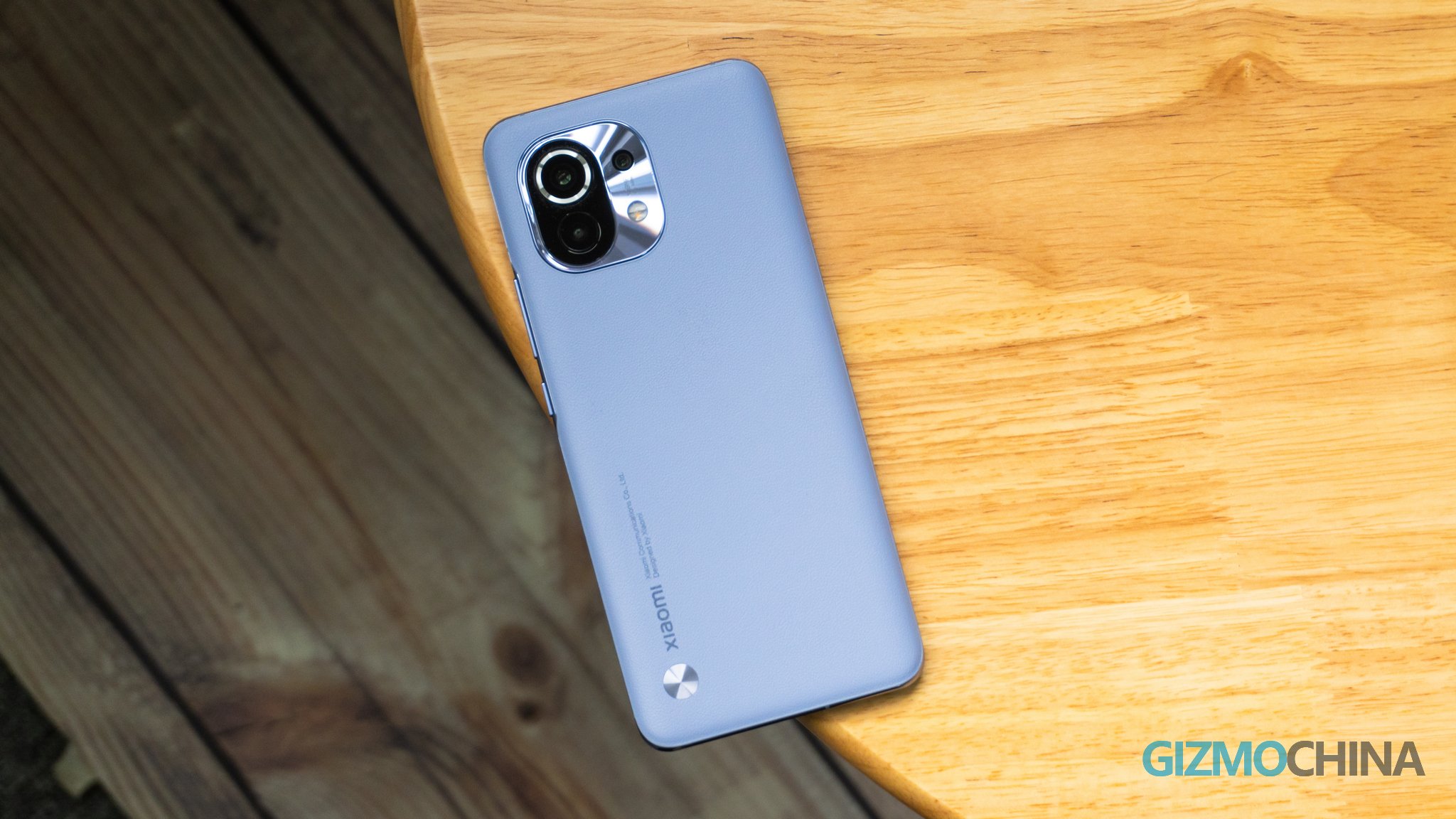
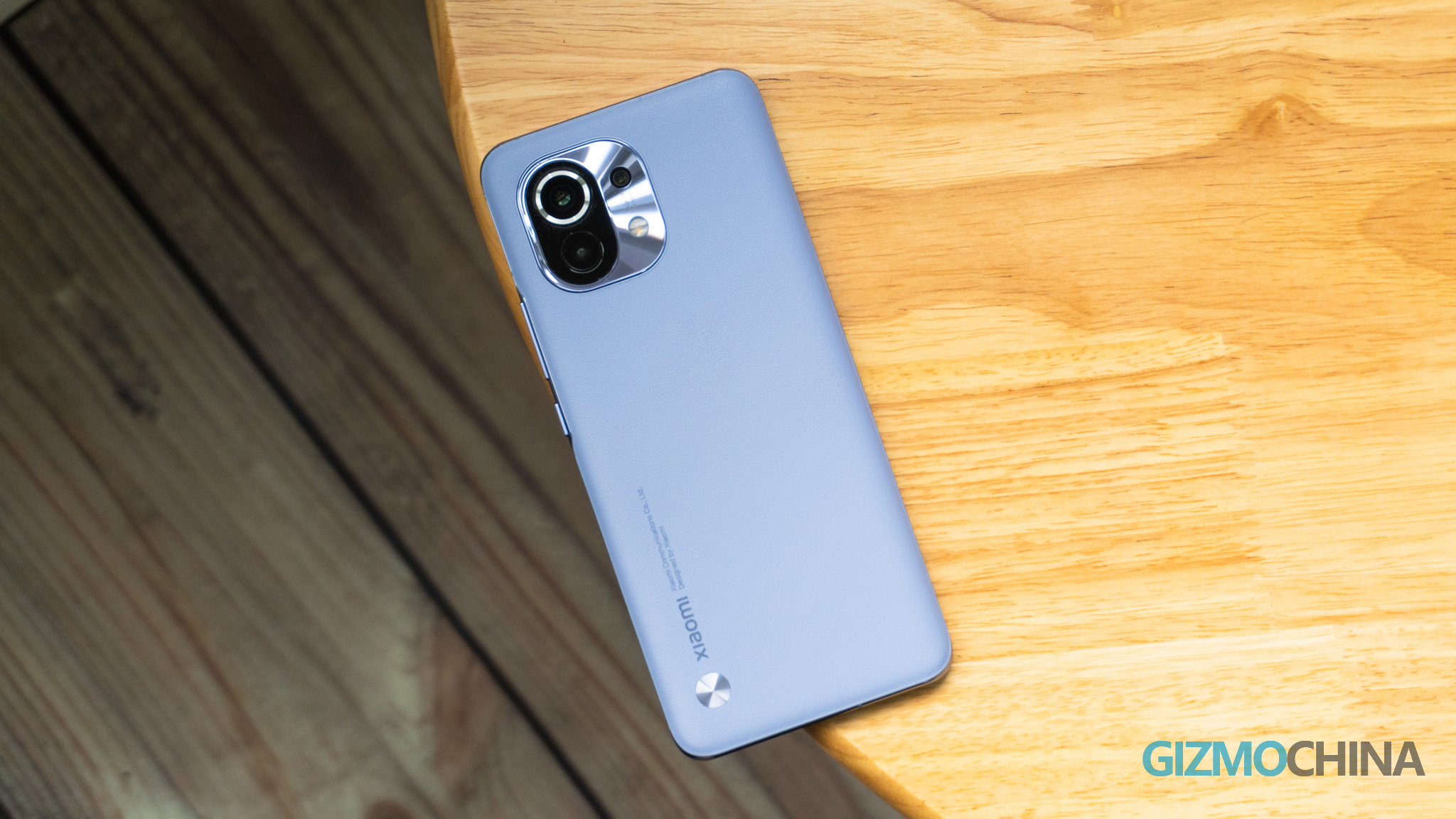
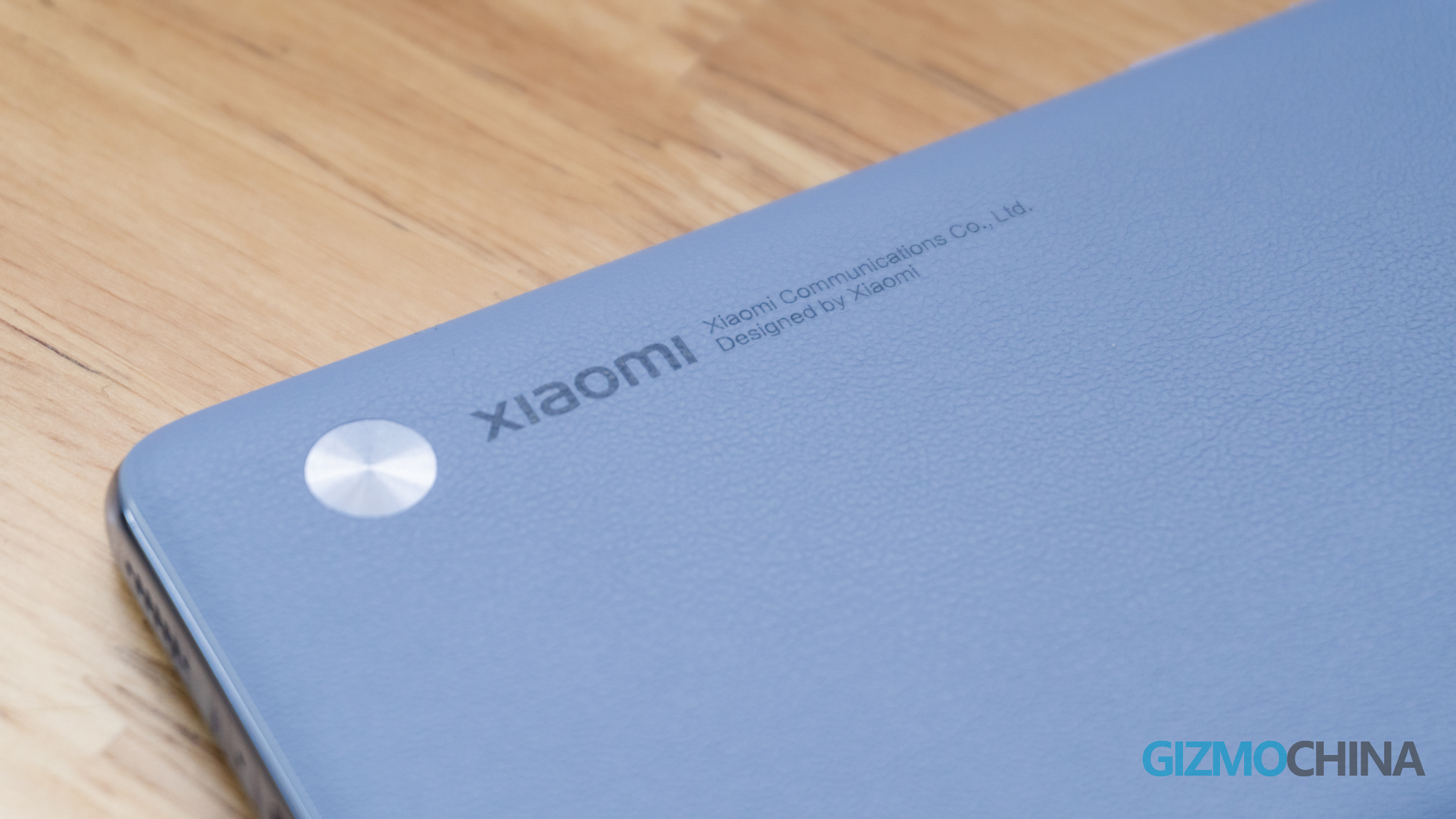
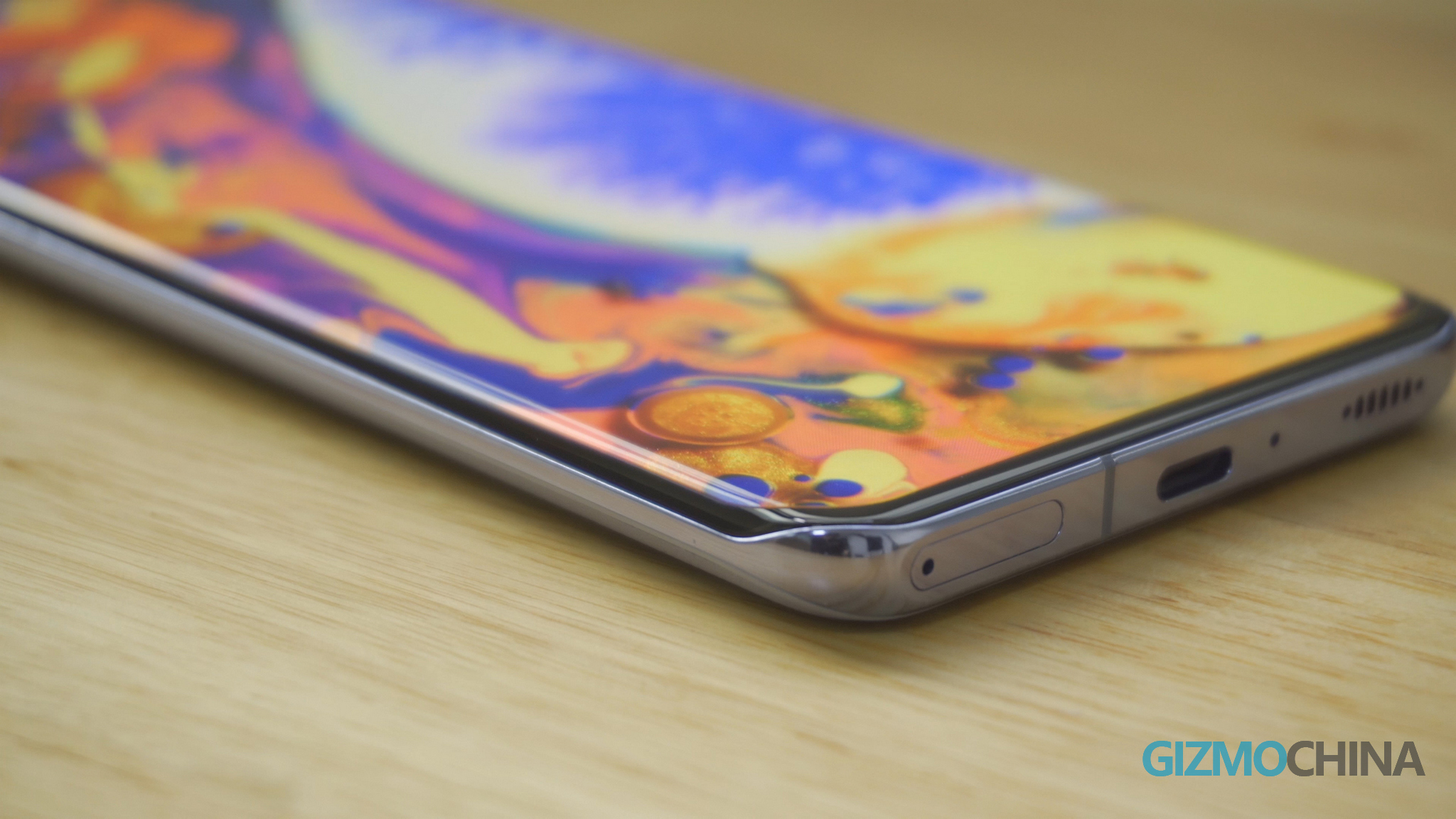
What we got with us is the Purple Leather version of the Mi 11. This is the first time Xiaomi is using leather on its flagship model and it feels good in the hand. It’s also not slippery — unlike the frosted glass variant. The vegan leather version is suitable for people who don’t like to carry a phone case.
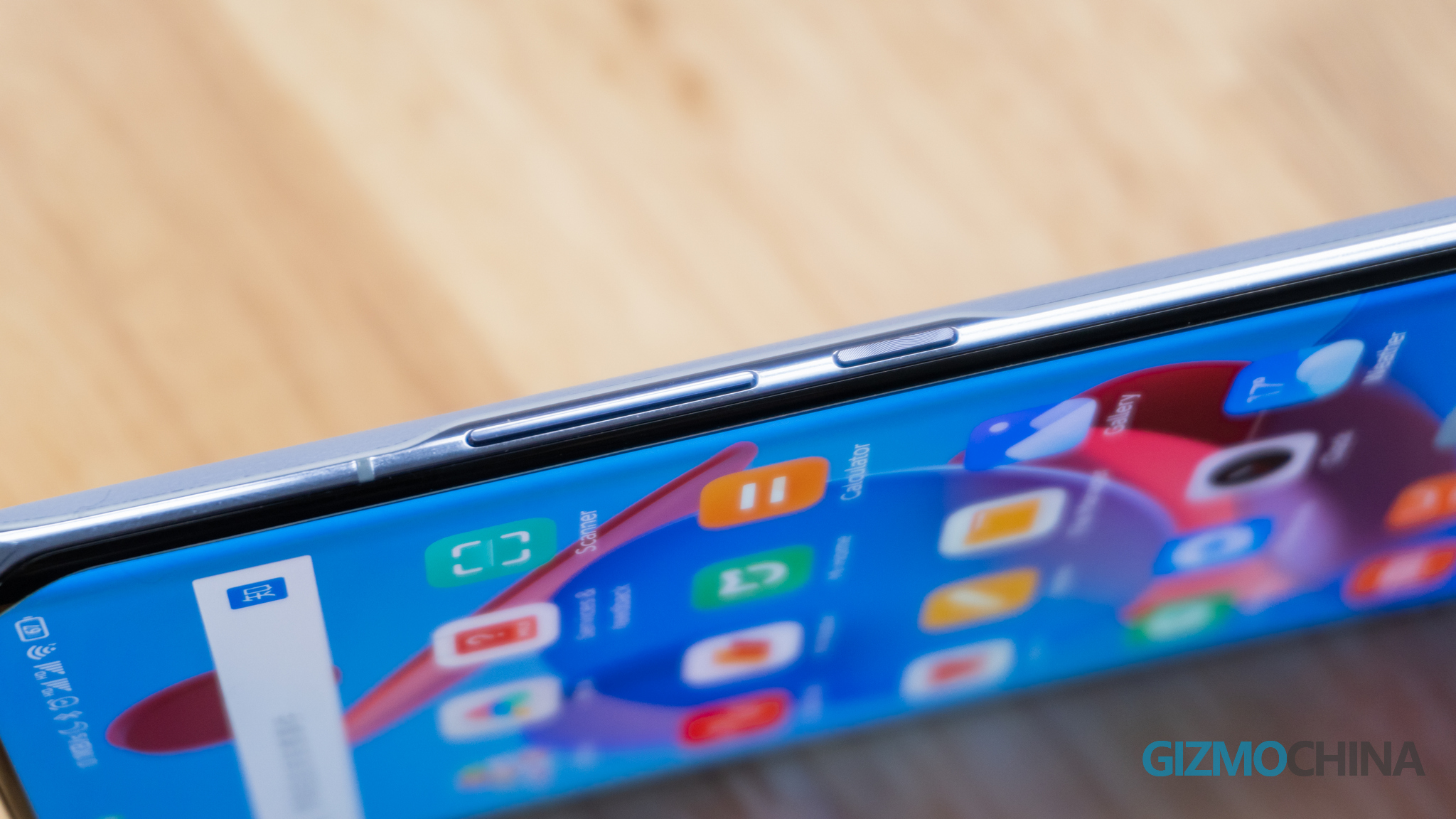
The phone weighs 194g. While this figure doesn’t seem particularly light, it is no longer top-heavy because the body is larger and the lens module size is reduced. The balanced weight distribution ensures that the phone doesn’t feel heavy. And if you are like me — switching from the 221g Mi 10 Ultra to the Mi 11, I’m sure your pinky finger will thank you! The Xiaomi logo has been removed and replaced with the letters Xiaomi. There’s also a large pin-shaped circular brushed metal decoration on the back that’s exclusive to the leather version. Moving on to the camera module, it has a rounded rectangular design. The lens has got black plating. Whether you like this design or not, you have to agree that the Mi 11 is much more unique and recognizable now. Compared to the Xiaomi 10, the back has been completely revamped. It has a better touch feeling, looks excellent, and is comfortable to hold. Overall, I’m pretty happy with the new design of the Xiaomi Mi 11.
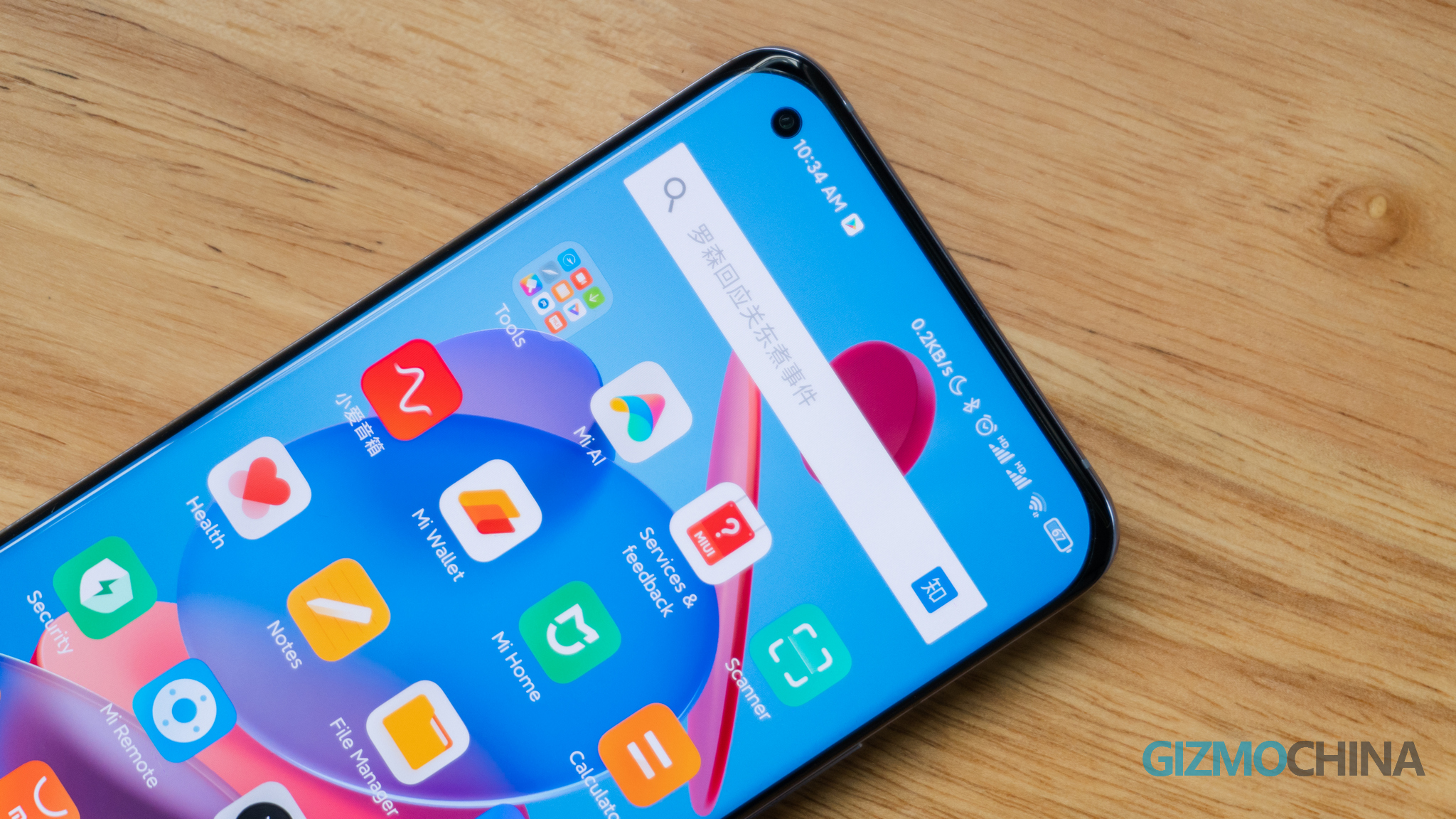
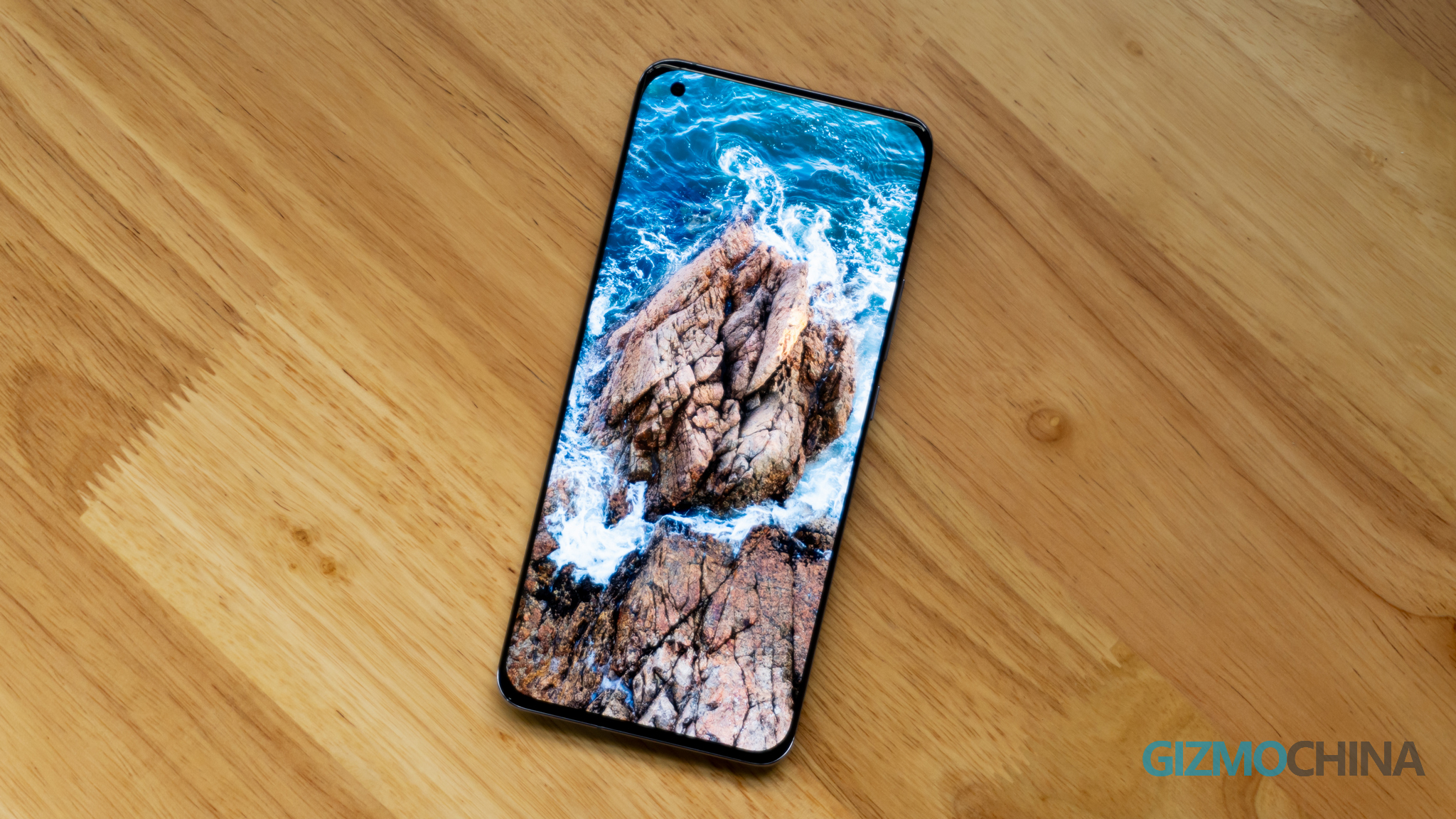
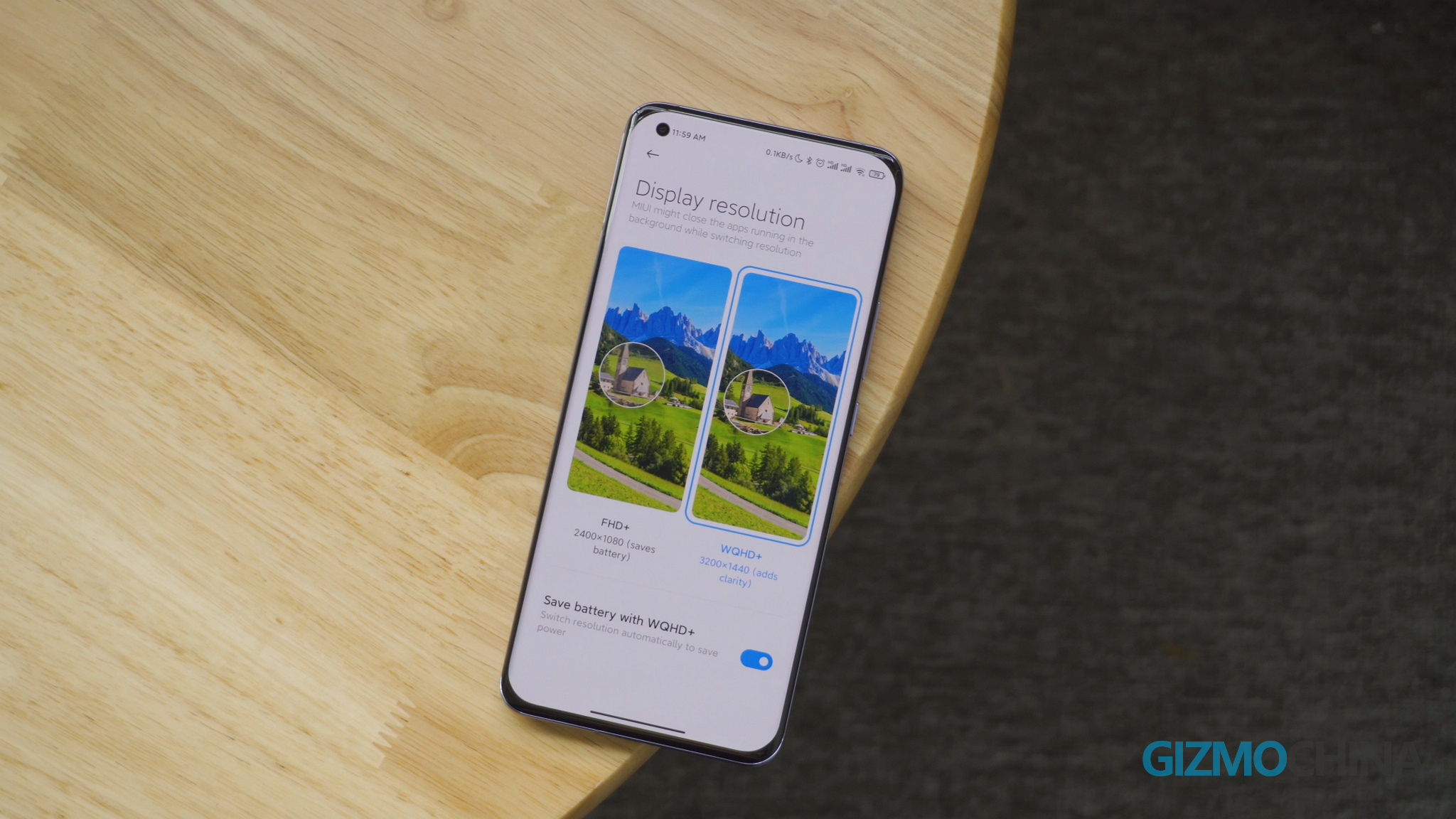
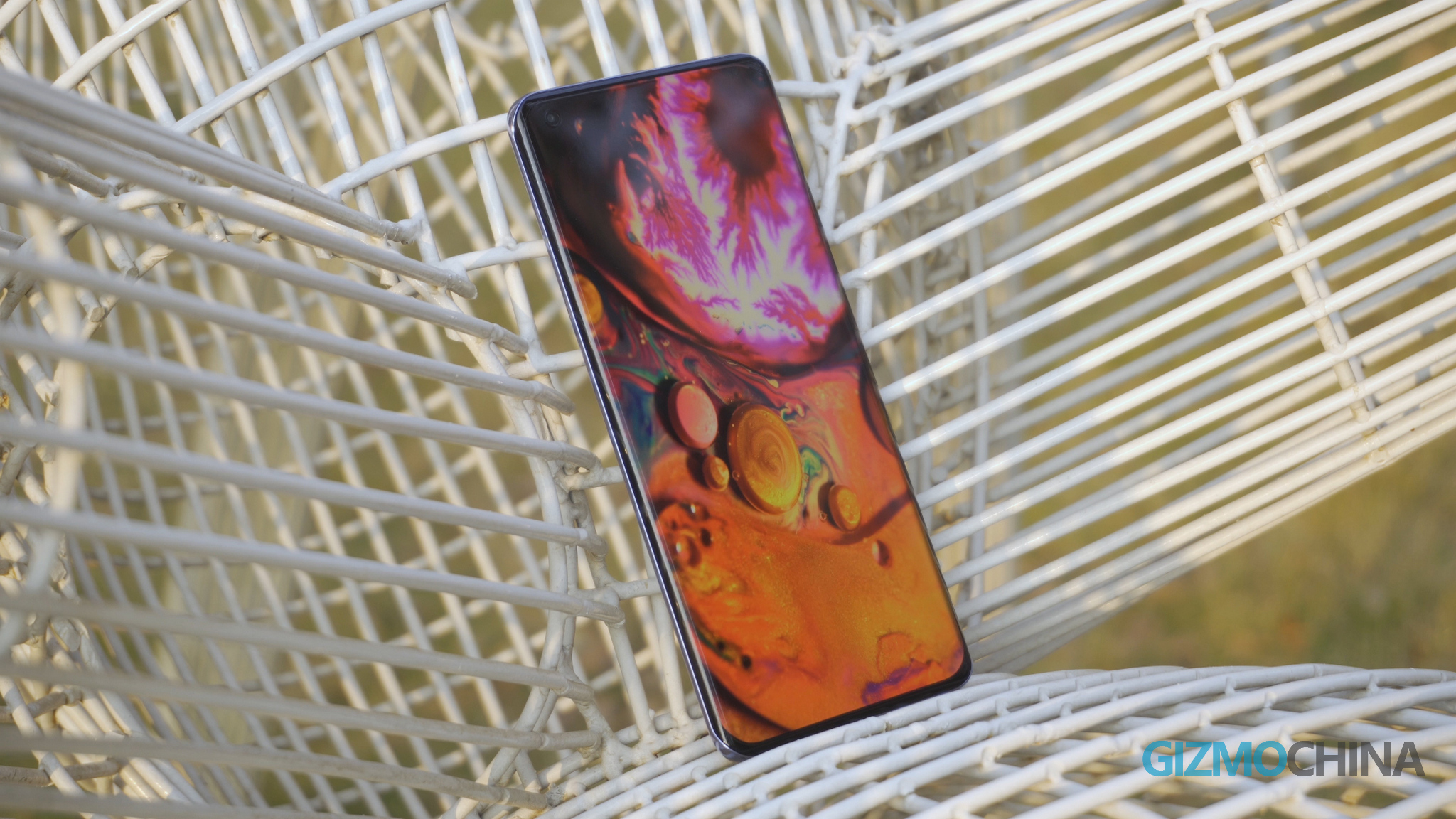
The Mi 11 comes with a quad-curved, 2K resolution, 120Hz refresh rate, 480Hz touch sampling rate, Samsung AMOLED panel with Corning Gorilla Victus glass cover for the screen. This screen is supposed to be the biggest highlight of the new Xiaomi flagship. In terms of parameters alone, it should be the best in the market right now.
The experience I’ve had over the past few days can be summed up in just one word–fabulous! The DisplayMate A+ certified screen is unbeatable in terms of color accuracy and clarity. The maximum brightness of 1500 nits ensures that you can see the screen clearly under direct sunlight. And there’s MEMC, Super-resolution enhancement, and other premium features onboard. One thing I particularly like is that the quad-curved screen not only allows for smoother gestures but also avoids the green tint you get on certain curved panels.
I have always felt that a design has to be both aesthetically pleasing as well as functional to be considered the best. All in all, this screen can’t be overhyped, it’s definitely one of the best AMOLED displays you can buy in 2021.
Xiaomi Mi 11 Review: Performance
Instead of 875, this year’s Snapdragon 8 series has been renamed the Snapdragon 888. 888 resonates with the Chinese word that stands for good luck and fortune. Let’s see if 888 can bring itself good luck. The usual rule is to look at the benchmark first.
Antutu
3D Mark
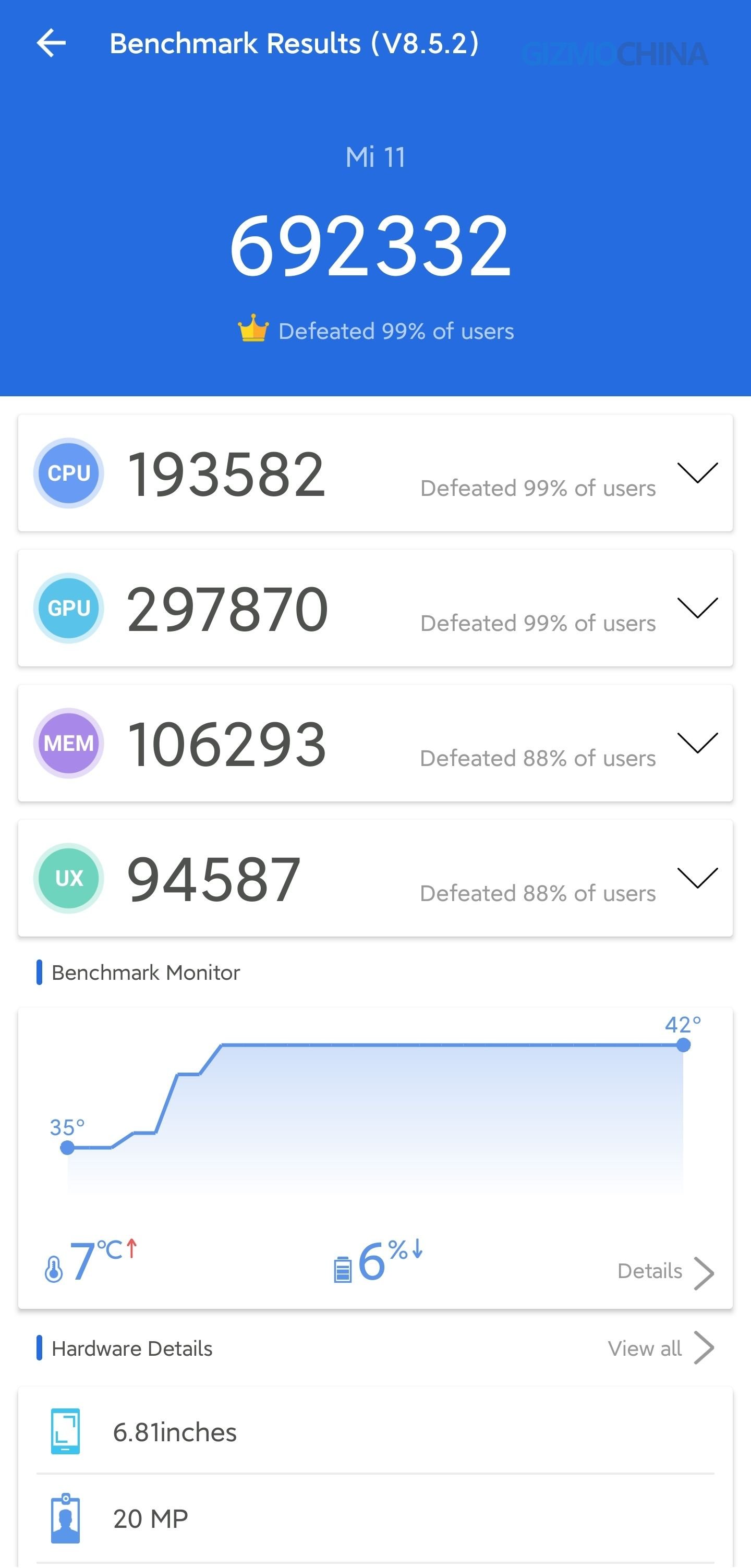
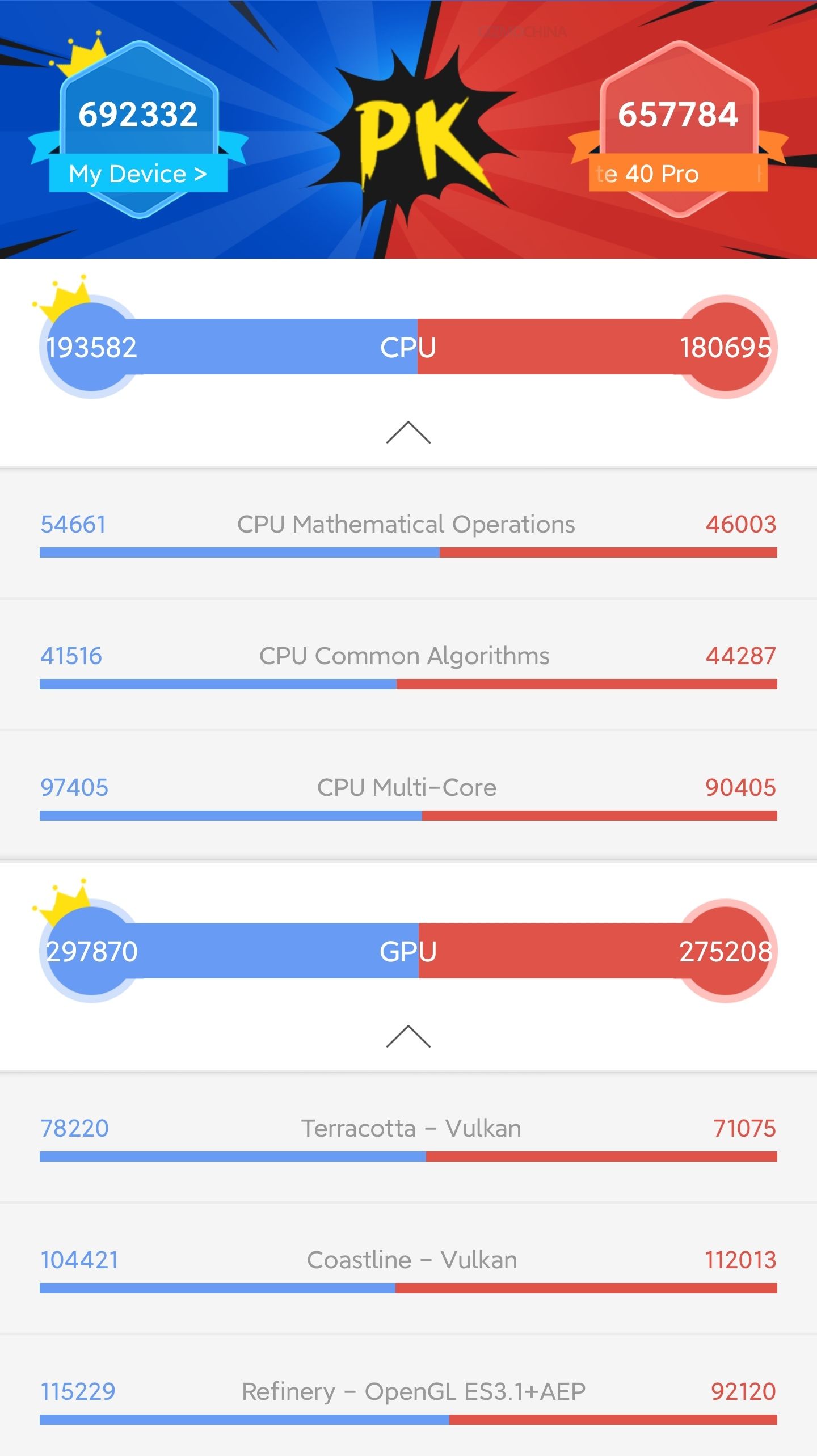
In the AnTuTu Benchmark test, the chip scores 690,000 while it scores 5500 in 3DMark. These scores are basically the same as the Kirin 9000. From here you can basically see that the peak performance of both Chips is almost indistinguishable from each other.
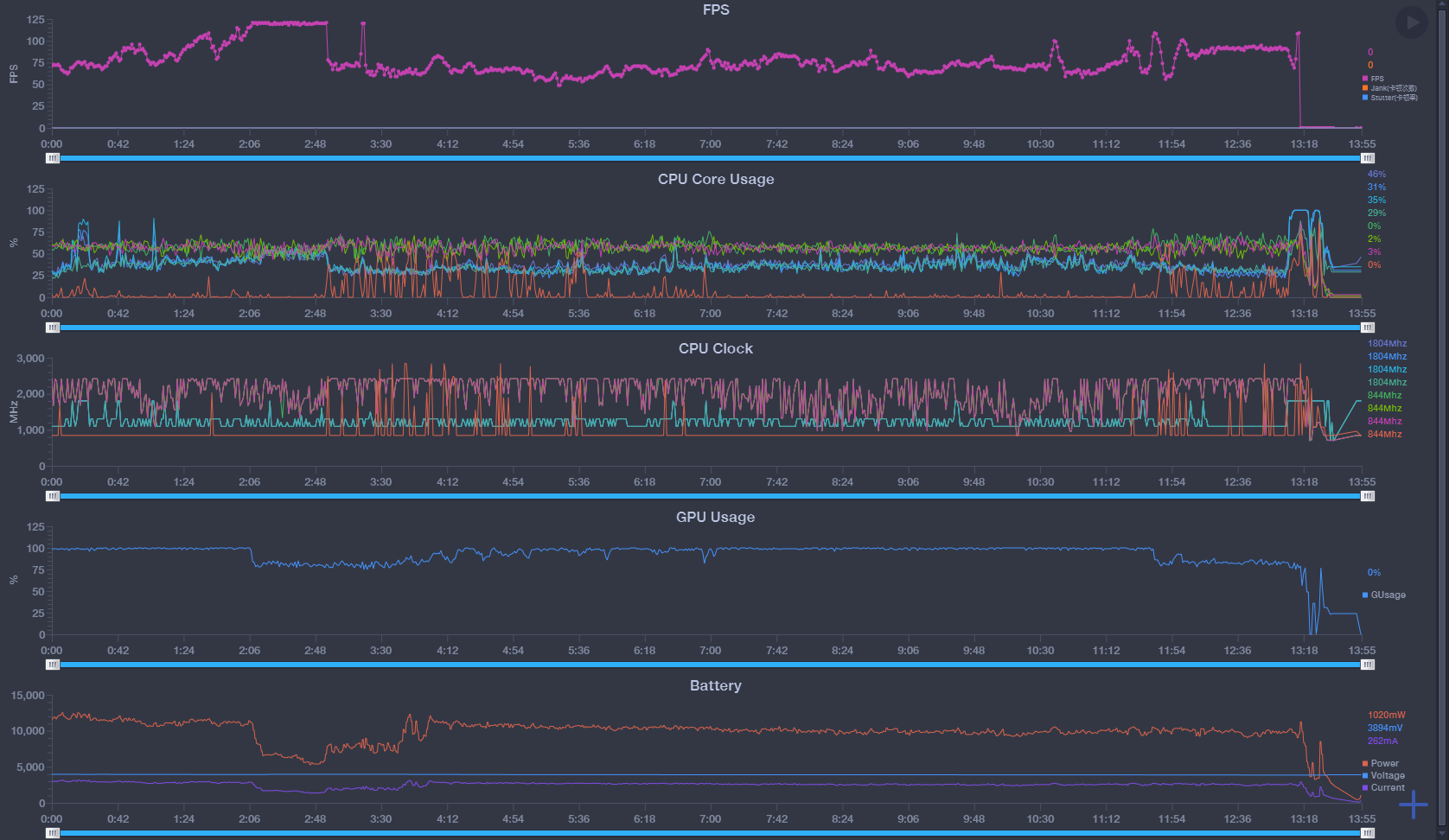
PUBG HDR quality Extreme frame
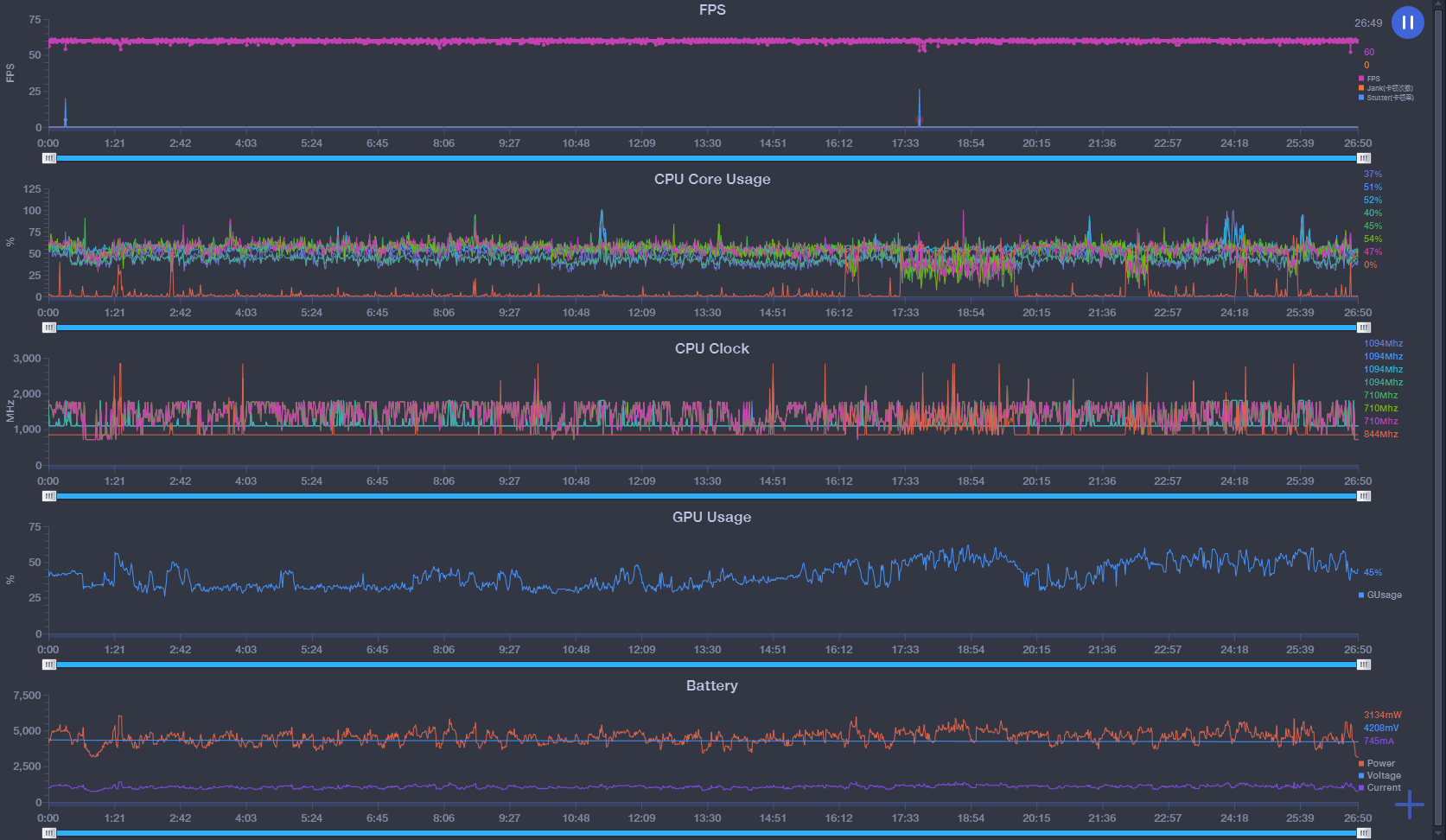
Now, let’s take a look at the game stress test. PUBG mobile with Ultra HD quality and Ultra frame rate ran at almost 40 fps. And the HDR quality Extreme frame rate also ran at almost 60 fps without any problem. In the Genshin Impact test, the performance was not so stable at the beginning, but it settled down in the second half of the test, coming close to 60 fps. The average frame rate was 52.6 fps.
BrightRidge
In BrightRidge, which focuses on GPU performance, Mi 11 got a good average frame rate of 77.3. It was obtained at the cost of heating though, and it can get really hot during long periods of high intensive gaming. Overall, the performance is very good, but the power consumption is also very high. Only the Kirin 9000 in the Mate40 series chooses to downclock the CPU when it gets too hot. On the other hand, Xiaomi’s Snapdragon 888 chooses a more aggressive strategy that allows it to keep the CPU running at its maximum strategy for a longer period of time at the cost of overheating.
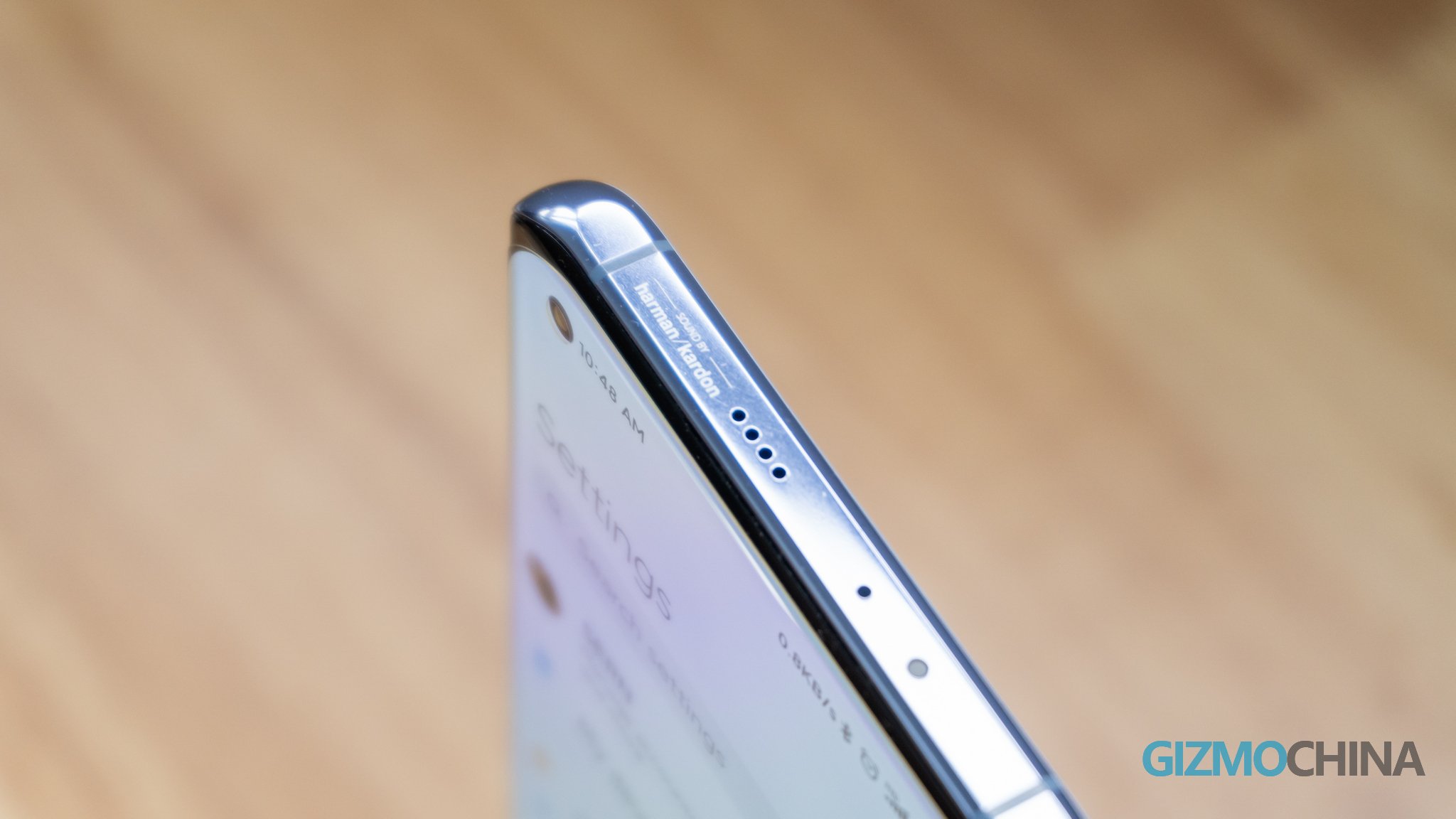
This time Xiaomi, together with Harman Kardon, has tuned the dual speakers.
It’s important to note that the back cover vibrates more when you play via the speakers, and the vibrations are noticeable in the hand. I don’t know if this is because the back cover is softer.
Xiaomi Mi 11 Review: Camera Quality
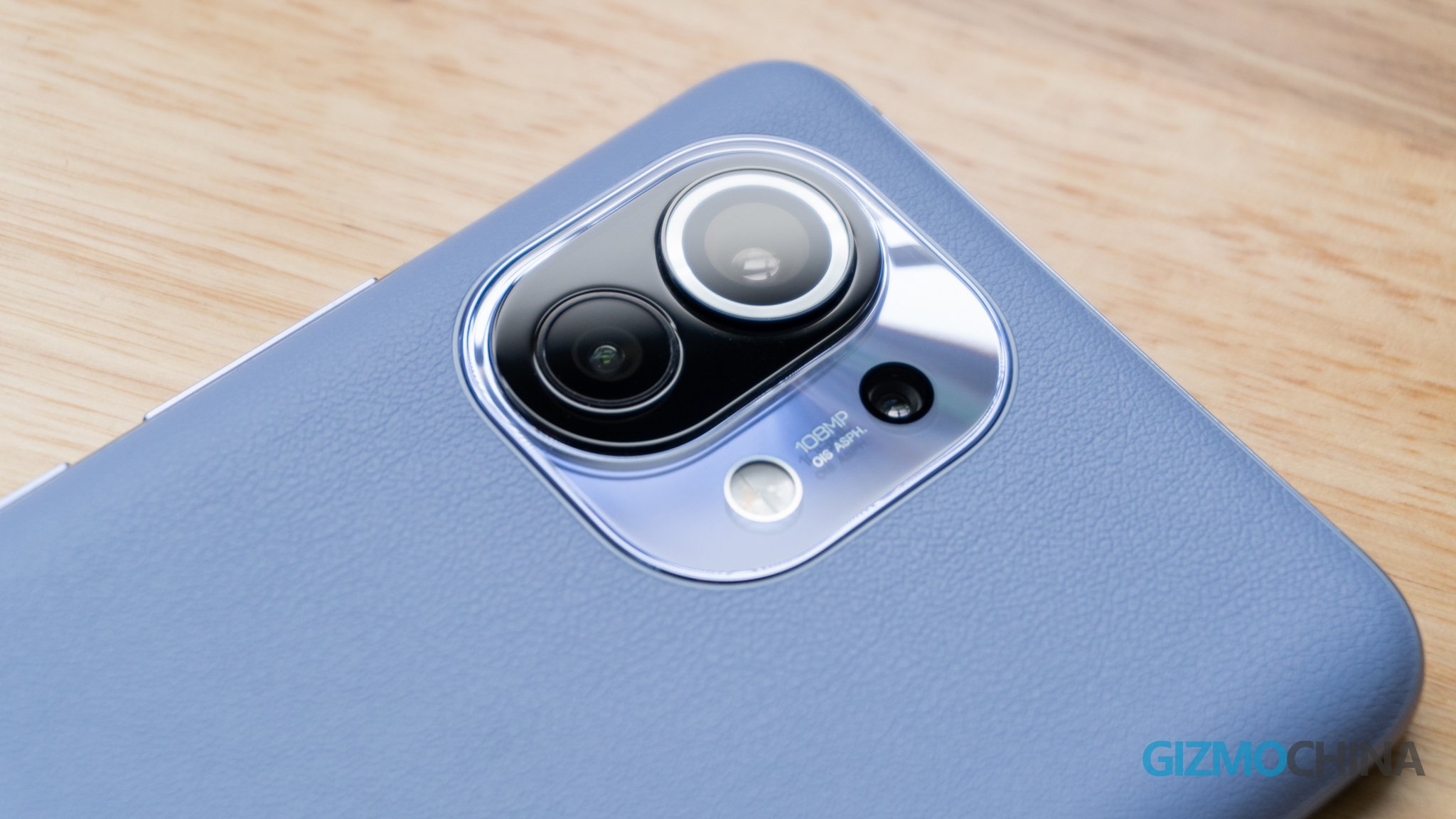
The camera department on the Mi 11 has probably the smallest improvement over the Mi 10. The main camera is still the familiar 108MP, the ultra-wide-angle lens is still the familiar 13MP. The depth of field lens is removed and the normal macro lens is upgraded to a 50mm telephoto macro lens.
Also, we’ve got with us Xiaomi’s best camera phone, the Mi 10 Ultra. So let’s compare and see how the main camera performs. Please note that if you want a closer comparison with the Mi 10 Ultra, check out our review video added at the start of this Mi 11 review article.
Apart from a slightly smaller aperture, the Mi 11’s primary camera is almost identical to the one on the Mi 10. With plenty of light during the day, both capture excellent samples. But you need to examine closely to see the difference between them. The Mi 11’s sample has a larger resolution – its a 27MP photo after 108mp 4-in-1 pixel binning. Although the Mi 10 Ultra has the dual native ISO Fusion technology, the dynamic range advantage is not as pronounced.
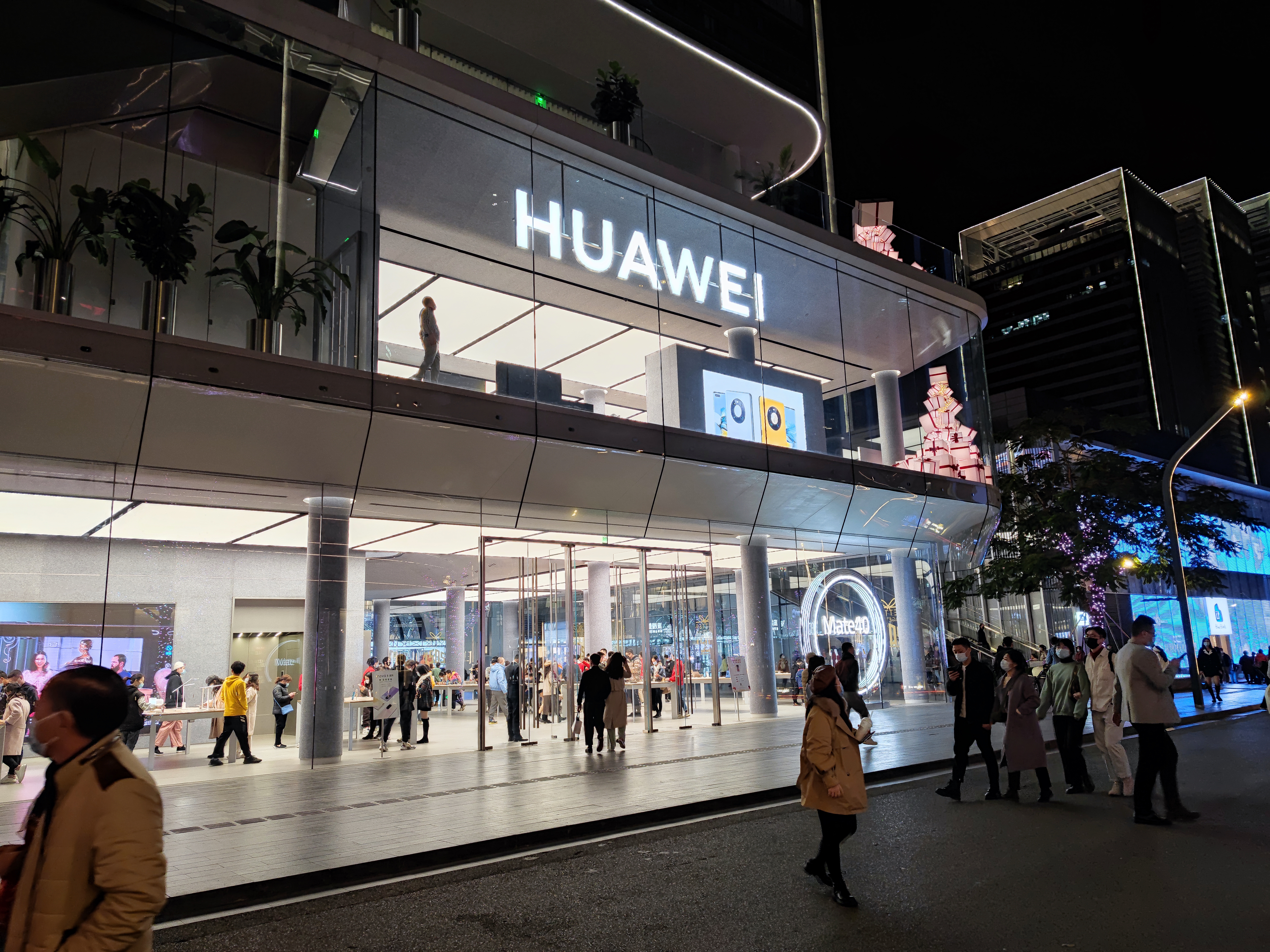
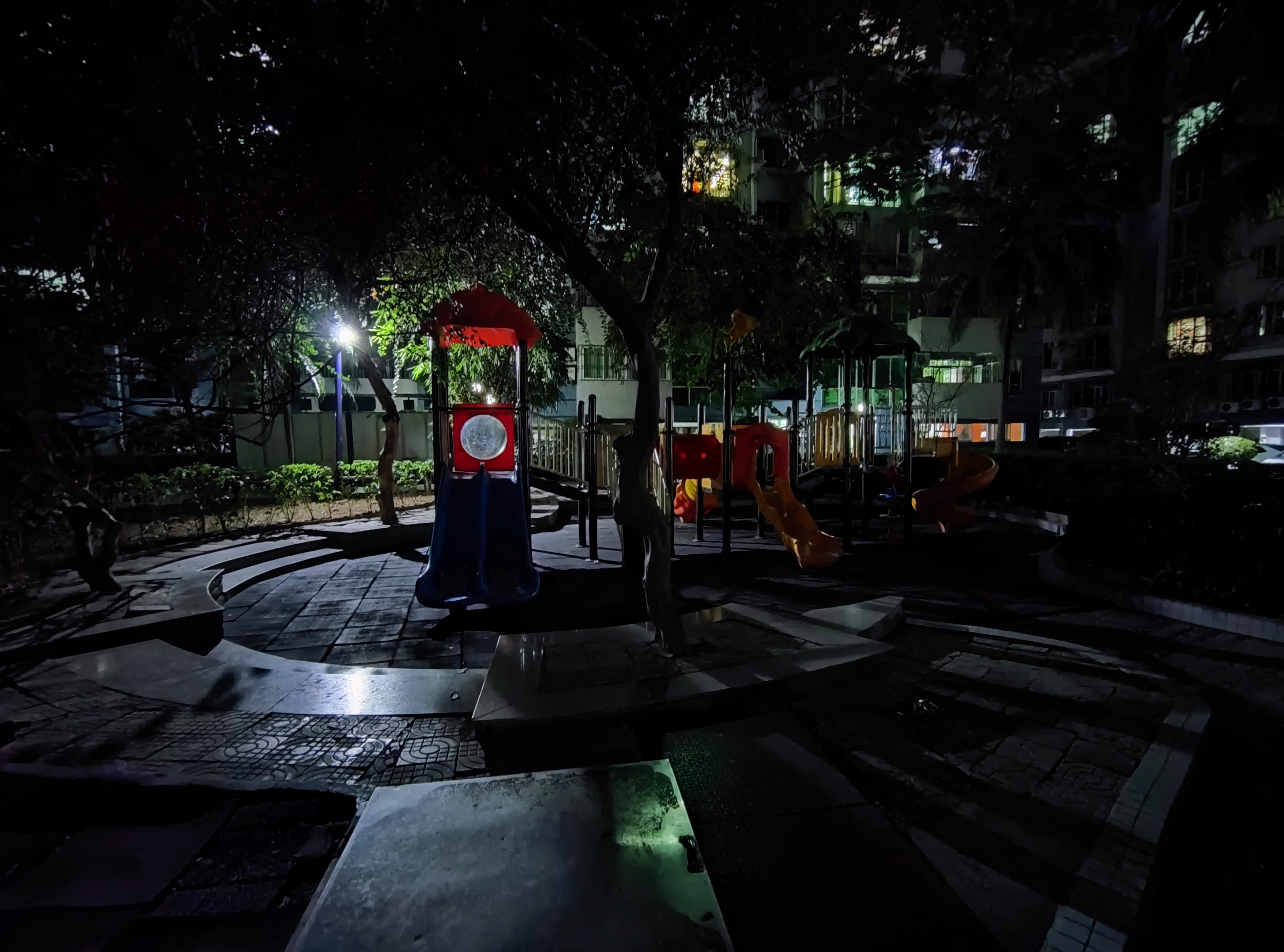
With almost the same size CMOS sensor, the higher pixel count means the individual pixels are smaller. In relatively low light conditions, the Mi 11 has no advantage. But the results are surprising, as long as there is some light source, the Mi 11 does not lag much behind the 10 Ultra. Apart from the occasional cooler white balance and slightly inferior dynamic range, the Mi 11’s night shots are respectable.
The samples have excellent noise control and no significant disadvantages, whether the night mode is on or off. But the disadvantage of smaller individual pixel size is more apparent in very low light scenes. The image will be underexposed. But although the image will be underexposed, in my personal opinion, it’s not necessarily a good thing for night shots to look like daytime. Instead, it’s the slight underexposure like the Mi 11 that makes it look like a night shot. So I still feel the Mi 11’s primary camera is pretty good.
The ultra-wide-angle of the Mi 11 is slightly narrower than the Mi 10 Ultra’s 12mm, but this is also the same as the mainstream 16mm ultra-wide angle lens. Although the 10 ultra’s ultra wide-angle has more pixels than the Mi 11, it is hard to notice the improvement in resolution even when you zoom into the samples. Mi 11’s ultra wide-angle fixes the green tint issue and the white balance is more accurate at night. Night mode has also been added to the ultra-wide-angle mode. Apart from the difference in the field of view, the performance is the same as during the day, and even better in terms of perception due to the more accurate white balance.
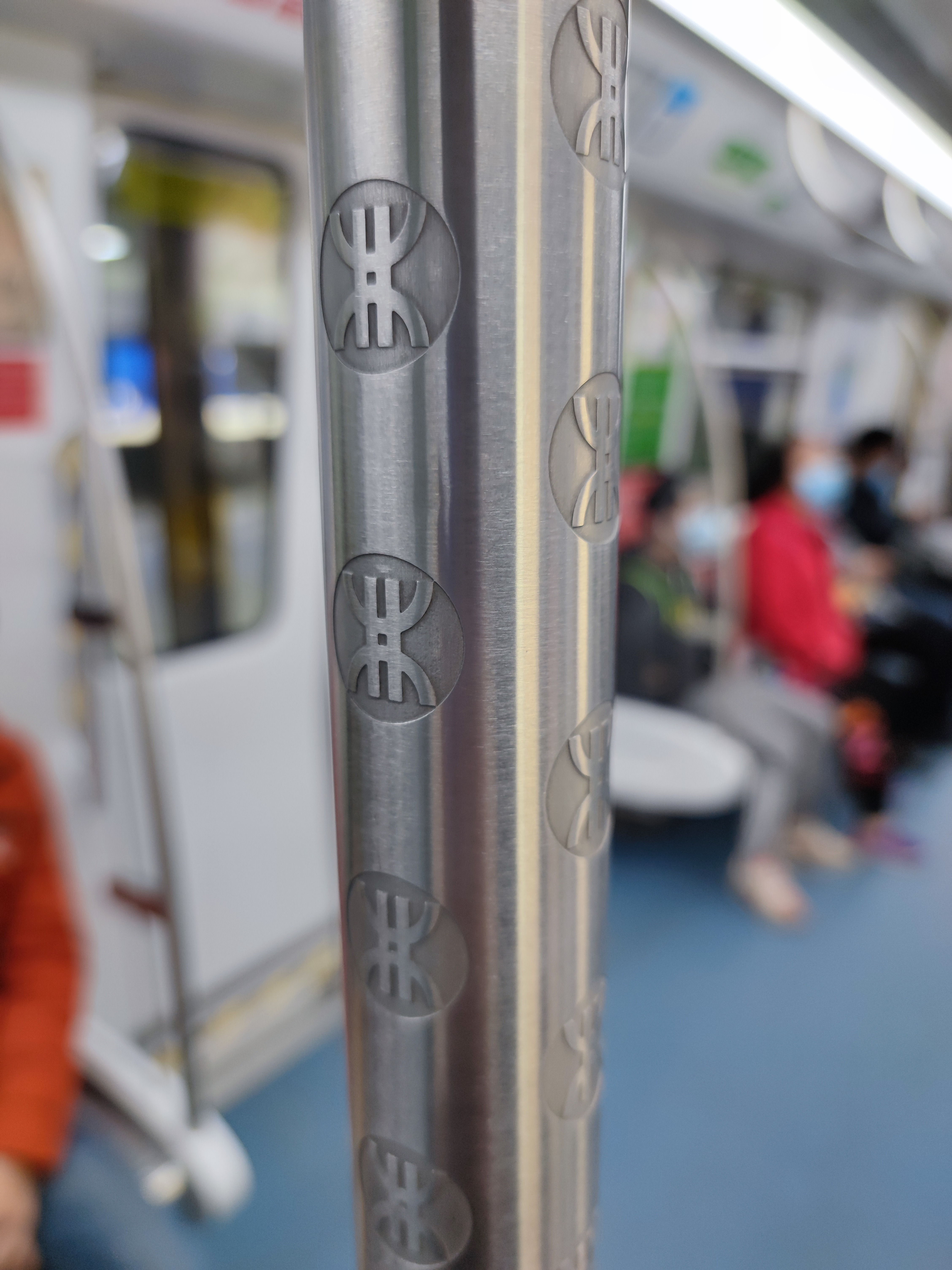
The new telephoto macro lens is also an old friend of ours. The same setup as the Redmi K30 ultra. It is able to take macro photos at a slightly longer distance and is more useful than other regular macro lenses. When put to good use, you can take photos from unique angles.
In addition, MIUI has added some fun cinematic lens modes specifically for the Mi 11, such as one-touch Hitchcock zoom mode, night mode for video, and so on, which is still very friendly to novice videographers.
Xiaomi Mi 11 Review: Battery & Charging
For this 2k 120 Hz screen, Mi 11 is paired with a 4600 mAh battery. Most people will be concerned about whether battery life will be a problem on the device. We did test the phone with some performance-hungry games in our review. Playing Genshin Impact for half an hour consumed 18% of power while BrightRidge for 13 minutes consumed 12% of power. As you can see, the Mi 11’s battery efficiency is not outstanding. But playing mainstream games such as PUBG mobile at Ultra high quality and Ultra frame rate for 27 minutes only consumed 9%.
When we switched to HDR quality in extreme frame rate, this reduced to 11%. At maximum brightness Call of Duty mobile consumed 15% of the power in 37 minutes of gameplay. I think for moderate to heavy use every day, you’ll need about two charges a day, which I think is good for a phone with an outstanding 2k 120Hz screen.
Mi 11 Box Charger comes separately
While battery life isn’t great, it charges quickly. The 55w wired and 50w wireless charging combo is pretty top notch. Charging with the 55w GaN Charger, it charges to 43 in 10 minutes, 95 in half an hour, and takes just 40 minutes to fill up to 100%. If you are interested in wireless charging, you can get Xiaomi’s 50W air-cooled wireless charging dock. The charging speed is almost identical to wired charging.
So after seeing our review, are you excited about the Mi 11? What I can tell you is that I’m very excited. You can get probably the best AMOLED display of the year for just 3999RMB (~$620), and that alone makes the Mi 11 worth it for me. If you don’t care that it doesn’t have a telephoto lens, it’s pretty much the best phone to buy at this price. The better alternatives are more expensive, while the cheaper ones can’t match the Mi 11 in terms of features.
Earlier today (8th January 2021), Pan Jiutang, a partner of the Chinese brand Xiaomi, shared a post on Weibo, a Chinese microblogging website, which talked about how the cost of Xiaomi Mi 11 and the Apple iPhone 12 are the same.
In the post, Pan Jiutang added that the Cupertino based giant is considered cost effective among other companies in the west, especially in regions like the US and Europe. Furthermore, it was said that Apple also used its strong brand influence to cut its channel costs significantly. The company achieved this despite the retain channel costs in America and Europe being high.
This is not the first time Pan Jiutang has mentioned the cost of the 2021 Xiaomi flagship and the latest iPhone model. The Chinese tech giant’s Mi 11 arrives with a starting price of 3,999 Yuan (roughly 617 US Dollars), on the other hand, the base iPhone 12 costs somewhere around 820 US Dollars in the US. Notably, this also marks a rise in the price of Xiaomi’s premium grade flagship handsets.
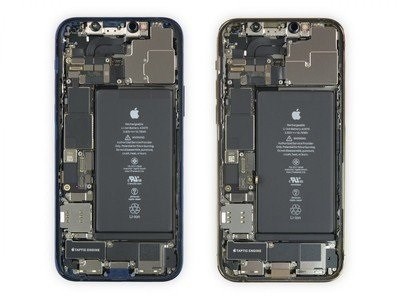
Interestingly, it was also reported around November 2020 that the material cost of the iPhone 12 is somewhere around just 373 US Dollars, but take this with a pinch of salt. Additionally, other cost factors like research and development, marketing/advertising, and other expenditures also has to be taken into consideration. Unfortunately, it is currently unknown what the material cost of the Xiaomi Mi 11 is at the moment.
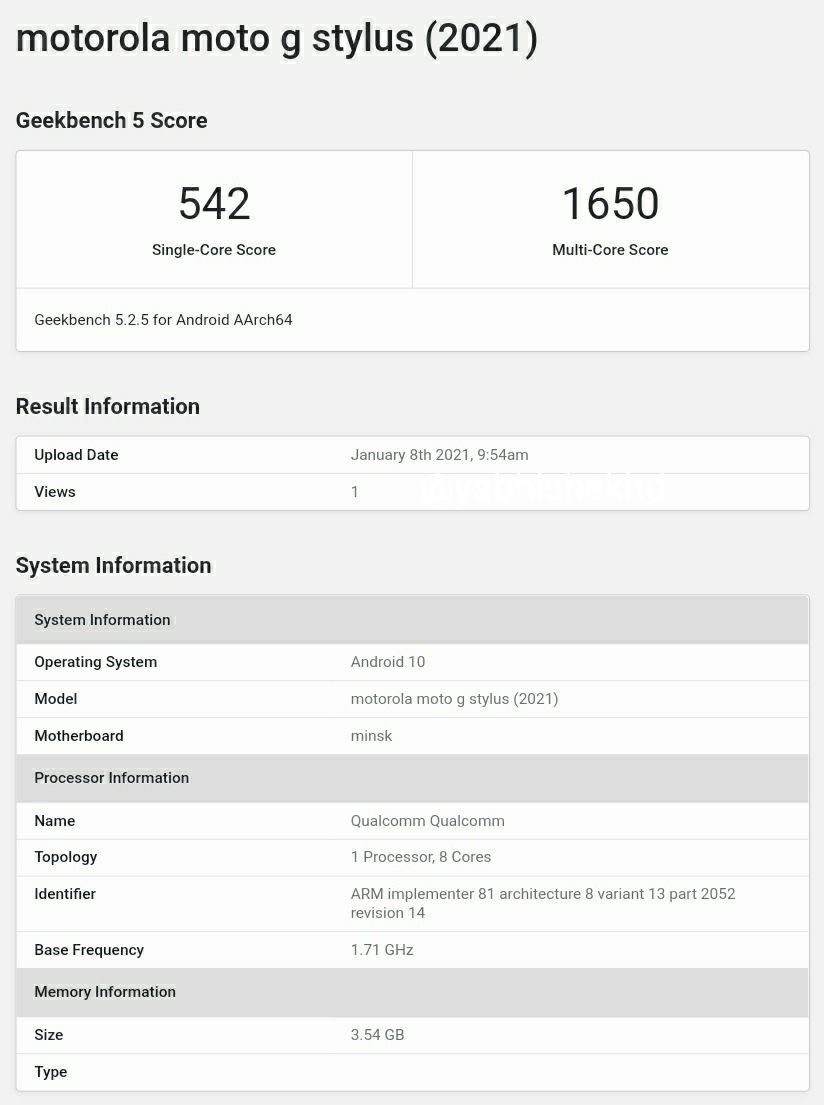
Motorola is likely to announce a couple of G-series phones such as Moto G Stylus (2021), Moto G Power (2021), and Moto G Play (2021) soon. The Moto G Stylus (2021) smartphone has appeared on the Geekbench benchmarking platform today. The listing has revealed the key specifications of the smartphone.
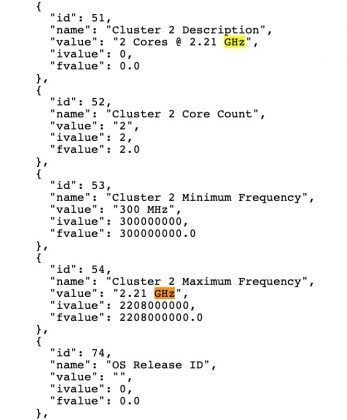
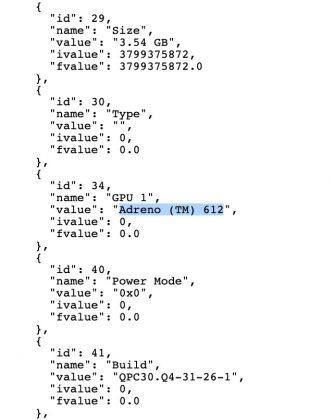
The Geekbench listing shows that the Moto G Stylus (2021) is powered by a Qualcomm octa-core processor that has a base frequency of 1.71GHz. The SoC is mentioned with its ‘minsk’ codename in the listing. The source code of the listing shows that the high-performance cores of the SoC work at 2.21 GHz and it has Adreno 612 graphics.
The codename of the chipset and the information that has surfaced through the source code has that the device could be equipped with the Snapdragon 678 chipset that went official in December. The SD678 chip is an upgraded version of the older Snapdragon 675 SoC.
The Geekbench listing states that the Moto G Stylus (2021) is equipped with 4 GB of RAM. The device can be seen running on Android 11 OS. In the single-core and multi-core tests of Geekbench, the handset scored 542 and 1650 points, respectively.
Recent reports have revealed that the Moto G Stylus (2021) measures 169.6 x 73.7 x 8.8mm. The handset is equipped with a 6.8-inch display with a punch-hole design. The rear shell of the device reportedly features a 48-megapixel + 8-megapixel (ultrawide) + 2-megapixel (depth) + 5-megapixel (macro) lens quad-camera system. For capturing selfies, it has a 16-megapixel selfie snapper. It has a rear-facing fingerprint sensor. The device will be also equipped with stylus support.
Earlier this week, we had reported on Meizu planning on launching its first truly wireless earbuds with active noise cancelation within this month. Now, the company has officially announced that these new hearables will be unveiled on the 11th of January 2021.
Earlier today (8th January 2021), the Chinese tech giant shared a short announcement on its official Weibo account, a Chinese microblogging website. In this online post, the company officially announced the date for the launch conference for its first ANC TWS earbuds along with the name of the new wireless earphones as well. The upcoming earphones will be dubbed as the Meizu Pop Pro.
The new launch also arrives as the company is expanding its consumer electronics portfolio, which will soon include other wearables like smartwatches and more. These new smartwatches are also expected to arrive sometime in the first quarter of 2021. In our previous report, we had covered a Meizu patent for its upcoming earbuds, which gives us an idea of what they might look like. Unfortunately, the company has yet to reveal any specifics regarding the Pop Pro ANC TWS earbuds.
From what we could gather from the patent, it arrives with a charging case, which supports a USB Type C charging port. Whether or not it supports fast charging is still unknown, but we get a fair idea of the design, with the front housing a battery status LED indicator. At the moment, all we to go is the launch date and the short video teaser that the company shared, which hinted at its noise canceling feature. So stay tuned for updates and the launch event for the new earbuds.
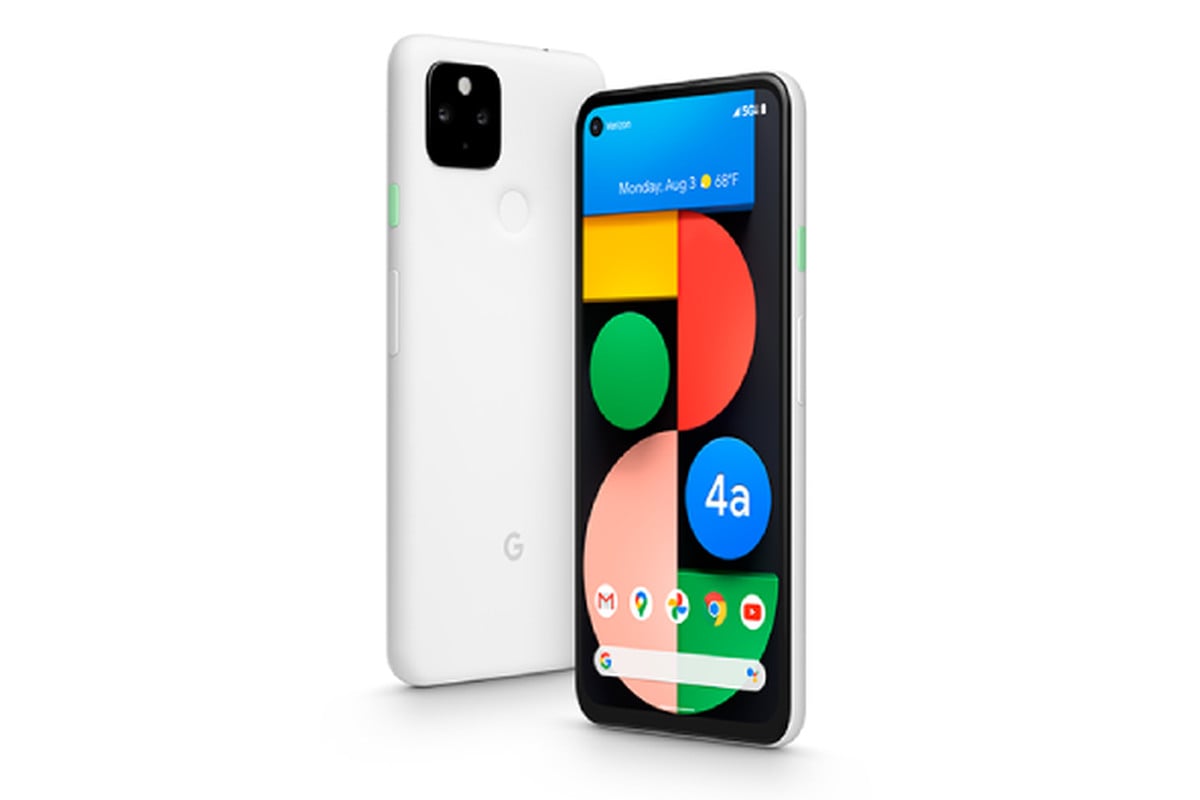
A few months ago, Google had launched its Pixel 4a 5G smartphone in a single ‘Just Black’ color option, along with Pixel 5. There was also a “Clearly White” variant with mmWave technology support but was exclusively for Verizon.
Now, the company has confirmed that the unlocked model of the Pixel 4a 5G in White color will soon be available for purchase in the United States. Priced at $499, the smartphone will go on sale from 28th January.
The smartphone has not been listed on Google Store for purchasing and the phone’s listing on B&H has been removed. It is also believed that the phone will be available to purchase from the Google Fi store.
The Google Pixel 4a 5G comes with a 6.2-inch OLED screen with support for the standard 60Hz refresh rate. Compared to the screen size of Pixel 5 and Pixel 4a, this 5G smartphone features a bigger display.
Under the hood, the device is powered by the Qualcomm Snapdragon 765G chipset — same as the Google Pixel 5. It packs 6GB of RAM and 128GB of storage. In the camera department, there’s a 12.2MP main camera, coupled with a 16MP ultrawide lens.
On the front side, the phone has an 8MP snapper for taking selfies, housed inside the punch-hole cutout. It is powered by a 3,885mAH battery with support for 18W fast charging support but lacks wireless charging support.
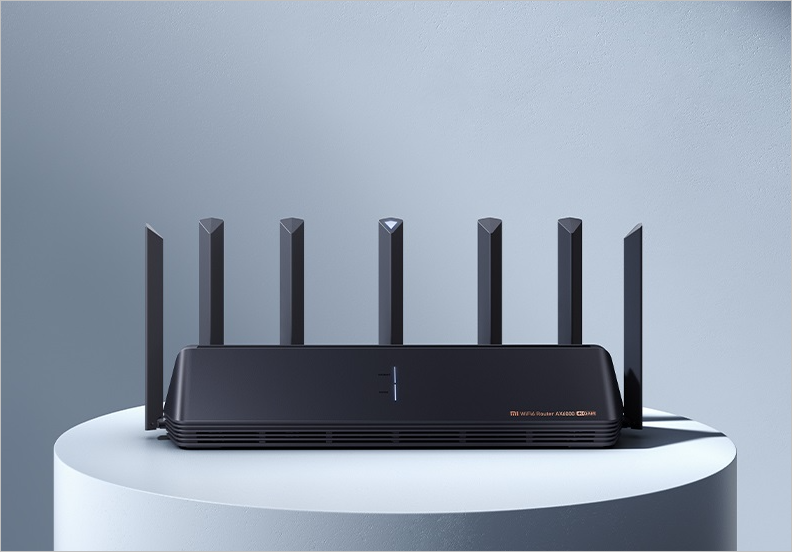
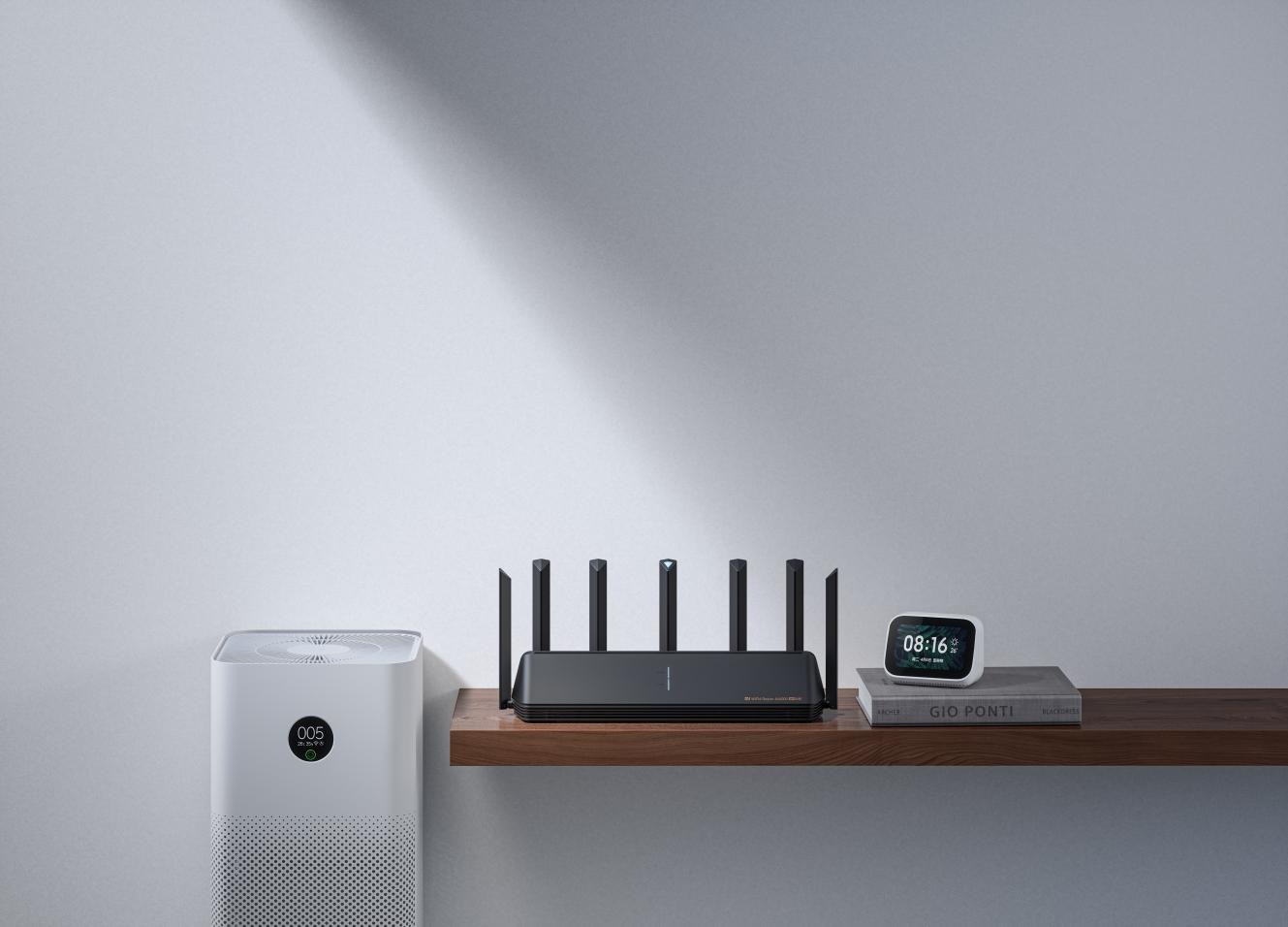
A couple of weeks ago, along with the Mi 11 flagship smartphone, Xiaomi had launched its Mi Router AX6000 in the Chinese market which comes with support for the Wi-Fi 6 Enhanced wireless technology.
While it’s been a few days since the Mi 11 smartphone went on sale in China, the company has now started selling the Mi Router AX6000 in China from today. It is priced at 599 yuan, which roughly converts to $93.
The device has a wireless rate of 6000 megabytes — the highest rate in the current Xiaomi router series. It also supports 4K QAM and 2500M full-speed network port and other technologies and configurations, claiming to bring a speed experience different from previous Wi-Fi 6 routers.
Thanks to Wi-Fi 6 Enhanced technology, it supports 4×4 160MHz bandwidth. Compared with the current mainstream WiFi 6 4×4 80MHz bandwidth, the bandwidth of this current version is doubled and also offers multi-device connectivity.
It can compress data density and increase the amount of data transmitted at the same time by 20 percent compared to the previous generation of 1024 QAM. The network port also supports WAN/LAN switching. When using the LAN port mode, it can be combined with a NAS high-speed family private cloud disk, and the high-speed WiFi 6 network can play high-definition videos smoothly.
Powered by a Qualcomm chipset, the device comes with 512MB of RAM and supports simultaneous access of 248 devices. The Mi Router AX6000 has six independent signal amplifiers and Xiaomi Mesh networking, helping the device cope with various complex house types and achieve full house coverage without dead ends.
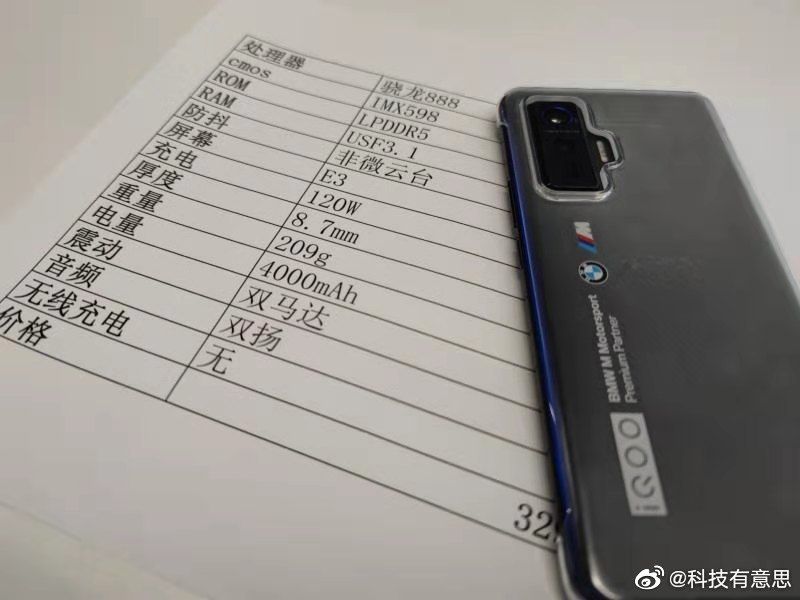
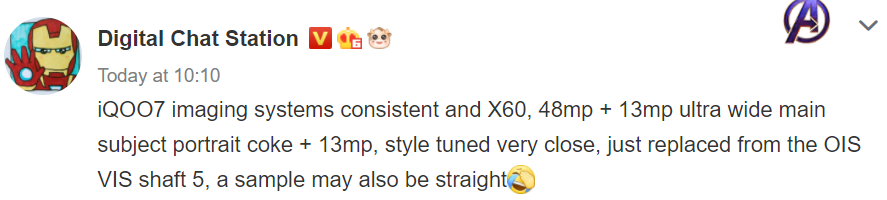
iQOO is all set to launch the iQOO 7 flagship phone in China on Jan. 11. A leaked shot of a sheet with key specs of the smartphone has appeared on Weibo. At the same time, reliable tipster Digital Chat Stationsome details on the camera capabilities of the smartphone.
The leaked shot reveals that the Snapdragon 888 SoC powered iQOO 7 will be equipped with LPDDR5 RAM and UFS 3.1 storage. The smartphone will be equipped with an E3 display. The AnTuTu listing of the phone had revealed that the screen of the iQOO 7 supports a refresh rate of 120Hz. It recorded an impressive score of 752,935 on the benchmarking platform.
The official iQOO 7 renders that appeared in the past revealed that it has a triple camera system on its back. The new leak states that the phone possesses a Sony IMX598 lens. According to another leak, the iQOO 7 possesses a 48-megpaixel (main) + 13-megapixel (ultrawide) + 13-megapixel (portrait) triple camera system. It seems to be the same camera setup that is available on the Vivo X60 series. However, the main camera will not be assisted by a micro-gimbal OIS system that can be found on the X60 series. Lastly, the leaked specs sheet also suggests that the iQOO 7 may carry a price tag of 3,299 Yuan (~$510).
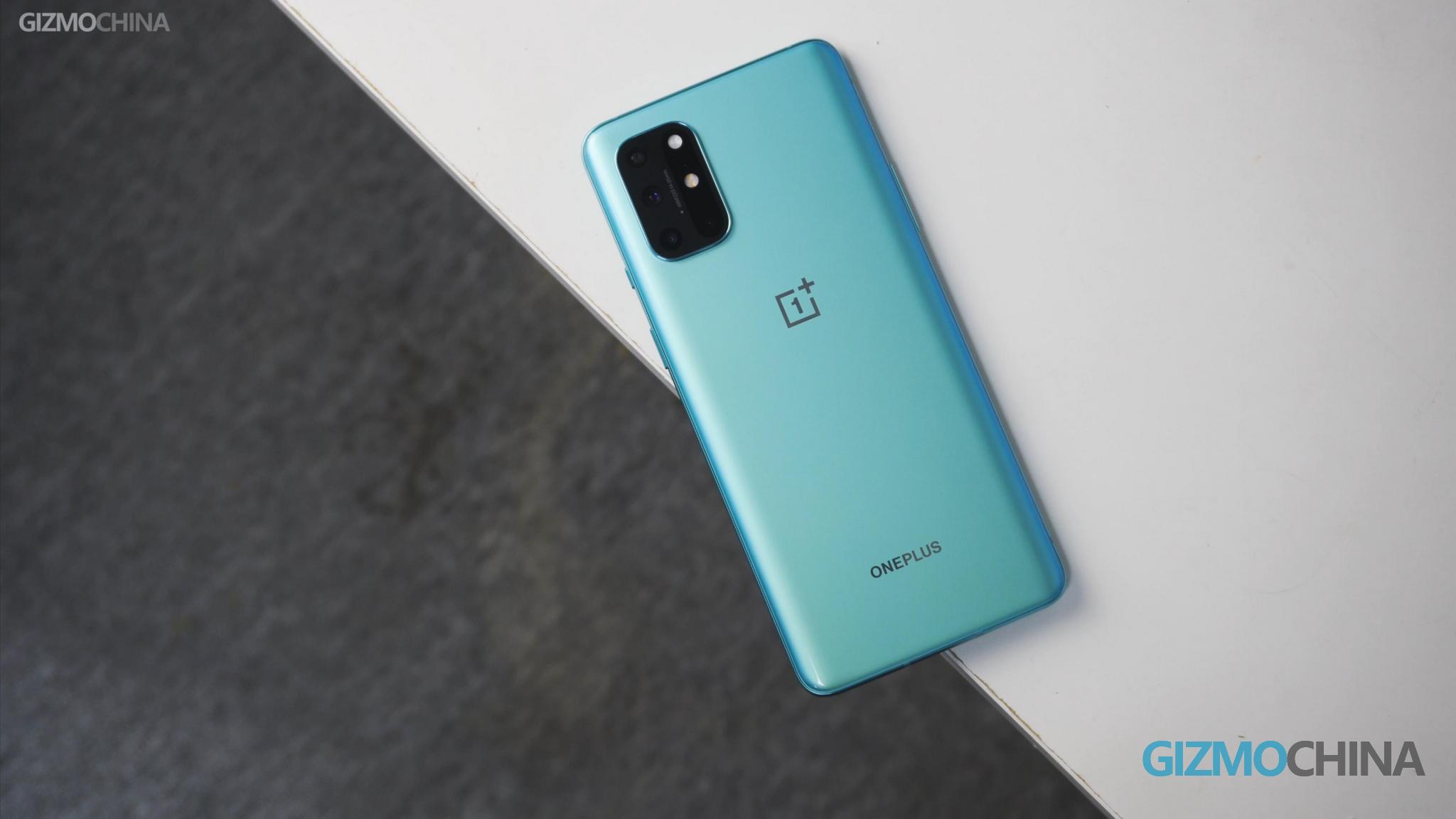
Before the new year, OnePlus rolled out a stable update for the OnePlus 8T. This update came with build number OxygenOS 11.0.6.7/11.0.6.8. Apart from bringing the older November 2020 security patch, it also came with certain fixes and optimisations. But along with all of these, it also brought along a bug. Hence, the brand is currently rolling out a new build with a fix.
OnePlus 8T
The latest system update for the OnePlus 8T arrives with build number OxygenOS 11.0.6.8 for the Indian and the US variant, whereas the European version gets OxygenOS 11.0.6.9.
IN: 11.0.6.8.KB05DA
NA: 11.0.6.8.KB05AA
EU: 11.0.6.9.KB05BA
As mentioned in the beginning, this build comes soon after the release of the previous build whose rollout was terminated by the company. Hence, changelog of the new update is exactly the same as the old one with one addition – fix for media player pausing abnormally.
OnePlus 8T OxygenOS 11.0.6.8/11.0.6.9 Official Changelog
System
Optimized the experience of full-screen gestures
Increased fingerprint unlock success rates for faster unlock speed
Newly added keyboard height adjustment where you can raise or hide the bottom shortcut bar for a better input experience (Go to Settings-System-Language & input-Keyboard height adjustment)
Fixed the issue that the media player may pause abnormally
Updated Android security patch to 2020.11
Camera
Optimized the image quality on nightscape
Gallery
Fixed a small probability issue that photos don’t display in the Gallery
Network
Fixed the issue that the WiFi connection failed in a specific situation
Improved the stability of communication
OnePlus Store (—IN only)
An intuitive and convenient way to manage your OnePlus account, get easy-to-access support, discover exciting members-only benefits, and shop for OnePlus products. (Please note that it can be uninstalled)
Like any other OTA update, this one too is being seeded out in batches. Therefore, it may take time to reach your unit.
Today, Honor confirmed through a Weibo post that it will be launching the Honor V40 smartphone on Jan. 18 in China. In November, Huawei sold its Honor sub-brand and allowed it to establish as an independent company. The Honor V40 will be debuting as the company’s first phone after its separation from the parent brand.
Beginning from today, the Honor V40 is now available for reservations through offline and online platforms such as JD.com, Tmall, Suning, and the all-new Honor Mall in China. The Honor V40’s poster that has been released by the company showcases its front design.
As can be seen, the Honor V40’s screen has curved edges and its top-left corner has a cutout for the two front-facing cameras. Recent reports have claimed that the Honor V40 will be equipped with the same 6.72-inch OLED panel that is available on the Huawei Nova 8 Pro. The Honor V40’s display may carry support for a 120Hz refresh rate and a 300Hz touch sampling rate. The screen could be equipped with a fingerprint reader.
The Honor V40 may arrive with a 32-megapixel + 16-megapixel dual selfie camera setup. The back panel of the phone may feature a 64-megapixel + 8-megapixel + 2-megapixel + 2-megapixel quad-camera system. Contradictory reports claim that instead of a 64-megpaixel lens, it may feature a Sony IMX766 50-megapixel camera.
The Dimensity 1000+ chipset is expected to power the device with 8 GB of LPDDR4x RAM and 128 GB / 256 GB of UFS 2.1 storage. The 4,000mAh battery of the phone may carry support for 66W fast charging. The handset is also rumored to arrive with support for 45W wireless charging. The device may come preinstalled with Magic UI 4.0 based Android 10 OS. It is speculated that the company may also unleash another V40 series phone alongside the Honor V40.
OnePlus has slowly progressed from making “flagship killer” smartphones to flagship phones but it still lacks some top-notch features that we usually find in premium smartphones from other brands.
While the OnePlus smartphones are widely appreciated, its flagship phones have mostly been criticized for the camera department, which has not been able to match the performance offered by its competitors. But now that is about to change this year.
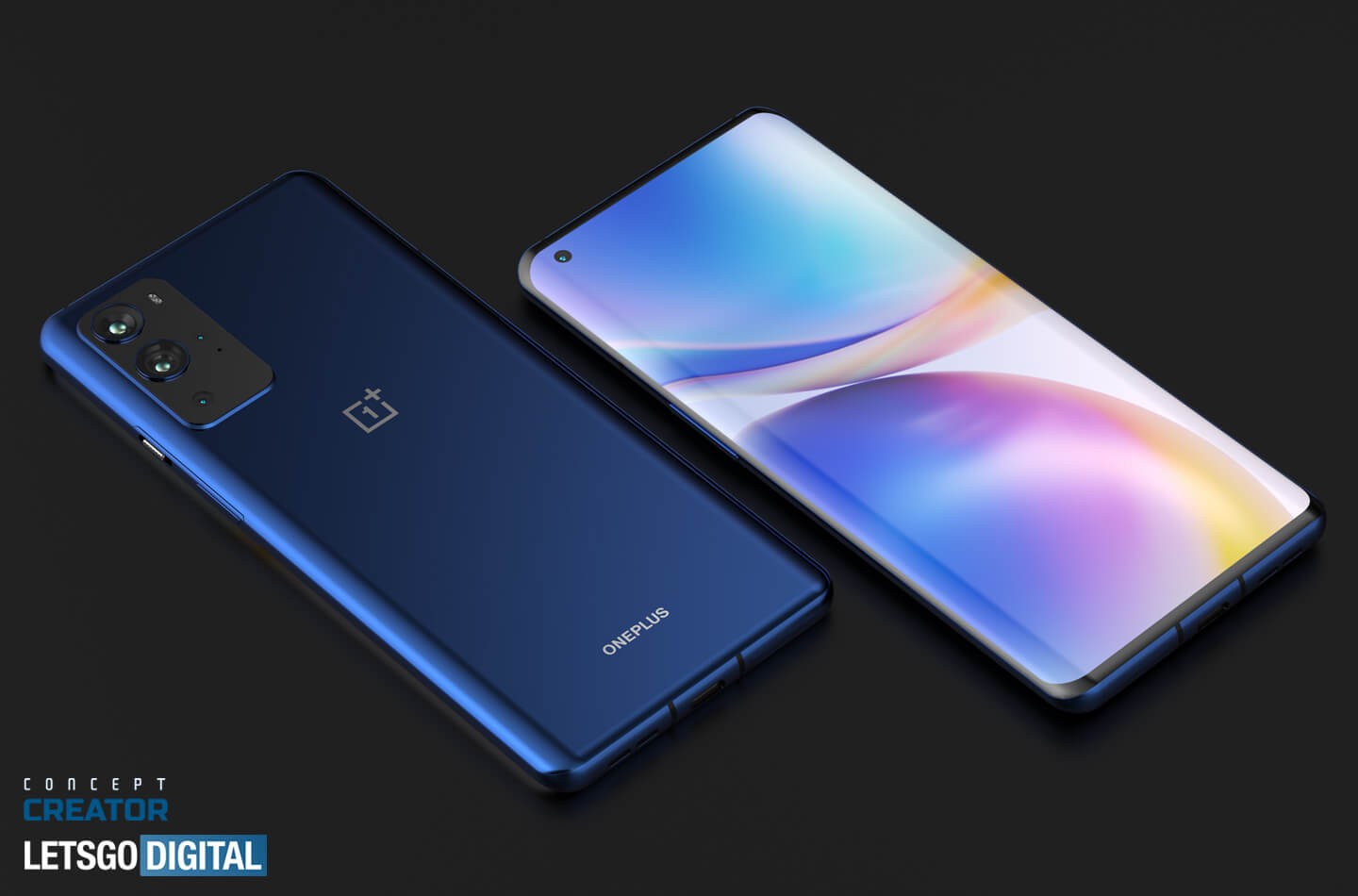
OnePlus 9 Concept Render
OnePlus CEO Pete Lau has taken to Weibo to say that the company is investing heavily in cameras this year and is aiming to be a leader in this department. While nothing much is known about this, it’s likely that the company will be focusing more on the software part.
Given that the OnePlus 9 series is all set to launch in the coming months, we don’t expect to see huge improvements in terms of camera performance because of this new investment from the company. However, the OnePlus 9T series, which will launch in the second half of this year, is expected to have improved camera technology.
OnePlus is also reportedly partnering with lens maker Leica, which has been collaborating with Huawei. This could be what the company needs given that Huawei’s flagship smartphones have always been a leader in terms of camera performance.
Meanwhile, the upcoming OnePlus 9 series is expected to offer three devices — OnePlus 9, OnePlus 9 Pro, and OnePlus 9 SE (or 9 Lite). This time, the company is also going to offer wireless charging and reverse wireless charging among other premium features.
Apple has been working on several new technologies but the one that is getting everyone’s attention for the past couple of weeks is the much-rumored Apple Car. The technology, which is called Project Titan, has been making significant progress.
Recently, it was reported that the company could be planning to launch its own Apple Car by 2024 but soon after that, another report claimed that the electric vehicle won’t be launched at least until 2028.
Now, in the latest development, Hyundai Motor has confirmed that the company is in talks with Apple. Confirming this, the company said that “we understand that Apple is in discussion with a variety of global automakers, including Hyundai Motor. As the discussion is at its early stage, nothing has been decided.”
Prior to the confirmation from Hyundai, a Korean publication Hankyung had reported that the automaker will help Apple in producing electric vehicles as well as developing special batteries for the upcoming car. Also, a part of the development of components for the car will take place at Hyundai Motors’ facilities in the United States.
As we reported earlier, Apple is likely to partner with an automaker for manufacturing the so-called Apple Car as the Cupertino-based giant lacks the resources required for the production of cars. While the autonomous vehicle from Apple is still years away, it’s good to know that the project is progressing.
Earlier this month, a Xiaomi phone with model number M2101K6G had received certification from the Federal Communications Commission (FCC). The handset has also received approval from other certification platforms such as EEC, MCMC, and IMDA. It was revealed through FCC certification that the moniker of the M2101K6G model is Redmi Note 10 Pro. The Indian variant of the phone that has a model number of M2101K6I has bagged certification from the Bureau of Indian Standards (BIS). The BIS certification is a good hint that the device will be also heading to India.
Apart from the M2101K6I phone, the BIS authority has also approved another device that has a model number of M2101K6P. The M2101K6P could be a variant of the Redmi Note 10 Pro, but its identity is yet to be revealed.
The FCC certification of the Redmi Note 10 Pro revealed that it supports dual-band Wi-Fi, Bluetooth, NFC, and it will come with MIUI 12 UI. The device may carry support for 5G connectivity. The FCC appearance also revealed that the device will be available in three variants such as 6 GB RAM + 64 GB storage, 6 GB RAM + 128 GB storage, and 8 GB RAM + 128 GB storage.
A recent leak claimed that the 4G variant of the Redmi Note 10 Pro is codenamed as “sweet_pro” and it could be equipped with a 108-megapixel S5KHM1 camera. There is no word on the launch date of the Redmi Note 10 series yet.
Xiaomi India announced the Redmi Note 9 Pro and Redmi Note 9 Pro Max smartphones in India in March. Hence, there is a possibility that the Redmi Note 10 series may break cover in the country around the same month.
The Nokia 6.3 didn’t launch last year as expected but if it is launching this year, is it coming as the Nokia 6.3 or Nokia 6.4? Or maybe even Nokia 6.5, seeing as we already got some “dot 4” models last year and we expect their successors to launch with “dot 5” suffixes this year. We are sure you agree that HMD Global definitely needs to rethink its naming scheme, but that is by the way.
Nokia 6.3 or Nokia 6.4 or Nokia 6 (2021)
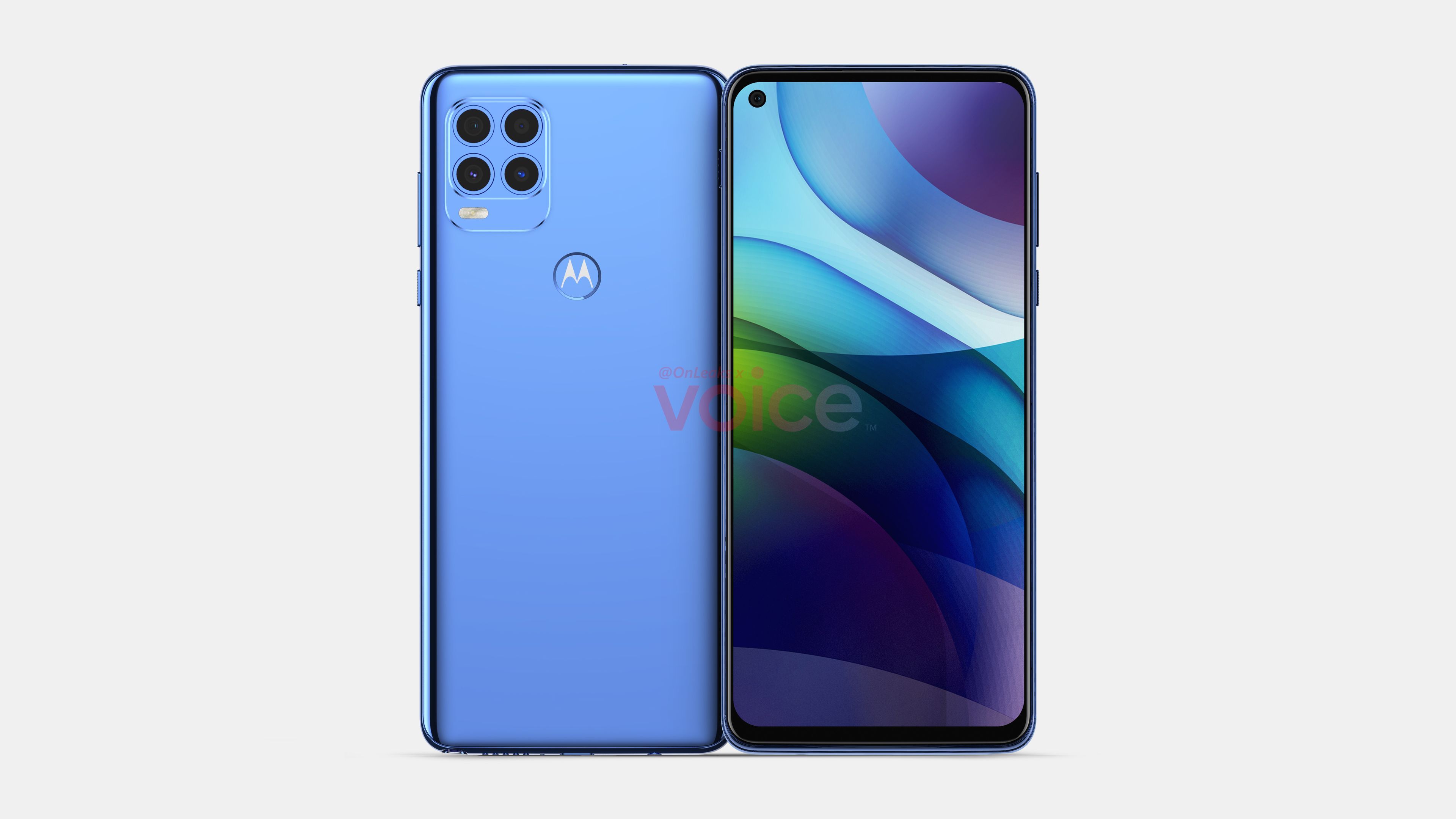
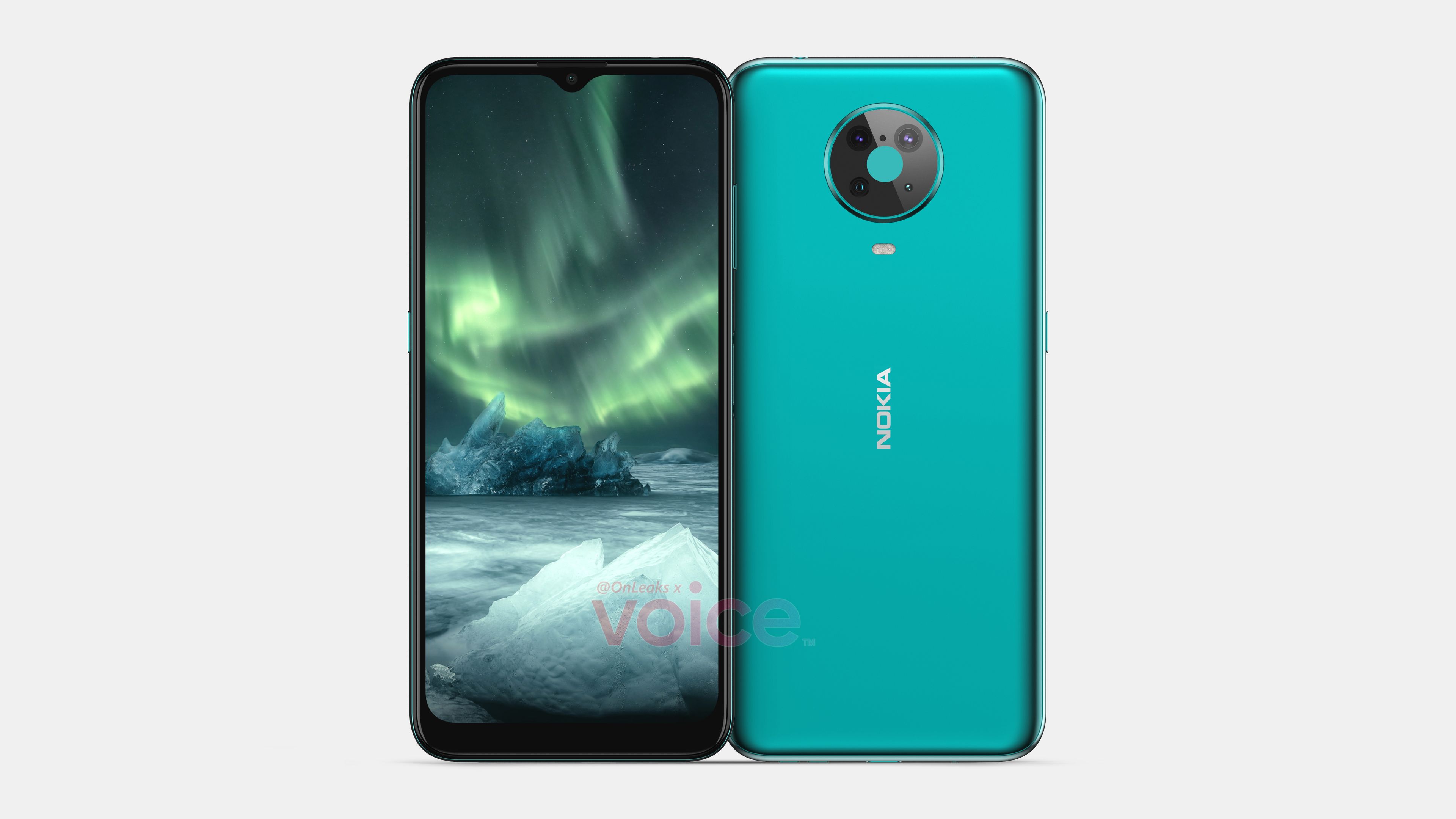
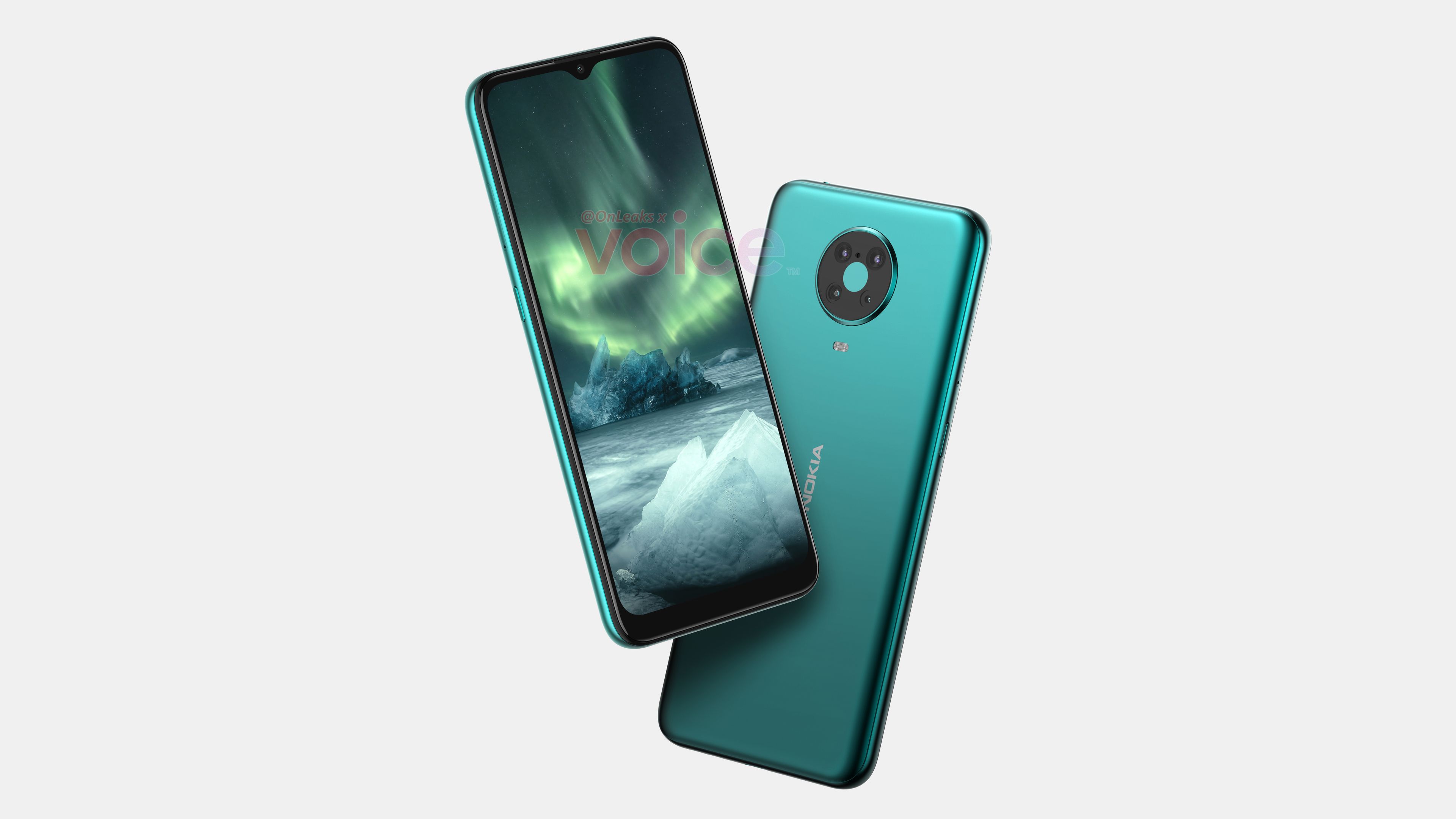
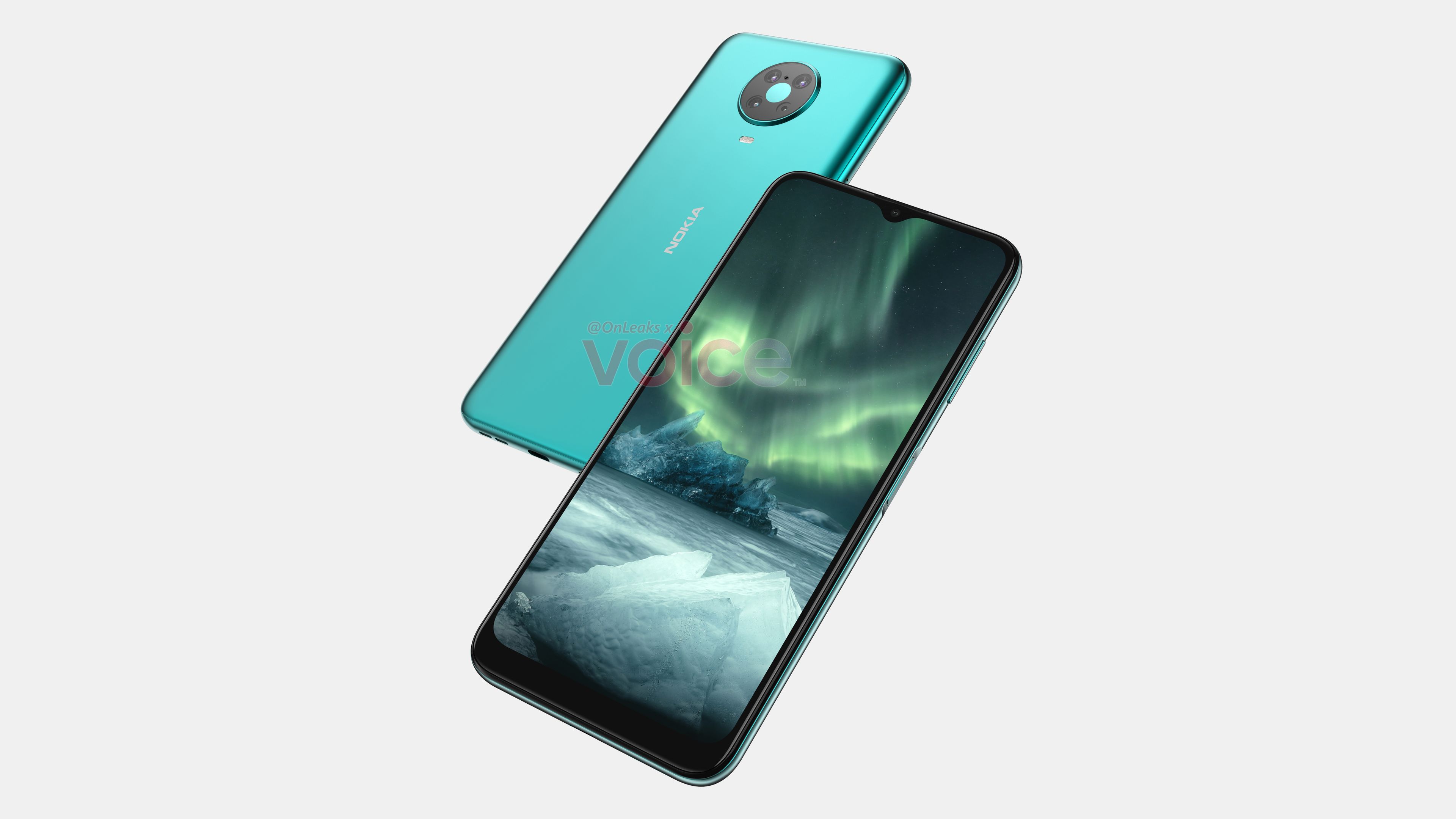
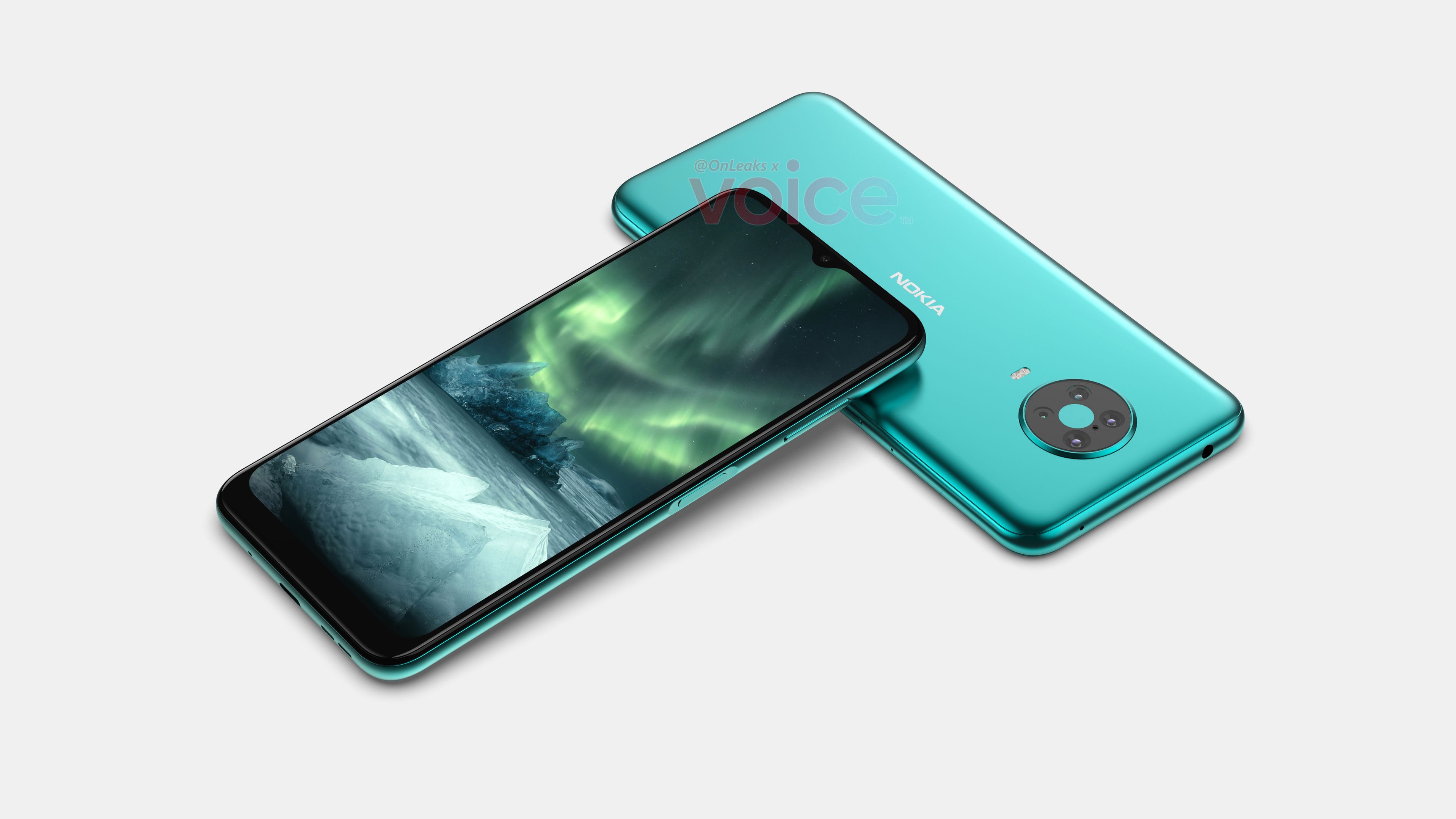
A leak has surfaced that gives us our first look at the next-gen Nokia 6 model, which we hope for the sake of clarity, gets launched as the Nokia 6 (2021). The source of the leak is Steve Hemmerstoffer a.k.a. OnLeaks, and he has provided us with renders of the upcoming mid-range phone which were first posted on Voice.
The new Nokia 6, like the Nokia 6.2 before it, will have a waterdrop notch. We are sure that must be disappointing for those who expect a punch-hole display like that of the Nokia 5.4 and Nokia 3.4. The screen is said to be bigger than that of its predecessor at 6.45-inches and we expect it should have an FHD+ resolution too.
There are four cameras on the back that sit in a circular housing with a pill-shaped LED flash underneath it. The camera specifications were not stated but a leak from last year says the phone will have ZEISS lenses.
Unlike the Nokia 6.2, the Nokia 6.4 doesn’t have its fingerprint scanner on the back. HMD Global has decided to shift it to the right side of the frame where it sits below the volume rocker. There is an audio jack at the top of the phone and the single button on the left is for the Google Assistant.
The Nokia 6.3/Nokia 6.4 is said to measure 164.99 x 7.68 x 9.2 millimeters (10.1mm with the camera bump) and should launch no later than April. Previous reports say it will launch with a Snapdragon 700 series processor but HMD Global may surprise us and ship it with the new Snapdragon 480 chipset that has a 5G modem.
The Finnish company is one of those that have signed up for the new chipset and seeing as the Nokia 5.4 launched just a few weeks ago, we don’t expect a successor anytime soon. The Nokia 3 series will also most likely remain a 4G line which leaves the Nokia 6.3/6.4 as the phone that may launch with the Snapdragon 480 5G processor.
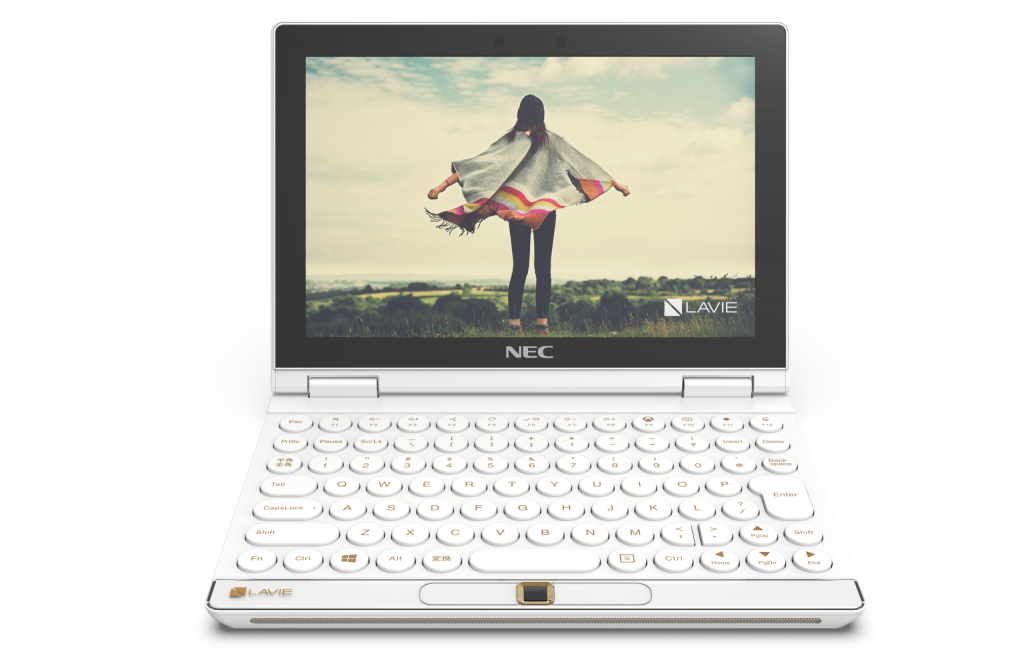
Lenovo is currently the leading PC maker globally and this isn’t unconnected with its rich product offering and robust pricing. The company has now announced the Lenovo LAVIE MINI pocket-sized convertible PC.
Lenovo LAVIE MINI pocket-sized convertible PC
The convertible PC presents with an ultra-mobile form-factor. It sports an 8-inch WUXGA touch display with a resolution of 1920 x 1200 pixels. The PC is powered by up to 11th Gen Intel Core i7 mobile processor with Intel Iris Xe graphics, up to 256GB SSD, and 16GB LPDDR4 of RAM. The PC comes in Crystal White for an airy translucent look and weighs just 579 grams. The laptop also presents with features such as Modern Standby and IR camera with Windows Hello for zero-touch login.
The Lenovo LAVIE MINI pocket-sized convertible PC also comes with circular-shaped numeric and symbol keys which are the same size as the alphabet keys. The keyboard itself is a backlit one. It also comes with a breathing light which lights up the logo on the LCD cover while the PC remains turned on.
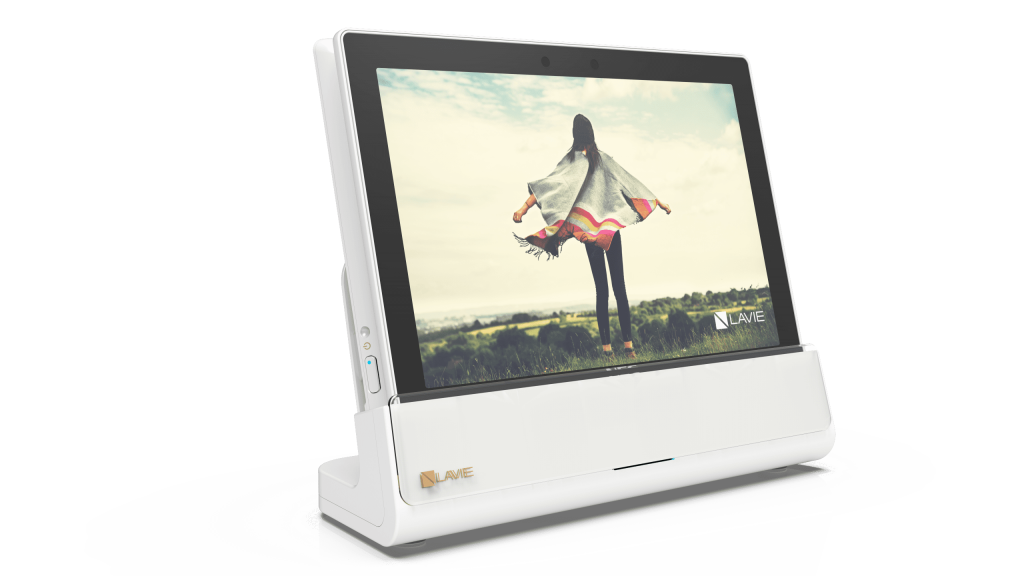
Lenovo LAVIE MINI pocket-sized convertible PC HDMI Dock
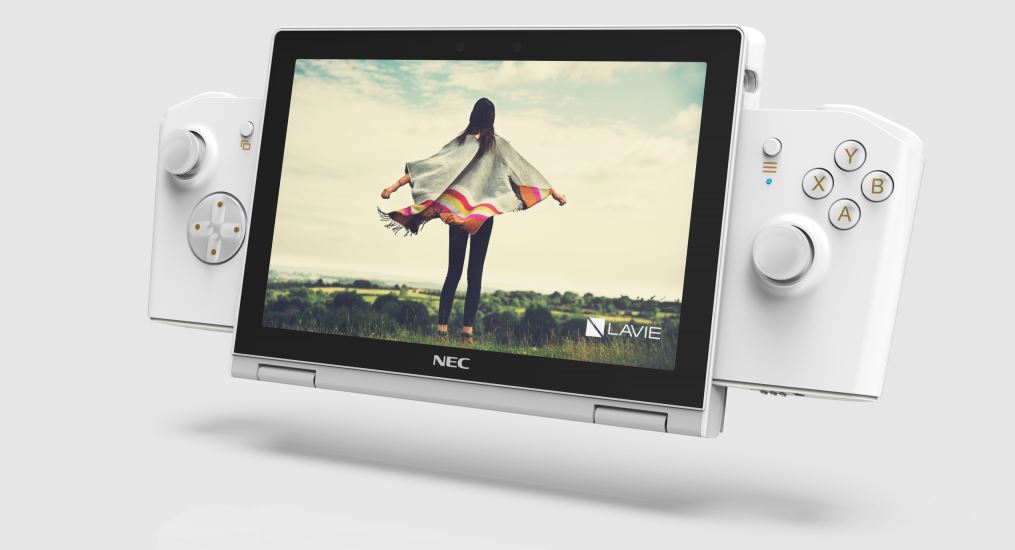
Another stand-out feature of the LAVIE MINI is that it features an optional Gaming Controller that allows users to play high-quality PC games such as battle royale and car racing games. The laptop also packs an optional HDMI-connected dock which allows you to connect the PC to your big television screen.
Lenovo LAVIE MINI pocket-sized convertible PC gaming controller
Apart from an HDMI connection, the Dock provides other input/output extensions too including several USB Type-C and -A ports. The dock can also charge the PC’s battery for a quick power boost.
Lenovo is yet to reveal any details about the pricing and availability of the LAVIE MINI pocket-sized convertible PC.
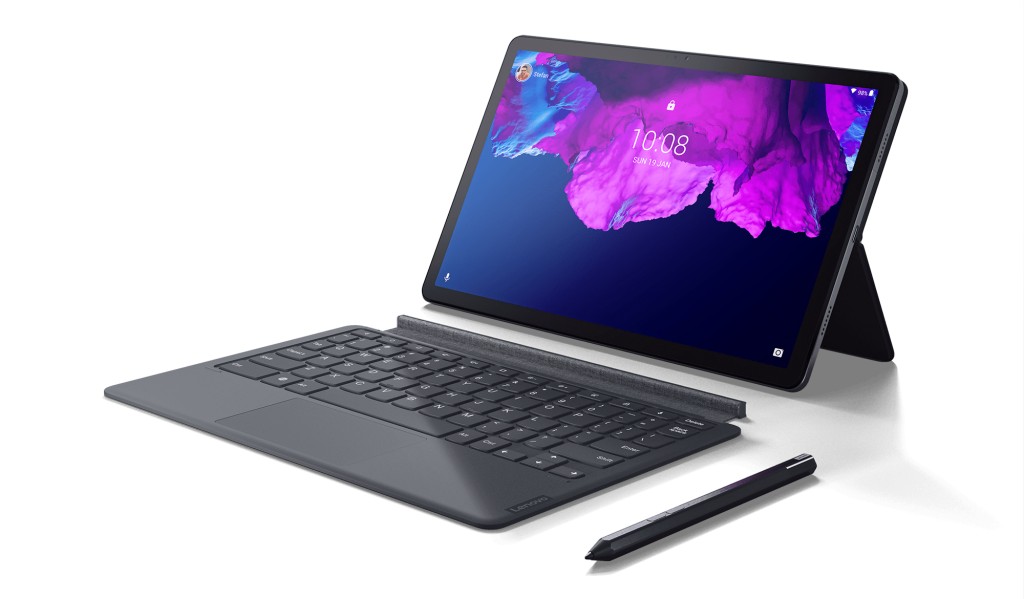
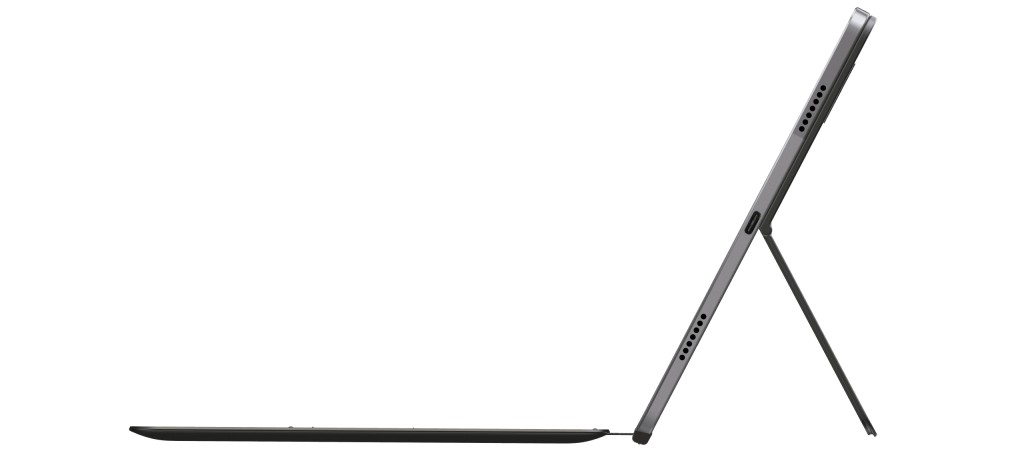
Lenovo Tab P11 (keyboard and stylus sold separately)
With respect to design, the Lenovo Tab P11 and Lenovo Xiaoxin Pad are identical. So you get a tablet with an aluminum-alloy chassis with moderate bezels and the option to choose from Slate Gray or Platinum Gray.
The Lenovo Tab P11 has an 11-inch 2K display (2000 x 1200) IPS LCD display with an Eye Care mode certified by TÜV Rheinland. Powering it is Qualcomm’s Snapdragon 662 processor with 6GB of RAM and 128GB of expandable storage. There is also a 4GB RAM + 64GB version that is not available in China.
On the back of the tablet is a 13MP camera while an 8MP camera is in front for video calls and the occasional selfies you may want to take with a tablet of this size. Lenovo has added a Smart Privacy feature that blurs your background during video calls (should come in handy for apps that don’t have a background blur feature baked in).
While a laptop of this size is excellent for watching movies and shows (certified to stream Netflix in HD), Lenovo wants you to also be able to use it for some serious work too. So there is an optional slim keyboard that has a trackpad that attaches nicely to the tablet for typing that document or blog post and its magnetic cover has a kickstand that helps complete the transformation into a 2-in-1. You can also pick up the Lenovo Precision Pen 2 stylus that has 4096 levels of pressure sensitivity. The stylus has a battery life of up to 200 hours and charges via USB-C.
The tablet has Wi-Fi 6, LTE, Bluetooth 5.1, an audio jack, Dolby Atmos quad speakers, and a USB-C port. It packs a 7700mAh battery with support for 20W fast charging. It ships with Android 10 which is not surprising, but we hope it gets upgraded to Android 11. It comes pre-loaded with Microsoft Office apps. And if you want to hand it over to your kid, there is Google’s Kids Space available on it.
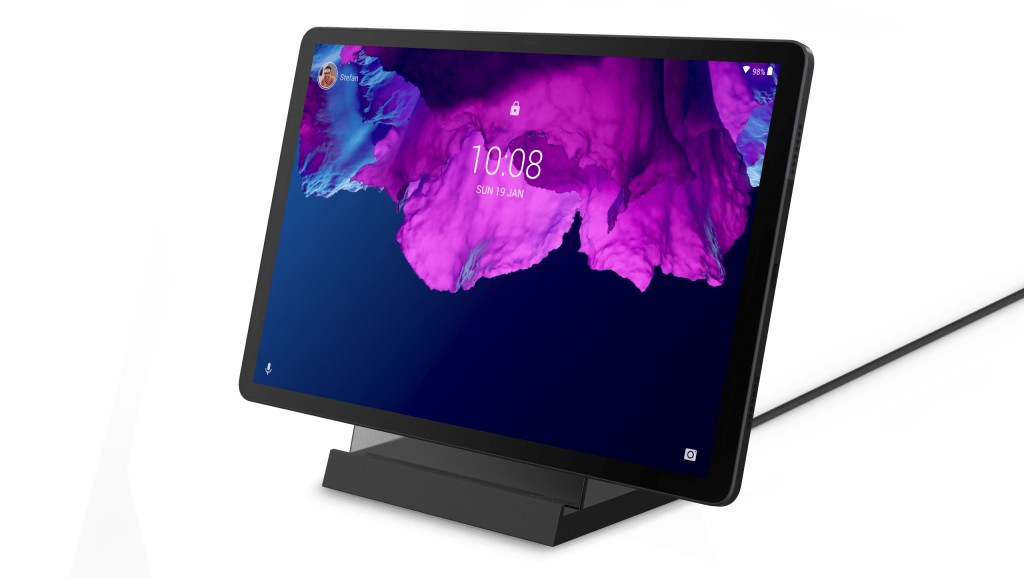
Lenovo Tab P11 with Smart Charging Station (sold separately)
Other accessories available for the Lenovo Tab P11 include the Lenovo Smart Charging Station 2 which is practically a dock that allows for hands-free moving watching while charging (or you can just get a case with a kickstand). There is also a folio case with a modern fabric design.
Lenovo says the tablet will start at $229.99 and can already be purchased now but the Lenovo US store says it is coming soon. The prices for the accessories were not revealed.
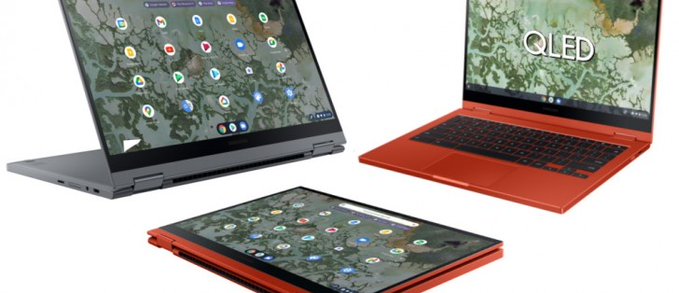
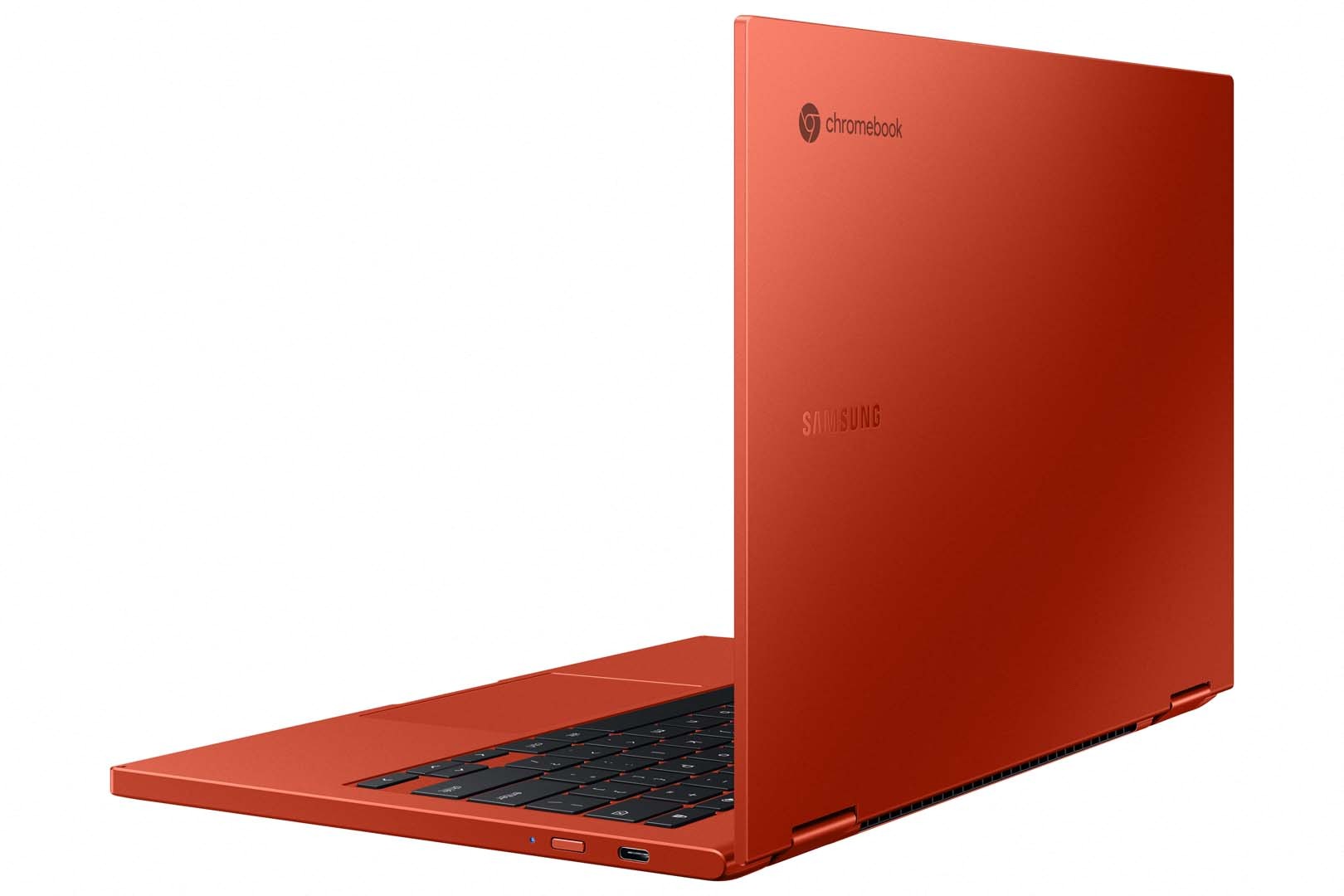
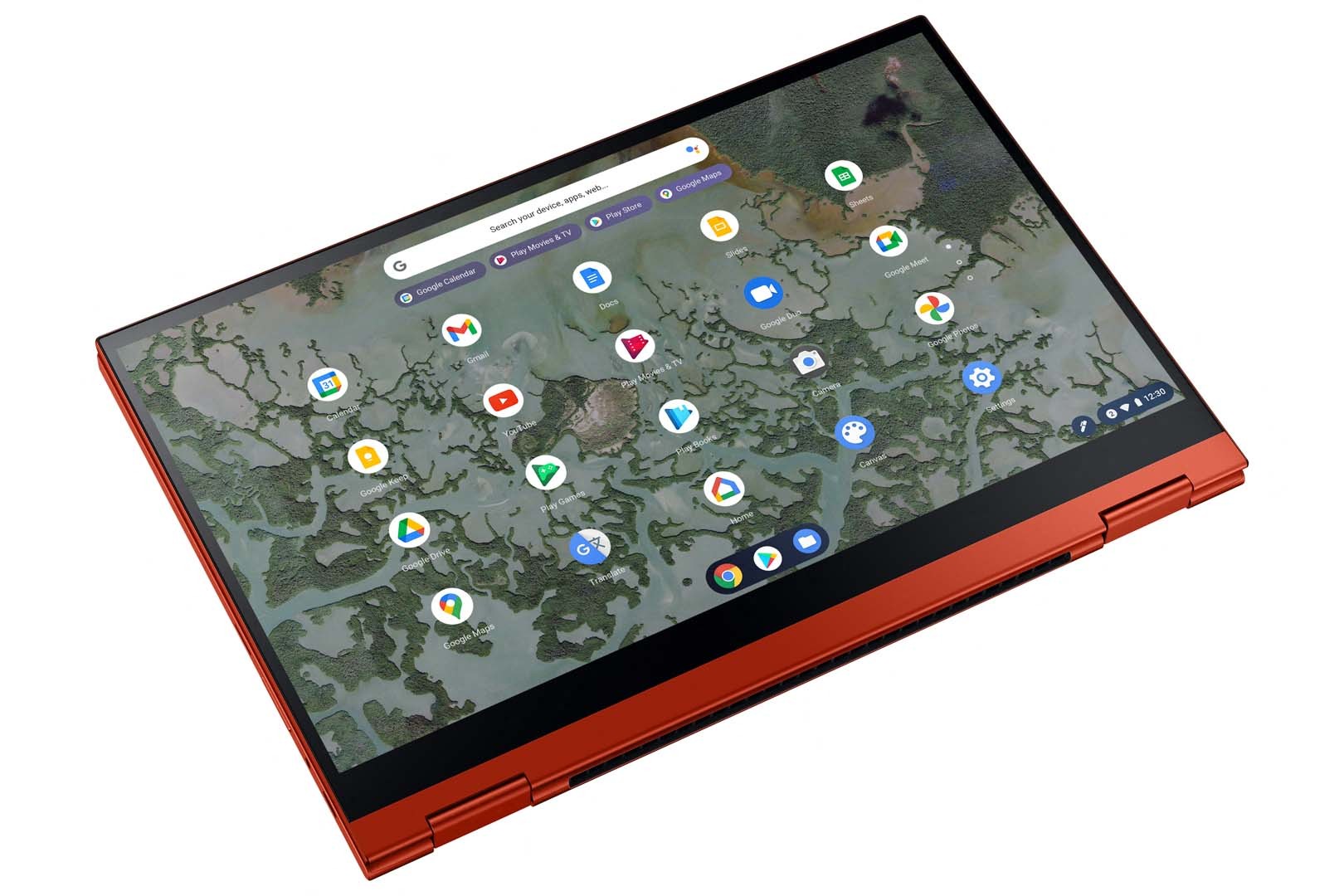
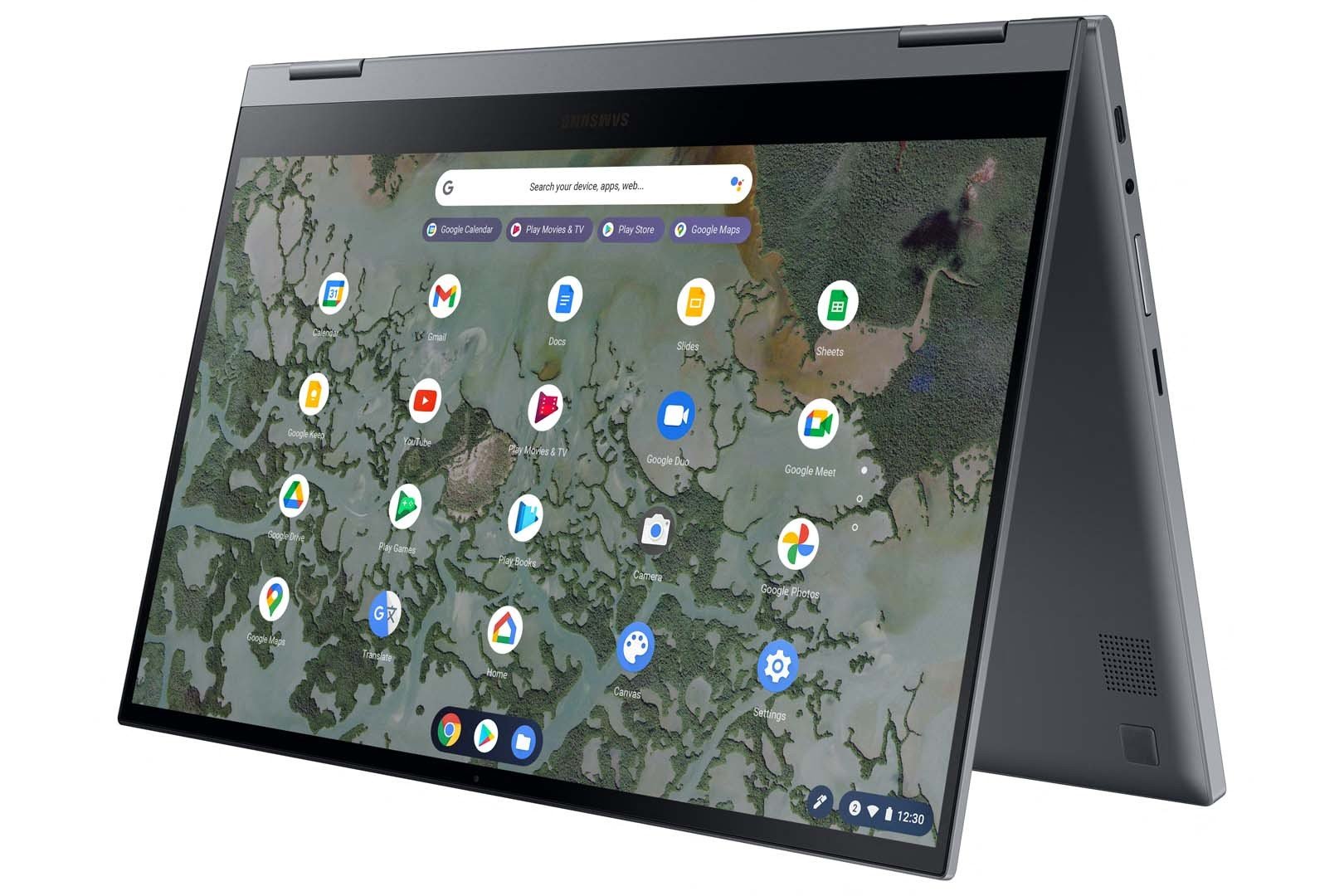
Samsung is fast establishing a pattern of making revolutionary releases during CES events in the last couple of years. Last year, the first Chromebook with an AMOLED screen was unveiled, and CES 2021 has seen the tech giant launching the Samsung Galaxy Chromebook 2, having a QLED display. It is the first laptop to have embraced QLED technology.
The Chromebook 2 has a 13.3″ touchscreen with 1,920×1,080 pixels HDR display. The device supports both finger and pen capability (USI pen). It weighs 1.23kg, marginally heavier than the Chromebook from last year but is still quite portable and is priced from $550, which is about half the cost of its premium predecessor from last year. The base model has an Intel Celeron 5205U, while a 10th gen Intel Core i3 10110U (dual-core CPU with 4 threads and higher clocks) provides a greater speed of operations.
The laptop comes with either 4 or 8 GB of RAM (LPDDR3) and 64GB or 128GB of internal storage, with a microSD slot also available. The 45.5 Wh battery can last about 14 hours of continuous use without charging.
The two 5W speakers in the laptop have the Smart AMP feature, which Samsung claims is 178% louder than an average amplifier. The Chromebook 2 has a 720p webcam suitable for video conferencing on all platforms.
The laptop has Wi-Fi 6 (ax 2×2) and Bluetooth v5.0, while two USB-C ports and a headphone/ microphone jack are also available on the sides of the device.
The Samsung Galaxy Chromebook 2 will come in two color variants: Fiesta Red and Mercury Gray. The first units will be on sale in the US market before the end of the first quarter of this year.
We use cookies on our website to give you the most relevant experience by remembering your preferences and repeat visits. By clicking “Accept”, you consent to the use of ALL the cookies.
This website uses cookies to improve your experience while you navigate through the website. Out of these, the cookies that are categorized as necessary are stored on your browser as they are essential for the working of basic functionalities of the website. We also use third-party cookies that help us analyze and understand how you use this website. These cookies will be stored in your browser only with your consent. You also have the option to opt-out of these cookies. But opting out of some of these cookies may affect your browsing experience.
Necessary cookies are absolutely essential for the website to function properly. This category only includes cookies that ensures basic functionalities and security features of the website. These cookies do not store any personal information.
Any cookies that may not be particularly necessary for the website to function and is used specifically to collect user personal data via analytics, ads, other embedded contents are termed as non-necessary cookies. It is mandatory to procure user consent prior to running these cookies on your website.