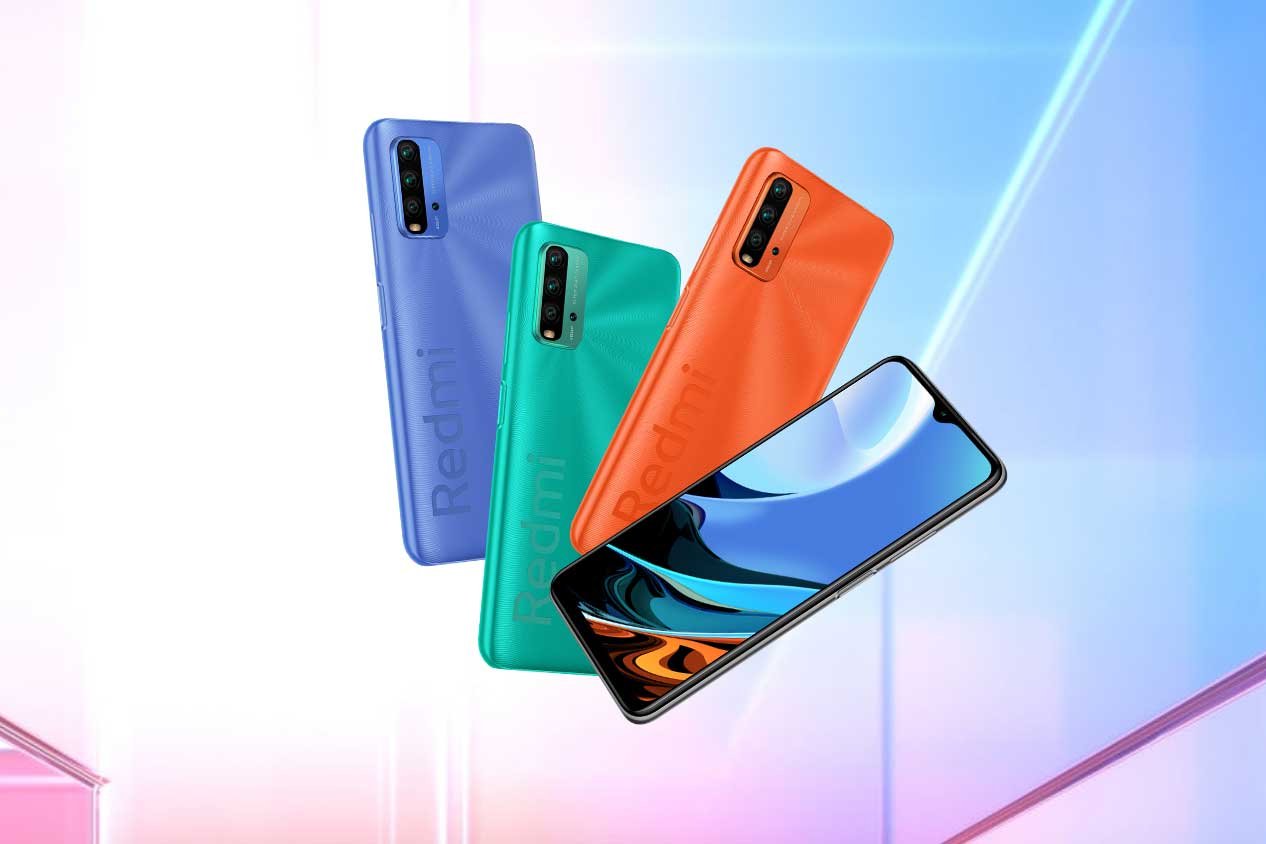
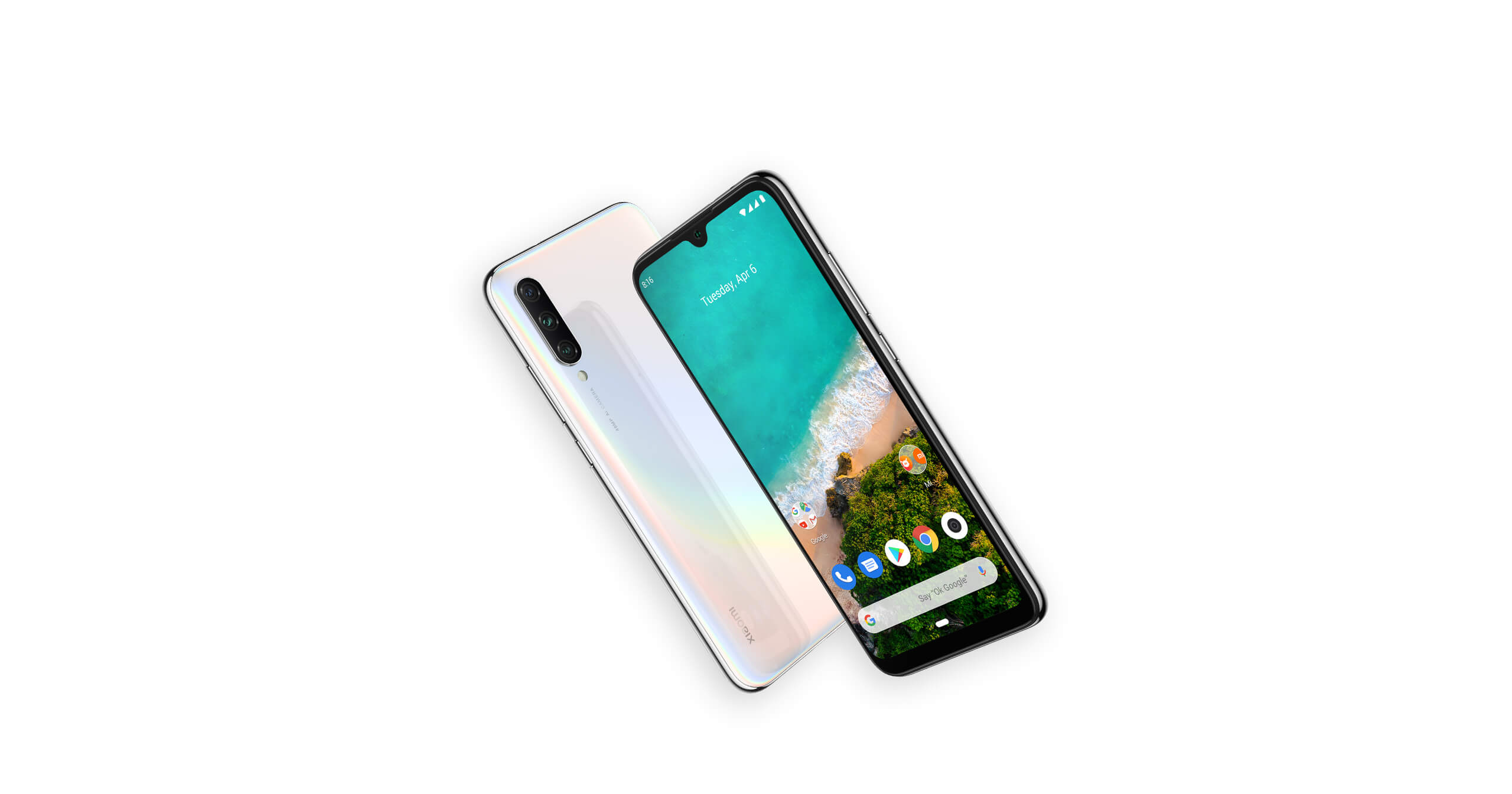
Xiaomi Malaysia has started teasing the launch of a new Redmi phone. It is heavily speculated that it could be hinting at the arrival of the Redmi 9T smartphone. A Vietnamese tipster Chun has claimed that the Redmi 9T may debut on Jan. 8 in the country. He has claimed that the Chinese firm will launch as many as nine smartphones in the first quarter of 2021.
Currently, Xiaomi is running a contest for the alleged Redmi 9T in Malaysia. The contest is will come to an end on Jan. 7. The tipster has revealed that he has learned through a popular review that the Redmi 9T will be break cover on Jan. 8. He added that the company will release at least 9 phones in the global markets in early 2021.
Xiaomi Redmi 9 Power
Some of the Xiaomi phones that are expected to launch in the global markets include Redmi 9T, Xiaomi Mi 11, and Xiaomi Mi 11 Lite 4G. Some speculations that are doing rounds on Twitter claim that the Mi 11 Lite 4G could be branded as the POCO F2 in India. Since there is no concrete proof to back this claim, it is advisable to take this information with a pinch of salt.
The Redmi 9T is believed to be a rebranded version of the Redmi 9 Power that debuted in India recently. The Redmi 9 Power has a 6.53-inch IPS S LCD panel that offers a Full HD+ resolution and a 19.5:9 aspect ratio. It is preinstalled with MIUI 12 based Android 10 OS. The Snapdragon 662 chipset is present under the hood of the device with up to 6 GB of RAM. The phone is available in 64 GB (UFS 2.1) and 128 GB (UFS 2.2) storage options.
It is backed by a 6,000Ah battery that supports 18W fast charging. For snapping selfies, it possesses an 8-megapixel front camera and its rear features a 48-megapixel + 8-megapixel + 2-megapixel + 2-megapixel quad-camera system.
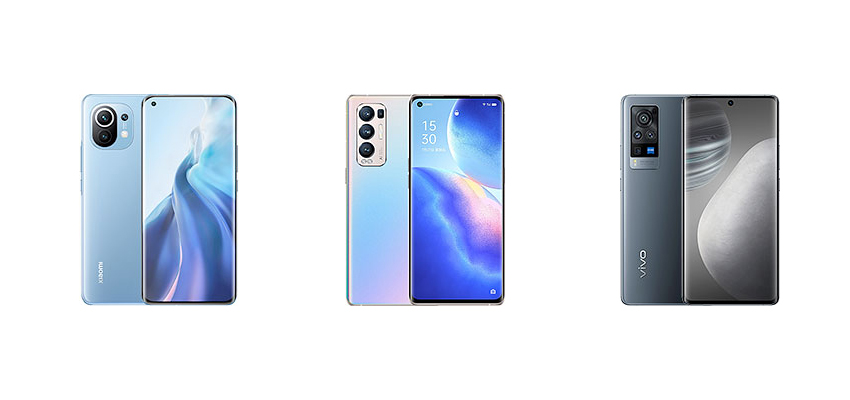
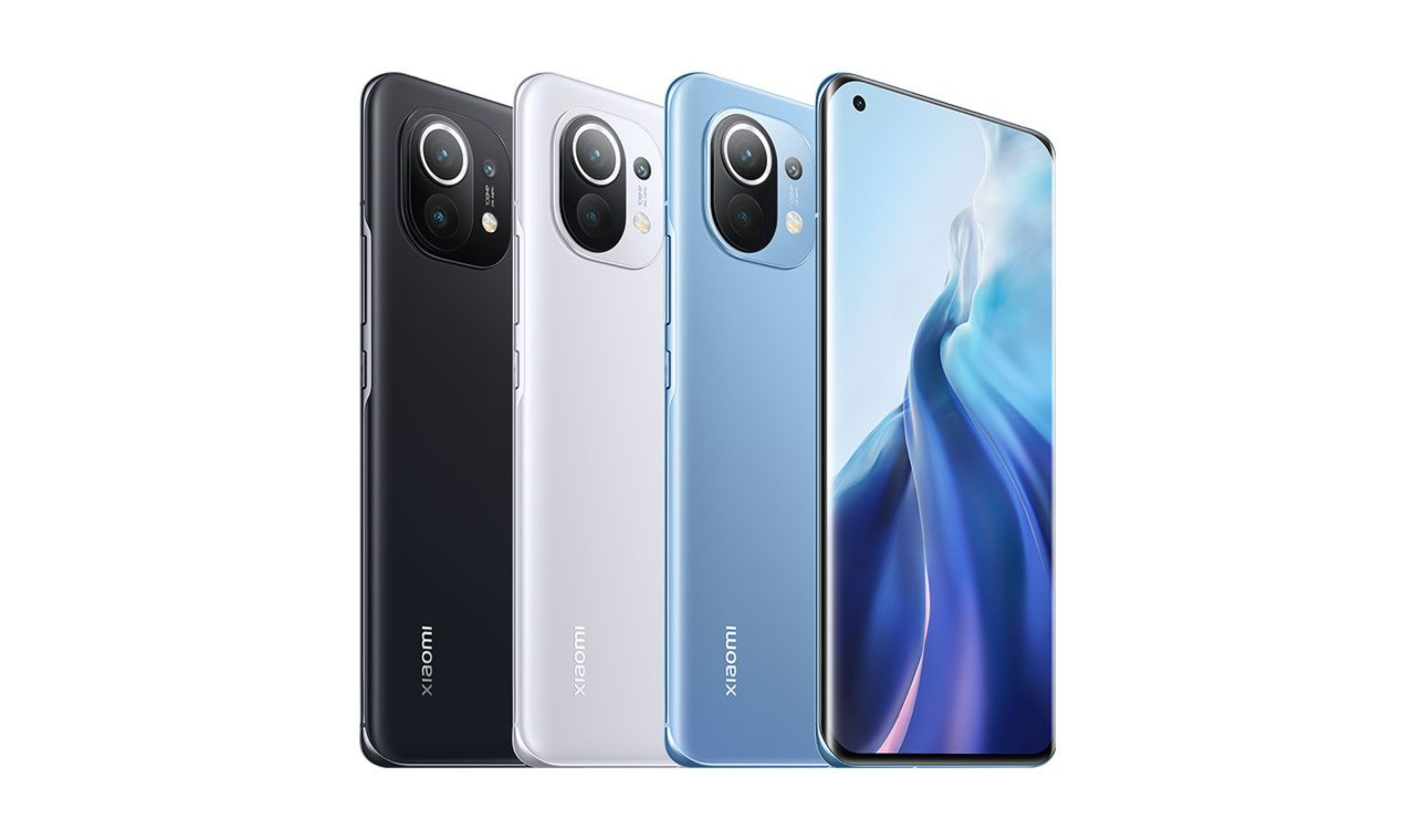
Xiaomi just launched the new Xiaomi Mi 11: the first-ever flagship equipped with the new Snapdragon 888. But despite having the best chipset in the Android world, the Mi 11 is still a flagship killer sold at a very interesting price tag. Besides the Mi 11, two more flagships went official in the last days of 2020: the OPPO Reno5 Pro+ and the Vivo X60 Pro. In this comparison, we decided to compare the specifications of the best Android flagships released from Chinese brands in the last part of 2020 in order to let you understand which one is the most interesting handset you can actually buy without spending a huge amount of money.
4600 mAh, fast charging 50W, wireless charging 50W
4500 mAh, fast charging 65W
4200 mAh, fast charging 33W
ADDITIONAL FEATURES
Dual SIM slot, 5G, reverse wireless charging 10W
Dual SIM slot, 5G, reverse charging
Dual SIM slot, 5G
Design
The Xiaomi Mi 11 has a very original and beautiful design. With its camera module boasting rounded corners and a very high screen-to-body ratio, it is definitely an attractive phone which tries to differentiate itself from the concurrence. But the OPPO Reno5 Pro+ is my favorite one for a simple reason: its electrochromic body. Its rear side is able to change its color with a simple double tap on it, and this is an amazing feature in terms of design. The Vivo X60 Pro still comes with a beautiful design and premium materials, but I personally prefer the OPPO Reno5 Pro+ and I think a lot of people will agree with me.
Display
The Xiaomi Mi 11 is equipped with the most advanced display: for the first time, Xiaomi opted for a display with a Quad HD+ resolution. The display of the Xiaomi Mi 11 has a 120 Hz refresh rate and the HDR10+ certification, as well as a very high brightness up to 1500 nits. The display received an A+ from DisplayMate and it is actually one of the best panels out there. But the OPPO Reno5 Pro+ is not joking with its 90 Hz AMOLED display, and neither the AMOLED panel of the Vivo X60 Pro. Further, all the phones feature an in-display fingerprint scanner.
Hardware/Software
If you want the most powerful smartphone, you must go for Xiaomi Mi 11. It is the first and at this moment the only phone fueled by the Snapdragon 888 mobile platform: the latest and most powerful SoC by Qualcomm. The phone also offers up to 12 GB of RAM and up to 256 GB of UFS 3.1 native storage. But the Vivo X60 Pro is still a very nice flagship thanks to its Exynos 1050 chipset built at 5 nm, and it offers the same memory configuration. With the OPPO Reno 5 Pro+, you get an older Snapdragon 865 chipset, but it is still flagship-class.
Camera
Just do not choose the Xiaomi Mi 11 if you need the most advanced camera phone. Due to the lack of a telephoto sensor and a periscope sensor, it does not support optical zoom. You can get the optical zoom with the Oppo Reno5 Pro+ and Vivo X60 Pro. The latter has the best zoom capabilities and Carl Zeiss lenses, but the former has a better main camera, at least on the paper: a 50 MP Sony IMX766 sensor. Overall, the Vivo X60 Pro looks slightly more advanced as a camera phone, thanks to great secondary sensors.
Battery
Xiaomi Mi 11 has the biggest battery, but it does not necessarily mean it has a longer battery life in every scenario. Given its higher display resolution, it has a shorter battery life in some situations. The Oppo Reno5 Pro+ has a good 4500 mAh battery, but you should note that the 7 nm Snapdragon 865 chipset is less efficient. Xiaomi Mi 11 is the only one to feature wireless charging, but the Oppo Reno5 Pro+ has the fastest charging tech with a 65W power.
Price
The prices of Xiaomi Mi 11 start from €504/$611 just like the Oppo Reno5 Pro+, while Vivo X60 Pro starts from €565/$685. There is not a definitive winner of this comparison: the Oppo Reno5 Pro+ has the best design and great cameras, Vivo X60 Pro is the greatest camera phone and it boasts a 5 nm chipset, Xiaomi Mi 11 has the best display and hardware but it is inferior as a camera phone. Which one would you go for?
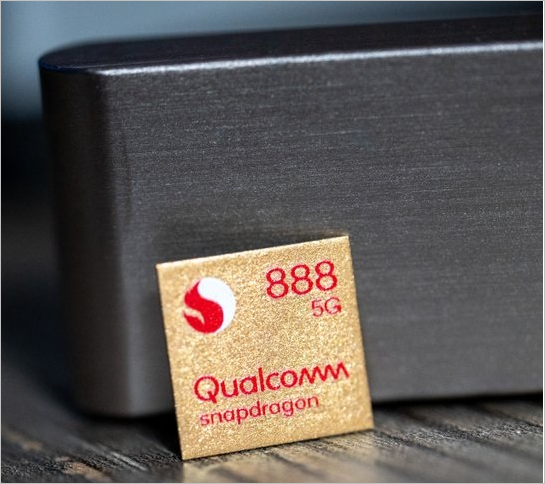
Qualcomm‘s latest Snapdragon 888 has already foud its way into the Mi 11 flagship but more SD888-powered smartphones are expected to make their entry next year. Apart from the Mi 11 which will goon sale in January, other models that will feature Qualcomm’s latest flagship SoC includes the Realme Race, Samsung Galaxy S21, OPPO Find X3, OnePlus 9, and others.
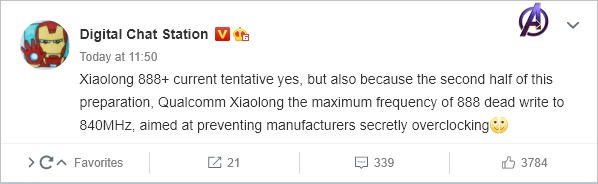
While we still await the proliferation of the new Qualcomm flagship SoC, a rumour has emerged concerning the Snapdragon 888 Plus. According to prolific tipster Digital Chat Station, Qualcomm will release the Snapdragon 888+ in the second half of next year. He also disclosed reason why Qualcomm locked the GPU frequency of the chipset at 840MHz. This he says is to prevent OEMs from secretly overclocking the chip on their devices.
As the latest product of the Snapdragon 8 series, Snapdragon 888 integrates Qualcomm’s third-generation 5G modem and radiofrequency system-Snapdragon X60. The SD X60 modem supports all major global millimeter wave and Sub-6GHz frequency bands, as well as 5G carrier aggregation, global multi-SIM card functions, Independent (SA) and non-independent (NSA) networking modes and dynamic spectrum sharing (DSS).
The sixth-generation Qualcomm AI engine integrated on the Snapdragon 888 5G mobile platform includes a newly designed Qualcomm Hexagon processor, with a performance of 26 trillion operations per second (26 TOPS). In terms of games, the third-generation Snapdragon Elite Gaming is integrated, and Qualcomm claims that it has brought the most significant performance improvement ever made by Qualcomm Adreno GPU.
In terms of camera performance, the Spectra ISP of Snapdragon 888 supports faster billion-pixel-level processing speeds. Users can process 2.7 billion pixels per second to take photos and videos, that is, 120 frames per second, and each frame is 12 million Pixels. The processing speed is up to 35% higher than the previous generation platform.
The Snapdragon 888 chip configuration includes ARM’s latest Cortex X1 core clocked at 2.84GHz and three Cortex A78 clocked at 2.4GHz as well as four 1.8GHz-clocked Cortex A55 cores. It integrates the Adreno 660 GPU and supports WiFi 6E and Bluetooth 5.2.
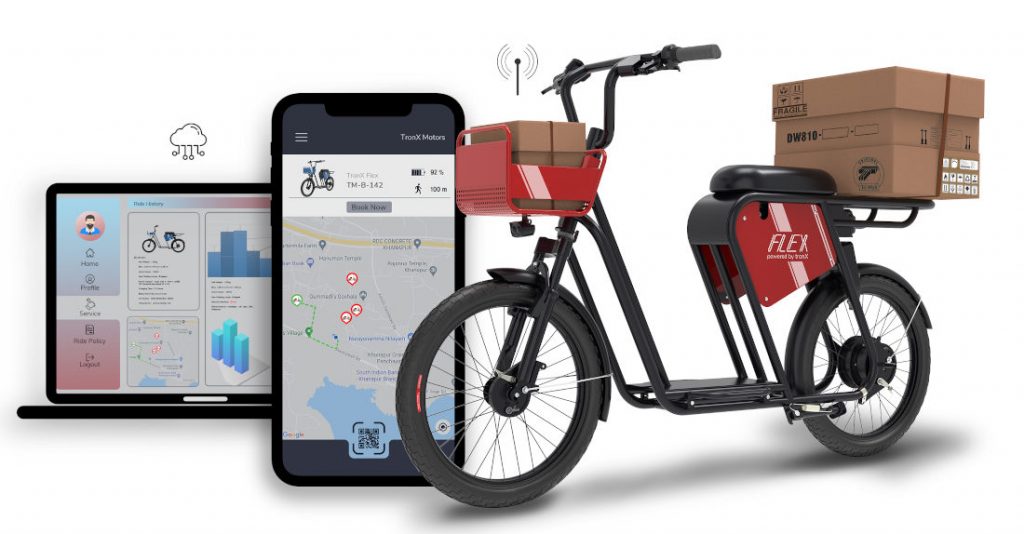
Indian tech and fast-rising startup, Smartron has just launched its Tbike Flex, an e-bike and cargo delivery platform for medium-range deliveries and connectivity. It is ‘powered by tronX’ and has several impressive features that will endear it to logistics, food delivery, and e-commerce companies. It offers many customized fleet and rider management features with seamless integration into the existing IT systems which will facilitate real-time decision making for greater effectiveness of businesses, according to a statement by the company.
The Tbike Flex is a mix between a cargo bike with futuristic electric, AI, and the company’s niche IoT technologies. Its tailor-made specs interface excellently into a bike capable of carrying medium loads up to 40kg in a 120km radius around the city, coupled with the sublime versatility in moving even in dense traffic and minimal parking footprint.
The cargo-carrying container is designed to be flexible and can be adjusted to fit the operator’s requirement.
The Tbike Flex has a top speed of 25kmph and has a range up to 120 km per charge. City regulations currently do not require rider license and vehicle registration, making it accessible to more persons.
It has high-density swappable battery packs with a lifecycle in the region of 150,000 km.
Data security and fidelity are achieved through the tronX platform, while the overall design makes it well suited for long intra-city rides, greatly reducing both transportation and maintenance costs while also significantly reducing the carbon footprint.
The Smartron tbike flex sells from Rs. 40,000 (~$548) and is currently undergoing pilot testing in India and Mexico, as well as a few other countries in Latin America. Service and after-sales service are already slated to be available across various cities in India through Smartron’s tcare platform.
According to Mahesh Lingareddy, Smartron’s Founder, and Chairman, the Tbike Flex is an ideal cargo delivery platform that is set to provide quick and timely delivery of goods, in a smart and intelligent system. The features of Tbike Flex allow it to gain real-time insights on the operations of fleets seamlessly.
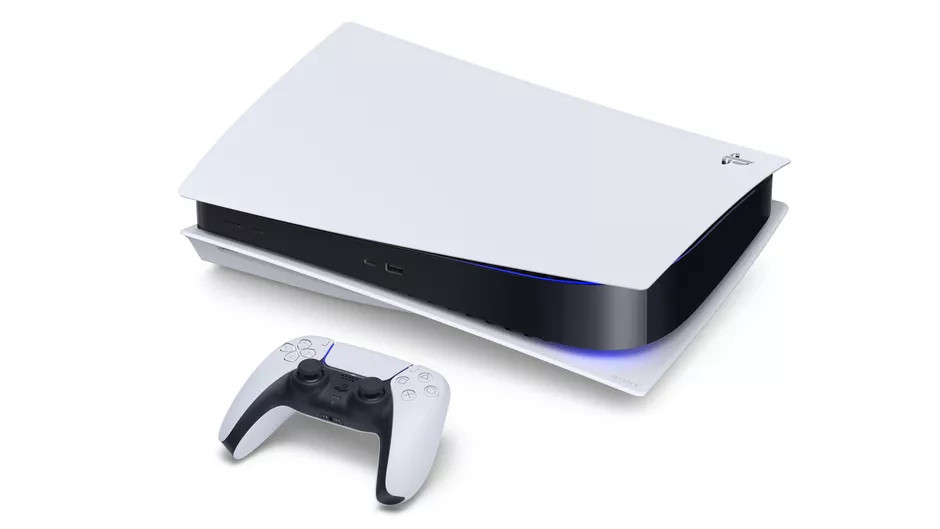
Sony’s PlayStation 5 is one of the sought-after gaming products since the first official release on November 12. With some markets still dream of getting it, the company has ended the 2020 note with a bang. A report from Digitimes now says it has shipped a never-before number of units so far.
The report(via MySmartPrice) says that Sony has sold 3.4 million units of PlayStation 5(PS5) in just 4 weeks of launch. If we recall, the company had faced heavy demand during the initial days. In fact, the PS5 was selling at exorbitant prices in countries like China, and Hong Kong due to short supply.
Besides, Sony has also been facing the heat for delaying launches in countries like India. The situation is so bad that people are queueing up to get imported units at higher prices. If you come to think of it, Sony has been trying it’s best to vent off the frustration among fans. Previously, reports said that it had raised the production by 50% way before the announcement.
Couple that with partner’s affiliation to raise the stocks prior to the sale, you can understand the commitment. Anyway, the company has managed to circumvent all the pressure and achieve this feat which is considered to be the best sales figure for a Console so far.
And it is only going to get better in 2021. The report says that Sony plans to ramp up the production of PS5 up to 18 million units next year. This would involve cooperation with vendors like AMD who would in turn have to rely on additional foundry of its contract manufacturer, TSMC. And the report already indicates that things are falling into place for the Japanese giant.
On that note, I wish both our readers and Sony to have a happy and prosperous 2021 year ahead!
It was reported earlier this year, precisely in August, that Apple Inc. had filed a lawsuit against a company over the choice of its logo. The company, whose name reflects its logo and is registered with the name Prepear, helps its subscribers prepare meals and create shopping lists, through its app available both in the App Store and Google Play Store.
Even though Prepear’s logo is that of a pear, Apple still contended that it bears a very close semblance to its own logo. Prepear founder Natalie Monson accused Apple of stifling small businesses who may not have the financial muscle to fight the tech giant in extended court cases. She insisted that their trademark pear logo does not in any way come close to looking like Apple’s logo and could therefore not hurt the Apple brand. The company is thus grappling with thousands of dollars in bills to sustain its defense in the suit.
According to court papers filed by Apple, it tried to rationalize how a pear logo can look like its Apple logo, as Prepear’s pear was designed in a manner which clearly mimics Apple’s globally acclaimed logo and may give Prepear an unfair commercial advantage. Prepear however sought a different path for its survival by instituting a petition aimed at forcing Apple to abandon the court case.
The petition drawn up by Prepear parent Super Healthy Kids has already gotten over 250,000 signatures, and the tech giant may have noticed the possible backlash if it insists on pursuing the case. And now it appears that Apple may cave in and this might be exactly what is going on.
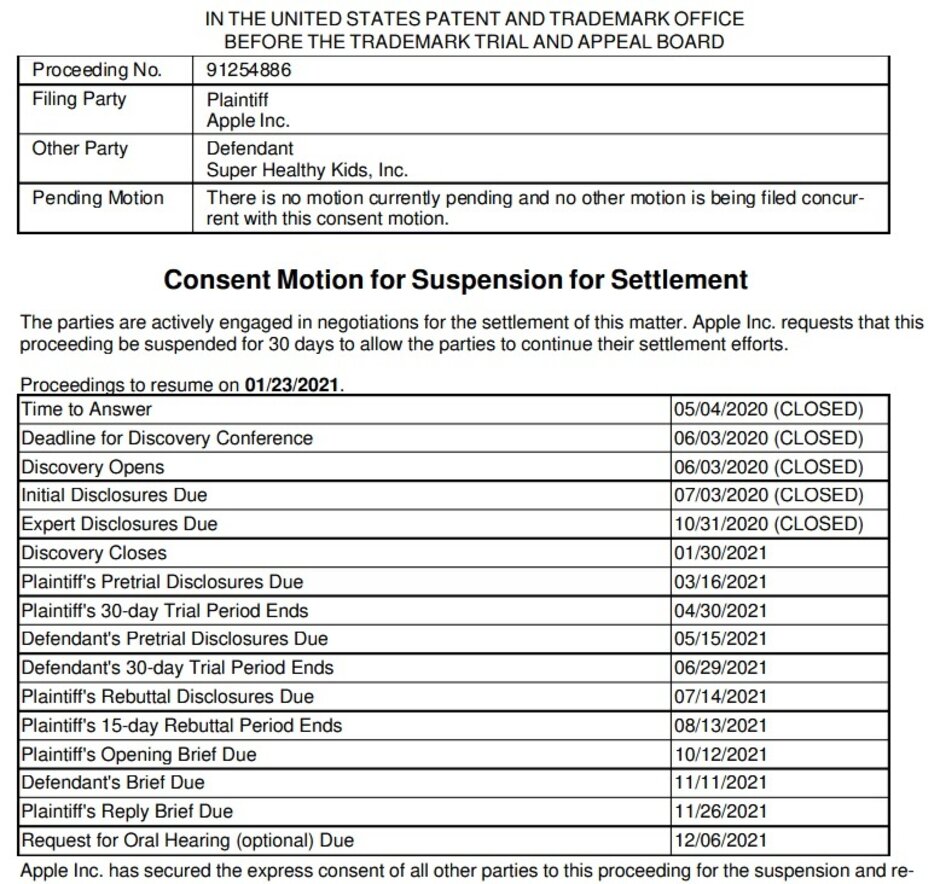
Filings at the U.S. Patent and Trademark Office’s Trademark Trial and Appeals Board, show that proceedings relating to Apple and Prepear are to be delayed for 30 days as both parties try to settle the matter out of court. If no settlement is reached before January 23, 2021, the proceedings will continue on that date. In addition, either side can decide not to wait until that date and resume court proceedings at any time.
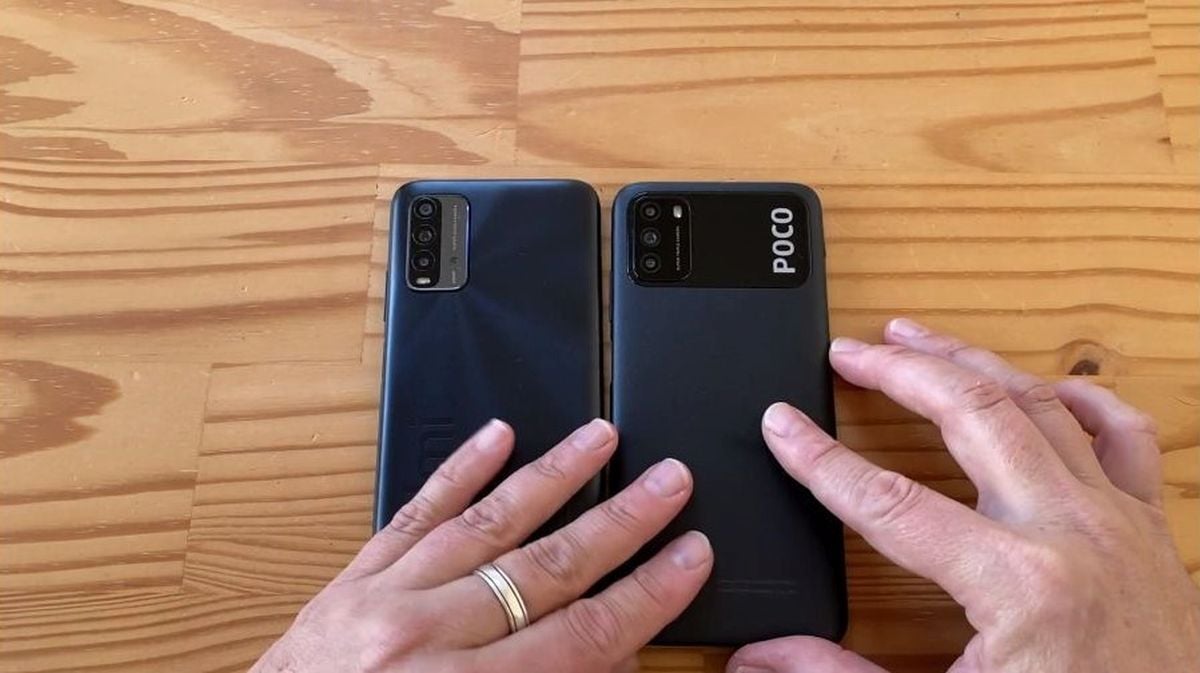
In recent times, Xiaomi has often rebadged Redmi smartphones as POCO phones in other markets. The reverse seems to be the case for the POCO M3 which has been tipped to launch as Redmi 9T in some markets. A YouTuber has now shared a video of the Redmi 9T confirming the device will be a rebranded POCO M3. The video even features the M3 handled side by side with the Redmi 9T.
The YouTube video posted by Mobile Tech Podcast has been pulled off but you can still check it out from below. The Redmi 9T is shown to have a key difference from the Poco M3 which is the rear camera configuration. While the Poco M3 packs three rear cameras, the 9T features four camera setup. The fourth lens is an 8MP ultra-wide-angle lens in addition to the 48MP primary wide-angle lens, 2MP depth sensor, and 2MP macro lens.
The display and other configurations are likely the same. This includes a 6.53-inch Full HD+ IPS display with a resolution of 1080 x 2340 pixels. There is a waterdrop-style notch on the screen that houses an 8MP selfie camera. The device is powered by a Qualcomm Snapdragon 662 processor paired with 4GB of RAM and 64GB/128GB of expandable storage. The device will also pack a large 6,000mAh battery.
There is no word yet as to when the device will be launched but the device was recently certified in Thailand. Also, Xiaomi Malaysia recently instituted a contest that ends on the 7th of January 2021 that will see 10 lucky fans head home with a unit of a device suspected to be the Redmi 9T. Thus, we believe the device will be launched pretty soon.
Lately, Transsion brands have been building their presence in India apart from African nations where they are more popular. Infinix, in particular, has even debuted its smart TV in the country. That said, this brand is now all set to launch a new entry-level smartphone in India in the form of Infinix Hot 10 Play.
A couple of weeks back, the upcoming Inifinix Hot 10 Play was spotted on FCC. The listing for this handset revealed some of its specs. Now, this phone has been also found on India’s BIS certification bureau and thus, suggesting the device to soon launch in the country as well.
According to FCC, this handset will come with model number X688C. Like any other entry-level smartphone will come equipped with 2GB RAM and 32GB internal storage. However, unlike most other devices in the segment, it will not only have a dual-camera setup but also a fingerprint sensor as well.
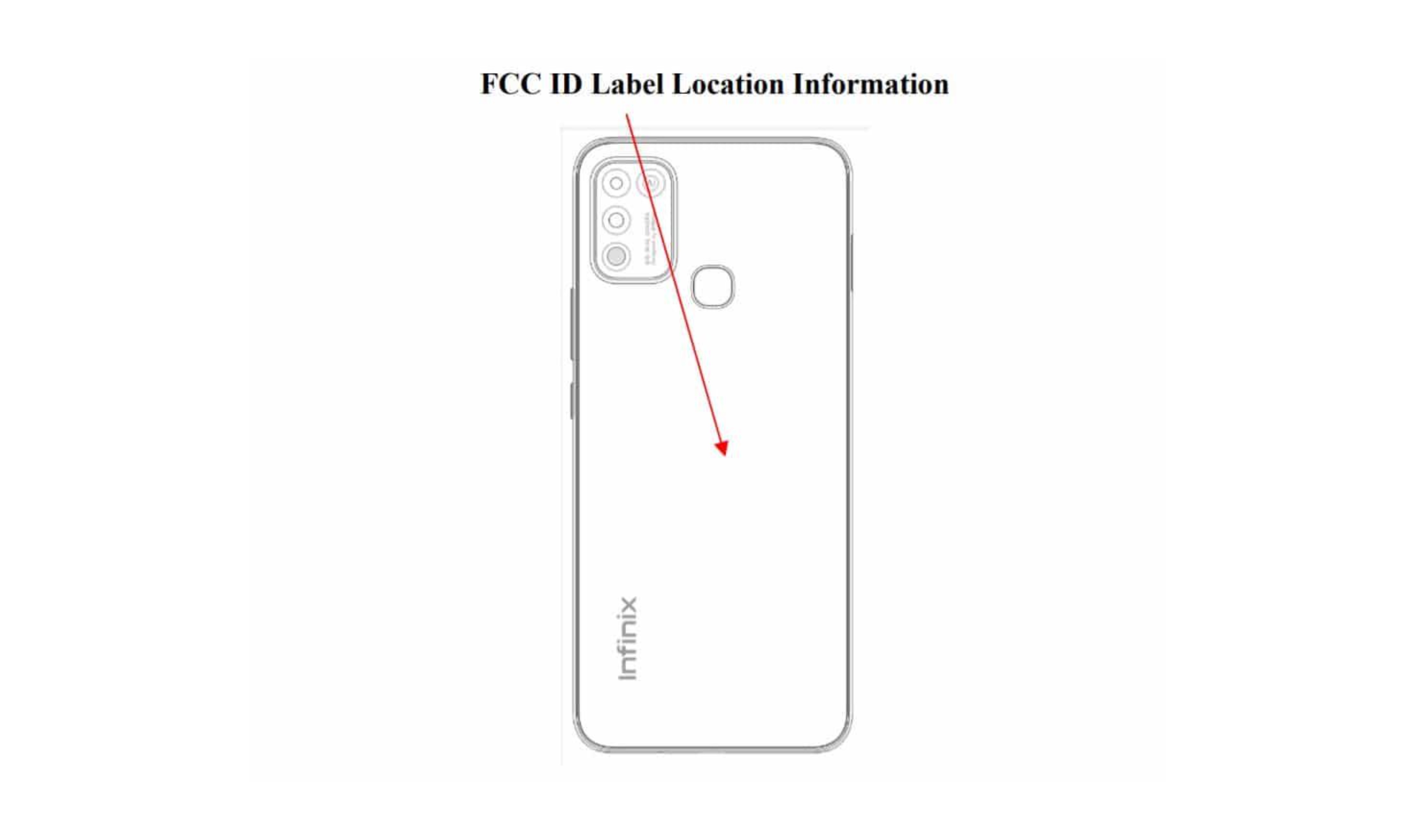
The FCC listing of the phone also includes a sketch of its rear panel. Therefore, we know that it will be featuring a rectangular camera bump at the top left corner, a squircle capacitive fingerprint sensor, and vertically aligned ‘Infinix’ branding.
Nothing else is known about this product apart from the above-mentioned specifications. Anyway, what we know is that the Infinix Hot 10 Play will be the third device in the Infinix Hot 10 series after the vanilla Infinix Hot 10 and Infinix Hot 10 Lite.
Recently, Apple increased the price of Apps, Games on the App Store in India, Indonesia. Now, it is turning the attention towards China. Despite Apple fixing deadlines and extending them, publishers didn’t submit a license on time. This has led to the company removing thousands of Apps including Games from its China App Store.
According to a Reuters report, Apple has removed 39,000 games from the China App Store. This move comes as the company’s already-extended deadline for obtaining a License comes to an end today. For the unware, Apple issued guidelines to publishers for submitting a License number from the Chinese Government.
This is reportedly for allowing users to do in-app purchases on the App Store. The deadline, which initially was on June-end got extended to Dec. 31 which is today. Anyway, apart from games, Apple has also removed other apps bringing the overall tally to more than 46,000.
Besides, some of the biggies like Ubisoft‘s Assassin’s Creed Identity and NBA 2K20 also seem to have affected in this sweep. In fact, only 74 of the 1,500 top-grossing games made the cut according to Qimai. While the move could be to be on good terms with regulators of China who hunt unlicensed content, experts also feel it would flip coins for Apple.
Previously, the company came under a lot of criticism for allowing a crowdsourced police activity App on its App store amidst Hong Kong Protests in 2019. More drama unfolded during the initial days of the US – WeChat ban controversy as well. Anyway, analysts say that such stringent measures would make overseas developers look for alternate ad-supported platforms which won’t be good news for the Cupertino giant.
Xiaomi Mi 11, which launched back on Monday(Dec. 28), is already up for pre-orders in China. And now, a report reveals that the device has received a staggering response for pre-sale registrations.
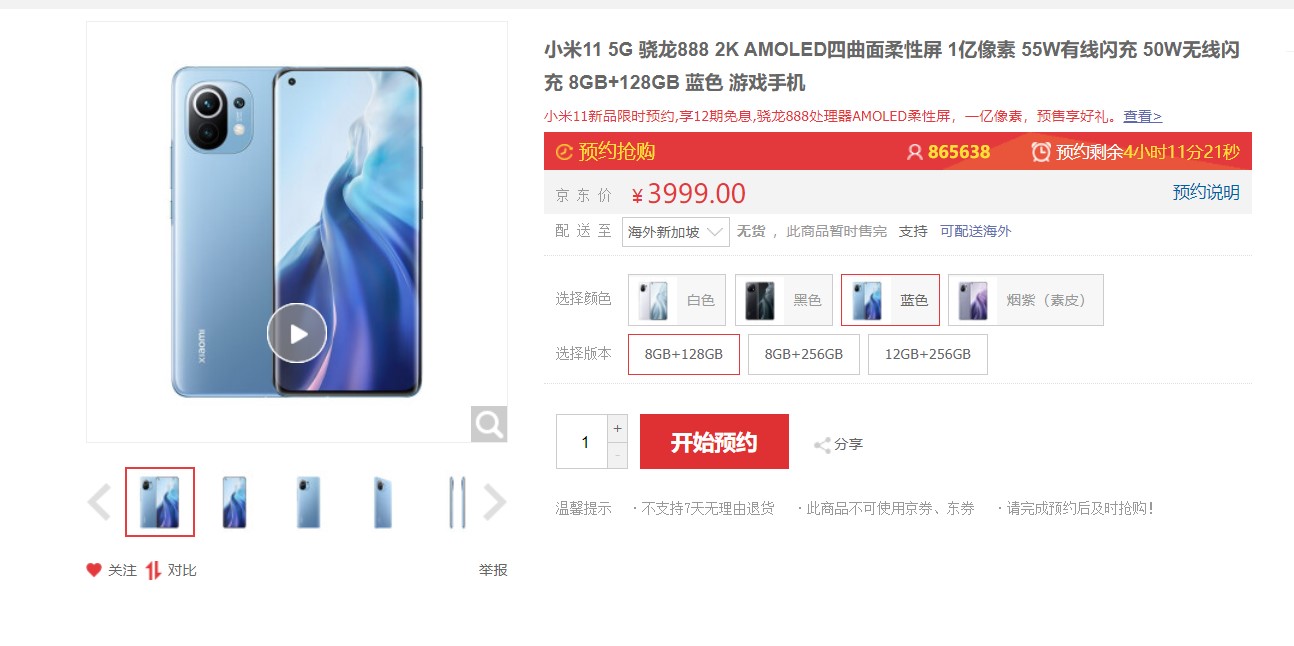
As per the report, Xiaomi Mi 11‘s pre-order registrations have exceeded 850,000 on JD.com(Jingdong). Precisely, at the time of writing this, the registrations are steering up further and it is around 865,638 according to the Jingdong website. With around 3-4hrs still left for the first sale tomorrow(January 1, 2021), the number is expected to go even higher.
Xiaomi’s official Weibo has already conveyed that the first sale of Mi 11 will be at 0:00 AM Beijing time(UTC+ 08:00). Although this appointment is online, reports say that on January 1, as many as 171 Xiaomi stores will sell the device offline simultaneously. A Xiaomi executive had already said that the company is prepared well-enough to maintain stocks of the Mi 11.
Besides, the first snapdragon 888 2021 flagship deserves such a reception. This is because the device is a compelling offering starting at 3999 yuan(~$611). You can take a look at all the variants and their pricing below:
8+128GB*- 3,999 yuan($611)
8+256GB- 4,299 yuan($657)
12+256GB- 4,699 yuan($719)
*- RAM + storage
The device comes in Blue, Black, and White Color options. There is also a special Lei Jun Signature Edition with Scodix Crystal finish for 12GB variant. Additionally, Xiaomi also announced two Vegan Leather versions in Smoky Purple and Khaki colors.
Also, it’s worth noting that the Mi 11 won’t come with an in-box Adapter this time. However, Xiaomi is kind enough to include a special 55W GaN charger in a Special Set Edition. This bundle will reportedly be available for the same price for a limited time. And after this, you need to pay 99 yuan($15) to get it.
Huawei just launched its latest flagship smartphone series in the form of the HUAWEI Mate40 series. The company even introduced the HUAWEI nova 8 series last week. Now, we get to see the first look at the upcoming HUAWEI P50 series.
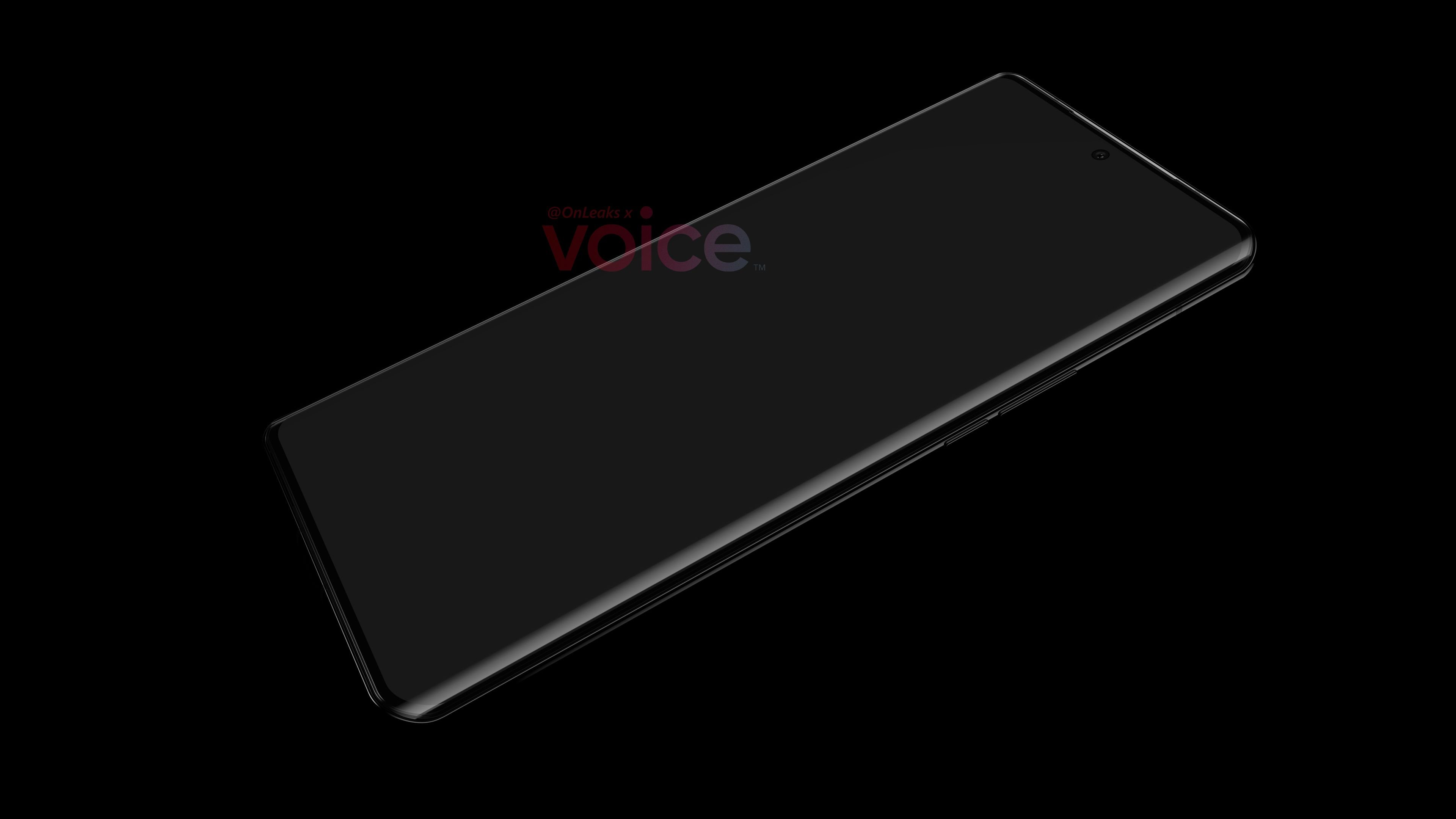
Out of the blue, popular leakster, Steve Hemmerstoffer (@onleaks) shared a 3D CAD render of the forthcoming HUAWEI P50 Pro smartphone on Voice. According to him, this handset will come equipped with a 6.6-inch display and the body of the phone will measure 159mm high as well as 73mm wide.
Since it is early days, the leaker is not sure of the other aspects of the device except for the fact that it will feature a standard earpiece instead of the magnetic earpiece speaker system found in the HUAWEI P40 series.
Further, going by the render, the upcoming HUAWEI P50 Pro will be similar to its predecessor with slimmer bezels and curved display but will sport a centrally aligned single punch hole for the selfie camera rather than a pill-shaped cutout.
Having said that, @onleaks did reveal that he will be sharing more information about this smartphone once he gets his hands on them. Additionally, we also expect certification bureaus and benchmark platforms to expose this handset before its official announcement in the coming months.
It was a rough year for smartphone manufacturers due to the COVID-19 pandemic. But, the premium smartphones from these companies still managed to attract many takers. Apple launched iPhone 12, OnePlus introduced the OnePlus 8 and 8T series, meanwhile, Samsung unveiled Galaxy S20 and Note 20. Several Chinese manufacturers like Xiaomi, Realme, Oppo, and Vivo attracted a good volume of sales.
We have concluded a list of the Best flagship smartphones of 2020 in India.
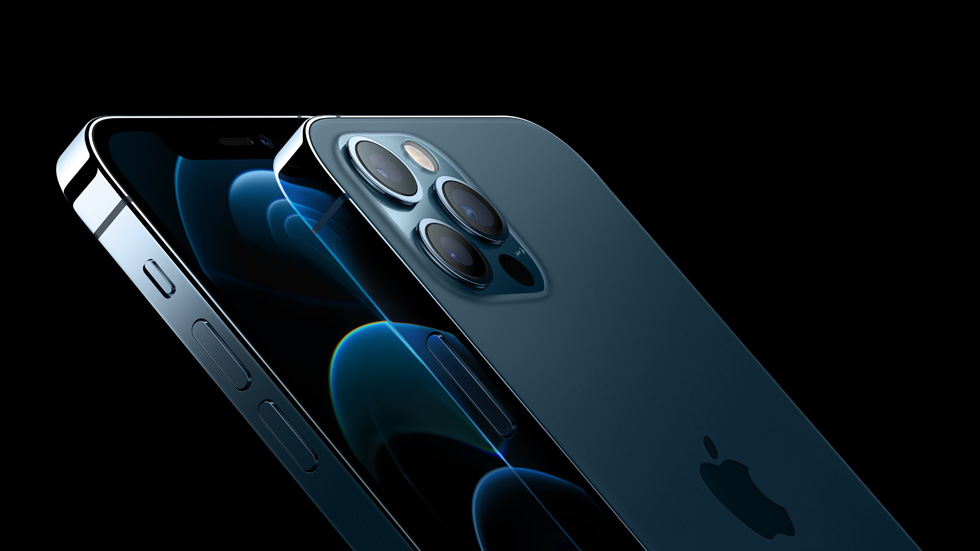
The Cupertino giant unveiled the iPhone 12 featuring Apple A14 Bionic SoC carrying Hexa-Core CPU and quad-core GPU. The smartphone features a 6.1-inch Super Retina XDR OLED display with 1170 x 2532 pixels resolution. Apple iPhone 12 is available in three different storage options including 4GB + 64GB, 4GB RAM + 128GB and 4GB + 256GB storage. It carries a dual-rear camera consisting of 12MP + 12MP sensors and a 12MP front camera. There’s a 2815 mAh battery supporting 20W fast charging.
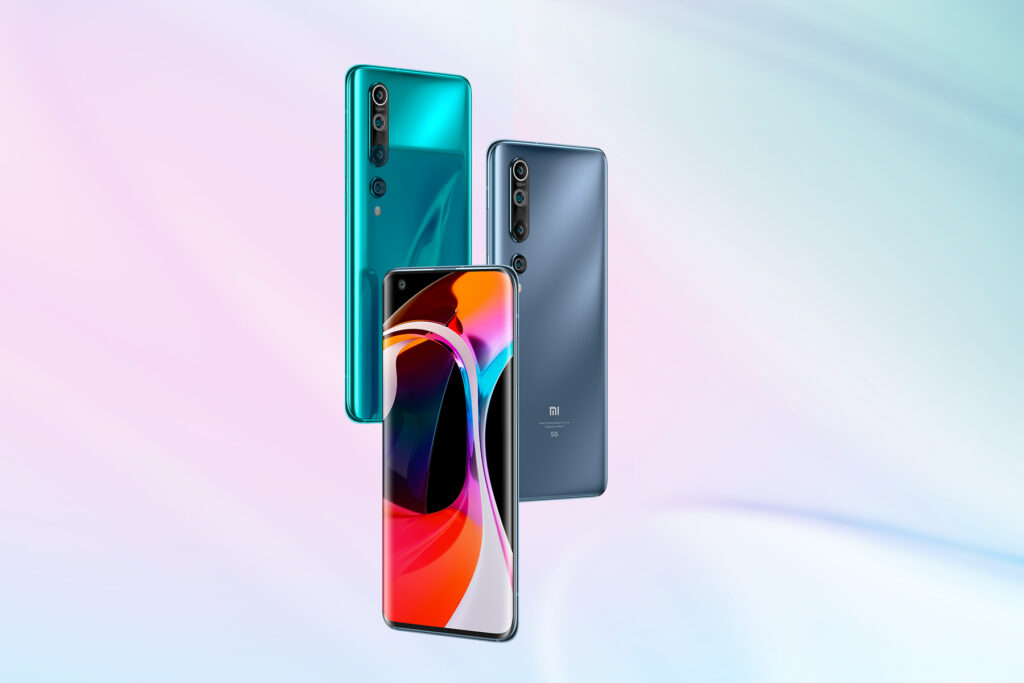
Xiaomi Mi 10 was launched in February featuring the Qualcomm Snapdragon 865 SoC and Adreno 650 GPU. It comes with a 6.67-inch Super AMOLED display featuring 1080 x 2340 pixels resolution. It comes in three different storage options of 8GB + 128GB, 8GB + 256GB and 12GB + 256GB. The smartphone comes with a 108MP quad-rear camera, a 13MP ultrawide sensor, a 2MP macro lens and 2MP depth sensor. Xiaomi Mi 10 carries a 4780 mAh battery with 30W fast charging and 30W fast wireless charging.
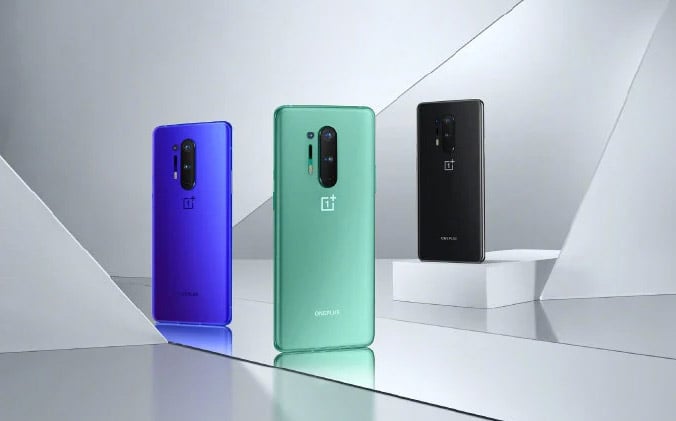
OnePlus 8 Pro is the flagship device featuring a 6.78-inch Fluid AMOLED display while carrying 1440 x 3168 pixels resolution. Qualcomm Snapdragon 865 SoC is present on board with 8/12 GB RAM and 128/256GB storage options. The smartphone carries a quad-rear camera module consisting of a 48MP primary sensor, another 48MP telephoto lens, an 8MP telephoto lens and a 5MP colour filter camera. A 16MP camera is present on the front for selfies. It packs a 4510 mAh battery with 30W fast charging and 30W fast wireless charging.
Oppo Find X2 was launched globally in march with Snapdragon 865 SoC and Adreno 650 GPU. It features a 6.7-inch AMOLED display featuring 1440 x 3168 pixels. The smartphone is available in three different storage options of 8GB + 128GB, 8GB + 256GB and 12GB + 256GB internal storage. In-camera department, the phone comprises 48MP primary sensor, a 13MP telephoto and a 12MP ultrawide sensor. A 32MP selfie camera sits on the front side for selfies. The battery carries a 4200 mAh battery with 65W charging.
The Korean giant unveiled Galaxy S20+ smartphone in March as a successor to the Galaxy S10. The device features a 6.7-inch Dynamic AMOLED display carrying 1440 x 3200 pixels resolution. The global version comes with Exynos 990 and the Chinese, the US and Korean version feature Snapdragon 865. In the camera department, a 12MP primary sensor, a 64MP telephoto lens and a 12MP ultrawide sensor are present on the rear side. Meanwhile, a 10MP single sensor resides on the front.
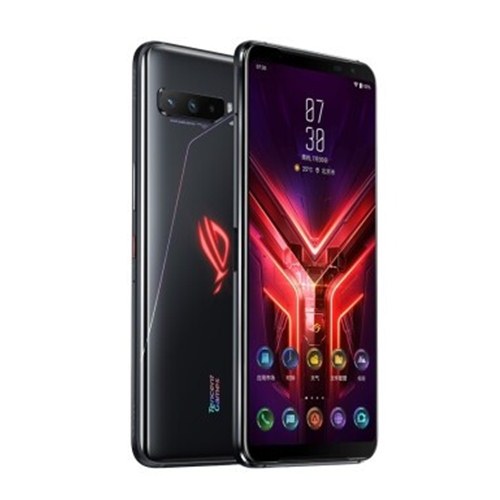
Asus ROG Phone 3 is the third iteration of the gaming smartphone from Asus. It features an advanced multi-level processor cooling system, Snapdragon 865+ SoC and 12GB RAM. To handle gaming graphics, the smartphone carries a 6.59-inch AMOLED display featuring a 144Hz refresh rate. The display carries a 6000 mAh battery with 30W fast charging. Asus ROG Phone 3 comes with different storage and RAM variants – 128GB + 8GB RAM, 128GB + 12GB RAM, 256GB + 12GB RAM, 512GB + 12GB RAM, and 512GB + 16GB RAM.
It is quite a difficult job to choose the best flagship device. But, we have eased the operation for you and filtered the best flagships of 2020. We hope you’re loving our best smartphone guides. Don’t forget to share with your near and dear ones. stay connected with us for more!
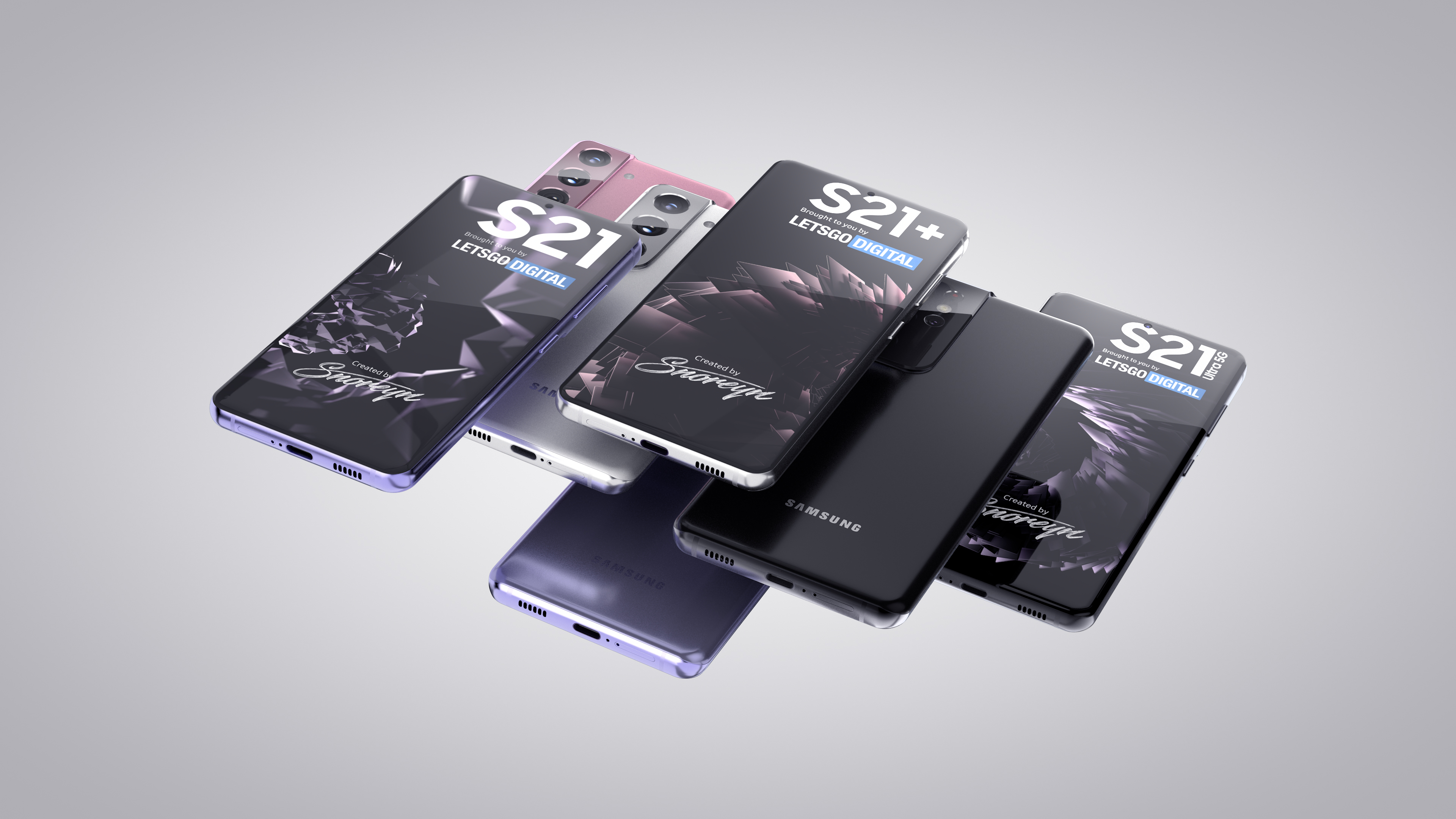
As Samsung prepares its products for 2021, it has so far confirmed a new Display Technology event on January 6, and an all-new Exynos on January 12. However, it didn’t utter a word on the most awaited launch of the year, the Galaxy S21(Tentative) series. The silence has finally ended now as an Unlisted Video of a Samsung Official Channel confirms the arrival.
As Sammobile reports, an unlisted video has popped up on Samsung US’ official YouTube channel. In case you don’t know, an unlisted video won’t appear on YouTube search, channel, or a browsing page. You can only view it if you have the link to the video.
Anyway, the teaser begins with a tagline, “New Year, New ways to express yourself” and goes on to show the evolution of the Galaxy S series of Smartphones. Even if you haven’t got the faintest idea about them, the video explains it clearly.
From the first Galaxy S in 2010, bringing Water-resistance in Galaxy S5, curved-display in S6 to a punch-hole (Infinity-O) display in S10 and S20, the company has come a long way. It has not only pioneered the display technology but has made sure the S-series gets the best attention every year in every aspect.
Having said that, the video ends with “A new Galaxy Awaits” in 2021. With this, it has practically confirmed the next flagship series’ arrival. Although it is yet to reveal the official branding, several reports say that it will be the Galaxy S21 series.
The series will likely feature three smartphones- Galaxy S21, S21+, S21 Ultra. Almost all of the specs and pricing of these devices have already been leaked. In fact, it is reportedly up for pre-orders in countries like the US, China, and India ahead of launch.
It’s only a matter of time before the company reveals the official launch date which is expected to be on January 14.
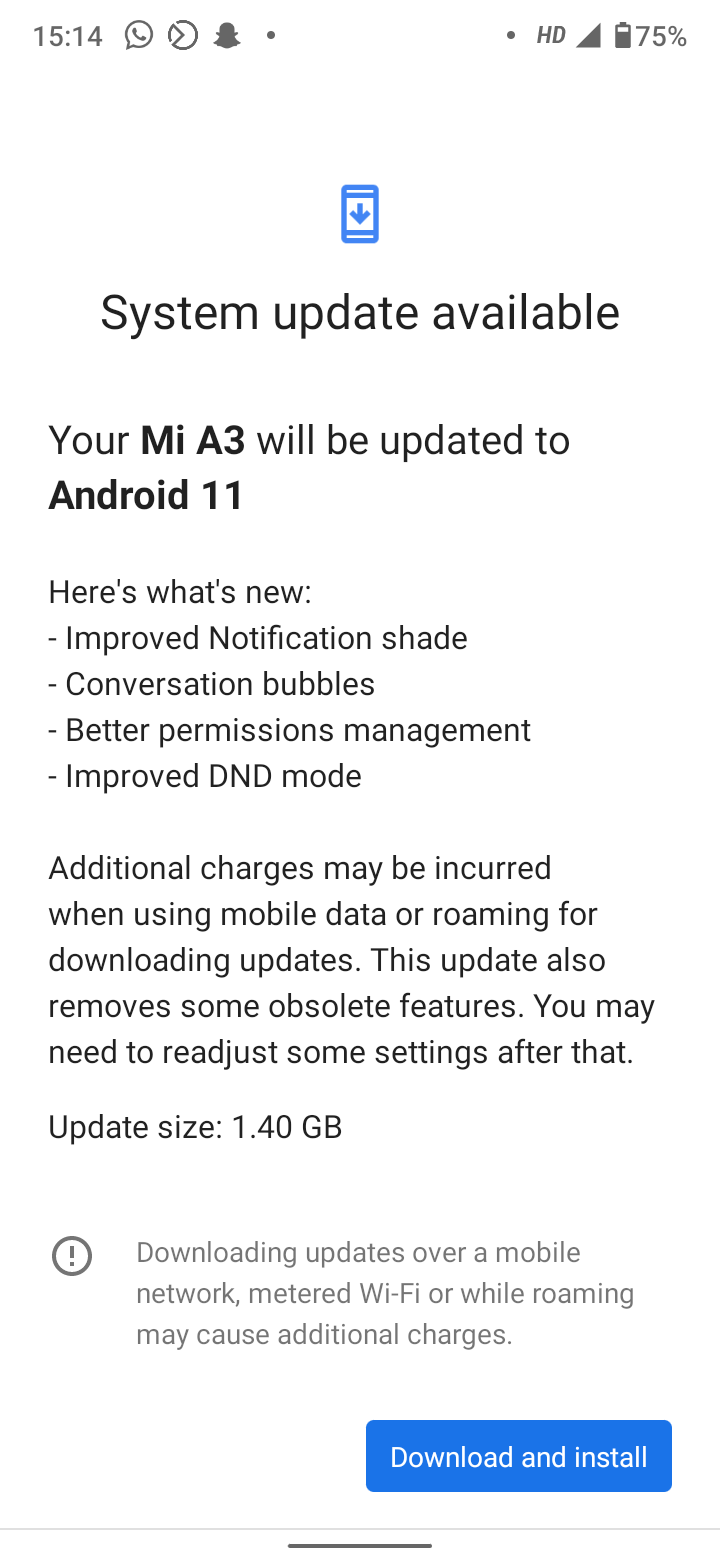
Xiaomi surprised Mi A3 users by rolling out Android 11 stable update without a beta program. Turns out that this build is more fatal than any other software build seeded out by the company for this handset. That’s because this update hard bricks the phone and as a result, early adopters are now left with a broken smartphone.
As soon as users who updated started sharing the issue on forums and social media, Xiaomi quickly published a warning post on Mi Community asking users of Mi A3 to not update to Android 11 if the OTA hits their device. Similarly, multiple Xiaomi and Mi A3-related Telegram groups and channels spread the message as fast as they could.
Even we received the OTA weighing 1.40GB on our unit. The changelog mentions four new highlights namely improved notification shade, conversation bubbles, better permission management, and improved DND mode.
Anyway, Xiaomi has asked users to wait for the fix. We do not know how long it will take for the company to fix this mishap since the firm is yet to roll back the OTA as of publishing this article.
Whatever, make sure to not hit the ‘Download and install’ button. Else, you will also be left with a hard bricked smartphone (won’t turn on).
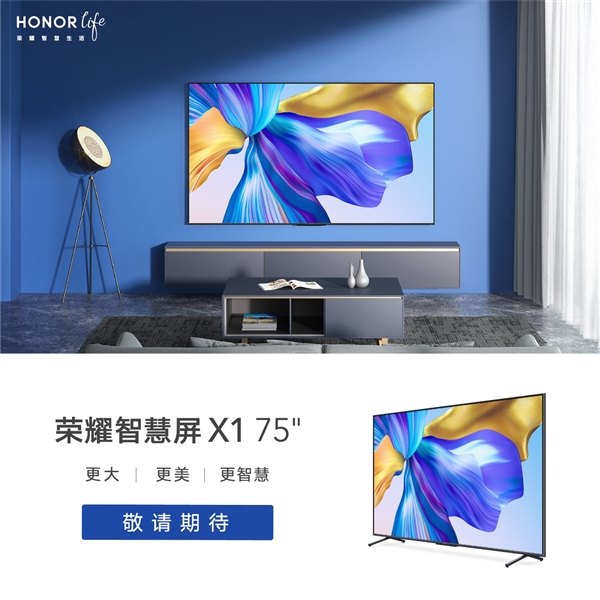
The newest iteration in the Honor Smart Screen X1 TV lineup features a 75 inch display. As per the Chinese tech giant, the new TV is “bigger”, “more beautiful” and “smarter.” In other words, we can expect a refresh in its internals along with improvements to its display, apart from just a larger sized display. Notably, the launch of this new 75 inch Smart Screen X1 TV is also imminent, as reservations have already begun on certain Chinese online retail websites.
Earlier this year, the company had launched three variants within the Smart Screen X1 series. This included the 50 inch, 55 inch, and a 65 inch variant. So, the latest addition is the largest in the lineup and would also be the most expensive as well. The launch from Honor also arrives after its separation from its previous parent company Huawei and is a part of its efforts to capture the large screen market, as per a MyDriversreport.
According to AVC, the TV market is expected to grow in 2021 as well, especially in segments of 65 inch and 75 inch sized displays. Both segments are expected to grow by 2.6 percent and 1.8 percent respectively. In other words, the market is seeing a positive trend at the moment, so we can expect competition to be stiff in the arriving year and Honor would likely try to expand its presence in the market as well.

Samsung started rolling out the One UI 3.0 stable update to its devices earlier this month starting with the Galaxy S20 series. Now, within a few weeks, the company has extended the availability of this update to more devices than the timeline shared by the firm for different markets. That said, the original Galaxy Z Flip from early 2020 is the latest handset to get it.
The South Korean tech giant began to seed One UI 3.0 (Android 11) stable update to the Galaxy Z Flip 5G units before Christmas last week. The original 4G variant is now being treated with this update ahead of New Year.
According to GSMArena, the update is currently live in Europe and Nigeria. But it could be available in other regions as well. It is worth noting that this smartphone is supposed to get the update only in January 2021. But the company has started delivering it a month earlier.
Anyway, it is the same case for all the devices that were originally scheduled to receive the update in January. We think Samsung has started the rollout earlier in order to finish seeding the update as per the original schedule.
Whatever, if you own the Galaxy Z Flip 4G/5G, Galaxy Note20 series, Galaxy S20 series (including Galaxy S20 FE), Galaxy Note10 series, or Galaxy S10 Lite, then head over to Settings > Software update to check whether your device has received the One UI 3.0 (Android 11) update.
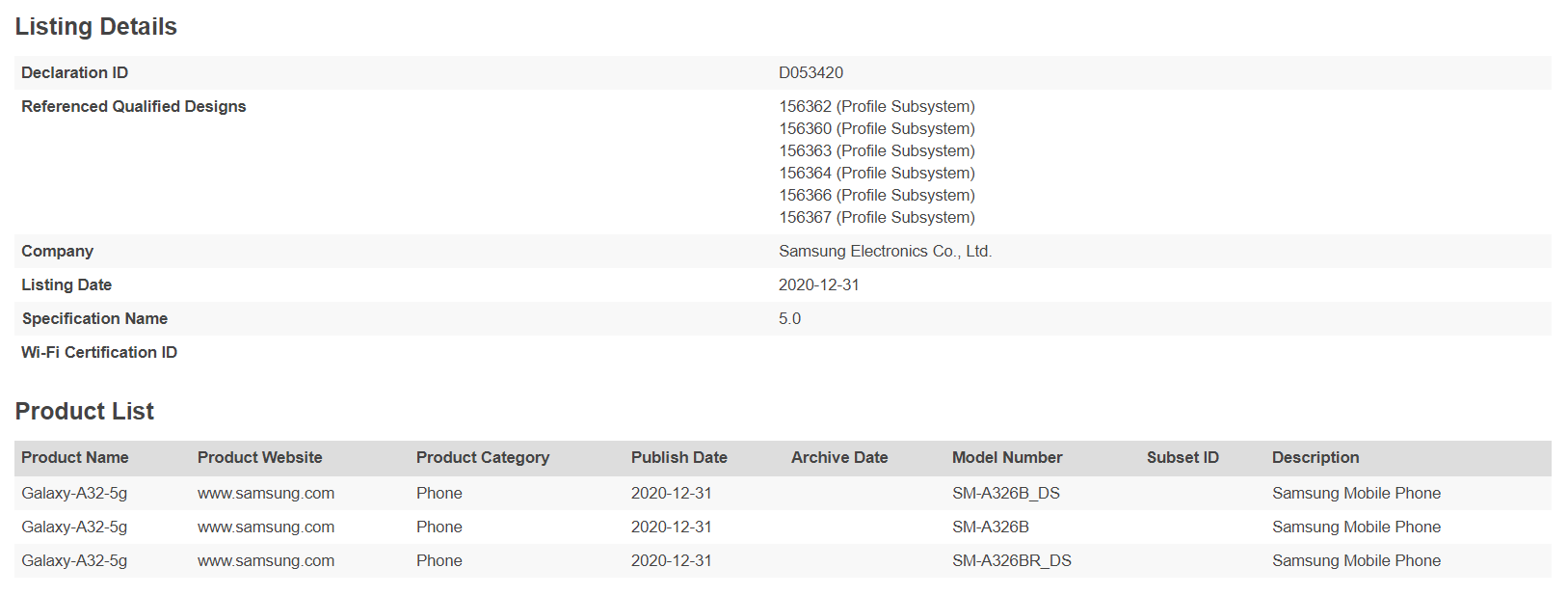
The Galaxy A32 5G is one of the upcoming A-series phones by Samsung. Recent reports have revealed a lot of information about the smartphone. Today, the handset appeared in the database of Bluetooth SIG authority. With an important certification in tow, it appears that the Galaxy A32 5G launch date is not far away.
The listing reveals that the Galaxy A32 5G moniker belongs to model numbers such as SM-A326B, SM-A326_DS, and SM-B326BR_DS. The only other thing that can be found in the listing is that it carries support for Bluetooth 5.0.
Smartphones are known to go official around a month after their appearance at Bluetooth SIG authority. Hence, it is likely that it may break cover in the coming month. A recent report had revealed that some markets may receive the 4G edition of the smartphone.
Samsung Galaxy A32 5G specifications (Expected)
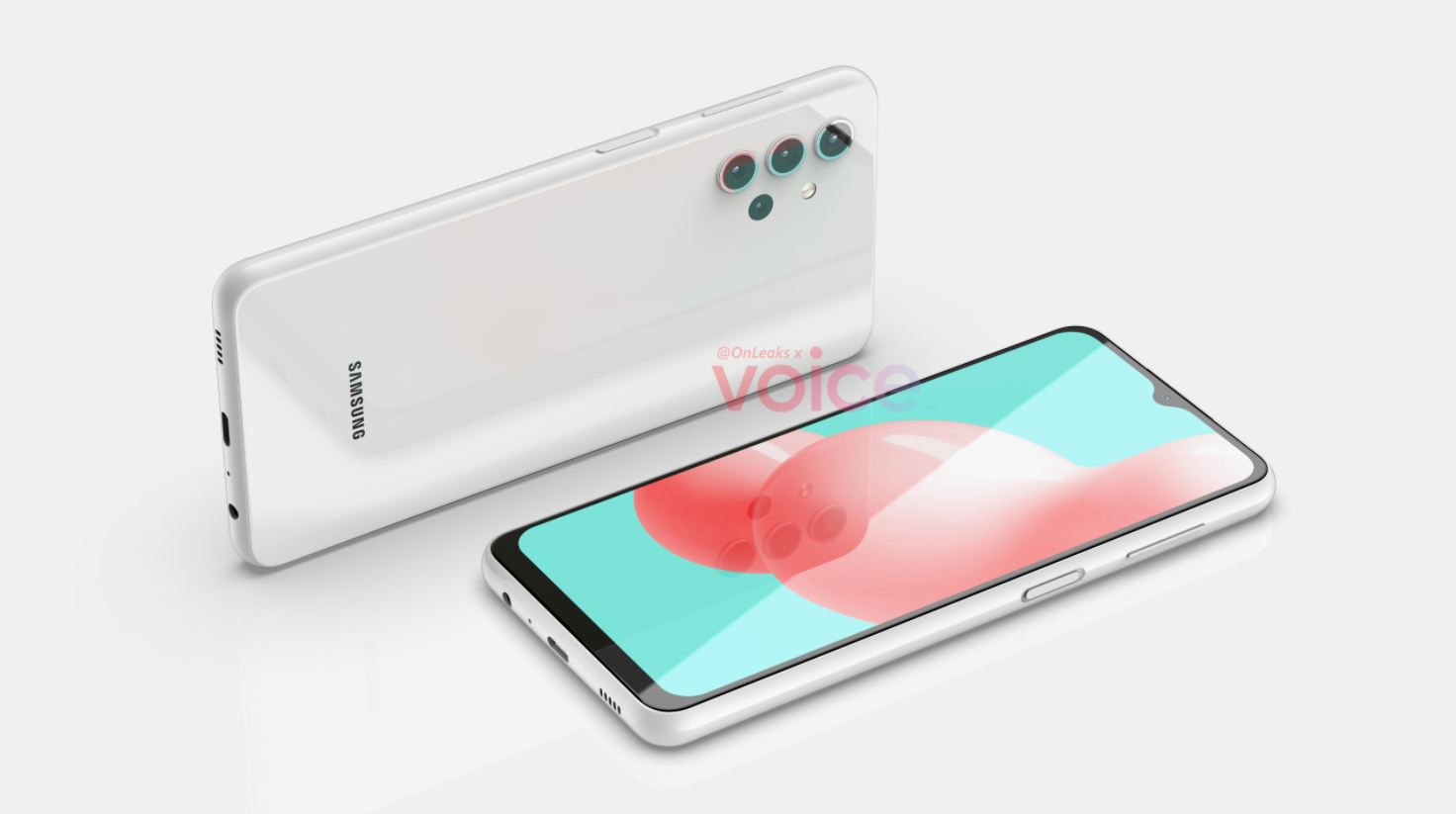
The Galaxy A32 5G is expected to sport a 6.5-inch display panel. Its CAD renders have revealed that it will be sporting a waterdrop notch screen. The Dimensity 720 chipset is present under the hood of the Galaxy A32 5G. Its 4G model may feature a different chip.
Samsung Galaxy A32 5G CAD renders
It will come preloaded with Android 11 OS and it will draw power from a 5,000mAh battery. The rear camera setup of the device will have a 48-megapixel main camera. The phone may feature a 3.5mm audio jack. It is likely to debut in Europe with a price tag of 299 euro (~$367).
LG Display has been working on transparent OLED panels for a while now and is aiming on making the technology more feasible for consumers as well. Now, the company unveiled a possible application of the transparent displays with its “Smart Bed” concept, which would use a 55 inch transparent screen that would function as a TV that can turn invisible when not in use.
During the South Korean tech giant’s CES 2021 show, it introduced the “Smart Bed” concept.” This concept had a transparent OLED display be housed on the foot of the bed, or even at other positions at one’s home. One would simply have to press a button to have the transparent panel rise from the base, allowing for seamless entertainment. This invisible TV would also use Cinematic Soun to output audio without requiring separate external speakers.
Furthermore, LG also gave other possible applications of the 55 inch panel, with the example of the transparent OLED screen being used in restaurants. This would allow the customers to see their meals being prepared by the chef. Similarly, subway trains could also sport these screens, offering real time information like route map and location along with the view of the outside, as per an AndroidAuthorityreport.
As per the company, its 55 inch transparent OLED panel would thrive on a high 40 percent transparency level compared to the 10 percent found in LCD screens. It also expects such transparent displays to replace windows in smart homes or even smart driving cars sometime in the future as well. LG stated that it is not sure when transparent display would hit the consumer market or store shelves, but there has been “growing demand” from different industries.
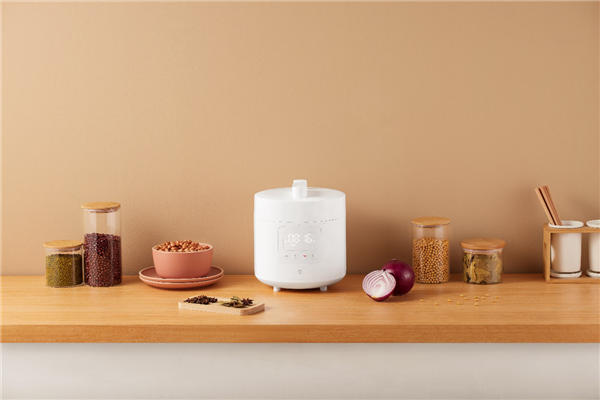
Xiaomi has launched the MIJIA Smart Electric Pressure Cooker 2.5L under crowdfunding. This smart cooker solves the safety problems of traditional pressure cookers that don’t allow the user to keep a tab on the cooking status or the water level inside. The new MIJIA Pressure Cooker comes with 8 safety protections and is also equipped with smart functions.
It can cook with one-click smart recipes activated via the MIJIA app which solves the problem of how to cook certain dishes for people without cooking experience. The product is, thus, easy to use.
The MIJIA Smart Electric Pressure Cooker features a relatively rare 2.5L capacity which is enough to cook eight bowls of rice or meat dishes for three people. Thus, it is suitable for a single person or a small family’s use.
The biggest difference between a pressure cooker and an electric rice cooker is the pressure. The MIJIA Smart Electric Pressure Cooker 2.5L has a peak pressure of 70kPa and can increase the boiling point of water up to 115°C. Under the action of high temperature and high pressure, the food in the pot is soft and easy to be cooked, and the cooking speed can be greatly improved.
An ordinary rice cooker cooks rice in 40 minutes, a pressure cooker can cook the same quantity of rice in 21 minutes. Also, an ordinary rice cooker needs 4 hours to cook sirloin but a pressure cooker can cook it until tender in 50 minutes. Further, while an ordinary rice cooker needs 3 hours to cook pork feet, the pressure cooker can cook it in 1 hour To boneless.
Like most MIJIA products, the Mijia smart electric pressure cooker 2.5L can also be connected to the Mijia app, supporting operations such as mobile phone remote start and appointment.
At the same time, it also supports the expansion of cloud smart recipes. The recipes contain detailed ingredients and operation steps. Even if you are a kitchen novice, you can easily prepare hard dishes by preparing the ingredients step by step according to the recipe, and then automatically start cooking with one button.
The electric pressure cooker also has an open-lid cooking mode. Remove the lid to turn the pressure cooker into a small hot pot which can be used to prepare dishes such as oden, skewers, or noodles.
The MIJIA Smart Electric Pressure Cooker is presently being crowdfunded at Xiaomi Mall/Xiaomi Home (via), and the crowdfunding price is only 279 yuan ($42).
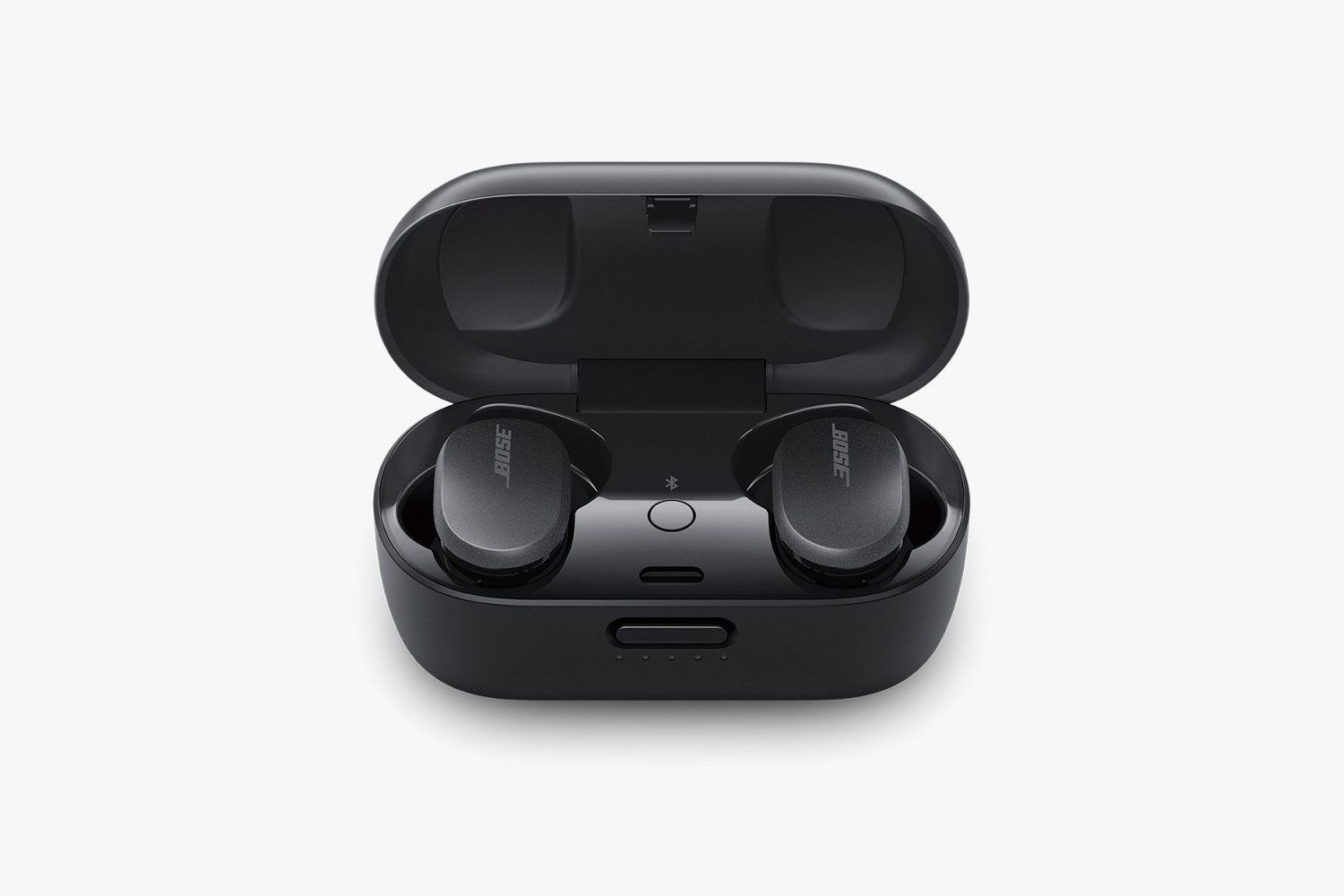
2020 was probably the year of the TWS earbuds. Almost every known smartphone manufacturer released at least one TWS earbuds this year, be it Samsung, Huawei, OPPO, or even OnePlus. And as usual, we got a bunch of premium earbuds from dedicated audio brands too like the new Sennheiser Momentum 2 and the Bose QuietComfort TWS. Overall, we were spoiled for choices in 2020 which made it harder to compile a list of the Best TWS Earbuds released in 2020.
But what you see below are the ones we think stood out for their sound quality and value for money.
Best TWS Earbuds of 2020
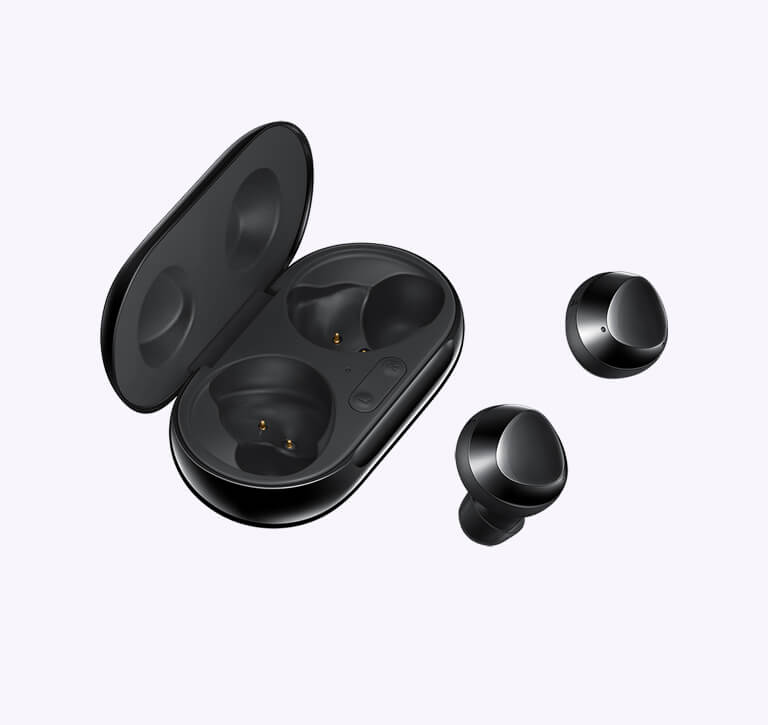
1Best Value (Android): Samsung Galaxy Buds+
Galaxy Buds Plus
If you are looking for the best non-ANC TWS earbuds with good connectivity, excellent sound quality, comfortable fit, and a good looking design, the Samsung Galaxy Buds+ fits the bill. These AKG tuned earbuds come with a new dual-driver system for clear audio reproduction. Despite its compact form factor, the Buds+ also boasts of excellent call quality, thanks to the three microphones, of which two are situated outside.
But the biggest selling point of the Buds+ is its exceptional battery life. You get over 11 hours of music playback on these earbuds, which is way above average for a pair of TWS earbuds. It doesn’t support the aptX codec but comes with support for Samsung’s proprietary Scalable codec.
The Galaxy Buds+ are usually available for sale for under $110 (under Rs. 9000 in India) which is a steal for the sound quality and features it offers. There are a bunch of color options available too.
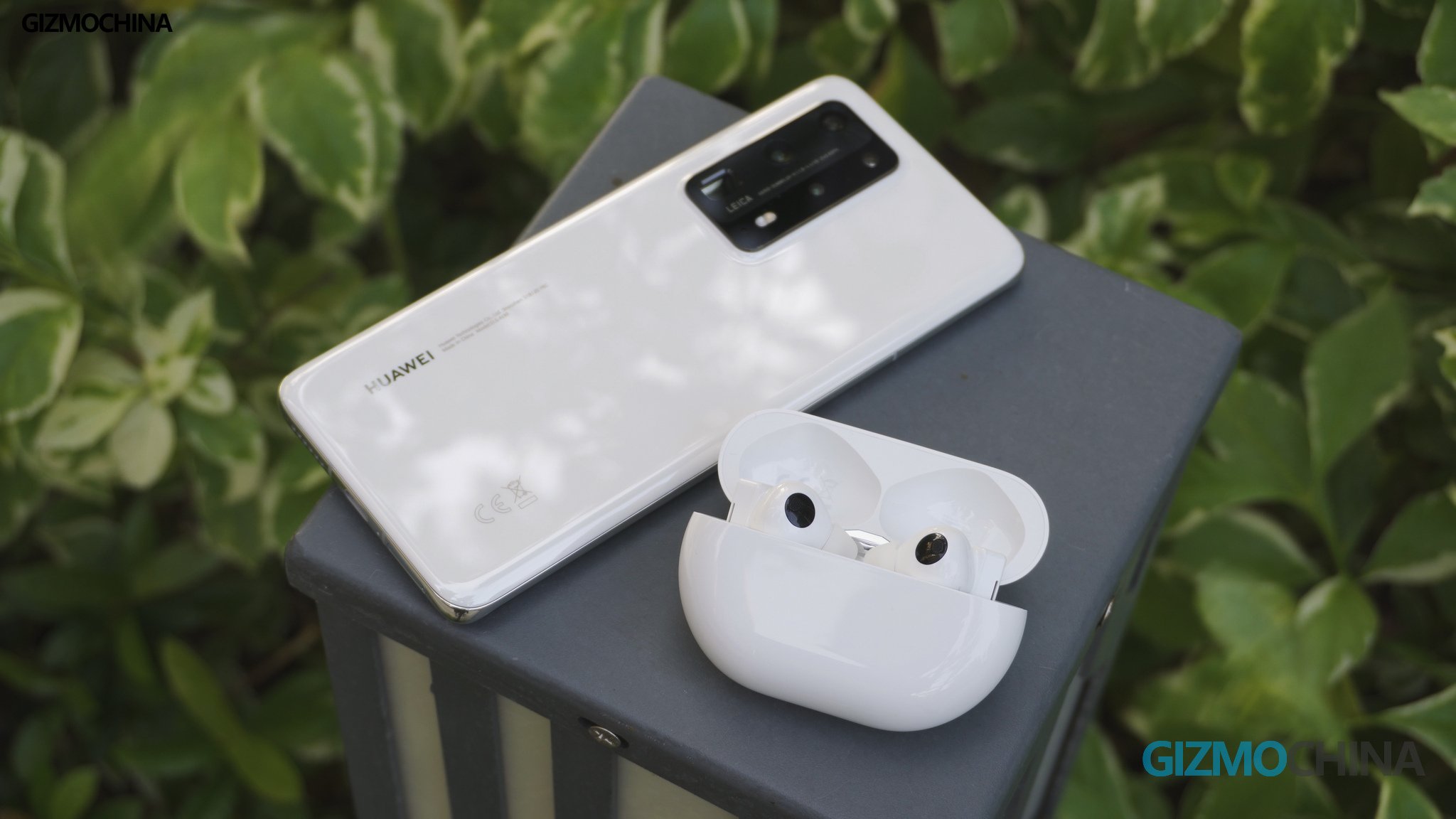
2Best Value ANC TWS Earbuds (Android): Huawei Freebuds Pro
Huawei Freebuds Pro
If ANC is important to you, Huawei’s TWS earbuds — the Huawei Freebuds Pro offers excellent ANC and sound quality. The earbuds stands out from the crowd which is filled with AirPods Pro’s lookalikes. The shiny Silver Frost color option is particularly unique.
The Freebuds Pro comes with 11mm drivers with excellent ANC and balanced sound quality. In fact, in our review, we found out that it was one of the best sounding earbuds in its price segment. The Huawei earbuds also offer a comfortable fit and a good microphone setup for voice calls.
The battery life with ANC is average at around 4 hours but you should get way more (around 7 hours) without ANC turned on. Also, the provided case will add 15 hours more to your listening time.
The Huawei Freebuds Pro is often cheaper than its launch price and currently can be bought for around £128.35 (around $180) making it a solid ANC TWS option at this price.
The Jabra Elite Active 75t is also a decent option with ANC around this price tag especially if you want something for workouts that has good sound quality with ANC noise isolation.
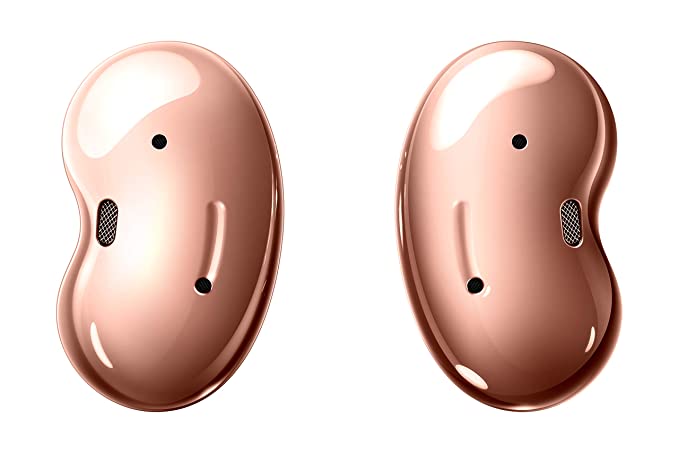
Most 2020 earbuds either come with a compact Galaxy Buds-like design or Apple Airpods Pro-like design with a stem. But what if you want something that’s so uniquely designed that people will have a hard time realizing you are actually wearing a pair of TWS earbuds?
The Buds Live comes in a shiny metallic finish in a bunch of fancy colors like Blue, Red, and Bronze. It’s an open-ear TWS earbud (usually rare in this product category) which can be its plus point as I personally know some users who hate the traditional in-ear design. It sounds pretty good even though the design doesn’t guarantee good isolation and what’s more, Samsung has also added ANC which works to a pretty decent extent.
Other highlight features of the Buds Live include good and comfortable fit, Qi Wireless Charging, 6 hours of battery life, and a pretty decent set of microphones for voice calls.
The Galaxy Buds Live like the Buds+ can be usually found at discounted prices for under $150.
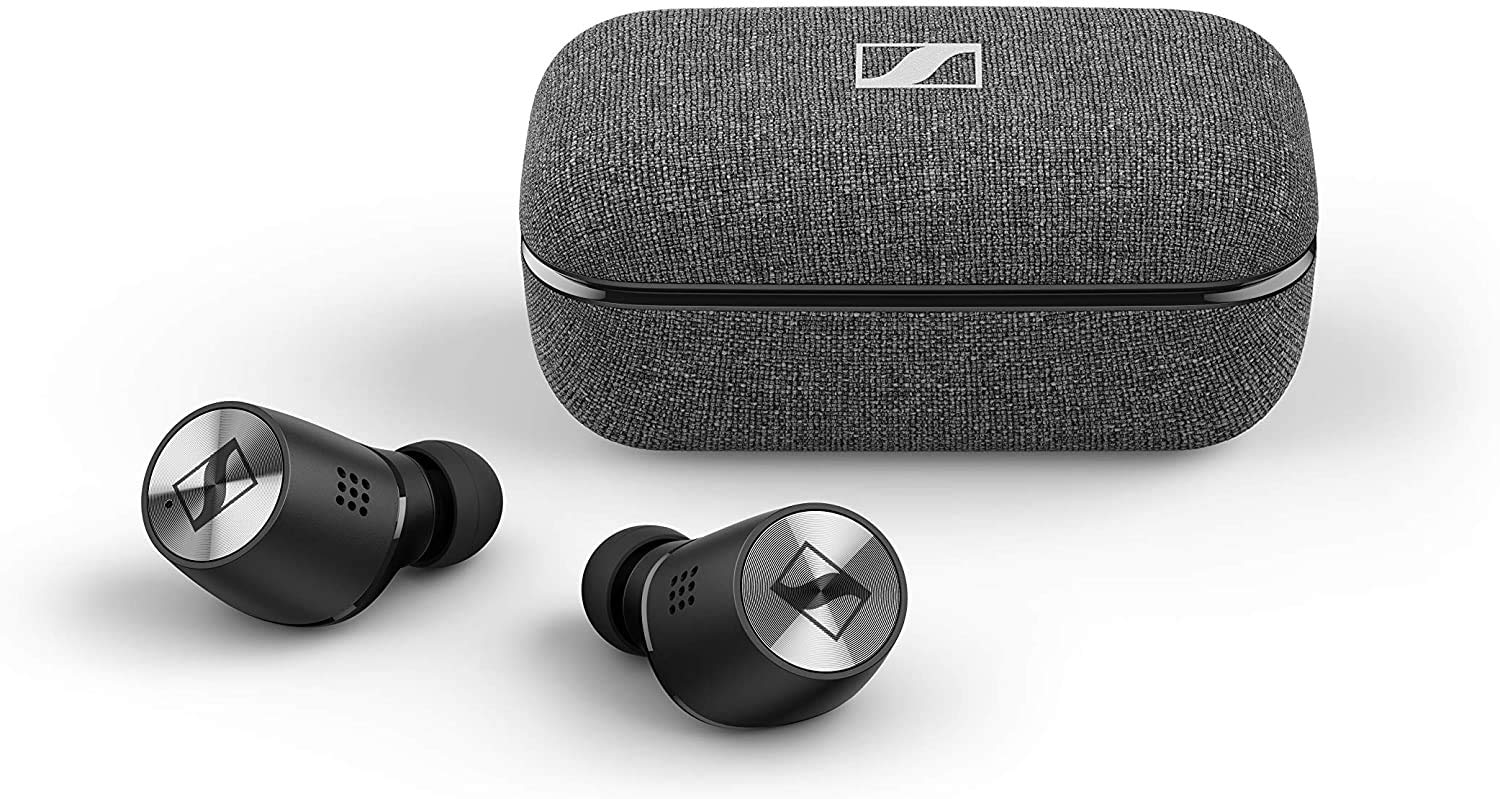
The Sennheiser Momentum TWS 2 is the Best TWS earbuds in the market right now. Building upon the pros of the first-generation model, the new TWS earbuds comes with a fancy fabric covered case, best in class sound quality, and excellent ANC to offer the best TWS earbuds experience in 2020.
The Momentum TWS 2 has a very comfortable fit, comes with aptX support, and is rated IPX4. You get these features at a premium though as it’s very expensive. However, you’ll often find a few dollars off on these, so make sure to keep an eye out for good deals if you are out to get a pair.
Bose’s first pair of noise-canceling earbuds deserves more than an honorable mention. The Bose QuietComfort TWS is often touted as the Best ANC earbuds in the market right now. It has a fancier bulkier design than the Sennheiser pair and sounds exceptional. The only major con is its average battery life and a chunky companion charging case.
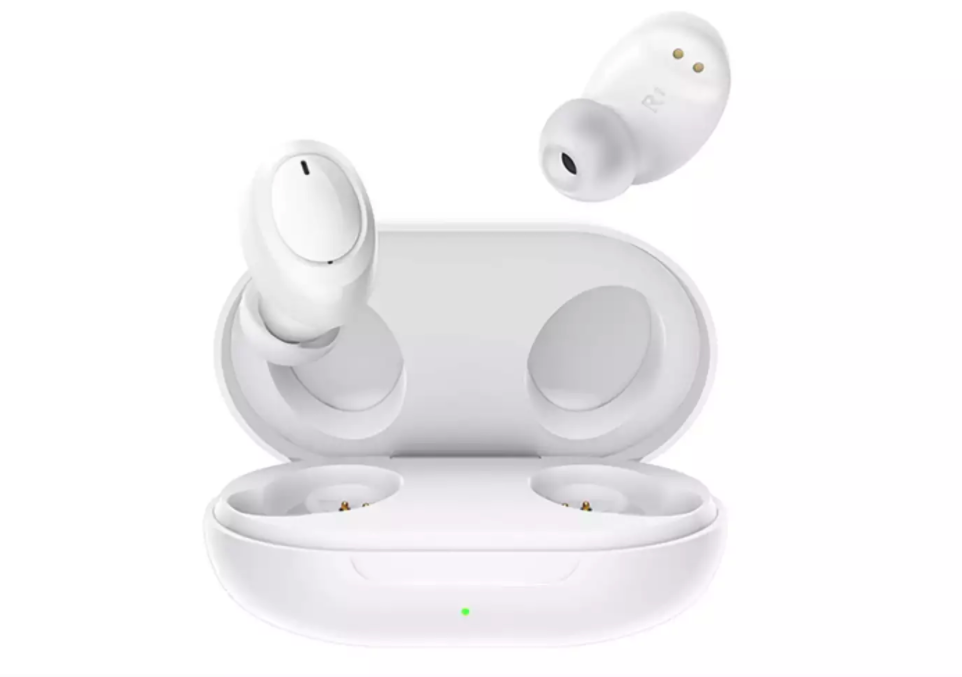
Budget TWS earbuds are a hard sell mainly because you’ll often get better sound quality on non-TWS models. However, if you want the convenience and comfort of TWS earbuds at an extremely budget price, then you probably are looking for the OPPO Enco W11. Two of our writers on GizmoChina already have a pair of these earbuds and considering its pricing of under Rs. 2000 ($30), they sound pretty balanced with stable connectivity.
The OPPO Enco W11 triumphs the Realme and Redmi options in the budget TWS category by offering good mid-tones, sufficient bass, and a comfortable fit.
If you can’t get hold of the OPPO W11, you can also check out the Earfun Free TWS which offers a wireless charging case, good sound quality in its price segment, a comfortable fit and retails for under $35.
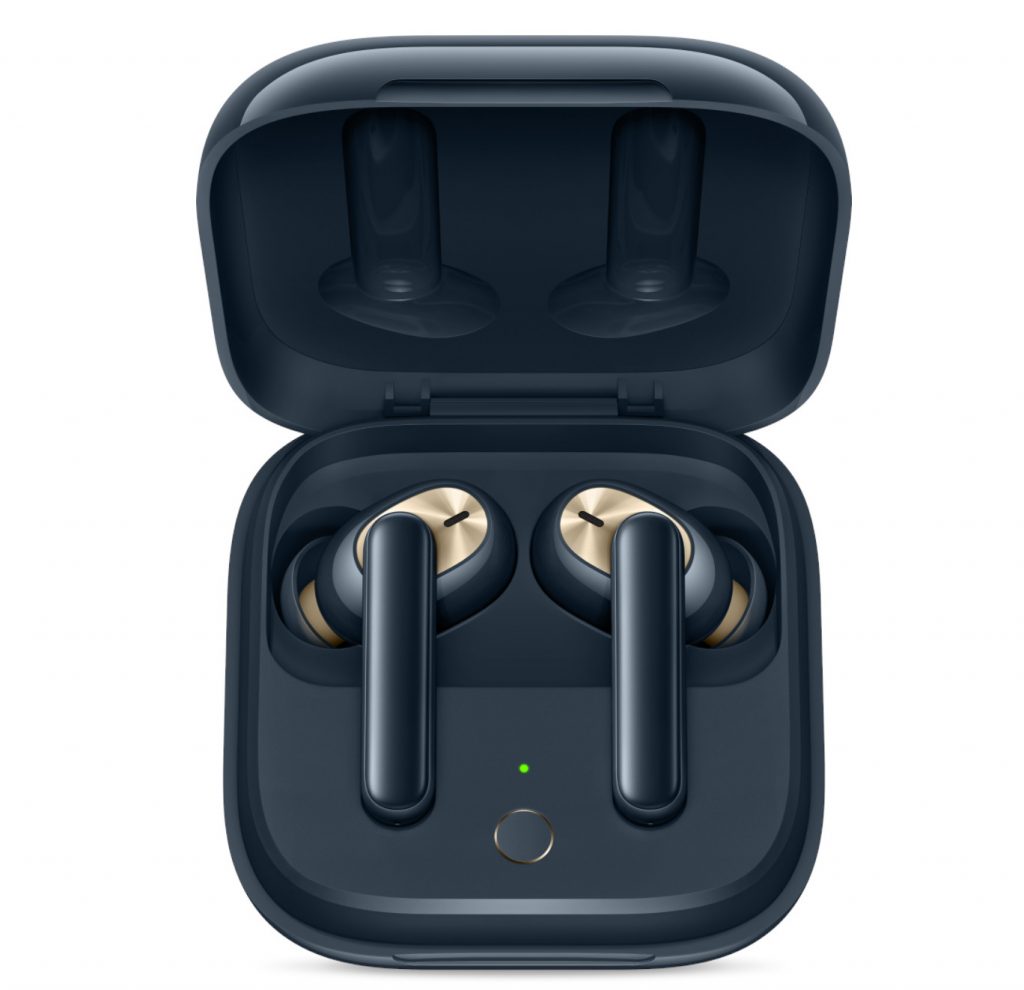
Or if you have a slightly higher budget, you can go for the OPPO Enco W51 which comes with a premium stem design, has a good and balanced sound quality, decent ANC, and a good microphone system.
OnePlus Buds Z is another great value for money TWS earbuds in its price segment. It’s extremely comfortable to wear all day long, has good sound quality even if it’s a bit bass-heavy, and if you have a OnePlus smartphone, then it’s a solid option under $50.
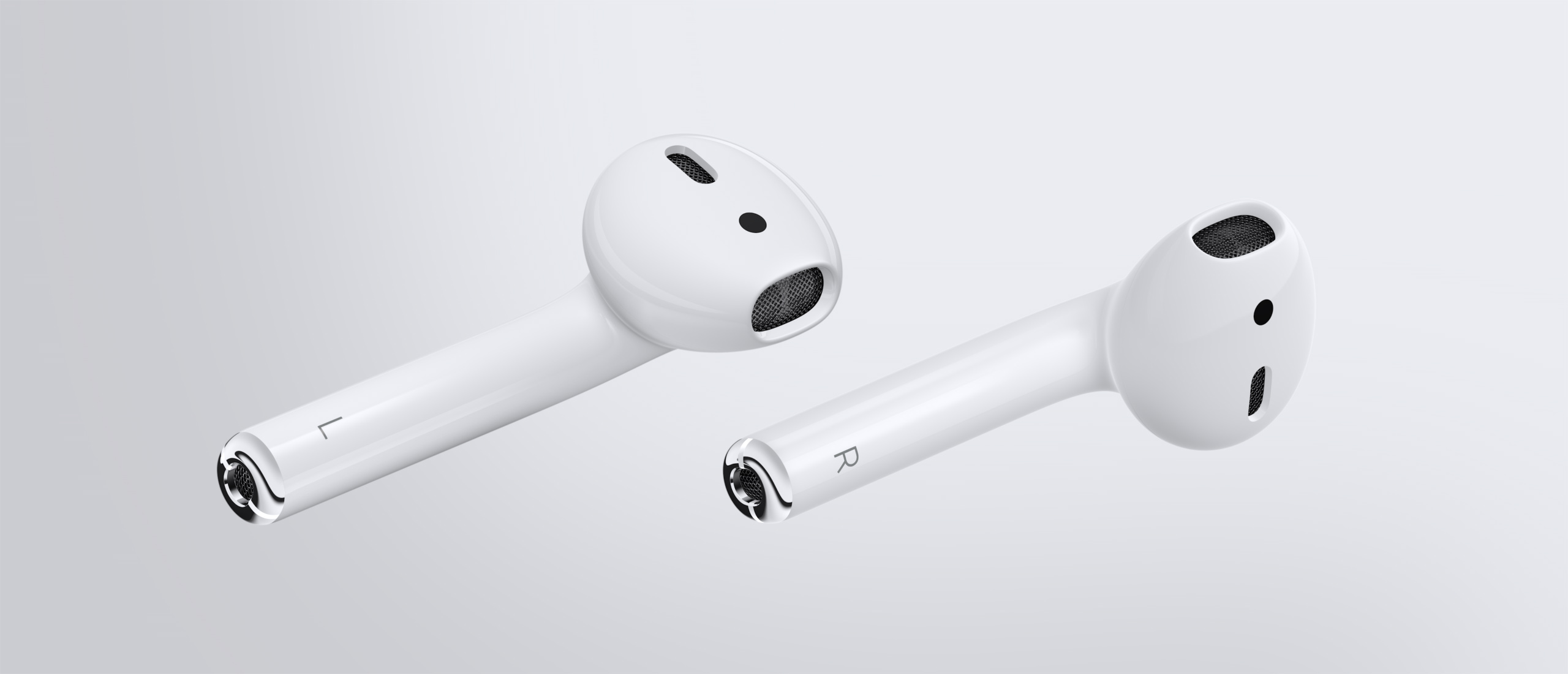
As I mentioned above, some users don’t like the in-ear fit of most TWS earbuds in the market and this category is specifically for them. While non-in-ear earbuds don’t sound as great as in-ear ones (thanks to the lack of effective noise isolation), there are still decent options available in the market, with the Apple AirPods being one of the best among them.
If you have an iPhone, there’s no doubt that the new AirPods will be the best companion for your phone with stable connectivity and decent sound quality.
But if you are on Android and don’t have a large budget, you have decent open-ear TWS options in the market like the OnePlus Buds (not the Z). While the sound quality is not out of the ordinary, it offers pretty decent bass and mid-tones for its design type, and are way cheaper than the AirPods.
We use cookies on our website to give you the most relevant experience by remembering your preferences and repeat visits. By clicking “Accept”, you consent to the use of ALL the cookies.
This website uses cookies to improve your experience while you navigate through the website. Out of these, the cookies that are categorized as necessary are stored on your browser as they are essential for the working of basic functionalities of the website. We also use third-party cookies that help us analyze and understand how you use this website. These cookies will be stored in your browser only with your consent. You also have the option to opt-out of these cookies. But opting out of some of these cookies may affect your browsing experience.
Necessary cookies are absolutely essential for the website to function properly. This category only includes cookies that ensures basic functionalities and security features of the website. These cookies do not store any personal information.
Any cookies that may not be particularly necessary for the website to function and is used specifically to collect user personal data via analytics, ads, other embedded contents are termed as non-necessary cookies. It is mandatory to procure user consent prior to running these cookies on your website.