A few months back, a mouse with Mi Portable Wireless Mouse 2 moniker got Bluetooth SIG Certification. Today, Xiaomi has finally crowdfunded the successor of the Mi Portable Mouse today in China. The new Mi Portable Mouse 2 has features like Dual-Mode connection, low energy Bluetooth, and more.
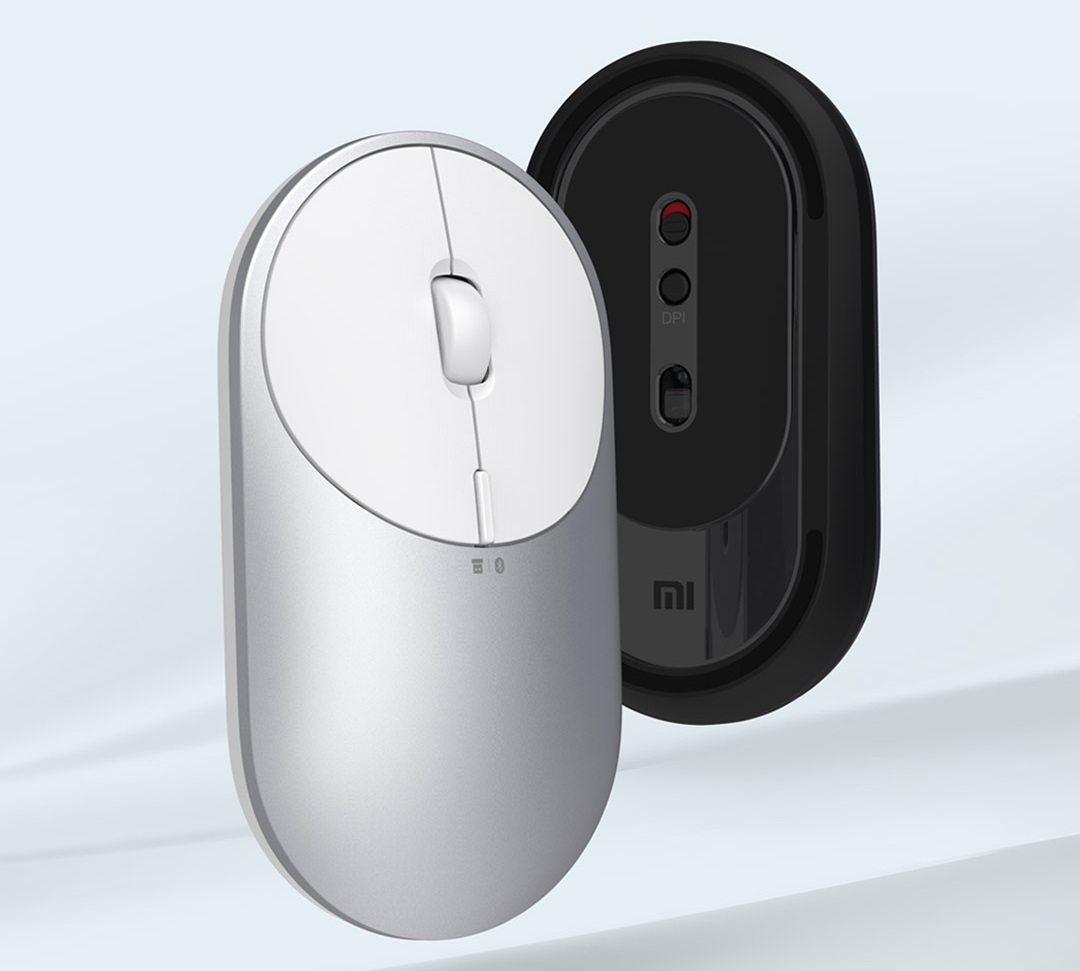
From the looks, the Mi Portable Mouse 2looks like a successor to the Mi Portable Wireless Mouse that launched in India this year. However, unlike the latter, it has a darker silver version and a Black color variant. Also, at the back, it has a DPI switch which according to the company is 4-way adjustable.
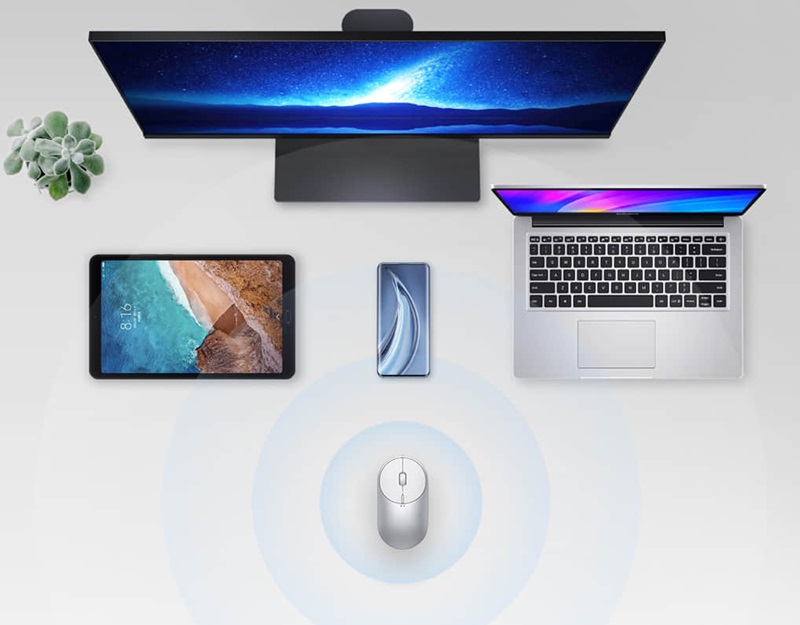
At the front, we see a similar circular layout for the mouse-click buttons. However, there is an additional button that is for the dual-mode switch. Speaking of which, the Mouse supports dual-mode connection. Users can connect through a 2.4GHz Wi-Fi and via the Bluetooth 4.2. This Bluetooth connectivity is provided by a Telink Low-Energy Bluetooth chip.
Once done, you can easily switch between the two screens with the button. That said, the mouse also has the usual Left, Right Click buttons and a two-way scroll wheel. The outer body of the mouse is built using Anodized Aluminum Alloy through a sandblasting process. The buttons and wheel have improved less-noisy clicks thanks to the soft rubber material.
This portable mouse, aimed at home and office use, runs on one AA battery. Xiaomi says the battery will last up to a year which is similar to the predecessor. And, it also has a low-battery reminder so you can be aware when the battery is going to die.
The crowdfunding price of the Mi Portable Mouse 2 is 79 yuan($12) and shipment starts from January 13. But if we look at the official website, it says the otherwise retail price is 99 yuan($15).
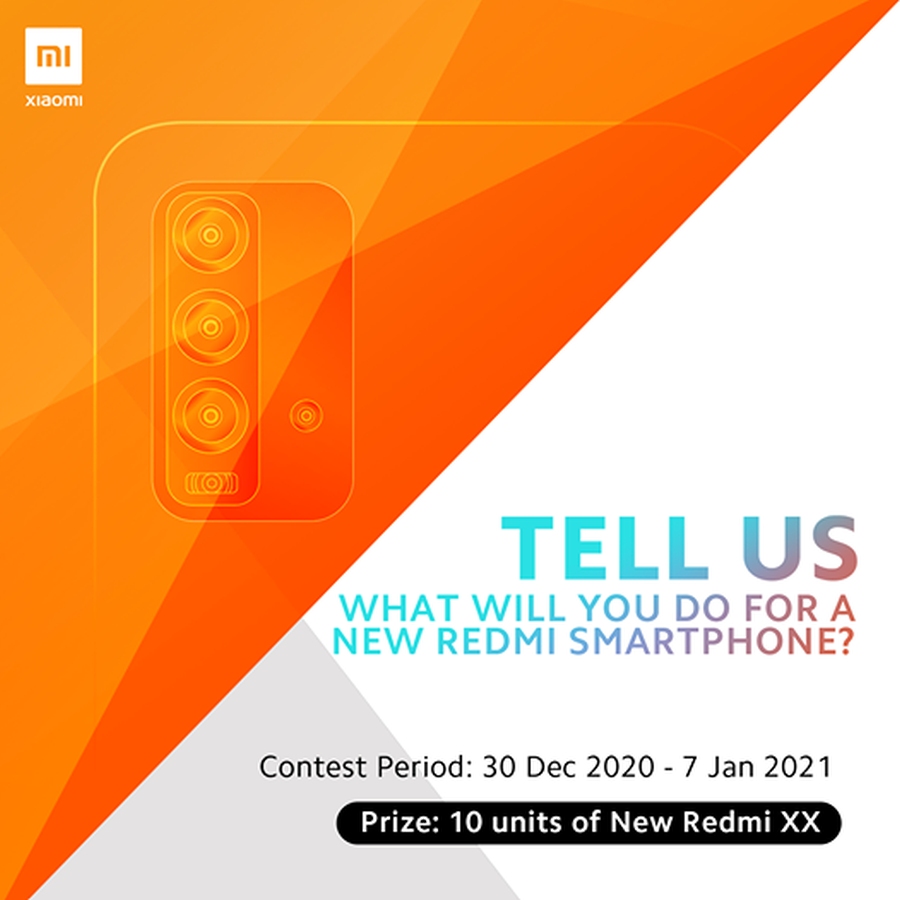
Xiaomi Malaysia has teased a new smartphone that may be launching soon in the Asian country. The tech giant recently initiated a contest on its Facebook page that will see ten lucky fans win a unit of the new smartphone each. But the company didn’t reveal the name of the unannounced smartphone. It only indicated that the phone will be a Redmi model which it dubbed Redmi XX.
The teaser poster accompanying the contest contains a render of the device showing the rear camera. The image shows the device will pack a Quad-camera setup stacked vertically at the top left corner. The device looks like the Redmi Note 9 4G China version which is also similar to the Poco M3. Thus, there are strong speculations that this is the Redmi 9T which was certified in Thailand recently.
To put it in perspective, the Redmi 9T is expected to feature a 6.53-inch Full HD+ IPS display and will be powered by a Qualcomm Snapdragon 662 processor paired with 6GB of RAM and 128GB of expandable storage. The device will also pack a large 6,000mAh battery.
The camera setup will be similar to that of the Poco M3 which includes a 48MP main camera, a 2MP macro lens, and a 2MP depth sensor. the Redmi 9T is said to have a fourth sensor which is an 8MP ultra-wide-angle camera. The design is similar to the Redmi Note 9 4G still, except that where there is an LED sensor on the Redmi Note 9 4G, there will be a sensor.
There is no word yet as to when the device will be launched but considering that the contest ends on the 7th of January 2021, the new phone could be revealed as early as next week. We can’t guess the price tag but since the POCO M3 starts at RM599 (~$148) for the 64GB version and RM699 (~$173) for the 128GB, we expect the Redmi 9T to be priced around that region.
Motorola is expected to launch a new high-end smartphone codenamed ‘Nio’. The primary specs of this handset have already been revealed late last month. In fact, the front of this phone has also leaked in an image a few weeks back. Now, this device has been spotted on Geekbench as well.
According to the Geekbench listing, the upcoming Motorola Nio with model number XT2125 will be powered by Qualcomm Snapdragon 865 chipset paired with 8GB RAM. As for software, it will run Android 11 out of the box. These features go in line with the initial specs leak.
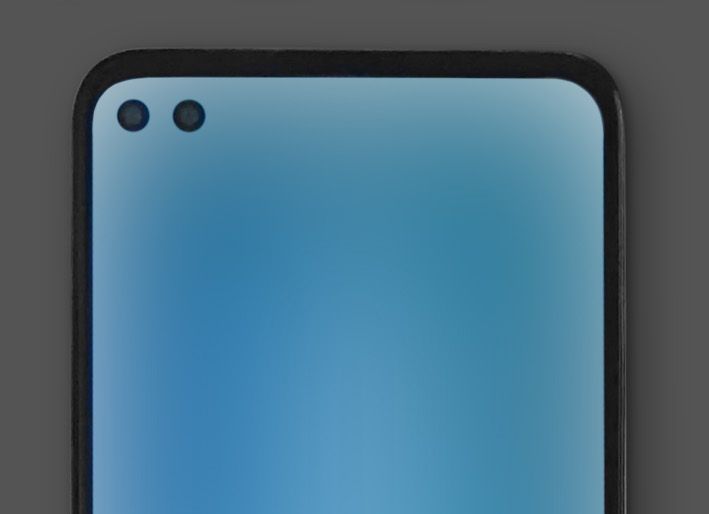
As per the first-ever report regarding this smartphone by TechnikNews, it will be available in a single 8GB + 128GB storage configuration but there could be a higher 12GB + 256GB variant as well. On the other hand, Evan Blass (@evleaks), who shared the front image of this phone exposing its dual punch-hole display says that this handset will arrive with 8GB RAM and 256GB internal storage.
Other expected features of Motorola Nio as per reports include FHD+ ( 1080 × 2520 pixels) display, 105Hz refresh rate, 5,000mAh battery, a triple camera setup on the back (64MP OmniVision OV64B sensor with a wide-angle lens, 16MP OmniVision OV16A10 sensor with an ultra-wide-angle lens, and 2MP OmniVision OV02B1B depth sensor), and a dual-camera setup on the front (16 MP sensor OmniVision OV16A1Q sensor with a wide-angle lens and 8MP Samsung S5K4H7 with an ultra-wide-angle lens).
We already made a list of our best phones of the year 2020, which you should read if you have not. While we were compiling that list, there were some devices that we shortlisted but that didn’t make the final cut. It turns out that some of these devices can actually be classified as “underrated” as they didn’t make it out of China, got little attention when they were announced, or were overshadowed by other phones. So here is our list of the Most Underrated Phones of 2020.
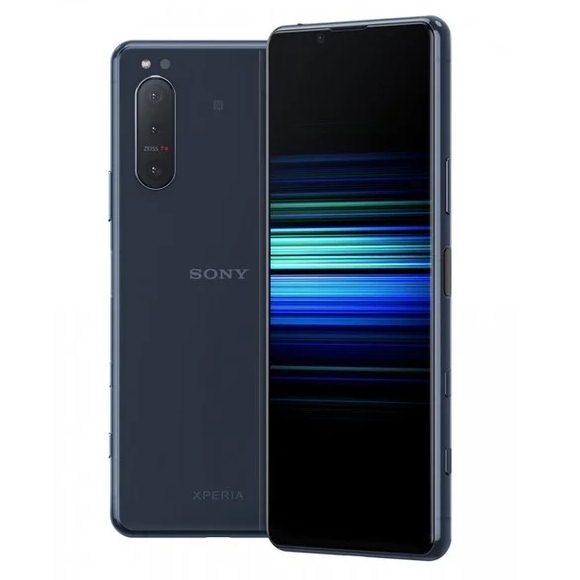
Sony Xperia 5 II
Sony Xperia 5 II
Sony’s flagship phones usually get overshadowed by competitors for reasons such as price, features, or a combination of both, and the Xperia 5 II is a prime example. This 6.1-inch phone stands out in a market flooded with phones whose screens are just a few inches shy from entering the 7 inches turf. While it is as tall as a lot of other phones, no thanks to its 21:9 aspect ratio, this also means it is narrower making it more comfortable to hold.
The phone’s specs are good but when compared to the competition where you have phones with bigger batteries, faster-charging technologies, and more affordable price tags, then a compact-sized phone such as the Xperia 5 II will not be on your shortlist.
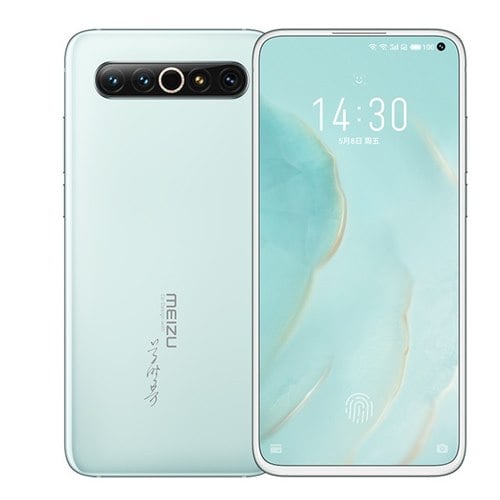
This year, the Meizu 17 Pro was one of the two smartphones announced by the former top Chinese manufacturer; the other being the standard Meizu 17. This flagship is one of the best-designed phones announced this year.
Unlike most phones with a punch hole at the top left corner or center, the Meizu 17 Pro has its own at the top right corner. Not only does the hole have a really small diameter, but the bezels are also some of the thinnest you will find on a smartphone. Meizu completes the design with a ceramic back, horizontally arranged rear cameras, and a ring LED flash.
Even though it packed amazing specs out of the box, it got more features via OTA updates such as an increased refresh rate (from 90Hz to 120Hz) and video stabilization for all cameras. Unfortunately, the Meizu 17 Pro and its sibling, both gorgeous and with impressive specs, did not get a global release.
Vivo is known for making phones with a premium design, impressive cameras, a mid-range chipset, and a high price tag, and the Vivo X50 Pro or Vivo X51 5G is one of such devices.
Its first-of-its-kind gimbal system brought a new type of stabilization to smartphone cameras. The whole 48MP quad-camera system is quite impressive and the camera arrangement is one we have seen other manufacturers copy. However, its high price tag, not unjustified for its pioneering technology, puts it in direct competition with more affordable flagships that offer a better all-round experience.
The Redmi 10X Pro 5G is a mid-range phone that packs features you will usually find on premium mid-range phones and flagships. This Dimensity 820 5G phone, which is exclusive to China, has a telephoto camera with OIS and 3x optical zoom! That is a big deal when you realize that flagships such as the Mi 10 5G and Mi 11 don’t have a telephoto camera but this sub $350 phone does.
Lenovo Legion Phone Duel
Lenovo Legion Duel
The Legion Phone Duel was Lenovo’s first gaming smartphone. It was also the first phone powered by a Snapdragon 865+ processor. For its first attempt, Lenovo did a lot of things differently. From adopting a side pop-up selfie camera to placing the rear cameras in an unusual position, and using two USB-C charging ports to achieve its 90W fast charging technology.
Like other gaming phones, the Legion Phone Duel has trigger buttons, RGB lights, a high refresh rate display, and great stereo speakers. While it did launch in Europe in October, gaming smartphones are still a niche category, so they usually get overshadowed by other flagships that pack better features overall and are not as expensive.
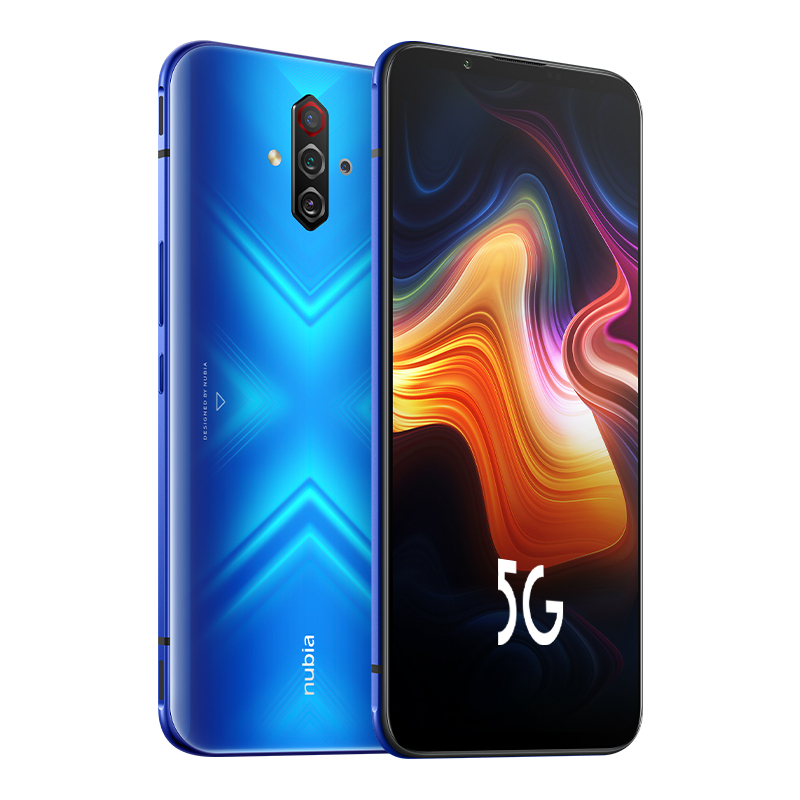
This 6.65-inch phone with a 144Hz AMOLED display, a Snapdragon 765G processor, 48MP quad rear cameras, and a 5100mAh battery with 30W fast charging had a launch price of ¥2399 (~$339 as of April) for the base model that has 6GB of RAM and 128GB of storage!
It did get a global launch but as the Red Magic 5G Lite and with some toned-down features such as a 120Hz refresh rate, 18W charging, and a much higher price tag.
The Mi 10 Youth 5G launched in China as an affordable version of the Mi 10 series. Prior to its announcement, Xiaomi had announced an affordable Mi 10 phone called the Mi 10 Lite 5G that was only sold in international markets. Both the Mi 10 Lite 5G and Mi 10 Youth Edition share not only design almost the same specifications but Xiaomi gave the latter a camera upgrade in form of a periscope telephoto camera with OIS, 5x optical zoom, and 50X digital zoom.
The Mi 10 Youth 5G was supposed to launch in international markets as the Mi 10 Lite Zoom but that didn’t happen. We do not know if Xiaomi has canceled it or it decided to push the launch to next year.
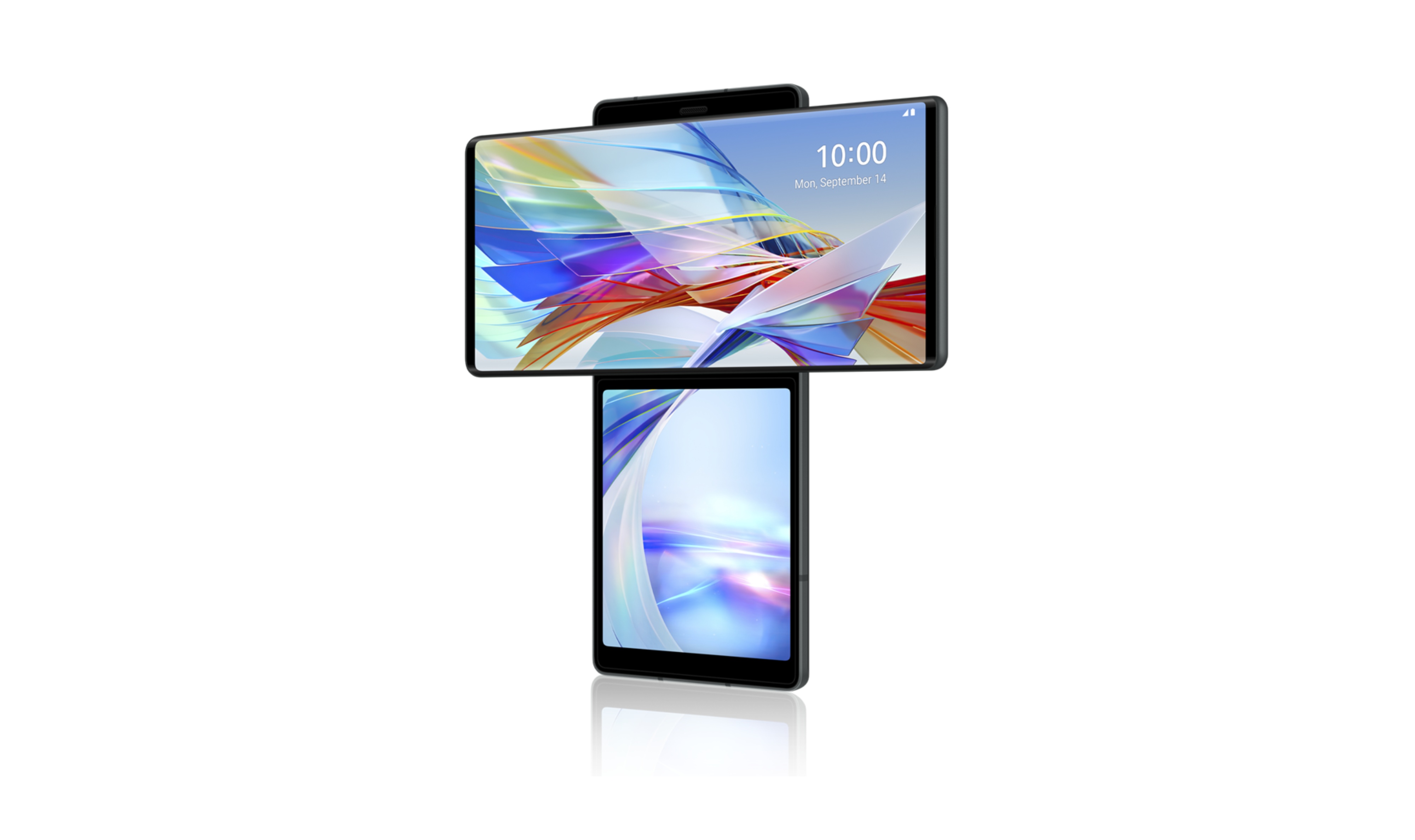
Lately, smartphone OEMs have been releasing devices with different form factors. Most of these handsets are foldables except for LG Wing. This particular phone is part of LG’s Explorer Project. Now, two months after its release, a report from South Korea says that this smartphone has been suffering from poor sales since its launch.
According to Herald Corporation, LG Electronics managed to sell less than 50,000 units of LG Wing to date in its home country South Korea. In case you do not know, the company aimed to sell 2 million units in order to improve its brand image.
But unfortunately, the sales volume of LG Wing is merely 10% of that of the Galaxy Note20, a phone from Samsung Electronics that was released at around the same time.
The sales did not see momentum despite LG U+, the official telecom company of the LG corporation lowering the price of the handset by half via subsidies. Similarly, global sales also did not improve even though the firm tried to market it through advertisements and product placement in the latest Michael Bay movie called ‘Songbird’ and one of the popular American talk shows – Jimmy Kimmel Live!
In other words, the only other chance for LG Electronics to recover its brand image in the smartphone market is through the company’s second product under the ‘Explorer Project’. The firm has already confirmed that this upcoming device will be coming with a rollable display.
Not much is known about this phone except for a set of alleged specs and price that may or may not be true. But we do expect to learn more about this handset before its official announcement sometime later in 2021.
Tech giant Apple has lost its copyright claims against Florida-based Corellium, a company engaged in the production of what it termed virtual iPhones, usually deployed by its system security research team in testing system vulnerabilities.
Apple held the view that Corellium LLC copied the operating system, graphical user interface and other aspects of the devices without obtaining its permission. It also accused Corellium of selling privileged information after hiding under the pretense of helping discover bugs in Apple’s iPhone’s operating system. Corellium was accused of selling such unauthorized information on the open market to the highest bidder.
West Palm Beach District Court Judge, Rodney Smith in the ruling on Tuesday stated that Corellium’s actions fell under an exception to copyright law because it creates a new, virtual platform for the iOS and adds capabilities previously not available on Apple’s devices. The Judge stated that the fact that Corellium sells its product does not in any way; undermine its fair use defense, particularly considering the public benefit accruing from the sale of the said product.
Apple currently has a hacker rewards program aimed at rewarding progressive hackers who discover flaws in its system. The company argued that the Corellium product went far beyond its own hacker reward program, even though Corellium said it evaluates potential customers and was at liberty to reject some customers.
Corellium has said its clientele was drawn from government agencies, financial institutions, and security researchers and further accused Apple of stymieing its operations by trying to control security research to limit what the public learns about vulnerabilities of its system. Apple had been in talks to buy the company but the talks crumbled after the two sides were unable to agree on a price, according to the court papers. The lawsuit began a year after the collapse of talks.
Corellium’s virtual product is currently being used on a desktop computer and currently cannot be used as a phone to make calls, send text messages, or do any of the other things an iPhone can.
The Judge insisted that there was sufficient evidence to support Corellium’s claim that the product was being used for security research, stressing further that Apple would have used the same for its internal security testing had it been successful in the acquisition of the company.
Officials of both companies are yet to comment on the court ruling at this time.
Apple drew parallels to the billion-dollar dispute between Oracle Corp. and Alphabet Inc.’s Google unit, which was now at the US Supreme Court after the Appeals Court dismissed Google’s arguments that it had the right to copy Oracle code for inclusion into its Android operating system. However, Judge Smith ruled that the two cases were not comparable
The judge said that Corellium may still be in violation of the Digital Millennium Copyright Act, which prohibits tools to circumvent security measures, therefore he declined to dismiss that aspect of the case in his ruling. He ordered the two sides to submit a status report by January 11, 2021 to determine how the case proceeds.
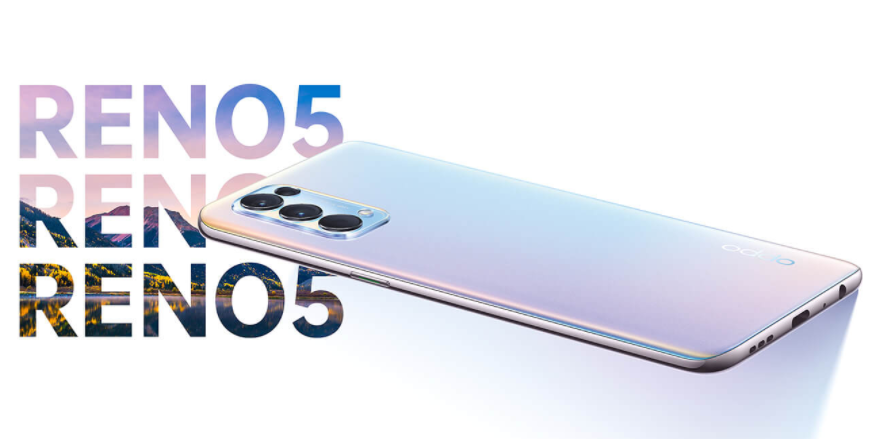
A couple of weeks ago, OPPO launched its next-generation Reno5 series smartphones in the Chinese market, which includes three models — Reno5 5G, Reno5 Pro 5G, and Reno5 Pro+ 5G. Now, the company has officially launched a 4G model in the lineup.
The company has today launched the OPPO Reno5 4G in Vietnam for the price of 8,690,000 Vietnamese Dong which is approximately $377. Now, the company is also set to launch the same smartphone in Indonesia on 12th January.
OPPO Reno5 4G
The smartphone features a 6.4-inch AMOLED display that offers a Full HD+ screen resolution of 2400 x 1080 pixels and a refresh rate of 90Hz. The phone also comes with an in-display fingerprint sensor for added security.
Under the hood, the device is powered by the Qualcomm Snapdragon 720G chipset given that is limited to 4G LTE connectivity. It packs 8GB of LPDDR4x RAM and 128GB of internal storage with a microSD card slot for expanding the storage capacity.
In the camera department, the phone comes with a quad-camera setup on the back, featuring a 44-megapixel primary sensor, an 8-megapixel superwide lens, as 2-megapixel macro lens and a 2-megapixel monochrome sensor. On the front side, there’s a 44-megapixel selfie snapper.
Similar to the 5G model, the OPPO Reno5 4G runs the latest Android 11 operating system out-of-the-box with the company’s own ColorOS 11.1 on top. The phone is powered by a 4,310mAh battery which comes with support for the first-gen 50W SuperVOOC fast charging technology.
Meanwhile, OPPO is also expected to launch the Reno5 5G series smartphones globally in the coming weeks. While the Reno5 Pro 5G packs MediaTek Dimensity 1000+ SoC in China, it is expected to be powered by the SD765G SoC for the global markets.
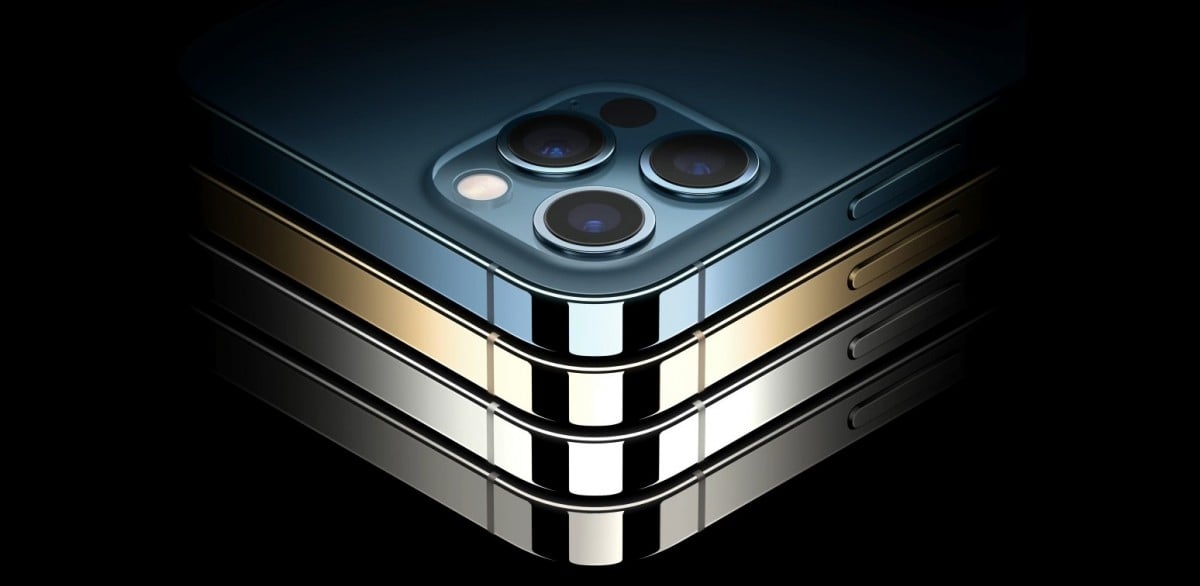
Apple’s iPhone 13(Tentative) is already the talk of the town. It has been just two months since the predecessors’ launch, but the next iteration is hitting the news constantly. Now, a report sheds more light on the display tech of the supposed ‘Pro’ variants.
According to a Korean report, Apple is ready to load up at least the Top 2 models of the next iPhone with a 120Hz OLED display. Besides, Samsung Display(Pro Max, mini) and LG Display(all except Pro Max) are said to be the Prime suppliers for iPhone 13 series’ displays.
Precisely, the Top-2 ‘Pro’ variants- iPhone 13 Pro, iPhone 13 Pro Max to feature the long-rumored 120Hz ProMotion display. This is in contrast to an early report that said all the models will have the high-refresh rates.
Anyway, the base variants(iPhone 13 mini, iPhone 13) will reportedly have LTPS while the Pro variants with 120Hz will feature the LTPO display. That is, LTPS is Low-Temperature Polysilicon while the LTPO is Low-Temperature Polycrystalline Oxide.
Simply put, Apple has gone with LTPO and an LTPO-TFT backplane to evade the power consumption caused due to the 120Hz. By doing so, it aims to get the best of both worlds- Advantages of LTPS and less power hungriness. If the report is true, iPhone 13 will have the following OLED display specs:
Further, the LTPO backplane will also allow Apple to vary the refresh rate as low as 1Hz. This not only aids the Always-on scenarios well but ensures you get more screen-on time. We saw this on the Galaxy Note 20 Ultra and Apple also uses them on the Apple Watch 5 and Watch 6.
The report also says that LTPO-TFT will mean SCM(supply-chain management) will grow and suppliers get more profit(more unit price). However, Apple has to deal with changes in corresponding parts such as Driver IC, RF-PCB, OLED emitters etc.
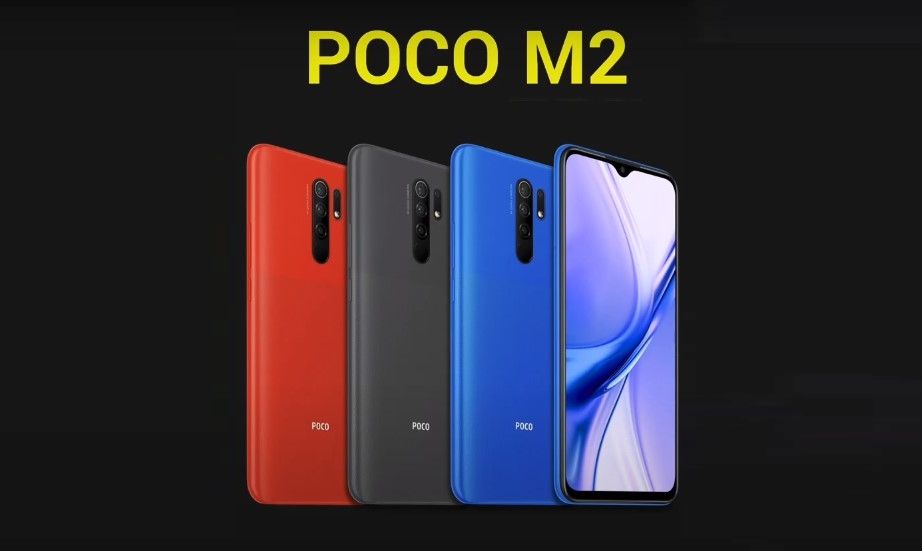
Although Xiaomi has announced MIUI 12.5, the company is yet to finish MIUI 12 rollout for certain phones. One of such devices is the firm’s bestseller Redmi 9 aka Redmi 9 Prime (India). A modified version of this smartphone is also sold as POCO M2 in India. This POCO-branded handset has now starred receiving MIUI 12 update.
Xiaomi began to seed MIUI 12 for Redmi 9 in its home country China in late September. But the firm started releasing the same update for different regions only in December.
As of now, the update is only live for Chinese, Indonesian, Russian, and Global variant of this phone. That means the update is yet to arrive for the Indian (Redmi 9 Prime), Turkish, and EEA version of the handset.
Amidst this, Xiaomi has now released MIUI 12 update for the POCO M2 (a rebadged Redmi 9/9 Prime) in India. The update comes with build number V12.0.1.0.QJRINXM and is currently in the Stable Beta phase. Hence, this build is only available to select users in the country for the time being.
If early adopters don’t face any major issues, the update will be made available for more users in the coming days. That said, we also expect the company to roll out MIUI 12.5 as well as Android 11 for this device sometime later in 2021.
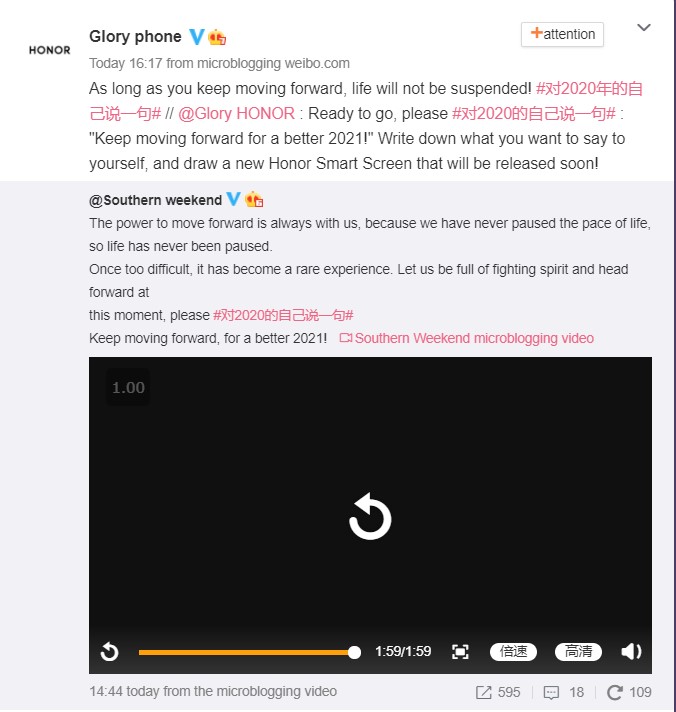
Honor is a newborn baby but typically like a budding held by a consortium of 30 agents. The company is reviving itself in and out in the runup to a fresh start from next year. As a head start, it has teased the launch of a new Smart Screen TV on Weibo today.
Honor‘s new post on Weibo includes a teaser video. As the video begins, we see deserted streets, and isolated people pretty much explaining what 2020 has showered on us. Next, it slowly transitions into an online-mode of communication showing how the new norm is going to be. In the post, Honor clearly mentions that life has to move forward in 2021 and says a new Smart Screen is coming.
And if the teaser is any indication, it could be anytime soon as the year begins in a day or two. Generally, brands tend to begin the promotions just a few weeks before the actual launch. With rumors of it launching the Honor V40 around mid-January floating around, don’t be surprised if the Smart Screen TV accompanies it.
Honor stepped into the world of Smart TVs with the Smart Screen and Smart Screen Pro in August 2019. Apart from sharing specs like 55-inch size, 4K resolution, 85% NTSC color gamut, the TVs were the first to Commercially run Huawei’s HarmonyOS.
Later, in May this year, it brought the X1 Smart TV lineup which, despite having watered-down specs, offered different sizes and features of a typical Smart TV. If the teaser is anything to go by, we can expect a nifty little addition of pop-up selfie cameras on the new TVs.
Hoping that we didn’t catch you off guard, if you recall, it’s ex-Parent brand Huawei recently brought the Huawei Smart Screen S, S Pro. Naming aside, the TVs have a pop-up AI selfie camera with support for 1080p video calls. It also has other features like smart TV-smart TV & smart TV-smartphone call support, smooth transition for conference calls, and support for Children’s Watch calls.
And the upcoming Honor Smart Screen TV might have a similar Selfie Camera for conference and video calling. That said, this is just a guess from our side and hence, let’s wait for official news. Meanwhile, the company has already confirmed that it will launch an independent Honor Mall for its own products in January 2021.
ByteDance, the company behind TikTok, has recently applied for a new trademark for “TikTok Payment.” The international classification covers 36 categories of “Financial Property Management,” which is currently waiting for approval.
Notably, this news arrives after the company indirectly won a payment license back in September 2020, when it bought UIPay to boost its own e-payment capabilities in China. At the time, the company stated that the acquisition will help in improving its user experience through other payment options, whilst also serving users of ByteDance’s other products and services as well.
Furthermore, back in June 2020, the company behind the popular short video sharing application also managed to obtain three financial licenses for third party payments and insurance through acquisitions and other means. These were likely intended for the purpose of developing and launching its own payment system, which would likely be seen first in its home country, China.
Since the beginning of the year, ByteDance has also been hiring globally to expand its team, which would be in charge of building the network and a platform that can provide cross border payments solutions. The company has even applied for digital banking licenses in countries like Singapore, as per a Reutersreport.
HONOR, the former sub-brand of HUAWEI is expected to launch its first-ever smartphone after separating from its parent company in the coming days. This handset is expected to be the long-rumored HONOR V40. Ahead of its official announcement, the phone’s gaming benchmark result has emerged on the internet.
1 of 2
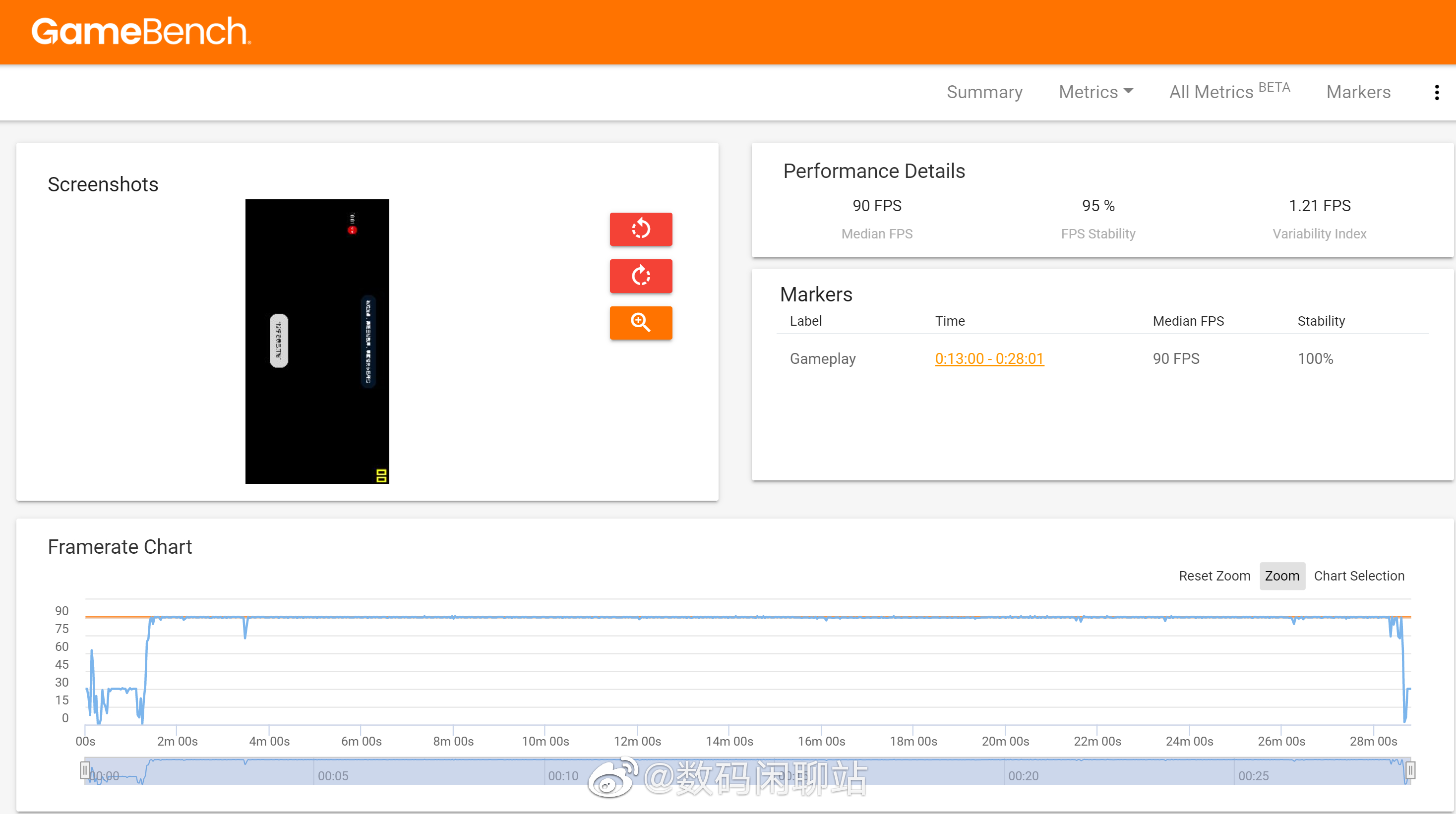
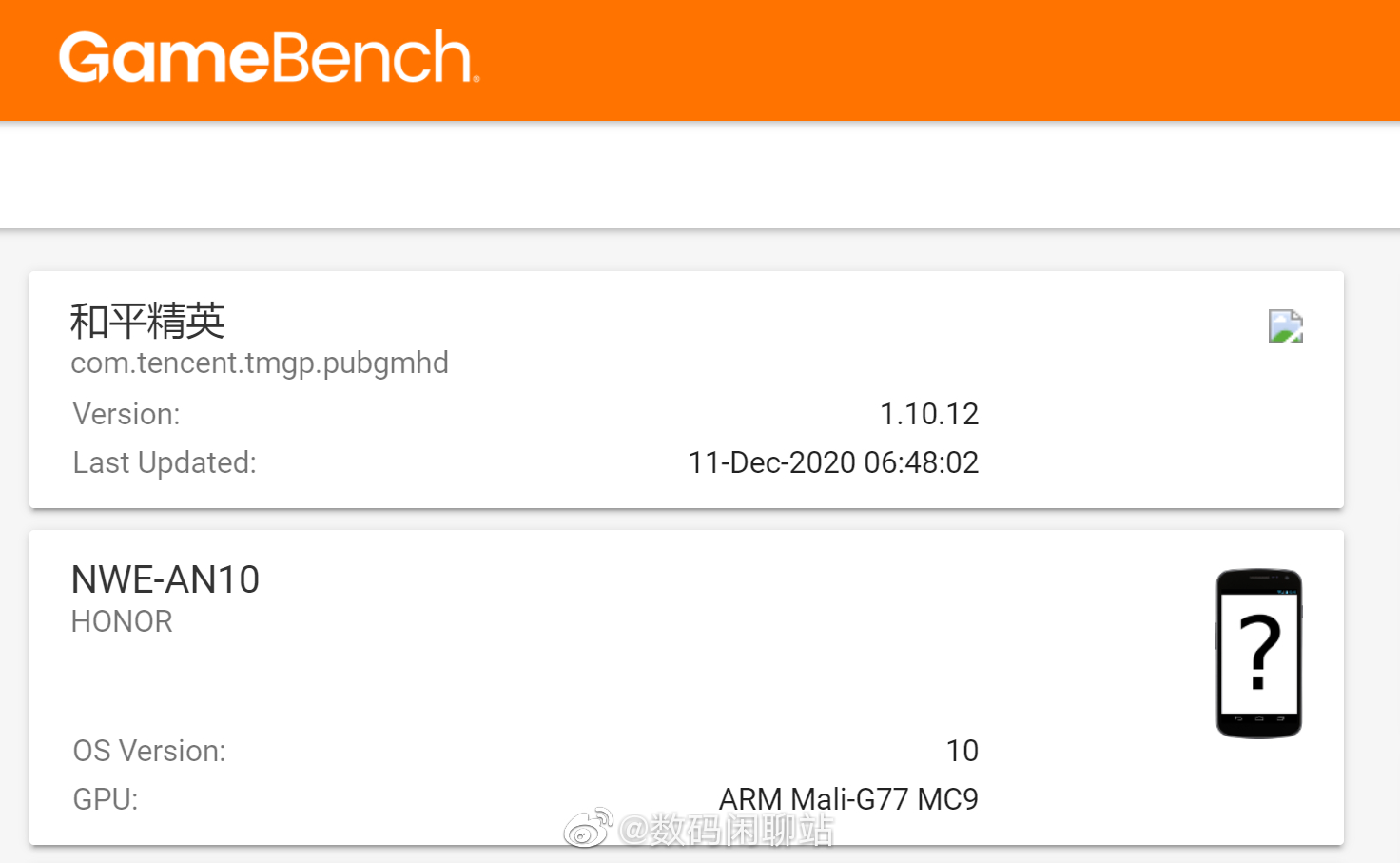
Digital Chat Station, a well-known Chinese tipster, shared the GameBench test result for the gameplay of the popular mobile game ‘Game for Peace’ on HONOR V40. For those unaware, GameBench is a benchmarking platform for games, whereas ‘Game for Peace’ is nothing but a modified PUBG Mobile for the Chinese market.
According to the test result, the device can run the game at an average of 90fps with 95% stability. Further, the test also reveals the GPU present in it to be ARM Mali-G77 MC9. Both of these indirectly suggest the upcoming HONOR V40 to feature at least 90Hz display and MediaTek Dimensity 1000+ chipset.
As per previous reports, the HONOR V40 is codenamed YORK with model number YOK-AN10. Since the handset has been certified by MIIT and 3C, we know that it will support 66W fast charging and will ship with the HUAWEI 66W SuperCharge charger bearing model number HW-110600C00.
Samsung has slashed the price of multiple smartphones and Wireless earbuds in India. The list includes Galaxy M01, M01s, A31, and Buds+, Buds Live TWS earbuds. Reports say that the new price is applicable in offline stores apart from the online channels.
Samsung is gearing up for 2021 with a variety of products in its bucket. First off, it will probably begin with the flagship Galaxy S21 series and “Buds Pro TWS“. If anything, this price drop of current earbuds should definitely be an indication that a successor is coming soon. Anyway, you can take a look at the new prices of the said products below:
Among this, the Galaxy A31 is the only device that has faced multiple price cuts than anyone else. A month after the launch, it got a weird price cut of ₹1,000 from ₹21,990 which repeated again back in November. The latest drop is even higher at ₹2,000 from the last selling price.
Further, the Galaxy M01, M01s brothers, which launched at different points of the time(June, July 2020), each get a small price cut of ₹500. Their official launch prices were ₹8,999 and ₹9,999 respectively.
On the other hand, the Galaxy Buds+, and Buds Live have a huge six months time gap in launch. The former launched at ₹13,990 and got a price cut when Buds Live came into the picture. Speaking of which, the Galaxy Buds Live launched for ₹14,990 back in August. Anyway, both now get a whopping ₹3,000 price cut.
That said, if you are planning to get a new year gift and you are a fan of Samsung, I suggest this is the right time. Barring the ANC, Galaxy Buds+ is a solid offering for the price and the Live is a cool earbud with a unique design.
Hubble Technology Investment, the investment arm of Huawei, has recently made the move of investing in NineCube. This investment had the company acquire stakes in the electronic design automation firm, which is based in China.
This move has been widely seen as the Chinese tech giant’s aim of strengthening its chip design capabilities, as per a DigiTimesreport. Notably, the news also arrives as the company struggles with the impacts of US trade sanctions. Furthermore, the report is based on recent updates from QCC, a Chinese platform providing information about companies based in China.
As per the new updates, NineCube recently underwent a business change. It has now added Hubble Technology as a new shareholder. However, both firms have yet to disclose the exact sum of investment made by the investment arm of Huawei. For those unaware, NineCube was founded recently back in 2011 and is an EDA service provider with Wang Xinchao, the founder of China based IC packaging firm JCET, as one of its board of directors. At the moment, US companies hold a dominance in the EDA market, with an almost 80 percent market share in the industry. This mainly comprises major firms like Synopsys, Cadence, and Mentor Graphics.
There are plenty of good quality and powerful smartphones in India between Rs 20000 – Rs 30000 price range. The Korean Giant – Samsung attracted a lot of sales in the upper mid-range segment with devices such as Galaxy M51 and A71. OnePlus Nord also performed well with 5G support. Our list of best upper-mid-range smartphones in India will help you to decide on which mid-range smartphone is the right pick for you.
After excelling as a flagship killer, the Chinese smartphone maker stepped into the mid-range market with the launch of OnePlus Nord. The 5G device features Qualcomm Snapdragon 765G SoC and carries Adreno 620 GPU. There’s a 6.44-inch Fluid AMOLED display with 1080 x 2400 pixels resolution. It is available in three storage options of 6GB + 64GB, 8GB + 128GB and 12GB + 256GB storage options. A quad-rear camera module resides on the rear-side featuring a 48MP + 8MP + 5MP + 2MP lenses. A 32MP + 8MP camera is present on the front side for selfies and video calling. It comes with a 4115 mAh non-removable battery with over 30W fast charging.
Samsung Galaxy M51 was released in September featuring a 6.7-inch AMOLED display with 1080 x 2400 pixels resolution. It is powered with Snapdragon 730G SoC and 6/8GB RAM and 128/256GB internal storage. A quad-rear camera with a 64MP primary sensor, a 12MP ultrawide sensor, a 5MP macro lens, and a 5MP depth sensor is present for quality photos. It features a 32MP selfie camera for selfies and video calling.
Samsung Galaxy A71 houses a Snapdragon 730G SoC and a 6.7-inch AMOLED display. The smartphone comprises a quad-rear camera featuring 64MP + 12MP + 5MP + 5MP lenses. A 32MP lens is present on the front. It features a 4500 mAh battery which could be enough for a day’s extensive usage. Meanwhile, it supports 25W fast charging.
Realme 7 Pro is a good mid-range smartphone as it carries Snapdragon 720G SoC and a 6.4-inch AMOLED display at an affordable price. The smartphone carries a 64MP quad-rear camera module and a 32MP front camera sensor. The smartphone carries a 4500 mAh non-removable battery that supports 65W fast charging. The buyers can choose between two different storage options of 128GB + 6GB and 128GB + 8GB RAM.
The V20 is yet another affordable 5G smartphone launched with Qualcomm Snapdragon 765G SoC. There’s a 6.44-inch AMOLED display sporting 1080 x 2400 pixels resolution. At the price of Rs 29,999, the smartphone offers a 64MP triple-camera sensor which is bundled with an 8MP ultrawide sensor and a 2MP depth sensor. You will get a 44MP wide sensor and an 8MP ultrawide sensor on the front. A 4000 mAh battery is present with 33W fast charging technology.
So these were some of the best upper-midrange smartphones launched in India this 2020. There would be more 5G devices in this segment in 2021. You can stay connected with us for more!
The OnePlus 8T is the latest flagship smartphone from the brand. The handset was unveiled in mid-October. Now, just over two months from its launch, the phone is receiving its sixth system update. Just like the previous updates, the new one also brings certain fixes, optimizations, and new features.
The latest update for the OnePlus 8T comes with the following build numbers for different regions.
IN: 11.0.6.7.KB05DA
NA: 11.0.6.7.KB05AA
EU: 11.0.6.8.KB05BA
According to the changelog, the new update brings November 2020 security patch although January 2021 is just a few days away. It also adds an option to adjust keyboard height for a better typing experience and the OnePlus Store app (India only). This uninstallable application allows users to manage their OnePlus account, shop OnePlus products, get easy-to-access support, and discover exciting members-only benefits.
Further, the update fixes photos not displaying in the Gallery app bug as well as an issue with WiFi connection. It also optimizes the experience of full-screen gestures and image quality in nightscape mode. Last but not least, the update also improves communication stability and fingerprint unlock success rates for faster unlock speed.
OnePlus 8T OxygenOS 11.0.6.7/11.0.6.8 Official Changelog
System
Optimized the experience of full-screen gestures
Increased fingerprint unlock success rates for faster unlock speed
Newly added keyboard height adjustment where you can raise or hide the bottom shortcut bar for a better input experience (Go to Settings-System-Language & input-Keyboard height adjustment)
Updated Android security patch to 2020.11
Camera
Optimized the image quality on nightscape
Gallery
Fixed a small probability issue that photos don’t display in the Gallery
Network
Fixed the issue that the WiFi connection failed in a specific situation
Improved the stability of communication
OnePlus Store (—IN only)
An intuitive and convenient way to manage your OnePlus account, get easy-to-access support, discover exciting members-only benefits, and shop for OnePlus products. (Please note that it can be uninstalled)
Like all OTA updates, the new software builds for the OnePlus 8T is also being rolled out in batches. Hence, it may take time to reach every unit.
A known leakster named Mr-white has just tweeted out a new detail regarding the upcoming Apple AirPods Pro 2. The tipster has been accurate in the past and has now shared that the company could be launching the second generation of the popular hearables in two different sizes.
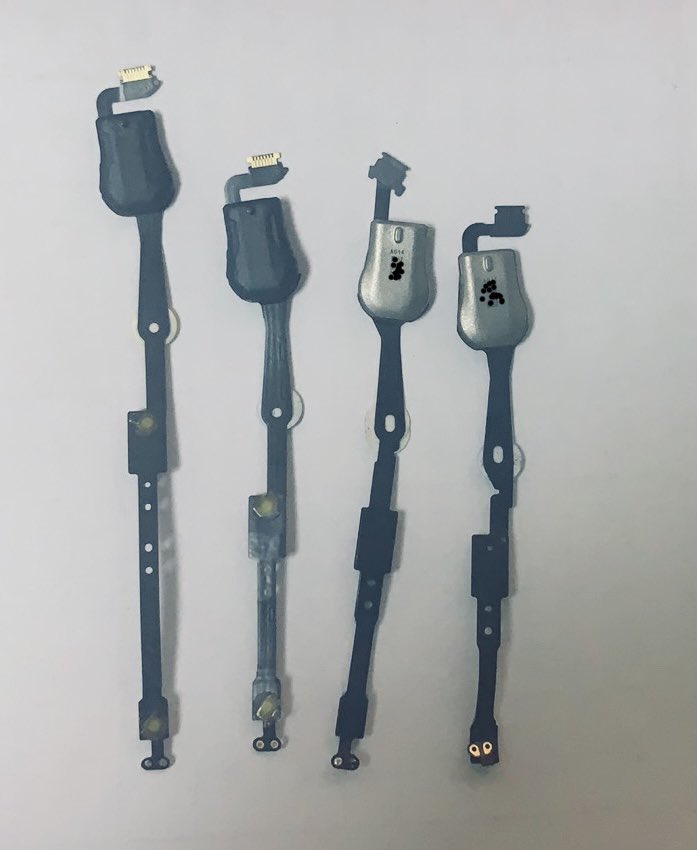
On Twitter, he shared images of the supposed internal hardware of the AirPods Pro 2. Looking at this image, it can be noticed that two pieces of hardware, which are of similar make and likely serve a similar purpose, are different in size. One image even had the internal hardware be compared to its first generation AirPods Pro’s counterpart that is currently in circulation in the market.
This image has the new iteration on the left in two different sizes and the older generation on the right, which are both similar in size. Mr-white suggested that the different cable lengths imply that the AirPods pro 2 could maybe arrive in two sizes. One of the variants could be the regular sized one, similar to the current gen AirPods Pro, while the other could be a larger version.
Supposed AirPods Pro 2 hardware (Left) next to current gen AirPods Pro (Right)
Notably, recent rumors had pointed at the second generation of Apple AirPods Pro featuring a compact and rounded design, which eliminates the stem similar to the Samsung Galaxy Buds. So, it could make sense to have the TWS earbuds arrive in different sizes for a better fit, as per a MacRumorsreport. Unfortunately, this is still just an unconfirmed report, and we have no way of confirming this at the moment. So stay tuned for more, as we will be providing more updates regarding the upcoming AirPods Pro 2 that is expected to launch in 2021.
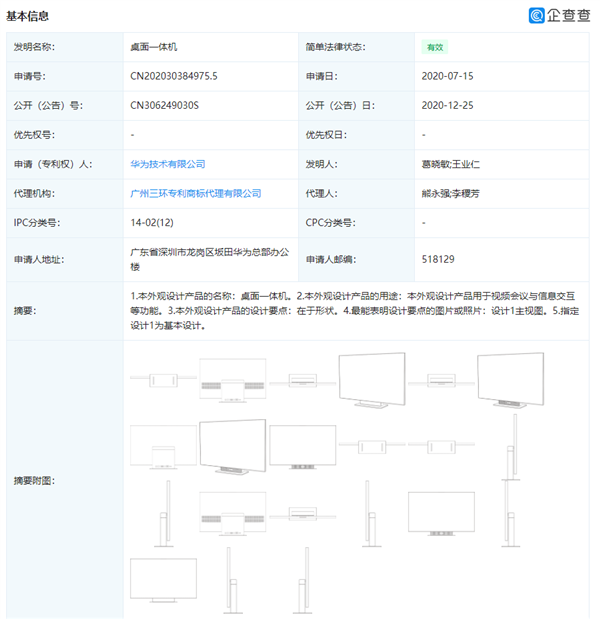
Huawei is apparently working on a new all in desktop PC. The news arrives after a leak on the Qicha app revealed details of the patent for this system, which was granted to the company on 25th December 2020.
The Chinese tech giant had applied for four different patents. In other words, the company patented four different variations of the upcoming all in one desktop PC, as per a MyDriversreport. Looking at the patent, the new PC is basically designed with productivity in mind, with the focus being on video conference utility and other less intensive office work, which is become more common in the professional fields due to the coronavirus pandemic.
The primary aspect that differs each of these all in one desktops are the bases. These vary between each PC with one using a 45 degree angled base, one having a bracket design, or even using a simple straight stand and base as well. Similarly, another variation between the patents is for the heat dissipation vents, which can either be found on the back of the PC or on the sides. Notably, each variant arrives with in an ultra thin form factor.
At the moment, these are just patents and we have no way of confirming whether or not the company is actually working on such a product. The company had just recently launched the Huawei MateStation B515 desktops for enterprises, so it would not be surprising if it aims at launching similar work oriented stations, since it did plan on expanding its presence in the desktop market as well. So stay tuned for more, as we will be providing more updates when additional information is available.
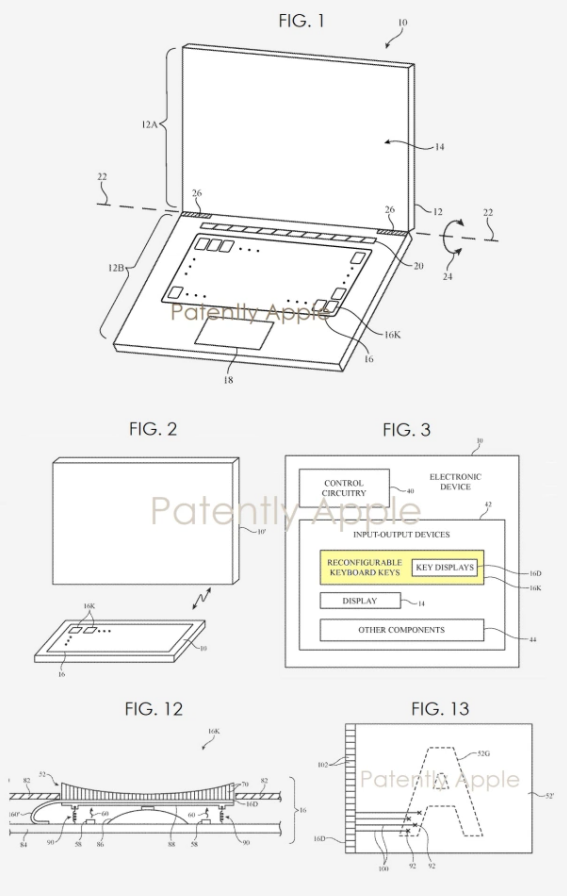
A new Apple patent has just surfaced. It was filed with the US Patent and Trademark Office and was granted to the company for a Mac keyboard, which has reconfigurable small displays built in each key.
According to a 9To5Macreport, the small display on each key allows the keyboard to show different characters, which can be configured based on the users’ preferences. While this sounds similar in function to the TouchBar, the new keyboard would still feature physical keys, although, the patent reveals that the keys on this new keyboard houses a tiny display instead of regular engraved labels for each individual key.
Looking at the patent, it is also revealed that these keys support dynamic labeling, which is generated by an LED display with pixel arrays. These tiny displays do not offer a high resolution or any other high end features and are just focused around displayed the basic characters of a given language. In other words, it would also enable users to set up a completely unique keyboard layout, by changing the key labels.
This has a wide area of implications, as users might even be given the option to configure their new Apple MacBooks for different profiles for gaming, programming, video editing, and others as well. The Cupertino based giant would basically only need to create a single keyboard model, with the only difference being the language being displayed on the keys, based on the region the Mac is being sold in. The new keyboard was patented for both the built in keyboard for MacBooks and even the standalone keyboards for Mac desktops like Mac mini, iMac, and the Mac Pro.
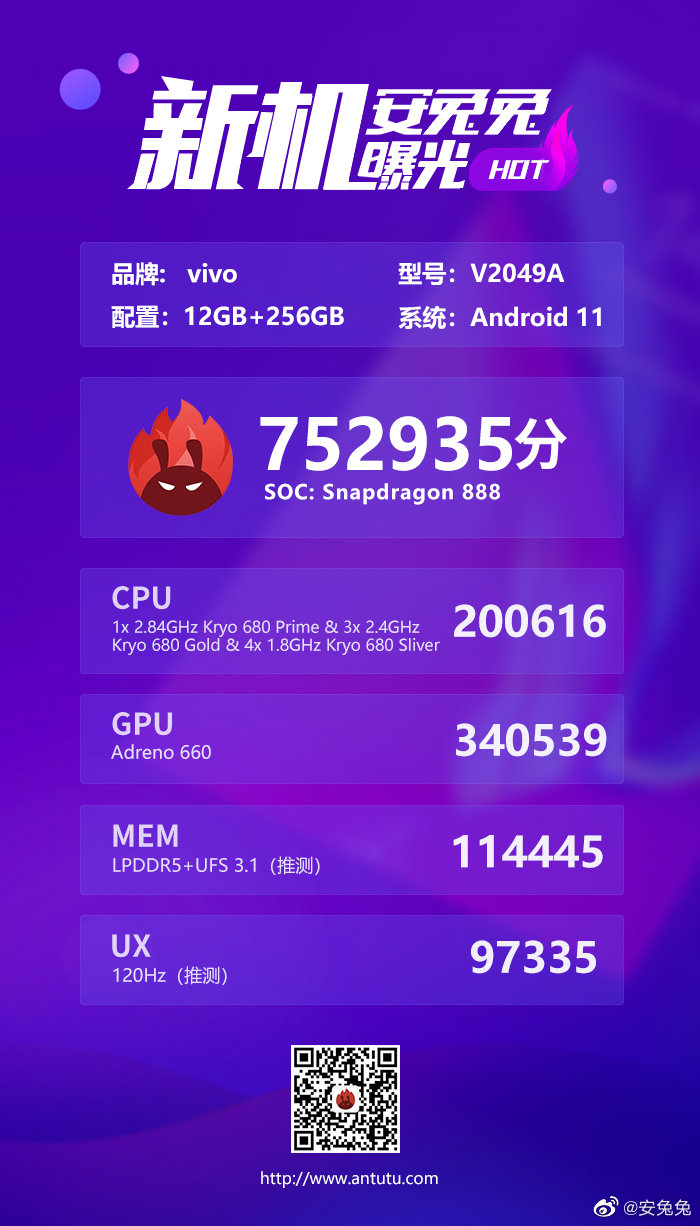
On Dec. 16, the Vivo V2049 received 3C certification in China. The listing revealed that its retail package may include a 120W fast charger. This gave birth to rumors that the V2049A could be the forthcoming iQOO 7 flagship. The same phone has now appeared at AnTuTu with a 752K+ score.
The iQOO 7 has scored 200,616 in the CPU test, 340,539 in the GPU test, 114,445 in the memory test, and 97,335 in the UX test. By this, the handset has managed to secure a top score of 752,935 on AnTuTu benchmarks.
The listing reveals that the iQOO 7 is equipped with a 120H refresh rate display that offers a Ful HD+ resolution of 1080 x 2400 pixels. It is speculated that the iQOO flagship will have the same 6.56-inch AMOLED punch-hole screen found on Vivo X60 and X60 Pro smartphones. This suggests that the phone will also feature an in-screen fingerprint sensor.
iQOO has revealed that the iQOO 7 is packed with enhanced editions of LPPDR5 and UFS 3.1 storage. The variant that has appeared on AnTuTu has 12 GB of RAM and internal storage of 256 GB. The smartphone boots to Android 11 OS. AnTuTu claimed that the GPU performance of the iQOO 7 is around 20,000 points higher than the performance of the Qualcomm Snapdragon 888 reference design prototype. This indicates that the iQOO 7 has an exceptionally good heat dissipation design, which assists in leveraging the potential of the Adreno 660 GPU.
The benchmarked device is an engineering prototype unit of the iQOO 7. There is a possibility that the final version of the phone may offer even better performance. A recent report revealed that the iQOO 7 is equipped with a triple camera system on its rear. The setup reportedly includes a 48-megapixel primary camera with OIS support. The IQOO 7 will be made official on Jan. 11 in China.
We use cookies on our website to give you the most relevant experience by remembering your preferences and repeat visits. By clicking “Accept”, you consent to the use of ALL the cookies.
This website uses cookies to improve your experience while you navigate through the website. Out of these, the cookies that are categorized as necessary are stored on your browser as they are essential for the working of basic functionalities of the website. We also use third-party cookies that help us analyze and understand how you use this website. These cookies will be stored in your browser only with your consent. You also have the option to opt-out of these cookies. But opting out of some of these cookies may affect your browsing experience.
Necessary cookies are absolutely essential for the website to function properly. This category only includes cookies that ensures basic functionalities and security features of the website. These cookies do not store any personal information.
Any cookies that may not be particularly necessary for the website to function and is used specifically to collect user personal data via analytics, ads, other embedded contents are termed as non-necessary cookies. It is mandatory to procure user consent prior to running these cookies on your website.