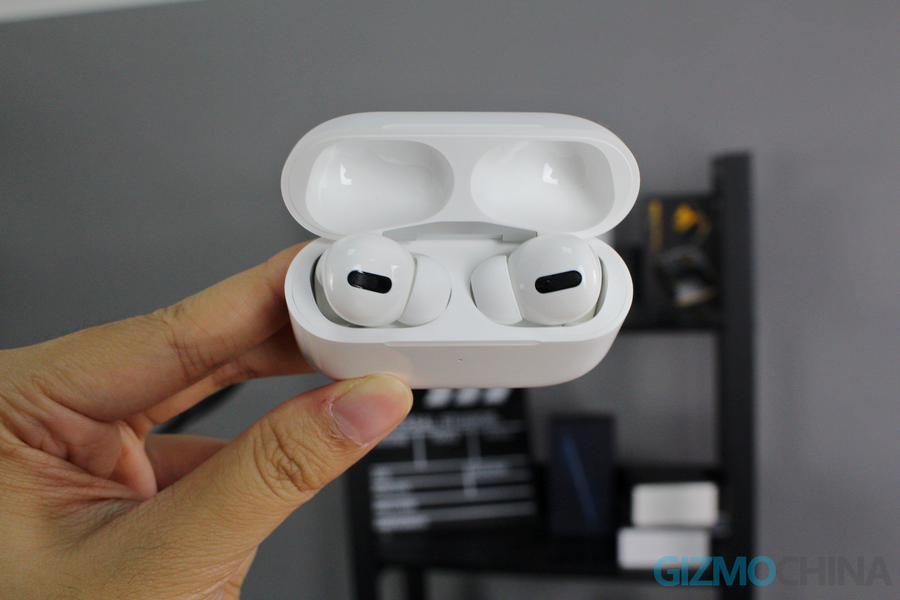
Apple is reportedly planning to launch next-generation AirPods in 2021. Amidst this, it has turned generous with regards to the current AirPods Pro. Accordingly, a support page for the AirPods Pro says it will service certain affected units and offer a replacement if the issue is confirmed.
The support page(via PhoneArena) details the AirPods Pro Service Program for Sound issues. On the page, Apple says that a small percentage of AirPods Pro units may have sound issues. However, it quotes the units made before October 2020, and not any higher. Anyway, the issues of an affected AirPods Pro are as follows:
Crackling/Static Sounds- These sounds increase in loud environments while exercising or taking a call on the phone.
Active Noise Cancellation(ANC)- Not Working as expected. Issues: Loss of bass sounds, increase in background sounds. Eg: Street/Airplane noise.
Having said that, Apple assures that Apple/Apple Authorized Center will service the affected AirPods Pro. And this is irrespective of the issue being on left/right/both earbuds. Apple also says that the service will be free of cost.
So, if you are someone who is facing these issues with a defective unit, you can avail of the service provided by Apple. Accordingly, you have to find and visit an Apple Authorized Service Center, make an appointment with Apple Retail store, or Contact Apple Support. After examining the issues on the affected unit, if confirmed, Apple will replace them irrespective of left/right/both earbuds. However, Apple notes that AirPods Pro’s case doesn’t come under the ambit of this service as it doesn’t have any defects.
Another disclaimer says this worldwide service program doesn’t alter/extend the Standard warranty of AirPods Pro. The program covers affected AirPods Pro for 2 years after the first retail sale of the unit. So, all the users of defective AirPods Pro manufactured from Last year and before October 2020, are eligible for this service. That is if they genuinely experience the sound issues.
Further, Apple clearly states that other models of the AirPods( like the 1st gen, AirPods 2nd gen) are seldom affected and hence, not eligible for this service.
The Moto G 5G is a new smartphone from Motorola set to launch soon. Specs and images have leaked in the past few days but it appears one major specification has been incorrect.
According to Adam Conway of XDA Developers, the Moto G 5G will not come with a Snapdragon 690 processor as previously reported but the Snapdragon 750G processor. This is the same chipset that powers the Mi 10T Lite and the Galaxy A42 5G.
The info which was revealed on Twitter also includes other specs such as a 60Hz FHD display with a punch hole, 6GB of RAM, 128GB of expandable storage, and NFC. The phone will come with a 48MP Samsung GM1 main sensor, an 8MP Samsung S5K4HZ telephoto sensor, and a 2MP OmniVision OV02B10 depth sensor. The 16MP selfie camera is also supplied by OmniVision (OV16A1Q).
Missing some specs there😉
6.66-inch 2400×1080 resolution 5000mAh battery Google Assistant button Coming to Verizon (w/o GA button) Also XT2113-1 and XT2113-5 models
A reply to Adam’s tweet by Mishaal Rahman, the Editor-in-Chief of XDA Developers, also adds some other details such as the screen being 6.6-inches in size with a 2400 x 1080 resolution, a 5000mAh battery, a Google Assistant button, and a Verizon version.
There will be four variants of the phone with the following model numbers – XT2113-1, XT2113-2, XT2113-3, and XT2113-5.
There is still no info on when the phone will be announced but when it does it should be more affordable than the Moto G 5G Plus or Moto One 5G as it is known in the US.
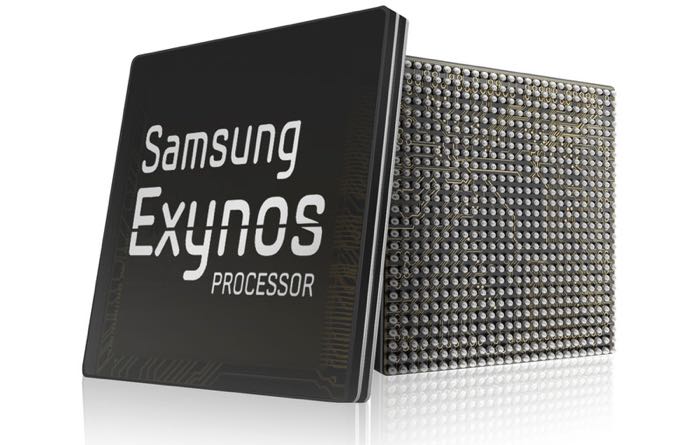
Samsung is already on course to launch the next flagships, the Galaxy S21/S30 series in 2021. However, it hasn’t unveiled the SoC that powers the new devices. As per early leaks, the next flagship processor could be named Exynos 2100. And now, a new certification suggests that another Exynos could be in the works.
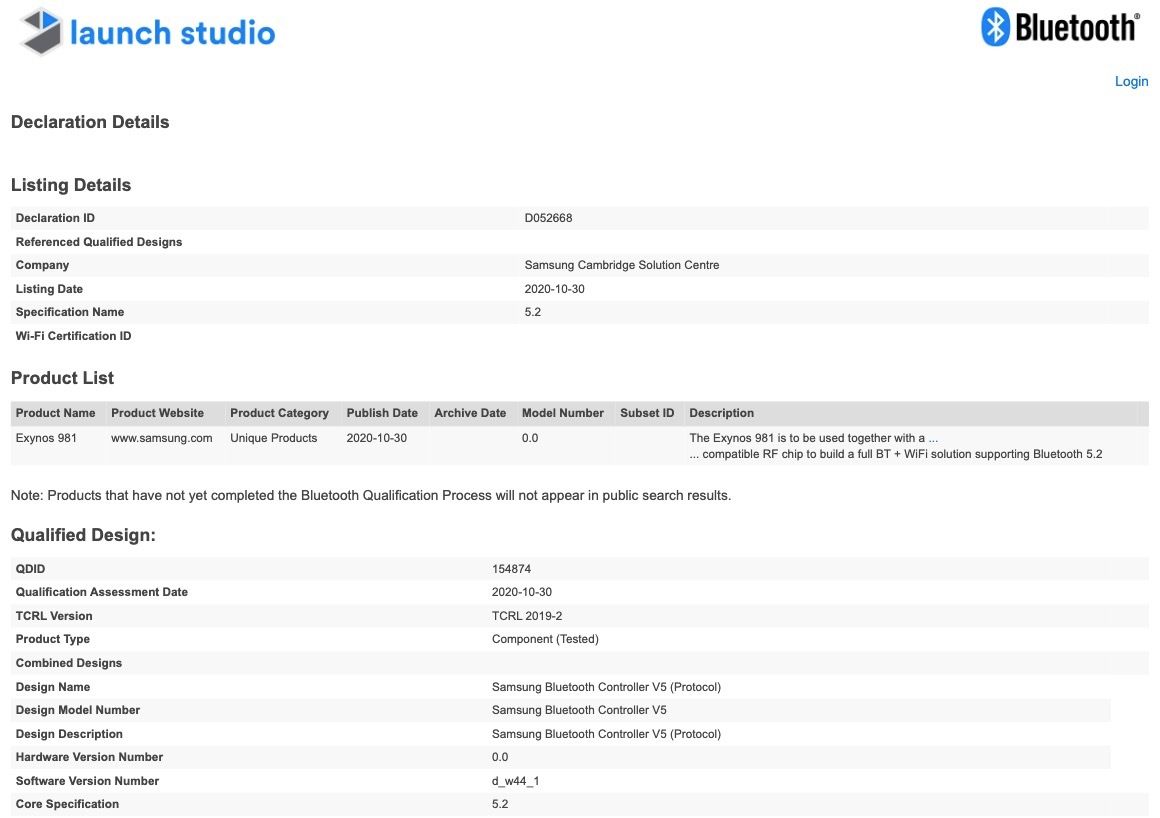
As reportedly by MySmartPrice, a new Exynos 981 moniker has appeared on Bluetooth SIG Certification, which is a non-profit standards organization. Samsung’s Cambridge Solution Centre(SCSC), which is a part of Samsung Electronics has filed the listing which was published yesterday(October 30). The description of the Exynos 981 says it can combine with a compatible RF solution to build BT(Bluetooth)+Wi-Fi solution. And supports Bluetooth 5.2.
Besides, if Samsung launches the said Exynos with the Bluetooth 5.2 standard, it will be a slight upgrade over the current standards on both Exynos 980 and 990 SoCs. That said, we are devoid of any further information regarding the new processor. If we recall, the Exynos 980 SoC mid-range SoC had the company’s first integrated 5G-modem, and it was used by other OEMs like Vivo(Vivo X30). Hence, it is possible that Samsung could position the 981 SoC(if real) as another mid-range processor above 980.
However, Samsung Semiconductor China Research Institute’s director, Dr. Pan Xuebao recently said that the company will soon launch a new Exynos 1080 5nm SoC. It will also embrace the mid to high-end segments and probably power mid-range smartphones. Nevertheless, we will have to wait and see if the Exynos 981 SoC is indeed real and it’s position(if both 981, and 1080 SoC launch separately) in the market.
The HUAWEI Mate 40 series has finally arrived. Since the latest ban from American Government came into effect in September, a lot of people were worried whether the Mate 40 could be released under such circumstances. Well, it seems that with controls in place throughout the supply chain, Huawei successfully brought back the latest Mate 40 with the most powerful chipset for Android to date, the Kirin 9000 5G. When compared to its predecessor the phone comes not just with the upgrades in terms of processing power, but also with another important upgrade — the camera system.
The model in our hands is the Mate 40 Pro. We’ve used it for a few days. Let’s find out what’s new and upgraded in the latest Huawei flagship. Before that, you can read our initial hands-on with the Mate 40 Pro here.
Huawei Mate 40 Pro Review: Design & Display
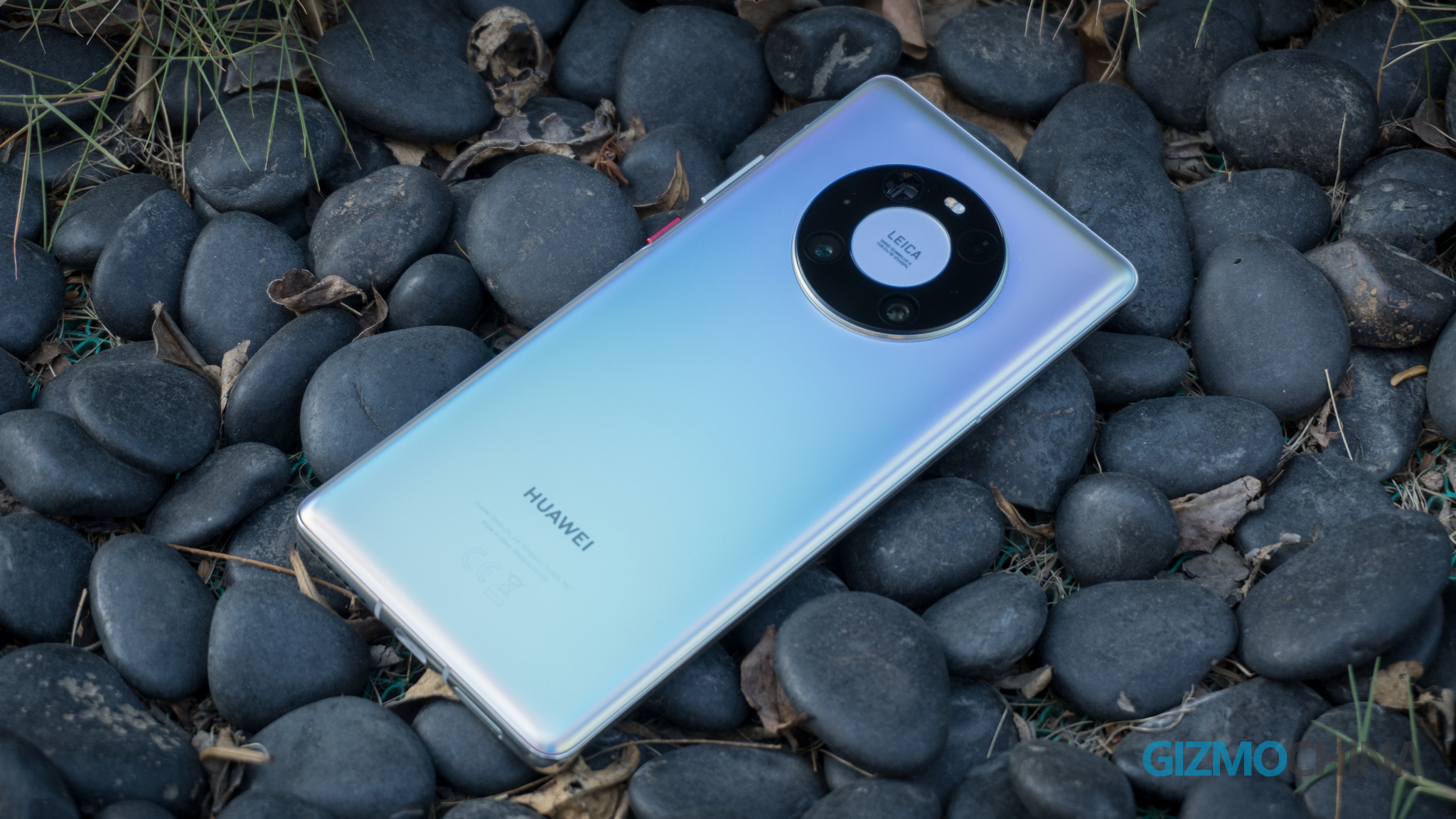
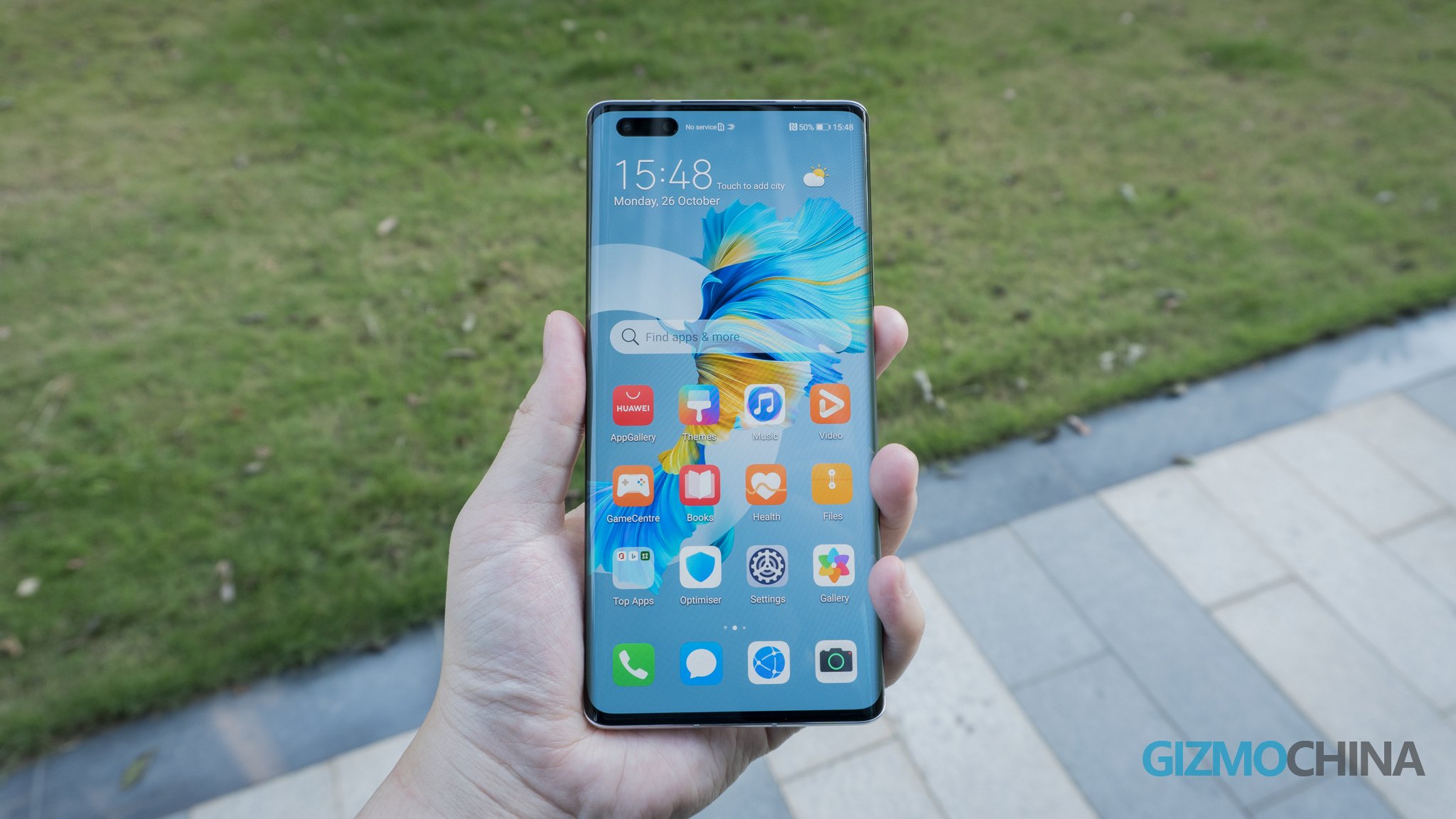
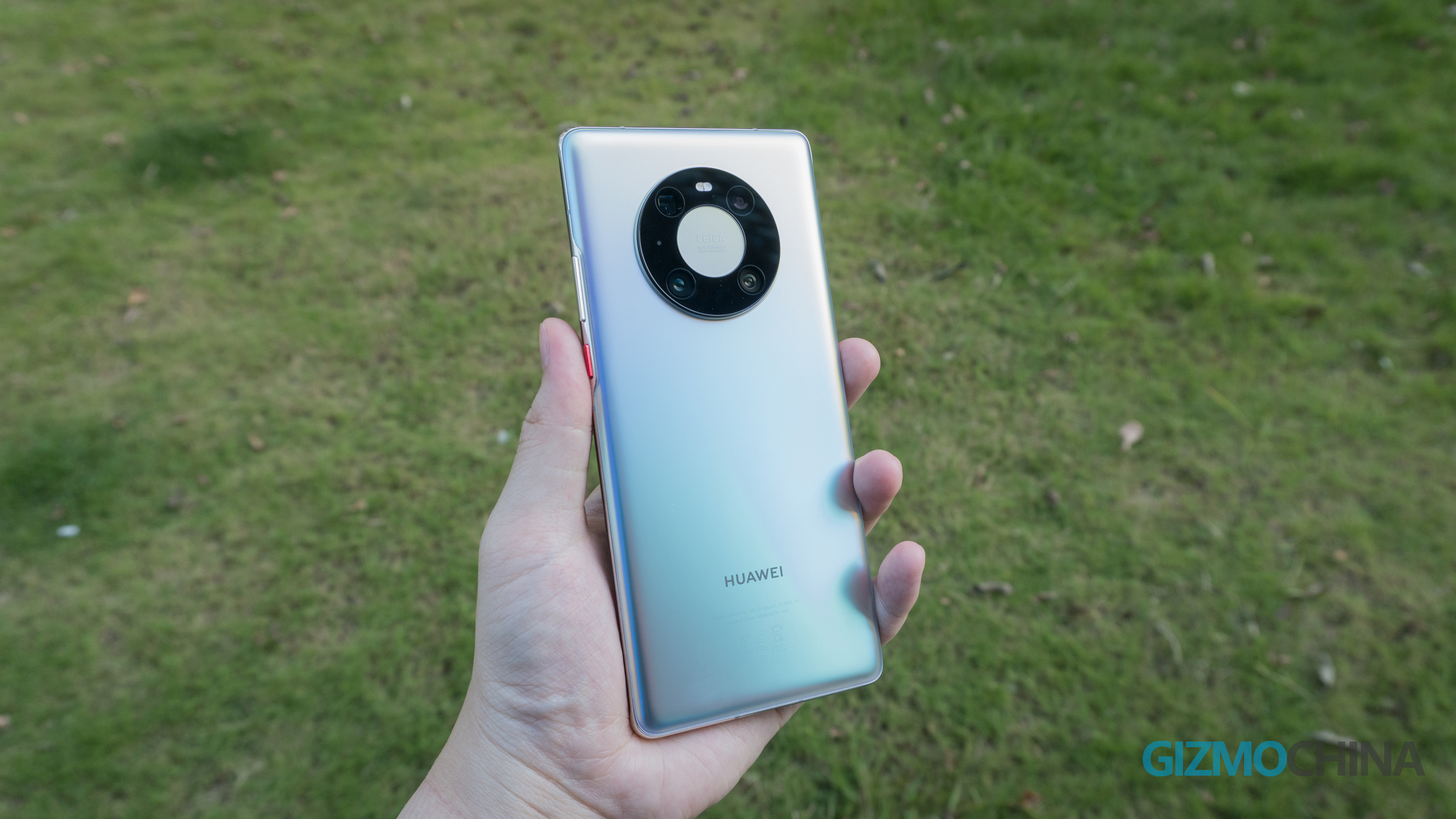
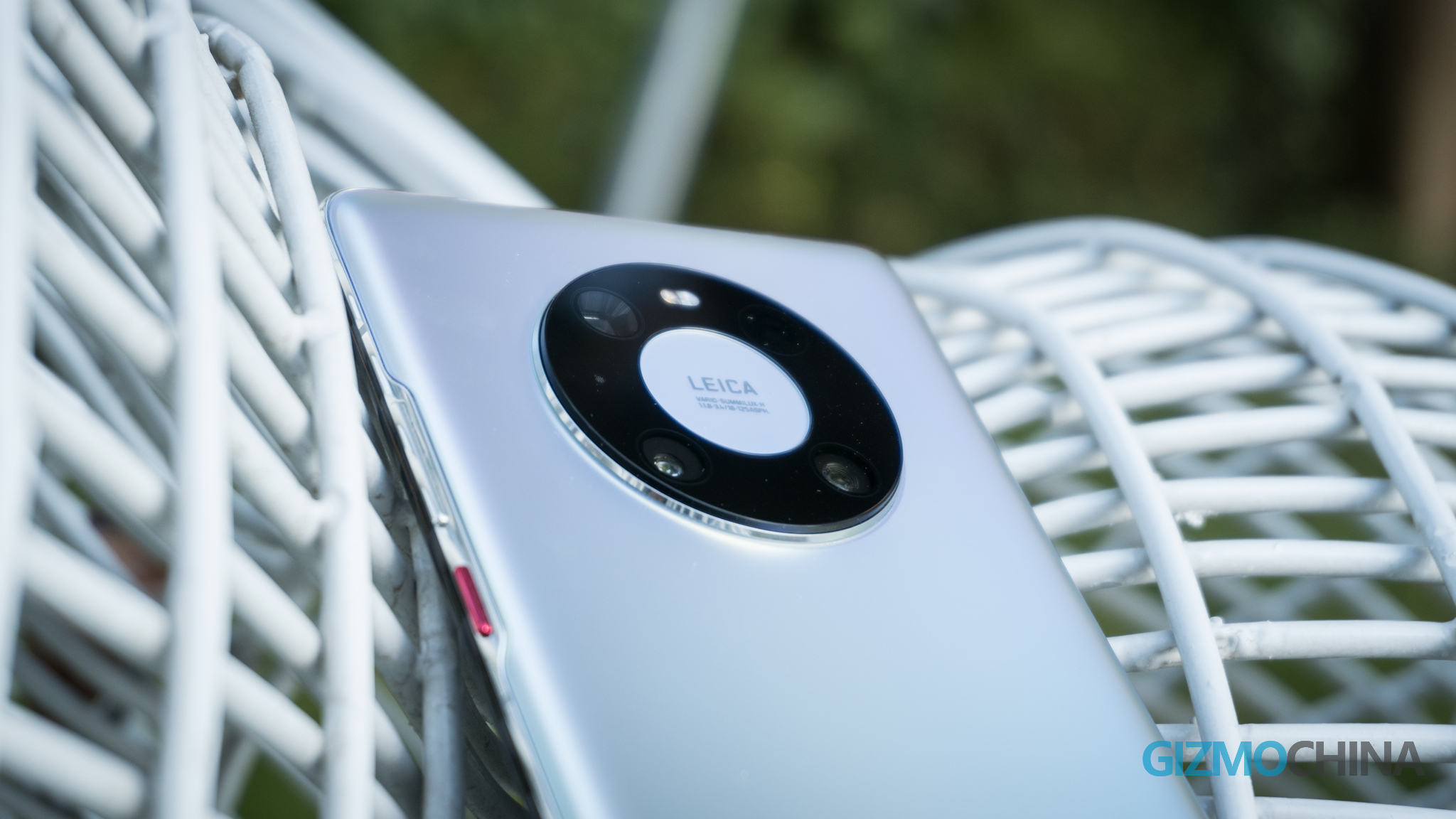
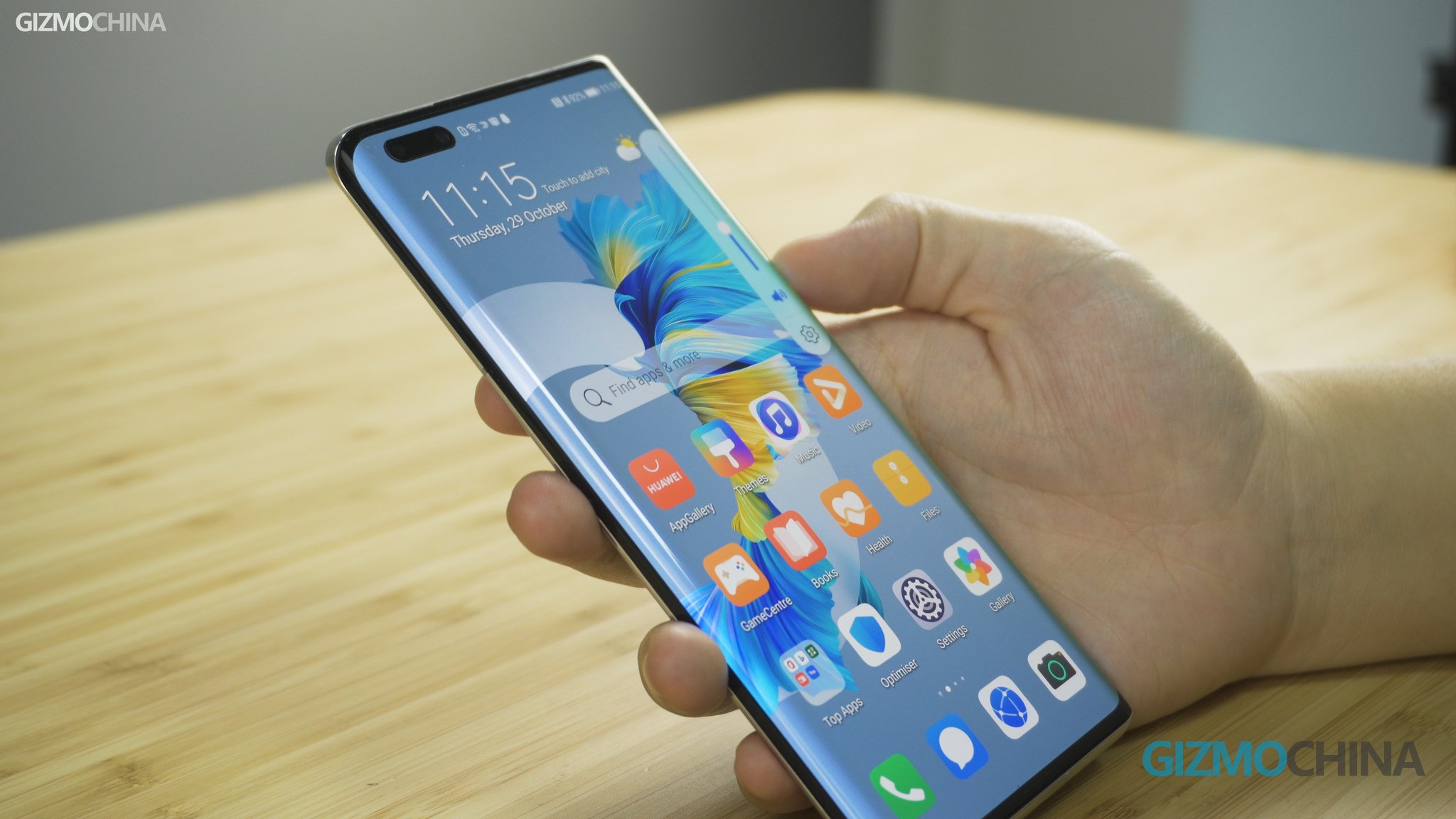
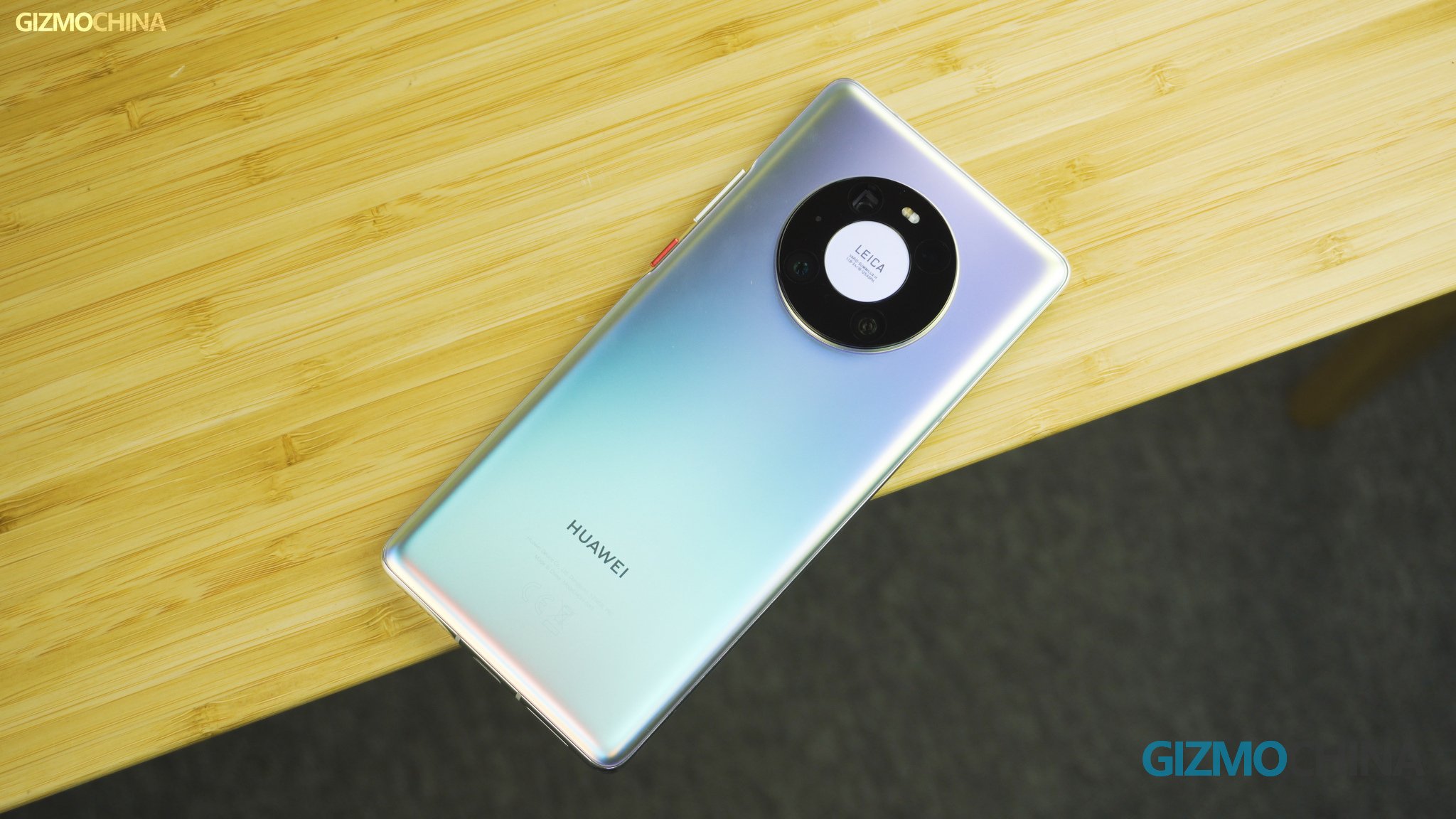
First, let’s look at its appearance. The Mate 40 Pro has inherited the round camera combination of the Mate 30 series but has made some small changes in the design department. It comes in a unique space ring design with the cameras inside the circular housing and the Leica logo at the center. And the model we have is a Mystic silver version using Anti-glare-glass technology. The matte finish creates reflective gradients of light and color without being over-dazzling. Otherwise, there are 5 different color models for you to choose from like pure-toned white and black models, and 2 other crafted vegan leather models in orange and green.
1 of 4
And the front is an edge-to-edge 6.76-inch curved display, featuring a super wide-angle punch-hole selfie camera with a gesture sensor. The setup with the additional sensor is pretty unique, but this also means that the punch-hole occupies a much larger area than most smartphones released in 2020. If you dislike the punch-hole as much as I do, hiding the cutout using the software could be a decent solution to this.
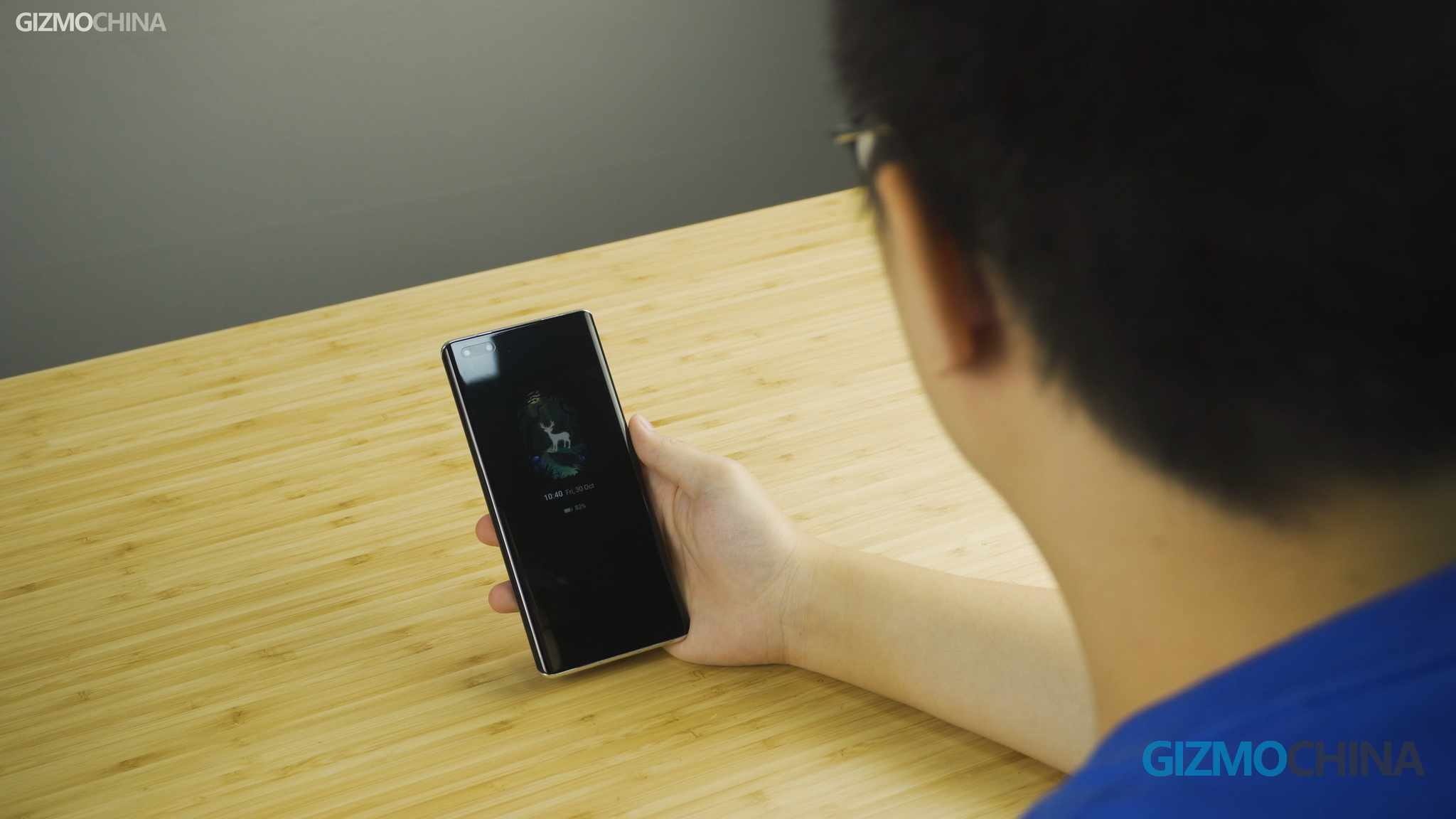
With the gesture sensor, the Mate 40 Pro supports some simple touch-free gesture operations, including the interesting AOD feature which only lights up when you look at the screen.
1 of 2
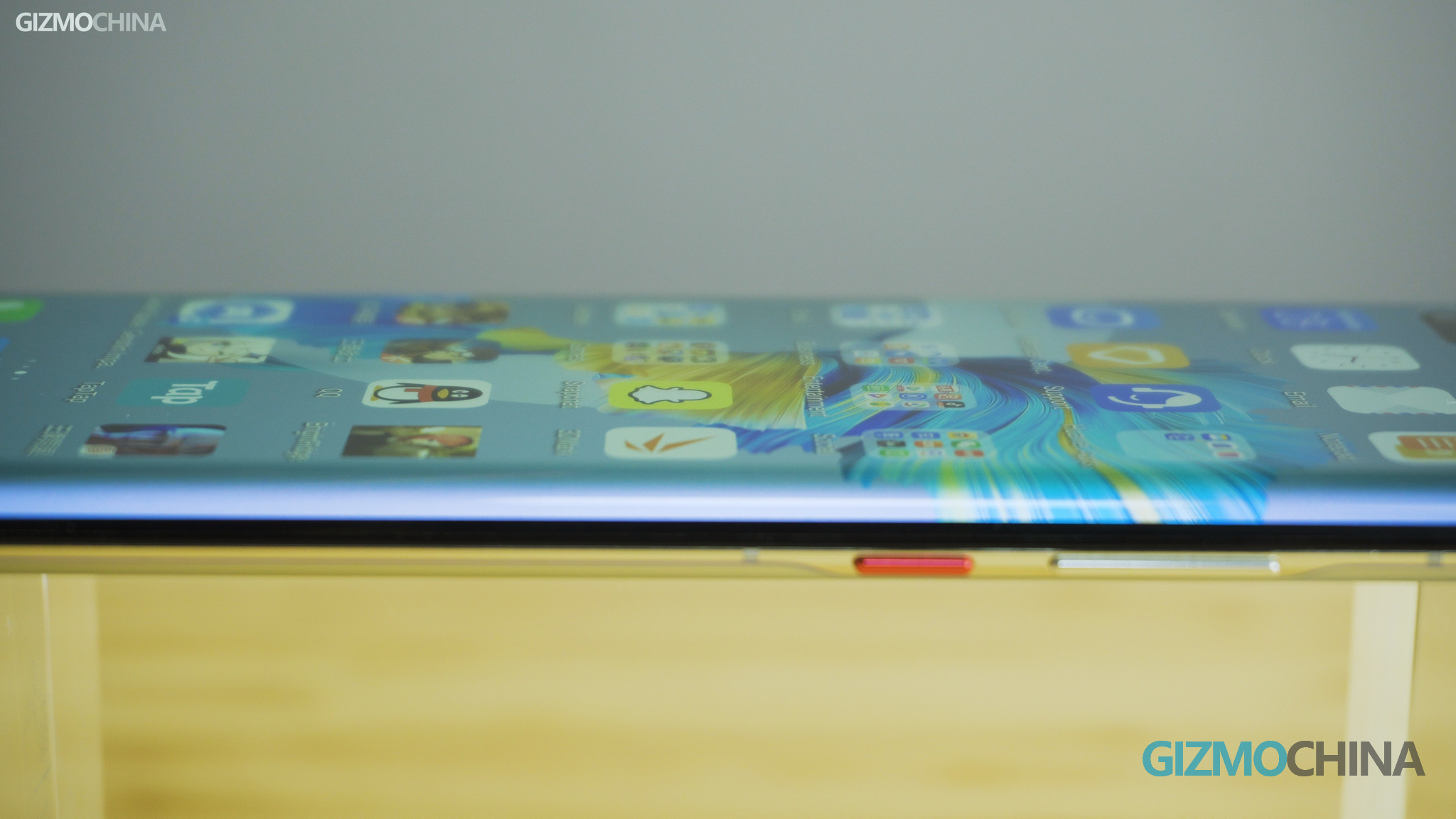
And talking about the display, to be honest, it’s not industry-leading as its other components like the cameras and the Kirin 9000 5G processor. The OLED display features a 1080P+ resolution and 90Hz refresh rate with a 240Hz touch sampling rate, which is good but probably not high-end enough for a 2020 Pro flagship phone. But with the 88 degrees of edgeless curvature, the display does have a strong visual appeal as compared to its flat-screen rivals.
Huawei has also added back physical volume buttons on the new model. So you have physical power and volume buttons on the right side of the Mate 40 Pro. But you can still double-tap on either display edges to pop up the volume slider via software.
Huawei Mate 40 Pro Review: Hardware
In the Mate 40 series, I think the most important upgrade is the brand new Kirin 9000 chipset, which is the first 5nm processor with integrated 5G developed for smartphones. The Octa-core CPU is led by a big core clocking at 3.13 GHz. The 24-core Mali-G78 GPU technically offers higher performance and better power efficiency than the last generation flagship chipset from the brand.
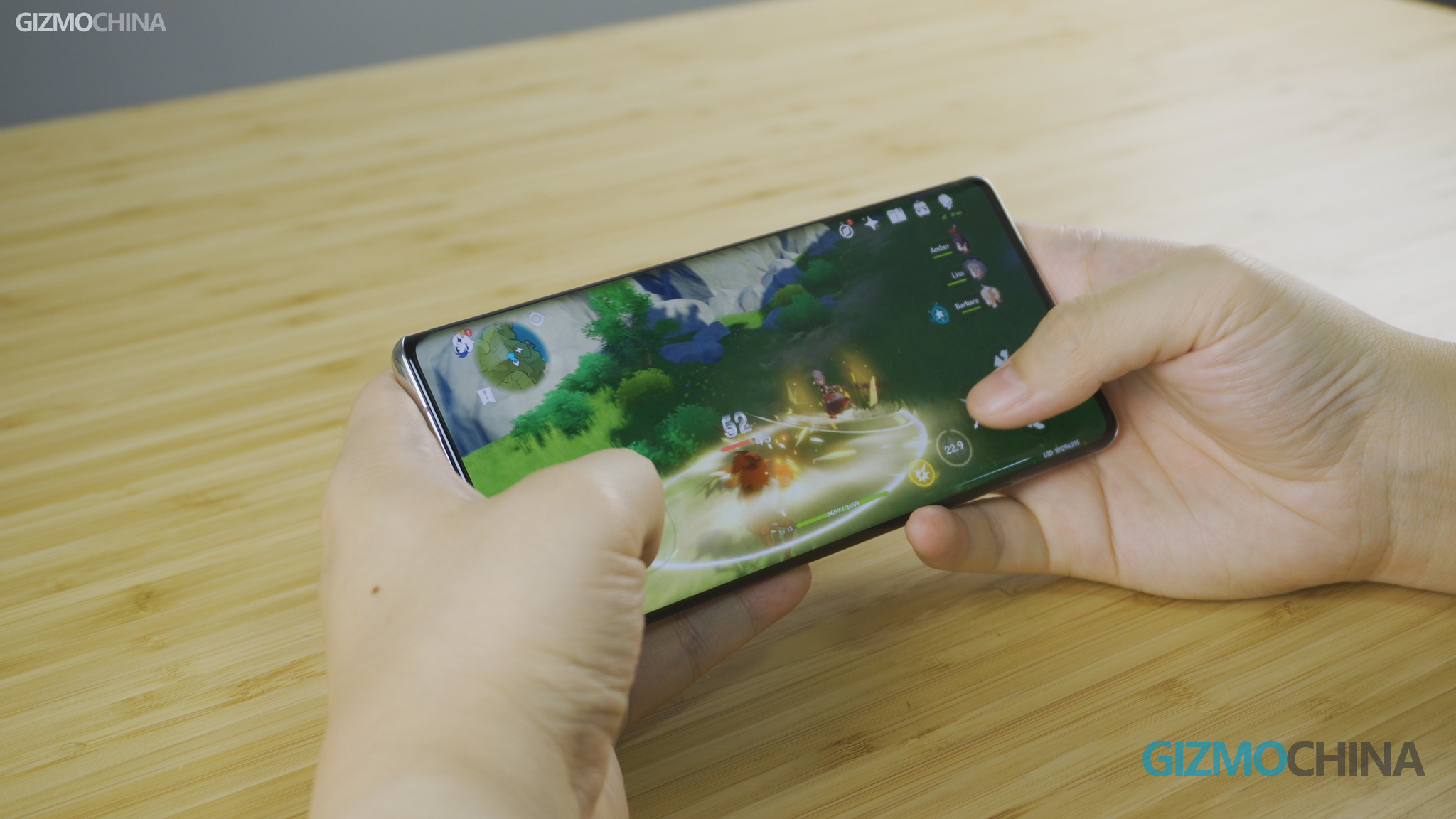
We tried several games on the Mate 40 Pro. Indeed, the chipset could provide extraordinary gaming performance, but so far, we are still waiting for important updates in its software that’ll enable the best performance it can provide. Once Huawei sends out the final software unleashing its full performance, we will show you the full gaming data in a detailed gaming review.
Another detail that is worth noticing is the dual stereo speakers. No matter for media playback or gaming, the immersive experience of the speakers is pretty impressive.
Huawei Mate 40 Pro Review: Cameras
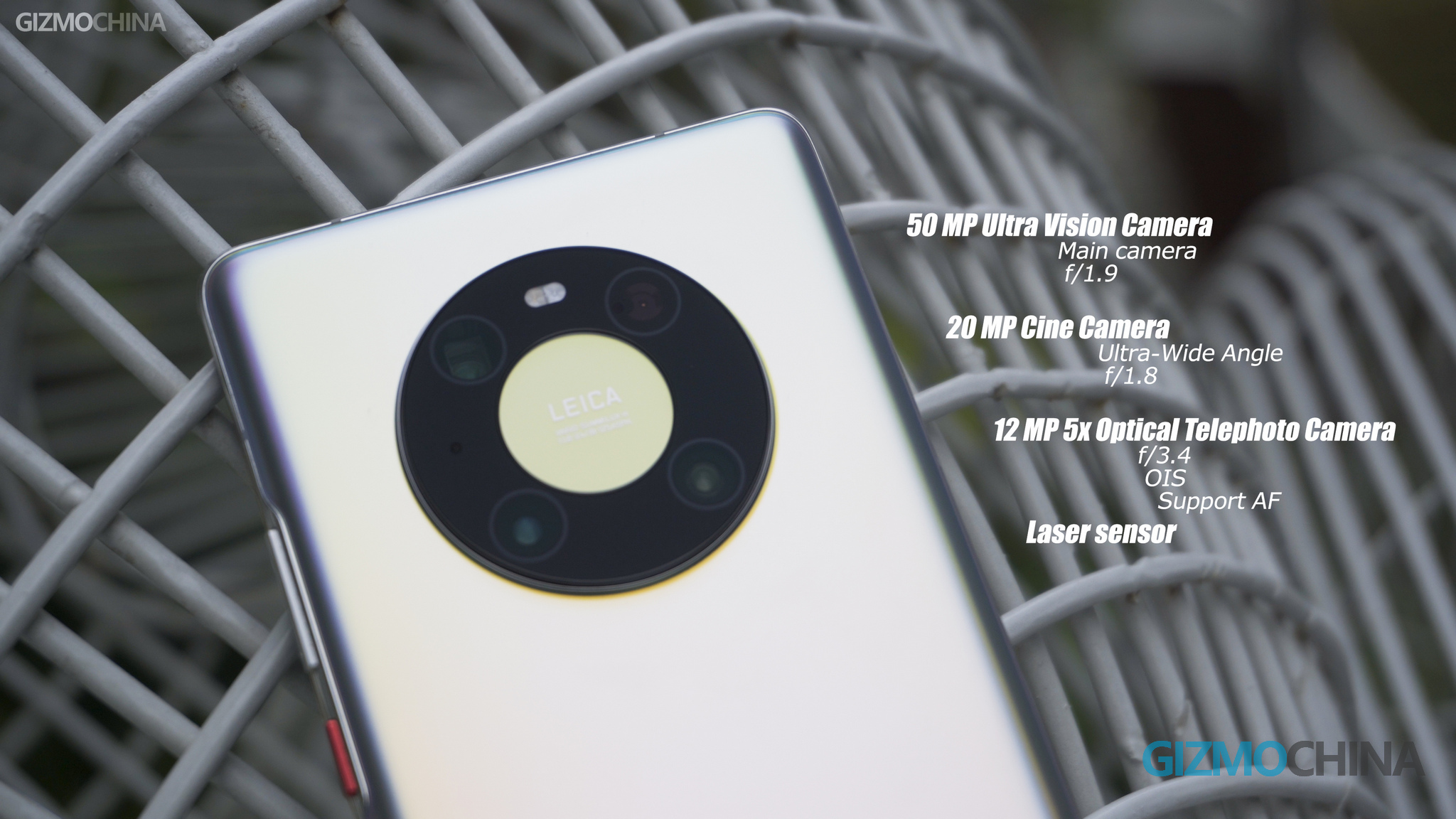
Another highly anticipated upgrade is the cameras. The rear combination mainly contains 3 working cameras and one laser sensor: one 50MP main camera with f/1.9 aperture, a 20MP Wide-angle cine camera with f/1.8 aperture, and another 12MP telephoto camera supporting 5-times optical zoom. The assistant laser sensor doesn’t do imaging work but can support faster and accurate focus for the other cameras.
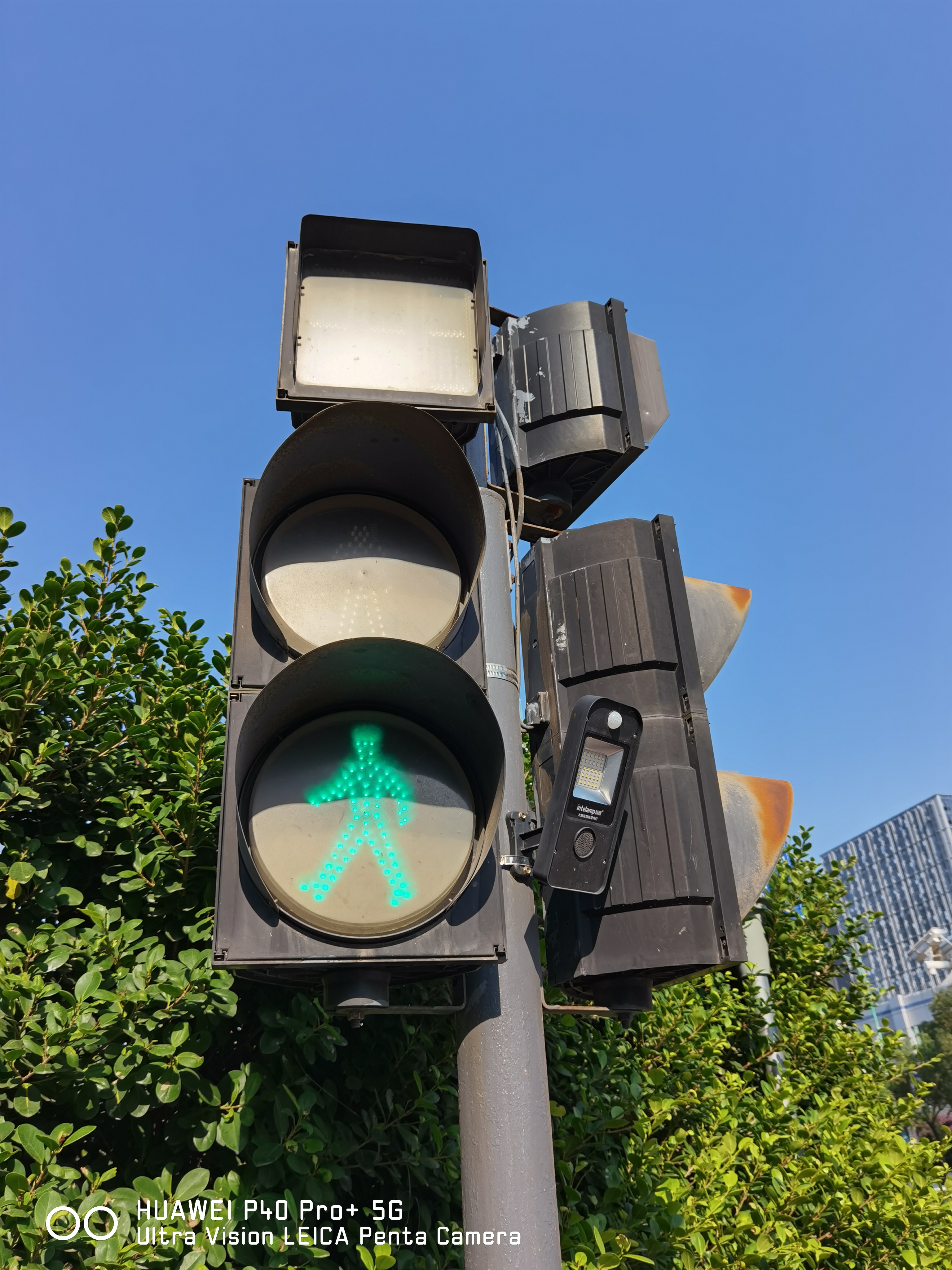
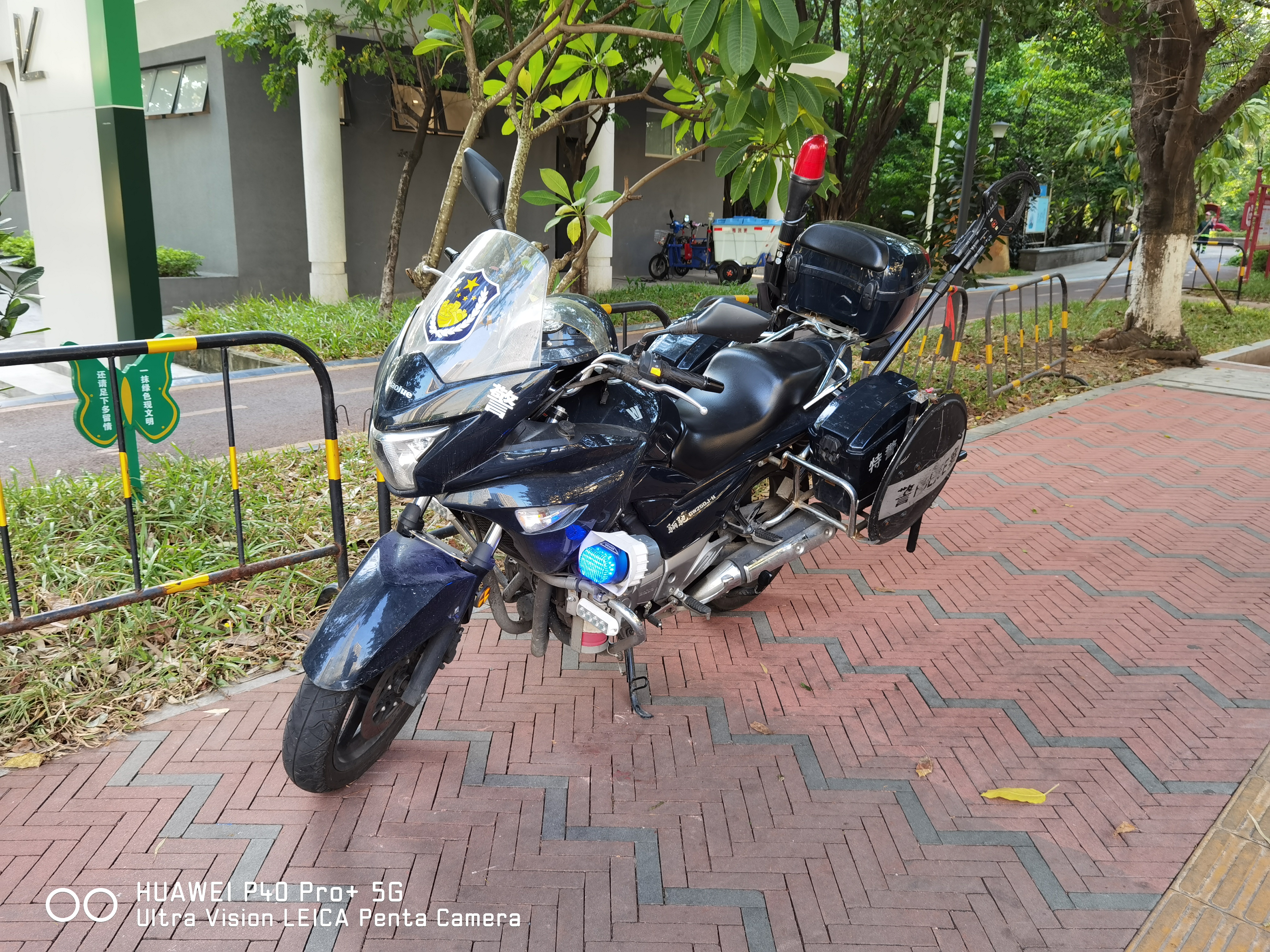
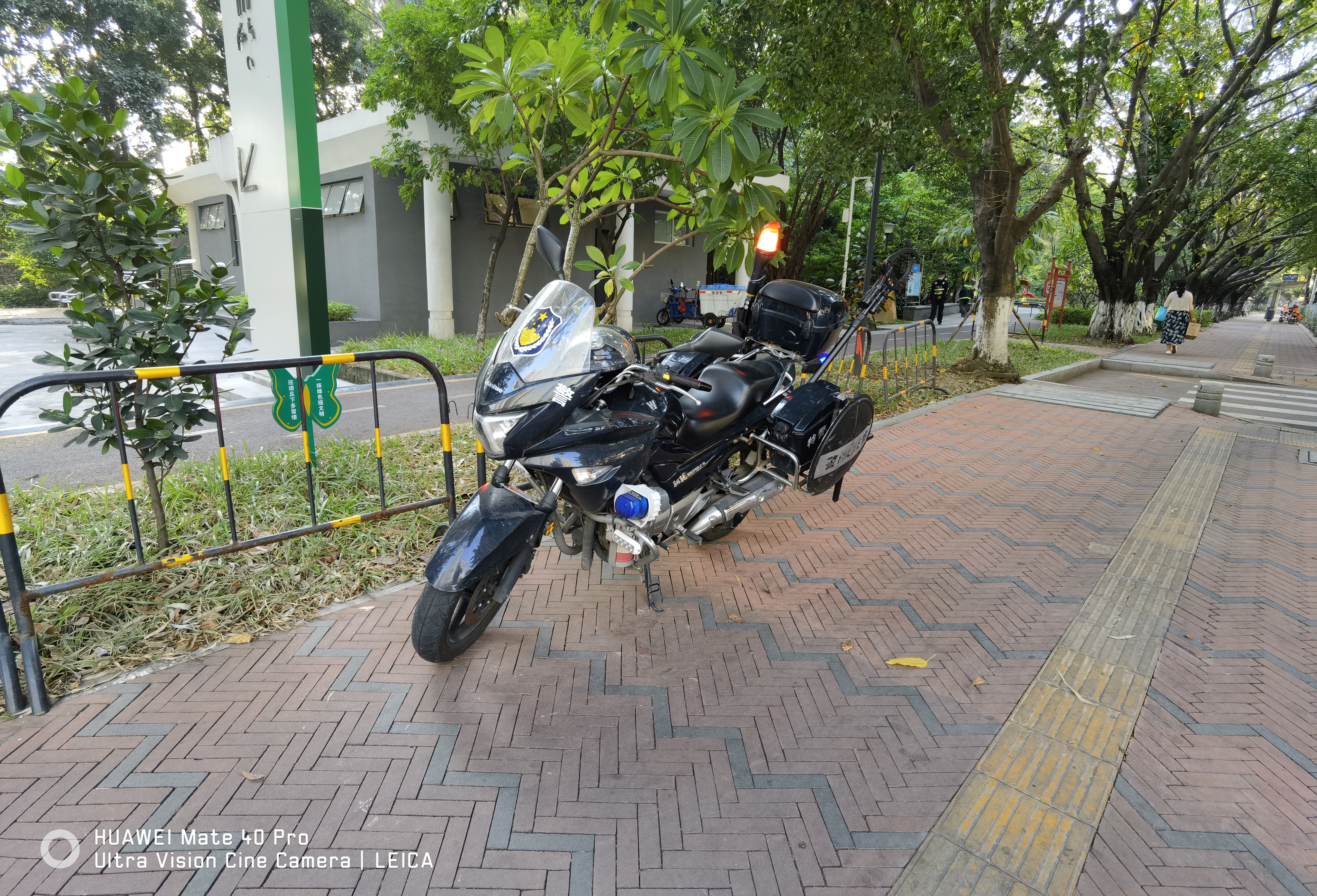
And let’s have a quick look at the camera samples. Here, we take the HUAWEI P40 Pro Plus as a reference, and let’s check out what is improved on the Mate 40 Pro.
First, let’s look at the main camera. Well unsurprisingly, under good lighting conditions, the samples shot on its main camera is almost the same as the P40 Pro Plus, whether in terms of their Leica color optimizations, or the great resolution generated from the same 50MP sensor. While there is no significant difference in the primary cameras of these two models, we still want to mention that the AI color strategy on the Huawei Mate 40 Pro is more accurate to real-life colors and looks a bit closer to true tones. But the end of the day, this is going to be about individual preference, whether you like it more saturated or closer to real-life colors.
1 of 10
Mate 40 Pro main camera
P40 Pro Plus Main Cam (2)
Mate 40 Pro main camera
P40 Pro Plus Main Cam (1)
Mate 40 Pro main camera
P40 Pro Plus Main Cam (5)
Mate 40 Pro main camera
P40 Pro Plus Main Cam (4)
Mate 40 Pro main camera
P40 Pro Plus Main Cam (3)
But when I moved on to night scenes, the gap got a bit obvious. Thanks to the OIS stabilization system, the night photos on the P model were more stable for hand-held photography. However, most night samples had sharper image detail and quality on the Mate 40 Pro. On the other hand, because of the lack of OIS, we had to be more careful using the 5-second capture option to avoid camera shake. But once we were successfully accustomed to the camera shake, the Mate model managed to capture the night photos with correct exposure levels and rich details.
1 of 11
Mate 40 Pro 1x night-5
Mate 40 Pro 1x night
P40 Pro Plus 1x night-4
Mate 40 Pro wide-night
P40 Pro Plus wide-night
Mate 40 Pro 1x night
P40 Pro Plus 1x night-3
P40 Pro Plus 1x night-3
Mate 40 Pro 1x night
P40 Pro Plus 1x night-2
Mate 40 Pro 1x night-2
P40 Pro Plus 1x night
But right now, the Mate 40 pro in our hand is using a non-commercial software version. There will be an update coming soon for improving the camera performance, so we are also looking forward to the new software optimization for the main camera’s night capture. And we found that if we had stable hands during shooting, the image quality of the night samples shot on the Mate model is even better than the P40 Pro Plus featuring excellent exposure.
As for the wide-angle camera, most of the samples shot on the Mate model have more accurate color reproduction. It seems that no matter for the main camera or the wide-angle camera, the camera AI is obviously improved and smarter than what we have on the P40 Pro Plus.
1 of 10
Mate 40 Pro wide
P40 Pro Plus wide angle
Mate 40 Pro wide
P40 ProPlus Wide
Mate 40 Pro wide
P40 Pro Plus wide angle
Mate 40 Pro wide
P40 Pro Plus wide angle
Mate 40 Pro wide-night
P40 Pro Plus wide-night
And the most significant improvement of the wide-angle camera performance is night capture. The low-saturation issue during night photography on the P model is fixed on the new Mate model. The samples shot on the Mate 40 Pro reserved richer colors and better details with sharper images.
Huawei claimed that they optimized their anti-distortion algorithm on the Mate 40. We could not really perceive the improvement with our eyes, although it did have an excellent anti-distortion effect in general.
These two models have different setups for telephoto cameras. The P40 Pro Plus comes with 2 telephoto cameras supporting 3-times and 10-times optical zoom, respectively, while the Mate 40 Pro is equipped with a single 5-times zoom telephoto sensor. But surprisingly we found that the Mate40 Pro did not fall behind its P-series counterpart. From the 3-times zoom sample, the image generated by the main camera of the Mate model has good detail and reserves excellent contrast. On the other hand, the P model’s sample is a bit better in terms of image sharpness.
1 of 10
Mate 40 Pro 1x
P40 Pro Plus 1x
Mate 40 Pro 3x
P40 Pro Plus 3x
Mate 40 Pro 5x
P40 Pro Plus 5x
Mate 40 Pro 10x
P40 Pro Plus 10x
Mate 40 Pro 10x (2)
P40 Pro Plus 10x
In the 5-times zoom department, the Mate 40 Pro model clearly took the lead. It has much higher saturation and more accurate color reproduction. And the 12MP resolution of this 5-times zoom camera also guarantees better clarity. And when we move on to the 10-times zoom samples, the P model, unsurprisingly, claimed its dominance. Indeed, the P model’s sample has slightly better detail and more reliable exposure. But the Mate’s samples didn’t fall behind too much in image clarity.
And we also tried night photography using the telephoto cameras. The night performance of the Mate model’s telephoto camera is much better than what we had expected. It managed to capture excellent photos with good noise control and sharpness than what we got on the P series model. Whether it was for the 5-times or 10-times zoom samples, the Mate model’s night camera production is clearly superior to the P40 Pro Plus.
As for its videography skills, both of them can shoot up to 4k 60fps video. Check out our review video (added at the top of this Mate 40 Pro review article) to see for yourself how both of them fare in the videography department.
The Mate 40 Pro also has better battery performance and faster-charging efficiency.
Huawei Mate 40 Pro Charging
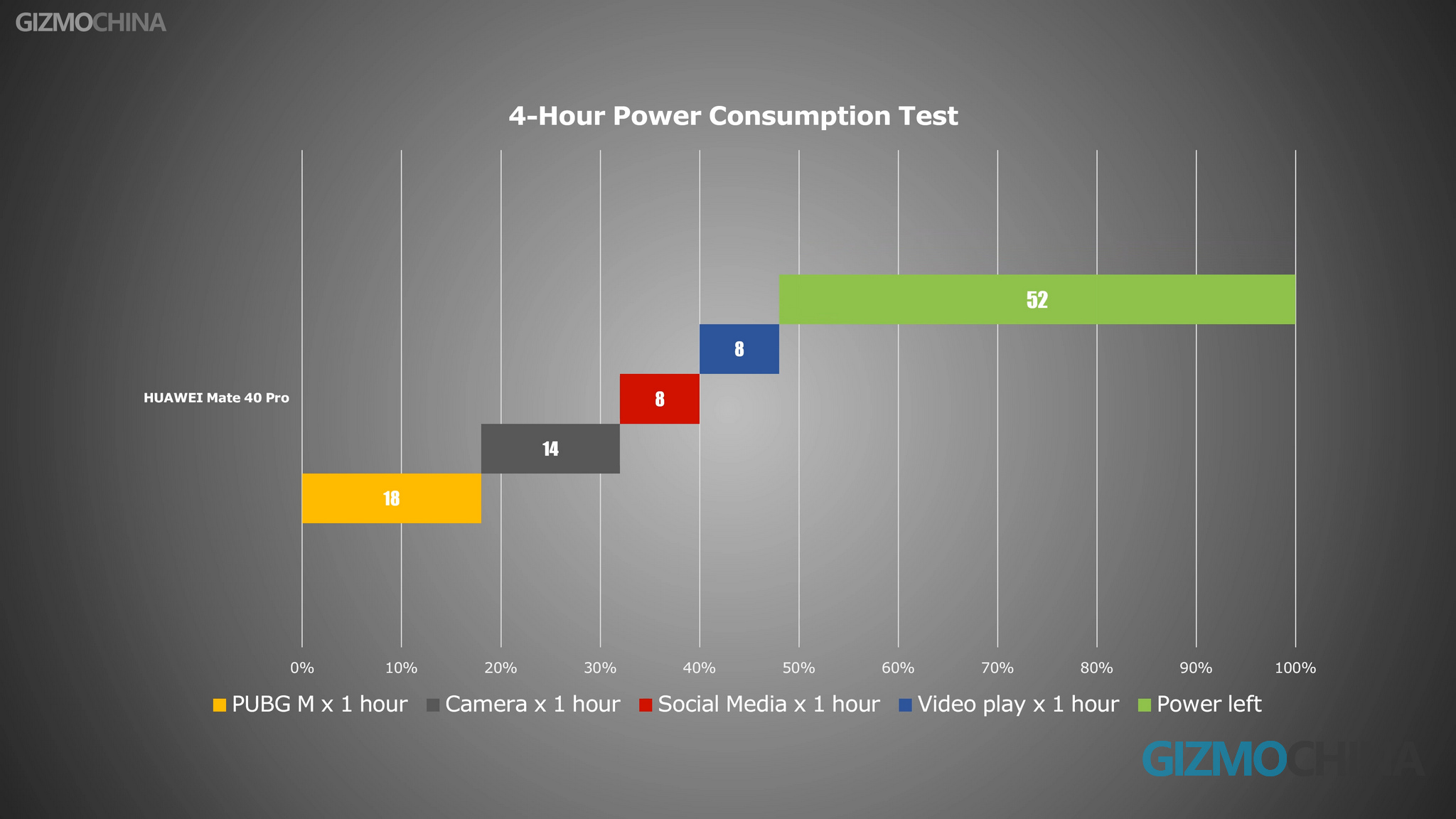
To learn more about its battery performance, we did a 4-hour power-consumption test connected to the 5G network. In one-hour of PUBG gaming, it consumed 18% of the power. Another 14% power dropped after an hour of camera use; 8% after one hour of social media use and a further 8% drop in the battery after one-hour of video playback. After the test, there was 52% of power left.
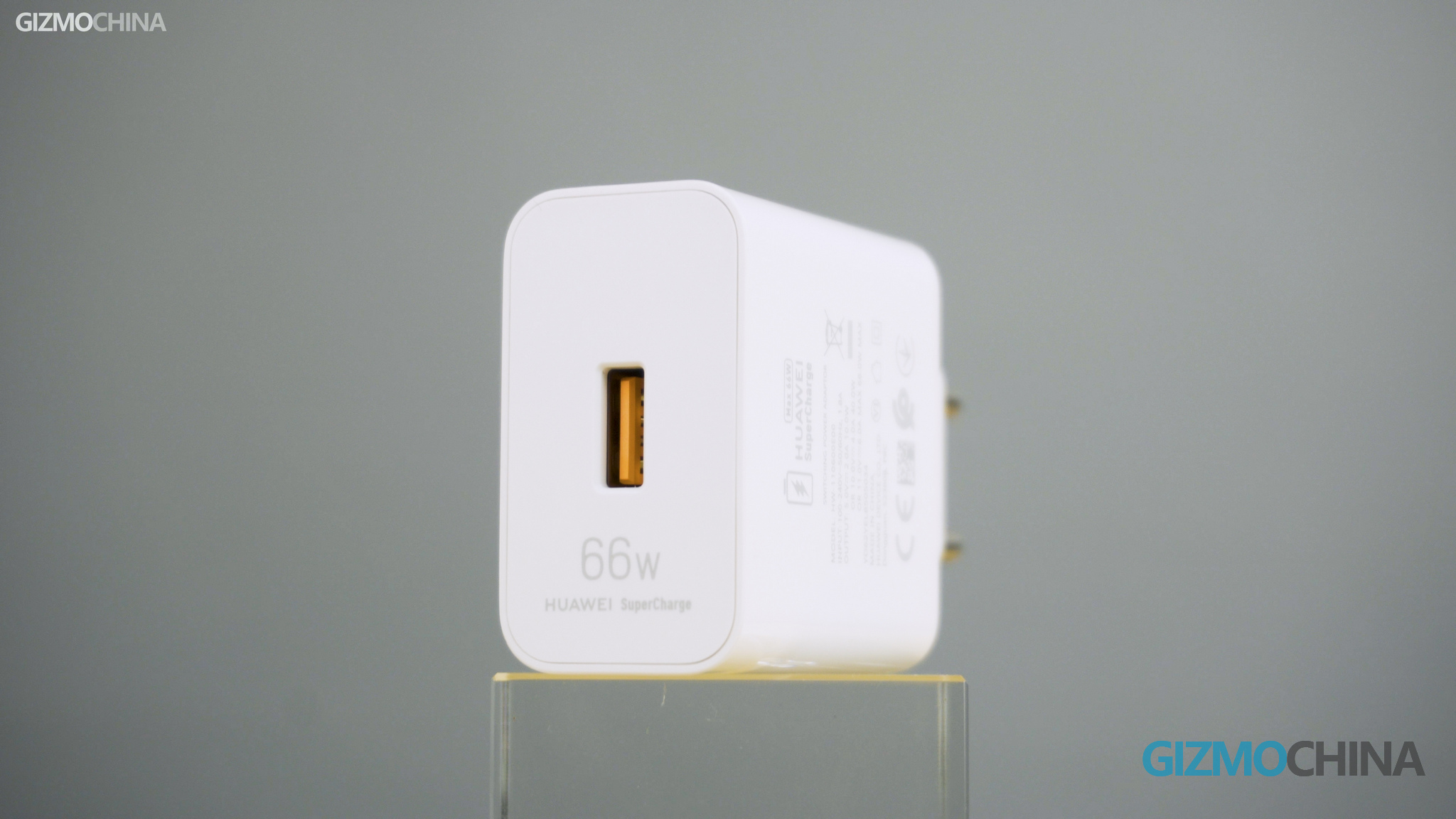
The new charging solution brings 66W charging efficiency for wired charging and 50W wireless charging. In the full-charge test, it took us 45 mins to get to 100% in wired charging.
Huawei Mate 40 Pro Review: Verdict
As the most influential Android phone released in the second half of 2020, the Mate 40 series still successfully completed its mission of bringing industry-leading hardware to the Android world, even under great pressure from the US ban. Although the Mate 40 pro is not an all-round-leading flagship, Huawei has still maintained its industrial-leading position with its fantastic camera system. Compared to the iPhone’s camera strategy, Huawei is more focused on making mobile photography and filming more delightful for ordinary users instead of serving professionals.
So this was our first part of the Mate 40 pro review on Gizmochina. Of course, the full review of this beast isn’t complete without a full-scale camera competition with the other top camera flagships in the market. Just tell us below which models you want to see in the upcoming camera comparison.
Samsung has been beta testing One UI 3.0 on a number of its smartphones for a while now. However, the company is yet to officially unveil the latest version of its mobile software. Usually, the electronics giant showcases its new software at Samsung Developer Conference (SDC) but this year’s show was canceled due to the pandemic. Nevertheless, the company now has a dedicated page on one of its websites teasing some of the features.
Samsung’s One UI 3.0 based on Android 11 software is currently available for a handful of flagship devices in beta form. Further, the builds are limited to a few users in certain regions only. Above all, the company is yet to reveal the list of eligible devices and update roadmap as Huawei did recently for EMUI 11 & Magic UI 4.0.
Anyway, we now finally know some of the features of One UI 3.0, thanks to a dedicated page on Samsung’s Malaysian website spotted by XDA Developers. This page also reveals the update to be available starting November. Hence, we can expect the South Korean tech giant to begin rolling out stable builds in the coming weeks.
Redesigned Notification Panel & Quick Panel
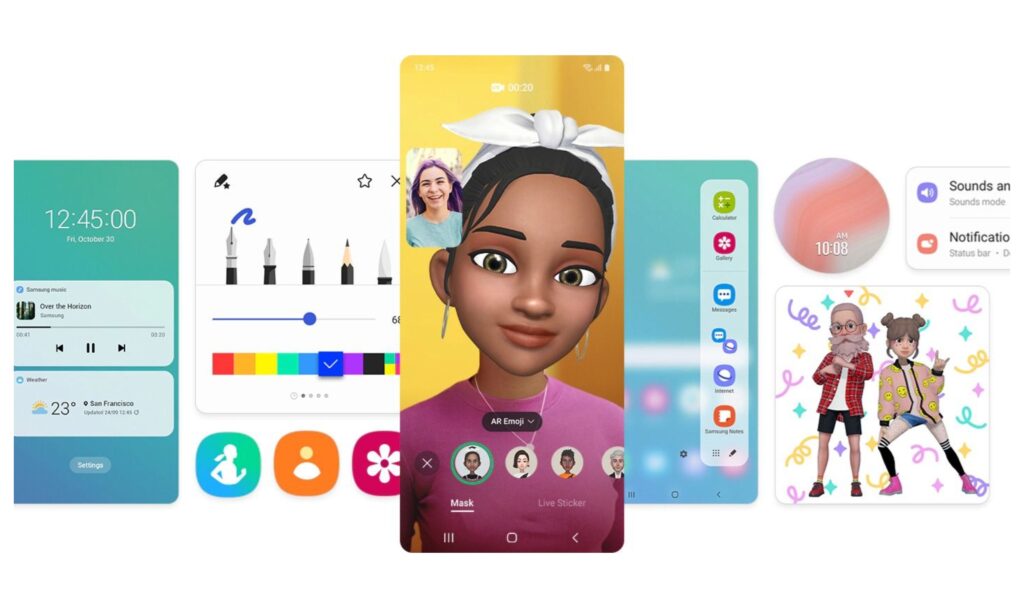
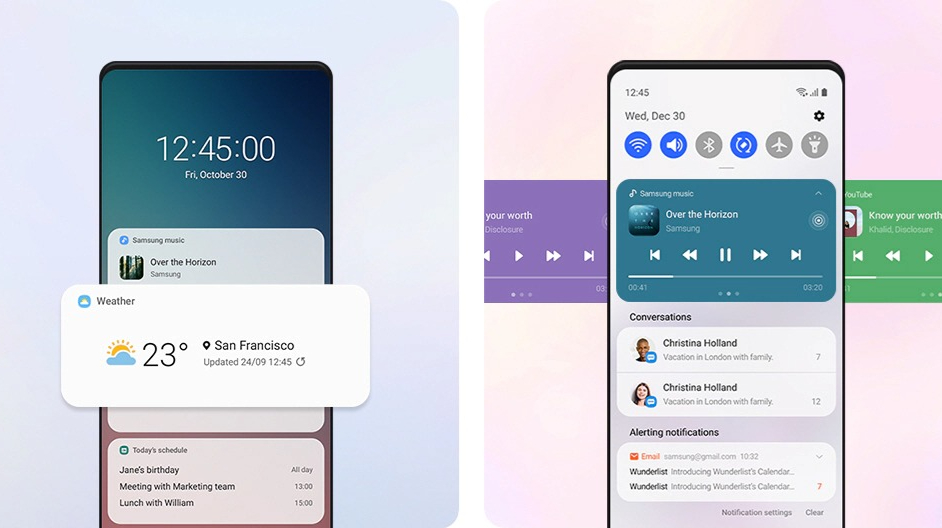
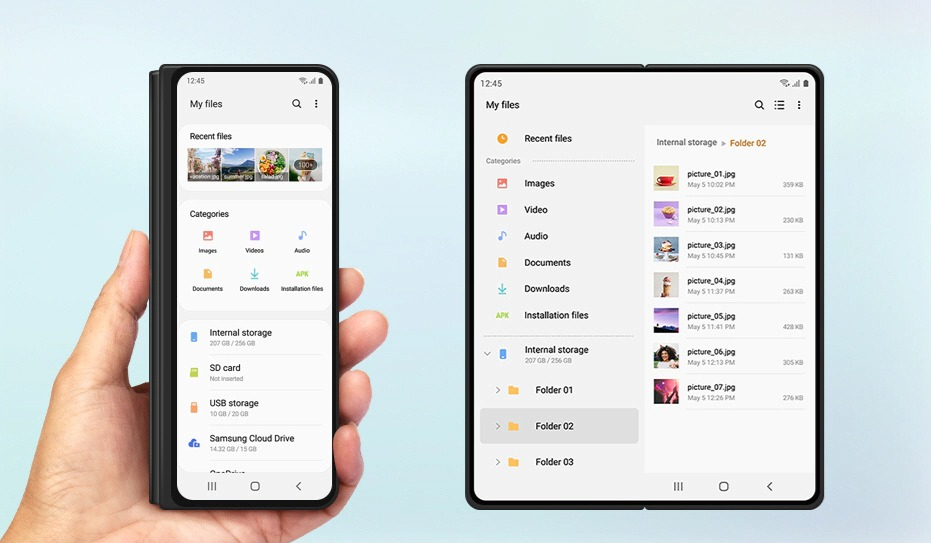
As for features, Samsung has listed some of them with images. First and foremost, the company has implemented Android 11 media controls in the quick panel. Hence, users will be able to switch between music/video playback from multiple apps with ease. Also, the notification shade has been redesigned to show more content.
Further, the company talks about support for various screen sizes. This will be useful in devices like Galaxy Z Fold2. In this device, the cover display will show app content in the standard mobile view but when unfolded, app content will be optimized for tablet view. The page also confirms the availability of Dual Preview and Rear Cam Selfie features for the original Galaxy Fold with One UI 3.0 update.
Full-screen Video Calls
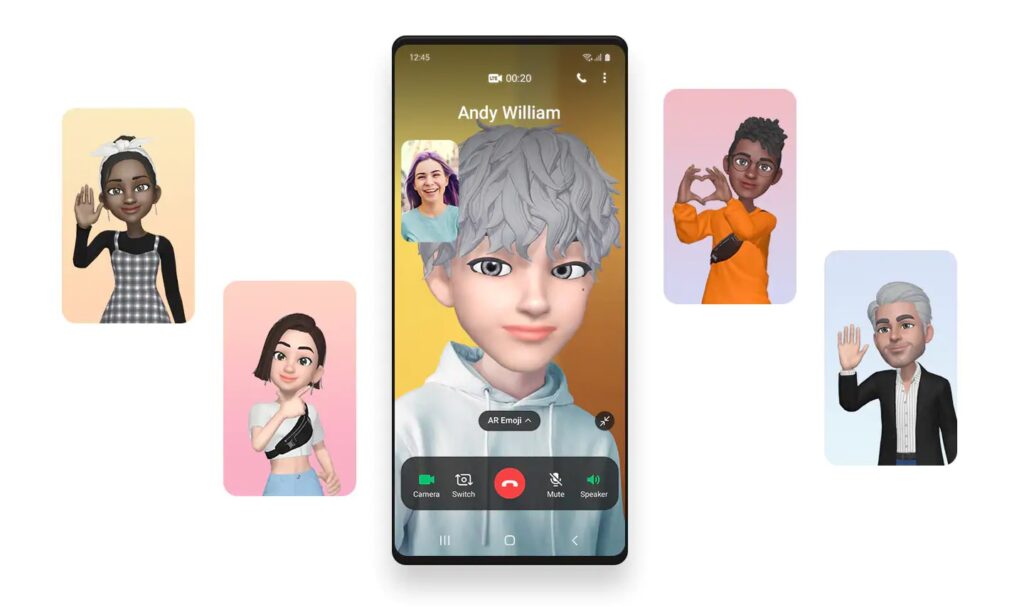
To keep users’ lock screen always fresh, the new One UI update will bring 5 new categories for Dynamic Wallpapers, increasing the total count to 10. And last but not least, Samsung phones will finally support full-screen video calls in the default phone app.
In September, Huawei officially announced EMUI 11, the latest version of its mobile operating system based on Android 10 at the HUAWEI DEVELOPER CONFERENCE. Since then, the company has been rolling out beta releases to certain devices across the world. Now, more than a month later, the Chinese telecom giant has finally confirmed eligible devices as well as shared the update roadmap/timeline for its home country.
Like any Chinese smartphone maker, Huawei always releases the latest software update first in its homeland China. The same is the case for EMUI 11. As per the company, a total of 37 HUAWEI and HONOR branded smartphones and tablets will be updated.
That said, it is worth noting that this update comes as Magic UI 4.0 for HONOR smartphones, which is nothing but EMUI 11 with some minor tweaks. Also, the roadmap shared by the company not only includes the timeline for stable rollout but also closed and open beta.
EMUI 11 Eligible/Supported Devices
HUAWEI P Series
HUAWEI P40
HUAWEI P40 Pro
HUAWEI P40 Pro+
HUAWEI P30
HUAWEI P30 Pro
HUAWEI Mate Series
HUAWEI Mate 30
HUAWEI Mate 30 5G
HUAWEI Mate 30 Pro
HUAWEI Mate 30 Pro 5G
PORSCHE DESIGN HUAWEI Mate30 RS
HUAWEI Mate 20
HUAWEI Mate 20 Pro
PORSCHE DESIGN HUAWEI Mate20 RS
HUAWEI Mate 20X
HUAWEI Mate 20X 5G
HUAWEI Mate X
HUAWEI Mate Xs
HUAWEI nova Series
HUAWEI nova7
HUAWEI nova7 Pro
HUAWEI nova6
HUAWEI nova6 5G
HUAWEI nova5 Pro
HUAWEI MatePad Series
HUAWEI MatePad Pro
HUAWEI MatePad Pro 5G
HUAWEI MatePad 10.8
HUAWEI MediaPad Series
HUAWEI MediaPad M6 10.8
HUAWEI MediaPad M6 8.4
HUAWEI MediaPad M6 Turbo
Magic UI 4.0 Eligible/Supported Devices
HONOR Number Series
HONOR 30
HONOR 30 Pro
HONOR 30 Pro+
HONOR 20
HONOR 20 Pro
HONOR V Series
HONOR V30
HONOR V30 Pro
HONOR V20
HONOR Magic Series
HONOR Magic2
EMUI 11 & Magic UI 4.0 Update Roadmap for China
October 21, 2020 – Closed Beta Recruitment
HUAWEI P30
HUAWEI P30 Pro
October 26, 2020 – Open Beta Rollout
HUAWEI MatePad 10.8
October 28, 2020 – Open Beta Rollout
HUAWEI nova7
HUAWEI nova7 Pro
HUAWEI nova6
HUAWEI nova6 5G
HONOR V30
HONOR V30 Pro
HONOR 30
HONOR 30 Pro
HONOR 30 Pro+
Early November 2020 – Stable Rollout
HUAWEI P40
HUAWEI P40 Pro
HUAWEI P40 Pro+
HUAWEI Mate 30
HUAWEI Mate 30 5G
HUAWEI Mate 30 Pro
HUAWEI Mate 30 Pro 5G
PORSCHE DESIGN HUAWEI Mate30 RS
HUAWEI MatePad Pro
HUAWEI MatePad Pro 5G
Mid-November 2020 – Closed Beta Recruitment
HUAWEI Mate 20
HUAWEI Mate 20 Pro
PORSCHE DESIGN HUAWEI Mate20 RS
HUAWEI Mate 20X
HUAWEI Mate 20X 5G
HUAWEI Mate X
HUAWEI nova5 Pro
HONOR 20
HONOR 20 Pro
HONOR V20
HONOR Magic2
HUAWEI MediaPad M6 10.8
HUAWEI MediaPad M6 8.4
HUAWEI MediaPad M6 Turbo
Mid-November 2020 – Open Beta Rollout
HUAWEI Mate Xs
Having said that, we will publish a separate article for EMUI 11/Magic UI 4.0 global update timeline when Huawei will release it.
Micromax is all set to launch its In-series smartphones in India on Nov. 3. The Indian brand has been teasing the features of the upcoming phones, but it has really any good information on their specifications. In an interview with popular YouTuber Technical Guruji, Micromax co-founder Rahul Sharma gave the first look of the upcoming In-series phone and shared some vital details.
The rumor mill is speculated that Micromax will be announcing the Micromax In 1 and Micromax In 1A phones on Nov. 3. In the interview, Sharma neither revealed the name nor confirmed the number of phones that will be announced next week. However, he did give a first look at the new In-series phone.
As can be seen in cropped images taken from Technical Guruji’s YouTube video, the upcoming In-series phone will be available in white and green colors. As it is known, the green one has an X-pattern on its rear.
The new phone has a traditional rear-facing fingerprint scanner. At the upper-left corner is a rectangle-shaped camera module that has a 48-megapixel main camera. The camera module seems to be housing four cameras and an LED flash. Other screengrabs show that the phone’s display has a top-center camera cutout. Below shown is a new tweet that hints at the presence of a punch-hole display on the device.
The upcoming Micromax phones seem to be powered by Helio G35 and Helio G85 chipsets. These phones are expected to be priced between Rs 7,000 (~$94) and Rs 15,000 (~$201) in the country.
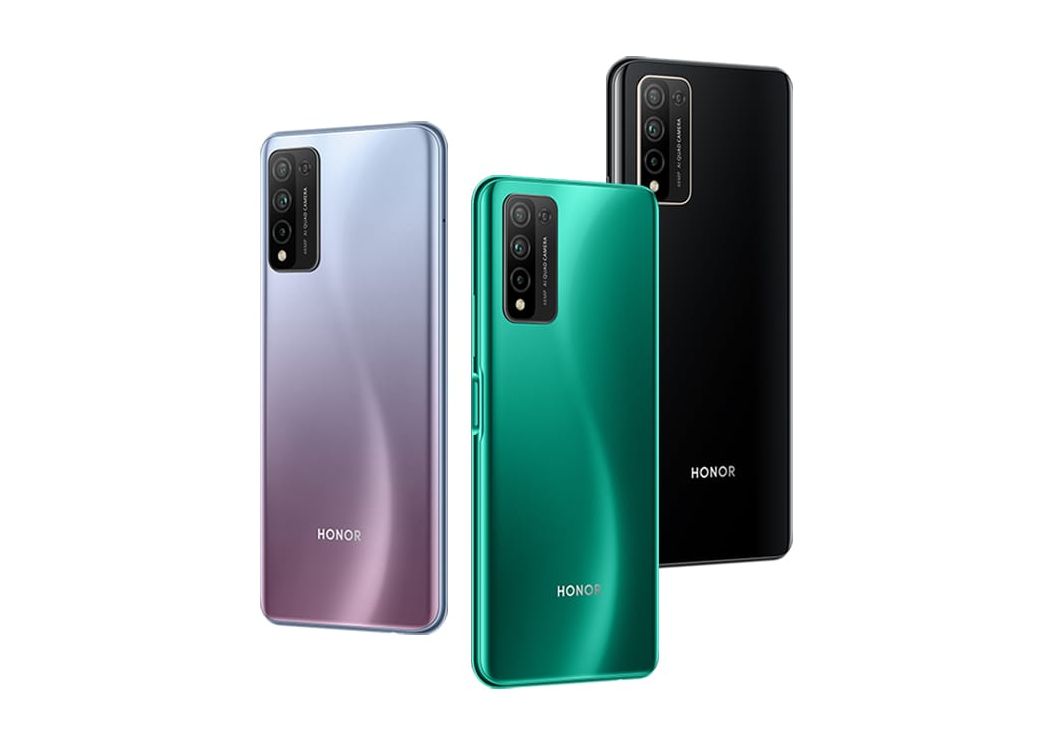
The Honor 10X Lite mid-range phone is now official in Saudi Arabia. It comes with an impressive display with a punch-hole design and it has a 48-megapixel quad-camera system on its rear. The phone comes with fast charging support for its huge battery.
Honor 10X Lite specifications and features
The Honor 10X Lite has 165.65 x 76.88 x 9.26mm and it weighs 206 grams. It has a 6.67-inch IPS LCD screen that delivers an aspect ratio of 20:9 and a Full HD+ resolution of 1080 x 2400 pixels. The phone offers a screen space of 90.3 percent, claims the company. The dated Kirin 710 chipset is present under the hood of the Honor 10X Lite. The SoC is coupled with 4 GGB of RAM.
The Honor 10X Lite has an internal storage of 128 GB and it has a microSD card for additional storage. For capturing selfies, it has a front camera of 8-megapixel. The backside of the Honor 10X Lite has a quad-camera system that includes a 48-megapixel main camera, an 8-megapixel superwide lens, a 2-megapixel depth sensor, and a 2-megapixel macro camera.
The Honor 10X Lite has a 5,000mAh battery to keep the lights on. It is assisted by 22.5W SuperCharge fast charging technology. The phone boots to Android 10 OS and Magic UI 3.1. Instead of Google’s apps and services, the phone comes with support for Huawei Mobile Services (HMS). It has a side-facing fingerprint sensor, and its other features include dual 4G VoLTE, Wi-Fi 802.11 b/g/n, Bluetooth 5.1, GPS, NFC, USB-C, and a 3.5mm audio jack.
Honor 10X Lite pricing
The Honor 10X Lite has landed in Saudi Arabia for SAR 799 (~$213). It comes in three colors such as Icelandic Frost, Midnight Black, and Emerald Green. The handset is also arriving in Russia. There is no word on other markets that will be treated with the Honor 10X Lite.
Earlier this month, Vivo confirmed some of the key details of the Vivo V20 SE smartphone in India when it announced the Vivo V20 smartphone. The pricing and availability of the V20 SE was not confirmed for the Indian market. Recently, premature retailer listings of the V20 SE appeared to reveal its pricing as Rs 20,990 (~$281). A new report by 91mobilesstates that it has confirmed details on the launch date and pre-booking offers for the Vivo V20 SE. According to the report, the Vivo V20 SE is slated to debut in India on Nov. 2.
Vivo V20 SE price in India and pre-booking offers
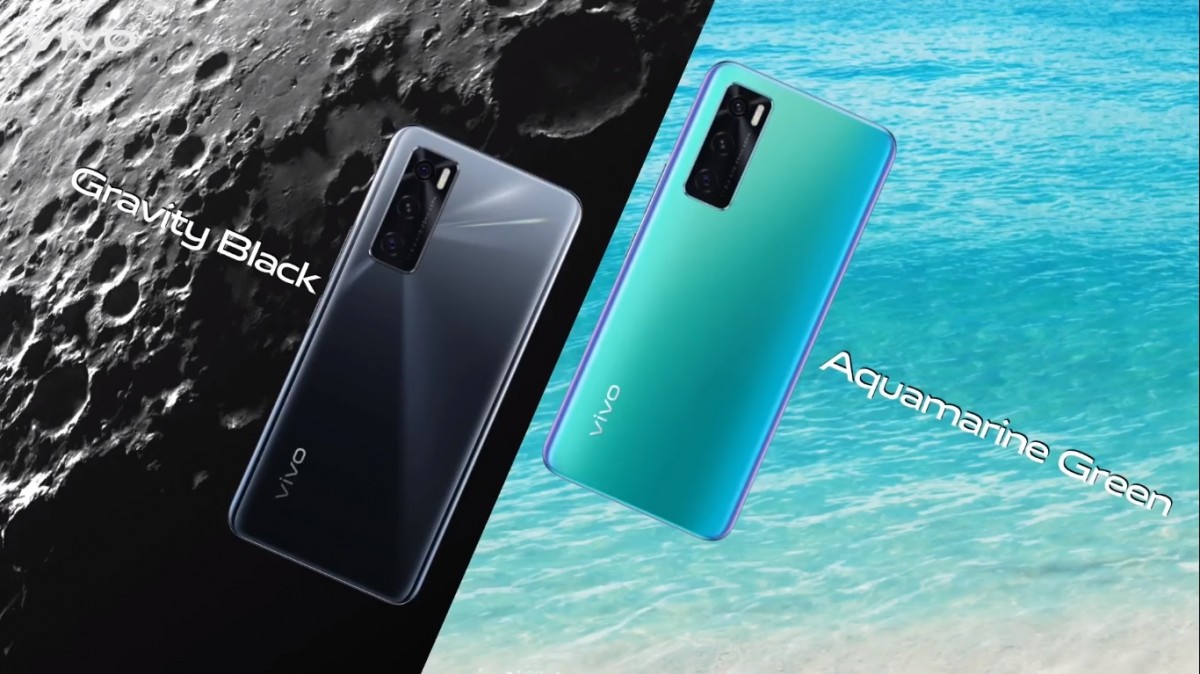
The Vivo V20 SE is expected to carry a price tag of Rs 20,990. It will be available in Gravity Black and Aquamarine Green. A promotional poster shared by the publication reveals that there will be 10 percent cashback owners for customers of ICICI Bank, Kotak Bank, Bank of Baroda.
Buyers will be also an advantage of other offers such as the Vivo upgrade program, one-time screen replacement, and Rs 10,000 worth of benefits from Jio and Vi. The handset is now up for pre-orders through offline channels.
The Vivo V20 SE has a 6.44-inch S-AMOLED display with support for a Full HD+ resolution and a 20:9 aspect ratio. The Snapdragon 665 mobile platform powers the phone with 8 GB of RAM. It has 128 GB of native storage and a microSD card slot for more storage. It is backed by a 4,100mAh battery that supports 33W fast charging. It has a front camera of 32-megapixel and a 48-megapixel + 8-megapixel (ultrawide) + 2-megapixel (depth) triple camera system.
Xiaomi has officially announced the release of a new Xiaomi Wear app 2.0. The new update ushers in a new avatar to show your status in real-time. Also, the app now allows users to independently initiate sports in the app anytime and anywhere. Further, the app comes with professional data management, immediate fitness data viewing on the home page and so on. The update has been rolled out for Android users only. Xiaomi is expected to push that of iOS in no distant time.
On this version, the home page doubles as the status page. Steps, calories, exercise records, and sleep can all be viewed immediately on the home page . In addition, a new data source switching function is added, making it easier to view data from multiple devices.
Also, you can start exercise directly on the app without binding the device. This feature supports the following exercises; outdoor running, indoor running, outdoor walking and outdoor cycling.
The Wear app 2.0 also gets a new health page with one-click check-in for small habits, health plans, and courses to help your health and monitor your transformation. The app also contains more health information now.
The app can automatically read the exercise heart rate for the Mi band 5 and Band 5 NFC version when they are paired. This feature is still under development for other devices.
Further, with the new Independent device management, multi-device users can more conveniently use the app. Also, the app features a personal information manager which can be updated independently.
OnePlus‘ latest flagship, the OnePlus 8T is one of the best smartphones in its price category. The device comes with a 120Hz Fluid AMOLED screen and is powered by a Qualcomm Snapdragon 865 chipset. The device is also complemented by a quad-camera set up and the 65W Warp Charge.
One aspect that OnePlus has repeatedly harped on is the camera capability of the device’s camera. OnePlus had teased the 8T camera sample on Twitter before it was launched, with the teaser bearing the caption: “When the stars come up, we bring our OnePlus 8T out!”
Indeed the camera has been nothing short of impressive and OnePlus is intent on flaunting the camera with its latest short film which was shot using the OP8T’s camera.
The film titled, ‘Stop at Nothing’ reiterates the need to use the technology around you productively and taking the time to disconnect, talking of digital wellbeing. The short film stares Kalki Koechlin and is produced by Lightstream. OnePlus 8T is capable of shooting videos up to 4K @60fps. Users can choose a more cinematic 21:9 crop as well.
Narrated through spoken-word poetry written by Kalki Koechlin, ‘Stop at Nothing’ underlines the downsides of being hyper-connected and highlights the need to disconnect while reiterating the use of technology and digital platforms for what they were originally intended — platforms to create, connect and collaborate.
Commenting on the campaign film, Siddhant Narayan, Head of Marketing at OnePlus India stated,
“We live in a time where our smartphones have become our one-stop destination for everything from work and news updates to entertainment and connecting with loved ones. As a technology brand, we understand how important it is to perceive our devices as an extension of the self, for helping us boost creativity and productivity and not something that we become dependent on. With this film, we hope to make people cognizant of using technology for the betterment of ourselves, emphasizing the importance of disconnecting from time to time”.
Huawei announced the Mate 40 series in China today. A few days back, Huawei’s CEO hinted at a special feature coming to Chinese variants. Today, at the launch event, Richard Yu of Huawei announced that Mate 40 series will be the first smartphone to have a hardware wallet for China’s digital currency(DCEP).
Accordingly, the Huawei Mate 40 series supports(via Decrypt) an in-built hardware wallet for China’s DC/EP(Digital RMB). Here DC is Digital Currency, and EP is Electronic Payment. Besides, China’s Central Bank Digital Currency, the digital Yuan is reportedly under development since 2014. Further, Huawei CEO said that the device will offer hardware-level security along with anonymous protection, and dual-offline transactions.
Simply put, users can use the device as a digital wallet and shop at multiple outlets in the country. Interestingly, they can also initiate transactions when they are offline. As per Huawei’s Offical Weibo account, the Huawei Wallet is supported at 16 million+ PoS(Point of Sales) terminals, and 130+ banks(English translated). However, it is unclear if users can swap their bank savings to this wallet. That said, the announcement comes at a time when the Chinese Government is pushing digital currency to the public. And conducting trials of the same.
Besides, Huawei has also been actively involving with the government to promote digital currency in China. Earlier this year, it signed an agreement with Govt. of Nanshan District of Shenzhen, Southeast China. This was to strengthen the country’s Digital Currency economy. And collaborate with the People’s Bank of China to begin the testing of its own virtual currency in Shenzhen.
China’s rigorous push for DCEP
Reports say that Shenzhen‘s Luohu District stimulated around 10 million yuan ($1.5 million) to public citizens to pilot test the digital currency and promote DCEP. Accordingly, 50,000 initial recipients got the DCEP through a lottery system. And made to use it across 3,389 merchants including restaurants, gas stations, metro, and more.
As per the system, there will be a DCEP wallet developed by commercial banks like China’s Central Bank, People’s Bank of China. Users can avail these lotteries by downloading the DCEP wallet of the respective banks. Before this, nearly 2 million people signed up for the Digital yuan Experiment. And 50,000 of them reportedly got a 200 yuan gift envelope.
Apple introduced the expensive flexible OLED displays on its wearables before bringing it to iPhones. Now that it has familiarized the tech with the public, a report says Apple will reportedly account for about half of flexible OLED smartphones launching in 2021.
TheElec’s report says that according to a research firm Stone Partners, 2021 will record a total of 1.39 billion smartphone shipments while 2020 will reportedly account for 1.265 billion. Among them, LCD, and total OLED smartphone shipments will be 793, and 597 million respectively. Here, the total OLED consists of two- rigid OLED, and flexible OLED devices.
Accordingly, the report says close to 315 million smartphones will use flexible OLED panels next year. And this is 52% higher than the current year’s predicted shipments of 207 million. Besides, Apple will reportedly ship 160 million OLED iPhones in 2021 which is an 80% jump from the already estimated 90 million. This is more than 50% of the total flexible OLED smartphone shipments.
Also, the report says the company’s use of flexible OLED for iPhones will make flexible OLED shipments surpass the rigid OLED for the first time in 2021. For the unware, OLED is an Organic- Light Emitting Diode. Flexible OLED has a flexible/soft substrate made of plastic to last more than Glass. They are resistant to impact as well as lighter, and thinner. Apple brought the flexible OLED displays to wearables with Apple Watch in 2015, and to the iPhone X in 2017.
Coming back, companies like Samsung, Huawei will ship 90 million, and 8 million flexible OLED smartphones next year. The reason for the sudden drop in Huawei’s outlook is reportedly due to the US ban. That said the gap of 50 to 60 million of Huawei’s flexible OLED shipments will now be filled by Xiaomi, OPPO, and Vivo says the report. Xiaomi and OPPO will reportedly churn out 18 million flexible OLED smartphones. And Vivo will ship about 12 million units in 2021.
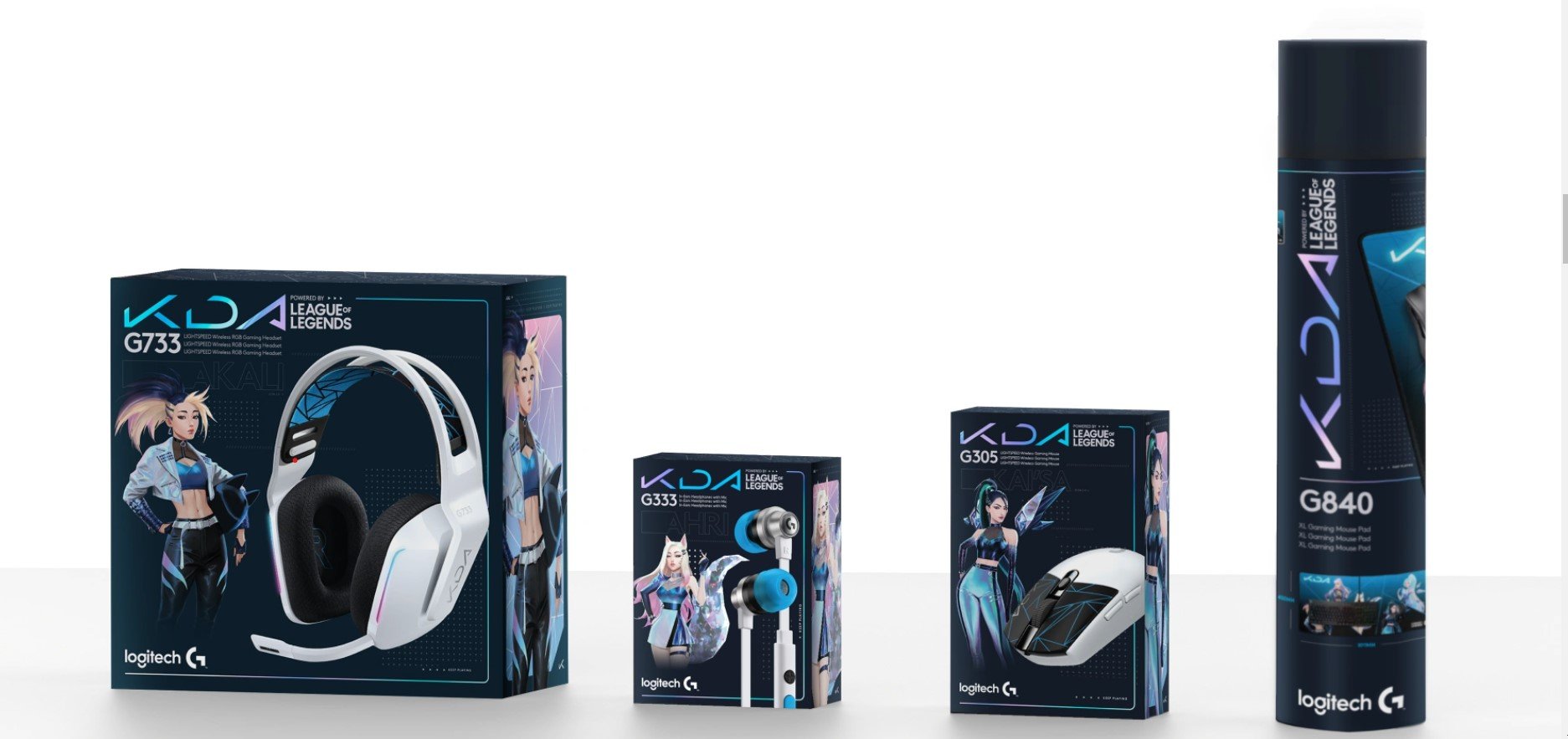
Logitech’s brand Logitech G has teamed up with Riot Games to launch a set of officially licensed League of Legends(LoL) gaming products. Accordingly, the products include a gaming Headset, in-ear Earphones, Wireless Mouse, and a Mouse Pad.
Credit: Logitech G/Riot Games
Logitech has announced(via Businessswire) the partnership along with the product details on its official website. For the unware, League of Legends is a decade-old MOBA(Multiplayer Online Battle Arena) game developed by Riot Games. Besides, this game is reportedly one of the most-played PC games in the world. Also, K/DA is an in-game term that refers to Kill, Death, and Assists. It is also a virtual girl K-pop group having five of the themed in-game characters. This includes Leader Ahri, Akali, Evelynn, Seraphine, and Kai’Sa.
Logitech G LoL K/DA edition Products: Pricing, and Availability
Initially, the LoL K/DA editions of the Headset, Earphones, Mouse, and Mouse Pad will be available at the Logitech G website in China. However, it is said to go on sale in the rest of the world by 2021. You can take a look at the prices below:
Coming back, the first one is Logitech G733 Lightspeed Wireless RGB LoL Gaming Headset. This version has an Ahri theme with the K/DA logo on the earcups, white accents with bluish-green lighting, and dual-layer black earpads. Other than that, the specs remain the same as the standard version. Weighing at 278g, it reportedly gives 29Hr battery life, charges via USB-C, and has a 20metres wireless range. There is a 40mm PRO-G driver, 20Hz-20kHz response, and 6mm boom detachable microphone.
The G333 LoL in-ear earphones is reportedly the first of its kind from Logitech G. It has the same White, and Blue aesthetics as the K/DA model with an Akali theme. The ear tips are blue in color White the housing is Silver, and the cable is White. The media buttons are a mix of Black and Blue. It features dual audio drivers, 5.8mm, and 9.2mm. Other features include 3.5mm gold-plated port, bass-audio for powerful gaming.
The Logitech G304/5 Lightspeed Wireless Gaming Mouse’s LoL edition has K/DA logo on the right-click button, with black-blue accents. It weighs just 99 grams, supports USB Port, macOS, Windows, and Chrome OS. The rest of the mouse is White and Kai’Sa theme. It has features like HERO sensor with 12,000 DPI, 1ms report rate, 250hrs battery life, and more.
Logitech G840 XL Gaming Mouse Pad LoL K/DA edition
This huge 15.75×35.43-inch mouse pad covers the Keyboard, Mouse, and other accessories in a single surface with 3mm thickness. The K/DA edition has all five characters Ahri, Akali, Kai’Sa, Evelynn, and Seraphine. Besides, the outer material is rubber but has K/DA logo on the top left with the usual Black-Blue color scheme. The logo of Logitech G and LoL is also at the bottom right. Logitech says the pad provides great accuracy, quick hand, and mouse movements while gaming.
The OnePlus 7 and OnePlus 7T series have already received two stable updates this month. Now, they are receiving OxygenOS Open Beta 19 and OxygenOS Open Beta 20 respectively. The latest public builds for these smartphones brings a camera-related fix and October 2020 security patch.
For those unaware, OnePlus has three channels for update namely Stable, Open Beta, and Closed Beta. The first and second ones are limited to single release per month but the company releases two builds in the last channel.
That said, currently OnePlus has released the second type of update with build number OxygenOS Open Beta 19/9 for OnePlus 7/7 Pro and OnePlus 7T/7T Pro respectively.
As mentioned in the beginning, the newest public beta update for these phones brings fix for flashback issue when switched to the front camera. The changelog also mentions the build to fix some general issues, in addition to bumping up the security patch level to October 2020
Oneplus 7/7 Pro & OnePlus 7T/7T Pro OxygenOS Open Beta 19/9 Official Changelog
System
Improved system stability and fixed general issues
Updated Android Security Patch to 2020.10
Camera
Fixed the flashback issue when switched to the front camera in particular cases
The update is currently being rolled out in batches and should receive all the units running OxygenOS Open Beta 18/8 in the coming days.
Huawei today announced the Mate 40 series in China with the models adopting a price tag that is slightly lower than that of Europe. The Chinese tech giant has also taken the wraps off the Mate 30E Pro for its home market.
Just like the Mate 40 series, the Mate 30E Pro was equally announced last week for the first time. in Europe. The company didn’t announce the pricing and availability details. The Mate 30E Pro is available in 8GB RAM + 128GB storage and 8GB RAM + 256GB storage variant. The pricing starts at 5299 yuan (~$792) for the 8GB+128GB version while the 8GB+256GB version comes in at 5799 yuan (~$867) in China.
As a reminder, the major difference between the Mate 30E Pro and the Mate 30 Pro released last year is the Kirin 990E chipset onboard this model. The Kirin 990E chipset adopts a 7nm+ EUV process and integrates about 10.3 billion transistors. It adopts Huawei’s Da Vinci architecture as well as an NPU large core + NPU micro core design. The chipset integrates a 14 core Mail-G76 GPU and supports NSA/SA dual-mode 5G connectivity and is equipped with 21 antennas in an Omni-directional layout, including 14 5G antennas.
In terms of cameras, Huawei Mate 30E Pro is equipped with dual 40MP high-definition main cameras, super-sensitive and telephoto cameras support OIS optical image stabilization, equipped with 1/1.54 inch and 1/1.7 inch sensors. For selfies, there is a 32MP 3D deep-sensing camera with professional-level portrait blur.
The device comes pre-installed with EMUI 11 OS based on Android 10. It also supports AOD art themes, smooth motion in one mirror, natural and comfortable gesture navigation, integrated sound and vibration, multi-sensing collaboration, smart multi-window, keyboard and mouse sharing and other features which EMUI 11 brings.
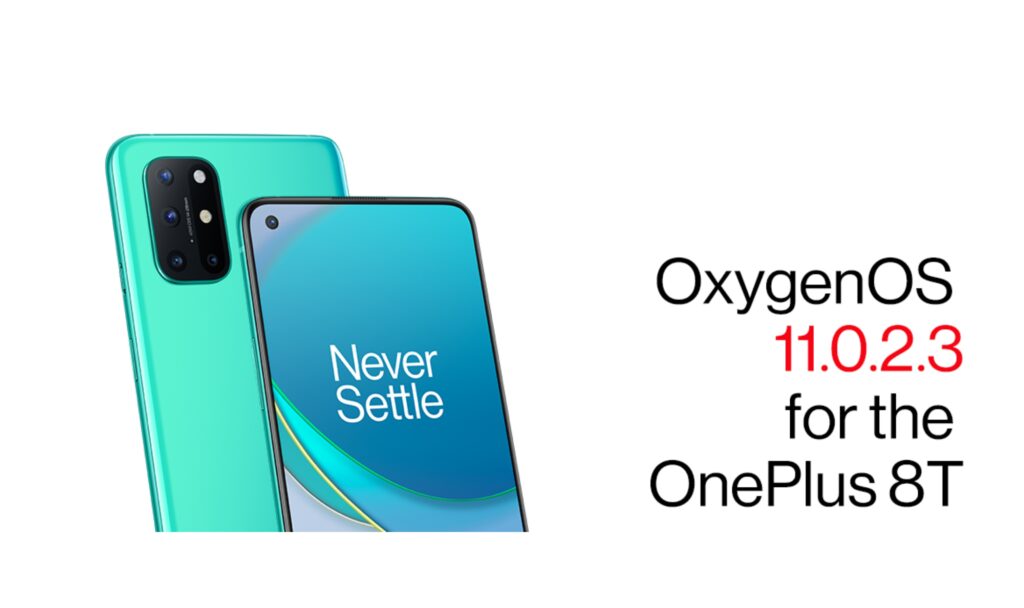
Recently, OnePlus launched OnePlus 8T as an updated version of OnePlus 8 with a better display, faster-charging speed, and newer design. This handset can be also called the direct successor to the OnePlus 7T. Last week, the device received its first system update and now, the company is seeding another update to this smartphone.
The latest system update for the OnePlus 8T comes with build number OxygenOS 11.0.2.3. The exact build numbers for different regions are as follows.
IN: 11.0.2.3.KB05DA
EU: 11.0.2.3.KB05BA
NA: 11.0.2.3.KB05AA
The new update does not add any new features to the device, rather it brings fixes, improvements, and optimizations. They are related to power consumption, heat generation, icons not displaying, Bluetooth connection & latency, preview photo loading, and intelligent 5G function.
OnePlus 8T OxygenOS 11.0.2.3 Official Changelog
System
Optimized system power consumption and reduce heat generation
Fixed the issue that icons are not displayed on the desktop in a small probability
Improved system stability and fixed known issues
Bluetooth
Optimized Bluetooth connection to reduce latency
Improved connection stability
Gallery
Fixed the abnormal display issue with loading preview photo
Network
Optimized the intelligent 5G function to extend battery endurance capacity
Like all OTA system updates, the latest build for the OnePlus 8T is being rolled out in batches worldwide.
In September, the Indian government slammed a ban on the popular gaming app PUBG Mobile, alongside 117 other apps that are of Chinese origin. The ban affected both the PUBG Mobile and Mobile Lite but has not been effective since then as both apps still continue to accommodate gamers from India. However, that may end soon as Tencent has officially announced that it would be pulling the plug off the gaming apps for Indian gamers.
The announcement posted on the PUBG Mobile official website reads thus,
“Dear Fans,
To comply with the interim order of the Ministry of Electronics and Information Technology dated September 2, 2020, Tencent Games will terminate all service and access for users in India to PUBG MOBILE Nordic Map: Livik and PUBG MOBILE Lite (together, “PUBG Mobile”) on October 30, 2020. The rights to publish PUBG MOBILE in India will be returned to the owner of the PUBG intellectual property.
Protecting user data has always been a top priority and we have always complied with applicable data protection laws and regulations in India. All users’ gameplay information is processed in a transparent manner as disclosed in our privacy policy.
We deeply regret this outcome, and sincerely thank you for your support and love for PUBG MOBILE in India“.
While the announcement is a heartbreaking one, considering the popularity of the app among Indian gamers, we must take a positive statement from it. Tencent will be handing over the rights to publish the game in India to the owner of the PUBG intellectual property which is Blue Hole Studio. Recall that BlueHole recently announced the revocation of the license given to Tencent to distribute the game in India.
The South Korean company was reportedly in talks with India telecom company Reliance Jio to get the game up and running in India once again. Later on, a LinkedIn job listing also suggested the company was returning to India as PUBG corporation. Thus, it safe to conclude that the app will be relaunched soon in India with a new licensee in the driving seat.
For now, we can’t identify the company BlueHole will be granting the publishing rights to but we expect that to be made known in no distant time. We’ll keep you update as more details emerge.
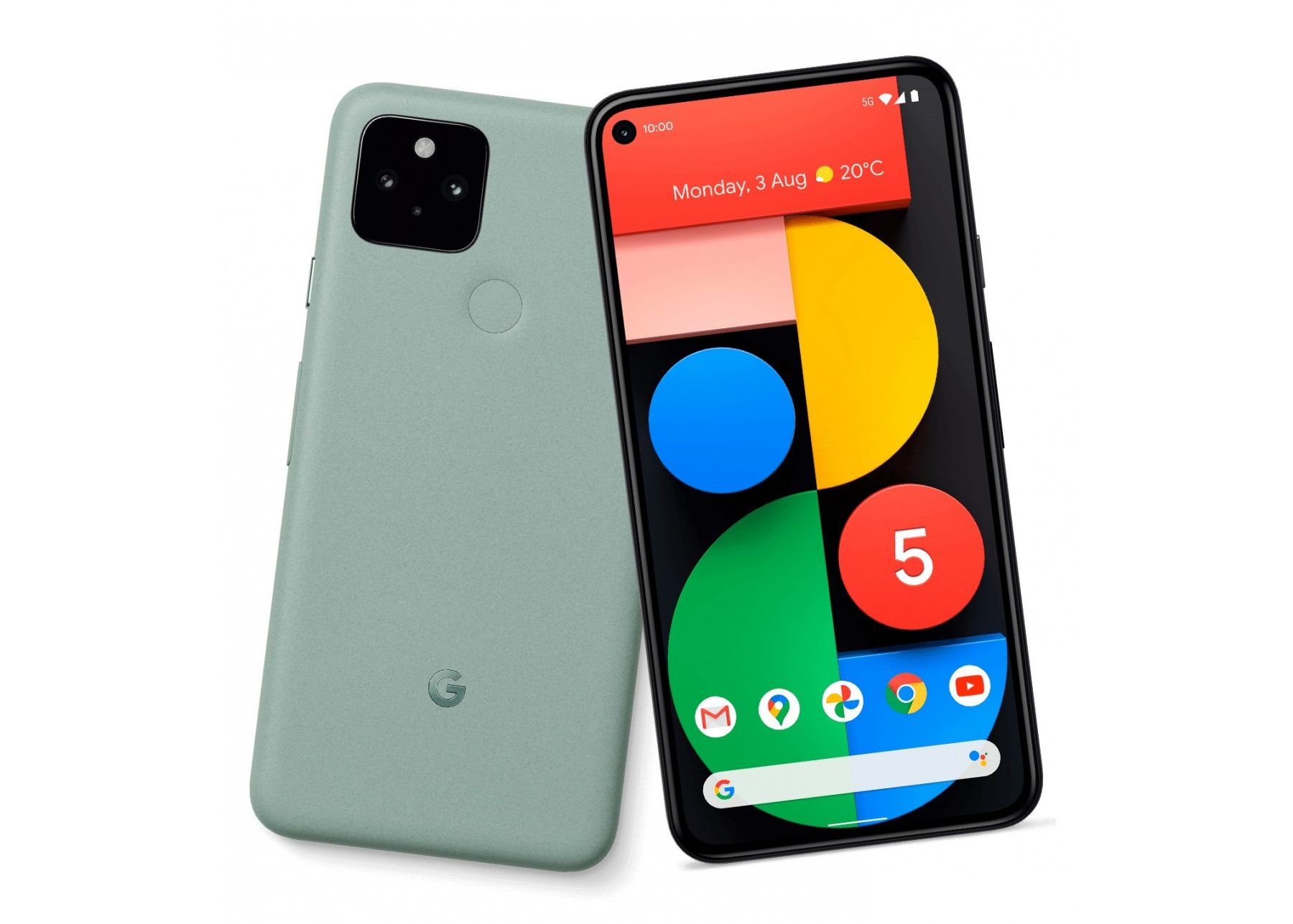
Google launched the Pixel 5 last month. Exactly a month later, DXOMARK has come out with a new Camera review. And unfortunately, it looks like the Pixel 5 has just improved around 6.2% in the overall score compared to the predecessor(Pixel 4).
Jumping right in, Pixel 5’s overall DXOMARK camera score is around 120 points. If you split that into Photo, Zoom, and Video test, it has 129, 49, and 107 points. Sadly, the score is just 7 points above the 113 points of Pixel 4. Also, Pixel 5 has fared worse in the Zoom category with just 49 points compared to 55 points for Pixel 4. It now sits at 15th place on the DXOMARK’S current rankings(as of October 30) slotting behind Huawei’s yesteryear Mate 30 Pro.
That said, the score closer to Pixel 4 is slightly understandable considering the Pixel 5 has a similar rear-camera setup as follows:
12.2MP 1/2.55-inch main sensor with dual-pixel PDAF, OIS.
16MP 1/3.09-inch ultrawide-sensor with a 107-degree Field Of View(FOV).
An LED Flash
Features: 4K video at 30/60fps, 1080p up to 240fps, and has gyro-EIS.
Pixel 5: Photo
Talking about performance, the report says the main strengths of the Pixel 5 cameras are exposure, color reproduction, and autofocus while they maintain the artifacts originally. For still photos, it seems to produce images with good details via main & ultra-wide lens but also accompanies noise with it.
As mentioned above, Pixel 5 struggles in Zoom as well as limited FOV. In fact, the report says the noise starts creeping in as you zoom just above 2x as the lack of a Telephoto lens is surely hurting Google here. Additionally, the device seemingly struggles in bokeh simulation when there are more than two heads in the frame.
For Video, the report says that Google sets a new record in the autofocus category trying to be on par with the flagships. It clocks a 105 points for Autofocus equalling flagships like Huawei Mate 40 Pro. In Normal lighting, its shots are reportedly good with details, exposure, and colors, especially the stabilization in 4K 30fps mode. However, issues like noise, color casting, and bad exposure in low light sets it back.
Pixel 5 Camera: Pros & Cons
To sum up, it has Pros like Accurate Autofocus & white balance, Vivid colors, and good stabilization. However, its cons include Noise in Photo & Video, Frame shifts, Bokeh effects, Zoom, less detail in low-light shots. Looks like Google still is relying on its software power while setting the nitty-gritty issues behind.
Most manufacturers usually include a Find device feature on their device’s companion apps for devices such as smartwatches and smartphones. For mobile;e phone, Google’s Find My Phone feature is super efficient in helping you tracing a device where your google account is logged on. However, in most cases, this feature is dependent on the device being online. Although Google‘s own “Find My Phone” feature can make the phone ring even when it is turned off, it can’t pinpoint the exact location when it is out of network coverage area or the data is turned off.
Korean tech giant Samsung is releasing a new app known as SmartThings Find which will let users find their Galaxy devices easily. The app will allow you to find the Galaxy phone, Galaxy Watch, tablet and even earbuds. The company has now pushed the app for the global audience.
Samsung Galaxy phones and tablets running Android 8 or later as well as Galaxy Watches running Tizen 5.5 or later as well as the Galaxy Buds Plus and Galaxy Buds Live are now receiving a software update that will enable the service on the models.
According to details released by the company (via), the SmartThings Find app uses Bluetooth Low Energy (BLE) and ultra-wideband technologies in order to locate the Galaxy device you are attempting to find. After the device is located, it deploys Maps and sounds to lead you to where the device is located.
Samsung expatiated further that a device produces a BLE signal that can be received by other devices once it has been offline for 30 minutes. The SmartThings Find app can then be used to signal that you are searching for the missing device and any nearby Galaxy smartphones or tablets that had the service running can alert the Samsung server about its location. Then, Samsung’s server will notify you.
Once you get close to the device, you can choose for it to “ring” or you can use the AR-based search nearby option, which shows you color graphics that get more intense when you’re getting nearer the device you’re searching for. Additionally, user data is encrypted and protected, so your device’s whereabouts are known only to you.
Samsung plans to expand the features with the inclusion of solutions such as tracking tags, so that you can find other belongings as well, not only locate your Galaxy devices.
We use cookies on our website to give you the most relevant experience by remembering your preferences and repeat visits. By clicking “Accept”, you consent to the use of ALL the cookies.
This website uses cookies to improve your experience while you navigate through the website. Out of these, the cookies that are categorized as necessary are stored on your browser as they are essential for the working of basic functionalities of the website. We also use third-party cookies that help us analyze and understand how you use this website. These cookies will be stored in your browser only with your consent. You also have the option to opt-out of these cookies. But opting out of some of these cookies may affect your browsing experience.
Necessary cookies are absolutely essential for the website to function properly. This category only includes cookies that ensures basic functionalities and security features of the website. These cookies do not store any personal information.
Any cookies that may not be particularly necessary for the website to function and is used specifically to collect user personal data via analytics, ads, other embedded contents are termed as non-necessary cookies. It is mandatory to procure user consent prior to running these cookies on your website.