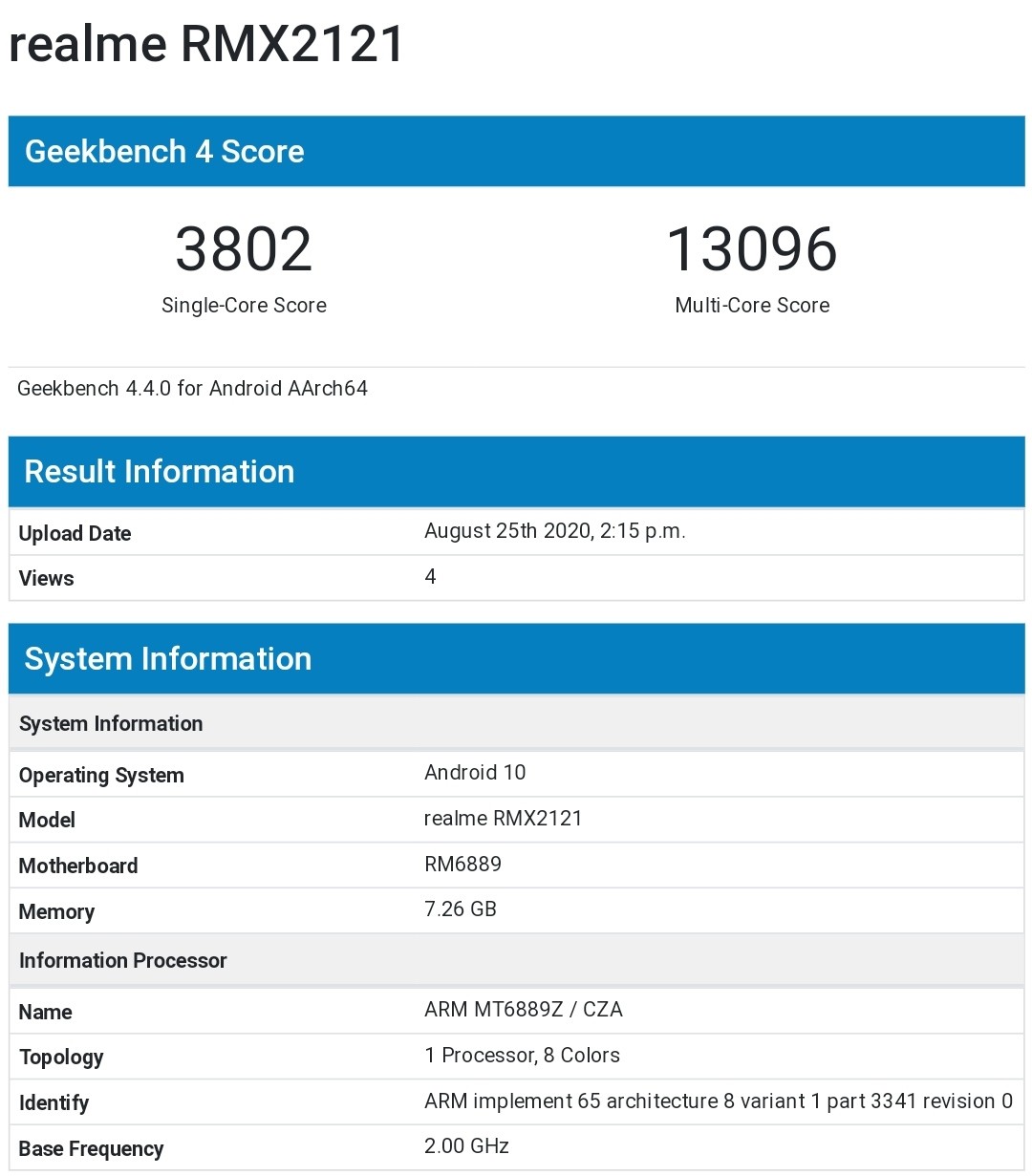
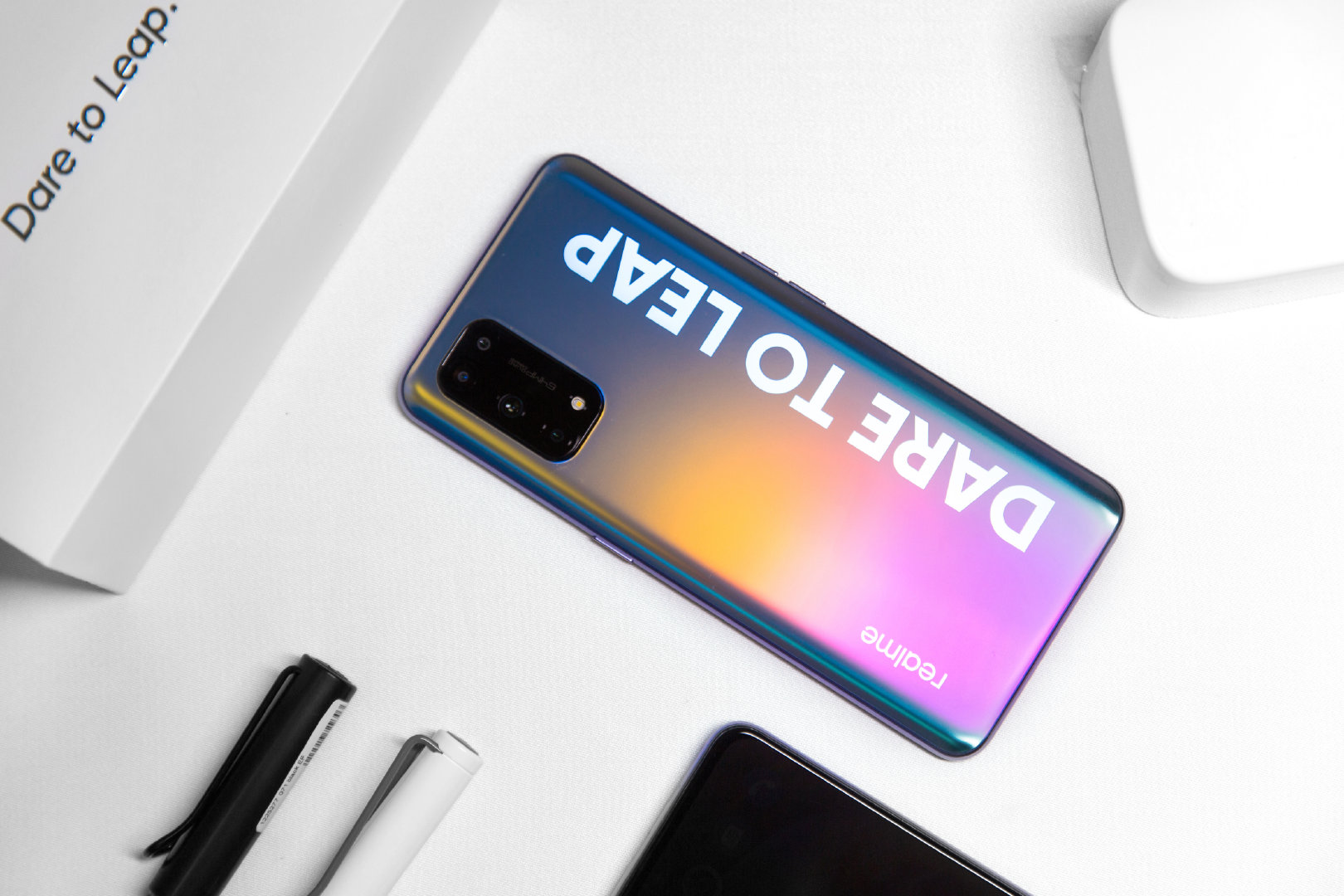
The Realme X7 Pro is scheduled to go official on Sept. 1 with the Realme X7 phone. Last week, a reliable tipster from China had claimed that the Realme X7 Pro will be fueled by the Dimensity 1000+ 5G chipset. The recently unveiled Redmi K30 Ultra also features the same chipset. Hence, Realme X7 Pro is expected to rival with the Redmi K30 Ultra 5G in China. Nashville Chatter Class has come across a Geekbench listing of the Realme X7 Pro. The listing shows that the Realme X7 Pro is equipped with the Dimensity 1000+ SoC.
In the below-shown screenshot, the Realme RMX2121 is the model number of the Realme X7 Pro. The listing shows that the smartphone is fueled by a MediaTek chipset that has a model number of MT6889Z/ZCA which belongs to the Dimensity 1000+ 5G chipset. The SoC has a base frequency of 2.0GHz.
The Dimensity 1000+ SoC is accompanied by 8 GB of RAM on the Realme X7 Pro. The handset can be seen running on Android 10 OS. In the single-core and multi-core tests of Geekbench, the handset scored 3,802 and 13,096 points, respectively. So, the Realme X7 Pro is not a flagship phone, but an upper mid-range offering. This suggests that the series could be having a more powerful device called Realme X7 Pro Ultra. The rumor mill has claimed that it could be the first Realme phone to arrive with 125W fast charging support.
The Realme X7 Pro has a 6.55-inch FHD+ AMOLED display with punch-hole design and curved edges. It supports a 120Hz refresh rate. The phone will be coming to China in 6 GB / 8 GB RAM editions and 128 GB / 256 GB storage variants.
The Realme X7 Pro has a front camera of 32-megapixel and its rear is fitted with a 64-megapixel + 8-megapixel + 2-megapixel + 2-megapixel quad camera system. The phone houses a 4,500mAh battery with 65W fast charging support.
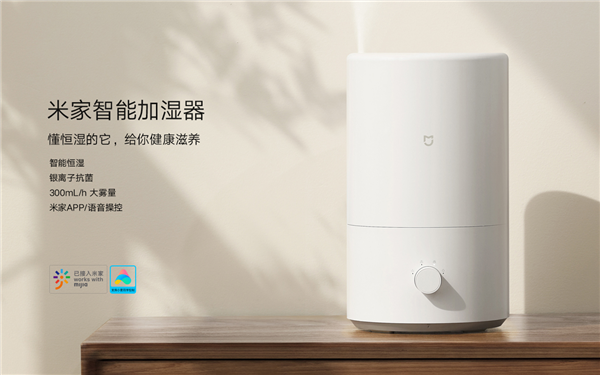
Xiaomi‘s smart life brand formerly known as MIJIA has launched the MIJIA Smart Humidifier, an affordable smart humidifier for homes and offices. The brand has got a variety of smart humidifiers under its name including the 99-yuan MIJIA Humidifier, the MIJIA Smart Sterilizing Humidifier priced at 249 yuan (~$36) and the MIJIA Smart Humidifier 1S with an OLED screen which was released in April this year.
The MIJIA Smart Humidifier has a smart constant humidity function which can monitor the indoor humidity in real-time. The device also automatically adjust the amount of fog to maintain the humidity within the set range. The default constant is 60%RH but the user can use the adjust the humidity between 40-70%RH.
The humidifier has a capacity of 4L, which is equivalent to eight bottled of 500ml bottle water. It can continue to humidify for 26 hours with a single top up with water.
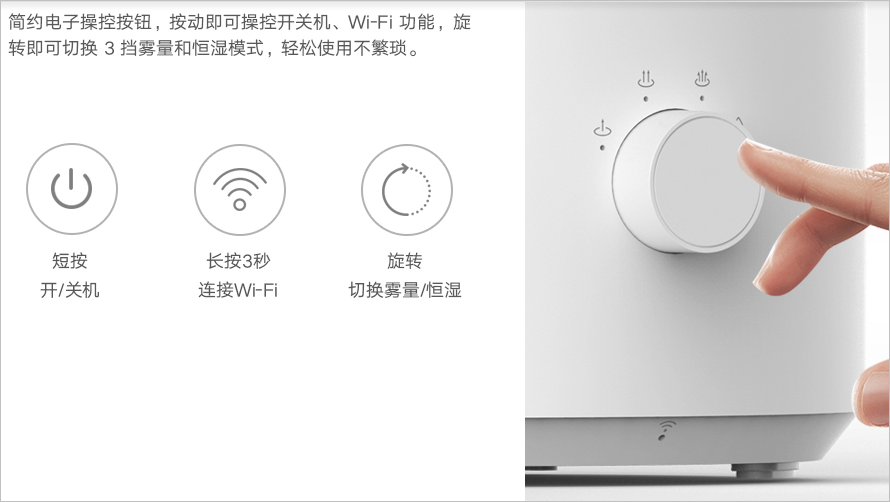
In terms of design, the MIJIA Smart Humidifier continues the friendly design of the previous models where there is a lid for adding water. Users do not need to open the water tank, just open the lid to easily add water. There is a rotating knob which also functions as the power button. Long pressing the rotating knob turn on/off the humidifier while a short press switch on/off the WiFI function. The knob can also be rotated to switch between three different modes.
The smart humidifier supports MIJIA app control which can be done even when you are thousands of miles away. There is also support for XiaoAI voice control.
The MIJIA Smart Humidifier is currently available in China on the Mi store.
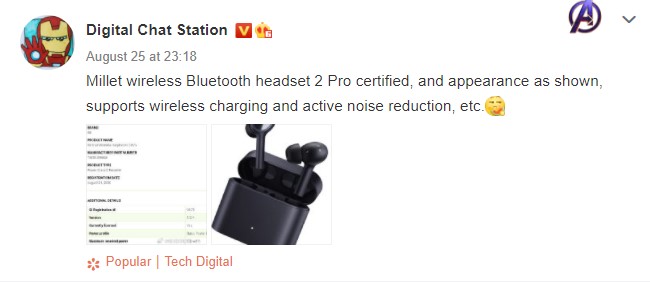
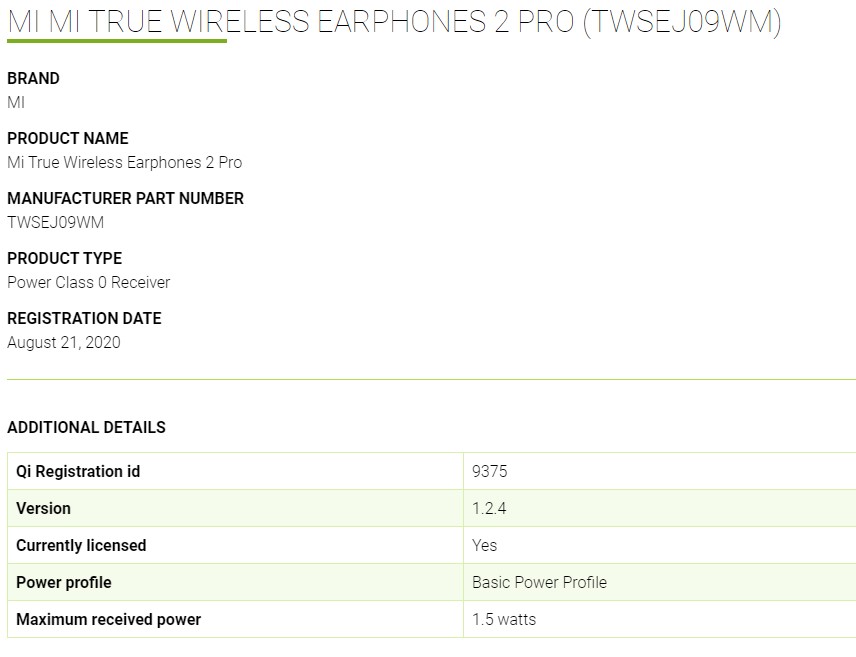
The Wireless Power Consortium (WPC) has certified a pair of TWS earbuds called the Mi True Wireless Earphones 2 Pro with model number TWSEJ09WM. According to the Chinese leaker Digital Chat Station, the earbuds have active noise cancelation.
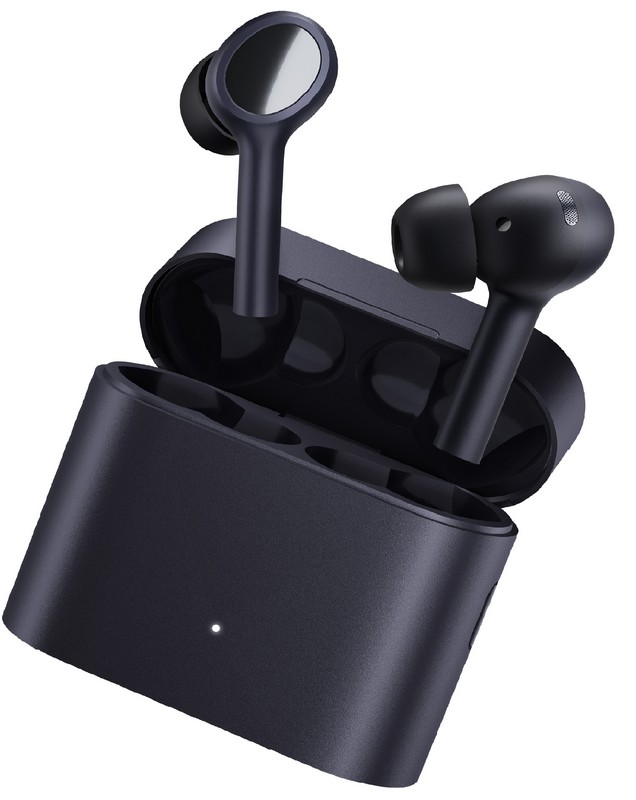
The WPC page even has an image of the earbuds, thus giving us an early look at before Xiaomi unveils it. As you can see above, the earbuds have a closed-ear design with silicone tips to keep the sound in. There is a sensor visible on one of the earbuds which should be an infrared sensor for wear detection.
The earbuds stand vertically in a case similar to that of the Mi True Wireless Earphones 2. There is a button on the side of the case. There is also an LED in front which should light up when you place it on a wireless charger or plug a charging cable into it. We are glad the earbuds come in black rather than white like the previous models.
We do not know when Xiaomi will announce the earbuds but our guess is next month. However, it may launch first in China but under a different name.
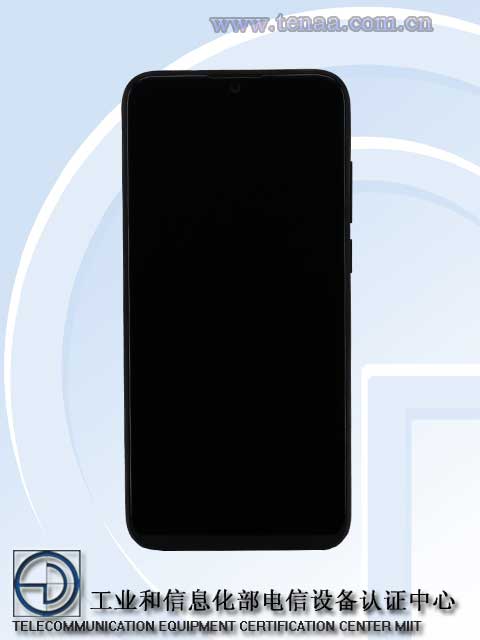
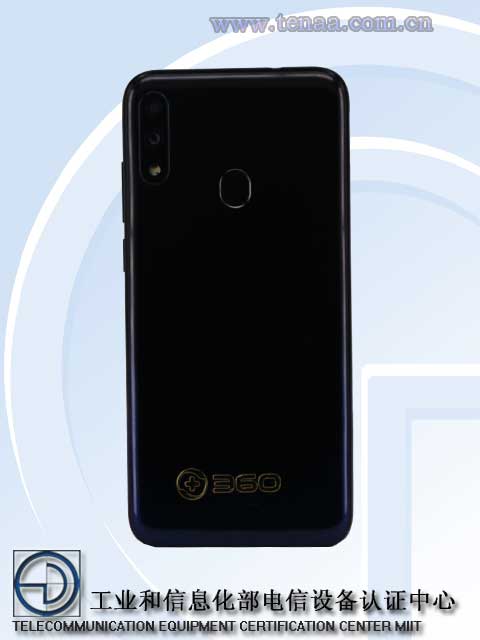
Rumours were rife last year that Chinese tech giant Qihoo 360 had suspended its mobile phone business. The company later clarified that it wasn’t suspending the mobile business but the business just slowed down. Well, looks like 360 is planning to revive its once boisterous mobile phone division yet again. A new model has appeared on the website of China’s telecoms regulatory agency TENAA.
The mobile phone is dubbed 360 S6+ and is the first 360 model to be certified this year by TENAA. As a matter of fact, the database shows the last model that was certified before this one was in 2018.
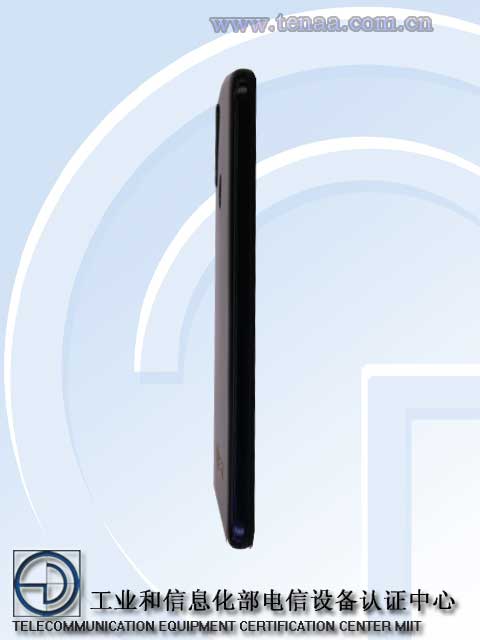
Design-wise, the 360 S6+ features a punch-hole design at the front with the earpiece nested at the fringe of the display. The bottom edge has a narrow bezel. At the rear, the phone packs a dual-camera setup aligned vertically at the top left corner of the rear panel. The phone also has a rear-mounted fingerprint sensor.
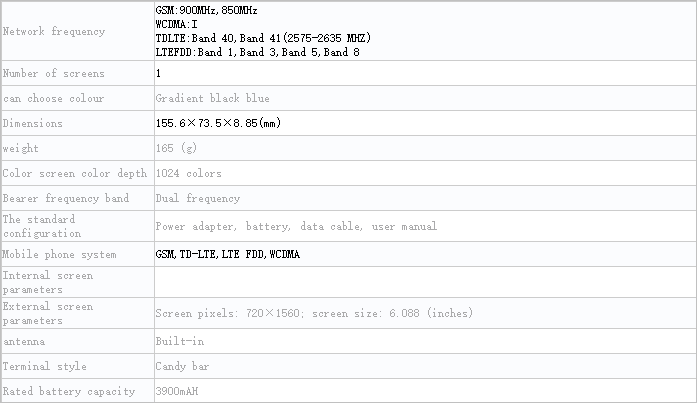
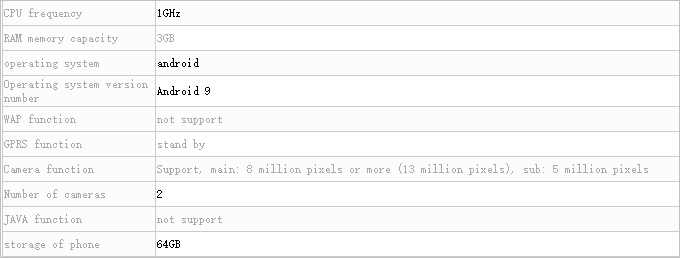
The 360 S6+ packs a 6.088-inch LCD display having an HD+ resolution of 720×1560 pixels. The chipset is unknown but it is an octa-core SoC with a base frequency of 1GHz. The phone comes with 3GB of RAM and 64GB of internal storage which is expandable. The rear camera set up is a 13MP+8MP combo while at the front, there is a 5MP selfie shooter.
Obviously, this is a budget phone that may sell well if it is priced right. The specs and design are pretty decent if the phone is a cheap one. There is no word yet on when it will be unveiled.
After releasing a foldable phone and a new flagship, Motorola is seriously intentioned to beat the competition even in the budget segment. The Lenovo-owned company just launched the new Moto G9 in the Indian market, which later hitten the global market under the Moto G9 Play moniker. Right after, another important manufacturer came up with a new affordable phone in India: HMD Global with its Nokia 5.3 announced earlier this year. Even OPPO launched a budget phone in the last days: the OPPO A53. This is a specs comparison between the latest budget phones launched in India: Motorola Moto G9, Nokia 5.3, and OPPO A53.
Triple 48 + 2 + 2 MP f/1.7, f/2.4 and f/2.4
8 MP f/2.2 front camera
Quad 13 + 5 + 2 + 2 MP f/1.8
8 MP f/2.0 front camera
Quad 12 + 2 + 2 MP
16 MP f/2.0 front camera
BATTERY
5000 mAh, fast charging 20W
4000 mAh
5000 mAh, fast charging 18W
ADDITIONAL FEATURES
Hybrid Dual SIM slot, water-repellent
Dual SIM slot
Dual SIM slot
Design
Oppo A53 has the most stunning design, at least according to my tastes. It is the only one which sports a punch-hole display, a feature which is hard to find on very affordable phones such as these ones. The Oppo A53 is also the most compact device of the trio with its narrow display bezels, smaller dimensions, and a thinner body. On the other hand, the Motorola Moto G9 has a water-repellent coating that may be useful to people who want to use it under the rain and accidentally throw it in the water.
Display
Unfortunately, you do not get great displays with these three devices. They all feature IPS panels with HD+ resolutions. They are not disappointing in terms of display quality, but they are definitely below the average due to their HD+ resolution providing a lower level of detail than midrange phones. By the way, you get very nice advantages with the Oppo A53: it has a 90 Hz refresh rate providing more smoothness and stereo speakers for a better multimedia experience. For all of these devices, there is a rear-mounted fingerprint reader.
Specs & Software
The Nokia 5.3 wins the hardware comparison for a simple reason: it has a more powerful chipset. We are talking about the Snapdragon 665 which is actually superior to the Snapdragon 662 found on the Motorola Moto G9. Oppo A53 is the only one featuring fast UFS 2.1 storage, but unfortunately, the Oppo A53 has an even weaker Snapdragon 460 chipset. Also, note that with the Nokia 5.3 you get up to 6 GB of RAM, while Motorola Moto G9 has just 4 GB of RAM. Last but not least, Nokia 5.3 runs Android One: a special version of the operating system supported directly by Google.
Camera
The winner of the camera comparison is the Motorola Moto G9 which comes with a way better main sensor sporting a 48 MP resolution. With the Nokia 5.3 and the Oppo A53, you get a below-average 13 MP main sensor. The Nokia 5.3 looks better than Oppo A53 due to its brighter focal aperture, but the Oppo A53 has the best front camera department thanks to its 16 MP sensor. At the end of the day, despite featuring a lower amount of sensors, Motorola Moto G9 wins the camera comparison due to its better main camera. But you do not get the ultrawide sensor found on the Nokia 5.3.
Battery
The Motorola Moto G9 should provide a longer battery life: it has a way bigger battery than Nokia 5.3 and, despite having the same battery capacity as the Oppo A53, it should last more because it lacks a 90 Hz refresh rate. Last but not least, it has a faster charging technology with a 20W power.
Price
The price of Motorola Moto G9 is Rs. 11,499, while Oppo A53 is Rs. 12,999. The Nokia 5.3 costs slightly more: Rs. 13,999 in its base variant with 4 GB RAM and 64 GB of UFS 2.1 storage. The Motorola Moto G9 has better cameras and probably longer battery life. The Nokia 5.3 offers Android One and a better chipset, but a smaller battery. The Oppo A53 has the 90 Hz killer feature and stereo speakers, as well as the best front cameras and a punch-hole design. Which one would you pick?
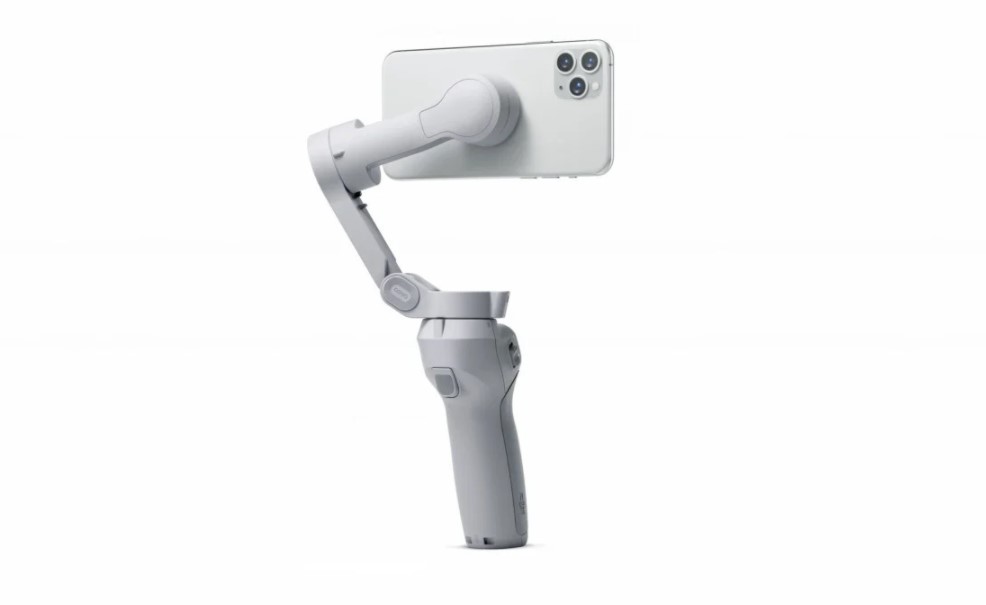
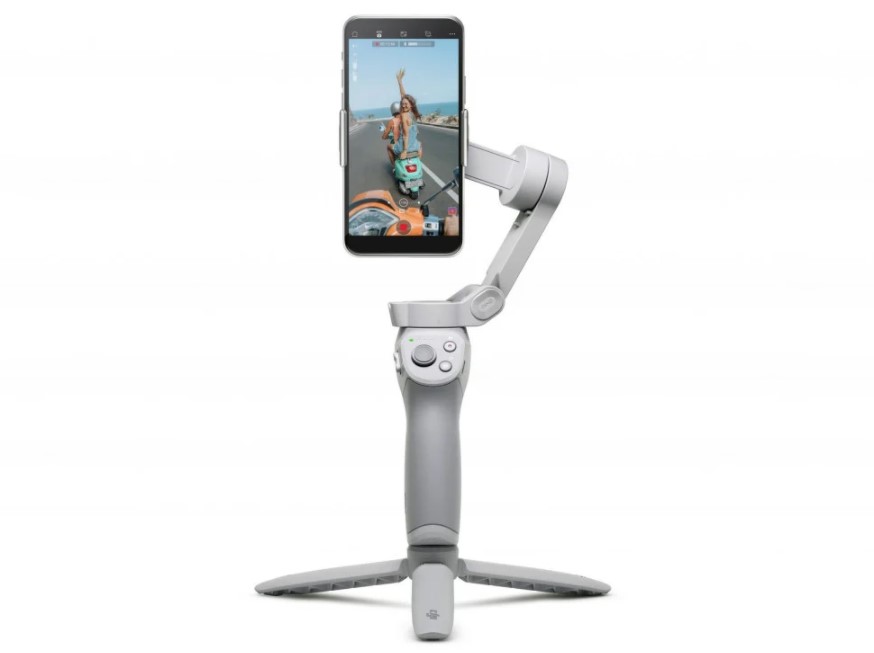
DJI may have started as a drone company but their consumer portfolio now includes the RoboMaster series of robots and the Osmo series of hand gimbals and action cameras. A new leak has now revealed all there is to know about the upcoming Osmo Mobile 4.
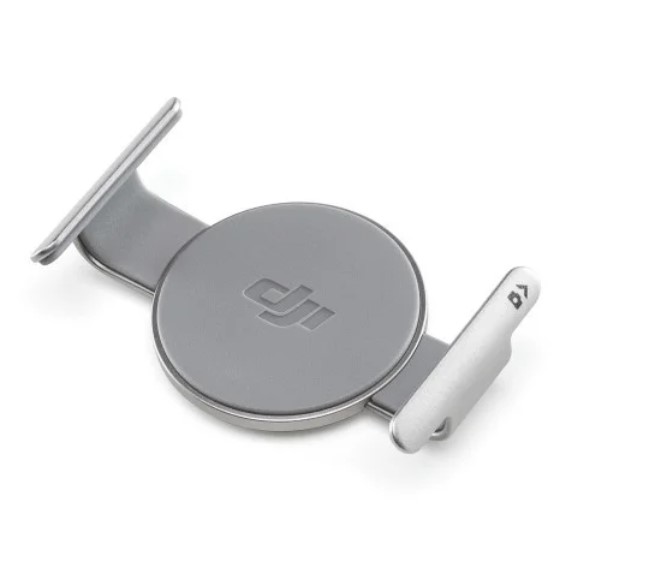
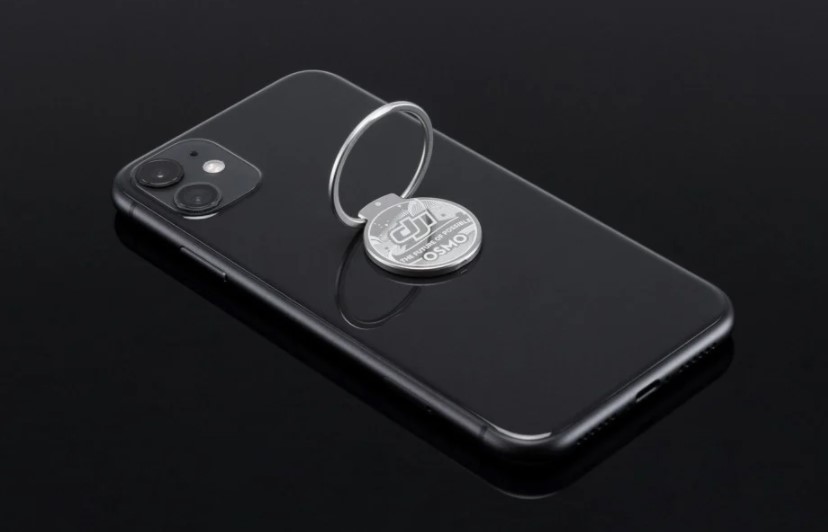
There are now two ways to use the new gimbal as shown in images from the leak which was first reportted by Winfuture.de. Alongside using the clamp to hold your phone, DJI has also included the option to use a magnetic holder similar to what we have seen in some car mounts. The magnet is really strong and serves double function as a phone holder which is pretty common these days.
1 of 5
Coming to the features of the Osmo Mobile 4, DJI has added what is called DynamicZoom which allows for cinema-grade zooming. There is also ActiveTrack 3.0 which improves upon the tracking of objects and people and HyperLapse.
The Osmo Mobile 4 still has a foldable design and there is a hole in the handle for attaching an accessory so it can be used as a tripod. It packs a 2450mAh battery just like its predecessor that should last up to 15 hours on a single charge. There is a USB-C port on the device for charging. The gimbal weighs 390 grams and connects via Bluetooth 5.0.
DJI is expected to announce the gimbal soon with a price tag of under €150 in Europe.
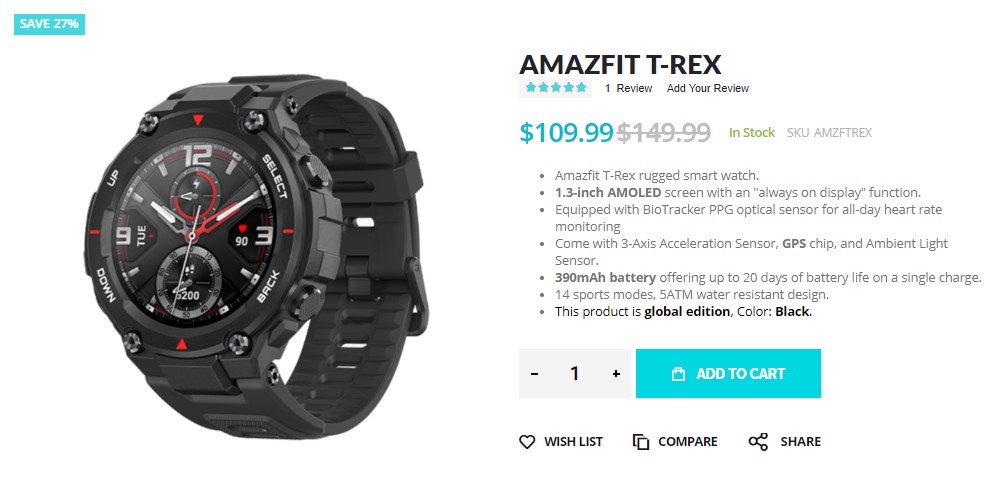
Here’s Amazfit T-Rex – the company’s first take to enter the rugged smartwatch segment. It’s been quite some time since Amazfit T-Rex is launched featuring military-grade durability and several other useful features. The smartwatch primarily includes a 1.3-inch AMOLED display, 3-axis acceleration sensor, geomagnetic sensor, waterproof, dustproof, and military-grade certification. It usually retails for the price of $149, but you can grab it for $109 from Giztop under a limited-time discount offer.
Amazfit T-Rex supports Bluetooth 5.0 and GPS for seamless connectivity. It can easily track 14 different sports modes and comes equipped with a BioTracker PPG optical sensor. The sensor allows the users to easily track heart rate and get alerts in real-time.
It houses a 1.3-inch AMOLED display with a 360 x 360-pixel resolution while having Corning Gorilla Glass 3 protection on the top. It easily pairs with Android and iOS devices using Bluetooth connectivity.
The smartwatch measures 47.7 X 47.7 X 13.5mm in size and is backed with a 390 mAh battery with 20 days of battery backup on a single charge.
Amazfit T-Rex lasts up to 20 days with regular use and 40 hours if GPS enabled. The rugged body possesses 5ATM certification and can withstand temperature of up to 158 degrees Fahrenheit. It even supports multiple watch faces and the user can choose their favourite among 30 available options. Apart from the typical smartwatch features, it also facilitates the users with some utility features like Alarm, Countdown, Event Reminder, Find My Phone, Heart Rate, Music, Status, Timer, Weather and Workout.
Technical Specifications
1.3-inch AMOLED display
BioTracker PPG Optical Sensor
GPS, 3-Axis Acceleration sensor
390 mAh battery with up to 20 days standby
14 sports modes
MIL-STD-810G + 5ATM certification
47.7 X 47.7 X 13.5mm size
Giztop is offering a massive discount on Amazfit T-Rex, and you can grab it for $109. You need to hurry as the offer will be applicable till the stock lasts. You can head over to the Giztop website to get the Amazfit T-Rex deal.
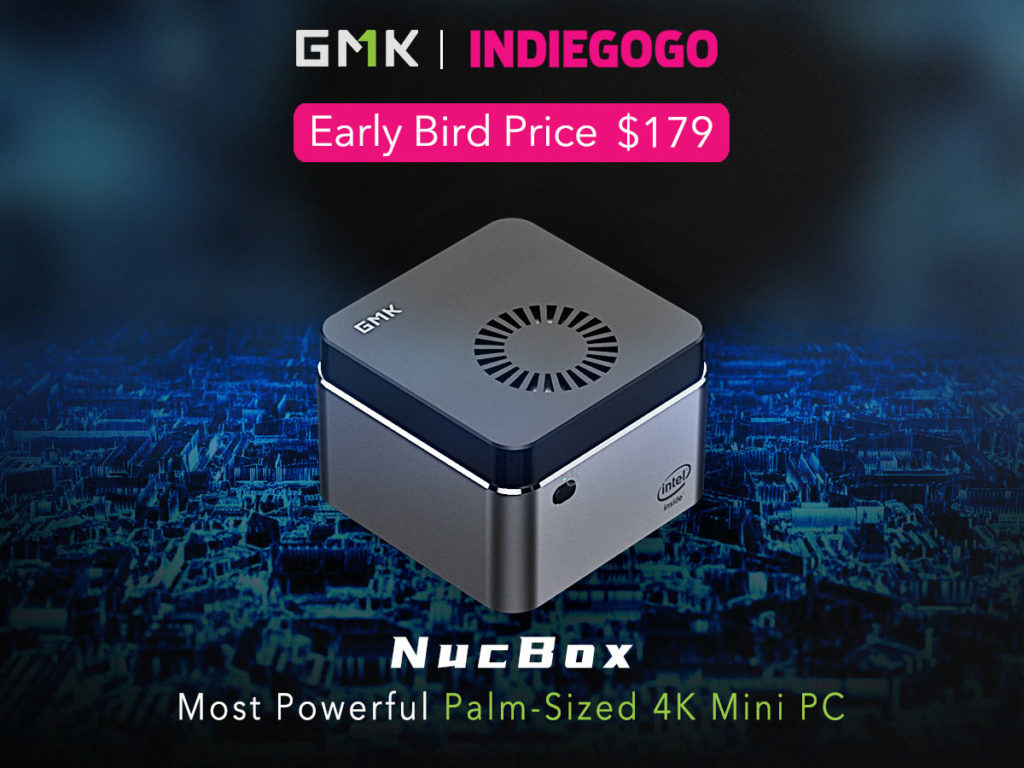
After some official teasers and leaks, GMK NucBox 4K Mini PC has finally gone live on Indiegogo with some splendid features at a super affordable starting price of $179.99. The laptops and Mini PCs are the most in-demand electronic products these days due to changing work patterns amid the ongoing pandemic era. However, GMK NucBox 4K Mini PC has a lot to offer at such a compelling price.
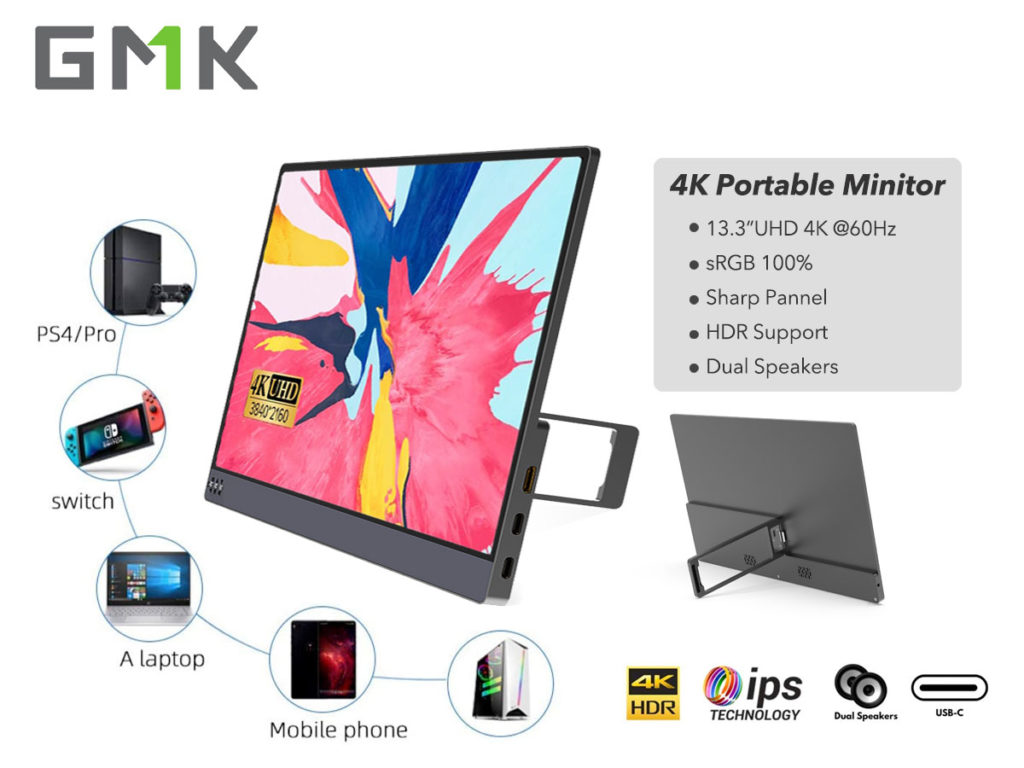
The new Mini PC is available with different perks from Indiegogo. The Early Bird $179 perk brings a GMK NucBox X1 with 128GB internal storage while other features remain the same. The $199 Early Bird Perk brings a 256GB variant of the device. However, you can even get a 13.3-inch portable 4K Monitor for the price of $199 via Indiegogo. A perk worth $229 offers a 512GB storage variant.
GMK NucBox Mini PC packs decent specifications including an Intel Celeron J4125 chipset with 2GHz base frequency and 2.7GHz of Max frequency. It is four core and four-thread CPU coupled with Intel UHD graphics 600 and 4MB cache for better graphics and CPU processing. The 4K Mini PC packs a 128/256/512GB SSD storage with an expansion slot of up to 128GB and houses 8GB LPDDR4 RAM.
IN connectivity, you get a 2x USB 3.0, 1x HDMI 2.0, 1x USB-C, 1x headphone jack and a 1x microSD slot. A dual-band WiFi with speeds over 867 Mbps is present on the board for easy and rapid connectivity. An ultra-stable Bluetooth connection is also a part of the package to connect the smart wearables around us. It runs on pre-installed authorized Windows 10, but you can even install Linux and other OS too as like a normal PC.
The whole box is carved out of a metal chassis and measures 62 x 62 x 42 mm in size and weighs 125 grams. The box features Quiet thermal engineering which dissipates the heat and enables the hardware to fully perform without any issue. It consumes 10W low power consumption design with a customized 90 mm cooling fan to keep the airflow.
The company is not only providing a Mini PC but also brings a 13.3-inch 5K portable display for backers at an additional price. The interested users can head over to the Indiegogo campaign page to grab the GMK NucBox at an early bird price.
The Mate 40 series is not expected to launch until later in September, but before then, Huawei will be having another product launch event.
The event is scheduled for September 10 and the poster hints at the products that will be announced. Before we delve into the products, the date of the event is also the same date the Huawei Developer Conference 2020 is scheduled to start, so there is a possibility the products will be announced at the conference.
As seen in the poster shared on Twitter by @RODENT950, there are three images which we think are hints for the new products. The first is a notebook with a X, the second is a watch dial, and the third is a sound wave. We believe the first hints at a new Huawei MateBook X. Yes, we know Huawei just announced the MateBook X 2020 last week but that model is available with Intel processors. Knowing Huawei, there is most likely going to be a Ryzen version too which we believe will be announced on September 10.
The second is a watch dial and is a teaser for a smartwatch. Huawei has two new smartwatches in the pipeline – there is the Huawei Watch Fit and there is the Watch GT 2 Pro. Earlier reports have revealed the former will be announced in September while the latter will launch alongside the Mate 40 series. Sepetember 10 does sound like a good date for the Watch Fit to be unveiled.
The third image, which is of a soundwave, hints at the launch of a new audio product, most likely a speaker with a built-in assistant. There is also a chance it may be a proper launch for the FreeGo Portable Bluetooth Speaker that was first unveiled in June.
After several teasers, Gionee has finally taken the wraps off the Gionee Max in India. The smartphone is a budget phone which carries a retail price of Rs. 5999 (~$80). This is coming just as the brand equally unveiled the M30 in China.
Gone are the days when budget smartphones are identified with small screen size and uninspiring specs lineup. The Gionee Max features a 6.1-inch Dewdrop notch bearing display with an HD+ resolution of 1560 × 720 pixels. The display is covered with a 2.5D curved glass which protects it from scratches.
The Max is powered by an octa-core UNISOC SC9863A chipset with a clock speed of 1.6GHz. The processor is paired with 2GB RAM while there is 32GB of eMMC 5.1 flash storage with expandable memory up to 256GB via microSD. Providing the interface is an Android 10 operating system.
The Gionee Max packs a dual-camera setup at the rear made up of a 13-megapixel main camera and a secondary Bokeh lens for depth sensing. There is also an LED flash at the rear. The device equally packs a 5-megapixel front camera.
The Gionee Max gets its power from a mammoth 5,000mAh battery and support for reverse charging that lets you charge other phones. It equally comes with support for face unlock but lacks a fingerprint scanner. For connectivity, the phone comes with 4G VoLTE, Wi-Fi 802.11 b/g/n, Bluetooth 4.2, and GPS + GLONASS. There is also a 3.5mm audio jack, FM Radio and micro USB port onboard.
Talking about the pricing and availability, the Gionee Max carries a decent Rs. 5,999 (~$80) price tag and is available in Black, Red and Royal Blue colours. The phone is billed to go on sale on August 31 on Flipkart.
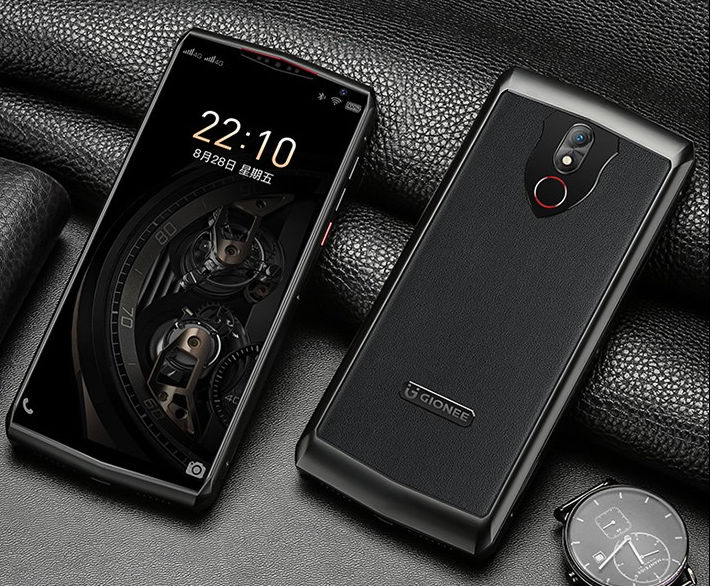
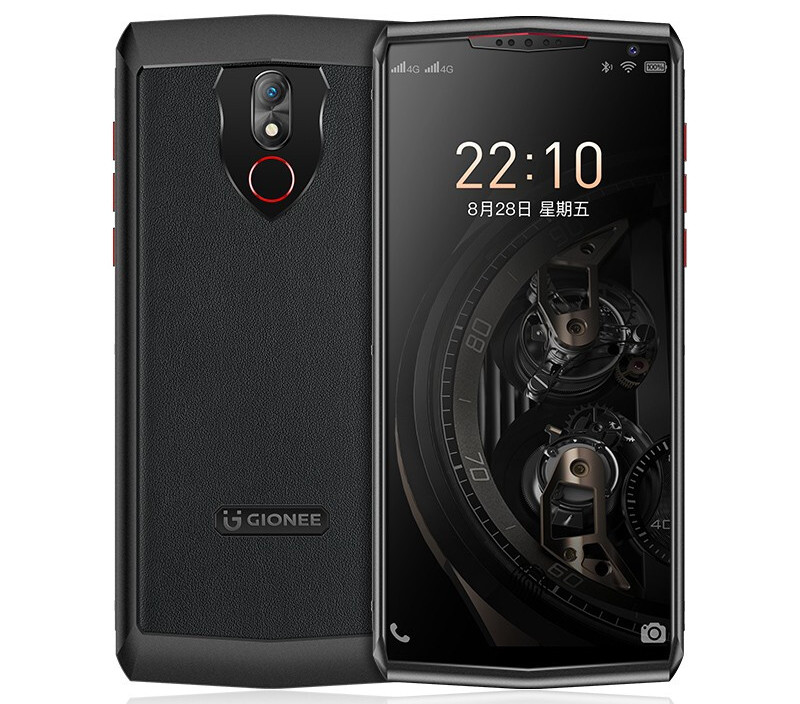
Gionee today launched two new smartphones, one India and the other in China. The one launched in China is the Gionee M30, a premium midrange smartphone which comes with several powerful hardware.
In terms of the design, the Gionee phone has the looks of a rugged phone. It has a metal frame with matte frosted aluminium alloy body and a leather-like finish on the back. The phone comes with a dimension of 160.6×75.8×8.4mm, weighing in at 305g.
The Gionee M30 features a 6-inch LCD screen with an HD+ resolution of 720×1440 pixels. The phone is powered by a MediaTek Helio P60 chipset paired with 8GB of RAM. The phone also comes with 128GB of internet storage.
The phone comes with a massive 10,000 mAH battery which will sure guarantee an extended usage period. Recall that a Gionee model with 10,000mAH battery was certified by TENAA last month. There is no doubt this is the model.
For photography, the Gionee M30 features a single 16MP camera at the rear with an LED flash underneath. There is also a fingerprint sensor just under the camera. For selfies,the M30 packs an 8MP main camera embedded with face unlock. The Android version onboard wasn’t revealed but TENAA hints at Android Nougat. We doubt if the device will ship with such outdated ROM. Whatever OS version it features, you also get a dedicated encryption chip for upgraded security.
Further, the Gionee M30 features a 3.5mm audio jack, stereo speakers, dual 4G VoLTE, Wi-Fi 802.11 b/g/n, Bluetooth 4.2, and GPS. The 10000mAH battery charges over a USB Type-C port and you equally get support for 25W fast charging and reverse charging.
As for the price, the Gionee M30 comes in Black colour and is priced at 1399 yuan (~$202). The phone is expected to go on sale in China this August via JD.com and other retailers.
Just a few months ago, Realme announced a new smartphone series in India called Narzo. The series has two phones already – the Narzo 10 and the Narzo 10A – but a leaker has revealed new mdoels are on the way.
The info comes from Mukul Sharma (@stufflistings) who disclosed in a tweet today that Realme is planning to announce the Narzo 20 and Narzo 20 Pro smartphones.
Exclusive: I've received an intel surrounding the upcoming Narzo (by Realme) devices. If my source has to be believed, the Narzo 20 and the Narzo 20 Pro (yes, there is a pro this time around, it seems) lineup up for a launch.#Realme#Narzo20#Narzo20Pro
There are no details about the two phones yet but more info should surface in the weeks leading up to the launch of the devices.
The Realme Narzo 10A and Narzo 10 are rebadged phones and there is a possibility that the upcoming Narzo 20 series may toe the same line. The former is the triple-camera toting version of the Realme C3 sold in Indonesia and the latter is the same phone sold as the Realme 6i in Myanmar. There is a Realme 6i sold in India but it is a rebadged version of the European Realme 6s.
At the moment, realme is focused on launching the Realme 7 series in India and the Realme X7 series in China. The Narzo 20 series should come aferwards.
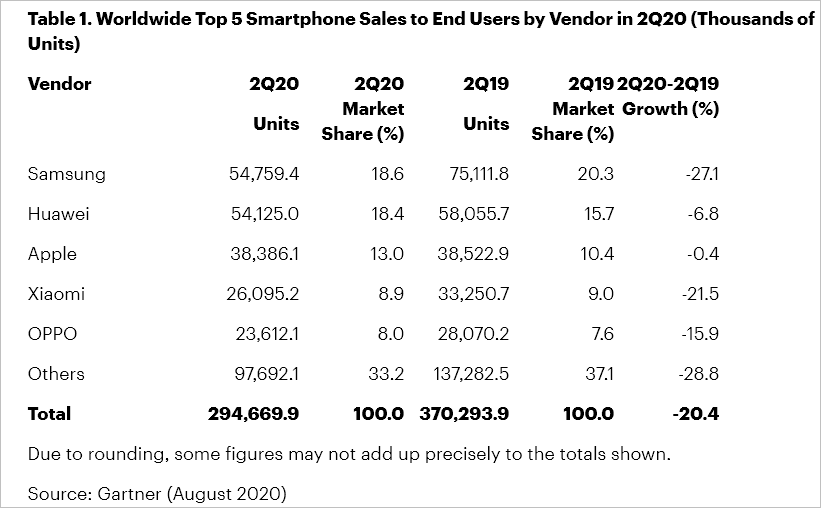
Market research firm Gartner has released a report of the global smartphone market for the second quarter of the year. The data shows that smartphone sales fell by 20.4% in the second quarter of 2020 with an estimated gross shipment of 295 million units.
Samsung recorded the highest shipment with a gross shipment of 54.759 million units giving it a market share of 18.6%. However, despite still ranked as the number one phone merchant, the Korean giant’s shipment fell short of last year’s figure by 27.1%.
Huawei shipped an estimated 54.12 million units with a market share of 18.4%, a year-on-year decline of 6.8%, and a month-on-month sales growth of 27.4%. Huawei’s market share almost equalled that of Samsung, with just The market share basically equalled Samsung with just 630,000 units separating it from the being the market leader. If we put into perspective Huawei’s sanctions by the US government, then it can be seen that the performance is pretty impressive. Perhaps if the sanctions don’t exist, Huawei may have become the market leader by now.
US phone maker Apple is ranked third with a gross shipment of 38.386 million units in Q2, which was basically the same as last year. The market share was 13.0%, down 0.4% year-on-year.
Samsung logo at Samsung Customer Service Center in Krakow, Poland on 11 January, 2019. (Photo by Beata Zawrzel/NurPhoto via Getty Images)
The fourth spot is occupied by Xiaomi with a shipping estimate of 26.0952 million units and a market share of 8.9%. Xiaomi’s market share also declined by 21.5% year-on-year.
The top-5 ranking is completed by OPPO who is estimated to have shipped 23.61 million units, having a market share of 8.0% with a year-on-year decline of 15.9%.
On the whole, the smartphone market continued to experience declining shipments occasioned by the COVID 19 pandemic. Gartner says the worldwide decline in smartphone sales was also a result of overall declines in the two largest smartphone markets. China registered a 7% decline in sales in this quarter, while smartphone sales dropped by 46% in India during the quarter. The two countries are the largest and second-largest smartphone markets worldwide, respectively.
Xiaomi has made key adjustments to its leadership in recent weeks but it is not done yet. Now, it has been reported that the tech giant is getting a new Chief Financial Officer.
The new CFO is an executive at Credit Suisse, Alain Lam, and he will be joining Xiaomi next month according to Bloomberg. Lam is currently the head of technology and media practice at Credit Suisse’s investment banking and capital markets group in Asia Pacific.
Xiaomi’s former CFO is Chew Shou Zi whose new role is as the President of International Operations. The appointment of Lam should help Xiaomi uncover new revenue streams especially from the several companies under its ecosystem. The new executive has also worked with Morgan Stanley and has more than 20 years of experience. He has also worked on over a 140 transactions with a value of more than $60 billion including the public listings of Alibaba Group Holding Ltd., Google, and Pinduoduo according to Bloomberg.
The source also reports that Credit Suisse has named Allan Chu as Mr. Lam’s replacement in an internal memo. However, both Xiaomi and Credit Suisse have refused to comment on the matter.
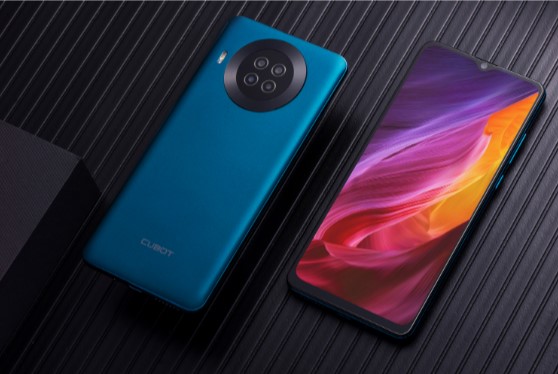
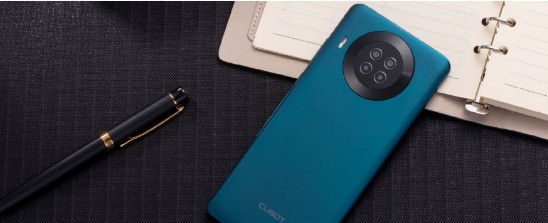
Cubot recently launched three new smartphones – Cubot C30, X30, and Note 20 Pro. All these devices went on sale yesterday while offering fascinating specifications at an affordable price. Cubot Note 20 Pro is slightly different smartphones due to its circular camera ring and splendid specs than the other smartphones. It is a fully value-packed smartphone available for the price of $99.99.
The budget King aka Cubot Note 20 Pro was recently launched with some advancements over its predecessor, The new smartphone features more efficient and powerful Helio P60 SoC with upgraded 6GB RAM and 128GB ROM. There are several other reasons and benefits of grabbing the Cubot Note 20 Pro.
Exceptional Design and Display
Cubot Note 20 Pro houses a massive 6.5-inch full view display encasing a waterdrop notch. The thinner bezels across the front side of the device make the viewing experience more immersive. The rubberized texture across the device makes it more comfortable to hold and gives a premium look. The circular quad-camera module further improves the look and enriches the overall design of the smartphone.
The interested users have the option to grab the beautifully designed Cubot Note 20 Pro in three different colors of Black, Blue, and Green.
Packed Performance and Large Storage
Cubot Note 20 Pro is powered with an octa-core MT6771 Helio P60 chipset which is highly effective to easily manage power-intensive tasks. The onboard GPU further enhances the graphics processing. The device is available with 6 GB RAM, 128GB internal storage, and an expandable MicroSD card slot. Overall, the device has enough RAM for smooth multitasking and even carries sufficient storage to store documents and other media.
Camera and Connectivity
The newly launched smartphone packs a quad-rear camera sensor featuring a 12-megapixel Sony IMX486 sensor, a 20-megapixel Sony IMX350 depth sensor, and a 0.3-megapixel photosensitive lens. An 8-megapixel AI selfie camera is encased inside the waterdrop display for beautiful selfies. The AI Beautify and other software enhancements make the camera more effective.
Never Ending battery
There’s a 4200 mAh detachable battery which boards the device and offers 300 hours of standby time. It is a super companion while you’re hiking, or watching TV or listening to music for longer times. It can be your sole entertainment box while traveling and doing any time-consuming activity.
Pricing
Cubot Note 20 Pro is available for the price of $119.99 with 6GB RAM and 128GB storage. Moreover, the users can redeem the coupon to get it for $99 via AliExpress. the discount is only applicable for the first 1000 buyers starting August 24. You can grab the discount coupon by heading over here.
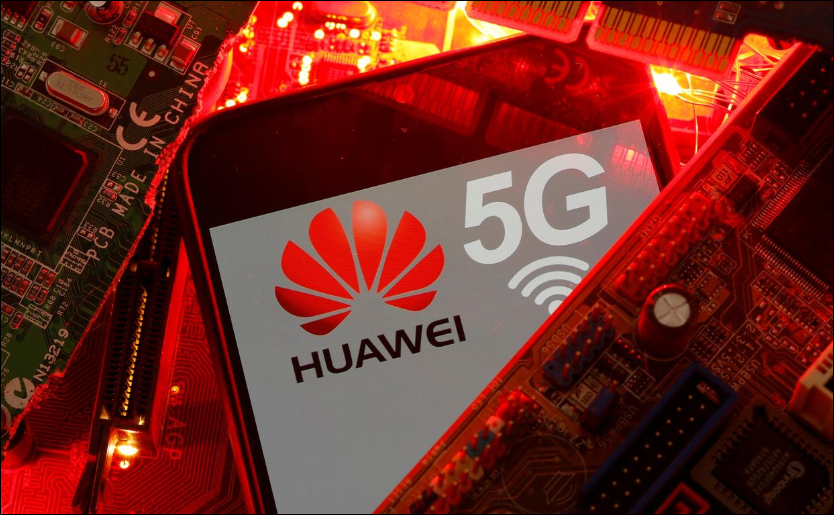
A new report from Financial Times has revealed that India is planning on quietly phasing out telecommunications equipment made by Huawei from its networking infrastructure.
For those unaware, there is an increasing anti Chinese sentiment growing in India, following multiple military clashes along the Indo-Chinese border. This has also led to increased friction between the two governments as well, with India now seeking to block out Chinese vendors from its 5G trials. The Indian government is concerned regarding Chinese investment in its telecom infrastructure and is apparently seeking to quietly phase out existing equipment made by Huawei.
Furthermore, India isn’t planning on banning the Chinese tech giant, but rather, replacing its equipment over a period of time. The report had a senior government official state that “When it comes to big public contracts and critical infrastructure, we would prefer non-Chinese companies.” This is reflected by Indian telecom giants like Reliance Jio is working on developing its own 5G equipment, and Bharti Airtel, who is working with Ericsson.
We had also previously reported on Huawei and ZTE being blocked out from the 5G trials that are expected to start in the country later this year. So, this course of action from the local government might be a real possibility and threat to Huawei’s position in the Indian telecom market. We’ll provide more updates on the matter, so stay tuned for more.
Apple has reportedly acquired another startup. This time its a VR based company called Spaces, which has a dedicated team that specializes in virtual reality based technology, according to a report from Protocol.
Spaces is a company created by veterans from DreamWorks Animation back in 2016. The startup has been developing VR products and has also built tools for Zoom in the form of an add on that allows users to hold virtual reality video conferences and use animated avatars as well. However, just last week, the company abruptly ended all of its services without any further details or prior notice. The only information currently available on Spaces’ official website is that it is “heading in a new direction.”
The official note says, “Thank you to our users and partners who participated in our awesome VR video conferencing product and the many people who enjoyed our VR location-based entertainment attractions found at theme parks, theaters, and more.” At the moment, both Apple and Spaces have yet to respond to this matter. It is also unknown what price the former paid to acquire the latter.
Apple is currently working on VR and AR related products that are set to launch in the near future. While it is uncertain if Spaces would join the company’s VR projects, the company’s former employees might just be absorbed into Apple’s team. Unfortunately, this is still an unconfirmed report, so take it with a pinch of salt for now and stay tuned for more updates.
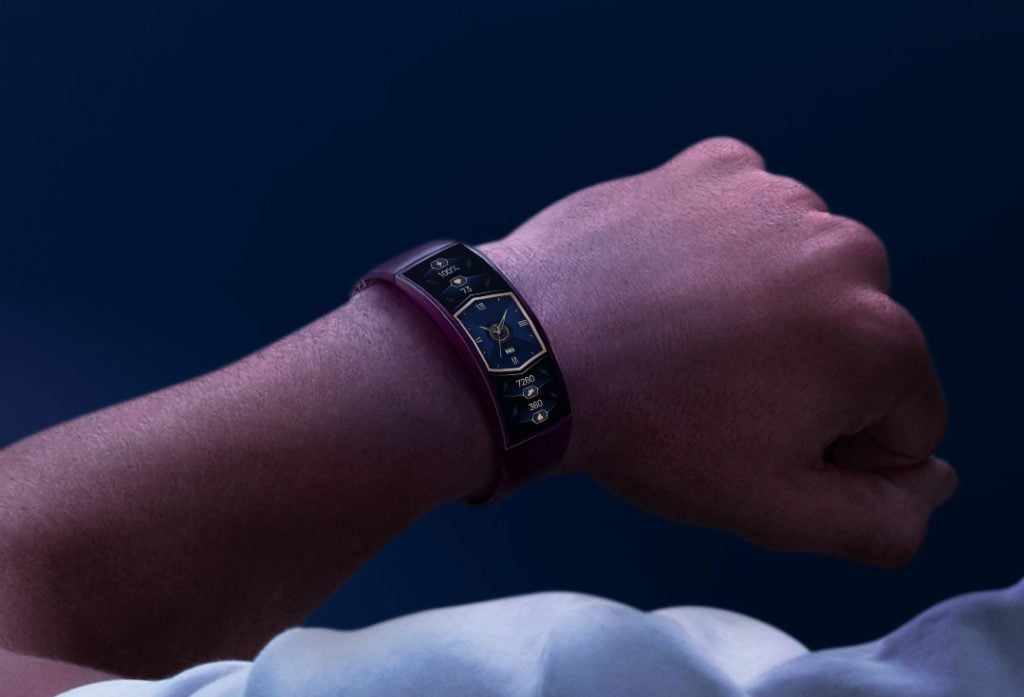
Huami Technology unveiled Amazfit X Curved Smartwatch in August of 2019. The wearable hit Indiegogo earlier this year and successfully reached the crowdfunding goal. It is currently in the production phase. On the other hand, in China, it is being currently crowdfunded on Xiaomi Youpin for only 999 yuan with shipping commencing from October 29.
The highlight of Amazfit X is its 2.07-inch curved flexible OLED display with a resolution of 206 x 640 pixels, 326ppi, 100% NTSC color gamut, and 430 nits of peak brightness. The screen is inclined at 92°, which is achieved by heating the glass cover to over 700℃, followed by a 6-step bending process.
Because of its unusual size, the wearable features a 3-segment motherboard and a curved 220mAh battery rated to provide 7-day battery life. The display combined with titanium alloy unibody and button-free design is said to offer 244% larger viewing area than other wearables of the same size.
Other features of Amazfit X include proprietary BioTracker™ PPG sensor for heart-rate monitoring, SpO2 sensor for measuring blood oxygen levels, GPS + GLONASS module, and support for sleep tracking, multi-sport modes, call alerts, app notifications, music controls, weather, alarm, stopwatch as well as find device feature.
Last but not least, the futuristic Huami Amazfit wearable charges via proprietary magnetic cable, comes in two colors – Eclipse Black/New Moon Gold and is water-resistant up to 5ATM. As for compatibility, it can be paired with both Android and iOS devices through the Amazfit app, which has now been rebranded to Zepp.
Earlier this week, a federal judge blocked Apple from shutting down Epic Games‘ Unreal Engine, which is a tool relied on hundreds of other app makers and game developers, according to a Gadgets360report.
According to Judge Yvonne Gonzalez Rogers, “Epic Games and Apple are at liberty to litigate against each other, but their dispute should not create havoc to bystanders.” In other words, the dispute between both companies should not bring unrelated parties into the crossfire. The legal battle between Apple and Epic Games started after the latter sued both the former and the Google for anti competitive practices on their respective platforms, from which Fortnite was removed.
For those unaware, both Google and Apple take a cut out of any microtransaction and purchase made through games on their app stores. A recent Fornite update bypassed this system, which violated the terms of service on both platforms. The judge also stated that “the current predicament (with Fortnite) appears of its own making” and has refused to force a reinstatement at the moment. Although, Rogers has allowed Unreal Engine to continue powering iPhone apps.
In the 26th Technology Symposium, TSMC unveiled the details regarding its 7nm N7 process, 5nm N5 process, N4, and 3nm N3 process. The world’s largest contract chipmaker also introduced its latest 3DFrabric technology and hinted at what lay beyond the 3nm process node.
TSMC has already been leading the semiconductor industry, which started with it leaving Intel and Samsung behind after shifting to its 7nm process nodes. Since then, the company has also advanced towards the 5nm process, with the development of the 3nm nodes also being on track. In other words, TSMC is showing no signs of slowing its pace, with production for the 3nm process reaching mass production levels by 2022 while Intel’s 7nm is expected to arrive by late 2022 or even early 2023.
Notably, TSMC’s 5nm ‘N5’ uses the company’s EUV technology “extensively” which brings various improvements over the 7nm N7. According to official notes, the N5 process offers up to 15 percent more performance for the same power consumption as the N7 and even offers up to 30 percent power reduction for the same performance levels as well.
The improvement doesn’t stop there as the N5 also achieves 1.8X logic density gain over the 7nm N7 process. This translates to the defect density learning curve for N5 being faster than N7, meaning the 5nm process will achieve higher yield rates faster. The chipmaker has also enhanced N5P node in development for high performance applications and plans on ramping up production in 2021.
We use cookies on our website to give you the most relevant experience by remembering your preferences and repeat visits. By clicking “Accept”, you consent to the use of ALL the cookies.
This website uses cookies to improve your experience while you navigate through the website. Out of these, the cookies that are categorized as necessary are stored on your browser as they are essential for the working of basic functionalities of the website. We also use third-party cookies that help us analyze and understand how you use this website. These cookies will be stored in your browser only with your consent. You also have the option to opt-out of these cookies. But opting out of some of these cookies may affect your browsing experience.
Necessary cookies are absolutely essential for the website to function properly. This category only includes cookies that ensures basic functionalities and security features of the website. These cookies do not store any personal information.
Any cookies that may not be particularly necessary for the website to function and is used specifically to collect user personal data via analytics, ads, other embedded contents are termed as non-necessary cookies. It is mandatory to procure user consent prior to running these cookies on your website.