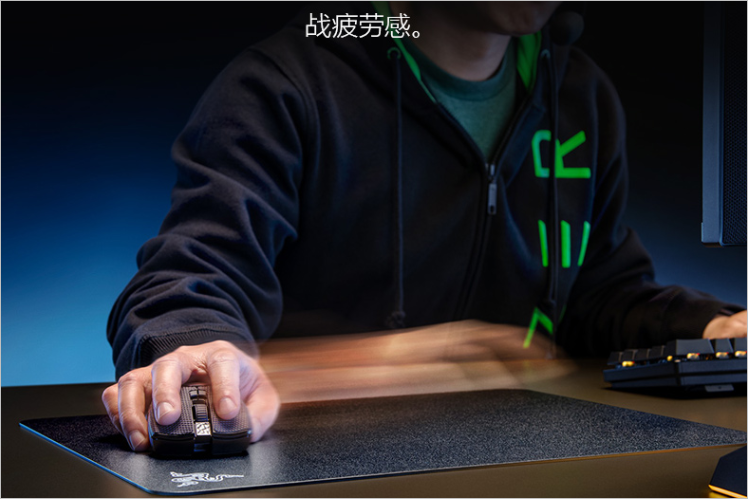
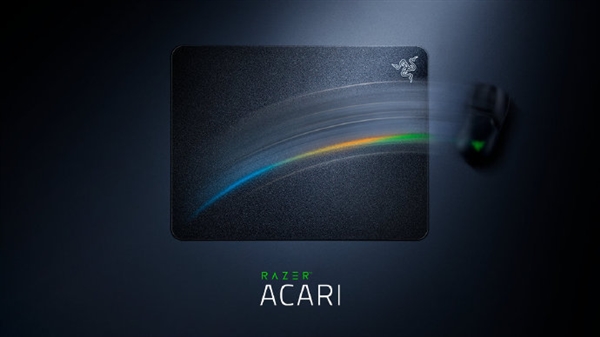
Razer has launched a new product in China designed for e-sports players dubbed Razer Acari gaming mouse pad. The computer accessory carries an official price of 499 yuan (~$71).
Razer described the product as “super smooth, designed for those who desire speed and smooth sliding. The pad has a sparkling surface and is made from an ultra-low friction particle-coated hard surface. The large size ensures that there won’t any inhibition to free movement of the mouse during use.
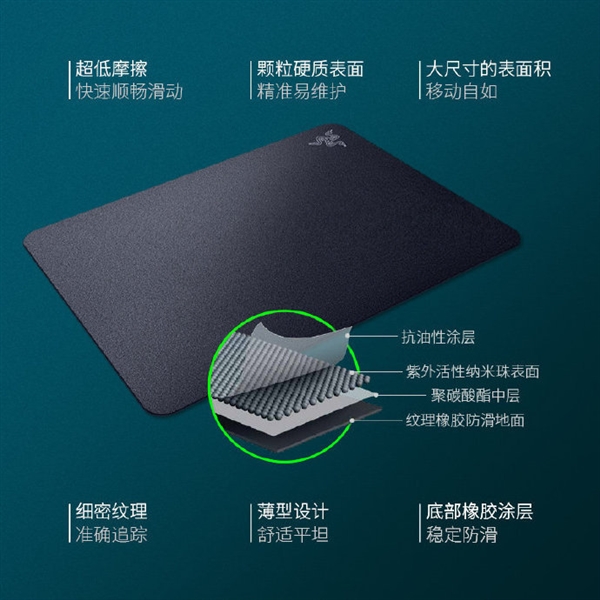
The pad is also comfortable as it is made of four layers of texture. All the layers from top to bottom include an oil-resistant coating on the outer surface, a UV-active nanobead surface, polycarbonate middle layer and textured rubber non-slip base. The fine texture can help accurate tracking while the rubber base provides slip resistance. Also, the thin design is comfortable and flat.
The mouse pad comes with a dimension of 420×320 mm which is larger than a general medium-sized gaming mouse pad. It is also about 1.75 mm thick and provides a 1-year warranty.
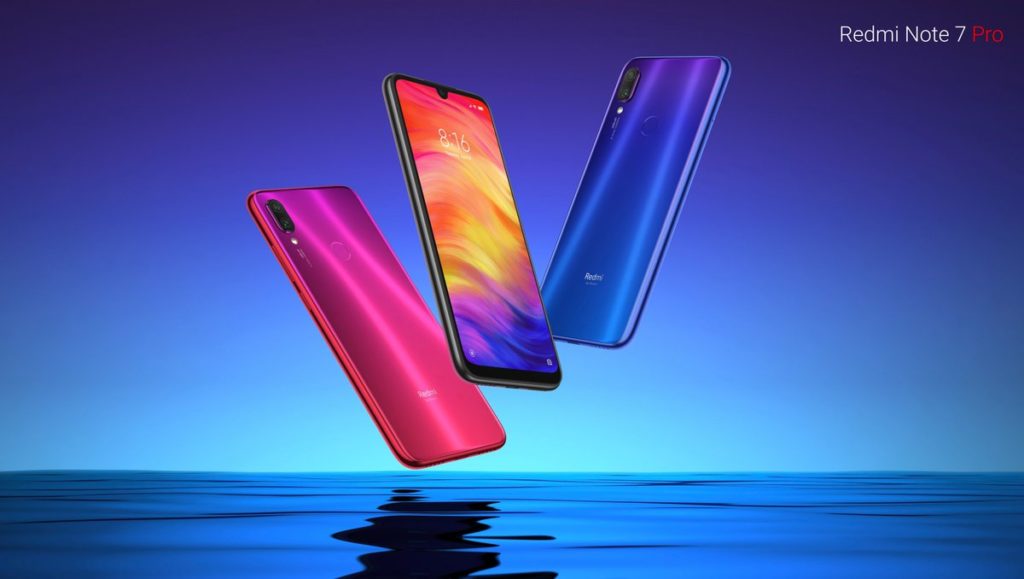
Xiaomi has been updating its devices to MIUI 12 for months. So far, all the premium and mid-range handsets gave got it in China. Hence, the company has begun to roll out the update to budget and older phones. Redmi Note 7 Pro is one of those smartphones, which has now started to receive MIUI 12 stable update in the firm’s home country.
If you are our regular reader, you might be aware that Redmi Note 7 Pro was only recently updated to Android 10 in China. Unfortunately, the device is yet to get it in India, the only country where it is available other than the former. But users in China has also begun to receive MIUI 12 stable update.
The update comes with build number V12.0.2.0.QFHCNXM and weighs 686MB in size. The device gets all the features of MIUI 12 such as new animations, Dark Mode 2.0, control centre, granular privacy controls, revamped settings app, new MIUI camera app, and more. But it misses out on AOD+ due to the lack of OLED display.
Having said that, it is not sure when the Indian variant of the handset will get this update as it is yet to receive Android 10.
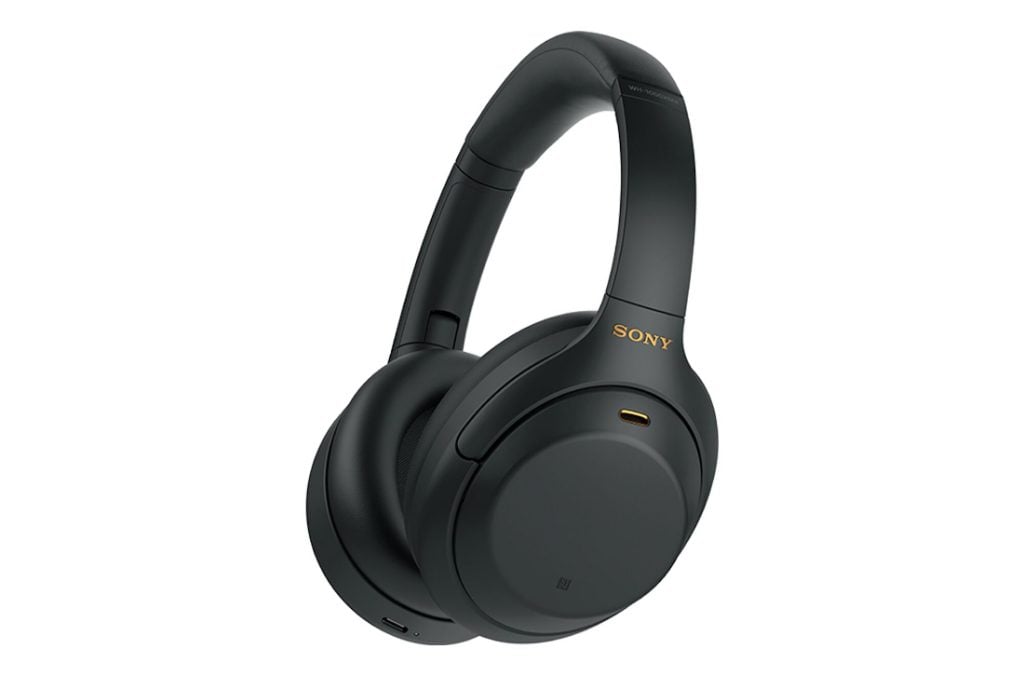
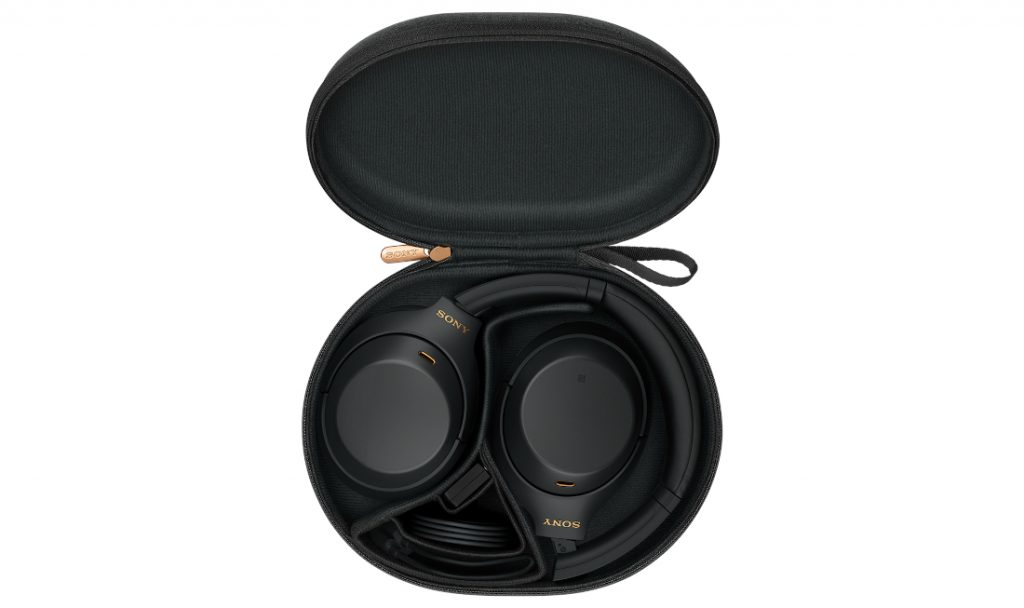
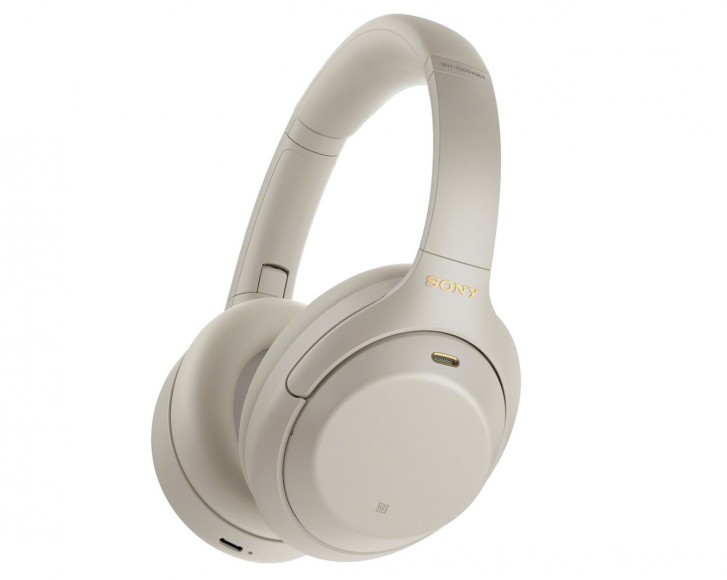
When it comes to noise-cancelling headphones, Sony‘s WH-1000XM3 is perhaps the top contender for the best option available. The tech giant has now launched an upgraded version, nearly two years after the WH-1000XM3 was unveiled. The new model is dubbed WH-1000XM4 and brings several new smart functionalities like on-ear detection, multiple device pairing, adaptive sound control, along with better noise cancellation and more. As a result of the launch, the WH-10000XM3 has even gotten a price cut.
As a result of the WH-1000XM4 being an upgraded version of WH-1000XM3, it naturally features improved noise cancellation with its Dual Noise Sensor technology and updated HD Noise Canceling Processor QN1. The sound quality has also been improved with a new Edge-AI used by the DSEE Extreme (Digital Sound Enhancement Engine) and with support for 360 Reality Audio.
There are a number of smart features added to the WH-1000XM4, including Speak-to-Chat feature where the headphones will recognize if the user is having a short conversation and automatically reduce the volume and let in ambient sound. The Adaptive Sound Control feature can be configured in the Headphones Connect App where the headphone will automatically detect the surrounding of the user and adjust the ambient sound settings accordingly.
Other features include an improved 5-mic system for clearer calls, NFC, Bluetooth 5.0, Fast Pair, wearing detection and the headphones claim a battery life of 30 hours with support for Quick Charging.
The Sony WH-1000XM4 carries a price tag of $349 and will be available for pre-order at retail stores and online stores in the US in both black and silver colours.
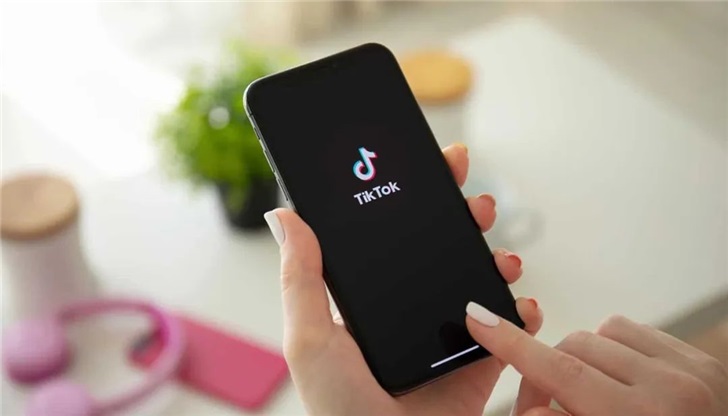
Earlier this week, it was reported that Microsoft was in negotiation with TikTok to acquire its operations in the US, Canada, Australia and New Zealand. Reuters has carried a report that the US software giant is setting its eyes on expanding the scope of the deal. The company is now looking to include Europe and India in the deal and perhaps even acquire TikTok’s global operations.
A separate report by the Financial Times indicates that Microsoft and TikTok’s parent company ByteDance were in negotiations to add India to the deal. That was reported to have hit the brick wall. However, the source of the new rumour also hinted that Microsoft is yet to approach ByteDance with the offer to fully acquire the social network.
Microsoft has indicated that negotiations to acquire the social media app’s US concerns will be concluded by September 15 even if a deal could not be struck. US President, Donald Trump further emphasized on the sacrosanct nature of that deadline with the signing of an executive order to close TikTok’s US arm on September 20, five days after the deal day. Apart from TikTok, WeChat is also affected by the executive order.
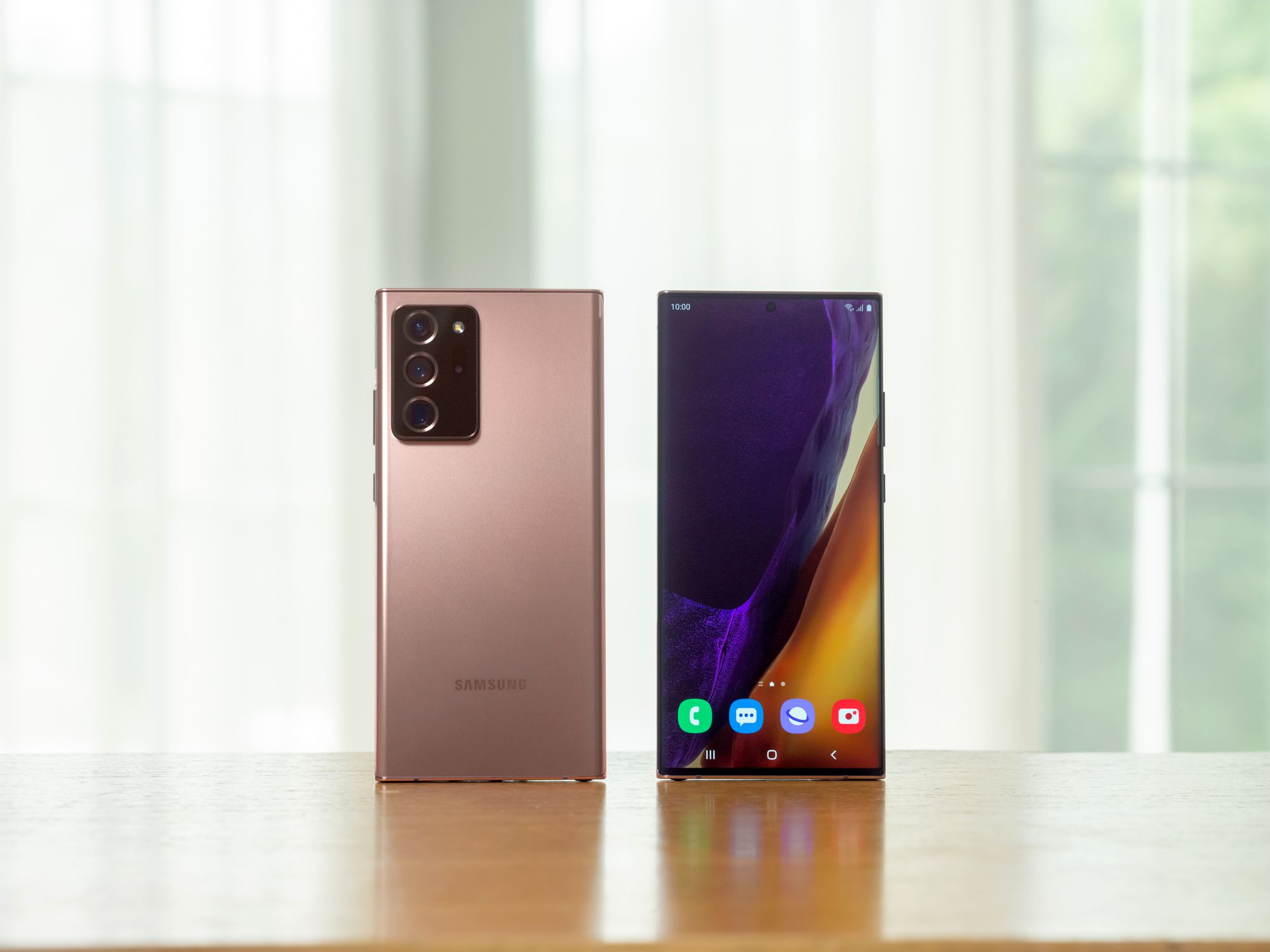
A few days ago, Samsung officially launched the Galaxy Note20 Ultra flagship smartphone. Although there are several new and powerful features on the device, the Galaxy Note20 Ultra isn’t as powerful as the Galaxy S20 Ultra which was launched earlier this year.
It is the first device to come with Samsung Display’s Lower Display Power Technology named HOP and the newly launched Corning Gorilla Glass Victus.
For the display, there’s low-temperature polycrystalline oxide (LTPO) thin-film transistor (TFT) technology, reports The Elec. It is a combination of the best qualities of low-temperature polycrystalline silicon (LTPS) TFT and oxide TFT.
The LPTO technology is claimed to reduce the power consumption of OLED panels by 15 percent to 20 percent compared to LTPS. It even saves battery life when using AR and VR technology, as well as 5G connectivity.
The technology was first used by LG for the OLED panels on Apple Watch in 2018 and then Samsung used the same tech for the Galaxy Watch Active2 a year later. Now, Samsung is expected to use this HOP technology for next year’s Apple iPhone as well.
As for the camera, the Note20 Ultra packs 108-megapixel wide-angle lens, a 12-megapixel telephoto lens, and a 12-megapixel ultra-wide sensor on the back. In comparison, the S20 Ultra features a 48MP telephoto lens. The Note20 Ultra also lacks a 3D ToF sensor and instead, comes with a laser auto-focus sensor.
Also, the company has reduced the 100x Space Zoom feature of the S20 Ultra to just 50x Space Zoom on the Note20 Ultra. But, the 5x optical zoom support remains intact. While the camera output may offer better results, on paper, the camera configuration doesn’t seem as powerful as S20 Ultra.
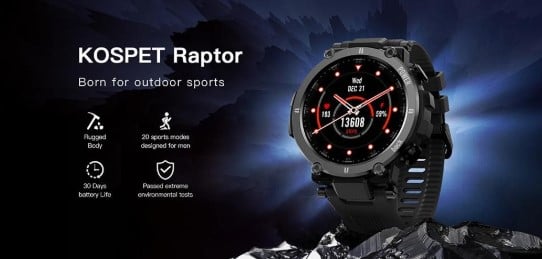
Kospet has launched its’s first rugged smartwatch – Kospet Raptor carrying outstanding features like IP68 waterproof, long standby, rugged design at an affordable price. Kospet Raptor houses a massive 1.3-inch display with a clear and intuitive User Interface. It is comfortable to wear and houses a permeable skin-friendly TPU strap. The rugged design enhances its durability and saves the smartwatch from a harsh outdoor environment.
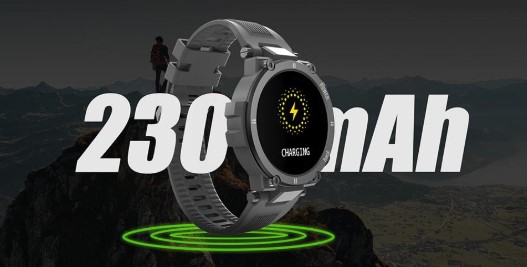
Among other primary features, long-standby time of up to 30 days with Bluetooth-off is another splendid aspect of the new watch. It can work for 10 days upon extensive usage with Bluetooth turned-on, while it sustains for 20 hours if Sports Mode is active to track any physical activity. However, there’s a 230mAh battery that powers the smartwatch.
Waterproof and Rugged
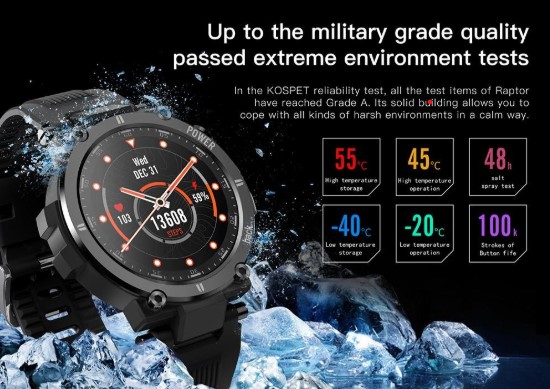
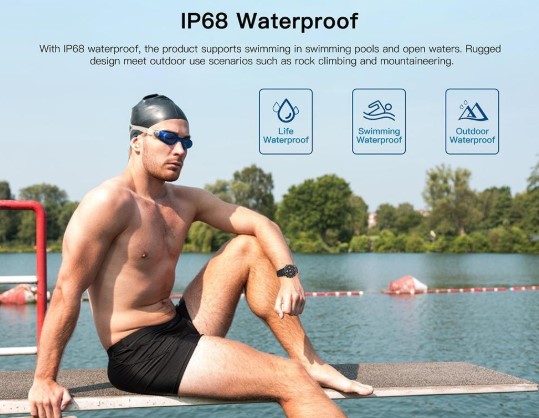
Furthermore, the smartwatch is fully sealed to protect from dust, shock, and water as it is also 5ATM certified. It has gone through rigorous lab testing and outdoor testing to prove its metal as a rugged smartwatch. Kospet Raptor was salt spray tested for 48 hours and was kept under -40 degrees Celcius temperature. The IP68 Waterproof body allows the user to flawlessly use the smartwatch while swimming, under the rain and enables it to sustain any type of water splashes.
The military-grade certification allows the watch to easily sustain high-temperatures of up to 55-degrees.
Display and Design
Kospet Raptor houses a beautiful round 1.3-inch TFT LCD display with a resolution of 320 x 320 pixels. The full touch interface allows the user to interact in a better way with its intuitive User Interface. Moreover, the display brightness enough to read texts easily even under sunlight.
The smartwatch is carved out of metallic material along with hexagonal screws which improve the overall build quality. It even enhances the shockproof design to prevent any damage from accidental collisions. It weighs 47 grams.
Software
Kospet Raptor is fully capable to track different fitness activities like running, walking, skiing, swimming, basketball, bowling, dumbbells, sit-ups, rowing machine, elliptical machines, and free training. It even supports 24 hours of real-time heart rate monitoring throughout the day. Other features like sedentary reminders, sleep tracking, and message notifications are part of the package.
It houses alarm, weather, and timer functions along with the ability to control music and camera.
The smartwatch UI houses 50 original UI watch faces to give you a better feel and look.
The user can easily download Da Fit APP to manage the app features easily.
Technical Specifications
Dimensions: 4.7 x 5.2 x 13.3cm
Weight: .50 grams
Display: 1.3″ inch TFT LCD 320 x 320 pixel resolution
Processor: nRF52832
Memory: 64 KB + 64 M
Bluetooth: Bluetooth 4.0
Battery Capacity: 230mAh with 30 days of standby time, 8-12 days of daily usage
Water Resistant Rating: IP68 Waterproof
Compatible OS Version: IOS9.0 and above, Android 5.1 and above
Pricing
Kospet Raptor rugged smartwatch is an absolute package made available for the price of $37.99. It is a perfect companion for the users who often go on hiking and on other adventure activities.
It is speculated that the iQOO 5 series debuting on Aug. 17 has iQOO 5 (V2024A model number) and iQOO 5 Pro (V2025 model number). The Pro model appeared at the 3C certification earlier today with a 120W fast charging. Ahead of the launch, the iQOO 5 has appeared on Master Lu benchmarks with key specifications.
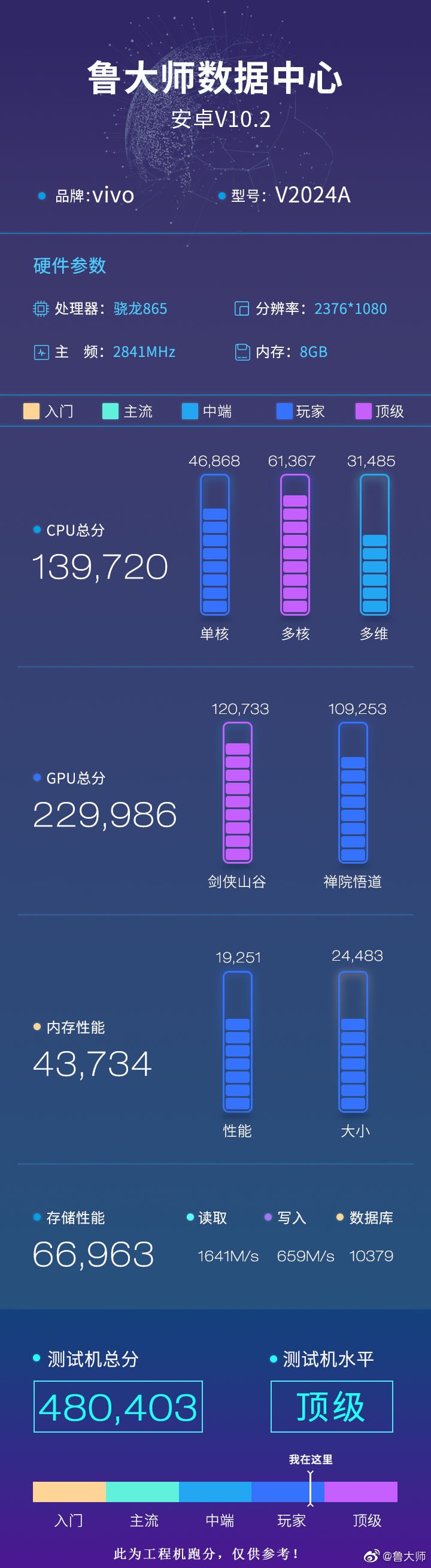
The listing reveals that the smartphone has recorded 480,403 on Master Lu. This score is an average of 139,720, 229,986, 43,734, and 66,963 points that the iQOO 5 scored in CPU, GPU, RAM, and storage tests, respectively.
The Master Lu listing reveals that the iQOO 5’s display supports 1080 x 2376 pixels resolution and it is powered by 2.84GHz Snapdragon 865, and not SD865+. The SoC is coupled with 8 GB of RAM and the device has 128 GB of native storage.
The Vivo X50 Pro+ that debuted in June in China has a 120Hz refresh rate supporting curved AMOLED display whereas the Vivo X50 has a flat AMOLED display. Hence, it appears that the iQOO 5 may sport a flat display of 6.56 inches whereas the Pro model could be coming with a curved 120Hz display of the same size. Like the X50 lineup, the iQOO series will have a punch-hole design on their screens.
The 3C listing of the Vivo V2024A iQOO 5 phone had revealed that it could be shipping with a 55W rapid charger. The iQOO Pro 5’s 3C appearance has revealed that it will arrive with the ultrafast 120W fast charger. Both phones could be packed with a 4,000mAh dual-cell battery.
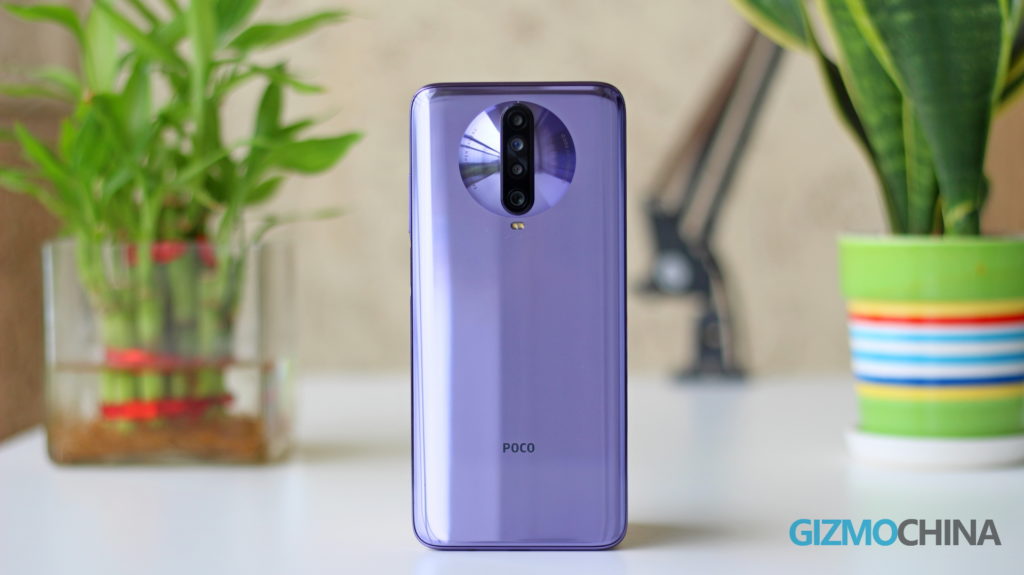
Xiaomi has been rolling out MIUI 12 in both beta and stable channels to the eligible devices in China since its announcement in late April. Lately, the global variants of supported handsets also begun to receive stable update including POCO F2 Pro. Now, POCO X2 becomes the first POCO-branded smartphone in India to join this bandwagon.
The MIUI 12 stable update for POCO X2 comes with build number V12.0.1.0.QGHINXM and weighs 813MB in size. Since Mi Community India has been disabled, users of the handset who got the update shared the good news on Twitter.
Going by the tweets and replies on Twitter, only a few users have received it so far. If these users don’t face any problem, we expect the company to seed it out to more units.
The Xiaomi Mi 8, which is identical to POCO F1 received the MIUI 12 stable update in China last week. Therefore, we expected the original POCO smartphone to get the update this week but that did not happen.
Anyway, since the X2 has got the update, we believe the company will soon roll it out to F1 and the latest POCO M2 Pro in the coming days. Also, except the brand’s first phone, the latter two, F2 Pro, and the upcoming C3 are also eligible for Android 11.
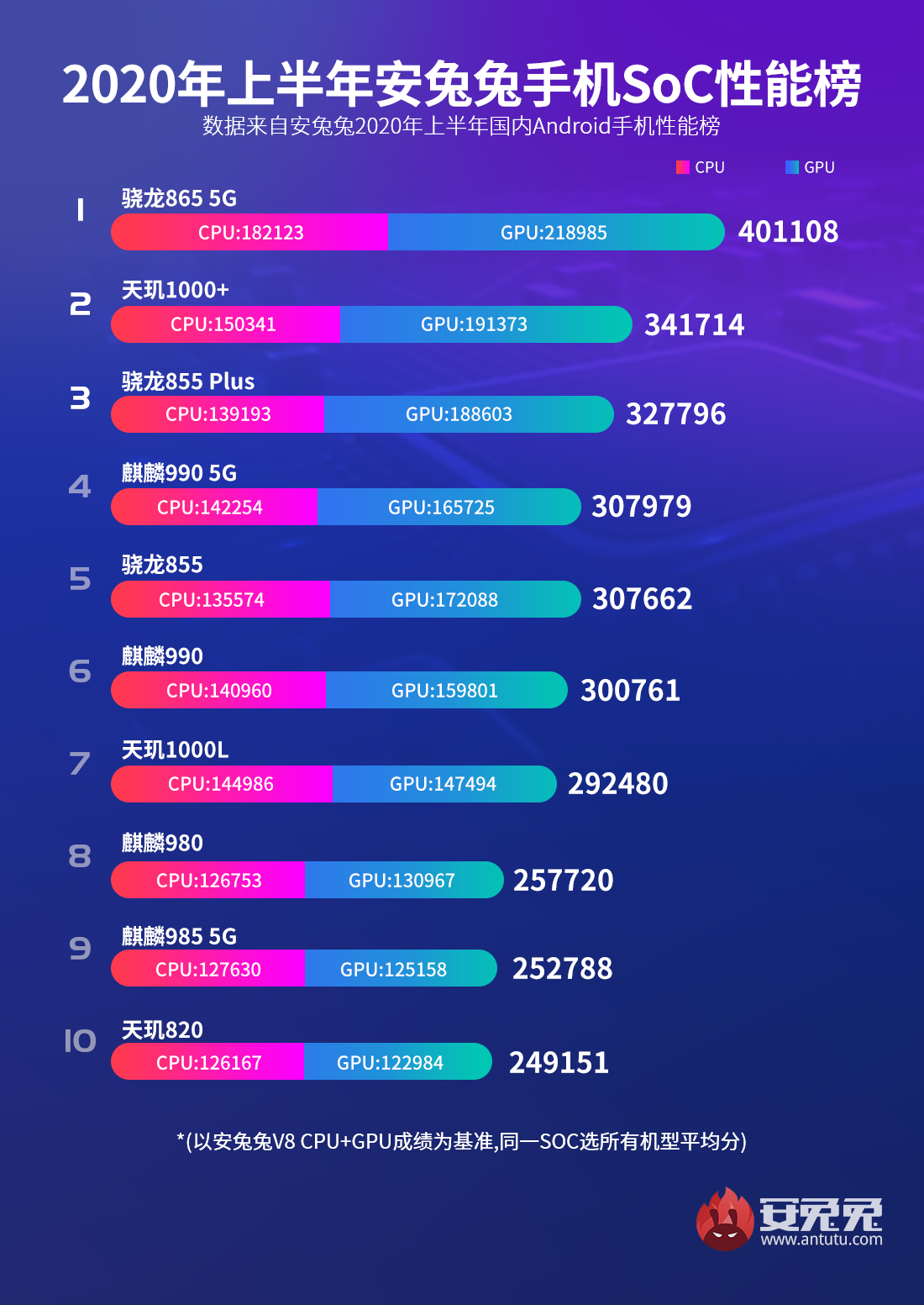
With half of the year gone by, benchmarking platform AnTuTu has shared a list of top-performing smartphone chipsets for the first half of the year, i.e. H1 2020, in which, Qualcomm has taken the lead position.
To compile this list, the company counts the CPU score and GPU score only and makes an average for the chipset with all the models powered by the same processor.
As said, leading the list is Qualcomm Snapdragon 865 which has scored 401,108 points with a CPU score of 182,123 points and a GPU score of 218,985 points. Notably, this is the only chipset in the list to have scored more than 400,000 points.
The second position is grabbed by MediaTek Dimensity 1000+ SoC with an overall score of 341,714. With this, MediaTek makes an entry in this list after many years. It is then followed by Qualcomm Snapdragon 865 Plus chipset with 327,796 points.
The Huawei Kirin 990 and Qualcomm Snapdragon 855 chipset in the fourth and fifth position completes the list of top five chipsets with a score of 307,979 points and 307,662 points respectively.
Other chipsets in the list, making the top-ten chart include Huawei Kirin 990, MediaTek Dimensity 1000L, Huawei HiSilicon Kirin 980, Kirin 985 5G, and MediaTek Dimensity 820.
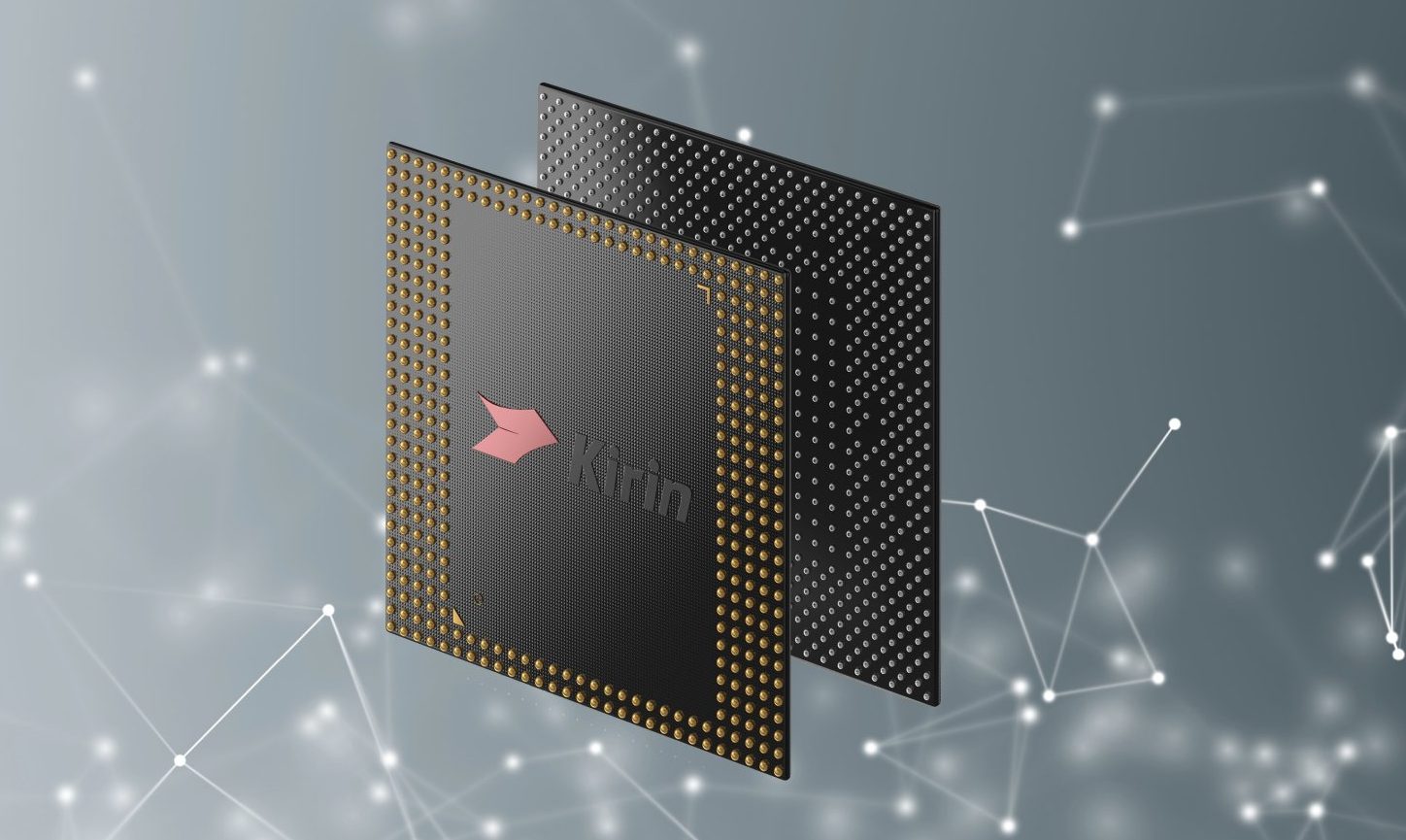
Although Huawei has a few chipsets in the list, that may not be the case for future listings given that Huawei is now ceasing to make flagship Kirin processors from 15th September, after getting banned by the United States.
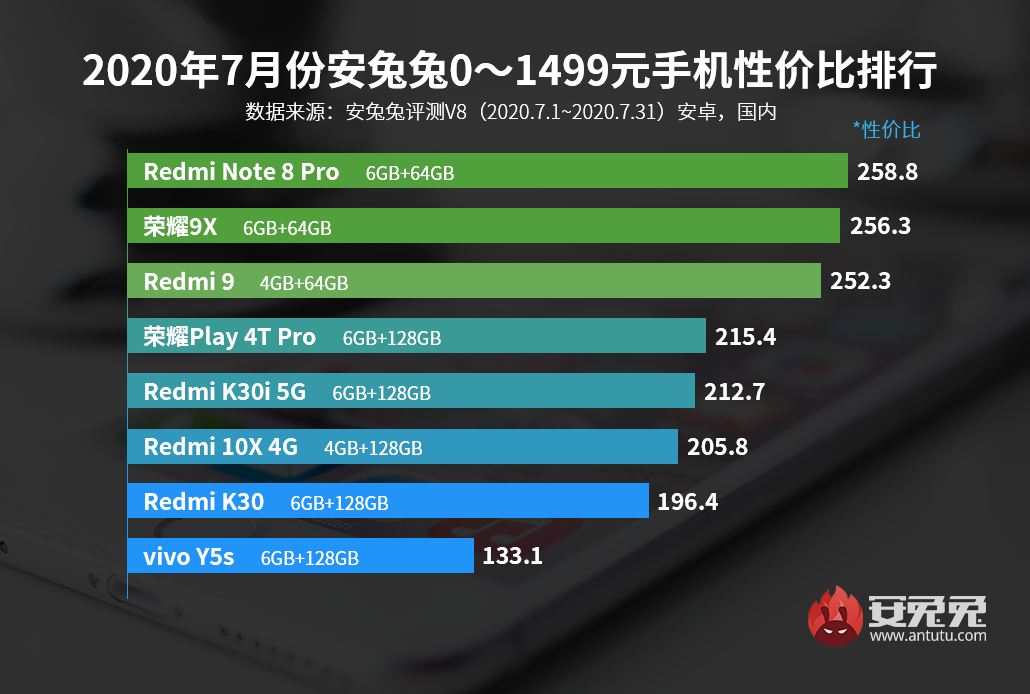
AnTuTu has published the list of top 10 smartphones in July in China that offer the best value for money experience in different price segments. The list mainly includes phones released in the first half of the year and some of them are phones from last year. This indicates that such phones are still popular in the Chinese market thanks to their competitive pricing. The list for July is led by the Redmi Note 8 Pro.
In the 0 to 1,499 Yuan (~$215) price range, the Redmi Note 8 Pro’s 6GB+64GB version can be leading the pack. It is followed by 6GB+64GB Honor 9X and the recently announced 4GB+64GB Redmi 9 phone. These phones are followed by Honor Play 4T Pro, Redmi K30i 5G, Redmi 10X 4G, Redmi K30, Redmi Note 8, and Vivo Y5s.
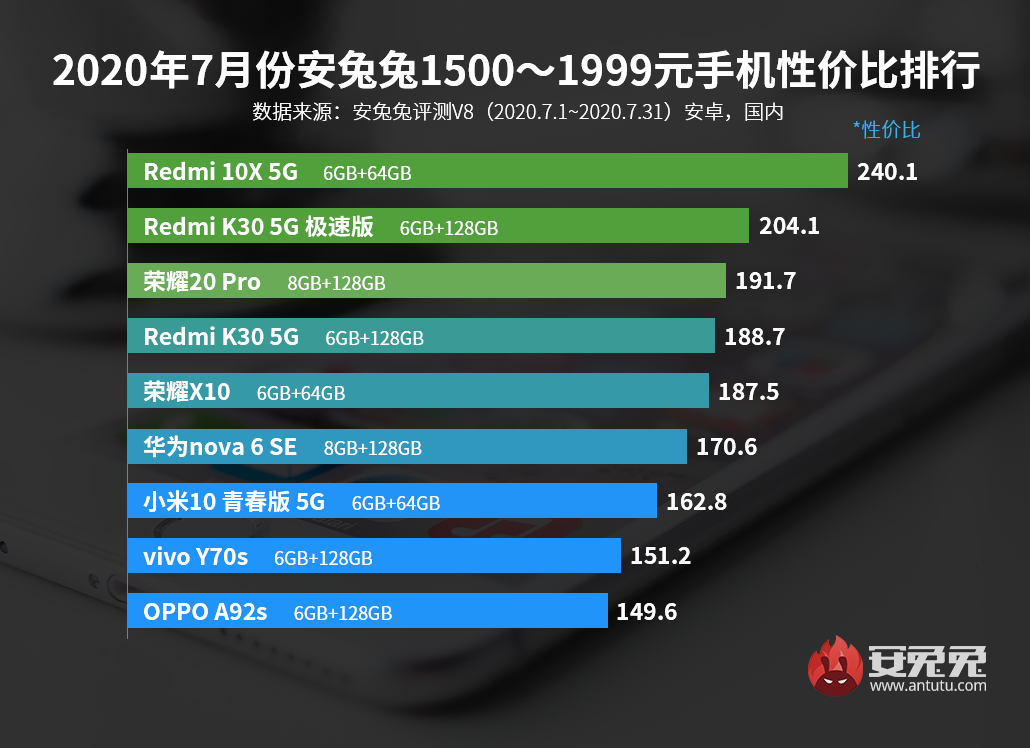
Next comes the 1,500 Yuan to 1,999 Yuan (~$287) price range. The list is led by Redmi 10X 5G’s variant 6GB+64GB model, Redmi K30 5G’s 6GB+128GB model, and Honor 20 Pro’s 8GB+128GB edition. The remaining devices in the list include Redmi K30 5G, Honor X10, Huawei Nova 6SE, Xiaomi Mi Youth Edition 5G, Vivo Y70s, and OPPO A92s.
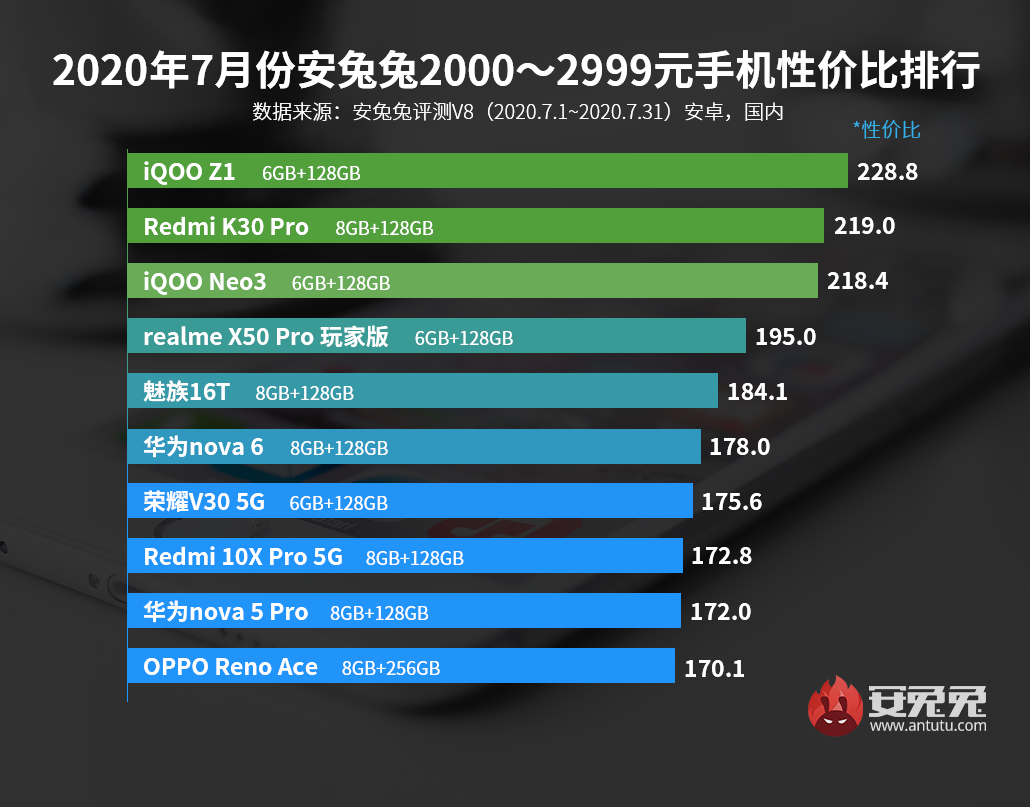
The 2,000 Yuan to 2,999 Yuan (~$431) price range is led iQOO Z1’s 6GB+128GB edition. It is followed by Redmi K30 5G’s 8GB+128GB variant and iQOO Neo3’s 6GB+128GB variant. The other phones that are present in the list include Realme X50 Pro Player Edition, Meizu 16T, Huawei Nova 6, Honor V30 5G, Redmi Note 10X Pro 5G, Huawei Nova 5 Pro, and OPPO Reno Ace.
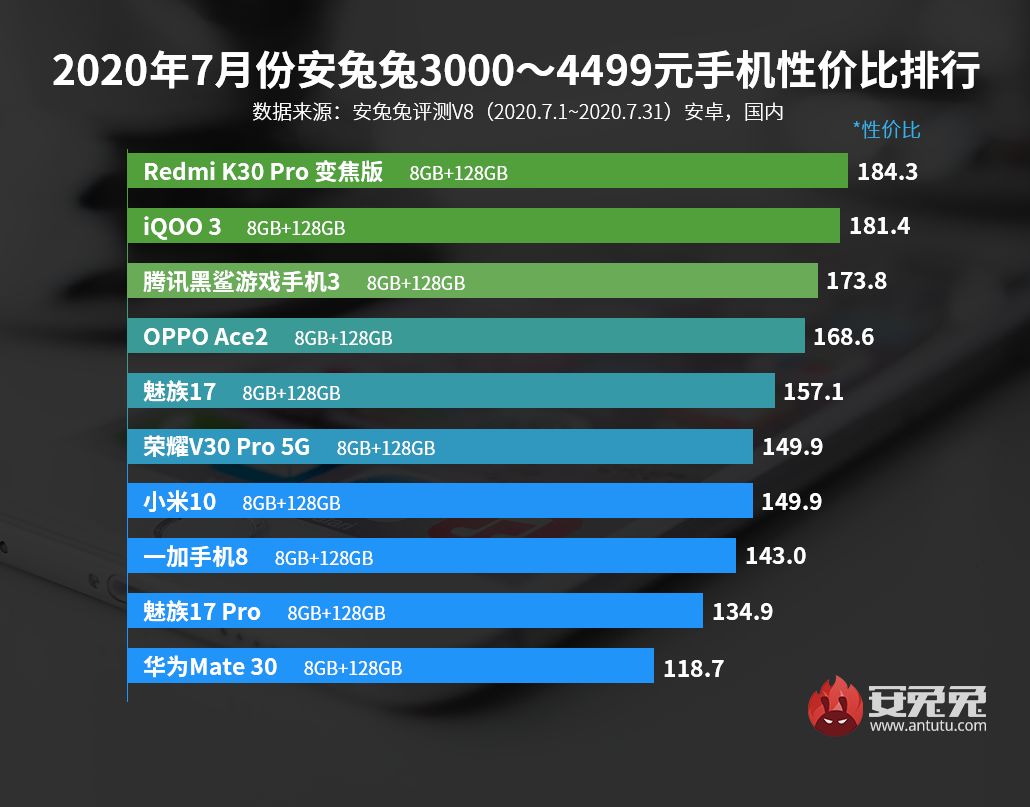
The 3,000 Yuan to 4,499 Yuan (~$646) price category is led by Redmi K30 Pro’s 8GB+128GB edition, iQOO 3’s 8GB+128GB variant and Black Shark 3’s 8GB+128GB model. The other phones mentioned in the list are OPPO Ace2, Meizu 17, Honor V30 Pro 5G, Xiaomi Mi 10, OnePlus 8, Meizu 17 Pro, and Huawei Mate 30.
Coming to the costliest 4,000 Yuan and above segment, the Xiaomi Mi 10 Pro’s 8GB+256GB variant can be seen pioneering the pack followed by OPPO Find X2’s 8GB+128GB edition and Vivo X50 Pro+’s 8GB+128GB model. The list comprises of other phones such as Vivo NEX 3S 5G, OnePlus 8 Pro, OPPO Find X2 Pro, Honor 30 Pro+, Vivo NEX 3 5G, Huawei Mate 30 and Samsung Galaxy S20 5G (SD865).
Huawei seems very much focused on being self-reliant for making its consumer electronics devices — ranging from smartphones to tablets to laptops. From the new reports, it looks like the process is going at a rapid pace after the U.S. government banned the company.
Soon after getting banned in the United States, Huawei had launched its own operating system — HarmonyOS. Now, the company is slowly moving to adopt HarmonyOS on its devices instead of Google’s Android.
Yu Chengdong, CEO of Huawei Consumer Business has confirmed that the upcoming Huawei Smart Watch will come packed with the HarmonyOS. Soon after that, the company will start using the software on other products as well, including IoT, computers, tablets, and smartphones. The company’s executive says that HarmonyOS will become the “worldwide operating system” in the future.
This was announced at the same event where the company confirmed to launch its upcoming Mate40 flagship smartphone this fall. Huawei is likely to launch its Kirin 1000 flagship SoC on 5th September at IFA 2020.
However, the company has said that the upcoming Mate40 could be the company’s last smartphone to come powered by the Kirin-series flagship chipset. This is because of the U.S. ban, making it impossible for the company to manufacture chips.
Previous reports indicate that the company could announce a second-generation version of the operating system in September this year — HarmonyOS 2.0, aimed at computers, smartwatches, and even cars. Last month, Huawei and BYD showcased the world’s first car running HiCar system, which is powered by the Chinese giant’s self-developed HarmonyOS.
Amid ongoing talks between Microsoft and TikTok for the possible acquisition of the short-video social media platform, U.S. President Donald Trump signed an executive order banning American firms from transacting with ByteDance, owner of TikTok.
This is a step forward for the Trump administration, which has been trying to ban the Chinese application, citing national security concerns without providing any proof. Based on the Forbes report, it looks like TikTok is no mood to go down so easily.
The short video platform has warned going to court over the order. In a statement, the company said: “We are shocked by the recent Executive Order, which was issued without the due process. This Executive Order risks undermining global businesses’ trust in the United States’ commitment to the rule of law, which has served as a magnet for investment and spurred decades of American economic growth.”
The company has been a target of the U.S. lawmakers over allegations that the company could share app’s user with the Chinese government, a claim which TikTok has denied several times, citing that the data is stored in the U.S. and the Chinese government has no authority over that data.
Prior to this Executive Order, the U.S. government had threatened to ban TikTok in the country unless Microsoft acquires the application by 15th September. The ban on TikTok comes after the United States has effectively banned the telecom giant Huawei for over a year now, citing similar national security concerns, without any proof. This time, the government has not only targeted TikTok but also WeChat, owned by Tencent.
China’s foreign ministry spokesman, Wang Wenbin, said to Reuters: “The U.S. is using national security as an excuse and using state power to oppress non-American businesses. That’s just a hegemonic practice.”
TikTok has more than 100 million users in the United States while WeChat has been downloaded more than 19 million times in the U.S. Despite getting banned in India and ongoing issues in the U.S., TikTok was the most downloaded app on both the Apple App Store and Google Play Store in July 2020.
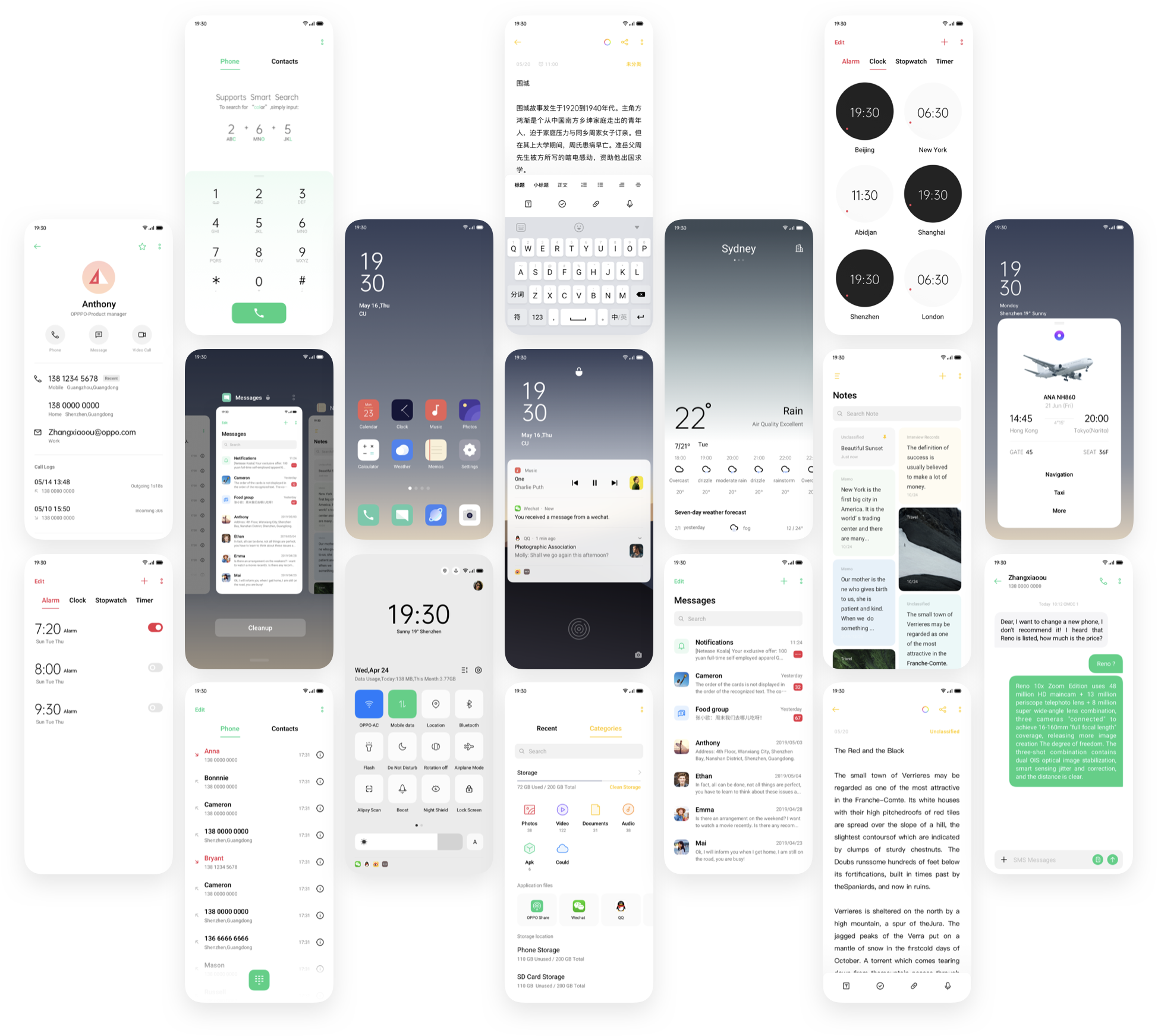
Chinese tech giant OPPO has officially announced the rollout of its latest Android 10-based ColorOS 7.2 in India. The new software version which arrives with an array of new topnotch features is bundled with the Reno4 Pro. Sadly, that is the only phone you can get the new OS on right now. The Reno4 went on sale in India on August 5 marking the rollout of the OS in the country.
The new version of ColorOS 7 offers a slew of new and improved features which improves the functionalities making the device smarter, more efficient, and versatile. ColorOS 7.2 offers new features that make the use of the smartphone easier, richer, and fun. It is built on Android 10, the latest version of Google’s operating system, and comes with the most used Google apps pre-installed, including calls and messages. Building on top of the lightweight design approach of ColorOS 7, the new version offers a richer and fun experience with new features such as the AI App Preloading, Super Power Saving Mode, OPPO Lab, Quick Return Bubble and more.
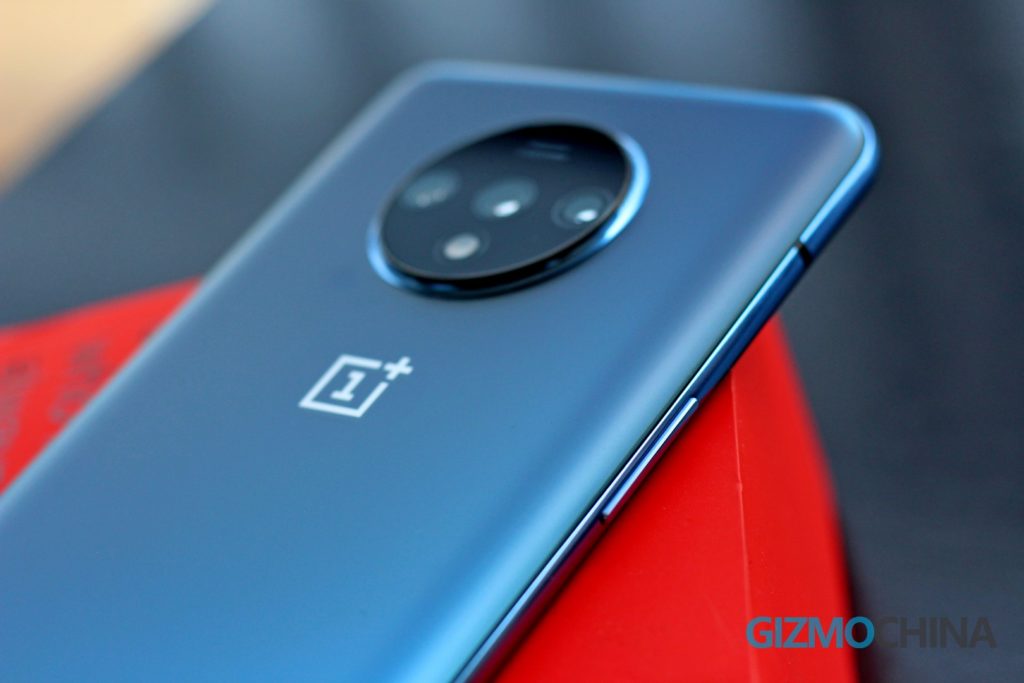
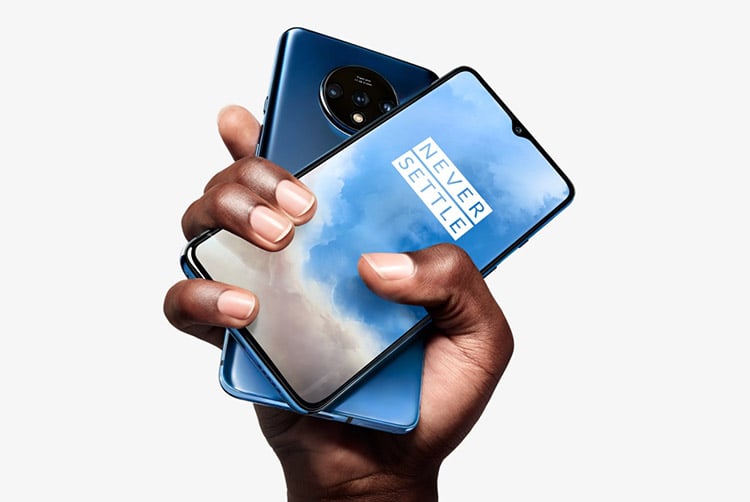
OnePlus has begun to roll out OxygenOS Open Beta 17/7 for OnePlus 7/7T series worldwide. This will be the only Open Beta release for these handsets for this month as the brand reduced their frequency to single build per month in June. Apart from bringing August 2020 security patch, the update also adds new OnePlus Tips & Help sedition and a number of fixes as well as optimizations.
Just like the last Open Beta build for OnePlus 7/7Pro and OnePlus 7T/7T Pro, the new one also brings more bug fixes than new features. The only new addition mentioned-above is nothing but a sort of digital user manual in the Settings app.
Talking about fixes, the new update fixes an abnormal error in “Lockbox”, auto-start issue with QXDM logs after reboot, and “File Manager” did not display some downloaded documents of apps. Also, it optimizes and improves user experience with long screenshot and stability of WiFi transfers.
In a nutshell, this OxygenOS release is just a minor update to improve the overall experience of the software of the phone. That said, the OTA update is being rolled out in batches and will soon reach your device if you are running the Open Beta build.
OnePlus 7/7T series OxygenOS Open Beta 17/7 Official Changelog
System
Newly added user assistance feature to help user master usage skills quickly(Route: Settings>OnePlus Tips&Help)
Fixed the abnormal error occured in Lockbox
Fixed the auto-start issue with QXDM logs after reboot
Optimized user experience with long screenshot in some scenarios
Updated Android security patch to 2020.08
Messages
Optimized the categorization, messages of the same contact now merged in one card(India only)
File Manager
Fixed the issue that File Manager did not display some downloaded documents of apps
During China Information Technology Summit 2020, Huawei consumer business CEO Yu Chengdong confirmed that the company will be launching its Mate40 flagship series smartphone sometime this fall.
He has also confirmed that the device will be powered by the company’s own Kirin 9000 SoC, which he claims will be one of the most powerful with support for 5G connectivity, AI processing, and powerful GPU as well as NPU.
Further, Yu Chengdong has also revealed that the Mate40 could be the last smartphone to come powered by the flagship Kirin processor. The ban on Huawei by the United States is set to take effect from 15th September and the executive says that it will be impossible to manufacture chips and thus, the company will cease making flagship chipsets.
Going further, the Chinese giant is planning to make breakthroughs in basic research and precision manufacturing in physical material science. The company continues making investments in materials and core technologies related to new processes for innovation.
For those who are unaware, recently, the U.S. government announced new rules which require chipmakers using U.S. technology to apply for a license to ship chips to Huawei and other banned entities. TSMC, the contract manufacturer of Huawei chips, confirmed that it has stopped taking new orders from the Chinese giant since May.
It remains to be seen what the future will be for Huawei in terms of mid-range chipsets. The company has already shifted mass-production orders of Kirin 710A SoC based on the 14nm process, from TSMC to China-based SMIC, making it the first pure Chinese chip with independent intellectual property rights.
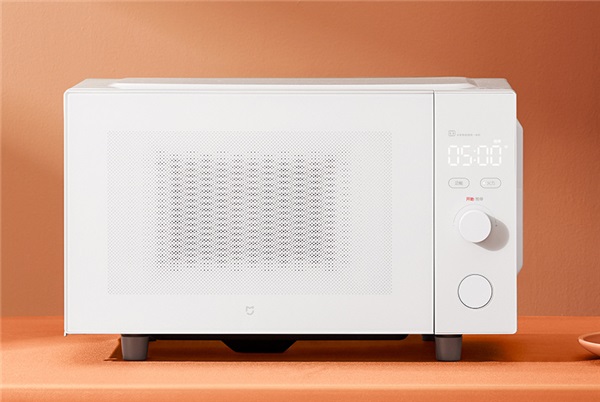
Xiaomi has just launched a new Mijia product earlier today (7th August 2020). It is a new Mijia Smart Convection Microwave Oven, that supports both regular heating and barbecue as well.
Looking at the product, it resembles a simple design with a single color scheme. Its form factor resembles any other conventional microwave, with just two multi function buttons and one multi purpose knob. The Mijia microwave can hold up to 23 litres in volume in terms of total capacity. It will be available for purchase from 11th August 2020 in China and is priced at 549 yuan (roughly 78 US Dollars).
The Mijia Convection Microwave Oven supports different types of cooking as well, including micro roasting, and grilling apart from just regular heating. It also offers quartz tubes for grilling barbecue while its flat plate heating plate is made from microcrystalline. Through this, it can also offer heating and steaming functions. Since it is a smart product, the device can be controlled with the Mijia smart app that connects to other IoT products as well. Notably, built in recipes are also offers and can be accessed through the application.
OnePlus 7T and OnePlus 7T Pro, the brand’s last-gen smartphones are receiving new system update with July 2020 security patch, a couple of new features, and some fixes. This is the same update that was rolled out to OnePlus 7 and OnePlus 7 Pro a few days back.
The new OxgenOS update for OnePlus 7T series come with different build number based on regions. The Indian version of the OnePlus 7T and OnePlus 7T Pro are getting OxygenOS 10.3.4. While the EU (Europe) and the Global variant of the devices are receiving separate builds – OxygenOS 10.0.12 (7T) and OxygenOS 10.0.10 (7T Pro).
Despite different build numbers, it is a common update for both OnePlus 7 and 7T series. Hence, the changelog remains the same for the models.
The new system update brings July security patch, new clock styles, new “Chromatic effect” in “Reading mode”, adds support for OnePlus Buds, fixes double tap issue in waking screen as well as the wrong display of SIM card names, and adapts Bluetooth hearing aid app connection under the Android 10 ASHA agreement.
OnePlus 7T/7T Pro OxygenOS 10.3.4/10.0.12/10.0.10 Official Changelog
System
Newly adapted OnePlus Buds, easier to take advantage of wireless connection
Provided a variety of clock styles for you. You can customize on your own. (Go to Settings>Customization>Clock style)
Fixed the issue that double tap could not wake up the screen in some settings
Updated Android security patch to 2020.07
Reading mode
Added the Chromatic effect option to adapt color range and saturation intelligently for a better reading experience (Settings – Display – Reading mode – Turn on reading mode – Chromatic effect)
Bluetooth
It has adapted to Bluetooth hearing aid app connection under the Android 10 Audio Streaming for Hearing Aid (ASHA) Agreement
Network
Fixed the wrong display of names of inserted SIM cards from different carriers
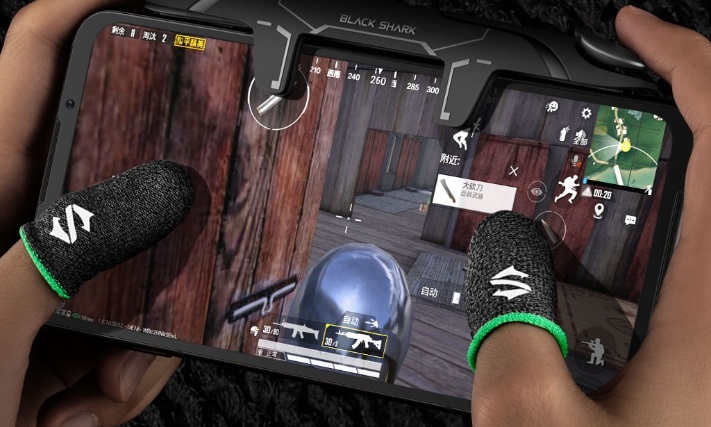
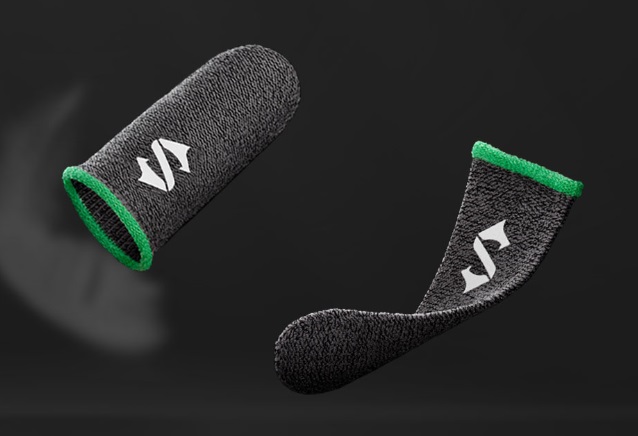
Earlier today (7th August 2020), Black Shark officially announced a new gaming peripheral. Unlike its regular electronic products or gaming smartphone add ons, this one fits the user and has been dubbed the Black Shark Gaming Thumb Sleeves set.
The new Gaming Thumb Sleeves are exactly as the name suggests, a pair of thumb sleeves for avid gamers. It is priced at 29 Yuan (roughly 4 US Dollars) and will be available for purchase on 11th August 2020. According to official notes, these gaming thumb sleeves are extremely thin, measuring just 0.25mm and are made out of superconducting carbon fiber along with ultra-thin spandex and super breathable cotton.
The Black Shark Gaming Thumb Sleeve was sewn together using 18 knitting methods and use a 1-piece stitching technology through 12 technological processes. It can wrap up to 220g, making it suitable for different types of hand sizes as well. Since it is made out of fiber material, it is highly advised to keep it away from any source of fire or any sharp objects that might cut the thin material. It follows a dark gray color scheme with neon green lining and features the brand’s logo as well.
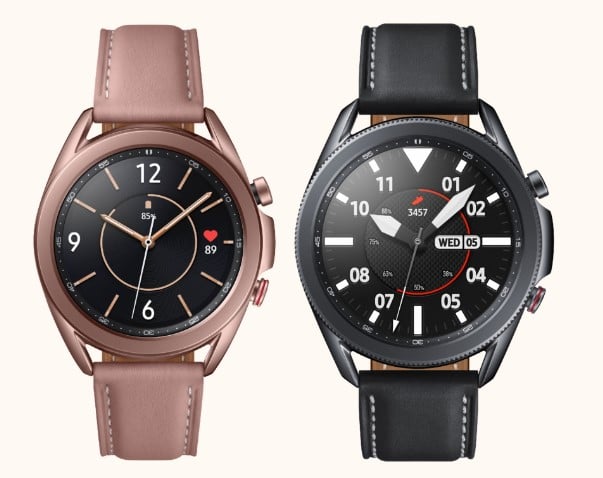
Samsung recently unveiled its next generation of smartwatch, the Galaxy Watch 3. It arrives with support for multiple health related functions, including an electrocardiogram (ECG) feature. However, this is only available for the South Korean variant for now, and will soon be available on the Galaxy Watch 3 global version and Galaxy Watch Active 2 as well, as reported by Engadget.
Among its other notable health features, the new Galaxy Watch 3 also supports blood pressure monitoring, something the Apple Watch has yet to offer. Although, it does require one to calibrate it with a blood pressure cuff to get the baseline readings. But after this, it can calculate the systolic and diastolic pressures through the use of algorithms. Keep in mind, it won’t be as accurate as a standard blood pressure monitor.
One of the big let downs is that these features are only available in South Korea. Samsung was waiting for FDA approval before bringing blood pressure monitoring and ECG to the US. According to the South Korean tech giant’s recent livestream, approval for both have been received, which means that the update for these features should arrive soon.
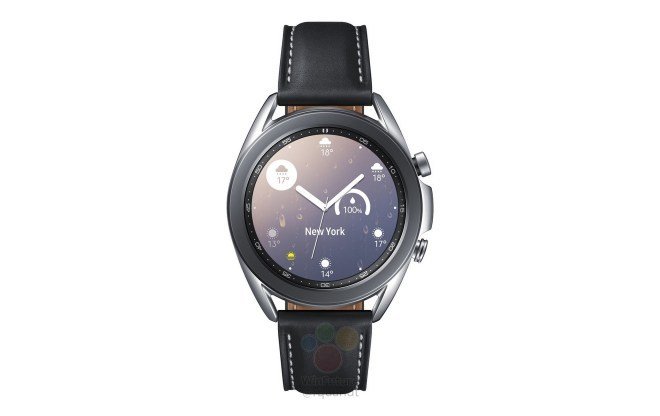
Samsung Galaxy Watch 3: 41mm
Other health related features like the maximum oxygen uptake (VO2 Max) and SpO2 (relative blood oxygen) readings will also be present in the device. But unfortunately, it will not be available from day one of launch. Samsung plans on adding these through future software updates sometime during Q3 2020.
The newly launched OnePlus Nord made its way to iFixit, which recently uploaded a teardown video of the affordable 5G smartphone. The YouTube video had the handset be disassembled, revealing cut corners that have made it easier to repair.
At the moment, OnePlus Nord is one of the most affordable 5G smartphones in the market. But with the non-premium price tag comes a few areas that had to be downgraded. While most OnePlus smartphone models in the past couple of years sport a glass on metal rear cover, the Nord features a cheaper glass on plastic panel. However, this makes it easier to pry open, rather than requiring dangerous levels of heat application to loosen the adhesive.
After removing the rear pane, iFixit found a good number of screws, which were all the same size, length, and kind. In other words, they required only a single Philips screwdriver to remove. Furthermore, the expert also noted that everything is modular and easy to replace, with even the battery pack having an easy to use pull tab. Interestingly, the teardown revealed a generous use of rubber gaskets around connectors for waterproofing. This means that OnePlus did offer some protection against water despite the device not having an official IP rating, which the company previously stated to be expensive.
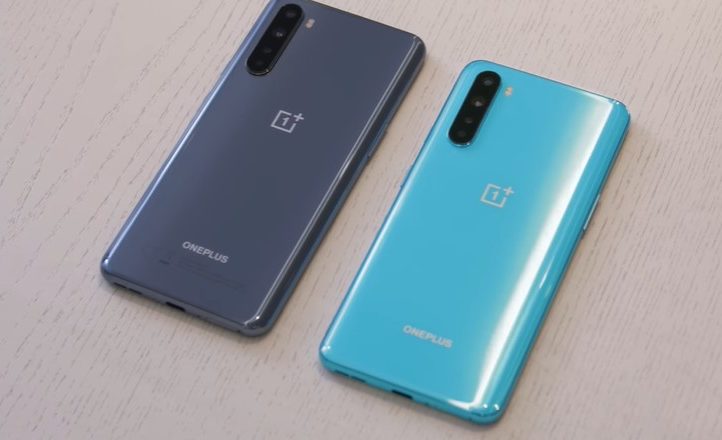
OnePlus Nord in Gray and Cyan
iFixit gave the device an overall score of 6 out of 10, with the main drawback being the display which is still glued down hard and a rather bothersome method of removing the battery. Although, apart from these issues, the OnePlus Nord still received a positive review in the YouTube video, which you can check out above.
We use cookies on our website to give you the most relevant experience by remembering your preferences and repeat visits. By clicking “Accept”, you consent to the use of ALL the cookies.
This website uses cookies to improve your experience while you navigate through the website. Out of these, the cookies that are categorized as necessary are stored on your browser as they are essential for the working of basic functionalities of the website. We also use third-party cookies that help us analyze and understand how you use this website. These cookies will be stored in your browser only with your consent. You also have the option to opt-out of these cookies. But opting out of some of these cookies may affect your browsing experience.
Necessary cookies are absolutely essential for the website to function properly. This category only includes cookies that ensures basic functionalities and security features of the website. These cookies do not store any personal information.
Any cookies that may not be particularly necessary for the website to function and is used specifically to collect user personal data via analytics, ads, other embedded contents are termed as non-necessary cookies. It is mandatory to procure user consent prior to running these cookies on your website.

 In the 0 to 1,499 Yuan (~$215) price range, the