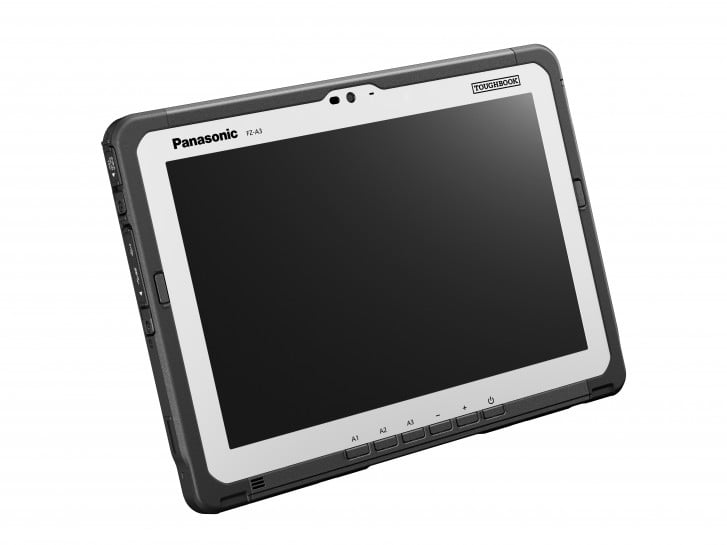
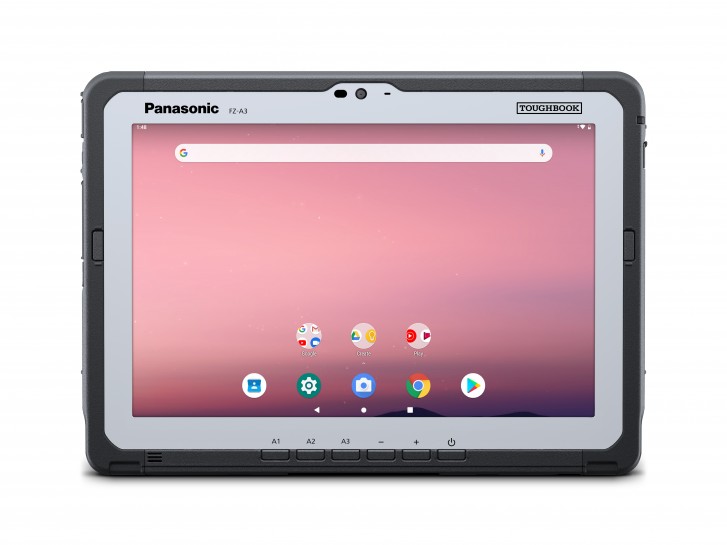
Panasonic has updated its Toughbook tablet series with the launch of the Toughbook A3. The new Android tablet keeps up with the design language of the series centred on a rugged build.
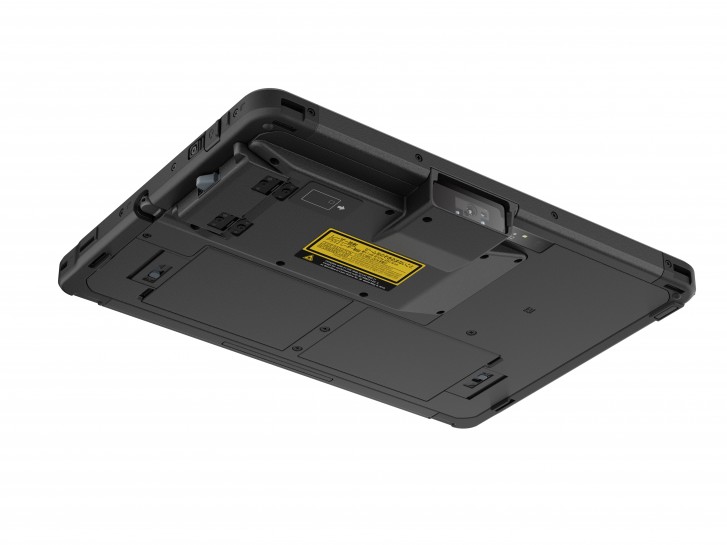
The Panasonic Toughbook A3 Android tablet sports a 10.1-inch LCD screen with a resolution of 1920×1200 pixel and a peak brightness of 800 nits. The slate comes with five physical buttons around the bezel which can be customised. The volume rockers and power button are also on the side. The tablet comes with two batteries which can be swapped when the need arises. There is also a built-in stylus, a USB-A, and USB Type-C ports. The tablet also comes with dual SIM support.
Furthermore, the Toughbook A3 supports IP65 water and dust resistance and is MIL-STD-810H certified for durability. It comes with the Panasonic Compass suite for enterprise management tools. This includes a barcode scanner, smart card reader or a second USB-A port.
The rugged tablet is powered by the mid-range Snapdragon 660 chipset even though the pricing is nowhere near the mid-range segment. The processor is paired with 4GB RAM and there is 64GB storage onboard which is expandable via the microSD slot. On the software side, it runs on the outdated Android 9 Pie OS. There’s also support for all major Global Navigation Satellite Systems.
The two batteries that come with the Toughbook A3 have single capacity of 3200mAH which can last up to 8 hours on a single charge. Panasonic also offers the option of expanding it to 5,500mAH cells which can bump up the usage time to 15 hours.
Talking about the pricing and availability, the Panasonic Toughbook A3 will retail for £1,182 in the UK and will go on sale in August.
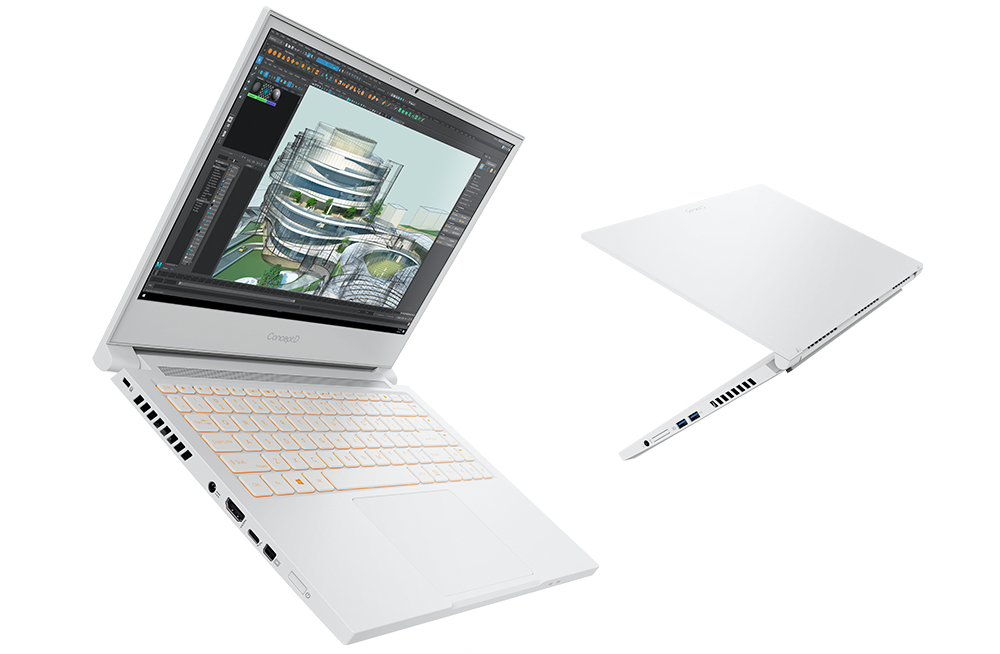
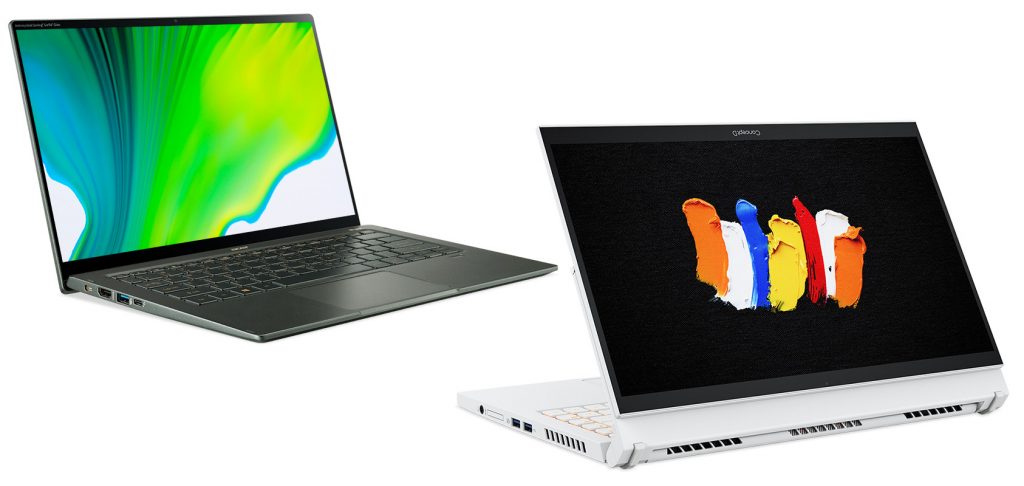
Acer has recently taken the wraps off its newest laptops. The star product is the Concept D series which is made up of the ConceptD 3 and ConceptD 3 Ezel. The third product introduced is the Swift 5 laptop.
The ConceptD 3 Ezel gets its name from the Ezel hinge which it utilises. The hinge enables the owner to mount the laptop in six different modes namely, share mode, laptop mode, pad mode, stand mode, display mode and adjustable float mode. On the internals, the laptop is fired up by a tenth generation Intel Core-i5-10300H processor. There is also a higher variant with the tenth-gen Intel Core i7-10750H. You also get the option of an NVIDIA Quadro T1000 or GeForce GTX 1650Ti GPU. The laptop is also available in a 14-inch and 15.6-inch variant. Both have FHD resolution as well as 100% sRGB color gamut, Pantone and delta E<2 color accuracy level.
Onits part, the Acer ConceptD 3 laptop features a 14-inch/15.6-inch FHD screen display that also has Pantone validation. The laptop is powered by the latest 10th-generation Intel Core H-series SoC. There graphics driver comes in two versions; one with GeForce GTX 1650Ti GPU graphics card is featured on the ConceptD 3. The other model with an NVIDIA Quadro T1000 GPU is known as ConceptD 3 Pro. Acer claims the battery can be used for up to 20 hours on a single charge.
ACER SWIFT 5
Acer Swift 5 looks like your regular notebook but is lightweight and ultra-thin. The laptop weighs 1kg and packs a 14-inch LCD IPS display with FHD resolution and a screen-to-body ratio of 90%. The display has a peak brightness of 300 nits. The display is covered by a layer of Corning Gorilla Glass.
The Swift 5 is powered by an Intel Core processors with an optional Nvidia GeForce MX350 GPU graphics card. The laptop packs up to 16GB of LPDDRAX RAM and 1TB PCle SSD flash storage.Fo connectivity, it comes with USB 3.2 Gen 2 ports, Thunderbolt , USB-C port, Bluetooth 5.0 and Wi-Fi 6.
Pricing & Availability
Acer ConceptD 3 Ezel will be available in North America from August and is priced at $1,499. The ConceptD 3 will also be available in North America this October and carries a lighter $999.99 price tag. Acer will also release the Swift 5 in October in North America. It is priced at $999.99.
Google Photos is arguably Google’s best product. It has gotten much praise since its release more than five years ago and has added new features over the years. Today, Google Photos has gotten a new look along with new features.
The first change is the redesigned icon which has evolved from a pinwheel with straight and sharp lines to one made up of semi-circles.
Moving on from the icon to the user interface; Google Photos will now feature three main tabs at the bottom of the screen – Photos, Search, and Library.
Photos – This tab presents all your photos and videos. However, it now features larger thumbnails, auto-playing videos, and a larger Memories carousel.
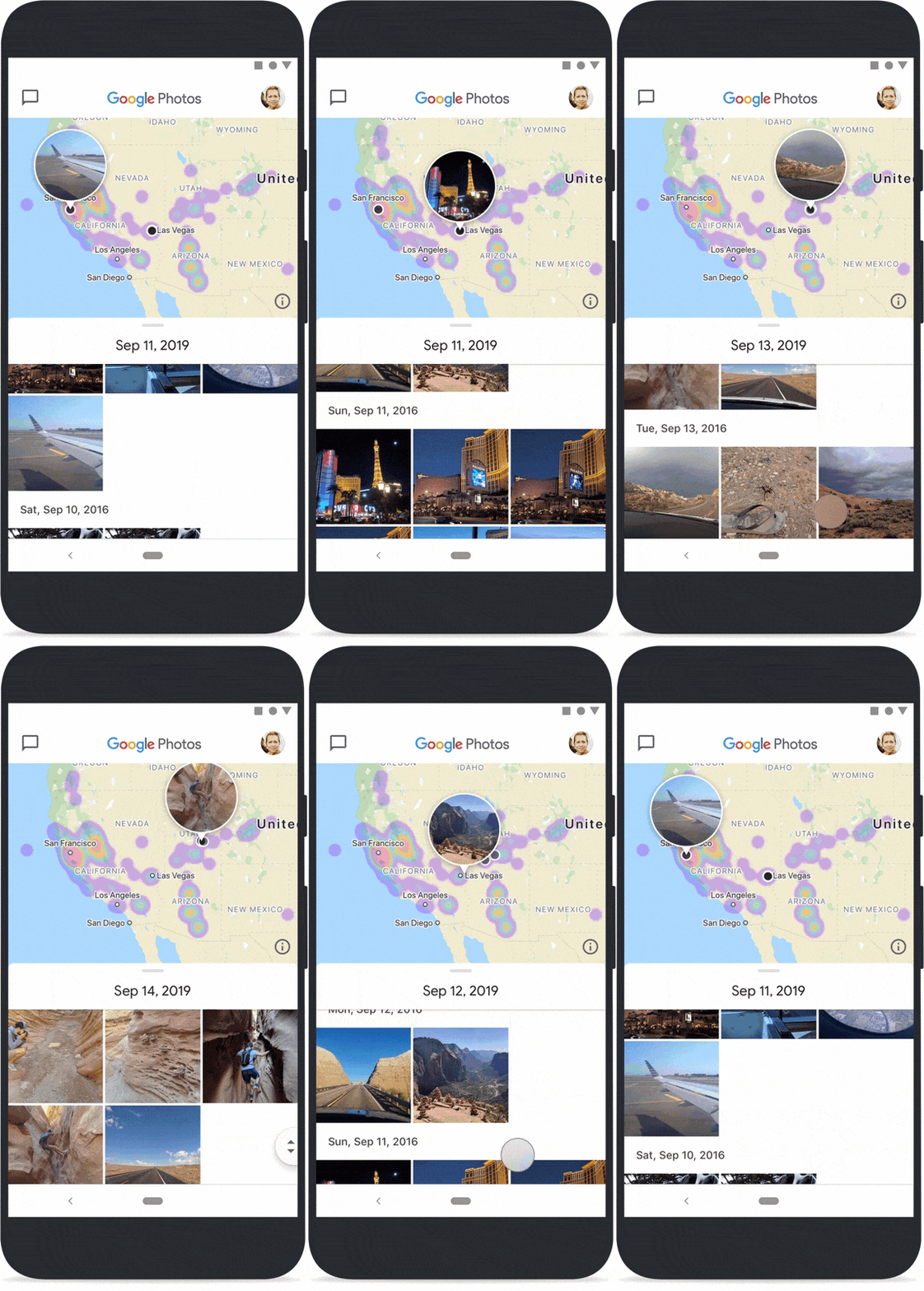
Search – we have lots of photos on our devices and scrolling endlessly to find a particular picture can be really tasking. With the new Google Photos, Search has been brought forward. This way, you can quickly find those pictures of your kids, partners, and pets. There is also an interactive map of your photos, which means you can select a location on a map and view the pictures you took on that vacation or office retreat.
Library – this is where other folders such as albums, favorites, archives, and trash are located. Users in the US, Canada, and Europe will also get to see the Print Store under libraries.
Google says it has also moved automatic creations including movies, collages, animations, and stylized photos from the “For You” tab to Memories. You will also be able to hide specific people or time periods under memories.
The newly revamped Google Photos will begin rolling out to both Android and iOS users over the next week according to the press release.
New TVs may cost a bit more beginning next quarter as a report says LCD panels are about to get more expensive.
Business Korea reports that the price of 32-inch LCD open cell panels rose 6% this month and the trend is expected to continue and even cross 10% by the third quarter. The reason given is an increase in the production of more TVs in the second half of the year as the COVID-19 pandemic eases in some countries.
TV manufacturers have been reported to have increased their inventory for panels for the second half of the year following disappointing sales in the first half. OLED TV and POLED panel production are also said to be back to normal levels.
The increase in the price of panels may translate to an increase in the price of TVs including those from phone manufacturers that are also into TV production such as Xiaomi, Motorola, and Realme.
OnePlus 8 series was first announced in mid-April. It has been over two months but the devices are yet to be made available on a large scale in India. Earlier today, the OnePlus 8 Pro went on sale on the brand’s official website and Amazon India, however, it became out of stock within a few minutes.
The OnePlus 8 Pro was available for purchase with launch offers in India even after two months from its launch. Customers buying the handset with SBI Cards as well as via EMI transactions were eligible for ₹3,000 instant discount. Other offers bundled with the device were ₹6,000 Jio discount coupons and 6 free bonus audiobooks worth ₹1,200 on Audible subscription.
But what’s the use of those offers when a small number of units were up for grabs. OnePlus is facing stock issues as Oppo factory in Noida, India was shuttered for a long time as some employees tested positive for COVID-19.
Though the operations have resumed in the facility, it seems to be still not operating at full capacity as Realme smartphones, which are assembled in the same factory is also out of stock most of the times.
Having said that, the next sale of both OnePlus 8 and OnePlus 8 Pro is scheduled for June 29 in India with the same launch offers as mentioned above.
Fujifilm is one of the best-regarded camera brands worldwide with an award-winning range of cameras suited to Pros and enthusiasts alike. The Japanese company has just announced Instax Mini 11 instant camera for the Indian market.
The camera is suited for photography enthusiasts and has as its major highlight, the Automatic Exposure function which gives users the ability to take photos under different lighting conditions such as on a bright sunny day outdoors or in dark indoor conditions. There’s a flash mounted above the lens with an effective range of 2.7 metres.
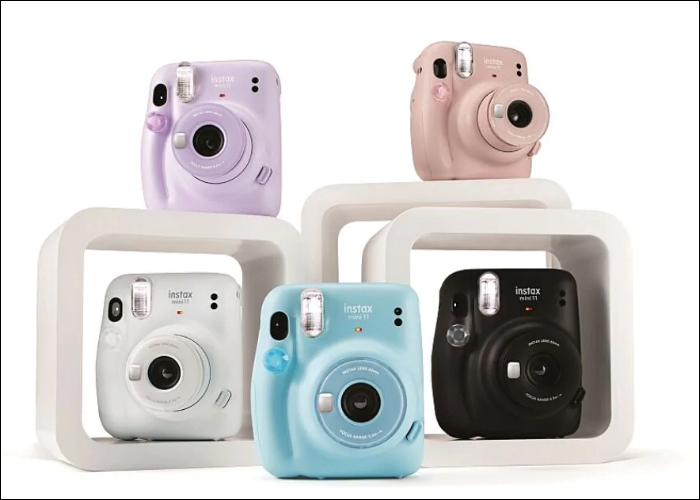
In terms of the design, the Instax Mini 11 has a compact rounded body. It has a dimension of 121.2×107.6×67.3mm and weighs 293 grams without batteries, strap, and film. Sure, it uses two AA-size batteries. The camera offers a shooting range of up to 0.5 metres, ISO range of 800, and shutter speed between 1/2 to 1/250 seconds. It can also capture pictures measuring 62x46mm in roughly 90 seconds, depending on the ambient temperature.
The Instax Mini 11 also comes with a Selfie Mode that can be activated by pulling out the front end of the lens after powering the camera on. Users can check the framing of the selfie with a mirror next to the lens. The camera also features auto power-off when left idle for more than 5 minutes. It comes with two replaceable shutter button accessories.
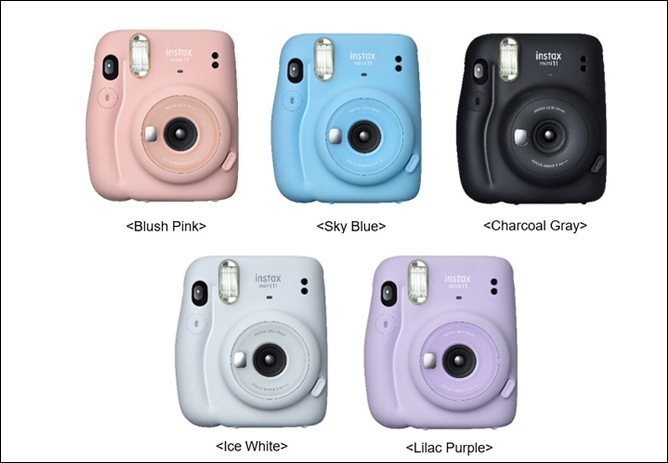
The Fujifilm Instax Mini 11 is presently available to purchase via Amazon India. It is priced at 5,999 rupees and will be available in five colour options; Charcoal Gray, Blush Pink, Ice White, Lilac Purple, and Sky Blue colour options. Fujifilm also disclosed that the camera will be available soon on Flipkart and other official offline channels.
Smartphone OEMs offer a ton of first-party system apps. These apps used to get updates only when the company rolls out system update. That changed over the years as brands began to publish their system apps on the Google Play Store and their respective official app store to bring new features to users on a frequent basis. Following the trend, Xiaomi’s Mi Calendar is the latest app to make it to the Play Store with version 12.0.0.3.
Xiaomi is known for including a number of system apps on its MIUI Android skin. Over the past few years, the Chinese smartphone maker has gradually published most of its app on the Google Play Store as well as on its official app store called GetApps.
By doing so, it has been able to push new features and bug fixes quicker than ever before. Now, the company’s Mi Calendar app also joins this list with the new 12.0.0.3 version.
Android Police points out that the first-ever version of Mi Calendar on Play Store does not bring anything new to the table. But we expect the brand to soon introduce new features and fixes on a regular basis in the near future.
Currently, the Mi Calendar app can be only installed on Xiaomi, Redmi, and Poco branded handsets running MIUI Android skin. But it might be made available for other devices going by the description on the Play Store listing page.
Since Apple hit gold with its Airpods bearable devices, there have been lots of contenders, each striving for a piece of the pie in the rapidly-growing “hearables” market. Apart from the improvement in the design and battery life, we have seen a few innovations but one that stands out is LG‘s invention.
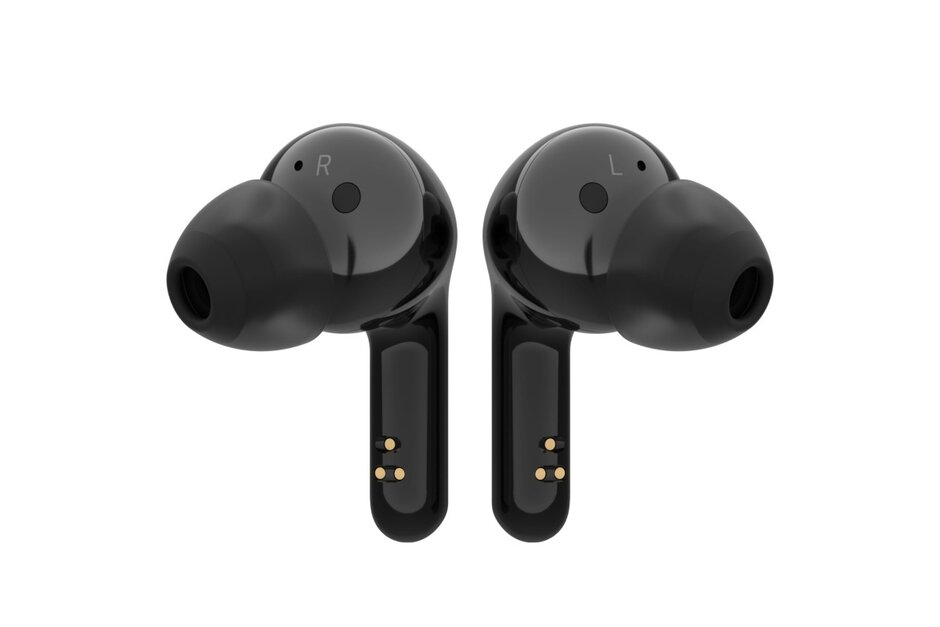
The Korean giant earlier this year launched the Tone Free true wireless earbuds in the US with a UVnano charging case which sterilises the earbuds. The tech giant has again launched a higher-end model dubbed TONE free HBS-FN6 TWS earbuds which also has “industry-first” UVnano case.
The new self-sterilizing earbuds utilise a “canal-type” design which the company says has a more comfortable fit than the “semi-open” earlier model. The earbuds also promise “lifelike audio” quality powered by Meridian, noise isolation functionality, IPX4 water resistance, easy Google Assistant and Siri access, as well as six hours of battery life as standard and up to 18 hours of additional endurance from the case.
As you may have figured, the charging case performs dual functions of charging the headphones and also sterilizing the earbuds by eliminating 99.9 percent of E. coli and S. aureus from the hypoallergenic silicone ear gel and inner mesh of the HBS-FN6 buds. LG noted that, “several studies have shown that earbuds can harbour more bacteria than a kitchen cutting board”. This can potentially lead to ear infections.”
LG didn’t reveal the retail price of the new earbuds but did say that Tone Free family is scheduled to expand to “key European and American markets starting next month”.
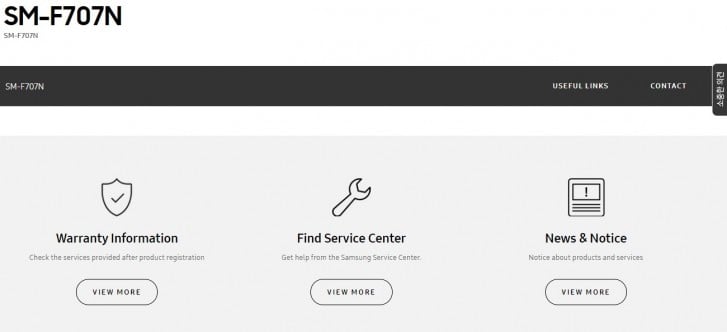
Samsung Galaxy Z Flip 5G has been in the news for quite some time now. There are even rumours that the device will be launched on August 5. The Korean giant has now floated the support page for the device on its official website in Korea, supporting speculations that the launch may be near.
The Galaxy Z Flip 5G appears on the website with model number SM-F707N. From previous reports, this is likely the South Korean version of the foldable smartphone. Unfortunately, no detail is contained on the listing but we don’t have to wait for too long. The clamshell foldable phone has also reportedly been certified by China’s Telecoms regulatory body TENAA meaning it will launch din China at some point. The TENAA page isn’t live yet but the specs was shared by Weibo tipster Digital Chat Station. The TENAA versionhas the model code SM-F7070 and going by the listed specs, it features a 1.05-inch secondary screen and pack two batteries – 2500mAh and 704mAh – as opposed to the single 3,300 mAh battery on the 4G variant.
The specs shared y Digital Chat Station shows the model will pack a Snapdragon 865+ SoC and 6.7-inch primary AMOLED display of 2636×1080-pixel resolution. The secondary screen will have a 300x112p resolution. Furthermore, the camera is bumped up to a 12MP main shooter from 10MP. The device bears the same form factor with its 4G sibling.
If you shop online, there is a high chance you have come across a counterfeit product. Not only are counterfeits (especially electronics) dangerous, they also hurt the reputation of the site they were purchased from. Amazon has come up with another solution which is a Counterfeit Crimes Unit (CCU).
The CCU will take a different approach to dealing with fake products. Rather than just identifying and blocking listings of these fake products, the team which includes former federal prosecutors, experienced investigators, and data analysts will go after the counterfeiters. They will work with law enforcement officials and make it easier to file lawsuits against the offenders.
Amazon says it spent over half a billion dollars fighting fraud and counterfeit products last year. It also revealed it has over 8000 employees whose tasks include finding and taking down counterfeit products. In 2019 alone, it shut down 6 billion suspected bad listings
The bane of counterfeit products has affected Amazon greatly. For example, Nike is said to no longer sell its products directly on Amazon. The retail giant also has five of its foreign websites on a White House’ list of notorious markets.
The first half of 2020 did not go as planned for most companies, including Samsung whose Galaxy S20 series is leading up to be the worst-performing phones in the Galaxy S series. To overcome this situation, the South Korean tech giant is expected to ship three premium smartphones starting from August till October.
As per a leak from earlier this month, Samsung is expected to hold an ‘Unpacked’ launch event on August 5 to announce Galaxy Note 20 series and Galaxy Fold 2. The company might also unveil Galaxy Watch 3 and Galaxy Z Flip 5G at the same event.
Now, according to a report by ETNews (via SlashGear), Samsung will not be shipping these devices at one go. Rather, it will start shipping each device with an interval of a month.
The report says Samsung will be first shipping the Galaxy Note 20 series in August, which is expected to include regular Galaxy Note 20 and Galaxy Note 20 Ultra. Followed by that in September, the company will ship the long-awaited Galaxy Fold 2.
Then, in October, it will be shipping the recently leaked Galaxy S20 Fan Edition (FE). This handset is said to be the successor of Galaxy S10 Lite from earlier this year. But for some unknown reasons, the company has changed its branding.
Between all this, Samsung will be also shipping the Galaxy Z Flip 5G but details regarding its exact shipping period is unknown except for the fact that it is being mass manufactured.
As a whole, Samsung will be having a busy schedule for the second half of 2020 to right the incurred losses in the first half of the year due to the COVID-19 global pandemic.
Samsung is apparently raising its efforts into research and development for its semiconductor business to pursue its vision of new K-Chip technology. The South Korean tech giant has already planned academic partnerships and collaborations across its home country.
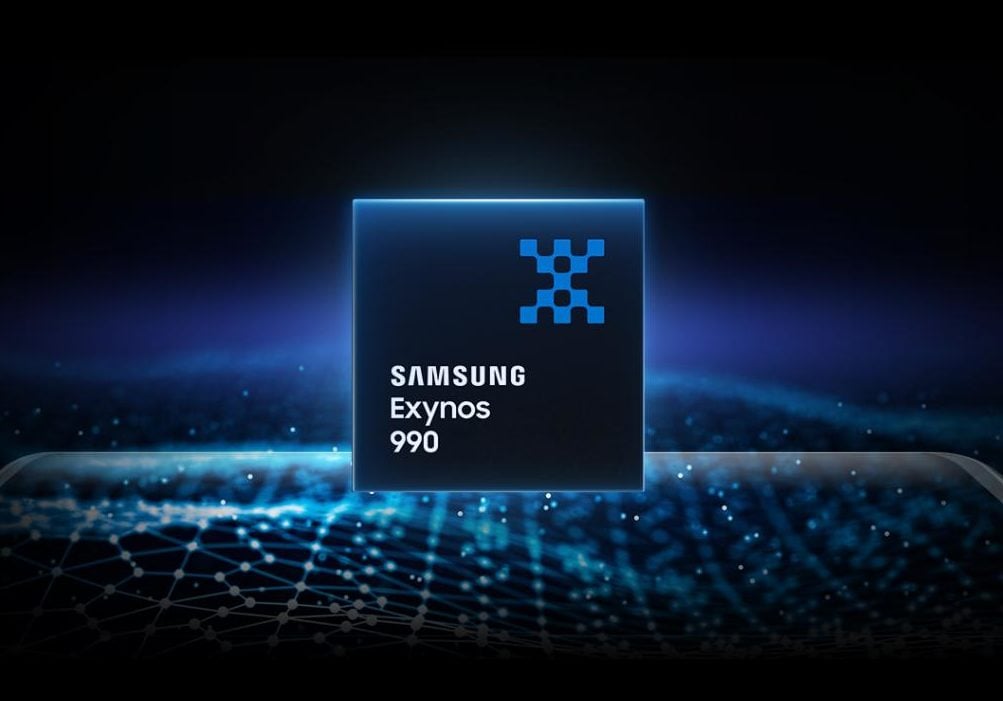
Many are unaware that Samsung has its own foundry and manufactures chips as well. While it heavily uses its own designs, there were moments where its own designs had paled in comparison to its competitors. A notable example would be The Exynos 990 SoC being replaced by Qualcomm’s Snapdragon 865 SoC after the latter was proven to provide better performance overall.
This had also led to the feeling of “humiliation” within the company’s mobile chip division. Thus, it arrives as no surprise that Samsung is now placing an increased emphasis on its semiconductor business through its research and development teams. Furthermore, the company has been focusing on its artificial intelligence solutions as well, with Dr. Sebastian Seung being promoted from Chief Research Scientist to head of Samsung Research.
One of the reasons why Samsung is investing heavily within its home country is also to bolster the economy during this time of crisis. Although, it is still too early to determine just how well or noteworthy the new “K-Chips” actually perform. Samsung has placed its bets on this new technology and is confident in its ability thus far, but the competition is stiff with industry giants like Qualcomm also moving ahead with their own plans.
Alongside Realme X3/X3 SuperZoom, the brand also launched Reame Buds Q TWS and Realme Adventurer Backpack in India. Both of these products have already debuted in the company’s home country China in late May.
Realme Buds Q Specifications & Price
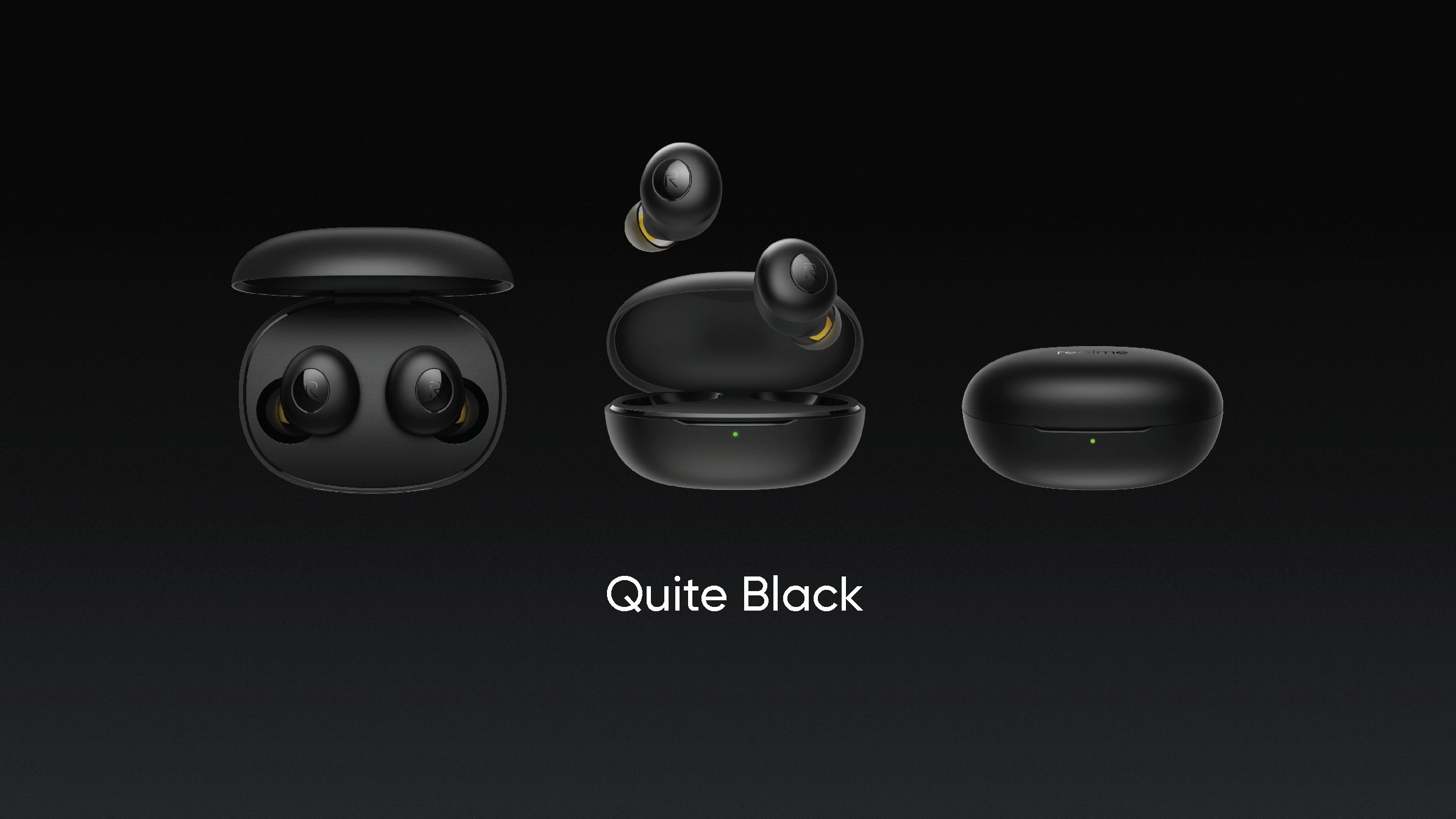
The Realme Buds Q is the cheapest truly wireless earphones offering by the brand in India at ₹1,999 ($26). It is also Realme’s one and only TWS with an in-ear design as other two models – Realme Buds Air and Realme Buds Air Neo feature Apple Airpods-esque stem design.
1 of 3
Each bud feature a 10mm driver with a maximum of 6 hours playback on a single charge. With the included MicroUSB charging case, the brand claims a total of 20-hour battery life.
The Realme Buds Q support SBC as well as AAC audio format and connect with devices via Bluetooth 5.0. It also comes with a dedicated R1Q chip and 119ms low latency gaming mode.
The buds are IPX4 water-resistant and support touch controls, which can be adjusted along with other settings in the Realme Link app.
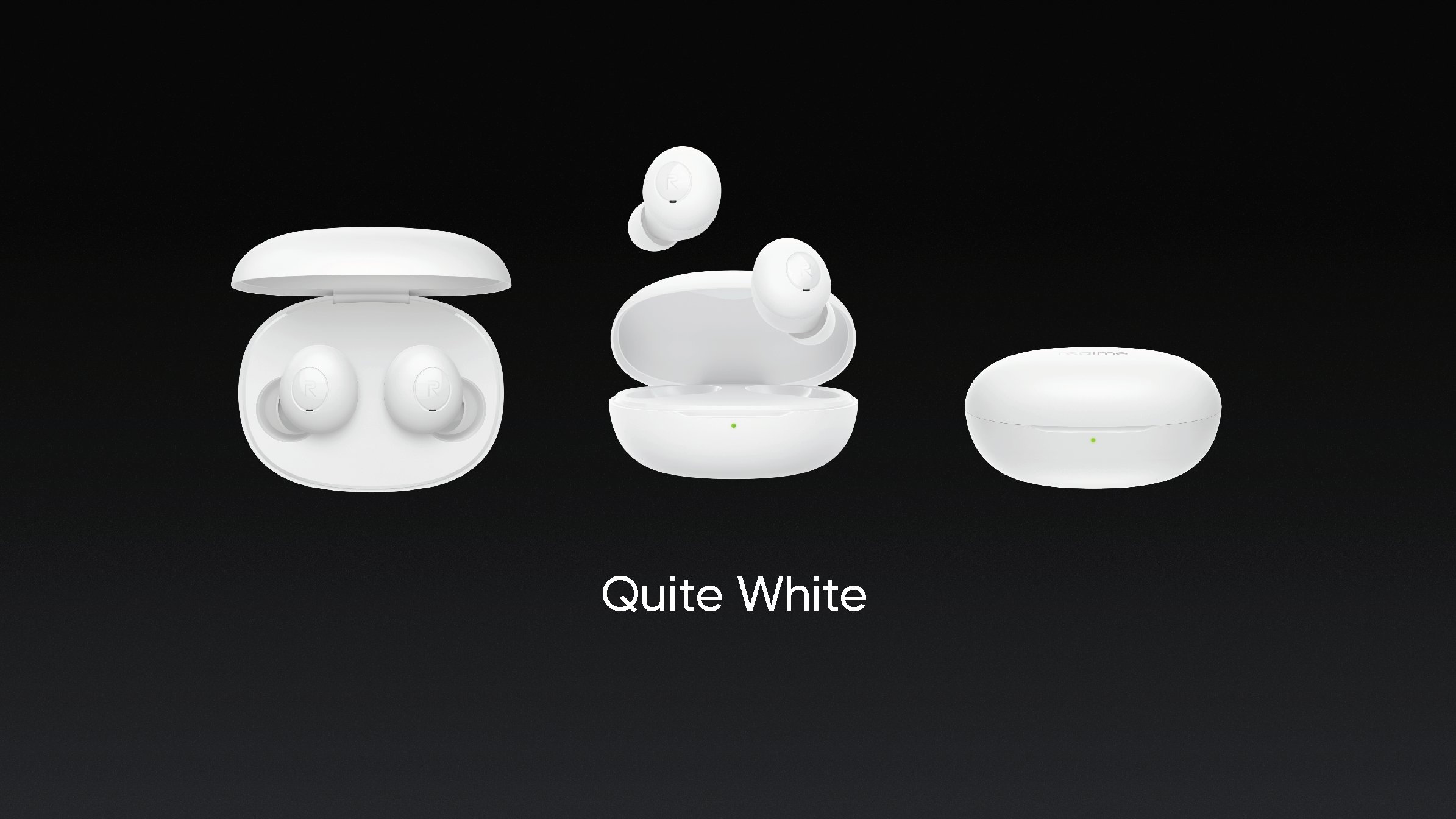
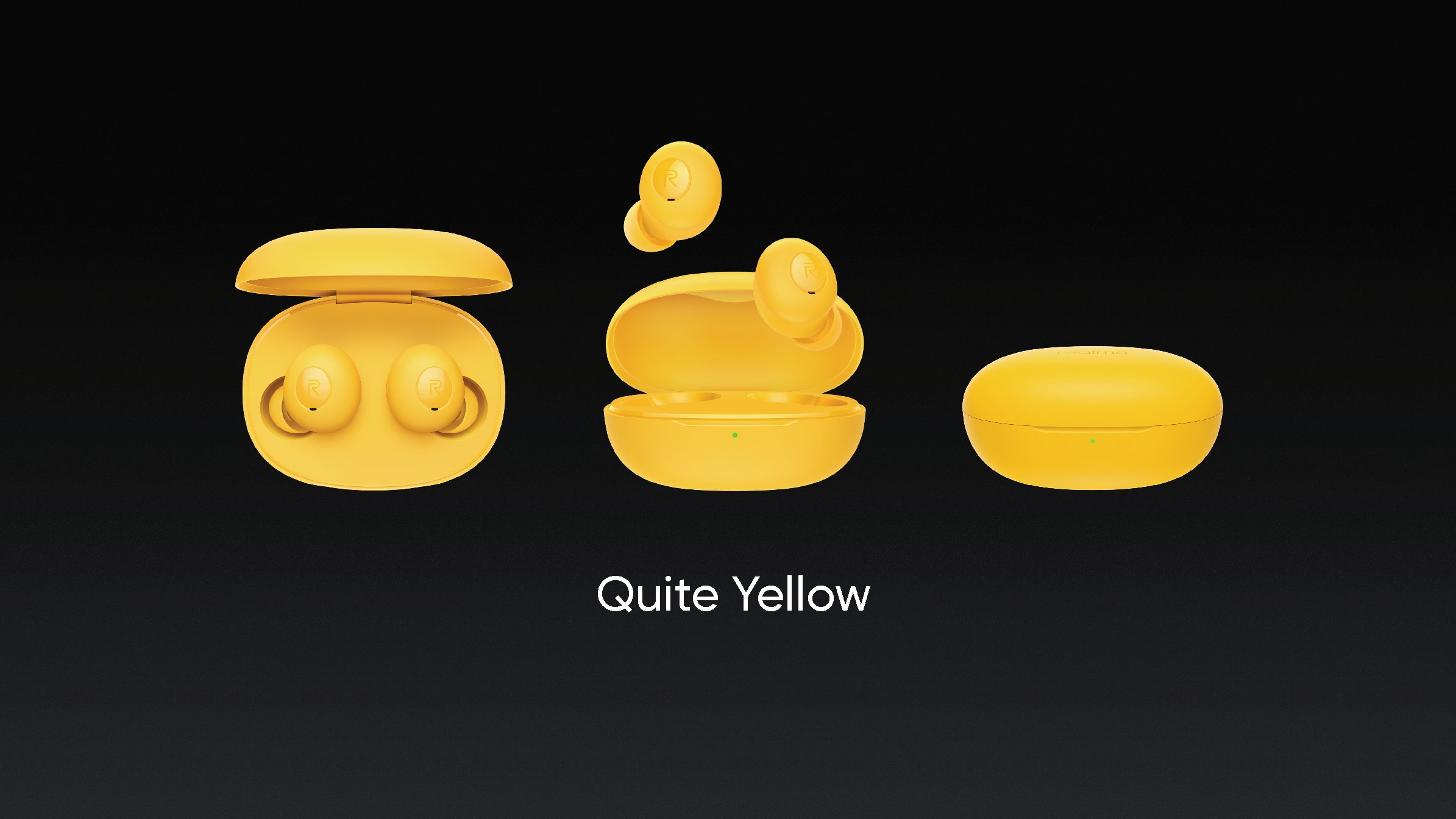
Last but not least, it comes in three color options namely Quite Black, Quite White, and Quite Yellow with availability from July 1st. (Realme.com & Amazon India).
Realme Adventurer Backpack
Realme Adventurer Backpack is the brand’s first backpack for India. Priced at ₹1,499 ($20), it features a unique design in this price segment with lots of features that youth will love to have.
The company claims it to be made of 650D high-density British Oxford cotton with IPX4 certification for water resistance.
The backpack is of 32L capacity with a sleeve for laptops up to 17-inch, an inner zip bag, and 2 small mesh bags. Other features include hook & loop buckle design for security, trolley strap, multifunctional band, and safety buckle.
Unlike the Realme Buds Q, the Realme Adventurer Backpack will be also available on Flipkart apart from Realme.com and Amazon India from July 1st.
Samsung is gearing up to launch its latest premium TV offerings in India. The South Korean tech giant will be launching its new high-end TVs next week, with pricing near a whopping 500,000 INR (roughly 6,617 US Dollars).
According to a new report, Samsung will be launching its latest range of QLED 8K TVs that will arrive with support for native 8K resolutions, along with a quantum processor and Quantum HDR technology. Sources close to the matter revealed broke the news to IANS earlier today (25th June 2020). The latest lineup of 8K TVs will feature stunning new designs and offer an impressive home entertainment experience to its buyers.
Furthermore, Samsung has also placed an emphasis on audio performance with the TVs housing the Q-Symphony and six-speakers that provide a holistic experience through surround sound technology. The new lineup will have AI capabilities that will utilize machine learning to analyze and identify the characteristics of individual pixels.
Back in 2019, OnePlus entered the TV market with its own offering of smart TVs. The OnePlus TV Q1 and Q1 Pro marked its entry into the category and aimed at the premium segment of the market. Now, OnePlus is planning on launching more affordable offerings as well, whilst also focusing on differentiating its products from its competitors.
OnePlus CEO, Pete Lau, recently gave an interview with AndroidCentral where he discussed the upcoming TV lineup. The senior executive stated that the company is heavily invested in the design of all of its offerings, believing that design is one of the most crucial aspects through which a product is differentiated. This will rely on two key factors, namely design and user experience.
Furthermore, Lau mentioned that despite OnePlus’ focus on the budget segment, the company will not be compromising in terms of design. This is backed by the company’s upcoming TV featuring an ultra thin design of just 6.9mm. To put this thinness into perspective, the OnePlus 8 was placed against the TV as a comparison. Keep in mind, the TV will not just be this slim all throughout, and will likely have certain areas like the bottom being thicker due to necessary components.
For audio, Pete stated that the company will be using an innovative acoustic arrangement, which will have its speakers rotated by 90 degrees. This allowed the company to house two large full range speakers that offer “50% deeper bass.” According to the senior official, the main idea was to deliver a “burdenless experience” and have the TV be a “projection of the user’s personality.”
OnePlus is also trimming the bezels down for its upcoming lineup. This is a feature more common on premium segments rather than the budget one. Lau revealed that the new TVs will have a high screen to body ratio of 95 percent which will be coupled with a 93% DCI-P3 color gamut that will make it “stand out as a better viewing experience among TVs in the segment.”
With the launch of Snapdragon 865 and Snapdragon 765/765G SoCs, Qualcomm announced support for updateable GPU drivers via app store. Xiaomi became the first OEM to deliver driver update to Adreno 650 GPU present in its Mi 10, Mi 10 Pro, and Redmi K30 Pro. Now, following the footsteps of Qualcomm, ARM also announces similar support for its Mali GPUs.
GPU driver updates on Android has been hindered for years as it takes months for OEMs to push them via OTA update. To solve this problem, Qualcomm introduced updateable GPU drivers through smartphone manufacturer’s default app store like Google Play Store.
This way users can get access to new features from OpenGL or Vulkan API without waiting for OTA system updates from the manufacturers. Also, graphic performances and bug fixes can be easily maintained with this approach just like on PCs.
Thus, realizing the benefits of this move, ARM has also joined the bandwagon but did not reveal the GPUs that will support it. As XDA Developers points out, it could be initially supported by the newly announced Mali-G78 GPU, which debuted alongside Cortex-A78 CPU architecture.
Additionally, ARM also announced support for Android GPU Inspector for its upcoming GPUs, which is an open-source profiling tool that helps game developers to optimize graphic performance.
Taiwan’s famous Pokémon Go Grandpa has seemingly evolved into his ultimate state. The elderly Pokémon lover has upgraded his bike, which now carries a whopping 64 smartphones that all play Pokémon Go.
Back in 2018, Pokémon Go Grandpa was discovered and shared by a user on Reddit that instantly blew up in popularity. The 72 year old person was discovered playing the game with 6 smartphones attached to his bike. The man named Chen San-yuan is a retired Feng Shui master and an avid Pokémon Go fan, with his nickname being derived from his love for the game.
Chen said that he started playing the game after his grandson introduced him to it. Now, he plays nearly 20 hours a day 5 to 6 days a week playing it, until his phone’s battery gets exhausted. But apparently that did not deter the elder gamer, as he simply added the number of smartphones on his bike as a solution. Furthermore, he even made a solution to mount them on his bike and plug a charge in for all of them, keeping them charged and powered up on the go.
However, what is glaringly obvious is that the man knew no bounds as he kept adding the number of smartphones. Starting from 6 back 2018, Pokémon Go Grandpa has now evolved his bike to carry 64 smartphones. The layout is quite interesting, to say the least, and highly resembles the pattern a peacock’s feathers would when unfurled. So, it’s safe to say that Pokémon Go Grandpa is definitely out to catch em all.
Last month, Realme unveiled the Realme X3 SuperZoom smartphone in European markets. The company did not announce the Realme X3 handset. Today, the Chinese firm held a dedicated launch event in India to unveil the Realme X3 and Realme X3 SuperZoom smartphones. As the name goes, the Realme X3 SuperZoom comes with a periscope telephoto lens that brings support for up to 60x hybrid zoom. Both phones come with 120Hz refresh supporting displays, dual front-facing cameras, Snapdragon 855+ mobile platforms, and topnotch rear cameras. The Realme X3 series has arrived with a starting price of Rs. 24,999 (~$330).
Realme X3 and Realme X3 SuperZoom specifications
The Realme X3 and Realme X3 SuperZoom come with 3D curved glass rear with a premium finish. Both phones are equipped with a 6.6-inch IPS LCD screen with a pill-shaped cutout for housing two front-facing cameras. The Full HD+ display supports a 20:9 aspect ratio and up to 120Hz refresh rate. Both phones offer 90.5 percent screen space, claims the company. The screens of the Realme X3 series is protected by Gorilla Glass 5.
The Realme X3 and X3 SuperZoom is powered by Snapdragon 855+ processor with LPDDR4x RAM. The UFS 3.0 storage on both devices come with Turbo Write and HPB improves overall performance and reduces power consumption. They are equipped with 4,200mAh batteries that support 30W fast charging. Its takes only 55 minutes to fully charge the X3 and X3 SuperZoom, claims the company. They are preinstalled with Realme UI based Android 10 OS.
The Realme X3 SuperZoom has the Samsung GW1 64-megapixel primary lens, an OIS assisted 8-megapixel periscope telephoto lens with support for 5x optical zoom and 60x hybrid zoom, a 119-degree ultrawide shooter and a 2-megapixel macro lens with 4cm focal length. The Realme X3 SuperZoom features Nightscape 4.0 that brings support for Starry Mode for capturing shots of stars in the night sky. The Starry Mode not only relies on hardware, but also on high sensitivity sensors and extreme multi-frame algorithm. The autofocus feature allows users to focus on a particular element even in the farther starry sky by taking 10 long exposure shots and processing it with multi-frame synthesis. It results in capturing brighter night shots with less noise. For enhanced photography experience in low-light conditions, the Realme X3 SuperZoom comes with five settings like AI Super Nightscape, Ultra Nightscape, Tripod Mode, Starry Mode, and Pro Nightscape with manual settings.
The Realme X3 SuperZoom is equipped with two front-facing cameras. It comprises of the Sony IMX616 32-megapixel main camera and a 108-megapixel ultrawide sensor. The front and rear cameras of the X3SuperZoom support photography features such as UIX Max Stabilization, ultra-wide angle video shooting, real-time bokeh mode, up to 4K video shooting, and slow-motion video shooting.
The Realme X3 comes with a 16-megapixel main camera and an 8-megapixel ultrawide lens in its dual selfie came system. The back panel of the phone also features a quad-camera system that includes a 64-megapixel Samsung GW1 main lens, a 51mm 12-megapixel telephoto lens, an 8-megapixel ultra-wide lens, and a 2-megapixel macro lens. It also supports Nightscape Mode and Starry Mode.
The other features of the Realme X3 series include dual 4G VoLTE, Wi-Fi 802.11ac, Bluetooth 5.0, GPS, dual-frequency GPS, USB-C, 1216 super linear speakers, tactile engine linear motor and in-screen fingerprint reader. It lacks a 3.5mm audio jack.
Realme X3 and Realme X3 SuperZoom price in India
Realme X3
6 GB RAM + 128 GB storage – Rs. 24,999 (~$330)
8 GB RAM + 128 GB storage – Rs. 25,999 (~$343)
Realme X3 SuperZoom
8 GB RAM + 128 GB storage – Rs. 27,999 (~$370)
23 GB RAM + 256 GB storage – Rs. 32.999 (~$436)
The Realme X3 and X3 SuperZoom come in Glacier Blue and Arctic White color editions. The first sale of the X3 series will be carried on June 30 in India through Realme.com and Flipkart. These phones will be also available through offline platforms soon.
At the event, Realme India also announced Realme Adventurer back for Rs. 1,499 (~$20) and Realme Buds Q for Rs. 1,999 (~$26). Both products will be available for purchase through Realme.com and Amazon India from July 1. The backpack will be also selling through Flipkart.
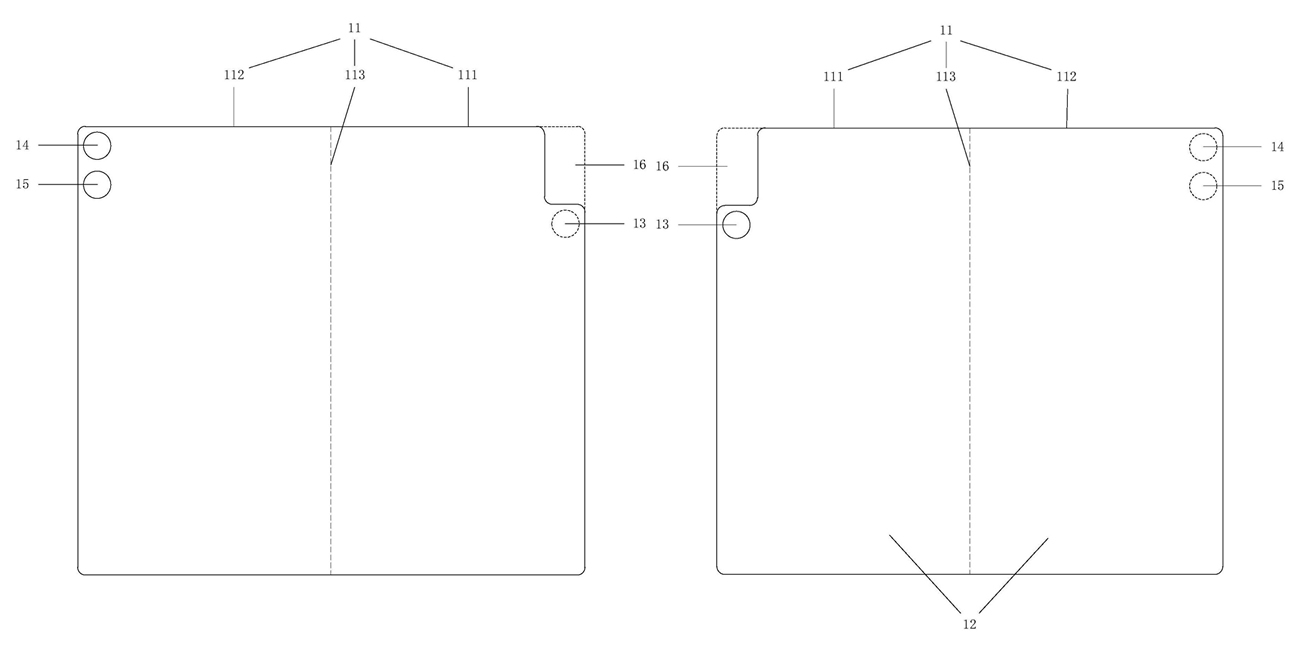
A new Xiaomi patent has recently surfaced online. It is for a new foldable smartphone but with a unique aspect. While most handsets have independently functioning front and rear camera modules, this one has both of them run together at the same time.
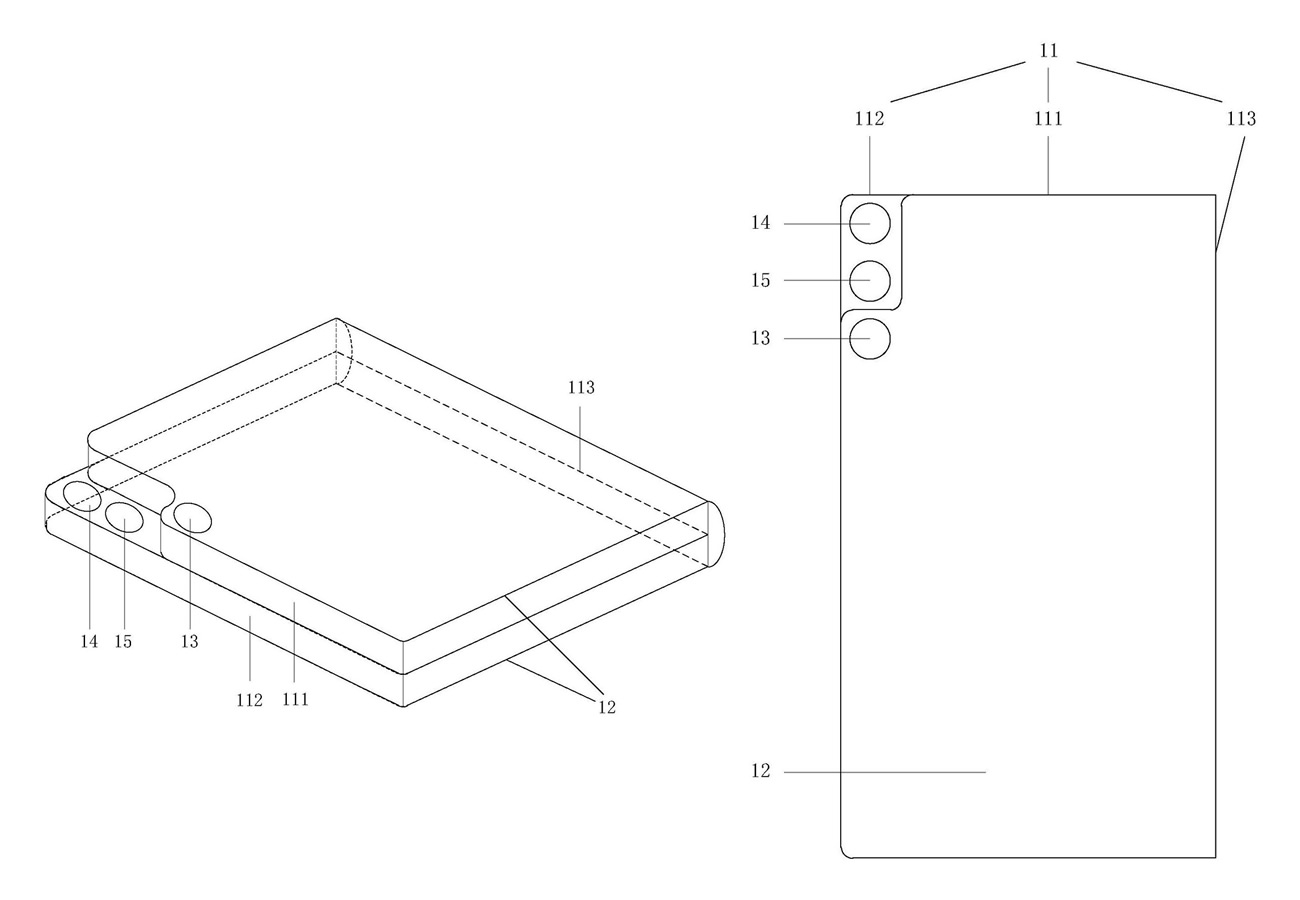
The Chinese tech giant had submitted the patent to the China National Intellectual Property Office, which was finally approved earlier this week. The patent also arrives with images that reveal the smartphone layout and interesting camera placements. Looking at these images, it would seem that the smartphone features 3 image sensors. Two of these sensors can be found together while the lone camera is housed on the opposite side.
In recent times, OEMs have adopted more and more sensors on the rear and front sides. However, raising the number of cameras also increased the cost of the device. Thus, Xiaomi has come up with an interesting solution to this issue through its new foldable smartphone patent, which will have the device use all three cameras when folded, making it a triple camera setup without a third sensor on the rear.
The images reveal that when the device is folded through its hinge mechanism, the lone sensor falls right below and slightly ahead of the dual camera setup. In other words, folding the phone enhances its photographic qualities by raising the number of sensors. Unfortunately, finer details regarding the smartphone or its other specs have not been described and this might be Xiaomi’s attempt to cover all bases. Although, it is an interesting and practical take at lowering future foldable smartphones’ costs.
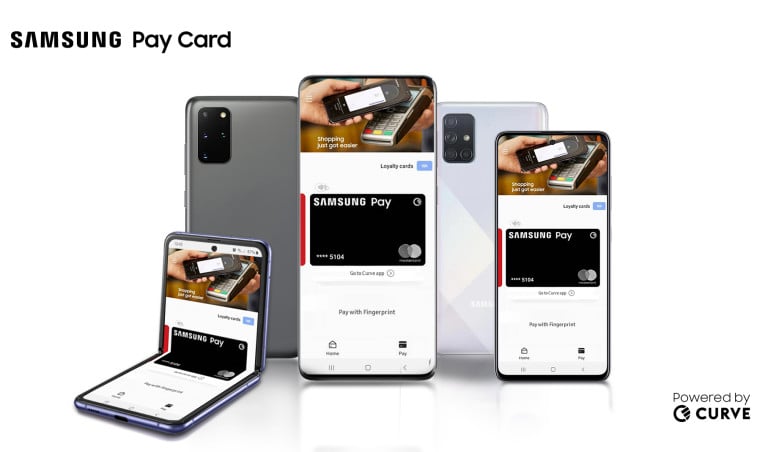
Earlier today (25th June 2020), Samsung made an announcement regarding its new digital payment service. The South Korean tech giant has partnered up with Curve, a European digital banking firm, and Mastercard to bring Pay Card.
The Pay Card is a new service that lets users manage and monitor their finances. It acts as a primary hub through which one can view all of their spendings through a smartphone. With the help of Curve, Pay Card is linked to your bank cards and offers a secure method to transfer payments.
According to Conor Pierce, Corporate Vice-President of Samsung UK & Ireland, “At Samsung, our customers are at the heart of everything we do, which is why we strive to create the best technology, services, and solutions. The Samsung Pay Card powered by Curve will allow us to expand our Samsung Pay offering, giving our loyal customers even greater benefits and rewards than ever before.”
The partnership for the new financial service is a first of its kind in Europe for Samsung Pay. This service will be launched in the UK later this year with plans for further expansion. It also marks another step from the company towards the digital financing sector, as it had previously partnered with SoFi for new debit cards and cash management accounts as well.
We use cookies on our website to give you the most relevant experience by remembering your preferences and repeat visits. By clicking “Accept”, you consent to the use of ALL the cookies.
This website uses cookies to improve your experience while you navigate through the website. Out of these, the cookies that are categorized as necessary are stored on your browser as they are essential for the working of basic functionalities of the website. We also use third-party cookies that help us analyze and understand how you use this website. These cookies will be stored in your browser only with your consent. You also have the option to opt-out of these cookies. But opting out of some of these cookies may affect your browsing experience.
Necessary cookies are absolutely essential for the website to function properly. This category only includes cookies that ensures basic functionalities and security features of the website. These cookies do not store any personal information.
Any cookies that may not be particularly necessary for the website to function and is used specifically to collect user personal data via analytics, ads, other embedded contents are termed as non-necessary cookies. It is mandatory to procure user consent prior to running these cookies on your website.