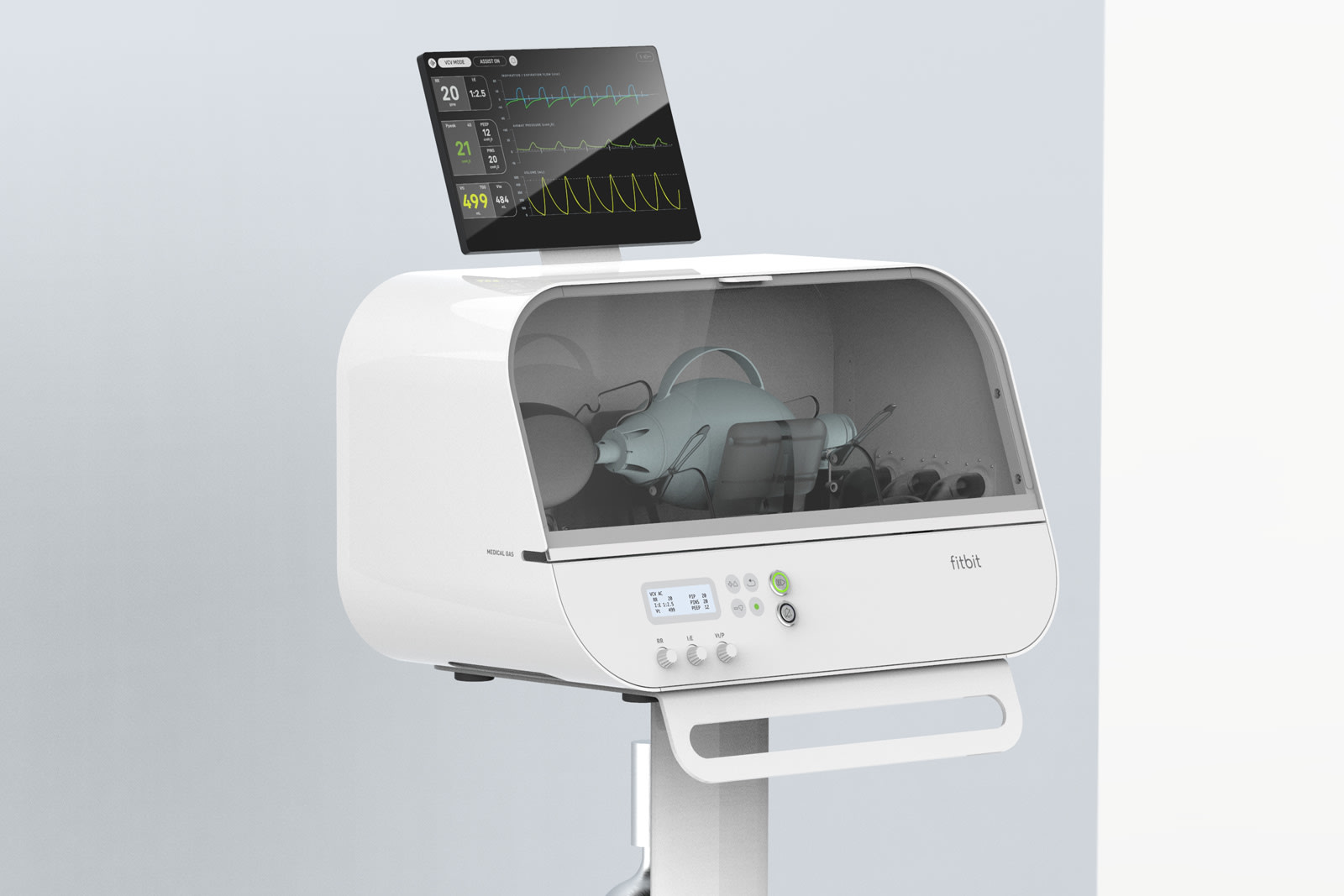
The known wearables and smart products maker, Fitbit, has its upcoming ventilator receive an emergency approval from the FDA. The US government’s Food and Drug Administration has given Fitbit an Emergency Use Authorization for its Flow ventilators, which will be used to help patients with COVID-19 infection.
At the moment, the US government is reportedly “in talks” with Fitbit to supply its Flow ventilator units. For those unaware, Flow is a ventilator built with advanced sensors and alert systems that features a simple user interface and is easy to operate. This would eliminate the need for specialized training and is also built to target “lower price range” or cost effective emergency ventilators.
Fitbit is confident in its production capabilities, stating that it will have an advantage in activity tracking since it is a known smart product manufacturer. However, the company still has a few hurdles to tackle, with the primary one being a customer base. It needs to find customers to sell to since its arrival to the market is relatively late. Furthermore, the demand for this ventilator is also uncertain as another wave of COVID-19 occurring is unknown as well. As it stands right now, the Flow could be crucial in key areas, but only if the situation demands it.
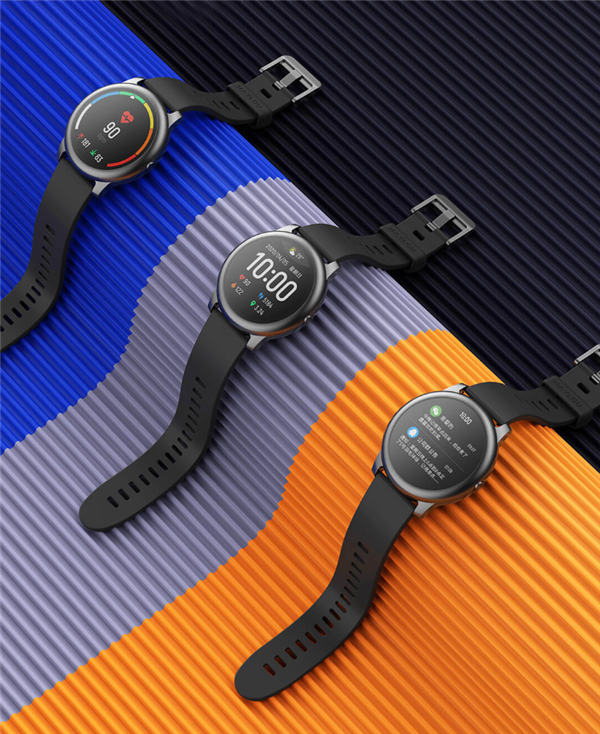
Earlier today (4th June 2020), Xiaomi launched the Haylou LS04 Solar Smartwatch through its Youpin platform. The smartwatch features a heart rate sensor housed within a metallic body, with 30 day long standby battery life.
Looking at the Haylou LS04 Solar Smartwatch, its design follows a minimalistic philosophy. The watch dial is round and sports a 1.28 inch TFT display with a resolution of 240 x 240px. While the body of the dial is metallic, the band is made from silicon, which has been designed to be comfortable when worn for long periods of time.
The wearables have a built in heart rate sensor that monitors users’ heartbeat 24 hours. This allows it to detect any underlying heart issues and can even adjust users’ exercise time and recommend the amount of exercise accordingly. To facilitate this, it also supports 12 different sports activity modes, which is higher than the 9 modes that were supported on the previous LS01 model, which was launched last year.
The Haylou LS04 Solar Smartwatch is rated IP68 for water and dust resistance and can be safe against accidental splashes and rains. The device is powered by a lithium battery that offers up to 30 days of standby on a single full charge, up from 14 days over the older LS01 variant. If you’re interested in buying the smartwatch, you can check out this link here for the Haylou LS04 Solar Smartwatch, it is priced at 179 Yuan (roughly 25 US Dollars).
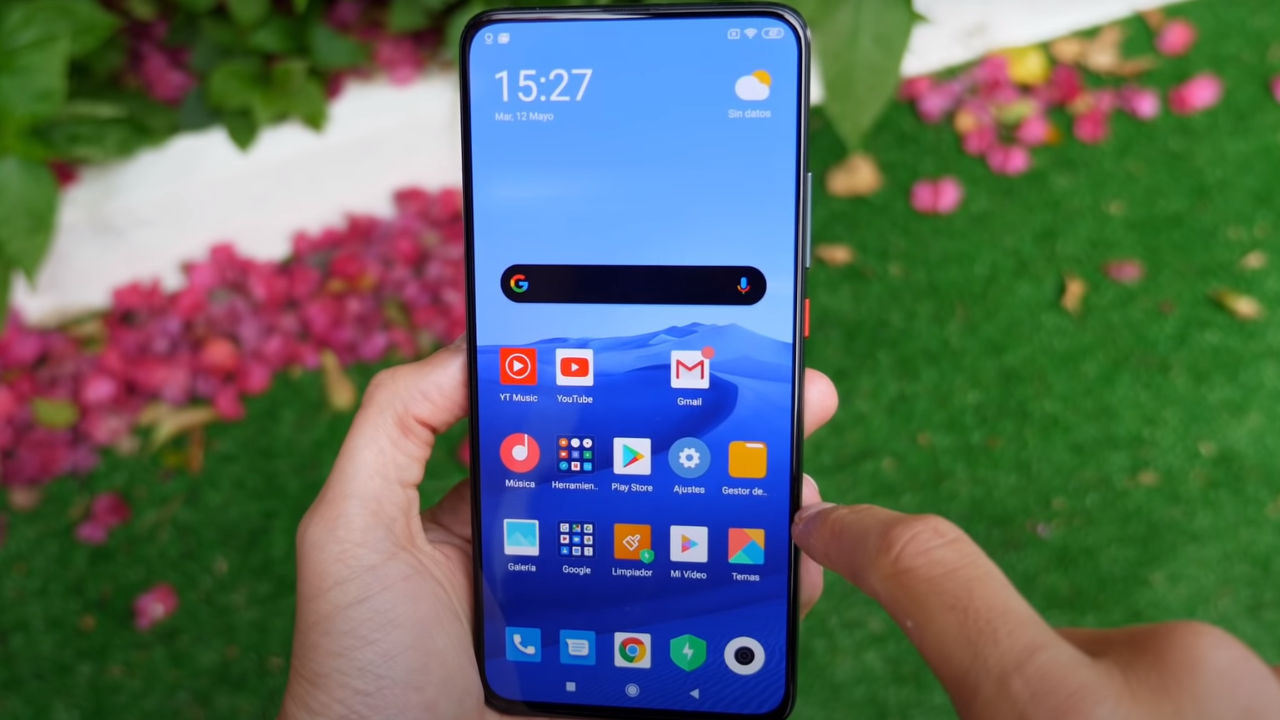
Last month, after weeks of leaks and rumors, Xiaomi-backed Redmi finally launched the Redmi K30 Pro Zoom edition smartphone in its home market China. Now, the company has announced a massive price cut on the smartphone for a limited time.
As a part of the 618 sales in China, the company has announced that it will be cutting the pricing for Redmi K30 Pro Zoom edition by 400 yuan, which is around $56. This significantly reduces the phone’s pricing during the sale period.
The top-end variant of the phone, which packs 12GB RAM and 512GB internal storage, will be available for 4,099 yuan (approximately $575) after the 400 yuan discount, instead of its original price of 4,499 yuan (~$634).
The company is also offering discounts for the 8GB RAM + 128GB storage and 8GB RAM + 256GB storage models, which are priced at 3,799 yuan (~$537) and 3,999 yuan (~$565) respectively. However, it remains to be seen how much discount these models get.
The Redmi K30 Pro Zoom Edition features a 6.67-inch Full HD+ E3 Super AMOLED display. Under the hood, the device is powered by Qualcomm Snapdragon 865 tagging along with a Snapdragon X55 modem, providing support for both SA/NSA 5G modes.
The highlight of the smartphone is the quad-camera setup which includes a 64MP Sony IMX686 1/1.7″ sensor with four-axis OIS, an 8-megapixel telephoto lens with support for 3x optical and 30x digital zoom, a 13-megapixel 123° ultra-wide-angle lens and a 2MP depth sensor.
On the front side, the device is equipped with a pop-up mechanism for housing a 20-megapixel snapper with support for 120 fps slo-mo videos and time-lapse shooting. The phone runs Android 10-based MIUI 11 out-of-the-box and is powered by a 4,700mAh battery with 33W fast charging support.
POCO F2 Pro, the latest flagship smartphone from the Xiaomi-backed brand was launched a few weeks ago and is available for purchase in some regions, including the United States, Europe, and Malaysia.
Now, JerryRigEverything, the popular YouTube channel which does durability tests on smartphones, has released a video about the durability test of the POCO F2 Pro and the device successfully passes the test.
First of all, let’s talk about the display. The screen is protected by Corning Gorilla Glass 5 and in the scratch test, it started showing scratch signs at level 6 and grooves from level 7. In the burn test, when the screen is burned with a lighter, the pixels go white on that portion after 30 seconds but quickly recovers after some time.
As for the material, the device is built with an aluminum frame and has a glass body, which is quite sturdy. The phone comes with a pop-up camera where the sensor is placed behind a sapphire glass, which has no effect when scratched.
However, the pop-up module for the camera enclosure is made of plastic and gets scratched easily. The pop-up mechanism has several fail-safes in place and the way it is made is impressive. After deliberately trying to break the pop-up module by thumping it on the table, it’s slider mechanism stopped working but it seems that the phone fixed and adopted it after some time.
On the back, there’s a quad-camera module placed in the top-center position which bumps out from the body. When tried to scratch the screen, there were no issues with it. As for the bend test, the phone also survived it. Although the phone makes a cracking sound, there were no issues on the screen or the body of the phone.
A couple of days ago, Vivo announced its all-new Vivo X50 series smartphone with a heavy focus on the photography features. The devices in the lineup include Vivo X50, X50 Pro, and X50 Pro+, all of which come with support for 5G connectivity.
Today, the company has confirmed that the Vivo X50 will be available for purchase in China for the first time on 6th June. It will be available in both the models — 8GB + 128GB and 8GB + 256GB, costing 3,498 yuan (~$490) and 3,898 yuan (~$547) respectively. It remains to be seen if it’s available in all three color options — Black, Blue, and Pink.
As for the specifications, the Vivo X50 features a 6.56-inch AMOLED display with a screen resolution of 2376 x 1080 pixels. There’s also support for the 90Hz refresh rate and it comes with an in-display fingerprint sensor.
Under the hood, the device comes powered by the Qualcomm Snapdragon 765G SoC, along with 8GB of LPDDR4X RAM and up to 256GB of UFS 2.0 flash internal storage. Thanks to the SD765G chipset, the phone has 5G connectivity support.
In the camera department, the smartphone features a 32MP snapper on the front with features like night view, portrait, photo, video, panorama, dynamic photo, slow motion, short video, AR cute shoot, and others.
On the back, it is equipped with a quad-camera setup that includes a 48MP Sony IMX598 primary camera sensor, along with a 13MP portrait lens, an 8MP wide-angle sensor, and a 5MP macro lens. The gimble camera technology is not available on the standard model and is only supported on X50 Pro.
The phone is running Android 10 operating system with the company’s own FunTouch OS user interface on top. The Vivo X50 is powered by a 4,200mAh battery and comes with support for 33W fast charging technology.
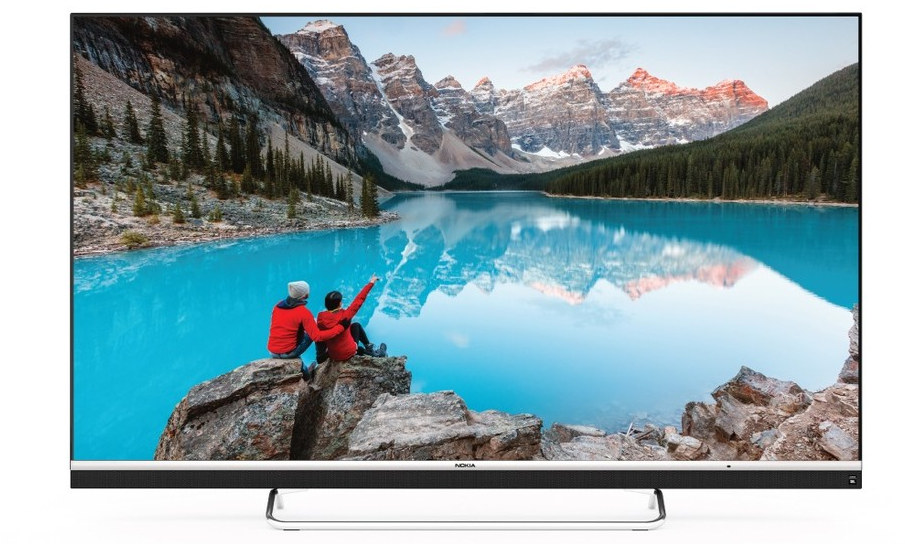
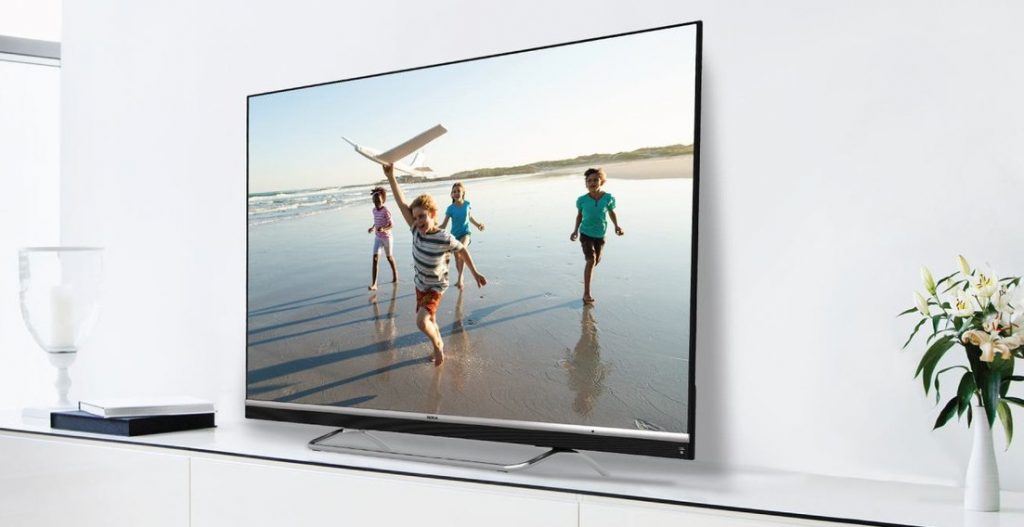
As teased, Nokia has today launched a new model of its Smart TV in the Indian market. The company has today unveiled the Nokia 43-inch 4K LED Smart Android TV, which will be available exclusively via Flipkart.
The smart TV comes with a 43-inch display having support for 4K Ultra HD resolution. The bezels surrounding the screen are quite thin, which are aimed at offering an infinity edge-to-edge viewing experience to users.
It also comes with support for MEMC technology, along with features like intelligent dimming, wide color gamut, and Dolby Vision. For the audio, it has 24-watt speakers on the bottom which support DTS TruSurround, Dolby Audio, and the company says that they are optimized by JBL to offer deeper bass.
Under the hood, the device comes powered by a 1GHz PureX quad-core Cortex A53 processor, along with Mali 450 MP4 GPU. As for the memory configuration, it packs 2.25GB of RAM and 16GB of internal storage.
Coming to the software department, the Nokia 43-inch 4K LED Smart Android TV is running the Android TV 9 operating system and comes with support for Google Assistant. It also has built-in Chromecast and Play Store for downloading more apps on the TV.
For the connectivity features, the smart TV also has Wi-Fi 802.11 a/b/g/n support along with Bluetooth 5.0. The device has three HDMI ports, one USB 2.0 port, one USB 3.0 port, and an Ethernet port.
The Nokia 43-inch 4K LED Smart Android TV is priced at ₹31,999 (~$424) in the Indian market and will be available for purchase from 8th June, exclusively via Flipkart. In the first sale, Citi Credit and Debit Card holders can get a flat ₹1,500 discount.
This is the second smart TV comes from Nokia in the Indian market. Just like the earlier model, this one too will be limited to the Indian market given that it’s not Nokia or HMD Global which is making these TVs but Flipkart which has got the license to use Nokia brand for its TVs in the Indian market.
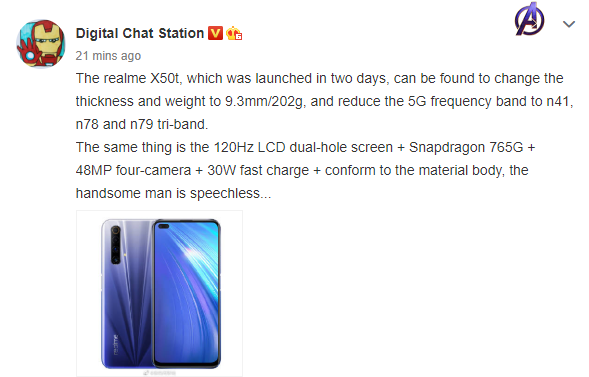
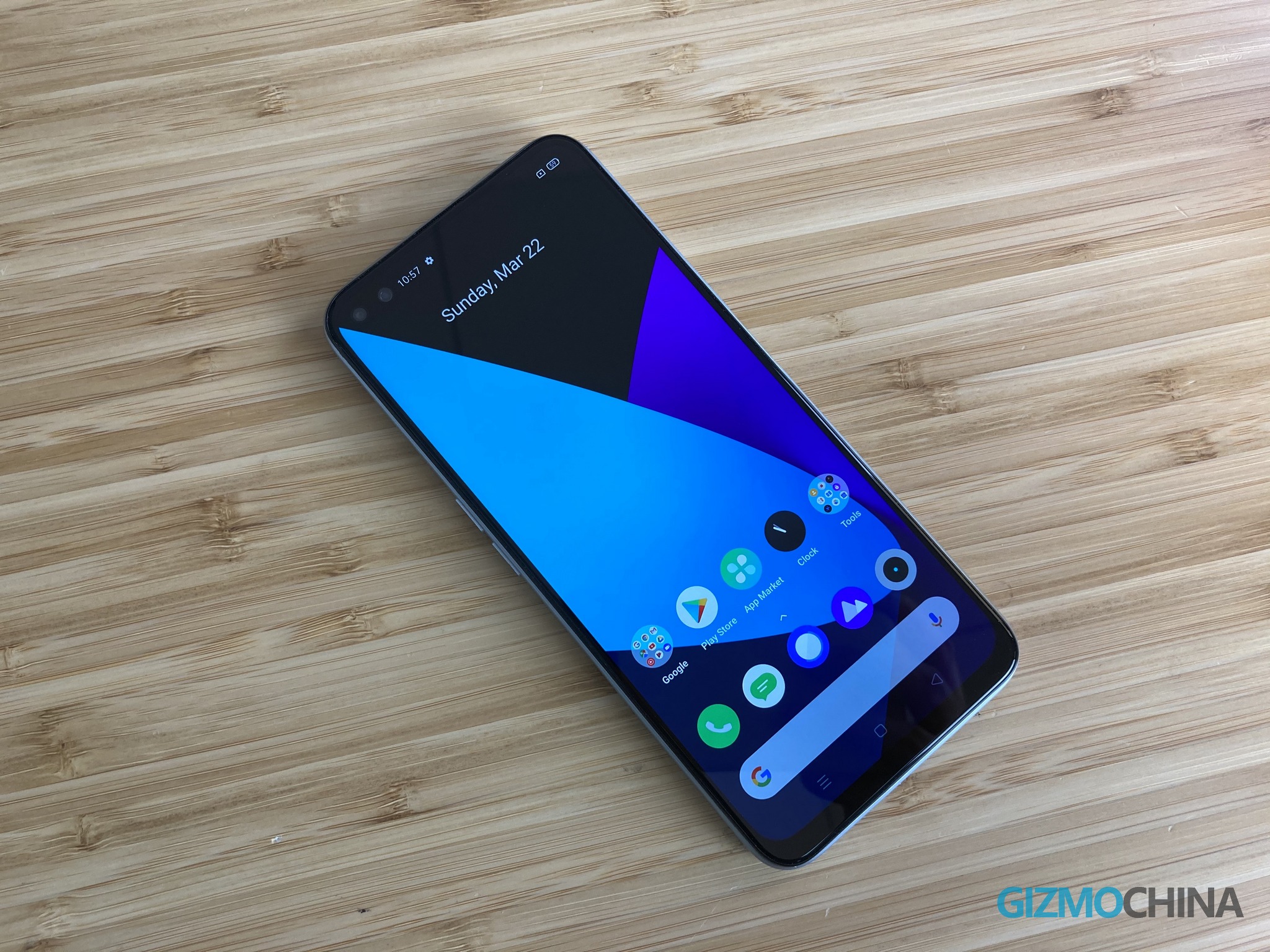
The Realme X50 series includes three devices such as Realme X50 5G, Realme X50 Pro 5G, Realme X50m, and Realme X50 Pro Player Edition. The latter was introduced last month as a new variant of the Realme X50 5G with inferior cameras. Recent reports have revealed that the Chinese firm is working on another phone called Realme X50t 5G that has a model number of RMX2052. It is rumored to come with specs identical to the Realme X50m phone. A reliable tipster claimed through Weibo yesterday that the Realme X50t’s arrival is only two days away. He revealed some vital information on the smartphone.
According to the tipster, there are only a few differences between the Realme X50m and the upcoming Realme X50t. The Realme X50m supports 7 5G frequency bands. However, the Realme X50t will support only 5G frequency bands such as n41, n78, and n79 in China.
The other noticeable thing about the Realme X50t is that it is slightly thicker and heavier than the Realme X50m. The X50t seems to weigh 202 grams and has a thickness of 9.3mm. In comparison, the X50m measures 8.9mm in thickness and it weighs 193 grams.
The other specifications that are expected to be available on the Realme X50t are dual punch-hole LCD panel with 120Hz refresh rate support, Snapdragon 765G, 48-megapixel quad cameras and 30W fast charging. These specs are also available on the Realme X50m. The leakster did not mention the battery size of the Realme X50t. However, its TENAA listing suggests that it could be coming with a 4,200mAh battery. The X50m also features the same sized battery.
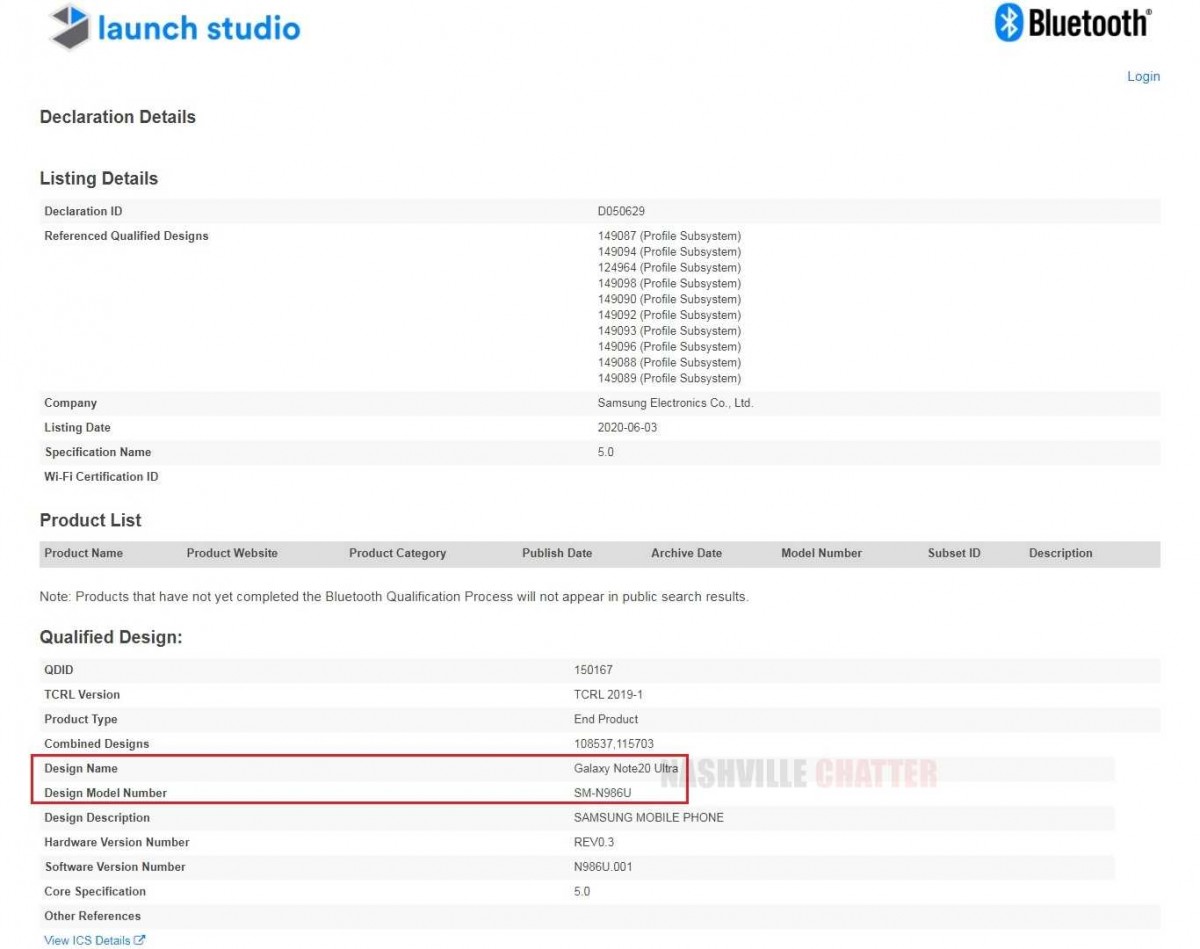
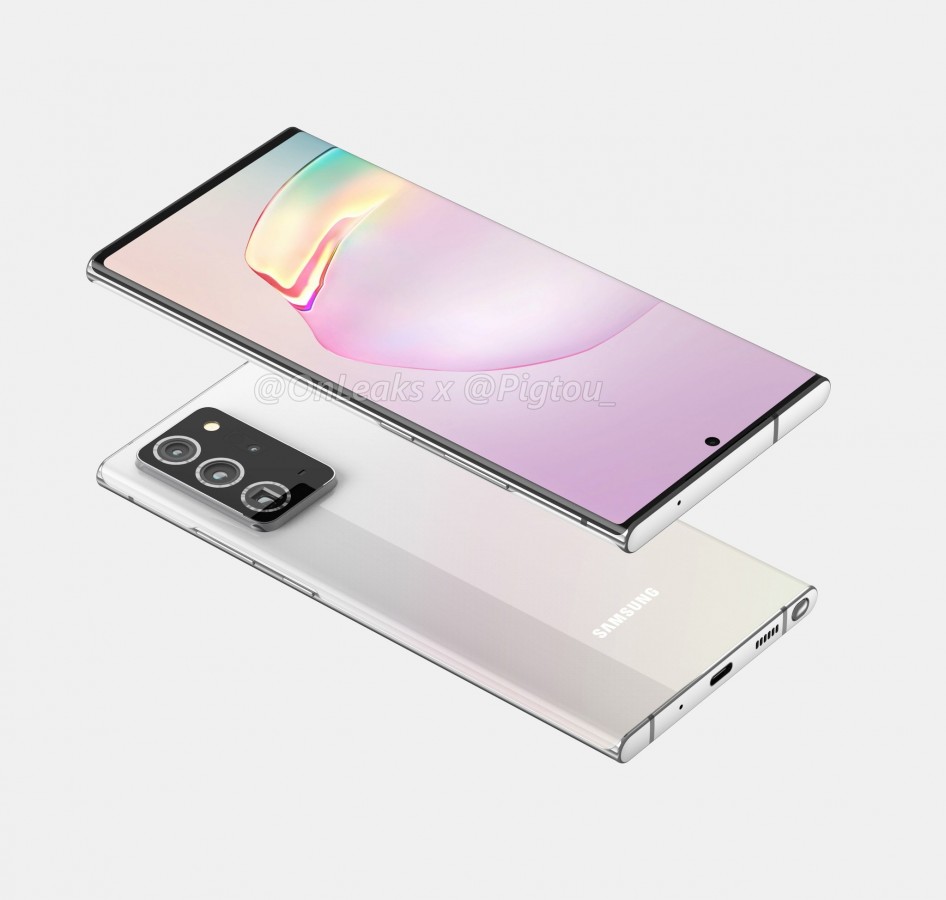
Samsung is expected to launch the Galaxy Note 20 series in August as successors for last year’s Galaxy Note 10 and Galaxy Note 10+. The rumor mill has been speculating that the upcoming Note 20 models could be called Galaxy Note 20 and Galaxy Note 20+. The SM-N986U phone had appeared on Geekbench last month. At that time, the rumor mill had dubbed it as Galaxy Note 20+. However, the Bluetooth certification of the SM-N986U device reveals that it could be arriving in the market as Galaxy Note 20 Ultra.
The Bluetooth certification of the Galaxy Note 20 Ultra only confirms the support for Bluetooth 5.0 and nothing else on its specifications. The Chinese variant of the same phone has SM-N9860 model. The 3C certification of the SM-N9860 had revealed that it could be coming with a 25W fast charger.
Popular tipster Ice Universe is of the view that the Snapdragon 865+ SoC could be powering the device. The reason behind it is that the Geekbench listing showed the processor’s large core frequency as high as 3.09GHz. In comparison, the SD865 offers maximum clocking speeds of 2.84GHz. In some markets, the phone may ship with Exynos 992 chipset. The tipster claimed that the appearance of the Galaxy Note 20 Ultra moniker could be an error and it could be called Note 20+. Interestingly, the Bluetooth listing has been taken down.
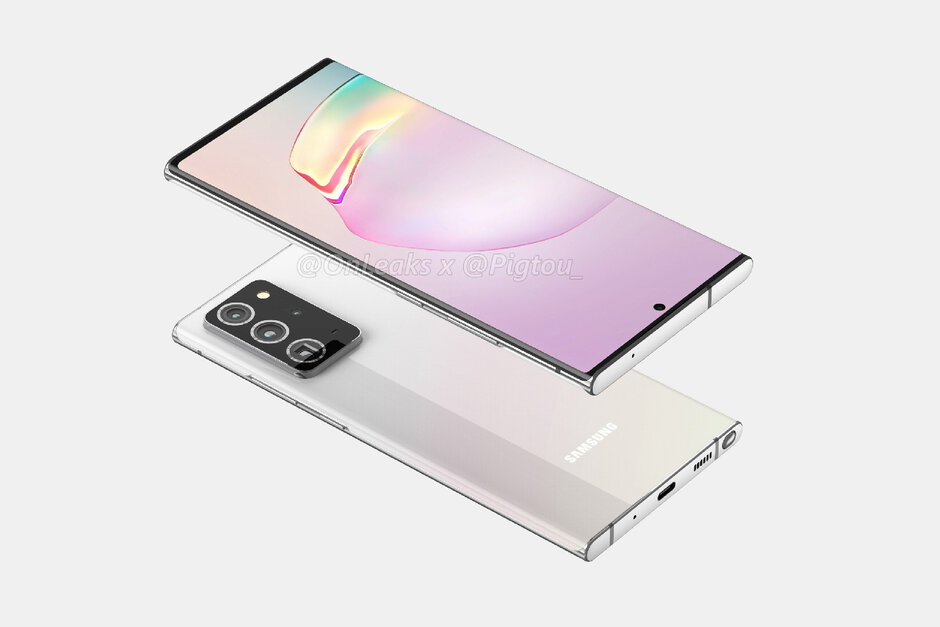
So far, the rumor mill has revealed that the Galaxy Note 20 Ultra will have a 6.9-inch 120Hz Infinity-O S-AMOLED display with quad HD+ resolution support. It is likely to feature the same in-display fingerprint scanner that was made available on the S20 series. The phone may come with up to 16 GB of RAM and up to 512 GB of built-in storage.
It could be coming with a 40-megapixel front camera. The back panel of the phone is said to feature a 108-megapixel main camera, a 12-megapixel ultrawide lens, a 13-megapixel periscope lens with 50x hybrid zoom support and a laser autofocus unit. Some of its other rumored features include improved S-Pen, stereo speakers, and support for sub6 and mmWave 5G bands. In August, the Note 20 series is expected to break cover along with Galaxy Fold 2.
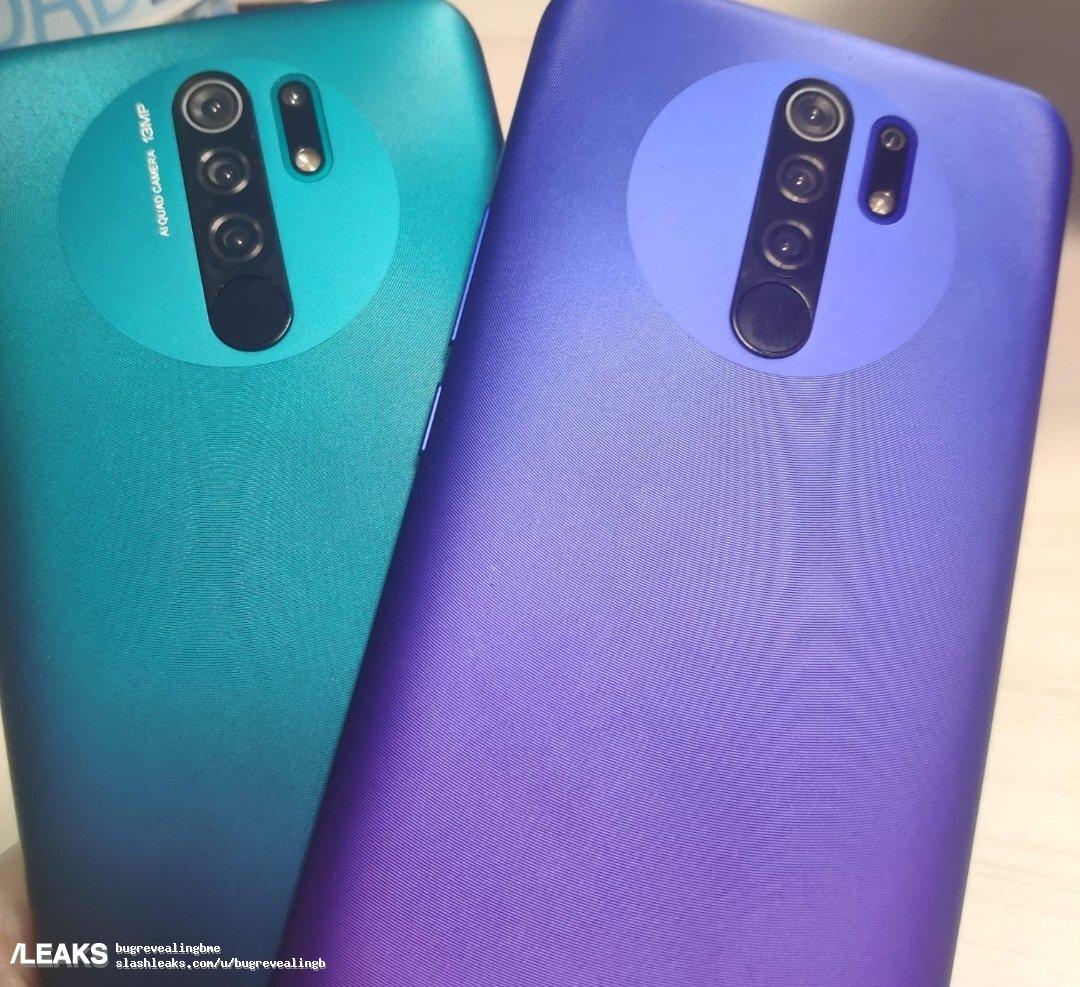
Xiaomi is expected to announce the budget-friendly Redmi 9 series by the end of this month in multiple markets including Vietnam, China, and India. A recent leak revealed that the company may unveil the Redmi 9 series on June 25 in Vietnam. However, there is no confirmation yet from the Chinese brand. Weeks ahead of the launch, the rumor mill has revealed the key specs of the Redmi 9A, Redmi 9C, and Redmi 9 smartphones. A live shot of the alleged Redmi 9 smartphone has appeared on SlashLeaks to reveal its two color variants.
Among the Redmi 9 series, only the Redmi 9 phone is expected to arrive with quad cameras. Hence, it appears the handset shown in the live shot seems to be the Redmi 9 phone. It appears to be equipped with a polycarbonate rear. The phone looks attractive in teal and violet colors. It is likely to arrive in other color options.
The Redmi 9 has a 6.5-inch LCD panel with top-center positioned punch-hole. It is expected to produce a Full HD+ resolution. The Helio G80 octa-core processor is said to power the phone with up to 4 GB of RAM. Contradictory reports have claimed that it is fueled by Helio G70.
The smartphone may ship with up to 64 GB of storage. The phone could be housing a 5,000mAh battery and an 18W fast charger could be present inside its retail box.
It has a front camera of 8-megapixel. The back panel of the phone has a 13-megapixel + 8-megapixel + 5-megapixel + 2-megapixel quad-camera system. A fingerprint reader is available on the rear side of the phone.
The Redmi 9 is likely to arrive in two options such as 3 GB RAM + 32 GB storage and 4 GB RAM + 64 GB storage. It could be costing under $150 in Vietnam.
Recently, the model numbers of the three Realme X3 phones were spotted in the list of Google Play supported devices. The Realme X3 SuperZoom that debuted in China last month has an RMX2086 model number. The RMX2081 and RMX2085 seemingly belongs to the Realme X3 and Realme X3 Pro smartphones. These models have also received certification from the Bureau of Indian Standards (BIS) which indicates that the Realme X3 series could be coming soon to India. The Google Play Console listing of the Realme X3 surfaced yesterday to reveal some of its key specs. Popular tipster Mukul Sharma took to Weibo to share the key specifications of the Realme X3 smartphone.
According to Sharma, the Realme X3 borrows most of its specs from the Realme X3 SuperZoom smartphone. His leak states that the Realme X3 has a 6.6-inch IPS LCD panel that produces a Full HD+ resolution and carries support 120Hz refresh rate. The front and backside of the phone seems to be protected by Gorilla Glass 5 panels.
The Snapdragon 855+ mobile platform that fuels the X3 SuperZoom phone also powers the vanilla X3. The handset is expected to arrive in RAM options like 6 GB, 8 GB and 12 GB. It could be available in storage variants like 64 GB, 128 GB, and 256 GB.
The pill-shaped cutout on the screen of Realme X3 will house two selfie cameras. The setup includes a 16-megapixel main lens and an 8-megapixel secondary shooter. The backside of the Realme X3 has a quad-camera setup that includes a 64-megapixel main camera by Samsung, an ultrawide lens of 8-megapixel, a 12 or 13-megapixel telephoto lens with 2x optical zoom support and a 2-megapixel macro shooter.
The leak has no information on the pricing of the Realme X3 series for India. The Chinese firm may launch the X3 phones at some point in this month.
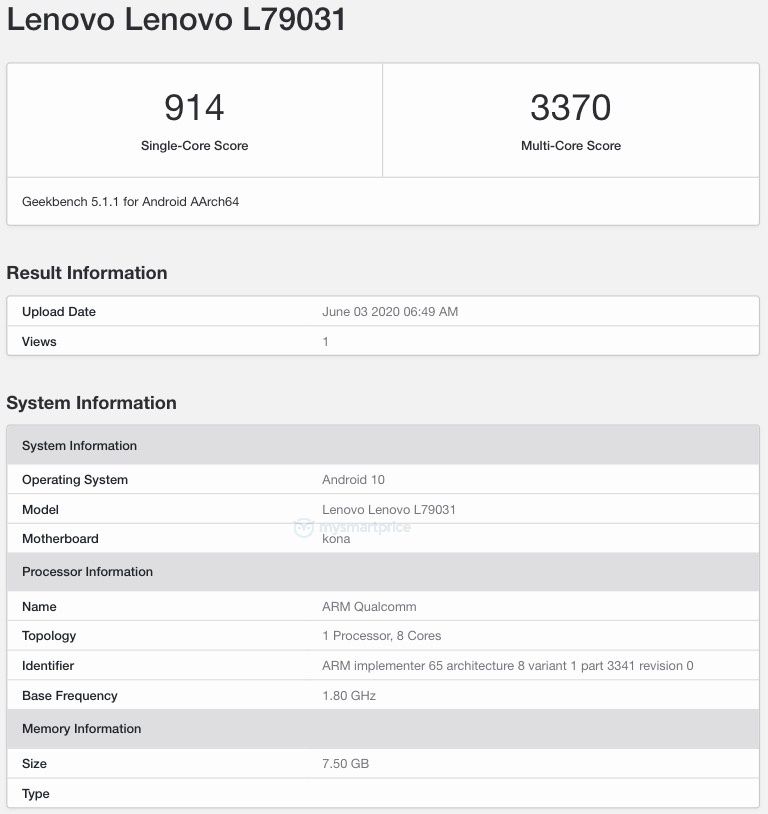
The arrival of Lenovo’s Legion gaming phone is around the corner. It is expected to arrive as a good rival for the upcoming ASUS ROG Phone 3. Some of the leaked specs of the Legion gaming phone have already surfaced. The smartphone is rumored to debut this month. It seems that the company is internally testing the phone’s performance as it has appeared on the Geekbench benchmarking platform ahead of its launch.
The Lenovo L79031 model number belongs to the upcoming 5G-ready Legion gaming phone from the company. The Geekbench 5 listing of the Lenovo L79031 reveals that it is powered by the “Kona” processor which seems to be the Snapdragon 865 mobile platform. The SoC has a base frequency of 1.80GHz.
The variant of the phone that has been benchmarked on Geekbench 5 has 8 GB of RAM. There is a possibility that the gaming phone may come in higher RAM version of 12 GB. It remains to be seen whether it also comes in a 16 GB RAM variant. The Android 10 OS is preinstalled on the device. Past reports have revealed that the device will ship with gaming-grade Legion UI.
The Lenovo Legion gaming smartphone is said to be equipped with a 144Hz refresh rate supporting Full HD+ OLED screen. The rear side of the phone has a center-positioned dual camera setup that includes a 64-megapixel main lens and a 16-megapixel ultrawide snapper. It has a side-mounted pop-up selfie camera of 20-megapixel. The Legion gaming smartphone will ship with other features UFS 3.0 storage, LPDDR5 RAM, dual speakers, and X-axis linear motor. There is no word on the pricing of the device.
The Snapdragon 765G mobile platform powered ZTE Axon 11 5G was made official in China in March. Earlier this week, the Chinese firm took off covers from the Dimensity 800 powered ZTE Axon 11 SE 5G. It debuted as the cheapest 5G phone from the brand. The Chinese firm has silently announced a new Axon 11 member called ZTE Axon 11 4G. Some of its main features include the Helio P70 processor and 64MP quad cameras.
ZTE Axon 11 4G specifications
The ZTE Axon 11 4G has a 6.47-inch AMOLED display that curves towards the edges. It supports 1080 x 2340 pixels and 19.5:9 aspect. The waterdrop notch on the screen houses an f/2.0 aperture 20-megapixel selfie camera. It has an in-display fingerprint reader.
The rear side of the device features a square-shaped camera module at the upper-left corner. It comprises of a 64-megapixel main lens with f/1.89 aperture, a 120-degree 8-megapixel superwide lens, a 2-megapixel macro lens, and a 2-megapixel depth sensor.
The Helio P70 chipset is present under the hood of the ZTE Axon 11 4G. The device is backed by a 4,000mAh battery that comes with fast charging support. The MiFavor 10 based Android 10 OS runs on the smartphone. The handset does not feature a 3.5mm audio jack.
The Axon 11 4G has 159.2 x 73.4 x 7.9mm dimensions and 168 grams. In terms of specs and appearance, it is almost identical with the Axon 11 5G. The only major difference between the two phones is that the 4G version has a MediaTek chip whereas its 5G variant has a Qualcomm processor.
ZTE is yet to share the pricing and availability of the Axon 11 4G. The official poster of the phone shows that it will be available in black and white color options.
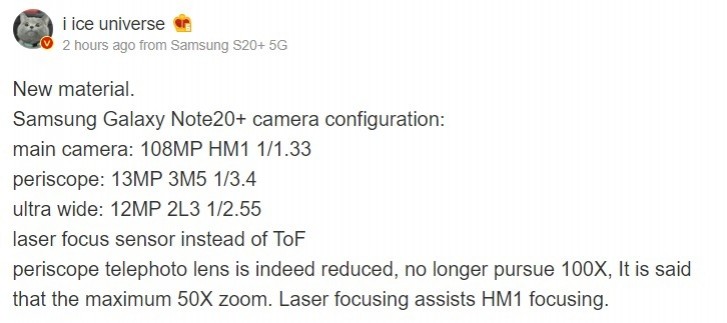
If Samsung is going to launch the Galaxy Note 20 series in August as expected, that means the launch is just two months away. Thus, the rumour mill is expected to keep buzzing with significant details of the models that make up the lineup. Popular tipster IceUniverse has revealed some details of the Galaxy Note 20+ camera. The tipster disclosed on Twitter that the 5G flagship will have a 108MP sensor, while the ToF will be replaced by a laser focus sensor, assisting the main camera.
The device is also rumoured to feature the 1/1.33″ Samsung Bright HM1 sensor which was also used on the Galaxy S20 Ultra. The additional laser focus sensor will assist the main camera, instead of having a static ToF sensor that analyzes the foreground and background.
In addition, the Galaxy Note 20+ will pack a 12MP ISOCELL Fast 2L3 ultrawide-angle lens which is 1/2.55” in size and comes with PDAF. There will also be a 3MP Samsung Slim 3M5 periscope telephoto lens with a size of 1/3.4″ but official numbers say it is 1/3”. The camera will also feature support for 50X zoom instead of the 100X zoom which the HM1 is capable of.
Earlier on, CAD renders of the Galaxy Note 20+ emerged online showing the device will come with a single central punch-hole design. The device is also rumoured to feature an updated Exynos 992 chipset, based on the 5nm process.
In furtherance of its drive to have its own product ecosystem, Redmi launched the Redmi Earbuds S in India last week. The earbuds said to be a rebadged Redmi AirDots S arrived with an affordable Rs. 1,799 (~$24) price tag. As expected, the product is a massive hit as can be seen from the first-week shipment figures shared by the Chinese manufacturer.
Data released from Xiaomi Data Center shows that over 100,000 units of the earbuds have been sold since its release on May 27. The figure represents sales collated between the 7-day period of May 27th — June 2nd, 2020. Xiaomi calls it a milestone and compares it to be nearly 15% of the overall true wireless shipments in a quarter.
We're cutting the ribbon on a new milestone! The all-new #RedmiEarbudsS have crossed 1️⃣,0️⃣0️⃣,0️⃣0️⃣0️⃣ units in 7️⃣ days! 🔊
That's nearly 1️⃣5️⃣% of overall TWS industry shipments in a quarter! 💪
True Wireless earbuds are steadily gaining widespread popularity in India. Shipment of TWS earbuds in India grew by a massive 700% YoY in 2019. Although data released by IDC for Q1 2020 shows Samsung is the market leader in the quarter, with products like the Redmi Earbuds S, we expect Xiaomi to edge the Korean company this quarter.
The Redmi earbud is a cheap $24 product with all the bells and whistles of a premium, durable and reliable earbuds. It comes with splash-proof design, low-latency gaming mode, seamless switching between mono and binaural mode, etc. It connects through Bluetooth 5.0 chip, features dynamic sound drivers for enhanced bass and DSP environmental noise cancellation technology. The Earbuds S also lets users play/pause music just by tapping or double-tap to launch the voice assistant. It offers 4 hours of music playback on a single charge and the charging case offers up to 12 hours of backup. The Earbuds S is available on mi.com, Amazon.in, Mi Home and Mi Studio.
Samsung launched the Galaxy S20 series earlier this year. The company is known for releasing new colors of its devices after a certain period of time. This is a long-used strategy to boost sales when the curve flattens. This year, the electronics giant has partnered with BTS, a K-Pop band to launch a limited edition Galaxy S20 Plus and Galaxy Buds Plus TWS.
The South Korean maker is not releasing something crazy as they did with superhero-themed Galaxy S series phone back in the day. Aso, it does not look anything like the recently announced heavily themed Oppo Ace 2 EVA and iQOO 3 5G Transformers.
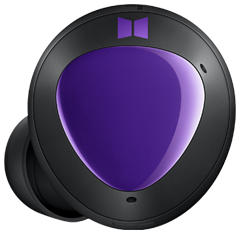
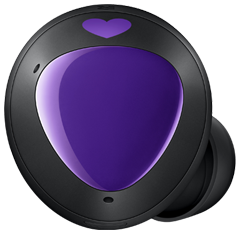
Instead, the company is taking a safe route by simply coating the Galaxy S20 Plus with BTS’ signature purple color. On the other hand, the Galaxy Buds Plus gets an extra tiny BTS’ ‘I Purple You’ logo on the buds as well as the charging case.
Apart from the above-mentioned subtle changes, the handset and the TWS remains the same except maybe it could arrive with special BTS theme out of the box.
1 of 4
Samsung officially teased the limited edition Galaxy S20 Plus on its Twitter profile with July 9 launch date. The teaser video also mentioned the availability will vary by country and hence don’t expect it to release everywhere.
However, the BTS-themed Galaxy Buds was first revealed by Max Weinbach of XDA Developers who also shared the official poster of Galaxy S20 Plus BTS Edition.
The Consumer Technology Association (CTA) organisers of the popular Consumer Electronics Show (CES) which usually holds in January in Las Vegas has announced that CES 2021 will be held in-person in January next year. The group says it intends to make the platform available to exhibitors to be able to get across to consumers. This time around, the event will see more live streaming of events and a broader safety guideline will be adopted.
CES 2020 was held in January this year just at the nick of time before the COVID-19 pandemic became a global health crisis. The Mobile World Congress (MWC) 2020 wasn’t that lucky as it was cancelled before it could hold in February 2020 before the event could hold.
Last year’s CES event recorded an estimated 175,000 attendees. Although we don’t expect that much persons to attend next year;’s event, it remains to be seen if it would be possible to maintain a safe environment in the wake of the COVID 19 pandemic. CTA says it intends to “regularly clean and sanitize spaces” and offer “sanitization stations.” It also plans to widen aisles and seats to increase distancing, limit “touchpoints” by using tech like mobile payments and provide on-site health services. The organisation says it will also look into doing temperature scans and that it plans to issue “best practices,” like wearing of face mask.
As of this moment, it is difficult to say if it will be possible to hold a large-scale conference in January. he pandemic is still raging and a vaccine isn’t expected until next year. Even if CTA gets the green light from health authorities to hold the been, the outfit will still have to deal with a lack of enthusiasm from attendees who may not want to attend due to safety concerns.
Is it too early for CTA to schedule CES 2021 for January in the face of COVID 19? Lets us known what you think in the comment section.
It is becoming every day easier to find very affordable smartphones with the support to 5G connectivity. In this article, we are comparing the latest affordable 5G devices which are also among the cheapest 5G phones released until now. Their names are similar and so are their specifications, that is why we chose them for this comparison: we are talking about Honor X10 and Redmi 10X. Both devices released by “sub-brands” and both with midrange specifications. But who is the best? Let’s discover it together with an in-depth specs comparison.
Huawei Honor X10 vs Xiaomi Redmi 10X
Huawei Honor X10
Xiaomi Redmi 10X 5G
DIMENSIONS AND WEIGHT
163.7 x 76.5 x 8.8 mm, 203 grams
164.2 x 75.8 x 9 mm, 205 grams
DISPLAY
6.63 inches, 1080 x 2400p (Full HD+), LTPS IPS LCD
Triple 48 + 8 + 2 MP f/1.8, f/2.4 and f/2.4
16 MP f/2.2 front camera
Triple 48 + 8 + 2 MP f/1.8, f/2.2 and f/2.4
16 MP f/2.3 front camera
BATTERY
4300 mAh, Fast charging 22.5W
4520 mAh, Fast charging 22.5W
ADDITIONAL FEATURES
Dual SIM slot, 5G
Dual SIM slot, 5G
Design
Honor X10 5G distinguishes from most of the affordable phones out there for providing a full screen display with no notch or holes. Indeed, it is equipped with a pop-up front camera popping up thanks to a motorized mechanism. That is why it has a more attractive design than Redmi 10X. On the other hand, Redmi 10X 5G still comes with a very high screen-to-body ratio (but it has a waterdrop notch) and it is even well built. It comes with a glass back and it is splash resistant, while Honor X10 does not offer protections against water and liquids.
Display
If you are a gamer or you just prefer having a smoother viewing experience, you should go for the Honor X10 as it offers a high 90 Hz refresh rate. But if you want the best image quality, choose the Redmi 10X as it offers an AMOLED panel instead of an IPS one, as well as the HDR10+ certification. Honor X10 has a slightly wider display, but that is just a minimal difference. Both come with a 20:9 aspect ratio, but while Redmi 10X has a notched display, Honor 10X has a full screen panel thanks to a pop-up camera. Do you prefer a high refresh rate or a better image quality?
Specs & Software
Just like the number that identifies them is the same, the performances of the Kirin 820 5G and the Mediatek Dimensity 820 chipsets found on Honor X10 5G and Redmi 10X 5G are very similar. The Dimensity 820 has slightly better results on AnTuTu benchmarks (410K points against 380K points scored by the Kirin 820 5G), but on Geekbench the Kirin 820 takes the crown. The two handsets are equipped with up to 8 GB of RAM but Redmi 10X provides up to 256 GB of internal storage, while Honor X10 stops at 128 GB. Honor X10 and Redmi 10X run Android 10 customized by EMUI and MIUI, respectively. Global customers will not get Google services with the Honor 10X. The handsets support 5G connectivity in its sub-6 GHz frequencies.
Camera
You should get a very close photo quality with Honor X10 and Redmi 10X, and they are not among the best camera phones, neither in the midrange segment. They boast a triple camera setup composed of a 48 MP main sensor (40 MP on the Honor 10X), an 8 MP ultrawide sensor and a 2 MP depth sensor. On the front side, they both have a 16 MP selfie snapper. You should get a pretty nice camera quality, but nothing special compared to the other devices you can find at the same price.
Redmi 10X has a bigger battery than Honor 10X: we are talking about 4520 mAh against 4300 mAh. And given that both the chipsets are built at 7 nm, both the phones support 5G, and Redmi 10X has a more efficient (and smaller) AMOLED display, we believe that Redmi 10X 5G will last more on a single charge. Note that our opinion is only based on the specs and we still did not test the battery life of these devices. Also note that Honor X10 is still a good battery phone and, unlike Redmi 10X 5G, it supports reverse charging.
Price
Honor X10 and Redmi 10X 5G launched in the Chinese market and both the companies are yet to launch them globally. The base variant of the Honor X10 carries a price tag of 1899 Yuan in China, which roughly translates into $267. The Redmi 10X 5G starts from just 1599 Yuan (approx. $225). The Honor 10X actually offers a higher refresh rate, a full screen design, and reverse charging, but Redmi has an amazing AMOLED HDR10+ display and a bigger battery, as well as a glass back, an infrared port, and a splash proof body making it slightly more interesting. Which one would you pick?
Huawei Honor X10 vs Xiaomi Redmi 10X: PRO and CONS
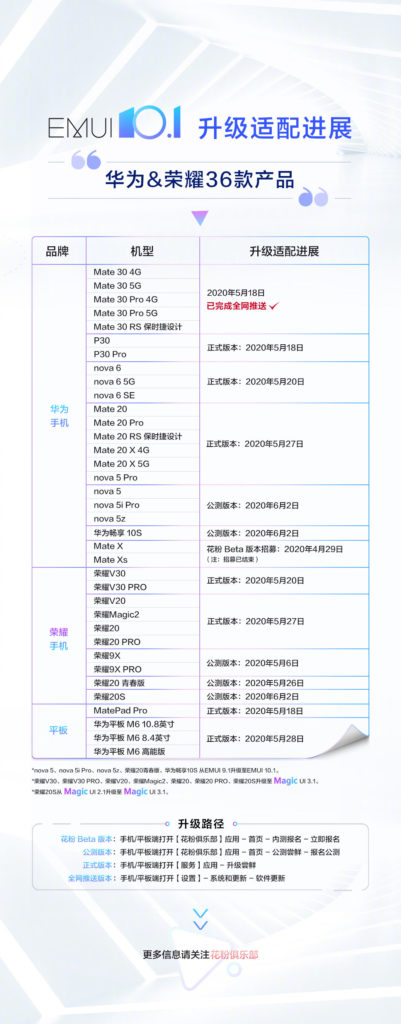
Huawei has been rolling out EMUI 10.1 ever since the company announced it alongside P40 series. Initially, it was available as closed beta releases in China. Soon, the company began to roll out open beta as well as stable builds in its home country. Now, according to EMUI official Weibo account, Huawei has successfully rolled out EMUI 10.1 to 36 devices.
The 36 devices that have received EMUI 10.1 include Honor-branded smartphones as well. Also, it is worth noting that not all the devices have received stable build as some of them are still limited to public beta.
For instance, Nova 5i Pro, Nova 5, Nova 5z, Enjoy 10S, and Honor 20S have just started receiving open beta builds today.
Further, Honor devices are receiving Magic UI 3.1, which is a fork of EMUI 10.1 with some minor tweaks. Anyway, it took the company two months to roll out the update to 36 devices.
To be fair, Huawei’s performance is much better than Oppo, which is yet to release ColorOS 7 to all of its device in China, let alone international markets.
Having said that, only a few devices have received the EMUI 10.1 update globally and the company is yet to reveal its rollout plan for international markets clearly.
Most of us have become home-bound due to the ongoing global COVID-19 crisis. Everything has changed over the past few months, including the working pattern as most of the MNCs are asking employees to work from home. This has increased reliance on our old Desktop PCs which were once engulfed with dust from several years. While the dust can be easily removed, there’s a very good chance that you haven’t upgraded your home PC in years.
To solve this, we have compiled a few tips to improve Desktop PC performance either by doing some internal cleaning or upgrading hardware at minimal costs.
After COVID-19, the unused electronics aka home desktops have emerged as real life-savers for gamers as well as the working population. However, some users are getting performance issues with Desktop PCs due to the old hardware or some other technical reasons.
There can be multiple reasons behind a sluggish PC. It can be a software glitch, a networking problem, or old hardware. You can troubleshoot the machine to find the root cause. But if it is related to hardware then we recommend you perform the below-mentioned steps to upgrade PC hardware at minimal costs.
Options to Upgrade Hardware on old Desktop PC
The user can change RAM, Storage device, Graphics Card, CPU, or even the whole motherboard if you have a feasible budget.
Note: Before upgrading any storage device, make sure to backup data. Also, check the compatibility of your hardware before making a purchase.
Upgrade to SSD
The best option to upgrade your old PC with 30-50% improvements in the desktop performance is by replacing the Hard-drive with a Solid State Drive (SSD). It will help the user to improve the boot-time, software opening time, and improve multitasking. If you haven’t used an SSD based PC before, know that the improvement in performance is significant.
The SATA SSDs can give speeds of up to 600MB/s, while the NVMe based SSDs offer speeds up to 3.2 GB/s. These speeds are at least 9X faster than the 7200 RPM Hard Drive.
There are multiple SSD available from Western Digital, Kingston, SanDisk, Samsung, Seagate, Crucial, Corsair, and others. These start from the nominal price of INR 2500 (~$33) for 240GB SSD.
Another major reason for the performance bottleneck on your PC could be the limited RAM. The machine can hang, or make programs stutter if there’s insufficient RAM. But you can easily upgrade the RAM either by adding another RAM stick or replacing the old one.
But before proceeding for the RAM upgrade, we suggest you check the desktop PC compatibility by knowing the hardware residing on the board. You can use tools like CPUz and others to get hardware information.
There are different type of RAMs that are available on the basis of compatibility:
DDR1 – Mostly used on old PCs.
DDR2 – A decade-old RAM type.
DDR3 – Prominently used by most of the PCs built till 2017.
DDR4 – Prevalent on most of the PCs these days offering better speed.
DDR5 – New to the market with faster speed.
There are various RAM manufacturers like Kingston, HyperX, Corsair, Hynix, ADATA, and many others.
How to Find Compatible RAM Easily?
Almost every brand offers a vast type of RAMs for PCs, and we have concluded some best ways to find compatible RAMs Sticks for your desktop PC. Before you upgrade your RAM, you need to find compatible RAM sticks for your PC. There are a couple of options that offer this service, but we recommend the following:
Kingston Memory Search: Users can easily search compatible RAM by using the Kingston Memory Search feature on its website. It will automatically search hardware present on your device and filters the compatible Memory sticks. You can easily choose between Kingston Value RAM (KVR) which is a standard RAM for all the OEM PCs and laptops. There’s another option of Kingston System Specific Memory (KSM) that gives maximum performance and is guaranteed to work with a specific system.
Use CPUz to find hardware information: A 2 MB software can help you locate the compatible hardware for your desktop PC. After getting the hardware information, you can easily search for the RAM that fits in your motherboard.
It is highly advisable to check RAM compatibility before buying a new pair of RAM.
Nowadays, 8GB RAM is a basic configuration if you’re looking for basic tasks like browsing. There are a number of brands available but make sure to go for known names like Kingston or if you want something more powerful than even the HyperX series, depending upon your requirement. But as we mentioned above, if you are upgrading your PC in 2020, make sure to have at least 8GB of RAM. We actually recommend 16GB of RAM to ensure smooth performance.
Upgrade GPU
Graphics card has become a dire necessity on desktop PC even if you’re not a typical gamer. It aids better performance for work-based professional tools like Adobe Photoshop, Adobe Illustrator, Corel Draw, and even handles Video Editing efficiently. The Graphics card mutually works with CPU by handling all the graphic tasks like display rendering, image handling, playing high-resolution videos, etc.
Like the RAM, and Storage drive, a compatible GPU is required to work effectively. We suggest you go through motherboard compatibility before buying a new GPU for your desktop PC.
Upgrade CPU
Upgrading your CPU will also significantly improve your PC performance. But it’ll be way more expensive than upgrading to an SSD or a larger RAM module.
But if it is feasible for you, you can definitely do that. However, we won’t recommend you to add a brand new CPU to your old motherboard. You can run into compatibility issues and if you are not careful, you might end up making an expensive and wrong purchase.
There’s another way out, you can buy a second-hand CPU which is more powerful and compatible with your current configuration. You can grab old CPUs from eBay, AliExpress, and many other online retailers.
Upgrade Whole PC (Motherboard + CPU + RAM + PSU)
It is well said that Sky is the limit and there are various new powerful options if you want to fully renovate your current PC hardware. Interested users can add a new motherboard, CPU, RAM, Storage, and PSU if you have the funds.
So these are some primary ways to eliminate the lag on desktop PCs. Users can opt for any of the above options to improve performance. Usually, upgrading to an SSD or a better RAM module should speed things up significantly. So make sure to consider these upgrades before deciding to go for a complete motherboard upgrade.
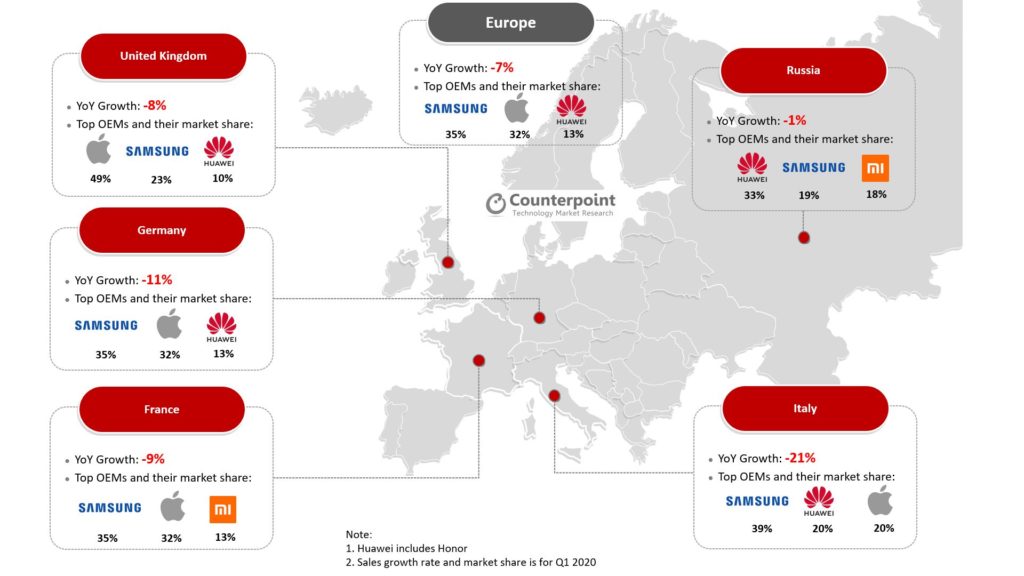
The global smartphone market sales declined in Q1 2020 as a result of COVID-19 pandemic. But some brands grew in this period in certain regions. For instance, Realme is the fastest growing brand in South East Asia. Now, Counterpoint Research has released its report for the European market, which reiterates a similar trend.
According to the report, the European smartphone market declined 7% YoY and 23% QoQ in Q1 2020. Also, Western Europe was affected more (9% YoY) due to lockdowns compared to Eastern Europe (5% YoY).
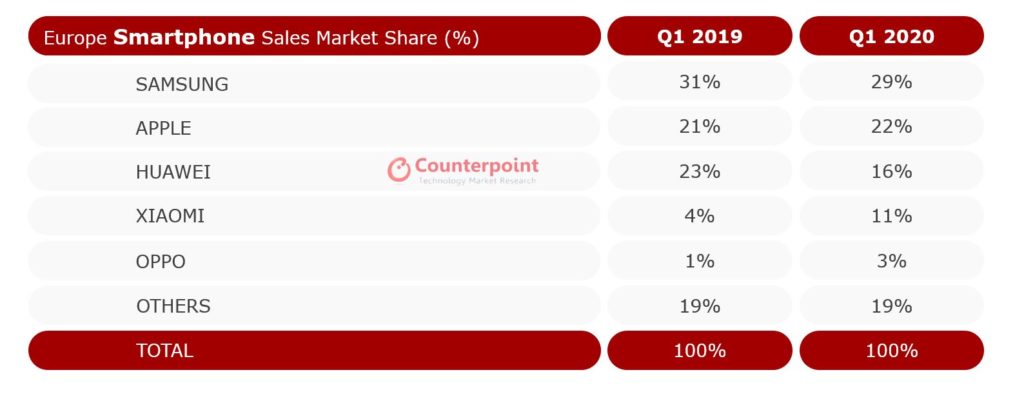
As far as rankings are concerned, Samsung led the market with 29% market share followed by Apple ( 22%), Huawei (16%), Xiaomi (11%), and Oppo (3%) respectively.
The biggest loser was Huawei whose market share dipped by 43% YoY, thanks to the US ban. Xiaomi and Oppo benefitted from this as their share increased almost three-fold in the same period.
Xiaomi itself grew 145% YoY and together with Oppo, both the Chinese companies witnessed 150% YoY growth in their market share. On the other hand, Apple remained stable and the iPhone 11 was the top-selling model in the region.
Talking about Samsung, its sales were boosted by the launch of Galaxy S20 series, thanks to the company’s marketing campaigns and strong supply chain.
Interestingly, Huawei’s sub-brand Honor led the Russian smartphone market and the region was least affected due to pandemic. Whereas, Italy was the severely affected nation with 21% YoY decline.
We use cookies on our website to give you the most relevant experience by remembering your preferences and repeat visits. By clicking “Accept”, you consent to the use of ALL the cookies.
This website uses cookies to improve your experience while you navigate through the website. Out of these, the cookies that are categorized as necessary are stored on your browser as they are essential for the working of basic functionalities of the website. We also use third-party cookies that help us analyze and understand how you use this website. These cookies will be stored in your browser only with your consent. You also have the option to opt-out of these cookies. But opting out of some of these cookies may affect your browsing experience.
Necessary cookies are absolutely essential for the website to function properly. This category only includes cookies that ensures basic functionalities and security features of the website. These cookies do not store any personal information.
Any cookies that may not be particularly necessary for the website to function and is used specifically to collect user personal data via analytics, ads, other embedded contents are termed as non-necessary cookies. It is mandatory to procure user consent prior to running these cookies on your website.