Embattled Chinese phone maker Gionee was reported to have gone bankrupt in 2018 as a result of unpaid debts and poor financial management. However, the company made a highly celebrated comeback last year with the launch of several mid-range and entry-level smartphones, a flip phone and feature phone. The Chinese company has now launched another mobile phone dubbed Gionee K6.
The K6 model is a mid-range phone but a cost-effective model at that. That is if you choose to ignore the outdated MediaTek Helio P60 chipset at the heart of the smartphone. The chipset was released in 2018 and falls in the same category as the Snapdragon 660 but what the heck. I still rock a Redmi Note 6 Pro powered by the Snapdragon 636! The processor pairs with 6GB of RAM and there is an expansive 128GB storage onboard. The phone is priced at 799 yuan ($112) and I guess the price should seal the deal for many buyers. There is even an 8GB+128GB storage variant priced at 899 yuan (~$127) and an 8GB RAM+256GB storage variant priced at 1,099 yuan (~$155).
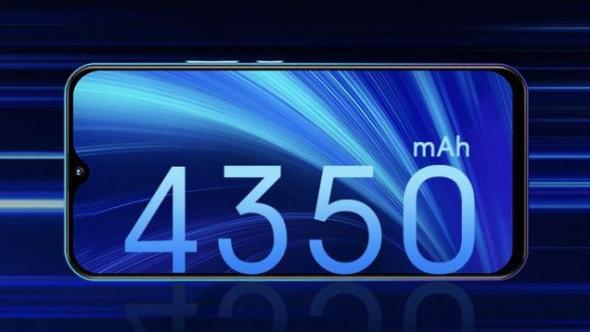
Furthermore, the Gionee K6 presents with an impressive 4350mAh battery onboard as well as support for 10W fast charge.
In terms of the design, it features a 6.2-inch LCD display with a waterdrop notch at the top bearing a 13MP camera. At the rear, the phone packs a dual-camera setup comprising a 16MP AI main camera. There is also a rear-mounted fingerprint sensor at the back panel.
The K6 is no doubt a cost-effective model but we are not so sure if it will have good software support.(UPDATE: The phone runs on Android 7.1 OS and that isn’t likely going to ever be updated). Ordinarily, the 8GB+128GB variant has the same price as the 4GB+64GB variant of the Redmi Note 8. But then, Xiaomi and other popular brands like OPPO, Vivo, OnePlus etc offer better after-sales protection.
Of course, this model may get launched in India as the company launched the F9 Plus in India after its resurgence last year. With such a price, the phone will most likely find many willing buyers.
OnePlus is known as a high-end smartphone maker. But the brand ushered into smart TV market last year with the launch of OnePlus TV Q1 / Q1 Pro in India last year. A few hours back, Pete Lau, the co-founder and CEO of OnePlus shared his company’s plans to diversify its product lineup on Weibo.
Pete Lau, Co-founder & CEO of OnePlus (Image Source: OnePlus)
Mr Lau did not go detail into the devices OnePlus is planning to launch next. Instead, his post on Weibo used the same cryptic teasing words he writes on OnePlus Community before new OnePlus launches.
Going by his post, we can expect the Shenzen-based company to release different products at varying price ranges to attract more people to the OnePlus ecosystem that it is trying to build. That means we might see more than smartphones and smart TVs from the brand soon.
This clearly indicates OnePlus’ plans to launch budget smartphones like the long-rumoured and leaked OnePlus Z. The last and the only most affordable such device from the company was OenPlus X, which according to the brand did not sell well.
Having said that, Pete Lau also clarifies that the vision of his company will not change as it will continue to make quality products to offer a no-go experience. Also, he confirms that these new devices will debut first in global markets, followed by China when feasible.
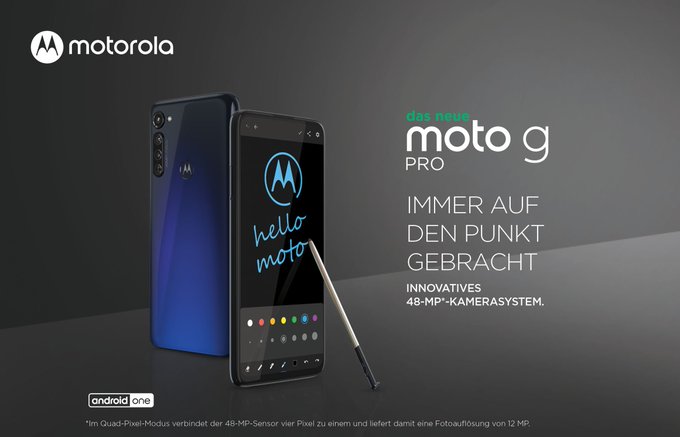
The Moto G Pro has landed in Germany and it has a stylus. No, this is not another Motorola phone with a stylus but a rebadged Moto G Stylus.
The Moto G Pro packs a 6.4-inch Max Vision display with a punch-hole at the top left corner. The IPS display has a 19.2:9 aspect ratio and a 2300 x 1080 resolution.
Motorola ships the phone with a Snapdragon 665 processor along with 4GB of RAM and 128GB of expandable storage. A 4000mAh battery with a promised 2-day battery life and support for 15W TurboPower charging is included (18W charger included).
The Moto G Pro has triple rear cameras. The main sensor is a 48MP f/1.7 camera with Quad Pixel technology. There is also a 16MP Action Camera with a 117° field of view, and a 2MP macro camera. The selfie camera is a 16MP sensor. The phone is packed with lots of camera features including portrait mode, time-lapse, and cinemagraph mode.
The highlight of the Moto G Pro is its stylus which allows the user to take down notes, draw, design, and edit. There is a slot for it on the bottom right corner of the device.
The phone has stereo speakers with Dolby Audio and also has an audio jack. There is NFC, Bluetooth 5.0, dual-band Wi-Fi, and support for two nano SIMs. The Moto G Pro is an Android One phone and it runs Android 10 out of the box. Motorola has promised two Android upgrades, so it should get Android 11 and Android 12.
The Moto G Pro is available for pre-order on Amazon Germany for €329.99. It comes in a single color variant called Mystic Indigo. The Amazon page says it will be available on June 19.
If you own a OnePlus 8 or OnePlus 8 Pro and also enjoy playing Fortnite, you are in for a treat. OnePlus has announced a partnership with Epic Games that brings support for 90 FPS gameplay on the famous game.
The feature is the first of its kind on a smartphone and will allow the OnePlus 8 series “run Fortnite on the Unreal Engine at 90 FPS. This is the highest frame rate available for the game on a smartphone”.
The press release also said the feature took months to develop. OnePlus is also bringing a feature to the OnePlus 6 and newer devices that will allow owners to easily download Fortnite via a “One-touch” easy installation of the Epic Games app through Game Space. Owners of the OnePlus 7 and OnePlus 7T series will also be able to play Fortnite at 60 FPS.
The 90 FPS feature is already rolling out, so if you own a OnePlus 8, you may want to check your device.
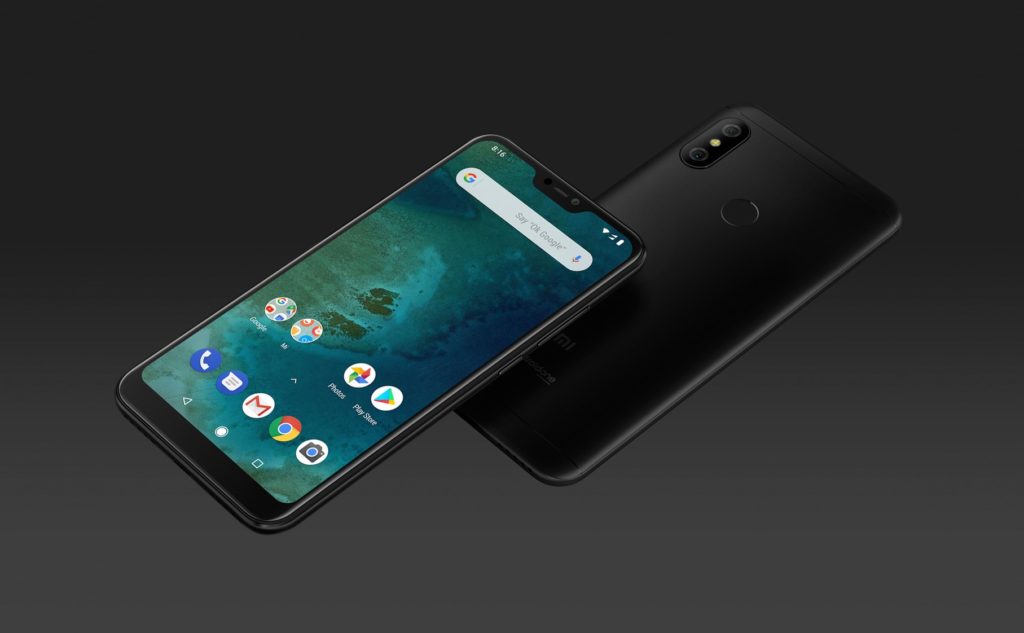
Xiaomi released Android 10 for Mi A2 Lite initially in March but soon rolled back the update due to bugs. After a month, the company re-released the update with April security patch. However, not all the users were fortunate enough to receive that build. But now, finally, the brand is seeding out another Android 10 release with May security patch for all the users.
In simple words, the Mi A2 Lite launched alongside the Mi A2 in 2018 is receiving its third Android 10 build in three months. That said, the update scenario for this handset is comparatively better than Mi A3, albeit not acceptable for an Android One device.
According to posts on Reddit and Mi Community, users on both Android 10 and Android Pie are receiving the new May 2020 security patch. But for the latter, the OTA also brings Android 10 and hence the update comes in different sizes.
The new update for the Xiaomi Mi A2 Lite comes with build number 11.0.5.0.QDLMIXM. It weighs 1.15GB for those who are on Android Pie and 13.75MB for users who already received the Android 10 update earlier.
Having said that, as with any OTA update, it is being rolled out in batches. Hence, it might take time to reach every unit. Until then, users can try checking for the update from Settings -> Sytem->System update.
In this period of crisis, a lot of people in India are looking for very affordable smartphones. But after the coronavirus outbreak it is becoming every day harder to find cheap budget phones offering a high value for money. Especially due to revised GST in India which caused a price hike on all the phones. In order to avoid the lack of convenience caused by further price hikes, in this story, we gathered all the device which we actually consider as the best cheap budget phones under Rs. 10,000 in India for May 2020.
If you are looking for an entry-level handset sold for less than Rs. 10,000, you should definitely take a look at the devices below. Note that some of the devices might be out of stock due to the current supply constraints, but we expect them to be back in stock in the coming days.
Best Cheap Budget Phones in India under Rs. 10,000
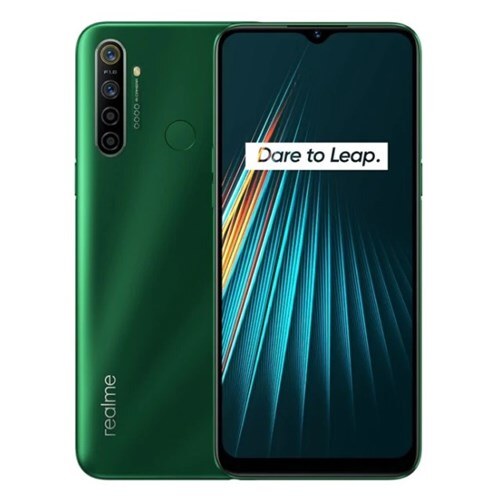
Realme 5i
The Realme 5i is the king of battery life boasting a mammoth 5000 mAh battery, but unfortunately it does not support fast charging, unlike the Redmi 8A Dual (found below in this list). On the other hand, it offers a much higher performance thanks to the Snapdragon 665 chipset paired with at least 3 GB of RAM and 32 GB of internal storage. You even get a wider 6.52-inch display (despite the resolution is still HD+) and an incredible camera department composed of a 12 MP main sensor with a bright f/1.8 focal aperture, a secondary 8 MP ultrawide sensor, a dedicated macro camera and a depth sensor with a 2 MP resolution. The phone is able to record video in 4K resolution and it is even splash resistant.
You can get the Realme 5i via Flipkart or Realme website for ₹9999 for its 4GB and 64GB variant.
The Redmi Y3 was released back in 2019, but it is still one of the most impressive choices in the cheap budget phone segment. This handset is one of the rare cheap budget phones to come with a chipset from Qualcomm’s Snapdragon 6xx series. We are talking about Snapdragon 632 offering high speeds and paired with 3GB of RAM and 32GB of native storage in the base variant. Redmi Y3 is a splash-resistant phone with an elegant design and a stunning selfie camera boasting a 32 MP resolution. You will find no better selfie phone among cheap budget phones under Rs. 10,000. Plus, a large 4000mAh battery ensures the phone will last for a day easily.
You can get the 3GB RAM model for ₹7999 via Mi Store or Amazon.
If you need blazing speeds and advanced gaming experience, give a chance to the new Realme Narzo 10A from the new Realme’s Narzo series launched exclusively in India. The device is fueled by the Helio G70 chipset providing very high CPU and especially GPU performance, as well as 3 GB of RAM and 32 GB of internal storage. You even get a huge 5000 mAh battery which is able to last up to three days. Unfortunately, Realme Narzo 10A does not support fast charging, but it supports reverse charging, it has a splash-resistant body and a wide 6.5-inch display.
Realme Narzo 10A will soon go on sale for ₹8499 for its 3GB RAM and 32GB variant via Flipkart and Realme website.
As the name suggests, the Redmi 8A Dual is a variant of the Redmi 8A equipped with dual rear cameras. While it offers a decent photo quality thanks to a 13 MP main sensor and a 2 MP depth sensor, the camera department is definitely not its strongest point. The key feature is the battery life: with a huge 5000 mAh battery and a compact HD+ display, the handset is able to reach up to three days of battery life with moderate usage. It even packs a USB-C charging port with 18W fast charging and reverse charging, as well as a pretty nice Snapdragon 439 chipset and a splash-resistant body.
Note that the Redmi 8A Dual doesn’t have a fingerprint sensor.
You can get the Redmi 8A Dual via Mi Store and Amazon for ₹7499 for its 2GB RAM variant.
Besides a compact body, the main advantages of the Vivo U10 are its great hardware and its awesome battery. It is powered by Snapdragon 665 mobile platform offering a very high CPU performance for the price, it has 3 GB of RAM and 32 GB of internal storage in its base variant. The rear cameras are definitely not the best of their segment, but the front camera looks very interesting with its 8 MP resolution and a bright f/1.8 focal aperture allowing to take bright selfies even in the dark. The battery has a great 5000 mAh capacity and, despite it can be charged through an outdated micro USB port, it supports 18W fast charging.
You can get the Vivo U10 3GB RAM and 32GB model for under ₹10000 via Amazon right now.
Last but not least, the Vivo Y91i. For a very affordable price (you can find it for just Rs. 7,990), with this device you get a cool Snapdragon 439 chipset, 2 GB of RAM, and 16 GB of native storage, that is a more than sufficient hardware to run Android without serious performance issues. Unfortunately, Vivo Y91i lacks a fingerprint reader, but it offers a very compact design thanks to a compact 6.2-inch display. It supports FM radio and it boasts a satisfying 4030 mAh battery, as well as a modern design with narrow bezels and a minimalistic look.
You can get the Vivo Y91i 2GB RAM version for around ₹7499 via Amazon.
If you can stretch your budget a bit and get until ₹10,999, we recommend you the Infinix S5 Pro. Unlike all the devices mentioned in this selection, it boasts an amazing Full HD+ display with a wide 6.53-inch diagonal and a resolution of 1080 x 2340 pixels. Further, thanks to a motorized pop-up selfie camera (and it is even an amazing 16 MP snapper for the price), it has a full-screen display with no notch and no holes. Last but not least, the handset packs a stunning 48 MP triple camera including a dedicated sensor to boost photos in low light conditions.
You probably must have noticed a lot of devices that were sold for less than Rs. 10,000 until a few months ago are missing in the above list. That is because of the revised GST which caused price hikes on most smartphones in India. After the increased GST rate took effect, a lot of manufacturers decided to increase the prices of their handsets. The high price hikes of the Redmi 8 and Note 8 series is just an example of this.
If you can up your budget by a few more bucks, wait for our upcoming Best Mid-range Phones for May article which will have Redmi Note 8 and other popular devices between ₹11K to ₹15K.
Meanwhile, let us know if you think any other model deserves to be a part of this list.
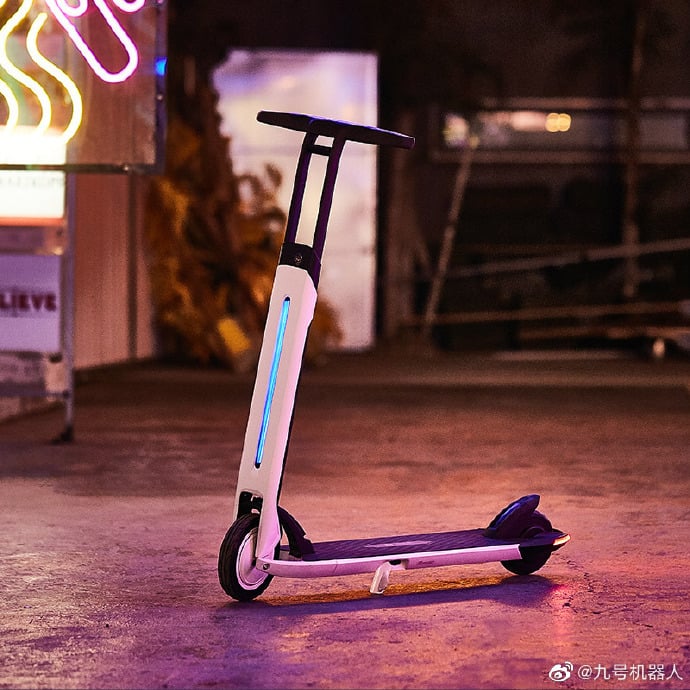
Xiaomi‘s ecological chain company Segway Ninebot recently launched the futuristic-looking Ninebot Air T15 Electric Scooter in China. In a swift move, the company is making it possible for intending buyers outside China to lay their hands on the product at a cost-effective price compared to relying on third-party retailers.
The Ninebot Air T15 Electric Scooter has now been launched for crowdfunding on Indiegogo. The e-scooter comes with a $699 price tag and is expected to start shipping in July 2020.
As regards the design and features, the Ninebot Electric Scooter Air T15 adopts a portable but futuristic-looking design right from the handlebar to the braking system. Talking of the handlebar, the Ninebot Air T15 utilises a two-beam metal design encased in a plastic housing. The plastic housing has a light strip that runs from the bottom to the top. At the top end of the structure lies the front light which teams up with the light strip to make the scooter visible to oncoming traffic at night. The light strip also adds some aesthetics to the scooter. The brake light uses a surround strip design which also improves visibility and aesthetics.
The handlebar itself has a digital LCD display at the middle which shows key parameters of the scooter like speed, battery level, and others. The bike also pairs with a smartphone via the Ninebot app to also give users access to their scooter’s data and controls.
The e-scooter uses puncture-proof hollow tires designed specifically for it. The front and back tires are of different sizes, while the back uses a 6-inch tire, the front tire is 7.5-inch in size. The benefit of this is that it elevates the handlebar a little and acts as a roller if the scooter needs to be conveyed from one point to another when folded. Yes, the Air T15 uses a foldable design which makes it easy transport.
The Air T15 control system is yet another innovative design. It uses “Step controls” embedded with the mudguard. To turn on the scooter, you depress the mud-guard. The Air T15 is controlled not by a standard throttle, but rather with a kick-to-go system. Perhaps the best way to describe it would be constant cruise control. Essentially, the rider pushes off like a non-electric scooter to get moving, and the scooter then locks in at the rider’s current speed. To go faster, the rider gives another kick or two. To slow down, the rider steps on the mudflap brake, which also engages regenerative braking. With this new control system, the rider’s feet can entirely control the acceleration and deceleration, just like on a standard scooter.
In terms of the key specifications, the e-scooter has a maximum carrying capacity of 100kg and can climb a 15-degree elevation. The scooter can travel at a speed of 20 km/h but has a range of just 12 km. Of course, the mileage can be extended depending on the usage. It packs a 4000mAh smart BMS battery with overheat, overcharge, under circuit protection. The battery can be fully charged in just 3.5 hours. The scooter has a net weight of about 10.5 kg which is pretty decent.
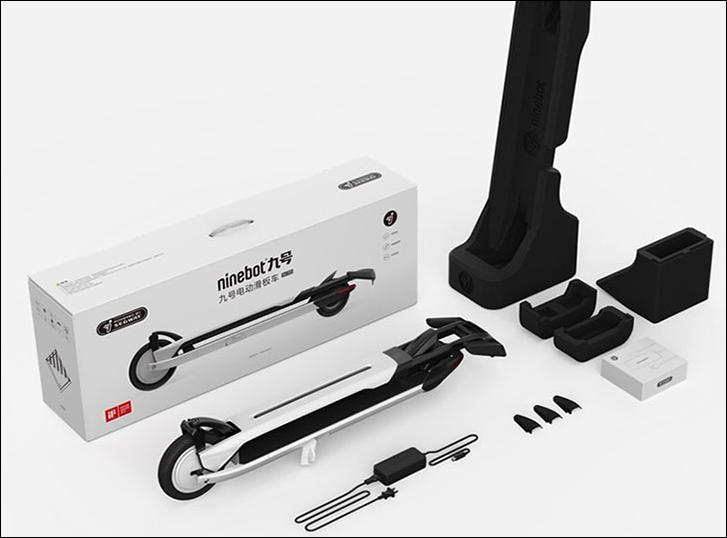
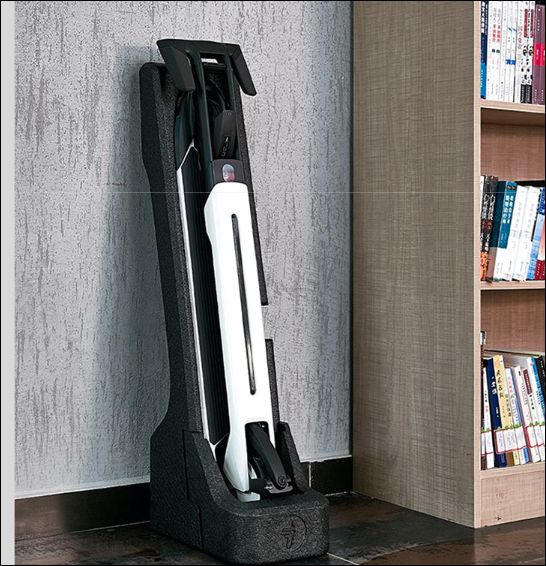
The Ninebot Air T15 also ships with a storage stand where it can be kept while charging. In addition, it comes with an IPX4 waterproof rating which makes it suitable for use in the rain of course as long as visibility is okay for the rider.
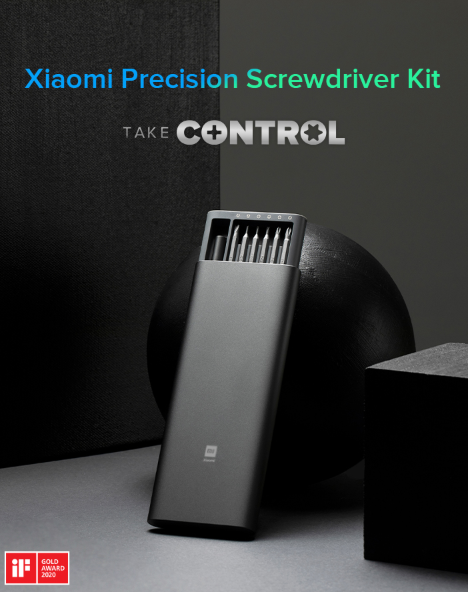
The Redmi Earbuds S isn’t the only product Xiaomi announced in India today. Alongside the TWS earbuds, the manufacturer also announced the Mi 18W Dual Port Charger and the Xiaomi Precision Screwdriver Kit.
Mi 18W Dual Port Charger
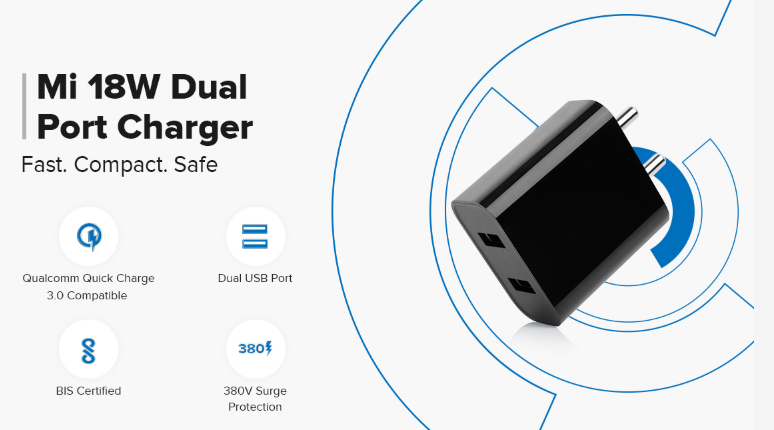
Just as the name says, this is a dual-port charger that allows you to charge two devices at the same time. The charger has a simple design – a polycarbonate body and comes in black. However, we wish it had foldable plugs.
The Mi 18W Dual Port Charger is compatible with Quick Charge 3.0 and has support for 18W fast charging. It supports 5V 3A, 9V 2A, and 12V 1.5A single power outputs. When charging two devices at the same time, the maximum combined output remains 18W (5V 3.6A).
Xiaomi says the Mi 18W Dual Port Charger is BIS certified and is built to handle India’s frequent power surges. It also supports 100-240V and 50/60Hz. It is priced at ₹599 (~$8) and is already available for purchase on Mi.com.
Xiaomi Precision Screwdriver Kit
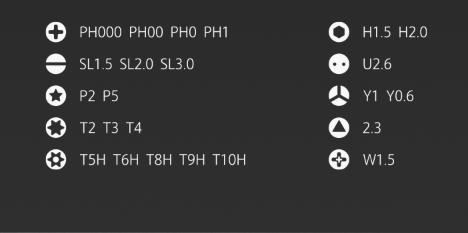
The Xiaomi Precision Screwdriver Kit is a perfect gift for anyone that likes to tinker. The screwdriver kit comes in a slim and sleek case that contains 24 anti-rust precision bits and an aluminum alloy handle. The case is magnetic, so as to hold the bits in place and prevent them from falling off. It also has an aluminum alloy cover. To open it, you have to press the magazine that holds the bits downwards.
The handle has a rotating cap and is designed to be anti-slip for a better grip. The image below shows the types of bits in the Xiaomi Precision Screwdriver Kit:
The Xiaomi Precision Screwdriver Kit is now available for crowdfunding on the Mi Store at ₹999 (~$13), ₹500 (~$7) off the final price. It has already reached 50% of its goal and should get to 100% before the 7-day target is over. If it meets its target, it will begin shipping on July 1.
The use of facemask has been adopted by health authorities in many countries as an effective means of preventing the spread of Coronavirus. Since the scourge became a pandemic, facemasks have been in hot demand in several countries and several new technologies have sprung up aimed at promoting safe and comfortable use of the facemasks.
Israeli researchers at Israeli Institute of Technology – Technion have developed a mask that can be cleaned and re-used using the electrical current of a mobile phone charger. The mask is developed by the company’s Faculty of Materials Science and Engineering and is touted as capable of annihilating pathogens that might accumulate on the mask’s surface. It is said to be effective against the strain of Coronavirus which causes COVID-19.
The new facemask utilises an internal carbon fibre layer. The carbon fibre can be heated up by plugging the mask into a standard 2A power source including a mobile charger, laptop USB port, power bank etc.
A spokesperson for Technion disclosed that a patent had been filed in the United States and that steps were being taken to make the mask available commercially. The mask has a front valve which will make breathing easy for the user. The charging port is just by the side of the vent. The facemask is surprisingly expected to come with a cheap price – just one dollar.
Apart from this innovative design, there are several innovations concerning face masks presently. Recently, an Israeli firm Avtipus Patents and Inventions announced that it had created a ‘smart’ mask with an aperture that opens automatically when a fork is brought close to the face. The mask can also be operated using a hand-held remote control. However, not many persons will find dining with a mask on cool.
Amazfit Aeri is yet another amazing self-disinfecting face mask which also allows face unlock on your phone without any disruption.
At the Realme X3 SuperZoom launch event for Europe, the brand also unveiled a new device in the Realme 6 series dubbed as Realme 6s. This new handset is nothing but a standard Realme 6 with a 48MP sensor instead of a 64MP unit.
Realme 6s Specifications
Since the Realme 6s is basically a Realme 6 with a different primary camera sensor, the specs are identical. That means it is powered by a MediaTek G90T SoC, which debuted in the Redmi Note 8 Pro.
On the front, the phone sports a 6.5-inch FHD+ (1080 x 2400 pixels) 90Hz LCD panel with a single punch-hole for a 16MP selfie camera at the top left corner. The display is protected by Corning Gorilla Glass 3 and also supports 120Hz touch sampling rate.
The back of the device is made of polycarbonate that mimics glass an houses a quad-camera setup in a vertical array. The sensors on this handset include a 48 primary snapper, 8MP ultra-wide shooter, 2 macro camera, and a 2 MP depth sensor.
As for software, the phone runs Realme UI based on Android 10. Further, the device gets its juice from a 4,300 mAh battery with support for 30W fast charging via USB Type-C.
Othe features of the handset include LPDDR4X RAM, UFS 2.1 storage, side-mounted fingerprint sensor, 3.5 mm headphone jack, and multi-functional NFC.
Realme 6s Price and Availability
The Realme 6s comes only in a single 4GB RAM + 64GB ROM memory variant in Lunar White and Eclipse Black color options. It is priced at €199 and will be exclusively available at Carrefour and Realme online store from June 2 in Europe.
A day after launching its first smart TV and smartwatch, a smartphone, and a bunch of other lifestyle products in China and India, Realme has made its way to Europe to announce a brand new phone called the Realme X3 SuperZoom.
The Realme X3 SuperZoom is an affordable flagship phone; yes, it is a flagship. With a price tag of €499, Realme has made some tradeoffs to arrive at the price. Even with the tradeoffs, it still offers a lot for its price.
Realme X3 SuperZoom Design
The design of the phone is not one we haven’t seen before. It has a double punch-hole in the top left corner of the screen and a bit of bezel at the bottom. The back is home to quad rear cameras arranged vertically in the same housing. The back is covered in 3D quad-curved glass with an anti-glare and anti-fingerprint finish.
Buyers will be able to pick up the phone in Arctic White and Glacier Blue.
Realme X3 SuperZoom Specifications
The Realme X3 SuperZoom has a 6.6-inch 2400 x 1080 screen with a 120Hz refresh rate for an ultrasmooth experience. The display is an LCD panel with a 90.5% screen-to-body ratio and it is covered with Gorilla Glass 5.
Apart from going with an LCD panel for the screen, another area where Realme has been able to cut the cost of production is by going with a Snapdragon 855+ processor rather than the more expensive, and of course, more-powerful Snapdragon 865.
The Snapdragon 855+ is a more than capable chipset and will handle anything you throw at it. You also get 12GB of LPDDR4x RAM and 256GB of UFS 3.0 storage. The official spec sheet says there is an 8GB RAM + 128GB version. However, its price tag wasn’t revealed.
Coming to cameras, the Realme X3 SuperZoom is a beast. It has four rear cameras that include a Samsung GW1 64MP f/1.8 primary camera, an 8MP periscope lens with 5X optical zoom and optical image stabilization, an 8MP f/2.3 ultrawide angle camera with a 119° field of view; and a 2MP 4CM macro camera.
The phone has a 60x SuperZoom mode that helps you get closer to objects. There is a starry mode too for taking long-exposure shots of the stars as well as UIS video stabilization, UIS Max Video Stabilization, Super Nightscape 4.0, and many more.
The front cameras are a 32MP Sony IMX616 sensor and it is paired with an 8MP ultrawide angle camera for ultrawide angle selfies.
The Realme X3 SuperZoom packs a 4200mAh battery with support for 30W Dart Charge via USB Type-C. It has liquid cooling to keep the phone from overheating when playing games. It runs Android 10 with Realme UI out of the box with features such as Game Space and Game Assistant. There is a side-mounted fingerprint scanner, dual SIM support, Hi-res Audio, and Dolby Atmos. Sadly, there is no audio jack.
1 of 4
Realme X3 SuperZoom Price and Availability
The Realme X3 SuperZoom is already available for pre-order starting today. The first sale is scheduled for June 2 at 10 AM.
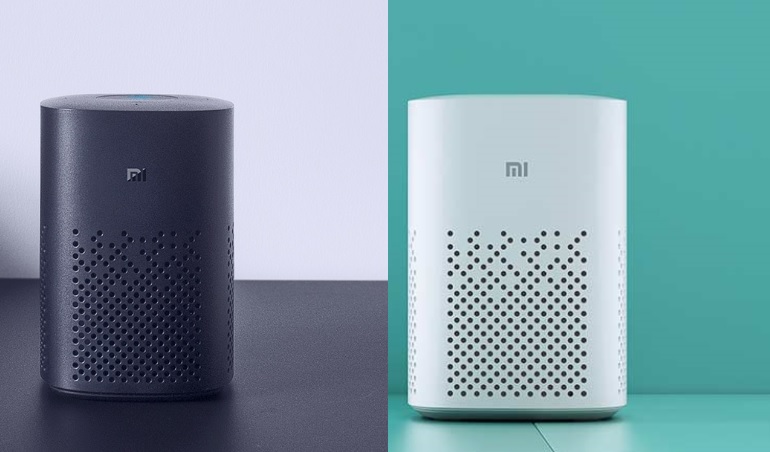
The Chinese smart speaker market has seen a drop in the first quarter of 2020. The reason is likely related to the ongoing Coronavirus pandemic, with sales mainly being dominated by the staple industry names like Xiaomi, Alibaba, and Baidu.
This news was revealed through a recent IDC report (a known analytics firm), which stated that 10.56 million smart speakers were shipped in China in Q1 2020. This marks a noticeable year on year decline of 14.7 percent over 2019. According to IDC, the primary reason for such a shipment shrink is mainly due to the Coronavirus outbreak in the region, which caused many offline physical stores to be shut down.
These stores have since opened up gradually, especially with restrictions being eased in late March and April. Within the trio, Alibaba claimed the top position in the market, securing 3.71 million Tmall Genie smart speakers during this period. This gave it a market share of 35.2 percent. Furthermore, the company is also planning on investing heavily in the development of artificial intelligence powered smart speakers to help it retain its current dominance.
Baidu arrived second with a market share of 30.9 percent and Xiaomi at the third spot with a close 30.4 percent market share. In other words, these three brands alone captured nearly 96 percent of the entire Chinese smart speaker market. The former has its success attributed to the touch screen speakers that it produces while the latter is another known brand with its various offerings ranging in price within this segment.
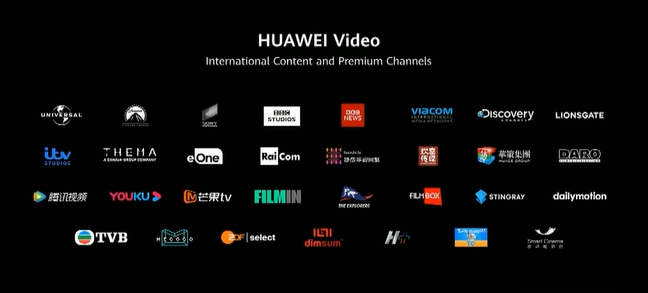
The popular video platform Dailymotion (from Vivendi) has announced a new partnership with Huawei Video. This collaboration between the two companies aims to bring international and local video content to European regions like France.
The Chinese tech giant has made this move as it seeks to expand its influence in the European nations. For those unaware, Dailymotion is a popular video sharing platform, which is similar to YouTube. Through the new partnership, Huawei Video will now have integrated video players from Dailymotion, within its application. This move has been made to improve Huawei’s existing application ecosystem.
After being banned from using Google services, Huawei had to develop its own alternatives for its vanilla Android smartphones. In this ecosystem, various popular applications like YouTube, WhatsApp, and more are missing. Thus, a partnership with the French firm will also have its reliance on US based firms reduced even further. Notably, the Chinese company had also recently built its first European manufacturing plant in France. So, it seems that Huawei plans on moving forward in the region regardless of the sanctions and pressures from the US Government.
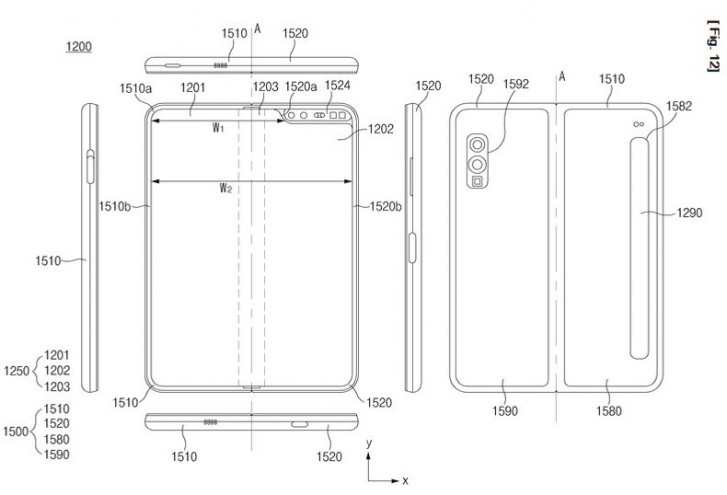
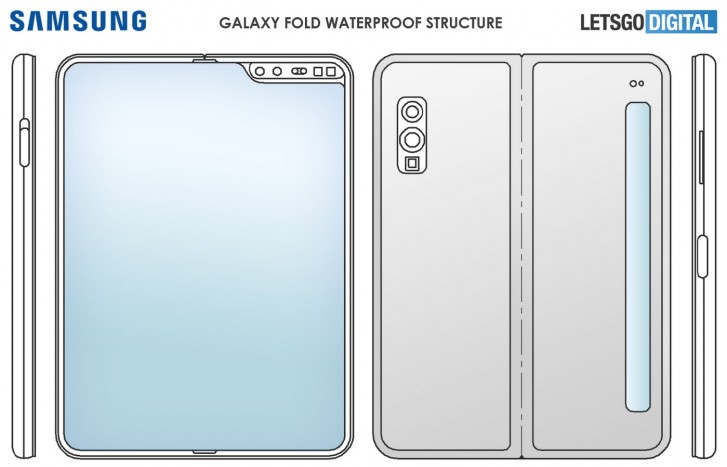
A new patent that has recently surfaced has suggested that the Samsung Galaxy Fold 2 may feature a secondary display on the outside and will even be water resistant. The patent has been published by WIPO from Samsung Electronics and was first reported by LetsGoDigital.
Looking at the patent images, the Samsung foldable smartphone depicted bears a resemblance to the original Galaxy Fold. This device also folds inwards and has a camera system on the outside. However, a notable new inclusion is undoubtedly the secondary long notification display on the rear. The narrow display is likely to have its own unique functionality that allows readers to access notifications without unfolding their Galaxy Fold 2.
The patent was listed as “ELECTRONIC DEVICE INCLUDING WATERPROOF STRUCTURE,” which also hints at its water resistant nature. According to the patent, the design structure of the device is made to be waterproof to protect its internal components. Although how the smartphone manages to achieve this feature is still unknown. Other details regarding the patented handset include a dual camera setup on the front and back alongside necessary sensors.
Foldable smartphones have generally been considered too expensive to mass produce, with OEMs generally facing losses even when sold in limited quantities. Thus, an addition of a secondary display and water resistance protection might make things more difficult. But, it may still be possible in the near future and Samsung is probably capable of developing such a smartphone.
Xiaomi India officially announced the first Redmi-branded audio product in the county today. As expected, this new product called Redmi Earbuds S is a rebadged Redmi AirDots S that initially launched in China in the month of April.
The newly launched Redmi Earbuds S in India features Bluetooth 5.0 to connect with devices. Unlike the OG Redmi AirDots (review), both the earbuds connect to devices separately. For the unaware, the previous model used a master-slave connection. That means the right bud connects to the device, while the left bud connects to the right earbud.
The TWS also features a low-latency (122ms) gaming mode which can be enabled or disabled by triple pressing the physical button present on either bud. These buttons can be also used for options like play/pause music, wake up voice assistants, and attend/hang-up calls.
The buds are also IPX4 certified for water/sweat resistance. As for battery life, the brand claims 4 hours for buds and 12 hours for the charging case. That means a total of 16 hours of playback time.
Further, the charging case of the new Redmi TWS features a MicroUSB port and takes 1.5 hours to charge fully as per the company.
Last but not least, the Redmi Earbuds S is priced at ₹1,799 ($24) and will be available in only black color at Mi online store, Amazon India, Mi Homes, Mi Studios, and partner retail outlets.
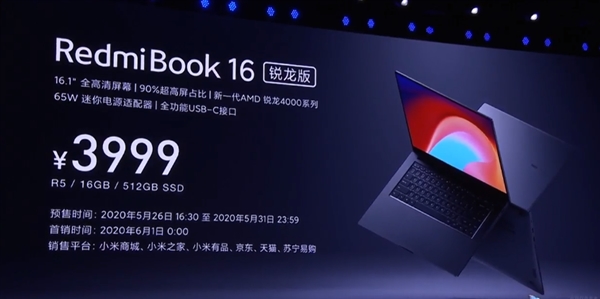
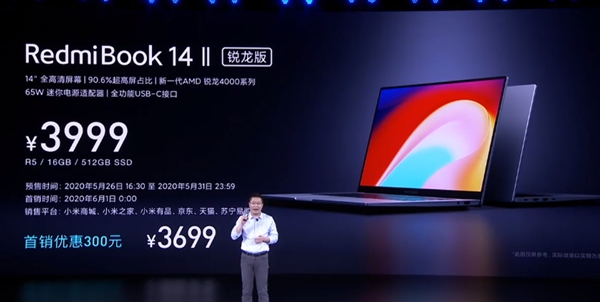
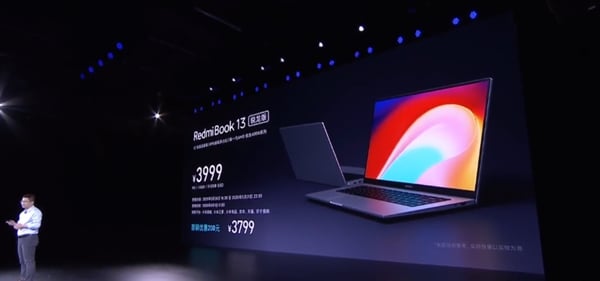
Xiaomi had teased the launch of its latest RedmiBook series earlier this week. Now, the Chinese tech giant has finally launched the new generation of ultrabook laptops, the RedmiBook 13, 14, and 16 that feature AMD’s latest Ryzen 4000 series CPUs.
Specifications
The new RedmiBook lineup is the latest entry in the Chinese company’s thin and light laptop offerings and features powerful specifications. The entire series from the small 13 inch variant to the high end 16.1 inch variant feature AMD’s newest Ryzen 4000 series mobile processors. These chips are built on a 7nm fabrication process and are based on the company’s Zen 2 architecture. According to Xiaomi, these new processors will boost performance by up to 60 percent.
Users will be able to choose different variants that arrive with different Ryzen CPUs. In other words, people can opt for the more expensive Ryzen 7 4700U processor or the more budget friendly Ryzen 5 4500U processor on their laptops. The processors also arrive with an integrated GPU, Vega 7 for the high end chip, and Vega 6 for the mid range one. Both CPUs have a TDP of 15W, with the Ryzen 7 being an 8 core + 8 thread chip and the Ryzen 5 featuring 6 core + 6 threads.
Design and Battery
The lineup features a minimal aesthetic with a metallic finish. Apart from the screen sizes, the specifications of the display remain the same across the different models. The new RedmiBook series features a high screen to body ratio of 90.6 percent and a 100 percent sRGB wide color gamut, for a more vivid and accurate color display. The bezels around this display are quite negligible, coming in at just 3.26mm.
These laptops are all rounders with CPU modes catering to specific modes like office work, casual activities, and even gaming, with AMD’s RX Vega graphics. Furthermore, 16GB of RAM if offered on the high end model, and the battery is charged via a USB Type C charging port, which also supports quick charging as well. The 16 inch model has a 46Whr battery that lasts up to 12 hours and can charge up to 50 percent in just 38 minutes.
Pricing and Availability
All models will be available for purchase from 1st June 2020, however, an early first sale starting today will have users receive special limited time discounts. This event will only last till 31st May 2020.
RedmiBook 13:
Ryzen 5 + 8GB RAM + 512GB SSD is priced at 3,799 Yuan (roughly $532, and 3,599 Yuan or $504 during the first sale)
Ryzen 5 + 16GB RAM + 512GB SSD is priced at 3,999 Yuan (roughly $560, and 3,799 Yuan or $532 during the first sale)
Ryzen 7 + 16GB RAM + 1TB SSD is priced at 4,999 Yuan (roughly $700, and 4,399 Yuan or $616 during the first sale)
RedmiBook 14:
Ryzen 5 + 8GB RAM + 512GB SSD is priced at 3,799 Yuan (3,499 Yuan or $490 during the first sale)
Ryzen 5 + 16GB RAM + 512GB SSD is priced at 3,999 Yuan (3,699 Yuan or $518 during the first sale)
Ryzen 7 + 16GB RAM + 512GB SSD is priced at 4,499 Yuan (roughly $630, and 4,299 Yuan or $602 during the first sale)
RedmiBook 16:
Ryzen 5 + 8GB RAM + 512GB SSD is priced at 3,799 Yuan (3,599 Yuan during the first sale)
Ryzen 5 + 16GB RAM + 512GB SSD is priced at 3,999 Yuan (3,799 Yuan during the first sale)
Ryzen 7 + 16GB RAM + 512GB SSD is priced at 4,499 Yuan (4,299 Yuan during the first sale)
Yay!!! Android 10 is here for the OnePlus 5 and OnePlus 5T. After months of waiting, owners of the two phones are now getting a taste of Android 10.
It has been a pretty long wait for owners of the aforementioned devices. OnePlus announced in October that it will update the two phones to Android 10 in Q2 2020. Now, the update is here and brings lots of new features.
Android 10 brings a number of new features such as Smart Reply, Full Screen Gestures, and Dark Mode. Dark Mode is actually not a new feature for OnePlus phones as it has been available on OxygenOS for years now.
The update is 1.8GB in size for the OnePlus 5T. We have not been able to get our hands on the changelog for the OnePlus 5 as OnePlus is yet to officially announce the update is rolling out already Below is the complete changelog:
System
Upgraded to Android 10
Brand new UI design
Enhanced location permissions for privacy
New customization feature in the Settings allowing you to choose icon shapes to be displayed in the Quick Settings
Game Space
New Game Space feature now add all your favorite games in one place for easier access and better gaming experience
Message
Now possible to block spam by keywords for Message (Messages – Spam – Settings – Blocking settings)
Full-Screen Gestures
Removed back gesture from the bottom of the screen
Added back gesture on the left and right sides of the phone
Added a bottom navigation bar to allow switching left or right for recent apps
Camera
Electronic image stabilization currently under optimization and will be pushed in later stabler versions. Please stay tuned.
The update seems to have rolled out to just a few persons but we expect it to be available for more users in the coming days.
Android 10 is the last major OS upgrade for the OnePlus 5 and OnePlus 5T. Both phones launched with Android 7.1.1 Nougat pre-installed back in 2017 and have already received two OS upgrades in the course of their lives.
Along with the Redmi 10X and 10X Pro 5G smartphones, the company has also launched a 4G variant of the same. Instead of the Dimensity 820, the 4G model comes powered by the MediaTek Helio G85 chipset.
With this, the smartphone has also become the first device to come powered by the Helio G85 SoC which was unveiled by the company earlier this month. The device packs 4GB or 6GB of RAM and 128GB of internal storage.
The smartphone comes with a 6.53-inch Full HD+ display with 2400 x 1080 pixels screen resolution and a punch-hole cutout in the top-left corner for housing a 13MP front-facing camera sensor for taking selfies.
As for the back camera, the device features an AI-powered quad-camera setup that consists of a 48MP primary sensor, an 8MP ultra-wide-angle lens, a 2MP depth sensor, and a 2MP macro lens.
It also comes with a rear-mounted fingerprint sensor for added protection. The Redmi 10X 4G is rated IP53, making it water and dust resistant. The phone retains the 3.5mm audio jack and also features an IR blaster.
Just like the other Redmi 10X series smartphones, this one too is running Android 10 operating system out-of-the-box along with the latest MIUI 12 custom user interface on top. The device is powered by a 5,020mAh battery and supports 18W fast charging.
The Redmi 10X 4G comes in two variants — 4GB RAM + 128GB storage for 999 yuan (approximately $140) while the 6GB RAM + 128GB storage model is priced at 1,199 yuan which roughly converts to $168. It comes in three color options — Blue, Green, and White and is now available for purchase in China.
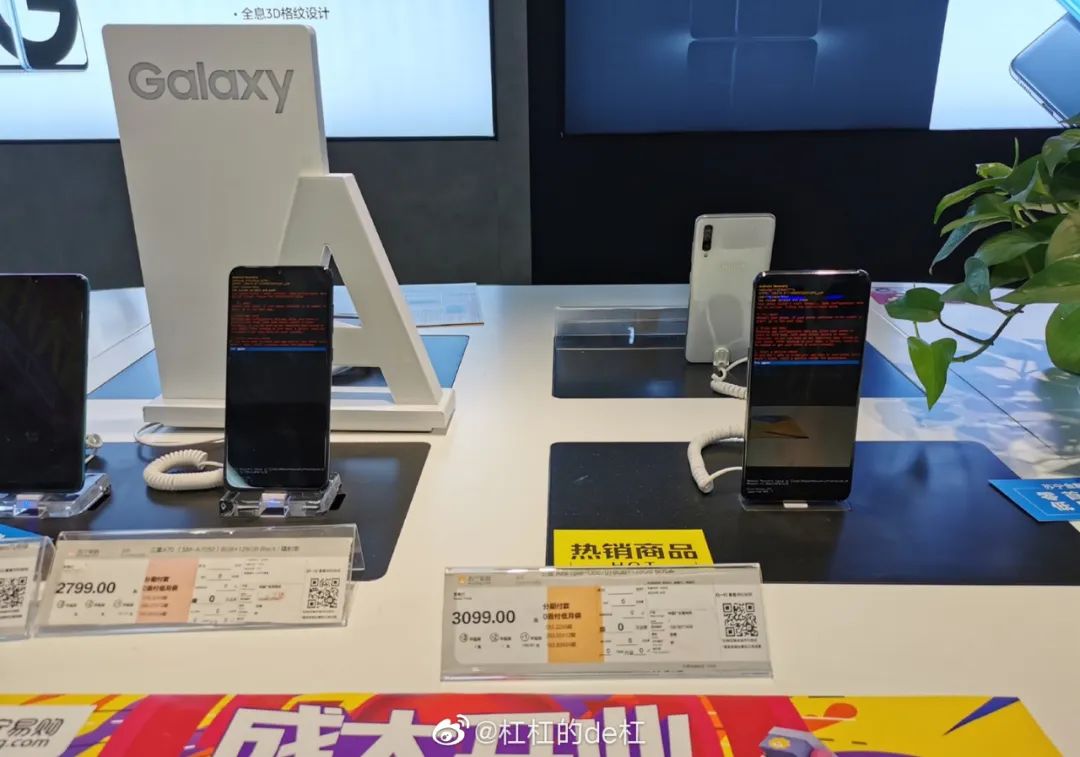
In the recent past, a few Samsung users have had their smartphones completely bricked. These occurrences happened suddenly and people have already started going on Weibo, a Chinese microblogging website, to share their incidents.
Earlier this week, a Weibo user shared his experience with his Galaxy smartphone bricking while he was just using it. The device apparently crashed suddenly with a black screen that sometimes also led to gibberish and garbled characters being displayed. The bricked smartphones also get stuck on infinite restart animations and are locked in the reboot sequence.
Images shared by Samsung users that are suffering from this issue have also revealed that people can occasionally get stuck in a mode similar to a PC’s Bios mode. Once this screen is displayed, the handset no longer responds and cannot be used anymore, essentially bricking them. From the various online reports, the affected handsets include, Galaxy S8, Galaxy S9, Galaxy S10, Galaxy A60, and even the latest flagship Galaxy S20 series.
Notably, an image depicted a Samsung demo smartphone in a physical store also being bricked. Thus, it seems that the entire Samsung lineup in China may be affected by this unusual bug. Chinese Samsung users have also theorized that it could’ve been caused by a server hack in the region, but that is still unconfirmed. As of right now, no official solution has been provided by the South Korean tech giant. Although a few interesting rumors are being circulated online.
According to one user, the issue may have been caused by the smartphone’s lock screens. Apparently, the lunar calendar for April hadn’t been calculated correctly by Samsung’s inbuilt systems, causing the devices to brick at certain moments. The timing of the malfunction is still random. Third party calendar applications are not affected by the bug and do not cause the crash. As of right now, Samsung has yet to give an official solution for the bricked phones.
At the Redmi 10X series launch event, the brand also announced the Redmi Smart TV X series. This new TV series from the company comes in three sizes and starts under 2,000 Yuan ($280) for the 50-inch model.
Redmi Smart TV X Series Specifications
The all-new Redmi Smart TV X series brings premium features at affordable price tags. It comes in three sizes namely 50”, 55”, and 65” respectively. But all of them have identical specifications.
All the three models in the series feature 4K panel with NTSC 85% wide color gamut. Further, they have a 97% screen to body ratio and metal frame to offer better build quality.
These TVs also come with MEMC (Motion Estimation Motion Compensation) technology with 60Hz intelligent compensation algorithm to provide smooth content playback.
For audio, the Redmi Smart TV X features 4 x 12.5W speakers with an 8-unit subwoofer system to offer immersive sound experience at home. It supports popular sound technologies like Dolby Audio and DTS-HD.
For memory, these TVs come with 2GB RAM and 32GB internal storage. They also feature far-field built-in mics for voice control just like the recently launched Honor X1 Smart TV.
Redmi Smart TV X Series Price
As mentioned earlier, the Redmi Smart TV X Series has three size variants. But the brand has only revealed the price for two models, leaving the cheapest one under 2,000 Yuan a mystery for the time being.
We use cookies on our website to give you the most relevant experience by remembering your preferences and repeat visits. By clicking “Accept”, you consent to the use of ALL the cookies.
This website uses cookies to improve your experience while you navigate through the website. Out of these, the cookies that are categorized as necessary are stored on your browser as they are essential for the working of basic functionalities of the website. We also use third-party cookies that help us analyze and understand how you use this website. These cookies will be stored in your browser only with your consent. You also have the option to opt-out of these cookies. But opting out of some of these cookies may affect your browsing experience.
Necessary cookies are absolutely essential for the website to function properly. This category only includes cookies that ensures basic functionalities and security features of the website. These cookies do not store any personal information.
Any cookies that may not be particularly necessary for the website to function and is used specifically to collect user personal data via analytics, ads, other embedded contents are termed as non-necessary cookies. It is mandatory to procure user consent prior to running these cookies on your website.