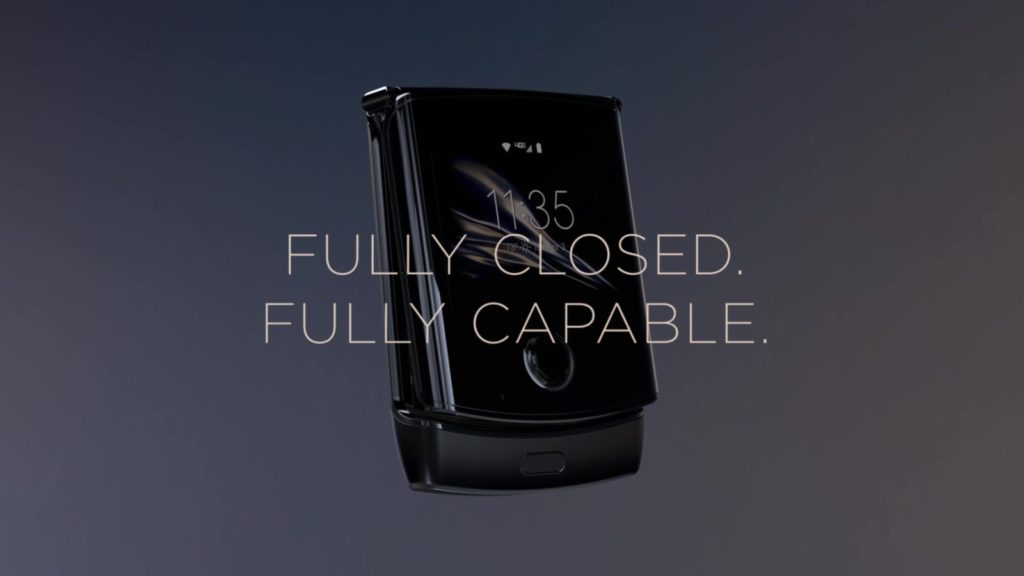
Motorola Razr launched as the world’s first clamshell foldable smartphone. But it runs a year old Android 9.0 Pie out of the box. But not anymore, as the company has now begun to roll out Android 10 update with new features for the Quick View (secondary) display, system-wide dark mode, gestures, and more.
A phone retailing at $1499 should come with the latest software (Android 10) out of the box but that’s not the case with the Motorola Razr. Anyway, it is now available for users via an OTA update. According to YouTuber Michael Fisher, the company has also promised an Android 11 update in the future. That’s it, two major updates for a premium smartphone.
Anyway, the Android 10 update adds a number of features to the ‘Quick View’ secondary external display. A new page for shortcuts can be accessed by swiping left from right. It will display favorite contacts and dialer to make calls without opening the inner primary display.
Further, a right swipe from left opens the camera app for quick selfies. In addition to ‘Moto Display’, the new updates also brings a new notification center that can be accessed by swiping up from the bottom. In fact, users can reply to texts on this screen itself.
The external display is now capable of showing Google Maps turn-by-turn navigation and music controls for apps like Spotify, YouTube Music, and Pandora. The update also adds new camera modes Group Selfie, Portrait Mode, Spot Color, and more.
Last but not least, the latest update for Motorola Razr also brings Android 10 gestures and system-wide dark mode. If you happen to own this handset, then make sure to check for updates in the Settings.
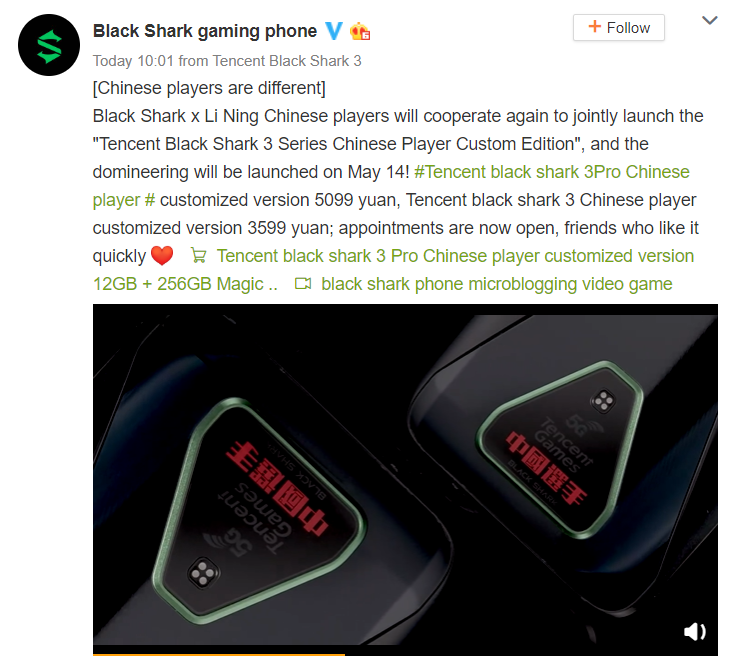
A new announcement was just arrived earlier today (12th May 2020) that revealed that the Black Shark 3 series will arrive in a new Chinese Gamers Customized Edition, which is in collaboration with Li Ning. The former is known for being a Chinese gaming smartphone OEM while the latter is a popular sports equipment maker.
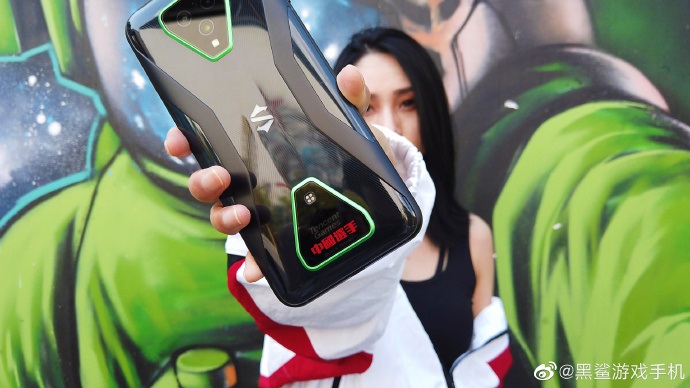
The Black Shark 3 and 3 Pro both will now be offered in the new Chinese Gamers Customized Edition and will sell for 3,599 Yuan and 5,099 Yuan respectively (roughly 507 and 719 US Dollars). The only major difference between the regular Black Shark 3 series smartphone and the Chinese Gamers Customized Edition is in aesthetics. The special edition features a new logo on the rear in red and arrives in a new box as well.
For those unaware, the Black Shark 3 series is a flagship gaming device from the Chinese brand. It features top notch specs like Qualcomm’s Snapdragon 865 SoC, LPDDR5 RAM, and UFS 3.0 storage. The series even supports the new WiFi 6 standards and dual and 5G networking. The higher variant is equipped with a large 5,000mAh battery and supports 65W fast charging on its dual battery system.
The Black Shark 3 Chinese Gamers Customized Edition will be launched on the 14th of May 2020 in China. So if you’re interested in a new gaming handset, this might be the one for you. During the Coronavirus pandemic, more and more people have been getting into mobile gaming so gaming smartphones have also been an attractive buy for many, especially in China.
Xiaomi had just launched the Redmi Note 9 Pro Max in India earlier today (12th May 2020), around 12 pm (IST). The mid range handset has been received quite well considering it sold out completely in a mere few minutes.
Now, Manu Kumar Jain, the Managing Director of Xiaomi India, has shared a tweet on Twitter. In the tweet, the senior executive thanked the Indian customers for their support during these tough times during the lockdown caused by the Coronavirus pandemic. He revealed that the Chinese tech giant has had its stock completely cleared in just a few minutes.
However, Manu further added that the resupplying of stocks will occur next week. This means we can expect another flash sale later in May. The Redmi Note 9 Pro Max was announced earlier this year alongside the Redmi Note 9 Pro. While the latter was available for purchase soon after, the former had its launch delayed due to the countrywide mandatory lockdown imposed by the government.
Redmi Note 9 Pro Max
But as the lockdown now relaxes in certain areas, Redmi has taken the initiative to immediately launch the Redmi Note 9 Pro Max. It is a mid range handset that features Qualcomm’s Snapdragon 720 SoC alongside either 6GB or 8GB of RAM and up to 128GB of internal storage. On the front, buyers get a 6.67 inch IPS LCD display which also has a punch hole camera.
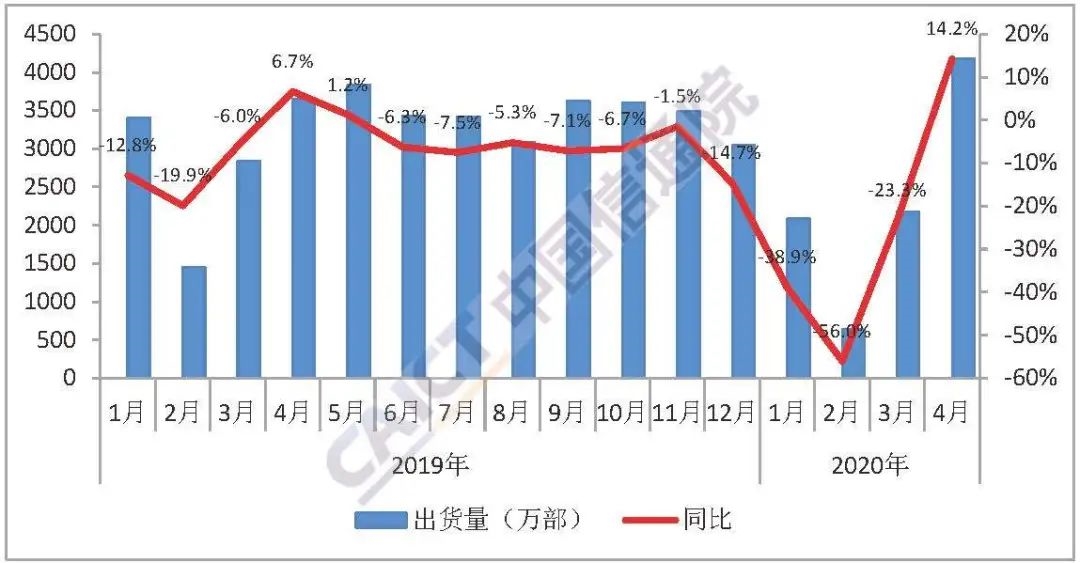
The COVID-19 global pandemic has undoubtedly affected all the businesses in the world, including the mobile phone industry. However, a report released by the China Information and Communications Technology Institute shows the Chinese mobile phone market has recovered in April with 14.2% YoY increase in shipments.
China Mobile Phone Market April 2020
Though the mobile phone industry in China recovered in April with shipments of 41.728 million units, there was a YoY decrease of 20.1% from January to April. The country witnessed 90.681 million units shipments in the last four months.
1 of 2
China Mobile Phone Market Shipments April 2020
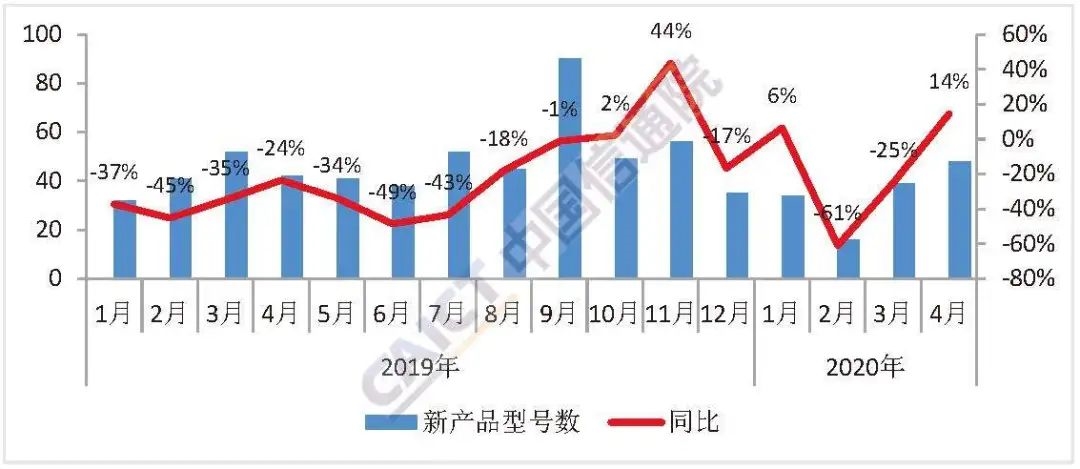
China Mobile Phone Market New Models April 2020
In April alone, 48 new mobile phone models were launched in China, which is an increase of 14.3% YoY. But when we consider from the beginning of this year, only 137 new models were released, which happens to be down by 18% YoY.
April
January – April
Total Shipments
41.728 Million
90.681 Million
Increase / Decline – Shipments
14.2% YoY Increase
20.1% YoY Decline
New Models
48
137
Increase / Decline – Models
14.3% YoY Increase
18% YoY Decline
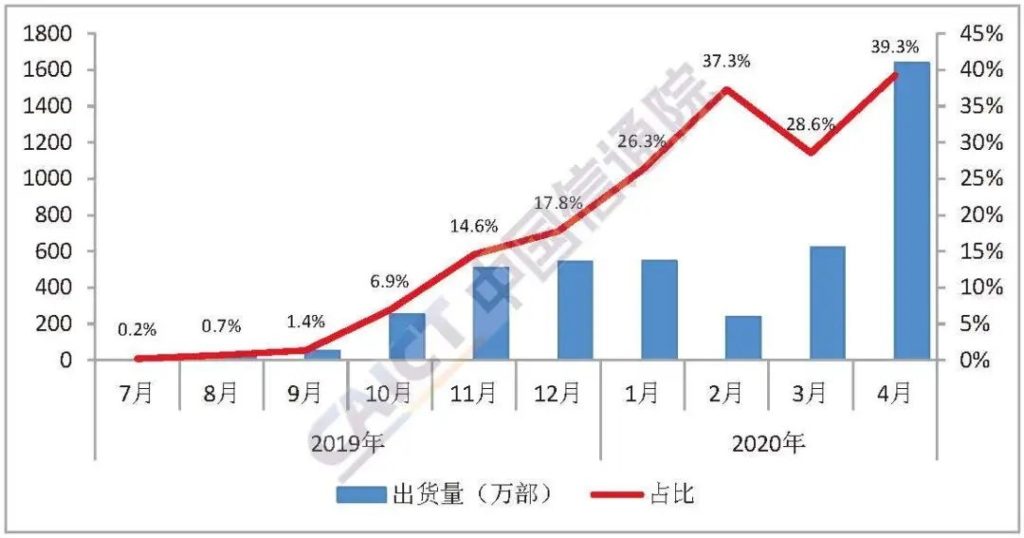
China 5G Mobile Phone Market April 2020
As for 5G phones are concerned, 16.32 million units were shipped in April, accounting for 39.3% of the total mobile phone shipments. Further, 22 new 5G models were launched, which is 45.8% of the total new models launched in the same period.
In total, 65 new 5G handsets were released from January to April, accounting for 47.4% of new launches and 33.6% of total shipments with 30.441 million units.
April
January – April
Total Shipments
16.32 Million
30.441 Million
Market Share – Shipments
39.3%
33.6%
New Models
22
65
Market Share – Models
45.8%
47.4%
China Feature Phone Market (Local Brands) April 2020
Talking about brands, Chinese-branded feature phones shipped 37.982 million units in April, an 11.9% YoY increase, accounting for 91% of all the brands. A total of 44 new models were released in April, an increase of 25.7% YoY, totalling 91.7% of all the new models.
Whereas, from January to April, there was a 22.7% YoY decline with 81.03 million shipments, accounting for 89.4% of the total shipments. A total of 123 Chinese-branded feature phones were launched in this period, a YoY decline of 16.3%, accounting for 89.8% of all the new models released.
April
January – April
Total Shipments
37.982 Million
81.03 Million
Increase / Decline – Shipments
11.9% YoY Increase
22.7% YoY Decline
Market Share – Shipments
91%
89.4%
New Models
44
123
Increase / Decline – Models
25.7% YoY Increase
16.3% YoY Decline
Market Share – Models
91.7%
89.8%
China Smartphone Market (Local Brands) April 2020
As for local or domestic Chinese-branded smartphones are concerned, they shipped 40.782 million units in April, a 17.2% YoY increase, accounting for 97.7% of all the brands. However, there was a 5.9% YoY decrease in terms of new models launch (32), accounting for 66.7% of the total new model releases.
Considering from January to April, 88.518 million Chinese-branded smartphones were shipment with 17.9% YoY decline, accounting for 97.6% of the total smartphone shipments. Domestic brands launched 106 new models, a 19.7% YoY decline, accounting for 77.4% of the total new smartphone launches.
April
January – April
Total Shipments
40.782 Million
88.518 Million
Increase / Decline – Shipments
17.2% YoY Increase
17.9% YoY Decline
Market Share – Shipments
97.7%
97.6%
New Models
32
106
Increase / Decline – Models
5.9% YoY Decline
19.7% YoY Decline
Market Share – Models
66.7%
77.4%
Going by the data, the China mobile phone market has recovered by a high margin. But only time will tell if it will be able to keep up the momentum in the coming months.
Xiaomi has just launched the Mijia Smart Clothes Dryer earlier today (12th May 2020). The smart product is currently available for purchase and is being sold for 899 Yuan (roughly 126 US Dollars).
The MIJIA Smart Clothes Dryer, as the name suggests, is a product that helps dry clothes. Although, how it does so is what sets it apart from conventional home products. It adopts a crossbar design alongside various hooks that enables it to carry a total load of 35 kilograms, while its bar can be extended up to 2.2 meters. It hangs off of the ceiling and can be pushed upwards or lowered with a light push or lifting action.
In terms of use, a person can lower the MIJIA Smart Clothes Dryer up to its maximum length to hang clothes and then proceed to raise it again. This form of design also helps in saving space on the inside of houses. The device has an LED indicatory as well, which is also large enough to illuminate the machinery during evening or night if needed.
Being a smart product, the MIJIA Smart Clothes Dryer can even be wirelessly controlled remotely. Furthermore, it also supports the MIJIA Smart App, which also helps it be connected to other smart IoT products. In other words, it can be connected to the same network with other MIJIA products. Lastly, it also supports the Xiao AI voice assistant.
Earlier today (12th May 2020), Wang Ziru, the founder of ZEALER (a firm that evaluates and reviews electronics products), shared a video on his official Weibo account. On the popular Chinese microblogging profile, Wang shared a video that revealed how Redmi installed its monstrous 98 inch Smart TV Max.
In the video, it can be observed that you need a dedicated logistics team and labor just to get the massive TV to ones’ doorstep. The delivery for this particular product is specially delivered and installed by trained professionals and not just simply shipped to a customer. A small truck arrives with about 4 or more employees that have to first check whether or not the large Redmi Smart TV Max 98 inch can even fit the elevator. If not, then they will be carrying it to houses in a tall storied building via the stairs.
Interestingly, Redmi will also be compensating for any damages done to the house or building while delivering the TV and will also have a team to pick up the orders in the case of returns or repairs. For those unaware, the Redmi Smart TV Max 98 inch is currently the largest TV ever made by the Chinese company. It can even be defined as a small home theatre screen with a high display to body ratio of 98.8 percent.
Just its size can be enough of a hassle during shipping and even installation. The video shared by Wang Ziru all but confirms the hassle just to get the Smart TV Max 98 inch even to customers’ doors. Fortunately, Redmi has taken various steps to ensure that the process is mostly taken care of. Generally, installing smart TVs is only a one or maybe a two-man job, but the 98-inch behemoth takes more than twice that amount all thanks to its large size.
A couple of years ago, Xiaomi Mijia Mosquito Repellent was launched and later the company had launched the Mijia Mosquito Repellent Smart Edition with Bluetooth support, which was a huge crowdfunding success for the company.
Now, with summer coming, the Xiaomi MIJIA Mosquito Repellent Kit is back in stock. The kit basically offers three units of Mijia Mosquito Repellent Smart Edition for a price of 149 yuan (~$21) compared to 59 yuan (~$8) pricing of the single unit.
The smart version comes with support for Bluetooth connectivity and thus, users can connect it to their smartphones using the Mijia App. This will enable users to set timers and check the remaining battery life, among performing other functions.
Apart from the support for Bluetooth, everything else remains the same as the standard model. There’s a buit-in fan to uniformly volatilising of pyrethrins which is said to be highly efficient, has low toxicity and is biodegradability. Also, there’s no smoke during the use of this product and the material used for the repellent is colorless and leaves a naturally mild fragrance in the air.
Unlike traditional mosquito repellents, this Mijia Mosquito Repellent doesn’t kill mosquitos but drives them out of the house by evaporates gases. It can have its prime effect in a space of 28 cubic meters and offers a battery life of around 720 hours.
Vivo is selling Vivo S1 Pro smartphone in regions like India and Southeast Asia. The same phone is available as Vivo V17 in Russia. In China, it has a moniker of Vivo Y9s. A smartphone named Vivo X50 Lite that was recently spotted at Google Play Console has been found listed on JB Hi-Fi, an Australian retailer site. While the moniker is new, it is the same phone that is selling with names like Vivo S1 Pro, V17, and Y9s in other markets.
The Vivo X50 Lite is listed in color editions such as Nebula Blue and Jae Black. It has 8 GB of RAM and 128 GB of storage and it is priced at AUD 499 (~$323) in Australia.
The Vivo X50 Lite has a 6.38-inch AMOLED screen with waterdrop notch. It offers Full HD+ resolution and has an in-screen fingerprint reader. The Snapdragon 665 mobile platform powers the device. A 4,500mAh battery powers the device along with support for 18W rapid charging.
The diamond-shaped camera setup on the backside of the Vivo V19 has a 48-megapixel Samsung GM1 main lens, an 8-megapixel superwide lens, a 2-megapixel macro shooter and a 2-megapixel depth assist sensor. It has a front-facing camera of 32-megapixel. The Android 10 OS along with FunTouch OS 10 UI comes preinstalled on the device.
The Vivo V19 was previously scheduled to break cover on March 26. Its launch had to be canceled due to the COVID-19 outbreak in India. The company went ahead with its global launch in early April. In the previous week, Vivo India confirmed that the phone will go official in India on May 12. The day has arrived, and the smartphone has finally gone official.
Vivo V19 price in India and offers
The Vivo V19 has landed in India in Mystic Silver and Piano Black colors. It will go on sale from May 15. The 8 GB RAM + 128 GB storage and 8 GB RAM + 256 GB storage versions of the Vivo V19 are priced at Rs. 27,990 (~$369) and Rs. 31,990 (~$422). Some of the launch offers for the buyers of V19 are 10 percent cashback HDFC Bank cards and ICICI Bank credit and debit cards, one-time free screen replacement, no-cost EMI for up to 12 months, and Jio benefits worth Rs. 40,000 (~$527).
The Vivo V19 has a 6.44-inch S-AMOLED screen that offers Full HD+ resolution and a 20:9 aspect ratio. The pill-shaped cutout on the screen has a 32-megapixel primary shooter and an 8-megapixel lens. The back panel has a quad-camera system. It has a 48-megapixel main shooter, an 8-megapixel superwide lens, a 2-megapixel macro sensor, and a 2-megapixel depth assist sensor.
The Snapdragon 712 SoC fuels the Vivo V19 with LPDDR4X RAM and UFS 2.1 storage. It has a MicroSD card slot and comes preinstalled with FunTouch OS 10 based Android 10 OS. The Vivo V19 has a 4,500mAh battery with 33W fast charging support.
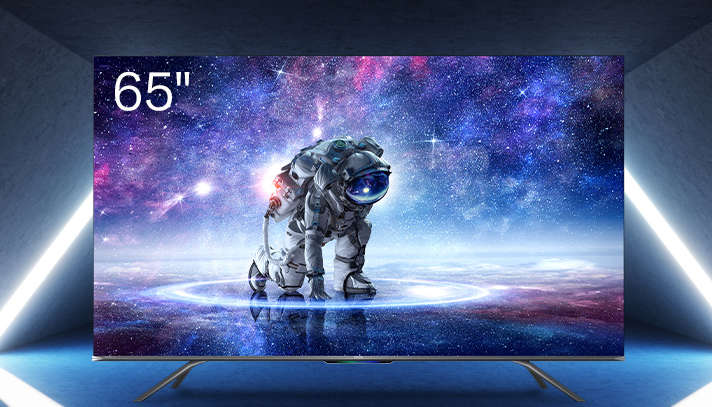
HiSense has taken to social media platform Weibo to announced that the company will be launching a Gaming TV — HiSense E75F in China on 15th May. Ahead of the launch, the smart TV is already up for pre-orders on e-commerce platforms.
While announcing this new TV, the company wrote: “Welcome to the Hisense E75F game world. Here, there are no bugs, no stuttering, and no ambiguity. Some are just bloody battles and passionate duels. This time, win, and you are right!”
The HiSense E75F TV comes with a full-screen design having an ultra-thin all-metal frame surrounding the display panel. As for the display, it comes with support for 4K HDR as well as 120Hz refresh rate and MEMC anti-shake technology. It is said to support full-dimensional AI image quality with 130% color gamut.
It comes packed with 3GB of RAM and has 64GB of internal storage. There’s also DTS Virtual-X sound effect along with AI-powered voice control function which the company says has a response time of 0.5 seconds and 99% accuracy in recognition.
The HiSense E75F comes in two models based on the display size — 55-inch and 65-inch, priced at 4,499 yuan (~$634) and 5,999 yuan (~$846) respectively. However, those who pre-order the TV by 20th May for 100 yuan will get the 55-inch model for 3,899 yuan (~$550) and 65-inch model for 5,399 yuan, which is around $761.
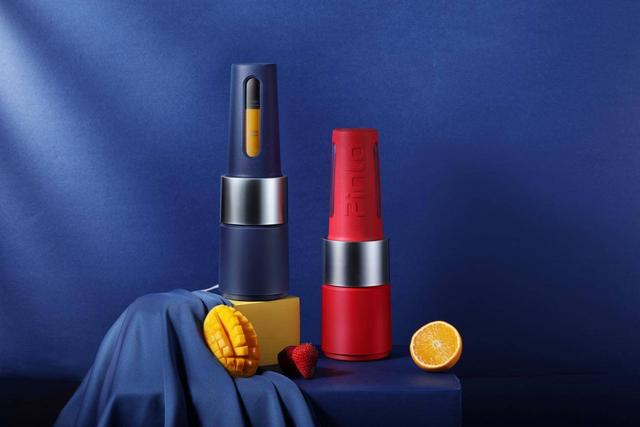
Food processors have become a vital part of every household. From the sophisticated to the simple models, Xiaomi has got several products from its ecological chain. One of Xiaomi’s ecological chain companies Pinlo has launched the Pinlo Blender Pro. The product is a super cost-effective food processor and is an upgrade of the first version that sold very well in China.
Although these products hardly get sold officially by Xiaomi outside China, you just might be lucky to find it on any of the popular Chinese retailers around. The blender is a portable product with a cool design which has an aesthetic appeal.
Instead of the pure white minimalist design which Xiaomi/Mijia products are known for, the new blender comes in indigo blue and red. It utilises a shockproof silicone sleeve on the outer layer which not only reduces the vibration felt when the blender is held in place while turned on but also effectively reduces the noise. The sleeve also acts as protection if it is accidentally dropped. Another interesting part – the main cup can be used as water can with a separate cover.
The upgrade isn’t just in the design, as the Pinlo Pro comes with a more powerful motor with 30,000 rpm and a low noise level of 83dB. The blender features six corrosion-resistant blades made from titanium alloy. The motor has been optimized to last for up to 5 years and the power increased from 600W to 1000W.
In addition, there is a separate cup for blending stuff with a high-strength glass body and a 2mm thick asymmetric blade and stainless steel chassis inside.
The blender is priced at 199 yuan (~$28) but with the glass cup, it goes up to 239 yuan (~$33).
Honor will be announcing the Honor X10 5G phone on May 20. It is likely to be accompanied by an advanced variant that is said to carry Honor X10 Pro 5G moniker. The specifications of the Honor X10 5G have been already revealed through its TENAA listing. Ahead of the launch, the Honor X10 has surfaced on the Geekbench benchmarking platform today.
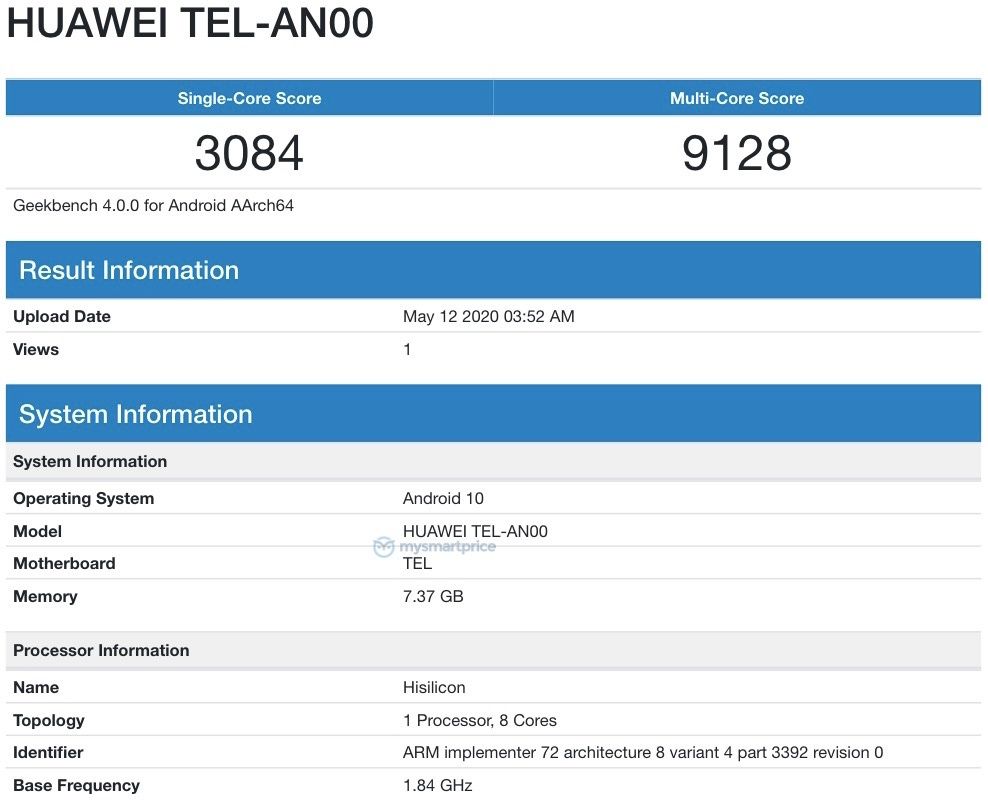
The Huawei TEL-AN00 that has been spotted at Geekbench is the Honor X10 5G phone. It seems like the company could be internally testing the performance of the device before making it official in the coming week.
The TEL-AN00 Geekbench listing reveals that it has scored 3084 in the single-core test and 9128 in the multi-core test. The phone is loaded with Android 10 OS. The HiSilicon SoC with a base frequency of 1.84GHz is the Kirin 820 5G chipset. The SoC is coupled with 8 GB of RAM.
The TENAA appearance of the Honor X10 5G has revealed that it will be coming with a Full HD+ 6.63-inch notch-less IPS LCD screen with a 20:9 aspect ratio. The phone will be coming with a 16-megapixel pop-up selfie camera and a 48-megapixel (Sony IMX600y) + 8-megapixel + 2-megapixel triple camera setup.
The handset is expected to arrive in China in 4 GB, 6 GB and 8 GB RAM editions and storage choices like 64 GB, 128 GB and 256 GB. Its 4,200mnAh battery may support 22.5W fast charging. It has a side-facing fingerprint reader. The phone may arrive with a starting price of 1,799 Yuan (~$255).
Huawei’s new chipset, the HiSilicon Kirin 710A which is based on the 14nm process, has finally entered the mass-production stage, making it the first pure Chinese chip with independent intellectual property rights.
The chipset is also the first one for the company to be manufactured by Shanghai-based Semiconductor Manufacturing International Corp (SMIC). Both the companies reportedly started working on this chipset since last year.
As per the report, almost every employee of SMIC Shanghai received an Honor Play 4T smartphone last week which has “Powered by SMIC FinFET” printed on the back, showcasing the commercialisation of 14-nm FinFET chips made by SMIC.
While nothing much about the chipset is know, it is believed that Huawei is re-releasing the Kirin 710 processor branded as the Kirin 710A, but this time with a 14nm FinFET process. The original Kirin 710 SoC is made using the 12nm node by TSMC.
The Chinese giant isn’t yet ready to retire its Kirin 710 series and it keeps launching new variants of the chipset. Prior to this new 710A, the company had launched Kirin 710F which is powering the Honor 9X and Honor Play 3 smartphones.
The development comes just weeks after it was reported that Huawei is shifting its 14nm chipset orders from TSMC (Taiwan Semiconductor Manufacturing Company) to SMIC which is China’s leading chipmaker.
This seems like a major blow to TSMC which has been historically manufacturing Huawei’s HiSilicon chips, ranging anywhere from its 14nm, 12nm or even 7 or 5nm chipsets. This could be a trial run by the company to shift productions closer to its home. The decision seems to have been taken after the United States government recently tried hampering Huawei’s operations by limiting its chip supplies through TSMC.
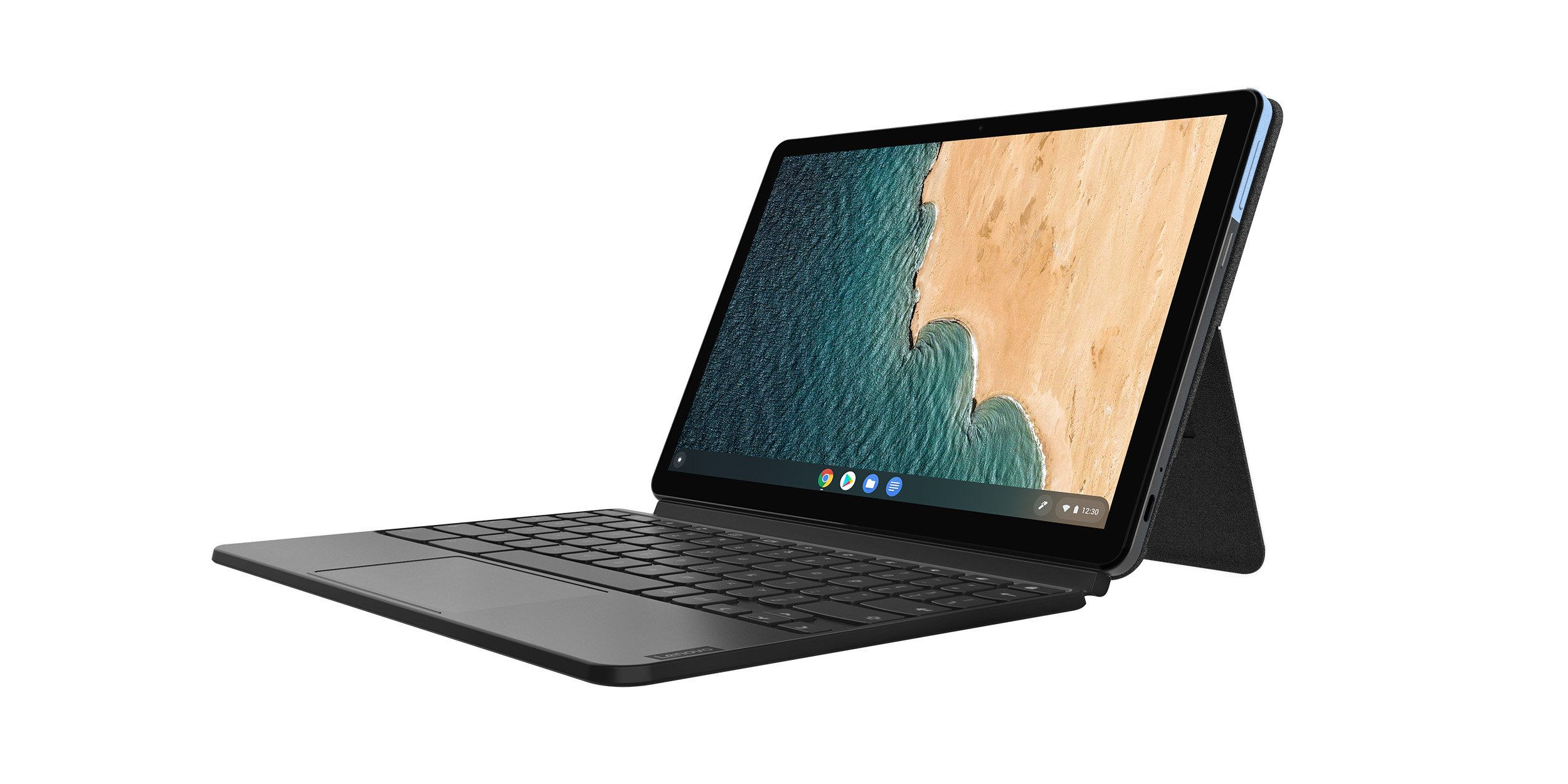
Earlier this year, in January, Lenovo had announced its IdeaPad Duet Chromebook and now after a few months, the device is finally available in the market. The company is now calling it Lenovo Duet Chromebook and the pricing starts at $279.
The device is a detachable Chromebook that comes with a keyboard base in the box. The 10.1-inch tablet has a Full HD display with 1920 x 1200 pixels resolution, a single USB-C port, and runs on top of Google’s Chrome OS with “up to” eight years of updates.
It also comes with an 8-megapixel camera on the back and a 2-megapixel snapper up front for video calling. Under the hood, the device is powered by a 7,180mAh battery. To keep the pricing lower, the company has ditched the Intel chipset in favor of MediaTek Helio P60T octa-core processor.
As for the battery life, the company says that the Chromebook Duet can last up to 10 hours on a single charge. The base model costing $279 packs 4GB of RAM along with 64GB of internal storage. However, it seems that only the 128GB storage model has been listed online for purchase, which costs $299.
Despite the COVID-19v pandemic, the Apple iPhone 12 series are expected to go official in September this year. Previous reports that the iPhone 12 come in 5.4-inch and 6.1-inch screen size variants. The iPhone 12 Pro may have a 6.1-inch display and the iPhone 12 Pro Max could be equipped with a massive 6.7-inch display. Fresh details reveal that the iPhone 12 series will arrive major upgrades over the predecessor.
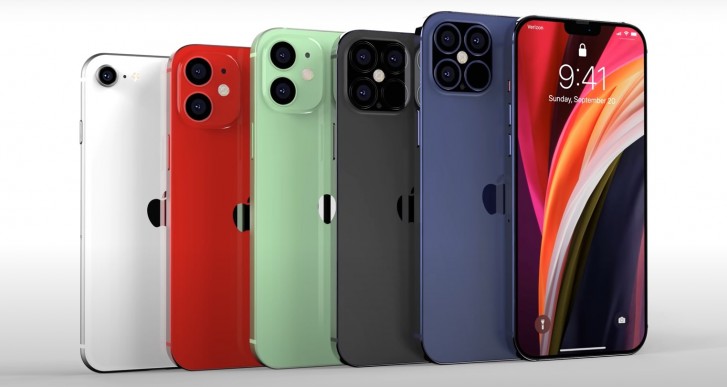
According to Filip Koroy from the EverythingApplePro YouTube channel, the iPhone 12 Pro and iPhone 12 Pro Max will be arriving with a 120Hz refresh rate supporting ProMotion display. It is expected to support fluid gesture controls and touchscreen experience. Shown below is the render of the iPhone 12 series.
He stated that the iPhone 12 or the iPhone 12 Pro that has a 6.7-inch display may come with a large-sized battery of 4,400mAh capacity. Such a large battery is expected to bring seamless support for 5G networks. The 5.4-inch iPhone 12 may support only a 60Hz refresh rate. There is no word on its battery size.
iPhone 12 series renders
The iPhone 12 series is expected to come with enhanced Face ID support. The feature is said to come with support for unlocking the phone from a wider angle. The cameras of the iPhone 12 lineup are expected to come with improved low-light photography experience, faster autofocus, and enhanced image stabilization through LIDAR scanner. The Pro models are expected to arrive with support for 3x optical zoom.
Jon Prosser of YouTube channel named Front Page Tech also released a video to reveal key specs of the iPhone 12 series. He stated that the 5.4-inch iPhone 12 and 6.1-inch iPhone Max will have BOE OLED Super Retina Display panels, 4 GB of RAM, Apple A14 chip, 5G support, dual cameras. The iPhone 12’s 128 GB and 256 GB variants could be priced at $649 and $749. The same storage models of the iPhone 12 Max could be priced at $749 and $849, respectively. Both phones are expected to come with aluminum chassis.
The iPhone 12 Pro may house a 6.1-inch Samsung OLED display. The Super Retina XDA display will support 10-bit color depth. On the other side, the iPhone 12 Pro Max may house a 6.7-inch Samsung OLED display. The Super Retina XDA screen will come with ProMotion and 10-bit color depth support. Both smartphones are expected to come with 6 GB of RAM, Apple A14 chip, 5G support, triple cameras with LiDAR support and stainless steel body.
The iPhone 12 Pro is expected to come in options like 128 GB for $999, 256 GB for $1,099 and 512 GB for 1,299. The same storage editions of the Pro Max model could be priced at $,1099, $1,199 and $1,399, respectively.
Google is all set to unveil its new budget smartphone named Google Pixel 4a, which will be a watered-down variant of the Pixel 4 launched last year. In fact, the smartphone is believed to get launched in the coming days and will reportedly be available for purchase from 22nd May.
However, the latest report seems to suggest that instead of getting the smartphone this month, we may have to wait till the first week of June to get our hands on the Pixel 4a. As per a leaked Vodafone document, it expects to begin selling the Pixel 4a from June 5th.
Earlier, the Google Pixel 4a was set to get launched during the Google I/O 2020 event. But not only did the company cancel the physical event, it also cancelled the virtual event. Thus, the phone launch will be a standalone event.
Another major announcement that was scheduled for I/O 2020 was Android 11 Beta and the company has now scheduled that for 3rd June. The new launch date for the Pixel 4a is just a couple of days after the Android 11 event.
However, it’s not yet clear if the launch of Pixel 4a has been delayed globally or just for the German or European market. If the smartphone is indeed getting delayed worldwide, then there’s a possibility that Google is making some last-minute changes to give the phone a competitive edge against the newly launched iPhone SE 2020.
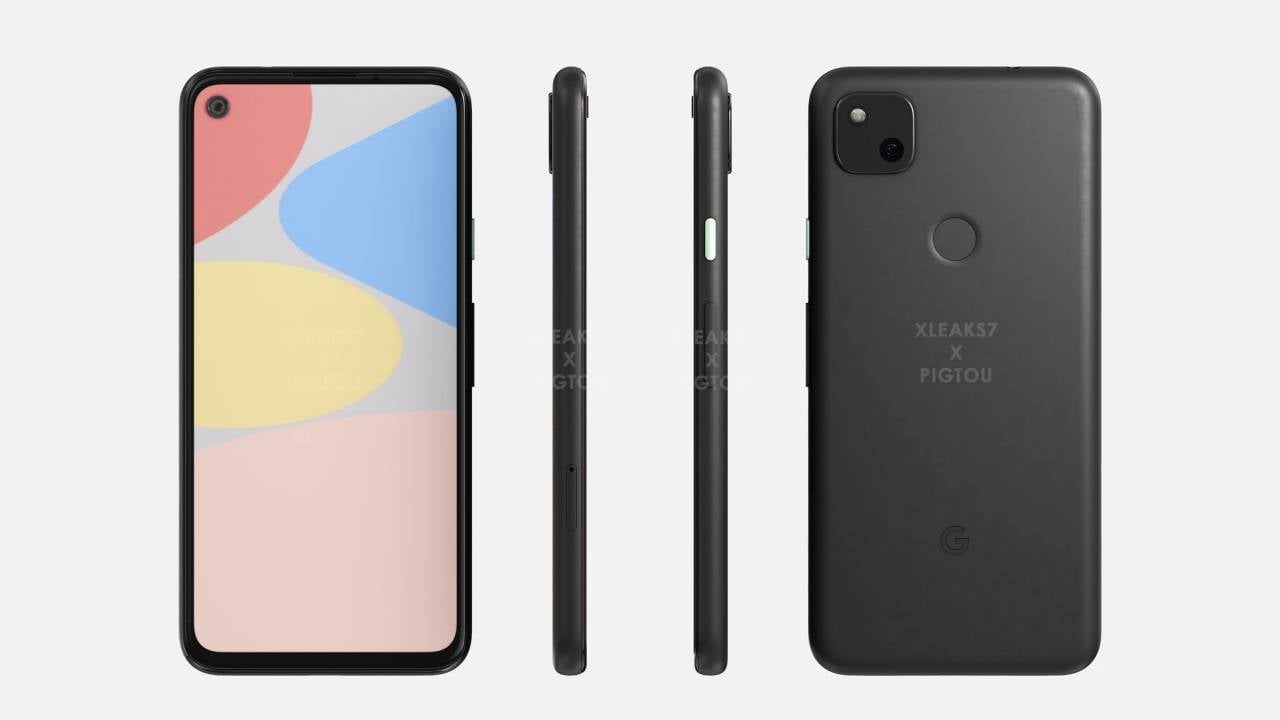
As per the leaks, the Google Pixel 4a features a 5.81-inch OLED Full HD+ display with a punch-hole cutout in the top-left corner for housing the front-facing snapper. Under the hood, the device is said to come powered by Qualcomm Snapdragon 730 chipset along with 6GB of RAM.
In terms of storage, the device will be offered in two options — 64GB and 128GB. The phone will also have Google Titan M security chip. It will be running Android 10 operating system out-of-the-box and will be powered by a 3,080mAh battery with support for 18W fast charging technology.
The Google Pixel 4a is expected to be available in at least two color options — Just Black and Barely Blue and will reportedly start at $399. To know for sure about the smartphone, we’ll have to wait for the official launch event.
At 12 PM today in India, Xiaomi India will carry out the first sales of the Redmi Note 9 Pro Max. The handset had debuted along with the Redmi Note 9 Pro smartphone in India in February. The first sale of the phone was previously planned to be carried at the end of March. However, it had to be canceled due to the COVID-19 outbreak in the country.
Redmi Note 9 Pro Max price and launch offers
The Redmi Note 9 Pro Max buyers in India can choose from options like 6 GB RAM + 64 GB storage, 6 GB RAM + 128 GB storage and 8 GB RAM + 128 GB storage. These variants are priced at Rs. 16,499 (~$217), Rs. 17, and Rs. 19,999. The phone comes in colors like Interstellar Black, Glacier White and Aurora Blue.
The smartphone can be bought from Mi.com and Amazon.in. The product pages of the phone at Amazon India has no details on the launch offers. On Mi.com, buyers can avail Rs. 1,000 discount through ICICI credit cards and EMI transactions.
The Redmi Note 9 Pro Max has a 6.67-inch IPS LCD screen that supports Full HD+ resolution. The Snapdragon 720G processor fuels the device with LPDDR4x RAM and UFS 2.1 storage. The MIUI 11 based Android 10 comes preinstalled on the phone. A microSD card slot is onboard for additional storage.
At front, it has a 32-megapixel selfie snapper. The back panel has a quad camera setup with a 64-megapixel primary lens, an 8-megapixel ultrawide shooter, a 5-megapixel macro lens and a 2-megapixel depth sensor. There is support for 33W fast charging for its massive battery of 5,020mAh capacity.
The Redmi Note 9 Pro Max launched in India back in March but will just go on sale for the first time today at 12 noon (IST). A lot of folks already have their minds made up on purchasing the device. However, there are others that are still sitting on the fence. This post should help you make up your mind with respect to purchasing it or not.
Before we dive in, let us revisit the specifications of the Redmi Note 9 Pro Max.
6.67-inch FHD+ 2400 x 1080 display with a punch-hole
Snapdragon 720G
6GB or 8GB RAM
64GB or 128GB of storage
Dedicated MicroSD card slot
64MP + 8MP + 5MP + 2MP quad rear cameras
32MP selfie camera
Side-mounted fingerprint scanner
5020mAh battery
33W fast charging with 33W charger in the box
Audio Jack, IR Blaster, Bluetooth 5.0
MIUI 11 based on Android 10
The Redmi Note 9 Pro Max is priced at INR 14,999 (~$193) for the 6+64GB version, INR 17,999 (~$237) for the 6+128GB version, and INR 19,999 (~$263) for the 8+128GB version.
Looking at the specs, the phone is an easy sell. For $200, you get a device that has 64MP quad rear cameras, 33W fast charging that is faster than even that of the Mi 10 flagship, and a pretty big 5020mAh battery.
However, the Redmi Note 9 Pro Max has got some close competitors that may sway buyers to their side with what they have to offer. Two of such devices are the Realme 6 Pro and the POCO X2 which have a better display and better cameras but for a slightly higher starting price tag.
Not the best display in its class
If your budget is INR 20,999 and you want a phone with a high refresh rate, then the Redmi Note 9 Pro Max isn’t the device you should be looking at.
The Realme 6 Pro has a 90Hz refresh rate while the POCO X2 packs a 120Hz refresh rate. A higher refresh rate means a better user experience when it comes to games and general usage.
These two phones also have brighter screens than the Redmi Note 9 Pro. The Realme 6 Pro has a peak brightness of 480 while the POCO X2 has a peak brightness of 500. The Redmi Note 9 Pro Max’s brightness peaks at 450 nits.
Doesn’t take the best photos
While all three phones have 64MP primary rear cameras, they are not the same. The POCO X2 uses the Sony IMX686 sensor while the Redmi Note 9 Pro and Realme 6 Pro both feature the inferior Samsung GW1. So when it comes to clicking shots, the POCO X2 comes out on top.
The Realme 6 may have the same primary camera as the Redmi Note 9 Pro but one of its other rear cameras is better than that of the Redmi Note 9 Pro and even POCO X2.
Rather than the 2MP depth camera on the Redmi and POCO, the Realme 6 Pro has a 12MP telephoto camera with 2x optical zoom. So you not only take better photos of distant objects with the Realme 6 Pro, but you also take better portrait photos.
The Realme 6 Pro and POCO X2 also have the upper hand when it comes to taking selfies as they both feature dual cameras in front unlike the Redmi Note 9 Pro Max that has just 1.
While none of their primary selfie cameras is as high as that of the Redmi Note 9 Pro Max, the Realme 6 Pro’ second selfie camera has an ultrawide angle lens so you can fit more friends or that awesome background in your selfies. The POCO X2’s second selfie camera is a depth sensor for better portrait selfies.
To get these features, you have to pay more. The POCO X2 is currently priced at INR 16,999 (~$224) for the 6+64GB version, INR17,999 (~$237) for the 6+128GB version, and INR 20,999 (~$276) for the 8+256GB version.
The Realme 6 Pro is INR17,999 (~$237) for its 6+64GB version, INR18,999 (~$250) for the 6+128GB version, and INR 19,999 (~$263) for the 8+128GB version.
Conclusion
If you do not care for a higher refresh rate and you are fine with having a single front-facing camera, and acceptable rear cameras, then the Redmi Note 9 Pro Max is the device to get.
You can’t go wrong with the big battery and the 33W fast charging support. The Snapdragon 720G that powers it is also more powerful than the Snapdragon 730G inside the POCO X2.
However, if you want to pick an alternative, the POCO X2 will be the one we will recommend for its higher refresh rate, better primary rear camera, and price tag which is lower than that of the Realme 6 Pro. To be honest, if you are not purchasing the base model of the Redmi Note 9 Pro Max, the POCO X2 is the one you should buy as the 6+128GB version sells for the same price as that of the Redmi Note 9 Pro Max.
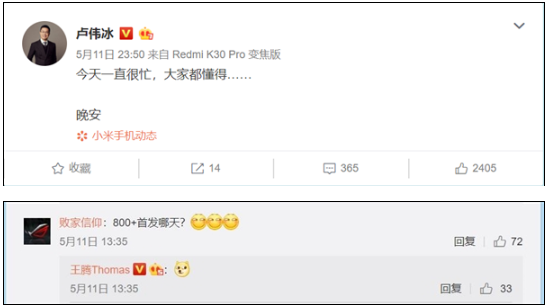
Yesterday, Redmi unveil the Redmi K30 5G Racing Edition smartphone in China. The Chinese firm is expected a couple of new smartphones at some point in this month. Yesterday evening, Redmi President Lu Weibing hinted through Weibo that he is preparing for the launch of new products.
A recent report had revealed that Redmi’s cheapest 5G phone driven by the MediaTek Dimensity 800 chipset is waiting to go official. In addition to it, some other phones like Redmi 9, Redmi 10X 4G, and Redmi K30i are also rumored to be in works. With Weibing hinting at the arrival of new products, it is likely that the company may hold an unveil later this month.
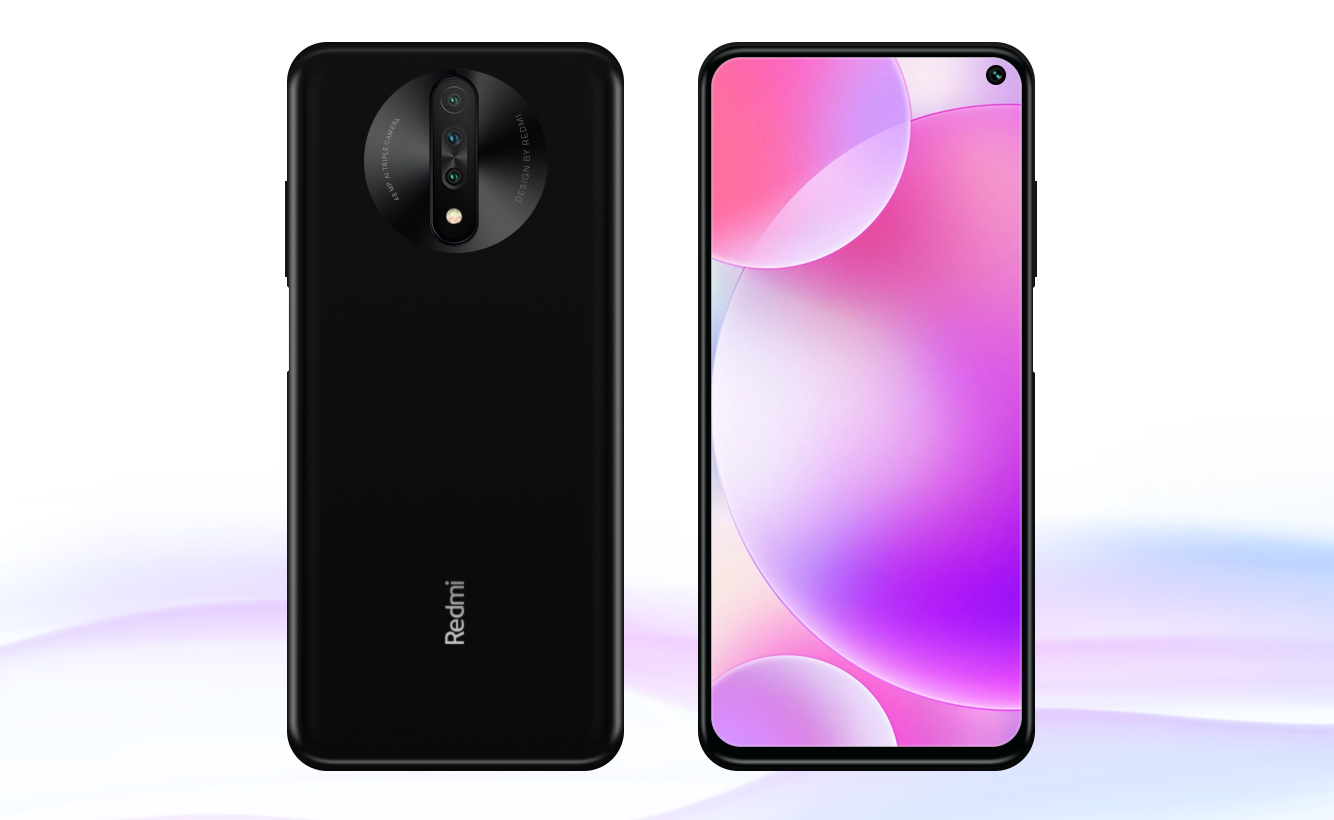
There is no information available on the specifications of Redmi’s Dimensity 800 smartphone. It is unclear whether this phone will be debuting as Redmi K30i 5G or with some other name. Rumors surrounding the K30i phone have claimed that it could be debuting as the cheapest 5G-ready Redmi phone. It is likely to arrive with a 48-megapixel quad-camera setup on its back. Shown below is the leaked render of the rumored Redmi K30i phone.
The Redmi 10X 4G is believed to be the rebranded version of the Redmi Note 9 that debuted in Europe recently. The Redmi 9 could be an Helio G70 SoC power device with up to 6 GB of RAM. It is likely to come equipped with quad cameras.
In related news, the Redmi K30 5G Racing Edition smartphone that was unveiled yesterday went official as the world’s first phone powered by Snapdragon 768G SoC. Its other specs include 120Hz 6.67-inch Full HD+ IPS LCD panel with pill-shaped cutout for 20-megapixel + 2-megapixel dual selfie camera system, 64-megapixel + 8-megapixel + 5-megapixel + 2-megapixel quad-camera system, 6 GB of RAM, 128 GB of storage, 4,500mAh battery with 30W fast charging. It is priced at 1,999 Yuan (~$282) and its sale starts on May 14 in the home market. There is no word on its availability outside of China.
Recent data from Strategy Analytics shows that Taiwanese tech company ASUS is presently among the top 5 notebook manufacturers globally with a 6.6% share of the market in Q1 2020. Most of the firm’s estimated 2.5 million units shipment may likely be from the gaming laptops which is the brand’s stronghold. ASUS has again updated its gaming laptops with the launch of the Flying Fortress 8 Gaming Laptop.
ASUS Flying Fortress 8 Gaming Laptop sports a humongous 15.6-inch display with a 144Hz refresh rate and a resolution of 1080p. The notebook is powered by the tenth generation Intel Core i5 and i7 processors. There is a Core i5-10300H as well as a version with Core i7-10750H.
The laptop also features an NVIDIA GTX 1650 graphics card. There are other options with GTX 1650 Ti and GTX 1660 Ti graphic cards. It equally comes with 8GB DDR4 memory as standard bundled with 512GB of Solid State Drive. There is a 16GB RAM option and both the memory and SSD can be upgraded.
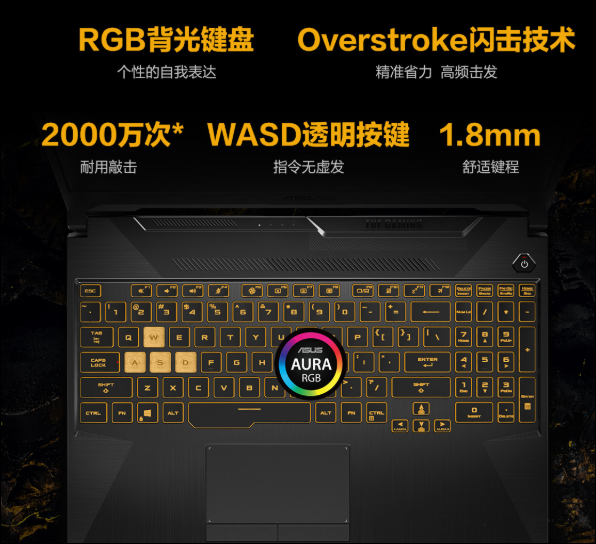
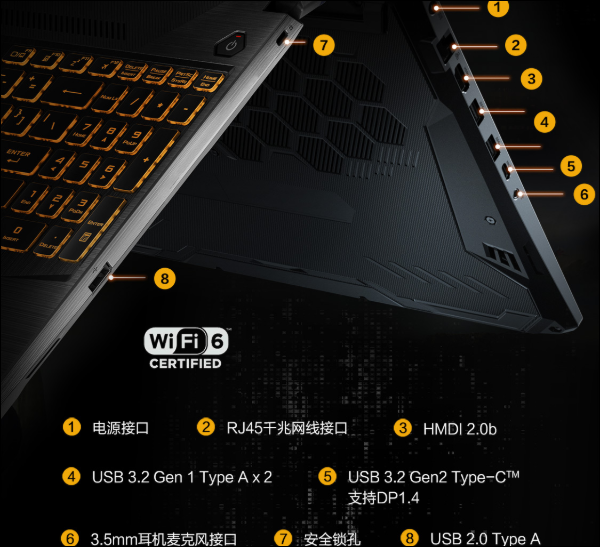
In terms of design, the Flying Fortress 8 gaming laptop uses a stealth fighter design and has a narrow border on three sides. The keyboard supports RGB backlight while the keystroke is 1.8mm. For connectivity, the gaming laptop packs a network cable interface, an HDMI 2.0b interface, three USB-A ports and a full-featured USB-C port.
As for the pricing, the Flying Fortress 8 gaming laptop starts at 5899 yuan (~$830). The models are presently on presale in China via JD.com and will go on sale from May 18.
We use cookies on our website to give you the most relevant experience by remembering your preferences and repeat visits. By clicking “Accept”, you consent to the use of ALL the cookies.
This website uses cookies to improve your experience while you navigate through the website. Out of these, the cookies that are categorized as necessary are stored on your browser as they are essential for the working of basic functionalities of the website. We also use third-party cookies that help us analyze and understand how you use this website. These cookies will be stored in your browser only with your consent. You also have the option to opt-out of these cookies. But opting out of some of these cookies may affect your browsing experience.
Necessary cookies are absolutely essential for the website to function properly. This category only includes cookies that ensures basic functionalities and security features of the website. These cookies do not store any personal information.
Any cookies that may not be particularly necessary for the website to function and is used specifically to collect user personal data via analytics, ads, other embedded contents are termed as non-necessary cookies. It is mandatory to procure user consent prior to running these cookies on your website.




















UP NEXT: Honor MagicBook Pro 2020 now on Reservation on Jingdong