Advertisement

OPPO successfully conducts first 5G VoNR Voice & Video call with a customized Reno3

5G is being rolled out in countries all around the world and users are able to experience near gigabit speeds on their smartphones. But 5G was designed to bring about a more comprehensive upgrade to devices which includes significant improvements in voice and video calls too. VoNR (Voice over New Radio) is the next-generation version of VoLTE (Voice over LTE) and OPPO, in partnership with MediaTek and Ericsson has conducted the first VoNR Voice and Video call.

OPPO Reno3 5G Vitality Edition featured

The current 5G networks are built around the existing 4G LTE infrastructure (Non-standalone networks). So your smartphones with 5G data support still use VoLTE for voice calls. However, network operators will soon start deploying SA (Standalone) network architecture for 5G networks which allows carriers and device makers to enable VoNR calls. OPPO’s official press release stated that the VoNR call made with its customized Dimensity 1000L smartphone (likely Reno3) had significantly “lower latency, improved sound quality and picture quality”. The company added that this will eventually lead to an “elevated overall experience for users”.

The 5G VoNR call was successfully carried out under a 5G SA network provided by Ericsson at its headquarters in Stockholm, Sweden. OPPO adds that “after dialing, the two phones connected almost instantly and then seamlessly switched to a high-definition video call with a single keypress”.

OPPO has become one of the first smartphone brands to successfully test VoNR services on its smartphone. With network operators all set to deploy 5G over SA architecture in the second half of 2020, VoNR should become an important feature of 5G phones in the coming years.


A 192MP smartphone will launch next month says leakster

In 2019, Qualcomm, the major mobile chipmaker, said that its processors support up to 192 megapixels camera sensors. Back then, that seemed like a ludicrously large sensor, but now, it might be launch as early as next month, according to a leakster.

Back when the aforementioned statement was made, 48 megapixel camera sensors had just been rumored to launch soon. But now, we have already seen smartphone manufacturer’s shipping 108 megapixel sensors. Although, this number is also expected to soon be trumped as a new smartphone with a 192 megapixels camera sensor will reportedly be launched next month.

192 megapixels

The news arrives from a post shared by a leakster on Weibo, the Chinese microblogging website. Another additional detail which was leaked included the model number SM7250. This is a model number for the Qualcomm Snapdragon 765 series. In other words, a Snapdragon 765 SoC series handset will sport a 192 megapixels sensor. Unfortunately, this brings the viability of the device into question.

While the Snapdragon 765 can indeed support a 192 megapixels camera, it can only support snapshots. Meaning, other crucial features like HDR or multi-frame processing will not be possible at that high resolution. So, it remains to be seen just how well they optimize the sensor for the smartphone.

Samsung ISOCELL 108MP
Samsung ISOCELL 108MP Camera Sensor

Unfortunately, finer details are unknown and there might be a few workarounds to this. While we don’t know for sure which OEM plans on launching such a device, Qualcomm did previously mention it is working with partners to bring 200 megapixel sensors. So, it might not be that far fetched. Although this is a leak, so take it with a grain of salt for now.


Samsung and MediaTek vying for 5G mobile chip orders from Huawei

As tensions between Huawei and the US Government are rising, the Chinese company is looking for more ways to reduce reliance on the west. Due to this, Samsung and MediaTek are both eyeing 5G mobile chip orders from Huawei, since it plans on moving away from Qualcomm later this year.

Samsung Exynos 990 featured
Samsung Exynos 990 5G

For those unaware, Samsung, similar to MediaTek, is also a major manufacturer of mobile chipsets. At the moment, there are only 4 major 5G mobile chip makers in the world, including Qualcomm, MediaTek, Samsung, and Huawei. Huawei develops and ships its own HiSilicon Kirin 5G chip ranges on its flagship smartphones, which are processed by TSMC.

Now, it seems that the Chinese tech giant may look for other alternatives as well, with Samsung and MediaTek being viable options. The former is known for its Exynos chips while the latter released its Dimensity lineup of 5G mobile processors. Notably, Qualcomm’s Vice President, Hou Mingjuan, stated that the 5G market is relatively unaffected by the recent pandemic and will still see a high demand and growth rate this year.

Samsung
MediaTek Dimensity 1000 5G

This means that 5G networking and its corresponding technology will still be sought after by OEMs. Thus, companies like Huawei will require a large number of 5G chips for its flagship series or even lower and mid range handsets if it does plan on buying SoCs from other manufacturers. Although, it still remains to be seen what direction Huawei plans on taking, amidst the growing pressure from the US.


(Via)

ColorOS 7 Stable Update is finally here for the First Batch of Devices

Oppo announced ColorOS 7 in November of 2019 but unfortunately, the company has only now started to roll out stable updates to the first batch of devices in China. Currently, six devices are receiving the update. Hopefully, the brand will seed out the ColorOS 7 stable update to more devices in the coming days.

The handsets that are currently receiving the ColorOS 7 stable update are as follow.

As you can see from the list above, only the premium and a couple of mid-rangers are being treated with ColorOS 7, which itself is about 5 months old now. Even, the company has now moved on to ColorOS 7.1, which debuted on the recently launched Oppo Find X2 and Find X2 Pro.

Oppo has failed in updating its devices on time and the company claims coronavirus outbreak to be the cause for it. However, the company did manage to roll out beta updates to a number of eligible devices.

The above-mentioned devices were supposed to get early adopter as well as stable updates in Q1. But, the early adopter program was postponed from January to March in the wake of the COVID-19 crisis and thus the stable updates are being released now in Q2.

If you are interested in knowing more about ColorOS 7 and its features, then make sure to check out our announcement coverage.


Foxconn is all set to start manufacturing ventilators with Medtronic

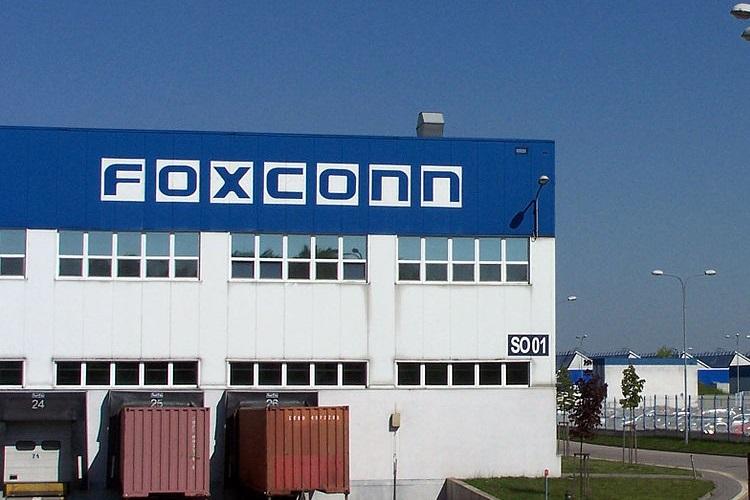
Taiwan-based Foxconn, one of the world’s largest contract manufacturer better known for making Apple iPhones, has announced that the company will be making ventilators with U.S. firm Medtronic Plc to help patients afflicted by the coronavirus outbreak.

In a statement, the company says that it is currently cooperating with Medtronic to design and develop ventilators, and added that medical and technical personnel from both firms are working closely on this.

Medtronic Chief Executive Officer Omar Ishrak has said that Foxconn’s Wisconsin plant would be used to make the ventilators. Both the companies are trying to speed up production time so the ventilators can be put to work as soon as possible.

There has been a critical shortage of supply globally for ventilators needed in the treatment of severe cases of COVID-19. Foxconn has been making face masks, used to curb the spread of the virus, in China since February and its subsidiary Sharp has also began making them in Japan since last month.

The development of Foxconn making ventilators comes about a week after Ford Motor Co said that it will produce 50,000 ventilators over the next 100 days at its plant in Michigan in cooperation with General Electric’s healthcare unit. The company also added that it can then build 30,000 per month as needed to treat patients.

(Via)

Redmi Band is now available for Pre-Order on Giztop for $19.99

Redmi continues to come up with amazing products including appliances, routers, IoT devices, etc after Xiaomi re-introduced it as an independent brand and separated it from the Mi brand. The brand recently gave its huge fanbase a brief glimpse of its first fitness band dubbed, the Redmi Band via a Weibo post.

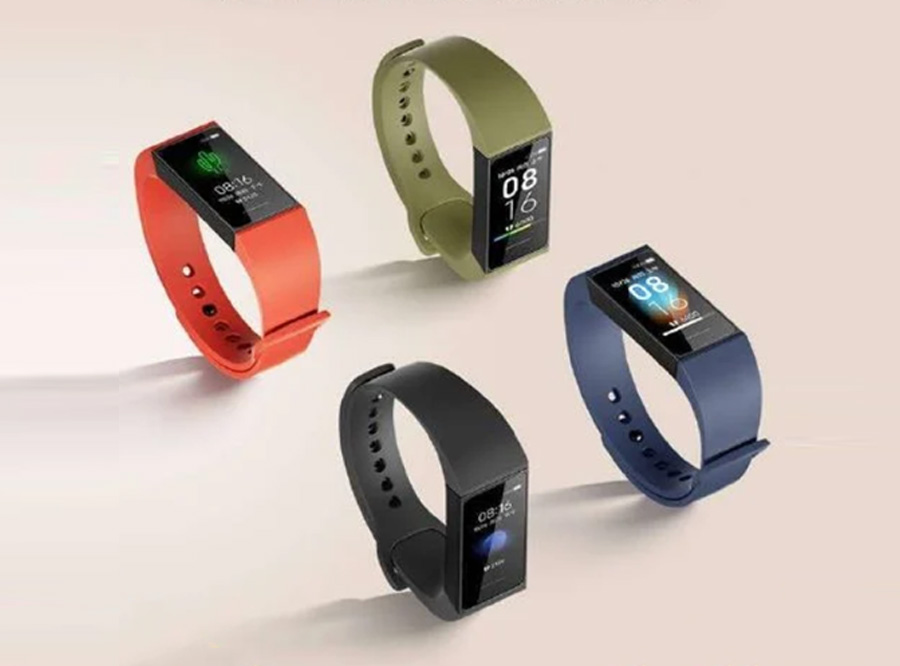
Redmi Band

Available in four eye-catching color options including black, blue, red, and brown, the Redmi Band is now available for pre-order on Giztop for $19.99. The Redmi Band marks the company’s foray into smart wearable business so it is hardly surprising that the device is loaded with impressive features.

The Redmi Band sports a square-shaped 0.95″ AMOLED Color Touch Screen with  2.5D scratch-resistant tempered glass on the top for added protection. Moreover, it adopts Bluetooth 5.0 BLE to connect with smartphones.

It can efficiently dynamic-static monitor wearer’s heart rate and delivers accurate pedometer algorithm and daily heart rate changes. The watch vibrates every time someone calls or sends a message to ensure you do not end up missing an important call or SMS.

redmi band

Furthermore, the Redmi Band comes with 5 professional sports modes and supports an intelligent alarm function that wakes you up every morning, and also offers idle alert. The watch is compatible with Android 4.4 or above and iOS 9.0 or above with Bluetooth 5.0.

The Redmi Band is backed by a robust battery that offers a 14-day battery life and supports fast plug direct charging, which means, you can directly plug it into the USB-A port to charge. The watch is made using soft, skin-friendly material which makes it comfortable to wear for a longer duration.

You can visit this link to check out more details about the Redmi Band and place your pre-order through Giztop. Note that the Redmi Band will start shipping from April 20.

The Gizmochina Coupons is a community that finds, reports and evaluates deals and coupons of Chinese products from online shops. Please visit it here to find more coupons to save money on mobiles and smart gadgets.

Xiaomi patents a smart speaker design which looks similar to Apple HomePod

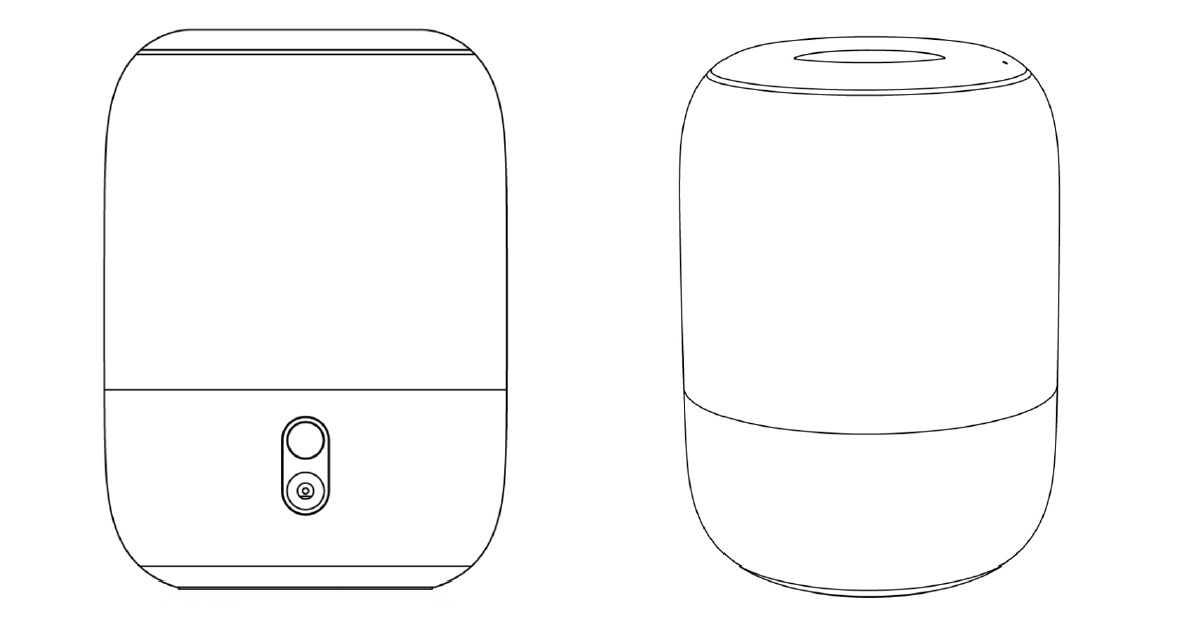
Xiaomi has many times been accused of copying Apple’s design and it seems that the company has no issues with this. Xiaomi has patented a new smart speaker which looks very similar to the Apple HomePod.

The patent has been published on the China National Intellectual Property Administration (CNIPA) website and the included schematics for the smart speaker with a cylindrical design looks awfully similar to the Apple HomePod.

Xiaomi Smart Speaker Patent

It suggests that the smart speaker will come with a 360-degree sound output and could include a touch-sensitive surface area which will enabled users to interact with the device even when voice commands don’t work.

The upper part of the speaker may include a circular disc-like surface that could offer two things — Mini OLED display for showing connectivity status, volume, etc. or touch-sensitive surface for gesture-based controls. Which one of this will be adopted by Xiaomi has not been confirmed yet.

However, it seems more likely that the top part of the Xiaomi Smart Speaker will include a touch-based control system given that there are no control buttons on the device. While smart speakers are powered by voice assistants, they also come with physical buttons to control various aspects of the device.

If the device is limited to the Chinese market only, then we expect Xiaomi to use its own XiaoAI smart assistant. But, if the company has plans to make it available in other regions as well, then we expect the company to use Google Assistant or Amazon’s Alexa. It will be interesting to see which one of these gets picked up by Xiaomi.


Huawei Korea to reportedly enter GPU server market later this year

Huawei, the Chinese giant which is the world’s leading telecom equipment manufacturer and the second largest smartphone maker, has been actively in the process of becoming self-sufficient and dominate various markets ever since the U.S. government put the company on Entity List last year, effectively banning it.

While Huawei already is one of the very few smartphone chipset markers, the company is now planning to enter the Graphic Processing Unit aka GPU server market which is currently being dominated by NVIDIA.

Huawei Logo

As per the report coming from Korea, Chinese giant Huawei will be setting up a Cloud and AI Business Group in South Korea in year. It also adds that the business group will later be spun off for further growth.

Huawei Korea has three different divisions: Carriers, Enterprise and Consumer. The new Cloud & AI BG in Korea will be placed under the Enterprise division. The report mentions that the company is currently recruiting experts for this new business organisation, including former and current employees, as well as executives from NVIDIA.

Huawei already has experience in developing chipsets, apart from smartphone processors. In August last year, the company unveiled Ascend 910 touting it to be the world’s most high-quality AI processor which recorded a speed of 256TeraFLOPS — twice the speed of NVidia’s GPU Tesla V100.

After that, the company announced Atlas 900 as the world’s fastest AI training cluster and Huawei claims that it will help make AI more readily available for different fields of scientific research and business innovation.

Atlas 900 combines the power of thousands of Ascend processors and takes only 59.8 seconds to train ResNet-50 for measuring AI training performance. This is 10 seconds faster than the previous world record.

Earlier this year, the Chinese company also launched Kunpeng 920 server CPU aimed at big data calculations and dispersed storage. It is based on the ARMv8 architecture, and formed of the 2.6GHz 64 Core.

(Source)

OPPO Ace2 teaser poster confirms Snapdragon 865 SoC and quad rear cameras

OPPO has recently confirmed that the company will be launching the OPPO Ace2 smartphone in its home country on China on 13th April, after the company’s Vice President Brian Shen teased the same.

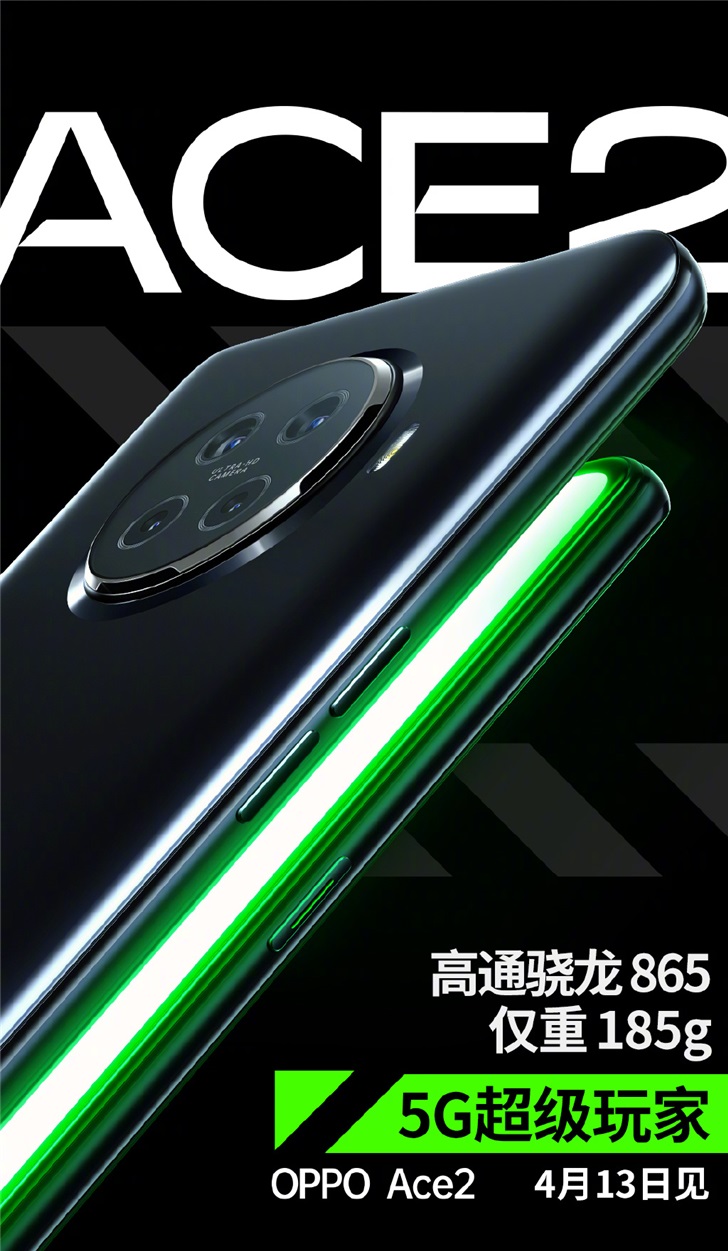
Now, ahead of the launch, the company has shared a teaser poster which gives us a partial look at the upcoming smartphone’s design. The poster also confirms that the device will come powered by the Qualcomm Snapdragon 865 SoC.

OPPO Ace2 Teaser

It also confirms that there will be a quad-camera setup on the OPPO Ace2 smartphone where the sensors will be placed on a circular module which is also referred as “Oreo” camera design. The phone will have volume rocker keys on the left side while the power button is placed on the right.

The OPPO Ace2 smartphone was recently spotted on AnTuTu where it scored 180,132 points in the CPU test, 210,371 in the GPU test, 89,927 in the memory test and 79,787 in the UX test. It recorded an average benchmarking score of 560,217 points on AnTuTu.

Interestingly, the AnTuTu listing shows a warning that the device may be rooted, and system parameters may have been changed due to the root, which may lead to an inaccurate score.

As per the reports, the OPPO Ace2 could come with a 6.5-inch AMOLED display with a punch-hole cutout at the top-left corner. The display is expected to offers Full HD+ screen resolution of 1080 x 2400 pixels and a tall aspect ratio of 20:9.

Under the hood, the device will be powered by the Qualcomm Snapdragon 865 mobile platform, along with 8GB and 12GB RAM, and two storage options — 128GB and 256GB. The device could have a 48-megapixel + 8-megapixel + 2-megapixel + 2-megapixel setup for the quad rear cameras.

Running on Android 10 operating system with ColorOS 7 on top, the smartphone is reportedly equipped with a dual-part battery with a single-cell capacity of 1,955mAh. The phone carries support for 40W wireless charging. The 3C listing of the phone had revealed that it could be shipped with a 65W charger.


OPPO 40W AirVOOC wireless charger certified by WPC

The Find X2 and Find X2 Pro are OPPO’s latest flagship phones but they do not support wireless charging. However, the manufacturer has a third flagship phone coming soon called the OPPO Ace2 that will support 40W wireless charging.

Ahead of the launch of the phone, the Wireless Power Consortium (WPC) has published the details of the wireless charger for the device.

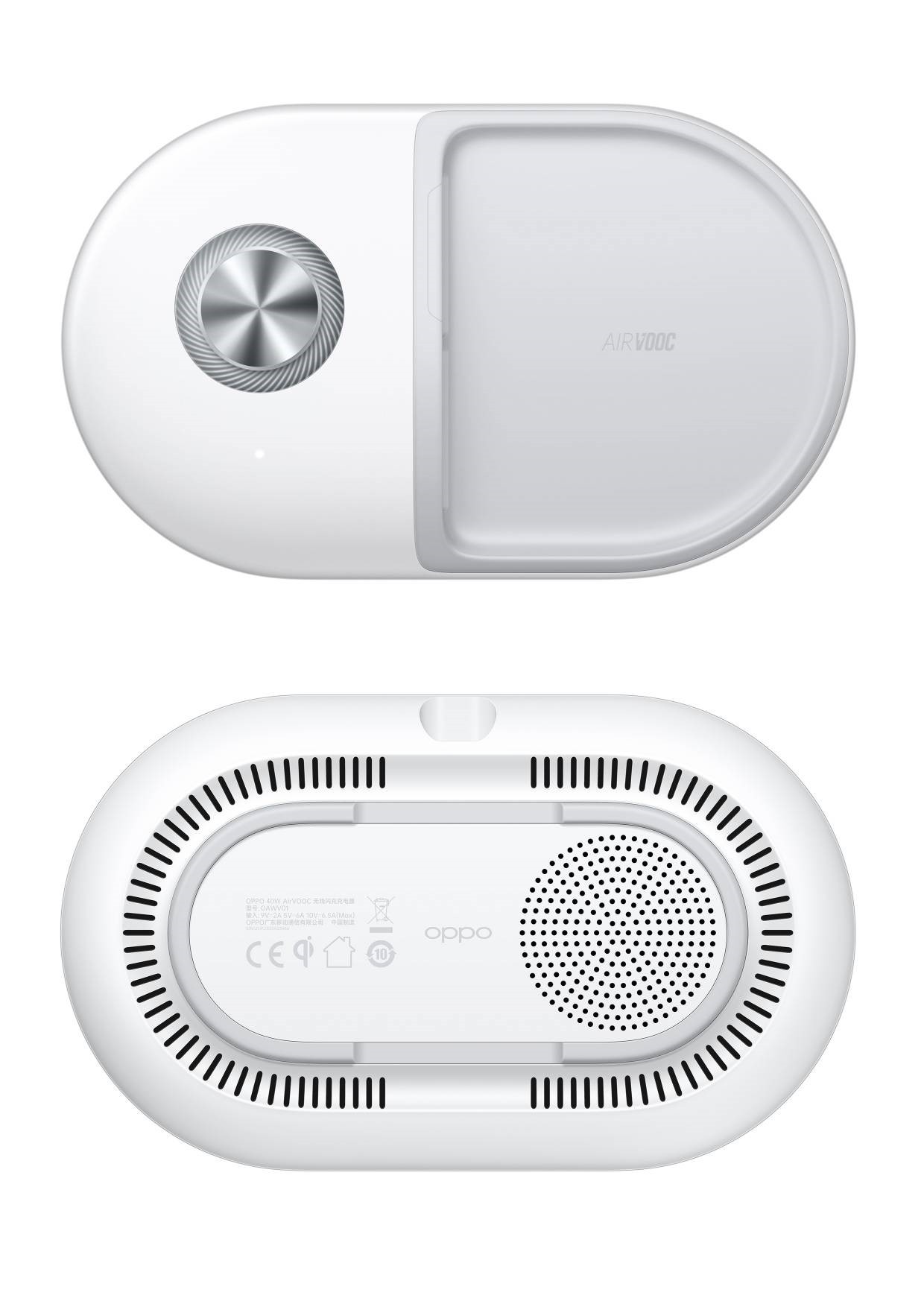
According to the WPC, the wireless charger has model number OAWV01. The attached images reveal the official name as OPPO 40W AirVOOC and it supports the following power inputs – 9V 2A (18W), 5V 6A (30W), and 10V 6.5A (65W). The maximum power output is, of course, 40W.

OPPO 40W AirVOOC Wireless Charger

The wireless charger has an unusual design. It has an oval shape with a recess on one side for the phone to lie on and a large silver button/knob on the other side. The underside has vents for heat dissipation. There is also a silicone strip around the base to prevent it from slipping.

The OPPO Ace 2 launches on Monday, April 13 which is a day before the OnePlus 8 series’ launch. OnePlus is also expected to announce its first wireless charger on that day but unlike OPPO’s charger, it supports 30W fast charge and has a vertical stand design.

The price tag for the AirVOOC wireless charger is unknown but expect it not to be cheap.


(Source)

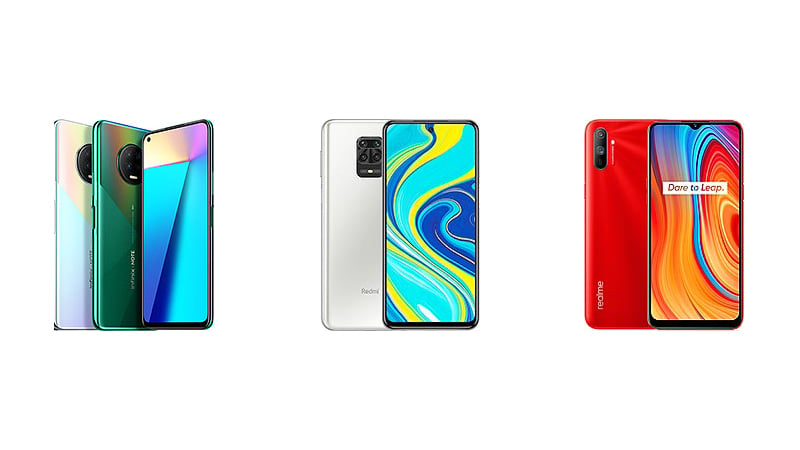
Infinix Note 7 vs Redmi Note 9S vs Realme C3: Specs Comparison

Despite Infinix is not a “global” brand, it is highly competitive in India and releases affordable devices which have nothing to envy to the smartphones released by mainstream brands in the global market. The latest arrival is the Infinix Note 7, bringing a huge display and a powerful chipset to the market at a very affordable price. We think it is time to compare it with other potential best-sellers in the Indian market. We chose the Redmi Note 9S and the Realme C3 because we believe they are potential best-sellers in that price range. Here is an in-depth comparison of the specifications.

Infinix Note 7 vs Xiaomi Redmi Note 9S vs Oppo Realme C3

Infinix Note 7 Oppo Realme C3 Xiaomi Redmi Note 9S
DIMENSIONS AND WEIGHT 173.4 x 79 x 8.8 mm 164.4 x 75 x 9 mm, 195 grams 165.8 x 76.7 x 8.8 mm, 209 grams
DISPLAY 6.95 inches, 720 x 1640p (HD+), 258 ppi, IPS LCD 6.5 inches, 720 x 1560p (HD+), 270 ppi, IPS LCD 6.67 inches, 1080 x 2400p (Full HD+), 395 ppi, IPS LCD
PROCESSOR Mediatek Helio G70, octa-core 2 GHz Mediatek Helio G70, octa-core 2 GHz Qualcomm Snapdragon 720G, octa-core 2.3 GHz
MEMORY 6 GB RAM, 128 GB – micro SD dedicated slot 2 GB RAM, 32 GB – 3 GB RAM, 32 GB – 4 GB RAM, 64 GB – micro SD dedicated slot 6 GB RAM, 128 GB – 4 GB RAM, 64 GB – micro SD dedicated slot
SOFTWARE Android 10, XOS Android 10, Realme UI Android 10, MIUI
CONNECTIVITY Wi-Fi 802.11 a/b/g/n/ac, Bluetooth 5.0, GPS Wi-Fi 802.11 b/g/n, Bluetooth 5.0, GPS Wi-Fi 802.11 a/b/g/n/ac, Bluetooth 5.0, GPS
CAMERA Quad 48 + 8 + 2 + 2 MP f/1.8, f/2.4, f/2.4 and f/1.8
16 MP f/2.0 front camera
Dual 12 + 2 MP f/1.8 and f/2.4
5 MP f/2.4 front camera
Quad 48 + 8 + 5 + 2 MP f/1.8, f/2.2, f/2.4 and f/2.4
16 MP f/2.5 front camera
BATTERY 5000 mAh, fast charging 18W 5000 mAh, battery charging 10W 5020 mAh, fast charging 18W
ADDITIONAL FEATURES Dual SIM slot Dual SIM slot, reverse charging, splash resistant Dual SIM slot, splash resistant

Design

With their punch-hole displays, glass backs and very narrow bezels, Redmi Note 9S and Infinix Note 7 have impressive designs, if we consider that they are just affordable phones. The Infinix Note 7 is one of the biggest mid-rangers out there, so not everyone may be comfortable with it. That is one of the reasons why Redmi Note 9S wins the design comparison. Redmi Note 9S and Realme C3 are splash resistant, but while the Redmi Note 9S has a glass back, Realme C3 has a full plastic design. On the other hand, Realme C3 is the most compact device of the trio.


Display

Redmi Note 9S is also the winner of the display comparison. The reason is simple: its display has a higher resolution: while Infinix Note 7 and Realme C3 come with HD+ displays, Redmi Note 9S has a Full HD+ resolution with a higher pixel density and a higher level of detail. It even boasts pretty high brightness, but the panel is a classic IPS and not an AMOLED display. Infinix Note 7 remains interesting because it has a huge 6.95-inch panel, despite HD+ resolution on a so big display is not the best solution a manufacturer can adopt.


Specs & Software

Again, Redmi Note 9S takes the gold medal. It has a way more powerful chipset: the octa-core Snapdragon 720G by Qualcomm paired with up to 6 GB of RAM and up to 128 GB UFS 2.1 internal storage. It is a better SoC for gaming, power users, and productivity. Both Infinix Note 7 and Realme C3 pack the Helio G70 SoC paired with slower eMMC 5.1 native storage. Realme C3 loses the comparison against Infinix Note 7 due to its lower amount of RAM: 4 GB against 6 GB. But each of the devices offers Android 10 out of the box.


Camera

Redmi Note 9S has the most advanced camera departments and it offers better sensors on the back. Both Redmi Note 9S and Infinix Note 7 have a 48 MP main sensor, but Redmi Note 9S has better secondary sensors including an 8 MP ultrawide lens, a 5 MP macro camera and a 2 MP depth sensor. With the Infinix Note 7, you get three 2 MP secondary sensors including a dedicated video camera. On the paper, the front camera of the Infinix Note 7 looks better. Realme C3 is pretty disappointing on the camera side with an inferior 12 MP main sensor and a 5 MP front camera.


Battery

The best battery phone here should be Realme C3. It has a 5000 mAh battery just like the Infinix Note 7 (Redmi Note 9S has 5020 mAh), but it has a smaller display and it should be more efficient. Unfortunately, we still did not test the battery life of the Infinix Note 7 because we make comparisons as soon as smartphones get announced.


Price

Infinix hasn’t yet shared the pricing details of the Infinix Note 7. Redmi Note 9S is sold at a price ranging from $190 to $210 depending on the market (we still do not know how much it will cost in India), while Realme C3 starts from just $98 and it offers a higher value for money. But the winner of this comparison is the Redmi Note 9S which offers a better display and higher performance, as well as a more promising camera setup.


Infinix Note 7 vs Xiaomi Redmi Note 9S vs Oppo Realme C3: PROs and CONS

Infinix Note 7

PROs

  • Widest display
  • Dedicated video camera
  • Stereo speakers
  • Good front camera

CONS

  • Dimensions


Oppo Realme C3

PROs

  • Great battery life
  • Affordable
  • Splash resistant
  • Reverse charging

CONS

  • No fingerprint reader


Xiaomi Redmi Note 9S

PROs

  • Highest performance
  • Punch-hole display
  • Greatest rear cameras

  • Splash resistant

CONS

  • Price

Samsung Galaxy Fold 2 will reportedly get a cheaper 256GB version

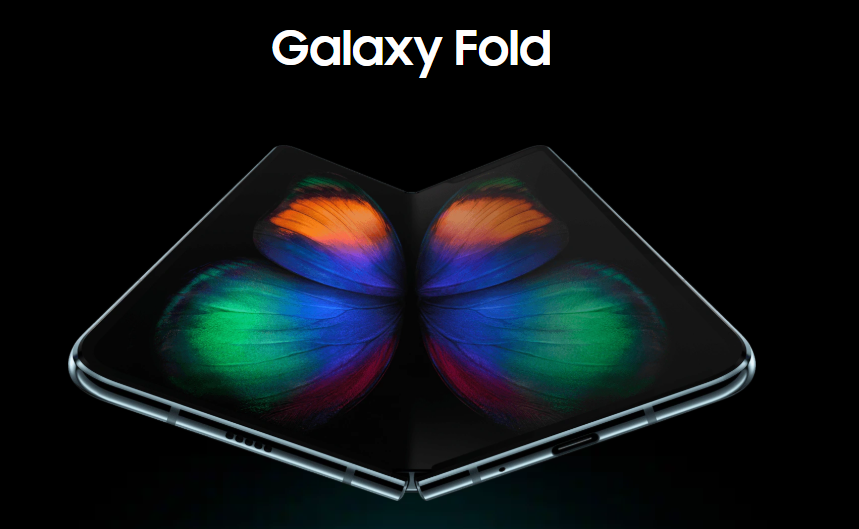
Samsung launched its first foldable smartphone –  the Galaxy Fold last year and the smartphone was an instant success despite its huge price tag. The tech giant is already prepping to launch a successor which would be known as Galaxy Fold 2. Samsung Galaxy Fold featured

There have been several leaks and rumours surrounding the Galaxy Fold 2 for a while now. The latest is that the Fold 2 will come in two storage variants. Last year’s Galaxy Fold only had a 512GB storage option but this year, Samsung will reportedly include a second 256GB storage version.

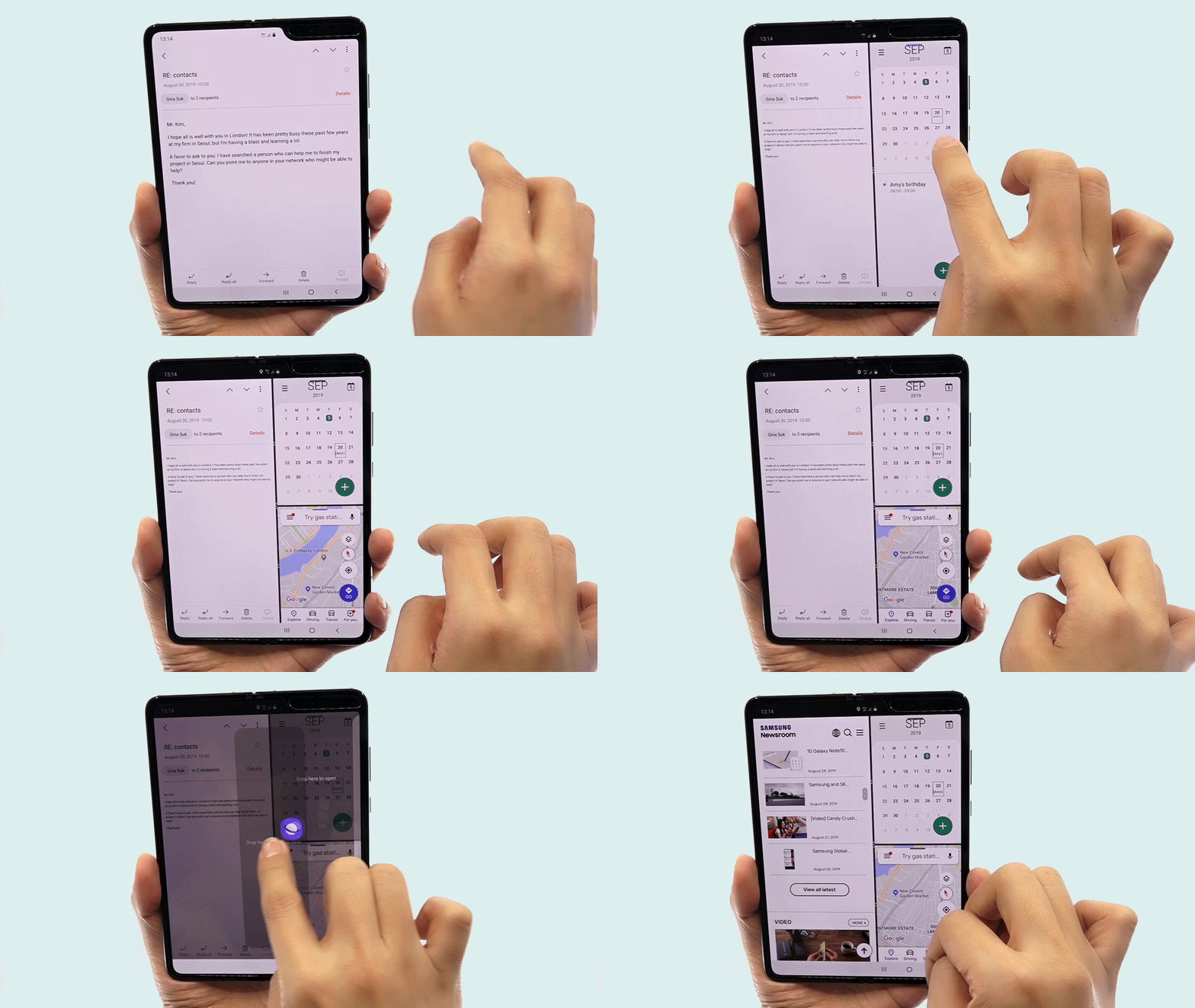
Samsung Galaxy Fold Multi Active Window

The report carried by Sammobile claims the Fold 2 with 256GB storage has the model number SM-F916 while the higher 512GB variant has the model number SM-F91x. The lower storage will enable Samsung to lower the price of the Galaxy Fold by some significant margin. The Galaxy Fold came with a mammoth $1,980 price tag. The Fold 2 may be priced at a similar price but the lower storage will definitely lower the price tag. Samsung may had got some idea from the Galaxy Z Flip which is sold for $1,400 but saw huge patronage despite the heavy price. Thus, lowering the Fold 2’s price could also help garner patrons.


(source)


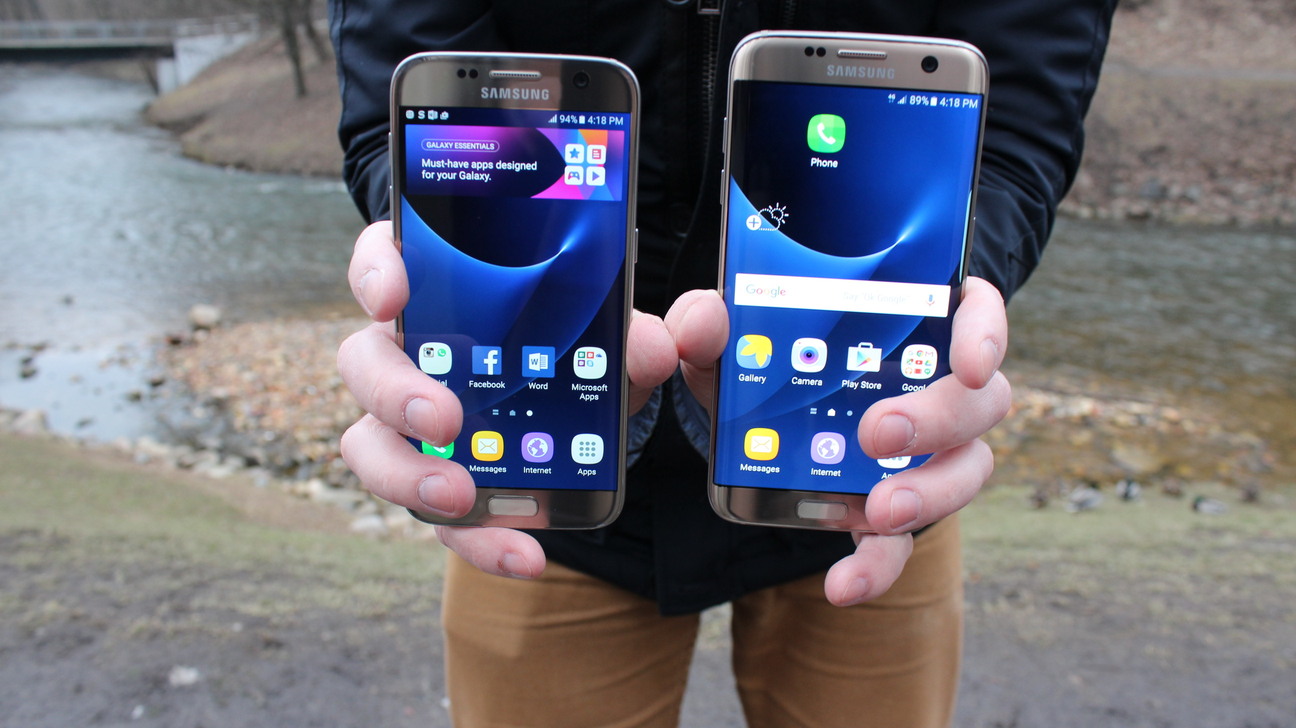
Samsung ends security support for the Galaxy S7 and S7 Edge

There is always an end to everything with a beginning. That is a popular mantra and it seems to apply presently to the Samsung Galaxy S7 and S7 Edge. Samsung has announced the end of software support for the 2016 flagship models.

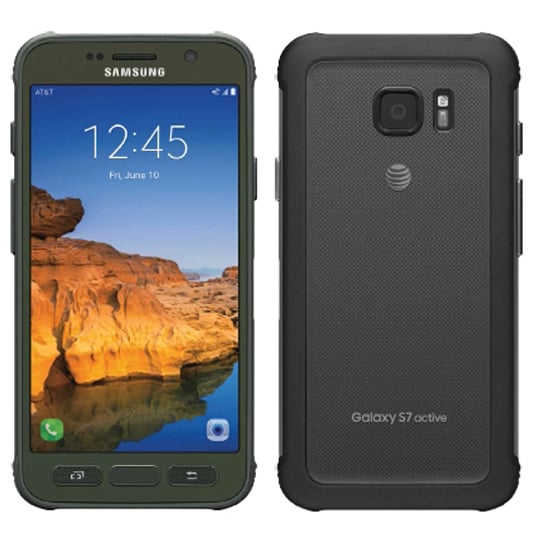
Samsung Galaxy S7 active
Samsung Galaxy S7 Active is still listed but that won’t be for long

This is coming after four years since the models were launched. The two models were already in the quarterly Security update cycle and had just received the March 2020 security patch last month. The models have now be delisted from Samsung’s Android Security Updates device database. Curiously, the Galaxy S7 Active is still listed to receive quarterly security patches but that is maybe because it was launched after the Galaxy S7 and S7 Edge. The S7 Active may not be listed for long. However, 4 straight years of security support Is an impressive one from the Korean giant.

The Samsung Galaxy S7 and Galaxy S7 Edge were launched in 2016 with ANdroid 6.0 Marshmallow onboard. Samsung released two full Android version updates, that is Android 7 and Android 8.0 Oreo which was the last it got in 2018. Since then, the phones have received quarterly security updates which seems to have now ended. The S7 series launch was beclouded by the Galaxy Note 7 which launched a few months later but became ill-fated as a result of defective batteries that resulted in several exploding units.


(source)


Apple planning to scrap the Beats headphone lineup due to AirPods’ success

Apple acquired Beats Electronics on August 1, 2014, for $3 billion in a cash and stock deal. The deal was the largest acquisition in Apple’s history and since then, the brand has continued to soar higher and higher. However, there are reports that the US tech giant is planning to retire the Beats brand.

A tweet by Jon Prosser hints that Apple is working on several Beats-centric products for the AirPod line. The end goal is to see that the inventory is reduced as part of the long term project of reducing Beats inventory. The AirPod X is one of the upcoming products and it will be similar to the BeatsX earphones with a connecting cable for sports and running. The headphones will come with a premium design and will retail for $350. The product is targeted at wrestling some market share from Bose and Beats itself.

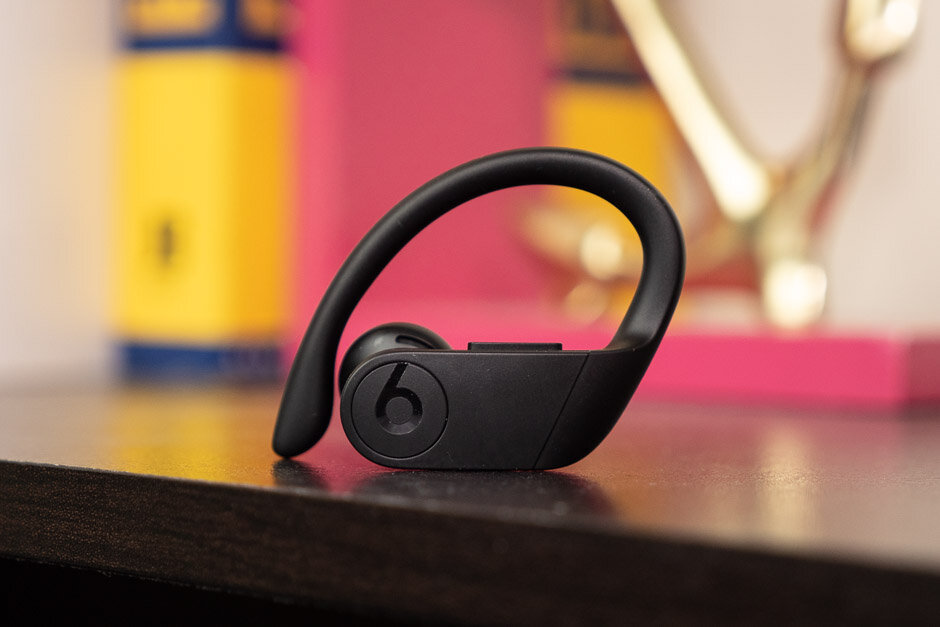
Apple is also offering good discounts on the Beats lineup as part of this long-term plan. In this regard, the Totally Wireless Powerbeats Pro which is less than one year since it was launched has already gotten a huge $50 slash in its price on the official website. Apple has also taken the decision to reduce the price of its Beats Solo Pro over-ear headphones by $50 as well. Apple employees are also being offered a 40% discount on the Beats products. This is seen as an attempt to reduce the inventory.

Apple launched its own branded true wireless earphones in late 2016 and it was a huge hit. The AirPods became the best-selling wireless earphones globally in a short time. The second-gen version was launched in March 2019 and the AirPods Pro with noise-cancelling features was launched in October 2019. The products helped propel Apple to a 54.4% market share with a whopping 58.7 million shipments last year. The growth of the AirPods line is responsible for the US company’s decision to phase out the Beats brand. For now, Apple looks to be trying to reduce inventory and the Powerbeats 4 may well be the last product under the brand.


Renders of OnePlus Warp Charge 30 wireless charger leaks

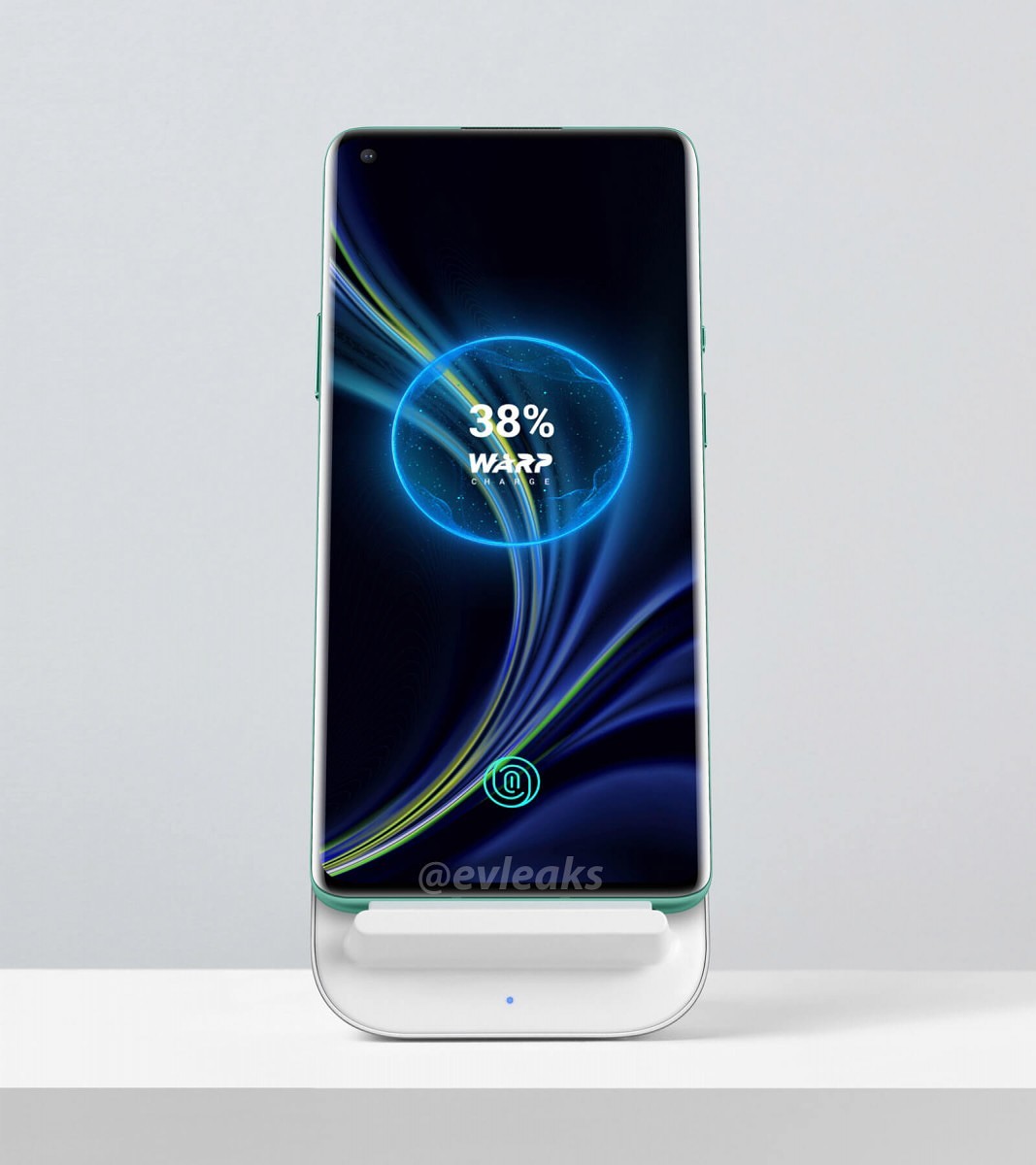
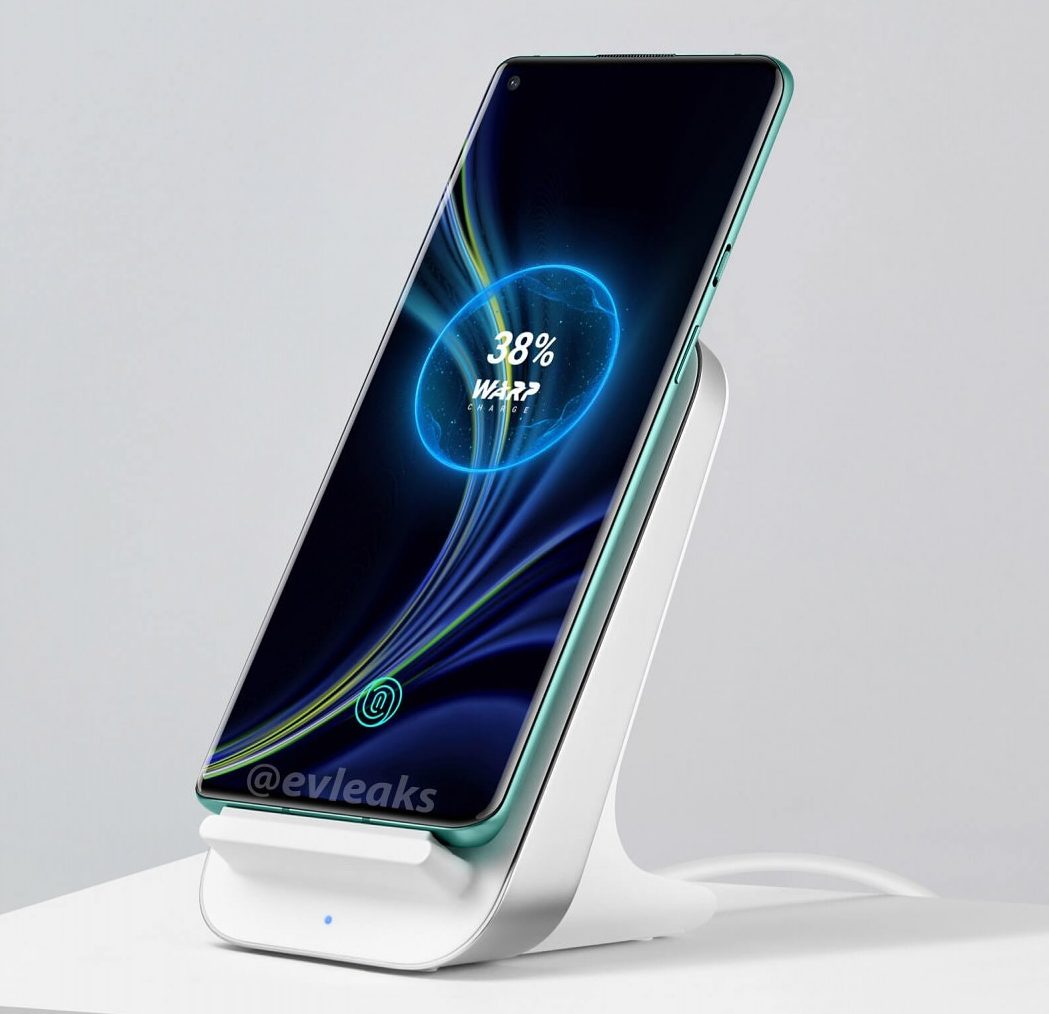
It has been confirmed that OnePlus’s wireless charging technology will be called Warp Charge 30 Wireless. Press renders of the wireless charger have been leaked, giving us an early look at the product.

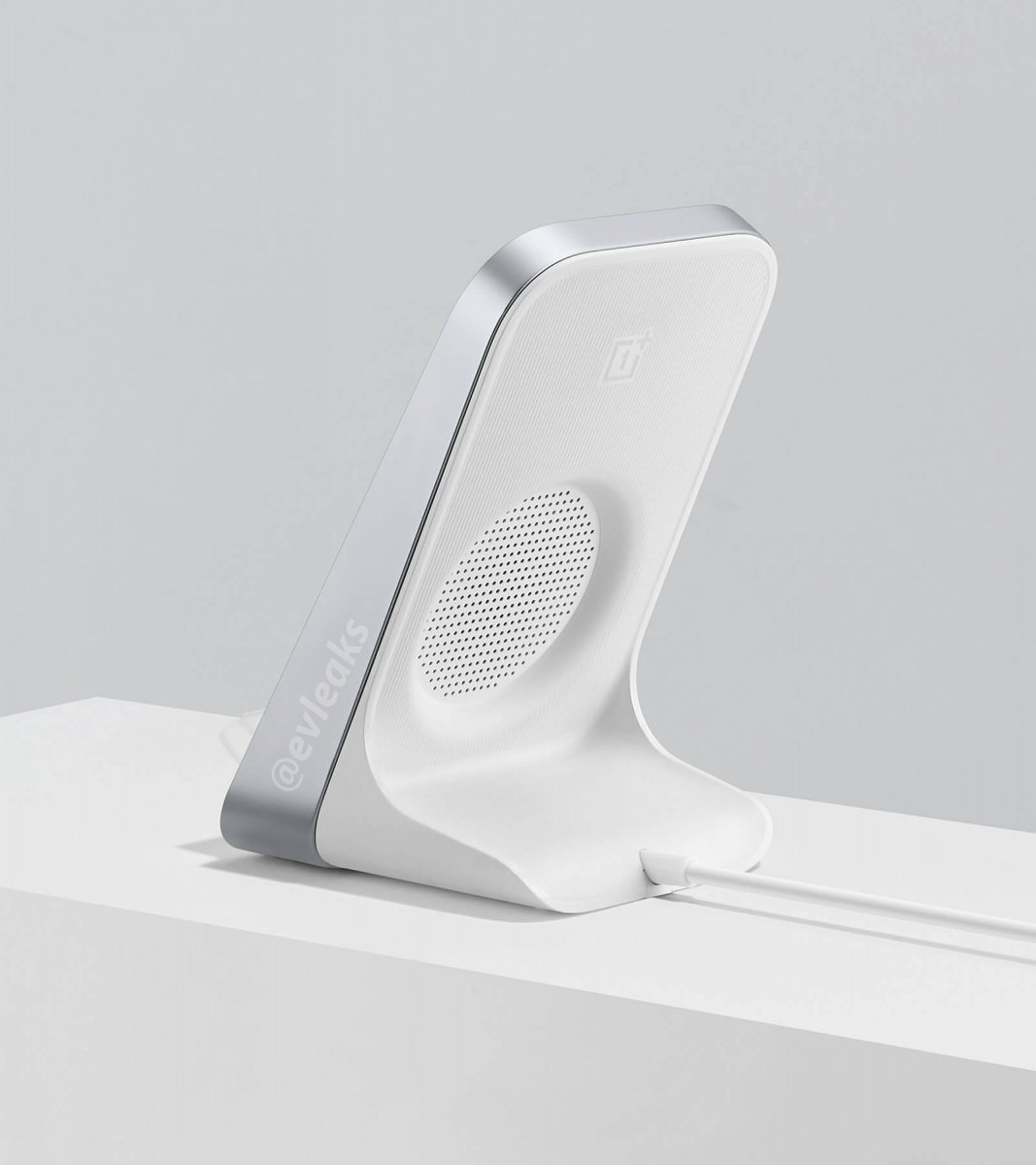
The renders reveal the OnePlus Warp Charge 30 Wireless Charger has a vertical stand design. The charger is white with a silver plate around the edge. There is also an LED at the base to let you know when it is powered on.

The wireless charger also has a grille at the back to help with heat dissipation and most likely has a built-in fan too. Based on one of the images, it doesn’t look like the cable at the back of the charger can be removed.

The OnePlus Warp Charge 30 Wireless Charger will charge the OnePlus 8 Pro from 1% to 50% in just 30 minutes. It has a maximum output of 30W but should be able to charge other devices that support the Qi standard.

There is no info on the price of the charger but we doubt it will cost less than $50.


Official: OnePlus 8 Pro will have 30W Wireless Charging support and Better Haptics

OnePlus will be announcing the OnePlus 8 series globally on April 14, followed by a separate launch event on April 16 in its home country, China. Though we are a week away from the launch, all the specs including the design of the phones are already out in the open. Now, the company itself confirms the presence of 30W wireless charging support on the OnePlus 8 Pro.

OnePlus Warp Charge 30 Wireless Charging

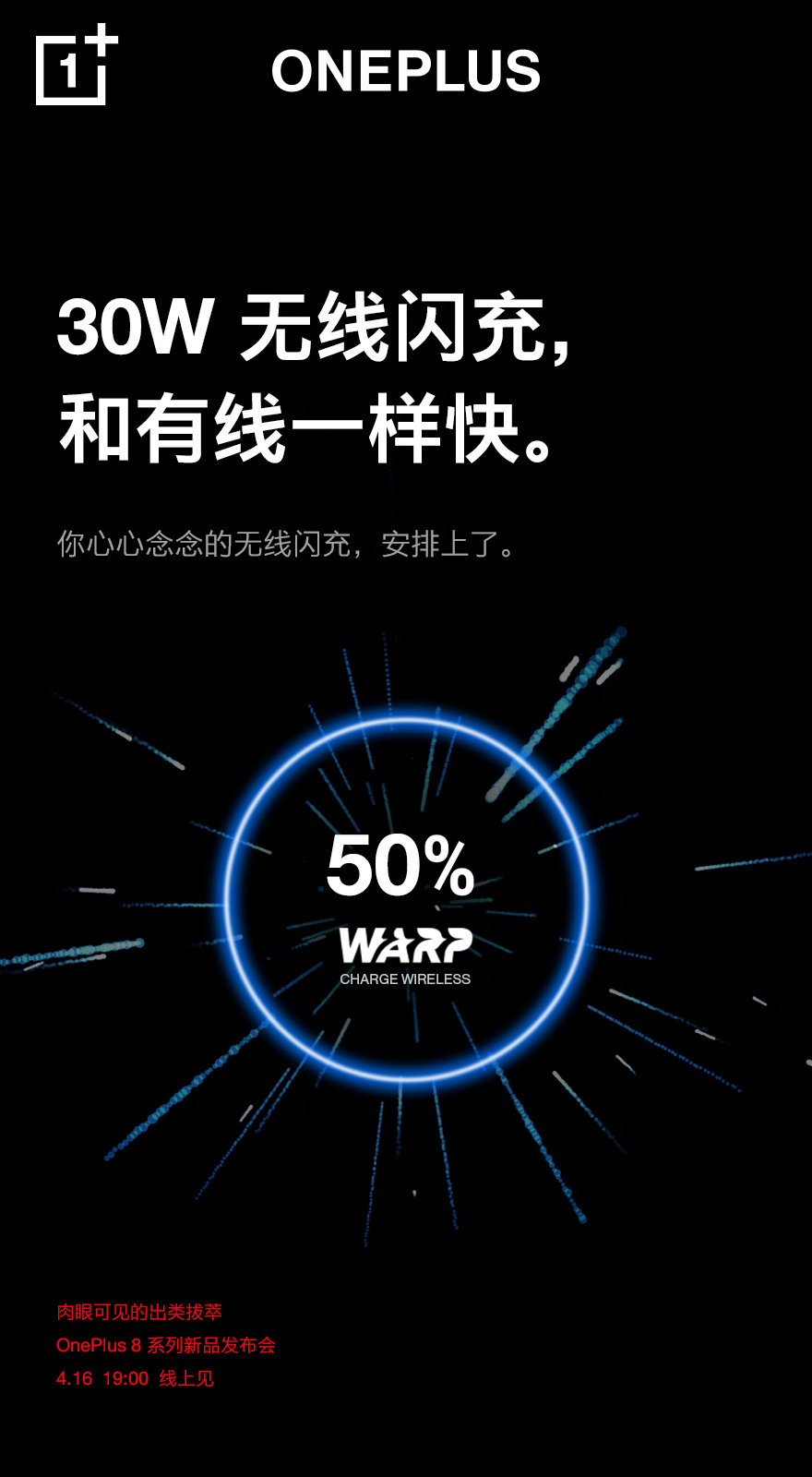
OnePlus Warp Charge 30 Wireless Official Announcement

Oneplus 8 series is expected to consist of OnePlus 8, OnePlus 8 Pro, and  OnePlus 8 Lite(also known as OnePlus Z). However, only the Pro model will have support for the new Warp Charge 30 Wireless, confirms Pete Lau, the co-founder of OnePlus on Weibo as well as in an interview with The Verge. Additionally, even the company has made an announcement on the same in the OnePlus Community.

The new Oneplus Warp Charge 30 Wireless Charger will be able to charge the Oneplus 8 Pro from 1% to 50% in 30 minutes with an efficiency of 97% by minimizing the amount of energy converted into heat. The charger utilizes isolated charge pumps, which also act as a kill switch if something goes wrong to provide fast and stable charging. Also, the charger and OnePlus 8 Pro will communicate while charging with the help of a customized chip in the phone to provide maximum efficiency.

Since Qi is the most commonly used wireless charging standard, the OnePlus 8 Pro will also have support for it, in addition to the EPP wireless charging standard. But these chargers will be only capable of charging the phone at relatively slower speeds of 5W and 10W respectively. Interestingly, although Warp Charge 30 Wireless tech is proprietary, Pete Lau is open to licensing it to other companies.

Anyway, the 30W wireless charging on OnePlus 8 Pro will be not the fastest wireless charging on a phone. That title goes to the Huawei P40 Pro Plus with a 40W wireless charging support and the upcoming Oppo Ace 2 with the same speed. The OnePlus device, on the other hand, ties with the Xiaomi Mi 10 Pro.

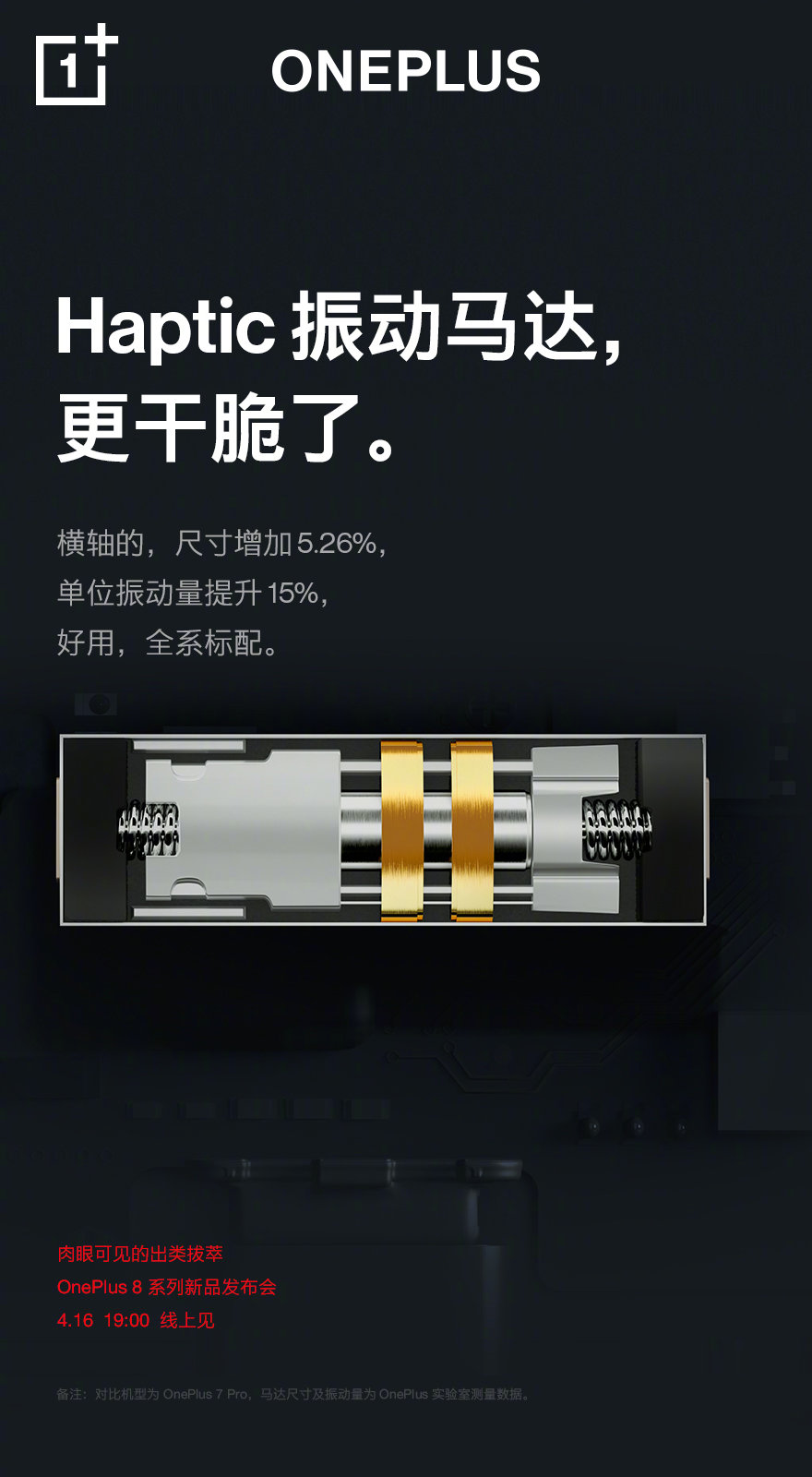
OnePlus Haptics Teaser

A Weibo teaser from official OnePlus account also confirms the presence of a new improved haptic motor with 15% more vibration than the previous generation. Whereas the second teaser also confirms a new wireless charging animation on the OnePlus 8 Pro featuring the text ‘Warp Charge Wireless’.

As per the recently leaked renders of the OnePlus Wireless Charger, it will be white in colour with metal around the edges. The front will feature an LED indicator and the back will house a large vent as well as a port (could be proprietary) for power supply.


(Source, Via)

Huawei donates over a Million Masks, 30,000 Goggles, and 50,000 Pairs of Gloves to Canada

Huawei has been continuously helping severely affected nations by COVID-19 virus around the world by donating personal protecting equipment (PPE). The latest country to receive aid from the Chinese telecom giant is Canada in the form of masks, goggles, and gloves.

huawei-logo-featured

Huawei has quietly donated more than a million masks, 30,000 goggles, and 50,000 pairs of gloves to Canada. The North American country is currently facing a shortage of PPE supplies like other harshly affected countries. This is mostly because a large global supply of PPE is manufactured in China and those factories were closed during the coronavirus outbreak in the country.

According to the source, Huawei has plans to donate six million masks to Canada, however, out of which, only 200,000 units will be N95 masks. As of now, over a million masks have been already received by the country as mentioned earlier. The remaining units are expected to be delivered soon.

Earlier in February, Canada donated 16 tonnes of PPE to China when the coronavirus outbreak was in its peak in the country. Now, as China is slowly recovering, it has started helping other nations in need. A number of Chinese companies like Huawei, Alibaba, Bank of China, Tencent, Trip.com, and others have been donating PPE and funds.


(Via)

AnTuTu listing confirms some Meizu 17 specifications

A few weeks ago, a full spec sheet and pricing details of the upcoming Meizu 17 got leaked. Now, an AnTuTu benchmark result has surfaced online that confirms some of those specs.

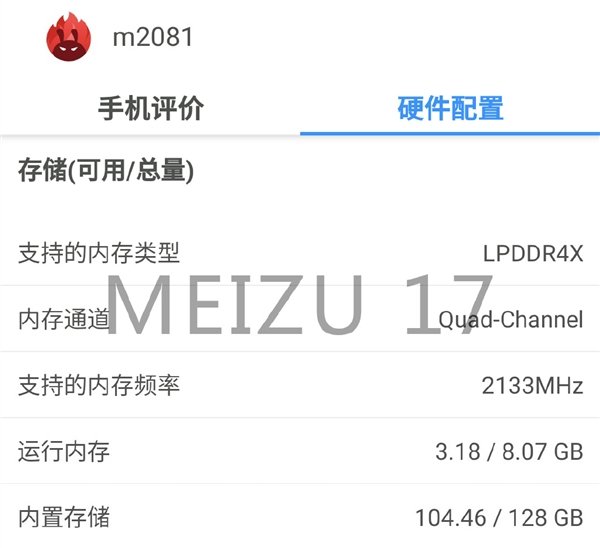
The benchmark result reveals the phone’s model number is “m2081”. It also confirms that the phone will have 8GB of LPDDR4X RAM and 128GB of storage. This goes along with the earlier leak which revealed that the base model will have LPDDR4X RAM while the other variants will have LPDDR5 RAM.

Meizu 17 AnTuTu

The Meizu 17 will have a 6.5-inch AMOLED display with a 90Hz refresh rate. Powering it is Qualcomm’s Snapdragon 865 processor along with a Snapdragon X55 5G modem. The phone will also come in 8GB RAM + 256GB and 12GB RAM + 256GB models. The spec sheet says the storage is UFS 3.0 and we expect this is the same type used for the base model too.

Meizu’s flagship phone will have four rear cameras arranged horizontally. The primary camera is a 64MP Samsung GW1 sensor. There is also an 8MP ultrawide camera, a 5MP telephoto camera, and a 2MP depth sensor. The configuration for the selfie camera is yet to be revealed.
The Meizu 17 will have stereo speakers, Dolby Atmos, a vertical linear motor, and an in-display fingerprint scanner. It will also have a 4500mAh battery capacity with support for 30W fast charging.

Meizu yet to announce a release date for the phone.


(Via)

China ends the US’ 41-year reign as the top patent filer in 2019, Huawei also leads

Are you still wondering how Huawei suddenly became a force to reckon with in the tech sector? The company has stated repeatedly that its rise is hinged on the huge investment in R&D but some are still unconvinced. The World Intellectual Property Organisation (WIPO) performance report for 2019 may well provide a definitive answer. The report which was released today showed that Huawei filed a total of 4,411 patents under the international patent system (also called Patent Cooperation Treaty – PCT). This makes Huawei the top corporate filer globally.US China trade war

The WIPO report also revealed another sensational news, and that is the performance of China. According to WIPO, China surpassed the United States of America (U.S.) in 2019 as the top source of international patent applications filed with WIPO. Applications from China filed using WIPO’s Patent Cooperation Treaty (PCT) System reached 58,990. On the other hand, the US filed 57,840 applications in the same period. This makes China the biggest user of the PCT System that helps incentivize and spread innovation.

It is worthy of note that the US had held this position each year for the past 41 years, which is since the PCT began operations in 1978. For comparison, as of 1999, WIPO received just 276 patent applications from China. But in 2019, the number of Chinese patent applications had risen to 58,990. That is a 200-fold increase in only twenty years.

Back to the corporate patent segment, leader Huawei is followed by Mitsubishi Electric Corp. of Japan with a total of 2,661 patents. In the third position is Samsung Electronics with 2,334 patents. Qualcomm is ranked fourth with 2,127 patent applications while Oppo Mobile occupies the fifth place with 1,927 patent filings. In summary, the top 10 applicant list comprises four companies from China, two from the Republic of Korea, and one each from Germany, Japan, Sweden and the U.S. Of the top 10 applicants, six filed mainly in digital communication, namely, Ericsson, Oppo, Huawei Technologies, LG Electronics, Samsung Electronics and Qualcomm.

huawei-store logo
Huawei is known for innovation

WIPO’s Director General Francis Gurry in his video broadcast stated, “2019 was the year that was.… Last year was the best year we have experienced in the course of the past decade. In fact, it was the best year we have experienced in the history of the Organization”.

“China’s rapid growth to become the top filer of international patent applications via WIPO underlines a long-term shift in the locus of innovation towards the East, with Asia-based applicants now accounting for more than half of all PCT applications”, the WIPO director added.


(source)


Flyme OS to adopt Android 10 Dark Mode, Will work on Unsupported Apps too

Meizu introduced dark mode, known as Night Mode on Flyme OS 7 long before Google brought it in native Android. Now as Android 10 officially supports dark mode, the company has decided to adopt the native solution in its latest Flyme OS 8 along with an option to force dark mode on unsupported apps.


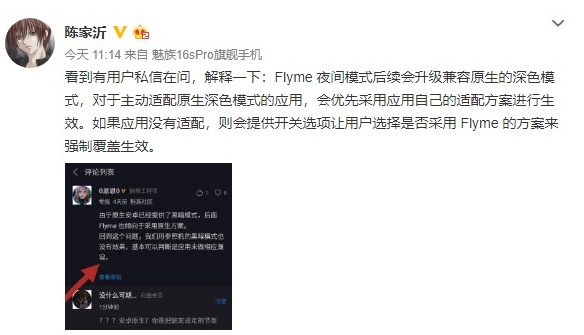
Meizu’s FlymeOS is one of the richest Android skin in terms of features and functionality. Also, it was one of the first to bring dark mode which is now ubiquitous. Now, according to a Meizu FlymeOS executive, the Android skin will adopt the official Android 10 dark mode to enable dark mode on supported as well as unsupported apps.

Normally, on Android 10, when the user turns on dark mode, the supported apps also reflect the change. But Meizu will go one step ahead and provide an option in FlymeOS 8 to force dark mode on unsupported apps as well. Anyway, this features is not new as it is present on ColorOS 7 and Realme UI. Even OxygenOS is about to get this feature according to a finding in a recent open beta update for the OnePlus 7 series.

For those who don’t know, dark mode on FlymeOS 8 is in its second iteration called Night Mode 2.0. Enabling it will reflect even on static and dynamic wallpapers along with UI and apps. Do check our launch coverage of FlymeOS 8 to know all of its features.