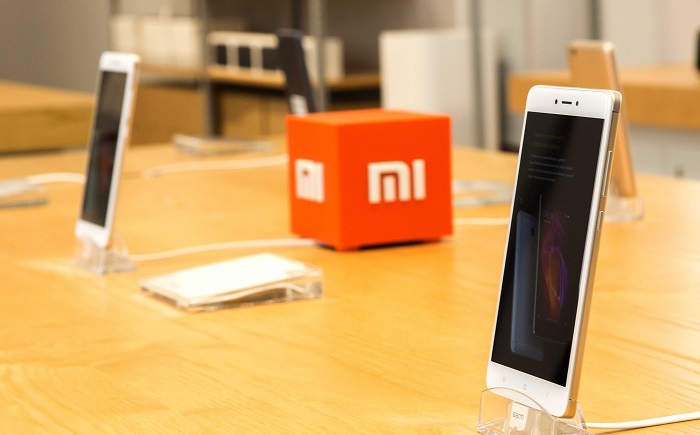
Last week, Xiaomi India announced the donation of N95 masks to the medical workers in the country who work tirelessly to fight the coronavirus outbreak. Now, once again, Manu Kumar Jain, the Managing Director of the Indian arm of the Chinese smartphone makers pledges a total amount of INR 15 crore for a couple of relief funds and NGOs to help the people in need.
1) Prime Minister's relief fund 2) CM's fund across states 3) Masks & suits for doctors 4) @GiveIndia partnership on Mi. com 5) Helping needy with NGOs
India is the biggest market for Xiaomi outside its home country China and the company has been leading the smartphone market in this country for over two years now. Being a popular brand in the region, the firm has been donating to NGOs on a regular basis. Even now, when the COVID-19 virus outbreak begun in India, Xiaomi was the first smartphone brand to donate masks and hazmat suits.
Followed by that, the company now pledges a sum of INR 15 crore to fight the coronavirus in India. Out of the total amount, INR 10 crore will be donated to PM relief fund as well as CM relief funds of various states of the country. Further, the company has partnered with an NGO called GiveIndia to raise INR 1 crore to make hygiene kits consisting of soaps, sanitizers, and masks available for 20,000 families.
Whereas, the remaining amount will be covered by donations made earlier and by 1000+ Xiaomi employees and partners who are requested to make donations to PM and CM relief funds. Also, Mr. Jain urges Mi Fans to donate for this good cause either on Mi.com or directly to the respective relief funds.
AirStar, a virtual banking service provider backed by Chinese smartphone maker Xiaomi, has now announced the launch of a pilot program in Hong Kong. The company has revealed that the pilot trial for the service will be conducted within the Hong Kong Monetary Authority’s Fintech Supervisory Sandbox.
As a part of this pilot project, the company will be onboarding around 2,000 users on the platform, which will be employees of Airstar, Xiaomi Hong Kong and AMTD Group as well as their friends and family members. This will help the company gather user feedback and gauge requirements ahead of a full roll-out.
Airstar will be offering tiered-pricing savings deposits with an interest rate of up to 1% per annum for deposits between HK$500,000 and HK$1 million. Customers also have flexibility to customize the time deposit maturity dates, such as a 8-day, 19-day or 27-day time deposit. They can also terminate the time deposit anytime prior to maturity without any penalty or surcharge.
Unsecured lending products will also be available to customers with transparent pricing and the interest will accrue on a daily basis. The company says that customers can repay in advance without paying any handling fees.
Commenting on this development, Airstar’s spokesperson said, “Airstar strives to embrace innovation and financial inclusion, and promotes ‘Financial Innovation for Everyone’. We truly believe Airstar will be a valuable contributor to the banking industry in Hong Kong, and become ‘Everyone’s Bank’.”
Airstar Bank is a joint venture between Chinese electronics company Xiaomi and AMTD Group – Asia’s largest independent corporate finance and advisory house. It was among the eight firms to receive a virtual bank license from HKMA in 2019 and is the second to launch trials, following ZA Bank. It is expected to officially begin operations in July 2020.
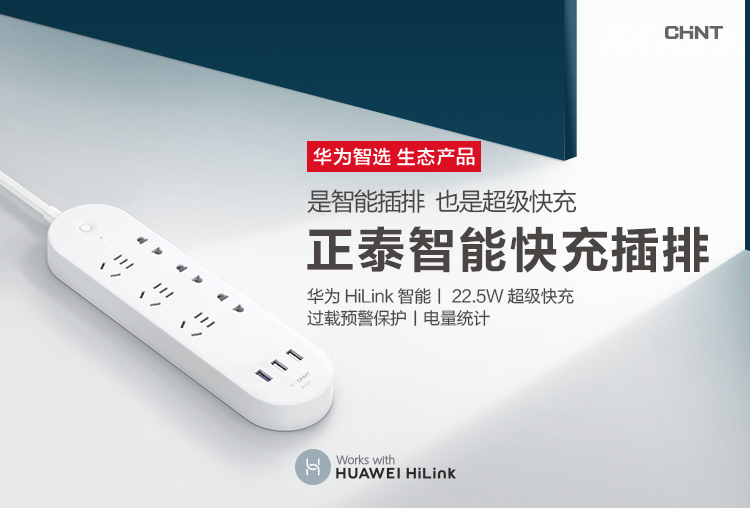
Huawei announces a new IoT product called ‘Huawei HiLink Zhengtai Smart Power Strip’ with support for 22.5W fast charging in China. It is already up for crowdfunding on the company’s official online store in the country for only 129 Yuan ($18).
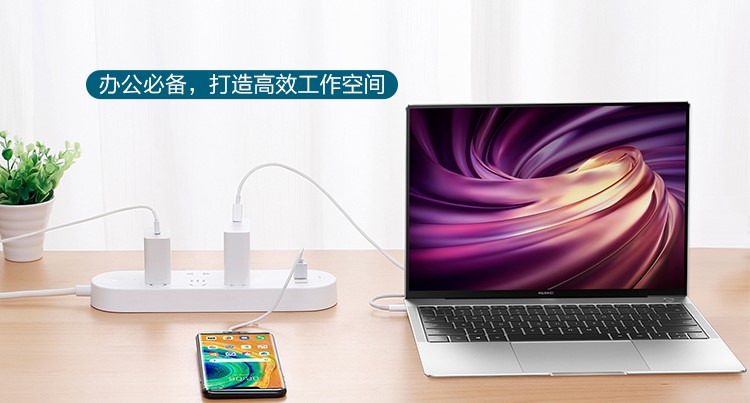
The new power strip from the company comes with a total of 9 sockets including 3 USB ports, out of which only one in purple colour supports Huawei’s proprietary 22.5W fast charging technology. That means, this port can be used to fast charge a wide range of Huawei / Honor devices such as Mate 20 Pro, Mate 30, Mate Xs, P30 Pro, Nova 5 Pro, Honor V30, MatePad Pro, and more. Whereas, the remaining two USB ports can be used for devices that require low power.
The other 6 normal sockets can be used to plug-in a variety of electronic products including household appliances. Additionally, as this power strip has a Huawei HiLink Certified Wi-Fi Module and runs the company’s IoT operating system called LiteOS, it can be controlled using a respective app on a smartphone/tablet along with voice control. Thus, non-smart home appliances can be made smart by plugging them into this power strip as it comes with a number of features including power management, remote switching with timer, and more.
With all these features, the power strip also comes with the necessary safety measures which make it withstand up to 850-degree Celcius. In a nutshell, apart from delivering power to the electronic products, it also acts as a hub for Huawei HiLink smart home ecosystem.
Xiaomi has announced that the company will be holding a new event on 3rd April and as a part of its Mi Fan Festival to celebrate the 10-year anniversary, it will be announcing 22 new products.
However, the company has not yet revealed what those products will be that will get launched on 3rd April for the Mi Fan Festival. To know, we’ll have to wait for the official event that will kick-off at around 02:00 PM local time in China.
While the company has not revealed details about the upcoming products, we expect that Xiaomi will be launching several smart home products, a category which the company has been highly focused on.
This is a similar move from Xiaomi last year where the company had announced 20 new products as a part of its Mi Fan Festival 2019. However, do note that not all the devices are debuted but some of them have already been launched but might get relaunched at a crazy pricing for the Mi fans.
To find out what’s up the company’s sleeves this time for the Mi Fan Festival 2020, we’ll have to wait for the kick-off on 3rd April. The development comes just as the company is recovering from the disruption caused by coronavirus in China.
After months of leaks and reports, OnePlus has now confirmed that the upcoming OnePlus 8 series flagship smartphones will be officially launched on 14th April. Because of the coronavirus pandemic, the launch event will be hosted online.
Ahead of the launch of the OnePlus 8 and 8 Pro smartphones, the company has already revealed some of the key features of the upcoming devices. Now, in a new forum post, the company’s founder and CEO Pete Lau talks about improvements in the OnePlus 8 phones.
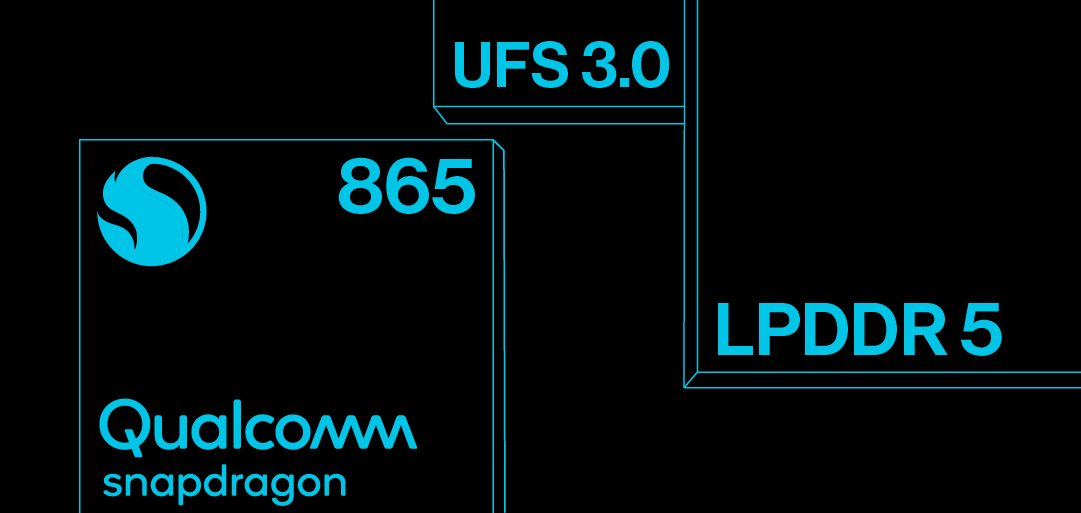
He confirms that the OnePlus 8 series will come powered by the Qualcomm Snapdragon 865 processor which promises 25 percent increase in CPU and GPU performance while reducing power usage by 25 percent.
Further, the chipset offers a 16 percent reduction in power consumption when shooting videos and a 40 percent increase in video noise pixel processing power. Pete says that its AI performance is at least twice as fast as its predecessor, thanks to the Hexagon 698 DSP, which also offers 35 percent better power efficiency.
As for the memory, the devices will come packed with LPDDR5 RAM for the first time in a OnePlus device. Its transfer rate reaches a blazing 6,400Mbps at a bandwidth as high as 51.2GB/s and 45 percent less power compared with the previous generation.
The devices use UFS 3.0 flash storage which is capable of dramatically raising read and write speeds to about 1,700MB/s. The company has also introduced Turbo Write and Host Performance Booster to further increase the performance.
Turbo Write uses the upper section of the ROM’s storage as a high-speed read/write interval, allowing each read/write to enter high-speed buffer, and then proceed to the next command of data transfer. On the other hand, HPB (Host Performance Booster) can further improve the random read performance after extended use.
OnePlus had previously confirmed that its flagship smartphone will come with the newly announced 120Hz refresh rate display. The devices will also have support for the 5G communications technology, in line with other flagships in the market.
A couple of weeks ago, the Indian government announced that mobile phones will fall under 18 percent GST slab, increasing the tax rate by 50 percent. Previously, the GST rate for mobile phones was set at 12 percent in India.
While several industry leaders complained about the change and requested the government to reconsider the decision, there has been no change yet. As the new tax rate takes effect from today, i.e. 1st April, smartphone manufactures have now increased pricing in India.
Xiaomi has announced that the pricing for Mi and Redmi branded smartphones in India has been increased following the 50 percent hike in GST. The company says that it has no choice other than hiking the prices of their products with the new GST rates in place effective today.
The company also cited the continuous depreciation of the Indian rupee against the US dollar as one of the reasons to hike pricing. Xiaomi has said that the newly updated pricing will soon appear for devices on Mi.com.
Another smartphone brand that increased pricing is OPPO but the company has not yet officially announced this move. As per the report, it has started notifying dealers and partners across the country about its plan to increase pricing.
It seems that the company could not have picked up the worse day to announce this price hike given that today is April Fool’s day and many will consider this announcement from Xiaomi to be a joke. But, to be clear, this is not a joke and the prices for Xiaomi’s smartphones have gone up on Flipkart.
Apple has been working on a low-cost iPhone, which could be named iPhone SE 2 or iPhone 9, and will serve as the successor to the iPhone SE launched back in 2017.
The smartphone is said to go official before its WWDC 2020 event. While the phone was expected to launch at an event on 31st March but that event was reportedly cancelled amid the on-going coronavirus and issues related to that.
Now, as per the latest report, the company is all set to launch the iPhone 9 aka iPhone SE 2 on 15th April. It reports that while the phone’s official announced will happen on 15th April, the device will be available for purchase from 22nd April.
However, the source also mentions that given the current situation related to the coronavirus in the United States, the schedule could get changed. He added that the details are based on internal meeting held by Apple.
The timeline makes sense given that it was recently reported that the upcoming low-cost iPhone has entered final stage of production. The timeline also falls under the claims by analyst Ming-Chi Kuo that the phone will launch in the first half of 2020.
The iPhone SE 2 aka iPhone 9 is expected to have design similar to the iPhone 8 but will be powered by the A13 chipset — the same SoC that powers the iPhone 11 series. The phone is expected to have a 4.7-inch display but we don’t expect higher quality because of cost-cutting measures.
As per the reports, the pricing for this upcoming iPhone could start at just $399. However, to know for sure what the device packs and how much it will cost, we’ll have to wait for a couple of weeks more for the the official launch announcement to take place.
Thanks to the latest devices released by Chinese mainstream brands, it is now possible to get the support to 5G connectivity even on a mid-range phone. Unlike last year, you do not need to spend a lot of money for a flagship anymore in order to take advantage of 5G networks. This is a comparison between three of the most amazing 5G mid-rangers and all of them went on sale recently with different chipsets, so different 5G modems as well. Honor 30S is the first smartphone packing the first 5G midrange chipset by Huawei, Xiaomi Mi 10 Lite comes with Qualcomm’s mid-range solution and Oppo Reno3 packs a MediaTek SoC. Here is an in-depth specs comparison. Note that the Oppo Reno3 in this comparison is the Chinese version with 5G connectivity, not the international one with 4G only.
Huawei Honor 30S vs Xiaomi Mi 10 Lite vs Oppo Reno3
Huawei Honor 30S
Xiaomi Mi 10 Lite
Oppo Reno3
DIMENSIONS AND WEIGHT
162.3 x 75 x 8.6 mm, 190 g
163.9 x 74.8 x 8 mm, 192 grams
160.3 x 74.3 x 8 mm, 181 grams
DISPLAY
6.5 inches, 1080 x 2400p (Full HD+), LTPS IPS LCD
6.57 inches, 1080 x 2340p (Full HD+), 392 ppi, AMOLED
Quad 48 + 8 MP + 5 + 2 MP f/1.8, f/2.2, f/2.4 and f/2.4
16 MP f/2.5 front camera
Quad 64 + 8 + 2 + 2 MP f/1.8, f/2.2, f/2.4 and f/2.4
32 MP f/2.4 front camera
BATTERY
4000 mAh, fast charging 40W
4160 mAh
Fast charging 20W
4025 mAh, Fast charging 30W
ADDITIONAL FEATURES
Dual SIM slot, 5G
Dual SIM slot, 5G
Dual SIM slot, 5G
Design
Despite we are not talking about flagships, these handsets offer a design made of premium materials, including a glass back and an aluminum frame. The front side of the Honor 30S is more attractive since it includes a punch-hole and notch-less display. But the Oppo Reno3 is more compact, thinner and lighter. Further, it comes with a less invasive camera module on the rear side. That is why I prefer it to its two rivals. I even like its gradient colors more.
Display
Honor 30S has a very interesting display since it is HDR10-compliant and it is able to provide a high image quality, especially on streaming platforms. But on the other hand, unlike Xiaomi Mi 10 Lite and Oppo Reno3, it has an IPS display and not an AMOLED panel. Oppo Reno3 may actually offer the most impressive panel, and it also packs an in-display fingerprint scanner, unlike the Honor 30S. With the Xiaomi Mi 10 Lite you still get an AMOLED screen and an in-display fingerprint reader, but with a wider diagonal: 6.57 inches.
Hardware/Software
There are big differences between Honor 30S, Xiaomi Mi 10 Lite and Oppo Reno3 if we talk about hardware. They have different chipsets from different chipmakers. On the paper, Oppo Reno3 is the most powerful with a high-end MediaTek Dimensity 1000L, but unlike its opponents, it does not feature expandable storage. Further, it only supports sub-6 GHz 5G frequencies and not mmWave. But MediaTek claimed it is the fastest 5G SoC in that spectrum. Honor 30S and Xiaomi Mi 10 Lite should be more or less at the same level with their upper-midrange chipsets. In each case, you get Android 10 out of the box with a highly-customized user interface.
Camera
Besides being the best performing phone the Oppo Reno3 is also the best camera phone of this trio. Its quad camera setup is the only to support OIS and it captures brighter and sharper photos, as well as amazing videos. Oppo Reno3 looks the best even when it comes to selfies, with its 32 MP front camera. The silver medal goes to the Honor 30S packing a 64 MP quad-camera with a telephoto lens offering 3x optical zoom, while you should definitely avoid the Xiaomi Mi 10 Lite if you are looking for amazing camera quality.
Battery
Xiaomi Mi 10 Lite will likely be the best device in terms of battery life and the reason is simple: it packs a bigger battery. Given that all of these devices are fueled by 7 nm chipsets, the battery capacity should make the difference more than hardware optimization. On the other hand, the 4000 mAh battery of the Honor 30S supports the fastest charging technology with a power of 40W: it goes from 0 to 70 percent in just 30 minutes.
Price
Honor 30S debuted with a starting price of about €310, Oppo Reno3 costs €440 in its base variant, and Xiaomi Mi 10 Lite starts from €350 globally. Despite the absence of expandable storage and mmWave 5G spectrum, Oppo Reno3 is the most advanced device of this comparison, especially due to its great cameras and very powerful chipset.
When HMD Global released its first Android 10 update schedule for its Nokia smartphones, the Nokia 7.2 was missing from the list of devices. However, the new update schedule released a few weeks ago now includes the device as well as the Nokia 6.2.
Sticking to its promise of an end of the first quarter of this year, the manufacturer has now released the Android 10 update for the Nokia 7.2.
Android 10 now available for Nokia 7.2! Check your phone to see if the latest features have already landed. For more news of Nokia smartphones and Android 10 visit https://t.co/FJfS4Gjt3dpic.twitter.com/9FHxZrddcZ
Android 10 brings a new navigation system, a system-wide dark mode, smart replies, new emojis, and lots more.
The changelog for the update, which comes in at 1.57GB in size, is below:
Dark Mode – take it easy on your eyes
Smart reply -Save more time with recommended actions
Gesture navigation – Get around with a swipe and a pull
Additional controls for privacy and location
Google Security Patch (2020-03)
The Nokia 7.2 was released in September 2019. it has a 6.3-inch FHD+ display with a notch. There is a Snapdragon 660 processor inside along with up to 6GB of RAM and 128GB of storage. A dedicated MicroSD card slot is available for extra storage.
On the back is a 48MP + 8MP + 5MP triple camera setup while the selfie camera is a 20MP sensor. You also have a rear-mounted fingerprint scanner, a 3500mAh battery capacity with 10W fast charging, NFC, and an FM radio.
Every mobile phone requires a SIM to work. It can either be an eSIM or a removable SIM. The average person knows that a SIM card is what allows them to connect to the service provided by a network operator.
Every mobile phone also has built-in storage which is where your phone’s operating system, pre-installed and downloaded apps, images, videos, and other files are stored. Some phones have a storage expansion slot that allows you to add extra storage to your device while others do not, which means if you run out of space, you have no choice but to delete files or back them up to the cloud or another device like your computer.
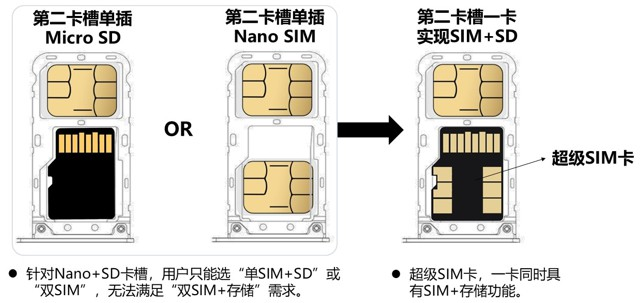
Talking about phones with support for storage expansion, some have a hybrid SIM tray that allows you to either use a MicroSD card or a SIM card in one of the SIM slots. So, if you are going to use up a slot for the MicroSD card, you can only use one SIM card on your phone.
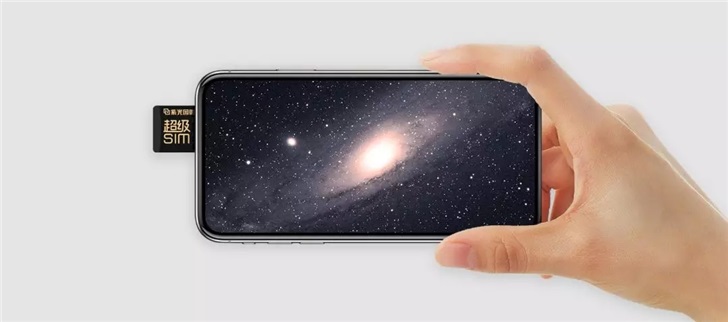
But it doesn’t have to be this way – if you own a Super SIM.
Image Source: ITHome
What is a Super SIM?
A Super SIM combines a SIM card and a MicroSD card into a single card. The first Super SIM was announced last year in China and it comes in various capacities starting from 32GB and goes up to 128GB. These Super SIM cards also have read and write speeds of 90MB/s and 60MB/s respectively.
A Super SIM (far right) combines a MicroSD card (left) and a Nano-SIM (middle) into one card. Image Source: OfWeek.com
When compared to what a traditional SIM can store which is about 128KB, a Super SIM can store millions more of data. Super SIMs also have a one-click backup and restore feature, so you can pop it into a new phone and have your data from your old phone restored. They are also secure (CC EAL6+ security certification) so you don’t have to worry about the safety of your data.
As a user, you don’t have to choose between a SIM card or a MicroSD card if your phone has a hybrid SIM tray. Just purchase a Super SIM and you have both additional storage and a second SIM.
For manufacturers, there is no need to make a phone with a triple card tray or one with a dedicated MicroSD card slot. This means, there can be extra space for a slightly larger battery or an extra component.
Disadvantages of a Super SIM
At the moment, Super SIMs are limited to China and are still pretty expensive. A 32GB Super SIM sells for ¥99 (~$14) while a 64GB card sells for ¥199 (~$28). That is pretty expensive when compared to the price of a MicroSD card with the same amount of storage.
While price will and can come down in the future, adoption is another thing. The first 5G SuperSIM sold in China is a partnership between China’s UNIIC memory technology Co. Ltd, makers of UNIC Memory and China Unicom. Unless more network operators adopt the Super SIM and partner with storage manufacturers, Super SIM may not become mainstream and may actually even be abandoned.
Another disadvantage is that a Super SIM can only work with a phone that has a hybrid SIM card tray. These rules out phones (especially flagships) without that type of SIM tray, thus making adoption difficult.
Another possible disadvantage is customers’ unwillingness to purchase a Super SIM and the hassle of replacing their regular SIM card with a Super SIM. With more people ordering phones online and just popping their SIM card into the new device, there isn’t a need to go to your network operator’s outlet for anything.
One question that pops up in relation to this is what happens to your Super SIM when you switch to a phone that doesn’t support storage expansion?
Is Super SIM the future of SIM cards?
While the Super SIM does have its advantages, it seems like a novelty feature and one that might not scale if network operators do not adopt it.
There is also the case of manufacturers such as Apple and OnePlus who will rather not add support for storage expansion to their devices.
Nevertheless, Super SIMs should be given a chance by more network operators. While a lot of flagships don’t have support for storage expansion, millions of mid-range phones and entry-level phones with a hybrid SIM tray are sold annually and these customers can be the target for Super SIMs.
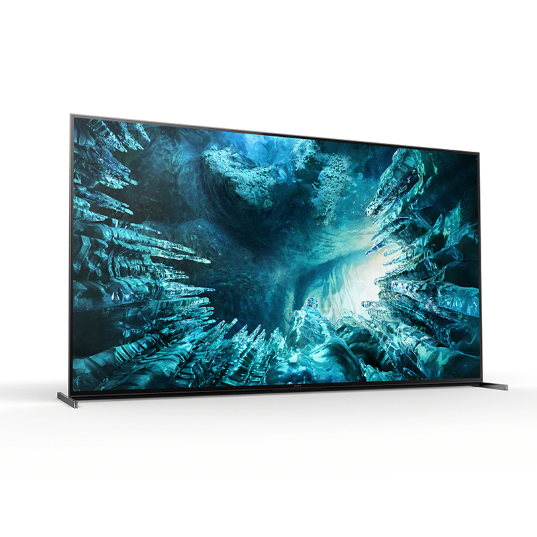
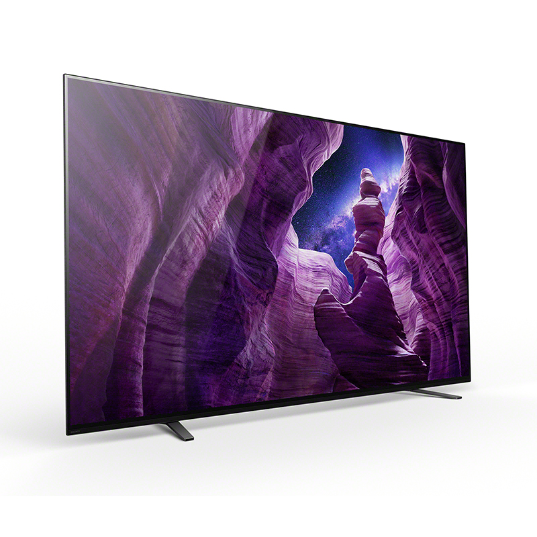
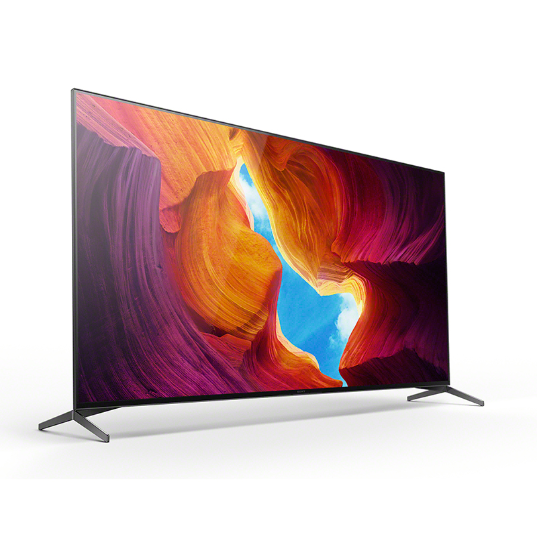
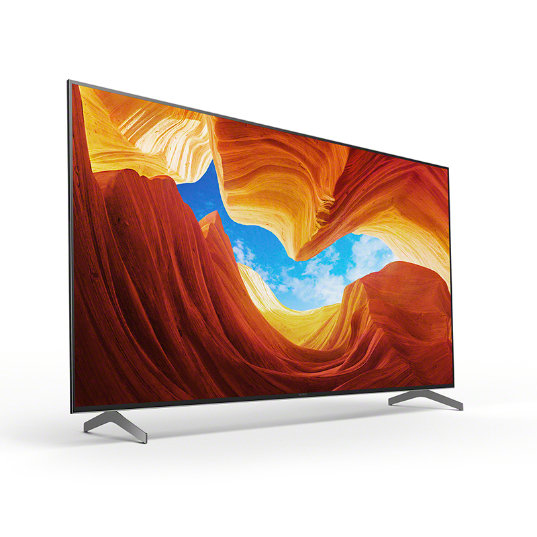
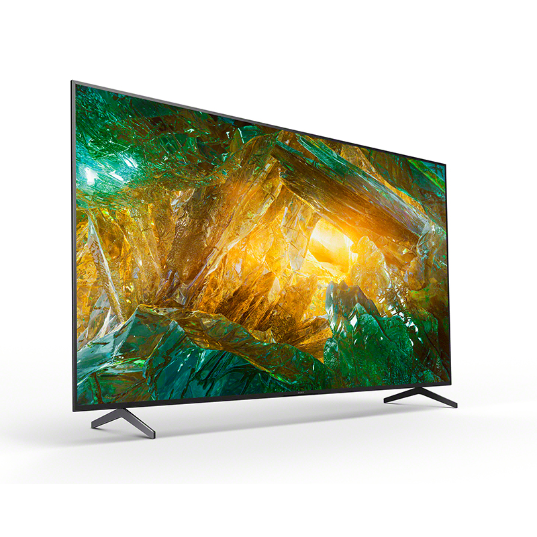
Sony has announced a new lineup of premium smart TVs in China as part of its Spring 2020 refresh. The company unveiled a total of 5 models namely Z8H, A8H, X9000H, X9500H, and X8000H respectively. All these models come in varying sizes and are targeted at a different set of customers. Also, these Sony TVs are debuting first in China and were made official via the company’s first online-only launch event in the country.
1 of 5
Out of all the models announced today, the Z8H is the only one with 8K LED panel and comes in two sizes. It is priced at 49999 Yuan ($7060) and 79999 Yuan ($11295) for the 75 and 85-inches versions respectively. This model is already up for pre-order until April 26 and the customers opting for it will get a Sony WH-1000XM3 noise-cancelling headphone as a freebie.
Further, the second model, which happens to be A8H, is the only 4K TV announced today with an OLED panel. Whereas, the X9000H, X9500H, and X8000H series of 4K TVs sport LED panels with full-array backlighting. However, all the models announced today come with the company’s TRILUMIOS, X-Reality Pro, and X-Motion Clarity display technologies. And they also have support for Dolby Vision and Dolby Digital Panorama Sound.
As for image processing, the Z8H, A8H, and X9500H feature Sony X1 Ultimate chip, however, the other two models have an inferior Sony X1 chip. But all of them run the company’s custom software skin based on Android 9.0 Pie.
Talking about targeted customers, Z8H is for those who want immersive movie theatre experience at home, A8H is for those who look for better eye protection, X8000H with up to 120Hz high refresh rate is for gamers, and X9500H is for sports lovers.
As far as pricing of the new 4K models is concerned, the 55, 65, and 75-inches variants of X9500H series will retail for 7999 Yuan ($1129), 12999 Yuan ($1835), and 20999 Yuan ($2965) respectively. Then, the 75 and 85-inches version of X8000H will cost 9999 Yuan ($1412) and 17999 Yuan ($2541) respectively. The company is yet to reveal the prices of A8H OLED and X9000H series of smart TVs.
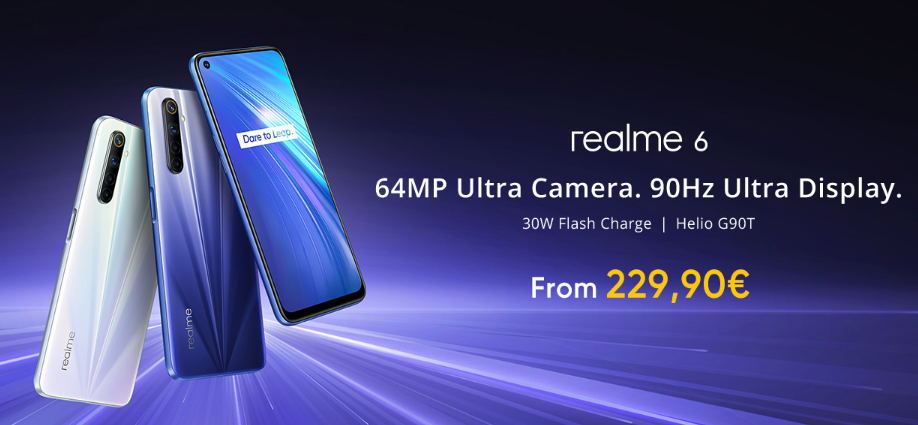
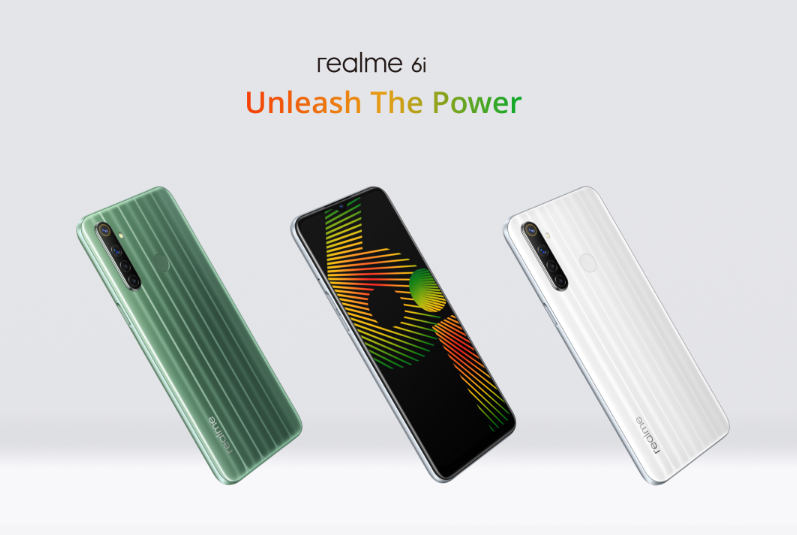
The Realme 6 launched in India early this month while the Realme 6i was announced in Myanmar a few weeks after. Both phones have now landed in Europe and will go on sale next month.
Realme 6
The Realme 6 will go on the first sale on April 6 at 10 AM GMT+2 but you can pre-order it now. It is available in three configurations – 4GB RAM + 64GB, 4GB RAM + 128GB, and 8GB RAM + 128GB. The base model will sell for €229.9, the 128GB version will sell for €269.9, and the 8GB RAM + 128GB version will sell for €299.9. The phone will be available in Comet Blue and Comet White on the Realme Online Store.
Realme will choose 10 winners among those who pre-order for a €30 coupon gift while every pre-order will get priority shipping. If you are among the winners, you have until April 6 to make use of the coupon to make a purchase on the Realme Store.
Do note that the promotion is only open to residents of Belgium, France, Luxembourg, Netherlands, and Portugal.
Realme 6i
The Realme 6i will go on sale on April 13 at 10 AM GMT+2 and will be available in just one configuration – 4GB RAM + 128GB – with a €199.9 price tag. The Realme store is not taking pre-orders yet but the phone will be available in Green Tea and White Milk color variants.
The Realme 6i is the first phone in the world with an Helio G80 processor. It has a 6.5-inch display with a waterdrop notch and a 16MP selfie camera. There are four cameras on the rear – a 48MP sensor, an ultrawide angle camera, a B&W portrait camera, and a 4cm macro camera.
The phone also has a rear-mounted fingerprint scanner, a 5000mAh battery capacity with support for 18W fast charging via USB Type-C, and a triple card tray for two SIM cards and a MicroSD card.
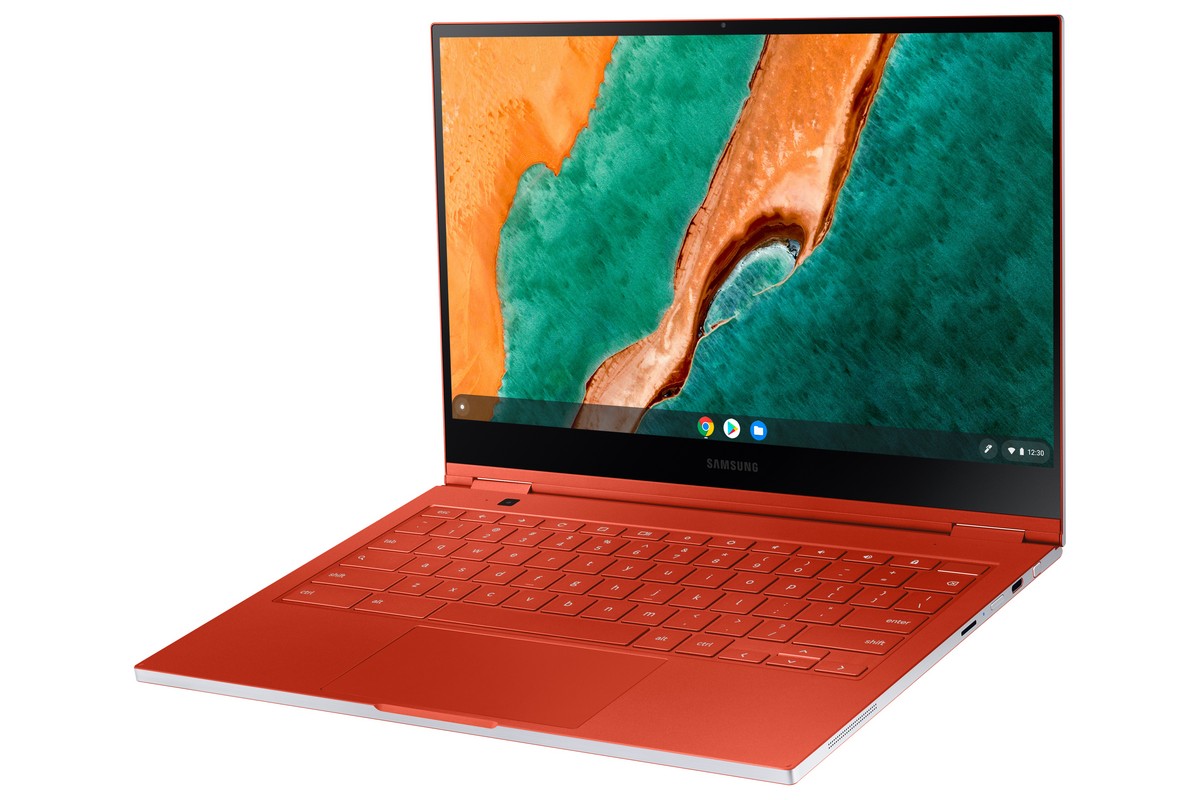
Earlier this year, during the Consumer Electronics Show 2020 (CES), Samsung unveiled its new premium and gorgeous-looking Chromebook, named Samsung Galaxy Chromebook.
Now, the company has revealed that the Samsung Galaxy Chromebook will be officially available for purchase in the United States from 6th April. The device is priced at $999 and comes in two color options — Fiesta Red and Mercury Gray.
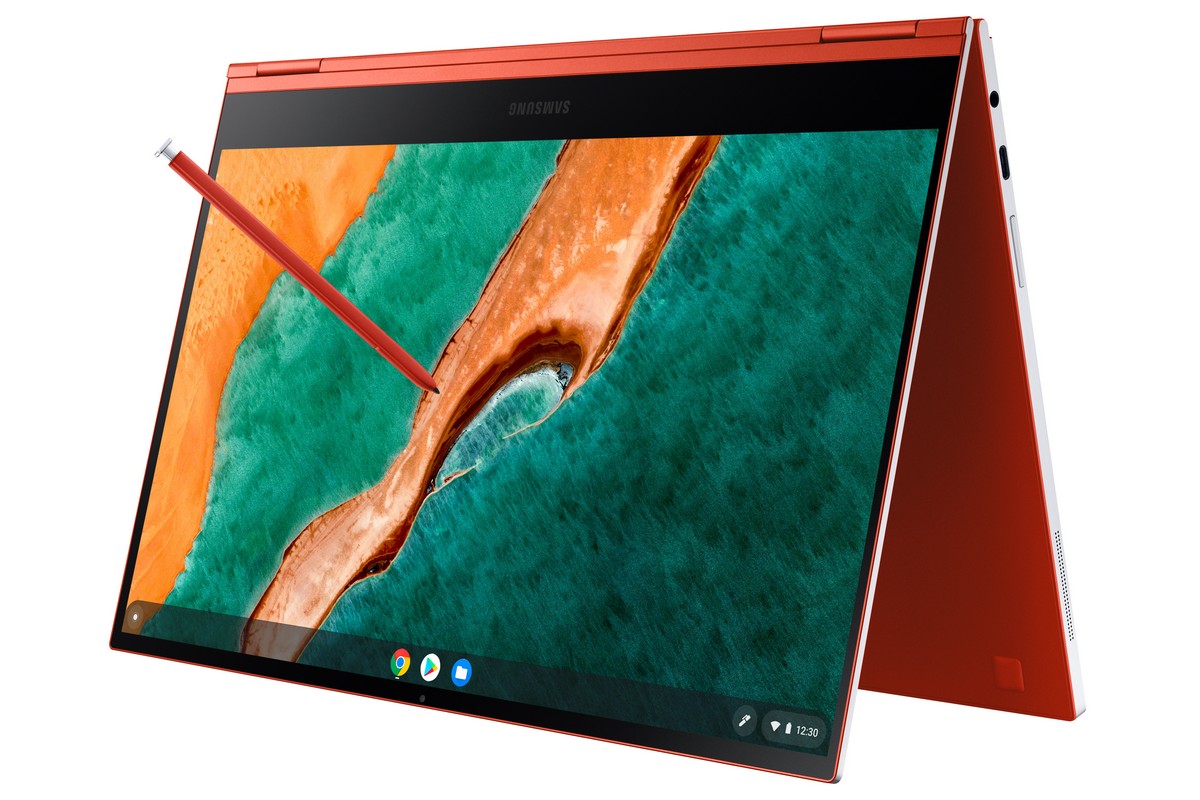
The Galaxy Chromebook is the first Chromebook coming from Samsung to have the Galaxy name. With an aluminum body design and a 4K UHD AMOLED touchscreen display, this new Chromebook seems to have been made to impress.
Coming to the specifications, it comes with a 13.3-inch 4K AMOLED touchscreen display with 3840 x 2160 pixels screen resolution. It is powered by Intel’s 10th generation Core i5 processor and is packed with up to 16GB of RAM (LPDDR3), and up to 1TB of SSD storage.
There’s a 1-megapixel camera placed above the display for video calling and another 8-megapixel camera placed above the keyboard, allowing you to take photos with it when using in tablet mode.
It also has a stylus that fits in a slot just beside the USB Type-C port on the left, allowing you to write and draw fluidly on the screen. You can also use it to navigate the system. Further, you get Google Assistant, stereo speakers (2W x 2), a fingerprint scanner, and a backlit keyboard. There’s WiFi 6 for superfast connectivity and the Galaxy Chromebook has two USB-C ports, a 3.5mm microphone and audio jack, and a UFS/MicroSD card slot.
Last week, when Huawei took the wraps off its P40 series, it also announced a new version of EMUI. The new EMUI 10.1 brings lots of new features including an AI Voice Assistant, a video calling app called MeeTime, new themes, and an improved AoD feature among others.
While it is a no-brainer that the Huawei P40 series will ship with the new version out of the box, the manufacturer knows folks are eager to know if their devices will get the update and when. Huawei has now released a list of eligible devices and the schedule for the EMUI 10.1 update.
According to the list, a total of 36 phones will get the EMUI 10.1 update and this includes Honor devices though some Honor phones will get it as Magic UI 3.1. Below are the devices and the timeframe for the update:
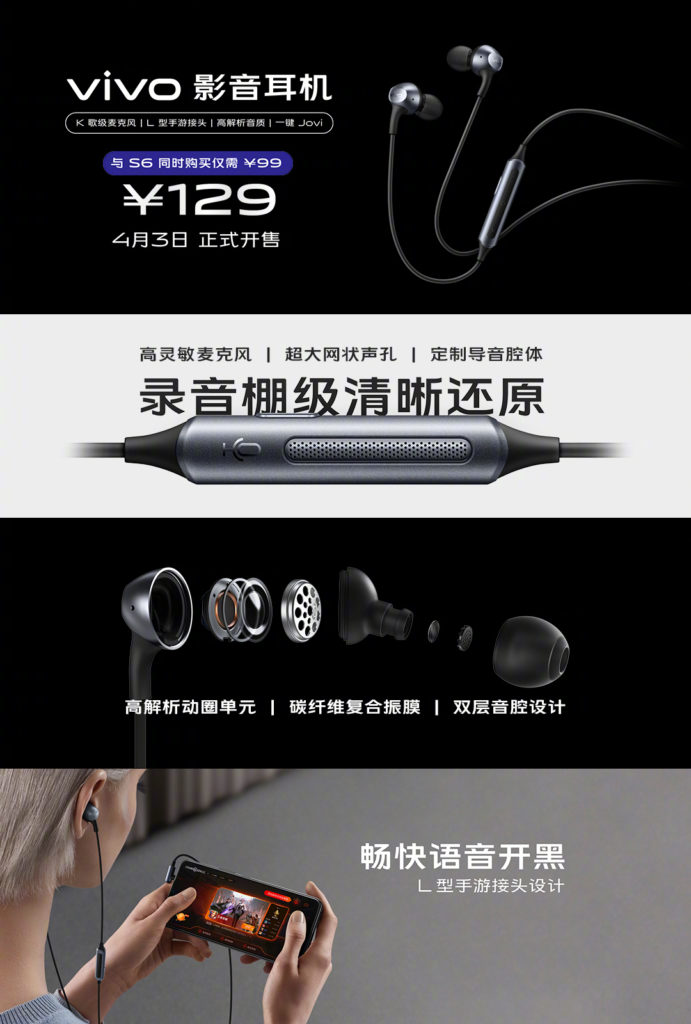
At the Vivo S6 launch event, the smartphone maker also announced a new pair of wired earphones. Priced at 129 Yuan, the brand claims it to offer an exceptional audio listening experience in both media consumption and calls.
The all-new Vivo wired earphones come in a dual-tone finish comprising of silver and black colors. It features an L-shaped 3.5mm headphone jack port and a built-in mic as well as a single button to wake up Vivo’s Jovi AI virtual assistant.
The earphones feature 11mm drivers along with diaphragm made of carbon fiber composite. Vivo says this hardware combined with the company’s audio tuning will output phenomenal sound into the users’ ears. Interestingly, Vivo bets more on the microphone quality in this new pair of wired earphones. The brand has included a MEMS (microelectro-mechanical system) microphone with a larger mesh than the competition to pick up the voice in a studio-level clarity.
This new wired earphones from Vivo is priced at 129 yuan ($18) as mentioned earlier. It will go on sale starting April 3 alongside the Vivo S6 in China. Additionally, the brand is offering a 30 Yuan ($4) discount on these earphones exclusively for the buyers of the company’s new S6 smartphone. Thus, for those customers, it will only cost them 99 Yuan ($14) effectively.
Vivo launched the Vivo S6 5G today at an online event in China. The phone comes with the super-fast 5G support and a bunch of camera tricks that appeal to the young generation in China. Moreover, with Exynos 980 on board, the phone packs enough power to tackle intensive tasks like gaming with ease.
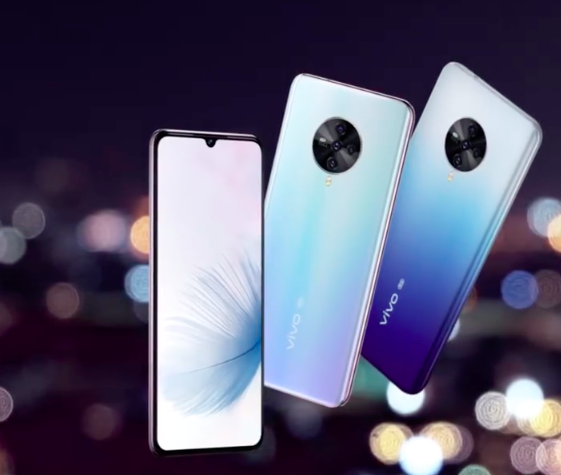
The Vivo S6 5G comes with a familiar 3D curved design with a couple of interesting colors like Gradient Purple-Blue and Light Blue. As the company mentioned in one of its earlier teasers, the brand has limited the phone’s weight to just 181 grams, less than its predecessor. Vivo has also ditched the diamond-shaped camera housing from the Vivo S5 in favor of a simpler round camera design. This camera housing features a quad-camera setup and the flash is placed outside, just below it.
The Vivo S6 comes with an under-display fingerprint sensor.
Vivo S6 Specs
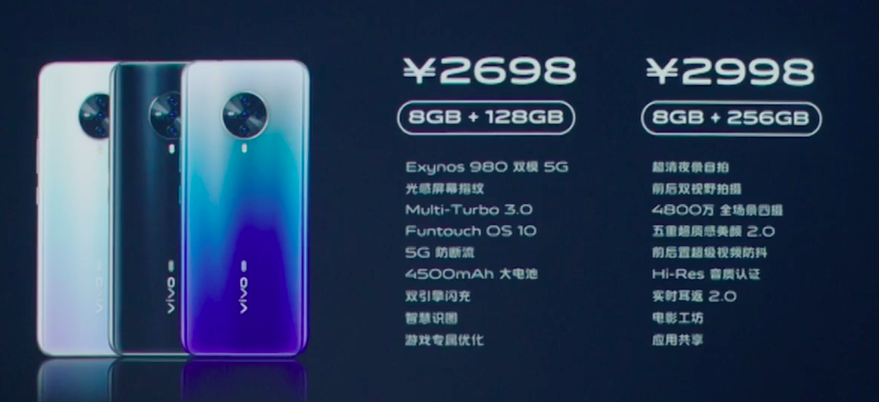
Under the hood, the Vivo S6 5G features the 8nm Exynos 980 upper mid-range 5G processor. This is paired with LPDDR4X 8GB of RAM and up to 256GB of storage. It supports both SA/NSA 5G standards and comes in a dual SIM dual standby variant.
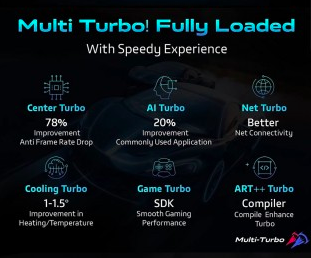
There’s a 6.44-inch AMOLED HDR10 certified waterdrop display up front with 2400 × 1080 FHD+ resolution, 103% NTSC ultra-wide color gamut and ultra-high contrast of up to 1200000:1. The phone also features the company’s Multi-Turbo technology. This consists of six individual technologies which include CPU Turbo, AI Turbo, Net Turbo, Cooling Turbo, Game Turbo, and ART++ Turbo. The company claims that the new generation of Cooling Turbo on the Vivo S6 reduces the phone’s temperature by up to 10° celsius as compared to its predecessor.
Under the hood, the Vivo S6 5G comes with a 4500mAh battery, that’s larger than the S5. However, what’s really surprising is that it supports just 18W charging technology. To recall, even the S5 had a 22.5W charger, so it is really disappointing to see Vivo downgrade the charging tech on the new model.
Vivo is offering a bunch of software features like intelligent image recognition, app sharing, and screencast. As for connectivity, you get a dedicated 3.5mm headphone jack, Wi-Fi ac, and Bluetooth 5.1. The phone is also Hi-Res certified!
Vivo S6 Camera
The Vivo S6 5G comes with more or less the same camera specs as its predecessor. This includes a 48MP primary shooter that’s paired with an 8MP ultra-wide-angle lens, 2MP depth of field lens, and a 2MP macro lens capable of 4cm close-up shots.
The Vivo S6 supports 4K video shooting and 1080P real-time beauty mode shooting too. There’s a special dual view video mode that displays the video streams from the rear and front cameras simultaneously on the screen.
The real highlight of the Vivo S6 5G is its front camera. Featuring the same 32MP selfie shooter like its predecessor but with a larger f/2.08 aperture, the phone has a few tricks up its sleeve. For example, the S6 supports EIS on both front and back cameras. It has a new Super-Clear night view selfie mode that uses new super night view algorithms and lights up the screen upfront for brighter selfies when the lighting goes down. The selfie shooter also has 6 preset beauty makeup modes to liven up your selfies.
Vivo S6 5G Pricing & Availability
The Vivo S6 5G comes in two variants at launch. The 8GB RAM and 128GB storage variant start at 2698 yuan ($381) while the 8GB and 256GB storage variant is priced at 2998 yuan ($423).
The phone will go on sale from April 3 via Vivo’s official store, Tmall, JD.com, and other major online and offline platforms.
8848, the Chinese luxury phone manufacturer has begun taking pre-orders for its 5G smartphone – the 8848 Titanium M6. The phone is powered by the Snapdragon 865 chipset, and with it being a luxury phone, it doesn’t come cheap.
The 8848 Titanium M6 5G has a starting price of ¥12,999 (~$1830) and goes up to ¥29,999 (~$4225). That sure is a lot to pay for a phone. The brand definitely has its target market and it sure wants to cater to their different styles which explains why there are 11 different variants of the phone. Below are all the variants along with their respective prices:
The 8848 M6 has a 6.01-inch primary display in front and a 1.19-inch circular display on the back. It has triple rear cameras with support for 4K video recording. The RAM is LPDDR5 and the storage is UFS 3.0. It also supports Wi-Fi 6, packs a 4380mAh battery, and runs Android 10.
You can pre-order for the phone on JD.com and Tmall. A deposit of ¥500 is required while full payment has to be made between April 8 and April 11.
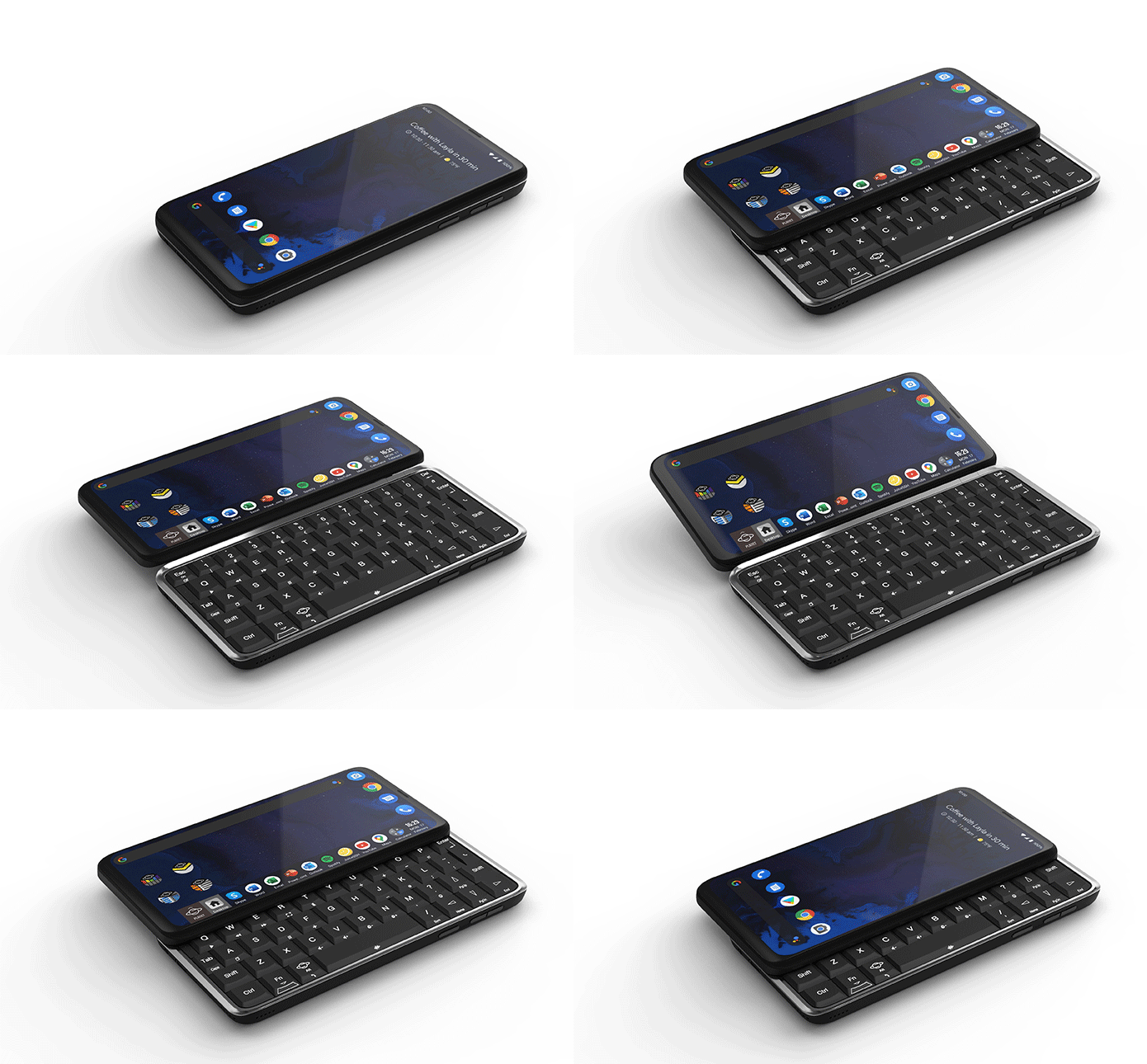
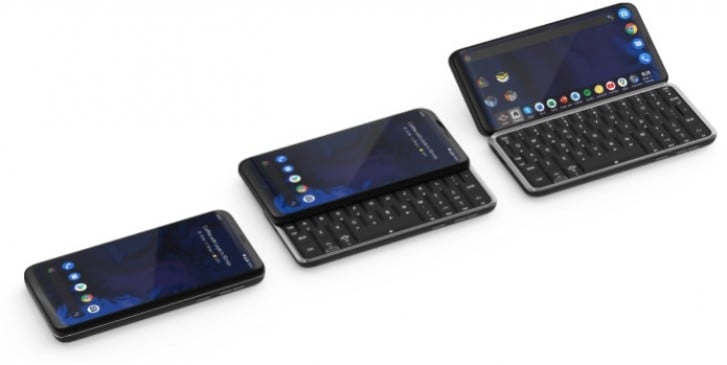
The OPPO Find X and Xiaomi Mi MIX 3 from 2018 are some of the recent phones with slider design. However, these phones do not have full-fledged slider design like the newly unveiled Astro Slide 5G Transformer smartphone. Like the 10-year Nokia E7 phone, the Astro Slide 5G comes with a physical QWERTY keyboard.
The display of Astro Slide 5G Transformer can slide out towards the left to reveal its backlit QWERTY keyboard. When the device is used in a notebook-like mode, its interface automatically switches to desktop mode.
The device is equipped with a 6.53-inch display that has slim bezels on the sides. It is notch-less screen with a slightly thick chin. There is no information available on the screen resolution. The device supports dual OS booting and it comes with options like Android 10 OS and Linux OS.
The rear side of the Astro Slide 5G features a 48-megapixel camera. The configuration of its front camera is not known. The device promises immersive audio experience through its stereo speakers.
The Astro Slide 5G Transformer is driven by the MediaTek 1000 5G chipset that supports dual-mode 5G, but lacks support for mmWave. The device features 6 GB of RAM and it has a native storage of 128 GB. The device is backed by a 4,000mAh battery. Its other features include a fingerprint reader, a microSD card slot, pair of USB-C ports, dual nano SIM slots, e-SIM support, Wi-Fi 6, Bluetooth 5.1, NFC and 3.5mm audio jack.
The Astro Slide 5G Transformer is now listed for crowdfunding on Indiegogo. Early bird buyers can get the device for $544. The device will retail at around $907. The shipments of the phone are expected to begin in March 2021.
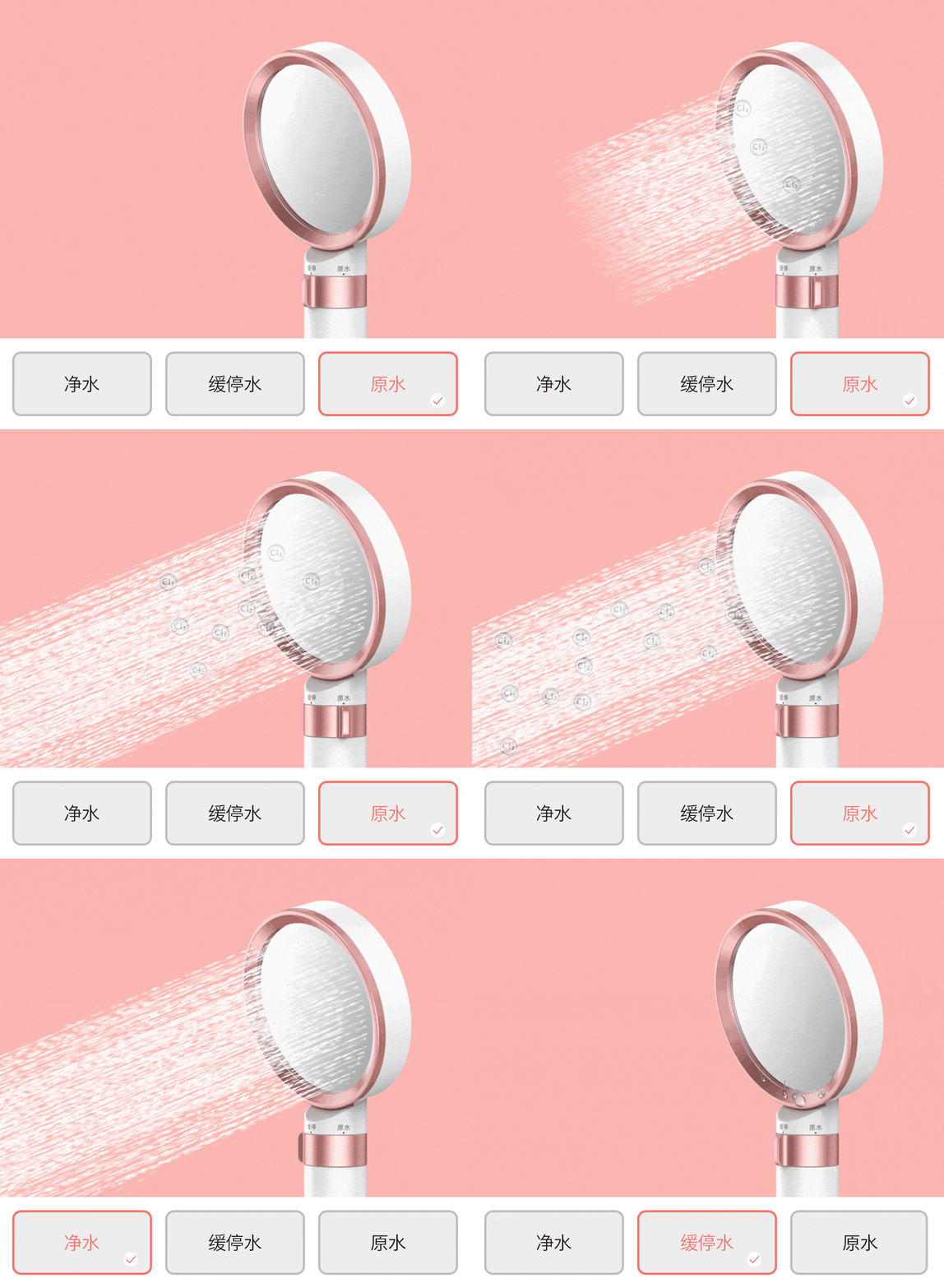
Xiaomi Youpin platform has officially started the crowdfunding of a new product earlier today (31st March 2020). It is a dechlorinated shower head with a built in filter and has been made by Diiib. The retail price is 139 Yuan and crowdfunding starts from 69 Yuan (roughly 19.5 and 9.7 US Dollars).
Looking at the official images, the showerhead from Diiib is clearly follows a luxury design with white and rose gold color pallets. In other words, “beauty” was a clear focus alongside its disinfectant function. The head contains 40 dense water outlets through which small streams of water can be ejected. The size of these holes is 0.25mm, allowing for pressurized water outlet even in lower pressure.
The body itself is made from stainless steel with high durability and strong anti corrosion properties. Meaning, it will not rust or have spots on it easily and can maintain its looks for longer. One can easily disassemble it as well, with one single twist. It features a double filtration system, featuring a layer of activated carbon fiber element alongside. This absorbs any residual chlorine in the water while the cotton filter helps remove any minute particles and impurities that may be suspended in the water.
This also helps in the prevention of the holes being blocked. Notably, the filter has a pore diameter of 1-4 nanometers, making its absorption capacity far superior to traditional filters. Through its filters, one can also resist bacteria infection as it has a high antibacterial rate of 99 percent. One only needs to replace the filter if it takes a dark brown color, which should happen once every 2 months, typically.
While the white and rose gold shower heads are priced at 69 Yuan, the black version of the same is priced at 79 Yuan (roughly 11 US Dollars). Furthermore, the add on hose can also be purchased for 109 Yuan and 129 Yuan for the black version (roughly 15.3 and 18.7 US Dollars). Users can also choose a gift box option that arrives with an additional 3 filter elements and cotton filters alongside the shower head for 119 Yuan (roughly 16 US Dollars) and is currently available in Xiaomi Youpin platform.
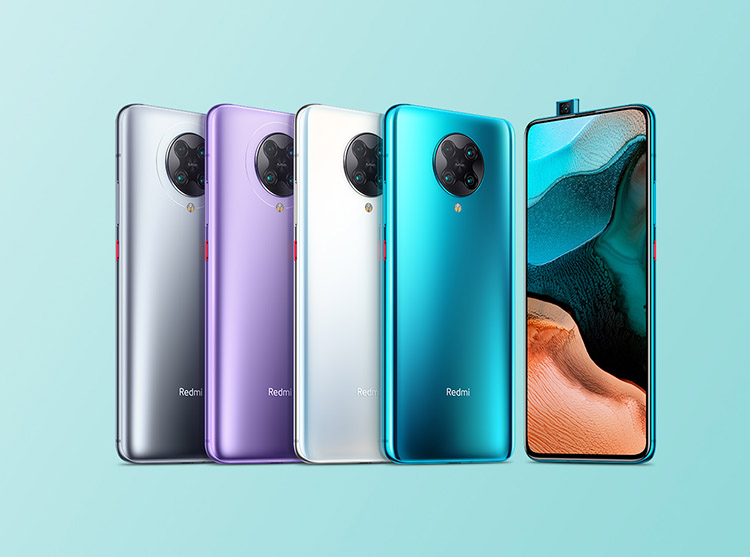
Redmi K30 Pro is the latest flagship killer from the house of Redmi. This phone is the direct successor to the last year’s immensely popular Redmi K20 Pro. Though it is only the second generation flagship smartphone by the brand, it packs everything one needs in a premium device without shelling out more penny. Now, it is expected to get even better with third-party software development as the company officially releases its source code on GitHub.
Xiaomi is well-known for being developer-friendly since the beginning. This applies to Redmi as well because it still comes under Xiaomi even though it was termed independent in late 2018 before the launch of Redmi Note 7 series.
Due to this, Xiaomi smartphone users have been enjoying using a variety of custom ROMs based on new iterations of Android whenever releases. In fact, most enthusiast smartphone users buy Xiaomi products for this reason apart from bang for buck hardware they offer.
The Redmi K30 Pro runs Xiaomi’s MIUI Android skin, which although is feature-rich in its own way, is still not a cup of tea for everyone, even in its 11th generation. But thankfully, as Xiaomi has released kernel source code for the device, we can expect developers to come up with custom recoveries, custom ROMs, mods, and what not as an alternative to MIUI 11 that the device comes with.
A few days back, MIUI camera app from the then-latest MIUI 11 beta build clearly suggested the Redmi K30 Pro will launch under POCO brand in India. But yesterday the brand’s general manager C Manmohan denied the device being launching as Poco F2, however, he did not mean the product to not launch at all. Maybe, the device will be rebranded as something else for the country like Poco X2 Pro.
We use cookies on our website to give you the most relevant experience by remembering your preferences and repeat visits. By clicking “Accept”, you consent to the use of ALL the cookies.
This website uses cookies to improve your experience while you navigate through the website. Out of these, the cookies that are categorized as necessary are stored on your browser as they are essential for the working of basic functionalities of the website. We also use third-party cookies that help us analyze and understand how you use this website. These cookies will be stored in your browser only with your consent. You also have the option to opt-out of these cookies. But opting out of some of these cookies may affect your browsing experience.
Necessary cookies are absolutely essential for the website to function properly. This category only includes cookies that ensures basic functionalities and security features of the website. These cookies do not store any personal information.
Any cookies that may not be particularly necessary for the website to function and is used specifically to collect user personal data via analytics, ads, other embedded contents are termed as non-necessary cookies. It is mandatory to procure user consent prior to running these cookies on your website.