Advertisement

iPhone 11 sales in global markets dominated in Q4 2019

Glal insights and data management firm Kantar recently published its smartphone overall sale data for Q4 2019. The survey shows iOS accounts for 24.3% of smartphone sales in five major European nations including Germany, France, Italy, Spain, and the UK, alongside the USA, Urban China, Australia, and Japan.

According to Dominic Sunnebo, Kantar’s Global Director, “Apple iPhone 11 accounts for 10% of all iOS smartphones sold across the US and Europe combined in the last quarter of CY20. This is a phenomenal achievement for Apple since it accounts for twice the number of iPhone XRs sold during the same period. The iPhone 11 series accounts for 50% of all iPhones sold throughout Europe and America, which is a major rise from 36% recorded by the iPhone X lineup in the previous quarter”.

Samsung, on the other hand, was not so lucky. While the Galaxy A-Series managed to hold its own in the US market, the flagship Galaxy S lineup failed to leave an impression. In fact, the mid-range A-series cannibalized sales of the S-series to a certain extent, as the former offer better value for money.

iPhone 11, iPhone 11 Pro and iPhone 11 Pro Max

Chinese electronics giant Huawei continues to lose shares in the European market, as combined Huawei/Honor shares dropped by 4.4%, bringing the total sales figure to a measly 16.4% in Q4 2020. Compatriot Xiaomi had better luck as its market share grew by 7.2% to a total of 14.2%, placing it right on the heels of Apple and Samsung in terms of market share. While Xiaomi is yet to make a considerable dent in the UK, the situation could change for the better within the next few months.

In urban China, a combined Huawei/Honor force commands 44.2% market share in Q4 2019, an increase of 5.4% since the previous year. During the same period, rivals Xiaomi, Vivo, and Oppo witness a slight drop in sales. Despite the higher price tag, Apple saw an increase in demand in Urban China with the iPhone 11 selling like hot cake in the region. In fact, the Apple iPhone 11 Pro and the iPhone 11 Pro Max ranked at #3 and #4 respectively on the list of the most sold devices.


(source)

EU allows Huawei to build its 5G network in a limited capacity

After the UK approved the use of Huawei’s equipment in its market, the EU has followed suit to allow the Chinese telecommunications manufacturer to help build its 5G network. This decision comes with a set of guidelines for its member nations called the toolbox. EU nations will have to implement the guidelines mentioned in this toolbox by 30th April 2020.

The toolbox is the EU’s solution to finding a middle ground in the ongoing tensions between the U.S. and China. It contains a set of mitigating measures to address the security risks associated with the rollout of 5G in the region. It suggests member countries to omit high-risk vendors like Huawei from the ‘core’ 5G network infrastructure. Further, it calls for diversification of the supply of equipment by network operators.

In short, Huawei will be allowed to take part in building EU’s 5G networks but only in the non-core areas of the infrastructure. So, mobile operators can use Chinese network equipment in the peripheral parts of the network like access networks. Although this would limit Huawei’s participation in the EU’s 5G rollout, it still goes against the pre-emptive blanket ban recommended by the U.S.

This seems to be a logical move by the European Union, given how China is its second-biggest trading partner after the United States. Further, the EU is China’s biggest trading partner. So, a complete ban on Huawei equipment wouldn’t have been a wise choice. Further, it follows the UK’s decision to allow Huawei in building its 5G networks in a limited capacity.

The UK announced yesterday that it would allow Huawei equipment in building its 5G network in the non-core areas. However, at no point would Chinese equipment exceed 35% in any part of its network. This decision made by the U.S. ally is yet another blow to the Trump administration who has urged everyone to outright ban Huawei from participating in the deployment of 5G networks.

5G

Currently, top mobile network operators in the UK are all using Huawei equipment for their 5G networks in some capacity. However, after yesterday’s decision by the government, it remains to be seen how many of them will have to replace existing equipment with other brands.


(Source)

CalTech wins $1.1 billion patent infringement case against Apple and Broadcom

Apple and Broadcom have been ordered by a jury to pay $1.1 billion to the California Institute of Technology for infringing the university’s patents. The jury has ruled that Apple must pay Caltech $837.8 million and Broadcom must pay $270.2 million.

However, Apple said that it is planning to appeal the ruling but has refused to say anything else about this. In a statement, Broadcom said that “we disagree with the factual and legal bases for the verdict and intend to appeal.”

In a statement, CalTech said: “We are pleased the jury found that Apple and Broadcom infringed Caltech patents. As a non-profit institution of higher education, Caltech is committed to protecting its intellectual property in furtherance of its mission to expand human knowledge and benefit society through research integrated with education.”

The case was filed in federal court in Los Angeles in 2016, in which the California-based research university alleged that Broadcom Wi-Fi chips used in hundreds of millions of Apple devices infringed patents relating to data transmission technology.

The technology relates to Wi-Fi chips Apple used in its iPhones, iPads, Macs and other devices from the year 2010 to 2017. Apple argued that it shouldn’t have been involved in the lawsuit — which was filed in 2016 — because it’s using off-the-shelf Broadcom chips, like many other handset makers.

Apple argued that “Broadcom manufactures the accused chips, while Apple is merely an indirect downstream party whose products incorporate the accused chips.” However, the jury disagreed with this argument.

Broadcom is a major Apple supplier, deriving about a fifth of its sales from the Cupertino-based company in its fiscal 2019. Last week, the company revealed that it had signed deals to sell as much as $15 billion worth of chips to Apple.


Apple made nearly $1 billion a day in revenue in the last fiscal quarter

Technology giant Apple reports results for the first quarter of its fiscal 2020, which is from October 2019 to December 2019. In that period, the company reports total revenue of $91.8 billion, which is far ahead of expectations of $88.43 billion.

To put it in other words, the company has made about $1 billion per day in revenue for the Q1 F2020. The company’s per-share profit of $4.99 was greater than the market-anticipated figure of $4.54 per share.

Earlier, the company expected revenue “between $85.5 billion and $89.5 billion” along with “gross margin between 37.5 percent and 38.5 percent.” In the total revenue of $91.8 billion, majority of that comes from Products — $79.1 billion while Services accounted for $12.7 billion. With these numbers, the company has reported net income of $22.2 billion.

Commenting on this, Luca Maestri, Apple’s CFO said: “Our very strong business performance drove an all-time net income record of $22.2 billion and generated operating cash flow of $30.5 billion. We also returned nearly $25 billion to shareholders during the quarter, including $20 billion in share repurchases and $3.5 billion in dividends and equivalents, as we maintain our target of reaching a net cash neutral position over time.”

As for the revenue from products, iPhone sales accounted for $56 billion while Mac and iPad accounted for $7.2 billion and $6 billion respectively. The company says that “Wearables, Home and Accessories” generated around $10 billion in revenue, which is an all-time record for the Cupertino giant.

Apple is now anticipated Q2 F2020 revenue “between $63.0 billion and $67.0 billion” and gross margin in the same range as the sequentially preceding quarter. The numbers are down from the current Q1 F2020 given that it will be non-holiday three-month period.


Realme C3 key specs and variants appear on Flipkart

It was confirmed yesterday that the Realme C3 will break cover in India on Feb. 6. The landing page of the phone on India’s Flipkart retailer site has been updated with some of its key specs. It will be arriving as the successor for the Realme C2 smartphone from last year.

The Realme C3 listing on Flipkart calls it ‘Entertainment ka Superstar’ which means it will be a superstar of entertainment as it will come equipped with a large-sized display and battery. The phone is equipped with a 6.5-inch display with mini-drop notch that is protected by a layer of Gorilla Glass. The chin of the device appears thick, but the remaining bezels look thin. The handset promises a screen-to-body ratio of 89.8 percent.

The rear shell of the Realme C3 features a vertical dual camera setup and alongside it is an LED flash. It has a 12-megapixel main lens and comes offers features like Chroma Boost, HDR mode, panorama selfie and slow-motion video shooting.

The Realme C3 has a gargantuan battery of 5,000mAh capacity. The handset is likely lack support for fast charging. As far as non-stop entertainment is concerned, the Realme C3 will be arriving with 30 days of standby time, 439 hours of talk time, 19.4 hour of streaming music, 20.8 hours of watching YouTube and 10.8 hours of PUBG gaming.

The Flipkart listing reveals that the Realme C3 will be coming in two options in India. The base model will have 3 GB of RAM and 32 GB of native storage. On other side, the higher variant will be equipped with 4 GB of RAM and 64 GB of built-in storage. It will be the first Realme C series phone in India to arrive with a big storage of 64 GB. The other details of the Realme C3 are currently under the wraps.

In comparison to the Realme C3, the older Realme C2 has a 6.1-inch HD+ display with waterdrop notch. It is fueled by Helio P22. It has a 5-megapixel front camera and 13-megapixel + 2-megapixel rear-facing dual camera setup. It is backed by a 4,000mAh battery.

On Flipkart, the Realme C2 is currently available in two models such as 2 GB RAM + 32 GB storage and 3 GB RAM + 32 GB storage. Both are respectively at Rs. 5,999 (~84) and Rs. 7,499 (~$105). There is no information available on the pricing of the Realme C3.


Huawei Mate 30 Pro smartphone doesn’t break in durability tests

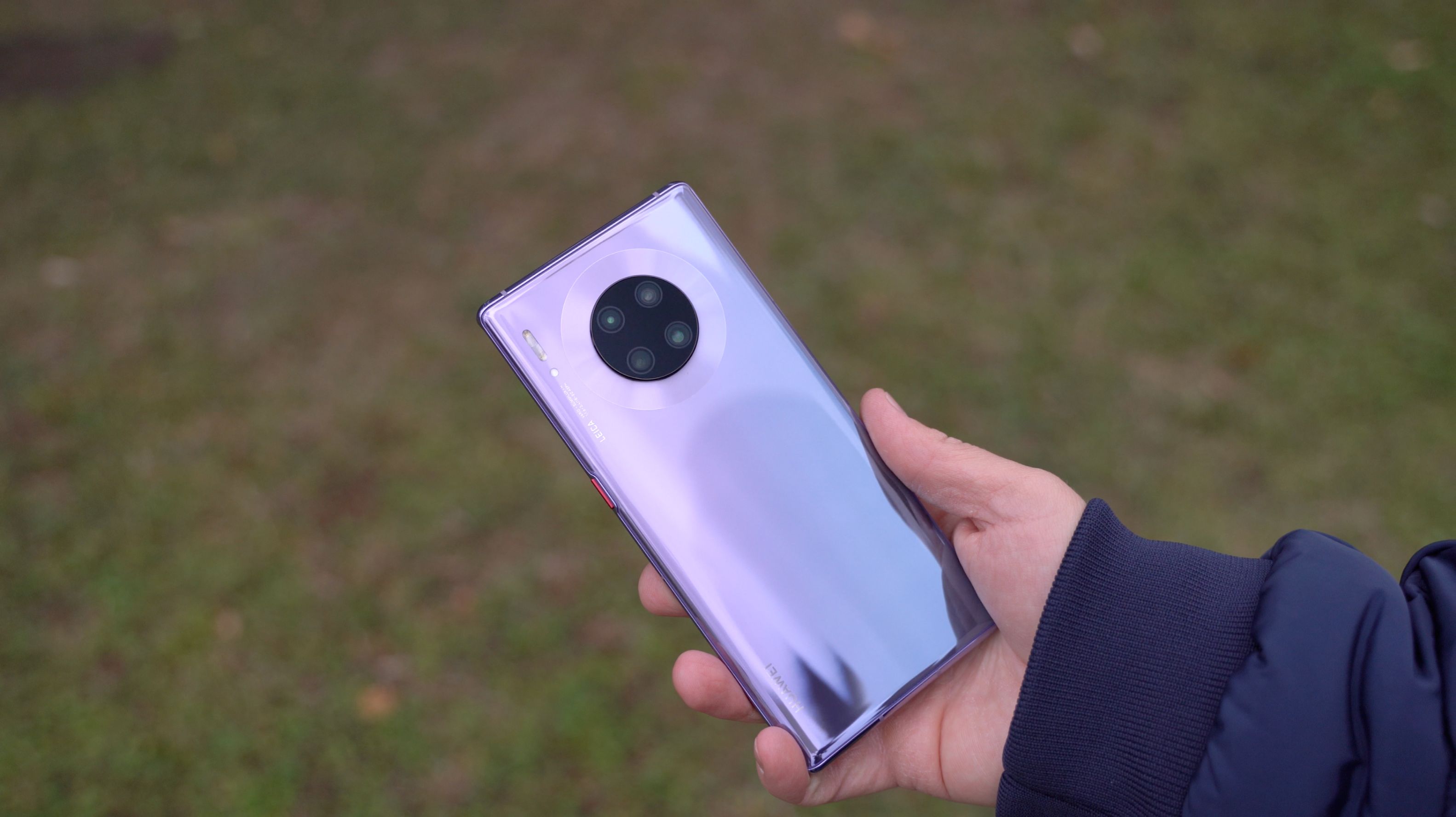
Huawei Mate 30 Pro smartphone, the Chinese giant’s flagship smartphone, has received good reviews overall, but unfortunately the device has been made available in select regions only because of the US-China trade war.

The highlight of the Huawei Mate-series phones has been the camera performance and the Mate 30 Pro doesn’t disappoint. Now, JerryRigEverything conducted several durability tests on the phone which suggests that the phone doesn’t break and has great build quality.

Huawei Mate 30 Pro
Huawei Mate 30 Pro

In the scratch test on the phone’s display, we can see that the it starts scratching the screen from level 6 and 7, indicating high resistance to scratches. For those who are unaware, the phone comes with a layer of Corning Gorilla Glass 6 on top. Further, the most of the front side is covered with the display as well as around 50 percent of the sides, thanks to the curved display.

The other 50 percent of the sides have aluminium frame, which seems quite thin and on scratching off the aluminium, the glass panel seems to be lying underneath. When Jerry subjects the phone’s screen to burn test, the screen recovers pretty fast, leaving no burn marks on the display.

Although the phone is made up of glass, when the smartphone is bent, the phone doesn’t break and the glass panel also remains intact without shattering because of its stiffness. This indicates great built quality given that the OnePlus 7T, which is made up of the same material, doesn’t pass through this glass durability test.

You can check out the video of this durability test below.


POCO X2 live shot reveals Snapdragon 730G processor

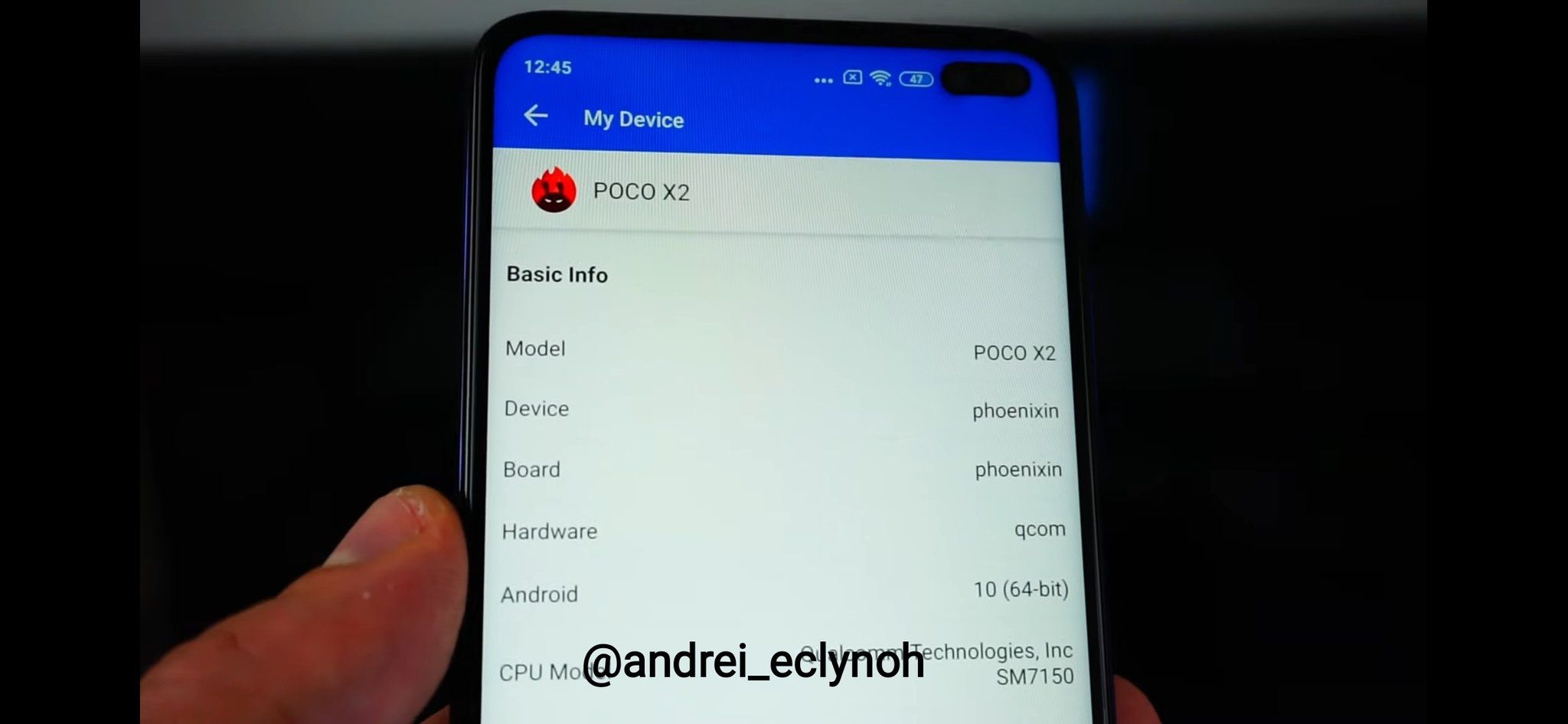
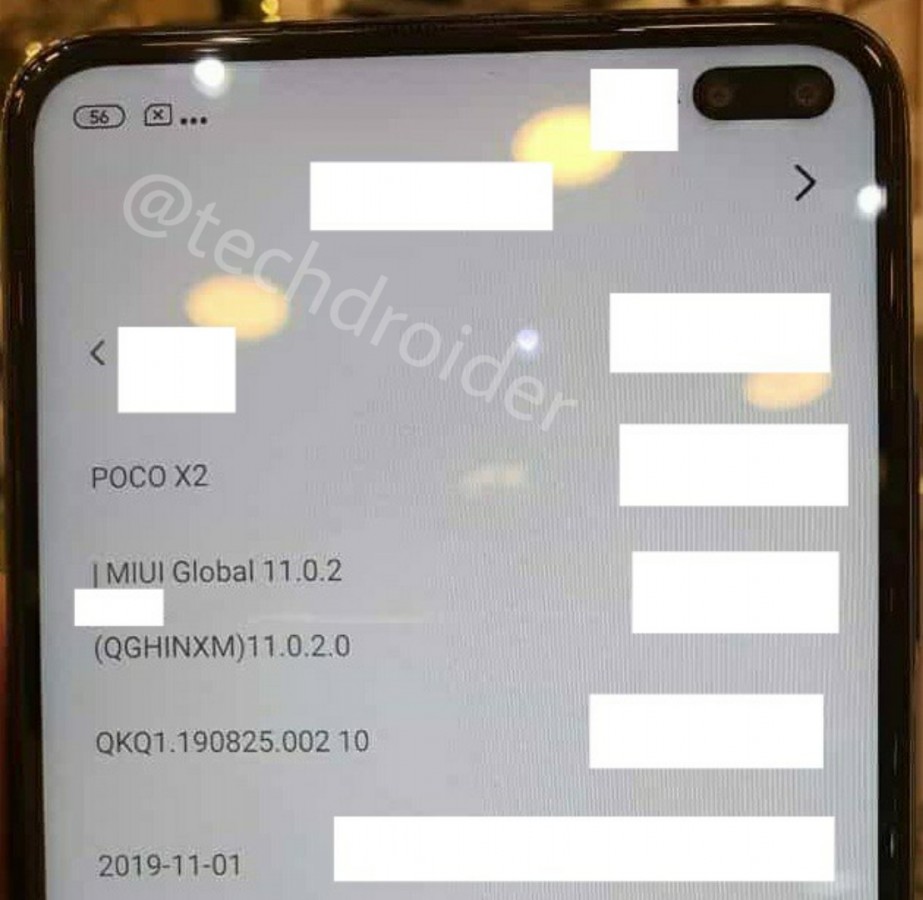
The POCO X2 smartphone will go official on Feb. 4. Yesterday, Hindustan Times released a poster of the upcoming POCO X2. Moreover, it also revealed that the handset will be priced at Rs. 18,999 (~$266) at launch. The leaked poster also carried some of the key specs of the phone. The design of the phone reveals that it is a rebranded version of the Redmi K30 4G that was announced in December in China. The smartphone has now appeared in some live shots. One of the them reveals that it is powered by the Snapdragon 730G which again hints that it is a rebadged Redmi K30.

In the above shown live shot, the POCO X2 moniker and its ‘phoenixin’ codename can be found mentioned in the AnTuTu benchmarks. It also reveals that the phone is driven by the Snapdragon 7150 SoC which is nothing but the internal name of the Snapdragon 730G.

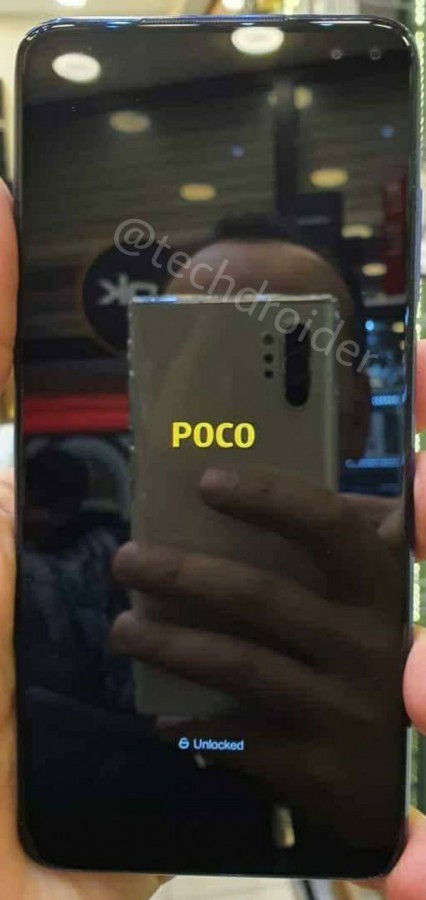
Some other live shots of the POCO X2 have revealed some of its hardware features. A closer shot of the top portion of the POCO X2 gives a good look at its dual selfie snapper located at the top-right corner of the screen. The slim bezel at the top has a large-sized earpiece. The size of the earpiece suggests that it may also function as a loudspeaker. Hence, the POCO X2 is likely to come equipped with stereo speakers.

As it was revealed yesterday, the POCO X2 will be sporting a 6.67-inch ‘RealityFlow Display’ that offers 120Hz refresh rate. The screen will be protected by Gorilla Glass 5. The handset will have a 64-megapixel Sony IMX686 as a primary shooter in its quad-camera system.

The report had also revealed that the POCO X2 with 6 GB RAM + 64 GB storage will be priced at Rs. 18,999 (~$266) in India. The phone may come in some other RAM and storage variants. It will be available exclusively through Flipkart in India.

The Redmi K30 also comes with all the above features along with other specs like a 20-megapixel + 2-megapixel dual-camera setup, up to 8 GB of RAM, up to 256 GB of storage, a 4,500mAh battery with 30W fast charging.

What’s your opinion on POCO X2’s arrival as a rebadged Redmi K30? Will you be satisfied or disappointed? Share your thoughts by posting your comments below.


(source 1, 2, 3)

Motorola’s stylus-toting phone is called the……..Moto G Stylus

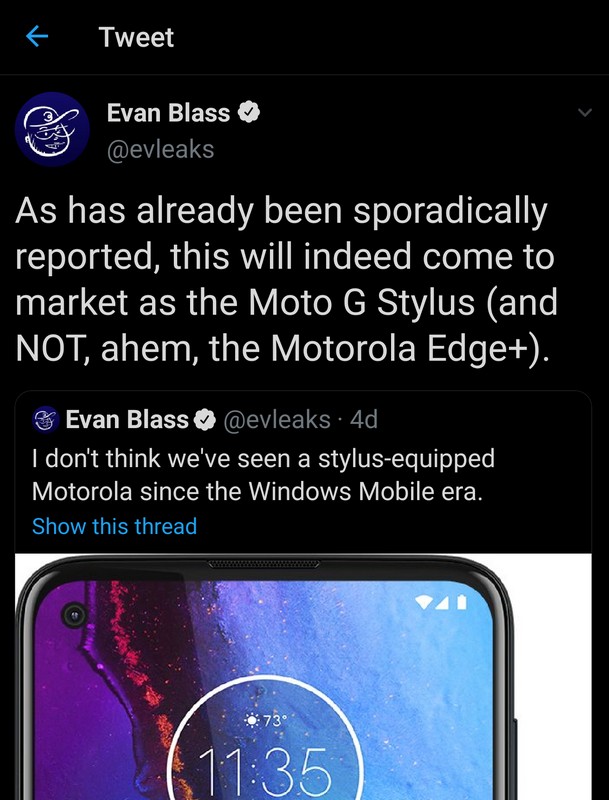
Last week, a press render of a Motorola phone with a stylus was leaked on the web. The phone has been erroneously referred to as the Motorola Edge+, another upcoming Motorola phone, by several publications. Now the same source that revealed the image has revealed the official name of the device.

Popular leaker, Evan Blass (@evleaks) has revealed the Motorola phone with a stylus will launch as the Moto G Stylus. This not only confirms the name but also shows that the phone will belong to the mid-range category. But that is not all there is to know about the device.

Moto G Stylus

The editor-in-chief of XDA Developers,  Mishaal Rahman, did some extra digging and found more details about the phone.

Apparently, the Moto G Stylus has model number XT2043-4. He decided to look it up on the FCC’s database and found out that the phone is codenamed “sofia+”. That codename is similar to that of the Moto G8 Power which is “sofiar”, and thus came to the conclusion that the Moto G Stylus is a variant of the Moto G8 Power.

Alleged specs of the Moto G8 Power include a 6.36-inch FHD+ display, a Snapdragon 665 processor, 4GB of RAM, and 64GB of storage. It has also been reported that it will have 16MP quad rear cameras, a 25MP selfie camera, and a 5000mAh battery with support for 18W Turbo Charging. It will also run Android 10 out of the box.


(Sources: 1, 2)


Motorola phone with 5000mAh battery passes FCC; believed to be Moto Z5

Last year, Motorola only launched one Moto Z device and that was the mid-range Moto Z4. There was no flagship model with the “Force” moniker neither was there a “Play” model. We don’t know if we will also get a single model this year but a new device believed to be the Moto Z5 has been certified by the FCC and it packs a battery capacity bigger than that of any of its predecessors.

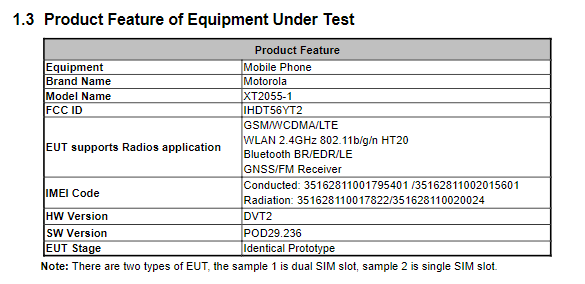
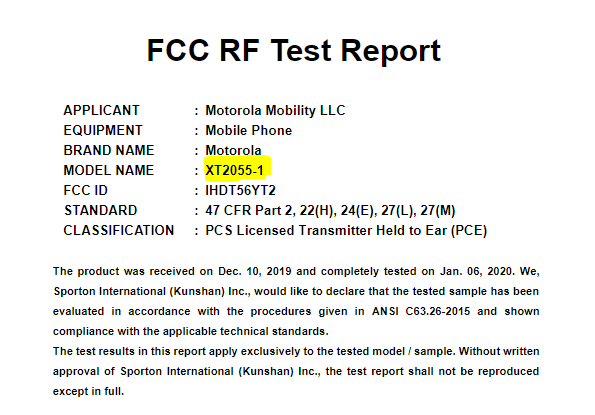
The FCC documents reveal the Motorola phone has model number XT2055-1, has LTE support but no 5G, and also supports 2.4GHz WiFi. Another info revealed is that there will be single SIM and Dual SIM variants.

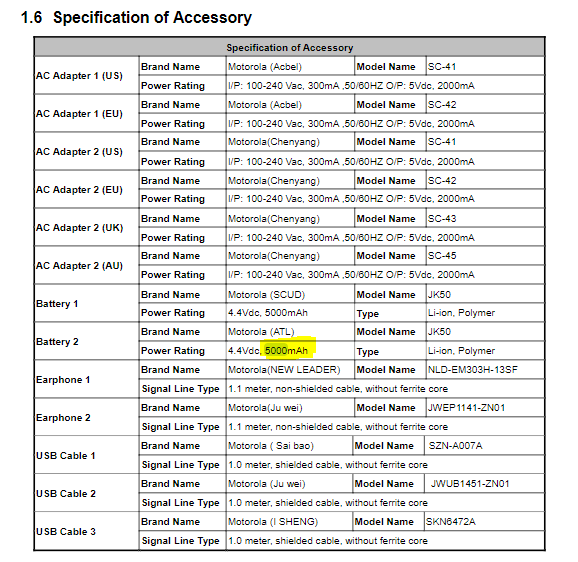
However, the most important detail disclosed by the document is that the Moto Z5 will have a 5000mAh battery capacity. That is a significant boost in battery capacity when compared to the 3600mAh battery of the Moto Z4. According to the source, the Moto Z5 will work with existing Moto Mods which means if you pick up a Moto Power Pack Moto Mod with a battery capacity of 2220mAh, you can have a phone with a battery capacity of over 7000mAh!

The insider source that revealed the phone is the Moto Z5 also said that the device will not be launched at MWC 2020. Sadly, the launch date was not disclosed.

Motorola already confirmed it will attend MWC 2020 where it will unveil some new phones. Some of the expected phones include the Moto G8,  Moto G8 Play, Moto Edge+, and a stylus-toting phone whose name is currently unknown.


(Source, Via: 1, 2)

POCO X2 official-looking renders, pricing & key specs leaked!

The independent Poco brand is expected to take the wraps off its first smartphone – POCO X2 – in an event scheduled to hold on February 4 in India. Ahead of the launch, the tech space has been buzzing with several official teasers, rumours and leaks of the X2. One of those is the rumour that the X2 will be a rebranded Redmi K30. That may just be true you know. The Poco X2 real-life image has leaked online ahead of its launch. The leaked image also comes along with the retail pricing of the device and some of its key specs.Poco X2

The leaked poster gives us a clear view of the display and back panel of the X2. The design is practically the same as the Redmi K30 ith a dual punch-hole selfie shooter nested at the top right corner of the display. The rear is also similar to the Redmi K30. The only difference is the Poco logo stamped at the lower end of the back panel at the same location of the Redmi logo on the K30.

As for the specs and pricing, the poster shows the Poco X2 will come with a 6.67-inch 120Hz ‘RealityFlow Display’. It also packs a 64-megapixel Sony IMX686 camera in a quad-camera arrangement. The device is also expected to be powered by a Snapdragon 730G chipset with a 4500mAh battery keeping the lights on.

Poco X2

The tip-off equally shows the X2 will sell for Rs 18,999 ($266) for the 6GB RAM/64GB storage version. Quite surprisingly, the leaked price tag is higher than the price of the Redmi K30 6GB/64GB variant in China which had a 1,599-yuan ($230) price tag. This may as well be a fake leak. The Poco F1 became popular for its cheap pricing and flagship specs.

If it turns out to be true, there you have it. The X2 is most likely hitting us with a Redmi K30 design and as our Editor-in-Chief Joe says, he’ll be disappointed if that eventually happens. I’ve been wondering how Joe is going to display his disappointment. Maybe we’ll compel him to do a video on that.


(source)

 

Ulefone Armor X6 goes through extreme temperatures test (video)

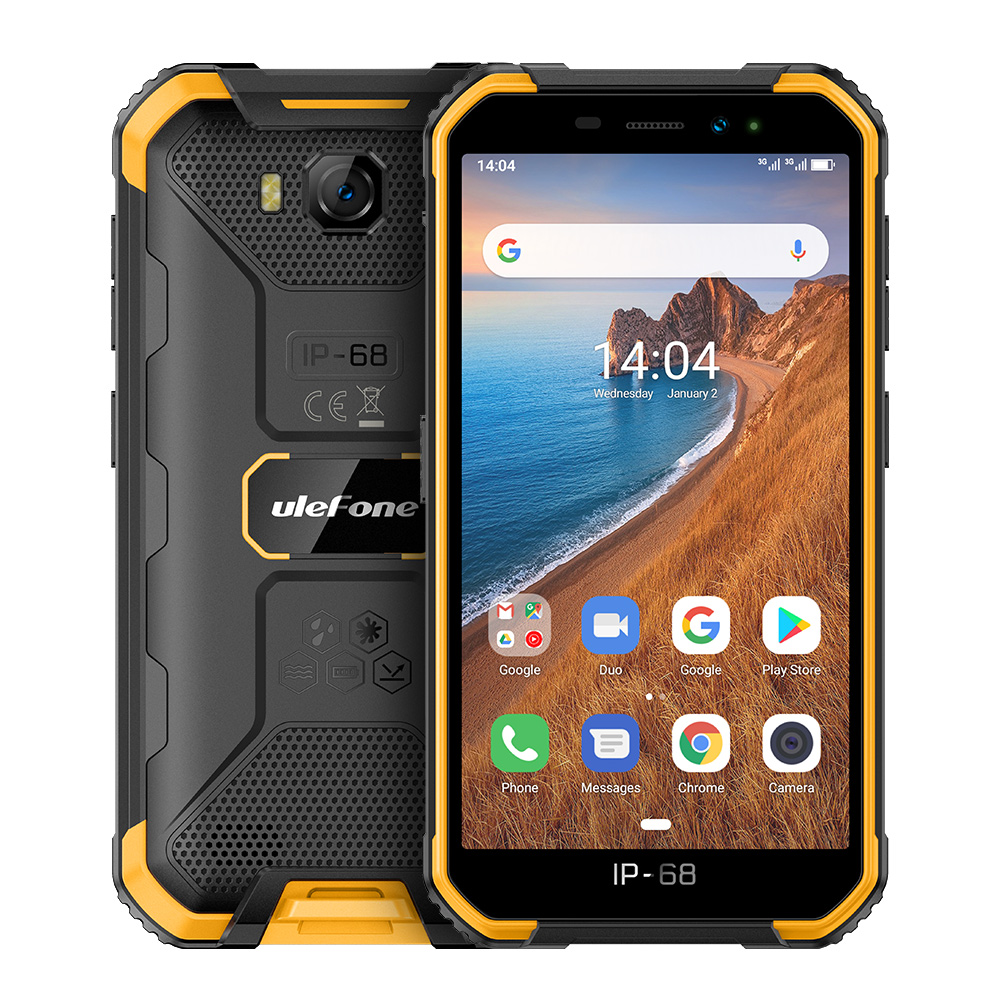
The latest rugged smartphone from Ulefone -Armor X6- is another device from the Chinese manufacturer that features IP68/IP69K and MIL-STD-810G certifications so it’s quite suitable for active users who do outdoor sports or work in a difficult environment. To showcase how much durable is the device, released a fun test video to demonstrate whether the phone can survive in extreme temperatures. Let’s see what happened.

As you can see in the video, Armor X6 was repeatedly soaked in up to 98℃ boiling water, and there was no accidental shutdown occurred and the phone functioned normally. Also, they put the phone in a tank full of water and then placed it in the fridge at -20℃ for over 20 hours. The Armor X6 was still able to receive calls even though it was frozen and that is really impressive.

Ulefone Armor X6

Besides its rugged characteristics, the phone also has balanced specs that include a quad-core SoC backed by 2GB of RAM and 16GB of storage. What’s more, it sports a 5″ HD display, a 4000mAh battery, 8MP rear camera, face unlock, dual SIM dual standby, Android 9.0 OS and more.

Being an entry-level rugged phone, it currently sells at the promotional price of just $69.99 on Aliexpress. To see all the device’s specs, visit the official product page here.

Samsung Galaxy A81 protective case eBay listing seems to confirm S Pen stylus

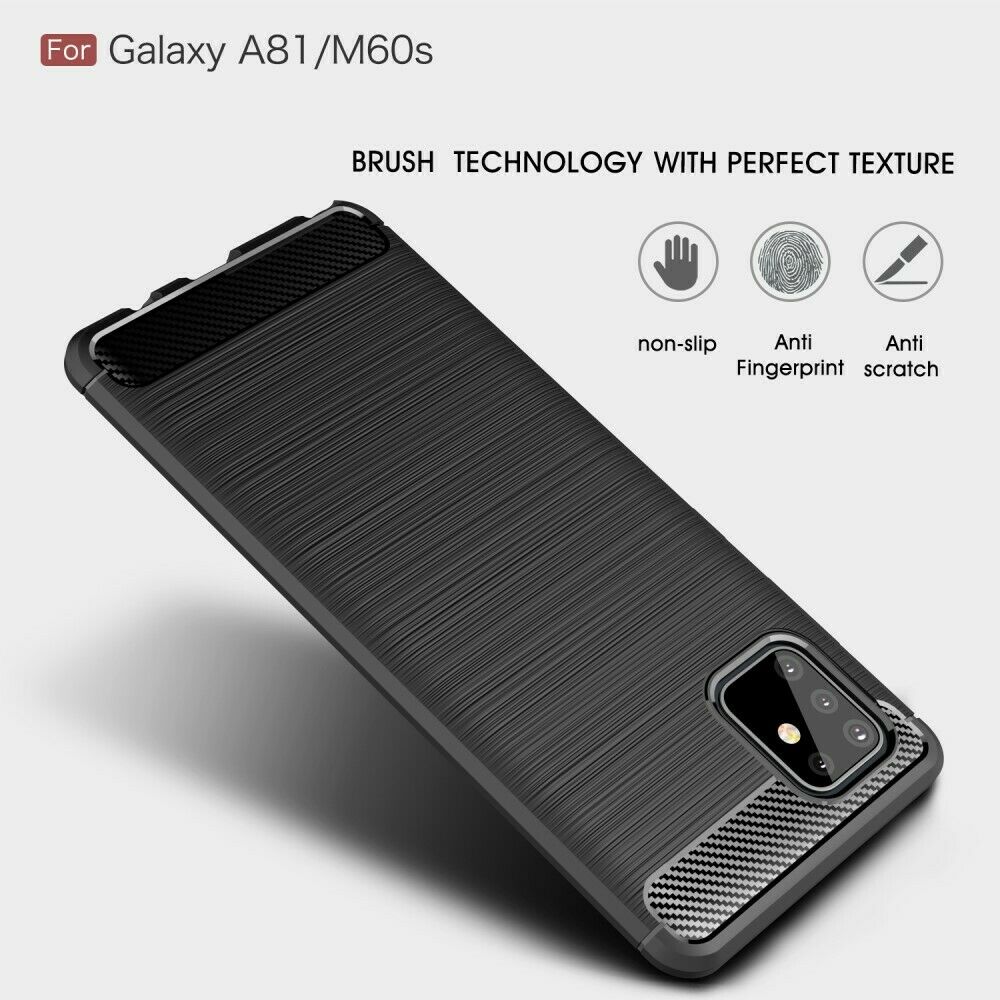
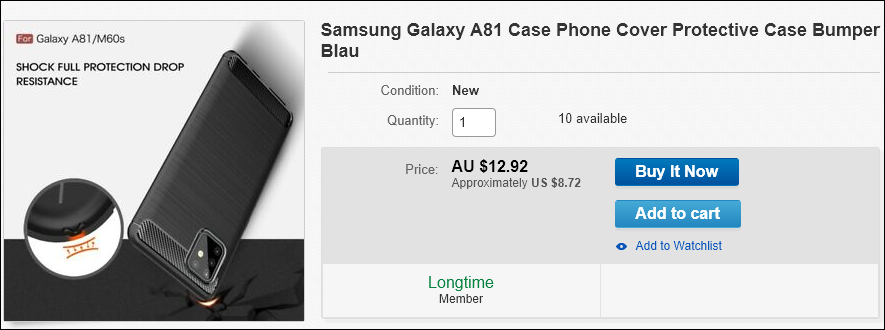
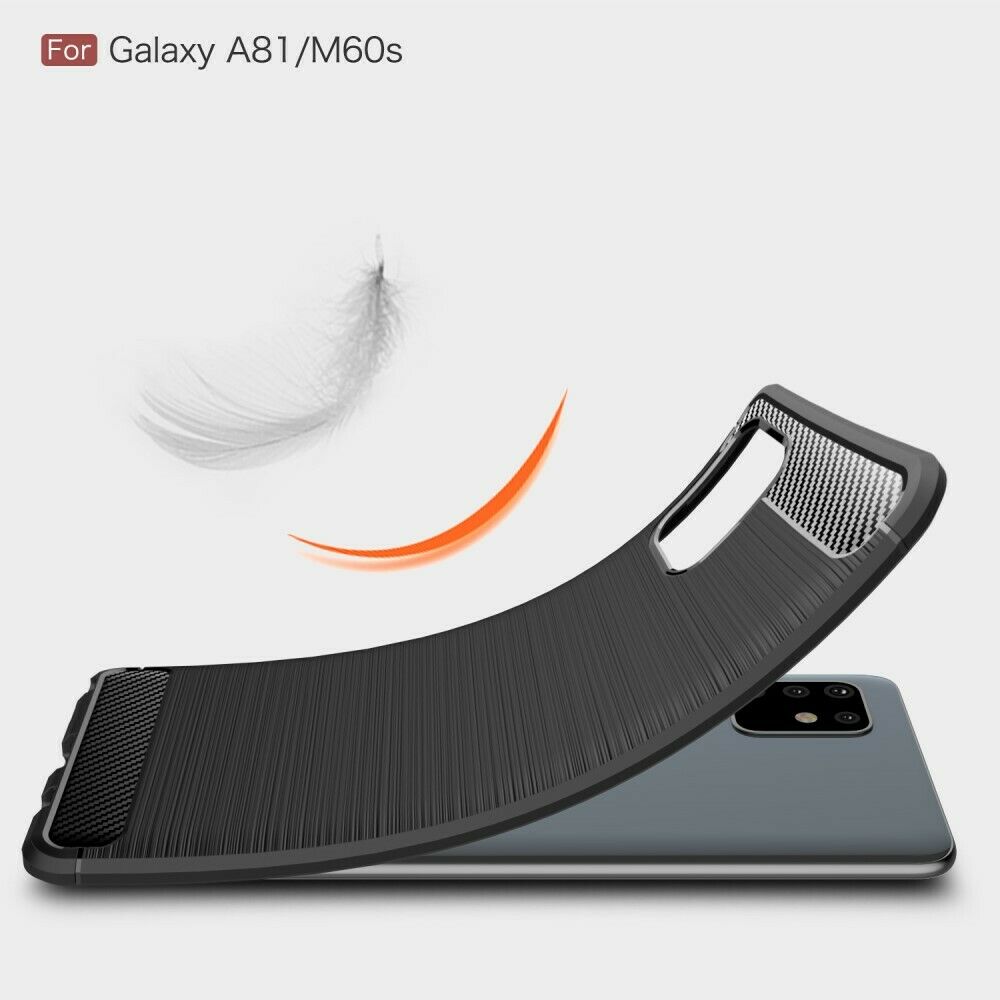
It is no secret that Samsung‘s resurgence last year in markets such as China and others was aided by the Galaxy A series. The company adopted a different approach by not only focusing on premium models for the A-series but also lower mid-rangers and budget models. The move paid off tremendously and so the company is intensifying efforts this year. Already, details of some Galaxy A series models such as the A51, A71 and lately the Galaxy A81. The case renders of the Galaxy A81 has leaked online thanks to a listing on eBay.

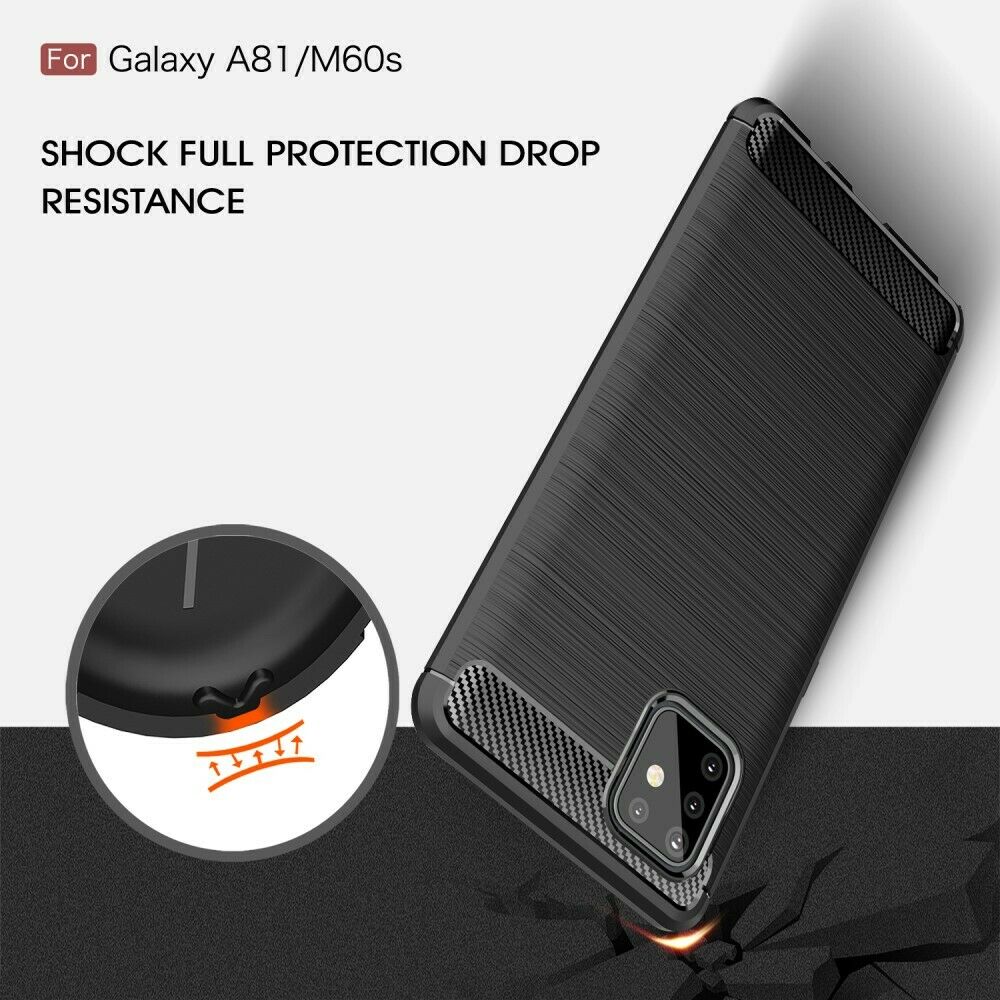
The renders detailed the Galaxy A81 as featuring a quad-camera setup that would be housed in a rectangular module. The module is located at the top left corner of the back panel. The device isn’t likely to feature a rear-mounted fingerprint sensor as there is no cut-out for that.

The Galaxy A81 was earlier spotted with the model number SM-AN815F. The device is said to come with an S Pen Stylus and the case didn’t reveal the bottom edge where it should be located. However, we can make out a cutout at the bottom edge wide enough to house a stylus. Nothing much is known about the Galaxy A81 expect for the rumour that it will be equipped with 128 GB of native storage. We’ll have to wait for more details to emerge in the coming days. The eBay listing also says the casing is for the Galaxy M60smeaning both models may share the same design. The model may likely sell as M60s in some markets.


(source)Samsung Galaxy A81Samsung Galaxy A81


Screenshot reveals Xiaomi Mi 10 Pro specs; will have 16GB RAM

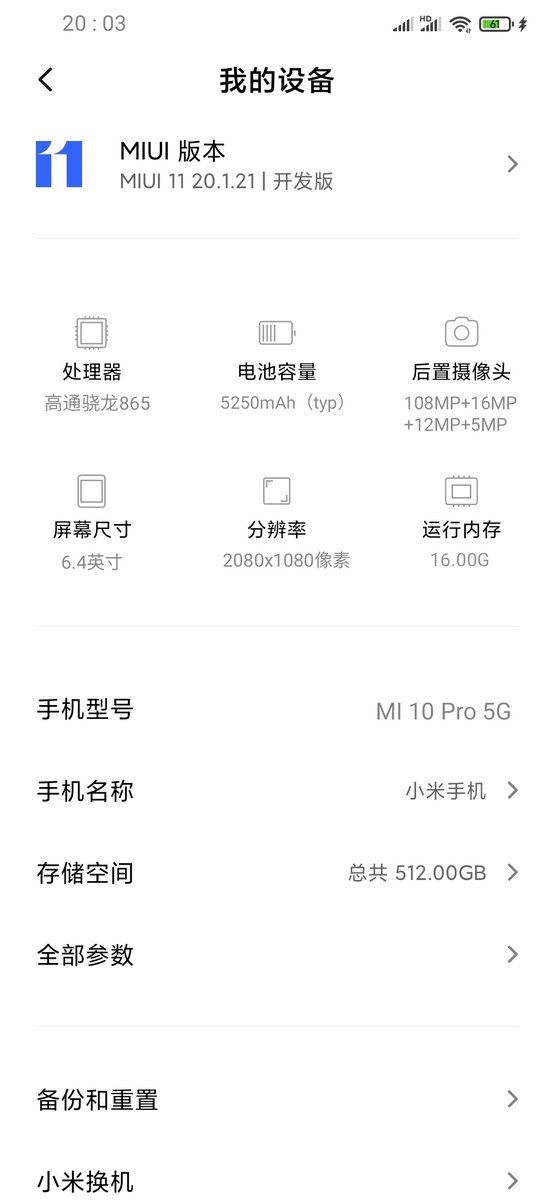
Alongside the Mi 10, Xiaomi will announce the Mi 10 Pro. As with most phones with the “Pro” or “Plus” suffix, the Mi 10 Pro is expected to have better specifications and features than the standard version. Ahead of the launch of the phone next month, its key specs have become public, thanks to a screenshot of the device’s “About Phone” section.

The image was shared on Twitter by Xiaomishka (@xiaomishka), an account known for posting Xiaomi-related news.

According to the info in the image, the Mi 10 Pro has a 6.4-inch display with a 2080 x 1080 resolution. It has a Snapdragon 865 processor powering it and it is paired with 16GB of RAM and 512GB of storage. Based on this configuration, we believe this is the most powerful variant.

Mi 10 Pro specs

Xiaomi is not the only manufacturer that will release a phone with 16GB of RAM. Samsung’s upcoming Galaxy S20 Ultra 5G will also have a version with 16GB of RAM.

The Mi 10 Pro not only has a large memory and storage, but it also has a 108MP camera as one of the sensors that make up the quad cameras on its back. The other three sensors are a 16MP camera, a 12MP camera, and a 5MP camera. There is no mention of the selfie camera.

To top it off, Xiaomi has put a massive 5250mAh battery inside the Mi 10 Pro. This is the biggest battery capacity we have seen in a Xiaomi flagship but not the biggest it has put inside a phone. That title still belongs to the Mi Max 3 which launched with a 5500mAh battery. The Mi 10 not only has a big battery but it has been confirmed that it will support 66W fast wired charging, allowing you to recharge in the shortest time possible. It will also have support for fast wireless charging.

The screenshot also shows the device is running MIUI 11.20.1.21. Of course, the Mi 10 Pro is expected to run Android 10 out of the box.

It has been confirmed that the Mi 10 series will launch this quarter but its exact date remains unknown though a leaked poster says the date is February 11. However, we advise you to take the date with a pinch of salt as you will the aforementioned specs.


(Source)

Again, Apple Watch comes to the rescue of a owner with an undetected heart condition

Apple Watch series is presently the market leader in the smartwatch segment but the price tag can tear a hole in your pocket. There are several other good smartwatches and bands that you can get at a quarter of the Watch series’ price. But then, you may effectively miss out on the Apple Watch series lifesaving features which have received several rave reviews from users. Here’s yet another story of how the Apple Watch Series.

The Apple Watch Series 4 came to the aid of Mr Farhat Haniff, a 30-year-old Kuala Lumpur-based Malaysian restaurateur and freelance architect. Mr Farhat actually bought the Watch Series 4 as a result of its sleek design but didn’t know the smartwatch could, in fact, help save his life by detecting abnormal heart rates. The ma had boarded a flight back home from Langkawi in August last year when his watch alerted him to an elevated heart rate. Farhat had thought it was due to stress. After all, he just had a rather rough flight.

However, the alerts kept up after Mr Farhat had landed. His smartwatch would beep while he was watching TV and resting at home. When the alerts became persistent, he even had to reset the device but that did not stop the alerts. Turns out the Apple Watch alerts users if their heart rate goes above 120 beats per minute when they are not exercising. Thus, Farhat had to take a trip to the doctors and after doing an electrocardiogram (ECG) and blood tests, he was diagnosed with ectopic rhythm – an irregular heart rhythm due to a premature heartbeat.

This is not the first time that the Apple Watch, especially the Series 4 and 5 models, has been credited with potentially saving lives. In February last year, we covered the story of a man who fell in the bathroom and lost consciousness. The Apple Series 4  fall detection feature help get emergency services to him. In another instance, the watch also detected low heart rate in a user which was also lifesaving. In a non-health instance, the Watch Series 5 helped saved two Kayakers who were stranded at sea by alerting emergency services. There are several other similar stories. So, you may want to reconsider your decision to go for a knock-off instead of the Watch Series.


(source)

 

Download: MIUI Launcher Alpha brings back App Drawer for Mi Devices

With its rich collection of features and no compromise in overall fluidity, MIUI has been loved by masses. Over the cause of its evolution, Xiaomi has incorporated many new features on its custom Android skin. But at the same time ditched a handful of them for no reason such as the good-old App Drawer option. Seems Xiaomi is working to bring it back as the latest MIUI Launcher Alpha release packs few new features including the app drawer.

miui launcher alpha

Must See: Download Samsung Galaxy S20 Wallpapers in HD Quality

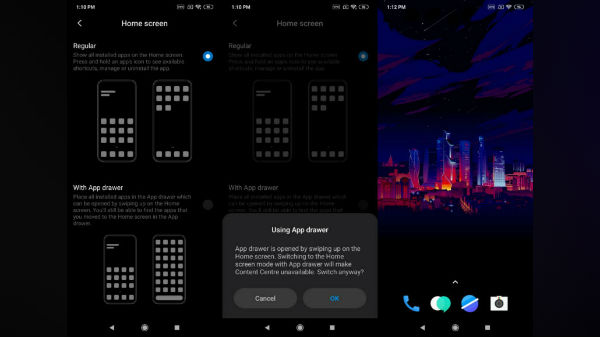
Xiaomi released MIUI Launcher Alpha 4.16.0.1457 earlier this eve. As mentioned, the release packs certain new options, among which include the app drawer and the ability to change the Home screen layout along with the icon size.

As of the app drawer, it isn’t enabled by default so you will have to surf through the Home Screen settings menu. From their change the default (Regular) to “with App Drawer” option in order to get a separate drawer for aligning all of your apps.

If you’re missing the separate app drawer and fed up with Home Screen Only option on the latest Mi devices, install the latest Alpha and switch the mode. Or else, wait for the feature to become stable as you very well know what should be expected from an alpha build.

Download

MIUI Launcher Alpha: Download

N.B: Compatible on Xiaomi Devices running Android 6.0+.

Related: Download Adobe Photoshop Camera (preview) and enjoy the premade filters

Realme Fitness Band spotted, features a curved display

Realme has teased its upcoming fitness band in India for a while now and recently the company announced that it will finally be launching the product in February 2020. Now, the Realme Fitness Band has been spotted in the wild.

Previously, Realme had only teased its fitness band and had just revealed it’s signature yellow colored strap. According to the source, the company’s fitness band was spotted in the Spanish Visa office in New Delhi, India, and was worn by Madhav Sheth, the CEO of Realme India. In the image captured, the Realme fitness band can be seen with a similar yellow strap that had been teased before.

Looking at the image, the upcoming Realme fitness band features a curved display. Reportedly, it was first spotted with its display turned off, making it unknown whether it will be a colored AMOLED panel or utilize another display technology. Furthermore,  the fitness band rival alternatives like Honor Band series or Mi Band series from Chinese tech giants like Huawei and Xiaomi, respectively, in the budget segment of wearables.

Realme
Realme Fitness Band being worn by Madhav Sheth, Realme India CEO (Image Via Beebom)

The design of the Realme fitness band resembles the Honor Band and Fitbit Inspire while the strap doesn’t wrap around the display, unlike the Mi Band series. Rather, the strap attaches to the display body. Unfortunately, finer details regarding the specs and features of the Realme fitness band are still unknown, including the software and user interface as well.


(Source)

Universities in the US are installing location tracking apps on students’ smartphones

Colleges in the US are reportedly testing a method of location tracking in the form of an app that is mandatory to be installed in students’ smartphones. This arrives at a time where digital privacy is a major concern globally and is already seeing backlash.

The report pointed out the University of Missouri, where students “won’t be given a choice” and are required to install SpotterEDU app. This app works via Apple’s iBeacons to broadcast a Bluetooth signal which helps in determining whether a student is actually in a room. According to a different source, however, the app is said to only be compulsory for athletes and it is “completely optional” for students. Although the fact of its mere existence is more questionable to many.

gps rollover

SpotterEDU is currently being tested in a number of different educational bodies including 40 schools as well, according to the founder Rick Carter, also a former college basketball coach which explains its target audience being athletes. Even though US universities’ have stated that it does not include GPS tracking other reports suggest that students can willingly offer GPS coordinates if they choose to do so.

Similarly, another firm called Degree Analytics, which is a startup, uses Wi-FI signals instead of Bluetooth and is already employed in 19 schools. Another example is FanMaker that provides “loyalty points” to students that stay longer to watch college sports games at the stadium, implemented in 40 schools. This all has led to a stream of criticism and has seen people draw similarities to a digital authoritarian rule that may occur in the future.

The last line is probably a bit of a stretch but it has concerned individuals from digital privacy fields that have also run case studies against Chinese educational bodies that feature a similar tracking method. As of right now, the systems in place do not sound too pervasive and are technically unavoidable but it does seem to suggest that tracking students is a common thing now. What its future ramifications are, that remains to be seen.


(Via)

Redmi’s GM Lu Weibing says Under Display Camera is far from mass production

OPPO R&D team had first detailed the development of the under-screen camera technology last year. The OPPO Find X2 was expected to pioneer the Camera-Under-Panel (CUP) technology but earlier this month when Shen Yiren was teasing the Find X2, he stated that he would consider mass production. The statement fueled speculations that the under-screen camera may likely not feature on the Find X2. Redmi’s GM Lu Weibing has also added his voice to the discussion about under-screen camera technology.

Weibing released an epistle on Weibo which explains why the technology may not come now. He categorically stated that Camera-Under-Panel (CUP) is far from mass production. The post was preceded by an opinion poll which he conducted to find out what features fans cared about the most.  The options were screen form with particular reference to camera under the screen. Others options are optical zoom, Super-fast charge such as 100W and linear motor. As at the time of filing this report, over 25,000 persons have responded. The screen form(Camera-Under-Panel (CUP)) option is by far the most popular with 15000 persons voting for it.

However, Weibing was quick to release an essay defusing expectations in that regard. He stated that with the current technical capabilities, he could not find an effective solution that combines display effects and camera effects. There is still a long way to go to achieve mass production.

The Redmi GM threw more light on the benefits of CUP, stating that its application on mobile phones can achieve the real full-screen effect without sacrificing space, but there are still many difficulties currently that hamper the implementation of the technology. Simply put, it is the contradiction between the screen’s PPI and transmittance.

The current screen PPI is about 400 and the light transmittance in a camera is very low. Putting a camera lens under such screen will seriously affect the photo effect. If the PPI around the camera area is lowered and the transmittance is increased, there will be a large gap between the PPI in the camera zome and the PPI of the entire screen. This will cause phenomena such as colour patches in the display area.

Thus, with the current technical capabilities, it is impossible to find an effective solution that takes into account both display effects and camera effects. Xiaomi had first released a CUP-based technology demo in 2019 but it is still far from achieving mass production.


Indian Railways will use Facial Recognition technology despite Privacy Concerns being raised

Railway stations in major cities will soon use facial recognition technology to assist in identifying criminals in India by the end of 2020. This move has been heavily criticized by digital rights campaigners that claim it is a significant breach in privacy in the absence of relevant laws.

The new facial recognition system will be installed in key railways stations and is being tested in India’s tech hub, Bengaluru. This system will have to scan approximately 500,000 commuters every day and will utilize artificial intelligence which will match scanned faces against the police database of criminals. A senior Indian Railway official has stated that the move will make the railways a “virtual fortress without a physical, brick and mortar boundary wall, we will be able to make the whole system more secure.”

facial recognition
Facial Recognition Technology

The Indian Railways is one of the biggest railways networks in the world which spans across the entire nation and connects major cities to distant corners of the country, carrying about 23 million people or the entire population of Taiwan in a single day. However, despite its significance in transportation, it is also been known to have been used by human traffickers to lure millions of females and children. These criminals con people with attractive offers of jobs, but are then sold into slavery or bonded labor to pay of debt.

The idea behind the inclusion of the facial recognition technology to catch criminals is sound but could potentially carry a lot of risks as well. This has caused supporters and detractors of the new technology. On one hand, the system can be used to great effect and vastly improve security while others say it comes at a notable loss of privacy and perpetual surveillance.

India is currently preparing to implement a nationwide facial recognition system, one of the largest in the world, which is already utilized in certain airports. However, as India advances in the technical field its laws have yet to catch up with modern laws concerning digital privacy. This has even led to a backlash from human rights group. In 2017, the Indian Supreme Court ruled that individual privacy is a fundamental right but the latest data protection bill which was introduced in parliament gives the Government the power to ask electronics based firms to hand over users’ data.

Indian Railways to start testing new Facial Recognition system in Bengaluru, Karnataka

The Indian Railway’s facial recognition software will store a person’s face in the system for up to 30 days and will only be accessible to the Railway Protection force under an authorized person. According to Raman Jit Singh Chima, Access Now Director (an Asian digital rights group) the new system has been labeled “dangerous” since it did not reveal which third parties were involved and how data was handled or accessed.

Similar to railway stations, there are plans for including similar technology onboard trains as well, with security cameras being installed in 1,200 out of 58,000 carriages. The senior railway official also claimed that this was the only method through which a country like India with such a large population can be monitored and “policing has to be tech-based.”


(Source,Via)

Realme C3 will launch on February 6; poster provides first look

Realme’s C series is its line of budget phones that can be called the direct competitor to the Redmi *A series. Earlier today, Realme’s CEO, Madhav Sheth, teased a new model for the series that would be launching soon. Shortly after, invites have been sent out for the launch of the Realme C3 scheduled for February 6.

The invite confirms the name of the new model is the Realme C3 but that should not be news for anyone unless you have been living under a rock. The Realme C3 and a second model called the Realme C3s were certified weeks ago in Singapore and Thailand.

Realme C3 launch poster

The invite also reveals the design of the phone. As you can see in the image, Realme is keeping the waterdrop notch this time around. However, the lower bezel appears to be thicker though the display is still curved at the corners.

On the back, the Realme C3 will have dual cameras but they are now arranged vertically, unlike its predecessor’s cameras that are arranged horizontally. Unfortunately, the rest of the phone’s rear is blocked and we can’t confirm if the phone has a fingerprint scanner or not. At least we know blue is one of the color variants that the phone will be available in.

The specs of the Realme C3 are currently unknown but we expect it to have a more powerful processor, better cameras, and run Android 10 with Realme UI out of the box.

The event will begin at 12:30 PM (IST) and will be live-streamed.


(Source)