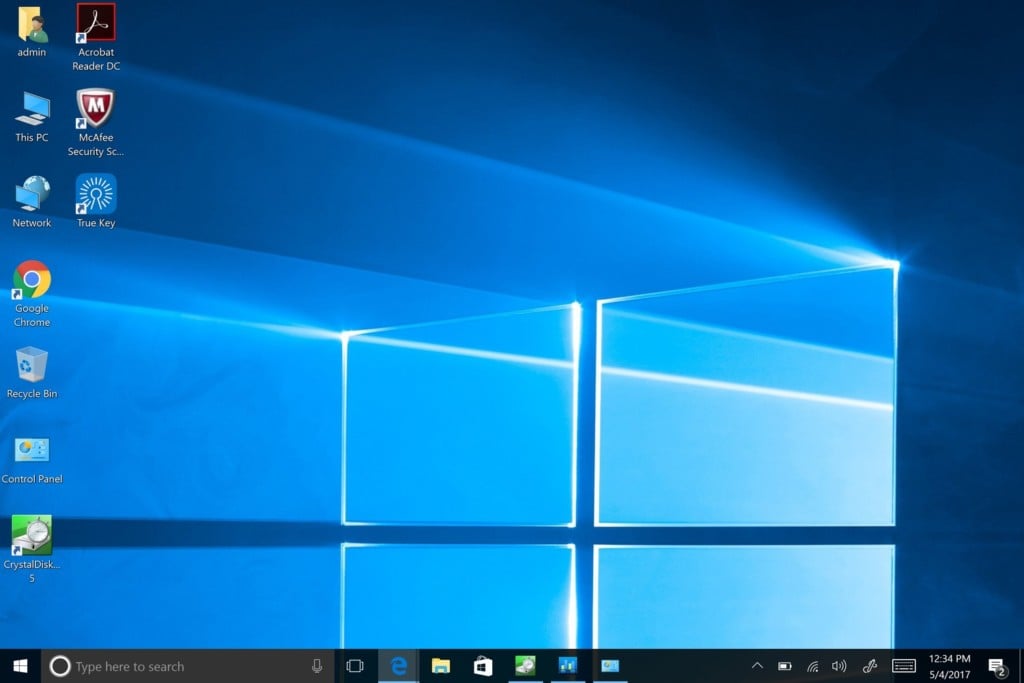
Microsoft recently released a bug fix for a zero-day bug that affected Internet Explorer in its Windows PC OS. However, the fix seems to have broken more than fixed as it has also created problems with the operating system.
Previously, Microsoft confirmed that a zero-day bug had affected Internet Explorer in all supported versions of Windows and said that a fix will be rolled out by 11th February Tuesday Patch. But till the patch arrives, the tech giant provided users affected with the zero-day bug a method to secure their PC systems which involved them to restrict access to JScript.dll.
Internet Explorer
Unfortunately, this fix apparently broke down Windows printing and the only way to fix this is to undo the method provided by Microsoft to fix the vulnerability. According to multiple user reports on online forums and Reddit, the printer bug affects printers of any make and type, disregarding known brands.
Furthermore, Microsoft has stated that users affected with the zero-day bug are under “elevated risk” and are more susceptible to an attack on their desktop systems; and if the workaround method isn’t applied are vulnerable to hackers. Microsoft’s Security Advisory has revealed that an attacker is already exploiting this vulnerability which lets them take control of a system by simply directing users to a specially designed website.
Windows Operating System
The zero-day bug is reportedly capable of corrupting memory in a manner that allows an attacker to gain access to “execute arbitrary code in the context of the current user.” Meaning, a user’s PC can be vulnerable from a web-based attack where an attacker could host a special website that is designed to exploit the vulnerability through Internet Explorer and make users view the website an email.
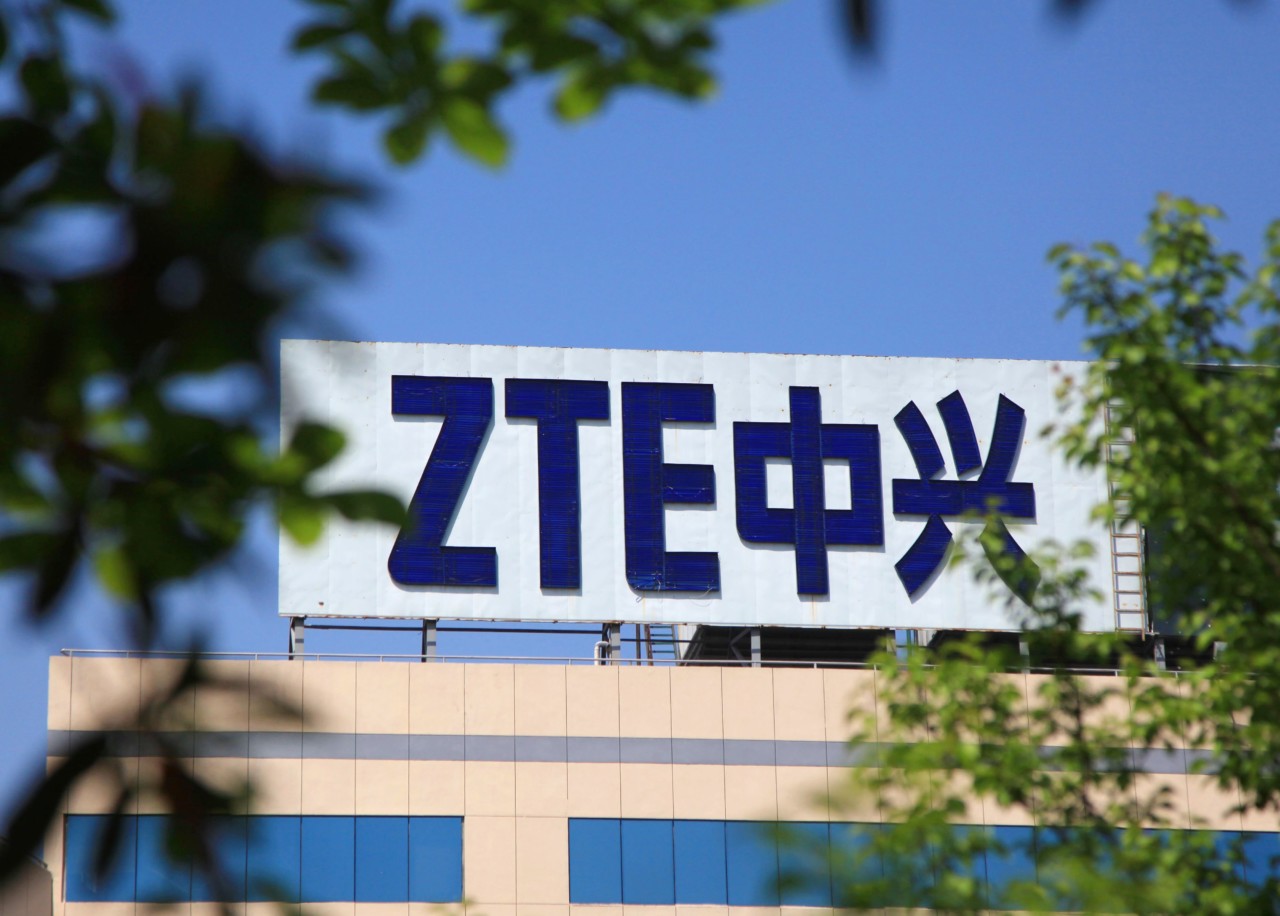
Over the past year, we’ve heard how 5G will benefit all industries in the market, including the medical field. Today, ZTE in partnership with China Telecom has shown us how the new age network can help fight serious issues such as the outbreak of the new coronavirus pneumonia in China. ZTE, in partnership with China Telecom, has successfully conducted remote diagnosis of the new coronavirus in the Sichuan province of China – with the help of the new age 5G network. The telecommunication equipment maker helped set up a remote 5G diagnosis center in West China hospital and the Chengdu Public Health Clinic Center of Sichuan University last week.
On January 25, ZTE built and interconnected 5G indoor base stations in West China Hospital’s conference room assigned for remote diagnosis and treatment. This way, the conference room was connected to the remote diagnosis and treatment system for the new coronavirus. On January 26, the company built and optimized 5G indoor distribution system at another core point of the diagnosis system. Finally, when the 5G network went live in the area, the company helped the West China Hospital, Chengdu Public Health Clinic Center & Sichuan health and health commission to perform a remote video consultation.
The Sichuan Health Commission has made the West China Hospital of Sichuan University as the central node of the 5G remote diagnosis and consultation system. It will have access to 27 hospitals that have accepted and treated patients with the 2019 novel coronavirus (nCoV).
As a 5G leader, Huawei is also helping out Wuhan to connect to 5G
Further, ZTE plans to build China’s first 5G remote coronavirus diagnosis system covering Sichuan province, city, and county levels. This will provide ‘one network’ for the remote diagnosis at the front-line hospitals that are currently helping out Wuhan. In the next step, ZTE wants to connect Wuhan’s front-end medical rescue team with 5G so as to provide expert diagnosis and treatment services, remotely, from the West China Hospital.
ZTE has also announced that it is currently setting up the communications network for the Lei Shen Shan Hospital in Wuhan. This is the second makeshift hospital that being built in the heart of the city to diagnose and treat coronavirus patients. ZTE, in partnership with China Mobile, will set up a 5G network in this hospital for aiding patient treatment, likely via remote consultations. The hospital is expected to start operations from February 5, 2020.
iQOO started off as a subbrand of Vivo when it was announced last year. Its first smartphone was a gaming phone called the iQOO, though some did refer to it as the Vivo iQOO. It followed it up with the iQOO Neo, a super affordable phone with a Snapdragon 845 processor. It also announced the iQOO Pro, and its first 5G smartphone, the iQOO Pro 5G. Afterward came the iQOO Neo 855 and the iQOO Neo 855 Racing.
It has been confirmed that iQOO will begin selling its phones in India this year but as a standalone brand and not a line of smartphones owned by Vivo. In an official press statement, the new company revealed it will launch a flagship phone in India in February. A new leak has revealed what may be the official name of the phone.
According to Sudhanshu Ambhore (@Sudhanshu1414), iQOO’s upcoming flagship will be called the iQOO 3 and it turns out its specs were already leaked last week by @Digital Chat Station.
Going by the Weibo post, the iQOO 3 will have a 6.44-inch 2400 x 1080 Samsung OLED display with a small punch hole at the top right corner. While most manufacturers are going for a higher refresh rate, the phone will have a 60Hz refresh rate.
Inside the device is the Snapdragon 865 Mobile Platform which will be paired with a 5G modem. Based on this, the iQOO 3 will be the manufacturer’s second 5G device. The leaker says the phone will have 48MP quad cameras on the rear arranged in a grid matrix (rectangular housing) and positioned on the left side of the phone.
The iQOO 3 will have a 4410mAh battery capacity, which should be marketed as 4500mAh. While the battery capacity has remained unchanged from that of its predecessors, save for the original iQOO phone, the leak said the iQOO 3 will have support for 55W Fast Charge. This means it will be able to charge faster than the original iQOO which supports 44W fast charge and charges from empty to full in 45 minutes.
While Digital Chat Station does have a good track record, we advise you to take this with a grain of salt as the above specs are for a prototype and the specs of the final product may be different.
iQOO says it will announce a flagship phone in India next month powered by the Snapdragon 865 processor. The phone may launch first in China before India. However, it may arrive in India under a new name and not as the “iQOO 3”. The reason for this is because none of the trademarked names by the company in India includes the name iQOO 3.
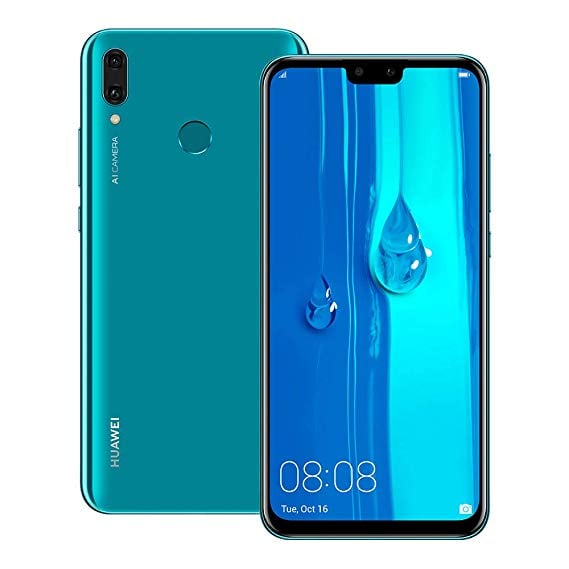
Earlier this week, Huawei went on Twitter to confirm that the Huawei Y9 2019 will receive the Android 10 based EMUI 10, which arrives as great news for its users. Huwaei confirmed the update as a reply to a Twitter user that tweeted to Huawei asking about the update.
Previously, over 1,600 Huawei Y9 2019 had signed a petition for their handsets to receive the latest EMUI 10. Initially, Huawei had stated that “We regret to inform you that EMUI 10.0 / Android 10 will not be available for Huawei Y9 2019 due to hardware limitations, as it requires higher hardware specifications for optimal performance.” So, the latest post on Twitter contradicts this and doubles back on it.
Thank you for your message. The Huawei Y9 2019 will recieve the EMUI 10 update.
EMUI 10 is the latest update for Huawei smartphones which is based on the latest Android OS version. It brings changes in the UI design and introduces new features like Magazine Style UI layout, Morandi Coors, system wide Dark Mode, Golden Icons, New Animations, and improved privacy features.
Furthermore, the latest version of EMUI also arrives with a lot of tweaks and improved software enhancements. One of these includes GPU Turbo technology which improves graphics processing by 60 percent. This is further supplemented by Link Turbo that allows smartphones to access multiple networks like 4G and WiFi to provide 70 percent faster overall network speeds.
Huawei Y9 2019 Edition
Similarly, other new features have also been included in the system update to improve performance, like EROFS super file system that boosts Android’s random read speeds by 20 percent while Ark Compiler enables third party applications to launch up to 60 percent faster.
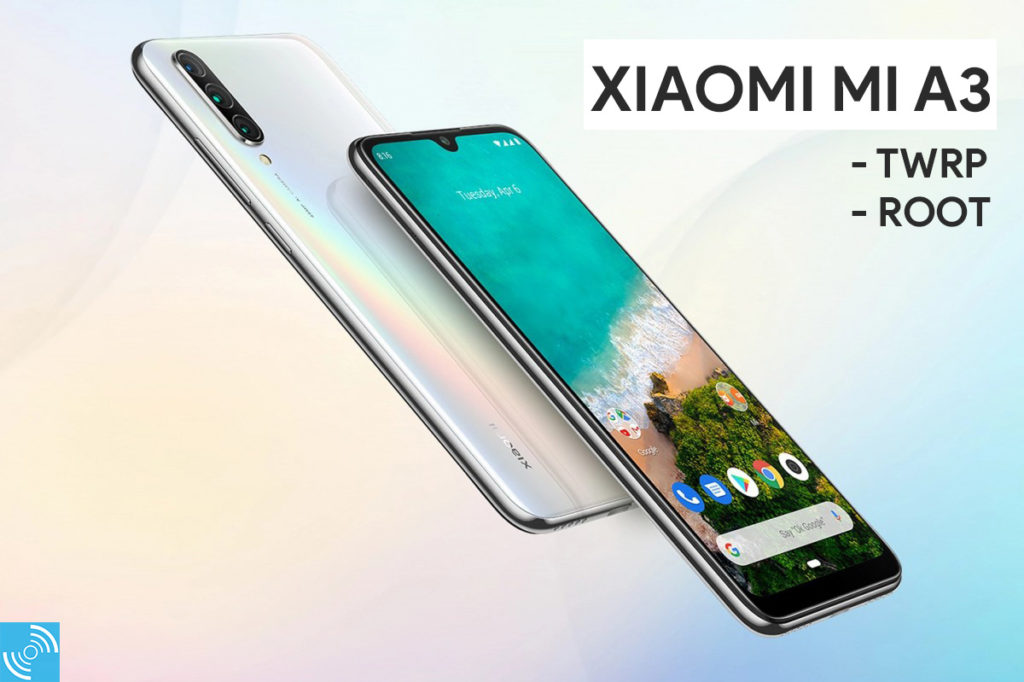
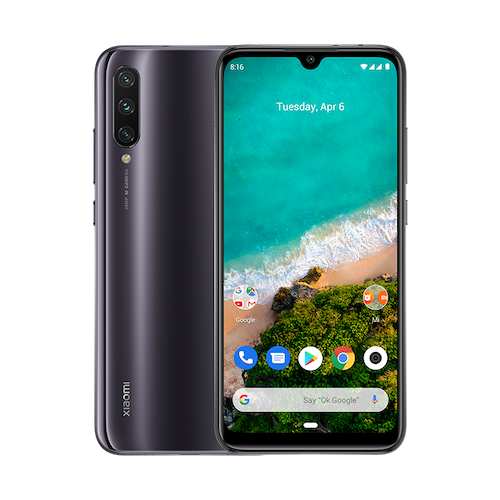
Xiaomi Mi A3 is quite a popular device in the mid-range segment running on the Android One program. It is the third smartphone on the Android One series that is co-developed by Google as part of its Android initiative. The smartphone is well-received by users in Europe and some developing nations like India. The third-party developers are also eagerly developing new mods, working on frameworks to make them compatible. Similarly, Xiaomi has received official TWRP support a few days ago.
In our guide, we will get root access after installing TWRP on Xiaomi Mi A3. Over some time, the device had an unofficial port of TWRP available with some bugs. The flashing process will be different as the device uses the A/B partition system.
There are various advantages of using the TWRP recovery to get root access and flash other MODs. It also brings the capability of creating and restoring a system backup. The TWRP is GUI based custom Recovery that helps the users to do modification on the Android system by flashing respective MODs.
Xiaomi Mi A3 Specifications
The Xiaomi Mi A3 comes with a huge 6.08-inch Super AMOLED HD+ display featuring a 1560 x 720-pixels resolution and a pixel density of 293 PPI. The display is protected with Corning Gorilla 5 to protect against usual falls. The smartphone is powered with a Qualcomm Snapdragon 665 chipset featuring Adreno 610 GPU and an octa-core processor.
In Optics, the smartphone carries an AI-assisted triple rear camera setup with the 48-megapixel primary camera, 8-megapixel ultrawide sensor, and 2-megapixel depth-sensing lens. A 32-megapixel front camera is present for selfies and video calling. There’s a 4030 mAh battery with 18W quick charging via Quick Charge 3.0.
Xiaomi Mi A3 comes in different storage variants of 64GB + 4GB, 128GB + 4GB, and 128GB + 6GB. It supports WiFi, Bluetooth 5.0, GPS, Infrared Port, FM Radio and USB 2.0. There’s an under-display fingerprint sensor, accelerometer, gyro, proximity, and compass. It comes in three different colors of Kind of Gray, Not just Blue and More than White.
Install TWRP on Xiaomi Mi A3
Installing TWRP on Mi A3 will open doors for unlimited possibilities to customize the smartphone.
Note: Gizmochina.com is not responsible if any damage to your device or data occurs while following this guide. You are proceeding at your own will. Unlocking Bootloader or rooting the device will void the warranty. The device will not receive any official OTA update from the company.
Follow the below-mentioned instructions carefully to successfully install TWRP. Before proceeding, please ensure your Xiaomi Mi A3 bootloader is unlocked.
Enable Developer Mode by tapping the MIUI version 7 times after heading to the Settings > About Phone.
Enable USB Debugging by heading to the Settings>Developer Option and toggle USB Debugging.
Connect your smartphone with the PC via USB Cable.
Download the TWRP image from the above section and place it into the extracted ADB and Fastboot tools folder. Also, ensure to copy the same file on your phone’s internal storage.
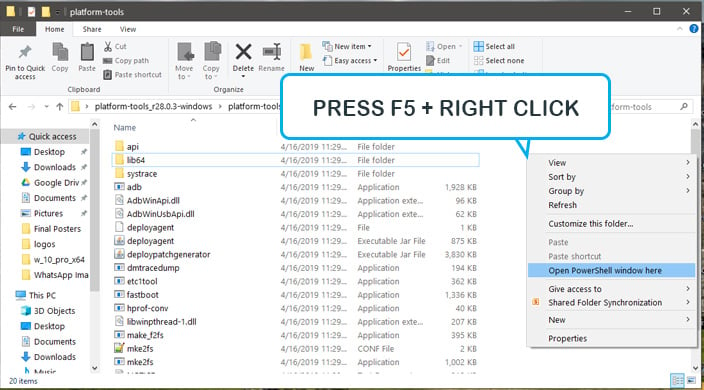
Open Command Prompt or Powershell by pressing SHIFT + RIGHT-Click in ADB and Fastboot folder.
Reboot your smartphone into fastboot mode by executing below mentioned command.
adb reboot bootloader
In order to temporarily flash the TWRP on Mi A3, execute the following command:
fastboot boot twrp.img
Once in TWRP after boot, navigate to Advanced > Install Recovery Ramdisk option > Browse the TWRP image.
After Installing the TWRP image in the above step. Again head to Advanced > and “Fix Recovery Bootloop” option to avoid boot loops.
Reboot your device and enjoy TWRP custom recovery.
You’ve successfully installed TWRP on Xiaomi Mi A3. In order to attain root access, you need to follow the steps below.
Root Xiaomi Mi A3 with Magisk
Rooting Xiaomi Mi A3 needs a custom Recovery installed, or you can root the device using a patched boot method. Otherwise, you can get the root privileges by flashing the Magisk manager on Xiaomi Mi A3 by following the below steps.
Download Magisk manager File on your smartphone.
Boot into the recovery, after taking the recommended backup of your stock ROM.
Tap Install, and then browse ‘magisk.zip’ file you downloaded, and swipe to confirm the flash.
After a few seconds, you can successfully reboot the device from the TWRP manager.
Enjoy!
The user has successfully rooted the Xiaomi A3 using the above steps. You can now install your favorite MODs, can tweak the performance and battery efficiency. If you get any problem, let us know via the comments below.
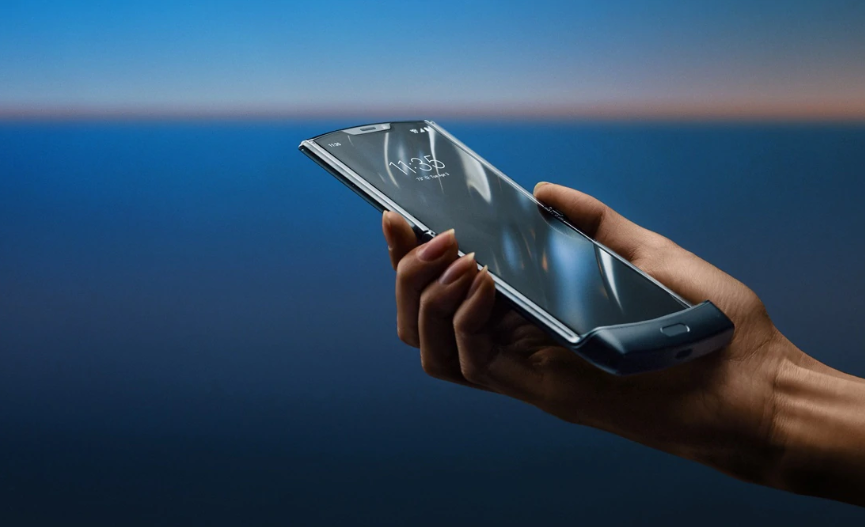
Motorola Razr is all set to go on sale in the U.S. for the first time next month. Ahead of its release, the company uploaded a series of videos that showcase Razr’s unique features. This series includes a video titled ‘Caring for razr’ featuring a list of dos and don’ts. In the video, Motorola specifically pointed out that ‘Bumps & Lumps’ on the screen of the foldable device was normal.
Motorola said that the Razr’s foldable display is designed to bend. So, the formation of bumps and lumps on the display are pretty normal. This is a very interesting statement, especially because of what happened with the first batch of Galaxy Fold review units that were shipped out in early 2019. A number of Galaxy Fold units experienced display issues soon after the formation of small bumps and lumps on the screen. So this looks like a deliberate statement to inform users that it’s okay if their Razr unit develops a bump or two during usage.
The current generation of foldable smartphones use plastic OLED displays which make them far less durable than traditional glass-protected smartphones. This means everyday items like keys, pens, or even fingernails can damage your incredibly expensive handset. Even the new Motorola Razr is using a plastic OLED display from LG which is susceptible to such damage. So it’s not surprising to see Motorola giving out specific instructions like ‘don’t add a scratch guard on its screen’ and ‘always close the phone before keeping it in your pocket’ in its new ‘Care for Razr’ video.
While Galaxy Fold, Motorola Razr, and even Huawei Mate X can be called as fragile, recent rumors reveal upcoming foldables could be way more durable. According to both ice universe and Max Weiback, the Galaxy Z Flip or the Galaxy Fold 2 (the name is yet to be confirmed) will feature an ultra-thin glass cover, potentially making it significantly more durable than plastic-covered foldables.
The Galaxy Z Flip is expected to debut on the same day as the Galaxy 11 series launch, on February 11, which is around the same time when the Motorola Razr will be shipped out in the U.S.
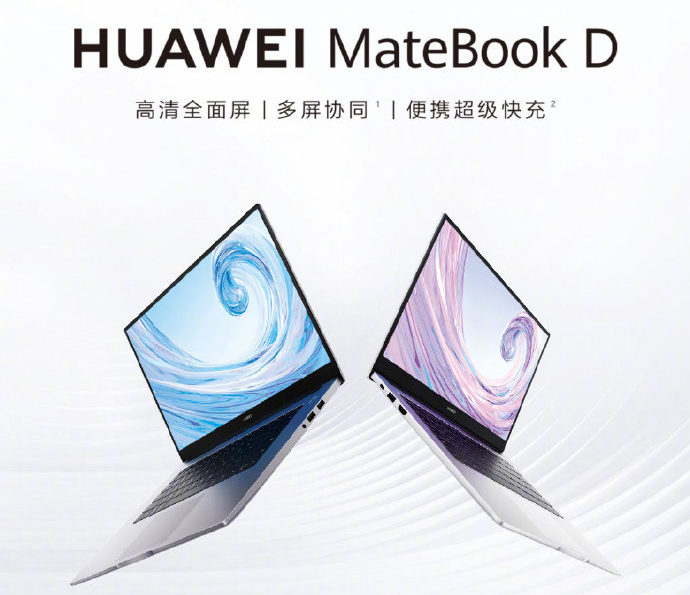
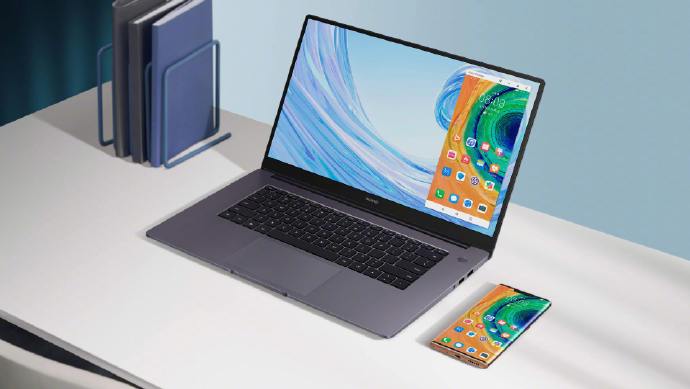
Huawei has released a teaser video on its Philippines Facebook page that suggests the company may launch the MateBook D 15 soon in the Asian country. Huawei had launched the MateBook 13 in the Philippines in May 2019.
The MateBook D 15 Ryzen Edition has an aluminum chassis measures 357.8 x 229.9 x 16.9 mm and it weighs 1.62 kg. The device is fitted with a 15.6-inch IPS display that offers full HD resolution of 1080 x 1920 pixels. It promises a screen-to-body ratio of 87 percent. The notebook is equipped with a full-sized keyboard along with a trackpad. An HD camera that is good enough for video calling is available on the device.
The AMD Ryzen 5 3500U processor powers the MateBook D 15 along with Radeon Vega 8 graphics. It is backed by 42Wh battery that supports 65W USB-C pocket charger. By charging the device for 30 minutes will allow it to gain 53 percent battery power.
The MateBook D 15 comes with connectivity features such as Wi-Fi 802.11ac, 2×2 MIMO and Bluetooth 5.0. The power button on the keyboard is integrated with a fingerprint sensor. The connectivity ports available on the device include a USB-A 3.0, two USB-A 2.0, a USB-C, HDMI and 3.5mm headphone/mic combo. The device is loaded with Windows 10 OS.
Huawei is now using its expertise in the networking field to combat the outbreak of the Coronavirus. The Chinese electronics giant is currently helping in improving the infrastructure of hospitals through 5G networking.
Official Huawei Weibo account shared details regarding the 150 member special team
For those unaware, China has recently been suffering from a new virus outbreak, dubbed Coronavirus, which is known to cause pneumonia and has already infected a couple of hundred people with a few dozen already succumbing to the disease. It has devastated the Wuhan region in the country, prompting the Government to put it on lockdown. This also means that about 11 million residents of the region are also at risk.
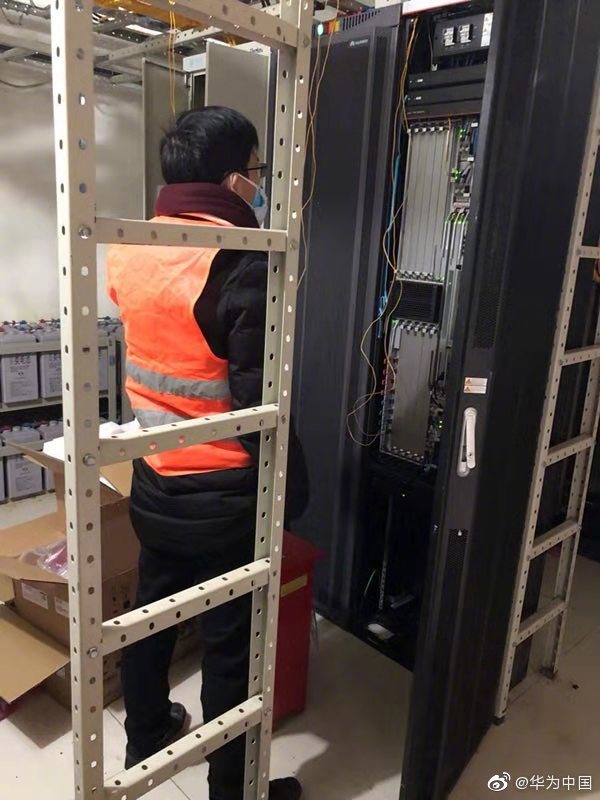
Members of the special team layout fiber cables to enable 5G networking
Huawei, the known tech company from China, has already set up a Coronavirus outbreak protection team on 23rd January 2020, which comprises about 150 people. In the span of just three days, the dedicated team has aided in the construction of network planning, survey, design, fiber laying, and erection of base stations. Furthermore, the company has even established 5G base stations at the Wuhan Vulcan Mountain Hospital, in partnership with Hubei Mobile and Hubei Unicom.
The Wuhan Vulcan Mountain Hospital is currently under rapid construction with another electronics giant like Xiaomi also lending a hand. It is expected to be completed by the end of this week and, though Huawei’s efforts, will be capable of receiving ultra-high-speed network connectivity. In other words, a fast and reliable data connection is ensured, making remote consultation, remote monitoring and other services more easily accessible.
The news was shared on Huawei’s official Weibo account, a Chinese microblogging website, that also contained images that showcased a few members of the special team that is currently working to set up the necessary infrastructure around the hospital and other key areas.
Chinese electronics giant OPPO is en route launching its very own financial services app in India, claims a new report on 91mobiles. Dubbed OPPO Kash, the app is likely to go live by the end of June 2020, a person familiar with the program revealed recently to the publication. The Beta version of the app is currently undergoing tests and will roll out as soon as all creases are ironed out.
Like Realme PaySa, OPPO Kash will offer hassle-free micro-loans at flexible repayment schedules to users. The app will be available on both Android and iOS platforms and will come pre-loaded in all future OPPO smartphones. OPPO Kash will feature UPI integration and allow users to purchase smartphones at east EMIs. The benefits of OPPO Kash can be reaped online as well as offline purchases.
With OPPO and Realme being flag bearers of parent firm BBK Electronics, OPPO Kash was designed by FinShell, the same team behind Realme PaySa. With Reliance Jio recently introducing UPI payments to its popular app JioMoney, OPPO’s future is yet to be decided. The competition in the online payment realm is real with Google Pay, formerly Tez, securing the most popularity in 2019 with over 36 million downloads, and recording 50% YoY growth.
In related news, OPPO is scheduled to unveil the much-awaited Find X2 at the Mobile World Congress (MWC) in February 2020. The device is rumored to flaunt a 6.5-inch curved OLED display with a resolution of 3168 x 1440 pixels and draw power from a Snapdragon 865 SoC. The highlights of the OPPO X2 include the display with a 120Hz refresh rate and new Sony sensors such as Sony IMX689 and Sony IMX708. OPPO has also used its patented crescent-shaped camera at the rear, with a unique rotating mechanism. According to a report by Counterpoint, OPPO currently enjoys a steady market share in India, recording a 9 percent increase in popularity in 2019.
Twitter India released a special emoji that celebrates the 71st Republic Day of India. It is celebrated each year on the 26th of January.
Indian President, Ram Nath Kovind, will be using this emoji for his tweet, according to Twitter India. The emoji will be used as he addresses the nation as people all over the country will also participate in a public conversation in the same thread. Mahima Kaul, Director, Public Policy, India and South Asia, Twitter India stated that the Republic Day emoji was created to “resonate” with the Indian users across different cultures, languages, places. In other words, give the people yet another reason to celebrate and participate in the historic day for the Southeast Asian nation.
The India Gate, situated in the capital city, New Delhi
The emoji is currently available on the platform and will remain active until 30th January 2020. It is found in English alongside ten different regional languages which are commonly spoken within the country, including Hindi, Tamil, Telugu, Kannada, Malayalam, Marathi, Bengali, Gujarati, Urdu and Gurmukhi.
Notably, this marks the fifth consecutive year in which the social media giant has supported the Republic Day in India with a custom emoji on its platform. Similarly, Twitter is also known to celebrate other major occasions in the country like Independence Day, Diwali, Republic Day, Gandhi Jayanti and a few other notable milestones in the nation’s history.
Twitter India’s special Republic Day emoji
The idea with emojis is to keep Indian cultural identity and sentiments as a large chunk of Twitter’s userbase is from the country. Thus, emojis are designed in such a particular fashion.
Days after announcing a carrying case for the Realme Buds Air truly wireless earbuds alongside a 10,000mAh power bank at the soft launch of Realme 5i smartphone in India, the Chinese smartphone manufacturer has finally revealed the Iconic cover. While Realme had only revealed the pricing and availability details of the power bank at the time of the announcement, now it has confirmed the cost and sales date of the Iconic Cover.
Realme Buds Air Iconic Cover Price and Availability
The Realme Buds Air Iconic Cover is priced at Rs. 399 (~$6). The cover will be on sale starting at 12.30 PM IST on Jan. 28. It will be available on Flipkart and Realme’s own website.
Realme Buds Air Iconic Cover Design
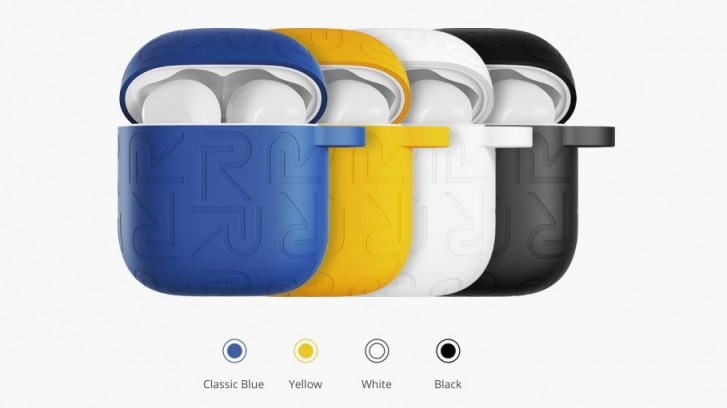
The Buds Air Iconic Cover features Realme’s tailor-made R logo designed by Pentagram. It hugs the charging case perfectly and the silicon protects the case against accidental damage or slides. Realme claims that the cover is composed of a durable material that is soft to the touch. It comes with a metal carabiner for portability. Wireless charging works without removing the cover.
Like the Realme Buds Air truly wireless earphones, the Iconic Cover too draws heavy inspiration from the Apple AirPods design. The charging case supports wireless charging and is rated for up to 17 hours of playback on a single charge. Without the charging case, the device lasts for around 3.5 hours on a single charge.
Realme Classic Blue hue 10,000mAh power bank with yellow accents is priced at Rs. 1,299 (~$18). The power bank is also available in red, yellow, and grey color options. The Buds Air Iconic cover comes in four color variants, namely white, black, yellow, and blue. Realme is yet to divulge plans of selling either product in foreign a market outside India.
After waiting for more than a year, we now have a launch date for a second POCO phone. No, this is not the POCO F2 but the POCO X2! Yeah, we know there is no POCO X1 but there also isn’t a Redmi K10.
The announcement comes via the official POCO Twitter account, and according to the tweet, the POCO X2 arrives next week, Tuesday, February 4, 2020.
An Xperience that will make you go, "Bruh, it's #SmoothAF". #POCOX2 is arriving on Feb 4th 2020.
In anticipation of the device’s launch, POCO has created the hashtags #SmoothAF and #POCOX2. The former is actually a hint to one of the phone’s features which is its high refresh rate.
Along with the tweet is also a URL to a page where you can check if your device is “Smooth AF”.
If you click on the link, it takes you to a page that automatically detects the refresh rate of your device. You get something like the image above if you visit it on your PC. However, opening the link on your mobile results in the second image below. Yeah, thanks POCO for reminding me my phone is due for an upgrade!
The POCO X2 will have a display with a high refresh rate and since the phone is a rebranded Redmi K30, it means it has a 120Hz refresh rate.
POCO has also teased the phone will come with a Sony IMX686 (64MP) main camera and will have 6 cameras in total (four quad cameras and a dual front-facing camera).
The teaser page also reveals the POCO X2 will have a Snapdragon processor (Snapdragon 730G) inside, liquid cooling, and fast charging. An image of the bottom of the phone further confirms it is a rebranded Redmi K30. Below is the bottom of the POCO X2 (left) alongside that of the Redmi K30 (right). And of course, we now know it will come in gold.
[envira-gallery id=”302378″]
The launch event is scheduled for 12 noon on February 4 but there is no info regarding the venue. However, we expect there will be a livestream too.
Are you excited about the POCO X2 or you are disappointed that it is a rebranded Redmi K30? Let us know what you think in the comment section.
Tetris is one of the world’s most iconic games. It is both nostalgic due to its very early conception in the gaming industry and classic, seeing as the series still has a sizeable player base. However, EA (Electronic Arts) is shutting down the service for Tetris’ two mobile ports, namely Tetris and Tetris Blitz.
The announcement for the end of both mobile games was shared on Twitter through Tetris Blitz’s official account. It mentioned both games will be taken down by 21st April 2020. The tweet also arrived with a link for any users with any concerns or grievances regarding this decision from the known gaming publisher, EA.
Dear Blitzers,
We've had an amazing journey with you, but sadly it is time to say goodbye. By April 21, 2020, Tetris® and Tetris® Blitz will be retired. Thank you all for making this journey so memorable 🙂
As of right now, it is unclear if the studio plans to end the Tetris series altogether since its deal with Tetris has expired. Hence, we might not see more from entries in the IP being launched from EA. However, N3TWORK, a game developer, has already signed a multi-year agreement with Tetris last year. This means that the game is not entirely dead and still lives on but under a different developer.
N3TWORK is currently working on a couple of different versions of Tetris for the mobile platform and already has a game available for both Android and iOS, which is available for free. Furthermore, the game which is out now is a remake of the original. Thus, it just has one classic mode with a few different themes, unlike the one from EA with multiple modes and options.
Notably, in-app purchases and microtransactions which EA is infamous for, will not be making an appearance again in N3TWORK’s version of the game but will have users pay $4.99 to remove ads. Lastly, another version of Tetris from N3TWORK plans to bring the 100 player Battle Royale genre to the nostalgic game series in the form of a new game. So, for those that wish to play more than just the classic mode can check out Tetris Royale, which is currently in the Beta program and will be released by June 2020.
OnePlus holds an “Open Ear Forum” across several countries in which the company’s representatives meet with the members of the OnePlus community to take feedback from them to further improve the company’s products.
A similar event was held by the company in New York last month with the videographers to get feedback from them regarding the use of OnePlus phones for their work. Now, the company has shared its findings and replies to all the questions raised during the Forum along with detailing its commitments related to videography.
OnePlus 7T (left) and OnePlus 7T Pro (right)
While the newly launched OnePlus 7T Pro received several updates to improve the camera performance, it still isn’t as soon as the camera of premium smartphones from other brands like Huawei, Google, and Apple.
The company has said that tuning its cameras to have identical exposure and white balance is among OnePlus’ first priority along with faster shutter and skin tone improvement which will be done through a system updates.
It is also upgrading both hardware and software from this year to fix the auto focus-related issues. The company has also added that it is trying to find the new balance between sharpness and noise along with working on Video HDR to solve dynamic range problems.
OnePlus also adds that the company’s future devices will have 4K video super stabilisation support and it is also working on de-flickering solutions to reduce light flickering issue. The company is also working on several new features such as Night Mode for video, zoom-in time-lapse, depth-of-field for tele camera lens, new video editing tools, among others.
Huawei’s battle against the United States related to the trade ban isn’t coming to an end. However, the company seems to have got a temporary reprieve as a proposal of the U.S. to further restrict sales to Huawei Technologies has encountered objections within the Trump administration and is being held.
U.S. Commerce Secretary Wilbur Ross said on Thursday that new rules were in development that would further limit U.S. companies from supplying Huawei. However, the rules are being opposed by the U.S. Defense Department.
The blocking of the restrictions on Huawei comes at the U.S. Defense Department shares the same concerns that Qualcomm and other U.S. suppliers have been telling the White House that blocking trade with Huawei will cut off revenue that could be used for further product research.
The new rules will make it harder for American companies to sell to Huawei from their overseas facilities. Some US-based firms have been selling to Huawei even after the ban, taking advantage of the exemptions if most work to create the products happens outside the United States. The current threshold permitting sales kicks in when 75 percent of the work occurs overseas but the administration is now debating raising this to 90 percent.
Huawei, which the world’s largest telecoms equipment supplier, is one of the biggest purchasers of chips. Semiconductor makers in the U.S. have argued that a complete clampdown is counterproductive since the parts that Huawei needs can be bought from non-US providers.
Amid all this, the Chinese giant is continuing its efforts to reduce its dependency on US-based technology. The company has already unveiled its completely new operating system named HarmonyOS and is working on HMS as a replacement for Google services.
Huawei is gearing up to launch its next-generation P-series flagship smartphones — Huawei P40 lineup at a launch event in March this year. Now, ahead of the launch of these phones, the P30 Pro has received a price cut in China.
The Huawei P30 Pro 8GB RAM and 256GB storage model is now available for a price of 4,088 yuan which is roughly $589. When launched in April last year, this particular variant was priced at 5,998 Yuan (~$893).
Huawei P30 Pro
Coming to the specifications, the Huawei P30 Pro flagship phone sports a premium design with glass panels on both side and a metallic frame in between. It features a 6.47-inch curved OLED Full HD+ display, has in-screen fingerprint reader, and can emit sound through the display of the phone.
Under the hood, the device is powered by 7nm Kirin 980 SoC coupled with 8 GB of RAM and 256 GB of internal storage. The phone features a 40-megapixel main sensor along with 20-megapixel ultra wide-angle lens and an 8-megapixel tertiary sensor.
On the front side, there’s a 32-megapixel selfie shooter. It runs Android 9 Pie OS out-of-the-box and is powered by a 4,200mAh battery and comes with 40W SuperCharge fast charging support.
As for its successor, reports indicate that the Huawei P40 Pro will come with a 40MP Cine (ultrawide) camera with a 1/1.5” sensor size which will be paired with a 52MP main camera having a 1/1.3” sensor size. Rather than a telephoto camera, Huawei is going with a periscope zoom lens like that of the Huawei P30 Pro. This will offer more optical zoom, at least 5x, and of course more digital zoom. Further, it is said that the device will also comes with a 3D ToF camera.
Recently, it was revealed that the Chinese giant is planning to launch three P-series flagship smartphones — P40, P40 Pro, and P40 Pro Premium. The major factor of differentiation between the phones will be the rear camera setup.
While the P40 Pro will come with four camera sensor on the back panel, the Pro Premium variant is said to feature a penta-camera setup. As for the other specs, the smartphones are expected to come powered by the company’s own Kirin 990 flagship processor with support for 5G connectivity.
In order to support the fight against coronavirus in the hardest-hit city of Wuhan, several Chinese smartphone makers have started donating money. So far, the list of companies who have contributed includes Huawei, OPPO, Vivo, Nubia, Realme, TCL, and Meizu.
Along with donating 30 million yuan to Wuhan Charity Federation for epidemic prevention and control, Huawei has also completed the setup of 5G base stations at the Wuhan Vulcan Mountain Hospital. Other smartphone makers, OPPO and Vivo have also donated 30 million yuan while TCL has donated 10 million yuan.
TCL has said that it is also providing other necessary products, including public display LCD panels, air conditioners, refrigerators, washing machines, etc. as per the requirement by Raytheon Hospital.
On the other hand, Nubia, a sub-brand of ZTE has said that it has contributed 600,000 yuan to fight against this virus whereas Realme, which is backed by OPPO, has donated 500,000 yuan and Meizu has donated 300,000 yuan.
Apart from these brand, other companies have also contributed, including Xiaomi, Lenovo, and many more. Xiaomi has supplied medical protective materials in the first batch which are worth around 300,000 yuan while Lenovo is providing all IT support equipment needed for emergency assistance to Wuhan Emergency Medical Engineering.
Along with these smartphone brands, several leading companies in China are contributing to fight against coronavirus, including the likes of Alibaba, Tencent, JD.com, Kuaishou, Douyu, Midea, SF, Suning, Cainiao, and Taobao, among others.
For those who are unaware, the coronavirus causes pneumonia and those who suffered from it reported to have symptoms like coughs, fever and breathing difficulties. In severe cases, it also leads to organ failure.
As this is viral pneumonia, antibiotics are of no use and the antiviral drugs against flu are also not working. Patients admitted to the hospital get support for lungs and other organs but the recovery is dependent on their immune system.
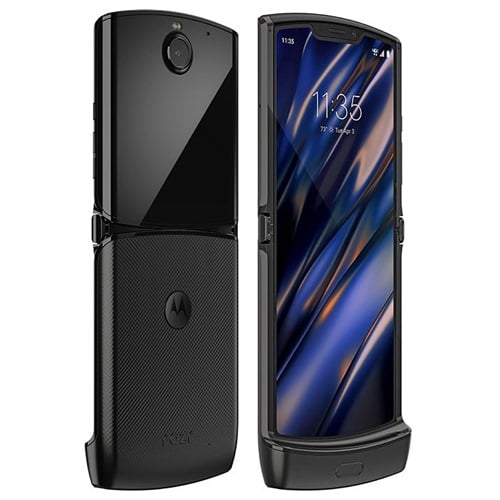
Lenovo-owned Motorola had announced the Motorola Razr clamshell flagship phone with a foldable screen in November. At that time, it was reported the Motorola Razr 2019 won’t be releasing in China. However, at the Consumer Electronics Show (CES) 2020 tech trade show that was held earlier this month, the company confirmed that the Motorola Razr with 5G support will be arriving in Q2 this year in China. A fresh repot on a Chinese tech blog reveals that the Motorola Razr 5G was showcased at the Wuhan International Expo Center in China.
The Motorola Razr 5G is being manufactured at the Wuhan facility of the Lenovo Group. The regular Razr phone that comes without 5G support ships with Snapdragon 710. Its 5G version seems to be equipped with a 5G-ready chip. Hence, it could be driven by Snapdragon 765 or Dimensity 5G chipsets. Motorola has recently released phones with Exynos chipsets from Samsung. Hence, there is a possibility that the Razr 5G could be equipped with Exynos 980. Hopefully, more information on the device will surface as its China launch draws near.
Motorola is currently working on the global release of Motorola Razr. The clamshell is now up for pre-orders in the U.S and the U.K. The shipments of the device are expected to begin in the U.S. from Feb. 6. The company intends to sell the phone in other markets such as Canada, India, Australia, the Middle East, Africa and some European countries. At present, there is no word on whether the Motorola Razr 5G will be made available outside of China.
Soon after the announcement of Razr 5G’s arrival in China at the CES 2020, Motorola had teased images of its retail package and production unit. The model number of the China is XT2000-2. The retail box image revealed that the Motorola Razr 5G for China has 6 GB of RAM and 128 GB of storage. Its other details are currently under the wraps.
The Motorola Razr 2019 comes with a 6.2-inch foldable inner P-OLED display. It has an external display of 2.7 inches. The Snapdragon 710 powers the device with 6 GB of RAM and it has an internal storage of 128 GB. It lacks support for microSD. The handset comes loaded with Android 9 Pie OS.
The Razr has a selfie camera of 5-megapixel and it has a rear camera of 16-megapixel. The phone is backed by a 2,510mAh battery that supports 15W charging. It does not feature a 3.5mm audio jack.
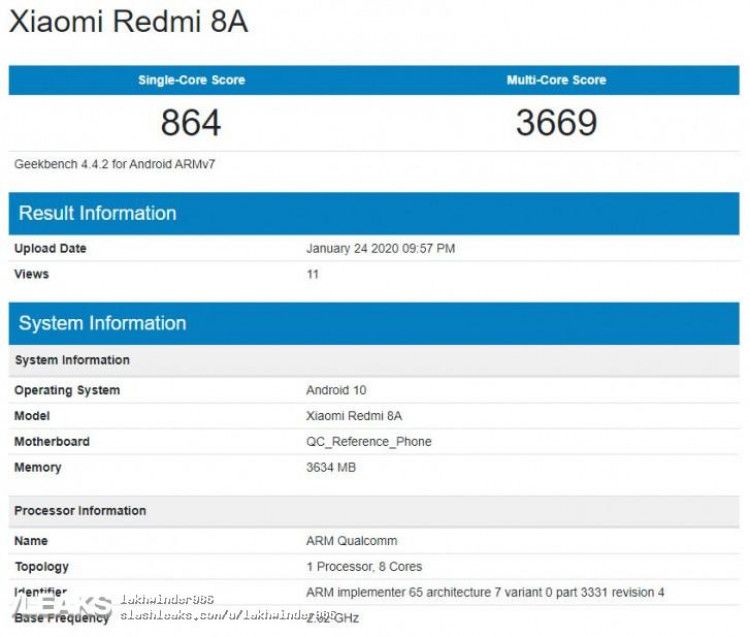
In the past few months, Xiaomi has rolled out Android 10 update with MIUI 11 skin for smartphones like Xiaomi Mi 3, Mi 2S, Mi 8, Mi 8 SE, Redmi K20 Pro, K20, Note 8 Pro, Note 7 and some devices in China. The update was recently released for Xiaomi Mi A2 users in global markets. The Chinese firm has confirmed that Xiaomi Mi A3 users will be treated with Android 10 update in February. It appears that the Redmi 8A users in China could be soon blessed with the latest version of Android OS as it has been spotted with Android 10 on Geekbench benchmarking site.
As it can be seen in the screenshot, the 4 GB RAM variant of the Redmi 8A phone has surfaced with Android 10 OS on Geekbench. The smartphone was introduced with Android 9 Pie OS. While India was the first market to receive the Redmi 8 and Redmi 8A phones, the 8A did not arrive in the country in 4 GB RAM edition.
In China, the company is selling the smartphone in 4 GB RAM + 64 GB storage version. Hence, there is a possibility that the 4 GB RAM edition Redmi 8A that has been benchmarked on Geekbench could be a China country variant. The Android 10 update for it will mostly likely be skinned with MIUI 11.
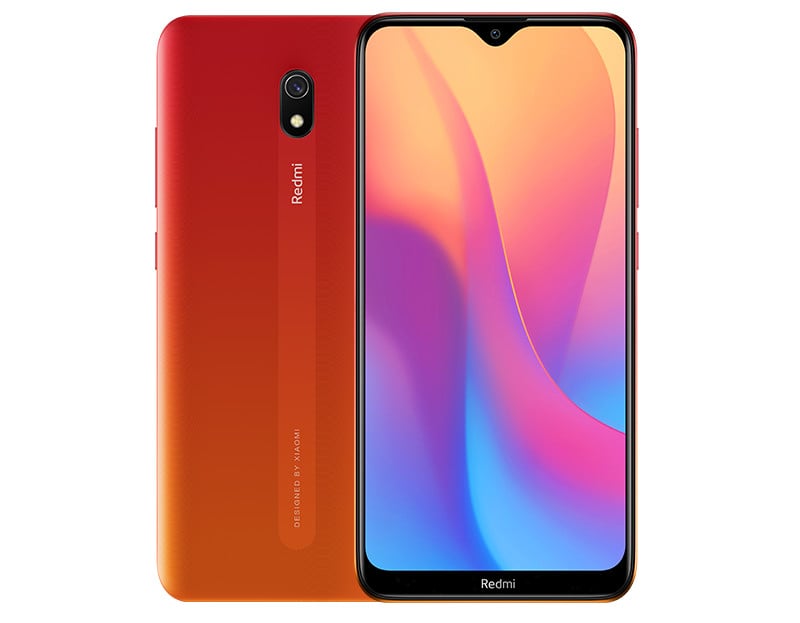
The Redmi 8A comes with a 6.22-inch IPS LCD display with waterdrop notch. It supports HD+ resolution of 720 x 1520 pixels. The display of the device is protected by Gorilla Glass 5. The modest Snapdragon 439 mobile platform is present under the hood of the device.
It has a rear camera of 12-megapixel that offers features like dual pixel AF and LED flash. It has a front-facing camera of 8-mgeapixel. The device is backed by a 5,000mAh battery that supports 18W fast charging through USB-C.
Redmi 8A
In China, it was introduced with a price tag of 699 Yuan (~$100) for its 3 GB RAM + 32 GB storage version and 799 Yuan (~$115) and 4 GB RAM + 64 GB storage edition. These models are now selling at respective price tags of 599 Yuan (~$86) and 699 Yuan (~$100). In India, its 2 GB RAM and 3 GB RAM editions that come with 32 GB of storage are respectively priced at Rs. 6,499 and Rs. 6,999.
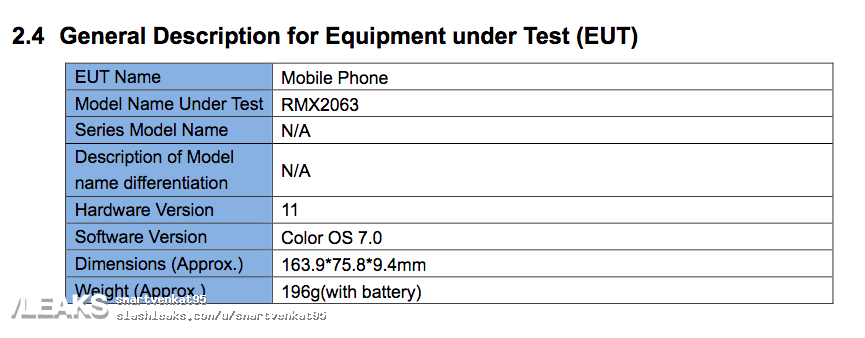
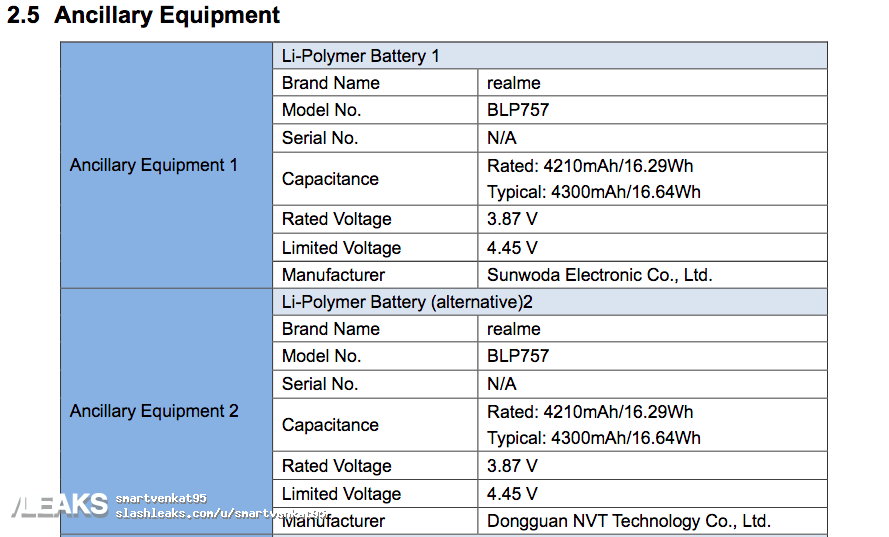
The upcoming Realme C3s smartphone that has a model number of RMX2020 was recently approved by the Federal Communications Commission (FCC) in the U.S. The FCC authority has also approved has approved two new Realme phones with model numbers RMX2063 and RMX2001. In December, the RMX2063 and RMX2001 were spotted with RMX2020 (Realme C3s) and RMX2040 at the database of Eurasian Economic Commission (EEC) in Russia. It was recently revealed through Thailand’s NBTC and Singapore’s IMDA certifications that the RMX2040 is the forthcoming Realme 6i smartphone. It has been also certified by the Bureau of India Standards (BIS) in India. However, the identities of the RMX2063 and RMX2001 phones are currently under the wraps.
Realme RMX2063
1 of 3
The Realme RMX2063 measures 163.9 x 75.8 x 9.4mm and it weighs 196 grams. These dimensions suggest that the device could be housing a display of around 6.5 inches. The handset is equipped with a 4,300mAh battery and it is loaded with ColorOS 7. The schematics of the phone does not reveal much on its features. It shows that the right side of the phone has a power button and left side rocks a volume controller. A rumored variant of the same phone with model number RMX2061 was recently approved by BIS in India.
Realme RMX2001
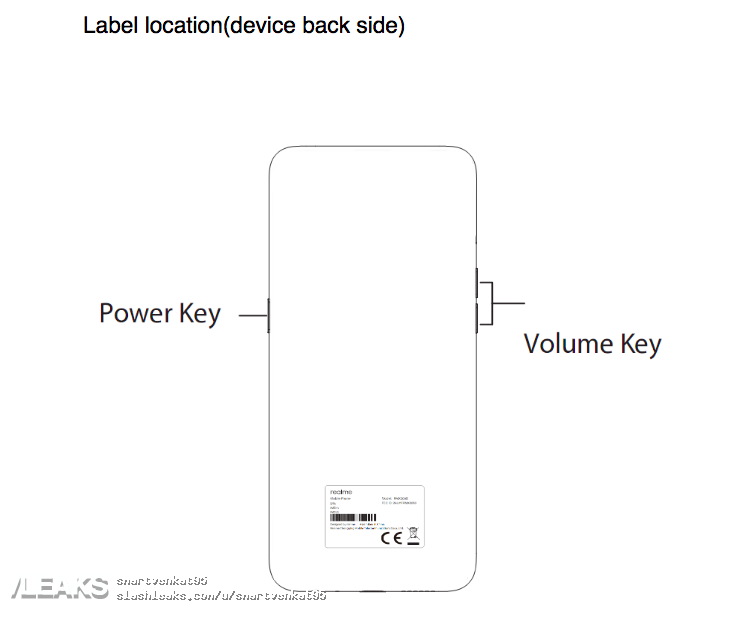
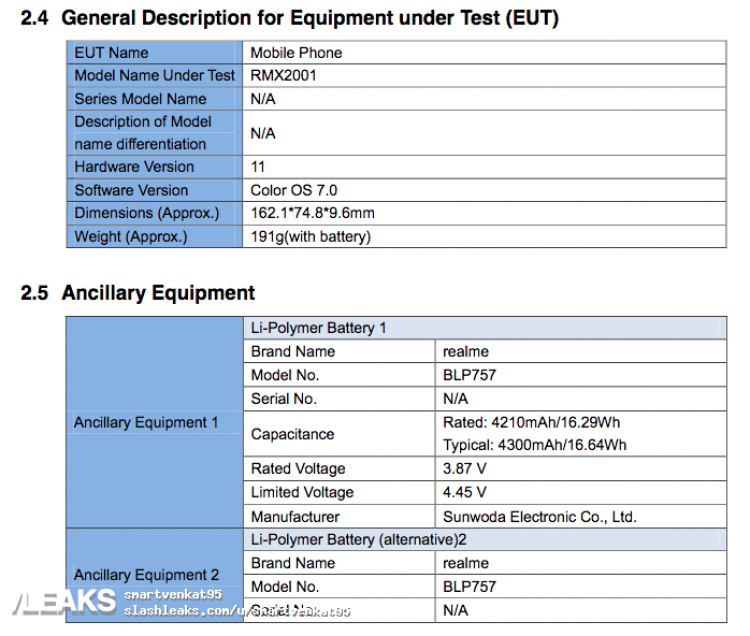
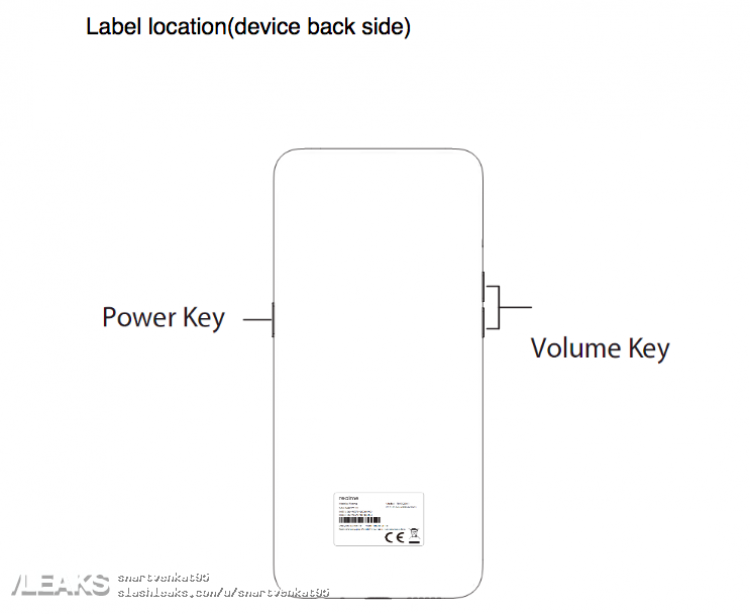
The Realme RMX2001 smartphone has 162.1 x74.8 x 9.6mm dimensions and it weighs 191 grams. It could be fitted with a display that is slightly smaller than of the RMX2063 phone. It is also packed with a 4,300mAh battery and is preinstalled with ColorOS 7.
1 of 2
Its schematics show that the Realme RMX2001 has volume up and down buttons on the left and a power key on the right. The image does not show the presence a rear-facing fingerprint reader.
The schematics of the Realme C3s showcased the presence of a rear-facing fingerprint reader. However, the rear diagrams of the Realme RMX2063 and RMX2001 does not show a fingerprint reader. Hence, it is difficult to determine whether the RMX2063 and RMX2001 are high-end smartphones with in-display fingerprint sensor or low-budget phones that lacks a rear fingerprint reader.
There is a possibility the Realme RMX2063 and RMX2001 could be the forthcoming Realme 6 or U series devices. The Realme RMX2071 smartphone that is believed to powered by the Snapdragon 865 mobile platform was recently seen with highest scores on AnTuTu benchmarks. The Realme RMX2071 could be the upcoming Realme X50 Pro smartphone. There is another mysterious device with model number RMX2076 in works. It could be a variant of the RMX2071. Lastly, a 5G phone with RMX2025 model number was spotted on China’s MIIT database. It is speculated that it could be the 5G version of the Realme X50 Pro 5G. The flagship phone from Realme is expected to get announced at the Mobile World Congress (MWC) 2020 tech trade show in the coming month.
We use cookies on our website to give you the most relevant experience by remembering your preferences and repeat visits. By clicking “Accept”, you consent to the use of ALL the cookies.
This website uses cookies to improve your experience while you navigate through the website. Out of these, the cookies that are categorized as necessary are stored on your browser as they are essential for the working of basic functionalities of the website. We also use third-party cookies that help us analyze and understand how you use this website. These cookies will be stored in your browser only with your consent. You also have the option to opt-out of these cookies. But opting out of some of these cookies may affect your browsing experience.
Necessary cookies are absolutely essential for the website to function properly. This category only includes cookies that ensures basic functionalities and security features of the website. These cookies do not store any personal information.
Any cookies that may not be particularly necessary for the website to function and is used specifically to collect user personal data via analytics, ads, other embedded contents are termed as non-necessary cookies. It is mandatory to procure user consent prior to running these cookies on your website.