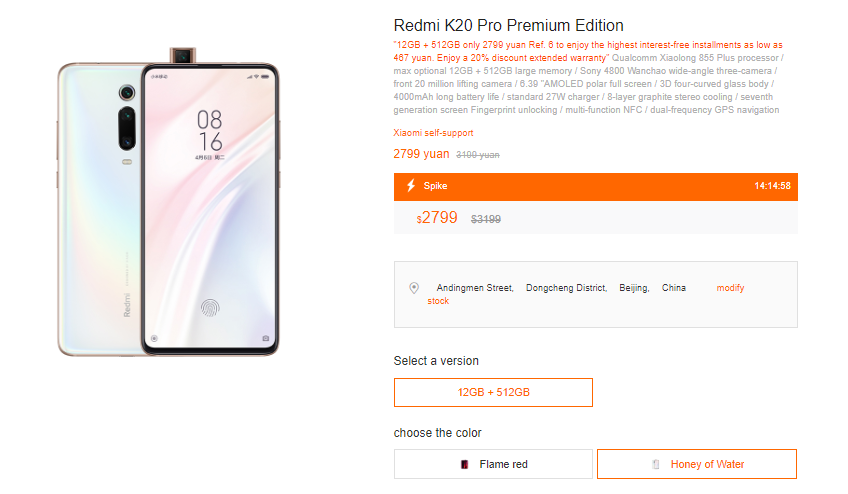
Few months after launching the Redmi K20 and Redmi K20 Pro smartphones last year, Redmi announced the RedmI K20 Pro Premium Edition with a price tag of 3,299 Yuan (~$475) for its 12 GB RAM + 512 GB storage variant. Its price was reduced to 2,999 Yuan (~$432) in December and now it has further slashed to 2,799 Yuan (~$403). It seems to be a permanent price cut on the phone as the company could be clearing its existing to make way for the upcoming Redmi K30 Pro 5G.
The Redmi K20 Pro Premium Edition is the last 4G flagship phone from the company. Xiaomi co-founder, the vice chairman of the Xiaomi Group and President of the mobile division had stated in the recent past starting from Redmi 30, all the forthcoming flagship phones from Xiaomi will be equipped with support for dual-mode NSA and SA 5G networks.
The K20 Pro Premium Edition was introduced in two 8 GB RAM versions with 128 GB and 256 GB storage choices. However, these models are no longer available for purchase. Currently, only the 12 GB RAM + 512 GB storage edition is available with a 2,799 Yuan (~$403) price tag. It can be bought only in Red and White color editions.
Reports have claimed that Redmi could be announcing the Redmi K30 Pro by March this year. The handset was recently spotted on Geekbench benchmarking platform which indicated that the company could be internally testing it with Snapdragon 865 mobile platform. The phone was found to be equipped with Android 10 OS and 8 GB of RAM.
Xiaomi is expected to announce the Xiaomi Mi 10 and Mi 10 Pro smartphones in China in early February. The series is said to be priced between 3,500 Yuan and 5,000 Yuan. The Chinese firm may not want the SD865 powered Redmi K30 Pro 5G to arrive soon and disturb the sales of Mi 10. Hopefully, the Redmi K30 Pro 5G could be priced less than 3,500 Yuan.
In related news, Xiaomi’s sub-brand POCO has confirmed that it will be launching a new phone in February and it won’t be the POCO F2. Reports have claimed that it could be announcing the Indian version of the China’s Redmi K30 4G as POCO X2. It remains to be seen whether the POCO F2 arrives with Snapdragon 865 mobile platform onboard or it could be a rebranded version of the Snapdragon 855+ powered Redmi K20 Pro Premium Edition which did not launch in India.
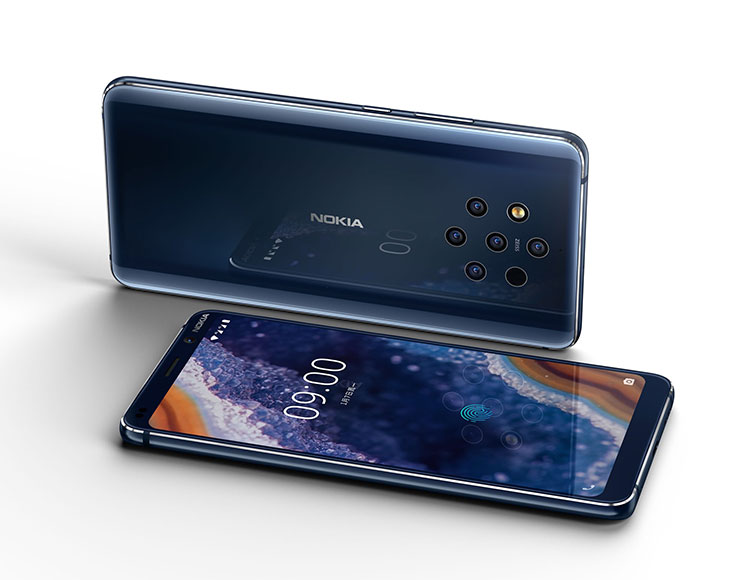
HMD Global had launched the Nokia 9.1 PureView as the world’s first smartphone with penta-lens setup in February 2019. Since it was powered by the older Snapdragon 845 mobile platform, rumors had claimed that the company could be launching a more edition of the phone featuring the SD855 SoC. However, it did not happen. Earlier this month, it was reported that the company may launch the successor of Nokia 9 PureView with Nokia 9.2 (or Nokia 9.2 PureView) moniker. A newer report by Nokia Power User Power also states that the plans to launch Nokia 9.1 PureView with SD855 have been shelved. Instead, the company is reportedly focusing on Nokia 9.2 with SD865. Another source claims that the Finnish firm is also working on a foldable phone.
Citing information from a known source, NPU has reported that HMD Global may not launch the Nokia 9.1 PureView at the Mobile World Congress (MWC) 2020 tech exhibition in the coming month. Instead, the company may introduce the Nokia 9.2 with Snapdragon 865 onboard around 4 to 5 months later. It is expected to break cover in the first half of 2020.
The source has further stated that the Nokia 9.2 won’t be equipped with “Light camera technology” mainly because of the lack of post-launch support for the Nokia 9 PureView. Probably, the company may team with an older partner like Toshiba for offering stellar photography experience on the Nokia 9.2. The phone may carry a pricing similar to the Nokia 8 to achieve more sales.
Another site Nokiamob.net has reported that the Nokia 9.2 could be arriving with a bezel-less display and it may sport a 32-megapixel or 48-megapixel frontal shooter. The configurations of the rear camera system of the Nokia 9.2 are not known yet. The phone may lack support for 3.5mm audio jack and it may carry support for wireless charging.
The Finnish firm has reportedly cancelled some accessories like two smartwatches, a fitness tracker, a mini projector, a selfie light, a power bank, and a mini printer. It is said to be currently working on wireless charger pods. The report states that the company may unveil a wearable device at MWC 2020. As the company confirmed in December, it may showcase a Nokia 5G phone with Snapdragon 765 onboard at MWC.
There could be some delay in the shipments of Nokia devices that are slated to go official in Q1 due to coronavirus issue in China and because of the company’s plans to shift its business to Europe. It is said to be in the process of reducing its staff in China to focus on other markets like India, Europe, other regions in Asia, Latin America, Australia, the U.S and New Zealand.
The report further states that the company could be working on a foldable phone. However, no details have been revealed on it yet. It may debut in late 2020 or early 2021.
Last November, Lu Weibing, the general manager of Redmi teased that the company will launch a smartwatch in the future. However, it turns out we may be getting a fitness tracker first.
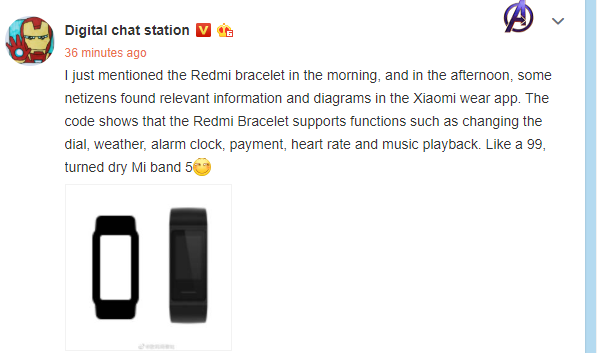
Chinese leaker @Digital Chat Station has shared details of the upcoming Redmi Fitness Tracker (not the official name) on Weibo. According to the post, the design and features of the device were found in the Mi Fit app by some unnamed individuals.
Alleged image of Redmi’s upcoming fitness tracker
The image shows the Redmi Fitness Tracker will come in black and have a small display surrounded by thick bezels. It will also have a capacitive button at the bottom of the screen which is visible as a thin white line.
Info found within the app says the fitness tracker will have changeable watch faces that display details such as the weather. It will have an alarm function, a heart rate sensor, support for payment (via NFC), and also support controlling music playback.
The Redmi Fitness tracker should be inexpensive and might even have a price tag lower than that of the Mi Band series. There is no info on when it will launch but more details should surface in the coming weeks.
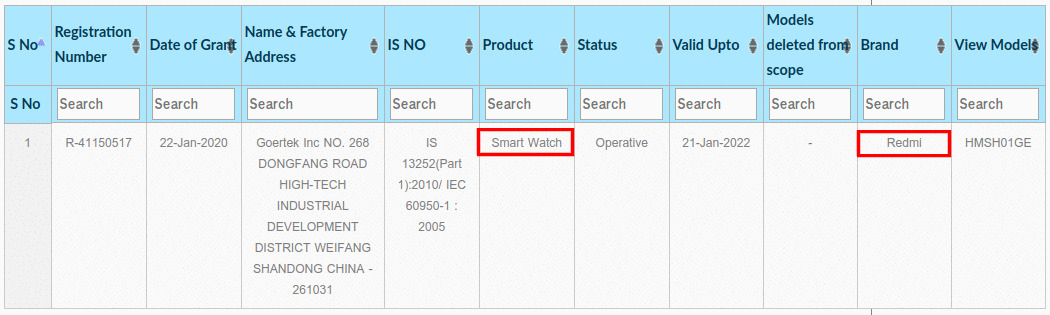
In related news, Redmi has also received certification from the Bureau of Indian Standards for a “smart watch” with model number HMSH01GE. The certificate was issued on Wednesday, January 22, 2020.
Although the certificate says it is a smartwatch, there is a possibility it is the fitness tracker above and BIS groups all smart wearables under smartwatches. Nevertheless, the certificate reveals that Redmi will be bringing its upcoming wearable to India.
The source has taken down the Weibo post. It could be either because it was false information or someone forced him to delete it. Whatever the case, please take this story with a pinch of salt.
Original article as follows.
It has been reported that OPPO will announce its first smartwatch this year. OPPO itself confirmed that its smartwatch will be announced in the first quarter of 2020, which means we have between now and the end of March for the watch to launch.
We already know the upcoming smartwatch will have a rectangular/square dial just like that of the Xiaomi Mi Watch. Last year, OPPO’s Vice President, Brian Shen, made a post on Weibo around the time the Mi Watch was taking flak for its similarity to the Apple Watch Series 5.
The company executive said a rectangular dial is better than a circular dial as it can display more information than the latter. However, he did add that a circular dial (for a smartwatch) is better in terms of aesthetics since it looks like a traditional watch.
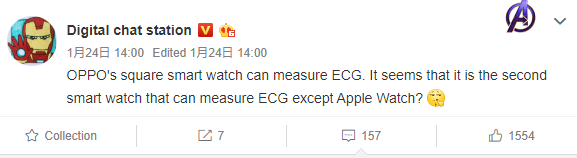
Now, a leak from Digital Chat Stations has revealed that the OPPO smartwatch will be able to measure ECG/EKG. With an ECG, owners will be able to carry out a test to see if their heart has any abnormalities or has an irregular rhythm. This a more advanced feature than just measuring the owner’s heart rate.
There are other smartwatches that have ECG technology built-in. The popular ones are the Apple Watch Series 5, the Samsung Galaxy Active 2, Withings Move ECG, and the Amazfit Verge. So while having ECG is great, the OPPO Smartwatch will have to pack extra features to give it an edge over its competitors.
There is no specific time for the launch but we won’t put it past OPPO to announce it along with the Find X2 flagship which will also be announced this quarter.
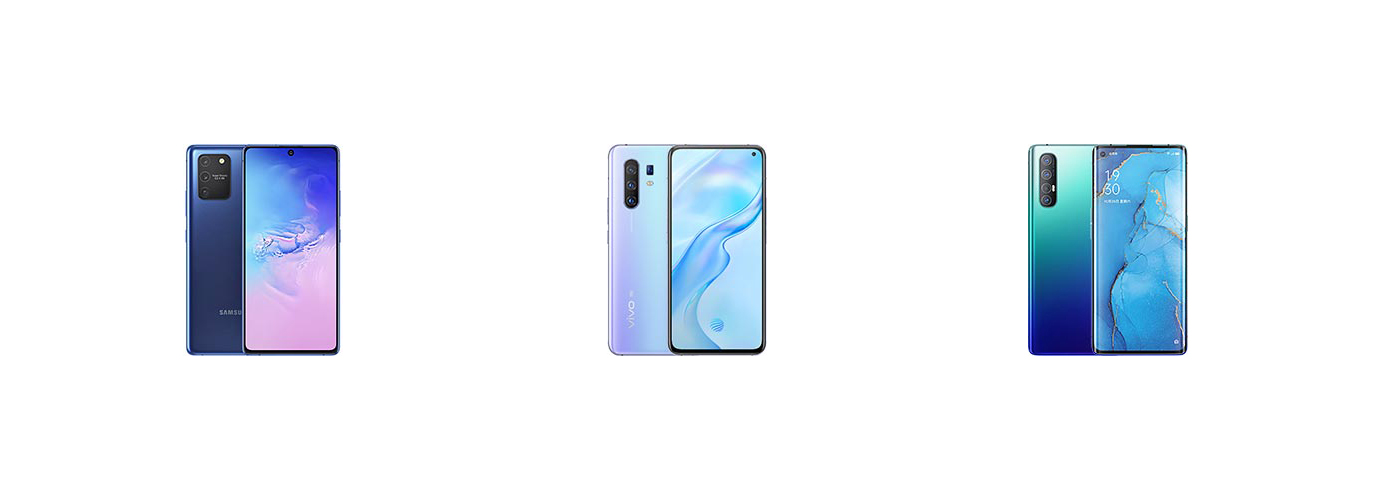
With the new Galaxy S10 Lite just launched in the Indian market, Samsung is aiming to beat Chinese manufacturers even in the segment of affordable flagship smartphones. While Samsung launched an affordable flagship, Oppo and Vivo recently came up with some of the first upper-midrange devices with 5G support, and they come with not so different prices. Should you go for the Galaxy S10 Lite or a 5G device like the Vivo X30 Pro and Oppo Reno3 Pro represents a better choice? This specs comparison will clear your ideas.
Samsung Galaxy S10 Lite vs Vivo X30 Pro vs Oppo Reno3 Pro
Oppo Reno3 Pro
Samsung Galaxy S10 Lite
Vivo X30 Pro
DIMENSIONS AND WEIGHT
159.4 x 72.4 x 7.7 mm, 171 g
162.5 x 75.6 x 8.1 mm, 186 grams
158.5 x 74.1 x 8.8 mm, 198.5 g
DISPLAY
6.5 inches, 1080 x 2400p (Full HD+), AMOLED
6.7 inches, 1080 x 2400p (Full HD+), Super AMOLED
6.44 inches, 1080 x 2400p (Full HD+), Super AMOLED
Quad 48 + 13 + 8 + 2 MP, f/1.7, f/2.4, f/2.2 and f/2.4
32 MP f/2.4 front camera
Triple 48 +12 + 5 MP, f/2.0, f/2.2 and f/2.4
32 MP f/2.2 front camera
Quad 64 + 13 + 32 + 8 MP, f/1.8, f/3.0, f/2.0 and f/2.2
32 MP f/2.4 front camera
BATTERY
4025 mAh, fast charging 30W with VOOC Flash Charge 4.0
4500 mAh, fast charging
4350 mAh, fast charging 33W
ADDITIONAL FEATURES
Dual SIM slot, 5G
Dual SIM slot
Dual SIM slot, 5G
Design
The design of a smartphone is not all about looks: it is also about dimensions and thickness. And I think Oppo Reno3 Pro is the handset that mostly meets the requirements for the best design award. Despite it includes a battery above 4000 mAh, it still comes with an incredibly thin design: just 7.7 mm, as well as a lightweight body with just 171 grams. Further, it has a cleaner glass back thanks to the camera module including all the camera elements, and very narrow bezels thanks to its punch-hole display. Oppo Reno3 Pro is the device attracting me the most, but Vivo X30 Pro and Samsung Galaxy S10 Lite remain two smartphones with amazing aesthetics. The former is even more compact than Oppo Reno3 Pro (but it is thicker and heavier).
Display
Oppo Reno3 Pro is the device offering the most advanced display experience. It is the only to support a high 90 Hz refresh rate, it has a very nice image reproduction thanks to HDR and high DCI-P3 coverage, and even a high brightness. But you should not underestimate the image quality provided by the Super AMOLED Plus panel found on the Samsung Galaxy S10 Lite. Even the Vivo X30 Pro sports a great display, but I personally prefer the Oppo Reno3 Pro due to its high refresh rate.
Hardware/Software
It is not very common to see a Samsung smartphone with higher performance than other devices in the same price range. But thanks to the Snapdragon 855 chipset, Samsung Galaxy S10 Lite is faster and more powerful than both Oppo Reno3 Pro and Vivo X30 Pro. But there is a con: unlike its rivals, it does not support 5G. Both Oppo Reno3 Pro and Vivo X30 Pro boast 5G connectivity, but their chipsets are not the most powerful in the market (they are upper-midrange-class mobile platforms). Whether you should go for a 5G device or not depends on the country you live in and how much time will pass before changing your device. Samsung Galaxy S10 Lite and Oppo Reno3 Pro have Android 10 out of the box, while Vivo X30 Pro is still based on Android Pie.
Camera
The most impressive camera on the paper belongs to the Vivo X30 Pro. It has a quad camera composed of a main 64 MP sensor with OIS, a 32 MP portrait lens, a 13 MP periscope sensor with up to 5x optical zoom and an ultrawide sensor. But the fact that it boasts the most impressive cameras on the paper does not mean it provides the best photo quality in every scenario. Oppo Reno3 Pro is another amazing device for photos thanks to its 48 MP main sensor with OIS, while Samsung Galaxy S10 Lite should be impressive for video recording due to its new Super Steady OIS. We will be able to tell you more after testing it thoroughly.
Battery
The king of battery life is Samsung Galaxy S10 Lite with its 4500 mAh battery, followed by Vivo X30 Pro and its 4350 mAh unit.
Price
Samsung Galaxy S10 Lite costs €649 globally, Vivo X30 Pro starts from about $585 in China, and Oppo Reno3 Pro starts from about €520 in China. With Samsung Galaxy S10 Lite you lose 5G, but you get better performance and longer battery life. If you get a unit of the Oppo Reno3 Pro, you will get the most amazing design and display, as well as 5G and Android 10 out of the box, while Vivo X30 Pro has the most impressive camera department.
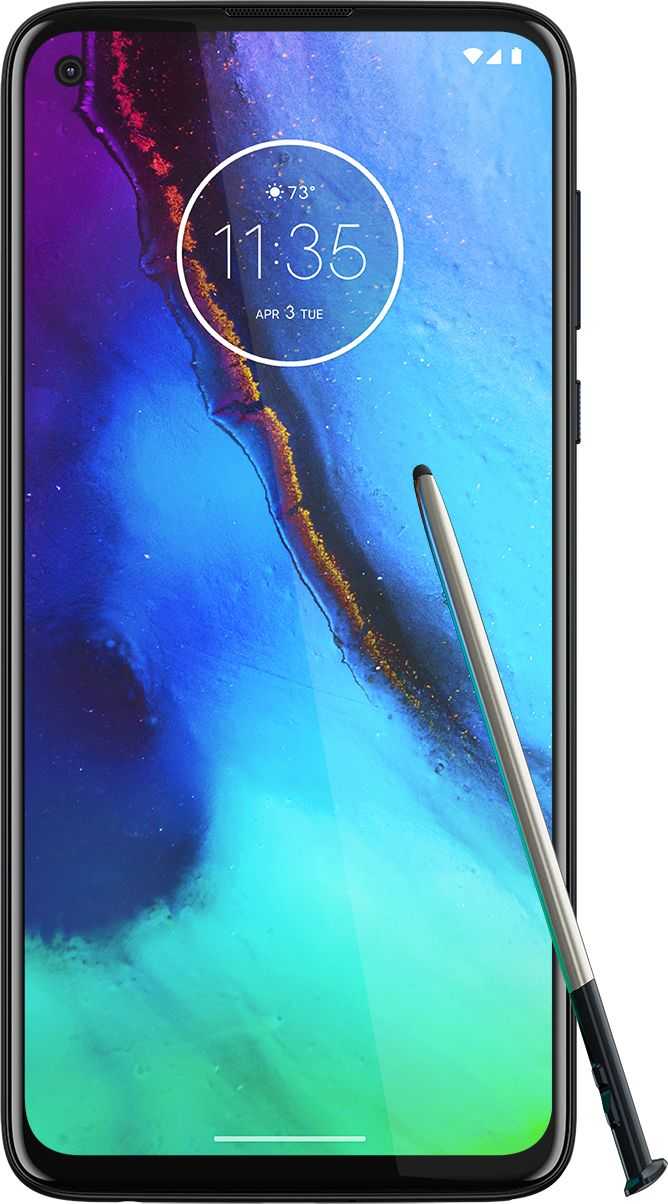
Samsung’s Galaxy Note series is the most popular line of smartphones that have a stylus, however, there are other manufacturers that make phones with a stylus too. LG has its Stylo series and there is also Infinix‘s (one of the companies owned by Transsion Mobiles) Note series which borrows more than a leaf from Samsung’s own line. This year, we may be getting a stylus-toting phone from Motorola, and now we know what the device looks like thanks to a leak by Evan Blass.
The unknown device is shown to have a display with a punch hole at the top left corner. The display is curved at the corners and there is a bit of bezel at the bottom of the screen. There is also a slit for the earpiece at the top between the glass covering the display and the frame.
Coming to the stylus, it appears to be a capacitive stylus and not an active stylus like that of the S Pen of the Galaxy Note series. It has a rubber tip and should work well as an alternative to your finger for touch input and also for doodling, coloring, and drawing.
The name of the phone is unknown but Evan Blass says it is not the Motorola Edge+. The specs of the phone are also unknown but we would not put it beyond being a mid-range device. When it launches, the phone should run Android 10 out of the box.
Will this be the first of a new line of stylus-toting Motorola phones or just a one-off device? Only time will tell.
Samsung will announce a new pair of wireless earbuds alongside the Galaxy S20 series come February 11, 2020. The earbuds which will launch as the Galaxy Buds+ will have the same design as the original Galaxy Buds but will come in new colorways. While we expect the price of the new earbuds to be the same as that of last year’s model, though there are speculations it may cost more too, there is a way to get them for free.
A promotional poster leaked by Evan Blass (@evleaks) has revealed that Samsung will include a free pair of the Galaxy Buds+ with all pre-orders of the Galaxy S20+ and Galaxy S20 Ultra. The image shows the Galaxy S20+ in Cloud blue, the Galaxy S20 Ultra in Cosmic Gray, and the Galaxy Buds+ in Aura Glow.
We do not know why Samsung is limiting the free earbuds to the Galaxy S20+ and Galaxy S20+ Ultra and not including the base model Galaxy S20. Last year, those who pre-ordered any of the Galaxy S10 phones including the Galaxy S10e got the Galaxy Buds. Hopefully, Samsung includes it with all the models.
It has been reported that the Galaxy Buds+ will come with a better battery life. Not that the original Galaxy Buds itself didn’t have a good battery life but that of its case paled in comparison to that of other wireless earbuds.
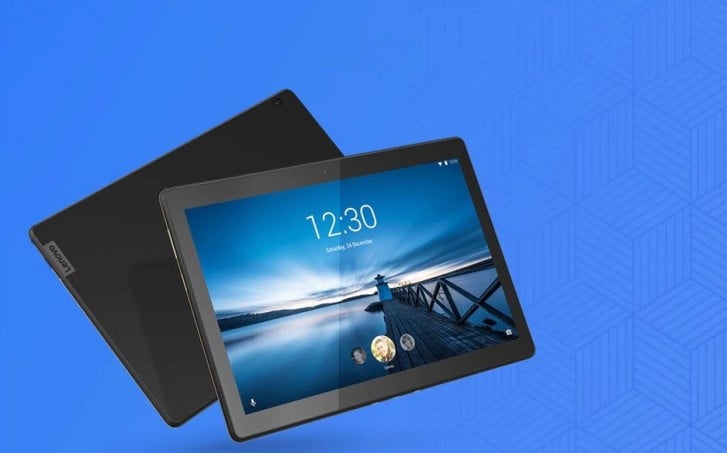
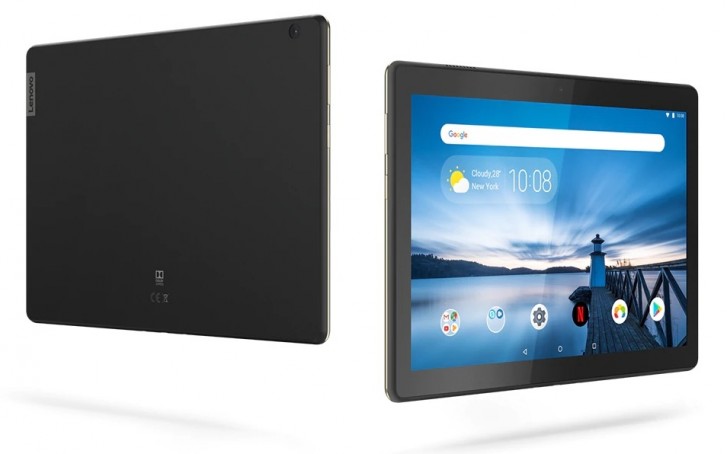
Lenovo mobile phones haven’t got a presence in India but the brand’s Android tablet line has continued to coast on stronger. The line has got a new product dubbed Lenovo M10 FHD REL. Let’s take a look at the specification and design of the tablet.
The Lenovo M10 FHD REL tablet features a 10.1-inch IPS LCD panel with fairly thick bezels on all sides. The display comes with a Full HD resolution. The device equally packs a 5MP camera at the front for selfies. The camera is placed in a landscape direction. It is also equipped with dual front-facing speakers. The device packs a single 8MP rear camera located at the top-right edge when the tablet is placed in the landscape orientation.
Specs-wise, the Lenovo M10 FHD REL tablet is powered by a Snapdragon 450 chipset paired with 3GB RAM. There is also 32GB of internal storage onboard which can be expanded via the microSD slot. The device runs on Android 9.0 Pie right from the go. Crammed inside the tablet is a mammoth 7000mah battery but there is no fast charging support as the M10 presents with a micro-USB port. Other notable features include dual-band Wi-Fi, a 3.5mm audio jack and an FM Radio tuner. Sadly, the tablet is a WiFi-only tablet as it doesn’t have a SIM slot.
As for the price, the M10 FHD REL is already available online in India via Flipkart for Rs. 13,990 (~$196). Lenovo is yet to say when the device will be available in other regions.
Apple seems to have made a comeback in India in Q4 2019, according to the latest Counterpoint Research report. The Cupertino giant was one of the fastest-growing brands in India in the last quarter of the year, threatening the current premium segment leader, OnePlus.
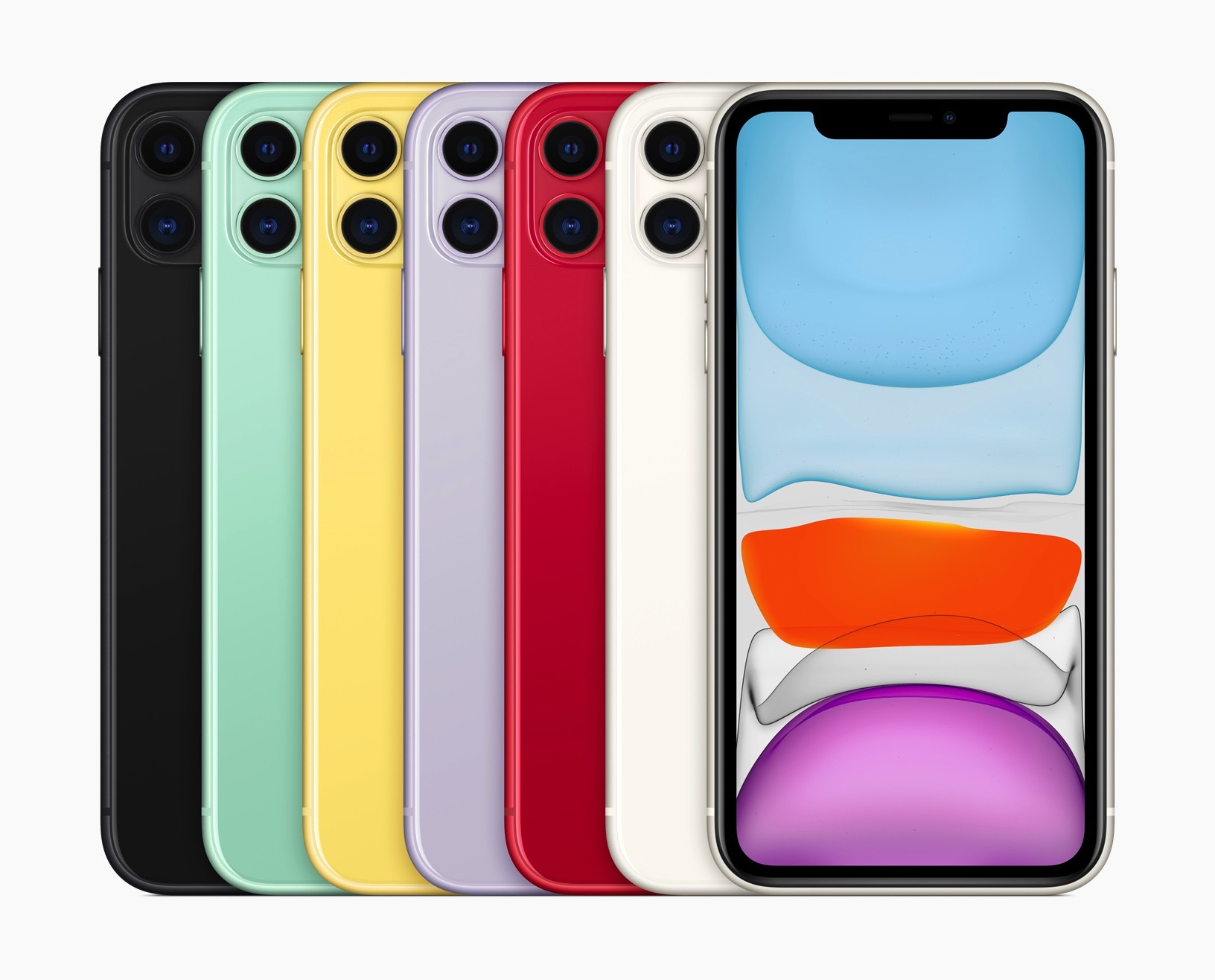
Apple’s iPhone 11 was cheaper than last year’s iPhone XR at launch
According to Counterpoint, Apple’s iPhone XR and the iPhone 11 have sold really well in the country. The company reportedly registered a staggering 41% YoY growth in Q4 2019, grabbing a 2% market share of the highly competitive Indian market. In comparison, Apple’s shipments had declined by nearly 43% in India in 2018.
Apple’s aggressive pricing and channel strategies seem to have paid off. First, the price cut on its iPhone XR model made it the best selling iPhone in Q2 and Q3 of 2019 in India. Then, the company released the new iPhone 11 series in September, making it the fastest rollout of a new iPhone lineup in India! This, paired with the no-cost EMI and HDFC festive cashback offers on the new iPhone 11 models helped Apple grab a small chunk of the market share in India at the end of last year.
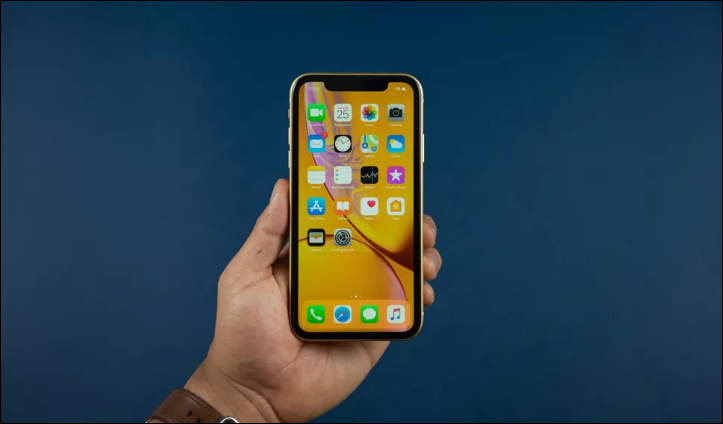
iPhone XR is currently being assembled in India
Local manufacturing was one of the biggest changes made by Apple in 2019. Foxconn’s Sriperumbudur factory in Chennai is assembling the iPhone XR while Wistron’s Bengaluru facility is assembling the iPhone 7. Local manufacturing has helped the company offer aggressive price cuts as well as offers to woo in more sales in the festive period. Also, the new iPhone 11 was launched at a cheaper price point than the 2018’s iPhone XR, further boosting Apple’s sales in the last quarter of the year.
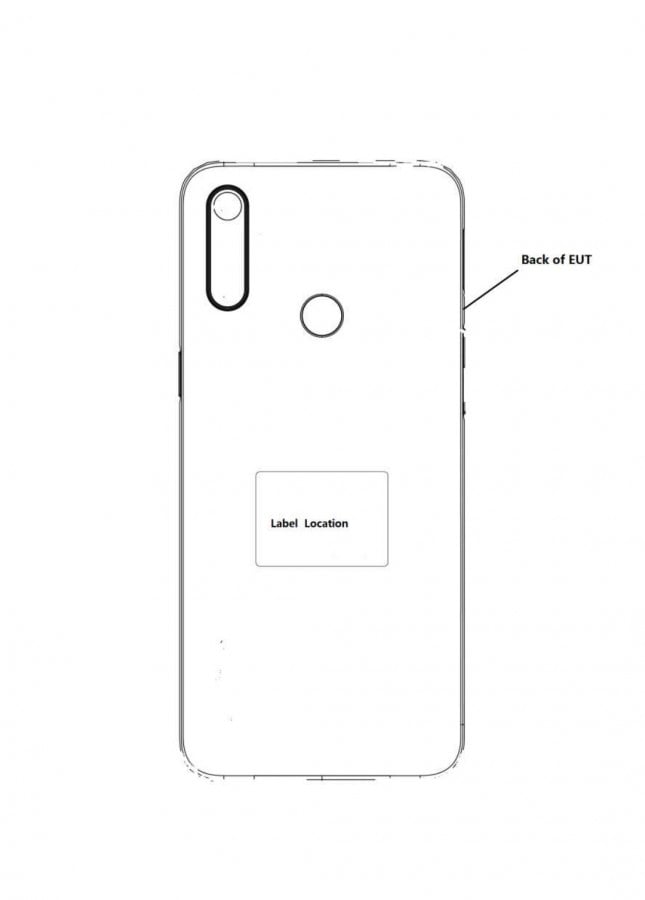
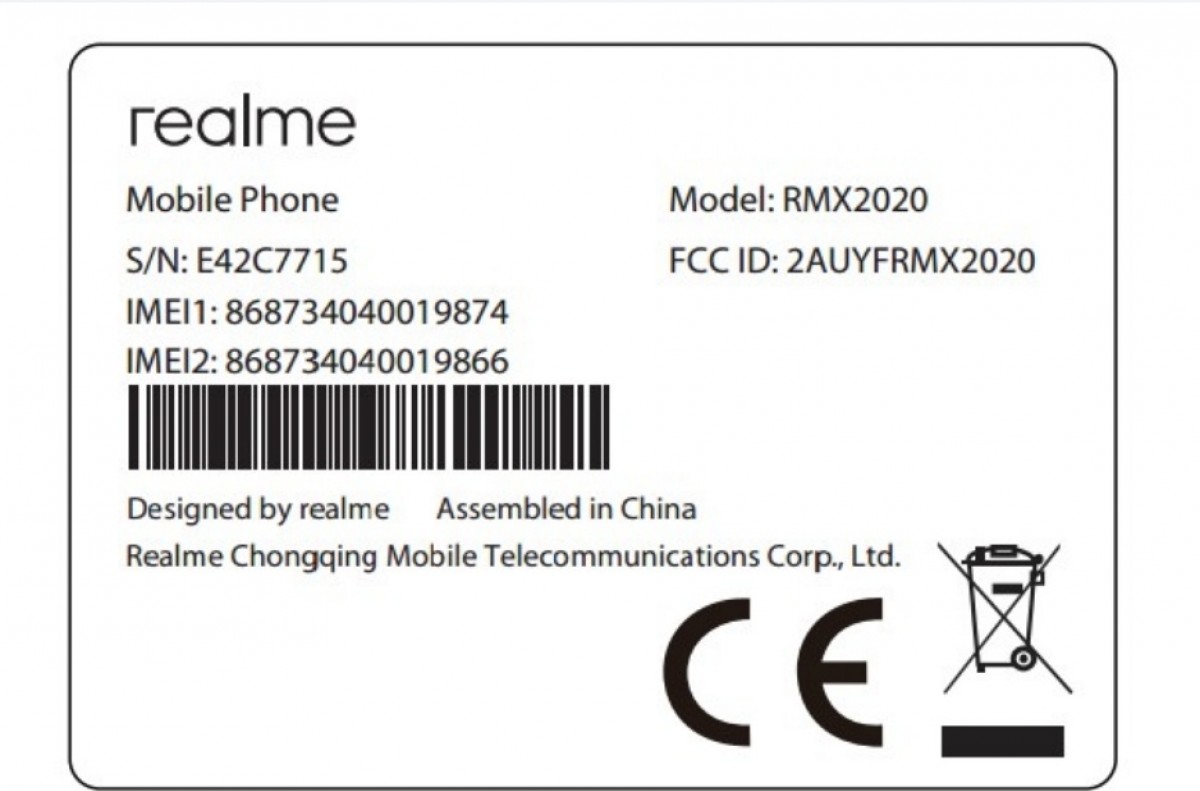
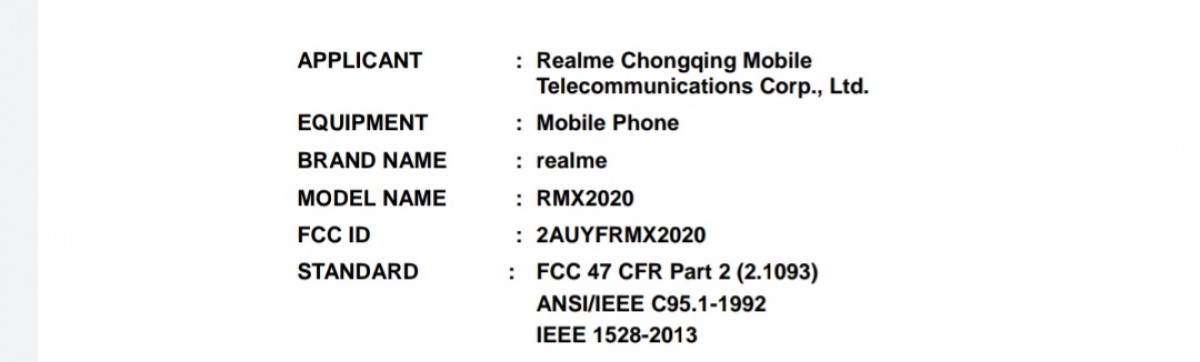
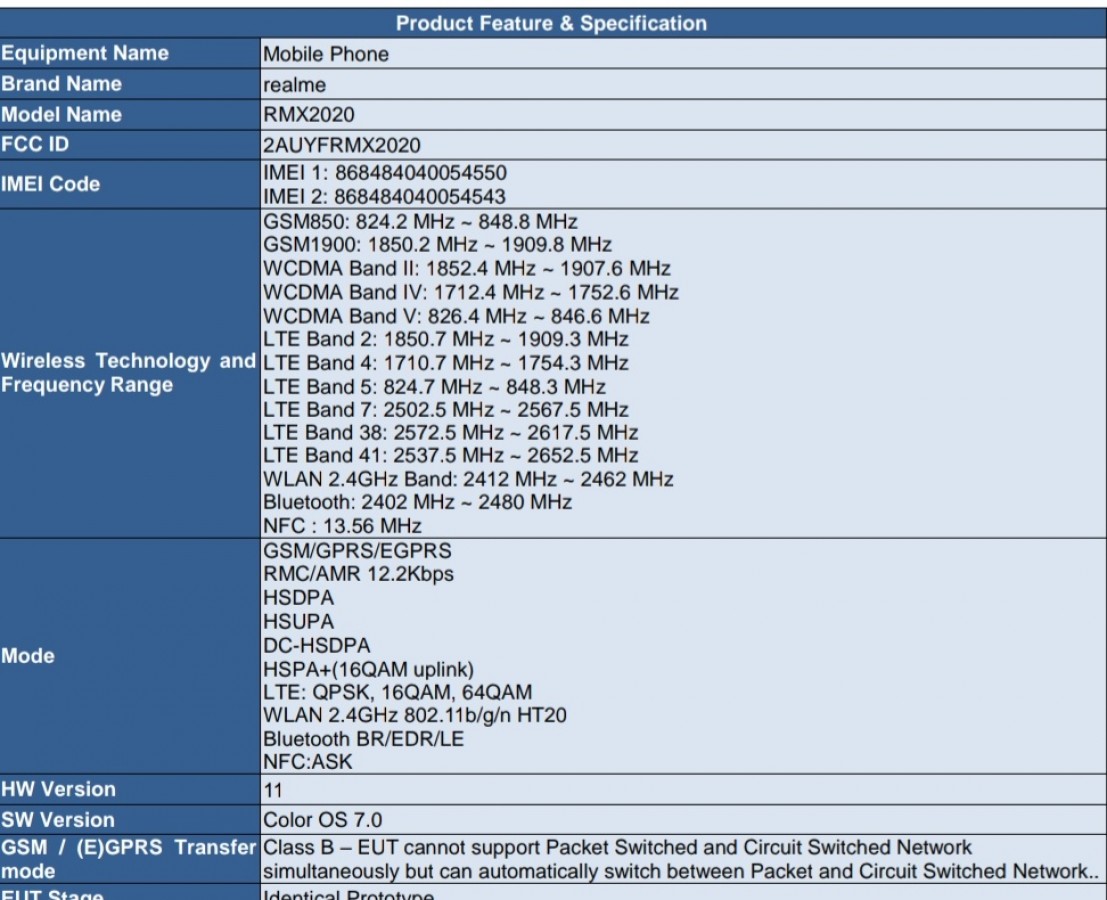
A Realme model with the model number RMX2020 has been certified by the US Federal Communications Commission (FCC). A device with the same model number and listed as Realme C3s was earlier this month certified in Thailand. The FCC listing didn’t contain so many details of the specifications but as usual, some key details are contained therein.
First, the listing contains a schematic of the device giving us a view of what would be at the rear panel. The rear panel contains a fingerprint sensor in the middle while there is a vertically placed camera module at the top left corner. The number of sensors that would be stacked on the module was not indicated but the size of the module points to three cameras.
Further, the device is listed to come with the latest ColorOS 7 based on Android 10 which should bring several innovative features to the budget device.
The FCC listing also shows the phone will be launched soon. Since it is a successor to the Realme C2s that was launched recently, we expect the price to be in the same range. Recall that the Realme C3 is also in the works as it was certified in Singapore in December last year.
LG has finally revealed the Android 10 update roadmap for its smartphones in 2020. While the brand has rolled out stable Android 10 updates to three of its smartphones so far, the roadmap reveals that it will update nine of its recent models with the new Android version in 2020. This includes the European LG V50 ThinQ 5G model that was announced in the second half of 2019.
LG Italia officially announced the following timeline for the Android 10 update.
Feb 2020 – LG V50 ThinQ (Europe)
Q2 2020 – LG G8X
Q3 2020 – LG G7, LG G8S, LG V40
Q4 2020 – LG K50S, LG K40S, LG K50, LG Q60
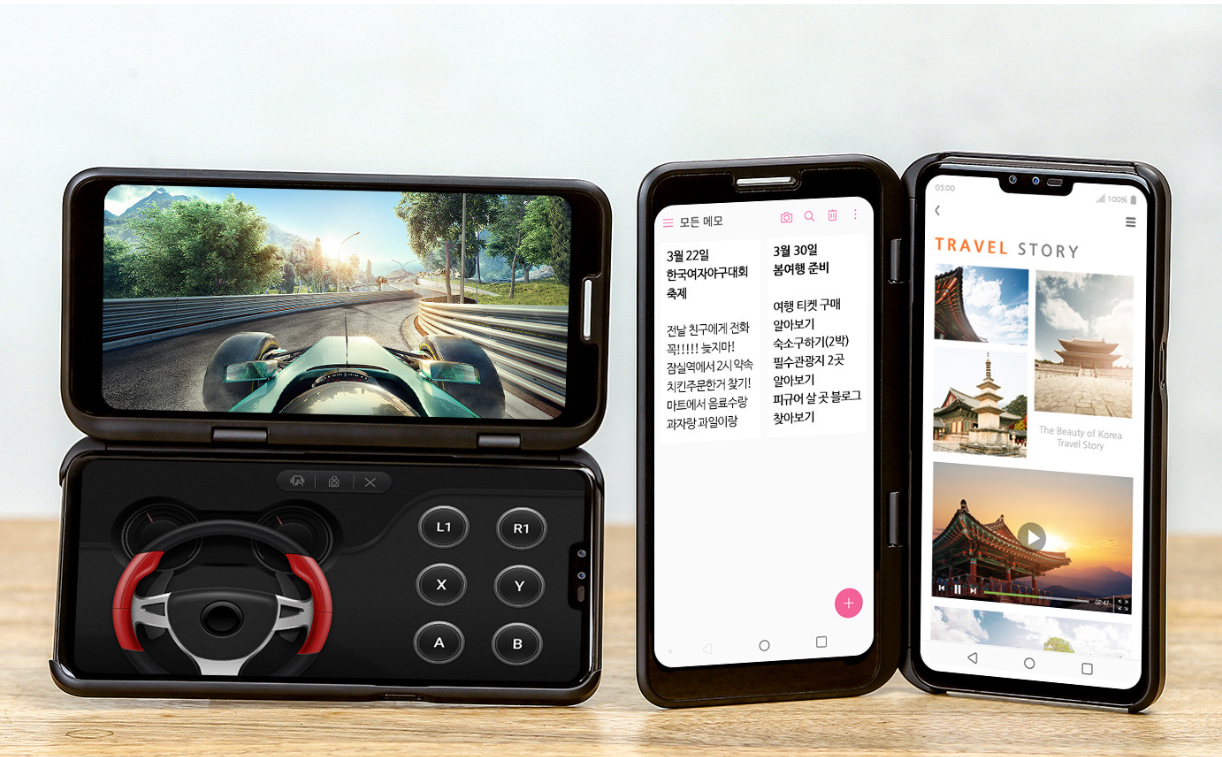
The flagship V50 ThinQ will be the first one to receive the update, in February 2020. This will be followed by the dual-screen G8X. The LG G7 will get the update sometime in Q3 2020 while the K50 and K40 models will be the last ones to receive the update, by the end of the year.
While this timeline comes from LG’s Italian arm, it likely that the international editions of the above-mentioned models should receive the update around the same time.
The G8 ThinQ was one of the first LG models to get the Android 10 update back in November 2019. This was followed by the rollout of the new version to the LG G7 One (Android One) model in December. Finally, around a week back, LG started rolling out Android 10 to the LG V50 ThinQ 5G model in South Korea.
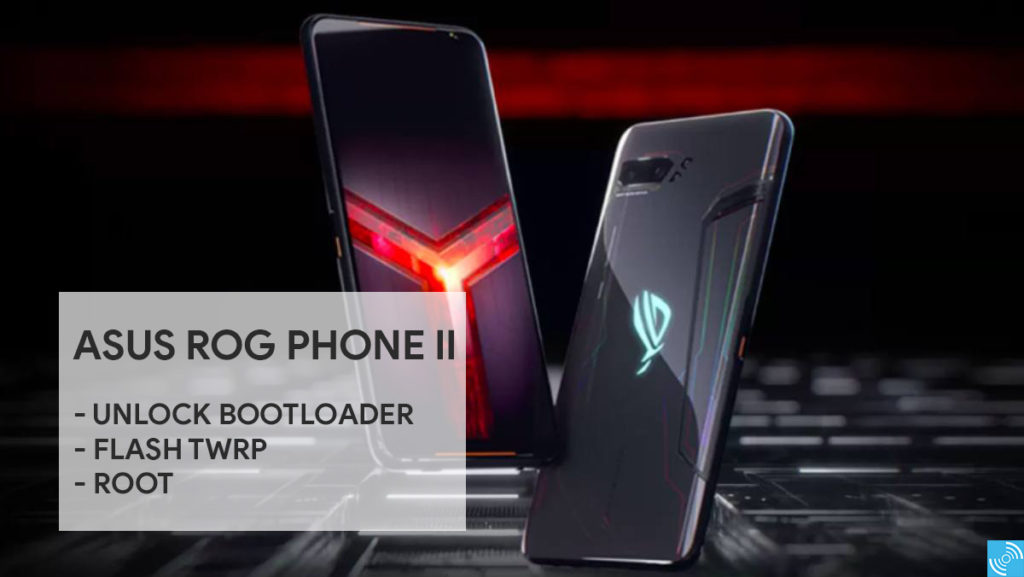
Asus is primarily known for its powerful laptops and other high-end hardware. However, they also manufacture a gaming smartphone under the ROG Phone branding. After the successful reception of Asus ROG Phone, the company announced its successor – Asus ROG Phone II. The new gaming smartphone offers improved performance and a lot of other gaming-oriented features.
Being a gaming smartphone, the user would want to root the device in order to get gaming-related MODs, can overclock the processor for enhanced performance, and a lot more.
Asus ROG Phone II specifications
Asus ROG Phone II comes with Qualcomm Snapdragon 855+ chipset, coupled with Octa-Core processor, and Adreno 640 GPU enhancing gaming performance. The smartphone features an 8GB/12GB RAM and UFS 3.0 storage options of 128GB/256GB/512GB/1TB.
The smartphone features a dual rear camera consisting of a 48-megapixel primary camera, and a 13-megapixel ultrawide lens. There’s a 24-megapixel front camera for selfies and video calling.
To enhance the gaming experience there’s a 6.59-inch AMOLED display with a 120Hz refresh rate and 240Hz touch-sensing. The display features a 1080 x 2340 pixels resolution having a 19.5:9 aspect ratio with 391 PPI and is protected with Corning Gorilla Glass 6. There are DTS:X stereo speakers with 2 dedicated amplifiers for immersive sound. It’s 3.5mm jack packs DTS Headphone X technology to give a magnificent sound effect.
Asus ROG Phone II features a 6000 mAh non-removable Li-Po battery with 20W fast charging support. There’s another 10W Reverse charging support. It is available in Matte Black and Glossy Black Colors.
Note: Gizmochina.com is not responsible if any damage to your device or data occurs while following this guide. You are proceeding at your own will. Unlocking Bootloader or rooting the device will void the warranty. The device will not receive any official OTA update from the company.
The guide covers all below-mentioned topics:
Unlock Bootloader
Flash TWRP Recovery
Root Your device
Unlocking Bootloader of Asus ROG Phone II
Unlocking the bootloader of any device is the first and the primary step towards customization after rooting it. The Asus ROG Phone II also has the same liability before changing anything.
PreRequisites
Keep the battery charged at least up to 50% for smooth unlocking.
Make sure to back up essential data on any external media. The phone will be fully formatted, resulting in loss of data.
Enable Developer Option by heading to Settings > About Phone > and tap MIUI Version 7 times.
Enable USB Debugging and OEM Unlock by Heading to Settings > Developer Option > and Enable OEM Unlock and USB Debugging.
Install ROG Phone II Unlock Utility on your smartphone. However, the user needs to enable installation from Unknown Sources in Settings.
Open the app and follow on-screen instructions.
It will take a few minutes to complete the ongoing process.
You’ve successfully unlocked the device!
We hope you’ve successfully unlocked the bootloader of Asus ROG Phone II.
Install TWRP on ROG Phone II
TWRP – Team Win Recovery Project is a custom recovery for Android devices. The custom recovery opens doors for various customization options such as the installation of third-party mods, custom ROMs, allows instant backups and much more.
It is a single-window solution for a lot of tasks. The TWRP helps to install Magisk and SuperSU to attain root privileges on Android smartphones. It is a door to the installation of different frameworks, MODs, and other stuff.
However, there are some disadvantages of using custom recovery. The user has to install OTA updates manually, the phone warranty will void after installing TWRP recovery, and the unstable version of custom ROM can brick your phone.
Prerequisites:
Download all the USB drivers from the above prerequisite section.
Backup your smartphone using our definitive guide.
Turn off your smartphone, and then Boot into Recovery mode by pressing Volume Down + Power Button until you see boot animation.
Once in TWRP, tap on Install >> Browse the Magisk.zip on your phone and select it.
Now, Tap on Swipe to confirm flash.
That’s it, now reboot the device and enjoy the root access.
Following our guide, you have successfully unlocked the bootloader, installed TWRP recovery and rooted Asus ROG Phone II. If you get any issue, then comment below, we will help you to resolve the issue.
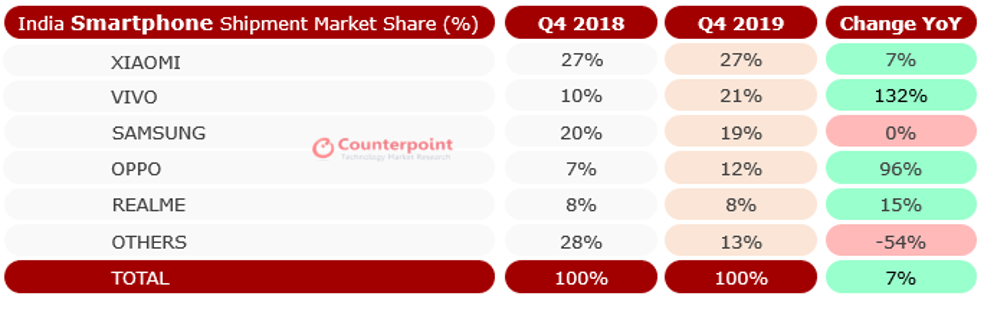
2019 was an important year for the smartphone market in India. Counterpoint Research reports that the Indian smartphone market has officially overtaken the U.S. as the world’s second-largest market in terms of annual shipments. The growth was driven by the mid-tier segment in the region from Chinese brands like Xiaomi, Vivo, and Realme. Notably, India is already the second-largest market in the world in terms of the total handset install base but this is a new milestone for the growing market.
Source: Counterpoint Research Market Monitor Q4 2019
Q4 2019 also saw some changes in the positioning of brands in terms of market share in India. While Xiaomi retained a 27% market share in the final quarter of 2019, Vivo made a significant jump in the same period, overtaking Samsung as the second-largest smartphone maker in the region. Vivo’s market share grew from a mere 10% in 2018 to an incredible 21% in Q4 2019. On the other hand, Samsung’s market share dipped to 19% in the same period.
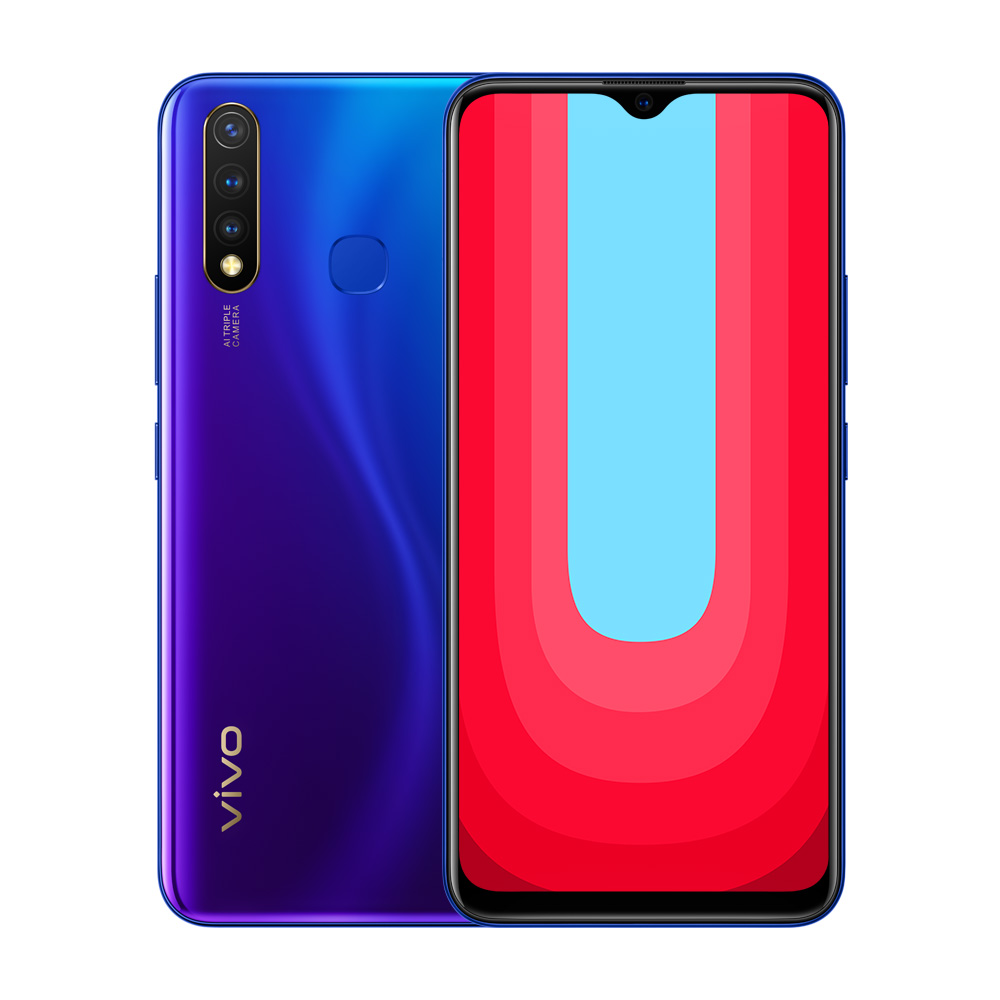
Vivo’s incredible growth was reportedly driven by the new ‘U‘ and ‘Z‘ models in India. The brand has renewed its focus on e-commerce platforms and offers fat commissions to offline retailers to promote its models, with a special focus on lower-tier cities.
Vivo’s new U20 model takes on the Redmi Note series with aggressive pricing
Samsung’s declining market share has further helped Vivo rise to second place in the Indian market. In fact, Samsung’s market share in India was at its lowest (19%) in the final quarter of 2019 since 2016.
Realme’s market share dipped quite significantly in the last quarter of 2019. It fell from 16% in Q3 2019 to 8% in Q4 2019. This also allowed OPPO to overtake the brand to become the fourth-largest smartphone maker in the final quarter of the year. OPPO’s market share increased from 8% in Q3 2019 to 12% in Q4 2019 as it shipped nearly 2x smartphones in the last quarter vs the previous one.
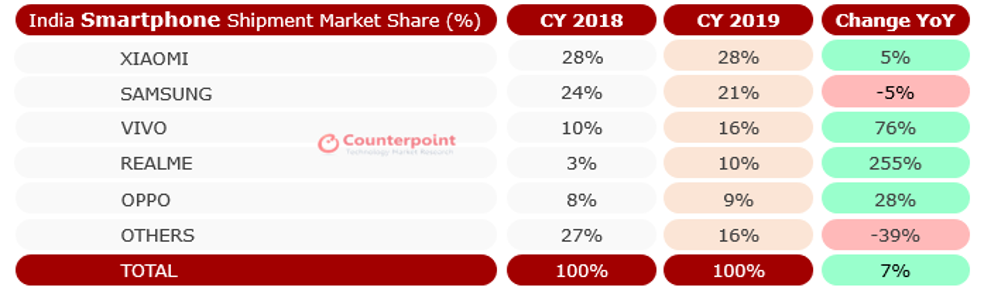
Source: Counterpoint Research Market Monitor 2019
In terms of overall market share in 2019, Xiaomi and Samsung retained their first and second places respectively, just like in 2018. Vivo made significant progress in 2019 increasing its overall market share from just 10% in 2018 to a solid 16% in 2019. But Realme was the fastest-growing smartphone brand in India in 2019 registering a staggering 255% growth. Realme’s market share increased to 10% in 2019 as compared to just 3% in 2019. OPPO’s growth in 2019 was relatively slow but it still managed to increase its shipments by 28% last year.
We can also see a change in the dynamics of the Indian smartphone market. In 2019, smartphone shipments were concentrated among the top five brands in India than ever before. The top 5 smartphone makers took a staggering 84% share of the market last year, a significant jump from 2018’s 73%. This means that the top five brands in India are increasingly strengthening their foothold in the market while other brands like Motorola and Huawei are losing their ground.
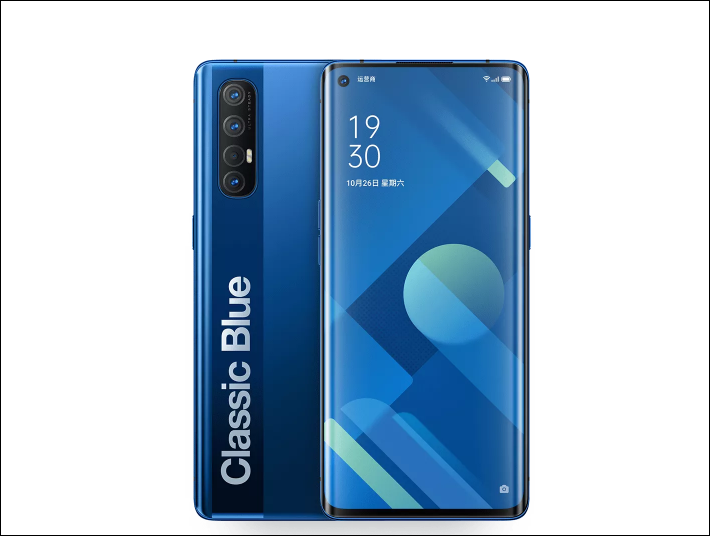
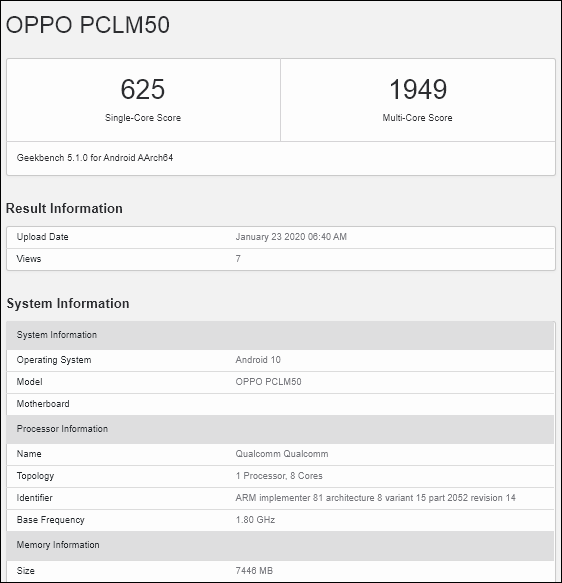
A couple of days back, an OPPO model identified as OPPO PCLM50 was certified by China’s TENAA with the key specs of the device listed on the agency’s website. The OPPO PCLM50 has now been spotted on GeekBench database.
The Geekbench listing shows the OPPO PCLM50 will be powered by a processor that has a base frequency of 1.80GHz suspected to be the Snapdragon 765G 5G processor. The processor teams up with 8 GB of RAM while the Android 10 OS will provide the interface. The smartphone scored 625 in the single-core test and reached a score of 1949 in the multi-core test.
As a reminder, TENAA also shows the OPPO PCLM50 has a 6.4-inch AMOLED screen with a resolution of 2400 x 1080 pixels. The phone will have only the 8GB RAM variant and will be available with 128GB or 256GB of non-expandable storage.
The device comes with four cameras at the rear. The main camera is a 48MP sensor that is paired with an 8MP sensor that most likely has an ultrawide lens and two 2MP cameras. We cannot say if one of the 2MP sensors is a depth-capturing camera while the other is a macro camera. You also get a 32MP selfie camera.
The OPPO PCLM50 has a 3,935mAh battery just as the Reno3 series, so its rated capacity should be 4,000mAh. The phone will ship with Android 10 out of the box with ColorOS7 on top. TENAA says it measures 160.3 x 74.3 x 7.96 mm and weighs 180 grams. The device will be available in White, Black, and Yellow colours.
Samsung Galaxy S10 Lite just landed in the Indian market and it catalyzed a lot of attention since it is the first Lite variant from the S series. Until the launch of this device, the only option to get a Galaxy S series device for fewer bucks was the compact S10e. But is the Samsung Galaxy S10 Lite the best alternative for that price? Let’s discover it together by comparing it with other popular handsets in the market. After comparing it with OnePlus 7T and ROG Phone II, we chose to write a specs comparison between Galaxy S10 Lite, Huawei P30 Pro and the flagship killer Realme X2 Pro.
Samsung Galaxy S10 Lite vs Huawei P30 Pro vs Oppo Realme X2 Pro
Do you want a compact and impressive design or the most futuristic one? If your answer is the first, then go for the Huawei P30 Pro without thinking twice. With its curved edges around the display and compact dimensions, it is a very elegant and versatile handset. On the other hand, Samsung Galaxy S10 Lite offers a more futuristic punch-hole display. The design is not the strongest point of the Realme X2 Pro. Besides having an amazing design, Huawei P30 Pro is also the one with the most interesting build quality since it is the only waterproof phone of the trio, with the IP68 certification.
Display
Despite Samsung produces the best and most popular displays for mobile devices, Realme X2 Pro has the most advanced display here. It is the only to be HDR10+ certified and it provides an impressive image quality. Further, it is the only to boast a high 90 Hz refresh rate, perfect for gaming since it provides a smoother viewing experience. The second place goes to the Samsung Galaxy S10 Lite coming with a new Super AMOLED Plus panel delivering very realistic colors and HDR, as well as a wide 6.7-inch diagonal. However, this does not mean that Huawei P30 Pro has a bad display.
Hardware/Software
The most stunning hardware is provided by the Realme X2 Pro, fueled by the amazing Snapdragon 855+ by Qualcomm built at 7 nm with a max frequency of 2.96 GHz. The SoC is paired with up to 12 GB of RAM and up to 256 GB of fast UFS 3.0 native storage. Realme X2 Pro is the only not featuring expandable internal storage and the only which still runs Android 9 Pie, but it is the fastest and most performing device here. Right after, we got the Samsung Galaxy S10 Lite with a Snapdragon 855 chipset and 8 GB of RAM in its most expensive variant, as well as UFS 2.1 internal storage.
Camera
Huawei P30 Pro and Samsung Galaxy S10 Lite have the most advanced cameras. It is still too early to pick up a winner, but we believe that Samsung Galaxy S10 Lite will deliver a better video quality, while Huawei P30 Pro may provide more interesting photos. Realme X2 Pro si just a midrange camera phone (despite its higher 64 MP resolution), so we do not recommend it if the camera is among your main concerns.
Battery
Samsung Galaxy S10 Lite has a bigger 4500 mAh and it lasts more on a single charge in most of the scenarios. But unlike the Huawei P30 Pro, it does not feature wireless charging and reverse wireless charging. Realme X2 Pro supports wired charging only just like the Galaxy S10 Lite, but it has the fastest charging technology: it goes from 0 to 100 percent in just 35 minutes.
Price
Samsung Galaxy S10 Lite costs Rs. 39,999 in India and €649 globally, Realme X2 Pro starts from Rs. 29,999 in Inda and €399 globally, and Huawei P30 Pro costs about Rs. 50,000 in India and about €600 globally thanks to online street prices. Overall, Realme X2 Pro provides better performances and displays, while Samsung Galaxy S10 Lite and Huawei P30 Pro have better cameras and batteries. Given that the P30 Pro also comes with special features such as wireless charging and water resistance, it is a more complete device. But if we exclude cameras, Realme X2 Pro has the highest value for money. Which one would you pick?
A recent report by Nikkei indicated that Japan has begun planning a comprehensive strategy for “post-5G” (6G) technology that achieves communication speeds 10 times faster than 5G by 2030. Japan’s largest carrier NTT Docomo has now begun drawing up a strategy to be a leader in 6G technology towards achieving the 2030 commercial launch plan.
The mobile operator Friday released a white paper outlining its views on 5G evolution and 6G communications technology, noting mobile communication systems typically evolve into the next generation over a period of about ten years.
The report touches on related technical concepts and the expected diverse use cases of evolving 5G and new 6G communication technologies, along with the components of the technology and performance targets.
Docomo, which started its 5G research in 2010, said in a statement it will promote cooperation among government, industry and academia, along with diverse stakeholders. It said it would continue to research and develop its technology to enable the further evolution of mobile communications. Areas of focus include pioneering new frequency bands including terahertz frequencies and developing ultra-low energy and ultra-low-cost communications.
Japan’s earlier statement also detailed that the country will invest $2.03 billion in the research and development of 6G. It’s expected to provide a speed 10 times faster than what the world will witness in terms of 5G technology, which sounds freaking ridiculous.
The world’s most populous country is currently battling to contain a lethal coronavirus similar to the SARs epidemic that originated in China in 2002. China has already reported 830 cases of the coronavirus and 26 deaths so far. The government has placed 13 cities under effective lockdown with transport restrictions, putting nearly 41 million under virtual quarantine. The city of Wuhan, the place where the coronavirus originated, is in a state of severe lockdown with all major flights and transport vehicles going in and out of the city suspended for the foreseeable future. While things are tense in China right now, tech companies from different parts of China are coming in to offer help.
Companies like Xiaomi, Meizu, WeChat, Douyin (Chinese TikTok), and even Baidu have all taken efforts to educate and help combat the new virus in China.
So let’s take a quick look at how tech companies in China are helping to fight the spread of the lethal coronavirus.
Xiaomi
Xiaomi is shipping out N95 masks, medical masks, and thermometers worth 300K yuan (~$43.2K) to Wuhan’s epidemic control and prevention headquarters. The first batch was shipped out from various centers last night and will arrive in Wuhan tonight. The company added on its Weibo platform that they are monitoring the epidemic’s status and will continue to allocate supplies to help out the city in this time of crisis.
Meizu
Another smartphone maker has come forward to offer support to the city of Wuhan. Meizu announced that it has donated 300K yuan (~43.2K) to fight the outbreak of the coronavirus in the city.
Huawei
While we haven’t heard of any donation from Huawei yet, the company has postponed its HDC.Cloud 2020 developer conference from Feb 11-12 to March 27-28. This event was expected to take place in Shenzhen, China, which is over 1000 km away from the city of Wuhan. So this was more of a precautionary measure from Huawei to eliminate a potential opportunity for the spread of the virus.
China’s biggest online retailers like Jd.com, Taobao, Suning have all announced that they would freeze the prices of essential medical items such as masks and disinfectants on their platforms. Ever since the news about the outbreak of the virus, the prices for these essential items had shot up. However, the retailers have agreed to intervene and provide these medical supplies at reasonable rates. Moreover, Jd.com has also announced that it will donate 1 million masks and 60,000 medical supplies to Wuhan, in batches.
Travel
China’s aviation regulator has announced passengers can get free refunds for flight tickets booked before Jan. 24, 2020, across all airlines and ticket sales agencies in China. Multiple airlines like Cathay Pacific, Hong Kong Airlines, and Qantas Airways are offering free cancellations for tickets booked to or from mainland China till the end of February. You can read more about airline refund announcements from this Reuters article.
Entertainment
China’s TikTok – Douyin has a dedicated page that informs users about the coronavirus and its current status. The app also added a special ‘Jiayou video effect‘ to offer support to the medical staff and patients fighting the virus in Wuhan.
Online movie ticketing platforms like Taopiaopiao and Maoyan are offering unconditional refunds for tickets booked between January 22 and the first week of February in the city of Wuhan.
Moreover, six potential blockbuster hit movies, which were scheduled to release in theaters this weekend, have been postponed. In fact, in a surprising move, one of the most anticipated movies in China this year, ‘Lost in Russia’ or ‘Awkward Mother’ (Chinese translation), is now premiering online for FREE! The film will be made available to watch at midnight today in China via the movie studio’s in-house streaming platform.
Food Delivery
Popular food delivery apps like Meituan Dianping and Ele.me in China have promised to continue operations as usual during this period. To combat the spread of the coronavirus, they have announced precautionary measures such as masks and body temperature monitoring of its delivery drivers. These platforms have also reportedly stopped delivering to hospitals.
Other Apps
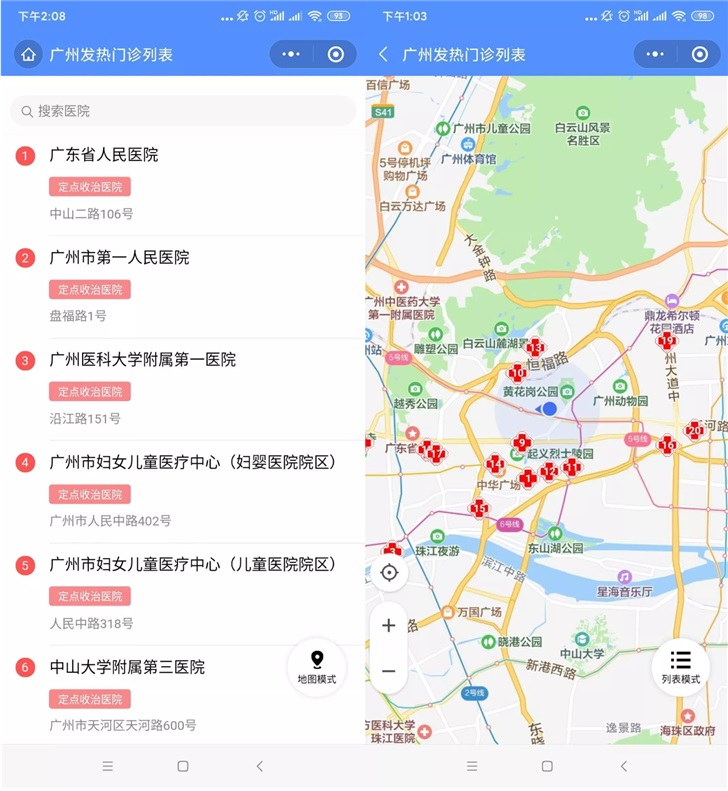
China’s most popular messaging app, WeChat, has a special ‘Fever Clinic’ Map that shows you where you can go for a check-up in over 14 cities in China. Some popular cities like Shanghai and Chengdu have over 100 listed clinics on the platform.
Source: Sina Tech
Baidu has a dedicated anti-pneumonia page on its app that is updated with relevant coronavirus related news in real-time. The Baidu Maps app also shows you ‘Fever Clinics’ (similar to WeChat). But one of the best features of the Baidu Maps is the thermal heat map giving you a view of the busy streets in your area, in real-time. It’s an excellent way to identify crowded streets to avoid them.
In a country like China, that’s obsessed with apps and social media; it’s good to see tech companies coming forward to educate people to prevent the spread of the coronavirus pneumonia. With over 830 cases reported so far, it remains to be seen whether China can contain this new coronavirus before it becomes as widespread as the SARs epidemic.
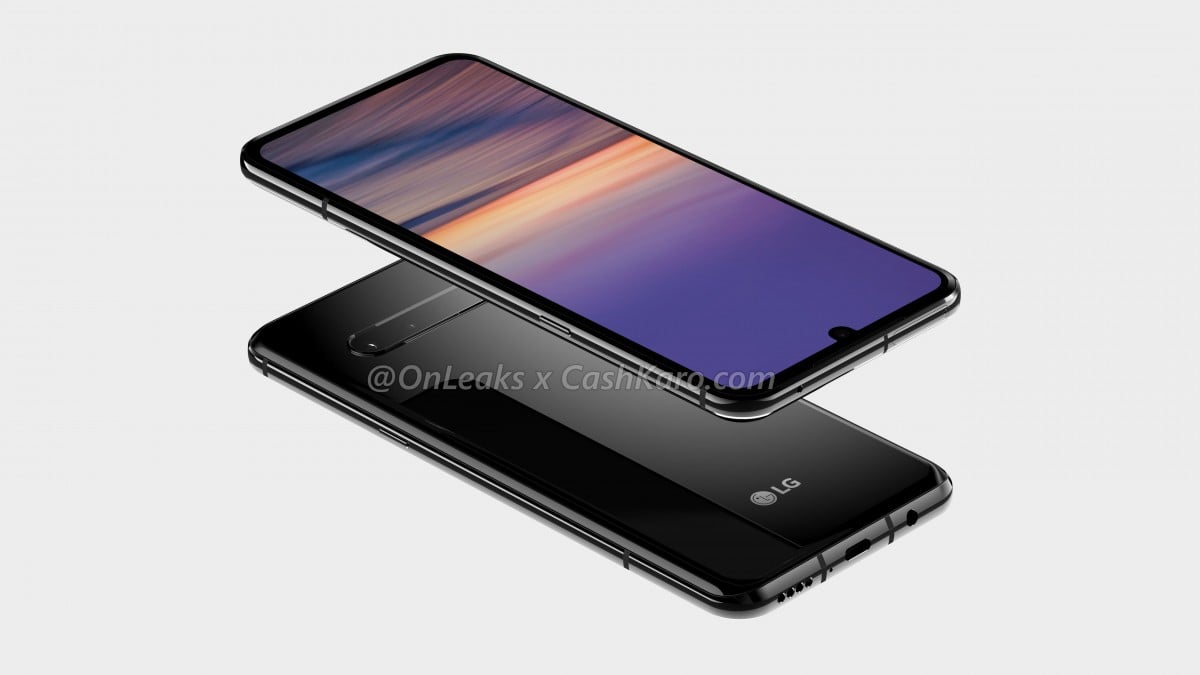
At the end of the previous year, a South Korean publication had revealed that LG will be launching a new 5G smartphone and LG V60 ThinQ 5G at the upcoming Mobile World Congress (MWC) 2020 tech trade show in February. Since the LG G8 series did not arrive with 5G support last year, it is speculated that the rumored 5G phone arriving along with V60 ThinQ 5G could be the LG G9 series. Renders of the LG G9 had surfaced at the beginning of the year. Fresh information coming from David Ruddock of Android Police reveals that the South Korean company is planning to overhaul its smartphone strategy. It may result in the axing of G-series and arrival of a new series later this year.
According to Ruddock, LG’s V-series phone arriving in 2021 will be bundled with a large display of 10 inches or higher so that it can be used as a tablet or laptop. It is not clear whether the phone will connect to the larger display through a dock or wirelessly. The device could be accompanied by a keyboard accessory.
He added that starting from this year, the V-series will be rivaling with the Galaxy S series lineup from Samsung. The G series may be effectively phased out and the South Korean company will have a new series arriving later this year. The new series could be aimed to rival with Samsung Galaxy Note series, 2020 iPhones and the next generation Pixel series smartphones. The company be also prepping some foldable phones to take on Samsung’s foldable smartphones.
As far as upcoming LG flagship phones are concerned, the leaked CAD renders of the LG G9 revealed that it will be arriving with a waterdrop notch display and horizontal quad cameras on its back. It seems that the LG G9 won’t carry support for palm recognition and hand gestures that were added on the LG G8 series. It will be equipped with the good old 3.5mm audio jack. The upcoming LG V60 ThinQ is expected to arrive with an improved Dual Screen accessory. The latter could be coming with “free stop hinge” technology that will make it possible to stop and hold the second screen at desired angle.
Samsung aims to sell 6 million foldable phones in 2020. In order to achieve it, the company will begin with the sales of Galaxy Z Flip clamshell foldable phone. The handset is expected to debut on Feb. 11, and it could be arriving as the first Snapdragon 855+ phone from Samsung. In order to achieve its goal of selling 6 million foldable smartphones, it should be launching a new foldable phone with flagship specs. Probably, this device could be arriving as the successor of the Galaxy Fold that debuted last year. Max Weinbach from XDA Developers has shared speculated specs of the true successor for the Galaxy Fold that is likely to launch in Q2 this year.
Plenty of details of the upcoming Galaxy S20 series and Galaxy Z Flip are known. A good share of leaked information was shared by Weinbach. Based on the information that have appeared on South Korean sites and Bloomberg, he has shared key specs of the next generation Galaxy Fold tablet.
The successor of the Galaxy Fold could be a 5G device powered by the Snapdragon 865 mobile platform. The device could be equipped with an 8-inch display with ultra-thin glass which will be first seen on the upcoming Galaxy Z Flip foldable phone. The alleged Galaxy Fold 2 could be coming with a 108-megapixel main lens. It could be accompanied by a S Pen stylus. It remains to be seen whether it ends up as a non-Note series phone to arrive with S Pen.
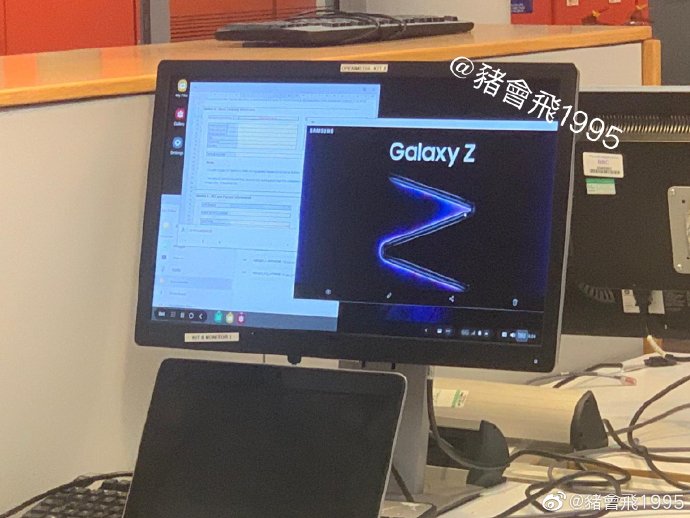
In related news, Samsung is said to be working on a tri-folding Z series phone. The design of the device was recently seen in a leak photo that surfaced on Weibo. The leaked image revealed that it could be equipped with dual hinges so that it can be folded and unfolded in zigzag manner. If the device truly exists, Samsung may pack it with premium specs. The South Korean firm is currently focused on the Galaxy S20 series and Galaxy Z Flip. Hence, it is likely that more details on the next foldable phone could be revealed after the market release of the S20 and Z Flip. Until then, readers are advised to digest the specs leak of the Galaxy Fold’s successor with a grain of salt.
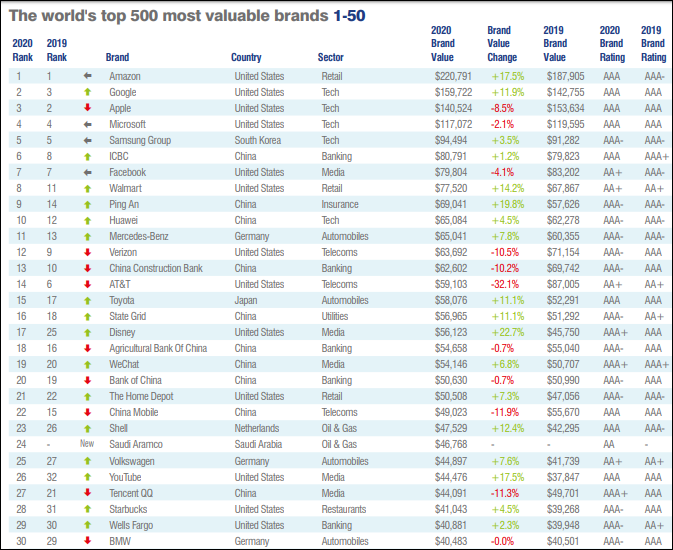
British brand financial consulting company BrandFinance has released its 2020 500 Most Valuable Global Brands. The list contains what the company says is the most valuable brands in the world as of January 2020. As expected, US companies dominate the first six spots while Chinese firms occupy the next 3 spots. The top 10 is completed by a South Korean company which is Samsung.
US e-commerce giant Amazon emerged as the most valuable brand globally with a brand value exceeding US $220.7 billion. This is said to be an increase of 17.5% over last year. These increases are due to Amazon’s expansion in cloud computing, streaming media, consumer electronics and logistics.
Tech giant Google came in second with an estimated brand value of more than US $159.7 billion. This represents a year-on-year increase of 11.9%. In third place is yet another tech company Apple with a brand value of more than US $140.5 billion. However, Apple’s value saw a year-on-year decline of 8.5%.
At the 4th to 10th places are Microsoft (US $117 billion), Samsung (US $94.4 billion), Industrial and Commercial Bank of China [ICBC] (US $80.7 billion), Facebook (US $77.9 billion), Wal-Mart (US $ 77.5 billion), China Ping An (US $69 billion) and finally, Huawei with an estimated brand value of $ 65 billion.
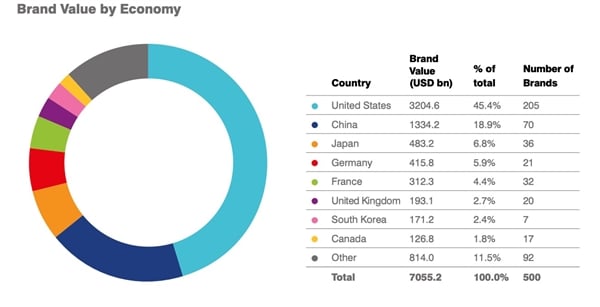
Also worthy of note is that in terms of industry classification, technology companies have the highest value in the top 500 with a total of 46 companies with a value of more than US $986.5 billion. By region, U.S. companies have the highest value with 205 companies valued at more than US $320.4 billion. China comes second with 70 companies in the top 500 and a cumulative share of 18.9% and total brand value of US $133.4 billion.
We use cookies on our website to give you the most relevant experience by remembering your preferences and repeat visits. By clicking “Accept”, you consent to the use of ALL the cookies.
This website uses cookies to improve your experience while you navigate through the website. Out of these, the cookies that are categorized as necessary are stored on your browser as they are essential for the working of basic functionalities of the website. We also use third-party cookies that help us analyze and understand how you use this website. These cookies will be stored in your browser only with your consent. You also have the option to opt-out of these cookies. But opting out of some of these cookies may affect your browsing experience.
Necessary cookies are absolutely essential for the website to function properly. This category only includes cookies that ensures basic functionalities and security features of the website. These cookies do not store any personal information.
Any cookies that may not be particularly necessary for the website to function and is used specifically to collect user personal data via analytics, ads, other embedded contents are termed as non-necessary cookies. It is mandatory to procure user consent prior to running these cookies on your website.