Advertisement

Japan plans to achieve practical 6G by 2030, will be 10x faster than 5G

According to a recent report by Nikkei, Japan has begun planning a comprehensive strategy for “post-5G” (6G) technology that achieves communication speeds that are 10 times faster than 5G by 2030. The report claims that China, South Korea, and Finland have also started research and development and investment this segment, but Japan have been surprisingly slow with the adoption of 5G technology, and are hoping to make up with an early push toward 6G.

The Ministry of Internal Affairs and Communications of Japan will set up a government-civilian research society in January, under the chairmanship of the University of Tokyo Goshinjin, and under the direct supervision of the general affairs minister Takao Sanae. Relevant people from NTT and Toshiba will also be invited to discuss 6G performance goals and policy support by June.

Japan claims that through using “post-5G” (6G) high-speed communication technology, it is possible to depict a future society in which individual stereoscopic images emerge from conference rooms or classrooms far away, and robots take care of people.

The country will invest $2.03 billion in the research and development of 6G. It’s expected to provide a speed 10 times faster than what the world will witness in terms of 5G technology, which sounds frankly ridiculous. Unused high-frequency waves will be used in the 6G network.

Other countries have begun to take action as well. The Chinese government announced in November 2019 that it will establish two 6G R & D institutions. Finnish universities and government-affiliated institutions have also launched 6G R & D projects. In South Korea, Samsung Electronics and LG Electronics each set up research centers in 2019.

(Source)
Huawei partners with TomTom for mapping and navigation services

Huawei is working on alternatives to Google Mobile Services. It already has its suite of apps called Huawei Mobile Services which includes AppGallery (its version of the Play Store), Huawei Video (its replacement for YouTube), Huawei Themes, Huawei Wallet, and Huawei Browser etc,. It also has Huawei Quick Apps which is its alternative to Google’s Instant Apps.

huawei

Huawei also included Location Kit and Map Kit in HMS Core (its collection of tools for app developers) to provide location and mapping services but there was no mapping data to use. A report by Reuters says the Chinese mobile giant has partnered with TomTom, the Dutch company known for its mapping services.

The info was revealed by Remco Meerstra, the spokesman for TomTom. Apparently, the deal was finalized a while ago but they decided to keep a tight lid on it until now. The deal will result in Huawei’s use of TomTom’s mapping services, traffic information, and navigation software in its apps, and thus serving as an alternative to Google Maps.

The upcoming Huawei P40 series should have the new mapping service pre-installed. Other models may get the feature via an update.


(Source)
Amazon India rolls out electric delivery auto-rickshaws

Amazon’s founder and CEO, Jeff Bezos, arrived in India a few days ago to meet with government officials and also attend a company event. Yesterday, Mr. Bezos took to Twitter to announce the roll-out of a new fleet of fully-electric delivery auto-rickshaws.

The move is part of the retail giant’s Climate Pledge to reduce its carbon emission and also switch to renewable energy.

In a report today, The Economic Times reported that Amazon said its fleet of delivery vehicles in India will include 10,000 electric vehicles by 2025. These vehicles will include both three-wheeled and four-wheeled vehicles. Amazon already began a pilot program in several cities and is now expanding it.

Some of the cities these electric vehicles will operate in include Delhi, Bangalore, Coimbatore, Hyderabad, Ahmadabad, Pune, and Nagpur. So if you reside in any of these cities, you should keep your eyes peeled for these new vehicles.

India is not the only country where Amazon will be switching to electric vehicles. In the US, it has placed an order for 100,000 electric delivery trucks from automaker, Rivian. The vans are expected to be on roads by next year and should rise to 100,000 by 2030.

Amazon’s goal is to become carbon-neutral by 2040 which is a decade earlier than the target set by the United Nations Paris Agreement.

Flipkart, its rival in India, is also switching to electric vehicles. The retailer announced last June that it plans to replace 40% of its delivery vans with electric models by March 2020.


(Sources: 1, 2, 3)

Huawei Mate Xs appears on TENAA database ahead of launch

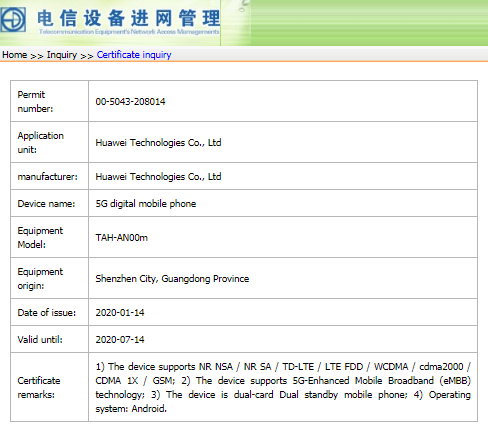
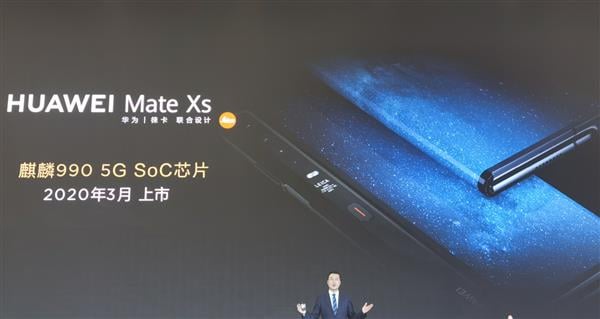
In October 2019, Huawei had confirmed that it will be launching a more powerful edition of the Huawei Mate X foldable in March this year. The Mate X was fueled by the Kirin 980 chipset. The forthcoming Huawei Mate Xs will be driven by the Kirin 990 5G chipset. In December, the Mate Xs that has a model number of TAH-AN00m had bagged 3C certification in China. With the launch drawing near, the new foldable phone has surfaced on the database of TENAA.

The screenshot reveals that the Huawei Mate Xs shows that it is a 5G device that carries support for NSA and SA 5G network in China. The TENAA listing of the phone is yet to populated with its full specs and images. Hopefully, the Huawei Mate Xs TENAA listing will be updated soon with its specs and images.

Huawei Mate Xs TENAA database

The 3C appearance of the phone in December had revealed that it could be with a 65W fast charger.  Huawei Consumer Group CEO Yu Chengdong had recently in an interview that the Huawei Mate Xs will be unveiled at the Mobile World Congress (MWC) 2020 tech trade show that will be held in between Feb. 24 and Feb. 27.

The Huawei Mate X was priced at 16,999 Yuan (~$2,476). Rumors surrounding the upcoming Mate Xs have revealed that the Mate Xs could be a cheaper device despite coming with improvements in display and design. The device will be equipped with an upgraded hinge system and a newer Kirin 990 5G processor. Since the Mate Xs is less difficult to manufacture compared to its predecessor, it is likely that the Mate Xs could be coming with a cheaper price tag.

Huawei Mate Xs

As far as the hinge of Huawei Mate Xs is concerned, it is more durable and fine tuned compared to the hinge on the Mate X. The display size will remain intact as the predecessor model. With design improvements, the Mate Xs will be slightly smaller than the previous model.

In related news, Huawei is reportedly working on another smartphone with foldable screen. It is likely to go official in the second half of 2020. It remains to be seen whether it arrives with clamshell form factor like the upcoming Galaxy Z Flip or it features a tri-fold design like the rumored Galaxy Z phone.


Chinese Hacker group said to be behind the cyberattack on Mitsubishi Electric, Data breach confirmed

Earlier today (20th January 2020), Mitsubishi Electric Corp announced that it had been the target of a series of cyberattacks that has led to information regarding Government agencies and other business partners being compromised.

Mitsubishi Electric is an integral asset in Japan’s defense and infrastructure industries. Hence, the cyberattack implies a possible leak of information, such as email exchanges with the Defense Ministry and the Nuclear Regulation Authority. Furthermore, even documents related to projects with private organizations, railway operators, telecommunications and automakers are also at risk.

However, the company has also assured that no highly important data regarding infrastructure operations have been breached. Previously, Mitsubishi had conducted an internal investigation in June 2019 after an irregular activity was noticed on devices located in Japan. The investigation found unauthorized access to the management section at its head office and other departments.

According to reports, a Chinese hacker group is suspected of attacking Mitsubishi Electrics by gaining unauthorized access to personal computers and services. It is being said that the cyberattack had targetted information related to job applicants and employees of the month alongside sales and technologies as well. Although, it is still a call for caution as even cybersecurity experts in the field are susceptible to cyberterrorism.

Since the attack, Yoshihide Suga (Chief Cabinet Secretary) has mentioned that “no leak of sensitive information regarding defense equipment and electricity” has taken place and also sent outa public apology for the sudden unrest that was caused. Notably, Mitsubishi Electic is a major manufacturer in the field of defense and is accredited with the 3rd largest contract for major defense equipment at the Defense Ministry, according to a discal report of 2018.


(Via)

Samsung Galaxy Z foldable phone with three-fold design could be in works

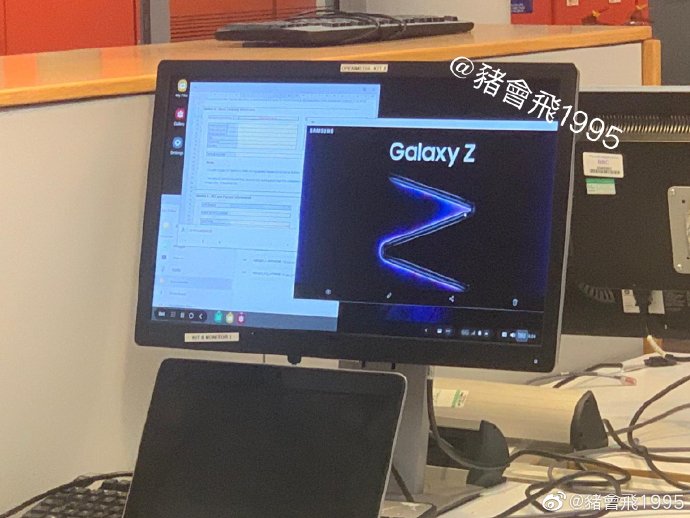
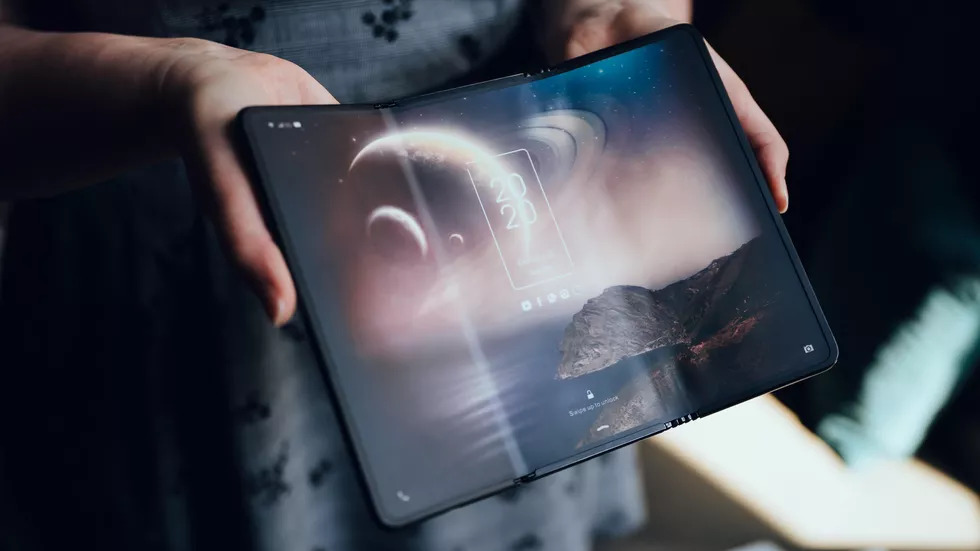
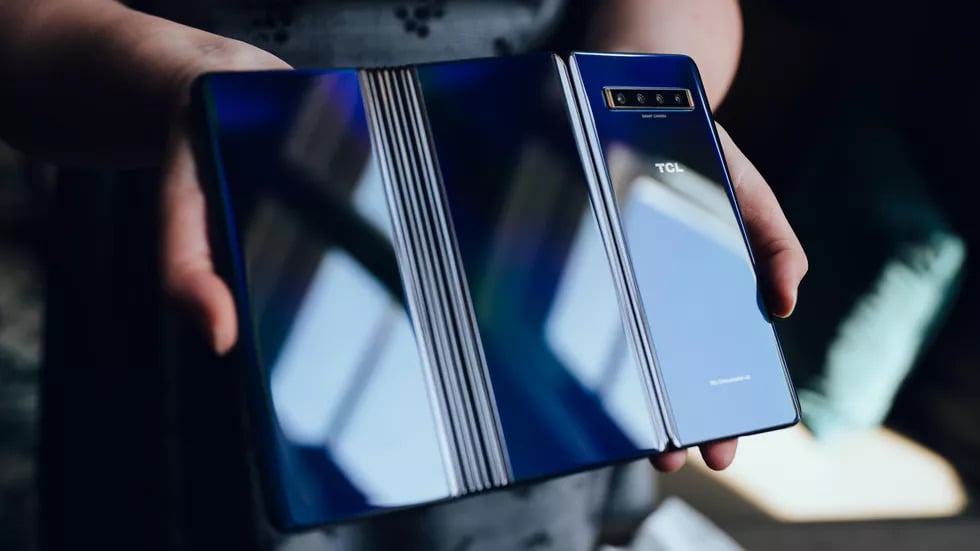
Last year in October, TCL had showcased a prototype of a foldable phone with tri-folding display with dual hinges. When folded, it could be used a regular smartphone and when unfolded, it provided users with a large display of around 10 inches. There is no update on when the company will be mass producing it.  A fresh leak reveals that Samsung could be working on a foldable phone with tri-folding design. A tipster from China has shared an image that showcases the three-fold design of an upcoming Galaxy Z foldable phone.

The exact name of the Galaxy Z phone with three-fold design is not known yet. The design that can be seen in the leaked image shows that the Galaxy Z tri-folding smartphone will appear quite similar to the TCL’s foldable prototype with tri-folding display. Hence, it appears that it could be fitted with two hinges that could be folding in opposite direction. Hence, the two hinges could assist the device appear like the letter Z that will make it possible to fold it in zigzag manner.

Samung Galaxy Z three-fold foldable phone

The TCL prototype was completely unfolded, it revealed that it featured a quad camera setup on the third part of the device. Also, when unfolded, the frontside provides users with a massive display area. However, when folded, it can be used a regular smartphone. One drawback of the tri-folding design is that the device becomes quite thick when folded as seen in the image below. It remains to be seen how thick Samsung’s forthcoming Galaxy Z tri-folding phone could be.

There is no word on the launch date of the Galaxy Z tri-fold device. It could be arriving in the latter half of the year. Currently, the company is gearing up to launch the Galaxy S20 series along with Galaxy Z Flip clamshell foldable phone on Feb. 11. The Galaxy Z Flip is powered by the Snapdragon 855. The said processor powered various Android flagship phones in the previous year. The rumored Galaxy Z tri-folding smartphone could be equipped with premium specs.

What’s your opinion on the three-fold design of the Galaxy Z foldable phone? Share us your views by posting your comments below.


(source)

Vodafone and BT to seek support for Huawei’s 5G equipment in the UK

BT and Vodafone are reportedly set to support Huawei’s involvement in the development of the UK’s 5G network. The companies are preparing a letter to be sent to the Prime Minister to lobby him to support the move, saying a ban on Huawei could stunt the growth of the UK’s digital economy. Britain is set to take a final decision on Huawei’s role in building new 5G networks this month.

The government is facing pressure from the US to prohibit Huawei from any involvement with the 5G communications network. British and American security staff reportedly met in London this week to discuss the issue, and the US’s view is that it would be “nothing short of madness” to allow the Chinese firm to work on the project. US security chiefs reportedly handed UK officials a dossier of evidence on Huawei’s alleged vulnerablities in an attempt to get Downing Street to block the company.

Telecoms industry sources said that Philip Jansen, BT chief executive, and Nick Read, who runs Vodafone, were contemplating writing to Mr Johnson during the early part of next week. One source familiar with its prospective content said it would emphasise the priority which both companies placed on the security of their networks, while arguing that they had seen no evidence that would justify an outright ban on Huawei.

Vodafone, which uses Huawei’s telecom equipment in its radio network, has previously said a blanket ban on the Chinese company would costs it millions of pounds and significantly slow down the roll-out of 5G networks. Vodafone has already paused the deployment of Huawei’s equipment in its data-heavy core networks, a year ago until Western governments give the company a full security clearance.

BT also uses Huawei’s equipment in networks, but it is not deployed in the intelligent core of its fixed-line network and it is removing Huawei from the core of its mobile network. In addition, BT has already excluded Huawei from the bidding process for its future 5G network.

(Source)

Google Pixel 4 spotted running the upcoming Android 11 “R” Developer Preview

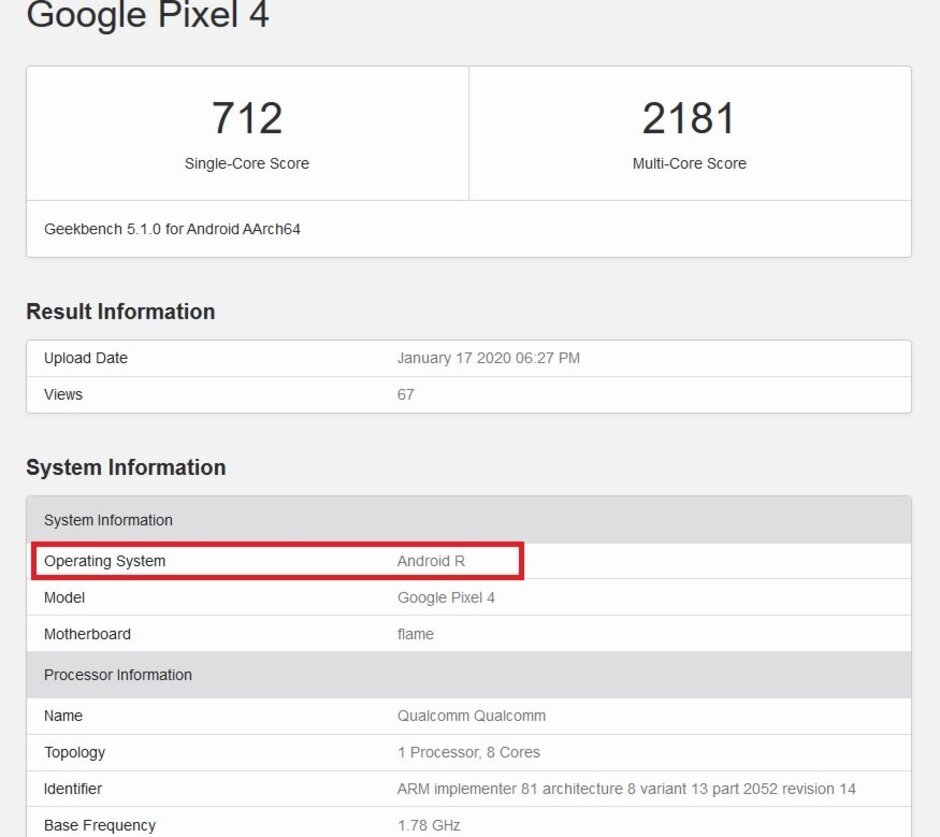
A new year has just begun and a new version of Android is reportedly right around the corner. A benchmark test has been spotted on Geekbench which indicates that a Google Pixel 4 is running the upcoming Android “R” operating system (11th iteration of the Android OS).

Google
Google Pixel 4 spotted with the Android R Developer Preview on Geekbench

The benchmark has yet to be confirmed officially so it might turn out to be fake. Furthermore, Google announced that it is dropping the customary desserts and alphabetic naming scheme for a more comprehensive numerical system, so Android R listing doesn’t make it seem like an official build. However, Android 10 was referred to as Android Q in the developer preview up until the rollout of the final build. Thus, the Android R developer preview is most likely an early designation to Android 11 OS.

Last year, Google had announced the Android Q developer preview in March 2019 with six beta versions being released before the Android 10 stable build was launched on 3rd September 2019. Following the same timeline, Android R could very likely be unveiled within the arriving 6 to 8 weeks. Pixel owners are most likely to receive the beta program first, while a number of different devices are expected to also be included soon after.

Android 11

Notably, it is advised for those interested to only join the beta program for any upcoming OS update if one possesses a spare smartphone. Early iterations of a final build are highly unstable and filled with bugs. Waiting for a few of the zero-day bugs and glitches to be fixed and opting-in for the beta program for later builds is a safer bet. The new version of Android OS is expected to bring many quality of life improvements alongside performance enhancements as well, so stay tuned for related coverage.


(Via)

Samsung has invested $500 million to set up a smartphone display plant in India

Samsung Electronics is well known for its consumer grade products ranging from home appliances to smartphones. However, the company is also a world leader as a supplier in memory chips and even the top manufacturer of AMOLED displays in the world. Now, the company is planning on further expanding its latter department by investing $500 million to set up a display manufacturing plant in India.

The South Korean tech giant will set up the new plant on the outskirts of New Delhi, the capital of India. This arrives after Samsung officially disclosed the sizeable investment and plans in a filing with Indian regulatory bodies. The plant’s primary focus is to produce displays that will be fitted in a wide range of devices including smartphones, and other IoT gadgets.

samsung Galaxy S10
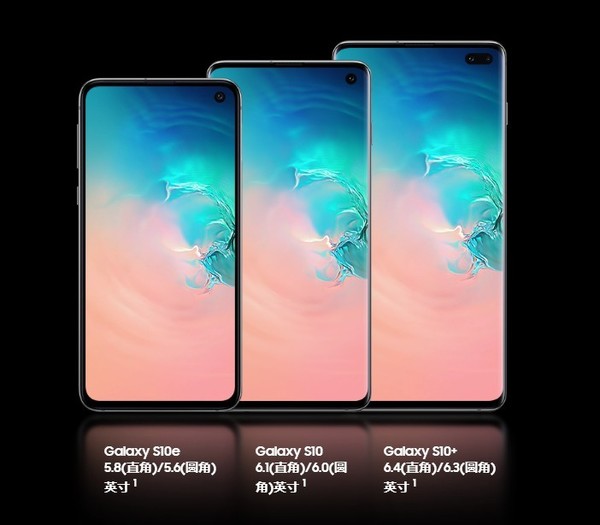
Samsung Galaxy S10 with the company’s AMOLED display technology

According to the filing, Samsung is setting up a display manufacturing plant in Noida by allocating some of the lands for its existing plant. This plant was claimed to be the world’s largest smartphone manufacturing plant and was opened in 2018 with a $700 million investment. With the new plant, Samsung will be even less reliant on importing its own technologies from other countries and can source its own components locally, bypassing tariffs and customs duties.

The new display manufacturing plant also boosts the production capacity which will largely benefit from the Indian Government’s tax benefits and subsidies on manufacturing locally. India is currently the world’s second largest smartphone market which the Government recognizes and thus provides incentives to OEMs to set up their manufacturing and assembly plants locally.

Samsung logo at Samsung Customer Service Center in Krakow, Poland on 11 January, 2019. (Photo by Beata Zawrzel/NurPhoto via Getty Images)

Notably, Samsung is the second most popular brand in the Southeast Asian country. However, it is expected to be overtaken by Chinese brand Realme in the fourth quarter of 2019, according to analysts. Thus, the move might help Samsung price its Galaxy offerings more aggressively in the near future to stay more relevant in the current smartphone trends as Chinese tech giants like Xiaomi are becoming increasingly more popular in the nation.


(Via)

Flyme 8 stable finally begins rolling out to second batch of Meizu devices

Meizu has today announced that it has now started rolling out the latest Flyme 8 stable version update to the 2nd batch of compatible smartphones. The announcement from the company added that users can check for the update by going to System Updates app. This means that the rollout for Flyme 8 is now essentially complete, and all devices scheduled to get the update will be receiving it soon.

Flyme 8 OS

Meizu will now start rolling out the stable build for Meizu 16Xs , Meizu 15 Lite, PRO 7 Standard Edition, Meizu Note9 (M9 Note), Meizu Note8 (M8 Note), Meizu X8 , PRO 6 Plus, PRO 6s, PRO 6, PRO 5, MX6 , Meizu E3 (Blue Charm) , Meizu S6 (Blue Charm), Meizu M6 (Blue Charm), Meizu M5 Note (Blue Charm), Meizu M3 Max (Blue Charm), Meizu M3E (Blue Charm).

For those who are unaware, the Flyme 8 operating system was announced at the end of August last year alongside the Meizu 16S Pro flagship smartphone. The company had promised that this new version of the user interface will come to a total of 27 Meizu models by the end of last year, and now they’re finally delivering. We’ve made a detailed list of features that are available through this new update which you can check out here.

(Source)
OnePlus 8 Pro leaked hands-on image reveals 120Hz selection option in Settings menu

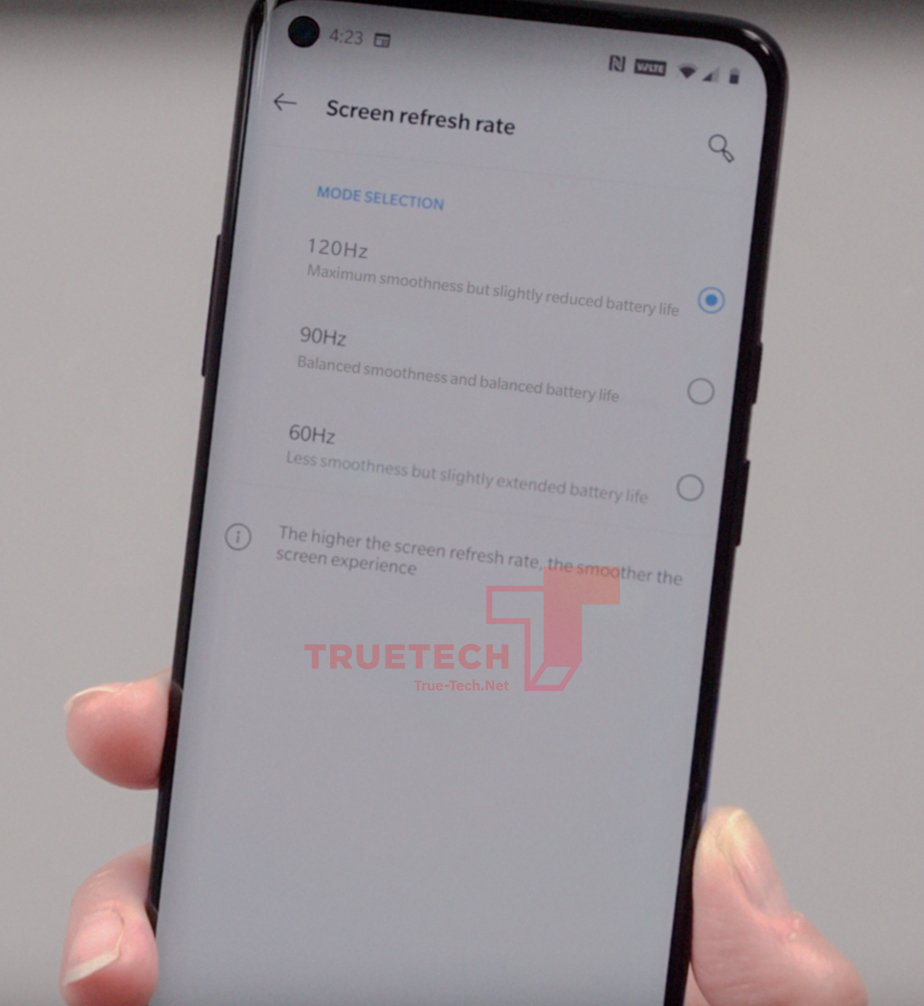
OnePlus recently shared a simulation video of its 120Hz Fluid Display. While some rumors have stated that the OnePlus 8 series will be equipped with the 120Hz refresh screen, there have been some contradictory that the next flagship phones from OnePlus won’t feature it. A fresh report on Tru Tech that carries an exclusive image of the OnePlus 8 Pro leaked by a OnePlus insider reveals that the phone has a 120Hz selection option in the Settings menu.

The publication claims that the OnePlus 8 Pro hands-on image that has surfaced could belong to a pre-production unit. The handset has a punch-hole display that is surrounded by slim bezels. The volume rocker can be seen on its left edge. The right spine of the device has an alert slider and a power key. The OLED display of the phone is integrated with an in-screen fingerprint reader. The appearance of the new image reveals that Chinese firm will be ditching the notch-less display and pop-up selfie camera design on the OnePlus 8 series.

OnePlus_8_Pro_Hands_On_TrueTech_

The main thing to notice in the leaked image the “Screen refresh rate” menu in Settings has mode selection options for 120Hz, 90Hz and 60Hz. The handset is expected to carry support for quad HD+ resolution. The text below the 120Hz option reads “maximum smoothness but slightly reduce battery life.” It does not state whether selecting the 120Hz option will switch the display resolution to 1080p. Hence, there is a possibility that the display of the OnePlus 8 Pro will produce quad HD+ resolution along with 120Hz refresh rate. Since the image belongs to a pre-production unit, it remains to be seen whether the 120Hz option will be also available on the Final product.

The OnePlus 8 family includes the entry-level OnePlus 8 Lite, the regular OnePlus 8 and the advanced OnePlus 8 Pro. The OnePlus 8 Lite may feature a 90Hz refresh rate. It remains to be seen whether the OnePlus 8 which is also speculated to be equipped with a punch-hole screen arrives 120Hz refresh rate support.

Rumors surrounding the OnePlus 8 Pro has revealed that it will be fueled by Snapdragon 865 mobile platform. It could be coming with up to 12 GB of RAM and 256 GB of storage. It could be housing a 4,500mAh battery with fast charging support. For photography, the OnePlus 8 Pro may possess a 32-megapixel front camera and it may come with a rear camera system that consists of a Sony IMX686 64-megapixel main lens, a 20-megapixel ultrawide shooter, a 12-megapixel telephoto lens and a ToF sensor. Readers are advised to digest the specs leak with a grain of salt.


(source)
Users report that new AirPods Pro update ruins noise cancellation

Apple often rolls out background software updates to its truly wireless earbuds like the AirPods Pro. Usually, these updates focus on minor bug fixes, but a recent AirPods Pro update appears to have made some notable changes to sound quality and noise cancellation. Following user reports on Reddit and other outlets, RTINGS decided to retest AirPods Pro after updating to firm 2C54. The testing revealed a few notable changes, for better and for worse.

RTINGS tests found the AirPods Pro’s noise canceling capabilities to be worse after firmware update 2C54. But affected customers say the trouble began even earlier with firmware version 2B588, which rolled out in November. According to the audio testing firm however, not everything is really bad. The update also brought some marked improvements to the performance of the AirPods Pro.

One of the biggest improvements, according to RTINGS testing, came to frequency response consistency. This describes the “variations in a headphones’ frequency response due to their fit on your head.” Prior to firmware 2C54, RTINGS described the frequency response consistency of AirPods Pro as “just okay.” The update, however, made things ”significantly better.”

Another significant improvement came to bass accuracy. While RTINGS had already described AirPods Pro bass accuracy as “excellent,” the 2C54 update makes another “fairly significant improvement.” Elsewhere, RTINGS says the update included a “very slight reduction in mid accuracy” as well as a slightly reduction in treble accuracy.

While Apple has not formally acknowledged these complaints from users, it has pulled the the 2C54 for AirPods Pro. This prevents additional users from installing the update, but it doesn’t do much for those users who had already installed it. The update was initially released on December 16 and was pulled shortly after that. Whether this is in acknowledgement of the worse noise cancelling or otherwise, we don’t really know.

(Source)
Black Shark announces partnership with Tencent Games

Xiaomi-backed gaming smartphone market Black Shark has today announced that the company has partnered with Tencent Games in an effort to explore innovation in gaming both in terms of software as well as hardware.

Making this announcement, the company has said that it aims to provide users with a more diverse gaming experience. We expect to see this partnership getting materialised with the upcoming Black Shark 3 smartphone getting launched later this year.

Black Shark Tencent Games Partnership

Earlier, Tencent Games had partnered with ASUS for the company’s second-generation gaming smartphone — Asus ROG Phone 2. Under this partnership, the company had also launched Tencent customized Elite version of the smartphone at a cheaper rate in China.

While the company has not yet revealed anything about the upcoming gaming smartphone, leak shows that the Black Shark 3 will come with 2K resolution display and will be offering 120Hz refresh rate. Earlier, it was said that the phone will come powered by the newly announced Qualcomm Snapdragon 865 SoC.

Previous reports indicate that the phone could come equipped with 16GB of RAM. The smartphone has been certified for radio transmission under model number KLE-A0. It shows that the device supports dual mode 5G connectivity.

If the reports are true, then the Black Shark 3 gaming smartphone will be the first to come with 16GB of RAM. So far, the highest memory configuration that any smartphone offers stands at 12GB.

The upcoming gaming phone from the company will be the successor to Black Shark 2 Pro which was announced back in July last year. It features a 6.39-inch FHD+ screen, a Snapdragon 855+ processor, and packs a 4000mAh battery with support for 27W fast charge. We don’t expect anything lesser from the Black Shark 3 and a recent leak says it will have a bigger 4700mh battery.


Nubia Red Magic 5G phone bags 3C certification with 55W rapid charger

Past reports have revealed that Nubia is working on a new Red Magic gaming smartphone with 5G capabilities. The Chinee firm is yet to confirm on the launch date of the smartphone. It seems that the arrival of the smartphone may not be too far as it has bagged approval from the 3C authority of China. The smartphone has been spotted a 55W fast charger.

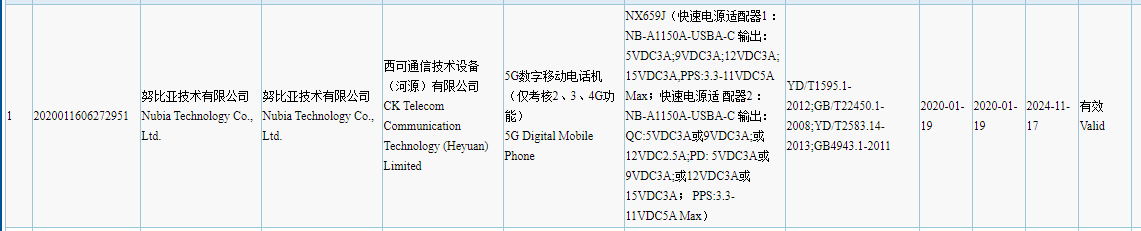
The screenshot of the 3C listing of the Nubia NX659J smartphone reveals that it is a 5G-ready phone. It also reveals that it may ship with a charger that may support a maximum charge rate of 55W. With the phone getting spotted at 3C, it is likely it may soon appear on the database of TENAA with its entire specifications in the coming days.

Nubia NX659J 3C

The Chinese firm has revealed only few information on the upcoming Nubia Red Magic 5G phone. It is yet to be known whether its next phone will be called Red Magic 4 or Red Magic 5 as some Chinese OEMs are known for skipping the number 4 in the monikers of their devices.

Nubia has recently confirmed that its next Red Magic gaming phone will be equipped with a display supports 144Hz refresh rate. Hence, the Snapdragon 865 mobile platform powered smartphone is expected to offer topnotch experience. The inclusion of SD865 will bring support for dual-mode 5G connectivity on the device.

The other thing that is known about the smartphone is that it is equipped with a triple camera setup. The predecessor Nubia Red Magic 3S smartphone came with a 30W charger for its 5,000mAh battery. There is a possibility that the upcoming Red Magic 5G phone will be packed with a 5,000mAh or higher battery that will be coupled with 55W charger. It is likely that the Red Magic 5G phone will go official in the first quarter of 2020.

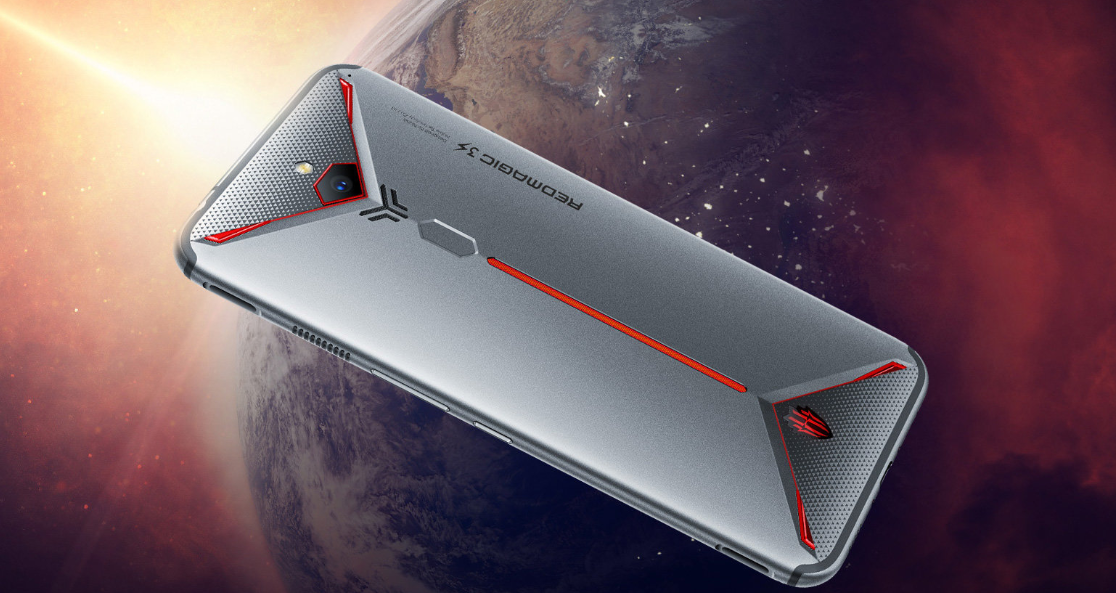
nubia red magic 3s silver featured
nubia red magic 3s

Apart from the next Red Magic phone, China will be also receiving gaming smartphones from some other brands. Recent reports have revealed that Xiaomi is gearing up to launch the Snapdragon 865 mobile platform powered Black Shark 3 gaming phone. The handset is expected to come equipped with 16 GB of RAM and quad HD+ display with 120Hz refresh rate. Recently, the Vivo V1955A was spotted on 3C with a 55W fast charger. It is believed to the upcoming Snapdragon 865 powered iQOO 3 gaming phone.


Samsung appoints Roh Tae-moon as its new mobile chief

Samsung has adopted the practise of routinely switching executive roles and in line with that, the South Korean giant has now announced another major management reshuffle.

The company has announced that it is promoting president Roh Tae-moon as the new mobile chief to oversee the company’s mobile business. Till now, he was leading development of the Galaxy lineup.

Roh Tae-moon
Roh Tae-moon, Samsung’s new mobile chief

Roh Tae-moon is currently the company’s youngest-ever president at 51. His appointment as the new mobile chief comes as part of a delayed reshuffle. The change was expected to take place last year but it was postponed due to series of court cases involving some of its top executives including leader Jay. Y Lee.

Roh is touted as the one who championed Samsung’s shift to outsource more handset production to cut costs and better compete with lower-priced Chinese smartphone makers such as Huawei, its biggest rival.

He is now tasked with re-invigorating the organisation as the competition in the smartphone market is heating up. This change allows Samsung to be more flexible at identifying potential growth areas.

Along with Roh Tae-moon, Samsung has also promoted its network business chief Cheun Kyung-whoon to president. He was involved in the world’s first commercialisation of 5G services in South Korea.

The company has said that DJ Koh, former mobile chief and co-chief executive will continue to lead Samsung’s IT & mobile communications (IM) division, which oversees both mobile devices and network equipment.

Samsung has been a long time leader in terms of the global smartphone sales, holding around 21 percent market share in Q3 2019. However, Chinese giant Huawei is inching closer, accounting for 18 percent market share in the same duration. The growth of Huawei is significant as it comes even after the company was banned by the United States over unproved security concerns, damaging the brand’s image worldwide.


Xiaomi reassigns leadership roles in India; Manu Kumar Jain to focus on new areas

Within a few years of entering the Indian market, Xiaomi is now the leading smartphone vendor in India, toppling Samsung which was dominating the market since many years. Now, the company is focusing heavily on expanding its offline presence.

Till now, Xiaomi India Managing Director Manu Kumar Jain was heading the company’s expansion in the brick and mortar stores across India. Now, in a leadership role reassignment, that duty has been passed on to the company’s chief operating officer Muralikrishnan B.

Manu Kumar Jain Xiaomi

With this change, Xiaomi India’s director for offline sales Sunil Baby will now report to Muralikrishnan. Raghu Reddy, who leads all categories and online sales, will continue in his role and Reddy as well as Muralikrishnan will be reporting to Manu Kumar Jain.

Manu Kumar Jain, who is the company’s managing director in India, would play in key role in planning and deciding Xiaomi’s entry into newer global markets as well as in product categories. He will head the expansion of newer categories, such as smart televisions, and expand presence in internet connected devices and home appliances in India.

He is also handling the company’s SAARC base with operations in Bangladesh, Nepal and Sri Lanka. It’s noteworthy that Manu Kumar Jain is also in the top leadership team of Xiaomi as a global vice president and is the only expat in the CXO team at Xiaomi Corp.

Xiaomi is not only leading the smartphone market in India but is also a leader in the smart television category in India. The company has announced that it has sold over a million devices in the Indian offline market.

The company currently has an offline presence of more than 2,500 Mi Stores, 75-plus Mi Home and more than 20 Mi Studios. Along with that, it also has a presence in more than 7,000 multi-brand stores that operate as preferred partners.

(Source)

LG patents a new smartphone design with wrap-around display

Many smartphone makers have introduced their foldable smartphones in the past year, including Samsung Galaxy Fold, Huawei Mate X, and Motorola RAZR. However, LG has not yet revealed anything officially regarding the launch of a similar phone from the company.

Instead of launching a smartphone with a foldable display, the company introduced LG G8X ThinQ Dual Screen which comes with a detachable dual display design. While the company has confirmed the development of a foldable phone and has even patent a few phones with a similar design, nothing has materialised so far.

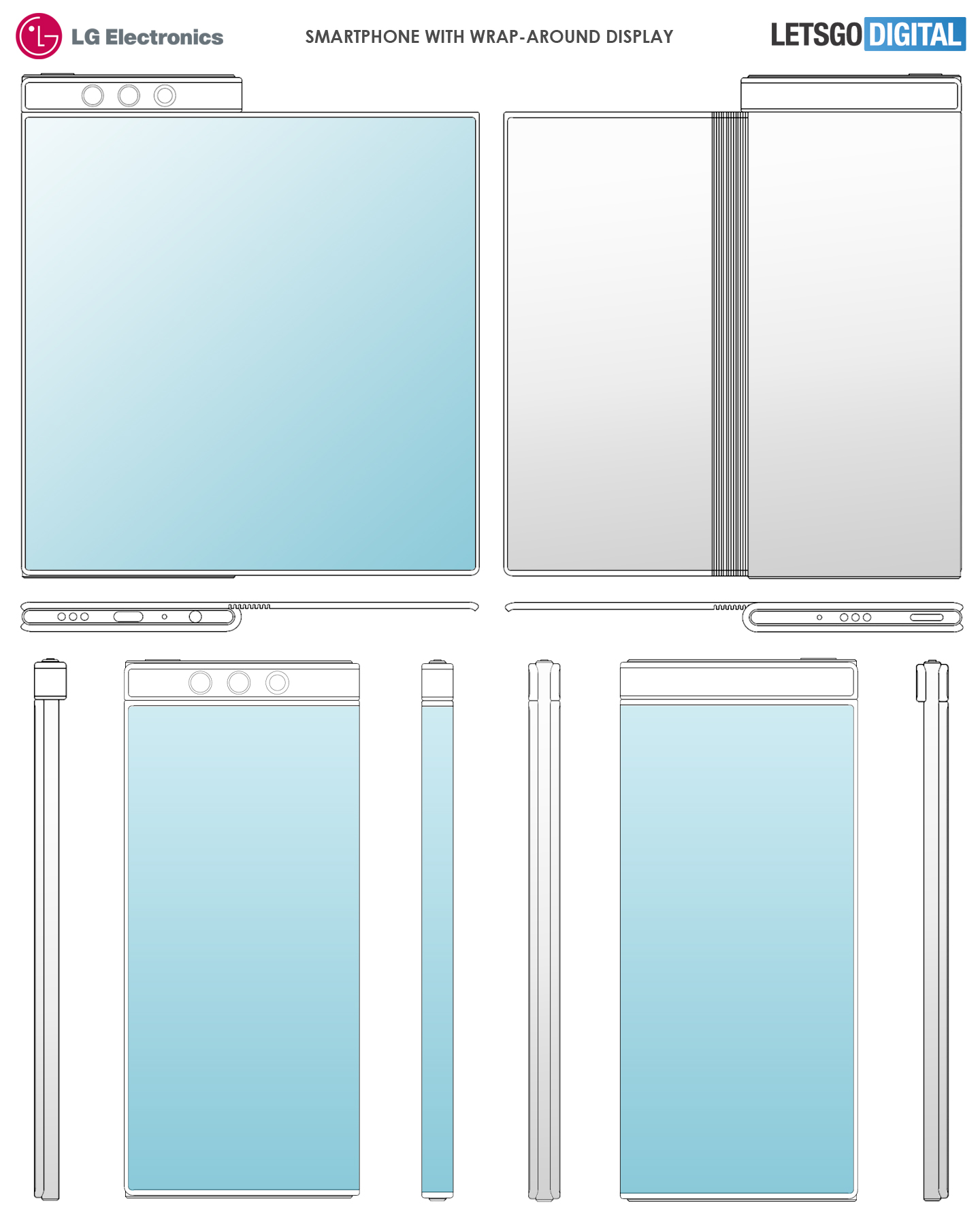
After patenting smartphone with a pull-out display and roll-up display, LG has now patented a new smartphone design which features a wrap-around display. This seems similar to the Mi MIX Alpha but with flexible display and more screen-to-body ratio.

LG Wrap-Around Display Smartphone Patent

The patent for the wrap-around display smartphone from LG also includes several images, which showcase that apart from a thick frame border at the top, there are very thin borders on the bottom, left and right side.

The top bezel holds dual camera sensors along with an LED flash. While there’s no border on the right side, the screen continues towards that side and wraps-around the back panel. Interestingly, there will be no rear-facing cameras given that the display extends all the way to the back panel. Instead, it seems that the front-facing sensors would double up as the rear cameras.

From the documentation, it is not yet clear how the display is being held in place but its likely because of some magnetic mechanism. It is also possible to remove the extending flexible screen from the housing by pressing a button.

When the device is closed, there are two displays on the device — one on the front side and the other at the back. Once the device is opened, the phone turns into a tablet with a bigger display. The speaker grille is visible on the top as well as bottom, along with a microphone. There’s a microUSB port and a 3.5mm headphone jack at the bottom and a power button at the top side.

Mobile World Congress 2020 is scheduled to kick-off in Barcelona, Spain next month and Samsung and Huawei will be introducing their second-generation foldable devices — Samsung Galaxy Z Flip and Huawei Mate Xs. It remains to be seen if LG takes the stage to introduce experimental smartphones at the MWC 2020.

(Source)

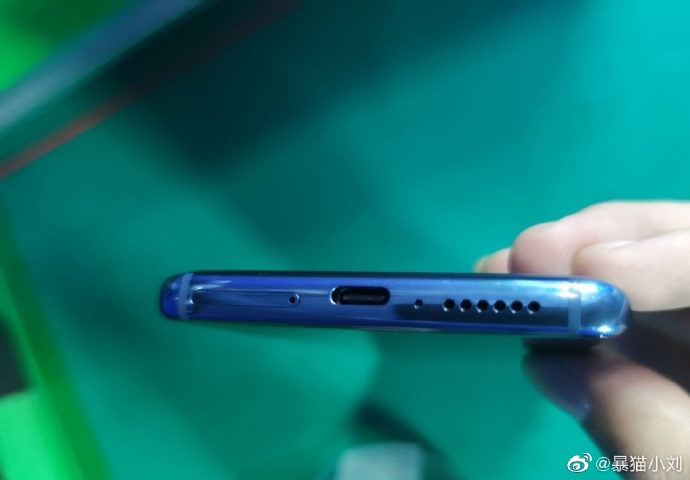
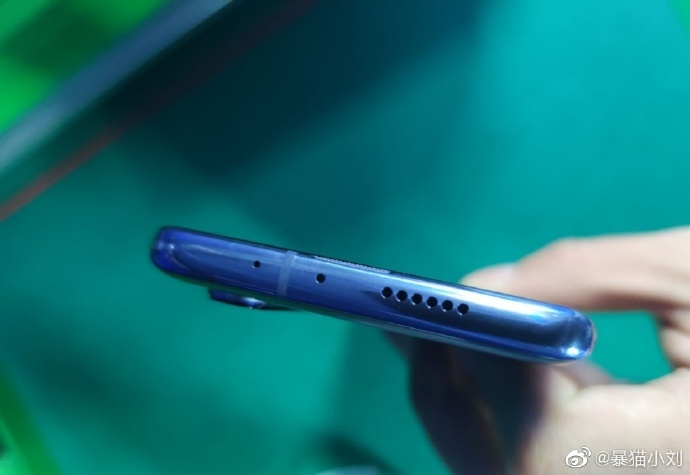
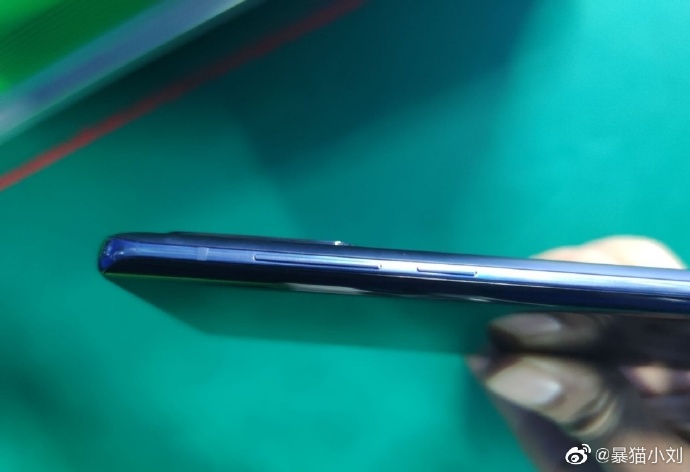
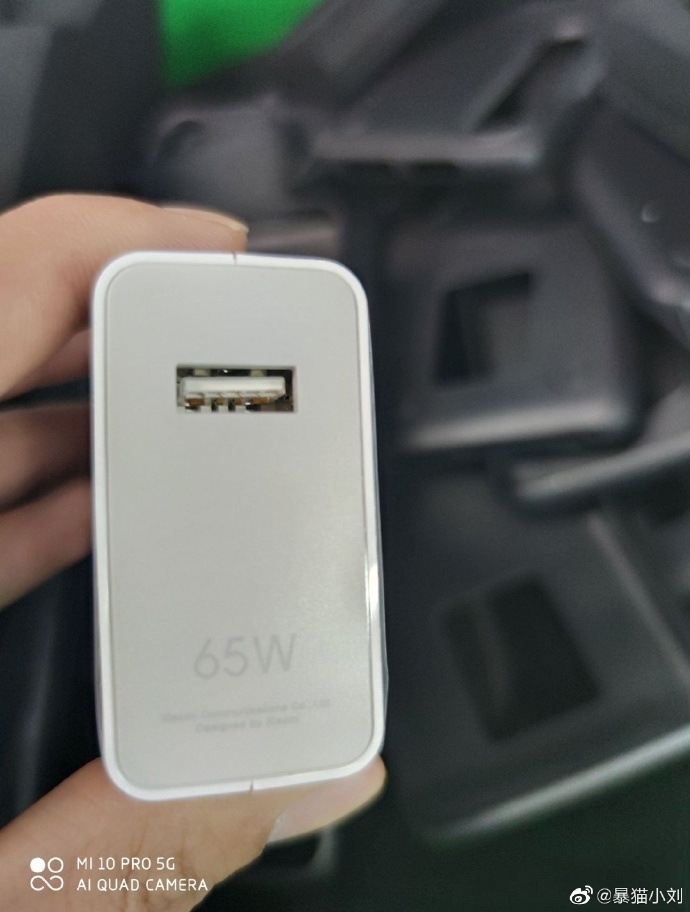
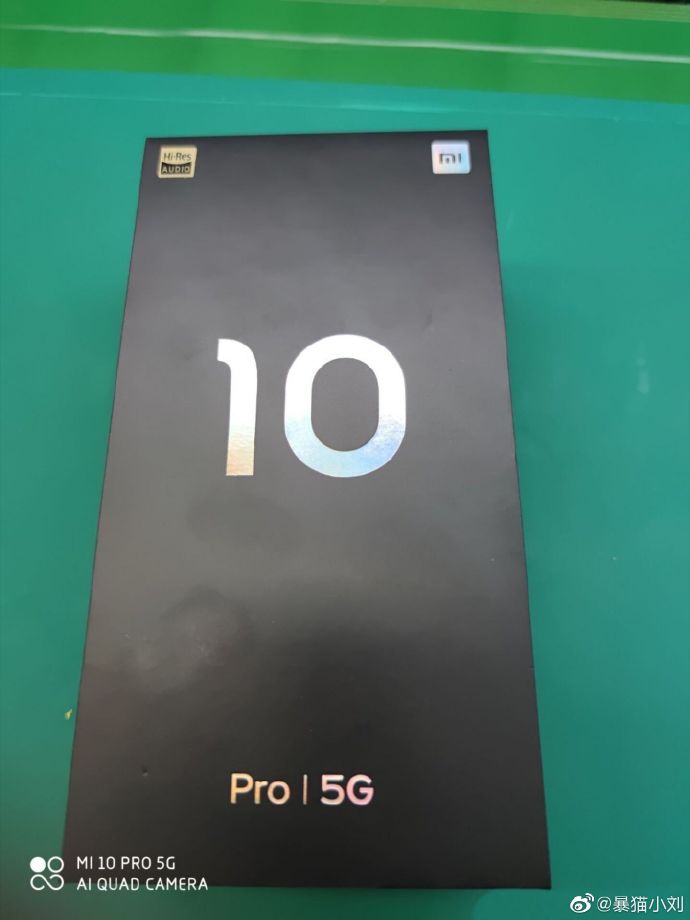
Xiaomi Mi 10 Pro 5G real life images reveals 108MP quad cameras and punch-hole display

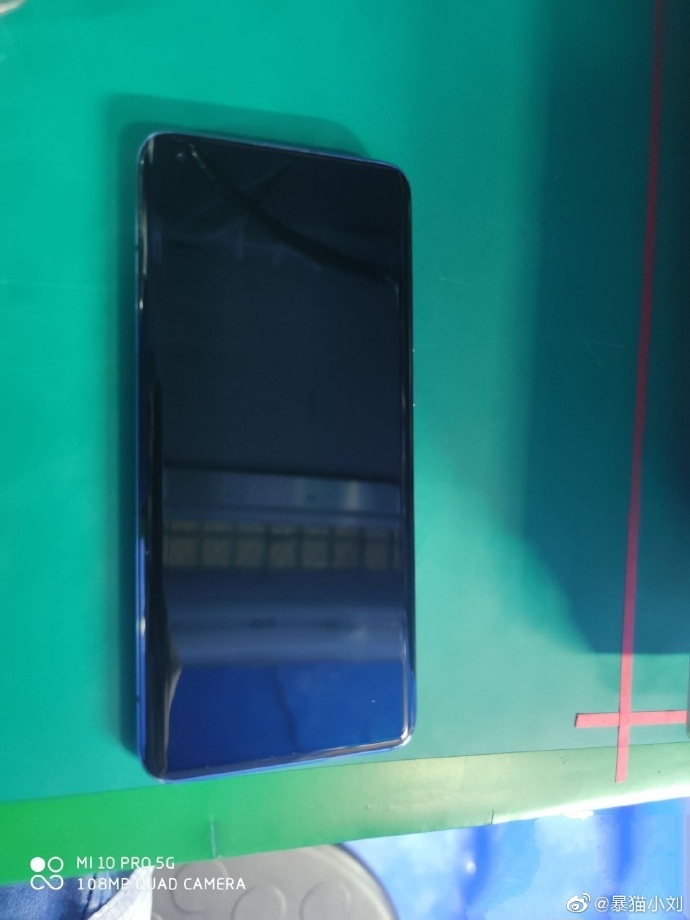
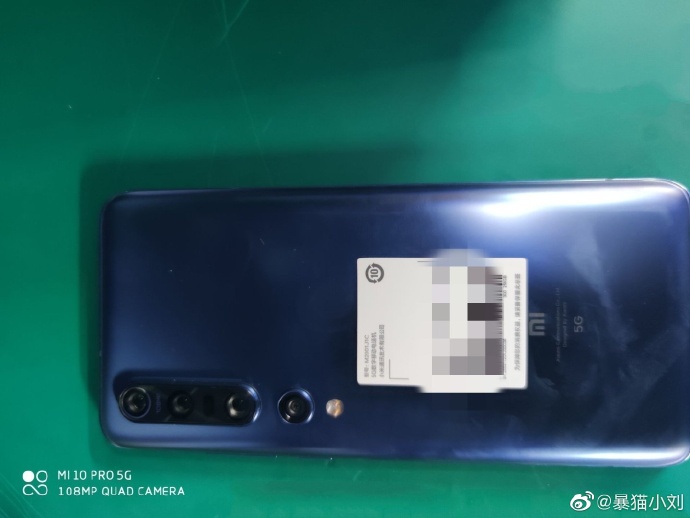
Xiaomi is yet to confirm the launch date of the upcoming Mi 10 series for China. Rumors surrounding it have claimed that Xiaomi will be launching the Mi 10 and Mi 10 Pro 5G smartphones in early February. A leaked poster that surfaced last week claimed that the company will be unleashing its next flagship phones on Feb. 11. Leaks that have surfaced so far haven’t revealed the appearance of the Xiaomi Mi 10 series properly. Couple of real-life images of the Xiaomi Mi 10 Pro 5G smartphone are now being shared on Weibo. The new images have revealed the front and rear design of the smartphone.

The new images show that the Xiaomi Mi 10 Pro 5G smartphone has a display that marvelously curves towards its left and right sides. There seems to be a punch-hole at the top-left corner of the screen. The phone will be equipped with an in-screen fingerprint reader.

The watermark on the leaked images read “Mi 10 Pro 5G 108MP Quad Camera.” The label on the device carries its M2001J1C model number. It is the same model number that was spotted on 3C with a 66W charger and it has also recently appeared on TENAA. The bottom of the Mi 10 Pro 5G is decked with a SIM card compartment, a USB-C port, a microphone and an external speaker.

The top edge of the device seems to be equipped with microphones and additional speaker grille. A volume rocker and a power key are placed on the right spine of the phone. Another image shows that the phone could be shipping with a 65W rapid charger. The image of the retail package shows it’s a black colored box with minimalist design featuring a large-sized “10” number.

The tipster who shared the above images claims that the Xiaomi Mi 10 series will go on sale on Valentine’s Day (Feb. 14).

Xiaomi Mi 10 Pro 5G specifications (Rumored)

The rumor mill has so far revealed that the Xiaomi Mi 10 Pro 5G could be coming with a display that supports a refresh rate of 120Hz. It will be driven by Snapdragon 865 mobile platform. It could be arriving with support for the latest Wi-Fi 6 technology.

The quad camera system of the Mi 10 Pro 5G could be equipped be featuring a 108-megapixel main lens, a 20-megapixel ultrawide shooter, a 12-megapixel telephoto lens and a 5-megapixel depth sensor. The phone could be housing a 4,500mAh battery. It may come with support for fast wireless charging and reverse charging.

The Xiaomi Mi 10 series is rumored to be priced between 3,500 Yuan (~$510) and 5,000 Yuan (~$729). The series is also expected to debut in European markets in the near future.


(source)

Poll of The Week: Does a high refresh rate influence your purchase of a new phone?

A new trend in the mobile phone industry is having a screen with a higher refresh rate. We have seen manufacturers launch phones with a refresh rate of 90Hz or 120Hz, and we will be getting a phone with a 144Hz refresh rate soon. The trend picked up last year and now more manufacturers are expected to adopt it this year too.

120Hz refesh rate
The OnePlus 8 Pro will have a 120Hz Fluid Display

The main advantage of phones with a higher refresh rate is the faster and better scrolling experience. It is also a feature that greatly improves gaming experience, at least for games that support it. However, the feature has its disadvantage too and that is the toll it has on battery life.

For this week’s poll, we want to know if having a high refresh rate is a feature you now consider when purchasing a new phone or it is a feature that doesn’t influence your purchasing decision.

[yop_poll id=22]


Poco F2 Lite live shots leaked; Snapdragon 765, 6GB RAM, 5,000mAh battery rumored

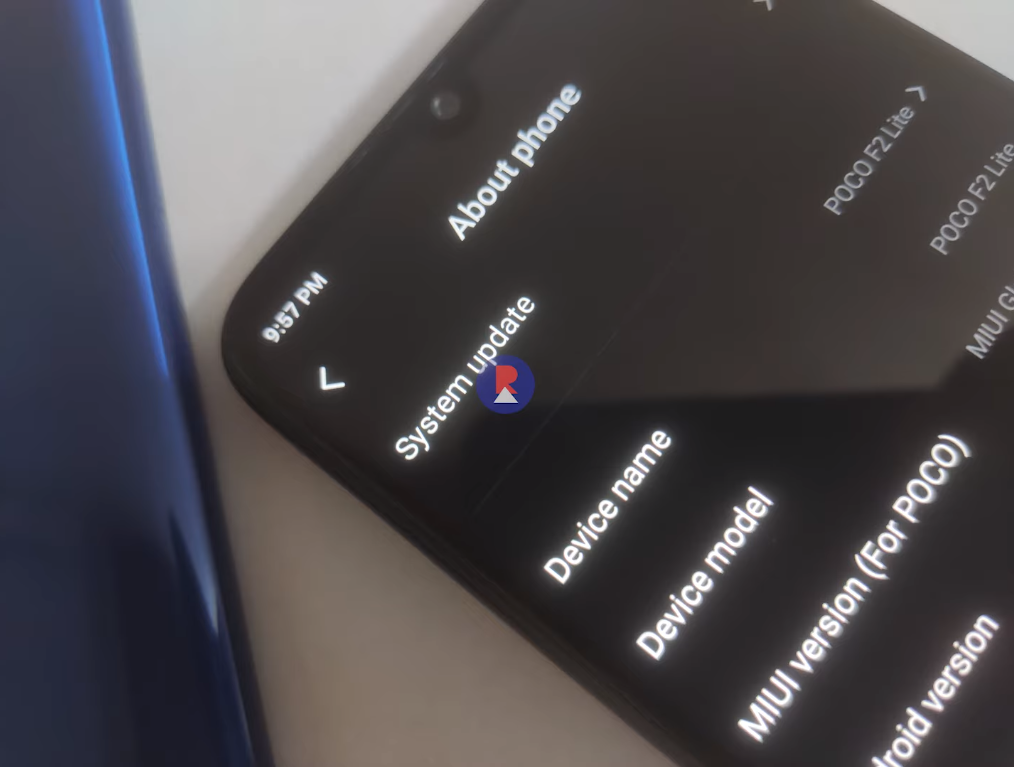
Last week, Xiaomi Global VP and Managing Director for India, Manu Kumar Jain confirmed that Poco has now become an independent brand and it will be launching new products this this year. Hence, it appears that there could be multiple products from POCO in 2020. On Jan. 17, RevAtlas shared live shots of a smartphone called Poco F2 Lite through its YouTube channel. The images and key specs of the phone were revealed to it through an email by a someone whose identity was not revealed. He revealed that Poco will be launching three smartphones this year.

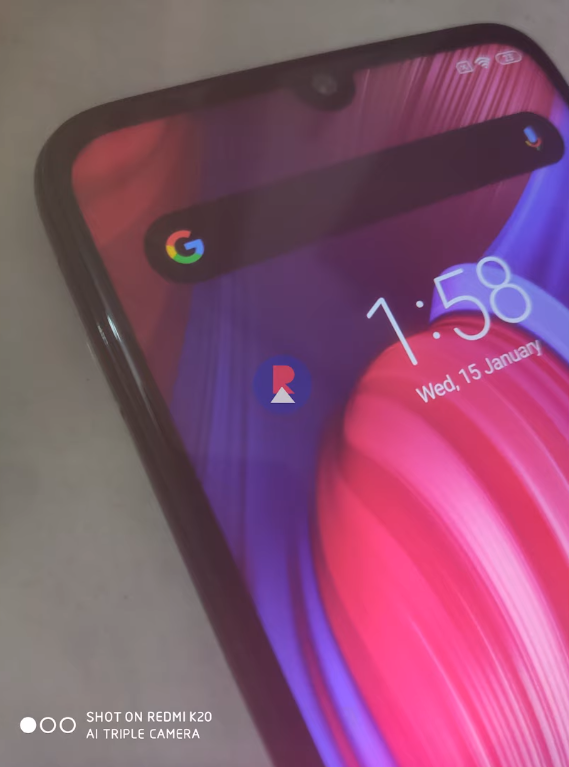
RevAtlas stated that it received three images of the phone. One of the shots reveals the Poco F2 Lite moniker.  Its images show that the handset features a waterdrop notch display with a thick-sized chin. The handset is running on a MIUI version design for the Poco brand. It appears to be running on Android 10 OS.

It is revealed that the Poco F2 Lite is powered by Snapdragon 765 chipset and 6 GB of RAM. It is equipped with a behemoth battery of 5,000mAh capacity.  The leak also states that the phone is fitted with a very high-resolution camera. There is a possibility that it could be sporting a 48-megapixel camera or higher.

The YouTuber claims that there is confirmation on whether the leak is genuine or fake. Apart from the Poco F2 Lite, there is no confirmation on the names of other two Poco devices that will be unveiled this year. The email that carried the images stated that “millet model bring price cheaper than before” text which suggest that its pricing could be cheaper than the Poco F1 that had landed in India with a starting price of Rs. 20,999 in 2018.

If the Poco F2 Lite exists, it is likely that the Poco F2 with flagship specs could be also coming. As it is known, the Chinese firm had recently trademarked the Poco F2 moniker in the country in the recent past.

In related news, a phone named Poco X2 had popped on Geekbench last week. It is believed that it could be a rebranded version of the Redmi K30 for India. It remains to be seen whether the Poco X2 really exists. Readers are advisable to wait for further reports to know more on the upcoming Poco smartphones.


(source)