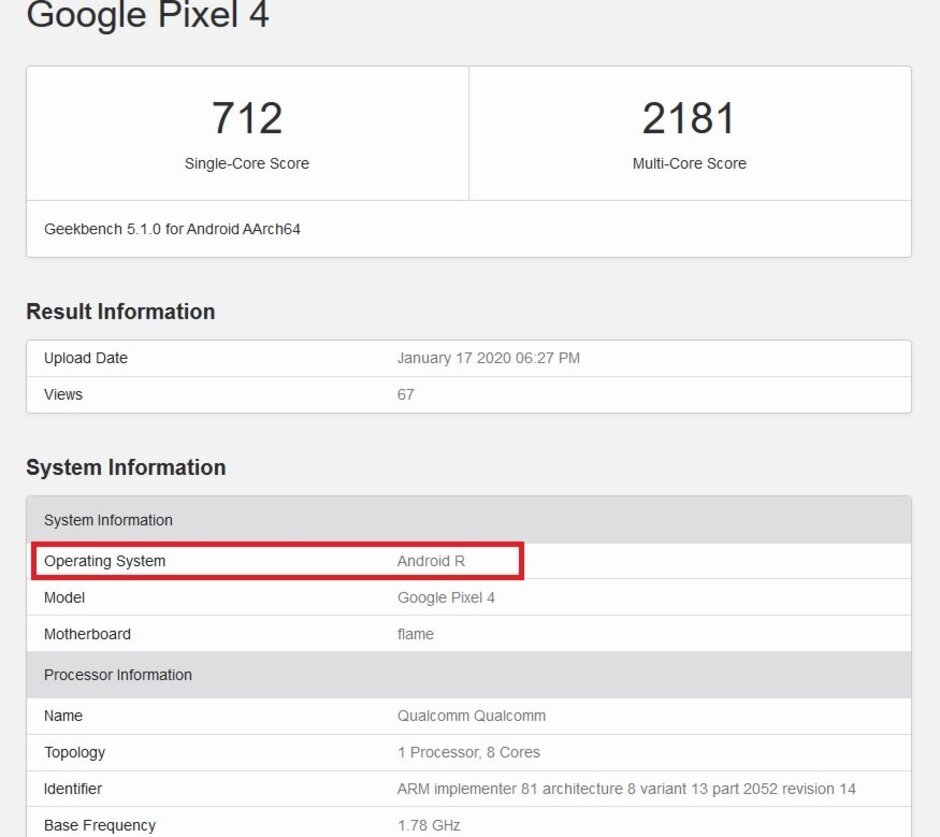
A new year has just begun and a new version of Android is reportedly right around the corner. A benchmark test has been spotted on Geekbench which indicates that a Google Pixel 4 is running the upcoming Android “R” operating system (11th iteration of the Android OS).
Google Pixel 4 spotted with the Android R Developer Preview on Geekbench
The benchmark has yet to be confirmed officially so it might turn out to be fake. Furthermore, Google announced that it is dropping the customary desserts and alphabetic naming scheme for a more comprehensive numerical system, so Android R listing doesn’t make it seem like an official build. However, Android 10 was referred to as Android Q in the developer preview up until the rollout of the final build. Thus, the Android R developer preview is most likely an early designation to Android 11 OS.
Last year, Google had announced the Android Q developer preview in March 2019 with six beta versions being released before the Android 10 stable build was launched on 3rd September 2019. Following the same timeline, Android R could very likely be unveiled within the arriving 6 to 8 weeks. Pixel owners are most likely to receive the beta program first, while a number of different devices are expected to also be included soon after.
Notably, it is advised for those interested to only join the beta program for any upcoming OS update if one possesses a spare smartphone. Early iterations of a final build are highly unstable and filled with bugs. Waiting for a few of the zero-day bugs and glitches to be fixed and opting-in for the beta program for later builds is a safer bet. The new version of Android OS is expected to bring many quality of life improvements alongside performance enhancements as well, so stay tuned for related coverage.
Samsung Electronics is well known for its consumer grade products ranging from home appliances to smartphones. However, the company is also a world leader as a supplier in memory chips and even the top manufacturer of AMOLED displays in the world. Now, the company is planning on further expanding its latter department by investing $500 million to set up a display manufacturing plant in India.
The South Korean tech giant will set up the new plant on the outskirts of New Delhi, the capital of India. This arrives after Samsung officially disclosed the sizeable investment and plans in a filing with Indian regulatory bodies. The plant’s primary focus is to produce displays that will be fitted in a wide range of devices including smartphones, and other IoT gadgets.
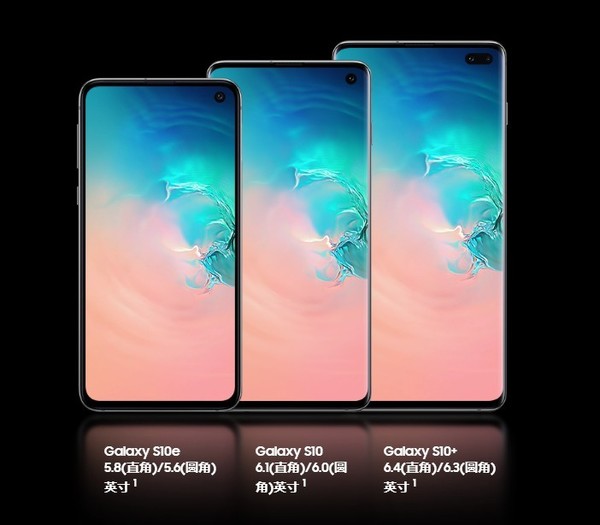
Samsung Galaxy S10 with the company’s AMOLED display technology
According to the filing, Samsung is setting up a display manufacturing plant in Noida by allocating some of the lands for its existing plant. This plant was claimed to be the world’s largest smartphone manufacturing plant and was opened in 2018 with a $700 million investment. With the new plant, Samsung will be even less reliant on importing its own technologies from other countries and can source its own components locally, bypassing tariffs and customs duties.
The new display manufacturing plant also boosts the production capacity which will largely benefit from the Indian Government’s tax benefits and subsidies on manufacturing locally. India is currently the world’s second largest smartphone market which the Government recognizes and thus provides incentives to OEMs to set up their manufacturing and assembly plants locally.
Samsung logo at Samsung Customer Service Center in Krakow, Poland on 11 January, 2019. (Photo by Beata Zawrzel/NurPhoto via Getty Images)
Notably, Samsung is the second most popular brand in the Southeast Asian country. However, it is expected to be overtaken by Chinese brand Realme in the fourth quarter of 2019, according to analysts. Thus, the move might help Samsung price its Galaxy offerings more aggressively in the near future to stay more relevant in the current smartphone trends as Chinese tech giants like Xiaomi are becoming increasingly more popular in the nation.
Meizu has today announced that it has now started rolling out the latest Flyme 8 stable version update to the 2nd batch of compatible smartphones. The announcement from the company added that users can check for the update by going to System Updates app. This means that the rollout for Flyme 8 is now essentially complete, and all devices scheduled to get the update will be receiving it soon.
Meizu will now start rolling out the stable build for Meizu 16Xs , Meizu 15 Lite, PRO 7 Standard Edition, Meizu Note9 (M9 Note), Meizu Note8 (M8 Note), Meizu X8 , PRO 6 Plus, PRO 6s, PRO 6, PRO 5, MX6 , Meizu E3 (Blue Charm) , Meizu S6 (Blue Charm), Meizu M6 (Blue Charm), Meizu M5 Note (Blue Charm), Meizu M3 Max (Blue Charm), Meizu M3E (Blue Charm).
For those who are unaware, the Flyme 8 operating system was announced at the end of August last year alongside the Meizu 16S Pro flagship smartphone. The company had promised that this new version of the user interface will come to a total of 27 Meizu models by the end of last year, and now they’re finally delivering. We’ve made a detailed list of features that are available through this new update which you can check out here.
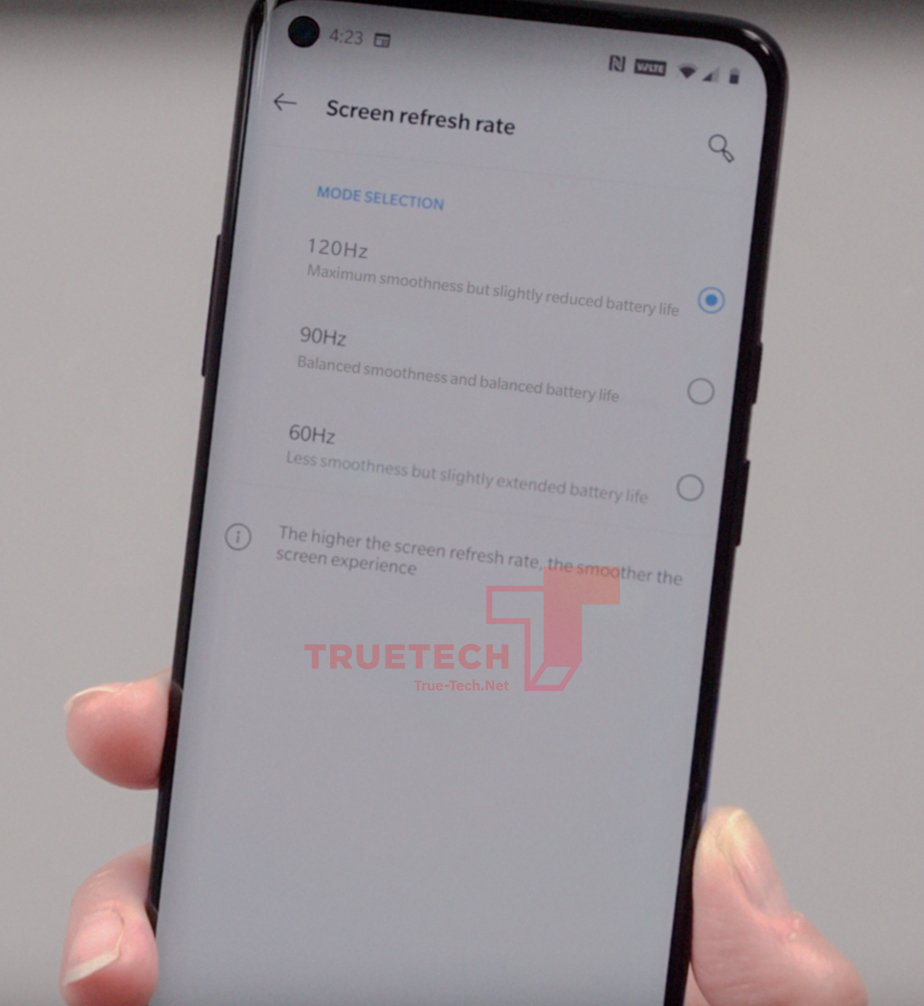
OnePlus recently shared a simulation video of its 120Hz Fluid Display. While some rumors have stated that the OnePlus 8 series will be equipped with the 120Hz refresh screen, there have been some contradictory that the next flagship phones from OnePlus won’t feature it. A fresh report on Tru Tech that carries an exclusive image of the OnePlus 8 Pro leaked by a OnePlus insider reveals that the phone has a 120Hz selection option in the Settings menu.
The publication claims that the OnePlus 8 Pro hands-on image that has surfaced could belong to a pre-production unit. The handset has a punch-hole display that is surrounded by slim bezels. The volume rocker can be seen on its left edge. The right spine of the device has an alert slider and a power key. The OLED display of the phone is integrated with an in-screen fingerprint reader. The appearance of the new image reveals that Chinese firm will be ditching the notch-less display and pop-up selfie camera design on the OnePlus 8 series.
The main thing to notice in the leaked image the “Screen refresh rate” menu in Settings has mode selection options for 120Hz, 90Hz and 60Hz. The handset is expected to carry support for quad HD+ resolution. The text below the 120Hz option reads “maximum smoothness but slightly reduce battery life.” It does not state whether selecting the 120Hz option will switch the display resolution to 1080p. Hence, there is a possibility that the display of the OnePlus 8 Pro will produce quad HD+ resolution along with 120Hz refresh rate. Since the image belongs to a pre-production unit, it remains to be seen whether the 120Hz option will be also available on the Final product.
The OnePlus 8 family includes the entry-level OnePlus 8 Lite, the regular OnePlus 8 and the advanced OnePlus 8 Pro. The OnePlus 8 Lite may feature a 90Hz refresh rate. It remains to be seen whether the OnePlus 8 which is also speculated to be equipped with a punch-hole screen arrives 120Hz refresh rate support.
Rumors surrounding the OnePlus 8 Pro has revealed that it will be fueled by Snapdragon 865 mobile platform. It could be coming with up to 12 GB of RAM and 256 GB of storage. It could be housing a 4,500mAh battery with fast charging support. For photography, the OnePlus 8 Pro may possess a 32-megapixel front camera and it may come with a rear camera system that consists of a Sony IMX686 64-megapixel main lens, a 20-megapixel ultrawide shooter, a 12-megapixel telephoto lens and a ToF sensor. Readers are advised to digest the specs leak with a grain of salt.
Apple often rolls out background software updates to its truly wireless earbuds like the AirPods Pro. Usually, these updates focus on minor bug fixes, but a recent AirPods Pro update appears to have made some notable changes to sound quality and noise cancellation. Following user reports on Reddit and other outlets, RTINGS decided to retest AirPods Pro after updating to firm 2C54. The testing revealed a few notable changes, for better and for worse.
RTINGS tests found the AirPods Pro’s noise canceling capabilities to be worse after firmware update 2C54. But affected customers say the trouble began even earlier with firmware version 2B588, which rolled out in November. According to the audio testing firm however, not everything is really bad. The update also brought some marked improvements to the performance of the AirPods Pro.
One of the biggest improvements, according to RTINGS testing, came to frequency response consistency. This describes the “variations in a headphones’ frequency response due to their fit on your head.” Prior to firmware 2C54, RTINGS described the frequency response consistency of AirPods Pro as “just okay.” The update, however, made things ”significantly better.”
Another significant improvement came to bass accuracy. While RTINGS had already described AirPods Pro bass accuracy as “excellent,” the 2C54 update makes another “fairly significant improvement.” Elsewhere, RTINGS says the update included a “very slight reduction in mid accuracy” as well as a slightly reduction in treble accuracy.
While Apple has not formally acknowledged these complaints from users, it has pulled the the 2C54 for AirPods Pro. This prevents additional users from installing the update, but it doesn’t do much for those users who had already installed it. The update was initially released on December 16 and was pulled shortly after that. Whether this is in acknowledgement of the worse noise cancelling or otherwise, we don’t really know.
Xiaomi-backed gaming smartphone market Black Shark has today announced that the company has partnered with Tencent Games in an effort to explore innovation in gaming both in terms of software as well as hardware.
Making this announcement, the company has said that it aims to provide users with a more diverse gaming experience. We expect to see this partnership getting materialised with the upcoming Black Shark 3 smartphone getting launched later this year.
Earlier, Tencent Games had partnered with ASUS for the company’s second-generation gaming smartphone — Asus ROG Phone 2. Under this partnership, the company had also launched Tencent customized Elite version of the smartphone at a cheaper rate in China.
While the company has not yet revealed anything about the upcoming gaming smartphone, leak shows that the Black Shark 3 will come with 2K resolution display and will be offering 120Hz refresh rate. Earlier, it was said that the phone will come powered by the newly announced Qualcomm Snapdragon 865 SoC.
Previous reports indicate that the phone could come equipped with 16GB of RAM. The smartphone has been certified for radio transmission under model number KLE-A0. It shows that the device supports dual mode 5G connectivity.
If the reports are true, then the Black Shark 3 gaming smartphone will be the first to come with 16GB of RAM. So far, the highest memory configuration that any smartphone offers stands at 12GB.
The upcoming gaming phone from the company will be the successor to Black Shark 2 Pro which was announced back in July last year. It features a 6.39-inch FHD+ screen, a Snapdragon 855+ processor, and packs a 4000mAh battery with support for 27W fast charge. We don’t expect anything lesser from the Black Shark 3 and a recent leak says it will have a bigger 4700mh battery.
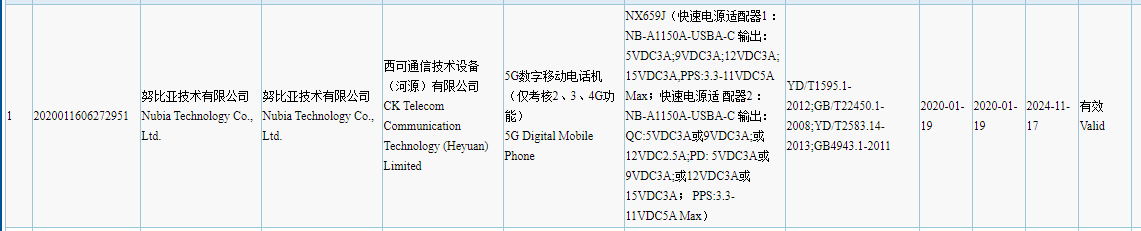
Past reports have revealed that Nubia is working on a new Red Magic gaming smartphone with 5G capabilities. The Chinee firm is yet to confirm on the launch date of the smartphone. It seems that the arrival of the smartphone may not be too far as it has bagged approval from the 3C authority of China. The smartphone has been spotted a 55W fast charger.
The screenshot of the 3C listing of the Nubia NX659J smartphone reveals that it is a 5G-ready phone. It also reveals that it may ship with a charger that may support a maximum charge rate of 55W. With the phone getting spotted at 3C, it is likely it may soon appear on the database of TENAA with its entire specifications in the coming days.
The Chinese firm has revealed only few information on the upcoming Nubia Red Magic 5G phone. It is yet to be known whether its next phone will be called Red Magic 4 or Red Magic 5 as some Chinese OEMs are known for skipping the number 4 in the monikers of their devices.
Nubia has recently confirmed that its next Red Magic gaming phone will be equipped with a display supports 144Hz refresh rate. Hence, the Snapdragon 865 mobile platform powered smartphone is expected to offer topnotch experience. The inclusion of SD865 will bring support for dual-mode 5G connectivity on the device.
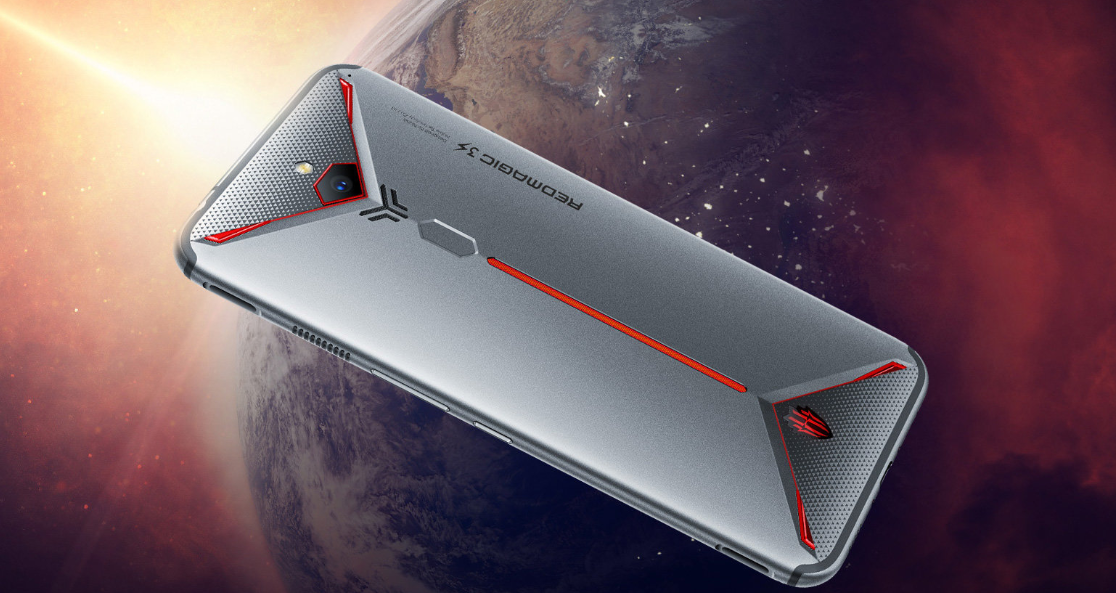
The other thing that is known about the smartphone is that it is equipped with a triple camera setup. The predecessor Nubia Red Magic 3S smartphone came with a 30W charger for its 5,000mAh battery. There is a possibility that the upcoming Red Magic 5G phone will be packed with a 5,000mAh or higher battery that will be coupled with 55W charger. It is likely that the Red Magic 5G phone will go official in the first quarter of 2020.
nubia red magic 3s
Apart from the next Red Magic phone, China will be also receiving gaming smartphones from some other brands. Recent reports have revealed that Xiaomi is gearing up to launch the Snapdragon 865 mobile platform powered Black Shark 3 gaming phone. The handset is expected to come equipped with 16 GB of RAM and quad HD+ display with 120Hz refresh rate. Recently, the Vivo V1955A was spotted on 3C with a 55W fast charger. It is believed to the upcoming Snapdragon 865 powered iQOO 3 gaming phone.
Samsung has adopted the practise of routinely switching executive roles and in line with that, the South Korean giant has now announced another major management reshuffle.
The company has announced that it is promoting president Roh Tae-moon as the new mobile chief to oversee the company’s mobile business. Till now, he was leading development of the Galaxy lineup.
Roh Tae-moon, Samsung’s new mobile chief
Roh Tae-moon is currently the company’s youngest-ever president at 51. His appointment as the new mobile chief comes as part of a delayed reshuffle. The change was expected to take place last year but it was postponed due to series of court cases involving some of its top executives including leader Jay. Y Lee.
Roh is touted as the one who championed Samsung’s shift to outsource more handset production to cut costs and better compete with lower-priced Chinese smartphone makers such as Huawei, its biggest rival.
He is now tasked with re-invigorating the organisation as the competition in the smartphone market is heating up. This change allows Samsung to be more flexible at identifying potential growth areas.
Along with Roh Tae-moon, Samsung has also promoted its network business chief Cheun Kyung-whoon to president. He was involved in the world’s first commercialisation of 5G services in South Korea.
The company has said that DJ Koh, former mobile chief and co-chief executive will continue to lead Samsung’s IT & mobile communications (IM) division, which oversees both mobile devices and network equipment.
Samsung has been a long time leader in terms of the global smartphone sales, holding around 21 percent market share in Q3 2019. However, Chinese giant Huawei is inching closer, accounting for 18 percent market share in the same duration. The growth of Huawei is significant as it comes even after the company was banned by the United States over unproved security concerns, damaging the brand’s image worldwide.
Within a few years of entering the Indian market, Xiaomi is now the leading smartphone vendor in India, toppling Samsung which was dominating the market since many years. Now, the company is focusing heavily on expanding its offline presence.
Till now, Xiaomi India Managing Director Manu Kumar Jain was heading the company’s expansion in the brick and mortar stores across India. Now, in a leadership role reassignment, that duty has been passed on to the company’s chief operating officer Muralikrishnan B.
With this change, Xiaomi India’s director for offline sales Sunil Baby will now report to Muralikrishnan. Raghu Reddy, who leads all categories and online sales, will continue in his role and Reddy as well as Muralikrishnan will be reporting to Manu Kumar Jain.
Manu Kumar Jain, who is the company’s managing director in India, would play in key role in planning and deciding Xiaomi’s entry into newer global markets as well as in product categories. He will head the expansion of newer categories, such as smart televisions, and expand presence in internet connected devices and home appliances in India.
He is also handling the company’s SAARC base with operations in Bangladesh, Nepal and Sri Lanka. It’s noteworthy that Manu Kumar Jain is also in the top leadership team of Xiaomi as a global vice president and is the only expat in the CXO team at Xiaomi Corp.
Xiaomi is not only leading the smartphone market in India but is also a leader in the smart television category in India. The company has announced that it has sold over a million devices in the Indian offline market.
The company currently has an offline presence of more than 2,500 Mi Stores, 75-plus Mi Home and more than 20 Mi Studios. Along with that, it also has a presence in more than 7,000 multi-brand stores that operate as preferred partners.
Many smartphone makers have introduced their foldable smartphones in the past year, including Samsung Galaxy Fold, Huawei Mate X, and Motorola RAZR. However, LG has not yet revealed anything officially regarding the launch of a similar phone from the company.
Instead of launching a smartphone with a foldable display, the company introduced LG G8X ThinQ Dual Screen which comes with a detachable dual display design. While the company has confirmed the development of a foldable phone and has even patent a few phones with a similar design, nothing has materialised so far.
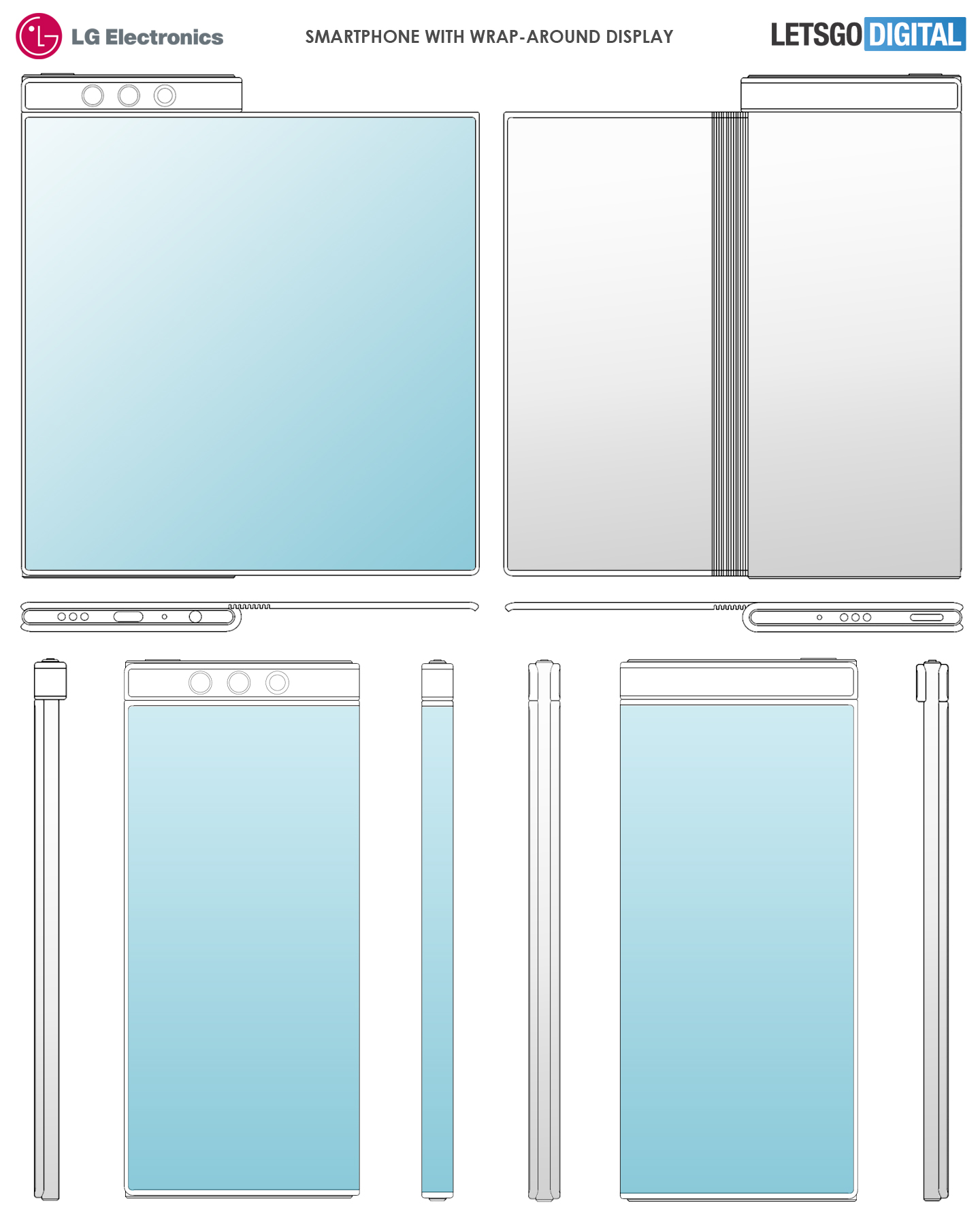
After patenting smartphone with a pull-out display and roll-up display, LG has now patented a new smartphone design which features a wrap-around display. This seems similar to the Mi MIX Alpha but with flexible display and more screen-to-body ratio.
The patent for the wrap-around display smartphone from LG also includes several images, which showcase that apart from a thick frame border at the top, there are very thin borders on the bottom, left and right side.
The top bezel holds dual camera sensors along with an LED flash. While there’s no border on the right side, the screen continues towards that side and wraps-around the back panel. Interestingly, there will be no rear-facing cameras given that the display extends all the way to the back panel. Instead, it seems that the front-facing sensors would double up as the rear cameras.
From the documentation, it is not yet clear how the display is being held in place but its likely because of some magnetic mechanism. It is also possible to remove the extending flexible screen from the housing by pressing a button.
When the device is closed, there are two displays on the device — one on the front side and the other at the back. Once the device is opened, the phone turns into a tablet with a bigger display. The speaker grille is visible on the top as well as bottom, along with a microphone. There’s a microUSB port and a 3.5mm headphone jack at the bottom and a power button at the top side.
Mobile World Congress 2020 is scheduled to kick-off in Barcelona, Spain next month and Samsung and Huawei will be introducing their second-generation foldable devices — Samsung Galaxy Z Flip and Huawei Mate Xs. It remains to be seen if LG takes the stage to introduce experimental smartphones at the MWC 2020.
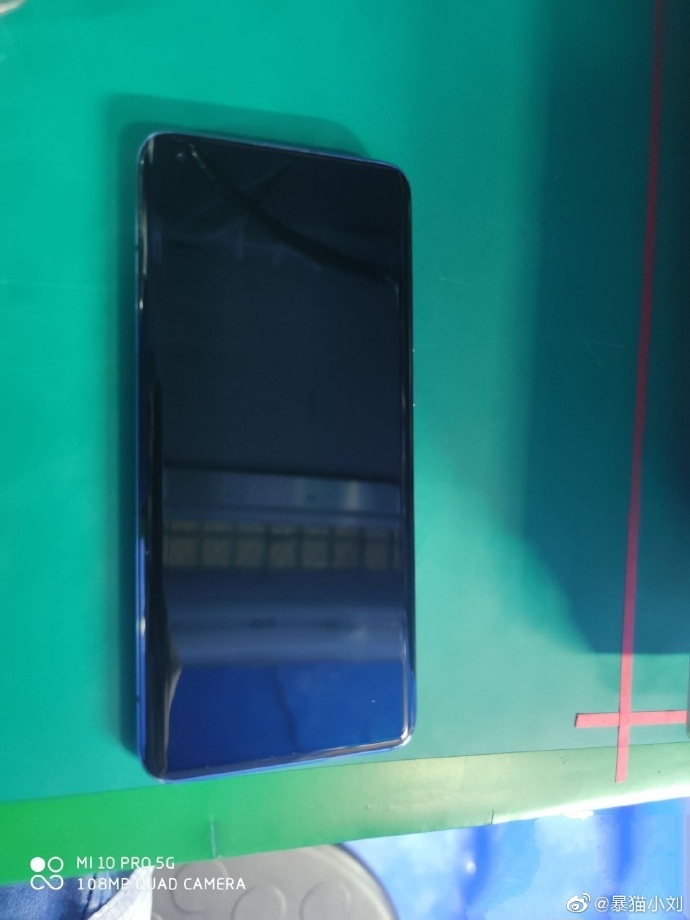
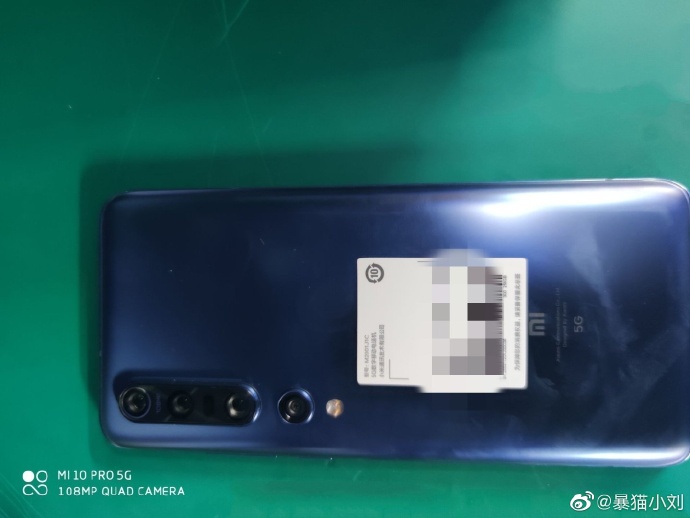
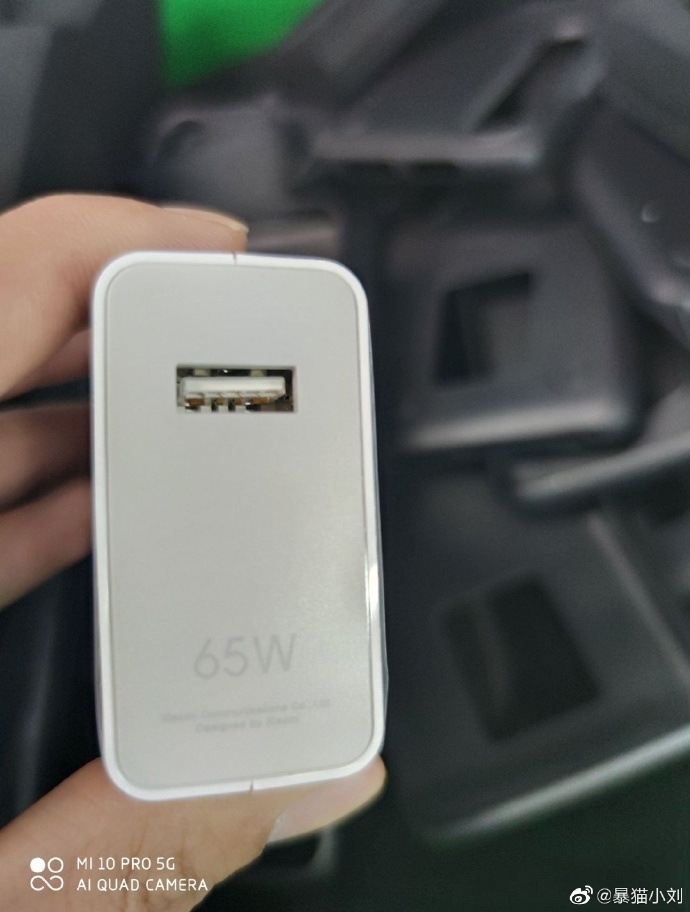
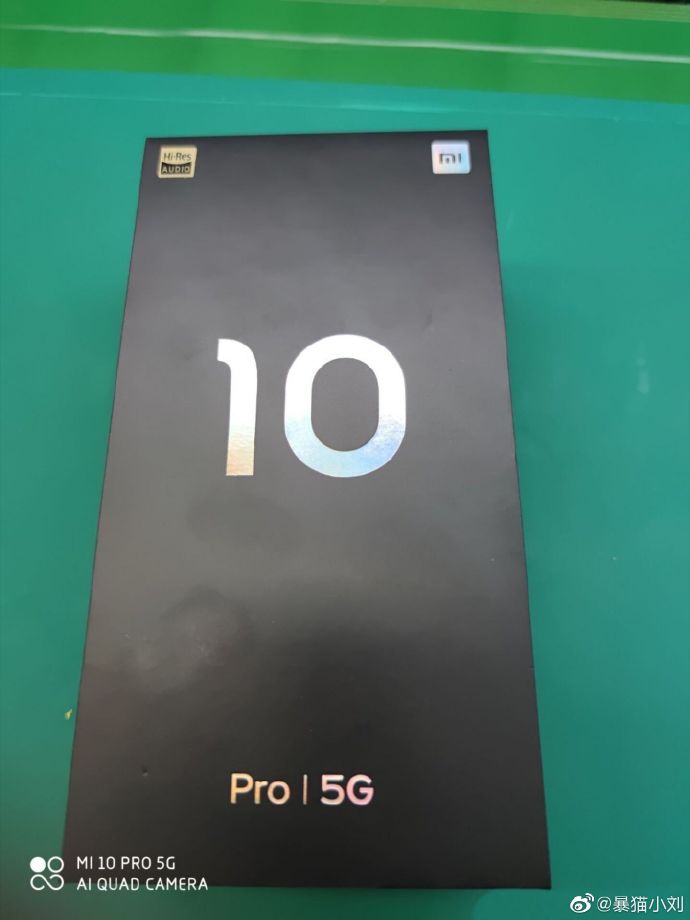
Xiaomi is yet to confirm the launch date of the upcoming Mi 10 series for China. Rumors surrounding it have claimed that Xiaomi will be launching the Mi 10 and Mi 10 Pro 5G smartphones in early February. A leaked poster that surfaced last week claimed that the company will be unleashing its next flagship phones on Feb. 11. Leaks that have surfaced so far haven’t revealed the appearance of the Xiaomi Mi 10 series properly. Couple of real-life images of the Xiaomi Mi 10 Pro 5G smartphone are now being shared on Weibo. The new images have revealed the front and rear design of the smartphone.
The new images show that the Xiaomi Mi 10 Pro 5G smartphone has a display that marvelously curves towards its left and right sides. There seems to be a punch-hole at the top-left corner of the screen. The phone will be equipped with an in-screen fingerprint reader.
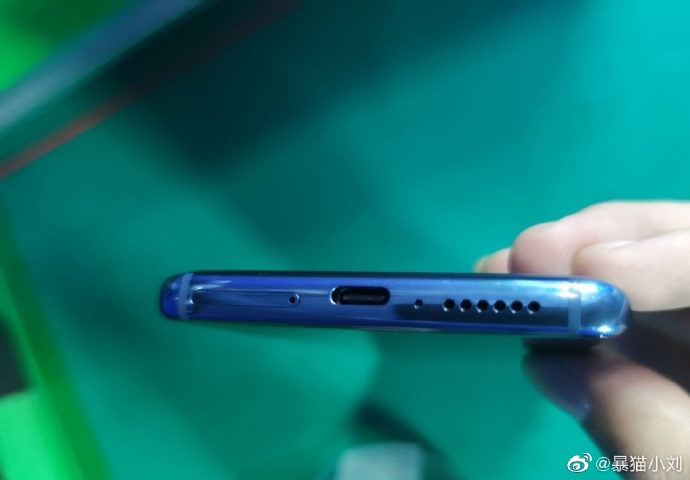
The watermark on the leaked images read “Mi 10 Pro 5G 108MP Quad Camera.” The label on the device carries its M2001J1C model number. It is the same model number that was spotted on 3C with a 66W charger and it has also recently appeared on TENAA. The bottom of the Mi 10 Pro 5G is decked with a SIM card compartment, a USB-C port, a microphone and an external speaker.
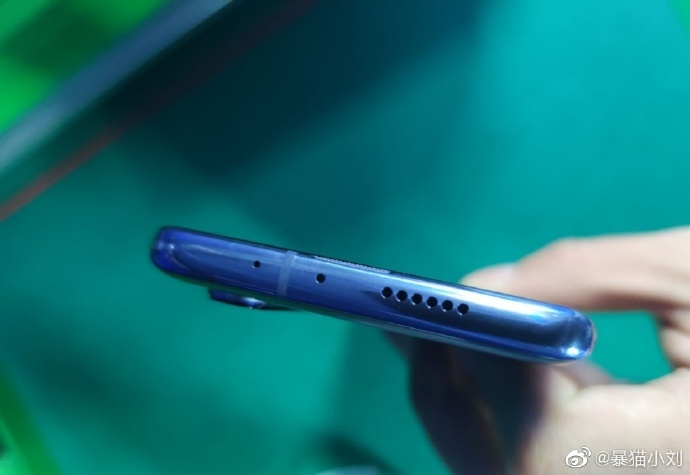
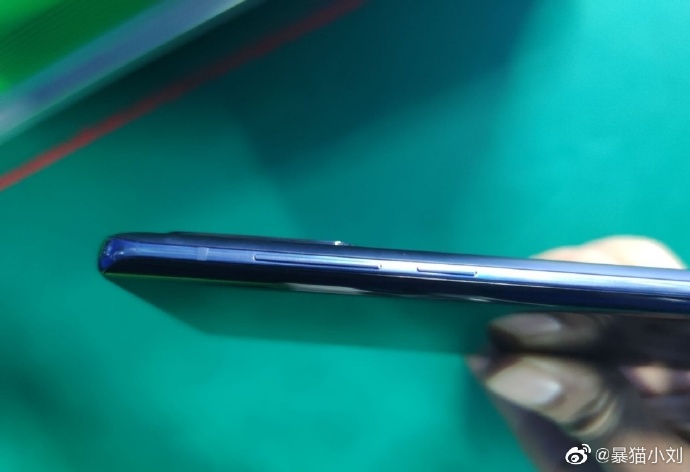
The top edge of the device seems to be equipped with microphones and additional speaker grille. A volume rocker and a power key are placed on the right spine of the phone. Another image shows that the phone could be shipping with a 65W rapid charger. The image of the retail package shows it’s a black colored box with minimalist design featuring a large-sized “10” number.
1 of 7
The tipster who shared the above images claims that the Xiaomi Mi 10 series will go on sale on Valentine’s Day (Feb. 14).
The rumor mill has so far revealed that the Xiaomi Mi 10 Pro 5G could be coming with a display that supports a refresh rate of 120Hz. It will be driven by Snapdragon 865 mobile platform. It could be arriving with support for the latest Wi-Fi 6 technology.
The quad camera system of the Mi 10 Pro 5G could be equipped be featuring a 108-megapixel main lens, a 20-megapixel ultrawide shooter, a 12-megapixel telephoto lens and a 5-megapixel depth sensor. The phone could be housing a 4,500mAh battery. It may come with support for fast wireless charging and reverse charging.
A new trend in the mobile phone industry is having a screen with a higher refresh rate. We have seen manufacturers launch phones with a refresh rate of 90Hz or 120Hz, and we will be getting a phone with a 144Hz refresh rate soon. The trend picked up last year and now more manufacturers are expected to adopt it this year too.
The OnePlus 8 Pro will have a 120Hz Fluid Display
The main advantage of phones with a higher refresh rate is the faster and better scrolling experience. It is also a feature that greatly improves gaming experience, at least for games that support it. However, the feature has its disadvantage too and that is the toll it has on battery life.
For this week’s poll, we want to know if having a high refresh rate is a feature you now consider when purchasing a new phone or it is a feature that doesn’t influence your purchasing decision.
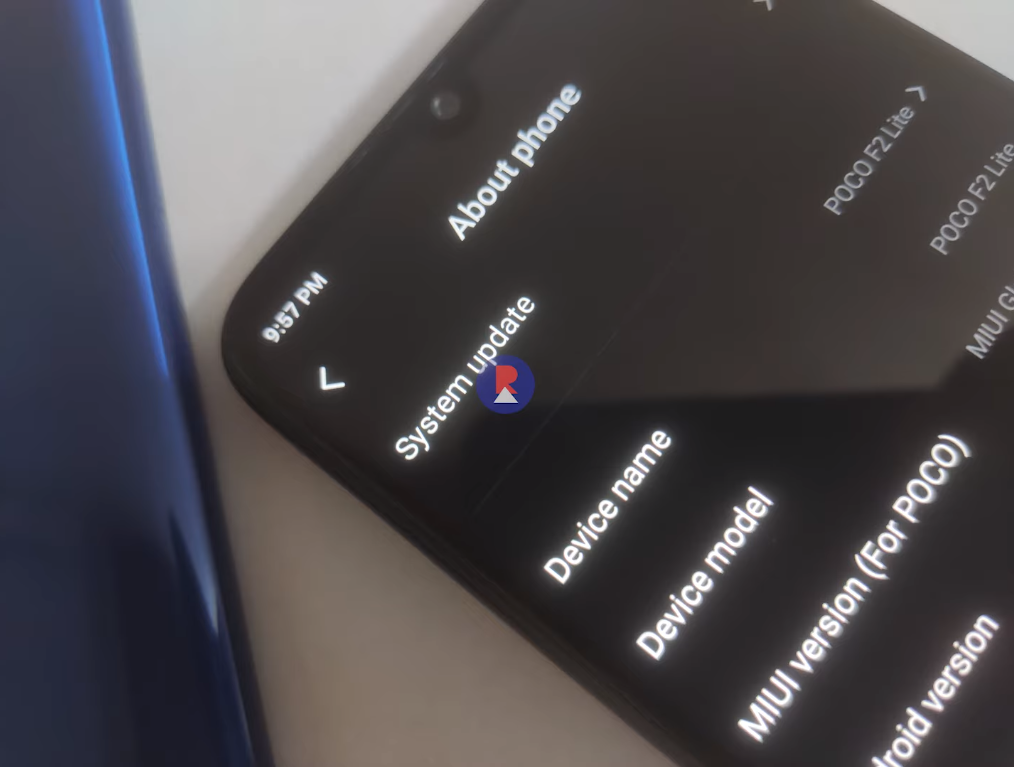
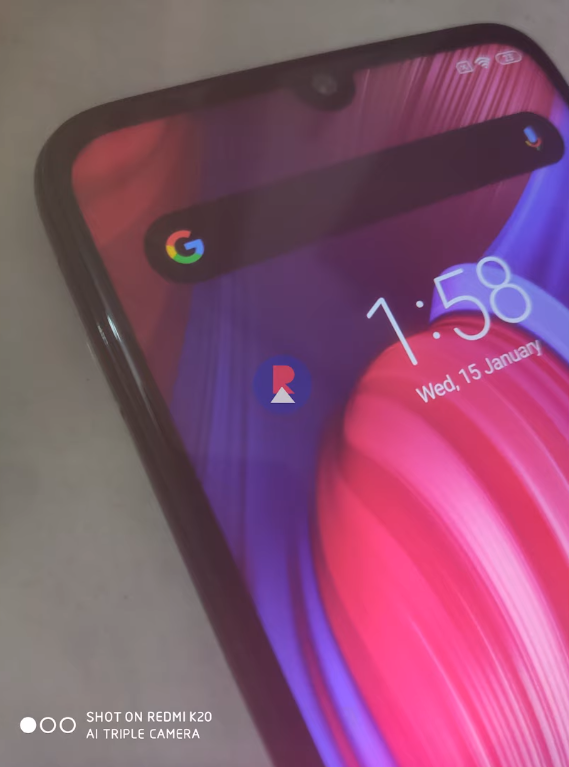
Last week, Xiaomi Global VP and Managing Director for India, Manu Kumar Jain confirmed that Poco has now become an independent brand and it will be launching new products this this year. Hence, it appears that there could be multiple products from POCO in 2020. On Jan. 17, RevAtlas shared live shots of a smartphone called Poco F2 Lite through its YouTube channel. The images and key specs of the phone were revealed to it through an email by a someone whose identity was not revealed. He revealed that Poco will be launching three smartphones this year.
RevAtlas stated that it received three images of the phone. One of the shots reveals the Poco F2 Lite moniker. Its images show that the handset features a waterdrop notch display with a thick-sized chin. The handset is running on a MIUI version design for the Poco brand. It appears to be running on Android 10 OS.
It is revealed that the Poco F2 Lite is powered by Snapdragon 765 chipset and 6 GB of RAM. It is equipped with a behemoth battery of 5,000mAh capacity. The leak also states that the phone is fitted with a very high-resolution camera. There is a possibility that it could be sporting a 48-megapixel camera or higher.
The YouTuber claims that there is confirmation on whether the leak is genuine or fake. Apart from the Poco F2 Lite, there is no confirmation on the names of other two Poco devices that will be unveiled this year. The email that carried the images stated that “millet model bring price cheaper than before” text which suggest that its pricing could be cheaper than the Poco F1 that had landed in India with a starting price of Rs. 20,999 in 2018.
If the Poco F2 Lite exists, it is likely that the Poco F2 with flagship specs could be also coming. As it is known, the Chinese firm had recently trademarked the Poco F2 moniker in the country in the recent past.
In related news, a phone named Poco X2 had popped on Geekbench last week. It is believed that it could be a rebranded version of the Redmi K30 for India. It remains to be seen whether the Poco X2 really exists. Readers are advisable to wait for further reports to know more on the upcoming Poco smartphones.
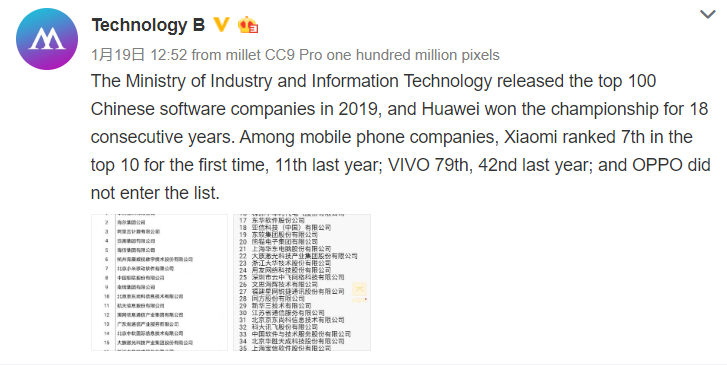
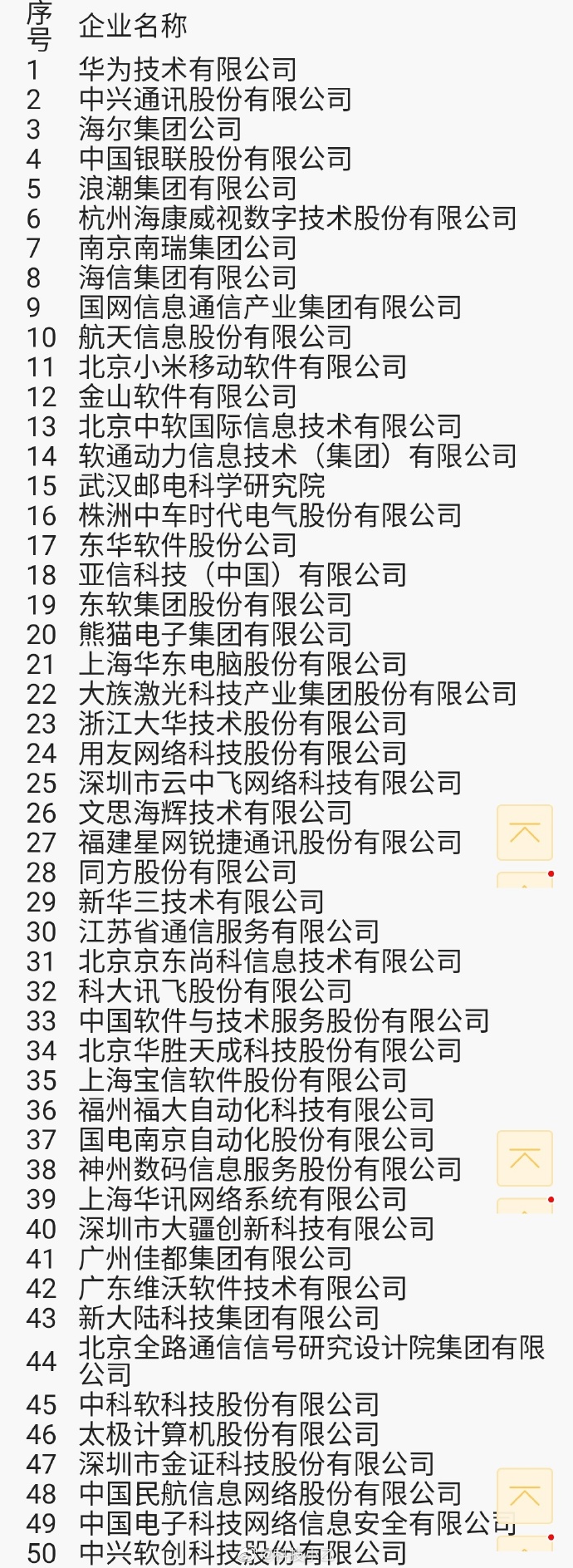
The Chinese Ministry of Industry and Information Technology (MIIT) has released a list of the top 10 Chinese software companies for 2019. The list is the 18th one they have released since they began ranking the companies.
At the top of the list is none other than Huawei Technologies, taking the top spot for the 18th time. They are followed by Haier Group and Alibaba Cloud Computing Co. Ltd. Inspur Group, a large-scale IT enterprise and leader in cloud computing comes in at the fourth spot while Hisense Group takes the 5th position.
Xiaomi makes it to the top 10 for the very first time and sits at the 7th spot. The mobile giant invested a lot in AI and IoT last year and that has propelled it from the 11th spot it occupied last year. China UnionPay Co. Ltd follows behind at the 8th position while Nanrui Electric Co. Ltd sits at the 9th position. E-commerce giant, Beijing Jingdong, clinches the 10th position.
Other familiar names on the list include DJI which sits at the 42nd spot. According to the Weibo account that posted images of the list, Vivo sits at the 79th spot, a massive fall from its previous position of 42nd last year, while its sister company, OPPO, did not make the list this year.
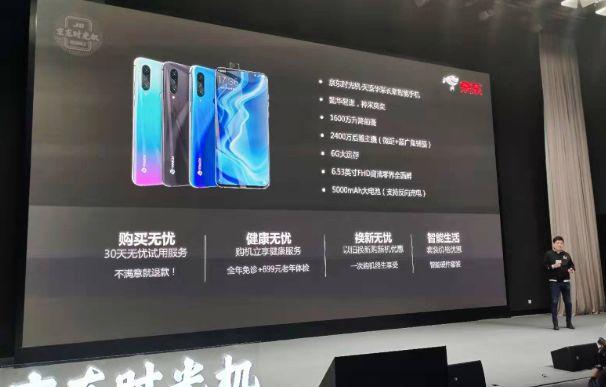
Top phone makers like Samsung, Xiaomi, OPPO, Vivo usually rely on market data to know the design to adopt on their smartphones. Foremost e-tailer Jingdong (JD.com) has such market data at its disposal and that may have prompted its decision to launch a smartphone for the elderly. The smartphone dubbed Jingdong Time Machine is also known as the elderly machine.
One interesting thing about the JD.com Time Machine is that the phone isn’t an entry-level model. Rather, it packs a pretty decent specs lineup and amazing full-screen design. Even though there are not so many spectacular features, the device comes with GPS and a dedicated app that helps guardians keep a tab on their parents.
Specs-wise, the JD Time Machine comes with an expansive 6.53-inch display and is powered by an unnamed processor paired with 6GB of RAM. It features 64GB and 128GB storage options.
For photography, the smartphone features a triple rear camera setup comprised of 24MP+5MP+2MP sensors. At the front, there is a 16MP centrally-placed pop-up shooter. The phone is fuelled by an impressive 5000mAh battery which guarantees long usage.
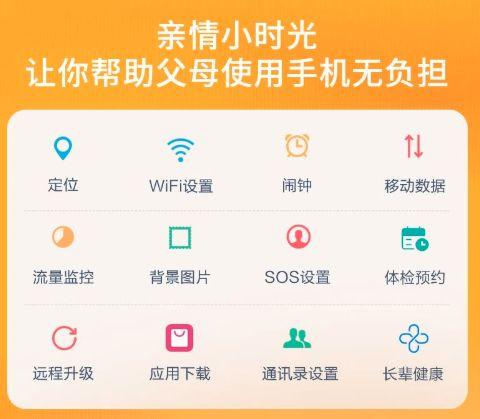
Where the phone shines better is the built-in apps with smart services meant to make it easy for the device to be used by elderly persons. One of the apps is the Family Hour Light app. Through this app, the children of the elderly can remotely download TV shows for the parents, organize albums, and clear the system cache. The daily problems encountered by the elderly when using mobile phones can be solved through the app. You can turn on the WiFi, GPS, set an alarm, regulate the screen brightness, check the calendar, and even send an SOS, among other things, right from the app’s home screen. In this way, they won’t have to rummage through the phone to change a system setting or anything else.
In addition, the mobile phone also has JD Health’s “quick consultation” service built-in, and the elderly can directly consult with doctors online
As for the price, the Jingdong Time Machine is priced at 1,099 yuan (around $160) for the 6GB/64GB version while the 6GB RAM/128GB storage version is priced at 1,199 yuan ($174). No details yet on its availability but it certainly will go on sale at JD.com soon.
The LG W10 was announced in June 2019 as the first of a new series of affordable smartphones to take on phones from Redmi, Realme, and Samsung. The phone launched alongside two other devices – the LG W30 and LG W30 Pro. Now LG is set to announce the LG W20 and its specs have been made public.
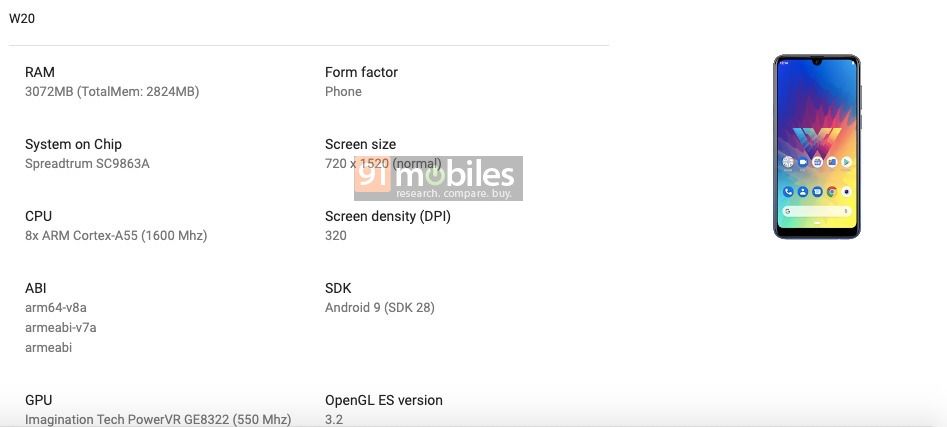
The LG W20’s specs were found on the Google Play Console. The phone has a 720 x 1520 (HD+) resolution and a waterdrop notch according to the attached image. It has 3GB of RAM and is powered by UNISOC’s Spreadtrum SC9863A. This is the same chipset that powers the Alcatel 1s (2019) and the 2019 Blade A7. It is a 28nm octa-core processor clocked at 1.6GHz and paired with a PowerVR GE8322 GPU.
While a lot of upcoming mid-range phones will be running Android 10, including LG’w own K43, the LG W20 is running Android 9 Pie. Based on this, we think the device was supposed to launch last year but was delayed hence why it isn’t running Android 10. We hope LG updates it and its siblings to Android 10 in the future.
The LG W20 should be positioned between the LG W10 and LG W30. It should be better in terms of performance as it has eight Cortex-A55 cores unlike the Helio P22 inside the LG W10 and LG W30 which has eight Cortex-A53 cores. However, efficiency will be poor as it is a 28nm chipset.
The phone should have multiple rear cameras, a fingerprint scanner, and a 4,000mAh battery like its siblings. It is expected to be priced at about INR 9,000 (~$127).
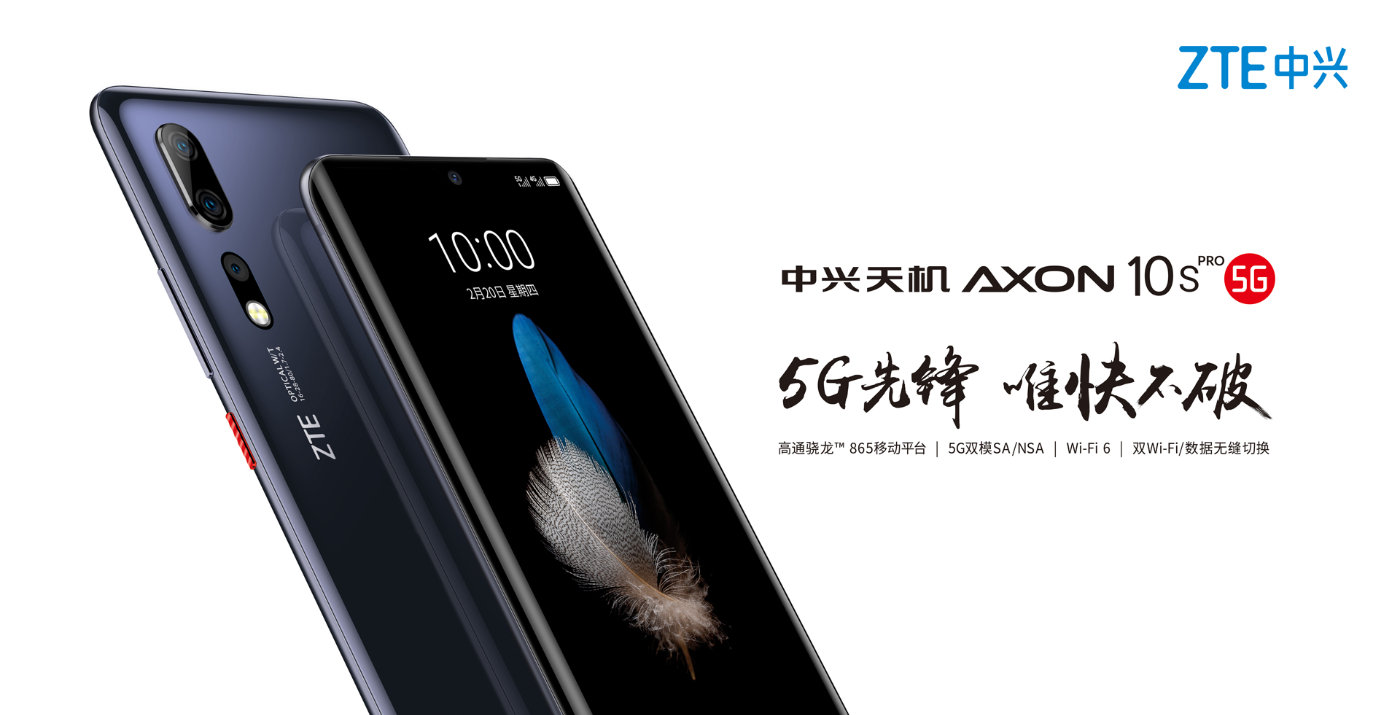
ZTE’s 2020 flagship, the Axon 10s Pro, already surfaced last month. Images and some key specs were released by ZTE itself and it later appeared on TENAA were the full spec sheet was published.
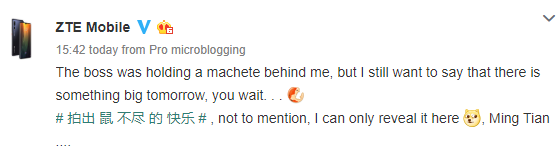
It has been reported that the phone may be the first Snapdragon 865 to launch. However, there has been no official info on the date of the launch, but we may be getting something tomorrow according to the manufacturer’s Weibo account.
The post says there will be a big announcement tomorrow and we think it may be related to the launch of the Axon 10s Pro or ZTE’s MWC event. In addition, the hashtag in the post hints at the announcement being camera related.
The launch of the Axon 10s Pro will definitely not happen until after the Spring Holidays as virtually all Chinese businesses will be closed between January 20 to early February.
The Axon 10s Pro will have a 6.47-inch screen with a 2340 x 1080 resolution. Sadly, ZTE isn’t joining the high-refresh rate train just as it didn’t last year. However, the screen is a curved AMOLED display with a waterdrop notch and a 19.5:9 aspect ratio.
The Snapdragon 865 processor will be paired with 6GB, 8GB, or 12GB LPDDR5 RAM and 128GB, 256GB or 512GB of storage. The Axon 10s Pro will come with a triple camera setup that includes a 48MP primary rear camera paired with 8MP and 20MP sensors. There will be a 20MP sensor in front for selfies.
The phone will have an in-display fingerprint scanner, a 4000mAh battery with support for fast charge. The Axon 10 Pro 5G has support for wireless charging, so its successor should have too. It will run Android 10 out of the box with MiFavor 10 in China and a near stock version of Android in other markets. It will support NSA and SA 5G bands 41, 78, and 79.
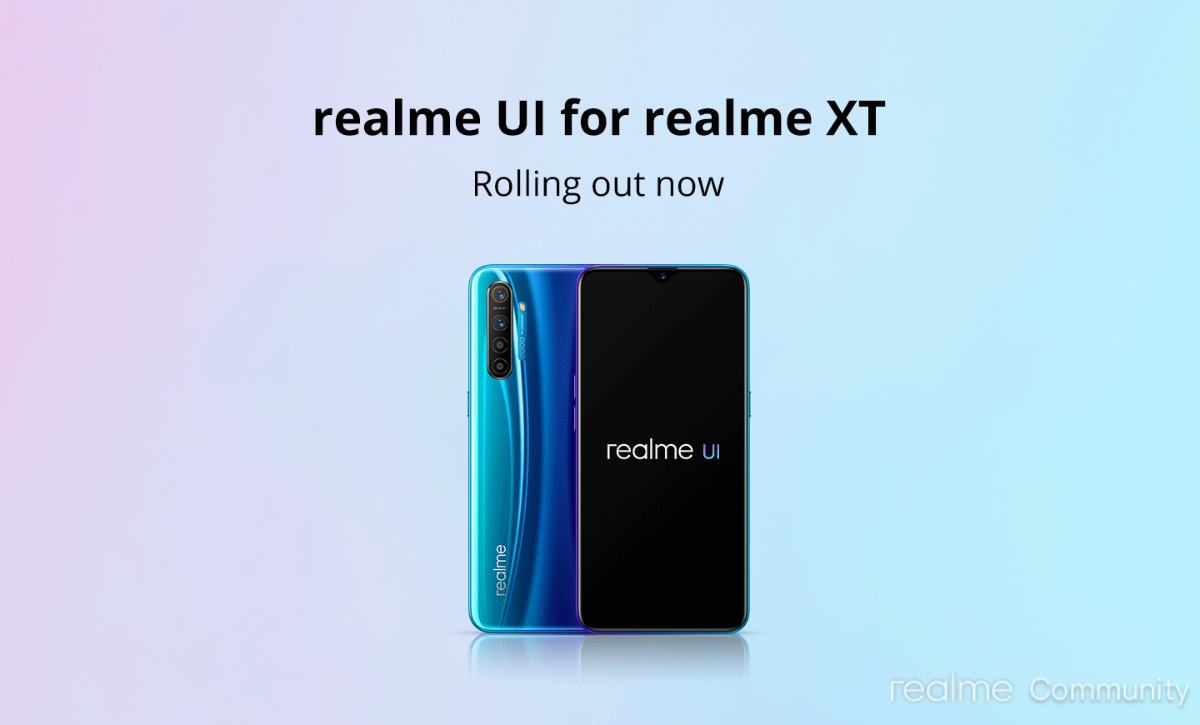
Realme is ditching OPPO’s ColorOS for its own custom user interface called Realme UI. The new user interface was announced recently and has begun rolling out. The Realme 3 Pro received the update a few days ago and now it is the turn of the Realme XT.
The update arrives as version RMX1921EX_11-C.01 and weighs in at 3.52GB in size. It comes with Realme UI 1.0. There are several new features such as new Android 10 navigation gestures that work in landscape mode; new artistic and live wallpapers; new charging animation; focus mode; Random MAC Address Generator which protects you from ads and attacks by generating a random MAC address when connected to a WiFi network; support for OPPO, Xiaomi, and Vivo devices with Realme Share (this should be the result of the peer-to-peer transmission alliance) and more. Below is the full change log:
Visuals
• Updated UI to Realme UI
• Brand new Real Design makes visuals more attractive and operation more efficient.
Smart Sidebar
• Optimized user interface and improved one-handed operation.
• Optimized Smart Sidebar: Replaced File Console with File Manager; removed OSIE Visual Effect and No Notification Alerts.
• Drag an app out of Smart Sidebar to open it in Split-screen Mode.
• Added two new features: “Assistive Ball Opacity” and “Hide Assistive Ball on Fullscreen App”.
• Optimized the Floating Window feature for more apps.
• Added Bubbles: A bubble is displayed when you open an app in a floating window from the Smart Sidebar. Tap the bubble to collapse or open the app.
Screenshot
• Optimized 3-Finger Screenshot Gesture: Use 3 fingers to touch and hold the screen, and swipe to take a screenshot of the selected part of the screen (partial screen capture). Use 3 fingers to touch and hold the screen, and swipe your fingers outwards to capture a long screenshot.
• Added screenshot settings: You can adjust the position of the screenshot preview floating window and set the screenshot sound.
• Optimized screenshot preview floating window: After taking a screenshot, drag it up and release it to share it, or drag it down and release to take a long screenshot.
Navigation Gestures 3.0
Optimized: New Android 10 navigation gestures
Optimized gestures: All gestures are supported in landscape mode.
System
Added Focus Mode: Minimizes outside distractions when you are learning or working.
Added whole new charging animation.
Optimized the Quick Settings user interface for easier one-handed operation.
Added pause feature for screen recording.
Added a floating window and settings for screen recording.
New sounds added for file deletion, calculator key touches, and compass pointer.
Optimized system built-in ringtones.
Added TalkBack floating prompts for Accessibility.
New management feature for recent tasks: You can view memory of recent tasks and locked apps.
Games
Optimized visual interaction for Game Space.
Optimized loading animation for Game Space.
Homescreen
Added new live wallpapers.
Added artistic wallpapers.
Added option to open Global Search or the notification panel when swiping down on homescreen.
Added option to customize the size, shape, and style of app icons on homescreen.
Optimized the graphic design of password unlock to facilitate one-handed operation.
Support for animated wallpapers on the lockscreen.
Added a Simple Mode for homescreen, featuring larger fonts, icons and a clearer layout.
Security
Random MAC address Generator: When your phone is connected to Wi-Fi network system generates a random MAC address to avoid targeted ads and protect your privacy.
Tools
In Quick Settings or Smart Sidebar, you can open Calculator in a floating window.
Added the trim feature in Recordings.
Added the Weather (dynamic) ringtone, which automatically adapts to the current weather.
Added weather-adaptive animations in Weather.
Added audio source selection for screen recording.
Camera
Optimized the Camera UI for better user experience.
Optimized the Timer UI and sound.
Photos
Optimized the Album UI for a clearer structure and photo thumbnails.
Added Album Recommendations that recognize more than 80 different
scenes.
Communications
Realme Share now supports sharing files with OPPO, Vivo and Xiaomi devices.
Optimized the Contacts UI for a more efficient experience.
Settings
Search Settings now supports fuzzy match and contains a search history.
Music
Added Dual Mode Music Share in Realme Lab.
Realme says the update is rolling out in batches, so if you don’t get the update yet, you will have to be patient.
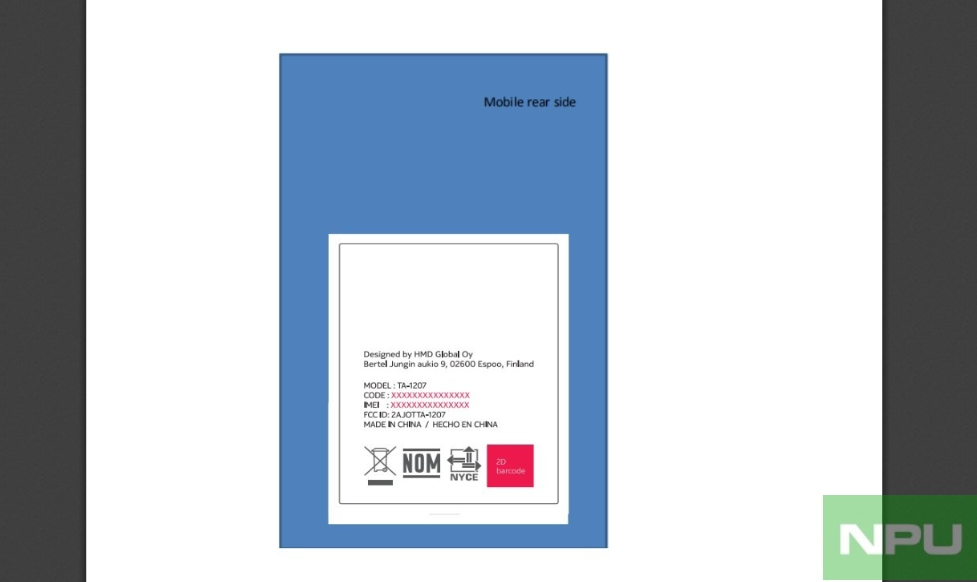
HMD Global has not announced any new phone this year but the Finnish company should unveil a couple of new models at Mobile World Congress next month. Ahead of the event, a Nokia phone with model number TA-1207 has been certified and there are speculations it may be the Nokia 1 (2020) a.k.a. Nokia 1.3.
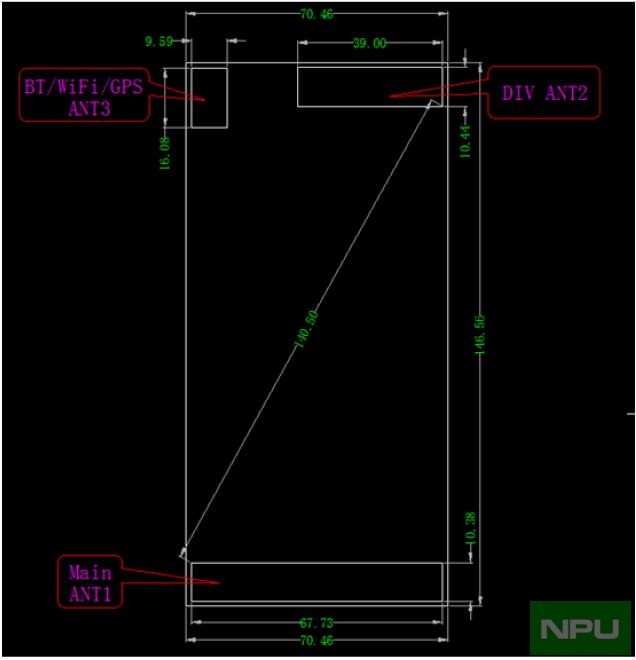
The phone was certified by the FCC and the documents reveal the phone measures 146.56 x 70.46 millimeters. Based on this dimensions, the device is believed to have a screen size between 5.7 and 5.8-inches. FCC also revealed it packs a 2920mAh battery (rated 3000mAh).
The device is believed to be the new Nokia 1 because it is the only other entry level Nokia phone that is due for a successor. The Nokia 2 series already got a new model last month and the Nokia 3 series isn’t due for a successor yet, and even if it is, it will not get a smaller display since the Nokia 3.2 has a 6.26-inch screen.
The Nokia 1.3 is not only expected to come with a bigger battery and screen but should also come with improved cameras and run Android 10 (Go Edition) out of the box.
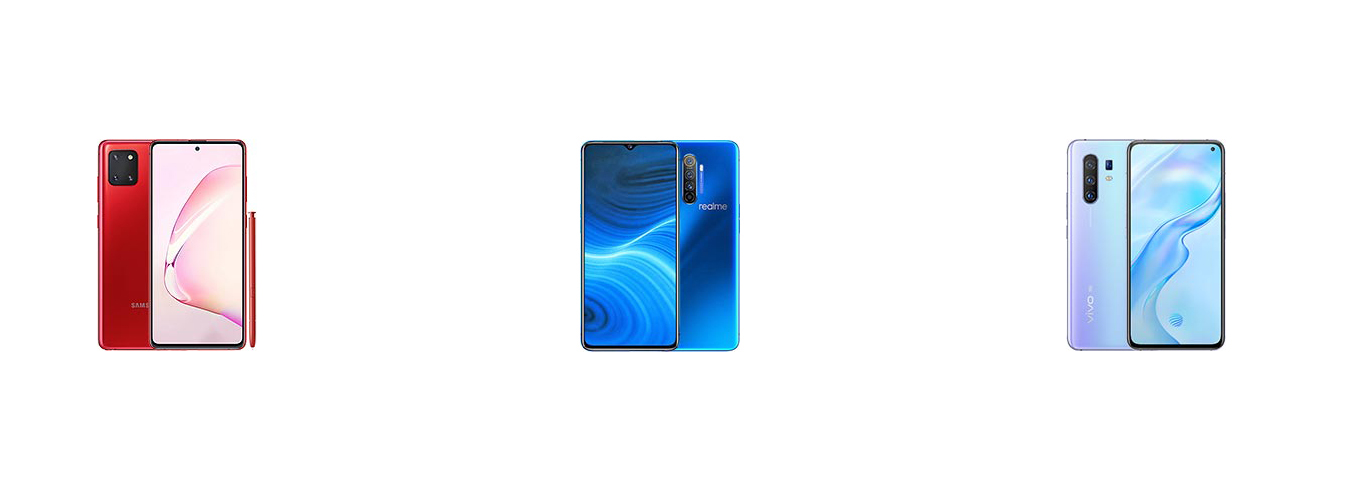
In a few days, Samsung Galaxy Note 10 Lite will be officially available for reservations in the Indian market. It is the first Lite variant of the Galaxy Note series and we believe it deserves to be included in comparison only for this reason. We obviously chose other affordable high-end smartphones in the same price range for this comparison. For power users, we included Realme X2 Pro, while for people in search of innovative features and amazing cameras, we chose the Vivo X30 Pro. Let’s find out who is better through an in-depth specs comparison.
Samsung Galaxy Note 10 Lite vs Realme X2 Pro vs Vivo X30 Pro
Oppo Realme X2 Pro
Vivo X30 Pro
Samsung Galaxy Note 10 Lite
DIMENSIONS AND WEIGHT
161 x 75.7 x 8.7 mm, 199 g
158.5 x 74.1 x 8.8 mm, 198.5 grams
163.7 x 76.1 x 8.7 mm, 199 g
DISPLAY
6.5 inches, 1080 x 2400p (Full HD+), Super AMOLED
6.44 inches, 1080 x 2400p (Full HD+), Super AMOLED
Quad 64 + 13 + 8 + 2 MP, f/1.8, f/2.5, f/2.2 and f/2.4
16 MP f/2.0 front camera
Quad 64 + 32 + 13 + 8 MP, f/1.8, f/3.0, f/2.0 and f/2.2
32 MP f/2.4 front camera
Triple 12 + 12 + 12 MP, f/1.7, f/2.4 and f/2.2
323 MP f/2.2 front camera
BATTERY
4000 mAh, fast charging 50W with Super VOOC Flash Charge
4350 mAh, fast charging 33W
4500 mAh, fast charging
ADDITIONAL FEATURES
Dual SIM slot
Dual SIM slot, 5G
Dual SIM slot, S Pen
Design
Samsung and Vivo put more effort into the making of the design of Galaxy Note 10 and X30 Pro. They both come with a punch-hole display minimizing the bezels, as well as a better overall look. I personally prefer the Vivo X30 Pro because it is more compact than both its opponents and it has a less invasive camera module on its rear side. But it is a matter of tastes, naturally. Which design do you prefer?
Display
The most advanced display belongs to the Realme X2 Pro. First of all, it is the only device from this trio to feature the HDR10+ technology for better image reproduction especially on streaming platforms such as Netflix and Prime Video. Further, it has a full DCI P3 coverage and a high 90 Hz refresh rate making the viewing experience smoother. The super AMOLED panel even comes with a very high brightness. There is not so much difference between the panels of Vivo X30 Pro and Samsung Galaxy Note 10 Lite, but the Galaxy Note 10 Lite is the only to support the S Pen, an amazing feature for productivity.
Hardware/Software
The most powerful hardware belongs to the Realme X2 Pro which boasts a Snapdragon 855 chipset paired with up to 12 GB of RAM and up to 256 GB of UFS 3.0 internal storage. But, unlike the Vivo X30 Pro, it lacks 5G connectivity. Vivo X30 Pro has an inferior chipset in terms of performance, but it is a chipset bundled with an integrated 5G modem. Samsung Galaxy Note 10 Lite is inferior to both Vivo X30 Pro and Realme X2 Pro in terms of hardware, but it is the only to feature a micro SD slot to expand the internal storage. Further, it is the only with Android 10 out of the box.
Camera
Vivo X30 Pro has the most interesting and awesome camera setup. It includes a main 64 MP sensor with OSI, a periscope lens with up to 5x optical zoom, an additional telephoto sensor with a 32 MP resolution and an ultrawide 8 MP sensor. Simply incredible. Right after, we got the Samsung Galaxy Note 10 Lite with a 12 MP triple camera including OIIS, 2x optical zoom, and an ultrawide lens. Both Vivo X30 Pro and Samsung Galaxy Note 10 Lite are high-end camera phones, but Vivo X30 Pro wins. Realme X2 Pro is just a mid-ranger in terms of camera performance, it packs a 64 MP quad camera including a Samsung GW1 sensor with a 64 MP resolution.
Battery
The biggest battery belongs to the Samsung Galaxy Note 10 Lite which lasts way more on a single charge. But Realme X2 Pro has the fastest charging technology: it goes from 0 to 100 percent in just 35 minutes.
Price
Samsung Galaxy Note 10 Lite will cost €599/$665 globally, Vivo X30 Pro debuted for about €527/$585 in China, and Realme X2 Pro starts from €399/$442 globally. There is not a clear winner of this comparison, it mostly depends on your needs. The S Pen and the bigger battery are the main pros of the Galaxy Note 10 Lite. Vivo X30 Pro offers 5G and better cameras, while Realme X2 Pro comes with a better display and higher-end hardware.
We use cookies on our website to give you the most relevant experience by remembering your preferences and repeat visits. By clicking “Accept”, you consent to the use of ALL the cookies.
This website uses cookies to improve your experience while you navigate through the website. Out of these, the cookies that are categorized as necessary are stored on your browser as they are essential for the working of basic functionalities of the website. We also use third-party cookies that help us analyze and understand how you use this website. These cookies will be stored in your browser only with your consent. You also have the option to opt-out of these cookies. But opting out of some of these cookies may affect your browsing experience.
Necessary cookies are absolutely essential for the website to function properly. This category only includes cookies that ensures basic functionalities and security features of the website. These cookies do not store any personal information.
Any cookies that may not be particularly necessary for the website to function and is used specifically to collect user personal data via analytics, ads, other embedded contents are termed as non-necessary cookies. It is mandatory to procure user consent prior to running these cookies on your website.