Citing supply chain sources who displayed wares at CES 2020, MacOtakara reports Apple could be developing a Face ID-toting iPhone 8 follow-up alongside a much-rumored Touch ID version media outlets have tentatively dubbed “iPhone SE 2.” The rumored handset will pack a 5.4-inch screen into a case close in size to that of the iPhone 8, which itself was just over 5.4 inches tall.
A switch to Face ID and the alleged deletion of iPhone 8’s top and bottom bezels — affectionately referred to as its “forehead” and “chin” — will free up space for the larger display, the sources said. On the back is a “much bigger” camera as compared to iPhone 8, while the True Tone flash is said to “return” to a size seen on iPhone 7. While a bigger camera is expected, both in terms of megapixels and physical size, the True Tone flash comment is confusing as the part is identical on iPhone 7 and 8.
This report is confusing for several reasons. First and foremost, MacOtakara explicitly describes this mysterious device as “an updated version of the iPhone 8 using the A13 Bionic chip.” Every other rumor until now has said that the “iPhone SE 2” or “iPhone 9” that we see this spring will feature Touch ID with a design almost identical to that of the iPhone 8, and there’s been no mention of demolished bezels.
Ming Chi Kuo had earlier announced Apple’s intentions of revealing a mid-cycle handset in March. The device promised to follow in the footsteps of the iPhone SE, delivering better hardware at a lower price. Kuo believes the SE 2 will arrest Apple’s faltering sales in 2020. He estimates suppliers selling anywhere between 2 and 4 million devices every month with a total of 30 million devices sold at the end of 2020.
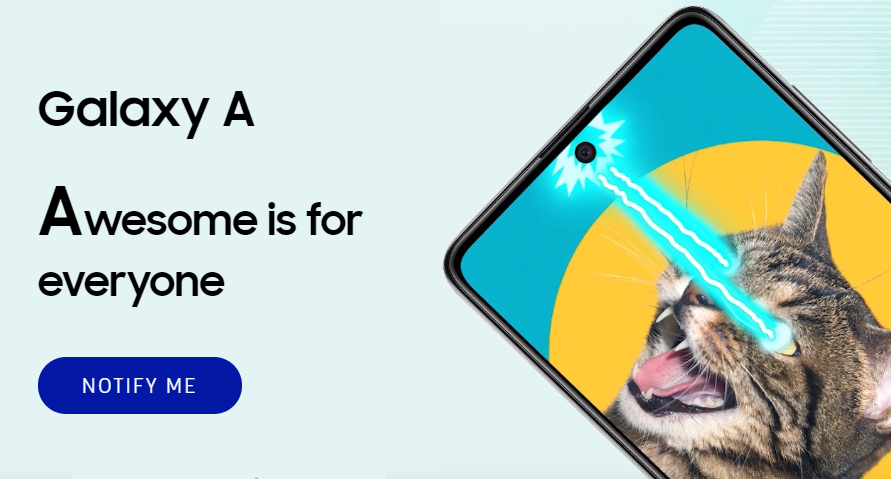
Samsung India has a busy schedule this month. The Galaxy S10 Lite is all set to go official in India on Jan. 23. It is said that the Note 10 Lite may go official on Jan. 25. A microsite for upcoming Galaxy A devices has surfaced on Samsung India’s official website. Although the microsite does not carry the name(s) of the A-series phone(s), it can be said based on the recent rumors that the company will be announcing the Galaxy A51 and Galaxy A71 smartphones in India soon.
The microsite has a ‘Notify Me’ button which suggests that the new Galaxy A series phones will be made official within this month. Samsung had launched the Galaxy A51 and Galaxy A71 in Vietnam. After the launch, the rumor mill had revealed that the two phones will be also announced in January in India. The leaked pricing of both phones has also surfaced. The South Korean company is expected to confirm on the launch for new A-series phones for India in the next few days.
Samsung Galaxy A51 and Galaxy A71 prices in India (Rumored)
The Galaxy A51is expected to arrive in two models in India such as 4 GB RAM + 64 GB storage and 6 GB RAM + 128 GB storage. The base model of the phone may cost Rs. 22,990 (~$324). There is a higher 8 GB RAM + 128 GB storage version of the phone. However, it is unlikely to make its way to India.
On the other side, the Galaxy A71 may arrive in India with a price tag of Rs. 29,990 (~$423). The A71 exists in two models such as 6 GB RAM + 128 GB storage and 8 GB RAM + 128 GB storage. It is unclear whether both models will be made available in India.
The Galaxy A51 has a 6.5-inch display whereas the Galaxy A71 features a larger 6.7-inch display. Both handsets flaunt S-AMOLED screens with Infinity-O design. Both devices are equipped with 32-megapixel frontal shooters. These devices are loaded with One UI 2.0 based Android 10 OS.
The Galaxy A51 and A71 feature a rectangle camera module on their rear with L-shaped arrangement for the camera sensors. The A51 has a 48-megapixel primary shooter and the Galaxy A71 has 64-megapixel main lens. The other three sensors on both phones include a 12-megapixel ultrawide lens, a 5-megapixel macro lens and a 5-megapixel depth assist sensor. The Galaxy A51 houses a 4,000mh battery with 15W fast charging whereas a larger 4,500mAh battery is packed inside the A71 along with support for 25W fast charging.
The European Commission has been pushing for a single charging method for mobile devices for over a decade. The commission was doing so by encouraging tech vendors to voluntarily adopt a single charging standard. However, it seems like the European Commission is now looking at a legislative approach.
Some members of European Parliament have urged the European Commission to take regulatory action to force every smartphone vendor to adopt a single charging method. In a statement following the debated, Commissioner Maros Sefcovic said that the commission plans to consider a “legislative approach” to tackling the issue.
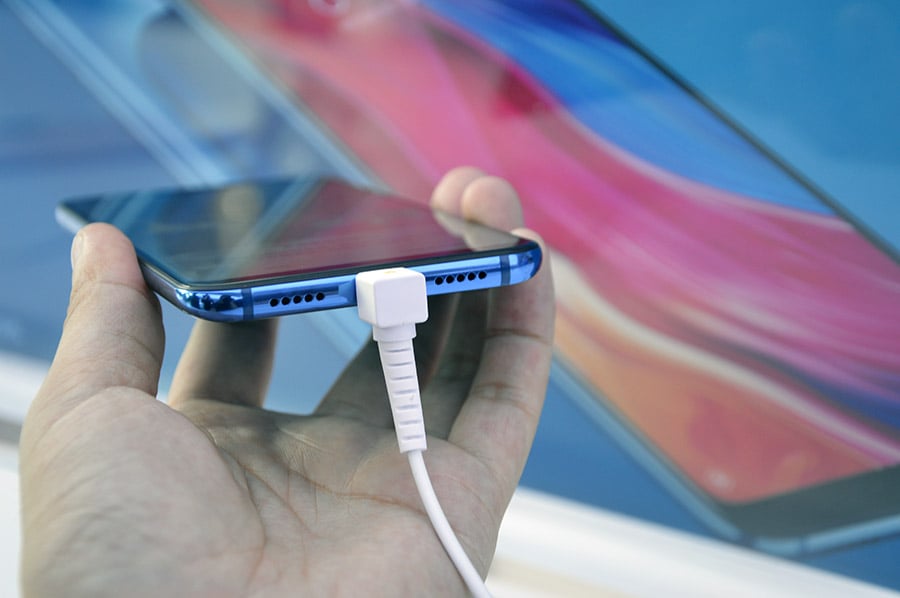
USB Type-C charging on Xiaomi Mi 8 smartphone
The European Commission plans to hold a vote on the matter at a later session. If the European lawmakers get their way, then companies like Apple will be forced to adopt USB Type-C port for charging iPhones and will have to drop the Lightning connector.
While not every smartphone maker has adopted a single charging method yet, the campaign has certainly worked in favor as the number of charger types have decreased from 30 in 2009 to just three — USB Type C, micro-USB, and Apple’s Lightning port.
In the debate, members of the European Parliament pointed how the tech industry is generating additional e-waste by maintaining various standards, which often saddles consumers with a mess of different cords and adapters.
While Apple has not responded to this recent development, the company had earlier said that a single charging port would “freeze innovation rather than encourage it.” The company had also said that forcing iPhones to switch to USB-C would render existing Lightning cables obsolete, and thus generate more e-waste.
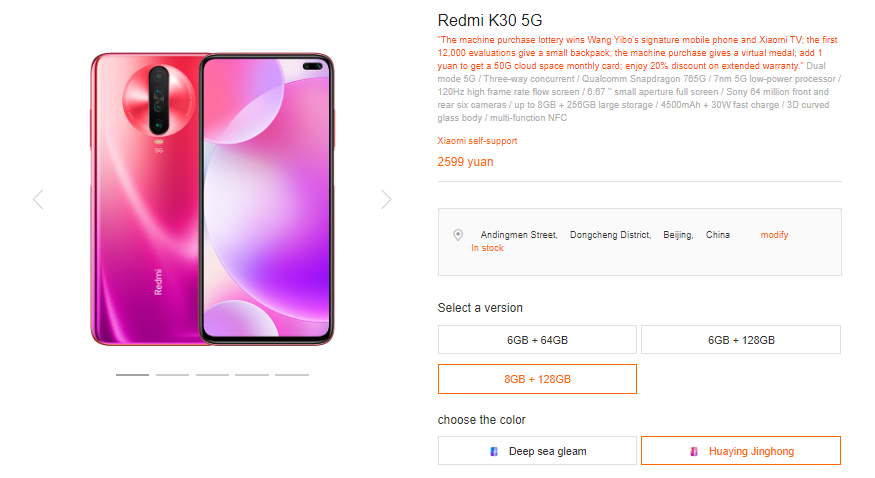
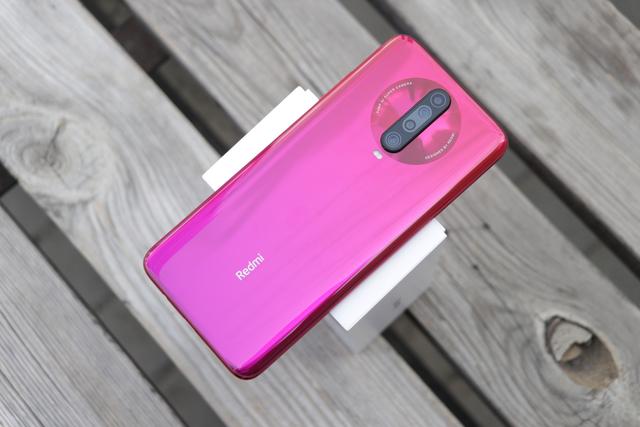
On Jan. 7, Redmi had started the sales of the Redmi K30 5G smartphone for the first time. Although the company had announced four variants for the smartphone at its launch event last month, only the 8 GB RAM + 128 GB storage edition was made available for purchase last week. After running the pre-sales from Jan. 12, Redmi has started the sales of the two 6 GB RAM variants of the Redmi K30 5G from today.
As it can be seen in the screenshot below, the Redmi K30 5G is now available in 6 GB RAM + 64 GB storage and 6 GB RAM + 128 GB storage apart from its 8 GB RAM + 128 GB storage variant. The two 6 GB RAM editions of the Redmi K30 5G are respectively priced at 1,999 Yuan (~$290) and 2,299 Yuan (~$333) and they can be availed in Deep Sea Blue color.
The 8 GB RAM + 128 GB storage of the Redmi K30 5G that is priced at 2,599 Yuan (~$377) was only made available in Deep Sea Blue color last week. From today, it can be sold be bought in Huaying Jinghong (red purple gradient) color variant. Redmi is yet to carry out the sales of the remaining 8 GB RAM + 256 GB storage version.
The Redmi K30 5G features a 6.67-inch IPS LCD display. There is an elliptical punch-hole on the screen at the top-right corner which houses a dual selfie camera system. The latter constitutes of a primary 20-megapixel lens and a depth sensor of 2-megapixel. The rear side of the phone has a vertical quad camera system. It includes the Sony IMX686 64-megapixel main lens, an 8-megapixel ultrawide sensor, a 2-megapixel depth assist lens and a 2-megapixel macro lens.
The Snapdragon 765G is present under the hood of the Redmi K30 5G. The phone draws power from a 4,500mAh battery that is coupled with 30W fast charging support. It is equipped with a side-mounted fingerprint scanner. For expanding the phone’s storage, it features a microSD card slot. The MIUI 11 based Android 1O OS comes preloaded on the Redmi K30 5G.
The Galaxy S20 series will launch in less than a month from today and there are already tons of leaks floating around the web. One of the latest ones reveals key details of the Galaxy S20 Ultra 5G which is the top model of all five Galaxy S20 phones expected to launch on February 11.
The source of the leak is Max Weinbach of XDA Developers, the same source that leaked live photos of the Galaxy S20+ 5G. His tweet reveals some key specs of the device. They are mixed up, so we will start with the cameras.
According to him, the Galaxy S20 Ultra 5G will have a 108MP primary camera paired with a 48MP camera with 10x optical zoom, and a 12MP ultrawide angle camera. There are actually four cameras but only three are mentioned.
Moving on from the camera to the RAM and storage configuration, the Galaxy S20 Ultra 5G will be available in just two RAM variants – 12GB and 16GB. Yes, you read that right. 16GB RAM phones are coming this year. Apart from that, it is also interesting to see that the base model has 12GB of RAM. We are equally surprised.
The S20 Ultra 5G is going to keep the SD Card slot. Support for up to 1TB.
It will also be available in 128GB/256GB/512GB and have a 12GB and 16GB RAM option.
108MP main, 48MP 10x optical, 12MP ultra wide.
5000 mAh battery with 45W option fast charge. 0 to 100% in 74 min.
There will be three storage options – a 128GB base model, 256GB for those who want more, and 512GB for the highest configuration. If that is not enough for you, Max says the Galaxy S20 Ultra 5G will keep the MicroSD card slot with support for up to 1TB of additional space.
That is not all as he also states that the phone will pack a 5000mAh battery with support for 45W fast charge. This will allow owners to charge the phone from empty to full in 74 minutes.
Samsung has always released its flagships in single SIM and Dual SIM variants. In a separate tweet, Max said all the S20 phones should have eSIM support. This may mean the end of Samsung flagship phones with physical Dual SIM slots or it may be the end of “Single SIM” Samsung flagships. We believe it may be the latter as there are still several markets where having 2 physical SIM slots is a much-needed feature.
If you live in Asia and you are looking for an affordable high-end smartphone, you have three important choices among the most recent devices: Oppo Reno3 Pro, Realme X2 Pro, and Honor V30 Pro. We chose to include them in a specs comparison because we believe they are among the most impressive options you can get with a modest price tag if you are a power user or you need high-end specifications. So, let’s discover together which device is better for specific users’ needs.
Triple 40 + 8 + 12 MP, f/1.6, f/2.4 and f/2.2
Dual 32 + 8 MP f/2.0 front camera
Quad 48 + 13 + 8 + 2 MP, f/1.7, f/2.4, f/2.2 and f/2.4
32 MP f/2.4 front camera
BATTERY
4000 mAh, fast charging 50W with SuperVOOC Flash Charge
4100 mAh, fast charging 40W and fast wireless charging 27W
4025 mAh, fast charging 30W with VOOC Flash Charge 4.0
ADDITIONAL FEATURES
Dual SIM slot
Dual SIM slot, reverse wireless charging, 5G
Dual SIM slot, 5G
Design
There is no challenge here: Oppo Reno3 Pro is the clear winner. Overall, it has the best design. It is one of the thinnest devices to sport a battery above 4000 mAh, it has an incredibly high screen-to-body ratio thanks to its punch-hole display, and it even comes with an almost totally clean glass back as every element related to the rear cameras is included in the camera module. Oppo Reno3 Pro is even the most compact device of the trio, so if you are really searching for the most beautiful handset, in my opinion, Oppo Reno3 Pro is a lot better. Right after, there is Honor V30 Pro with a dual punch-hole display, at least according to my tastes.
Display
Besides having the most amazing design, Oppo Reno3 Pro even comes with a more convincing display, alongside the Realme X2 Pro. It is a 6.5-inch panel with very high color accuracy and image reproduction. It comes with high DCI P3 coverage, a high HDR10+ and a 90 Hz refresh rate, as well as a very high brightness. Realme X2 Pro is more or less at the same level. Honor V30 Pro has a disappointing display if we consider that it is a flagship: it comes with a classic IPS panel that you can find on a lot of mid-rangers.
Hardware/Software
With the amazing Snapdragon 855+ chipset, up to 12 GB of RAM and up to 256 GB of UFS 3.0 internal storage, Realme X2 Pro wins the performance comparison. It is faster, better for gaming and every advanced task. But there are two cons if you choose this device. First, it does not have 5G, unlike both its rivals. Second, it is still based on Android 9 Pie, while Honor V30 Pro and Oppo Reno3 boast Android 10 out of the box.
Camera
When it comes to cameras, Oppo Reno3 Pro and Honor V30 Pro take the award with their better sensors and departments. We still did not test it thoroughly, but Oppo Reno3 Pro looks more promising on the paper when it comes to rear cameras, while Honor V30 Pro has a better front camera department. It is one of the few phones to include an ultrawide front camera with a dual configuration. Realme X2 Pro has just a midrange camera department with a Samsung GW1 sensor and no OIS. It is a good camera phone, but far from the top tier ones.
Battery
Due to similar battery capacities, there are no huge differences in the battery life of Honor V30 Pro, Oppo Reno3 Pro, and Realme X2 Pro. What matters more are charging technologies. Realme X2 Pro has the fastest charging technology, but you can only charge it via a cable. Honor V30 Pro offers both wireless charging and reverse wireless charging.
Price
The price of Honor V30 Pro in China is around $550/€495, Oppo Reno3 Pro starts from $580/€520, and Realme X2 Pro starts from $380/€340. Overall, Realme X2 Pro offers the highest performance and value for money, but it lacks 5G and a high-end camera. Honor V30 Pro is the most complete flagship, but Oppo Reno3 Pro offers a way better design and amazing cameras. Which one would you pick?
Over the years, smartphones have steadily seen upgrades in their displays and each successive year has come with its own innovative upgrade to the display technology. Yesterday, there was a proliferation of punch-hole displays and adoption of higher display refresh rates. This year isn’t likely going to be different as there are already glaring signs that OEMs will still focus heavily on improving the display quality on this year’s flagships.
BBK subsidiary OPPO has revealed that it is teaming up with renowned display firm Pixelworks to help develop displays on its new smartphones. According to a statement by James Wang, VP, Supply Chain of OPPO, it wants to “push the boundaries of high refresh rate displays with key technologies from Pixelworks that enhance motion appearance, color depth and clarity of smartphone displays.”
“It is our pleasure to be working closely with Pixelworks as OPPO Group companies prepare to shake up the mobile world with breakthrough imaging advancements that will redefine the standards of visual quality in smartphones, delivering experiences that are unforgettably smooth, immersive and authentic as life itself”, the OPPO VP stated.
Recall that Pixelworks’ display technology has featured on devices like the Nokia 7.2 which was received rave reviews for its amazing display which made “movies, TV shows, and YouTube clips much more enjoyable”. If the display on a mid-range smartphone can receive such commendations, there is no doubt OPPO’s partnership with Pixelworks will result in some interesting displays.
Both companies expect to launch the first device built as a result of this collaboration in the first half of 2020. OnePlus had earlier hinted that it is also working on advanced displays for its upcoming smartphone. So, apart from upgrades in cameras and processing power, display screens will likely steal the show this year.
At the just-concluded CES 2020, TCL, the Chinese manufacturer best known for its TVs and as the licensee for Alcatel and BlackBerry, showcased a couple of its upcoming phones including a foldable one. It revealed more details will be disclosed at Mobile World Congress in February and now it has officially confirmed it will have a launch event with an official poster.
The poster says there will be a TCL MWC 2020 Global Press Conference on Saturday, February 22nd, 2020. The date is a few days before MWC officially commences but that is a standard practice among manufacturers. The event will begin at 18:00 hrs and should be live-streamed.
TCL will officially take the wraps off the TCL 10 Pro, the TCL 10 5G, and the TCL 10L at the event. The TCL 10 Pro will come with a curved AMOLED display with a U-shaped notch. It will have four rear cameras which include a 64MP sensor and also have an audio jack. The TCL 10 5G and TCL 10L both have a punch-hole display, quad rear cameras, and a rear-mounted fingerprint scanner.
TCL is also expected to bring its new Alcatel phones to MWC 2020. The Alcatel 3L, 1S, and 1V have all gotten 2020 editions that boast multiple rear cameras, dedicated Google Assistant buttons, and run Android 10 out of the box. There is also the Android Go Alcatel 1B which has a single rear camera but also has a Google Assistant button and runs Android 10 (Go Edition) out of the box.
TCL already confirmed all the devices will be available in Europe, so it makes sense they will be showcased at MWC 2020.
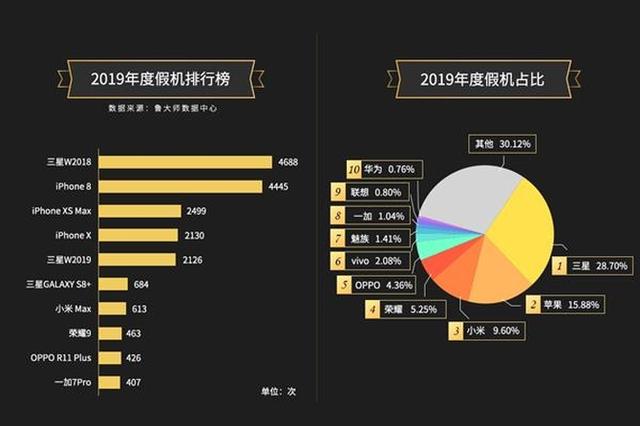
Chinese benchmarking outfit Master Lu has released its ranking of top 10 most counterfeited smartphones in 2019. Among them, Samsung and Apple have been counterfeited the most. In terms of proportionality, Samsung phones had a 28.7% share of most faked smartphones while Apple models ranked second with 15.88% respectively.
In terms of specific models, the Samsung W2018 is ranked as number one most-faked phones, apparently in China. The Samsung W2018 flip phone is one popular model in China and so, this doesn’t come as a surprise. Fake Samsung W2018 were detected 4688 times. Next in line is Apple’s iPhone 8 while the iPhone XS Max is rated as the third most-faked mobile phone. iPhone 8 was detected 4,445 times to be fake while the iPhone XS Max was detected 2,499 times.
The rest of the list is made up of the iPhone X, Samsung W2019, Galaxy S8+, Xiaomi Mi Max, Mi 9, OPPO R11 Plus and finally OnePlus 7 Pro.
On the whole, a total of 6,639,704 smartphones were tested using the Master Lu app. Out of this, 57,790 units of various models were detected to be fake.
It has just been a few days after the end of CES 2020 and preparations are already underway for the next big tech show which is Mobile World Congress (MWC) 2020. Vivo is one of those who will be attending and they have sent out invites for the unveiling of the Vivo APEX 2020.
The APEX line of smartphones is a concept line that was developed by Vivo back in 2018. The first of the series is the Vivo APEX, which was the first phone with a motorized pop-up selfie camera and was later launched as the Vivo NEX.
Last year, Vivo followed it up with the APEX 2019; a phone without ports and physical buttons. However, the APEX 2020 never launched as a commercially-available product.
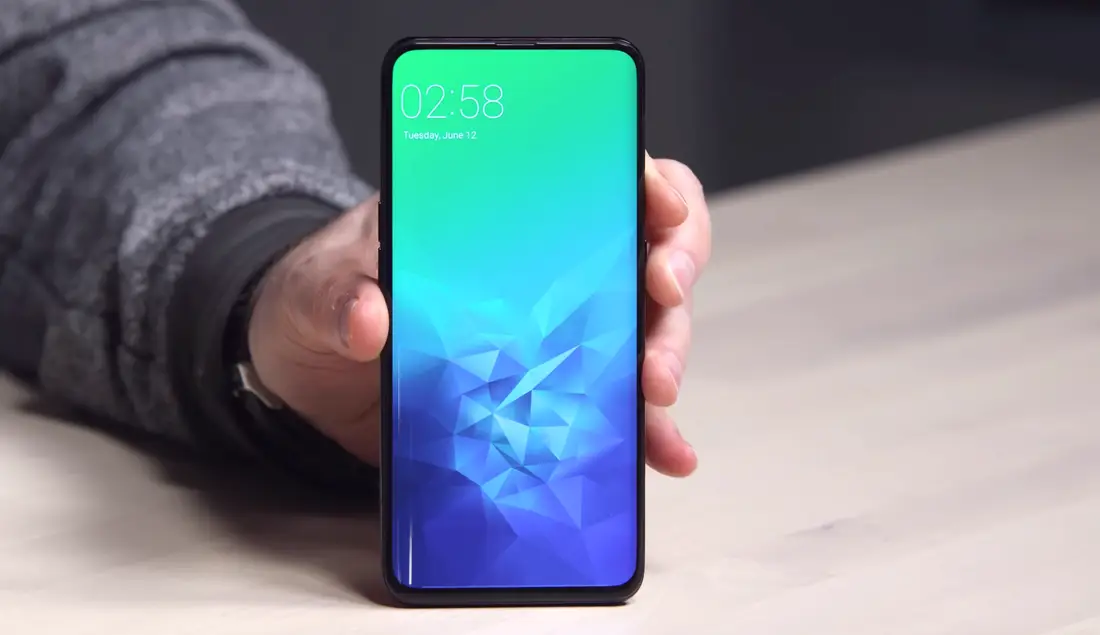
We don’t know what the Vivo APEX 2020 will bring or look like, but a few weeks ago, alleged renders of the phone surfaced online. The renders show the phone will have a curved display with no hardware buttons and no ports. We advise you to take the leak with a grain of salt as the APEX 2020 may have a totally different design.
The invite has the words “EMPOWER THE NEXT” written on it and there are a bunch of concentric circles too. Those circles may be hinting at the APEX 2020 sporting a rear camera with a mechanical zoom lens.
We look forward to the launch of the phone and hope it gets a commercial-release, unlike its predecessor.
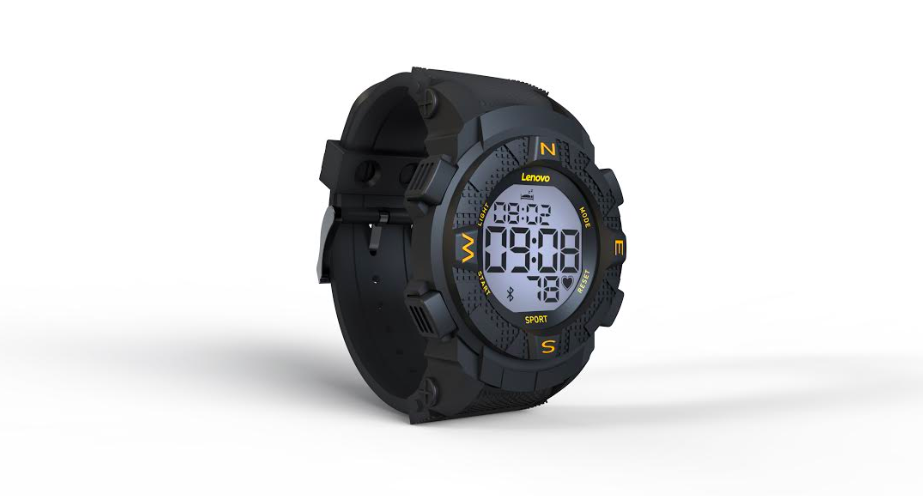
Lenovo has launched the Lenovo Ego smartwatch in India. Designed for fitness enthusiasts, it sports a sporty appeal and comes with many health-centric features. The device has arrived with a pricing of Rs. 1,999 in India and is now available for purchase through Amazon India and Flipkart.
Lenovo Ego smartwatch specifications and features
The Lenovo Ego HX07 smartwatch features a round-shaped 42mm anti-reflective monochrome screen. Its chunky appearance is similar to Casio’s G-Shock watch series. The electronic display consumes less power. There is a dedicated “Light” button on the device that effectively illuminates the display in the dark. It can be paired with Android OS and iOS devices through Bluetooth. Users can control its functions by using the Lenovo Life app on their paired devices.
Once paired, the Lenovo Ego HX07 smartwatch can notify users on calls, emails, SMS and social media app alerts through different vibrating patterns. Lenovo claims that the Ego smartwatch can last for up to 20 days on a single charge. One can easily connect the charging pin at the bottom of the watch so that it can be charged without a hassle.
The Lenovo Ego smartwatch is equipped with multiple sensors for tracking heart rate, sleep, calories burnt, and steps taken. With 5ATM water resistance, the Ego smartwatch can last be used while swimming. The soft and durable strap ensures that the wearer can use it throughout the day without any discomfort. It is a lightweight smartwatch that weighs only 45gm.
At the end of year 2019, Lenovo had launched the Lenovo Carme smartwatch. It has a square-shaped 1.3-inch IPS LCD display and IP68 certified chassis. Priced at Rs. 3,499 (~$49), the Carme smartwatch offers many health and fitness activities.
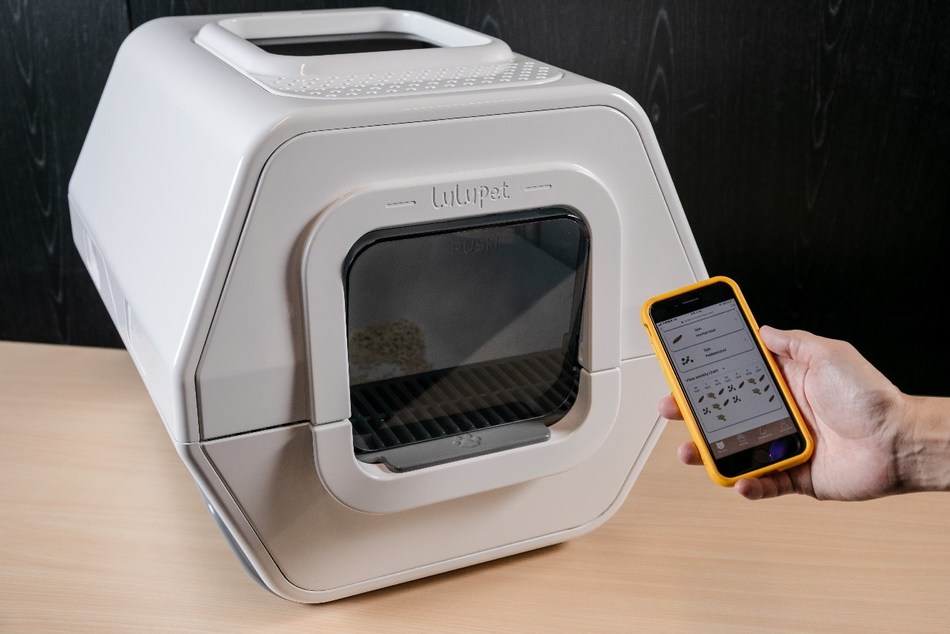
At the recently concluded CES 2020 tech show held in Las Vegas, one of the products that stood out and even clinched an award is the LuluPet AI Smart Cat Litter Box. The smart cat shelter is touted to be the world’s first litter box with built-in stool and urine image recognize and excretory behavioural algorithms.
Cats are quite capable of withstanding pain; hiding any signs of discomfort they may be experiencing. This means that the quickest way to tell your kitty’s condition is through its litter. The product was developed by Taiwanese startup LuluPet. The litter box is equipped with AI image restoration technology and automatically detects cat litter condition and helps look for abnormalities in the cat’s body in places where cat owners cannot. It can monitor and analyze the cats’ health data through cats’ stool image, weight change, and excretory behaviours and notifies the owner for any abnormal activities. So the cat can receive early treatment and help the owners’ cats to live a healthier life.
Among the top ten causes of death for domestic cats, seven were faeces-related diseases. Cats, however, are born concealers of their own weaknesses, making it difficult for owners to find out whether their precious feline is in pain. LuluPet illustrates this with the example of kidney failure: Statistically, a cat’s kidneys are 70% damaged by the time the owner suspects an illness and brings the cat to the veterinarian. The organ damage is not only irreversible, but subsequent medical fees may cost up to US$ 1,200.
Sick cats aren’t completely undetectable. According to the Bristol stool scale, cat faeces may be divided into 7 categories, ranging from constipation to diarrhoea; constipation may be caused by the pressing of a tumour, while symptoms of diarrhoea may be the result of common systemic diseases such as kidney failure. Stool analysis thus becomes the most straightforward way of detecting these diseases.
For persons who raise multiple cats, it is pretty difficult to assign litter to a specific cat. LuluPet identified this pain point and put 2 years into developing an “intelligent litter box.” The intelligent litter box works mainly by detecting with lenses whether the cat is urinating or littering. It not only detects littering frequency and litter weight but also the condition of the litter (normal, constipation, diarrhoea, etc.). After judging litter conditions through the use of AI image restoration, it uses this data to notify the owner of the cat’s health. The device can safely identify litter with an accuracy of up to 90%.
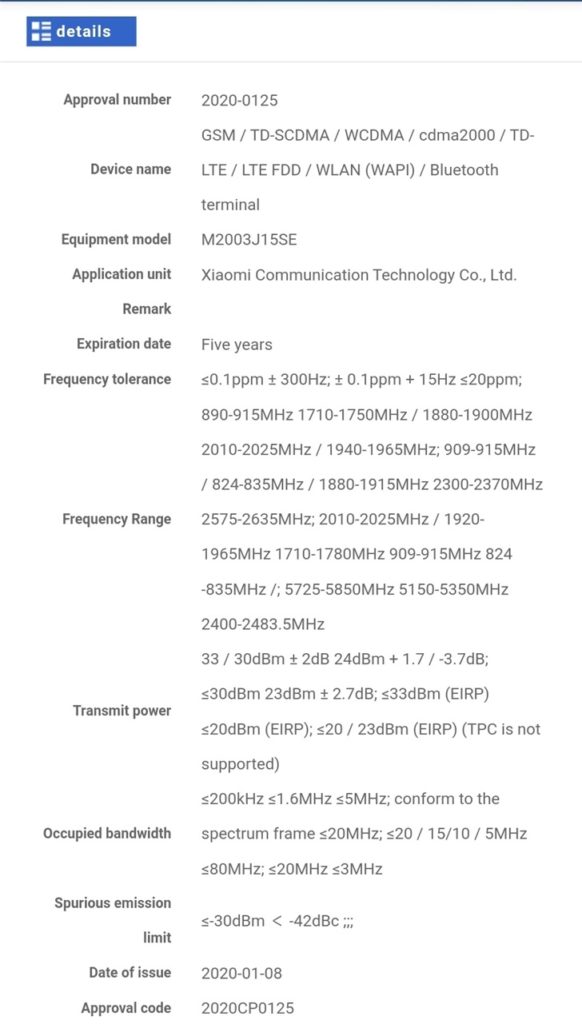
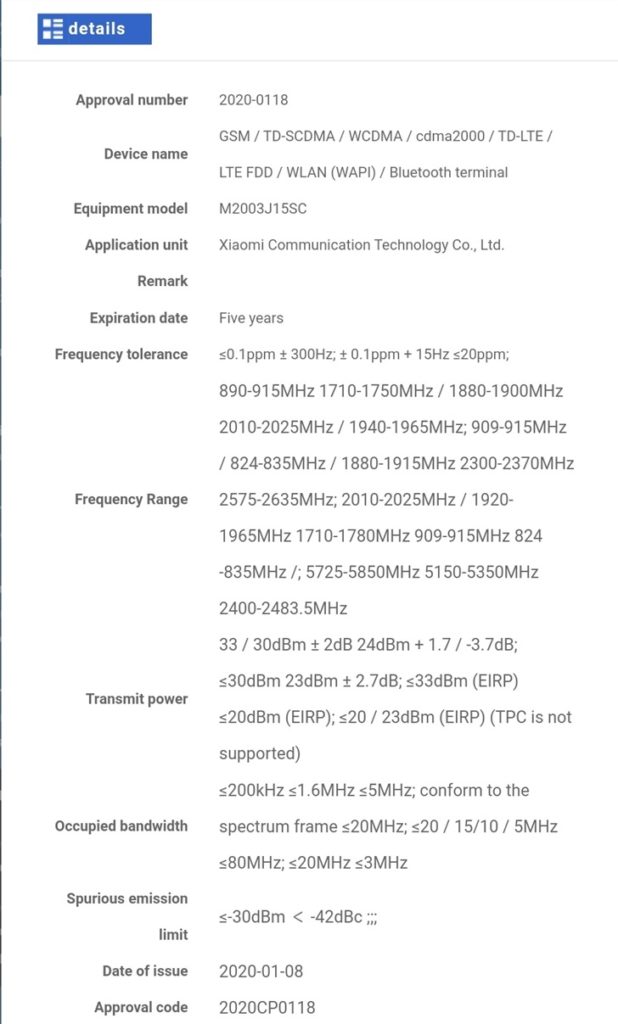
Two new Redmi models have reportedly been certified by China’s Ministry of Industry and Information Technology (MIIT). The models come with the model numbers “M2003J15SC” and “M2003J15SE”.
The certificates were shared by tipster @Sudhanshu who hinted that the devices were the suspected Redmi Note 9 Pro (4G). But Xiaomi is yet to reveal any details of the device.
The Redmi Note 9 Pro is expected to come equipped with MediaTek Helio G70 processor paired with 4GB of RAM and 64GB storage, likey on the base model. The phone is also expected to feature a 6.6-inch waterdrop screen. A recent 3C certification of a Xiaomi model with the same model number shows the device will support 33W fast charging. Xiaomi’s new power adapter passed 3C certification a few days ago, and the information shows that this product will feature support for 33W fast charging.
We keep you posted when more details of the Redmi Note 9 Pro emerges.
MediaTek has discreetly announced a new chipset named Helio G70. As the name goes, the new SoC is positioned under the Helio G90 and Helio G90T processors. Since it is a Helio G-series processor, the Helio G70 processor is designed to offer gaming capabilities on low powered smartphones. Rumors have it that the upcoming Xiaomi Redmi 9 could be one of the first phones to debut with the new Helio G70 processor.
MediaTek Helio G70 Specifications
The Helio G70 is an octa-core processor that constitutes four cores of Cortex A75 working at 2GHz and four cores of Cortex A55 clocking at 1.7GHz. The SoC is coupled with 820MHz Mali-G52 2EEMC2. The smartphones powered by Helio G70 can deliver maximum resolutions of 1080 x 2520 pixels. It supports up to 8 GB of 1800MHz LPDDR4x and eMMC 5.1 storage.
When it comes to connectivity, the Helio G70 supports 4G carrier aggregation, Wi-Fi 5 802.11ac and Bluetooth 5.0. The SoC supports a single camera of 48-megapixel or up to 16-megapixel + 16-megapixel dual camera system with support for up to 30fps video shooting. Other camera related features available through chipset are Face ID, rolling shutter compensation (RSC), single cam bokeh, dual cam bokeh and AI smart photo album. There is integrated Voice on Wakeup feature that optimizes the performance of voice assistant with less power consumption. The HyperEngine Game Technology ensures fast and smooth experience while enjoying games. It also supports intelligent networking and resource management while gaming.
In related news, the Redmi 9 could be one of the first Helio G70 powered smartphones. Rumors have it that Redmi 9 may come with a 6.6-inch display with notch-less design. It could be featuring 4 GB of RAM and may come equipped with a native storage of 64 GB. The phone could be also available in other variants. The MIUI 11 flavored Android 10 OS may come preloaded on the device. The handset is speculated to get announced in the first quarter of this year.
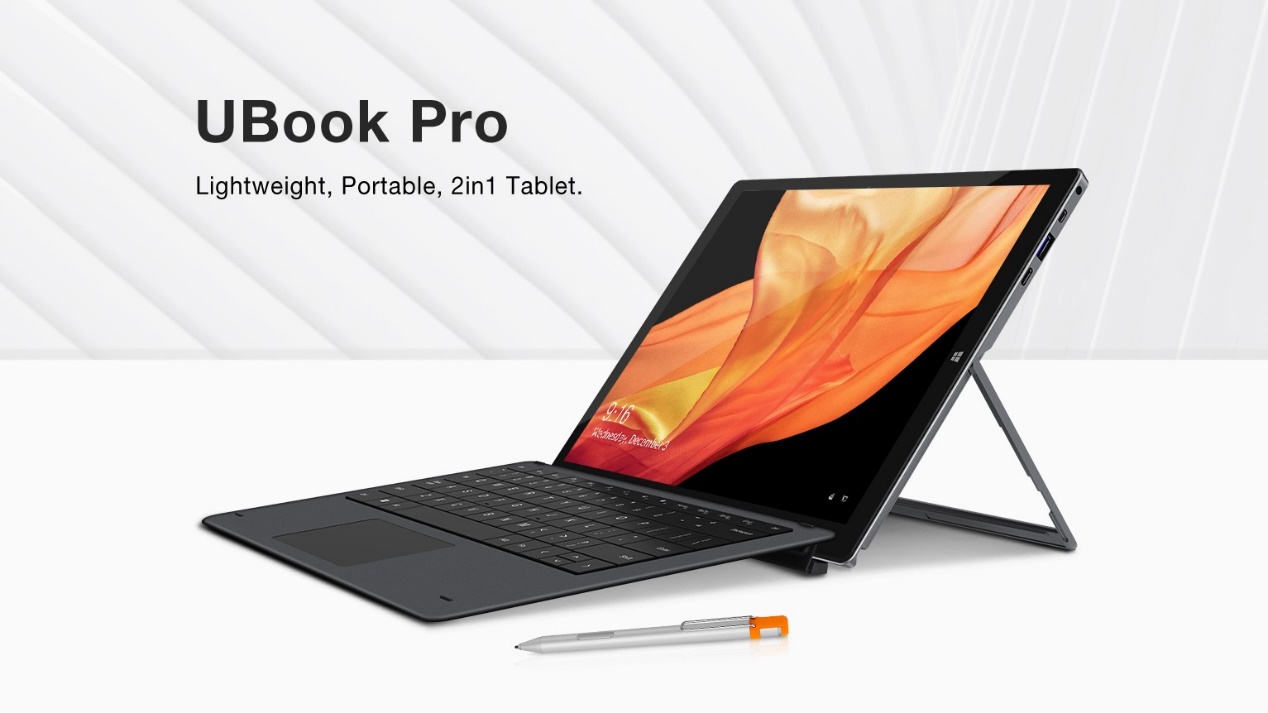
The Chuwi UBook Pro is already on the market for about a month and has gained very positive critics from users. Chuwi gathered some of the customers’ feedback to understand the user experience they receive. According to the company, some of the most frequent comments are these:
Lightweight and portable body, convenient to carry in a backpack, 2-in-1 tablet designs well
Adequate configurations run office software smoothly, deals with multitasking efficiently
3:2 display ratio screen brings a bigger and more comfortable view
Similar to Surface but comes with a more decent price
UBook Pro can suit office workers and students with great performance and decent price.
And indeed, equipped with a 12.3″ IPS screen, a U-shape kickstand, Intel 8100Y/N4100 processors and full-metal body, UBook Pro meets all the requirements of a high productivity tablet.
Multiple configurations, high productivity
In terms of hardware configuration, UBook Pro comes in 2 versions depending on the CPU they sport. The standard model comes with the Intel N4100 while the top version comes with the Intel 8100Y CPU. Both versions come with 8GB of RAM and 256GB SSD while the Intel UHD Graphics GPU can easily decode 4K video. Also, it does the job when it comes to video editing and graphic design.
Meanwhile, The U-shaped kickstand supports step-less adjustment and the maximum opening angle of 145° can transform it into a laptop, workstation or tablet, which means that almost all use cases are available. No matter if you are in the office, business trip, outdoors or enjoying some leisure time, UBook Pro can cope with all situations.
Impressive display
Chuwi chose to adopt the 3:2 aspect ratio for the 12.3″ display so that it is ideal for office work, document editing and web surfing, as it expands the vertical visual range and it’s easier to read and type. Also, the panel reaches 100% of the sRGB color gamut to be suitable for designers too. In addition, the touch panel supports 4096 pressure-sensitive points when using the stylus, making drawing and sketching even more accurate.
Full-size keyboard, efficient typing
UBook Pro is a tablet but it can be turned into a laptop anytime using the magnetic docking keyboard. The full-size keycaps got an excellent touch and you can even use it in dark environments since it is backlit.
Cost-effective productivity tablet
With specs and features that tick all the boxes of a modern mobile PC, the UBook Pro is can be considered as one of the best all-around choices out there. Also, the low price (about $350) of the standard version, makes it a Value-for-Money choice too. To learn all the details about it, visit the official product page.
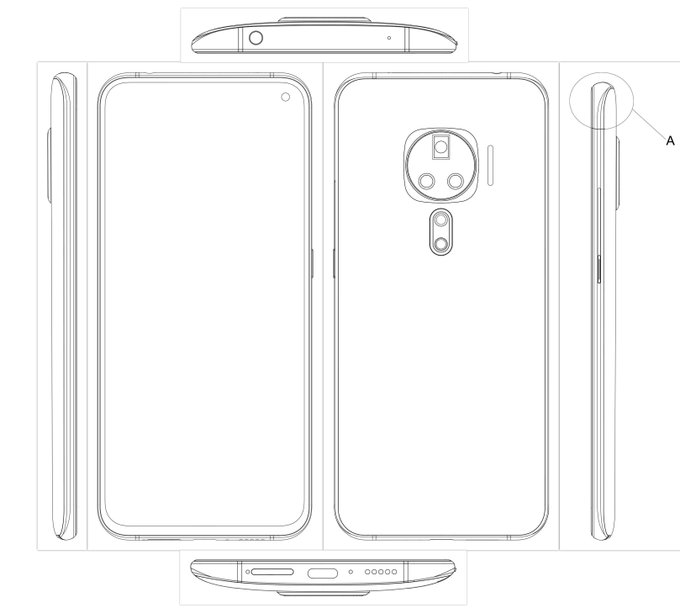
Chinese smartphone brand Vivo has patented a new smartphone design which is quite unique in terms of design, especially when it comes to the camera module. The design shows a penta-camera setup on the back with two camera modules.
The first camera module on the back is a circular one which houses three camera sensors. There’s a second camera module just below the first one in a pill-shaped housing that holds two more camera sensors. It we see closely, it seems that the phone will come with a periscope lens setup.
On the front side, we can see that there’s a single punch-hole cut-out for housing a camera sensor. While the design has been leaked, nothing is known about the phone’s specifications at this point in time.
Since the phone’s back design seems a bit similar to the Vivo NEX 3 and the periscope lens setup on the back is similar to the Vivo X30 Pro smartphone launched recently, it is being speculated that the phone in question is a flagship offering from Vivo.
While it is not yet known what smartphone will have this design, it is being speculated that the smartphone could be the much-awaited Vivo NEX 4. There’s a possibility that it is an entirely different or new phone. To know for sure, we’ll have to wait for some more information about this smartphone to emerge.
Google announces its next version of Android at the Google I/O Event that takes place around May and releases the final version around September of the same year. Android 10 is the latest version of Android OS and was released back in September bringing many new features like system-wide dark theme, improved privacy controls, new gesture navigation, native desktop mode, etc., offering a simple and smarter UX. Recently, Ulefone revealed that they will launch the world’s first Android 10 rugged phone soon by the name Armor X7.
According to the revealed information, Armor X7 will be powered by a 12nm quad-core processor backed by 2GB RAM and 16GB of internal storage. As you can imagine, it should be an affordable rugged phone, perfect for casual use. In addition, there will be a 13MP rear camera and a 5MP selfie shooter, enough to capture photos and videos of adequate quality.
Also, judging from the low-consumption hardware, the large 4000mAh battery will be enough for more than a day of full use. Of course, it supports all the usual features that almost all Ulefone phones come with like face and fingerprint unlock, NFC with Google Pay, dual-SIM/dual-standby, global network bands, etc.. Lastly, being a rugged phone means IP68/IP69K certifications and durable chassis.
Long story short, the Armor X7 will be a value for money model. If you are interested in it, you can visit their official website for more details.
As the Christmas holiday is over and schools, as well as universities, open their doors for the Spring semester, XIDU is offering some of the best deals since Black Friday. Back to School activity is usually held at the end of the summer but the Chinese manufacturer is holding a mid-season BtS activity for two of its best laptops so that being a student can become a little easier. So, until January 31st, XIDU PhilBook Pro and PhilPad are offered at the lowest price for 2020 while customers can also take advantage of many $30 for other products too.
XIDU PhilBook Pro
One of the best features of the PhilBook Pro is its 2560×1440 IPS display. Such a resolution on an 11.6″ panel means higher ppi and incredible clarity. And if you think that a high resolution like this is ideal just for photos and videos, you should reconsider as higher resolution means crisper details for office work as well as gaming. Besides, the panel is supplied by Sharp and that takes care of high quality.
The design of the PhilBook Pro adopts the 360° flexible hinge featured by a double torque technology and offers an ideal mix of flexibility and quality so users can easily open the lid with only one hand yet have enough torque for a wobble-free touch experience. The hinge transforms the laptop into a tablet in no time or you can use it in tent mode, according to your liking. In addition, it is an ultra-light device thanks to the aluminum-alloy body and small size.
As for the hardware performance, the device comes with an Intel J3355 4-core 2.0GHz CPU backed by 6GB of RAM and 128GB SSD. That means stable and fluid performance in everyday tasks as well as low power consumption and many hours of use on a single charge.
XIDU PhilPad
In addition to the laptop lineup, XIDU is also offering 2in1 tablets. XIDU PhilPad is one of those models and it’s a business-class Tablet PC designed for those who need a powerful and, most importantly, mobile tool for daily work outside the office or at home.
The PhilPad features a metal body and it can be transformed into a laptop using the detachable keyboard. The device sports a generous 13.3″ multitouch IPS 2K (2560×1440) display and is powered by an Intel E3950 quad-core CPU backed by 6GB of DDR3 RAM and 128GB SSD. The storage space can be further expanded with up to 256GB more via the TF card slot.
In the box, you’ll also get a stylus and the mentioned keyboard, as well as a licensed Windows 10 operating system, a powerful power supply for fast charging and a nice bonus: branded protective film pre-applied on the display.
So, if you’re looking for a best-value laptop or 2in1 tablet, make sure to visit the XIDU Official Store to catch the Back-to-School promotion for up to 30% off discount.
What’s more, there are big discounts on the rest of the platforms that XIDU is present. Visit Amazon US, UK, FR, ES, IT stores as well as Aliexpress to learn more. For coupons on all of the company’s products, look here.
Realme smartphones have primarily used Android based ColorOS custom user interface skins so far. However, the company has wanted to take a step away from this and offer a more stock experience for a while now, with beta testing in China that had taken place earlier. Now, the company has finally unveiled the Realme UI which is listed with a simplified design alongside various improvements and new features.
The company which was previously an Oppo subsidiary is advertising the new UI as “Seamless Fun.” It arrives with a stock Android experience alongside system colors, icons, wallpapers, and new animations as well. Since Realme’s target audience has primarily been the youth, it’s marketing with “vitality” and “younger” keywords can also be seen for its fresh new look.
With Realme UI, users are able to design the icons and can choose their transparency as well. The sizes of the icons are also customizable and are personalized, even for the actual image in the icon. Alongside the fresh look, the UI brings 11 new background wallpapers for the home screen of Realme smartphones. Notably, the wallpapers are based on “natural elements” and will users can always find a match with a particular color scheme.
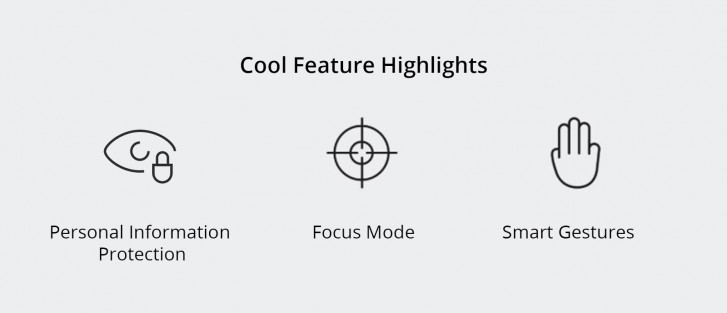
The Android 10 based Realme UI also brings performance improvements as well. It arrives with new power saving features and a lot more. A new Focus Mode helps disconnect from the outside world and even plays relaxing music to help improve concentration.
For security, a Personal Information Protection feature has been added that allows the system to fill empty information pages regarding call history, contacts, messages, or schedules that certain websites or apps might enquire about. Thus, it makes one’s private data safe while not limiting the usage of the app itself.
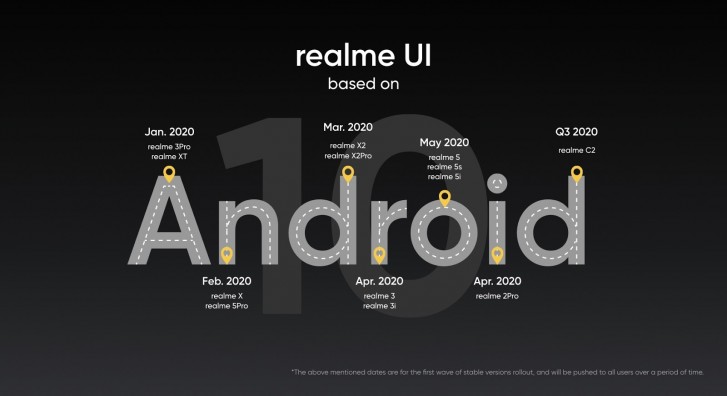
Lastly, Realme also provided a roadmap (See Image Above) for the new update or the stable rollout of its new UI. Hopefully, Realme smartphones that are released in the future carry the update right out of the box.
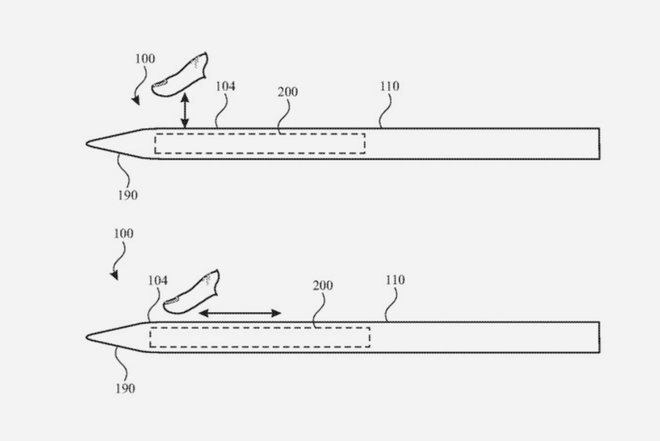
The Apple Pencil may be getting some really cool upgrades in the future. According to the United States Trademark and Patent Office (USPTO), Apple has received a patent for a stylus with a built-in camera and more.
The patent description said the stylus will have a touch-sensitive area with support for gestures such as taps, rotations, and swipes or a combination of gestures. This version of the Apple Pencil will also be able to distinguish between a user simply holding it or performing an actual gesture. The current Apple Pencil allows you to switch between tools such as a pen and an eraser by double-tapping the side of the stylus.
The patent also states that the stylus may also be able to detect biological characteristics of the user such as heart rate, respiration rate, blood pressure, and skin temperature, etc.
One other patent listed mentions a version of the Apple with a built-in camera. The camera will be able to capture the physical characteristics of a surface and visually reproduce it on the screen of the iPad.
Another patent has a haptic feedback feature that replicates the feeling of drawing on paper while another mentions the stylus having a fingerprint scanner so that it can be used to unlock the iPad and also to carry out payments.
It is not yet known which of these features will eventually make it to a commercial product. However, we have a feeling the new gestures may come with the Apple Pencil that will launch with the upcoming iPad Pro. Renders of the upcoming tablet leaked a few weeks ago and they revealed the next-gen iPad will have triple rear cameras.
We use cookies on our website to give you the most relevant experience by remembering your preferences and repeat visits. By clicking “Accept”, you consent to the use of ALL the cookies.
This website uses cookies to improve your experience while you navigate through the website. Out of these, the cookies that are categorized as necessary are stored on your browser as they are essential for the working of basic functionalities of the website. We also use third-party cookies that help us analyze and understand how you use this website. These cookies will be stored in your browser only with your consent. You also have the option to opt-out of these cookies. But opting out of some of these cookies may affect your browsing experience.
Necessary cookies are absolutely essential for the website to function properly. This category only includes cookies that ensures basic functionalities and security features of the website. These cookies do not store any personal information.
Any cookies that may not be particularly necessary for the website to function and is used specifically to collect user personal data via analytics, ads, other embedded contents are termed as non-necessary cookies. It is mandatory to procure user consent prior to running these cookies on your website.