Xiaomi‘s latest MIUI 11 has started hitting models ranging from flagship to mid-range and budget models. The new update brings onboard several new features including a completely redesigned interface, a new font, Always-On Display, and much more. Seems there are new features in the works for MIUI 11. A recent discovery by XDA Developers shows the Chinese tech giant is testing a new advanced display calibration feature on the custom ROM which will give users more control over how their device’s screen looks.
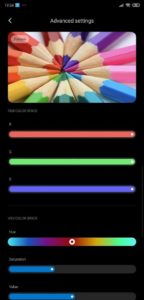
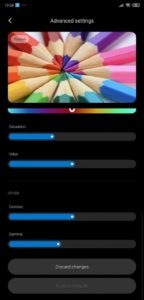
The new advanced display calibration controls were discovered in the latest MIUI 11 nightly build, within a hidden settings page. With the new controls, you get the option to choose the color gamut from four available options including Enhanced, Original, P3, and sRGB. There are also sliders which can be used to individually control the Red, Green, and Blue color levels in the RGB color space. The hue, saturation, and value in the HSV color space also get control sliders as well as the contrast and gamma controls.
If you make any adjustment to the settings, a live preview window will appear at the top and all the changes are automatically saved unless you click on the Discard changes or Restore defaults buttons at the bottom.
There is no word yet as to when Xiaomi plans to roll out the new display controls to a stable build of MIUI 11 or which devices will get this new feature.
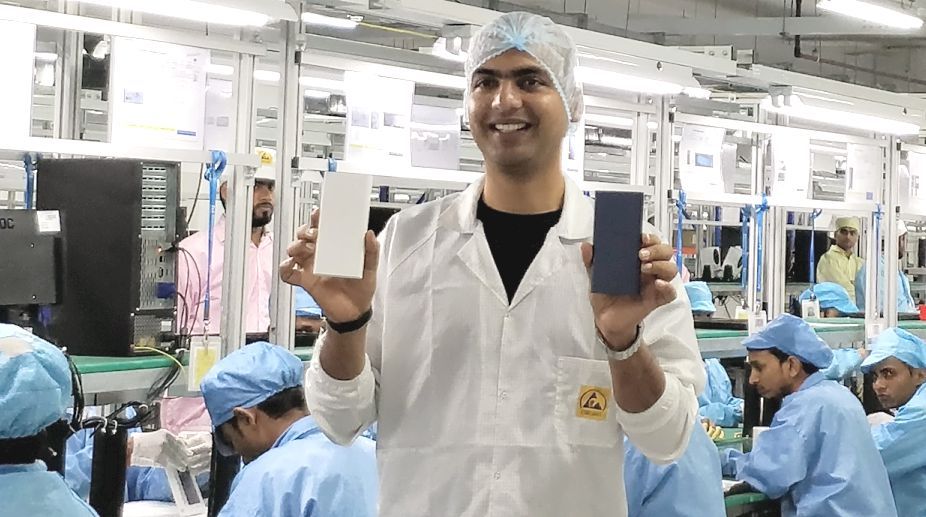
According to Manu Kumar Jain, Xiaomi India’s Vice President, India needs to be more competitive with other manufacturing hubs. Historically, China has been the leader in terms of manufacturing and assembly based sectors; this holds true especially for smartphones. However, in recent times, countries like Vietnam and India have been seeing increasing growth in the same area.
Xiaomi Manufacturing Facility in Noida
Now, the Vice President and Managing Director of Xiaomi India, has stated that India has to take initiatives to be more viable over its other alternatives like Vietnam and China. In an interview, the senior executive stated that the company has requested the Indian Government to make India a “more export-friendly destination.” India’s growth also directly impacts the company which is the leading smartphone brand in the country; that is also the second-largest smartphone market in the world.
He also mentioned a few of the moves the Government can take to favor such an initiative like duty drawback refund for the merchant exporter. Furthermore, Xiaomi is also expected to “invest in laboratories which allow for global standard testing, since BIS is not a globally accepted standard,” according to Manu.
India has great untapped potential in its emergence as a manufacturing hub and Xiaomi will largely benefit from this. The Chinese tech giant has seven smartphone manufacturing plants in India in collaboration with the Taiwanese company, Foxconn and Singapore-based technological manufacturers, Flex.
Xiaomi’s Assembly line in India
Ease in export policies is great for Xiaomi as the company is looking to start a small export pilot to Bangladesh and Nepal for smartphones from India. The company is currently operating at 100 percent capacity with up to three smartphones being made every second which helps the company meet the increasing demand.
Xiaomi continues to churn out products under its crowdfunding platform. The
latest is the MIJIA Instant Water Dispenser C1 which will be up for sale of
Xiaomi Youpin from December 25 for 199 yuan ($28). After the crowdfunding exercise, the gadget will retail for 249 yuan ($35).
Unlike the long waiting process of traditional water dispensers, MIJIA Instant Water Dispenser C1 has a high power of 2200W and supports 3 seconds of rapid heating. This will make it easy to get hot drinking water promptly when needed. The dispenser comes with a 2.5L large-capacity water tank which when filled with water once can meet the daily drinking needs of 2-3 people without any need to repeatedly add water.
The water dispenser uses dual heating technology and a unique spiral water
path is provided between the two layers of heating elements so that the water
is heated quickly and uniformly during the flow. In addition, the heating
elements are protected by independent heat insulation which is safer and more
efficient.
The water dispenser is equipped with four independent buttons, which are
normal temperature, warm, and boiling water, and a child lock to prevent
misoperation.
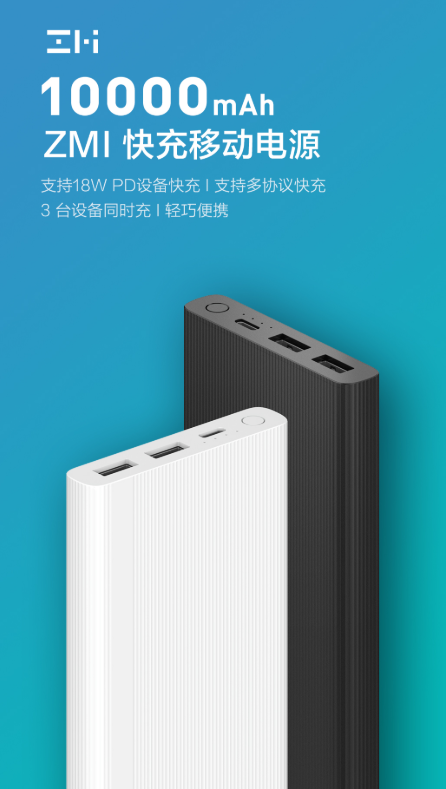
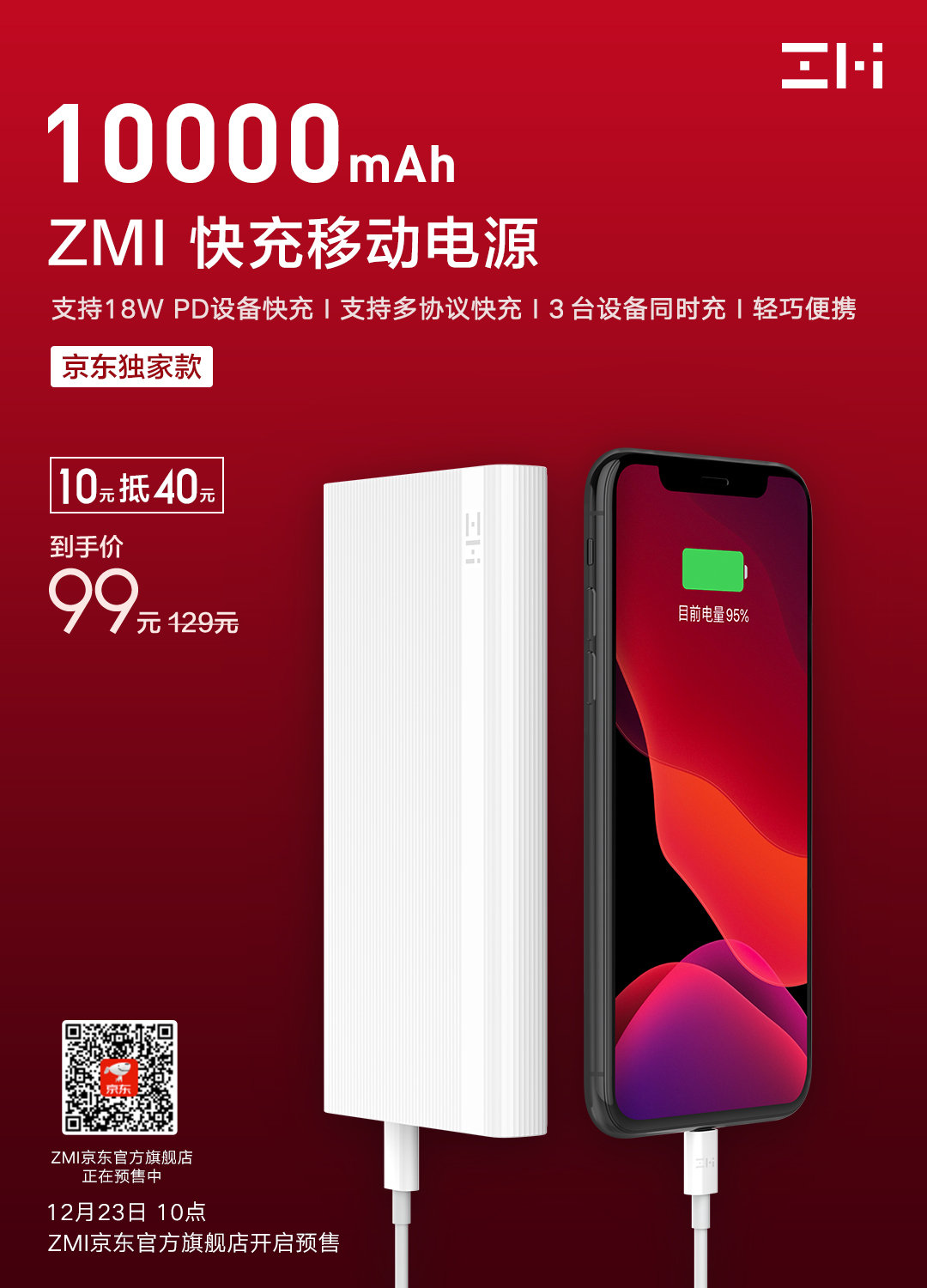
ZMI has a new power bank that is marketed to iPhone 11 owners but will actually work with practically any smartphone. The new power bank has a 10000mAh battery capacity and is exclusive to JD.com.
The ZMI Fast Charge Power Bank supports 18W PD two-way fast charge. It has a lithium-polymer battery that is enclosed in a fire-resistant and flame-resistant polycarbonate case. The power bank comes in white and black colorways with a textured finish to provide a firm grip when held.
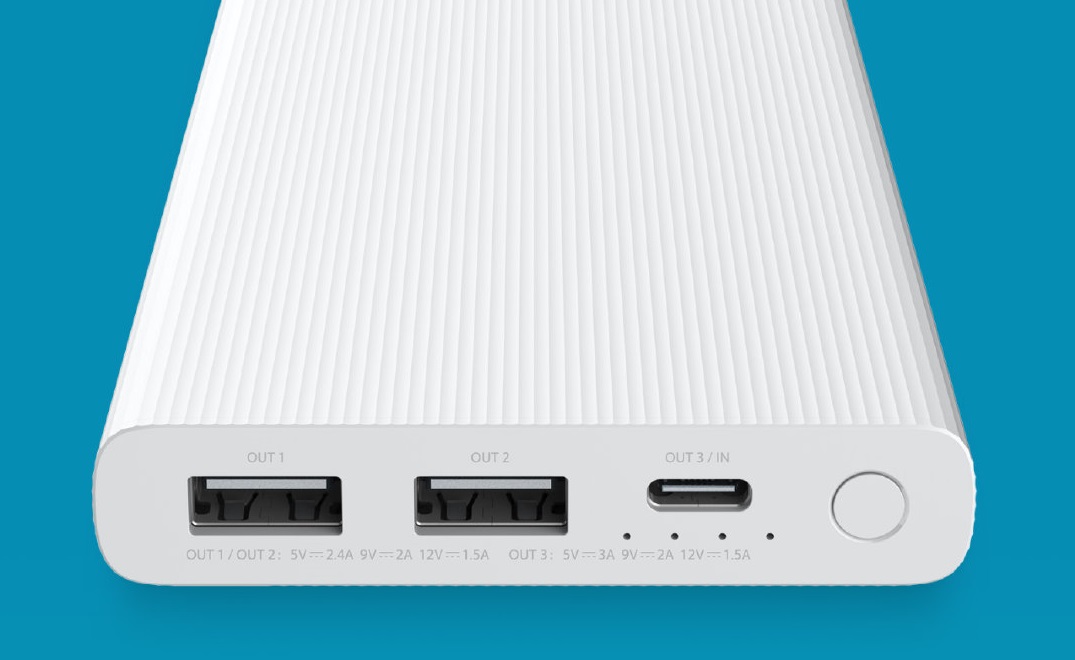
ZMI’s new power bank has three output ports – two full-size USB Type-A port and a USB Type-C port that also doubles as an input port for charging the power bank. ZMI says the power bank can charge the iPhone 11 from empty to 55% in 30 minutes if you use a ZMI USB Type-C to Lightning Cable. This is faster than Apple’s own charger that charges the iPhone 11 to 50% in 30 minutes.
The power bank not only works with Apple’s new iPhones but is also compatible with older models, devices that support Quick Charge 3.0, Huawei’s Fast Charge Protocol, and Samsung’s Adaptive Fast Charge. The USB-C port also supports the Nintendo Switch’s Power Delivery fast-charging protocol (9V 2A).
Below are the supported power ratings for each of the ports:
USB-A Output port: 5V 2.4A, 9V 2A, 12V 1.5A
USB-C port: 5V 3A, 9V 2A, and 12V 1.5A.
ZMI claims that you can get a maximum power output of 15W from each port if you are charging three devices simultaneously. Apart from charging smartphones, tablets, and portable gaming consoles, the power bank can also be used to charge low current gadgets such as Bluetooth headsets and fitness trackers. All you have to do is double press the power button to put the power bank in low-current mode.
The ZMI ZMI Fast Charge Power Bank is already available for pre-order on Jingdong.com for ¥99 (~$14). The pre-order period runs from today up until December 30 when it will go on sale.
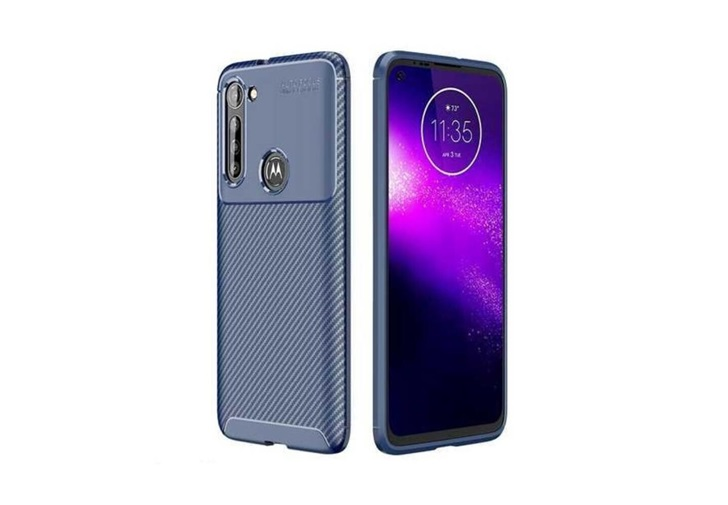
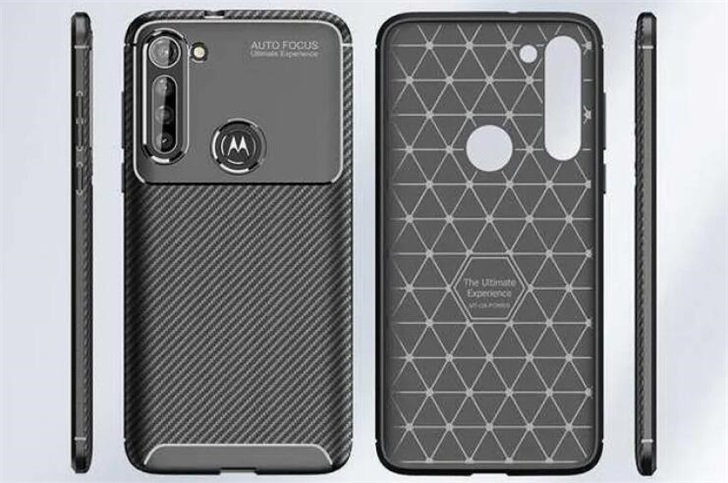
In October, Motorola launched the Moto G8 Plus and Moto G8 Play phones in Brazil. Rumors of the Moto G8 Power have been doing the rounds of the internet soon after the launch of G8 Plus and G8 Play. The elusive Moto G8 Power (codenamed Sofia) recently received the FCC (Federal Communications Commission) certification in the US. Case renders of the Moto G8 Power have appeared on Chinese retailer Alibaba to reveal its design
Motorola G8 Power Design and Specifications
Judging from the images, the Moto G8 Power bears a punch-hole camera on the top left corner of the display. There is no confirmation on whether the G8 Power will really feature a punch-hole screen as some reports have claimed that it will sport a waterdrop notch enabled display. There appears to be a USB (probably microUSB) on the bottom surface alongside the speaker grille, and a 3.5mm headphone port on the top edge.
At the rear, the Moto G8 Power sports a quad-camera setup, complete with an LED flash module. The camera setup is vertically aligned, with the flash alongside the primary lens. There is a cutout for the Motorola logo, which might double us as a fingerprint scanner.
According to the FCC documentation, the highlight of the Moto G8 Power is its 5,000 mAh battery. The device likely flaunts a display measuring between 6.2 and 6.3-inches and is likely to be driven by Snapdragon 665 mobile platform. The device should be equipped with Android 10 out-of-the-box and supports dual-band 5G Wi-Fi. The smartphone measures 157.9 x 75.8 mm.
In related news, Motorola has delayed the market release of Motorola Razr 2019. The clamshell foldable phone was expected to go up for pre-orders from Dec. 26 in North America. It was supposed to be released on Jan. 9. The Lenovo-owned company has claimed that the arrival of the device has been delayed due to high demand and supply issues. It has further stated that they “do not anticipate a significant shift from our original availability timeline.”
China-based OPPO has been in the smartphone business for close to 11 years. Phones like OPPO N1, OPPO N3, Find 7 and 7a phones have received good reception from users and critics. In the recent years, OPPO has spread its wings into all things technology over the years, including Artificial Intelligence, cloud computing and the Internet of Things (IoT). The company sees internet-driven services as its future, and ColorOS, OPPO’s Android UX plays a major role in achieving that vision.
ColorOS currently has more than 320 million active users across the globe. While the figures might seem pretty low considering the total number of Android users globally, it still forms a formidable volume. Software plays a key role in OPPO’s near future, and this will only get prominent with the advent of 5G, which is deemed as a catalyst for integrating different technologies.
5G Implementation
OPPO is on cloud 9 in terms of 5G implementation, having filed patent requests in over 20+ nations, across 2,500+ domains. Overall, OPPO has applied for over 40,000 patents globally, of which 14,000 have been granted to date. The company stands third in China in terms of the number of patents granted to domestic firms. Apart from 5G, OPPO also has patents related to VOOC, along with 1,000 other core patents. These patents are a result of the company’s constant investments in R&D, the latest include CNY $10 billion announced last year.
OPPO currently owns six research institutes and four research centers, employing over 10,000 people dedicated to R&D. The company further plans to invest RMB $50 billion in the next five years, dedicated to AI, cloud computing, software, and hardware technology. Focusing on 5G, OPPO plans to follow a three-step strategy that involves building a multi-portal ecosystem with smartphones and intelligent devices at its heart. OPPO is also involved with revamping user interfaces and content optimization.
To sum it up, OPPO plans to form an ecosystem of smart devices acting as multiple entry points that coordinate with one another. These points could be parallel, interconnected and capable of interacting with each other, without overlapping or crosstalking at any point.
OPPO will be employing “3 circle” multi-device experience integration strategy in 2020. The first circle in OPPO’s 3-Circle integration is the personal cycle comprising of devices that are closest to the user. It include smartphones, truly wireless earbuds, smartwatches, and other devices that are most frequently used. The smartphone plays a key role here as it possesses the maximum computing ability in the fray. Next in line are smartwatches, as they convey critical user data and act as an alternate point of interaction for the users, enabling high priority conversations. Earbuds form the third entry point, as they allow voice-based AI functionality for navigation and translation.
The second circle or the vertical circle consists of 5G Customer Premises Equipment (CPE). OPPO has plans to introduce a 5G CPE within the first quarter of 2020. The upcoming 5G CPE hub will accept a SIM card, and feature Bluetooth, Zwave, and ZigBee, pairing up to 1,000 devices at the same time.
OPPO’s third circle involves virtual and real integration. This circle comprises of AI/AR glasses. OPPO’s latest AR glasses running on Glass OS will play a key role here. The device was unveiled recently during OPPO Inno Day and features an HD camera, 2 fisheye cameras for a wider field-of-view, and a Time-of-Flight camera capable of 3D reconstruction. OPPO Glass also supports 3D surround sound for an immersive AR experience.
OPPO is headed to move beyond the conventional realms of manufacturing smartphones in 2020. A growing number of smartphone manufacturers are on their way to leverage their foothold in the business to offer clients a more immersive and connected AI lifestyle in the future. OPPO is well on its way to becoming the scout. With a clear roadmap of smartphones, accessories, and 5G-enabled devices, OPPO plans to move beyond the boundaries of smartphone manufacturing in 2020.
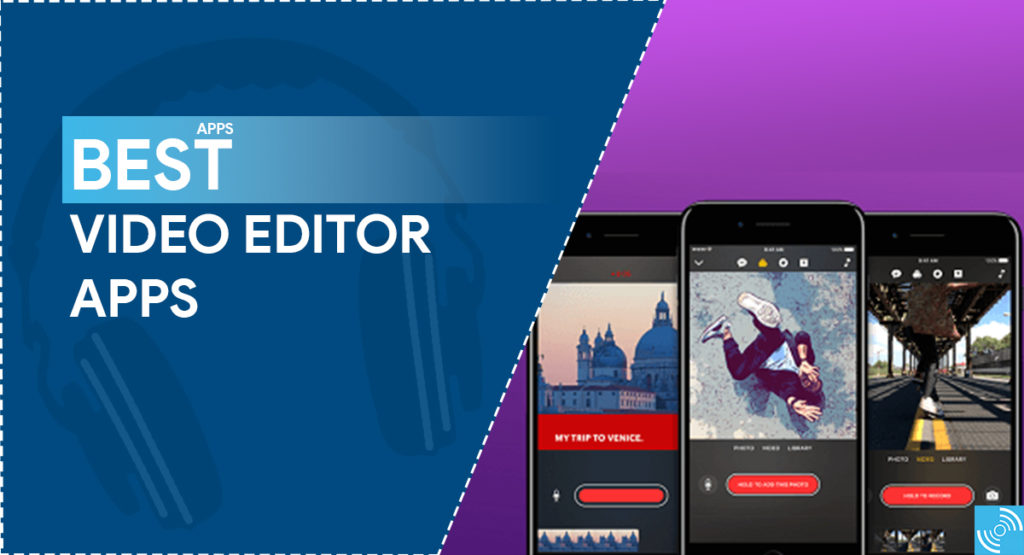
The consumption of digital content is increasing day by day. According to recent research, video content is the primary source of engagement these days. The dynamic nature of the video is attracting more users, which in turn are leading to better engagement and interaction. However, these beautiful and engagement rich videos are difficult to create, and it takes a lot of time. The evolved smartphone platforms have eased the video editing a bit. The users can edit the small changes on the go with the help of their iOS or Android smartphones. We have curated a list of video editor apps of 2019.
The list covers all the standard and premium tools that a user may require to edit a few changes or entirely create a video on the go. There’s a fantastic collection of apps on their respective app stores for both Android and iOS smartphones. The user can easily upload the videos to Facebook, Twitter, Instagram, and YouTube with simple editing using any video editing app.
The Video content is quite challenging to handle and more tricky to edit. Several professional tools such as Adobe Premiere Pro, Final Cut Pro X, Pinnacle Studio, and others are required to edit and compose a high-resolution video fully. However, smaller editors with the capacity to arrange the clips and make some changes are present in the video editor apps based on iOS or Android.
Here are some best video editor apps for Android and iOS.
Adobe Premiere Rush Editor
Adobe is always known for its professional tools to edit images, audios, videos, and flash files. On the lines of Adobe Premiere Pro for Personal computers and laptops, the company has announced the Adobe Premiere Rush Editor for video editing on mobile platforms.
The Adobe Premiere Rush Editor allows the users to shoot, edit, and share videos online. It offers various tools and video effects to make the video look awesome without wasting any time. It provides compatibility across phone, tablet, and desktop.
Just after capturing the video, the users can start editing the content and can add music, titles, do voiceovers, and apply video effects. The multitrack timeline offers flawless editing and enhances productivity while using small screens. The user can edit high-quality content straight from the app without any watermarks.
The users can easily arrange the video, audio, and graphics by dragging and dropping. The Automatic sync to cloud and sharing capabilities make the Adobe Premiere Rush Editor our favorite choice. The users can also upgrade to a paid subscription of $9.99 /mo for 100GB cloud storage and other benefits.
FilmoraGO is another premium tool with free availability on both iOS and Android. It is a powerful video editor offering several professional tools and filters for easy and efficient video editing. Apart from the basics like cut, render, and trim, it also provides the ability to play in reverse, do square videos, and for Youtube having 16:9.
The user can easily mix photos and videos either by importing the photo and video clips or directly downloading from Facebook or Instagram. It inherits One-click theme support for FilmoraGo along with inbuilt Music support. It supports playing videos in reverse, slow down and speed up, several transitions, overlays and filters, texts and titles, elements, and other functions in WYSIWYG editor.
FilmoraGo support HD quality video export at any time without any issue. The app comes with support for English, German, Italian, Turkish, Japanese, and other popular languages. It offers in-app purchases.
It is a powerful editing tool available for both iOS and Android. KineMaster is a robust video editor housing multiple features such as blending mode, voiceovers, chroma-key, speed control, special effects, and much more. It fully supports TikTok, Instagram, YouTube, and other social media websites.
Kinemaster supports multiple layers of videos, stickers, and special effects. It also brings reverse video features to give it a unique look. Like the other premier video editing tools, it supports blending modes, beautiful results, voiceovers, background music, etc. It is also a host to trim, splice, and crop features for a video.
The user can purchase premium music, fonts, stickers, transitions from the Asset store. It has the facility to export a 4k video at 30 frames per second. It is available for free on both iOS and Android, but there are certain paid features and assets.
Power Director is a powerful video editing tool available for Android. Being the Editor’s Choice App on Google Play, the app has a 4.5-star rating and 70 million users across the globe. It envelopes some iconic Power Director features from the PC. It features a 4k resolution export facility, fast froward or slow-motion videos, and a video stabilization feature. Power Director can easily edit background with a green screen editor using chroma key.
Glitch Effect and Transitions are new features that have been added to the app for creating futuristic-looking videos. It offers 400+ free templates effects, 30+ video effects, 40+ transitions, and 290+stickers. The user can add text, background music, voiceovers, and apply effects for videos and other adjustment tools.
The PowerDirector app outputs video faster with improved stability and 64-bit support. It is fully compatible with Chromebooks and offers export in 720, 1080 and 4K. There are a lot of premium features with in-app purchases. Unfortunately, it is not available for iOS devices.
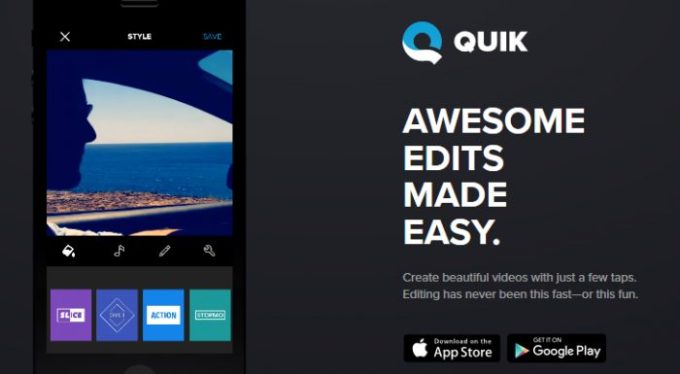
Unlike the above professional video editors, Quick is a new generation video editor app. It offers a lot of different yet intuitive features to edit short videos. There are about 24 video styles that can be used to customize the video.
It is a perfect companion for less intense editing works. The user can choose favorite photos and video clips to generate a video quickly. It adds beautiful transitions and effects to sync with the audio in the background. Quick allows users to add up to 75 photos and video clips from Gallery, Google Photos, Dropbox app. It can even add motion photos to the video.
Quik automatically analyzes GoPro footage under three different modes and selects great moments. It can easily detect faces and colors to enhance the photo framing capability. Quik hosts 23 themes eloped with intuitive graphics and transitions. The basic features such as reorder, trim and rotate are present in the Quik.
There are around 100 free songs, or the user can choose from their own collection. Export videos in 1080p or 720p resolutions. There’s an automated feature to turn your last 24 hours adventure into a flashback video.
It is a free video editor available for both Android and iOS users. VivaVideo has gained massive popularity for the past few months. It can make a beautiful video from pics with songs and can add transitions and effects. VivaVideo maker is popularly known for its feature to cause a video with the song. It is being used by a large number of TikTok video makers.
It helps users to cut, crop, merge, copy, paste, and more. VivaVideo can allow you to add video editing effects such as blur, background, speedup videos, slow down videos, slow down videos. It can easily add blur background to YouTUbe and Instagram videos. The glitch effect, along with other transition effects, has been recently added via a recent update.
VivaVideo can even help users to create memes and blur videos easily. It carries the capacity to export video/movie in 720p, 1080p, and 4K. You can quickly get the App and choose from several special effects, stickers, filters, and animated clips.
These are some best video editors for both Android and iOS devices. However, these tools won’t be a favorite choice to fully edit an HD video but still helps to finish small tasks for social media. You can also recommend the apps as there are many video editors, that we may have missed.
Earlier this morning (23rd December 2019), China announced that it would cut import taxes and tariffs on a range of over 850 products. The changes will be implemented with effect starting from 1st January 2019 and are being made to boost imports amidst a slowing economy and a trade war with the US.
China’s Customs Tariff Commission of the State Council has stated that the move is aimed at promoting a “high quality development of trade.” According to a Chinese news agency, Xinhua, the new adjustments are being made to further the coordinated plans of development of trade and environment by the country.
China to reduce trade tariffs levied on a few technology components on 1st July 2020
From the list of 859 total products seeing an effective change, a few of the notable ones include frozen imported meats (pork, as China is one of the largest consumer of the meat and the country was hit with a recent virus that affected indigenous animals), essential pharmaceuticals (asthma inhalers and diabetic drugs), paper products and crucial components of electronic products (integrated circuits and key semiconductors components).
Furthermore, the products from Australia, New Zealand, South Korea, Singapore, Switzerland, Pakistan, and a few Latin countries will be charged with even lower tariffs under the new free-trade agreements. So far, the move does not seem to be directly caused by the aftermath of the US-China trade disputes. Earlier this month, both sides had announced a minor agreement to reduce a few of the tariffs levied to prevent further impact on the global trade growths for either side.
US and China Leaders together discuss the trade relations between the nations
Previously, China had also exempted a list of US based chemicals from import tariffs, which included variants of industrial glue and other adhesives, industrial polymers and types of paraffin which is used in both cosmetics and food products. Notably, it is stated that China plans on further reducing import tariffs on some technology products as well from the 1st of July 2020.
Thus, it could mean that in 2020, trade relations have a better chance of being revitalized in China. This could also imply that the import of semi-assembled smartphones and its crucial components will be levied lower tariffs allowing for foreign companies like Apple to be a bit more competitive with its pricing in the East.
Back in October this year, Xiaomi crowdfunded a cost-effective smartwatch under its Youpin platform.
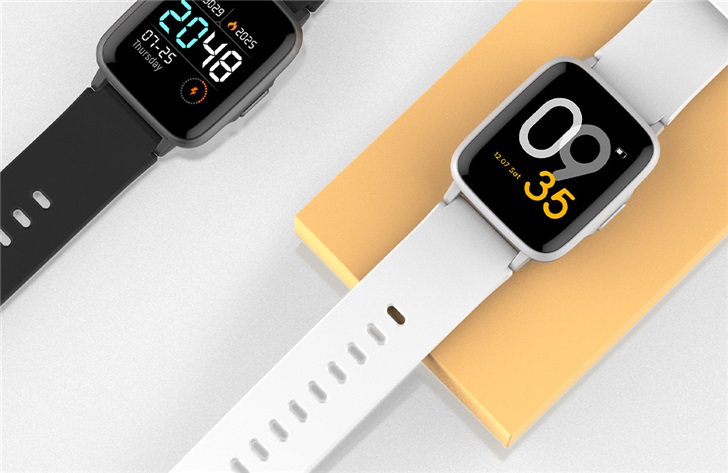
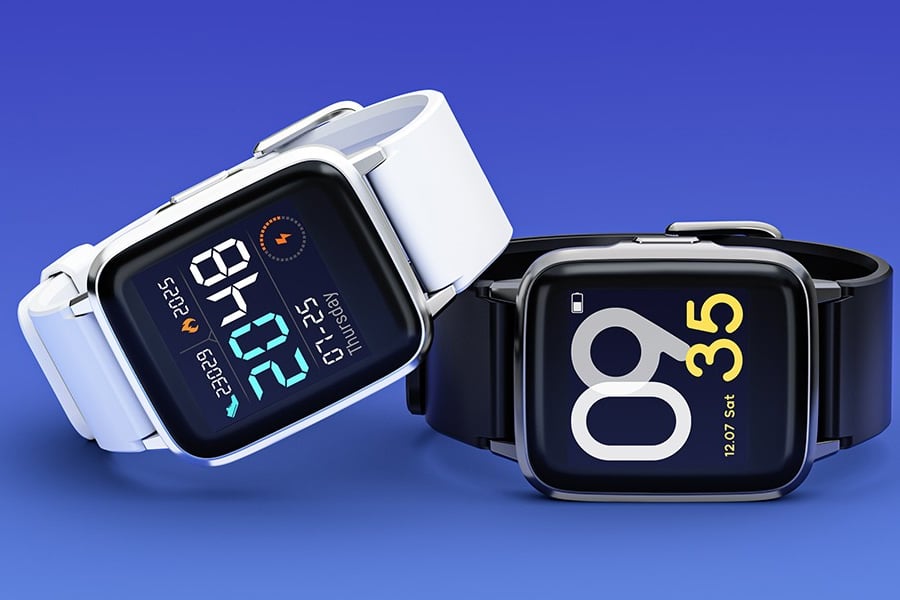
Dubbed as Haylou LS01, the new smartwatch boasts an impressive array of features including a heart rate monitor, activity and sleep tracker, impressive 14-day battery life and of course, an affordable price tag. Just months after unveiling it, Xiaomi is now offering the black, as well as silver color options on the Xiaomi Haylou LS01 via Giztop for a reasonable $25.99.
Sporting a square-shaped watch face, the Haylou LS01 features a 1.3 inch colored LCD display with a decent screen resolution of 240 x 240 pixels. The smartwatch weighs in at just 34 grams and its dimensions are 40.9 x 35.7 x 11.6 mm.
The super lightweight smartwatch comes with a silicone strap, which is 26.3 mm wide. This silicone strap can be swapped easily and can be bought separately as well. A robust 210 mAh battery provides juices to the Haylou LS01, offering a 14 days backup, depending on the usage.
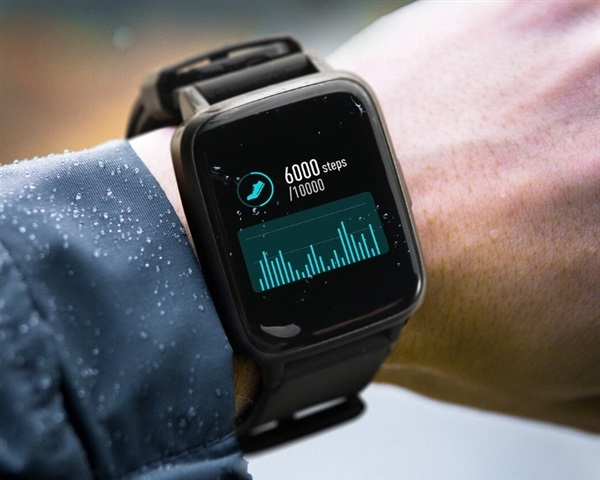
The smartwatch can be paired with devices running Android, as well as iOS; however, the supported versions of the two operating systems include Android 4.4, iOS 8 or above. Furthermore, the Haylou LS01 is rated IP68, which means it is dustproof and waterproof up to 1.5 meters (it can be dunked into 1.5 meters of water for up to 30 minutes).
Aside from featuring a heart rate monitor sensor, the Haylou LS01 supports tracking for various activities such as sleeping and steps. On top of that, it supports nine different sport modes. You can check out the rest of the features below:
Display: 1.3 inch LCD display, 240 x 240 px
Battery: 210 mAh
Connectivity: Bluetooth 4.2
Compatible OS: Android 4.4, iOS 8 or higher.
Functions: Sleep tracking, activity tracking
Sensors: Heart Rate Monitor, Sleep tracking
Weight: 34 Grams
Dimensions: 40.9 x 35.7 x 11.6 mm
Colors: Black, Silver
To get your hands on the Xiaomi Haylou LS01 smartwatch, all you need to do is to follow this link without wasting time.
Historically, the CES events, which stand for Consumer Electronics Show, had its focus solely on what its name stands for, consumer electronics. These include smartphones, Smart TVs and other products marketed directly to end users. However, the CES 2020 in Las Vegas is gearing up for something unique as Honda, the automobile manufacturer, is set to unveil a futuristic Augmented Driving Concept Car in the event.
The unique and futuristic physical aspects of the car solidify that it is indeed a concept vehicle. In other words, concept cars never actually see commercial mass productions but are used to offer a glimpse of what the future of the industry might offer. In the video, the company also states that it is a “Depiction of future possible features of automated vehicles.”
Most Concept cars showcase highly advanced designs and features like a large interactive display, a HUD (heads up display) and more. However, Honda takes a different take on Autonomous vehicles. According to the company, this car is a part of an Augmented Driving Concept which means to supplement the experience of still being able to drive and feel the “freedom” and “thrill.” In simpler terms, the vehicle whilst being completely automated still offers complete freedom with a manual mode through an interactive steering wheel.
Although this goes against the definition of an automated vehicle, Honda is still trying to preserve the human element in driving. Furthermore, the company also mentions that such cars will be controlled by a single all-in-one unit steering wheel for a “seamless transition from autonomous to semi-autonomous driving.”
Honda Augmented Driving Concept Car being able to take detours according to Human needs
Honda went as far as to deliver a very simple diagram to explain why the world needs a semi-autonomous vehicle. Looking at the diagram, the focus of Human curiousity oriented car becomes clear. Generally, automated cars get the user from the start to the end point efficiently, which is what they are built for. However, the Honda concept can take inputs and understand the user’s needs; like going to the coffee shop before work or picking up sweets before going to the park. Simply put, it offers more user control over its actions and augments the experience.
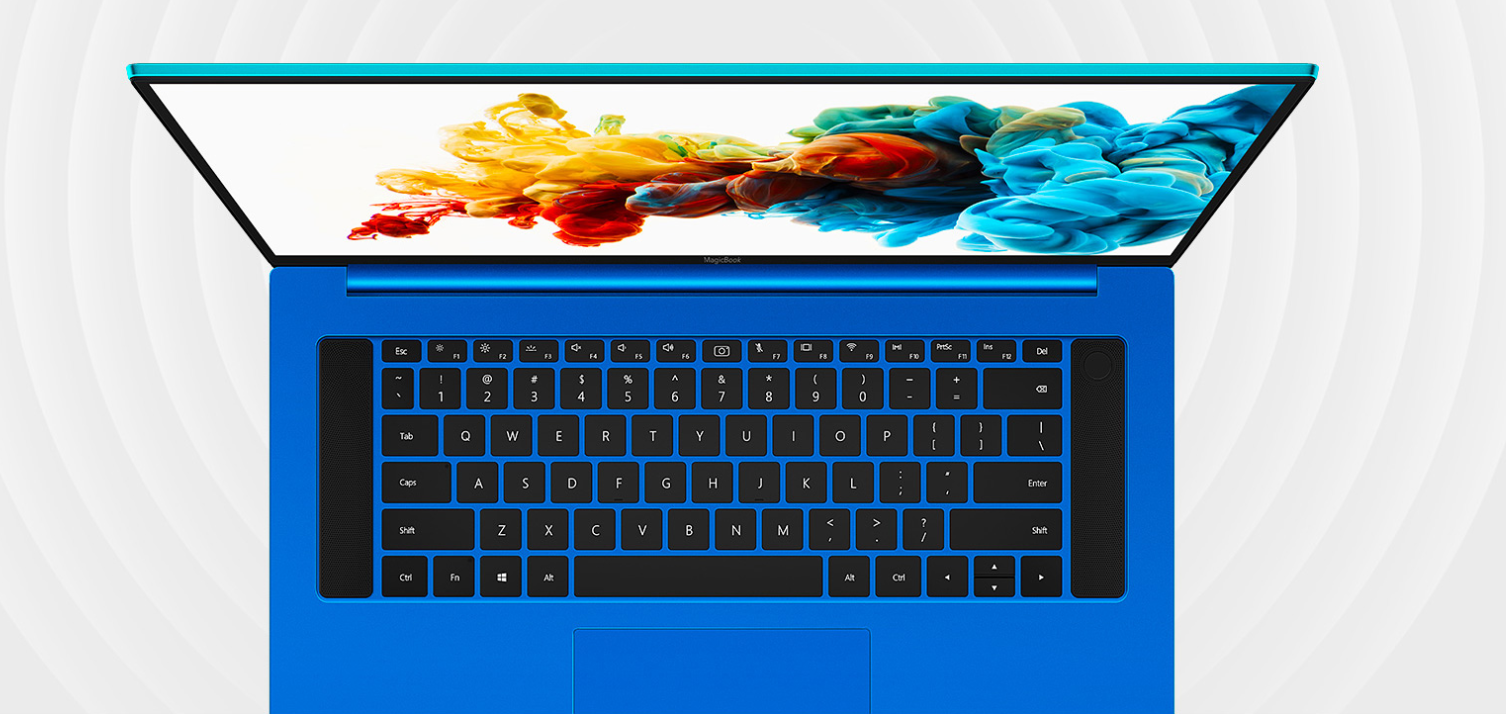
Honor expanded its MagicBook line yesterday with the launch of the Intel version of the MagicBook 15. However, that was not the only new computer that was unveiled. It also announced a new color variant for the MagicBook Pro, its 16.1-inch notebook.
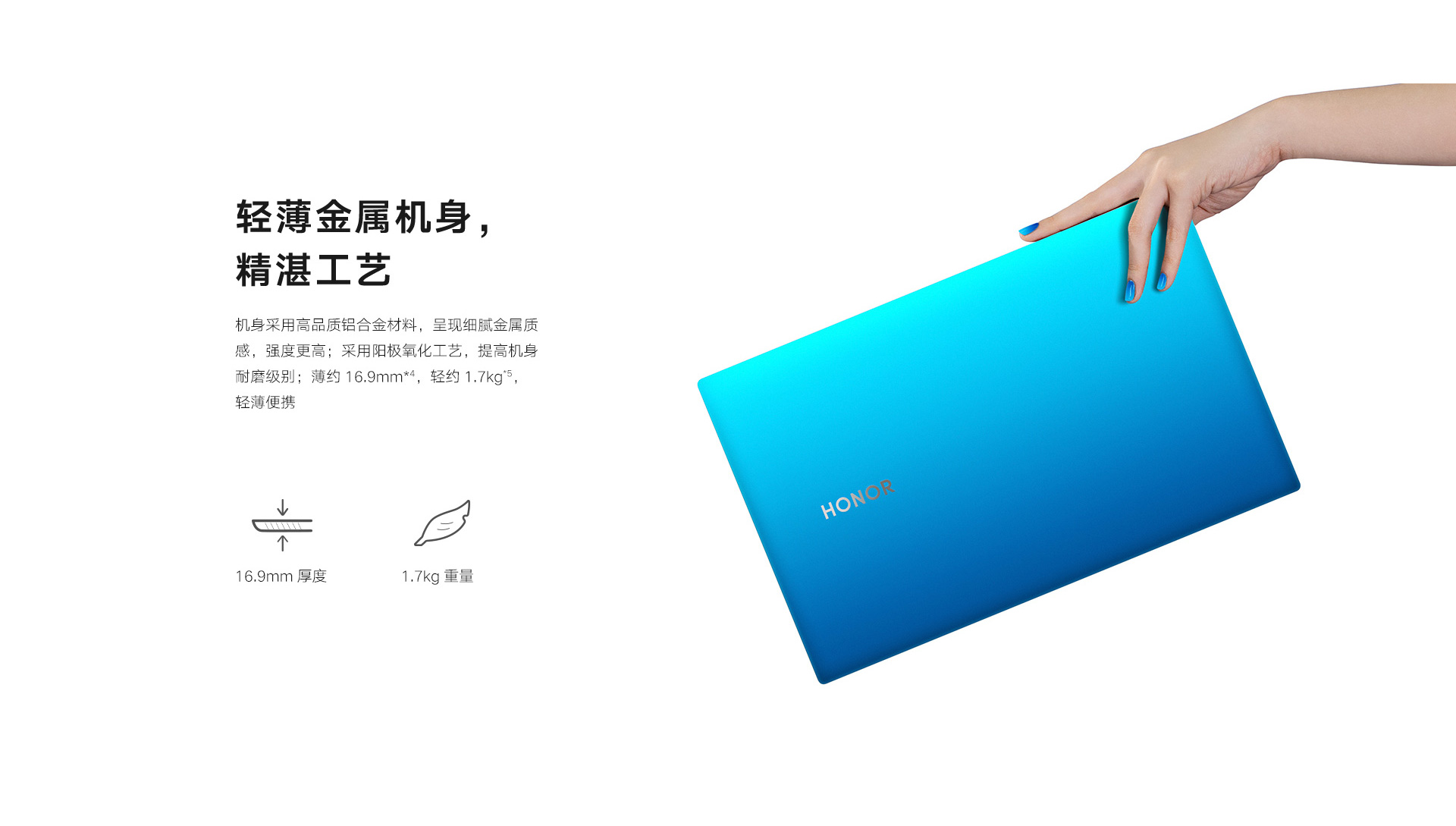
The MagicBook Pro was originally available in Glacier Silver and Starry Gray when it was announced back in September. Now, buyers have one more color option called Starfish Blue to choose from. Sadly, the color variant is limited to one configuration – the Ryzen 5 edition with 16GB of RAM and 512GB of SSD storage.
Honor is asking for ¥4799 (~$685) for the new color variant and will ship pre-orders with a free Honor backpack and Bluetooth mouse. The notebook will be available for purchase starting January 8, 2020, on Vmall, JD.com, and TMall.
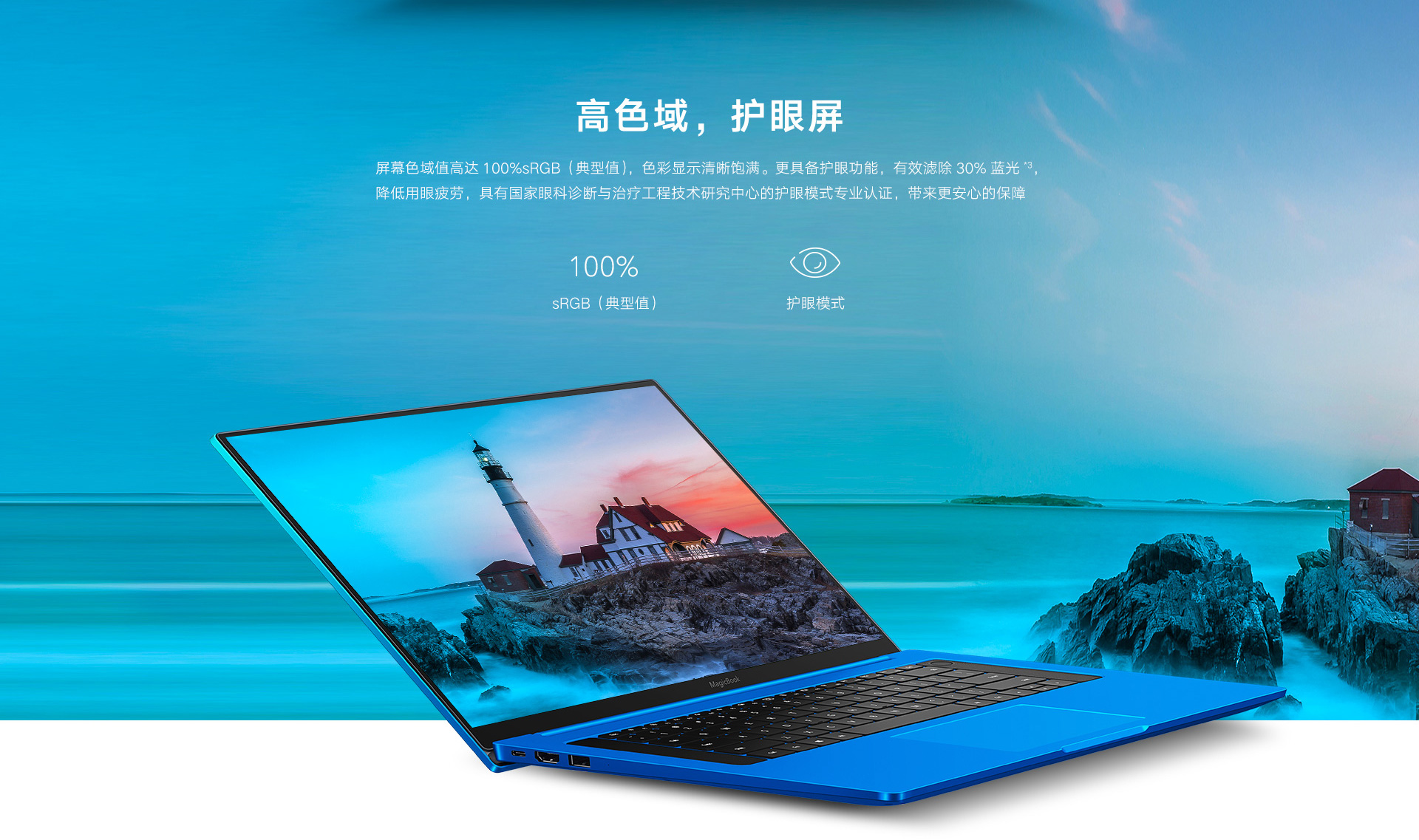
The MagicBook Pro has a 16.1-inch screen with an FHD resolution and a 90% screen-to-body-ratio thanks to its 4.9 millimeters thin side and top bezels.
It also has NFC, a fingerprint scanner, Bluetooth 5.0, and dual-band WiFi. For ports, the notebook has 3 x USB 3.0 ports, an HDMI port, a microphone + audio jack combo port, and a USB-C power input port with support for 65W charging. It packs a 56Wh battery that charges up to 70% in 1 hour and takes 2.5 hours to fully charge.
The Honor MagicBook 15 Pro ships with Windows 10 Home along with Microsoft Office Home and Student Edition 2019. It also has a feature called Magic-Link 2.0 that allows for file transfer (up to 30MB/s) between a compatible phone and the computer. A connection is established between the two devices just by touching the phone against the NFC area of the computer.
On 23rd December 2019, Guinness announced that the Vivo X30 Pro broke a world record. The title held by Vivo and JD is for the highest number of people in a photo relay, which means the most number of people that took a photo with a single smartphone.
A Weibo post on Participants attempting the Guiness World Record with the Vivo X30 Pro
According to the reports, a total of 546 people used the telephoto mode of the Vivo X30 series smartphone. In the challenge, the participants used the device to capture images on the cruise ship Pearl River Crystal in Guangzhou, China. This attempt successfully broke the previously held world record.
Notably, Xiaomi is also one of the only smartphone manufacturers from China that also holds a Guinness World Record. It is for the highest number of physical stores opened simultaneously with about 500 Mi stores being opened across 14 states in India. This was achieved back in 2018 on the 29th of October at sharp 12 pm.
Total of 546 participants managed to break the Guinness World Record for the highest number of people taking a photo
The Vivo X30 series was announced earlier this month at a launch conference by the Chinese OEM. The latest series of smartphones are equipped with the Exynos 980 chipset which is manufactured by Samsung, the South Korean OEM. It supports the SA & NSA Dual module network and features the latest Funtouch OS 10 system based on Android 9 (Pie). Vivo X30 series is equipped with a 64 megapixel primary camera alongside an ultra wide lens and a 60x super zoom telephoto lens which was used to achieve the world record.
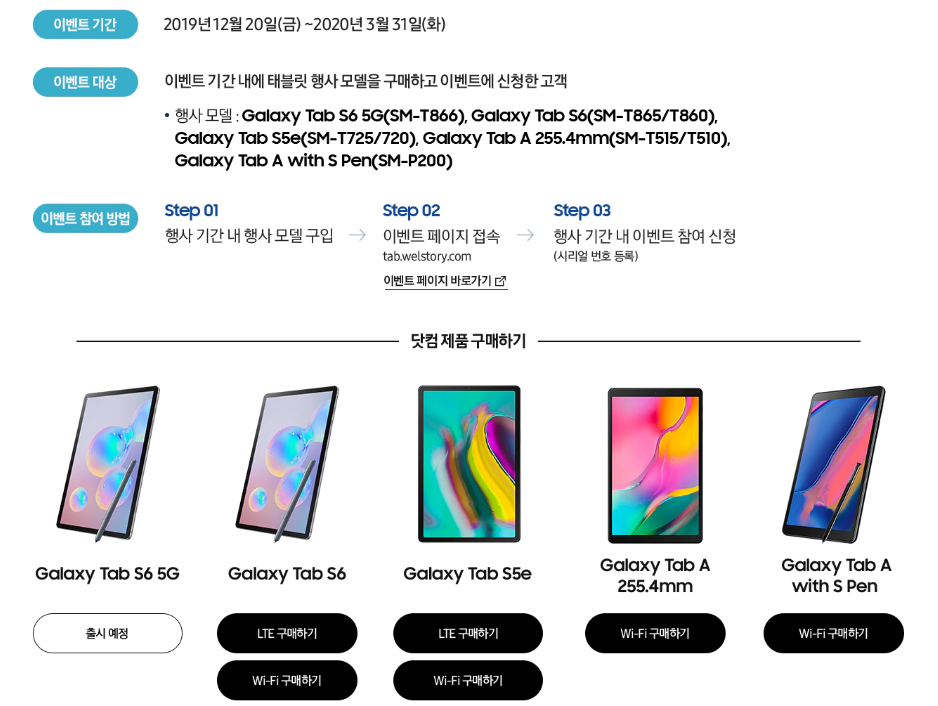
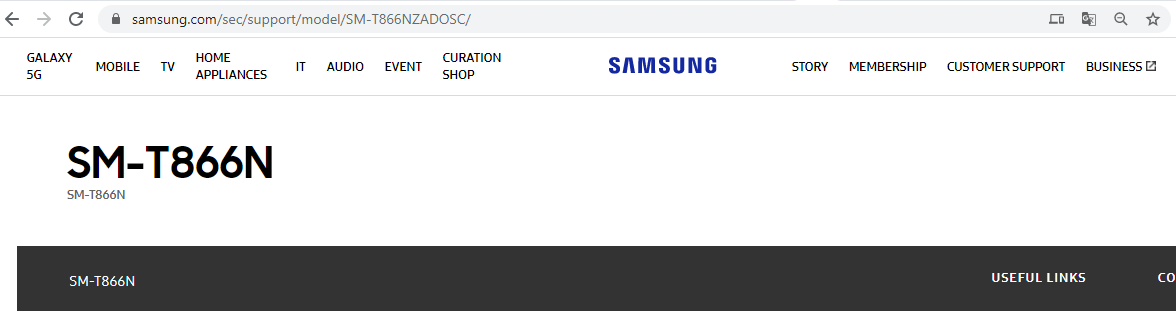
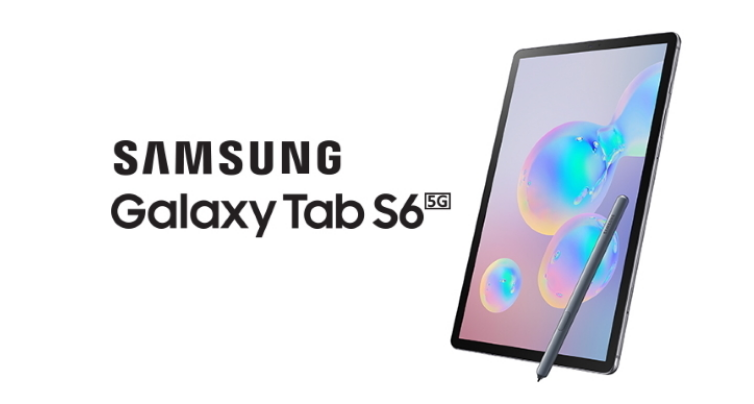
Samsung has been reportedly working on a 5G version of its Galaxy Tab S6 flagship tablet that was made official in August this year. The tablet was made official in 4G LTE + Wi-Fi and Wi-Fi only editions. Reports of its 5G edition first emerged in October when the Galaxy Tab S6 5G device with SM-T866N bagged approvals from Bluetooth SIG and Wi-Fi Alliance. Earlier this month, the SM-T866N received certification from South Korea’s National Radio Research Agency (NRRA)v which indicated that the Galaxy Tab S6 5G will go official in the home market soon. Samsung has started a new promotional offer for tablets in South Korea. Interestingly, the unannounced Galaxy Tab S6 5G is also included in the promotional offer. Also, the support page for the tablet has gone live on the official website.
As it can be seen in the image above, the Galaxy Tab S6 5G is listed along with other models such as Galaxy Tab S6 (Wi-Fi and LTE variants), Galaxy Tab S5e (Wi-Fi and LTE variants) and Galaxy Tab A 255.4mm (Wi-Fi only edition) and Galaxy Tab A with S Pen (Wi-Fi only edition). The promotion offer bag on Dec. 20 and it will come to an end in March 31, 2020. It indicates that the Galaxy Tab S6 5G will go official within this period.
The product listing of Galaxy Tab S6 is not yet available on official website in South Korea. Shown below is the screenshot of the support page of the Galaxy Tab S6 5G SM-T866N. The appearance of the support page is a good hint that it could be launching in couple of days in South Korea.
The Galaxy Tab S6 5G will be sporting the same design as its 4G / Wi-Fi edition. The inclusion of a 5G modem that will enable 5G connectivity on the device. Some reports have claimed that the Galaxy Tab S6 5G could be equipped with a smaller display of 10.3-inch display and a larger 7,300mAh battery. However, there is no official confirmation on it yet.
The Samsung Galaxy Tab S6 is the world’s first tablet to arrive with HDR10+ compliant tablet. HDR10+ is nothing but Samsung’s format to rival with Dolby vision. The tablet sports a 10.5-inch S-AMOLED display that supports quad HD+ resolution of 2560 x 1600 pixels. The display is integrated with a fingerprint scanner. The device is backed by a 7,040mAh battery that supports 15W fast charging. The tablet carries support for S Pen stylus.
The Snapdragon 855 chipset powers 6 GB RAM + 128 GB storage and 8 GB RAM + 256 GB storage variants of the Galaxy Tab S6. It has a microSD card slot for more storage. It has 13-megapixel + 5-megapixel and a front-facing snapper of 5-megapixel. The device is equipped with AKG tuned quad speakers. The Android 9 Pie OS with One UI skin runs on the device. The tablet supports Bixby AI and Samsung DeX. It lacks a 3.5mm audio jack. The Galaxy Tab S6 comes in colors like Cloud Blue, Rose Blush, and Mountain Gray. In the U.S, the 128 GB and 256 GB variants of the Tab S6 are priced at $649 and $729 in the U.S.
Every year, hundreds of smartphones get released. These phones bring new features including sharper displays, better cameras, more powerful processors, bigger batteries, and faster and more efficient charging technologies.
And with manufacturers trying to outdo themselves with respect to pricing, it becomes tempting to purchase a new phone. There are also times a phone gets a huge slash in price making it more affordable and bringing it to a lower price bracket.
So for this week’s poll, we want to know how frequently you change your smartphone. Do you pick up a new phone every year or do you change your phone twice in the span of one year? Or do you hold on to your phone for as long as possible? Do take the poll below and also drop a comment in the comment box telling us more details.
Xiaomi is crowdfunding an affordable smartwatch on its Youpin platform called the Haylou Smart Watch. The highlighting features of the device include a heart rate monitor, sleep and activity tracker. On top of that, the device also features an excellent 14-day battery life, and very attractive price tag of just 99.9 yuan, or $14.
The Haylou LS01 smartwatch has a square watch face that accommodates a 1.3 inch coloured LCD display with a resolution of 240 x 240 pixels. The smartwatch measures 40.9 x 35.7 x 11.6 mm and it weighs 34 grams. The Haylou LS01 ships with a 26.3 mm wide silicone strap which can be easily swapped and with straps that can be bought separately.
The Smart Watch is powered by a 210 mAh battery which is claimed to provide a battery backup of 14 days which will vary based upon usage. The smartwatch is compatible with devices running both Android and iOS. However, the supported versions of the two OS’ include Android 4.4, iOS 8 or higher.
To Haylou Smart Watch is IP68 rated which makes it both dustproof and waterproof upto 1.5 metres for a maximum period of 30 minutes. It is capable of function normally with temperatures ranging as low as -20 degree C and as high as 45 degrees C. It also features a heart rate monitor sensor.
It also supports activity tracking, step counter, sleep tracking and 9 different sport modes. The Haylou Smart Watch is currently available for purchase only in China at a crowdfunding price of 99.9 Yuan ($ 14). All in all, it seems like an excellent value for money product that not only offers a wide variety of features but also looks good for its price.
2020 is an important year for Sony. The consumer electronics giant is set to release numerous products which include the much anticipated PlayStation 5 and its Xperia lineup of smartphones; one of which is the successor to Sony Xperia 5 that is now expected to arrive with a new punch hole selfie camera.
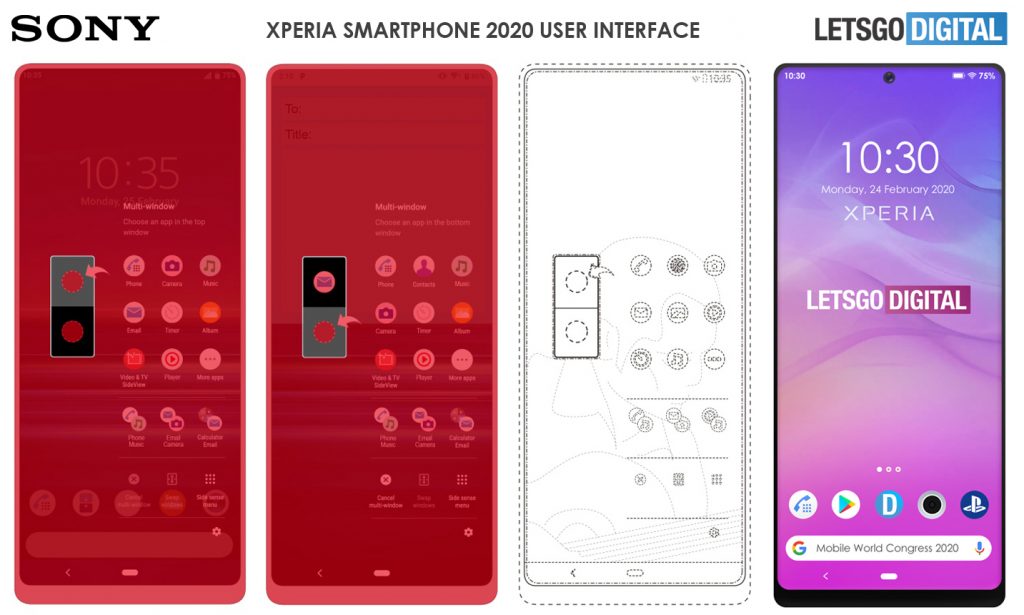
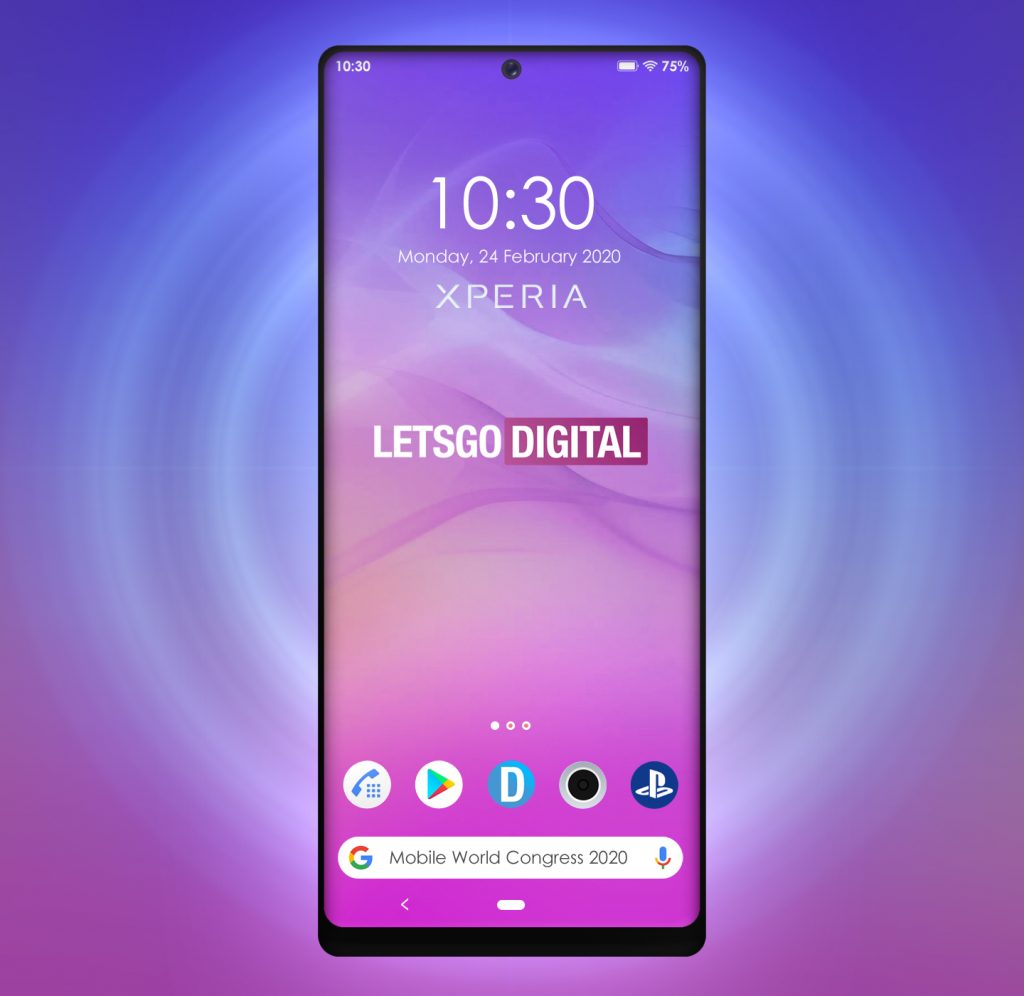
According to a new report, Sony Corporation has applied for a design patent back in its home country, Japan. The patent is for a new graphical user interface and was published in the WIPO Global Design Database on 19th December 2019. In the patent, two color renders are included for a smartphone on which the UI is showcased. It reveals a number of details regarding the smartphone like a chin on the bottom of the device. On the top, however, the bezels are so narrow that there will be no room for a selfie camera.
Renders of the User Interface of Sony’s 2020 Xperia flagship with Punch Hole Selfie Camera
Furthermore, the renders patented also illustrates the frame and borders of the upcoming Xperia smartphone. This leads to speculation of the device sporting a punch hole display selfie camera on the front. Notably, Sony could also opt for a pop up camera but that is unlikely for the OEM. The reason being that the company highly values its water-resistant handsets with IP ratings. Sony Xperia Z was the first waterproof smartphone and the company might not skip such an integral feature for a flagship device.
Additionally, when the renders are compared to existing Xperia smartphones, it is seen that the device’s aspect ratio and form factor is identical to Sony Xperia 1 which was the top model for 2019. The patent also reveals other key information like “Monday, February 25”, which was the announcement day of the previous flagship smartphone from the company. MWC 2020 kicks off on 24th February 2020, so we can expect to see more details regarding the device on the second day.
Xiaomi has gone to Weibo with their latest teaser hinting that the Mi MIX Alpha is going on sale soon after months of waiting. It’s been a long time coming, and the device was even originally slated to go on sale in December. It’s still one of the most interesting and unique devices around, even months after its original announcement.
The Xiaomi Mi MIX Alpha is the world’s first smartphone with a curved display that wraps around almost the entire device. Except for the tiny vertical strip that houses the camera at the back, the display surrounds the entire smartphone, including the sides and the back.
This is a single display panel of 7.92-inch that wraps around the entire body bringing the screen to body ratio to a staggering 180.6%! This is made possible also because of the extremely narrow 2.15mm bezels on the top and the bottom.
The device is confirmed to be powered by the Snapdragon 855+ processor with 5G dual SIM support. There will be at least one version with 12GB of RAM and 512GB of UFS 3.0 storage. The battery isn’t very large at 4,050mAh but it does support 40W fast charging just like the Mi 9 Pro 5G.
With features like wraparound display, the 108MP primary camera sensor and the monstrously powerful specs, the smartphone was always going to carry a higher price tag. The Mi MIX 4 has been announced for a price of 19,999 Yuan, which roughly converts to $2,814. The question is, will there be a market for an experimental device like this?
In a recent interview, CEO of OnePlus Pete Lau talked about the development of OnePlus as a brand, their product vision and how they design their devices. We get some pretty interesting insight into the CEO’s views on his own company, as well as their principles and philosophies when it comes to their future products.
According to Pete Lau, OnePlus carries over all their best features to their next devices because they add value. “A lot of the differences between high-end mobile phones and ordinary mobile phones are in the details. If you use 90Hz, you can’t go back to 60Hz.” He said that when you buy a $1,000,000 car, the main concern isn’t how powerful the engine is, but rather the details and workmanship.
When asked why OnePlus doesn’t push ads in their OS like other manufacturers, Pete claims that the company makes decisions based on user experience. If an addition doesn’t add anything to the user experience, then the company won’t add it to the device. They also decided to remove the headphone jack from the OnePlus 7T Pro however, so yeah.
The interviewer goes on to ask if this would seriously effect their revenue, Pete Lau claims otherwise. He believes that if a product is well-made, it will naturally make money. “I have no ads, but I can make money by selling my devices a little more expensive.” He also addresses the increasing OnePlus prices, claiming that the company doesn’t strive towards making cheaper devices, but rather devices that represent a good value for money.
Finally, Pete Lau also tells us that the OnePlus TV is set for a China release sometime next year. He had earlier hinted that the company was working hard to launch OnePlus TV in North America, Europe and China regions as soon as partnerships are established with most of the local and regional content providers.
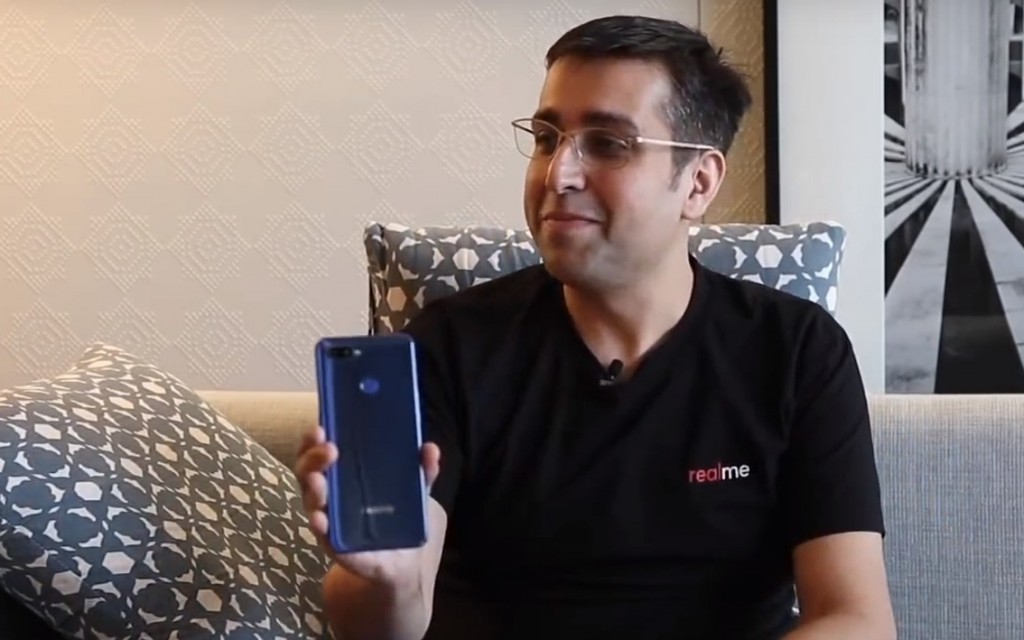
Realme has given Xiaomi a run for their money, matching Redmi’s every move this year. However, the company has bolder plans next year, right from launching a 108MP smartphone to rival the Mi Note 10 Pro and to disrupting the IoT segment.
The brand’s CEO, Madhav Sheth, revealed in an interview with the Mobile Indian that Realme plans to disrupt every segment in the market, just like it did with the Rs. 10000 – Rs. 20000 price segment in India. He added that Realme wants to be a tech lifestyle brand, rather than just a smartphone brand.
“There are a lot of IoT products which we are planning to bring in India. Realme will not be a mobile brand, it will become a tech lifestyle brand,” said Madhav Sheth. “Our philosophy is quite simple. We will introduce IoT products not just for the sake of it, but we will bring such products that help and benefit the users.”
This is exactly what most smartphone companies have been trying to achieve in the past couple of years. Xiaomi, Huawei are the best examples of brands that have expanded into multiple product lineups. Even OPPO and Vivo have diversified their product portfolio this year.
He also added that Realme will be doubling down on its offline strategy, expanding the number of offline stores from around 10,000 right now to 30,000 to 35,000 retail stores by the end of December 2020. Madhav said that Realme has a clear vision with respect to its offline strategy and will not differentiate between offline and online partners.
“We don’t give high margins to retailers as compared to other brands. We give around one-fourth of what other brands are giving but we make sure they get the product on time so that they don’t feel left out,” added Madhav when commenting about the company’s offline strategy.
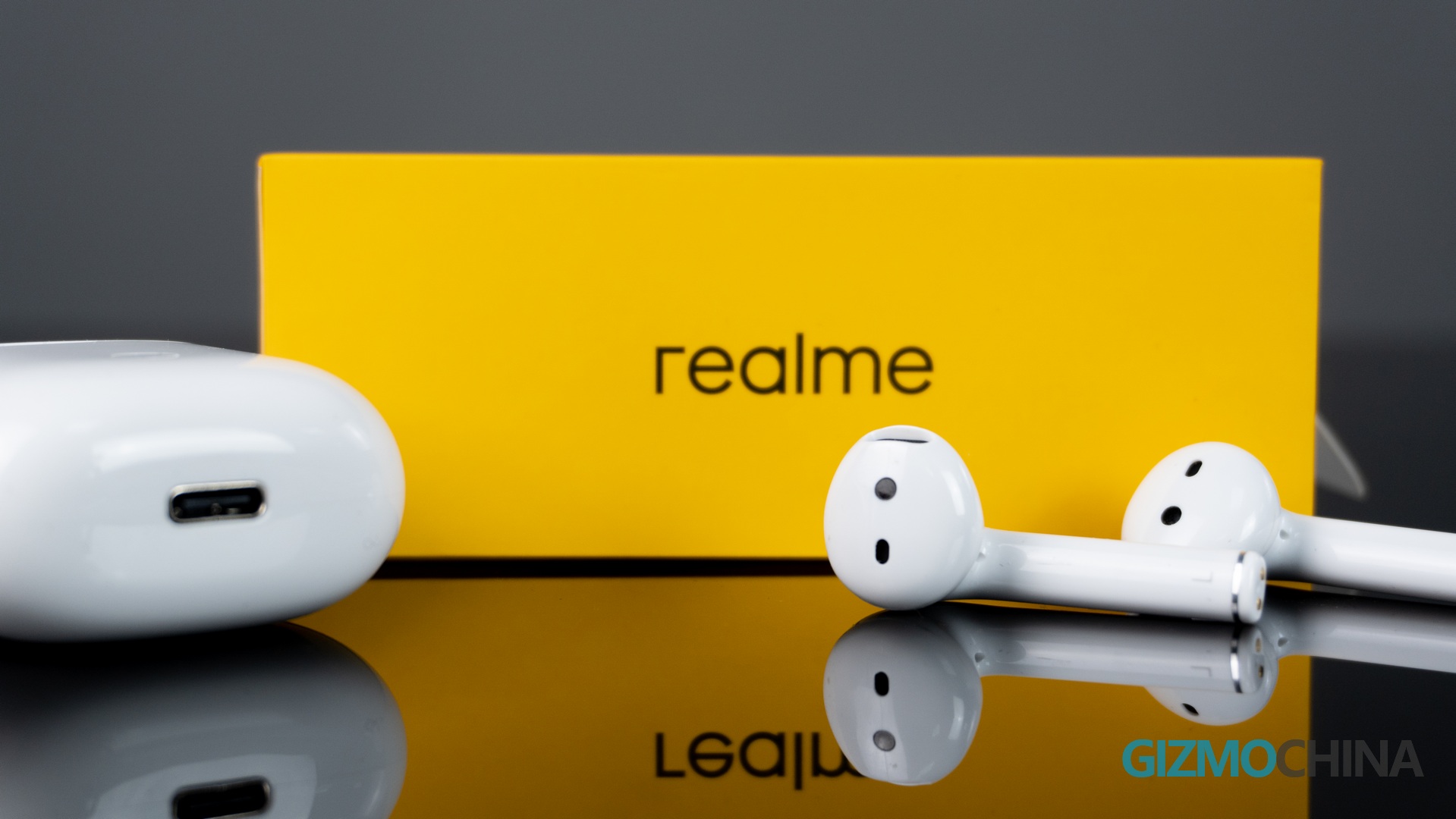
Realme recently launched its first TWS earbuds in India
Realme is a relatively young brand, starting off its operations just two years back. And, it looks like the company wants a bigger piece of the market in 2020. But the competition is tough, especially in a market like India and it remains to be seen if Realme can continue growing at the same rate as it did in 2019.
The Mobile World Congress (MWC) 2020 tech exhibition will be held between Feb. 24 and Feb. 27 in Barcelona, Spain. Many smartphone brands are expected to unleash new flagship phones at the upcoming MWC 2020 event. One of the first companies to confirm its presence at the MWC 2020 is Vivo. The Chinese manufacturer has confirmed that it will be holding its event at the tech trade show on Feb. 23.
The below poster reveals that the Vivo’s event will be held at 5:00 PM CET on Feb. 23 at Nautic Center, Barcelona. The poster has no information on the name of the device(s) that will be unveiled by Vivo at MWC 2020. The big V letter in the background seems to be a hint that it could be unveiling a V-series phone at the event.
Last year, Vivo had unleashed the Vivo APEX concept phone. The said phone was made official with some modifications in June 2018 as Vivo NEX. In January this year, the Chinese manufacturer had announced the Vivo APEX 2019 with all-glass unibody design. Apart from flagship specs, the APEX 2019 did neither featured any buttons nor it had any ports. The original APEX concept phone was never released in the market. Vivo did the same with APEX 2019 concept phone. The device was expected to release as a NEX series device.
The Vivo NEX 3 5G that had debuted as Vivo’s first 5G phone that had gone official in September sported a different front and rear design than the APEX 2019 concept phone. Since the Chinese didn’t release APEX 2019 inspired flagship smartphone with portless design this year, there is a possibility that the Chinese firm may launch a new premium flagship phone at MWC 2020 with a design similar to the APEX 2019.
The big V in the above shown poster suggests that there could be a V-series flagship phone. It remains to be seen whether Vivo announces a NEX-series or a V-series flagship phone. It could be arriving as the first 5G-ready Vivo phone for Europe.
It is too early to comment on what Vivo will be announcing at MWC 2020. There is a possibility that it may unleash a different technology at the event. Hence, it is advisable to wait for further reports to know more about Vivo’s offering at next year’s MWC.
We use cookies on our website to give you the most relevant experience by remembering your preferences and repeat visits. By clicking “Accept”, you consent to the use of ALL the cookies.
This website uses cookies to improve your experience while you navigate through the website. Out of these, the cookies that are categorized as necessary are stored on your browser as they are essential for the working of basic functionalities of the website. We also use third-party cookies that help us analyze and understand how you use this website. These cookies will be stored in your browser only with your consent. You also have the option to opt-out of these cookies. But opting out of some of these cookies may affect your browsing experience.
Necessary cookies are absolutely essential for the website to function properly. This category only includes cookies that ensures basic functionalities and security features of the website. These cookies do not store any personal information.
Any cookies that may not be particularly necessary for the website to function and is used specifically to collect user personal data via analytics, ads, other embedded contents are termed as non-necessary cookies. It is mandatory to procure user consent prior to running these cookies on your website.











 Aside from featuring a heart rate monitor sensor, the Haylou LS01 supports tracking for various activities such as sleeping and steps. On top of that, it supports nine different sport modes. You can check out the rest of the features below: