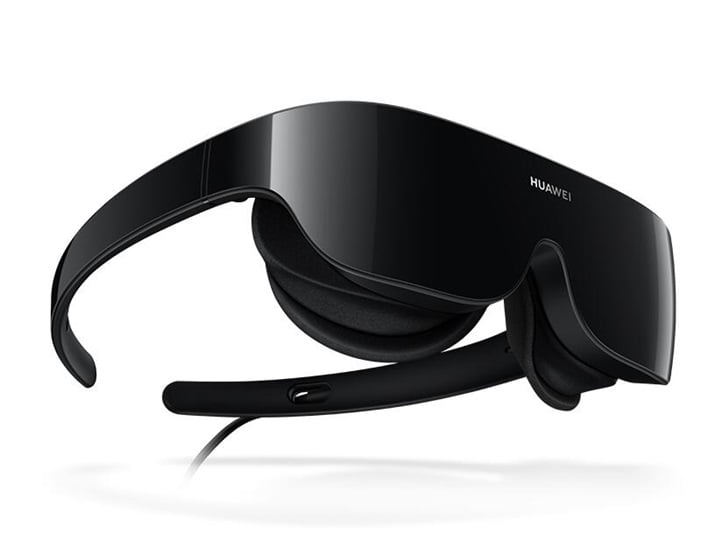
A couple of months ago, Chinese tech giant Huawei had officially announced its much-awaited VR product in its home market — Huawei VR Glass. Today, the device will go on sale in China, carrying a price tag of 2,999 yuan which is roughly $428.
Coming to the product, as the name itself suggests, it is a virtual reality headset. The Huawei VR Glass has lens barrel thickness of 26.6mm which is almost one-third of that of Oculus Quest and HTC Vivo Pro. It weighs around 166 grams and the temples come with a foldable design and it has a distance adaptation of 55 to 71 mm.
Huawei has said that the glasses can be adjusted in the range of 0-degree to 700-degree myopia, 55mm to 71mm distance adaptive, comes with a breathable sunshade mask and is quite comfortable while wearing, even for a prolonged use.
The company says that the device is ergonomically designed to fit the face. It uses protein leather material which is soft and comfortable, the elastic mask magnetic suction is removable and the myopic groups do not need to wear additional glasses.
As for the specifications, the VR Glass offers screen resolution of 3200 x 1600 pixels with up to 1058PPI pixel desnity, 90-degree field-of-view, 70/90Hz refresh rate. It comes with 3D sound effects and provides IMAX giant screen-like experience.
The mirror leg of Huawei VR Glass comes with dual speakers that offer a wide sound field, built-in dual SmartPA, and supports 3D sound stereo. It can also be connected with Bluetooth headphones.
The company says that it will have access to 30,000 hours of VR video from the content resources, along with three major VR live broadcast platform and more than 100 virtual reality games.
Qualcomm recently launched its new Snapdragon 765G chipset aimed at mid-range devices that comes with support for 5G connectivity. While brands like Xiaomi (Redmi), Oppo, and Realme have already launched or announced their new 5G-powered phones backed by the same chpiset, it seems like Sony is also joining the list.
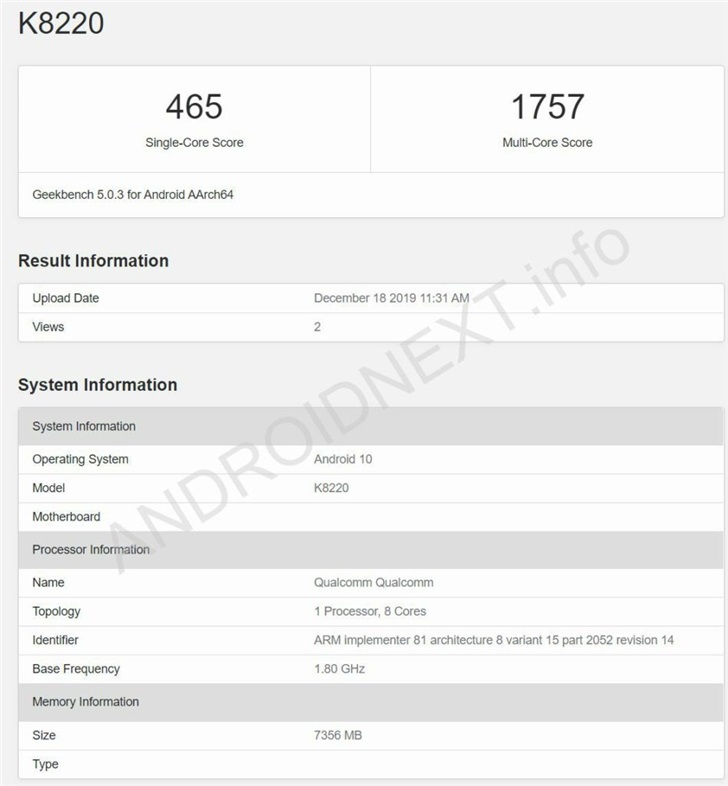
A new Sony Xperia smartphone has been spotted on benchmarking platform Geekbench, revealing some of the specs of the upcoming device. It lists that the smartphone in question is powered by Qualcomm Snapdragon 765G SoC.
The phone, which is codenamed “K8220”, is also listed to pack 8GB of RAM and run Android 10 operating system out-of-the-box. While the phone’s model number falls under the category of flagship smartphones from Japan-based Sony, based on the previous track record, but it seems that the company is changing the strategy as the phone in question is a mid-range one.
The Geekbench listing of the upcoming Sony Xperia “K8220” smartphone reveals that the device managed to score 465 points on the single-core test and 1,757 points on multi-core test. Do note that these scores are based on Geekbench 5.0.3 benchmarking tool.
Coming to the Snapdragon 765G SoC, Xiaomi has already launched Redmi K30 5G smartphone powered this latest chipset from Qualcomm. Oppo is going to launch its Reno3 Pro smartphone with the same chipset and Realme has also confirmed that the upcoming Realme X50 5G will be powered by the Snapdragon 765G SoC.
It remains to be seen how Sony places this upcoming smartphone in the market, given that the devices powered by SD765G SoC are priced quite aggressively, a strategy which doesn’t resonate with Sony.
Meanwhile, another Sony smartphone has already been leaked — Sony Xperia 3, which will be the company’s flagship offering for the next year. The phone seems to be powered by the flagship Qualcomm Snapdragon 865 SoC, 12GB of RAM and is running Android 10 OS.
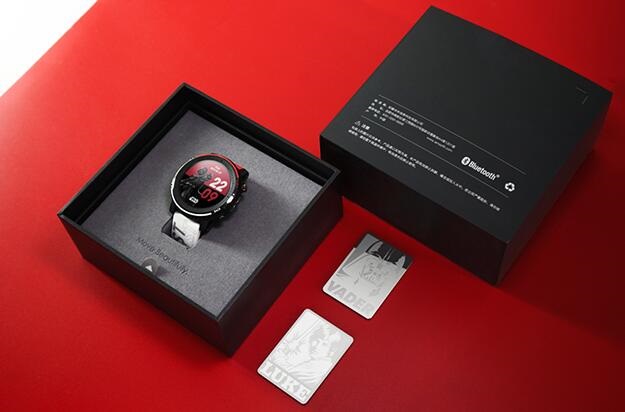
A few days ago, Amazfit Sports Watch 3 Star Wars Edition was announced, making it the third variant of the wearable after the launch of standard version and Elite version. Today, the latest Star Wars edition of the Sports Watch 3 goes on sale in China.
The Amazfit Sports Watch 3 Star Wars Edition is priced at 1,599 yuan which roughly converts to $228. It comes with a unique samurai dial that automatically switch between day and night. It also features a custom red and white colored stainless steel bezel with a red and white strap.
There are also many references to Star Wars. The fluoro-rubber custom strap comes with one of Master Yoda’s quotes “Train You Must” inscribed on one side while the short strap says “Vader Is My Motivator”.
The smartwatch features a 1.34-inch 320×320 pixels JDI Full-Moon reflective low-power color display. The display is said to be specially designed for outdoor use and Huami says the stronger the light, the clearer the display.
The display is similar to the Elite edition with AF+AR coated sapphire glass and a titanium bezel and features quick-release fluoro-rubber straps. It packs BioTracker PPG, a high precision bio-tracking optical sensor independently developed by Huami, is designed to constantly monitor the wearer’s heart rate.
It also packs Sony GNSS chip, compatible with four different satellite positioning systems: GPS, GLONASS, Beidou and Galileo. Users can choose between a combination of GPS + GLONASS, GPS + Beidou, or GPS + Galileo depending on their location to ensure the utmost accuracy in global positioning.
As per the company, on default settings, the Amazfit Sports Watch 3 can last seven days without charging and up to 14 days if switched to ultra mode. While the Star Wars Edition is priced at 1,699 yuan (~$241), it is currently on sale for 1,599 yuan (~$228) and is limited to the Chinese market for now.
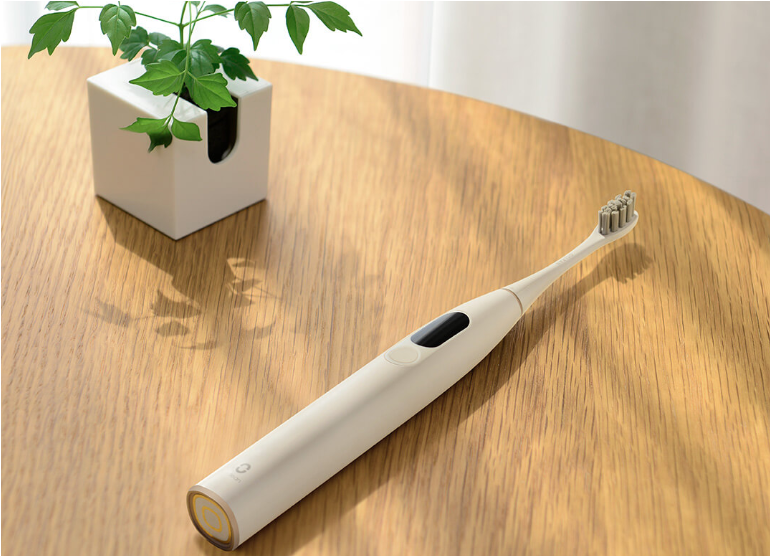
Xiaomi Youpin is the Chinese brand’s crowdfunding platform and home to several amazing products that are launched in China. Most times when we report about the launch of a new product on the platform, there are usually comments and sometimes we get emails from potential buyers trying to find out how to buy the products. Xiaomi is aware of this and has made a big move aimed at bringing the crowdfunding products to the international market. That it has done by launching the Xiaomi Youpin crowdfunding page on Indiegogo. What better product to kickstart what promises to be an eventful journey than the WalkingPad R1 Pro and Oclean X Sonic Toothbrush?
The WakingPad R1 Pro is an upgraded version of the WalkingPad Mini Walk smart treadmill that was first launched in May 2018. The product turned out to be a popular one in China and outside where it became available via third-party e-tailers like GearBest. The product was even used to scam many potential buyers of their money on fictitious retail websites.
This model is developed with running and walking modes, unlike its predecessors which support just walking mode. WalkingPad R1 Pro is 90% space-saving than the traditional treadmill and can be easily folded and stored with the help of double folding design and smooth-rolling wheels. The WalkingPad was also reshaped with the addition of a balancing handle and extending the deck for a better running experience.
The portable treadmill is available on Indiegogo for $429 with free shipping. Do note that the prices are displayed in Hongkong Dollars.
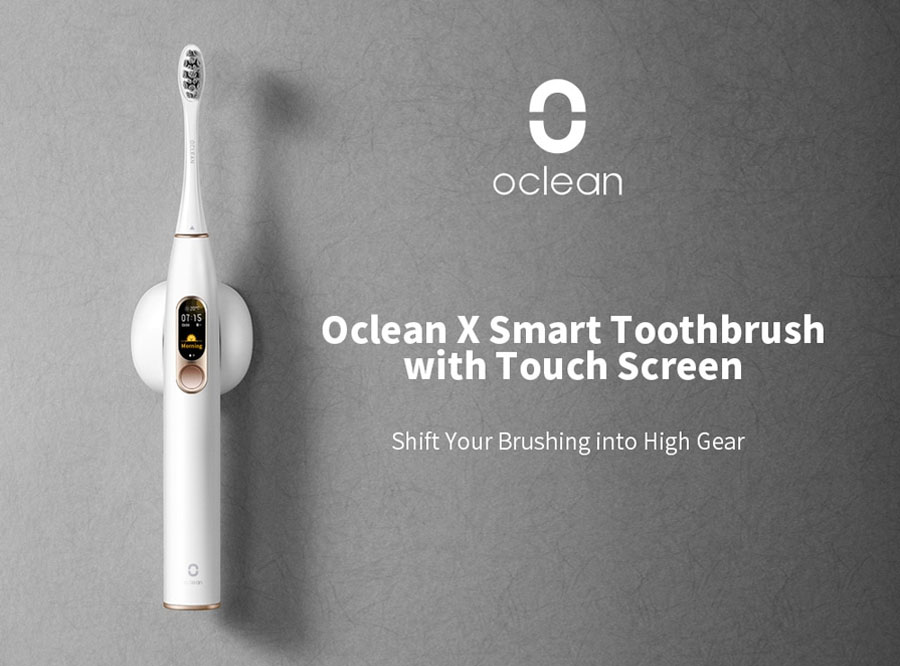
The Oclean X Sonic Toothbrush is yet another impressive product that was hugely successful when it was launched for crowdfunding in China. It is on offer for $55, also with free shipping. The Indiegogo crowdfunding exercise will end in a couple of hours so you may want to hasten up on this one.
As a reminder, the Oclean X has as its biggest feature the oval-shaped coloured touchscreen display. From the display, you can view the time, weather, choose brushing mode, check dental health information, brushing feedbacks and so on, so that brushing teeth become more scientific, effective and simple. The touch experience is very user-friendly and responsive.
The smart touch screen electric toothbrush brings a more intuitive information display and interactive experience such that you don’t have to go through a smartphone app to monitor the brushing pattern but it can be viewed directly on the screen. The toothbrush also comes with Bluetooth 4.0 support and is compatible with phones running Android 4.4 or iOS 8.0 and higher. Thus, it can also be paired to a smartphone in case you need to view the parameter on a larger screen. On the mobile app, you can also view more details as the blind zones are divided into 8 zones. The Oclean X has a built-in 6-axis gyroscope which can collect up to 1500 real-time brushing data every minute. It monitors the slight changes of brushing gestures, locates the brushing blind zone, and gives scientific feedback results.
Huawei’s P-series should launch earlier than other flagships since it usually comes with the same Kirin processor powering the Mate flagships of the preceding year. There is no chipset delaying it unlike most of its competitors that have to wait for Qualcomm’s new flagship processor to be available. This should give Huawei an upper hand when it comes to sales. However, their phones usually come later. For example, the P30 series launched after the Galaxy S10 series this year. Next year will be no different seeing as Huawei’s CEO has confirmed that the 2020 P-series will be announced at the end of March in Paris, France.
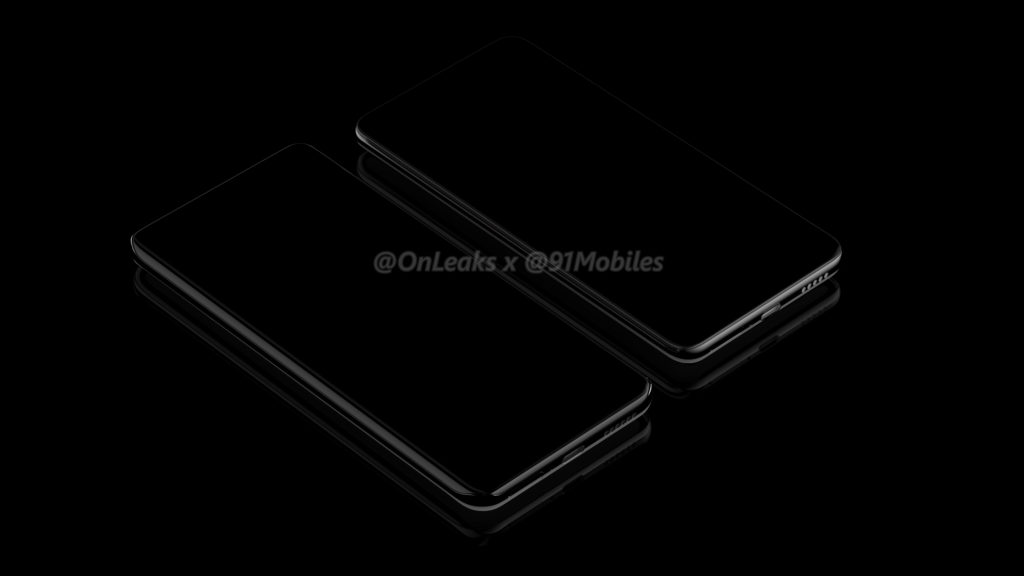
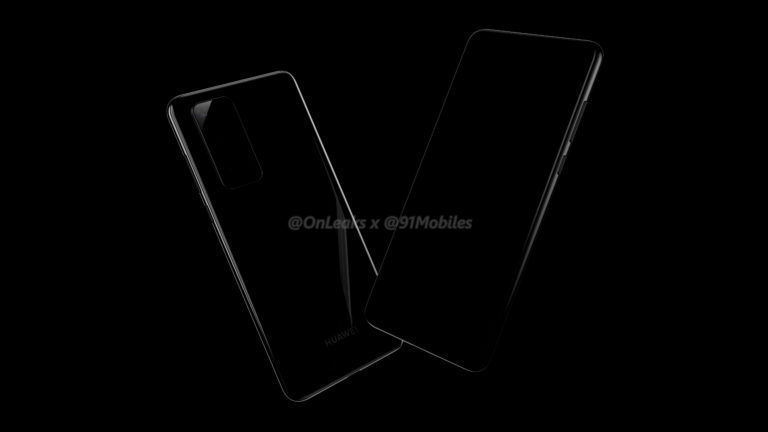
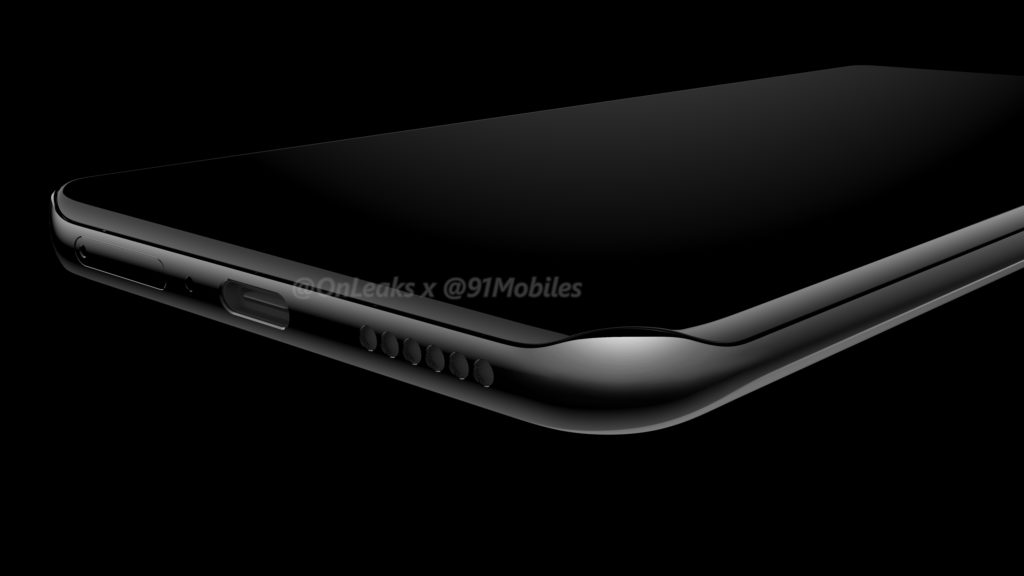
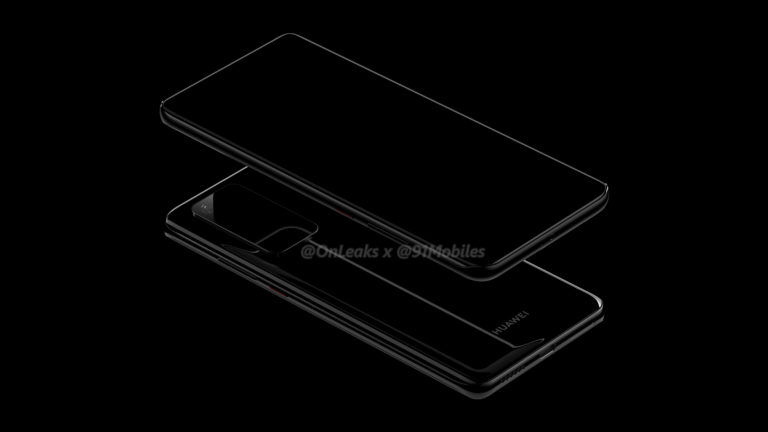
Next year’s models should arrive as the Huawei P40 and Huawei P40 Pro, and a new leak by Steve Hemmerstoffer a.k.a. OnLeaks gives us an early look at their design.
The leaker who has posted renders of multiple 2020 smartphones including the Galaxy S11 series has collaborated with 91Mobiles for the new leak. The style for the renders are similar to what we saw with the Pixel 4 this year – black images of the phones against a black background. The thing about this type of render is that there are uncertainties with the design.
Huawei P40
According to the images, Huawei is adopting the same style it used this year for the Huawei P30 series – a flat display for the standard model and a curved display for the Pro.
The Huawei P40’s screen is put at between 6.1” and 6.2” and should, of course, be an AMOLED display panel. The renders do not show if it has a notch or punch hole neither is there any mention of a pop-up selfie camera. Notwithstanding, a punch-hole seems like the more plausible choice.
Huawei P40 render
There is a USB Type-C port at the bottom of the Huawei P40 along with a speaker griller on the right and a SIM tray on the left. The power button and volume rocker are on the right side of the metal frame. Unfortunately, the P40 ditches the audio jack.
On the rear, the Huawei P40 joins the Galaxy S11 series with its rectangular camera housing design. It has been reported that there are four cameras inside, one more than that of the P30. The camera housing protrudes from the rest of the glass body. Save for the cameras, the back of the phone is bare.
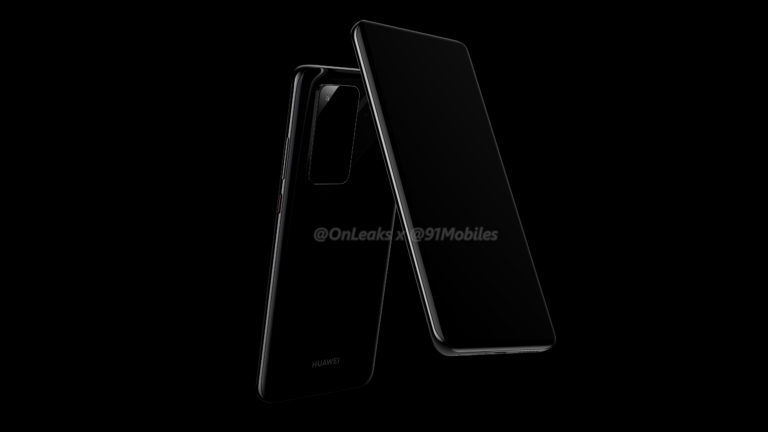
The Huawei P40 Pro is more sophisticated with its design. It has a curved display like its predecessor but the way the glass and frame fuse together at the corners is unlike any smartphone we have come across. The display is said to be 6.5-inches in size with a QHD+ resolution, a 120Hz refresh rate, and a screen-to-body ratio of 98%.
The curved sides are not as steep as that of the Mate 30 Pro, so we still have physical buttons for the volume and power keys. Just like the standard model, it too has its USB type-C port flanked at the bottom by the SIM tray and speaker griller and also has no audio jack.
The Huawei P40 Pro has a similar rear design as the standard variant but it is expected to feature more sensors. The primary camera has been reported to be the 64MP Sony IMX686 sensor paired with a 12MP periscope telephoto camera, a 20MP ultrawide angle camera, a macro camera, and a ToF sensor.
There are rumors it will ship with a 5500mAh battery with support for 50W SuperCharge wired charging. It should also come with a faster wireless charging technology.
Both phones should come with the Kirin 990 5G chipset but Huawei may decide to use the Kirin 990 + Balong 5000 modem for the standard P40 while the chip with the integrated modem will power the Pro model. They will also run Android 10 based on EMUI 10 out of the box but without Google Mobile Services.
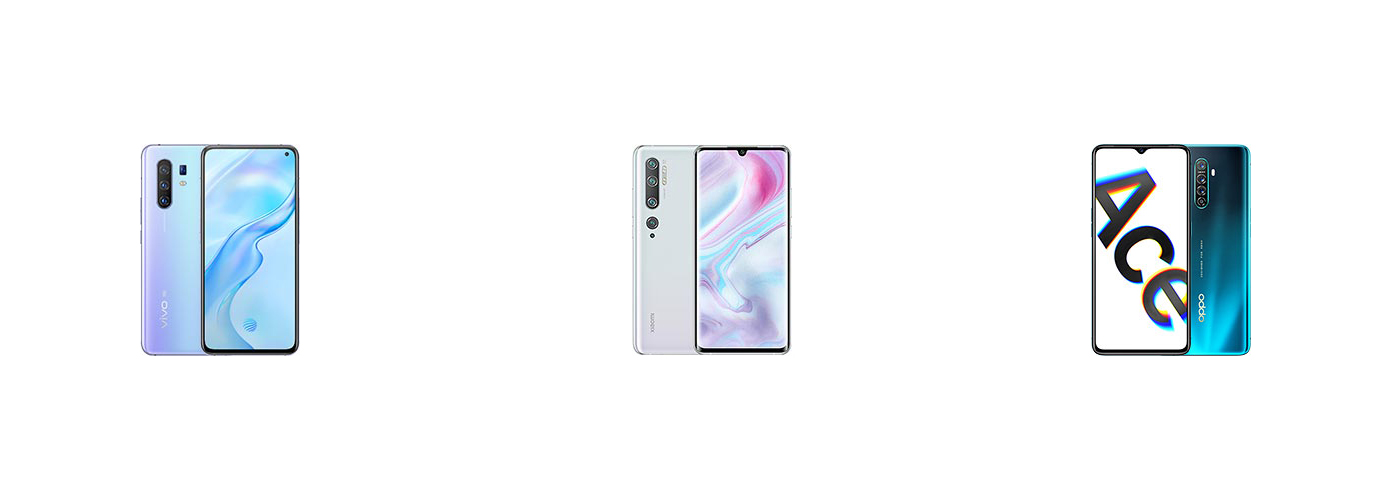
Vivo X30 Pro is official as the world’s first phone with the world’s first chipset sporting an integrated 5G modem. Besides this revolution, the handset is also camera-centric and it sports an amazing camera setup. With the X30 Pro, Vivo launched a very performing device without an expensive price, unlike most of the best flagships out there. That is why we decided to compare it with other flagship killers which are catalyzing the public’s attention in the Asian market. Xiaomi Mi CC9 Pro and Oppo Reno Ace are the perfect candidates for this comparison, at least in regard to the Chinese market.
Vivo X30 Pro vs Xiaomi Mi CC9 Pro vs Oppo Reno Ace
Vivo X30 Pro
Oppo Reno Ace
Xiaomi Mi CC9 Pro
DIMENSIONS AND WEIGHT
158.5 x 74.1 x 8.8 mm, 198.5 g
161 x 75.7 x 8.7 mm, 200 grams
157.8 x 74.2 x 9.7 mm, 208 g
DISPLAY
6.44 inches, 1080 x 2400p (Full HD+), Super AMOLED
Quad 64 + 13 + 32 + 8 MP, f/1.8, f/3.0, f/2.0 and f/2.2
32 MP f/2.4 front camera
Quad 48 + 13 + 8 + 2 MP, f/1.7, f/2.4, f/2.2 and f/2.4
Single 16 MP f/2.0 front camera
Penta 108 + 12 + 5 + 20 + 2 MP, f/1.7, f/2.0, f/2.0, f/2.2 and f/2.4
32 MP f/2.0 front camera
BATTERY
4350 mAh, fast charging 33W
4000 mAh, fast charging 65W
5260 mAh, fast charging 30W
ADDITIONAL FEATURES
Dual SIM slot
Dual SIM slot
Dual SIM slot
Design
Vivo X30 Pro is a device with a more advanced design, or at least it has that trending punch-hole display everyone is looking for. Thanks to a front camera placed in a hole inside the display, the phone does not need a notch to provide a high screen-to-body ratio. Both its rivals come with a notch, but this does not mean that they do not offer an amazing design. The Xiaomi Mi CC9 Pro is very attractive with its edge-to-edge curved display, while the Oppo Reno Ace has a suggestive glass back. But Vivo X30 Pro is definitely more stylish, at least in my opinion.
Display
Despite it does not have a trendy punch-hole screen, Oppo Reno Ace wins the display comparison because it sports a better panel. It has a very accurate image reproduction thanks to the HDR technology and the full DCI P3 coverage. Further, it provides a 90 Hz refresh rate for smoother user experience. Oppo Reno Ace has the best display, but its rivals still come with awesome panels. The Vivo X30 Pro and the Mi CC9 Pro have a higher brightness as well as the HDR support, but they lack the 90 Hz refresh rate, just like the Xiaomi Mi CC9 Pro.
Hardware/Software
Here Oppo Reno Ace takes another gold medal. Thanks to its Snapdragon 855+ chipset, it is one of the most performing smartphones out there. The SoC is paired with up to 12 GB of RAM and UFS 3.0 native storage up to 256 GB. There are only a few smartphones in the whole market that can compete with the Oppo Reno Ace. Right after, we got the Vivo X30 Pro with its Exynos 980. It is a high-end chipset which sits in the middle between Snapdragon 855+ and the Snapdragon 730G found on the Xiaomi Mi Cc9 Pro. Further, while Xiaomi Mi CC9 Pro has just 6 GB of RAM, Vivo X30 Pro offers up to 12 GB of RAM. Note that Oppo Reno Ace and Xiaomi Mi CC9 Pro do not support 5G, while Vivo X30 Pro is the only which does. In each case, you get a highly-customized version of Android 9 Pie out of the box.
Camera
On the camera side, Xiaomi Mi CC9 Pro is definitely more impressive with its 108 MP main sensor and it is one of the best camera phones you can actually get in the Android world. But even the Vivo X30 Pro is awesome at taking photos thanks to its OIS-enabled 64 MP sensor, a 32 MP portrait lens and even a 60x zoom. Oppo Reno Ace is less convincing, but it is still a pretty nice camera phone.
Battery
There is no story: Xiaomi Mi CC9 Pro’s battery makes it last a lot longer on a single charge. Right after there is Vivo X30 Pro with a 4350 mAh battery, while Oppo Reno Ace has just 4000 mAh but supports a much faster charging technology with a max power of 65W (the fastest charging technology in the market).
Price
Vivo X30 Pro carries a €510/$567 starting price, Xiaomi Mi CC9 Pro costs less than €360/$400, and Oppo Reno Ace starts from about €494/$549. There is not a clear winner on every side: you should go for the Oppo Reno Ace if you are more interested in performance and display, while if you need high-end performance, 5G and a great camera Vivo X30 Pro is better. Xiaomi Mi CC9 Pro has a midrange chipset, but it offers the best camera and the biggest battery. Which one would you pick?
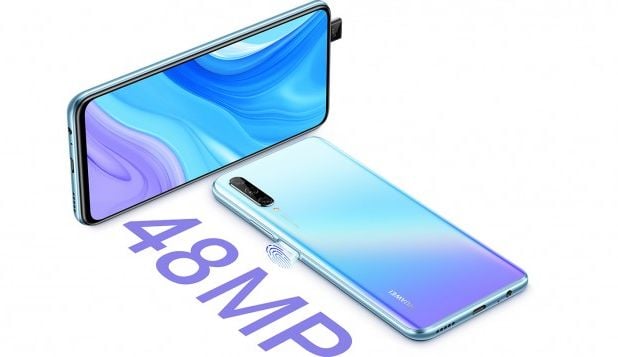
The Huawei P Smart Pro smartphone has gone official in some European markets like Bulgaria, Croatia, Greece, Ukraine and few more. It is not entirely new phone, but a rebadged version of Huawei Y9s which is also as Honor 9X in some markets. Coming back to the P Smart Pro, it features a notch-less display, triple rear cameras, a pop-up selfie camera and a side-facing fingerprint reader.
Huawei P Smart Pro Specifications and Features
The Huawei P Smart Pro has 163.1 x 77.2 x 8.8mm and it weighs 206 grams. The back panel of the smartphone is made out of glass. With 21 layers of nano textures, the P Smart Pro’s rear sports a smooth gradient appeal. The phone flaunts a 6.59-inch IPS LCD display that produces full HD+ resolution of 1080 x 2340 pixels and an aspect ratio of 19.5:9. The smartphone promises a screen-to-body ratio of 91 percent. The Kirin 710F that clocks at 2.22GHz drives the phone with 6 GB of RAM. It has a native storage of 128 GB. There is an external memory card slot on the device for expanding its storage.
Huawei P Smart Pro
The P Smart Pro smartphone is equipped with a pop-up selfie camera of 16-megapixel with f/2.2 aperture. The LED enable triple camera system on the backside of the phone features a 48-megapixel main lens with f/1.8 aperture, a 120-degree ultrawide 8-megapixel sensor with f/2.2 aperture and a 2-megapixel depth sensor with f/2.4 aperture.
The smartphone is equipped with a 4,000mAh battery that supports 5V/2A charging. The usual connectivity features that are available on the device include dual SIM support, 4G VoLTE, Wi-Fi 802.11 b/g/n, Bluetooth 4.2, USB-C and 3.5mm audio jack. A fingerprint reader is available on the right edge of the device.
Huawei P Smart Pro Pricing and Availability
Midnight Black and Breathing Crystal are the two color editions of the Huawei P Smart Pro. In the above mentioned markets, the smartphone has arrived with a pricing of around ~$360.
The OPPO Reno3 and Reno3 Pro will be OPPO’s first mid-range 5G smartphones. While we are excited about both phones, we are actually eager to see how they measure up against each other since they will come with different processors. The Reno3 will be the first phone to be powered by MediaTek’s Dimensity 1000L processor while the Reno3 Pro will come with Qualcomm’s Snapdragon 765G. Benchmark app, Master Lu, has released the benchmark results for both phones, giving us a chance to compare the two chipsets.
It is important to mention that other than the processors, the RAM of both phones benchmarked is different. The Reno3 has 12GB of RAM which TENAA doesn’t state but is listed on the JD pre-order page, while the Reno3 Pro has 8GB of RAM. There will also be a 12GB RAM version of the Reno3 Pro and it will be available with 128GB or 256GB of storage.
[envira-gallery id=”296043″]
CPU
For the CPU score, the 2.3GHz Snapdragon 765G wins with a total of 134,320 points as against the 2.2GHz Dimensity 1000L’s 110,392 points. Where it surpasses MediaTek’s processor is in the Multi
GPU
The winner here is MediaTek as the Dimensity 1000L scores 104,188 points against the Snapdragon 765G’s (Adreno 620 GPU) 97,786 points.
Memory Performance
The Reno3 wins here again with 50,392 points, which is no surprise as it has 12GB RAM as against the Reno3 Pro’s 8GB RAM and 40,695 points.
Storage Performance
The winner here again is the Reno3 with 40,695 points. Its read speed 1015MB/s and its write speed is 219MB/s while the Reno3 5G has a read score of 589MB/s and a write speed of 236MB/s. The read speed of the Reno3 is almost twice that of the Pro version which is unusual.
Overall Score
The Snapdragon 765G-powered Reno3 Pro wins with 307,855 points while the Dimensity 1000L is not too far behind with a total score of 305,667 points.
Conclusion
The Snapdragon 765G is the more powerful processor but the Dimensity 1000L is no slouch either and we are most impressed with its GPU score. While these are just prototypes that have been benchmarked, we look forward to real-life comparisons of the final product.
HMD Global launched the Nokia 2.3 smartphone earlier this month, and the device has finally arrived in India. Nokia announced the Nokia 2.3 along with a 1-year replacement guarantee that covers hardware defects, along with a 6-month warranty on the accessories that come bundled with the device.
Nokia 2.3 Specifications and Features
The Nokia 2.3 features a 6.2-inch HD+ display with a resolution of 1520 x 720 pixels, an aspect ratio of 19:9, and a waterdrop notch. The smartphone draws power from a quad-core MediaTek Helio A22 SoC with 2GB of RAM and 32GB of native storage expandable up to 400GB with a microSD card. Camera specifications include a 13-megapixel primary camera with an aperture rating of f/2.2 along with a 2-megapixel depth sensor. The smartphone features a 5-megapixel camera on the front with an aperture rating of f/2.4.
The Nokia 2.3 draws power from a 4,000 mAh battery. The company provides a 5W charger with the device. The smartphone sports a polymer body with 3D nano texture for additional grip. The device flaunts a dedicated Google Assistant key on the side. Connectivity options include 4G LTE, Bluetooth v5.0, Wi-Fi 802.11b/g/n, micro-USB v2.0, GPS, A-GPS, and a 3.5mm headphone jack.
Nokia 2.3 Price and Availability
The Nokia 2.3 is priced at Rs. 8,199 (~$116) in India. The device will be available at the Nokia e-store, Reliance, Croma, Poorvika, Sangeetha, MyG, and Big C outlets apart from authorized retailer stores. The smartphone is available in three hues, namely Cyan Green, Sand, and Charcoal.
New and existing Jio customers can get benefits worth Rs. 7,200 (~$101) with recharge plans worth Rs. 249 (~$4) and Rs. 349 (~$5). The benefits include Rs. 2,200 (~$31) cashback from Jio, vouchers worth Rs. 3,000 (~$42) from Cleartrip, and discounts worth Rs. 2,000 (~$28) from Zoomcar. Customers who buy the Nokia 2.3 before March 31, 2020, can get a replacement smartphone from a Nokia Mobility Store if their existing device experiences hardware failure. Nokia also promises to replace faulty accessories and solve software glitches for free within 6-months from the date of purchase.
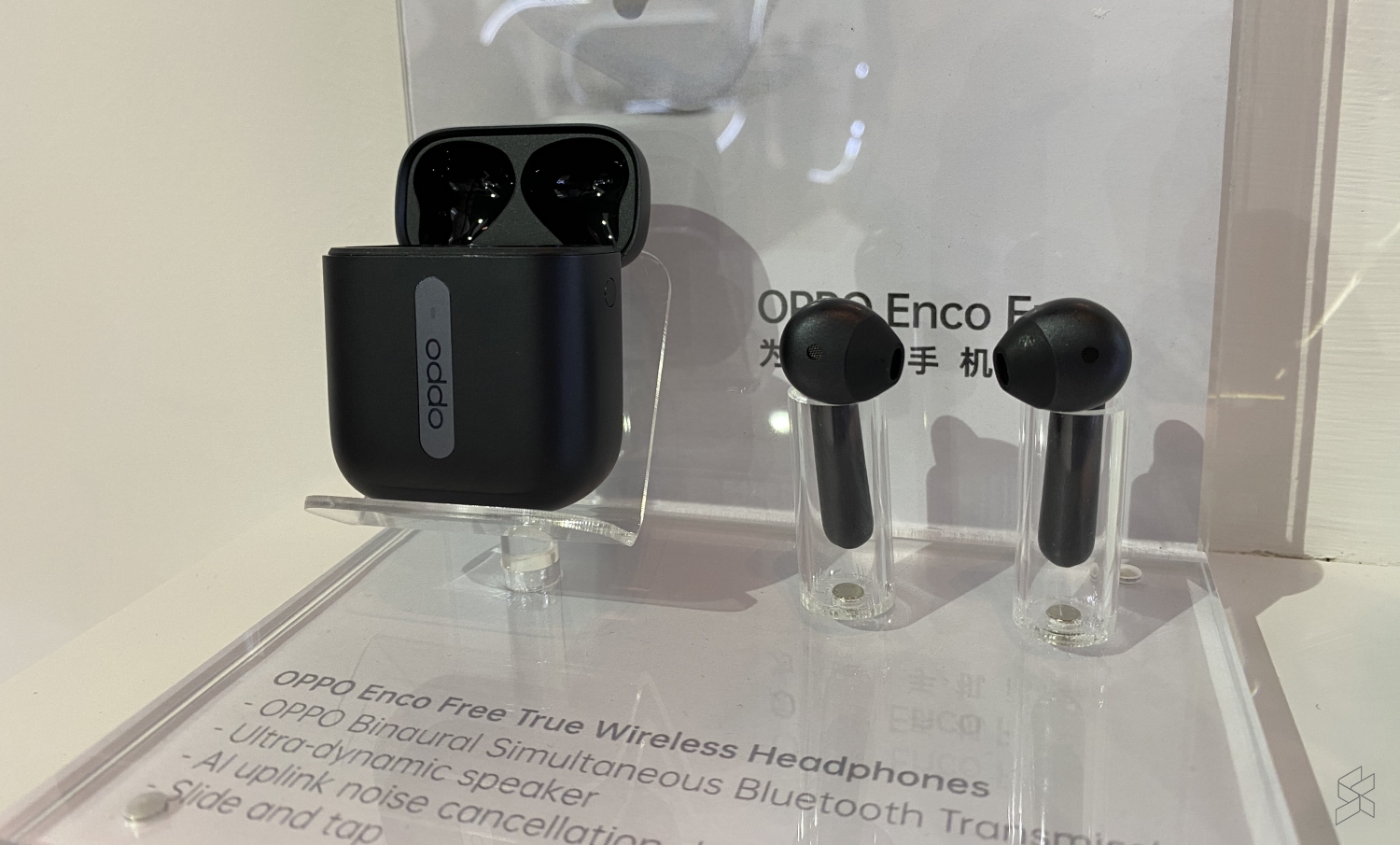
This week, OPPO had an event in Malaysia. The APAC Strategy Launch was an avenue for OPPO to discuss its plans for the region which is a key market for smartphone manufacturers. The Chinese tech company not only announced the establishment of a hub center in Kuala Lumpur, Malaysia but also revealed more details about its upcoming wireless earbuds, the Enco Free, and its 5G CPE T1.
Enco Free
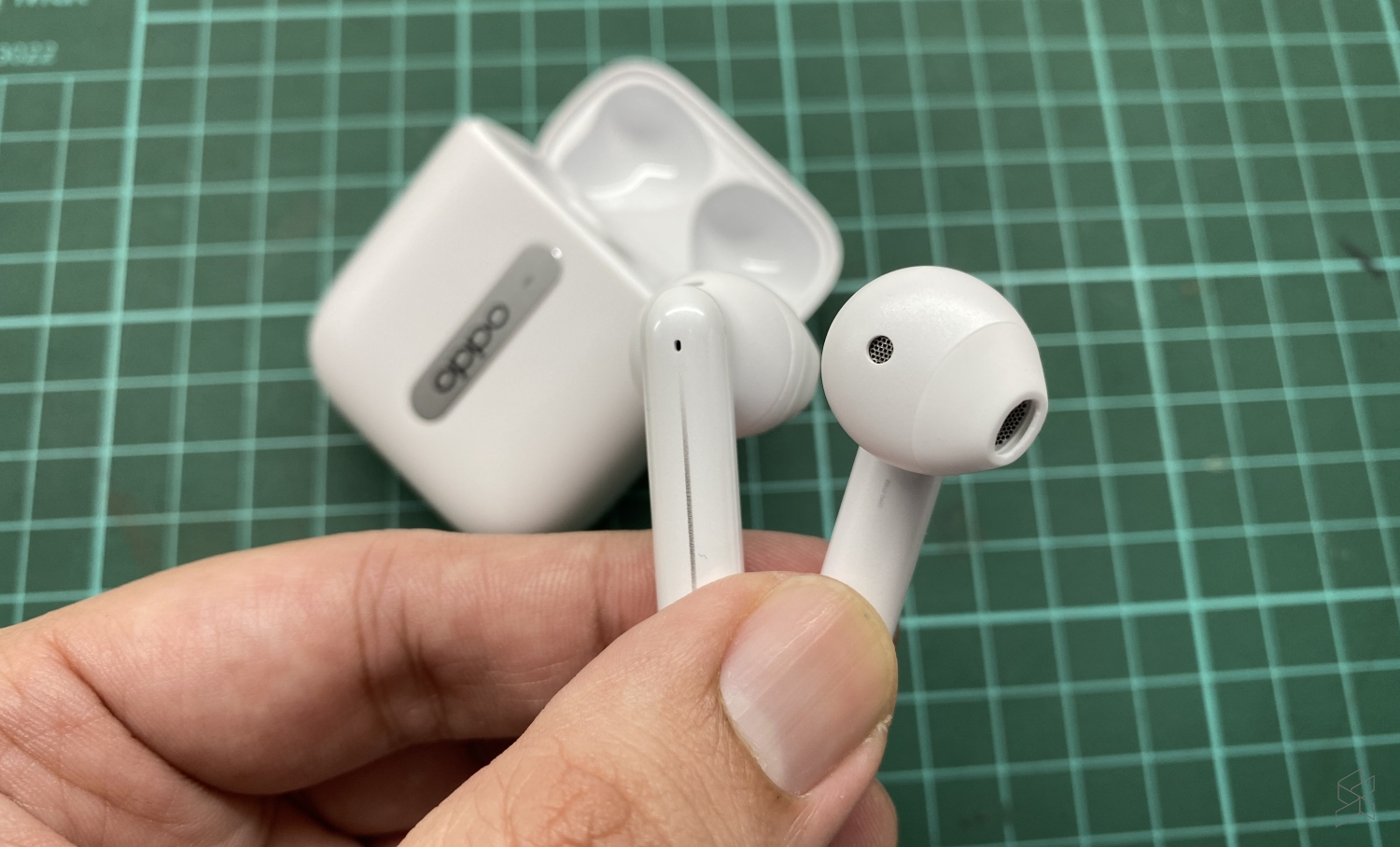
The Enco Free is expected to launch on December 26 in China alongside the Reno3 and Reno3 Pro but was on display at the event. The Enco Free is not like the O-Free that launched last year. The new pair of earbuds has a more familiar design and is available in white, black, and pink.
The earbuds have support for touch controls. You can slide a finger on the left earbud to adjust the volume while the right earbud is for switching between tracks. OPPO will ship the earbuds with three silicone tips of different sizes, so users can switch to the one that provides the best fit.
OPPO says the Enco Free uses AI uplink noise cancellation. It also has wear detection, so it pauses and resumes playback when you take it out or put it back in your ear.
The Enco Free has a 5-hour battery life and goes up to 25 hours with the charging case. The case charges via USB Type-C only unlike the new Realme Buds Air which adds support for wireless charging. It takes 90 minutes to charge the earbuds and almost 2 hours to charge the case.
OPPO will sell the Enco Free for 499 Malaysian Ringgit (~$120) when it is announced in January 2020. Also, registration is already live in China ahead of its launch next week.
At its Inno Day Event in China last week, OPPO unveiled a 5G CPE with a cylindrical design and support for SA and NSA networks. The CPE has a Snapdragon X55 modem and a 5G SIM slot. OPPO said at the event that it will be launched next quarter.
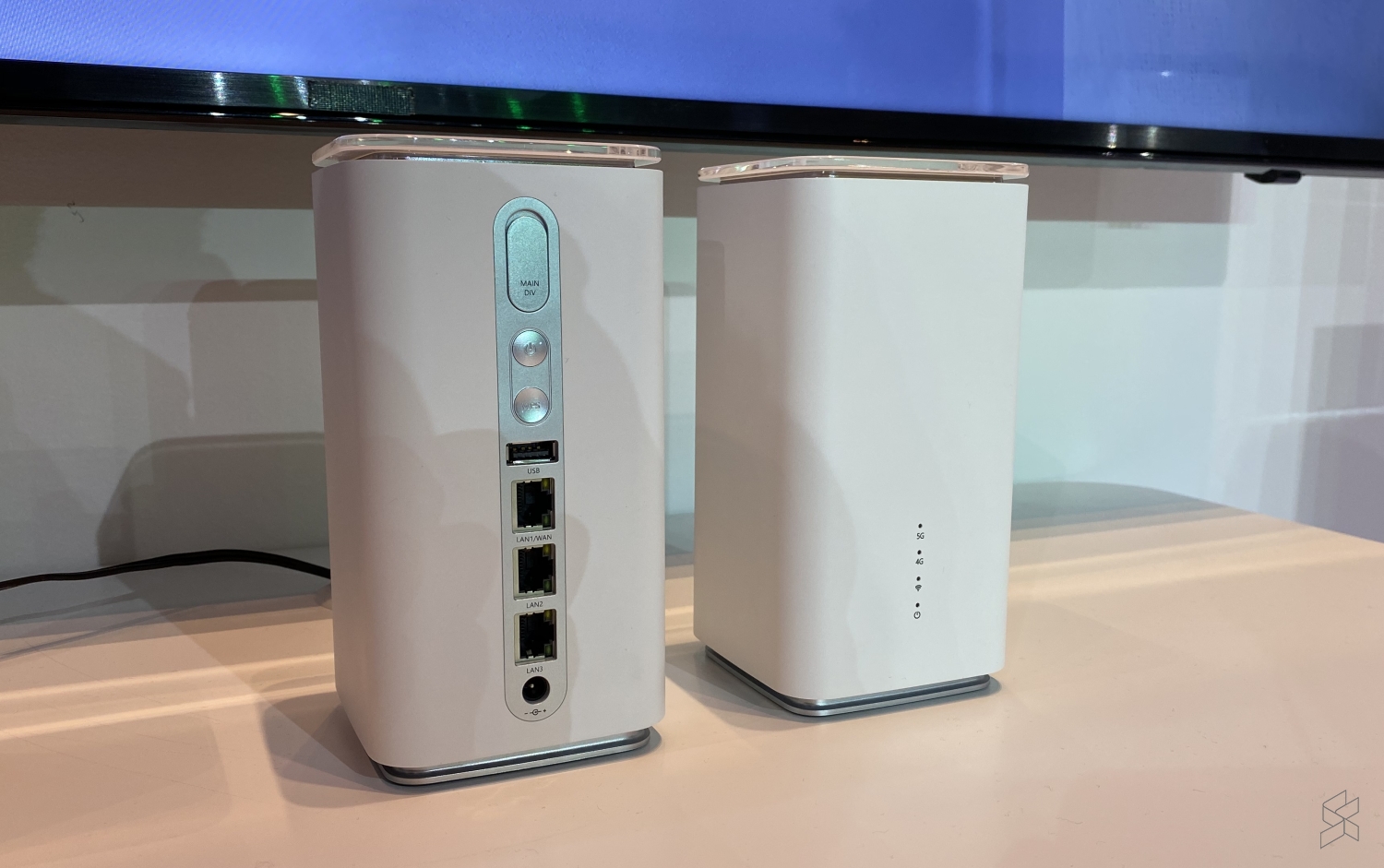
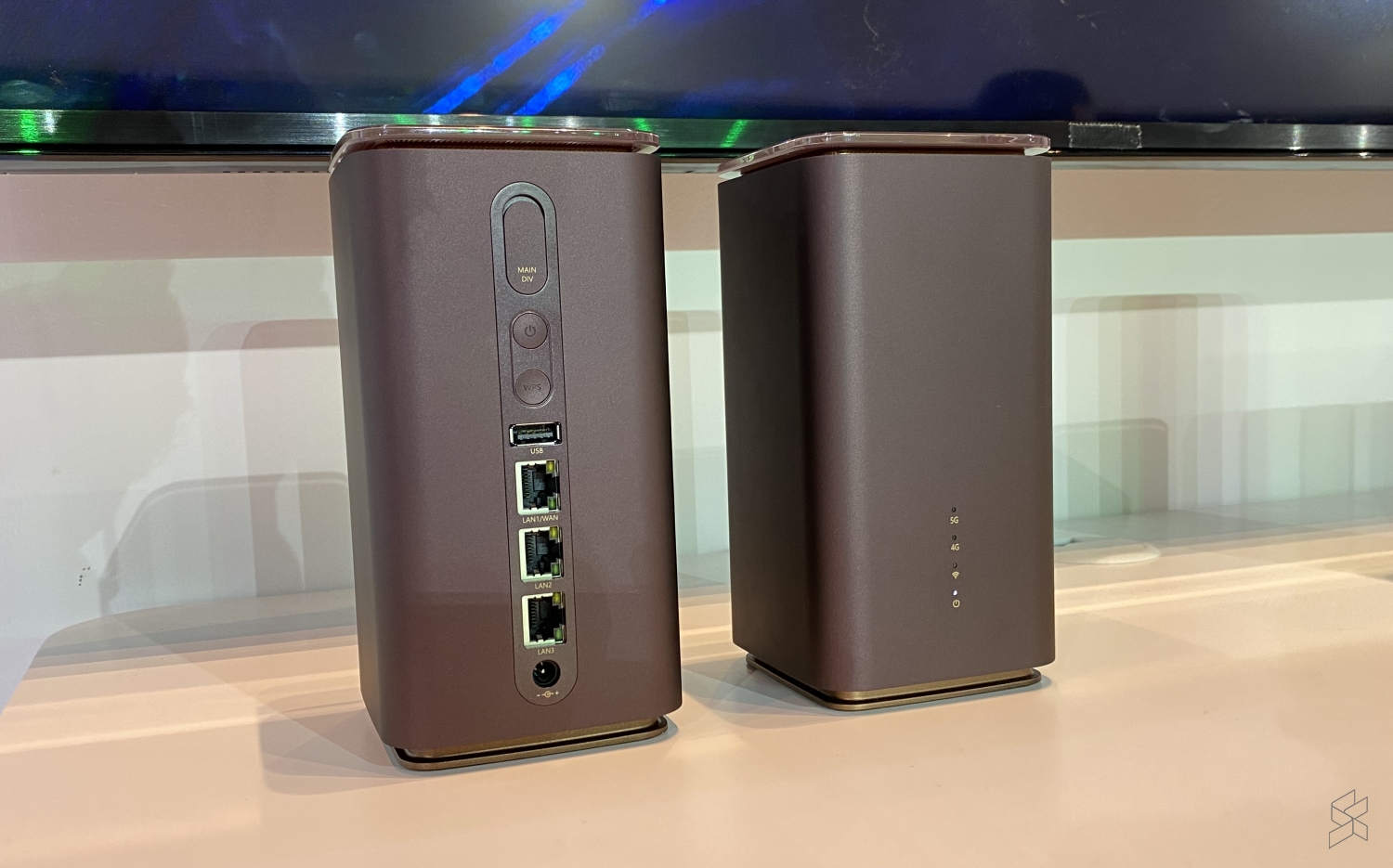
However, the 5G CPE unveiled at the Malaysian event is actually different. While it also has a Snapdragon X55 5G modem, the OPPO 5G CPE T1 has an entirely different design. It has a square tower design with curved corners and appears to be a bit taller than its cylindrical sibling.
There are LED lights on the front that light up when it is powered on and if it is connected to a 5G or 4G network. There is also an LED for when WiFi is on. On the rear are three LAN ports, a power input jack, the power button, the WPS button, and a switch.
The router also supports NSA and SA 5G networks and boasts download speeds of up to 5Gbps. It has support for 2.4GHz and 5GHz WiFi as well as WiFi 6 and 2×2 MU MIMO. Unlike the one unveiled in China with a 5G SIM slot, the 5G CPE T1 has an eSIM.
OPPO didn’t reveal any details about pricing and availability but the CPE will be available in white and brown color variants.
Android is always known for its customization abilities. There are many ways to customize an Android device using custom fonts, wallpapers, boot animations, ringtones, apps, and system UI with some root capabilities. The are different ways to get the customized look either by rooting the device my installing third-party Android Apps. Similarly, there are countless choices in choosing third-party Android keyboards.
It is a favorite thing for some users to replace the stock Android keyboard with just a few simple taps. Android brings the ability to change the look and the feel of the keyboard either by changing the app or by customizing the keyboard.
The alternative keyboards come with some additional features such as advanced swiping gestures, theming options, customizable layouts, etc. Some other advancements vary according to the chosen app. It has become neccessity for every user to switch to a preferable keyboard to stay up to date with the latest features. Some keyboards offer more customization, while others focus on better typing.
There are a plethora of third-party Android keyboards available on the Play Store. We have listed some best keyboards of 2019 based on their popularity and the features.
List of best third-party Android Keyboards
Swiftkey
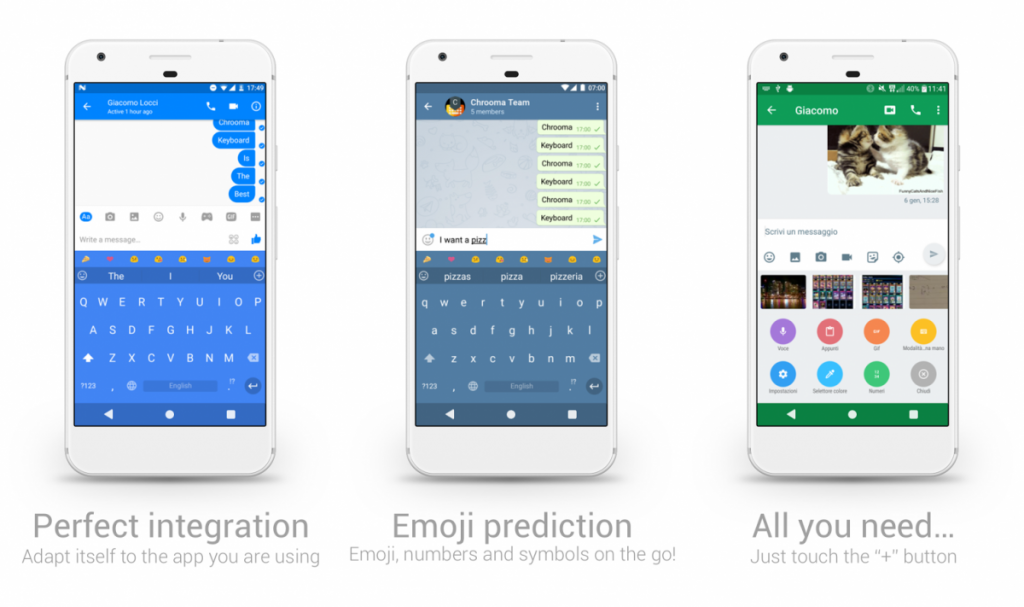
It is one of the best keyboards available for Android. Swiftkey offers vast customization and better typing at the same time. Microsoft acquired it in 2016. It provides several unmatchable features such as the presence of Artificial intelligence, to predict the next word. The complex algorithms allow the app to predict the emoji while you type the name.
The standard features such as autocorrect, gesture typing, and others come along with the Swiftkey keyboard. It features inbuilt emojis, GIFs, and sticker support. There’s also support for custom themes under the keyboard customization category. The user can choose wallpaper from various prebuilt themes available in the store.
It is a reliable keyboard app that enhances typing on the smartphone and offers a better feel with some other features. The keyboard app supports multiple languages for nativity throughout the globe.
It is the native keyboard for stock Android these days. the nativity to the Android system is its major pro. Gboard offers various features like gesture typing, voice typing, language support, etc. It is a fully reliable app direct from the makers of Android. It comes preloaded with Google Pixel and Android One devices.
The predictive search, Google integrated search results, and suggestions are the advanced features of Gboard. The ability to create your sticker got appreciation from many users. The better integration with other Google services makes it better than any other keyboard.
Gboard supports Android 10 global dark mode toggle making it more dynamic. Google keeps the Gboard updated with the latest features via frequent updates. It is a minimal and simple keyboard.
Grammarly is an vital writing tool that has become quite useful for the last few years. It offers support for Chrome, Firefox, Safari browsers irrespective extensions. However, in the absence of extensions support for chrome on Android, the company has launched its Keyboard App both for iOS and Android.
The Android app offers effective spell checking and other grammar anomalies while typing. Being a third-party keyboard, it is quite a simple-to-use keyboard having a minimal design. It let users add personal words to the dictionary. Grammarly Keyboard can scan whole text with a single tap.
The user can choose between different languages such as American, British, Australian, and Canadian for better optimizations. It is available for free on Android.
It has all the essential features such as keyboard resizing, predictive typing, gesture typing, etc. In a step ahead, the Chrooma offers more customization than the Google Keyboard. Chrooma is also is known as the name of a colorful keyboard.
It allows the users to change the color tone while using the keyboard. It features an adaptive color mode that can automatically adjust the color of the keyboard according to the primary color of the active app. The native color gives it a more immersive look.
The features, such as predictive texts, are powered by artificial intelligence for more accuracy. However, the developers are quite quick to rectify any major issues. It is a responsive, lightweight, and swift keyboard with an extra row for emoji or numbers.
It is the “fastest keyboard in the world” with some speedy and responsive features. It features auto-correct gestures, emoji keyboard, and extensions support. Fleksy has its theme engine with access to several free themes. The FleksynextAI helps to predict the emoji, stickers, GIFs, and text.
Apart from normal keyboard functions, there’s also support for different small extensions. The Fleksy keyboard helps to access emoji, GIF, stickers, travel, and food apps within the keyboard. It supports over 45+ languages, including Spanish, Russian, Swedish, Turkish, Japanese, Italian, French, Greek, English, and others.
Pinterest now owns the app. It is available for free and offers in-app purchases.
It is an emoji keyboard with customized text fonts and styles. There are around 3600+ emojis along with cool fonts, GIFs, and 1500+ keyboard themes. The user can customize the keyboard by adding your photos, changing themes, cool fonts, tap sounds, etc.
The lite version weighing 7MB is also available for download. It supports an inbuilt translator that allows the user to write in any language. Smart input options, including gesture typing, are some favorite features. It supports Emoji Combos, Emoji Prediction, and Trending Gifs feature.
The multilingual support of upto 120+ languages helps the keyboard to have a global user base. The Facemoji Keyboard does not collect any personal information without any permission.
Go Keyboard is an optimal solution to replace your stock keyboard with a much simple, minimalist keyboard. It improves typing habits with integrated dictionaries for meanings. Apart from the usual keyboard features, it supports 1000+ different themes, fonts, GIFs, etc.
The user can change the keyboard background with just a single switch. It supports different layouts, gesture typing, auto-correction, emoji search, etc.
Go Keyboard has 200 million worldwide user-based with 99% of positive pratings. The GO Keyboard offers control over your privacy as the company claims of not collecting your personal information, including credit card information, passwords, etc.
Touchpal is popularly known for contextual prediction through the built-in Talia assistant. It productively looks for information online and even helps to manage clipboards. Touchpal includes all the essential features such as gesture swiping, predictive search, auto-correction, and emoji prediction.
The TouchPal Curve gestures help to type long messaging without tapping display several times. The users can set custom themes, fonts, wallpapers as background, etc. As like Gboard, Touchpal inherits the feature of creating your GIF emoticon.
The size of the keyboard is freely adjustable as required. The keyboard was recently taken down by the Play Store due to some security issues. However, the listing is back online without compensating any feature.
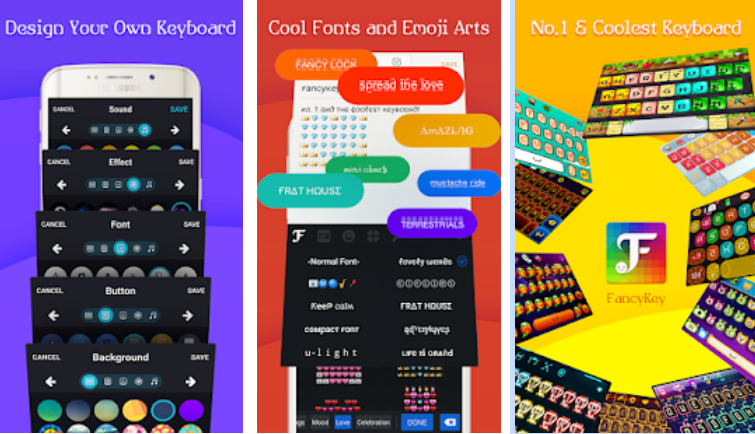
FancyFey is another new generation keyboard with cool customization graphics and animations. It is a customized Android keyboard with cool fonts, 3200+ emoji, emoji arts and emoticons, typing sound, typing effect, key font, personalized themes, and word predictions.
FancyFey is the most popular keyboard app for iOS and recently arrived on Android. It has over 3200+ emojis &emotics, 70+ fonts, 50+ sounds, 50+ themes, and 50+ languages support. FancyFey offers advanced auto-correct, autosuggest engines. The keyboard is compatible with all popular apps to add nicely crafted emoji compositions.
Despite being offering multiple features, the keyboard remains easy to use and customize. It is available for free on Android. The interested users can grab the keyboard from the download link below.
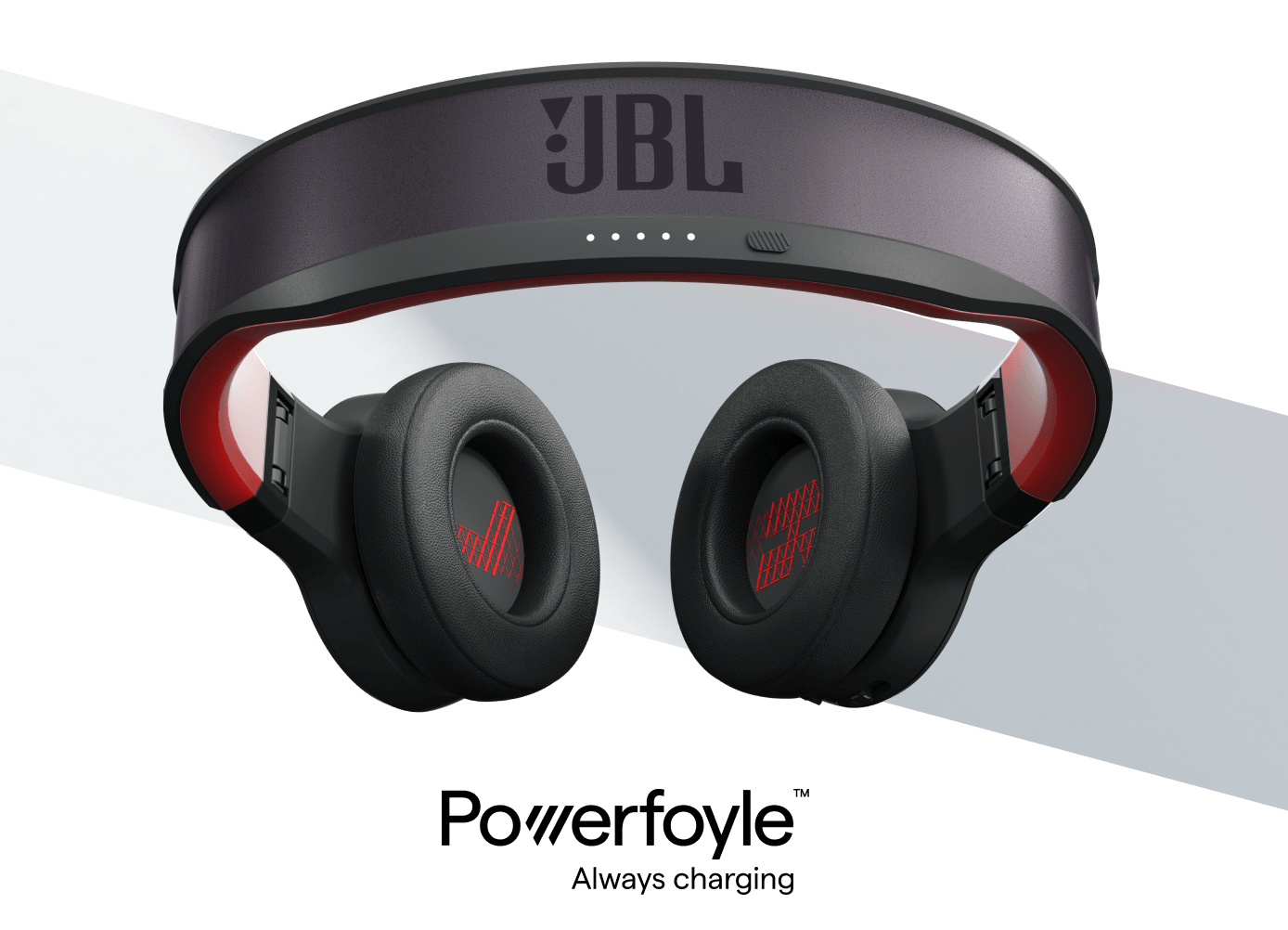
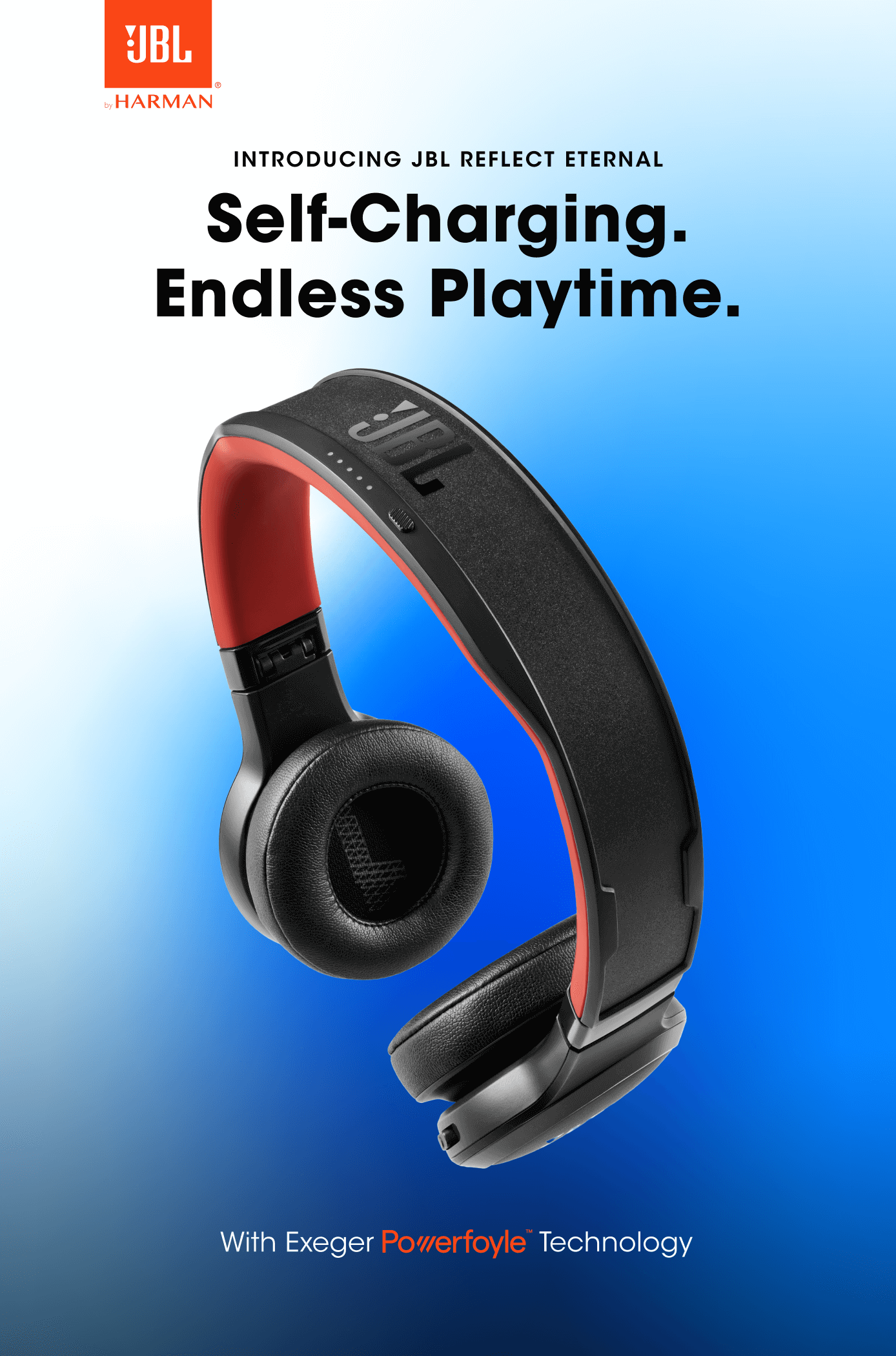
Wireless headphones are gradually replacing their wired counterparts as OEMs gradually phases out the 3.5mm audio jack on smartphones. Over the years, we have seen tremendous improvements in the hearable industry in terms of their overall build, sound output and battery capacity. From models with batteries that can last for just a few hours, headphones have been developed that can deliver up to 24 hours of playback. Harman has launched the JB Reflect Eternal self-charging headphones.
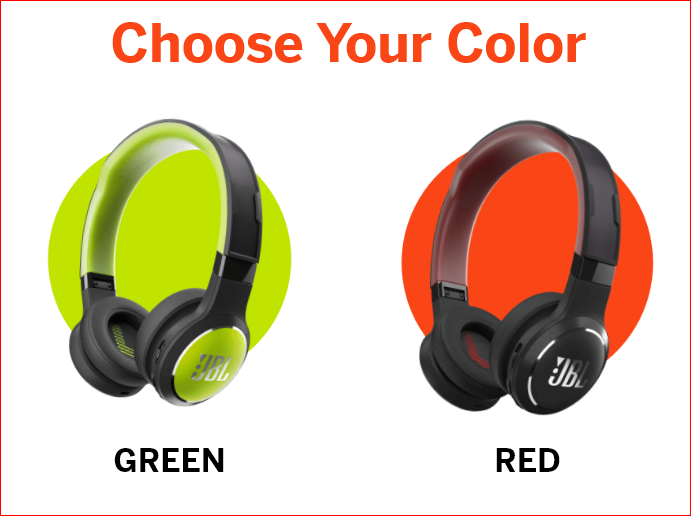
The JBL brand has over the years gain wide popularity for the manufacture of powerful sound products. The JBL Reflect Eternal brings a whole new level of innovation to the hearable industry with the technology at play. With the JBL REFLECT Eternal, the more time spent outside each day, the more hours of playtime you get between charges. The headset packs a 700mAh battery which ordinarily should deliver up to 24 hours of playback on a single charge.
However, the solar charging feature ensures the headphones can be used for an unlimited number of hours when the headphone is used outdoors. According to JBL, spending 1.5 jours outdoors will extend the usage time to 68 hours while 2 hours outside daily delivers 168 hours. Finally, 2.5 hours of outdoor time translates to unlimited playtime daily.
While we won’t trust this claims as there are some caveats attached, the JBL REFLECT Eternal has the potential to remove the headphones from the list of devices you need to worry daily about charging. The headphone also comes with a highspeed USB charger in case there is a need for that. The wired charger delivers up to 2 hours of playback time in just 15 minutes.
The JBL headphone comes with a price tag of $99 and is presently on crowdfunding on Indiegogo. The exercise is expected to end in January but the product is expected to start shipping to backers in October 2020.
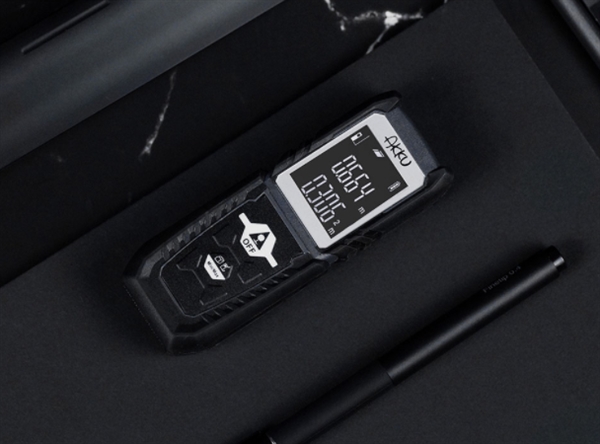
Xiaomi has launched a laser rangefinder under the Youpin crowdfunding platform. The product is known as Akku Laser range finder and is easy to operate with just two buttons. The device also comes with a 50m range. It adopts a retail price of 119 yuan (~$17).
The Akku 50m laser rangefinder can achieve measurement swiftly in just 0.2 seconds. It also comes with dual singe-double receive mode including dual laser tubes. With this design, users can simultaneously undertake two measurements at the same time.
The laser rangefinder adopts phase optical ranging and aspherical collimating focusing lens in front of the laser device and the lens makes the laser light finer and concentrated. The lens design also improves the measurement accuracy.
Further, the Akku laser rangefinder supports four measurement modes: distance measurement, area measurement, volume measurement, and continuous measurement. The rangefinder has two modes: front reference mode and rear reference mode. When you need to stick to the frame for distance measurement, you can choose the rear reference mode to make the measurement more convenient.
In terms of the build, the laser rangefinder weighs just 100 grams which is quite light and convenient to carry around. The body is made of ABS + TPE engineering plastic, which is sturdy and durable and has good dust resistance. The rugged, compact and portable design ensures it is comfortable to hold and won’t slip from the hand easily. There are just two buttons on the body; the power button and a function button. The device is also equipped with a 31x27mm electronic screen which supports high-definition backlight display and can be clearly seen in dark environments.
In terms of battery life, the rangefinder is equipped with two AAA batteries as standard, which can meet the needs of 2,000 measurements.
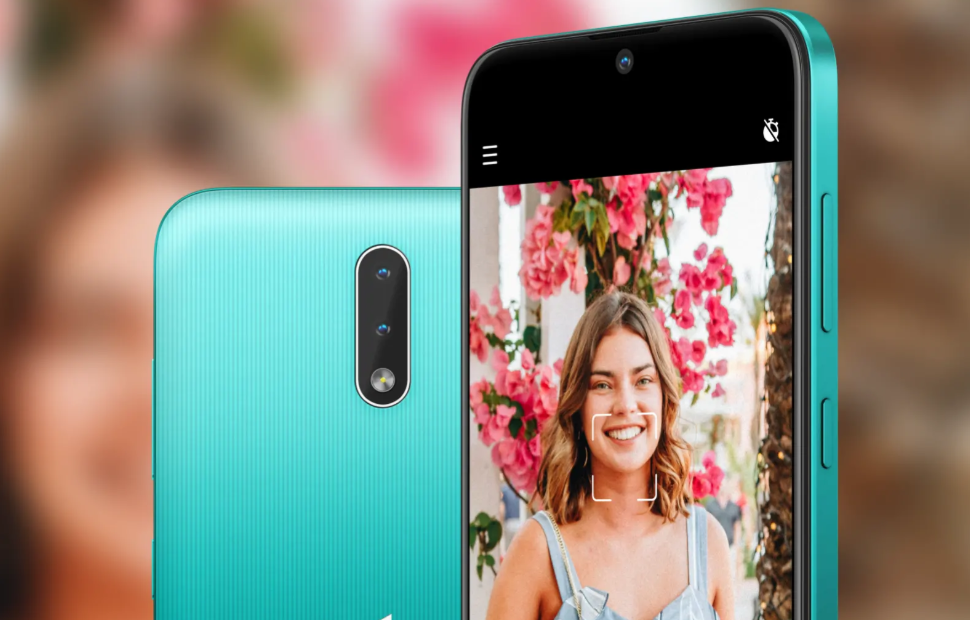
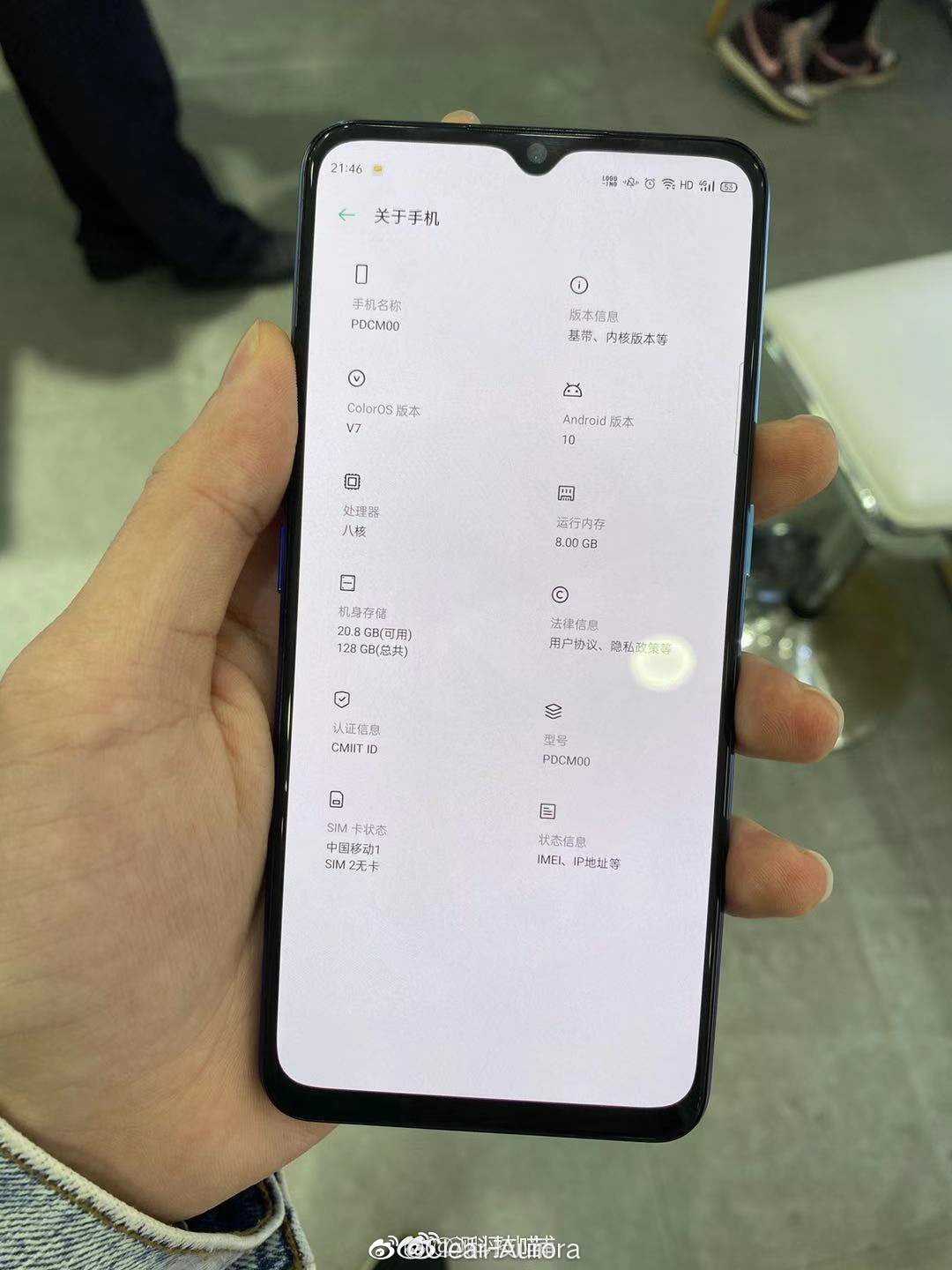
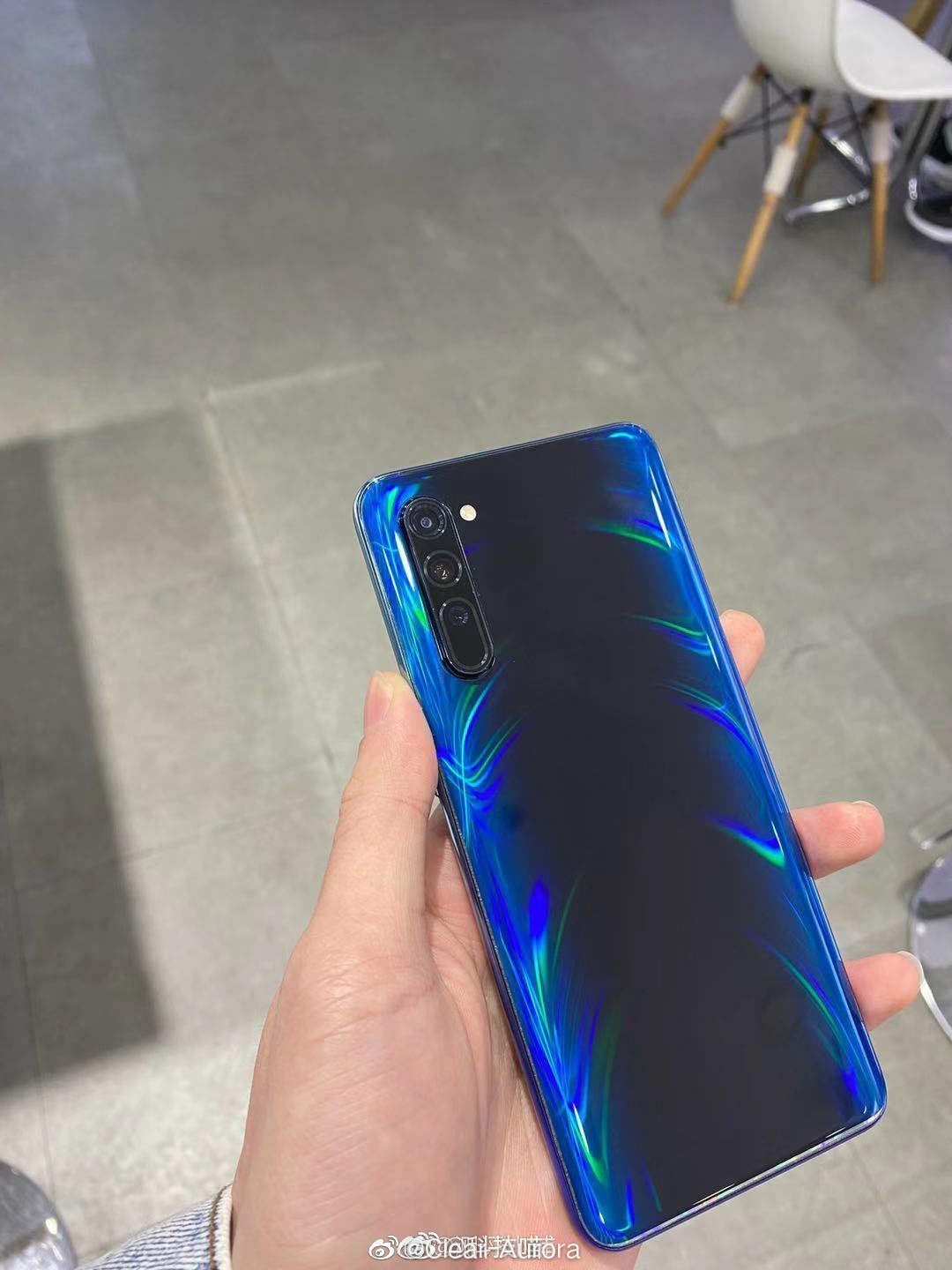
Two live photos of the upcoming Reno3 5G smartphone have been posted on the web. However, only one of the two photos is genuine. The other is either a very good photoshop or an unknown device.
The photos were posted on Weibo by a user that goes “Clear-Aurora”. The device is turned on and we can confirm some details since the user is on the “About Phone” section.
The OPPO Reno3’s model number is PDCM00 and it is running ColorOS 7 based on Android 10. It has 8GB of RAM and 128GB of storage. These are the same details as what TENAA published last weekend.
With respect to the front design, the Reno3 has a waterdrop notch for a 32MP selfie camera. However, its bezels are not the slimmest we have seen on a phone. On the other hand, the image of the phone’s rear is quite surprising as it looks just like that of the Redmi K20 series save for the position of the camera. However, this device is not the Reno3 for the following reasons.
First, the color variant doesn’t match any of the four colorways OPPO itself revealed in its press renders. Also, the Reno3 has quad-rear cameras while this phone has just three cameras albeit arranged just like that of the Reno3. So since this is not the Reno3, which device is this? We honestly cannot say. It is either a photoshopped image or a different device entirely.
The Reno3 will arrive on December 26 as the first phone powered by the Dimensity 1000L 5G processor from MediaTek. It will have a 6.4-inch AMOLED screen with an in-display fingerprint scanner, 64MP + 8MP + 2MP + 2MP quad rear cameras, and a 4025mAh battery capacity.
China’s smartphone market has been on a slight decline for the past three years. But according to a new report, the speculated market forecast shows that it could show a growth of 0.7 percent in 2020 thanks to the emerging 5G smartphone market.
Multiple reports have so far suggested that 5G handsets will be more affordable next year. These devices will be the catalysts that recover the declining Chinese smartphone market growth. Reportedly, more than 20 percent of 5G devices that will be available in 2020 will be sold for less than 2,000 Yuan or roughly 285 US Dollars, according to IDC (International Data Corporation).
The newer and faster networking bandwidth is said to bring a positive effect on the entire smartphone industry, according to Wang Xi, an IDC China research manager that specializes in the Chinese smartphone market. Furthermore, the IDC reported that 5G smartphones will see an increase in shipments next year and will account for about 14 percent of total mobile shipments globally. This far exceeds the 1.3 percent share that 4G smartphones had in 2010 when the bandwidth was then introduced.
Many nations, especially developed countries like the US, China, and other European regions, are currently in a race to integrate 5G networks; for reasons that include, but are not limited to, faster data rates, reduced latency, energy efficiency, and massive device connectivity. China is expected to be at the forefront of this advancement towards 5G services with an estimated 5G userbase of a massive 600 million people by 2025.
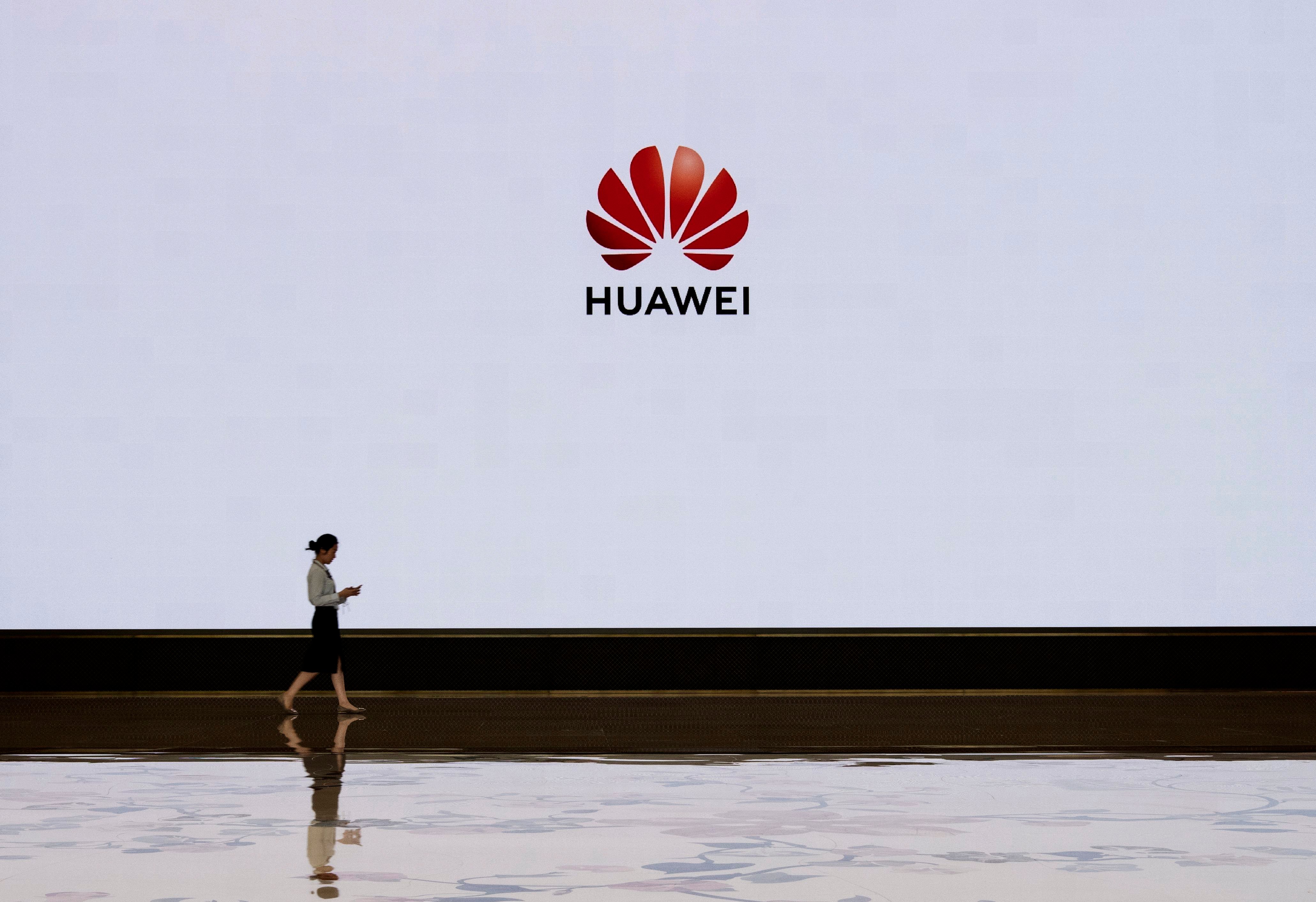
SHENZHEN, CHINA – APRIL 12: A member of Huawei’s reception staff walks in front of a large screen displaying the logo in the foyer of a building used for high profile customer visits and displays at the company’s Bantian campus on April 12, 2019 in Shenzhen, China. Huawei is Chinas most valuable technology brand, and sells more telecommunications equipment than any other company in the world, with annual revenue topping $100 billion U.S. Headquartered in the southern city of Shenzhen, considered Chinas Silicon Valley, Huawei has more than 180,000 employees worldwide, with nearly half of them engaged in research and development. In 2018, the company overtook Apple Inc. as the second largest manufacturer of smartphones in the world behind Samsung Electronics, a milestone that has made Huawei a source of national pride in China. While commercially successful and a dominant player in 5G, or fifth-generation networking technology, Huawei has faced political headwinds and allegations that its equipment includes so-called backdoors that the U.S. government perceives as a national security. U.S. authorities are also seeking the extradition of Huaweis Chief Financial Officer, Meng Wanzhou, to stand trial in the U.S. on fraud charges. Meng is currently under house arrest in Canada, though Huawei maintains the U.S. case against her is purely political. Despite the U.S. campaign against the company, Huawei is determined to lead the global charge toward adopting 5G wireless networks. It has hired experts from foreign rivals, and invested heavily in R&D to patent key technologies to boost Chinese influence. (Photo by Kevin Frayer/Getty Images)
Additionally, Chinese telecoms like Huawei are one of the leaders in supplying 5G infrastructure. Although the company is currently facing numerous setbacks in western regions like the US and Europe, it still is ahead of other companies in terms of 5G networking.
It is estimated that China has over 800 million internet users that access videos, movies, play games and much more via 4G smartphones. Thus the nation can be accurately summarized as having one of the biggest potentials in 5G growth.
The Huawei Mate 30 series of smartphones have been available in China since the past few months. The Chinese manufacturer has been selling the Mate 30 Pro 5G in 256 GB and 512 GB storage models. Today, the Chinese manufacturer has started with the sales of the 128 GB variant of the phone.
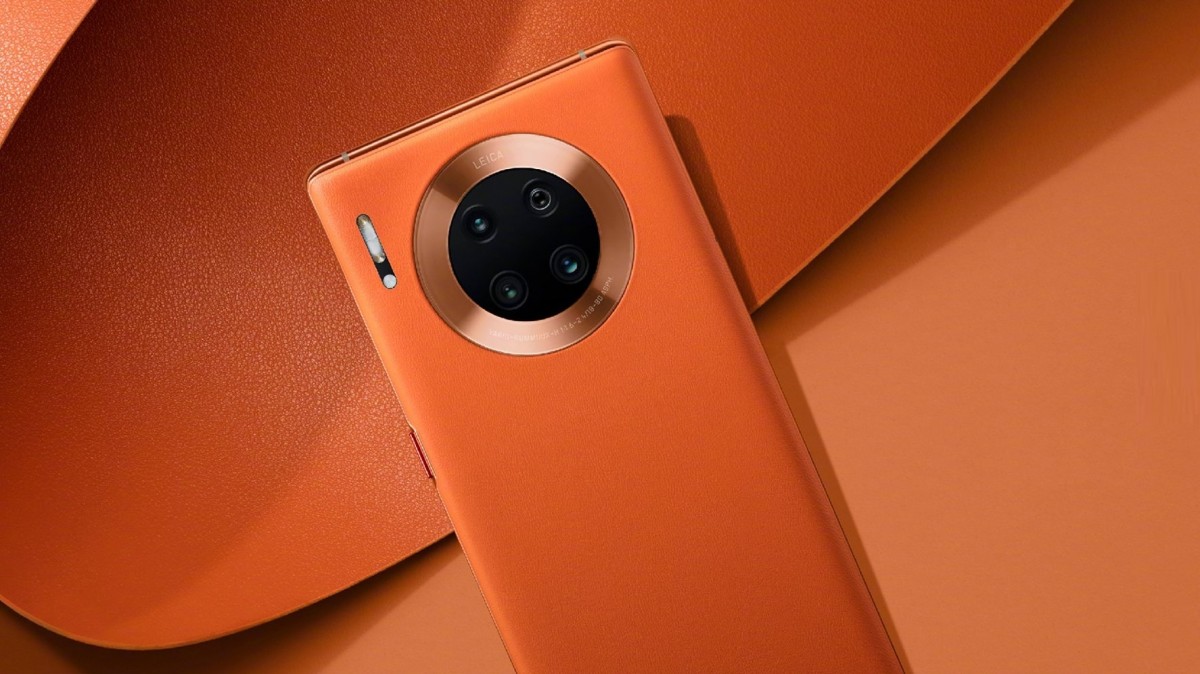
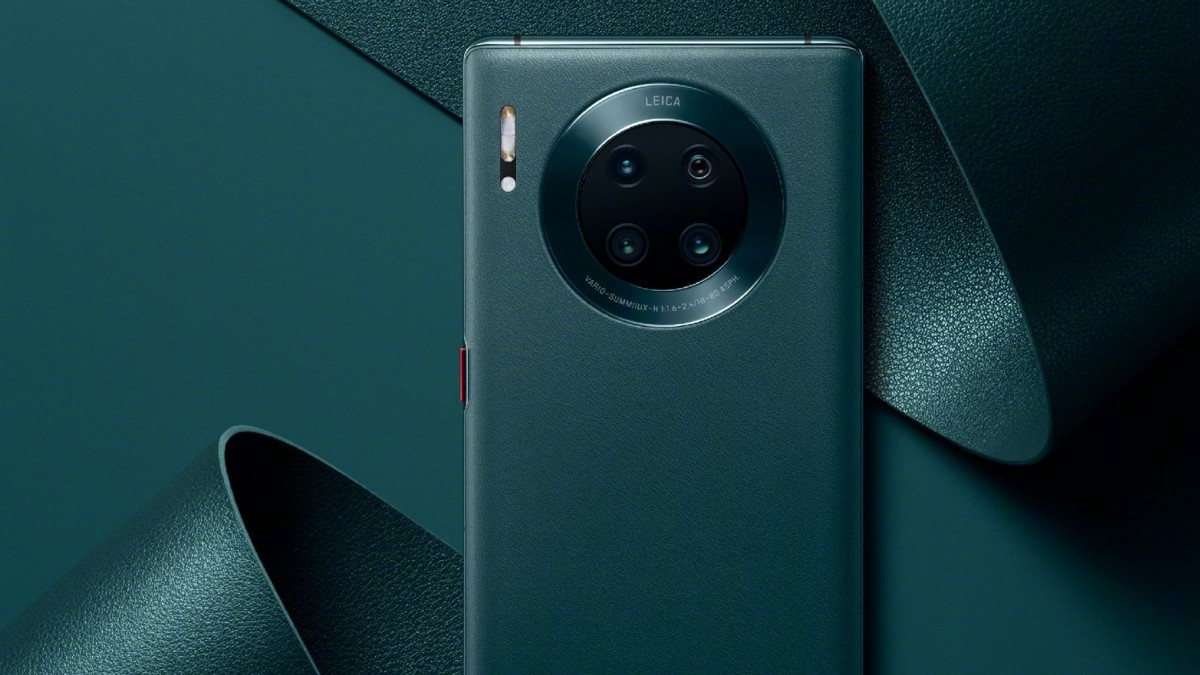
Like the 256 GB and 512 GB storage variants of the Mate 30 Pro 5G, its 128 GB model is also equipped with 8 GB of RAM. The 128 GB Mate 30 Pro 5G can be availed with a price tag of 6,399 Yuan (~$915). It will co-exist with 256 GB and 512 GB variants that are respectively priced at 6,899 Yuan (~$986) and 7,899 Yuan (~$1,129). The new variant is available for purchase through Vmall in colors like Vegan Leather Forest Green and Vegan Leather Orange.
Huawei Mate 30 Pro 5G Specifications and Features
Huawei Mate 30 Pro 5G Vegan Leather Orange
The Mate 30 Pro 5G houses a 6.53-inch OLED display that offers full HD+ resolution of 1176 x 2400 pixels. With the wider notch on the screen that houses a front-facing of 32-mgeapixel and complex sensors for 3D face unlock, the smartphone offers an aspect ratio of 18.5:9. The front and rear sides of the phone are shielded by Gorilla Glass 6.
The Kirin 990 5G chipset powers the smartphone. It ships with up 12 GB of LPDDR4x RAM and UFS 3.0 storage of up to 512 GB. There is a nanoSD card slot (shared SIM slot) for expanding its storage. The EMUI 10 based Android 10 OS runs on the device.
Huawei Mate 30 Pro 5G Vegan Leather Forest Green
The Leica engineered quad camera setup resides on the backside of the phone. It includes an OIS assisted 40-megapixel main lens, an 8-megapixel telephoto sensor with 3x optical zoom support, a 40-megapixel ultrawide shooter and a 3D ToF lens. The phone features a front-facing camera of 32-megapixel.
The 4,500mAh battery of the Huawei Mate 30 Pro 5G supports 40W fast charging, 27W fast wireless charging and reverse wireless charging. The handset is equipped with an in-screen fingerprint. It lacks support for 3.5mm audio jack. The phone comes with an IP68 rated dust and water-resistant body.
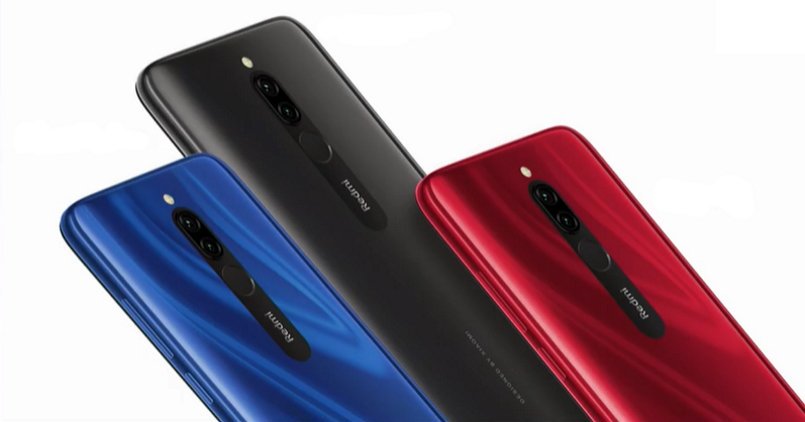
In September, Xiaomi India had launched the Redmi 8A phone. The Redmi 8 had debuted in India with slightly better specs in October. A new report on 91mobiles states that the Chinese firm may launch Redmi 9 phone in early 2020. It claims that the Redmi 9 will debut first in China and it will also arrive in India in quick succession. The publication has also shared some of the key specs of the phone.
Xiaomi Redmi 9 Specifications (Rumored)
The Redmi 9 is expected to sport a notch display of 6.6 inches. The predecessor has a 6.22-inch display. Since the Redmi 9 is rumored to launch with a bigger display, it will be sporting a larger form factor. The publication has claimed that the Redmi 9 will be receiving power to perform from the MediaTek Helio G70 chipset. The SoC is said to arrive in the market as an inferior version of the Helio G90 and Helio G90T processors. The SoC could be coupled with 4 GB of RAM. The phone may offer an internal storage of 64 GB. The smartphone could be available in other variants.
The Redmi 9 is expected to go official in China first in Q1 2020. It remains to be seen whether the Redmi 8 also debuts by the end of the same quarter. Xiaomi fans can expect Redmi 9 to deliver better performance and improved photography experience. It could be running on MIUI 11 based Android 10 OS. The other details of the phone are currently under the wraps.
Redmi 8 Specifications and Price
The Xiaomi Redmi 8 has a 6.22-inch IPS LCD display with dot notch. The Snapdragon 439 SoC fuels the smartphone. It houses a 5,000mAh battery that supports 18W fast charging through USB-C. It has a front camera of 8-megapixel and it is fitted with a Sony IMX363 12-megapixel + 2-megapixel dual camera system on the back. The MIUI 10 based Android 10 OS runs on the phone and it is equipped with a fingerprint reader.
In China, the 3 GB RAM + 32 GB storage and 4 GB RAM + 64 Gb storage models of the Redmi 8 are respectively priced at 899 Yuan (~$128) and 999 Yuan (~$143). The smartphone comes in color options like Black, Blue and Green. In India, it comes in additional color of Red. The country has received only the 4 GB RAM + 64 GB storage edition of the phone with a price tag of Rs. 7,999 (~$112).
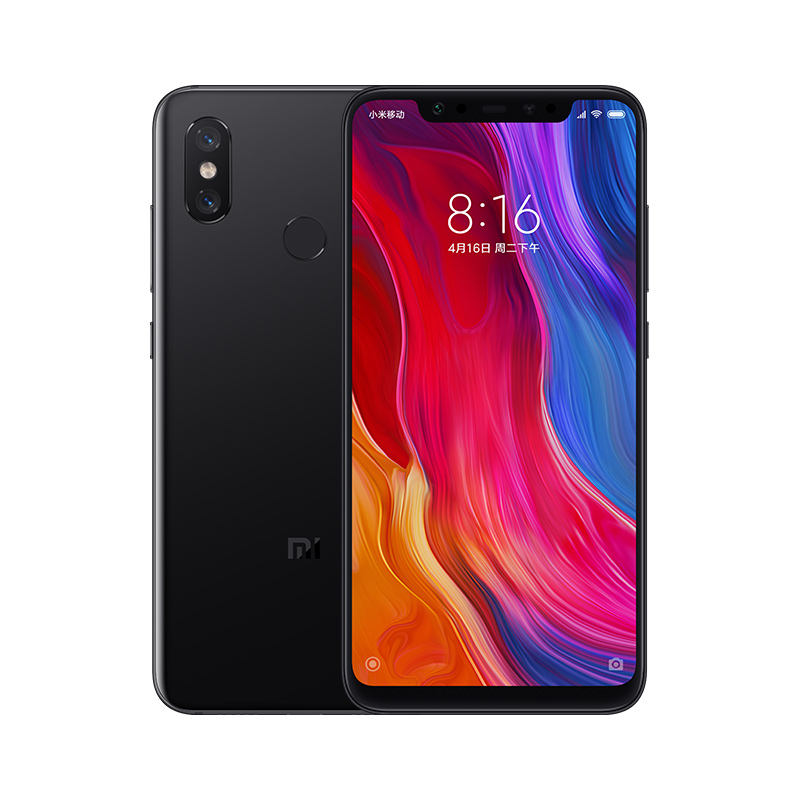
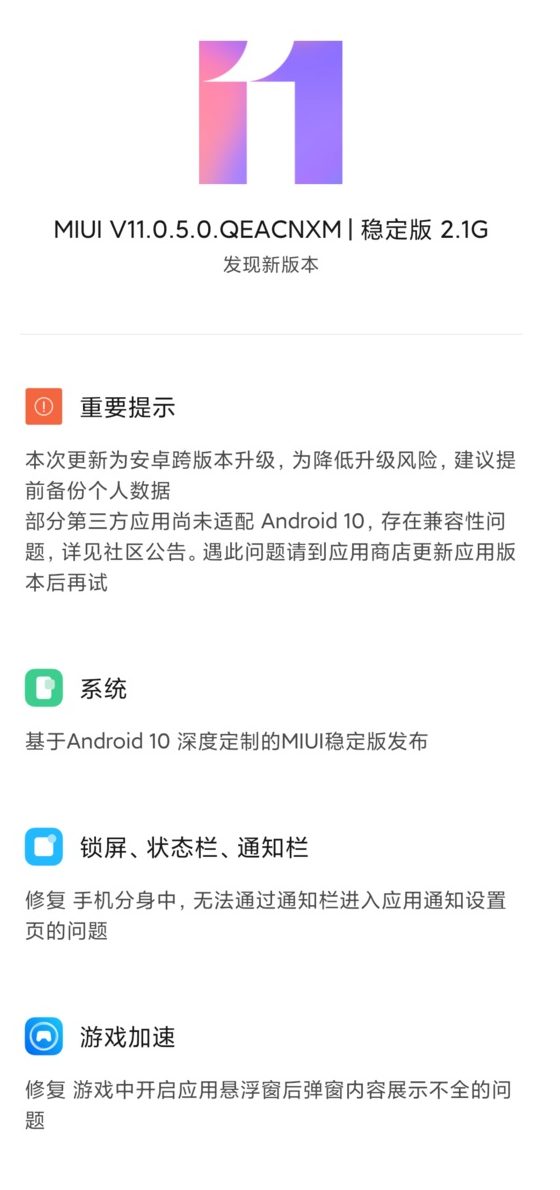
Xiaomi has begun rolling out a stable MIUI 11 update to its 2018 flagship, the Mi 8, in China. The update not only brings a new user interface and new features to the phone but also brings Android 10.
The update arrives as MIUI V11.0.5.0.QEACNXM and is 2.1GB in size. Xiaomi advises that users back up their data before they install the update since it not only comes with a new version of MIUI but also upgrades the Android version. Users are also warned that certain apps may be incompatible with Android 10 and may not function properly. However, it is advised that you update your apps afterward as the latest version of the app may have fixed the incompatibility issue.
MIUI 11 brings a redesigned user interface, always-on-display with new customization and personalization options, breathing lights for notifications using the display, new notification sounds inspired by nature, and Mi Work and Mi Life to helo you improve productivity and balance work and personal life. There is also Mi Share for file sharing between compatible devices.
MIUI 11 also has a built-in document viewer called Mi Doc Viewer so you don’t have to download a document viewing app for your device. There is also wireless printing with support for more than 2000 printer models from HP, Lexmark, HP, Sharp, Epson, Toshiba, Kyocera, Lenovo, Mijia and NEC e.t.c. Xiaomi has also included a period tracker, an emergency SOS feature, and a step counter.
There is no news yet with respect to when the stable update will be available for the global version but it should not be far off. The phone launched with Android 8.1 Oreo out of the box and was updated to Android 9 Pie. It should still be eligible for future MIUI updates but this may be its last Android OS upgrade.
Xiaomi recently launched the Redmi K30 series smartphones in the Chinese market which is yet to make its debut in the Indian market. However, the company has brought a few other products in India.
The company has launched a new Mi Step Out Backpack in India which is priced at ₹249. Along with that, Xiaomi also launched Mi Protective Glass in partnership with Corning, for the protection of display for the Redmi Note 8 Pro.
This new 2.5D glass screen protector is just 0.4mm thin and features silicon adhesive for an effortless bubble-free installation. It is made using Accessory Glass by Corning which is an alkali-aluminosilicate glass offering better safety compared to the generic tempered glass, as per Xiaomi.
The company also claims that the Mi Protective Glass goes through an additional ion-exchange process that again provides 5x better protection against scratches and contact with sharp objects. It also has 9H hardness to protect the smartphone display from scratches and drops.
Apart from this, the screen protector comes with high light transmittance that allows full clarity and colour and the oleophobic coating on top reduces glare and prevents fingerprints and smudges. The Mi Protective Glass for the Redmi Note 8 Pro is available for purchase via Mi.com at a price of ₹399.
On the other hand, the Mi Step Out Backpack has a capacity of 12 litres and two zipper pockets that can house gym wear and travel essentials. The backpack is made of 600D polyester fabric which is said to be water repellant and lightweight.
It measures 40 x 30 x 6.5 mm in dimensions and is touted to be built using 100 per cent polyester material. The Mi Step Out Backpack is available for purchase in four colours — Navy Blue, Royal Blue, Black and Red. It will go on sale on Mi.com for ₹249.
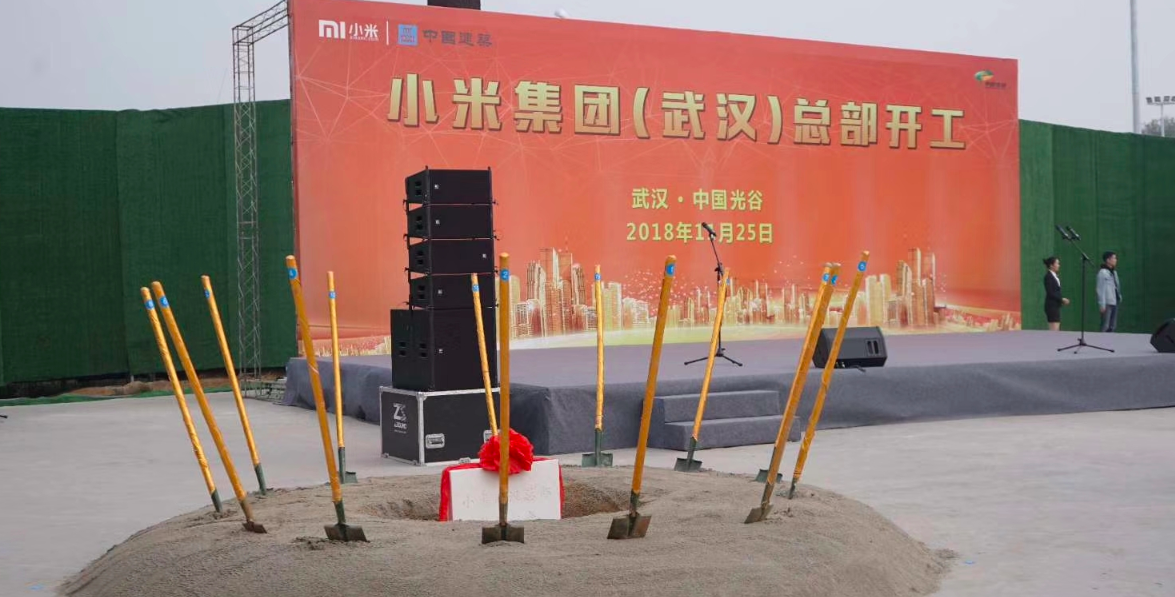
On 18th December 2019, Xiaomi‘s Wuhan headquarters has officially opened with Lei Jun, the CEO of Xiaomi Group, attending the opening ceremony. The new headquarters of the Chinese company is located in Optics Valley Central City, in the Hubei province and has been completed in just two years since its official listing.
Xiaomi commencing the start of building the Wuhan Headquarters on 25th November 2018
The total construction area of Xiaomi’s new Wuhan headquarters is about 52,000 square meters which can accommodate anywhere between 2,400 to 3,000 employees. Previously, Lei Jun had revealed that the production cost alone for the new headquarters was 10.5 billion Yuan or roughly 1.5 billion US dollars. Notably, the company has also recruited about 2,000 employees out of which 80 percent were hired from the local areas.
Xiaomi Wuhan Headquarters with an area size of 52,000 square metres
The Wuhan Headquarters of Xiaomi is the second center of the company’s artificial intelligence department; through which the company plans on building Hubei Xiaomi Artificial Intelligence Technology Innovation Center for future techs scientific research and development. This will further be supplemented by employees taken up directly from various reputable universities in the region.
We use cookies on our website to give you the most relevant experience by remembering your preferences and repeat visits. By clicking “Accept”, you consent to the use of ALL the cookies.
This website uses cookies to improve your experience while you navigate through the website. Out of these, the cookies that are categorized as necessary are stored on your browser as they are essential for the working of basic functionalities of the website. We also use third-party cookies that help us analyze and understand how you use this website. These cookies will be stored in your browser only with your consent. You also have the option to opt-out of these cookies. But opting out of some of these cookies may affect your browsing experience.
Necessary cookies are absolutely essential for the website to function properly. This category only includes cookies that ensures basic functionalities and security features of the website. These cookies do not store any personal information.
Any cookies that may not be particularly necessary for the website to function and is used specifically to collect user personal data via analytics, ads, other embedded contents are termed as non-necessary cookies. It is mandatory to procure user consent prior to running these cookies on your website.