Xiaomi along with another Chinese manufacturer named Momoda has developed an affordable massage chair which is currently available on the former’s crowdfunding website Youpin. Like most other offerings from Xiaomi, the latest massage chair carries an aggressive price tag and is offered for 2799 Yuan ($ 400).

The massage chair from Xiaomi measures 1250 x 980 x 630 mm and weighs 42 kg. According to the company, the product has been designed thoughtfully and its recline feature can work even if it is placed next to a wall. Consequently, it helps in saving space and user’s don’t need to move it every time it is used.
The massage chair is covered with soft PU leather which conceals all its inner moving parts. The chair can be used to massage three areas of the body which include legs, lower back and neck/shoulder area. The leg massager has a total of 12 airbags which can compress and decompress to boost blood flow and alleviate stiffness in both calves and feet.
1 of 4
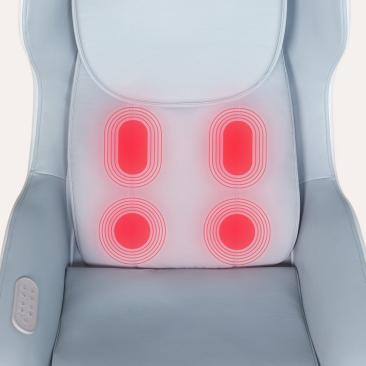
The waist region has four heating pads which are turned on alternatively at intervals of 1 minute that once again helps in increasing the blood flow. The neck and shoulder massager makes use of 6 roller wheels which mimics the hand movements of a massage therapist. The internal arms holding these rollers can be extended or retracted to accommodate users of different height, ranging from 150 cm to 190 cm.
All the options and features on the massage chair can be operated via a centralised control unit which is placed where the right arm of the user would rest. It is offered in two colour options which include Light Brown and Light Grey.
Surprisingly, Xiaomi’s original crowdfunding goal has already been achieved over 9 folds and 15 days are still left in the campaign. Even though the massage chair is currently offered in China, the company could consider bringing to other regions if the demand persists.

What are your thoughts on Xiaomi’s latest offering? Would you be interested in buying a massage chair similar to this? Let us know in the comments below.
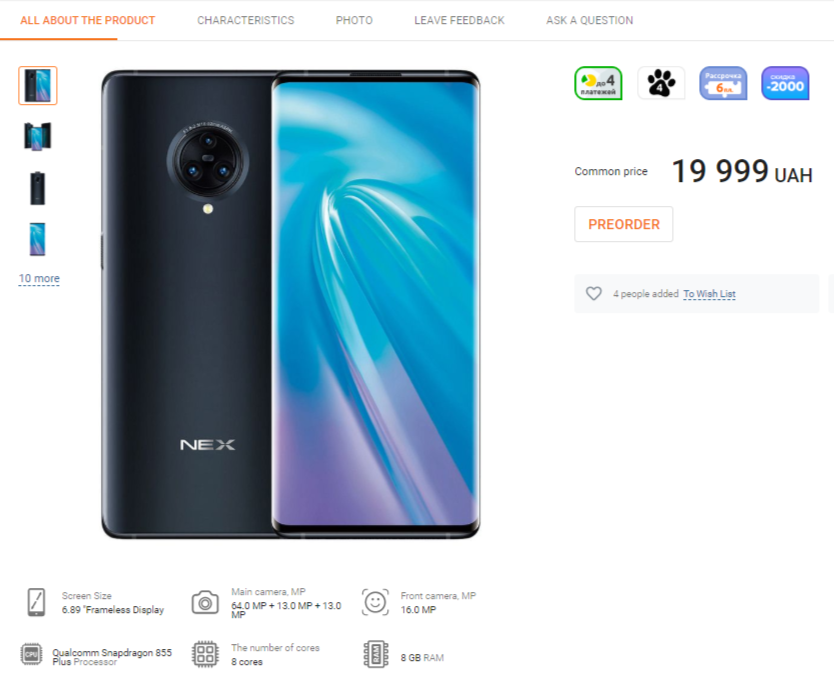
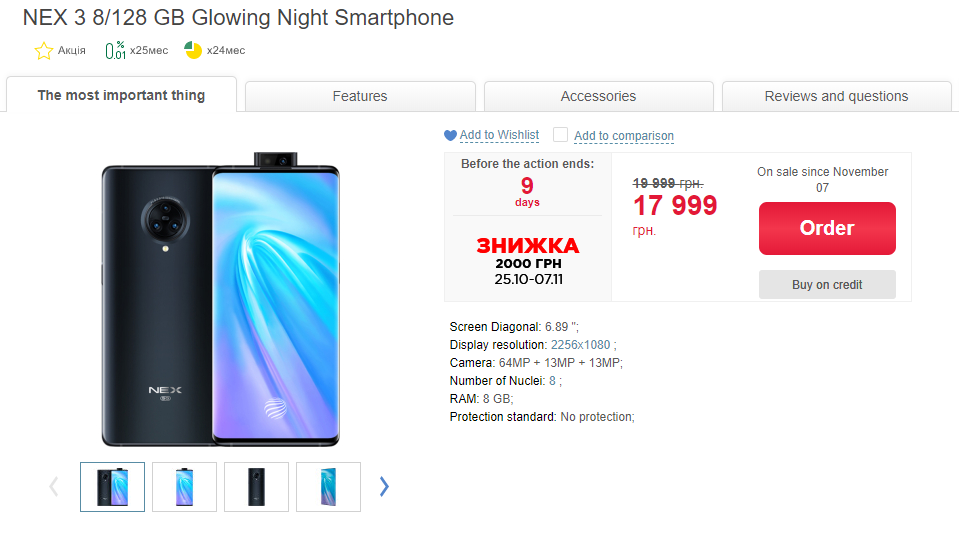
Vivo launched its innovative flagship, the Vivo NEX 3 in China back in September 2019. The phone came with a unique waterfall display with a curve that extends to both sides. After its China launch, the NEX 3 is making its way to Europe, with the first stop at Ukraine. The NEX 3 is up for pre-order at UAH17,999 ($715) right now and will start shipping in November.
The NEX 3 will be sold via Allo and Citrus in Ukraine, however, only Allo is offering the device at the above mentioned (UAH17,999) discounted price tag. If you are pre-ordering from Citrus, the NEX 3 will cost you UAH19,999 ($794) without the discount. Both third party retailers will start shipping the device from November 7.
citrus preorder listing
Allo preorder listing
This pricing is for the 8GB RAM + 128GB ROM variant, which is surprisingly close to its pricing in China. At its Chinese launch, the same variant was priced at 4998 yuan (~$709). So customers in Ukraine can get the device for almost the same price as in China. Note that this is the 4G variant and does not support 5G.
This Vivo NEX 3 Ukraine launch comes right after it was announced in Taiwan. Interestingly, Taiwan gets the 5G variant since the new generation network will launch very soon in the country.
With the US trade ban still in place and no respite in sight, Huawei has turned to Russia for support. Huawei is the largest technological company in China, which is allied with Russia. It is only natural that Huawei plays a greater role in this friendship. Huawei has utilized this opportunity to build inroads into Russia with the development of 5G technology and smartphone sales. The company further plans to significantly expand its research and development operations in Russia and partner with local universities in this regard.
This partnership could not have come at a better time for Russia, which is currently out-of-favor with the US. Huawei is bringing some much-needed foreign investment while helping Russian tech specialists upgrade their skills. Ken Hu, Huawei’s Vice Chairman, announced earlier in October that the company plans to invest nearly 500 million rubles (~$7.8 million) to promote 5G technology in Russia and train 10,000 specialists by 2025.
Back in June 2019, Huawei had signed a deal with Russian telecom service provider MTS to jointly develop 5G infrastructure in the country. The project is going strong and MTS launched the first 5G test zone in Moscow last month. Huawei has slowly sealed its position as a trusted brand in the Russian smartphone market. Huawei, along with sub-brand Honor had successfully overthrown Samsung Electronics in sales during the third quarter of 2018. As of August 2019, Huawei along with its subsidiaries controls 37% of the Russian smartphone market.
According to Eldar Murtazin, Editor-in-Chief, Mobile Review, “Huawei’s success in Russia is partly due to the heavy investments made in establishing Honor. The Russian market was blown away with the relatively high-quality smartphones from Honor at below-average prices that the competition was either unwilling or unable to match. No other company went head-to-head with Huawei in this price war as it is difficult to continue working when the initial sales are down”.
While Huawei’s reputation has been tainted in the West on allegations that they could be spying for the Chinese government, such rumors hold no precedent in Russia. “Moscow considers Huawei a law-abiding corporation that does not engage in international espionage since the allegations have not been proved” Murtazin added. On a broader note, Russian analysts are of the opinion that personal data is susceptible to leaks and there is no unique threat to Huawei users.
Some people are less concerned about China gaining access to Russian user data as opposed to the US since the former is a close ally. According to Vladimir Rubanov, Executive Manager at Rosplatforma, a Russian IT company “A common joke among the Russian IT community goes ‘If you are using Apple, Washington listens to your calls. If you are using Honor, Beijing is listening’. Which one do you prefer?”
The rising tension between Washington and Beijing has forced Huawei to turn to the Kremlin for innovation. The company announced its plan to triple the size of its Research and Development wing in Russia within the next six years. Huawei plans to open three new R&D centers in the country by the end of 2019, making Russia its third-largest R&D center outside China.
Huawei is also strengthening ties with leading Russian technological universities and research institutions by funding studies that benefit the Chinese company and inviting them for joint projects. Huawei is utilizing Russia’s dedicated young workforce to maintain its innovative edge, despite mounting pressure from the US. Not many countries have an abundance of programmers and tech analysts. Although Russia is not the only nation with the talent and workforce, it is a strong contender in the area.
Huawei came prepared with very deep pockets to attract Russian talent. Over the years they persuaded several stalwarts in the Russian IT industry to sign up, by doubling their salaries. According to Rubanov, “Moscow is looking at the benefits of this partnership with Huawei. Apart from pumping foreign currency into the Russian economy, Huawei is also helping tech specialists develop their skillset. The company is spending their own resources to train Russian citizens in advanced technology and giving them an opportunity to participate in world-class product development”.
Specialists trained at Huawei’s facilities will eventually move on to start their own companies. Thus, fueling the Russian IT entrepreneurship. As Huawei continues to spread its wings in Russia, its success in the future will definitely come at the expense of American companies. Huawei’s strategy is simple. Since they cannot expand their business in America, they are investing heavily in Russia. This is a conscious effort to squeeze out American infrastructure companies in Russia and bleed them commercially by offering better contracts and projects to their employees.
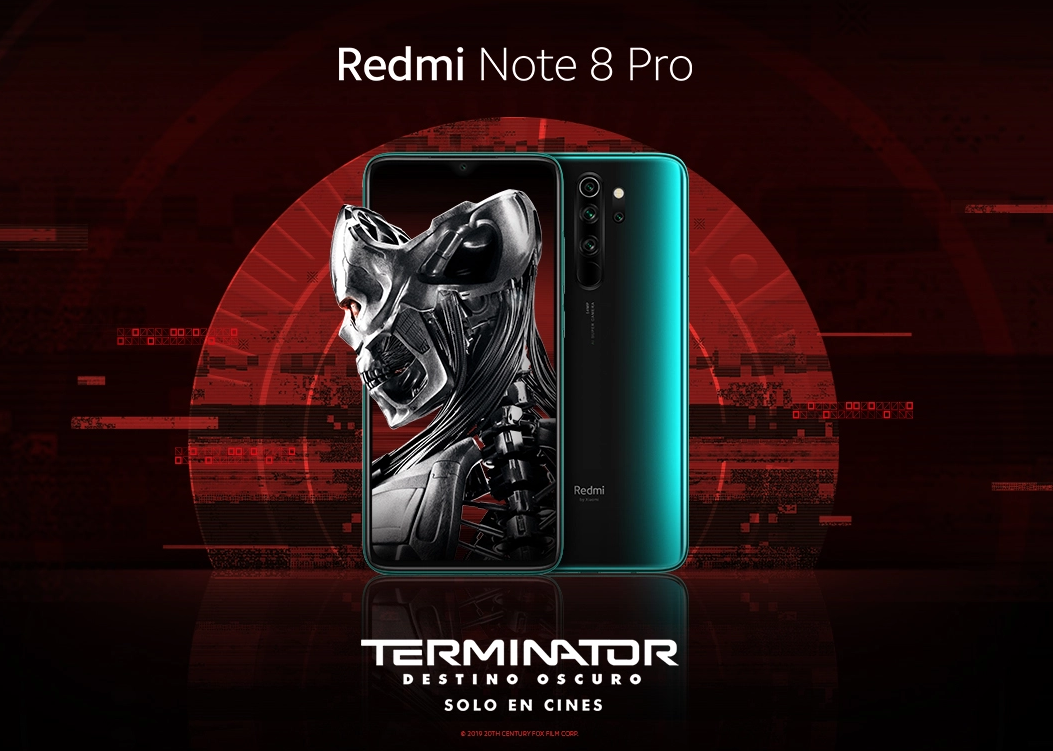
Redmi Note 8 Pro smartphone was launched a few months ago as the world’s first smartphone to feature a 64-megapixel camera sensor. Now, the company is all set to launch a new variant of the same.
Xiaomi has revealed that it will be launching the Redmi Note 8 Pro Terminator Edition smartphone. As the name suggests, it will be based on Arnold Schwarzenegger’s Terminator movie series.
Recently, an official Twitter account of Xiaomi had revealed that the Redmi Note 8 Pro Terminator Edition will be launched in Spain on 29th October for a price of 229 Euros, which roughly converts to $254.
It seems that the discounted price of 229 Euros for the 6GB + 64GB variant and a free back case is what this Special Edition is about. The company had said that it will be running a 24-hour flash sale and those who purchase the device will also get a free Terminator: Dark Fate custom case but it seems that the Flash Sale is already over.
However, interested users can buy this Redmi Note 8 Pro Terminator Edition through Xiaomi’s official website Mi.com and those who purchase the device through the Mi Store will also get a complimentary ticket for the Terminator: Dark Fate movie.
While nothing much is known about this upcoming Terminator Edition of the Redmi Note 8 Pro smartphone, but we expect some changes in terms of the smartphone’s design, user interface, and in-box accessories. However, the specifications of the device are expected to be the same as the standard model.
The Redmi Note 8 Pro comes with an IP52 splash resistant body and is equipped with a 6.53-inch IPS LCD display with waterdrop notch. It supports Full HD+ screen resolution of 1080 x 2340 pixels. The TUV Rheinland certification for the display ensures that it filters the harmful blue rays.
There’s a MediaTek Helio G90T processor which fuels the Redmi Note 8 Pro smartphone. It is packed with 6GB and 8GB of RAM, depending on the variant you choose and comes in two storage options — 64GB and 128GB. There’s also a dedicated microSD card slot that enables you to further expand the storage capacity on the device.
The quad camera setup on the back includes an f/1.7 aperture 64-megapixel ISOCELL Bright GW1 as primary lens, an ultrawide lens of 8-megapixel, a 2-megapixel macro lens with 2cm focal length and a depth sensor of 2-megapixel. There’s also a 20-megapixel front-facing camera for taking selfies, housed inside the notch on top of the display.
The smartphone runs Android 9 Pie operating system out-of-the-box with MIUI 10 which comes with enhanced gaming experience, thanks to the Game Turbo 2.0 and HyperEngine by MediaTek. The device is powered by a 4,500mAh battery that carries support for 18W rapid charging technology.
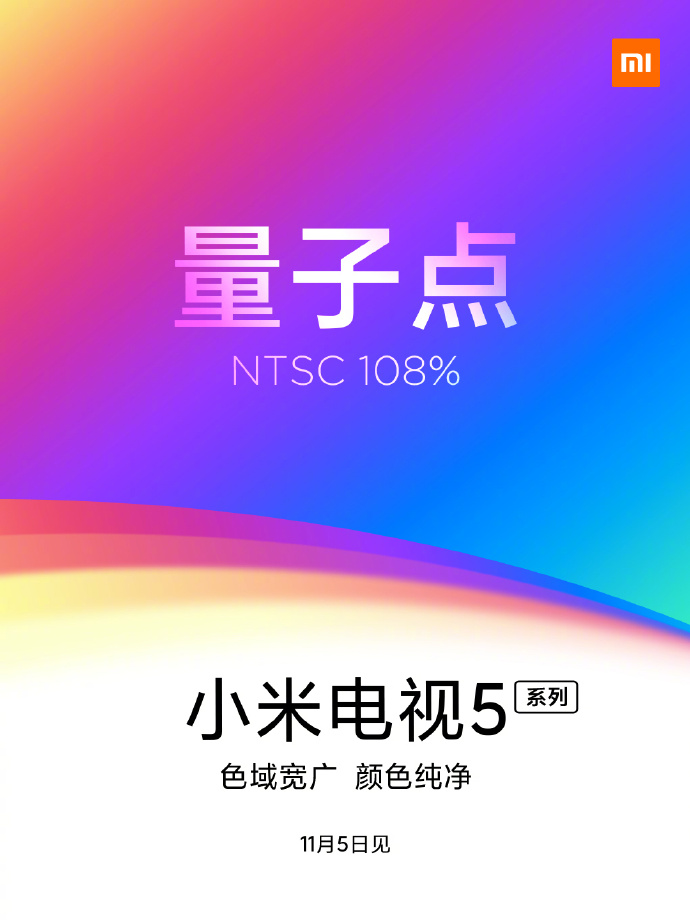
In the past six years, Xiaomi has established itself as a powerful TV manufacturer and it’s no surprise that it ranks number one in the smart TV category in China. After announcing the Mi TV Pro lineup a few months ago, Xiaomi is all set to release the new Mi TV 5 series on November 5. Today, the company has confirmed the new Mi TV 5 models will come with the premium Quantum Dot display panels from Samsung.
The Mi TV 5 series will use a 4K QLED panel covering NTSC 108% wide color gamut. The Quantum Dot panel is likely to be supplied by Samsung who dominates this industry. The current generation Mi TV 4 series comes with either LCD or LED panels, so with the Mi TV 5 series, Xiaomi is looking to enter the premium segment.
Xiaomi’s shift to Quantum Dot LEDs isn’t surprising. The recently launched OnePlus TV also features Samsung’s premium QLED panels. So, the Mi TV maker is trying to jump into the premium segment with its new generation models. In fact, a recent survey from one of the Xiaomi executives had already given us a glimpse of Xiaomi’s intentions. Unfortunately, we don’t have any more information on the upcoming TVs.
Huawei, the Chinese telecom giant, held an event this week in China where the company has announced a few products, including Huawei Smart Screen 65-inch model which comes in Mocha Gold color variant. The company has also revealed that the product is about to be available for purchase online in China, carrying a price tag of 6,999 Yuan which roughly converts to $992.
For those who are unaware, Huawei Smart Screen aka Huawei Smart TV made its debut in late September this year and now the company has added a new Mocha Gold variant to give it a luxurious feel. The company says it aims to offer more choices to the customer and added that this new variant looks like a beautiful art in the living room.
Coming to the Huawei Smart Screen, it comes with a 4K Quantom Dot display which offers screen resolution of 3840 x 2160 pixels, 100% NTSC Color Gamut coverage, and MEMC dynamic picture compensation.
Internally, the smart TV is powered by the company’s own HiSilicon chipset which comes with two A53 cores and two A73 cores, as well as quad-core G51 GPU, 4GB of RAM, and 64GB of internal storage for a smoother operation.
The TV comes equipped with an exclusive 8+1+1 smart sound system that includes six full-range speaker units, two tweeter units, and one woofer. It also comes with one pair of passive radiators, 65W powerful output and 3.9L super large sound chamber.
The company says that the multi-unit speaker combination allows the device to offer more sound details and an immersive experience. It also enables the Smart TV to have 5.1-channel professional sound effects so that users can have professional stereo sound experience at their home.
Huawei also adds that through Huawei Smart Sound System, it can automatically determine the room space or home characteristics based on the sound field, and then selects the most suitable sound playback scheme in the environment.
It also comes with a pop-up AI-powered camera that provides 1920 x 1080 pixels screen resolution for video calling. It has Smart Portrait Locking technology as well as Low-Light Technology and the camera can also adopt according to the light changes.
Thanks to the HarmonyOS (aka HongMeng OS) powering this Smart TV, it can offer some interesting AI-powered features such as AI Fitness, AI Kids Control, etc. It comes with Huawei Share Smart Multi-Screen that can mirror the smartphone screen on the Huawei Smart Screen with 100ms ultra-low latency.
There are several other functions as the company is aiming to make this more than a smart TV and more into the family’s “Smart Interaction Center, Multi-screen Experience Center, IoT Control Center, Video and Entertainment Center”.
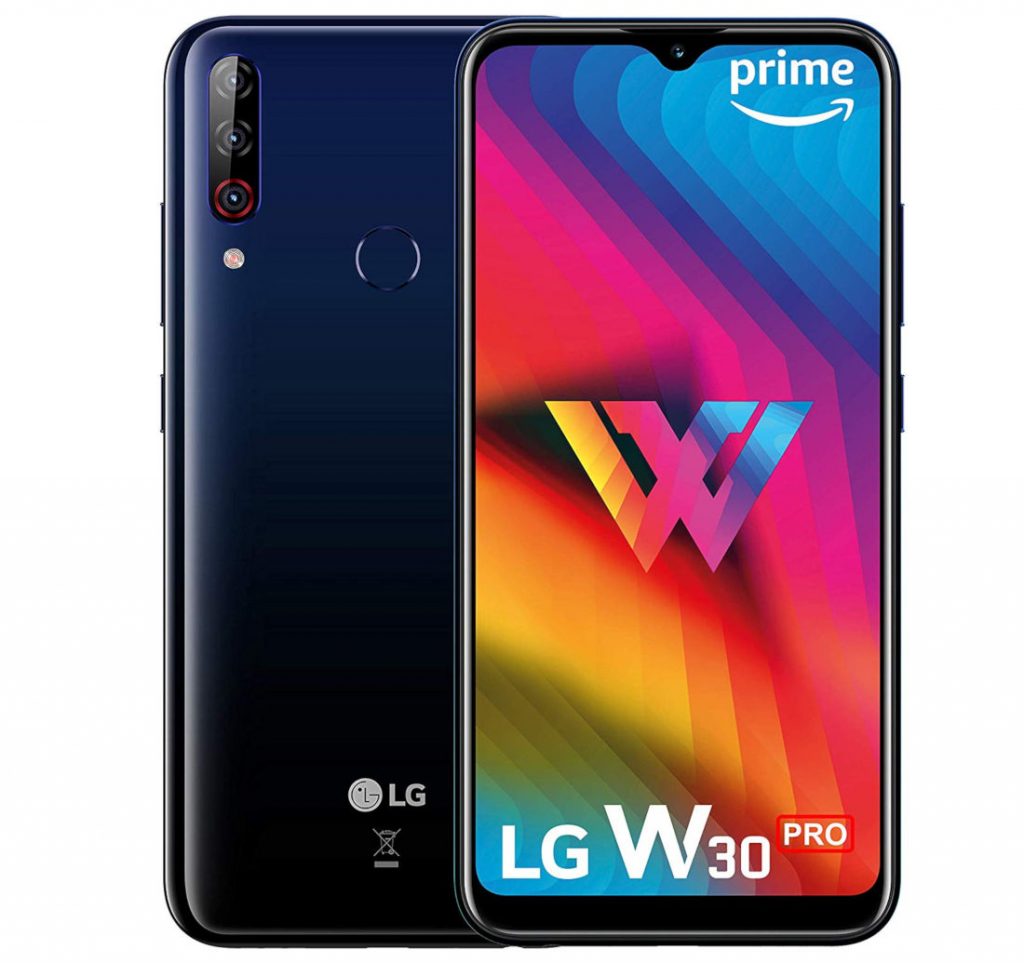
In June, LG introduced the W-series of smartphones to rival with the brands that are ruling the mid-range market in India. It had launched phones such as LG W10, LG W30 and LG W30 Pro. Except for the Pro model, the other two phones have been available for purchase soon after announcement. The LG W30 Pro is now available for purchase in India.
LG W30 Pro Price in India
At the June event, LG did not confirm the pricing and availability of the LG W30 Pro. Now, it has revealed that the smartphone can be bought for Rs. 12,490 (~$176). The Amazon India exclusive phone comes in two colors like Midnight Blue and Midnight Purple. The launch offers available for the LG W30 Pro buyers are no cost EMI, exchange offers, up to Rs. 2,000 discount for Citibank credit card users and 10 percent discount for users of Yes Bank credit card.
LG W30 Pro
LG W30 Pro Specifications
The LG W30 Pro is fitted with a 6.21-inch FullVision IPS LCD display that supports HD+ resolution and an aspect ratio of 19:9. The device promises a screen-to-body ratio of 86.83. The Snapdragon 632 mobile platform is present under the hood of the device with up to 4 GB of RAM. It offers users with a native storage of 64 GB. A microSD card slot is also available on the device for more storage.
The rear side of the LG W30 Pro is fitted with a triple camera system. It includes a primary lens of 13-megapixel, an 8-megapixel wide-angle lens and a 5-megapixel depth sensor. For shooting selfies, the waterdrop notch on the screen houses a front camera of 16-megapixel. The smartphone is backed by a 4,050mAh capacity that carries support for rapid charging. The device carries support for dual 4G VoLTE, Wi-Fi, Bluetooth, GPS, USB-C with OTG support and 3.5mm audio jack.
A fingerprint scanner is found on the polycarbonate rear of the LG W30 Pro. The smartphone is equipped with StereoPulse Sound technology that can deliver twofold bass output compared to conventional smartphone by effectively making use of its internal space as a resonance chamber.
The LG W10 and LG W30 smartphones are respectively available with Rs. 8,999 (~$127) and Rs. 9,999 (~$141) price tags in India. These devices are also available exclusively through Amazon India.
What’s your opinion on the pricing and spec of the LG W30 Pro? Share us your thoughts by posting your comments below.
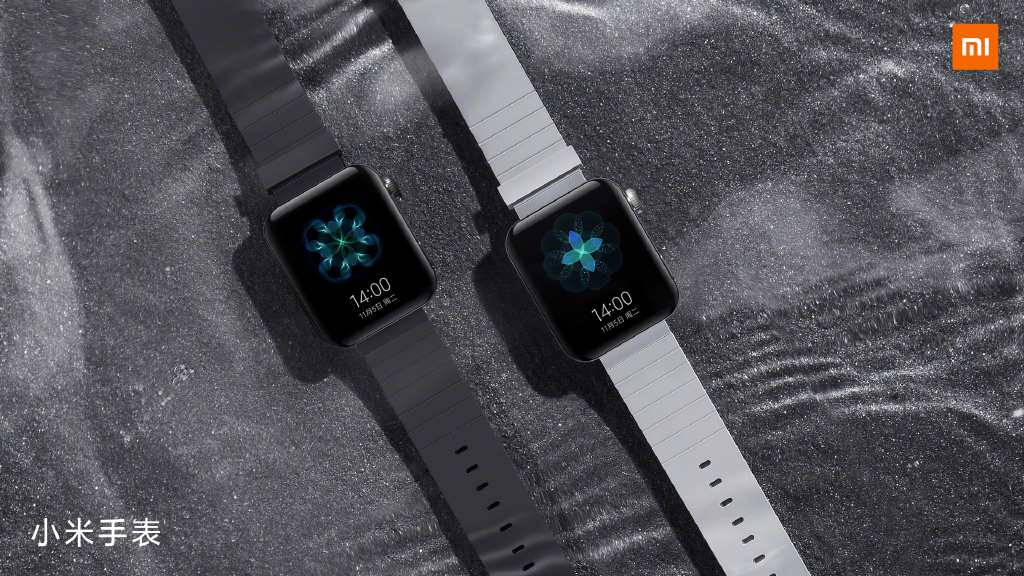
Yesterday, Xiaomi officially confirmed that it would release a new smartwatch alongside the Mi CC9 Pro at the November 5 event. Today, Xiaomi’s CEO, Lei Jun has revealed a render of the upcoming Xiaomi Smartwatch and we can’t deny that it takes HEAVY inspiration from the Apple Watch.
The Xiaomi smartwatch will come in two band colors, elegant black, and silver. It features a curved rectangular screen very similar to the Apple Watch series. What’s more, the placement of the crown is also exactly the same as the Apple Watch. Even the power button is placed just as the Apple wearable. There’s no denying that this Xiaomi smartwatch design lacks originality. We would really be disappointed if Xiaomi is marketing its new watch as an Apple Watch clone at a cheaper price tag.
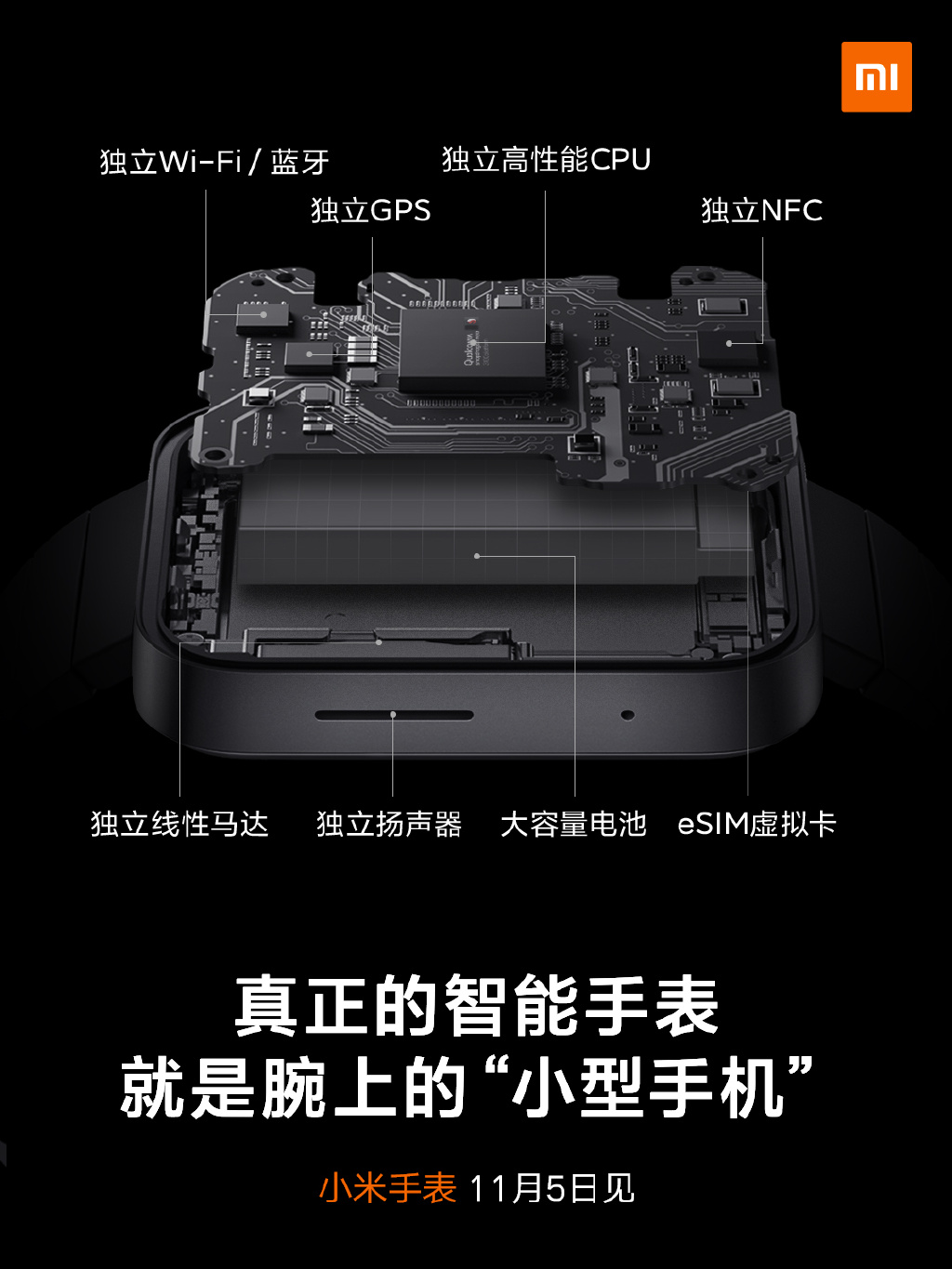
Xiaomi had revealed a couple of days back that its new watch will be a true smartwatch and not just another band. Today, the company revealed more details about its internals and it’s clear that the smartwatch will be loaded with features. The Xiaomi smartwatch will feature a high-performance CPU along with independent GPS, NFC, Wi-Fi / Bluetooth modules. There will be an independent linear motor as well as speakers inside. Further, it is said that the battery will be pretty large as well. Finally, the Mi Smartwatch will come with eSIM support, just like the Apple Watch.
So even if the upcoming Xiaomi Mi Smartwatch lacks an original design, it will probably make it up with interesting features. With eSIM support and speakers, the watch should be able to make phone calls and other functions, just like a smartphone.
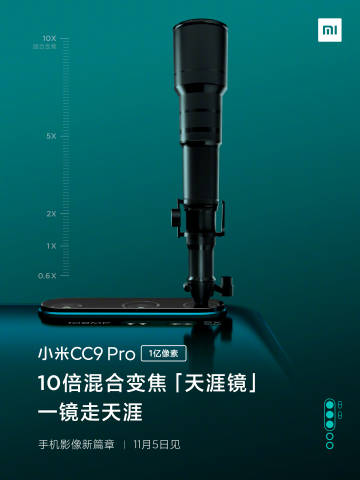
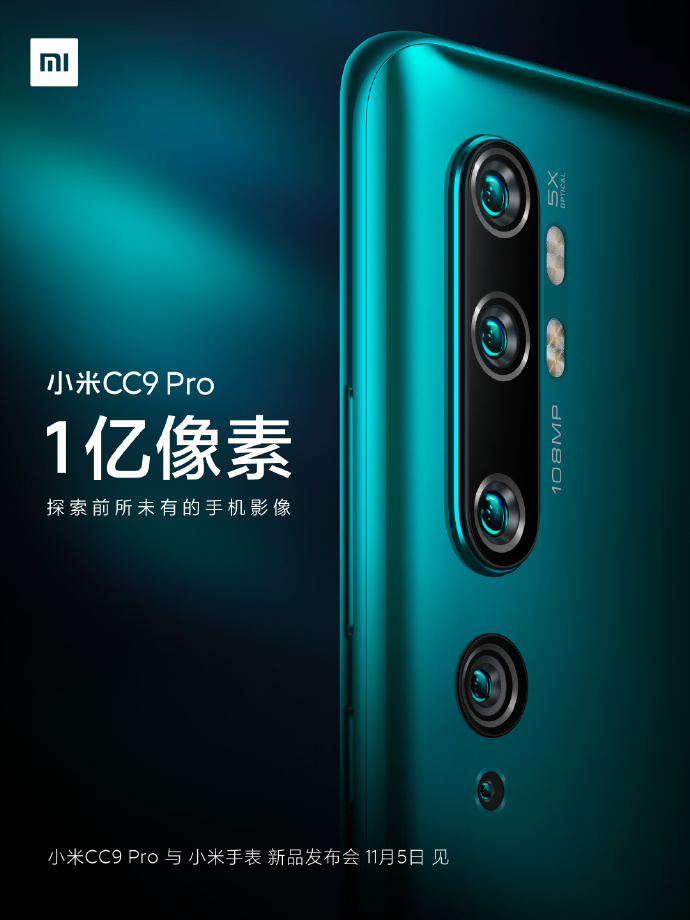
On Nov. 5, Xiaomi will be unleashing the Xiaomi Mi CC9 Pro smartphone with 108-megapixel penta-lens camera system. The full specifications of the smartphone have already appeared on its TENAA listing. The launch poster of the phone that the company had released yesterday that the penta-lens system of the phone will support 5x optical zoom. Today, it has shared more details on the cameras of the Mi CC9 Pro.
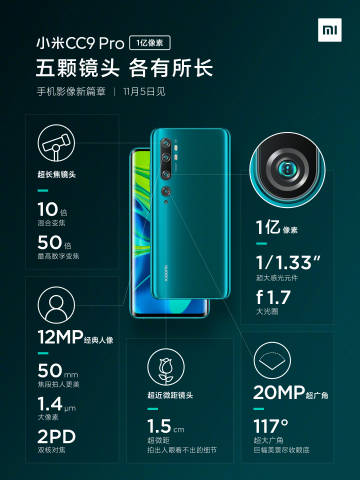
It appears that Xiaomi Mi CC9 Pro will be the first phone from the company to arrive with a periscope lens. The first lens in the five camera setup will be a periscope sensor that will allow the phone to support 5x optical zoom, 10x hybrid zoom and 50x digital zoom.
The second lens is a 50mm portrait lens of 12-megapixel with a large pixel size of 1.4micron. It supports dual PD autofocus and has an aperture rating of f/2.0 aperture. The third lens is a Samsung-made 108-megapixel lens. It is a 1/1.33-inch sensor with an aperture rating of f/1.7. The fourth one is a 20-megapixel superwide lens with 117-degree field-of-view. The last one is a super macro lens with a focal length of 1.5cm.
Xiaomi has revealed that the 108-megapixel lens and the periscope are both equipped with support for optical image stabilization (OIS). As it can be seen, the five cameras are assisted by a pair of dual-LED flash units. The cost of the phone’s cameras is five times more than that of the Xiaomi Mi CC9.
The Xiaomi Mi CC9 Pro has a 6.47-inch full HD+ OLED display with 19.5:9 aspect ratio and in-display fingerprint reader. The Snapdragon 730G powers the phone with up to 8 GB of RAM. The highest model of the phone may have 256 GB of native storage. The Android 9 Pie OS on the device could be customized with MIUI 11. There is no support for microSD card on the device.
The frontside of the Xiaomi Mi CC9 Pro features a 32-megapixel selfie shooter. It has backed by a minimum rated battery of 5,170mAh capacity. The smartphone weighs 208 grams and its thickness is 9.67mm. Past reports have claimed that its base model may cost. Outside of China, the handset could be called Mi Note 10 or Note 10 Pro.
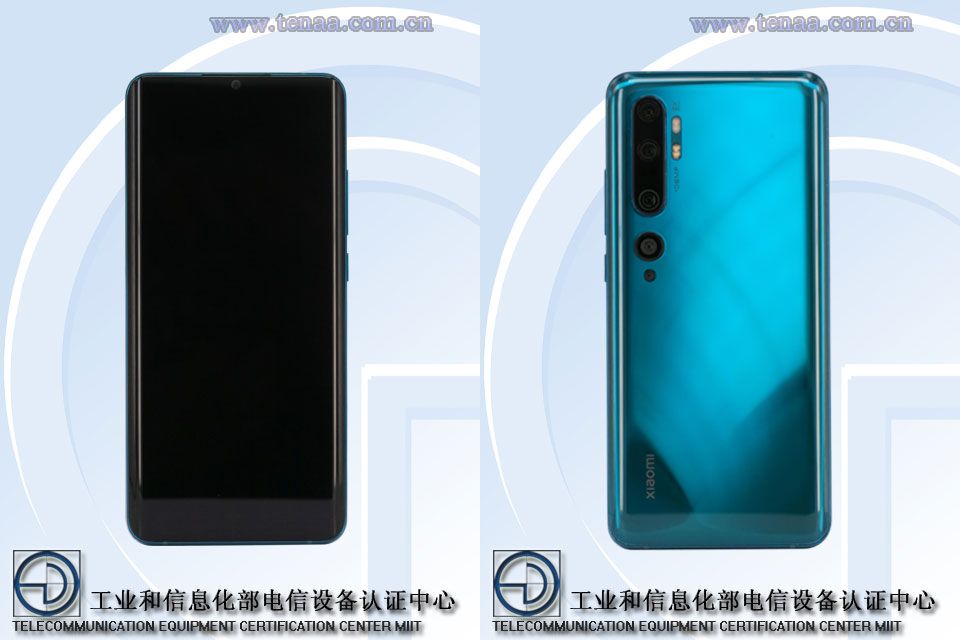
UPDATE: The images of Xiaomi Mi CC9 Pro have appeared on TENAA. The display of the phone has a waterdrop notch. The screen appears to be curved towards its right and left edges. The back panel flaunts the marvelous penta-lens setup of the phone.
Original story follows…
Last week, a Xiaomi phone with model number M1910F4E was spotted on 3C’s website. It is believed that it could be the upcoming Xiaomi Mi CC9 Pro that features a 108-megapixel penta-lens camera system on its rear. The handset is slated to go official on Nov. 5. Ahead of the launch, the M1910F4E has popped up on TENAA’s database. There are no images of the phone in the listing, but it carries its entire specifications.
Xiaomi Mi CC9 Pro Specifications
The Xiaomi Mi CC9 Pro measures 157.8 x 74.2. The thickness of the device is 9.67mm and it weighs 208 grams. The reason behind its thickness and weight is because of the presence of a large-sized battery. TENAA reveals that the phone is equipped with a minimum capacity battery of 5,170mAh capacity. It has been found through 3C appearance that it may come with a charger that supports up to 30W rapid charging.
The smartphone is fitted with a 6.47-inch OLED display. It offers full HD+ resolution of 1080 x 2340 pixels and a tall aspect ratio of 19.5:9. The display is integrated with an in-screen fingerprint sensor.
The Mi CC9 Pro is powered by 2.2GHz octa-core processor. Rumors surrounding the smartphone have claimed that it is powered by 8nm Snapdragon 730G. There is no official confirmation on it from the company. The handset was spotted yesterday on Geekbench benchmarking platform with 6 GB of RAM and a processor with a base frequency of 1.8GHz. The SD730G features 2 x 2.2GHz Kryo 470 Gold CPU cores and 6 x 1.8GHz Kryo 470 Silver CPU cores.
The RAM variants of the Mi CC9 Pro are 6 GB, 8 GB and 12 GB. It is expected to arrive in storage editions such as 64 GB, 128 GB and 256 GB. There is no support for external storage on the device. It will come loaded with Android 9 Pie and may probably feature the latest MIUI 11 UI.
For capturing selfies, the Mi CC9 Pro has a 32-megapixel selfie snapper. Xiaomi has already revealed that the handset has five cameras on the back. TENAA only reveals the main lens of the phone as 108-megapixel and it has no information on the other four sensors.
It appears that the Mi CC9 Pro may arrive outside of China with a different moniker. The NBTC listing of similar appearing model numbers like M1910F4S and M1910F4G have revealed that these phones will be respectively debuting in Thailand as Mi Note 10 Pro and Mi Note 10.
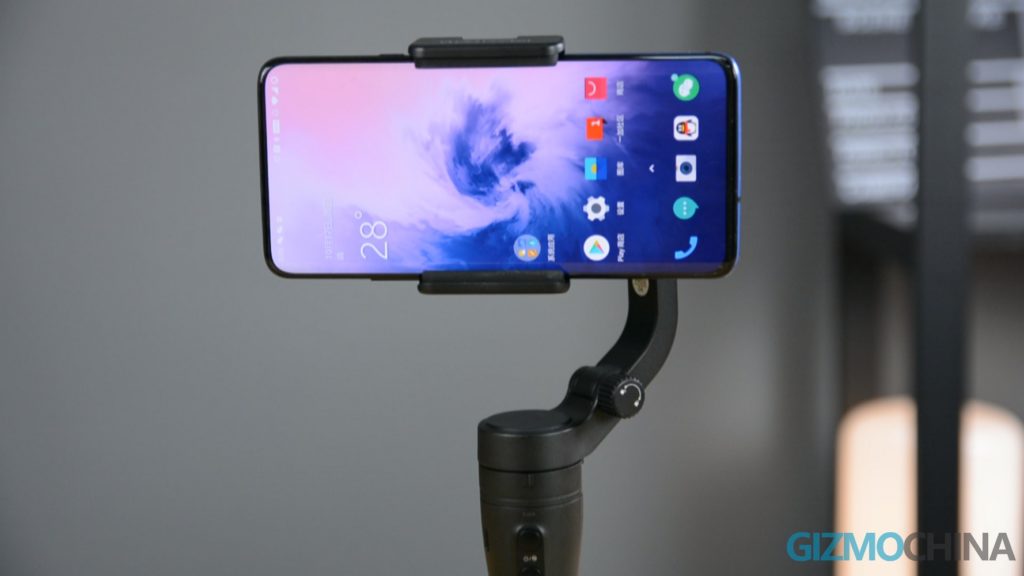
When talking about gimbals, especially phone gimbals, my biggest concern is the size of it. For me, I would definitely sacrifice some functions to make sure that when I am in need of a gimbal, I can get access to it and actually start using it within 1 minute. Luckily, I find this little guy, the Feiyu VlogPocket. From beginners to pros, this gimbal deserves a seat on your baggage list.
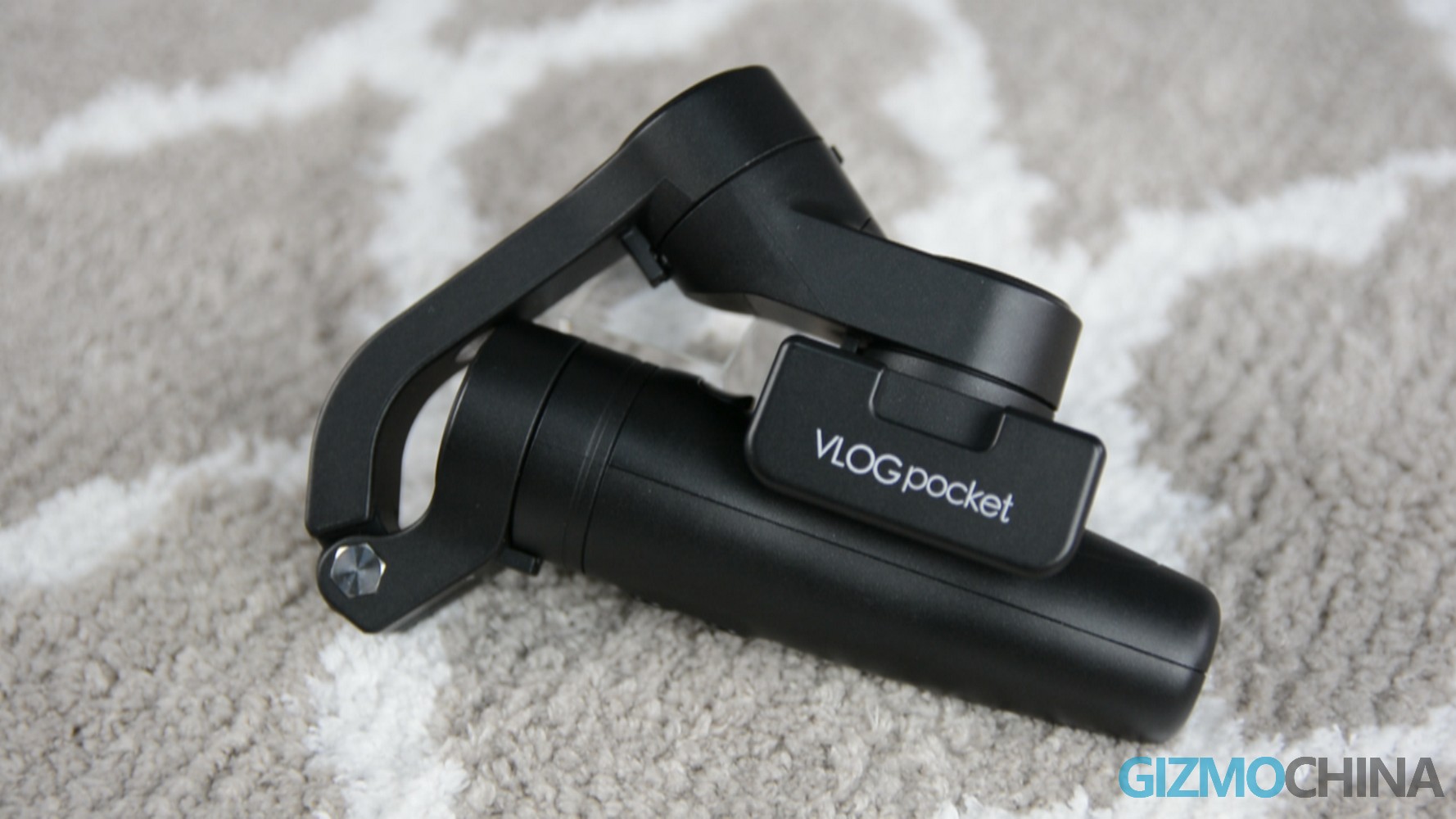
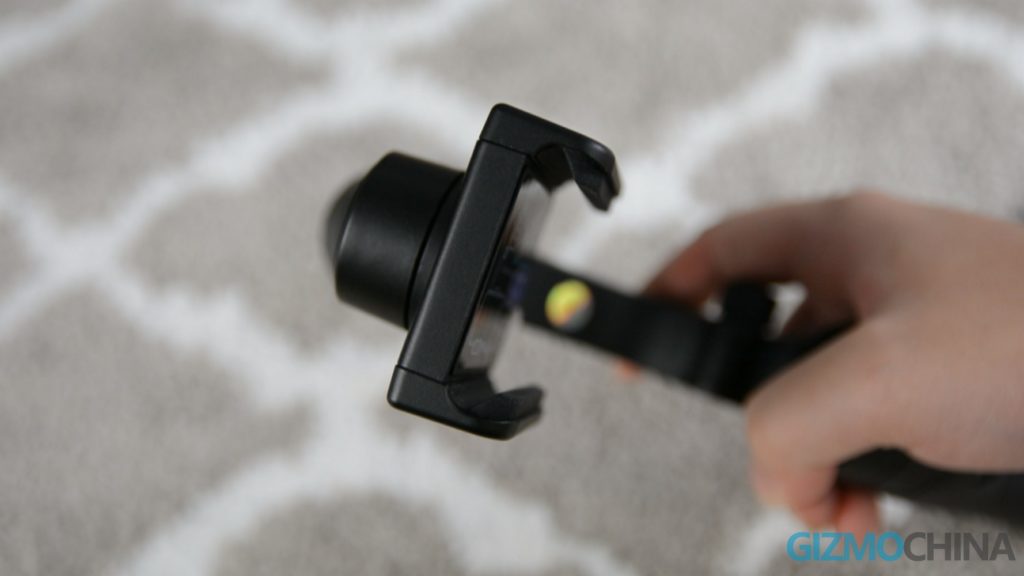
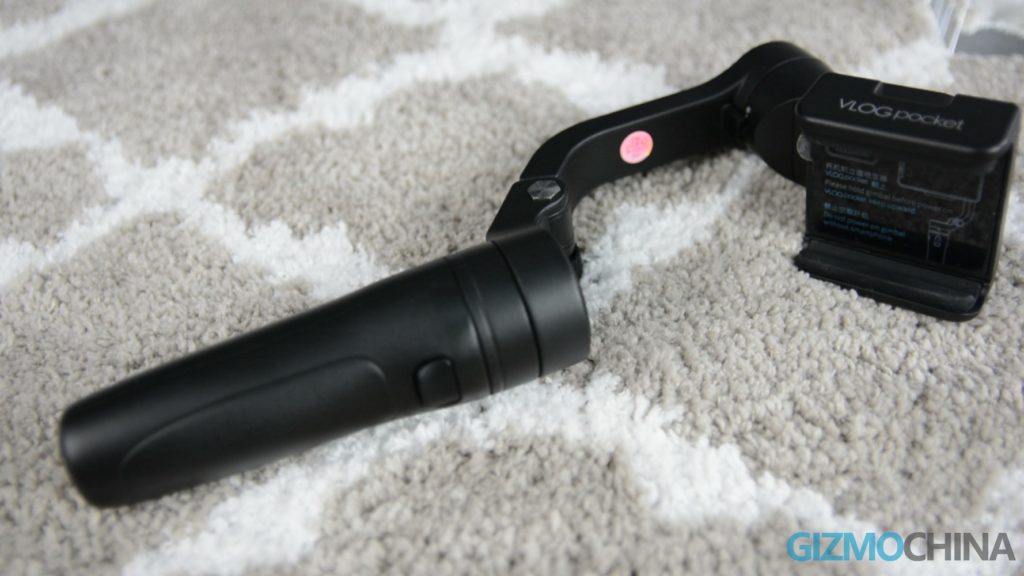
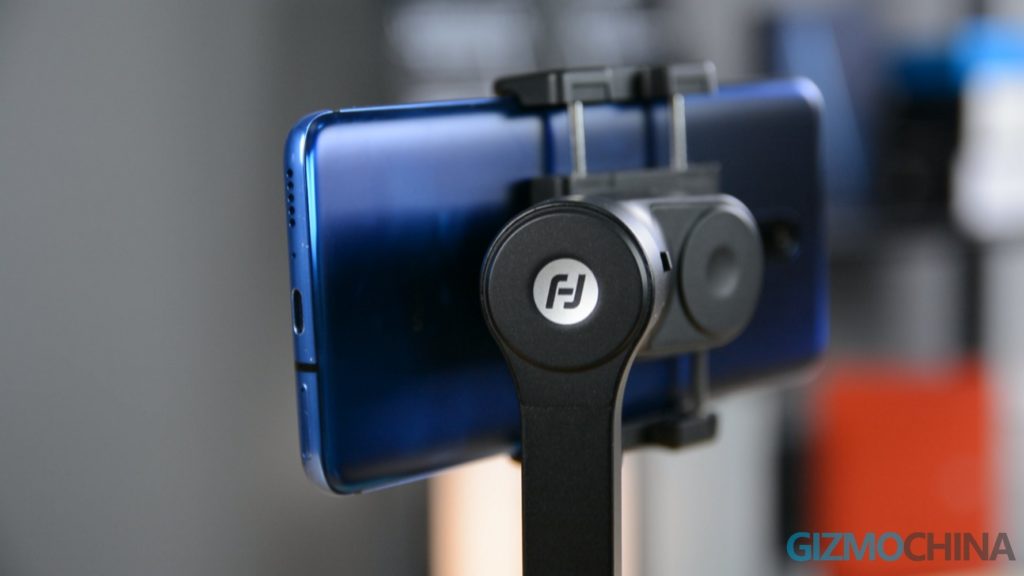
Start with the body design, which is the biggest selling point of it. This is the smallest gimbal I have ever used. It is as tall as your phone and it only weighs 272g, which is not much heavier than your cell phone. So, it is super portable and can be easily fit in your pocket. Apparently Feiyu is not joking or exaggerating about naming the device.
It can be perfectly fit in the side pocket of your backpack or most of the big pockets on your shorts or even jeans. I really like the notch design of the phone clip. It will prevent pressing the lock or volume buttons.
The shell of the gimbal is made of plastic but covered by a layer of skin-like coating. So, the touch of the handle is great and a little bit small. When operating the device, it is slightly tricky especially for those who have a big hand. Sometimes you will miss tap the buttons. So, you may need some time to get used to it.
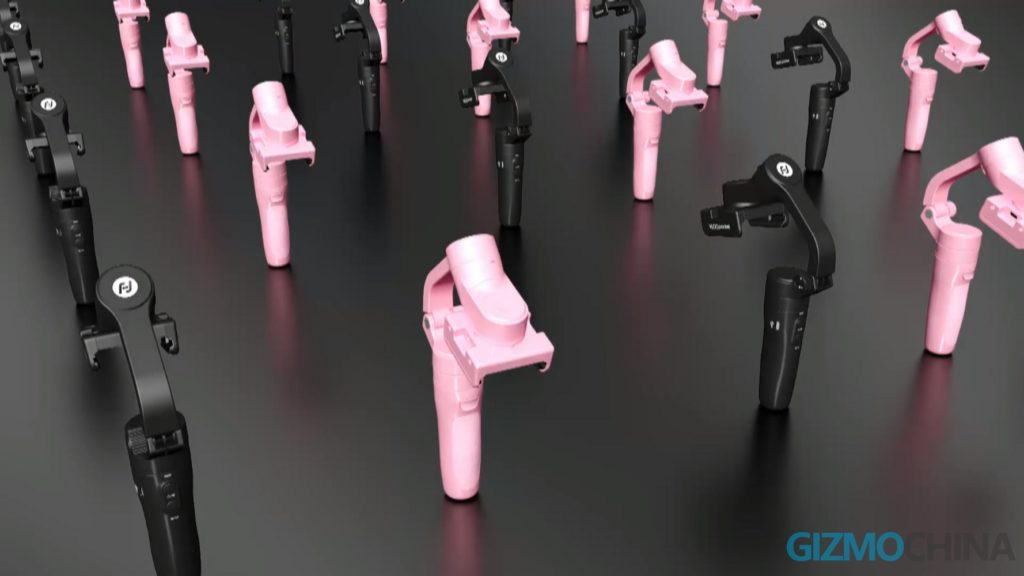
We have two color editions, black and pink. I have to say the pink version is really a clever move because at least in China, more and more girls start their business with a gimbal no matter doing a live show or making a vlog.
Two-color Editions: Black and Pink.
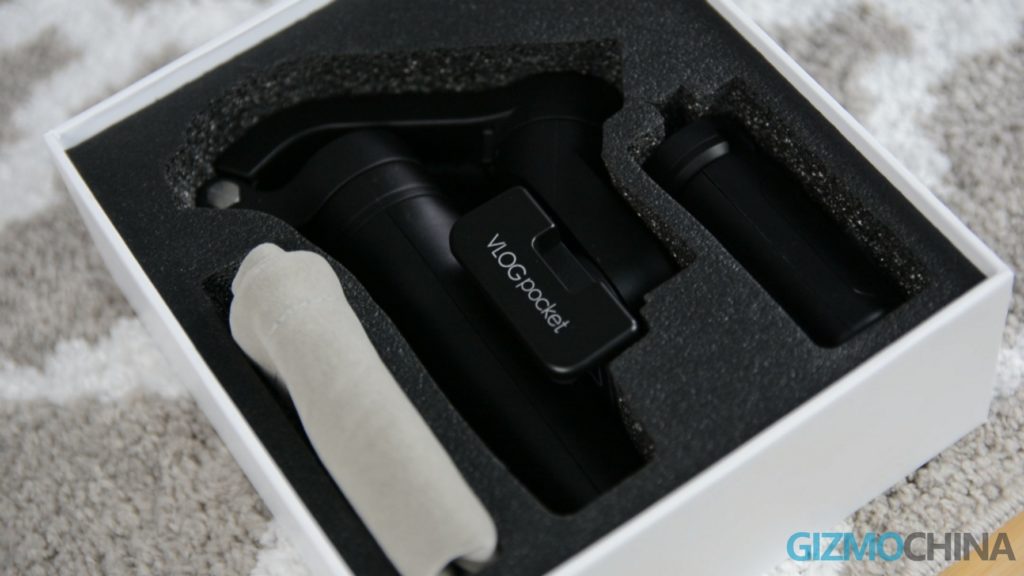
The current price of VlogPocket is 450 yuan, which is around 64 USD. For this price, you can get a gimbal, a mini tripod, and a carrying bag.
Practical Use
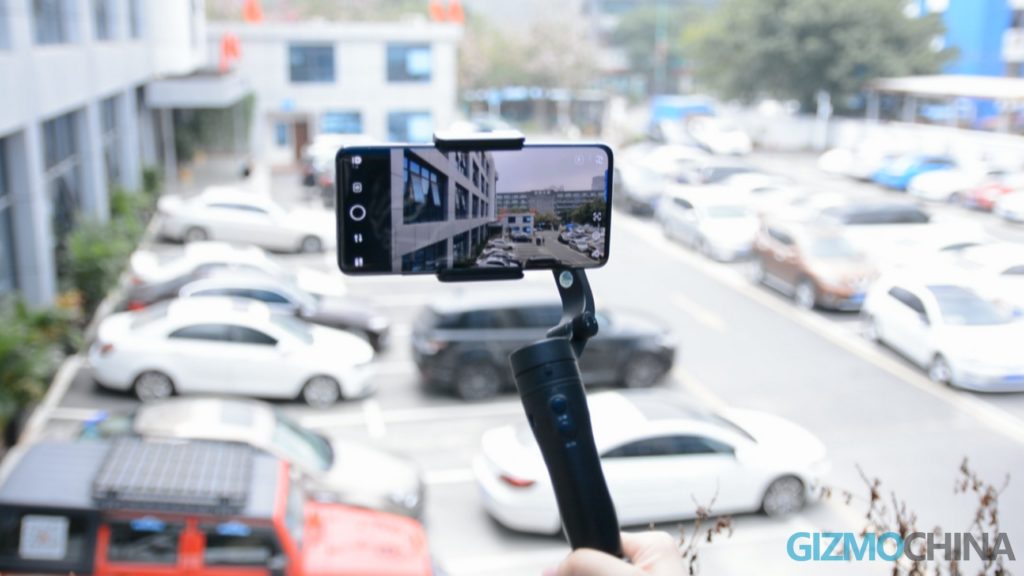
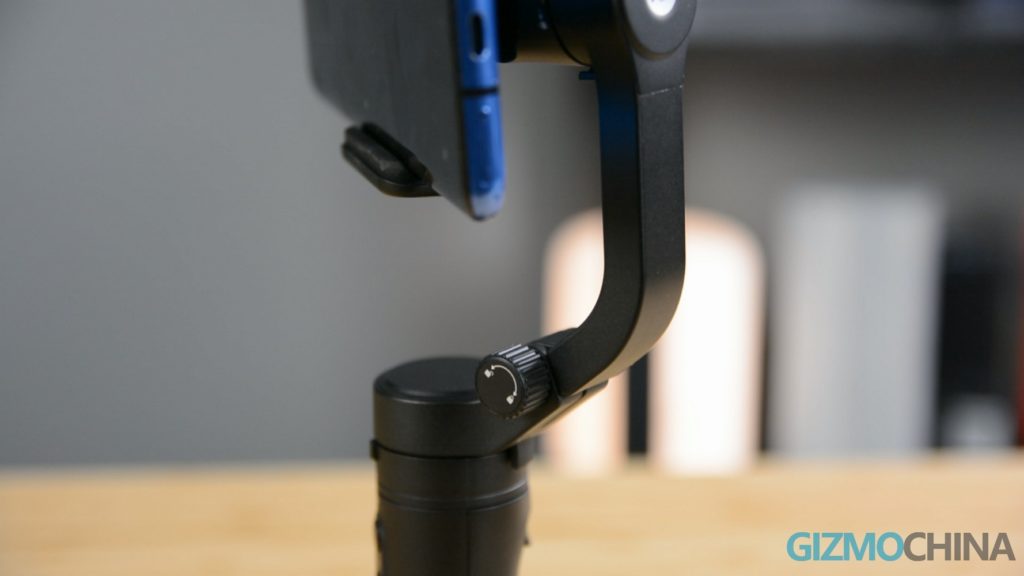
Form my own experience, the VlogPocket is doing a great job of recording some moments of your interesting life or adventurer trip. However, if you are thinking about business use or a relatively professional shot, I don’t think the VlogPocket is a good choice because due to its small body, it usually takes more effort to get a rather smooth and stable shot. Also, if you are using a big phone whose screen is bigger than 6.5inch, like my Oneplus 7 Pro, you might give it a second thought because there is not enough room for the phones to freely switch orientations. It might be stuck with the axis and even cause damages to your phone.
Talking about the orientations, I really like it because you don’t have to turn the whole thing off to accomplish the switch. All you need to do is double-tap the function button. Most importantly, you can directly use the camera of your phone via Bluetooth. No need to download a third-party camera app. You can even change from landscape mode to portrait mode without touching.
Sadly, in this model, I find no joystick. Although VlogPocket claims that you can achieve tilting the gimbal by holding the trigger button on the back. But according to my experience, it is not so convenient comparing using the joystick directly and the tilting angles are a little bit narrow.
Stability
The stability of the VlogPocket is above the average, but not as good as the DJI Osmo Mobile 3. It becomes more obvious when I start running. I am not saying that you cannot use it while intensive movement but if you prefer a more delicate shot, you have to switch to a bigger gimbal. And I also notice that if you are using the Feiyu ON, which is a camera app designed by Feiyu, the shaking is more violent. Maybe some algorithm update is needed to make more efficient use of the built-in stabilizer.
All in all, the small size is both the pros and cons of the Feiyu VlogPocket. It sacrifices some stability and comfort to make sure that the little smart guy can be easily fit in your pocket. Practical or convenient, which one do you prefer?
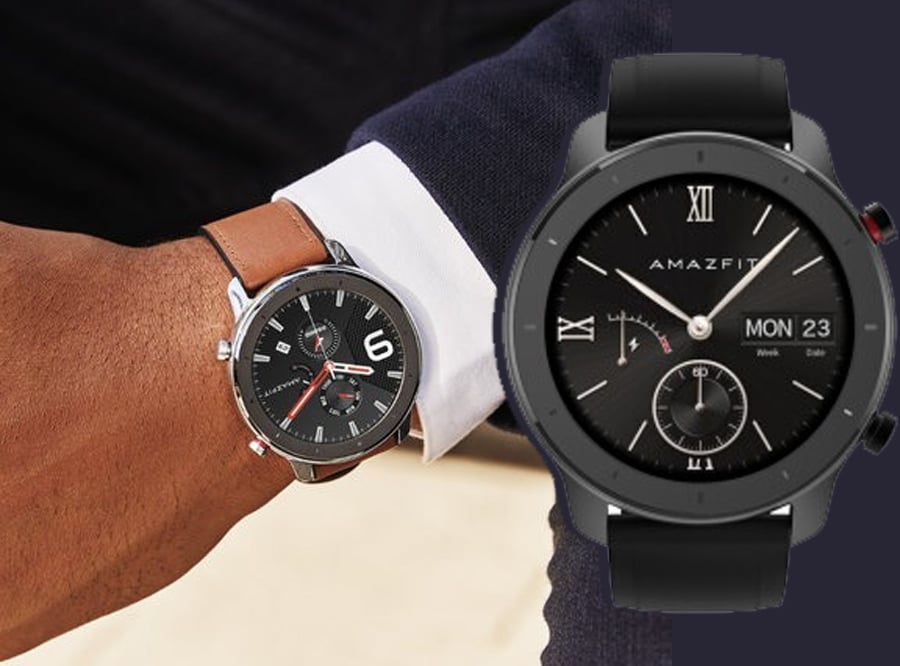
Huami recently introduced a new edition of its well-received AMAZFIT smartwatches dubbed the AMAZFIT GTR. Unlike its predecessor that sported square-shaped displays, crafted for those on a tight budget, the AMAZFIT GTR is slated for a more premium trend with a round dial.
The Chinese smart wearables maker’s newfangled smartwatch adopts highly appealing aesthetic, along with top-notch specifications to meet the varied needs of the wearer, while turning heads at the same time. The feature-rich new smartwatch is well-placed in a premium category.
As part of the AMAZFIT GTR Global Launch on Gearbest, AMAZFIT is doling out a noteworthy discount on the newly introduced smartwatch. So without wasting more time, let us check out the details.
AMAZFIT GTR 42mm Smart Watch Glitter Edition Zirconia from Swarovski
Featuring a classic look of the traditional watch, the AMAZFIT GTR 42mm Smart Watch is a great choice for sports, as well as fitness enthusiasts. Its USPs include ultra-long battery life. It can last up to twelve days of normal use. Furthermore, it comes with twelve sports modes that monitor your health.
The AMAZFIT GTR 42mm Smart Watch would normally set you back a pretty penny, but Gearbest is giving you a chance to buy it for just $169.99. This is a noteworthy 24 percent reduction in the device’s original asking price of $224.94.
As part of the promo, you can get $5 off on orders over $100. The smartwatch comes in Light Khaki, as well as White color options. With more than a hundred pieces of each color option sold at the time of writing, this promotion is slated to end in thirteen days so follow this link now to avail the discount.
The AMAZFIT GTR 42mm Smart Watch usually carries a $179.11 price tag, but Gearbest is giving you an unmissable chance to buy it for a lowered price of just $139.99. As if this 22 percent discount wasn’t enough, the online store is giving an extra $5 off to consumers who spend over $100 on their website.
Crafted for sports, as well as fitness enthusiasts, the Amazfit GTR smartwatch gives you the freedom from the hassle of frequent charging as its battery lasts for about 12 days of normal use before requiring charging. Moreover, it comes with a wide range of built-in watch faces for different occasions ranging from sporty ones to classy and traditional ones.
To know about the AMAZFIT GTR 42mm Smart Watch and to place your order, all you need to do is to follow this link without wasting time. The smartwatch comes in red, black, and white color options.
With more than a whopping hundred watch faces that suit your fancy, the AMAZFIT GTR 47mm Smart Watch Titanium Edition adopts an elegant design. It features a 1.39 inch AMOLED display with a high pixel density of (retina level) of 326PPI and a resolution of 454 x 454 pixels.
This 5 ATM water-resistance understandably carries a steep $359.39 price tag. Much to the relief of cost-conscious buyers that have restlessly been waiting to get their hands on the Titanium Edition of the AMAZFIT GTR 47mm without spending a lot of money, Gearbest is offering the eye-catching smartwatch for a lowered price of $199.99.
In addition to getting this significant 44 percent discount, Gearbest users can get $5 off if their total exceeds $100. The smartwatch is available in Light Khaki and White color options. More than a hundred units were sold out at the time of writing. The promo is slated to end in just thirteen days. You can click here to visit the promotion page.
Touted as one of China’s best online stores for electronic items, Gearbest is offering the AMAZFIT GTR 47mm Smart Watch for a considerably reduced price of just $149.99. It is worth mentioning here that the watch usually retails for $181.86.
In addition to the aforesaid 18 percent discount, Gearbest users who end up spending more than $100 on the site will be eligible for an extra $5 off. An absolute bargain at this price, the AMAZFIT GTR 47mm smartwatch does not require frequent charging so that you can focus on more important activities.
Furthermore, it packs a Sony GPS chip, which consumes 1/3 power as compared to other similar chips. It uses self-developed DualHeaTeck technology to monitor the heart rate of the wearer throughout the day without consuming a lot of power.
You can head straight to this link to check out more details about the AMAZFIT GTR 47mm and get this discount before the promo comes to an end.
It is more important than ever for online retailers to come up with amazing promotion sales to retain its existing users and attract new consumers. Keeping in line with that, leading online stores such as GeekBuying launch exciting new promotions from time to time.
The latest promo from the Chinese online store is called ‘Best Sellers’ and it is teeming with all sorts of products across various categories. More importantly, you can get great discounts on these items and save more money using dedicated coupon codes during the checkout process.
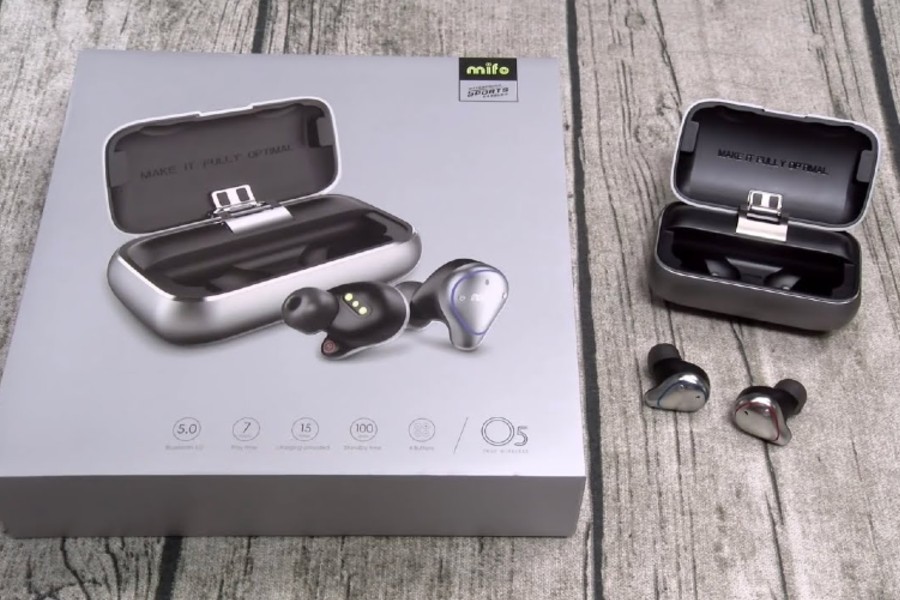
As part of its recently, kicked-off promo, GeekBuying is doling out a noteworthy discount on the Mifo O2, and the Mifo O5 TWS Earphones. We will not only shed light on these discounts but also show how you can save a considerable amount of more money at the time of checking out.
Equipped with the latest Bluetooth 5.0 technology, the Mifo O2 supports 20 of seamless distance transmission. It utilizes 35 percent less power but delivers radically enhanced sound quality. Overall, the Mifo O2 provides a stable connection, coupled with fluent audio.
The Mifo O2 would normally set you back $73.99, but you can buy it for just $39.99 from GeekBuying. Furthermore, you can even extend this 46 percent discount by applying coupon code 3XRF4PQN at the time of checking out.
The coupon helps you grab an extra $11 off by reducing the retail price of the Mifo O2 to just $37.99. You can follow this link to avail of the discount. There’s a 2% New User Off Coupon for those placing their first order with GeekBuying, but the promo will end in just one day.
Mifo O5 Bluetooth 5.0 Balanced Armature TWS Earbuds
The Mifo O5 would normally set you back a pretty penny, but GeekBuying is giving you a chance to get your hands on it for a lowered price of just $59.99. This is a noteworthy 35 percent drop in the device’s original asking price of $91.99.
On top of that, you can save $2 more by applying coupon code GKB02PP during the checkout process. The coupon enables you to bring the already lowered asking price of the Mifo O5 further down to just $57.99 even before placing your order.
An absolute steal at this price, the Mifo O5 TWS Earbuds combines the best sound with a beautiful aluminum form factor and the Bluetooth 5 technology. Moreover, it offers a long battery life along with intuitive pairing software.
Launched in 2019, the O5 comes with an upgraded charging case and is backed by a robust 2600 mAh battery that lasts up to 100 hours of use time before requiring charging. It comes in metallic grey and rose gold.
You can visit this link to check out more details about the Mifo O5 and take advantage of the discount, which will be valid for six days. New users can get 2% extra off by applying the New User Coupon at checkout. Don’t miss these time-limited offers!
The Mi Note 10 is an upcoming smartphone from Xiaomi. It recently got certified alongside a Pro version in Thailand, hence confirming it will be available outside China. Now, Xiaomi has revealed the first official teaser for the phone and it looks pretty familiar.
The teaser which was posted on Twitter by the official account not only confirms the Mi Note 10 is coming but it reveals it will be the world’s first 108MP penta camera phone. Does that sound familiar? Of course, it does.
The Mi CC9 Pro which Xiaomi also teased today and is scheduled to launch on November 5 also has a 108MP penta camera. Based on this similarity, the Mi Note 10 might be the international version of the Mi CC9 Pro.
However, Mukul Sharma (@stufflistings) tweeted that the Mi Note 10 and the Mi CC9 Pro will share a lot of features but will differ with respect to processor. Leaks say the Mi CC9 Pro will have a Snapdragon 730G processor which is currently the most powerful mid-range processor.
If the Mi Note 10 will have a different processor, it will either have a less-powerful chipset than the Snapdragon 730G or a more powerful one (Snapdragon 855). This is just speculations though and the outcome may be different.
The Mi Note 10’s release date has not yet been announced but it should also be in November.
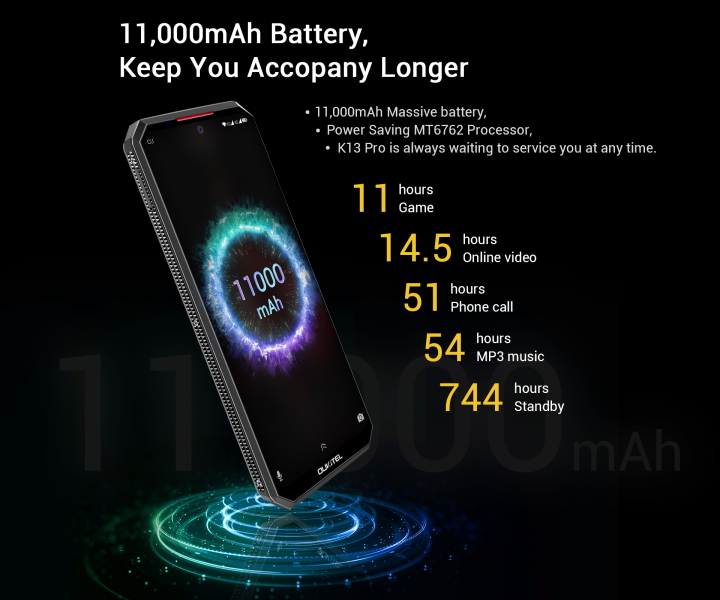
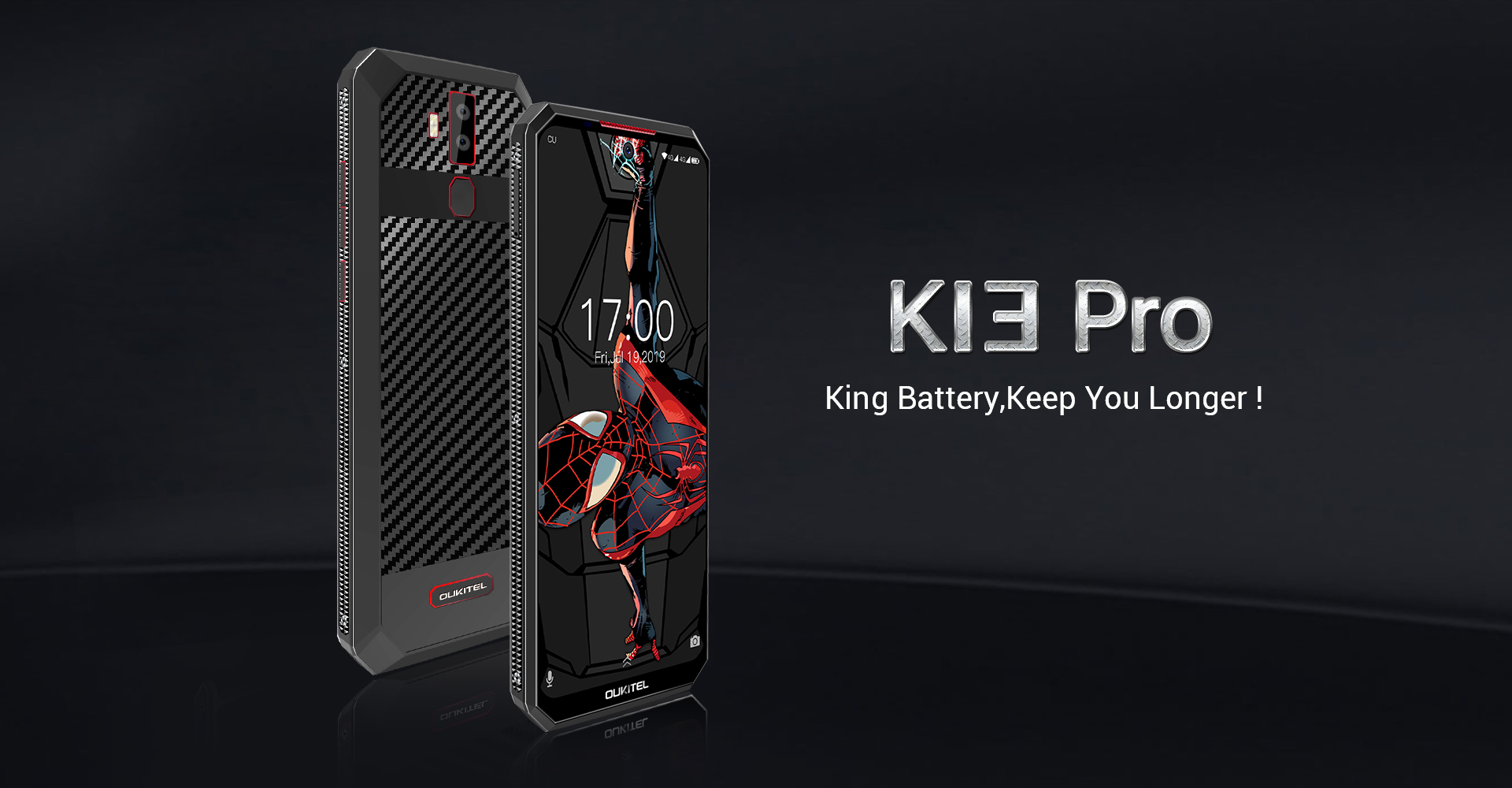
Oukitel has a tradition in making big battery phones and its K Series is one of the best out there to offer super long battery performance. After the release of the K12 that comes with a 10000mAh battery, the Chinese manufacturer is ready to unveil the next-gen model in the Series, Oukitel K13 Pro with 11000mAh battery.
Design
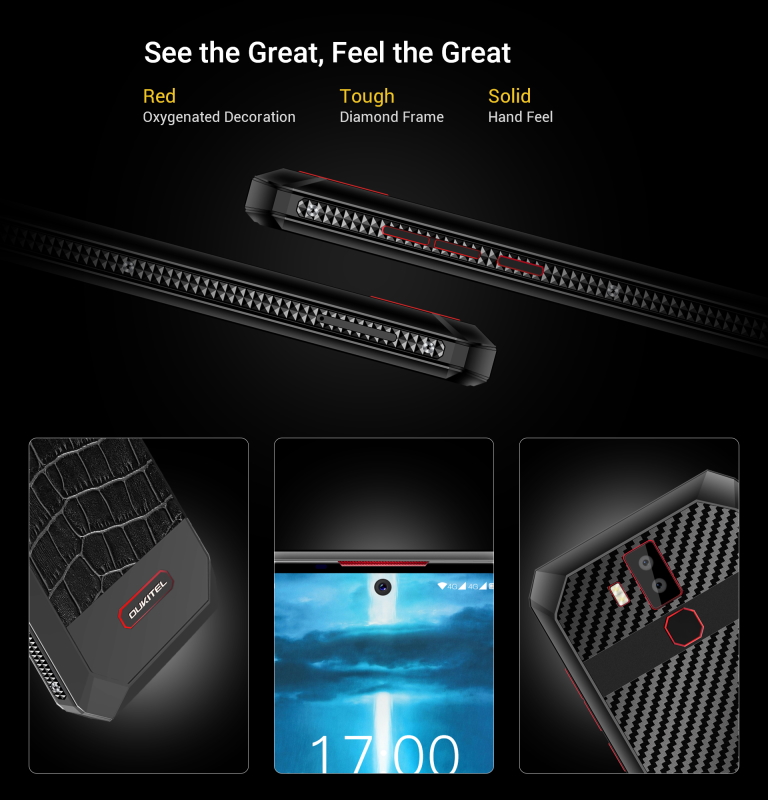
Oukitel designed the K13 Pro from scratch in order to make it unique and distinguishable from the rest of the Series’ devices. It comes with a 6.41″ HD+ O-notch display covered by Asahi glass that is 2.5D curved and prismatic cut. Thanks to the O-notch design, the bezels on the 3 sides are ultra-narrow and the screen/body ratio reaches 90.3%.
1 of 2
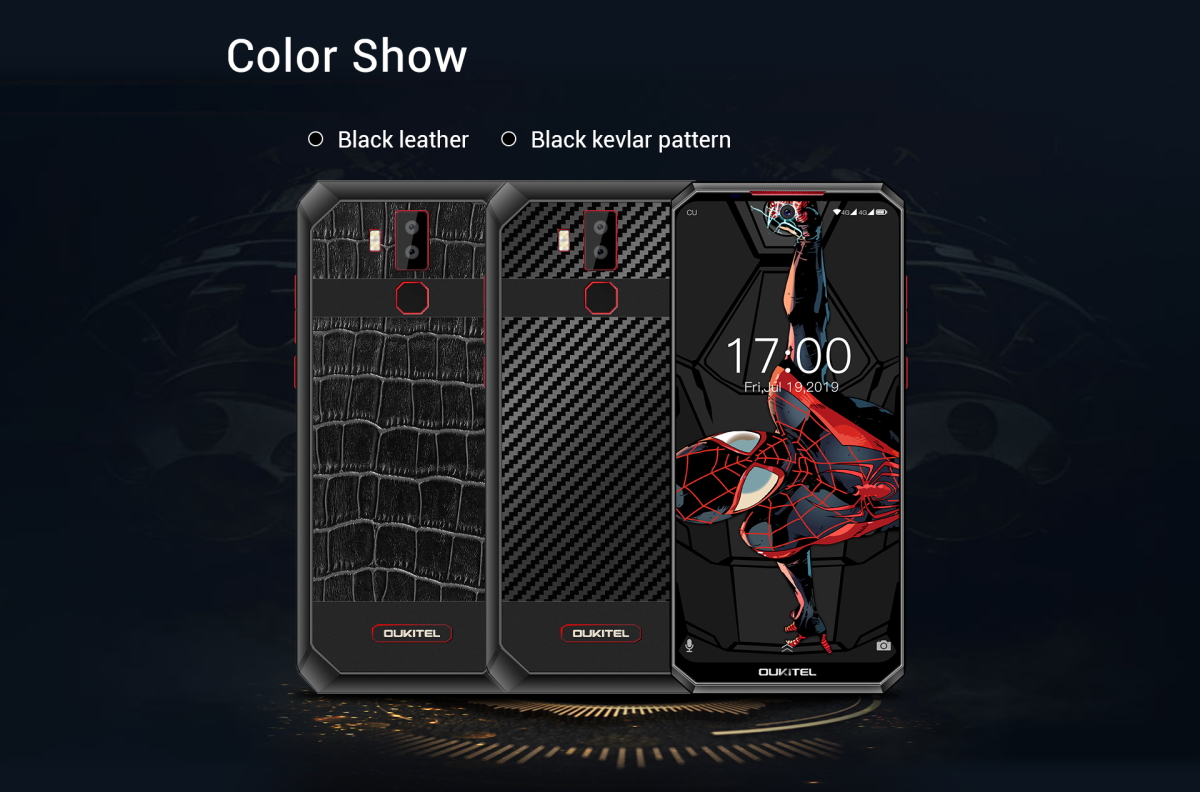
The earpiece was crafted though CNC and double oxygenation and has a distinctive red color. The same red decoration is also found around the volume and power buttons, rear cameras, LED flash, fingerprint reader, and Oukitel logo. The back panel comes in 2 patterns: Genuine leather and Kevlar.
11000mAh Battery
Of course, the killer feature is the huge battery. According to researches, there are about 3.3 billion smartphone users around the world and users generally spend an average of 3.5 to 4 hours on their phones every day, each week up to 28 hours. Using a smartphone so many hours means that a big battery is essential since finding a power outlet when on the go is a no-go. According to the company, the K13 Pro can offer 41 hours of phone calls, 54 hours of music playback, 14.5 of video playback or 11 hours of gaming. In real-life scenarios, this means about 3 to 4 days of heavy use on a single charge. With a more conservative use, you can achieve a whole week.
5V/6A Quick Charge
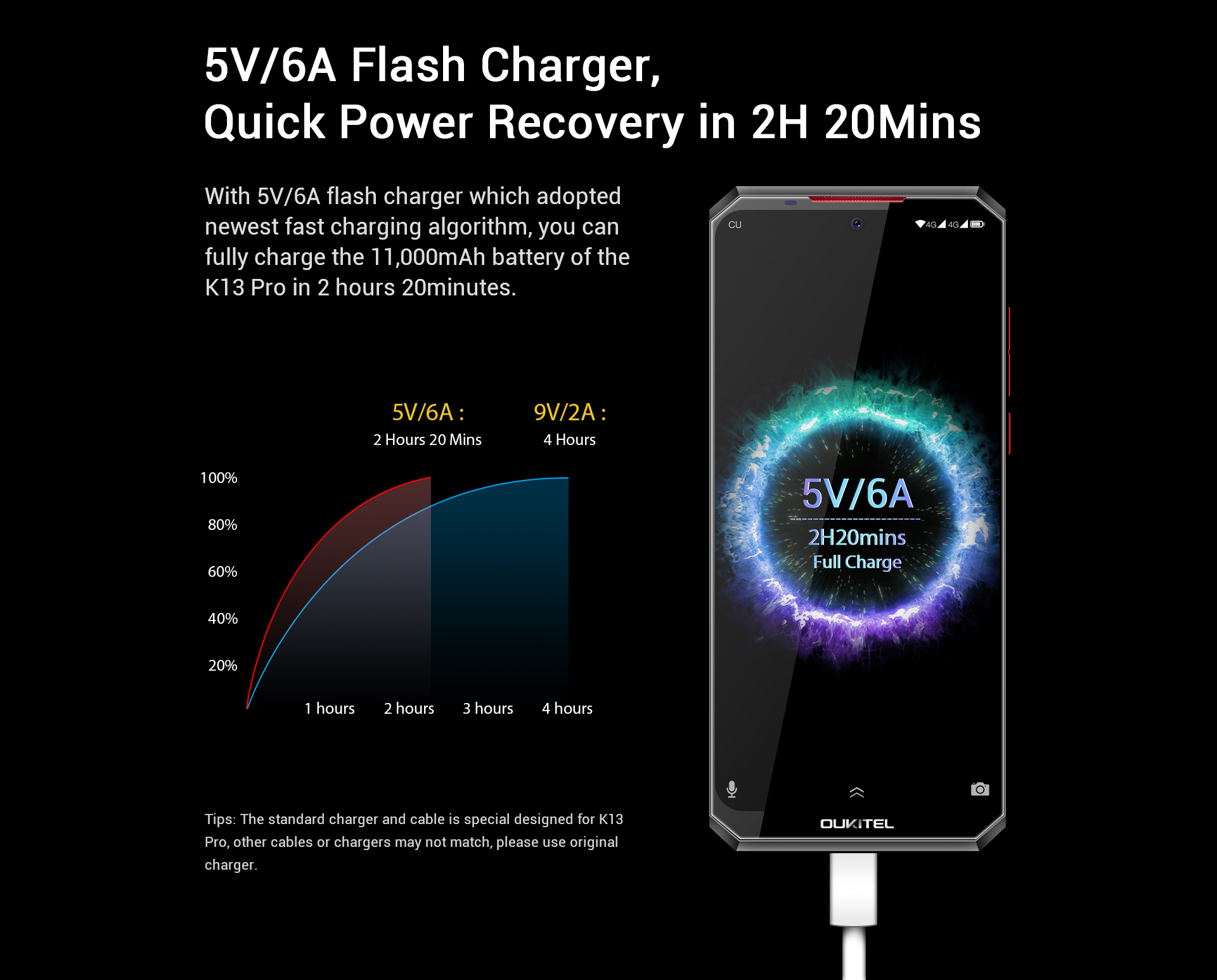
Having a massive battery means that fast charging is the most important thing since it can take hours to recharge. The 5V/6A fast charge will recharge the K13 Pro in just 2 hours and 20 minutes. It gains about 1% per minute from 0% to 60% so even if you forget to charge it during the night, you can give it a quick 30-60 minutes charge and you are good to go for the whole day.
Hardware
As for the rest of the hardware, it comes with MediaTek’s Helio P22 8-core SoC manufactured @12nm, backed by 4GB of RAM and 64GB of storage, expandable up to 128GB more via the microSD slot. In addition, there is a dual rear camera with 16MP/2MP sensors as we as an 8MP selfie shooter. It supports both fingerprint and face unlock and you can use the NFC to make mobile payments.
The device will hit the market in early November with a retail price of $189.99. during the 11.11 Global Shopping Festival on Aliexpress, it will be available for just $179.99. To learn more details about it, visit the product page.
Elephone PX debuted about 2 weeks ago with a promotional price of $129.99 and it made it to the top of the most affordable pop-up camera smartphones. Since the promotion was over, the price went up to its official price of $159.99 but that was until today. In cooperation with Gearbest, Elephone is offering another discount for those who missed the initial promotion so now you can get it for just $139.99 until November 4th.
Featuring a 6.53″ FHD+ display and the 16MP pop-up selfie camera, the phone sports a fashionable design and notch-less display. The rear camera is a dual setup with 16MP/2MP sensors and right below it lies the fingerprint sensor. The phone is powered by Helio P23 SoC backed by 4GB of RAM and 64GB of internal storage upgradeable up to 256GB more via the microSD slot. Also, there is a 3300mAh battery inside. You can find out more about it on the official product page.
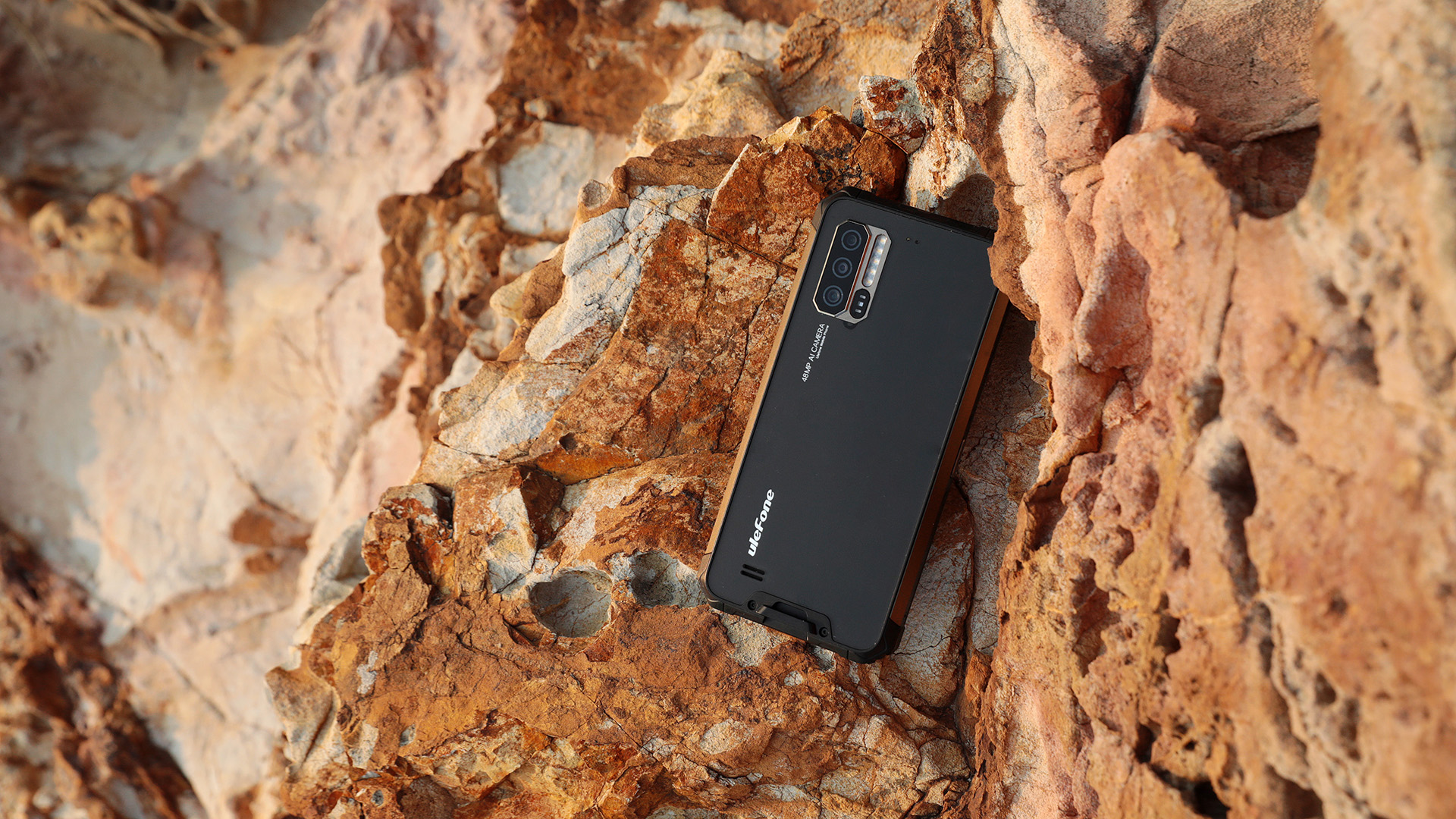
We knew that Armor 7 would be the company’s next rugged flagship and today it officially hit the market and started presale on Banggood for just $369.99. The phone comes with a 48MP triple camera as well as Helio P90 SoC. Before we go into further details, let’s watch the official Armor 7 video down below.
The triple camera consists of a 48MP main sensor, a 16MP night photography camera, and an 8MP telephoto camera. With improved AI algorithms and f/1.7 aperture, photos are more detailed and vivid. In addition, the 16MP night photography camera comes with an f/2.0 aperture and -according to the company- takes the night mode experience to another level compared to the previous model. Lastly, the 8MP telephoto camera helps you zoom in an object to bring it closer to you without compromising on the image quality.
As said, Ulefone equipped Armor 7 with the latest and most powerful P-Series SoC from MediaTek, Helio P90 which comes with 4.6 times more performance than Helio P60 & P70 so that you can breeze through any task while maintaining power efficiency. Coupled with 8GB RAM performance and multitasking is flagship-level.
1 of 2
As for the rest of the specs, there is a 6.3″ FHD+ display with waterdrop notch and very hard glass protecting it, although Ulefone hasn’t revealed if the phone comes with Gorilla Glass or another type of protection. The internal storage is 128GB and there’s also a heart rate sensor, face unlock support via the 16MP front camera, a 5500mAh battery with 10W wireless charging, and NFC with Google Pay. Of course, there is a quadruple navigation system (GPS, Glonass, Beidou, Galileo), wide network band support including T-Mobile’s Band 71, and Android 9 Pie.
The presale period started today on Banggood and during the presale period, you will be able to enjoy the special discounted price of $369.99 and get an extra free gift bag including a tempered glass and a sling. You can see all the details about Armor 7 and other Ulefone devices here.
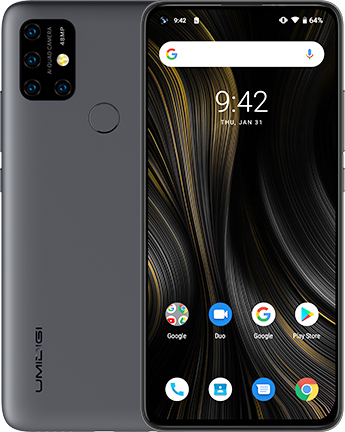
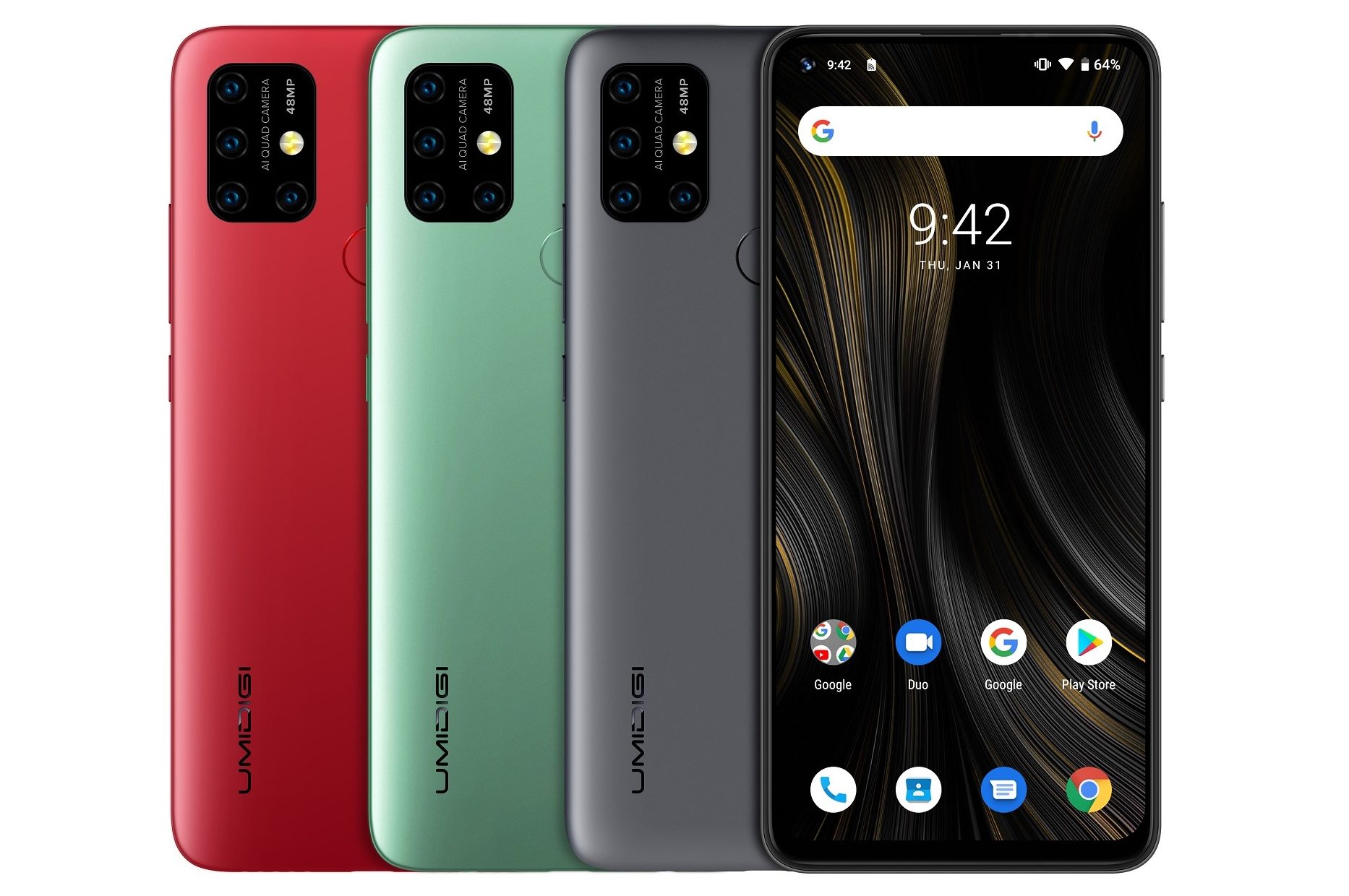
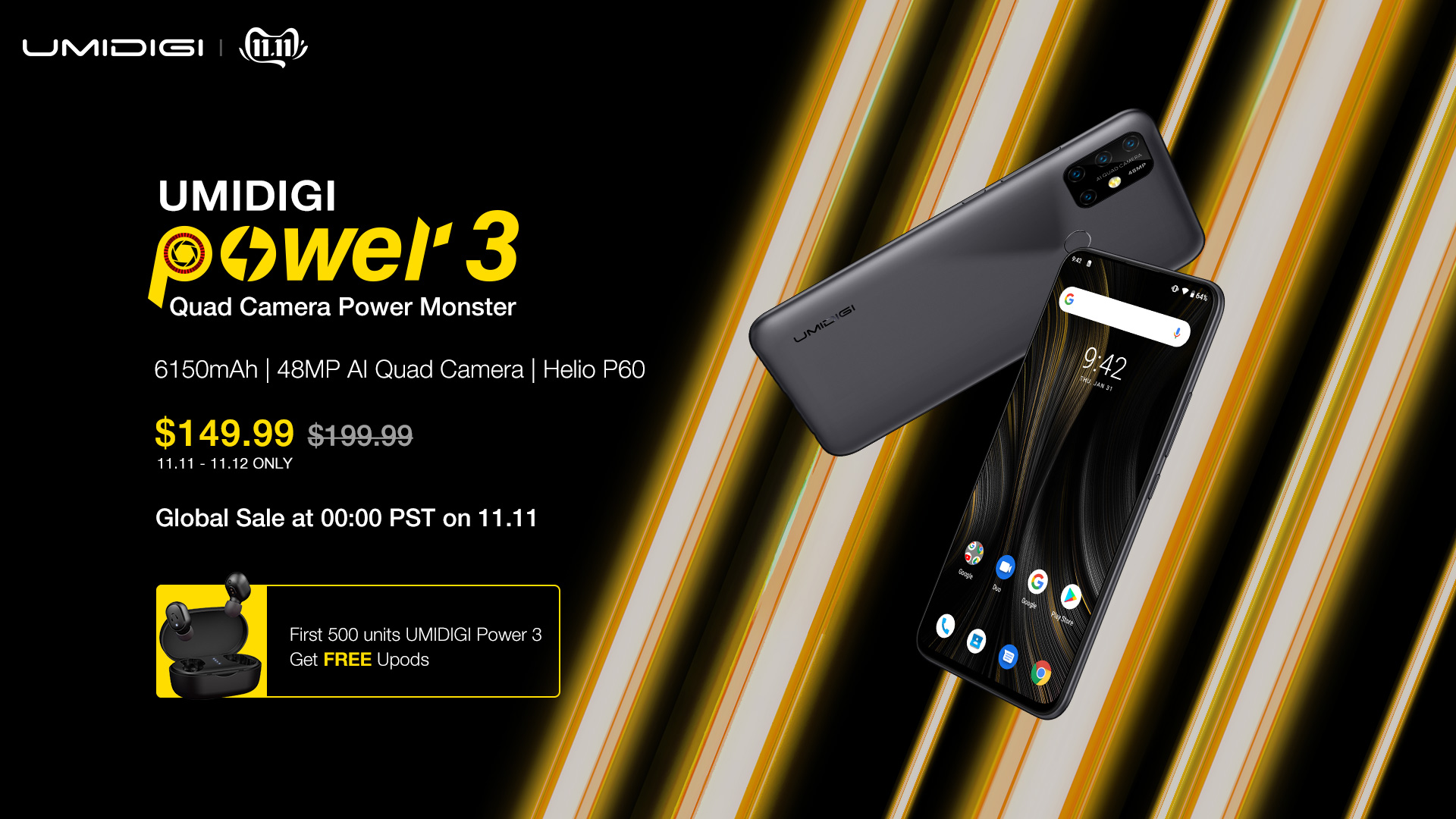
We already know that the next model from UMIDIGI will be Power 3 featuring a big battery and a quad-camera setup, and today the company revealed the price and the global sale start date. So, Power 3 will go on global sale on November 11th and its promotional price will be only $149.99 for just 1 day, until November 12th! The Power 3 is a big upgrade to its predecessor and the debut during the Aliexpress 11.11 Global Shopping Festival is a buyer’s delight.
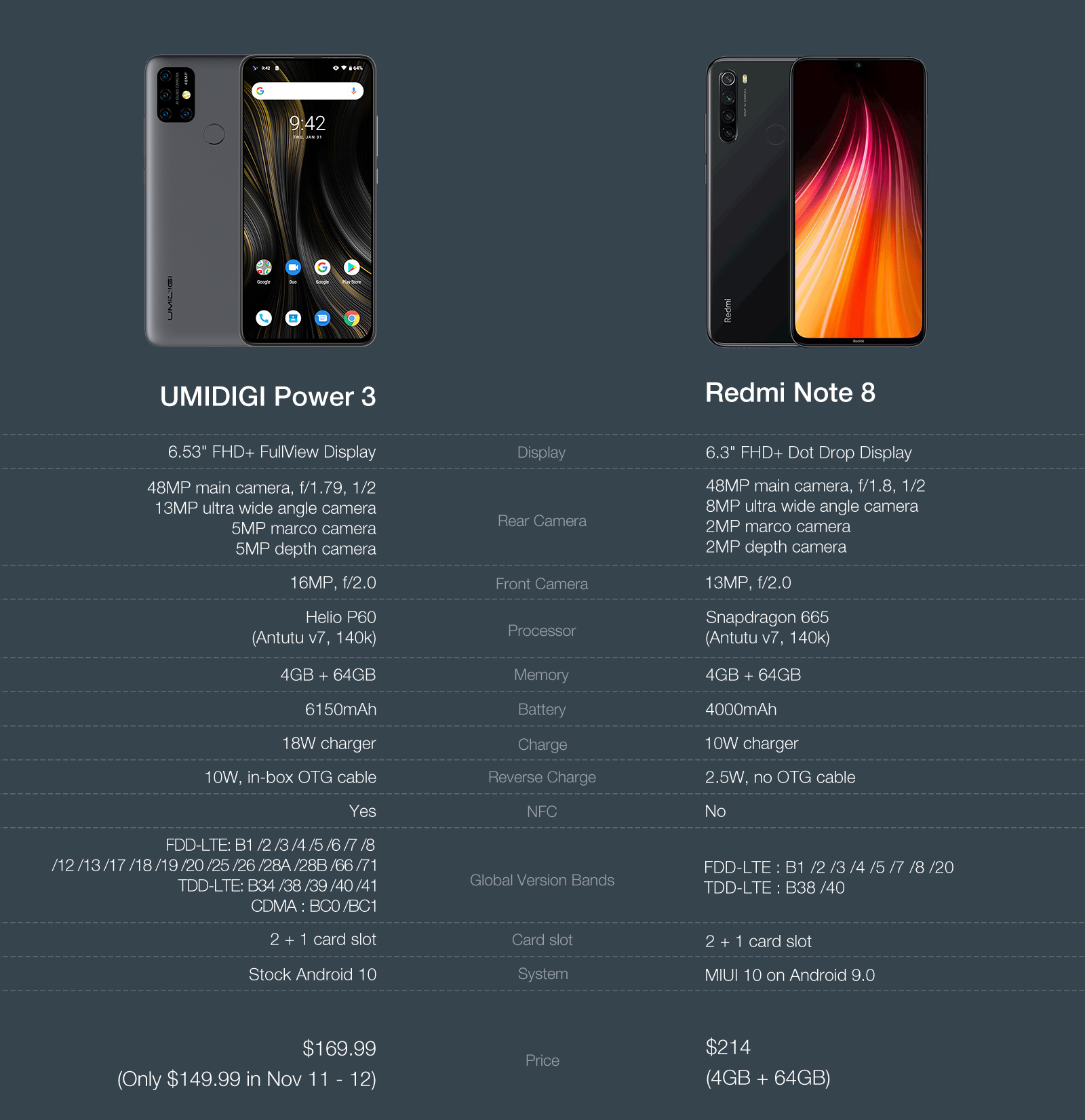
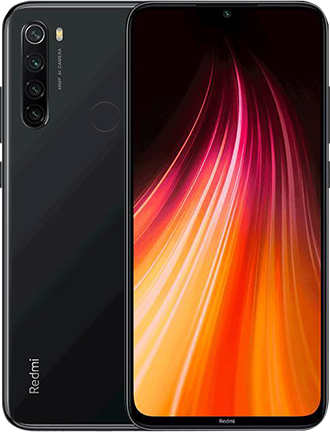
Besides the big battery, the key feature of the device is the multi-function quad camera. The recently launched Xiaomi Redmi Note 8 also sports a similar camera setup but which is better overall? Let’s check out the specs and price comparison.
Display
1 of 2
Doing away with the notch is the challenge for most smartphone manufacturers and rumors say that next year’s flagships Redmi K30 and OnePlus 8 would feature the hole-punch display. UMIDIGI Power 3 has that already placed on the top-left of the 6.53″ FHD+ display, while the Redmi Note 8 comes with a 6.3″ panel with a waterdrop notch.
Camera
The main camera is the sector where there are not that many differences. The Power 3 has a better 13MP ultra-wide camera while the Redmi Note 8’s one is 8MP. As for the front camera, the Power 3 boasts a 16MP sensor while the Note 8 has a 13MP one.
Battery and Charging
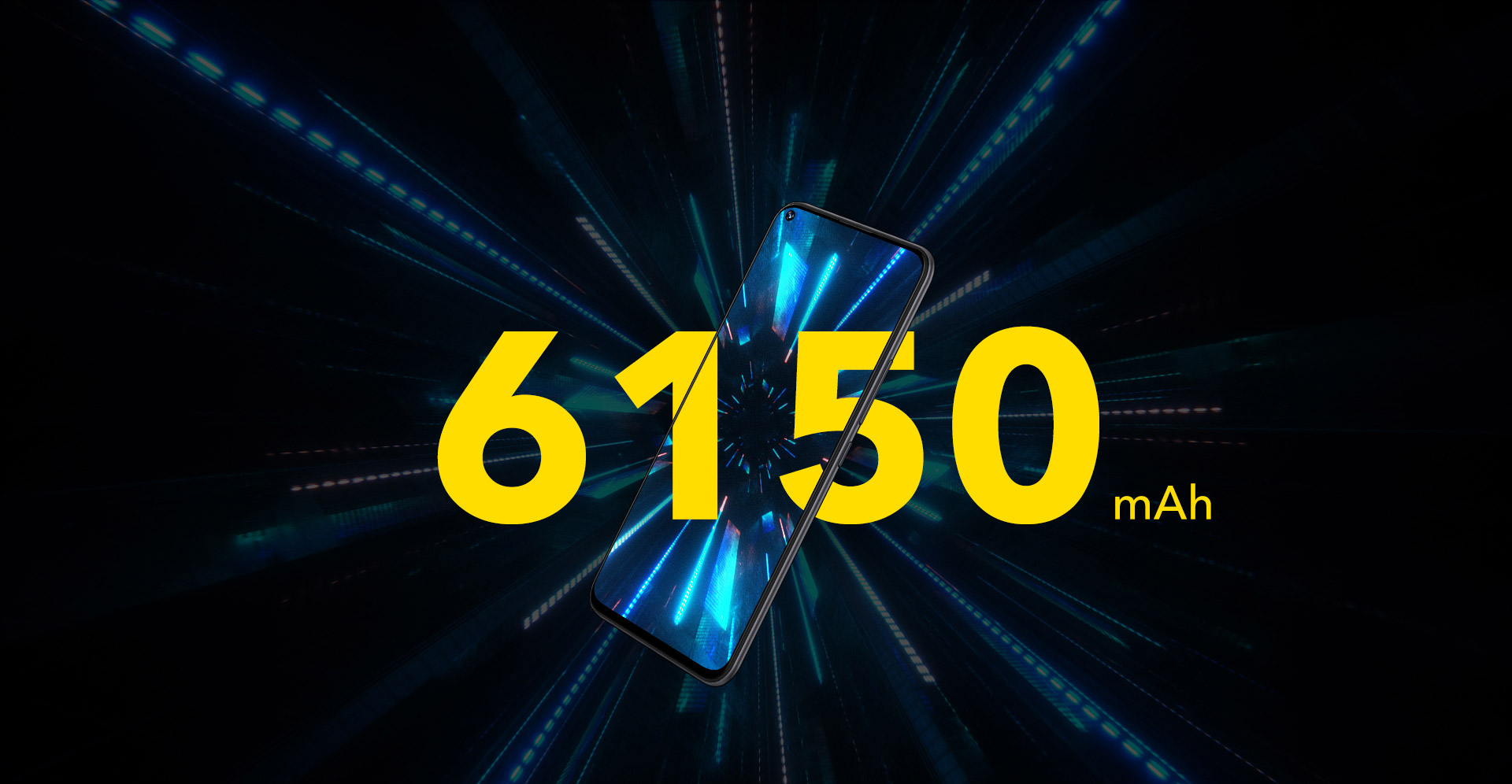
Here’s where the Power 3 really stands out as it hosts a big, 6150mAh battery with 18W fast charging support while the Note 8 comes with a smaller, 4000mAh battery and just 10W fast charging. What’s more, the new UMIDIGI phone supports 10W fast OTG reverse charging while its opponent supports just 2.5W OTG reverse charging.
Performance
The two companies use different SoC providers but their performance is similar. Power 3 is powered by MediaTek’s Helio P60 and the Redmi Note 8 comes with Snapdragon 665. Both score about 140k in Antutu v7. Also, the Power 3 features NFC with Google Pay and Note 8 doesn’t.
Operating System
Until now, there are only a few devices that come with or have been upgraded to Android 10, the latest version of Google’s OS. Power 3 is one of them as it comes with Android 10 out-of-the-box. It comes with the stock version of Android while the Redmi Note 8 features MIUI 10 based on Android 9.0.
Price
As said before, the UMIDIGI Power 3 will hit the market at just $149.99 and the price will go up to $169.99. Still, that’s almost $20 less than the Note 8 that costs about $190 for the same 4GB/64GB memory configuration. It’s easy to say that the Power 3 is a better VFM that its competitor. You can add it to your cart now so that you don’t miss the deal when it hits the market. Also, you can participate in the Giveaway activity to win one for free.
Back when the Huawei Mate 30 Pro was officially announced in the market, it made the headlines for one big feature: 7680 fps ultra slow-motion video shooting. The phone brought in a kind of slo-mo video capability never before seen in a smartphone camera and we were all very impressed with its results.
We have already reviewed the Mate 30 Pro and its camera in detail but we thought it would be a good idea to take a deeper dive into Huawei’s 7680 fps slo-mo video technology. There’s a lot more to this technology than you can imagine and it wouldn’t have been possible even with our current generation smartphone’s hardware capability. This unreal feature is made possible with the help of powerful software as well and we talk about them in our video below.
Rather than saying that the Mate30pro has better cameras, it’s better to admire Huawei’s advanced AI frame insertion technology. Video frame insertion is a common technique used in slow-motion videos. The general principle of frame insertion algorithm is to perform motion estimation (ME) first and then motion compensation (MC). Simply put, the software finds the difference between the two frames, such as the trajectory of the object, and then, in turn, fills that gap between the frame, to improve the video frame rate.
So, there were a number of technical challenges that had to be overcome to make this possible. The entire camera system needs to have an extremely high data cache transmission and processing capability. The algorithms and system computing capacity should also be powerful enough to render the final outcome of the 7680 fps video shooting.
Since everyone is in awe of this ultra slo-mo technology, we hope you guys will enjoy our dedicated video on this subject.
The smartwatch market began as a revolution in mobile devices but things slowed down after the first wave since they initially were just used for receiving notifications. Nowadays, both software and hardware have evolved so much that smartwatches are really worth a try. According to the latest statistics, Apple Watch is the dominant model holding around 35% of the market share with Samsung coming in second place.
But, although it comes in 1st place, the Apple Watch isn’t all that perfect. It is addressed only to iPhone users and thanks to the strong ecosystem of the company, it achieves high sales numbers, so, it’s a no-go for Android users. In addition, the cheaper models come with an aluminum case that isn’t the most durable material out there. Also, its battery life is a day or less and you need to charge it every night.
Custom OS smartwatches
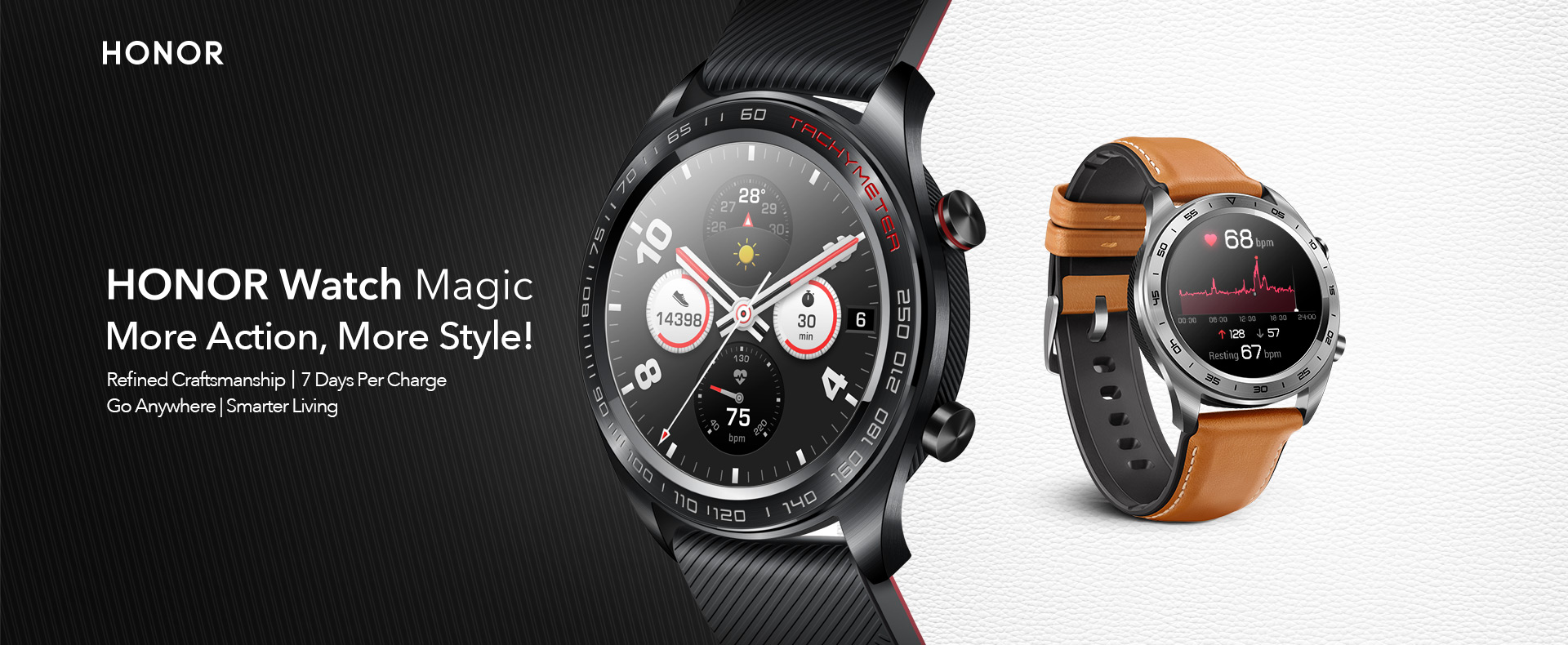
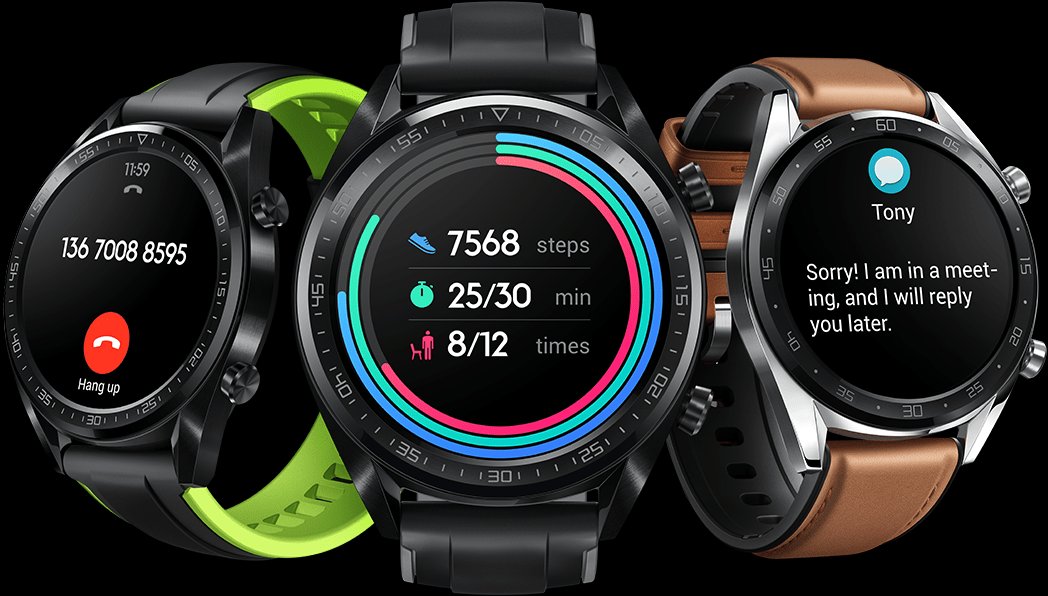
Besides Samsung that has its own wearables ecosystem (Tizen OS) and has successfully managed to populate it with many popular apps, Huawei and its sub-brand Honor are also selling very noteworthy watches. Huawei Watch GT2 is the latest model and it sells around $249 while the Honor Watch Magic sells at around $129. Both feature a custom OS that constrains their capabilities.
Both are adequately equipped featuring a built-in GPS and up to 50m deep waterproofing. Also, the Honor Watch Magic has a week-long battery life, NFC, etc. Its affordable price makes it popular among youngsters. Still, it is inferior to the Huawei Watch GT
that sports 2 weeks of battery life, a larger display, and better design.
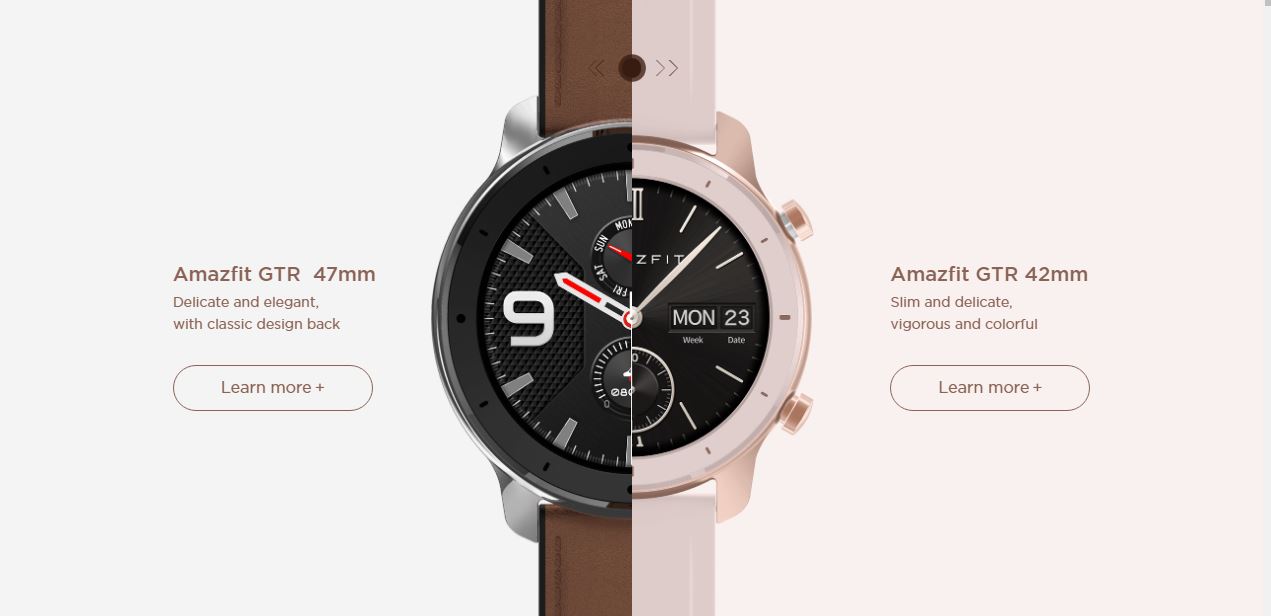
Up next, is Huami that is specialized in smartwatches and grabs a big chunk of the market pie. The flagship model is the Huami Amazfit GTR watch which is available in two sizes – 42 mm and 47 mm. The bigger of the two is more striking and has a longer battery life (24 days vs. 12 days use) and costs just $20 more than the small one. Generally speaking, it is recommended that men choose the bigger one, and ladies choose the smaller one but that’s a matter of personal taste.
It comes with the company’s custom OS and features 12 sports modes while being waterproof up to 50m underwater. What’s more, it comes with an AMOLED high-resolution display that looks great and takes care of keeping battery consumption at a low level since when displaying black colors means zero consumption.
Full OS smartwatches
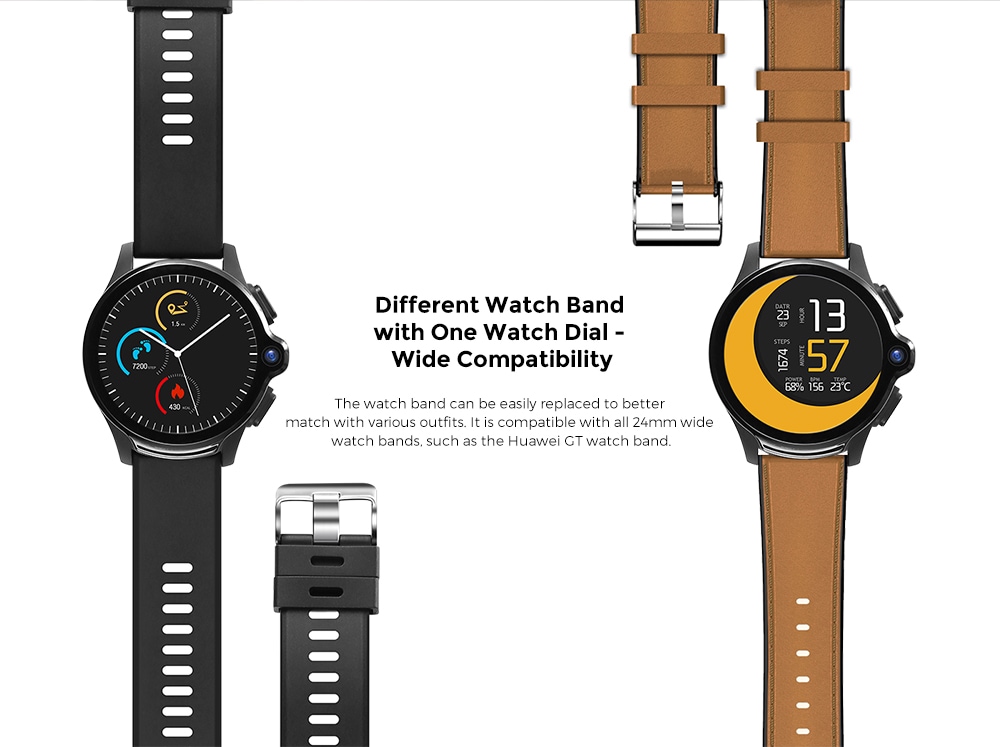
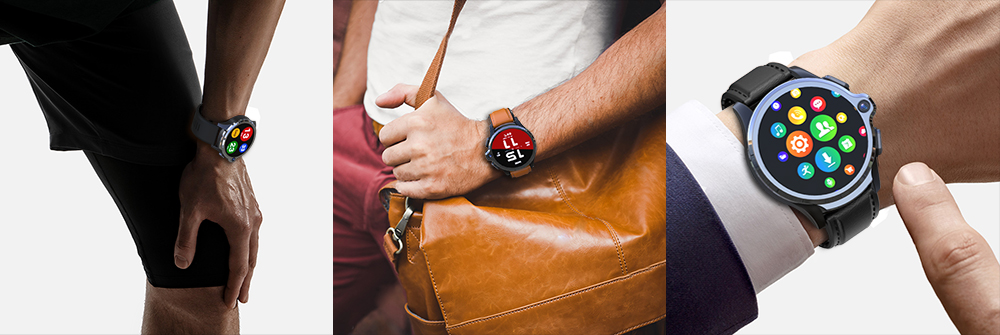
Apart from the above-mentioned models that come with their own OS and other models that come with Google’s Wear OS platform, there are manufacturers that choose to adopt a full OS. This is the case with KOSPET and its latest flagship model, Prime. The KOSPET Prime is literally a smartphone on your wrist, supporting most of the Android apps found on Play Store. Also, it supports 4G connectivity and you can make phone calls right from your wrist without the need of your smartphone.
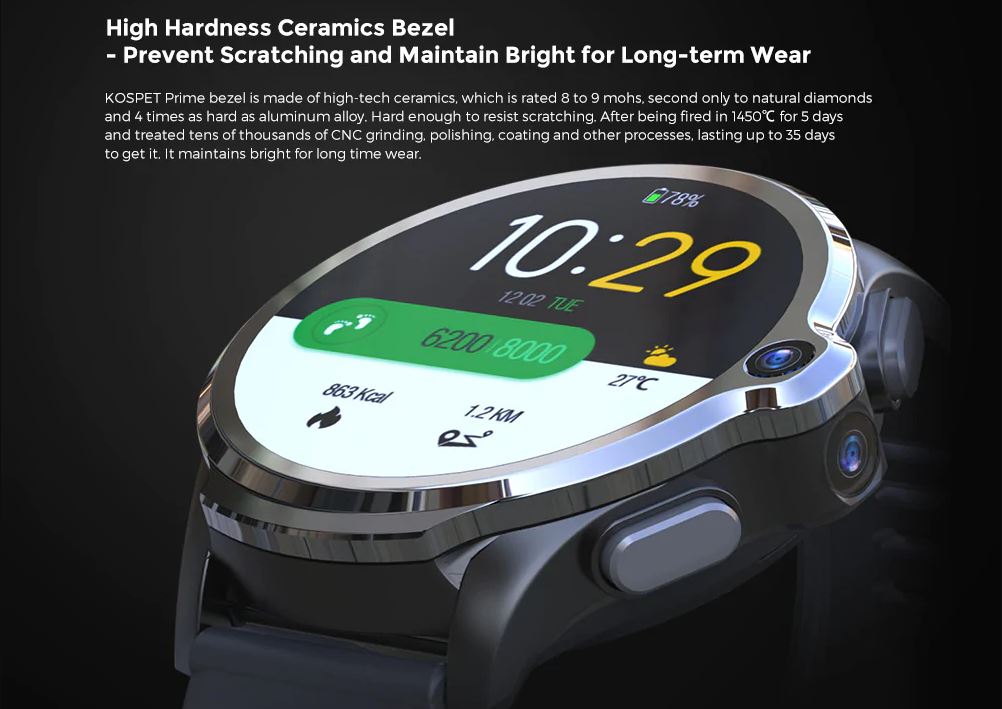
Of course, adopting a full OS has its drawbacks like increased power consumption so the Prime comes with a 1260mAh battery, nearly 40% higher than the second in place. This results in a 168h standby time that is the best among Android watches. In addition, it sports a 1.6″ HD display and it is a full-round one as most watches come with a kind of notch that cuts the circle at the bottom. The big display solves many issues as in the past, displays were too small for third-party applications.
As said, it is a smartphone on your wrist and that requires enough power and memory so that it is fast. Prime comes with 3GB/32GB memory combo and that’s the top configuration found at the price tag of KOSPET Prime. Lastly, it is the first smartwatch to come with a dual-camera setup that supports Face ID. Lifting your hand towards your face will instantly unlock the watch thanks to the full Android OS running on the device.
As you can see, the smartwatch market isn’t as simple as the smartphone one due to the OS fragmentation. The high-end luxury category belongs to Apple and Samsung while the mid-range category is where most other manufacturers like Huawei, Honor, and Huami and even small-time manufacturers like Kospet are placed.
There aren’t many full OS smartwatches in the market that look good. But the KOSPET Prime offers pretty good features based on the Android platform. You can check it out from here.
We use cookies on our website to give you the most relevant experience by remembering your preferences and repeat visits. By clicking “Accept”, you consent to the use of ALL the cookies.
This website uses cookies to improve your experience while you navigate through the website. Out of these, the cookies that are categorized as necessary are stored on your browser as they are essential for the working of basic functionalities of the website. We also use third-party cookies that help us analyze and understand how you use this website. These cookies will be stored in your browser only with your consent. You also have the option to opt-out of these cookies. But opting out of some of these cookies may affect your browsing experience.
Necessary cookies are absolutely essential for the website to function properly. This category only includes cookies that ensures basic functionalities and security features of the website. These cookies do not store any personal information.
Any cookies that may not be particularly necessary for the website to function and is used specifically to collect user personal data via analytics, ads, other embedded contents are termed as non-necessary cookies. It is mandatory to procure user consent prior to running these cookies on your website.