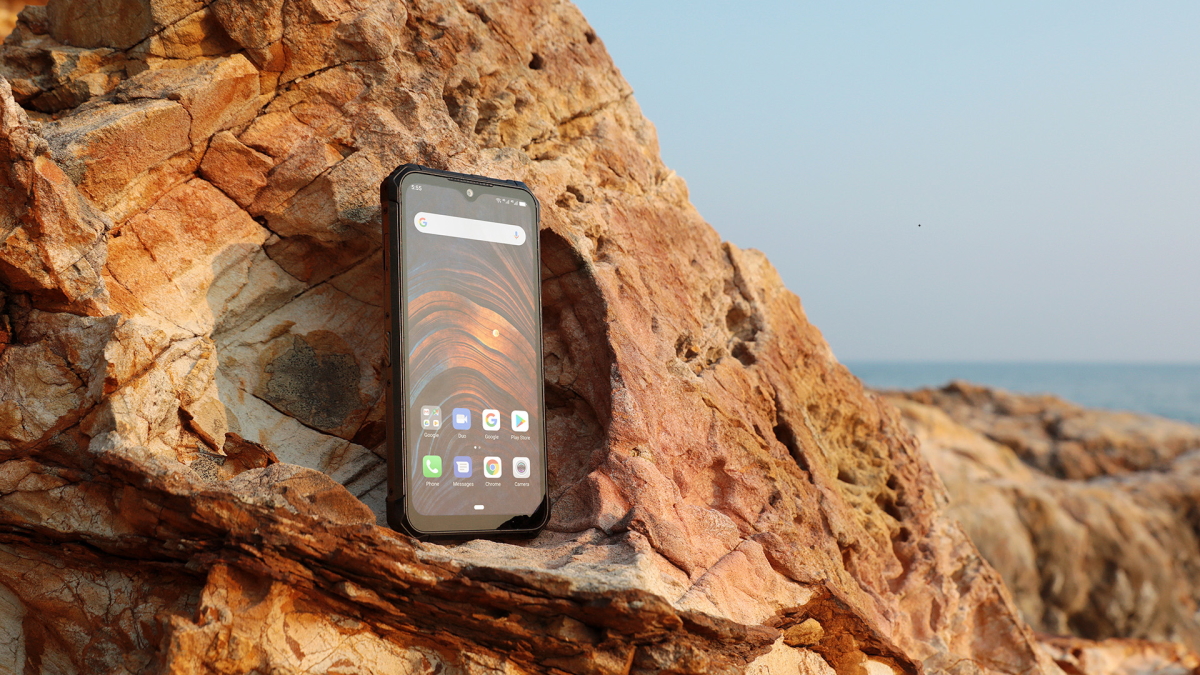
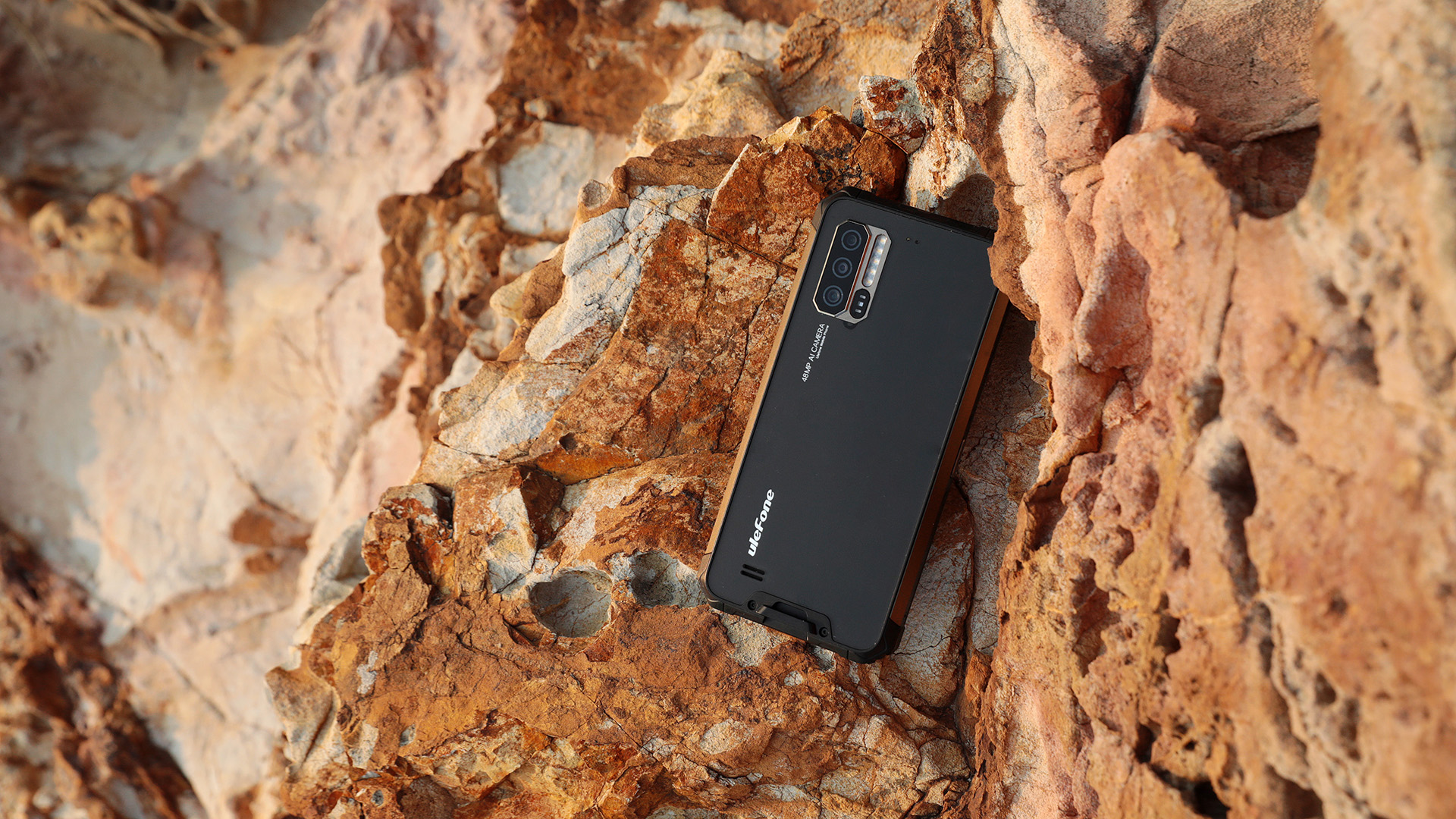
We knew that Armor 7 would be the company’s next rugged flagship and today it officially hit the market and started presale on Banggood for just $369.99. The phone comes with a 48MP triple camera as well as Helio P90 SoC. Before we go into further details, let’s watch the official Armor 7 video down below.
The triple camera consists of a 48MP main sensor, a 16MP night photography camera, and an 8MP telephoto camera. With improved AI algorithms and f/1.7 aperture, photos are more detailed and vivid. In addition, the 16MP night photography camera comes with an f/2.0 aperture and -according to the company- takes the night mode experience to another level compared to the previous model. Lastly, the 8MP telephoto camera helps you zoom in an object to bring it closer to you without compromising on the image quality.
As said, Ulefone equipped Armor 7 with the latest and most powerful P-Series SoC from MediaTek, Helio P90 which comes with 4.6 times more performance than Helio P60 & P70 so that you can breeze through any task while maintaining power efficiency. Coupled with 8GB RAM performance and multitasking is flagship-level.
1 of 2
As for the rest of the specs, there is a 6.3″ FHD+ display with waterdrop notch and very hard glass protecting it, although Ulefone hasn’t revealed if the phone comes with Gorilla Glass or another type of protection. The internal storage is 128GB and there’s also a heart rate sensor, face unlock support via the 16MP front camera, a 5500mAh battery with 10W wireless charging, and NFC with Google Pay. Of course, there is a quadruple navigation system (GPS, Glonass, Beidou, Galileo), wide network band support including T-Mobile’s Band 71, and Android 9 Pie.
The presale period started today on Banggood and during the presale period, you will be able to enjoy the special discounted price of $369.99 and get an extra free gift bag including a tempered glass and a sling. You can see all the details about Armor 7 and other Ulefone devices here.
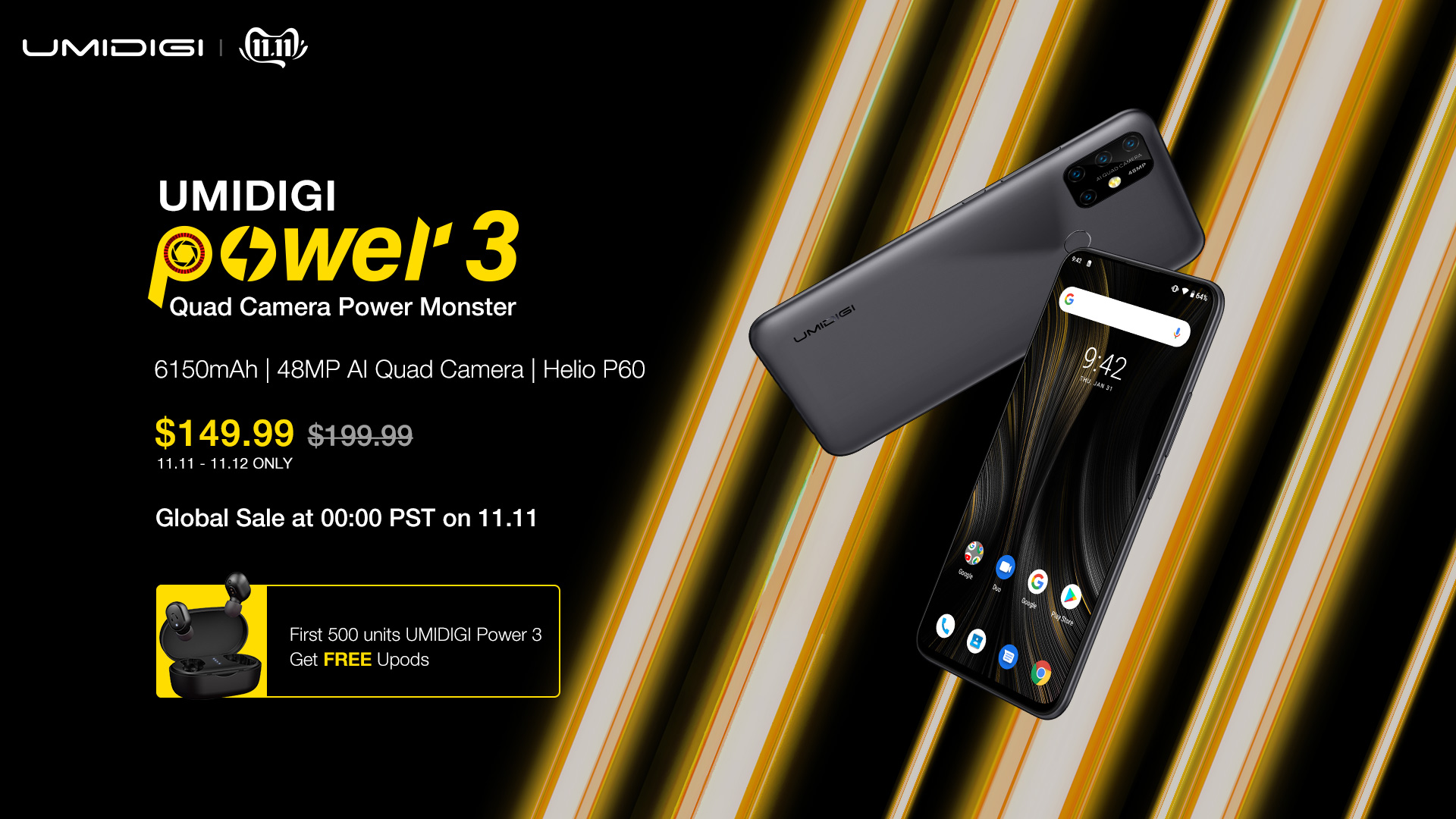
We already know that the next model from UMIDIGI will be Power 3 featuring a big battery and a quad-camera setup, and today the company revealed the price and the global sale start date. So, Power 3 will go on global sale on November 11th and its promotional price will be only $149.99 for just 1 day, until November 12th! The Power 3 is a big upgrade to its predecessor and the debut during the Aliexpress 11.11 Global Shopping Festival is a buyer’s delight.
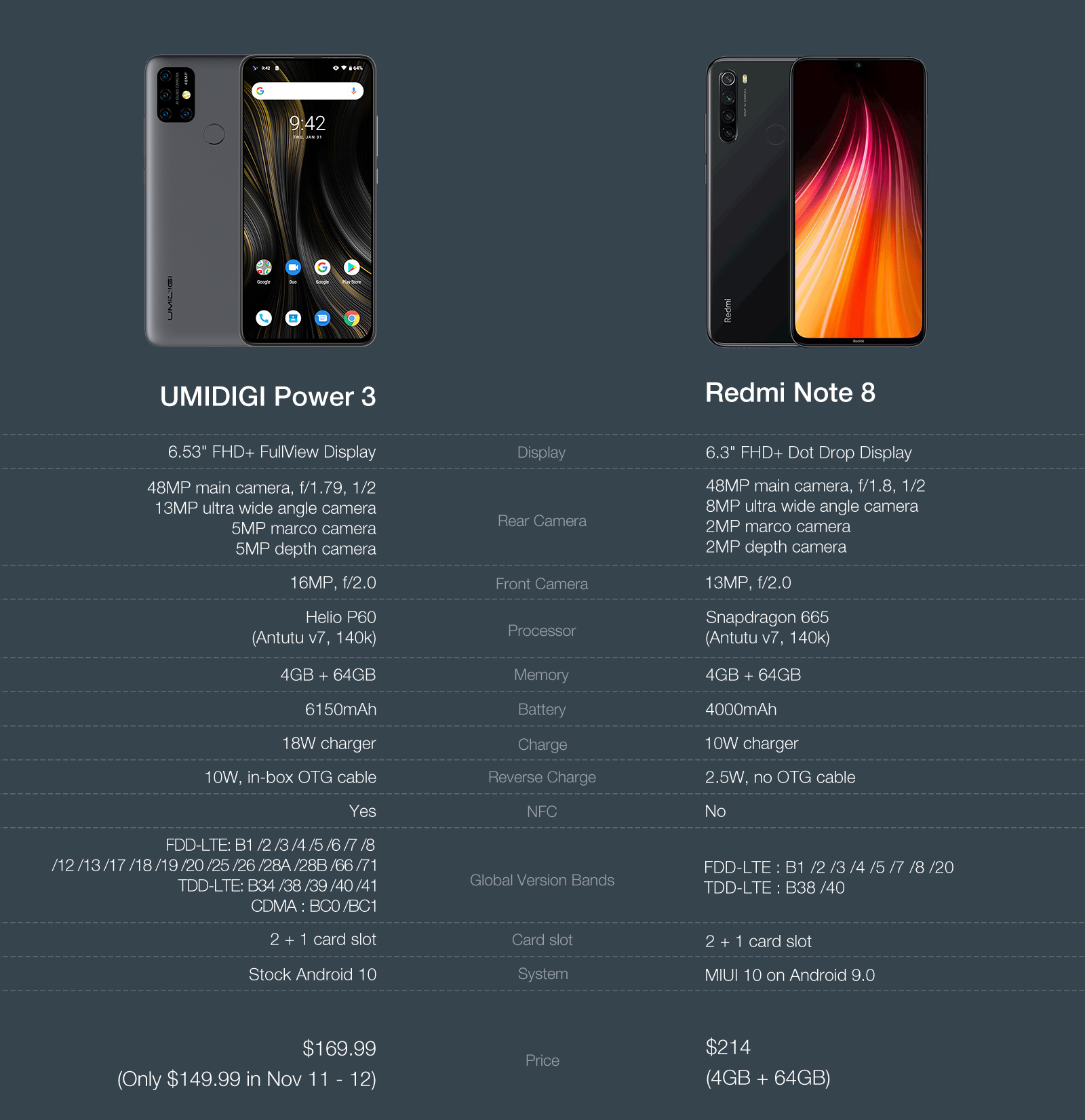
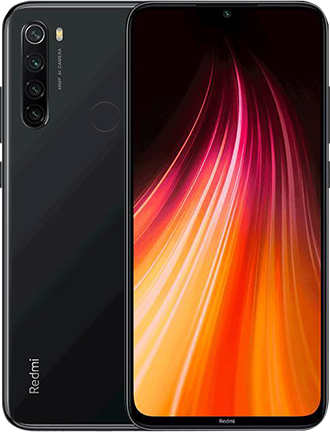
Besides the big battery, the key feature of the device is the multi-function quad camera. The recently launched Xiaomi Redmi Note 8 also sports a similar camera setup but which is better overall? Let’s check out the specs and price comparison.
Display
1 of 2
Doing away with the notch is the challenge for most smartphone manufacturers and rumors say that next year’s flagships Redmi K30 and OnePlus 8 would feature the hole-punch display. UMIDIGI Power 3 has that already placed on the top-left of the 6.53″ FHD+ display, while the Redmi Note 8 comes with a 6.3″ panel with a waterdrop notch.
Camera
The main camera is the sector where there are not that many differences. The Power 3 has a better 13MP ultra-wide camera while the Redmi Note 8’s one is 8MP. As for the front camera, the Power 3 boasts a 16MP sensor while the Note 8 has a 13MP one.
Battery and Charging
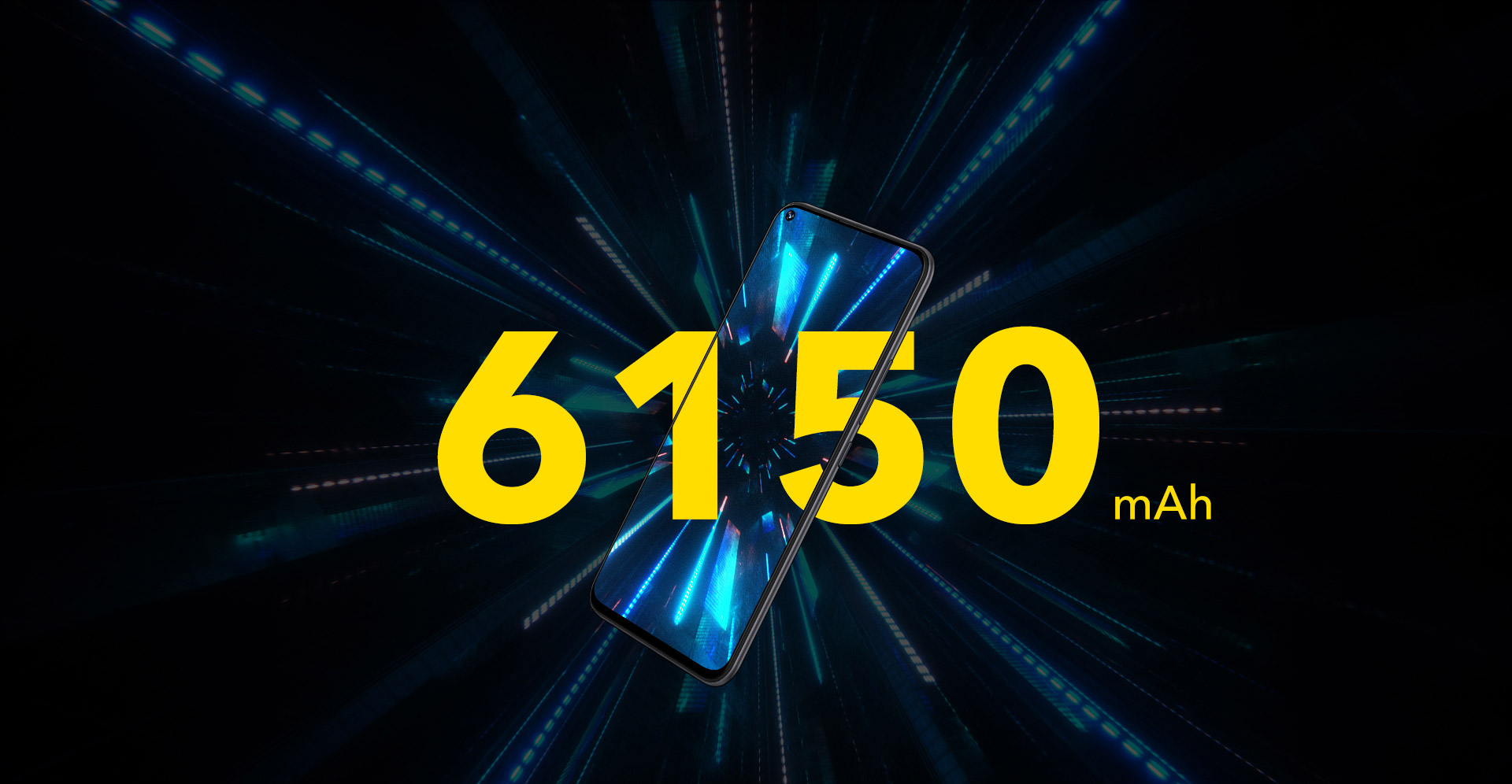
Here’s where the Power 3 really stands out as it hosts a big, 6150mAh battery with 18W fast charging support while the Note 8 comes with a smaller, 4000mAh battery and just 10W fast charging. What’s more, the new UMIDIGI phone supports 10W fast OTG reverse charging while its opponent supports just 2.5W OTG reverse charging.
Performance
The two companies use different SoC providers but their performance is similar. Power 3 is powered by MediaTek’s Helio P60 and the Redmi Note 8 comes with Snapdragon 665. Both score about 140k in Antutu v7. Also, the Power 3 features NFC with Google Pay and Note 8 doesn’t.
Operating System
Until now, there are only a few devices that come with or have been upgraded to Android 10, the latest version of Google’s OS. Power 3 is one of them as it comes with Android 10 out-of-the-box. It comes with the stock version of Android while the Redmi Note 8 features MIUI 10 based on Android 9.0.
Price
As said before, the UMIDIGI Power 3 will hit the market at just $149.99 and the price will go up to $169.99. Still, that’s almost $20 less than the Note 8 that costs about $190 for the same 4GB/64GB memory configuration. It’s easy to say that the Power 3 is a better VFM that its competitor. You can add it to your cart now so that you don’t miss the deal when it hits the market. Also, you can participate in the Giveaway activity to win one for free.
Back when the Huawei Mate 30 Pro was officially announced in the market, it made the headlines for one big feature: 7680 fps ultra slow-motion video shooting. The phone brought in a kind of slo-mo video capability never before seen in a smartphone camera and we were all very impressed with its results.
We have already reviewed the Mate 30 Pro and its camera in detail but we thought it would be a good idea to take a deeper dive into Huawei’s 7680 fps slo-mo video technology. There’s a lot more to this technology than you can imagine and it wouldn’t have been possible even with our current generation smartphone’s hardware capability. This unreal feature is made possible with the help of powerful software as well and we talk about them in our video below.
Rather than saying that the Mate30pro has better cameras, it’s better to admire Huawei’s advanced AI frame insertion technology. Video frame insertion is a common technique used in slow-motion videos. The general principle of frame insertion algorithm is to perform motion estimation (ME) first and then motion compensation (MC). Simply put, the software finds the difference between the two frames, such as the trajectory of the object, and then, in turn, fills that gap between the frame, to improve the video frame rate.
So, there were a number of technical challenges that had to be overcome to make this possible. The entire camera system needs to have an extremely high data cache transmission and processing capability. The algorithms and system computing capacity should also be powerful enough to render the final outcome of the 7680 fps video shooting.
Since everyone is in awe of this ultra slo-mo technology, we hope you guys will enjoy our dedicated video on this subject.
The smartwatch market began as a revolution in mobile devices but things slowed down after the first wave since they initially were just used for receiving notifications. Nowadays, both software and hardware have evolved so much that smartwatches are really worth a try. According to the latest statistics, Apple Watch is the dominant model holding around 35% of the market share with Samsung coming in second place.
But, although it comes in 1st place, the Apple Watch isn’t all that perfect. It is addressed only to iPhone users and thanks to the strong ecosystem of the company, it achieves high sales numbers, so, it’s a no-go for Android users. In addition, the cheaper models come with an aluminum case that isn’t the most durable material out there. Also, its battery life is a day or less and you need to charge it every night.
Custom OS smartwatches
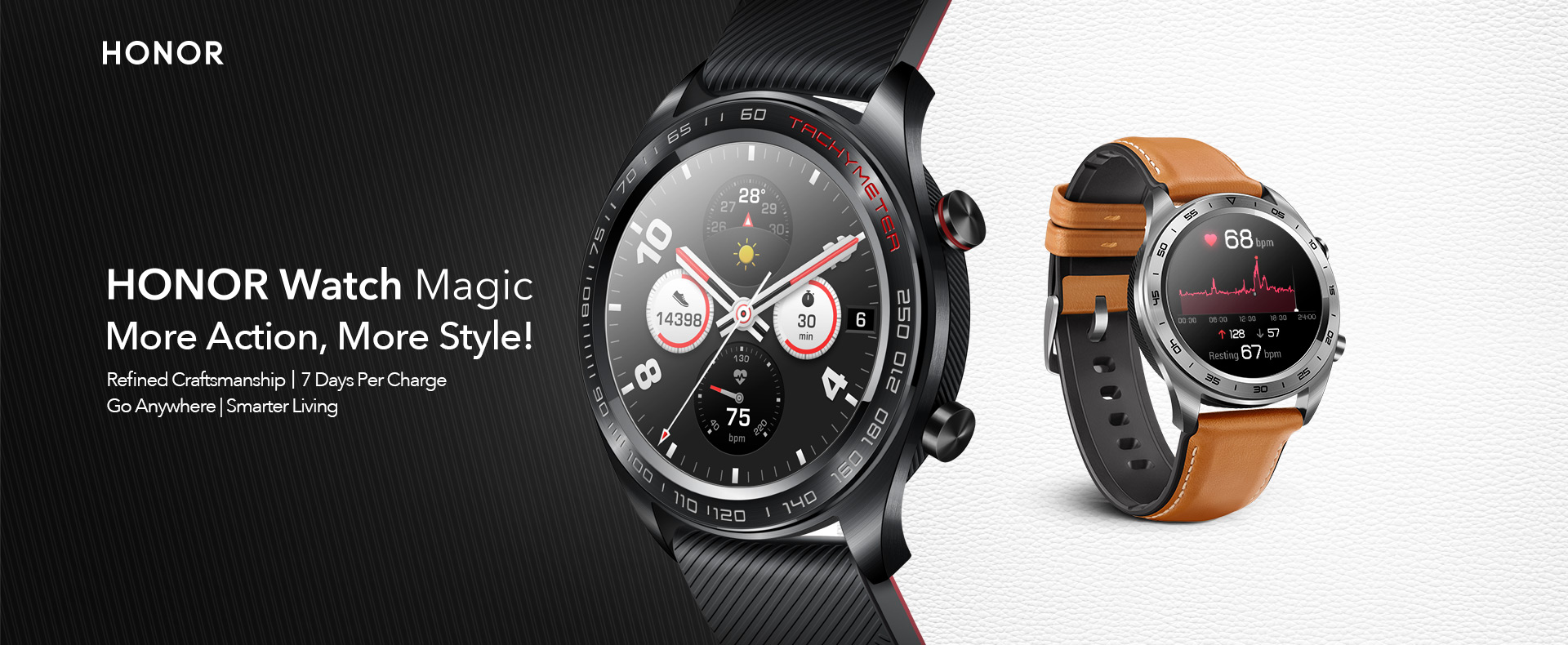
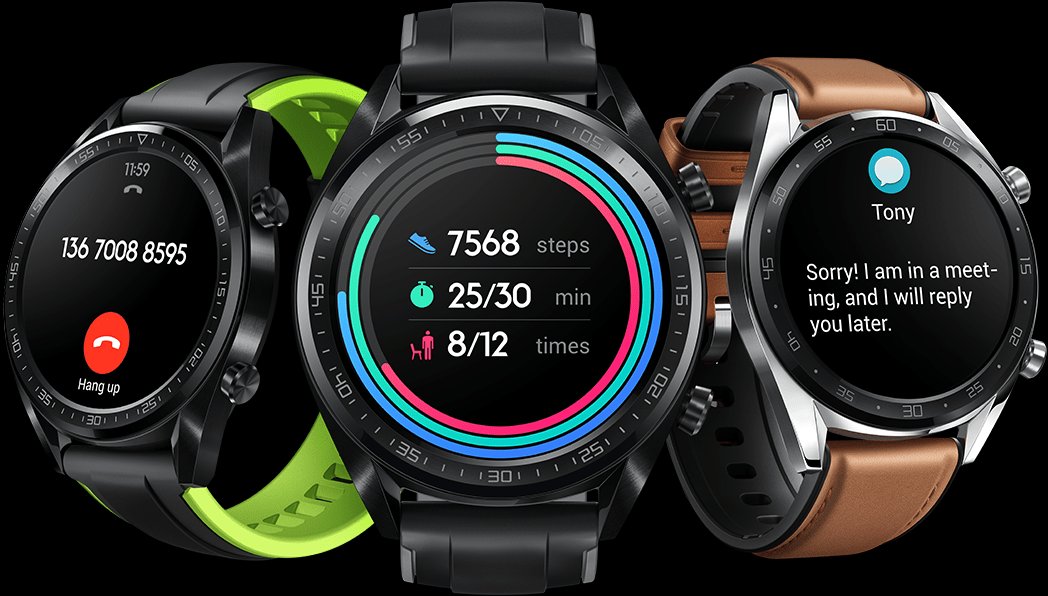
Besides Samsung that has its own wearables ecosystem (Tizen OS) and has successfully managed to populate it with many popular apps, Huawei and its sub-brand Honor are also selling very noteworthy watches. Huawei Watch GT2 is the latest model and it sells around $249 while the Honor Watch Magic sells at around $129. Both feature a custom OS that constrains their capabilities.
Both are adequately equipped featuring a built-in GPS and up to 50m deep waterproofing. Also, the Honor Watch Magic has a week-long battery life, NFC, etc. Its affordable price makes it popular among youngsters. Still, it is inferior to the Huawei Watch GT
that sports 2 weeks of battery life, a larger display, and better design.
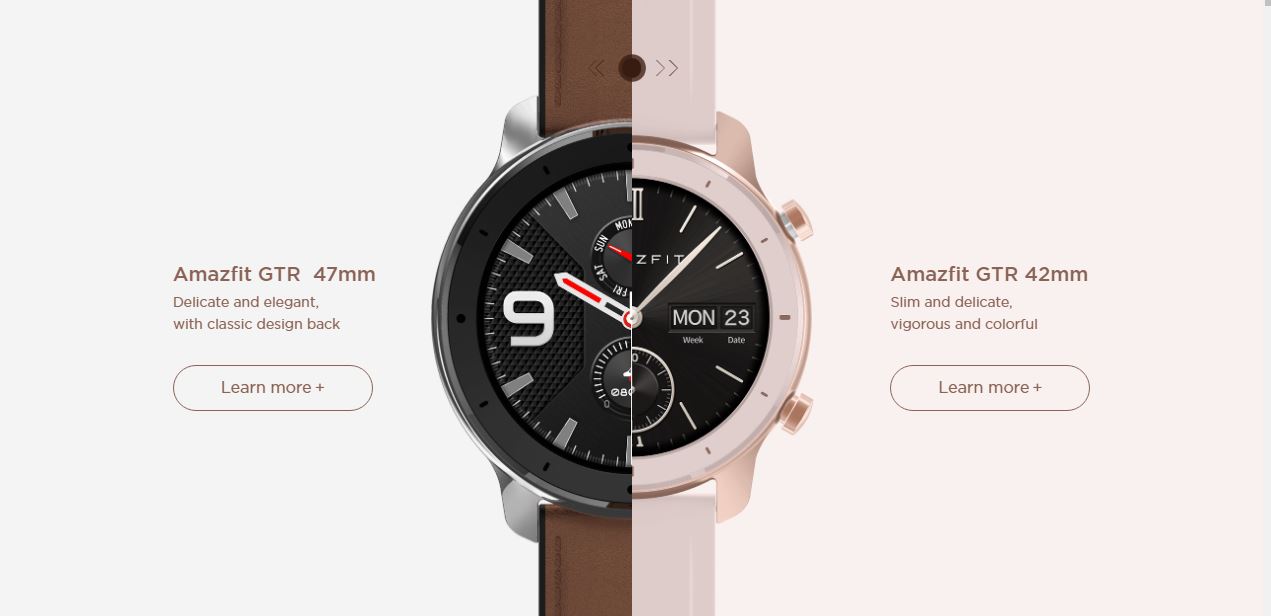
Up next, is Huami that is specialized in smartwatches and grabs a big chunk of the market pie. The flagship model is the Huami Amazfit GTR watch which is available in two sizes – 42 mm and 47 mm. The bigger of the two is more striking and has a longer battery life (24 days vs. 12 days use) and costs just $20 more than the small one. Generally speaking, it is recommended that men choose the bigger one, and ladies choose the smaller one but that’s a matter of personal taste.
It comes with the company’s custom OS and features 12 sports modes while being waterproof up to 50m underwater. What’s more, it comes with an AMOLED high-resolution display that looks great and takes care of keeping battery consumption at a low level since when displaying black colors means zero consumption.
Full OS smartwatches
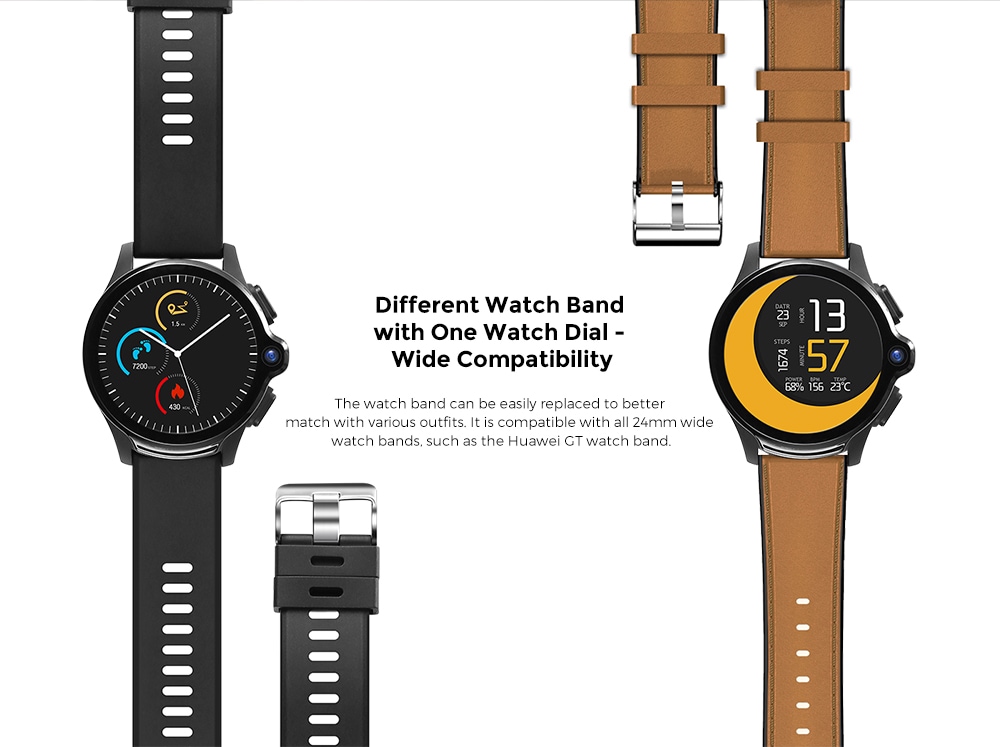
Apart from the above-mentioned models that come with their own OS and other models that come with Google’s Wear OS platform, there are manufacturers that choose to adopt a full OS. This is the case with KOSPET and its latest flagship model, Prime. The KOSPET Prime is literally a smartphone on your wrist, supporting most of the Android apps found on Play Store. Also, it supports 4G connectivity and you can make phone calls right from your wrist without the need of your smartphone.
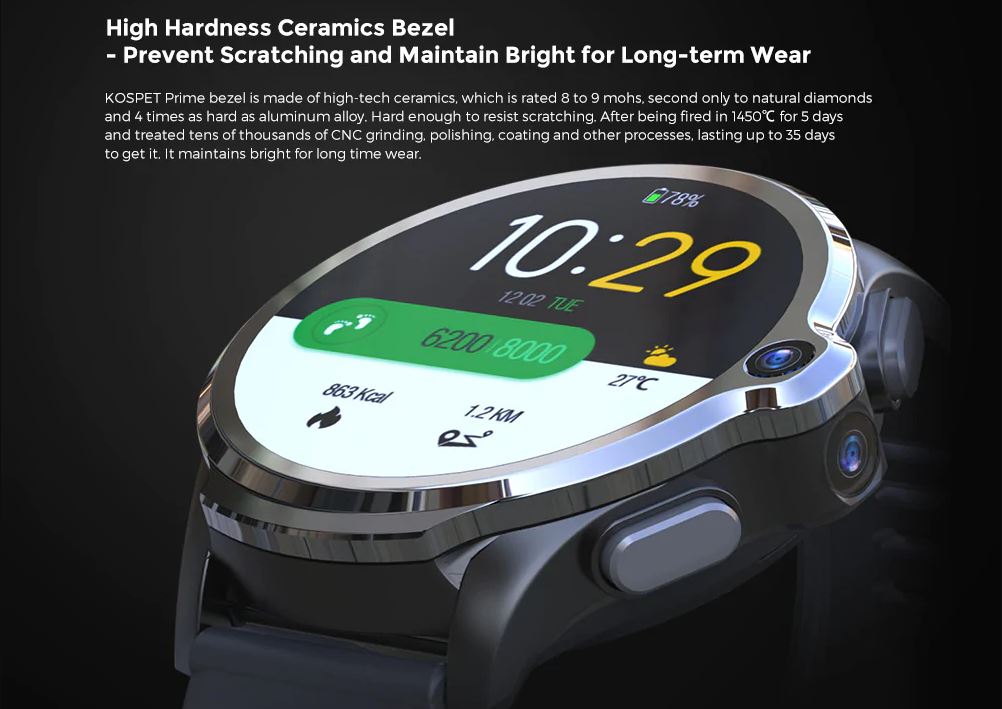
Of course, adopting a full OS has its drawbacks like increased power consumption so the Prime comes with a 1260mAh battery, nearly 40% higher than the second in place. This results in a 168h standby time that is the best among Android watches. In addition, it sports a 1.6″ HD display and it is a full-round one as most watches come with a kind of notch that cuts the circle at the bottom. The big display solves many issues as in the past, displays were too small for third-party applications.
As said, it is a smartphone on your wrist and that requires enough power and memory so that it is fast. Prime comes with 3GB/32GB memory combo and that’s the top configuration found at the price tag of KOSPET Prime. Lastly, it is the first smartwatch to come with a dual-camera setup that supports Face ID. Lifting your hand towards your face will instantly unlock the watch thanks to the full Android OS running on the device.
As you can see, the smartwatch market isn’t as simple as the smartphone one due to the OS fragmentation. The high-end luxury category belongs to Apple and Samsung while the mid-range category is where most other manufacturers like Huawei, Honor, and Huami and even small-time manufacturers like Kospet are placed.
There aren’t many full OS smartwatches in the market that look good. But the KOSPET Prime offers pretty good features based on the Android platform. You can check it out from here.
The much-awaited Apple AirPods Pro has been announced. The new wireless earbuds bring a new design as well as Active Noise Cancellation.
Priced at $249/¥1999/₹24,900/£249/€279, the AirPods Pro has been redesigned. It has a shorter stem than the original AirPods and the part that goes into your ears now has silicon earbuds to keep the noise out. That is for passive noise cancelation.
For Active Noise Cancelation, the headphones have an outward-facing microphone that detects external sound which is then canceled out with “equal anti-noise”. There is also a microphone that faces inwards and listens for unwanted sounds which are also canceled out with anti-noise. Apple says noise cancellation is continuously adjusted at 200 times per second for truly immersive sound.
AirPods Pro Force Sensor
And in cases where you want to hear the sounds around you, all you have to do is press and hold the force sensor ( hidden in the groove) on the stem to and activate Transparency Mode.
The AirPods Pro have what is called Adaptive EQ which auto-tunes music and sounds to the shape of your ear.
AirPods Pro are the only in-ear headphones with Active Noise Cancellation that continuously adapts to the geometry of your ear and the fit of the ear tips — blocking out the world so you can focus on what you’re listening to.
-Apple
The AirPods Pro is powered by the H1 SiP Chip which has 10 audio cores. The headphones are sweat and water-resistant and combined with the case which charges wirelessly (Qi compatible), offer more than 24 hours of battery life. They can last up to 4.5 hours on a single charge and 5 minutes of charging will provide up to 1 hour of listening time. There is support for “Hey Siri” as expected and pairing is super easy.
Apple says the AirPods Pro will be available for purchase on October 30. There is free engraving if you wish to personalize it.
Google officially unveiled the Android 10 last month with improved features and enhancements. The new iteration includes features such as dark mode, new system UI, new gesture navigation, improved privacy, and location control. The foldable display support and enhanced security are also part of the Android 10. There are a lot more improvements that are forcing users to switch to the Android 10 as soon as possible.
The official support for Android 10 on OnePlus 3/3T was limited to Android 9.0 Pie, and now users are dependent on third-party development. Being a device from the pro-development manufacturer, there would be ample support for Android 10 based custom ROMs for OnePlus 3/3T. It’s been just a month since the launch of the Android 10 source code, and the developers have minted several Android 10 based custom ROMs for OnePlus 3 and 3T.
OnePlus 3/3T Specs
As far as the specs are concerned, the OnePlus 3 comes packed with a 5.5-inch Optic AMOLED capacitive touchscreen with 16 million colors. The display supports a 1080 x 1920 pixel resolution along with the Corning Gorilla Glass 4. It is powered with Snapdragon 820 chipset coupled with a quad-core chipset and Adreno 530 GPU. The device is available in different storage variants of 64GB internal and 6GB storage.
In optics, the device comes with a single 16MP primary sensor with LED flash, HDR and panorama features. There’s an 8MP selfie camera on the front for video calling and selfies. In sensors, the company dwelled a fingerprint sensor, accelerometer, gyro, proximity sensor, and compass. The phone hosts a 3000 mAh battery with fast Dash charging technology.
On the other hand, OnePlus 3T differs in terms of chipset, camera, and battery configuration. It features Qualcomm Snapdragon 821 instead of Snapdragon 820 and a 16 MP camera on the rear side. However, there’s a 16 MP camera on the front side for selfies. A 3400 mAh battery powers the device to sustain a whole day.
Let’s see which are the best custom ROMs are available for OnePlus 3 and 3T.
Best Android 10 Custom ROMs for OnePlus 3 and 3T
Lineage OS 17.0
It is the world-famous Android firmware distribution available widely for Android devices. The Lineage OS 17.0 is based on the latest Android 10 AOSP code and with extra contributions from many people. It is designed to improve the performance and reliability over the stock Android device. LineageOS is always known for its continued support and bug-free experience.
However, LineageOS 17.0 is currently in the Alpha stage and carries bugs and issues. As of now, LineageOS 17.0 is missing features such as WiFi display, SELinux permissive, and backup tools. It will work as expected if installed on the stock kernel. The user needs to flash the GApps package to get access to Google services. You can flash the LineageOS 17.0 by visiting the link below. Make sure to follow all the steps carefully. Otherwise, your device may get bricked.
It is the most fully stable ROM based on Android 10 for OnePlus 3 and 3T. The MSM Xtended carries all the features blended from different ROMs for a better user experience. It features all the OnePlus based features such as Awesome Slider, OnePlus gestures, DIsplay Calibration, Panel Modes, and high brightness mode. Apart from these essential features, the ROM packs status bar tweaks, animation, button customizations, gestures, lock screen settings, navigation tweaks, Power menu, Quick Settings, and many other options.
It is based on the Android 10 AOSP code and is fully stable with all features working. It also needs separate Gapps installation after the ROM installation to let Google services work. Grab the MSM Extended for OnePlus 3 and 3T by hitting the link below.
Nitrogen OS Beta is bundled with amazing features along with the native Android 10 support. It features a stock Android-like experience, which makes it fast and stable. It is also available for OnePlus 3 and OnePlus 3T. Nitrogen OS is currently in testing and may carry some bugs.
The features such as Screen on Time without secure start-up and Selinux is not working. It is based on AOSP, CM, Pure, DM, and OmniROM. TWRP is needed to flash the NitrogenOS Beta on OnePlus 3 and 3T. It even carries the optimal kernel’s configuration for performance and battery saving. You can install this feature-rich custom ROM by heading to the link below.
These are the only Android 10 custom ROMs for OnePlus 3 and 3T. We hope you may have found the correct version of the ROM for your device. If you have any recommendations to add to the list, please do let us know by commenting below.
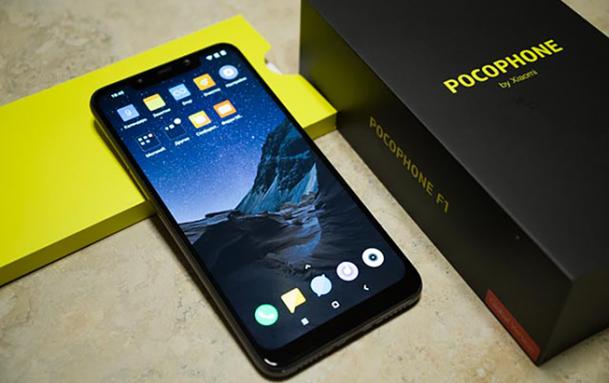
UPDATE: It looks like the first batch of the MIUI 11 Global Stable update for POCO F1 is rolling out to Mi Pilot MIUI users. It is still a stable release but it might take a few days more for everyone else to get the update. If you are not a part of Mi Pilot testing but have received the update for POCO F1, do let us know in the comments below.
Xiaomi is finally rolling out MIUI 11 Stable release for POCO F1 users across the world. Users on Reddit have reported that their smartphones are being updated to the new MIUI version via OTA. Notably, this new MIUI 11 stable build is still based on the Android 9 Pie version.
Apart from the new MIUI 11 features (complete list here), the update also brings the latest October 2019 security patch to the POCO F1. We have reports of at least one user in Italy getting this stable build but users across the globe should eventually get this update in the next few days.
Source: TheMariacho (Reddit)
The update is likely going to be rolled out in stages. So you might have to wait a while before you receive the OTA update notification. And if you don’t want to wait around, download and flash the stable ROM from here. Note that it is a large file (over 1.8GB in size), so it is recommended that you download and install it over a Wi-Fi connection.
While this is based on Android 9 Pie, POCO F1 is confirmed to receive an Android 10 update, eventually. There’s no word on an exact schedule for its release, but users could probably get it by the end of this year. Note that Redmi Note 7 Pro and Redmi 7 users have already received the stable MIUI 11 update a few days ago.
Xiaomi’s MIUI team has been busy for the past few weeks, sending out important MIUI 11 updates to its new and old devices. A number of Xiaomi smartphones including the Mi Mix 3S, Mi Mix 2S, and the Mi 8 SE have already received the new MIUI 11 update based on Android 10. And latest smartphone to be updated to Android 10 is the Xiaomi Mi 8.
Xiaomi has started rolling out MIUI 11 based on Android 10 to Mi 8 users on the beta ROM. The update will bring a host of new MIUI 11 based features to the device and includes the latest October security patch. Given that this MIUI 11 9.10.24 build upgrades the Android version to v10.0, it’s a pretty big file with a size of over 2.1GB. Also, it is recommended to backup your data before upgrading your smartphone.
Note that this is still a beta ROM and is likely to have a few bugs. So, if you use your Mi 8 as your daily driver, it is recommended to wait for the stable release. No word on its rollout but expect it sometime in the next couple of months.
Note that there are only a handful of Xiaomi devices running a stable release of Android 10 right now. So, it will take some time for older devices like the Mi 8 to get Android 10 on the stable release. Also, there’s no word on the Android 10 beta update for devices outside of China.
If you want a case for your new OnePlus 7T, the choices you have from OnePlus’s own site are the Red Silicone Bumper case, Bumper Case Karbon, and the Protective Case which is available in Sandstone and Karbon. Not a lot of choices compared to what we see other big-name brands offer for their flagships. Also, other than the silicon bumper case which is available in red, the other cases are sort of bland too. Thankfully, we will be getting a new official OnePlus case thanks to a new leak.
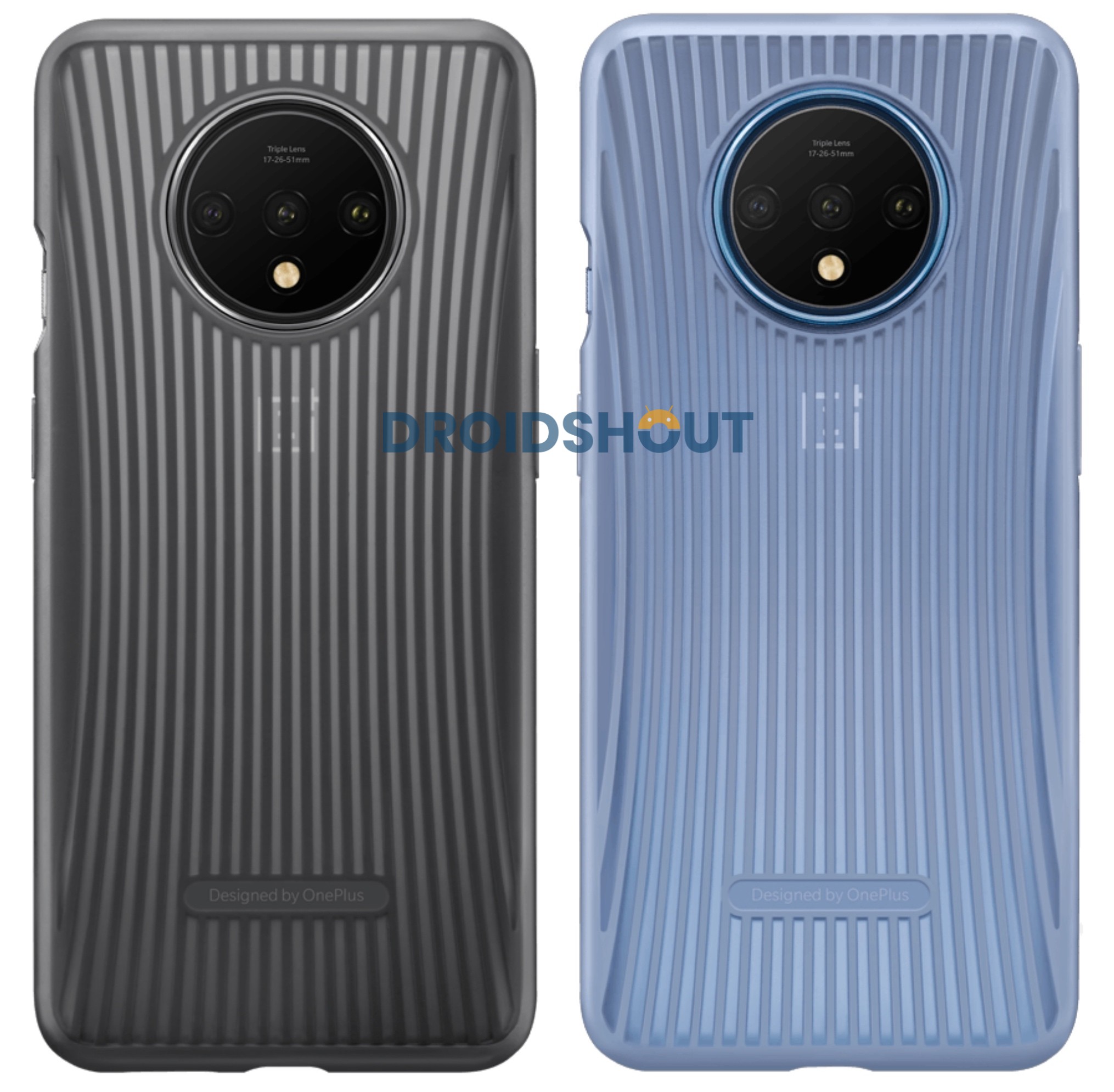
Called the Cushion Bumper Case, a photo of the case was leaked by Ishan Agarwal (@IshanAgarwal24) in partnership with DroidShout.com.
The case has vertical grooves that run from the top to the bottom. It will be available in gray and blue, each matching the two colors (Frosted Silver and Glacier Blue) the OnePlus 7T is available in.
The OnePlus 7T Cushion Bumper Case will be available in India for INR 1290, €30 in Europe, £28 in the UK, and $30 in the US. That is not too expensive for an official accessory but there probably will be knock-offs available in more colors and at a cheaper price.
There is no info on the release date for the case but we expect it to be around the corner.
High refresh rate displays are the new craze in the Android market. Companies like OnePlus, ASUS, OPPO, and even Realme have all released at least one high-refresh-rate smartphone in the market. In fact, the ASUS ROG II phone takes the refresh rate all the way up to 120Hz instead of the more common 90Hz. Now, it is being said that Apple will join the high-refresh rate party as well, in 2020.
OnePlus 7T has a beautiful 90Hz display
According to a DigiTimes report, 2020 iPhones could feature 120Hz screens, joining Apple’s existing iPad Pro lineup with the same high-refresh rate. However, next year’s iPhones will likely have a 120Hz refresh rate on an OLED panel unlike the LCD ones found inside the ProMotion iPads.
But it’s not just the new iPhone models. The same DigiTimes report states that smartphones, in general, will come with higher refresh rates in 2020. And unlike this year where we have a number of 90Hz panel smartphones, companies could upgrade the refresh rate to 120Hz or more next year.
Currently, only a handful of smartphones feature a 120Hz display, like the ROG II, Razer Phone 2, and the Sharp Aquos R3. But if this report is to be believed, by 2020, this figure will increase quite significantly. Such high refresh rates would especially benefit gaming-centric smartphones and this niche market has grown a lot this year.
However, with a high refresh rate comes the issue of battery life. Using a dynamic refresh rate will help in optimizing for the best battery performance but it will still be lower than that of a 60Hz screen. As a result, we could see smartphones with larger batteries and faster-charging technologies next year. This speculation isn’t unfounded given that the ROG II with a 120Hz comes with a HUGE 6000mAh battery on board!
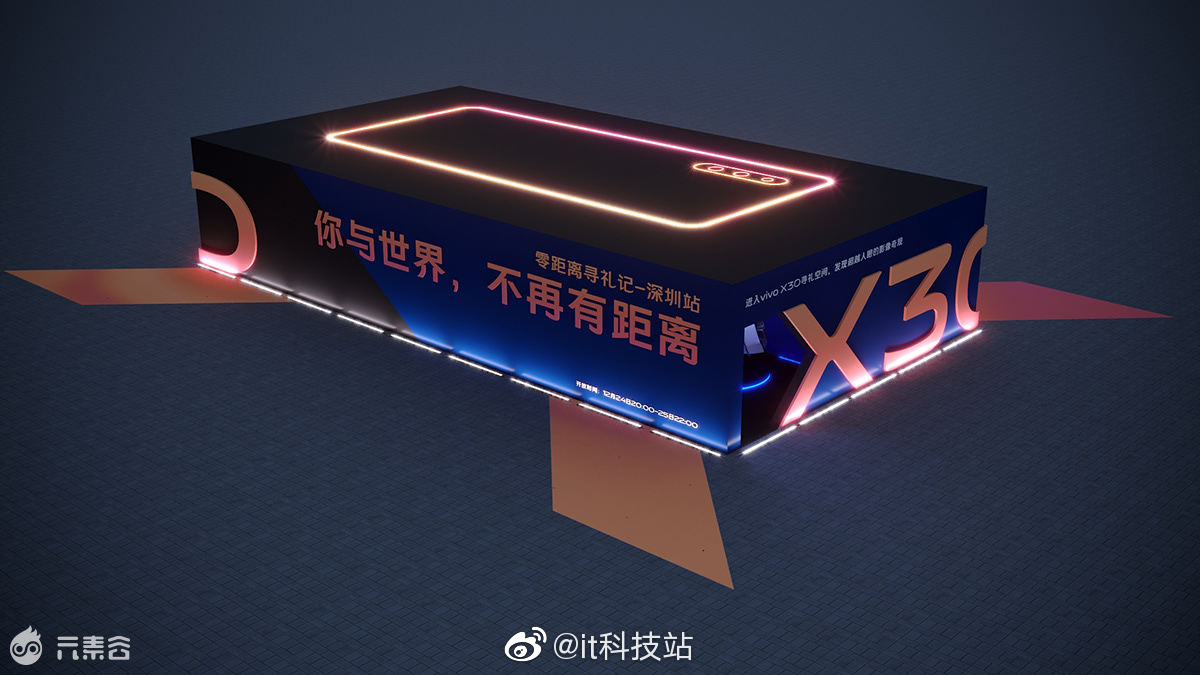
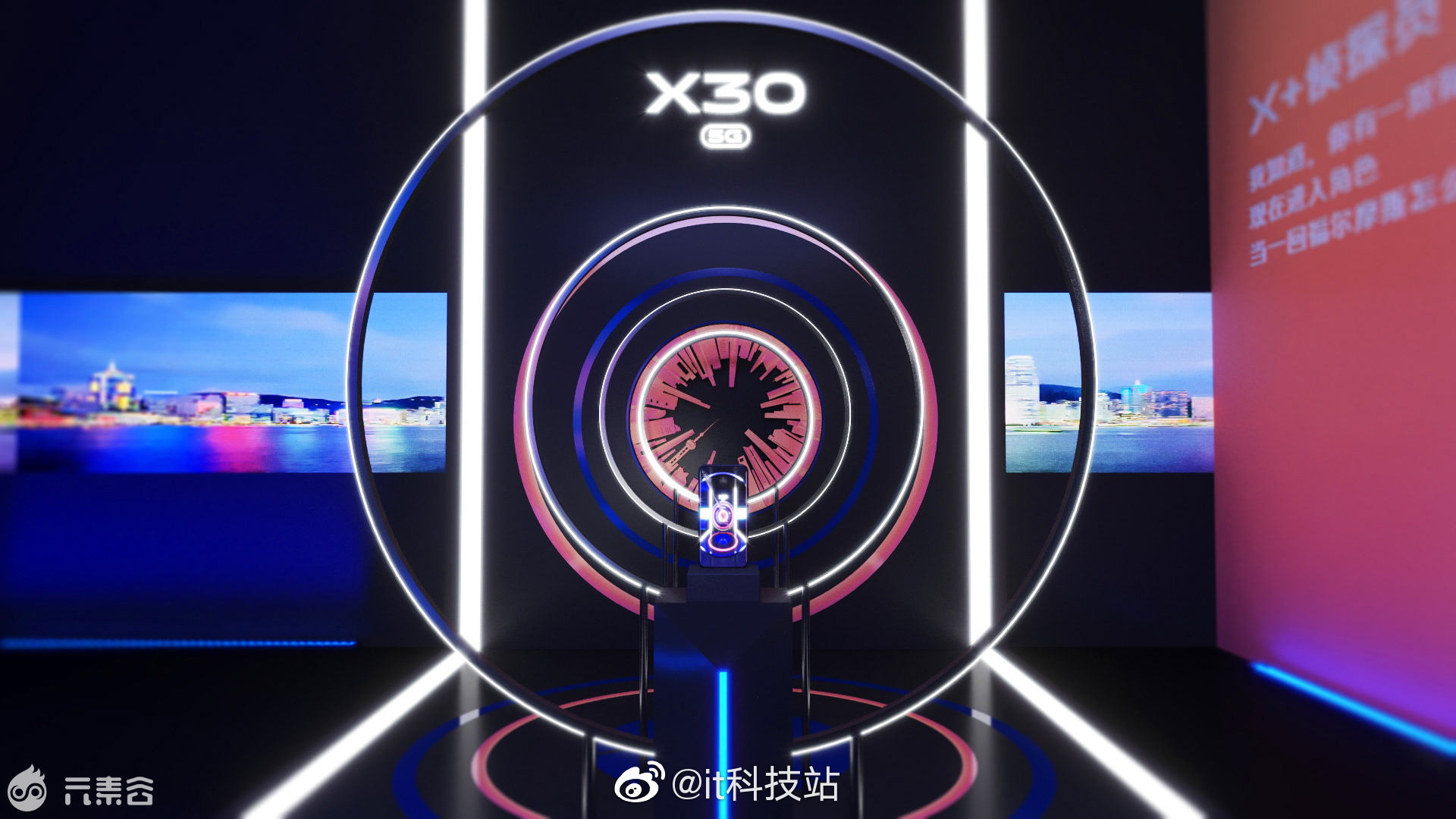
The source of the info is a blogger on Weibo that goes by @it科技站 (IT Station). The Vivo X30 5G should be the successor to the Vivo X27 that launched in March 2019. There is no info on a Pro model but we won’t rule out the possibility of that launching later.
The Vivo X30 5G should be an upper mid-range 5G device with a price tag lower than Vivo’s NEX 3 5G flagship. The NEX 3 5G has a starting price of ¥5698 (~$806).
The leak reveals some promotional images of the device and they show the phone has a screen devoid of a notch and punch hole. So we should get a pop-up selfie camera just like the X27. The screen of the phone also appears to be a waterfall display judging by the curves.
1 of 5
Another of the image shows the device will have three rear cameras arranged vertically and housed together. There is no fingerprint scanner on the back and Vivo is not one to use a side-mounted fingerprint scanner which leaves us with an in-display fingerprint scanner.
Other details of the Vivo X30 5G should surface in the weeks leading up to its announcement.
After releasing the kernel source codes for the Realme 5 Pro a few days back, the company has started rolling out a new update to the device with the October 2019 security patch. The Realme 5 Pro RMX1971E_11.A.11 update brings a couple of important features to the recently launched device, including a system-wide Dark Mode.
Apart from the Dark Mode, the Realme 5 Pro also gets a wide-angle video shooting mode in the new OTA update. There are some optimizations as well, like improved game touch experience and better power consumption while shooting 4K and 1080p 60fps videos. Other known issues such as the repeated focus issue, HDR photo spot, green stripes in the camera video preview screen, have all been fixed.
Note that Realme is currently rolling out this (RMX1971EX_11_A.11) update in stages. So if you haven’t received it yet, don’t worry, you’ll get it soon. For those who can’t wait to get the new update, you can also directly flash the ROM to your Realme 5 Pro. Here is the download page. Note that the update size is pretty large (2.81GB), so it’s recommended to download and install it while you are connected to a Wi-Fi network.
Official Changelog is as below:
Security
Android security patch: October 5, 2019
System
Added Dark Mode
Camera
Added wide-angle video shooting feature
Touch
Updated firmware version to optimize game touch experience
Power optimization
Optimized power consumption while 4K and 1080P@60FPS video recording
Known issues fixed
Fixed after-sales feedback HDR photo spot issue
Fixed repeatedly focus issue
Fixed 1080p@60fps preview with green stripes while switching time-lapse photography and 1080p@60fps mode
Optimized clarity in indoor and low light environments
Let us know if you have received the update in the comments down below.
AnTuTu benchmark aka Ann Bunny in China has recently published the list of features that are most preferred in a smartphone by Chinese consumers in the Q3 of 2019. The data in the report has been derived from smartphones that have installed and at least once ran the benchmarking software on their devices.
To begin with, 88.5% of all smartphones have a display equal to or larger than 6 inch. Most number of handsets have a 6.4-inch display that accounts for 39.7%, followed by 6.3 inches and 6 inch that account for 12.1% and 9.2% respectively. In terms of screen resolution, 1080×2340 ranked first with 58.3%, followed by 1080×2160 and 1080×1920, accounting for 8.8% and 8.6% respectively.
1 of 3
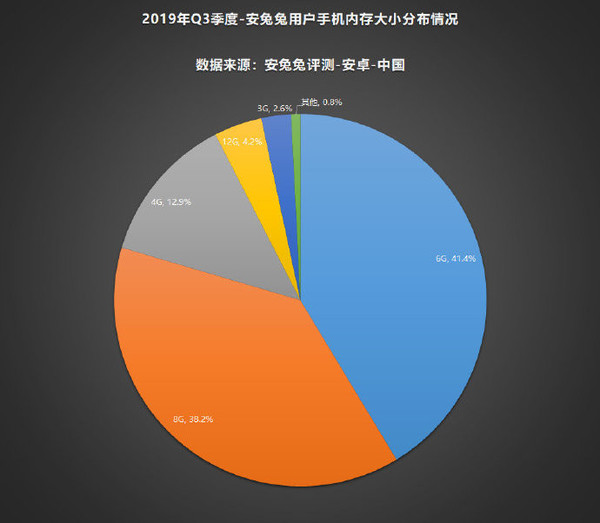
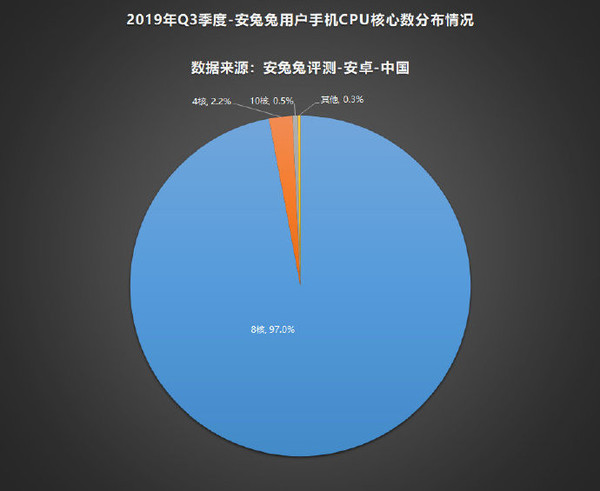
When it comes to the number of CPU cores, 97% of the devices are equipped with an Octa-Core chipset. In comparison,quad-core CPUs are found in just 2.2% and 10 core CPUs are found in 0.5% devices. In terms of memory, 6 GB, 8 GB and 4 GB options are the most popular which accounts for 41.4%, 38.2% and 12.9% respectively.
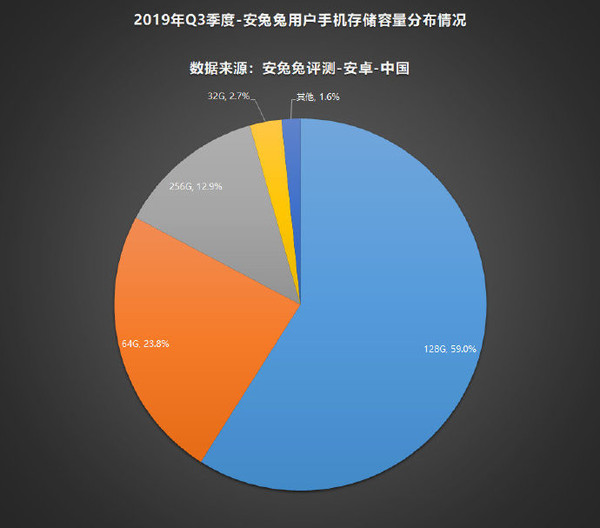
Talking about built-in storage, devices with 128GB memory top the list found on 59% of all devices, 64GB ranked second, accounting for 23.8% and 256GB accounting for 12.9% of all devices, ranking third. Lastly, when it comes to the operating system, most Chinese smart devices in the Q3 of 2019 run Android 9 Pie which was released last year.
To recall, these figures were only gathered from units that have run the AnTuTu benchmark at least once. Therefore, these cannot be used to determine exact numbers which are likely to vary to some extent.
The Nokia 9 PureView launched early this year with five rear cameras (six, counting the ToF sensor). No other manufacturer has put more than 4 sensors in total after that but will change with the upcoming Xiaomi Mi CC9 Pro.
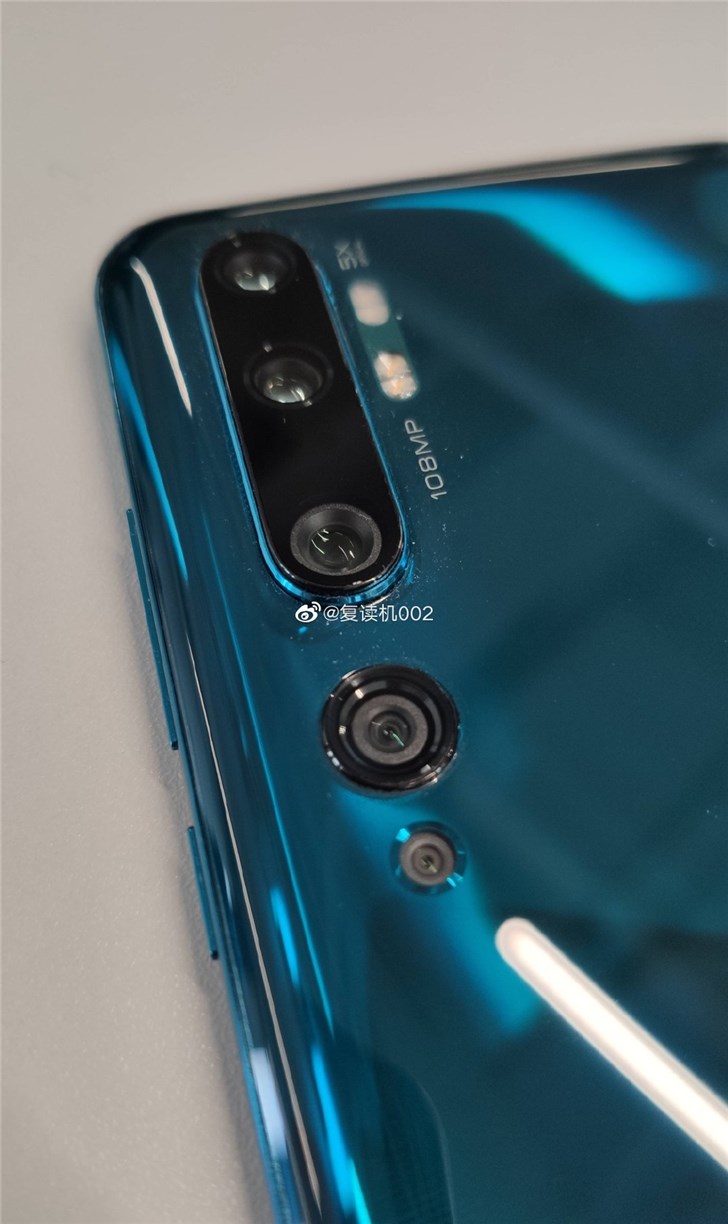
Although Xiaomi has already shared a teaser showing us the design of the phone, a live photo has surfaced on the web. The photo was posted on Weibo by a user called @复读机002 (reviewer002).
The image allows for a closer look at the five cameras as well as the design of the phone.
Rather than a circular arrangement of the sensors like we have on the Nokia 9 PureView which some folks have complained about triggering trypophobia, Xiaomi has gone for a vertical arrangement. Three sensors are housed together while the 108MP sensor which is pretty large is separated. The fifth camera which should be a ToF sensor is also separated from the other cameras.
The phone has four LEDs in total and you can see the words “108MP” and “5X optical” printed on each side of the LED flash. The Mi CC9 Pro has a glass back which we are pretty sure is supplied by Corning. So far, this blue variant is the only one we have seen but there should be other colors available.
The phone has its volume rocker and power button on the right side of the frame. While we can’t see the front of the device, the chances of the display being curved are very slim based on the position of the buttons.
The Mi CC9 Pro will not only have five rear cameras but its primary camera is a 108MP sensor Samsung and Xiaomi developed together. It will come with a Snapdragon 730G processor, an AMOLED display, an in-display fingerprint scanner and should also run Android 10 out of the box. It will be unveiled on November 5.
Last week, Honor announced its new mid-range smartphone in the market, the Honor 20 Lite featuring Kirin 710F and triple rear cameras. The phone came with a large 4000mAh battery, officially supporting 22.5W charging. However, it turns out that the phone can charge faster than 22.5W if you use a high-wattage charger.
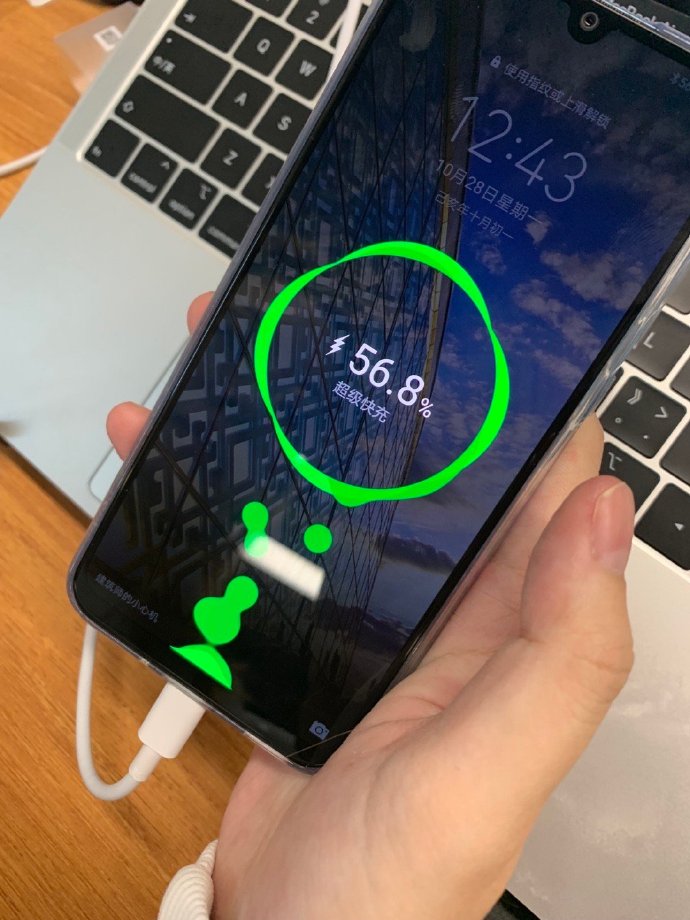
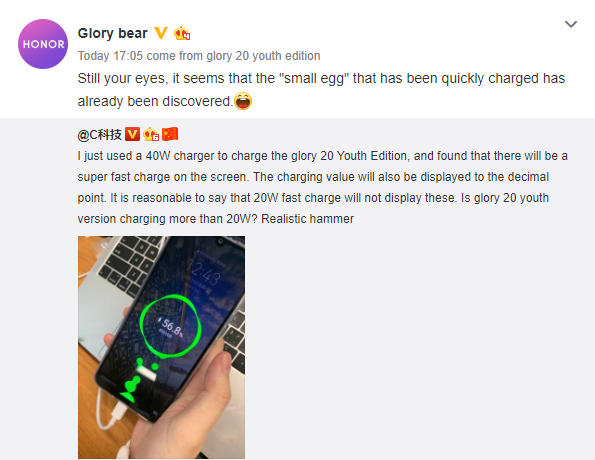
Earlier today, a known blogger in China tried charging his Honor 20 Lite with Huawei’s 40W SuperCharge fast charger. To his surprise, the phone displayed the ‘SuperCharging’ text on the screen, with decimal points in the charging percentage. This raised speculations that the phone actually charged at more than 20W.
And soon after this post was made public, Honor’s VP, Xiong Junmin, confirmed that the Honor 20 Lite charges at more than 20W. However, we still don’t have an official figure for its maximum charging speed. So before you get too excited, note that it still might not be as fast as 40W.
The stock 22.5W charger is still pretty good as it reportedly charges the Honor 20 Lite up to 53% in 30 minutes. For a 4000mAh battery, this figure is pretty good. Apart from this, the phone comes with a 6.3-inch FHD+ AMOLED display, 8GB of RAM, and a triple camera setup featuring a 48MP primary sensor, 8MP ultrawide lens, and a 2MP depth sensor. The Honor 20 Lite starts at around $200 for the 4GB RAM and 64GB ROM version. You can check out Honor 20 Lite hands on photos from here.
TSMC (Taiwan Semiconductor Manufacturing Company) is the world’s largest dedicated independent semiconductor foundry. To get an idea of its expanse, TSMC is the one that is commissioned to manufacture three of the best mobile chipsets of 2019 which include Qualcomm Snapdragon 855, Apple A13 Bionic and Huawei HiSilicon Kirin 990. While all three of these chipsets are manufactured using a 7 nm process, according to past reports, the independent foundry has already completed risk productions with 5 nm process.
To put it simply, lower the process number, the higher the number of transistors inside a chip. Correspondingly, the more transistors inside a chip, the more powerful and energy-efficient it is. For example, the Kirin 990 that features an embedded 5G modem packs an astounding 10.3 billion transistors.
This process number “nm” which is short for nanometers has been shrinking for decades. Back in the 1960s, Intel co-founder Gordon Moore observed that the number of transistors inside chips doubled every year. However, in the following decade, it was observed that the number of transistors inside these components would double every other year and since then it has been referred to as “Moore’s law”.
Some experts in the past have assumed that the 5 nm node will be the end of Moore’s law. Transistors smaller than 7 nm were previously reported to face an obstacle known as quantum tunneling through the gate oxide layer, however, this does not seem to be the case. Not only has TSMC successfully completed risk production of 5 nm chips, but it is reported to have started working on fabrication facilities that can churn out 3 nm chips and will be ready by 2023.
The TSMC facility will cover over 74 acres of land in southern Taiwan’s Science and Technology Park which will reportedly incur $19.5 billion to build. In addition to TSMC, Samsung, which is one of the biggest microchips manufacturers is also gearing to make chips with a 3 nm node. However, Samsung’s facility will reportedly be operational during the 2021-2022 time frame.
Having said that transistor density on Samsung chips won’t be as high as TSMC’s 3 nm process. This means that Samsung made microchips at that node won’t pack as many transistors into a small space as TSMC’s.
Talking about the current scenario, Qualcomm’s upcoming chip, the Snapdragon 865 which is expected to debut in the following months will be made using the 7 nm process. While its successor, the Snapdragon 875 and Apple’s A14, both of which will launch next year will be made using 5 nm process.
Earlier today, Xiaomi announced that it will have an event on November 5 where it will unveil a new phone called the Mi CC9 Pro. The device will be the second phone after the Mi MIX Alpha to come with Samsung’s 108MP sensor.
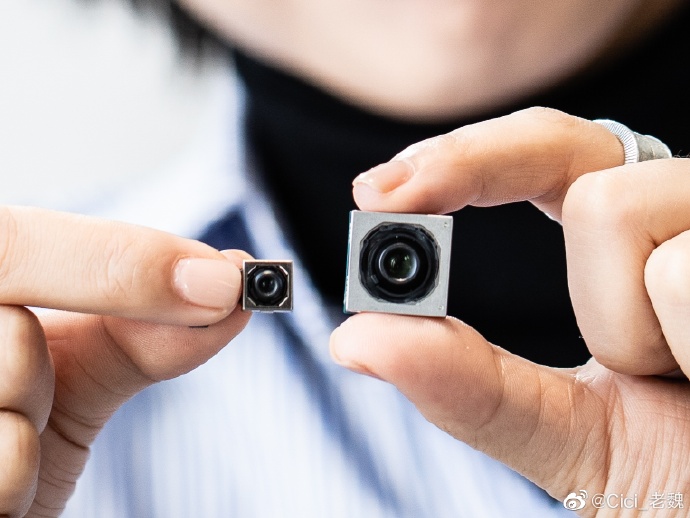
Lao Wei, the Product Manager of the Mi CC line took to Weibo to show us just how big the 108MP Samsung ISOCELL Bright HMX sensor is. In the attached photo, we see her holding a standard 12MP sensor in one hand and the 108MP ISOCELL Bright HMX in the other and one can see the latter is about four times the size of the 12MP sensor.
She explained that the large size of the sensor brought challenges when designing the phone and in the structure of the device. The 108MP Samsung ISOCELL Bright HMX is said to have a photosensitive area twice the size of a 48MP sensor.
Xiaomi will release a teardown photo of the Mi CC9 Pro later which will give us a look at how the 108MP sensor influenced the design of the phone’s internals.
[envira-gallery id=”285859″]
The Xiaomi executive also shared more sample photos taken with the phone.
The Mi CC9 Pro will have five cameras on the rear. Three of the other four cameras should include an ultrawide angle lens, a telephoto lens, and a ToF sensor.
Korean electronics giant, Samsung often files a wide variety of patents with trademarks and patent houses across the globe. Even though not all devices or technologies in these patents come to fruition, they do provide us a glimpse about the company’s future offerings. Not long ago, the company patented a couple of foldable smartphone (1, 2) which could succeed it’s first foldable smartphone, the Galaxy Fold.
1 of 2
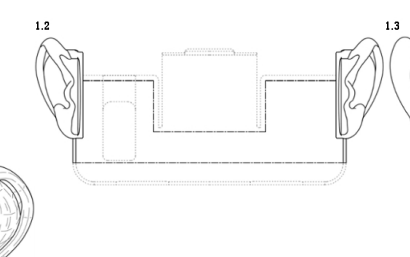
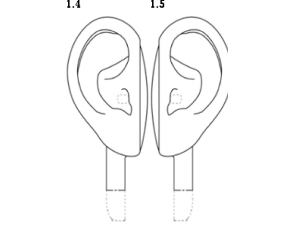
On April 4, 2019, the company filed a patent for a unique smartphone accessory with The Hague International Design System which was published earlier this month. The said patent exhibits a total of 6 images which reveal that the accessory happens to be a smartphone case. Funnily enough, it has two human-like ears that are attached to its either side.
Unfortunately, the text attached along the patent does not reveal many details about the purpose of the case. However, going by its overall shape and a hole in each ear, it could help in evenly spreading audio output from a smartphone’s stereo speaker. The benefit of such an accessory is that it will allow to fill a large space with audio rather than firing it towards just one person who is holding the smartphone.
While the case does not have a extendable design which would allow smartphones of different length to be compatible with it, it does have a safety mechamism that elongates vertically to secure the device in its place.
As of now, it cannot be predicted whether Samsung plans to launch such a smartphone case or not. Until more details are revealed, we would recommend taking this patent with a grain of salt.
Now, reports say Boris Johnson is set to grant Huawei access to the UK’s 5G network. First reported by Sunday Times, sources in the senior government and security services have said that the British government is moving forward with a decision to grant Huawei access to the “non-contentious” parts of the network.
There is not an explanation for what they meant by non-contentious parts of the network but some sources say this refers to areas of the network where if possible surveillance by the Chinese were to happen, the damage will be minimal.
The UK’s move may hurt its relationship with the US and may result in sanctions. However, others say that the decision to grant Huawei access may force Huawei’s competitors such as Nokia and Ericsson to lower prices.
Xiaomi was reportedly working on a new smartphone featuring 108-megapixel camera sensor which has now been confirmed by the company as Mi CC9 Pro. The Chinese company has also revealed that the phone will get launched on 5th November.
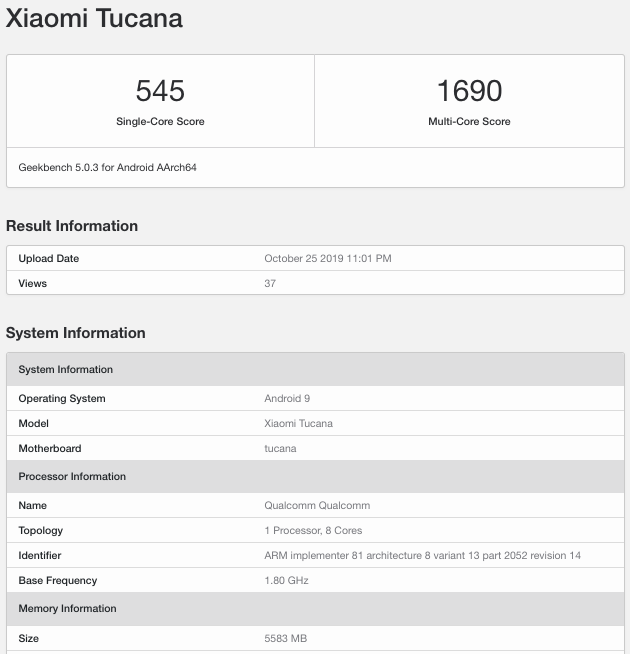
Now, ahead of the phone’s official launch in the coming days, the Xiaomi “tucana” aka Mi CC9 Pro, has been spotted on benchmarking website Geekbench, which sheds more light on the device’s hardware specifications.
The specs listed on Geekbench for the upcoming Xiaaomi Mi CC9 Pro suggests that it won’t be a flagship smartphone but will be more of a premium mid-range offering. The device is listed to be powered by an octa-core Snapdragon chipset, which is expected to be the Qualcomm Snapdrafon 730G.
The phone is packed with 6GB of RAM but other reports have pointed that the device will come with up to 8GB of RAM and up to 256GB of internal storage. The handset is confirmed to come with 108-megapixel primary camera sensor and the teaser from the company hints at a penta-camera setup on the back.
In the software department, the Mi CC9 Pro is said to be running Android 9 Pie operating system out-of-the-box with the company’s own MIUI on top. This means that the phone won’t feature Android 10 OS out-of-the-box.
We’ll come to know more about the smartphone, along with its pricing and availability details, when it goes official in China on 5th November. Along with the Mi CC9 Pro, the company will also be launching Xiaomi Watch and Xiaomi Portable Air Conditioner at the same event, along with a few other products.
We use cookies on our website to give you the most relevant experience by remembering your preferences and repeat visits. By clicking “Accept”, you consent to the use of ALL the cookies.
This website uses cookies to improve your experience while you navigate through the website. Out of these, the cookies that are categorized as necessary are stored on your browser as they are essential for the working of basic functionalities of the website. We also use third-party cookies that help us analyze and understand how you use this website. These cookies will be stored in your browser only with your consent. You also have the option to opt-out of these cookies. But opting out of some of these cookies may affect your browsing experience.
Necessary cookies are absolutely essential for the website to function properly. This category only includes cookies that ensures basic functionalities and security features of the website. These cookies do not store any personal information.
Any cookies that may not be particularly necessary for the website to function and is used specifically to collect user personal data via analytics, ads, other embedded contents are termed as non-necessary cookies. It is mandatory to procure user consent prior to running these cookies on your website.



















 To put it simply, lower the process number, the higher the number of transistors inside a chip. Correspondingly, the more transistors inside a chip, the more powerful and energy-efficient it is. For example, the Kirin 990 that features an embedded 5G modem packs an astounding 10.3 billion transistors.