Advertisement

Vivo Z1x 8GB RAM edition may debut soon, claims report

Vivo introduced the Vivo Z1x with 6 GB of RAM in India last month. Fresh information revealed by 91mobiles states that the Chinese smartphone manufacturer has plans to bring an 8GB variant of the smartphone to the subcontinent. The upcoming 8 GB variant offers a slight boost to overall performance. There is no update on the price and availability of the new device yet. But, the Z1x will be sold offline as well as via online retailers. This comes as a surprise since the Vivo Z-series is currently an online exclusive.

Vivo Z1x Features and Specifications

The Vivo Z1x features a 6.38-inch Super AMOLED full-HD+ display with a resolution of 1080 x 2340 pixels. The screen has a Halo notch and features a in-display fingerprint scanner. According to Vivo, the new technology helps unlock the screen within just 0.48 seconds. Powering the Z1x is an octa-core Snapdragon 712 SoC with up to 6 GB of RAM and up to 128GB of expandable storage through a microSD card. The Z1x features Vivo’s Multi-Turb and Ultra Game Modes for enhanced performance.

Vivo Z1X Phantom Purple

The Vivo Z1x features a triple camera setup at the rear. The primary camera is a 48-megapixel Sony IMX582 sensor with an aperture rating of f/1.79 that is paired to an 8-megapixel AI ultra-wide sensor with an aperture rating of f/2.2. A 2-megapixel depth sensor with an f/2.4 aperture rating completes the setup. The front camera is a 32-megapixel unit. 

The Vivo Z1x draws power from a 4,500 mAh battery that supports 22.5W fast charge. The smartphone runs on the Android 9.0 Pie-based Funtouch OS. Standard connectivity options include dual-SIM 4G VoLTE, Wi-Fi 802.11 ac, USB Type-C, GPS/A-GPS and a 3.5mm headphone jack..

Vivo Z1x Price and Availability

The 6GB variant of the Vivo Z1x with 64GB of RAM is priced at Rs. 16,990 (~$239). The 6 GB RAM + 128GB storage variant is priced at Rs. 18,990 (~$267). The prices of the 8 GB variant is currently unknown. The device is available in two color gradients, namely Phantom Purple and Fusion Blue.


(source)


OPPO Reno2 Z may debut in China this week

OPPO Reno2 Z smartphone was announced alongside the OPPO Reno2 and OPPO Reno2 F phones in India on Aug. 28. Among these, only the Reno2 has made its way to China. The Reno2 Z with its model number PCKM80 was spotted with its full specifications on TENAA in the previous month. Now the smartphone has appeared on the database of China Telecom’s website. The listing reveals that the phone may break cover in China later this week.

OPPO China is yet to confirm the arrival of the OPPO Reno2 Z smartphone. However, the China Telecom listing of the smartphone reveals that the phone will release in China on Oct. 25. Moreover, it also reveals that the phone will be priced at 2,699 Yuan (~$382). The handset is expected to arrive in three color edition such as Extreme Night Nebula, Morning Fog White and Deep-Sea Night Light.

OPPO Reno2 Z Specification and Features

The OPPO Reno2 Z has a 6.5-inch AMOLED display with notch-less design. It offers full HD+ resolution of 1080 x 2340 pixels and an aspect ratio of 19.5:9. The display of the phone is embedded with an in-screen fingerprint reader.

The ColorOS 6.1 based Android 9 Pie OS runs on the device. The smartphone is driven by MediaTek Helio P90 chipset and 8 GB of RAM. The handset has a native storage of 128 GB and it has a microSD card slot for expanding its storage.

OPPO Reno 2Z

The handset houses a 4,000mAh battery that carries support for VOOC 3.0 20W Flash Charge technology. The backside of the phone has a 48-megapixel Sony IMX586  primary lens, an 8-megapixel ultrwide lens, a 2-megapixel mono lens and a depth sensor of 2-megapixel. For shooting selfies, the smartphone is equipped with a shark-fin shaped pop-up camera system that has an LED flash and a 16-megapixel lens.

The Reno2 Z is selling in India with a price tag of Rs. 26,990. The Indian model features 8 GB of RAM and 256 GB of inbuilt storage. It is available in colors like Sky White and Luminous Black in the country.


Hisense HLTE227T with quad rear cameras passes TENAA, single camera HLTE202N tags along

Two new Hisense phones have been certified by TENAA. The phones which have model numbers  HLTE227T and HLTE202N were certified last week.

Hisense HLTE227T

The Hisense HLTE227T has a large 6.517-inch display with a 1600 x720 resolution. It is powered by a 2.0GHz octa-core processor paired with 4GB, 6GB or 8GB of RAM and 64GB, 128GB and 256GB of storage respectively. TENAA says the device has support for storage expansion but the maximum capacity is 128GB.

One of the selling points of the device is its quad rear cameras. The primary sensor is a 13MP camera and it is paired with an 8MP camera (likely ultrawide), a 2MP camera (depth sensor), and another 2MP camera (likely for macro photography). The selfie camera is an 8MP sensor.

[envira-gallery id=”282671″]

The Hisense HLTE227T runs Android 9 Pie and packs a 4850mAh battery.

With respect to design, the phone has a camera in the middle above the display, hinting at it having a notched screen. On the back, the cameras are arranged vertically in the same housing. The LED flash is on the left of the camera setup and there is also a fingerprint scanner on the back.

In addition to the volume rocker and power button on the right side of the frame, the Hisense has an extra button on the left. The phone will be available in Extreme Night Black and Starry Blue.


Hisense HLTE202N

The Hisense HLTE202N has a smaller 5.84-inch 1440 x 720 display. There is a 1.8GHz octa-core processor powering the phone and buyers will be able to choose from three configurations – 3GB RAM + 32GB, 4GB RAM + 64GB, and 6GB RAM + 128GB. The phone will have support for storage expansion.

There is a single 13MP camera on the back of the phone while the selfie camera is a 5MP sensor. Hisense has put a battery with a capacity of 3900mAh inside the phone.

[envira-gallery id=”282672″]

Just like its bigger sibling above, it also has an extra button on the left side. However, it ditches the fingerprint scanner. The Hisense HLTE202N will run Android 9 Pie out of the box and be available in black and white.

We do not know when these two phones will be announced since Hisense as not released any info about a launch happening soon.


Purported Vivo iQOO Lite (Vivo V1936A) Geekbench listing appears

Vivo’s gaming phone division iQOO is expected to announce a new phone in the coming days. Rumors are rife that the smartphone could be called Vivo iQOO Lite as it will be a lower version of the Snapdragon 855 SoC powered Vivo iQOO gaming smartphone that had gone official in April in China. At the beginning of this month, the smartphone with its Vivo V1936A model number was found listed of China’s 3C authority. The same model has appeared on Geekbench with some of its key specs.

The Geekbench listing of the Vivo V1936A reveals that it is fueled by Snapdragon 855 chipset that has a base frequency of 1.78GHz. The processor is mentioned with its ‘msmnile’ codename on the Geekbench listing. The SoC is coupled with 8 GB of RAM and the phone is loaded with Android 9 Pie OS. In the single-core test, the alleged iQOO Lite has recorded a score of 3,516 and it has recorded a score of 11,262 in the multi-core test.

The 3C appearance of the smartphone had revealed that it could be shipped with a rapid charger that supports up to 33W fast charging. The original iQOO smartphone has a 4,000mAh battery that is coupled with 44W rapid charger. Probably, the Vivo V1936A could be featuring a 4,500mAh battery.

The Vivo iQOO Neo smartphone that was introduced in July featured the Snapdragon 845 SoC. It has a 4,500mAh battery that is assisted by a 22.5W fast charging. The upcoming Vivo V1936A could be slotted between the iQOO and iQOO Neo in the Chinese market. Hence, the Vivo V1936A is speculated to arrive with iQOO Lite name. The said moniker was trademarked along with some other names such as NEX Pro, NEX Neo, NEX Lite, VivoX Pro and VivoX Lite at EUIPO in the previous month.

vivo iQOO Neo

The purported iQOO Lite is expected to come with an OLED display with waterdrop notch. It is likely to support full HD+ resolution and it is expected to be equipped with an in-screen fingerprint reader. The Vivo iQOO has a starting price of 2,698 Yuan (~$381) whereas the highest edition of the iQOO Neo is priced at 2,298 Yuan (~$325). The rumored iQOO Lite could be priced around 2,498 Yuan (~$353).


Apple iPad (2019) now available on Flipkart and Amazon India

The Apple iPad (2019) (also known as iPad 10.2) has finally found its way to India, a month after being unveiled alongside the iPhone 11 series and the iWatch in the U.S. While the latter two have been on sale in India since the past month, the iPad just arrived. The device is available on Flipkart and Amazon, apart from the official retail stores. The new Apple iPad replaces the variant from last year and features quite a few upgrades

iPad (2019) Specifications and Features

The new iPad features a 10.2-inch Retina IPS display with a resolution of 2160 x 1620 pixels, 264 ppi pixel density and a peak brightness of 500-nit. It draws power from the Apple A10 Fusion chipset and the M10 coprocessor. It is available in two storage variants, namely 32GB and 128GB of built-in memory. 

The primary camera on the iPad (2019) is an 8-megapixel unit with an aperture rating of f/2.4. The front camera is a 1.2-megapixel unit with an aperture rating of f/2.0. The device supports the first-generation of the Apple Pencil, a full-sized Smart keyboard and features a stereo setup with dual microphones.

Apple iPad 10.2

Some of the new features include a swipe up function from the corners with the Apple Pencil for screenshots. Connectivity options include Wi-Fi 802.11ac and Bluetooth v4.0. The cellular + Wi-Fi variant supports GPS and LTE as well. This variant further supports calling over Wi-Fi due to the dual-SIM setup comprising of a Nano-SIM card and a eSIM. 

The 2019 iPad draws power from a 32Wh battery that offers up to 10 hours of Web surfing on Wi-Fi and up to 9 hours on LTE. The device features a Touch ID fingerprint scanner on the chin and runs on iPad OS. The OS features a new floating keyboard that allows for one-hand usage.

iPad (2019) Price and Availability

The Wi-Fi-only variant of the 2019 iPad with 32GB of ROM is available at Rs. 29,900 (~$421). The 128GB variant is priced at Rs. 37,900 (~$543). The 32GB variant of the Wi-Fi + Cellular variant features a price tag of Rs. 40,900 (~$576). While the 128GB variant can be yours for Rs. 48,900 (~$689). The tablet is available in three color options, including Space Gray, Silver and Gold. 

Flipkart is offering a 10% instant discount on the use of SBI credit cards, 5% unlimited cashback on the use of Axis Bank credit cards and no-cost EMI. Amazon is offering a 10% instant discount up to Rs. 1,750 (~$25) on the use of ICICI Bank credit and debit cards, credit/debit EMI transactions along with no-cost EMI.


Vivo Y3 Standard Edition specifications, renders and pricing leaked

In May, Vivo had launched the Vivo Y3 smartphone in China. It had arrived as the rebranded version of the Vivo Y7 smartphone that was announced earlier this year in China. The Vivo Y3 is now selling with a starting price 1,298 Yuan (~$184) in the home market. Leaked information that had surfaced in the last week revealed that the Chinese firm is working on the introduction of an affordable version of the Vivo Y3. The China Telecom listing of the phone reveals that it will be debuting in China as Vivo Y3 Standard Edition.

Vivo Y3 Standard Edition Price and Release

The China Telecom listing of the Vivo Y3 Standard Edition that it was supposed to hit the market on Oct. 10. However, it is yet to appear on the official website of Vivo China. The listing reveals that the smartphone may hit the Chinese market with a pricing of 899 Yuan (~$127). The handset may release in color variants like Ink Blue and Jade Red.

Vivo Y3 Standard Edition Specifications

The Vivo Y3 Standard Edition is an entry-level smartphone that comes with an appealing waterdrop notch display of 6.35 inches. It produces HD+ resolution of 720 x 1544 pixels which means it offers an aspect ratio of 19.3:9.

Vivo Y3 Standard Edition

The modest Snapdragon 439 mobile platform is the driving force of the Vivo Y3 Standard Edition. The original Vivo Y3 phone that was announced earlier this year featured Helio P35 chipset by MediaTek. The SoC is coupled with 3 GB of RAM. It comes with a native storage of 64 GB and offers users with a microSD card slot for more storage. The Android 9 Pie OS runs on the device which is overlaid with FunTouch OS UI.

The Vivo Y3 Standard Edition is equipped with a 4,880mAh battery which seems to be its minimum capacity. Its typical capacity could be 5,000mAh battery. The smartphone had appeared in the database of 3C authority of China in August. It had revealed that the phone could be shipped with a 10W charger.

The handset is fitted with a front-facing camera of 8-megapixel. The backside of the phone is made out of plastic. It has a fingerprint reader and a vertical dual camera system at its top-left corner. It has a main camera of 13-megapixel that is coupled with a 2-megapixel depth sensor.


Google will discontinue the Pixel 3 and Pixel 3 XL after Pixel 4 launch

Google is set to launch its latest flagship smartphones, the Pixel 4 lineup at the “Made By Google” event which is scheduled for the 15th of October. A day before their announcement, tipster Ishan Agarwal has shared a Tweet claiming that the company will discontinue the Pixel 3 and Pixel 3 XL after the launch of its latest high-end devices.

Noteworthy, this would be the first time that Google adopts this strategy. After the launch of the Pixel 2 in the October of 2017, Google continued selling its predecessor, the original Pixel at a discounted price. A similar policy was adopted last year when Google Pixel 3 was launched, as the company continued selling the Pixel 2 at a lowered price to entice customers looking for an economical handset.

Google Pixel 4 XLIn 2018, Google has launched two affordable siblings of the Pixel 3, dubbed the Pixel 3a and the Pixel 3a XL, they naturally have watered down specs in comparison original handset. Nonetheless, they retain the same camera sensors and exceptional photography performance that Pixel 3 is known for.

Therefore, Google no longer needs to sell the Pixel 3 and Pixel 3 XL at a lowered price after the launch the of Pixel 4 lineup as it isn’t a very profitable scheme for the company. Moreover, due to poor sales of Pixel 3 lineup, the company has already slashed its price permanently by $ 300. Consequently, the difference between the price of the Pixel 3 and Pixel 3a lineup is just $ 100. Henceforth, it won’t make much sense to reduce their price any further.

Google Pixel 3a and Pixel 3a XL Render Leak

All in all, after the launch of the Pixel 4 smartphones, Google will have clear options for consumers. Those looking to purchase an economical handset can go for the Pixel 3a or Pixel 3a XL whereas consumers who want a no-compromise high-end flagship can choose the Pixel 4 or Pixel 4 XL.


Redmi 8 and Redmi 8A launched in China; Specifications, features and price

The Redmi 8A and Redmi 8 are the entry-level smartphones for China that have gone official. The Redmi 8 series comes with some exciting features like tall aspect ratio display with selfie notch, gargantuan battery with 18W fast charging and flagship grade camera. Moreover, the Redmi 8 series has arrived with an enticing starting price of 699 Yuan (~$99).

Redmi 8A and Redmi 8 Specifications and Features

The Redmi 8 and 8A have identically designed polycarbonate bodies. These phones come with P2i nano-coating for splash resistance. The Redmi 8 and 8A phone house 6.22-inch IPS LCD displays that offer 19:9 aspect ratio and HD+ resolution of 720 x 1520 pixels. The displays on both phones are protected by Gorilla Glass 5. These handsets measure 156.5 x 75.4 x 9.4mm and weigh 188 grams.

Redmi 8A

The MIUI 10 based Android 9 OS is available preinstalled on the Redmi 8 series of smartphones. The modest Snapdragon 439 chipset that powered the Redmi 7A is also inside the Redmi 8A and Redmi 8 smartphones. Both phones are blessed with massive battery of 5,000mAh capacity. These entry-level devices support 18W fast charging through USB-C. The retail package of these devices includes a 10W charger.

The rear panel of the Redmi 8A features a single camera. The sensor is 12-megapixel Sony IMX363 which is also found on some of the older flagship phones like Xiaomi Poco F1, Google Pixel 3 and Vivo iQOO. The Redmi 8 has a dual camera system on its rear. Its main sensor of 12-megapixel Sony IMX363 is couple with a 2-megapixl depth sensor. For snapping selfies, the Redmi 8 series is fitted with an AI driven 8-megapixel camera.

Redmi 8

The Redmi 8 has a fingerprint scanner below its dual camera system. The said feature is not available on the Redmi 8A. The other common features available on the Redmi 8 and 8A include IR blaster, wireless FM radio, dual-SIM support, 4G VoLTE, Wi-Fi 802.11 b/g/n, Bluetooth 4.2, GPS and 3.5mm audio jack.

Redmi 8 and Redmi 8A Price in China

The pricing and availability of the Redmi 8 and 8A smartphones for China are as follows:

Redmi 8A

  • 3 GB RAM + 32 GB storage – 699 Yuan (~99)
  • 4 GB RAM + 64 GB storage – 799 Yuan (~113)
  • Color Variants: Dark Blue, Coral Orange and Midnight Black

Redmi 8

  • 3 GB RAM + 32 GB storage – 799 Yuan (~113)
  • 4 GB RAM + 64 GB storage – 899 Yuan (~$127)
  • Color Variants: Fairy Green, Sapphire Blue and Carbon Ash Black

The first sale of the Redmi 8 series will begin tomorrow in China at 10 AM (local time). For the first sale, the price of the 4 GB RAM Redmi 8A will be discounted by 100 Yuan (~$14).


Vivo V1934A/T full specifications leaked on TENAA

Vivo has a new mid-range phone with model number V1934A/T waiting in pipeline to launch in China. The handset has appeared with its entire specifications on the database of TENAA, the telecom regulatory body of China. As of this writing, there is no information available on the final product name of the device.

The V1934A/T smartphone is fitted with a trendy waterdrop notch enabled screen. The size of the display is 6.53 inches and it offers full HD+ resolution of 1080 x 2340 pixels. The handset measures 162.15 x 76.47 x 8.89mm and its weight is 193 grams. While TENAA listings state that Gold is the only color variant of the phone, the images of the phone reveal that it will be also available in Blue.

The Vivo V1934A/T features a 2.0GHz octa-core processor. The base model of the phone may feature 4 GB of RAM. Its higher edition may come with 6 GB of RAM. Both models could be equipped with a native storage of 128 GB. The Android 9 Pie OS runs on the device. A microSD card slot is available on the device for additional storage.

The rear panel of the phone has a vertical triple camera system at the top-left corner. It includes a primary lens of 16-megapixel followed by an 8-megapixel lens and a 2-megapixel sensor. For capturing selfies, the smartphone is equipped with a front camera of 16-megapixel. A fingerpint scanner is also on the rear. The brand name of the phone is imprinted on the case at the bottom-left corner.

The handset has a minimum capacity of 4,920mAh. Its typical capacity could be 5,000mAh. The 3C appearance of the smartphone has revealed that it be could be shipped with a charger that supports up to 18W fast charging.

Vivo is also rumored to be working on the arrival of the Vivo V1936A/T smartphone. It is believed to be the forthcoming Vivo iQOO Lite phone that is expected to debut with features like Snapdragon 855 chipset and 33W fast charging. It seems to be the stripped-down version of the first Vivo iQOO phone.


Xiaomi patents 4 unique looking handsets with dual front cameras

In the year 2016, Xiaomi launched the Mi Mix smartphone, which in its time had an impressive screen to body ratio of 83%. In order to achieve this, Xiaomi placed the front-facing camera in the chin below its display. According to freshly granted patents, the company is working on a couple of other handsets that have a distinctive approach towards incorporating the selfie camera, like the Mi Mix.   

The said patent set includes four different models, all of which have dual front-facing selfie cameras. The first model looks similar to several high-end smartphones from the current era with curved edges. However, instead of a waterdrop style notch, the dual cameras are mounted along the left and right edge of the top bezel.

Moving ahead, the second model looks identical to the first one but not only does it have two cameras mounted along the left and right side of the top edge, but it also has curved  corners as shown in the image.

Out of all the models, the third one is the most unusual looking. The illustration exhibits a handset with what could be called ears or horns extending from the right and left side of the top edge. Both of these so-called ears accommodate a front-facing camera. Overall, this design looks very quirky and it would be interesting to see if Xiaomi could make a real-life device out of this.

The fourth model looks the most reasonable out of all four, it has a thick forehead above the display which houses dual selfie cameras. The overall front fascia of this model looks similar to the Pixel 4 which is set to launch tomorrow i.e the 15th of October.

While all four designs are unique in their own way, it must be noted that companies tend to hold a wide variety of patent portfolio. Whether or not, any of these turns into a reality, we will have to wait to watch. Till then we would recommend taking these with a grain of salt.

(via)


Pre-Order Magic-Ben MAG1 Pocket Laptop for Lowered Price from GeekBuying [Coupon]

Multiple manufacturers have come up with their Windows OS-based pocket laptops, ranging from 7-inch to 8.9-inch this year. On October 10th, another brand jumped the mini laptop bandwagon with an 8.9-inch Windows 10 pocket laptop dubbed the Magic-Ben MAG1.

Magic-Ben MAG1 Mini Laptop

GeekBuying recently kicked-off the Magic-Ben MAG1 Mini Laptop Global Launch promotion, wherein the Chinese online store is giving its loyal users a chance to save a considerable amount of money on the mini laptop, and to join a lucky draw. The event rules to participate in the lucky draw include:

Magic-Ben MAG1 Mini Laptop Global Launch, Extra $20 Off

Place your pre-order for the Magic-Ben MAG1 during the pre-sale period, which is from October 10th to October 25th. After buying the mini laptop, you qualify for one free draw each day. After making the purchase, simply click “GO” or refresh the activity page to see the number of chances you have. The super Gift list includes the following:

MAG1 mini laptop, $793.99
Magic-Ben accessory set
Magic-Ben laptop handbag
Magic-Ben lightweight portable wireless mouse
Magic-Ben USB to ethernet adapter

GeekBuying is doling out noteworthy discounts on two variants of the Magic-Ben MAG1 mini laptop.

Aside from that, Geekbuying is offering a $20 OFF Coupon that will be valid on all its products. You can share the link to the promotion page and get more chances to draw. The winner list is included in the activity page.

As part of the promotion, GeekBuying is offering great discounts on two variants of the MAG1 mini laptop. In addition to the discounts, each model has been assigned a dedicated coupon code that can be used to save more money at the time of checking out.

Magic-Ben MAG1 Pocket Laptop [16GB RAM+512GB SSD]

Featuring 16GB of RAM, this model comes with 512GB of internal storage capacity for you to save your favorite multimedia content. The model would normally set you back a pretty penny, but you can now pre-order for just $793.99. This is a noteworthy 25 percent reduction in the laptop’s original asking price of $1055.99.Magic-Ben MAG1 Mini Laptop


On top of that, you can use coupon code MagicBen20 for an extra $20 off. In other words, you can bring the already lowered asking price of the laptop further down to just $773.99 simply by applying the aforesaid coupon at checkout.

Moreover, new users can take advantage of a $2 OFF Coupon and save more money. You can follow this link to grab the discount. Note that the promo is slated to end in 36 days.

Magic-Ben MAG1 Pocket Laptop [8GB RAM+256GB SSD]

The Magic-Ben MAG1 mini laptop model with 8GB of RAM and 256GB of onboard storage space carries an $847.99 price tag, but GeeBuying is allowing you to pre-order this model for a lowered price of just $629.99. This is a 26 percent drop in the device’s retail price.

Magic-Ben MAG1 Mini Laptop

On top of that, you can save $20 more by applying coupon code MagicBen20 before placing your pre-order. The coupon helps you to reduce the original asking price of the laptop to only $609.99.

You can visit this link to avail the discount and take advantage of the coupon. There’s a $2 OFF Coupon for those placing their orders for the first time through GeekBuying. The promo is slated to end in 36 days.

The Magic-Ben MAG1 Pocket Laptop offers the following features:

  • 8.9-inch touchscreen display with 2560×1600 pixels resolution
  • Intel Core m3-8100y, Dual-Core, 1.10GHz~3.4GHz processor
  • 8GB/16GB DDR3 RAM + 256GB/512GB PCI-E SSD
  • 8600mAh Large Battery
  • Windows 10 OS
  • Dual Band 2.4GHz / 5.0GHz WiFi


HarmonyOS to become fifth largest OS by 2020 with 2% market share

Earlier this year, Huawei launched its much-anticipated operating system HarmonyOS as a replacement to Google‘s Android. However, the OS is not limited to smartphones and will power a range of devices, including smart home products.

Now, a new report claims that the market share of HarmonyOS will reach 2 percent globally next year, making it the world’s fifth largest operating system surpassing Linux. Counterpoint further points that the share of HongMeng OS in China will reach 0.1 percent by the end of this year and 5 percent by the end of next year.

Operating System Market Share

Currently, Android is the world’s leading operating system with a market share of 39 percent, and is followed by Windows having 35 percent market share, Apple’s iOS with 13.87 percent market share, and macOS with 5.92 percent market share. Linux is currently the fifth largest operating system with 0.77 percent share.

HarmonyOS, announced earlier this year, can support a wide range of applications including Android, Linux, and HTML5 in the future. The new operating system uses Huawei’s ARK compiler and will support Kotlin, Java, Javascript, C, and C++ programming languages. It will also have a verified Trusted Execution Environment for a better connected security across multiple devices.

The company had said that it began working on the OS back in 2017. It is currently in version 1.0 with Version 2.0 scheduled for launch next year and version 3.0 planned for 2021. We should also see it appear on PCs next year and on VR headsets in 2022.

HarmonyOS has already started making its way to the company’s devices starting with smart televisions. Honor Vision TV and Huawei’s Smart TV both come powered by HarmonyOS out-of-the-box. However, the company has confirmed that it has no plans to launch a smartphone powered by this OS this year.

Recently, in an interview with the correspondents of Fortune Magazine, Huawei CEO Ren Zhengfei made a bold claim saying that their in-house developed operating system would be able to compete with top rivals like Apple’s iOS within a period of 2 years.


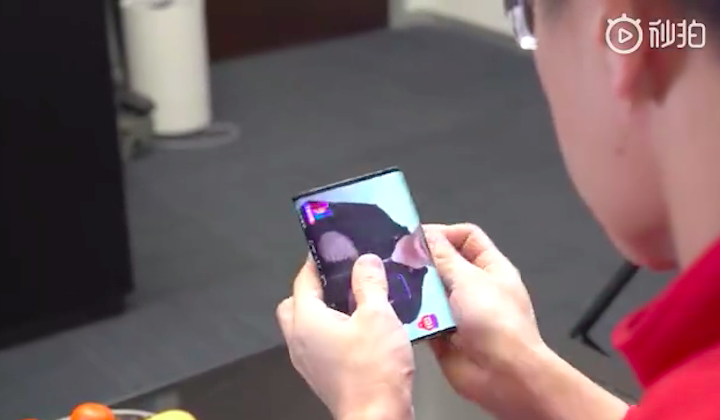
Huawei Mate X foldable smartphone to go on sale later this month in China

The year of 2019 was pretty exciting during the initial months given that the much-anticipated foldable smartphones from Samsung and Huawei were unveiled — Samsung Galaxy Fold and Huawei Mate X.

However, both the smartphones had to undergo a lot of changes in terms of design to increase the durability and thus, the launch of both the smartphones were delayed a couple of times. While Galaxy Fold went on sale earlier this month, now it’s the turn for Mate X.

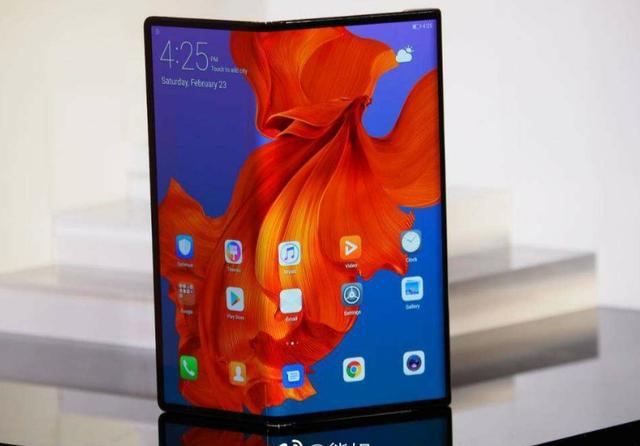
huawei mate x

Huawei had confirmed last month that the Huawei Mate X foldable smartphone will go on sale from October and now a new report claims that the smartphone will go on sale in its home country China by the end of this month.

The Huawei Mate X that comes with a flexible display was first showcased at the Mobile World Congress (MWC) 2019 tech event in February. At that time, the device was powered by Kirin 980 chipset. The sales of the foldable phone were expected to begin in August but it was was delayed by the company without revealing the reasons behind it.

It is speculated that the company may release two versions of the Mate X. One may feature the Kirin 980 and the other one could be coming with the latest Kirin 990 chipset that supports 5G connectivity natively. It is speculated that the Kirin 990 SoC edition of the Mate X will be featuring the same triple cameras that are available on the Huawei P30 Pro.

The smartphone comes with what the company calls is “Falcon Wing Design”. Unlike the Samsung Galaxy Fold, it folds completely flat with no visible gap. The company says that the hinge system used in the phone is patented and has over 100 components.

Huawei Mate X

The Huawei Mate X features a large 8-inch screen with a 2480 x 2200 pixels screen resolution and an 8:7.1 aspect ratio when unfolded with pretty thin bezels. When folded, it transforms into a dual-display phone – one side is a 6.6-inch (2480 x 1148 pixels) 19.5:9 display while the other is a 6.38-inch (2480 x 892 pixels) 25:9 display.

It comes with 8GB of RAM and 512GB of storage. It has dual SIM support (nano only) but only SIM 1 supports 5G. You can also swap out the second SIM card for Huawei’s NM card up to 256GB. The device also comes with the 7nm Balong 5000 modem which brings 5G support to the device.

The phone runs the EMUI 9.1.1 custom interface, which is based on Android 9 Pie operating system out-of-the-box. As for the connectivity options, the device supports NFC, dual-frequency GPS, Bluetooth 5.0, Wi-Fi 802.11 b/g/n/ac, and USB Type-C port.

The device has two built-in batteries, which offers a total capacity of 4,500mAh. Huawei has also debuted its new SupercCharge fast charging technology which supports up to 55W. The company claims that the new SuperCharge allows users to charge the device from empty to 85 percent in just 30 minutes.

(Via)

Redmi Note 8 Pro World of Warcraft Edition to go on sale from October 16

Along with the Redmi Note 8 series smartphones, Xiaomi-backed company had also announced the Redmi Note 8 Pro World of Warcraft Edition, without revealing information about its pricing and availability.

Now, the company has confirmed that this limited edition smartphones — Redmi Note 8 Pro World of Warcraft Edition will go on sale in China from 16th October in a limited quantity of just 5,000 units through the company’s own Xiaomi Mall.

Redmi Note 8 Pro World of Warcraft Edition

For those who are unaware, the Redmi Note 8 Pro World of Warcraft Edition comes in two variants – a “Horde” variant and an “Alliance” variant, representing the two main factions in Azeroth. Both come with different styled packaging but similar contents.

The Horde variant comes in a black and red colored box while the texts on the outer part of the box are written in red color. Inside the box is the Electro-optic Ash variant of the Redmi Note 8 Pro. There is a black and red case with the emblem of the Horde at the bottom as well as some World of Warcraft cards.

The Alliance variant comes in a white box (blue inside). Inside the box is the Fritillaria White version of the Redmi Note 8 Pro and there is a case too inside the box. It has a black and blue dual-color with the emblem of the Alliance inscribed in white on the lower half and you also get the same cards as the Horde variant.

Apart from this, the smartphones also come with custom wallpapers, themes (sync online), and icon packs. Other than the special packaging and additional items, the specifications are the same as that of the regular variant.

The Redmi Note 8 Pro comes with an IP52 splash resistant body and is equipped with a 6.53-inch IPS LCD display with waterdrop notch. It supports Full HD+ screen resolution of 1080 x 2340 pixels. The TUV Rheinland certification for the display ensures that it filters the harmful blue rays.

Redmi Note 8 Pro World of Warcraft Edition Horde

Redmi Note 8 Pro World of Warcraft Edition Alliance

There’s a MediaTek Helio G90T processor which fuels the Redmi Note 8 Pro smartphone. It is packed with 6GB and 8GB of RAM, depending on the variant you choose and comes in two storage options — 64GB and 128GB. There’s also a dedicated microSD card slot that enables you to further expand the storage capacity on the device.

The quad camera setup on the back includes an f/1.7 aperture 64-megapixel ISOCELL Bright GW1 as primary lens, an ultrawide lens of 8-megapixel, a 2-megapixel macro lens with 2cm focal length and a depth sensor of 2-megapixel. There’s also a 20-megapixel front-facing camera for taking selfies, housed inside the notch on top of the display.

The smartphone runs Android 9 Pie operating system out-of-the-box with MIUI 10 which comes with enhanced gaming experience, thanks to the Game Turbo 2.0 and HyperEngine by MediaTek. The device is powered by a 4,500mAh battery that carries support for 18W rapid charging technology.


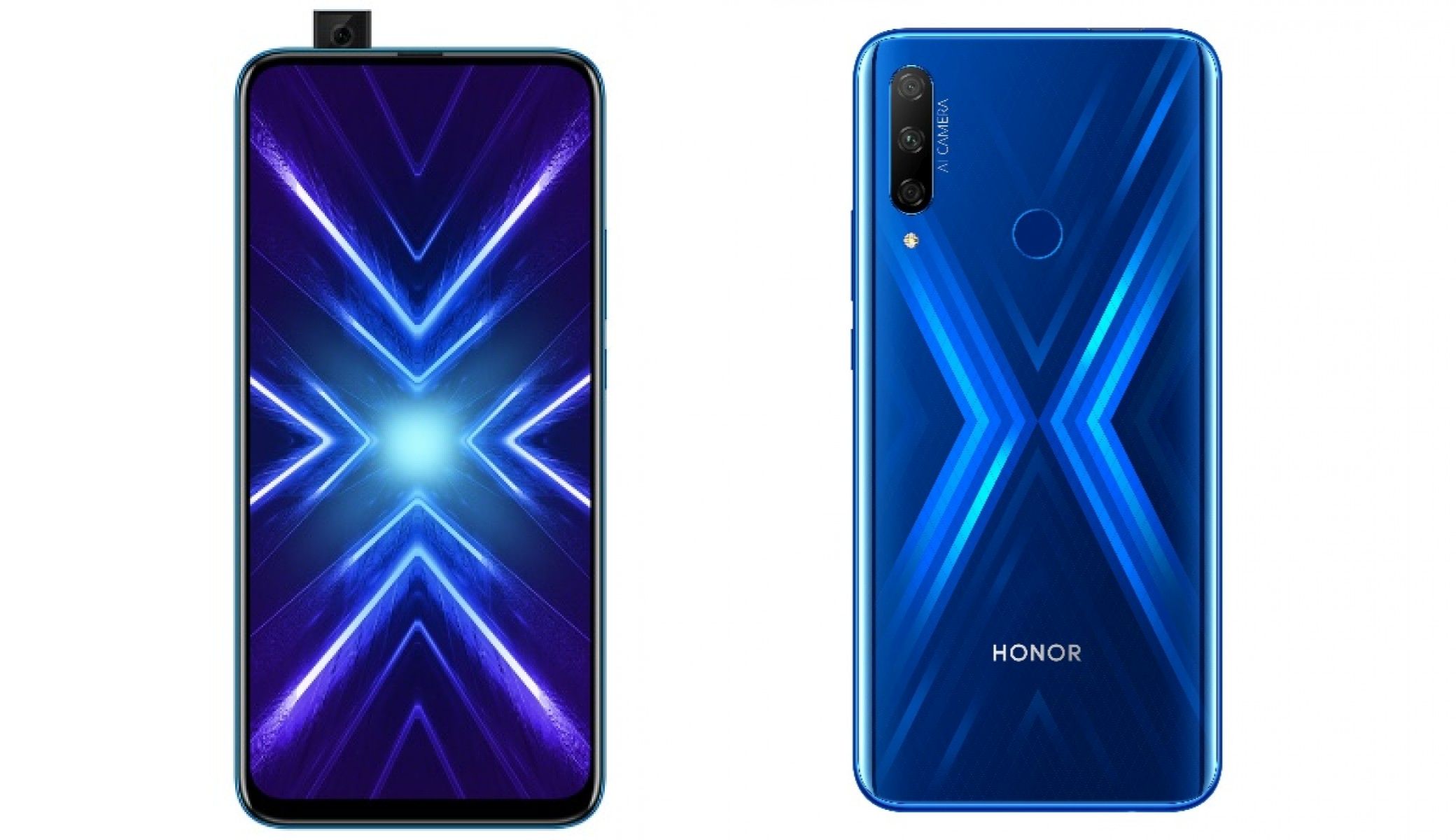
Honor 20 Youth Edition (Lite) to launch in China on October 15

Recently, Huawei’s sub-brand Honor launched several smartphones, including Honor 9XHonor 9X ProHonor 20S and Honor Play 3 in its home market China. Now, the company is gearing up to launch another smartphone with model number LRA-AL00 which has been confirmed to be Honor 20 Youth Edition (Lite).

Now, a new poster shared by the company on Weibo confirms that the Honor 20 Youth Edition (Honor 20 Lite) will be launched in China on 15th October. Do note that the phone is different from the Honor 20 Lite launched earlier this year in May.

Honor 20 Youth Edition Launch Date

The TENAA listing of the Honor LRA-AL00 smartphone confirms that the smartphone measures 157.2 x 73.2 x 7.65 mm and weighs 172.5 grams. The device is equipped with a display that features a waterdrop notch to offer users with a high screen space. The 6.3-inch OLED screen offers Full HD+ resolution and comes equipped with an in-display fingerprint sensor.

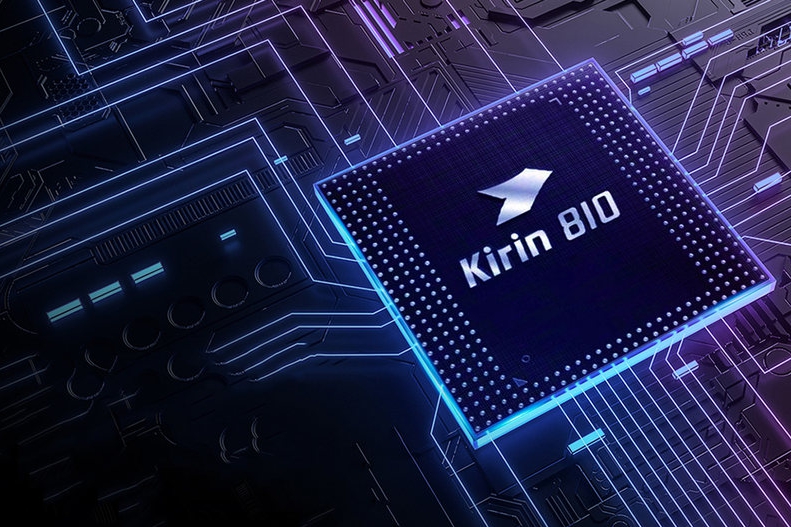
An octa-core processor that clocks at 2.2GHz is present under the hood, possibly Kirin 810 SoC, and the smartphone will come in three variants — 4GB, 6GB, and 8GB RAM with 64GB, 128GB, and 256GB internal storage. It will also have a microSD card slot for expanding the phone’s storage capacity.

The device is expected to have a triple camera system on its back. The vertical module comprises of a 48-megapixel primary lens, an 8-megapixel secondary lens and a 2-megapixel sensor. For capturing selfies, it is fitted with a frontal shooter of 16-megapixel.

The smartphone will be running Android 9 Pie operating system out-of-the-box with the company’s own EMUI custom interface. It will be powered by a 4,000mAh battery and is expected to support 20W fast charging.

The Honor 20 Youth Edition (Lite) is expected to come in Pink/Violet and Peach/Cyan gradient colors, as seen in the leaked renders of the phone. The phone’s full set of specs, variants, pricing, and availability information will be revealed at the launch event in China on 15th October, i.e. tomorrow.

Nubia Red Magic 3S gaming smartphone to launch in India on October 17

Nubia, which launched the Red Magic 3 gaming smartphone earlier this year in May, had launched its successor Red Magic 3S in September this year. Now, the company is starting the phone’s global rollout from this week and has confirmed that the Red Magic 3S will get launched in India on 17th October.

ZTE nubia Red Magic 3s

The Red Magic 3S comes with a large 6.65-inch FHD AMOLED display with a 90Hz refresh rate and a 240Hz touch refresh rate. The screen brightness goes up to 430 nits and with support for DC dimming, you should be comfortable gaming even at night.

The new model gets its big upgrade in the processor department. Just like the Black Shark 2 Pro, the Nubia Red Magic 3S is also using the new Snapdragon 855+ processor with 8GB /12GB RAM and 128GB / 256GB UFS 3.0 ROM variants.

In the camera department, the phone still comes with a single Sony IMX586 48MP sensor at the back with f/1.7 aperture lens. There’s support for 1920 fps slo-mo recording and up to 8K video shooting. As for the front camera, there’s a 16MP sensor for selfies. So in the camera department, the new model remains practically unchanged.

The Red Magic 3S features a rear-mounted fingerprint scanner and connectivity options include Wi-Fi 802.11 a/b/g/n/ac, Bluetooth v5.0, A-GPS, GLONASS, USB Type-C and a 3.5mm AUX port. As for the OS, the phone runs on the new RedMagic OS 2.1.

Nubia Red Magic 3S

The software is still based on Android 9, but features performance optimizations, new gaming-centric themes, intelligent CPU / GPU scheduling, RedMagic rendering system, and a special game mode. The device is available either with a fan or with liquid cooling and is powered by a large 5000mAh battery on board with USB PD 27W fast charging support.

In China, Nubia launched the Red Magic 3S at a base price of CNY 2,999 (~$419). The Chinese firm has confirmed that the global edition of 8GB RAM + 128GB storage will carry a starting price of $479 and will come in Eclipse Black and Mecha Silver colors.

The high-end model with 12GB RAM + 256GB storage comes in Cyber Shade gradient color that appears red to a combination of blue and purple is priced at $599. The phone will be available from 16th October across global markets, including United States of America, Canada, United Kingdom, the European Union, Israel, Hong Kong, Japan, Singapore, Taiwan, Indonesia, Macau and Australia.

Xiaomi Airdots Pro 2 TWS Earphones Review: Pocket Size And Comfortable Fit

Xiaomi released its latest TWS earphones, called Xiaomi Airdots Pro 2, several days ago. As the advanced version of Xiaomi Airdots, we were looking for to the new earbuds. I have used it for a few days, and so let’s do a short review now.


Unboxing:

There is Xiaomi Airdots Pro 2 earbuds, a charging case, Type-C charging cable and a manual in the package.


Design:

The Xiaomi Airdots Pro 2 comes in a basic retail box with a charging case, which has a simple look. Different from its previous generation, the Airdots Pro 2 adopts semi-ear design, while the Airdots chooses an in-ear design. In my opinion, I’m not really a big fan of the design of the Xiaomi Airdots Pro 2 TWS Earphones.

Coming in pure white design, the charging box has a clean look. You will notice the indicator placed at the middle.

On the right side, there is a function key, which can control the earbud’s connection.

The Xiaomi Airdots Pro 2 supports Type-C charging, and the port is set at the bottom.

After opening the lid, I was disappointed. There is a gap between the Airdots 2 and the charging box. Actually, it looks a bit cheap.

In addition, the charging case lid adopts the magnetic suction structure, which is firm and sturdy. However, the charging box has more edges and corners than the Xiaomi Airdots. For me, I prefer the round design than the sharp design.

Overall, it’s really a compact design coming in a very small size. You to carry the charging case everywhere and easily put it into your pocket.

The Xiaomi Airdots Pro 2 comes with a virtual button, which is easy to operate. Like most of the TWS earphones, the Xiaomi Airdots Pro 2 supports phone call mode, music mode and voice assistant wake-up. Compared with those TWS earphones with a physical button, you can just touch the Airdots Pro 2’s virtual key on the earbuds gently to operate. On the contrary, with the physical button, you would have had to press it a bit hard. And your ears would have felt that pressure.

In the phone call mode, quick touch 2 times on either side of the earbuds to hang up or answer the phone. In the music mode, touch the right earbud 2 times means play/ pause, and touch the left earbud 2 times to wake up the voice assistant. Taking off one earbud can stop the music.

Running on Bluetooth 5.0, the Xiaomi Airdots Pro 2 TWS Earphones has solid wireless connection in a range of around 10 meters.

Performance:

The Xiaomi Airdots Pro 2 TWS earphones have medium acoustic fidelity, lacks high-frequency volume and not strong enough in low-frequency volume.

In the low-frequency volume, it’s not so punchy in the bass to surprise my ears, so the Xiaomi Airdots Pro 2 doesn’t have the much powerful thumping effect.

In the high-frequency volume, it has a little sound distortion but the voices are crystal clear.

Basically, the earbuds are good for vocal songs but don’t expect much in terms of bass.

About the audio sync performance, it lags at around 0.5 seconds, especially when playing games. It is not so suitable to play those games which rely much on the real-time stereo, like PUBG mobile. Also, the Xiaomi Airdots Pro 2 has a poor noise-canceling, which isn’t a surprise.

However, in the midrange, the Xiaomi Airdots Pro 2 performs well, which overflows with midrange details. All kinds of music sound outstanding in this range.

In addition, although I don’t like the appearance of the earbuds, the Xiaomi Airdots Pro 2 fits my ear so well. The wearing experience is good, I can even wear it for hours.

The call quality is pretty decent, provided you wear both the earbuds. The voice is loud and clear and the person on the other end can hear you fine as well. But make sure to wear both of them or else the call clarity becomes terrible.


Battery:

The battery life of Xiaomi Airdots Pro 2 Earbuds is about 4 hours, which can be used for about 14 hours with the charging case. It is good, but not so outstanding.


Price:

The Xiaomi Airdots Pro 2 TWS Earphones is priced at $79.99 on Giztop. You can click here to get the Xiaomi latest earphones.


Conclusion:

The Xiaomi Airdots Pro 2 is a value for money true wireless earbuds, featuring a simple and clean look. I like its virtual key, pocket size and comfortable fit, but Xiaomi should improve the sound quality and noise-canceling.  Although the appearance doesn’t appeal to me, overall I’m willing to get it because of its cheap pricing.

Poll of the Week: Which will you buy, Redmi 8A or Redmi 8?

For this week’s poll, we are pitting Redmi‘s new budget phones – the Redmi 8A and the Redmi 8 – against each other. We are curious to know which of these two devices our readers prefer and will purchase, seeing as both phones have more similarities than differences when compared to their predecessors.

Poll of The Week - Redmi 8A vs Redmi 8

The Redmi 8A and Redmi 8 have the same screen size and resolution; they are powered by the same processor; they have the same primary rear camera and selfie camera; and also have the same battery capacity.

Of course, there are differences, the major ones being the lack of a fingerprint scanner and secondary rear camera on the Redmi 8A. However, with both phones being alike more than different, some folks may want to go with the cheaper phone which is the Redmi 8A. While others may not mind shelling some extra bucks for the Redmi 8.

Please take the poll and tell us if it is the Redmi 8A that will get your money or if you don’t mind paying more for an extra camera and fingerprint scanner. We will also want you to share the reason for picking one over the other in the comment box.
[yop_poll id=8]


Gionee 20190418Q and Gionee 20190419Q appear on TENAA

It is already known that Gionee is back in business following its recent releases in the Indian market. The most recent one is its launch of four new power banks with varying designs and capacities. However, China is still missing out on the action, but that might change soon as two new devices have been certified by TENAA. The two phones are the Gionee 20190418Q and the Gionee 20190419Q.


Gionee 20190418Q

The Gionee 20190418Q has a 6.41-inch display with an FHD+ (2340 x 1080) resolution. It has a 2.0GHz octa-core processor and will be available in 2GB and 3GB RAM variants. There will be three storage configurations – 16GB, 32GB, and 64GB of storage.

[envira-gallery id=”282552″]

The phone has dual rear cameras but TENAA only mentions one and says it can be 12MP or 20MP. The selfie camera is also listed as 8MP or 13MP. The phone has a rear-mounted fingerprint scanner, support for MicroSD card, and runs Android 9 Pie. It also has a massive 5000mAh battery.

The Gionee 20190418Q will be available in black only but the images show a different color. It weighs 196 grams and measures 163.4 x 77.1 x 8.9 millimeters.


Gionee 20190419Q

The Gionee 20190419Q has a 6-inch 720 x 1440 display. The screen has bezels that house an 8MP front-facing camera. There is a 1.5GHz quad-core processor powering the phone and it is paired with 2GB or 3GB of RAM and 16GB, 32GB, or 64GB of expandable storage.

[envira-gallery id=”282568″]

There are two cameras on the back of the device but TENAA only mentions the primary 13MP sensor. There is also a fingerprint scanner on the back of the phone.

The Gionee 20190419Q runs Android 8.1 Oreo and packs a 3000mAh battery. It will be available in black according to the TENAA listing but the provided images are of a blue-black gradient variant. It weighs 172.3 grams and measures 158.2×76.6×8.6 millimeters.


ZTE Blade 20 lands on TENAA with square camera housing and a big battery

ZTE may soon announce a couple of new smartphones. About a week ago, two phones – the Blade 20 and Blade A5 (2020) – were seen at the FCC. The latter has now appeared on TENAA’s database. The specs point at a mid-range phone with a big battery, and included images show it will have triple rear cameras in a square housing like the upcoming Pixel 4.

The ZTE Blade 20 has model number V1050 according to TENAA and it was certified on October 10. The phone has a 6.088-inch screen with a 1560 x 720 resolution. There is a camera visible in front and seems to be inside a very small notch.

Inside the phone is a 2.0GHz octa-core processor paired with 4GB of RAM and 64GB of expandable storage (512GB max.). The processor will draw power from a 4870mAh battery (~5000mAh). The FCC documents revealed it has support for 18W fast charge which should be good news for those eyeing the device.

[envira-gallery id=”282547″]

The Blade 20 has a square-shaped camera housing at the top left corner of its rear.  Inside it is a 16MP primary rear camera paired with an 8MP sensor that is likely an ultrawide camera and another 2MP sensor that should be for capturing depth details. There is also a fingerprint scanner on the back of the phone. TENAA says the front-facing camera is a 5MP sensor.

There is a red power button and volume control button on the right side of the phone’s frame while the SIM + MicroSD tray is on the left. FCC already revealed it has an audio jack and a USB Type-C port.

The phone will run Android 9 Pie out of the box and should have ZTE’s MiFavor UI on top. When it launches, it will be available in Black and Peacock Blue. Its dimensions are given as 155 x 72.7 x 8.95 millimeters and its weight is 164 grams.

The specs of the Blade 20 are similar to that of the recently announced Blade A7s but with a bigger battery, a fingerprint scanner, and a redesigned rear. Since the Blade A7s has a price tag of ¥799 (~$113), we presume ZTE will put a price tag of ¥999 (~$140) on the Blade A20.

ZTE Blade 20 launch

The Blade A20 might launch on October 18 based on a Weibo post by ZTE on Friday, October 11. According to the post, ZTE will announce a new phone on October 18, the same day the Blade A7s will go on sale. An image attached to the post shows a phone with a waterdrop notch. This phone may be the ZTE Blade A20.