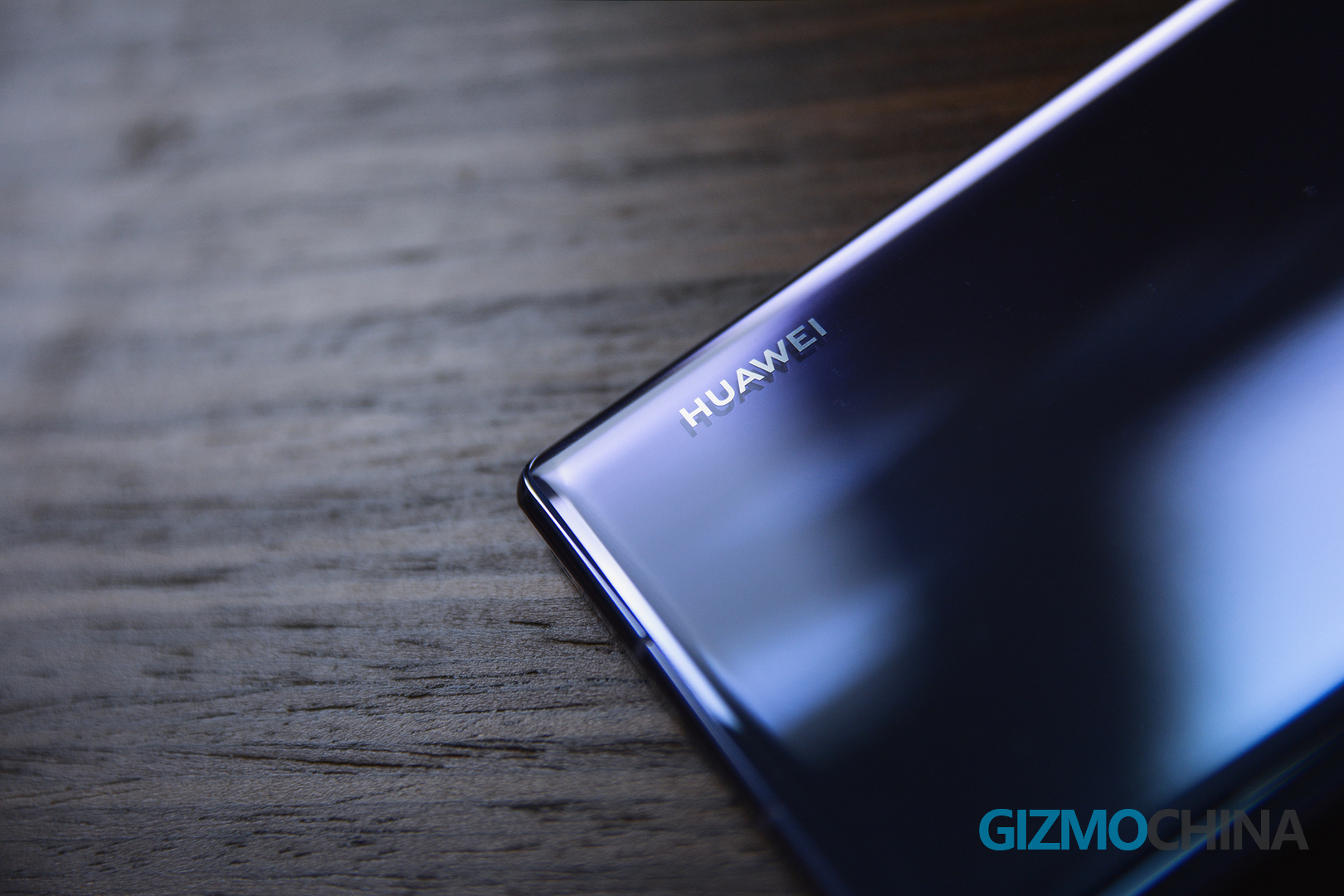
A new Huawei phone with the model number AQM-AL00 has received TENAA certification in China. The full specs have been published but unfortunately, there are no images which mean its design remains a mystery.
TENAA says the phone has a 6.3-inch screen and it is an OLED panel with a 2400 x 1080 resolution. The listing also reveals the phone has an in-display fingerprint scanner. The device has triple rear cameras – a 48MP primary sensor paired with an 8MP camera and a 2MP camera. The selfie camera is a 16MP sensor.
The Huawei AQM-AL00 is powered by a 2.2GHz octa-core processor which should most likely be the Kirin 810. The phone will be available in 4GB, 6GB, and 8GB RAM variants with 64GB or 128GB of expandable storage. It will run Android 9 Pie and have a 3900mAh battery.
The listing says black and green are the color variants that will be available. Its dimensions are 157.4 x 73.2 x 7.75 millimeters and it weighs 163 grams.
There are reports this may be the Huawei P Smart 2020 but there is no evidence to back the claim up. Time will tell if it is indeed the P Smart 2020 or an entirely different design.
Huawei makes its own chipset but while most people are familiar with their mobile processors, the tech giant’s HiSilicon semiconductor business also makes chips for IoT devices. A new report from China says it has begun selling one of its chip on the open market.
Huawei is opening up its chips to third-parties starting with the HiSilicon Balong 711
The chip in question is the Balong 711, a 4G chip that powers millions of Huawei’s IoT devices. The chip, which was announced back in 2014 can be used in security cameras, vending machines and
Some reports say that this move may be a way for Huawei to get more revenue. The company’s founder and CEO, Ren Zhengfei, is credited as having said in an interview that it is open to selling its 5G chips to rival phone companies including Apple.
The decision for Huawei to open its silicon business to third-parties will mostly hurt Qualcomm who is a major supplier of chips to several Chinese companies such as Vivo, OPPO, and Xiaomi. Seeing the way the US has treated Huawei, the aforementioned Chinese companies will not hesitate to do business with a domestic alternative.
Last month, HiSilicon announced a family of chipsets for use in 4K smart TVs. The quad-core processors have Cortex-A55 cores and a Mali-G52 GPU. They support 4K@60FPS codec.
It is important to mention that Xiaomi has also taken an interest in the semiconductor business. It launched an in-house mobile processor SoC called the Surge S1 in 2017. The chipset powers its Mi 5C smartphone.
A couple of months ago, a leaked memo revealed that the company had restructured its semi-conductor business. A team from its chip business Songguo Electronics left to form a company that Xiaomi has a 25% stake in. This new company called Nanjing Big Fish Semiconductor will focus on the research and development of AI and IoT chips while Songguo Electronics will continue to develop SoC chips for phones. In July, it was reported that Xiaomi invested in a Chinese chip designer company called VeriSilicon and is now the second-largest shareholder.
Elephone PX made its debut in the market on October 14th at just $129.99 which was $30 off the official price and sales were pretty high. After all, this amount of money for 4GB/64GB, as well as a dual rear camera and a pop-up selfie shooter, is a bargain. Even if the low price promo came to an end on October 16th, the phone is discounted and now sells at $139.99on Aliexpress.
All this is great but the problem is that we’ve only seen the device in renders and a photo of the real thing would be useful for someone who is thinking of buying it. The company released today a real photo showing the back cover of the device in the beautiful Crystal color. The design of smartphones has evolved so much that even smaller manufacturers are able to release amazing-looking phones as you can see for yourselves. If you want to learn more details about the budget pop-up camera Elephone PX, visit the official product page.
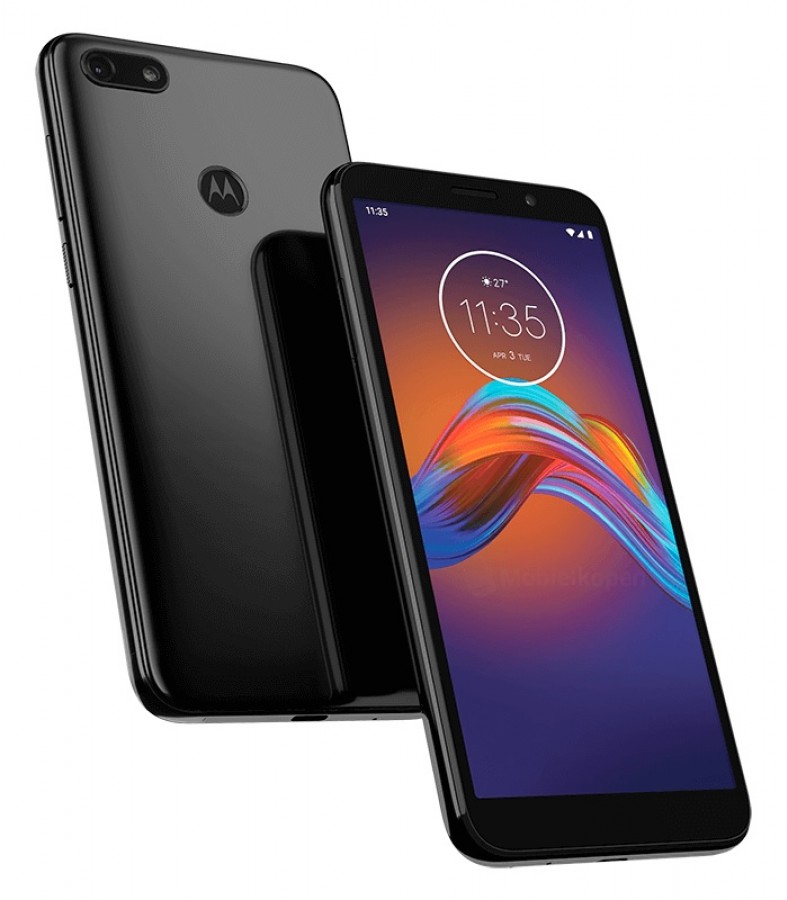
Images of an upcoming smartphone believed to be the Motorola Moto E6 Play have just surfaced, revealing two color variants. This leak follows in the footsteps of the Moto G8 Plus and the G8 Play, whose renders recently made it online. It is now being speculated that the smartphone may go official alongside the Moto G8 series that is expected to go official on Oct. 24 in Brazil.
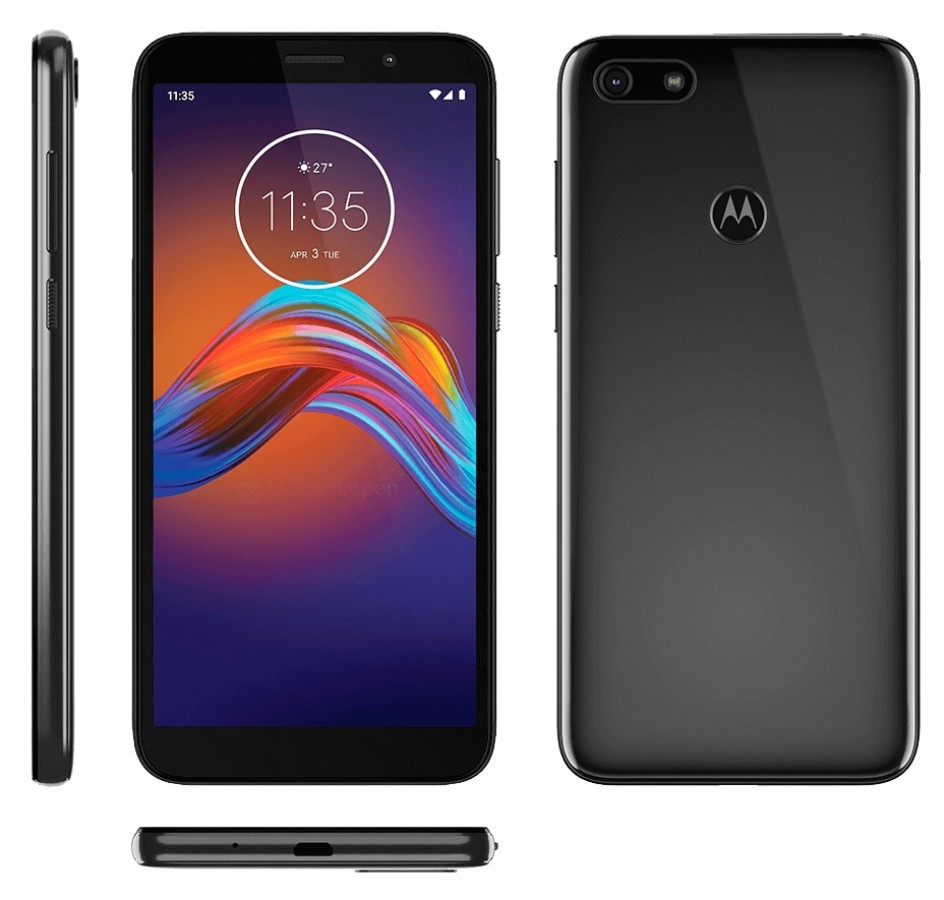
The latest pictures confirm that the Moto E6 Play will be available in blue and black color options. Design elements include a rear panel-mounted fingerprint scanner and a single camera setup with an LED flash module. This is hardly surprising considering the low-end placement of the E6 Play in Motorola’s lineup.
The smartphone is likely to feature a capacitive touchscreen with an aspect ratio of either 16:9 or 18:9. The smartphone features a conventional design, sporting solid bezels on three sides with a thick chin below. All three buttons are positioned on the right edge of the device while the bottom edge houses the microUSD port.
1 of 2
Moto E6 Play Blue
Moto E6 Play Blue
The top edge houses a 3.5mm headphone port while the front camera is placed within the top bezel. The rear panel is composed of plastic, which is the material of choice for budget smartphones. The fingerprint scanner is embedded into the Motorola logo, which adds a nice touch to the design. The device presumably runs on Android 9.0 Pie out-of-the-box. There is no information on the specification of the smartphone.
Motorola will probably showcase the E6 Play alongside the Moto G8, Moto G8 Plus and Moto G8 Play phones on Oct. 24. Additional details regarding the prices and specifications of the smartphone are yet to arrive. The smartphone may go on sale shortly after launch.
While the race is on to offer flagship performance along with 5G spectrum, HMD Global is silently working on bringing 5G capabilities to the masses. Despite being a mid-ranger, the Nokia 8.2 5G still offers a lot of performance for its price. According to the good folks over at NokiaPowerUser, an anonymous source revealed the powerhouse behind the upcoming Nokia 8.2. The report claims that the phone is fueled by the forthcoming Snapdragon 735 by Qualcomm
The SD735 succeeds the SD730 and sits directly below the upcoming SD865, which is another next-generation powerhouse scheduled to arrive in 2020. The leak makes sense since HMD and Qualcomm have already revealed their plans of launching a 5G-compliant mid-range smartphone powered by an unreleased Snapdragon 7-series processor. The SoC features an upgraded AI Engine and is built using a 7nm architecture.
The report further reveals that the Nokia 8.2 5G is rumored to launch in three variants with 4GB of RAM and 64 GB of storage, 6 GB of RAM and 12 8GB of storage and 8 GB of RAM with 256 GB of storage. It appears that the Nokia 8.2 5G could be the first phone from the Finnish firm to arrive with 8 GB of RAM. Previous leaks have revealed that the smartphone features a higher screen-to-body-ratio, pop-out selfie camera and a 64-megapixel quad camera setup housed in a circular module at the rear.
HMD Global is expected to showcase the 8.2 5G at Mobile World Congress (MWC) tech trade show in Barcelona, Spain in February 2020. Rumors are rife that it will be an affordable 5G phone priced around $500. The smartphone is also expected to come in LTE only version.
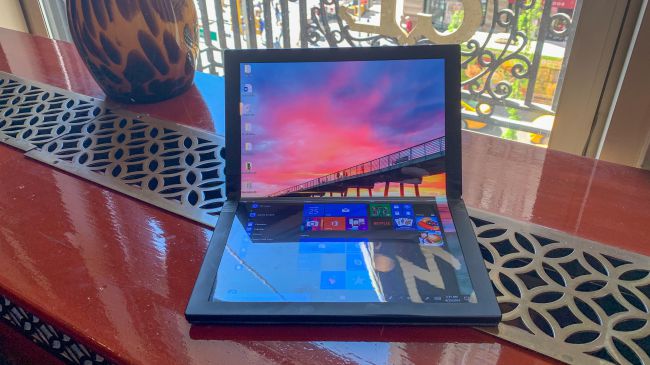
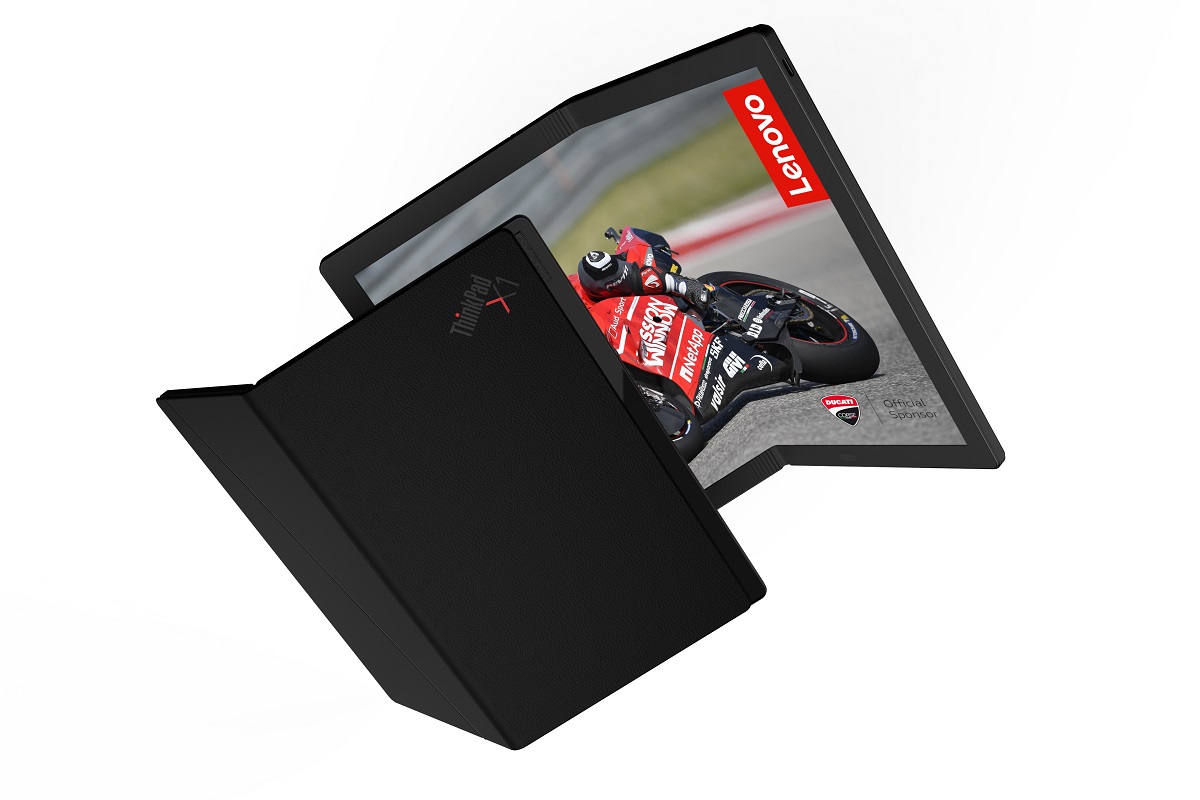
It looks like the latest addition to the ThinkPad X1 line will be a foldable PC, and it’ll come out before the Surface Neo. No name is confirmed yet, but the PC is expected next summer following a short preview at the Canalys Channels Forum in Barcelona.
The strange introduction saw Lenovo‘s Milanka Muecke, director of global commercial comms and brand, pull the 13″ OLED screen device out of her handbag to demonstrate its bendiness. “I have it right here and you can have it in your purse,” she said. “It looks like a leather bound notebook that you can carry with you all day long, but it is a full performance PC that fits in the palm of your hand.”
As for when the ThinkPad X1 will ship, the device “will start shipping probably Q2 next year.” The COO explained that “hardware is ready, but we need to still fix certain things from a software point of view, and that doesn’t depend 100 percent on us.” Lenovo did not expand on which software development is holding the device back.
There’s a good chance that it is related to Windows 10X, the version of Windows 10 that is specifically designed for foldable devices. If the company does successfully manage to hit their deadline however, they’ll beat the upcoming Microsoft Surface Neo to market, with the Surface planned for ‘Holiday 2020’.
Unfortunately, no concrete price was given, though we wouldn’t expect it to be low. Generally right now it seems that foldable tech can’t be done cheaply, yet. On top of this, ThinkPads tend to sit on the higher end of the price spectrum, so expect the new foldable ThinkPad to cost quite a lot at launch.
The Moto G8 Play is the latest device in the Moto G8 series to leak and this time around live photos of the device itself have leaked. First reported by Brazilian tech blog, Tudocelular, the photos show the front and rear of the phone. There is even a sticker that reveals the specs of the device.
[envira-gallery id=”283633″]
Starting with the design, the Moto G8 Play looks a lot like the Moto G8. It has the same waterdrop notch and thick bottom bezel. It also has triple rear cameras and a fingerprint scanner. on the back
The sticker on the display reveals the phone has a 6.2-inch HD+ Max Vision display. It is powered by a 2.0GHz octa-core processor stated to be the Helio P60 from MediaTek. It will draw power from a 4000mAh battery which is good news since the Moto G8 Play also gets a bigger battery to go along with its bigger display. There is also support for rapid charging.
Just like its siblings, the Motorola Moto G8 Play is getting triple rear cameras which is a big upgrade from the single rear camera on the Moto G7 Play. The sticker says the cameras are supported by artificial intelligence and one of the sensors is a 117° ultrawide angle camera. What hasn’t changed is the selfie camera which is still an 8MP sensor.
The Moto G8 Play is expected to cost R$1099 which converts to about $264. It should be cheaper when it launches in the US.
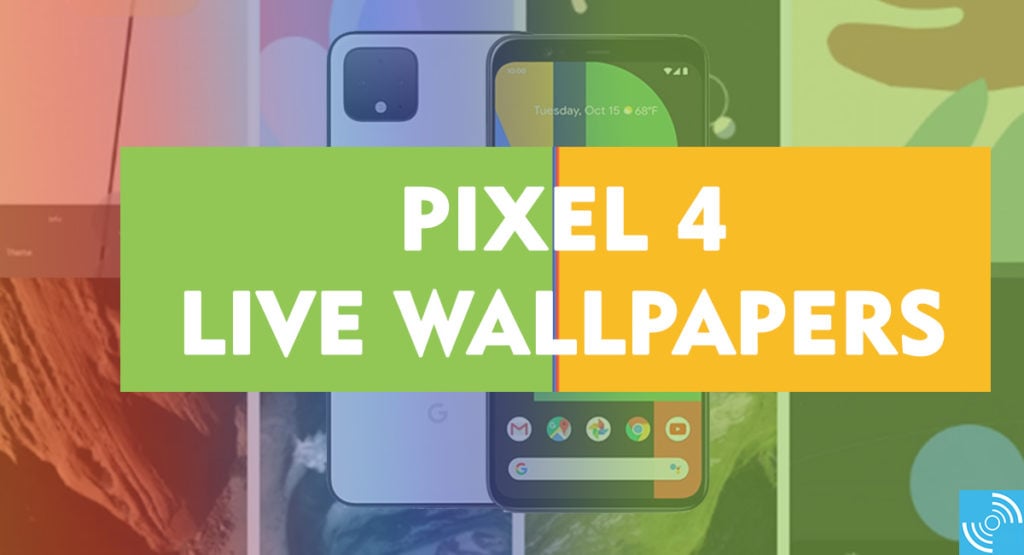
Last week, Google unwrapped the Pixel 4 series featuring various astonishing features such as motion sensing, smart camera, and high-end specifications. Along with the beautiful design and features, Google also packed it with some excellent live wallpapers. Thanks to some third-party developers who have extracted these Pixel 4 live wallpapers and made them available for any Android device.
A senior XDA developer – Pranav Pandey who also pulled Pixel 2 and Pixel 3 wallpapers for other devices is again at work. He has successfully ported all the Pixel 4 live wallpapers into a modded APK. A new Slice Viewer app also allows the users to customize some of the wallpapers by adding new objecting, controlling animation speed and color.
Pixel 4 Specifications
Google launched two new smartphones – Pixel 4 and Pixel 4 XL carrying the same Qualcomm Snapdragon 855 chipset. However, the Pixel 4 comes with a 5.7-inch Full HD+ OLED display with a 90Hz refresh rate. It is coupled with 6GB RAM and 128GB internal storage. The device comes with a 2800 mAH battery with facelock and Titan M security module.
In optics, Pixel 4 carries a dual camera module with a 12MP primary sensor and a 16 MP telephoto lens. There’s an 8MP sensor on the front for selfies and video calling. It is available in three different colors of Just Black, Clearly White and Oh So Orange. It measures 5.7 x 2.7 x 0.3 inches and weighs 5.7 ounces.
As far as the Pixel 4 XL is concerned, then it carries a 6.3-inch 90HZ display with the resolution of 3040 x 1440 display. It is available two different storage variants of 6GB + 128GB and 6GB + 64GB internal storage variants. It is powered with a 3700 mAH battery.
Download Pixel 4 Live Wallpapers
Pixel 4 and Pixel 4 XL carry several live wallpapers but the most dynamic are the Doodles, Compass, and Sights of the Sun. The new Doodles are customizable with some new objects and animation speed with the help of the Slice Viewer app. The wallpapers work perfectly on all Android devices. The Compass theme also looks good with the needle pointing towards the north. Some nature-inspired wallpapers refresh minds with animated birds, waves and clouds.
These will drain more battery, so don’t complain if you’re using the Pixel 4 live wallpapers. To check out the wallpapers you can download the apk from the link below. If you want to customize the wallpapers, don’t forget to install the Slice Viewer app from the wardrobe.
Set the Compass, Doodle or Sights From The Sun live wallpapers.
Now open the Slice Viewer app and Enable Do it yourself.
Now, edit the wallpaper by selecting the color location and animation speed of the respective wallpapers.
Wallpapers will show changes in real-time.
The new wallpapers are only working on Snapdragon devices, the devices running on Exynos and Kirin are left in the lurch. We hope in the coming few days, other devices will also start supporting Pixel 4 live wallpapers.
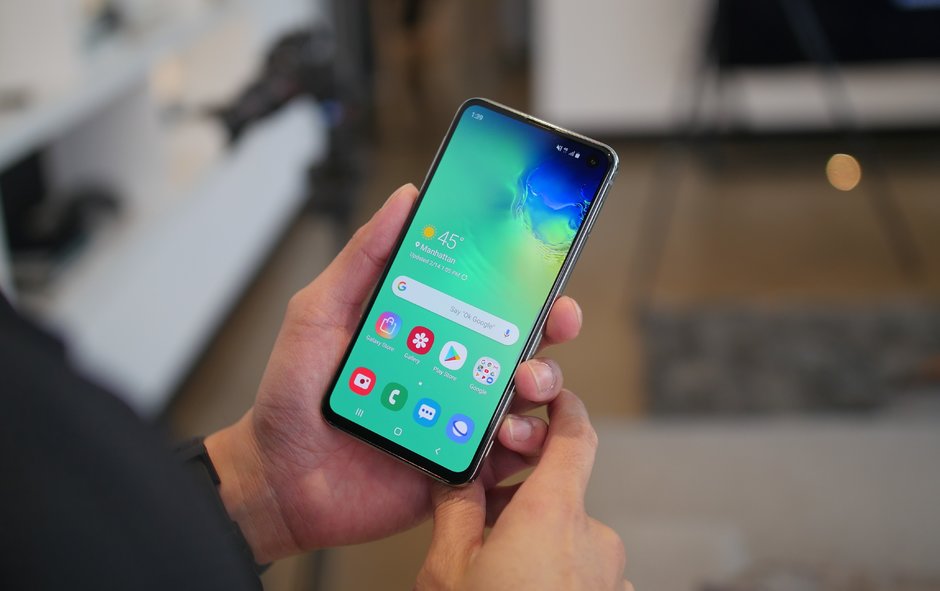
Samsung has acknowledged the existence of a security flaw on the Galaxy S10 which allows any fingerprint to unlock the phone. The company also promised to push a software patch that would fix the issue pretty soon.
The software flaw was first reported by a British woman whose Galaxy S10 unit was successfully unlocked by her husband’s thumbprint after fixing a cheap screen protector on the device. The lady had bought a £2.70 gel screen protector on eBay and then noticed her left thumbprint, which was not registered could also unlock the phone. Both of her husband’s thumbs could also unlock the phone. The same scenario played out when the screen protector was added to another relative’s phone which we believe is also a Galaxy S10.
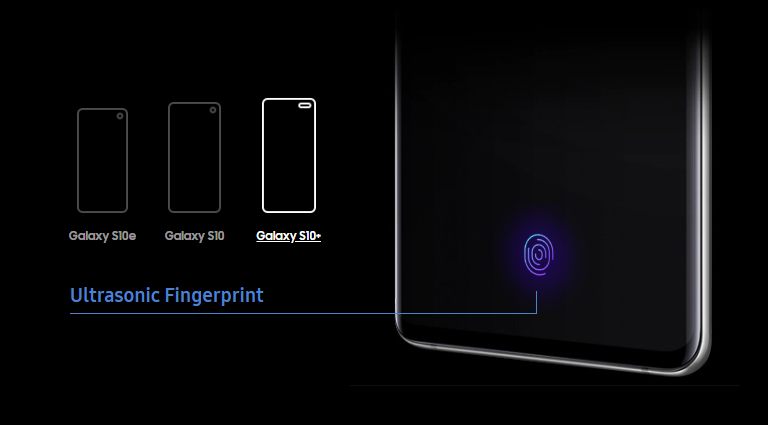
The Galaxy S10 was launched in March this year and it came as the company’s first phone to feature an ultrasonic fingerprint scanner. The ultrasonic fingerprint sensor was touted to be a “revolutionary” piece of tech. But the fingerprint authentication feature has been unarguably the most controversial feature onboard the amazing device. The scanner sends ultrasounds to detect 3D ridges of fingerprints in order to recognise users.
In January this year, before the Galaxy S10 went official, US accessory maker Armadillotek had hinted that the device was tested with a screen protector and the fingerprint sensor didn’t work. The screen protector is said to leave a small air gap that interfered with the scanning. This is likely different as the cheap screen protector was able to unlock it meaning it scanned.
This is the first-gen under-display fingerprint scanner from Samsung so we may give them the benefit of doubt that it has not been perfected. So, you should know it cannot be relied upon for secure transactions and other important biometric uses. Already, South Korea’s online-only KaKao Bank has instructed customers to switch off the fingerprint-recognition option to log in to its services until the issue was fixed.
The Apple Watch is one of the company’s most notable product success stories in recent years. So it would make sense for Apple to continue exploring the potential of new wearable accessories. And, if a new patent application published this week is any indication, Apple is probably going to be producing an “Apple Ring” fairly soon.
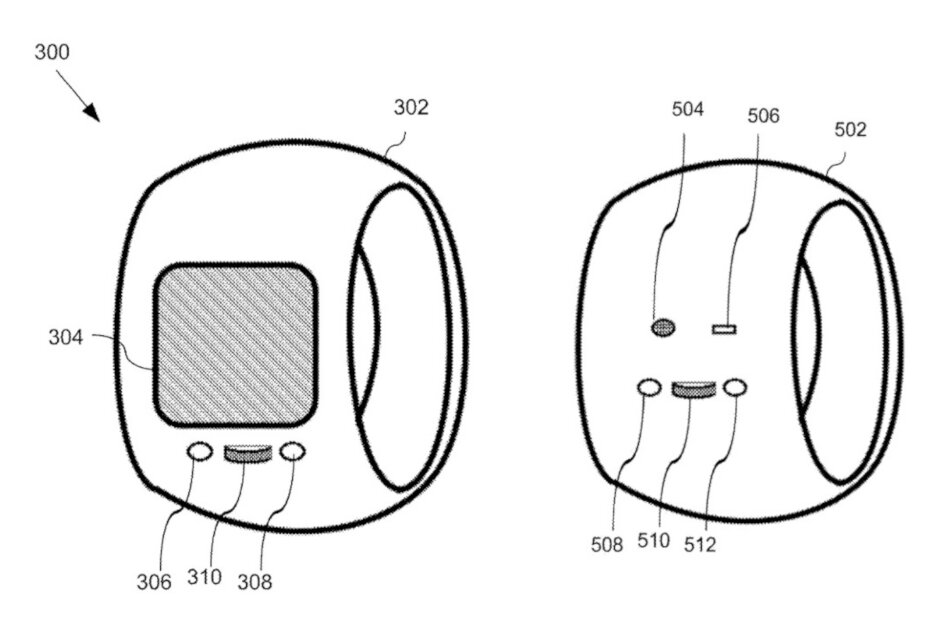
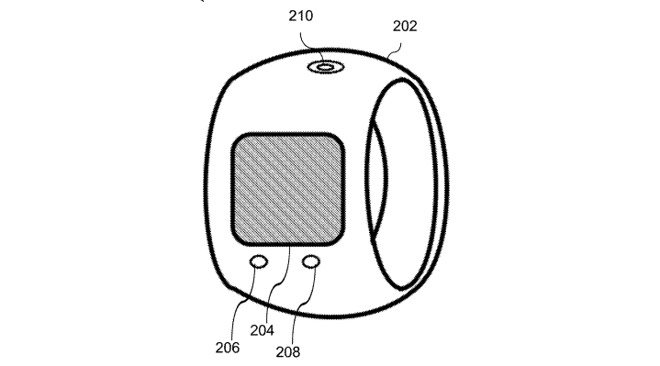
The title of the patent says it all, “Devices, methods, and user interfaces for a wearable electronic ring computing device.” The ring contains a processor, wireless transceiver, power supply, and a microphone. There would also be other sensors included within the ring to enable hand gestures to be detected and interpreted, along with a dial control perpendicular to the ring’s circumference that could function like the Apple’s Digital Crown.
The technology covered by the patent relates to a finger ring with a touchscreen that includes a processor, a rechargeable source of power and a wireless transceiver. With the ring worn on one finger, a finger tap, voice command or hand gesture can be used to control the action on another device like an iPhone or an iPad.
While the patent itself is dense, it’s pretty much describing an Apple Watch you wear on your finger — complete with Apple Pay, fitness tracking and the ability to communicate with other devices wirelessly. Also like the Apple Watch, it’s very much a companion device that relies on your other Apple products to work, and not a standalone product.
Might this smaller, arguably simpler interface fully replace the Apple Watch, if it connects to your phone, Siri and other smart devices around the home? Time will tell if Apple decides the devices can sit alongside each other, but we seriously doubt the company is planning to kill off their massively successful Apple Watch line.
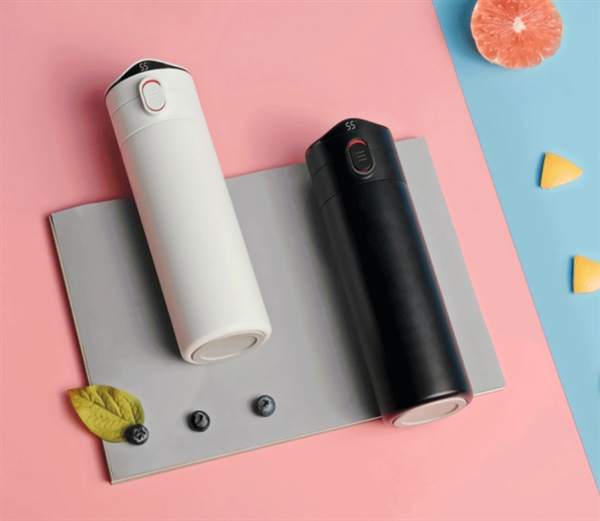
Xiaomi crowdfunding brings us a brand new product to take a look at. Today, we’ve got the Xiaomi 17PIN Thermos. It’s a thermos that features a digital display. Xiaomi boasts that the thermos has long-lasting insulation as well as a glazed enamel finish. So, let’s take a closer look at the latest from Xiaomi’s crowdfunding platform.
Like we said earlier the Xiaomi 17PIN Thermos comes with a glazed enamel finish that requires a 64 steps process as well 2 high temperature burning sessions to apply a layer of enamel on the inner wall of the stainless steel. Perhaps the most interesting part of the design, however, is the little display on the top that displays the drink’s temperature.
This is a design that’s been patented by 17PIN, giving the cover of the thermos some extra functionality. To take a look at how hot or cold your drink is, just gently touch the top of the cup or flip the cup. The temperature is instantly displayed on the digital display, which is a fairly nifty little feature to include on a thermos.
The inner liner is wrapped with a 304 stainless steel double-layer vacuum cup body. It’s built to be durable and has a high vacuum heat-breaking design and three-layer insulation.
The inner lining is smooth and easy to clean, as the thermos is fairly easy to disassemble and cleaned.
There are two variants of the 17PIN Thermos, a standard variant, and a digital temperature display version. As you can probably guess, the standard doesn’t have the nifty little temperature display, while the other one does. Pricing begins at 69 yuan ($10) for the standard, and 99 yuan ($14) for temperature digital display.
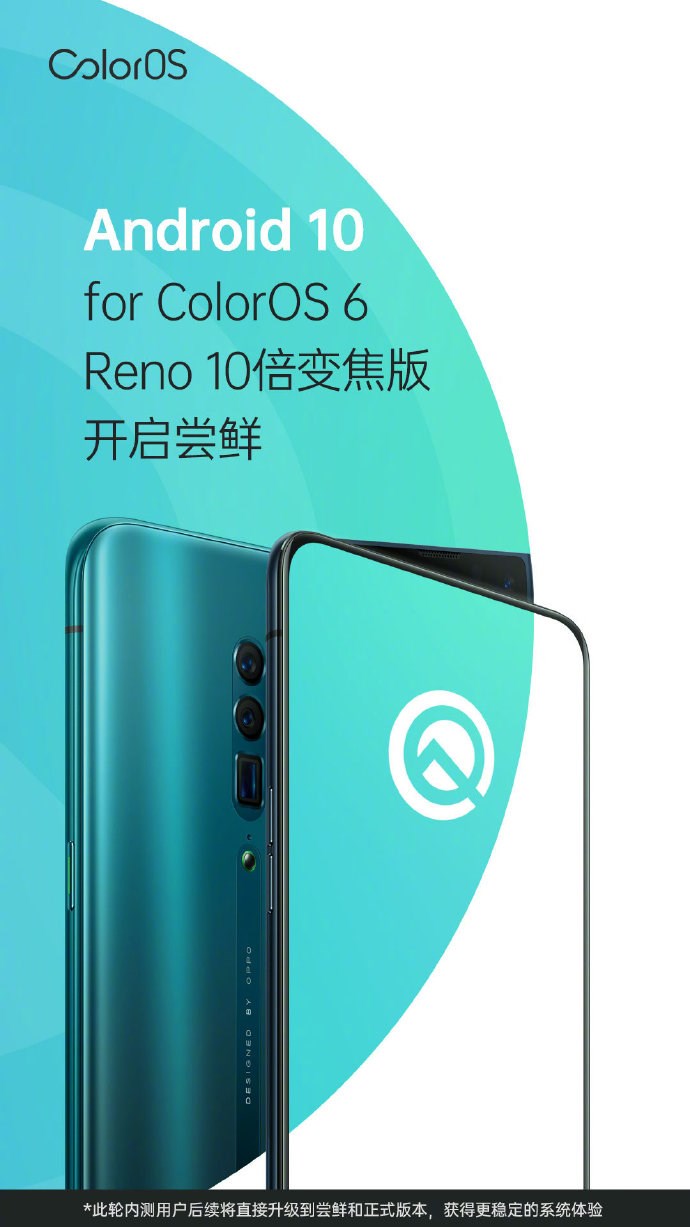
Today, OPPO has announced that the company has started recruiting users for the beta testing of the new ColorOS 6 update which is based on the latest Android 10 operating system. The company has also revealed that it will start rolling out the new update to internal users from 25th October.
The official changelog for the ColorOS 6 beta version based on Android 10 operating system mentions the following:
Dark mode: The new system-wide dark color scheme not only gives you a more focused and comfortable screen experience at night but also saves battery.
Control Center: The drop-down notification page can display more switches to optimize the one-handed interactive experience, and the quick switch is more convenient to use.
Camera optimization: The company has completely updated the camera experience, making operations more intuitive, and the common function settings are now more convenient to use.
File Management: File Management adds a “Recent” view, displays the last 30 days of files in the order of timeline, has a new memory storage rights management system, and more complete privacy protection.
Cloud disk: The cloud adds support for storing documents, videos, audio, compressed files, and other files, and important data to be carried around via cloud storage.
Along with these features, the company has also mentioned a few more features, including Focus Mode, Random Mac Address, among others.
To get this update, make sure that your device has model number PCCM00 and the phone version is PCCM00_11_A.42. To register for this beta program, go to “Settings” > “Software Update” > Click on the upper Right Corner Settings Icon and then click “Upgrade Early Adoption” and you are done. The company is reportedly taking 800 users for the beta testing of Android 10.
Last month, Shen Yiren, Vice President of OPPO had confirmed through a Weibo post that the Reno 10X Zoom smartphone will be getting the upcoming ColorOS 7 update. This was also the first confirmation from the company about the existence of ColorOS 7.
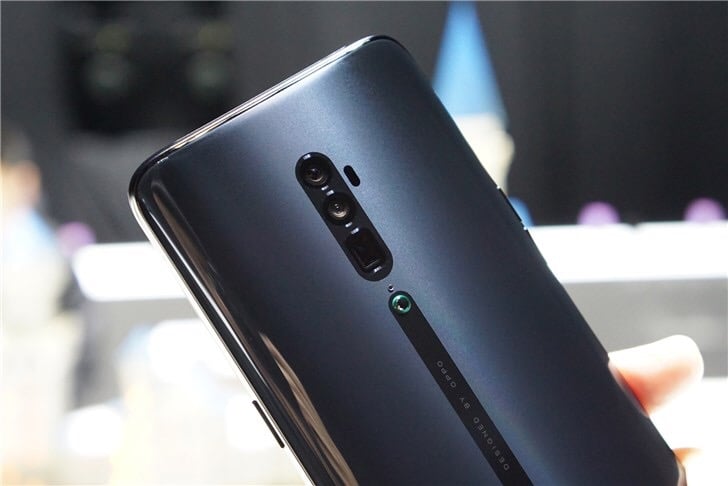
The smartphone features a 6.6-inch Full HD+ AMOLED display and is powered by Qualcomm Snapdragon 855 octa-core processor with up to 8GB of RAM and 256GB of internal storage. On the front side, the smartphone has a “shark fin” shaped pop-up camera module that houses a 16-megapixel selfie snapper with an LED flash.
There’s a triple camera setup on the back where the sensors are placed vertically. It features a 48-megapixel primary lens with optical image stabilization, a 13-megapixel periscope-type telephoto lens with 5x optical zoom and OIS and an 8-megapixel ultra-wide-angle lens.
The phone is powered by a 4,065mAh battery and comes with support for 20W VOOC 3.0 Flash Charge fast charging technology. The smartphone comes running Android Pie-based ColorOS 6.0 out-of-the-box.
Xiaomi has today announced its 422nd product under the Youpin crowdfunding platform. The product is yet another smart down jacket design that would take you through the winter without stress. Just that this time around, the jacket isn’t just designed for winter but has a three-in-one design which makes it equally suitable for use during spring and summer
The down jacket is developed by Cotton Smith just like the heated goose don jacket and uses the same graphene heating technology as its sibling. This version comes with a crowdfunding price of 599 yuan (~$84) but will retail for 649 yuan ($91) after the crowdfunding exercise.
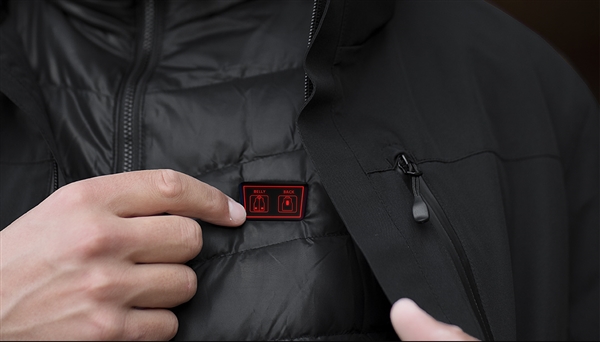
The jacket comes with several innovative features which include multi-zone heating at the front and back. The two heating zones can also be controlled independently as it has independent dual switch control. The jacket uses a graphene-carbon nanotube heating material which is efficient and heats up very fast. The jacket gets heated up in just 1 second after it is switched on.
There is also a safety feature in place which prevents the skin from getting burnt as the jacket automatically powers off after it is left on for 3 hours. You’ll have to turn it on again to continue using. Also included is a colour-coded button which shows the temperature (53 ° C -red, 48 ° C -purple, 43 ° C- green, 38 ° C- white).
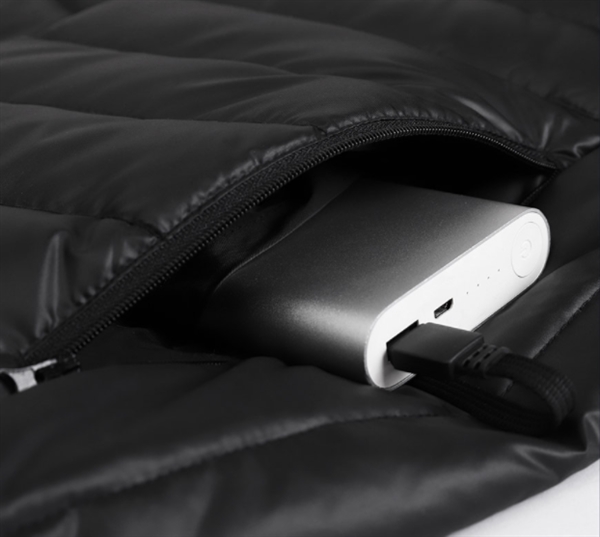
Further, the inner jacket is accompanied by an outer liner which can be detached and worn on its own. The goose down jacket which has a honeycomb design can equally be used separately. The material is said to be highly effective against cold weather while the fabric is water repellent. The jacket can be powered using a power bank as it comes with a USB interface. There is a separate compartment for the power bank.
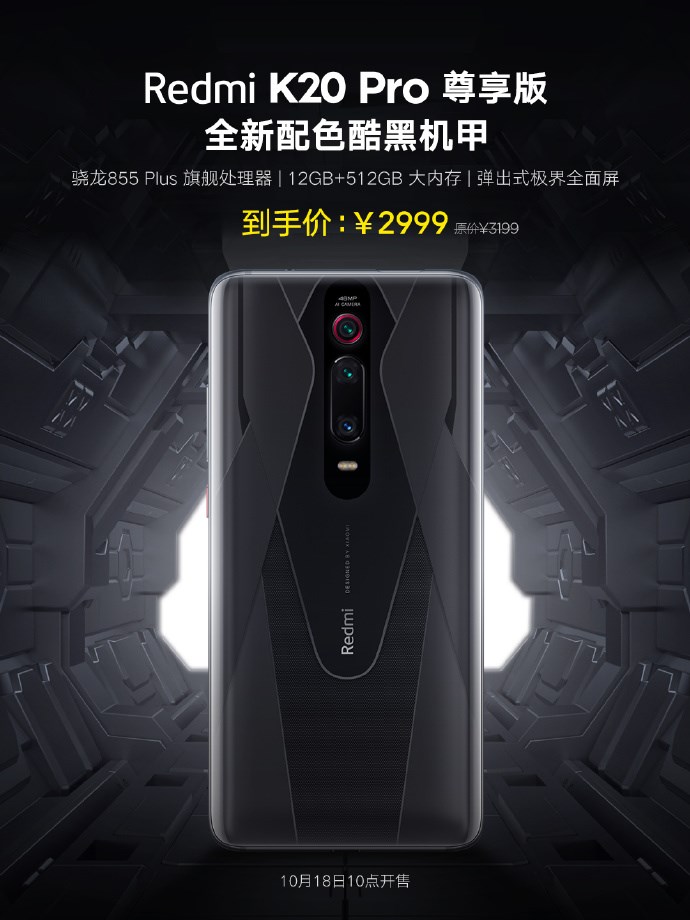
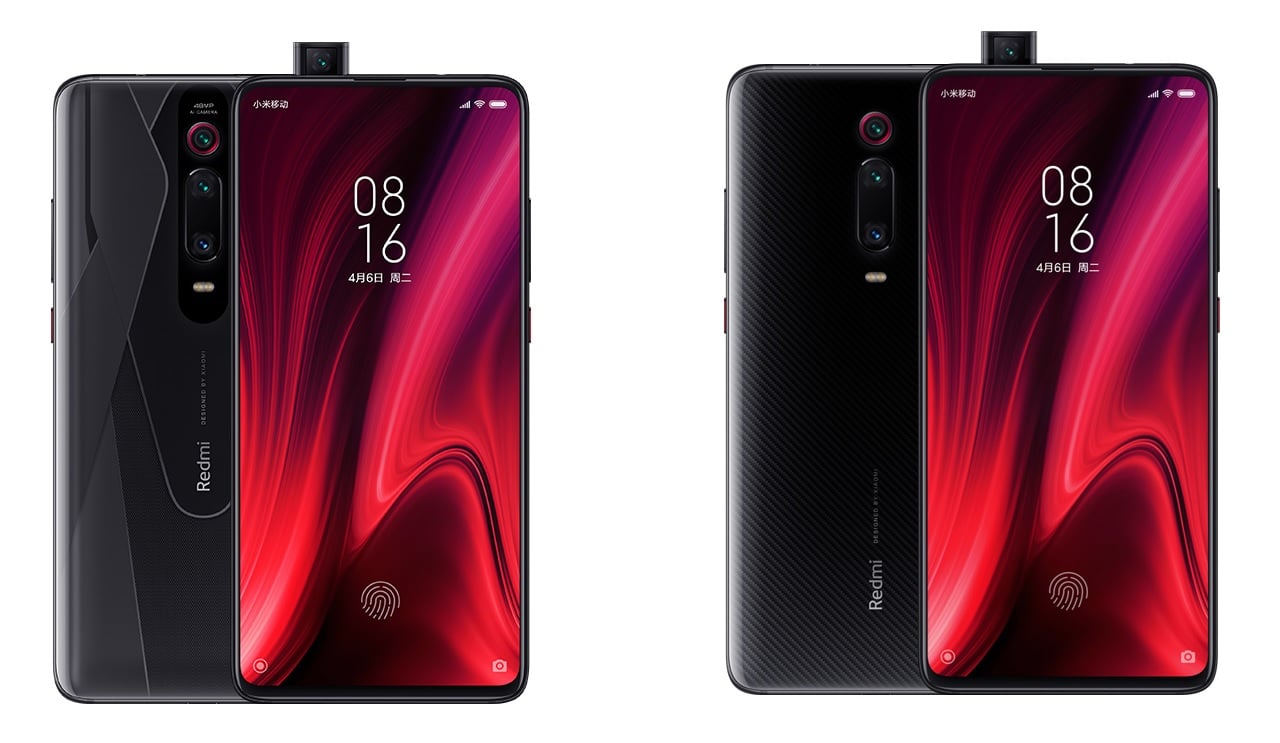
The Redmi K20 Pro Premium Edition was announced last month. It went on sale immediately after the launch but one variant wasn’t available for purchase – the “Cool Black Mech” color variant. It has been announced that it will go on sale for the first time tomorrow.
The Cool Black Mech variant has a different design from the Carbon Black variant as seen in the images below. Unlike the other color variants, it is only available with 12GB of RAM and 512GB of storage. The poster says it will be available for ¥2999 (~$424) instead of ¥3199 (~$452) and it will go on sale at 10 AM (China Standard Time) on Mi.com.
Redmi K20 Pro Premium Edition Cool Black Mech and Redmi K20 Pro Premium Edition Carbon Black
The Redmi K20 Pro Premium Edition has a 6.39-inch OLED display with an FHD+ resolution and Corning Gorilla Glass 5 protection. The phone adopts the pop-up selfie camera design and does away with most of the bezels. It is powered by the Snapdragon 855+ and comes in three configurations – 8GB + 128GB, 8GB + 512GB and 12GB + 512GB.
There are three cameras on the back of the phone – a 48MP primary camera, an 8MP telephoto camera, and a 13MP ultrawide angle camera. The selfie camera is a 20MP sensor. The Redmi K20 Pro Premium Edition also has an in-display fingerprint scanner, a 3.5mm audio jack, NFC, and a 4000mAh battery with support for 27W fast charging.
Chinese tech giant Xiaomi launched its own voice-activated smart assistant dubbed XiaoAI which is installed on its smartphones and other products, including smart speakers and smart home products. Earlier this year, Lei Jun revealed that XiaoAI has been activated on a massive 100 million gadgets but that is definitely in China alone. We are yet to see the voice assistant gets adapted for its English users as well as other popular languages. That may change soon as popular speech recognition expert Daniel Povey has taken to Twitter to disclose that he will be joining Xiaomi in Beijing soon.
I am very close to signing an agreement to work for Xiaomi in Beijing. Would leave before end of 2019, and would hire a small team there to work on next-gen `PyTorch-y' Kaldi.
Daniel Povey was in the news recently for a weird reason. The John Hopkins University (JHU) associate professor attempted to end a month-long students sit-in by entering the building using a bolt cutter. He was subsequently fired by the university but immediately got employed by Facebook. The programmer later announced he was no longer joining Facebook after both parties couldn’t agree on terms.
The AI expert also disclosed that he would be leaving for China before the end of 2019 and would recruit a small team that would assist him to work on the next-gen PyTorch Kaldi. Povey is responsible for the development of the speech recognition tool kit – Kaldi. We expect the company to seal the deal soon and develop an adaptation for now Chinese speakers for XiaoAI. It would in no small way to help Xiaomi’s posture as an internet company as more XiaoAI-powered products could get released outside China. Let’s keep our fingers crossed on this one.
The ASUS Zenfone 6 is an affordable flagship phone that launched this year. Most times the device gets talked about, its rear cameras are usually the focus. The Zenfone 6 or ASUS 6z as it is called in India, actually has other interesting features. One of them is its massive 5000mAh battery which is 600mAh short of being double the Pixel 4’s measly 2800mAh battery capacity.
Since it packs a big battery, ASUS added support for reverse charging, allowing you to use it as a power bank to charge other devices. Sadly, there is no support for wireless charging. But that may change with its predecessor which should arrive as the Zenfone 7.
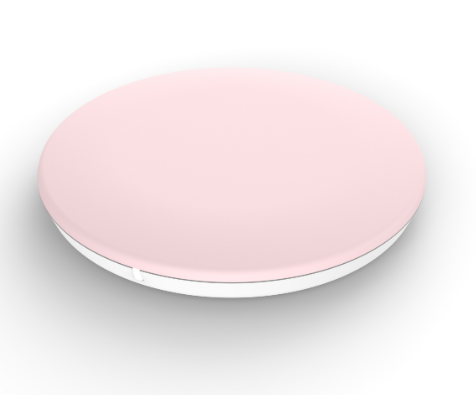
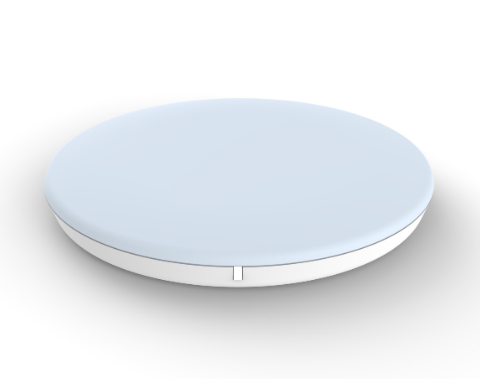
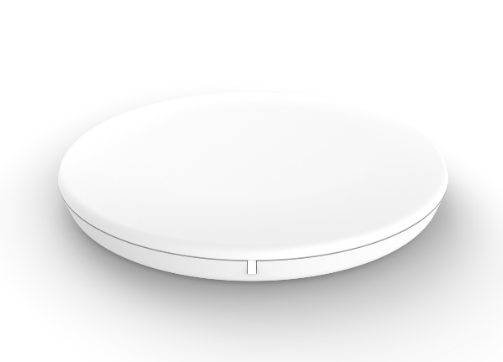
The wireless power consortium has certified an ASUS Wireless Charger with the model number W1G-AWPM. The charger was registered on October 4 but there are two other listings for September 23 and September 26 too. The differences between the three listings are the colors of the chargers and their Qi registration IDs. The listings for all three say the ASUS Wireless Charger has a potential power level of 15 Watts.
1 of 3
ASUS Wireless Charger
The charger has a circular design but it is hard to tell the material used for the top. The bottom does look like plastic though. The three colors are white, sky blue, and pink.
Alongside the Zenfone 7, ASUS may also decide to add wireless charging support to the ROG Phone II‘ successor. We just hope both phones get to keep their large battery capacities.
The Zenfone 6 was announced in May and made available the same month. However, its predecessor was announced in February of 2018 but didn’t go on sale until May. ASUS may decide to announce the Zenfone 7 earlier next year.
In the month of November last year, Honor launched the Honor Magic 2 smartphone that originally came wtih EMUI which is also found on Huawei’s handsets. However, soon after its launch, the company rolled out a system update which shifted the Android Skin from EMUI to Magic UI 2.0.
A couple of months ago, the company had announced EMUI 10 and Magic UI 3.0. both of which are built on top of the latest Android 10. While Huawei devices had already started receving either the public beta or final build of EMUI 10, Honor has today started the beta program for Magic UI 3.0 and the update package for users who sign up for it will start seeding shortly.
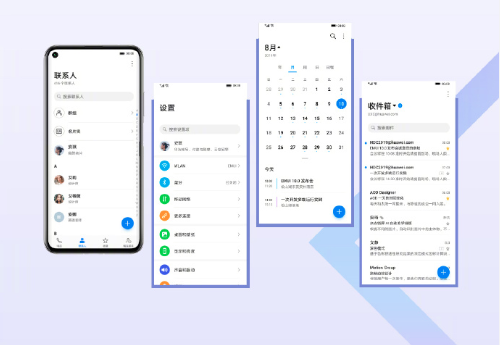
The latest Magic UI 3.0. will initially be available for Honor 20 and Honor 20 Pro which are companies current flagship devices. With the latest updates, Honor claims to have added several new features and simplified the UI which is not only easier to navigate but also looks more pleasing to the eye. A couple of changes introduced with the latest skin are as follows:
1 of 5
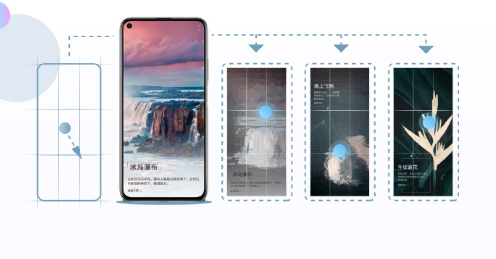
AI powered Lockscreen optimisiation: Similar to a variety of other Android OEMs, Honor also offers the feature to automatically change the lockscreen wallpapers which is also referred to a “Magzine” feature. However, with the Magic UI 3.0 that makes use AI, these wallpapers can be enhanced automatically to make them more visually appealing.
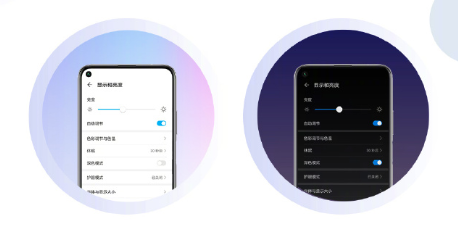
Dark Mode: Falling in line with the industry trend, the Magic UI 3.0 brings system-wide support for Dark Mode. Clearly, this feature helps in preserving the battery in case of an AMOLED or OLED display, but it can also take away a lot of stress from the eyes especially during night usage or low light environments. According to Honor, its latest Android skin is capable of automatically adapting dark mode even on 3rd party apps which sounds like an interest addition.
Seamless PC conncectivity: A lot of users these days tend to simultaneously use a smartphone and a windows laptop/PC and at times the variety of applications can confuse the user. In order to provide a seamless experience between the two, the display of a Magic UI 3.0 compatible device can be mirrored on to their Windows computer. Besides, it also supports simple drag and drop file sharing right from the on computer mirrored screen of smartphone. Therefore, users can achieve a simplified and smoother work flow.
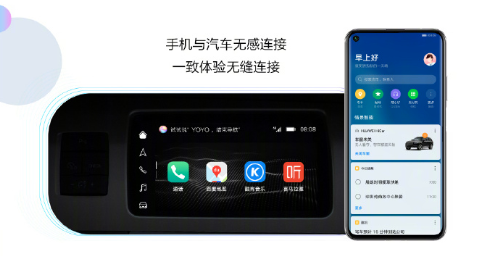
Smart HIcar support: As seen with Android Auto and Apple Car Play, this is Huawei’s take to achieve the similar functionality. Hence, when connected to a cars infotainment system, users can project utilitiy applications like Maps or entertainment apps like video player on the large screen display of the car.
All in all, the new Magic UI 3.0 looks like a worthwhile upgrade. Lastly, the company is yet to provide the release date of the final version for Honor 20 and its other smartphones.
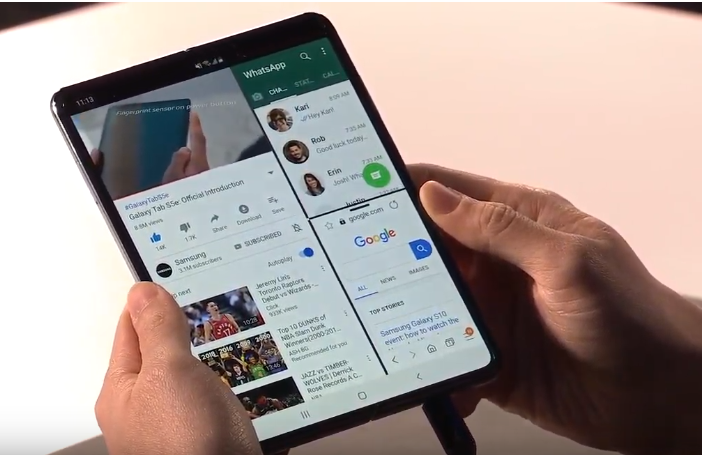
There are reports that Samsung may launch another foldable phone this year. After a couple of mishaps, the Galaxy Fold was finally released a few months back. Despite the improvements in the construction, the Polyimide screen still remains one of the most delicate parts of the Galaxy Fold.
There are indications that next year’s Galaxy Fold may come with a permanent fix for the fragile display screen. According to sources cited by Korean website ETNews, the company will abandon its transparent polyimide solution in favour of flexible ultra-thin glass (UTG).
The source hinted that the Samsung Display is already manufacturing the foldable displays for its next foldable smartphone mode and that a third-party firm named DOWOO INSYS has also begun manufacturing the first batch of UTG panels for Samsung. A recent report had revealed that DOWOO INSYS and SCHOTT AG are the two best ultra-thin glass manufacturers in the industry. Industry sources however disclosed that DOWWO INSYS has the upper edge and “the best technical skills when it comes to UTG” with technical skills 4-5 years ahead of its competitors.
Ultra-thin glass (UTG) may not totally eliminate the fragility of the flexible display but it is said to eliminate the crease that forms on the flexible panel along the hinge. UTG looks aesthetically more appealing but it is even more fragile than transparent polyimide. It is also costlier to produce while having a lower yield rate on the manufacturing line. A source even hinted at the UTG material being used on Samsung’s next clamshell foldable phone codenamed “Bloom,” but a second unnamed industry insider isn’t so positive about that. However, with the challenges posed by the new technology, we doubt if Samsung will use it anytime soon. Next year’s Galaxy Fold model is said to bring along a cheaper price tag. We’ll have to wait and see how this pans out.
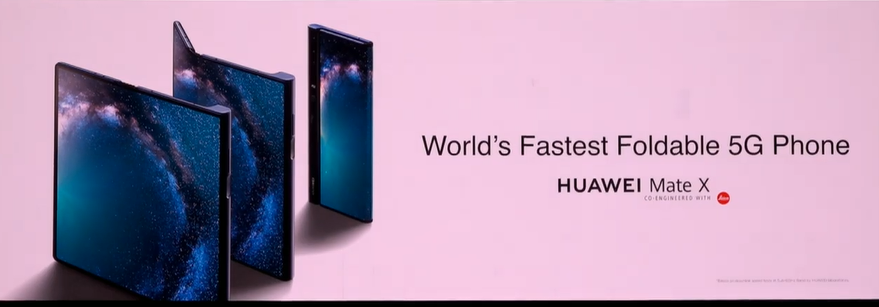
It has been more than 6 months since Huawei showed us the Mate X foldable phone but the device is yet to be available for purchase. It was first expected to launch in June but didn’t. Then there were reports it will be launched in September but that didn’t happen. Now, new info says the phone will launch on October 23.
The source says the Huawei foldable device will be unveiled in China on October 23. Reservations will open up on the same day and sales will be live in the first week of November.
It has also been reported that only 300,000 units of the Mate X are available. This is less than the 700,000 units Samsung made for its Galaxy Fold which is the Mate X’s rival.
The new date may be real since Huawei’s CEO, Yu Chengdong, revealed during the Mate 30 series launch that the Mate X will begin shipping in a month.
The Huawei Mate X will arrive with the Kirin 990 5G processor and not the Kirin 980 that powered the version shown at a pre-MWC event in February. A video that surfaced on YouTube a few days ago revealed the device now has a button for releasing the screen when folded into phone mode.
Google always stuns its fans and users by introducing compelling features in the Google Camera App of Pixel devices. They always make a mark by introducing features carved out of AI-based innovative technologies. After introducing Night Mode last year, the search giant introduced Astrophotography Mode this year on Pixel devices. It allows users to take DSLR like photos of stars and other astronomical objects in the sky.
The new Pixel 4 series is incorporated with the new astronomical feature via Google Camera 7.0 app. The feature is officially limited to Pixel devices but some third-party developers have ported Google Camera 7.0 for other devices with working Astrophotography mode. The new feature is currently working on Qualcomm Snapdragon chipset devices. It is boon for the users who don’t own Pixel 4 device but still want to enjoy the Astrophotography mode.
Along with the new Astronomical mode, the new Google Camera 7.0 carries various other advancements such as transparent UI, enhanced Night Sight, Motion Blur, AR Photobooth, Audio Zoom, and a few other features. We expect the new Astro Mode to work on few devices as of now but we expect wider support in the future.
We have listed below the links to the respective Gcam mods for Astronomical features. You can follow the steps below to enable Google Camera Astronomical mode features easily.
Note: It is always recommended to use the original Gcam app for Pixel devices. Gcam version 7.9 is available for all Pixel devices including Pixel 3, 3 XL, 2, 2XL, 1, 1 XL, and 3a (XL).
Make Sure: To make it work flawlessly, your smartphone must support Cmaera2API. Also, Android 9.0 Pie is a must for Gcam 7.0 to work without any issue.
Steps to Enable Astrophotography Mode on Gcam 7.0
Download and Install the respective Gcam 7.0 Mod on your smartphone from the links above.
Allow the installation of APK from third-party sources by allowing the prompt if it appears.
Open Google Camera App and swipe down to get the settings menu.
Now tap the settings icon and scroll down to the developer settings.
In the developer menu, enable these three options to enable the Astronomical Mode:
Head back to the main UI of the Gcam app and select Night Sight Mode.
Now, swipe down for settings and set Focus to Infinity and timer to 3 seconds for Astronomical feature.
We recommend you to use a tripod stand to make Astronomical feature work without any issue. Otherwise, the phone will take a photo in normal Night Sight Mode.
Once Astronomical Mode is active, it may take more than a minute to capture the farther objects clearly.
It’s done, enjoy!
The astronomical feature automatically gets triggered once you steadily hold the phone. It is always recommended to use a tripod for perfect shots.
That’s it for today and if you have any questions and issues do let us know via the comments below.
We use cookies on our website to give you the most relevant experience by remembering your preferences and repeat visits. By clicking “Accept”, you consent to the use of ALL the cookies.
This website uses cookies to improve your experience while you navigate through the website. Out of these, the cookies that are categorized as necessary are stored on your browser as they are essential for the working of basic functionalities of the website. We also use third-party cookies that help us analyze and understand how you use this website. These cookies will be stored in your browser only with your consent. You also have the option to opt-out of these cookies. But opting out of some of these cookies may affect your browsing experience.
Necessary cookies are absolutely essential for the website to function properly. This category only includes cookies that ensures basic functionalities and security features of the website. These cookies do not store any personal information.
Any cookies that may not be particularly necessary for the website to function and is used specifically to collect user personal data via analytics, ads, other embedded contents are termed as non-necessary cookies. It is mandatory to procure user consent prior to running these cookies on your website.