Advertisement

Cubot launches KingKong Mini rugged smartphone with 4″ display!

It is a fact that large-screen smartphones have conquered the market and that isn’t going to change anytime soon. Still, there is a quite large portion of userbase that wants a compact device with decent specs. Surprisingly enough, Cubot is going to release such a device soon that sports a 4″ display, called KingKong Mini (see the irony there?). The small size will allow for one-hand operation since your thumb would reach any part of the display.


Specs-wise, Cubot KingKong Mini has a 4″ qHD+ display with 1080*540 resolution and 302 ppi, enough to be crisp. Helio P22 4-core SoC will be the heart of the device backed by 3GB of RAM and 32GB of internal storage (upgradeable up to 128GB more via microSD).

Cubot KingKong Mini

In the camera department, there is a 13MP rear camera with an LED flash as well as an 8MP selfie shooter with face unlock support. The device will come with Android 9 Pie preinstalled and it will also sport a magnetic compass and gyroscopes, greatly helpful for people who are often outdoors.
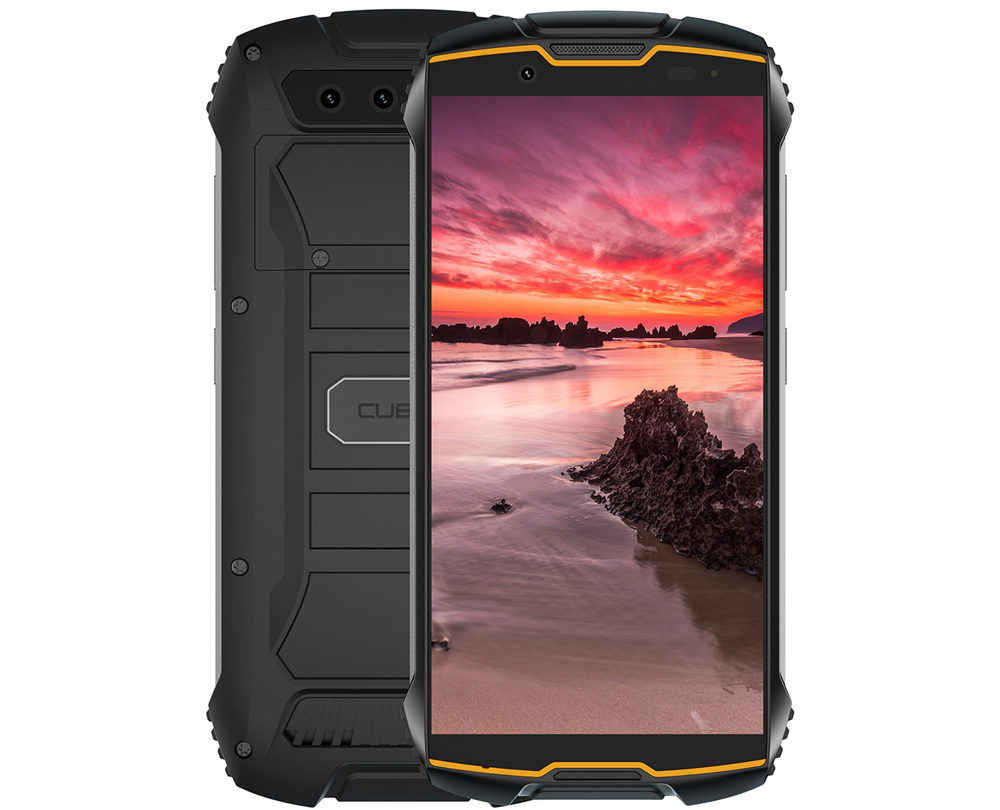
Cubot KingKong Mini

The KingKong Mini is a perfect spare phone for people who like travel and outdoor activities, and thanks to its triple protection from water, dust, and drops, it can also be a perfect gift for kids. According to the company, it will hit the market in early November. Until then, you can see all the details on the official product page.
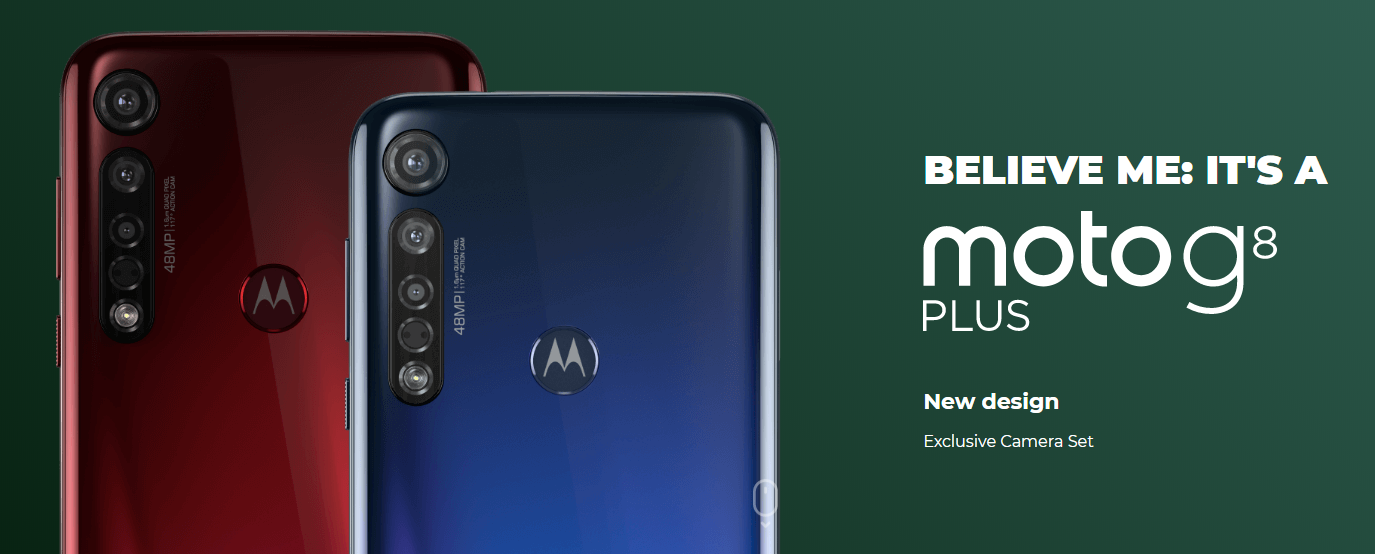
Moto G8 Plus and Moto G8 Play announced in Brazil, no Moto G8

The Moto G8 Plus and Moto G8 were also announced in Brazil today alongside the Moto E6 Play. Sadly, the standard Moto G8 was a no-show.

Moto G8 Plus featured

Moto G8 Plus

The Moto G8 Plus hs a 6.3-inch Max Vision FHD+ screen with a notch for the selfie camera. The G8 Plus joins the Mi A3 and the OPPO A9 2020 on the list of Snapdragon 665-powered phones. It has 4GB of RAM and 64GB of storage with support for storage expansion.

The highlight of the phone is its triple rear cameras, two of which are housed together. The top sensor which is separated from the rest is the ultra-wide action camera. It is a 16MP sensor and it has a 117° FOV. Motorola says users will be able to fit more into their photos with the new camera.

The primary camera is the first of the two sensors housed together and it is a 48MP f/2.0 Quad Pixel sensor with Night Vision for better low-light photos. Next is the 5MP depth sensor which assists when taking portrait photos and it is followed by the laser autofocus which is fast and accurate and helps in taking sharp photos. Last is the LED flash. The selfie camera is a 25MP Quad Pixel sensor that boasts better light sensitivity when taking selfies in low light. The phone has EIS and supports slow-motion recording up to 240 fps.

The Moto G8 Plus has a camera bump but Motorola doesn’t say if the glass covering the sensors is scratch-resistant, so you may want to invest in a case that prevents the camera from touching whatever surface you place your phone on.


Other features of the phone are stereo speakers with Dolby Audio, a rear-mounted fingerprint scanner, a 4000mAh battery with support for TurboPower charging via USB-C, and Moto Actions such as three-finger screenshot, pick up to silence, swipe to resize the screen, and shake twice to turn on the flashlight, etc. The phone runs Android 9 Pie out of the box.

The Moto G8 Plus is available in Sapphire Blue and Cherry. It is priced at R$ 1495 (~$373) and is already available for purchase on the official Motorola Brazil site. It will be available in the UK starting October 28 for €239 and at the end of October in India for INR 13,999 (~$197).


Moto G8 Play

The Moto G8 Play comes with lots of upgrades when compared to the Moto G7 Play. It has a 6.2-inch Max Vision HD+ Display with a waterdrop notch. The phone is powered by MediaTek’s Helio P70M processor which is 30% faster than the Snapdragon 632 in the G7 Play.

Moto G8 Play
Moto G8 Play in Magenta Red

The phone comes in a single configuration – 2GB of RAM and 32GB of storage. There is support for storage expansion via a MicroSD card slot but it isn’t a dedicated slot like that of the Moto E6 Play.

Another major upgrade the G8 Play brings is more cameras. It has triple rear cameras made up of an 8MP f/2.2 117° ultrawide camera that is separated from the other sensors. The main camera is a 13MP f/2.0 camera and it is paired with a 2MP depth sensor. The selfie camera is an 8MP sensor.

The Moto G8 Play also gets a battery boost. With a 4000mAh battery, you should be able to get more screen time on it than its predecessor. The phone also has Bluetooth 4.2 and a USB Type-C port but there is no NFC. There is also a fingerprint scanner on the back.

Motorola ships the phone with Android 9 Pie and includes a protective case and stereo earphones in the box. The Moto G8 Play is priced at R$ 1099 which converts to about $274. You should not be surprised at the price since this is Brazil we are talking about. You will be able to purchase the phone in Black Onyx or Magenta Red.


Reports claim brand new Oppo Reno S to launch in India in December

An Indian tech publication, 91Mobiles, has published a report claiming that Oppo will launch their upcoming Reno S smartphone in the Indian market in the first week of December. This is the first we’re really hearing about this device, and it seems like it’s all set to be a brand new flagship for the company unlike the previous Oppo Reno devices.

According to the sources, the device will come with a price tag of above INR 40,000 ($564), putting comfortably above the price tag of the Reno 2 which sat as INR 29,990 ($423). On top of that, the new Reno S will be available through online and offline stores. The rear will feature a 64MP primary camera, and there’s 65W Super VOOC 2.0 fast charging on board.

Outside of that, we can probably also expect to see some flagship specs, though we assume nothing too crazy. Considering that Realme are also planning to release their own flagship, the Realme X2 Pro, in India later this month, it seems like a risky move to have their dates so close by. It’s possible the Reno S is just another mid-ranger though.
The big thing that will set the Oppo Reno S apart from the crowd (and Realme X2 Pro) will probably be some sort of interesting camera gimmick, ala the previous Reno devices. Unfortunately there’s currently a lack of anything substantial regarding the new device. Stay tuned on Gizmochina.com for any updates regarding the new device.

(Source)

Grab SoundPeats TrueDot wireless headphones deal on Amazon (coupon)

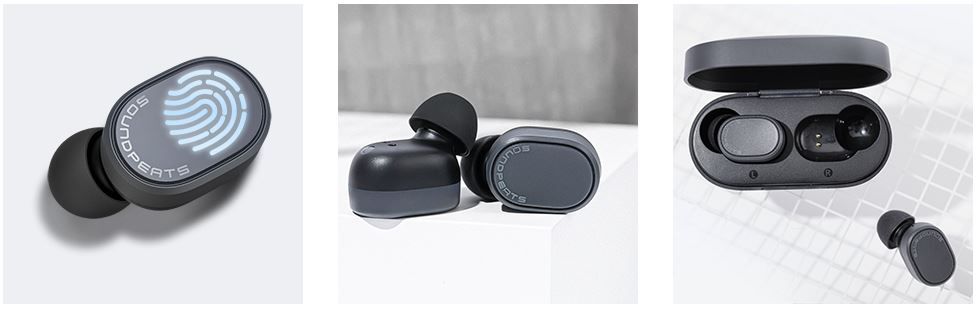
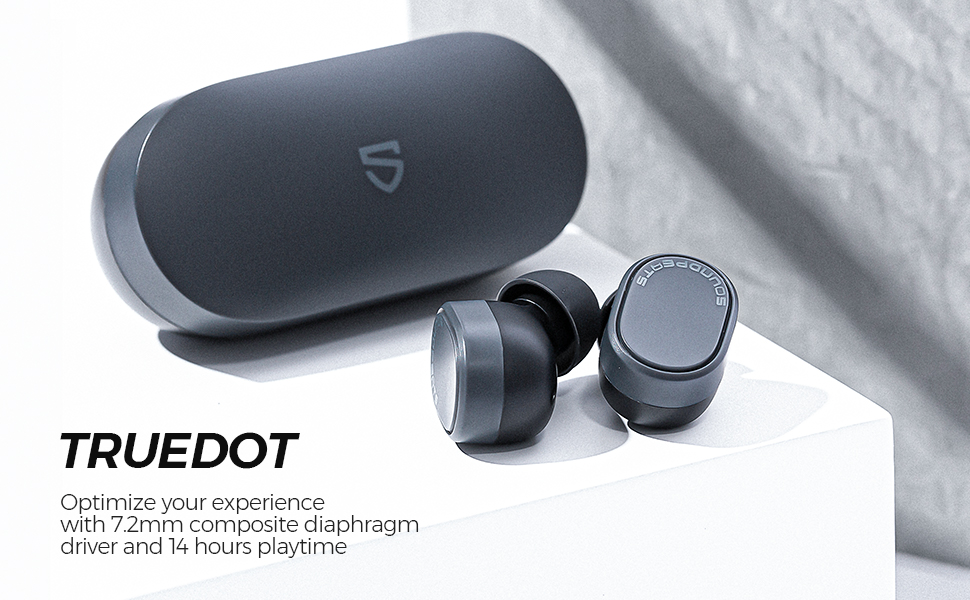
TWS stands for True Wireless Earbuds and it is the trending headset choice of most people. The best selling model out there is Apple’s AirPods but it costs as much as $199 and many think that it’s too much for what the product offers. Thankfully, there are other manufacturers out there that make similar products and although the performance or quality might not be the same, they get the job done perfectly. That goes for the SounPeats TrueDot TWS too that is now available on Amazon at just $25.5 using coupon 7IR7KDZO during checkout.

Soundpeats Truedot

As for the features of the TrueDot TWS, their main characteristic is that they are ultra-lightweight weighing just 0.12oz per earbud. Also, connectivity is taken care of by Bluetooth 5.0 that offers stable connection and reduced battery consumption. One charge offers 4 hours of working time and with the help of the charging case, you can get 14 hours total playtime.

Soundpeats Truedot

In addition, TruDot is equipped with sensitive touch control on both earbuds that allows for easy operation control during music playback, phone calls, and using the Voice Assistant of the phone. As for sound quality, there is a built-in 7.2mm dynamic driver that offers relatively crisp and clear sound. The offer is valid until October 31st, so there’s 1 week in front of you to catch the deal.

Xiaomi Mi 8 SE MIUI 11 beta brings Android 10 and October security patch

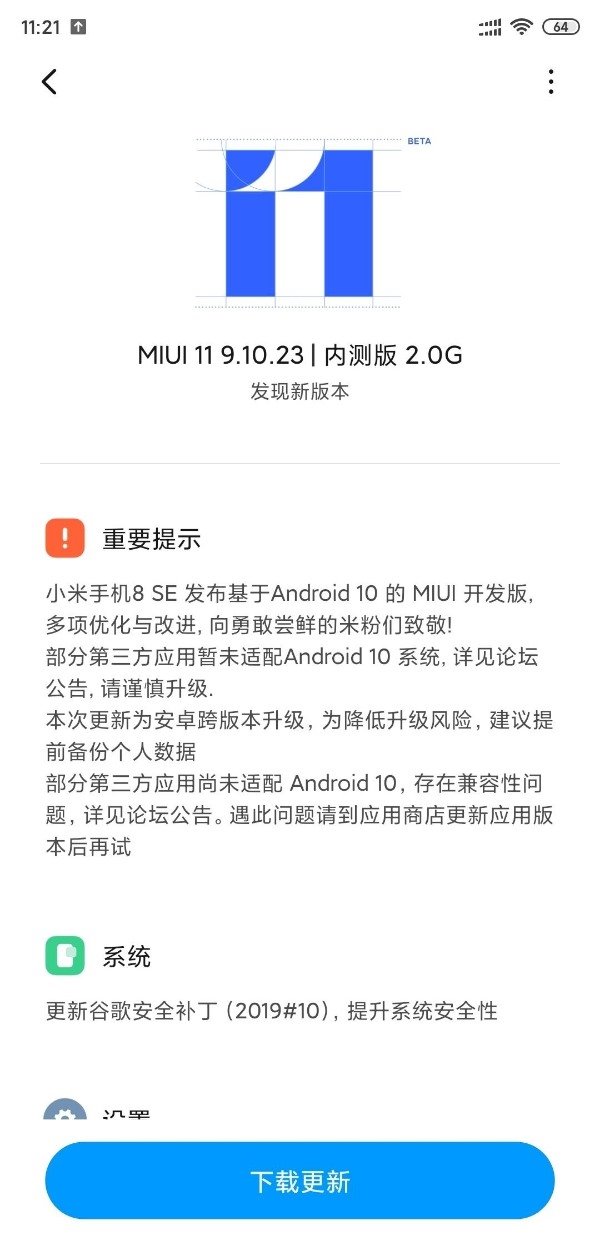
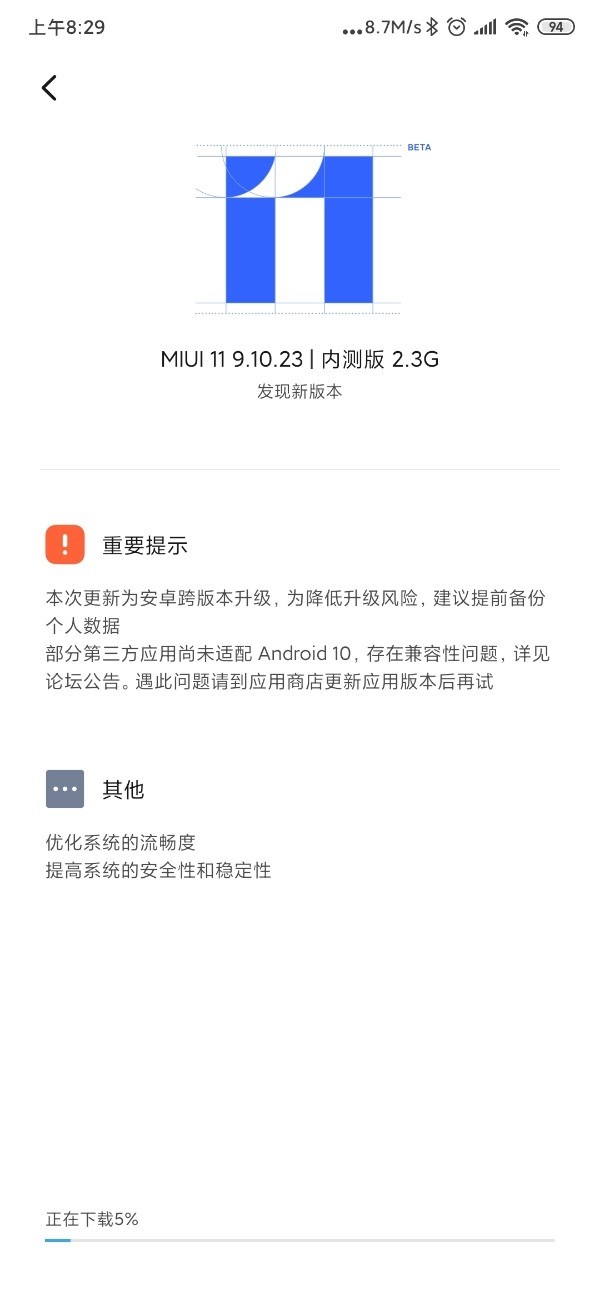
Xiaomi are making good on their promise to bring MIUI 11 to all their devices, with the latest device being the Mi 8 SE. The new 2GB MIUI 11 9.10.23 beta update brings Android 10 to the popular mid-ranger, as well as Google’s October Security Patch. It’s not stable yet, and some apps don’t work well with Android 10, but it’s definitely progress.

Xiaomi’s MIUI 11 is a big update that changes up a lot of things for the popular Android skin. Starting with the visual aspects, you get slightly softer icons, a system-wide dark mode, new Mi Lan Pro system font and improved always-on display functionality. There are also new animations, themes, wallpapers and improved notification system.

Another big new addition in MIUI 11 is the enhanced audio experience with all-new dynamic natural sound effects and alarms. Xiaomi also announced the new Mi Go Travel suite which will help you with booking tickets for a broad range of transport ranging from airplane to rail and bus alongside currency conversion and an extreme power-saving mode.

If you’re already using the development version of MIUI, you can directly upgrade via OTA. If the you’re on the stable ROM however, you’ll need to head over to the MIUI website to get a the flashable 2GB file. Xiaomi also recommends backing up all your files before attempting to install the beta, as it’s still really unstable.

If you want to know everything about the MIUI — its features and tools that the company is offering in this newer version, click here.

(Source)

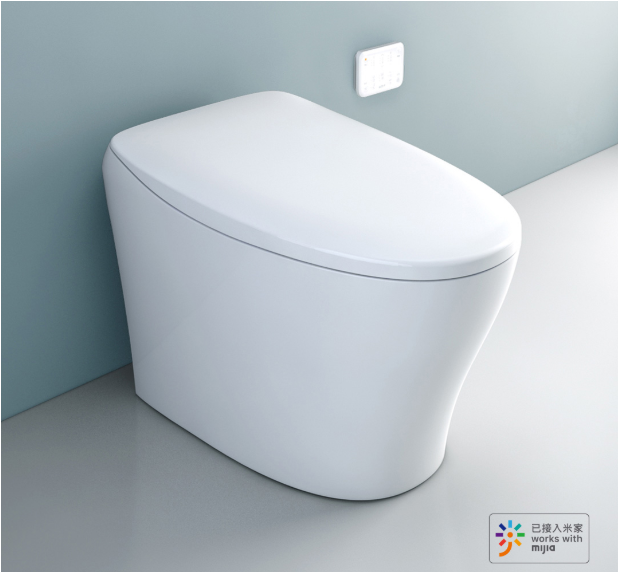
Xiaomi crowdfunds the Small Whale Wash-integrated Smart Toilet Zero

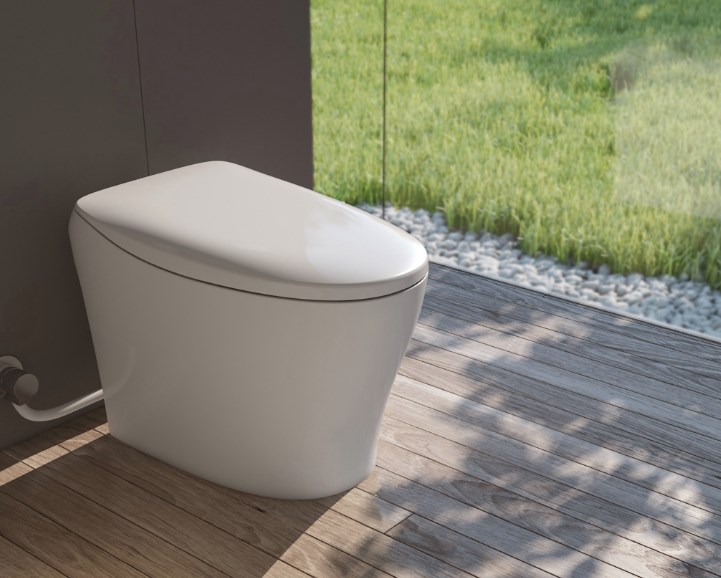
The major aim of Xiaomi‘s smart home brand is to create a connected home where all the gadgets interact and can be controlled from a central hub. The company’s product catalogue already includes several smart home gadgets and each day, more gets added, some under the crowdfunding platform. The latest is the Small Whale Wash-integrated Smart Toilet Zero. Xiaomi has launched several smart toilet seat covers in the past but this is the complete package, not just the seat cover.

The Small Whale Wash-integrated Smart Toilet Zero uses an integrated ultra-thin design which includes a multi-mode hot flush system and access to MIJIA App. The toilet bowl is made from Dongpeng ceramic with a cylindrical shape.  The toilet seat supports three-speed temperature adjustment and can be controlled via the Mijia App.

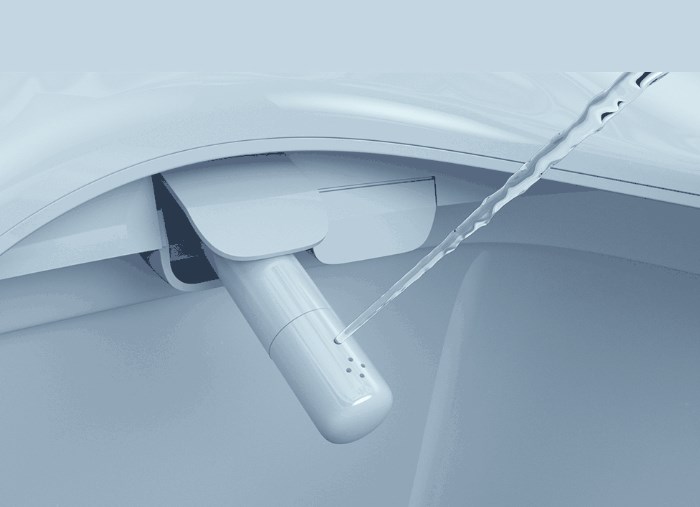
Apart from self-cleaning with water spray, the water sprays at a wide-angle after which it is air-dried to remove water drops. The spray bar is made of antibacterial ABS+PC material. The water nozzles spray water in all directions. In addition, the women’s wash uses a wide array of pore design with a shower-type water flow which the company sais is mild and doesn’t tingle.

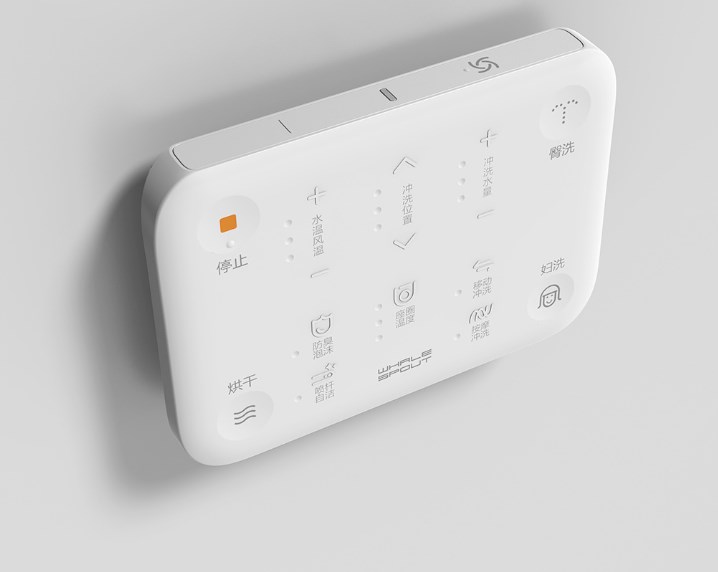
The smart toilet is also equipped with a wireless full-touch remote control, and the flush button placed conveniently at the top.

The Small Whale Wash-integrated Smart Toilet Zero comes with a crowdfunding price of 2899 yuan (~$409). It is expected to start shipping on December 5.


(source)

Motorola announces entry-level Moto E6 Play

Motorola had an event in Brazil today where it announced a couple of new phones. First on the list is the Moto E6 Play, a new entry-level phone.

Motorola Launches Moto G8 Plus Moto One Macro And Moto E6 Play Devices image 3

The Moto E6 Play has a 5.5-inch HD+ Max Vision 18:9 display. There is no notch but you get a thick slab of bezel at the bottom of the screen and a less-thick one at the top. However, Motorola says the phone has been designed to be comfortable in the hand.

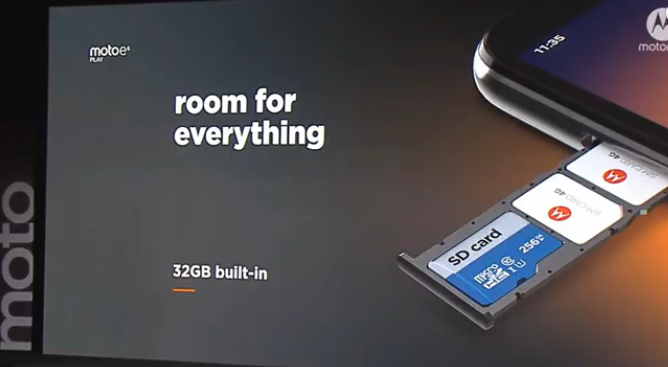
There is a MediaTek MT6739 processor paired with 2GB of RAM and 32GB of storage. The phone has a triple card tray which allows you to use 2 SIM cards and a MicroSD card (256GB max. ) at the same time.

Moto E6 Play SIM

The phone has a single 13MP camera on the back with a beauty mode. There is a 5MP camera in front for selfies. The Moto E6 Play has a rear-mounted fingerprint scanner as well as face unlock.

Moto E6 Play Black

There is a 3000mAh battery inside the phone but no support for fast charging. The phone also gets a MicroUSB port for charging and data transfer. There is no mention of the version of Android it is running.

Motorola Brazil didn’t reveal a price but the phone will be available in the UK in January 2020 for £99. The phone comes in blue and black color variants.


Huawei says the Mate X global launch plans still “under review”

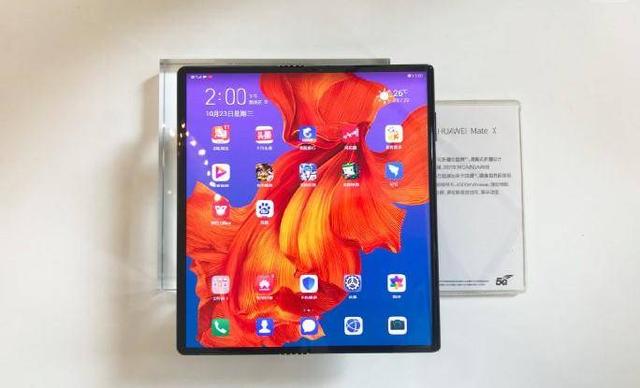
At the launch event for the Mate X 5G foldable smartphone yesterday, Huawei disclosed that the device will go on limited sales in China on November 15 with a staggering 16,999 yuan ($2,403) price tag. The company did not divulge any information regarding the global launch during the event. However, a statement credited to a Huawei’s spokesperson reveals that the company is still considering if the Mate X should be launched outside China, according to CNBC.Huawei Mate X

The Mate X was first unveiled at the MWC 2019 earlier in February in Barcelona and was originally scheduled to launch this summer. The Galaxy Fold debacle forced Huawei to postpone the launch scheduled for June in order to ensure the device doesn’t experience such issues.

The company’s position has now changed with the disclosure that the Mate X global launch remains “under review.” The spokesperson stated specifically that; “Our strategy is based on carriers’ 5G roll out in different regions. So far, Huawei is making the Huawei Mate X available in the China market from November 15th. A global launch plan is under review.” Huawei Mate X

While the delay is hinged on 5G rollout, the US trade embargo which has made it difficult to instal Google Play services on its latest phones may have also played a role. However, we expect the company to release the 5G foldable phone is selected markets soon.


(source)

LG display posts a loss of $ 437 million in Q3 of 2019 , “Company’s survival is at risk.” says new CEO

Due to cheaper LCD panels originating from China, LG which is currently the world’s largest manufacturer of this type of display panels has reported a loss in the third quarter of 2019. On the 23rd of October, LG announced an operating loss of 437 billion won ($372 million) for the July-September period. Besides, overall sales dipped by 4.6 % in comparison to the Q3 of 2018.

Noteworthy, this is LG’s first operating loss in Q3 in the last eight years. This quarter has usually been a silver lining for the company as it coincides with increased panel supplies to Apple ahead of the release of new iPhones. To paint a picture of how bad things could be, the new CEO Jeong Ho-young warned in his first message to employees that the “company’s survival is at risk.

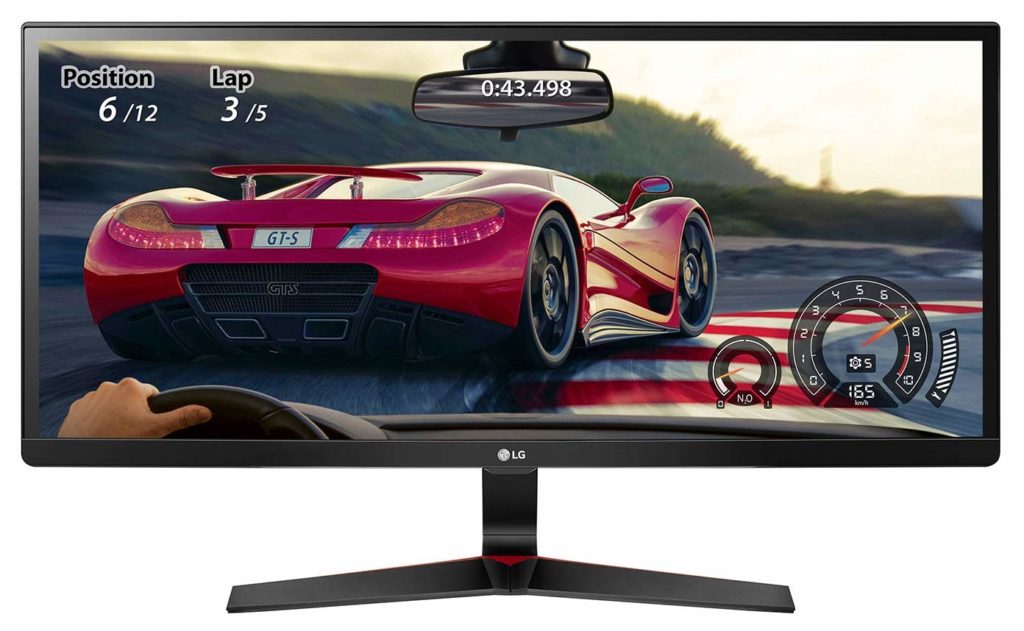
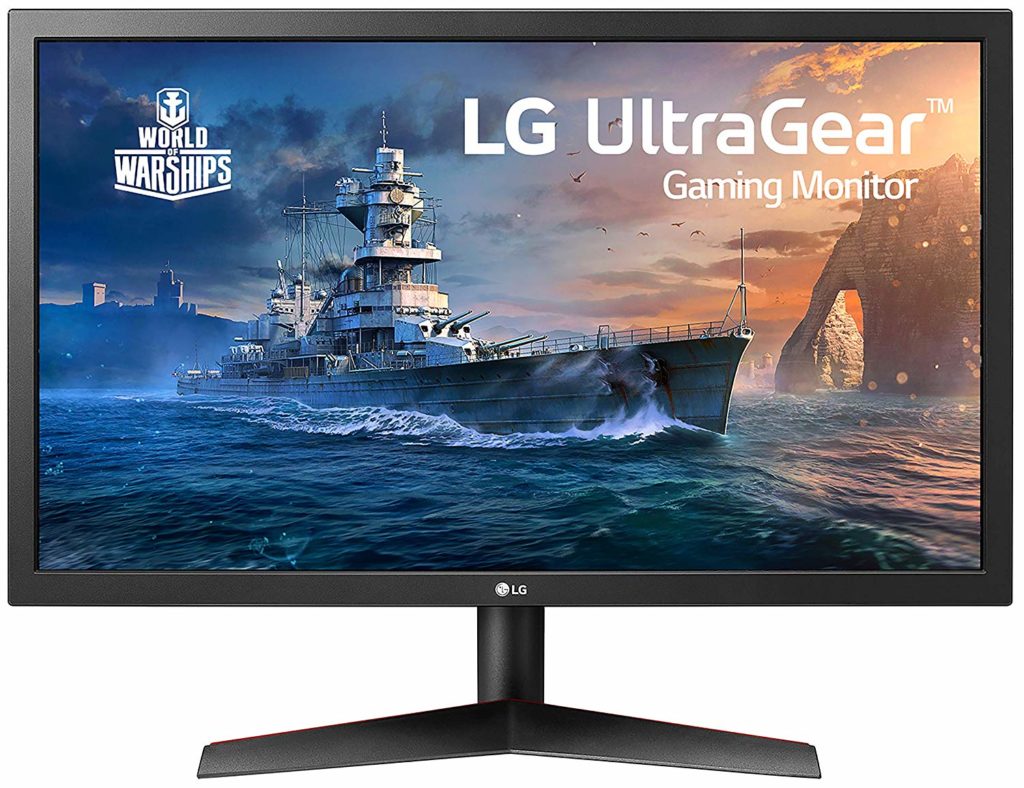
LG 29UM69G Ultrawide Gaming MonitorDue to oversupply from China, the average price per TV panel has fallen 20 to 30% in the last year alone, which has driven Japanese and Taiwanese suppliers out of the race and they do not want to scale production. An industry source said “This is the worst supply glut in history,” and “Nobody will be able to secure a profit.”.
Prominent Chinese suppliers which include BOE and China Star Optoelectronics Technology, with government backing have built new factories in the last four years that have surpassed South Korean, Taiwanese and Japanese companies which were previously the heavyweights in this industry.

Reports suggest that it typically takes investments worth $ 4 billion to set up a display plant and companies like LG and the previously mentioned heavyweights, who already are struggling to survive, cannot expend this much money. Therefore, it is hard for them to match the production capacities these Chinese suppliers are capable of delivering.

A single display plant typically requires over $4 billion in investments. Japan Display, the world’s largest smartphone LCD maker that is struggling to secure a bailout, and Taiwan’s AU Optronics, a major supplier of TV panels, have already bowed out of the race to increase production.

The only other company who is capable of taking on the newly shroomed Chinese suppliers of LCD displays is, Samsung. The world’s number one smartphone manufacturer reported an operating profit of $ 44 billion last year. Out of which, it is investing $ 11 billion in premium-grade quantum-dot displays, which is based on OLED technology.LG Ultragear 24GL600

While LG also manufactures OLED displays that are still profitable, the combined sale of this type of display last year was just 2.5 million which is insignificant in comparison to LCD panels that accounted to 200 million units.

Due to its massive investment which was previously mentioned, Samsung is presumed to soon commence of mass production of OLED TV panels. Besides, Chinese suppliers are also reportedly gearing to enter this race as well. Following which, LG’s survival in this division seems short-lived. Conclusively, only time will tell, what the future holds for the company.

(via)


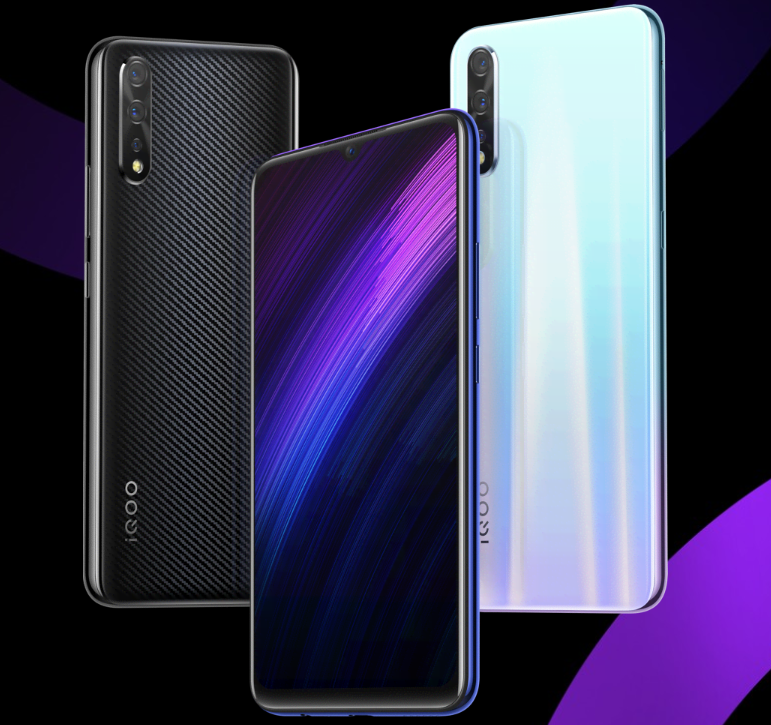
iQOO Neo 855 launches with a faster processor and faster storage

In the first quarter of this year, Vivo announced a new smartphone line called iQOO. The first phone under the new line launched as the iQOO, and three more phones have been released afterwards in the span of seven months. Today, the iQOO line is getting a new member called the iQOO Neo 855.

iQOO Neo 855 featured

The iQOO Neo 855 in simple terms is a Snapdragon 855 version of the iQOO Neo which launched with a Snapdragon 845 processor. The iQOO Neo launched for ¥1798 (~$254) and is available in four variants with the highest configuration having a ¥2298 (~$325) price tag.

iQOO Neo 855 Design

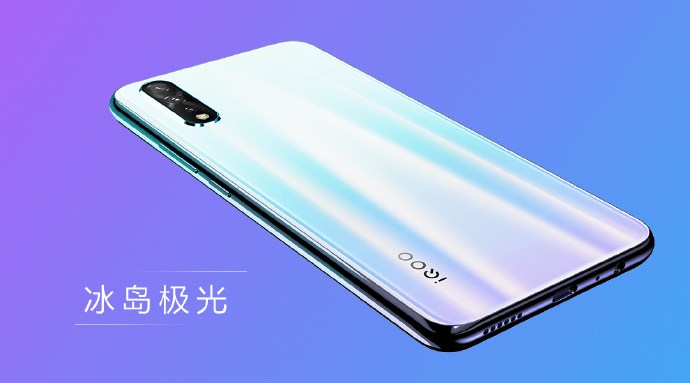
The new phone doesn’t look different in terms of design when compared to its Snapdragon 845 version. You get the same AMOLED screen with a waterdrop notch and the same rear camera design. However, the iQOO Neo 855 comes in a new Icelandic Aurora color with a color gradient frame. It is also available in Neon Purple and Carbon Black.

iQOO Neo 855 Icelandic

iQOO Neo 855 Features and Specs

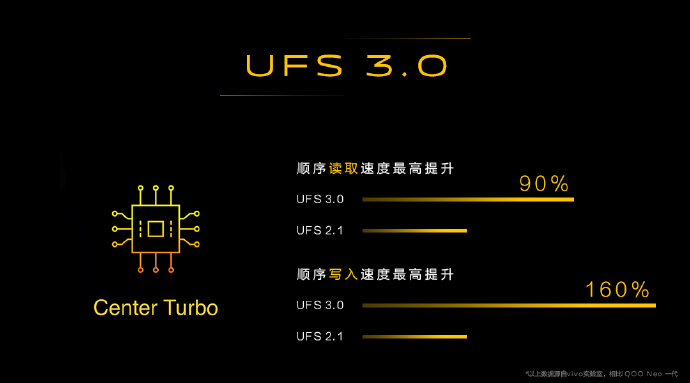
With the more powerful Snapdragon 855 processor and faster UFS 3.0 storage replacing the SD845 and UFS 2.1 storage of the standard version, there is a significant improvement in the performance of the iQOO Neo 855. iQOO even brags about the device’s 477,016 AnTuTu score.

The iQOO Neo 855 is focused on speed and it is not just limited to the processor and storage. The phone comes with a dual-WiFi acceleration technology that enhances connection and ensures that online gameplay is stable and webpages load faster. iQOO says lab tests reveal latency reduces by up to 90% with the feature active.

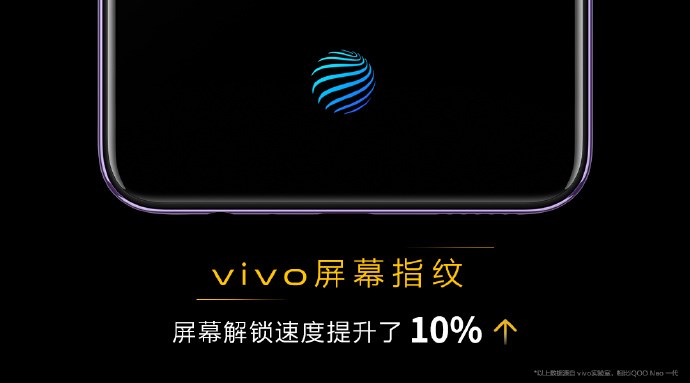
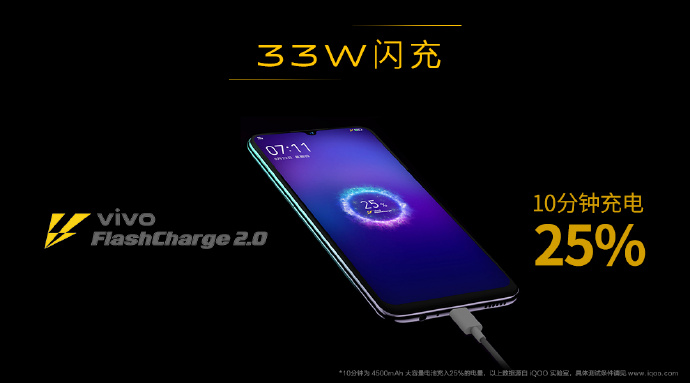
The phone also comes with faster fast-charging technology than its predecessor. Rather than 22.5W fast charge, the iQOO Neo 855 comes with Vivo’s 33W FlashCharge 2.0 which charges the phone up to 25% in just 10 minutes. The iQOO Neo 855 keeps the in-display fingerprint scanner of the standard version but it is now 10% faster.


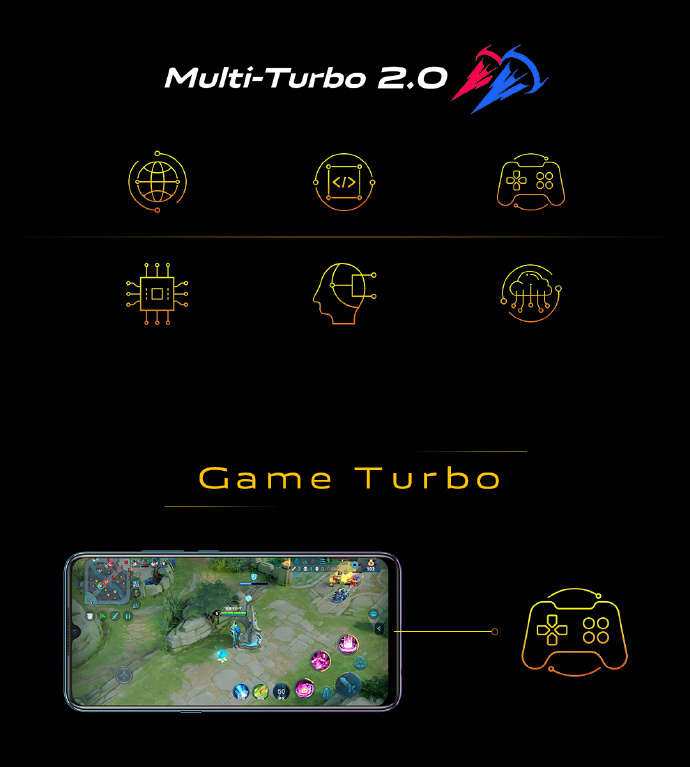
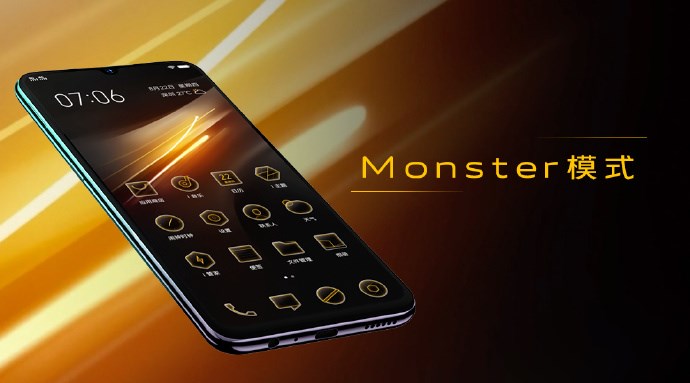
The phone also comes with Monster Mode UI based on FunTouchOS 9 with features such as MultiTurbo 2.0. iQOO says lab tests show response time has increased by 30% with MultiTurbo 2.0 compared to the Snapdragon 845 version. There is also super-liquid cooling which can reduce the CPU’s temperature by up to 10 degrees and the surface temperature by up to 3 degrees.

Below are the full specs of the phone:

  • 6.38-inch 1080 x 2340 AMOLED display with DC Dimming and HDR10
  • Snapdragon 855
  • 6GB/8GB RAM
  • 64GB/128GB/256GB
  • 12MP f/1.79 Sony IMX363 primary rear camera + 8MP f/2.2 120° ultrawide-angle camera + 2MP f/2.4 depth sensor
  • 16+MP f/2.0 S5K3P9 selfie camera
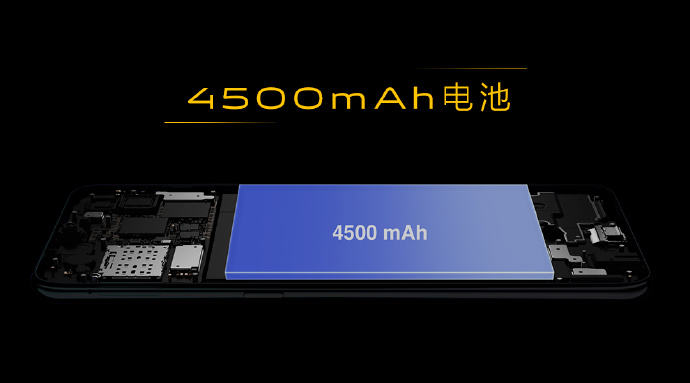
  • 4500mAh battery
  • Audio Jack
  • USB Type-C port
  • In-display fingerprint scanner
[envira-gallery id=”285187″]

Price and Availability

The price tags for all four variants of the iQOO Neo 855 are:

  • 6GB RAM + 64GB (UFS 2.1) = ¥1998 (~$283)
  • 6GB RAM + 128GB = ¥2298 (~$325)
  • 8GB RAM + 128GB = ¥2498 (~$353)
  • 8GB RAM + 256GB = ¥2698 (~$382)

The phone will be available for pre-order starting today up until October 31 when it will be available for purchase. For a limited time, all variants, save for the 64GB base model, will be sold for ¥100 less. Buyers will also be able to get up to ¥200 coupons to further reduce the price.


Sharp is working on a tablet like game console that features detachable physical controllers

Sharp which was once pushed to the brink of bankruptcy in the year 2016, after investments from Foxconn has been reviving gradually. The company is already indulged in manufacturing of TVs and OLED display panels, it may soon dip its toes in the gaming hardware industry suggests two patents that the company has recently filed with JPO (Japan Patent Office).

While mobile gaming has advanced to a level where it could compete with gaming consoles, users still tend to complain about the lack of physical controls that conventional game controllers offer. This is exactly what Sharp is aiming to solve with the devices whose patents have recently been filed.

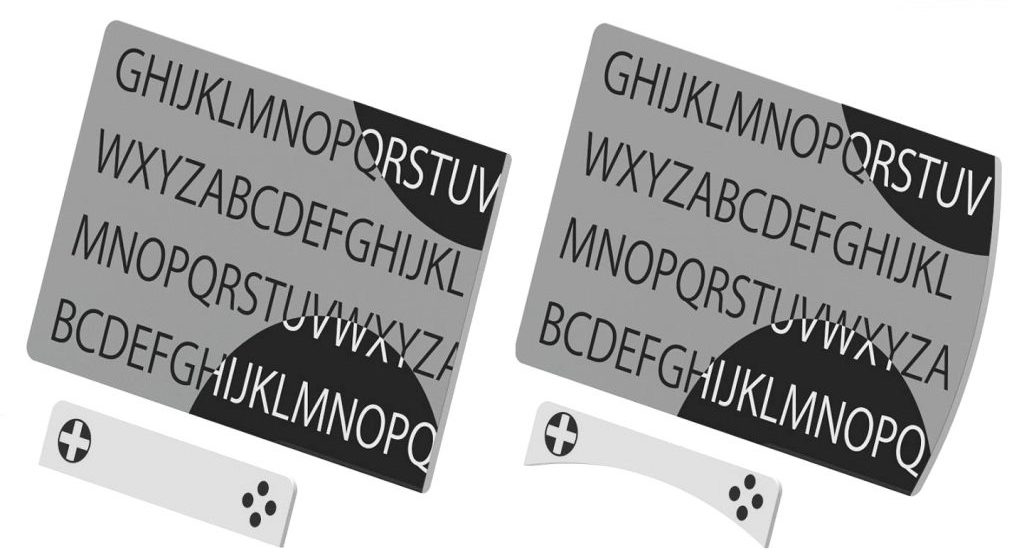
Going by the illustration, Sharp is conceptualising a tablet-like handheld game console that features an edge-to-edge display. Besides, it supports modular physical controls like a d-pad which can be attached via magnet. The patents show two different design that the company could possibly implement, out of which, the first one has a rectangular game controller while the second design has a curved game controlled.

The benefit of having a curved edge cannot be divulged from the patent itself, however, it might have something to do with improved position retention when attached to the main body of the gaming console. Unlike the Nintendo Switch, Sharp’s console lacks any slots for installing a game cartridge. Therefore, it is possible that the device runs on Android allowing users to choose from a wide library of apps the platform offers. Or it could be the company’s take on cloud gaming which is rapidly gaining popularity.

Whether or not Sharp plans to launch a real-life device based on these patents, it is hard to tell. Therefore, we would recommend taking this concept with a grain of salt until more details are revealed either via official or unofficial channels.

Readers interested in check the official patent filing can do so by clicking here (1, 2).

(via)


Early listing reveals Moto G8 Play has Helio P70 processor, priced at $199

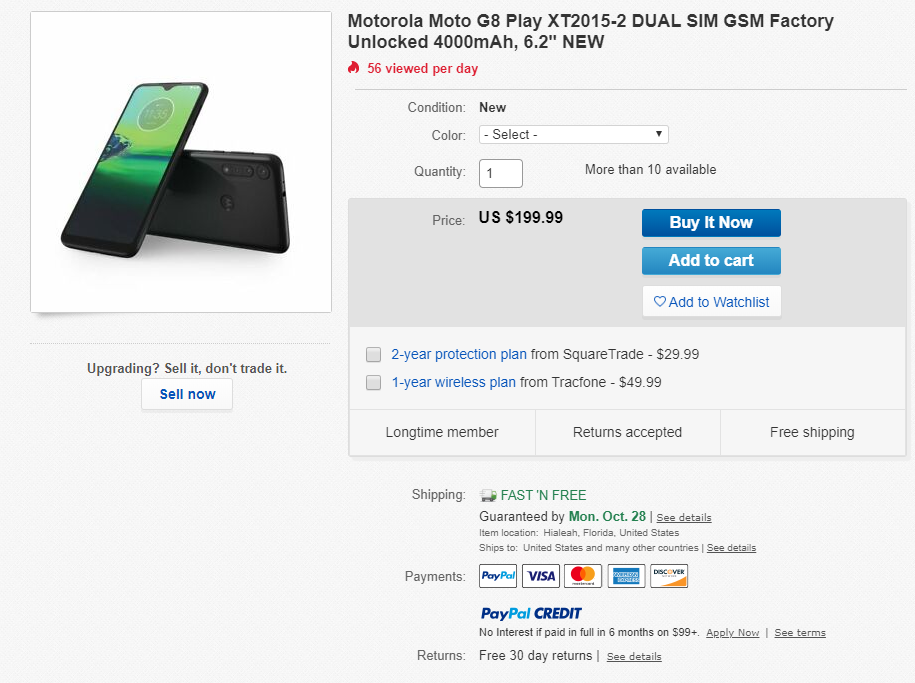
The Moto G8 series launches today in Brazil but hours before the launch, the Moto G8 Play has begun appearing in online stores. The phone has appeared on MobileHut Chile and has also been spotted on eBay.

The new Moto G8 Play will have a 6.2-inch IPS display with a waterdrop notch for the selfie camera. The MobileHut listing says the phone is powered by a MediaTek Helio P70 processor paired with 2GB of RAM and 32GB of expandable storage.

There are three cameras on the back of the phone – a 13MP primary rear camera paired with two 2MP sensors. We believe the camera specs are inaccurate. The live photos that leaked last week revealed the phone has an ultrawide angle camera. Since the listing says there are two 2MP sensors, it means one of the two sensors is an ultrawide angle camera and a 2MP 117° ultrawide camera doesn’t make any sense. The listing says there is an 8MP selfie camera and the images show that Motorola has ditched the LED flash of its predecessor.

The Motorola G8 Play also has a rear-mounted fingerprint scanner and packs a 4000mAh battery. The description provided by the store says there is a USB Type-C port which isn’t surprising since the Moto G7 Play also launched with a USB Type-C port. The phone runs Android 9 Pie out of the box.

MobileHut says the phone is currently not available but you can drop your email address and you will be notified when it is in stock.

Moto G8 Play eBay

The eBay listing has a different processor and camera specs. The processor is said to be the Helio P60 and the triple rear cameras are a 48MP primary sensor paired with a 16MP camera and a 5MP depth sensor. The selfie camera is also stated as a 25MP sensor. Other than these three, the rest of the specs are the same.

The specs for the eBay listing should be taken with a pinch of salt as they were lifted from GSMArena which has listed the same specs for the Moto G8 and Moto G8 Play as placeholders.

The eBay listing says the phone is priced at $199.99 and if you order today, you should get it by Monday, October 28.


(Via: 1, 2)

Xiaomi HiFi Hybrid Earphones presale now live on JD.com for ¥699 (~$98)

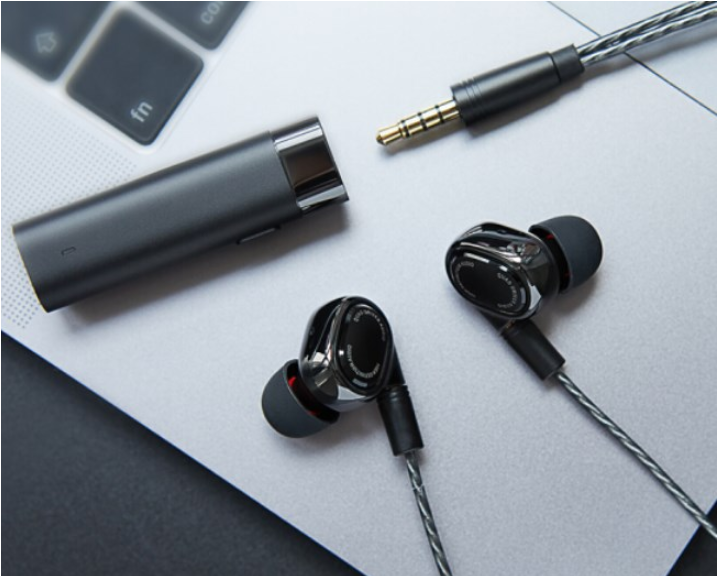
Xiaomi launched a new pair of earphones in China a couple of days back. The earphones are said to be of flagship-grade and adopt the moniker Mi HiFi Hybrid Earphones. The new product is now available to pre-order from China’s top e-tailer Jingdong (JD.com). The powerful pair of earphones comes with a price tag of ¥699 yuan ($98).Xiaomi HiFi Hybrid Flagship Earphone

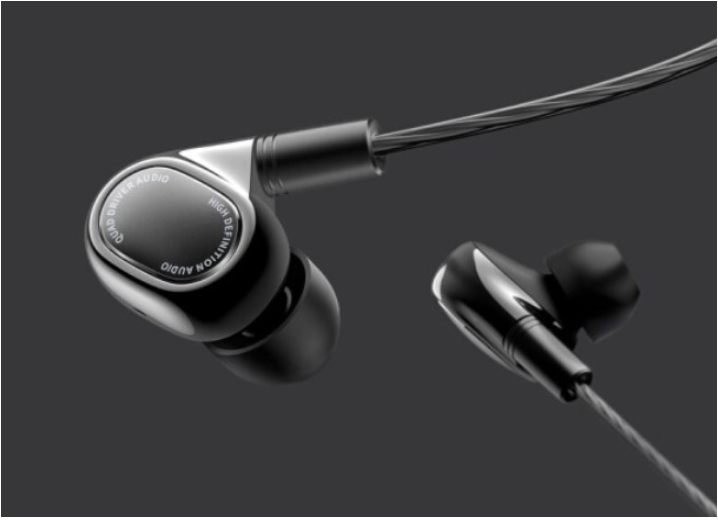
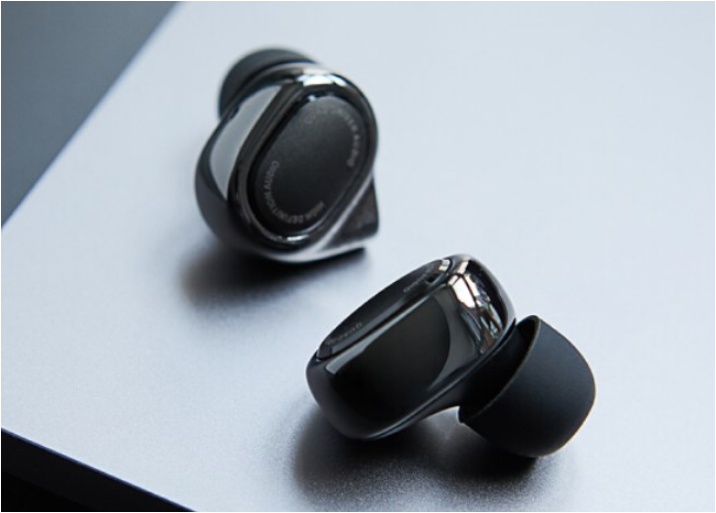
The new earphones use a design different from Xiaomi’s previous HiFi earphones. It adopts a four drivers design consisting of two dynamic driver units and two balanced armature units. The two balanced armature units are placed before the dynamic driver units for richer details. For the bass, there is a silicon layer while the treble sound production employs a titanium composite inside the diaphragm. This arrangement ensures the earphones outputs a better mid and bass ranges. It equally packs a Zirconia sound chamber which is highly durable.

Xiaomi HiFi Hybrid Flagship EarphoneAlso, the earphones feature gold-plated MMCX connectors with thicker coatings which are expected to improve wired connection and last longer. They are also expected to withstand four times the insertions of standard MMCX connectors. The connectors are also easy to replace in case they get damaged.Xiaomi HiFi Hybrid Earphone

Apart from the powerful sound output, the Mi Hybrid earphones are designed to work in wireless or wired mode. For wireless connectivity, it comes with a portable Bluetooth DAC amplifier that supports Hi-Res SBC, AAC, and LDAC. On the other hand, there is a 3.5mm audio jack or USB-C cable made of silver-plated oxygen-free copper with crammed a DAC chip.


(source)

Chinese student who scammed Apple of nearly $ 1 million sentenced to 3 years in federal prison

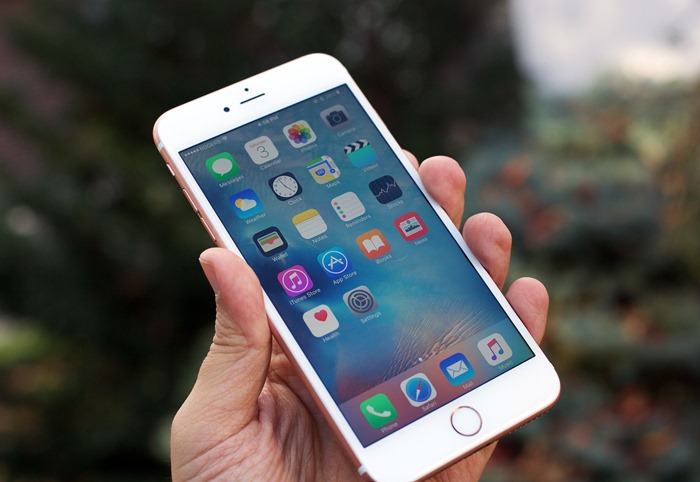
Earlier this year, a Chinese student named Quan Jiang, who was enrolled at a college in Oregon, was found guilty of scamming Apple for nearly $ 1 million. Due to which, he has now been sentenced to three years and one month in federal prison by a U.S district judge. Following which he will reportedly be deported back to his home country.iphone 6s plus

According to court documents, Quan Jiang and his partner, Yangyang Zhou imported thousands of fake iPhones from China and then filled warranty complaints with Apple, claiming the units were non-functional as they would not turn on. The company would then replace these counterfeit units with genuine ones which the duo would ship back to their country to be sold at a profit, out of which he would receive a small cut. Reportedly, he earned $20 to $30 for each new iPhone he then sent back and made about $40,000 in total.

Fake iPhone shipments received from China

Apple told investigators that 1,493 iPhone units in total have been issued to offenders, each of which incurred Apple a loss $ 600. Moreover, it was revealed that the company had rejected replacement of 1576 other such devices, on the grounds of tampering which were then returned to the sender.

Surprisingly, Apple did not identify these units as counterfeit, revealed the documents submitted to the court. While it was mandatory for these units to have a valid IMEI number that had remaining warranty, it is still unknown where or how did Jiang and his partner got hold of crucial detail for these many units. Having said that, Apple discontinued printing serial numbers on devices after the iPhone 6 Plus model.

The offender has already paid Apple $ 200,000 which he obtained after his parents sold their home in China. He has also been ordered to forfeit his 2015 Mercedes-Benz. The offender will stay on GPS monitoring until his surrender to prison on December 5.


Huawei VR Glass officially launched in China for 2,999 Yuan ($424)

Huawei has now officially launched its much-awaited VR product in its home market — Huawei VR Glass, which as the name itself suggests, is a virtual reality headset. Priced at 2,999 Yuan (~$424), it will be available for purchase in China from December.

Huawei VR Glass

The newly launched Huawei VR Glass has lens barrel thickness of 26.6mm which is almost one-third of that of Oculus Quest and HTC Vivo Pro. It weighs around 166 grams and the temples come with a foldable design and it has a distance adaptation of 55 to 71 mm.

The company says that the glasses can be adjusted in the range of 0-degree to 700-degree myopia, 55mm to 71mm distance adaptive, has a breathable sunshade mask and is comfortable while wearing.

As for the specifications, it offers screen resolution of 3200 x 1600 pixels with up to 1058PPI pixel desnity, 90-degree field-of-view, 70/90Hz refresh rate. It comes with 3D sound effects and provides IMAX giant screen-like experience.

The company says that it will have access to 30,000 hours of VR video from the content resources, along with three major VR live broadcast platform and more than 100 virtual reality games.

The mirror leg of Huawei VR Glass comes with dual speakers that offer a wide sound field, built-in dual SmartPA, and supports 3D sound stereo. It can also be connected with Bluetooth headphones.

Huawei says that the device is ergonomically designed to fit the face. It uses protein leather material which is soft and comfortable, the elastic mask magnetic suction is removable and the myopic groups do not need to wear additional glasses.


Sharp announces WG-PN1 electronic notebook with 6 inch e-ink display

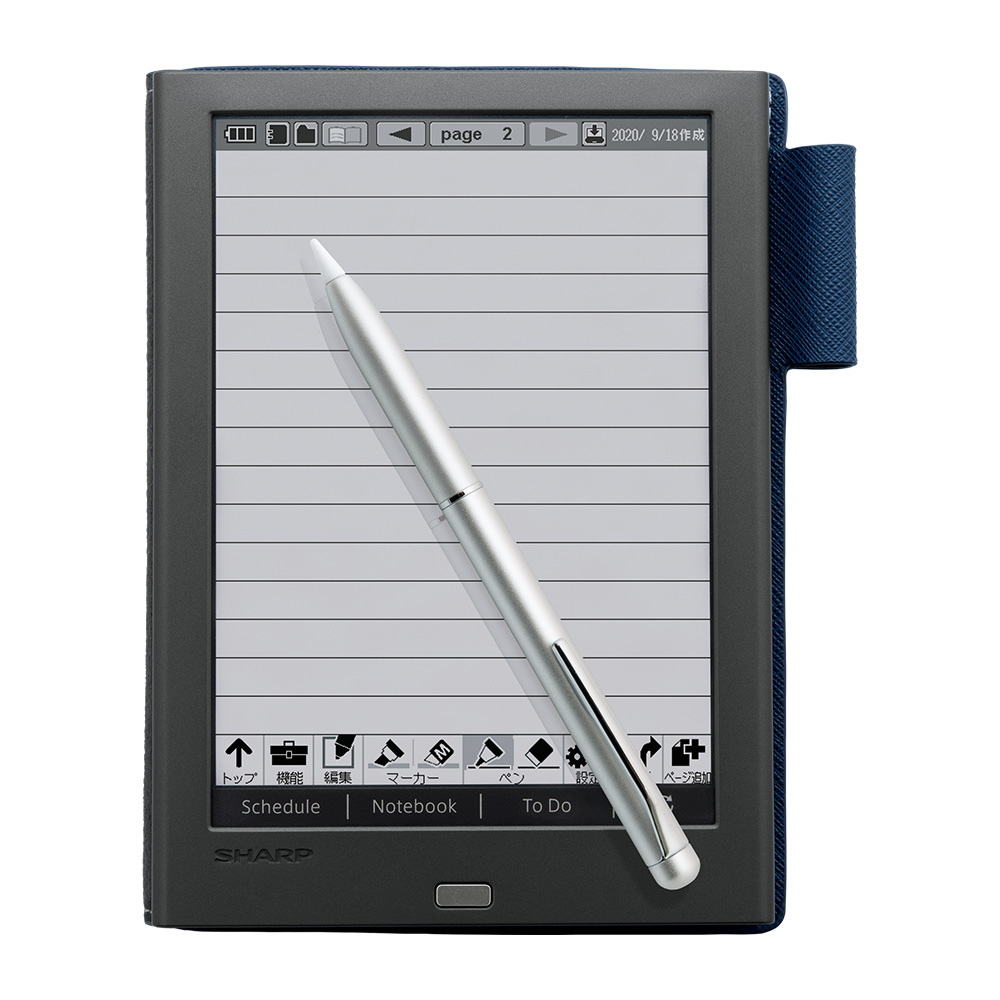
While most people nowadays use their smartphones to take notes or create a “to-do list”,  a small niche of users like business professionals still exist who need to write down even the smallest of details, who cannot rely on smartphones. In order to cater to this group of customers, Sharp has announced an electronic notebook with an e-ink display. Dubbed the Sharp WG-PN1, it will be available for purchase starting next month in its country of origin, Japan.

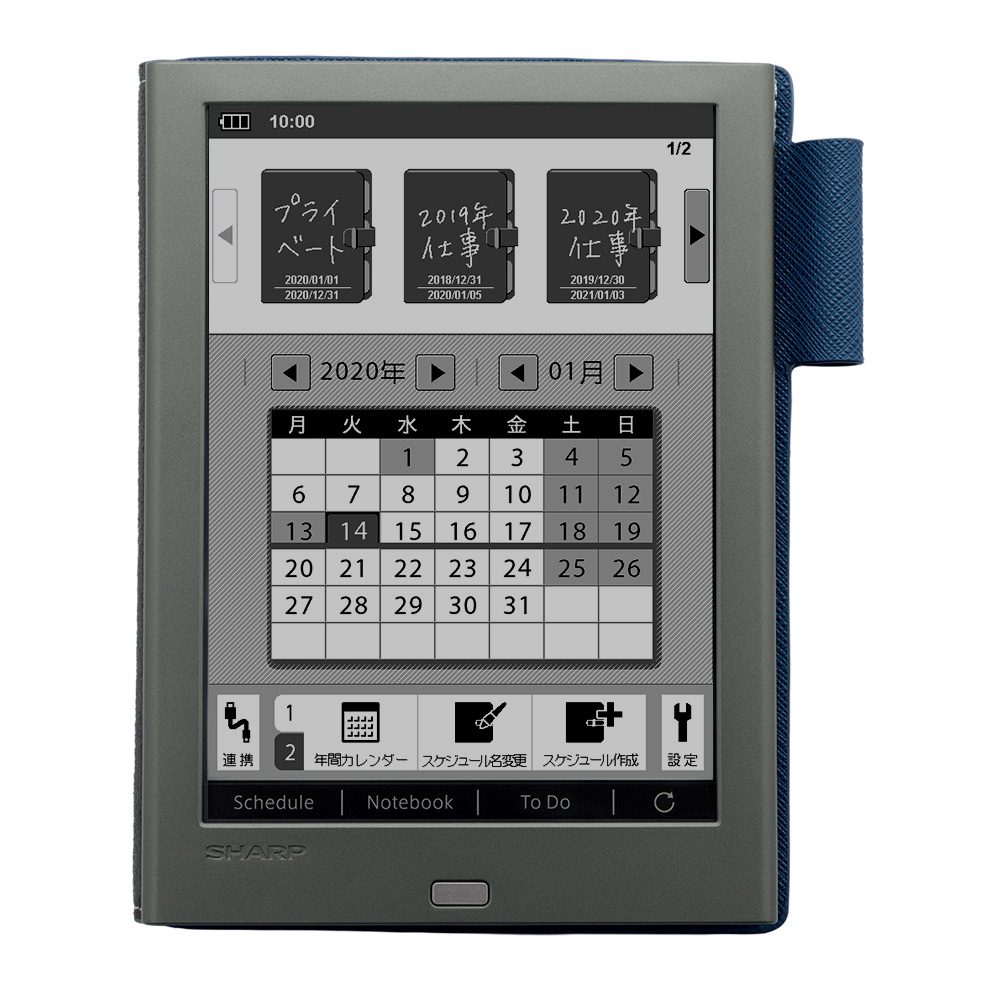
The Sharp WG-PN1 measures 157 x 114 x 10.4 mm and it tips the scale at 210 g. The electronic notebook features a 6-inch e-ink display that has a resolution of 800 x 600 pixels. Its body is made out of grey coloured plastic which falls in line with other business oriented electronics like Lenovo’s Thinkpad laptops.

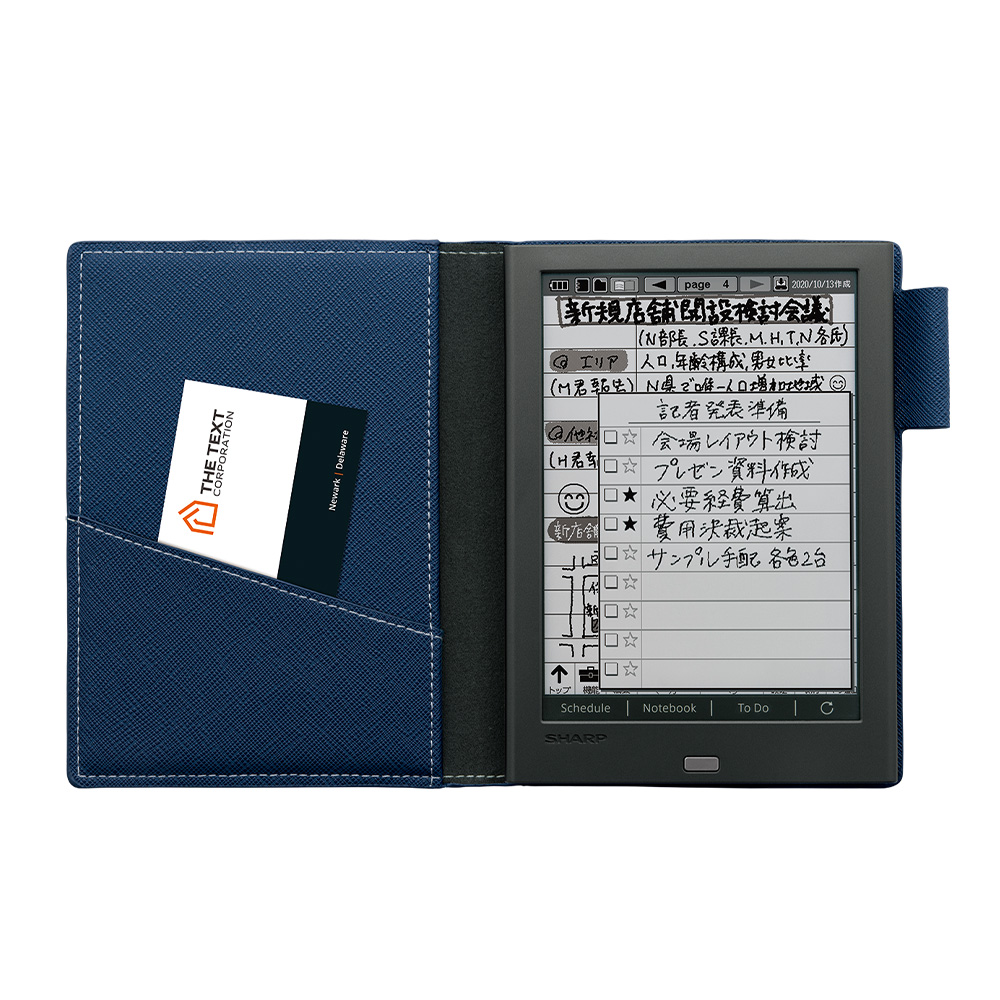
Sharp ships the device with a notebook style cover which will protect its display while travelling. The cover also has a loop which is used to hold the touch stylus when it is not in use. The device is powered by a lithium-ion battery which can be replenished via the bottom mounted USB C port. The in-built battery is claimed to provide a battery backup of upto 10 days which will naturally vary depending upon usage.

The device is capable of storing upto 7,000 pages of handwritten data that can be stored for as long as 9 years. Besides, users can even transfer these notes to a computer in image format. Additionally, it has the option to make several “to-do” lists and create schedules which will help the user with better time management. Another highlighting feature is the option to make sticky notes which float over other content.

As previously mentioned, the Sharp WG-PN1 will only be offered in Japan, starting next month. It carries a price tag of 23,000 yen, about 1495 yuan. 

Readers interested in checking about the official webpage of the device can do so by clicking here.


Xiaomi Mi MIX 3 is getting MIUI 11 beta update based on Android 10

Late last month, Xiaomi announced its latest version of the MIUI custom Android interface, called MIUI 11. After rolling out the beta version of the update to several of its smartphones, the company has confirmed that the Mi MIX 3 is getting the update.

The MIUI 11 beta update based on Android 10 operating system is now being rolled out to the Xiaomi Mi MIX 3 smartphone in China. The version being pushed to the users is MIUI 11 9.10.23 beta and the installation package size is 2.3GB.

Mi MIX 3 MIUI 11

The company has advised users to take backup of their smartphone before they start installing this new update. Also, it has warned users that some of the third-party apps may not be compatible with Android 10 and could face issues.

Xiaomi’s MIUI 11 is a big update that changes up a lot of things for the popular Android skin. Starting with the visual aspects, you get slightly softer icons, a system-wide dark mode, new Mi Lan Pro system font and improved always-on display functionality. There are also new animations, themes, wallpapers and improved notification system.

Another big new addition in MIUI 11 is the enhanced audio experience with all-new dynamic natural sound effects and alarms. Xiaomi also announced the new Mi Go Travel suite which will help you with booking tickets for a broad range of transport ranging from airplane to rail and bus alongside currency conversion and an extreme power-saving mode.

If you want to know everything about the MIUI — its features and tools that the company is offering in this newer version, click here.


Honor 9X, 9X Pro prices slashed by 200 Yuan in China

In July, Honor had launched the Honor 9X and Honor 9X Pro smartphones in China. The Honor 9X series is now gradually making its way outside of China. In the home market, Honor has announced a price cut of 200 Yuan on Honor 9X Pro and a discount of 100 Yuan on Honor 9X.

The Honor 9X variants such as 6 GB RAM + 128 GB storage and 8 GB RAM + 128 GB storage respectively costed 1,899 Yuan (~$269) and 2,099 Yuan (~$297). With the 100 Yuan (~$14) price cut, these variants can be availed respective revised costs of 1,799 Yuan (~$255) and 1,999 Yuan (~$283).

The other variants of the Honor 9X such as 4 GB RAM + 64 GB storage and 6 GB RAM + 64 GB storage are respectively priced at 1,399 Yuan (~$198) and 1,599 Yuan (~$226). These models haven’t received a price cut.

Honor 9X and 9X Pro Price Cut China

The Honor 9X Pro with 8 GB RAM + 256 GB storage that was priced at 2,399 Yuan (~$339) at launch is now available for 2,199 Yuan (~$311) after a discount of 200 Yuan (~$28).. The 8 GB RAM + 128 GB storage which is the other variant continues to sell at 2,199 Yuan. Hence, both of the Honor 9X Pro are now available at same pricing in China. The new price cut could be a limited period offer.

Honor 9X and Honor 9X Pro Specifications

The Honor 9X and 9X Pro are both equipped with 6.59-inch IPS LCD displays with notch-less design. Both support full HD+ resolution of 1080 x 2340 pixels and tall aspect ratio of 19.5:9. The Kirin 810 chipset is at the helm of both devices. Both models are packed with 4,000mAh batteries and they carry support for 10W charging through USB-C. The EMUI 9.1.1 based Android 9 Pie OS runs on both devices.

Honor 9X and Honor 9X Pro

The Honor 9X duo have 16-megapixel pop-up selfie cameras. The rear side of the Honor 9X has a dual camera setup with a 48-megapixel main lens and 2-megapixel depth senor. The Honor 9X Pro has a triple camera system on its back. It has a 48-megapixel primary shooter, an 8-megapixel ultrawide lens and a 2-megeapixel depth sensor. These devices are equipped with side-mounted fingerprint scanners.

Honor is expected to launch the Honor 9X smartphone in November in India. Rumors have it that the company may not launch the Honor 9X Pro alongside it.


Huawei Mate 30 is expected to ship 10 million units in the next few months

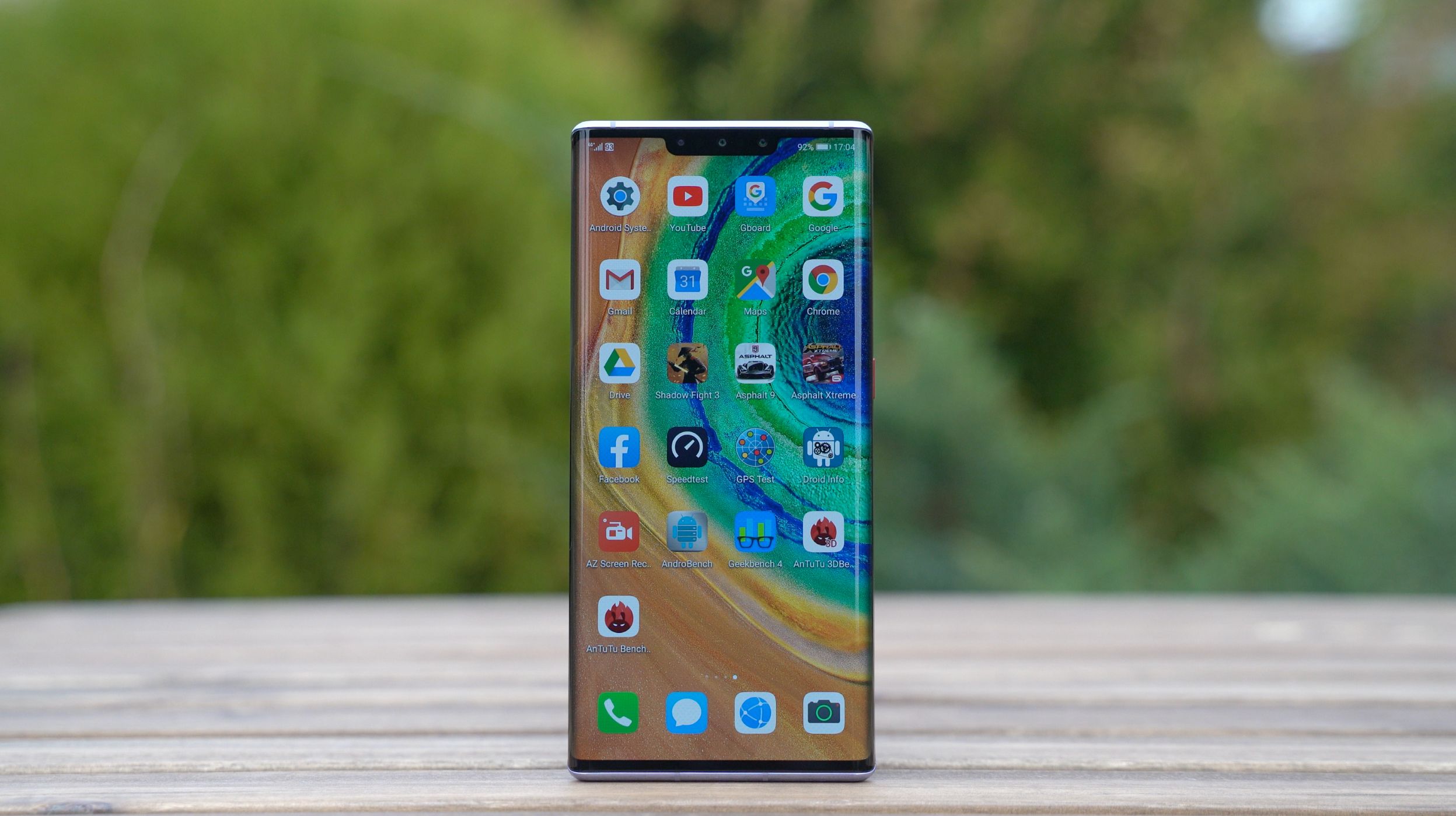
Huawei recently launched its flagship smartphones in the form of Huawei Mate 30 series, which has been very popular in its home market China. The phone went on sale last month, i.e. September and earlier this month, it was reported that the company managed to sell over a million units of the same.

Now, He Gang, President of Huawei’s Consumer Business and Mobile Product Line has said that the sale of flagship Huawei Mate 30 series is expected to reach 10 million units by the end of this year, before the Spring Festival.

Additionally, he has also revealed that the company’s total smartphone shipments are expected to be around 240-250 million for the current year. The 4G version of the Mate 30 series went on sale last month while the 5G variants are set to go on sale next month.

This seems like a major achievement for the company which has been hit by a ban by the United States, barring the company from using any technology from the US-based firms. That’s the reason Mate 30 series comes without support for Google apps and services.

While the lack of support isn’t a big deal for the Chinese market given that most Android phones in the region comes without support for Google Play services, access to Google apps and services is vital in other regions.

Despite the lack of access to Google, the company has started the international expansion of the Huawei Mate 30 series smartphones and is now being sold in some regions of Europe and in Malaysia.

He Gang has not revealed anything related to the sales forecast of the Huawei Mate X smartphone. He said that at this stage, the company is hoping to learn and understand the customer experience with the foldable smartphones.

For those who are unaware, Huawei has finally released its much-awaited Mate X foldable smartphone in China which will go on sale from 15th November. The Kirin 990 SoC powered variant of the Mate X will be launched in March next year.


[UPDATE: Pre-sales Begin] Palm confirms that its coming to China

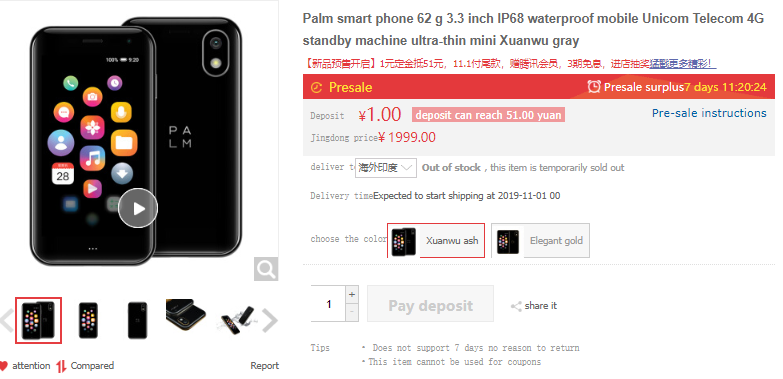
UPDATE: The Palm Phone is up for pre-sales on JD.com with a price tag of 1,999 Yuan (~$283). The shipments of the phone will begin on Nov. 1 and it will be available for buying in Xuanwu Ash and Elegant Gold color editions.

Palm Phone JD listing

Original story follows…

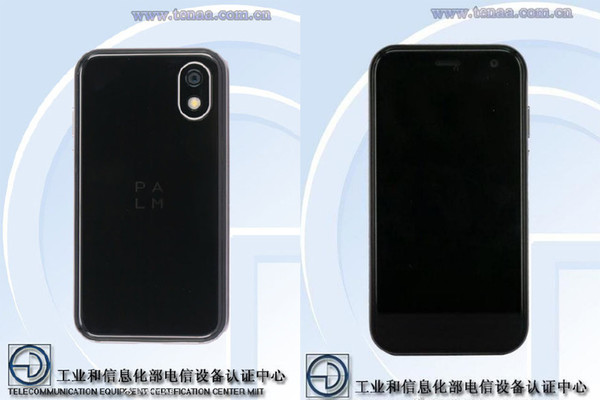
Palm Phone was made official in the U.S. through Verizon with a price tag of $199 last year. The unlock edition of the phone had arrived with a price tag of $349. Recently, the same phone was spotted on TENAA with all its specifications recently. It suggested that the TCL powered Palm may soon debut the Palm Phone in China. The official Weibo account of Palm China states that it will be soon launching a phone in the country.

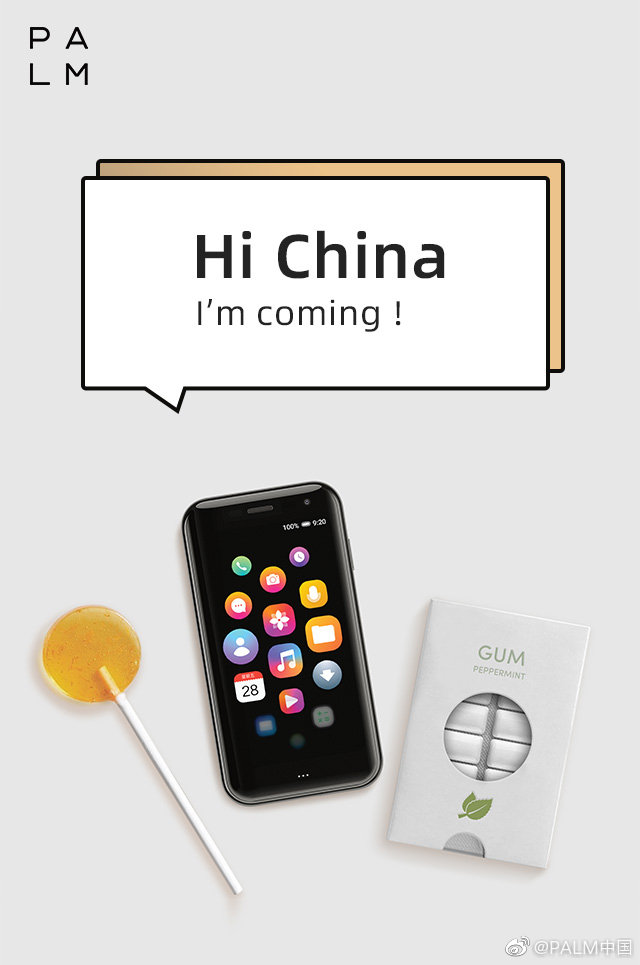
The below shown poster carries the image of the Palm Phone. It indicates that the company is likely to launch the same phone in China in the coming days. The details of the phone are known through its U.S. launch and TENAA listing.

Palm coming to China

Palm Phone Specifications

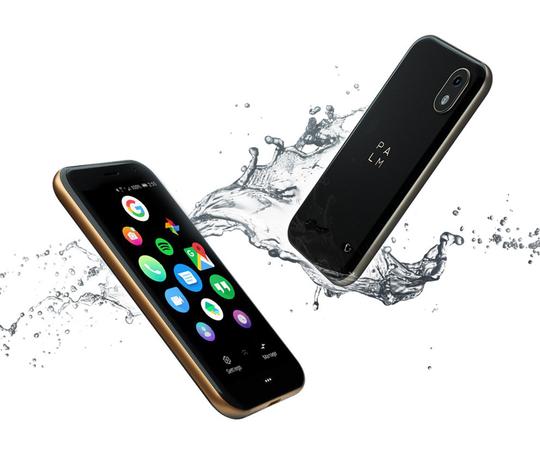
The Palm Phone that can easily fit in the palm of the user measures 96.6 x 50.6mm and it weighs only 62.5 grams. The handset runs on Android 8.1 Oreo OS and serves a companion for the main smartphone of the user. It can synch all the notifications and messages from the main phone. The interface of the phone is similar to WatchOS.

Palm

The IP68 rated dustproof and water-resistant device is equipped with a 3.3-inch IPS LCD display that supports 720 x 1280 pixels HD resolution. The screen is protected by Gorilla Glass. The front side of the phone features an 8-megapixel selfie shooter and it has a rear camera of 12-mgeapixel with LED flash.

TCL Palm phone

The Snapdragon 435 chipset is present under the hood of the Palm Phone along with 3 GB of RAM. It has an internal storage of 32 GB and it has a microSD card slot for more storage. The 800mAh battery of the Palm Phone offers 3 days of standby time. It comes with connectivity features like 4G LTE, Wi-Fi 802.11 b/g/n, Bluetooth 4.2, GPS and USB-C.

Palm may not be a familiar for consumers in China. It used to a popular mobile phone manufacturer and was known for handheld devices featuring Palm OS, webOS, Windows CE and other operating systems. However, its popularity declined due to the rise of the global smartphone era. In 2018, the Palm Phone was announced by a San Francisco based startup named Palm that was backed by China-based TCL and famous NBA star Stephen Curry.