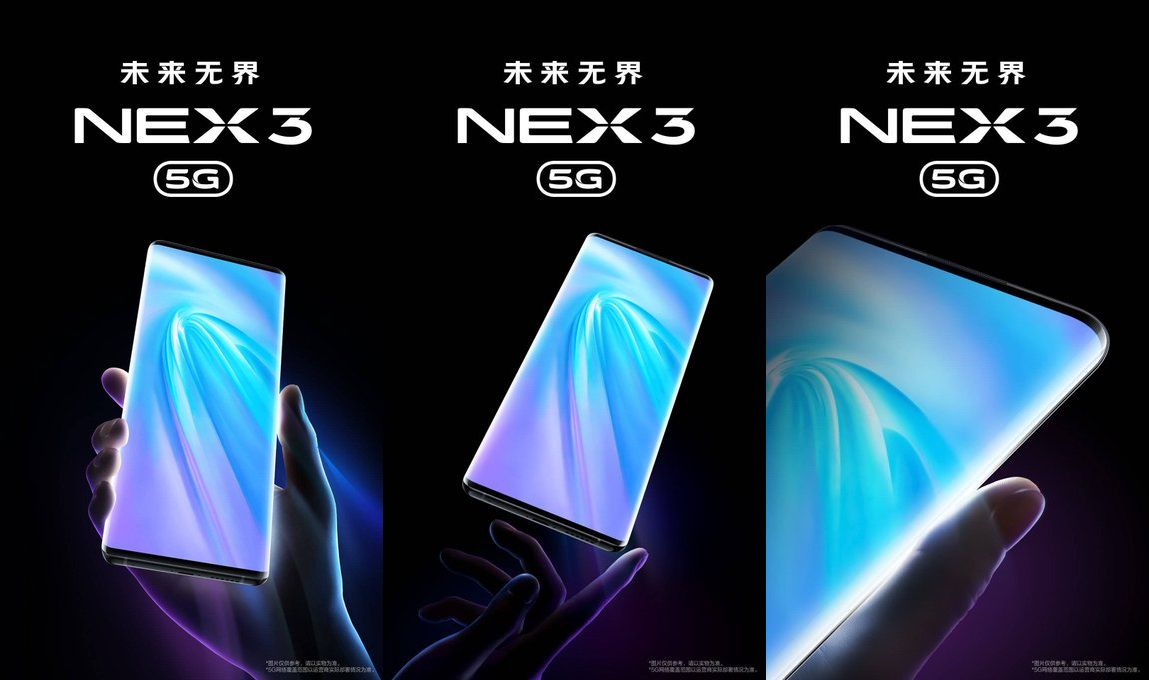
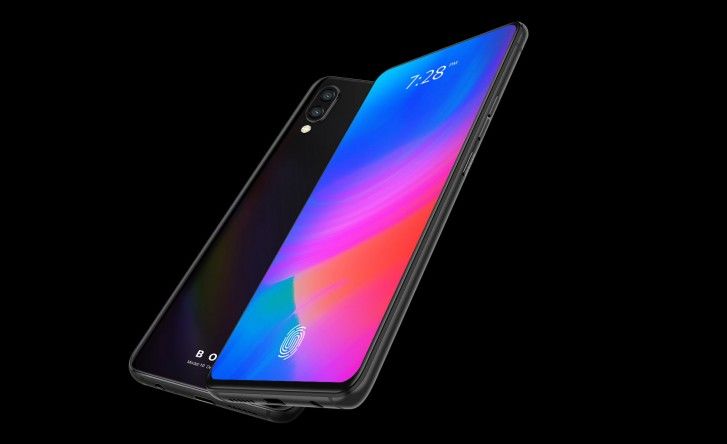
Ahead of the September 16 launch of the third-generation Vivo NEX model dubbed Nex 3 5G, a Vivo model said to be the full-screen flagship phone has appeared on the database of benchmarking outfit GeekBench.
The mobile phone is listed with the model name Vivo V1924A and will be making its debut with an Android Pie OS and 8GB of RAM. The chipset on board is listed as “msmnile” which is a codename for either the Snapdragon 855 and 855+ chips. However, the NEX 3 is expected to be fired up by the Snapdragon 855+ chipset.
Coming to the benchmark score, the NEX 3 5G got a single-core test score of 3,627 and 11,347 points on the Geekbench 4’s multi-core tests. The single and multi-core scores are in line with what other devices powered by the same chip have achieved. Apart from these scanty details, the GeekBench listing doesn’t reveal anything else.
However, the device had earlier appeared on the website of China’s Telecoms regulatory agency (TENAA) for certification giving us a clear view of not just the design but the specs lineup. To recall, the Vivo NEX 3 has a dimension of 167.4 x 76.1 x 9.4mm and weighs 218.5 grams. The handset is fitted with a 6.89-inch S-AMOLED display that carries support for Full HD+ resolution of 1080 x 2256 pixels. The display of the NEX 3 is integrated with an in-display fingerprint sensor. There will be a 4G-only and 5G models. The device may also come with a 12GB RAM variant.
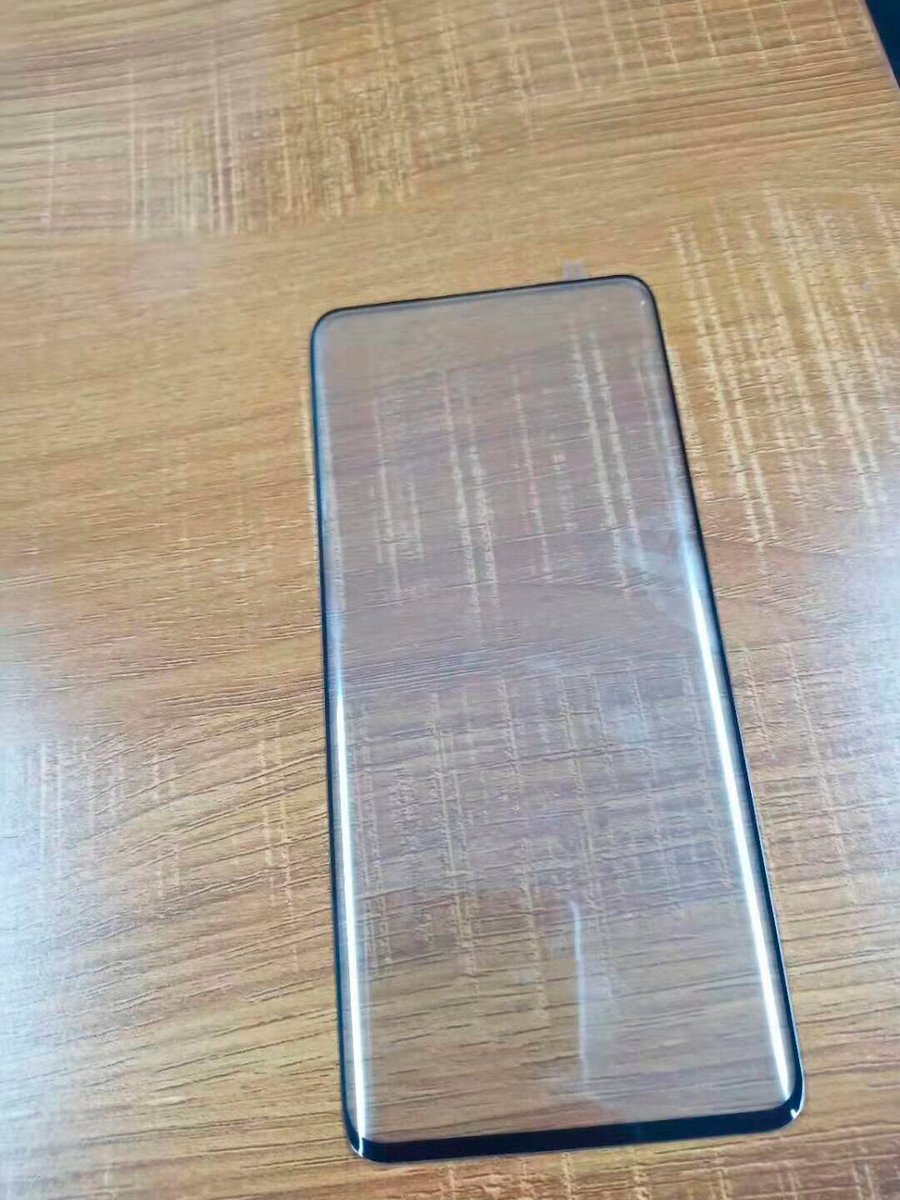
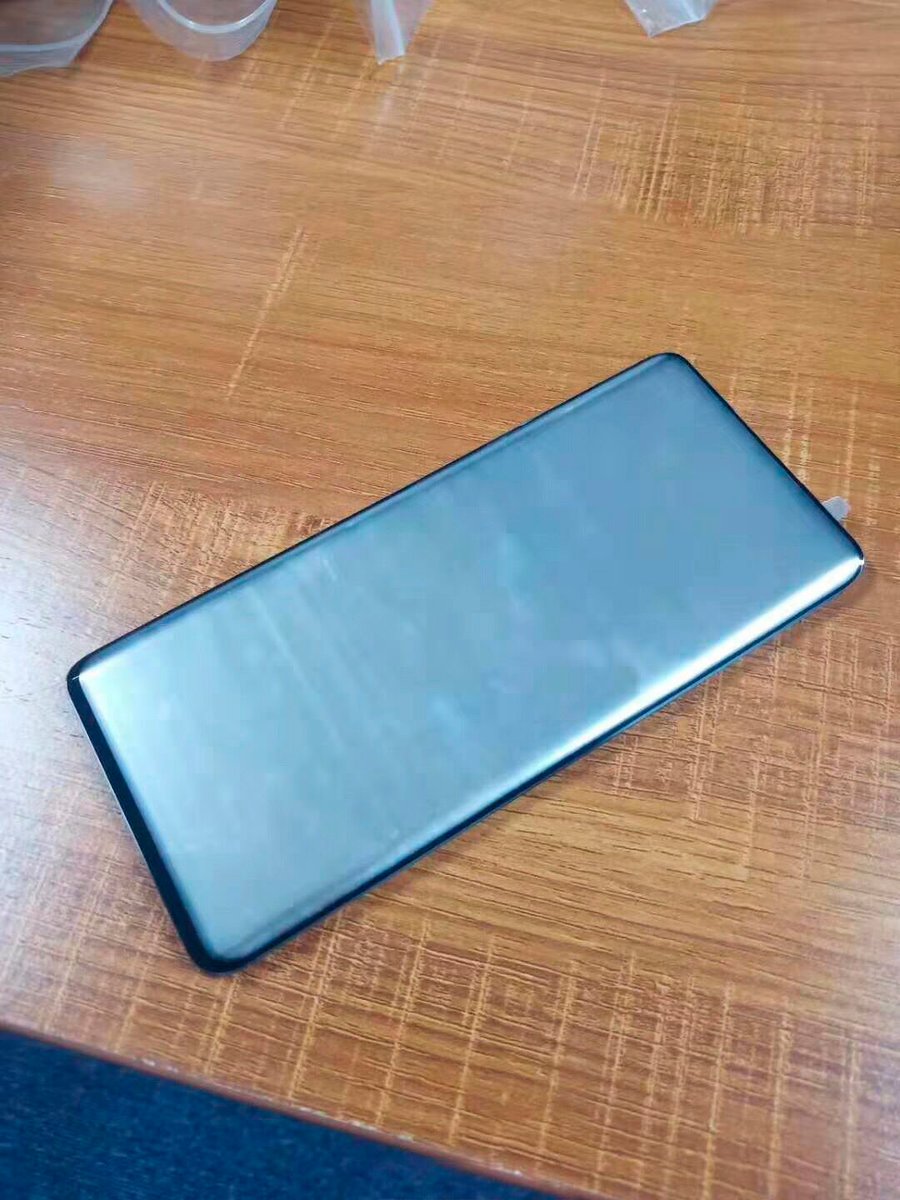
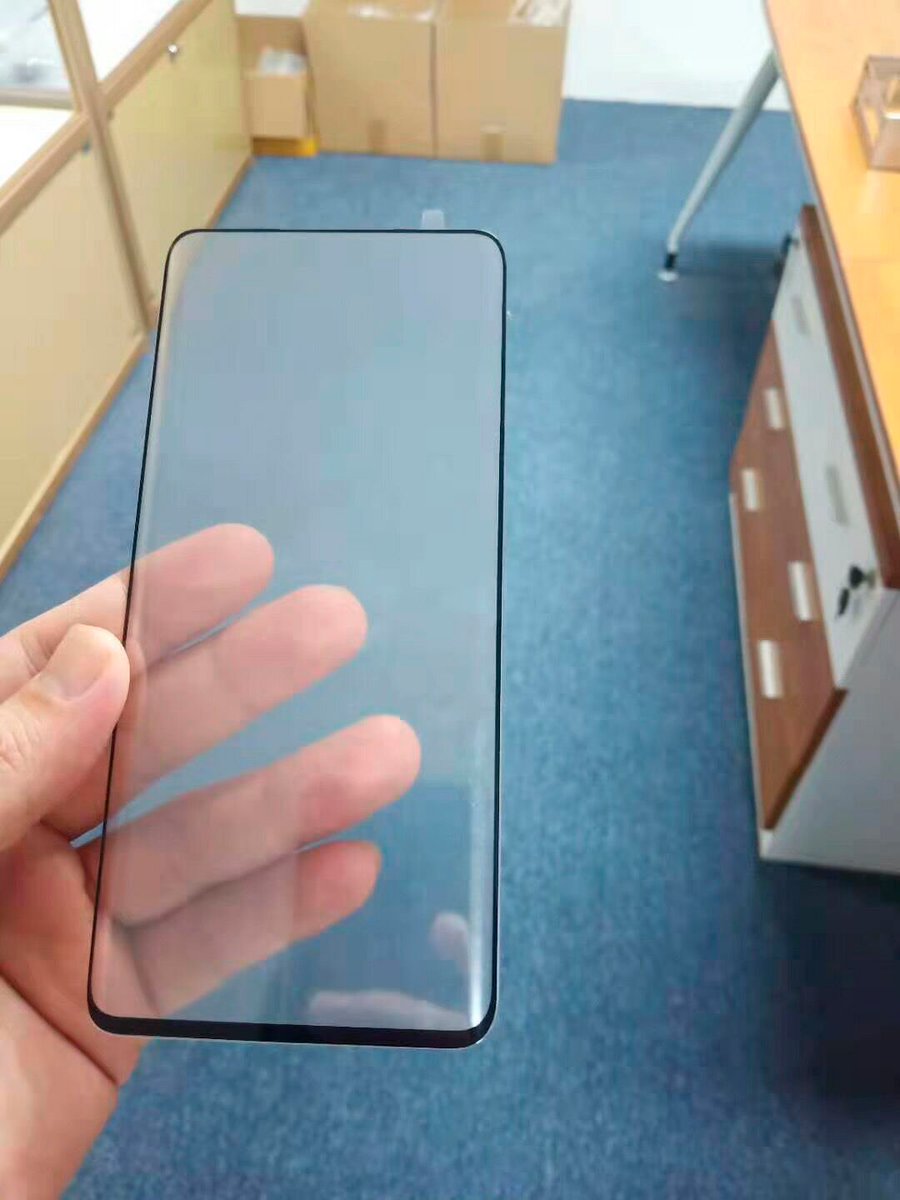
The Xiaomi Mi MIX 4 is one of the most anticipated flagships in the second half of the year and we expect Xiaomi to blow our minds just as it has done with its predecessors. There have been leaks regarding the phone’s specs already but today, images of the phone’s tempered glass have surfaced.
The tempered glass shows that Xiaomi will not be going with any of the popular trends such as a punch hole or a notch or even the new waterfall display design. Yes, the glass does have a certain degree of curvature to it but it is more like that of the Samsung Galaxy Note9 than that of the Vivo NEX 3.
1 of 3
Mi MIX 4 display glass
Mi MIX 4 display glass
Mi MIX 4 display glass
We are not yet sure but it appears Xiaomi will be going with a pop-up selfie design similar to that of the Redmi K20 Pro/Mi 9T Pro. Other rumors we have heard include a 90Hz refresh rate and a 2K resolution.
The phone is also expected to be powered by Qualcomm’s Snapdragon 855 Plus processor, up to 12GB of RAM and 1TB of storage, have wireless charging, a 108MP primary rear camera, an in-display fingerprint scanner, and a 5G version.
There are rumors that Xiaomi will announce the Mi MIX 4 on September 24. We expect more details of the phone will surface before then.
Are you looking for a best-buy in the midrange segment? If so, there are a lot of smartphones released during the last months which correspond to this description, including some of the main mid-rangers from the best brands. We recently saw the debut of the Redmi Note 8 that is the successor of the best-selling Xiaomi phone of the year, as well as Samsung Galaxy A50s which is the successor of one of the best-selling Samsung mid-rangers. Alongside these two handsets, even the Realme 5 hitten the market and it is the last affordable phone from Oppo’s sub-brand which is rivaling Redmi in the Asian market. All of these devices offer a well-balanced specs sheet at a very affordable price, that is why we think comparing them is an amazing idea for whoever is searching for the best value for money device in the sub-€200 segment.
Xiaomi Redmi Note 8 vs Oppo Realme 5 vs Samsung Galaxy A50s
Quad 12 + 8 + 2 + 2 MP f/1.8, f/2.2, f/2.4 and f/2.4
13 MP f/2.0 front camera
Quad 48 + 8 + 2 + 2 MP f/1.8, f/2.2 and f/2.4
13 MP f/2.0 front camera
Triple 48 + 8 + 5 MP f/2.0, f/2.2 and f/2.2
32 MP f/2.0 front camera
BATTERY
5000 mAh, fast charging 10W
4000 mAh, fast charging 18W
4000 mAh, fast charging 15W
ADDITIONAL FEATURES
Dual SIM slot
Hybrid Dual SIM slot
Dual SIM slot
Design
Unfortunately, we do not get a premium design with any of these handsets. In order to launch them at very affordable prices, the manufacturers decided to build them with a plastic body. So do not expect an amazing build quality, neither a premium look. Realme 5 is the only splash resistant phone here, while the Samsung Galaxy A50s is the only with an in-display fingerprint reader. Which would be your choice basing on these elements?
Display
As you probably understood if your smartphone-addicted, given that it comes with an under-display fingerprint scanner, the Samsung Galaxy A50s has a Super AMOLED panel too. Redmi Note 8 and Realme 5 both come with an IPS display (Realme 5 even has a lower HD resolution), while thanks to the AMOLED technology Galaxy A50s offers deeper blacks and more brilliant colors. That is why I would prefer its display over its rivals. The display size is more or less the same, Redmi Note 8 is just slightly smaller than its opponents with a 6.3-inch size and a 19.5:9 aspect ratio.
Specs & Software
According to overall benchmark scores and to the user experience a lot of people verified, the Snapdragon 665 chipset found on the Redmi Note 8 and Realme 5 is slightly more performing than the Exynos 9610 found on the Galaxy A50s. But the difference is so marginal that I would not mind. Instead, you should note that, unlike the Redmi Note 8 and the Galaxy A50s, Realme 5 does not have a memory configuration with 6 GB of RAM but it stops at just 4 GB. In each case, you get a highly customized user interface based on Android 9. If I had to choose depending on the potential performance, I would go for the Redmi Note 8.
Camera
The darker focal aperture of the Samsung Galaxy A50s alongside the inferior main sensor of the Realme 5 would let me define the Redmi Note 8 as the best camera phone of the comparison, at least when it comes to rear cameras. If we talk about front cameras, the Samsung Galaxy A50s is a lot better thanks to its superior 32 MP snapper.
Battery
The higher battery capacity of the Realme 5 and its lower display resolution will make it last a lot more on a single charge than both the Galaxy A50s and Redmi Note 8. So Realme 5 is undoubtedly the winner of the battery comparison.
Price
Redmi Note 8 starts from about €130/$145, just like the Realme 5, while Samsung is yet to unveil the price of the Galaxy A50s, but we expect it to cost about €250/$275 in India. Samsung Galaxy A50s looks like a slightly better device thanks to its better display and selfie camera, but if that will be its price, Redmi Note 8 has a way higher value for money. At the end of the day, you should go for the Realme 5 only if you need a monster battery, while Galaxy A50s and Redmi Note 8 are better options for the rest.
Huawei and the US are not exactly on their best terms despite the recent reprieve from the Trump administration. Currently, the telecommunications giant cannot buy or sell products to US companies for new devices. This is turning out to be incredibly damaging to the world’s second-largest smartphone maker, who relies on a number of American components to make its products. In fact, software solutions from companies like Microsoft and Google do not have viable replacements, making the ban even more damaging for Huawei.
Huawei also has products like the Matebook which runs on US based Microsoft’s Windows OS
But this ban affects US companies like Google as well, who have been Huawei’s long-time partners. In fact, Microsoft’s president, Brad Smith, recently said that the US ban on Huawei was both unfair and un-American. He calls for better transparency in Huawei’s case asking for more evidence. He further revealed that whenever Microsoft has approached the Trump administration about the Huawei case, it often gets a vague answer like, “Well, if you knew what we knew, you would agree with us.” Microsoft’s reply would often be, ‘Great, show us what you know so we can decide for ourselves. That’s the way this country works.’
He further warned that the Trump administrations ban could expand beyond Huawei possibly affecting the competitiveness of US companies on a global scale. He says “You can’t be a global technology leader if you can’t bring your technology to the globe.”
Smith believes the solution to this is working together on a global scale. Implementing standards for privacy and data collection that are accepted on an international level, including China, is the way to move forward.
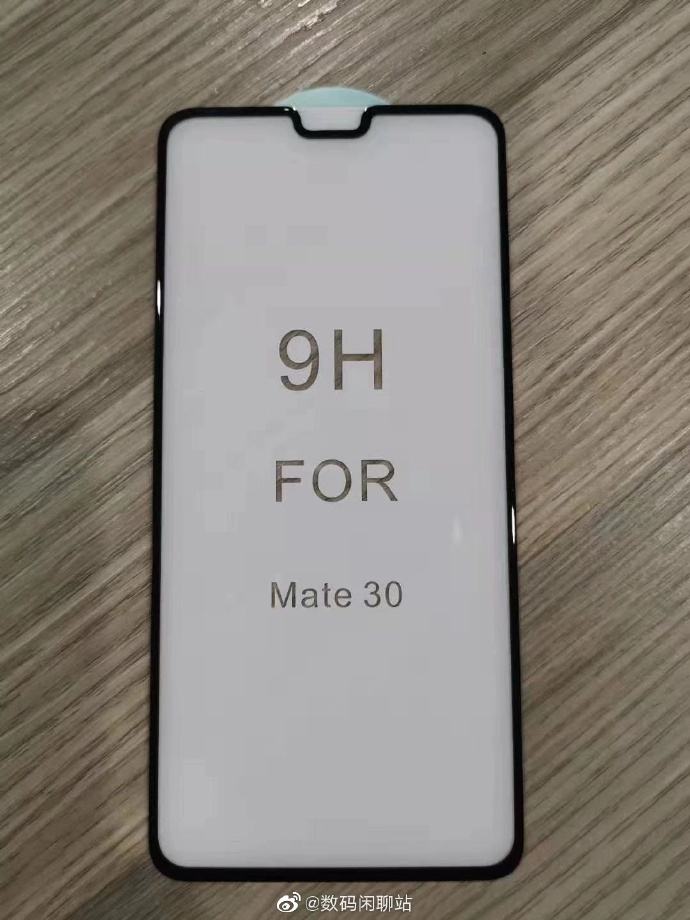
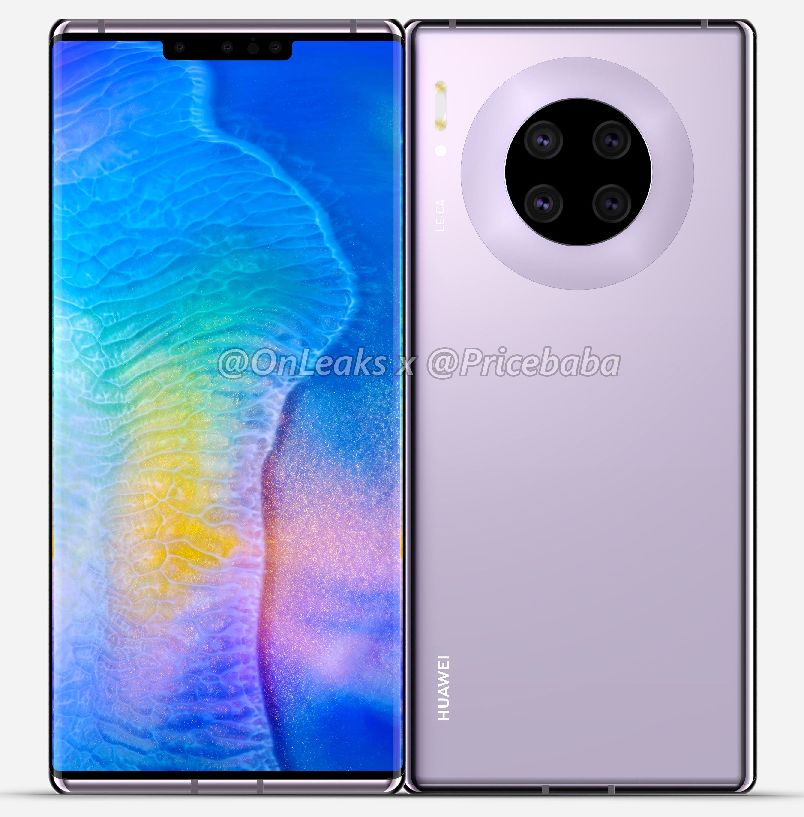
Despite the obstacle Huawei is facing as regards the use of Google services, the tech giant is scheduled to go ahead with the launch of the Mate 30 series on September 19. The series is comprised of the Mate 30 and Mate 30 Pro. Majority of the leaks have focused on the Mate 30 Pro but the tempered glass protector for the Mate 30 was outed online recently. The leaked tempered glass basically confirms the design of the display.
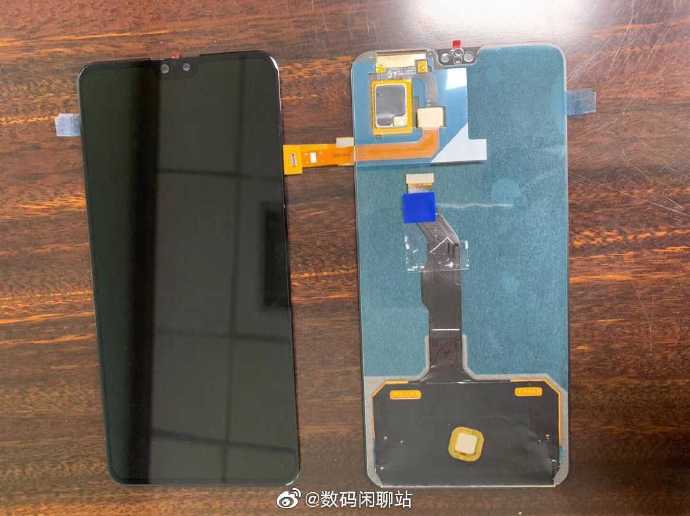
As shown in the leaked image, the Mate 30 adopts the notch design but the size of the notch is smaller than that of the Mate 30 Pro. The notch is just wide enough to house two camera sensors. Also, the screen doesn’t show any sign of a curved-edge screen like the Mate 30 Pro so, it is likely a flat-screen with ultra-slim bezels on all sides. An earlier leak of the display panel for the Mate 30 matches with this leaked tempered glass.
The Mate 30 had earlier been revealed to bring along support for an in-display fingerprint sensor. The device may join the Mate 30 Pro to be powered by a Hisilicon Kirin 990 5G chipset. There will also be a 4G version still packing a Kirin 990 SoC. However, the Mate 30 may be restricted to the Krin 990 chip without the 5G modem. In addition, Mate 30 is also expected to bring support for wireless charging.
Touted as one of the world’s leading smart lighting brand, Yeelight offers a wide selection of smart home lighting products such as table lights, furnishing lights, ambiance lights, and smart lighting control products.
The coveted brand has now teamed up with LightInTheBox to offer two of its well-received products for considerably reduced prices. So without wasting more time, let’s check out the details.
Yeelight USB Powered Small Night Light
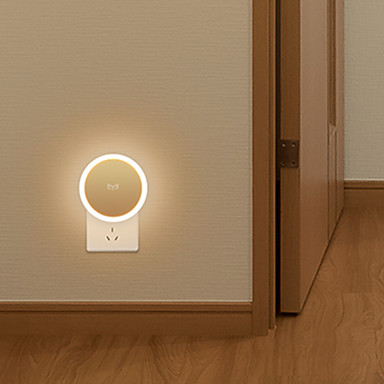
Marketed as a Xiaomi Ecosystem Product, the Yeelight USB Powered Small Night Light is quite easy to install as it comes with a hook, adhesive tape. Furthermore, it can be magnetized so there’s no need for using screws, nuts or any sort of other tools.
It has an advanced built-in light sensor and PIR motion sensor. The sensor offers a 120 wide trigger angle with a sensing range of 5-7 meters for a better experience. It has three modes including ON, OFF, and AUTO.
The white-tinted Yeelight USB Powered Small Night Light would normally set you back $24.63, but you can now buy it for just $10.99 from LightInTheBox. This is a noteworthy 55 percent reduction in the device’s original asking price.
You can visit this link to check out more details about the Yeelight USB Powered Small Night Light and place your order. Note that the Lightning Sale is slated to end shortly.
This plug-to-use sensor night light from Yeelight is ideal for the corridor, bedroom, stairs, and other dark corners of your home. With 2500K color temperature, it has a gentle effect even on tender eyes so you can use it in the baby’s room without worrying about any sort adverse effect.
It is equipped with wisdom recognition feature that automatically identifies whether day or night and adjusts the light intensity accordingly. Moreover, it has a built-in photosensor that determines the brightness of the ambient light.
When you activate the constant light mode, it lights up at night and turns off during the day automatically. The feature-rich Yeelight YLYD03YL usually retails for $12.31, but much to the relief of cost-conscious buyers, it is now available for only $6.59 on LightInTheBox.
This 46 percent off is currently available on the white color option of the night light. You can visit this link to grab the discount before the Lightning Sale wraps up.
On the eve of Smart Living 2020 event on Septemeber 17, Xiaomi will be launching various new smart products and new Mi TV in India. In a couple of new teasers via Twitter, Xiaomi revealed some of the unknown features of the upcoming Mi TVs. Along with several new product launches, the Chinese giant will bring Netflix support across the Mi TVs. Xiaomi officially confirmed this “biggest update” via its official @MiTVIndia Twitter handle.
"Kabhi kabhi lagta hai apun hi bhagwaan hai." 😉
Dropping the biggest hint of the season. Turn up the volume and listen to this. Tell us your guess with #MiTV in comments.
Xiaomi teased a video with Netflix chime accompanying a dialogue from a popular Indian title Sacred Games. However, so far Netflix support on Android-based Mi TVs was only possible by using either the Amazon Fire Stick or external Android TV Box. So, the official Netflix support is a precious gift and welcome move from Xiaomi India.
Unfortunately, Xiaomi didn’t confirm the availability of Netflix on existing Mi TVs. We have to wait for official words at the launch event on September 17.
Apart from the Netflix support, Xiaomi Global VP and MD of Xiaomi India, Manu Kumar Jain confirmed the launch of “the biggest and the best Mi TV in India.” He also threw some light on the TV specs, including 4K resolution support and 65-inch display size. He also said he’ll reveal more details about the TV if the post gets retweeted more than 65000 times.
In China, Xiaomi has already unveiled the 65-inch TV for the price ranging between Rs 30000 and Rs 70000. OnePlus is also preparing to launch its maiden smart TV on September 26th with a premium offering. It would be interesting to see healthy competition between these two rival Chinese companies in the smart TV market.
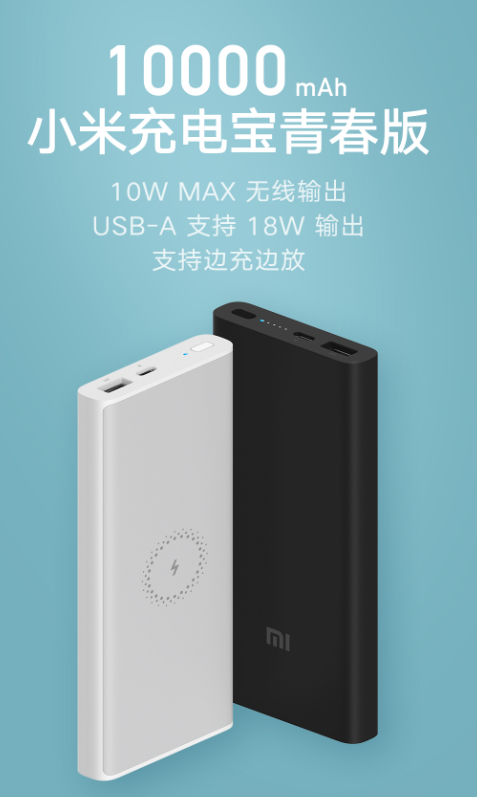
The Xiaomi 10000mAh Wireless Power Bank Youth Edition like the name says has a 10000mAh capacity. It also supports 2-way 18W wired fast charging and 10W wireless charging. You are definitely wondering what has changed since these are the same features as that of the regular version.
First, the Youth Edition now has a polycarbonate body instead of an aluminum alloy metal casing like the standard edition. The change in material means it is now lighter and less thick. Xiaomi says the weight has reduced by 75 grams and thickness has reduced by 1.8 millimeters.
The power bank also comes in two color variants – black and white, unlike the standard version that is only available in black. Last but not least is the lower price tag at ¥129 (~$18), which is ¥20 (~$3) less than the price of the standard version.
Other than these differences, you still get the same experience and functionality such as Qi wireless charging, a full-sized USB output port, and a USB Type-C port that doubles as both input and output port. There are also four LEDs for battery level indication and a fifth LED for wireless charging.
It will work with a variety of devices including the iPhone XS, the Galaxy S9, and the Mi 9. It also has nine built-in protections including foreign metal object detection.
The Xiaomi 10000mAh Wireless Power Bank Youth Edition is available for pre-order on the Youpin store and will go on sale at 10 AM on September 12.
Xiaomi has quietly launched a new pocket photo printer on Xiaomi Mall. The device is expected to up for crowdfunding on September 11. The Mi Portable Photo Printer will adopt a crowdfunding price of 299 yuan while retailing will start at 349 yuan after the exercise. It is expected to start shipping from October 2.
The Mi Pocket Photo Printer should rank among the smallest photo printers around. The outer casing is made of ABS/PC fireproof material with a finish that gives it an exquisite and beautiful finish. The entire device has only three buttons and is the size of a power bank. The portable printer can print photos in 3-inch sizes. It uses ZINK inkless printing technology, supports AR photos and music. The slider is loaded with paper and the photo paper can be printed easily.
Thanks to the support for AR technology, the print formats available are numerous, using the MIJIA app. You can still shoot or upload any video when you print photos and then use the Mijia APP to scan photos. Thus, you can experience the real and dynamic AR photos at any time. There several fun templates that can be deployed towards shooting creative photos.
According to a new forecast from the International Data Corporation (IDC), Worldwide Quarterly Mobile Phone Tracker shows signs of market recovery in the second half of 2019 and into 2020, hinting at the smartphone shipment growth.
As per the report, IDC expects shipment volumes to be nearly flat (-0.4%) in the second half of 2019 while the market declines 2.2% year over year for the full year, making 2019 the third straight year of global contraction. But, in the year 2020, IDC expects shipment growth to reach 1.6 percent.
It says that a ray of hope has arrived for the smartphone world in the form of 5G. Since the commercial deployments have begun in many regions, 2020 looks to be the year where 5G begins to ramp up. IDC expects 5G shipments to reach 8.9 percent of smartphones shipped in 2020, accounting for 123.5 million devices shipped. This is expected to grow to 28.1 percent by 2023.
The report says that Android‘s smartphone share will increase to 87.0 percent in 2019 from 85.1 percent in 2018 mostly due to 5G launches and expedited inventory cleanup of older devices. Volumes are expected to grow at a five-year compound annual growth rate (CAGR) of 1.7 percent with shipments of 1.3 billion in 2023.
If further adds that this year will remain a challenging one for Apple’s iPhone shipments with volumes expected to drop to 177.9 million, down 14.8 percent year over year. This is mostly being attributed to market maturity as well as a lack of 5G devices. Apple is expected to launch 5G smartphones next year.
Last week, Lenovo announced a trio of smartphones for the Indian market. The Lenovo Z6 Pro is its flagship phone for this year and it launched alongside the upper mid-range Lenovo K10 Note and the mid-range Lenovo A6 Note. Reports say Lenovo is preparing for another launch this Thursday for a number of audio products.
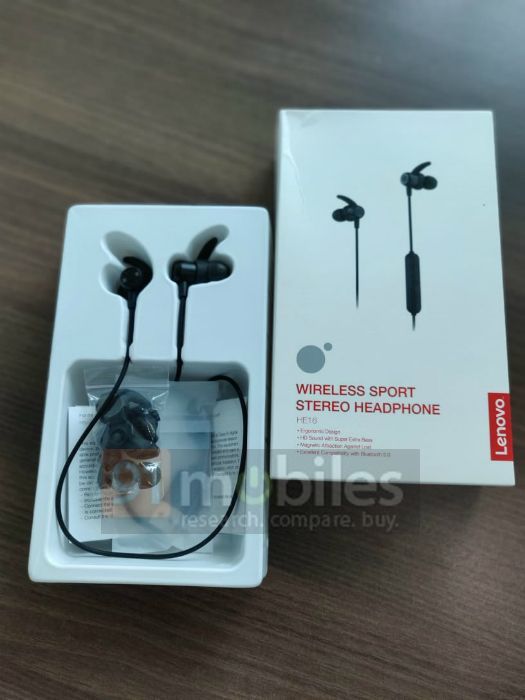
Ahead of the launch, details, and images of a pair of Bluetooth headphones and a pair of wireless earbuds have leaked. The Bluetooth headphone is called the Lenovo HE16 Wireless Sport Stereo Headphone while the earbuds are called the Lenovo HT10 True Wireless Bluetooth Earbuds.
1 of 3
Lenovo HE16 Wireless Sport Stereo Headphone
The HT16 Bluetooth headphone goes around the neck and the earbuds have wings for a secure fit inside the ears. It also has an in-line remote and comes with extra wings and ear tips.
Indian tech blog, 91Mobiles reports that the headphone will have Super Extra Bass, connect via Bluetooth 5.0, and offer 6 hours of playtime. They also mention a third headphone called the Lenovo HE15 which has a playtime of 12 hours.
The HT10 True Wireless Earbuds come in black with a case similar to that of the Redmi AirDots but with four LEDs in front to indicate the battery level. The box says it has HD Sound with Super Extra Bass, connects via Bluetooth 5.0, uses a Qualcomm 3020 audio chip with support for aptX HD audio, and has a battery life of 8 hours. It also works with Apple’s Siri voice assistant.
All three Bluetooth audio devices are expected to launch on Thursday, September 12.
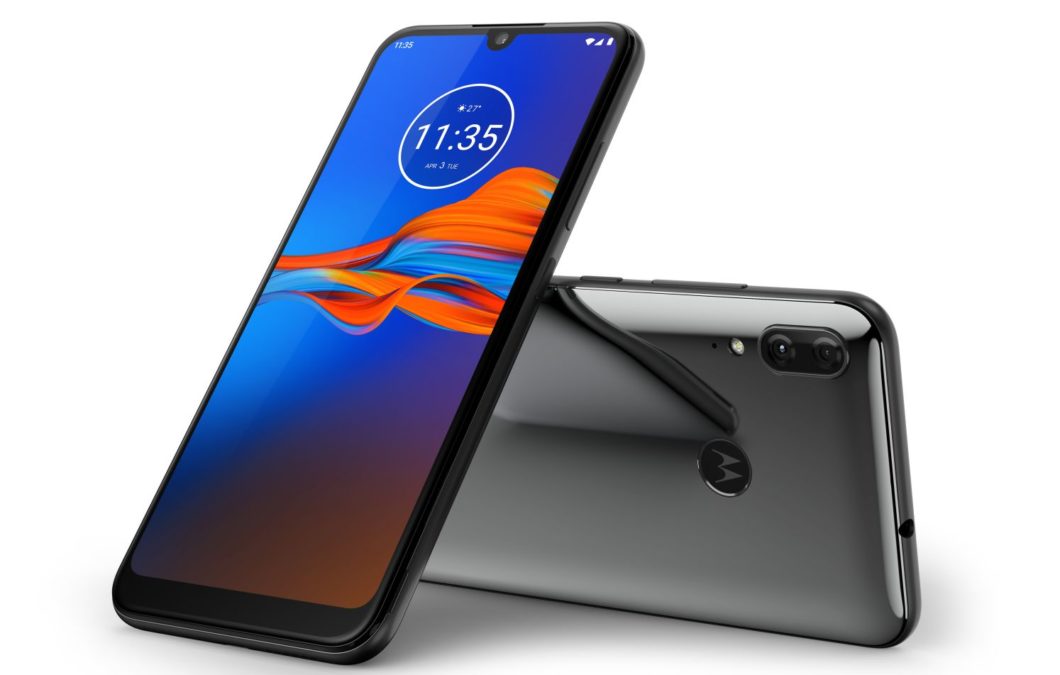
Motorola announced the Moto E6 Plus last week at the IFA 2019 in Berlin, Germany. The Lenovo-owned tech giants confirmed that the smartphone would be available soon. Shortly after the announcement, Motorola India has started teasing the E6 Plus, and the device is now listed on e-retailer Flipkart with the hashtag #AbNoCompromise. A few key details of the device are available on the listing. Flipkart has teased an image of the Moto E6 Plus with the caption “Can You Guess the Price?” The Lenovo-owned company has also scheduled a launch event in India on Sept. 16. The company is likely to announce the Moto E6 Plus on the said date.
Zyaada storage, kam price. #AbNoCompromise on storing important files, your favorite movies, music and more, with 64 GB internal storage at an unbeatable price. Stay tuned for something new and exciting! pic.twitter.com/AkD5Lwo1D6
The Moto E6 Plus features a 6.1-inch HD+ Max Vision notched display with a resolution of 1560 x 720 pixels along with an aspect ratio of 19.5:9. The device is powered by a 2 GHz MediaTek Helio P22 octa-core chipset that tags along with PowerVR CE8320GPU. The device features 4GB of RAM and 64GB of internal storage that is expandable up to 512GB with a microSD card.
The Moto E6 Plus boasts of a dual camera setup at the rear. The primary lens is a 13-megapixel unit, which works in conjunction with a 2-megapixel sensor and an LED flash module. The secondary camera is an 8-megapixel unit and is housed within the front notch. The E6 Plus is powered by a 3,000 mAh battery and features a rear-mounted fingerprint scanner. Connectivity options include 4G VoLTE, Bluetooth 4.2, Wi-Fi 820.11 a/b/g. Micro USB, GPS/A-GPS and a 3.5mm AUX port. The smartphone measures 155.6 x 73.1 x 8.6 mm and weighs 149.7 grams. The device boasts of P2i water-repellent nano coating.
Motorola E6 Plus Price
There is no word on the official pricing for India as of yet. But, the Moto E6 Plus was showcased at the Berlin IFA with a price tag of 139 euros (~$154), which roughly translates to Rs. 11,000. At that price point, the device will have to fight against stiff competition from Xiaomi and Realme in India.
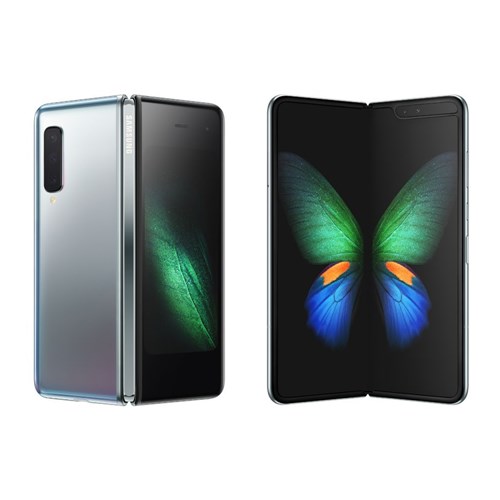
Only two smartphone giants have come close to releasing a commercial foldable smartphone this year. But both the companies have encountered issues in the development and release process, leading to several delays. Most of you know which two companies I am talking about but for those who don’t, they are Samsung and Huawei. They are the top two smartphone makers in the world today, with years of experience making high-end products. But both of them struggled to release their first commercial versions of the foldable. This goes on to show how challenging it is to make a foldable smartphone.
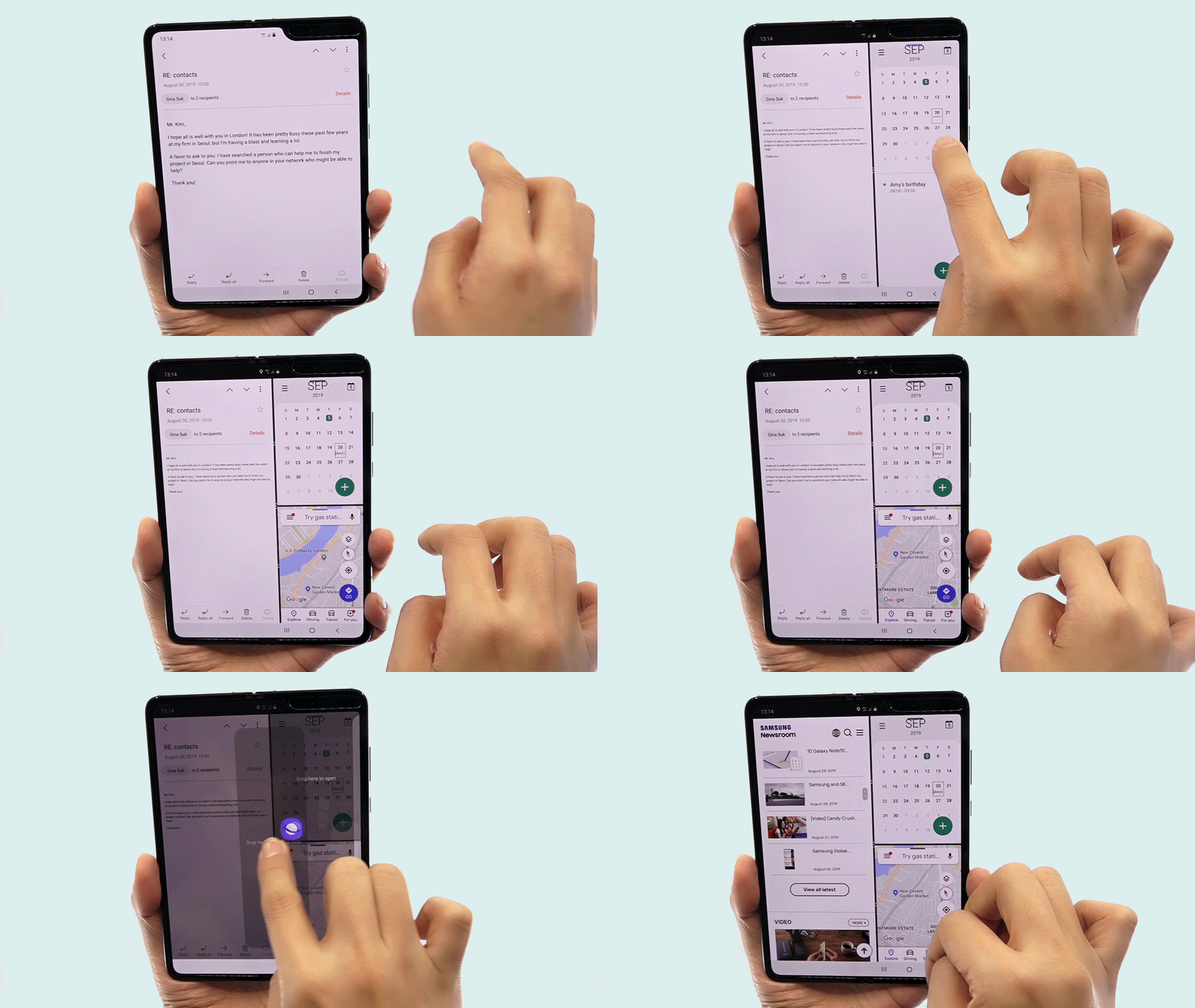
Despite months of delay, the first foldable smartphone from Samsung is finally up for sale this month and the company has just revealed a few more details on the software side of things. Samsung revealed today that it collaborated with Google as well as the developer community to optimize hundreds of frequently used Android apps for the Galaxy Fold. These apps include Amazon Prime Video, YouTube, Facebook, and even Microsoft Office.
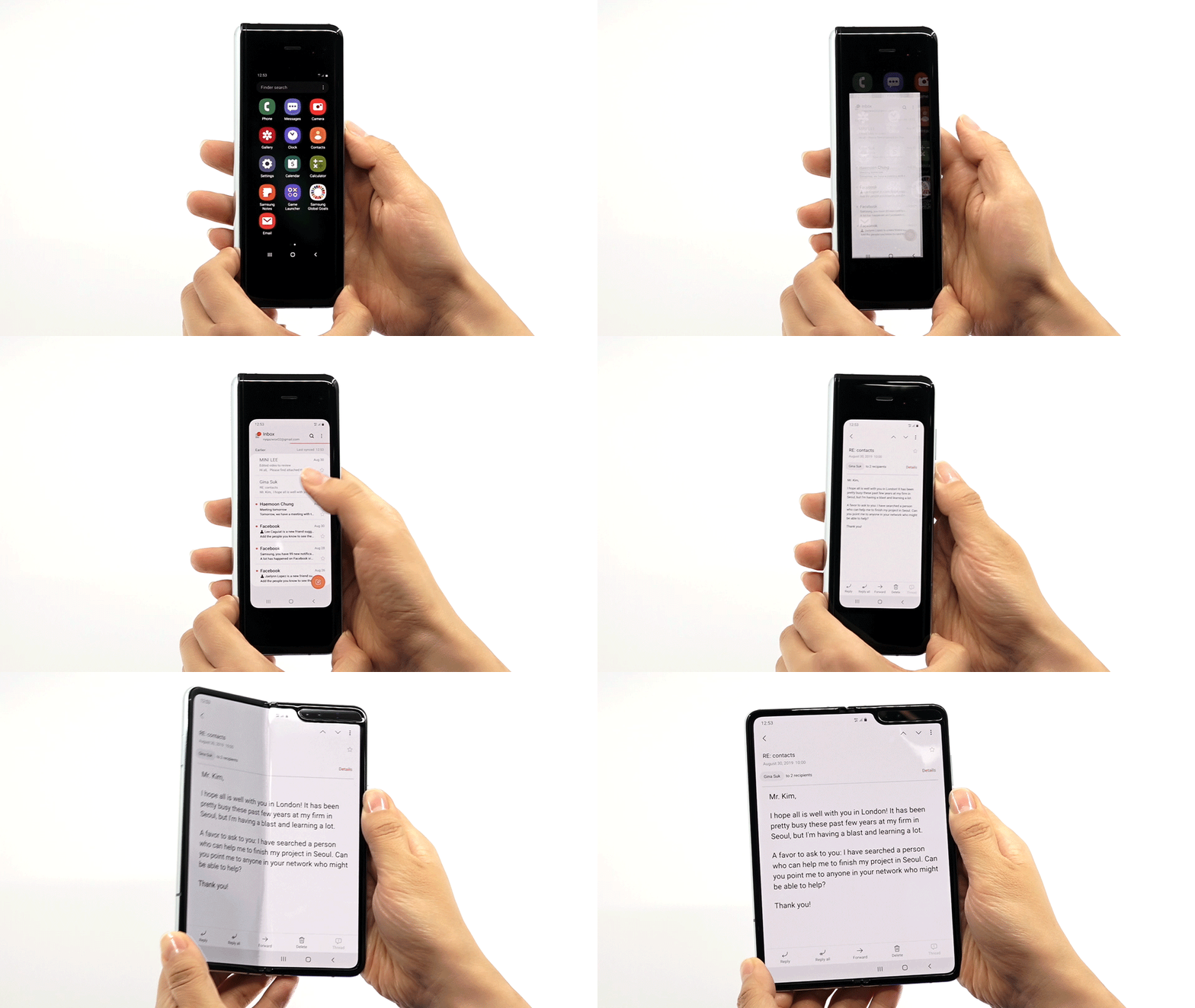
The unique design of the Galaxy Fold necessitates app optimization. For example, the Galaxy Fold comes with features such as app continuity (app automatically expands onto the large screen when you open up the foldable) and multi-active window (open up to three apps side by side on the main screen). Since the app sizes and aspect ratios differ significantly when switching from the cover display to the main display, app optimizations ensure that they work flawlessly during the process.
Samsung Galaxy Fold Multi Active Window
But given the sheer number of Android apps available on the Play store, neither Samsung or Google can optimize all of them. For this, the Galaxy Fold features a special built-in app-optimization technology that automatically converts the app’s size and ratio to fit the display, with a tap of a button.
Samsung has even set up test labs for optimizing Android apps in Korea, the US, as well as China. For those who can’t physically access these labs, the company in collaboration with Google set up a ‘remote test lab’ which could be used by developers to optimize their apps using an emulator.
Foldables mark a significant milestone for the smartphone industry and software will play an even greater role in taking full advantage of its new-age design. The phone is already on sale in South Korea and will launch internationally in the coming days.
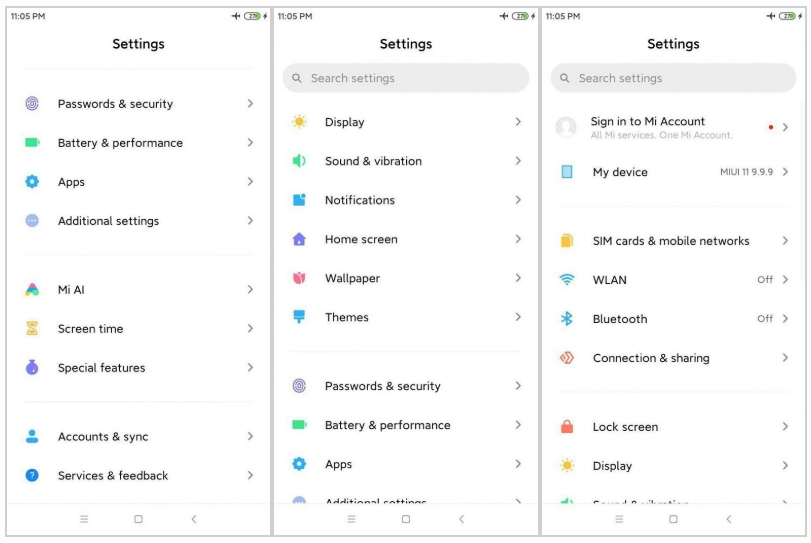
Chinese smartphone manufacturer Xiaomi is currently developing the next version of its custom Android user interface which will be called MIUI 11. The company’s product director recently hinted that the launch of the new custom ROM isn’t far off. The new version is expected to come with several improvements over the MIUI 10.
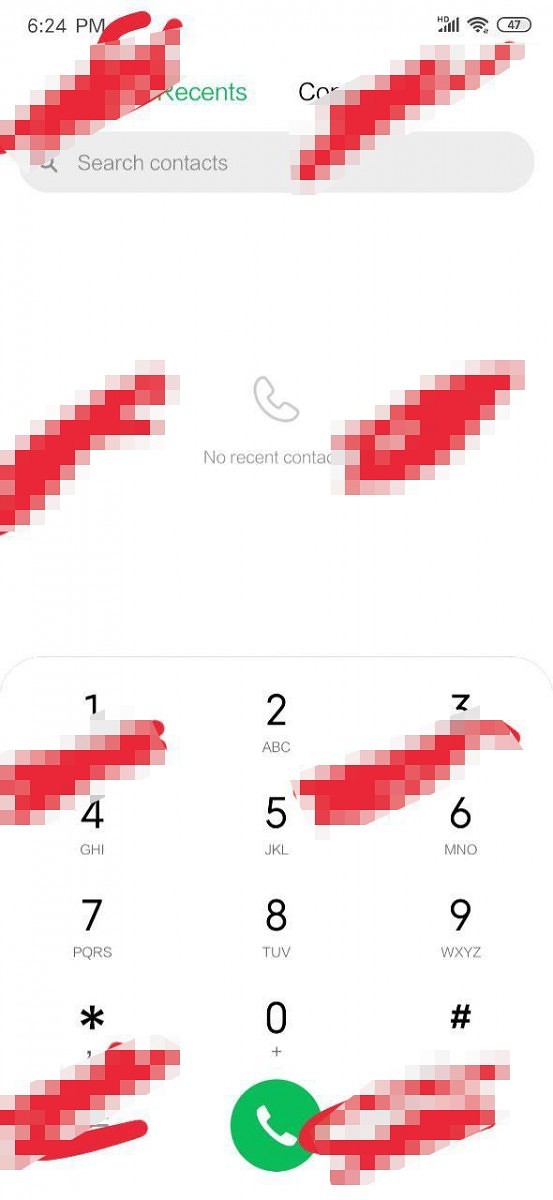
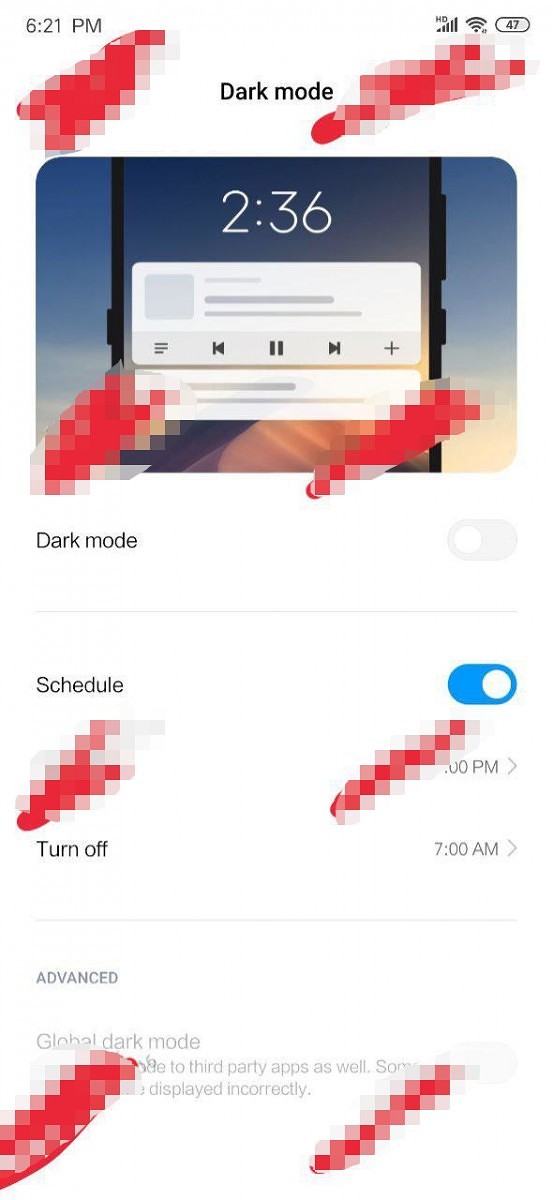
Now, ahead of its official announcement, Xiaomi accidentally rolled out MIUI 11 for a handful of devices, including the Redmi K20 Pro, Mi Mix 2S, and Mi 6, giving us an early look at the upcoming custom skin.
The company had revealed that the MIUI 11 will come with new iconography, which is visible in the leaked images. The icons are more colorful, but there doesn’t seem to be consistency in size or shape unlike stock Android 10.
Also, Xiaomi seems to have updated the design as well. The motto for the upcoming UI is “Empowering the productive”, and thus, the company has opted to offer a lot of white space and big, bold text throughout.
Coming to the features, the new MIUI will come with the cross-device file sharing service which was recently announced in a collaboration between Xiaomi, Oppo, and Vivo. Also, the Always-on Display features include changing the text color automatically over time, adding a Kaleidoscope-style, an outer space style that changes the light depending on the sunrise/sunset schedule at your location, and more customization options.
It seems like the leaked MIUI 11 for Xiaomi devices is an early pre-release build, so there’s a possibility that the final build could come with other new features as well. We are also expecting the company to introduce Ad Switch in the new MIUI, as Xoaomi has promised.
Miami-based low-cost mobile manufacturer Blu revealed their new lineup of premium smartphones on Monday. The Bold N1 is the first device in the new lineup. The company plans to launch two devices in this segment per year. The Bold brand deviates from traditional Blu products as it offers ‘guaranteed Android upgrades’ and two years of security maintenance. The Bold N1 is also composed of ‘higher-grade’ materials and boasts of mid-to-high end hardware capabilities.
Blu Bold N1 Specifications and Features
The Bold N1 features a 6.4-inch AMOLED display with a resolution of 1080 x 2340 pixels. It misses out on a notch or punch-hole selfie camera but gets an in-display fingerprint scanner. The design has a 92% screen-to-body ratio and is protected by Gorilla Glass 5. Powering the Bold N1 is a 2.1 GHz octa-core MediaTek Helio P70 chipset with 4GB of RAM and 128GB of native storage. The latter is expandable through a microSD card.
The Bold N1 uses a dual camera setup at the rear. The primary lens is a 16-megapixel Sony IMX499 sensor with an aperture rating of f/1.8. It works together with a 5-megapixel depth sensor and an LED flash. The camera setup on the N1 offers users with 30x digital zoom and advanced Night Mode. The sensor merges three images into one, while the standard video resolution is 1080 pixels at 30fps. The front camera is a 13-megapixel pop-up unit with an aperture rating of f/2.0. It features a wide-angle mode for capturing better selfies.
The Blu Bold N1 is powered by a 3,500 mAh battery with 18W Ultra Quick Charge. The device supports wireless charging. Standard connectivity options include USB Type-C, Wi-Fi and Bluetooth. The smartphone runs on Android 9.0 Pie out-of-the-box and is slated for an Android 10 upgrade at some point in the future.
Blu Bold N1 Price and Availability
The Blu Bold N1 is priced at $249.99 on Amazon. Blu has announced a launch discount of $50 on all purchases made at their official website. This is a limited period offer and is valid till stocks last. The unlocked device works with all major carriers in the U.S. including AT&T, T-Mobile and Verizon. The smartphone is available in Raven Black.
OPPO A9 (2020) and OPPO A5 (2020) are the two rumored A-series phones that have been in the rumors since some time. While the launch date of OPPO A5 (2020) remains a mystery, OPPO India has confirmed through a tweet that it will be launching the OPPO A9 (2020) smartphone on Sept. 16. Also, 91mobiles has learnt through its retail sources, the smartphone will be made available for purchase by the end of this month.
Rumors surrounding the OPPO A9 (2020) has revealed that it features a big display of 6.5 inches with waterdrop notch. It carries support for HD+ resolution of 720 x 1,600 pixels. The handset will be debuting as the company’s first phone with Snapdragon 665 and it may come with up to 8 GB of RAM along with up to 128 GB of native storage.
The ColorOS 6.1 based Android 9 Pie OS will come preloaded on the OPPO A9 (2020). The front notch of the phone will be sporting a 16-megapixel selfie shooter. The back panel of the phone has a vertically arranged quad camera setup that is expected to come with a 48-megapixel lens, an 8-megapixel lens, a 2-megapixel sensor and another 2-megapixel lens. The smartphone could be housing a huge battery of 5,000mAh capacity. The smartphone measures 163.6 x 75.6 x 9.1mm and it weighs 196 grams.
The OPPO A9 (2020) may arrive in color options like Black, White, Blue and Green. The handset may arrive in India with a price tag of Rs. 21,000. Its TENAA appearance has suggested that the smartphone may go official in China in the coming weeks. It is also expected to go official in markets like Vietnam and Malaysia in the coming days. The rumored OPPO A5 (2020) is expected to come with some downgraded specs compared to A9 (2020). The A5 (2020) may feature less amount of RAM and weaker cameras.
At the recently held IFA 2019 tech trade show in Berlin, Germany, Huawei announced the Kirin 990 chipset that will be powering the Mate 30 series that is scheduled to go official on Sept. 19. The launch event for the Mate 30 series will be held at Munich, Germany on the said date. In an interview session after the company’s IFA 2019 event, Huawei Consumer Business Group CEO Richard Yu said that the Mate 30 series will be listed and sold in China first.
The Huawei Mate 30 series is expected to debut with AOSP edition of Android that won’t feature Google apps. Yu has claimed that the company will provide a workaround through which users will be able to manually install Google apps on Mate 30 series by themselves in the international markets.
So far, the rumor mill has revealed that the Mate 30 Pro may come with a 6.6-inch display that offers quad HD+ resolution. It will be equipped with a wider notch and it will be flaunting waterfall effect like extremely curved edges. The handset come may come with an in-display fingerprint scanner and advanced 3D face unlock feature. The wider notch of the Mate 30 Pro is said to be housing as many as three camera sensors.
The newly unveiled 7nm Kirin 990 chipset with integrated 5G modem powers the Mate 30 Pro. The rear side of the phone has a quad camera system that may consist of a pair of 40-megapixel sensors, an 8-megapixel telephoto lens and a ToF sensor. The four cameras of the phone will be housed inside a round-shaped module. The smartphone is expected to arrive with a 4,500mAh battery that may support 55W rapid charging and 30W wireless charging. The company is also expected to release the 5G version of Mate 30 Pro. As of this writing, there is no information available on the pricing of the phone.
A couple of weeks ago, Chinese smartphone maker Meizu launched its flagship smartphone named Meizu 16s Pro. Today, the company has announced that the phone will now be available in a new color option — Twilight Forest.
The Twilight Forest color option of the Meizu 16s Pro will go on sale from tomorrow in China at 10:00 AM local time. It comes with 6GB of RAM and 128GB of internal storage and is priced at 2,699 Yuan, which roughly converts to $380.
The Meizu 16s Pro, which is flanked with glass panels on both sides and a metallic frame in between measures only 7.65mm in thickness and it weighs 166 grams. It features a 6.2-inch Super AMOLED display that offers an aspect ratio of 18.6:9, a screen-to-body ratio of 91.53 percent, and Full HD+ screen resolution of 2232 x 1080 pixels.
The display of the phone is embedded with a Super mTouch in-screen fingerprint scanner that is claimed to be 25 percent more responsive than the one available on the Meizu 16s. Also, the Meizu 16s Pro’s display offers features like 96.1 percent DCI-P3 color gamut, 103 percent NTSC color gamut, 430nits brightness, 160Hz sampling rate, and DC dimming.
Under the hood, the phone is powered by the Snapdragon 855+ mobile platform that is equipped with 2.96GHz octa-core processor. It is coupled with up to 8GB of LPDDR4X RAM and up to UFS 3.0 256GB of native storage.
It comes with a triple camera setup consisting of Sony IMX586 48-megapixel primary lens with f/1.7 aperture and OIS, a Sony IMX350 20-megapixel telephoto lens with f/2.4 aperture and a 117-degree Sony IMX481 16-megapixel ultrawide lens with f/2.2 aperture. There’s a 20-megapixel selfie camera lodged in the slim bezel on the front carries support for AI beauty as well as face unlock support.
Running on Android 9 Pie operating system out-of-the-box with the company’s own custom user interface, the phone is powered by a 3,600mAh battery that comes with support for 24W rapid charging technology.
With a lot of people choosing wall chargers over regular USB chargers, manufacturers are now coming up with high-end chargers that plug directly into the outlet, unlike desktop chargers that are connected by a cord.
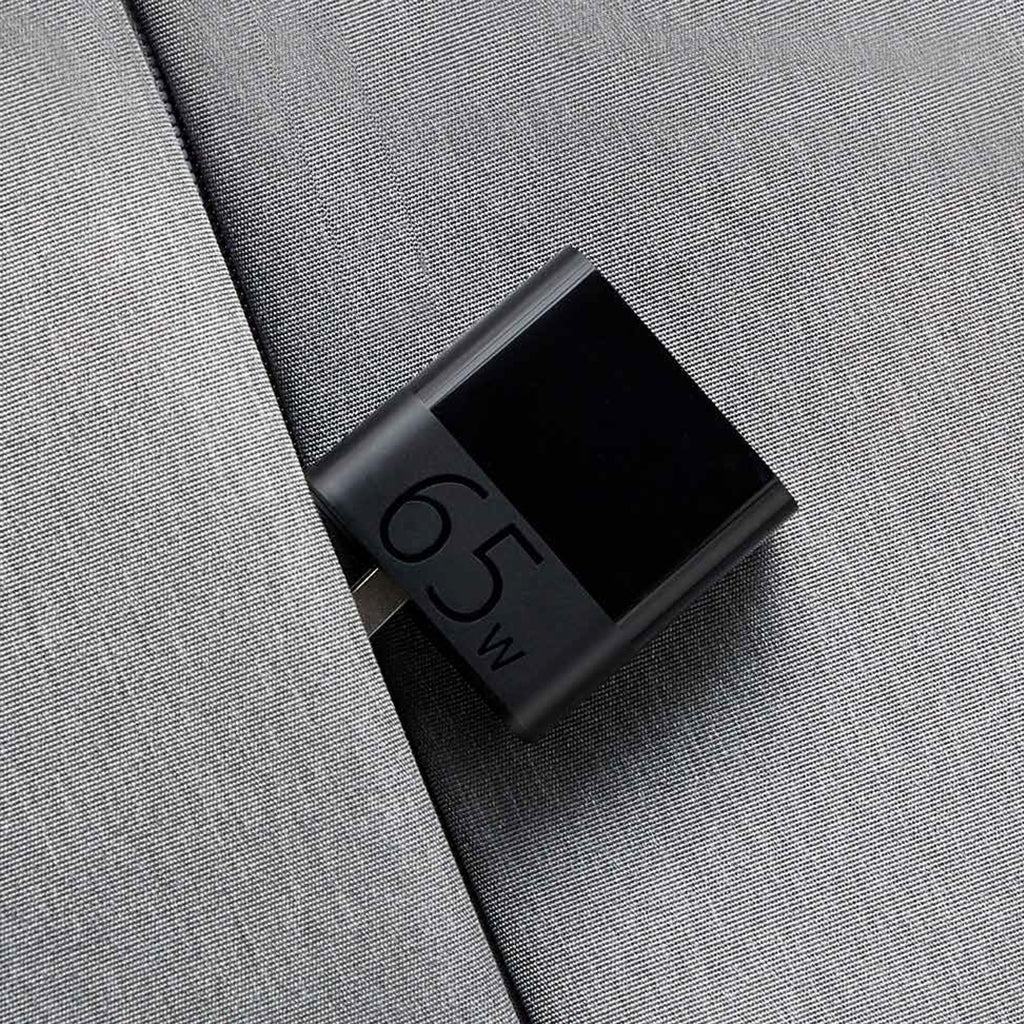
To meet the undying demand for non-GaN wall chargers, ZMI USA will soon launch the ZMI zPower Turbo 65W USB-C PD Wall Charger, which is housed a compact and super lightweight body. Much to the delight of cost-conscious buyers, the 65W USB-C PD wall charger has gone up for pre-order priced at a fraction of the cost of GaN-based alternatives on Giztop.
The ZMI 65W USB-C PD Wall Charger Kit is designed to work with newfangled USB-C laptops, phones, tablets, and other mobile devices. It uses 65W output to power USB PD enabled gadgets and can charge the 13-inch MacBook Pro to a hundred percent in just about a couple of hours.
If you are a frequent traveler, the lightweight design of the charger allows you to easily carry it everywhere you go. Moreover, it comes with a 5-meter (4.92-foot) USB-C to USB-C cable with e-mark and offers multi-layer protection.
The ZMI 65W USB-C PD Wall Charger Kit is currently available for pre-order bearing a $29.99 price tag on Giztop.
You can follow this link to place your pre-order and check out more details about the feature-laden wall charger from ZMI USA. Note that the delivery of the product can be expected by mid-September this year.
Motorola has had its share of ups and downs over the past few years. However, things are starting to slowly settle down for the company with its G series and One series models doing well in the budget and mid-range segment. Now, the company thinks it’s the perfect time to get back into the premium segment. This is indeed big news given that Motorola’s last real flagship, the Moto Z2 Force was announced nearly two years back!
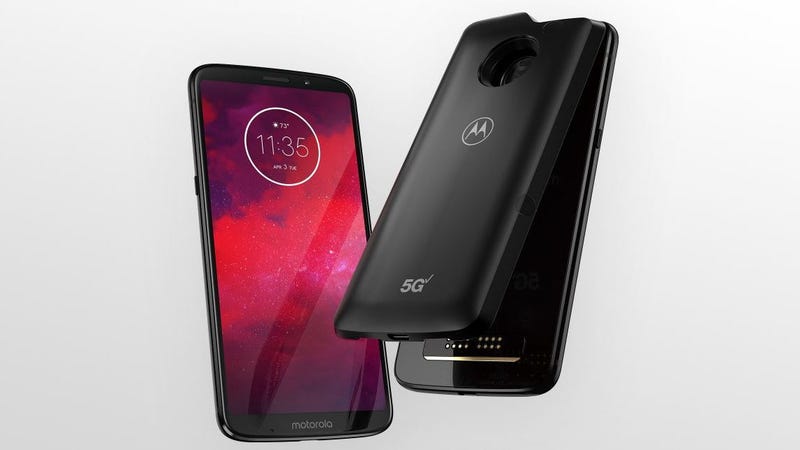
Motorola’s head of global marketing strategy, Francoise LaFlamme said to CNET that the brand will launch a 5G, premium flagship smartphone. The company’s last 5G phone was the Moto Z3 which needed a separate 5G mod (costing an additional $350) to connect to the new generation network. So this upcoming 5G flagship should be the company’s first true 5G smartphone.
Francoise seems to hint that this phone would not sacrifice on features to keep the price low. So, we may finally see the latest Snapdragon 800 series processor inside, unlike the Moto Z3 which used 2017’s Snapdragon 835. There’s also a remote possibility that Motorola could use Samsung’s Exynos chipset for its 5G phone. The South Korean smartphone maker has two great 5G chipsets available, one featuring an integrated design. If you recall, the Motorola One Vision has an Exynos 9609.
Motorola One Vision features Exynos 9609
As for its price, the premium Motorola 5G flagship won’t likely be cheap. Given that the company is calling it premium, we can expect it to be priced around the same lines as other 5G flagship smartphones like the Galaxy S10 5G or even the OnePlus 7 Pro 5G.
It’s possible that this 5G phone may see a limited release at launch, with a focus on markets like the US and the UK.
We use cookies on our website to give you the most relevant experience by remembering your preferences and repeat visits. By clicking “Accept”, you consent to the use of ALL the cookies.
This website uses cookies to improve your experience while you navigate through the website. Out of these, the cookies that are categorized as necessary are stored on your browser as they are essential for the working of basic functionalities of the website. We also use third-party cookies that help us analyze and understand how you use this website. These cookies will be stored in your browser only with your consent. You also have the option to opt-out of these cookies. But opting out of some of these cookies may affect your browsing experience.
Necessary cookies are absolutely essential for the website to function properly. This category only includes cookies that ensures basic functionalities and security features of the website. These cookies do not store any personal information.
Any cookies that may not be particularly necessary for the website to function and is used specifically to collect user personal data via analytics, ads, other embedded contents are termed as non-necessary cookies. It is mandatory to procure user consent prior to running these cookies on your website.