Huawei’s own upcoming operating system — HongMeng OS, is widely believed to be the company’s answer to Google’s Android mobile OS. The HongMeng OS was confirmed by Huawei when the US government banned the Chinese giant.
The HongMeng OS is developed based on open-source Android and in the recently concluded test, the operating system was found to be around 60 percent faster than Android mobile OS.
Now, Catherine Chen, Senior Vice President and a Board Member of Huawei said that the upcoming HongMeng OS is not for smartphones and the company is planning to continue using Google’s Android operating system on its smartphones.
She added that the recently-trademarked Hongmeng operating system is for industrial use and the system has been in development long before the current discussions around finding an alternative to Android. She further said that the HongMeng is very secure because of fewer lines of codes compared to a mobile OS and has an extreme low latency compared with a smartphone operating system.
Earlier, during an interview, Huawei’s founder and CEO had said that the HongMeng OS will be used in a wide range of products, including routers, network switches, tablets, computers and data centers.
This is interesting as the HongMong OS was being tested on smartphones and a few testers have also shared their experience. It seems that the company decided not to use HongMeng OS for smartphones after the Trump administration said that US firms can resume doing business with Huawei under certain conditions. This means that Huawei can now regain access to Google’s Android.
The Chinese giant has also trademarked another operating system named Harmony OS. It could be the global name of the HongMeng or the name of its Android alternative. Whatever be the case, we expect the company to shed more light on this during Huawei’s Annual Developers Conference next month. The company is also expected to unveil its all-new EMUI 10 custom user interface for the Android OS during the same conference.
Honor has scheduled a launch event in China on 23rd July for the launch of the Honor 9X smartphone, where the company is also expected to launch the Honor 9X Pro.
Ahead of the launch, the company has shared details about the camera configuration of the Honor 9X and has also shared camera samples of the same, showcasing the impressive low-light photography performance.
The smartphone will come featuring a 48-megapixel AI triple camera setup on the back panel where it will have a 48-megapixel Sony IMX586 as the primary camera sensor. The company adds that the phone captures stunning images during night time without the need of the LED Flash.
As for the camera configuration of the Honor 9X Pro, it is being reported that it will have the same camera setup as the Honor 20 Pro, which is currently placed second in camera performance by DxOMark.
It’s already known that the Honor 9X series smartphones are powered by the company’s newly announced Kirin 810 octa-core processor, manufactured using the 7nm process. The company has revealed that the Kirin 810 is one of the nine major features of the smartphone and more will be revealed at the launch event.
The smartphones will come with a notch-less display, as revealed by the leaked renders of the upcoming Honor 9X series devices. The smartphone will reportedly come with a 6.59-inch IPS Full HD+ display and will pack up to 8GB of RAM and 256GB of internal storage.
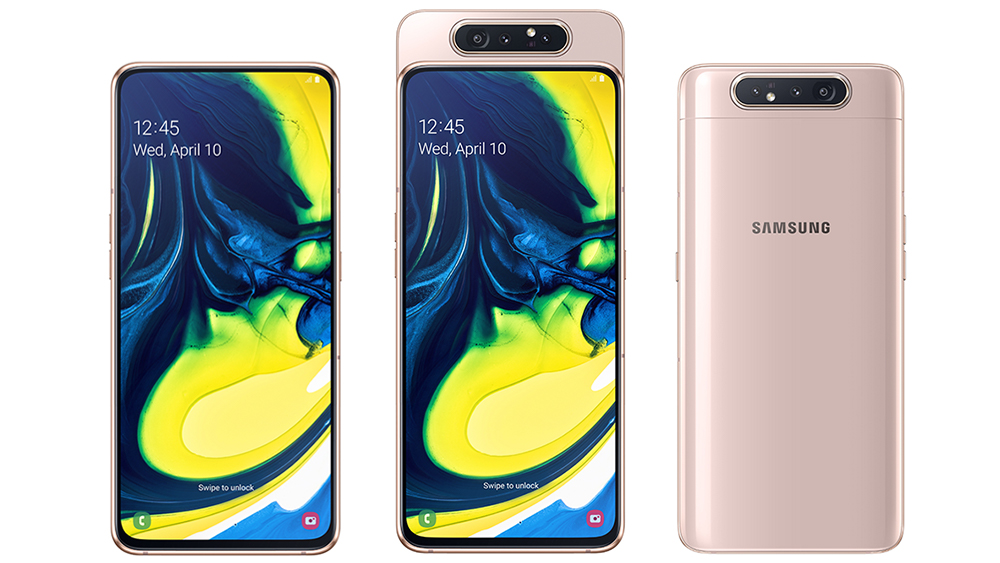
After its first arrival in Thailand in April, the Samsung Galaxy A80 is gradually being made available in other countries. Earlier this month, the Galaxy A80 was made available for purchase in China. The handset was rumored to arrive in India in June. However, it has landed now in India with a price tag of Rs. 47,990 (~$698).
Samsung Galaxy A80 Specifications and Features
The Galaxy A80 has a 6.7-inch AMOLED display with New Infinity notch-less design. It offers a tall aspect ratio of 20:9 and carries support for 1080 x 2500 pixels full HD+ resolution. The display of the smartphone is fitted with an in-screen fingerprint sensor.
The Snapdragon 730G 8nm octa-core processor that works at 2.2GHz is present under the hood of the Galax A80 along with Adreno 618 graphics. The SoC is coupled with 8 GB of RAM. The smartphone features an internal storage of 128 GB. There is no external storage support on the device. The Android 9 Pie OS on the Galaxy A80 is customized with One UI interface.
The rear side of the Galaxy A80 is fitted with an LED flash enabled triple camera setup that includes an f/2.0 aperture 48-megapixel main lens, an f/2.2 aperture 8-megapixle ultrawide lens and a 3D ToF (Time of Flight) lens. There is no front-facing camera on the device. The rear positioned triple camera setup can move up at rotate to function as front-facing cameras for capturing selfies. The South Korean company has included a 3,700mAh battery inside the Galaxy A80 along with support for 25W fast charging. It lacks support for 3.5mm audio jack.
Samsung Galaxy A80 Price and Availability
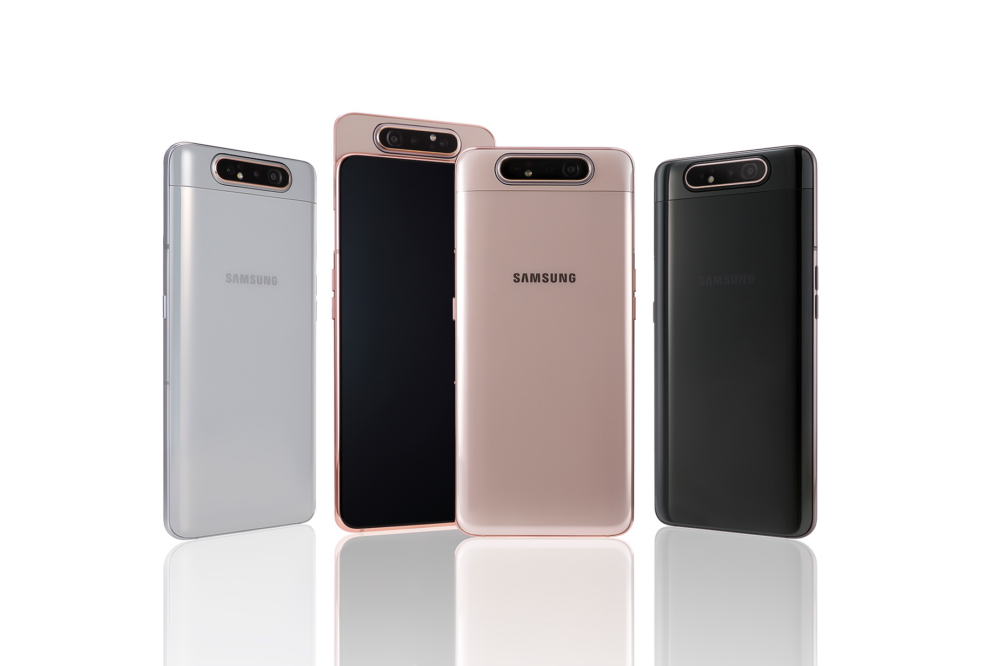
The Galaxy A80 comes in a sole edition of 8 GB RAM + 128 GB storage in India that carries a price tag of Rs. 47,990. Citibank credit card users can avail 5 percent cashback on the purchase of the Galaxy A80 smartphone. The handset can be bought in colors like Phantom Black, Ghost White and Angel Gold.
Starting from Aug. 1, the Galaxy A80 will be made available for purchase through Samsung’s online shop, Samsung Opera House, all the popular online retail stores and offline outlets. Interested customers can pre-book the smartphone between July 22 and July 31. Those who pre-book the phone will be able to take advantage of free one-time screen replacement offer.
Xiaomi-backed Black Shark has so far launched three gaming smartphones — Black Shark, Black Shark Helo, and Black Shark 2. Now, the company is gearing up to launch yet another smartphone model — Black Shark 2 Pro in China later this month.
The company has officially revealed through a microblogging platform Weibo that it will be launching the Black Shark 2 Pro smartphone at a launch event on 30th July. The phone is expected to come powered by the newly announced Snapdragon 855 Plus SoC.
A couple of days ago, when Qualcomm announced the upgraded Snapdragon 855 Plus processor, Black Shark was among the smartphone makers to welcome the new chipset, hinting that they are working on a device powered by that chipset.
Asus has already announced that its upcoming ROG Phone 2 which is set to launch on 23rd July in China, will come powered by the SD855 Plus chipset. Given that the processor is focused towards the gaming smartphone, it’s highly likely that the Black Shark 2 Pro will be powered by the same chipset.
Black Shark 2 gaming smartphone was launched earlier this year in March, featuring a 6.39-inch AMOLED TrueView display offering Full HD+ screen resolution, 19.5:9 aspect ratio, DC dimming, Always-on Display, eye protect mode and in-screen fingerprint sensor.
The smartphone features a dual-camera module that comprises of an f/1.7 aperture 48-megapixel main sensor and a 12-megapixel telephoto lens with 2x optical zoom. For snapping selfies, it is equipped with a 20-megapixel front camera with f/2.0 aperture.
It is powered by the Snapdragon 855 SoC and comes with two-style Liquid Cooling 3.0 technology can drop the processor’s temperate by up to 14 degrees. The SoC is supported by up to 12 GB of RAM and 256GB of internal storage. It runs BlackShark OS flavored Android 9 Pie OS and is powered by a 4,000mAh battery that carries support for Quick Charge 4.0 fast charging.
Recent reports have claimed that Vivo is gearing to launch the Vivo S1 smartphone in India. It is rumored to be the very same handset that was introduced earlier this week in Indonesia. Vivo India has released a first teaser to hint the arrival of the Vivo S1 smartphone which suggests its arrival could be close at hand.
The below shown teaser ends with “all new S series coming soon’ message. Rumors have it that Vivo’s upcoming series of smartphones will be aimed towards offline markets. As mentioned above, the Vivo S1 that was unveiled in recently will be debuting as the first S-series Vivo phone in India soon. A recent report had claimed that the Vivo may announce the Vivo S1 smartphone on Aug. 15 in the country.
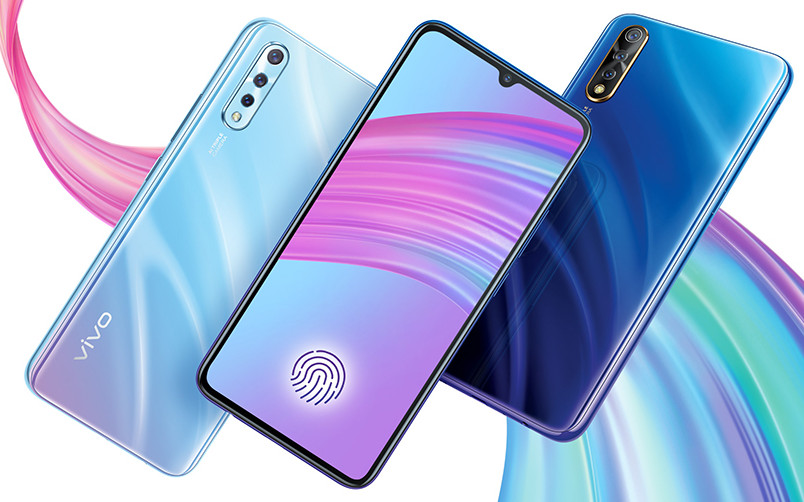
The Vivo S1 has a 6.38-inch Super AMOLED display with waterdrop notch that offers full HD+ resolution of 1080 x 2340 pixels. The Vivo S1 is the first ever smartphone to feature the new mid-range MediaTek Helio P65 chipset. The SoC of the phone could be assisted by 6 GB of RAM. It may arrive in India in 64 GB and 128 GB storage choices.
The front notch of the Vivo S1 is the home for a 32-megapixel selfie camera. The rear shell of the smartphone has a vertical triple camera setup that includes a 16-megapixel primary lens, an 8-megapixel ultrawide lens and a 2-megapixel depth sensor. The handset is backed by a 4,500mAh battery that supports 18W dual-engine fast charging. The FunTouch OS 9 flavored Android 9 Pie OS runs on the device.
Vivo S1 Price in India
According to a leak, the Vivo S1 will hit the Indian markets in two options such as 6 GB RAM + 64 GB storage and 6 GB RAM + 128 GB storage. The base model of the smartphone could be priced at Rs. 17,990 (~$259) whereas the higher variant may cost around Rs. 20,000 (~$290). It may arrive in color choices like Sky Blue and Dark Blue. The Chinese firm may begin with its pre-orders in early August before its first sale on Aug. 15.
Listings for ASUS_I001DA and ASUS_I001DB model numbers were spotted on TENAA with images and some specs had appeared yesterday. The leaked specs and images confirmed that the listings belong to the forthcoming ASUS ROG Phone II smartphone. The TENAA listings for the smartphone are now updated with full specifications.
TENAA reveals that the ROG Phone 2 has 170.99 x 77.6 x 9.78mm dimensions. It’s a bulky device it weighs 240 grams. The predecessor ROG Phone that came last year measured 158.8 x 76.2 x 8.3mm and weighed 200 grams. The original smartphone housed a 6-inch 18:9 aspect ratio supporting display that supported full HD+ resolution of 1080 x 2160 pixels. The ROG Phone 2 has a bigger OLED display of 6.59 inches. It offers 19.5:9 aspect ratio and 1080 x 2340 pixels full HD+ resolution. Its already known that the ROG Phone 2’s display will offer a refresh rate of 120Hz. The handset will be coming in a single color option of black.
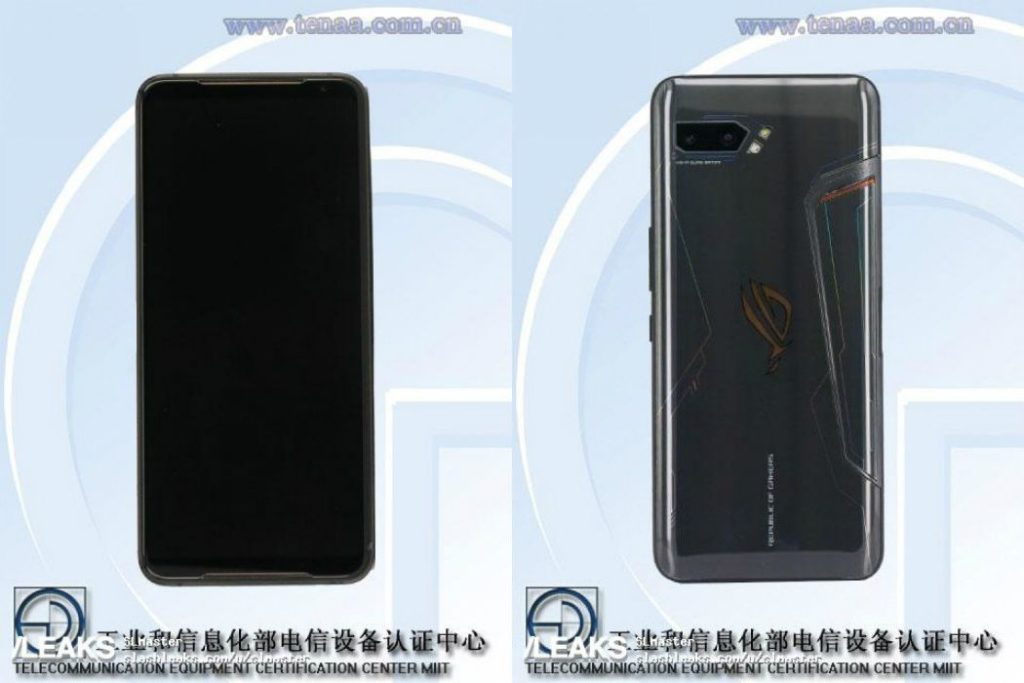
The front view of the ROG Phone II smartphone shows that its display has regular bezels like the original ROG Phone. Also, it seems to be equipped with dual front-firing speakers. The rear side of the phone largely resembles the predecessor model in terms of design. The horizontally arranged dual camera setup is assisted by two LED flash units. The ROG logo could be equipped with RGB light and it may also function as notification LED. There is no fingerprint scanner on the backside of the smartphone.
The ROG Phone II TENAA listing states it is powered by 2.95GHz octa-core processor. ASUS has already confirmed that the ROG Phone 2 will be launching as the world’s first smartphone powered by the all new Snapdragon 855 chipset. The Android 9 Pie OS runs on the device.
The smartphone will come in RAM options like 6 GB and 8 GB in China. It will be offered in storage choices like 128 GB, 512 GB and 1 TB. The smartphone is packed with a massive battery of 5,800mAh (minimum) capacity. Its typical capacity could be 5,900mAh. The predecessor model came with a 5,000mAh battery. The handset lacks support for external storage slot.
TENAA usually lists things like fast charging and screen fingerprint in ‘special features’ section. However, both the features are not mentioned on ROG Phone 2’s TENAA listing. The 3C listing of the smartphone has revealed that it carries support for 30W fast charging. There is a possibility that the smartphone could be equipped with an in-screen fingerprint reader.
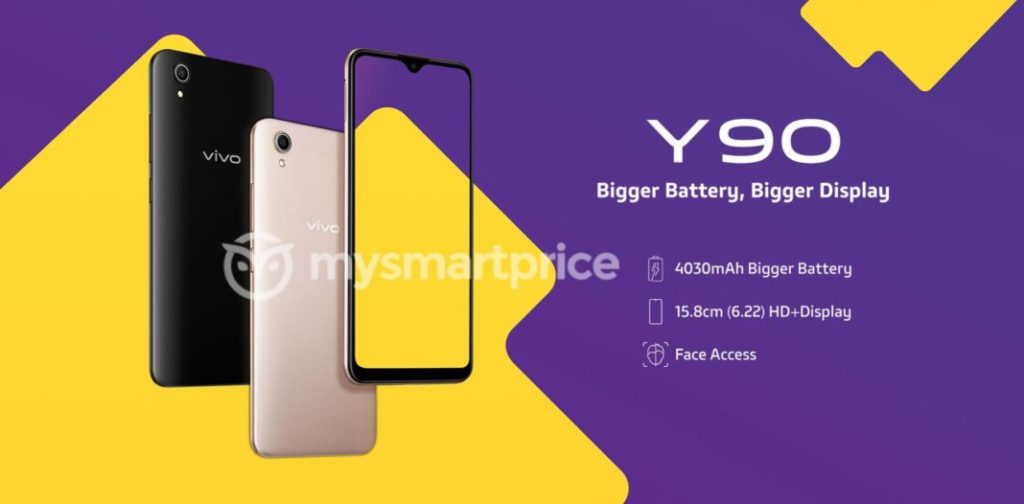
At the beginning of this month, leaked information had revealed that Vivo India will be soon introducing an entry-level smartphone with Vivo Y90 moniker. The leak had claimed that the smartphone could be arriving with a starting price of Rs. 6,990 in India. Only few details such as RAM, internal storage, front and rear camera configurations of the Vivo Y90 were revealed through its first leak. Now, MySmartPrice has shared more information on its specifications. Also, it has also shared press renders of the smartphone.
Based on new information leaked by reliable tipster Ishan Agarwal, the publication has revealed that the Vivo Y90’s will be arriving with key features like big battery and large display. The smartphone will be featuring a 6.22-inch display with waterdrop notch. It will carry support for HD+ resolution. The smartphone will be housing a big battery of 4,030mAh capacity. Since it is an entry-level smartphone, it is unlikely to carry support for fast charging.
He has also revealed that the Vivo Y90 will be fueled by 12nm octa-core processor. It will be arriving in the country in two models such as 2 GB RAM + 16 GB storage and 3 GB RAM + 32 GB storage. The FunTouch OS 9 based Android 9 Pie OS will come preloaded on the device.
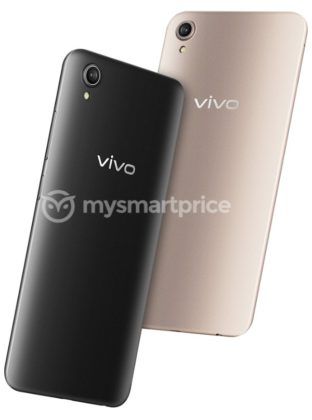
The selfie notch of the smartphone will be housing a 5-mgeapixel front-facing camera. The handset will carry support for face unlock through the front camera. The leaked renders of the phone show that it will be sporting a polycarbonate build. The images show that the Vivo Y90 does not feature a fingerprint scanner on its rear. Also, it reveals that it will be available in Black and Gold color options. Another tipster has claimed that the phone will be equipped with MediaTek Helio A22.
As mentioned above, the 2 GB RAM + 16 GB storage edition of the Vivo Y90 smartphone is expected to carry a price tag of Rs. 6,990. The pricing will allow the smartphone to compete with the likes of Redmi 7A, Realme C2 and Samsung Galaxy M10 in the country.
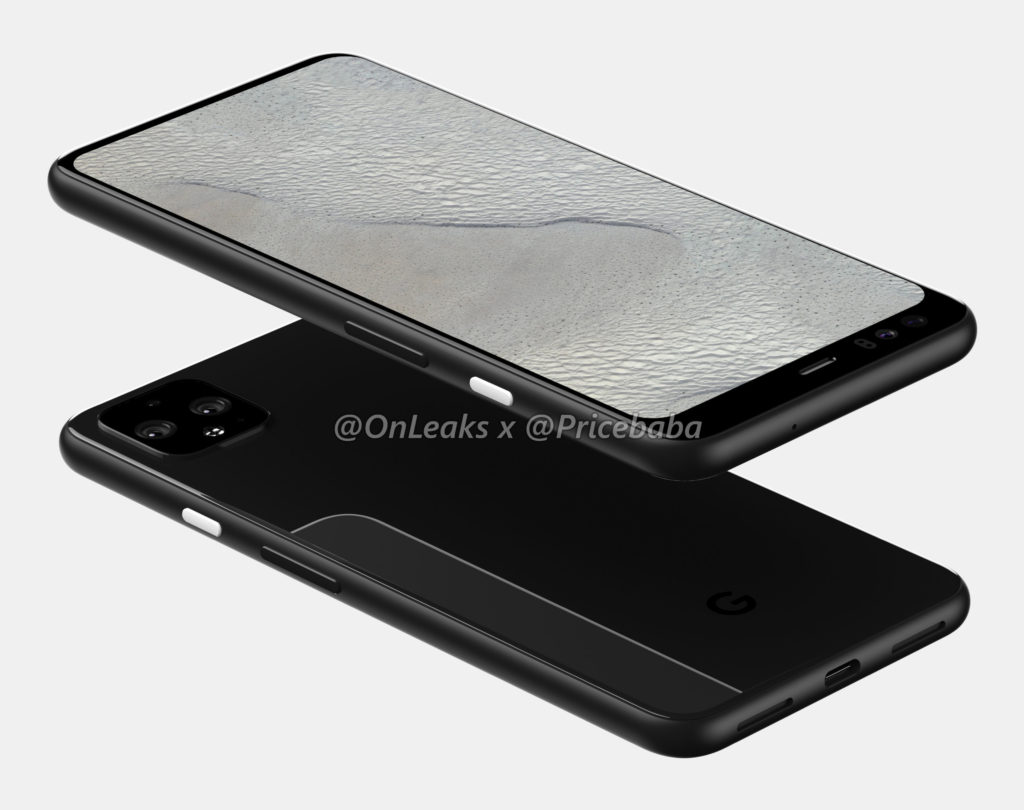
In October, Google is expected to announce Pixel 4 and Pixel 4 XL smartphones as successor for the Pixel 3 and Pixel 3 XL handsets from last year. Renders and key details of the Pixel 4 series have appeared in the recent past. A new report from BGR carries vital information on the specifications of Pixel 4 and Pixel 4 XL smartphones.
Based on information coming from “reliable inside sources”, the publication has revealed that for the first time Pixel smartphones will be equipped with 6 GB of RAM. Google has been selling Pixel smartphones since year 2016. All Pixel phones that have released so far have featured only 4 GB of RAM. The publication has further stated that Pixel 4 and Pixel 4 XL smartphones will be equipped with 128 GB of native storage. There is no confirmation on whether the Pixel 4 series will be available in higher storage versions.
The Pixel 3 came with an 18:9 aspect ratio display that supported full HD+ resolution of 1080 x 2160 pixels. The Pixel 4 will be coming with a tall screen that offers 19:9 aspect ratio and full HD+ resolution of 1080 x 2280 pixels. The Pixel 3 XL has an 18.5:9 aspect ratio display that supports Quad HD+ resolution of 1440 x 2960 pixels. Its successor i.e. Pixel 4 XL will be also arriving with 19:9 aspect ratio display that produces 1440 x 3040 pixels.
Past reports have revealed that the Snapdragon 855 chipset will be fueling the Pixel 4 and Pixel 4 XL smartphones. It remains to be seen whether the Pixel 4 series will be featuring the recently announced Snapdragon 855+ which is nothing but an overclocked version of the Snapdragon 855. There is no information on the camera configurations of the Pixel 4 series yet.
CAD renders of the Pixel 4 XL that had surfaced in the last week had revealed that it will be featuring a 6.25-inch AMOLED display, an in-screen fingerprint scanner, dual front-facing cameras, and triple rear cameras. The Pixel 4 will be featuring a slightly smaller screen, an in-display fingerprint reader and dual rear cameras.
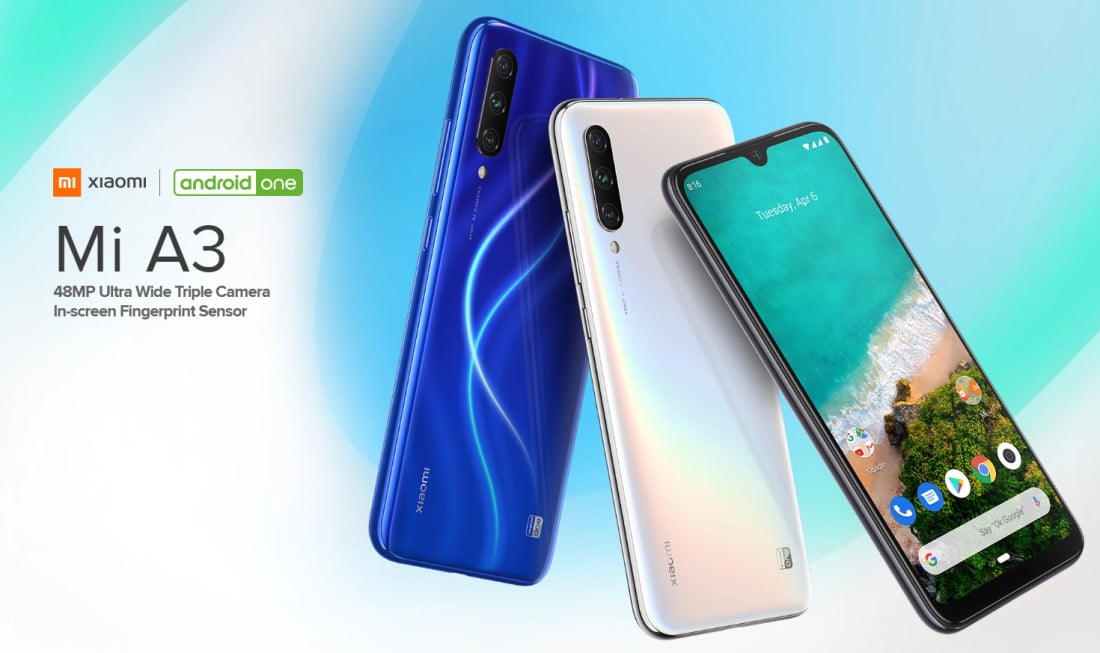
The most important Chinese companies are focusing a lot on the global market in the latest years. The A series from Xiaomi created for the global market became so important that even Android One gained a lot of popularity thanks to this line-up. And now, the iconic series has a successor: Xiaomi Mi A3. But besides Xiaomi, even Oppo and Vivo released new mid-rangers for the global market. Oppo came up with the Reno Z, the most affordable variant of the Reno series, while Vivo launched the global version of the Vivo S1. If you live outside China, this specs comparison may be very useful if you are looking for a new mid-ranger.
Xiaomi Mi A3 vs Vivo S1 vs Oppo Reno Z
Xiaomi Mi A3
Vivo S1
Oppo Reno Z
DIMENSIONS AND WEIGHT
153.5 x 71.9 x 8.5 mm, 173.8 grams
159.53 × 75.23 × 8.13mm, 179.5 grams
157.3 x 74.9 x 9.1 mm, 186 grams
DISPLAY
6.01 inches, 720 x 1560p (HD+), 286 ppi, Super AMOLED
6.38 inches, 1080 x 2340p (Full HD+), 404 ppi, Super AMOLED
6.4 inches, 1080 x 2340p (Full HD+), 403 ppi, AMOLED
Triple 24 + 8 + 2 MP f/1.8, f/2.2 and f/2.4
32 MP f/2.0 front camera
Triple 16 + 8 + 5 MP f/1.8, f/2.2 and f/2.4
32 MP f/2.0 front camera
Dual 48 + 5 MP f/1.7 and f/2.4
32 MP f/2.0 front camera
BATTERY
4030 mAh, fast charging 10W
4500 mAh, fast charging
4035 mAh, fast charging 20W
ADDITIONAL FEATURES
Hybrid Dual SIM slot
Hybrid Dual SIM slot
Dual SIM slot
Design
One of the best qualities of the Xiaomi Mi A3 is its amazing design alongside its build quality. Despite it is a budget phone, it is equipped with a glass rear back with very suggestive light effects which vary depending on light reflection, as well as an aluminum frame and the strong Gorilla Glass 5 protection. It is beautiful and it is even the most compact phone of the trio, despite the presence of a big battery. Even Oppo Reno Z and Vivo S1 come with an original design and solid materials, but they have a plastic frame instead of a metal one, so a less solid build quality and a less elegant design.
Display
While in my opinion, Xiaomi Mi A3 is the winner of the design comparison, it loses immediately when it comes to the display. The reason why we exclude it at the beginning is a too low resolution of the panel: someone considers Xiaomi Mi A3 a downgrade of the predecessor Mi A2 because it has just an HD+ resolution. Vivo S1 and Oppo Reno Z have Full HD+ and AMOLED display, so definitely better. Between these twos, Oppo Reno Z should be the winner because it is HDR10-compliant and it should be able to show richer colors.
Specs & Software
A lot of people associate Mediatek chipsets to low performances, but it is not so: MediaTek improved its processor a lot in the last period, despite it does not produce flagship chipsets anymore. As Master Lu showed, the Helio P90 is one of the best chipsets in terms of AI performance, and it is on board of the Oppo Reno Z. Further, we also believe that thanks to the Helio P90, Oppo Reno Z will perform better than Xiaomi Mi A3 and Vivo S1 in most of the scenarios. It even has more RAM: 6 or 8 GB depending on the chosen configuration, while Xiaomi Mi A3 and Vivo S1 stop at just 4 GB. Last but not least, Oppo Reno Z comes with up to 256 GB of internal storage (instead of 128 GB), but it lacks a micro SD slot. While Oppo Reno Z wins the hardware comparison, Xiaomi Mi A3 looks more interesting on the software side because it is Android One-powered, so it will have faster updates for a long time.
Camera
Xiaomi Mi A3 is the overall best camera phone of this trio. It is equipped with a rear triple camera including a 48 MP main sensor and an 8 MP ultrawide lens, as well as an amazing 32 MP selfie camera. Vivo S1 has a triple camera as well, but just a 16 MP main sensor with a reasonable quality. So the second place goes to the Oppo Reno Z and its 48 MP dual camera with a bright f/1.7 focal aperture.
Battery
In order to give you a definitive verdict on the battery life, we have to test the global version of the Vivo S1 (it just debuted, so we had no chance to test its battery life). It has the biggest battery, but there is to consider that Xiaomi Mi A3 has more efficient hardware components. So it will be a hard fight.
Price
Xiaomi Mi A3 costs €250/$282 globally, Oppo Reno Z starts from €330/$372 and Vivo S1 costs €230/$260. Due to its bigger and better display, its pretty nice cameras and its higher performances, Oppo Reno Z looks more interesting to me. But a lot of people may prefer the Xiaomi Mi A3 with its compact and premium design, a long battery life, Android One, and its outstanding cameras. Despite I would not go for it, the Xiaomi Mi A3 has more strong points.
Ever since Android was officially made available for smartphones, manufacturer decided to add their own flavor of UI on top of the operating system. This led to significantly different experiences on different smartphones running the same OS underneath.
Google wasn’t happy with such variance in the Android experience. The company had an ideal view of how the operating system should work on an Android phone but it couldn’t force companies to ditch their customizations. This eventually led to the birth of the Google Nexus series, one of the most sought out lineup by Android enthusiasts across the globe. So if you have been following the Android landscape ever since its inception, it’s highly likely that you’ve heard or seen the first-ever smartphone in the Google Nexus lineup, the HTC Google Nexus One.
HTC was a major smartphone maker back then and it wasn’t a surprise that the search engine giant decided to partner with them to make its first smartphone. The hardware partners have changed a few times since Nexus’ inception, but one thing was common among all partners – they were given freedom to design these Nexus phones. But the software would be controlled by Google and it would become the base of how a perfect Android phone ran on the latest version of the OS. Being the first-ever Nexus smartphone, the HTC Nexus One has a special place in our hearts. So let’s take a closer look at what it had to offer back in 2010.
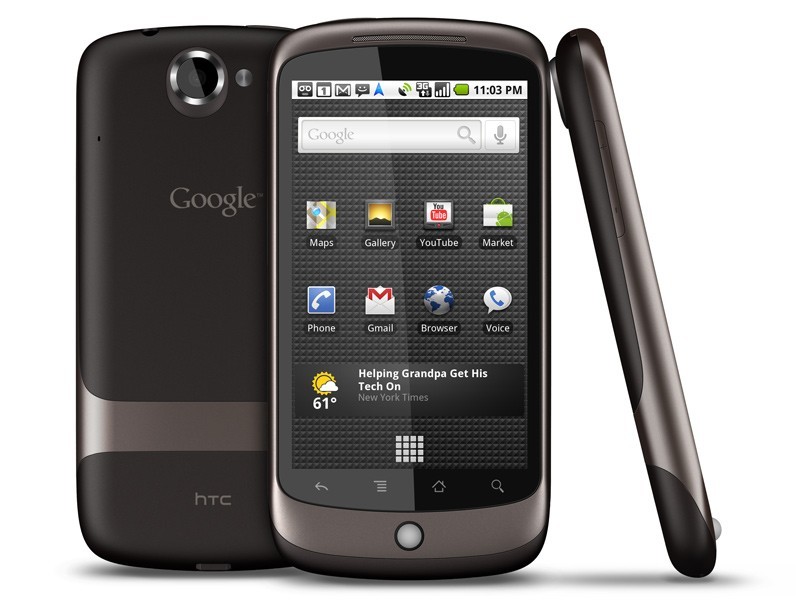
The HTC Nexus One had a typical HTC design. The back was slightly curved and the overall design was similar to the company’s Desire model. There were actually two versions of the Nexus One back in 2010. The first units rolled out with a Pentine AMOLED display but it would later be replaced by a Super LCD panel which reportedly offered better power efficiency and color accuracy.
The front had a tiny 3.7-inch display of 800 x 480 pixels. This was one of the better displays back in 2010. There were four capacitive buttons, which was typical of the Nexus lineup. But there was a trackball below these capacitive buttons which made the phone unique. It was a lot similar to Blackberry devices and offered easy navigation across the OS. Interestingly, this trackball also doubled down as a notification light, which looked pretty cool.
As for the specs, the Nexus One was no slouch. It came with the Snapdragon S1 single-core 1GHz processor with 512MB of RAM and 512MB of ROM. No, this is not a mistake. The phone had just 512MB of storage, which forced the company to add a dedicated MicroSD slot on board. On the back there was a decent 5MP camera with autofocus and LED flash. The battery was average for its time at 1400mAh. Notably, it was removable, unlike Nexus devices that were launched later on. 2010 wasn’t exactly the selfie age, so Google and HTC decided not to add a front camera.
The real highlight of the Nexus lineup has always been its software and the Nexus One was no exception. The phone came with Android 2.1 Eclair out of the box with voice-guided navigation and voice to text transcription. Imagine how far we’ve come in the last 9 years. Everything is voice-based now, with Google Assitant and Alexa taking over our daily lives. The phone also brought 3D icons and live wallpaper which looked pretty cool for its time. Given that this was a Google-backed device, the Nexus One received a number of major updates. The phone got Android 2.2 Froyo and also Android 2.3.6 Gingerbread. It could have been updated to Android 4.0 Ice Cream Sandwich too, if not for its super-old hardware platform.
With these specs and software, the Nexus One would have sold pretty well right? Unfortunately, the phone didn’t fare so well in terms of sale.
Nevertheless, the Nexus One will always have a very special place in our hearts. It was the first-ever Google phone and is the reason why the Pixel lineup exist today!
So did you ever use the Nexus One? What are your thoughts?
Early this month, camera samples of Nubia’s upcoming flagship, the Nubia Z20, were posted online. The pictures were actually of the solar eclipse that occurred in Chile. Now, “proper” camera samples have been released.
Nubia Z20 camera samples
1 of 9
Nubia Z20 camera sample
Nubia Z20 camera sample
These photos were also taken in Chile and were shared on Weibo by Will Wong, Nubia‘s co-founder. Unlike the solar eclipse photos, these are a better way to show how great the phone’s camera performance is. However, none of the pictures were taken at night, so we can’t say how great it performs in low-light.
The watermark also doesn’t say if the phone has dual cameras, or triple cameras or quad cameras. One Weibo user by the name Bou Lin did say the phone has optical image stabilization and a 48MP camera.
Other than these photos, the Nubia Z20 is still a mystery. We don’t know what it looks like or how much it will cost. What we are pretty sure about is that it will have Qualcomm’s Snapdragon chipset inside. However, we can’t confirm if it will be the Snapdragon 855 or the higher-clocked Snapdragon 855+.
As the summer is getting hot, Ulefone going to make it even hotter with the special summer promotion they just launched and that will go on until July 20th. The promotion includes the Armor series as well as the entry-level S series. Let’s see some more details about the devices offered.
Ulefone Armor 6
The Ulefone Armor 6 is the star of the event and comes with IP69K/IP68/MIL-STD-810G certification and a UV sensor. There is also a 6.2″ FHD+ notch display, dual rear camera with 21MP/13MP sensor combo, a 13MP selfie shooter, wireless charging, fingerprint and face unlock, global network support, NFC with Google Pay, and Android 8.1 Oreo. The processor that powers the Armor 6 is the Helio P60 SoC accompanied by 6GB or RAM and 128GB of internal storage. Lastly, the battery is big at 5000mAh and supports 18W fast charging and wireless charging. You can get it for just $389.99 on Amazon US and 329.99€ on Amazon FR. That’s a $40 and €30 price cut respectively.
Ulefone Armor 6E
As another representative of the Armor series, Armor 6E is also certificated by IP68/IP69K protection grade and MIL-STD-810G. It is powered by the latest Helio P70 AI SoC backed by 4GB of RAM plus 64GB of internal storage. As a rugged phone, it supports underwater mode that enables you to shoot videos/pictures while diving or swimming. It is a 6.2″ FHD+ display device with Gorilla Glass 5 protecting it and there’s a dual camera setup on the back with 16MP/2MP configuration as well as an 8MP selfie shooter. The battery under the cover has 5000mAh capacity and supports 10W Qi wireless charging while other features include face and fingerprint unlock, Android 9.0, NFC with Google Pay, and global network coverage with 4G Band 66 included. Its price during the promotion is just 32399 JPY on Amazon Japan, 3600 JPY off the official price.
Ulefone Armor 3/3T
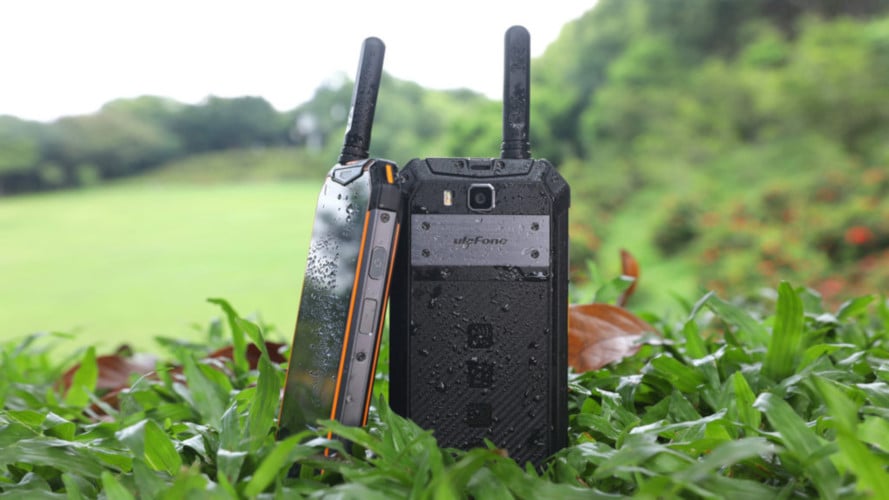
Also present, is the Armor 3/3T duo. They share the same hardware, with Armor 3T having walkie-talkie function as an extra feature. As rugged phones, they come with IP68/IP69K and MIL-STD-810G certification and a huge, 10300mAh battery. The display is a 5.7″ FHD+ one with 18:9 aspect ratio and they are powered by Helio P23 accompanied by 4GB of RAM and 64GB of storage. The rear camera hosts a 21MP Sony sensor while the front shooter a 13MP one. Lastly, both support NFC with Google Pay and come with Android 8.1. The promotion price for the Armor 3 is $319.99 (a $30 price slash) on Amazon US.
The Armor 3T that supports 1W/2W hardware intercom (400-470MHz) and can work with common interphones costs just €294.99 on Amazon Germany store (€30 off).
Ulefone Note 7
Lastly, the entry-level 3G smartphone, Note 7 equipped with 3 card slots (2 SIMs and 1 microSD) is also available during the promotion. The device features a 6.1″ waterdrop screen with a 5MP selfie shooter while the rear camera hosts 3 sensors (8MP/2MP/2MP). It is powered by the MT6580 quad-core SoC backed by 1GB of RAM and 16GB of internal storageand the battery capacity is 3500mAh. It also supports face unlock and comes with Android 8.1 (Go Edition) OS. It is available for just €54.99 on Amazon FR and €66.99 on Amazon DE.
The summer sales promotion started today and will finish on July 20th. For more details about other models and promotions, you can visit Ulefone’s official store on Amazon.
On Friday, July 5th, Sony unveiled its new generation of true wireless noise-canceling headphones that carry the WF-1000XM3 moniker.
Taking the disconnection related problem that users experienced earlier into consideration, Sony seems to have left no stone unturned in a bid to make this generation of products unique, yet capable of delivering the improved overall user experience. Keeping in line with that, the Japanese tech behemoth decided to dump the nickname “Frequency Reduction Bean.”
Breaking from the tradition, Sony gave the new generation the WF-1000XM3 label, instead. With this move, Sony is hoping to give its users a whole a new feel as far as the product is concerned.
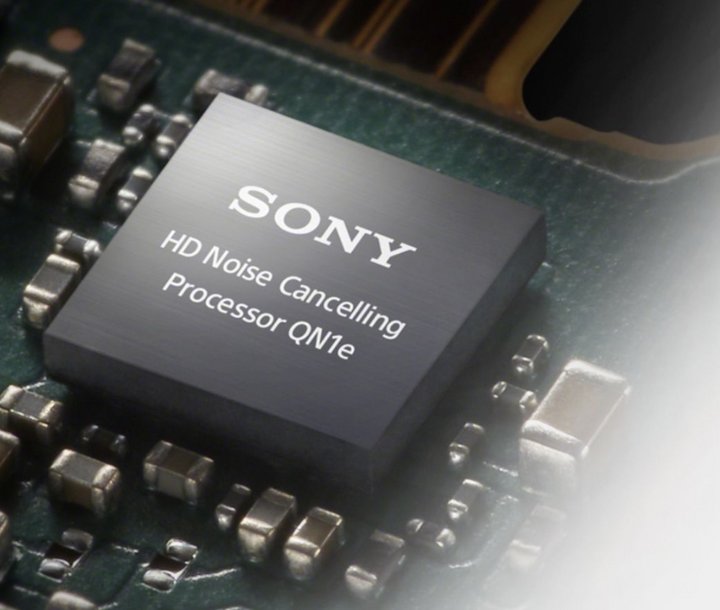
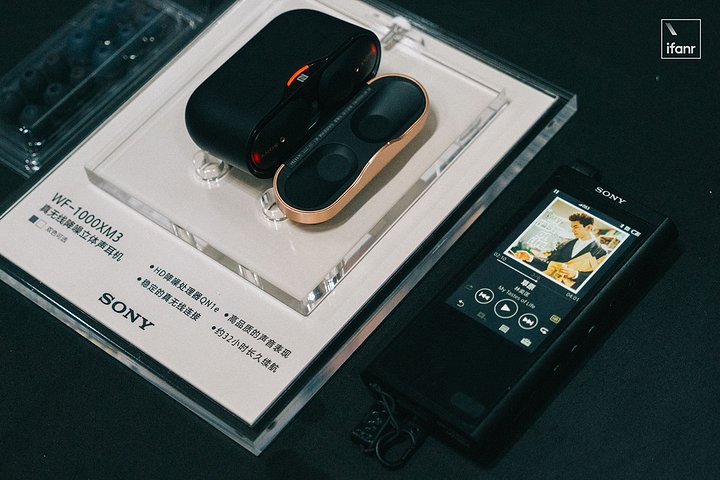
The WF-1000XM3 packs the QN1e HD noise reduction processor which enhances the noise reduction effect, while enabling the device to have 24-bit lossless audio processing capability at the same time. After Sony rolled out the DSEE HX technology update, a significant improvement was noticed in the sound of the WF-1000XM3.
Additionally, the overall battery life of the WF-1000XM3 has been increased to more than 24 hours, which makes daily communication easier than ever before. Taking these parameters into consideration, it seems safe to say that the Sony WF-1000XM3 is the most balanced true wireless noise-canceling headset.
At the time of release, we pointed out that some users aren’t quite confident about the stability offered by Sony’s true wireless noise-canceling headphones. Let’s check out few questions mentioned below:
What kind of changes in the transmission performance can be expected after improving the audio and noise reduction performance?
Unlike the previous generation, will the product eliminate the problem related to chain scission and delay?
Will the headphones lose stability in the case of large interference?
Will adding support for 24-bit lossless audio change the overall listening experience?
And so on…
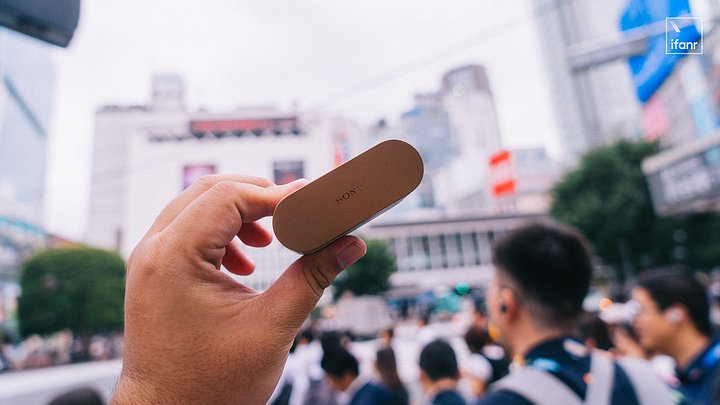
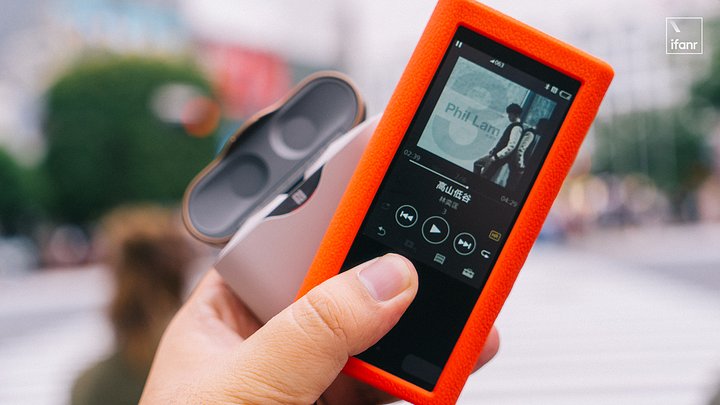
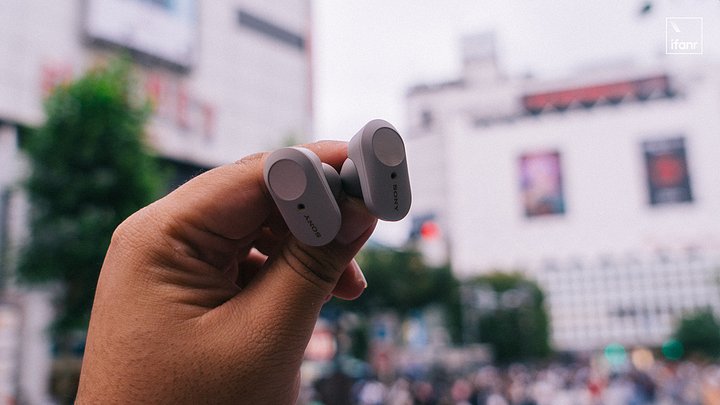
To find answers to these burning questions, we decided to take the WF-1000XM3 to the Shibuya Crossroad, which is deemed as one of the busiest and most complex wireless locations in Japan. Here’s what we found out about the device’s performance in the super crowded urban area.
The Elegant Experience of Wearing the Device
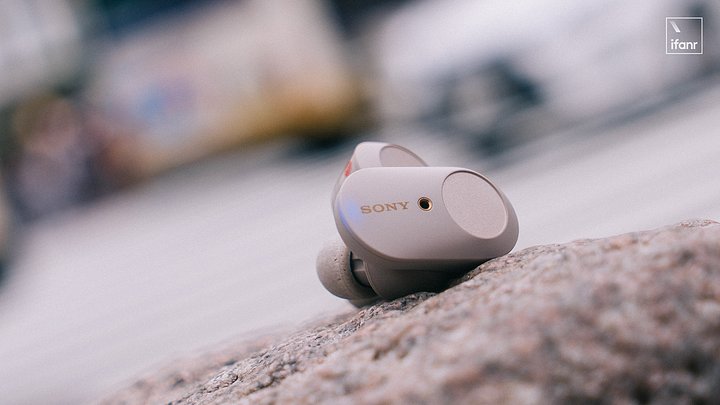
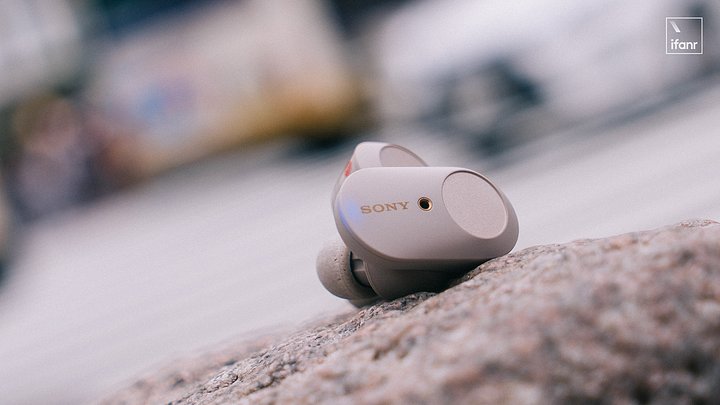
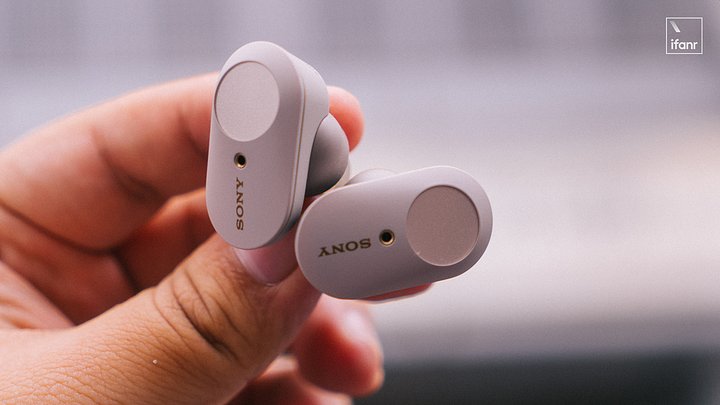
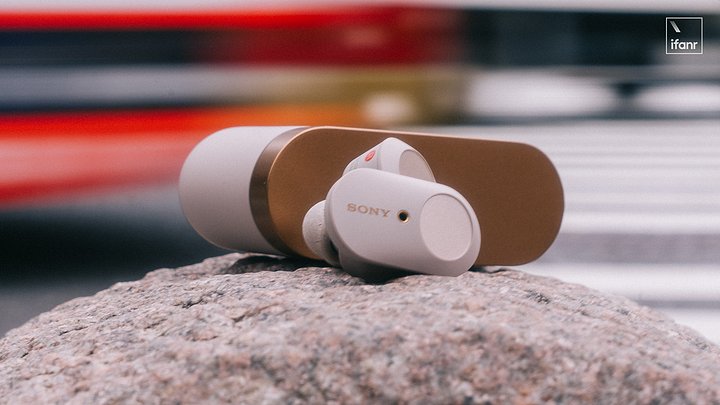
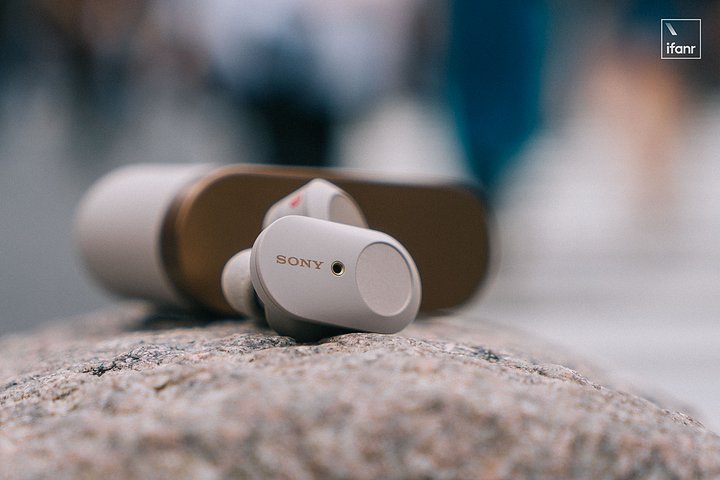
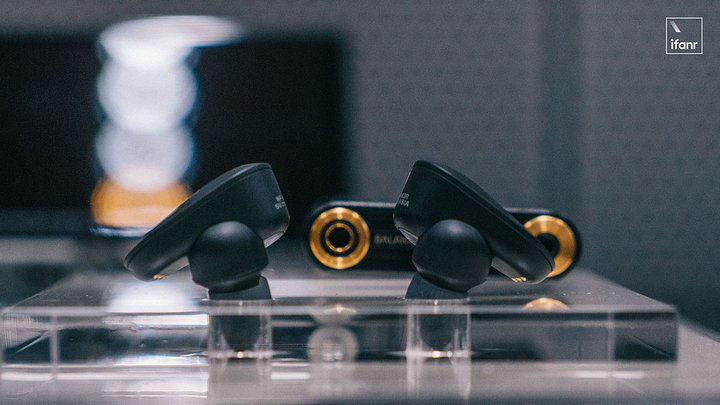
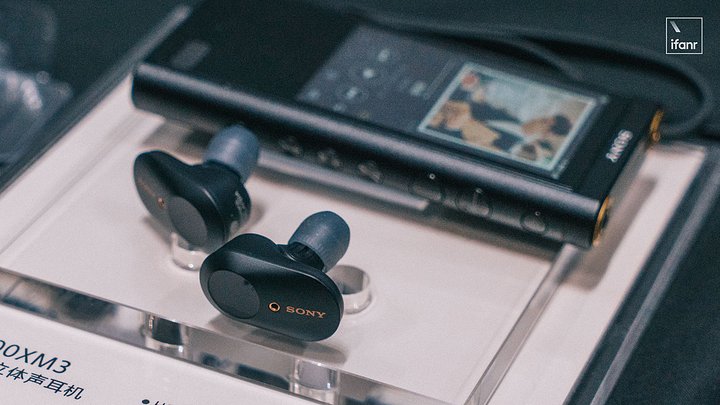
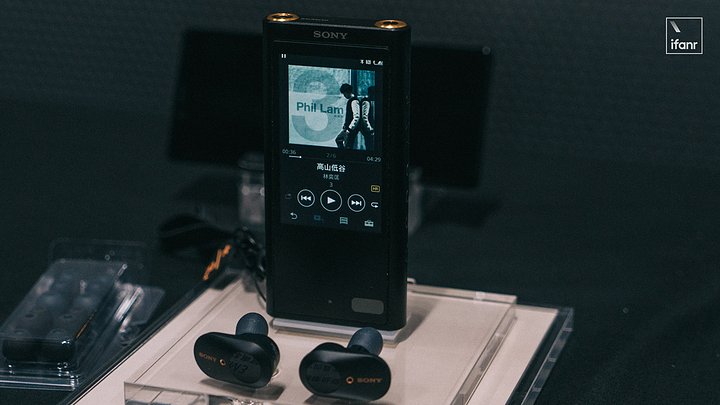
On the design front, Sony has changed the shape of the earbuds in this generation, and the WF-1000XM3 was replaced with a design similar to the WF-SP series.
Featuring a front-mounted touch panel, the WF-1000XM3 got rid of the mechanical button. This enabled users to perform tasks like switching the noise reduction mode, accessing the playback control functions simply by tapping and touching this disc at various frequencies.
Aside from that, Sony included an interaction found on the WH-1000XM3 head-mounted noise-canceling headphones. As soon as a user places his hand on the earphone, the device activates the ambient sound automatically. The WF-1000XM3 mode eliminates the need to clicking several times in order to exhale the interaction of the ambient sound mode.
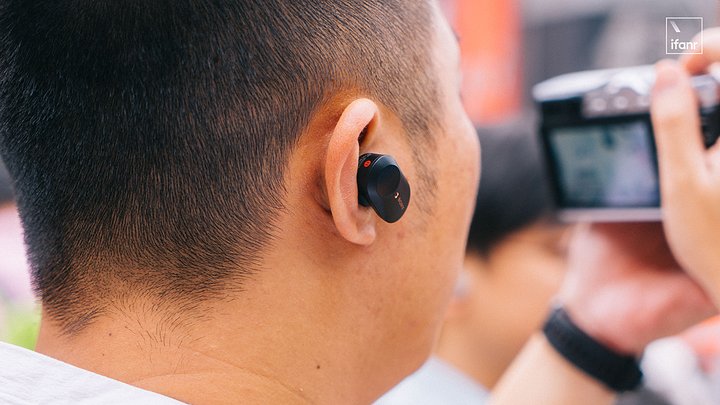
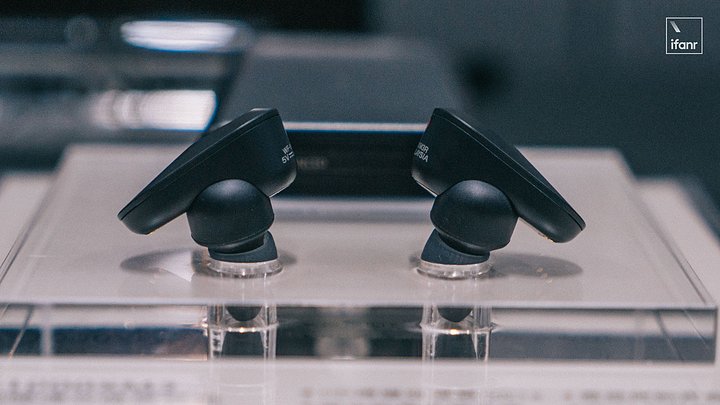
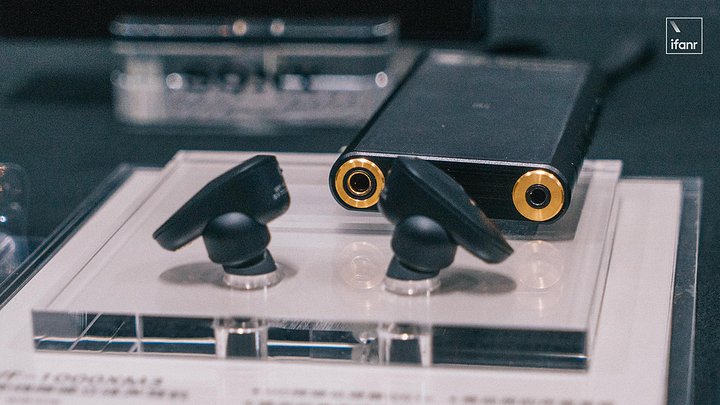
To make it easy-to-wear earbuds, Sony radically overhauled the in-ear structure of the WF-1000XM3. The new design of the WF-1000XM3 allows you to fix it in the ear despite the absence of an external “shark fin” fixed structure. When placed in the ear, the in-ear structure comfortably fills the ear of the wearer with the help of the support available between the structure and the ear. This saves the time a user invested in looking for a plug-in structure that fits them. Moreover, the user didn’t need to ensure they carried their ear hooks as well.
On top of that, Sony gave the headphones a more slender appearance. The protruding portion of the earphone body features a curvature that sits comfortably in the ear, allowing the user to fix the earphone exactly in the position of the human tragus. The extended part includes a microphone for radio, which brings the microphone closer to the mouth while enhancing the quality of the radio at the same time.
In other words, it is tried, and it looks like the WF-1000XM3 is highly like to meet the expectations of the users in terms of performance.
On Friday, July 5th, Sony unveiled its new generation of true wireless noise-canceling headphones that carry the WF-1000XM3 moniker.
Taking the disconnection related problem that users experienced earlier into consideration, Sony seems to have left no stone unturned in a bid to make this generation of products unique, yet capable of delivering the improved user experience. Keeping in line with that, the Japanese tech behemoth decided to dump the nickname “Frequency Reduction Bean.”
Breaking from the tradition, Sony gave it the WF-1000XM3 label. With this move, Sony is hoping to give its users a whole a new feel as far as the product is concerned.
The WF-1000XM3 packs the QN1e HD noise reduction processor which enhances the noise reduction effect, while enabling the device to have 24bit lossless audio processing capability at the same time. After Sony rolled out the DSEE HX technology update, a significant improvement was noticed in the sound of the WF-1000XM3.
At the time of release, we pointed out that some users aren’t quite confident about the stability offered by Sony’s true wireless noise-canceling headphones:
What kind of changes in the transmission performance will take place after an improvement in the audio and noise reduction performance?
Unlike the previous generation, will the product eliminate the problem related to chain scission and delay?
Will the headphones lose stability in the case of large interference?
Will adding support for 24-bit lossless audio change the overall listening experience?
To find answers to these burning questions, we decided to take the WF-1000XM3 to the Shibuya Crossroad, which is deemed as one of the busiest and most complex wireless environment in Japan. Here’s what we found out about the device’s performance in the super crowded urban area.
Featuring a front-mounted touch panel, the WF-1000XM3 got rid of the mechanical button. This enabled users to perform tasks like switching the noise reduction mode, accessing the playback control functions simply by tapping and touching this disc at various frequencies.
Aside from that, Sony included an interaction found on the WH-1000XM3 head-mounted noise-canceling headphones. As soon as a user places his hand on the earphone, the device activates the ambient sound automatically. The WF-1000XM3 mode eliminates the need to clicking several times in order to exhale the interaction of the ambient sound mode.
To make it easy-to-wear earbuds, Sony radically overhauled the in-ear structure of the WF-1000XM3. The new design of the WF-1000XM3 allows you to fix it in the ear despite the absence of an external “shark fin” fixed structure. When placed in the ear, the in-ear structure comfortably fills the ear of the wearer with the help of the support available between the structure and the ear. This saves the time a user invested in looking for a plug-in structure that fits them. Moreover, the user didn’t need to ensure they carried their ear hooks as well.
On top of that, Sony gave the headphones a more slender appearance. The protruding portion of the earphone body features a curvature that sits comfortably in the ear, allowing the user to fix the earphone exactly in the position of the human tragus. The extended part includes a microphone for radio, which brings the microphone closer to the mouth while enhancing the quality of the radio at the same time.
In other words, it is tried, and it looks like the WF-1000XM3 is highly like to meet the expectations of the users in terms of performance.
Following the removal of the extra fixed structure, the WF-1000XM3 no longer needs additional adjustments to be worn comfortably, as opposed to the several changes required to fix the external structure of the WF-SP700N and WF-SP900 for convenience. Sony also revamped the lumen wear ear design to offer fitting comparable to the IER-M7 and IER-M9. While the stability is not more than what the WF-SP700N and WF-SP900 offer, it is still better than the WF-1000X.
If you fancy using user-ear headphones, I do not want to suggest a wide range of fixed structure when worn, but recommend the WF-1000XM3 for a more comfortable wearing experience.
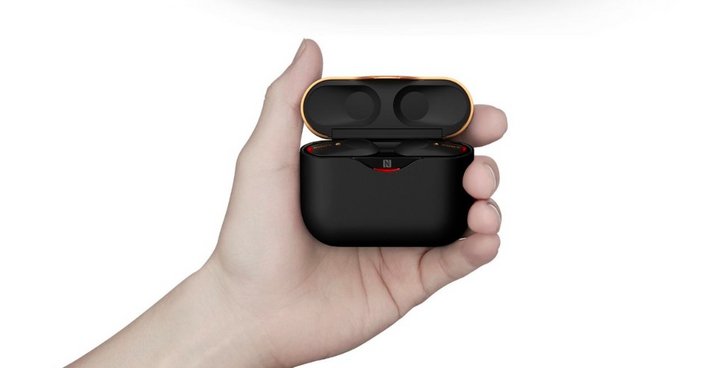
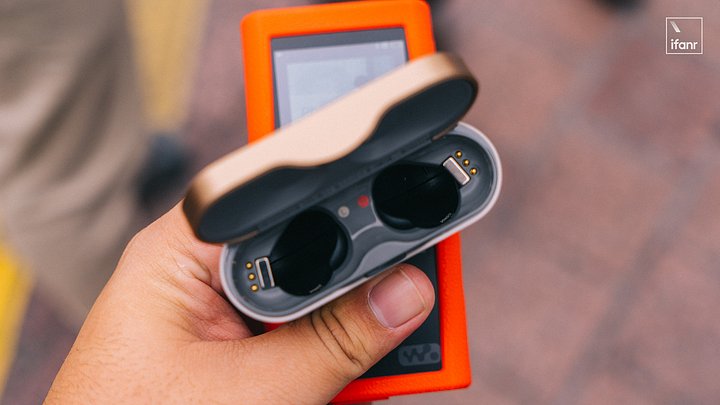
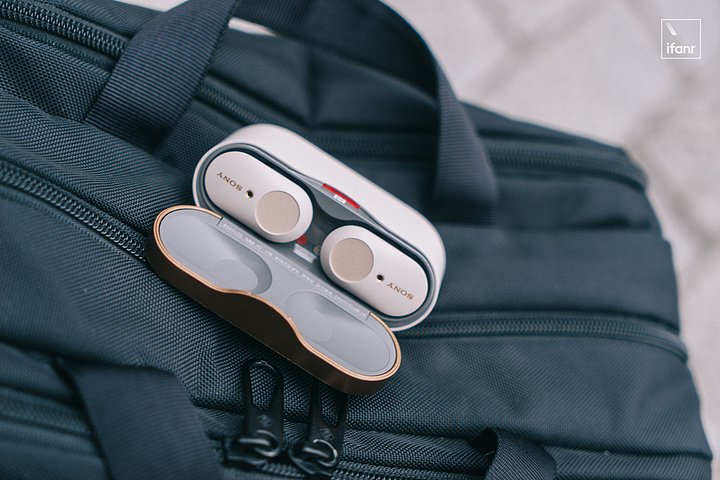
The WF-1000XM3 is housed in a comparatively bigger battery case than its precursor, and can efficiently achieve a volume similar to the WF-SP900.
The aforesaid battery case has a crisp magnetic structure that keeps the headphones steady despite the absence of physical snaps and minimizes the hassle of hard snap losses. The earphones need to placed on the top of the charging box in a flat position, and the charging prompts that can be seen when you wear the earphone shows the percentage of the battery life left on the earphone along with other details.
The larger charging box represents the bigger battery capacity. According to Sony, the WF-1000XM3 delivers a stand-alone time of 6-8 hours, and when placed inside the charging box it can easily deliver an impressive 24-32 hour battery life.
To meet the varied needs of a generation of endurance performance, the upgrades introduced in the WF-1000XM3 not only includes a large battery, but also a larger charging case. Furthermore, the overall feel offered by earbuds is also noteworthy.
In addition to that, Sony re-arranged the placement of the NFC module for the WF-1000XM3 charging case, placing it in the back of the cover. While most earbuds have the NFC located at the bottom, the rear placement of the NFC in the WF-1000XM3 makes pairing a bit harder.
In my opinion, if the NFC is located on the back of a box just under the flat place, NFC pairing would be a lot easier and comfortable.
While there’s a significant improvement in the noise reduction department, there’s still scope for improvement.
The WF-1000XM3 update brings improvements to two of the most vital aspects including noise reduction and connection stability.
To achieve noise reduction, the WF-1000XM3 relies on the QN1e, which is touted as the latest HD noise reduction processor. The QN1e can be described as the QN1 HD noise reduction processor, which powered the head-mounted noise-canceling headphones WH-1000XM3, which is designed for the small-volume true wireless noise-reduction headphones.
Unlike the head-mounted QN1, the QN1e processor brings the maximum specification of audio support down to 24-bit from 32-bit. Although there are a few more changes in the rest of the parameters, it is worth mentioning here that the specific performance remains almost the same.
This is similar to Sony’s official 4x noise reduction boost when the company introduced the QN1, but this time it can also be implemented on the new QN1e.
In comparison to the original WF-1000X, the WF-1000XM3 offers significantly enhanced noise reduction. It is evident that Sony has not only improved the noise reduction performance but also enhance the noise reduction quality. Furthermore, noise control is also relatively better than the WF-1000X and WI-1000X second-generation 1000X products.
The QN1e’s WF-1000XM3 offers noise reduction capability that’s close to the noise reduction circle available on the WI-1000X. Despite trying it out in heavy traffic, the WF-1000XM3 didn’t fail to provide quiet playing environment for music playback. As if that weren’t enough, the WF-1000XM3 minimizes the effect of noise on people in situations like aircraft, subways, etc, without ceasing to deliver regular noise.
Sony adopts the SENSE ENGINE noise reduction technology for the WF-1000XM3, allowing users to automatically adjust the noise reduction effect. All you need to do is to connect your smartphone and run the Headphone Connect app. The headset uses the phone’s sensor to determine the user’s environmental information and adjusts the active noise reduction effect to provide a suitable noise reduction performance.
The noise reduction performance of the WF-1000XM3 remains unchanged. The QN1e noise-reducing processor provides a noise reduction effect to the earphone. Thanks to its closed and ear-in-ear design, the WF-1000XM3 delivers the noise reduction capability which is comparable to the WI-1000X so that you can wear it even in crowded places like subway stations. You do not need to make any sort of noise reduction in scenarios like airplanes.
Coming to connection stability, the WF-1000XM3 shows noteworthy improvements.
We tried connecting the WF-1000XM3 to a smartphone to play video and music in the conference venue and found that there wasn’t an obvious delay in the headset’s performance. The video, on the other hand, delivered basic sound and picture synchronization without any sort of problem. Aside from that, we tried using the WF-1000XM3 in a more complex wireless room and found that the stability was not lost even with multiple devices turned on.
The aforesaid changes are still pending the connection mode of the WF-1000XM3.
As far as connection configuration is concerned, the WF-1000XM3 adopts the Bluetooth 5.0 technology and employs the true wireless solution, paired with an independent connection between the two ears. This allows you to independently connect both headphones to the playback device. This configuration mode is way better than the bridge mode available on the previous generation. To achieve stability, the delay will be minimized to a specific extent, which provides a better stability experience than the original.
Nevertheless, it cannot be overlooked that there’s still room for improvement in terms of stability for the WF-1000XM3.
On a super crowded street, the WF-1000XM3 shows a stuttering phenomenon. In the SBC (sound quality priority) mode, this stuttering phenomenon is still noticeable. By reducing the distance between the earphone and the playback device, you can improve the stability of the earphone, but you are still likely to experience some level of instability.
Given that the Shibuya wireless environment is more complicated than a regular area, it seems safe to say that the WF-1000XM3 delivers a reasonably good output.
The WF-1000XM3 is still capable of delivering superior performance even if you use it in specific environments like office or airplane. But if you fancy running on the street, we suggest you adjust the connection mode to SBC (connection priority) to further improve stability.
There’s a huge improvement in the sense of hearing with fuller bass and more prominent details.
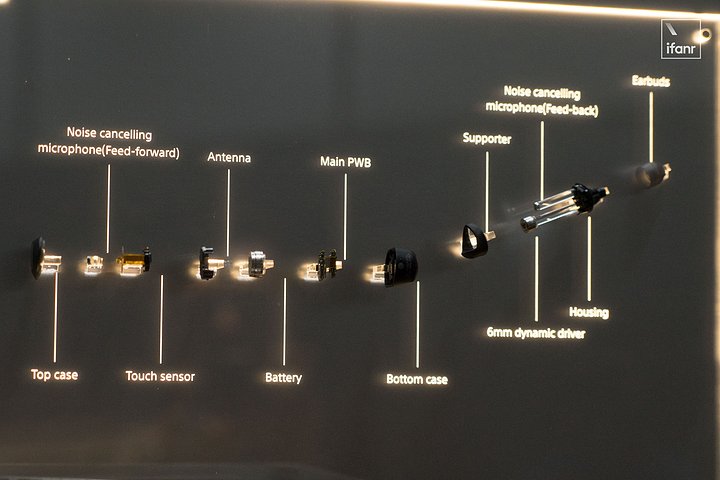
As far as sound configuration is concerned, the Sony WF-1000XM3 features a 6mm moving coil unit, and the QN1e processor has an independent DAC and amplifier, which processes audio information without any sort of problem. The highly competent QN1e processor is designed to handle 24bit lossless music; however, the transmission limitations of the WF-1000XM3 limits this processing parameter.
Sony has employed its DSEE HX digital sound enhancement engine technology for the WF-1000XM3. The DSEE HX can efficiently process as well as compensate non-lossless music while enhancing the quality of damaged sound sources. It also improves the playback and listening effects of the device.
The WF-1000XM3 is quite similar to the WI-1000X, given that it produces very prominent vocal and sound resolution. On the downside, it could be slightly on the cold side. The sound produced by the headphones can be described as more Sony-specific “digital flavor”.
Unlike a slew of other Sony True Wireless Headsets, the WF-1000XM3 offers a thicker bass performance, with a more noticeable layering of the sound. Much to the relief of music lovers, it doesn’t deliver a paper-thin sound quality like the WF-SP series offered.
After the enhancement, the vocals are now more prominent, and the details are also improved than the older models. Regrettably, the vocals seem a bit too prominent at times, and there’s sharpening the transition which makes the sounds dry. Nevertheless, the overall sound performance of the WF-1000XM3 is relatively better than the previous generation.
The previously launched models tend to boost the thickness of the sound while neglecting the sound details. The WF-SP Sport True Wireless Series focuses a bit too much on the sound details, as well as mid-high band performance which removes the thickness out of the sound.
The WF-1000XM3 is designed to eliminate the above-mentioned shortcomings. It makes the headphones deliver a more balanced sound, without losing Sony’s signature style.
If you loved the sound style delivered by Sony’s earphones, the WF-1000XM3 will meet your expectations without an iota of doubt.
The Arrival of New Headphones, Users Are Looking Forward to the 1000X Series of the Updates
The WF-1000XM3 can be deemed as an ideal turnaround for Sony’s true wireless headsets.
It addresses multiple concerns including poor connection stability, battery life, a significant delay in sound, which have been associated with the previous generation of products. Moreover, the sound quality and noise reduction effect have been improved as well. Regardless of whether it is for any true wireless headphones that have active noise reduction feature or Sony True Wireless Headset, the WF-1000XM3 is worth giving a test drive.
The WF-1000XM3 is also a great choice for those who prefer a true wireless headset that minimizes noise without demanding other features such as the high-standard transmission mode of LDAC, aptX HD. The only downside is that it will set you back a 100 yuan more than the older models. The WF-1000XM3 carries a competitive 1699 yuan price tag.
It is worth mentioning here that despite its improved performance, the WF-1000XM3 still has a lot of room for improvement, especially in the stability department.
For instance, the stability offered by the headphones in the outdoor environment can be improved. The playback can be more stable in situations where the phone and player are not placed close to each other. Moreover, it will be a great improvement if Sony adds support for LDAC or aptX HD in the WF-1000XM3. If this isn’t achieved, the availability of the QN1e chip which boasts 24bit lossless music processing capability is not justified.
It will be interesting to see if Sony’s next noise-canceling headphones will address these concerns. We’ll need to wait and watch!
While it is not a true wireless product, it offers reliable connection stability along with stronger transmission capabilities than the WF-1000XM3. Thanks to LDAC and aptX, it delivers 24-bit high-quality music wireless playback with the help of the QN1e processor. Wireless noise-canceling headphones that are crammed with these kinds of features are likely to garner more popularity among users.
Details about Sony’s next-generation product are still scarce. If the company is gearing up to launch a similar product, it is unlikely to make an appearance before the IFA 2019. If you are waiting with bated breath for the next product, it looks like you are in for a big disappointment. Note that the company hasn’t yet updated its noise reduction circle.
Keeping watching this space for more updates and drop your valuable comments below, what you think about Sony’s amazing WF-1000XM3 earbuds.
Huawei has filed two trademark applications at the European Union Intellectual Property Office (EUIPO). The trademarks are “Cine-Lens” and “Camera Matrix” and from the name, it is obvious they are camera-related.
The trademark applications were filed yesterday, July 17, and filed under class 9. The trademark application for “Cine-Lens” says it falls under “cinematographic” and “cameras” for smartphones while “Camera Matrix” falls under “optical lenses” for smartphones.
If we had to take a guess, we would say Cine-Lens is a camera feature similar to the LG V40 ThinQ‘s Cine Shot. Cine Shot allows you to create cinemagraphs with the phone’s cameras.
For those who don’t know what a cinemagraph is, it is a sort of still photo with certain parts moving. For example, you can have a cinemagraph where the steam from a steam-engine is flowing out but the train is static. Below is an example of a cinemagraph.
Image source: Android Authority
We think Cine-Lens is Huawei’s version of the feature. Cinemagraphs are actually not new. The Lumia 920 and Lumia 820 can shoot cinemagraphs. The Moto Z3 Play can do so too.
For “Camera Matrix”, we believe Huawei is trademarking its square-housing camera arrangement. Nothing more, nothing less.
If our guess is correct, Cine-Lens should launch with future Huawei devices, maybe even the Mate 30 series. It should also be available to older devices too via a software update.
Yesterday, Xiaomi took the wraps off the Mi A3 smartphone for the first time in Spain. The company is reportedly planning to introduce the model for the Asian market starting with Malaysia on July 31. Already, invites have been sent out to the media ahead of the launch event billed to hold in the country’s capital, Kuala Lumpur.
The Mi A3 has been confirmed to be a rebadged Mi CC9e which was earlier launched in China. As usual, the phone won’t be launched in China just like its predecessors but other Asian markets including India will likely get the Mi A3 soon. The major highlight on the A3 is no doubt the stock Android OS it runs which some find appealing than the MIUI overlay. But then, Xaomi disappoints by including an HD+ resolution screen on the device.
As a reminder, the device features 6.088-inch HD+ display with an in-display fingerprint sensor, Snapdragon 665 processor, and a large 4030mAh battery. The triple cameras remain the same as the Mi CC9e which includes a 48MP primary sensor, an 8MP wide-angle sensor, and a 2MP depth sensor. At the front, there is a 32MP selfie sensor. The phone comes in two memory versions – 4GB+64GB priced at €249 ($280) and 4GB+128GB priced at €279 ($315). It’s currently available for pre-orders in Spain and would go on sale on July 24.
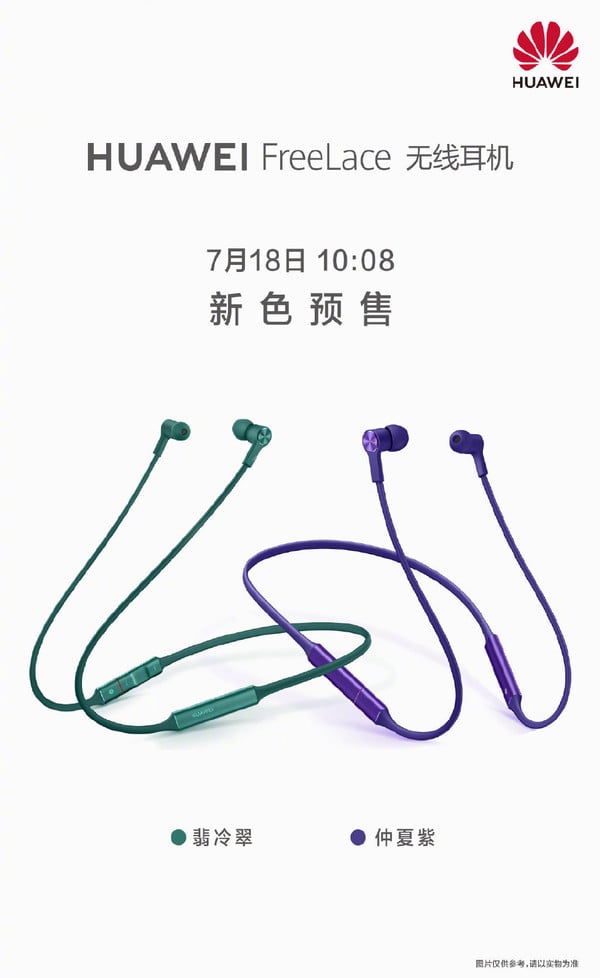
During the P30 launch event in March, Huawei launched the FreeLace Bluetooth headset alongside the Freebuds Lite. The headset has been available in two colour variants on VMall. The company has now released two more colour variants of the FreeLace on the e-commerce platform.
The two colour options are Midsummer Purple and Emerald Green. The Purple variant comes with the Nova logo stamped on it. The two variants are presently available to pre-order on Huawei’s VMall for 499 yuan.
The FreeLace headset has a designed that would be most appealing to sportspersons and those who like listening to music while exercising. It comes with a collar (over-the-shoulder design) which would prevent it from falling off easily while running. There is also a magnetic clasp in each ear which helps keep the earbuds together. Apart from organising the earbuds, the magnetic clasp also functions during calls. It allows users to receive calls by just detaching the pair and placing them on your ears. After the call, you just need to remove the buds from your ears and attach the two and the call will be ended. The same feature will also start or stop music depending on whether you’re placing them in your ears or removing them. The cables are anti-tangling specs which won’t tangle easily.
The Huawei FeeLace comes with a USB-C port which offers fast data transfer and fast charging of the gadget. Just 5 minutes of charge can deliver up to 4 hours of audio playback. A full single charge can deliver up to 18 hours of continuous playback. Apart from the fast wired connection, the headset can also be paired with other gadgets wirelessly using Bluetooth.
As for the audio quality, the earphones are powerful, driven by the 9.2mm titanium-plated drivers, which brings solid audio for anyone that simply wants a pair of workout earbuds. The design delivers wind noise reduction capability which cuts out audible audio infractions. There is an in-line remote for various controls, including activation of Google Assistant.dset midsummer purple version has a new logo on the “nova” printed on it, and the midsummer purple version is more flexible with the new logo.
Before the Nova 5i launched alongside the Nova 5 and Nova 5 Pro last month, there were reports of a Nova 5i Pro too but Huawei didn’t announce it at the launch event.
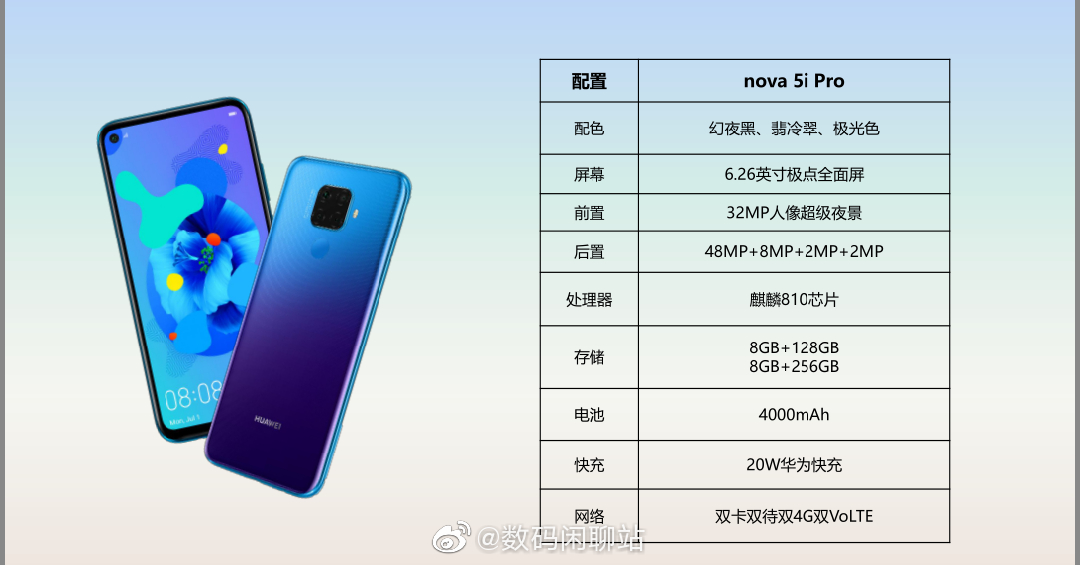
A schematic diagram from its manual was leaked afterward, confirming the device does exist. Now, promo materials have also surfaced, revealing all there is to know, save for the price and launch date, about the upcoming device.
The Nova 5i Pro will have a punch-hole FHD+ display like the non-pro model albeit smaller at 6.26-inches. The display has a 19.5:9 aspect ratio and a 90.7% screen-to-body ratio. Inside the hole which sits at the top left corner is a 32MP camera.
The phone will adopt the Mate 20 Pro’s Matrix camera design but house four sensors instead of three. The primary camera is a 48MP sensor and it is paired with an 8MP super wide-angle camera, a 2MP sensor with a macro lens, and a 2MP depth sensor. Flanking the housing on the right is the LED flash and below it is a fingerprint scanner.
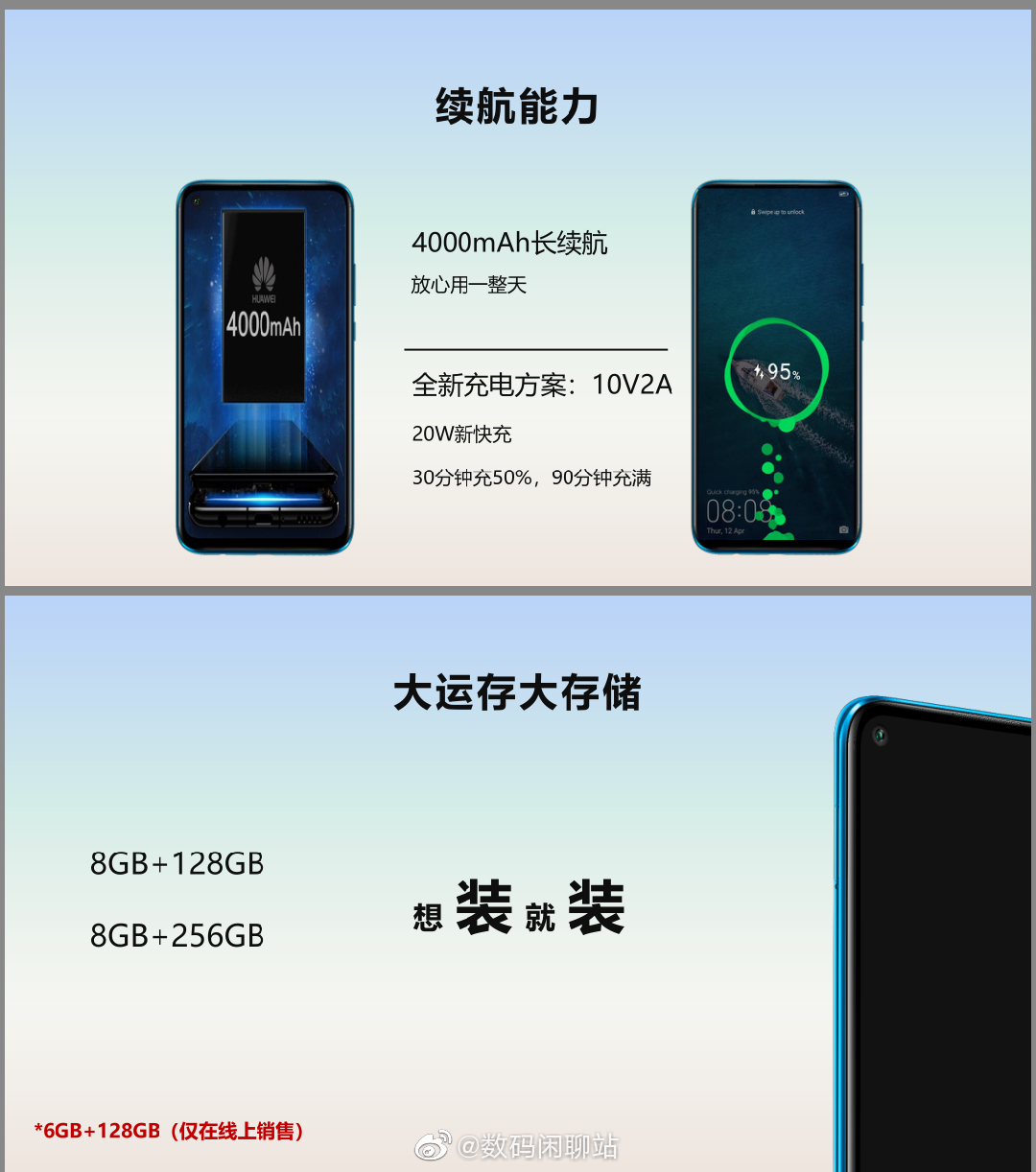
The Nova 5i Pro swaps the Kirin 710F of the Nova 5i for the newer and more powerful Kirin 810. It has 8GB of RAM and will come in 128GB and 256GB versions. There is a 4000mAh battery under the hood and it has support for 20W fast charging. Huawei says the phone can charge to 50% in 30 minutes and will take 90 minutes to charge to 100%.
The Nova 5i Pro will come in three colors – Aurora, Emerald, and Midnight Black. The back of the phone has a 3D curve but we are not sure if it is glass or plastic.
The Nova 5i Pro specs in the promo materials are identical to those of the TENAA-certified Huawei SPN-AL00 and Huawei SPN-TL00 which have been reported to be variants of the Mate 30 Lite. If that is the case, the Nova 5i Pro will launch in Europe and other markets as the Mate 30 Lite.
The ROG Phone 2 will launch next week as the first Snapdragon 855+ powered device. The phone already appeared on Geekbench and live photos also leaked online. Now, it has been spotted on TENAA and the listing reveals some new details.
This is a partial listing, so only a few specs have been made public. To start with, the phone has a 6.59-inch display, which has been confirmed to have a 120Hz refresh rate.
The display size is not the only thing that has increased, TENAA also revealed the phone is getting a bigger battery. The battery capacity is a whopping 5800mAh, a huge increase from the 4000mAh capacity of last year’s ROG Phone.
That increase in battery capacity also plays a part in the increase of the thickness of the phone from 8.3mm to 9.78mm. The device is 170.99mm tall and 77.6mm wide.
[envira-gallery id=”264992″]
There are also pictures of the ROG Phone 2. In front, you can see the bezels are slimmer while the back has also gotten a redesign. There are now two LED flashlights and only one air vent. There is also no fingerprint scanner which means there should be one under the AMOLED display. The ROG Aura logo is still there and like on its predecessor, it should have an RGB light and double as a notification LED.
The volume rocker and power button are still positioned on the right side and on the left is the side-mount connector for accessories like a cooling fan or dock.
The ROG Phone 2 will run Android Pie out of the box and have 12GB of RAM.
The newly-released Blackview BV6100 is the world’s biggest display rugged phone since it sports a 6.88″ screen and to spice things up, the Chinese manufacturer went with a design different from all other rugged devices, choosing glass both for the front and the back of the device. Definitely a device to keep in mind when looking for an affordable rugged phone. So, let’s take a look at its specs and features.
Fully Equipped
As the market is very competitive, for a device to succeed an affordable price isn’t enough. Blackview knows this and for that reason, the BV6100 is more than just another rugged device. It sports a huge, 6.88″ display, ideal for watching movies or playing games. And they even implemented a dedicated split-screen button to make multitasking even easier on the big display. What’s more, in the box you will find a ring-grip case for handling the phone with one hand without the fear of dropping it.
For those who travel a lot, the BV6100 comes with all 4 positioning protocols: GPS, Glonass, Beidou, and Galileo. It the first device of the company that comes with all 4 protocols and navigating with it has become more accurate than ever. What’s also great is the fact that they didn’t skimp on other premium features found on premium smartphones like the latest OS version and AI support. The BV6100 comes with the latest Android 9 Pie and with AI features being its main draw, the new OS also comes with interesting traits like an adaptive battery, gesture-based navigation, an official dark mode along with a few tricks that will help you reduce your interaction with the phone with “Digital Wellbeing”.
Better outdoors experience
Outdoor use can become dangerous for a smartphone as humidity, rain, and accidental drops on hard terrain are common. The BV6100 comes with IP68/IP69K and MIL-STD-810G certifications to avoid all this. You can even shoot photos underwater with the special mode in the camera app. The phone won’t face any problems with hydraulic pressure according to the company. Of course, many hours away from a power socket requires a big battery and the new model takes care of that with its 5580mAh large-capacity battery that delivers up to 600h of standby.
Suitable for formal occasions too
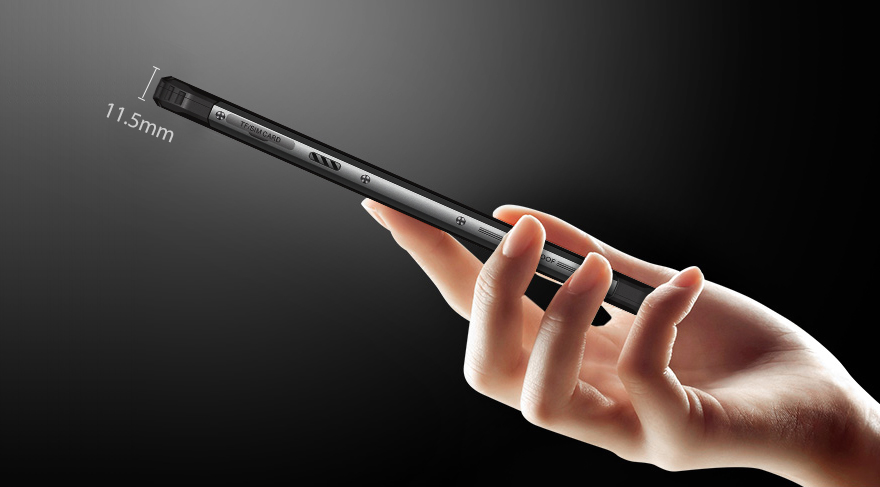
Most rugged phones are a little bit… ugly. In fact, they are so ugly that if you are formally dressed, you can’t bring them with you as they will ruin your outfit. With the BV6100, Blackview tries to break this stereotype by delivering an all-glass phone and a body thickness of just 11.5mm. No, it isn’t as sleek as some other normal devices but it is stylish enough for every occasion.
Lastly, it comes with a side-mounted fingerprint sensor as well as AI face unlock for instant unlocking and secure payments. Payments are also available via the NFC that supports the Google Pay service. The Blackview BV6100 is now available for preorder until July 25th and costs just $149.99. You can learn all about the phone and the promotion here.
OPPO has officially announced the A9 in India. The smartphone goes on sale on July 20, and will be available at retail and online stores. The key highlights of the OPPO A9 are tall aspect ratio display, big battery, Ultra Night Mode for impressive low-light shots and Hyper-boost which enhances the gaming performance. The Chinese manufacturer had launched the same smartphone in April in China with a starting price of 1,399 Yuan (~$203).
OPPO A9 Specifications and Features
The OPPO A9 gets a 6.53-inch full-HD+ display with a resolution of 1080 x 2340 pixels. The device sports a screen-to-body ratio of 90.7 percent, along with an aspect ratio of 19.5:9. It gets a waterdrop notch with Corning Gorilla Glass 5 protection.
The OPPO A9 is powered by an octa-core MediaTek Helio P70 SoC that includes Mali-G72 MP3 GPU. The device is available in two variants, with 4GB and 6GB of RAM. The device packs in 128GB of internal storage, which is expandable up to 256GB through a microSD card.
The primary camera setup on the OPPO A9 houses a 16-megapixel unit with an aperture rating of f/1.8, along with a 2-megapixel secondary lens. The rear camera setup also includes a dual-tone LED flash. The OPPO A9 uses a 16-megapixel camera at the front with an aperture rating of f/2.0. The front camera is designed to recognize nearly 130 forehead points, which is used for the face slimming feature.
The smartphone runs on Android 9.0 Pie-based Color OS 6, and draws power from a 4,020 mAh battery. The device features a rear-mounted fingerprint scanner. Connectivity options on the OPPO A9 include dual SIM slots with LTE, Bluetooth 4.2, Wi-Fi 802.11, GPS/A-GPS and AUX port with a dedicated mic and active noise cancellation.
OPPO A9 Price and Availability
The OPPO A9 has arrived in India in two color variants, namely Fluorite Purple and Marble Green. Its sales will begin sold in the country from July 20. It carries a price tag of Rs. 15,490 (~$225) for the 4GB + 128GB variant.
We use cookies on our website to give you the most relevant experience by remembering your preferences and repeat visits. By clicking “Accept”, you consent to the use of ALL the cookies.
This website uses cookies to improve your experience while you navigate through the website. Out of these, the cookies that are categorized as necessary are stored on your browser as they are essential for the working of basic functionalities of the website. We also use third-party cookies that help us analyze and understand how you use this website. These cookies will be stored in your browser only with your consent. You also have the option to opt-out of these cookies. But opting out of some of these cookies may affect your browsing experience.
Necessary cookies are absolutely essential for the website to function properly. This category only includes cookies that ensures basic functionalities and security features of the website. These cookies do not store any personal information.
Any cookies that may not be particularly necessary for the website to function and is used specifically to collect user personal data via analytics, ads, other embedded contents are termed as non-necessary cookies. It is mandatory to procure user consent prior to running these cookies on your website.