After launching the Galaxy S10 smartphone series and announcing the company’s first foldable smartphone Galaxy Fold, South Korea-based Samsung is now all set to launch the Samsung Galaxy Note 10 series.
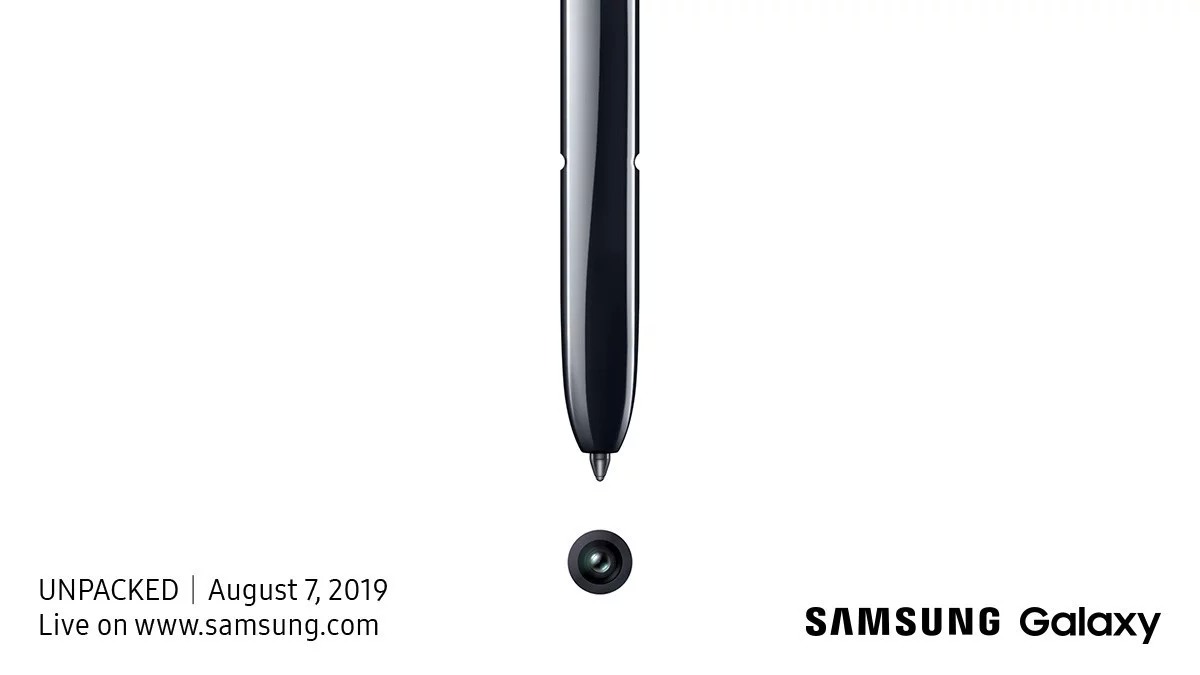
Today, the company has started sending out media invites for the company’s “Unboxed” launch event on 7th August at Barclays Center in New York. This is the same venue where the company launched the Galaxy Note 9 smartphone last year.
The launch invite from Samsung shows a picture of an S Pen and a single camera lens. This goes on to confirm the recent leaks related to the Galaxy Note 10 smartphones which suggested that the phones could feature a punch-hole display housing the front-facing camera sensor right in the center.
It is also being said that this time, the company could launch two smartphones under the Note 10 lineup, which includes the standard Galaxy Note 10 with a 6.28-inch display and another Note 10 series phone with a bigger display of 6.75-inch. The company may also be offering 5G variants of both of those phones, bringing the total of Samsung Galaxy Note 10 models to four.
Similar to the Galaxy Note 10 series, the upcoming Galaxy Note 10 models are likely to feature an ultrasonic in-display fingerprint scanner. Under the hood, the devices will be powered by the Qualcomm Snapdragon 855 octa-core processor or the company’s own Exynos 9825 chipset.
As per the reports, the upcoming flagship smartphones from the company wouldn’t come with a Bixby button and a 3.5mm headphone jacks. Also, the new top-end model in the Galaxy Note family may also include a Time-of-Flight (ToF) camera along with the triple rear camera setup.
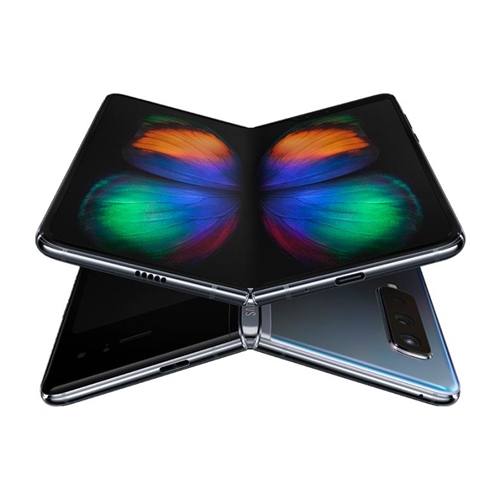
Apart from the launch of the Note 10 series smartphones, another reason for the event being an anticipated one is to get more details about the Galaxy Fold smartphone. While the company’s first foldable smartphone was announced in February, the phone is yet to go on sale after the display-related issues.
Reports indicate that the company has fixed the issues and is all set to start selling the Samsung Galaxy Fold smartphone. However, it remains to be seen if the company takes the stage on 7th August to announce the sale of the Galaxy Fold as well.
Samsung Galaxy Fold was supposed to a big product for the South Korean giant with it being one of the first true foldables in the market. However, in a bid to become the first mainstream phone maker with a foldable, the company rushed with its launch. With review units being recalled to pre-orders being canceled, the Galaxy Fold didn’t exactly get the start the company would have hoped. After the launch cancellation, Samsung promised that the Fold is coming soon, but we still don’t have a concrete release date.
Company’s CEO, DJ Koh now admits to the Independent that he ‘pushed it through before it was ready’. He further adds, “I do admit I missed something on the foldable phone, but we are in the process of recovery”. As for the status of the foldable device, Koh states that mass volume testing is ongoing right now. He states that there are more than 2000 prototypes being tested right now before the market launch of the device.
However, Koh didn’t reveal an exact time frame for the launch. All he said was the phone would be launched “In due course”. Well, given this statement, don’t expect the Fold to meet us anytime in the near future. Maybe, we’ll see it come to the market alongside the Huawei Mate X which is said to launch in September this year.
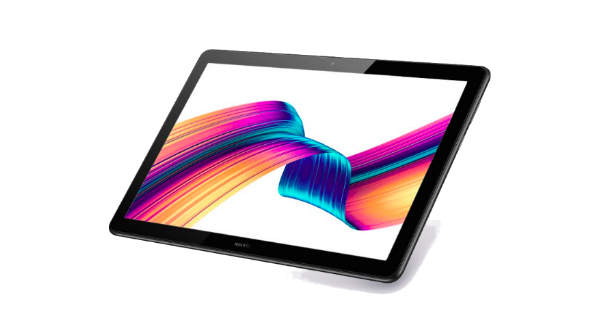
Leaked information that had surfaced in the last month had revealed that Huawei will be soon debuting its first tablet in India. The rumor has turned out to be true as the Chinese manufacturer has introduced the Huawei MediaPad T5 mid-range tablet in India. The tablet has a starting price of Rs. 14,990 and it will be available for purchase starting from next week in the country.
Huawei MediaPad T5 Specifications and Features
The MediaPad T5 is the very same tablet that was introduced in China in October 2018 as Honor MediaPad T5 with a starting price of 1,599 Yuan (~$233). The tablet houses a 10.1-inch display that offers full HD resolution of 1920 x 1200 pixels. Huawei has added an Eye Comfort mode for protecting the eyesight of users.
The Kirin 659 chipset that powered many of the Huawei and Honor branded smartphones in late 2017 and 2018 is present under the hood of the device. The SoC that includes 2.36GHz octa-core processor is coupled with up to 3 GB of RAM. The slate comes with up to 32 GB of native storage. There is a microSD card slot available on the device for additional storage.
The Android 8.0 Oreo OS customized with EMUI 8.0 skin is available on the MediaPad T5. There is a feature called “Children’s Corner” on the tablet that allow parents to regulate the content for the children. There is GPU Turbo 2.0 technology onboard for enhanced performance while gaming on the tablet.
The handset includes a big battery of 5,100mAh capacity. The connectivity features that are available on the device include Wi-Fi 802.11ac, 4G LTE, Bluetooth 4.2, GPS, microUSB 2.0, and 3.5mm audio jack. The tablet is also blessed with top-quality stereo speakers. The rear shell of the tablet houses an f/2.4 aperture 5-megapixel camera and it has a front-facing camera of 2-megapixel.
Huawei MediaPad T5 Price and Release Date
The 2 GB RAM + 16 GB storage edition of the Huawei MediaPad T5 carries a price tag of Rs. 14,990 (~$217). The higher model with 3 GB of RAM and 32 GB of storage costs Rs. 16,990 (~$246). The tablet will be available for purchase from July 10 through Amazon India. It remains to be seen whether it will be also purchasable through other online retailers in India.
The MediaPad T5 comes in Black color only. Buyers of the tablet will be provided with Rs. 2,998 (~$44) worth Huawei Earphone AM 12 and a flip cover for free.
Honor 9X smartphone has been in the new since past few weeks and now the company has confirmed that phone’s launch date in China. Huawei’s sub-brand has shared a new poster which reveals that the Honor 9X will get launched on 23rd July.
The smartphone is confirmed to come powered by the company’s own HiSilicon Kirin 810 octa-core processor made using the 7nm process node, which was launched last month. Last month, Xiong Junmin, vice president of Honor products, said the new X-Series will be powered by the Kirin 810 SoC.
The HiSilicon Kirin 810 is an octa-core processor which comes equipped with two Cortex-A76 high-performance large cores clocked at 2.27 GHz and six Cortex-A55 energy efficient small cores clocked at 1.88 GHz. It is coupled with Mali-G52 GPU for graphics processing.
As per the reports, the Honor 9X may come with an LCD screen that is between 6.5-inch and 6.7-inch in size. There is no mention of the design of the display but there will be a 20-megapixel or 16-megapixel camera on the front for selfies.
The reports indicate that the device will come with 4 GB of RAM and 64 GB of internal storage, along with a few other variants based on the memory configuration. It is expected to pack a dual camera module on the back side, featuring a 13-megapixel primary sensor and a 2-megapixel secondary sensor for depth sensing.
It is also being said that the phone will be powered by 3,000 mAh battery but it’s not yet known if the device will come with support for the fast charging technology or not. As for the software, the phone will be running Android Pie OS with EMUI 9 on top.
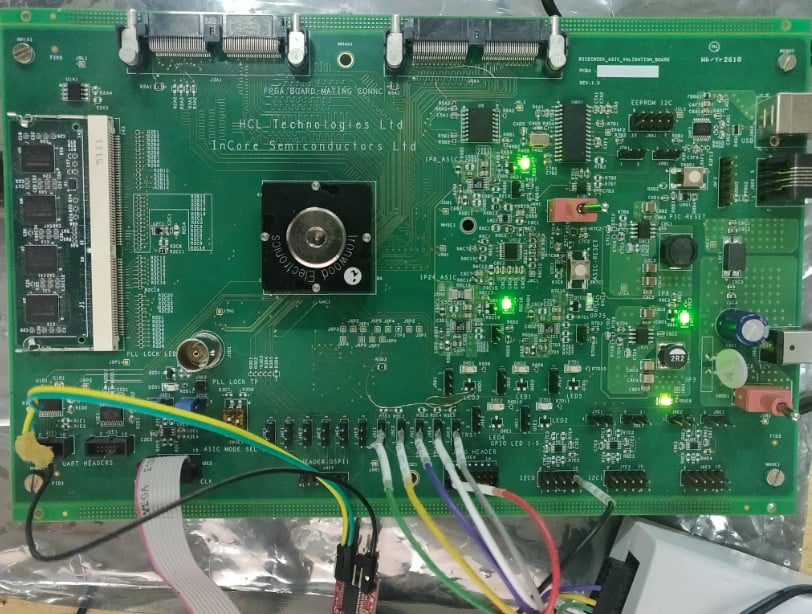
Recently, India’s first open-source Shakti processor was announced, which has been funded by the Indian Ministry of Electronics and Information Technology. Now, the Indian Institute of Technology (IIT) Madras has released the software development kit (SDK) for the processor.
The institute has also promised that the development board will soon be released. The RISE group at IIT Madras had started working on the Shakti project in the year 2016 with a plan to release a family of six classes of processors, each serving a different market. Also, the group has promised that the reference processors will be competitive with commercial offerings in terms of area, performance and power consumption.
The six classes of processors include E-Class, C-Class, I-Class, M-Class, S-Class, and H-Class. The E class is a 3-stage in-order processor targeted at embedded devices such as Internet of Things (IoT) devices, robotic platforms, motor controls, et cetera.
The C class is a 32-bit 5 stage in-order microcontroller-class of processors supporting 0.2-1 GHz clock speeds. It’s aimed at mid-range application workloads and has a very low power profile, along with optional memory protection.
On the other hand, the I class 64-bit out-of-order processors support 1.5-2.5 GHz clock speeds and support for multi-threading. It targets mobile, storage and networking applications. As for the M class processor, the M stands for multi-core and supports up to eight CPU cores.
The S class processors are aimed at the workstation and server-type workloads. It’s an enhanced version of the I class processor that features multi-threading support. The H class processor is for the high-performance computing and analytics workloads.
Its primary features include high single-thread performance, optional L4 cache, as well as support for Gen-Z fabric and storage-class memory. As per the reports, the RISE group is also working on two new experimental classes of processors — T-class and F-class.
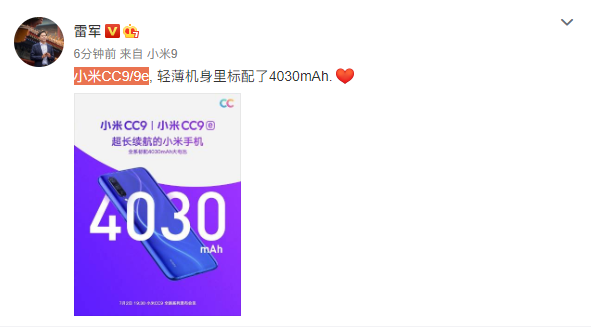
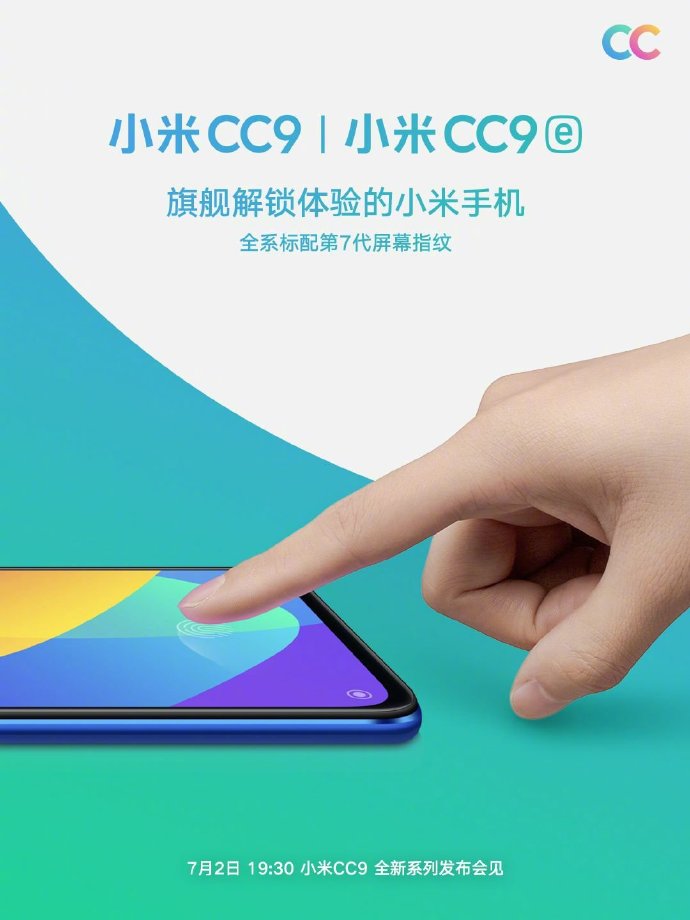
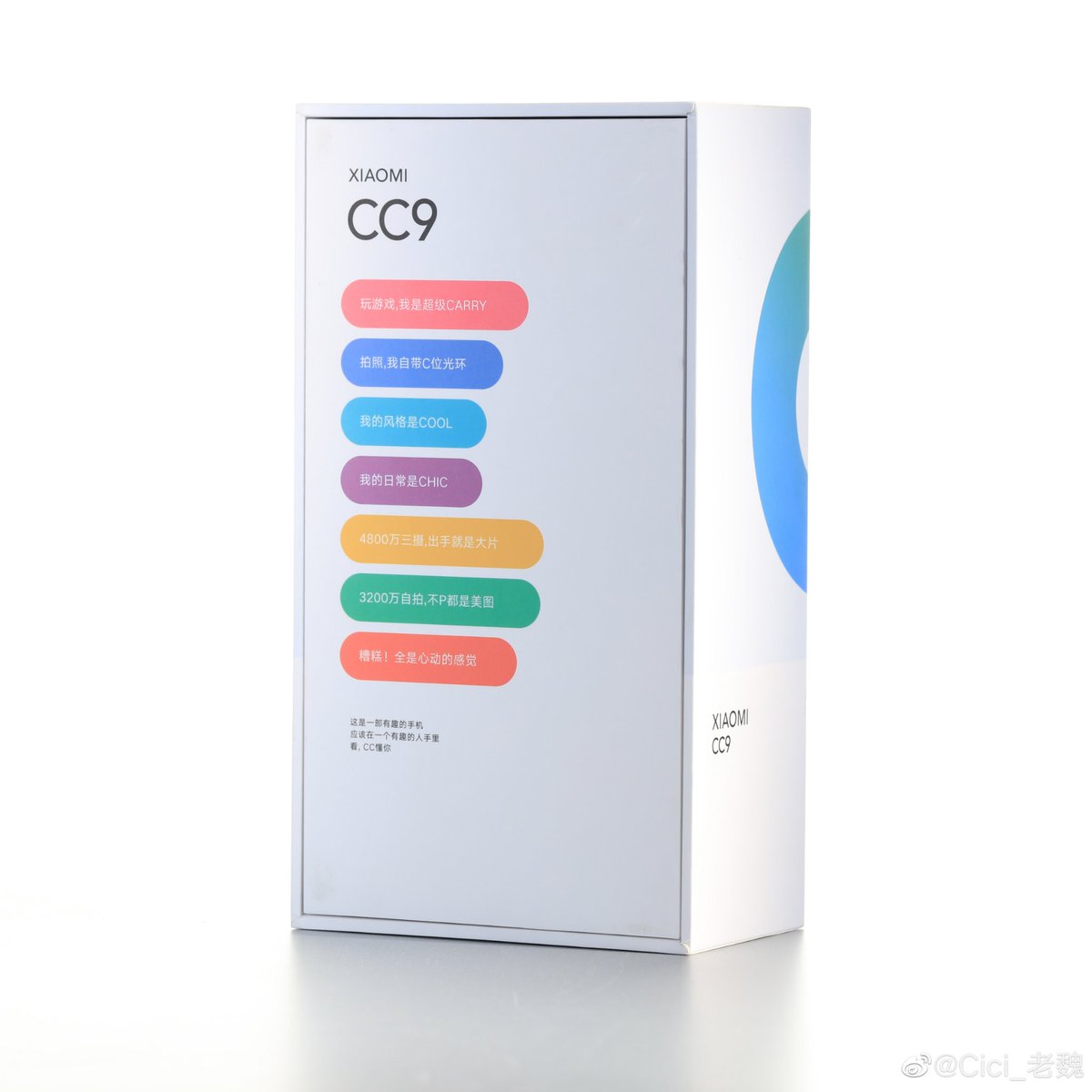
We’re going to see the Xiaomi CC9 and CC9E soon enough, but Lei Jun’s got more to tell first. According to the man himself, both variants will carry the same 4030mAh battery while still retaining slim builds despite the large batteries. On top of that, he also confirms that we’ll be seeing an in-display fingerprint sensor on both devices as well.
According to Xiaomi’s CEO Lei Jun, CC stands for Colorful & Creative and it is developed by the Chic & Cool 90 team. This team is composed of people born in the 90s who work at Xiaomi and Meitu’s research and development department. These devices are both very design oriented, so it makes why Xiaomi wouldn’t want to make these bulkier than need be.
This also explains why we’re getting in-display fingerprint sensors on both versions of the device. It makes sense to add new and cool features to a device focused mainly on being trendy and fresh. How the actual product will turn out remains to be seen, though we’ve got high hopes for this one. We’re also eager to know how it’ll turn out as the Mi A3 overseas.
Xiaomi Mi CC9 is supposed to be the mid-tier smartphone of the Mi CC series, while the CC9e is the elite variant. It will come in at least two vibrant color variants: White Lovers and Dark Blue Planet.The CC9e on the other hand, we’re not too sure about. There’s not a huge amount of news on it like there is about the CC9, though we do know it’s the elite variant. For more info before the launch, you can check our rumour roundup over here.
Earlier today, we reported that the Xiaomi CC9e was seen on Geekbench. None of the benchmark results revealed the exact chipset powering the phone but we were able to deduce it is actually the Snapdragon 665 chipset. Now, we can confirm it will actually be the first Snapdragon 665 phone.
Thanks to a new leak that shows images of the phone running system diagnostics app, AIDA64, we now know for certain that there is a Snapdragon 665 under the hood of the Xiaomi CC9e.
[envira-gallery id=”261968″]
The first of the images actually show the processor name as Snapdragon 640/665 but we already know there is no chipset called the Snapdragon 640 which leaves the SD665. The SoC has eight cores – four are clocked at 1.8GHz while the other four are clocked at 2.0GHz.
The original source of the images also revealed that the Xiaomi CC9 will be powered by the Snapdragon 710 processor and not the Snapdragon 730
AIDA64 confirms the phone runs Android 9 Pie and has March’s security patch installed. It also reveals the phone has a battery capacity of 4030mAh. But that’s not all.
If you take a look at the second image, you will see the Build ID says “laurel_sprout….”. The parameter that also says “Fingerprint recognition” (after translation) also has “laurel_sprout”.
If you have been following news of Android One devices, then you will know that all Android phones have the “sprout” suffix in their codenames. This means the Xiaomi CC9e will also be an Android One phone (at least when it launches outside China).
#Xiaomi Mi CC9e- 6-inch display 3940mAH 153.48×71.85×8.475(mm) 10W charging support
Upcoming leaker, Sudhanshu Ambhore, known for his Xiaomi-related leaks believes the Xiaomi CC9e will launch as the Mi A3 Lite. He revealed that in a tweet last week and this new leak reinforces it. Based on that, the Xiaomi CC9 might as well be the Mi A3.
Back in March, the guys at XDA-Developersfound details of upcoming Xiaomi Android One smartphones in firmware files. The devices which had the codenames “bamboo_sprout”, and “cosmos_sprout” both have 32MP front-facing cameras and in-display fingerprint scanners. While none of the codenames matches that of the Xiaomi CC9e, we do know it has a 32MP selfie camera and an in-display fingerprint scanner. The CC9 also has these two features but we don’t know its codename.
Nevertheless, these details reinforce that the Xiaomi CC9e and Xiaomi CC9 might launch in other markets as the Mi A3 Lite and Mi A3 respectively.
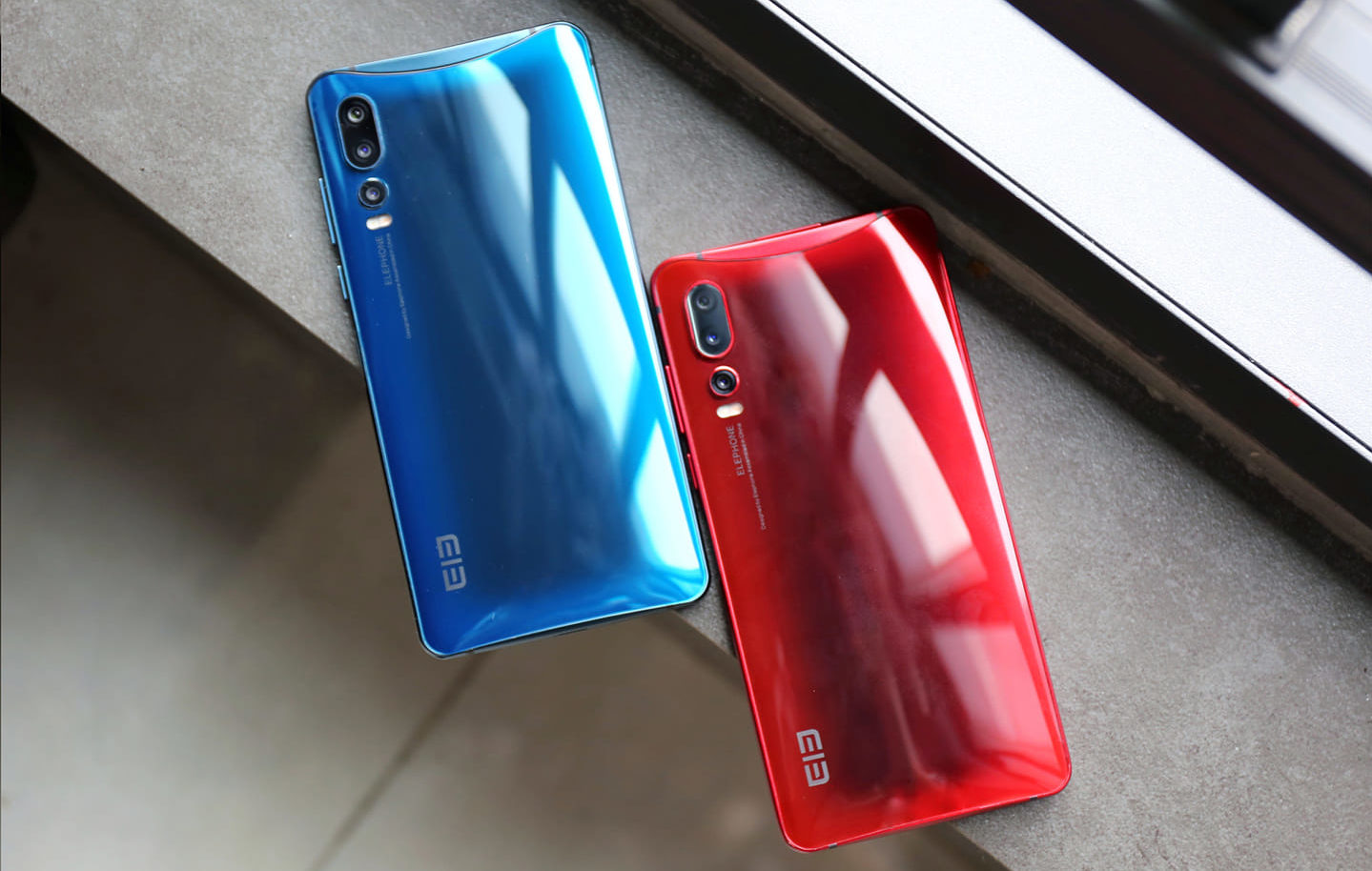
It seems that Elephone U2 may prove to be the Holy Grail for the Chinese manufacturer as it is selling like crazy both on the Aliexpress first sale and the Banggood promotion that is ongoing. Of course, the price that the company decided to put on the device plays a big role and for that reason, the company decided to extend the promotion on Aliexpress for another 5 days to allow for more users to buy one. The promo will end on July 6th and you can get the 4GB/64GB version for just $199.99 and the 6GB/128GB for just $239.99. At the same time, you can participate in the Giveaway to get one for free.
In the meantime, a photo sample shot on Elephone U2 surfaced and looks stunning with excellent dynamic range and color reproduction. Also, details are crisp thanks to the triple rear camera.
Elephone U2 comes with a 103% Wide-Gamut, 500nit Brightness 6.26″ FHD+ full display with a 93,1% screen/body ratio thanks to the pop-up front camera and ultra-narrow bezels. The pop-up camera hosts 2 sensors with 16MP/2MP configuration while the rear camera is a triple setup with 16MP/5MP/2MP sensors and f/1.6 aperture with Super Night mode. Also, it is powered by Helio P70 SoC backed by 4GB/64GB or 6GB/128GB memory configuration. The battery capacity is 3250mAh and supports fast charging while there are face & side fingerprint sensors and comes with Android 9.0 Pie. Visit the official product page to learn more about the device.
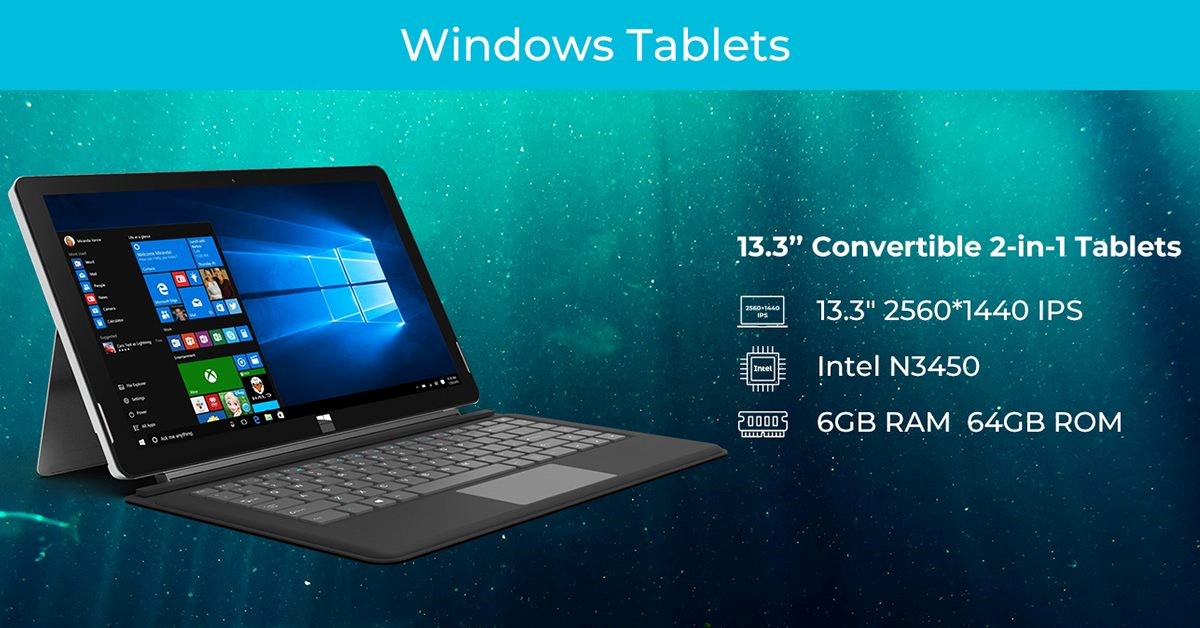
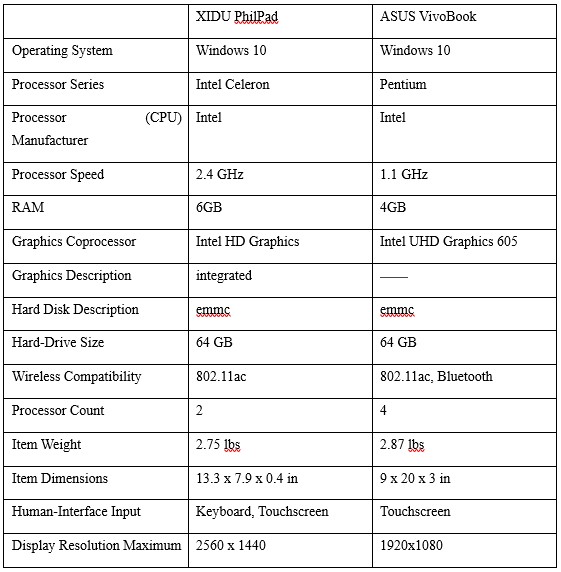
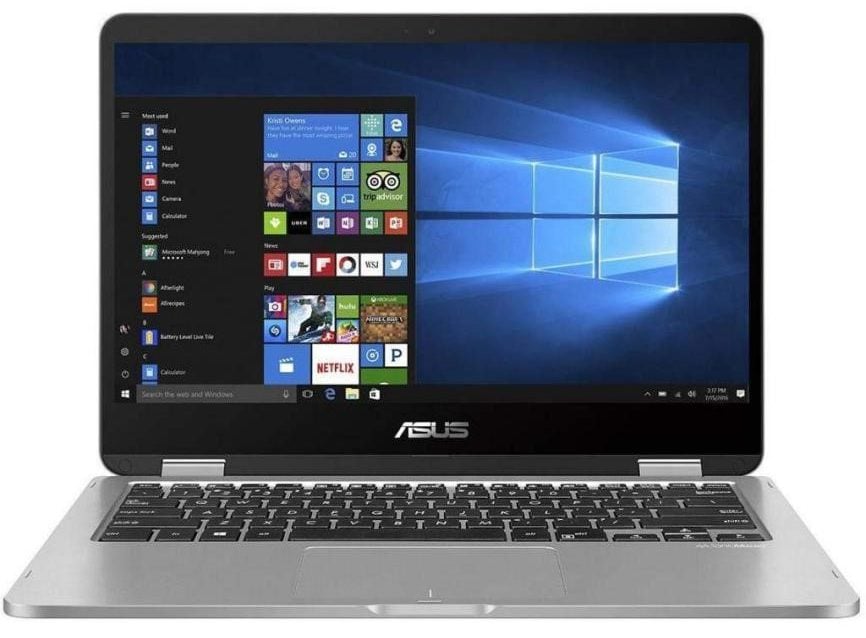
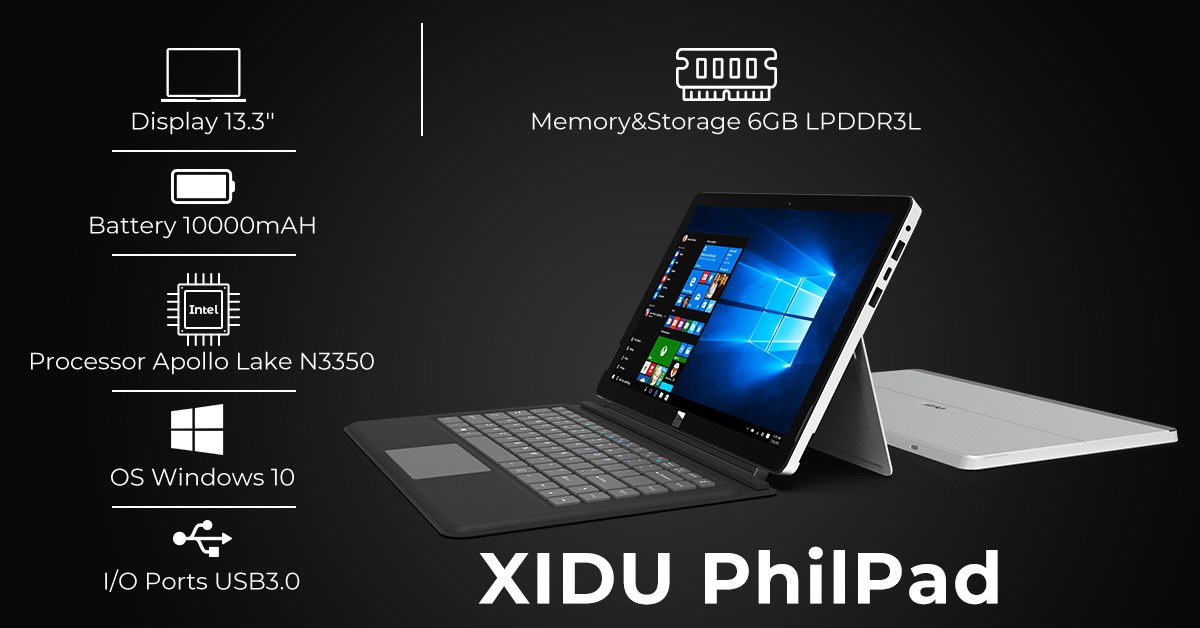
XIDU is actively promoting its laptop and Windows 10 tablets lately and a question has risen whether these models are better than one from a known brand with a similar price. Today, we take a look at the XIDU PhilPad 13.3″ tablet and Asus VivoBook 14″. They belong to different categories since the former is a tablet and the latter is a notebook but their price is similar.
XIDU PhilPad has a better battery performance than the Asus VivoBook and it brings all-day battery life as well as a 2K (2560×1440) touchscreen display with IPS panel and easily upgradeable storage. On the other hand, the VivoBook comes with Bluetooth support but has less RAM than the PhilPad and that’s more important than Bluetooth support for most users.
Design comparison
With 17mm-thickness and 2.75 lbs weight, the PhiPad is slightly thinner and lighter than its opponent but both are quite portable undeniably. Of course, it is always easier and more convenient to carry a tablet than a laptop. Also, the PhilPad’s design in better with its metal case being impressive, but that’s subjective.
The VivoBook has an advantage when it comes to the display angle since it reaches all the way to 180 degrees flat whereas the PhilPad achieves 135 degrees but don’t forget the XIDU’s model is a tablet and you can just take off the detachable keyboard and use it as any other tablet. The keyboard provided is quite ergonomic and soft and using the kickstand of the tablet you can adjust it to your liking. Also, the PhilPad comes equipped with a pen as well!
When it comes to connectivity, VivoBook is the winner here as it has Bluetooth support via the Intel 802.11b/g/n/ac (2×2) Wi-Fi and Bluetooth 4.1 combo, 1 x USB 3.1 Type-C Gen 1, 1 x Micro USB 2.0, 1 x Micro HDMI, and headphone out/audio in combo jack. On the other hand, PhilPad lacks Bluetooth and comes with 1 x USB Type-C, 2 x USB 3.0, 1 x Microphone Jack, 1 x MicroSD card slot, 2 Speakers, 2MP front camera and 5MP rear camera that is something that VivoBook doesn’t have.
Display comparison
Usually, budget laptops come with low-resolution displays to cut costs but PhilPad comes with a 2K (2560 x 1440) display, far superior to the FHD display found on VivoBook. The good thing about both is that they use IPS panels that offer wide viewing angles and accurate color reproduction. Brightness is about the same in both laptops, and you might come up against issues using them in well-lit places. Other than that, both feature above average displays for their price with PhilPad being the winner thanks to the higher resolution.
Performance
When going for a budget laptop or tablet, you should expect some issues with performance when trying to run CPU-intensive tasks. The PhilPad’s Intel 4-core Apollo Lake N3350 CPU clocks up to 2.4GHz and delivers 30% more processing and 45% better graphics performance on Windows compared to its predecessors. Even some heavy games can run smoothly and the cool about this CPU is that it sports 4 cores for better multitasking instead of the dual-core Intel CPU found in VivoBook. What’s more, the PhilPad comes with 6GB of RAM, 50% more than the 4GB found on VivoBook. The difference in performance will likely not be noticed but it’s nice to know it’s there.
So, these are the main differences and similarities between the two contenders. If you are interested in the PhilPad, go ahead and visit their official store and grab some of the coupons provided for extra discount.
Xiaomi has applied for a trademark for the phrase “Xiaomi Express”. The trademark was applied for at the China Trademark Office back in August 2018.
According to reports, the trademark was filed under the following classes – class 9, class 35, class 38, class 39 and class 42. The application has already been approved for Class 38 and Class 39 which is for “information transmission” and “parcel delivery” respectively while the other classes are still pending approval.
The Class 38 trademark also covers telecommunications services; chat room services; portal services; e-mail services; providing user access to the Internet; radio and television broadcasting. While Class 39 trademark covers Transport; packaging and storage of goods; travel arrangement; distribution of electricity; travel information; provision of car parking facilities.
Prior to the filing of the trademark application, it was reported Xiaomi is working on launching a “next day” delivery service that will cover more than 150 cities in India. Based on this, there are speculations that “Xiaomi Express” might as well be the official name of this service.
But it might also be associated with Xiaomi’s Mi Express Kiosks which it launched in India back in May. The Mi Express Kiosks are vending machines loaded with Xiaomi, Redmi, and POCO devices. So, in addition to walking into a store or ordering online, you can also purchase a phone, power bank or any other available accessory from a Mi Express Kiosk and get it right away. Xiaomi may want to launch that in its home country too, hence the reason for applying for a trademark.
However, it is also possible the trademark may be used both for the kiosks and its planned delivery service.
When asked to think about innovative Chinese smartphones manufacturers, most people think to Huawei and Xiaomi. But there are also other companies which are doing their best at delivering the latest technologies, despite a lot of people around the world ignore them. Lenovo, Nubia, and ZTE are among these ones as all of them released a flagship phone with the support to 5G connectivity. We are referring to Lenovo Z6 Pro 5G Edition, Nubia X 5G, and ZTE Axon 10 Pro 5G. In each case, we are talking about 5G variants of existing flagships sold at very interesting prices. But are their 5G variants as interesting as other 5G handsets? And which one is the best? After reading this comparison, you will have an idea.
Lenovo Z6 Pro 5G vs Nubia X 5G vs ZTE Axon 10 Pro 5G
Nubia X 5G
ZTE Axon 10 Pro 5G
Lenovo Z6 Pro 5G Edition
DIMENSIONS AND WEIGHT
154.1 x 73.3 x 8.4 mm, 181 g
159.2 x 73.4 x 7.9 mm, 175 g
157.5 x 74.6 x 8.7 mm, 185 g
DISPLAY
6.26 inches, 1080 x 2280p (Full HD+), LTPS IPS LCD
Secondary display 5.1 inches 720 x 1520 pixels (HD+), OLED
6.47 inches, 1080 x 2340p (Full HD+), AMOLED
6.39 inches, 1080 x 2340p (Full HD+), Super AMOLED
Triple 48 + 20 + 8 MP, f/1.7, f/2.4 and f/2.2
20 MP f/2.0 front camera
Quad 48 + 8 + 16 + 2 MP, f/1.8, f/2.4, f/2.2 and f/1.8
32 MP f/2.0 front camera
BATTERY
3800 mAh, fast charging with Quick Charge 4 18W
4000 mAh, fast charging with Quick Charge 4+ 18W
4000 mAh, fast charging 18W
ADDITIONAL FEATURES
Dual SIM slot, 5G
Hybrid Dual SIM slot, 5G, waterproof IP68
Hybrid Dual SIM slot, 5G
Design
Most of the Nubia X 5G body is covered by displays: the phone features two displays so it can use the rear cameras as front cameras too. That means the phone does not need a selfie snapper, neither a notch to house it. So its screen-to-body ratio is incredibly high and there are no holes on the display. That is why (alongside the secondary display) its design is the most amazing. On the other hand, ZTE Axon 10 Pro 5G comes with the most interesting build quality as it is fully waterproof (up to 1.5 meters depth for 30 minutes) with the IP68 certification. Even Lenovo Z6 Pro 5G Edition has an awesome design, with a transparent back allowing to see its internal components, but I personally prefer the Nubia X form factor and its more compact body.
Display
When it comes to display quality, Lenovo Z6 Pro 5G Edition is the clear winner, at least on the paper. Thanks to the HDR10 standard and the high DCI-P3 coverage, it should provide the most accurate color reproduction. However, Nubia X 5G is much more interesting with its dual display. It has a classic 6.26-inch display on the front and a secondary 5.1-inch compact display on its back which you can use to save battery as it is smaller and the OLED technology consumes less energy.
Hardware/Software
These devices are all powered by the Snapdragon 855 chipset, so they offer amazing flagship-class performance, the best you can expect in 2019. Lenovo Z6 Pro 5G Edition wins the hardware comparison simply because it has the most powerful memory configuration: up to 12 GB of RAM and up to 512 GB of internal storage. And you can even expand the internal storage up to 1 TB thanks to a micro SD slot. The phones run Android 9 Pie out of the box.
Camera
It will be hard to establish a winner of the camera comparison between ZTE Axon 10 Pro 5G and Lenovo Z6 Pro 5G as their photo quality is very different depending on the scenarios, and both of them are able to shoot outstanding photos. I personally prefer the ZTE Axon 10 Pro 5G because its main sensor has a brighter focal aperture and OIS, as well as 3x optical zoom. These are very important features to get good photos. Nubia X 5G wins the selfie comparison as it is able to use its rear cameras as front cameras thanks to the secondary display.
Battery
Both Lenovo Z6 5G Edition and ZTE Axon 10 Pro 5G come with a big 4000 mAh battery, but 5G drains a lot, so we will have to test them thoroughly in order to establish if they are good battery phones and which one lasts more. Nubia X 5G has a smaller battery, but its secondary display might let it last more with some usage patterns. Note that ZTE Axon 10 Pro 5G is the only to feature wireless charging.
Price
We only know that ZTE Axon 10 Pro 5G carries a €900/$1015 price tag, while prices for Nubia X 5G and Lenovo Z5 Pro 5G are still unannounced. Independently from the prices, overall, my favorite one is the ZTE Axon 10 Pro 5G because of the bigger display, water resistance, stereo speakers and wireless charging.
We can’t really tell if the most famous series from Ulefone is the rugged Armor series or the big battery Power series. And that happens because both are excellent in their market segment. Power 6 is already out in the market for a while and while we know its strongest feature is its battery life, Ulefone released today a video to prove the endurance of the 6350mAh battery.
As we can see in the video, the device consumed just 9% of the total battery charge after 1.5 hours of heavy use that included a half-hour phone call, a half-hour online game, and a half-hour movie. On the basis of this data, the maximum continuous use reaches approximately 17 hours. And taking under consideration that an average heavy use in one day is 4.5 hours, Power 6 can go on for more than 3 days on a full charge. For less heavy users and thanks to the power-efficient Helio P35 SoC, it may support 4 days or even more.
Besides the excellent battery life, the device also comes with a large 6.3″ waterdrop display as well as 4GB of RAM and 64GB of internal storage. There is a dual rear camera with 16MP/2MP sensors and a front 16MP one that supports Face unlock combined with Fingerprint unlock for ultimate protection. Lastly, there is GPS/Glonass/Beidou/Galileo navigation system, global network support, NFC, and Android 9 Pie.
The Ulefone Power 6 is on promotion right now on Banggood and you can get it for just $159.99 with the offer expiring on July 7th. Apart from that, the phone has already arrived at distributors and deliveries should begin soon.
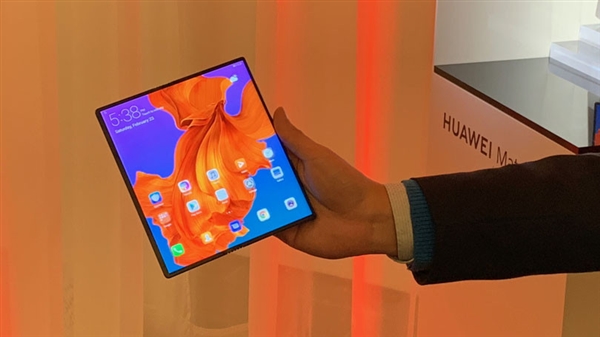
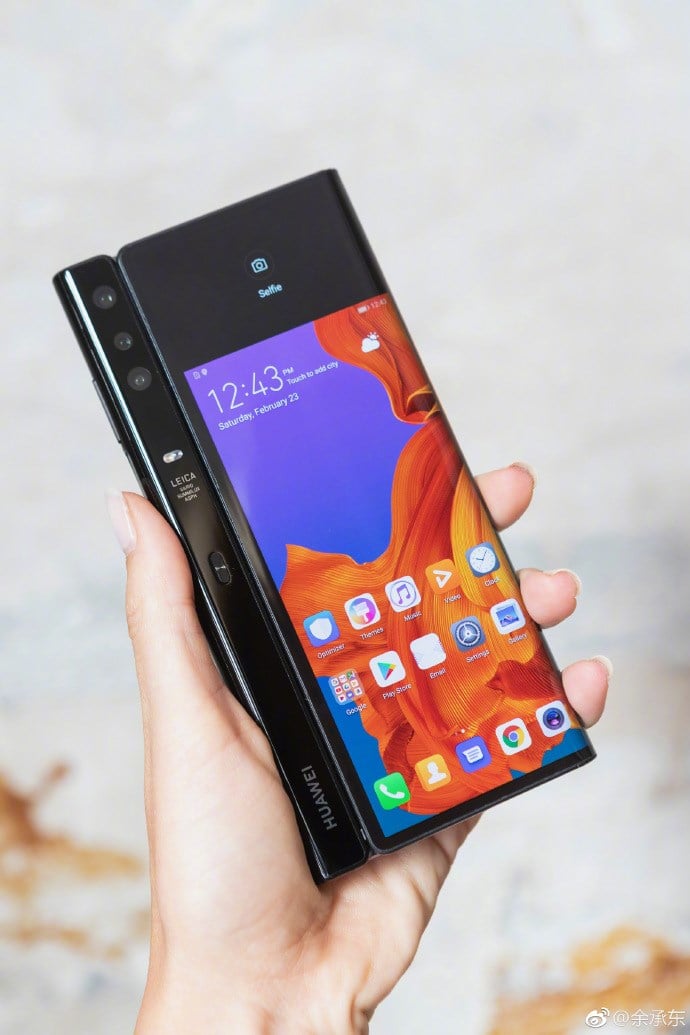
Huawei announced its first foldable phone – the Mate X at MWC 2019 in February. The device is preferred by most fans to the Galaxy Fold as it is seen as a true reflection of what is seen as a foldable phone. The Mate X adopts an out-folding design which ensures it is the same screen when folded that is in use when it is opened. Since the unveiling, expectations have run out as to the release of the phone. The device was earlier tipped to be released this June but a recent rumour says the Mate X will drop in December.
The price of the Mate X is now rumoured to be higher than what was expected. Previously, there were speculations that the Mate X will be priced around 12,999 yuan (~$1898). However, the latest news from China indicates that the phone could go for as high as 14,999 yuan (~$2191). For the global market, the price may even reach 17,000 yuan ($2,483), according to rumours.
The Mate X may still be a scarce product to come by even with the huge price tag. This is because the production process is slow, mainly due to the low yield of the foldable display panels. Initial stocking by Huawei for the first sale in China will be around 100,000 units. Considering the attention the phone courts, if this is true, the phone will be sold out in a flash.
By the way, the Mate X is also Huawei’s first 5G phone. So, the interest isn’t just for the foldable design but for the 5G connectivity it offers.
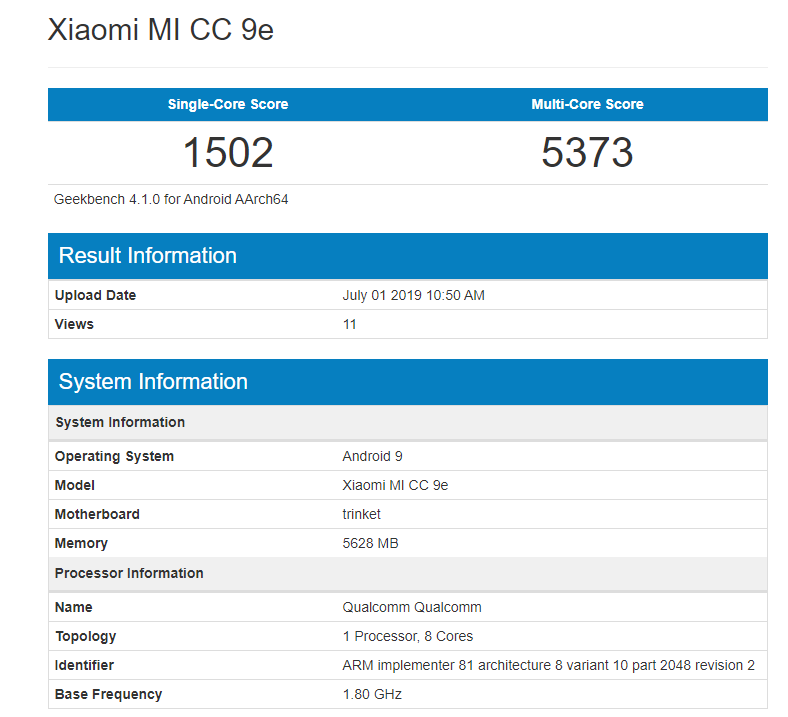
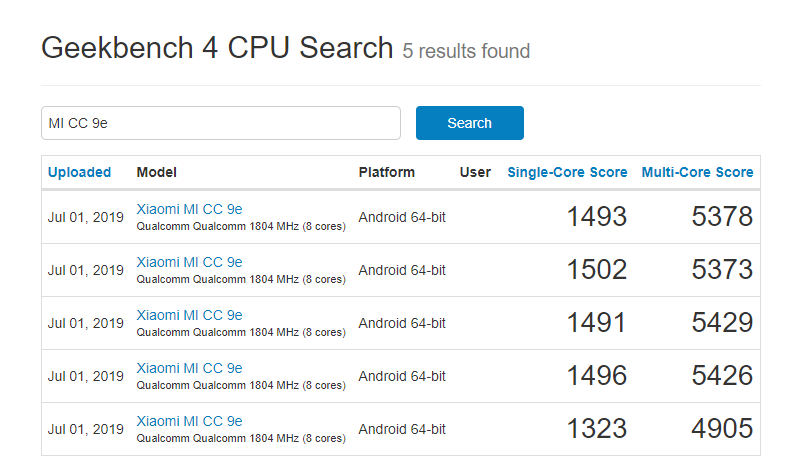
The Xiaomi CC9e just appeared on Geekbench less than a day before its official release. There are multiple benchmark results but none of them specifies the chipset powering the device.
The device was benchmarked earlier today as the “Xiaomi MI CC 9e” and the result shows the phone has 6GB of RAM and runs Android 9.
The benchmark results say the phone is powered by an octa-core processor with a base frequency of 1.80GHz. Before now, there were rumors the phone will be powered by the Snapdragon 710 chipset but these results prove that is not true.
All devices powered by the Snapdragon 710 have a base frequency of 1.71GHz and the identifier is quite different too. So what chipset is this? We have a pretty strong guess.
There are five different results in all and save for the last one, the rest have a single-core score of over 1400 and a multi-core score of over 5000 points.
We know it isn’t the Snapdragon 660 because the SD660 has a base frequency of 1.84GHz. We also know it isn’t the Snapdragon 636 or Snapdragon 632 as some publications have reported, as neither of these chipsets has a multi-core score of over 5000 points. It is also definitely not the Snapdragon 675 which not only has a much higher single-core score and multi-core score but also has a base frequency of 1.71GHz.
Seeing as the scores fall between those of the Snapdragon 636 and the Snapdragon 660, we strongly believe the Mi CC9e may be powered by the Snapdragon 665. This chipset was announced by Qualcomm back in early April but it is yet to appear in a phone.
The Snapdragon 665 uses the same Kryo 260 cores as the Snapdragon 660 and Snapdragon 636 but is built on a smaller node size (11nm) as against the SD660 and SD636’s 14nm node size. Apart from that, the Snapdragon 665 has a lower clock speed than the SD660 but higher than that of the SD636 which explains why its scores are in between those of both processors.
Take a look at the video of the Snapdragon 665 made by Qualcomm. The focus is on AI and how it helps improve photography. It is no coincidence that the Xiaomi CC9e is being marketed as a camera-focused device.
Xiaomi was the first to launch a phone powered by a Snapdragon 710 chipset as well as the first phone with a Snapdragon 712 processor. Who is to say they won’t be the first to launch a Snapdragon 665 phone too?
We are keeping our fingers crossed on this one but let us know what you think in the comment box below.
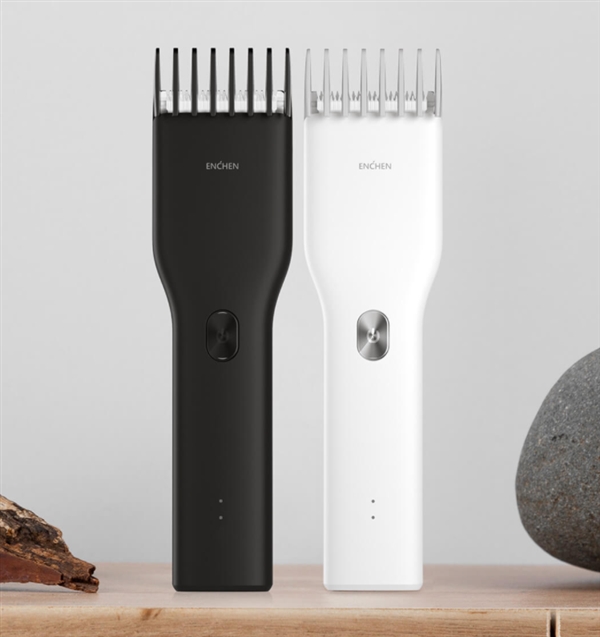
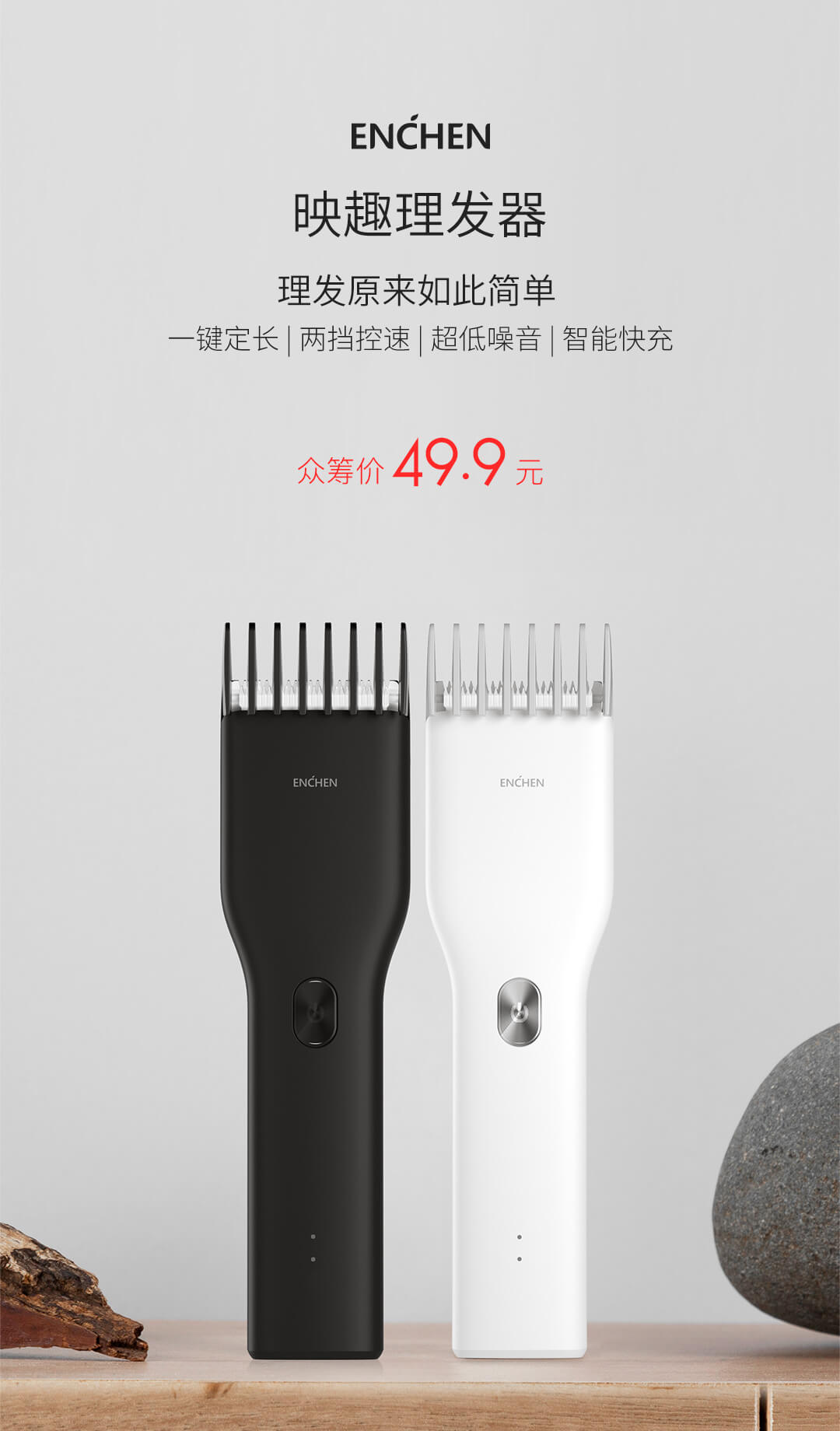
Xiaomi‘s Youpin crowdfunding platform on Saturday launched a new and affordable product on the platform. The product dubbed Enchen Boost Hair Clipper is a portable product that can come in handy when there is no power supply or you are on transit and can’t get a salon to get a hair cut. The clipper has a durable battery that can be charged in just 1 hour. The manufacturer claims the device can last up to three months on a single charge and regular use. It is equally highly affordable, clutching a crowdfunding price of 49.9 yuan ($7). The product is expected to start shipping on August 12.
The Enchen Boost hair clipper is designed with a slider-type positioning comb. The slider can regulate the range of the hair length between 0.7mm and 21mm and supports one-button adjustment. The device uses nanoceramic cutter head which is harder than stainless steel. The hardness of nanoceramics is 1.6 times that of ordinary stainless steel and the surface smoothness is much smaller than that of stainless steel. Thus, when the hair clipper runs at high speed, the ceramic cutter head produces lower noise and it doesn’t heat up easily. The sound produced while it is switched on is less than 55db, which is much lower than the GB standard of 70db.
The Enchen Hair Clipper uses a powerful 280-type motor and has a two-speed power switch in order to meet the cutting speed variations required by different hair types. The normal starting speed is 4500 rpm, which is suitable for long hair extension. The second speed level known as “Turbo” speed mode delivers a powerful output of 5800 rpm. This makes it easy to trim thick hair.
In addition, the Enchen Boost Hair Clipper integrates the ESM (Energy Smart Manager), a smart integrated circuit system, which is like the “brain” of the products. It includes two modules of energy management and motor master control to ensure high-speed operation even when the battery is low. The system also indicates when the battery is low, charging or fully charged.
Earlier today, several OnePlus 7 Pro users complained about receiving two strange push notifications that contain a random series of letters. In no short time, the push notifications had started generating mixed reactions with some fans wondering if OnePlus has been hacked.
Some OnePlus 7 Pro owners posted screenshots of the spam message on Twitter. The messages look like encrypted messages but actually consist of Latin characters on one of the messages, while the other one has Chinese characters. When the message is tapped, the phoe attempts to open a browser but a prompt comes up that it couldn’t be found.
— Nicole Scott in Berlin (@Nicole_Scooter) July 1, 2019
OnePlus has responded swiftly, confirming via a statement posted on its forum that the notifications were actually sent from its end and that it is the result of an internal test. The company also disclosed that the messages were sent out to devices globally. There wasn’t any confirmation about the number of devices that were affected. The company says it is already testing its upcoming Android Q system update and the push notifications were related to that.
OnePlus disclosed the messages were sent using the Google Firebase Cloud Messaging (FCM) Protocol and reassured users that their personal data are still safe and has not been compromised. Apparently, users were not supposed to receive the message and the company says it is implementing new processes to ensure that there isn’t a repeat of such incident.
The Xiaomi CC9e is a less-powerful version of the CC9 that is scheduled to be announced tomorrow. The latter has already appeared on TENAA but the CC9e just surfaced today. This isn’t the full listing but there are images and some few key specs.
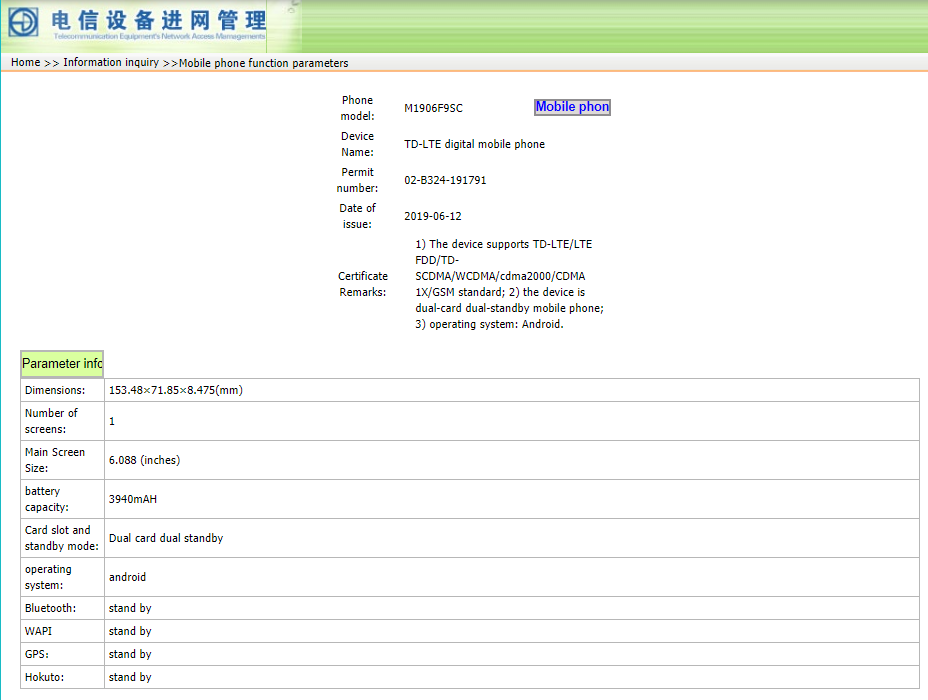
TENAA says the Xiaomi CC9e’s model number is M1906F9SC. It has a 6.088-inch display, packs a 3940mAh battery, and measures 153.48 x 71.85 x 8.475 millimeters.
As you can see from the details above, the Xiaomi CC9e is a smaller version of the CC9 which has a 6.39-inch screen and measures 156.8 x 74.5 x 8.67mm.
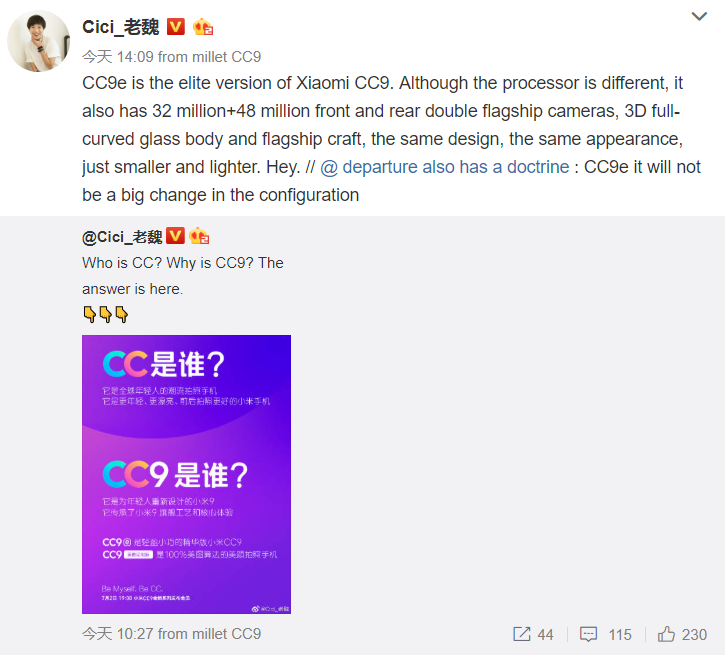
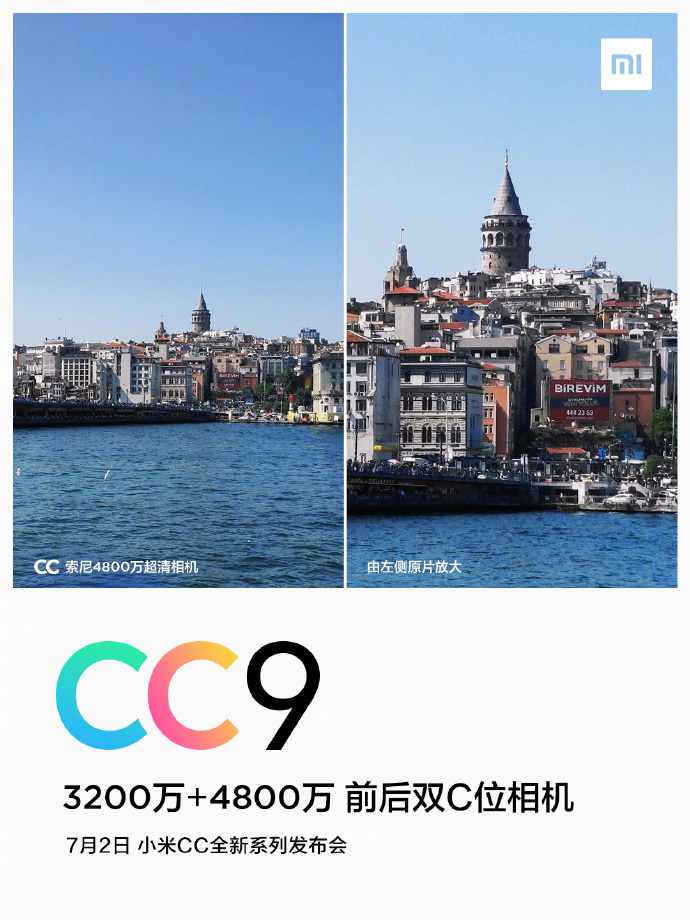
A Weibo post by Lao Wei earlier today also revealed more details about the CC9e. She stated the phone has a different processor but also comes with a 32MP selfie camera and a 48MP rear camera (like the CC9). We are not sure about the processor yet but there are reports the CC9e will come with the Snapdragon 710 chipset while the CC9 will have a Snapdragon 730 SoC.
With respect to design, Lao Wei said the Xiaomi CC9e will have a 3D curved glass back and similar design and appearance (to the CC9). The only design differences between both devices will be their size and weight.
The images provided by TENAA reinforce her post. We can see the phone also sports triple rear cameras which slightly protrudes, and has a curved back. There is no fingerprint scanner which means it will also have one under the display. There is “Xiaomi” inscribed at the bottom.
[envira-gallery id=”261879″]
The phone has a notch and a moderately-sized lower bezel. The power and volume buttons are on the right side of the phone while the left frame is home to the SIM tray.
Both the CC9e and CC9 will focus on photography and are targeted at the younger generation. They will launch tomorrow in China but we expect details about international availability will be revealed at the event too.
Xiaomi CC9e is likely powered by the brand new Snapdragon 665 as per Geekbench. The CC9e model also passed TENAA revealing its design. TENAA says the Xiaomi CC9e’s model number is M1906F9SC. It has a 6.088-inch display, packs a 3940mAh battery (check Update 2 below), and measures 153.48 x 71.85 x 8.475 millimeters.
UPDATE 2:
Xiaomi CEO Lei Jun has confirmed screen fingerprint on both CC9 and CC9e models. The battery capacities on both models are confirmed to be 4030mAh.
A few days ago, Xiaomi officially discontinued two of its mainstream smartphone line-ups: the Mi Max and Mi Note. While the latest device from the Mi Max series was released last year, the latter did not see a new phone since the Mi Note 3 launched two generations ago. The Mi Max and the Mi Note line-ups will be replaced by a brand new series of smartphones: Xiaomi Mi CC. This series will supposedly include smartphones made for young people, with selfie-centric features and great aesthetics. We are just a day away from the official launch of the new series and in this rumor roundup you will find everything we know about the series and its first devices.
Xiaomi CC9
Xiaomi Mi CC rumor roundup: everything we know
The Xiaomi Mi CC line-up is a new series of phones for young people developed in partnership with Meitu, a known luxury smartphones manufacturer recently acquired by the Chinese smartphone giant. According to Xiaomi’s CEO Lei Jun, CC stands for Colorful & Creative and it is developed by the Chic & Cool 90 team. This team is composed of people born in the 90s who work at Xiaomi and Meitu’s research and development department.
Most of the members in the CC team are from the arts and fine arts professions. The new line-up will likely debut with three models: Xiaomi Mi CC9 (where 9 stands for the age of the company, it turns 9 years in 2019), an affordable variant called Mi CC9e and a Meitu Custom Edition of the CC9. Xiaomi Mi CC will be a series focused on the design with trendy colors, but also on selfies, thanks to the innovative imaging technologies developed by Meitu (that is mainly why Xiaomi acquired it, not because of the luxury phones). And we also expect amazing rear cameras.
Below, there is all we know about the specifications of the three devices, as well as their possible price and the launch date.
Xiaomi Mi CC9
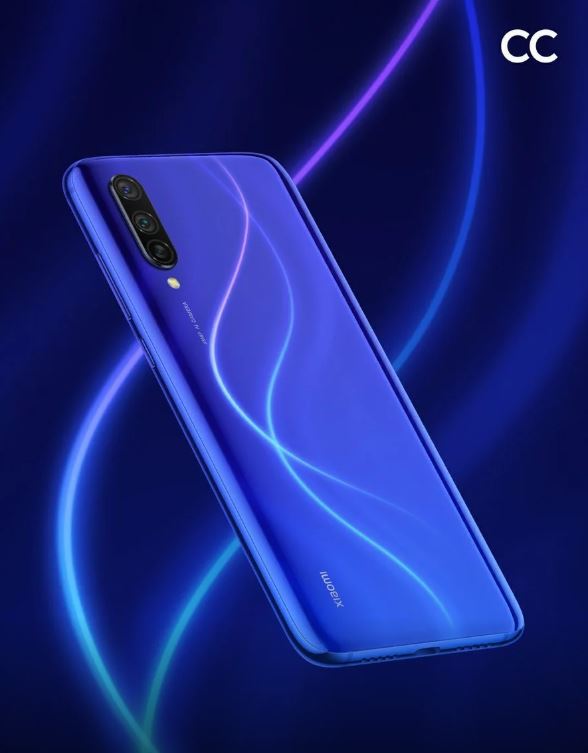
Xiaomi Mi CC9 is supposed to be the mid-tier smartphone of the Mi CC series. It will come in at least two vibrant color variants: White Lovers and Dark Blue Planet. The white variant will have a gradient finish with shades of blue, purple and pink, obviously on the rear side made of glass. The dark blue version is even more exciting as it comes with a stunning wavy pattern on the rear glass that changes depending on the reflection of the light.
Xaomi Mi CC9 White Lovers
According to TENAA, it will measure 156.8 x 74.5 x 8.67 mm for a weight of 179 grams, and it is identified by the model number M1904F3BT. The display will be an OLED panel with a 6.39-inch size and will feature an under-display fingerprint scanner and a Full HD+ resolution with 1080 x 2340 pixels. Under the hood, there will be an octa-core processor running at a max frequency of 2.2 GHz (it is supposed to be the Snapdragon 710 by Qualcomm but TENAA does not mention it).
According to rumors, there will be several memory configurations: 4 GB RAM + 64 GB of internal storage, 4 GB RAM + 128 GB storage, 6 GB RAM + 64 GB storage and 6 GB RAM + 128 GB storage. But TENAA only lists three variants: 4 GB RAM + 64 GB, 6 GB RAM + 128 GB and 8 GB RAM + 256 GB. The operating system will be Android 9 Pie, probably customized by MIUI. On the rear side, there will be a triple camera setup with a 48 MP main sensor, while the front side will house a 32 MP selfie camera inside a waterdrop notch. The battery will have a 3940 mAh capacity and supports fast charging.
While the Mi CC9 was spotted on TENAA listings, for the Mi CC9e we still have to rely exclusively on rumors. According to rumors, it will not only be a more affordable variant of the Mi CC9, but it will also be a more compact phone. The display will still be an OLED panel, but it will have a smaller 5.97-inch diagonal and the same Full HD+ resolution of 1080 x 2340 pixels.
The display will be protected by Gorilla Glass 5. Despite being the most affordable variant, it should still be powered by the same chipset as the Mi CC9: the Snapdragon 710. But unlike its bigger sibling, it will have different memory configurations: 6 GB RAM + 64 GB, 6 GB RAM + 128 GB and 8 GB RAM + 128 GB. Even in this case, there will be a triple rear cameras and it will include a Sony IMX582 primary sensor with a 48 MP resolution, an 8 MP secondary sensor (supposedly an ultrawide lens) and a 5 MP sensor.
The front camera will have the same 32 MP resolution as the CC9 but the battery will be smaller: 3500 mAh with 18W fast charging, that is still great for a compact device (the Mi 9 SE which has the same display size comes with a way smaller 3070 mAh battery). The handset will debut in China in three color variants: White, Blue Planet and Night Prince.
Xiaomi Mi CC9 Meitu Custom Edition
Xiaomi Mi CC9 Meitu Custom Edition is definitely the most awaited and the most interesting variant of the new CC line-up as it will be the resulting device from the strategic partnership with Meitu. However, info about this phone is still very limited. According to recent revelations by Xiaomi’s CEO Lei Jun, the Xiaomi Mi CC9 Meitu Custom Edition will be released in a special color not available for the vanilla Mi CC9 and the CC9e.
Further, it will sport all the best photography technologies by Meitu. It will probably be the flagship of the series as it will sport 8 GB of RAM and 256 GB of internal storage. It will also arrive in a different blue package. From a Weibo post published by Meitu, we saw that the Mi CC9 Meitu Custom Edition will shoot clear and AI-backed selfies even in dark light conditions.
The new CC series smartphones will come with a new version of Mimoji, a type of AR emoji that works similar to Apple’s Animoji.
The first three devices from the Xiaomi Mi CC series will be officially announced on July 2. According to leaks, the vanilla Mi CC9 will be priced 2,499 Yuan in its base variant with 6 GB RAM + 128 GB of internal storage, which roughly translates into $365. The mid-end variant with 8/128 GB is said to cost 2,799 Yuan (about $407), while the top-end configuration with 8/256 GB will cost 3,099 Yuan (about $451).
Xiaomi Mi CC9e is expected to start from 1,599 Yuan ($232) in the base variant (6/64 GB), the mid-tier 6/128 GB version will cost 1,899 Yuan ($276) and the most advanced one with 8/128 GB will cost $320.
We still do not know the possible price of the Meitu Custom Edition, but we assume it will probably cost more than the vanilla Mi CC9.
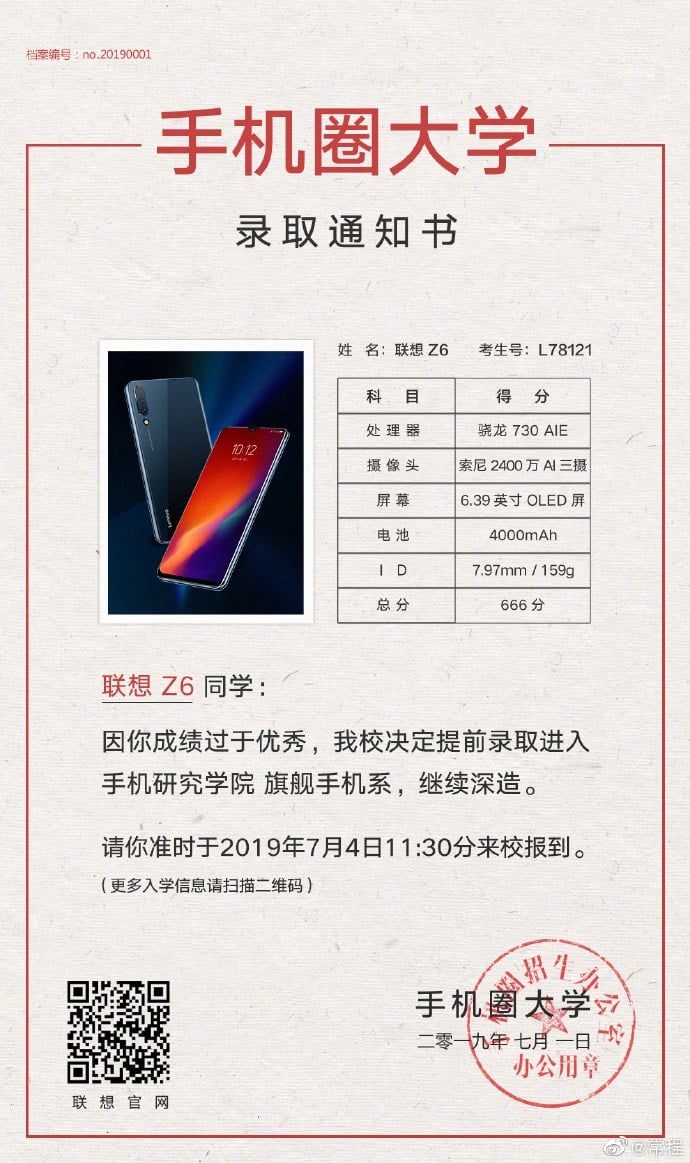
After launching the Lenovo Z6 Pro and Z6 Youth Edition, China-based Lenovo has been teasing the features and specifications of the Lenovo Z6 smartphone since quite some time. However, the company had not revealed the phone’s launch date.
Today, Chang Cheng, Vice President of Lenovo Group has confirmed that the Lenovo Z6 smartphone will go official in China on 4th July. Through teasers, the company has already shared almost all features and key specs of the upcoming device.
It has already been confirmed that the smartphone will come with a 6.39-inch Full HD+ display and will sport a waterdrop notch just like the other Z-series devices from the company. With narrow bezels surrounding the display, the smartphone promises 93.1 percent screen-to-body ratio and carries support for HDR 10, DCI-P3 color gamut, 600nits of brightness and 120 Hz high sampling rate.
The phone is confirmed to be powered by the recently launched Qualcomm Snapdragon 730 octa-core processor. It is an 8nm octa-core chipset which features 2 + 6 core arrangement and has Kryo 470 CPUs clocked at 2.2GHz, coupled with Adreno 618 GPU.
The triple camera module on the phone’s back panel will consist of a 24-megapixel Sony IMX576 as a primary sensor with f/1.8 aperture, a 5-megapixel secondary camera sensor, and an 8-megapixel tertiary camera sensor with 8x hybrid zoom and 2x optical zoom support. On the front side, it will come equipped with a 16-megapixel snapper.
It is also confirmed that the Lenovo Z6 will come powered by a 4,000mAh battery and will come with support for 15W Quick Charge 3.0 fast charging technology but is rated for 18W fast charging. Lenovo adds that the battery can provide a standby time of 395 hours, talk time of 38 hours, video playback of 26 hours, and gameplay for 16 hours.
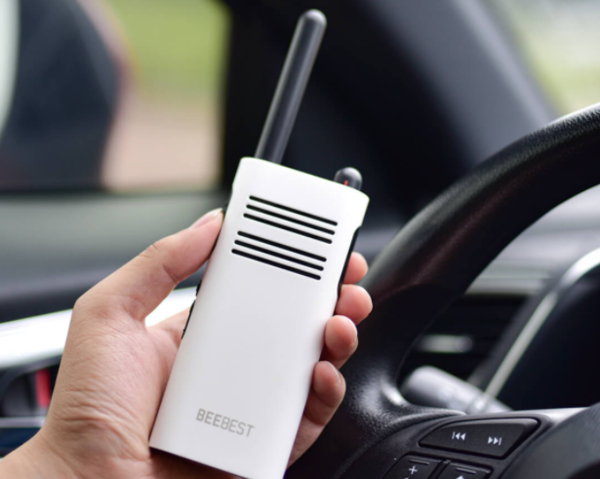
Walkie Talkies may not be the most trendy communication tool around at the moment, but they are still an important means of communication. Xiaomi has launched the BeeBest Walkie Talkie with its biggest feature being the 1-5km call range it offers. The walkie talkie also comes with a compact body, making it easy to carry around.
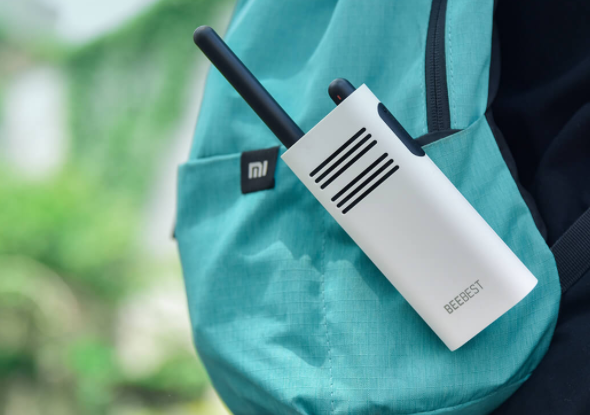
The BeeBest Walkie Talkie adopts a sleek body design with a comfortable feel. It integrates a back clip which can be used to strap the device to a backpack or belt so that you can move about hands-free. The extremely small microphone walkie-talkie supports 5W maximum power, and the customized phosphor bronze antenna has better call performance than the common brass world. With this antenna, the manufacturer claims you can get good reception at the mall, basement or other complicated environments.
The device comes in two versions, both having different battery capacities. In terms of battery life, the high-end version is equipped with a 3350mAh lithium battery. When fully charged, it has a standby time of 7 days and can be used for 12 hours in a row. On the other hand, the standard version has a battery capacity of 2000mAh, which guarantees 5 days of standby and 8 hours of continuous use. The device comes with a Micro-USB charging port as well as a three-pin wireless charging point at the base.
In terms of price, the standard version of the BeeBest Walkie Talkie is priced at 139 yuan ($20) and it comes in a White color variant. The high-end variant is priced at 169 yuan ($24) and it is available in deep blue colour option.
We use cookies on our website to give you the most relevant experience by remembering your preferences and repeat visits. By clicking “Accept”, you consent to the use of ALL the cookies.
This website uses cookies to improve your experience while you navigate through the website. Out of these, the cookies that are categorized as necessary are stored on your browser as they are essential for the working of basic functionalities of the website. We also use third-party cookies that help us analyze and understand how you use this website. These cookies will be stored in your browser only with your consent. You also have the option to opt-out of these cookies. But opting out of some of these cookies may affect your browsing experience.
Necessary cookies are absolutely essential for the website to function properly. This category only includes cookies that ensures basic functionalities and security features of the website. These cookies do not store any personal information.
Any cookies that may not be particularly necessary for the website to function and is used specifically to collect user personal data via analytics, ads, other embedded contents are termed as non-necessary cookies. It is mandatory to procure user consent prior to running these cookies on your website.