Xiaomi 17T and Xiaomi 17T Pro may share the same family name, but the differences between them go far beyond a simple “Pro” badge. From a more powerful flagship chipset and faster charging to premium materials and enhanced camera capabilities, the 17T Pro introduces several meaningful upgrades. The question is whether those improvements justify the extra cost or if the standard Xiaomi 17T already delivers the better overall value. Here’s a closer look at how the two phones compare.
The Xiaomi 17T and Xiaomi 17T Pro follow a similar premium design language, but the Pro model clearly positions itself as the more flagship-oriented device. While the Xiaomi 17T combines a glass front with a reinforced plastic frame and back panel, the 17T Pro upgrades to an aluminum frame and full glass construction. This gives the Pro variant a more refined and premium in-hand feel. Both devices feature IP68 dust and water resistance, ensuring strong durability for everyday use.
The material upgrade may not completely change the user experience, but it does make the Pro feel more expensive and better aligned with its higher price segment.
Display Quality
The Xiaomi 17T offers an excellent AMOLED panel with a 120Hz refresh rate, Dolby Vision, HDR10+, and a peak brightness of 3500 nits. The Xiaomi 17T Pro pushes things further with a larger AMOLED display and a faster 144Hz refresh rate. The smoother refresh rate can make gaming and scrolling feel slightly more responsive, while the larger screen creates a more immersive viewing experience.
Verdict
The Xiaomi 17T already delivers a flagship-grade display, but the 17T Pro earns the win thanks to its premium materials, larger screen, and higher refresh rate. The upgrades feel meaningful rather than cosmetic.
2. Specifications Including Battery
Performance
Performance is where the biggest difference appears. The Xiaomi 17T is powered by the MediaTek Dimensity 8500 Ultra, which is more than capable for gaming, multitasking, and everyday flagship-level usage. However, the Xiaomi 17T Pro steps into a completely different performance category with the newer 3nm Dimensity 9500 chipset and significantly stronger graphics hardware.
Heavy gamers, content creators, and power users are likely to notice the extra headroom available on the Pro model. The availability of higher RAM and storage configurations further strengthens its flagship positioning.
Battery and Charging
Battery life is excellent on both phones. The global Xiaomi 17T carries a 6500mAh battery, while the 17T Pro increases capacity to 7000mAh. Charging also receives a substantial upgrade from 67W wired charging to 100W wired charging. The addition of 50W wireless charging is another major advantage that the standard model completely lacks.
The charging improvements are the kind of upgrades that users appreciate every day rather than only during benchmark tests.
Verdict
The Xiaomi 17T delivers impressive performance and battery life for most buyers, but the 17T Pro provides a substantial leap in processing power, charging speeds, and convenience features. This is one of the strongest upgrade areas between the two models.
3. Camera
Main and Secondary Lenses
Both smartphones share a Leica-branded triple-camera setup with a 50MP main sensor, a 50MP periscope telephoto camera offering 5x optical zoom, and a 12MP ultrawide lens. However, the Xiaomi 17T Pro upgrades to a much larger main camera sensor, allowing it to capture more light and potentially deliver better low-light photography, improved dynamic range, and stronger background separation.
Video capabilities also see a major improvement. While the Xiaomi 17T supports up to 4K 60fps recording, the Pro version adds 8K recording and 4K 120fps support. These enhancements give content creators significantly more flexibility.
Selfie Camera
The selfie camera hardware remains identical across both devices, featuring a 32MP sensor capable of 4K recording. Selfie quality, video calls, and social media content should be very similar between the two models.
Verdict
The camera systems look similar on paper, but the larger primary sensor and advanced video recording capabilities give the Xiaomi 17T Pro a noticeable edge. Photography enthusiasts and creators are more likely to benefit from the upgrade.
4. Pricing
Xiaomi 17T is priced around $700 (₹60,000), while the Xiaomi 17T Pro is priced around $900 (₹75,000). This creates a price difference of approximately $200 (₹15,000) between the two devices.
At its price point, the Xiaomi 17T offers strong value by combining a flagship-grade display, Leica cameras, a large battery, and modern connectivity features. It covers nearly everything most users would expect from a premium smartphone.
The Xiaomi 17T Pro asks for a noticeable premium, but the additional cost brings a faster chipset, superior build quality, a larger battery, much faster charging, wireless charging support, a larger display, and a more capable camera system. Unlike some Pro models that focus on minor refinements, the upgrades here are easy to identify in daily use.
Verdict
The Xiaomi 17T is the better value-focused purchase, while the Xiaomi 17T Pro justifies its higher price through meaningful flagship-level upgrades. Buyers looking for the complete experience may find the premium worthwhile.
Disclaimer: Prices are approximate and may vary based on country, region, launch timing, and applicable taxes. Always check whether the listed price is for a China unit or a global/international variant when purchasing.
5. Conclusion
The Xiaomi 17T stands out by offering many flagship features at a relatively accessible price. Its AMOLED display, Leica camera system, long battery life, and Dimensity 8500 Ultra chipset make it a compelling option for users seeking premium performance without stretching their budget.
The Xiaomi 17T Pro takes the formula further by introducing a more premium construction, a larger 144Hz display, a significantly more powerful Dimensity 9500 processor, a larger camera sensor, faster wired charging, wireless charging support, and expanded memory configurations. These upgrades collectively create a device that feels closer to a true flagship rather than a slightly enhanced variant.
Verdict
Xiaomi 17T is the smarter choice for value-conscious buyers because it delivers most of the experience for less money. The Xiaomi 17T Pro, however, is the better smartphone overall. Its upgrades are substantial across performance, display, charging, build quality, and camera capabilities, making it a genuinely more premium device rather than just a higher-priced alternative.
Disclaimer: This comparison is based on the specifications provided and is intended for general informational purposes. Actual performance, camera results, battery life, and overall experience may vary depending on real-world usage, software updates, and individual preferences.
Samsung strengthened its lead in the global DRAM market during the first quarter of 2026, benefiting from surging demand for AI-focused memory products and higher memory prices.
According to market research firm Omdia, global DRAM revenue reached a record $97.1 billion in Q1 2026, up 85.3% from the previous quarter. Samsung generated $37.4 billion in DRAM revenue, a 95.4% increase quarter-over-quarter, raising its market share from 36.5% to 38.6%.
The strong performance helped Samsung widen its lead over competitors. SK Hynix generated about $28 billion in revenue and saw its market share fall to 28.8%, down 4.1 percentage points from the previous quarter. Micron Technology remained in third place with $21.7 billion in revenue and a 22.4% market share, despite posting robust 81.6% growth.
Industry analysts attribute the surge to booming demand for AI infrastructure. Data centers running generative AI models require large amounts of High Bandwidth Memory (HBM) and advanced DDR5 DRAM, driving both shipments and prices higher. TrendForce data also shows Samsung benefiting from strong server DRAM demand and some of the largest increases in average selling prices.
China’s Changxin Memory Technologies (CXMT) was another notable performer. The company nearly tripled its quarterly revenue to $7.3 billion, increasing its market share from 4.7% to 7.6%. While still well behind the industry’s top three suppliers, CXMT continues to expand its presence as China invests heavily in domestic semiconductor production and AI infrastructure.
For Samsung, the results highlight the growing importance of AI-driven memory demand. The company’s memory business remains a key profit driver, and continued investment in advanced DRAM technologies is expected to support growth through the rest of the year. However, analysts caution that supply increases and easing prices could moderate the pace of expansion in future quarters.
The standard Galaxy S27 has appeared in the GSMA database under model number SM-S952U, marking the first official sign that development of the 2027 flagship series is underway. The “U” suffix typically refers to a US variant, suggesting Samsung is already preparing models for one of its key markets.
GSMA registrations are often among the earliest public indicators of an upcoming smartphone. They are required for IMEI allocation and device certification, and usually surface months before launch. The Galaxy S26 Edge and S26 Ultra, for instance, appeared in the database around the same time last year. So everything seems to be going as planned.
The filing does not reveal any hardware details, but expectations are already forming around Samsung’s next-generation flagship. The base Galaxy S27 is likely to retain a compact design with a display around 6.3 inches, featuring a Dynamic AMOLED 2X panel and a variable 120Hz refresh rate.
As for performance, Samsung is expected to continue its current dual-chip strategy with the upcoming Exynos 2700 and Snapdragon 8 Elite Gen 6 Pro chips. Memory and storage options could start at 12GB of RAM and 256GB of storage.
There’s still very little information about the Galaxy S27 and Galaxy S27+ at this stage. The Galaxy S27 Ultra, however, is rumored to be getting a long-awaited design refresh. Reports suggest Samsung could remove one of the rear cameras, potentially freeing up space for a slightly larger battery. The flagship may also feature built-in magnets for native Qi2 support, eliminating the need for magnetic cases or accessories.
Some reports pointed to a possible new Pro variant as well, which may include a 50MP 3.5x telephoto.
For now, the GSMA listing confirms only one thing: Samsung’s next flagship generation is in development. More details are likely to emerge through certifications, benchmarks, and leaks in the coming months ahead of a probable early-2027 unveiling at Samsung’s Galaxy Unpacked event.
A new Oppo smartphone appears to be inching closer to launch in China. A device carrying the model number PYD110 has now surfaced on the TENAA certification platform, revealing several key specifications ahead of its official debut. While Oppo has not confirmed the marketing name yet, Chinese tech bloggers believe the handset could launch as the Oppo K15, joining the Oppo K15 Pro and Oppo K15 Pro+, which went official in April in China.
Oppo K15 specifications
Oppo K15’s TENAA images
The TENAA listing suggests that the alleged Oppo K15 could arrive with a 6.59-inch AMOLED display offering a resolution of 1256 x 2760 pixels. The panel is also expected to support an in-display fingerprint scanner and face unlock functionality. The device measures 158.3 x 75.13 x 8.27mm and weighs 205 grams.
The certification reveals a rated battery capacity of 7,755mAh, indicating that the typical capacity could be around 8,000mAh when officially announced. There’s no information about the fast-charging capabilities of this device.
Under the hood, the smartphone is listed with an octa-core processor clocked at 2.5GHz. While the chipset name remains unknown, the device is expected to be offered in 8GB and 12GB RAM variants, paired with 256GB and 512GB storage options.
For photography, the listing points to a dual rear camera setup consisting of two 50-megapixel sensors. On the front, the phone is expected to feature a 50-megapixel selfie camera. Other features mentioned in the listing include an infrared blaster, Bluetooth, and a USB-C. The K15’s images, which are available in TENAA’s database, suggest that it may not have a built-in fan like the K15 Pro models.
For more daily updates, please visit our News Section.
For the first time, not a single gasoline-only car made it into China’s ten best-selling passenger vehicles in May 2026. Every spot now is taken by either a fully electric or a plug-in hybrid model.
The hints of this being real were long coming. Back in January, seven of the ten top-selling cars still ran on gasoline. By March, that number had dropped to five. In April, just one gas-powered Geely Binyue made it to the list. Now, in May, it’s zero.
Xiaomi SU7 standard
Sales rankings compiled by Autohome and Autodext show five models claiming the top spots across both lists: the Geely Star Wish, Tesla Model Y, Xiaomi SU7, Leapmotor A10, and Li Auto i6. The two sources diverge a bit further down the list, but they agree on what isn’t there: a combustion engine in sight.
A Market in Free Fall for Gas
China’s passenger car retail sales hit 1.51 million units in May, according to the China Passenger Car Association (CPCA). That’s a 22.1% drop compared to the same month last year, though it was up about 9% from April.
It’s gas-powered vehicles that took the brunt of that fall. Even though they still held 37.1% of the market by volume in May, they were responsible for a staggering 82% of the total year-over-year sales decline. The CPCA points to high oil prices as a key driver for the decline.
Tesla Model Y
Meanwhile, new energy vehicles, including both pure EVs and plug-in hybrids, now account for 62.9% of retail passenger car sales in China. And it’s the third straight month the figure has exceeded 60%.
Wholesale vs. Retail
It’s worth flagging that the CPCA did not release an official retail sales ranking for May. The top-10 retail figures come from third-party trackers. On the wholesale side, which captures what manufacturers ship to dealers rather than what consumers actually buy, the picture is somewhat different.
BYD dominates that list. The BYD Song led wholesale rankings with over 75,000 units, followed by the Tesla Model Y at around 54,000. Several BYD models appear in the top five, and a handful of gasoline vehicles — including the Chery Tiggo 7 and Geely Binyue — still show up further down. So gas cars aren’t completely out of the supply chain. They’re just not what people are choosing to take home anymore.
For more daily updates, please visit our News Section.
Seven years is a long time in the speaker world. Marshall‘s Stockwell II launched when AirPods were still new, and Spotify hadn’t yet crossed 100 million subscribers. Now the Stockwell III is here, and Marshall has used that time well.
The new portable Bluetooth speaker keeps everything that made the Stockwell line recognizable — the guitar amp-inspired look, the metal mesh grille, the brass control panel, the velvet-lined strap handle that feels like it belongs on a guitar case. But underneath that familiar retro shell, this is a meaningfully different product.
Marshall Stockwell III Specifications
The biggest upgrade is battery life. The Stockwell III can deliver over 40 hours of runtime, up from roughly 20 on its predecessor. It charges via USB-C and can power other devices, so it doubles as a battery pack when you need it.
Marshall has also bumped durability up to an IP55 rating, meaning it can handle dust and splashes without drama. The audio side gets True Stereophonic technology for 360-degree sound, plus dynamic loudness processing that tries to keep bass, mids, and treble balanced as you push the volume up or dial it down. There’s a dedicated M-button on the top panel for presets and track controls alongside the standard playback buttons.
The most thoughtful addition, though, might be repairability. The Stockwell III ships with a user-replaceable battery, carry strap, grilles, silicone sleeve, and carrying case, parts you can actually swap yourself.
And the timing isn’t surprising. The EU is mandating that consumer electronics use replaceable batteries starting early next year, and Marshall is getting ahead of it.
The Stockwell III is available in black and brass or cream, priced at $249.99 in the US.
For more daily updates, please visit our News Section.
At a time when most candybar smartphones look nearly identical from the front, Huawei continues to experiment with new form factors. The company helped popularize the wider book-style foldable design, a direction that Xiaomi and Apple are now exploring for its more practical aspect ratio. According to recent leaks, Huawei also sees potential in bringing that concept to a traditional slab smartphone with a wider, tablet-like display. The device is reportedly expected to arrive after the Mate 90 series, potentially before the end of 2026.
The leaks suggest Huawei is testing a 16:10 display with a 2K-class resolution, giving the phone a noticeably wider screen than most current flagships. While foldables have explored similar proportions, this would bring the concept to a conventional smartphone form factor.
Weibo tipster Digital Chat Station recently claimed to have seen an engineering prototype and described the device as surprisingly thin and lightweight despite its larger footprint. Details about the final design remain unclear, including the shape of the rear camera module.
On the camera side, Huawei is reportedly testing a 50MP primary sensor with a large 1/1.3-inch format, paired with a 50MP periscope telephoto camera and a multispectral sensor. If those specifications make it to production, the device could sit firmly in flagship territory and continue Huawei’s focus on advanced mobile photography. Power is expected to come from a next-generation Kirin 9000 series chipset and a 7,000mAh battery.
For now, the device is still believed to be in development, so specifications could change before launch. Even so, the idea of a wide-screen candybar flagship would give Huawei something genuinely different in a market where most smartphones look increasingly similar.
According to a fresh leak, the Galaxy A27 is expected to launch in Europe at €349 for the base 6GB RAM + 128GB storage variant. If you want the higher-end 8GB RAM + 256GB storage model, that’ll set you back €439.
To put that into perspective, the Galaxy A26 launched at €299 and €369 for the same configurations. That means buyers are looking at a €50 increase on the entry model and a €70 jump on the top variant.
Whether that bump feels justified will depend on what Samsung is actually delivering.
Samsung Galaxy A27
As per rumors, the Samsung Galaxy A27 features a 6.7-inch FHD+ display, the Qualcomm Snapdragon 6 Gen 3 replacing the Exynos 1380 on its predecessor, a 50MP main camera with OIS, a 12MP front shooter, and a 5,000mAh battery with 25W wired charging.
None of these specs scream upgrade if we take the price hike in consideration. In fact, the ultrawide camera is said to drop to just 5MP from 8MP, and microSD card support appears to be gone entirely as well.
So why is Samsung increasing the price? Due to hike in memory prices, folks. Existing phones from several brands have already gone up in price, as a result, its no surprise that the new models will be expensive too.
A launch is expected sometime between June and August 2026. As with most Samsung releases, promotional pricing or carrier deals could soften the blow once the phone hits shelves.
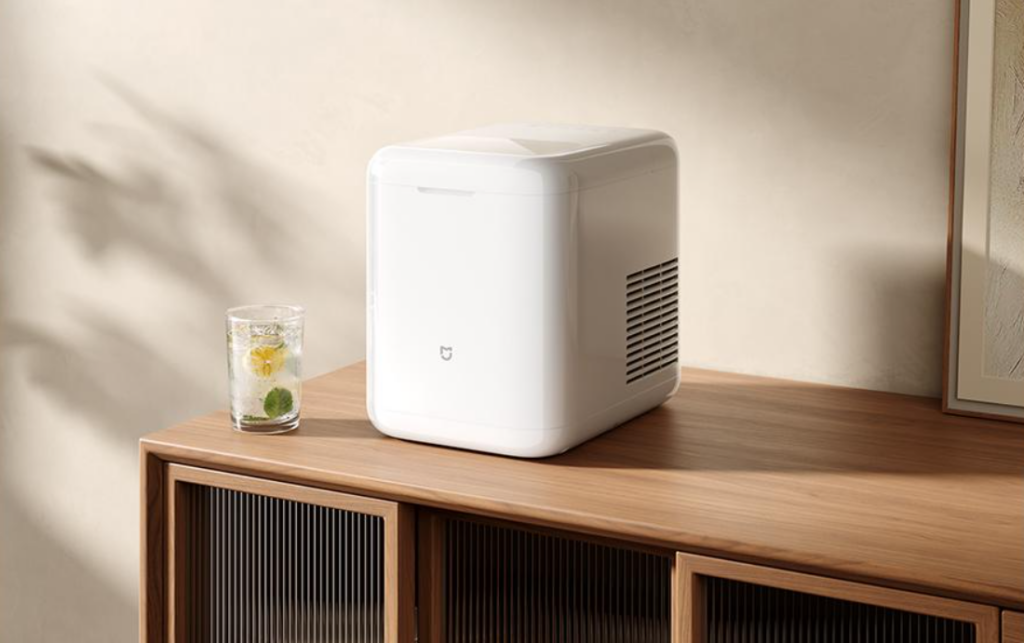
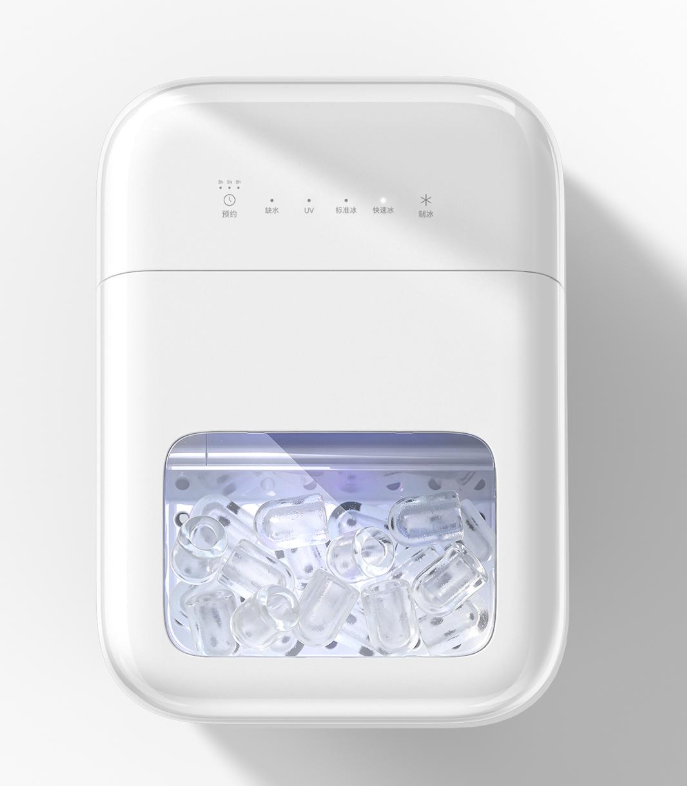
Xiaomi has unveiled a new smart home gadget that tries to replace several appliances at once. Called the Mijia Instant Hot Water Dispenser (Ice Maker), it’s part water dispenser, part ice maker, part kettle, and even works as a thermos-style hot water station.
Xiaomi has also made installation fairly flexible. If you already have a water purifier at home, the machine can connect directly to it for automatic refilling. If not, there’s a removable 2.6-liter water tank that can be filled manually. That should make it easier to place in a kitchen, office, or even a living room without worrying about plumbing.
The ice-making system sounds surprisingly capable as well. According to Xiaomi, the machine can produce a batch of five 6g ice cubes in as little as 10 minutes in fast mode, while the standard mode produces five larger 10g cubes in around 15 minutes. The storage compartment can hold 45 to 55 cubes and keeps them chilled for about five hours.
Hot water is available almost instantly thanks to a 2050W heating system, with Xiaomi claiming a wait time of just three seconds. Users can choose from several preset temperatures, while those using the Mi Home app can adjust water temperature more precisely between 40°C and 90°C.
There’s quite a bit of attention paid to hygiene too. The company says the machine uses separate UV sterilization systems for both ice and cold water, along with high-temperature pipe cleaning to reduce bacteria buildup. Features like automatic draining and cold-water circulation are also designed to keep the system fresh during long-term use.
Other extras include a color display for monitoring settings, child-lock protection, app connectivity, and operating noise below 35dB during fast ice production.
Price and availability:
The new device is scheduled to go on sale in China on June 15. Its retail price is 3,299 yuan, although Xiaomi will offer it at a discounted launch price of 2,969.1 yuan.
Casio has released its latest G-Shock, the MTG-B4000B-1A, in the US market. The watch is priced at $1,500 and arrives stateside following its initial launch in Japan last month.
Design Details
The watch features an updated Dual Core Guard structure made from laminated carbon, glass fiber sheets, and stainless steel. To optimize its impact resistance, Casio utilized a collaborative workflow where human designers drafted initial concepts, AI simulated structural stress, and engineers refined the final shape.
Externally, the watch uses a dual-layer stainless steel bezel treated with a black ion-plated finish. The metal components feature a combination of brushed and mirror finishes. The case back is manufactured using metal injection molding, a process that allows for more complex, dimensional shapes than standard machining. This specific model pairs the black carbon frame with red dial accents and a soft urethane band.
In terms of physical specifications, the MTG-B4000B-1A measures 56.6 by 45.3 by 14.4 mm and weighs 112 grams. It carries Casio’s Triple G Resist rating, meaning the internal module is protected against mechanical shock, centrifugal force, and heavy vibration. The dial is covered by a sapphire crystal with an anti-reflective coating, and the case is water-resistant up to 200 meters.
For daily operation, the watch runs on Casio’s Tough Solar charging system. It includes Bluetooth for pairing with the Casio Watches smartphone app, which manages automatic time synchronization, alarms, and world time settings across 300 cities. For users who prefer a standalone device, it also features Multiband 6 radio control, allowing it to receive time calibration signals directly from six global transmission towers.
The internal battery provides about five months of standard use without light exposure, extending to 18 months if stored in the dark with the power-saving mode enabled. The MTG-B4000B-1A is available now through Casio’s website, though the company currently lists the inventory as limited stock.
TEMPT has released a new portable fan called the ICY in India. It is priced at Rs. 1,990 ($21) and combines standard fan blades with a built-in thermoelectric cooling plate. It is available now through the company’s website and Amazon India.
TEMPT ICY Portable Fan Specifications
Most handheld fans just circulate the surrounding air, which is not always helpful in high heat. The ICY takes a different approach by integrating a semiconductor cooling plate directly into the center of the fan head. When you turn on the device’s chiller mode, this plate drops to 18°C in a few seconds.
You can press the cold surface directly against your skin to lower your body temperature. It works using the same basic technology found in the active cooling nodes on wearable neck fans.
Behind that cooling plate is a brushless motor that spins the fan blades at over 14,000 RPM. According to TEMPT, the fan operates at under 20 decibels. That makes it quiet enough to use in an office, a classroom, or on public transit without drawing much attention from people nearby.
The device runs on a 4,000mAh lithium battery, and the overall battery life depends heavily on how you use it. If you only run the fan on its lowest setting, it lasts up to 12 hours. If you turn on the cooling plate while keeping the fan speed low, that maximum runtime drops to 10 hours.
There are four speed settings in total, which drain the battery in roughly 12, 9, 6, or 3 hours as you increase the airflow. When it runs out of power, you can recharge it using a standard USB-C cable. The full charge takes about 90 minutes, and you can plug it into a laptop, power bank, or standard wall adapter.
Physically, the fan is six inches long and features a lightweight build with a matte finish. TEMPT kept the hardware interface minimal, using a single physical button to turn the device on, cycle through the fan speeds, and activate the cooling plate. Right above the button, a small LED screen displays the current battery percentage, the active speed setting, and whether the cooling mode is currently running.
The fan ships with a lanyard for hands-free carrying, along with a travel pouch for storage. Buyers can choose from three colors: Elegant Beige, Bold Grey, and Serene White.
For more daily updates, please visit our News Section.
Dangbei has launched a new pair of wireless earbuds in China, and they lean heavily into two current tech trends: open-ear clip designs and AI-assisted translation. The Dangbei Air 1S, priced at 1,299 yuan ($190), will officially go on sale on June 15th via JD.com.
Dangbei Air 1S Specifications
The case features a 2.04-inch AMOLED touchscreen built directly into the hardware. While we’ve seen screens on earbud cases before from brands like JBL, Dangbei is using this display for more than just skipping tracks or changing wallpapers. The screen acts as a visual aid for the earbuds’ real-time translation features, displaying translated text during face-to-face conversations so the other person can read along. It also handles basic media controls and includes a few extras like virtual pets and mini-games.
The earbuds themselves use a clip-on style that leaves the ear canal entirely open. They weigh 6.3 grams each and use a 0.5mm titanium memory alloy wire to grip the ear without applying too much pressure. Dangbei also says that the hardware has an antibacterial silver-ion coating.
For audio, the Air 1S relies on 12mm dynamic drivers and supports LHDC 5.0 decoding for higher-resolution audio, along with standard SBC and AAC codecs. Since clip-on designs naturally bleed sound, the company says it is using directional sound technology to help keep your audio private in public spaces.
The software focuses heavily on utility and productivity. The earbuds support real-time translation for 36 languages, and up to 190 languages for standard transcription. These also feature a four-microphone array that handles voice pickup and noise cancellation. Through a companion app, you can also record calls, generate text summaries, and create meeting notes.
Talking about other hardware specs, these include Bluetooth 6.0 connectivity, dual-device pairing, spatial audio with head tracking, and an IP54 rating for basic dust and water resistance. Battery life sits at an estimated 8 hours for the earbuds, extending to 42 hours when factoring in the charging case. It also supports fast charging and a 10-minute charge will provide about 2.5 hours of playback.
In related news, Edifier recently launched the LolliClip SE clip-on earbuds with Dolby Spatial Audio, AI transcription, and a 40-hour battery, while Baseus unveiled the Bowie MC2 with LDAC, 11mm drivers, IP67 protection, and up to 55 hours of battery life.
For more daily updates, please visit our News Section.
Xiaomi 17T Pro combines flagship-level performance, a large battery, premium Leica cameras, and a high-refresh-rate AMOLED display, making it an attractive option for users looking for a powerful Android smartphone with global shipping support.
Premium AMOLED Display for Entertainment and Gaming
The Xiaomi 17T Pro features a large 6.83-inch AMOLED display with a 144Hz refresh rate and 480Hz touch sampling rate. The panel supports HDR10+, HDR Vivid, and Dolby Vision for enhanced video playback and richer colors.
With a peak brightness of up to 3500 nits and 12-bit color support, the display is designed to remain visible even under bright outdoor conditions. The eye-care technology also helps reduce eye strain during extended usage sessions.
Powered by MediaTek Dimensity 9500
Under the hood, the Xiaomi 17T Pro is powered by the latest 3nm MediaTek Dimensity 9500 processor. The octa-core chipset can reach clock speeds of up to 4.21GHz, delivering strong performance for gaming, multitasking, and demanding applications.
The phone comes with 12GB LPDDR5X RAM, ensuring smooth app switching and responsive performance. Xiaomi offers storage options of 256GB, 512GB, and 1TB, giving users plenty of room for photos, videos, games, and applications.
Leica Triple-Camera System
Photography is one of the key highlights of the Xiaomi 17T Pro. The smartphone features a Leica-branded triple-camera setup on the rear.
The primary camera uses a 50MP Leica sensor with Optical Image Stabilization (OIS), a bright f/1.7 aperture, and a 23mm equivalent focal length. It is designed to capture detailed photos with improved low-light performance.
The second camera is a 50MP Leica floating periscope telephoto lens with OIS and a 115mm equivalent focal length, allowing users to capture distant subjects with enhanced clarity.
Completing the setup is a 12MP ultra-wide camera with a 120-degree field of view and a 15mm equivalent focal length for landscape and group photography.
For selfies and video calls, Xiaomi includes a 32MP front-facing camera hidden beneath the display.
Massive 7000mAh Battery With Fast Charging
Battery life is another major selling point of the Xiaomi 17T Pro. The smartphone packs a huge 7000mAh battery designed to easily handle heavy daily usage.
Charging is equally impressive, thanks to support for 100W HyperCharge wired charging and 50W wireless charging. The phone also supports 22.5W reverse charging, allowing it to power compatible accessories and devices when needed.
HyperOS 3 and Modern Connectivity
The Xiaomi 17T Pro ships with Xiaomi HyperOS 3 pre-installed. The software includes full-screen gesture navigation and various system optimizations aimed at delivering a smoother user experience.
For connectivity, the device supports 5G networks and Wi-Fi 7, offering faster wireless speeds and improved network efficiency. Additional security is provided by an in-display fingerprint scanner that enables quick and convenient unlocking.
Price and Availability
Xiaomi 17T Pro is now available at Giztop with a starting price of $699. Buyers can choose between 256GB, 512GB, and 1TB storage variants, while global shipping is available for international customers.
With its flagship MediaTek Dimensity 9500 processor, Leica camera system, high-brightness AMOLED display, and massive 7000mAh battery, the Xiaomi 17T Pro aims to deliver a premium smartphone experience at a competitive price point.
ZTE has launched a new 4G portable Wi-Fi hotspot in China called the U15S. It is priced at 179 yuan (about $26) and built primarily around offering a long battery life for users who need an internet connection while traveling or working away from home.
ZTE 4G Portable Wi-Fi Specifications
The device comes with a 10,000mAh battery. According to ZTE, this capacity provides up to 26 hours of continuous use on a single charge. Because of the large battery, the device has a somewhat thick profile, measuring 106 x 55 x 33mm and weighing 237 grams. It features rounded edges for an easier grip and is available in two standard colors: black and white.
To recharge, the hotspot uses a USB-C port and supports 18W charging. It is compatible with standard charging protocols, including PD, QC, and PPS. It also includes a direct power supply mode. This feature allows the device to run directly from a wall outlet or external power source, bypassing the internal battery to help maintain the battery’s lifespan over time.
On the front, there is a 1.44-inch touchscreen. This display lets users check basic network information like signal strength, remaining data, and battery levels without needing to open a separate app on their phone. It also displays a QR code so other people can quickly scan and connect to the Wi-Fi network.
Inside, the U15S runs on a ZTE-developed V3E-A53 dual-core chip. It includes a dual SIM slot, which gives users the option to switch between two different cellular networks if one carrier has poor reception in a specific area.
The device supports Wi-Fi 6, operating on the 2.4GHz band, and can connect up to 16 devices at the same time. It also uses OFDMA technology to manage bandwidth across multiple connected phones or laptops. For cellular connectivity, it supports standard FDD-LTE (B1, B3, B5, B8) and TDD-LTE (B34, B38, B39, B40, B41) bands.
In related news, ZTE has rencently unveiled a new 5G mobile router featuring Wi-Fi 7 connectivity and dual 2.5GbE ports.
For more daily updates, please visit ourNews Section.
Xiaomi has announced a new addition to its personal care lineup in China: the Mijia Electric Nose Hair Trimmer Pro. It is currently available for an introductory price of 129 yuan (around $19), with the standard retail price set at 149 yuan ($22).
Mijia Electric Nose Hair Trimmer Pro Specifications
Instead of the usual plastic exterior found on most inexpensive trimmers, the Mijia Pro uses a unibody aluminum alloy shell. It has an anodized, matte sandblasted finish, which is meant to provide a better grip when used in a wet bathroom environment. Xiaomi also included a magnetic cap to protect the blade when it is stored away. The power button is located at the bottom of the device rather than on the side.
Inside, the trimmer runs on a motor that spins at 8,000 RPM, which provides enough cutting force to trim hair without pulling or snagging. The cutting head itself uses a rounded safety blade to prevent scratches to the nasal lining. Xiaomi says it has adjusted the design of the blade head with an 11-degree angled groove, which reportedly increases the area for hair to enter by 15.5% compared to the company’s older models. The blade also has an antibacterial coating that is rated at 99% to help maintain hygiene over time.
For cleaning, the trimmer has an IPX7 waterproof rating, meaning the entire device can be rinsed directly under a running faucet. The blade head can also be completely detached if it needs a more thorough cleaning.
The device features a standard USB-C port, eliminating the need to pack extra proprietary cables when traveling. It fully charges in just one hour, delivering up to 150 minutes of runtime. Additionally, a translucent indicator light near the base conveniently displays the battery level, operating status, and whether the travel lock is engaged.
In related news, Xiaomi recently unveiled a new handheld fan offering 100 speed levels and up to 40 hours of use on a single charge, alongside a 13kg smart washer dryer featuring electrolytic cleaning and HyperOS controls.
For more daily updates, please visit ourNews Section.
Google is expected to release Android 17 this week. It’s one of the most significant Android upgrades to date, bringing deeper integration of Gemini Intelligence across the entire OS, major multitasking improvements, granular privacy controls, and a polished visual interface, leveling up the Android experience. However, several Pixel devices will miss out on this significant upgrade.
According to the update policy for Pixel devices, only Pixel 6 and newer models are eligible to receive the Android 17 update. Older models won’t be upgraded to the new OS.
Android 17 update won’t reach these Google Pixel devices
Pixel 5
Pixel 5a 5G
Pixel 4
Pixel 4 XL
Pixel 4a
Pixel 4a 5G
Pixel 3
Pixel 3 XL
Pixel 3a
Pixel 3a XL
Pixel 2
Pixel 2 XL
Pixel
Pixel XL
If your Pixel is on the list, now might be the best time to upgrade to a newer model.
Android 17 isn’t just an annual refresh but a pretty significant upgrade with a major focus on Gemini Intelligence. It moves Gemini from a standalone app into a proactive system assistant capable of automating tasks across applications, creating on-the-fly assets, and managing deep user workflows. It allows users to generate widgets, such as custom tracking goals or countdown timers, with the help of Gemini AI.
The new OS finally has a native app lock. Speaking of privacy, Android 17 also introduces limited contact sharing that grants apps one-time or strict temporary access to chosen contacts rather than your entire phonebook. Furthermore, Android 17 allows users to have separate toggles for Wi-Fi and mobile data. The bubble feature expands to all apps, allowing users to run multiple floating apps without leaving the full-screen app.
There are many other exciting upgrades to Android 17. You can read more about them on this page. Lastly, if your Pixel is ineligible for Android 17, go buy a newer model, because Android 17 is too big an upgrade to ignore.
Don’t miss out on the latest Android news. Check back on our Google section regularly, or follow us on Telegram to get notified the second a new story drops.
Just hours after Vivo confirmed the X Fold 6 yesterday, live images of the foldable surfaced online, showing off the device in a blue-green finish. Now, another leak is shedding light on what could be one of the phone’s biggest software additions.
A video posted today by a Weibo account shows the X Fold 6 running a feature reportedly called Atomic Workbench. It is a multitasking system built specifically for foldables to make better use of the device’s expansive inner display.
Vivo X Fold 6 multi-tasking gets an upgrade
According to the leaked video, the Atomic Workbench includes a serial mode that allows users to run up to five applications simultaneously. The interface is optimized to provide more screen space for foreground apps.
Alongside serial mode, the video also shows a one-screen four-use mode, which allows four applications to run on the same screen simultaneously. The system reportedly supports a parallel mode as well, allowing each app to operate independently without interrupting the others.
The leaked footage also reveals several gesture-based controls. In one-screen four-use mode, users can reportedly drag the central corner marker to adjust how much screen space each application occupies. Additionally, placing four fingers on the display enlarges a selected window, making it easier to view content in greater detail.
The new multitasking will be a part of OriginOS 6 Fold, which will debut alongside the Vivo X Fold 6. Previous teasers from Vivo suggest that the software will place a strong emphasis on foldable productivity and AI-powered features.
Vivo has already confirmed that the X Fold6 will launch in June. Additionally, Huang Tao, Vivo’s Vice President of Product, previously revealed that the device will introduce several new features, including the upgraded Atomic Workbench, an AI Assistant, dual-device support, and further improvements to on-device AI capabilities and AI interaction experiences.
For more daily updates, please visit our News Section.
Reports have claimed that Honor is gearing up to launch a new X80-series phone this month in China. Today, tipsters Digital Chat Station and Experience More confirmed that this device will be called the Honor X80 Pro Max when it hits the market. One of the major highlights of this device is that it will pack the largest battery ever seen on a smartphone sold by a mainstream phone brand.
Honor X80 Pro Max specs, live shots
Honor X80 Pro Max’s specs tipped
According to DCS, the Honor X80 Pro Max has a massive 6.8-inch OLED panel with super-slim bezels and rounded corners. While the screen refresh rate has not been revealed, the leak states that it will support a 1.5K resolution of 2788 x 1280 pixels.
In May, Qualcomm unveiled the Snapdragon 6 Gen 5, a chip designed to bring premium AI, photography, and gaming capabilities to affordable smartphones. It appears that the X80 Pro Max will be the first phone to feature it. The device is said to pack a huge 11,000mAh battery, and it will also support 90W fast charging.
DCS further revealed that the X80 Pro Max will have a drop-resistant body that offers full-level water resistance. In terms of design, the device is said to sport a flagship-grade appearance.
As can be seen in the images shared by tipster Experience More, the X80 Pro Max indeed has ultra-thin bezels on the front. The variant shown in the image has 8GB of RAM and 256GB of storage, and it runs MagicOS 10 based on Android 16.
The X80 Pro Max’s model number has been revealed as BSN-AN00, which was previously spotted with a 90W charger at China’s 3C certification. It appears to feature a premium vegan leather back with a dual-tone finish, combining an elegant ivory-white rear panel with a bold orange accent strip at the bottom for a distinctive look. The circular camera module on the back seems to house a single 50-megapixel camera.
For more daily updates, please visit our News Section.
Last month, Oppo unveiled the Oppo Reno 16 and Reno 16 Pro in China. While the Dimensity 8500 Super chip powers the former, the latter comes equipped with the Dimensity 9500s. It appears that the brand is now gearing up for the global launch of the series, as devices such as the Reno 16F, Reno 16, and Reno 16 Pro have already been spotted on certification platforms across different countries. In a new development, the Reno 16’s global version has also appeared on Geekbench, revealing that it will be different from its Chinese counterpart.
Oppo Reno 16 spotted on Geekbench
As can be seen above, an upcoming Oppo smartphone with model number CPH2865 has emerged on Geekbench. Previously spotted on certification platforms such as TDRA (UAE) and NBTC (Thailand), this model number has been linked to the global version of the Reno 16.
The Geekbench listing confirms that the Reno 16 is powered by the Snapdragon 7 Gen 4, which also powers the global version of the Reno 15. As usual, the listing does not directly mention the chipset’s name, but its part number (SM7750), CPU configuration, and GPU details available through Geekbench metadata confirm the presence of the Snapdragon 7 Gen 4.
The Reno 16’s Geekbench listing further reveals 12GB of RAM and Android 16. In the single-core and multi-core tests, the device scored 1,240 and 3,994 points, respectively. While there is no official confirmation regarding the Reno 16 series’ launch date, the Geekbench appearance suggests that Oppo could be internally testing the device ahead of its debut. It may launch later this month or in the first half of July.
The other details of the Reno 16’s global version remain under wraps. However, considering that it is launching in the same year as the Reno 15, it may not arrive with major upgrades.
For more daily updates, please visit our News Section.
Ugreen has launched an all-new NASync DXP GT series with two NAS devices, the DXP2800 GT and the DXP4800 GT.
The GT name is inspired by the spirit of Grand Touring, and Ugreen says the lineup is built around speed, endurance, and sustained performance, much like the vehicles.
Both models are powered by the AMD Ryzen Embedded R2514 processor of 4 cores, 8 threads, and a boost frequency of up to 3.7GHz. This allegedly gives a 26% improvement in CPU performance compared to select older DXP models.
UGREEN NASync DXP2800 GTUGREEN NASync DXP4800 GT
Each device starts with 8GB of DDR4 RAM, expandable up to 64GB, along with 64GB of eMMC storage for the operating system. Both run UGOS Pro, Ugreen’s own NAS operating system.
How is Ugreen DXP2800 GT different from DXP4800 GT
Where the two models differ is in storage and networking. The DXP2800 GT is an entry-level model with a 2-bay device with two SATA HDD slots and two M.2 NVMe SSD slots, supporting up to 80TB of total storage.
It comes with a single 10GbE RJ45 port for fast network access, and connectivity includes a USB-C 10Gbps port and a USB-A 10Gbps port on the front panel, plus additional USB-A ports on the rear and an HDMI 2.1 output.
Meanwhile, the DXP4800 GT is a 4-bay model that supports up to 144TB of total storage, again combining four SATA HDD bays with two M.2 NVMe SSD slots.
The bigger upgrade here is networking. It serves dual 10GbE ports, which can be used together for link aggregation up to 20Gbps. As a result, it can handle everything from 4K or 8K video editing to even running virtual machines.
It also has an SD 3.0 card reader on the front panel, and the DXP4800 GT RAID support is broader too, covering JBOD, RAID 0, 1, 5, 6, and 10.
Both NAS runs Ugreen’s proprietary UGOS Pro with ecosystem support like Docker, virtual machines, AI-powered photo organization, a built-in surveillance center for managing cameras, and Ugreen’s Ugreenlink remote access service that allows secure file access from anywhere without needing to configure a public IP.
The hardware design is identical too. Both have a space gray aluminum body with gold trim accents, a rear magnetic dust mesh filter, and a hydraulic fan that maintains noise between 29 and 34 dB for quiet around-the-clock operation.
Price and Availability
The Ugreen DXP2800 GT is available for purchase at $509.99. The DXP4800 GT, on the other hand, will set you back $659.99 in the US. Both come with a 2-year warranty and a 30-day return window. And of course, the storage drives are sold separately.
For more daily updates, please visit our News Section.
We use cookies on our website to give you the most relevant experience by remembering your preferences and repeat visits. By clicking “Accept”, you consent to the use of ALL the cookies.
This website uses cookies to improve your experience while you navigate through the website. Out of these, the cookies that are categorized as necessary are stored on your browser as they are essential for the working of basic functionalities of the website. We also use third-party cookies that help us analyze and understand how you use this website. These cookies will be stored in your browser only with your consent. You also have the option to opt-out of these cookies. But opting out of some of these cookies may affect your browsing experience.
Necessary cookies are absolutely essential for the website to function properly. This category only includes cookies that ensures basic functionalities and security features of the website. These cookies do not store any personal information.
Any cookies that may not be particularly necessary for the website to function and is used specifically to collect user personal data via analytics, ads, other embedded contents are termed as non-necessary cookies. It is mandatory to procure user consent prior to running these cookies on your website.