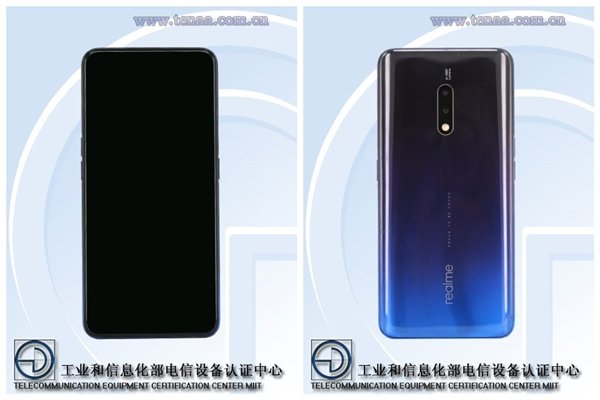
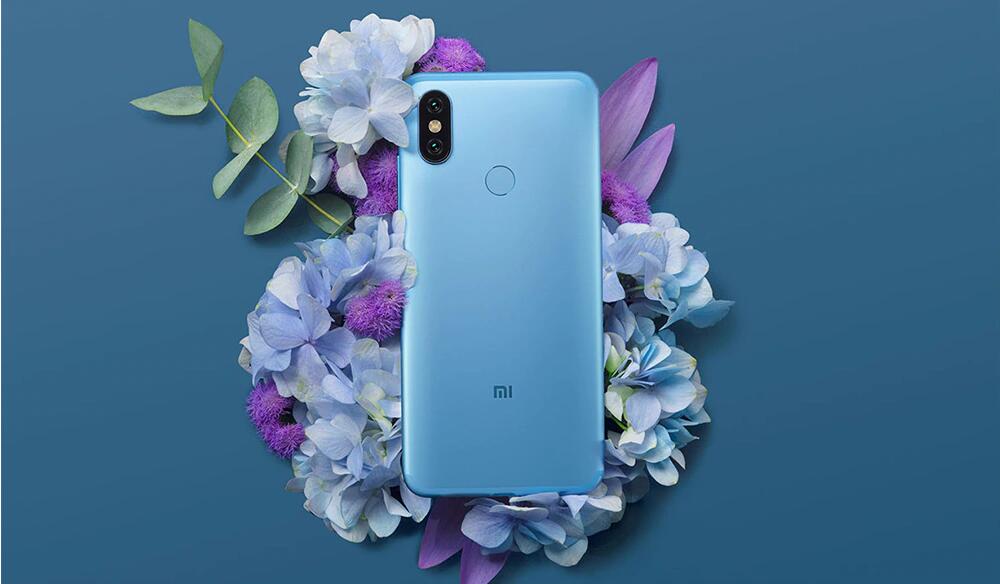
Realme is celebrating its first anniversary in India and at the same time it is gearing up to launch its first smartphones in China. Last month, two Realme phones were spotted on the database of China’s TENAA telecom authority. Recent reports have revealed that these phones will be hitting the Chinese markets as Realme X and Realme X Youth Edition. The latter is expected to be Chinese edition of the Realme 3 Pro phone that went official in India in the previous month. Today, the company has confirmed through a Weibo post that it will be holding a launch event in Beijing, China on May 15 at 3 PM (local time). It is very likely that the company will be unleashing the Realme X and Realme X Pro smartphones through its upcoming unveil event.
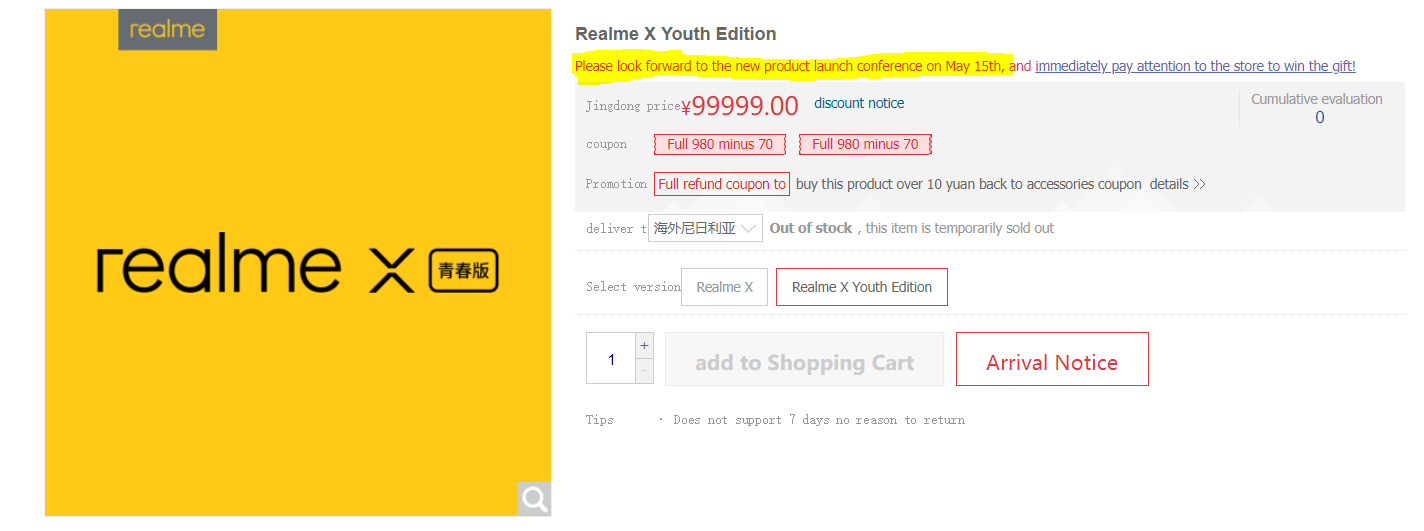
While the Weibo post only confirms the arrival of Realme X phone, Jingdong Mall has early listings for Realme X Youth Edition alongside Realme X. This indicates that both smartphones may get announced on May 15. Apart from JD, the Realme X and X Youth Edition will be available through other online platforms such as Tmall and Suning in China.
Realme X Specifications and Price (Rumored)
The Realme X will be arriving with a notch-less full HD+ OLED display of 6.5 inches that will be embedded with an in-display fingerprint reader. The Snapdragon 730 mobile platform is expected to fuel the smartphone. However, some contradictory reports have claimed that it could be featuring the Snapdragon 855 chipset.
A battery with a minimum capacity of 3,680mAh battery may fuel the Realme X. The handset is expected to carry support for VOOC 3.0 flash charging technology. The back panel of the phone is expected to feature 48-megapixel + 5-megapixel dual camera setup. It ill be also featuring a pop-up front-facing camera.
The Realme X may release in China in three choices such as 6 GB RAM + 64 GB storage, 6 GB RAM + 128 GB storage and 8 GB RAM + 128 GB storage. These models may respectively arrive with price tags such as 1,599 Yuan (~$237), 1,799 Yuan (~$267) and 1,999 Yuan (~$297).
The Realme X Youth Edition or Realme X Lite seems to be a lower version of Realme X. It will be packed with identical specs as Realme 3 Pro. Hence, the Realme X Lite will arrive with a 6.3-inch waterdrop-style notched IPS LCD display that offers full HD+ resolution, Snapdragon 710 SoC, up to 6 GB of RAM, up to 128 GB of native storage, 4,045mAh battery with VOOC 3.0, 16-megapixel + 5-megapixel dual rear cameras and 25-megapixel front-facing camera.
OnePlus co-founder and CEO Pete Lau has confirmed through Weibo and Twitter accounts that the OnePlus 7 Pro will be arriving with UFS 3.0 storage. By this, it will be arriving as the first smartphone ever with UFS 3.0 storage. The new storage technology will offer faster performance than its competitors in various aspects such as lesser time for launching apps, quicker loading of apps, faster saving from the camera, better gaming experience with shorter loading times, faster boot time and better video experiences more.
"OnePlus 7 Pro having UFS 3.0 storage means it’ll just be overall faster than comparable smartphones."
On May 14, OnePlus will be launching the OnePlus 7 Pro smartphone in multiple markets. In India, the smartphone is expected to arrive with an expensive starting price of Rs. 49,999 (~$720). However, leaks and official details that have surfaced so far suggests that the company has packed the OnePlus 7 Pro with many advanced features to justify its price.
It is speculated that Samsung is supplying OnePlus with UFS 3.0 chips for the OnePlus 7 Pro. Speaking of Samsung, the Galaxy Fold smartphone that was announced in February is equipped with UFS 3.0 storage. However, the foldable phone from the South Korean company is yet to release in the market. The company has reportedly postponed Galaxy Fold launch after the review units that were sent out to various reviewers developed display issues. Hence, it appears that the OnePlus 7 Pro could become the first smartphone to release in the market with UFS 3.0 storage.
According to Samsung, UFS 3.0 storage promises twofold the speed that is offer by UFS 2.1 storage. It offers read speeds of 2100MB/s and consumes less power than UFS 2.1. There is no confirmation on whether the OnePlus 7 smartphone will be also equipped with UFS 3.0 memory.
OnePlus 7 Pro Specifications and Price (Rumored)
The OnePlus 7 Prov is expected to arrive with a 6.67-inch Fluid AMOLED notch-less display that produces quad HD+ resolution. It will be a curved screen that will offer a refresh rate of 90 Hz. The Snapdragon 855 SoC will be powering the phone along with up to 12 GB of RAM and 4,000mAh battery. The handset will carry support for 30W Warp Charge fast charging technology.
The OnePlus 7 Pro will be the first OnePlus phone to feature a rear-mounted triple camera unit. It is expected to arrive with an f/1.6 aperture 48-megapixel main sensor with OIS, an f/2.2 aperture 8-megapixel telephoto lens with OIS and an ultrawide 16-megapixel sensor with PDAF. For shooting selfies, it will be sporting a 16-megapixel pop-up selfie snapper.
The other features of the OnePlus 7 Pro are in-screen fingerprint reader and stereo speakers. It is expected to arrive in variants such as 6 GB RAM + 128 GB storage, 8 GB RAM + 256 GB storage and 12 GB RAM + 256 GB storage. These models are rumored to hit the Indian market with respective price tags of Rs. 49,999 (~$720), Rs. 52,999 (~$766) and Rs. 57,999 (~$838). The handset will be available in Nebula Blue, Mirror Grey and Almond color editions.
Xiaomi is reportedly working on a new smartphone that is codenamed as Hercules. Early information that has appeared through its source code have revealed the key specs of the smartphone. It has been found that the Xiaomi Hercules phone is powered by the Snapdragon 855 mobile platform. While the exact identity of the phone is under the wraps, it is being speculated that it could be the forthcoming Xiaomi Mi MIX 4.
According to leaked information released by Mishaal Rahman who is the Editor-in-Chief with XDA Developers, the Xiaomi Hercules will be arriving with triple rear-mounted cameras and a front-facing camera. The smartphone will carry support for wireless charging.
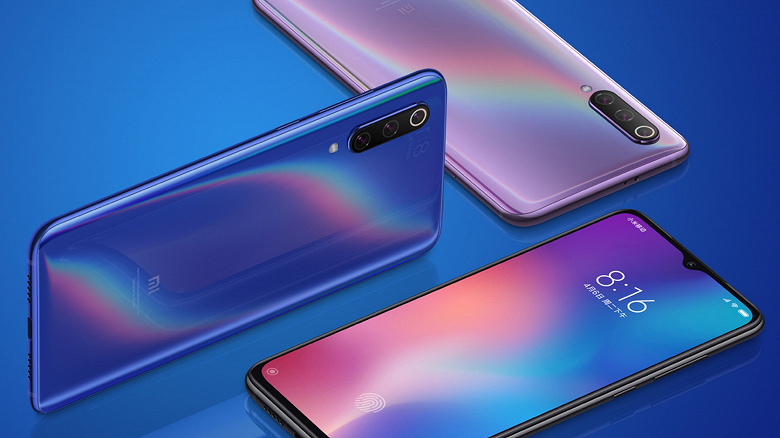
Among the connectivity features, the Xiaomi Hercules smartphone will be equipped with NFC. It will be also arriving with an in-display fingerprint reader. Well, these specs are also available on the Xiaomi Mi 9 flagship phone that was announced in February.
Probably, the Xiaomi Hercules phone could be the Xiaomi Mi MIX 4 flagship phone. If it is really the next Mi MIX series phone, it may arrive with some specs that are identical with Mi 9 along with a marvelous design. The Mi MIX series have been always known for its captivating full screen design. The Xiaomi Mi MIX 3 from last year is a slider smartphone with full screen design. It remains to be seen whether the Chinese firm retains the same design on the Mi MIX 4 or it uses an innovative design.
Xiaomi Mi MIX 4 hinted
In March, Xiaomi had released an early teaser for the successor of Mi MIX 3. The teaser carried the poster of the all the predecessor Mi MIX series phones such as Mi MIX, Mi MIX 2 and Mi MIX 3. The fourth phone in the image has no name, but it does suggest that it could be the Mi MIX 4 phone with full screen design. It remains to be seen whether Xiaomi settles for notch-less display design along with pop-up selfie camera for the Mi MIX 4 or some other design.
Even though the rumor mill is speculating that the Xiaomi Hercules could be the Mi MIX 4, there is a possibility that it could be some other device. Hence, it is advisable to wait for further reports to confirm the true identity of Xiaomi Hercules.
Last year, Xiaomiv had launched Android One phones such as Xiaomi Mi A2 and Mi A2 Lite. The Mi A2 smartphone was released exclusively in China along with MIUI as Xiaomi Mi 6X. XDA Developers had revealed earlier in this year that the “bamboo_sprout” and “cosmos_sprout” are the upcoming Android One smartphones. It is speculated that these devices could be the Mi A3 and Mi A3 Lite smartphones. The other rumored device that is codenamed as “pyxis” is believed to be the successor of Mi 6X. XDA Editor-in Chief, Mishaal Rahman has claimed through a tweet that all the three upcoming devices are powered by Snapdragon 7XX series.
Rahman is unsure whether the “bamboo_sprout”, “cosmos_sprout” and “pyxis” are powered by Snapdragon 710 or 712 mobile platform. Some rumors had claimed that the Mi A3 series could be featuring Snapdragon 730 mobile platform. However, it now seems these devices could be featuring SD710 or SD712. He did not share any other information on the specs of the Mi A3 series.
The Mi A2 and Mi A2 Lite phones were respectively fueled by Snapdragon 660 and Snapdragon 625. The Mi A2 Lite had featured a less powerful SoC. Hence, it was being speculated that Mi A3 Lite could be featuring Snapdragon 632 SoC. It is advisable to wait for further reports to confirm the processor details of the Mi A3 and Mi A3 Lite Also, the Mi A2 Lite had arrived in certain markets as Redmi 6 Pro. Hence, there is a possibility that the Mi A3 Lite could be releasing in some markets as Redmi 7 Pro.
Xiaomi Mi A2
The Xiaomi Mi A3 and Mi A3 Lite smartphones will be running on stock edition of Android 9 Pie OS. Some reports have claimed that the successor of the Xiaomi Mi 6X could be releasing in the market as Xiaomi Mi 9X. The alleged Mi 9X will have the same specs as Mi A3 and it will be featuring MIUI skin over the Android OS. However, there is no official confirmation on it yet.
The Mi A3, Mi A3 Lite and Mi 9X are expected to come equipped with in-screen fingerprint scanners. These phones are likely to arrive with 32-megapixel front-facing cameras. Last year, the Xiaomi Mi A2 and Mi A2 Lite phones were announced in July. Hence, the Mi A3 and Mi A3 Lite smartphones may go official in the same month in this year.
The OnePlus 7 Pro has been getting all the attention which is no surprise since it has better features than the OnePlus 7. However, new info has surfaced that reveals the OnePlus 7 (and OnePlus 7 Pro) will have a cool new feature.
OnePlus 7 Pro
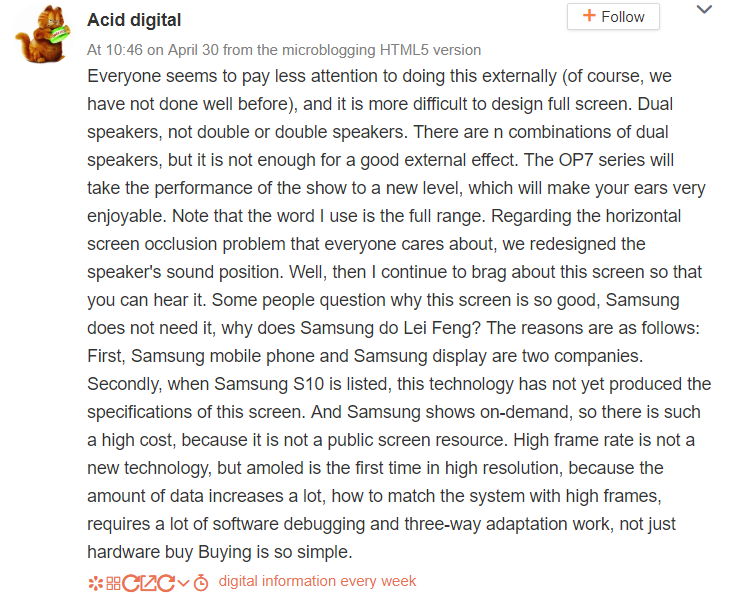
Up until now, OnePlus phones have always come with a single speaker. That changes with the OnePlus 7 and OnePlus 7 Pro according to a OnePlus official on Weibo who goes by Acid Digital.
In a post from last week, he stated that the OnePlus 7 duo both have stereo speakers. He adds that it isn’t easy adding stereo speakers to phones with full-screen displays but they were able to pull it off and the result is an audio experience that will please users. He also said they had to redesign the position of the speakers so as to solve the problem associated with audio quality dropping when the phone is used in landscape mode.
Other than the stereo speakers, the OnePlus official also disclosed more details about the impressive display of the OnePlus 7 Pro. He revealed that the display is the first of its kind, not even Samsung’s own phones have used such a display before.
According to him, the technology behind the display wasn’t yet made as at the time the Galaxy S10 series was announced. He adds that the display is expensive because it is custom-made.
The OnePlus 7 Pro’s display is not the first with a high refresh rate but it is the first high-res (1440p) AMOLED smartphone display with a 90Hz refresh rate. The Razer Phone and Razer Phone 2 whose displays have a 120Hz refresh rate actually use Sharp’s IGZO’s IPS LCD display and the ASUS ROG Gaming Phone has a 1080p AMOLED 90Hz display.
The official name of the upcoming Snapdragon 855-powered Redmi phone is still unknown. It was initially referred to as the Redmi X but the company’s GM Liu Weibing disproved it. While we await the official name to be revealed, more details of the phone have surfaced.
[envira-gallery id=”251470″]
Screenshots alleged to be from the device were shared on Twitter today by Sudhanshu Ambhore (@Sudhanshu1414) and they reveal some key details. One of the images reveals the phone’s codename as “Raphael“. This isn’t actually the first time we have heard that codename.
cepheus is the Xiaomi Mi 9, andromeda is the 5G Xiaomi Mi Mix 3, and raphael is another unknown Xiaomi Snapdragon 855 device.
Back in March, Mishaal Rahman of XDA-Developers tweeted the codenames of Xiaomi phones powered by the Snapdragon 855. Raphael is one of the devices he mentioned while the other two are the Mi 9 (Cepheus) and Mi MIX 3 5G (Andromeda).
Before we move on to other details of the screenshots, it is important to mention that Mishaal stated back then that Xiaomi was working on a Snapdragon 855 phone with a pop-up selfie camera codenamed “davinci”. He added that of all the Snapdragon 855 devices, only “davinci” is included in the hardware test for the pop-up selfie camera. But current developments point to “raphael” being the one with the pop-up selfie camera.
When I say "only for davinci's front camera" I mean that no other device is included in this hardware test (including no cepheus, andromeda, or raphael, the other 3 Snapdragon 855 Xiaomi devices.) This suggests the hardware is unique to davinci.
Back to the screenshot, we also see the phone has 256GB of storage which is double the amount of storage of any Redmi phone. There will surely be other variants too with this being the highest configuration. The phone is also shown to be running a beta version of MIUI 10.
The second screenshot reveals that the Redmi flagship has a GPU overclocking feature. Don’t get too excited as this might be a feature open to beta users and not accessible on the stable version. Nevertheless, it is a feature to be excited about.
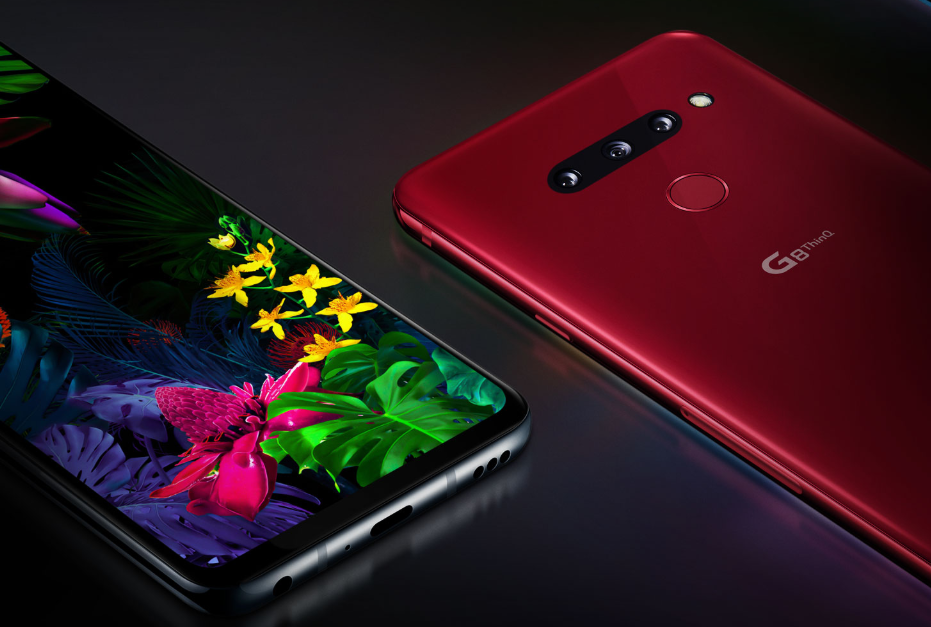
One of the flagships that launched in the first quarter but was overlooked is the LG G8 ThinQ. If you have not yet decided if you should purchase it probably because you don’t know how great the camera is, then DxOMark’s camera review should help you make that decision.
The LG G8 ThinQ has been reviewed by the camera review labs and their review is up for public viewing. The version they reviewed is the one with the triple rear camera setup – a 12MP f/1.5 primary camera + 16MP f/1.9 ultra-wide angle camera + 12MP f/2.4 telephoto camera. There is actually a second variant that has dual cameras (sold in the US). It doesn’t have a telephoto lens for optical zoom.
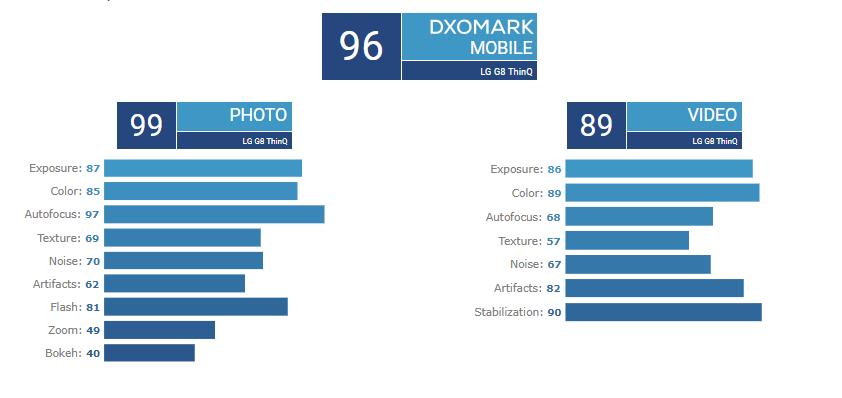
The LG G8 ThinQ has an overall DxOMark score of 96. This is broken down into 99 for photos and 89 or video recording. On DxOMark’s ranking, the G8 ThinQ sits at the 21st spot, above the OnePlus 6 which it ties with and under the Mi MIX 2S. The OnePlus 6 actually has a higher photo score of 100 but the LG beats it in video recording.
DxOMark says LG has improved the autofocus of its latest flagship. It is now faster and more accurate than that of the LG V40 ThinQ. They also praised its handling of exposure even in backlit conditions and its color rendering both indoors and outdoors. However, the presence of artifacts (conspicuous elements in the photo which are not in the real scene) is what lowers its score. The phone scores really low on Bokeh and zoom too which contributes to its overall low score.
For videos, the LG G8 ThinQ handles exposure and color reproduction well. It also scores high in stabilization. However, autofocus suffers, especially in low light. There is also a visible jello effect and a “noticeable frame-shift in walking scenes”.
Since Vivo NEX A and S hitten the shelves, pop-up cameras became one of the most innovative trends to get rid of bezels around the display. Yesterday, Vivo unveiled a brand new device with a pop-up camera: the S1 Pro, that is also one of the most interesting phones when it comes to quality-price ratio. It has all the requirements necessary to challenge the latest upper-midrange phones from the best brands. Among the best ones, there are definitely the Oppo F11 Pro which is the first Oppo mid-ranger with a pop-up camera, and the Galaxy A70 by Samsung with its huge battery and great performances. So here is a specs comparison that will help you to understand whether Vivo S1 Pro is worth the money asked or not.
Vivo S1 Pro vs Oppo F11 Pro vs Samsung Galaxy A70
Vivo S1 Pro
Oppo F11 Pro
Samsung Galaxy A70
DIMENSIONS AND WEIGHT
157.7 x 74.3 x 9 mm
161.3 x 76.1 x 8.8 mm, 190 grams
164.3 x 76.7 x 7.9 mm, 183 grams
DISPLAY
6.39 inches, 1080 x 2340p (Full HD+), 400 ppi, Super AMOLED
Dual 48 + 5 MP f/1.8 and f/2.4
16 MP f/2.0 front camera
Triple 32 + 8 + 5 MP f/1.7 and f/2.2 and f/2.2
32 MP f/2.0 front camera
BATTERY
3700 mAh, fast charging
4000 mAh, fast charging with VOOC 3.0
4500 mAh, Fast Charging 25W
ADDITIONAL FEATURES
Hybrid Dual SIM slot
Dual SIM slot, pop-up front camera
Dual SIM slot
Design
The absence of a pop-up camera and the presence of a classic waterdrop notch make the Galaxy A70 by Samsung way less attractive than Vivo S1 Pro and Oppo F11 Pro. While these devices have a lot of things in common when it comes to aesthetics, there is a detail which would make me go for the Vivo S1 Pro. I am talking about the fingerprint scanner: while Oppo F11 Pro has a traditional fingerprint reader placed on the back side, the Vivo S1 Pro has an in-display biometric sensor, so it has a cleaner and definitely more beautiful back cover. Another important difference is the position of the cameras: they are placed on the upper left part on the Vivo S1 Pro, while the Oppo F11 Pro has them at the upper center. Vivo S1 Pro is even more compact than the Oppo F11 Pro due to its smaller display.
Display
Samsung Galaxy A70 is equipped with a bigger and taller 6.7-inch display, and that is mainly the reason because I would choose it instead of its competitors. It comes with a rare but very elegant 20:9 aspect ratio and its colors are stunning. However, Vivo S1 Pro is still very nice as it is equipped with a Super AMOLED display provided by Samsung as well. Oppo F11 Pro is inferior due to its IPS panel, but it has a slightly bigger display than Vivo S1 Pro. That is also the reason why it does not have an in-display fingerprint scanner.
Specs & Software
Oppo F11 Pro falls way behind its competitor because of its less powerful Helio P70 SoC by MediaTek. The winner here is definitely the Vivo S1 Pro as it comes with the Snapdragon 675 chipset, up to 8 GB of RAM and up to 256 GB of internal storage. Samsung Galaxy A70 is powered by a Snapdragon 675 too paired with up to 8 GB of RAM, but its internal storage is just 128 GB. All the phones run a customized user interface based on Android Pie: we got Funtouch OS for Vivo S1 Pro, Color OS for Oppo F11 Pro and One UI (which I prefer) for the Samsung Galaxy A70.
Camera
Talking about camera quality, the final battle is between the Vivo S1 Pro and the Samsung Galaxy A70. While the former comes with a higher resolution for the main sensor (48 vs 32 MP), the latter has brighter focal apertures, and it can also record 4K videos and 1080p videos with a frame rate up to 240 fps. Both come with a rear triple camera and a 32 MP front camera, but for the specifications listed above, I personally prefer the Samsung Galaxy A70. Oppo F11 Pro lacks the ultrawide lens and it only comes with a dual camera. Further, its front camera is inferior with just 16 MP.
Battery
Samsung Galaxy A70 wins the battery life comparison with a huge 4500 mAh unit and an incredibly fast charging technology, followed by the Oppo F11 Pro and its 4000 mAh battery with a still fast 20W charging technology.
Price
Vivo S1 Pro debuted with a starting price of €350/$390, Oppo F11 Pro costs just €320/$360 and Samsung Galaxy A70 starts from €400/$450. Samsung Galaxy A70 wins this comparison with its bigger battery and amazing cameras, but some may prefer the Vivo S1 Pro for its better design and a still great camera department.
One of China’s biggest online stores, Jingdong a.k.a JD.com, has confirmed the official names of Realme’s upcoming phones as well as their release date. Realme will be making its entry into the Chinese phone market this month and it will be doing so in grand style by launching a flagship phone called the Realme X.
The brand which celebrated its 1st year anniversary a few days ago was originally exclusive to India. It has launched seven phones already which all belong to the mid-range category. However, for its first launch in China, Realme will be announcing the Realme X which will be powered by the flagship chipset, the Snapdragon 855. Jingdong has also revealed that it will bring along a sibling called the Realme X Youth Edition.
Jingdong not only has a page set up for the two phones already but the listing also reveals the phones will be officially unveiled on May 15, an info yet to be released by the manufacturer.
Actually, Realme plans to make an important announcement about the Realme X tomorrow at 10 AM (China time) and we definitely think it is about the launch date. However, JD.com has let the cat out of the bag early.
The online store will also run a competition that begins today and ends on May 14. Winners stand the chance of winning a phone, a backpack, or a branded T-shirt.
Nubia Magic 3 smartphone was published on April 28th priced at 2899 Yuan.
There are not so much phone manufacturers having a step in the gaming phone area. Nubia is one of the first batches, and Nubia Red Magic 3 is their third gaming smartphone. The features of the phone are not only the strong performance, but also the design, heat dissipation, battery life and so on.
Nubia Red Magic 3 comes with 6.65-inch OLED screen having the resolution of 2340 x 1080 pixels and 19.5:9 aspect ratio. The gaming handset is powered by Snapdragon 855 chipset, and offers 6/8/12GB of RAM and 64/128/256GB of internal storage. It is fueled by 5000mAh battery with 27W fast charging.
Design:
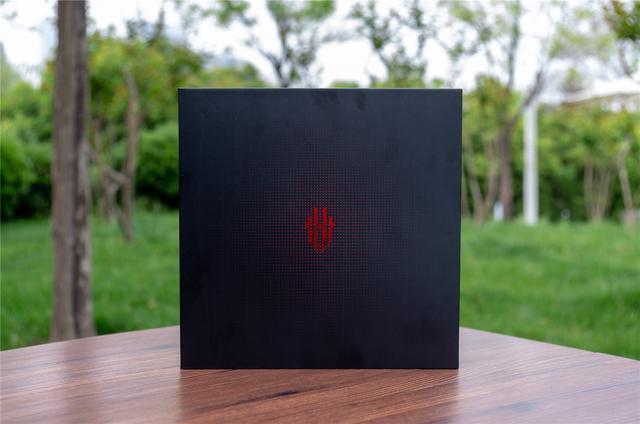
Red Magic 3 offers four colors, which are Black, Red, Camouflage and Red/Blue, and we got the Black variant.
The dominant tone of Red Magic 3 package is black.
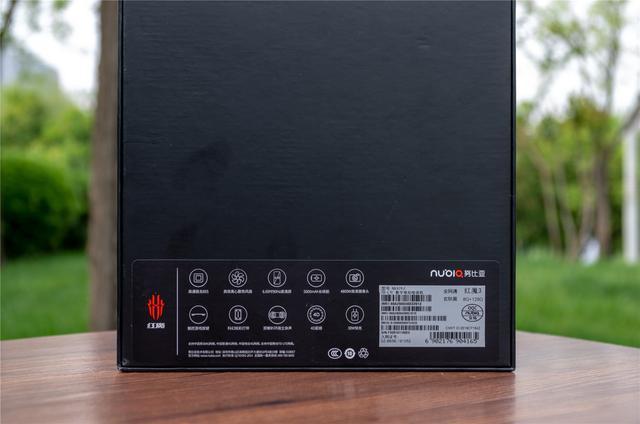
There are the features and basic spec on the package back side.
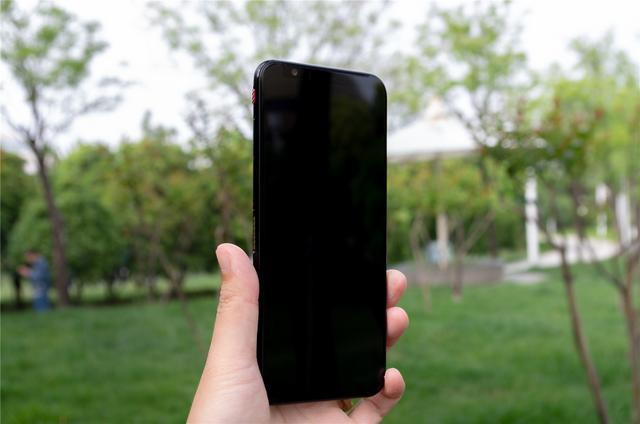
Front Side of Red Magic 3
Because of the 19.5:9 aspect ratio, the handset is a bit longer than other phones. What’s more, the touch feeling is better with the transition processing of R angle.
As a gaming-focused smartphone, the screen of Red Magic 3 is incredible, which has 90Hz refresh rate, 1ms respond speed, DC dimming technology, HDR visual effects, and 87.7% screen-to-body ratio. The official says that the touchscreen polling rate can be automatic regulated between 120Hz to 240Hz combined with the practical application scene, and the touch latency is 40.02ms.
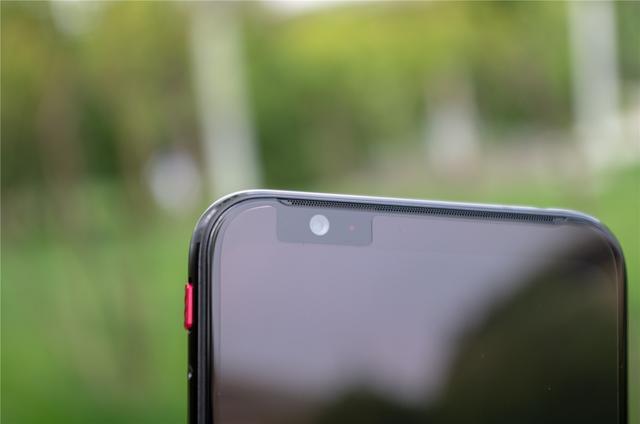
There is a front-facing camera, sensor and phone receiver on the front top bezel.
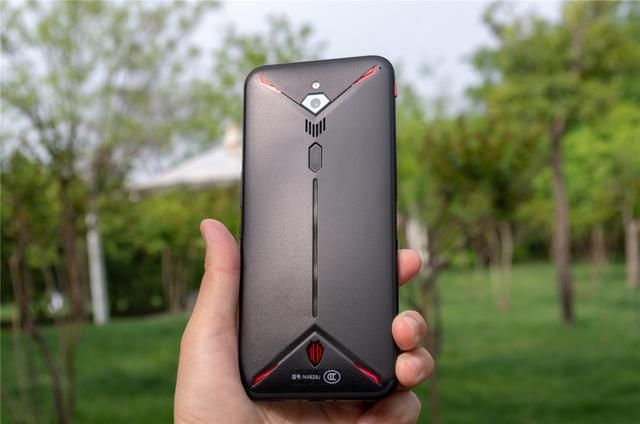
Back Side of Red Magic 3
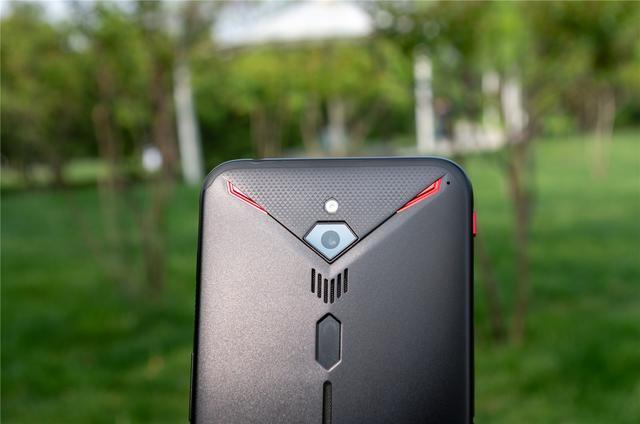
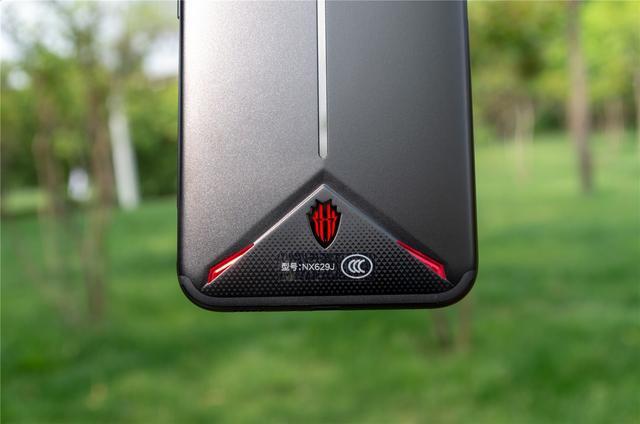
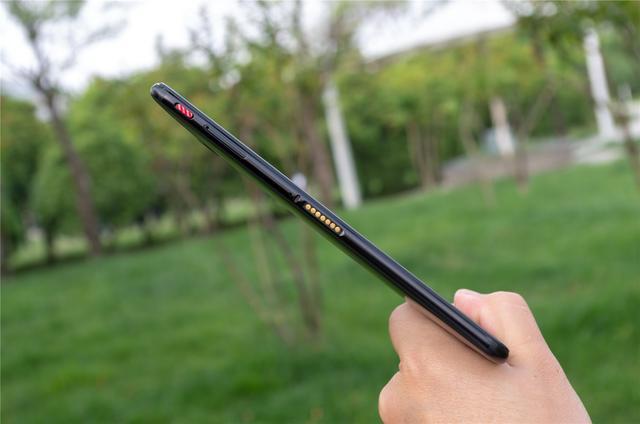
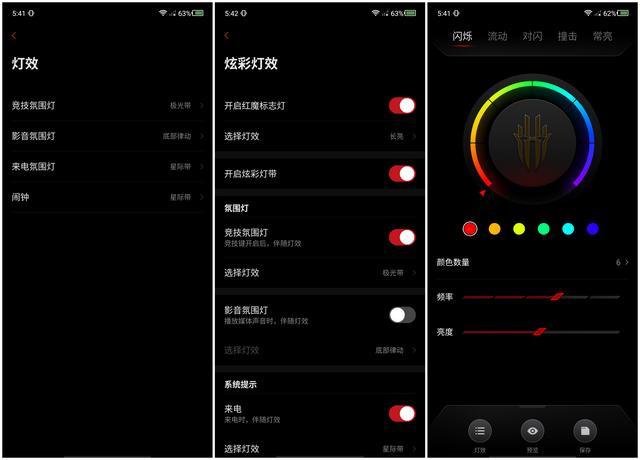
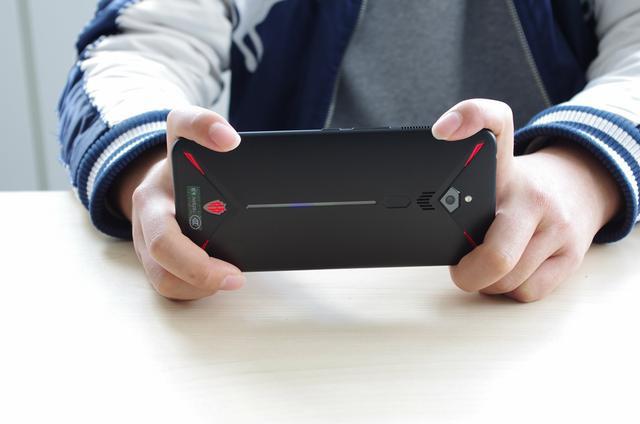
The back panel of Red Magic 3 is made of nano-metal with radium carving, and it is continued to use the X style and symmetrical design with diamond cutting technology. The RGB LED strip also makes a comeback on the new model, and there is a Red Magic logo LED light called Red Magic Eye, which can be always on or flickered. In addition, the air duct is changed to the camera module below and side.
The weight of Red Magic 3 is 215g, so the handset is not suitable for holding with one hand.
From top to bottom are flash light, camera, air duct, fingerprint sensor.
RGB LED strip and Logo light
The new logo light can be always on or flickered, and the RGB LED strip can flicker when playing game, listening to music, charging and notification.
Right side of the phone
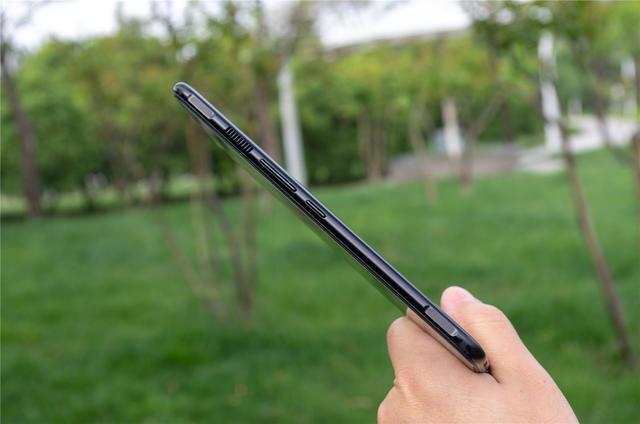
On the right side, there is the cooling hole, volume key, power button, and the two gaming buttons with U shape supporting all games.
Left side of the Red Magic 3
There is an e-sports button, a SIM card slot, and an e-sports magic box interface on the left side.
The e-sports magic box interface is convenient for users to use 3.5mm earphone, charging cable and other expanded appliances. You can push the e-sports button to open the game mode.
On the top of the Red Magic 3, it keeps the 3.5mm earphone jack. I like it.
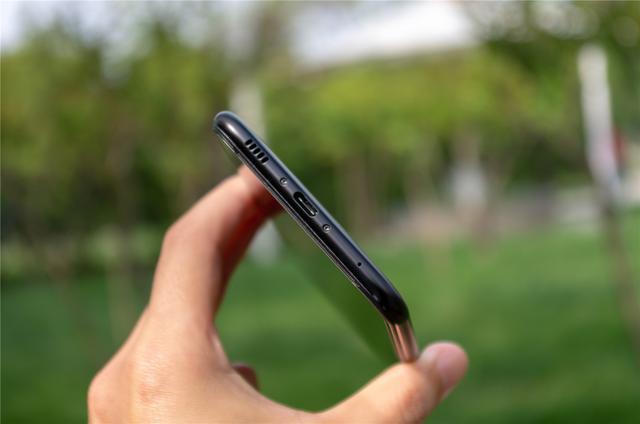
On the bottom of the phone, there is a speaker, a Type-C port and a noise cancelling microphone.
Performance
Nubia Red Magic 3 is powered by Snapdragon 855 processor and UFS 2.1, and the most important is that the phone has a built-in ICE 2.0 multi-dimensional cooling system. What’s more, the Red Magic 3 built-in a fan with forced air cooling. When you open the cooling fan, you can hear the sound of fans running, but the noise is controlled under 32dBA in the 30m.
According to the officials, ICE 2.0 possesses 32000mm total effective cooling area, 14000 R.P.M fan speed and 0.26CFM, which can make the phone core temperature lower by 18℃, CPU core temperature lower by 5℃, and the phone’s surface temperature lower by 3℃.
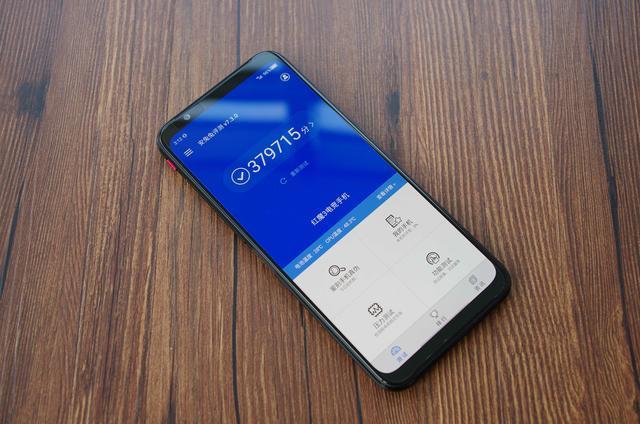
The Antutu Benchmark of Nubia Red Magic 3 is up to 396885, which is the top of the ranking list. The high score is benefited by the super cooling capacity.
Game mode
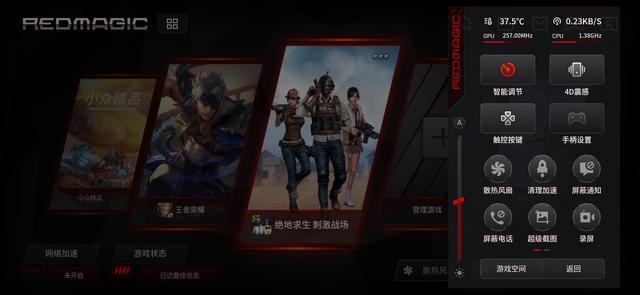
When you turn on the e-sports button, the phone will get in the game mode which has network selection, gaming status, cooling fan, RGB LED strip and other options.
In addition, the built-in fan can automatically control and regulate temperature. For example, the fan will open at higher temperatures. And the fan will turn off automatically at the lower temperature. Of course, users can turn on the fan by themselves.
Lightning effects
On the phone’s back panel, there is a RGB LED strip and a logo light. The strip will gleam when the phone is charging, playing games, listening to music and other notification. Also, you can change the lightning effect by yourselves. The Red Magic Eye can be always on or gleamed.
Because of the gaming buttons on the bezels and rear fingerprint sensor, the operation of tester become faster and more flexible especially in the PUBG. After experience, games are run at full frame.
Camera
Red Magic 3 comes with 48MP rear camera with IMX 586 sensor having f/1.7 aperture, and 16MP front-facing camera with f/2.0 aperture.
Look at the camera samples shot in day light.
[envira-gallery id=”251418″]
As a gaming-centric phone, the camera of Red Magic 3 performs well. It’s worth mentioning is that the Red Magic 3 comes with Neovison algorithm, which supports ultra HD 8K video recording and 1920FPS 64x slow-motion video shooting.
Battery Life
Red Magic 3 is fueled by 5000mAh battery. The official said that the power consumption of running the fan continuously for an hour is less than 1%.
We tested the battery life by playing video continuously. After playing video for an hour, the battery decreased from 64% to 54%.
We played game for 30minutes with high effects and cooling fan, the battery decreased from 52% to 41%.
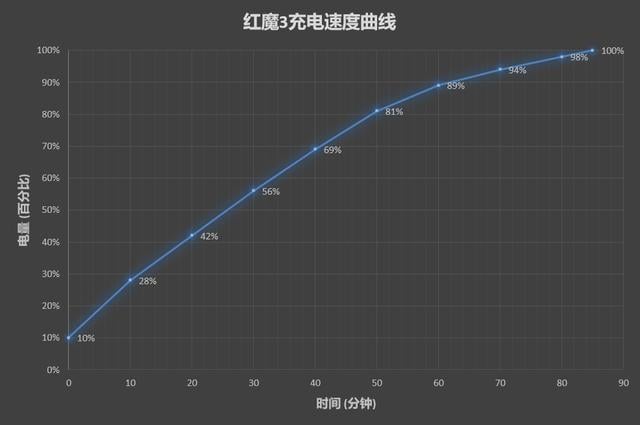
In addition, the phone charges from 10% to full in 85minutes.
Conclusion
There’s no doubt that Red Magic 3 is a gaming-centric smartphone. All details are designed for playing games, for example, the 19.5:9 aspect ratio offers comfort gaming holding feeling. However, the weight of 215g is not suitable for holding the phone by one hand.
The RGB LED strip and the Red Magic Eye make the phone more fantastic and e-sports style.
Red Magic 3 comes with 6.65-inch screen having the 90Hz refresh rate, and is powered by Snapdragon 855 processor. Also, the cooling system is combined with air cooling and liquid cooling, which makes sure the phone will have no lag in long playing time. What’s more, Nubia cooperates with game manufacturers to optimize and adapt games with Red Magic 3.
Red Magic 3 is fueled by 5000mAh battery with 27W fast charging. Through our test, it is enough for long playing game time.
Nubia Red Magic 3 is an incredible gaming smartphone. If you want to buy a gaming phone, it is a good choice for you.
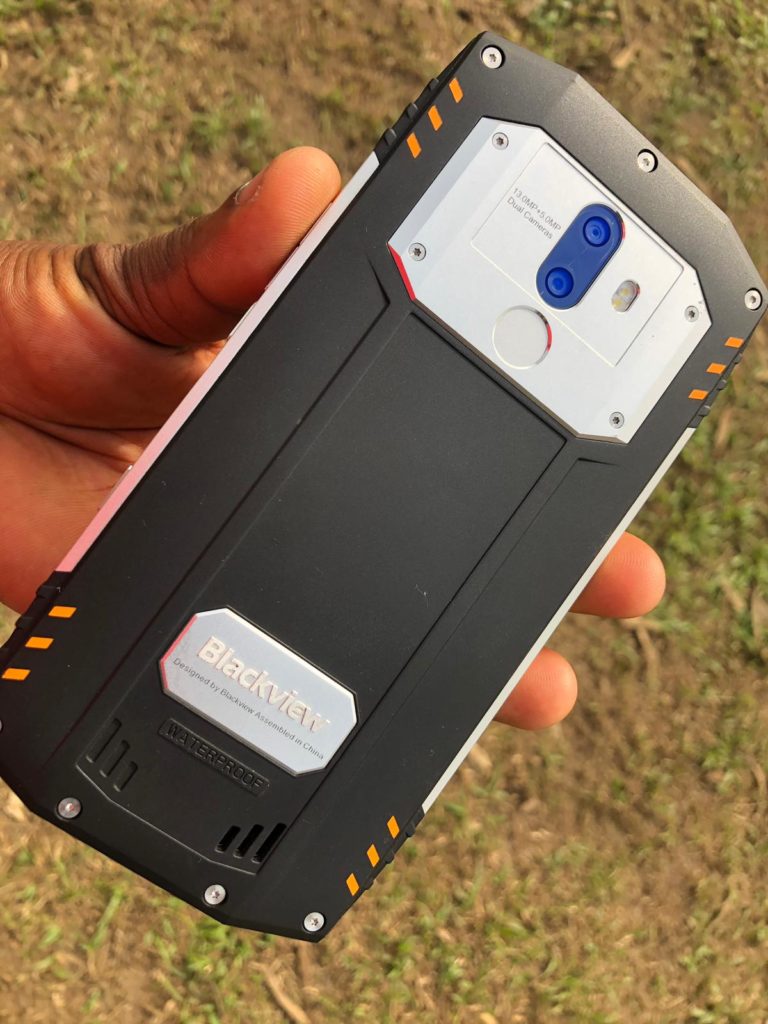
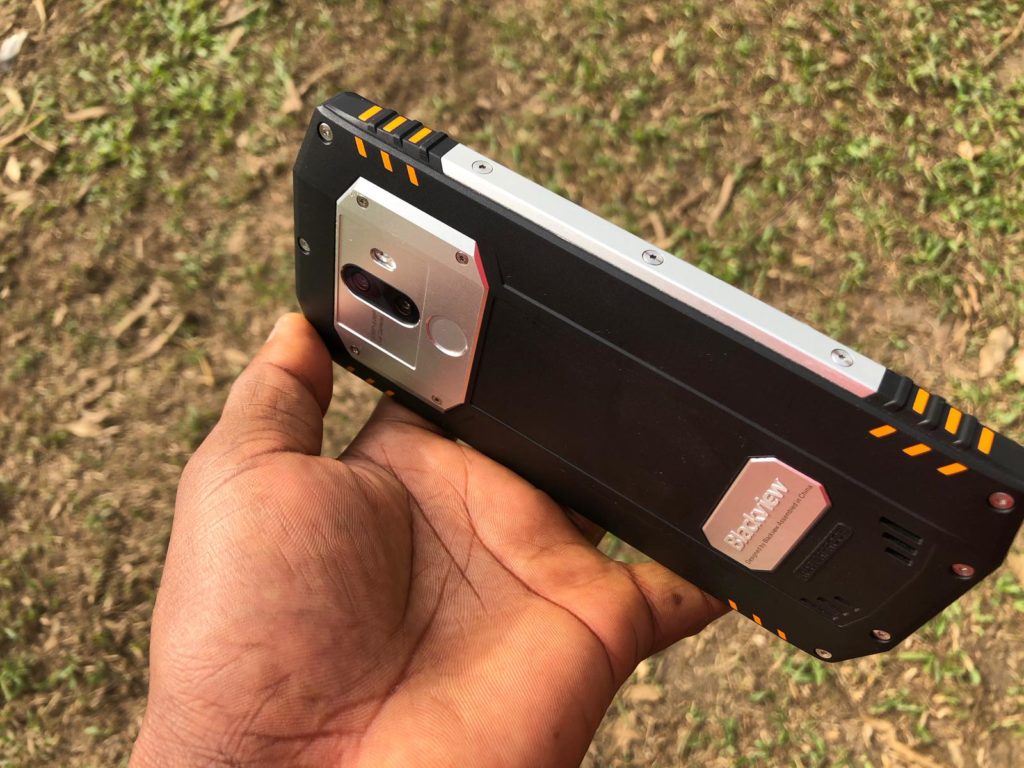
As smartphones get re-engineered to enhance their aesthetics with features such as slim bezels, thin frame, glass/ceramic body and others, they become more fragile. But there are persons who desire their phones to be rugged while still having all the functions of a smartphone. Blackview satisfies the need of that segment with the BV series. The rugged phone maker sent in a unit of the Blackview BV9000 for review a couple of months back. Here you have it.
BlackviewBV9000 isn’t a relatively new model as it was launched a long time ago alongside the BV9000 Pro. The models are separated by just a few hardware features. I’ve had this phone for more than 4 months and it is always with me whenever I have to hit the road to a remote region or rough terrain or while it rains. So my take on the BV9000 won’t be based on assumptions but on practical results.
DESIGN
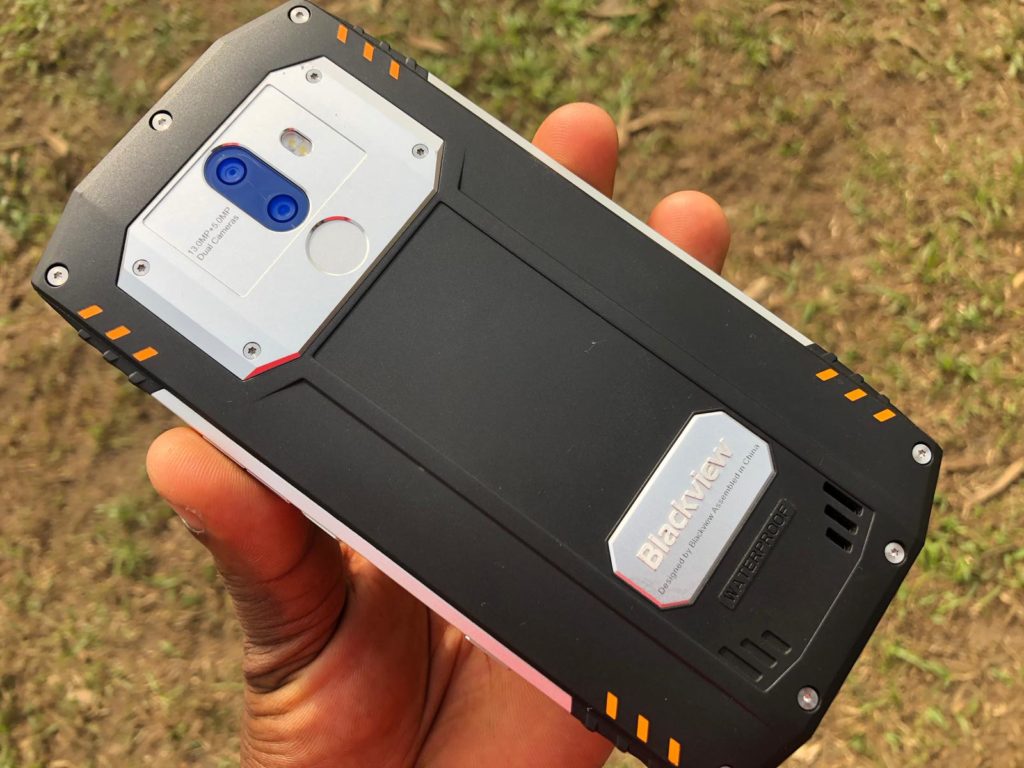
You won’t have to take a second look at the device to conclude that the device is a rugged phone as a result of its mammoth size and weight.
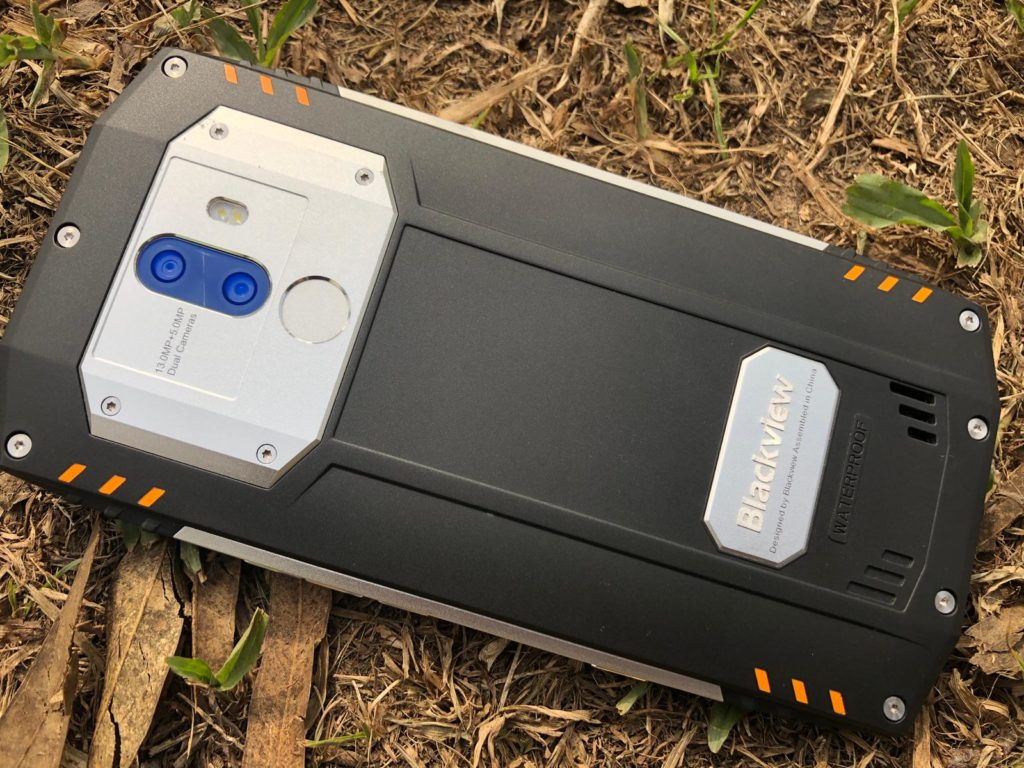
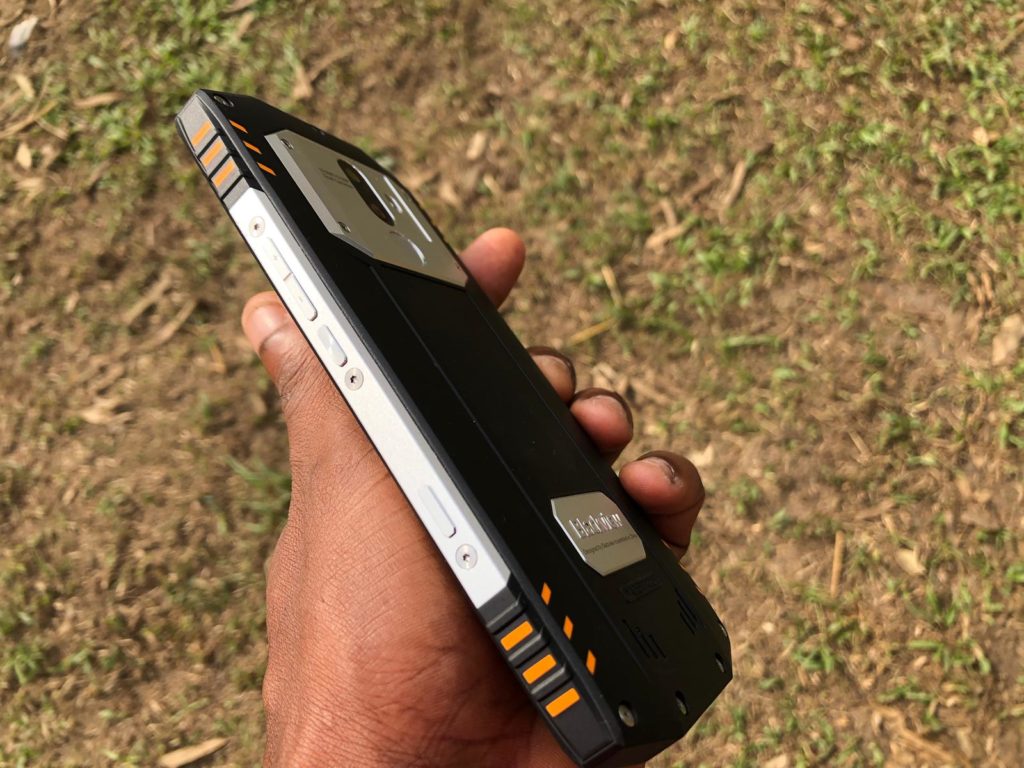
The rugged phone comes with a cool rubberised body with some metal plates to add some aesthetics. The metal band and rubberized backplate held up pretty well over time. I’ve noticed that if you scratch the rubberized surface, you can polish minor scratches away with a cleaning cloth, which is pretty cool. However, any scratch to the metal backplate remains there permanently but it won’t scratch easily except on hard surface like the floor. The backplate tends to provide protection to the rear cameras and fingerprint sensor which it wraps around.
The BV9000 comes with an IP-68 rating meaning that it is water and dust resistant. The device has the SIM tray slot at the top edge while the charging port is at the bottom. Both are covered with a rubber seal designed in such a way as not to allow water in. The port also has rubber seals around it as well as the SIM slot holds tightly when it is slotted in. Also, the rugged body assures that the phone will survive a few accidental drops. The phone did drop accidentally on a few occasions, sometimes from the hands of my kids. The rubberised body gives that feel of cushion effect to any damage that may occur. I also did put the phone under running water and even inside a bucket of water and it still worked fine. Even under the rain, the phone works fine, including the display but as usual, the fingerprint sensor won’t respond well.
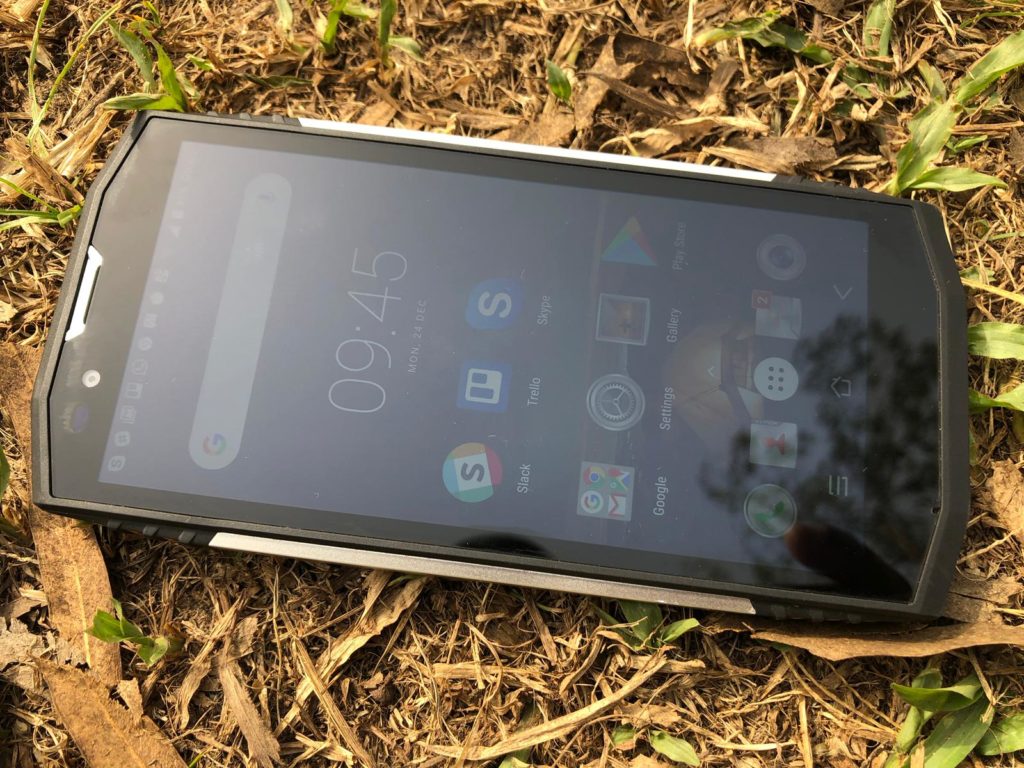
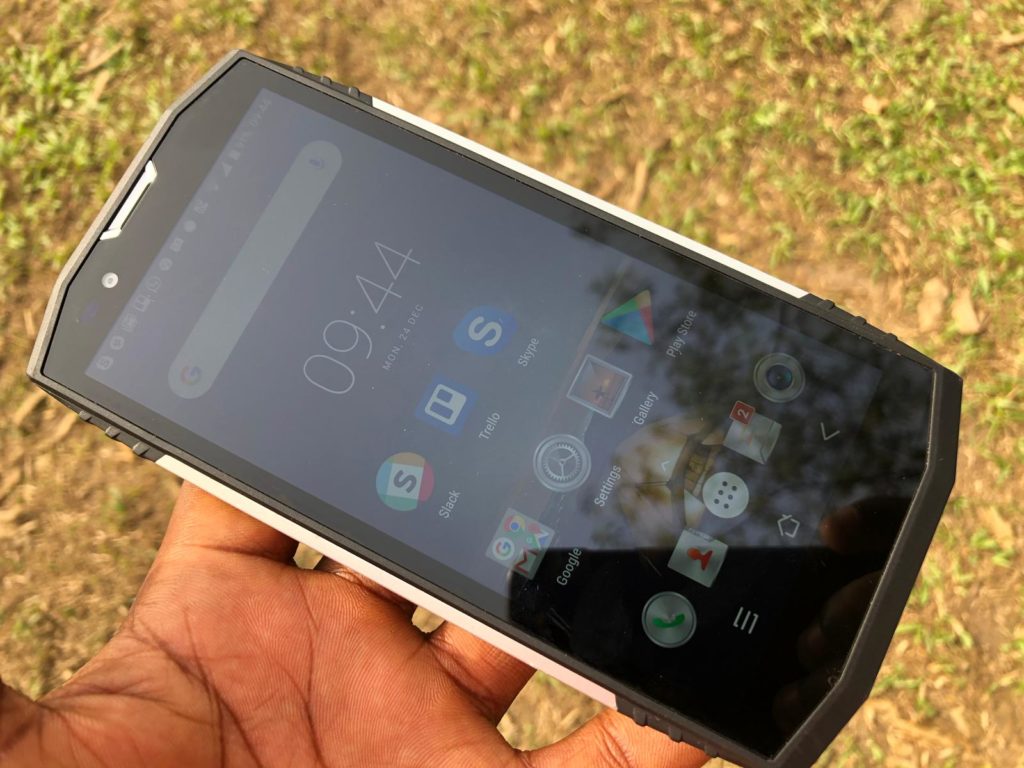
I found the display to be very good overall. While the sunlight legibility is not the best, it’s pretty good. I also love the loudspeaker that can get really loud and the sound quality is pretty good for a budget device. Other features include the LED notification light and a hybrid dual sim card slot. I found the fingerprint scanner to be quite accurate even though the display could light up a bit faster. The device has its volume rockers, power button and a shortcut button at the right side of the display. The shortcut button can be set to take the user directly to launch a particular app with one, two and three presses.So,you can add three different commands.
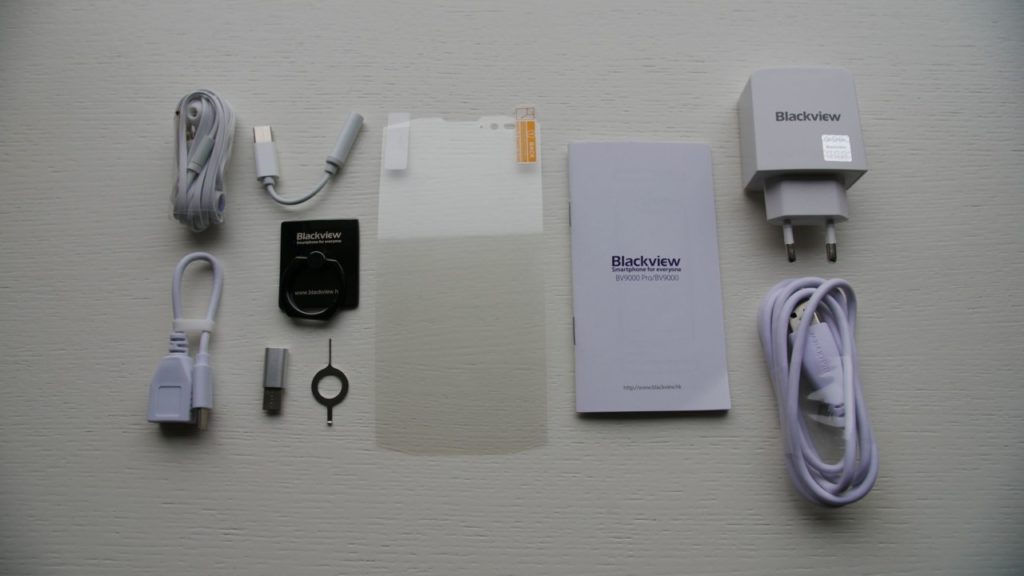
Finally, the phone lacks headset jack, which means that you always need to bring a USB-C to 3.5mm adapter with you but the phone ships with an adapter in the retail box. You also get an earphone, USB-C cable, OTG cable, a screen protector and a fast charge charging adapter.
HARDWARE and PERFORMANCE
When it comes to hardware, the Blackview BV9000 Pro is one of the most powerful budget rugged phones out there.
The gaming performance is just great. All the 3D games work without any issues even if you play them on the very highest graphics settings, which is very impressive for a budget phone.
SPECIFICATIONS
The BV9000 packs a 5.7-inch display with FHD+ resolution and 18:9 aspect ratio. It offers a triple camera setup featuring a 13MP+5MP camera combination at the back and an 8MP front shooter for selfies. The device is a MediaTek MTK6757CD Octa Core 2.6GHz processor (Helio P25), under the hood. The chipset is paired with 4GB of RAM while there are 64GB and 128GB storage options. In addition, the phone runs Android 8.0 Oreo, has dual-SIM support and crams a non-removable 4180mAh battery under the hood.
USER INTERFACE
The gadget has been very quick consistently despite the fact that I’m not a gigantic aficionado of redesigned icons in the UI. I wish Blackview stayed with stock Android yet that is effectively fixable utilizing a third-party launcher.
IMAGE QUALITY
I also like that the Blackview BV9000 is one of those rare budget phones from China that can take decent daylight pictures even on the cloudy days. The portrait shots are also surprisingly good in comparison to most of the budget Chinese phones I’ve recently tested. Selfies look pretty good but the video quality using both main and front cameras does not impress, even after receiving a few software updates. Check out some of the camera samples.
TEST NOTES
I didn’t have any connectivity issues with this phone and battery life has been consistently good. I was usually able to get about 7 hours of screen-on time which is a good result.
CONCLUSIONS
In conclusion, I strongly hold that the Blackview BV9000 is a solid rugged phone on a budget. The phone has performed very well over time with awesome user experience. The design is great, it attracts a lot of attention wherever I go and the battery can take you several places without fear of running out of battery power. Even the camera output is pretty decent for such a model. However, the lack of a headphone jack is quite frustrating, making it impossible to listen to music and charge the phone.
Overall, the Blackview BV9000 is still one of the best options in this price range and I recommend you check it out if you’re shopping for a rugged phone on a budget.
IDC released a report on April 30 detailing the number of units phone manufacturers shipped in the first quarter of 2019. The stats revealed that Xiaomi shipped a total of 25 million units, 10% less than that of the same quarter in 2018. However, Xiaomi released a press statement faulting the figure as incorrect.
The Chinese tech giant said in the press statement that it actually shipped 27.5 million smartphones in Q1 2019. IDC has now announced it will republish the report with the new figure next week.
Xiaomi Mi 9
You might be wondering what the fuss is about. These figures are important to investors as they need to know how well the companies they back are performing. A lower number can influence the trust of investors in the business.
IDC’s report differs from that of similar agencies like Canalys, Counterpoint, and StrategyAnalytics. All three reported Xiaomi shipped 27.8 million, 27. 8 million, and 27.5 million units respectively which is much higher than IDC’s 25 million units.
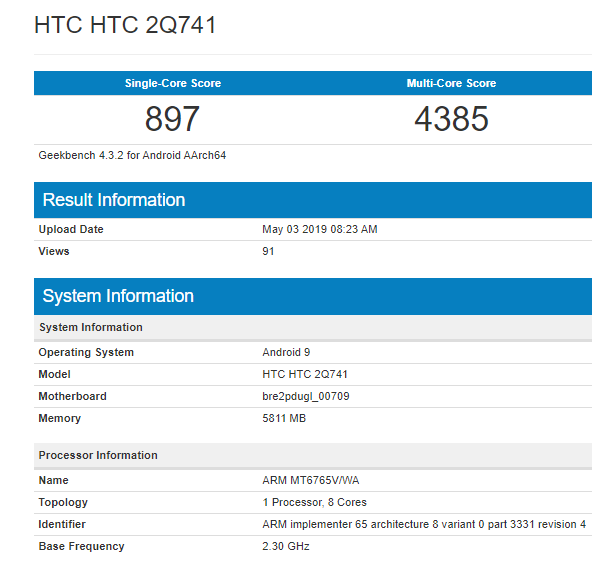
It appears HTC has a new mid-range phone in development. The marketing name is unknown but the phone’s model number is 2Q741. It was spotted on Geekbench yesterday and its benchmark result reveals some key specs.
The HTC 2Q741 runs Android 9 Pie and has 6GB of RAM. There is a MediaTek MT6765 chipset a.k.a. Helio P35 processor under the hood. This is the same chipset that powers the Mi Play and the Honor 8A Pro. The advantage the HTC has over these two phones is its RAM. It’s twice that of the Honor and 2GB more than the Mi Play’s.
There are practically no hidden details about the OnePlus 7 Pro anymore save for the price. If you reside in India and have been itching to know how much the next OnePlus flagship will cost, then you are in luck. Ishan Agarwal (@ishanagarwal) has revealed the prices for all the variants of the device.
The OnePlus 7 Pro will come in three configurations – 6GB RAM + 128GB, 8GB RAM + 256GB, and 12GB RAM + 256GB. With respect to the prices, the 6GB RAM version will sell for INR 49,999 which roughly converts to $720. The 8GB RAM version with double the storage will have a retail price of INR52,999 (~$766), while the 12GB version will sell for INR 57,999 (~$838)!
Those prices are on the high side which is expected since the OnePlus 7 Pro is taking on phones like the Galaxy S10 and Huawei P30 Pro. Notwithstanding, it remains to see if the OnePlus 7 Pro can win over buyers with its incredible display, triple cameras with 3x zoom, pop-up selfie camera, and speed. Ishan does say the “pricing may change before launch under some circumstances” but we don’t expect a big deviation from what is above.
The standard OnePlus 7 will have a less-expensive price tag but it too should be more expensive than the OnePlus 6T. However, those who settle for it will have to forego the 90Hz display and triple rear cameras though you do get a slightly bigger battery capacity.
On May 2 and 3, the first three 5G smartphones which hitten the European market were launched in Switzerland, that is also the first European country to get a national 5G network. The very first one was the Oppo Reno 5G which started being available on May 2 thanks to the local carrier Sunrise, while Huawei Mate 20 X 5G and Xiaomi Mi Mix 3 5G made their debut in the country the day after. If you are wondering which one is currently the best and most interesting 5G smartphone in Europe, this comparison between their specifications will clear your ideas.
Oppo Reno 5G vs Huawei Mate 20 X 5G vs Xiaomi Mi Mix 3 5G
Oppo Reno 5G
Huawei Mate 20 X 5G
Xiaomi Mi Mix 3 5G
DIMENSIONS AND WEIGHT
162 x 77.2 x 9.3 mm, 215 g
174.6 x 85.4 x 8.2 mm, 232 g
157.9 x 74.7 x 9.4 mm
DISPLAY
6.6 inches, 1080 x 2340p (Full HD+), Super AMOLED
7.2 inches, 1080 x 2244p (Full HD+), OLED
6.39 inches, 1080 x 2340p (Full HD+), Super AMOLED
Triple 48 + 13 + 8, f/1.7, f/3.0 and f/2.2
16 MP f/2.0 front camera
Triple 40 + 20 + 8 MP, f/1.8, f/2.2 and f/2.4
24 MP f/2.0 front camera
Dual 12 + 12 MP, f/1.8
Dual 24 + 2 MP front camera
BATTERY
4065 mAh, fast charging with VOOC Flash Charge 20W
5000 mAh, fast charging 22.5W
3800 mAh, fast charging with Quick Charge 4+, wireless charging
ADDITIONAL FEATURES
Hybrid Dual SIM slot, 5G
Hybrid Dual SIM slot, 5G, splash resistant IP53
Dual SIM slot, 5G, slider design
Design
For these three smartphones, manufacturers opted for three different ways in order to get rid of bezels around the display. Oppo Reno 5G comes with a pop-up front camera embedded in a shark fin-shaped motorized slider. The Huawei Mate 20 X has a classic waterdrop notch with a selfie snapper inside, while Xiaomi Mi Mix 3 5G uses a manual pop-up slider which contains selfie cameras. While Huawei Mate 20 X is nothing surprising, Oppo Reno 5G and Xiaomi Mi Mix 3 5G come with very innovative and stunning aesthetics. Whether you should go for the Oppo Reno 5G with its incredible motorized slider or the Xiaomi Mi Mix 3 5G with its ceramic body is up to your tastes.
Display
Coming to the display, if you love multimedia or you are productivity users, go for the Huawei Mate 20 X without thinking twice. At least if you do not mind about having a big phablet. With a diagonal of 7.2 inches, Huawei Mate 20 X has one of the biggest displays ever seen on a phone. Further, it provides a very high color accuracy with its high DCI-P3 coverage, and it is HDR10-compliant. Unfortunately, the OLED panel does not have an in-display fingerprint reader, but this does not affect the quality. On the other hand, it comes with stereo speakers which enhance the multimedia experience.
Hardware/Software
If having the best performances is your main concern, then Oppo Reno 5G is the right choice for you. It is powered by the most powerful Qualcomm’s chipset of 2019: the Snapdragon 855. Even the Xiaomi Mi Mix 3 5G comes with the same chipset, but Oppo Reno 5G has 8 GB of RAM instead of 6 GB, as well as a higher amount of internal storage: 256 GB. And you even get a micro SD slot to expand the internal storage which is not present on the Xiaomi Mi Mix 3 5G. Huawei Mate 20 X has a lower-end Kirin 980 chipset, but it can provide a better 5G connectivity thanks to the Balong 5000 modem that reaches speeds up to 6.5 Gbps with mmWave.
Camera
Huawei Mate 20 X 5G and Oppo Reno 5G have undoubtedly the most stunning camera departments. They are equipped with similar setups as they both come with rear triple cameras including an ultrawide lens and a sensor with 5x optical zoom. I personally prefer the Huawei Mate 20 X 5G due to its stunning photos with low light conditions, but Oppo Reno 5G performs very well in a lot of scenarios and it is not so distant. Xiaomi Mi Mix 3 5G is more interesting when it comes to front cameras: it is equipped with a dual selfie camera including a depth sensor, and it even comes with a front-facing LED flash.
Battery
Given its way bigger 5000 mAh capacity, Huawei Mate 20 X wins the battery life comparison. And it also supports a faster charging technology with a 22.5W power.
Price
Oppo Reno 5G and Huawei Mate 20 X carry a listing price tag of about 999 and 997 Swiss francs respectively (€880), while Xiaomi Mi Mix 3 5G costs 847 Swiss francs (€740). I personally prefer the Huawei Mate 20 X for its bigger battery, a faster 5G connectivity, its huge displays and awesome cameras. But it is not a phablet for everyone, and if it is your case, then you should go for the Oppo Reno 5G.
Looking for a smartwatch that’s worth your money? You have come to the right place.
While these newfangled timepieces usually carry steep price tags, here are the top-branded smartwatches that you can buy without emptying your pocket. We’ll show how you can get your tech greedy hands on these devices and save a considerable amount of money at checkout.
Huawei Band 3 Pro Smart Bluetooth Wristband
The Band 3 Pro is a waterproof smart band from the Chinese consumer electronics manufacturer. The device is not only water resistant up to 50 meters, but it also features a slew of useful sensors including the heart rate sensor and sleep tracker.
The Huawei Band 3 Pro is currently up for grabs bearing a $65.99 price tag on GearVita. If you aren’t willing to spend that kind of money, all you need to do is to use coupon code GVHB3Pro during the check out process. The aforesaid coupon helps you save $18 without breaking a sweat. In other words, you can reduce the original asking price of the Band 3 Pro Smart Bluetooth Wristband to just $47.99 simply by applying the aforesaid coupon.
You can follow this link to avail the discount, which will be valid for both black and blue color versions of the smartwatch.
The Amazfit Bip carries an IP68 water resistance rating, making it a fully waterproof smartwatch. You can wear it during rain or even while swimming as it can efficiently resist up to 30m underwater. It sports an easily readable color LCD display with 176 x 176 pixels resolution.
The Huami Amazfit Bip Smartwatch is available in black, gray, green and orange color versions. The device can be yours if you are willing to shell out $73.99 on GearVita. Cost-conscious buyers can apply coupon code GVHAFITG and get $20 off. The coupon reduces the retail price of the feature-laden smartwatch to just $53.99 even before you place your order. You can follow this link to place your order and grab the discount before the coupon expires.
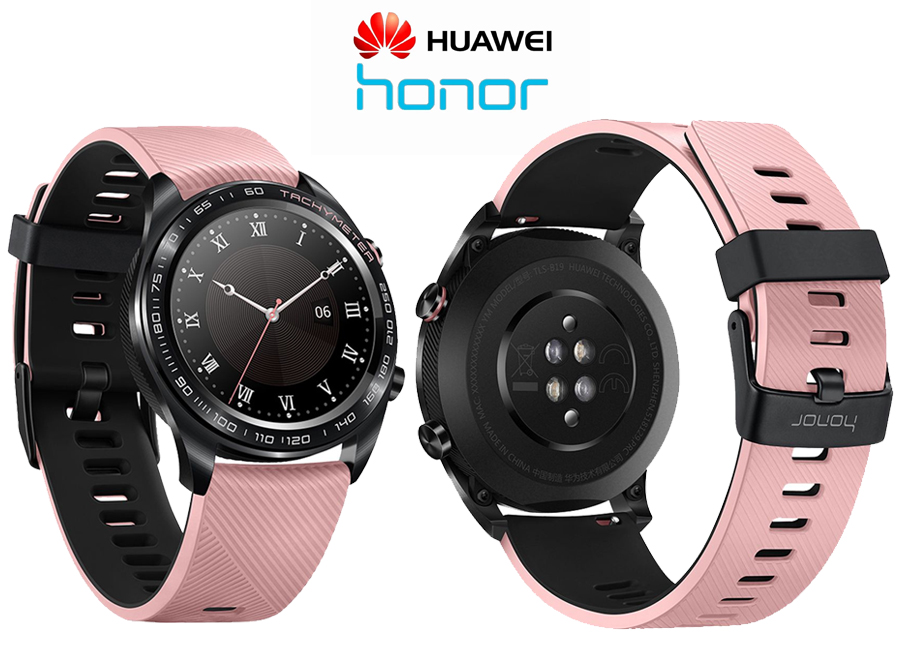
Sporting a 1.2 Inch AMOLED high-resolution display, the Honor Dream smartwatch offers a more vivid and beautiful content. Despite its bigger screen, the devices fit the width of your wrist, offering a pleasant wearing experience for a longer period of time.
The Huawei Honor Dream smartwatch would normally set you back $219.99, but you can now buy it for just $137.99. Moreover, you can extend this 37 percent discount by using coupon code ROWZDYKA at the time of checking out.
The coupon helps you save $35 by reducing the original asking price of the smartwatch to just $134.99. You can head straight to this link to grab the discount and use the coupon before it lapses. Note that the promo will come to an end in just two days.
The Amazfit Verge 3 is an irresistible smartwatch that comes with an Amazon Alexa built-in, allowing you to ask questions and more. It sports a 1.3 Inch AMOLED high-resolution display that breathes new life into the content. The screen shows various information when you raise the wrist.
While the aforesaid features completely justify the $239.99 price tag the Huami AMAZFIT Verge 3 smartwatch usually carries, you can now buy it for a lowered price of only $134.99 on GeekBuying. This is a noteworthy 44 percent drop in the device’s original selling price. If that doesn’t impress you much, you can use coupon code RBDUPCLP and get an extra $5 off. The already lowered retail price of the smartwatch reduces to just $129.99 after applying the aforesaid coupon. You can follow this link to grab the discount before the promo ends.
The Realme X may be arriving sooner than later. The phone which was spotted on TENAA last week has made an appearance in a YouTube video review, prompting us to believe that the phone is ready for launch.
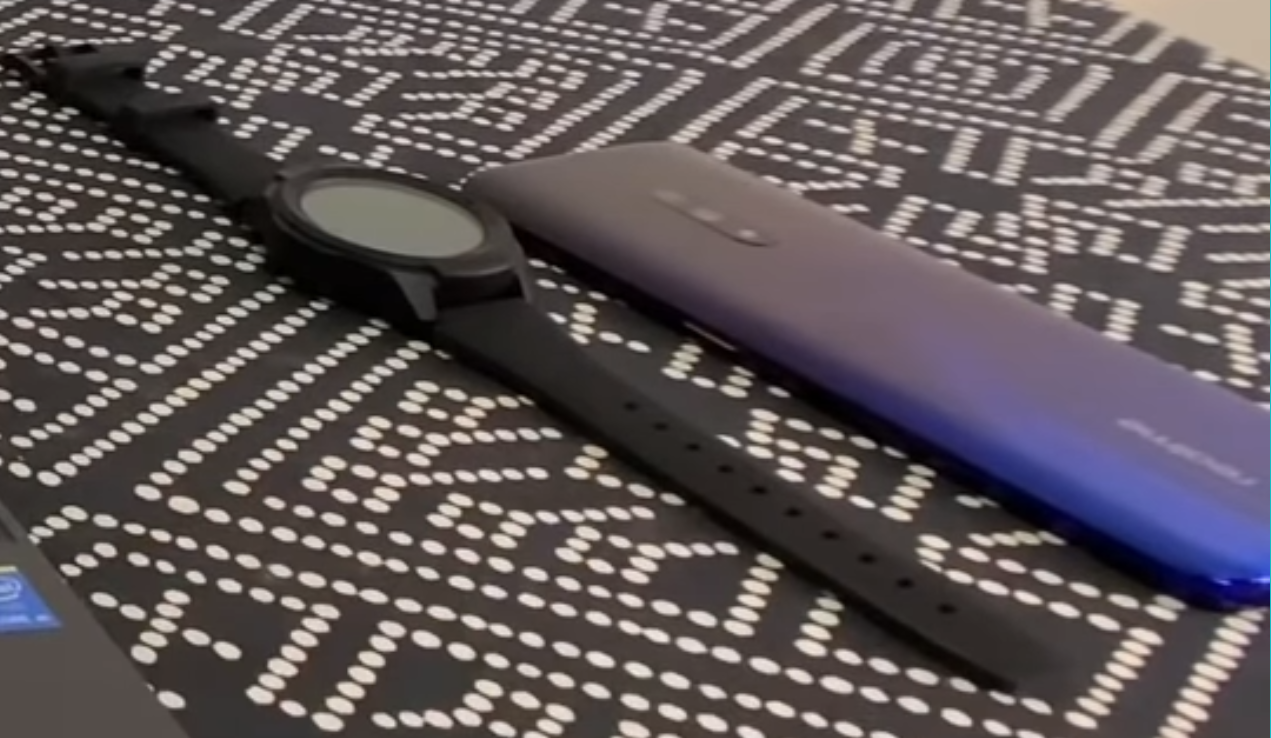
The video is a review for Chuwi‘s Aerobook on the YouTube channel Ben’s Gadget Reviews. In several scenes in the video, we see a phone with a gradient blue-black design on the left of the computer. Zoom in and you can see the Realme branding on the device. We know it is the Realme X because there is no other Realme phone with the camera design of the device in the video.
The Realme X’s rear cameras are designed in such a way as to look like triple camera sensors from afar but they are actually dual cameras with an LED flash sharing the same housing. There is no fingerprint scanner on the rear but it is presumed it is positioned under the display.
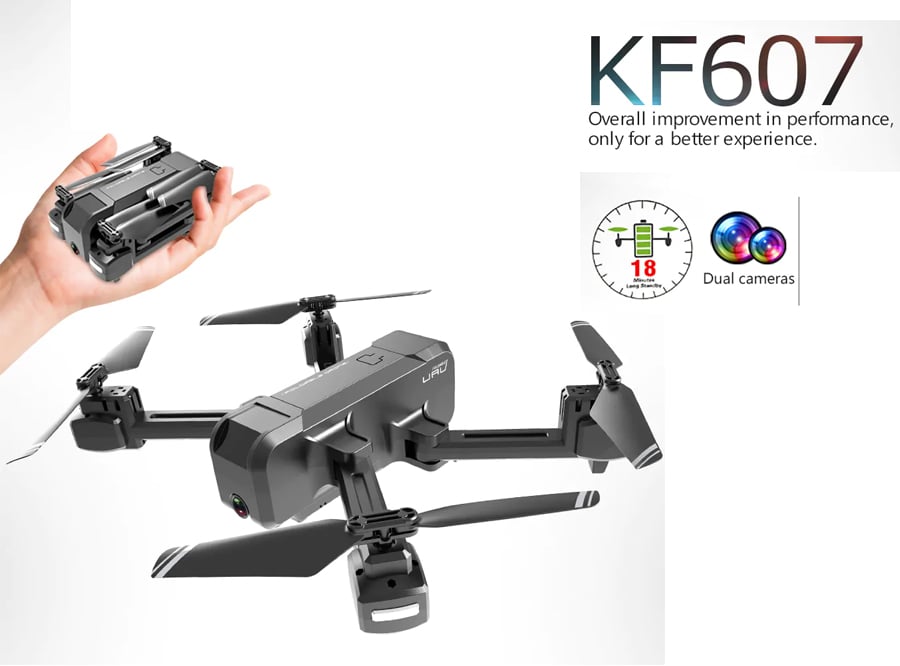
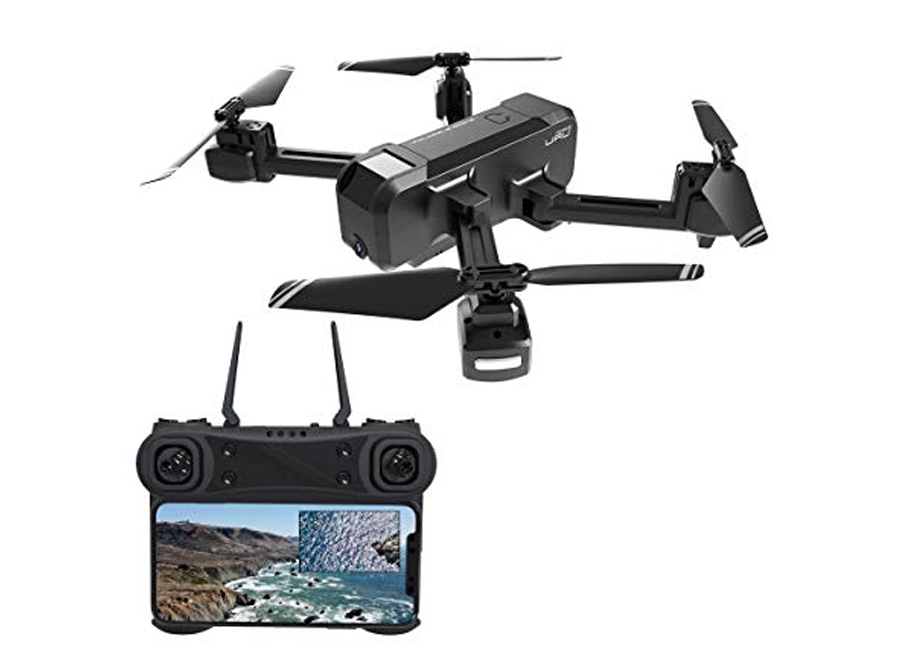
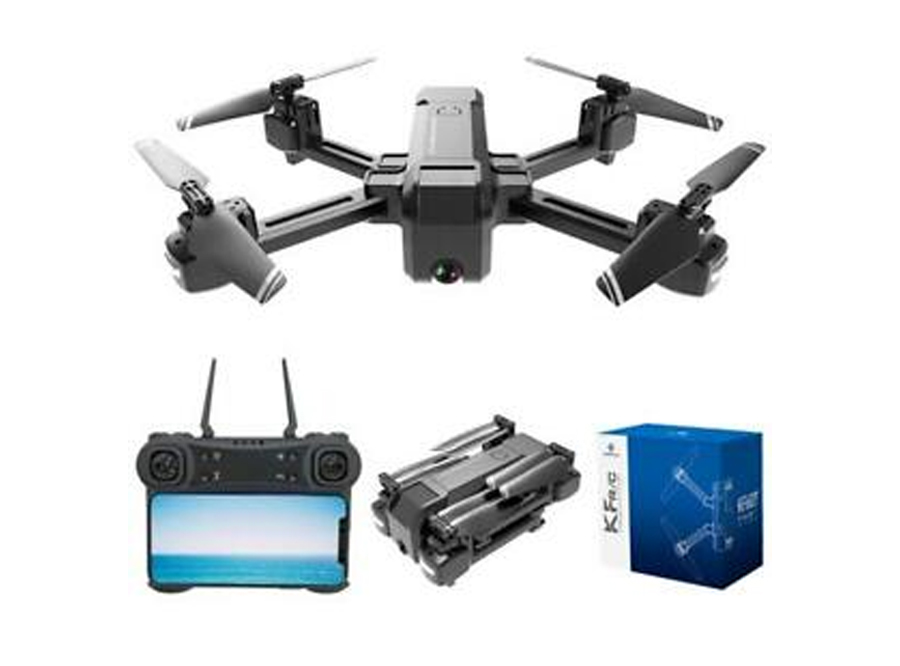
The state-of-the-art KF607 Wifi FPV Altitude Hold Drone offer drone lovers a lot to cheer about. Striking a perfect balance between exquisite workmanship and awe-inspiring features, the KF607 is designed to capture breathtaking images from the sky.
While you can choose between multiple options in terms of camera setup on Gearbest, we’d be talking about two well-received versions of the KF607 Wifi FPV Altitude Hold Drone including one that houses the 4K camera and the other that comes with a 1080P camera.
KF607 Quadcopter Optical Flow Pressure Altitude Hold – Black 1080P Camera
This feature-laden Quadcopter offers a slew of highly advantageous features such as dual-screen switching, palm manipulation, gesture video, vibrato sharing, HD cameras, dual cameras, and App manipulation. Moreover, it is backed by an easy-to-exchange modular battery that delivers a long battery life.The black-tinted model equipped with a 1080p camera has gone up for sale bearing a $64.90 price tag on Gearbest. You can visit this link to check out more details about KF607 Wifi FPV Altitude Hold Drone 1080P Camera model and place your order.
KF607 Quadcopter Optical Flow Pressure Altitude Hold – Black 4K Camera
Featuring a 4K camera, this model delivers improved performance, coupled with an enhanced overall experience. Moreover, it allows you to capture pictures by taking specific actions in front of the camera. Aside from that, you can switch the upper and lower cameras independently.The KF607 Wifi FPV Altitude Hold Drone 4K camera version is currently available for $72.90 on Gearbest. This model is available in the black color version. You can visit this link to check out the full specifications and place your order.
On April 29, Banggood launched a new promotion called the Umi Power Phone, wherein the Chinese online store is offering the Umidigi’s recently unveiled handset for a lowered price. Umidigi took the wraps off its Umidigi Power smartphone in April this year. The European Union, as well as the Non-European Union versions of the smartphone, has now gone up for pre-order bearing lowered prices on Banggood.
Both, the European Union as well as the Non-European Union models would normally set you back $199.99, but as part of its latest promo, Banggood is offering them for considerably reduced prices of $169.99. This is a significant 15 percent drop in the original asking prices of both versions.
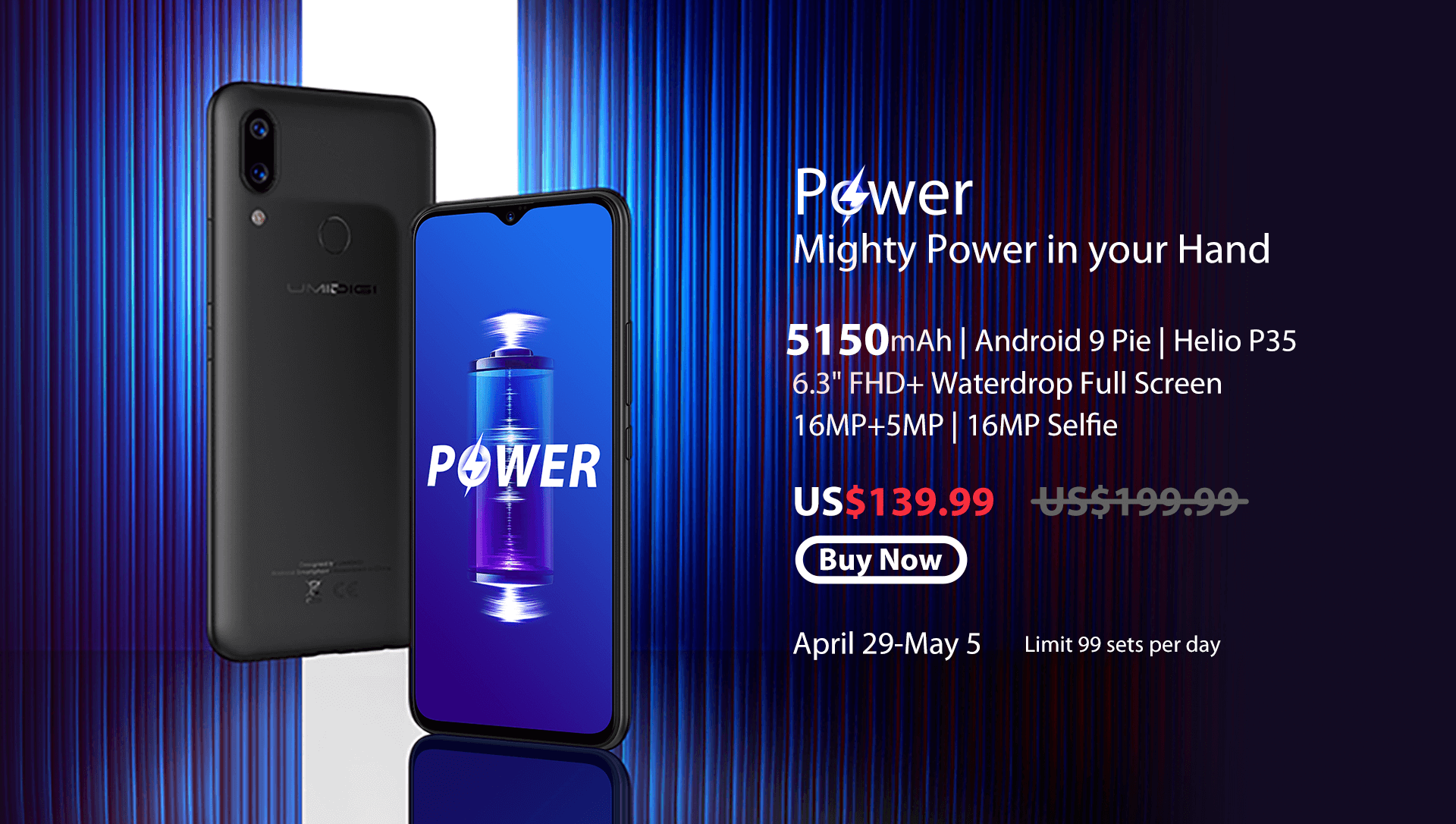
An absolute steal at this price, the Umidigi Power smartphone boasts an impressive array of features. It sports an eye-catching 6.3 Inch FHD+ waterdrop display with a high screen resolution of 2340×1080 pixels.
The Umidigi Power smartphone packs a powerful MTK, Helio P35, 8xCortex-A53, up to 2.3GHz processor along with a highly competent IMG PowerVR GE8320, up to 680MHz GPU, under the hood. Moreover, it ships with 4GB of RAM and offers 64GB of internal storage capacity, which can be expanded up to 256GB using a microSD card.
On the optics front, the Umidigi Power phone houses a 16MP + 5MP dual camera setup with f/1.8+f/2.2 apertures at the back. Up front, there’s a 16MP selfie camera with f/2.0 aperture, Face Recognition and Selfie Countdown.
The phone runs Android 9.0 Pie OS and is backed by a built-in 5150mAh battery with 18W Fast Charging. Aside from a rear-mounted fingerprint scanner, the Umidigi Power comes with a slew other sensors including P-Sensor, L-Sensor, Accelerometer and more.
You can head straight to the promotion page by clicking here and take full advantage of the discount, which will be valid for the black and gold color versions of the phone.
Regrettably, the discount will only be valid for a limited number of pieces. It is also worth noting that the promotion is slated to end on May 5.
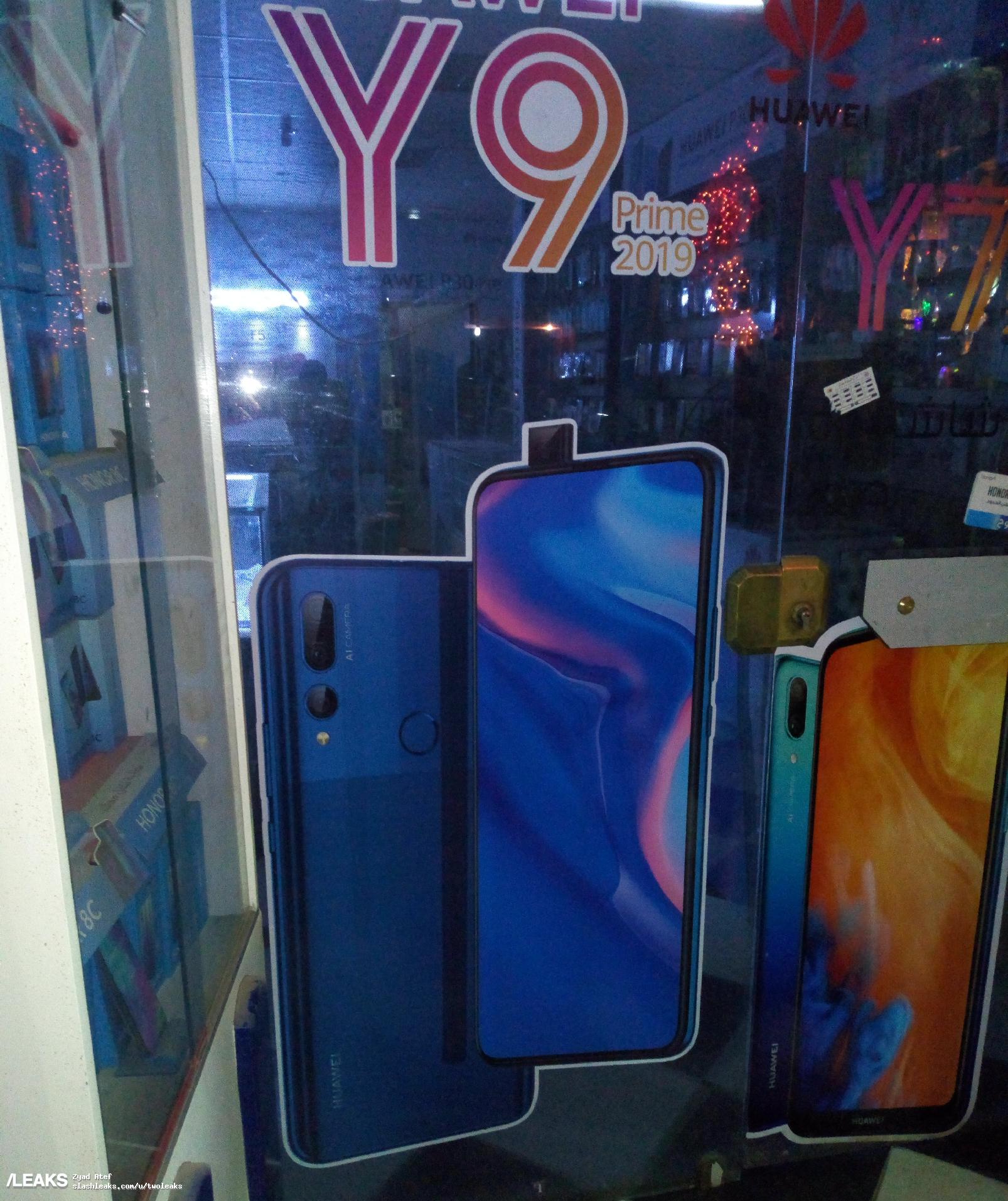
The Huawei P Smart Z is Huawei’s first phone with a pop-up selfie camera but it won’t be the last. A new leak has revealed the Chinese giant’s upcoming Huawei Y9 Prime will also have a pop-up selfie camera…..and three rear cameras. The leak includes a poster taken at a store, as well as hands-on images of the phone. It also reveals its specs.
The front of the Huawei Y9 Prime 2019 shares a similar design to that of the P Smart Z. Save for the extra camera on the back of the former, both devices can pass for the same even though they have different names which actually isn’t unusual for certain Huawei devices.
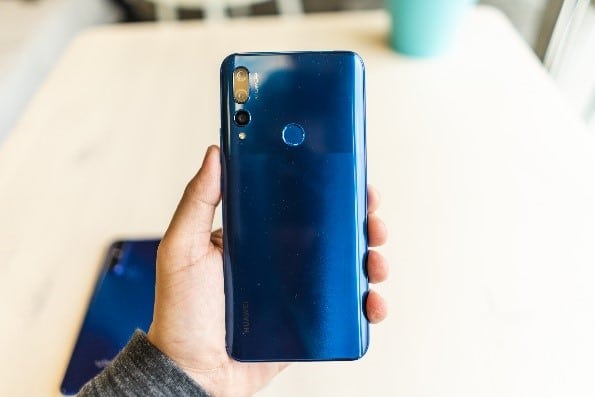
According to the source of the hands-on photos, the Huawei Y9 Prime 2019 has nearly the same specs as the P Smart Z. The photos also show it has a similar two-tone finish on the back.
So you get a 6.59-inch display with an FHD+ resolution and a 91.006% screen-to-body ratio. There is a Kirin 710F under the hood paired with 4GB of RAM and 128GB of storage. The selfie camera is a 16MP f/2.2 sensor while the triple rear cameras include a 16MP f/1.8 sensor, an 8MP f/2.4 sensor with an ultra-wide angle lens, and a 2MP f/2.4 depth sensor. The cameras are arranged vertically on the left with two sensors sharing the same housing while the third is housed separately.
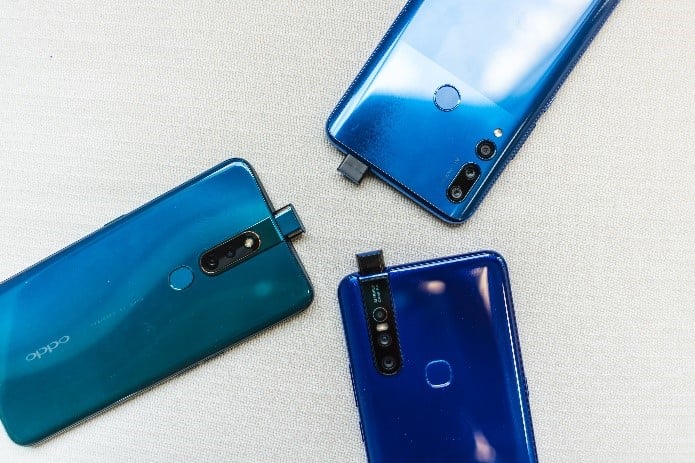
Huawei Y9 Prime 2019 vs OPPO F11 Pro vs Vivo V15 Pro
There is also a 4,000mAh battery that charges via USB Type-C and a rear-mounted fingerprint scanner. The rumored price is said to be under $300 which is cheaper than the retail price of the P Smart Z (€279/~$313). We don’t know how that will work out for Huawei unless it doesn’t plan to sell the Y9 Prime 2019 in the same markets it will sell the P Smart Z.
We use cookies on our website to give you the most relevant experience by remembering your preferences and repeat visits. By clicking “Accept”, you consent to the use of ALL the cookies.
This website uses cookies to improve your experience while you navigate through the website. Out of these, the cookies that are categorized as necessary are stored on your browser as they are essential for the working of basic functionalities of the website. We also use third-party cookies that help us analyze and understand how you use this website. These cookies will be stored in your browser only with your consent. You also have the option to opt-out of these cookies. But opting out of some of these cookies may affect your browsing experience.
Necessary cookies are absolutely essential for the website to function properly. This category only includes cookies that ensures basic functionalities and security features of the website. These cookies do not store any personal information.
Any cookies that may not be particularly necessary for the website to function and is used specifically to collect user personal data via analytics, ads, other embedded contents are termed as non-necessary cookies. It is mandatory to procure user consent prior to running these cookies on your website.

 While the Weibo post only confirms the arrival of Realme X phone, Jingdong Mall has early listings for Realme X Youth Edition alongside Realme X. This indicates that both smartphones may get announced on May 15. Apart from JD, the Realme X and X Youth Edition will be available through other online platforms such as Tmall and Suning in China.






















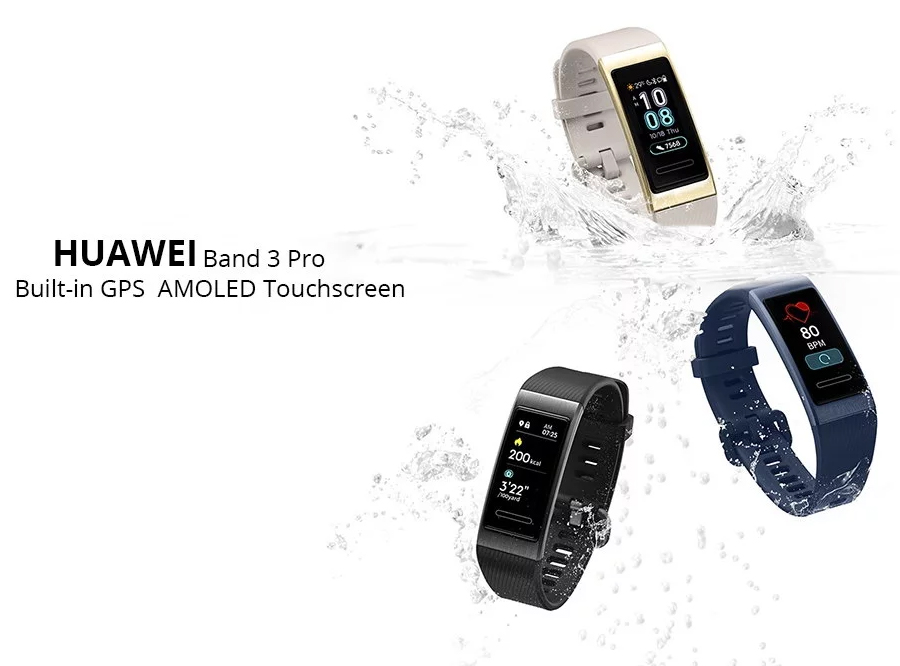 The aforesaid coupon helps you save $18 without breaking a sweat. In other words, you can reduce the original asking price of the Band 3 Pro Smart Bluetooth Wristband to just $47.99 simply by applying the aforesaid coupon.
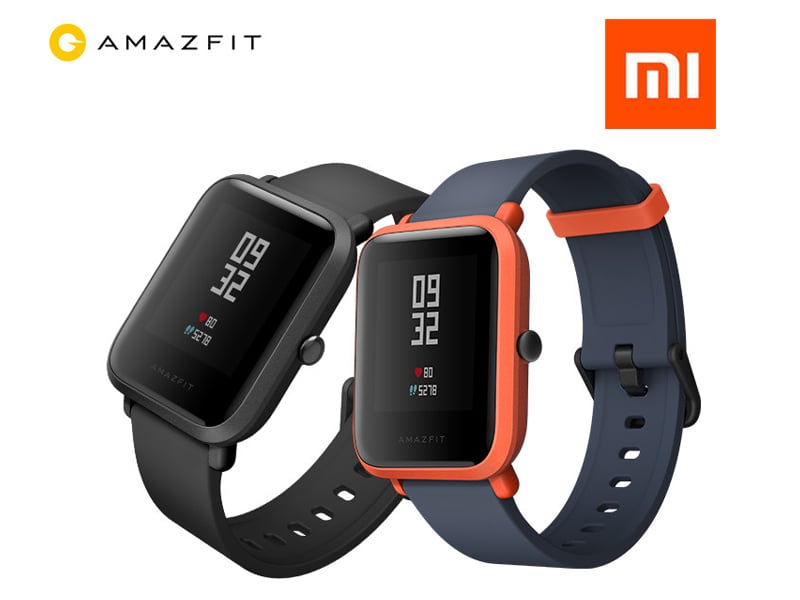 The coupon reduces the retail price of the feature-laden smartwatch to just $53.99 even before you place your order. You can follow
 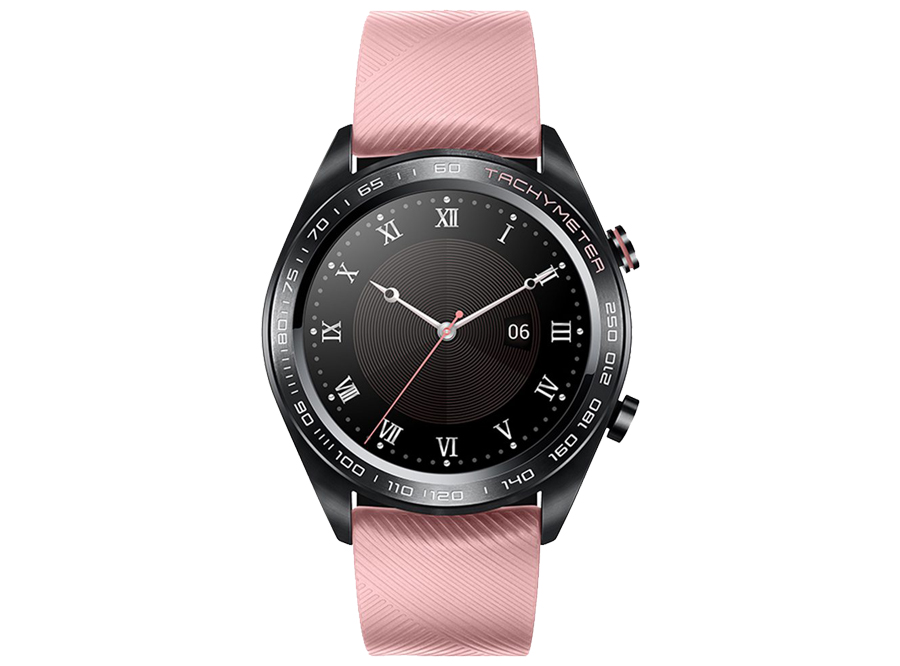 The coupon helps you save $35 by reducing the original asking price of the smartwatch to just $134.99. You can head straight to
 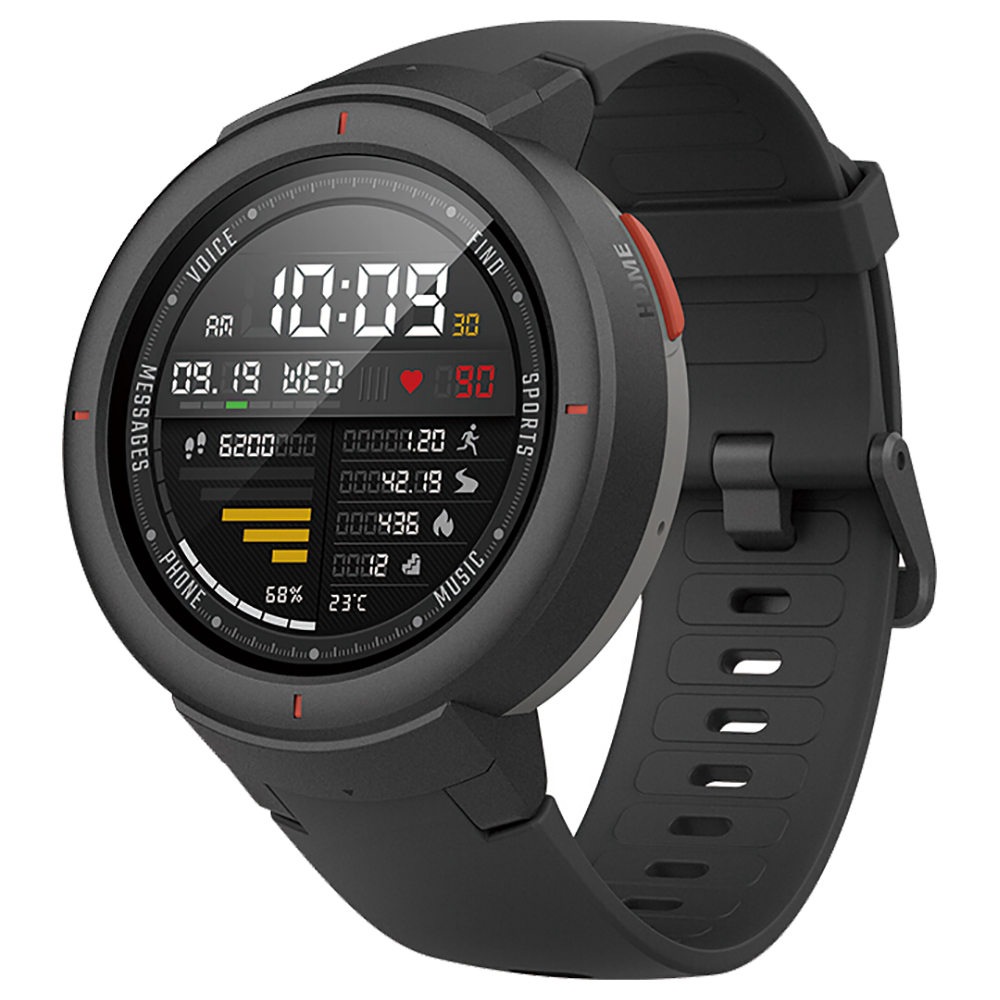 If that doesn’t impress you much, you can use coupon code RBDUPCLP and get an extra $5 off. The already lowered retail price of the smartwatch reduces to just $129.99 after applying the aforesaid coupon. You can follow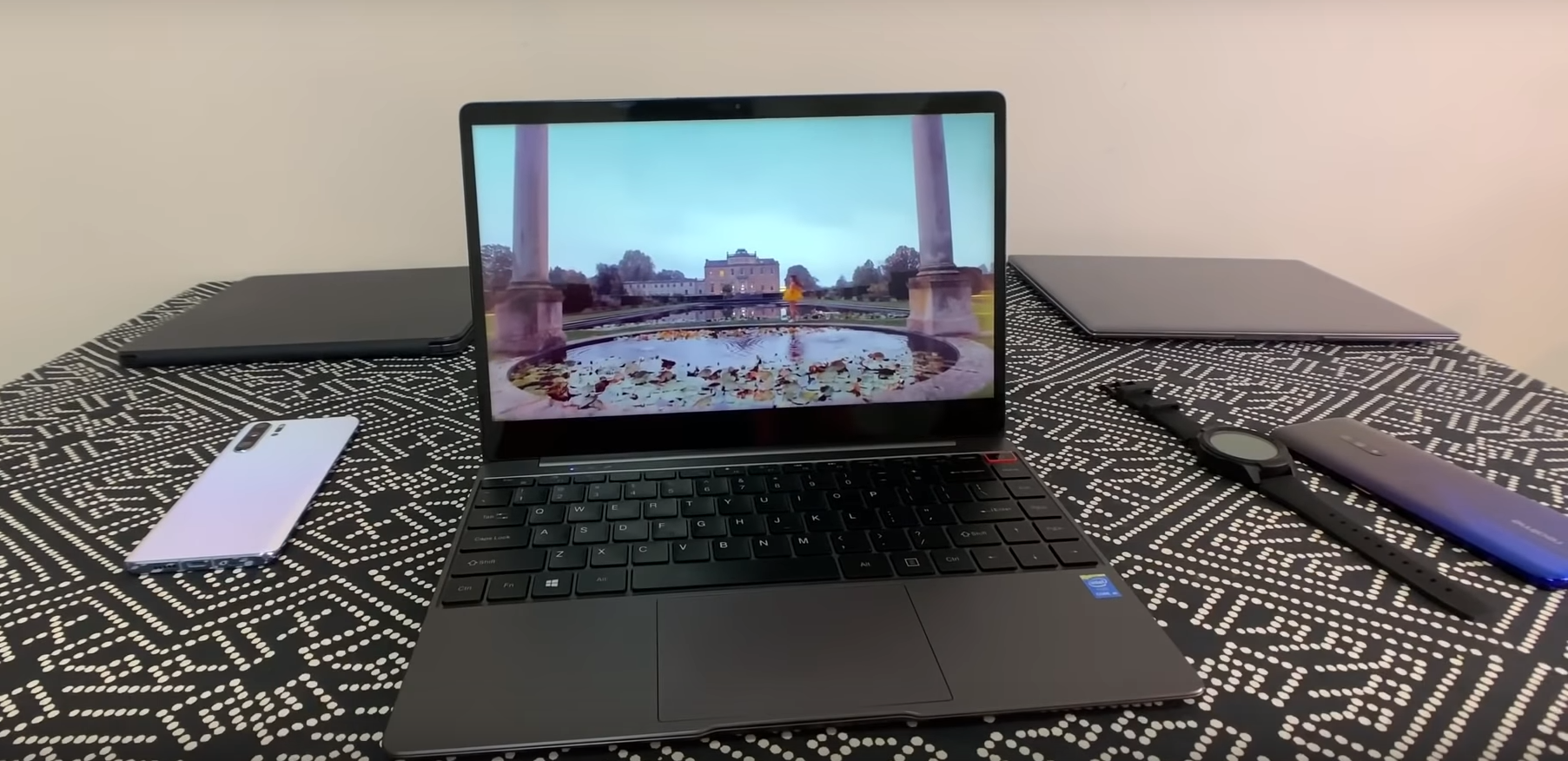
 The black-tinted model equipped with a 1080p camera has gone up for sale bearing a $64.90 price tag on Gearbest. You can visit
  The KF607 Wifi FPV Altitude Hold Drone 4K camera version is currently available for $72.90 on Gearbest. This model is available in the black color version. You can visit
 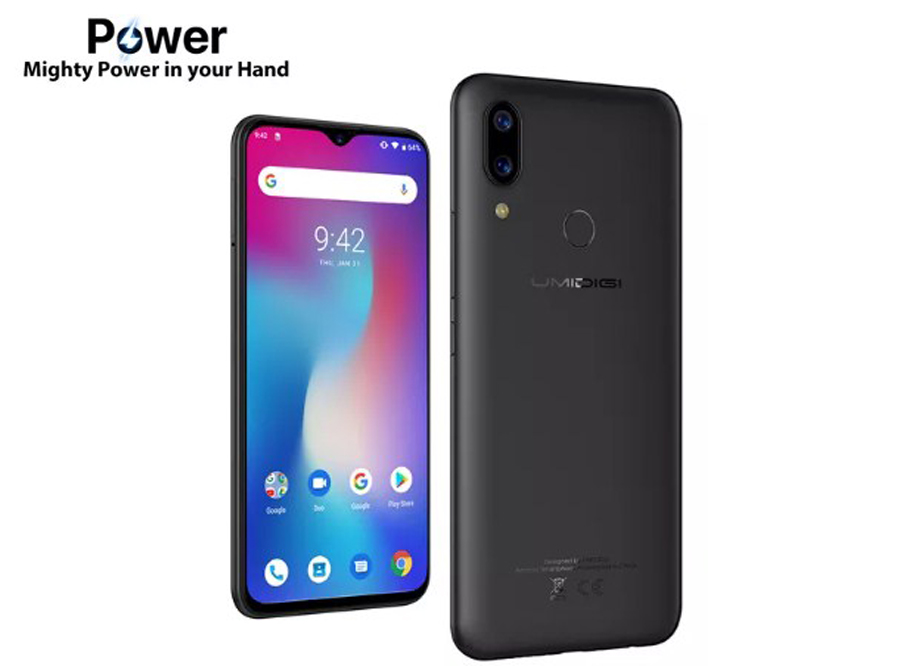 Umidigi took the wraps off its Umidigi Power smartphone in April this year. The European Union, as well as the Non-European Union versions of the smartphone, has now gone up for pre-order bearing lowered prices on Banggood.
 The Umidigi Power smartphone packs a powerful MTK, Helio P35, 8xCortex-A53, up to 2.3GHz processor along with a highly competent IMG PowerVR GE8320, up to 680MHz GPU, under the hood. Moreover, it ships with 4GB of RAM and offers 64GB of internal storage capacity, which can be expanded up to 256GB using a microSD card.