Advertisement

OnePlus 16R tipped to bring back telephoto camera, feature Snapdragon 8 Elite Gen 5, 165Hz display

OnePlus just launched its newest flagship in China, but a different model is already getting more attention for Indian buyers (and a few other markets). Fresh leaks suggest the OnePlus 16R is moving closer to production and could pack a solid mix of performance, battery life, and camera specs.
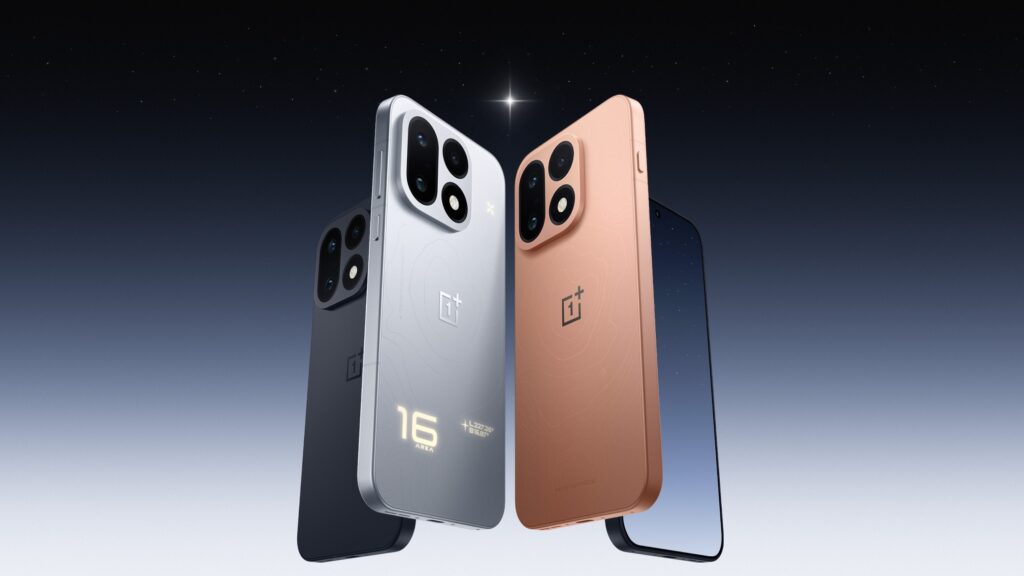
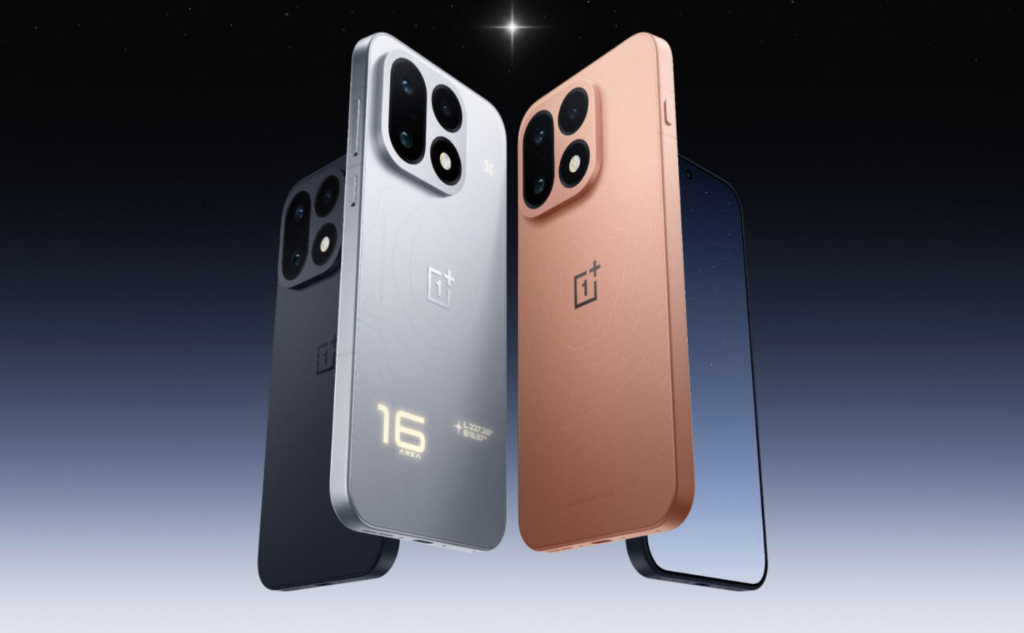
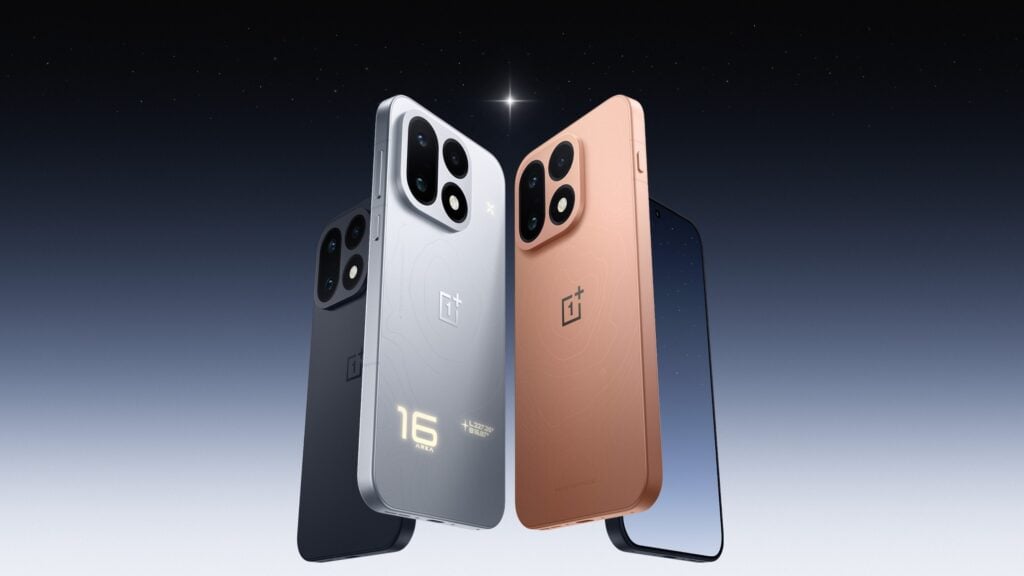
Three OnePlus 16 smartphones in black, silver, and copper colors against a dark background.

The OnePlus 16 dropped in China on October 12, 2026, with Qualcomm’s latest Snapdragon 8 Elite Extreme Gen 6 chip, a display that goes up to 185Hz, a 200MP 1/1.4″ main sensor plus a 50MP 3x telephoto, and a massive 9,000mAh battery.

The catch? That phone isn’t expected to come to India or most global markets. That leaves the 16R as the likely flagship option for Indian customers.

Tipster Yogesh Brar recently shared that the OnePlus 16R has reached the Production Validation Test (PVT) stage. According to the leak, it’ll use last year’s flagship Snapdragon 8 Elite Gen 5 processor. It’s also said to get a 165Hz display and a battery bigger than 7,500mAh. Brar mentioned the same hardware is being tested under the realme brand too.
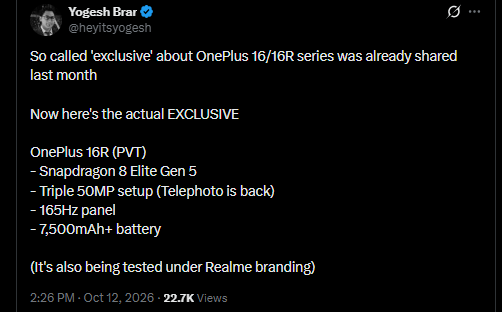
Social media post detailing leaked specifications for the upcoming OnePlus 16R smartphone.

One of the more interesting upgrades seems to be the camera setup. The 16R is tipped to come with a triple 50MP rear camera system that includes a dedicated telephoto lens. That’s a welcome return of optical zoom after the OnePlus 15R skipped the telephoto entirely. Specific zoom levels and sensor details still aren’t out, but it should give the phone more flexibility for distant shots and portraits.

On the software side, it’s expected to run ColorOS 17 instead of OxygenOS 17. Earlier reports point to a possible India launch in December 2026 or early 2027.

If the leaks hold up, the OnePlus 16R could deliver flagship-grade raw performance, respectable zoom photography, a smooth high-refresh display, smooth gaming through frame rate interpolation, and strong battery life. That would make it a pretty compelling option in the premium segment.

Don’t miss a thing! Join our Telegram community for instant updates and grab our free daily newsletter for the best tech stories!

For more daily updates, please visit our News Section.

(Source: Yogesh Brar)

OnePlus 16 sales cross 70,000 units within first hour

OnePlus has reported a strong start for its latest OnePlus 16 flagship smartphone in China. The company has shared its initial sales figures following the device’s retail debut. The early numbers put the phone at the top of this year’s Android flagship launch-period sales rankings.

OnePlus 16: First-day sales report

Social media post from Li Jie announcing strong OnePlus 16 sales figures in China.

OnePlus China president Li Jie announced on Weibo that the OnePlus 16 had sold more than 70,000 units by 11 AM on October 13, just an hour after sales began at 10 AM. According to the executive, the phone ranked first among Android flagships based on comparable launch-period sales this year. He also described the performance as an unusually strong increase, although the company has not disclosed the exact figures for its predecessor.

The OnePlus 16 went on sale in China following its launch on October 12. Its early performance comes amid a focus on gaming, display quality and battery life, with OnePlus introducing dedicated gaming hardware and a high-refresh-rate screen to appeal to power users.

OnePlus 16 specifications

OnePlus 16
OnePlus 16

The OnePlus 16 features a 6.78-inch 1.5K LTPO AMOLED display with a resolution of 2772 x 1272 pixels. It supports refresh rates of up to 165Hz during everyday use and 185Hz in compatible games. The phone is powered by Qualcomm’s Snapdragon 8 Elite Extreme Gen 6 processor, paired with up to 16GB of RAM and 1TB of storage. Its gaming features include dedicated network, display and touch chips, along with a Glacier Cooling System.

The OP16 features a 200-megapixel primary camera with optical image stabilization, a 50-megapixel periscope telephoto camera with 3x optical zoom, and a 50-megapixel ultra-wide camera. A 50-megapixel front camera handles selfies. The device runs ColorOS 17 and packs a 9,000mAh battery with support for 100W wired and 50W wireless charging. Other features include an ultrasonic fingerprint sensor, stereo speakers and IP66, IP68, IP69 and IP69K ratings.

In China, the OnePlus 16 is available in four configurations: 12GB+256GB, 12GB+512GB, 16GB+512GB and 16GB+1TB. It carries a starting price of 5,999 Yuan (~$900) and comes in three shades, such as Tomorrow Starlight, Martian Red, and Dark Forest. There is currently no confirmation on whether the phone will be released globally.
Would you consider the OnePlus 16 for its gaming features and large battery?

Xiaomi Pad 9 Pro Max tops AnTuTu Android-Pad ranking, Xring O3 beats Snapdragon 8EE Gen 6

After the Xiaomi 18 Fold took the top spot in AnTuTu’s flagship smartphone rankings, its bigger sibling has now claimed the number one position on the Android tablet leaderboard.

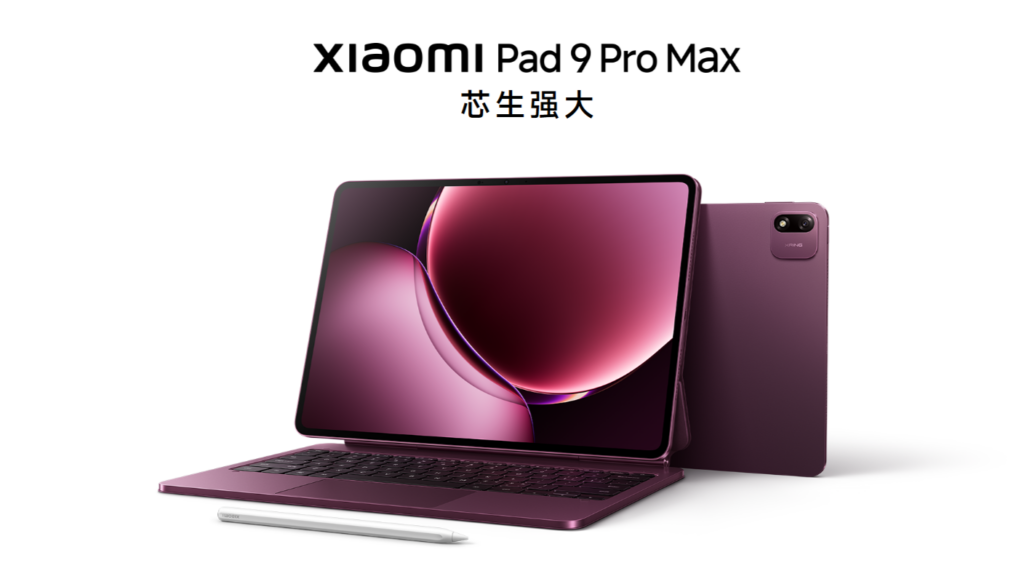
The purple Xiaomi Pad 9 Pro Max tablet with keyboard and stylus on white.

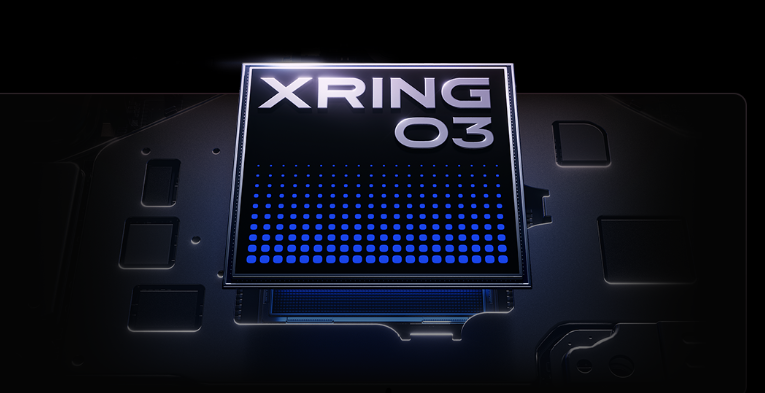
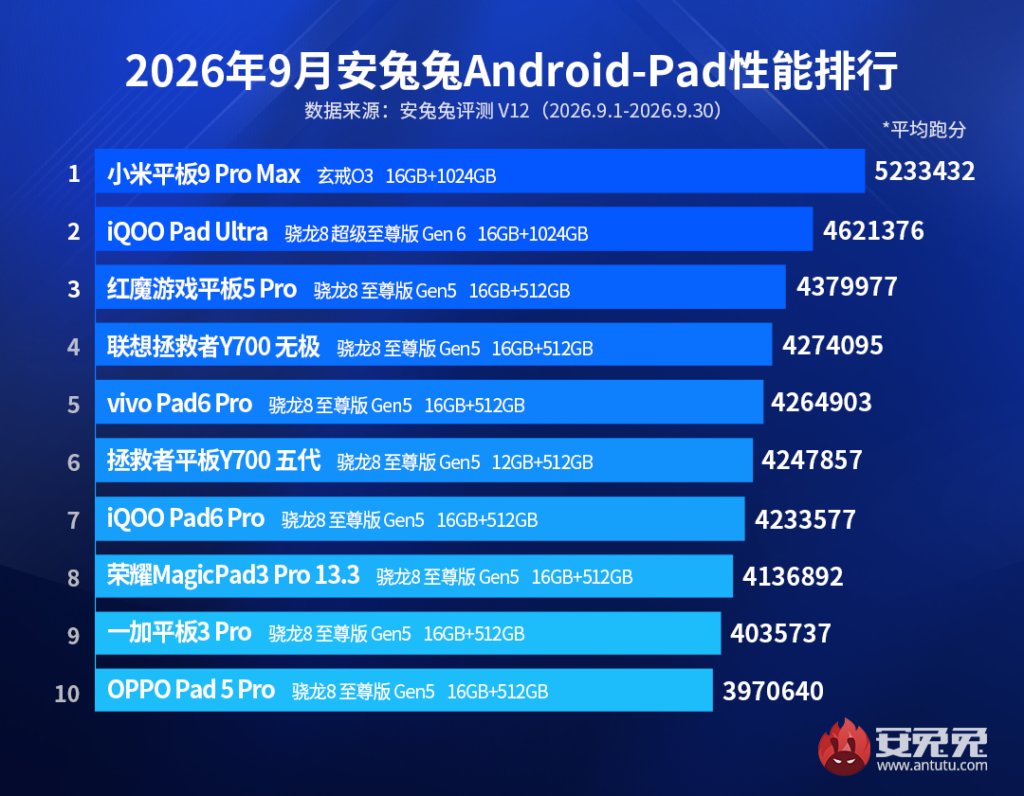
According to the September 2026 results published on the AnTuTu website, the Xiaomi Pad 9 Pro Max posted the highest score among all tested Android tablets. The 13.3″ slate is powered by Xiaomi’s own Xring O3 chipset and managed to clearly outpace the iQOO Pad Ultra, even though the iQOO model uses Qualcomm’s Snapdragon 8 Elite Extreme Gen 6 and comes with an active cooling fan.

The Xring O3 chipset is displayed on a dark, metallic circuit board background.

The Pad 9 Pro Max unit that was tested came with 16 GB of LPDDR6 RAM and 1 TB of storage. That faster memory type helped push the overall score higher. The iQOO Pad Ultra was tested in the same 16 GB / 1 TB configuration but used the slower LPDDR5X Ultra RAM, which explains part of the gap.

Shop now →
Where to buy
Xiaomi tablets
Browse the range on Amazon

The rest of the top 10 is mostly filled with Snapdragon 8 Elite Gen 5 tablets from Oppo, Lenovo, Vivo, and Honor. No MediaTek-powered devices made the list, though there aren’t many high-end MediaTek tablets on the market right now anyway.

AnTuTu benchmark chart showing the top ten highest performing Android tablets for September 2026.

The result shows that Xiaomi’s Xring O3 is becoming a real contender. Snapdragon is still the default choice for most premium Android devices this generation, but Xiaomi’s in-house chip has now topped both the smartphone and tablet AnTuTu charts in successive rankings. Tablets also give the chip more thermal headroom than foldable phones, which helps it sustain higher performance for longer.

Benchmarks don’t always tell the full story about day-to-day use, but consistent leadership on AnTuTu is still a clear signal of what the Xring O3 can do. The Pad 9 Pro Max’s strong showing further positions Xiaomi’s custom silicon as a serious alternative in the high-end Android space.

Don’t miss a thing! Join our Telegram community for instant updates and grab our free daily newsletter for the best tech stories!

For more daily updates, please visit our News Section.

(Source: AnTuTu)

Intel, Qualcomm raise CPU prices — and AMD might be next

Intel, Qualcomm, AMD CPU price hike

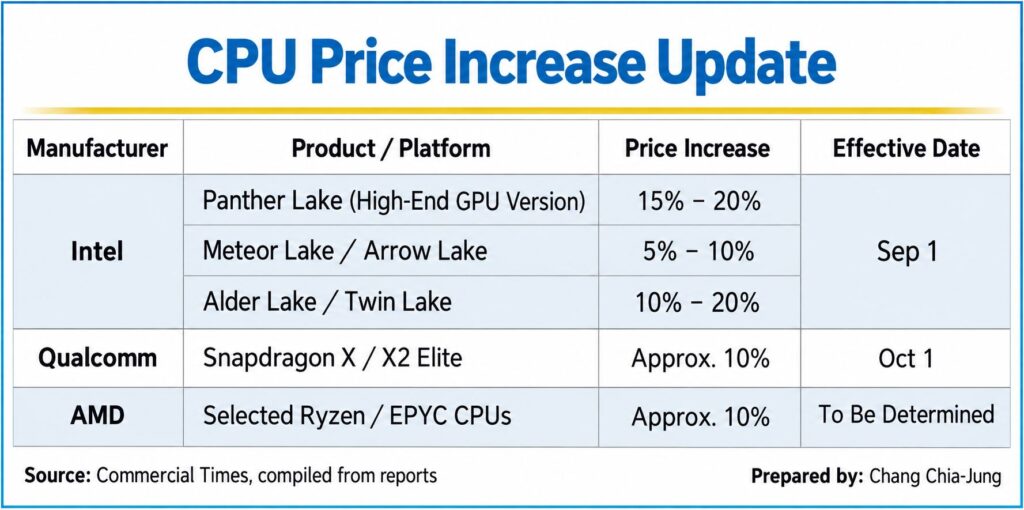
The surge in AI demand is only pushing the CPU prices through the roof, as another price hike has been implemented. Major chips brands including Intel and Qualcomm have raised prices across multiple CPU families, and AMD will reportedly follow soon with a 10% price hike.

Intel, Qualcomm CPU prices touch new heights

Intel was expected to raise its CPU prices by up to 10% in October, but the latest report from Commercial Times suggests the latest price hike has already taken place in September. Citing supply chain sources, the report claims Intel has raised prices for multiple CPU lineups, with the high-end Panther Lake CPUs getting affected the most.

Panther Lake processors have reportedly become a lot costlier with a price hike of 15-20%. Not all of them may be affected, as the report suggests only those with a high-end iGPU have been hit with a price hike.

Shop now →
Where to buy
AMD Ryzen processors
Browse the range on Amazon

Alder Lake and Twin Lake CPUs have also been affected with a 10-20% price hike, while the entry-level low-power chips like Twin Lake and Alder Lake have been slapped with a 5-10% price hike.

It’s not just Intel with another price hike. Qualcomm has also reportedly raised prices of its PC processor platforms including Snapdragon X and X2 Elite by approximately 10%. The price hike has been implemented starting October 1st.

Intel, Qualcomm, AMD CPU price hike table

AMD CPUs are also getting a price hike very soon

AMD is also reportedly preparing for a price hike across some Ryzen and EPYC CPU families. The report suggests they could get costlier by approximately 10%.

We don’t know exactly when the new pricing for AMD CPUs will come into effect. However, given that Intel and Qualcomm have already done it and that the demand is still soaring, the announcement could be made anytime soon.

At the center of the price hike is TSMC, which handles the manufacturing for Intel, Qualcomm, and AMD. The Taiwanese giant is reportedly increasing its manufacturing prices further in 2027. According to Central News Agency, industry analysts forecast a price hike of 5-10% for advanced nodes, 10-15% for advanced packaging, and 3-5% for mature nodes. Plus, the rising cost of high-performance memory and storage adds more fuel to the fire.

Stay tuned with us for more updates. Remember to visit the News section regularly or join our Telegram channel to receive instant alerts.

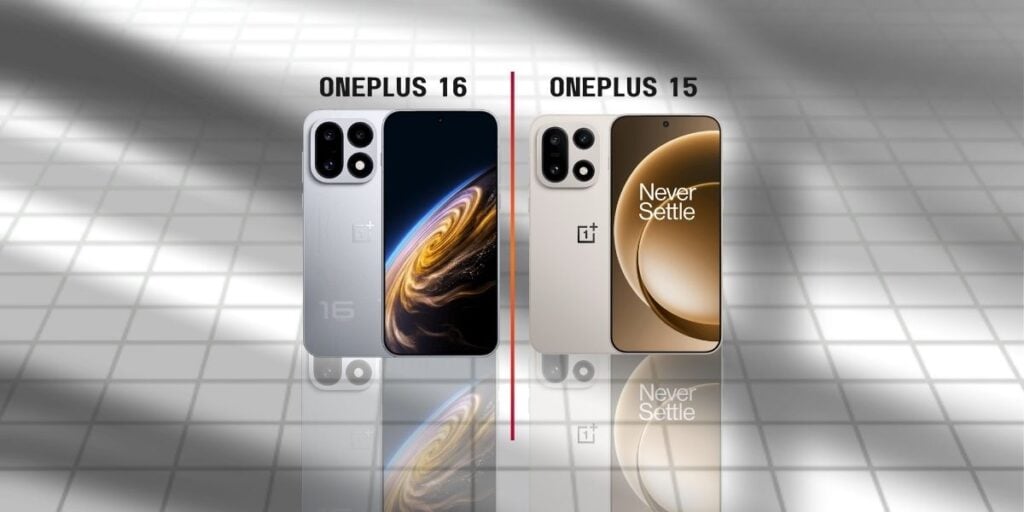
OnePlus 15 vs OnePlus 16: What are the upgrades?

The OnePlus 16 brings several major hardware changes over the OnePlus 15, including a new 2nm Snapdragon chipset, a 9,000mAh battery, a 200MP main camera, and a display that supports a 165Hz refresh rate across the system. OnePlus has also updated the phone’s gaming hardware, cooling system, and software, although some features remain unchanged from the previous generation.

The two phones share a similar design, with a 6.78-inch flat display, narrow bezels, and a flat-sided frame. However, the OnePlus 16 makes a few trade-offs alongside its upgrades. Wired charging drops from 120W to 100W, while the periscope telephoto camera moves from 3.5x to 3x optical zoom.

For OnePlus 15 owners, the question is whether the larger battery, newer processor, and camera changes justify an upgrade. Here’s a detailed look at how the OnePlus 16 compares with the OnePlus 15 and what has changed between the two generations.

OnePlus 16 vs OnePlus 15

1. Performance

The processor is one of the biggest differences between the two phones. The OnePlus 15 uses Qualcomm’s Snapdragon 8 Elite Gen 5, a 3nm chipset with two prime cores clocked at up to 4.6GHz. The OnePlus 16 moves to the Snapdragon 8 Elite Extreme Gen 6, built on a 2nm process, with two prime cores reaching 5.0GHz and six performance cores running at up to 4.0GHz.

The new chip also uses an all-big-core CPU design and introduces Adreno Matrix Cores for graphics features such as upscaling and frame generation. Moving to a smaller manufacturing process can improve power efficiency, although the actual gains depend on how the chip performs under different workloads.

OnePlus has also updated its Wind Chaser Game Core. The first-generation system on the OnePlus 15 supports up to 165fps in compatible titles, while the newer version on the OnePlus 16 is rated for 185fps. OnePlus says the phone averaged 185fps in Delta Force during a three-hour test at high graphics settings. Actual results will depend on the game, settings, and operating temperature.

2. Cooling upgrades

Higher frame rates and sustained performance put more pressure on a phone’s cooling system, so OnePlus has revised the thermal hardware alongside the new processor.

The OnePlus 15 uses the Glacier cooling system, which combines a vapor chamber with an aerogel insulation layer. The OnePlus 16 gets an updated setup with a zoned vapor chamber, revised thermal gel, and a graphite layer rated at 2,100 W/m·K.

OnePlus claims the new vapor chamber is 40% more effective and the thermal gel is 50% better than before. The updated layout also directs heat away from areas where users typically hold the phone during landscape gaming. The company has retained the general approach of insulating the frame while improving heat dissipation around the processor.

3. 165Hz is no longer limited to games

The OnePlus 15 already has a high-refresh-rate display, but its 165Hz mode is primarily available in supported games and select applications. During normal use, the phone’s 6.78-inch LTPO OLED panel adjusts its refresh rate between 1Hz and 120Hz.

The OnePlus 16 changes this by extending 165Hz support across the system. Scrolling through menus, moving between apps, and navigating supported interfaces can now take advantage of the higher refresh rate rather than relying on it mainly for gaming. Meanwhile, compatible games can reach 185Hz.

Both phones retain a 1.5K resolution and a pixel density of 450ppi. They also support 1.07 billion colors, 100% DCI-P3 color gamut coverage, and peak brightness of 2,000 nits. The OnePlus 16, however, uses BOE’s new X4 luminescent material instead of the X3 in the OnePlus 15.

Another addition is the P4 display chip, which OnePlus says improves clarity during fast motion. The minimum brightness remains 1 nit, while PWM dimming runs at 3,840Hz. The newer phone also receives TÜV Rheinland Eye Comfort 6.0 certification, replacing version 5.0 on the OnePlus 15.

The higher refresh rate is the most visible change on paper, but it comes with a few qualifications. Not every app or game will run at 165Hz or 185Hz, and the difference will depend on the content being displayed. A higher refresh rate can make supported animations and scrolling look smoother, but it does not automatically improve image quality or resolution.

Both phones stick with a 1.5K panel rather than moving to QHD+. That means the OnePlus 16 prioritizes refresh rate and motion handling over a higher pixel count.

4. A larger 9,000mAh cell

There’s an upgrade in terms of battery as well. The OnePlus 15 has a 7,300mAh battery, while the OnePlus 16 now packs a 9,000mAh cell, roughly a 23% increase. Also worth noting is that the new battery uses two cells, each with a typical capacity of 4,500mAh. 

OnePlus has paired the larger battery with OPPO’s energy management chip, which handles power draw. The company says the system helps maintain stable performance at low charge levels and allows the battery to retain at least 80% of its capacity after five years of use.

Here are the official estimates for several activities on the new phone:

  • Up to 23.8 hours of video playback.
  • Up to 20.6 hours of short-video browsing.
  • Up to 13.6 hours of navigation.
  • Up to 8.1 hours of gaming.

5. Charging is slower

The larger battery comes with a change that may disappoint some users. The OnePlus 15 supports 120W wired charging, while the OnePlus 16 reduces the maximum charging speed to 100W.

OnePlus claims the OnePlus 15 can charge to full in around 40 minutes. Meanwhile, the OnePlus 16 charges from 1% to 100% in 52 minutes.

Both phones support 50W wireless charging, although the compatible charger is sold separately. The OnePlus 16 also adds 27W wired reverse charging, allowing it to supply power to accessories such as earbuds and smartwatches.

Both phones also support bypass charging. It allows the phone to draw power directly from the charger during supported gaming sessions instead of routing all that power through the battery, helping reduce heat.

6. The main sensor jumps to 200MP

The OnePlus 16 makes a substantial change to its main camera, moving from the OnePlus 15’s 50MP Sony sensor to a 200MP sensor measuring 1/1.4 inches. And of course, you get OIS stabilization. 

The higher resolution gives the phone more pixels to work with when cropping photos, although megapixel count alone does not determine image quality. Sensor size, image processing, exposure, and lens performance all contribute to the final result.

The telephoto camera sees a different kind of change. Both phones use a stabilized 50MP periscope camera, but the OnePlus 15 offers 3.5x optical zoom at an 85mm equivalent focal length. The OnePlus 16 moves to 3x optical zoom, using a 1/1.95-inch sensor, and it also supports 6x lossless zoom.

The 50MP ultra-wide camera remains unchanged, with a 116-degree field of view. The front camera, however, moves from 32MP on the OnePlus 15 to 50MP on the OnePlus 16. 

OnePlus has also introduced a shooting option called “one shot, three crop.” It lets users capture a single 200MP photo and create wide, medium, and close compositions from the same image. Other additions include a wide-format shooting mode, a text-prompt AI retouching tool limited to 100 uses per month, and Master Mode for film-style tones.

Both phones use Oppo’s LUMO imaging system and support 4K video recording at 120fps with Dolby Vision. The hardware changes give the OnePlus 16 more flexibility for still photography, but its overall camera performance will need to be assessed through actual photos and videos.

7. Faster touch response and network handling

The OnePlus 16 also gets three updated custom chips for gaming: one for network performance, one for touch input, and another for motion sensing.

The new G3 network chip replaces the G2 in the OnePlus 15. OnePlus claims it reduces cellular gaming latency by 42.1%, improves Wi-Fi stability by 18.5%, and increases Wi-Fi network pickup by 11.5%. The phone also has 14 high-performance antennas and six anti-interference antennas.

For touch input, the company is using the Lingxi T3 chip. It supports multi-finger touch sampling at up to 520Hz in select games. OnePlus claims 43.27% better touch accuracy, 54% lower click latency in a MOBA game, and 36% lower swipe latency in a shooter. 

The gyroscope sampling rate also increases from 200Hz on the OnePlus 15 to 800Hz on the OnePlus 16. OnePlus says six-axis calibration and temperature compensation help reduce drift, while start-stop latency is 13% lower.

The newer phone also introduces a one-tap Gun God Mode for games including Peacekeeper Elite, Delta Force, CrossFire, Dark Zone, Valorant Mobile, and Call of Duty. The mode adjusts frame rate, touch response, network priority, and cooling settings together. Pairing the phone with a clip-on cooler unlocks an additional X mode, which OnePlus says can further improve graphics quality and frame rates.

8. Design and software

The OnePlus 16 retains the general appearance of the OnePlus 15, including its flat-sided frame, squared corners, 6.78-inch display, and narrow 1.15mm bezels. Both phones have a shortcut key on the side and IP66, IP68, IP69, and IP69K ratings for dust and water resistance.

The color options change with the new generation. The OnePlus 15 comes in Sand Dune, Absolute Black, and Misty Purple, while the OnePlus 16 is available in Tomorrow Starlight, Mars Red, and Deep Black.

Tomorrow Starlight gets an interstellar lighting effect that illuminates for incoming calls, messages, and red envelope notifications in China. It can also respond to certain in-game actions and music, provided the necessary app permissions are enabled.

As for software, the OnePlus 15 shipped with ColorOS 16, while the OnePlus 16 ships with ColorOS 17 based on Android 17. OnePlus has retired OxygenOS for its newer phones, with ColorOS now serving as the software experience across the brand’s lineup.

ColorOS 17 introduces a refreshed interface and a memory management engine called Tide Engine. Other additions include AI Notes, which can combine information from multiple sources into one note, and an updated AI Tap feature.

Check price →
Where to buy
OnePlus 15
Latest price on Amazon

The cross-device features carry over from the previous generation. Users can mirror their phone’s screen to a Mac or Windows PC through the OPPO Connect client. The phone can also handle iPhone calls and sync messages and notifications from an iPhone. Apple Watch users can manage calls, messages, and notifications on the watch, with fitness and health data syncing back to the phone.

Both phones also carry OnePlus’s claim of maintaining smooth performance in a 72-month aging test. The company has not provided independent results to verify how the two models compare after extended use.

9. OnePlus 15 vs OnePlus 16: Specs compared

SpecificationOnePlus 15OnePlus 16
ProcessorSnapdragon 8 Elite Gen 5, 3nmSnapdragon 8 Elite Extreme Gen 6, 2nm
Display6.78-inch, 1.5K, 165Hz in supported games6.78-inch, 1.5K, 165Hz system-wide
Maximum gaming refresh rate165Hz185Hz in supported games
Battery7,300mAh9,000mAh
Wired charging120W100W
Wireless charging50W50W
Main camera50MP200MP
Periscope telephoto50MP, 3.5x optical zoom50MP, 3x optical zoom
Ultra-wide camera50MP50MP
Front camera32MP50MP with autofocus
Gyroscope sampling200Hz800Hz
SoftwareColorOS 16ColorOS 17 based on Android 17

10. Should you upgrade from the OnePlus 15 to the OnePlus 16?

The OnePlus 16 brings meaningful changes to performance, battery capacity, display refresh rate, and the main camera. Its 2nm processor has higher performance and efficiency claims, the battery grows by roughly 23%, and 165Hz support extends beyond gaming. The upgraded touch and network chips also give the newer model several advantages for competitive gaming.

However, the OnePlus 15 still has a few advantages of its own. Its 120W wired charging is faster than the 100W charging on the newer phone, and its telephoto camera offers higher optical magnification at 3.5x. The design and several other features also remain largely unchanged.

For existing OnePlus 15 owners, the upgrade makes the most sense if battery life, gaming performance, or the higher-resolution main camera are priorities. If your current phone already handles everyday tasks and gaming well, the changes may not be enough to justify replacing it immediately.

For anyone choosing between the two models for the first time, the OnePlus 16 has the newer hardware and larger battery, while the OnePlus 15 could be the better value if its price drops significantly.

For more daily updates, please visit our News Section.

Stay ahead in tech! Join our Telegram community and sign up for our daily newsletter of top stories!

Timex launches Pan Am Waterbury GMT with a striking two-tone dial and quartz movement

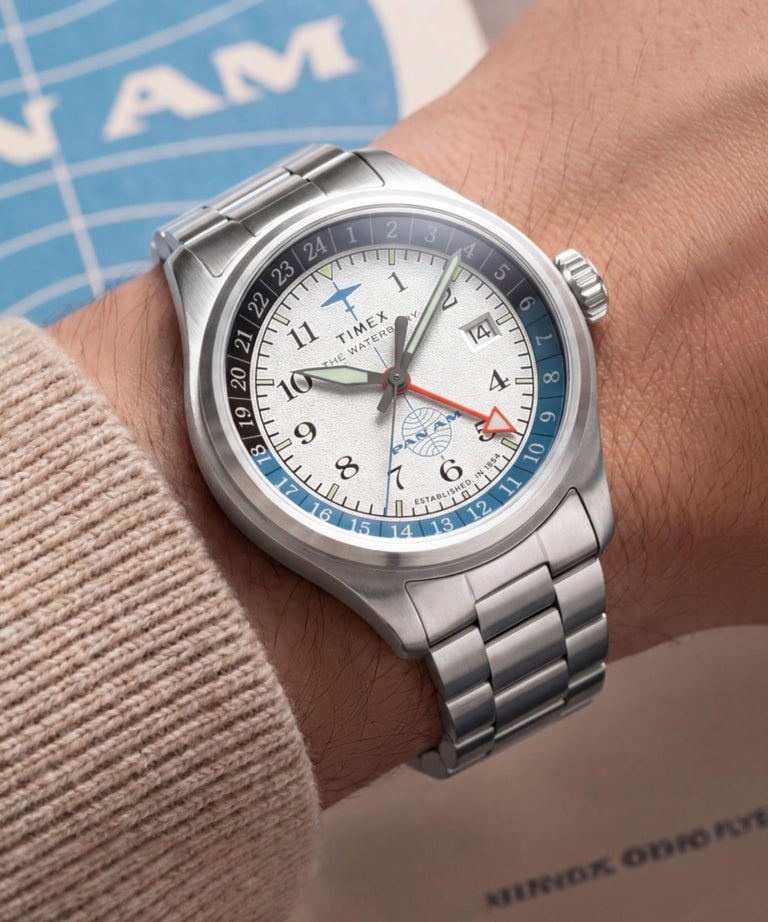
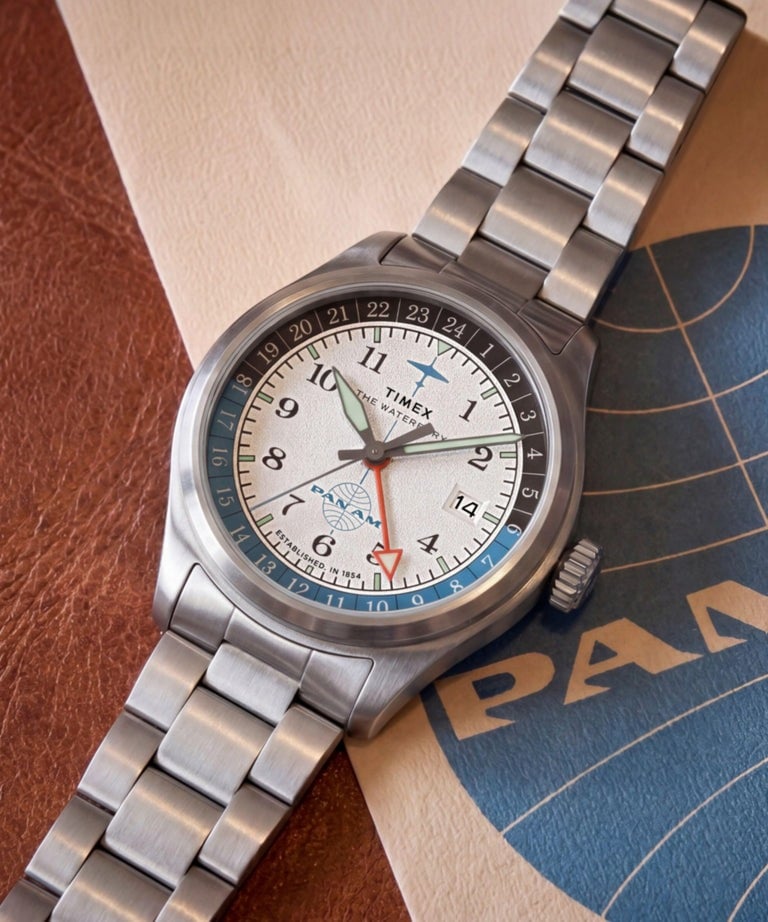
Alongside the Pan Am Automatic GMT, Timex has launched a new non-automatic GMT watch in the US in collaboration with the historic airline Pan Am. The Pan Am x Timex Waterbury GMT is priced at $349 and is currently available for pre-order through the company’s official US website.

Timex Pan Am Waterbury GMT

Design Details

The watch features a 41mm brushed stainless steel case, measuring 48mm from lug to lug and 12mm in thickness. It weighs 140.31 grams, giving it a solid feel on the wrist. The case is paired with a 20mm stainless steel bracelet that uses a standard deployant clasp for a secure fit.

Timex has also added several Pan Am branding details, including the airline’s iconic globe emblem engraved on the oversized crown and its classic logo printed on the dial.

For the display, Timex opted for a silver-tone, textured white dial with full black Arabic numerals to prioritize legibility. The core feature of the watch is its GMT functionality, which allows the wearer to track a second time zone simultaneously.

Check price →
Where to buy
Timex Pan Am Waterbury GMT
Latest price on Amazon

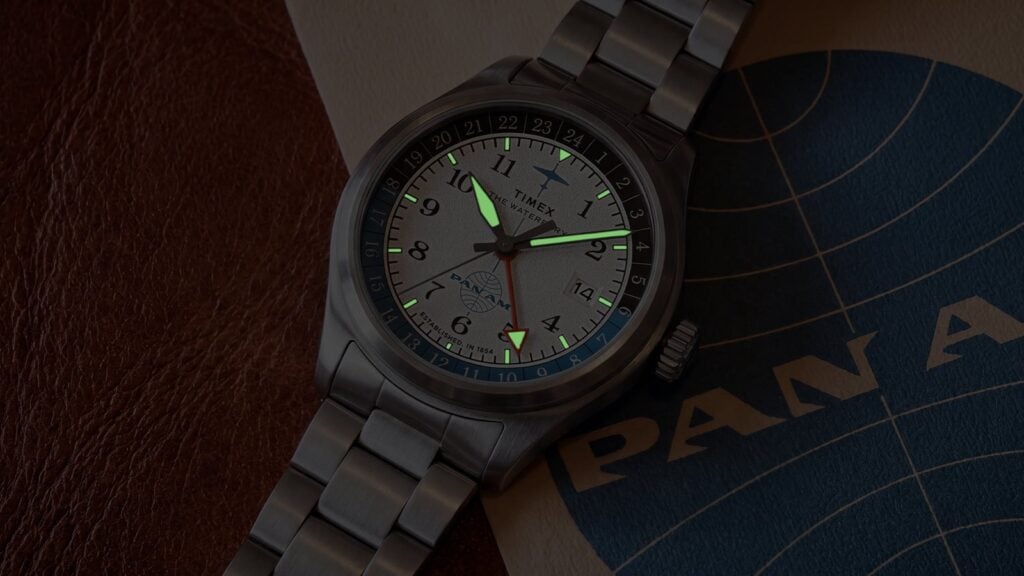
This is executed via a prominent orange triangle GMT hand that points to a two-tone black and blue 24-hour inner scale. The dial also includes a standard date window positioned at 3 o’clock. For low-light visibility, the primary hands and markers are filled with luminescent material.

Timex Pan Am Waterbury GMT

Internally, the Waterbury GMT is powered by a battery-operated quartz analog movement, running on an SR920SW battery. The dial is protected by a standard mineral glass crystal, which offers basic heat and scratch resistance, though it lacks the durability of the sapphire crystals typically found in higher-tier watches.

Additionally, the watch carries a water resistance rating of 50 meters, meaning it can handle light swimming or splashes, but it is not intended for diving or snorkeling.

For more daily updates, please visit our News Section.

Stay ahead in tech! Join our Telegram community and sign up for our daily newsletter of top stories!

(Timex)

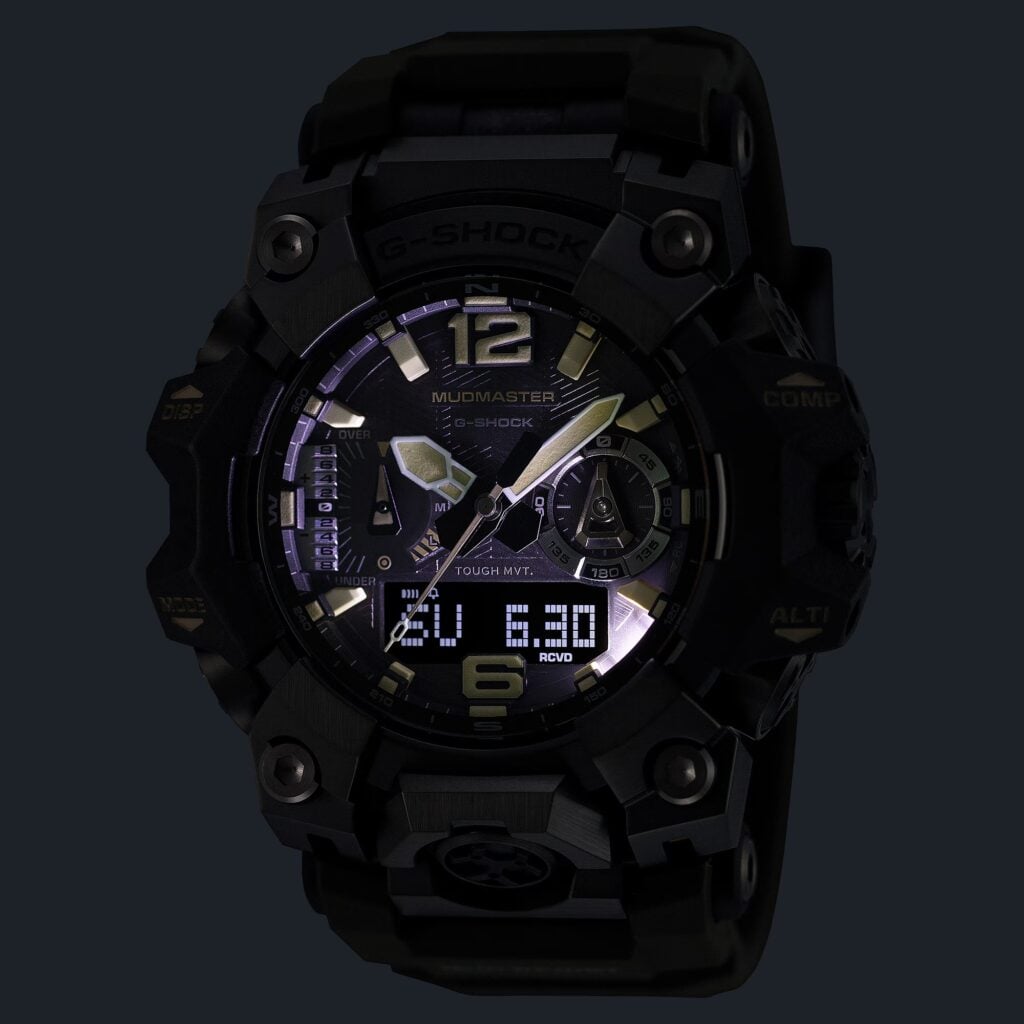
Casio brings its tactical Mudmaster GWG-B1000-1A3 to the US

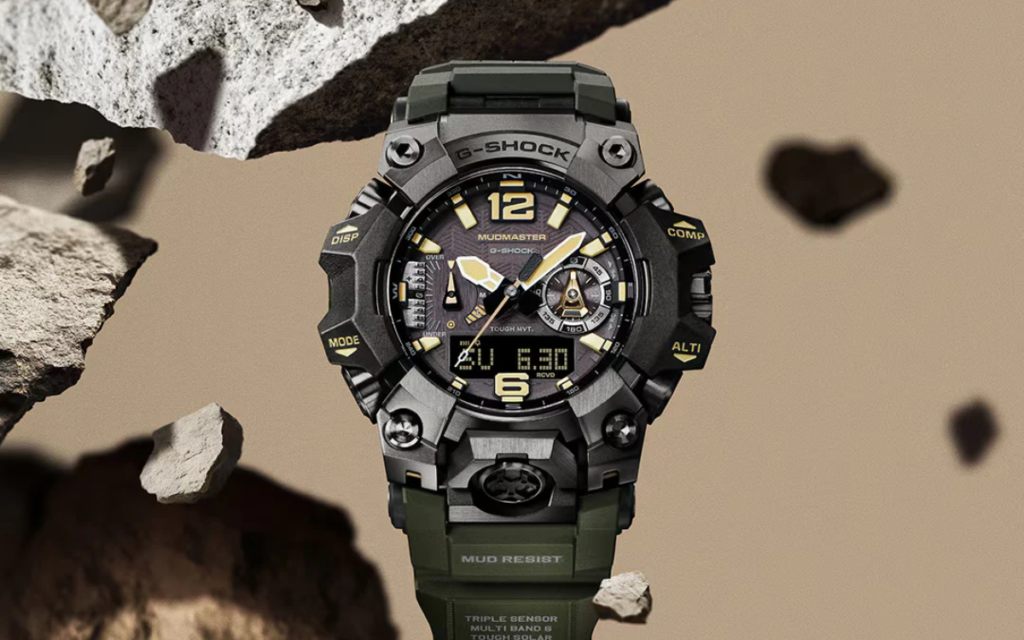
Casio has brought the GWG-B1000-1A3, the newest model in its Master of G Mudmaster series, to the US market. After initially launching in Japan last month, the watch is now available directly through Casio’s US website for $880.

Casio Mudmaster GWG-B1000-1A3

Design Details

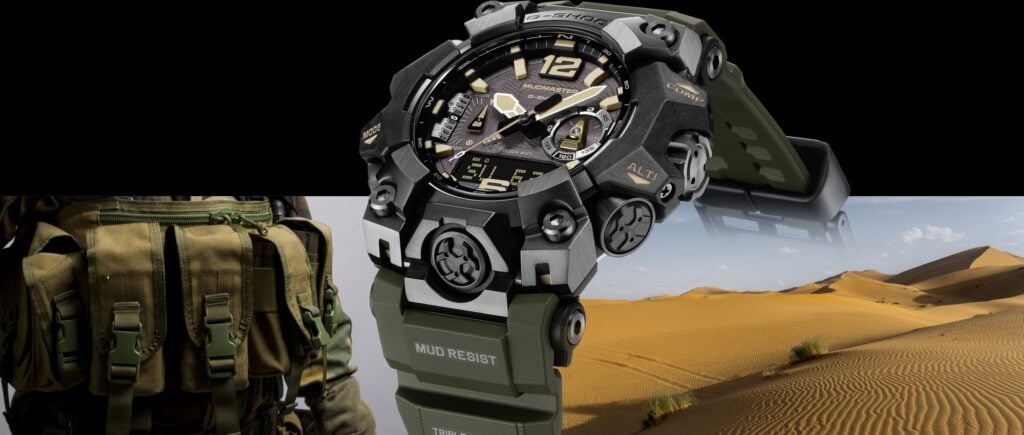
The watch has a straightforward, tactical-inspired design. It skips flashy colors in favor of a matte olive-green urethane band, a black multi-textured case, and muted tan accents on the dial.

Casio is continuing its recent shift toward alternative materials here, using bio-based resin for the primary components of the bezel, case, and band. The display is an analog-digital hybrid, covered by sapphire crystal with an anti-reflective coating to keep it readable in direct sunlight.

Casio Mudmaster GWG-B1000-1A3

As the Mudmaster name implies, the physical build is specifically engineered to keep dirt and debris out. It uses Casio’s Carbon Core Guard structure integrated with stainless steel.

To block mud and dust, the watch features cylindrical stainless-steel button guards, gaskets on the button shafts, and a screw-lock crown. Inside, the module is lined with αGEL to absorb physical vibrations, which sits alongside the standard G-Shock shock resistance and 200-meter water resistance.

Check price →
Where to buy
Casio GWG-B1000-1A3
Latest price on Amazon

For hardware, it includes Casio’s Triple Sensor setup, meaning you get a compass, an altimeter/barometer, and a thermometer directly on the wrist. It also has Bluetooth to connect to the Casio Watches app on iOS and Android.

This handles automatic time syncing and adds features like a mission log and a Location Indicator. When using the indicator, the seconds hand points north, while a separate indicator hand points toward a specific location you’ve previously saved in the app.

It runs on Casio’s Tough Solar system, which charges the battery using ambient light. Casio says it can run for about six months on a full charge without seeing any light.

If you don’t have your phone connected for time syncing, the watch defaults to Multi-Band 6 radio control to sync with atomic clocks globally. It also features a double LED backlight for checking the time in the dark.

In related news, Casio has launched the G-Shock Frogman GWFD1000BC-1 in the US with sapphire crystal and triple sensor technology. The company has also introduced the Pro Trek PRJB001EX-1, featuring a reversible strap with a hidden storage pocket.

For more daily updates, please visit our News Section.

Stay ahead in tech! Join our Telegram community and sign up for our daily newsletter of top stories!

(Casio)

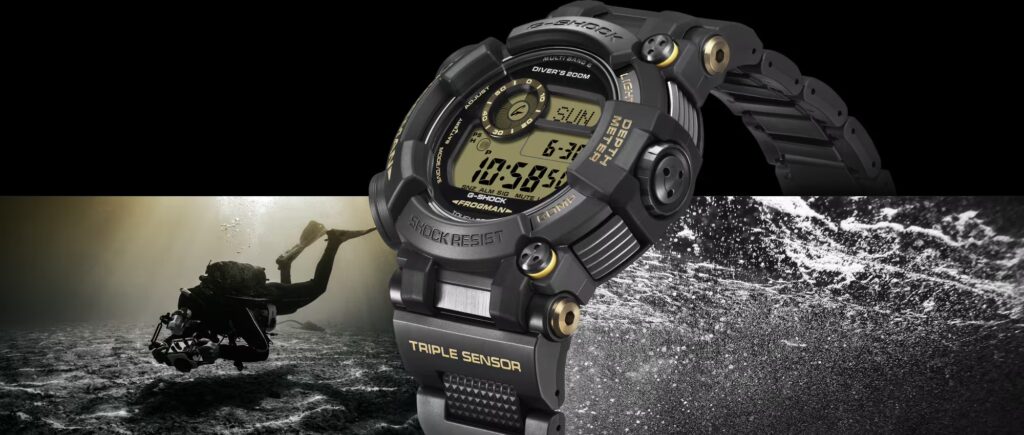
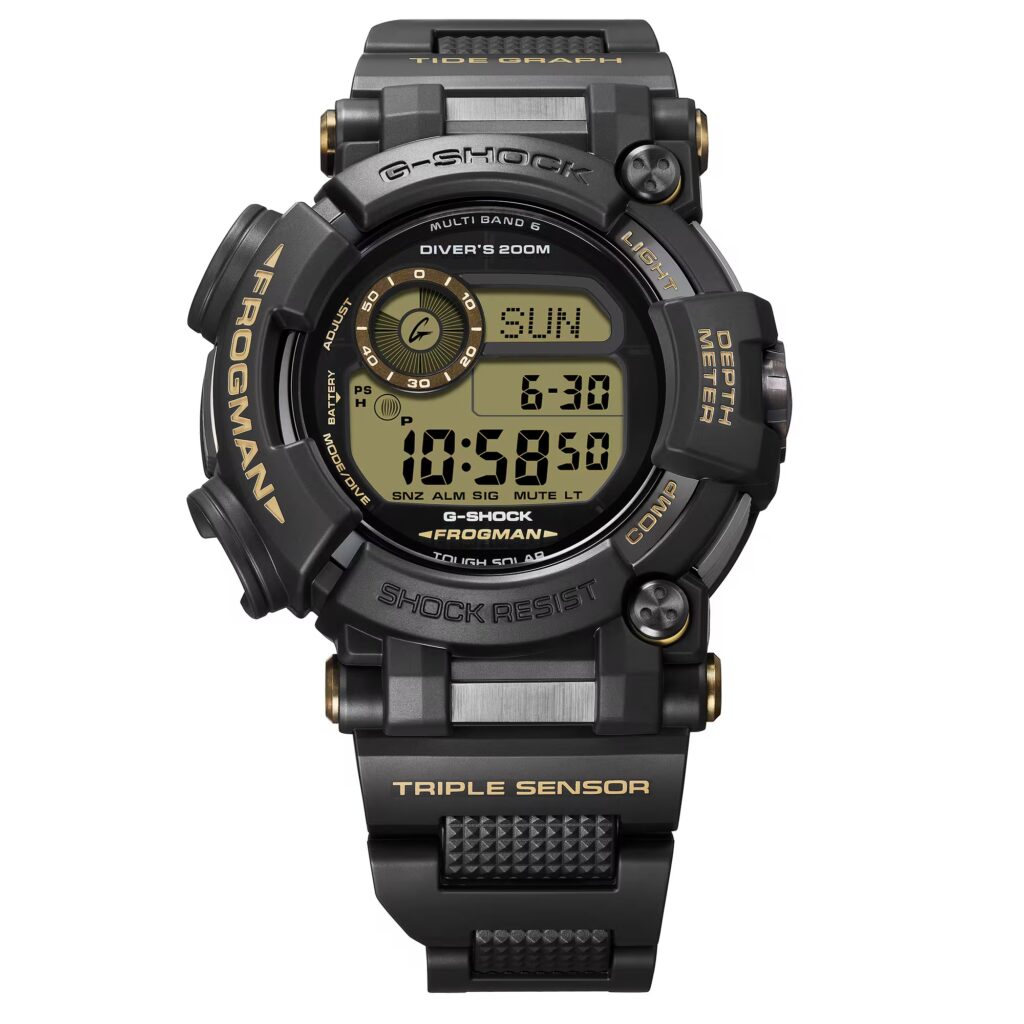
Casio launches GWFD1000BC-1 G-Shock Frogman in the US with sapphire crystal & triple sensor tech

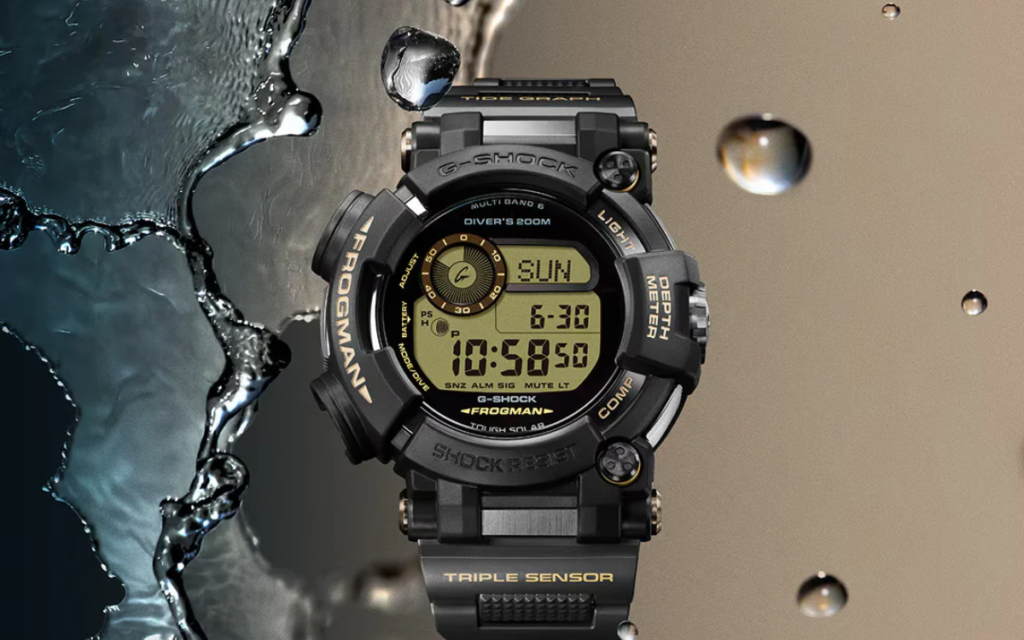
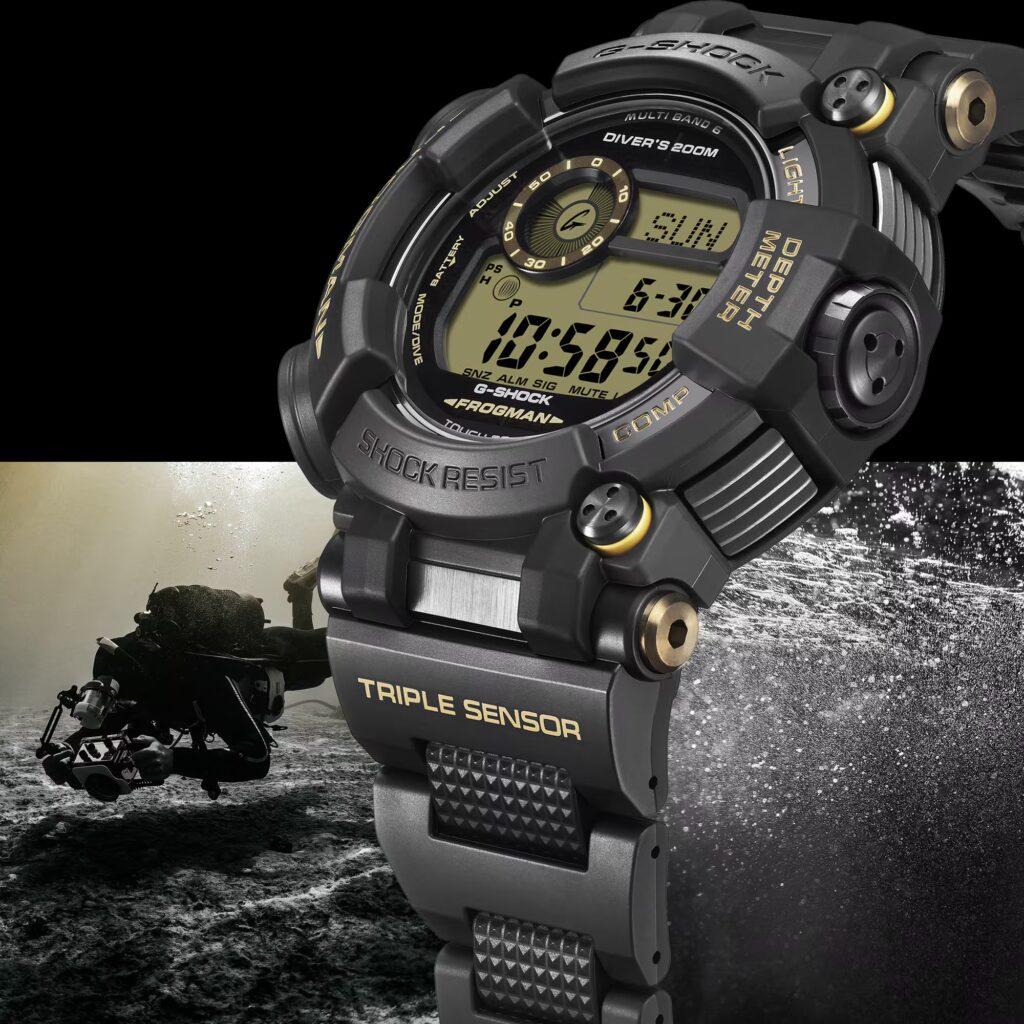
Casio has released its newest dive watch, the G-Shock GWFD1000BC-1, in the US market. Following an initial launch in Japan last month, the watch is now listed on the Casio US website with a price tag of $1,500. As part of the company’s Master of G Frogman series, the device is built primarily for underwater environments and outdoor utility.

Casio G-Shock Frogman GWFD1000BC-1

Design Details

The GWFD1000BC-1 is a large device, measuring 59.2 x 53.3 x 18 mm and weighing 181 grams. The design is straightforward, featuring a black color scheme with tan accents that Casio says is modeled after tactical equipment.

The case is constructed from a combination of stainless steel and resin. The metal bezel is treated with a diamond-like carbon (DLC) coating to prevent scratches, while the digital display is protected by a sapphire crystal with an anti-reflective coating.

Casio G-Shock Frogman GWFD1000BC-1

For the strap, Casio used a composite band that connects metal H-links with center links made of bio-based resin. This setup is intended to reduce the overall weight compared to a standard metal bracelet. To accommodate divers, the clasp features a slide-adjust mechanism and a two-step extension system, allowing it to fit over a wetsuit.

Check price →
Where to buy
Casio G-Shock GWFD1000BC-1
Latest price on Amazon

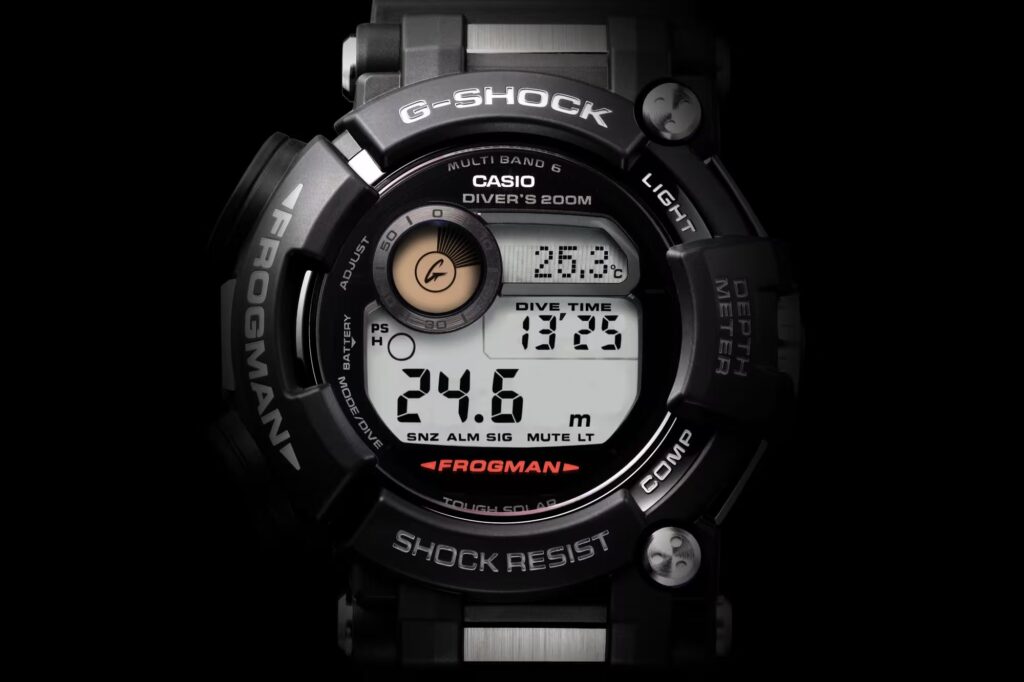
In terms of diving hardware, the watch has an ISO 200-meter water resistance rating and a screw-lock case back. It relies on Casio’s Triple Sensor system to track depth, temperature, and compass bearing. The depth gauge operates down to 80 meters in 10-centimeter increments.

The digital compass includes an auto-leveling function, which helps provide accurate directional readings when the wearer’s wrist is not completely flat in the water. The software also logs data for up to 20 dives, recording the start time, duration, maximum depth, and lowest water temperature.

Casio G-Shock Frogman GWFD1000BC-1

For everyday use, the watch operates on Casio’s Tough Solar charging system, which draws power from ambient light. It includes Multiband 6 radio control, automatically synchronizing the time with atomic clocks in six global regions. Additionally, it features tide graphs, moon phase data, an LED backlight, and standard stopwatch and alarm tools.

In related news, Casio has recently launched the Pro Trek PRJB001EX-1 in the US with a reversible strap and hidden storage pocket, alongside the Y2K-inspired Baby-G BA110MC watch series.

For more daily updates, please visit our News Section.

Stay ahead in tech! Join our Telegram community and sign up for our daily newsletter of top stories!

(Casio)

OnePlus launches Magnetic Phone Cooler smaller than a bank card

Long gaming sessions heat up the phone, performance tanks, and frames start dropping right when it matters most. OnePlus is trying to fix that with a tiny new accessory that packs real cooling power.

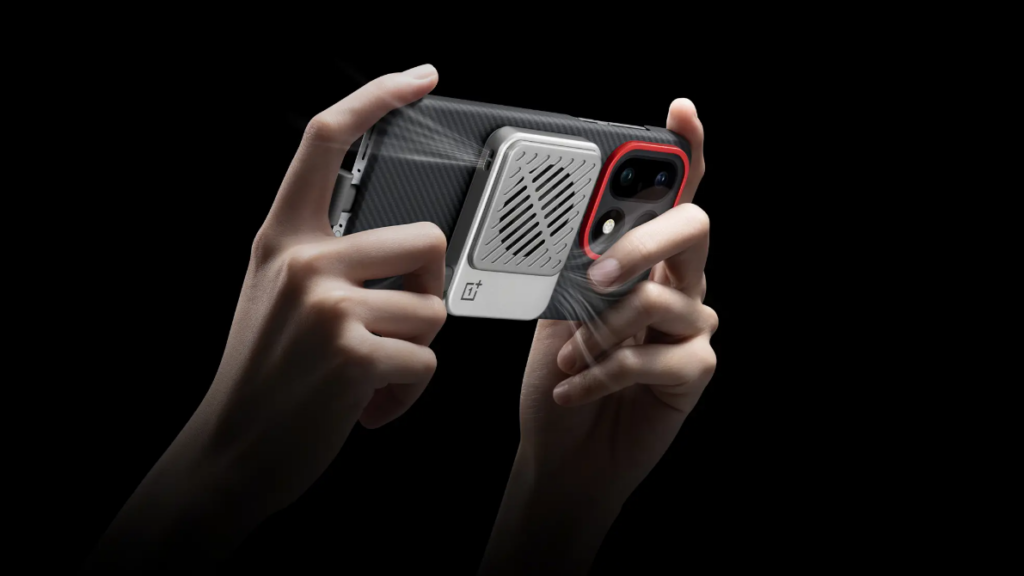
Hands holding a smartphone attached to the OnePlus Magnetic Ice Card Mini Cooler.

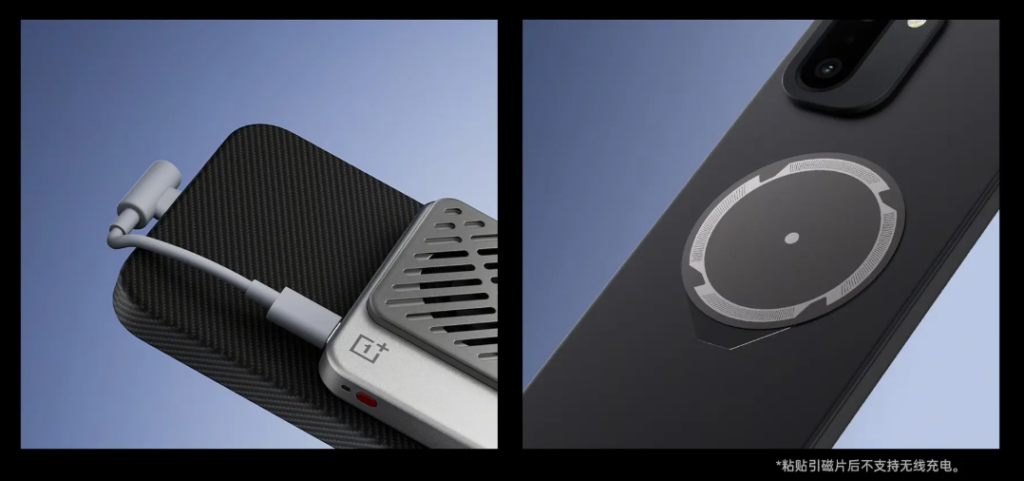
Meet OnePlus’s new thermoelectric cooler called “Magnetic Ice Card Mini Cooler”. It’s an ultra-portable heatsink made to keep smartphones running smoother under heavy loads. It launched at 199 yuan (around $30) and is already available in China. OnePlus introduced it alongside the OnePlus 16.

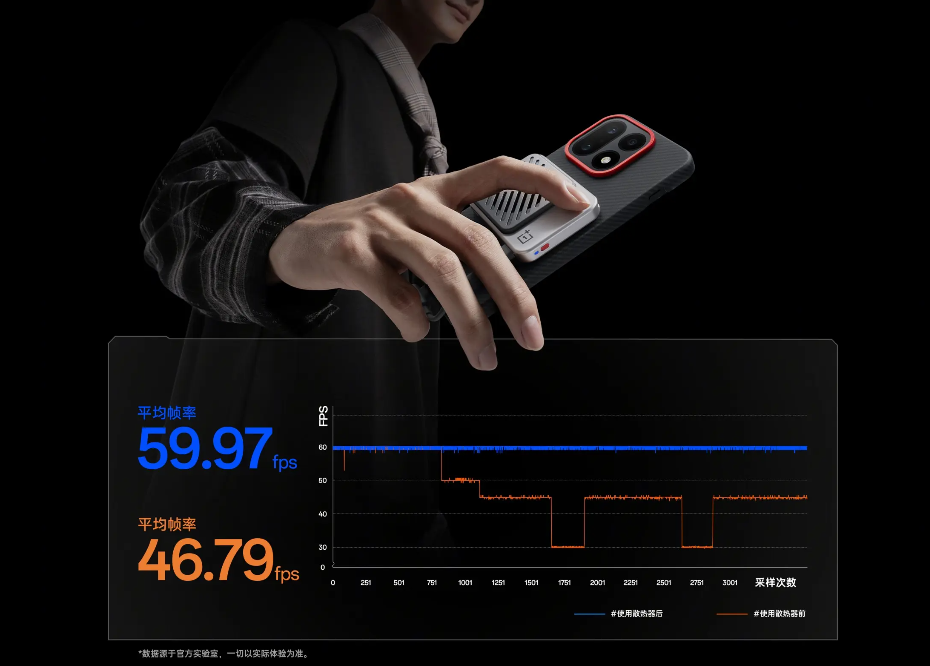
A person holds a smartphone with the OnePlus Magnetic Ice Card Mini Cooler attached.

The biggest selling point is how ridiculously small it is. At just 70 mm x 53.4 mm, smaller than a standard bank card in both directions, and only about 50 g, it’s roughly 30% smaller and 18g lighter than OnePlus’s earlier Magnetic Ice Cooling Clip.

Shop now →
Where to buy
OnePlus Magnetic Phone Cooler
Browse the range on Amazon

The body is polycarbonate and aluminum alloy, 9.7 mm thick (up to 12.3 mm at the air intake). A 10 N magnetic attachment keeps it locked in place, and the box includes a magnetic plate so it works on most Android phones that don’t have built-in magnets.

OnePlus Magnetic Phone Cooler attached to a smartphone with a circular magnetic mounting plate.

You get two modes: a quiet low setting around 25 dB and a high setting about 35 dB, both quieter than normal conversation. A status light shows which mode you’re in (blue for high, green for low) and flashes red if something’s wrong.

Power is handled through a USB-C port that draws up to 5 V at 0.7 A. You can run it straight from the phone, no extra cables or sockets needed, or plug it into a power bank or adapter. OnePlus says a 10,000 mAh power bank can keep it going for up to eight hours on the highest setting. On Oppo and OnePlus phones it also ties into ColorOS X high-performance mode for better results.

It ships in a single Silver Wing Grey finish and comes with a charging cable, lanyard, magnetic plate, auxiliary film, and manual.

Don’t miss a thing! Join our Telegram community for instant updates and grab our free daily newsletter for the best tech stories!

For more daily updates, please visit our News Section.

(Source: Oppo)

Baseus unveils Spacemate RD1 Mini Dock 10-in-1 with built-in smart display & dual 4K 60Hz output

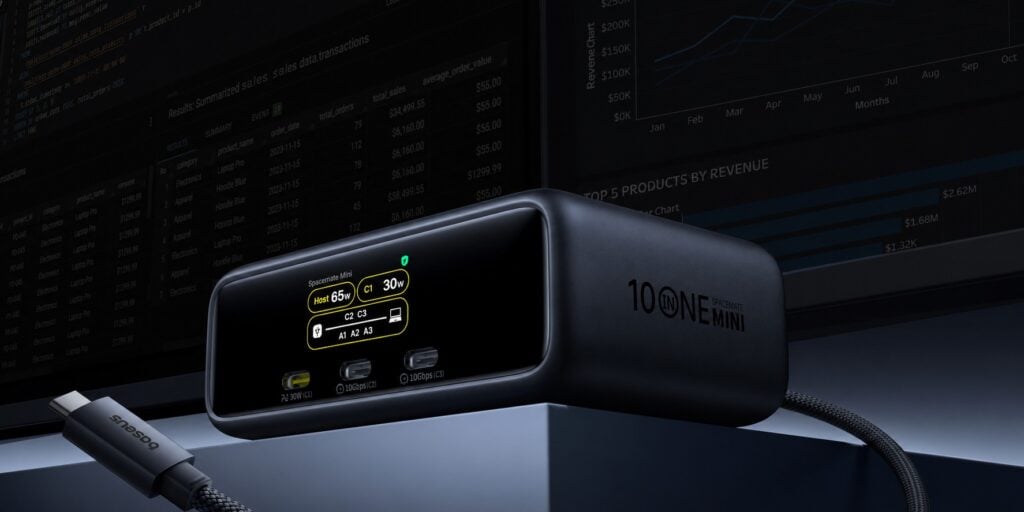
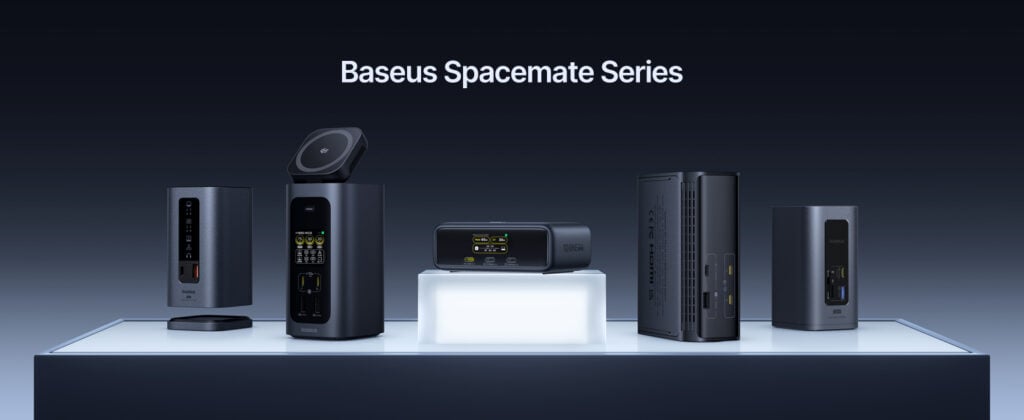
When I reviewed the towering Spacemate RD1 Pro 15-in-1 dock, my main piece of feedback was that Baseus needed to offer a flat alternative capable of sliding unobtrusively under a monitor stand. It turns out the company was operating on the exact same wavelength. Baseus has now listed the Spacemate RD1 Mini, a 10-in-1 USB-C docking station that trades the vertical orientation of its predecessor for a much more desk-friendly, horizontal design.

Baseus Spacemate RD1 Mini Dock 10-in-1

Baseus Spacemate RD1 Mini Specifications

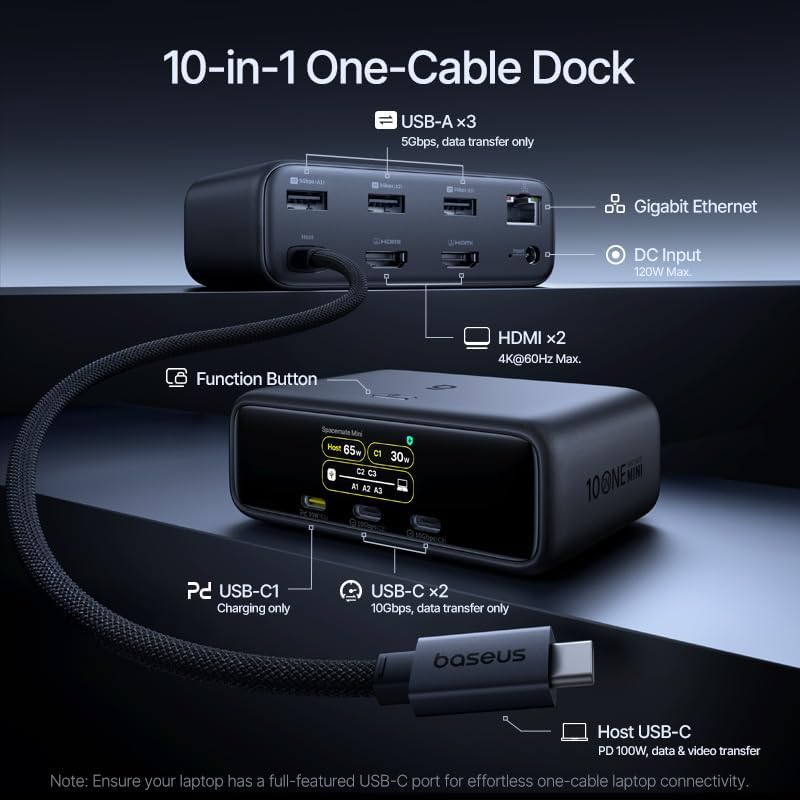
The dock measures 112.5 x 71.9 x 40.9 mm. It comes with a built-in screen on the front panel. This display provides real-time information on charging wattage and data transfer status, and it is programmed to show alerts if it detects a connection error. Above the screen sits a physical button that turns the display on or off with a single press. Holding the button for two seconds activates a privacy lock, which immediately blanks the connected laptop screen and any external monitors.

For connectivity, the RD1 Mini splits its 10 ports between the front and the back. The front panel includes two 10Gbps USB-C ports for data and a dedicated USB-C port for power delivery. The rear houses three 5Gbps USB-A ports, a Gigabit Ethernet jack, a 120W DC power input, and two HDMI ports.

Baseus Spacemate RD1 Mini Dock 10-in-1

The HDMI ports support dual 4K video output at 60Hz. As is standard with most USB-C docks, multi-monitor behavior depends on your operating system. Windows machines support extended dual displays, while macOS limits users to either a single extended monitor or mirrored dual screens due to Apple’s lack of MST support.

Power is handled by an included 120W GaN adapter. The dock supports up to 100W of total output to connected devices, managed by an internal power allocation system. If you are charging a laptop and a secondary device at the same time, the dock sends up to 65W to the host computer and 30W to the front USB-C port. If the front charging port is not in use, the full 100W is routed to the host laptop.

Baseus Spacemate RD1 Mini Dock 10-in-1

Pricing and Availability

The Baseus Spacemate RD1 Mini is currently listed on Amazon, though it is not yet available to purchase. Baseus has not announced an official release date or published a product page on its own website. Pricing is also unconfirmed; Amazon price trackers indicate the dock was initially listed at $109.99 before changing to $169.99.

In related news, Baseus has recently launched the MC2 NC clip-on earbuds with up to 50dB ANC, LDAC support, built-in AI features, and up to 60 hours of battery life.

For more daily updates, please visit our News Section.

Stay ahead in tech! Join our Telegram community and sign up for our daily newsletter of top stories!

(Amazon, Via)

OnePlus launches 10,000mAh SuperVOOC 67W power bank with 45W PD, 55W PPS support, full-color screen

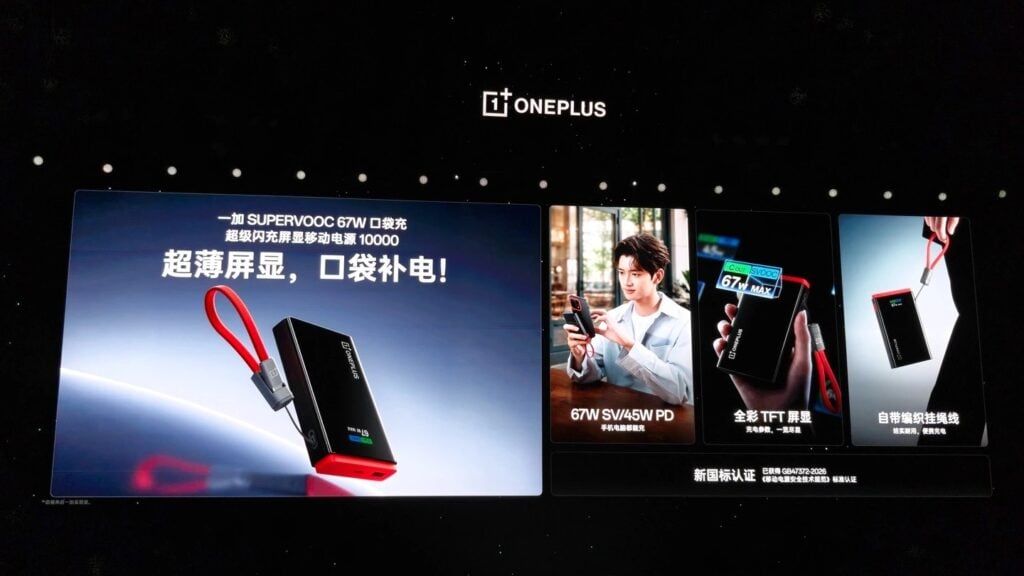
OnePlus is expanding its accessory lineup with a new portable power bank that prioritizes convenience and fast charging. The SuperVOOC 67W Pocket Charging Power Bank is now up for pre-order in China.

Presentation slide showcasing the features and design of the new OnePlus 67W power bank.

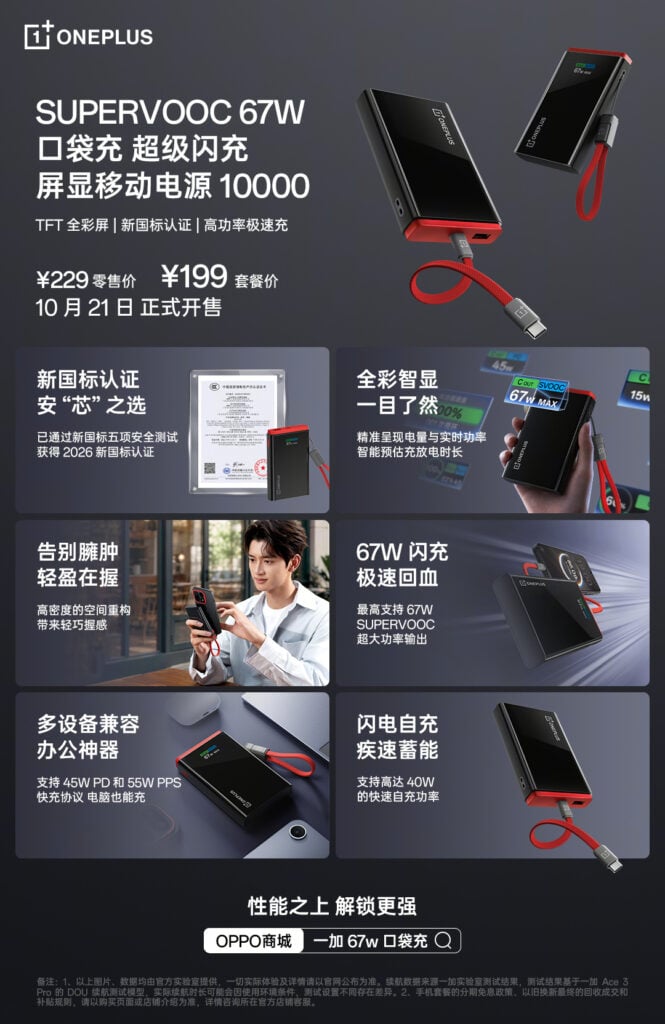
It carries a retail price of 229 yuan (around $34) and officially goes on sale on October 21. Inside you’ll find a 10,000mAh battery that’s already passed China’s five new national safety tests and earned the 2026 certification. In short, it’s built to the latest safety standards.

The standout feature is the TFT full-color screen. Instead of the usual tiny LED dots, this one shows remaining battery percentage, real-time power output, and even estimates how long charging or discharging will take. It’s a small touch that makes a big difference when you’re trying to figure out whether you’ll make it through the day.

Shop now →
Where to buy
OnePlus power banks
Browse the range on Amazon

On the charging front, it can push up to 67W SuperVOOC to compatible OnePlus and Oppo phones. It also handles 45W PD and 55W PPS, so it can top up a laptop as well as a phone. The power bank itself recharges at up to 40W, which means you won’t be waiting forever to top it back up.

Promotional graphic showcasing the features and design of the new OnePlus 67W power bank.

Design-wise, OnePlus went for a high-density internal layout to keep the size down and the weight manageable. There’s also an integrated braided cable that doubles as a carrying strap, handy for tossing it in a bag or looping it onto something. It’s meant for everyday use, whether you’re at the office or on the road, and can handle multiple devices without drama.

Between the color screen, solid output numbers, and the new safety certification, it’s a practical everyday accessory for anyone who wants faster portable power without the guesswork.

For now, it’s only available in China through official Oppo and OnePlus channels, with that modest package discount available at launch.

Don’t miss a thing! Join our Telegram community for instant updates and grab our free daily newsletter for the best tech stories!

For more daily updates, please visit our News Section.

Sources: 1, 2)

NexPhone that runs Android, Linux and Windows is delayed until March 2027

Nex Computer, a California based company, announced NexPhone in January this year. It was unveiled as a multi-boot smartphone supporting Android 16, Linux (Debian), and Windows 11 on Arm with a retail price of $549 and initial shipment time of third quarter. The company, however, announced in a blog post recently that the shipments have been delayed till March 2027. 

Founder and CEO Emre Kosmaz shared the revised timeline in a blog post saying that antenna problems and housing issues have held up hardware development.

NexPhone

Antenna problems and housing changes delayed production

According to Kosmaz, getting the NexPhone’s antennas right has taken longer than expected. The phone performed well on middle and higher frequency bands, but the lower bands needed more work. Nex Computer’s engineering partner traced interference to the area around the USB connector, forcing the team to revise the housing and antenna boards, build more prototypes, and test the changes. The Chinese New Year holiday added another delay.

The phone’s outer shell has caused trouble, too. While the tooling is finished, the first molded housings had uneven seams, texture problems, and fit issues with smaller parts. Matching the housing, buttons, and SIM tray cover across different suppliers has taken several rounds of revisions. Kosmaz also says Nex Computer has no outside funding, making each extra development cycle harder to absorb.

NexPhone Delay March 2027

The hardware delays haven’t stopped work on the software. According to the brand, NexPhone development units are now running Android 17, although the phone still needs to pass validation and certification. Google began rolling out stable Android 17 to Pixel phones in June.

Nex Computer has also made changes to Android’s desktop mode, which comes into play when you connect the phone to an external display. It can now handle real files and folders instead of just shortcuts, and there’s a Recycle Bin for deleted files. The company is also working on File Drawer, a dual-pane file manager for the desktop environment.

Linux and Windows are still works in progress. The Debian environment runs inside Android as an app, while Nex Computer continues to write drivers to improve hardware support when the phone boots into Windows 11.

NexPhone price and specifications

The NexPhone originally cost $549 to preorder, but new reservations now start at $599. Anyone who reserved the phone at either price will keep their original price, according to the company.

The final retail price could climb above $599. Kosmaz says rising memory costs are making it harder to pin down production expenses, and Nex Computer will announce the final price once those costs become clearer.

The hardware includes a Qualcomm QCM6490 chip, 12GB of RAM, and 256GB of storage. The phone also has a 6.58-inch display with a 120Hz refresh rate and a 64MP Sony IMX787 main camera. Nex Computer will include a USB-C hub in the box.

Don’t miss a thing! Join our Telegram community for instant updates and grab our free daily newsletter for the best tech stories!

For more daily updates, please visit our News Section.

Google Fitbit Edge launches with a display, ECG, and up to seven days of battery life

Google has a new fitness tracker in town, called the Fitbit Edge. It has a display, built-in GPS, up to seven days of battery life, and is available to pre-order for $180 through the Google Store and retail partners, with sales beginning on October 27. Each purchase also includes three months of Google Health Premium.

The Fitbit Edge sits between the screenless Fitbit Air and the Pixel Watch 5. At $180, the Edge gives users a display and dedicated workout features without requiring them to buy a full smartwatch.

Google Fitbit Edge Positioning

Design and fitness tracking

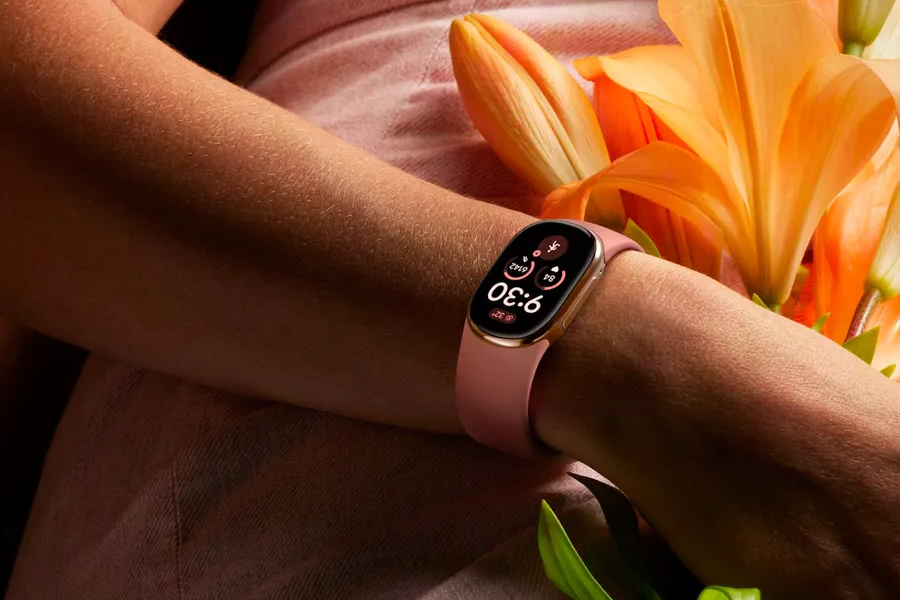
The Fitbit Edge has an 11.5mm-thick case made from recycled aluminum. Google says it weighs 45% less than the Apple Watch Series 12 case, while its Hybrid OLED display provides 46% more viewing area than earlier Fitbit trackers. The screen is also readable in direct sunlight. A redesigned physical side button lets users pause workouts without reaching for the touchscreen.

Fitbit Edge Launch Specs Price

The tracker supports more than 50 exercise modes, with live information tailored to the activity. Runners can follow pace targets, HIIT sessions show heart rate zones, and track workouts display split times. Google has also upgraded the GPS chipset, claiming up to 40% better tracking accuracy than previous generations. You can leave your phone at home and still track your route, while a built-in altimeter records elevation changes during hill sprints and stair workouts.

You don’t always have to remember to start tracking, either. The Fitbit Edge can automatically recognize and log up to 100 activity types.

Health monitoring and battery life

Beyond workouts, the Fitbit Edge includes Google’s Health Guardian features, which monitor changes in health-related measurements over time. These include blood pressure trends, insulin resistance trends, and alerts for unusually high or low heart rates. Google says the features are intended for general wellness rather than diagnosis, and availability depends on the region.

Google Health Premium subscribers also get access to Google Health Coach, which can explain changes in those patterns, adjust fitness plans, and provide context to discuss with a doctor. The tracker also includes an ECG app, though it isn’t available in every country, along with continuous optical heart rate monitoring.

A person wears a pink Google Fitbit Edge fitness tracker on their wrist.

For sleep and recovery tracking, the Edge combines skin temperature readings with sleep-stage and heart rate variability data to calculate a recovery score each morning.

Google rates battery life at up to seven days on a charge. If you’re running low, the company says five minutes on the magnetic charger provides enough power for a full day of use. The tracker is water-resistant to 50 meters, and Google calls it its first repairable fitness tracker, with a modular internal design and replaceable battery.

Colors and Stephen Curry Special Edition

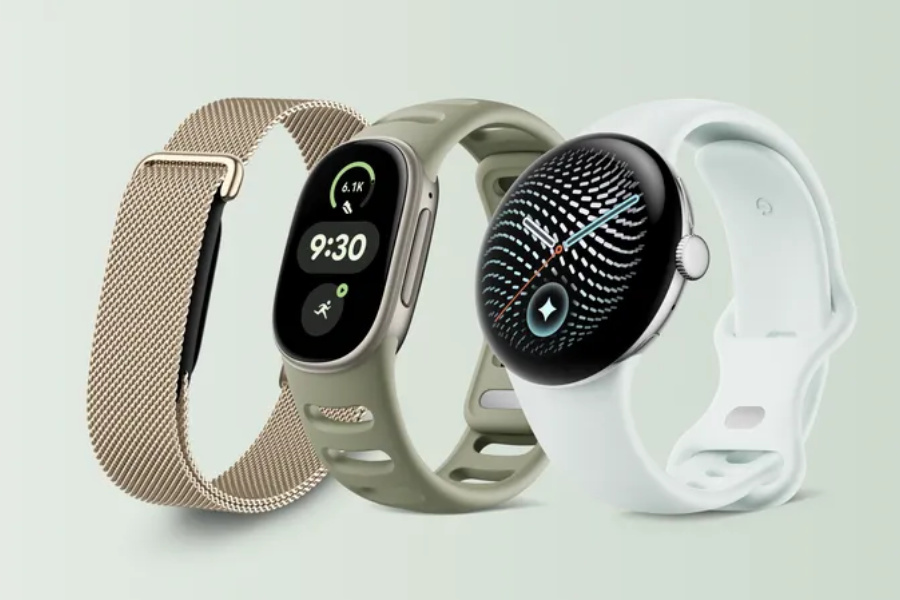
The Fitbit Edge comes in four finishes, each with an Active Band: Obsidian in matte black, Fog in polished silver, Olive in satin pyrite, and Canyon in warm gold. Google also sells separate Active Sport, Performance Loop, Magnet, and Metal Links bands.

Check price →
Where to buy
Google Fitbit Edge
Latest price on Amazon

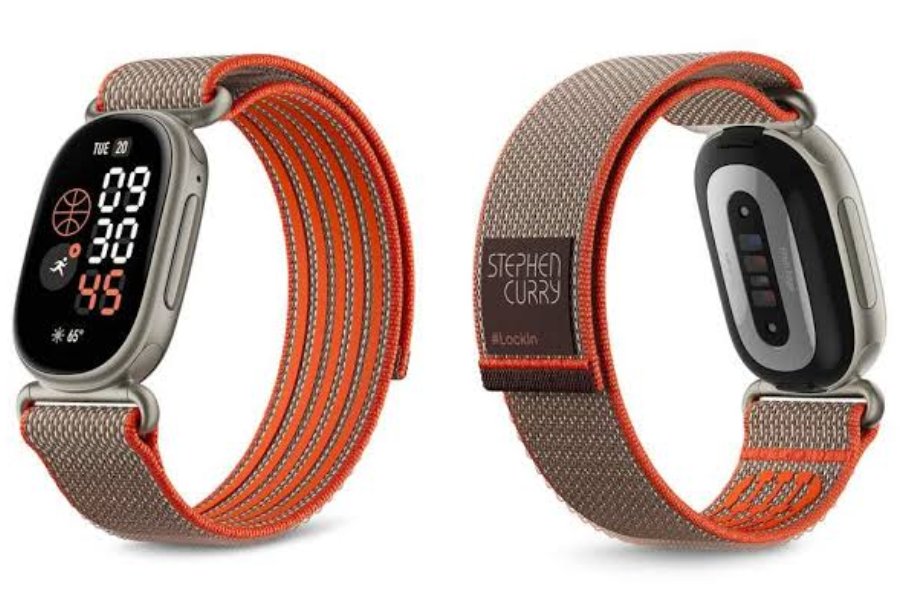
Then there’s also a Stephen Curry Special Edition for $219.99. It has a water-repellent, moisture-wicking band in rye tones with a Game Day Orange accent.

Fitbit Edge Stephen Curry Edition

The Google Fitbit Edge works with phones running Android 11 or iOS 16.4 and newer, and requires the Google Health app. Google Health Coach requires a Google Health Premium subscription after the included three-month trial expires.

Google has announced US pricing but hasn’t shared prices for other regions yet. If you’re considering other options, our guide to the best fitness bands in 2026 covers some alternatives.

Don’t miss a thing! Join our Telegram community for instant updates and grab our free daily newsletter for the best tech stories!

For more daily updates, please visit our News Section.

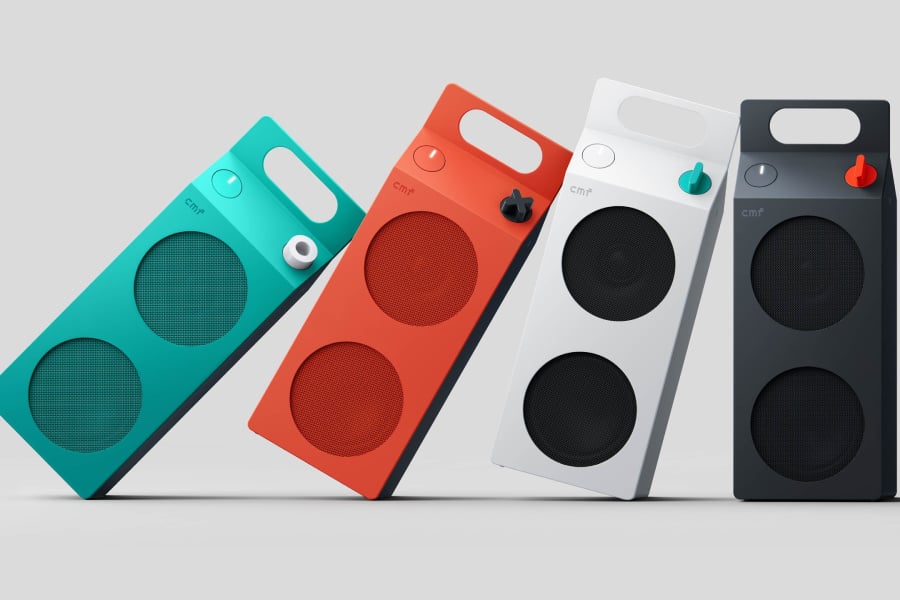
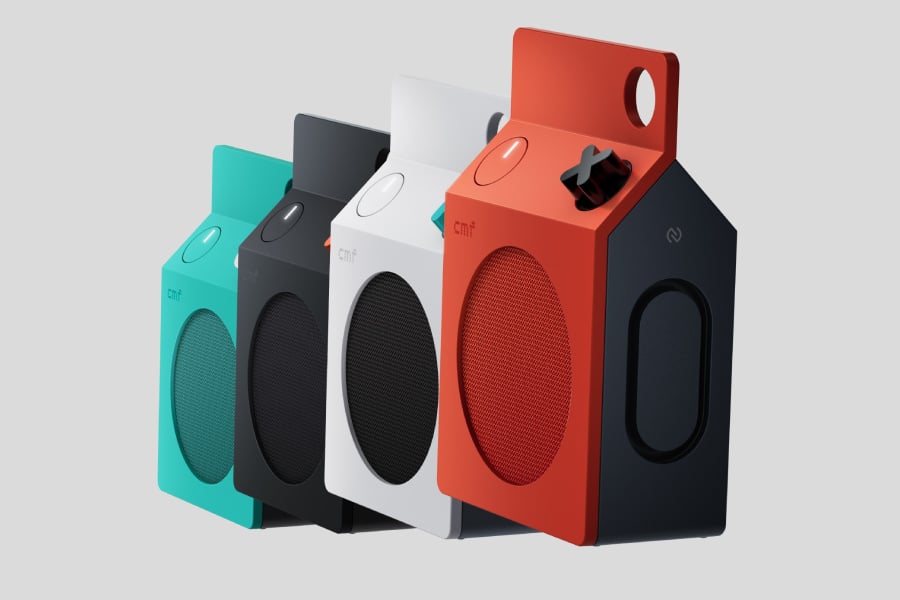
CMF launches Speaker M and S in minimal design, fun colors

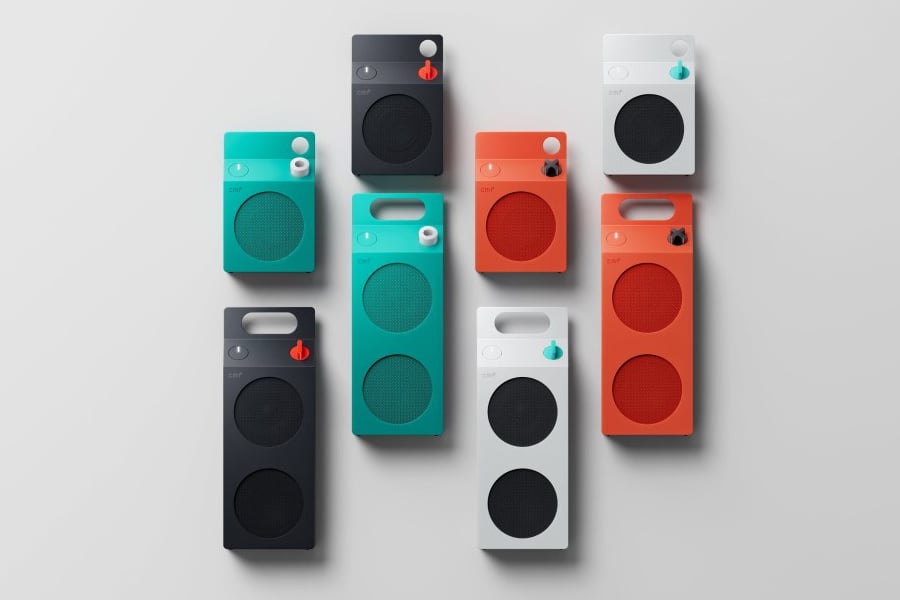
CMF has launched its first portable speakers, the CMF Speaker S and CMF Speaker M, and both has a rather uncanny look. Both are tall, slim bodies with round mesh grilles and a small control knob in a contrasting color. The CMF Speaker M adds a carry-handle cutout and a second grille on the front. They come in white, turquoise, dark grey and orange.

CMF Speaker S and M Launch Specs Price

What you get from each speaker

The CMF Speaker S is the smaller of the two. It uses a 45mm full-range driver with dual passive radiators, outputs up to 10W RMS, and covers 70Hz to 20kHz. The CMF Speaker M adds a dedicated 25W woofer and a 10W tweeter, which brings output to 35W RMS and extends the range down to 60Hz.

CMF says both speakers run a tuning algorithm that analyzes your playback and adjusts output and EQ in real time. In the Nothing X app, you can switch on Ultra Bass or Wide Soundstage, and choose from four EQ presets: Balanced, More Bass, More Treble and Voice.

CMF Speakeer M Design

You can link more than one speaker in two ways. For stereo, you need two of the same model. CMF calls its Auracast support Party Mode, and it works with two or more compatible speakers, including ones from other brands.

Check price →
Where to buy
CMF Speaker M
Latest price on Amazon

Pairing a single speaker is simple. Both support NFC tap-to-pair, Google Fast Pair and Microsoft Swift Pair, and you can keep each one connected to two devices at once. USB-C audio is built in too. On the speaker itself, a physical knob handles playback, track skipping, volume and the Ultra Bass toggle, with separate buttons for power, Bluetooth pairing and Auracast.

CMF Speaker S Design(1)

You get up to 18 hours of playback at 50% volume with Ultra Bass on, and a 10-minute charge adds about an hour of listening. Both speakers come in white, turquoise, dark grey and orange.

CMF Speaker S and M Price and Availability 

The CMF Speaker S costs $59, and the CMF Speaker M costs $109. Sales start today on Nothing’s online store and at select partners. The speakers join a CMF audio lineup that most recently added the CMF Buds Neo in August.

Don’t miss a thing! Join our Telegram community for instant updates and grab our free daily newsletter for the best tech stories!

For more daily updates, please visit our News Section.

OnePlus 16 debuts with 165Hz global refresh rate, 185fps gameplay, Snapdragon 8EE Gen6, 9000mAh battery

The OnePlus 16 has launched in China, and it brings quite a few things that its more expensive competitors don’t have. Alongside the Snapdragon 8 Elite Extreme Gen 6, it packs a P4 display chip, a G3 eSports chip, and a T3 touch chip, all primarily aimed at improving the gaming experience. It is also the first phone to offer a global 165Hz refresh rate.

Three OnePlus 16 smartphones in black, silver, and copper colors floating against a dark background.

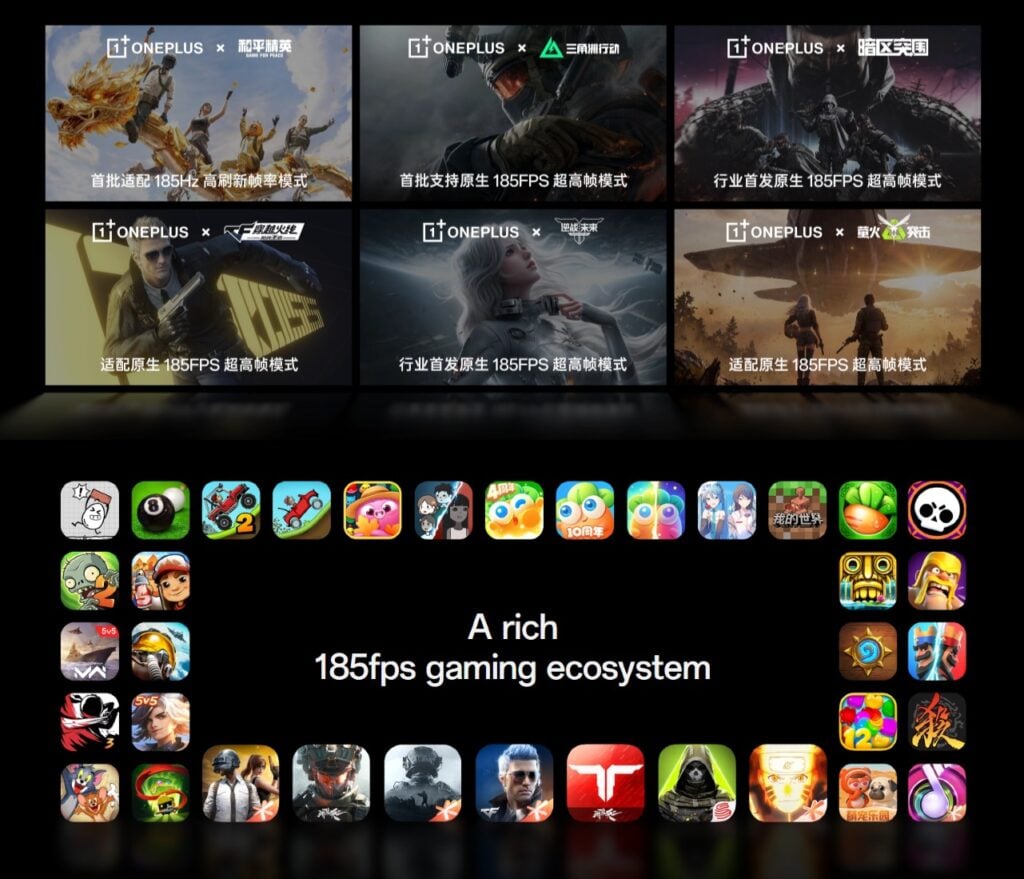
In short, OnePlus is focusing more and more on gamers. The company emphasizes how the G3 networking chip reduces latency, while the P4 display chip enables 185 FPS gameplay. Native 185Hz support is currently available in six titles and is set to expand to 17 more through scheduled updates. OnePlus has also upgraded the gyroscope for more precise movement while gaming.

OnePlus 16 promotional graphics showcasing various mobile games supporting high frame rate gameplay modes.

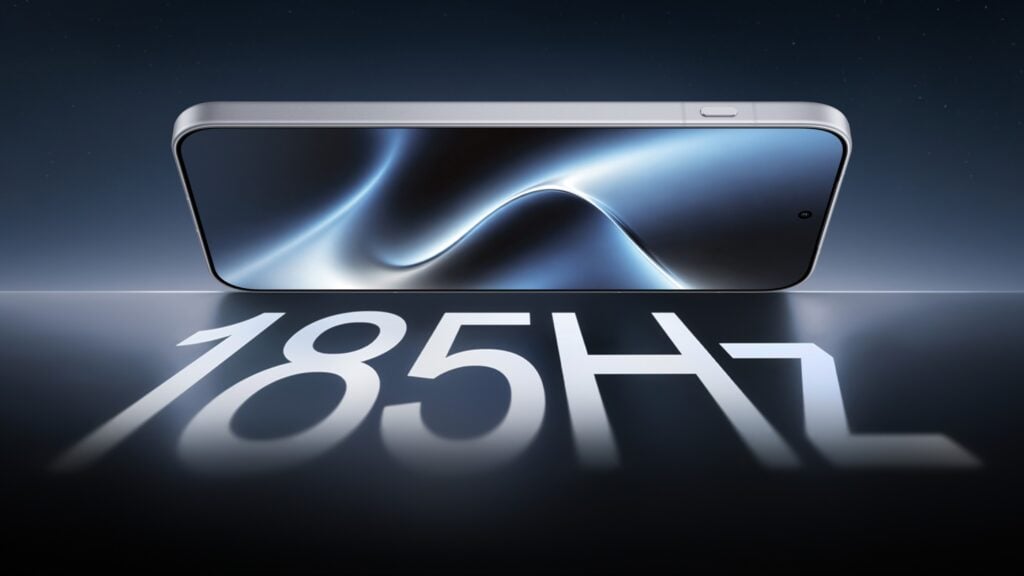
Let’s talk about the display. The phone uses a customized BOE X4 panel that measures 6.78 inches, supports 100% DCI-P3, and has a pixel density of 450 ppi. It can go up to 185Hz, but as a company official explained, 165Hz is currently the highest sustainable global refresh rate with today’s technology.

The OnePlus 16 smartphone is displayed above large text highlighting its 185Hz refresh rate capability.

OnePlus is essentially pushing the limits of display technology through its collaboration with BOE on the OnePlus 16. The display reaches a global peak brightness of 2,000 nits, which should be enough for visibility in direct sunlight, and it can also dim down to one nit for darker environments.

Shop now →
Where to buy
OnePlus phones
Browse the range on Amazon

To power through your day, it packs a 9,000mAh battery and supports 100W SuperVOOC wired charging, 50W wireless charging, 27W wired reverse charging for accessories, and bypass charging to keep the battery out of the equation while gaming, helping reduce heat generation.

For imaging, it features a 200MP 1/1.4-inch ISOCELL HPE main sensor, a 50MP selfie camera, a 50MP ultra-wide, and a 50MP 3x periscope telephoto with 6x lossless zoom.

The OnePlus 16 comes in three color options: Tomorrow Starlight (the one with the LED array), Martian Red, and Dark Forest.

It goes on sale in China starting October 13 at the following prices:

  • 12GB + 256GB: 5,999 yuan (~$896)
  • 12GB + 512GB: 6,799 yuan (~$1,016)
  • 16GB + 512GB: 7,499 yuan (~$1,120)
  • 16GB + 1TB: 8,499 yuan (~$1,270)

Don’t miss a thing! Join our Telegram community for instant updates and grab our free daily newsletter for the best tech stories!

For more daily updates, please visit our News Section.

Top 5 alternatives to OnePlus 16

The OnePlus 16 has arrived in China with flagship hardware, including a high-refresh-rate display, a massive battery, and upgraded cameras. However, its availability outside China remains a concern, particularly after OnePlus withdrew from the US and European markets, with no confirmed launch date for the new flagship in India.

OnePlus 16
OnePlus 16

Although OnePlus India has previously said its local operations continue as usual, buyers looking for a phone they can purchase through official channels may want to consider alternatives. Here are five flagship smartphones worth considering instead of the OnePlus 16.

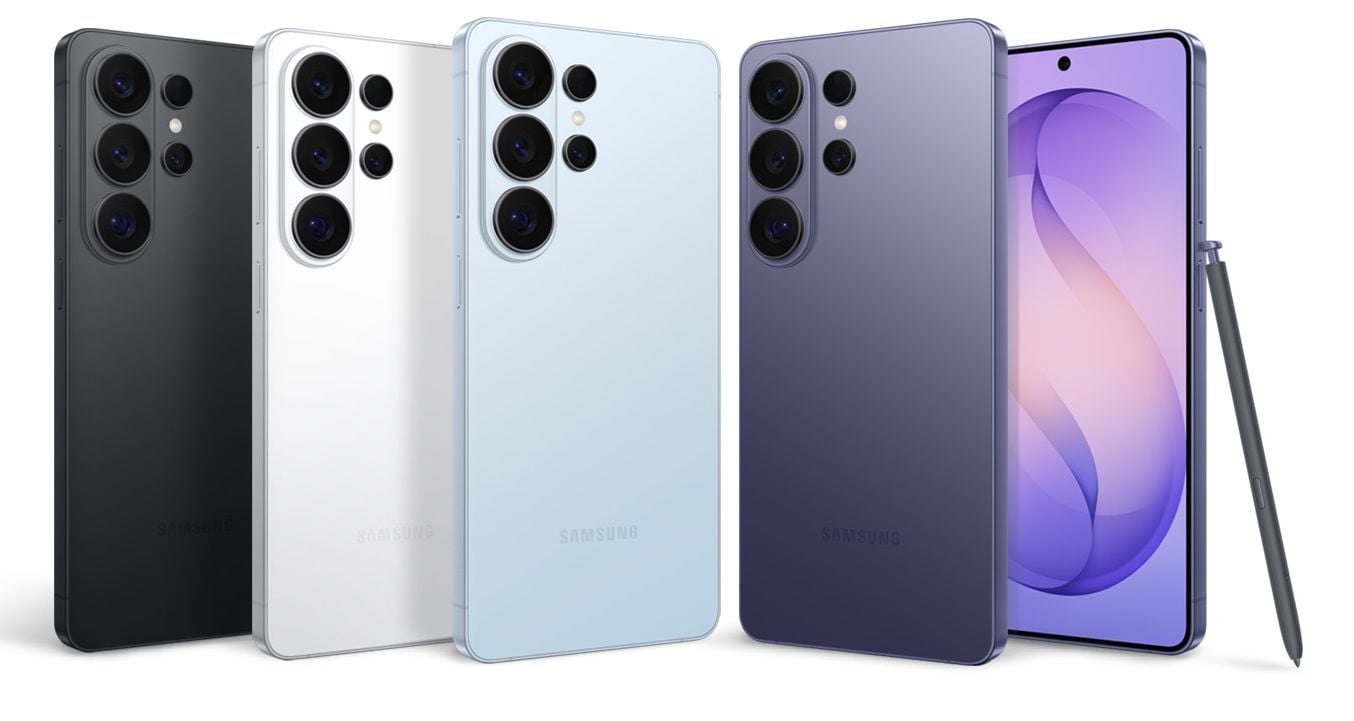
4Samsung Galaxy S26 Ultra

Samsung Galaxy S26 Ultra

The Samsung Galaxy S26 Ultra features a 6.9-inch QHD+ Dynamic AMOLED 2X display with a 120Hz adaptive refresh rate and a peak brightness of 2,600 nits, making it suitable for gaming, streaming, and outdoor use. It is powered by Qualcomm’s Snapdragon 8 Elite Gen 5 for Galaxy chipset, paired with up to 16GB of RAM and 1TB of storage.

The phone packs a 5,000mAh battery with support for 60W wired charging and 25W wireless charging, along with Wireless PowerShare for charging compatible accessories. Although its battery capacity is considerably lower than the OnePlus 16’s 9,000mAh unit, Samsung’s flagship offers a familiar premium experience with a focus on display quality, productivity, and software support.

Check price →
Where to buy
Samsung Galaxy S26 Ultra
Latest price on Amazon

The Galaxy S26 Ultra features a 200-megapixel main camera, a 50-megapixel ultrawide camera, a 10-megapixel telephoto camera with 3x optical zoom, and a 50-megapixel periscope telephoto camera with 5x optical zoom. A 12-megapixel front camera handles selfies and video calls, while the rear camera system supports up to 100x digital zoom and 8K video recording at 30 frames per second.

Portronics launches affordable Zeno L Mini cordless leg massager with up to 75 minutes of runtime

Portronics has officially launched the Zeno L Mini, a new cordless air compression massager in India. It is priced at Rs. 2,849 as part of an introductory offer, down from its regular retail price of Rs. 5,999. The device is designed to help relieve muscle fatigue and improve recovery after workouts or long hours of standing.

Portronics Zeno L Mini cordless massager

Portronics Zeno L Mini Specifications

Unlike full-leg compression boots that often require a stationary power source and a much higher budget, the Zeno L Mini is a single, compact wraparound sleeve.

It secures with standard Velcro, meaning you can adjust the fit to wrap it tightly around different parts of your body. While it is marketed primarily as a leg massager, the hardware includes specific programmed modes for the calf, thigh, upper arm, and forearm, alongside general Recovery and Targeted settings.

The internal mechanics are straightforward. The device uses a pneumatic air compression system that cycles through inflating the sleeve, compressing the muscle, and releasing the air. All of this is managed through a small, detachable control unit mounted directly on the fabric.

Portronics Zeno L Mini cordless massager

The interface features physical buttons for power, mode selection, timer adjustments (limited to either 10 or 20-minute sessions), and pressure control. There are only two pressure levels available: low and high. This keeps the operation simple, though it does mean the device lacks the granular intensity control you would typically find on more expensive athletic recovery gear.

Because it is completely cordless, the massager relies on a built-in 2000mAh battery. Portronics says that this battery will provide up to 75 minutes of continuous runtime before needing a recharge. When it does run out of power, it charges via a standard USB-C port, allowing you to top it up using a regular phone or laptop charger.

Pricing and Availability

The Zeno L Mini is available to purchase now and includes a 12-month warranty. It can be found on the Portronics website, as well as on Amazon India, Flipkart, and in various offline retail stores.

In related news, Portronics has recently launched the AuraTrio modular Bluetooth speaker with two detachable satellite speakers and Auracast support, alongside the Mopcop Duo 3-in-1 cordless vacuum cleaner with mopping and air-blowing functions.

For more daily updates, please visit our News Section.

Stay ahead in tech! Join our Telegram community and sign up for our daily newsletter of top stories!

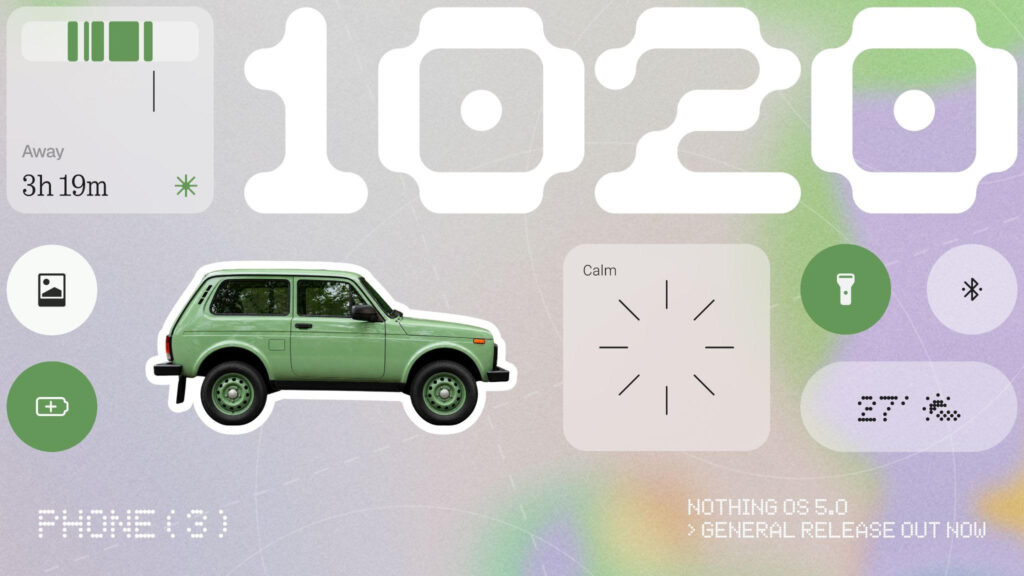
Nothing OS 5.0 starts rolling out with Android 17 and new AI features

Nothing OS 5.0 is beginning its rollout to compatible Nothing smartphones, bringing a major refresh to the software experience. The update focuses on personalization, smoother performance and more useful AI tools. Phone (3) is the first device to receive the general release, with other Nothing and CMF phones expected to follow over the coming months.

Nothing OS 5.0 adds new visual features

Nothing 5.0
Nothing 5.0

Based on Android 17, Nothing OS 5.0 includes more than 80 changes across the interface, performance and AI features. The redesigned Home Screen uses transparent elements in widgets and the search bar, while an adaptive colour system takes cues from the user’s wallpaper.

A new Micrographics clock face on the Lock Screen combines the date, time, weather and upcoming meetings in one view. Essential Space is also receiving improvements, with some enhancements arriving separately through Google Play.

The update builds on features introduced during the Open Beta. Essential Voice offers faster, cleaner transcription, while Smart Collections in Essential Space helps organise saved content. Essential Apps Builder also lets users describe and create AI-powered apps directly on their phones without writing code, although access is being introduced gradually.

Nothing has also refined icons, spacing, typography and animations across the status bar, Settings, Camera and Gallery. Improvements to touch response, background app retention and resource management aim to make everyday interactions smoother, particularly when switching between apps or multitasking.

Android 17 brings further changes, including separate Notifications and Quick Settings panels, cross-platform Quick Share, enhanced privacy controls and a redesigned Recents screen. The stable rollout will expand in phases, with the Phone (4a) series and Phone (3a) series scheduled to follow in November, while other compatible models are expected to receive the update later. Availability may vary by region and carrier. What do you think of Nothing OS 5.0’s new features? Share your thoughts in the comments.

For daily updates, please visit our News Section.

Stay ahead in tech! Join our Telegram community and sign up for our daily newsletter of top stories!

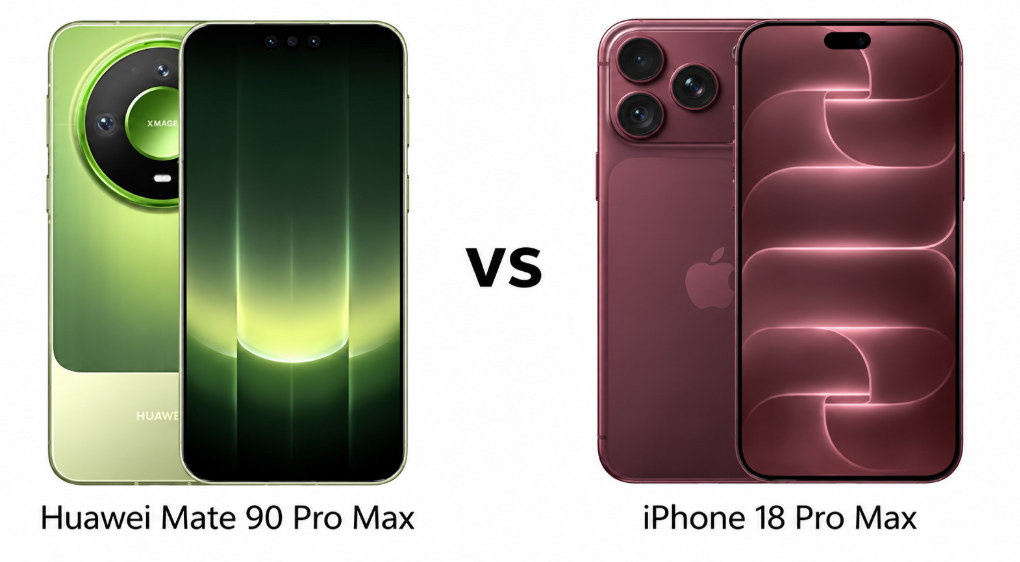
Huawei Mate 90 Pro Max vs iPhone 18 Pro Max: Which Flagship Is Better?

The Huawei Mate 90 Pro Max and iPhone 18 Pro Max target premium smartphone buyers but take different approaches to performance, photography, and battery life. Huawei focuses on a high-resolution display, powerful zoom hardware, and fast charging, while Apple emphasizes video recording, processing power, and its integrated software ecosystem. This comparison examines their key differences to determine which flagship offers the better overall experience.

Huawei Mate 90 Pro Max and iPhone 18 Pro Max smartphones displayed side by side.

Major Features:

CategoryHuawei Mate 90 Pro MaxiPhone 18 Pro MaxWinner
BuildKunlun Glass 3, aluminum frame, glass-fiber-reinforced plastic backCeramic Shield 2, aluminum frame, glass backHuawei – IP68/IP69 protection
Water ResistanceIP68/IP69IP68Huawei – Higher protection rating
Display6.9-inch dual-layer LTPO OLED, 120Hz6.9-inch LTPO Super Retina XDR OLED, 120HzHuawei – Advanced panel technology and higher claimed peak brightness
Resolution1320 × 2848 pixels1320 × 2868 pixelsiPhone – Slightly higher resolution
Display ProtectionKunlun Glass 3Ceramic Shield 2, anti-reflective coatingiPhone – Anti-reflective coating
Operating SystemHarmonyOS 7.0iOS 27iPhone – Established app ecosystem
ChipsetKirin 9050 / Kirin 9050 ProApple A20 Pro, 2nmiPhone – More clearly specified flagship processor
RAM12GB / 16GB12GBHuawei – Higher maximum RAM
Storage512GB / 1TB256GB / 512GB / 1TB / 2TBiPhone – Offers up to 2TB
Main Camera50MP, variable aperture, OIS48MP, sensor-shift OISHuawei – Variable aperture
Telephoto Camera200MP periscope, 4x optical zoom48MP periscope, 4x optical zoomHuawei – Higher telephoto resolution
Ultrawide Camera40MP, 120°48MP, 120°iPhone – Higher resolution
Front Camera13MP ultrawide, autofocus18MP multi-aspect ultrawide, autofocusiPhone – Higher resolution and versatile recording
Video RecordingUp to 4K, HDR VividUp to 4K at 120fps, Dolby Vision, ProRes RAWiPhone – More advanced video formats
Battery6,800mAh5,391mAh or 5,567mAh, depending on versionHuawei – Higher capacity
Wired Charging100W50% in 15 minutes under stated conditionsHuawei – Higher rated charging power
Wireless Charging50W25W MagSafe/Qi2; regional variationsHuawei – Higher rated wireless charging power
Reverse ChargingReverse wireless and 18W reverse wired4.5W reverse wiredHuawei – More versatile reverse charging
ConnectivityWi-Fi 7, Bluetooth 6.0, USB-C 3.1Wi-Fi 7, Bluetooth 6.0, USB-C 3.2 Gen 2iPhone – Faster specified USB standard
Extra FeaturesInfrared port, satellite calling and messaging in ChinaLiDAR, UWB, satellite emergency servicesTie – Different specialised features
Price / ValuePriced around $1,400 / ₹1,36,000Priced around $1,300 / ₹1,80,000Huawei – More hardware features for the estimated Indian price
Disclaimer: Specs are based on available data. Actual performance may vary. Verify details from official sources before buying.

1. Design and Display

Build and Feel

The Huawei Mate 90 Pro Max combines Kunlun Glass 3, an aluminum frame, and a glass-fiber-reinforced plastic back. It also offers IP68/IP69 protection, providing resistance against immersion and high-pressure water jets. The iPhone 18 Pro Max features Ceramic Shield 2 on the front, an aluminum frame, and a glass back, alongside IP68 protection. Both deliver premium construction, but Huawei offers stronger certified protection against demanding water exposure. Apple’s materials and familiar design, however, may appeal more to users who prefer a refined, consistent flagship experience.

Display Quality

Both phones feature 6.9-inch OLED displays with 120Hz refresh rates and sharp resolutions. Huawei stands out with its dual-layer LTPO OLED panel, HDR Vivid support, and a claimed peak brightness of 12,000 nits under specific video-playback conditions. Apple’s Super Retina XDR OLED supports HDR10, Dolby Vision, and a claimed peak brightness of 3,000 nits. Huawei looks more ambitious on paper, particularly for brightness and display technology, while Apple offers strong HDR video support and an anti-reflective coating.

Verdict

Huawei wins on display specifications and water protection, making it the stronger choice for screen enthusiasts. Apple remains competitive with excellent HDR support and durable construction.

2. Specifications Including Battery

Performance

The Huawei Mate 90 Pro Max runs HarmonyOS 7.0 and uses either the Kirin 9050 or Kirin 9050 Pro chipset, depending on the configuration. Storage options include 512GB and 1TB, with up to 16GB of RAM. The iPhone 18 Pro Max runs iOS 27 and features Apple’s 2nm A20 Pro chipset, a six-core CPU, and a seven-core GPU. Its configurations offer up to 2TB of storage with 12GB of RAM. Apple has the more clearly specified performance platform, making it an appealing option for demanding games, professional applications, and sustained creative workflows. Huawei’s hardware may deliver a compelling experience, but direct benchmark comparisons are needed to establish its relative performance.

Battery and Charging

Huawei packs a 6,800mAh battery with 100W wired charging, 50W wireless charging, and reverse wireless and wired charging. The iPhone offers market-dependent battery capacities of 5,391mAh or 5,567mAh, alongside wired charging that reaches 50% in 15 minutes under the stated conditions. It also supports 25W MagSafe/Qi2 wireless charging, with regional differences. Huawei’s larger battery and faster charging specifications make it more convenient for users who frequently need quick top-ups. Apple’s charging system is slower on paper, although real-world endurance depends on software optimisation and usage.

Verdict

Huawei wins on battery capacity and charging flexibility. Apple is the more compelling option for users prioritising its powerful, tightly integrated software and hardware platform.

3. Camera

Main and Secondary Lenses

The Huawei Mate 90 Pro Max features a 50MP variable-aperture main camera, a 200MP periscope telephoto camera with 4x optical zoom, and a 40MP ultrawide camera. Its large telephoto sensor and high-resolution zoom hardware make it particularly interesting for distant subjects and detailed photography. The iPhone 18 Pro Max combines a 48MP main camera with sensor-shift stabilisation, a 48MP periscope telephoto camera offering 4x optical zoom, and a 48MP ultrawide camera. A LiDAR scanner also supports depth-related features. Huawei has the more striking telephoto specification, while Apple’s balanced camera system and advanced stabilisation are attractive for everyday shooting. Actual image quality, especially in challenging lighting, requires real-world testing rather than relying on megapixel counts alone.

Selfie Camera

Huawei includes a 13MP ultrawide front camera with autofocus and a TOF 3D sensor. It supports 4K video recording and HDR Vivid, making it suitable for group selfies and video calls. Apple features an 18MP multi-aspect ultrawide selfie camera with autofocus and an SL 3D sensor. Its front camera supports 4K recording, gyro-based stabilisation, Dolby Vision HDR, and advanced spatial audio capabilities. Apple’s stronger emphasis on recording formats makes it particularly appealing to creators who frequently shoot content using the front camera. Huawei counters with 4K recording and depth-sensing hardware.

Check price →
Where to buy
Huawei Mate 90 Pro Max
Latest price on Amazon

Verdict

Huawei leads on telephoto camera resolution, while Apple offers a more comprehensive video toolkit. The better choice depends on whether zoom photography or video production matters more.

4. Pricing

The Huawei Mate 90 Pro Max is priced around $1,400 (₹1,36,000), while the iPhone 18 Pro Max is priced around $1,300 (₹1,80,000), according to the supplied estimates. These figures show different pricing positions across currencies, so regional retail prices and taxes should be checked before purchasing. Huawei’s estimated dollar price is higher, but its Indian rupee estimate is lower than Apple’s. The difference makes Huawei appear more attractive to buyers in India, particularly those who prioritise high-end hardware. However, availability, warranty coverage, and regional software support can significantly affect the final buying decision.

Check price →
Where to buy
iPhone 18 Pro Max
Latest price on Amazon

Is the price justified? 

Huawei justifies its premium positioning with a high-resolution dual-layer OLED display, a 200MP periscope camera, a large battery, and fast wired and wireless charging. These features provide substantial hardware appeal for photography enthusiasts and heavy users. Apple’s value proposition centres on the A20 Pro chipset, advanced video tools, long-term ecosystem integration, and high storage options. For buyers invested in Apple devices and services, the additional regional cost may be worthwhile. Huawei appears more compelling for hardware-focused users, provided its software and app compatibility meet their needs.

Verdict

Huawei offers stronger battery and zoom hardware for the estimated Indian price. Apple may justify its cost for users who value its ecosystem, video capabilities, and integrated software experience.

Disclaimer:
Prices are approximate and may vary based on country, region, launch timing, and applicable taxes. Always check whether the listed price is for a China unit or a global/international variant when purchasing.

5. Conclusion

The Huawei Mate 90 Pro Max distinguishes itself with a 200MP periscope telephoto camera, a dual-layer OLED display, IP68/IP69 protection, a 6,800mAh battery, and 100W wired charging. Its infrared port and satellite calling and messaging support in China also add practical features for specific users. 

The iPhone 18 Pro Max counters with the A20 Pro chipset, Dolby Vision video recording, ProRes and ProRes RAW support, an anti-reflective display coating, and satellite-based emergency features. Its broader video capabilities and Apple ecosystem make it attractive for professionals and existing Apple users. Huawei is more adventurous with its hardware specifications, while Apple focuses on processing, creative workflows, and a cohesive user experience. Software compatibility and regional availability remain important considerations, particularly for Huawei buyers outside China.

Verdict

Overall winner: Huawei Mate 90 Pro Max. Its superior charging specifications, larger battery, high-resolution telephoto camera, and advanced display give it the stronger hardware package. The iPhone 18 Pro Max remains the better choice for Apple ecosystem users and video creators, but Huawei offers more distinctive hardware advantages in this comparison.


FAQs: Huawei Mate 90 Pro Max vs iPhone 18 Pro Max

1. Which phone is better for gaming?

The iPhone 18 Pro Max is a promising choice thanks to its A20 Pro chipset, though real-world gaming benchmarks are needed for confirmation.

2. Which phone takes better zoom photos?

The Huawei Mate 90 Pro Max has a 200MP periscope telephoto camera with 4x optical zoom, giving it a strong hardware advantage.

3. Which phone charges faster?

The Huawei Mate 90 Pro Max supports 100W wired charging and 50W wireless charging, significantly exceeding the iPhone’s listed charging specifications.

4. Which smartphone offers better value for money?

Huawei offers more aggressive battery, display, and zoom specifications, while the iPhone may offer better value for users invested in Apple’s ecosystem.

5. Is the Huawei Mate 90 Pro Max worth buying over the iPhone?

Yes, if battery capacity, fast charging, and zoom photography are priorities. Choose the iPhone for Apple’s software ecosystem and advanced video tools.

Disclaimer: Prices, specifications, and availability may vary by region and retailer. Recommendations in this article are based on editorial opinion, feature-based value, and market positioning at the time of writing. Readers are advised to do their own research before making a purchase.

Read More:

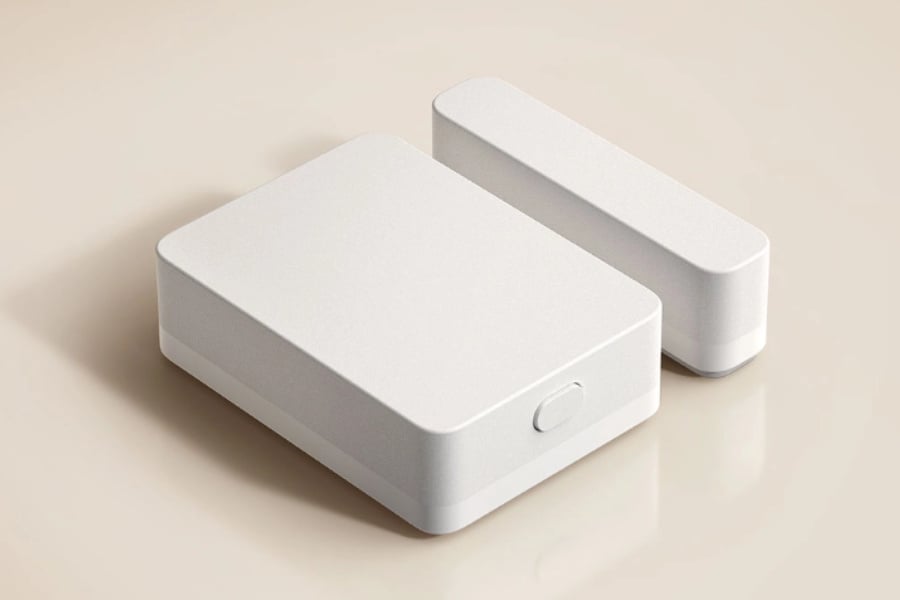
Xiaomi Door and Window Sensor 3 goes up for crowdfunding with three-year battery life

Xiaomi has launched the Door and Window Sensor 3 in China through a crowdfunding campaign on its Xiaomi Youpin platform. The campaign opened today and runs until October 19 where you can grab the sensor for 44 yuan (~ $6).

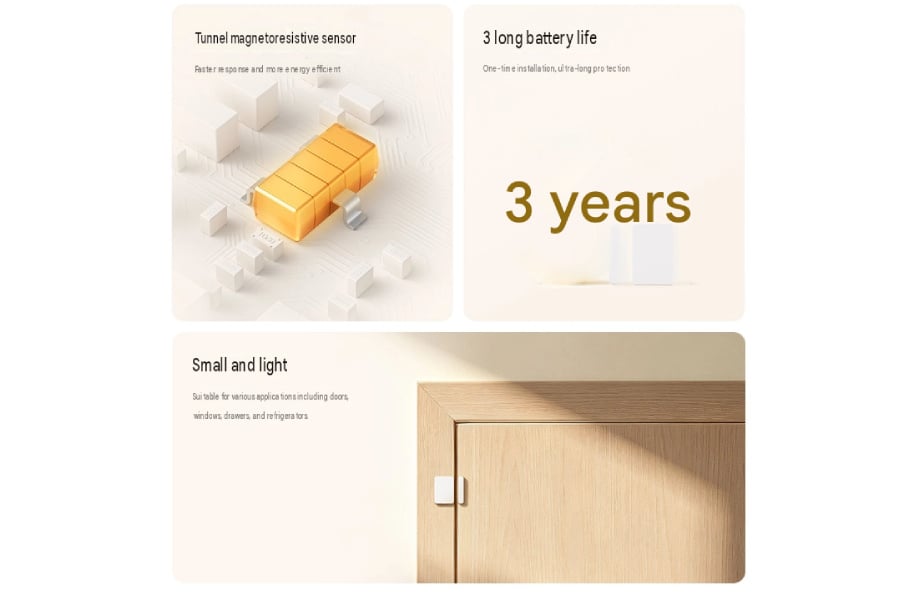
It’s a successor to the Sensor 2 that Xiaomi launched back in 2020, and the new sensor uses a CR2032 button battery rated to last up to three years, compared with one year for the previous Door and Window Sensor 2. The Xiaomi Home app also sends a reminder when the battery is running low, so you can replace it before the sensor stops working.

Xiaomi Door and Window Sensor 3 Launch Specs Price

Xiaomi has replaced the Hall sensor in the previous model with a tunnel magnetoresistive sensor. The new sensor also responds faster and consumes less power than a traditional Hall sensor.

However, the Door and Window Sensor 3 might have lost one feature in the process. Xiaomi doesn’t mention the light sensor found in the Door and Window Sensor 2. The new model instead tracks door and window activity, so anyone who used the previous sensor’s light readings for smart home automations will need a separate device. Xiaomi has sold a standalone Mijia Light Sensor since 2019.

What you can do with it

After pairing the sensor with a Bluetooth Mesh gateway, you can use the Xiaomi Home app to check whether a door, window, drawer or cabinet is open or closed. It also records sensing events, counts daily openings and closings, and tracks how long an entry remains open or closed. The app can send a notification to your phone when the sensor detects a change.

Xiaomi Door and Window Sensor 3 specs

The sensor also works with other smart home products through Xiaomi’s Smart Connect. You can link it with smart switches, air conditioner companions, water leak detectors, thermometers and hygrometers to create automations. For example, opening a door can turn on the lights, while opening a window can switch off the air conditioner. You can also set up reminders to close windows when it rains or humidity rises. 

These automations need to be configured in the Xiaomi Home app, and the other devices must be purchased separately. Xiaomi also notes that some features depend on how the sensor is used.

Small enough for drawers and cabinets

The Door and Window Sensor 3 has a compact, lightweight body that can fit on doors, windows, drawers, cabinet doors and storage boxes. Xiaomi has also printed installation guides on the sensor to help users align it correctly with the magnet, reducing the chance of installing it in the wrong direction and missing an opening or closing event.

A three-year battery rating isn’t new to Xiaomi’s sensor lineup, either. The Xiaomi Human Body Sensor also carried the same battery-life rating when it went through crowdfunding.

For daily updates, please visit our News Section.

Stay ahead in tech! Join our Telegram community and sign up for our daily newsletter of top stories!